Article

HGXES: Lightweight Network for Ship Detection in Specific Marine Environments

1
School of Information Science and Technology, Shijiazhuang Tiedao University, Shijiazhuang 050043, China
2
Hebei Key Laboratory of Electromagnetic Environmental Effects and Information Processing, Shijiazhuang 050043, China
3
Shijiazhuang Key Laboratory of Artificial Intelligence, Shijiazhuang 050043, China
*
Author to whom correspondence should be addressed.
Remote Sens. 2026, 18(9), 1276; https://doi.org/10.3390/rs18091276
Submission received: 5 March 2026 / Revised: 15 April 2026 / Accepted: 21 April 2026 / Published: 23 April 2026

Highlights

What are the main findings?
  • The HGXES model, a lightweight SAR ship detection network, achieves a 70% reduction in parameters compared to traditional models. This reduction comes from both the lightweight HGNetV2 backbone and the further lightweight incremental designs (Xfeat, LWDetect) proposed in this paper.
  • The model integrates efficient structural design, feature enhancement mechanisms, and an attention mechanism. These are incremental innovations which significantly improve feature extraction and detection accuracy that of the baseline HGNetV2.
What are the implications of the main findings?
  • The HGXES model offers a promising solution for real-time SAR ship detection on resource-constrained platforms, enhancing marine monitoring capabilities with its lightweight and efficient design.
  • The introduction of the ELA attention mechanism and ShapeIoU loss function into the HGXES model provides new insights into optimizing feature representation and boundary regression for improved detection in complex SAR image scenarios.

Abstract

Synthetic Aperture Radar (SAR) ship target detection is crucial for marine monitoring, offering vital support for maritime security, navigation safety, and environmental surveillance. However, deploying advanced deep learning models on resource-constrained edge devices like UAVs and spaceborne platforms is challenging due to the high computational complexity and large parameter counts, hindering real-time performance. To address this, we propose the HGXES model, a lightweight SAR ship detection network. This model integrates efficient structural design, feature enhancement mechanisms, and an attention mechanism to reduce computational costs while preserving feature extraction capabilities. It employs factorized convolutions, a cross-level feature reuse module, and an attention mechanism to dynamically adjust feature weights, enhancing sensitivity to ship targets. A lightweight detection head ensures rapid and accurate target classification and localization. Experiments on benchmark SAR datasets show that based on the lightweight HGNetV2 backbone, our incremental designs (Xfeat, ELA, LWDetect) further compress the model and achieve a 70% reduction in parameters compared with traditional models, with a model size of just 1.9 MB, 2.3 M parameters, and 3.9 G FLOPs, achieving 49.7 fps detection speed. Comparative analyses reveal the superiority of the ELA attention mechanism and ShapeIoU loss function in enhancing performance. Thus, the HGXES model successfully achieves lightweight SAR ship detection, supporting real-time marine monitoring on resource-limited platforms with high accuracy and reduced computational costs.

1. Introduction

Synthetic Aperture Radar (SAR) is an active microwave earth observation technology with all-day and all-weather imaging ability [1]. Unlike optical images, SAR images are inherently affected by coherent speckle noise, which easily submerges weak ship features [2]. In practical marine scenarios, ship targets in SAR images are often small, have unclear contours, and produce weak scattering information. At the same time, complex backgrounds such as nearshore islands, reefs, and strong scattering clutters cause serious interference [3]. These unique imaging characteristics bring core challenges to SAR ship detection, including difficult feature extraction, high missed detection rate of small ships, high false alarm rate, and poor robustness in dense scenes. SAR ship target detection has been recognized as a cornerstone in marine monitoring [4], providing indispensable capabilities for maritime security, navigation safety, and environmental monitoring. However, the deployment of advanced deep learning models for SAR ship detection on resource-constrained edge devices, such as unmanned aerial vehicles (UAVs) and spaceborne platforms [5], has faced significant challenges. These are mainly due to the high computational complexity and the large number of parameters inherent in existing deep learning architectures, which impede their real-time performance and efficiency in resource-limited environments [6].
Traditional deep learning models, despite having achieved remarkable success in various computer vision tasks, often encounter difficulties in balancing accuracy and efficiency when adapted to SAR ship detection on edge devices [7]. This is because the unique characteristics of SAR images, including coherent speckle noise, small target sizes with weak features, and complex background interference [8], have been observed to further exacerbate the degradation of the feature representation ability in lightweight models. In particular, the missed detection rate has been shown to significantly increase in near-shore dense scenarios due to the limited capacity of the model to distinguish between ship targets and cluttered backgrounds [9].
Researchers have explored various approaches for addressing these challenges Model compression techniques such as pruning and quantization have been employed to reduce model size and computational cost [10]. However, these techniques have often led to a loss of detection accuracy, especially in complex SAR image scenarios where [11] fine-grained feature representation is crucial. For instance, pruning has been effectively used to reduce the number of model parameters and improve inference speed, but it may result in a decrease in model capacity [12], leading to impaired detection accuracy in complex scenarios. Quantization has been applied to lower the model’s storage and computational requirements [13], making it more suitable for edge devices [14]. Nevertheless, quantization errors may affect model accuracy, and this effect is more pronounced in low-bit quantization [15].
In addition, lightweight architectures like MobileNet [16] and ShuffleNet [17] have been developed. MobileNet leverages depthwise separable convolutions to significantly reduce the number of parameters and computational volume, but it has been found to have limited feature extraction ability in the complex backgrounds of SAR images. ShuffleNet enhances feature interaction through channel shuffling to improve the model’s expressive power [18], yet it still performs poorly when detecting small and dense targets in SAR images. Lite Faster R–CNN [19] has been optimized for SAR images to improve detection speed, but its complexity remains relatively high, making it difficult to deploy on extremely resource-constrained edge devices. HyperLi-Net has achieved high-precision and fast detection [20], and is applicable to real-time scenarios, but its model design is relatively complex and has certain requirements in terms of hardware resources. The YOLO series of improved models (such as YOLOX [21]) have optimized the model structure and improved inference speed while maintaining relatively high detection accuracy [22]. However, they still lack specific optimizations for the unique characteristics of SAR images (e.g., coherent speckle noise, small ship targets, complex near-shore clutters, and weak target features [23]), and there is still room for improvement in detecting small targets in complex backgrounds. To solve this problem, the proposed HGXES model adaptively improves mature RGB detection components (HGNetV2, ELA, DSConv) for SAR ship images, so as to enhance feature extraction under speckle noise and complex clutters.
The inherent trade-off between model complexity and feature extraction capability has remained a critical barrier to achieving real-time and accurate SAR ship detection on edge devices. In this paper, the HGXES model is proposed to address these challenges. HGNetV2 provides the basic lightweight foundation, while the Xfeat module, ELA attention, LWDetect head, and ShapeIoU loss are the core incremental contributions of this work. An efficient structural design, feature enhancement mechanisms, and an attention mechanism are integrated into the HGXES model. By employing factorized convolutions, the computational cost of the HGXES model is significantly reduced while the feature extraction capability is preserved. Additionally, a cross-level feature reuse module is proposed to facilitate multi-scale information fusion, enhancing the model’s ability to capture diverse target features across different spatial resolutions. A key innovation of the HGXES network lies in its incorporation of an attention mechanism that focuses on the target area. This attention mechanism dynamically adjusts feature weights, enabling the model to adaptively emphasize relevant regions while suppressing background noise, thereby improving the model’s sensitivity to ship targets amidst complex backgrounds. Furthermore, a lightweight detection head is employed in the HGXES network, which maintains low computational costs while ensuring rapid and accurate target classification and localization.
Experiments conducted on benchmark SAR datasets have demonstrated that the HGXES model achieves a 70% reduction in parameters compared to traditional heavy models while maintaining comparable detection accuracy. This positions the HGXES network as a promising solution for real-time edge deployment in SAR ship detection applications. By offering a new paradigm for lightweight SAR ship detection, the HGXES model paves the way for enhanced marine monitoring capabilities on resource-constrained platforms. In summary, this paper introduces a lightweight SAR ship detection network, HGXES, which integrates efficient structural design, feature enhancement mechanisms, and an attention mechanism to achieve a balance between accuracy and efficiency. The proposed model’s ability to operate effectively on edge devices makes it a valuable asset for marine monitoring and other remote sensing applications.

2. Related Works

The synthetic aperture radar (SAR) ship detection method based on deep learning can be divided into two-stage and one-stage methods, according to its workflow architecture. These two types of method have different focuses in improving detection accuracy, speed and efficiency, jointly promoting the development of SAR ship detection technology.
Faster R-CNN and its variants (such as Mask R-CNN [24]) are two-stage methods that are widely applied in the field of SAR ship target extraction due to their high accuracy. For instance, Zhou et al. [25] propose a sophisticated Multi-Level Feature-Refinement Anchor-Free Framework with a Consistent Label-Assignment Mechanism for SAR ship detection, which addresses multi-scale ship characteristics, clutter interference, and dense ship arrangements by developing a stepwise feature_refinement backbone network to refine ship object features and an Adjacent Feature-Refined Pyramid Network (AFRPN [26]) to mitigate semantic loss and enhance localization features, thereby significantly improving the accuracy of multi-scale ship detection. This reduces the search space and significantly improves the detection accuracy. Additionally, Zhou et al.’s module combines attention mechanisms and multi-scale feature fusion, which further addresses the challenges posed by small targets and complex backgrounds in SAR images [27]. By capturing key information and suppressing noise interference, detection performance is improved. Xia et al.’s CRTransSar model [28] innovatively combines the global context perception ability of Transformer with the local feature representation ability of CNN. Based on the Mask R-CNN framework [29], it significantly improves the accuracy of multi-scale ships detection, although it also increases the complexity of the model.
Single-stage object detection models have attracted the attention of many researchers in recent years due to their advantages such as fast speed, simple architecture, and ease of deployment. For example, Li et al. [30] propose an optimized YOLOv6 single-stage detection framework for industrial use, achieving state-of-the-art speed-accuracy trade-offs via a re-parameterized backbone (EfficientRep/CSPStackRep), Rep-PAN neck, and efficient decoupled head. By integrating Task Alignment Learning (TAL), VariFocal Loss, and SIoU/GIoU Loss, along with quantization-aware training (RepOptimizer) and channel-wise distillation, YOLOv6 attains 43.5% AP on COCO at 495 FPS, ensuring high-performance real-time deployment. In order to simplify the model and reduce the reliance on predefined anchor boxes, Zhang et al. [31] propose the Nested Path Aggregation Attention Network (NPA2Net) for oriented SAR ship detection, leveraging an anchor-free framework with box boundary-aware vectors, a Nested Path Aggregation Module (NPAM) for multi-scale feature fusion, and a Ship Attention Module (SAM) with deformable convolutions to suppress background clutter. This approach achieves superior detection accuracy and robustness in complex scenes while maintaining computational efficiency.
While striving for higher accuracy and efficiency, model lightweighting has become a research hotspot in the field of SAR ship detection. The lightweight design of the model is particularly important, especially in scenarios with limited resources such as spacecraft and aviation platforms. For instance, Yehia et al. [32] devised DRC2-Net, a lightweight and geometry-adaptive detection framework for SAR ship detection, integrating a Recurrent Criss-Cross Attention (RCCA) module for contextual enhancement and Deformable Convolutional Networks v2 (DCNv2) for adaptive geometric modeling. This approach achieves improved multi-scale ship detection accuracy and robustness in complex maritime environments while maintaining real-time efficiency.
Furthermore, with the continuous advancement of technology, researchers are constantly exploring new methods and technologies to further enhance the performance of SAR ship detection. For instance, the attention mechanism has been introduced into the detection model, enabling dynamic adjustment of feature weights to enable the model to focus more on the target area, thereby improving the detection ability in complex backgrounds. Additionally, multi-scale feature fusion technology is widely applied for detecting small and dense targets. By integrating features from different scales, the model’s adaptability to changes in target size is improved.
In conclusion, the SAR ship detection method based on deep learning is developing towards higher intelligence, accuracy and efficiency. Both two-stage method and one-stage methods are constantly being innovated and optimized to meet the increasing detection demands. In the future, with the continuous advancement of technology and the expansion of application scenarios, SAR ship detection technology is expected to play a more important role in marine monitoring and maritime safety. Based on previous research, this study aims to simultaneously improve detection accuracy, computational efficiency, and real-time performance. It strives to achieve the optimize performance and contribute to the development of SAR ship detection technology under strict lightweight constraints.

3. Methods

3.1. Network Architecture

The design of lightweight and efficient models has consistently been a core research direction in the field of target detection with computer vision. In this paper, we propose the HGXES lightweight SAR ship image target detection algorithm, with its structure illustrated in Figure 1. This model uses an improved HGNetV2 [33] as the backbone network, with all other components (Xfeat, ELA, LWDetect, ShapeIoU) being incremental designs for enhancing the efficiency and quality of feature extraction. The improved HGNetV2 fully explores the multi-scale feature information embedded in the input image while strictly controlling parameters and computational costs. It provides a rich and effective feature foundation for the subsequent detection process, which serves as a crucial guarantee for the efficient operation of the model.
The detailed layer configurations of HGXES are supplemented as follows: All convolutional layers use kernel size, stride, padding, and channel numbers as listed below. The activation function used throughout the entire network is ReLU. Downsampling is implemented by convolution with stride = 2. Feature fusion is completed through channel-wise concatenation. The features output from the backbone network enter the Xfeat network for processing. The Xfeat network integrates key components such as the ELA module attention mechanism, Xfeatconv convolution block, and C2n2 convolution block. The ELA module attention mechanism can adaptively focus on the key areas of the feature map and dynamically adjust the feature weights, enhancing the model’s ability to capture target features; the Xfeatconv convolution block is responsible for the deep processing of the input features, exploring the potential information of the features, and improving the expression ability of the features; the C2n2 convolution block realizes the transformation and adjustment of features through specific convolution operations, providing suitable feature forms for subsequent feature fusion and detection. These components work collaboratively to enable the Xfeat network to efficiently complete feature processing and optimization.
During the feature processing process, the Concat operation connects the feature maps output from different levels or modules along the channel dimension, integrating multi-source feature information, allowing the model to comprehensively utilize features of different scales and types, providing a more comprehensive feature representation for the subsequent detection.
The detection task of the model is completed by the lightweight detection head LWDetect. LWDetect is designed to be simple and efficient, maintaining low computational costs while being able to quickly and accurately complete the classification and positioning tasks of the target. It receives the features processed and fused by the previous modules and directly outputs the final detection results.
In summary, this model efficiently extracts features through the improved HGNetV2 backbone network, optimizes features through the Xfeat network, realizes multi-source feature fusion through the Concat operation, and completes the detection task using the lightweight detection head LWDetect. This structural design ensures the accuracy of target detection while effectively reducing the computational cost and parameters of the model, enabling it to perform well in resource-constrained environments and providing a feasible solution for the application of target detection in practical scenarios.

3.2. HGXES Lightweight Network Backbone Module

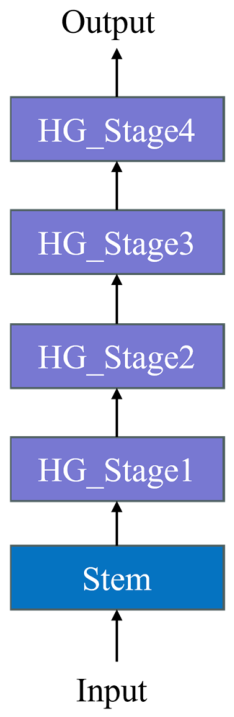
In the field of computer vision, lightweight network architectures are designed to address the core challenge of balancing model accuracy and computational efficiency. The HGXES lightweight network proposed in this paper uses HGNetV2 as its main backbone network. HGNetV2, as part of new generation of lightweight backbones network launched by Baidu [34], demonstrates significant advantages in tasks such as object detection and image classification due to its efficient feature extraction and multi-scenario adaptability. Its core design concept focuses on balancing model accuracy and computational efficiency. Through hierarchical feature fusion and dynamic feature scaling techniques, it achieves precise capture of multi-scale targets. Compared with the original HGNetV2, the improved HGNetV2 (as shown in Figure 2) is designed as a 5-layer structure, reducing the number of parameters by approximately 40%, while also lowering the computational cost by more than 30%, making it particularly suitable for deployment on edge computing devices and in mobile scenarios. This network has achieved breakthrough results in tasks such as natural image detection, medical image analysis, and industrial defect recognition, verifying its strong generalization ability and real-time performance advantages. The improved HGNetV2 backbone is specifically adapted for SAR images by enhancing multi-scale feature capture for small ships and suppressing coherent speckle noise through multi-branch lightweight convolution and dynamic feature aggregation. It reduces feature loss caused by SAR speckle while maintaining few parameters, making it more suitable for SAR ship feature extraction than the original RGB-oriented HGNetV2.
The network architecture of the improved HGNetV2 is composed of a Stem module and 4 HG_Stage modules stacked together. The core innovation lies in the modular design and dynamic feature processing mechanism. The Stem module serves as the starting point for feature extraction and adopts a “compression-expansion” spring structure. The input image is first compressed to 1/2 of its original size through stem1 layer (3 × 3 convolution with stride = 2, padding = 1, output channels = 32), then further compressed to mid_chs/2 through stem2a/b layers (2 × 2 convolution, stride = 2, padding = 0), and then expanded back to mid_chs. This process reorganizes information through nonlinear activation, enhancing feature diversity. The formula is expressed as
F o u t = δ C o n v 2 × 2 C o n v 2 × 2 F i n
Among them, δ represents the ReLU activation function, Fin and Fout represent the input/output feature maps. The output of the stem2 module is concatenated with the output of the stem1 module (aligned through pooling), and then compressed to 1/4 of the size through the stem3 layer (3 × 3 convolution with a stride of 2, padding = 1). Finally, the channel number is adjusted to out_chs through a 1 × 1 convolution. All layers use ReLU as the activation function.
The HG_Stage module achieves hierarchical feature extraction through dynamic downsampling and multi-branch feature fusion. Each Stage contains optional downsampling layers (ConvBNAct, stride = 2) and repeated HGBlock modules. It uses a 3 × 3 standard convolution and lightweight group convolution. The output channels of the four stages are 64, 128, 256, 512. Downsampling is completed by convolution with stride = 2. The activation function is ReLU, and residual connection is adopted. The HGBlock module serves as the core feature processing unit of HGNetV2, achieving efficient feature enhancement through multi-branch convolution and dynamic feature aggregation mechanism. Its design balances accuracy and computational efficiency. The input features are first sent in parallel to layer_num branches (usually 2–3), including standard convolution branches (ConvBNAct) and lightweight convolution branches (LightConvBNAct). The former uses 3 × 3 convolution combined with batch normalization (BN) and ReLU activation, focusing on extracting local detail features; the latter, after mixing channels through a 1 × 1 convolution, uses group convolution (the group size is equal to the number of channels) to significantly reduce computational load, making it more suitable for capturing global semantic information. The outputs of the branches are concatenated and then enter the dynamic feature aggregation module, which flexibly selects the aggregation method through the agg parameter. If the SE module (Squeeze-and-Excitation) is used, it compresses the feature dimensions through global average pooling, and then passes through two fully connected layers (W1/W2) and Sigmoid activation to generate channel weights. The formula is
A t t e n t i o n = σ W 2 δ W 1 · G A P F
This enhances the prominent channel characteristics; if the ESC module (Efficient Channel Selection) is selected, the mean values of each channel features are directly calculated and a dynamic weight is generated through Sigmoid to suppress redundant channels and reduce computational costs. In addition, the HGBlock supports residual connections (when residual = True) by using element-wise addition to fuse the input features and the aggregation results (requiring the input/output channel numbers to be consistent), effectively alleviating the problem of gradient disappearance. This module achieves parallel multi-branch computation and dynamic feature weighting, while remaining lightweight, significantly improving the model’s adaptability to multi-scale targets, demonstrating especially strong feature expression ability in complex scenarios (such as occlusion and illumination changes).

3.3. Xfeat Lightweight Feature Extraction Module

The XFeat lightweight feature extraction module proposed in this paper is a groundbreaking algorithm specifically designed for lightweight image matching tasks. Its core innovation lies in achieving a synergistic optimization of computational efficiency and matching accuracy through a hardware-independent lightweight architecture. This algorithm, while maintaining a high-resolution input, employs a dynamic channel allocation strategy and a hierarchical feature extraction mechanism, significantly reducing computational complexity.
The architecture design of XFeat is centered around a lightweight backbone network, and a feature pyramid is constructed using a staged downsampling strategy. The initial layer uses only 4 channels, and as the spatial resolution decreases (with a step size of 2 for each layer), the number of channels increases in a 4-8-24-64-64-128 six-layer structure. The formula for calculating the floating-point operation volume is
F o p s = H i · W i · C i · C i + 1 · k 2
In Formula (3), Hi and Wi is the input resolution, Ci is the number of channels, and k represents the size of the convolution kernel. By reducing the number of channels early, XFeat can reduce the computational load to 1/9 of that of the traditional architecture. The feature fusion module upsamples the feature maps of three scales (1/8, 1/16, 1/32) using bilinear interpolation and then adds them together to enhance adaptability to changes in perspective. The key point detection branch is independent of descriptor generation and uses 1 × 1 convolution to regress sub-pixel coordinates on an 8 × 8 grid, and introduces a “dustbin” classification mechanism to filter out invalid areas, outputting a 65-dimensional heatmap (containing 64 key point channels + 1 background channel).
The descriptor generation and matching refinement module constitutes another core part of XFeat. The dense descriptor branch outputs a 64-dimensional feature map, and combines the reliability heatmap (outputting the matching probability through Sigmoid activation) to filter out high-confidence features. In the semi-dense matching mode, the algorithm first generates coarse matching pairs through nearest neighbor search, and then uses MLP to predict the 8 × 8 offset probability distribution, and selects the highest probability offset to reverse back to the original resolution. The formula is
x , y = arg   max i , j   ο i , j
Here, o(i,j) represents the offset probability distribution. This module only relies on the local descriptors themselves and does not require high-resolution feature input, significantly reducing memory usage.
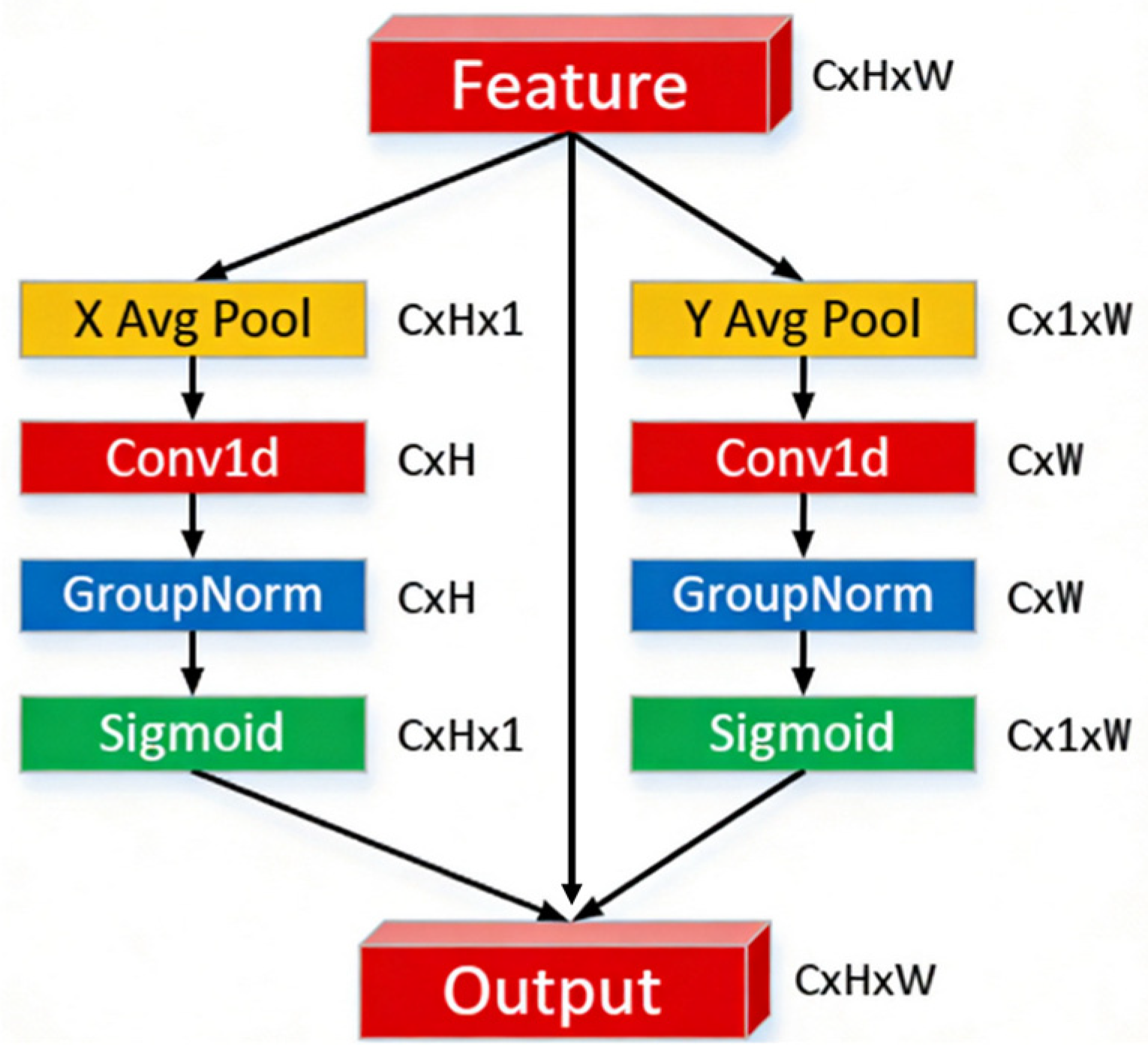
The XFeat lightweight feature matching module in this paper achieves a breakthrough in the speed and accuracy boundaries by integrating the ELA (Efficient Local Attention) attention mechanism [35] (as shown in Figure 3) on the basis of a lightweight design, forming a triple advantage of “hardware independence + dynamic feature focusing + multi-scale enhancement”. The ELA mechanism is centered on local window attention and dynamically adjusts the receptive field through a learnable offset field, enabling the algorithm to adaptively focus on the key areas of the image while maintaining a low computational complexity.
In the design of the main network, XFeat reconfigures the construction process of the feature pyramid through the ELA mechanism. The original staged downsampling strategy (with the number of channels increasing in the order of 4-8-24-64-64-128) is deeply coupled with the local window attention of ELA. Before each layer of downsampling, the ELA module first dynamically allocates weights to the input feature map using the following formula:
A i , j = s o f t max Q i K j d + P i j
Here, Q and K represent the query and key features, P is the learnable relative position encoding, and d is the channel dimension. Through this mechanism, ELA generates an attention weight map within an 8 × 8 local window, guiding the subsequent convolution operations to focus on the high-response regions. The ELA (Efficient Local Attention) mechanism is adaptively optimized for SAR ship scenarios to focus on small and densely arranged ship targets while suppressing sea clutter and speckle noise. It dynamically adjusts the receptive field via learnable offsets to enhance the sensitive regions of ship targets in SAR images, rather than using general RGB target attention.

3.4. Lightweight Shared Detection Head Design

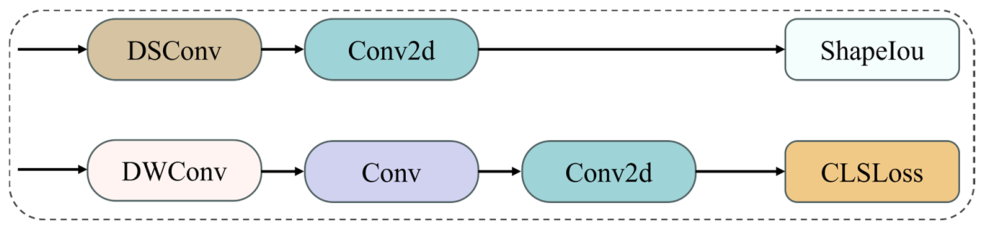
In the target detection task, the design of the detection head is of vital importance to the performance and efficiency of the model. The lightweight detection head structure presented in Figure 4 is specifically designed for resource-constrained scenarios. It achieves relatively accurate target detection while maintaining efficient computation.
This detection head consists of two parallel processing paths. In the upper path, the basic spatial features are first extracted using conventional convolutional layers (Conv), capturing the local information of the image. Then, the feature map is further deeply explored and transformed through a two-dimensional convolutional layer (Conv2d [36]). As the key loss function layer here, ShapeIoU plays a unique role in the training optimization of the model. It constrains and adjusts the feature distribution from the perspective of feature shapes, prompting the model to learn more discriminative feature representations, which helps to improve the accuracy of classification and localization in target detection.
The lower path adopts depthwise separable convolution (DWConv), significantly reducing the computational load and the number of parameters, effectively lowering the model complexity. Subsequent standard convolutional and two-dimensional convolutional layers further enhance the feature expression ability. DSConv (depthwise separable convolution) in the lightweight detection head LWDetect is configured for SAR characteristics to reduce computational load while preserving weak ship features in low-signal SAR images. It avoids excessive feature compression that would degrade small ship detection, achieving a better balance between lightweightness and SAR target perception. The final CLSLoss layer is responsible for calculating the classification or localization loss, providing gradient information for model training.
This dual-path design combines the feature extraction advantages of conventional convolution and the lightweight characteristics of depthwise separable convolution. The two paths complement each other, enhancing the model’s detection ability for targets of different scales.

3.5. ShapeIoU Loss Function

The previous boundary box regression methods mainly achieved more accurate regression by adding new geometric constraints to the IoU, but they ignored the fact that the shape and scale of the boundary box itself would also have an impact on boundary box regression. To further improve the accuracy of regression, this paper introduces the new generation of boundary regression loss, ShapeIoU [37], as the loss function of the HGXES network. Existing IoU variants (CIoU, EIoU, SIoU) only consider aspect ratio, distance, or angle, but they ignore the shape matching degree between the predicted box and ground-truth box under different scales, which is critical for SAR ship targets with diverse lengths and blurred boundaries [38]. ShapeIoU takes into account the influence of box shape to achieve more reasonable loss calculation. The mathematical formulation of ShapeIoU is defined as
S h a p e I o U = I o U × α × S f + β × C f + 1
Among them, Sf represents the shape factor, reflecting the consistency of the aspect ratio; Cf is the scale factor, taking into account the influence of the target size; and α and β are the balancing hyperparameters.
S f = e x p γ × | r _ A r _ B |
C f = l o g m i n w _ A , w _ B m i n w _ i m g , h _ i m g × l o g m i n h _ A , h _ B m i n w _ i m g , h _ i m g
r_A and r_B represent the aspect ratios of two bounding boxes, and γ is the adjustment coefficient. w_A, h_A and w_B, h_B represent the width and height of the bounding box, while w_img and h_img represent the size of the image.
ShapeIoU dynamically adjusts the weight of shape differences based on the size of the box, making it more sensitive to small vessels. It simulates the true shape characteristics of the vessel rather than just the simple aspect ratio, thereby reducing the regression deviation caused by speckle noise and near-shore clutter in synthetic aperture radar.

4. Experiment and Results

4.1. Experiment Environment and Datasets

In this study, all experiments were conducted on the Windows 11 operating system, using PyTorch 1.7 for training and CUDA 11.0 for accelerated computing. This computer is equipped with the 12th generation Intel(R) Core (TM) i5-12400F processor (Intel Corporation, Santa Clara, CA, USA) at 2.50 GHz, 16 GB of memory and an RTX 3060 GPU (ASUS, Taipei, Taiwan, China).
During the training process, the epoch number was set to 300, Batch Normalization was used for normalization, and the momentum parameter was set to 0.95. The batch size (batch size) was fixed at 64, and the Adam optimizer was used to update the network weights. The initial learning rate was set to 0.01.
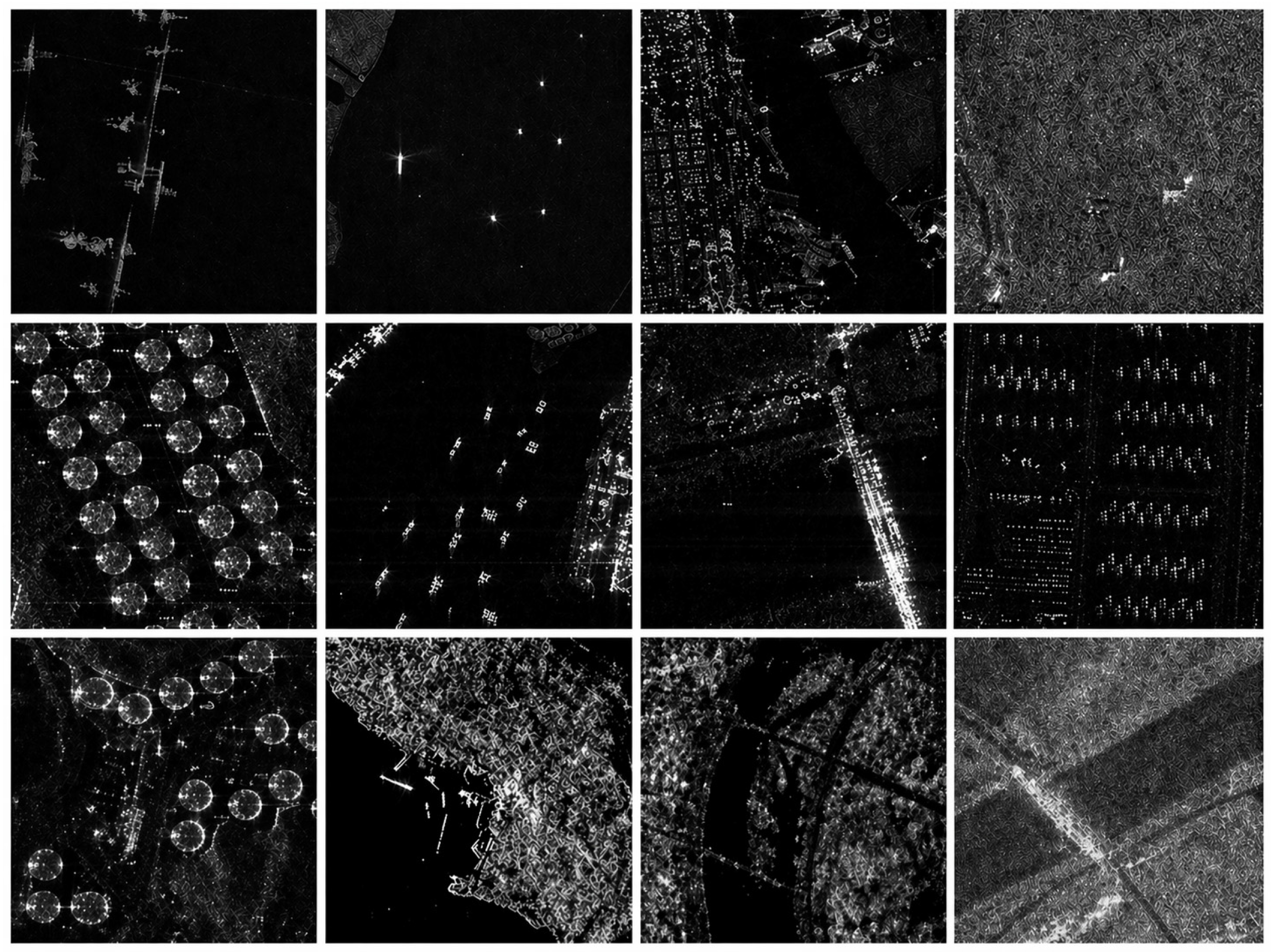
In scientific research, an adequate and diverse dataset is crucial for obtaining reliable and universally applicable results. To enrich the experimental data, four representative SAR datasets were selected, as shown in Figure 5. Multiple datasets not only increase the amount of training data, thereby reducing the risk of overfitting, but also incorporate a wider range of target features and scene variations, enhancing the SAR target detection capability of the model in various scenarios.
SARDet-100K [39] is currently the largest and most comprehensive SAR target detection dataset available, integrating 116,598 SAR images from multiple satellites such as GF-3 and Sentinel-1, including 128,765 vessel instances. It covers complex maritime scenarios and various vessel types, and adopts a unified annotation format and strict quality control standards, making it a key benchmark for evaluating SAR vessel detection algorithms.
The MSAR-1.0 [40] released in 2022, provides valuable resources for SAR image interpretation. It originates from multiple advanced SAR satellites, covering different sensor types, resolutions, and polarization methods, and the carefully annotated images cover various target categories. Due to the characteristics of synthetic aperture radar (SAR) imaging, MSAR-1.0 faces significant challenges and has become a benchmark platform for SAR image target detection and classification research, with broad military and civilian application prospects.
SSDD [41] is a pioneering dataset specifically designed for SAR vessel detection, combining SAR images from multiple satellite sources with meticulous annotations to ensure high-quality labels for accurate model training and evaluation. It has been widely used as a standard benchmark for comparing the performance of SAR vessel detection algorithms.
SAR-Ship-Data [42] focuses on vessel detection and classification, containing a large number of SAR images from various satellite platforms, covering a wide geographical area and diverse environmental conditions. It labels vessel instances in detail, enabling a comprehensive study of SAR vessel detection and recognition, making significant contributions to advancing SAR image analysis.
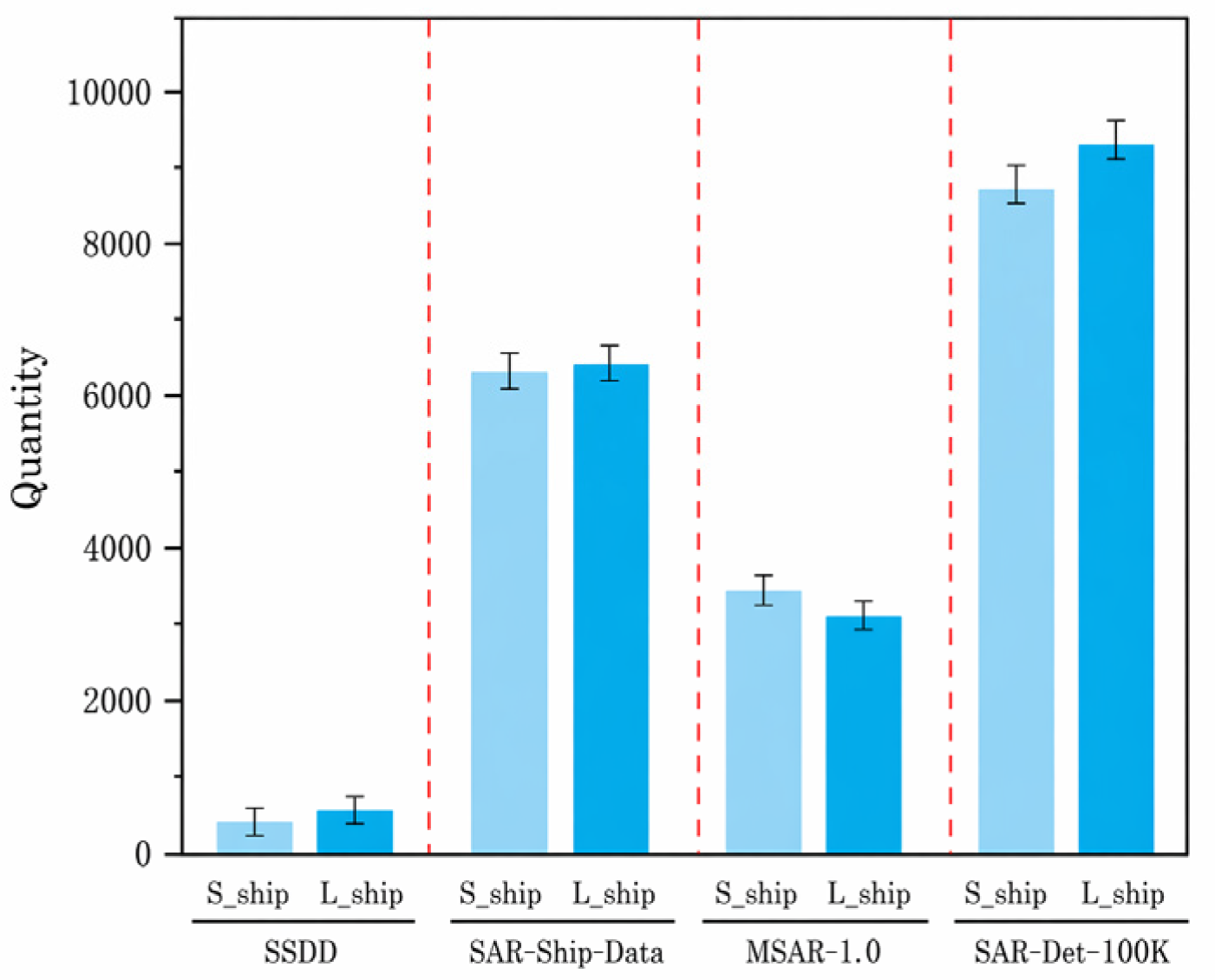
To evaluate each dataset’s role in lightweight SAR ship detection experiments, a bar chart (Figure 6) was constructed, showing the number of small target ship images (S_ship) and complex background images (L_ship) for SSDD, SAR-Ship-Data, MSAR-1.0, and SARDet-100K. Notable differences in their distributions were revealed.
In summary, integrating diverse datasets, including SSDD and SAR-Ship-Data, alongside SARDet-100K and MSAR-1.0, provides a rich foundation for lightweight SAR ship detection experiments. The statistical analysis offers insights into the distribution of small target ship and complex background images, guiding researchers in selecting appropriate datasets for their specific needs.

4.2. Evaluation Metrics

To accurately evaluate the actual performance and effectiveness of the model, the commonly used object detection metrics include precision (P), recall (R), F1 score, and mean average precision (mAP). Precision and recall respectively measure the accuracy and completeness of the detection [43]. Specifically, precision is defined as the ratio of the number of correctly detected ship targets (true positives, TP) to the total number of targets detected as ships (including both correct detections and false alarms, that is, the sum of TP and FP). Recall is the ratio of the number of correctly detected ship targets to the total number of actual ship targets (including both correct detections and missed detections, that is, the sum of TP and FN).
The mean average precision (mAP) is evaluated at the category level through the precision–recall curve and represents the average of AP across all categories.
Formulas (9)–(12).
m A P = 1 N i = 1 N A P i
A P = 0 1 P R d R
Precision   = T P T P + F P
R e c a l l = T P T P + F N
To further quantify the complexity and real-time performance of the model, three additional metrics were considered: the number of model parameters, the number of floating-point operations (FLOPs), and frames per second (FPS). The number of model parameters reflects the spatial complexity of the model, FLOPs are used to measure the computational cost, and FPS directly indicates the real-time processing capability of the model. (Note: For the detailed calculation methods of these indicators, please refer to the relevant formulas in the main text, or if your document provides specific formula numbers, please insert them here).
In the detection process of synthetic aperture radar (SAR) for ship targets, TP represents the correctly detected ship targets, FP represents false alarms, including non-ship objects or repeated detections, and FN represents the real ships that were not detected. Through a comprehensive assessment using these indicators, the detection performance and real-time processing capability of the model can be evaluated fully and accurately.

4.3. Different Experimental and Visualization Results

4.3.1. Comparison of Detection Performance of Different Models

The balance between performance and efficiency of lightweight models has always been a key issue in the field of target detection in computer vision. We conducted a comprehensive comparative analysis of various mainstream lightweight target detection models and our proposed HGXES model. The results are detailed in Table 1. A 70% parameter reduction is attributed to both HGNetV2 and our further lightweight designs. The accuracy gain is derived solely from our incremental innovations.
From the perspective of model size, the HGXES model proposed in this paper demonstrates significant advantages. Its model size is only 1.9 MB, which is much smaller than that of Faster R-CNN (107.0 MB) and SSD (90.6 MB), etc. It has great potential for deployment in scenarios with limited storage resources. In terms of the number of parameters, the HGXES model has only 2.3 M, which significantly reduces the complexity of the model compared to models with larger parameter quantities such as Faster R-CNN (27.6 M).
In terms of computational resources (FLOPs), the HGXES model is as low as 3.9 G, indicating its excellent performance in terms of computational resource consumption and the ability to effectively reduce the requirements for hardware computing capabilities. From the mAP perspective, our model achieves the best detection effect with 96.3%. At the same time, in terms of detection speed, the HGXES model reaches 49.7 fps, which is higher than other comparison models and meets the requirements for real-time detection.
Overall, the HGXES model achieves a very small model size, a relatively small number of parameters, and low computational resource consumption while maintaining a fast detection speed. It demonstrates outstanding performance in lightweight object detection tasks and provides an efficient and feasible solution for resource-constrained target detection applications.

4.3.2. Comparison of Detection Performance of Different Attention Mechanisms

In order to precisely locate the key ship areas in the image during SAR ship detection, effectively suppress the interference of irrelevant information such as the complex marine background, and thereby improve the sensitivity and accuracy of the model in perceiving objects in complex backgrounds or multi-target scenarios, an in-depth study was conducted on the Xfeat module in the backbone of the baseline model, and six different types of attention mechanisms were embedded for experimental comparison. The results are shown in Table 2.
The baseline model in this paper achieved certain detection results in terms of precision (P), recall rate (R), and mean average precision (mAP), with a parameter size of 3.01 M and GFLOPs of 8.2. In order to seek better detection performance, different attention mechanisms were added to the SPPF module, including DA, CBAM, SimAM, EPSANet, SegNext, and ELA attention.
During the experiment, a comprehensive analysis and comparison of the influence of the attention mechanisms in these five different situations (baseline model and the situation with the addition of six attention mechanisms) were conducted to select the most effective attention mechanism without changing the core objective of the original detection task.
From the experimental results, it can be seen that after adding different attention mechanisms, all indicators improved to varying degrees. CBAM and ELA performed particularly well. CBAM, by using both channel and spatial attention to refine features, can effectively capture the key information of ships, and its mAP increased to 96.8%. ELA may improve mAP to 97.2% through a more efficient global-local feature fusion method. DA also improved the detection results somewhat, but its effect was weaker than CBAM and ELA. ELA dynamically adjusts the receptive field through learnable offsets, making it more sensitive to ship targets in complex inshore backgrounds. EPSANet and SegNext demonstrated a smaller improvement in results, with mAP increasing to 96.3% and 95.8% respectively. This might be due to the fact that their model complexity did not fully match our lightweight goal. SimAM had a relatively poor effect, with mAP only increasing to 93.2%, perhaps because its attention allocation strategy was not suitable for the unique characteristics of SAR ships.
It is worth noting that all attention mechanisms improved the detection performance without significantly increasing the number of parameters and computational cost, thus maintaining the lightweight nature of the model. By comparing the effects of adding different attention mechanisms in the SPPF module, it can be concluded that the mAP with the ELA attention mechanism was the highest, reaching 97.2%. Compared with the original baseline model, mAP increased by 3.1%. This fully demonstrates that the addition of the ELA attention mechanism significantly improved the network’s detection performance, and the improvement in performance brought about by the ELA attention mechanism exceeded that of the DA, SimAM, and CBAM attention mechanisms. ELA shows excellent efficiency in filtering effective feature information and can more accurately focus on ship targets while suppressing background interference. Therefore, we adopted the ELA attention mechanism to further improve the performance of the network, in order to achieve more efficient and accurate SAR ship detection.

4.3.3. Comparison of Detection Performance Using Different Loss Functions

In the lightweight detection head, the selection of the loss function plays a crucial role in optimizing the detection performance of the model. To deeply verify the superiority of the ShapeIoU loss function, we compared it with mainstream loss functions such as CIoU, GIoU, and WIoU under the same experimental settings for the lightweight detection model. The results are detailed in Table 3.
From the data in the table, it can be clearly seen that when ShapeIoU is used as the boundary box loss function, the model demonstrates significant advantages in all key indicators. In terms of precision (P), ShapeIoU reaches 91.1%, which is higher than 89.6% of CIoU, 88.7% of SIoU, and 90.5% of WIoU, indicating that it can effectively reduce the model’s false detection of ship targets and improve the accuracy of the prediction results. In terms of recall rate (R), ShapeIoU is 92.5%, which stands out among several loss functions, indicating that it can more comprehensively detect the real ship targets in the image and reduce the rate of missed detections.
What is particularly important is that in the key indicator of mean average precision (mAP), which is a comprehensive measure of detection performance, ShapeIoU achieved an excellent result of 96.3%. Compared to the mAP value of the model when using CIoU, it increased by 5.2%, and was 5.8% higher than using SIoU and 2.1% higher than using WIoU. Therefore, ShapeIoU outperforms CIoU/EIoU/SIoU both theoretically and experimentally for SAR ship bounding box regression. This result fully proves that ShapeIoU can more accurately measure the difference between the predicted boxes and the real boxes, guide the model to learn more discriminative feature representations, and thus significantly improve the detection accuracy and comprehensive performance of SAR ship targets of the model.
In conclusion, CIoU, EIoU, and SIoU consider aspect ratio but lack scale-aware shape constraints. ShapeIoU improves them by introducing scale-adaptive shape matching for SAR ships. Given the significant advantages of ShapeIoU in improving model detection accuracy, reducing false detections and missed detections, using ShapeIoU as the loss function in the design of lightweight detection heads has obvious advantages, and can provide a more reliable and efficient solution for SAR ship detection tasks.

4.3.4. Ablation Experiment

In the ablation experiment study of HGXES, the lightweight SAR ship detection model proposed in this chapter, a comprehensive performance evaluation was conducted on different module combinations. The results verify that our incremental modules (Xfeat, LWDetect, ShapeIoU) bring clear performance gains. The experimental results are detailed in Table 4.
From the data in the table, the influence of each module on the model performance can be clearly observed. When only the improved HGNetV2 backbone network (Model 2 compared to Model 1) is enabled, the mAP increases from 92.1% to 93.3%, while the number of parameters and computational cost both decrease. This indicates that the improved HGNetV2 is more efficient in feature extraction and can effectively reduce model redundancy. When the Xfeat network (such as Model 3, Model 6, etc., compared to the un-proposed models) is proposed, the mAP is further significantly improved, for example, Model 3’s mAP reaches 94.1%. This shows that the Xfeat network plays a key role in feature optimization processing, and its internal components work collaboratively to enhance the model’s detection ability for ship targets.
The addition of the lightweight detection head LWDetect (such as Model 4, Model 7, etc.) also has a positive impact on the model performance to a certain extent. The model achieves the best detection performance when the improved HGNetV2, the Xfeat network, and the lightweight detection head LWDetect (Model 8) are all adopted simultaneously, with an mAP of up to 96.3%, and the number of parameters and computational cost remaining at a relatively low level. This result fully validates the rationality and effectiveness of the proposed model structure design, and the collaborative effect of each module, achieves the lightweighting of the model while ensuring the detection accuracy, providing an efficient solution for lightweight SAR ship detection.

4.3.5. Visualization of Experimental Results

Feature extraction is a crucial by which the model to understands the contents of the images, and so its effectiveness directly affects the accuracy of the subsequent detection. To deeply analyze the performance of the proposed lightweight model in the feature extraction stage, in particular its ability to extract features at different levels, a layered visualization analysis of feature extraction is necessary. Through this analysis, it is possible to visually observe how the model gradually extracts valid information from the original SAR image, as well as the characteristics and differences in each level of features.
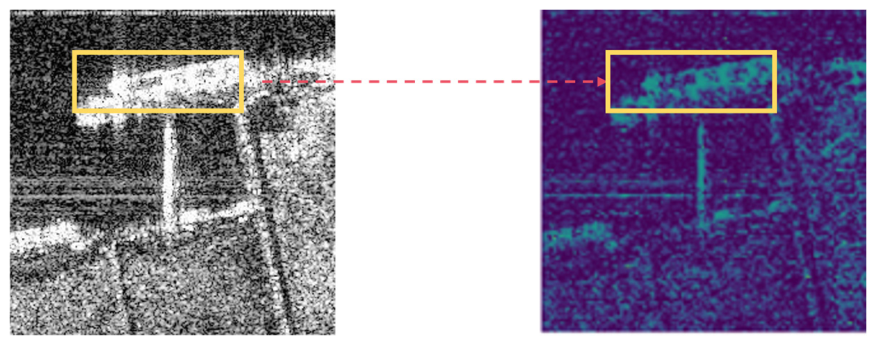
Figure 7 presents sample images after feature extraction by the model. Based on this visualization, one can further explore the model’s ability to capture and express the features of ship targets, providing an intuitive reference basis for the optimization and improvement of the model.
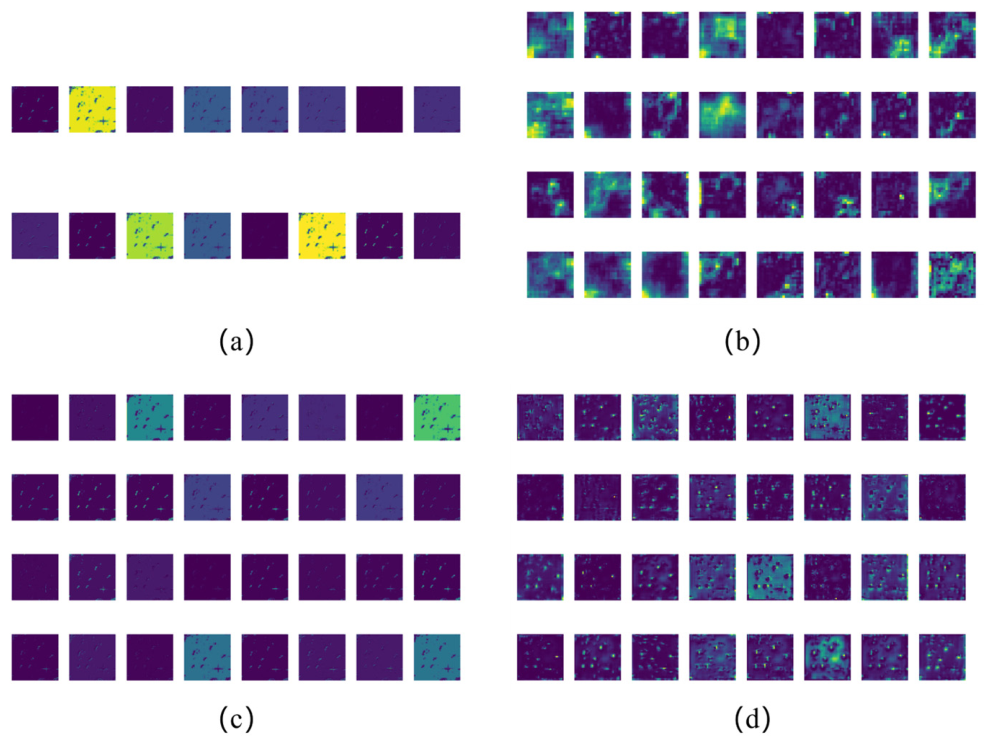
As shown in Figure 8, the feature maps of different parts contain abundant information. Figure 8a shows the feature extraction situation of the first two layers of the backbone network. It can be seen that the first layer feature map retains a considerable amount of the original image’s detailed information, such as some obvious ship contour edges and background textures; the second layer begins to conduct preliminary screening and integration of the information, and the features gradually focus on the target area.
Figure 8b,c focus on the neck network Xfeat. By magnifying local features and combining the ELA attention mechanism for analysis, the ELA attention mechanism can adaptively focus on important feature regions. From the figure, it can be observed that after its processing, the feature response of the ship target area is significantly enhanced, while the feature responses of the surrounding noise and irrelevant background information are suppressed. This helps the model to more accurately identify the ship target.
Figure 8d is the final feature map. At this point, the features have undergone multiple rounds of processing and fusion. The features of the ship target are more prominent and concentrated, and the background interference is reduced further. This feature representation allows the lightweight detection head to quickly and accurately complete the classification and positioning of the target. Overall, the HGXES network achieves the gradual optimization of features at different stages, from the extraction of original information to the enhancement of key features and finally forms a feature representation beneficial for detection. This demonstrates the achievements of the algorithm and the effectiveness of the rational design.
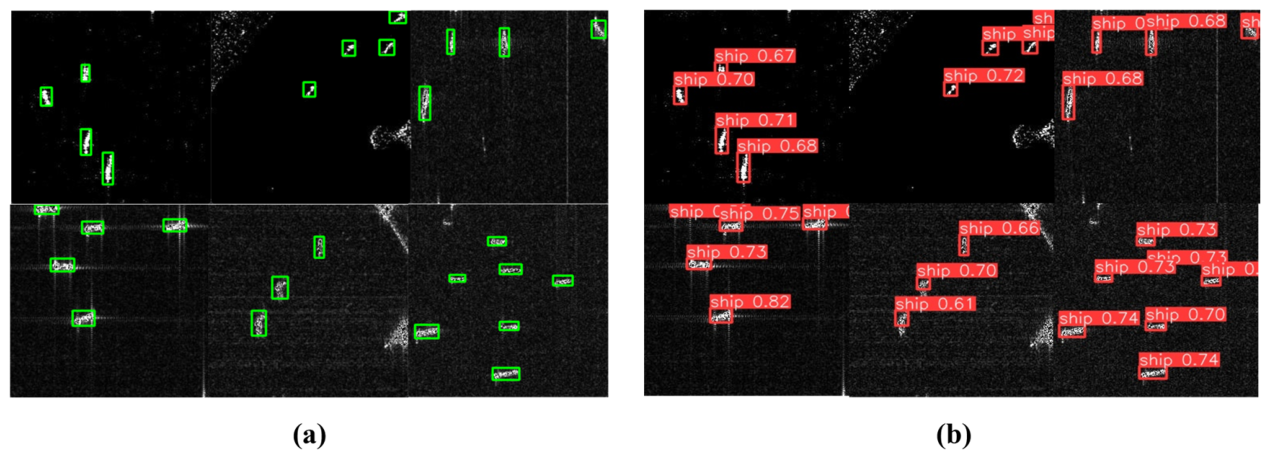
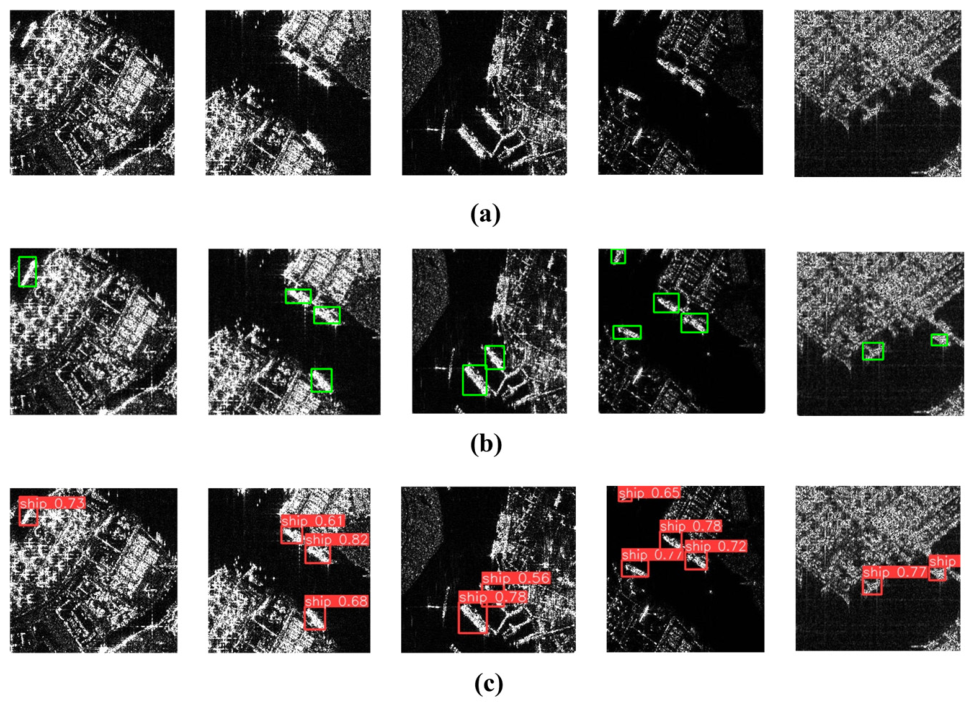
In the field of ship image target detection, we often face challenges in different scenarios, which are mainly attributed to two typical situations. One situation is small target ship images against simple backgrounds. Such images have relatively simple backgrounds, but the ship target size is small and the feature information is limited. During detection, it is necessary to precisely capture the subtle features to accurately locate the ship. The previous Figures and the comparison of the detection effect of the HGXES model reflect that the model, by leveraging Xfeat feature extraction, lightweight detection head design, and shapeIoU innovation, achieves high-precision detection in a lightweight framework when dealing with such problems. The other more complex situation is ship images against complex backgrounds. These backgrounds contain numerous interference factors, making them easily confused with ship target, increasing the detection difficulty. However, the HGXES model effectively overcomes the interference of complex backgrounds by relying on its own innovative technologies, demonstrating outstanding detection performance. The detection results are analyzed in detail in Figure 9 and Figure 10.
In Figure 9a, a green bounding box precisely marks the real position of the small target ship, while Figure 9b showcases the excellent detection performance of the HGXES model. The confidence score next to the red detection box intuitively presents the detection capability of the model.
The HGXES model performs well thanks to its multiple innovative improvements. The application of the Xfeat feature extraction method enables more efficient mining of deep-level feature information related to the ship target in the image, laying a solid foundation for precise detection. ELA attention enhances weak scattering features of ships. The lightweight detection head design, while ensuring the detection function, significantly reduces the computational load and improves the detection efficiency, allowing the model to respond quickly even with limited resources. The innovation of shapeIoU further optimizes the matching degree between the detection box and the real box, improving the accuracy of positioning.
From the numerous high confidence scores in Figure 9b, it can be seen that this model, under the improved lightweight framework, not only does not lose accuracy but also, thanks to the aforementioned improvements, demonstrates high accuracy and robustness, and can effectively handle the complex task of detecting small target ships.
Figure 10a presents a ship image against a complex background, with a lot of noise in the picture. The ship target is intertwined with the background, greatly increasing the difficulty of detection. Figure 10b marks the true position of the ship with a green bounding box, providing an accurate reference standard for the detection results. Figure 10c shows the actual detection effect of the HGXES model, with the confidence score marked beside the red detection box clearly visible.
Against a complex inshore background with heavy clutter, the multi-scale feature fusion and ELA attention of HGXES can distinguish ship targets from island, reef and strong scattering interference, which significantly reduces the false detection rate compared with other models. Its Xfeat feature extraction technology can penetrate the interference of the complex background and accurately capture the unique features of the ship target. The lightweight detection head design ensures that the detection performance does not degrade while effectively reducing the computational cost, enabling the model to complete the detection task quickly in complex backgrounds. The introduction of shapeIoU makes the detection box more closely match the real contour of the ship, significantly improving the positioning accuracy. The high confidence score in Figure 10c shows that the HGXES model, with these innovative improvements, demonstrates outstanding accuracy, robustness, and efficiency in complex background ship detection.
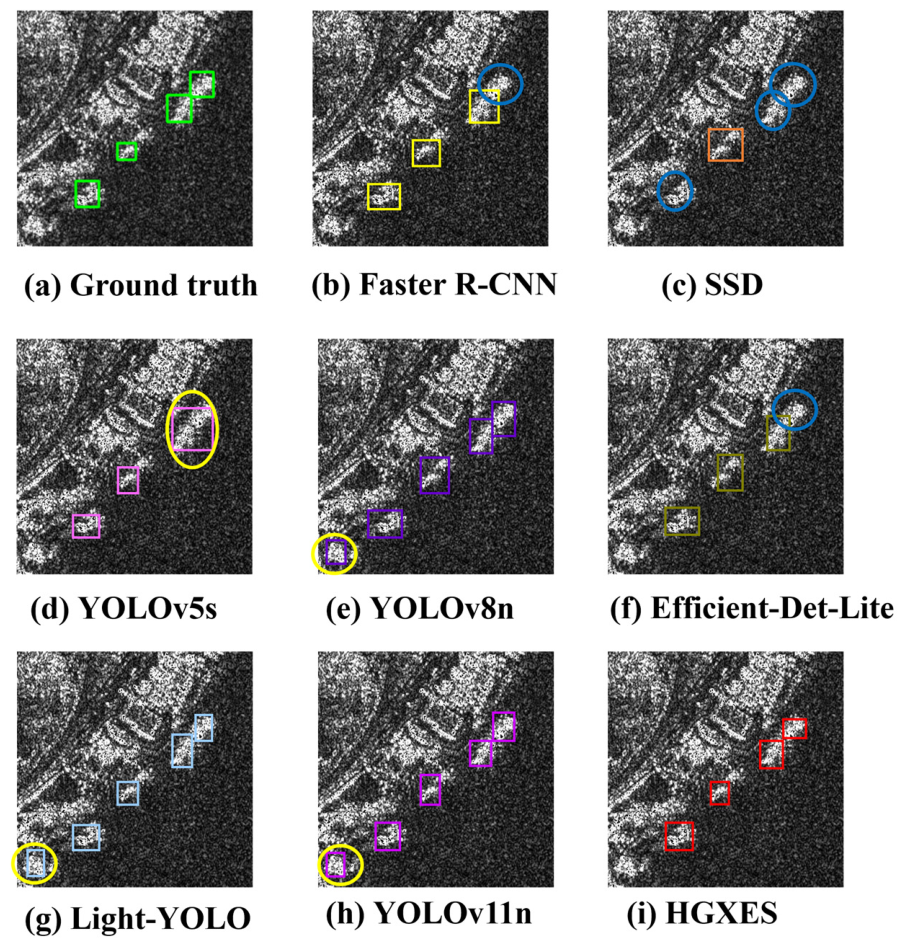
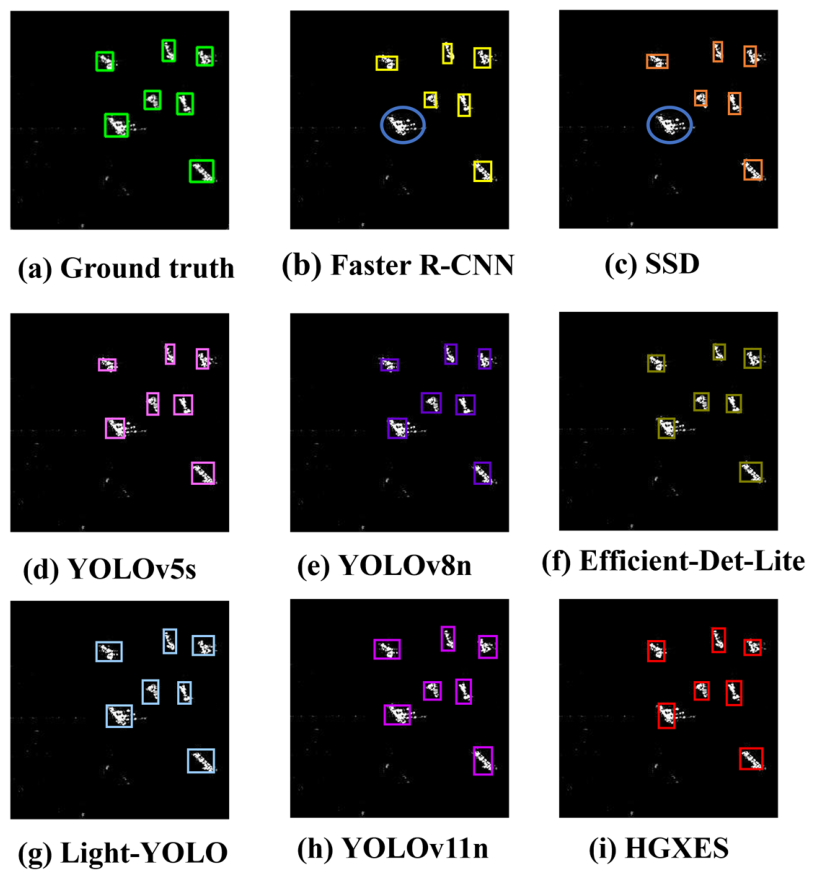
The comparison with other models in the actual effect diagram can also demonstrate the superiority of the HGXES model. As shown in Figure 11, all models accurately found all ship targets against simple backgrounds, except for Faster R-CNN (Figure 11b) and SDD (Figure 11c), which have missed detections (indicate by blue circles).
In the ship detection task, the existing target detection models revealed numerous deficiencies in terms of accuracy, recall rate, and lightweight performance. However, the HGXES model demonstrates significant superiority through its lightweight Xfeat feature extraction module. Traditional two-stage models such as Faster R-CNN (Figure 12b) often suffer from excessive false detections due to the ineffectiveness of the region proposal network at distinguishing the complex background of the sea and the ship targets. Single-stage models such as SSD (Figure 12c) frequently miss small ship targets due to the limited semantic information capture ability of the low-level feature maps. Lightweight models such as YOLOv5s (Figure 12d) and Light-YOLO (Figure 12g) have overly simplified their network structures in pursuit of detection speed, resulting in significant loss of model accuracy and frequent false detections, as indicated by the yellow circles in Figure 12. Similar false detection issues also occurred in YOLOv8n and YOLOv11n (Figure 12e,h). However, with Efficient-Det-Lite (Figure 12f), there was a minor omission detection phenomenon without false detections.
The HGXES model introduces a lightweight detection head design based on ShapeIoU, which can adjust the shape loss weight according to the similarity between the sample and the background, significantly enhancing the model’s anti-interference ability against complex backgrounds and effectively reducing the false detection rate; at the same time, its designed multi-scale attention feature fusion module, through the collaborative effect of spatial and channel attention, precisely focuses on ship targets and strengthens their feature representation, successfully solving the problem of missed detection of small ship targets. Moreover, the HGXES model adopts a lightweight backbone network, ensuring efficient feature extraction while significantly reducing the number of parameters and computational costs, achieving a win-win situation in terms of detection speed and accuracy.

5. Discussion

This study introduced the HGXES model, a lightweight SAR ship detection network designed to address the challenges of deploying advanced deep learning models on resource-constrained edge devices. The model integrates efficient structural design, feature enhancement mechanisms, and an attention mechanism to reduce computational costs while preserving feature extraction capabilities. Experimental results on benchmark SAR datasets demonstrate that the HGXES model achieves a 70% reduction in parameters; this is achieved by combining the lightweight HGNetV2 and our incremental lightweight designs, while the accuracy improvement comes from our proposed modules. HGXES has a model size of just 1.9 MB, and 2.3 M parameters, and 3.9 G FLOPs, while maintaining comparable detection accuracy. The ELA attention mechanism and ShapeIoU loss function further enhance detection performance, achieving an mAP of 97.2% and a detection speed of 49.7 fps.
Despite the promising lightweight performance and detection accuracy achieved by HGXES, there are still several limitations. First, the model may experience performance degradation under extremely strong coherent speckle noise and against ultra-dense inshore ship clusters. Second, the generalization ability for ultra-small targets and extremely low signal-to-clutter ratio SAR images needs to be enhanced. Third, this evaluation was conducted on public SAR datasets, and the actual deployment performance in real physical edge devices requires more field verification.
Accordingly, we propose the following future research directions: (1) Multi-modal data fusion should be explored to combine SAR images with optical imagery or AIS data, so as to provide complementary information and further improve detection accuracy and reliability. (2) The model structure should be further optimized to enhance the robustness against strong noise, dense ship targets, and complex marine backgrounds. (3) Extensive experiments and field tests should be carried out in real-world maritime environments to validate the practical deployment effect of the model. (4) Lighter and more efficient attention mechanisms and loss functions should be designed to better adapt to more resource-constrained edge computing platforms.

6. Conclusions

This study introduced the HGXES model, a lightweight and efficient SAR ship detection network specifically designed to operate on resource-constrained edge devices such as UAVs and spaceborne platforms. The model’s architecture integrates an improved HGNetV2 backbone network providing the lightweight basis, a Xfeat feature extraction module, and a lightweight detection head (LWDetect), all optimized for computational efficiency and high detection accuracy. ELA attention improves the model’s ability to focus on ship targets and suppress speckle noise, which is the key to performance improvement and the ShapeIoU loss function further enhances the model’s ability to accurately detect ship targets in complex SAR image scenarios.
Experimental results on benchmark SAR datasets demonstrate the HGXES model’s superiority over traditional models. It achieves a 70% reduction in parameters, with a model size of just 1.9 MB and 2.3 M parameters, while maintaining comparable detection accuracy. The model’s detection speed reaches 49.7 fps, making it suitable for real-time marine monitoring applications. The ELA attention mechanism improves feature extraction by dynamically adjusting feature weights, while the ShapeIoU loss function optimizes boundary box regression, significantly enhancing detection performance.
Looking forward, the HGXES model presents a significant step forward in the field of SAR ship detection, particularly for applications requiring real-time processing on edge devices. Future research should focus on further refining the model’s architecture to improve its robustness against diverse and challenging SAR image conditions. Additionally, exploring the integration of multi-modal data, such as optical imagery or AIS (Automatic Identification System) data, could provide complementary information to enhance detection accuracy.
Moreover, extensive field testing in real-world marine environments will be crucial to validate the model’s practical performance and identify potential areas for improvement. As the technology advances, the HGXES model has the potential to become a cornerstone in marine monitoring systems, contributing significantly to maritime security, navigation safety, and environmental surveillance. By continuing to innovate and optimize, the HGXES model can play a pivotal role in advancing the field of remote sensing and ensuring safer and more efficient maritime operations.

Author Contributions

Data curation: Y.T., Y.W. and R.H.; Investigation: Y.W. and R.H.; Methodology: F.G. and Y.T.; Validation, Y.T., Y.W. and R.H.; Writing—original draft: F.G. and Y.T.; Writing—review and editing: F.G. All authors have read and agreed to the published version of the manuscript.

Funding

This work was supported by the Natural Science Foundation of Hebei Province (No. F2024210005), the Natural Science Foundation of Education Department, the Hebei Province (QN2026389) and S&T Program of Hebei (253A0901D), the S&T Program of Shijiazhuang (2512302507A), the Science and Technology Research and Development Program of China State Railway Group Company Limited (P2024S001), and the Hebei Higher Education Association’s 14th Five Year Plan Project (GJXH2024-079).

Institutional Review Board Statement

Not applicable.

Informed Consent Statement

Not applicable.

Data Availability Statement

The data that support the findings of this study are available from the authors upon reasonable request.

Conflicts of Interest

The authors declare no conflicts of interest.

References

  1. Zhou, Z.; Cui, Z.; Tang, K.; Tian, Y.; Pi, Y.; Cao, Z. Gaussian meta-feature balanced aggregation for few-shot synthetic aperture radar target detection. ISPRS J. Photogramm. Remote Sens. 2024, 208, 89–106. [Google Scholar] [CrossRef] [Scilit]
  2. Li, H.-L.; Chen, S.-W. General Polarimetric Correlation Pattern: A Visualization and Characterization Tool for Target Joint-Domain Scattering Mechanisms Investigation. IEEE Trans. Geosci. Remote Sens. 2025, 63, 5200417. [Google Scholar] [CrossRef] [Scilit]
  3. Yu, J.; Wu, T.; Zhang, X.; Zhang, W. An Efficient Lightweight SAR Ship Target Detection Network with Improved Regression Loss Function and Enhanced Feature Information Expression. Sensors 2022, 22, 3447. [Google Scholar] [CrossRef] [Scilit] [PubMed]
  4. Li, H.-L.; Chen, S.-W. Polyhedral Corner Reflectors Multidomain Joint Characterization with Fully Polarimetric Radar. IEEE Trans. Antennas Propag. 2025, 73, 10679–10693. [Google Scholar] [CrossRef] [Scilit]
  5. Cui, Z.; Li, Q.; Cao, Z.; Liu, N. Dense Attention Pyramid Networks for Multi-Scale Ship Detection in SAR Images. IEEE Trans. Geosci. Remote Sens. 2019, 57, 8983–8997. [Google Scholar] [CrossRef] [Scilit]
  6. Shi, H.; Zhang, Q.; Bian, M.; Wang, H.; Wang, Z.; Chen, L.; Yang, J. A Novel Ship Detection Method Based on Gradient and Integral Feature for Single-Polarization Synthetic Aperture Radar Imagery. Sensors 2018, 18, 563. [Google Scholar] [CrossRef] [Scilit]
  7. Zhou, Z.; Cao, Z.; Chen, Q.; Tang, K.; Li, Y.; Pi, Y.; Cui, Z. Few-shot target detection in SAR imagery via intensive metafeature aggregation. IEEE Trans. Geosci. Remote Sens. 2024, 62, 5213219. [Google Scholar] [CrossRef] [Scilit]
  8. Wang, Z.; Hou, G.; Xin, Z.; Liao, G.; Huang, P.; Tai, Y. Detection of SAR image multiscale ship targets in complex inshore scenes based on improved YOLOv5. IEEE J. Sel. Top. Appl. Earth Obs. Remote Sens. 2024, 17, 5804–5823. [Google Scholar] [CrossRef] [Scilit]
  9. Hao, Y.; Zhang, Y. A lightweight convolutional neural network for ship target detection in SAR images. IEEE Trans. Aerosp. Electron. Syst. 2023, 60, 1882–1898. [Google Scholar] [CrossRef] [Scilit]
  10. Zhou, Z.; Cui, Z.; Tian, Y.; Chen, Y.; Pi, Y.; Cao, Z. Dynamic semantics-guided meta-transfer learning for few-shot SAR target detection. IEEE Trans. Geosci. Remote Sens. 2025, 63, 5209517. [Google Scholar] [CrossRef] [Scilit]
  11. Bhattacharjee, S.; Shanmugam, P.; Das, S. A deep-learning-based lightweight model for ship localizations in SAR images. IEEE Access 2023, 11, 94415–94427. [Google Scholar] [CrossRef] [Scilit]
  12. Kresse, F.; Pilikos, G.; Azcueta, M.; Floury, N. Lightweight cnns for embedded sar ship target detection and classification. arXiv 2025, arXiv:2508.10712. [Google Scholar] [CrossRef] [Scilit]
  13. Li, H.-L.; Liu, S.-W.; Chen, S.-W. PolSAR Ship Characterization and Robust Detection at Different Grazing Angles with Polarimetric Roll-Invariant Features. IEEE Trans. Geosci. Remote Sens. 2024, 62, 5225818. [Google Scholar] [CrossRef] [Scilit]
  14. Lv, J.; Zhu, D.; Geng, Z.; Chen, H.; Huang, J.; Niu, S.; Ye, Z.; Zhou, T.; Zhou, P. Efficient target detection of monostatic/bistatic SAR vehicle small targets in ultracomplex scenes via lightweight model. IEEE Trans. Geosci. Remote Sens. 2024, 62, 5225120. [Google Scholar] [CrossRef] [Scilit]
  15. Miao, T.; Zeng, H.C.; Yang, W.; Chu, B.; Zou, F.; Ren, W.; Chen, J. An improved lightweight RetinaNet for ship detection in SAR images. IEEE J. Sel. Top. Appl. Earth Obs. Remote Sens. 2022, 15, 4667–4679. [Google Scholar] [CrossRef] [Scilit]
  16. Kulkarni, U.; Meena, S.M.; Gurlahosur, S.V.; Bhogar, G. Quantization friendly mobilenet (qf-mobilenet) architecture for vision based applications on embedded platforms. Neural Netw. 2021, 136, 28–39. [Google Scholar] [CrossRef] [Scilit]
  17. Wang, Y.; Xu, X.; Wang, Z.; Li, R.; Hua, Z.; Song, H. ShuffleNet-Triplet: A lightweight RE-identification network for dairy cows in natural scenes. Comput. Electron. Agric. 2023, 205, 107632. [Google Scholar] [CrossRef] [Scilit]
  18. Chen, Z.; Yang, J.; Chen, L.; Jiao, H. Garbage classification system based on improved ShuffleNet v2. Resour. Conserv. Recycl. 2022, 178, 106090. [Google Scholar] [CrossRef] [Scilit]
  19. Li, Y.; Zhang, S.; Wang, W.Q. A lightweight faster R-CNN for ship detection in SAR images. IEEE Geosci. Remote Sens. Lett. 2020, 19, 4006105. [Google Scholar] [CrossRef] [Scilit]
  20. Zhang, T.; Zhang, X.; Shi, J.; Wei, S. HyperLi-Net: A hyper-light deep learning network for high-accurate and high-speed ship detection from synthetic aperture radar imagery. ISPRS J. Photogramm. Remote Sens. 2020, 167, 123–153. [Google Scholar] [CrossRef] [Scilit]
  21. Ge, Z.; Liu, S.; Wang, F.; Li, Z.; Sun, J. Yolox: Exceeding yolo series in 2021. arXiv 2021, arXiv:2107.08430. [Google Scholar] [CrossRef] [Scilit]
  22. Jiang, P.; Ergu, D.; Liu, F.; Cai, Y.; Ma, B. A Review of Yolo algorithm developments. Procedia Comput. Sci. 2022, 199, 1066–1073. [Google Scholar] [CrossRef] [Scilit]
  23. Hussain, M. Yolov1 to v8: Unveiling each variant–a comprehensive review of yolo. IEEE Access 2024, 12, 42816–42833. [Google Scholar] [CrossRef] [Scilit]
  24. Xu, X.; Zhao, M.; Shi, P.; Ren, R.; He, X.; Wei, X.; Yang, H. Crack Detection and Comparison Study Based on Faster R-CNN and Mask R-CNN. Sensors 2022, 22, 1215. [Google Scholar] [CrossRef] [Scilit]
  25. Zhou, Y.; Wang, S.; Ren, H.; Hu, J.; Zou, L.; Wang, X. Multi-Level Feature-Refinement Anchor-Free Framework with Consistent Label-Assignment Mechanism for Ship Detection in SAR Imagery. Remote Sens. 2024, 16, 975. [Google Scholar] [CrossRef] [Scilit]
  26. Qian, S.; Du, J.; Zhou, J.; Xie, C.; Li, R. An effective pest detection method with automatic data augmentation strategy in the agricultural field. Signal Image Video Process. 2023, 17, 563–571. [Google Scholar] [CrossRef] [Scilit]
  27. Zhou, L.; Wan, Z.; Zhao, S.; Han, H.; Liu, Y. BFEA: A SAR Ship Detection Model Based on Attention Mechanism and Multiscale Feature Fusion. IEEE J. Sel. Top. Appl. Earth Obs. Remote Sens. 2024, 17, 11163–11177. [Google Scholar] [CrossRef] [Scilit]
  28. Xia, R.; Chen, J.; Huang, Z.; Wan, H.; Wu, B.; Sun, L.; Yao, B.; Xiang, H.; Xing, M. CRTransSar: A Visual Transformer Based on Contextual Joint Representation Learning for SAR Ship Detection. Remote Sens. 2022, 14, 14. [Google Scholar] [CrossRef] [Scilit]
  29. Hassan, E.; El-Rashidy, N. mask R-CNN models. Nile J. Commun. Comput. Sci. 2022, 3, 17–27. [Google Scholar] [CrossRef] [Scilit]
  30. Li, C.; Li, L.; Jiang, H.; Weng, K.; Geng, Y.; Li, L.; Ke, Z.; Li, Q.; Cheng, M.; Nie, W.; et al. YOLOv6: A single-stage object detection framework for industrial applications. arXiv 2022, arXiv:2209.02976. [Google Scholar] [CrossRef] [Scilit]
  31. Zhang, C.; Liu, P.; Wang, H.; Jin, Y. NPA2Net: A nested path aggregation attention network for oriented SAR ship detection. IEEE J. Sel. Top. Appl. Earth Obs. Remote Sens. 2024, 17, 9772–9789. [Google Scholar] [CrossRef] [Scilit]
  32. Yehia, A.; El-Sheimy, N.; Helmy, A.; Sanad, I.S.; Hanafy, M. DRC2-Net: A Context-Aware and Geometry-Adaptive Network for Lightweight SAR Ship Detection. Sensors 2025, 25, 6837. [Google Scholar] [CrossRef] [Scilit]
  33. Zhang, H.; Zhou, Y.; Qiu, Y. A Steel Surface Defect Detection Method Integrating HGnetv2 and Attention Mechanism. J. Electron. Meas. Instrum. 2025, 39, 36–49. [Google Scholar] [CrossRef]
  34. Huang, S.; Hou, Y.; Liu, L.; Yu, X.; Shen, X. Real-time object detection meets DINOv3. arXiv 2025, arXiv:2509.20787. [Google Scholar] [CrossRef] [Scilit]
  35. Arar, M.; Shamir, A.; Bermano, A.H. Learned queries for efficient local attention. In Proceedings of the IEEE/CVF Conference on Computer Vision and Pattern Recognition, New Orleans, LA, USA, 19–24 June 2022; pp. 10841–10852. [Google Scholar]
  36. Gambhir, P.; Dev, A.; Bansal, P.; Sharma, D. End-to-end multi-modal low-resourced speech keywords recognition using sequential Conv2D nets. ACM Trans. Asian Low-Resour. Lang. Inf. Process. 2024, 23, 1–21. [Google Scholar] [CrossRef] [Scilit]
  37. Zhang, Q.; Zhang, J.; Yang, S. Enhancing YOLOv8 object detection with shape-IoU loss and local convolution for small target recognition. Informatica 2025, 49, 105–119. [Google Scholar] [CrossRef] [Scilit]
  38. Huang, P.; Tian, S.; Su, Y.; Tan, W.; Dong, Y.; Xu, W. IA-CIOU: An improved IOU bounding box loss function for SAR ship target detection methods. IEEE J. Sel. Top. Appl. Earth Obs. Remote Sens. 2024, 17, 10569–10582. [Google Scholar] [CrossRef] [Scilit]
  39. Andariefli, K.; Handaya, J.L.; Herman, K.A.; Gunawan, A.A.S. YOLO Object Detection in Synthetic Aperture Radar Imagery: A Study on SARDet-100K with Image Denoising. In Proceedings of the 2025 IEEE 2nd International Conference on Cryptography, Informatics, and Cybersecurity (ICoCICs), Depok, Indonesia, 22–23 October 2025; pp. 1–6. [Google Scholar]
  40. Wu, Y.; Suo, Y.; Meng, Q.; Dai, W.; Miao, T.; Zhao, W.; Yan, Z.; Diao, W.; Xie, G.; Ke, Q.; et al. FAIR-CSAR: A benchmark dataset for fine-grained object detection and recognition based on single-look complex SAR images. IEEE Trans. Geosci. Remote Sens. 2024, 63, 5201022. [Google Scholar] [CrossRef] [Scilit]
  41. Jin, L.; Liu, G. An approach on image processing of deep learning based on improved SSD. Symmetry 2021, 13, 495. [Google Scholar] [CrossRef] [Scilit]
  42. Wang, Y.; Wang, C.; Zhang, H.; Dong, Y.; Wei, S. A SAR Dataset of Ship Detection for Deep Learning under Complex Backgrounds. Remote Sens. 2019, 11, 765. [Google Scholar] [CrossRef] [Scilit]
  43. Jiang, S. Research on Ship Detection Method of Optical Remote Sensing Image Based on Deep Learning. Master’s Thesis, School of Electronic Information Engineering, Shanghai Jiao Tong University, Shanghai, China, 2019. [Google Scholar]
  44. Kee, E.; Chong, J.J.; Choong, Z.J.; Lau, M. Development of Smart and Lean Pick-and-Place System Using EfficientDet-Lite for Custom Dataset. Appl. Sci. 2023, 13, 11131. [Google Scholar] [CrossRef] [Scilit]
  45. Woo, S.; Park, J.; Lee, J.Y.; Kweon, I.S. Cbam: Convolutional block attention module. In Proceedings of the European Conference on Computer Vision (ECCV), Munich, Germany, 8–14 September 2018; pp. 3–19. [Google Scholar]
  46. Huang, B.; He, B.; Wu, L.; Guo, Z. Deep Residual Dual-Attention Network for Super-Resolution Reconstruction of Remote Sensing Images. Remote Sens. 2021, 13, 2784. [Google Scholar] [CrossRef] [Scilit]
  47. Hu, Z.; Li, H.; Zhang, J.; Zhang, D.; Su, M. Fish Target Detection Method Based on EPSA-CenterNet2. In Proceedings of the 5th International Conference on Control and Computer Vision, Jeju, Republic of Korea, 13–15 May 2022; pp. 42–47. [Google Scholar]
  48. Wang, Z. Disaster Remote Sensing Image Semantic Segmentation model with boundary constraints based on SegNeXt. In Proceedings of the 2023 3rd International Conference on Neural Networks, Information and Communication Engineering (NNICE), Xi’an, China, 26–28 May 2023; pp. 734–737. [Google Scholar]
  49. Wang, Z.; Bian, Y.; Yang, M.; Liu, G. Power Plant Furnace Flame Stability Detection Based on ResNet18-SimAM. In Proceedings of the 2024 IEEE Sustainable Power and Energy Conference (iSPEC), Chengdu, China, 10–12 May 2024; pp. 321–325. [Google Scholar]
  50. Zheng, Z.; Wang, P.; Ren, D.; Liu, W.; Ye, R.; Hu, Q. Enhancing geometric factors in model learning and inference for object detection and instance segmentation. IEEE Trans. Cybern. 2021, 52, 8574–8586. [Google Scholar] [CrossRef] [Scilit] [PubMed]
  51. Rezatofighi, H.; Tsoi, N.; Gwak, J.Y.; Sadeghian, A.; Reid, I.; Sabarese, S. Generalized intersection over union: A metric and a loss for bounding box regression. In Proceedings of the IEEE/CVF Conference on Computer Vision and Pattern Recognition, Long Beach, CA, USA, 15–20 June 2019; pp. 658–666. [Google Scholar]
  52. Tong, Z.; Chen, Y.; Xu, Z.; Yu, R. Wise-IoU: Bounding box regression loss with dynamic focusing mechanism. arXiv 2023, arXiv:2301.10051. [Google Scholar] [CrossRef] [Scilit]
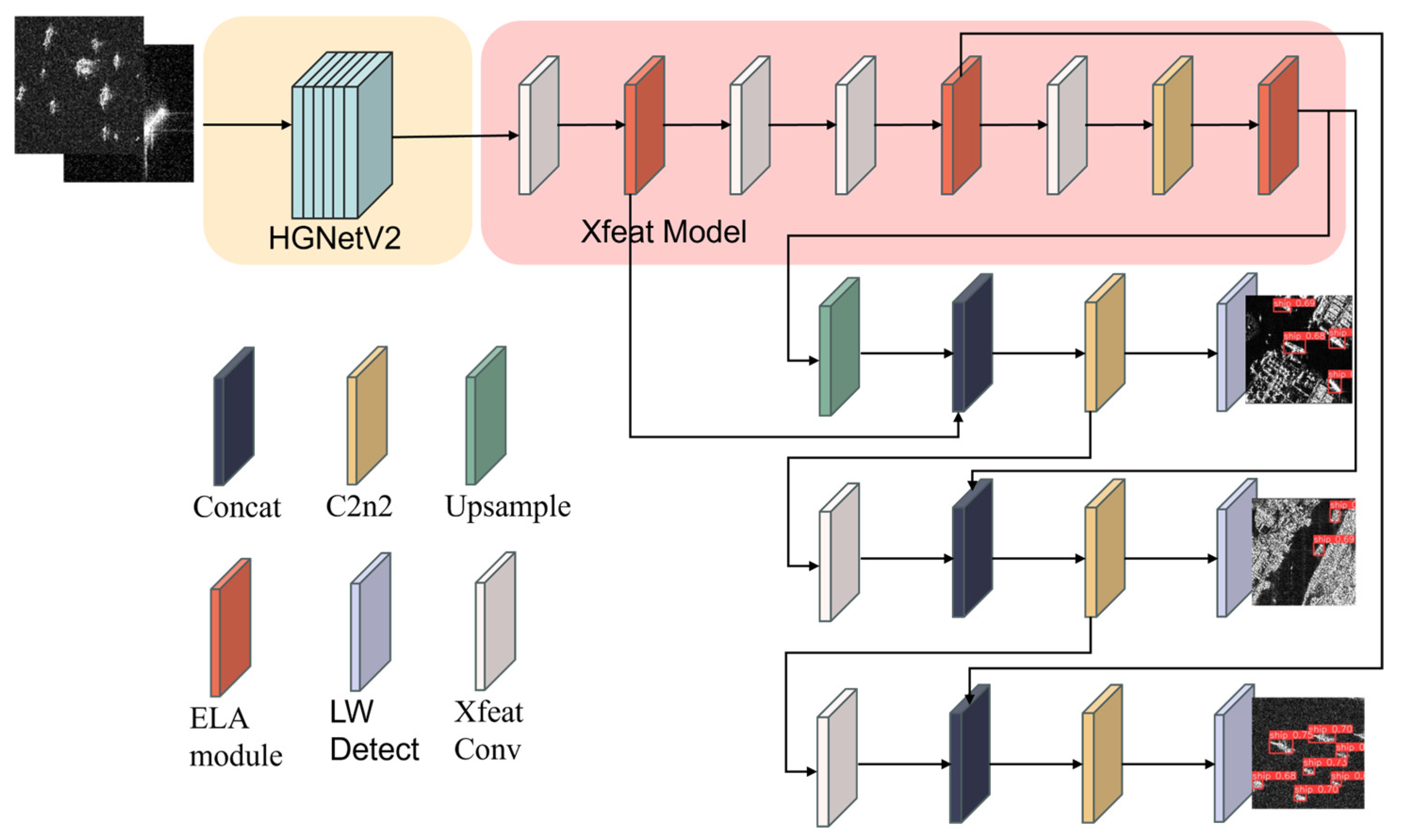
Figure 1. HGXES lightweight algorithm structure diagram.
Remotesensing 18 01276 g001
Figure 2. Improved HGNetV2 structure.
Remotesensing 18 01276 g002
Figure 3. ELA attention mechanism.
Remotesensing 18 01276 g003
Figure 4. Architecture of the Lightweight Shared Detection Head.
Remotesensing 18 01276 g004
Figure 5. Examples of ship images in the dataset.
Remotesensing 18 01276 g005
Figure 6. The types of image in each dataset.
Remotesensing 18 01276 g006
Figure 7. Feature map example.
Remotesensing 18 01276 g007
Figure 8. Feature layer extraction process. (a) shows the feature extraction situation of the first two layers of the backbone network; (b,c) focus on the neck network Xfeat; (d) is the final feature map.
Remotesensing 18 01276 g008
Figure 9. Model result image of the small target vessel HGXES. (a) shows the actual position of the ship; (b) presents the effect of the HGXES model.
Remotesensing 18 01276 g009
Figure 10. HGXES model detection results for ships against complex backgrounds. (a) Example of a ship image in a complex background; (b) true position map of the ship; (c) actual detection result of the HGXES model.
Remotesensing 18 01276 g010
Figure 11. Comparison of multiple models detecting small target ships. (a) The actual position of the vessel; (bi) represent the actual detection results of each model.
Remotesensing 18 01276 g011
Figure 12. HGXES model results detecting ships against complex backgrounds. (a) The actual position of the vessel; (bi) represent the actual detection results of each model.
Remotesensing 18 01276 g012
Table 1. Comparison between different models.
ModelModel Size (MB)Parameter (M)FLOPs (G)mAP (%)Speed (fps)
Faster R-CNN107.027.695.089.736.2
SSD90.623.687.488.332.40
YOLOv5s14.57.0115.891.244.6
YOLOv8n6.26.0115.892.446.8
Efficient-Det-Lite [44]8.55.213.293.247.8
Light-YOLO6.74.27.694.138.5
YOLOv11n5.23.014.094.447.4
HGXES (ours)1.92.33.996.349.7
Table 2. Comparison of different attention mechanisms.
Attention P (%)R (%)mAP (%)Parameter (M)GFLOPs
Baseline model93.385.992.13.088.2
+CBAM [45]95.691.296.83.228.2
+DA [46]92.588.595.63.278.4
+EPSANet [47]93.492.196.33.128.2
+SegNext [48]92.891.595.83.148.2
+SimAM [49]89.691.293.23.118.2
+ELA95.194.297.23.108.2
Table 3. Comparison of different loss functions.
Loss FunctionsP (%)R (%)mAP (%)
CIoU [50]89.690.291.1
GIoU [51]88.787.389.5
WIoU [52]90.591.293.2
ShapeIoU91.192.596.1
Table 4. Thermolysis experiment comparison table.
ModelHGNetV2XfearLWDetectShapeIoUmAP (%)Parameter (M)GFLOPs
1××××92.13.088.2
2×××93.32.215.9
3×××94.12.326.3
4×××93.82.116.1
5×××94.32.867.5
6××94.72.225.8
7×94.91.914.1
896.31.903.9
Note: The symbol “√” indicates that this module has been added to the model, while the symbol “×” indicates that it has not been added.
Disclaimer/Publisher’s Note: The statements, opinions and data contained in all publications are solely those of the individual author(s) and contributor(s) and not of MDPI and/or the editor(s). MDPI and/or the editor(s) disclaim responsibility for any injury to people or property resulting from any ideas, methods, instructions or products referred to in the content.