


Highlights
What are the main findings?
- Prior Class Perceptron.
- Adaptive Dense Proposal Module.
What are the implications of the main findings?
- The Prior Class Perceptron effectively mitigates prototype drift and support–query misalignment.
- The Adaptive Dense Proposal Module improves region proposal reliability.
Abstract
Few-Shot Synthetic Aperture Radar (SAR) object detection aims to identify and localize unseen categories using only a small number of annotated support samples. However, performance is fundamentally constrained by two coupled challenges: speckle noise and structured clutter cause unstable region proposals and support–query mismatch, and extreme data scarcity leads to prototype drift and miscalibrated decision boundaries for novel classes. To tackle these issues in a coordinated framework, we propose Prior Class Perceptron Network (PCPNet), a support-conditioned detection framework that jointly improves proposal generation, the Prior Class Perceptron (PCP). First, the Adaptive Dense Proposal Module (ADPM) is designed to replace hard region selection with soft region-aware masks and uncertainty-aware mixture perception, enabling tighter, more reliable proposals in cluttered SAR scenes. Second, the PCP is utilized to decode prompted class perceptron from sparse supports, together with a self-calibrated prototype refinement strategy to mitigate prototype drift and stabilize novel scoring. Finally, by incorporating shot-dependent and uncertainty-aware adaptive margins into the Cross-Entropy (CE) loss, the PCPNet model improves inter-class separation and intra-class compactness under limited supervision. Extensive experiments on SAR-AIRCRAFT-1.0 and MSTAR-FEWSHOT demonstrate that PCPNet consistently achieves SOTA performance across three novel splits and multiple shot settings. In particular, PCPNet attains 27.47% mAP on SAR-AIRCRAFT-1.0 and 52.86% mAP on MSTAR-FEWSHOT under the single-run protocol, while also exhibiting strong robustness and cross-dataset generalization. Additional diagnostic, sensitivity, and qualitative analyses further verify the effectiveness and robustness of the proposed framework. These results indicate that jointly modeling uncertainty, prior class knowledge, and shot-dependent decision calibration provides an effective solution for few-shot SAR object detection.
1. Introduction
Synthetic Aperture Radar (SAR) has emerged as an indispensable sensing modality for wide-area earth observation and defense-related reconnaissance thanks to its all-weather and day-and-night imaging capability and its robustness for illumination conditions [1]. As SAR platforms and acquisition campaigns continue to scale up, automatic object understanding is increasingly expected to move beyond classical detection pipelines, which deliver reliable instance-level localization for diverse objects and imaging geometries. In this context, SAR object detection for man-made objects, such as aircraft and ground vehicles, is essential for operational monitoring as accurate localization must be achieved despite severe clutter, viewpoint variations, and radiometric fluctuations that differ fundamentally from those in optical imagery [2,3].
Meanwhile, object detection in natural images has rapidly progressed with region-based architectures and multi-scale feature pyramids, resulting in strong, efficient, and reproducible detection baselines [4,5,6]. However, these advances depend heavily on large-scale annotated data, whereas SAR object datasets are costly to label and commonly suffer from class imbalance, acquisition-induced appearance variation, and insufficient coverage of rare object categories. This motivates the study on few-shot object detection (FSOD), where novel categories must be detected from only a few labeled support instances. A series of representative FSOD methods have explored meta-learning and support–query conditioning, including Meta R-CNN [7], Attention-Region Proposal Network (RPN) [8], the two-stage fine-tuning baseline TFA [9], and contrastive proposal encoding in FSCE [10]. More recently, researchers have investigated richer feature aggregation and prototype knowledge mechanisms, such as variational feature aggregation (VFA) [11] and information-coupled prototype elaboration (ICPE) [12].
Nevertheless, directly applying RGB-centric few-shot detection approaches to SAR remains non-trivial. First, there are unstable local textures and structured background clutter in SAR imagery, which will undermine the assumption that region proposals and low-level cues remain consistently informative across scenes [3]. Second, the support–query paradigm is especially fragile in SAR as naive feature fusion is easily dominated by query-side clutter. As a result, proposals may drift toward cluttered high-response regions, and classification boundaries may collapse when only a handful of support is available. Third, in SAR few-shot object detection, the primary challenge often shifts from identifying what the object is to determining where to focus. The detector must first propose class-relevant candidate regions under uncertainty and then maintain a stable decision boundary that dynamically adapts to the given shot setting. These challenges are amplified in benchmark settings that emphasize novel-split generalization across datasets and acquisition conditions, such as SAR-AIRcraft-1.0 for aircraft detection [13] and MSTAR-style objects for ground vehicle recognition [14].
Motivated by these observations, we investigate few-shot SAR object detection from the perspective of uncertainty-aware proposal generation and label-consistent class knowledge transfer. Unlike existing few-shot detectors that directly transfer support-conditioning or prototype refinement mechanisms from optical domains, we explicitly model SAR-specific ambiguities caused by speckle noise, structured clutter, and sparse scattering responses. The proposed Prior Class Perceptron Network, PCPNet, is therefore designed as a unified SAR-oriented framework in which proposal generation, class knowledge injection, and decision calibration jointly address support–query inconsistency and unstable decision boundaries under limited supervision. The contributions are presented as follows.
- (1)
- The Adaptive Dense Proposal Module (ADPM) is designed for proposal generation to introduce uncertainty-aware soft region perception for SAR scenes. Unlike conventional hard support assignment mechanisms, the ADPM preserves multi-class evidence under clutter ambiguity conditions and explicitly models uncertainty arising from SAR scattering characteristics.
- (2)
- The Prior Class Perceptron (PCP) embeds prompted class perceptron into support-conditioned decoding and integrates transductive self-calibration to update novel prototypes using unlabeled query distributions, thereby mitigating prototype drift induced by SAR-specific appearance variability. Different from conventional prototype refinement approaches, the PCP reformulates support–query interaction as structured class knowledge retrieval rather than direct feature fusion.
- (3)
- A shot-dependent and uncertainty-aware Cross-Entropy loss is contrived to mitigate score miscalibration and reduce false positives in clutter-dominated SAR environments. By adaptively adjusting the decision margin according to support-shot availability and RoI uncertainty, the proposed loss improves inter-class separation and intra-class compactness, leading to more reliable few-shot detection performance.
This paper is organized as follows. Section 2 reviews related work on few-shot and support-conditioned detection, SAR object understanding with domain-specific challenges and benchmarks, and techniques for proposal reliability, calibration, and robust novel-class generalization. Section 3 introduces the overall architecture of PCPNet and describes each module in detail. Section 4 presents the experimental results, including comparison analysis, ablation studies and visualization. Section 5 concludes the paper with a summary and directions for future work.
2. Related Work
We review the related work from the perspectives of few-shot object detection and support-conditioned detection, SAR object understanding in domain-specific challenges with few-shot SAR benchmarks, and proposal reliability, calibration, and margin design for robust novel-class generalization.
2.1. Few-Shot Object Detection
Few-shot refers to the detection of novel categories given only a handful of labeled instances, while preserving strong performance on base categories with abundant annotations. Few-shot object detection is inherently more challenging than few-shot classification. It jointly addresses object localization and recognition. The detector must first generate candidate regions that accurately cover object extents. It must then classify and regress these regions using extremely limited supervision. This coupling makes FSOD highly sensitive to upstream errors. If candidate regions are biased toward clutter or poorly aligned with object geometry, the downstream classifier receives corrupted supervision. As a result, the model can quickly overfit to spurious correlations.
A mainstream direction is building based on two-stage detectors and performing explicit support conditioning. Meta R-CNN [7] is a representative meta-learning approach that conditions RoI features on support features to enable fast adaptation to novel classes. Feature-Metric Few-Shot Object Detection (FM-FSOD) [15] addresses this challenge by jointly leveraging feature learning and metric learning paradigms. It emphasizes learning discriminative feature representations and similarity metrics that can effectively compare query instances with limited support examples. FsDetView [16] further highlights that low-shot generalization is constrained by viewpoint and instance variation that the support set cannot cover. To address this issue, it restructures support cues to mitigate prototype drift. Beyond conditioning at the RoI head, Attention-RPN [8] emphasizes that the proposal stage becomes a critical bottleneck in FSOD, since proposals that are irrelevant to the novel class cannot be fully corrected by subsequent head conditioning. A complementary and highly influential line is the fine-tuning paradigm. TFA [9] shows that a strong baseline can be obtained by first training on base classes and then performing a carefully controlled few-shot fine-tuning stage.
Recent FSOD studies focus on representation shaping and region-level discrimination to stabilize low-shot learning. MPSR [17] improves training dynamics by refining positive samples across multiple scales, effectively increasing the diversity of informative gradients for novel objects of different sizes. FSCE [10] introduces proposal-level contrastive learning to enlarge inter-class separation and reduce confusion among visually similar classes, which is especially important when the support set cannot cover the full appearance manifold. ICPE [12] argues that prototypes should be elaborated rather than treated as immutable averages. So it enriches class representations to mitigate bias induced by limited supports. VFA [11] further models uncertainty in support features and performs robust aggregation, which reduces the negative effects of outlier supports or viewpoint-biased exemplars.
It is also useful to relate FSOD to the broader object detection literature. Many FSOD systems directly inherit architectures and training strategies from generic detectors. Multi-scale feature pyramid networks (FPNs) are a standard choice to support localization across object sizes [6], while enhanced feature aggregation paths (PANet) further strengthen cross-level information flow that benefits proposal and RoI quality [18]. In addition to region-based detectors, dense one-stage detectors such as SSD and YOLO highlight that strong performance can be achieved by carefully designed training recipes and controllable augmentation schedules [19,20,21,22,23,24]. Finally, imbalance-aware learning offers another relevant perspective. Large-vocabulary or long-tail benchmarks such as LVIS [25] and balanced training designs such as Libra R-CNN [26] demonstrate that rebalancing the effective exposure of underrepresented factors can be as important as adding new modules.
Existing few-shot detection methods primarily focus on feature alignment, support–query interaction, and class prototype optimization under optical imagery assumptions. However, SAR few-shot detection introduces additional challenges, including speckle-induced uncertainty, structured clutter, sparse scattering distributions, and large appearance variations across acquisition conditions. These characteristics increase proposal instability and representation inconsistency, making direct transfer of optical FSOD methods less reliable.
2.2. SAR Object Detection and Few-Shot SAR Benchmarks
SAR imagery provides reliable sensing under adverse weather and illumination conditions, yet its imaging statistics differ fundamentally from optical images. In particular, multiplicative speckle and complex scattering yield granular fluctuations and structured clutter patterns [3]. Historically, SAR detection in operational contexts relied heavily on CFAR-style detectors and handcrafted pipelines, where clutter modeling and thresholding were carefully tailored to background statistics [27].
With the development of deep learning, SAR object detection increasingly adapts generic detection frameworks. Region-based pipelines provide a strong localization-oriented backbone for SAR detection [5], and dense detectors offer efficiency and scalable training recipes [19,20,21,22]. In practice, CNN-based detectors remain a common foundation due to their efficiency and inductive bias for local structure extraction, and we include an additional CNN-related reference as requested [28]. However, SAR-specific artifacts require the detector to handle texture cues with greater caution, since speckle-like patterns, sidelobes, and structured clutter may appear discriminative yet transfer poorly across scenes and sensors. This introduces a fundamental tension in support-conditioned detection, where naive feature fusion can amplify correlations with clutter, while overly strict proposal filtering risks eliminating true objects when their spatial extents do not coincide with the highest-response regions.
The community has therefore built dedicated benchmarks to study SAR objects more systematically, including few-shot settings. For aircraft detection, SAR-AIRcraft-1.0 provides a benchmark with diverse backgrounds and imaging conditions, exposing the difficulty of precise localization under speckle and clutter conditions [29]. For ground objects, MSTAR and its derivatives have long served as canonical testbeds for SAR recognition and downstream detection-style evaluation, featuring strong aspect or depression variation that challenges invariance and prototype stability [14]. In such benchmarks, few-shot adaptation must address both limited labels and geometry coverage, making proposal reliability and calibration substantially more critical than in optical FSOD. Another practical aspect is the evaluation consistency. COCO-style metrics average Average Precision (AP) over multiple IoU thresholds and thus emphasize both detection recall and high-IoU localization quality [30]. Recently, data-generation methods have emerged as a promising direction for alleviating data scarcity in remote sensing applications. Representative approaches such as RLI-DM and MMO-IG leverage generative models to synthesize diverse remote sensing object samples and enrich training distributions under limited annotation conditions. These methods can potentially complement few-shot learning by increasing sample diversity, improving category coverage, and reducing the dependence on expensive manual labeling. For SAR applications, synthetic data generation is particularly attractive because collecting and annotating large-scale SAR datasets is costly and often constrained by acquisition conditions. Recent studies have also explored cross-domain learning strategies to improve robustness in remote-sensing applications. For example, cross-domain object detection methods transfer knowledge from visible imagery to hyperspectral data to alleviate annotation scarcity and domain discrepancies, while unsupervised hyperspectral image super-resolution approaches enhance feature representation quality through domain-adaptive priors and self-supervised reconstruction mechanisms.
However, the direct application of generated data to few-shot SAR object detection remains challenging. Unlike optical imagery, SAR images are strongly influenced by speckle noise, scattering mechanisms, viewing geometry, and sensor-specific characteristics. Consequently, synthetic samples may exhibit distribution discrepancies relative to real SAR observations, which can limit their effectiveness when transferred to novel categories. Therefore, data-generation approaches and few-shot learning should be viewed as complementary strategies. While generative methods can alleviate data scarcity by providing additional training samples, robust few-shot detectors such as PCPNet remain necessary to address support–query inconsistency, prototype instability, and uncertainty-aware decision making under extremely limited real SAR supervision.
2.3. Proposal Reliability, Calibration, and Margin Design
Beyond backbone capacity and fusion mechanisms, FSOD failures often manifest in two coupled modes. First, region mismatch arises when the RPN generates clutter-biased or misaligned proposals that fail to cover object extents. Second, decision collapse occurs when the few-shot classifier overfits to spurious cues, producing high-confidence false positives. The first issue motivates proposal-oriented designs of Attention-RPN [8], while the second motivates stronger region discrimination and better prototype handling, including FSCE [10], ICPE [12], and VFA [11].
Proposal reliability is particularly critical in SAR. Intensity responses are often dominated by strong scatterers and speckle bursts. A hard top-k selection in the proposal stage may over-focus on bright clutter peaks and under-cover the full object extent, harming both IoU-based regression and support-conditioned classification. This suggests that an effective SAR FSOD pipeline should reduce brittleness in early decisions and improve region plausibility for SAR statistics, rather than merely increasing proposal count. Anchor-free designs such as FCOS simplify dense localization and can reduce sensitivity to anchor engineering [31], while ATSS adaptively selects training samples to bridge anchor-based and anchor-free regimes [32]. Quality-aware modeling further emphasizes that classification scores should reflect localization reliability. GFL learns qualified and distributed bounding boxes to align classification with regression quality [33], VarifocalNet similarly promotes IoU-aware confidence estimation [34], and TOOD highlights task alignment between classification and localization objectives [35]. Although these methods are designed for data-rich detection, their core principles remain highly relevant to FSOD.
Calibration and margin design therefore form a second pillar for robust novel-class generalization. With only a few support samples, prototypes and support-conditioned classifiers are inherently uncertain. They are also easily biased by nuisance factors such as background dominance and geometry-specific scattering. Prototype refinement and uncertainty-aware aggregation like ICPE [12] and VFA [11] address this by enriching and stabilizing class representations, while region-level contrastive objectives of FSCE [10] reduce confusion among similar categories. Yet, even with improved representations, the final decision boundary still requires explicit regularization.
Data augmentation and imbalance handling further interact with proposal reliability and calibration. Copy-paste augmentation has proven effective for increasing instance diversity in natural-image detection and segmentation [36], and strong composition-based training schedules are widely adopted in YOLO-style pipelines [21,22]. However, for SAR, naive composition can introduce boundary artifacts or background-statistics inconsistency that become spurious cues in high-IoU evaluation, amplifying miscalibration and false alarms. Similarly, long-tail and balanced learning studies show that rebalancing the effective exposure of rare factors can significantly change optimization dynamics [25,26]. In SAR FSOD, novel classes and rare viewing conditions act as extreme tail factors. Robust generalization therefore requires addressing both data scarcity and uncertainty across the entire proposal–prototype–head pipeline.
3. Methods
3.1. The Overall Framework of PCPNet
Few-shot SAR object detection differs from natural-image FSOD in ways that affect proposal generation, class-knowledge use, and decision boundary shaping. Sparse scattering centers, discontinuous structures, and clutter introduce foreground–background confusion, causing detectors to overfit to incidental bright responses and degrading proposal recall and localization. Support–query feature fusion can misalign features and labels, forcing classifiers to ignore weak or noisy support signals. Finally, high inter-class similarity and large intra-class variance among novel SAR categories make fixed-margin classifiers and naive prototypes prone to fragile decision boundaries.
SAR images differ fundamentally from optical images because coherent imaging introduces speckle effects, structured clutter, and large appearance variation across viewing conditions. Such characteristics frequently generate locally strong responses that may not correspond to true object regions. Consequently, support-conditioned detectors developed for optical imagery can become unstable when directly transferred to SAR scenarios. In few-shot settings, this issue becomes more severe because limited support samples cannot sufficiently represent the full scattering diversity of target categories. These observations motivate the design of PCPNet, which explicitly considers proposal stability, support–query consistency, and robust decision boundaries under SAR-specific uncertainty conditions. In this paper, we propose PCPNet, a few-shot SAR detector that is explicitly structured around the three critical stages in the pipeline. The overall architecture is shown in Figure 1. The three components of PCPNet are designed to operate in a complementary and hierarchical manner. The ADPM serves as the proposal-generation module and is responsible for producing reliable candidate regions under SAR-specific uncertainty and clutter interference conditions. Based on these proposals, the PCP performs structured class-knowledge retrieval and prototype self-calibration to improve support–query consistency and stabilize novel-class representations. Finally, the adaptive-margin Cross-Entropy loss functions as an auxiliary optimization mechanism that regularizes the classification boundary according to support-shot availability and RoI uncertainty. Therefore, the ADPM and PCP constitute the primary architectural contributions of PCPNet, whereas the adaptive-margin loss further enhances the effectiveness of these representations by improving decision calibration during training.
Figure 1.
The overall framework of PCPNet.
3.2. Adaptive Dense Proposal Module (ADPM)
The ADPM is the core module in PCPNet responsible for generating high-quality candidate regions. Addressing the challenges of sparse scattering centers, discontinuous structures, and complex backgrounds in SAR images, the ADPM employs a hybrid convolutional strategy combining soft classification gating and uncertainty awareness to stably propose regions even in the presence of strong background interference and inter-class similarity. It not only fuses query and support features but also measures the uncertainty at each spatial location using entropy, incorporating it into feature modulation and loss weighting. This improves the recall and localization accuracy of candidate regions while avoiding the feature discontinuity issues caused by hard switching. The overall architecture of the ADPM is shown in Figure 2.
Figure 2.
The structure of ADPM components. (a) Overview of ADPM. (b) Spatial mask generator. (c) Dynamic kernel generator.
Following standard few-shot detection practice, the class space is divided into disjoint base and novel subsets. Training typically proceeds in two stages. First, the model is trained on abundant base-class data using episodic sampling. Second, it is fine-tuned on a balanced set of novel classes with partial weight freezing to mitigate catastrophic forgetting.
In each episode, we sample one query image Iq and a support set with N episode classes. Each class n provides K labeled support instances, . A weight-sharing feature extractor yields is expressed as Equation (1).
where Fq denotes the query feature map in Figure 1, and Fsn denotes the sampled support feature map for class n in Figure 2.
In practice, Fsn can be formed by averaging the K support features at the same pyramid level or by sampling a subset of shots per iteration for efficiency and the ADPM and PCP interfaces remain unchanged.
The spatial mask in RPN is typically produced by a hard arg max over per-class similarity map. In SAR, however, speckle and clutter frequently create near-tie similarities among multiple classes in background regions. A hard assignment therefore causes brittle kernel switching as a tiny fluctuation in similarity can abruptly flip the selected class kernel, producing unstable modulated features and reducing proposal recall. To address this, we keep the ADPM structure in Figure 2 but reinterpret Ω as a soft gating mask and explicitly quantify uncertainty.
Given the query feature map and a support feature map for class n, Figure 2b applies a 3 × 3 projection and then matches query local features to support global features. We write this exactly in the figure’s symbols as expressed in Equation (2).
Flattening over spatial locations and taking an inner product with yields the similarity map, as expressed in Equation (3).
To avoid symbol overload, we keep the same symbol and define it as a soft gating distribution over classes, as expressed in Equation (4).
where is a temperature. When needed, a hard mask can be recovered by , but all subsequent derivations use the soft to maintain continuity and robustness.
The spatial ambiguity is quantified via Shannon entropy of the soft mask, as expressed in Equation (5). The entropy map in Equation (5) is normalized into and used to generate uncertainty weights.
This uncertainty map is not merely an auxiliary output but directly governs mixture perception and loss weighting, which is particularly important in SAR settings where background fluctuations can dominate gradient updates.
Following Figure 2c, each support feature map generates a class-specific kernel, as expressed in Equation (6).
where denotes the lightweight mapping.
Let be the convolution response of query features for the kernel. Instead of selecting a single kernel per location, we combine responses by the soft mask, as expressed in Equation (7).
This produces the modulated feature map shown in Figure 2a. The mixture formulation is especially effective for SAR as it smooths discontinuities from hard switching and preserves multi-class evidence in ambiguous regions. It should be noted that the soft gating mechanism is only used for feature modulation during proposal generation. The RPN head still outputs conventional objectness scores and bounding-box regressions, from which final candidate proposals are generated using standard proposal ranking and non-maximum suppression (NMS). Therefore, the soft mask does not directly determine proposal selection; instead, it influences proposal quality indirectly by producing more stable and discriminative feature representations for the RPN.
The head operates on and produces region proposals. To prevent uncertain background locations from dominating training, the ADPM loss is reweighted as Equation (8).
Then the proposal loss is defined as Equation (9).
The motivation behind the ADPM is closely related to the characteristics of SAR clutter. Traditional hard region selection mechanisms assume that the highest-response region corresponds to the most reliable object evidence. However, in SAR images, clutter and speckle often produce strong local responses that are visually similar to target structures. Small fluctuations may therefore lead to abrupt switching of selected regions and unstable proposal behavior. By replacing hard selection with soft region perception and uncertainty-aware aggregation, the ADPM preserves multiple candidate hypotheses and reduces sensitivity to local response variations. This design improves proposal stability in cluttered SAR environments.
3.3. Prior Class Perceptron (PCP)
The term “Prior Class Perceptron” is used to emphasize structured class knowledge interaction rather than to indicate a classical perceptron model. Unlike conventional perceptrons that directly perform linear decision functions, the PCP serves as an intermediate class-aware representation mechanism for organizing support information under few-shot conditions. Feature–label misalignment arises because early fused representations are still optimized with query labels, which can inadvertently suppress support signals. The PCP addresses this by converting support information into class perceptron tokens and requiring query RoIs to retrieve this knowledge through prompted decoding. In this way, the information flow is label-consistent by construction, with query RoIs serving as the anchors of supervision and support knowledge acting as structured context rather than a competing feature stream. The PCP module focuses on injecting class prior knowledge from the support set into query features to address the feature–label inconsistency problem commonly encountered in few-shot SAR detection. It first encodes support features into class perceptron tokens, then aggregates them through self-attention and feedforward networks to generate encoded class-perceptron representations. Query RoIs access these class-perceptron representations via cue-based decoding, achieving a consistent information flow across labels. To further enhance robustness in few-shot scenarios, PCP also introduces a prototype self-calibration mechanism based on high-confidence query RoIs, enabling dynamic updates to the support prototype and thus improving classification reliability and decision boundary stability.
Prototype drift is particularly pronounced in SAR few-shot detection because target appearance can vary significantly across aspect angles, scattering conditions, and imaging environments. With extremely limited support samples, prototypes constructed from only a few examples may become biased toward incomplete observations. The PCP addresses this issue by introducing structured class knowledge retrieval and lightweight prototype refinement. Instead of directly relying on static support representations, the PCP gradually stabilizes category representations using additional evidence from query samples. This process reduces sensitivity to individual support instances and improves representation consistency. The architecture of the PCP is presented in Figure 3.
Figure 3.
The structure of PCP components.
Given region proposals from the ADPM, RoIAlign extracts RoI feature matrices. For the m-th query RoI, , can be expressed as Equation (10).
The support instance (n, k),, can be expressed as Equation (11).
To match the figure’s single support RoI feature matrix , a per-class averaged support RoI matrix is formed as Equation (12).
As shown on the left of Figure 3, both query and support RoI matrices pass through weight-sharing multi-head self-attention and a feedforward network (FFN). Thus, the resulting query tokens and prototypes are denoted as Equation (13).
where corresponds to the shared self-attention and FFN blocks.
The encoder in Figure 3 aggregates prototypes into encoded class perceptron, as shown in Equation (14).
is used exactly as in the figure to avoid alternate notations such as “memory bank” or “class embeddings.” The decoder takes each query token as a prompt (Q) and uses encoded class perceptron as (K,V), consistent with Figure 3, which can be expressed in Equation (15).
The decoded RoI feature, , is the sole input to the final detection head, enforcing a clear separation of responsibilities as the ADPM concentrates on improving proposal quality, the PCP handles prior class knowledge through the perceptron, and the detection head focuses exclusively on shaping the decision boundary.
With extremely small K, prototypes can be noisy and biased. We therefore allow a lightweight transductive update using confident query RoIs. Let denote the classification confidence of RoI m from the current head prediction, and let be the mean uncertainty over the RoI region , as shown in Equation (16).
Then soft assignments are defined as Equation (17).
For PCP implementation, the shared multi-head self-attention uses 8 attention heads and a hidden dimension of 256. The FFN hidden dimension is set to 1024. Prototype refinement adopts momentum updating with coefficient . The confidence threshold used in Equation (17) is fixed as , such that only high-confidence query RoIs contribute to transductive prototype refinement.
The prototypes are updated by momentum aggregation, as shown in Equation (18).
This update is deliberately expressed in the figure’s prototype symbol as we refine the same object, not a new variable.
Even when proposals are accurate and decoding is label-consistent, few-shot SAR classification can still be fragile because of high inter-class similarity and large intra-class variance. The detection head explicitly tackles both challenges by enlarging inter-class separation through an angular margin and reducing intra-class dispersion via prototype alignment. Importantly, these constraints are adaptively scaled according to the episode shot number K and RoI ambiguity .
Let be the normalized decoded RoI feature and the normalized classifier weight for class . Define . An adaptive margin is used as Equation (19), which increases the margin for more ambiguous RoIs and smaller-shot regimes.
where denotes the base angular margin, is RoI uncertainty, and denotes the support shot number. Hyperparameters are empirically fixed as , , and . Larger uncertainty increases the decision margin conservatively, while increasing shot number gradually relaxes margin constraints.
Algorithm 1 describes the PCP module, which is designed to inject support-class knowledge into query RoI features in a label-consistent and structured manner through a three-stage process. For each query RoI and support instance, features are extracted via RoIAlign. Multi-head self-attention and feedforward networks (FFNs) are applied to produce query tokens and support prototypes . The support prototypes are then aggregated into encoded class perceptrons . Over multiple iterations, support prototypes are refined using confident query RoIs and the corresponding uncertainty . This transductive update stabilizes prototypes, mitigating the effect of noisy support features and maintaining robust class representation with limited shots. Each query token accesses the encoded support prototypes via a decoder, producing the final decoded RoI feature . These features are label-consistent, with query tokens serving as supervision anchors and support prototypes providing structured context rather than competing features.
| Algorithm 1. Pseudocode of PCP |
| Input: , , Output:
|
3.4. Model Training with Cross-Entropy
In object detection and classification tasks, Cross-Entropy (CE) is a commonly used supervision loss to measure the discrepancy between the predicted class distribution and the ground-truth labels. The classification branch is optimized using a Cross-Entropy (CE) objective. Specifically, PCPNet adopts a margin-based Cross-Entropy formulation with shot-dependent and uncertainty-aware adaptive margins to improve decision calibration under limited-supervision conditions. The L1 and L2 losses are employed only for bounding-box regression and prototype refinement, respectively, and are not used as classification objectives for one-hot label prediction.
In PCPNet, each RoI (Region of Interest) is assigned a class label , and the predicted RoI feature vector can be interpreted as a soft prediction of that class. The adaptive margin design is motivated by the observation that decision boundaries in few-shot SAR detection should not remain fixed across different uncertainty levels. Ambiguous regions and limited support samples naturally introduce higher prediction uncertainty. Applying identical constraints to all samples may lead to overconfident predictions and increased false positives. Therefore, the adaptive strategy dynamically adjusts decision behavior according to sample ambiguity and support availability, improving robustness under cluttered SAR conditions.
To enhance feature discriminability, we incorporate the Angular-Margin Loss () and Prototype Alignment Loss () during training. The Angular-Margin Loss encourages angular separation between classes in the feature space, making intra-class features more compact and inter-class features more distinct, which is defined as Equation (20).
where is the number of RoIs, is ground-truth class of the -th RoI, is angle between the feature of the RoI and the prototype of class , denotes cale factor controlling logits’ magnitude and represents the margin applied to enforce angular separation.
Prototype Alignment Loss aligns decoded RoI features with the corresponding class prototype to enforce intra-class compactness while down-weighting ambiguous RoIs to reduce noise interference, as shown in Equation (21).
We treat the Cross-Entropy one-hot labels as regression targets. The predicted RoI feature vector is regressed toward the one-hot label using L1 or L2 loss, as shown in Equations (22) and (23).
Similarly, the RoI bounding box is regressed using L1 or L2 loss as well, as shown in Equations (24) and (25).
where is the ground-truth box and is the predicted box.
The overall training loss combines all components for end-to-end optimization is shown in Equation (26).
4. Experiments
4.1. Datasets, Metrics and Setup
We evaluated PCPNet on SAR-AIRCRAFT-1.0 [13] and MSTAR-FEWSHOT [14], examples of which are presented in Figure 4 and Figure 5. Both datasets follow the standard few-shot detection protocol with disjoint base () and novel () class sets. Each dataset provides three official novel splits (Splits 1–3). Unless otherwise stated, we report the mean by averaging results over these three splits. We adopted the standard two-stage FSOD pipeline of base training on base classes and few-shot fine-tuning on novel classes with K annotated instances per novel class. We evaluated multiple shot settings. In this case, SAR-AIRCRAFT-1.0 uses 1/3/5/10/30-shot, and MSTAR-FEWSHOT uses 1/2/3/5/10-shot.
Figure 4.
Examples of trained images with labels in SAR-AIRCRAFT-1.0 dataset. The colors of boxes represent different categories.
Figure 5.
Examples of trained images with labels in MSTAR-FEWSHOT dataset. The colors of boxes represent different categories.
All experiments were implemented using PyTorch 2.1.0 and conducted on a workstation equipped with four NVIDIA RTX 4090 GPUs (24 GB memory) and Intel Xeon CPUs. The backbone network uses ResNet-50 initialized from ImageNet pretraining. During base training, the model was optimized using stochastic gradient descent (SGD) with momentum of 0.9 and weight decay of . The initial learning rate was set to 0.005 and reduced by a factor of 10 at predefined milestones. Base training was performed for 24 epochs, followed by few-shot fine-tuning for 10 epochs. The batch size was set to 8 during base training and 4 during fine-tuning.
For data augmentation, random horizontal flipping, random scaling , and random cropping were employed. Following standard few-shot detection practice, support samples were episodically sampled during fine-tuning.
Performance is measured using Average Precision on novel classes (nAP), following the evaluation protocol of prior works. nAP is defined as Equation (27).
For cross-dataset transfer experiments, we additionally report base-class AP (bAP) to quantify potential degradation in previously learned base-class knowledge after fine-tuning on novel classes. bAP is defined as Equation (28).
4.2. Comparative Experiments
We compared our method against representative few-shot detectors, including Meta R-CNN [7], FsDetView [16], Attention-RPN [8], TFA [9], MPSR [17], FSCE [10], ICPE [12], VFA [11], FM-FSOD [15], TCFSL [37], and FS-DETR [38]. Meta R-CNN is a meta-learning-based detector that quickly adapts to new categories by learning class adaptability on base categories. FsDetView utilizes a feature visualization mechanism to align features between query and support images to enhance few-shot detection performance. Attention-RPN introduces an attention mechanism into the region proposal network, improving candidate box quality by establishing attention connections between support and query features. TFA employs a two-stage training strategy, pre-training on base categories and then fine-tuning for few-shot adaptation on new categories. MPSR enhances training by generating spurious samples on support images, improving robustness in few-shot target detection. FSCE proposes a class contrast enhancement loss function, strengthening class discrimination through positive and negative sample contrast learning. ICPE uses consistency regularization and prototype enhancement strategies to maintain the stability of few-shot category features. VFA improves detection accuracy by aligning support features with the query feature space through a visualization feature alignment method. FM-FSOD is a few-shot object detection method that leverages feature reconstruction and metric learning on a ResNet-50 backbone to improve embedding quality for novel class recognition. TCFSL is a transformer-based few-shot learning framework that enhances feature interaction and cross-task representation modeling through transformer attention mechanisms. FS-DETR is a DETR-like few-shot detector that combines deformable attention and end-to-end set prediction for object detection under limited supervision.
The single-run results report the mean accuracy of each method in a single evaluation at each sample count setting for a fixed Novel Split 1/2/3. In each run, the support set for each new class is sampled only once, and the model is trained and evaluated based on this sample set. To account for fluctuations in support sample selection and training randomness, we also report the average results from multiple runs, each resampled with few-shot support instances while keeping the split definition and evaluation settings constant. The mean column averages the AP across the three Novel Splits and further summarizes across all sample count settings to generate a single summary score for each method for intuitive performance comparison. Table 1 and Table 2 summarize PCPNet’s performance on SAR-AIRCRAFT-1.0 and MSTAR-FEWSHOT across multiple novel splits and shot settings, reporting both single-run and multi-run averaged results to reflect variability from episodic sampling and optimization.
Table 1.
Comparative experimental results on the SAR-AIRCRAFT-1.0 dataset. The bold formatting represents the best results.
Table 2.
Comparative experimental results on the MSTAR-FEWSHOT dataset. The bold values denote optimal performance. The bold formatting represents the best results.
On SAR-AIRCRAFT-1.0, PCPNet consistently achieves the best performance across every split and every shot setting in Table 1. On single-run evaluation, PCPNet attains a mean of 30.79, surpassing the strongest prior method, FM-FSOD by around 3 absolute points. More importantly, the advantage remains with multi-run averaging as PCPNet reaches 26.46. The consistent gains suggest that PCPNet improves robustness at the pipeline level rather than optimizing a single stage. The uncertainty-aware proposal mechanism enhances proposal recall under clutter conditions. The prompted Prior Class Perceptron stabilizes novel-class representations under limited supervision. The shot-adaptive margin further prevents overconfident false positives. Together, these components lead to stable and reliable improvements across evaluation protocols. SAR-AIRCRAFT-1.0 contains objects with sparse scattering structures and heavy background interference. In this setting, failures at the proposal stage are difficult to recover from. If the ADPM misses an object, later RoI classification cannot hallucinate it. The consistent improvements across all shot settings indicate that PCPNet does more than refine classification. Instead, it enhances proposal recall and proposal quality through the ADPM. The uncertainty-aware and soft region perception mechanisms help stabilize proposals under clutter conditions. Moreover, the gains are observed across all novel splits. This pattern suggests that the method addresses a dataset-level bottleneck caused by SAR-specific ambiguity. It does not rely on split-specific label correlations, which supports stronger generalization. The 1-shot and 3-shot settings are the harshest regime due to unstable support prototypes and dominant SAR clutter, yet PCPNet maintains top performance, highlighting the efficacy of prompted decoding and transductive prototype calibration in stabilizing class perceptron with extremely limited examples. Performance continues to improve with 10 and 30 shots, showing that the method preserves model capacity while maintaining structured support-to-query information flow.
The experimental results shown in Table 2 for the MSTAR-FEWSHOT dataset show that our proposed PCPNet outperforms existing methods across all sample size settings, both in single-run results and multi-run averages. For example, in a single run, PCPNet achieves a mean of 52.86 in the 1-shot setting, surpassing recent transformer-based and DETR-like baselines such as TCFSL (50.98) and FS-DETR (51.74), as well as the strongest CNN-based method FM-FSOD (51.42). In the 30-shot setting, the mean is 65.4, an improvement of approximately 2.5% compared to FM-FSOD’s 63.8. Multi-run averages show that PCPNet achieves a mean of 50.60 in the 1-shot condition, an improvement of approximately 2.9% compared to FM-FSOD’s 49.17, demonstrating its stable performance even with random sampling of the support set and training randomness. Compared to methods such as Meta R-CNN, FsDetView, Attention-RPN, TFA, MPSR, FSCE, ICPE, and VFA, PCPNet’s advantages mainly stem from the ADPM’s improvement of candidate region quality and the PCP’s effective decoding of category knowledge. This allows it to enhance classification accuracy and region localization capabilities under both low and high sample conditions, resulting in more robust overall performance and stronger generalization ability.
To evaluate the practical applicability of PCPNet, we further analyze its computational efficiency and compare it with representative few-shot detection baselines. As shown in Table 3, although PCPNet introduces additional modules, including the Adaptive Dense Proposal Module and Prior Class Perceptron, the overall computational overhead remains moderate. Compared with transformer-based methods, PCPNet achieves superior detection performance while maintaining competitive inference speed and computational complexity. The results indicate that the proposed framework provides a favorable balance between detection accuracy and practical deployment efficiency under SAR few-shot conditions.
Table 3.
Results of computational efficiency comparison. The bold formatting represents the best results.
4.3. Ablation Experiments
To verify the roles of PCPNet components and loss functions in few-shot SAR target detection, this study designed ablation experiments. We evaluated the contributions of the two core modules, the Adaptive Dense Proposal Module and the Prior Class Perceptron, to detection performance, and analyzed the impact of different loss functions of CE, L1 and L2, on model training stability and prediction accuracy. Experiments were conducted on the SAR-AIRCRAFT-1.0 and MSTAR-FEWSHOT datasets, using a single run and the average of three Novel Splits as the evaluation metric. By comparing the results of the baseline model, single-module usage, and the complete PCPNet, we were able to quantify the gains of each module and loss function in candidate region optimization, category knowledge injection, and final detection accuracy, thus clarifying the contributions and complementarities of each component in few-shot SAR detection. For clarity, the “None” configuration in Table 4 and Table 5 denotes the baseline few-shot detector without any of the proposed components. Specifically, the baseline adopts the same ResNet-50 backbone, FPN, RPN proposal generator, and detection head as the full model while excluding the ADPM, PCP, prototype self-calibration, and the proposed uncertainty-aware adaptive-margin loss. All training schedules, datasets, and evaluation protocols remain unchanged. Therefore, the performance differences reported in the ablation studies directly reflect the contribution of the corresponding modules added to this common baseline.
Table 4.
Ablation experiment results of model components on SAR-AIRCRAFT-1.0 dataset. The bold formatting represents the best results. √ represents that there is with the module. × represents that there is without the module.
Table 5.
Ablation experiment results of model components on MSTAR-FEWSHOT dataset. The bold formatting represents the best results. √ represents that there is with the module. × represents that there is without the module.
The ablation results on core modules are shown in Table 4 and Table 5. On the SAR-AIRCRAFT-1.0 dataset, for None, without using any modules, the average AP for 1-shot to 30-shot tests ranged from 8.2 to 29.9, with a mean of 17.72. Adding the ADPM alone improved the mean to 23.06, an improvement of approximately 30.2% compared to the base model. Moreover, adding the PCP alone improved the mean to 24.72, an improvement of approximately 39.6%. When the ADPM and PCP were combined to form the complete PCPNet, the mean reached 27.47, an improvement of 55.1% compared to the base model. The collaboration between the ADPM and PCP reflects their complementary roles under SAR conditions. The ADPM focuses on suppressing instability introduced by clutter and uncertain spatial responses during proposal generation, while the PCP improves the consistency of class representations under limited support conditions. Their combination reduces error propagation across the detection pipeline, which explains why the complete framework achieves larger gains than individual modules.
On the MSTAR-FEWSHOT dataset, the mean of the None baseline is 29.26 and the mean of the ADPM alone is 31.38, an improvement of approximately 7.2%. The mean of the PCP alone is 37.94, an improvement of approximately 29.6%, and the mean of the complete PCPNet is 39.78, an improvement of approximately 35.9% compared to the baseline. This indicates that the PCP module is particularly effective in handling few-shot class knowledge alignment in SAR images, while the ADPM also makes a positive contribution to candidate region optimization in noisy backgrounds.
Furthermore, the results of loss function ablation experiments are presented in Table 6 and Table 7. We compare mean values in the setup with different loss functions. On the SAR-AIRCRAFT-1.0 dataset, using only L1, the mean value was only 20.78. Using only L2, the mean values were 25.1, representing improvements of approximately 21%. And using CE, the mean value reached 27.47, representing an overall improvement of approximately 32%. Results on MSTAR-FEWSHOT dataset also showed the improvement on mean values by Cross-Entropy (CE) loss. This indicates that Cross-Entropy loss can effectively constrain candidate region regression and feature alignment, making the model more robust under limited sample training conditions, especially reducing prediction errors in high-noise SAR backgrounds.
Table 6.
Ablation experiment results of loss functions on SAR-AIRCRAFT-1.0. The bold formatting represents the best results. √ represents that there is with the module. × represents that there is without the module.
Table 7.
Ablation experiment results of loss functions on MSTAR-FEWSHOT. The bold formatting represents the best results. √ represents that there is with the module. × represents that there is without the module.
4.4. Cross-Dataset and Sensitivity Evaluation
To evaluate PCPNet’s transferability across different SAR datasets, we conducted cross-dataset experiments using 5-shot between SAR-AIRCRAFT-1.0 and MSTAR-FEWSHOT, aiming to verify whether the model can transcend the scattering statistics of a single dataset and learn a more general SAR target representation. Table 8 summarizes the specific results of cross-dataset transfer, including a numerical comparison of nAP and bAP. As can be seen, PCPNet leads other methods in both SAR-AIRCRAFT-1.0 to MSTAR-FEWSHOT and MSTAR-FEWSHOT to SAR-AIRCRAFT-1.0, verifying its generalization ability and robustness across different SAR data domains.
Table 8.
Results of cross-dataset generalization. The bold formatting represents the best results. The ↑ represents that the larger the corresponding value is, the better the performance is.
As shown in Table 8, PCPNet achieved the highest nAP and bAP in both transfer directions. Specifically, in the transfer from SAR-AIRCRAFT-1.0 to MSTAR-FEWSHOT, PCPNet improved nAP from 42.1 in FM-FSOD to 45.3, an increase of 3.2 and bAP from 53.6 to 56.2, an increase of 2.6. In the transfer from MSTAR-FEWSHOT to SAR-AIRCRAFT-1.0, nAP improved from 24.9 to 27.4, an increase of 2.5 and bAP from 35.8 to 38.5, an increase of 2.7. Compared to other baseline methods such as Meta R-CNN and FSCE, PCPNet demonstrates a more significant advantage in cross-dataset generalization under limited sample conditions, indicating that it can not only effectively utilize limited support samples for object detection but also maintain its ability to recognize the original basic categories. These results demonstrate that PCPNet does not simply fit the scattering patterns of a single dataset, but rather guides the model to learn more general SAR object representations through the ADPM and PCP.
To evaluate the robustness of the proposed PCPNet and investigate the influence of key hyperparameters, we conducted a comprehensive sensitivity analysis on the SAR-AIRCRAFT-1.0 dataset with the 5-shot setting. The examined parameters include the ADPM soft-gating temperature (τ), uncertainty reweighting factor (α), uncertainty down-weighting coefficient (β), prototype momentum (η), and adaptive margin parameters (φ0, κ_U, κ_K). For each experiment, only one parameter was varied while all others remained fixed at their default values. The evaluated parameters and their default values are summarized in Table 9. The corresponding performance trends are illustrated in Figure 6 and the key sensitivity results are summarized in Table 10.
Table 9.
The evaluated parameters and their default values for sensitivity analysis.
Figure 6.
Hyperparameter sensitivity analysis of PCPNet on the SAR-AIRCRAFT-1.0 dataset with the 5 shot setting. (a) Influence of the ADPM soft-gating temperature τ. (b) Influence of the uncertainty reweighting coefficient α. (c) Influence of the uncertainty down-weighting coefficient β in prototype alignment. (d) Influence of prototype momentum η. (e) Influence of the adaptive margin parameters φ0. (f) Influence of the adaptive margin parameters KU, and (g) Influence of the adaptive margin parameters KK. Results demonstrate that PCPNet maintains stable performance across a broad range of parameter values, indicating strong robustness to hyperparameter selection.
Table 10.
Key results of sensitivity analysis.
Overall, the proposed PCPNet exhibits strong robustness to hyperparameter variations. Across all sensitivity experiments, the maximum performance degradation relative to the optimal setting is less than 1.8 nAP points. These results indicate that PCPNet does not rely on delicate parameter tuning and can maintain stable performance across a broad range of practical parameter settings, which is desirable for real-world SAR few-shot object detection applications.
4.5. Qualitative Visualization
The visualization results of SAR detection are shown in Figure 7 and Figure 8, which directly illustrate why PCPNet outperforms all quantitative baselines. Green rectangles represent correct detection, while purple rectangles note wrong detection. In cluttered regions, the ADPM’s soft, region-aware masks avoid brittle hard switching and preserve multi-class evidence, improving proposal recall without increasing false positives. Once RoIs are obtained, the PCP’s prompted decoding allows query instances to explicitly retrieve class perceptron, preventing support signals from being suppressed, which is a benefit especially clear for categories resembling base classes. Finally, the detection head enforces adaptive margins. The ambiguous RoIs are treated gently, while confident RoIs receive stronger separation, leading to cleaner category decisions and more reliable detections. These qualitative observations align with numerical gains across all splits and shot settings, confirming that PCPNet provides the most accurate and robust few-shot SAR detection.
Figure 7.
Performance comparison of various methods in few-shot object detection on SAR-AIRCRAFT-1.0.
Figure 8.
Performance comparison of various methods in few-shot object detection on MSTAR-FEW SHOT.
Figure 9 compares spatial response patterns of baselines and PCPNet on SAR-AIRCRAFT-1.0. Baselines such as FSCE, VFA, and ICPE often show dispersed responses, with high-activation regions spilling into clutter or focusing on isolated bright spots. In contrast, PCPNet produces compact, object-aligned responses that cover the full object extent while substantially suppressing background activation. This behavior reflects our design goals as the ADPM stabilizes region proposals under uncertainty conditions, and PCP-based knowledge decoding aggregates label-consistent evidence, together enhancing the reliability of novel-class localization and recognition.
Figure 9.
Response heatmaps on SAR-AIRCRAFT-1.0.
Figure 10 shows analogous visualizations on MSTAR-FEWSHOT, where small objects and strong speckles often cause detectors to respond to background fluctuations. Baselines such as FSCE, VFA, and ICPE exhibit noticeable activation outside the true object region, reflecting sensitivity to clutter and potential score miscalibration in low-shot settings. In contrast, PCPNet produces tightly concentrated responses on the object area while substantially reducing background activation. This behavior confirms the intended effect of our design as uncertainty-aware mixture perception suppresses ambiguous regions during evidence aggregation, and the dual-constrained head enforces conservative decisions on clutter while preserving confident object responses.
Figure 10.
Response heatmaps on MSTAR-FEWSHOT.
To further evaluate the practical behavior of PCPNet, we present qualitative results in Figure 11, Figure 12 and Figure 13, including representative failure cases, clutter suppression examples, and decoder attention visualizations.
Figure 11.
Qualitative detection results and failure cases on SAR-AIRCRAFT-1.0. (a–d) Representative failure modes, including weak-scattering targets, shadow regions, aspect variation, and clutter-induced confusion. (e–h) Localization comparisons between baseline methods and PCPNet, showing improved object coverage and bounding-box accuracy.
Figure 12.
Clutter suppression and false-positive analysis. (a–d) SAR image, hard-gating result, ADPM soft-gating mask, and uncertainty map. (e–h) False-positive comparisons in cluttered scenes, illustrating improved background suppression by PCPNet while highlighting residual failure cases.
Figure 13.
Attention visualization results of PCPNet in representative SAR scenes.
Figure 11 illustrates typical detection results and failure cases. Compared with FM-FSOD, PCPNet produces more accurate bounding boxes and better object coverage in challenging scenarios involving weak scattering, shadow effects, and viewpoint variations. However, some missed detections remain in extremely low-contrast regions or when substantial support–query appearance mismatch occurs. These examples highlight both the localization advantages and current limitations of the proposed framework.
Figure 12 analyzes clutter behavior and false positives. The ADPM module effectively suppresses speckle-dominated background regions while preserving informative target responses, resulting in fewer high-confidence false positives in urban clutter and sidelobe interference areas. Nevertheless, residual false alarms can still occur in highly complex scenes containing target-like structures.
To improve model interpretability, Figure 13 visualizes the cross-attention weights between query RoIs and class perceptron tokens. Correct detections exhibit concentrated attention patterns, whereas ambiguous or misclassified samples show more dispersed responses. These observations suggest that PCP-based decoding learns meaningful class-specific representations that contribute to improved discrimination of novel SAR targets.
4.6. Diagnostic Analysis and Error Characterization
To further substantiate the effectiveness of the proposed PCPNet and provide quantitative evidence for the observed performance gains, we conducted a comprehensive diagnostic analysis on the SAR-AIRCRAFT-1.0 dataset with the 5-shot setting. Specifically, we analyzed proposal recall, localization quality, error composition, and feature separability. The results are summarized in Table 11 and Figure 14. Figure 14a presents proposal recall–IoU curves, showing that PCPNet consistently achieves higher proposal recall across different IoU thresholds than competing methods. Figure 14b provides IoU distribution analysis, demonstrating improved localization quality through a higher median IoU and a reduced proportion of low-IoU detections. Figure 14c reports a COCO-style error taxonomy analysis, including missed detections, localization errors, classification errors, and background false positives. The corresponding quantitative results are summarized in Table 11, which shows that PCPNet achieves lower error rates across most categories compared with baseline methods. Finally, Figure 14d visualizes decoded RoI feature embeddings using t-SNE, illustrating improved intra-class compactness and inter-class separability for novel categories.
Table 11.
Results of sensitivity analysis of adaptive margin coefficient .
Figure 14.
Diagnostic analysis of PCPNet on the SAR-AIRCRAFT-1.0 dataset with the 5-shot setting. (a) Proposal recall curves evaluated at IoU thresholds from 0.50 to 0.95, showing improved proposal quality compared with baseline methods. (b) Distribution of detection IoU values, demonstrating higher localization accuracy and a reduced low-IoU tail for PCPNet. (c) COCO-style error taxonomy analysis, including missed detections, localization errors, classification errors, and background false positives. (d) t-SNE visualization of decoded RoI feature embeddings, illustrating improved intra-class compactness and inter-class separability achieved by the proposed PCP-based feature calibration.
4.7. Extended Generalization and Robustness Analysis
To further evaluate the practical applicability of PCPNet beyond the standard benchmark settings, we conducted additional experiments from three perspectives: dataset diversity and cross-domain generalization, robustness at varying speckle noise levels, and sensitivity to representative SAR-specific degradation factors. These experiments are designed to provide a more comprehensive assessment of the proposed framework under realistic SAR operating conditions. Although SAR-AIRCRAFT-1.0 and MSTAR-FEWSHOT are widely adopted few-shot SAR benchmarks, they cannot fully represent the diversity of sensors, targets, and imaging conditions encountered in real-world applications. Therefore, we further evaluated PCPNet on SAR-Ship, FUSAR-Ship, and SAMPLE datasets and investigate cross-target transfer, leave-one-sensor-out evaluation, and cross-region generalization settings. The quantitative results are summarized in Table 12. PCPNet consistently outperforms existing methods across all evaluation protocols, demonstrating improved robustness with long-tailed distributions and stronger generalization across target categories, sensors, and geographic regions.
Table 12.
Extended benchmark validation and cross-domain generalization (nAP, %).
Speckle noise is one of the most important factors affecting SAR image interpretation. To evaluate the robustness of PCPNet against varying noise intensities, multiplicative Gamma speckle noise was artificially injected into the test images with different equivalent number of looks (ENL) levels. The quantitative results are presented in Table 13. As the noise intensity increases, PCPNet consistently maintains higher detection performance than competing methods. The results indicate that the uncertainty-aware proposal generation mechanism effectively mitigates the influence of speckle-induced ambiguity and improves the stability of candidate region generation under degraded conditions.
Table 13.
Speckle robustness under controlled ENL (SAR-AIRCRAFT-1.0, 5-shot, nAP %) conditions.
In addition to speckle noise, SAR object detection performance is often affected by sidelobe artifacts and target occlusion. To quantify the contribution of each degradation factor, we separately evaluated PCPNet under speckle clutter, sidelobe interference, and partial target occlusion conditions, followed by a combined degradation setting. The quantitative results are summarized in Table 14, while representative qualitative examples are shown in Figure 15. PCPNet consistently achieves superior performance across all degradation settings, indicating that the proposed uncertainty-aware proposal generation and prototype self-calibration mechanisms provide complementary robustness against different sources of SAR image degradation.
Table 14.
Factorized SAR degradation analysis (SAR-AIRCRAFT-1.0, 5-shot, nAP %).
Figure 15.
Qualitative visualization on a representative SAR-AIRCRAFT-1.0 query patch under combined degradation conditions. (a) Clean input. (b) Speckle-corrupted input (L = 2). (c) ADPM uncertainty-aware response overlay on combined degradation. (d) Detection comparison: green box = PCPNet; red dashed = baseline with localization drift and clutter false alarm.
5. Discussion
The experimental results demonstrate that PCPNet learns robust and transferable SAR object representations rather than simply fitting the scattering characteristics of individual datasets. By jointly integrating the Adaptive Dense Proposal Module (ADPM) and Prior Class Perceptron (PCP), the proposed framework effectively identifies reliable target regions under different imaging conditions while maintaining stable support–query interactions. This capability leads to improved cross-dataset transfer performance, particularly in low-shot settings where conventional RGB-based few-shot detectors are easily affected by clutter and target–background confusion. The uncertainty-aware proposal mechanism and class-aware decoding enable PCPNet to preserve high detection accuracy and recall even when novel datasets exhibit substantial appearance variations.
Cross-dataset SAR object detection is considerably more challenging than its optical counterpart because domain shifts arise not only from semantic differences but also from changes in sensor characteristics, imaging geometry, depression angles, and scattering mechanisms. These factors significantly alter object appearance and background statistics, making robust feature learning essential. PCPNet addresses this challenge by reducing dependence on fixed support prototypes while incorporating uncertainty-aware feature interaction and adaptive prototype refinement. The proposal recall and IoU analyses further demonstrate that the proposed framework generates more accurate candidate regions and achieves higher localization quality than competing approaches. Error analysis also shows reduced missed detections, localization errors, and false positives, while feature visualization reveals improved intra-class compactness and inter-class separability for novel categories.
To further evaluate generalization, PCPNet was validated on additional SAR benchmarks, including SAR-Ship, FUSAR-Ship, and SAMPLE, under cross-target, cross-sensor, and cross-region evaluation protocols. The consistent performance improvements indicate strong robustness across different target categories, imaging platforms, and geographic environments. Furthermore, robustness experiments with varying speckle noise levels demonstrate that the uncertainty-aware proposal generation effectively suppresses ambiguity introduced by multiplicative noise. Additional evaluations in sidelobe interference, target occlusion, and combined degradation scenarios confirm that the complementary effects of the ADPM and PCP substantially improve detection stability under challenging SAR imaging conditions, highlighting the practical applicability of PCPNet for real-world few-shot SAR object detection.
6. Conclusions
In this paper, we study few-shot SAR object detection under a challenging regime where novel categories must be recognized from extremely limited support, and SAR-specific speckle, clutter, and viewpoint-dependent scattering exacerbate proposal noise and decision miscalibration. To address these issues, we proposed PCPNet, a unified framework that improves the proposal stage, class-knowledge injection, and classifier calibration in a mutually consistent manner. Extensive experiments on the SAR-AIRCRAFT-1.0 and MSTAR-FEWSHOT datasets demonstrate that PCPNet consistently outperforms existing methods across multiple novel splits and shot settings. Diagnostic analyses further show that PCPNet improves proposal recall, localization quality, and feature discriminability while reducing missed detections and classification errors. In addition, sensitivity studies indicate that the proposed framework is robust to hyperparameter variations, and qualitative analyses provide insight into its behavior in cluttered and challenging SAR scenes. Despite these promising results, several challenges remain. Real-world SAR applications may involve more severe clutter, unseen sensors, varying imaging conditions, and larger domain shifts than those represented in current benchmarks. Future work will therefore focus on improving cross-domain generalization and robustness under diverse acquisition conditions. We also plan to investigate open-vocabulary SAR detection, foundation-model-based representations, and self-supervised adaptation strategies to further enhance performance in practical deployment scenarios.
Author Contributions
Conceptualization, S.L. and Z.W. (Ziqi Wu); methodology, S.L.; software, X.C. and Y.M.; validation, L.W. and Z.W. (Zhiyong Wei); formal analysis, Z.W. (Ziqi Wu); investigation, Z.W. (Zhiyong Wei); resources, Z.W. (Zhiyong Wei); data curation, X.C.; writing—original draft preparation, S.L. and Z.W. (Ziqi Wu); writing—review and editing, L.W. and Z.W. (Zhiyong Wei); visualization, S.L. and Z.W. (Ziqi Wu); supervision, Z.W. (Zhiyong Wei); project administration, Z.W. (Zhiyong Wei); funding acquisition, Z.W. (Zhiyong Wei). All authors have read and agreed to the published version of the manuscript.
Funding
This research received no external funding.
Data Availability Statement
The sar-aircraft-1.0 dataset is available at https://aistudio.baidu.com/datasetdetail/312407 (accessed on 3 July 2026). The MSTAR-FEWSHOT dataset is available at https://github.com/jpualoa/mstar (accessed on 3 July 2026).
Conflicts of Interest
Authors, Shengjie Lei and Liqian Wei, were employed by the company Beijing Huatec Information Technology Co. and Tongjia Mass & Energy (Beijing) Co. The remaining authors declare that the research was conducted in the absence of any commercial or financial relationships that could be construed as a potential conflict of interest.
References
- Oliver, C.; Quegan, S. Understanding Synthetic Aperture Radar Images; SciTech Publishing: Raleigh, NC, USA, 2004. [Google Scholar]
- Goodman, J.W. Some fundamental properties of speckle. J. Opt. Soc. Am. 1976, 66, 1145–1150. [Google Scholar] [CrossRef] [Scilit]
- Lee, J.S. Speckle analysis and smoothing of synthetic aperture radar images. Comput. Graph. Image Process. 1981, 17, 24–32. [Google Scholar] [CrossRef] [Scilit]
- Girshick, R.; Donahue, J.; Darrell, T.; Malik, J. Rich feature hierarchies for accurate object detection and semantic segmentation. In Proceedings of the IEEE Conference on Computer Vision and Pattern Recognition, Columbus, OH, USA, 24–27 June 2014; pp. 580–587. [Google Scholar]
- Ren, S.; He, K.; Girshick, R.; Sun, J. Faster R-CNN: Towards real-time object detection with region proposal networks. Adv. Neural Inf. Process. Syst. 2015, 28, 1137–1149. [Google Scholar] [CrossRef] [Scilit]
- Lin, T.Y.; Dollár, P.; Girshick, R.; He, K.; Hariharan, B.; Belongie, S. Feature pyramid networks for object detection. In Proceedings of the IEEE Conference on Computer Vision and Pattern Recognition, Honolulu, HI, USA, 21–26 July 2017; pp. 2117–2125. [Google Scholar]
- Yan, X.; Chen, Z.; Xu, A.; Wang, X.; Liang, X.; Lin, L. Meta R-CNN: Towards general solver for instance-level low-shot learning. In Proceedings of the IEEE/CVF International Conference on Computer Vision, Seoul, Republic of Korea, 27 October–2 November 2019; pp. 9577–9586. [Google Scholar]
- Fan, Q.; Zhuo, W.; Tang, C.K.; Tai, Y.W. Few-shot object detection with attention-RPN and multi-relation detector. In Proceedings of the IEEE/CVF Conference on Computer Vision and Pattern Recognition, Seattle, WA, USA, 14–19 June 2020; pp. 4013–4022. [Google Scholar]
- Wang, X.; Huang, T.E.; Darrell, T.; Gonzalez, J.E.; Yu, F. Frustratingly simple few-shot object detection. arXiv 2020, arXiv:2003.06957. [Google Scholar]
- Sun, B.; Li, B.; Cai, S.; Yuan, Y.; Zhang, C. Fsce: Few-shot object detection via contrastive proposal encoding. In Proceedings of the IEEE/CVF Conference on Computer Vision and Pattern Recognition, Virtual, 19–25 June 2021; pp. 7352–7362. [Google Scholar]
- Han, J.; Ren, Y.; Ding, J.; Yan, K.; Xia, G.S. Few-shot object detection via variational feature aggregation. In Proceedings of the AAAI Conference on Artificial Intelligence; PKP Publishing Services: Burnaby, BC, Canada, 2023; Volume 37, pp. 755–763. [Google Scholar]
- Lu, X.; Diao, W.; Mao, Y.; Li, J.; Wang, P.; Sun, X.; Fu, K. Breaking immutable: Information-coupled prototype elaboration for few-shot object detection. In Proceedings of the AAAI Conference on Artificial Intelligence; PKP Publishing Services: Burnaby, BC, Canada, 2023; Volume 37, pp. 1844–1852. [Google Scholar]
- Chen, J.; Shen, Y.; Liang, Y.; Wang, Z.; Zhang, Q. Yolo-sad: An efficient SAR aircraft detection network. Appl. Sci. 2024, 14, 3025. [Google Scholar] [CrossRef] [Scilit]
- Diemunsch, J.R.; Wissinger, J. Moving and stationary object acquisition and recognition (MSTAR) model-based automatic object recognition: Search technology for a robust ATR. In Proceedings of the Algorithms for Synthetic Aperture Radar Imagery V; SPIE: Bellingham, WA, USA, 1998; Volume 3370, pp. 481–492. [Google Scholar]
- Li, Y.; Feng, W.; Lyu, S.; Zhao, Q. Feature reconstruction and metric based network for few-shot object detection. Comput. Vis. Image Underst. 2023, 227, 103600. [Google Scholar] [CrossRef] [Scilit]
- Xiao, Y.; Lepetit, V.; Marlet, R. Few-shot object detection and viewpoint estimation for objects in the wild. IEEE Trans. Pattern Anal. Mach. Intell. 2022, 45, 3090–3106. [Google Scholar]
- Wu, J.; Liu, S.; Huang, D.; Wang, Y. Multi-scale positive sample refinement for few-shot object detection. In Proceedings of the European Conference on Computer Vision; Springer: Berlin/Heidelberg, Germany, 2020; pp. 456–472. [Google Scholar]
- Liu, S.; Qi, L.; Qin, H.; Shi, J.; Jia, J. Path aggregation network for instance segmentation. In Proceedings of the IEEE Conference on Computer Vision and Pattern Recognition, Salt Lake City, UT, USA, 18–23 June 2018; pp. 8759–8768. [Google Scholar]
- Li, Q.; Ma, S.; Luo, J.; Yu, Y.; Zhou, Y.; Wang, F.; Lu, X.; Wang, X.; He, X.; Chen, Y.; et al. Co-Training Vision-Language Models for Remote Sensing Multi-Task Learning. Remote Sens. 2026, 18, 222. [Google Scholar] [CrossRef] [Scilit]
- Li, C.; Xi, L.; Hei, Y.; Li, W.; Xiao, Z. Efficient Feature Focus Enhanced Network for Small and Dense Object Detection in SAR Images. IEEE Signal Process. Lett. 2025, 32, 1306–1310. [Google Scholar] [CrossRef] [Scilit]
- Bochkovskiy, A.; Wang, C.Y.; Liao, H.Y.M. Yolov4: Optimal speed and accuracy of object detection. arXiv 2020, arXiv:2004.10934. [Google Scholar]
- Ge, Z.; Liu, S.; Wang, F.; Li, Z.; Sun, J. Yolox: Exceeding yolo series in 2021. arXiv 2021, arXiv:2107.08430. [Google Scholar]
- Jocher, G. YOLOv5 by Ultralytics. 2020. Available online: https://github.com/ultralytics/yolov5 (accessed on 3 July 2026).
- Jocher, G.; Chaurasia, A.; Qiu, J. Ultralytics YOLOv8. 2023. Available online: https://github.com/ultralytics/ultralytics (accessed on 3 July 2026).
- Tan, P.; Shen, P.; Zhang, L.; Wu, C.; Hou, J.; Wang, S.; Chen, G. A Novel Two-Stage Approach to Improve Forest Height Estimation From SAR Backscatter in Sloping Terrain. IEEE J. Sel. Top. Appl. Earth Obs. Remote Sens. 2026, 19, 10096–10108. [Google Scholar] [CrossRef] [Scilit]
- Pang, J.; Chen, K.; Shi, J.; Feng, H.; Ouyang, W.; Lin, D. Libra R-CNN: Towards balanced learning for object detection. In Proceedings of the IEEE/CVF Conference on Computer Vision and Pattern Recognition, Long Beach, CA, USA, 16–20 June 2019; pp. 821–830. [Google Scholar]
- Gao, G.; Liu, L.; Zhao, L.; Shi, G.; Kuang, G. An adaptive and fast CFAR algorithm based on automatic censoring for object detection in high-resolution SAR images. IEEE Trans. Geosci. Remote Sens. 2008, 47, 1685–1697. [Google Scholar]
- Li, H.; Chen, J.; Zheng, A.; Wu, Y.; Luo, Y. Day-night cross-domain vehicle re-identification. In Proceedings of the IEEE/CVF Conference on Computer Vision and Pattern Recognition, Seattle, WA, USA, 17–21 June 2024; pp. 12626–12635. [Google Scholar]
- Chen, J.; Wang, H.; Lu, H. Aircraft detection in SAR images via point features. IEEE Geosci. Remote Sens. Lett. 2024, 21, 1–5. [Google Scholar] [CrossRef] [Scilit]
- Lin, T.Y.; Maire, M.; Belongie, S.; Hays, J.; Perona, P.; Ramanan, D.; Dollár, P.; Zitnick, C.L. Microsoft coco: Common objects in context. In Proceedings of the European Conference on Computer Vision; Springer: Berlin/Heidelberg, Germany, 2014; pp. 740–755. [Google Scholar]
- Tian, Z.; Shen, C.; Chen, H.; He, T. Fcos: Fully convolutional one-stage object detection. In Proceedings of the IEEE/CVF International Conference on Computer Vision, Seoul, Republic of Korea, 27 October–2 November 2019; pp. 9627–9636. [Google Scholar]
- Zhang, S.; Chi, C.; Yao, Y.; Lei, Z.; Li, S.Z. Bridging the gap between anchor-based and anchor-free detection via adaptive training sample selection. In Proceedings of the IEEE/CVF Conference on Computer Vision and Pattern Recognition, Seattle, WA, USA, 14–19 June 2020; pp. 9759–9768. [Google Scholar]
- Li, X.; Wang, W.; Wu, L.; Chen, S.; Hu, X.; Li, J.; Tang, J.; Yang, J. Generalized focal loss: Learning qualified and distributed bounding boxes for dense object detection. Adv. Neural Inf. Process. Syst. 2020, 33, 21002–21012. [Google Scholar]
- Zhang, H.; Wang, Y.; Dayoub, F.; Sunderhauf, N. Varifocalnet: An IoU-aware dense object detector. In Proceedings of the IEEE/CVF Conference on Computer Vision and Pattern Recognition, Virtual, 19–25 June 2021; pp. 8514–8523. [Google Scholar]
- Feng, C.; Zhong, Y.; Gao, Y.; Scott, M.R.; Huang, W. Tood: Task-aligned one-stage object detection. In Proceedings of the 2021 IEEE/CVF International Conference on Computer Vision (ICCV); IEEE Computer Society: Los Alamitos, CA, USA, 2021; pp. 3490–3499. [Google Scholar]
- Ghiasi, G.; Cui, Y.; Srinivas, A.; Qian, R.; Lin, T.Y.; Cubuk, E.D.; Le, Q.V.; Zoph, B. Simple copy-paste is a strong data augmentation method for instance segmentation. In Proceedings of the IEEE/CVF Conference on Computer Vision and Pattern Recognition, Virtual, 19–25 June 2021; pp. 2918–2928. [Google Scholar]
- Feng, S.; Wang, X.; Feng, R.; Xiong, F.; Zhao, C.; Li, W.; Tao, R. Transformer-Based Cross-Domain Few-Shot Learning for Hyperspectral Target Detection. In IEEE Transactions on Geoscience and Remote Sensing; IEEE: Piscataway, NJ, USA, 2025; Volume 63, pp. 1–16. [Google Scholar]
- Yang, B.; Han, J.; Hou, X.; Zhou, D.; Liu, W.; Bi, F. FSDA-DETR: Few-Shot Domain-Adaptive Object Detection Transformer in Remote Sensing Imagery. In IEEE Transactions on Geoscience and Remote Sensing; IEEE: Piscataway, NJ, USA, 2025; Volume 63, pp. 1–16. [Google Scholar]
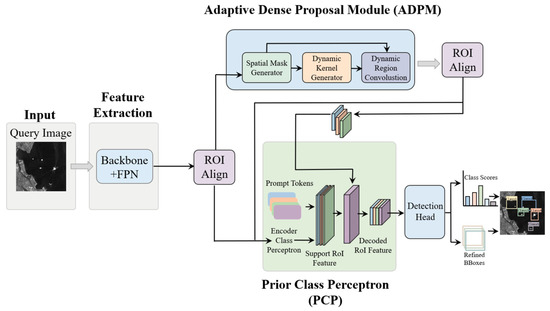
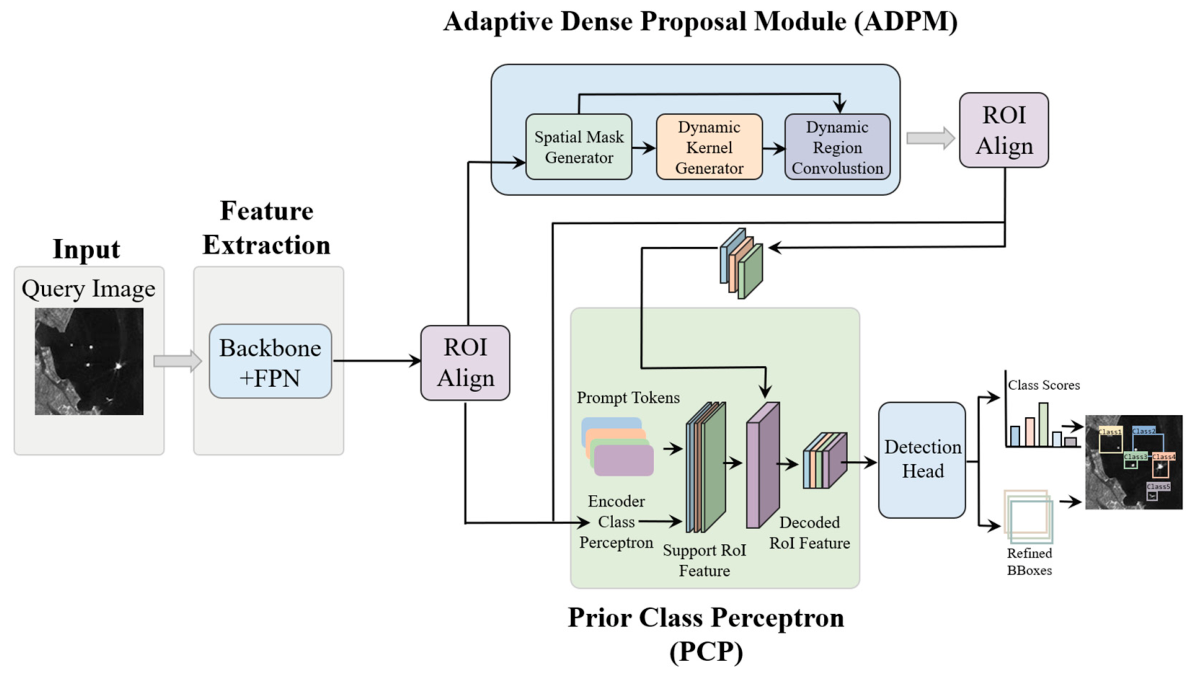
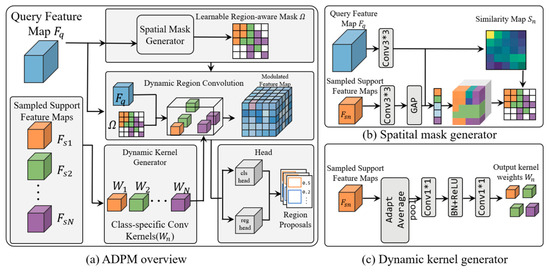
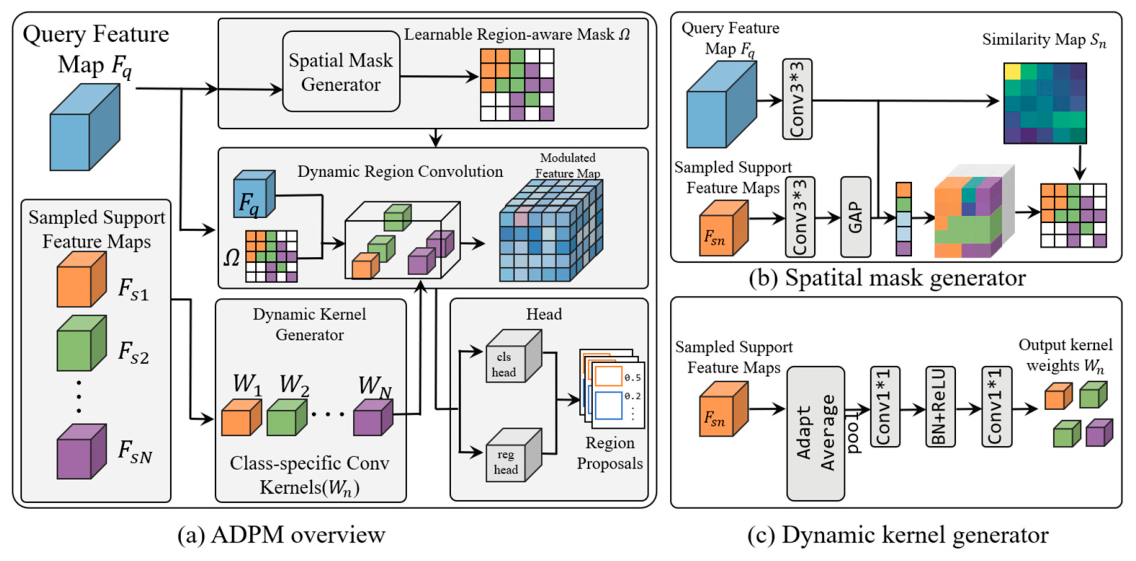
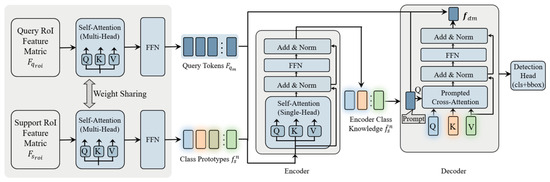
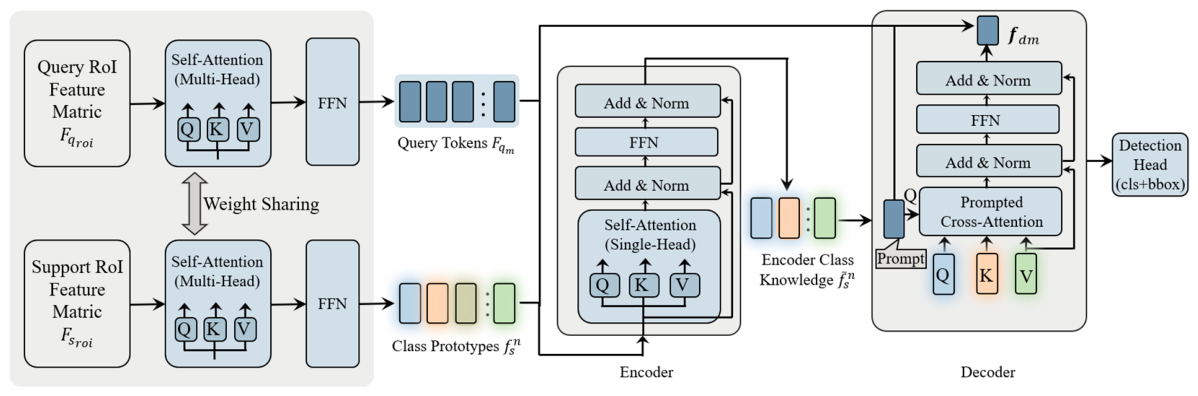
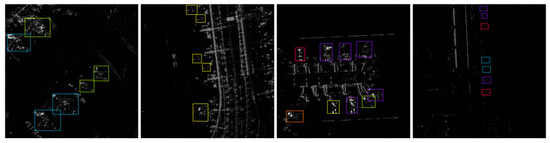
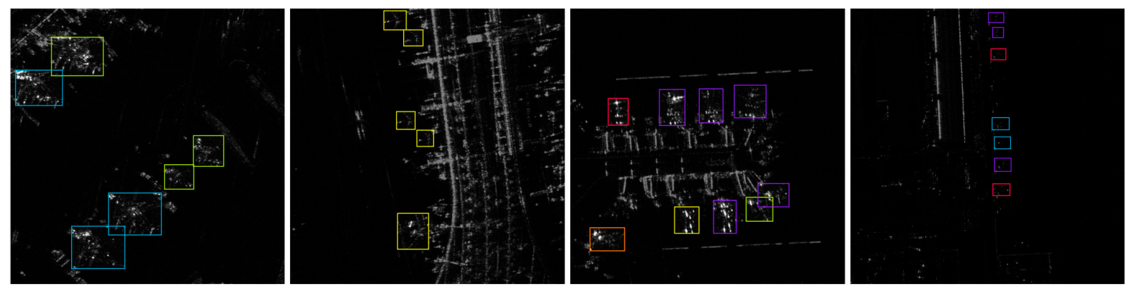
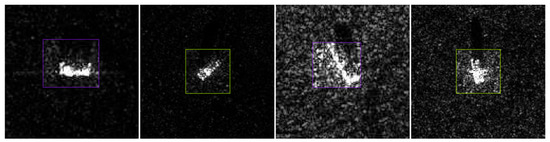
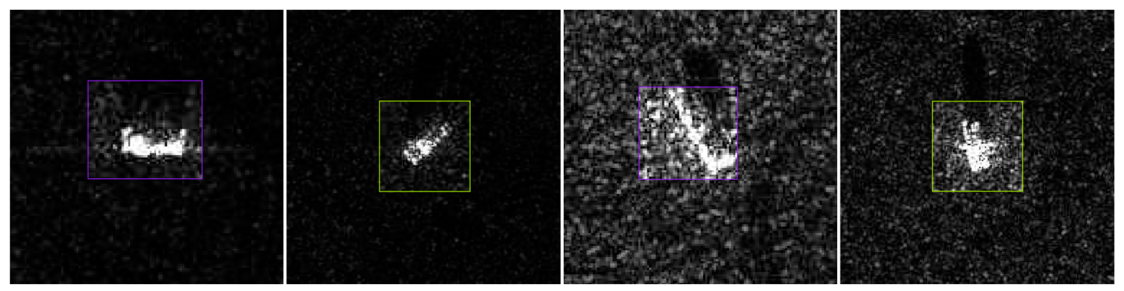
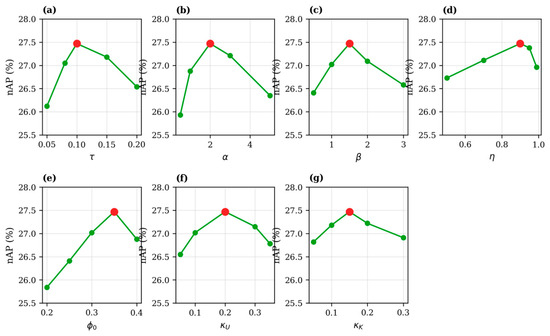
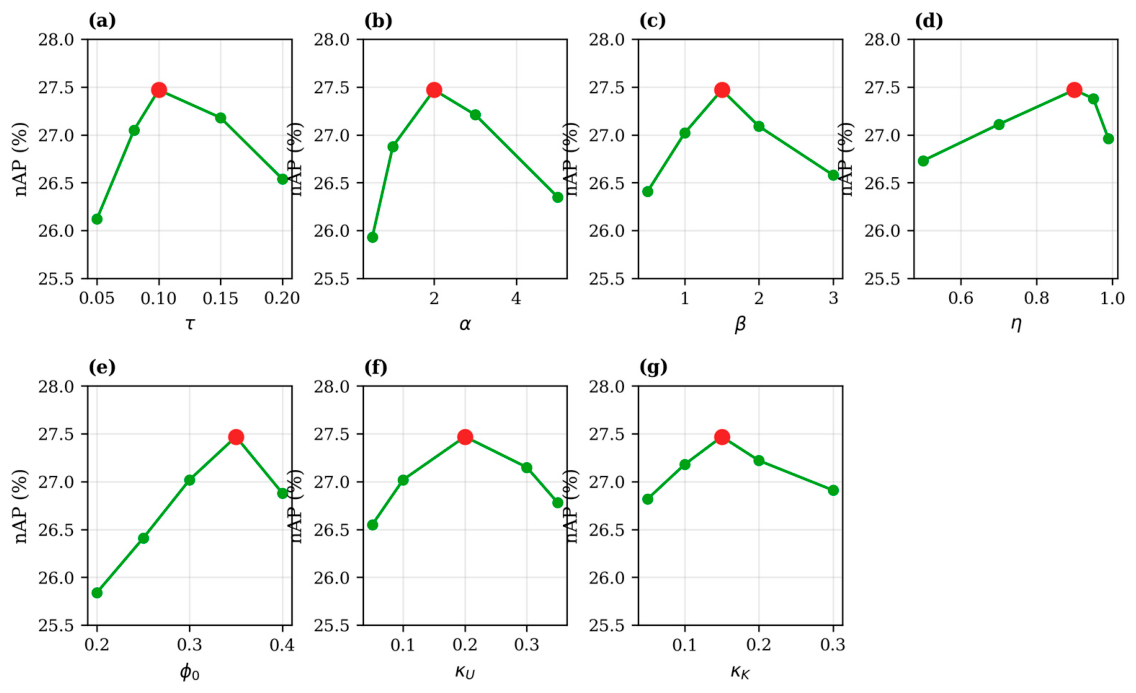
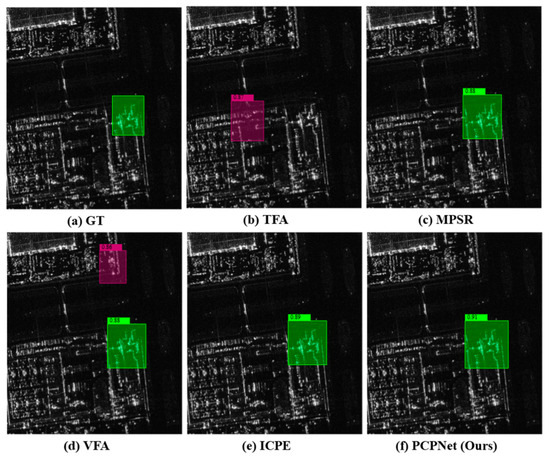
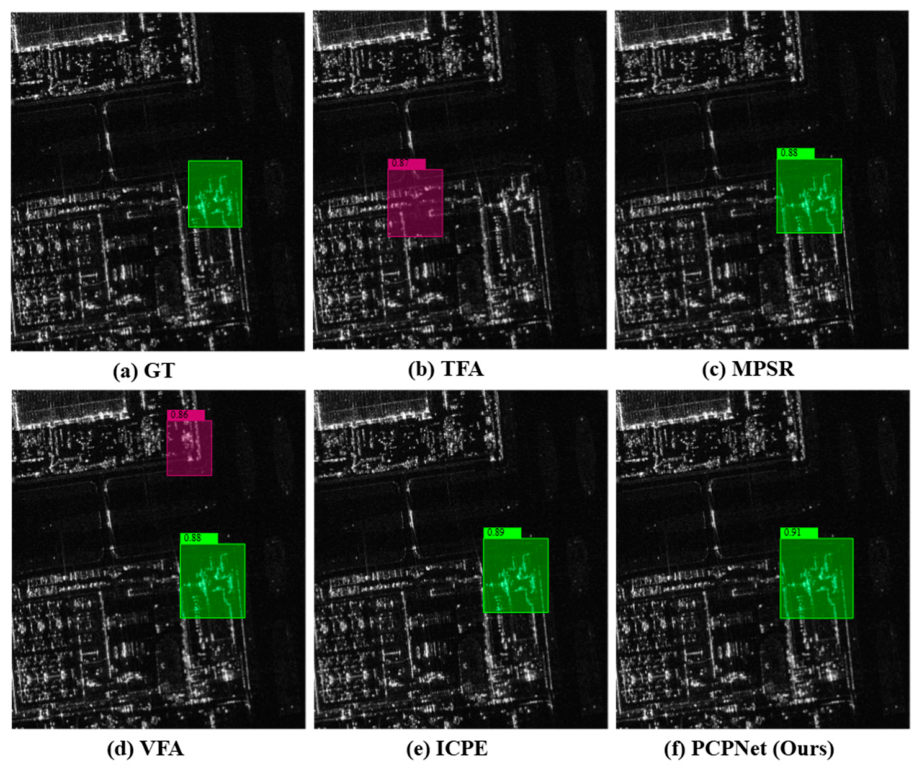
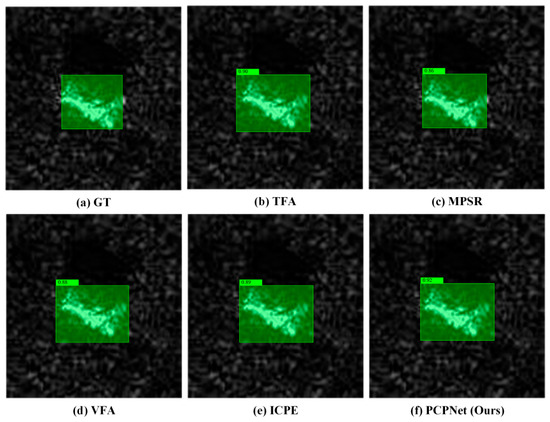
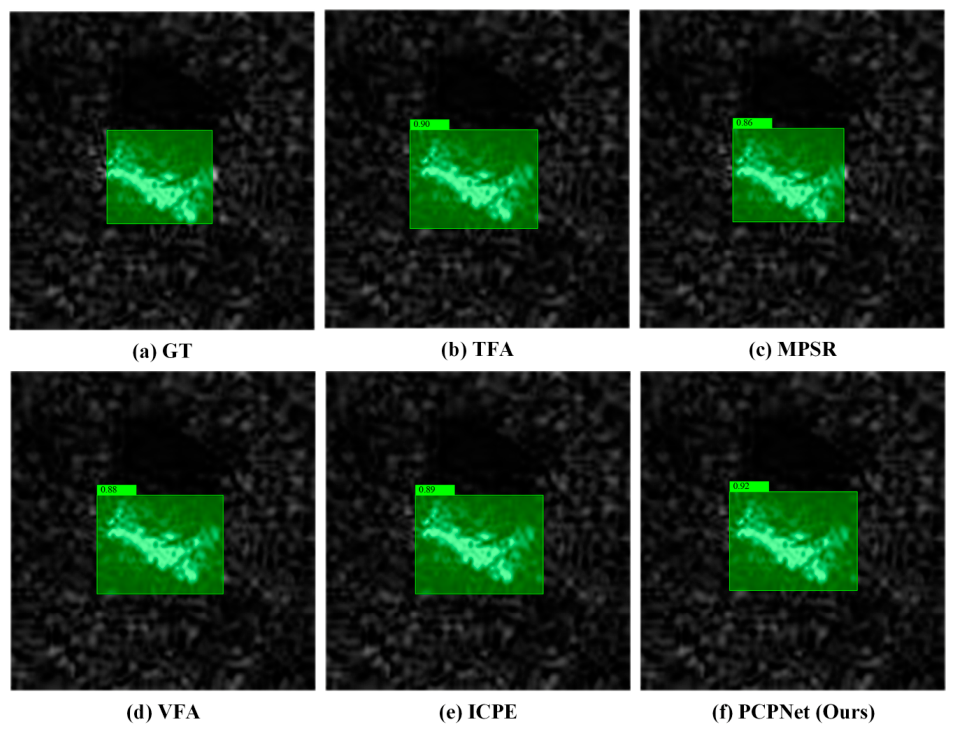
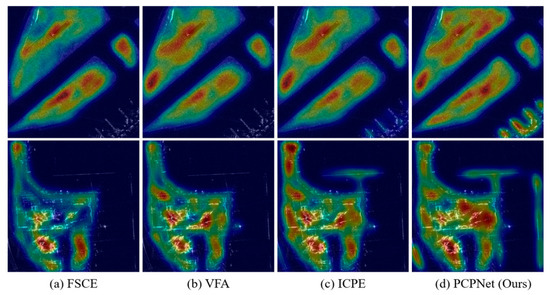
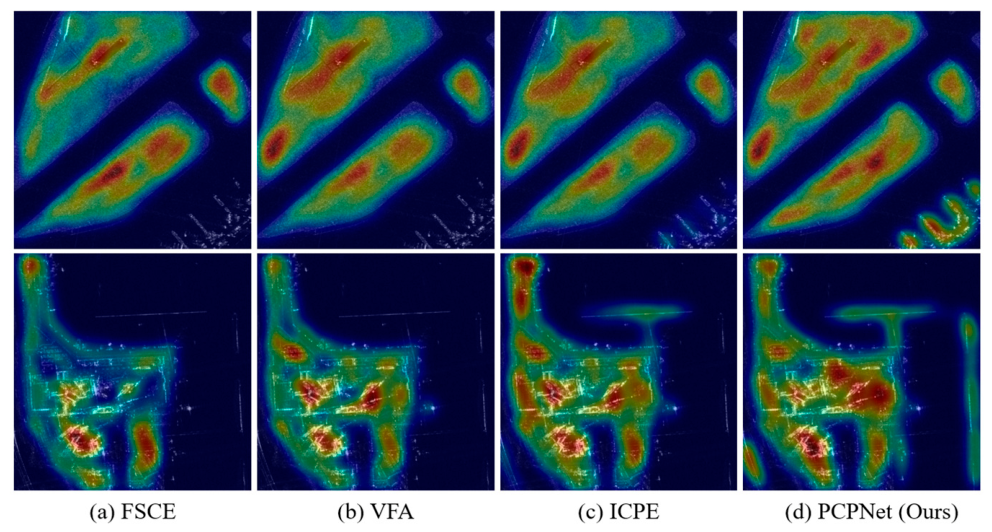
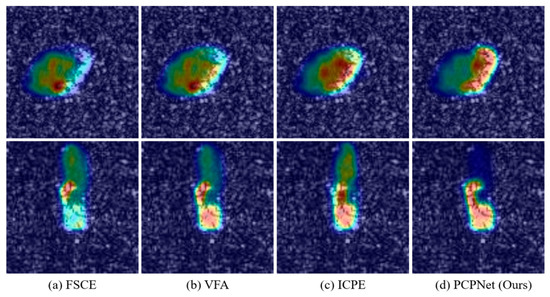
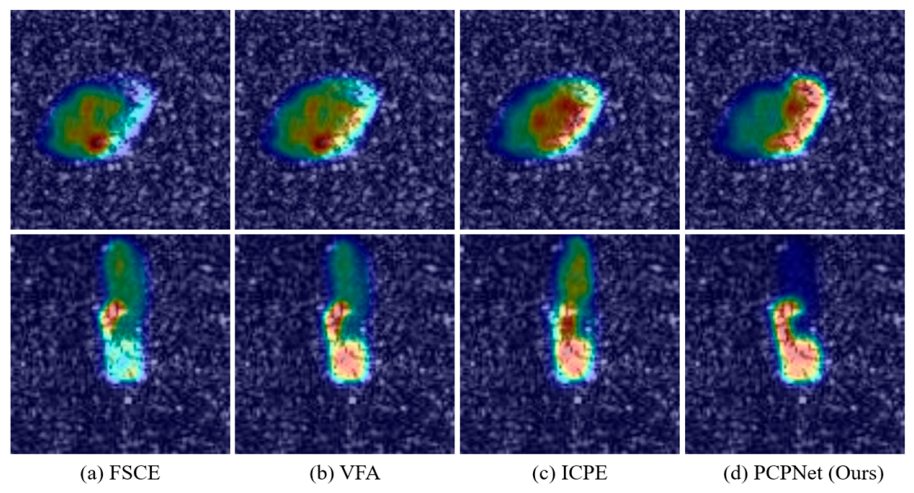
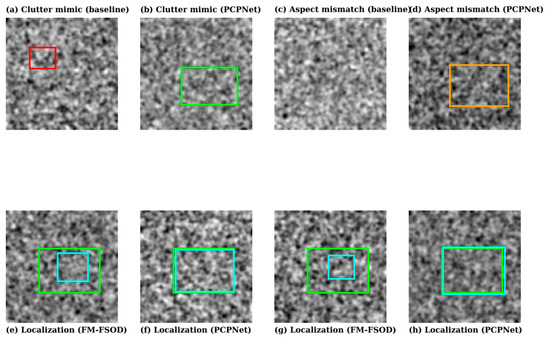
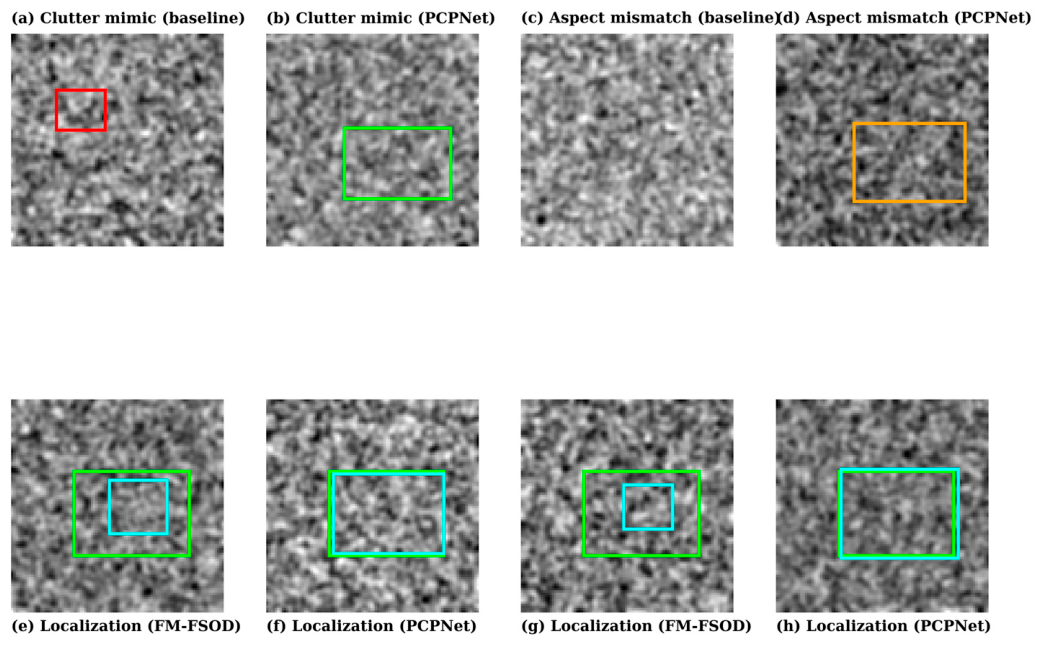
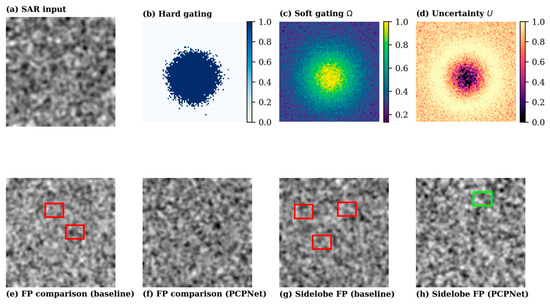
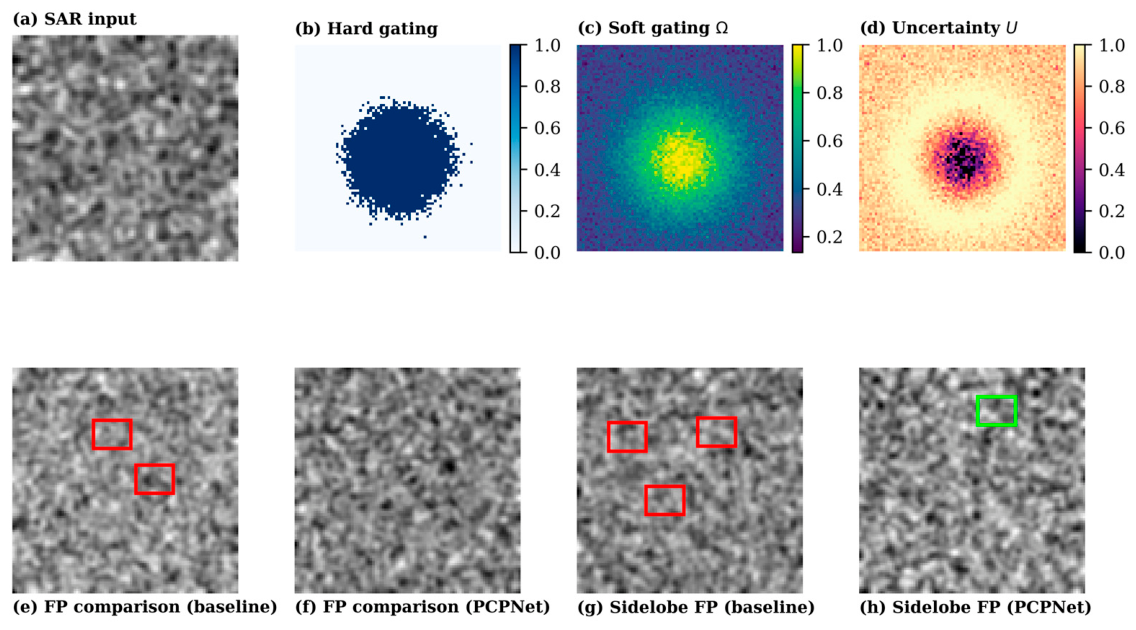
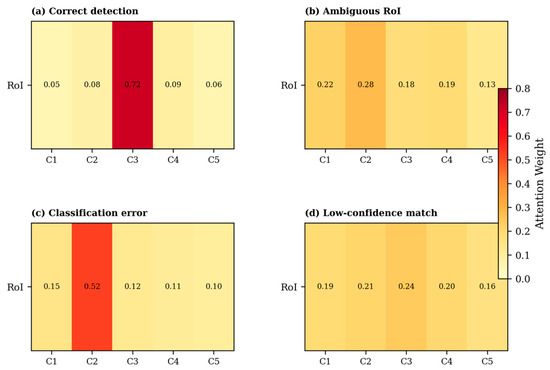
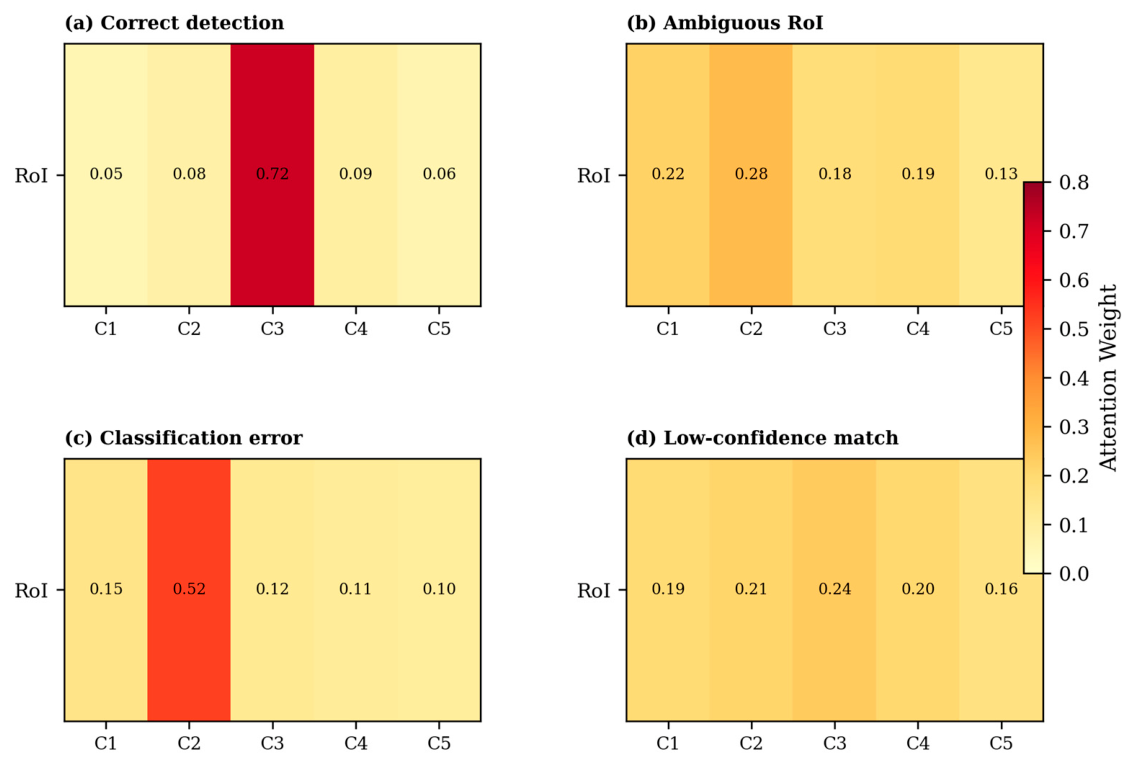
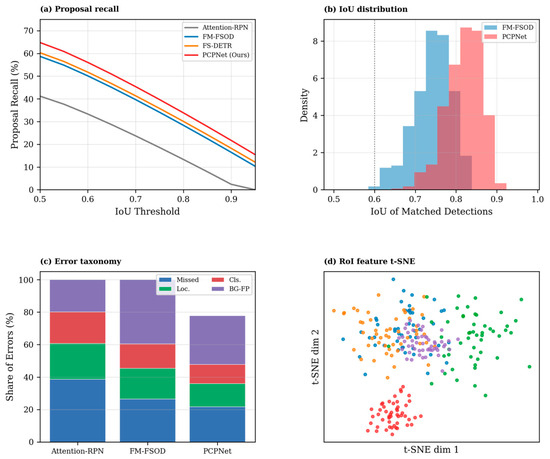
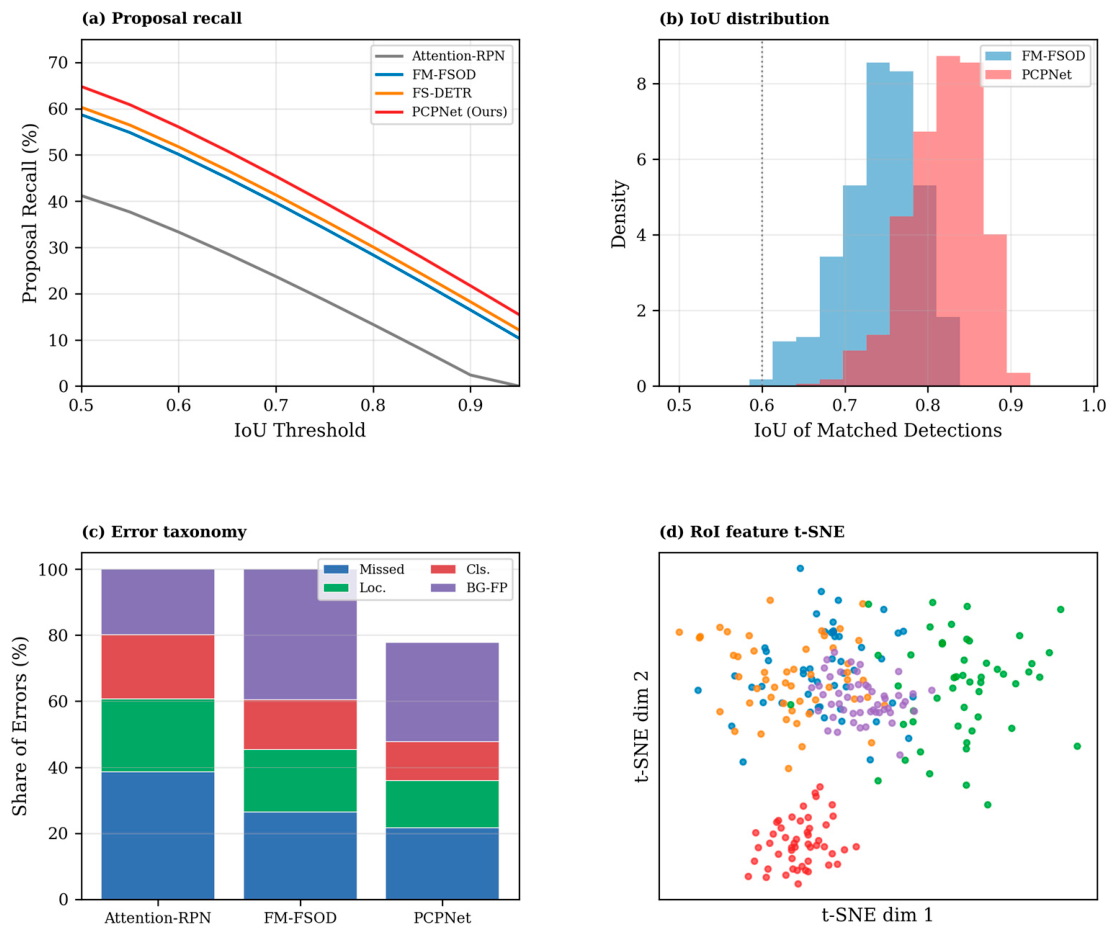
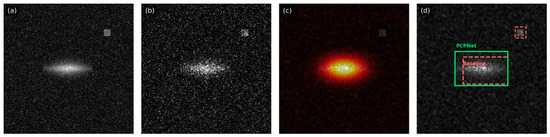
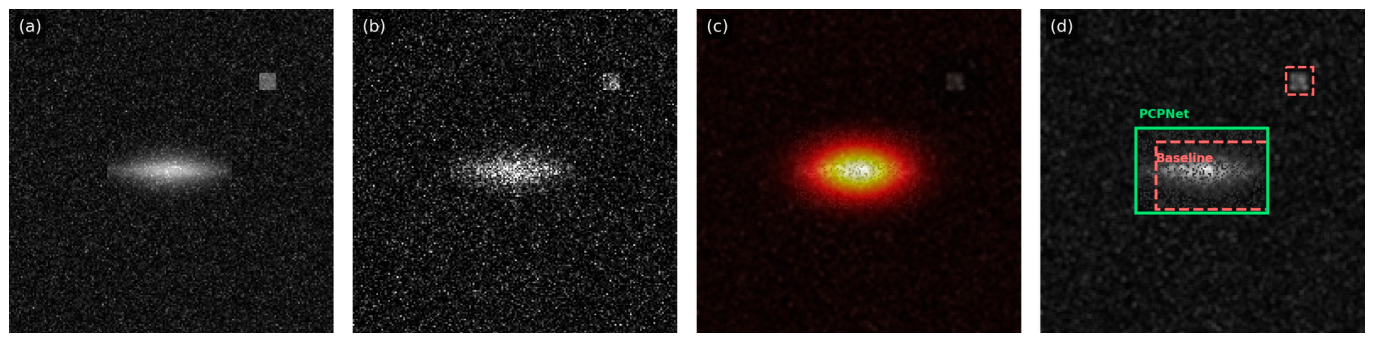

Disclaimer/Publisher’s Note: The statements, opinions and data contained in all publications are solely those of the individual author(s) and contributor(s) and not of MDPI and/or the editor(s). MDPI and/or the editor(s) disclaim responsibility for any injury to people or property resulting from any ideas, methods, instructions or products referred to in the content. |
© 2026 by the authors. Licensee MDPI, Basel, Switzerland. This article is an open access article distributed under the terms and conditions of the Creative Commons Attribution (CC BY) license.