Long-Term Vegetation Dynamics Across Distance Buffers Along the Gonghe–Yushu Expressway Corridor on the Qinghai–Xizang Plateau



Highlights
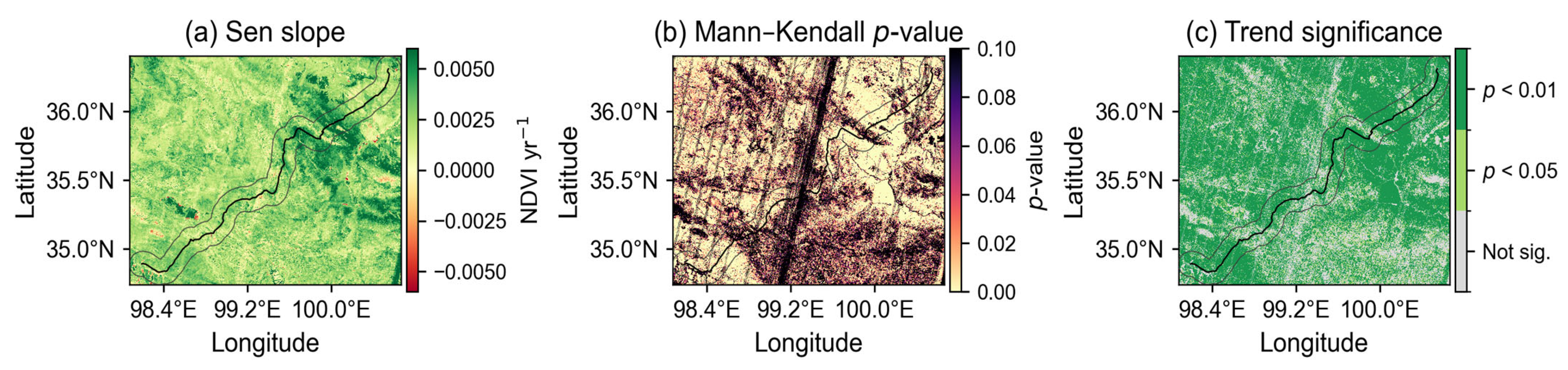
- Landsat observations from 2000 to 2025 reveal widespread vegetation greening along the Gonghe-Yushu Expressway corridor, with no significant decreasing NDVI trends detected at 30 m resolution.
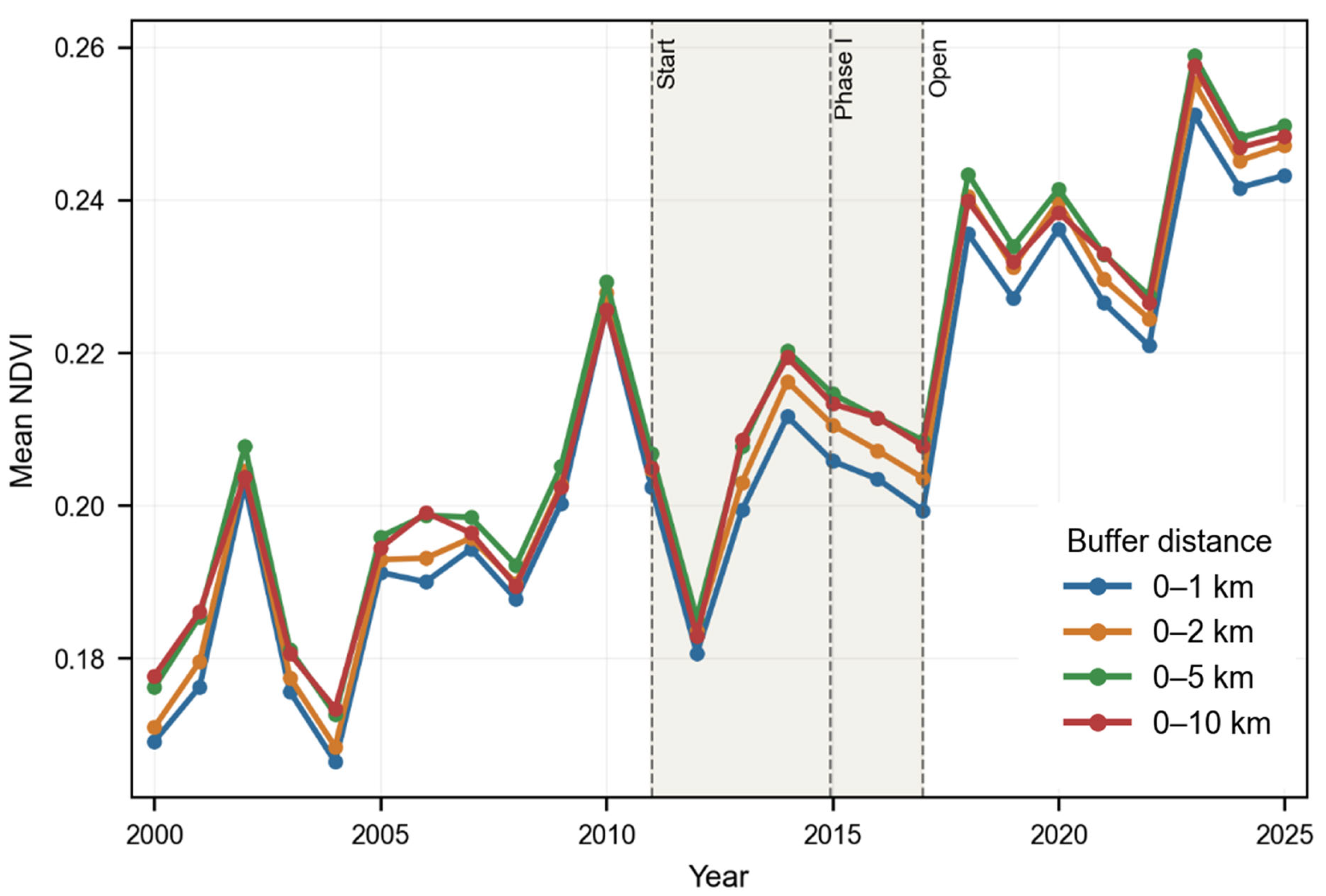
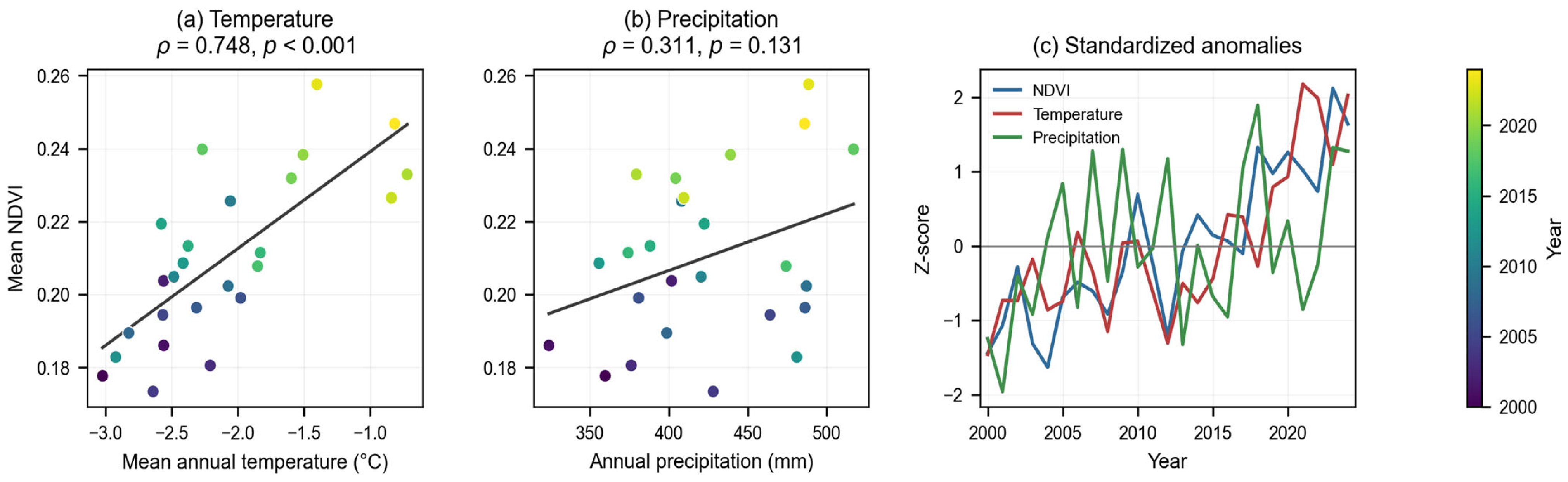
- The greening trend was established before expressway construction and remained broadly parallel across distance buffers, while NDVI was more strongly associated with warming than precipitation.
- Multi-decadal remote sensing and buffer-zone analysis can help distinguish regional climate-related greening from road-associated vegetation signals in alpine infrastructure corridors.
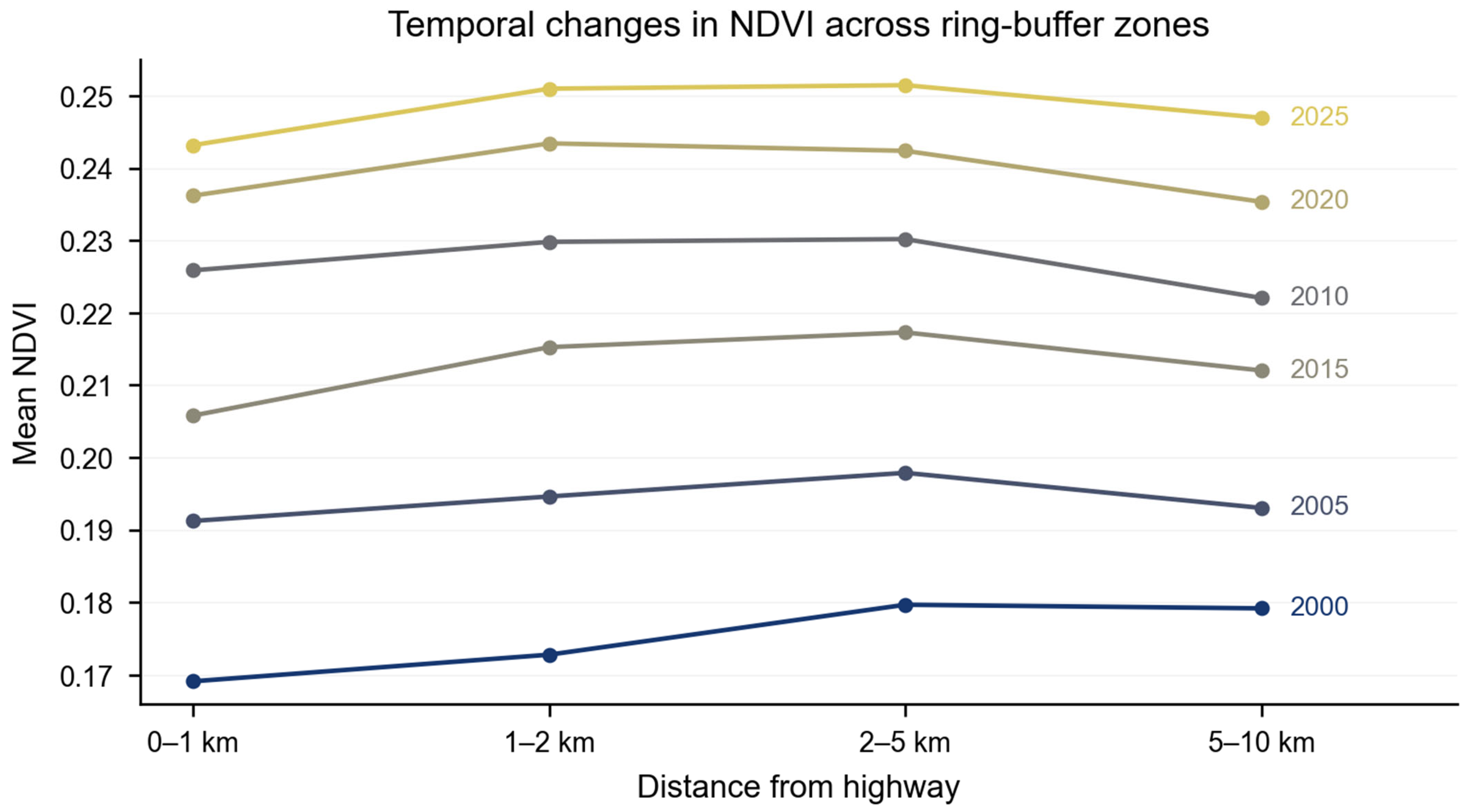
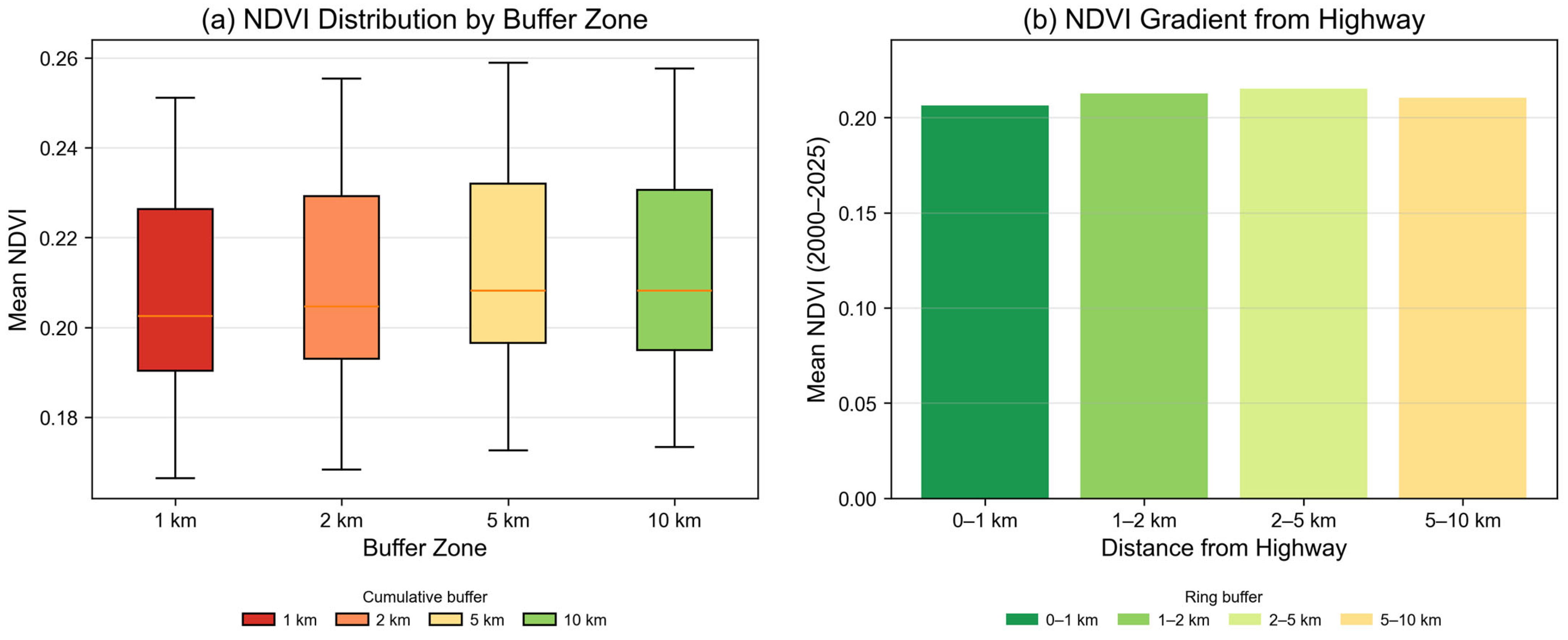
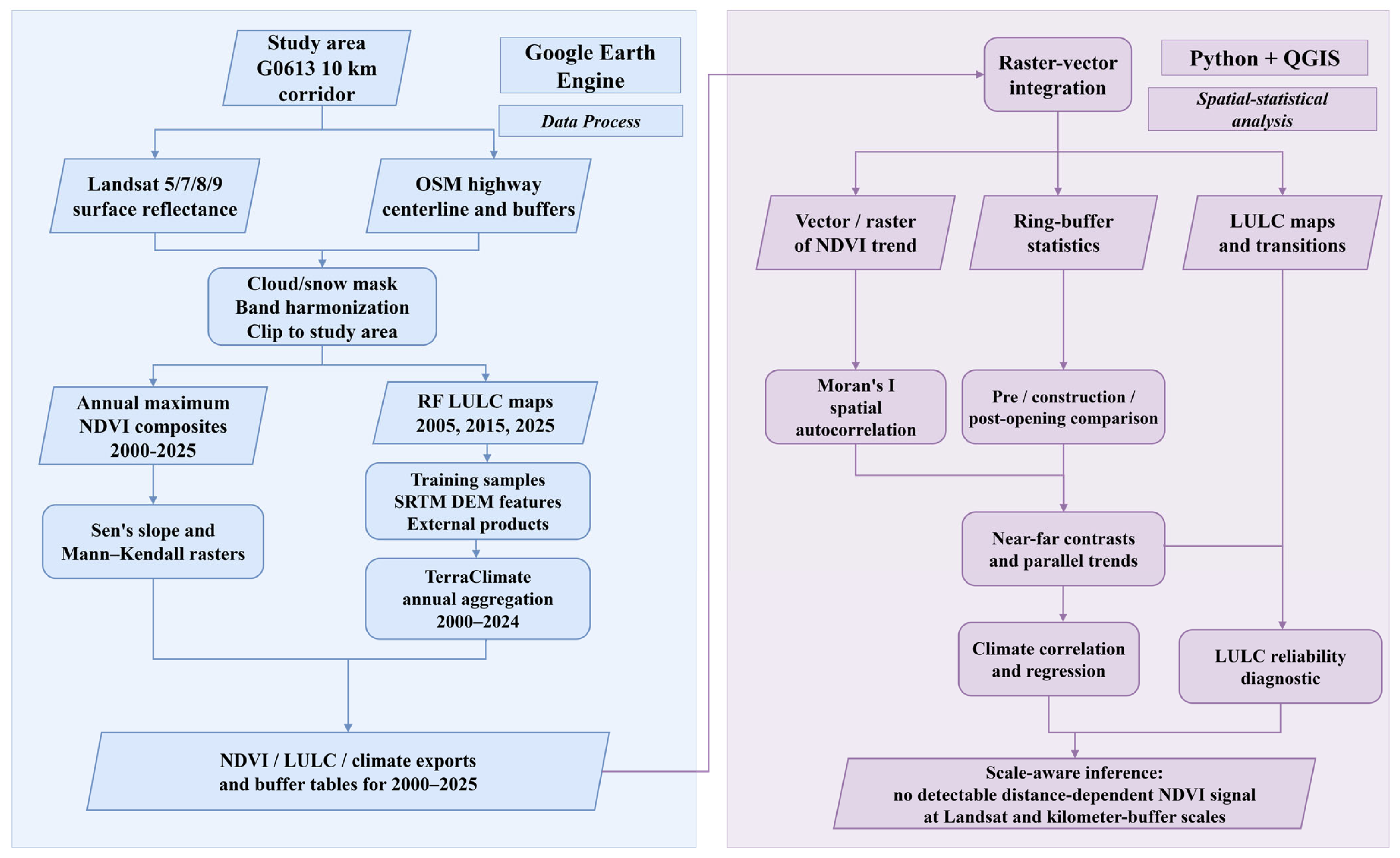
- Potential fine-scale roadside impacts may be masked at Landsat and kilometer-buffer scales, highlighting the need for targeted high-resolution monitoring near transport infrastructure.
Abstract
1. Introduction
2. Study Area and Dataset
2.1. Study Area
2.2. Data Sources
2.2.1. Satellite Imagery
2.2.2. Terrain Data
2.2.3. Climate Data
2.2.4. Highway and Buffer Zone Delineation
3. Methods
3.1. NDVI Computation and Trend Analysis
3.2. Land Use/Land Cover Classification
3.2.1. Classification Scheme
3.2.2. Sample Collection
3.2.3. Classification Method and Accuracy Assessment
3.3. Buffer Zone Analysis
3.4. Climate Data and NDVI—Climate Correlation
3.5. Software and Data Processing
4. Results
4.1. Spatiotemporal Patterns of NDVI Change (2000–2025)
4.2. NDVI Dynamics Relative to Highway Construction
4.3. Land Use/Land Cover Changes
4.4. Relationship Between NDVI and Climate Factors
4.5. NDVI Gradient Analysis
5. Discussion
5.1. Climate Warming as a Regional Correlate of Greening
5.2. Limited Detectable Impact of Highway Construction
5.3. Comparison with Other QXP Road Ecology Studies
5.4. Implications for Road Ecology and Conservation
5.5. Limitations
6. Conclusions
- (1)
- A widespread and statistically significant greening trend was detected across the study area, with 77.3% of pixels showing significant NDVI increases and no significant decreasing trends. The mean greening rate was +0.0026 NDVI per year over the 25-year period.
- (2)
- The greening trend was established before the highway construction (first phase completed December 2014, full opening August 2017) and continued uniformly through the construction and post-construction periods. No statistically distinguishable impact of highway construction on regional NDVI trajectories was detected.
- (3)
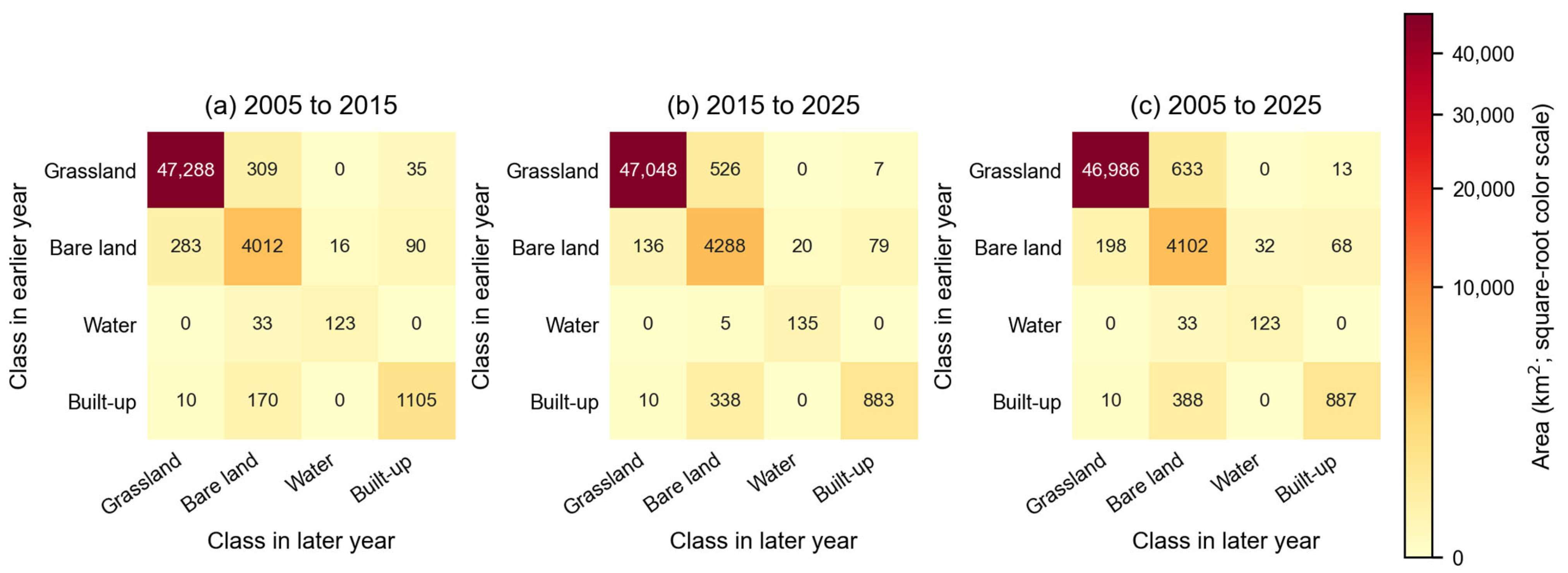
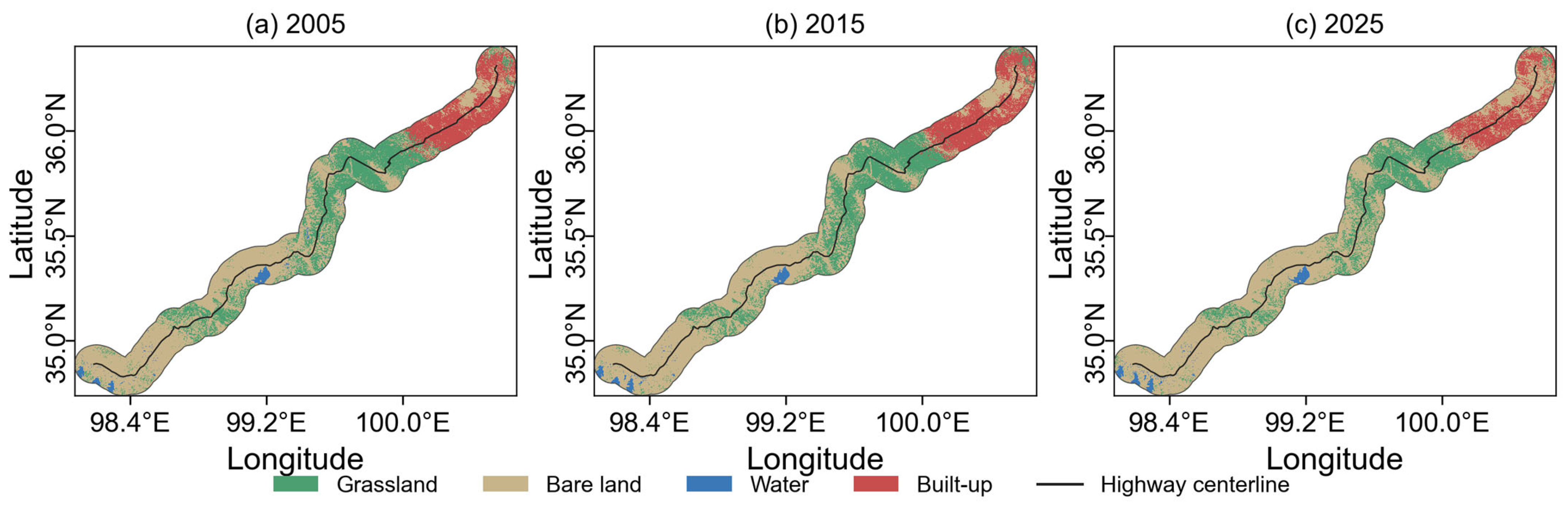
- The LULC classification showed that Bare land and Grassland were the dominant classes within the 10 km buffer corridor, with limited inter-class transitions. Bare land area increased by 17.2% (+755 km2), primarily at the expense of Grassland, while other classes remained relatively stable.
- (4)
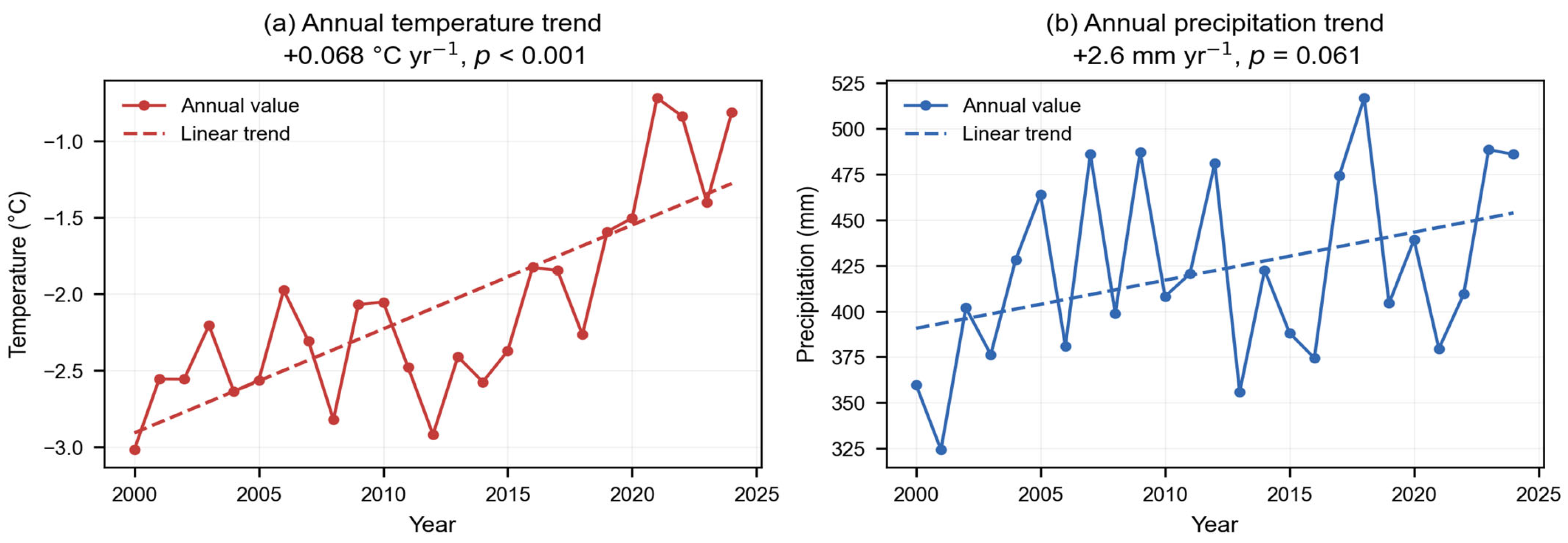
- Climate warming (+0.068 °C/year) was associated with vegetation greening, as evidenced by the strong positive correlation between NDVI and temperature (ρ = 0.748, p < 0.001). Precipitation changes showed no significant correlation with NDVI. This association should be interpreted as long-term co-variation rather than evidence of an independent climatic driving mechanism.
- (5)
- Within the predefined 0–10 km study corridor at 30 m Landsat resolution, the buffer-zone sensitivity analysis revealed no persistent distance-dependent NDVI divergence among the 0–1, 1–2, 2–5, and 5–10 km rings. However, the absence of a detectable response at 30 m resolution does not exclude localized ecological impacts that cannot be resolved within the current Landsat-based framework.
Author Contributions
Funding
Data Availability Statement
Acknowledgments
Conflicts of Interest
References
- Qiu, J. China: The third pole. Nature 2008, 454, 393–396. [Google Scholar] [CrossRef] [Scilit] [PubMed]
- Yao, T.; Thompson, L.; Yang, W.; Yu, W.; Gao, Y.; Guo, X.; Yang, X.; Duan, K.; Zhao, H.; Xu, B.; et al. Different glacier status with atmospheric circulations in Tibetan Plateau and surroundings. Nat. Clim. Change 2012, 2, 663–667. [Google Scholar] [CrossRef] [Scilit]
- Cui, X.; Graf, H.F. Recent land cover changes on the Tibetan Plateau: A review. Clim. Change 2009, 94, 47–61. [Google Scholar] [CrossRef] [Scilit]
- Yang, S.; Zhang, L.; Zhu, G. Effects of transport infrastructures and climate change on ecosystem services in the integrated transport corridor region of the Qinghai-Tibet Plateau. Sci. Total Environ. 2023, 885, 163961. [Google Scholar] [CrossRef] [Scilit] [PubMed]
- Wang, G.; Gillespie, A.R.; Liang, S.; Mushkin, A.; Wu, Q. Effect of the Qinghai-Tibet Railway on vegetation abundance. Int. J. Remote Sens. 2015, 36, 5222–5238. [Google Scholar] [CrossRef] [Scilit]
- Zhou, D.; Zhang, L.; Huang, L.; Fan, J.; Li, Y.; Zhang, H. Satellite evidence for small biophysical effects of transport infrastructure in the Qinghai-Xizang Plateau. J. Clean. Prod. 2023, 416, 138002. [Google Scholar] [CrossRef] [Scilit]
- Forman, R.T.T.; Alexander, L.E. Roads and their major ecological effects. Annu. Rev. Ecol. Syst. 1998, 29, 207–231. [Google Scholar] [CrossRef] [Scilit]
- Trombulak, S.C.; Frissell, C.A. Review of ecological effects of roads on terrestrial and aquatic communities. Conserv. Biol. 2000, 14, 18–30. [Google Scholar] [CrossRef] [Scilit]
- Pettorelli, N.; Vik, J.O.; Mysterud, A.; Gaillard, J.M.; Tucker, C.J.; Stenseth, N.C. Using the satellite-derived NDVI to assess ecological responses to environmental change. Trends Ecol. Evol. 2005, 20, 503–510. [Google Scholar] [CrossRef] [Scilit] [PubMed]
- Piao, S.; Fang, J.; Zhou, L.; Ciais, P.; Zhu, B. Variations in satellite-derived phenology in China’s temperate vegetation. Glob. Change Biol. 2006, 12, 672–685. [Google Scholar] [CrossRef] [Scilit]
- Song, Y.; Jin, L.; Wang, H. Vegetation changes along the Qinghai-Xizang Plateau Engineering Corridor since 2000 induced by climate change and human activities. Remote Sens. 2018, 10, 95. [Google Scholar] [CrossRef] [Scilit]
- Chang, Y.; Yang, C.; Xu, L.; Li, D.; Shang, H.; Gao, F. Analysis of vegetation dynamics and driving mechanisms on the Qinghai-Xizang Plateau in the context of climate change. Water 2023, 15, 3305. [Google Scholar] [CrossRef] [Scilit]
- Zhou, G.; Ren, H.; Zhang, L.; Lv, X.; Zhou, M. Annual vegetation maps in the Qinghai-Tibet Plateau (QTP) from 2000 to 2022 based on MODIS series satellite imagery. Earth Syst. Sci. Data 2025, 17, 773–797. [Google Scholar] [CrossRef] [Scilit]
- Wang, H.; Zhan, J.; Wang, C.; Liu, W.; Yang, Z.; Liu, H.; Bai, C. Greening or browning? The macro variation and drivers of different vegetation types on the Qinghai-Tibetan Plateau from 2000 to 2021. Front. Plant Sci. 2022, 13, 1045290. [Google Scholar] [CrossRef] [Scilit] [PubMed]
- Sen, P.K. Estimates of the regression coefficient based on Kendall’s tau. J. Am. Stat. Assoc. 1968, 63, 1379–1389. [Google Scholar] [CrossRef]
- Belgiu, M.; Drăguţ, L. Random forest in remote sensing: A review. ISPRS J. Photogramm. Remote Sens. 2016, 114, 24–31. [Google Scholar] [CrossRef] [Scilit]
- Forman, R.T.T.; Deblinger, R.D. The ecological road-effect zone of a Massachusetts (U.S.A.) suburban highway. Conserv. Biol. 2000, 14, 36–46. [Google Scholar] [CrossRef] [Scilit]
- Zhang, L.; Miao, Y.; Wei, H.; Dai, T. Ecological impacts associated with the Qinghai-Tibet Railway and its influencing factors: A comparison study on diversified research units. Int. J. Environ. Res. Public Health 2023, 20, 4154. [Google Scholar] [CrossRef] [Scilit] [PubMed]
- Guo, L.; Li, Y.; Luo, Y.; Gao, J.; Zhang, H.; Zou, Y.; Wu, S. The compound effects of highway reconstruction and climate change on vegetation activity over the Qinghai Tibet Plateau: The G318 Highway as a case study. Remote Sens. 2023, 15, 5473. [Google Scholar] [CrossRef] [Scilit]
- Earth Resources Observation and Science (EROS) Center. Landsat Collection 2. U.S. Geological Survey Fact Sheet 2021–3002; U.S. Geological Survey: Reston, VA, USA, 2021. [Google Scholar] [CrossRef] [Scilit]
- Gorelick, N.; Hancher, M.; Dixon, M.; Ilyushchenko, S.; Thau, D.; Moore, R. Google Earth Engine: Planetary-scale geospatial analysis for everyone. Remote Sens. Environ. 2017, 202, 18–27. [Google Scholar] [CrossRef] [Scilit]
- Abatzoglou, J.T.; Dobrowski, S.Z.; Parks, S.A.; Hegewisch, K.C. TerraClimate, a high-resolution global dataset of monthly climate and climatic water balance from 1958–2015. Sci. Data 2018, 5, 170191. [Google Scholar] [CrossRef] [Scilit] [PubMed]
- Mann, H.B. Nonparametric tests against trend. Econometrica 1945, 13, 245–259. [Google Scholar] [CrossRef] [Scilit]
- Sun, N.; Chen, Q.; Liu, F.; Zhou, Q.; He, W.; Guo, Y. Land use simulation and landscape ecological risk assessment on the Qinghai-Xizang Plateau. Land 2023, 12, 923. [Google Scholar] [CrossRef] [Scilit]
- Olofsson, P.; Foody, G.M.; Herold, M.; Stehman, S.V.; Woodcock, C.E.; Wulder, M.A. Good practices for estimating area and assessing accuracy of land change. Remote Sens. Environ. 2014, 148, 42–57. [Google Scholar] [CrossRef] [Scilit]
- Yang, J.; Xin, Z.; Huang, Y.; Liang, X. Multi-source remote sensing data shows a significant increase in vegetation on the Tibetan Plateau since 2000. Prog. Phys. Geogr. Earth Environ. 2023, 47, 597–624. [Google Scholar] [CrossRef] [Scilit]
- Dorji, T.; Totland, Ø.; Moe, S.R.; Hopping, K.A.; Pan, J.; Klein, J.A. Plant functional traits mediate reproductive phenology and success in response to experimental warming and snow addition in Tibet. Glob. Change Biol. 2013, 19, 459–472. [Google Scholar] [CrossRef] [Scilit] [PubMed]
- Luo, L.; Ma, W.; Zhuang, Y.; Zhang, Y.; Yi, S.; Xu, J.; Long, Y.; Ma, D.; Zhang, Z. The impacts of climate change and human activities on alpine vegetation and permafrost in the Qinghai-Tibet Engineering Corridor. Ecol. Indic. 2018, 93, 24–35. [Google Scholar] [CrossRef] [Scilit]
- Shen, M.; Sun, Z.; Wang, S.; Zhang, G.; Kong, W.; Chen, A.; Piao, S. No evidence of continuously advanced green-up dates in the Tibetan Plateau over the last decade. Proc. Natl. Acad. Sci. USA 2013, 110, E2329–E2336. [Google Scholar] [CrossRef] [Scilit] [PubMed]
- Hamed, K.H.; Rao, A.R. A modified Mann-Kendall trend test for autocorrelated data. J. Hydrol. 1998, 204, 182–196. [Google Scholar] [CrossRef] [Scilit]







| Category | Area (%) |
|---|---|
| Highly significant increase (p < 0.01) | 65.9 |
| Significant increase (0.01 < p < 0.05) | 11.4 |
| Not significant (p > 0.05) | 22.8 |
| Significant decrease (0.01 < p < 0.05) | 0.0 |
| Highly significant decrease (p < 0.01) | 0.0 |
| Buffer Zone | Slope (NDVI/Year) | R2 | p-Value |
|---|---|---|---|
| 0–1 km | 0.00271 | 0.745 | <0.001 |
| 1–2 km | 0.00281 | 0.760 | <0.001 |
| 2–5 km | 0.00276 | 0.762 | <0.001 |
| 5–10 km | 0.00273 | 0.777 | <0.001 |
| Sub-Period | Years | Slope (NDVI/Year) | R2 | p-Value |
|---|---|---|---|---|
| Pre-construction | 2000–2011 | 0.00267 | 0.450 | 0.017 |
| Construction | 2011–2017 | 0.00252 | 0.221 | 0.287 |
| Post-construction | 2017–2025 | 0.00372 | 0.497 | 0.034 |
| Full period | 2000–2025 | 0.00273 | 0.777 | <0.001 |
| Period | OA | Kappa |
|---|---|---|
| 2005 | 0.9943 | 0.9922 |
| 2015 | 0.9828 | 0.9765 |
| 2025 | 0.9943 | 0.9922 |
| Class | 2005 | 2015 | 2025 | Change (2005–2025) |
|---|---|---|---|---|
| Grassland | 2332 | 2280 | 1893 | −439 (−18.8%) |
| Bare land | 4400 | 4523 | 5156 | +755 (+17.2%) |
| Water body | 156 | 140 | 155 | −1 (−0.6%) |
| Built-up | 1286 | 1230 | 969 | −317 (−24.6%) |
| Total | 8174 | 8174 | 8174 | — |
Disclaimer/Publisher’s Note: The statements, opinions and data contained in all publications are solely those of the individual author(s) and contributor(s) and not of MDPI and/or the editor(s). MDPI and/or the editor(s) disclaim responsibility for any injury to people or property resulting from any ideas, methods, instructions or products referred to in the content. |
© 2026 by the authors. Licensee MDPI, Basel, Switzerland. This article is an open access article distributed under the terms and conditions of the Creative Commons Attribution (CC BY) license.
Share and Cite
Zhang, K.; Ding, Z.; Shi, Y.; Li, L.; Mu, Y. Long-Term Vegetation Dynamics Across Distance Buffers Along the Gonghe–Yushu Expressway Corridor on the Qinghai–Xizang Plateau. Remote Sens. 2026, 18, 2354. https://doi.org/10.3390/rs18142354
Zhang K, Ding Z, Shi Y, Li L, Mu Y. Long-Term Vegetation Dynamics Across Distance Buffers Along the Gonghe–Yushu Expressway Corridor on the Qinghai–Xizang Plateau. Remote Sensing. 2026; 18(14):2354. https://doi.org/10.3390/rs18142354
Chicago/Turabian StyleZhang, Kun, Zekun Ding, Yajun Shi, Lingjie Li, and Yanhu Mu. 2026. "Long-Term Vegetation Dynamics Across Distance Buffers Along the Gonghe–Yushu Expressway Corridor on the Qinghai–Xizang Plateau" Remote Sensing 18, no. 14: 2354. https://doi.org/10.3390/rs18142354
APA StyleZhang, K., Ding, Z., Shi, Y., Li, L., & Mu, Y. (2026). Long-Term Vegetation Dynamics Across Distance Buffers Along the Gonghe–Yushu Expressway Corridor on the Qinghai–Xizang Plateau. Remote Sensing, 18(14), 2354. https://doi.org/10.3390/rs18142354