Article

Adaptive Granularity-Fused Keypoint Detection for 6D Pose Estimation of Space Targets
by
Xu Gu
1,
Xi Yang
1,*,
Hong Liu
2 and
Dong Yang
3
1
State Key Laboratory of Integrated Services Networks, School of Telecommunications Engineering, Xidian University, Xi’an 710071, China
2
Space Engineering University, Beijing 101416, China
3
Xi’an Institute of Space Radio Technology, Xi’an 710100, China
*
Author to whom correspondence should be addressed.
Remote Sens. 2024, 16(22), 4138; https://doi.org/10.3390/rs16224138
Submission received: 23 September 2024 / Revised: 28 October 2024 / Accepted: 5 November 2024 / Published: 6 November 2024
(This article belongs to the Special Issue Advanced AI Technology for Remote Sensing Analysis)

Abstract

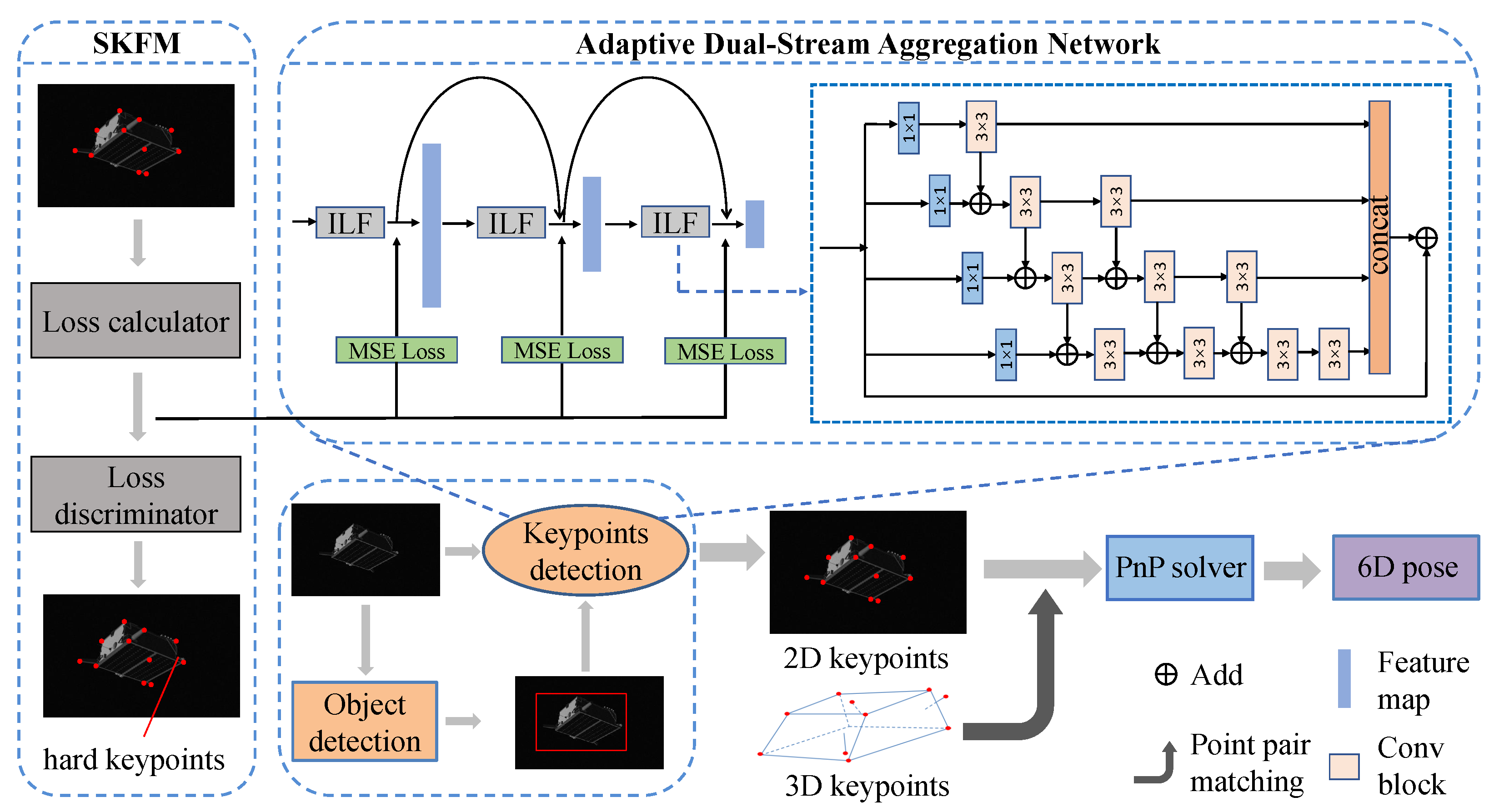
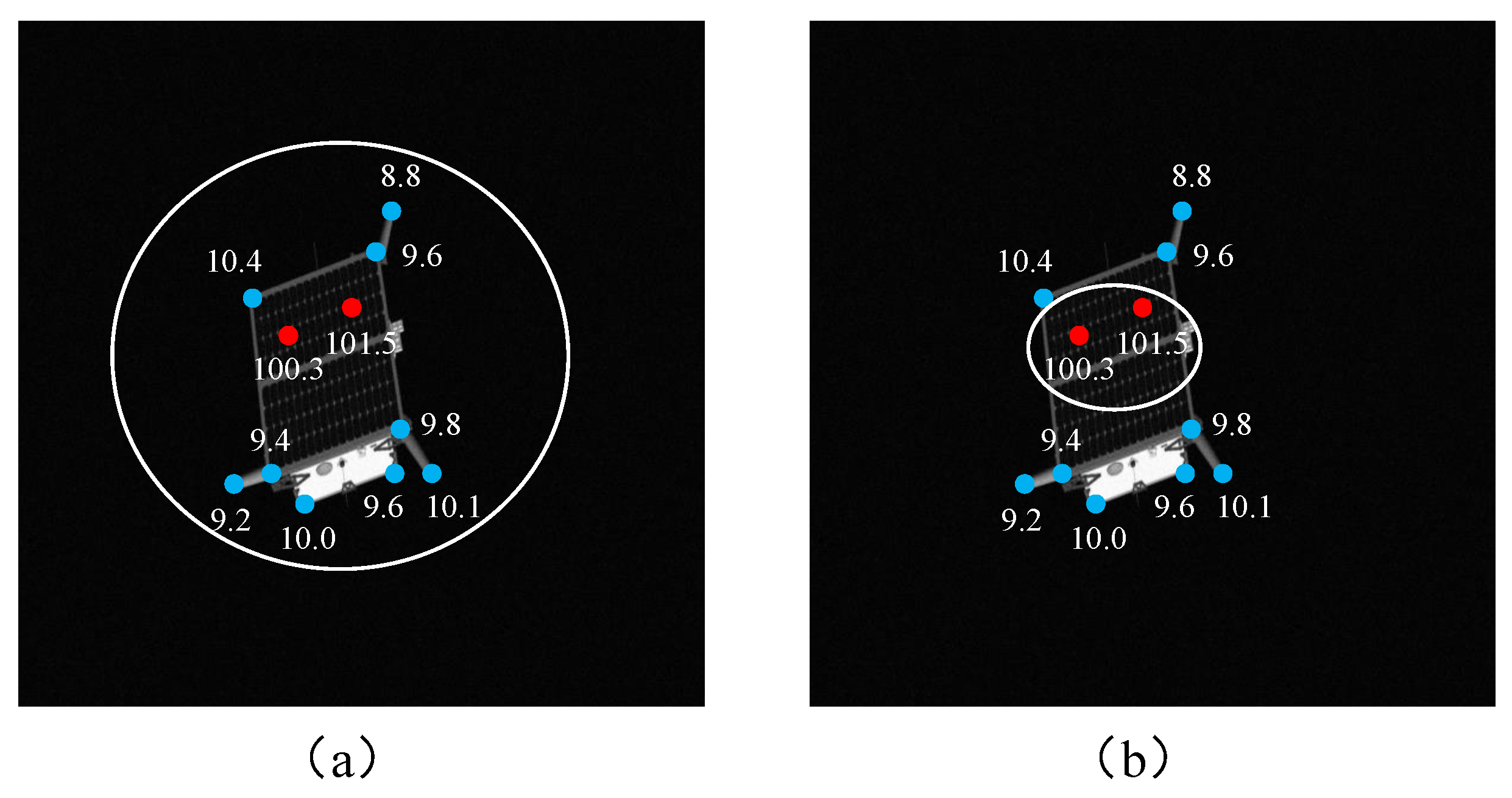
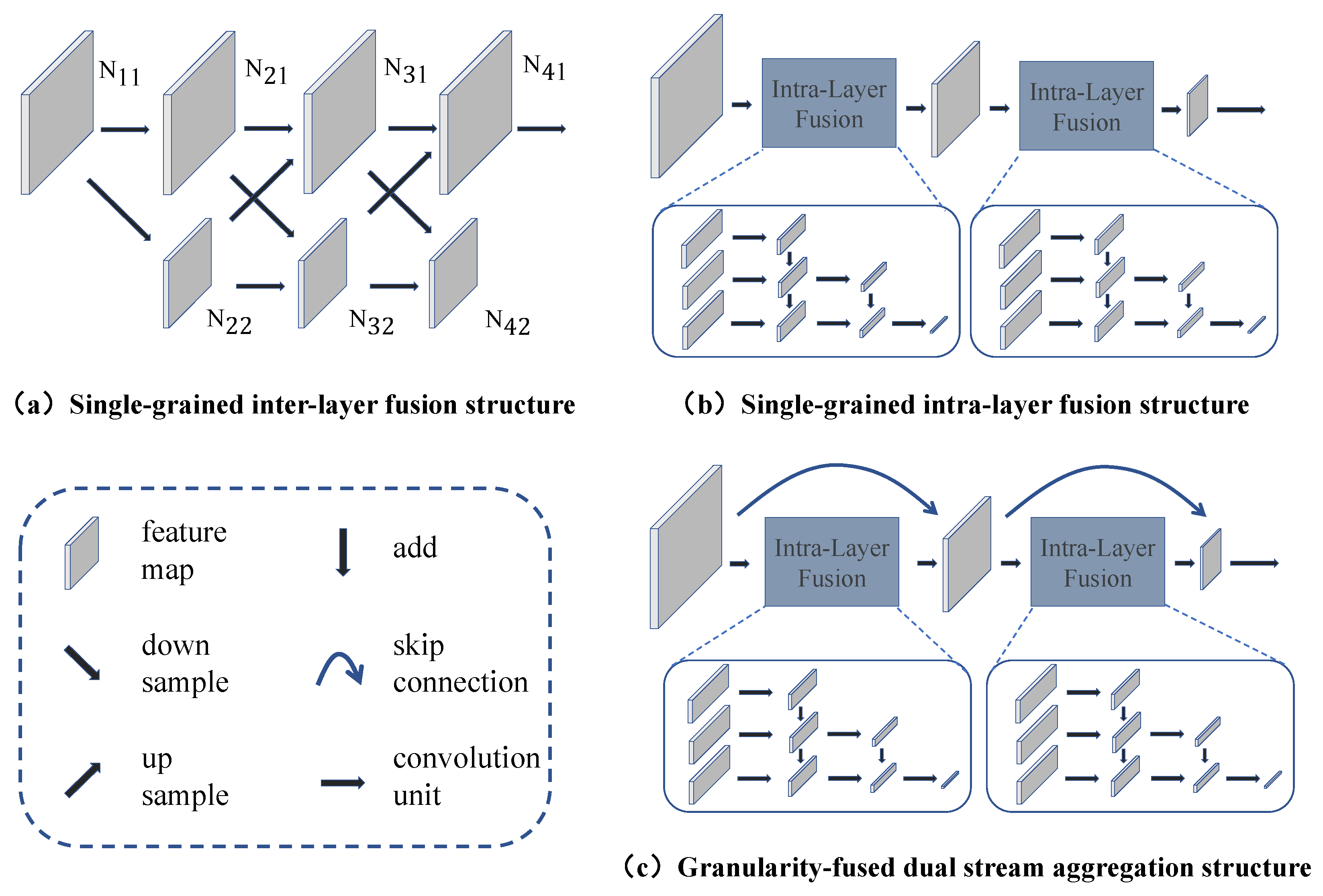
Estimating the 6D pose of a space target is an intricate task due to factors such as occlusions, changes in visual appearance, and background clutter. Accurate pose determination requires robust algorithms capable of handling these complexities while maintaining reliability under various environmental conditions. Conventional pose estimation for space targets unfolds in two stages: establishing 2D–3D correspondences using keypoint detection networks and 3D models, followed by pose estimation via the perspective-n-point algorithm. The accuracy of this process hinges critically on the initial keypoint detection, which is currently limited by predominantly singular-scale detection techniques and fails to exploit sufficient information. To tackle the aforementioned challenges, we propose an adaptive dual-stream aggregation network (ADSAN), which enables the learning of finer local representations and the acquisition of abundant spatial and semantic information by merging features from both inter-layer and intra-layer perspectives through a multi-grained approach, consolidating features within individual layers and amplifying the interaction of distinct resolution features between layers. Furthermore, our ADSAN implements the selective keypoint focus module (SKFM) algorithm to alleviate problems caused by partial occlusions and viewpoint alterations. This mechanism places greater emphasis on the most challenging keypoints, ensuring the network prioritizes and optimizes its learning around these critical points. Benefiting from the finer and more robust information of space objects extracted by the ADSAN and SKFM, our method surpasses the SOTA method PoET (5.8°, 8.1°/0.0351%, 0.0744%) by 0.5°, 0.9°, and 0.0084%, 0.0354%, achieving 5.3°, 7.2° in rotation angle errors and 0.0267%, 0.0390% in normalized translation errors on the Speed and SwissCube datasets, respectively.
Keywords: 6D pose estimation; space target; keypoint detection 6D pose estimation; space target; keypoint detection