Article

An Investigation of Impacts of Surface Waves-Induced Mixing on the Upper Ocean under Typhoon Megi (2010)

1
Frontier Science Center for Deep Ocean Multispheres and Earth System (FDOMES) and Physical Oceanography Laboratory, Ocean University of China, 238 Songling Road, Qingdao 266100, China
2
College of Oceanic and Atmospheric Sciences, Ocean University of China, 238 Songling Road, Qingdao 266100, China
3
Guangxi Key Laboratory of Marine Environmental Science, Guangxi Beibu Gulf Marine Research Center, Guangxi Academy of Sciences, Nanning 530007, China
*
Author to whom correspondence should be addressed.
Remote Sens. 2023, 15(7), 1862; https://doi.org/10.3390/rs15071862
Submission received: 5 March 2023 / Revised: 27 March 2023 / Accepted: 29 March 2023 / Published: 30 March 2023

Abstract

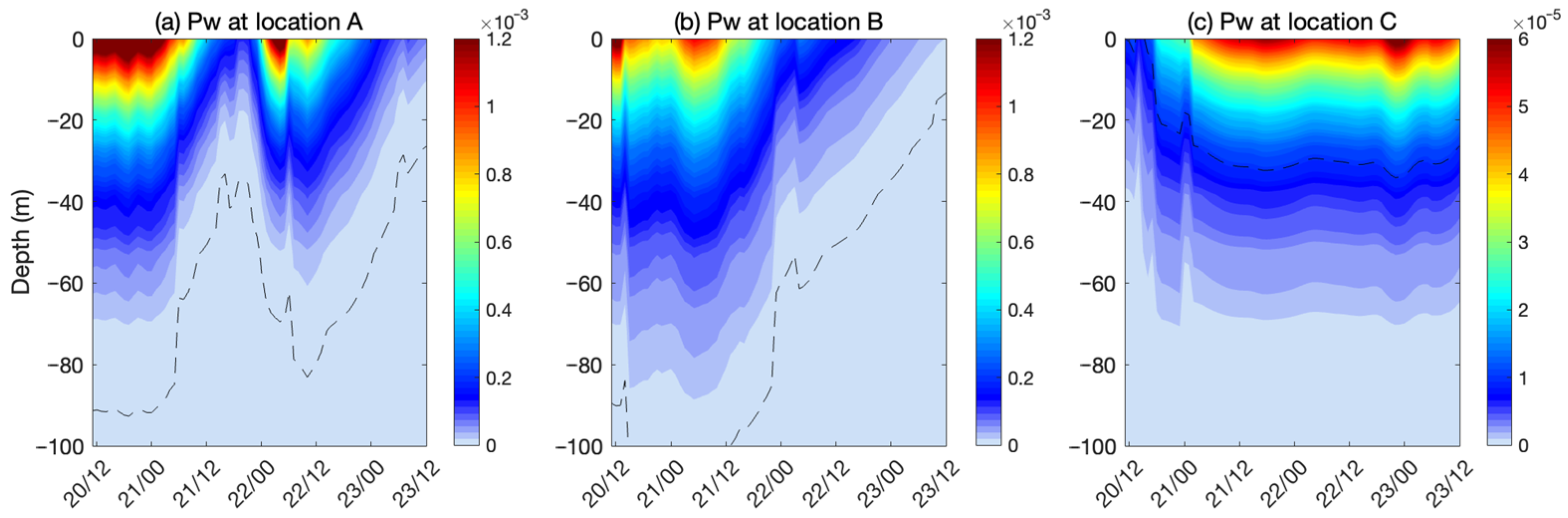
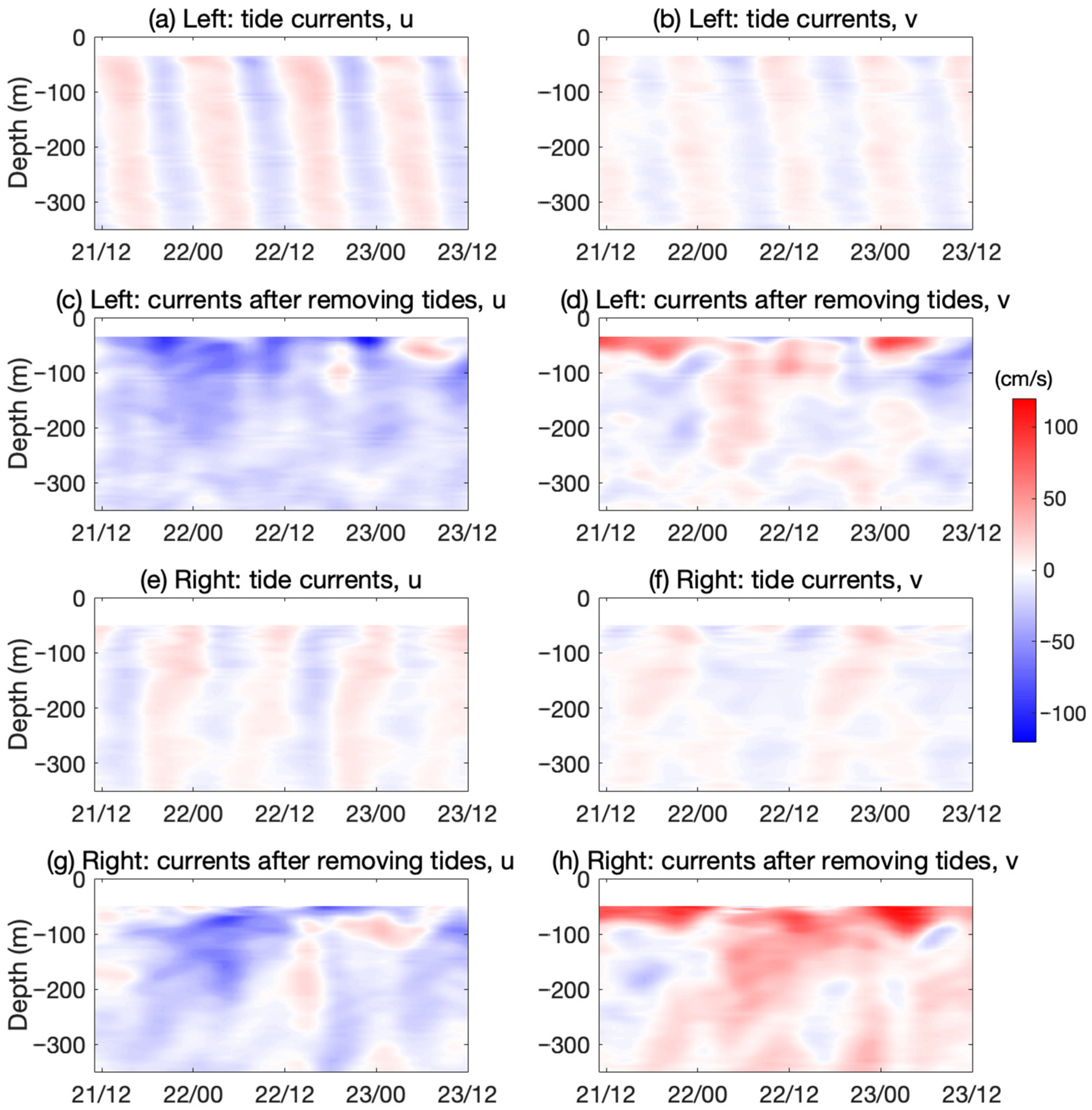
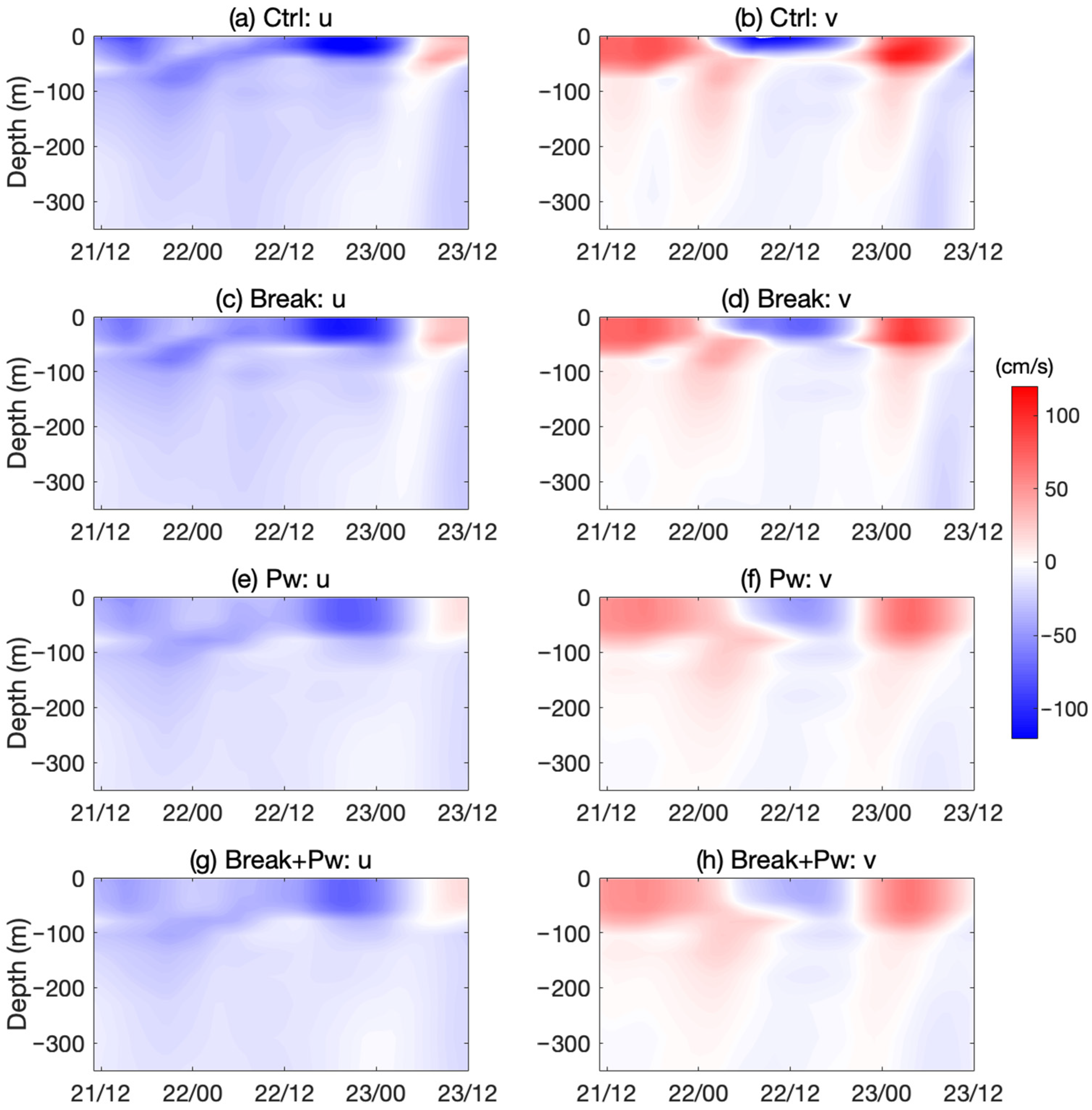
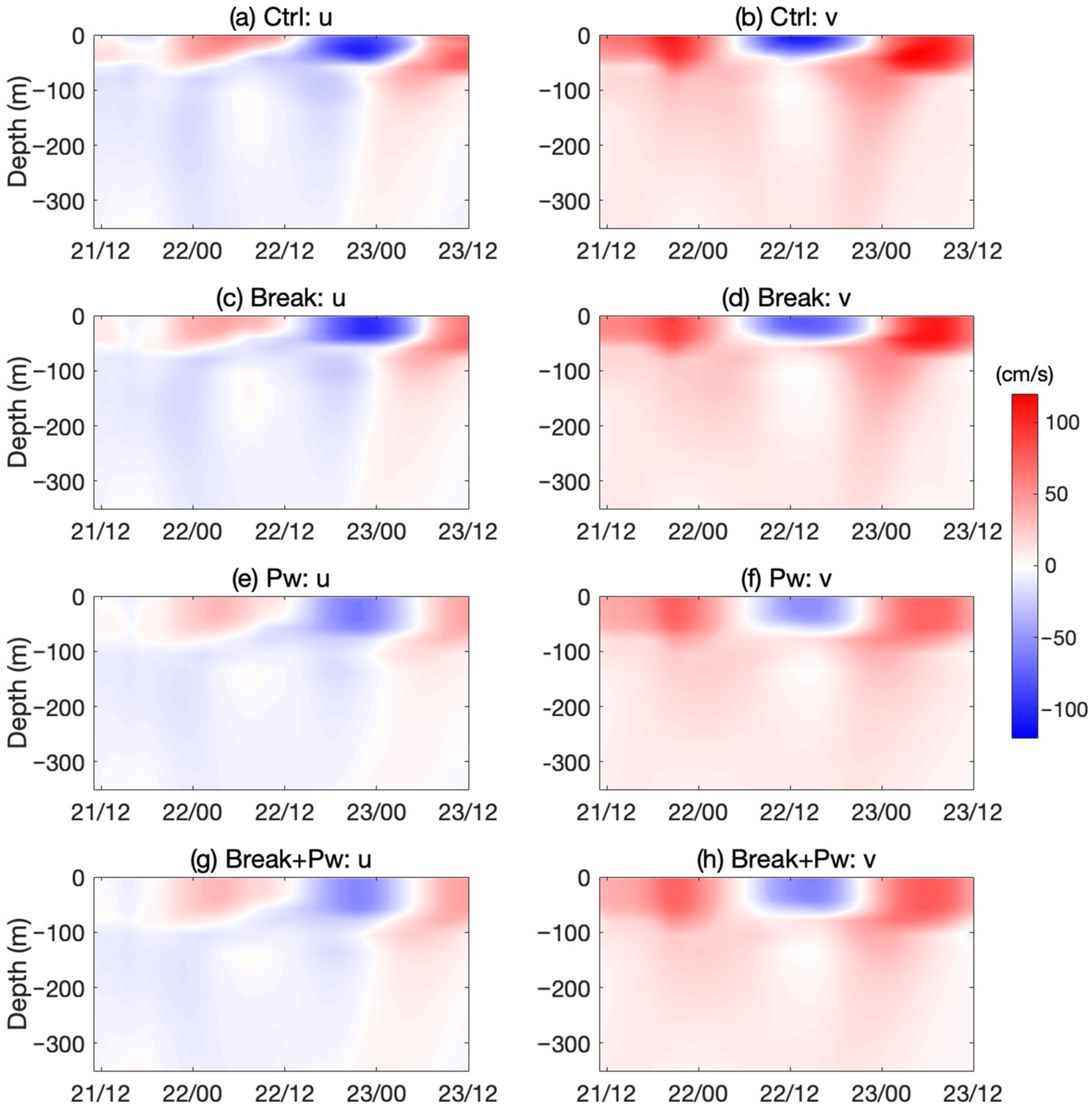
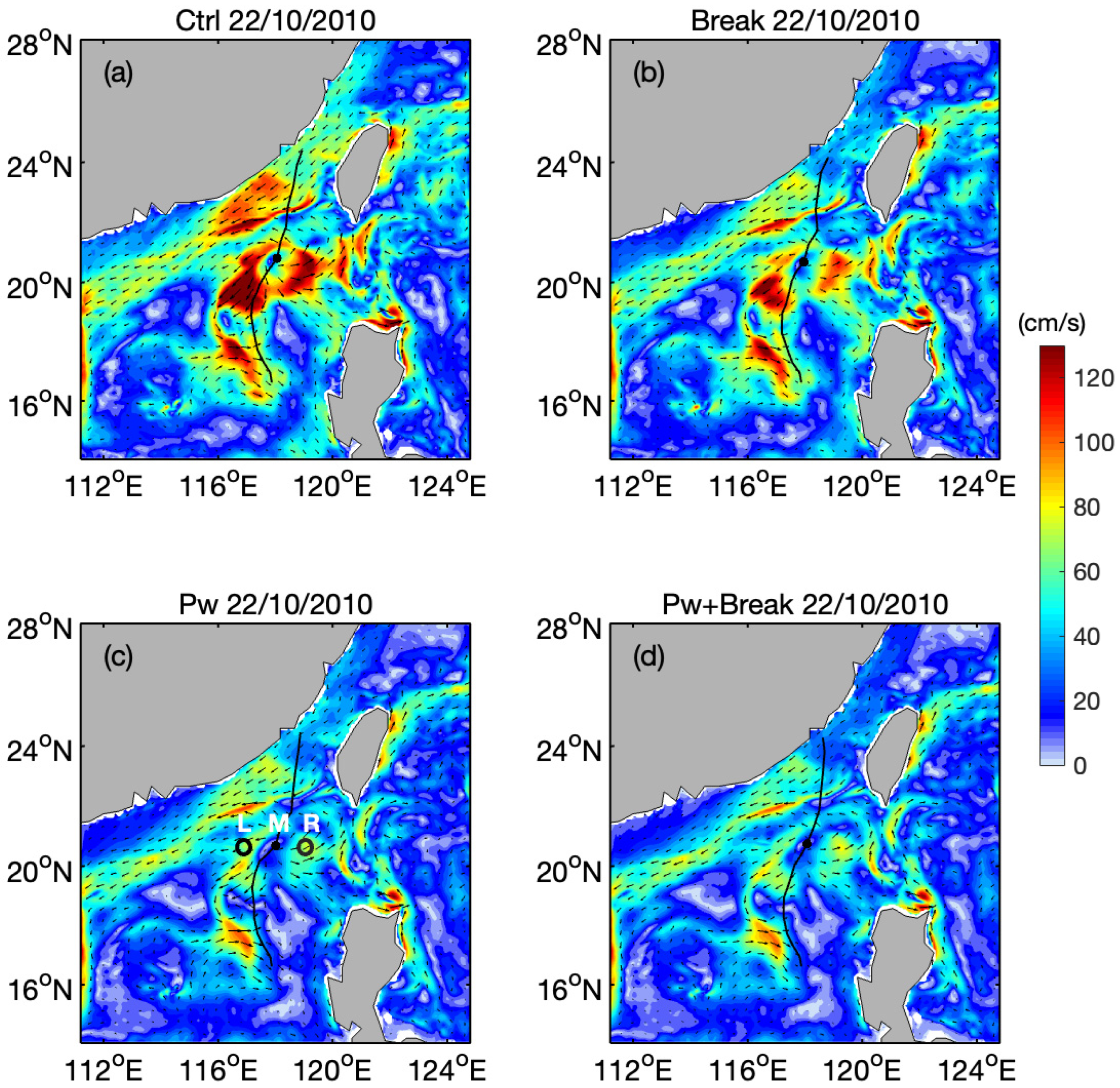
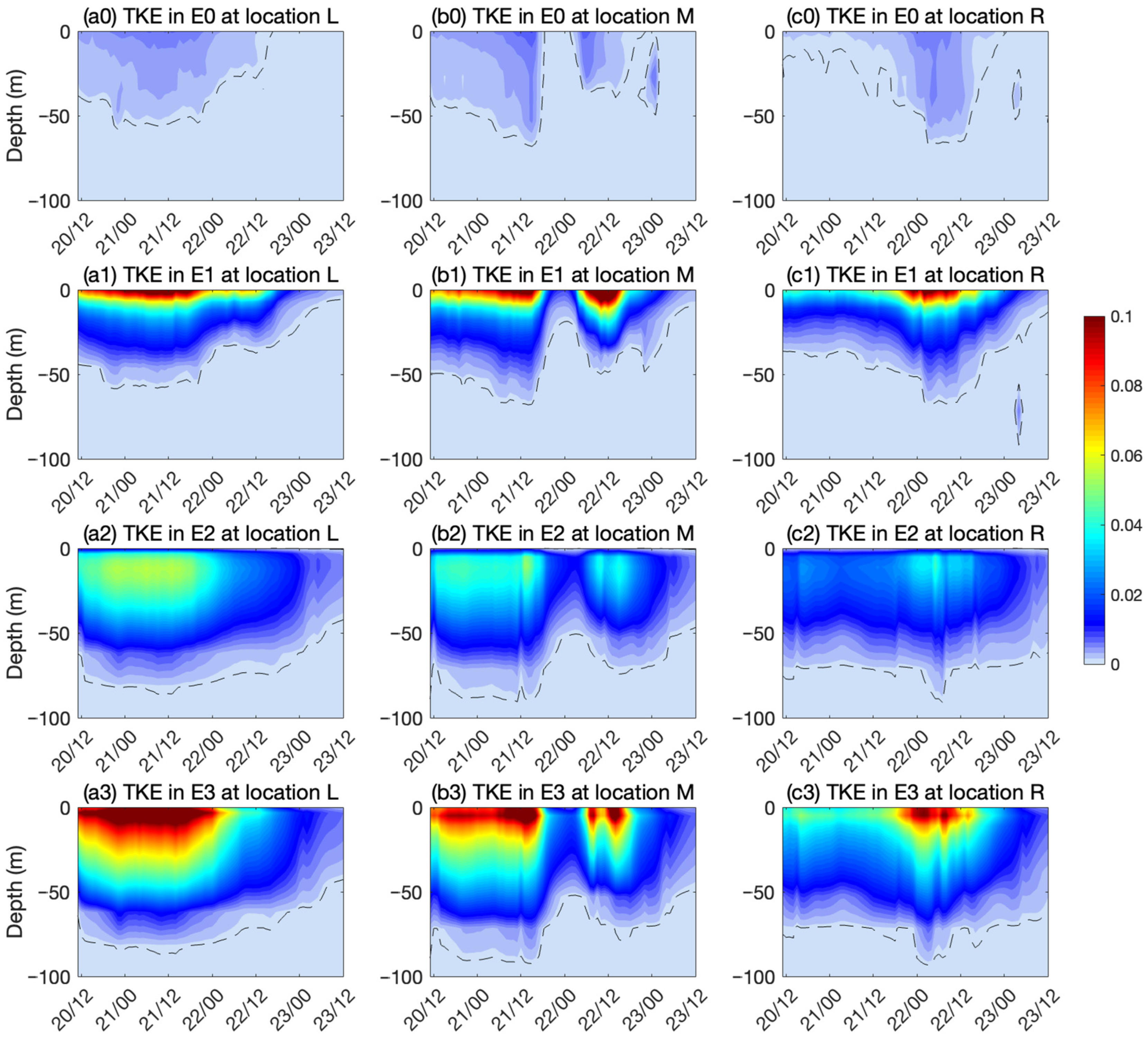
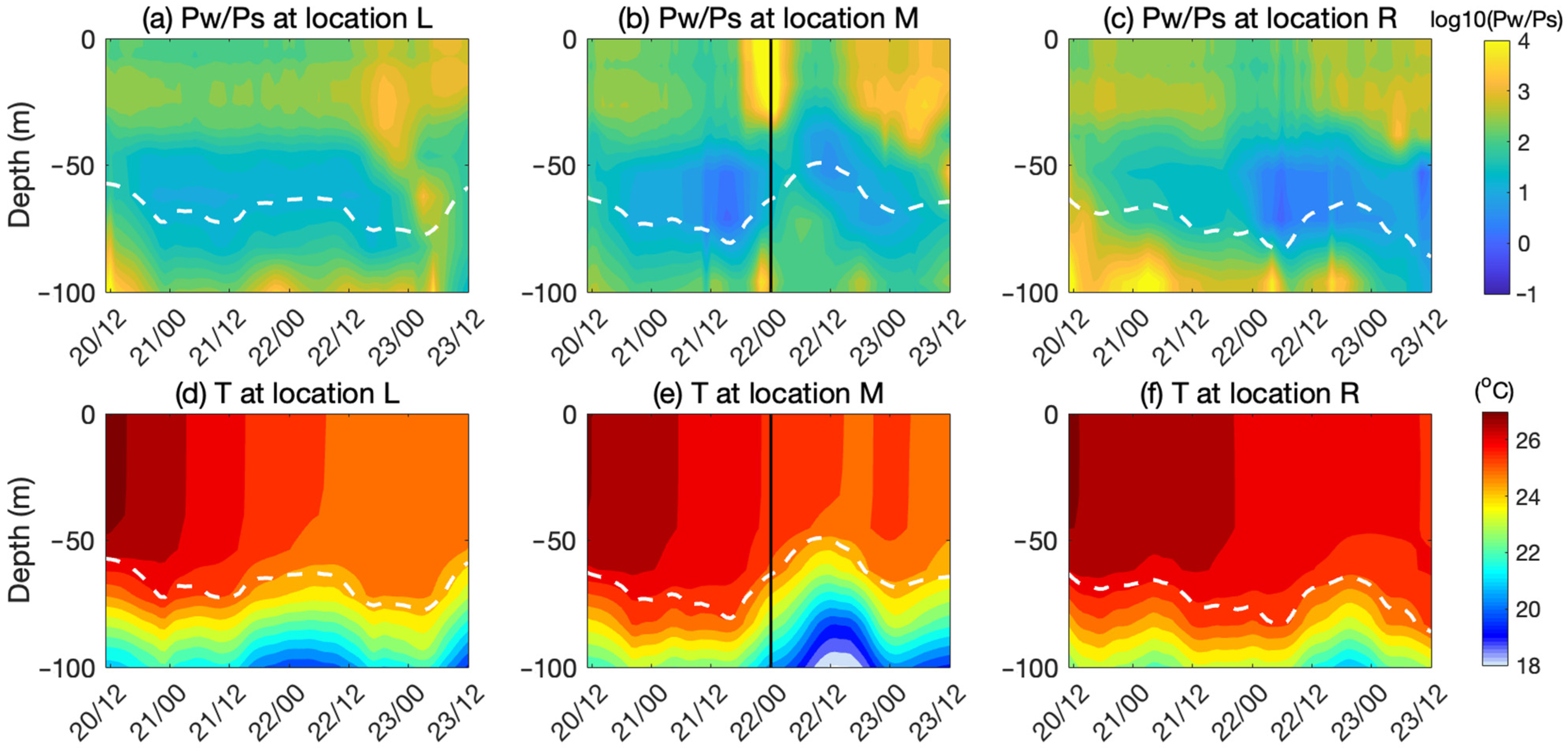
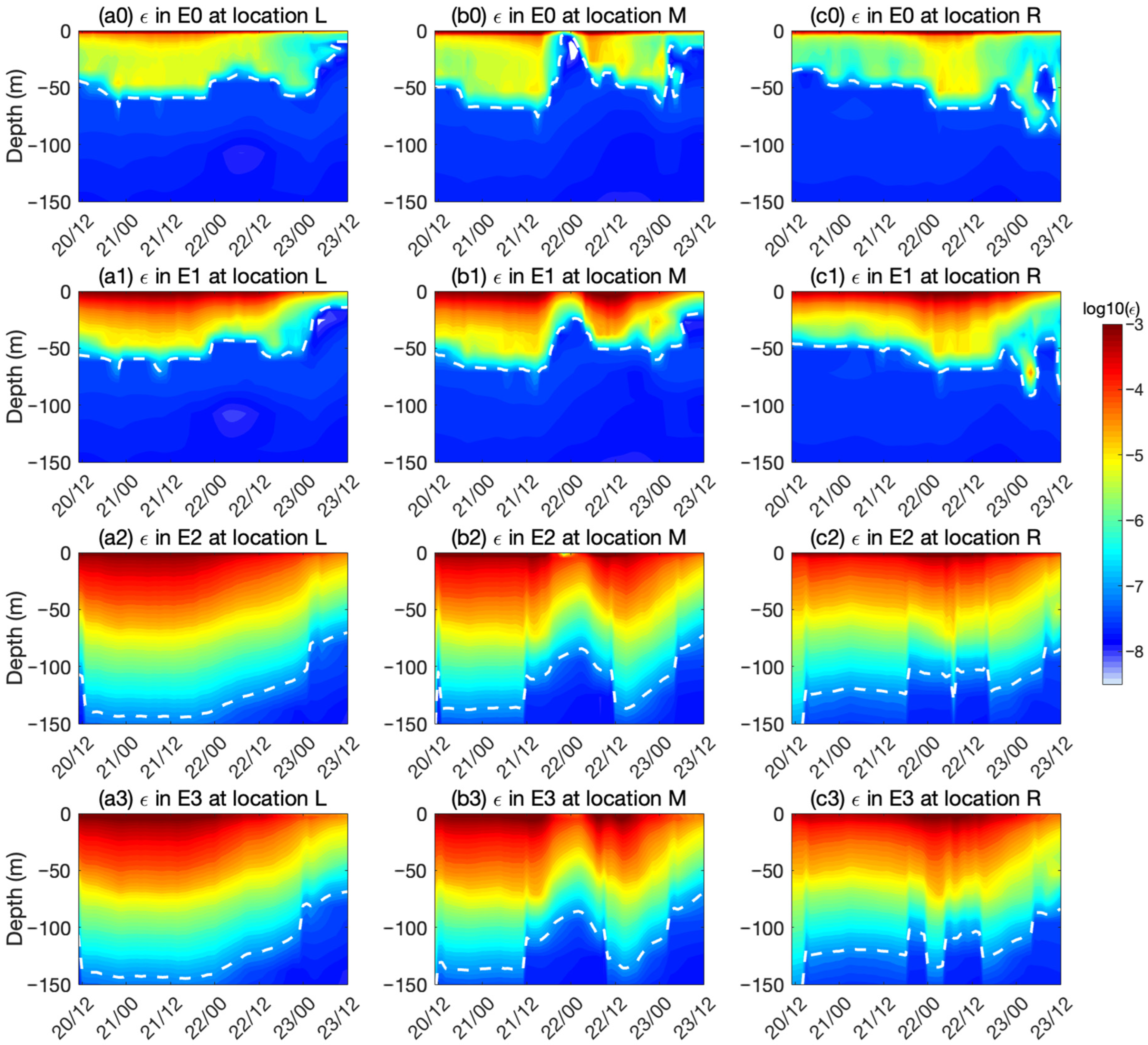
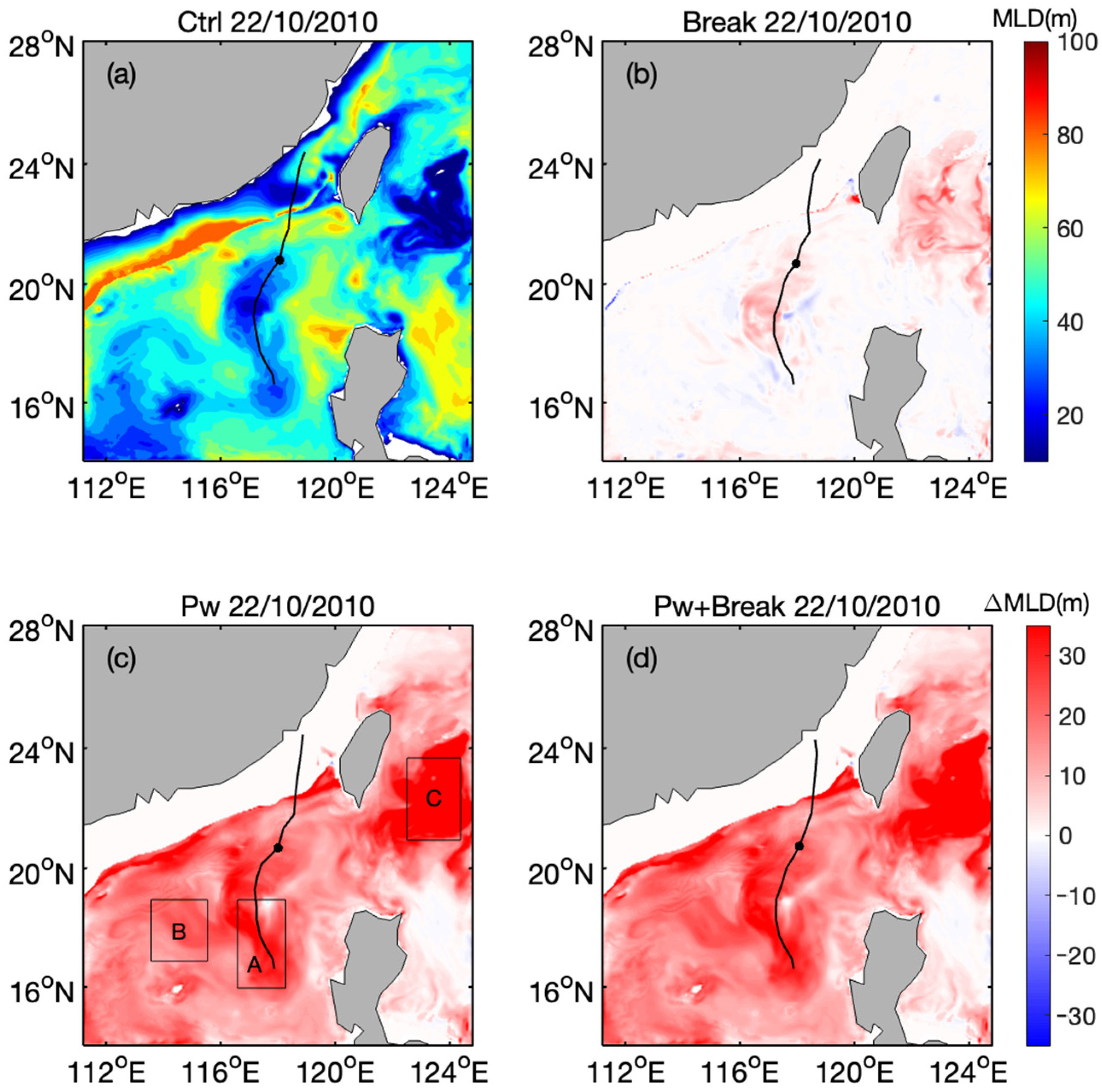
Surface waves play an essential role in regulating the mixing processes in the upper ocean boundary, and then directly affect the air–sea exchange of mass and energy, which is important for the intensity prediction of tropical cyclones (TCs). The relative and integrated impacts of the wave breaking (WB) and the wave orbital motion (WOM) on the mixing and ocean response to TC forcing are investigated under typhoon Megi (2010), using the modeled data from a fully coupled air–sea–wave model. It is shown that the WOM can effectively increase the turbulence mixing in the upper ocean, thus significantly deepening the mixing layer depth and cooling the sea surface temperature. The WB can modulate the mixing layer depth and sea surface temperature to some extent in the cold tail zone with a shallow mixing layer (owing to typhoon forcing), whereas the WOM plays a predominant role. On the aspect of ocean currents driven by typhoon winds, the WOM-induced mixing significantly weakens the current velocity and shear strength in the upper ocean mixing layer, while the relative contribution for turbulence production between the WOM and the current shear differs at different vertical regions. Moreover, the effect of the WOM on the upper ocean turbulent mixing are dependent on the location with respect to the typhoon center, the local vertical thermal structure, and surface wave states.
Keywords: mixing; typhoon; wave orbital motion; wave breaking mixing; typhoon; wave orbital motion; wave breaking