


Abstract
The new Forestry Strategy and Green Deal rely on sustainable forest management. Forest certification helps advance this objective. This study aimed to assess the social, ecological, and economic impacts of forest certification on forest management. The study presents an assessment methodology for the impact of the Forest Stewardship Council (FSC) standard’s application, and, based on it, a case study on forest management practices in Lithuania. This study helps clarify what constitutes impact in the context of forest certification and how it can be operationalised using indicators. The findings show that the major difficulties encountered were related to social factors regarding the FSC standard: the level of knowledge of employees and contractors of forest management organisations about the requirements of the forest stewardship standard, and community relations were not in all cases sufficient. The economic impact of the standard is positive, encouraging the use of local forest-related services and indicating that the price of FSC-certified wood is higher than that of non-certified wood. The study contributes to the scientific literature by proposing an indicator-based framework for assessing FSC implementation and by situating the Lithuanian case within the broader European context of forest certification governance.
1. Introduction
Forestry activity was assessed as unsatisfying after the Rio de Janeiro Earth Summit in 1993 [1]. In 1994, the Forest Stewardship Council (FSC) was established to enable forest organisations to establish and hold specific features that meet the standard’s sustainable requirements [1]. FSC is the most prominent certification scheme that could help maintain forestry’s economic, social, and environmental benefits [2]. Consumers may be willing to pay a price premium for certified timber, which can benefit certified companies [2]. More than 172 million hectares of forests worldwide are FSC-certified [3], representing about 4.2% of the global forest area. In Europe, 68 million hectares are FSC-certified [3], representing approximately 6.5% of Europe’s total forest area.
FSC ensures reliable control of the origin of wood products. However, the Forest Management Principles and Criteria developed by the FSC must be applied at the regional or national level; therefore, since 2014, national standards have been prepared. The FSC Principles and Criteria form the basis of the FSC certification scheme and define environmentally appropriate, socially beneficial, and economically viable forest management [4]. One of the benefits of forest certification is the periodic assessment of forest holders’ activities [5]. Many studies aimed to assess the most frequent non-conformities. Halalisan et al. [6] found that, in different European countries, the most common non-conformities in FSC forest management certification were related to Principle 6 on environmental impact (34%), Principle 4 on community relations and workers’ rights (17%), and Principle 8 on monitoring and assessment (13%). Another study [7] similarly showed that the most significant non-conformities were identified in the labour and social area (Principle 4) and environmental issues (Principle 6). Lehtonen et al. [8] have theoretically assessed FSC’s impact on biodiversity; however, the certification process’s socio-economic impact was not assessed. Jaung et al. [9] found that the key FSC stakeholders’ adaptability was high for biodiversity conservation and carbon storage. However, the economic impact remains underexplored. Fagundes et al. [10] aimed to develop a scale to assess the benefits of FSC certification, and the results revealed the existence of two factors for the economic dimension and three factors for the social dimension. Oy’s [11] study concluded that the most significant impact of forest certification was in the environmental protection area; however, it did not identify significant economic benefits to forest owners. Moore et al. [12] studied the effectiveness of forest certification by FSC, and the results indicate that forest certification prompted substantial environmental changes in practices. Savilaakso and Guariguata [13] investigated how to enhance FSC certification for local adoption of ecosystem services, but the assessment indicators were not identified. It can be said that the assessment of FSC’s impact is often limited to the assessment of ecological impact.
Forest certification is a practical way to implement sustainable forest management. However, in countries with comparatively strong forestry regulations, it is often difficult to distinguish improvements caused by certification from those resulting from compliance with national legal requirements [14,15].
Boubacar and Sissoko [16] argue that the impact of FSC is not unambiguous and depends on the context. This underlines the need for country-specific impact assessments. Recent global evidence presented by Kadam and Dwivedi [17] indicates that the biodiversity effects of FSC certification are highly dependent on local conditions. This underlines the importance of country-specific and indicator-based assessments of certification impacts. As noted by Corticeiro et al. [18], the role of FSC certification in Europe is evolving from a market-driven requirement into a broader sustainability-oriented management instrument. This also increases the relevance of country-level assessments of its actual impact.
The literature pays considerable attention to ecological issues, especially biodiversity, but it much less often provides an integrated analysis of all three pillars of sustainability. For example, Matias et al. [19] provide a global systematic review and meta-analysis of the impact of FSC on biodiversity. However, a broader assessment should also include social and economic indicators. Pirard et al. [20] examine how private standards such as FSC interact with public policy. They argue that FSC certification should increasingly be understood through mixed governance arrangements as private standards with public policy objectives.
Zubizarreta et al. [21] reinforce the economic and managerial benefit aspects. Studies also suggest that the impact of certification depends not only on the standard itself but also on organisational motivations and stakeholder engagement. This means that certification impacts cannot be assessed purely in formal terms. Nichiforel et al. [22] analyse stakeholder involvement in the FSC system in Romania. They show that stakeholder involvement, community relations and participation are relevant in contemporary FSC research in Europe. Mattsson et al. [23] emphasise the importance of integrated indicators in assessing environmental, social and economic forestry actions.
Although previous studies have examined individual aspects of FSC certification, the literature still lacks an integrated assessment of social, ecological, and economic impacts within a single analytical system as well as a clearer methodological basis for assessing impacts across indicators. To address this gap, the study applies an indicator-based approach to the assessment of FSC-related impacts. This study differs from previous ones in that it treats the impact of FSC not as formal compliance with rules, but as a set of practical consequences, which are determined empirically by combining audit report data with expert experience. This study aims to develop and apply an indicator-based framework for assessing the social, ecological, and economic impacts of FSC certification on forest management, using Lithuania as a case study.
The FSC certification scheme is intended to promote sustainable forest management in practice, but its impacts depend on how consistently and effectively the standard requirements are implemented by certificate holders. In this study, impact refers to changes and consequences related to the application of the FSC standard in forest management (across the social, ecological, and economic dimensions). Where the requirements are implemented successfully, certification may contribute positively to social, ecological, and economic outcomes. Where implementation is incomplete or inconsistent, weaknesses may emerge that limit these expected benefits. These impacts can be assessed using specific indicators. Thus, impact is treated not merely as formal compliance with certification requirements, but as the set of practical consequences arising from implementation.
The study combines a structured SWOT system with content analysis of audit reports and findings from an expert survey. It addresses the following research questions: (1) How can the impacts of FSC certification be conceptually defined and operationalised through social, ecological, and economic indicators? (2) What are the main positive and negative impacts of FSC certification on forest management in Lithuania?
Beyond its empirical focus on Lithuania, the study contributes to research on forest certification by proposing an indicator-based framework for assessing FSC implementation across social, ecological, and economic dimensions. The Lithuanian case also offers insight into wider European discussions on how certification standards are implemented and monitored in practice.
2. Materials and Methods
The methodological design combined three qualitative components that were used sequentially and complementarily. First, content analysis of FSC audit reports was used to identify recurring non-conformities, corrective action requests, and other certification-related findings relevant to forest management practice. Second, these findings were grouped into analytical categories and translated into social, ecological, and economic indicators, which were then structured within a SWOT framework. Third, an expert survey was used to validate, refine, and interpret the identified indicators and SWOT factors in the Lithuanian forestry context. This combination of methods enabled the study to link documentary evidence with expert-based contextual interpretation.
Table 1 summarises the analytical workflow, showing how audit findings derived from non-conformity in reports (NCRs) were grouped into thematic categories, translated into indicators, and assigned to SWOT elements. First, the FSC National Forest Stewardship Standard for Lithuania (FSC-STD-LTU-01-2020 [24]) was analysed to identify the main potential strengths and weaknesses in implementing certification requirements. Second, public FSC audit summary reports were reviewed to identify non-conformities and recurring implementation problems in certified forest management practice. Third, recurring findings were grouped into thematic categories according to their content and expected social, ecological, and economic impacts. Fourth, these categories were translated into analytical indicators and then assigned to SWOT elements based on whether they represented internal or external factors and positive or negative effects. Fifth, an expert survey was used to evaluate the significance of the identified SWOT factors. Finally, the results of document analysis, audit report assessment, and expert evaluation were integrated into the final impact assessment framework.
Table 1.
Methodological procedure of the study.
2.1. SWOT Analysis
The assessment of the economic, ecological, and social impacts of FSC application in forest management is based on a SWOT analysis. SWOT (Strengths (S)–Weaknesses (W)–Opportunities (O)–Threats (T)) analysis is a method designed to determine internal (strengths and weaknesses) and external (opportunities and threats) factors that are favourable and unfavourable in achieving goals. SWOT analysis represents a comprehensive diagnosis of factors relating to new management [25]. The first step of the SWOT analysis was to define the definitions of the SWOT factors in relation to the aims of the current study. In this study, the SWOT framework was used as an analytical structure for organising the identified impacts of FSC certification. Accordingly, internal factors were treated as strengths and weaknesses, whereas external contextual factors were treated as opportunities and threats. At this stage, the purpose was not to identify specific factors, but to establish the analytical definitions used in the subsequent assessment.
2.2. Content Analysis
The second step of the SWOT analysis was to identify the strengths, weaknesses, opportunities and threats associated with the application of the FSC-STD-LTU-01-2020 standard in Lithuania. This part of the study was based on content analysis. The analysed sources included the FSC-STD-LTU-01-2020 document, official public audit summary reports from the FSC database, statistical data from the Labour Inspectorate database, FSC-certified wood price statistics in Lithuania, and relevant legal documents. These data provide the basis for conducting the SWOT analysis. A total of 94 public audit summary reports from 2021, 2022, and 2023 were analysed and systematised by recording non-conformances with the criteria of the FSC Principles, as well as observations and stakeholder comments. Forest cover 33.8% of Lithuania’s territory, amounting to approximately 2 million hectares (ha) [26]. The analysed area represented 64% of the total forest area in Lithuania, including all state-owned forests and the largest private forest owners.
The content analysis focused on the substantive content of FSC audit reports, with particular attention to recurring non-conformities, corrective actions, and other observations related to forest management practice. Similar findings were then grouped into broader analytical categories reflecting the social, ecological, and economic dimensions of certification. Based on these categories, a set of indicators was developed to operationalise the impacts of FSC certification within the SWOT framework. Thus, the indicators were not defined abstractly in advance; rather, they were derived from the empirical material collected through document analysis and subsequently refined through expert interviews.
2.3. Expert Survey
An expert survey questionnaire is usually based on an interview plan that includes specific questions and their sequence. The expert survey questionnaire was compiled based on the results of the audit analysis. From March to April 2024, an expert survey was conducted with 10 experts by phone and email. Respondents were distributed as follows: 5 FSC-certified forest companies; 1 member of the Federation of Lithuanian Forest and Wood Workers’ Trade Unions; 1 member of the Trade Union of Employees of the Lithuanian Environmental Protection System; 1 representative of the State Labour Inspectorate (Employee Safety and Health Department); 2 scientific researchers in the Ecology and Environmental field. The interview objective was to obtain informed expert judgments from individuals with direct experience in forest certification, forest management, or related governance processes. Although the number of interviewed experts was limited, this is consistent with qualitative expert-based research, where depth of knowledge and relevance of expertise are more important than sample size alone. It is recognised that the institutional affiliation of experts may influence the perspective of their assessments and introduce some bias inherent to specific stakeholder groups. The expert questionnaire comprised 35 questions covering social, ecological, and economic impacts. All questions were closed-ended, formulated as statements, and rated on a five-point Likert scale. The interview questionnaire was developed based on the research objectives and the preliminary findings from the document analysis. Interview responses were analysed qualitatively and used to interpret the relevance, consistency, and practical significance of the indicators derived from the content analysis.
3. Results
3.1. SWOT Analytical Framework for Forest Certification
The principles of the FSC standard are developed to ensure sustainable forestry activity and that harvested wood complies with sustainability requirements. Non-compliance with these principles was treated as a weakness, while compliance-related effects were used to define strengths, opportunities, and threats within the analytical framework (Table 2).
Table 2.
Definition of SWOT factors in the forest certification context.
3.2. Identification of Internal Factors of the Application of the FSC Standard: Strengths and Weaknesses
The main generalised strengths (S) and weaknesses (W) originate from the content of the FSC-STD-LTU-01-2020 document standard. Each principle and its associated criteria were assessed in relation to their implementation in practice. When the requirements of the standard were fully met, the impact was treated as positive and classified as a strength (Table 3). When the requirements were only partially met or not met, the impact was treated as negative and classified as a weakness (Table 3). These impacts were further considered in relation to their social, ecological, and economic dimensions. The factor–impact links presented in Table 3 were developed on the basis of a literature review, FSC normative provisions, and an analytical assessment of the relationships between standard requirements and impact dimensions. Weaknesses (W) indicate that the relevant FSC criterion was not met or was only partially met, whereas strengths (S) indicate that the criterion was met. The first number following W or S refers to the FSC Principle number; when followed by two numbers, it refers to the FSC Principle and criterion number within the FSC system.
Table 3.
The main potential strengths and weaknesses in the FSC-STD-LTU-01-2020 context.
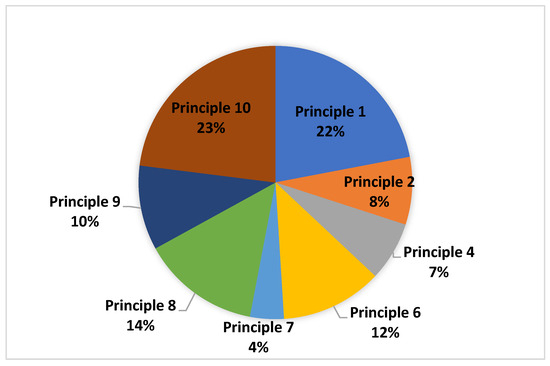
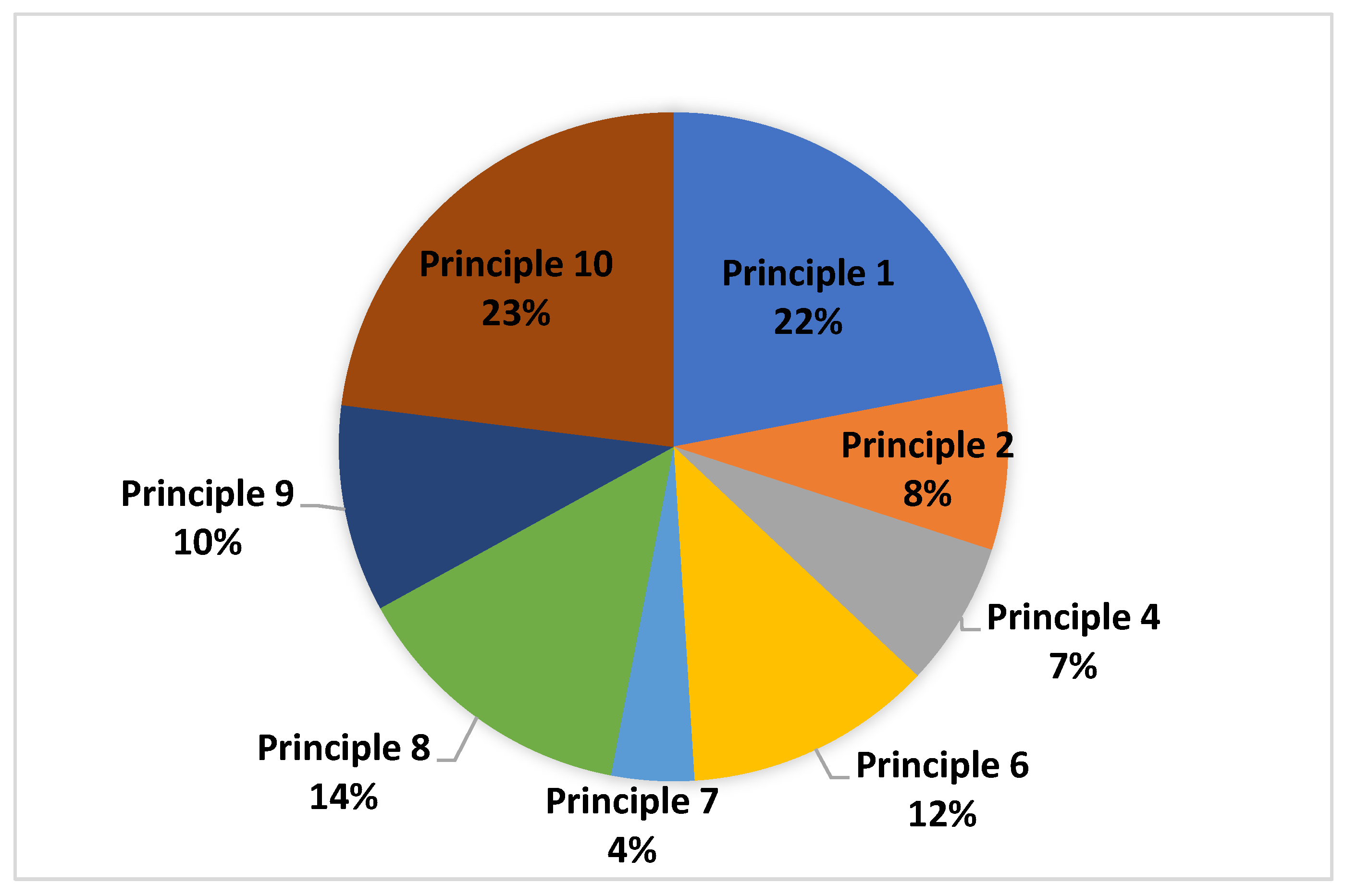
Based on the audit public summary reports, a total of 171 non-conformances were identified, revealing 27 potential weaknesses in forestry activities. Most of these non-conformities (79%) were identified during the first year of certificate validity. The highest share of non-conformities was associated with Principle 1 (22%) and Principle 10 (23%). Two weaknesses (W) appeared particularly frequently:
- ✓
- W-1.8 (related to Principle 1 and 8 criteria). Audit findings indicated that the knowledge of employees and contractors in forestry organisations about the new standard is not always sufficient for its full implementation.
- ✓
- W-10.11 (related to Principle 10 and 11 criteria). The amount of dead wood often is less than 5 m3/ha, and selected trees for biodiversity are often of low biological value and not resistant to winds.
It is noted that non-conformances related to Principle 5 have not been identified based on the analysis of audit reports. The percentage distribution of non-conformities related to other principles is presented in Figure 1. From an analytical perspective, the figure helps to identify where weaknesses are most concentrated and therefore supports the subsequent prioritisation and interpretation of the main problem areas.
Figure 1.
Distribution of non-conformities by FSC Principles.
Of the 27 identified non-conformities, 23 were included in the questionnaire used to collect expert opinion. Four non-conformities related to standard requirements SR 6.7, SR 7.6, SR 9.2, and SR 9.3 (Table 4) were not included because experts were considered unlikely to provide sufficiently objective assessments of these issues. Therefore, these factors were evaluated in this study only based on audit results. In contrast, four potential non-conformities related to Principle 5—SR 5.1, SR 5.2, SR 5.3, and SR 5.4—were included in the expert questionnaire even though they were not identified in the audit. Overall, the questionnaire covered 27 potential non-conformities through 35 questions reflecting their social, ecological, and economic impacts.
Table 4.
Indicators for evaluating the strengths and weaknesses of certified forests in applying the standard by impact dimensions.
3.2.1. Social Impact
Based on the analysis of audit reports, 38 non-conformities in reports (NCRs) were identified according to Principle 1 (area of compliance with laws). They describe 4 weaknesses: W-1.3, W-1.5, W-1.6, W-1.8 (Table 4). Principle 1 was associated with legal compliance, the use of FSC-certified claims, dispute-resolution procedures, and improved staff knowledge of FSC requirements. For example, 25 NCRs related to staff understanding of the new standard were recorded in 2021; this number decreased to 1 in 2022, and no such NCRs were recorded in 2023. Therefore, W-1.8 was a weakness in 2021, but now it is becoming a strength (Table 4). The social impact of the application of Principle 1 of the standard in the area of corruption (related to Principle 1 and 7 criteria) cannot be evaluated in this study because there is no data on corruption supporting information based on audit results and expert interviews, so additional research is needed to assess this factor.
13 NCRs were identified according to Principle 2 (area of workers’ rights and employment conditions). They describe 3 weaknesses: W-2.3, W-2.5, W-2.6 (Table 4). Principle 2, part of the standard, encourages the use of work protective equipment at the workplace, but this is not always enforced. The analysis identified recurring weaknesses related to workers’ rights and employment conditions, particularly regarding the availability and condition of fire extinguishers and first-aid kits, as well as shortcomings in workplace safety practices. Expert responses also highlighted insufficient attention to the preparation of machinery for forest operations.
12 NCRs were identified according to Principle 4 (area of community relations). They describe 3 weaknesses: W-4.1, W-4.2, and W-4.6 (Table 4). The analysis identified several weaknesses related to community relations, particularly in cooperation with local communities and in the practical implementation of related procedures. Procedures for solving complaints with stakeholders are not always clear, and these procedures are not developed in a culturally appropriate way in cooperation with the communities. Informing stakeholders about how they can submit comments or request changes does not always go smoothly either.
21 NCRs were identified according to Principle 6 (area of environmental values and impact). They describe 5 weaknesses, but only one weakness, W-6.5, was related to social impact, specifically to communication with stakeholders. The audit data showed a decline in related NCRs over time: 3 NCRs were recorded in 2021, 2 in 2022, and none in 2023. Therefore, W-6.5 was a weakness in 2021 and 2022, but now it is becoming a strength (Table 4). 7 NCRs were identified according to Principle 7 (area of the management plan). They describe 2 weaknesses: W-7.4 and W-7.6 (Table 4). These were related to stakeholder involvement in activity planning and monitoring processes. The audit findings indicated that the required procedures for consulting stakeholders were not consistently applied in practice. 24 NCRs were identified according to Principle 8 (area of monitoring and assessment). They describe 3 weaknesses: W-8.2, W-8.4 and W-8.5 (Table 4). The audit data showed a notable decline in monitoring-related NCRs: 14 were recorded in 2021, and none in 2022 or 2023. Therefore, W-8.2 was a weakness in 2021, but now it is becoming a strength (Table 4). However, shortcomings were also identified in relation to public summaries, which were not always accessible on organisational websites, and in the consistent use of correct tree species names in invoices. 17 NCRs were identified according to Principle 9 (area of maintenance of high conservation value (HCV) forests). They describe 3 weaknesses, but only one weakness, W-9.1, related to social impact and was reflected in 10 NCRs from the audit results. These indicated that assessments and selections of special values were often conducted solely by organisational staff, without informing or involving external stakeholders. The audit data also showed a declining trend in stakeholder-notification NCRs: 9 were recorded in 2021, 1 in 2022, and none in 2023. Therefore, W-9.1 was a weakness in 2021, but now it is becoming a strength (Table 4).
The social impact of applying Principle 10 (area of implementation of management activity) related to the area of technical conditions for the safety of workers is very important. However, this aspect (related to Principle 10 and 11 criteria) could not be classified as either the strength or the weakness (Table 4), because it is difficult to assess based on expert opinion only.
3.2.2. Ecological Impact
Expert responses indicated that under Principle 5 (area of the benefits from the forest), annual forest cutting volumes generally did not exceed the permitted harvesting rates, reflecting a balance between annual forest growth and harvesting (S-5.2) (Table 4).
Based on the analysis of audit reports, 5 weaknesses were identified according to Principle 6 (area of environmental values and impact), and 4 of these are related to ecological impact: W-6.2, W-6.3, W-6.6 and W-6.7 (Table 4). They were related to environmental impact assessment, including a lack of systematic procedures and inconsistencies in the compilation of protected and invasive species lists. 3 weaknesses were identified according to Principle 9 (area of maintenance of high conservation value (HCV) forests), and 2 of these are related to ecological impact: W-9.2 and W-9.3. Most related NCRs were recorded in 2021. Therefore, W-9.2 and W-9.3 were the weaknesses in 2021, but now they are becoming strengths (Table 4). 39 NCRs were identified according to Principle 10 (area of implementation of management activity). They describe 2 weaknesses: W-10.11 (related to the amount of dead wood and trees for biodiversity) and W-10.12 (Table 4) in post-operation environmental management. However, W-10.11 was a weakness in 2021 and 2022, but now it is becoming a strength. The analysis associated Principle 10 with several ecological aspects, including the control of invasive species, the reduction in damage to soil and water resources, and the retention of dead wood and trees relevant to biodiversity. Expert responses also emphasised the value of retaining biodiversity-important living trees in groups. According to the experts, this practice is beneficial for rare and endangered species.
3.2.3. Economic Impact
Based on the analysis of expert interviews, 1 weakness W-5.3 and 4 strengths were identified according to Principle 5 (area of the benefits from the forest): S-5.1, S-5.2, and S-5.4 (Table 4), in relation to economic impact. These were associated with harvesting volumes, the use of local services, and opportunities for economic benefits linked to certification. These findings were related to annual harvesting volumes, the use of local services, and certification-related economic benefits. A total of 40 indicators were identified to evaluate the strengths and weaknesses of certified forests in applying the standard (Table 4) across social, ecological, and economic impacts. The indicator set was developed for the Lithuanian FSC certification context; however, its thematic structure was designed in a way that may support adaptation for comparative use in other national settings.
3.3. Identification of External Factors of the Application of the FSC Standard: Opportunities and Threats
Potential external factors affecting the application of the FSC standard were identified through literature analysis and grouped as opportunities or threats across economic, social, and ecological dimensions (Table 4). The reviewed sources highlighted policy, market, demographic, and climate-related drivers relevant to the implementation of certified forest management. The new EU Forestry Strategy for 2030 was initiated in 2021. It promotes sustainable forest management, biodiversity, alternative forest-based industries, and the protection of remaining primary and old-growth forests [27,28]. This new EU Forestry Strategy emphasises sustainable forest management and the role of forests in implementing the EU’s climate change goals. This strategy is a flagship element of the European Green Deal and a key measure of the EU Biodiversity Strategy for 2030 [29]. In the United Nations resolution “Transforming our world: the 2030 Agenda for Sustainable Development”, the goals are also linked to sustainable forestry. Goal 15 refers to protecting, restoring, and promoting the sustainable use of ecosystems, sustainably managing forests, halting the loss of biodiversity, preventing the spread of invasive species, or significantly reducing their impact [30].
The analysis of certified and non-certified wood price dynamics [31] showed that the price difference during 2021–2024 ranged from 2% to 9%. In 2021, certified wood prices were approximately 9% higher than non-certified wood prices; the difference was 5% in 2022, 4% in 2023, and 2% in 2024. The largest price difference was observed for pulpwood.
The literature reviewed for external-factor identification indicated several market-related opportunities. Forecasts suggest average global economic growth of 2–3% per year by 2050 [32], while Global Forest Products Model (GFPM) simulations project increasing consumption of primary processed wood products up to 2040 [33]. Additional sources indicate further growth in industrial roundwood demand and continued dependence on resource availability, investment, and market conditions [33]. The potential opportunities and threats related to applying the FSC standard to forest management practice were identified through literature analysis and are presented in Table 5. These external factors were classified according to their relevance to certified forest management and their social, ecological, or economic dimension.
Table 5.
Potential opportunities and threats in applying the standard by impact factors.
4. Discussion
The discussion of the results is relevant not only for understanding FSC certification in Lithuania, but also for situating this case within broader scientific discussions on certification implementation, and the role of national context in shaping sustainability governance.
The results of this study indicate that FSC certification has identifiable, but uneven social, ecological, and economic effects in forest management practice. It has been established that the practical implementation of certification requirements varies across principles and impact dimensions. This may reflect a difference between formal compliance and practical implementation in everyday forest management. Overall, the results indicate that certification can be understood as a governance and monitoring framework within organisational practice, rather than as a mechanism that automatically ensures equal levels of impact across all sustainability dimensions.
In this context, FSC certification can be understood not just as a technical standard but as a framework that reflects alternative market visions and social change initiatives [37]. These insights align with broader global and regional trends: Bösch [38] highlights the uneven global expansion of forest certification driven by specific institutional factors, while Klarić et al. [39] note that in post-Soviet contexts like Croatia, FSC has evolved from a mere market-driven response into a comprehensive tool for promoting sustainable practices.
To systematically identify implementation gaps, this study proposes a 40-indicator model that allows for the assessment of real changes in management processes rather than mere formal compliance. This approach aligns with the systematic review by Fagundes et al. [40], which emphasises that certification effectiveness depends on the successful integration of social, ecological, and economic goals. Furthermore, Leite et al. [41] observe that certification is increasingly becoming an integral part of internal sustainability management control systems, serving as an internal tool to structure sustainability objectives.
At the same time, the findings should be interpreted with caution. Given the methodological approach used in this study, they indicate associations and implementation-related differences rather than definitive causal effects. Even so, the Lithuanian case supports the conclusion that FSC certification can produce meaningful changes in forest management, but that these changes are not equally strong across all sustainability dimensions. In the social dimension, the study suggests that FSC certification is associated with legal compliance and procedural accountability, although challenges remain in occupational safety and community relations. The recurring weaknesses related to workers’ safety and local community relations indicate that the social dimension of certification may be more difficult to implement consistently than formal procedural requirements. This corresponds with earlier research [42], which suggests that social issues, particularly impacts on workers and local communities, are among the most frequent areas of non-conformity in FSC-certified forest management.
The recurrence of non-compliance with health and safety requirements in forest operations may be related to insufficient internal control of occupational safety and health within organisations, as well as shortcomings in work organisation. However, this problem is likely not limited to FSC-certified forests and may also be characteristic of non-FSC-certified forests in Lithuania. Such an interpretation is important because it suggests that some weaknesses identified through certification audits may reflect broader structural problems in the forestry sector rather than failures caused solely by the certification system itself.
Across several principles, the results of this study suggest a tendency towards improvement in stakeholder communication and monitoring-related compliance over time. However, recurring gaps in planning, public information, and stakeholder involvement indicate that full implementation of social and procedural requirements remains incomplete. This interpretation is consistent with earlier studies [38,39,43] that identified recurring difficulties in complying with some FSC requirements across different national contexts and certification settings.
Official labour statistics provide a broader context for interpreting the social implications of forest management practices in Lithuania. In 2023, 29 cases of illegal work were identified in the forestry sector, compared with 25 cases in 2022 [44]. In addition, the analysis of occupational accidents in Lithuanian forestry [45] shows that, in 2021–2023, the number of serious accidents was 30% higher and the number of fatal accidents was 50% higher than in 2018–2020. According to surveys of forest loggers conducted by the State Labour Inspectorate [46], it was found that more than half (54%) of loggers had not mastered the basic work safety requirements. These trends may reflect persistent shortcomings in occupational safety and work organisation, particularly in forest management settings where control mechanisms are weaker. The main causes of accidents in 2021–2023 were violations of occupational safety and health requirements laid down in legal acts, insufficient internal control of occupational safety and health within organisations, and inappropriate work organisation, which together accounted for 92% of all cases. At the same time, no work accidents related to forest fires were recorded in either 2018–2020 or 2021–2023.
This interpretation is further supported by Lindahl and Andersson [47], who question whether certification in the Swedish wood sector represents a strategic commitment or merely a symbolic response in firms with limited resources. Their findings show that small and medium-sized enterprises often struggle to integrate certification requirements into daily practice, which may help explain the uneven implementation observed in this study. From a social impact perspective, this suggests that weaknesses in areas such as community relations may indicate that some certification requirements are still approached more as formal obligations than as strategically embedded social responsibilities. At the same time, Teitelbaum [48] demonstrates the transformative potential of FSC to reshape established practices. However, the Lithuanian case suggests that community relations under Principle 4 remain an area of limited consistency. This finding is mirrored in other contexts [49] where community participation remains a challenge for both certified and non-certified entities. This indicates that the social impact of certification depends not only on the formal existence of standard requirements, but also on how deeply those requirements are embedded in daily organisational practice and on the genuine involvement of local communities. In this respect, the results of the study support the argument that certification should be evaluated through its practical social outcomes rather than through formal compliance alone. In the ecological dimension, the findings suggest that FSC certification is associated with stronger attention to biodiversity-related requirements, habitat protection, and environmentally oriented management measures. At the same time, the results indicate that the consistency of implementation varies across ecological principles and specific operational contexts. This interpretation is consistent with earlier research [50,51], indicating that FSC certification may support biodiversity-related safeguards and strengthen environmental requirements beyond minimum legal compliance, although the degree of practical implementation may vary across contexts. The effectiveness of biodiversity conservation is also shaped by the national standard-development processes, which balance global requirements with local ecological priorities [52]. Furthermore, the integration of new technologies can serve as a vital ally in monitoring and achieving sustainable forest management goals [53]. The results of this study contribute to global discussions on reducing forest loss, as highlighted by Bocci and Fortmann [54] in their research on forest concessions. The Lithuanian case, therefore, appears to align with broader findings [55] that certification is particularly relevant where ecological safeguards depend not only on formal rules but also on consistent implementation in forest management practice. Ultimately, the Lithuanian case demonstrates that certification acts as a specific governance instrument rather than an automatic mechanism, with its success remaining contingent on the institutional environment and practical consistency. This is supported by Zwerts et al.’s (2024) [50] research, which shows that it is compliance with FSC requirements (and not just having a certificate) that leads to positive ecological results.
In the economic dimension, the findings suggest that FSC certification may generate certain organisational or market-related benefits, but its direct economic impact is less clearly observable than its procedural or environmental effects. This corresponds to earlier literature [56], indicating that economic outcomes of certification are often weaker or depend heavily on which specific wood product attributes consumers value the most. Additionally, valuing verified ecosystem services remains a complex but potentially rewarding economic path for certified forests [57]. Also, this study indicates that economic viability is not explicitly reflected in the standard through a quantitative indicator. This suggests that the assessment framework could be strengthened by introducing criteria that allow a more systematic evaluation of the profitability of FSC certificate holders. Such an approach could help to determine whether economic performance remains consistent with the broader principles of sustainability, for example, by distinguishing between high, sufficient, and insufficient levels of profitability in relation to sustainable forest management. Wolff and Schweinle [58], in their systematic review of the effectiveness and economic viability of forest certification, also emphasise that the economic benefits of certification often remain ambiguous and are highly context-dependent. Their findings corroborate the trend observed in this study: while certification is regarded as a vital tool for sustainable management, its direct impact on corporate profitability is less apparent than its influence on management processes. This further underscores the necessity of implementing more targeted economic indicators in Lithuania to better evaluate the economic sustainability of certified forest management organisations and their interplay with environmental requirements. The contribution of this study lies not only in assessing the impacts of FSC certification in Lithuania, but also in proposing an integrated methodological approach that combines standard analysis, audit-based evidence, and expert evaluation into a coherent impact assessment system. A further contribution of this study is the proposed set of 40 indicators. These indicators provide a clear framework for assessing FSC certification across social, ecological, and economic dimensions. Although the developed set of 40 indicators was designed for the Lithuanian national FSC standard context, its overall thematic structure and integrated methodological approach are transferable to other countries. The indicators may also be applied in other national contexts. Where necessary, they can be adjusted (or additional indicators can be added) to reflect the requirements of a specific national standard. From a broader scientific perspective, the study also contributes to discussions on how forest certification should be assessed beyond formal compliance. This indicator set may be used to support certification monitoring, policy development, and comparative studies across countries or between certified and non-certified forest managers. This study has some limitations. It focuses on one national context and qualitative assessment. Future research could extend this approach by applying the methodology in comparative studies across different national contexts. It would also be valuable to compare certified and non-certified forest management units to better isolate the specific contribution of FSC certification to sustainable forest management.
5. Conclusions
This study showed that FSC certification in Lithuania has identifiable but uneven social, ecological, and economic effects on forest management practice. The findings suggest that certification contributes most clearly to legal compliance, procedural accountability, and several ecologically relevant management practices, while its economic effects are associated with market-related benefits and the use of local services.
At the same time, the study identified persistent implementation challenges, particularly in the social dimension. The main weaknesses were related to occupational safety, the consistent use of protective measures, stakeholder involvement, and the practical application of certification requirements in everyday forest management.
Overall, the results indicate that the effects of certification depend not only on the formal content of the FSC standard but also on the consistency of its implementation in practice. The combined use of audit reports, expert interviews, and external-factor analysis made it possible to assess certification not only as a formal compliance mechanism but also as a broader governance instrument in forest management.
The proposed set of 40 indicators may also provide a basis for future comparative research and practice-oriented monitoring of FSC certification implementation. While the framework was developed for the Lithuanian context, its general structure and integrated methodological approach are transferable to other countries. In other national settings, these indicators may be applied as a baseline and, where necessary, adjusted or supplemented to reflect the specific requirements of national FSC standards.
The scientific contribution of this study lies not only in its empirical examination of FSC certification in Lithuania, but also in its proposed indicator-based approach for analysing certification implementation across multiple dimensions. Although the findings are context-specific, they are relevant to broader European discussions on forest certification, particularly with regard to how national institutional settings shape the practical interpretation and implementation of FSC requirements. The study, therefore, offers a basis for future comparative research on certification implementation in different national contexts.
Author Contributions
Conceptualization, J.K. and A.P.; methodology, J.K. and A.P.; software, J.K.; formal analysis, J.K.; investigation, J.K. and B.Š.; writing—original draft preparation, J.K. and A.P.; writing—review and editing, B.Š. All authors have read and agreed to the published version of the manuscript.
Funding
This research was supported by FSC Global Development and the Institute of Forestry of the Lithuanian Research Centre for Agriculture and Forestry.
Institutional Review Board Statement
This study is waived for ethical review by UPSE University as the survey was conducted anonymously, all participants were adults, and their informed consent regarding the protection of their personal data was obtained.
Informed Consent Statement
Informed consent was obtained from all subjects involved in the study.
Data Availability Statement
Data are contained within the article.
Acknowledgments
The paper partly presents findings obtained through the long-term research program “Sustainable Forestry and Global Changes” implemented by the Lithuanian Research Centre for Agriculture and Forestry.
Conflicts of Interest
The authors declare no conflicts of interest. The authors declare that they have no known competing financial interests or personal relationships that could have appeared to influence the work reported in this paper. The funders had no role in the design of the study; in the collection, analyses, or interpretation of data; in the writing of the manuscript; or in the decision to publish the results.
Abbreviations
The following abbreviations are used in this manuscript:
| EU | European Union |
| FSC | Forest Stewardship Council |
| HCV | High conservation value |
| NCR | Non-conformity in report |
| S | Strength |
| SR | Standard requirement |
| W | Weakness |
References
- Tröster, R.; Hiete, M. Success of voluntary sustainability certification schemes—A comprehensive review. J. Clean. Prod. 2018, 196, 1034–1043. [Google Scholar] [CrossRef] [Scilit]
- Halalisan, F.; Romero, C.; Popa, B.; Landin, G.A.; Talpa, N.; Abrudan, I.V. Global assessment of FSC forest management certification auditing through analysis of accreditation reports. Land Use Policy 2023, 131, 106724. [Google Scholar] [CrossRef] [Scilit]
- FSC. 2026. Available online: https://connect.fsc.org/impact/facts-figures (accessed on 1 April 2026).
- FSC. FSC Principles and Criteria (P&C) for Forest Stewardship (FSC-STD-01-001 V5-2). 2018. Available online: https://connect.fsc.org/current-processes/fsc-std-01-001-v5-2-fsc-principles-and-criteria-pc-forest-stewardship (accessed on 30 July 2024).
- Rametsteiner, E.; Simula, M. Forest certification—An instrument to promote sustainable forest management? J. Environ. Manag. 2003, 67, 87–98. [Google Scholar] [CrossRef] [Scilit]
- Halalisan, A.F.; Ioras, F.; Korjus, H.; Avdibegovic, M.; Maric, B.; Malovrh, S.P.; Abrudan, I.V. An analysis of forest management non-conformities to FSC standards in different European countries. Not. Bot. Horti Agrobot. Cluj-Napoca 2016, 44, 634–639. [Google Scholar] [CrossRef] [Scilit]
- Basso, V.M.; Andrade, B.G.; Jacovine, L.A.G.; Silva, E.V.; Alves, R.R.; Nardelli, A.M.B. Forest management certification in the Americas: Difficulties in complying with the requirements of the FSC system. Int. For. Rev. 2020, 22, 169–188. [Google Scholar] [CrossRef] [Scilit]
- Lehtonen, E.; Gustafsson, L.; Lõhmus, A.; von Stedingk, H. What does FSC forest certification contribute to biodiversity conservation in relation to national legislation? J. Environ. Manag. 2021, 299, 113606. [Google Scholar] [CrossRef] [Scilit]
- Jaung, W.; Putzel, L.; Bull, G.Q.; Kozak, R.; Elliott, C. Forest Stewardship Council certification for forest ecosystem services: An analysis of stakeholder adaptability. For. Policy Econ. 2016, 70, 91–98. [Google Scholar] [CrossRef] [Scilit]
- Fagundes, C.; Schreiber, D.; Nunes, M.P.; Fernandes, M.E.; Damacena, C. Development and validation of a scale to measure the benefits of Forest Stewardship Council (FSC) certification. Int. For. Rev. 2023, 25, 163–176. [Google Scholar] [CrossRef] [Scilit]
- Oy, S.I. Effectiveness and Efficiency of FSC and PEFC Forest Certification on Pilot Areas in Nordic Countries; Federation of Nordic Forest Owners’ Organisations: Helsinki, Finland, 2005. [Google Scholar]
- Moore, S.E.; Cubbage, F.; Eicheldinger, C. Impacts of forest stewardship council (FSC) and sustainable forestry initiative (SFI) forest certification in North America. J. For. 2012, 110, 79–88. [Google Scholar] [CrossRef] [Scilit]
- Savilaakso, S.; Guariguata, M.R. Challenges for developing Forest Stewardship Council certification for ecosystem services: How to enhance local adoption? Ecosyst. Serv. 2017, 28, 55–66. [Google Scholar] [CrossRef] [Scilit]
- Auld, G.; Gulbrandsen, L.H.; McDermott, C.L. Certification schemes and the impacts on forests and forestry. Annu. Rev. Environ. Resour. 2008, 33, 187–211. [Google Scholar] [CrossRef]
- Cerutti, P.O.; Tacconi, L.; Nasi, R.; Lescuyer, G. Legal vs. certified timber: Preliminary impacts of forest certification in Cameroon. For. Policy Econ. 2011, 13, 184–190. [Google Scholar] [CrossRef] [Scilit]
- Boubacar, I.; Sissoko, Y. Sustainable forest management through certification and wood products trade: Analyzing the role of the FSC across diverse economic and climatic contexts. J. Clean. Prod. 2025, 518, 145786. [Google Scholar] [CrossRef] [Scilit]
- Kadam, P.; Dwivedi, P. Exploring the Links Between Forest Stewardship Council Certification and Biodiversity Outcomes at a Global Level. Land 2025, 14, 130. [Google Scholar] [CrossRef] [Scilit]
- Corticeiro, S.; Brás, G.; Tomé, M.; Lillebø, A.; Vieira, H. Forest certification and economic insights: A European perspective. Front. For. Glob. Change 2024, 7, 1464837. [Google Scholar] [CrossRef] [Scilit]
- Matias, G.; Cagnacci, F.; Rosalino, L.M. FSC forest certification effects on biodiversity: A global review and meta-analysis. Sci. Total Environ. 2024, 908, 168296. [Google Scholar] [CrossRef] [Scilit]
- Pirard, R.; Pacheco, P.; Romero, C. The role of hybrid governance in supporting deforestation-free trade. Ecol. Econ. 2023, 210, 107867. [Google Scholar] [CrossRef] [Scilit]
- Zubizarreta, M.; Arana-Landín, G.; Siguenza, W.; Cuadrado, J. Forest certification and its impact on business management and market performance: The key role of motivations. For. Policy Econ. 2024, 166, 103266. [Google Scholar] [CrossRef] [Scilit]
- Nichiforel, L.; Buliga, B.; Palaghianu, C. Two decades of stakeholder voices: Exploring engagement in Romania’s FSC forest management certification. J. Clean. Prod. 2024, 475, 143718. [Google Scholar] [CrossRef] [Scilit]
- Mattsson, E.; Karlsson, P.E.; Erlandsson, M.; Nilsson, Å.; Holmström, H. Indicators of sustainable forestry: Methodological approaches for impact assessments across swedish forestry. Sustainability 2024, 16, 3331. [Google Scholar] [CrossRef] [Scilit]
- FSC-STD-LTU-01-2020; The FSC National Forest Stewardship Standard of Lithuania Forest Stewardship Standards (FSS) V(1-0). FSC International Center gGmbH: Bonn, Germany, 2020.
- Baycheva-Merger, T.; Wolfslehner, B. Evaluating the implementation of the Pan-European Criteria and indicators for sustainable forest management–A SWOT analysis. Ecol. Indic. 2016, 60, 1192–1199. [Google Scholar] [CrossRef] [Scilit]
- Lithuanian Forest Service. Lietuvos Miškingumo Didėjimas [Increase in Forest Cover in Lithuania]. 2023. Available online: https://amvmt.lrv.lt/lt/atviri-duomenys-1/atviri-duomenys-intro/lietuvos-miskingumo-didejimas/ (accessed on 5 February 2024).
- European Commission. Sustainable Europe by 2030. Available online: https://ec.europa.eu/commission/publications/reflection-paper-towards-sustainable-europe-2030_en (accessed on 18 January 2024).
- European Commission. Communication: New EU Forest Strategy for 2030. Available online: https://www.europarl.europa.eu/RegData/etudes/ATAG/2022/698936/EPRS_ATA(2022)698936_EN.pdf (accessed on 19 February 2024).
- European Parliament. EU Biodiversity Strategy for 2030. Available online: https://environment.ec.europa.eu/strategy/biodiversity-strategy-2030_en (accessed on 19 February 2024).
- United Nations. Transforming Our World: The 2030 Agenda for Sustainable Development. Available online: https://sdgs.un.org/2030agenda (accessed on 19 February 2024).
- PMSA. Medienos Kainos [Wood Price]. 2024. Available online: https://www.pmsa.lt/aktualu/menesio-medienos-kainos/ (accessed on 7 March 2024).
- OECD. Global Material Resources Outlook to 2060 Economic Drivers and Environmental Consequences. Available online: https://www.oecd.org/environment/waste/highlights-global-material-resources-outlook-to-2060.pdf (accessed on 20 February 2024).
- FAO. Global Forest Sector Outlook 2050. Assessing Future Demand and Sources of Timber for a Sustainable Economy. 2022. Available online: https://www.fao.org/3/cc2265en/cc2265en.pdf (accessed on 21 February 2024).
- Office of State Forests. Šiltnamio Efektą Sukeliančių Dujų Valdymo Planas [Greenhouse Effect Management Plan]. 2022. Available online: https://vmu.lt/wp-content/uploads/2023/12/Siltnamio-efekta-sukelianciu-duju-valdymo-planas-2020_2021.pdf (accessed on 29 February 2024).
- Wood Market Overview in Lithuania 2023–2027. Available online: https://www.reportlinker.com/market-report/Wood/6326/Wood?term=wood%20market&matchtype=b&loc_interest=1006618&loc_physical=9062300&utm_group=standard&utm_term=wood%20market&utm_campaign=ppc&utm_source=google_ads&utm_medium=paid_ads&utm_content=transactionnel-3&gad_source=1&gclid=CjwKCAjw5ImwBhBtEiwAFHDZx1FiFoxuH7g9BI-gAP9r6ibAjfpZ5gD2wHhj0G0YBQ8TpG0VtlJHhxoCHlQQAvD_BwE (accessed on 26 March 2024).
- Wood Products Global Market Report 2024. Available online: https://www.thebusinessresearchcompany.com/report/wood-products-global-market-report (accessed on 26 March 2024).
- Taylor, P.L. In the Market But Not of It: Fair Trade Coffee and Forest Stewardship Council Certification as Market-Based Social Change. World Dev. 2005, 33, 129–147. [Google Scholar] [CrossRef] [Scilit]
- Bösch, M. What explains the uneven uptake of forest certification at the global level? New evidence from a panel-data analysis. World Dev. 2025, 188, 106890. [Google Scholar] [CrossRef] [Scilit]
- Klarić, K.; Klarić, M.; Josipović, S.; Tafro, A. The Evolving Role of FSC Certification in Croatia: From Market Pressures to Sustainable Practices. Forests 2024, 15, 1717. [Google Scholar] [CrossRef] [Scilit]
- Fagundes, C.; Schreiber, D.; Nunes, M.P.; Fernandes, M.E. Forest management and FSC certification: A systematic review. Rev. Adm. UFSM 2024, 17, e5. [Google Scholar] [CrossRef] [Scilit]
- Leite, J.; Ribeiro, V.; Carmo, C. FSC Certification in the Sustainability Management Control Systems: A Case Study of Four Wood Trading Companies. IBIMA Bus. Rev. 2025, 2025, 419807. [Google Scholar] [CrossRef] [Scilit]
- De Los Rios, C.; Goncalves, M.; Pattanayak, S.; Sills, E.O.; Romero, C. Impacts of FSC Certification on Workers and Local Communities Including Traditional and Indigenous Peoples: Study Design; CIFOR: Bogor, Indonesia, 2026. [Google Scholar]
- Hajjar, R.; Engbring, G.; Kornhauser, K. The impacts of REDD+ on the social-ecological resilience of community forests. Environ. Res. Lett. 2021, 16, 024001. [Google Scholar] [CrossRef] [Scilit]
- State Labour Inspectorate. Nelegalaus Darbo Kontrolė [Control of Illegal Work]. 2023. Available online: https://vdi.lrv.lt/lt/nelegalus-darbas/nelegalaus-darbo-kontrole/ (accessed on 8 March 2024).
- State Labour Inspectorate. Nelaimingų Atsitikimų Darbe Statistika [Statistics of Accidents at Work]. 2025. Available online: https://vdi.lrv.lt/lt/atviri-duomenys-statistika/statistika/nelaimingu-atsitikimu-darbe-statistika/ (accessed on 9 January 2026).
- State Labour Inspectorate. Miško Kirtimas—Vienas Iš Rizikingiausių Darbų Šalies Ūkyje [Forest Logging Is One of the Most Risky Jobs in the Country’s Farm]. 2018. Available online: https://www.vdi.lt/Forms/Tekstas1.aspx?Tekstai_ID=1560&lang=lt (accessed on 24 February 2024).
- Lindahl, H.; Andersson, E. Symbolic or Strategic? Understanding FSC and PEFC Certification in Resource-Constrained SMEs: The Swedish Timber Industry. Master Thesis, Malmö University, Malmö, Sweden, 2025. [Google Scholar]
- Teitelbaum, S. The Implementation of Free, Prior and Informed Consent (FPIC) Within Canada’s Forest Sector: Examining the Transformative Influence of Forest Stewardship Council (FSC) Certification. Soc. Nat. Resour. 2026, 1–20. [Google Scholar] [CrossRef] [Scilit]
- Degnet, M.B.; van der Werf, E.; Ingram, V.; Wesseler, J. Community perceptions: A comparative analysis of community participation in forest management: FSC-certified and non-certified plantations in Mozambique. For. Policy Econ. 2022, 143, 102815. [Google Scholar] [CrossRef] [Scilit]
- Zwerts, J.A.; Sterck, E.H.M.; Verweij, P.A.; Maisels, F.; van der Waarde, J.; Geelen, E.A.; Tchoumba, G.B.; Zebaze, H.F.D.; van Kuijk, M. FSC-certified forest management benefits large mammals compared to non-FSC. Nature 2024, 628, 563–568. [Google Scholar] [CrossRef] [Scilit]
- Matias, G.; Cagnacci, F.; Afonso, B.C.; Valdez, V.; Monteiro, B.; Sobral, M.; Rosalino, L.M. Mammalian response to FSC forest certification in production plantations. For. Ecol. Manag. 2026, 601, 123360. [Google Scholar] [CrossRef] [Scilit]
- Elbakidze, M.; Dawson, L.; McDermott, C.L.; Teitelbaum, S.; Tysiachniouk, M. Biodiversity conservation through forest certification: Key factors shaping national Forest Stewardship Council (FSC) standard-development processes in Canada, Sweden, and Russia. Ecol. Soc. 2022, 27, 9. [Google Scholar] [CrossRef] [Scilit]
- Montiel, E.G.; Serrano, P.M.L.; Antuna, E.M.; Cervantes, J.A.S.; Rodríguez, A.A.H. Perspective Chapter: FSC Forest Certification and New Technologies as Allies of Sustainable Forest Management in Mexico. In Forest Science-Advances Towards Sustainable Development and Climate Resilience; IntechOpen: London, UK, 2025. [Google Scholar]
- Bocci, C.; Fortmann, L. Community and industrial forest concessions: Are they effective at reducing forest loss and does FSC certification play a role? World Dev. 2023, 170, 106315. [Google Scholar] [CrossRef] [Scilit]
- Kuliešis, A.; Kasperavičius, A.; Kulbokas, G.; Kuliešis, A.A.; Pivoriūnas, A.; Aleinikovas, M.; Šilinskas, B.; Škėma, M.; Beniušienė, L. Using Continuous Forest Inventory Data for Control of Wood Production and Use in Large Areas: A Case Study in Lithuania. Forests 2020, 11, 1039. [Google Scholar] [CrossRef] [Scilit]
- Zanchini, R.; Blanc, S.; Pippinato, L.; Poratelli, F.; Bruzzese, S.; Brun, F. Enhancing wood products through ENplus, FSC and PEFC certifications: Which attributes do consumers value the most? For. Policy Econ. 2022, 142, 102782. [Google Scholar] [CrossRef] [Scilit]
- Karunanithi, K.; Tsuge, T.; Kanehiro, K.; Onuma, A. Valuing Verified Ecosystem Services in FSC-ES Forest Certification: Evidence from a DCE and BWS Study of Consumer Preferences in Japan. Trees For. People 2026, 24, 101178. [Google Scholar] [CrossRef] [Scilit]
- Wolff, S.; Schweinle, J. Effectiveness and economic viability of forest certification: A systematic review. Forests 2022, 13, 798. [Google Scholar] [CrossRef] [Scilit]

Disclaimer/Publisher’s Note: The statements, opinions and data contained in all publications are solely those of the individual author(s) and contributor(s) and not of MDPI and/or the editor(s). MDPI and/or the editor(s) disclaim responsibility for any injury to people or property resulting from any ideas, methods, instructions or products referred to in the content. |
© 2026 by the authors. Licensee MDPI, Basel, Switzerland. This article is an open access article distributed under the terms and conditions of the Creative Commons Attribution (CC BY) license.