Sustainable Use of Cultivated and Wild Capers in Morocco: A Comparative Study of Physicochemical, Microbiological, and Functional Properties During the Natural Fermentation Process
 , , , ,
  , , and
Abstract
1. Introduction
2. Materials and Methods
2.1. Caperberry Fruit Origin
2.2. Caperberry Fermentation Process
2.3. Physicochemical Analysis
2.4. Microbiological Analysis
2.5. Vitamin C Content
2.6. Total Polyphenol Content (TPC)
2.7. DPPH (2,2-Diphenyl-2-picrylhydrazyl) Radical Scavenging Assay
2.8. FRAP (Ferric Reducing Antioxidant Power) Assay
2.9. Statistical Analysis
3. Results
3.1. Physicochemical Analysis
3.2. Microbiological Analysis
3.3. Vitamin C Content
3.4. Total Polyphenol Content
3.5. Antioxidant Activity
3.6. Correlation Matrix (Pearson)
3.7. Principal Component Analysis (PCA)
4. Discussion
5. Conclusions
Author Contributions
Funding
Institutional Review Board Statement
Informed Consent Statement
Data Availability Statement
Acknowledgments
Conflicts of Interest
Abbreviations
| AAE | Ascorbic Acid Equivalents |
| ANOVA | Analysis of Variance |
| Chl | Chlorides |
| Cu | Cultivated |
| DCL | Deoxycholate Lactose agar medium |
| DPPH | 2,2-Diphenyl-1-picrylhydrazyl |
| FRAP | Ferric Reducing Antioxidant Power |
| GAE | Gallic Acid Equivalents |
| HAT | Hydrogen Atom Transfer |
| LAB | Lactic Acid Bacteria |
| LSD | Least Significant Difference |
| μM | Millimolar |
| mL | Millilitre |
| mM | Millimolar |
| MRS | De Man, Rogosa and Sharpe agar medium |
| PCA | Principal Component Analysis |
| PC1 | Principal Component 1 |
| PC2 | Principal Component 2 |
| PDA | Plate Potato Agar |
| SET | Single Electron Transfer |
| T | Time of process (Day) |
| TAMF | Total Aerobic Mesophilic Flora |
| TPC | Total Polyphenols Content |
| Vit C | Vitamin C |
| w/v | Weight per Volume |
| Wi | Wild |
| Y&M | Yeasts and Molds |
| % | Percentage |
References
- Pulido, R.P.; Omar, N.B.; Abriouel, H.; López, R.L.; Cañamero, M.M.; Gálvez, A. Microbiological study of lactic acid fermentation of caper berries by molecular and culture-dependent methods. Appl. Environ. Microbiol. 2005, 71, 7872–7879. [Google Scholar] [CrossRef] [PubMed]
- Septembre-Malaterre, A.; Remize, F.; Poucheret, P. Fruits and Vegetables, as a Source of Nutritional Compounds and Phytochemicals: Changes in Bioactive Compounds During Lactic Fermentation. Food Res. Int. 2018, 104, 86–99. [Google Scholar] [CrossRef] [PubMed]
- Benkerroum, N. Traditional Fermented Foods of North African Countries: Technology and Food Safety Challenges with Regard to Microbiological Risks. Compr. Rev. Food Sci. Food Saf. 2013, 12, 54–89. [Google Scholar] [CrossRef]
- Abouloifa, H.; Gaamouche, S.; Ghabbour, N.; El Guerrouj, B.; Karboune, S.; Saalaoui, N.; Asehraou, A. Lactic acid bacteria from Moroccan traditional foods: Techno-functional, health-promoting, nutraceutical value and application as a starter and bio-preservative agent in the food products. Bioresour. Technol. Rep. 2024, 27, 10194. [Google Scholar] [CrossRef]
- Benseghir-Boukhari, L.A.; Seridi, R. Le câprier, une espèce arbustive pour le développement rural durable en Algérie. J. Medit. Geogr. 2007, 109, 101–105. [Google Scholar] [CrossRef]
- Libiad, M.; Khabbach, A.; Ennabili, A. Genotypic variation effect on quality determination of caper products collected in North-Central Morocco. Bol. Latinoam. Caribe Plantas Med. Aromát. 2022, 21, 757–770. [Google Scholar] [CrossRef]
- El amri, N.; Errachidi, F.; Bour, A.; Chabir, R. Characterization of Moroccan raw and processed caper berries. Mater. Today Proc. 2019, 13, 841–849. [Google Scholar] [CrossRef]
- Stefanucci, A.; Zengin, G.; Locatelli, M.; Macedonio, G.; Wang, C.K.; Novellino, E. Impact of different geographical locations on varying profile of bioactives and associated functionalities of Caper (Capparis spinosa L.). Food Chem. Toxicol. 2018, 118, 181–189. [Google Scholar] [CrossRef]
- Ghabbour, I.; Ghabbour, N.; Khabbach, A.; Louahlia, S.; Hammani, K. Checklist of the Medicinal flora used by the local population in the Province of Taza (North-Eastern Morocco) through an Ethnobotanical Study. Bot. Sci. 2024, 102, 854–877. [Google Scholar] [CrossRef]
- Ghabbour, I.; Ghabbour, N.; Khabbach, A.; Louahlia, S.; Hammani, K. New ethnobotanical know-how characterizing the medicinal flora of the province of Taza (northern Morocco): Valorization and quantification of qualitative knowledge. Ethnobot. Res. Appl. 2024, 29, 1–32. [Google Scholar] [CrossRef]
- Gull, T.; Anwar, F.; Sultana, B.; Cervantes Alcayde, M.A.; Nouman, W. Capparis species: A potential source of bioactives and high-value components: A review. Ind. Crops Prod. 2015, 67, 81–96. [Google Scholar] [CrossRef]
- Ghabbour, I.; Ghabbour, N.; Khabbach, A.; Louahlia, S.; Hammani, K. Ethnobotanical statistics of disease groups treated by medicinal plants used in the province of Taza (northern Morocco). Ethnobot. Res. Appl. 2023, 26, 1–23. [Google Scholar] [CrossRef]
- Sun, Y.; Yang, T.; Wang, C. Capparis spinosa L. as a potential source of nutrition and its health benefits in foods: A comprehensive review of its phytochemistry, bioactivities, safety, and application. Food Chem. 2023, 409, 135258. [Google Scholar] [CrossRef] [PubMed]
- Saadaoui, E.; Guetat, A.; Tlili, N.; El Gazzah, M.; Khaldi, A. Subspecific variability of Tunisian wild populations of Capparis spinosa L. J. Med. Plant Res. 2011, 5, 4339–4348. [Google Scholar]
- Chedraoui, S.; Abi-Rizk, A.; El-Beyrouthy, M.; Chalak, L.; Ouaini, N.; Rajjou, L. Capparis spinosa L. in a systematic review: A xerophilous species of multi values and promising potentialities for agrosystems under the threat of global warming. Front. Plant Sci. 2017, 8, 1845. [Google Scholar] [CrossRef]
- Arslan, D.; Ozcan, M.M. Effect of some organic acids, yoghurt, starter culture and bud sizes on the chemical properties of pickled caper buds. J. Food Sci. Technol. 2007, 44, 66–69. [Google Scholar]
- Arslan, D.; Ünver, A.; Özcan, M. Determination of optimum fermentation quality of capers (Capparis ovata Desf. var. canescens) in different brine conditions. J. Food Process. Preserv. 2008, 32, 219–230. [Google Scholar] [CrossRef]
- Jiménez-López, J.; Ruiz-Medina, A.; Ortega-Barrales, P.; Llorent-Martínez, E.J. Phytochemical profile and antioxidant activity of caper berries (Capparis spinosa L.): Evaluation of the influence of the fermentation process. Food Chem. 2018, 250, 54–59. [Google Scholar] [CrossRef]
- Giuffrida, D.; Salvo, F.; Ziino, M.; Toscano, G.; Dugo, G. Initial investigation on some chemical constituents of capers (Capparis spinosa L.) from the island of Salina. Ital. J. Food Sci. 2002, 14, 25–31. [Google Scholar]
- Douieb, H.; Benlemlih, M.; Errachidi, F. Improvement of the lactic acid fermentation of capers through an experimental factorial design (Capparis spinosa L.). Grasas Aceites 2010, 61, 398–403. [Google Scholar] [CrossRef][Green Version]
- Palomino, J.M.; del Árbol, J.T.; Benomar, N.; Abriouel, H.; Cañamero, M.M.; Gálvez, A. Application of Lactobacillus plantarum Lb9 as starter culture in caper berry fermentation. LWT–Food Sci. Technol. 2015, 60, 788–794. [Google Scholar] [CrossRef]
- Pulido, R.P.; Benomar, N.; Cañamero, M.M.; Abriouel, H.; Gálvez, A. Fermentation of caper products. In Handbook of Plant-Based Fermented Food and Beverage Technology; CRC Press: Boca Raton, FL, USA, 2012; pp. 201–208. [Google Scholar]
- Ghabbour, N.; Rokni, Y.; Abouloifa, H.; Bellaouchi, R.; Hasnaoui, I.; Gaamouche, S.; Houmy, N.; El Yamani, M.; Ben Salah, R.; Ktari, N.; et al. Controlled fermentation of heat-shocked, unsalted and inoculated Moroccan Picholine green olives. Grasas Aceites 2023, 74, e485. [Google Scholar] [CrossRef]
- Dinesh, B.; Yadav, B.; Reddy, R.D.; Padma, A.S.; Sukumaran, M.K. Determination of ascorbic acid content in some Indian spices. Int. J. Curr. Microbiol. Appl. Sci. 2015, 4, 864–868. [Google Scholar]
- Rao, B.S.; Deshpande, V. Experimental Biochemistry: A Student Companion; Anshan: Tunbridge Wells, UK, 2006; 302p, ISBN 9781904798514. [Google Scholar]
- Sarikurkcu, C. Antioxidant activities of solvent extracts from endemic Cyclamen mirabile Hildebr. tubers and leaves. Afr. J. Biotechnol. 2011, 10, 831–839. [Google Scholar] [CrossRef]
- Zengin, G.; Nithiyanantham, S.; Locatelli, M.; Ceylan, R.; Uysal, S.; Aktumsek, A. Screening of in vitro antioxidant and enzyme inhibitory activities of different extracts from two uninvestigated wild plants: Centranthus longiflorus subsp. longiflorus and Cerinthe minor subsp. Auriculata. Eur. J. Integr. Med. 2016, 8, 286–292. [Google Scholar] [CrossRef]
- Francesca, N.; Barbera, M.; Martorana, A.; Saiano, F.; Gaglio, R.; Aponte, M.; Moschetti, G.; Settanni, L. Optimised method for the analysis of phenolic compounds from caper (Capparis spinosa L.) berries and monitoring of their changes during fermentation. Food Chem. 2016, 196, 1172–1179. [Google Scholar] [CrossRef]
- Aksay, O.; Selli, S.; Kelebek, H. LC-DAD-ESI-MS/MS-based assessment of the bioactive compounds in fresh and fermented caper (Capparis spinosa) buds and berries. Food Chem. 2021, 337, 127959. [Google Scholar] [CrossRef]
- Sánchez, A.H.; De Castro, A.; Rejano, L. Controlled fermentation of caperberries. J. Food Sci. 1992, 57, 675–678. [Google Scholar] [CrossRef]
- Mikulic-Petkovsek, M.; Schmitzer, V.; Slatnar, A.; Stampar, F.; Veberic, R. Composition of sugars, organic acids, and total phenolics in 25 wild or cultivated berry species. J. Food Sci. 2012, 77, C1064–C1070. [Google Scholar] [CrossRef]
- Ghabbour, N.; Rokni, Y.; Lamzira, Z.; Thonart, P.; Chihib, N.E.; Peres, C.; Asehraou, A. Controlled fermentation of Moroccan picholine green olives by oleuropein-degrading lactobacilli strains. Grasas Aceites 2016, 67, e138. [Google Scholar] [CrossRef]
- Gull, T.; Sultana, B.; Bhatti, I.A.; Jamil, A. Antibacterial potential of Capparis spinosa and Capparis decidua extracts. Int. J. Agric. Biol. 2015, 17, 727–733. [Google Scholar] [CrossRef]
- Sherif, M.M.; El-Shiekh, H.H.; Elaasser, M.M.; Elbadry, M. In vitro evaluation of antimicrobial and cytotoxic effects of caper (Capparis spinosa). J. Appl. Sci. Res. 2013, 9, 2944–2950. [Google Scholar]
- Adwan, G.M.; Omar, G.I. Evaluation of antimicrobial activity and genotoxic potential of Capparis spinosa (L.) plant extracts. Microbiol. Res. J. Int. 2021, 31, 48–57. [Google Scholar] [CrossRef]
- Drobnica, L.; Zemanova, M.; Nemec, P.; Antos, K.; Kristian, P.; Stullerova, A.; Knoppová, V.; Nemec, P., Jr. Antifungal activity of isothiocyanates and related compounds: I. Naturally Occurring Isothiocyanates and Their Analogues. Appl. Microbiol. 1967, 15, 701–709. [Google Scholar] [CrossRef]
- Kaprasob, R.; Kerdchoechuen, O.; Laohakunjit, N.; Thumthanaruk, B.; Shetty, K. Changes in physico-chemical, astringency, volatile compounds and antioxidant activity of fresh and concentrated cashew apple juice fermented with Lactobacillus plantarum. J. Food Sci. Technol. 2018, 55, 3979–3990. [Google Scholar] [CrossRef] [PubMed]
- Tlili, N.; Elfalleh, W.; Saadaoui, E.; Khaldi, A.; Triki, S.; Nasri, N. The caper (Capparis L.): Ethnopharmacology, phytochemical and pharmacological properties. Fitoterapia 2011, 82, 93–101. [Google Scholar] [CrossRef]
- Fang, T.; Zhen, Q.; Liao, L.; Owiti, A.; Zhao, L.; Korban, S. Variation of ascorbic acid concentration in fruits of cultivated and wild apples. Food Chem. 2017, 225, 132–137. [Google Scholar] [CrossRef]
- Kulisic-Bilusic, T.; Schmöller, I.; Schnäbele, K.; Siracusa, L.; Ruberto, G. The anticarcinogenic potential of essential oil and aqueous infusion from caper (Capparis spinosa L.). Food Chem. 2012, 132, 261–267. [Google Scholar] [CrossRef]
- Šalić, A.; Šamec, D. Changes in the content of glucosinolates, polyphenols and carotenoids during lactic-acid fermentation of cruciferous vege-tables: A mini review. Food Chem. 2022, 16, 100457. [Google Scholar] [CrossRef]
- Giovanelli, G.; Buratti, S. Comparison of polyphenolic composition and antioxidant activity of wild Italian blueberries and some cultivated varieties. Food Chem. 2009, 112, 903–908. [Google Scholar] [CrossRef]
- Bunea, A.; Rugina, O.D.; Pintea, A.M.; Sconţa, Z.; Bunea, C.I.; Socaciu, C. Comparative polyphenolic content and antioxidant activities of some wild and cultivated blueberries from Romania. Not. Bot. Horti Agrobot. 2011, 39, 70–76. [Google Scholar] [CrossRef]
- Guerrero, C.J.; Ciampi, P.L.; Castilla, C.A.; Medel, S.F.; Schalchli, S.H.; Hormazabal, U.E.; Bensch, E.T.; Alberdi, M.L. Antioxidant capacity, anthocyanins, and total phenols of wild and cultivated berries in Chile. Chil. J. Agric. Res. 2011, 70, 537–544. [Google Scholar] [CrossRef]
- Milivojevic, J.; Maksimovic, V.; Nikolic, M.; Bogdanovic, J.; Maletic, R.; Milatovic, D. Chemical and antioxidant properties of cultivated and wild Fragaria and Rubus berries. J. Food Qual. 2011, 34, 1–9. [Google Scholar] [CrossRef]
- Conforti, F.; Marcotullio, M.C.; Menichini, F.; Statti, G.A.; Vannutelli, L.; Burini, G.; Menichini, F.; Curini, M. The influence of collection zone on glucosinolates, polyphenols and flavonoids contents and biological profiles of Capparis sicula ssp. sicula. Food Sci. Technol. Int. 2011, 12, 87–97. [Google Scholar] [CrossRef]
- Conforti, F.; Modesto, S.; Menichini, F.; Statti, G.A.; Uzunov, D.; Solimene, U.; Duez, P.; Menichini, F. Correlation between environmental factors, chemical composition, and antioxidative properties of caper species growing wild in Calabria (South Italy). Chem. Biodivers. 2011, 8, 518–531. [Google Scholar] [CrossRef]
- Hur, S.J.; Lee, S.Y.; Kim, Y.C.; Choi, I.; Kim, G.B. Effect of fermentation on the antioxidant activity in plant-based foods. Food Chem. 2014, 160, 346–356. [Google Scholar] [CrossRef]
- Özcan, M.M.; Ahmed, I.A.M.; Juhaimi, F.A.; Uslu, N.; Osman, M.A.; Gassem, M.A. The influence of fermentation and bud sizes on antioxidant activity and bioactive compounds of three different size buds of Capparis ovata Desf. var. canescens plant. J. Food Sci. Technol. 2020, 57, 2705–2712. [Google Scholar] [CrossRef]
- Bhoyar, M.S.; Mishra, G.P.; Naik, P.K.; Singh, S.B. Evaluation of antioxidant capacities and total polyphenols in various edible parts of Capparis spinosa L. collected from trans-Himalayas. Def. Life Sci. J. 2018, 3, 140–145. [Google Scholar] [CrossRef]
- Tesoriere, L.; Butera, D.; Gentile, C.; Livrea, M.A. Bioactive components of caper (Capparis spinosa L.) from Sicily and antioxidant effects in a red meat simulated gastric digestion. J. Agric. Food Chem. 2007, 55, 8465–8471. [Google Scholar] [CrossRef]
- Yang, T.; Wang, C.; Liu, H.; Chou, G.; Cheng, X.; Wang, Z.A. new antioxidant compound from Capparis spinosa. Pharm. Biol. 2010, 48, 589–594. [Google Scholar] [CrossRef] [PubMed]
- Aliyazicioglu, R.; Eyupoglu, O.E.; Sahin, H.; Yildiz, O.; Baltas, N. Phenolic components, antioxidant activity, and mineral analysis of Capparis spinosa L. Afr. J. Biotechnol. 2013, 12, 6643–6649. [Google Scholar] [CrossRef]
- Allaith, A.A.A. Assessment of the antioxidant properties of the caper fruit (Capparis spinosa L.) from Bahrain. J. Assoc. Arab. Univ. Basic Appl. Sci. 2016, 19, 1–7. [Google Scholar] [CrossRef]
- Çekiç, Ç.; Özgen, M. Comparison of antioxidant capacity and phytochemical properties of wild and cultivated red raspberries (Rubus idaeus L.). J. Food Compos. Anal. 2010, 23, 540–544. [Google Scholar] [CrossRef]
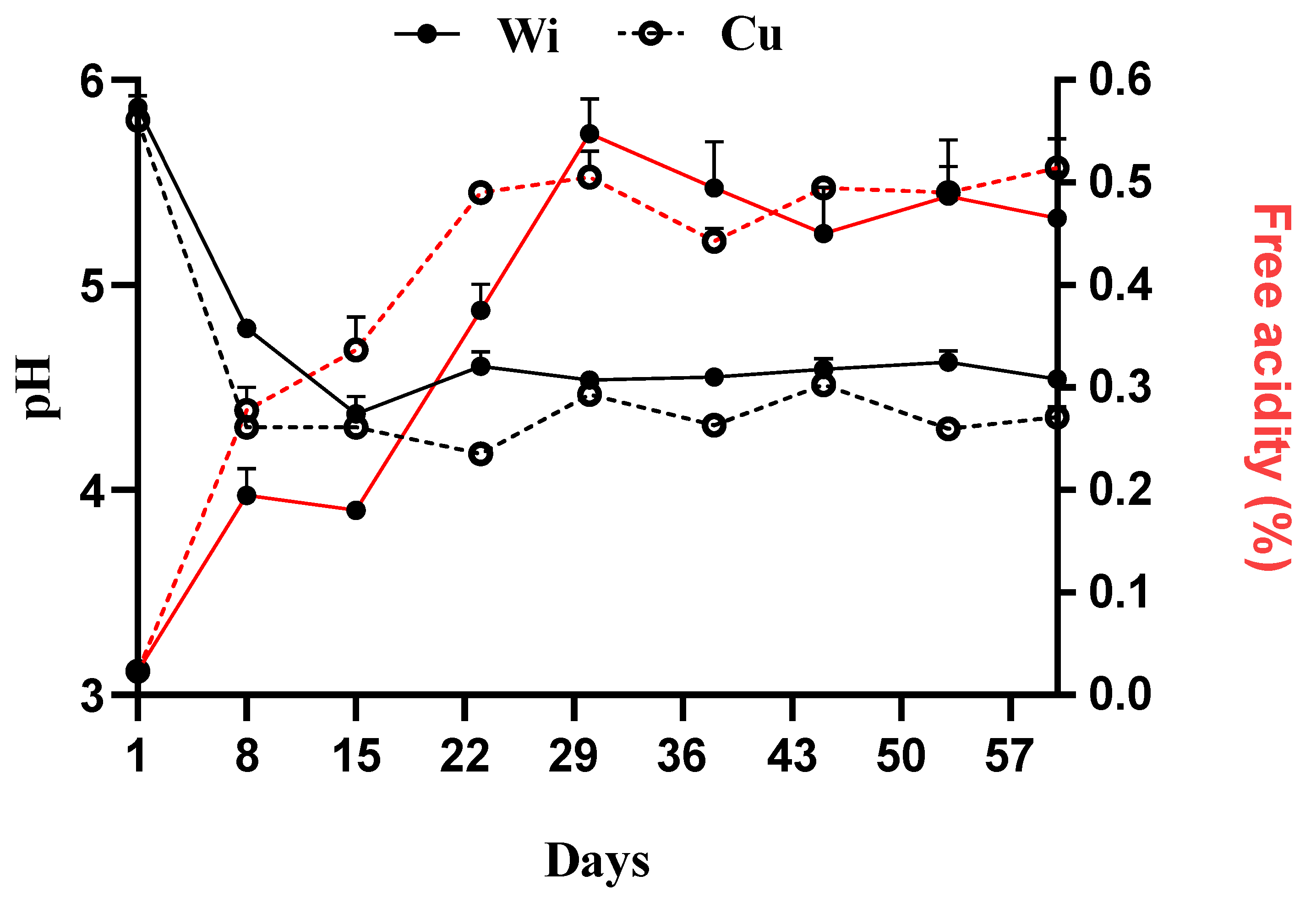
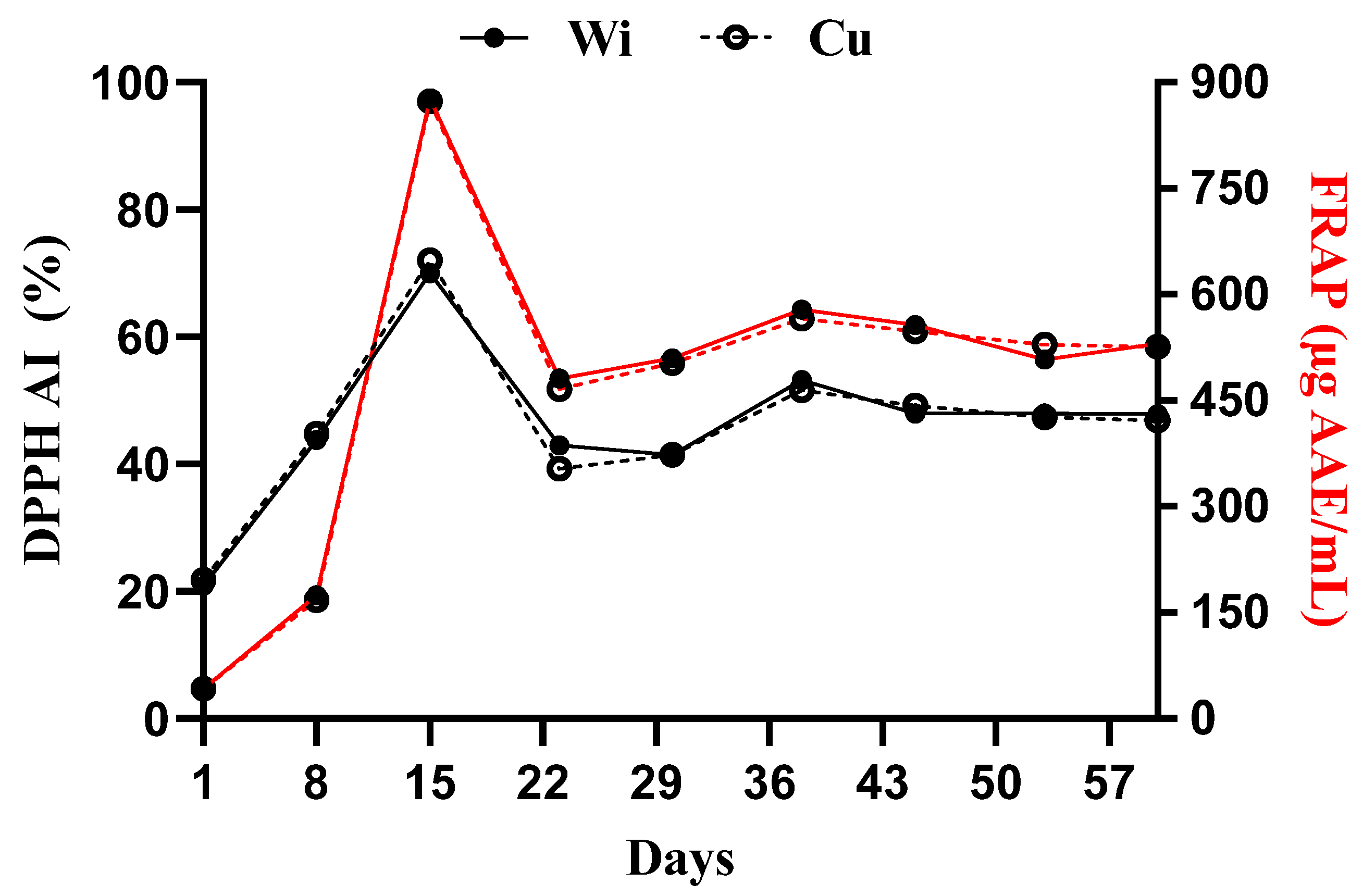
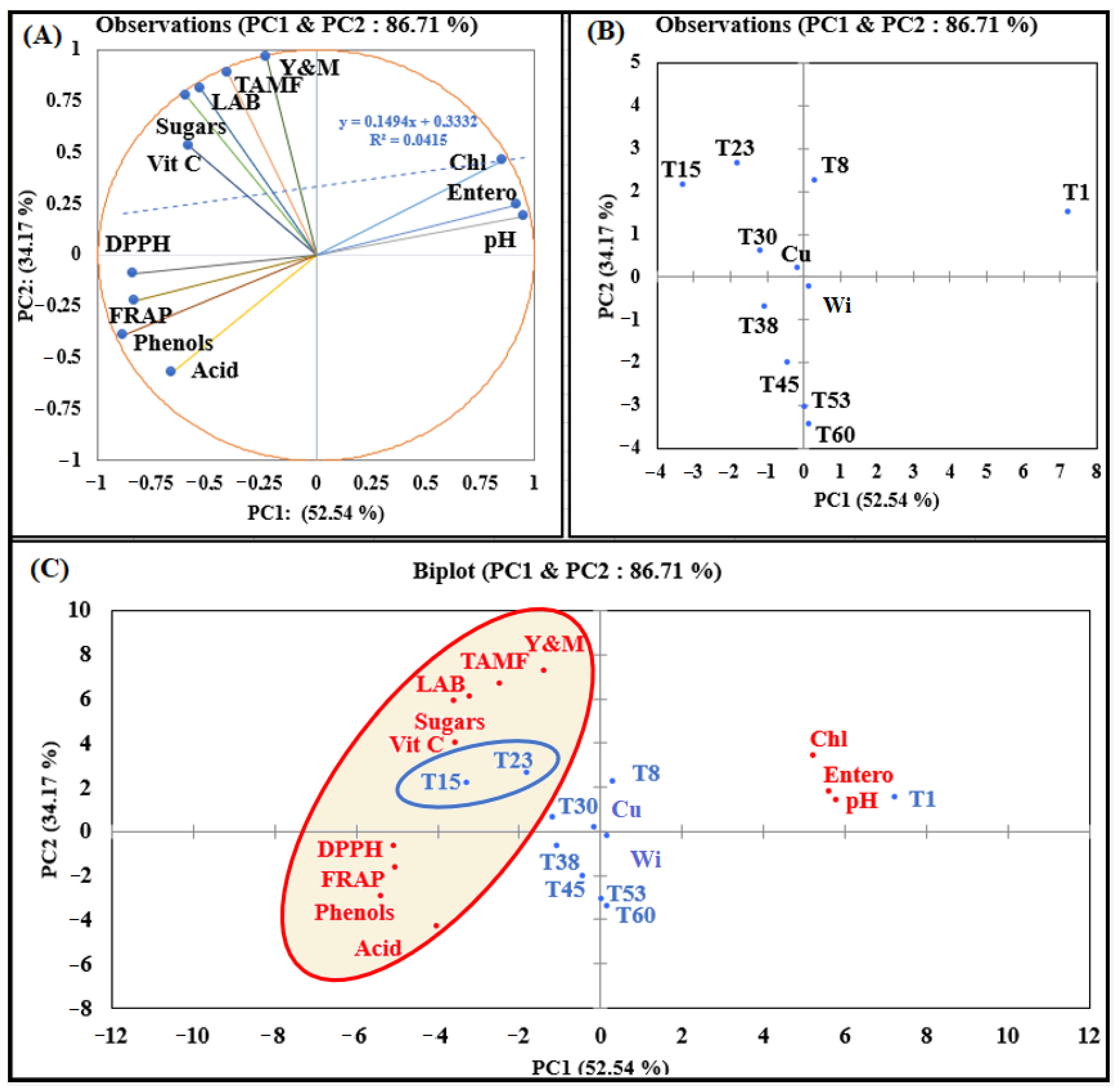
 ) and cultivated (Cu:
  ) caperberries.
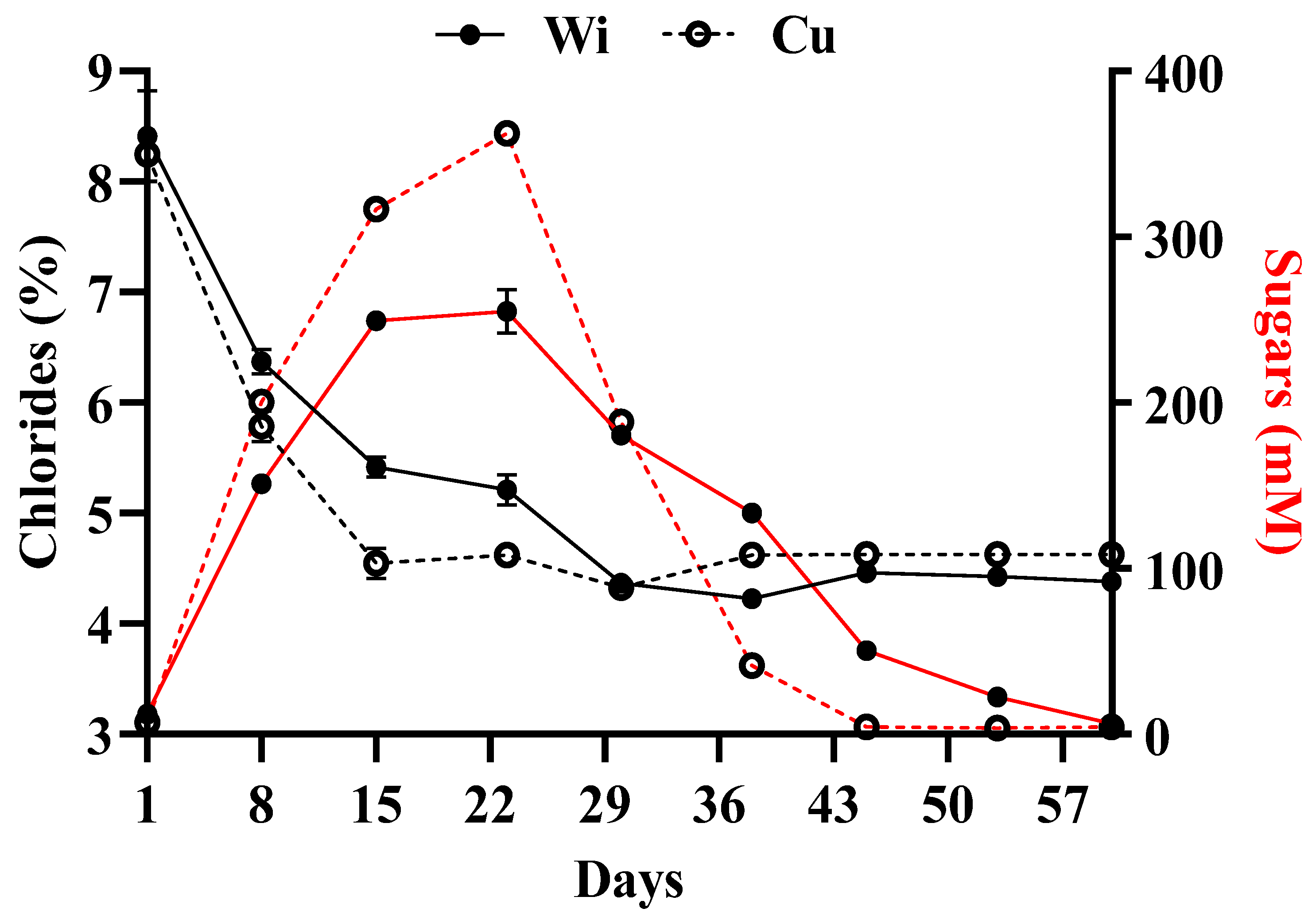
) and cultivated (Cu: ) caperberries.
) caperberries.
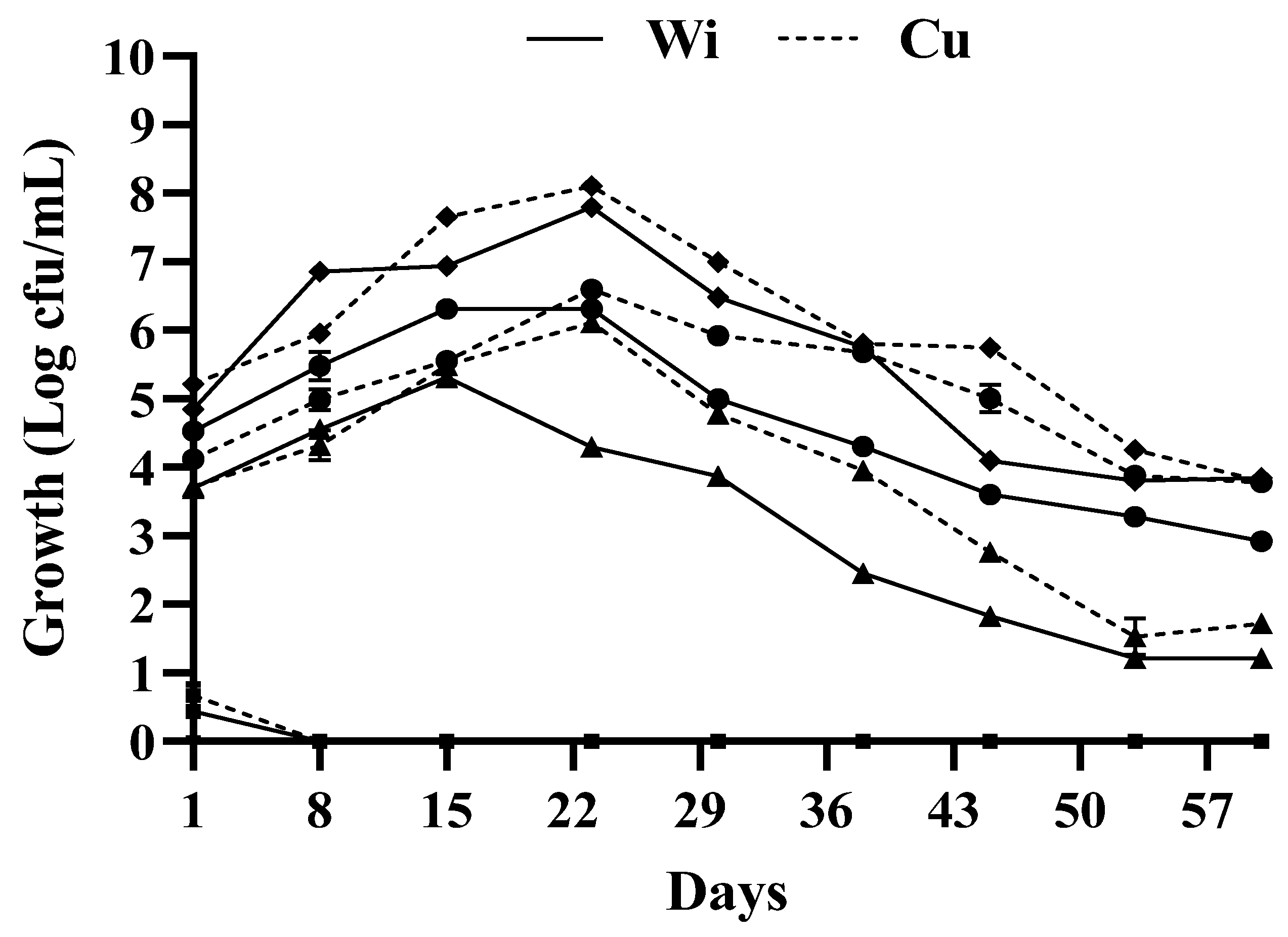
) and cultivated (Cu: ) caperberries. ) and cultivated (Cu: ) caperberries.
) and cultivated (Cu: ) caperberries.
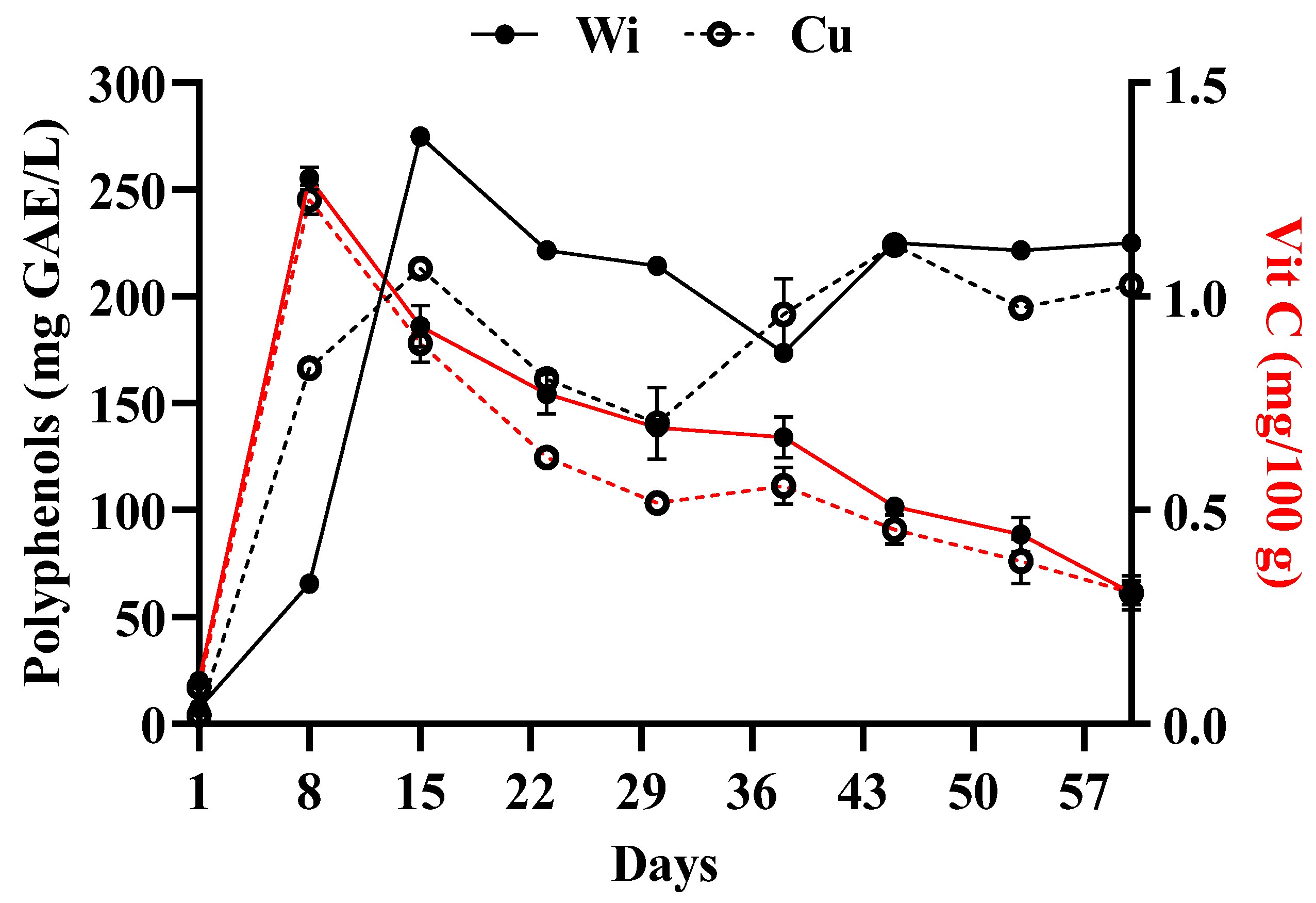
) and cultivated (Cu: ) caperberries.
 ) and cultivated (Cu: ) caperberries.
) and cultivated (Cu: ) caperberries.
) and cultivated (Cu: ) caperberries. ) and cultivated (Cu: ) caperberries.
) and cultivated (Cu: ) caperberries.
) and cultivated (Cu: ) caperberries.


| Factors | pH | Acid | Chl | Sugars | Vit C | Phenols | DPPH | FRAP | LAB | Y&M | Entero | TAMF | |
|---|---|---|---|---|---|---|---|---|---|---|---|---|---|
| (%) | (%) | (mM) | (mg/100 g) | (mgGAE/L) | (%) | (µgAAE/mL) | (Log cfu/mL) | ||||||
| P | Wi | 4.72 a | 0.36 b | 5.25 a | 117.96 b | 0.63 a | 181.08 a | 46.24 a | 473.13 a | 4.64 b | 3.16 b | 0.05 a | 5.60 b |
| Cu | 4.50 b | 0.40 a | 5.12 b | 125.54 a | 0.56 b | 166.87 b | 46.04 b | 469.15 b | 5.06 a | 3.82 a | 0.07 a | 5.95 a | |
| T | 1 | 5.83 a | 0.02 e | 8.33 a | 9.53 g | 0.09 h | 5.69 h | 21.33 h | 42.31 i | 4.33 f | 3.71 d | 0.55 a | 5.03 f |
| 8 | 4.54 b | 0.24 d | 6.08 b | 175.92 d | 1.25 a | 116.04 g | 44.30 e | 171.15 h | 5.24 d | 4.44 c | - | 6.40 d | |
| 15 | 4.33 f | 0.26 c | 4.98 c | 283.18 b | 0.91 b | 243.99 a | 71.06 a | 875.26 a | 5.93 b | 5.40 a | - | 7.30 b | |
| 23 | 4.38 e | 0.43 c | 4.92 c | 308.93 a | 0.70 c | 191.54 e | 41.12 g | 473.85 g | 6.45 a | 5.20 b | - | 7.95 a | |
| 30 | 4.5 bc | 0.53 a | 4.35 e | 184.49 c | 0.60 d | 177.59 f | 41.45 f | 506.03 f | 5.46 c | 4.33 c | - | 6.74 c | |
| 38 | 4.43 de | 0.47 b | 4.42 de | 87.47 e | 0.61 d | 182.73 f | 52.41 b | 572.44 b | 4.99 e | 3.20 e | - | 5.78 e | |
| 45 | 4.55 b | 0.47 b | 4.55 d | 27.64 f | 0.48 e | 224.88 b | 48.58 c | 552.44 c | 4.30 f | 2.30 f | - | 4.92 g | |
| 53 | 4.46 cd | 0.49 b | 4.53 d | 13.16 g | 0.41 f | 208.11 d | 47.66 d | 518.72 e | 3.58 g | 1.47 g | - | 4.03 h | |
| 60 | 4.44 d | 0.49 b | 4.51 d | 5.47 h | 0.31 g | 215.35 c | 47.38 d | 528.08 d | 3.34 h | 1.37 g | - | 3.81 i | |
| Factors | Df | pH | Free Acidity | Chlorides | Total Reducing Sugars | Polyhenols | Vit C | DPPH AI | FRAP | LAB | Y&M | Entero | TAMF |
|---|---|---|---|---|---|---|---|---|---|---|---|---|---|
| (%) | (%) | (mM) | (mgGAE/L) | mg/100 g | (%) | µg AAE/mL | Log cfu/mL | ||||||
| T | 8 | 1.29 *** | 0.17 *** | 10.03 *** | 86,930 *** | 1,099,560 *** | 0.69 *** | 1002 *** | 345,599 *** | 6.54 *** | 13.74 *** | 0.20 *** | 12.39 *** |
| P | 1 | 0.62 *** | 0.02 *** | 0.26 *** | 776.4 *** | 94,140 *** | 0.07 *** | 0.54 * | 214.77 *** | 2.42 *** | 5.9 *** | 0.01 | 1.61 *** |
| T × P | 8 | 0.04 *** | 0.01 *** | 0.30 *** | 5426 *** | 146,687 *** | 0.01 *** | 4.56 *** | 170.47 *** | 0.99 *** | 0.70 *** | 0.01 | 0.68 *** |
| Rep | 2 | 0.001 | 0.001 | 0.01 | 18.04 | 455.1 | 0.003 | 0.55 ** | 1.06 | 0.01 | 0.02 | 0.02 | 0.005 |
| Res | 34 | 0.001 | 0.001 | 0.015 | 10.83 | 1171.39 | 0.001 | 0.08 | 5.02 | 0.01 | 0.010 | 0.01 | 0.002 |
| Variables | Acid | Chl | Sugars | Vit C | Phenols | DPPH | FRAP | LAB | Y&M | Entero | TAMF |
|---|---|---|---|---|---|---|---|---|---|---|---|
| % | % | mM | mg/100 g | mgGAE/L | % | µgAAE/mL | (Log cfu/mL) | ||||
| pH | −0.765 ** | 0.907 *** | −0.419 | −0.540 | −0.882 *** | −0.768 ** | −0.735 * | −0.341 | −0.018 | 0.978 *** | −0.206 |
| Acid | −0.939 *** | −0.024 | −0.008 | 0.760 ** | 0.361 | 0.557 | −0.031 | −0.390 | −0.790 ** | −0.159 | |
| Chl | −0.164 | −0.204 | −0.916 *** | −0.656 * | −0.776 ** | −0.124 | 0.234 | 0.911 *** | 0.015 | ||
| Sugars | 0.691 * | 0.241 | 0.379 | 0.333 | 0.969 *** | 0.886 *** | −0.349 | 0.938 *** | |||
| Vit C | 0.240 | 0.506 | 0.176 | 0.624 * | 0.576 | −0.559 | 0.616 * | ||||
| Phenols | 0.823 ** | 0.907 *** | 0.163 | −0.169 | −0.866 ** | 0.003 | |||||
| DPPH | 0.889 *** | 0.282 | 0.110 | −0.720 * | 0.185 | ||||||
| FRAP | 0.270 | 0.028 | −0.670 * | 0.147 | |||||||
| LAB | 0.912 *** | −0.272 | 0.981 *** | ||||||||
| Y&M | 0.057 | 0.964 *** | |||||||||
| Entero | −0.141 | ||||||||||
Disclaimer/Publisher’s Note: The statements, opinions and data contained in all publications are solely those of the individual author(s) and contributor(s) and not of MDPI and/or the editor(s). MDPI and/or the editor(s) disclaim responsibility for any injury to people or property resulting from any ideas, methods, instructions or products referred to in the content. |
© 2026 by the authors. Licensee MDPI, Basel, Switzerland. This article is an open access article distributed under the terms and conditions of the Creative Commons Attribution (CC BY) license.
Share and Cite
Ghabbour, I.; El Aboui, F.Z.; Bentouhami, N.E.; Ghabbour, N.; Khabbach, A.; Abouloifa, H.; Asehraou, A.; Louahlia, S.; Hammani, K. Sustainable Use of Cultivated and Wild Capers in Morocco: A Comparative Study of Physicochemical, Microbiological, and Functional Properties During the Natural Fermentation Process. Sustainability 2026, 18, 4371. https://doi.org/10.3390/su18094371
Ghabbour I, El Aboui FZ, Bentouhami NE, Ghabbour N, Khabbach A, Abouloifa H, Asehraou A, Louahlia S, Hammani K. Sustainable Use of Cultivated and Wild Capers in Morocco: A Comparative Study of Physicochemical, Microbiological, and Functional Properties During the Natural Fermentation Process. Sustainability. 2026; 18(9):4371. https://doi.org/10.3390/su18094371
Chicago/Turabian StyleGhabbour, Issam, Fatima Zahra El Aboui, Nour Eddine Bentouhami, Nabil Ghabbour, Abdelmajid Khabbach, Houssam Abouloifa, Abdeslam Asehraou, Said Louahlia, and Khalil Hammani. 2026. "Sustainable Use of Cultivated and Wild Capers in Morocco: A Comparative Study of Physicochemical, Microbiological, and Functional Properties During the Natural Fermentation Process" Sustainability 18, no. 9: 4371. https://doi.org/10.3390/su18094371
APA StyleGhabbour, I., El Aboui, F. Z., Bentouhami, N. E., Ghabbour, N., Khabbach, A., Abouloifa, H., Asehraou, A., Louahlia, S., & Hammani, K. (2026). Sustainable Use of Cultivated and Wild Capers in Morocco: A Comparative Study of Physicochemical, Microbiological, and Functional Properties During the Natural Fermentation Process. Sustainability, 18(9), 4371. https://doi.org/10.3390/su18094371