


Abstract
Despite strong evidence that gender-diverse leadership improves organizational innovation and performance, women remain underrepresented in leadership pipelines worldwide, particularly in Asia. While prior research largely examines the outcomes of gender diversity at the firm level, far less is known about the psychological and social factors that shape women’s leadership aspirations in the first place. Addressing this gap, this study applies Social Cognitive Career Theory (SCCT) to explain how contextual support and developmental experiences influence women’s leadership aspirations in a collectivist business environment. Using survey data from 400 adult women in Indonesia and structural equation modelling, the study examines how parental involvement shapes personal mastery, how personal mastery strengthens leadership self-efficacy, and how self-efficacy, role models, and perceived leadership traits jointly predict leadership aspiration. The findings show that parental involvement indirectly contributes to leadership aspiration through personal mastery and self-efficacy, while role models and leadership traits also play significant roles. Among all predictors, self-efficacy emerges as the strongest driver of women’s leadership aspiration. This study makes three contributions. First, it extends SCCT beyond traditional STEM career research into the domain of leadership aspiration. Second, it provides rare empirical evidence from a collectivist Asian context, highlighting the role of family and social environment in shaping women’s leadership pathways. Third, it shifts the focus of gender diversity research from representation outcomes to the formation of the female leadership pipeline, offering actionable insight for educators, families, and organizations seeking to foster future women leaders.
1. Introduction
Gender diversity in leadership is no longer framed solely as a social justice issue but as a strategic and performance-related concern for organizations. A growing body of research shows that gender-diverse leadership teams enhance decision quality, innovation capacity, and long-term firm performance because they introduce broader cognitive perspectives and leadership styles into strategic processes [1,2]. In increasingly volatile and knowledge-driven business environments, organizations benefit from leaders who demonstrate collaborative problem solving, inclusive decision-making, and adaptive thinking—competencies frequently associated with female leadership [3]. Recent studies continue to confirm that gender-diverse leadership contributes to organizational innovation, resilience, and performance in dynamic environments [4,5].
Despite these demonstrated advantages, women remain significantly underrepresented in leadership roles worldwide. Although women’s participation at the entry level is relatively balanced with that of men in many global contexts, gaps are beginning to emerge at the managerial and senior leadership levels, indicating that there are obstacles in the female leadership pipeline. Global reports indicate that women occupy only around one-quarter to one-third of senior leadership positions, with even lower representation in Asia [6,7]. This persistent leadership gap represents not only an equity concern but also a loss of strategic talent for organizations seeking innovation and resilience. The problem is therefore not a lack of capable women, but a lack of women who aspire, prepare, and persist in leadership pathways within environments that may not actively support those aspirations.
While prior studies often examine gender diversity outcomes at the firm level (e.g., board composition and performance), much less attention has been given to the upstream psychological and social factors that shape women’s leadership aspirations before they reach senior organizational levels. Understanding why women do or do not develop leadership aspirations is critical for management research because aspirations influence career decisions, leadership pipelines, and ultimately the availability of diverse talent in strategic roles [8,9].
Most existing research on women’s career aspirations has focused on STEM domains and Western contexts, leaving a significant gap in understanding leadership aspiration formation in business settings within collectivist cultures [8,10]. This gap is important because cultural context shapes how social support, family expectations, and self-beliefs interact in career decision-making. In collectivist societies such as Indonesia, family influence and social expectations play a particularly strong role in shaping women’s career pathways [11].
To address this gap, the present study applies Social Cognitive Career Theory (SCCT) to examine how both internal cognitive factors and external social influences jointly shape women’s leadership aspirations in an Asian business context. SCCT proposes that career-related goals are formed through the interaction of self-efficacy beliefs, learning experiences, and contextual supports [12,13,14]. While SCCT has been widely used to explain academic and STEM career choices, its application to leadership aspiration in management contexts remains limited.
This study extends SCCT in three important ways. First, it shifts the application of SCCT from occupational choice toward leadership aspiration, which represents a strategic precursor to future leadership participation. By doing so, the study links career psychology with management research on leadership pipelines and gender diversity. Second, the study integrates parental involvement as a culturally embedded form of contextual support that shapes women’s developmental experiences in collectivist societies. Family influence is often under-theorized in management research, yet it plays a crucial role in shaping confidence, ambition, and career boundaries for women in Asia [13,14]. Third, the study examines personal mastery, role models, and leadership traits as learning-related and social exposure mechanisms that contribute to leadership self-efficacy and aspirations. These factors help explain how women come to see leadership as both attainable and desirable.
This study contributes to management and leadership research in three ways. For theoretical contribution, this study extends Social Cognitive Career Theory into the domain of leadership aspiration, demonstrating how cognitive and social–developmental factors jointly shape the formation of leadership goals among women. As for contextual contribution, it provides rare empirical evidence from a collectivist Asian context, highlighting the role of family and social environment in shaping women’s leadership pathways. This study also contributes to practices since it shifts attention from outcomes of gender diversity to the formation of the female leadership pipeline, offering insight into how organizations, educators, and families can foster leadership aspirations earlier in women’s career development. By explaining how leadership aspirations are formed—not just why diversity matters—this study addresses a foundational yet underexplored question in the effort to build more gender-diverse leadership structures.
This study aligns with the broader sustainability agenda, particularly the United Nations Sustainable Development Goals (SDG 5: Gender Equality), by addressing the upstream formation of female leadership aspiration as a foundation for sustainable and inclusive leadership systems.
2. Literature Review
2.1. Social Cognitive Career Theory (SCCT)
Social learning theory emphasizes that individuals learn through direct experience (enactive learning), observation of others (vicarious learning), and social feedback, all of which contribute to the formation of self-efficacy beliefs within SCCT. SCCT integrates these principles in the context of career development. This study is grounded in Social Cognitive Career Theory (SCCT), which explains how individuals develop career interests, make career-related choices, and form career goals through the interaction of cognitive beliefs and environmental influences [12,13,14]. SCCT builds on Bandura’s social cognitive theory, emphasizing that behavior is shaped by reciprocal interactions between personal factors, learning experiences, and contextual supports or barriers [12,15].
At its core, SCCT identifies self-efficacy and outcome expectations as central mechanisms that influence career interests and goal formation [8]. Self-efficacy refers to individuals’ beliefs about their capability to perform specific tasks, while outcome expectations concern beliefs about the consequences of performing those tasks. These cognitive beliefs develop through learning experiences, which are shaped by both personal achievements and social influences.
Importantly, SCCT also recognizes that contextual factors, such as family support, social role models, and cultural norms, can either facilitate or constrain career development [14,16]. This broader view makes SCCT particularly suitable for examining leadership aspirations among women in collectivist cultures, where social and family influences strongly shape career trajectories [11].
While SCCT has been widely applied in STEM career research, its application to leadership aspiration remains limited. Leadership aspiration represents a career goal related not just to occupational entry, but to advancement into positions of influence and responsibility. Applying SCCT to leadership therefore extends the theory into management and organizational behavior domains, helping explain how women come to view leadership as attainable and desirable.
Recent extensions of SCCT emphasize its applicability across diverse populations and career contexts, including leadership development and emerging economies [8,16]. These developments reinforce the relevance of SCCT in explaining how contextual support and learning experiences shape career-related goals.
In this study, SCCT provides the overarching framework linking parental involvement (contextual support), personal mastery (learning experience), self-efficacy (cognitive belief), and leadership aspiration (career goal).
2.2. Parental Involvement and Personal Mastery
Within SCCT, learning experiences are foundational in shaping self-efficacy beliefs and career interests [8,12]. In collectivist societies, parents play a central role in structuring these learning experiences by influencing children’s opportunities, confidence, and perceived boundaries [11].
Parental involvement refers to the emotional, informational, and instrumental support parents provide in their children’s development, including encouragement, guidance, and exposure to growth opportunities [17]. Research shows that supportive parental behaviors are associated with higher levels of confidence, achievement motivation, and career exploration among young adults [18].
One key outcome of sustained parental involvement is personal mastery, defined as an individual’s sense of competence and control over personal growth and life direction [19,20,21]. In this study, personal mastery is defined as an individual’s perception of competence and the ability to manage self-development in general, including the ability to learn, develop, and face challenges. When parents encourage independence, provide constructive feedback, and support skill development, individuals are more likely to accumulate mastery experiences that strengthen their belief in their capabilities.
In the context of women’s leadership development, parental encouragement can counteract restrictive gender norms by validating ambition and reinforcing the legitimacy of pursuing achievement-oriented roles [9]. In collectivist cultures such as Indonesia, parental approval may be particularly influential in shaping daughters’ confidence and willingness to pursue non-traditional or high-responsibility career paths [11].
H1:
Parental involvement is positively related to personal mastery.
2.3. Personal Mastery and Self-Efficacy
Personal mastery plays a key role in the formation of self-efficacy. Personal mastery in this study reflects general developmental competence rather than leadership-specific skills. Individuals who have experienced success in self-development and are able to manage challenges tend to have higher confidence in their ability to perform various roles, including leadership roles. Personal mastery represents accumulated success experiences that form the strongest source of self-efficacy beliefs [15]. SCCT emphasizes that individuals who experience success in challenging tasks develop stronger confidence in their ability to perform similar tasks in the future [8].
Personal mastery involves both skill development and a sense of agency over one’s growth direction [19,20,21]. Women who develop leadership-related skills such as communication, decision-making, and initiative gain experiential evidence that they can handle responsibility and influence others. These mastery experiences translate into stronger leadership self-efficacy or belief in one’s capability to perform leadership functions effectively [22].
Prior research consistently finds that mastery experiences are a key predictor of self-efficacy across career domains [10,23,24]. For women, mastery experiences may be particularly important in overcoming internalized doubts and stereotype-related confidence gaps that often limit leadership ambition [25].
H2:
Personal mastery is positively related to self-efficacy.
2.4. Self-Efficacy and Leadership Aspiration
Self-efficacy is a central mechanism in SCCT linking learning experiences to career goals [8,12]. Individuals are more likely to pursue goals they believe they are capable of achieving. In leadership contexts, self-efficacy shapes whether women perceive leadership roles as attainable rather than intimidating or inappropriate [9].
Research shows that leadership self-efficacy predicts willingness to seek leadership roles, persistence in challenging environments, and resilience in male-dominated fields [22,26]. Women with higher self-efficacy are more likely to envision themselves in leadership positions and to pursue advancement opportunities despite barriers [10].
H3:
Self-efficacy is positively related to female leadership aspiration.
2.5. Role Models and Leadership Aspiration
Role models serve as powerful social learning sources within SCCT, providing vicarious experiences that shape beliefs about what is possible [8,15]. Observing successful women in leadership roles can challenge gender stereotypes and increase perceived accessibility of leadership careers [27,28,29].
Exposure to relatable role models enhances motivation and outcome expectations by demonstrating that leadership success is achievable for women [27,28,29]. Role models also provide informal mentoring, strategic knowledge, and psychological encouragement, which are critical in early career stages [30].
H4:
Role models are positively related to female leadership aspiration.
2.6. Leadership Traits and Leadership Aspiration
Leadership trait theory suggests that certain dispositional characteristics, such as proactiveness, persistence, and openness to experience, are associated with leadership emergence [31,32]. Individuals who recognize these traits in themselves may be more inclined to pursue leadership opportunities. Leadership traits in this study are positioned as self-perception of leadership characteristics, which develop through social experience and observation, so that they remain relevant as a predictor of aspiration. Within the SCCT framework, leadership traits in this study are conceptualized as self-perceived characteristics that emerge from accumulated social learning experiences. Although not a direct learning mechanism, these perceived traits reflect internalized interpretations of experience and therefore remain relevant as predictors of leadership aspiration.
Perceived possession of leadership traits contributes to self-concept alignment with leadership roles, increasing aspiration [33]. For women, recognizing their own leadership traits can counteract stereotype-based self-doubt and reinforce identity congruence with leadership.
H5:
Leadership traits are positively related to female leadership aspiration.
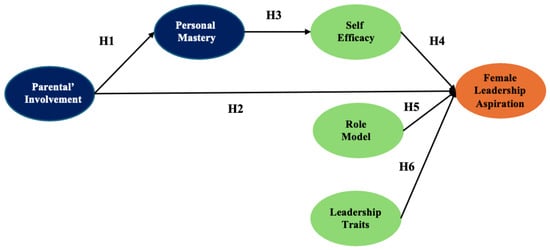
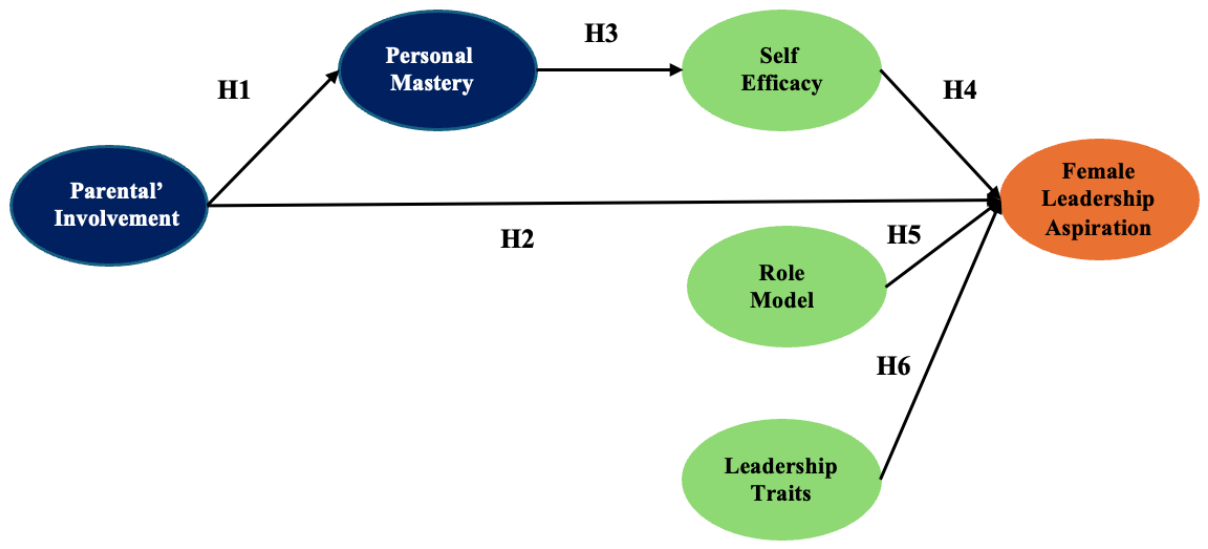
Figure 1 shows the research framework, which includes the 6 hypotheses of the study.
Figure 1.
Research Framework.
3. Methodology
3.1. Research Design
This study employs a quantitative, cross-sectional survey design to examine the factors influencing women’s leadership aspirations. A quantitative approach is appropriate because the study aims to test theoretically derived relationships among latent psychological and social variables grounded in Social Cognitive Career Theory (SCCT) [8,12]. Structural Equation Modeling (SEM) was used to evaluate the proposed conceptual model, as SEM enables simultaneous estimation of measurement reliability and structural relationships among latent constructs [34]. The variables examined in this study—such as self-efficacy, social support, and leadership aspiration—are conceptually linked to sustainability-oriented human capital development, as they reflect the formation of inclusive leadership capacity.
3.2. Participants and Sampling
The target population of this study was adult women of productive age in Indonesia, as this group represents current and future participants in organizational leadership pipelines. A non-probability convenience sampling method was employed due to practical constraints related to access, time, and resources. While convenience sampling limits generalizability, it is frequently used in exploratory career development and leadership aspiration studies where specific demographic groups are targeted [10].
A total of 459 responses were collected through online distribution. After removing incomplete responses and those not meeting the gender screening criteria, 400 valid questionnaires were retained for analysis. This sample size exceeds the recommended minimum for SEM, which suggests at least 10 respondents per estimated parameter or indicator [34].
3.3. Sample Characteristics
Most respondents belonged to Generation Z (81.5%) who are in the age bracket from 18–27 years old, followed by Generation Y (18.5%) who are in the age bracket of 28–43 years old. The majority held a bachelor’s degree (86.5%), and 74.8% were located in the Greater Jakarta area. Regarding employment status, 66.8% were students, 30.3% were employees, and the remainder were entrepreneurs or homemakers. Although the sample includes a large proportion of students, this demographic is appropriate for examining leadership aspiration formation, as career goals and self-beliefs develop prior to entry into senior professional roles [8]. The use of a mixed sample aims to capture variations in career development stages, thereby providing a more comprehensive picture of the formation of leadership aspirations.
3.4. Data Collection Procedure
Data were collected using an online self-administered questionnaire distributed via email, WhatsApp, and social media platforms. The survey consisted of three sections: (1) Informed consent and confidentiality statement; (2) Screening questions (gender and willingness to participate); and (3) Measurement items assessing study variables. Participation was voluntary, and no identifying personal data were collected. To reduce social desirability bias, respondents were assured that there were no right or wrong answers and that responses would be used solely for research purposes.
3.5. Measures
All constructs were measured using previously validated scales, adapted to the leadership context. Responses were recorded on a 6-point Likert scale (1 = strongly disagree to 6 = strongly agree). A forced-choice scale without a neutral midpoint was used to reduce central tendency bias and increase response discrimination [35].
Parental Involvement (PI) is measured with six items adapted from [11,17,18], capturing emotional support, encouragement, and career-related guidance from parents (items are such as my parents encourage me to pursue career as a leader and My parents talk to me how valuable it is to become a leader). The measurement of personal mastery focuses on general self-development rather than specific career or leadership skills. Personal Mastery (PM) is measured with five items adapted from [19,20,21], reflecting perceived competence, growth, and control over personal development (items are such as I have learned about leadership at school and I generally have score good grade in leadership-related subjects). Self-Efficacy (SE) is measured with eight items adapted from established career self-efficacy instruments [36], assessing confidence in performing leadership-related tasks (items are such as when facing difficult tasks, I am certain that I will accomplish them and I believe I can succeed at most any endeavour to which I set my mind). Role Models (RMs) are measured with four items adapted from [14], capturing exposure to and inspiration from individuals perceived as successful leaders (items are such as I have role models who are good at being leader and I have role models who have explained to me how they became a leader). Leadership Traits (LTs) are measured with nine items adapted from leadership trait frameworks [31,32], assessing self-perceived leadership-related characteristics (items are such as I have passion and persistence in the pursuit of goals and I dare to take risks in solving a problem). Female Leadership Aspiration (LA) is measured with four items adapted from [24] and [9], reflecting intention and desire to pursue leadership roles (items are such as I consider leadership has value and I am pursuing leadership skills). Demographic variables (age cohort, education level, location, employment status) were included as control descriptors.
3.6. Data Analysis
Data analysis was conducted using Structural Equation Modelling (SEM) with LISREL 8.7. SEM was chosen because it allows for simultaneous testing of measurement validity and structural relationships among latent variables [34]. Step 1 involves the measurement model (Confirmatory Factor Analysis). Confirmatory Factor Analysis (CFA) was conducted to assess Construct Validity (factor loadings ≥ 0.50), Composite Reliability (CR ≥ 0.70), and Average Variance Extracted (AVE ≥ 0.50). Discriminant validity was evaluated using the Fornell–Larcker criterion, ensuring that each construct’s AVE square root exceeded inter-construct correlations [37]. Step 2 involves the structural model. After establishing measurement validity, the structural model was tested to examine hypothesized relationships. Model fit was evaluated using multiple indices: RMSEA (<0.08), CFI (≥0.90), and NFI (≥0.90). Path coefficients were considered significant when t-values exceeded 1.96 (p < 0.05).
3.7. Common Method Bias
Because data were collected using self-reported measures, Harman’s single-factor test was conducted to assess common method variance [38]. The first factor accounted for less than 50% of total variance, suggesting that common method bias was not a serious issue.
4. Result
4.1. Demographic Profile
There were 459 returned questionnaires. After checking the completeness of the questionnaire, only 400 questionnaires were eligible for further analysis. Most of them (81.5%) were from Generation Z who are in the age bracket from 18–27 years old, and the remaining were from Generation Y who are in the age bracket of 28–43 years old. The majority of respondents held bachelor’s degrees (86.5%), and 5.3% held master’s and doctoral degrees. Seventy-four-point eight percent were from Greater Jakarta (Jakarta and 4 surrounding cities). More than half (66.8%) were students, 30.3% were employees (such as banking, FMCG, F&B, Logistics), and the remaining were classified as others (e.g., entrepreneurs, housewives) (Table 1).
Table 1.
Demographic Profile.
The demographics show that many female students participated in this study. Focusing on female leadership aspirations among a demographic primarily composed of students is crucial for several reasons. First, it provides insights into the factors that influence their career goals and leadership ambitions at an early stage, informing educational and mentorship initiatives. Secondly, understanding the aspirations of these future professionals can help identify barriers they may face when entering the workforce, allowing for the development of targeted interventions to support their transitions into leadership roles. This study ultimately aims to promote gender equality in leadership by capturing the potential of women before they enter the professional realm.
4.2. Descriptive Overview
A total of 400 valid responses were included in the analysis. Table 2 presents the descriptive statistics for all constructs. Overall, respondents reported relatively high levels across variables, indicating a sample with strong engagement in leadership-related perceptions.
Table 2.
Descriptive Statistics.
4.3. Measurement Model Assessment
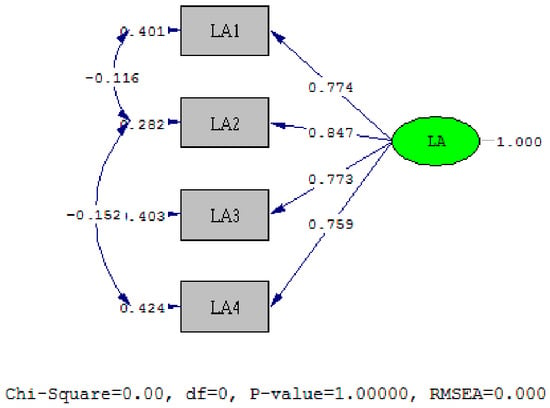
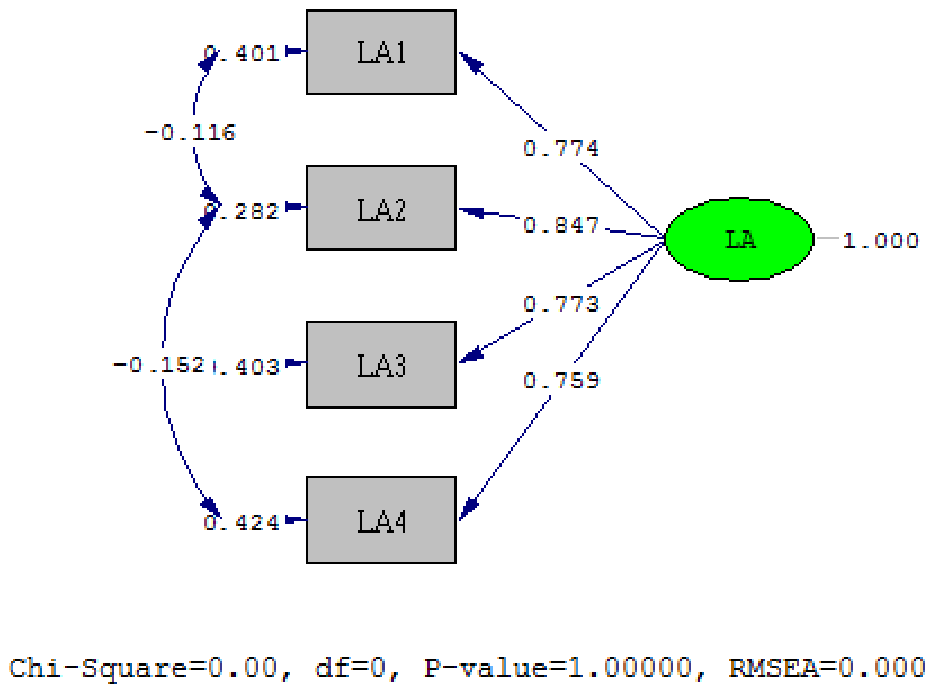
Confirmatory Factor Analysis (CFA) was conducted prior to testing structural relationships. All factor loadings exceeded the recommended threshold of 0.70, indicating strong indicator reliability [30]. Figure 2 depicts the Confirmatory Analysis for Leadership Aspiration. Composite Reliability (CR) values ranged from 0.868 to 0.949, exceeding the 0.70 threshold. Average Variance Extracted (AVE) values ranged from 0.623 to 0.678, confirming convergent validity. Discriminant validity was assessed using the Fornell–Larcker criterion. For each construct, the square root of AVE exceeded inter-construct correlations, supporting adequate discriminant validity [33]. The structural model demonstrated good overall fit (RMSEA = 0.071; CFI = 0.977; NFI = 0.966; SRMR = 0.05), indicating that the proposed model adequately represents the data.
Figure 2.
Confirmatory Analysis for Leadership Aspiration (Standardized).
4.4. Structural Model and Hypothesis Testing
The structural model explains a substantial proportion of variance in key endogenous variables. Parental involvement explains 41% of the variance in personal mastery (R2 = 0.410). Personal mastery explains 55.9% of the variance in self-efficacy (R2 = 0.559). Collectively, self-efficacy, role models, leadership traits, and parental involvement explain 52.7% of the variance in leadership aspiration (R2 = 0.527) (Table 3). This indicates that the proposed SCCT-based model has strong explanatory power for leadership aspiration formation.
Table 3.
R2 Table.
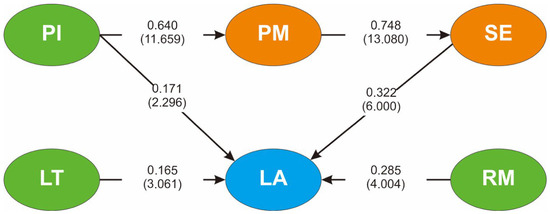
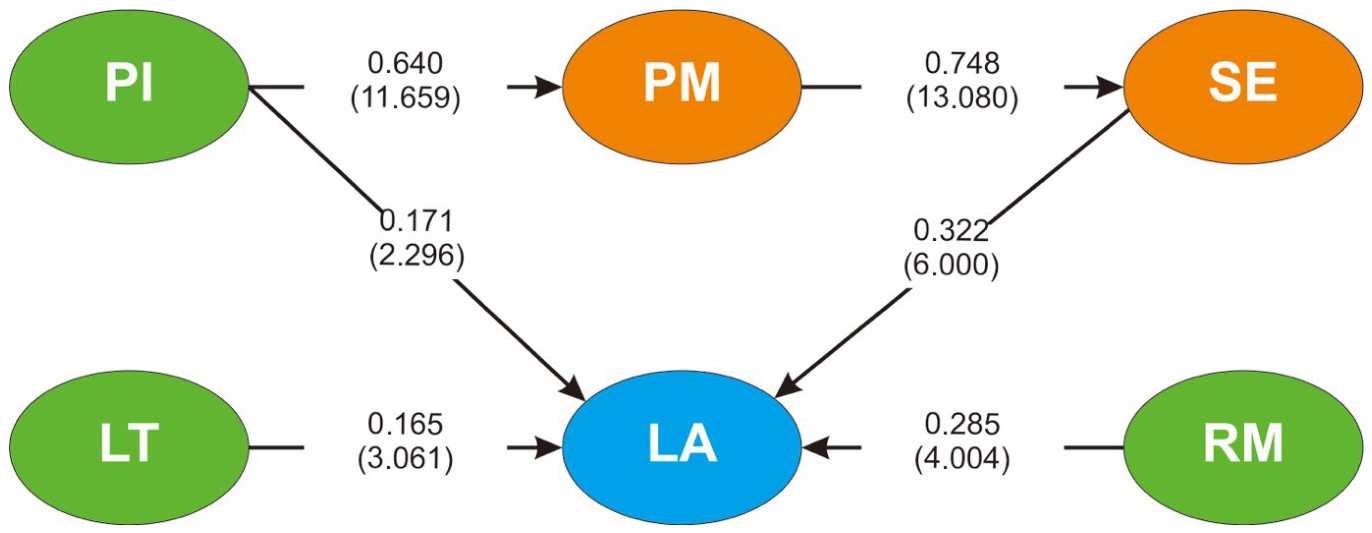
Figure 3 depicts the path coefficient. Parental involvement has a strong and significant positive effect on personal mastery (β = 0.640, t = 11.659). This is the strongest structural path in the model. The result suggests that parental support plays a foundational developmental role in shaping women’s confidence in their abilities.
Figure 3.
Path Coefficient.
Personal mastery strongly predicts self-efficacy (β = 0.748, t = 13.080), representing the second strongest path in the model. This finding aligns with SCCT, confirming that accumulated mastery experiences translate into higher perceived capability.
Four variables directly predict leadership aspiration: self-efficacy (β = 0.322, t = 6.000), role models (β = 0.285, t = 4.004), parental involvement (β = 0.171, t = 2.296) and leadership traits (β = 0.165, t = 3.061) (Table 4). Among these, self-efficacy emerges as the strongest predictor of leadership aspiration, indicating that women’s belief in their leadership capability is more influential than external support or trait perception alone. Role models represent the second strongest predictor, highlighting the importance of visible examples in shaping aspiration. Leadership traits and parental involvement, while statistically significant, demonstrate comparatively weaker direct effects on aspiration. However, parental involvement exerts an important indirect influence through personal mastery and self-efficacy.
Table 4.
Structural Model.
The results of the analysis showed that the indirect effect of parental involvement on leadership aspiration through personal mastery and self-efficacy was significant (β = 0.154; t = 5.454). In addition, the total effect (β = 0.325) was greater than the direct effect (β = 0.171), which indicated partial mediation. These findings show that the influence of parental involvement on leadership aspirations mostly occurs through increased personal mastery and self-efficacy.
The model reveals a clear developmental pathway, which is Parental Involvement to Personal Mastery to Self-Efficacy to Leadership Aspiration. This suggests that parental influence primarily operates through a mediated mechanism rather than directly driving leadership ambition. In other words, family support contributes to aspiration formation by strengthening mastery experiences and confidence.
The results indicate that internal cognitive beliefs (self-efficacy) exert stronger influence on leadership aspiration than dispositional leadership traits. This finding underscores the importance of psychological empowerment over inherent trait perception in predicting aspiration.
Given the relative strength of indirect pathways, the findings support a refined interpretation of SCCT in leadership contexts: contextual support shapes learning experiences, which in turn build self-efficacy, ultimately driving career-related goals.
5. Discussion
This study aims to examine how women’s leadership aspirations are formed within a collectivist business context using Social Cognitive Career Theory (SCCT). The results provide strong empirical support for the developmental logic proposed by SCCT and extend it into the domain of leadership aspiration. Importantly, the findings reveal that leadership aspiration among women is shaped more strongly by cognitive empowerment mechanisms than by dispositional traits alone.
The most important contribution of this study lies in identifying a clear developmental sequence: Parental Involvement to Personal Mastery to Self-Efficacy to Leadership Aspiration. Parental involvement strongly predicts personal mastery, and personal mastery strongly predicts self-efficacy. These two paths are the strongest relationships in the model, indicating that family-based developmental experiences form the psychological foundation upon which leadership ambition is built.
This finding supports SCCT’s assertion that contextual supports shape learning experiences, which then strengthen efficacy beliefs [12,13]. In collectivist societies such as Indonesia, parental influence may be especially powerful because family approval and guidance significantly shape women’s confidence and perceived legitimacy of ambition [11,39]. However, parental involvement has only a modest direct effect on leadership aspiration. This finding indicates that family support alone does not directly create ambition; rather, it works indirectly by strengthening mastery and self-efficacy. This mediated effect refines SCCT by demonstrating that contextual support must translate into internalized capability beliefs to influence leadership goals.
Among all predictors of leadership aspiration, self-efficacy emerges as the strongest direct determinant. This finding reinforces SCCT’s central proposition that individuals pursue goals they believe they are capable of achieving [13,14]. For women, leadership self-efficacy may be particularly critical because leadership roles are often associated with masculine stereotypes. Women who lack confidence in their leadership ability may self-select out of leadership tracks even before encountering structural barriers. The present findings suggest that psychological empowerment may be more decisive than trait perception in shaping leadership ambition.
The results of this study are consistent with the SCCT framework, which identify learning experiences as the primary source of self-confidence formation. These findings confirm that personal mastery does not directly reflect leadership abilities, but serves as a psychological foundation that supports the formation of self-efficacy. In other words, personal mastery provides a foundation of self-development experience that allows individuals to build confidence in their capacity to lead.
This aligns with prior research showing that self-efficacy predicts leadership pursuit, persistence, and resilience in challenging contexts [22,26]. By empirically confirming this mechanism in an Asian context, this study strengthens the cross-cultural generalizability of SCCT.
Role models represent the second strongest predictor of leadership aspiration. This finding underscores the importance of vicarious learning, a key source of efficacy development identified by [15]. Exposure to successful female leaders may reduce stereotype-based constraints and increase perceived attainability of leadership roles [27,28,29]. In environments where women are underrepresented in top leadership positions, visible role models become particularly influential signals of possibility. Role models operate both cognitively and symbolically. They provide practical knowledge about leadership pathways while simultaneously legitimizing women’s ambition. This dual function helps explain why role model exposure significantly predicts aspiration beyond self-efficacy alone.
Leadership traits demonstrate a positive but comparatively weaker effect on leadership aspiration. This suggests that perceiving oneself as possessing leadership characteristics is relevant, but not sufficient, to drive ambition. This finding is theoretically important because traditional trait theories assume that inherent characteristics explain leadership emergence [31,32]. However, the present study shows that psychological belief (self-efficacy) exerts a stronger influence than trait perception. In other words, believing “I can lead” matters more than believing “I have leadership traits.”
This study advances theory in three ways. First, it extends SCCT beyond occupational choice into the domain of leadership aspiration. Leadership aspiration differs from career choice because it involves vertical advancement into positions of authority and influence. Demonstrating that SCCT mechanisms explain leadership ambition broadens the theory’s applicability to management and organizational research. Second, the findings integrate family influence into leadership development theory. Management research often underestimates early-life contextual influences, focusing instead on organizational variables. This study shows that leadership pipeline formation begins long before workplace entry. Third, the results contribute to gender and leadership literature by shifting focus from representation outcomes to aspiration formation. Rather than examining why few women reach leadership, this study explains how leadership ambition is cultivated.
The findings suggest that organizations seeking to close gender leadership gaps must focus on strengthening women’s leadership self-efficacy. Training programs that build mastery experiences, provide structured leadership practice, and offer visible female mentors may be more effective than initiatives that focus solely on representation targets.
Educational institutions also play a critical role. Early exposure to leadership opportunities and female role models may increase aspiration before career paths solidify. Educational institutions can design leadership-based experiential learning such as business simulations and project-based learning to improve women’s self-efficacy.
At the societal level, family systems remain influential in collectivist cultures. Encouraging parents to support daughters’ leadership ambitions may contribute to long-term shifts in leadership pipelines. This research can also be interpreted through the perspective of a growth mindset, where individuals focus more on developable abilities rather than fixed characteristics.
The findings contribute to the sustainability discussion and highlight that leadership diversity must be developed early rather than addressed only at the outcome level. Building sustainable leadership systems requires investment in psychological empowerment and social support structures that enable women to envision and pursue leadership roles.
6. Conclusions
This study set out to explain how women’s leadership aspirations are formed within a collectivist business context using Social Cognitive Career Theory (SCCT). The findings demonstrate that leadership aspiration is not merely a function of dispositional leadership traits, but rather the outcome of a developmental process in which contextual support, mastery experiences, and self-efficacy interact.
The results reveal three central insights. First, parental involvement plays a foundational developmental role, significantly shaping personal mastery. Second, personal mastery strongly strengthens leadership self-efficacy. Third, self-efficacy emerges as the strongest direct predictor of leadership aspiration, followed by role model exposure. Leadership traits, while significant, exert a comparatively weaker influence.
Taken together, these findings suggest that leadership aspiration among women is primarily driven by cognitive empowerment mechanisms, supported by social context, rather than inherent leadership characteristics alone. The study therefore shifts the conversation from “Why are women underrepresented in leadership?” to “How is leadership aspiration cultivated?”
By explaining how leadership ambition is formed, this study contributes to a deeper understanding of the female leadership pipeline in emerging and collectivist economies.
6.1. Limitations
Several limitations should be acknowledged. First, the study uses a cross-sectional design, which limits causal inference. Although the model is theory-driven, longitudinal research would provide stronger evidence of developmental sequencing. Second, the use of convenience sampling limits generalizability. While the sample size is adequate for SEM, future studies should consider probability-based sampling strategies. Third, a large proportion of respondents were students. Although appropriate for studying aspiration formation, the results may differ among mid-career professionals or senior managers. Fourth, all measures were self-reported, raising potential concerns about common method variance, although statistical tests suggested this was not a serious issue. This study uses the generation category as an age proxy, so it does not allow the calculation of average age and standard deviation. Further research is recommended to collect age data in continuous form to improve the precision of demographic analysis. The concentration of respondents in metropolitan areas such as Jakarta can limit the generalization of results to rural or suburban contexts. This study does not differentiate the analysis between students and working respondents or across demographic groups. Given that these groups may differ in terms of experience, self-efficacy, and exposure to role models, future research should consider multi-group analysis to examine potential differences.
6.2. Future Research Directions
Future research may extend this study in several ways. First, longitudinal studies could be conducted to investigate how mastery experiences and self-efficacy evolve over time and whether leadership aspiration translates into actual leadership attainment. Second, cross-cultural comparisons could be conducted to compare collectivist and individualist contexts in order to examine whether parental involvement plays a similarly strong role across cultures. Third, moderating variables could be used to examine whether gender identity strength, stereotype threat, or perceived organizational bias moderates the self-efficacy–aspiration relationship. Mixed-methods approaches could be considered in further studies. Qualitative interviews could provide deeper insight into how women interpret parental support and role model exposure in shaping their ambition. Further research can compare the leadership aspirations between men and women.
Author Contributions
Conceptualization, D.G. and D.D.; Methodology, D.G.; Formal analysis, D.T.; Investigation, D.G. and D.D.; Resources, D.D. and D.T.; Data curation, D.G.; Writing—original draft, D.G. and D.D.; Writing—review & editing, D.D. and D.T.; Funding acquisition, D.D. and D.T. All authors have read and agreed to the published version of the manuscript.
Funding
This research received partial funding for publication for Bina Nusantara University and Universitas Negeri Yogyakarta.
Institutional Review Board Statement
Ethical approval for this study was obtained from Bina Nusantara University (Ethical Clearance No. 141/VRRTT/IX/2024 on 3 September 2024). All participants provided informed consent prior to completing the survey, and responses were collected anonymously.
Informed Consent Statement
The authors declare that they obtained written informed consent from the patients and/or volunteers included in the article and that this report does not contain any personal information that could lead to their identification. The authors declare that the work described does not involve patients or volunteers.
Data Availability Statement
Data will be made available upon request to Diena Dwidienawati.
Conflicts of Interest
The authors declare that the work described does not involve conflicts of interest.
References
- Dai, Y.; Byun, G.; Ding, F. The Direct and Indirect Impact of Gender Diversity in New Venture Teams on Innovation Performance. Entrep. Theory Pract. 2019, 43, 505–528. [Google Scholar] [CrossRef] [Scilit]
- Hunt, V.; Prince, S.; Dixon-Fyle, S.; Yee, L. Delivering Through Diversity. 2018. Available online: https://www.mckinsey.com/~/media/mckinsey/business%20functions/people%20and%20organizational%20performance/our%20insights/delivering%20through%20diversity/delivering-through-diversity_full-report.pdf (accessed on 1 October 2024).
- Gómez, J.; Krammer, S.M.S.; Pérez-Aradros, B.; Salazar, I. Resilience to the pandemic: The role of female management, multi-unit structure, and business model innovation. J. Bus. Res. 2024, 172, 114428. [Google Scholar] [CrossRef] [Scilit]
- Hoobler, J.M.; Masterson, C.R.; Nkomo, S.M.; Michel, J.J. The business case for women leaders: Meta-analysis. J. Manag. 2021, 47, 1541–1570. [Google Scholar]
- Shen, W. Gender differences in leadership aspiration and advancement. Leadersh. Q. 2023, 34, 2. [Google Scholar]
- Grant Thorton. Woman in Business 2022. 2022. Available online: https://www.grantthornton.global/en/insights/women-in-business-2022/ (accessed on 1 October 2024).
- World Economic Forum (WEF). Global Gender Gap 2024. 2024. Available online: https://www.weforum.org/publications/global-gender-gap-report-2024/ (accessed on 1 October 2024).
- Lent, R.W.; Brown, S.D. Social cognitive career theory at 25: Empirical status of the interest, choice, and performance models. J. Vocat. Behav. 2019, 115, 103316. [Google Scholar] [CrossRef] [Scilit]
- Fritz, C.; van Knippenberg, D. Gender and leadership aspiration: The impact of work–life initiatives. Hum. Resour. Manag. 2018, 57, 855–868. [Google Scholar] [CrossRef] [Scilit]
- Fouad, N.A.; Santana, M.C. SCCT and Underrepresented Populations in STEM Fields: Moving the Needle. J. Career Assess. 2017, 25, 24–39. [Google Scholar] [CrossRef] [Scilit]
- Ginevra, M.C.; Nota, L.; Ferrari, L. Parental support in adolescents’ Career development: Parents’ and children’s perceptions. Career Dev. Q. 2015, 63, 2–15. [Google Scholar] [CrossRef] [Scilit]
- Lent, R.W.; Brown, S.D.; Hackett, G. Toward a Unifying Social Cognitive Theory of Career and Academic Interest, Choice, and Performance. J. Vocat. Behav. 1994, 45, 79–122. [Google Scholar] [CrossRef] [Scilit]
- Lent, R.W.; Brown, S.D. Social cognitive model of career self-management: Toward a unifying view of adaptive career behavior across the life span. J. Couns. Psychol. 2013, 60, 557–568. [Google Scholar] [CrossRef] [Scilit]
- Lent, R.W.; Ireland, G.W.; Penn, L.T.; Morris, T.R.; Sappington, R. Sources of self-efficacy and outcome expectations for career exploration and decision-making: A test of the social cognitive model of career self-management. J. Vocat. Behav. 2017, 99, 107–117. [Google Scholar] [CrossRef] [Scilit]
- Bandura, A.; Cervone, D. Differential engagement of self-reactive influences in cognitive motivation. Organ. Behav. Hum. Decis. Process. 1986, 38, 92–113. [Google Scholar] [CrossRef] [Scilit]
- Sheu, H.-B.; Bordon, J.J. SCCT Research in the International Context. J. Career Assess. 2017, 25, 58–74. [Google Scholar] [CrossRef] [Scilit]
- Garcia, P.R.J.M.; Restubog, S.L.D.; Bordia, P.; Bordia, S.; Roxas, R.E.O. Career optimism: The roles of contextual support and career decision-making self-efficacy. J. Vocat. Behav. 2015, 88, 10–18. [Google Scholar] [CrossRef] [Scilit]
- Nugent, G.; Barker, B.; Welch, G.; Grandgenett, N.; Wu, C.; Nelson, C. A Model of Factors Contributing to STEM Learning and Career Orientation. Int. J. Sci. Educ. Publ. 2015, 37, 37–41. [Google Scholar] [CrossRef] [Scilit]
- Vallerand, R.J. On the role of passion in performance. J. Pers. 2007, 75, 505–534. [Google Scholar] [CrossRef] [Scilit] [PubMed]
- Ireland, G.W.; Lent, R.W. Career exploration and decision-making learning experiences: A test of the career self-management model. J. Vocat. Behav. 2018, 106, 37–47. [Google Scholar] [CrossRef] [Scilit]
- Zhao, H.; Hills, G.E.; Seibert, S.E. The mediating role of self-efficacy in the development of entrepreneurial intentions. J. Appl. Psychol. 2005, 90, 1265–1272. [Google Scholar] [CrossRef] [Scilit]
- Cziraki, K. Nurses’ leadership self-efficacy, motivation, and career aspirations. Leadersh. Health Serv. 2017, 31, 47–61. [Google Scholar] [CrossRef] [Scilit]
- Brown, K.; Coulter, P.B.; Brown, K. Subjective and Objective Measures of Police Service Delivery. Public Adm. Rev. 2016, 43, 50–58. [Google Scholar] [CrossRef] [Scilit] [PubMed]
- Blanco, Á. Applying social cognitive career theory to predict interests and choice goals in statistics among Spanish psychology students. J. Vocat. Behav. 2011, 78, 49–58. [Google Scholar] [CrossRef] [Scilit]
- Kray, L.J. Leading through Negotiation: Harnessing the Power of Gender Stereotypes. Calif. Manage. Rev. 2007, 50, 162–167. [Google Scholar] [CrossRef] [Scilit]
- Kaminsky, S.E.; Behrend, T.S. Career Choice and Calling: Integrating Calling and Social Cognitive Career Theory. J. Career Assess. 2015, 23, 383–398. [Google Scholar] [CrossRef] [Scilit]
- Cross, C.; Linehan, M.; Murphy, C. The unintended consequences of role-modelling behaviour in female career progression. Pers. Rev. 2017, 46, 86–99. [Google Scholar] [CrossRef] [Scilit]
- González-pérez, S.; De Cabo, R.M.; Sáinz, M. Girls in STEM: Is It a Female Role-Model Thing? Front. Psychol. 2020, 11, 2204. [Google Scholar] [CrossRef] [Scilit]
- Donmez, I. STEM Education Dimensions: From STEM Literacy to STEM Assessment. In Research Highlights in Education And Science 2020; Isres Publishing: Konya, Turkey, 2020; pp. 153–170. [Google Scholar]
- Austin, M.J.; Nauta, M.M. Entrepreneurial Role-Model Exposure, Self-Efficacy, and Women’s Entrepreneurial Intentions. J. Career Dev. 2016, 43, 260–272. [Google Scholar] [CrossRef] [Scilit]
- Northouse, P.G. Leadership: Theory and Practice; SAGE: Thousand Oaks, CA, USA, 2016. [Google Scholar]
- Judge, T.A.; Bono, J.E.; Locke, E.A.; Tippie, H.B. Personality and job satisfaction: The mediating role of job characteristics. J. Appl. Psychol. 2000, 85, 237–249. [Google Scholar] [CrossRef]
- Hmieleski, K.M. A contextual study of entrepreneur dispositional optimism: Implications for new venture performance. In Academy of Management 2007 Annual Meeting: Doing Well by Doing Good, AOM 2007; Academy of Management: Briarcliff Manor, NY, USA, 2007. [Google Scholar] [CrossRef] [Scilit]
- Hair, J.F.; Hult, G.T.M.; Ringle, C.M. A Primer on Partial Least Squares Structural Equation Modeling (PLS-SEM). 2017. Available online: https://us2.sagepub.com/en-us/nam/a-primer-on-partial-least-squares-structural-equation-modeling-pls-sem/book270548 (accessed on 1 October 2024).
- Nadler, J.; Weston, R.; Voyles, E. Stuck in the Middle: The Use and Interpretation of Mid-Points in Items on Questionnaires. J. Gen. Psychol. 2015, 142, 10–12. [Google Scholar] [CrossRef] [Scilit] [PubMed]
- SPARQ, S. Stanford: SPARQtools. Standford Edu. Available online: https://sparqtools.org (accessed on 1 October 2024).
- Fornell, C.; Larcker, D.F. Evaluating Structural Equation Models with Unobservable Variables and Measurement Error. J. Mark. Res. 1981, 18, 39. [Google Scholar] [CrossRef] [Scilit]
- Podsakoff, P.M.; MacKenzie, S.B.; Lee, J.-Y.; Podsakoff, N.P. Common method biases in behavioral research: A critical review of the literature and recommended remedies. J. Appl. Psychol. 2003, 88, 879–903. [Google Scholar] [CrossRef] [Scilit] [PubMed]
- Hofstede, G. Dimensionalizing Cultures: The Hofstede Model in Context. Online Read. Psychol. Cult. 2011, 2, 8. [Google Scholar] [CrossRef] [Scilit]

Disclaimer/Publisher’s Note: The statements, opinions and data contained in all publications are solely those of the individual author(s) and contributor(s) and not of MDPI and/or the editor(s). MDPI and/or the editor(s) disclaim responsibility for any injury to people or property resulting from any ideas, methods, instructions or products referred to in the content. |
© 2026 by the authors. Licensee MDPI, Basel, Switzerland. This article is an open access article distributed under the terms and conditions of the Creative Commons Attribution (CC BY) license.