


Abstract
Access to clean water remains a critical global challenge, particularly in arid and fog-rich regions where conventional resources are limited. Fog water harvesting has emerged as a low-energy alternative; however, the performance of traditional collectors (typically 3–10 L m−2 day−1) remains constrained by inefficient droplet capture and transport. This review provides a systematic and critical analysis of recent advances in membrane-based fog harvesting technologies, focusing on material design, surface engineering, and structural optimization. The analysis shows that nanostructured and electrospun membrane systems can enhance water collection rates to ~20–60 L m−2 day−1, representing up to a 5–6 times improvement over conventional meshes. Furthermore, biomimetic and Janus wettability designs significantly improve droplet nucleation and directional transport, while hierarchical micro/nanostructures accelerate coalescence and runoff dynamics. At the structural level, optimized collector geometries (vertical harp designs) demonstrate ~3–4 times higher collection efficiency compared to traditional Raschel mesh due to reduced clogging and enhanced drainage. Despite these advances, key challenges remain, including material durability, fouling resistance, lack of standardized testing protocols, and limited large-scale validation. This review identifies critical design–performance relationships and proposes a framework linking surface wettability, morphology, and environmental parameters to harvesting efficiency. Future directions emphasize the development of durable, scalable membrane systems and the integration of fog harvesting with hybrid water supply technologies.
1. Introduction
Global water scarcity has intensified in recent years, driven by population growth, climate change, and uneven resource distribution. According to recent reports, approximately 2.1 billion people (nearly 1 in 4 globally) still lack access to safely managed drinking water, while billions more face inadequate sanitation and hygiene services. In addition, around 1.3 billion people experience water scarcity conditions, and nearly one-third of children worldwide live in regions exposed to high or extremely high water stress. Projections further indicate a ~40% gap between global freshwater supply and demand by 2030, highlighting the urgency for alternative and sustainable water harvesting technologies [1,2,3].
Atmospheric water harvesting technologies have emerged as a solution to the problem of water scarcity in recent years. In this method, water is obtained from moisture, vapor or fog in the atmosphere. These technologies can be mainly divided into three types: condensation, absorption (sorption), and fog water harvesting. Among them, fog water harvesting is considered a simple, low-cost, and almost energy-free method that can be especially effective in coastal and mountainous areas [4,5]. The basic principle of fog water collection is that fine water droplets in the atmosphere collide with a surface or mesh and collect on it, then coalesce to form larger droplets and flow down due to gravity to be collected in a storage system. This process is usually carried out using simple structures consisting of silk or plastic meshes [6,7]. Traditional fog water collection systems, such as Raschel mesh collectors have been used in various regions over the past few decades; however, their performance depends on several factors such as wind speed, fog density, and surface properties. Research has shown that the water collection capacity of traditional meshes is limited, which has led to the need for modern materials and structural designs [1,8].
In recent years, membrane technology has provided significant progress in the field of fog water collection. Modern membrane materials, such as superhydrophobic surfaces, nanostructured structures, and biomimetic materials, have the ability to rapidly collect and transport water droplets. Biomimetic design has played a central role in advancing fog harvesting technologies; however, different natural systems contribute distinct functional advantages rather than equivalent performance benefits. For example, cactus-inspired structures utilize conical geometries to generate Laplace pressure gradients, enabling passive directional droplet transport, but their efficiency is limited by relatively slow nucleation rates. In contrast, spider silk-inspired fibers exhibit periodic spindle-knot structures that promote rapid droplet capture and coalescence, enhancing water collection under low-fog-density conditions. Similarly, desert beetle-inspired surfaces combine hydrophilic–hydrophobic patterning to improve localized nucleation and controlled droplet release, though their performance is sensitive to surface contamination and environmental variability [7,9,10]. Research studies show that the use of micro- and nanostructured surfaces can significantly improve the efficiency of water collection from fog. For example, biomimetic designs made by combining hydrophilic and hydrophobic surfaces accelerate the formation and flow of water droplets, which improves the overall performance [5,11,12,13,14,15,16].
Furthermore, modern research efforts are focused not only on the development of new materials but also on the improved structural design of membrane structures, surface coatings and the development of large-scale viable systems. The main objective of these developments is to make fog harvesting more efficient, sustainable and economical so that it can be used for agriculture, rural areas and drinking water supply [17,18].
This review paper aims to present a comprehensive analysis of recent innovations in membrane technology for fog harvesting. It examines membrane materials, surface properties, nanostructured designs and biomimetic strategies that play a significant role in improving water harvesting efficiency. Furthermore, this research also highlights current challenges, research gaps and potential future directions to develop effective solutions for achieving sustainable water resources [19,20]. While several reviews have addressed fog harvesting systems, biomimetic surfaces, or membrane-based materials individually, most studies treat these aspects in isolation. This review distinguishes itself by providing an integrated, multi-scale analysis that explicitly links surface wettability and morphology, droplet-scale capture and transport mechanisms, and system-level collector performance. In contrast to prior work, which primarily summarizes materials or biological inspirations, this study develops a comparative and mechanism-driven framework to evaluate how different design strategies influence water collection efficiency. Furthermore, this review consolidates quantitative performance benchmarks across materials and collector geometries, enabling direct comparison between conventional meshes, nanostructured membranes, and biomimetic designs.
2. Literature Review on Fog Harvesting Technologies
Fog harvesting technology has evolved from simple passive mesh systems to advanced membrane-based architectures driven by limitations in droplet capture efficiency, transport dynamics, and environmental dependence. The fundamental mechanism involves aerodynamic interception of fog droplets, followed by coalescence and gravity-driven drainage, with performance governed by surface wettability, fiber geometry, and airflow conditions. Early systems (mid-20th century) utilized planar mesh collectors, which demonstrated feasibility but suffered from low collection efficiency, re-entrainment losses, and poor control over droplet transport. The introduction of Raschel mesh in the 1980s–1990s improved scalability due to its low cost and ease of deployment; however, its intrinsic wettability and random fiber geometry limited performance, typically restricting water collection rates.
2.1. Historical Development of Fog Water Harvesting
Since the early 2000s, research has shifted toward surface and structural engineering to overcome these constraints. Key developments include the following: micro- and nanostructured surfaces to enhance droplet capture via increased surface area and roughness-induced nucleation, superhydrophobic and low-surface-energy coatings to accelerate droplet shedding and reduce clogging, biomimetic designs (spider silk, beetle-inspired surfaces) enabling directional droplet transport and hybrid wettability control, and electrospun and nanofiber membranes providing tunable porosity and improved interception of fine fog droplets [20]. These innovations collectively address the core limitations of conventional meshes by decoupling droplet capture and transport mechanisms, leading to significantly improved harvesting efficiency. The Namibian beetle uses a specialized surface on its back to capture water droplets from the moisture in the air, as shown in Figure 1A. Similarly, the Tamarix plant collects water by absorbing atmospheric moisture and mist through its needle-like branches, as can be seen in Figure 1B.
Figure 1.
(A) Namibian beetle, (B) a Tamarix tree, (C) large fog collector made with traditional raschel mesh, (D) vertical harp collector.
In the 1970s and 1980s, practical fog water harvesting projects were launched in coastal areas of South America, especially in Chile and Peru. These projects installed large mesh structures that captured and collected water from sea fog [21] as shown in Figure 1C. These early projects demonstrated that fog water harvesting was not only possible but could also be a viable water source in arid and semi-arid regions. Later, in the 1990s, research was conducted on different materials and designs to further improve this technology. During this time, a synthetic mesh called Raschel mesh was widely used because it was light, cheap, and easy to install [22]. In addition, large-scale experimental projects were launched in various countries with the aim of improving the efficiency of water harvesting from fog. In addition, the mesh design has also been changed to be based on vertical strands to maximize water yield, as shown in Figure 1D.
After the beginning of the 21st century, the scope of research in this field expanded further. Scientists began to develop biomimetic designs inspired by natural systems such as spider webs, desert beetles, and plant surfaces. These natural models showed that specific micro- and nano-structural features could help collect water droplets more efficiently [23]. Figure 2 depicts the historical timeline of fog collection. Today, fog harvesting technology is being seen as a sustainable water resource, and there are several projects for its practical use around the world. Modern research is particularly focused on materials science, nanostructured surfaces, and membrane technology to further improve the efficiency of this process [24].
Figure 2.
Historical timeline of fog harvesting development.
2.2. Conventional Fog Collectors and Their Limitations
Conventional fog collector systems typically consist of a mesh that traps fog droplets and collects them in the form of water. The most commonly used design of these systems is the Large Fog Collector (LFC), which typically has an area of about 40–50 square meters [25], as shown in Figure 1C. Fog droplets are collected by impinging on the surface through these meshes and are then transported through a conduit to a storage tank. Although these systems are simple and low-cost, their performance depends on several factors such as wind speed, fog density, and the surface properties of the mesh [26].
A major problem is that droplets that collect on the surface of traditional meshes often fly back into the air or become trapped within the mesh. This process is called re-entrainment, which reduces overall efficiency [27]. In addition, the mesh structure is often not suitable for effectively capturing fine mist droplets. Furthermore, in traditional systems, the flow of water droplets is slow, which causes water to accumulate on the surface and reduces the ability to accumulate new droplets [28]. Because of these problems, researchers began to search for new surface structures and materials to improve water collection efficiency.
2.3. Advances in Atmospheric Water Harvesting Technologies
Recent years have seen significant advances in atmospheric water harvesting technologies. These include dew harvesting, adsorption systems, and atmospheric condensers in addition to fog harvesting [29]. Dew harvesting systems typically convert water vapor into liquid form at night by lowering surface temperatures. Although this method can also be effective in low-humidity regions, it requires specific temperature and environmental conditions [30].
Similarly, adsorption-based systems use materials that absorb water vapor from the atmosphere and then release it by heating. This technology is using advanced materials such as metal–organic frameworks (MOFs) [31]. However, compared to these advanced technologies, fog harvesting is a simple and low-energy method. This is why researchers are now focusing on advanced materials and surface designs to improve this process [32,33].
2.4. Previous Studies on Membrane-Based Fog Collection
Membrane technology has opened up new avenues in the field of water harvesting from fog. Unlike conventional membranes, membrane materials have specific surface properties that can collect and transport water droplets more efficiently. For example, superhydrophobic surfaces do not allow water droplets to remain on the surface for long, but rather shed them rapidly, creating space for the accumulation of new droplets [34]. Similarly, micro- and nano-structured surfaces have the ability to effectively capture fine fog droplets.
Biomimetic design has become an important research direction in this field. Membrane structures inspired by spider webs and desert beetle surfaces have the ability to collect water droplets more efficiently. Several studies have also shown that membranes made from a combination of hydrophilic and hydrophobic surfaces improve both the formation and flow of water droplets [35]. Such designs not only increase the water collection efficiency but also improve the sustainability of the system.
2.5. Critical Analysis of Existing Research
Although significant progress has been made in the technology of water harvesting from fog, several important challenges remain in this field. The most important problem is that many investigations are limited to laboratory conditions and their results may differ on a practical scale [36]. Similarly, the experimental conditions used in different studies vary from each other, making it difficult to directly compare the results. For example, factors such as wind speed, fog density, and ambient temperature significantly affect the water collection efficiency [37].
Furthermore, while many membrane surfaces are initially effective, their long-term durability and resistance to fouling can be a major issue [38]. In addition, the economic cost and maintenance issues of large-scale systems are also important considerations. Despite these challenges, current research indicates that a combination of advanced materials, biomimetic design, and nanotechnology can make fog-harvesting systems more efficient and sustainable. Future research should focus specifically on developing designs that are less expensive, more durable, and more scalable [39,40,41].
3. Materials and Methodological Approaches
A systematic literature review approach was adopted in this review to understand the progress in membrane technology for water harvesting from fog. This methodology aims to synthesize and analyze the available information related to various scientific studies, experimental investigations, and the development of advanced materials. This section describes in detail the database selection, literature search strategy, study selection criteria, membrane material classification, and performance analysis methods.
3.1. Literature Search Strategy and Database Selection
This study used several reputable academic databases to collect the scientific literature related to water harvesting from fog, environmental water harvesting, and membrane technology. These mainly included Google Scholar, Scopus, Web of Science, and ScienceDirect. The reason for selecting these databases is that they provide wide access to scientific research articles globally and include the latest research published in various journals.
Various keywords were used during the literature search, such as the following:
- (a)
- Fog harvesting;
- (b)
- Atmospheric water harvesting;
- (c)
- Membrane technology for water harvesting;
- (d)
- Biomimetic fog collectors;
- (e)
- Superhydrophobic surfaces.
The combination of these keywords yielded hundreds of research articles from which relevant and reliable studies were selected. Fog water harvesting technology has grown significantly in the last two decades, so this review specifically prioritized research published after 2000. Approximately 300 research articles were retrieved during the initial search. These articles were later filtered based on title, abstract, and full text to include only those studies that were directly related to fog water harvesting technology and membrane materials. The Prisma of this study is shown in Figure 3.
Figure 3.
Structured systematic literature review workflow (PRISMA).
Clear criteria were set for selecting studies to be included in this review. The purpose of this procedure was to ensure that the content included in the research was scientifically sound and directly relevant to the topic.
The criteria for inclusion of studies were as follows:
- Research articles that focus on fog water harvesting technology.
- Studies that used membrane materials or surface properties.
- Experimental or theoretical research articles that analyzed the performance of water harvesting.
- Research published in peer-reviewed journals.
In contrast, some studies were excluded from the review. For example, research articles that only discussed theoretical models without experimental evidence, or studies that only dealt with general water purification or desalination, rather than fog water harvesting. After this process, approximately 118 research studies were selected for detailed analysis. The information obtained from these studies was divided into different categories to allow a comprehensive analysis of the materials and designs used to obtain water from fog. Such a review provides reliable estimates of the performance of different materials and technologies, enables comparisons between different fog harvesting methods, and helps identify the causes of performance differences such as environmental factors, surface properties, and structural design [42,43,44].
3.2. Classification of Membrane Materials Used in Fog Harvesting
Membrane materials used for fog harvesting can be classified into different types based on their surface properties, structure, and chemical composition. These materials are generally classified into three major types:
(1) Polymeric membranes
Polymer-based membranes are widely used in fog harvesting systems. The main characteristics of these membranes are that they are lightweight, flexible, and low-cost. Membranes made of polymers such as polypropylene, polyethylene, and nylon are commonly used [45]. The surface structure of these membranes can be modified at the micro- or nanoscale to improve the capture and flow of water droplets. For example, fiber-like membranes are produced by electrospinning techniques that can effectively capture fine fog droplets [46].
(2) Nanostructured membranes
Nanostructured membranes have received significant attention in recent years in the field of fog harvesting. These membranes have nanoscale structures on their surfaces that enhance their interaction with water droplets. Research studies have shown that nanostructured surfaces enhance the collision and coalescence of water droplets, resulting in faster formation of larger droplets and their rapid runoff [43,47].
(3) Biomimetic membranes
Biomimetic membranes are designed to mimic natural systems. For example, the structure of spider webs is capable of efficiently collecting water droplets. Similarly, the specific microstructures on the surface of desert beetles help in collecting fog droplets. Membrane materials inspired by these natural designs could significantly improve the performance of fog harvesting systems [48]. The schematic diagram of all the types is shown in Figure 4 in terms of fog droplet capture, coalescence, and transportation. Additionally, the classification of membrane materials used for fog collection is explained in Table 1.
Figure 4.
Schematic comparison of fog droplet capture, coalescence, transport on polymeric, nanostructure, Janus membrane, and biomimetic membranes.
Table 1.
A comparative review of the classification of different membrane materials used to capture water from fog, including their properties, advantages, and limitations.
3.3. Analytical Methods for Evaluating Water Collection Performance
Various scientific analytical techniques are used to evaluate the performance of membrane materials. Numerous techniques can be used to understand the surface structure, chemical composition, and interaction with water such as scanning electron microscopy (SEM), contact angle (CA) measurement, and surface energy analysis [49,50]. Similarly, a variety of quantitative and experimental methods are used to evaluate the performance of fog water collection systems. The water collection rate is usually expressed in liters per square meter per day (L m−2 day−1). This measure indicates the amount of water collected by a given surface [51,52].
This measure estimates the percentage of fog droplets that are collected by hitting the surface. Higher efficiency means that more droplets are being collected [53]. Environmental factors such as wind speed, fog density, and temperature also affect the performance of the system. Therefore, these factors are also taken into account in experimental studies [54]. The results obtained through all these methods help researchers understand which materials and designs are most effective at capturing water from fog. Further improvements in this field are expected in the future with the use of advanced materials and nanotechnology [55].
Fog collection is a complex and crucial step in this research, which has been widely used in various studies. This process is highly dependent not only on the experimental setup but also on environmental conditions, surface properties, and material composition. The way this entire setup works is very simple and logical. The process consists of four main stages or parts. In the first stage, you can see a fog production chamber on the lower left. In this chamber, fog is produced through a specific mechanism. Once the fog is produced, it is pushed upwards by air pressure; from here it enters the second stage, the wind tunnel. The wind tunnel propels the fog forward with a specific speed and direction. From here, the fog goes to the third and central part, the collector. The collector is actually a mesh installed in the path of the fog. After hitting the mesh, the fog particles collect in the form of water droplets. Finally, the fourth and final stage, the drainage or storage process, begins. The water collected on the collector (mesh) falls down and is collected in a special trough or container, where it is stored for future use, as shown in Figure 5. This entire process successfully demonstrates the harvesting of water from fog.
Figure 5.
This is a diagram of a fog tunnel laboratory setup. Fog is generated in the lower chamber by a wind tunnel, which is then transferred to the upper chamber. There, the fog impinges on a Raschel mesh, and the collected water is eventually collected in a storage tank.
4. Results and Discussion
Fog harvesting systems have made remarkable progress in recent years, especially in the fields of materials science, surface engineering, and biomimetic design. Various studies have shown that the use of a mesh alone is not sufficient to effectively collect fog droplets, but surface properties, structural design, and chemical properties of the material also play an important role. This section presents a detailed analysis of the effects of membrane materials, surface structure, hydrophobic properties, and modern coating techniques.
4.1. Membrane Materials for Fog Harvesting
Different types of membrane materials are being used for fog harvesting. The choice of these materials mainly depends on how effectively they can capture water droplets and allow them to flow off the surface. Polymer-based membranes are the most widely used membranes in fog harvesting systems. The main advantages of these membranes are their low cost, light weight and easy availability. Polymeric materials such as polypropylene, polyethylene and nylon are commonly used in the form of meshes or fiber networks. Research studies have shown that polymer fiber networks can effectively capture fine mist droplets. When mist droplets hit the fibers, they accumulate on the surface and coalesce to form larger droplets that then flow down [32,39,56].
Park and colleagues analyzed different fiber network designs and concluded that the appropriate spacing and diameter between the fibers significantly affect the water collection efficiency. According to them, if the fibers are too dense, the air flow is affected, while if the distance is too large, the mist droplets pass through the surface [23]. Similarly, electrospun polymer membranes are also being used to collect water from mist. These membranes have fiber diameters at the micro- or nanoscale, which increases the surface area and improves the capture of fog droplets [57,58]. Research studies have shown that the addition of nanoparticles such as silica nanoparticles, titanium dioxide and carbon nanotubes to membrane materials increases the surface roughness, which helps in the collection of fog droplets [59].
For example, superhydrophobic membranes made from silica nanoparticles allow water droplets to flow off the surface faster. This process creates space for new droplets to accumulate on the surface and improves the overall performance [60]. In addition, an important feature of nanocomposite membranes is that they are more durable than conventional polymer membranes. The presence of nanoparticles in these membranes gives them greater resistance to environmental pollution and mechanical damage [61], as stated in Table 2.
Table 2.
Summary of different surface engineering strategies and their expected impacts on fog water harvesting.
The microstructures on the surface of spider webs move water droplets in a specific direction. Using the same principle, researchers have developed synthetic membrane materials that allow water droplets to flow in one direction [62]. Similarly, the hydrophilic and hydrophobic parts on the surface of desert beetles play an important role in collecting and transporting fog droplets. Membranes developed using this principle can significantly increase the efficiency of water collection from fog [63].
A direct comparison of membrane systems across reported studies reveals clear performance trends linked to surface structure and wettability. Conventional polymer meshes typically achieve 3–10 L m−2 day−1, limited by inefficient droplet capture and re-entrainment. In contrast, electrospun nanofiber membranes enhance interception efficiency due to reduced fiber diameter and increased surface area, reaching ~20–60 L m−2 day−1. Biomimetic and hybrid wettability (Janus) membranes further improve performance by decoupling droplet nucleation and transport, enabling faster coalescence and directional drainage. These systems consistently outperform single-wettability surfaces, particularly under variable wind conditions. Additionally, structural designs (vertical harp collectors) demonstrate 3–4 times higher collection rates compared to conventional Raschel mesh, highlighting that geometry and fluid dynamics are as critical as material selection.
4.2. Surface Morphology and Structural Design
The role of surface structure is very important in the performance of fog collection systems. Surface micro- and nano-structures affect the capture, aggregation and flow of fog droplets. Nanostructured surfaces are considered to be very effective for fog collection because they have a large surface area and better interaction with water droplets. Research studies have shown that water droplets on nanostructured surfaces aggregate quickly and form larger droplets and flow quickly. This process is called droplet coalescence [64]. Similarly, hierarchical structures, i.e., surfaces that contain both micro- and nano-scale structures, are more effective for fog collection. On these surfaces, water droplets first accumulate on the microstructures and then flow down with the help of nanostructures [65].
Microstructured surfaces also play an important role in collecting water from fog. The small bumps or grooves on these surfaces help to move water droplets in a specific direction. Research studies have shown that conical structures can move water droplets quickly from one place to another. This principle is also observed in spider webs, where droplets move in a specific direction [66].
4.3. Surface Wettability and Functionalization
Surface wettability plays a fundamental role in the process of water collection from fog. This property determines how water droplets interact with the surface and at what speed they flow off the surface.
4.3.1. Hydrophobic Surfaces
Hydrophobic surfaces are those on which water droplets do not spread easily but remain spherical. The contact angle of water on such surfaces is usually greater than 90°. An important advantage of hydrophobic surfaces is that water droplets do not remain on the surface for long, but flow down quickly. This process creates space for new droplets to accumulate on the surface and increases the overall water collection efficiency [67]. Research studies have shown that hydrophobic polymer materials such as polytetrafluoroethylene (PTFE) and fluorinated polymers are effective in collecting water from fog because of their low surface energy [68].
4.3.2. Superhydrophobic Surfaces
Superhydrophobic surfaces are those on which the water contact angle is greater than 150°. On these surfaces, water droplets assume a nearly perfect spherical shape and are detached from the surface with little force.
Such surfaces are typically fabricated with a combination of micro- and nanostructures. These structures create a thin layer of air on the surface that reduces the contact between water and the surface [69]. The use of superhydrophobic surfaces in fog collection systems is rapidly increasing because they improve both the collection and flow of droplets. Research results have shown that superhydrophobic membranes can collect many times more water than conventional membranes [70].
4.3.3. Hybrid Hydrophilic–Hydrophobic Structures
Recent research has shown that better results can be achieved by combining both properties rather than completely hydrophobic or hydrophilic surfaces. Such surfaces are called hybrid wettability surfaces.
In these surfaces, the hydrophilic parts attract the mist droplets while the hydrophobic parts allow the droplets to flow away quickly. Thus, both the water collection and the flow processes become effective [71,72]. This design is particularly inspired by natural systems. For example, the leaves of some plants and the surfaces of insects work on the same principle. For this reason, hybrid wettability has become an important research topic in biomimetic design, as shown in Figure 6.
Figure 6.
Comparative evaluation of the behavior and water collection efficiency of fog droplets under different surface properties (hydrophilic, hydrophobic, superhydrophobic and Janus surfaces).
4.4. Advanced Coating Techniques for Membranes
Various advanced coating techniques are used to improve the performance of membrane materials. These coatings not only modify the surface properties but also improve the durability and environmental resistance of the material.
Nanoparticle Coatings
Coatings based on nanoparticles create nanoscale roughness on the membrane surface, which helps to create superhydrophobic properties. For example, coatings made from silica nanoparticles or titanium dioxide nanoparticles accelerate the flow of water droplets [73].
Chemical Vapor Deposition
Chemical vapor deposition (CVD) is a technique that creates an extremely thin and uniform layer on the surface. The coatings produced by this method not only repel water but also remain durable for a long time [74].
Plasma Surface Treatment
The chemical properties of the surface can be modified by plasma treatment. This technique adds functional groups to the membrane surface that improve the interaction with water droplets [43,75]. The use of these advanced coating techniques has significantly improved both the performance and durability of fog water collection systems.
4.5. Mechanisms of Fog Droplet Capture and Transport
To better understand the process of fog water collection, it is important to understand the basic mechanisms of droplet interaction. This process involves three basic steps:
(1) Droplet capture
When fine fog droplets collide with a surface while moving with the air flow, they collect on the surface. This process is called droplet capture. The surface structure and the arrangement of the fiber network play an important role in this step [76].
(2) Droplet Coalescence
When multiple small droplets collect on a surface, they coalesce to form larger droplets. This process is called droplet coalescence. After the formation of large droplets, they begin to flow down the surface due to gravity [77].
(3) Droplet Transport
The process of water droplets flowing from a surface to a storage system is called droplet transport. The speed of this process depends on the wettability of the surface and the structural design [78]. If droplets flow away quickly, space is created on the surface for new droplets to accumulate, which improves overall performance. This mechanism is also described in Figure 4.
4.6. Performance Optimization of Fog Harvesting Systems
Various strategies are being investigated to improve the performance of fog harvesting systems. These include material selection, surface design, and better use of environmental factors. Research studies have shown that the water harvesting efficiency is significantly enhanced if both micro- and nano-scale structures are present on the membrane surface. In addition, membrane orientation, wind direction, and fog density also affect the performance of the system [79,80]. Similarly, large-scale fog harvesting systems are being developed through modular designs that can be implemented in rural and arid areas.
5. Design Principles of Fog Collectors
The performance of fog collection systems is not only dependent on the material or surface properties but also on the overall design, structural arrangement and environmental conditions. Without proper design, even the best materials cannot provide the desired performance. Therefore, recent research has been focusing on improving the design of fog collectors. This section provides a detailed review of different types of fog collectors, their design principles, integration of membrane materials and the effects of environmental factors.
5.1. Types of Fog Collection Systems
A variety of systems are used to collect water from fog, of which two basic types are most common: Standard Fog Collectors (SFC) and Large Fog Collectors (LFC). The main purpose of both systems is to collect water from fog droplets by impinging on a surface, but they differ significantly in size, structure, and performance. A standard fog collector is a small-scale experimental system typically used for research purposes. It is typically about 1 m2 in size and is used to test the performance of different materials and designs. The SFC is used in research studies because it provides a standard method for comparing different materials. The system typically consists of a metal frame and a mesh or membrane attached to it that collects fog droplets [25]. The results obtained by the SFC can be used to predict which materials or surface designs are more effective. However, a major limitation of this system is that it cannot be used to deliver water on a large scale because of its relatively small size.
A large fog collector is a system that is used to deliver water in practice. It typically has an area of 40–50 m2 and is mainly installed in arid and semi-arid regions. The basic structure of an LFC consists of a large frame on which a mesh or membrane is mounted. The fog droplets collide with the mesh and are converted into water and are then transported through a conduit to a storage tank. Large fog collectors are being used in practice in countries such as Chile, Morocco, and South Africa, where they help provide drinking water to the local population [81,82,83].
5.2. Membrane Integration in Fog Collector Design
In recent years, special attention has been paid to the incorporation of membrane materials into the design of fog collectors. Unlike traditional meshes, membrane materials provide better surface properties that help collect fog droplets more effectively. Polymeric membranes, nanofiber membranes, and biomimetic surfaces are commonly used in membrane fog collectors. The micro- and nanostructures on the surface of these materials help in effectively trapping fog droplets [84].
Research studies have shown that the water collection efficiency is significantly enhanced if there is a combination of hydrophilic and hydrophobic moieties on the membrane surface. The hydrophilic moieties attract fog droplets while the hydrophobic moieties allow them to flow away quickly [65,71,84,85]. In addition, the water collection efficiency can be improved by installing the membrane material at different angles. For example, if the membrane is installed according to the wind direction, more fog droplets can hit the surface.
The diameter of the mesh or membrane fibers and the spacing between them significantly affect the water collection efficiency. If the fibers are too dense, the airflow is reduced, while over a longer distance, the mist droplets will pass through the surface. Similarly, the orientation of the mesh also plays an important role. Fog collectors are typically mounted vertically because this allows the mist droplets to strike the surface more effectively [42,71,86].
Additionally, some modern designs are based on conical or three-dimensional structures that collect mist droplets more effectively. Such designs have been inspired by natural systems such as spider webs [87].
5.3. Environmental Factors Affecting Collector Design
The performance of fog collectors is also affected by environmental factors. These factors include wind speed, fog density, temperature, and geographic location.
5.3.1. Wind Speed
Wind speed affects the movement of fog droplets. If the wind speed is too low, fog droplets may not reach the surface, while if the wind speed is too high, the droplets may hit the surface and return to the air. Wind speed directly affects the movement of fog droplets. When the wind blows the fog towards the surface, the droplets collide with the membrane or mesh and are collected. If the wind speed is too low, the droplets do not reach the surface, while if the wind speed is too high, the droplets may collide with the surface and return to the air. Research studies have shown that wind speeds of about 2–8 m/s are considered suitable for water collection from fog. Within this range, the fog droplets collide more effectively with the membrane, and the water collection rate increases [88].
5.3.2. Fog Density
Fog density also affects the amount of water collected. In the case of a higher density, more droplets hit the surface, which increases the water collection rate. The density of the fog also affects the amount of water collected. In the case of higher density, more fog droplets collide with the surface, which increases the water collection rate. According to some research studies, fog collectors perform best if the fog density is between 0.05 and 0.5 g/m3 [89].
5.3.3. Site Selection
Fog collectors are usually installed in mountainous or coastal areas where fog volumes are high. Choosing the right location can significantly improve the system’s performance [90]. A comparison of fog collector design is explained in Table 3.
Table 3.
A comparative review of various fog collector designs, highlighting structure, scale, advantages, and limitations.
6. Efficiency of Membrane-Based Fog Harvesting Systems
The efficiency of fog harvesting systems depends on how effectively a surface or material can collect fog droplets in the atmosphere and transport them to a storage system. In recent years, membrane technology has made significant improvements in this field because these materials enhance the water collection capacity by improving surface properties. This section presents a detailed analysis of the various factors affecting the performance of membrane fog harvesting systems, the water collection rate, and strategies to improve performance.
6.1. Water Collection Rate Analysis
The performance of fog harvesting systems is usually expressed in terms of water collection rate. This measure estimates how much water can be collected from a given surface in one day.
The water collection rate is usually expressed in L m−2 day−1 [23]. The water collection rate of traditional meshes is usually between 3 and 10 L m−2 day−1; however, with the use of modern membrane materials, this amount can reach ≈ 20–60 L m−2 day−1 [91,92,93].
Some recent research studies have shown even higher efficiency with superhydrophobic nanofiber membranes. For example, electrospun nanofiber membranes can capture fine mist droplets more efficiently because of their high surface area [94,95]. Furthermore, some biomimetic membrane systems have shown water capture capacities of up to 30 L m−2 day−1, which is several times higher than that of conventional meshes [34].
The structural properties of the membrane also affect water capture efficiency. These properties include the fiber diameter, the spacing between fibers, and the thickness of the membrane. Research studies have shown that if the fiber diameter is too large, fine mist droplets pass through the surface. On the other hand, if the fibers are too thin, they can capture mist droplets effectively. Similarly, the appropriate spacing between fibers is important. If the distance is too short, the airflow is affected, while if the distance is too long, the fog droplets can pass through the membrane without hitting it [10,32].
The movement of water droplets, or droplet dynamics, also affects the efficiency of fog harvesting systems. When droplets accumulate on a surface, they coalesce to form larger droplets. This process is called coalescence. After forming, large droplets flow down due to gravity. If the droplets flow down quickly, space is created for new droplets to accumulate on the surface, which improves overall efficiency [32,43].
6.2. Practical Efficiency in Field Applications
The performance of fog harvesting systems in the field may differ from laboratory results because environmental conditions are not always uniform.
Fog collectors installed in Chile and Morocco have provided 10–15 L of water per square meter per day in practice, proving to be an important water source for local populations [88,89,92]. Similarly, some modern membrane systems have also provided water for agricultural purposes in arid regions, indicating that this technology could be widely used in the future [93]. Furthermore, researchers are also looking at this technology as an energy-free water system because it does not require electricity or complex infrastructure [32]. It is important to note that reported water collection efficiencies across studies are obtained under highly heterogeneous experimental and environmental conditions, including variations in wind speed (typically 2–8 m/s), fog density, droplet size distribution, collector geometry, and testing scale (laboratory vs. field). As a result, a direct numerical comparison of collection rates (L m−2 day−1) may not fully reflect intrinsic material or design performance. Therefore, comparisons in this review are interpreted in terms of relative performance trends rather than absolute values. Emphasis is placed on mechanism-driven improvements, e.g., enhanced droplet capture via reduced fiber diameter, improved coalescence through nanostructuring, and accelerated transport via wettability gradients.
To improve cross-study comparability, future research should report performance using standardized parameters, including controlled wind velocity, fog water content, and collector orientation. The use of dimensionless efficiency metrics (collection efficiency relative to incoming liquid water flux) may further enable objective comparison across different systems.
7. Comparative Analysis of Fog Harvesting Technologies
Fog harvesting technology has been developing rapidly over the past few decades. Various research studies have used different materials, structural designs, and environmental strategies to improve water harvesting efficiency. This section presents a comparative analysis of different fog harvesting technologies, including comparisons between conventional meshes, membrane materials, biomimetic designs, and advanced nanotechnology-based systems.
7.1. Performance Comparison of Different Membrane Materials
Membrane fog harvesting systems use a variety of materials, including polymer membranes, nanofiber membranes, and biomimetic surfaces. It is important to compare the performance of these in order to select the best material.
7.1.1. Polymeric Membranes
Polymer membranes are the most widely used materials in fog harvesting systems. The main features of these membranes include their low cost, flexible structure, and easy availability. However, their surface properties are limited, which sometimes reduces the water harvesting efficiency [94].
7.1.2. Nanofiber Membranes
Nanofiber membranes have received significant attention in the field of fog harvesting in recent years. These membranes have fine fibers on their surface that can capture fog droplets more effectively. Research studies have shown that electrospun nanofiber membranes have a high surface area, which increases their water collection capacity [95].
7.1.3. Biomimetic Membranes
Biomimetic membranes are designed to be inspired by natural systems. For example, designs inspired by the surface of spider webs or desert beetles can collect fog droplets more efficiently. Research results have shown that biomimetic membranes are more effective than traditional membrane materials in some situations because their surface structure is naturally suitable for water collection [96].
7.2. Comparison with Other Atmospheric Water Harvesting Technologies
In addition to harvesting water from fog, there are other methods of harvesting water from the atmosphere, including dew harvesting, adsorption-based systems, and condensation-based systems.
7.2.1. Dew Harvesting
Dew harvesting involves converting water vapor into a liquid by lowering the surface temperature at night. Although this method can be effective in low-humidity areas, it requires specific environmental conditions [11,97,98,99].
7.2.2. Adsorption-Based Systems
Adsorption-based atmospheric water harvesting systems use materials that absorb water vapor from the atmosphere. The water is then released by heating. This technology uses advanced materials such as metal–organic frameworks (MOFs). However, these systems require energy, which can make them expensive [37,100,101].
7.2.3. Condensation Systems
Condensation-based systems typically condense water vapor into a liquid by cooling the air. These systems are efficient, but they require electricity to operate [101,102]. Compared to all these technologies, fog harvesting is a simple and low-energy method that is especially effective in areas where fog levels are high.
7.3. Advantages and Limitations of Membrane-Based Systems
Membrane fog harvesting systems have several advantages:
- High water collection capacity;
- Improved surface properties;
- Possibility for biomimetic design.
However, these systems also have some challenges. For example, the fabrication of nanostructured membranes can be expensive and in some cases their durability is limited. Likewise, in practical applications, dust or contamination accumulation on membrane materials can affect performance. Therefore, materials that have self-cleaning properties are needed [32,36,38,40]. Furthermore, appropriate infrastructure and location selection are also essential for the installation of large-scale fog harvesting systems. Nevertheless, current research shows that membrane fog harvesting technology can play an important role in providing sustainable water resources in the future.
8. Applications of Fog Water Harvesting
Fog water harvesting technology has emerged as an important sustainable water source in recent years. There are many regions of the world where rainfall is low but atmospheric humidity and fog volume are high. In such regions, fog harvesting systems can play an important role not only for drinking water supply but also for agriculture, environmental restoration and rural development. This section provides a detailed overview of various practical applications of fog water harvesting.
8.1. Drinking Water Supply
The most important application of fog water harvesting is the provision of clean drinking water. In many arid and semi-arid regions of the world, local populations do not have access to clean water. In such regions, fog harvesting systems can provide a simple and low-cost solution. Fog collectors installed in the Atacama Desert of Chile have provided thousands of liters of water per day to local populations. This water is used for drinking after primary filtration [7,32,88].
Also, large fog collectors have been installed in the mountainous regions of Morocco to provide drinking water to local villages. This system has proven to be particularly effective in areas where traditional water resources are limited [87,89]. Research studies have shown that water obtained through fog harvesting is generally low in salinity and low in pollutants, making it suitable for drinking after primary filtration [87,88,89].
8.2. Agricultural Irrigation
Fog water can also be an important source for agriculture, especially in areas with low rainfall. Several research studies have shown that water collected through fog harvesting can be used for small-scale agriculture. For example, this water has been used effectively for the cultivation of vegetables and fruits [103,104]. Fog harvesting systems in rural areas can also provide water for domestic use and livestock.
In some coastal areas of Chile and Peru, water collected by fog collectors is being used in greenhouse agriculture. This method is providing additional water to local farmers, which has increased agricultural production [88,89]. Furthermore, fog harvesting can also be an effective tool for tree plantations in arid regions, as it can provide water to plants in the early stages [96]. Fog harvesting technology can play an important role not only for human consumption but also for ecological restoration. Water is needed for the restoration of vegetation and forests in arid regions. The water obtained through fog harvesting can be used in afforestation and ecological restoration projects. Research studies have shown that if fog collectors are installed in mountainous areas, the water collected by them can support local vegetation and help in the restoration of ecosystems [27].
8.3. Water Supply in Arid and Semi-Arid Regions
There are several regions of the world where water is severely scarce. In these areas, fog harvesting technology can provide a sustainable solution. For example, fog collectors have been installed in parts of South Africa, which provide water for daily use to local communities [6,83,90]. Similarly, experimental fog harvesting projects have been launched in Saudi Arabia, the UAE, Australia, the Canary Islands and the Namib Desert [81,105,106,107]. These projects have shown that harvesting water from fog is not only feasible but can also be economically beneficial in the long term [108].
Fog harvesting technology can also play an important role in sustainable water resource management. This technology is not only almost energy-free, but also does not require complex infrastructure. Therefore, it can be easily installed in rural and remote areas. Furthermore, fog harvesting systems are also environmentally sustainable because they use natural moisture and do not have a negative impact on the environment. For this reason, many experts are looking at this technology as a sustainable water solution of the future [109].
9. Research Gap and Future Perspectives
The technology of water harvesting from fog has been developing rapidly in the last few decades. Advances in materials science, nanotechnology and biomimetic design have significantly improved the performance of fog harvesting systems. However, there are still several research gaps in this field that need to be addressed to make this technology widely applicable. This section presents a detailed analysis of the limitations of current research, key challenges and potential future research directions.
9.1. Limitations in Current Membrane Materials
Although modern membrane materials are playing an important role in improving the performance of water harvesting from fog, there are some limitations of these materials.
The most important issue is the durability of membrane materials. Many nanostructured membranes are effective in laboratory experiments, but their performance in practical environments may decrease over time. Environmental factors such as dust, pollution, and UV radiation can damage the membrane surface [110].
Similarly, superhydrophobic surfaces can lose their properties in some cases because their surface structure is very sensitive. Therefore, materials that can maintain their surface properties over a long period of time are needed [111]. Furthermore, some modern membrane materials are expensive to manufacture, which may make their large-scale use difficult.
9.2. Challenges in Large-Scale Implementation
There are several practical challenges in the large-scale implementation of fog harvesting technology. First, the selection of a suitable location is a key issue because fog harvesting is only effective in areas where the fog volume is high. If the fog density is low, the amount of water collected is also reduced [89,104]. The second major issue is infrastructure and maintenance. The installation and maintenance of large fog collectors require adequate resources and trained personnel. Similarly, in some areas, strong winds or severe weather conditions can damage the structure of fog collectors, which can affect the durability of the system [112].
9.3. Opportunities for Nanotechnology and Advanced Materials
Nanotechnology can play an important role in further improving fog harvesting technology in the future. Nanostructured materials are capable of efficiently trapping fine fog droplets because of their high surface area. Similarly, hierarchical structures, i.e., surfaces that contain both micro- and nano-scale structures, can improve water harvesting efficiency [53,78]. Furthermore, the membrane surface can be made superhydrophobic or hydrophilic through nanocoatings, which improves droplet dynamics.
Natural systems are an important source for research in the field of fog harvesting. Many organisms have a natural ability to collect water from the atmosphere. For example, the surfaces of desert beetles and spider webs are highly effective in collecting water droplets. Biomimetic materials inspired by these natural designs can significantly enhance the efficiency of fog harvesting [14]. In the future, more natural systems that have better water harvesting capabilities can be studied [32].
9.4. Integration with Smart Water Systems
In the future, fog harvesting technology could also be integrated with other water systems. For example, fog harvesting could be combined with rainwater harvesting systems and solar-powered water purification systems to create a complete sustainable water system [113]. Similarly, the performance of fog collectors can be monitored in real time using advanced sensor technology.
An important issue in current research is that different studies use different methods to evaluate the performance of fog harvesting systems. For example, some studies express the water collection rate in different units, while others conduct experiments under different environmental conditions [114]. This makes it difficult to directly compare different research results. Therefore, standardized methods are needed in future research to evaluate the performance of fog harvesting systems to a uniform standard [115].
9.5. Future Research Directions
There are several future research possibilities in the field of fog harvesting:
- Development of more durable membrane materials;
- Further development of biomimetic designs;
- Development of large-scale practical fog collectors;
- Better study of the effects of environmental factors.
Research studies show that fog harvesting technology can play a significant role in solving the problem of global water scarcity if modern materials, improved design, and appropriate site selection are combined [109,115,116,117,118]. Research gaps, relevancy and future directions are listed in Table 4.
Table 4.
Summary of gaps found in current research and potential directions for future research.
Figure 7 presents a comparative analysis of the water collection performance between two different fog collector designs, namely a two-layer vertical harp structure and a two-layer conventional Raschel mesh. The results clearly show that the vertical harp structure shows significantly better performance in water collection. The water collection rate in the harp design was recorded to be around 200 mL min−1 m−2, while in the conventional Raschel mesh this rate was around 60–70 mL min−1 m−2. Thus, the efficiency of the harp design was observed to be about three to four times higher. This difference is mainly due to the micro and mechanistic differences between the two structures. The harp design has vertical fibers that effectively capture fog droplets and allow them to flow down quickly, which reduces clogging and improves droplet shedding. In contrast, the fibers in the Raschel mesh are arranged in a lattice arrangement, which causes water droplets to become trapped in the mesh and obstruct the airflow, reducing overall efficiency.
Figure 7.
Comparative analysis of Raschel mesh and vertical harp collector. (A) Fog flow through Raschel mesh, (B) fog flow through vertical harp, (C) water collection efficiency between conventional double layer Raschel mesh and two-layer vertical harp collector.
Furthermore, the directional transport of water droplets in the harp structure is more efficient, allowing space for new droplets to accumulate on the surface quickly. This results in continuous and high-volume water collection. These results strongly suggest that harp-based or fiber-aligned structures should be preferred over traditional mesh in future fog harvesting systems, especially in areas with high fog density and continuous water demand. Similarly, the treated raschel mesh and harp collectors with nanostructure provide a higher collection rate compared to the untreated structure, as shown in Figure 8.
Figure 8.
Raschel mesh and harp fog collector collection rate with and without nanostructure.
10. Future Directions
Despite significant advances in membrane materials and collector design, the field remains limited by fragmentation between laboratory-scale innovation and real-world deployment. A structured research roadmap is required to bridge this gap. While nanostructured and superhydrophobic membranes show high initial performance, their long-term resistance to fouling, UV degradation, and mechanical wear remains insufficiently explored. Future research should focus on robust coating strategies, self-healing surfaces, and systematic aging studies under realistic environmental conditions to ensure practical viability. Most studies optimize materials independently of system design. However, fog-harvesting efficiency depends on the interactions among membrane properties, collector geometry, and environmental conditions. Future efforts should adopt multiphysics modeling and experimental validation to co-optimize fiber diameter, wettability gradients, airflow dynamics, and collector orientation. Advanced membranes, e.g., electrospun nanofibers and biomimetic surfaces, often face challenges in scalability and cost-effectiveness. Research should prioritize industrial-scale fabrication techniques, low-cost material alternatives, and techno-economic analysis to enable large-scale deployment in resource-limited regions. Fog harvesting alone may not provide a continuous water supply. Future systems should integrate fog collectors with rainwater harvesting, dew collection, and solar-driven purification technologies to create hybrid, resilient water systems capable of operating under varying climatic conditions.
Here, the lack of comprehensive and uniform data on cost, durability, and scalability is notable. Therefore, it is important that future research should conduct a comparative evaluation of different membrane technologies under standardized experimental protocols. This will not only improve scientific understanding but also enable effective implementation of fog harvesting systems at a practical level.
11. Conclusions
The increasing global water scarcity has made alternative water resources a major topic of scientific research. In many regions of the world where traditional water resources are limited, environmental water harvesting technologies have emerged as a viable solution. Among these technologies, fog harvesting is particularly important because it provides a simple, low-energy, and relatively low-cost system. This review article provides a comprehensive overview of recent advances in membrane technology for fog harvesting, detailing materials science, surface engineering, biomimetic design, and advanced coating techniques.
This study demonstrates that conventional fog collectors, which are typically based on plastic meshes or Raschel meshes, have limited capacity to collect fog droplets. The performance of these systems depends on several factors such as wind speed, fog density, and mesh surface properties. Although these systems are simple and economical, there is a need for advanced materials and structural designs in order to improve their performance.
In recent years, membrane technology has made significant advances in the field of fog harvesting. Modern membrane materials, especially nanofiber membranes, superhydrophobic surfaces, and biomimetic designs, can significantly increase the efficiency of water harvesting. The micro- and nanostructures on the surface of these materials help to effectively trap fine fog droplets and allow them to flow away rapidly. This results in a significant increase in the water collection rate. Furthermore, biomimetic designs have emerged as an important research direction in this field. Materials inspired by natural systems such as spider webs, desert beetles, and the surfaces of certain plants have the ability to collect fog droplets more efficiently. These natural principles can be incorporated into synthetic membrane materials to improve the efficiency of fog harvesting systems.
This review also provides a detailed overview of the design principles of fog collectors. Appropriate structural design, membrane orientation, and environmental factors such as wind speed and fog density significantly affect the performance of the system. For this reason, modern research is paying special attention to three-dimensional designs, hierarchical surface structures, and hybrid wettability surfaces.
The practical applications of fog harvesting technology are also discussed in this review. This technology can be used to improve drinking water supply, agriculture, environmental restoration, and water availability in rural areas. Successful fog harvesting projects in countries such as Chile, Morocco, and South Africa indicate that this technology is practically feasible.
Nevertheless, there are several research challenges and gaps in this field. Many modern membrane materials are still limited to the laboratory level and further research is needed on their long-term sustainability and economic cost. Similarly, different studies use different methods for performance analysis, making it difficult to compare results. Therefore, future research needs to use standardized methods and long-term experiments. It is also important for the future to integrate fog harvesting technology with other sustainable water systems. For example, it can be combined with rainwater harvesting systems or solar-based water purification systems to create a comprehensive and sustainable water system. Such integrated systems can provide an effective solution in areas affected by water scarcity.
Overall, it can be said that recent advances in membrane technology have opened up new avenues in the field of water harvesting from fog. The performance of fog harvesting systems can be further improved by combining advanced materials, biomimetic design, and improved structural design. Although many challenges still exist, this technology has great potential to provide sustainable water resources in the future. Therefore, more research and practical projects are needed in this field so that fog harvesting technology can be used as a solution to the problem of global water scarcity.
Author Contributions
Conceptualization, M.A., M.T.N., N.A., H.M.A.A. and M.K.; introduction, M.A., M.T.N. and M.K.; data collection, M.A., N.A. and H.M.A.A.; writing—original draft preparation, M.A., M.T.N., N.A., H.M.A.A. and M.K.; writing—review and editing, M.A., M.T.N., N.A., H.M.A.A. and M.K.; visualization, M.A. and M.K.; revising, improving the research framework and technical analysis of the data, M.A. and M.T.N. All authors have read and agreed to the published version of the manuscript.
Funding
This research received no external funding.
Institutional Review Board Statement
Not applicable.
Informed Consent Statement
Not applicable.
Data Availability Statement
The original contributions presented in this study are included in the article. Further inquiries can be directed to the corresponding authors.
Acknowledgments
For their help in the preparation of this study, the authors are grateful to Scopus and Google Scholar for providing access to the relevant scientific literature and references. In addition, limited technical support was obtained from digital support tools, such as Adobe Photoshop CC, ChatGPT-Plus 5.4, and Gemini 3 Flash, to streamline the writing process and analytical structure. All manuscripts and suggestions received from these tools were carefully reviewed by the authors themselves, and necessary edits were made for the final published material.
Conflicts of Interest
Authors Musaddaq Azeem and Muhammad Kashif are employed by the company Green Energy and EPC Services Ltd., UK. The remaining authors declare that the research was conducted in the absence of any commercial or financial relationships that could be construed as potential conflicts of interest.
References
- Water, U.N. Sustainable Development Goal 6 Synthesis Report on Water and Sanitation; United Nations: New York, NY, USA, 2018; p. 10017. [Google Scholar]
- Klemm, O.; Schemenauer, R.S.; Lummerich, A.; Cereceda, P.; Marzol, V.; Corell, D.; van Heerden, J.; Reinhard, D.; Gherezghiher, T.; Olivier, J.; et al. Fog as a Fresh-Water Resource: Overview and Perspectives. Ambio 2012, 41, 221–234. [Google Scholar] [CrossRef] [Scilit] [PubMed]
- Domen, J.K.; Stringfellow, W.T.; Camarillo, M.K.; Gulati, S. Fog water as an alternative and sustainable water resource. Clean Technol. Environ. Policy 2014, 16, 235–249. [Google Scholar] [CrossRef] [Scilit]
- Schunk, C.; Trautwein, P.; Hruschka, H.; Frost, E.; Dodson, L.; Derhem, A.; Bargach, J.; Menzel, A. Testing water yield, efficiency of different meshes and water quality with a novel fog collector for high wind speeds. Aerosol Air Qual. Res. 2018, 18, 240–253. [Google Scholar] [CrossRef] [Scilit]
- Schemenauer, R.S.; Cereceda, P. A Proposed Standard Fog Collector for Use in High-Elevation Regions. J. Appl. Meteorol. Climatol. 1994, 33, 1313–1322. [Google Scholar] [CrossRef] [Scilit]
- Olivier, J. Fog-Water Harvesting along the West Coast of South Africa: A feasibility study. Water SA 2002, 28, 349–360. [Google Scholar] [CrossRef] [Scilit]
- Rivera, J.D. Aerodynamic Collection Efficiency of Fog Water Collectors. Atmos. Res. 2011, 102, 335–342. [Google Scholar] [CrossRef] [Scilit]
- Fessehaye, M.; Abdul-Wahab, S.; Savage, M.; Kohler, T.; Gherezghiher, T.; Hurni, H. Fog-Water Collection for Community Use. Renew. Sustain. Energy Rev. 2014, 29, 52–62. [Google Scholar] [CrossRef] [Scilit]
- Qadir, M.; Jiménez, G.C.; Farnum, R.L.; Dodson, L.L.; Smakhtin, V. Fog water collection: Challenges beyond technology. Water 2018, 10, 372. [Google Scholar] [CrossRef] [Scilit]
- Regalado, C.M.; Ritter, A. The design of an optimal fog water collector: A theoretical analysis. Atmos. Res. 2016, 178–179, 45–54. [Google Scholar] [CrossRef] [Scilit]
- Khalil, M.M.; Kara-Ali, A.; Assad, M. Potential of harvesting water from fog and dew water over semi-arid and arid regions in Syria. Water Supply 2022, 22, 874–882. [Google Scholar] [CrossRef] [Scilit]
- Batisha, A.F. Feasibility and sustainability of fog harvesting. Sustain. Water Qual. Ecol. 2015, 6, 1–10. [Google Scholar] [CrossRef] [Scilit]
- Rajaram, P.; Oza, M.; Shah, P.; Singh, R. Recent Advances in Fog Harvesting Technologies. Sustainability 2023, 15, 8212. [Google Scholar]
- Parker, A.R.; Lawrence, C.R. Water Capture by a Desert Beetle. Nature 2001, 414, 33–34. [Google Scholar] [CrossRef] [Scilit] [PubMed]
- Zheng, Y.; Gao, X.; Jiang, L. Directional Adhesion of Superhydrophobic Butterfly Wings. Soft Matter 2007, 3, 178–182. [Google Scholar] [CrossRef] [Scilit]
- Zheng, Y.; Bai, H.; Huang, Z.; Tian, X.; Nie, F.Q.; Zhao, Y.; Zhai, J.; Jiang, L. Directional Water Collection on Wetted Spider Silk. Nature 2010, 463, 640–643. [Google Scholar] [CrossRef] [Scilit]
- Ju, J.; Bai, H.; Zheng, Y.; Zhao, T.; Fang, R.; Jiang, L. A Multi-Structural and Multi-Functional Integrated Fog Collection System in Cactus. Nat. Commun. 2012, 3, 1247. [Google Scholar] [CrossRef] [Scilit]
- Liu, K.; Jiang, L. Bio-Inspired Design of Multiscale Structures for Function Integration. Nano Today 2011, 6, 155–175. [Google Scholar] [CrossRef] [Scilit]
- Zhan, D.; Guo, Z. Overview of the design of bionic fine hierarchical structures for fog collection. Mater. Horiz. 2023, 10, 4827–4856. [Google Scholar] [CrossRef] [Scilit]
- Feng, L.; Li, S.; Li, Y.; Li, H.; Zhang, L.; Zhai, J.; Song, Y.; Liu, B.; Jiang, L.; Zhu, D. Super-Hydrophobic Surfaces: From Natural to Artificial. Adv. Mater. 2002, 14, 1857–1860. [Google Scholar] [CrossRef] [Scilit]
- Schemenauer, R.S.; Cereceda, P. Fog collection’s role in water planning for developing countries. Nat. Resour. Forum 1994, 18, 91–100. [Google Scholar] [CrossRef] [Scilit]
- Farnum, R.L. Fog harvesting. In Unconventional Water Resources; Springer International Publishing: Cham, Switzerland, 2022; pp. 51–71. [Google Scholar]
- Park, K.C.; Chhatre, S.; Srinivasan, S.; Cohen, R.E.; McKinley, G.H. Optimal Design of Permeable Fiber Network Structures for Fog Harvesting. Langmuir 2013, 29, 13269–13277. [Google Scholar] [CrossRef] [Scilit] [PubMed]
- Zhang, Y.; Zhang, X.; Xun, H.; Gao, H.; Xu, Y.; Zhou, H.; Niu, H. Environmentally friendly nanofiber/nylon mesh composite membrane driven by dual-asymmetric wettability for high-efficiency fog-water harvesting. Appl. Surf. Sci. 2025, 713, 164288. [Google Scholar] [CrossRef] [Scilit]
- Azeem, M.; Noman, M.T.; Wiener, J.; Petru, M.; Louda, P. Structural design of efficient fog collectors: A review. Environ. Technol. Innov. 2020, 20, 101169. [Google Scholar] [CrossRef] [Scilit]
- Showket, J.; Majumder, S.; Kumar, N.; Sett, S.; Mahapatra, P.S. Fog harvesting on micro-structured metal meshes: Effect of surface ageing. Micro Nano Eng. 2024, 22, 100236. [Google Scholar] [CrossRef] [Scilit]
- Kennedy, B.S.; Boreyko, J.B. Bio-inspired fog harvesting meshes: A review. Adv. Funct. Mater. 2024, 34, 2306162. [Google Scholar] [CrossRef] [Scilit]
- Domínguez, C.G.; García Vera, M.F.; Chaumont, C.; Tournebize, J.; Villacís, M.; d’Ozouville, N.; Violette, S. Quantification of cloud water interception in the canopy vegetation from fog gauge measurements. Hydrol. Process. 2017, 31, 3191–3205. [Google Scholar] [CrossRef] [Scilit]
- Entezari, A.; Esan, O.C.; Yan, X.; Wang, R.; An, L. Sorption-based atmospheric water harvesting: Materials, components, systems, and applications. Adv. Mater. 2023, 35, 2210957. [Google Scholar] [CrossRef] [Scilit]
- Sahoo, S.K.; Tripathi, B.P. Emerging Advances in Atmospheric Water Harvesting with Innovations in Materials and Technologies. ACS ES&T Water 2026, 6, 577–601. [Google Scholar] [CrossRef] [Scilit]
- Lin, H.; Yang, Y.; Hsu, Y.C.; Zhang, J.; Welton, C.; Afolabi, I.; Loo, M.; Zhou, H.C. Metal–organic frameworks for water harvesting and concurrent carbon capture: A review for hygroscopic materials. Adv. Mater. 2024, 36, 2209073. [Google Scholar] [CrossRef] [Scilit]
- Azeem, M.; Guérin, A.; Dumais, T.; Caminos, L.; Goldstein, R.E.; Pesci, A.I.; de Dios Rivera, J.; Torres, M.J.; Wiener, J.; Campos, J.L.; et al. Optimal design of multilayer fog collectors. ACS Appl. Mater. Interfaces 2020, 12, 7736–7743. [Google Scholar] [CrossRef] [Scilit]
- Tan, J.; Wang, X.; Chu, W.; Fang, S.; Zheng, C.; Xue, M.; Wang, X.; Hu, T.; Guo, W. Harvesting energy from atmospheric water: Grand challenges in continuous electricity generation. Adv. Mater. 2024, 36, 2211165. [Google Scholar] [CrossRef] [Scilit] [PubMed]
- Li, C.X.; Zhong, F.Y.; Guo, C.Y.; Zhang, Q.J.; Chen, J.P.; Zhong, L.B.; Zheng, Y.M. A Janus fibrous membrane with asymmetric wettability and surface potential for dual enhanced fog collection from the atmosphere. Sep. Purif. Technol. 2025, 361, 131378. [Google Scholar] [CrossRef] [Scilit]
- Yu, Z.; Zhu, T.; Zhang, J.; Ge, M.; Fu, S.; Lai, Y. Fog harvesting devices inspired from single to multiple creatures: Current progress and future perspective. Adv. Funct. Mater. 2022, 32, 2200359. [Google Scholar] [CrossRef] [Scilit]
- Shi, W.; Anderson, M.J.; Tulkoff, J.B.; Kennedy, B.S.; Boreyko, J.B. Fog Harvesting with Harps. ACS Appl. Mater. Interfaces 2018, 10, 11979–11986. [Google Scholar] [CrossRef] [Scilit]
- Ejeian, M.; Wang, R.Z. Adsorption-based atmospheric water harvesting. Joule 2021, 5, 1678–1703. [Google Scholar] [CrossRef] [Scilit]
- Li, X.; Yang, Y.; Liu, L.; Chen, Y.; Chu, M.; Sun, H.; Shan, W.; Chen, Y. Water Collection: 3D-Printed Cactus-Inspired Spine Structures for Highly Efficient Water Collection. Adv. Mater. Interfaces 2020, 7, 2070012. [Google Scholar] [CrossRef] [Scilit]
- Azeem, M.; Noman, M.T.; Amor, N.; Petru, M. Alternative and sustainable technologies for freshwater generation: From fog harvesting to novel membrane-based systems. Textiles 2025, 5, 43. [Google Scholar] [CrossRef] [Scilit]
- Azeem, M.; Amor, N.; Petru, M.; Wiener, J.; Noman, M.T. A novel approach for assessing fog collection efficiency using hydrophobic surfaces. Chaos Solitons Fractals 2024, 198, 116625. [Google Scholar] [CrossRef] [Scilit]
- Azeem, M.; Noman, M.T.; Khan, M.Z.; Ali, A.; Wiener, J.; Petru, M.; Kejzlar, P.; Masin, I. Efficient fog collector with superhydrophobic coated surface. J. Text. Inst. 2024, 115, 1048–1058. [Google Scholar] [CrossRef] [Scilit]
- Wang, Q.; Zhang, Y.; Tian, G.; Guo, Z. An efficient fog collection origami Janus membrane for rapid directional water transport and omnidirectional fog harvesting. ACS Appl. Mater. Interfaces 2025, 17, 42474–42485. [Google Scholar] [CrossRef] [Scilit]
- Azeem, M.; Noman, M.T.; Petru, M.; Shahid, M.; Khan, M.Q.; Wiener, J. Surface wettability of vertical harps for fog collection. Surf. Interfaces 2022, 30, 101842. [Google Scholar] [CrossRef] [Scilit]
- McInnes, M.D.; Moher, D.; Thombs, B.D.; McGrath, T.A.; Bossuyt, P.M.; PRISMA-DTA Group; Clifford, T.; Cohen, J.F.; Deeks, J.J.; Gatsonis, C.; et al. Preferred reporting items for a systematic review and meta-analysis of diagnostic test accuracy studies: The PRISMA-DTA statement. JAMA 2018, 319, 388–396. [Google Scholar] [CrossRef] [Scilit] [PubMed]
- Huang, Y. Droplet Capture and Water Transport on Thin Fibers for Water Harvesting. Ph.D. Thesis, University of Waterloo, Waterloo, ON, Canada, 2024. [Google Scholar]
- Zhang, L.; Guo, C.; Fang, Y.; Dong, Y.; Wang, J.; Bian, F.; You, J. Poly(l-lactic acid) Janus shape memory membranes with uniform vertically penetrative channels and slit pores for enhanced fog collection: Synergistic effect of transport through membranes and sequential sliding behaviors of water droplets. Langmuir 2024, 40, 22363–22373. [Google Scholar] [CrossRef] [Scilit] [PubMed]
- Heng, X.; Xiang, M.; Lu, Z.; Luo, C. Bioinspired Surfaces with Special Wettability for Water Harvesting. Adv. Mater. 2014, 26, 1–14. [Google Scholar]
- Wang, J.; Yao, X.; Jiang, L. Recent Advances in Bioinspired Surfaces with Special Wettability. Acc. Chem. Res. 2015, 48, 242–250. [Google Scholar]
- Zhang, X.; Shi, F.; Niu, J.; Jiang, Y.; Wang, Z. Superhydrophobic Surfaces: From Structural Control to Functional Application. J. Mater. Chem. 2008, 18, 621–633. [Google Scholar] [CrossRef] [Scilit]
- Azeem, M.; Javed, A.; Morikawa, H.; Noman, M.T.; Khan, M.Q.; Shahid, M.; Wiener, J. Hydrophilization of polyester textiles by nonthermal plasma. Autex Res. J. 2021, 21, 142–149. [Google Scholar] [CrossRef] [Scilit]
- Bixler, G.; Bhushan, B. Rice- and Butterfly-Wing Effect Inspired Self-Cleaning and Low Drag Micro/Nanopatterned Surfaces in Water, Oil, and Air Flow. Nanoscale 2014, 6, 76–96. [Google Scholar] [CrossRef] [Scilit]
- Andrews, H.; Eccles, E.; Schofield, W.; Badyal, J. Three-Dimensional Hierarchical Structures for Fog Harvesting. Langmuir 2011, 27, 3798–3802. [Google Scholar] [CrossRef] [Scilit]
- Kwon, H.; Kim, J.; Kim, T. Hierarchical Micro/Nanostructures for Efficient Water Harvesting. ACS Appl. Mater. Interfaces 2017, 9, 1346–1354. [Google Scholar]
- Zhang, Q.; He, M.; Chen, J. Superhydrophobic Nanofibers for Fog Collection. J. Colloid Interface Sci. 2018, 532, 1–8. [Google Scholar]
- Wang, Z.; Yao, X.; Liu, K.; Jiang, L. Bioinspired Fog Collectors with High Efficiency. Adv. Mater. 2013, 25, 1–7. [Google Scholar]
- Tang, Z.; Guo, Y. Biomimetic Fog Collection Surfaces. Adv. Mater. Interfaces 2021, 8, 2100456. [Google Scholar]
- Manni, M.; Di Giuseppe, A.; Petrozzi, A.; Nicolini, A.; Rossi, F.; Cotana, F. High-reflective mulching membrane for a sustainable development: Monitoring campaign. In Proceedings of the 75th National ATI Congress—Clean Energy for All (ATI 2020); EDP Sciences: Les Ulis, France, 2020; Volume 197, p. 08012. [Google Scholar]
- Li, Y.; Li, L.; Sun, J. Bioinspired Self-Cleaning Materials. Chem. Soc. Rev. 2017, 46, 136–147. [Google Scholar]
- Gao, X.; Jiang, L. Water-Repellent Legs of Water Striders. Nature 2004, 432, 36. [Google Scholar] [CrossRef] [Scilit]
- Guo, Z.; Liu, W. Biomimic from the Superhydrophobic Plant Leaves in Nature: Binary Structure and Unitary Structure. Plant Sci. 2007, 172, 1103–1112. [Google Scholar] [CrossRef] [Scilit]
- Wang, S.; Jiang, L. Definition of Superhydrophobic States. Langmuir 2007, 23, 5046–5049. [Google Scholar] [CrossRef] [Scilit]
- Liu, K.; Yao, X.; Jiang, L. Recent Developments in Bio-Inspired Special Wettability. Chem. Soc. Rev. 2010, 39, 3240–3255. [Google Scholar] [CrossRef] [Scilit]
- Barthlott, W.; Neinhuis, C. Purity of the sacred lotus, or escape from contamination in biological surfaces. Planta 1997, 202, 1–8. [Google Scholar] [CrossRef] [Scilit]
- Shirtcliffe, N.; McHale, G.; Newton, M.; Perry, C. Intrinsically Superhydrophobic Organosilica Sol–Gel Foams. Langmuir 2003, 19, 5626–5631. [Google Scholar] [CrossRef] [Scilit]
- Cheng, Y.; Rodak, D.E.; Wong, C.A.; Hayden, C.A. Effects of Micro- and Nano-Structures on the Self-Cleaning Behaviour of Lotus Leaves. Nanotechnology 2006, 17, 1359–1362. [Google Scholar] [CrossRef] [Scilit]
- Nosonovsky, M.; Bhushan, B. Hierarchical Roughness Optimization for Biomimetic Superhydrophobic Surfaces. Ultramicroscopy 2007, 107, 969–979. [Google Scholar] [CrossRef] [Scilit] [PubMed]
- Lafuma, A.; Quéré, D. Superhydrophobic States. Nat. Mater. 2003, 2, 457–460. [Google Scholar] [CrossRef] [Scilit] [PubMed]
- Yong, J.; Chen, F.; Yang, Q.; Jiang, Z.; Hou, X. A Review of Femtosecond-Laser-Induced Underwater Superoleophobic Surfaces. Adv. Mater. Interfaces 2018, 5, 1701370. [Google Scholar] [CrossRef] [Scilit]
- Erbil, H.Y. The Debate on the Dependence of Apparent Contact Angles on Drop Contact Area or Three-Phase Contact Line: A Review. Surf. Sci. Rep. 2014, 69, 325–365. [Google Scholar] [CrossRef] [Scilit]
- Lee, W.; Jin, M.; Yoo, W.; Lee, J. Nanostructuring of a Polymeric Substrate with Well-Defined Nanometer-Scale Topography and Tailored Surface Wettability. Langmuir 2004, 20, 7665–7669. [Google Scholar] [CrossRef] [Scilit]
- Feng, X.; Jiang, L. Design and Creation of Superwetting/Antiwetting Surfaces. Adv. Mater. 2006, 18, 3063–3078. [Google Scholar] [CrossRef] [Scilit]
- Azeem, M.; Wiener, J.; Khan, M.Z. Hydrophobic analysis of nano-filament polyester fabric. Vlákna Text. 2018, 25, 5. [Google Scholar]
- Ghosh, R.; Sahu, R.P.; Ganguly, R.; Zhitomirsky, I.; Puri, I.K. Photocatalytic activity of electrophoretically deposited TiO2 and ZnO nanoparticles on fog harvesting meshes. Ceram. Int. 2020, 46, 3777–3785. [Google Scholar] [CrossRef] [Scilit]
- Yılmaz, K.; Gursoy, M.; Karaman, M. Environmentally friendly and all-dry hydrophobic patterning of graphene oxide for fog harvesting. ACS Omega 2024, 9, 8810–8817. [Google Scholar] [CrossRef] [Scilit]
- Gürsoy, M.; Kocadayıoğulları, B. Environmentally friendly approach for the plasma surface modification of fabrics for improved fog harvesting performance. Fibers Polym. 2023, 24, 3557–3567. [Google Scholar] [CrossRef] [Scilit]
- Kim, J.; Lee, S.; Kim, D. Biomimetic Surfaces for Water Harvesting. ACS Appl. Mater. Interfaces 2016, 8, 123–131. [Google Scholar]
- Zhao, X.; Fan, H.; Wang, L. Nanostructured Membranes for Atmospheric Water Harvesting. Adv. Funct. Mater. 2020, 30, 1906393. [Google Scholar]
- Yu, M.; Hou, Y.; Chen, X. Micro/Nano Structures for Efficient Fog Harvesting. Nano Energy 2018, 48, 185–192. [Google Scholar]
- Liu, X.; Wang, Z.; Jiang, L. Smart Surfaces for Water Collection. Adv. Mater. 2017, 29, 1701624. [Google Scholar]
- Guo, Z.; Liu, W.; Su, B. Superhydrophobic Surfaces: From Natural to Biomimetic to Functional. J. Colloid Interface Sci. 2011, 353, 335–355. [Google Scholar] [CrossRef] [Scilit]
- Marzol, M.V.; Sánchez, J.L.; Yanes, A. Meteorological patterns and fog water collection in Morocco and the Canary Islands. Erdkunde 2011, 65, 291–303. [Google Scholar] [CrossRef] [Scilit]
- Carter, V.; Verbrugghe, N.; Lobos-Roco, F.; Del Río, C.; Albornoz, F.; Khan, A.Z. Unlocking the fog: Assessing fog collection potential and need as a complementary water resource in arid urban lands—the Alto Hospicio, Chile case. Front. Environ. Sci. 2025, 13, 1537058. [Google Scholar] [CrossRef] [Scilit]
- Olivier, J. Fog harvesting: An alternative source of water supply on the West Coast of South Africa. GeoJournal 2004, 61, 203–214. [Google Scholar] [CrossRef] [Scilit]
- Yong, J.; Chen, F.; Fang, Y.; Huo, J.; Yang, Q.; Zhang, J.; Bian, H.; Hou, X. Bioinspired Design of Underwater Superaerophobic and Superaerophilic Surfaces by Femtosecond Laser Ablation for Anti- or Capturing Bubbles. ACS Appl. Mater. Interfaces 2017, 9, 39863–39871. [Google Scholar] [CrossRef] [Scilit]
- Zhang, D.; Li, J.; Wu, Y. Nanostructured Surfaces for Fog Harvesting. Nano Energy 2020, 75, 104999. [Google Scholar] [CrossRef] [Scilit]
- Shome, A.; Das, A.; Borbora, A.; Dhar, M.; Manna, U. Role of chemistry in bio-inspired liquid wettability. Chem. Soc. Rev. 2022, 51, 5452–5497. [Google Scholar] [CrossRef] [Scilit]
- Holmes, R.; de Dios Rivera, J.; de la Jara, E. Large fog collectors: New strategies for collection efficiency and structural response to wind pressure. Atmos. Res. 2015, 151, 236–249. [Google Scholar] [CrossRef] [Scilit]
- Schemenauer, R.S.; Cereceda, P. The role of wind in rainwater catchment and fog collection. Water Int. 1994, 19, 70–76. [Google Scholar] [CrossRef] [Scilit]
- Montecinos, S.; Carvajal, D.; Cereceda, P.; Concha, M. Collection efficiency of fog events. Atmos. Res. 2018, 209, 163–169. [Google Scholar] [CrossRef] [Scilit]
- Adeleke, A.; Mnikathi, S. Suitable sites for fog water collection in Cape Town, South Africa. Sustain. Water Resour. Manag. 2025, 11, 52. [Google Scholar] [CrossRef] [Scilit]
- Ding, Y.; Tu, K.; Burgert, I.; Keplinger, T. Janus wood membranes for autonomous water transport and fog collection. J. Mater. Chem. A 2020, 8, 22001–22008. [Google Scholar] [CrossRef] [Scilit]
- Yong, J.; Chen, F.; Yang, Q.; Fang, Y.; Huo, J.; Hou, X. Femtosecond Laser Fabricated Superhydrophobic Surfaces for Water Harvesting. ACS Appl. Mater. Interfaces 2015, 7, 24586–24592. [Google Scholar]
- Xie, X.; Huo, L.; Fan, B.; Fu, H.; Cai, Y.; Zhang, L.; Li, Z.; Wang, Y.; Ma, W.; Chen, Y.; et al. High-Performance Semitransparent Ternary Organic Solar Cells. Adv. Funct. Mater. 2018, 28, 1800627. [Google Scholar]
- Milani, D.; Abbas, A.; Vassallo, A. Evaluation of Fog Water Harvesting Systems. Renew. Sustain. Energy Rev. 2019, 112, 465–472. [Google Scholar]
- Illahie, A.; Majid, K.; Lone, S. Fog harvesting via multistage edge-effect condensation. Adv. Mater. Interfaces 2025, 12, 2400605. [Google Scholar] [CrossRef] [Scilit]
- Cereceda, P.; Schemenauer, R.S. Fog Collection in Northern Chile: A Sustainable Water Supply. Atmos. Res. 1991, 27, 187–193. [Google Scholar]
- Zarei, M.; Dabir, B.; Esmaeilian, N.; Warsinger, D.M. Biomimetic bumpy and eco-friendly slippery surfaces for enhanced dew and fog water harvesting. J. Water Process Eng. 2025, 70, 106950. [Google Scholar] [CrossRef] [Scilit]
- Verbrugghe, N.; Khan, A.Z. Atmospheric water harvesting as a sustainable and resilient resource in arid climates: Gaining insights from ancient techniques. Water Supply 2024, 24, 3810–3830. [Google Scholar] [CrossRef] [Scilit]
- Beysens, D.; Muselli, M. Emerging water recovery processes from dew and light rain. In Clean Water: Next Generation Technologies; Springer International Publishing: Cham, Switzerland, 2024; pp. 1–24. [Google Scholar]
- Bilal, M.; Sultan, M.; Morosuk, T.; Den, W.; Sajjad, U.; Aslam, M.M.; Shahzad, M.W.; Farooq, M. Adsorption-based atmospheric water harvesting: A review of adsorbents and systems. Int. Commun. Heat Mass Transf. 2022, 133, 105961. [Google Scholar] [CrossRef] [Scilit]
- Bai, S.; Tian, Y.; Zeng, Y.; Chao, L.C.; Pan, A.; Ho, T.C.; Chen, S.; Shang, J.; Tso, C.Y. Adsorption-based atmospheric water harvesting by passive radiative condensers for continuous decentralized water production. Appl. Therm. Eng. 2023, 225, 120163. [Google Scholar] [CrossRef] [Scilit]
- Stamler, N.L. Understanding the Limits of Coupled Condensation and Desorption in Sorption-Based Atmospheric Water Harvesting (SAWH) Devices. Ph.D. Thesis, Massachusetts Institute of Technology, Cambridge, MA, USA, 2025. [Google Scholar]
- Albornoz, F.; del Río, C.; Carter, V.; Escobar, R.; Vásquez, L. Fog water collection for local greenhouse vegetable production in the Atacama Desert. Sustainability 2023, 15, 15720. [Google Scholar] [CrossRef] [Scilit]
- Khoury, D.; Millet, M.; Jabali, Y.; Delhomme, O. Fog water: A general review of its physical and chemical aspects. Environments 2023, 10, 224. [Google Scholar] [CrossRef] [Scilit]
- Alzahrani, A.S.; Abdelbaki, A.M. Fog harvesting implementation as a sustainable water source: A feasibility study in Al-Baha, Saudi Arabia. J. Umm Al-Qura Univ. Eng. Archit. 2025, 1–21. [Google Scholar] [CrossRef] [Scilit]
- Alkamali, A.A.; Ambaum, M.H.; Nicoll, K.A. Electrical measurements during fog in the United Arab Emirates. Atmos. Res. 2024, 307, 107469. [Google Scholar] [CrossRef] [Scilit]
- Ebner, M.; Roth-Nebelsick, A.; Bocherens, H.; Gschwender, F.; Baumeister, M.; Ebner, N.M.; Hohberg, K.; Gan, H.Y.; Schneider, C.; Maggs-Kölling, G.; et al. The fog harvesting Namib Desert dune grass Stipagrostis sabulicola promotes niche building by modifying substrate and atmosphere conditions. J. Arid Environ. 2025, 227, 105312. [Google Scholar] [CrossRef] [Scilit]
- Santamarta, J.C.; Molina, A.P.; Morenoa, F.S.; Rodríguez-Martín, J.; Cruz-Pérez, N. Water harvesting strategies for agriculture in the Canary Islands. Hum. Ecol. Rev. 2022, 27, 131–144. [Google Scholar] [CrossRef] [Scilit]
- Ghiasi, B.; Aslani, Z.H.; Alisoltani, T. Assessing the feasibility and sustainability of fog water harvesting as an alternative water resource. Sci. Rep. 2025, 15, 19254. [Google Scholar] [CrossRef] [Scilit] [PubMed]
- Ali, A.; Khan, H.; Bahadar, R.; Riaz, A.; Asad, M.H.H.B. The impact of airborne pollution and exposure to solar ultraviolet radiation on skin: Mechanistic and physiological insight. Environ. Sci. Pollut. Res. 2020, 27, 28730–28736. [Google Scholar] [CrossRef] [Scilit] [PubMed]
- Erbil, H.Y. Practical applications of superhydrophobic materials and coatings: Problems and perspectives. Langmuir 2020, 36, 2493–2509. [Google Scholar] [CrossRef] [Scilit]
- Carvajal, D.; Silva-Llanca, L.; Larraguibel, D.; González, B. On the aerodynamic fog collection efficiency of fog water collectors via three-dimensional numerical simulations. Atmos. Res. 2020, 245, 105123. [Google Scholar] [CrossRef] [Scilit]
- Wang, P.; Xu, J.; Bai, Z.; Wang, R.; Li, T. Designing next-generation all-weather and efficient atmospheric water harvesting powered by solar energy. Energy Environ. Sci. 2025, 18, 7005–7022. [Google Scholar] [CrossRef] [Scilit]
- Xu, J.; Li, T.; Yan, T.; Wu, S.; Wu, M.; Chao, J.; Huo, X.; Wang, P.; Wang, R. Ultrahigh solar-driven atmospheric water production enabled by scalable rapid-cycling water harvester with vertically aligned nanocomposite sorbent. Energy Environ. Sci. 2021, 14, 5979–5994. [Google Scholar] [CrossRef] [Scilit]
- Mosa, M.; Radwan, F.; Al-Ghobari, H.; Fouli, H.; Alazba, A.A. Impact of varied fog collector designs on fog and rainwater harvesting under fluctuating wind speed and direction. Earth Sci. Inform. 2024, 17, 617–631. [Google Scholar] [CrossRef] [Scilit]
- Allahrabbi Shirazi, M.; Yousefi, H.; Fathi, A.; Baneshi, M. Urban water sustainability through energy-free fog water harvesting: A review of fog-collecting systems. Urban Dev. Policy Mak. 2026, 3, 69–94. [Google Scholar]
- Li, D.; Li, C.; Xiao, M.; Zhang, M.; Li, J.; Yang, Z.; Fu, Q.; Yu, K.; Yang, Y.; Pan, Y.; et al. Sustainable solutions for water scarcity: A review of electrostatic fog harvesting technology. Commun. Eng. 2025, 4, 34. [Google Scholar] [CrossRef] [Scilit]
- Dong, S.; Li, G.; Jin, S.; Hu, H.; Ye, G. Recent advances and retrospective review in bioinspired structures for fog water collection. Biomimetics 2025, 10, 791. [Google Scholar] [CrossRef] [Scilit]
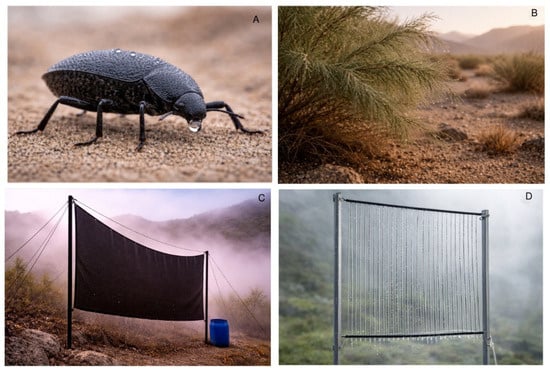
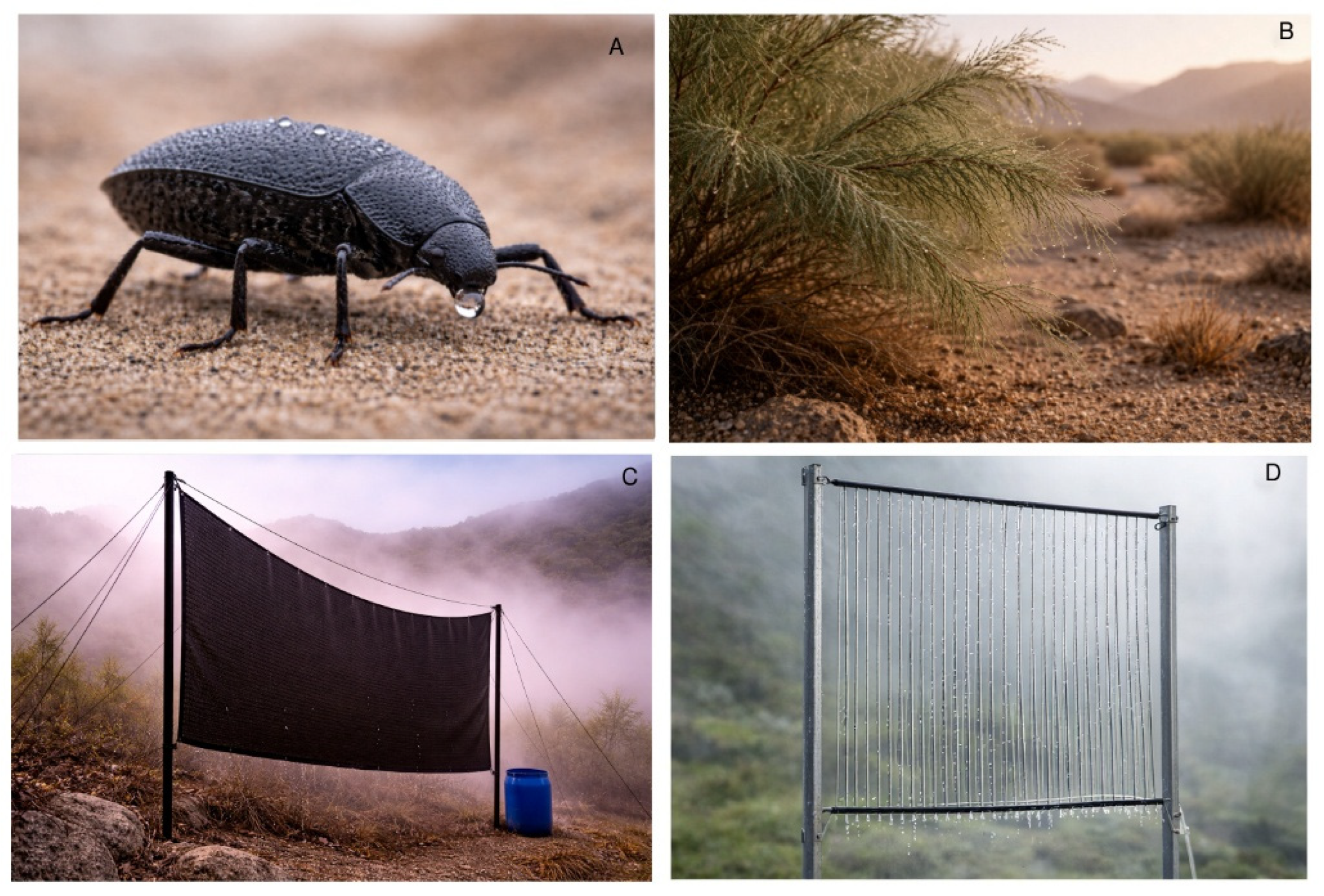
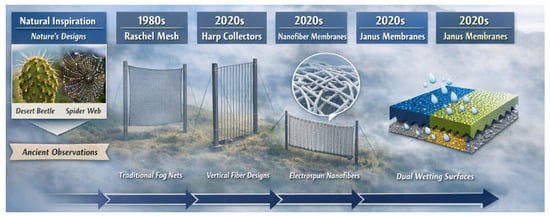
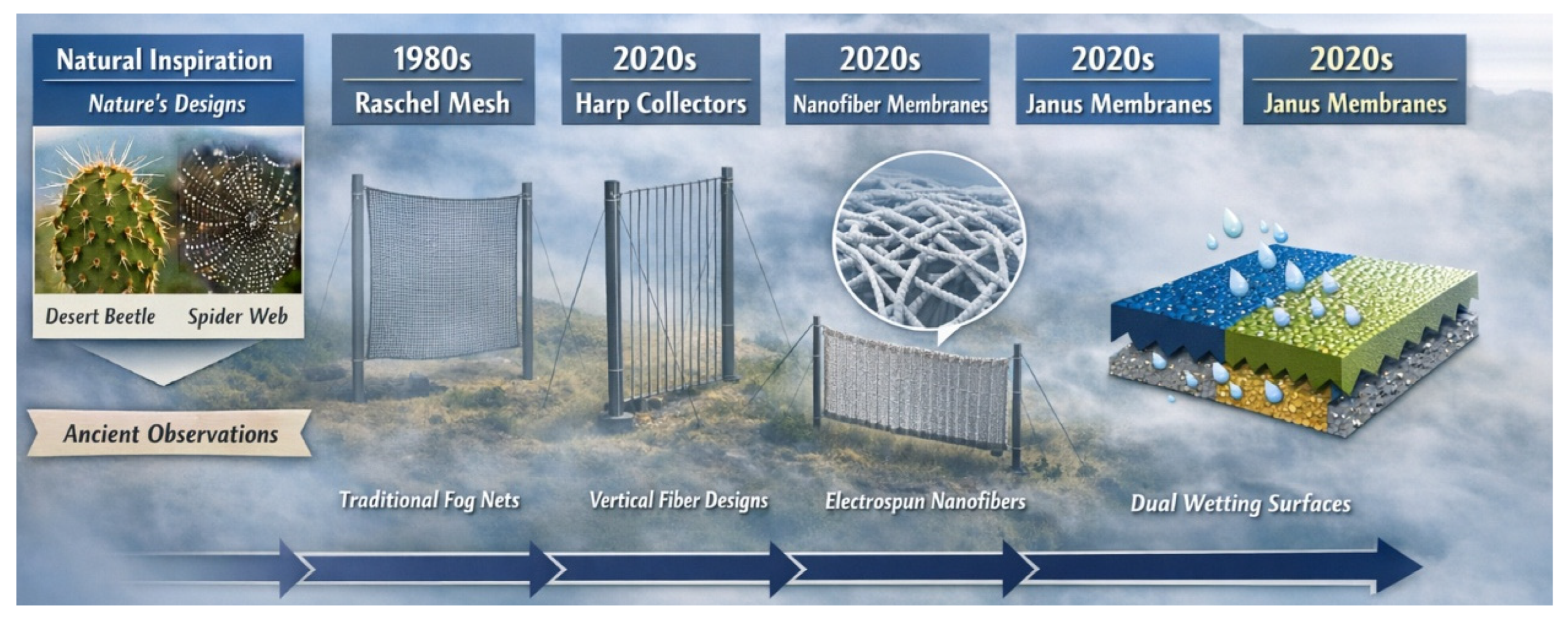
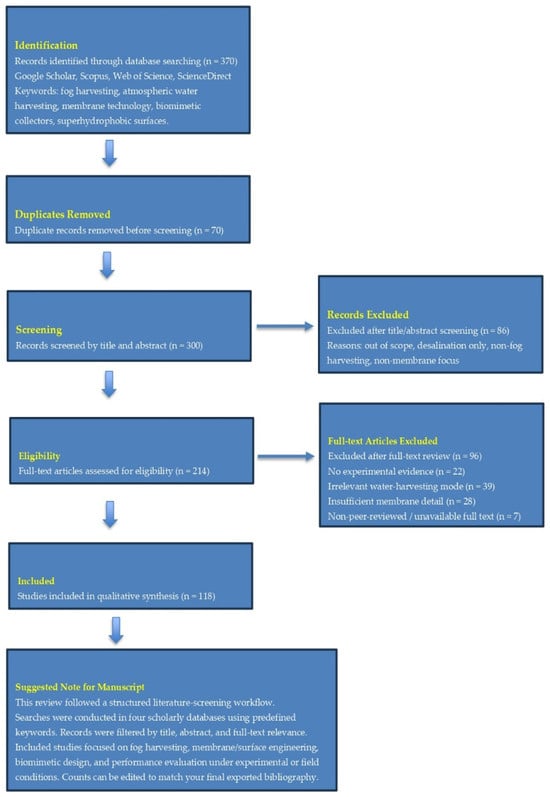
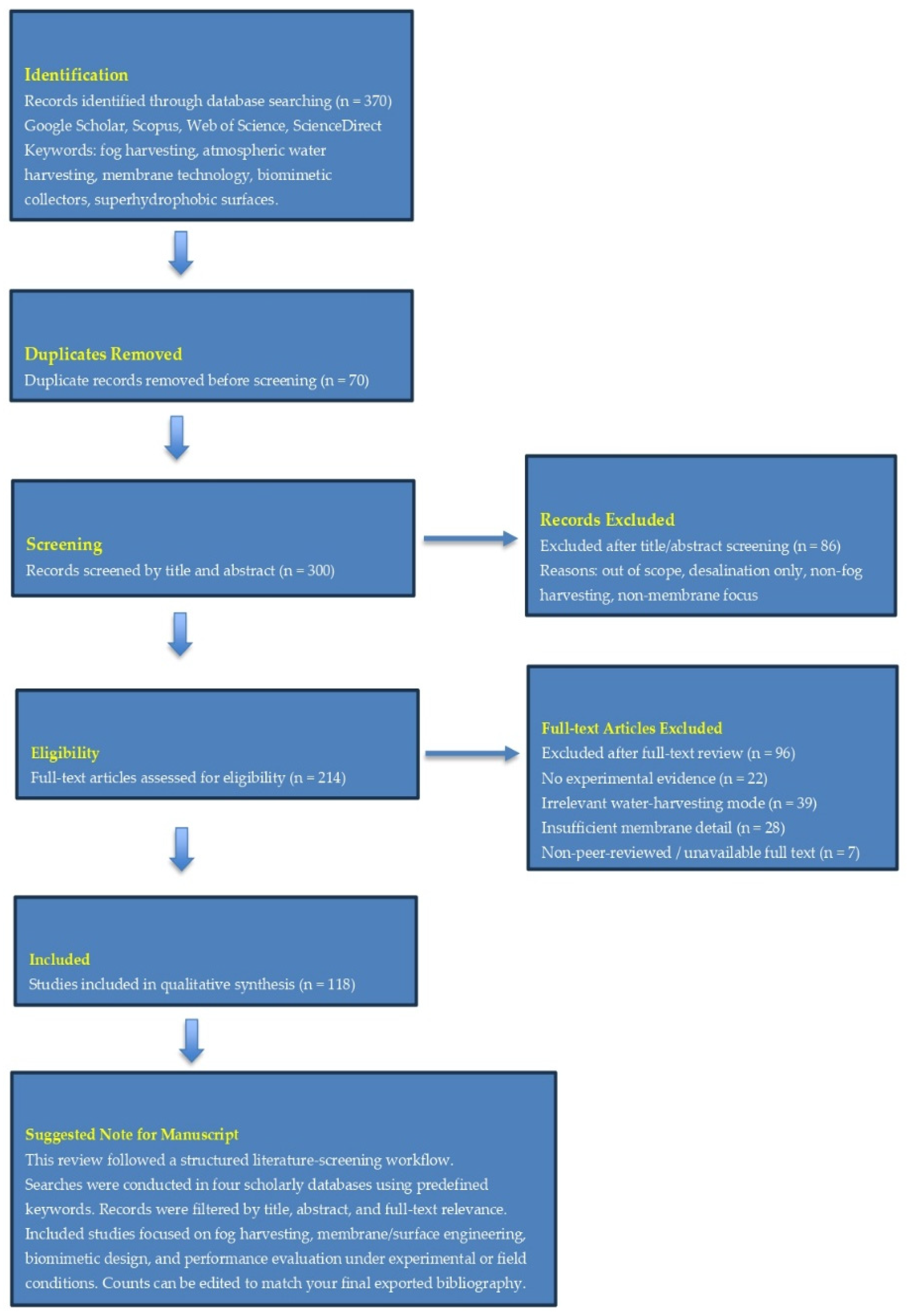
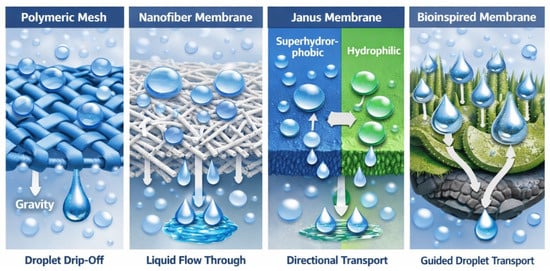
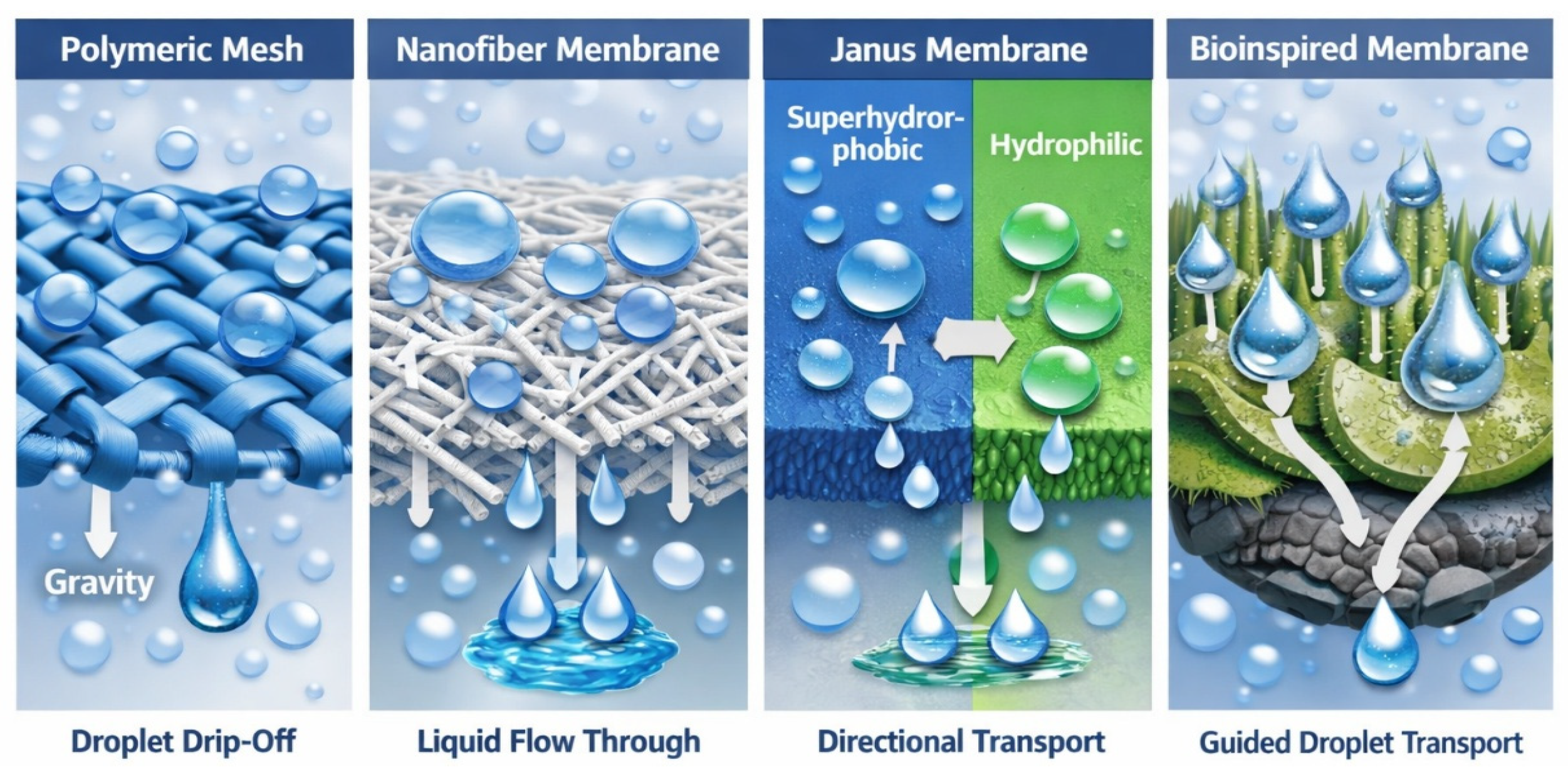
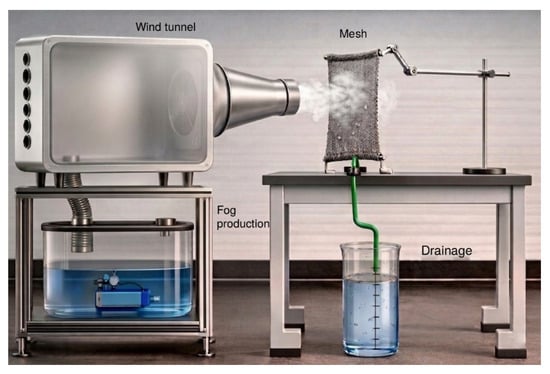
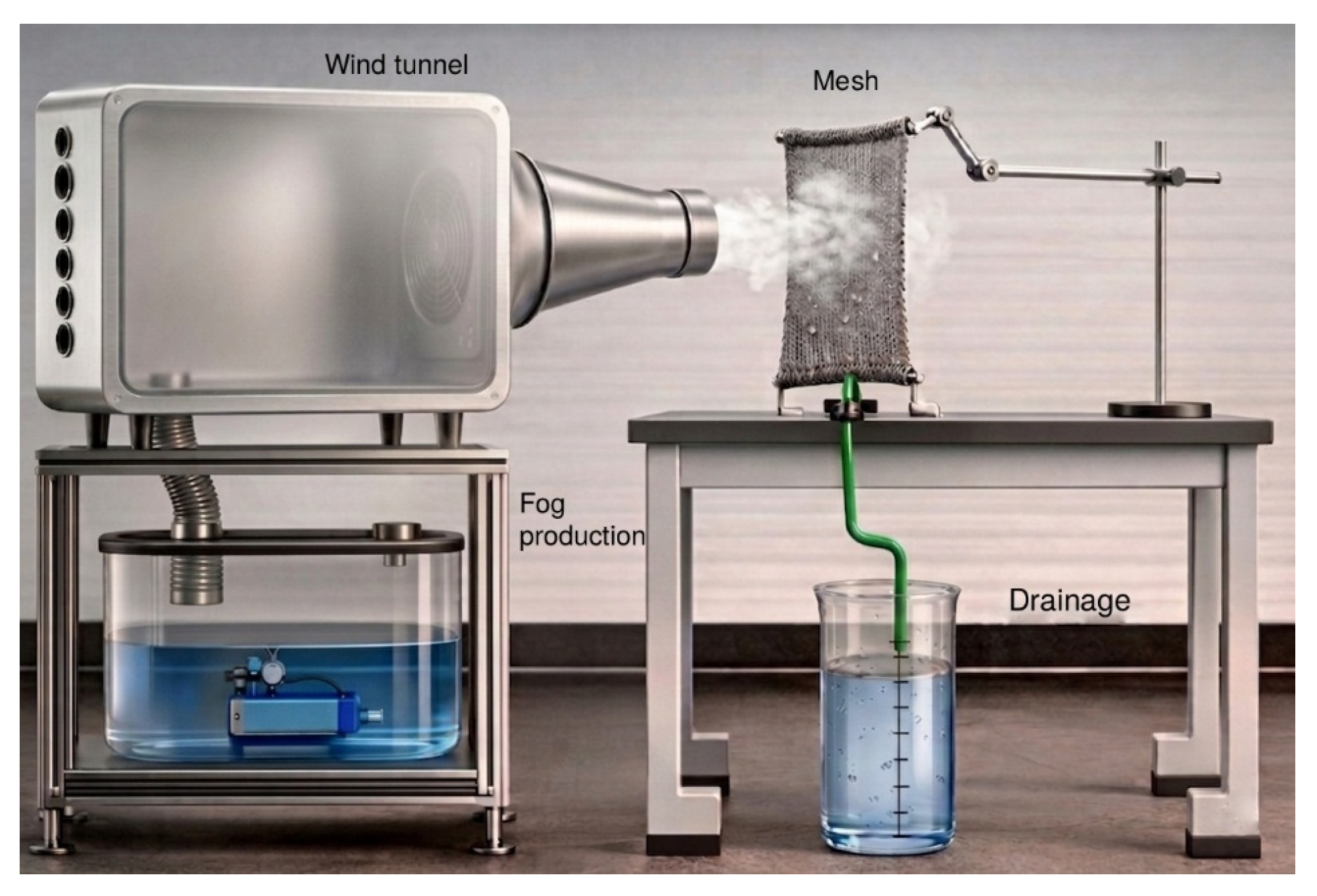
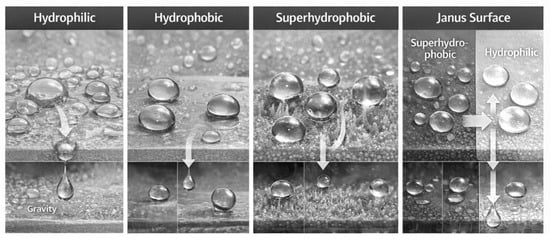
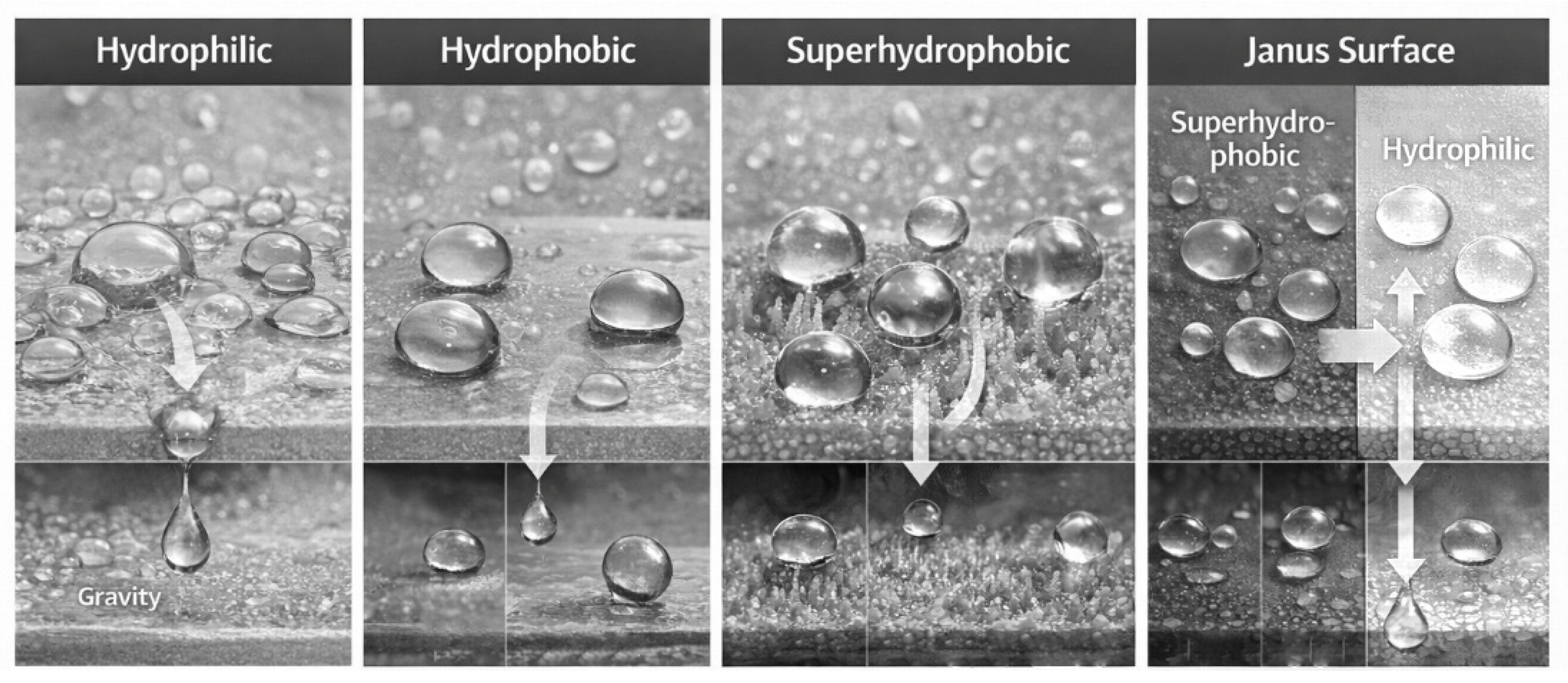
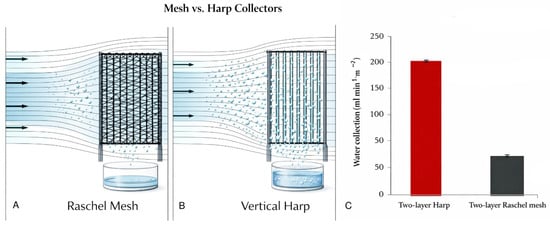
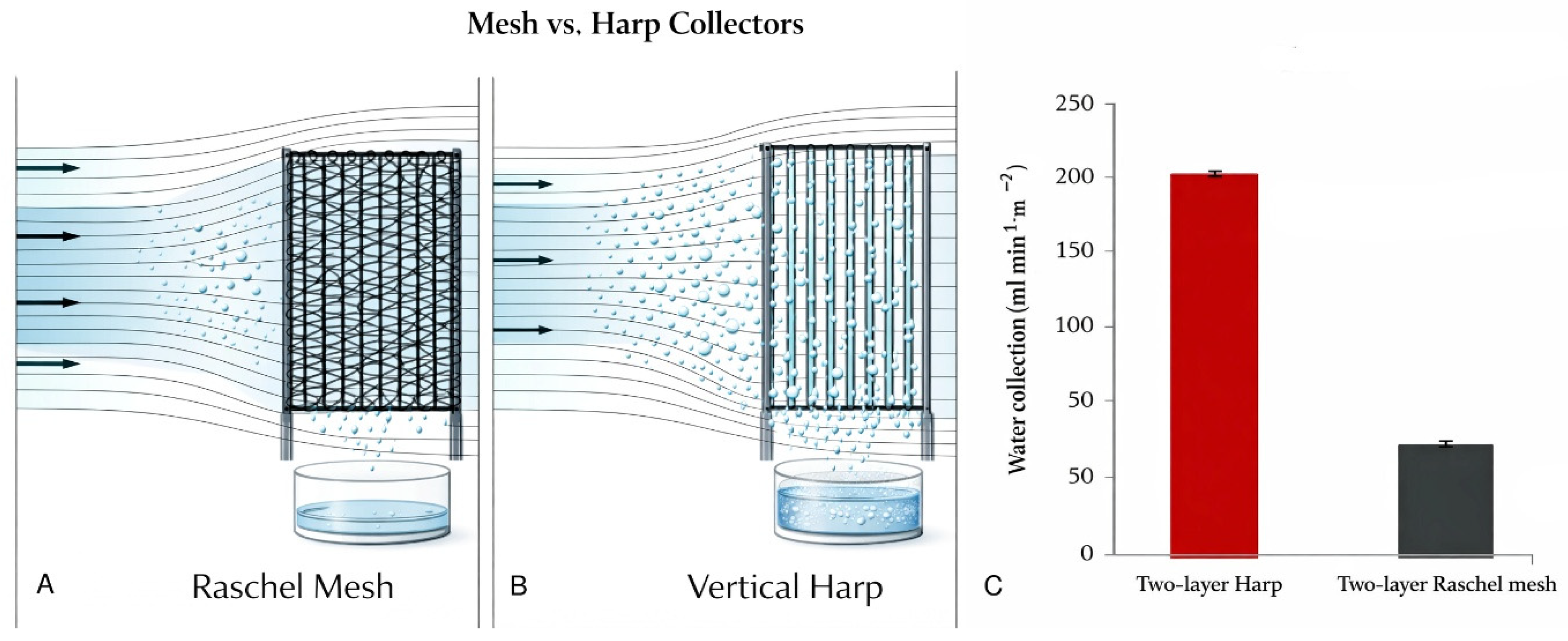
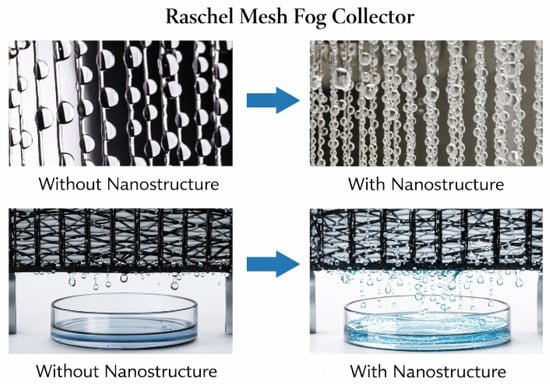
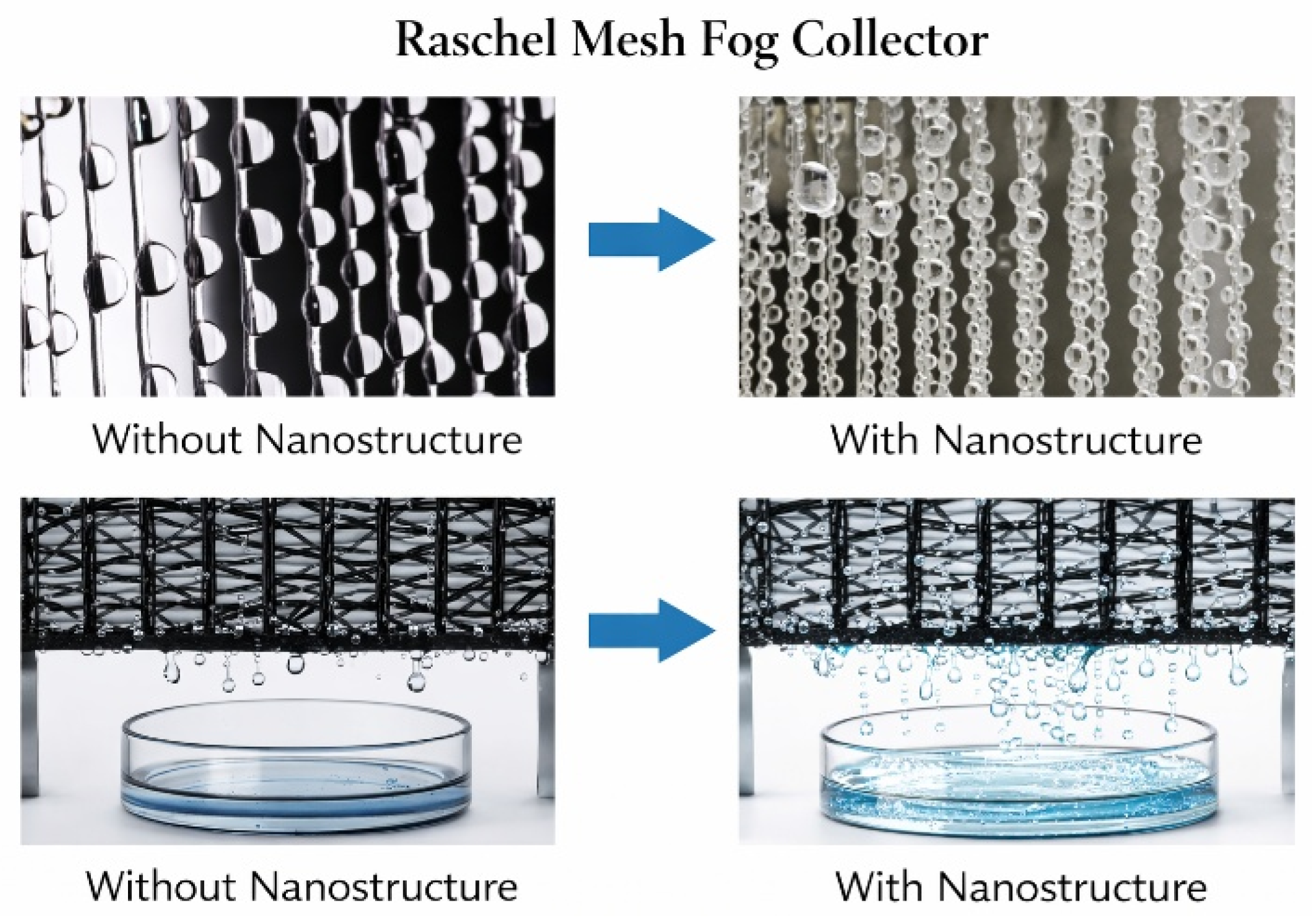

Disclaimer/Publisher’s Note: The statements, opinions and data contained in all publications are solely those of the individual author(s) and contributor(s) and not of MDPI and/or the editor(s). MDPI and/or the editor(s) disclaim responsibility for any injury to people or property resulting from any ideas, methods, instructions or products referred to in the content. |
© 2026 by the authors. Licensee MDPI, Basel, Switzerland. This article is an open access article distributed under the terms and conditions of the Creative Commons Attribution (CC BY) license.