


Abstract
Online courses and distance learning are playing a significant role nowadays. These open, massive online courses (MOOCs) have garnered significant attention from academics, scholars, and policymakers; however, the literature offers limited empirical evidence, especially from a Saudi Arabian perspective. MOOCs help educators gain not only knowledge but also promote sustainability. The objective of this study was to investigate the impact of self-determination theory on the behavioral intention and actual use of MOOCs through the mediation of behavioral intention and media richness. For this purpose, convenience sampling was used, and data were collected from 145 respondents, including faculty members and students, across public and private sector universities. Smart PLS-SEM and CB-SEM were used to investigate the reliability, convergent validity, and discriminant validity by developing and testing measurement models using a confirmatory factor analysis. The hypotheses were tested using bootstrapping by developing structural models. The findings indicate that all the scales are reliable and valid, meeting the required threshold levels. Furthermore, all hypothesized relationships are positive and significant, except for the effect of perceived relatedness on the behavioral intention and actual use of MOOCs. Behavioral intention does not mediate the relationship involving perceived relatedness; however, it does mediate the relationships among perceived autonomy, competence, and actual use. Media richness also mediates the relationship between behavioral intention and actual use of MOOCs. The results suggest that MOOC providers should offer courses through renowned universities and adopt self-paced learning formats rather than fixed schedules. Additionally, learners should receive credits upon course completion, and these credits should be recognized by employers to enhance motivation for the continued use of MOOCs.
1. Introduction
The rapid expansion of MOOCs has transformed educational landscapes worldwide, offering unprecedented access to learning opportunities globally. In the Kingdom of Saudi Arabia, this transformation aligns closely with national initiatives, such as Vision 2030, which emphasize digital innovation, lifelong learning, and the development of a knowledge-based economy. Despite significant investments in digital infrastructure and the growing availability of MOOCs through both global and local platforms, the actual adoption and sustained use of MOOCs among learners in Saudi Arabia remain inconsistent and relatively limited. While awareness of MOOCs has increased in recent years, recent empirical evidence indicates that learners’ behavioral intentions and actual use vary significantly across educational sectors [1,2,3,4]. This discrepancy suggests that educational infrastructural readiness alone is insufficient to ensure effective engagement in MOOCs. Consequently, identifying the underlying factors that influence learners’ acceptance, motivation, and continued usage is critical to maximizing the impact of these platforms. Therefore, it is important to understand what drives learners’ acceptance, adoption, and usage of MOOCs, as this remains crucial for their success.
To address these issues, self-determination theory (SDT) offers a robust framework for understanding the motivational processes driving learners’ engagement with online learning environments. By emphasizing relatedness, autonomy, and competence, SDT explains how intrinsic and extrinsic motivations shape behavioral intention and continued use of MOOCs. Prior research in a Saudi Arabian context has confirmed the significant effects of these constructs on learners’ acceptance, adoption, and use of MOOCs for academic and professional growth [3,5,6]. However, motivation alone may not fully describe learner behavior in digitally mediated environments. Concurrently, media richness theory (MRT) has shed light on how the perceived richness of MOOC platforms, encompassing interactive tools, communication channels, and content formats, affects learners’ perceptions of usefulness, satisfaction, and engagement. Complementing these, channel expansion theory (CET) offers a complementary perspective by emphasizing the critical role of user experience in shaping perceptions of communication effectiveness within online learning environments. Together, these perspectives suggest that both system characteristics and user experience play crucial roles in determining MOOCs’ adoption and continued use. Studies integrating media richness and related communication theories have shown that richer digital environments enhance learners’ confidence in and actual MOOC usage [2,7].
However, despite the growing body of knowledge on MOOCs in Saudi Arabia, the existing research has largely examined the motivational and technological factors in isolation, limiting a comprehensive understanding of their combined influence. To the best of our current knowledge, there is a lack of integrative research that simultaneously considers the interplay between motivational drivers (as explained by SDT) and experiential communication factors (as explained by CET) in influencing learners’ behavioral intentions and actual use of MOOCs. Addressing this gap is essential for developing a more comprehensive understanding of MOOC adoption and for informing the design of more effective and engaging online learning environments within a Saudi context.
This research aims to investigate MOOCs’ acceptance in Saudi Arabia by examining the combined effects of SDT and CET on learners’ behavioral intentions and actual usage of MOOCs. By analyzing the interplay between the motivational drivers and experiential communication factors, the study seeks to provide empirical evidence to aid policymakers, educators, and platform designers in optimizing MOOC adoption and enhancing digital learning experiences. The findings are expected to contribute to the theoretical development and to the design of practical, evidence-based strategies for fostering sustainable MOOC engagement in an evolving educational ecosystem.
MOOCs in Saudi Arabia
MOOCs have gained significant attention in Saudi Arabia over the past decade, driven by national digital transformation initiatives and the expansion of online learning platforms. Studies have shown increasing awareness of MOOCs among university students, educators, and professionals, particularly in fields such as health administration, informatics, and higher education. As part of Vision-2030, Saudi Arabia has invested heavily in digital learning, leading to the development of national MOOC platforms like Doroob, Rwaq, and Jusoor. These platforms aim to enhance the skills of the workforce, promote lifelong learning, and promote economic diversification. Saudi universities are increasingly incorporating MOOCs into their teaching and professional development strategies to expand access and improve the quality of education. The research shows that MOOC adoption is particularly strong in higher education, where MOOC usage is linked to intrinsic motivations, technology applications, and learners’ satisfaction. They also support flexible and scalable training programs for students and academic staff. Akhtar et al. [4] highlight MOOCs as an attractive tool for sustainability education in health informatics and health administration programs across Saudi universities. Studies underscore that MOOC adoption is shaped by motivational factors, such as relatedness, autonomy, and competence, leading to an intrinsic motivation among learners to learn new skills. In addition to these factors, technological aspects, such as media richness and the quality of communication, technological fit, and platform usability, significantly influence behavioral intention and actual MOOC use among Saudi learners. However, challenges persist, including low completion rates, digital literacy gaps, variations in course quality, and limited appreciation of MOOC certificates by certain employers. All these factors influence the sustained engagement with and actual usage of MOOCs despite their high acceptance.
2. Literature and Theoretical Background
In the past, numerous studies have explored the extrinsic motivators driving technology adoption, including the technology acceptance model (TAM), Expectation Confirmation Theory (ECT), and Unified Theory of Acceptance and Use of Technology (UTAUT). In contrast, the intrinsic motivators influencing individuals’ behavioral adaptations and technology adoption remain under-researched [8]. In this study, self-determination theory (SDT) is used to explain learners’ behavioral intentions and actual use of MOOCs, while channel expansion theory (CET) is used to highlight how users’ experiences shape their perception of communication effectiveness in online learning environments.
2.1. Self-Determination Theory
Self-determination theory (SDT) refers to self-motivated behavior in individuals [9]. This theory relates to aspects of individuals’ behaviors that are not motivated by external influences. Contrasting with technology acceptance models, which emphasize extrinsic motivation, this theory considers the intrinsic aspects of motivation that influence an individual’s adoption of innovations [10,11]. Of late, SDT has received increased attention from researchers. A few studies have used SDT for comprehending individuals’ behavior in different contexts, such as video game enjoyment and social networking sites [12]. In the context of education, SDT has been used to understand the perspectives of learners on online learning [13,14,15], cloud-based learning environments [11], and mobile-based application assessment [16]. SDT has also been used by researchers in the context of MOOCs to understand learners’ intrinsic motivation to use MOOCs [10,17,18,19]. As participation in MOOCs is governed by self-organized behavior, learners are required to have intrinsic motivation to engage in MOOCs. Past studies have also shown that intrinsic motivation is more crucial than extrinsic motivation in driving self-organized behaviors. According to Lou et al. [20], individuals in online communities are strongly driven by their intrinsic motivation to share knowledge with fellow participants. When students’ motivation is internalized through a sense of meeting their psychological needs, they are more likely to adopt MOOC learning [17,18,21]. Zhou [17] combined SDT with the theory of planned Behavior (TPB) to examine Chinese students’ MOOC acceptance. The study revealed that perceived behavioral control (PBC) significantly influenced student behavior, while autonomous motivation was a key predictor of TPB constructs (attitude, subjective norms, and PBC). SDT holds that the fulfilment of three basic psychological needs, perceived relatedness, perceived autonomy, and perceived competence, generates intrinsic motivation in an individual, as the individual is more likely to engage in a particular activity.
2.2. Media Richness (Channel Expansion)
Media richness theory (MRT) provides a foundational perspective on communication media by emphasizing its inherent capacity to convey information. It assumes that media richness is an objective and static attribute. In contrast, channel expansion theory reconceptualizes media richness as a subjective and dynamic perception that develops through users’ experience with a medium, communication partners, and contextual factors [22,23]. This distinction is particularly significant in the context of MOOCs, where learners’ interactions with a platform evolve. Accordingly, channel expansion theory offers a more suitable theoretical lens, as it captures the experiential, adaptive, and user-centered nature of perceived media richness, thereby providing a more comprehensive explanation of both learner engagement with and continued use of MOOC environments [22,24].
Channel expansion theory (CET) proposes that media richness is the key driver behind an individual’s willingness to adopt new technologies and systems [11,25]. The theory argues that an individual’s knowledge-building experiences shape their perception of channel richness. These experiences are rooted in the organizational context, the communication channel itself, the interaction partners, and the topics discussed. They help users understand the channel’s capabilities, features, and constraints, enabling effective communication and fostering perceived media richness. The organizational environment shapes the social dynamics that emerge during media use, facilitates knowledge creation through interaction with communication partners, and enhances language patterns and message construction [26]. Additionally, familiarity with a topic enables users to employ more precise terminology and develop stronger communication skills, ultimately enhancing perceived media richness [11].
2.3. Integration of SDT and CET
The integration of SDT and CET has gained increasing attention for explaining the adoption and use of technology, especially in online learning environments such as MOOCs. While SDT focuses on the internal motivational drivers, CET highlights the experiential and perceptual factors related to communication channels. Together, these theories provide a more comprehensive understanding of both behavioral intention and actual use. SDT explains user behavior through the satisfaction of three psychological needs: autonomy, competence, and relatedness [27,28]. These needs foster intrinsic motivation, which is critical for sustained engagement in online learning environments. In contrast, CET posits that the perceived richness of communication channels evolves with user experience. This means that learners’ familiarity with MOOCs enhances their perception of interaction quality and communication effectiveness. While SDT explains why MOOC users are motivated, CET explains how users perceive and interact with a learning system.
Few studies have explicitly combined SDT and CET to explain technology adoption in learning environments. A study on cloud-based virtual learning environments found that integrating SDT with CET significantly predicted users’ intention to use, accounting for a substantial proportion of the variance in adoption behavior [11]. The study showed that intrinsic motivation and perceived media richness together enhance user engagement, highlighting the complementary nature of SDT and CET, and that the integrated model explains behavior better than the single theories. Recent research has extended this integration specifically to MOOCs. A study on the actual use of MOOCs that integrated TTF and SDT revealed that TTF positively influenced users’ attitudes toward using MOOCs and their behavioral intentions, which in turn enhanced their satisfaction and actual usage of them in higher education institutions. However, the technology characteristics for predicting actual MOOC usage were not significantly related to TTF [3]. A study in Saudi Arabia that integrated SDT, CET, and UTAUT to examine MOOC adoption found that autonomy, competence, and relatedness significantly influenced learners’ motivation [2]. The study also found that perceived media richness significantly affects actual use of MOOCs. Despite growing interest, studies on MOOCs explicitly integrating SDT and CET are limited, and most research combines SDT with models such as TAM or UTAT rather than CET. The integration of SDT and CET models provides a comprehensive framework for understanding MOOC adoption and usage by combining the intrinsic motivational drivers with evolving perceptions of the communication medium. Well-motivated learners are more willing to explore these educational platforms, experienced learners perceive them as more interactive and effective, and together these lead to enhanced engagement and reduction in dropouts.
2.4. Perceived Relatedness (PR), Behavioral Intention, and Actual Use of MOOCs
Perceived relatedness (PR) is considered one of the critical factors influencing the motivation of learners and the sustainability of learning environments, such as MOOCs [9]. In MOOCs, PR refers to learners’ sense of connection and belonging with others in a learning community [8,29]. The research suggests that PR significantly impacts the behavioral intention to use MOOCs [30]. When learners feel connected, they are more likely to develop a positive attitude and intent to continue using MOOCs [3,31,32]. Studies show that PR is a strong predictor of behavioral intention, influencing actual MOOC use [17,30]. The relationship between PR and actual use is mediated by behavioral intention. Learners with a sense of relatedness are more likely to intend to use MOOCs, increasing actual use [25].
Recent research highlights the significant role of perceived relatedness in influencing behavioral intention in MOOC learners. For instance, a study in China shows that perceived relatedness significantly enhances learner engagement, which in turn leads to persistence intention in MOOCs [33]. Similarly, studies grounded in self-determination theory demonstrate that relatedness strengthens intrinsic motivation and perceived learning, both of which are key predictors of behavioral intention [34]. Moreover, the evidence from recent MOOC research indicates that social presence—conceptually linked to relatedness—positively affects satisfaction and continuance intention [35]. Overall, the literature suggests that perceived relatedness primarily influences behavioral intention indirectly through motivational and engagement mechanisms rather than acting as a purely direct predictor. Studies also highlight the important role of perceived relatedness in influencing the actual use of MOOCs. Similarly, the research emphasizes that social interaction and collaborative learning improve participation and course completion, reflecting increased actual usage behavior [36]. Studies grounded in SDT further show that relatedness strengthens intrinsic motivation and perceived learning, which subsequently drive engagement and continued use [3]. Moreover, the empirical evidence indicates that engagement and learning support are key predictors of actual MOOC use [34]. Overall, the studies suggest that perceived relatedness impacts actual MOOC usage indirectly through motivation, engagement, and social support mechanisms rather than acting as a direct predictor.
H1a:
Perceived relatedness positively and significantly predicts behavioral intentions regarding MOOCs.
H1b:
Perceived relatedness positively and significantly predicts actual use of MOOCs.
2.5. Perceived Autonomy (PA) and Behavioral Intention and Actual Use of MOOCs
Perceived autonomy (PA) influences learners’ motivation and engagement in MOOCs [9]. In MOOCs, PA refers to learners’ sense of control over their learning process [25]. The research has suggested that PA significantly impacts the behavioral intention to use MOOCs. When learners feel autonomous, they are more likely to develop a positive attitude and intend to continue using MOOCs [17]. Studies have shown that PA is a strong predictor of behavioral intention, influencing actual MOOC use [3]. PA enhances learners’ intrinsic motivation, increasing their engagement and satisfaction with MOOCs [25]. These findings have also been supported by the studies conducted by Alsubaie et al. [30] and Wang [37]. Autonomous learners take ownership of their learning, set goals, and regulate their process, improving learning outcomes [9]. Only a few research studies have demonstrated that PA has a direct and positive effect on BI, meaning that learners who perceive greater freedom and flexibility are more likely to intend to engage with MOOCs [38,39]. Studies integrating SDT with TAM frameworks have indicated that autonomy remains an important predictor of intention, even after controlling for factors such as perceived usefulness and ease of use [32]. Studies have shown that BI is a strong predictor of actual use of MOOCs and their completion, and these studies have confirmed that MOOC learners’ intentions translate into actual usage [32,35]. The PA and actual use relationship is mediated by behavioral intention. Autonomous learners are more likely to intend to use MOOCs, increasing actual use [11,37]. However, media richness can influence the intention–behavior gap, strengthening or weakening the intention and actual use of MOOCs [2].
H2a:
Perceived autonomy positively and significantly predicts behavioral intention regarding MOOCs.
H2b:
Perceived autonomy positively and significantly predicts actual use of MOOCs.
2.6. Perceived Competence (PC), Behavioral Intention, and Actual Use of MOOCs
Perceived competence (PC) influences learners’ motivation and engagement in MOOCs [9]. In MOOCs, PC refers to learners’ feelings of effectiveness for achieving their learning goals [25]. The research suggests that PC significantly impacts the behavioral intention to use MOOCs. When learners feel competent, they are more likely to develop a positive attitude and intend to continue using MOOCs [17,39]. Studies show that PC is a strong predictor of behavioral intention, influencing actual MOOC use [3]. Studies consistently indicate that higher PC enhances motivation and confidence, which positively influence learners’ BI to use MOOCs. The research on SDT-based MOOCs show that PC is a strong predictor of BI, demonstrating that learners who feel capable of using MOOCs are more likely to intend to use them [2]. PC enhances learners’ intrinsic motivation, increasing their engagement and satisfaction with MOOCs [25]. Competent learners take on challenging tasks, persist through obstacles, and experience accomplishment, improving their learning outcomes [9]. Competence is closely linked to factors such as digital skills and ease of use, which further strengthen the intention to engage with MOOCs [2]. The PC and actual use relationships are mediated by behavioral intentions. Competent learners are more likely to intend to use MOOCs, increasing actual use [25]. Islam et al. [32] show that BI acts as an immediate determinant of usage behavior, confirming that greater intention leads to higher actual use. Importantly, BI mediates the relationship between PC and actual use. Individuals who feel capable are more motivated, which enhances their intention, and this intention later translates into actual usage behavior. The evidence shows that interrelated constructs, such as academic self-efficacy, directly increase participation and continuation in MOOCs [3]. Media richness can influence the intention–behavior gap, strengthening or weakening the intention–actual use link [2].
H3a:
Perceived competence positively and significantly predicts behavioral intention regarding MOOCs.
H3b:
Perceived competence positively and significantly predicts actual use of MOOCs.
2.7. Mediating Role of Behavioral Intention on PR, PA, PC, Media Richness, and Actual Use of MOOCs
SDT posits that the perceived relatedness, autonomy, and competence drive intrinsic motivation and learning behaviors in individuals [2,38]. In MOOCs, these needs strongly influence individual learners’ engagement and sustained use. However, recent studies indicate that these psychological needs do not directly translate to actual usage; instead, behavioral intention acts as a key mediating factor that channels motivational perceptions into observable learning behaviors. BI plays a mediating role in the relationship among PR, PA, PC, and actual use of MOOCs. The research shows that PR, PA, and PC influence BI and actual use of MOOCs [3,17]. Studies grounded in SDT confirm that all three constructs have significant positive effects on BI, which in turn predicts actual MOOC usage [2]. They also show that BI mediates the relationship between SDT constructs and actual use, meaning that PR, PA, and PC influence usage indirectly through intention rather than directly. BI mediates the relationship between PR and actual use, as learners who feel connected to others are more likely to intend to use MOOCs, increasing actual use [11]. Similarly, BI mediates the PA–actual use relationship, as autonomous learners are more likely to intend to use MOOCs, increasing actual use [25,38]. BI also mediates the PC–actual use link, with competent learners more likely to intend to use MOOCs, boosting actual use [25]. Factors such as media richness can affect intention and actual use [2]. Media richness significantly influences BI, as rich media enhances understanding, interaction, and learning experience. It can also have a direct effect on actual use, but its effect is often partially mediated by BI, indicating that an improved user experience increases intention, which then drives usage [4,31]. Hence, BI bridges the relationship between these psychological needs and actual MOOC use. An understanding of the mediating role is key to promoting MOOC adoption and sustained use. The evidence shows intention is the strongest predictor of actual system use, aligning with the TPB and TAM. Wang [37] demonstrates that BI significantly mediates the link between learners’ perceptions and their MOOC engagement. Alturki and Aldraiweesh [3] show that intrinsic motivation shapes attitudes and behavioral intention, predicting actual MOOC use. These findings reinforce the notion that psychological needs influence behavior indirectly through intention, not directly.
H4a:
Behavioral intention significantly predicts actual use of MOOCs.
H4b:
Behavioral intention significantly mediates the perceived relatedness and actual use of MOOCs.
H4c:
Behavioral intention significantly mediates the perceived autonomy and actual use of MOOCs.
H4d:
Behavioral intention significantly mediates the perceived competence and actual use of MOOCs.
H4e:
Behavioral intentions significantly predict media richness.
2.8. Mediating Role of Media Richness on Behavioral Intention and Actual Use of MOOCs
In the MOOC literature, behavioral intention is considered a key predictor of learners’ actual use, consistent with the TAM and TPB models. However, the strength of the behavior intention link can vary significantly based on the learning environment and the use of technology. Media richness, which is defined as the extent to which a medium, such as visual, verbal, or audio, offers immediate feedback supporting the socio-communication content, plays a key contextual factor shaping how intention translates into sustained engagement with MOOCs [31]. According to media richness theory, effective media helps reduce ambiguity, enhances clearer instruction, and offers an interactive learning experience. In the same vein, MOOC platforms also offer high media richness, and individuals who would already like to use a course would find it easier and more rewarding to convert that intention into actual usage and completion of a course [31]. In contrast, low media richness causes text-heavy interfaces, fewer interactions, and fewer visual cues, resulting in weaker actual use. Hence, learners may struggle with motivation and isolation, discouraging their intention to use. Media richness moderates the behavioral intention gap by weakening or strengthening the link between the intention to use and actual usage of MOOC platforms. The mediating role of media richness in MOOC platforms is important because non-completion and dropout rates are high, although learners begin with a strong intention to participate. By improving media richness, such as interactive lessons, instructional videos, social features, and effective communication tools, MOOCs can ensure that learners’ initial intentions are converted into sustained actual usage. Studies have shown that media richness and the presence of social perspectives are critical drivers of sustained intention and successful engagement with MOOCs.
The evidence shows that media richness positively affects the BI to use MOOCs, as media richness facilitates improved communication, reduces ambiguity, and enhances PU [2]. Other research indicates that media richness contributes to the intention to continue, emphasizing its significance in influencing user behavior [31]. This study also highlights that media richness often operates indirectly through mediating variables. For example, media richness enhances social presence and virtual experience, which then increases learners’ behavioral intentions [31,40]. Media richness also influences constructs such as telepresence and flow, which subsequently drive the continuance intention [40]. The research in Saudi Arabia shows that behavioral intention is the immediate predictor of MOOC usage, while media richness may have both direct and indirect effects. However, its indirect effect—through BI—is often stronger, signifying a mediated pathway where richer media enhances behavioral intention, which then leads to actual use [2].
H5a:
Media richness significantly predicts actual use of MOOCs.
H5b:
Media richness significantly mediates the relationship between behavioral intention and actual use.
3. Methodology
3.1. Research Design
This current study is quantitative in nature, and a survey research design was adopted. The units of analysis were organizations, specifically public and private higher education institutions (HEIs) in Saudi Arabia; therefore, the questionnaire was adapted to investigate the conceptual model. The data were cross-sectional, i.e., collected at a single point in time. A non-probability sampling technique was used, specifically convenience sampling, to select the sample. This approach is appropriate as it allows individuals who are available and willing to participate to complete the questionnaire. A questionnaire was sent online to the respondents. The study population was academicians and students from health administration and health informatics programs. The reliability and validity of the questionnaires were already established in past studies [2,4]. The items in the questionnaires measured perceived relatedness, autonomy, and competence, as well as behavioral intention, actual use of MOOCs, and media richness. Before data collection, ethical approval was obtained from the Research Ethics Committee, Deanship of Scientific Research, Qassim University, Saudi Arabia. All items were measured on a seven-point Likert scale.
3.2. Sampling Technique
The population of the study was academicians and students from HEIs; it was not possible to cover the entire population, so sampling was crucial. Non-probability convenience sampling was chosen. According to Sekaran and Bougie [41], convenience sampling means “participants willing to provide required information”. It is the most common way of collecting information from a big population by easily managing the cost and time. According to Etikan et al. [42], this type of sampling has issues of generalizability, but researchers can still collect data from the available audience. Regarding the sampling strategy, convenience sampling helps researchers to select the individuals who are most easily accessible. In addition, the sample size used in the current study was justified by the fact that the chosen sample was the maximum feasible within the given resource limitations. The unit of analysis in this study was organizations. From each HEI, one member, either from health informatics or health administration, was included. Such a sample aimed to cover the maximum number of institutions. This is the reason for the 145 samples collected and analyzed in this study. Approximately 175 questionnaires were distributed, and 145 completed questionnaires were received and used in the statistical analysis.
3.3. Study Instruments
Scales of self-determination theory, media richness, behavioral intention to use MOOCs, and actual use of MOOCs were adopted from past studies. The questionnaire for the study was developed based on past studies [2,4] conducted in Saudi Arabia. All items were measured on a seven-point scale ranging from 1 to 7, strongly disagree to strongly agree (see Appendix A). The reliability and validity were already established in past studies on self-determination theory [2,18,43], media richness [4], behavioral intention and actual use of MOOCs [2,4].
Self-Determination Theory: This has three attributes, namely, perceived relatedness (PR), perceived autonomy (PA), and perceived competence (PC). Perceived relatedness was measured using eight items; the sample items include “I get along with people I come into contact with”. Chiang [43] reported the reliability coefficients of PR as “0.85”, for PA “0.91” and for PC “0.92” respectively. In this study, eight items were initially adapted for PR; however, after conducting the CFA, only four items were retained, while items 3, 5, 6 and 7 were excluded due to low factor loadings. For PA, seven items were adapted, but two items (items 2 and 7) were excluded due to low loadings. Five items were retained, yielding a reliability of 0.803. For PC, six items were adapted; however, only three items (2, 3, and 4) were retained, while the three remaining items (1, 5, and 6) were excluded. The reliability of PC in this study is 0.730.
Media Richness: This was measured on six items; the items include “The MOOCs features allow me to give and receive timely feedback”. Its composite reliability (CR) was reported by Akhtar et al. [4] as “0.864”. In this study, all six items met the threshold value and were retained. The composite reliability (CR) in this study, is 0.866, which is higher than that reported in the previous study.
Behavioral Intention: Three items for behavioral intention (BI) were adopted. The sample items include “I intend to continue to use MOOCs for learning in the future”. Khan et al. [18] reported a CR of BI of “0.918”. In this study, all three items met the cut-off level and were retained, yielding a CR of 0.805.
Actual Use of MOOCs: This has four items, and the sample items include “I often use MOOCs to manage my tasks”. Alharbi [2] reported its CR as “0.856”. In this study, all four items scored loadings higher than 0.70 and were retained, yielding a CR value of 0.777.
3.4. Data Collection
HEIs are sources of learning and provide the workforce for institutions where these skilled workers contribute towards the economic development of the country. This study collected data from academicians and students at HEIs (private and public). Limited empirical evidence is available using the extended model of UTAUT, but there is still a gap with self-determination theory that needs to be filled. In addition, adding media richness (channel expansion theory) and linking it with self-determination theory as a moderator would be a theoretical contribution to the body of knowledge. It is crucial to extend and bridge the two theories, i.e., self-determination theory and channel expansion theory, in the Saudi context. An online questionnaire using Google Forms was distributed to identified HEIs in Saudi Arabia. The questionnaire link was sent after getting informed consent. Participants were given adequate time to respond, and they were assured that their data and identities would be kept confidential.
3.5. Data Analysis Tools and Techniques
Smart PLS-SEM (version 4.1.1.4) was used for the statistical analysis it is a variance-based statistical tool that is used for non-normal and small data sets. It is a second-generation software that can analyze and investigate complex models. It is used for exploring new concepts and relationships. Its primary strength lies in its prediction-oriented analysis. PLS-SEM was chosen for its predictive power, i.e., for maximizing the explained variance in the dependent variables. PLS-SEM is frequently used for theory development and testing and for prediction of criterion variables. It is a nonparametric method, meaning it does not require normally distributed data [44]. According to Ridgon [45], PLS-SEM is also a good choice for formatively measured latent variables. However, there are certain rules of thumb given by Hair et al. [46] that need to be established. For the model fit indices, covariance-based structural equation modeling (CB-SEM) was used to report the fit indices. To investigate the reliability and validity, Cronbach’s alpha, composite reliability, average variance extracted, discriminant validity (HTMT ratios), and Fornell–Larcker [47] criterion were used. A measurement model was developed using a confirmatory factor analysis. A structural model was developed to test the hypotheses, and bootstrapping procedures were employed to estimate the beta coefficients, t-statistics, confidence interval bounds, and significance values.
4. Results
4.1. Personal Information of the Participants
The respondents were asked to provide their demographic information regarding their gender, age, nationality, education, and role as teacher or student. Regarding gender, most of the respondents were male (n = 98; 67.59%), followed by female (n = 47; 32.41%). In terms of sectors, 31 (90.34%) respondents belonged to public sector HEIs, and 14 (9.66%) were from private sector HEIs. Regarding nationality, 128 (88.3%) respondents were Saudi faculty and students, whereas the remaining n = 17 (11.7%) were non-Saudi respondents.
4.2. Confirmatory Factor Analysis (CFA)
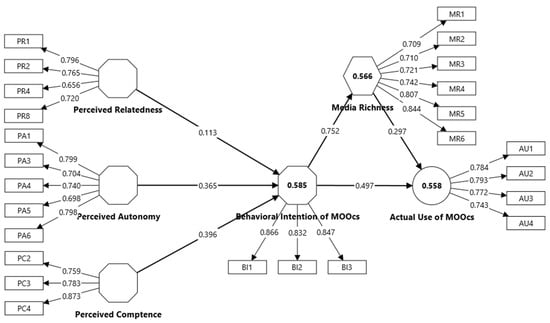
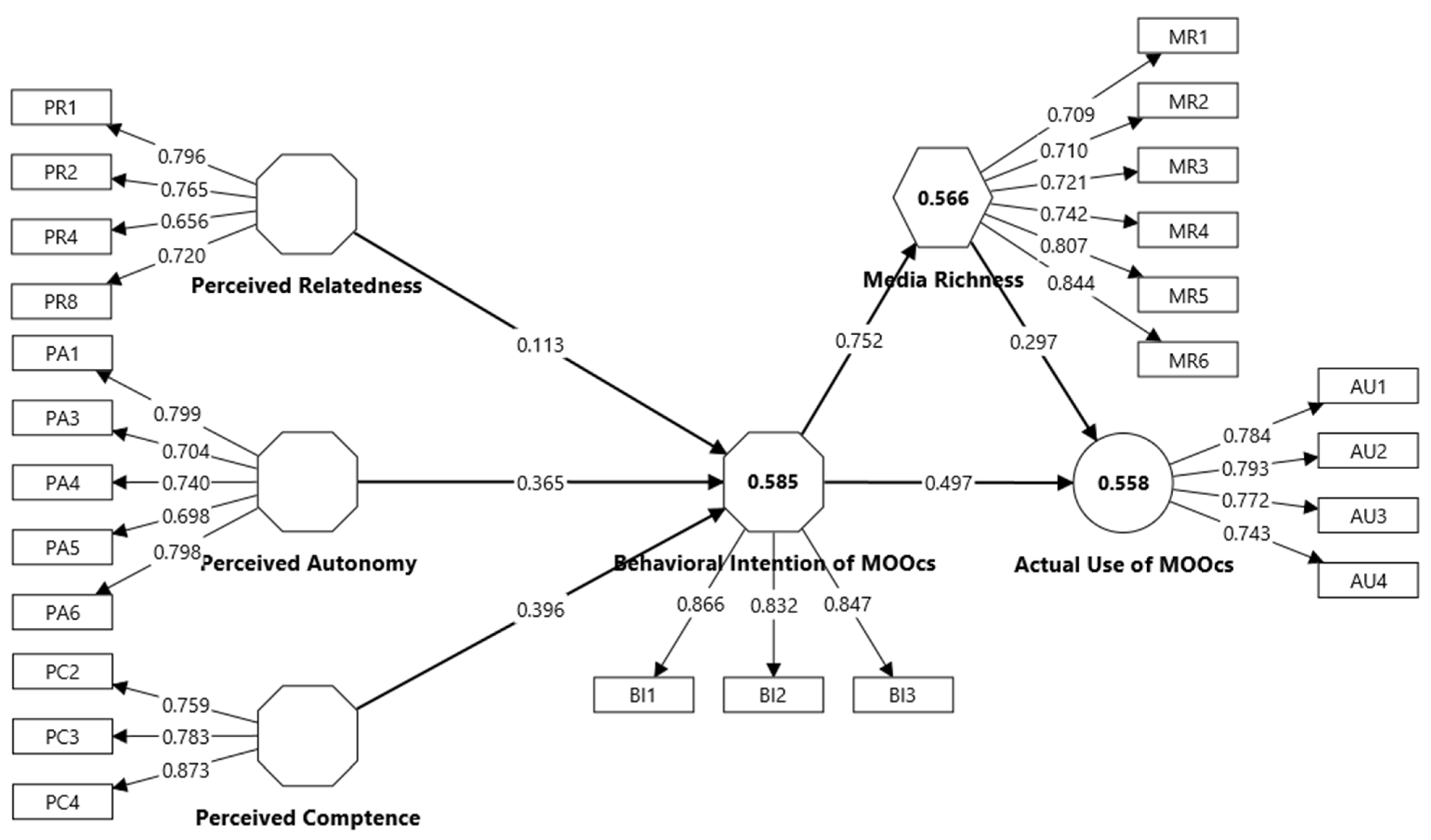
Table 1 presents the results of the measurement model obtained after the CFA. The reliability of the constructs and their respective items was assessed using Cronbach’s alpha with a threshold of >0.70 [46]. The convergent validity was evaluated through the composite reliability (CR), which should be >0.70, and the average variance extracted, >0.50. For the factor loadings, an acceptable value is 0.50; however, ideally, each item should have a loading higher than 0.70 [46]. The discriminant validity was assessed using HTMT ratios and the Fornell–Larcker criterion. The threshold for the HTMT ratios should be 0.85 [48]; as suggested by Hair et al. [46], they must be less than one. For the Fornell–Larcker criterion, the square root of the AVE values was considered [47]. Four items on perceived relatedness, two items on autonomy, and three items on competence were excluded due to low factor loadings. These items were removed because they negatively affected the reliability, average variance extracted, and discriminant validity. After deleting these items, the Cronbach’s alpha, composite reliability, AVE, and HTMT ratios met the thresholds recommended by Hair et al. [46]. As shown in Table 1, all the remaining items had loadings greater than 0.50, the alpha values of all constructs were greater than 0.70, and the CR and AVE were also higher than 0.70 and 0.50. Additionally, the VIF values were below 5. Table 2 presents the results of the HTMT ratios and the Fornell–Larcker [47] criterion. These findings indicate that the reliability and validity of the scales are established. Hence, all scales are considered reliable and valid. See Table 1 and Figure 1.
Table 1.
CFA.
Table 2.
Discriminant validity.
Figure 1.
Measurement model.
Table 3 presents the model fit indices. A CFA was run to assess the model fitness. The CFI and TLI values are >0.95, indicating a good fit. The RMSEA value is <0.08, and the SRMR < 0.08 indicates an acceptable fit [49,50]. The six-factor model number 6 (PR, PA, PC, BI, MR and AU) demonstrates satisfactory data fit: X2 = 33.09, CFI = 0.970, TLI = 0.953, RMSEA = 0.055, and SRMR = 0.047. These findings show that the proposed six-factor model displays better fitness indices.
Table 3.
Model fit indices.
Table 4 presents the direct effects of predictors on criterion variables. Impact of PR on BI and AU are insignificant (β = 0.113, 0.0.082; p > 0.05); therefore, hypotheses H1a and H1b are not supported and are rejected. Further analysis of the results reveals that PA significantly predicts BI and AU (β = 0.365; β = 0.263; p < 0.05). These findings imply that a one-unit increase in perceived autonomy is associated with meaningful positive changes in both behavioral intention and actual adoption of MOOCs. Thus, H2a and H2b are substantiated and accepted. Likewise, PC also positively and significantly predicts BI and AU (β = 0.396; β = 0.285; p < 0.01); a one-unit increase in perceived competence is significantly and positively related to meaningful a change in BI and actual use of MOOCs. Thus, H3a and H3b are accepted. In addition, BI also positively and significantly impacts the AU of MOOCs (β = 0.497; p < 0.01). A higher increase in BI contributes to positive gains in actual use of MOOCs. These findings support our hypothesis H4a, and thus H4a is also accepted. Likewise, BI positively predicts MR (β = 0.752; p < 0.01). BI is found to be the most dominant variable predicting MR in the studied model. A one-unit increase in BI could bring a meaningful and positive change in media richness; thus, H4e is accepted. MR positively predicts AU (β = 0.297; p < 0.01). The analysis of findings reveals that an increase in media richness leads to a substantial rise in actual use of MOOCs; thus, H5a is also accepted. All predictors (PR, PA, and PC) explain 58.5% of the variance in behavioral intention (R2 = 0.585), while PR, PA, PC, BI, and MR explain 55.8% of the variance in actual use of MOOCs (R2 = 0.558). Additionally, PR, PA, and PC together explain 56.6% of the variance in MR (R2 = 0.566).
Table 4.
Direct effects.
Behavioral intention was used as a mediator of the relationship among perceived relatedness, autonomy, competence, and actual use of MOOCs. In addition, media richness was also examined as a mediator between behavioral intention and actual use of MOOCs. Bootstrapping in PLS-SEM was conducted to investigate the indirect effects (mediating). Table 5 presents findings of indirect effects. It is found that behavioral intention does not mediate the relationship between perceived relatedness and actual use of MOOCs (β = 0.056; S.E. = 0.042; t = 1.346; p > 0.05; LLCI = −0.014 and ULCI = 0.145). Thus, H4b is not supported and is rejected. On the contrary, BI significantly mediates the relationship between perceived autonomy and AU (β = 0.181; SE = 0.058; t = 3.130; p < 0.05; LLCI = 0.088; ULCI = 0.318), Thus, H4c is accepted. Similarly, the PC and actual use relationship are mediated by BI (β = 0.197; SE = 0.060; t = 3.299; p < 0.01; LLCI = 0.001; ULCI = 0.103); hence, H4d is accepted. The mediating role of media richness between behavioral intention and actual use of MOOCs is also significant (β = 0.224; SE = 0.070; t = 3.212; p < 0.05; LLCI = 0.009; ULCI = 0.351); thus, H5b is accepted (Table 5).
Table 5.
Indirect effects.
5. Discussion
MOOCs have revolutionized traditional learning and teaching. MOOCs have significantly engaged students by providing them with digital platforms that incorporate interactive technology. MOOCs are cost-effective, user-friendly, and a practical platform for learning. The current study attempts to bridge the two theories of self-determination theory (SDT) and channel expansion theory (CET) to investigate the mediated impact of behavioral intention and media richness on perceived relatedness, autonomy, and competence, as well as their effect on the actual use of MOOCs. The findings show that PR is insignificantly related to BI and AU of MOOCs. The findings are inconsistent with the findings of Khan et al. [18], who reported a significant association with BI and AU of MOOCs. The reason for this insignificant relation may be the sheer volume of peers, which makes students disengaged and disconnected. Additionally, interacting with the instructor is difficult, and students may feel that their contributions are not valued. This, in turn, impacts their relatedness and intention to use and their actual use of MOOCs. Even though students and faculty may socially feel connected, perceived relatedness is not a key driver of behavioral intention and actual use of the system or technology, i.e., MOOCs. In addition, feeling socially connected does not impact their decision to use MOOCs; rather, they are affected by utilitarian factors (ease of use, etc.). Users may prioritize independence over social connections. Based on this discussion, H1a and H1b are rejected.
On the other hand, perceived autonomy has a positive and significant impact on BI and AU of MOOCs. The findings regarding the impact of PA on BI are in line with hypothesis H2a and are consistent with those of Alharbi [2], who reported a positive and significant impact of PA on BI. This suggests that learners’ intrinsic motivation is high when they feel they have control over their learning objectives; it triggers interest and enjoyment in the task, which results in persistence and engagement, which affects their intention to use MOOCS. These results are also consistent with those of Alharbi’s [2] findings on PA and AU of MOOCs.
The findings of this study further suggest that learners find MOOCs easy to use, user-friendly, and feel they can manage the learning process, which directly affects their actual use of MOOCs. Autonomy promotes self-regulation, design philosophy of continued use, higher satisfaction, reduces dropout rates, and enhances goal achievement. PA is the perception of independence while using a technology or system. According to Alturki and Aldraiweesh [3], it is the degree or extent to which learners feel they are free to make decisions. It also allows learners to progress at their own pace and manage a course effectively. Learners tend to be more motivated when their need for autonomy is fulfilled. Autonomy not only enhances motivation (intrinsic and extrinsic) but leads to positive outcomes, as learners are more likely to internalize the value of a course when they experience more autonomy. Thus, H2a and H2b are accepted.
Perceived competence significantly predicts behavioral intention. This suggests that people who think they are capable are more likely to perform specific behavior, as higher confidence motivates intended actions. Learners who perceive themselves as skilled and competent in using a new system are more likely to intend to use MOOCs, and those who believe they can learn a new system are more likely to adopt it regularly. Therefore, H3a is accepted. Likewise, perceived competence is significant for actual use of MOOCs. A possible explanation is that confidence translates into sustained use of MOOCs; MOOCs need time management, persistence, and skills. Those learners who have the skills to use new platforms are more likely to engage with them. Therefore, H3b is also supported and accepted. Perceived competence displays learners’ confidence to feel successful and productive while performing tasks, such as assignments, quizzes, and presentations, and responding to online tests. Higher levels of competence enhance trust in the learning process and encourage learners to continue using MOOCs, contributing to sustainable learning outcomes. Additionally, learners also believe that through MOOCs they can demonstrate their skills by completing courses, which increases their motivation, satisfaction, and makes them engaged in online learning [3,19].
Additionally, the impact of behavioral intention and media richness on actual use is found to be positive and significant. These findings are supported by Khan et al. [18], Alharbi [2], and Akhtar et al. [4], who reported the significant impact of BI and MR on AU. Furthermore, the impact of BI on MR is also significant. Learners with high intentions are more likely to continue using MOOCs. These findings are consistent with the theory of planned behavior, self-determination theory, and channel expansion theory. Intention is the antecedent of actual use of MOOCs. When learners perceive MOOCs as easy to use, user-friendly, and related to their goals, they have a high motivation to use them. MR indicates that the quality of videos, interactive simulations, discussions, quizzes, and timely feedback are sources of actual use. Rich media is a source of clearer explanations, reduces confusion, answers the learners’ questions, engages its users, improves understanding, and positively influences usage behavior. BI significantly predicts actual use of MOOCs; in addition, MR is also found to be a significant predictor of AU of MOOCs. This suggests that actual use can be increased through diverse experiences [2] and multiple communication channels. According to Badali et al. [51], BI influences learners’ aims to make use of specific tools and is used in most of information technology studies to predict adoption. Similarly, Tandon et al. [52] also states that BI engages learners in the actual use of MOOCs. As per Venkatesh [53], BI is “the propensity to use and keep using such technology and determines how frequently it is used”. Thus, H4a, H4e and H5a are accepted.
Regarding the mediating effects, BI does not mediate between PR and AU. This indicates that learners’ connection with subject experts does not have a significant effect on actual use, nor does it exert an indirect effect through behavioral intention. Therefore, H4b is rejected. In contrast, BI mediates the relationship between PA and PC and the AU of MOOCs. This suggests that learners’ actions emanate from the self rather than externally, increasing actual use of MOOCs directly through BI. Furthermore, learners’ sense of competence and effectiveness instill in them the belief that they can master challenges and produce outcomes, which in turn increases their actual use of MOOCs via behavioral intention. Similarly, MR mediates the relationship between BI and AU of MOOCs. Hence, H4c, H4d, and H5b are substantiated and accepted. The mediating effect of media richness extends the findings of Akhtar et al. [4], Alharbi [2], and Altruki and Aldraiweesh [3]. These results suggest that interconnectivity has shaped perceptions of learners about adoption of certain technologies and systems based on security, reliability, and the crucial factors of motivation and continued use of MOOCs. It is also argued that when a new system or technology, supported by enriched media and enhanced interconnectivity, provides learners with a vision, recognition, and encouragement, it will likely boost the actual use of MOOCs. Through MOOCs, learners can share knowledge and ideas and get novel ideas from others. Content design and interconnectivity are the antecedents of media richness. Teachers’ experiences with content and interaction with learners through channels, communication partners, and organizations might lead to a positive perception that MOOCs are media-rich instructional forums. Likewise, responses about the interactivity and sensitivity of MOOCs are also attributed to the perception of media richness. The significant mediating effect of media richness indicates that timely feedback and the rich options of cues and languages have enabled learners to communicate frequently, adapt their learning to their individual needs, and more effectively explain and understand the concepts, as well as others’ perspectives. The mediating effects observed in this study are consistent with the findings of Hew and Kadir [11], Saeed et al. [54], and Akhtar et al. [4].
This paper presents a significant conceptual integration of SDT and CET. The findings indicate that self-determination theory is not an isolated framework, but rather a system of interrelated abilities. This aligns with the SDT perspective that the actual use of MOOCs is influenced by media richness. Using empirical evidence, this study demonstrates that perceived relatedness, autonomy, and competence act as strategic resources. The findings contribute to confirming and extending the capacity framework of SDT and CET. Furthermore, the mediation effect of BI and MR plays an essential role in refining the conceptual model, effectively connecting SDT with CET. Finally, the study offers a significant theoretical contribution by contextualizing the theoretical application of SDT and CET in the adoption of MOOCs.
6. Conclusions
The study finds that the measurement scales used are reliable and valid, as all values of Cronbach’s alpha, average variance extracted, composite reliability, factor loadings, and discriminant validity meet the required threshold. The results indicate that perceived relatedness is not significantly related to behavioral intention or actual use. Furthermore, perceived competence does not significantly predict actual use; however, perceived autonomy is significantly related to both BI and AU, and PC is significantly associated with BI.
The results reveal that BI and MR significantly predict actual use of MOOCs. These findings may benefit higher education institutions (HEIs) in Saudi Arabia as well as policymakers in the Ministry of Education (MOE) and MOOC providers. The proposed model in this study explains 58% of variance in behavioral intention and 55% of variance in actual use of MOOCs. HEIs may adopt and implement this model to increase the adoption and use of MOOCs in Saudi Arabia. This study contributes to the literature on self-determination theory (SDT) and channel expansion theory (CET) from a Saudi perspective and represents one of the preliminary studies conducted on MOOCs in the KSA. The results further indicate that MR acts as a significant mediator. Actual use can be significantly increased through autonomy and competence, whereas relatedness does not have a significant effect on AU.
This paper concludes that MOOCs provide students with access to courses anytime, anywhere. MOOC platforms enable learners to share content and identify problems, develop solutions, and make informed decisions. Through online learning experiences, students can gain a competitive advantage and benefit from a sustainable learning environment. However, factors such as ease of use, influence from peers, and infrastructure need further improvement. This study proposes thirteen hypotheses, of which ten are substantiated and accepted, while three are rejected. The overall findings suggest that sustained MOOC adoption in Saudi HEIs requires a shift in SDT and CET. Specifically, linking behavioral intention to actual use and leveraging media richness will drive their long-term impact, enabling HEIs to enhance their global competitiveness.
Theoretical and Practical Implications
The findings of this study indicate that a shift toward an integrated capabilities-based approach is crucial to address issues related to sustainable education. This study recommends that HEIs’ management and policy makers should encourage the adoption of new technology and systems, specifically MOOCs, and equip their workforce with digital skills. Additionally, courses should be designed to help their faculty and students gain a competitive advantage. E-learning is gaining momentum, and professional agencies, especially HEIs, are in dire need of adopting new approaches to online learning. This study has several practical implications. Learner motivation is driven by competence and autonomy. MOOC providers should collaborate with HEIs to offer self-paced courses, as learners prefer flexible learning over courses with fixed timelines. Moreover, MOOC platforms should facilitate learners’ interactions with each other so that they can share knowledge and build their networks. In addition, providing academic credit to students upon successful completion of courses could further improve learner motivation. Employers should also recognize these credits so that learners are motivated to continue to use MOOCs. Furthermore, cost-effective courses should be offered, especially in developing economies in emerging fields, as costs and quality of education remain major challenges for many students. Educationists, academicians, and HEI policy makers should give adequate attention to incorporating features of MOOCs into courses to make courses more accessible and interactive. Through collaboration, HEIs and the Ministry of Education could develop educational materials and activities that could be integrated into the higher education system. When using MOOC platforms, faculty and students should receive recognition and academic credits from HEIs and the MOE. Such incentives may include star ratings, which reflect the interactions and activities of students and instructors. This recognition may be granted in the form of certificates that highlight the top-performing learners and outstanding course instructors.
HEIs and MOE should organize conferences, seminars, and colloquiums to raise MOOC awareness. From a theoretical perspective, this study attempts to bridge the theories of SDT and CET and successfully introduces media richness as a mediator between SDT and AU of MOOCs. The integration of SDT and CET extends the existing body of knowledge by demonstrating how the attributes of these theories, collectively and independently, enhance behavioral intention and actual use of MOOCs. Another contribution of the study is the inclusion of media richness as a mediator. The variance explained in the model provides valuable insights for the MOE, HEIs, and MOOC providers, enabling them to use such models to enhance the adoption and sustainable use of MOOCs in Saudi Arabia.
7. Limitations
This study contributes to both SDT and CET. The model’s explanatory power (56.9%) suggests that the identified factors can meaningfully explain the adoption of MOOCs in Saudi Arabia. This study attempts to integrate SDT and CET, but the results indicate that perceived relatedness does not significantly influence behavioral intention or actual use. Since SDT and CET are broad theoretical frameworks, other factors may need to be incorporated to improve the explanatory power and significance. Second, the target population is limited, which restricts the generalizability of the results to other sectors and populations. Third, the data used in the current study are cross-sectional and collected from a single source at a single point in time, which may have caused bias. Fourth, a key limitation of the current study concerns the post hoc item deletion during the analysis stage. These modifications may have influenced the underlying structure of the questionnaire and affected the interpretation of the findings. It may have also limited the generalizability, as the refined scale may not fully capture the original constructs as intended or be directly comparable to studies using the complete instrument. Therefore, the findings should be interpreted within the methodological boundaries imposed by these adjustments.
8. Future Research Directions
It is recommended that future research employ a longitudinal design or time-lagged data to better explain the subject matter in detail. Second, future studies should consider incorporating additional intervening variables, such as personal readiness, ease of use, prior experience, self-regulation, and social recognition, across different contexts and sample groups. Finally, future studies should use larger sample sizes drawn from diverse cultural settings.
Author Contributions
Y.H.M. and K.S.N.: Conceptualization, Data Analysis, Writing—Original Draft; S.A., M.M.A., and Y.M.E.: Writing—Reviewing and Editing. All authors have read and agreed to the published version of the manuscript.
Funding
This work was funded by the Deanship of Scientific Research, Vice Presidency for Graduate Studies and Scientific Research, King Faisal University, Saudi Arabia [Grant No: KFU261810].
Institutional Review Board Statement
The study was conducted in accordance with the Declaration of Helsinki, and approved by the Committee of Research Ethics, Deanship of Scientific Research, Qassim University under Protocol Number 21-14-11 (dated: 27 March 2022).
Informed Consent Statement
Informed consent was obtained from all subjects involved in the study.
Data Availability Statement
The raw data supporting the conclusions of this article will be made available by the authors on request.
Conflicts of Interest
The authors declare no conflicts of interest.
Appendix A
Table A1.
Study questionnaire.
Demographic Information
Please mark a tick in the appropriate box
- Nationality: 1 = Saudi, 2 = non-Saudi
- Education: 1 = Diploma, 2 = Bachelor, 3 = MS/MPhil, 4 = PHD
- Gender: 1 = Male, 2 = Female
- Sector: 1 = Public, 2 = Private
- Age: 1 = 18–25, 2 = 26–35, 3 = 36–45, 4 = 46–60, 5 = Above 60
References
- Alfayez, A.A. Reality of Saudi Learner’s Acceptance of MOOCs Platforms in Light of the Technology Acceptance Model. Int. J. Res. Educ. 2022, 46, 4. [Google Scholar]
- Alharbi, A.H. Investigating the acceptance and use of massive open online courses (MOOCs) for health informatics education. BMC Med. Educ. 2023, 23, 656. [Google Scholar] [CrossRef] [Scilit] [PubMed]
- Alturki, U.; Aldraiweesh, A. An Empirical Investigation into Students ‘Actual Use of MOOCs in Saudi Arabia Higher Education. Sustainability 2023, 15, 6918. [Google Scholar] [CrossRef] [Scilit]
- Akhtar, S.; Alfuraydan, M.M.; Mughal, Y.H.; Nair, K.S. Adoption of Massive Open Online Courses (MOOCs) for health informatics and administration sustainability education in Saudi Arabia. Sustainability 2025, 17, 3795. [Google Scholar] [CrossRef] [Scilit]
- Gupta, K.P. Investigating the adoption of MOOCs in a developing country- Application of technology user environment framework and self-determination theory. Interact. Technol. Smart Educ. 2020, 17, 355–375. [Google Scholar] [CrossRef] [Scilit]
- Al Oraini, B. Self-determination and intention to adopt massive open online courses (MOOC) for professional development. E-Learn. Digit. Media 2024, 20427530241256338. [Google Scholar] [CrossRef] [Scilit]
- Cheng, Y. Can media richness and interaction act as stimulants to medical professionals’ learning persistence in MOOCs via fostering learning engagement? Interact. Technol. Smart Educ. 2024, 21, 214–244. [Google Scholar] [CrossRef] [Scilit]
- Hew, T.S.; Kadir, S.S.A. Predicting the acceptance of cloud-based virtual learning environment: The roles of Self Determination and Channel Expansion Theory. Telemat. Inform. 2016, 33, 990–1013. [Google Scholar] [CrossRef] [Scilit]
- Deci, E.L.; Ryan, R.M. The “What” and “Why” of Goal Pursuits: Human Needs and the Self-Determination of Behavior. Psychol. Inq. 2000, 11, 227–268. [Google Scholar] [CrossRef] [Scilit]
- Zhang, T.; Wang, W.Y.C.; Lin, Y.C.; Tai, L.-H. Understanding user motivation for evaluating online content: A self-determination theory perspective. Behav. Inf. Technol. 2015, 34, 479–491. [Google Scholar] [CrossRef] [Scilit]
- Hew, T.S.; Kadir, S.S.A. Behavioural intention in cloud-based VLE: An extension to Channel Expansion Theory. Comput. Hum. Behav. 2016, 64, 9–20. [Google Scholar] [CrossRef] [Scilit]
- Wang, T.; Yeh, R.K.J.; Chen, C.; Tsydypov, Z. What drives electronic word-of-mouth on social networking sites? Perspectives of social capital and self-determination. Telemed. Inform. 2016, 33, 1034–1047. [Google Scholar] [CrossRef] [Scilit]
- Chen, K.C.; Jang, S.J. Motivation in online learning: Testing a model of self-determination theory. Comput. Hum. Behav. 2010, 26, 741–752. [Google Scholar] [CrossRef] [Scilit]
- Wood, D.R. The Impact of Students’ Perceived Relatedness and Competence upon Their Motivated Engagement with Learning Activities: A Self-Determination Theory Perspective. Ph.D. Thesis, University of Birmingham, Birmingham, UK, 2015. [Google Scholar]
- Luo, Y.; Lin, J.; Yang, Y. Students’ motivation and continued intention with online self-regulated learning: A self-determination theory perspective. Z. Erzieh. 2021, 24, 1379–1399. [Google Scholar] [CrossRef] [Scilit] [PubMed]
- Nikou, S.A.; Economides, A.A. Mobile-based assessment: Integrating acceptance and motivational factors into a combined model of self-determination theory and technology acceptance. Comput. Hum. Behav. 2017, 68, 83–95. [Google Scholar] [CrossRef] [Scilit]
- Zhou, M. Chinese university students’ acceptance of MOOCs: A self-determination perspective. Comput. Educ. 2016, 92–93, 194–203. [Google Scholar] [CrossRef] [Scilit]
- Khan, I.U.; Hameed, Z.; Yu, Y.; Islam, T.; Sheikh, Z.; Khan, S.U. Predicting the acceptance of MOOCs in a developing country: Application of task-technology fit model, social motivation, and self-determination theory. Telemat. Inf. 2018, 35, 964–978. [Google Scholar] [CrossRef] [Scilit]
- Sun, Y.; Ni, L.; Zhao, Y.; Shen, X.L.; Wang, N. Understanding students’ engagement in MOOCs: An integration of self-determination theory and theory of relationship quality. Br. J. Educ. Technol. 2018, 50, 3156–3174. [Google Scholar] [CrossRef] [Scilit]
- Lou, J.; Fang, Y.; Lim, K.H.; Peng, J.Z. Contributing high quantity and quality knowledge to online Q&A communities. J. Assoc. Inf. Sci. Technol. 2013, 64, 356–371. [Google Scholar]
- Martin, N.I.; Kelly, N.; Terry, P.C. A framework for self-determination in massive open online courses: Design for autonomy, competence, and relatedness. Aust. J. Educ. Technol. 2018, 34. [Google Scholar] [CrossRef] [Scilit]
- Carlson, J.R.; Zmud, R.W. Channel expansion theory and the experiential nature of media richness perceptions. Acad. Manag. J. 1999, 42, 153–170. [Google Scholar] [CrossRef] [Scilit]
- Fernandez, V.; Simo, P.; Sallan, J.M.; Enache, M. Evolution of online discussion forum richness according to channel expansion theory: A longitudinal panel data analysis. Comput. Educ. 2013, 62, 32–40. [Google Scholar] [CrossRef] [Scilit]
- D’Urso, S.C.; Rains, S.A. Examining the Scope of Channel Expansion: A Test of Channel Expansion Theory with New and Traditional Communication Media: A Test of Channel Expansion Theory with New and Traditional Communication Media. Manag. Commun. Q. 2008, 21, 486–507. [Google Scholar] [CrossRef] [Scilit]
- Hew, T.S.; Kadir, S.L.S.A. Applying channel expansion and self-determination theory in predicting use be-haviour of cloud-based VLE. Behav. Inf. Technol. 2017, 36, 875–896. [Google Scholar] [CrossRef] [Scilit]
- Azzaakiyyah, H.K. The Impact of Social Media Use on Social Interaction in Contemporary Society. Technol. Soc. Perspect. 2023, 1, 1–9. [Google Scholar] [CrossRef] [Scilit]
- Kamarova, S.; Gagné, M.; Holtrop, D.; Dunlop, P.D. Integrating behavior and organizational change literatures to uncover crucial psychological mechanisms underlying the adoption and maintenance of organizational change. J. Organ. Behav. 2024, 46, 263–287. [Google Scholar] [CrossRef] [Scilit]
- Grenier, S.; Gagné, M.; O’Neill, T. Self-determination theory and its implications for team motivation. Appl. Psychol. 2024, 73, 1833–1865. [Google Scholar] [CrossRef] [Scilit]
- Dai, H.M.; Teo, T.; Rappa, A.N. Understanding continuance intention among MOOC participants: The role of habit and MOOC performance. Comput. Hum. Behav. 2020, 112, 106455. [Google Scholar] [CrossRef] [Scilit]
- Alsubaie, M.; Sarhan, M.Y.; Khojah, M. Assessing the factors affecting users’ behavioural intention to use MOOCs: An integration of self-determination theory and the technology acceptance model. Interact. Learn. Environ. 2025, 33, 3758–3775. [Google Scholar] [CrossRef] [Scilit]
- Wang, Z. Media richness and continuance intention to online learning platforms: The mediating role of social presence and the moderating role of need for cognition. Front. Psychol. 2022, 13, 950501. [Google Scholar] [CrossRef] [Scilit]
- Islam, S.; Islam, M.; Tamanna, A.K.; Sakib, M.N.; Aziz, A.L.; Fahlevi, M. The potential of online learning: Investigating pre-use expectations, intentions, actual use, and post-use outcomes in Massive Open Online Courses (MOOCs). Cogent Psychol. 2025, 12, 2500157. [Google Scholar] [CrossRef] [Scilit]
- Yang, H.H.; Lin, J.Y. Students’ persistence intention in MOOCs in the psychomotor domain: An extended 3P model of the teaching and learning perspective. Front. Psychol. 2023, 14, 1094138. [Google Scholar] [CrossRef] [Scilit] [PubMed]
- Yuerong, L.; Na, M.; Xiaolu, Y.; Alam, S.A. Self-determination and perceived learning in online learning communities. Sci. Rep. 2024, 14, 24538. [Google Scholar] [CrossRef] [Scilit]
- Li, Y.; Zhao, M. The study on the influence factors of intention to continue using MOOCs: Integrating UTAUT model and social presence. Interact. Learn. Environ. 2024, 32, 7431–7449. [Google Scholar] [CrossRef] [Scilit]
- Loh, H.S.; Jaarsveld, G.M.V.; Mesutoglu, C.; Martine, B. Supporting social interactions to improve MOOC participants’ learning outcomes: A literature review. Front. Educ. 2024, 9, 1345205. [Google Scholar] [CrossRef] [Scilit]
- Wang, K. The Perception and behavioral intention toward MOOCs: Undergraduates in China. Int. Rev. Res. Open Distrib. Learn. 2023, 24, 22–46. [Google Scholar] [CrossRef] [Scilit]
- Khalid, B.; Lis, M.; Chaiyasoonthorn, W.; Chaveesuk, S. Factors influencing behavioural intention to use MOOCs. Eng. Manag. Prod. Serv. 2021, 13, 83–95. [Google Scholar] [CrossRef] [Scilit]
- Li, Y.; Zhao, M. Investigating the influencing factors of the intention to continue using MOOCs: The perspective of modified TAM with TDT. J. Comput. High Educ. 2025, 1–31. [Google Scholar] [CrossRef] [Scilit]
- Zhao, Y.; Wang, A.; Sun, Y. Technological environment, virtual experience, and MOOC continuance: A stimulus–organism–response perspective. Comput. Educ. 2020, 144, 103721. [Google Scholar] [CrossRef] [Scilit]
- Sekaran, U.; Bougie, R. Research Methods for Business: A Skill-Building Approach, 7th ed.; Wiley & Sons: London, UK, 2016. [Google Scholar]
- Etikan, I. Comparison of Convenience Sampling and Purposive Sampling. Am. J. Theor. Appl. Stat. 2016, 5, 1–4. [Google Scholar] [CrossRef] [Scilit]
- Chiang, J. Developing a self-determination motivation scale for English learners with Chinese background. Front. Educ. 2024, 9, 1412746. [Google Scholar] [CrossRef] [Scilit]
- Hair, J.F.; Risher, J.J.; Sarstedt, M.; Ringle, C.M. When to Use and How to Report the Results of PLS-SEM. Eur. Bus. Rev. 2019, 31, 2–24. [Google Scholar] [CrossRef] [Scilit]
- Rigdon, E.E. Choosing PLS Path Modeling as Analytical Method in European Management Research: A Realist Perspective. Eur. Manag. J. 2016, 34, 598–605. [Google Scholar] [CrossRef] [Scilit]
- Hair, J.F.; Sarstedt, M.; Ringle, C.M.; Gudergan, S.P. Advanced Issues in Partial Least Squares Structural Equation Modeling (PLS-SEM); Sage: Thousand Oaks, CA, USA, 2018. [Google Scholar] [CrossRef] [Scilit]
- Fornell, C.; Larcker, D.F. Structural Equation Models with Unobservable Variables and Measurement Error: Algebra and Statistics. J. Mark. Res. 1981, 18, 382–388. [Google Scholar] [CrossRef] [Scilit]
- Henseler, J.; Ringle, C.M.; Sarstedt, M. A New Criterion for Assessing Discriminant Validity in Variance-Based Structural Equation Modeling. J. Acad. Mark. Sci. 2015, 43, 115–135. [Google Scholar] [CrossRef] [Scilit]
- Hu, L.T.; Bentler, P.M. Cutoff Criteria for Fit Indexes in Covariance Structure Analysis: Conventional Criteria versus New Alternatives. Struct. Equ. Model. 1999, 6, 1–55. [Google Scholar] [CrossRef] [Scilit]
- Ullah, I.; Ud Din, S.; Wang, B.; Fiaz, M.; Yuan, Y.; Mughal, Y.H.; Alhaider, M. Digitalizing the hospitality industry: The impact of digital transformational leadership, digital culture and taking charge on organizational resilience. Int. J. Contemp. Hosp. Manag. 2025, 37, 3791–3813. [Google Scholar] [CrossRef] [Scilit]
- Badali, M.; Hatami, J.; Banihashem, S.K.; Rahimi, E.; Noroozi, O.; Eslami, Z. The role of motivation in MOOCs’ retention rates: A systematic literature review. Res. Pract. Technol. Enhanc. Learn. 2022, 17, 5. [Google Scholar] [CrossRef] [Scilit]
- Tandon, U.; Mittal, A.; Bhandari, H.; Bansal, K. E-learning adoption by undergraduate architecture students: Facilitators and inhibitors. Eng. Constr. Archit. Manag. 2021, 29, 4287–4312. [Google Scholar] [CrossRef] [Scilit]
- Venkatesh, V.; Thong, J.Y.L.; Xu, X. Unified theory of acceptance and use of technology: A synthesis and the road ahead. J. Assoc. Inf. Syst. 2016, 17, 328–376. [Google Scholar] [CrossRef] [Scilit]
- Saeed, N.; Yang, Y.; Sinnappan, S. Effect of media richness on user acceptance of blogs and podcasts. In Proceedings of the Fifteenth Annual Conference on Innovation and Technology in Computer Science Education, Ankara, Turkiye, 26–30 June 2010; ACM: New York, NY, USA, 2010; pp. 137–141. [Google Scholar]

Disclaimer/Publisher’s Note: The statements, opinions and data contained in all publications are solely those of the individual author(s) and contributor(s) and not of MDPI and/or the editor(s). MDPI and/or the editor(s) disclaim responsibility for any injury to people or property resulting from any ideas, methods, instructions or products referred to in the content. |
© 2026 by the authors. Licensee MDPI, Basel, Switzerland. This article is an open access article distributed under the terms and conditions of the Creative Commons Attribution (CC BY) license.