


Abstract
Sustainable Development Goal 7 (SDG 7) aims to ensure access to affordable, reliable, sustainable, and modern energy for all. Evaluating the effectiveness of national energy policies in achieving this goal requires comprehensive and quantitative assessment frameworks. Countries’ performance toward SDG 7 is influenced by various structural factors, including energy demand growth, dependency on energy imports, renewable energy potential, and policy priorities. Therefore, systematic performance evaluation is essential for understanding policy effectiveness and identifying areas requiring improvement. This study evaluates Türkiye’s SDG 7 energy policy performance on a yearly basis over the period 2014–2023. A multi-criteria decision-making (MCDM) framework combining the Stepwise Weight Assessment Ratio Analysis (SWARA) and Technique for Order Preference by Similarity to Ideal Solution (TOPSIS) methods is employed to quantify and compare performance across years. The proposed approach allows for the determination of indicator weights and the ranking of yearly performance levels based on multiple energy sustainability criteria. The results reveal an overall upward trend in Türkiye’s SDG 7 performance during the study period, although notable fluctuations are observed. A significant decline occurs in 2017, followed by a rapid recovery in subsequent years. Another temporary downturn is identified in 2021, while a remarkable improvement emerges in 2023. A sensitivity analysis based on multiple weighting scenarios was also conducted to examine the robustness of the obtained rankings, and the results confirm the stability of the overall ranking structure, with 2023 consistently maintaining the top position across most scenarios. These findings provide insights into how policy measures, market dynamics, and energy system developments influence the country’s progress toward sustainable energy goals. By incorporating a time-based evaluation framework, this study contributes to the SDG 7 literature by offering a quantitative and policy-oriented assessment of national energy performance. The proposed framework also provides a practical analytical tool for policymakers and energy regulators to monitor progress, identify vulnerable areas, and support evidence-based decision-making in the transition toward sustainable and clean energy systems.
1. Introduction
As the number of global issues increased in the 1970s, countries began to prioritize sustainable development. This was due to the need for policies that would address the issues brought about by practices that disregarded long-term social and environmental benefits [1]. The idea was described as “meeting the needs of the present without compromising the ability of future generations to meet their own needs” in the United Nations’ 1987 Brundtland Report [2]. In this regard, energy is a critical component of the socio-economic development level as well as one of the most crucial elements in satisfying societies’ limitless requirements and guaranteeing the natural sustainability of the economic process [3].
Energy is one of the 17 objectives that the UN General Assembly established in 2015 as a guide for resolving global issues [4]. SDG 7: “Accessible and Clean Energy” specifically addresses energy in this context. Ensuring that everyone has access to modern, affordable, sustainable, and dependable energy is the goal. Universal access to energy, improving energy efficiency, and raising the rate of renewable energy sources in the world’s energy mix are the three primary sub-goals that make up this objective [5]. The other 16 goals revolve around the cross-cutting issue of energy. Energy is fundamental to sustainable development, according to the UN SDGs. In addition to conventional objectives like “energy supply security” or “price accessibility,” energy policies should be created with social inclusion, environmental sustainability, and climate resilience in mind. Therefore, a method that reduces resource waste while producing low-carbon clean sources and uninterrupted and robust systems should be used to define energy policy.
The failure of the previous development paradigm is the primary reason SDG 7 is necessary. The “grow first, clean up later” strategy is out of date. Moreover, it is not feasible due to environmental constraints. The notion that “energy is only necessary for cities and industry” is likewise untrue. The root cause of rural poverty is a lack of energy. The idea that “fossil fuels are cheap” is also disappearing. The enormous cost of hidden health and environmental consequences (also known as “externalities”) has started to be imposed on society. In a single energy target, SDG 7 evolved as a manifesto that rejected these three myths and embodied an all-encompassing, equitable, and ecologically conscious development path. Humanity can preserve the ecology while boosting prosperity, according to a worldwide agreement and call to action.
A solution that goes beyond the “development or environment” conundrum is to guarantee that everyone has access to modern, sustainable energy. It enables “both development and environment” as a goal. But this change needs to be fair. To guarantee that no one is left behind in this transition, it is essential to support communities employed in the fossil fuel industry during the transition, facilitate technological transfer, and provide funding to emerging nations. In conclusion, having access to sustainable energy is one of the most important actions taken for equality, health, well-being, and the future of our planet. It is not only an engineering or economic initiative. A stable economy, a clean, sustainable environment, and a better world are all being achieved by nations that understand how important energy is. They are rapidly shifting away from traditional techniques of energy production in their development decisions.
Assessing a nation’s proximity to the SDGs is essential for assessing the success of national development plans and tracking advancements made in reaching global sustainability objectives. Managing the shift to a sustainable future and tackling present issues, particularly in crucial domains like the energy system, require measurement. According to Ban Ki-moon, sustainable development requires sustainable energy, especially SDG 7. Measurement keeps track of whether this essential need is satisfied. According to Villavicencio Calzadilla and Mauger [6], it highlights the unsustainability and inequalities (such as energy poverty and climate change) brought about by the current fossil fuel-based energy system and establishes the speed and course of the transition to solve these flaws. Policymakers are guided by progress measurements when deciding which areas to invest in, such as renewable energy and high-quality education. These measures are essential for establishing global goals and mobilizing the required financing levels [7].
Despite the growing importance of measurement in monitoring progress toward SDG 7, assessing such progress poses important methodological challenges. Existing studies often rely on single indicators or descriptive analyses that focus on individual aspects of energy performance, such as renewable energy shares or access rates. While informative, such approaches may fail to reflect the trade-offs faced by utilities and policymakers, where improvements in one dimension may coincide with stagnation or decline in others. Given the inherently multidimensional structure of SDG 7, there is a need for integrated assessment frameworks that allow for the simultaneous evaluation of multiple performance criteria. In this regard, Multi-Criteria Decision-Making (MCDM) methods offer a suitable analytical tool for utilities-oriented SDG assessment. Energy utilities operate in environments where decisions must account for economic, technical, and environmental considerations concurrently. MCDM frameworks are particularly effective in capturing these trade-offs by enabling the aggregation of diverse indicators into a coherent performance evaluation. Rather than establishing causal links between specific policies and outcomes, such approaches provide a structured and transparent means of monitoring system-level performance over time, thereby supporting evidence-based planning and regulatory decision-making. In this study, the research question is “To what extent do Türkiye’s energy policies perform in achieving SDG 7 objectives, and how can this performance be quantitatively evaluated using a multi-criteria framework?” In addition, the research hypotheses are as follows:
H1:
Türkiye’s energy policies contribute to an increased level of alignment with SDG 7.
H2:
Multi-Criteria Decision-Making methods enable a reliable quantitative assessment of Türkiye’s alignment with SDG 7.
H3:
Criterion (Renewable energy share in the total final energy consumption) is the most critical component in the performance of SDG 7.
H4:
Türkiye’s SDG 7 performance between 2014 and 2023 has experienced fluctuations, with periods of increase and decrease, and has shown an overall positive trend.
This study seeks to assess the extent to which Türkiye’s energy policies are aligned with the objectives of SDG 7 by employing a hybrid multi-criteria decision-making framework. In the first stage, SDG 7-related indicators (i.e., the share of households that have natural gas subscription, the renewable energy share in the total final energy consumption, the electricity generation ratio from renewable energy and wastes, primary energy intensity, international financial flows to developing countries in support of clean and renewable energy, installed renewable energy-generating capacity in developed and developing countries) are weighted using the Step-wise Weight Assessment Ratio Analysis (SWARA) method. In the second stage, Türkiye’s SDG 7 performance over the 2014–2023 period is comparatively evaluated using the Technique for Order Preference by Similarity to the Ideal Solution (TOPSIS). In addition, a scenario-based sensitivity analysis is conducted to test the robustness of the obtained ranking results. This study contributes to the existing literature in three main respects. Initially, a multidimensional and quantitative assessment of Türkiye’s energy performance within the framework of SDG 7 is provided. Second, the temporal effectiveness of energy policies is examined through the integrated application of the SWARA and TOPSIS methodologies. Third, empirical evidence is offered to policymakers by identifying the relative importance of key indicators shaping Türkiye’s progress toward achieving the SDG 7 targets.
The remainder of this article is structured into distinct sections. Section 2 reviews the general literature on sustainable development goals and examines previous studies applying MCDM approaches to SDG assessments and macroeconomic performance analyses, with a particular focus on identifying the research gap related to SDG 7. Section 3 explains the rationale for selecting Türkiye as the case study, outlines the criteria shaping the analysis, and presents the multi-criteria decision-making methods employed in this study in methodological detail. The subsequent section analyses the calculated criterion weights and evaluates Türkiye’s year-by-year proximity to SDG 7. Section 5 discusses the findings in the context of Türkiye’s energy policies and the relevant legal and regulatory framework. Finally, the concluding section provides an overall evaluation of the study, highlights its limitations, and outlines directions for future research.
2. Literature Review
In the literature, comparisons of the performance of countries, country groups, or cities are generally conducted across thematic domains such as economics, energy, and related fields. Since such analyses require the simultaneous consideration of multiple indicators, multi-criteria decision-making (MCDM) approaches are commonly employed. In particular, economic- and energy-based comparisons typically incorporate variables such as economic growth, energy consumption, efficiency, and environmental impacts. This diversity of criteria necessitates the adoption of more comprehensive and balanced approaches to performance evaluation. Within the existing literature, MCDM methodologies have been applied across a wide range of domains, including banking and financial markets [8,9,10,11], macroeconomic performance comparisons [12,13,14,15,16,17,18], and regional and sustainable development studies [19,20,21,22,23,24,25,26,27]. These studies primarily focus on static performance rankings at the country, country-group, or sectoral level through the application of MCDM techniques. However, the majority of this body of work is grounded in financial or macroeconomic indicators. In the field of energy and renewable energy, a substantial number of studies employ MCDM approaches to compare alternatives—particularly renewable energy sources and alternative energy projects—across multiple and often conflicting objectives [28,29,30,31,32,33,34,35,36]. These studies highlight the suitability of MCDM methods for addressing the complexity inherent in energy-related decision-making problems.
Research on the Sustainable Development Goals of the United Nations has grown recently and is largely focused on certain topics, according to an analysis of the literature. Specifically, SDG 7 (Accessible and Clean Energy), SDG 11 (Sustainable Cities and Communities), and SDG 17 (Partnerships for the Goals) are found to have robust and complex connections with sustainable development. SDG 7-related studies [37,38,39,40,41,42] typically highlight the guiding principles of energy policy and offer several formulations by giving scenarios pertaining to renewable energy. These studies’ focus on cross-sectoral collaboration and partnerships emphasizes how SDG 7 relates to other objectives. In fact, achieving good governance is a key focus of SDG 17. Several studies [43,44] emphasize the significance and difficulties of improving implementation tools in order to facilitate a cooperative approach. For sustainable development, it is stressed how crucial it is to develop dynamic balances between the economic, social, and environmental aspects. The costs of sustainability are the subject of current research on SDG 11 [45,46,47], which emphasizes corporate synergy, social justice, environmental justice, and holistic methods for sustainable cities. They explore the connection between innovative ecosystems and development goals from both theoretical and practical angles through the models they offer. In this regard, the “complementary” aspect of the SDG targets is highlighted by a study that offers a model on the validity of artificial intelligence in the energy industry [41]. The study focuses on the organizations directly involved in the adoption of AI in the energy transition (finance stakeholders, think tanks directing energy policies, and policymakers) as well as the integration of AI into the energy industry.
Notably, the existing literature provides limited evidence of studies that evaluate the temporal performance of energy policies within the framework of the Sustainable Development Goals using a comprehensive MCDM approach. Addressing this gap, the present study employs a multidimensional quantitative framework that jointly integrates criterion weighting and performance ranking to assess Türkiye’s energy performance regarding Sustainable Development Goal 7. The integrated SWARA–TOPSIS methodology enables a longitudinal evaluation of energy policy effectiveness over the 2014–2023 period, thereby overcoming the predominantly static nature of SDG 7 assessments in prior research. By introducing this dynamic analytical perspective, the study extends the methodological scope of SDG-oriented energy analyses. Moreover, the findings identify the key energy indicators that most strongly influence Türkiye’s progress toward SDG 7, offering empirically grounded insights for policymakers and future comparative studies. To further contextualize this contribution within the broader body of literature, it is essential to critically examine the methodological and conceptual limitations of existing studies.
Although a substantial body of literature exists on energy performance and sustainability assessment using MCDM approaches, most studies rely on static evaluations or single-method frameworks, limiting their ability to capture temporal dynamics and policy evolution. In addition, many existing studies focus on either indicator-based analysis or methodological applications without integrating both dimensions in a comprehensive manner. Furthermore, limited attention has been given to SDG 7-specific performance assessment in developing countries using hybrid MCDM approaches. In this context, the present study addresses these gaps by proposing an integrated SWARA–TOPSIS framework that enables a dynamic and policy-oriented evaluation of national energy performance over time.
3. Material and Methods
3.1. Alternatives and Criteria
Within the United Nations Sustainable Development Goals (SDGs) framework, SDG 7 emphasizes the need for a comprehensive evaluation of countries’ energy transition performance to achieve affordable, reliable, sustainable, and modern energy access. As of 2014, Türkiye entered a period of restructuring its energy policies due to its high dependence on low-cost imported fossil fuels and rapidly growing energy demand. This context has increased the importance of policy instruments focused on renewable energy, energy efficiency, and energy supply security within the scope of SDG 7. In this study, Türkiye’s SDG 7 performance is analyzed on a year-by-year basis over the 2014–2023 period. Treating each year as an alternative allows for a comparative evaluation of the effects of policy changes and external shocks over time. Criteria (see Table 1) are prioritized using the SWARA method based on expert judgments, while the relative proximity of each year to SDG 7 objectives is assessed through the TOPSIS method. This integrated approach reveals how continuity and structural breaks in energy policies are reflected in performance outcomes. The Türkiye-specific analysis is also particularly relevant in demonstrating which policy components are more effective in achieving SDG 7 targets for developing countries that are highly dependent on energy imports.
Table 1.
Criteria [48].
Although electricity access is the conventional indicator for SDG 7.1, Türkiye has already achieved near-universal electricity access during the study period. Therefore, this indicator does not provide sufficient variability for comparative analysis. In this context, the share of households with natural gas subscriptions is employed as a complementary proxy to better capture temporal differences in access to modern energy services, particularly in heating and cooking. One important measure of the dimension of direct access to energy is the Share of households that have natural gas subscription (SDG 7.1). Natural gas is the main energy source used for cooking and heating in Türkiye. Access to contemporary energy services is shown in increased access. Although natural gas is a fossil fuel, it is considered a relatively cleaner transitional energy source compared to traditional solid fuels. Therefore, its inclusion in the analysis reflects improvements in access to modern and cleaner energy services rather than a direct contribution to renewable energy targets. One of the main SDG 7 goals—significantly raising the share of renewable energy—is directly addressed by the renewable energy share in the total final energy consumption (SDG 7.2). The percentage of final consumption shows how all sectors (i.e., heating, transportation, and industry) are changing. The most important measure of the shift to renewable energy is the electricity generation ratio from renewable energy and waste. Instead of consumption, it displays the production share. Together, these two factors—share in power generation and share in final consumption—strongly illustrate the shift to clean energy. Energy efficiency is represented by primary energy intensity (SDG 7.3). More economic output (GDP) can be produced with less energy when there is low energy intensity. Sustainability and competitiveness depend on this. Türkiye’s capacity to garner international assistance as a developing nation is demonstrated by international funding flows to developing nations to boost clean and renewable energy. The infrastructure investment and potential for renewable energy in Türkiye are reflected in the installed capacity for renewable energy production in both developed and developing nations. The dedication to long-term clean energy targets is shown in the built capacity [48]. All data sources used in this study were accessed from publicly available and regularly updated international databases. The access dates have been verified and reflect the most recent retrieval period to ensure transparency and reproducibility of the analysis.
3.2. The Criteria Weighting Method: Step-Wise Weight Assessment Ratio Analysis (SWARA)
The SWARA method relies on experts’ direct judgments of criterion importance, making effective use of their knowledge and practical experience. Because it is entirely based on expert opinion, SWARA allows criterion weights to be flexibly adapted to the specific characteristics of different decision-making contexts, which is especially valuable in fields where expertise plays a key role. In addition, its simple and clear structure makes consistency checks easier, thereby improving the reliability and interpretability of the results [27]. The SWARA method developed by Keršulienė et al. [49] is one of the subjective weighting techniques. It consists of five main steps:
Step 1: All criteria are arranged in descending order of importance.
Step 2: For each criterion, the mean-based comparative priority (sj) is identified by examining its relative dominance over the immediately succeeding criterion (j + 1). This comparison captures the extent to which criterion j is considered more influential than criterion (j + 1).
Step 3: Equation (1) is employed to compute the coefficient (kj).
Step 4: The application of Equation (2) yields the importance vector (qj).
Step 5: The weights assigned to each criterion (wj) are derived from Equation (3).
Unlike objective weighting methods such as entropy, which rely solely on data variability, the SWARA method allows the incorporation of expert judgment reflecting policy priorities and contextual knowledge. This feature makes it particularly suitable for SDG-based evaluations, where the relative importance of criteria is influenced not only by statistical properties but also by policy relevance and sustainability considerations. In addition, SWARA provides a structured yet flexible framework in which experts can iteratively assess and adjust the importance of criteria based on their relative significance, leading to more consistent and transparent weighting outcomes. This is particularly important in energy policy analysis, where quantitative data alone may not fully capture strategic priorities, regulatory dynamics, and long-term sustainability goals. Furthermore, compared to more complex methods such as AHP, SWARA requires fewer pairwise comparisons and involves a simpler computational procedure, thereby reducing cognitive burden on experts and enhancing practical applicability.
3.3. The Used Multi Criteria Analysis Method: Technique for Order Preference by Similarity to Ideal Solution (TOPSIS)
TOPSIS is a multi-criteria decision-making (MCDM) technique that identifies the optimal alternative as the one with the shortest distance from the positive ideal solution and the greatest distance from the negative ideal solution. Once the initial decision matrix is formed, the method is carried out through a series of systematic steps [50]:
Step 1: A normalization procedure is performed using Equation (4).
where m represents the number of alternatives, xij presents the value of the jth criterion and yij means the normalized jth criterion for the ith alternative.
Step 2: Equation (5) is employed to build the weighted normalized decision matrix.
where vij is the weighted value of the jth criterion and the ith alternative, wj is the weight value of the jth criterion.
Step 3: The positive () and negative () ideal solutions are identified. For benefit-type criteria, the positive ideal corresponds to the maximum observed value, whereas the negative ideal represents the minimum. In contrast, for cost-type criteria, the positive ideal is defined by the minimum value and the negative ideal by the maximum value.
Step 4: The separation measures are determined by computing the distance of each alternative from the positive ideal solution () using Equation (6) and from the negative ideal solution () using Equation (7).
Step 5: Equation (8) is used to derive the overall performance score (OPS) for each alternative. The alternatives are subsequently ordered from highest to lowest based on their OPS values.
4. Results and Discussion
4.1. Criteria Weights (%)
The SWARA method is widely used across various disciplines and is a decision-making approach that determines criterion weights through an active and participatory process involving expert input [51,52]. The SWARA weighting process was conducted based on the judgments of an expert panel consisting of ten individuals, including faculty members (i.e., energy policy, economist, industrial and energy systems engineering, and public administration) from academia; energy experts and policymakers working in public institutions; energy professionals and senior experts and consultants in managerial positions in private sectors. The selection of experts was based on their experience in energy systems, sustainability, and decision-making processes for ensuring the reliability and consistency of the assigned weights. The six criteria employed in the analysis were weighted using the SWARA method, and the corresponding parameter values of the method are reported in Table 2. When the criteria are compared with one another, the fact that renewable energy share in the total final energy consumption receives the highest weight indicates that it is considered more decisive than all other indicators in terms of proximity to SDG 7. Although this criterion is directly related to both electricity generation ratio from renewable energy and wastes and installed renewable energy-generating capacity in developed and developing countries, it has been prioritized over these two indicators because it reflects not only the production side but also the transformation in final energy consumption. While electricity generation ratio from renewable energy and wastes is an important indicator of the greening of energy supply, it does not occupy a primary position due to its relatively limited impact on consumption patterns. Primary energy intensity receives a higher weight than access-related indicators because it directly reflects energy efficiency; however, it remains behind the first two criteria as it does not explicitly represent the share of renewable energy. Although installed renewable energy-generating capacity in developed and developing countries captures long-term potential, it is assigned a lower priority compared to efficiency and actual usage indicators since it reflects current performance only indirectly. The share of households that have natural gas subscription is important in terms of improving energy access; nevertheless, as it relies on a non-renewable, fossil fuel-based energy source, it is evaluated after criteria focusing on cleanliness and efficiency. Finally, international financial flows to developing countries in support of clean and renewable energy receives the lowest weight among all criteria, as it plays a supportive role rather than producing direct performance outcomes.
Table 2.
Criterion weights (%).
4.2. Temporal Evolution of Türkiye’s Energy Policy Performance in Achieving SDG 7
In the previous section of the study, the criteria were prioritized, and the resulting weights were subsequently used as inputs for the TOPSIS method. Data obtained from relevant sources [48] were compiled, and the initial decision matrix was constructed, as presented in Table 3.
Table 3.
The initial decision matrix [47].
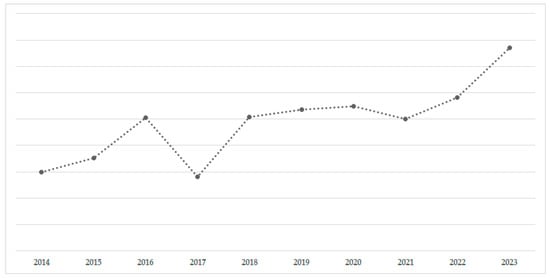
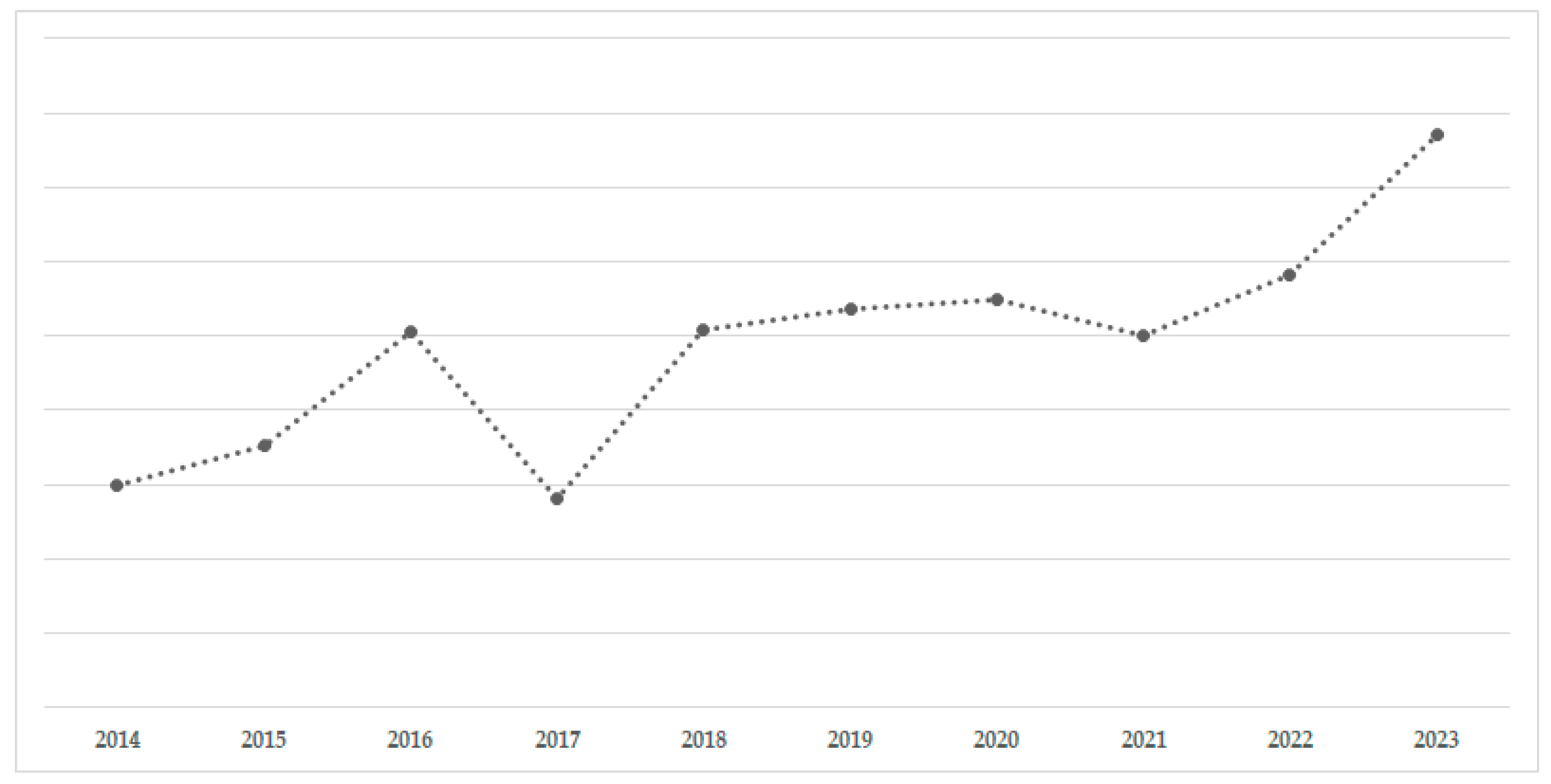
Using Equation (4), the decision matrix was normalized, and the resulting normalized matrix is presented in Appendix A. Subsequently, the weighted decision matrix was developed using Equation (5), as reported in Appendix B. Following this step, the positive and negative ideal solutions were determined and are presented in Appendix C. The distances to the positive ideal solution and the negative ideal solution were calculated using Equations (6) and (7), respectively. Finally, the overall performance scores were computed using Equation (8), and Türkiye’s SDG 7 performance rankings on a year-by-year basis are presented in Table 4 and illustrated graphically in Figure 1.
Table 4.
The distinction measures.
Figure 1.
SDG 7-based performance trend of Türkiye for the study period (2014–2023).
Aligned with the United Nations priorities set for 2030, access to affordable, reliable, sustainable, and modern energy has emerged as a key development issue. In Türkiye, the persistent high dependence on low-cost imported fossil fuels in 2014 brought renewed attention to renewable energy strategies and accelerated efforts toward achieving SDG 7 in the subsequent years. In this context, the figure analyzed below illustrates the period covering the years 2014–2023.
4.3. Policy Developments and Their Contribution to SDG 7 Performance
In Türkiye, the years 2014 and 2015 stand out as a time when efficiency initiatives gained traction and national strategies and action documents started to take shape. At the same time that awareness of renewable energy was growing, there were also some minor shifts in consumer behavior. Public–private partnership procedures grew more transparent during this time, although investment timelines were still unclear [53]. Incentive and licensing procedures quickened in 2016 as the Renewable Energy Resource Areas (YEKA) framework and domestic production requirements became more apparent [53]. Additionally, the Trans Anatolian Natural Gas Pipeline/Trans Adriatic Pipeline (TANAP/TAP) agenda and development have started the shift to political procedures, emphasizing supply security. Pipeline projects have been reinforced as a result, and the public sector has taken on more productive roles in capacity planning. This year has seen the institutionalization of the climate regime and an improvement in the perception of financial access. As a result, advancements were made in the development of domestic components and project efficiency, all of which contributed to a discernible improvement in performance in 2016.
In the following year (2017), discussions about transitions in support mechanisms intensified, and predictability weakened due to exchange rate shocks and rising financing costs, leading to delays in investments. The financial viability of green investments has been undermined by macroeconomic uncertainty and currency volatility, which has led to tighter financial conditions and higher risks in technological supply chains. Due to security worries and regulatory uncertainties, geopolitical tensions have increased the perception of supply risk and decreased investment appetite [53]. Türkiye’s SDG 7 performance fell precipitously in 2017 as a result of all these changes (see Figure 1). Although the YEKA framework was designed to accelerate renewable energy investments and strengthen domestic production capabilities, its implementation coincided with a period of significant macroeconomic instability. Exchange rate volatility and rising financing costs increased investment risks and limited the effectiveness of policy incentives, thereby weakening the expected positive impact of the policy shift.
As a result of the YEKA bids and localization requirements, tangible actions were conducted in 2018, and changes in connection/permit procedures were governed by legislation. Following the currency crisis, there was a sharp increase in the number of renewable and efficient projects due to the desire to cut imports. Savings behavior has started to be strengthened by large-scale wind and solar projects, supply security, domestic production-focused strategies, and heightened knowledge of energy billing [53]. In addition to making investments more feasible, the commissioning of TANAP has improved gas security and increased interest in unlicensed and corporate Electricity Purchase Agreements (PPAs). Additionally, efficiency loans in industry have started to gain traction [54]. Türkiye’s SDG 7 performance significantly improved as a result of the policy changes and strategic actions put in place in 2018, and the country began a swift recovery.
The Renewable Energy Support Mechanism (YEKDEM) and the maturity of unlicensed rules were both visible in 2019. As technological costs decreased, capacity grew and efficiency finance improved [55]. Applications for energy cooperatives and production distribution have increased as a result of the achievement of a balanced portfolio and the clarification of goals for lowering reliance on imports. The network’s digitalization and metering capability have improved, and more sustainable funding tools are being used. Projects have started to be completed faster as a result of pressure for alignment brought on by the EU Green Deal preparations and a rise in the share of renewable energy in installed capacity expansion.
The global pandemic caused demand to decline and contract in 2020, even if government funding was extended and laws pertaining to vital infrastructure were flexible. On the other hand, there was a relative increase in the proportion of renewable energy in the electrical mix. The industrial downturn decreased energy intensity during this time, despite a notable increase in residential demand [53]. The trend toward small-scale investments in rooftop solar power and efficiency-focused systems accelerated as a result of the decline in regional demand, which started to alter the import mix.
Uncertainty was brought about in 2021 by changes to the Renewable Energy Support Mechanism (YEKDEM) and the transition regulations. Higher energy intensity from increased coal and gas use caused investment schedules to fluctuate in tandem with changes in incentive schemes. Price increases inevitably changed customer behavior and made it harder to access efficient investments. Limitations and delays were caused by grid capacity and connectivity issues. Hydropower production decreased due to the year’s drought, and climate anomalies posed serious threats [54]. The viability of the project was jeopardized by currency volatility and an increase in the Weighted Average Cost of Capital (WACC). Despite improved performance between 2018 and 2020, the combination of these developments caused Türkiye’s SDG 7 performance to drastically decline in 2021; policy uncertainties, increased fossil fuel use, investment and grid constraints, and the simultaneous impact of financial and climate risks significantly weakened performance.
In 2022, EU harmonization efforts accelerated and the foundation for storage, flexibility, and unlicensed production was reinforced. In addition to the notable increase in corporate PPAs and rooftop solar power, renewable energy became more competitive. The Carbon Border Adjustment Mechanism (CBAM) was created to help the European Union (EU) reduce emissions from imported goods and achieve its target of reducing emissions by 55 percent by 2030 [53]. The pressure from the CBAM/Green Deal has, in this sense, clarified decarbonization roadmaps. The supply chain is becoming more efficient thanks to corporate environmental pledges. Additionally, support has been given by the digitization process and regulatory framework developed in storage and resilience solutions. Furthermore, energy security has reached a critical point due to the Russia–Ukraine conflict, and the ensuing high gas prices have increased demand for domestic resources [55].
Energy storage and investment laws will have developed by the last year of the study period, or, to put it another way, Türkiye’s 100th year (2023). During this time, record numbers of renewable energy installations have been made possible by improvements in connection rules, which have also resulted in new levels of production–distribution and efficiency investments. Furthermore, the drive for self-production and savings has grown, and investment certainty has expedited the transition to net-zero and green industrial transformation [53]. As crucial mineral/clean energy supply and financing channels have grown within the G7/G20, climate risk management has gained prominence, which has raised expectations for EU compliance and the accomplishment of global commitments. While Türkiye’s SDG 7 performance improved gradually in 2022 due to the strengthening of the policy framework, the acceleration of EU harmonization steps, and increased competitiveness in renewable energy markets, the performance increase became more noticeable and a significant leap occurred in 2023 due to the maturation of legislation, increased predictability in connection and investment processes, the successful deployment of energy storage and resilience solutions, and the acceleration of the shift towards domestic and renewable resources due to geopolitical risks.
Based on the findings, more concrete policy measures can be proposed, including the expansion of grid-scale energy storage systems to enhance flexibility and balance supply–demand fluctuations, the implementation of long-term and predictable renewable energy incentive schemes to reduce investor uncertainty, and the enhancement of grid infrastructure to support decentralized and distributed renewable energy production. In addition, strengthening grid digitalization and smart grid applications can improve system efficiency and integration capacity for variable renewable energy sources. Improving regulatory clarity and ensuring consistency in policy frameworks are also critical to sustaining investor confidence and long-term performance improvements. Furthermore, facilitating access to green financing mechanisms and supporting public–private partnerships can accelerate clean energy investments. Finally, targeted policies aimed at improving energy efficiency, particularly in industry and residential sectors, can further reinforce progress toward SDG 7 objectives.
To provide a more analytically grounded interpretation of the observed performance fluctuations, the results can be further contextualized using macroeconomic and policy-related evidence. In particular, periods of declining performance, such as 2017 and 2021, coincide with well-documented episodes of exchange rate volatility, increased financing costs, and heightened economic uncertainty in Türkiye. These macroeconomic conditions are known to disproportionately affect capital-intensive sectors such as energy, where investment decisions are highly sensitive to cost of capital and long-term policy stability. For instance, sharp currency depreciations increase the cost of imported energy technologies and infrastructure components, while elevated interest rates and risk premiums constrain access to financing for renewable energy projects. In parallel, policy transitions—such as the introduction and scaling of the YEKA framework—occurred within these economically turbulent periods, which may have limited their short-term effectiveness despite their long-term strategic potential. From an empirical perspective, these interpretations are consistent with observed slowdowns in energy investment trends and renewable capacity expansion reported in national and international energy statistics during the same periods. Therefore, while the methodological framework employed in this study does not allow for formal causal inference, the alignment between performance trends and macroeconomic-policy dynamics provides a plausible and evidence-informed explanation of the observed variations. These findings highlight the critical role of macroeconomic stability and policy consistency in sustaining progress toward SDG 7 objectives, particularly in developing countries with high energy import dependency.
While the analysis provides a structured evaluation of energy system performance within the scope of SDG 7, it does not fully capture broader sustainability dimensions such as carbon emissions, energy affordability, and distributional equity. These aspects are critical for a more comprehensive understanding of sustainability, as improvements in energy access or efficiency may involve trade-offs with environmental and social outcomes. For instance, the expansion of certain energy sources may enhance access while simultaneously raising concerns related to emissions or cost burdens across different socioeconomic groups. Therefore, the findings should be interpreted within the boundaries of SDG 7 indicators, and future research may adopt a more integrated framework that explicitly incorporates environmental and social dimensions of sustainability.
4.4. Sensitivity Analysis of SDG 7 Energy Policy Performance Rankings
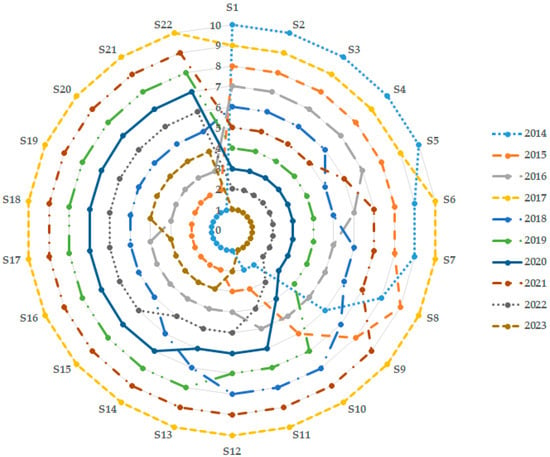
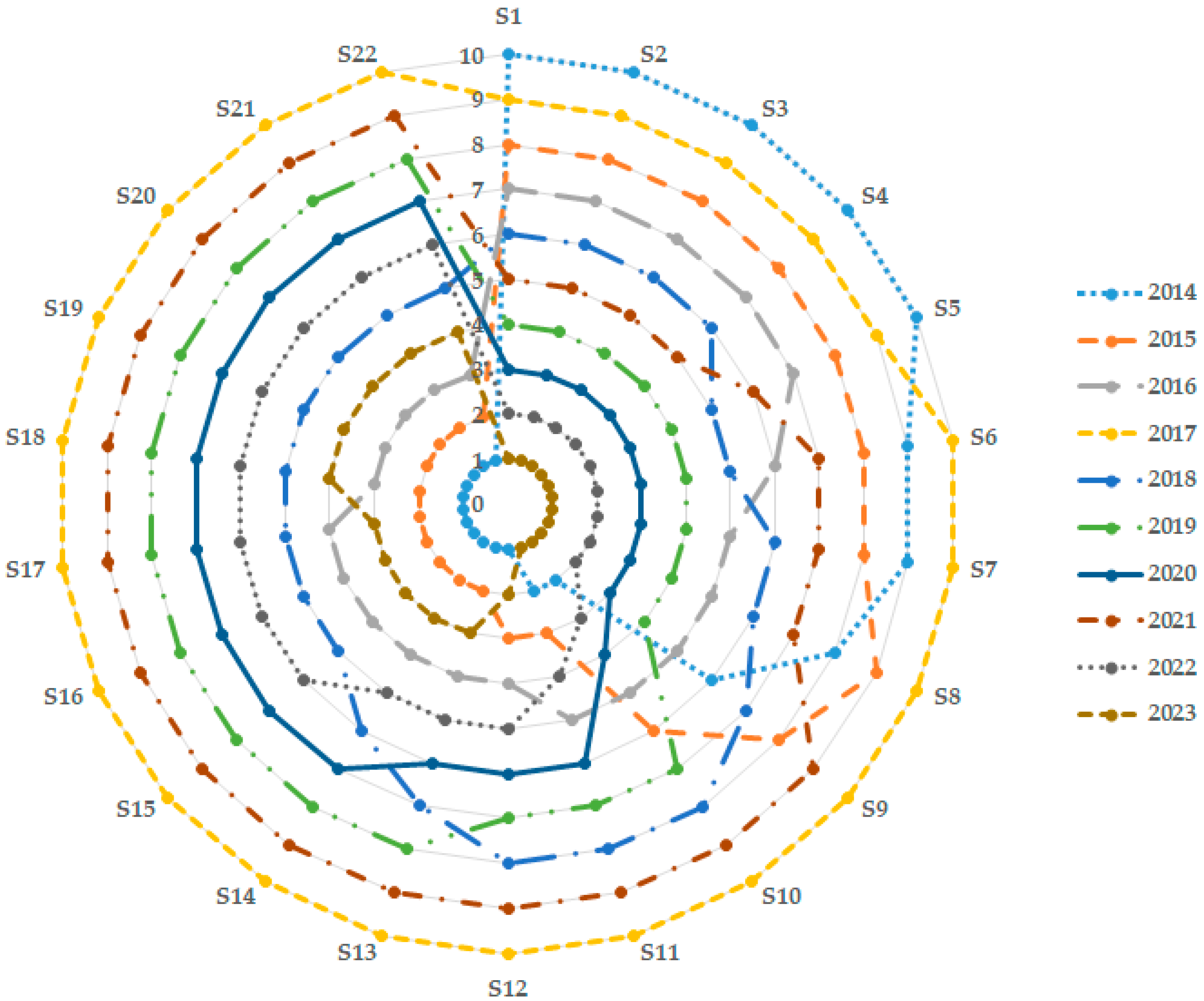
The sensitivity scenarios were generated by systematically varying the relative importance of criteria while preserving the normalization condition (i.e., the sum of weights equals one). The variations were designed to reflect plausible shifts in policy priorities, ensuring that the robustness of the ranking results could be evaluated under different weighting structures. To examine the robustness of the obtained ranking results, a sensitivity analysis was conducted by generating multiple scenarios (S1–S22) in which the relative importance of criteria varies. The procedure was implemented step by step following the sensitivity analysis approach proposed by Yazdani et al. [56]. The ranking positions of each year under these scenarios are illustrated in Figure 2 through a radar chart. This visualization allows the stability of the SDG 7 performance rankings to be evaluated across different weighting conditions.
Figure 2.
A radar chart of SDG 7 energy policy performance rankings.
The results indicate that 2023 consistently achieves the best performance across most scenarios, maintaining the first rank in the majority of the scenarios and never falling below the fourth position. This finding demonstrates that the leading position of 2023 is highly robust and remains stable even when the relative importance of evaluation criteria changes. The limited variation in its ranking suggests that Türkiye’s energy policy performance in 2023 performs well across the criteria that are most influential in the decision-making framework. In contrast, 2022 also shows a relatively stable ranking pattern, generally remaining within the second to sixth positions across the scenarios. This indicates that the year consistently performs above average in the evaluation, although it does not surpass the overall performance level observed in 2023. The radar chart further shows that 2020 and 2019 maintain mid-level ranking stability, generally appearing between the third and eighth positions depending on the scenario considered. These years demonstrate moderate sensitivity to changes in criterion importance, suggesting that their relative performance is influenced by the weighting structure of the indicators.
Another notable observation concerns 2021, whose ranking fluctuates between the fifth and ninth positions across the scenarios. The wider variation in its ranking indicates a relatively higher sensitivity to changes in criterion weights. This suggests that the performance of 2021 is strongly influenced by specific indicators and therefore may shift more significantly under different evaluation priorities. On the other hand, 2014 and 2015 generally occupy the lower end of the ranking spectrum, particularly in scenarios where criteria associated with renewable energy development and energy transition receive greater importance. Their positions remain largely within the lower ranks across most scenarios, indicating comparatively weaker alignment with SDG 7 objectives during the early years of the analysis period. Although 2017 exhibits very strong ranking positions in several scenarios, its performance becomes more variable when the importance of criteria changes. This variation indicates that the relative performance of 2017 depends more strongly on the weighting structure compared with the consistently strong performance observed in 2023.
Overall, the sensitivity analysis confirms that the general ranking structure obtained from the SWARA–TOPSIS framework is relatively stable, with only moderate variations across different scenarios. Most importantly, the top position of 2023 remains largely unaffected by changes in criterion importance, demonstrating the robustness of the main findings. These results provide additional support for the reliability of the proposed multi-criteria evaluation framework in assessing Türkiye’s progress toward achieving SDG 7 objectives.
4.5. Hypotheses’ Evaluation
To evaluate the thematic and methodological contributions of the study, the proposed hypotheses were assessed in light of the obtained results.
H1:
Türkiye’s energy policies contribute to an increased level of alignment with SDG 7.
The results support H1 by indicating that Türkiye’s energy policies have contributed to an improved alignment with SDG 7 over the study period. As shown in Table 4, the closeness coefficient (C*) exhibits a general upward trend, particularly after 2017, with a notable improvement from 0.2804 in 2017 to 0.7708 in 2023. This steady increase suggests that policy measures implemented to promote renewable energy, energy efficiency, and energy access have positively influenced Türkiye’s SDG 7 performance, leading to progressively higher rankings in recent years.
H2:
Multi-Criteria Decision-Making (MCDM) methods provide a reliable quantitative assessment of Türkiye’s alignment with SDG 7.
The findings support H2 by demonstrating that the applied MCDM approach provides a consistent and reliable quantitative assessment of Türkiye’s alignment with SDG 7. The discrimination measures presented in Table 4 reveal a clear differentiation across years, reflected in distinct C* values and rankings, indicating the method’s ability to capture variations in performance over time. Moreover, the coherent progression of rankings in line with observed policy developments reinforces the robustness of the MCDM framework in evaluating complex, multidimensional sustainability targets such as SDG 7.
H3:
Criterion (Renewable energy share in the total final energy consumption) is the most critical component in the performance of SDG 7.
The results strongly support H3, as the SWARA-based weighting procedure identifies Renewable energy share in the total final energy consumption (ReEnCo) as the most influential criterion in the assessment of SDG 7 performance. As reported in Table 2, ReEnCo received the highest weight (wj = 0.246), exceeding all other criteria, which highlights its dominant role in determining overall performance. This outcome underscores the central importance of renewable energy penetration in achieving SDG 7 targets and validates the prioritization of ReEnCo within the multi-criteria evaluation framework.
H4:
Türkiye’s SDG 7 performance between 2014 and 2023 has experienced fluctuations, with periods of increase and decrease, and has shown an overall positive trend.
The results confirm H4 by revealing noticeable fluctuations in Türkiye’s SDG 7 performance over the 2014–2023 period, alongside an overall positive trend. As shown in Table 4, the closeness coefficient (C*) declines in certain years, such as 2017 and 2021, indicating temporary setbacks, while substantial improvements are observed in subsequent periods. Notably, the sharp increase in C* from 2018 onward and the highest score achieved in 2023 (C* = 0.7708) demonstrate a sustained improvement in recent years, supporting the presence of both short-term variability and long-term progress in SDG 7 performance.
5. Conclusions
This study focuses on analyzing Türkiye’s SDG 7 performance over the period from 2014 to 2023. Within this scope, the analysis examines performance trends in terms of access to affordable and clean energy, identifies years characterized by sharp declines and improvements, and explores the policy-related as well as domestic and global factors that may have contributed to these fluctuations. Methodologically, the study employs a SWARA-based TOPSIS approach, which is among the multi-criteria decision-making methods widely used in the literature for performance comparison. In the first stage, SDG 7-specific criteria are weighted using the SWARA method to ensure more robust and reliable results. In the subsequent stage, these weights are integrated into the TOPSIS method to comparatively evaluate Türkiye’s SDG 7 performance throughout the study period.
Türkiye’s accomplishment of its SDG 7 goals is largely dependent on its energy policies. The multi-criteria analysis’s fluctuation pattern reveals that while performance increases are linked to lower renewable energy costs, robust incentive mechanisms, the EU harmonization process, and pressures on energy supply security, performance declines are primarily linked to grid constraints, exchange rate and financing shocks, and hydrological regressions. In this regard, a structural improvement in SDG 7 performance was brought about by the development of storage and resilience solutions, unlicensed production laws during the 2022–2023 era, and EU compliance requirements. For lasting and sustainable recovery, increasing grid resilience, creating predictable and stable incentive schedules, and effectively managing financing costs stand out as key policy priorities that strengthen access to affordable, clean, and reliable energy.
Although multi-criteria decision-making (MCDM) approaches are widely applied in the literature, this study offers both methodological and empirical contributions to international comparative energy policy analysis and the literature on developing countries by demonstrating that the proposed SWARA–TOPSIS-based evaluation framework, developed within the context of SDG 7 indicators, is applicable to different country settings. Nevertheless, the study has been conducted under certain limitations. First, the analysis is confined exclusively to SDG 7-related energy indicators for Türkiye and thus does not incorporate additional variables that may be indirectly related to energy performance. Future research may directly include key indicators influencing energy use and access to clean energy, such as GDP. Moreover, criterion weights are derived using the subjective SWARA method, which is simpler than the Analytic Hierarchy Process (AHP); future studies may alternatively employ AHP or adopt a fuzzy framework by applying fuzzy AHP to account for uncertainty. In addition, the comparative evaluation is conducted solely using the TOPSIS method; subsequent research could extend the analysis by incorporating multiple MCDM techniques and comparing their relative performance.
The findings further indicate that the proposed framework can be applied to other developing countries with high energy import dependency, as it provides a structured tool for evaluating trade-offs between energy access, efficiency, and renewable energy development. However, its applicability may be constrained by country-specific factors such as differences in data availability, policy frameworks, and energy market structures. In addition, the reliance on expert judgment in the weighting process may limit direct cross-country comparability. Therefore, while the framework is transferable, its implementation requires contextual adaptation. This study does not aim to compare alternative MCDM methods; rather, it focuses on providing a transparent and interpretable framework for temporal performance evaluation. The robustness of the proposed SWARA–TOPSIS approach is supported through a comprehensive sensitivity analysis. Future studies may extend this framework by incorporating alternative MCDM techniques such as AHP, VIKOR, or PROMETHEE for comparative validation.
In addition, while the selected indicators are directly aligned with SDG 7 targets, additional dimensions such as carbon emissions and energy affordability may further enrich the analysis. Future studies may incorporate these broader indicators to provide a more comprehensive evaluation of energy sustainability. Moreover, the study relies on secondary data obtained from international sources, which may involve inconsistencies in measurement and reporting standards. The use of aggregated indicators limits the ability to capture sector-specific dynamics and micro-level variations. Future research may overcome these limitations by utilizing more granular datasets and advanced analytical approaches. In particular, the exclusion of environmental and social dimensions such as emissions, affordability, and equity limits the comprehensiveness of the sustainability assessment. In addition, policymakers should consider potential trade-offs between energy expansion, environmental sustainability, and social equity when designing long-term energy strategies.
Furthermore, while natural gas is a fossil fuel, it is considered a transitional energy source that reflects improved access to modern energy services, particularly in developing contexts. In addition, although indicators such as carbon emissions and energy affordability are important, they are beyond the direct scope of SDG 7 and may be incorporated in future studies to provide a more comprehensive sustainability assessment.
While the selected indicators are based on the official SDG 7 framework to ensure consistency and comparability, they do not fully capture broader dimensions such as energy affordability, energy justice, and quality of access, mainly due to data availability constraints. In addition, the inclusion of international financial flows reflects the role of external financing in energy transitions rather than purely domestic policy performance. Furthermore, although the data are obtained from internationally recognized sources, potential limitations related to measurement consistency, reporting standards, and temporal comparability should be considered when interpreting the results.
It is important to emphasize that the SWARA–TOPSIS framework employed in this study provides a relative performance evaluation based on the aggregation of selected indicators and does not constitute causal evidence of policy effectiveness. The results are sensitive to methodological choices, including indicator selection, normalization procedures, and weighting structures. While the sensitivity analysis conducted in this study evaluates the robustness of rankings under alternative weighting scenarios, other methodological variations—such as different normalization techniques or distance measures—may influence the results. Therefore, the findings should be interpreted as indicative of performance trends rather than definitive measures of policy success.
Author Contributions
Conceptualization, formal analysis, investigation, resources, writing—original draft preparation and writing—review and editing, N.T.O., D.D., M.O. and M.B.C.; data curation, N.T.O.; methodology, N.T.O. and M.O.; software and visualization, M.O. All authors have read and agreed to the published version of the manuscript.
Funding
This research received no external funding.
Institutional Review Board Statement
Not applicable.
Informed Consent Statement
Not applicable.
Data Availability Statement
Data is contained within the article.
Conflicts of Interest
The authors declare no conflicts of interest.
Appendix A
Table A1.
The normalized decision matrix.
Appendix B
Table A2.
The weighted decision matrix.
Appendix C
Table A3.
The distances from positive and negative ideal solutions.
References
- Peşkircioğlu, N. 2030 sürdürülebilir kalkınma hedefleri: Küresel verimlilik hareketine doğru. Anahtar Derg. 2016, 28, 4–9. [Google Scholar]
- Brundtland, G.H. Report of the World Commission on Environment and Development: Our Common Future; United Nations: New York, NY, USA, 1987. [Google Scholar]
- Uzun, Y.U. Yenilenebilir enerji–sürdürülebilir kalkınma: Rusya örneği. In Ekonomik Büyüme ve Verimlilik Politikaları; Çakır, M., Ed.; Eğitim Yayınevi: Konya, Türkiye, 2023; pp. 45–67. [Google Scholar]
- Global Compact Network Türkiye. Available online: https://www.globalcompactturkiye.org/ (accessed on 30 December 2025).
- Teneke Oduncu, B. Sustainable energy policies: From global goals to local practices—An analysis of the TR33 region. Int. J. Soc. Political Financ. Res. 2025, 5, 94–117. [Google Scholar]
- Villavicencio Calzadilla, P.; Mauger, R. The UN’s new sustainable development agenda and renewable energy: The challenge to reach SDG 7 while achieving energy justice. J. Energy Nat. Resour. Law 2018, 36, 233–254. [Google Scholar] [CrossRef] [Scilit]
- Sachs, J.D.; Lafortune, G.; Fuller, G. Sustainable Development Report 2024; Dublin University Press: Dublin, Ireland, 2024. [Google Scholar]
- Nguyen, P.H.; Tsai, J.F.; Hu, Y.C.; Kumar, G.V.A. A hybrid method of MCDM for evaluating financial performance of Vietnamese commercial banks under COVID-19 impacts. In Shifting Economic, Financial and Banking Paradigm; Abdul Karim, S.A., Ed.; Springer: Berlin/Heidelberg, Germany, 2022; Volume 382, pp. 23–45. [Google Scholar]
- Maredza, A.; Wanke, P.; Antunes, J.; Pimenta, R.; Tan, Y. Social welfare and bank performance: Evidence from a stochastic neural hybrid MCDM approach. J. Econ. Stud. 2022, 49, 1137–1158. [Google Scholar] [CrossRef] [Scilit]
- Alsanousi, A.T.; Alqahtani, A.Y.; Makki, A.A.; Baghdadi, M.A. A hybrid MCDM approach using the BWM and the TOPSIS for a financial performance-based evaluation of Saudi stocks. Information 2024, 15, 258. [Google Scholar] [CrossRef] [Scilit]
- Hosseinzadeh, S.; Zomorodian, G.R.; Chirani, E. The impact of macroeconomic variables on the money and capital markets using a multilevel model with a future studies and multi-criteria decision-making approach. Int. J. Financ. Manag. Account. 2024, 11, 53–70. [Google Scholar]
- Karahan, M.; Çetintaş, F.; Karahan, M.S. Turkey and some EU countries’ economic performance analysis with multi-criteria decision-making methods: PROMETHEE GAIA application. In Digital Conversion on the Way to Industry 4.0; Durakbasa, N.M., Gençyılmaz, M.G., Eds.; Springer: Berlin/Heidelberg, Germany, 2021; pp. 584–597. [Google Scholar]
- Yapa, K.; Durmuş, M.; Tayyar, N.; Akbulut, İ. Comparison of the European Union countries and Turkey’s macroeconomic indicators with the Best–Worst method. In Handbook of Research on Social and Economic Development in the European Union; Bayar, Y., Ed.; IGI Global: Hershey, PA, USA, 2020; pp. 204–219. [Google Scholar]
- Tekman, N. Foreign trade-based macroeconomic performance analysis of E7 countries. In Decision Making Approaches from q Macroeconomic Perspective; Ordu, M., Ed.; BIDGE Publications: Konya, Türkiye, 2024; pp. 4–19. [Google Scholar]
- Baydaş, M.; Yılmaz, M.; Jović, Ž.; Stević, Ž.; Özuyar, S.E.G.; Özçil, A. A comprehensive MCDM assessment for economic data: Success analysis of maximum normalization, CODAS, and fuzzy approaches. Financ. Innov. 2024, 10, 105. [Google Scholar] [CrossRef] [Scilit]
- Oussama, Z.; Ahmed, H.; Nabil, C. Comparison of macroeconomic performance of MENA countries with the TOPSIS method. Oper. Res. Forum 2024, 5, 21. [Google Scholar] [CrossRef] [Scilit]
- Ulutaş, A.; Topa, A.; Karabasevic, D.; Zavadskas, E.K.; Demirbaş, M.; Üre, S. A novel grey MCDM model assessing macroeconomic performance of G7 countries. J. Grey Syst. 2025, 37, 61–72. [Google Scholar]
- Tekman, N.; Ordu, M. The rise and fall of regions: A hybrid multi-criteria analysis of Türkiye’s regional economies’ sustainable performance. Sustainability 2025, 17, 5222. [Google Scholar] [CrossRef] [Scilit]
- Sousa, M.; Almeida, M.F.; Calili, R. Multiple criteria decision making for the achievement of the UN Sustainable Development Goals: A systematic literature review and a research agenda. Sustainability 2021, 13, 4129. [Google Scholar] [CrossRef] [Scilit]
- Pérez-Gladish, B.; Ferreira, F.A.F.; Zopounidis, C. MCDM/A studies for economic development, social cohesion and environmental sustainability: Introduction. Int. J. Sustain. Dev. World Ecol. 2021, 28, 1–3. [Google Scholar] [CrossRef] [Scilit]
- Aljaghoub, H.; Abumadi, F.; AlMallahi, M.N.; Obaideen, K.; Alami, A.H. Solar PV cleaning techniques contribute to Sustainable Development Goals (SDGs) using multi-criteria decision-making (MCDM): Assessment and review. Int. J. Thermofluids 2022, 16, 100233. [Google Scholar] [CrossRef] [Scilit]
- Tekman, N. A macroeconomic performance assessment regarding industry and employment for the Northeastern Anatolia Development Region. In Decision Making Approaches from a Macroeconomic Perspective; Ordu, M., Ed.; BIDGE Publications: Konya, Türkiye, 2024; pp. 20–36. [Google Scholar]
- Hoang, P.D.; Nguyen, L.T.; Tran, B.Q.; Ta, D.T. Corporate governance for sustainable development in Vietnam: Criteria for SOEs based on MCDM approach. PLoS ONE 2024, 19, e0302306. [Google Scholar] [CrossRef] [Scilit] [PubMed]
- Özdağoğlu, A.; Acar, E.; Güner, M.; Çetmeli Bakadur, A. Applications of MCDM methods for the assessment of sustainable development: A case study of fashion textile group. Manag. Environ. Qual. 2024, 35, 1028–1047. [Google Scholar] [CrossRef] [Scilit]
- Burhan, H.A. Sustainability in industry, innovation and infrastructure: A MCDM-based performance evaluation of the European Union and Türkiye for Sustainable Development Goal 9 (SDG 9). Veriml. Derg. 2024, 21–38. [Google Scholar] [CrossRef] [Scilit]
- Dwivedi, P.P.; Sharma, D.K. Performance measures of sustainable development goals using SWI MCDM methods: A case of the Indian states. Int. Trans. Oper. Res. 2026, 33, 2466–2498. [Google Scholar] [CrossRef] [Scilit]
- Tekman Ordu, N.; Ordu, M. Sustainable development performances assessment in upper-middle income developing countries: A novel hybrid evaluation system in fuzzy and non-fuzzy environments. Systems 2026, 14, 88. [Google Scholar] [CrossRef] [Scilit]
- Kabak, M.; Dağdeviren, M. Prioritization of renewable energy sources for Turkey by using a hybrid MCDM methodology. Energy Convers. Manag. 2014, 79, 25–33. [Google Scholar] [CrossRef] [Scilit]
- Kumar, A.; Sah, B.; Singh, A.R.; Deng, Y.; He, X.; Kumar, P.; Bansal, R.C. A review of multi-criteria decision making (MCDM) towards sustainable renewable energy development. Renew. Sustain. Energy Rev. 2017, 69, 596–609. [Google Scholar] [CrossRef] [Scilit]
- Narwane, V.S.; Yadav, V.S.; Raut, R.D.; Narkhede, B.E.; Gardas, B.B. Sustainable development challenges of the biofuel industry in India based on an integrated MCDM approach. Renew. Energy 2021, 164, 298–309. [Google Scholar] [CrossRef] [Scilit]
- Li, T.; Li, A.; Song, Y. Development and utilization of renewable energy based on carbon emission reduction—Evaluation of multiple MCDM methods. Sustainability 2021, 13, 9822. [Google Scholar] [CrossRef] [Scilit]
- Ramezanzade, M.; Karimi, H.; Almutairi, K.; Xuan, H.A.; Saebi, J.; Mostafaeipour, A.; Techato, K. Implementing MCDM techniques for ranking renewable energy projects under fuzzy environment: A case study. Sustainability 2021, 13, 12858. [Google Scholar] [CrossRef] [Scilit]
- Ighravwe, D.E.; Babatunde, M.O.; Mosetlhe, T.C.; Aikhuele, D.; Akinyele, D. A MCDM-based framework for the selection of renewable energy system simulation tool for teaching and learning at university level. Environ. Dev. Sustain. 2022, 24, 13035–13056. [Google Scholar] [CrossRef] [Scilit]
- Nasrollahi, S.; Kazemi, A.; Jahangir, M.H.; Aryaee, S. Selecting suitable wave energy technology for sustainable development: An MCDM approach. Renew. Energy 2023, 202, 756–772. [Google Scholar] [CrossRef] [Scilit]
- Gribiss, H.; Aghelinejad, M.M.; Yalaoui, F. Configuration selection for renewable energy community using MCDM methods. Energies 2023, 16, 2632. [Google Scholar] [CrossRef] [Scilit]
- Dwivedi, P.P.; Sharma, D.K. Quantitative assessment of photovoltaic thermal collectors to enhance energy efficiency in the power system by SWEI MCDM method. Renew. Sustain. Energy Rev. 2025, 217, 115791. [Google Scholar] [CrossRef] [Scilit]
- Wyrwa, A.; Suwała, W.; Pluta, M.; Raczyński, M.; Zyśk, J.; Tokarski, S. A new approach for coupling the short- and long-term planning models to design a pathway to carbon neutrality in a coal-based power system. Energy 2022, 239, 122438. [Google Scholar] [CrossRef] [Scilit]
- Copp, D.A.; Nguyen, T.A.; Byrne, R.H.; Chalamala, B.R. Optimal sizing of distributed energy resources for planning 100% renewable electric power systems. Energy 2022, 239, 122436. [Google Scholar] [CrossRef] [Scilit]
- Ibrahim, I.A. Energy transition and Sustainable Development Goal 7: A legal analysis in the context of the Arab world. J. World Energy Law Bus. 2023, 16, 77–90. [Google Scholar] [CrossRef] [Scilit]
- Garan, Ö.; Güneş, İ. Reframing SDG 11 through the triple helix model: Rethinking urban sustainability and institutional synergy. J. Econ. Policy Res. 2025, 12, 528–549. [Google Scholar] [CrossRef] [Scilit]
- Di Chiacchio, L.; Al-Khateeb, H.; Butt, U.; Yussof, S. AI legitimacy in energy: A model to improve corporate narratives on sustainability and responsibility. Technol. Forecast. Soc. Change 2026, 222, 124378. [Google Scholar] [CrossRef] [Scilit]
- Bollino, C.A.; Galeotti, M. Multivariate convergence toward the SDGs 2, 6 and 7: An empirical analysis of World and MENA Region Countries. Energy J. 2024, 45, 43–62. [Google Scholar] [CrossRef] [Scilit]
- Cruz, S.A. SDG 17 and global partnership for sustainable development: Unraveling the rhetoric of collaboration. Front. Environ. Sci. 2023, 11, 1155828. [Google Scholar] [CrossRef] [Scilit]
- Stanberry, J.; Bragan Balda, J. A conceptual review of Sustainable Development Goal 17: Picturing politics, proximity and progress. J. Trop. Futures 2024, 1, 110–139. [Google Scholar] [CrossRef] [Scilit]
- Koch, F.; Krellenberg, K. How to contextualize SDG 11? Looking at indicators for sustainable urban development in Germany. ISPRS Int. J. Geo-Inf. 2018, 7, 464. [Google Scholar] [CrossRef] [Scilit]
- Prakash, M.; Kamiya, M.; Ndugwa, R.; Cheng, M. Counting the costs: A method for evaluating the cost of achieving SDG 11. Front. Sustain. Cities 2020, 2, 554728. [Google Scholar] [CrossRef] [Scilit]
- Sengupta, U.; Sengupta, U. SDG-11 and smart cities: Contradictions and overlaps between social and environmental justice research agendas. Front. Sociol. 2022, 7, 995603. [Google Scholar] [CrossRef] [Scilit]
- Tracking SDG7: The Energy Progress Report. Available online: https://trackingsdg7.esmap.org/ (accessed on 30 December 2025).
- Keršulienė, V.; Zavadskas, E.K.; Turskis, Z. Selection of rational dispute resolution method by applying new step-wise weight assessment ratio analysis (SWARA). J. Bus. Econ. Manag. 2010, 11, 243–258. [Google Scholar] [CrossRef] [Scilit]
- Chakraborty, S. TOPSIS and modified TOPSIS: A comparative analysis. Decis. Anal. J. 2022, 2, 100021. [Google Scholar] [CrossRef] [Scilit]
- Bulut, M.S.; Ordu, M.; Der, O.; Basar, G. Sustainable thermoplastic material selection for hybrid vehicle battery packs in the automotive industry: A comparative multi-criteria decision-making approach. Polymers 2024, 16, 2768. [Google Scholar] [CrossRef] [Scilit]
- Der, O.; Ordu, M.; Basar, G. Optimization of cutting parameters in manufacturing of polymeric materials for flexible two-phase thermal management systems. Mater. Test. 2024, 66, 1700–1719. [Google Scholar] [CrossRef] [Scilit]
- Republic of Türkiye Ministry of Energy and Natural Resources. Available online: https://enerji.gov.tr/homepage (accessed on 5 January 2026).
- World Business Council for Sustainable Development. Available online: https://www.wbcsd.org/ (accessed on 5 January 2026).
- Republic of Türkiye Ministry of Trade. Available online: https://www.trade.gov.tr/ (accessed on 5 January 2026).
- Yazdani, M.; Chatterjee, P.; Pamucar, D.; Abad, M.D. A risk-based integrated decision-making model for green supplier selection: A case study of a construction company in Spain. Kybernetes 2020, 49, 1229–1252. [Google Scholar] [CrossRef] [Scilit]

Disclaimer/Publisher’s Note: The statements, opinions and data contained in all publications are solely those of the individual author(s) and contributor(s) and not of MDPI and/or the editor(s). MDPI and/or the editor(s) disclaim responsibility for any injury to people or property resulting from any ideas, methods, instructions or products referred to in the content. |
© 2026 by the authors. Licensee MDPI, Basel, Switzerland. This article is an open access article distributed under the terms and conditions of the Creative Commons Attribution (CC BY) license.