


Abstract
Rising temperatures and increasing evaporative demand accelerate soil moisture loss (SML) during the sowing-to-emergence phase of cotton (Gossypium hirsutum L.), constraining crop establishment under water-limited Mediterranean conditions. Conventional tillage (CT) involves intensive tillage operations with higher fuel and energy requirements, whereas strip tillage (ST) limits tillage to the crop row while preserving inter-row residues. This study evaluated ST and CT across two consecutive growing seasons (2024 and 2025) under a wheat–cotton rotation system. A field experiment was conducted using a replicated design (n = 8), in which emergence parameters, SML (0–10 cm), yield, and fuel-derived energy use and CO2 emissions were quantified. SML was significantly lower under ST than CT (43% in 2024 and 52% in 2025; p < 0.001), leading to earlier emergence (0.98–1.17 days) and higher emergence rate index (ERI) values. Cotton yield was slightly higher under CT (3–4%); however, this difference, although statistically significant (p = 0.001), remained limited and consistent across years. In contrast, ST resulted in a 66–69% reduction in operational fuel use, with proportional reductions in energy use and CO2 emissions on an area basis. Yield-scaled indicators, defined as energy use (MJ kg−1) and CO2 emissions (kg CO2 kg−1) per unit yield, further revealed substantially greater resource-use efficiency under ST compared with CT. These findings demonstrate that strip tillage enhances hydrothermal conditions during crop establishment while markedly reducing energy demand and carbon intensity, providing a resource-efficient mechanization strategy for cotton production under increasing climatic stress.
1. Introduction
Climate variability has increasingly affected agricultural production systems by altering temperature regimes, precipitation patterns, and drought frequency, particularly in water-limited environments [1,2]. These changes directly influence crop establishment processes by modifying soil moisture availability and thermal conditions in the surface soil layer. In Mediterranean and semi-arid regions, where high temperatures and limited rainfall frequently coincide during the early growing period, maintaining favorable seedbed conditions becomes critical for crop establishment and subsequent productivity [3,4]. Cotton (Gossypium hirsutum L.), cultivated as a second crop under such conditions, is especially sensitive to soil moisture and temperature dynamics during the sowing-to-emergence phase, where small variations in surface conditions can significantly affect emergence performance and stand uniformity [5,6].
Soil tillage practices play a central role in determining seedbed conditions by influencing soil structure, residue distribution, and surface moisture dynamics. Conventional tillage systems, which typically involve intensive soil tillage and multiple field operations, have been associated with the breakdown of soil aggregates, alterations in soil porosity, and reduced stability of surface soil layers [7,8]. These structural changes can negatively affect water retention and infiltration processes, particularly in the upper soil profile where crop establishment occurs [9]. In addition, repeated tillage operations increase tractor traffic and fuel consumption, thereby linking tillage intensity with higher operational energy demand and associated environmental impacts [10,11]. Under Mediterranean and semi-arid conditions, where soil moisture conservation is critical, such disturbances can accelerate surface moisture loss and reduce the effectiveness of rainfall utilization during the early growth period [12].
In response to the limitations associated with intensive soil tillage, conservation-oriented tillage practices have been developed to reduce soil disruption and retain crop residues on the surface. Among these, strip tillage has emerged as an intermediate approach that combines elements of conventional tillage and no-till systems [13,14,15]. In strip tillage, only a limited portion of the soil surface is tilled in narrow bands corresponding to the planting rows, while the inter-row areas remain covered with crop residues and largely undisturbed [16,17]. This configuration allows for the creation of a suitable seedbed environment within the tilled strips while preserving surface residue cover between rows, thereby moderating soil moisture loss and surface temperature fluctuations [18,19]. As a result, strip tillage is considered a management strategy that balances the need for adequate seedbed preparation with the conservation of soil moisture and surface structure under water-limited conditions.
Recent studies have increasingly examined the performance of strip tillage under varying environmental and management conditions, with particular attention to its effects on soil moisture dynamics, crop establishment, and operational efficiency. Under water-limited environments, residue retention between rows has been shown to reduce evaporation losses and contribute to more stable surface soil moisture conditions during early growth stages [20]. However, the effectiveness of strip tillage is often context-dependent, with yield responses varying according to climatic conditions, soil characteristics, and management practices. A meta-analysis of conservation tillage systems indicated that yield outcomes under reduced soil tillage can differ significantly depending on temperature regimes, precipitation patterns, and operational parameters such as tillage depth and strip width [21]. In addition to agronomic performance, strip tillage has been associated with reduced fuel consumption and improved field efficiency compared to conventional tillage, reflecting its potential to lower operational energy demand [17,22]. Nevertheless, variations in machine configuration and input placement strategies have been reported to influence early-season seedbed conditions and crop establishment, highlighting the importance of system-specific evaluation under defined agro-climatic conditions [23]. Recent studies conducted under Mediterranean and semi-arid conditions have demonstrated that tillage methods can influence soil hydrothermal conditions, crop establishment, and yield performance in cotton-based systems, although responses remain dependent on environmental conditions and management practices [24,25].
Despite the growing body of literature on strip tillage, important knowledge gaps remain regarding its performance under Mediterranean conditions, particularly for cotton cultivated as a second crop during hot and water-limited summer periods. Crop establishment in such systems is strongly influenced by the interaction between soil moisture availability and temperature dynamics in the surface soil layer during the sowing-to-emergence phase [26]. While previous studies have independently examined soil moisture conservation, emergence responses, or yield performance under different tillage systems, limited research has simultaneously quantified soil moisture loss dynamics together with daily temperature conditions during the critical establishment period in Mediterranean cotton production [27]. Furthermore, studies integrating early-season soil moisture dynamics with emergence characteristics, yield response, and fuel-related energy use and associated carbon emissions within a single experimental framework remain scarce. This lack of integrated assessment limits the ability to comprehensively evaluate system-level performance differences between strip tillage and conventional tillage under region-specific climatic constraints.
Therefore, this study evaluated strip tillage in comparison with conventional tillage over two consecutive growing seasons in cotton production under hot, water-limited Mediterranean summer conditions. We hypothesized that strip tillage would reduce soil moisture loss during the sowing-to-emergence phase, promote earlier and more uniform crop emergence, maintain comparable yield levels, and decrease fuel-related energy use and associated CO2 emissions compared to conventional tillage. To test this hypothesis, plant emergence parameters, soil moisture loss dynamics, yield performance, and energy use and carbon emission indicators were quantified under field conditions. Specifically, the study examined emergence dynamics during the early growth stage, post-sowing soil moisture dynamics, yield response and year-to-year variation, and fuel consumption–based energy use and associated carbon emissions, with particular emphasis on yield-scaled energy and carbon efficiency indicators to provide a system-level sustainability assessment. Although economic performance is an important component of system evaluation, it was not explicitly assessed in this study, as the focus was placed on isolating agronomic and environmental responses under controlled field conditions. By integrating crop establishment, soil moisture dynamics, yield performance, and fuel-related energy and emission indicators, this study provides a field-based evaluation of strip and conventional tillage systems and contributes to the assessment of resource-efficient mechanization strategies for cotton production under Mediterranean climatic conditions.
2. Materials and Methods
2.1. Experimental Location and Soil Properties
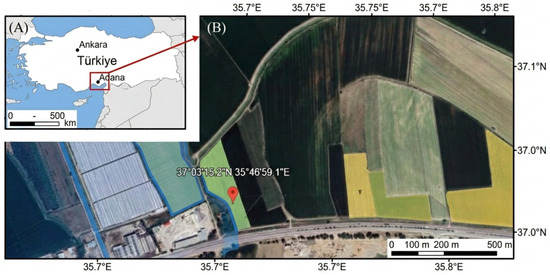
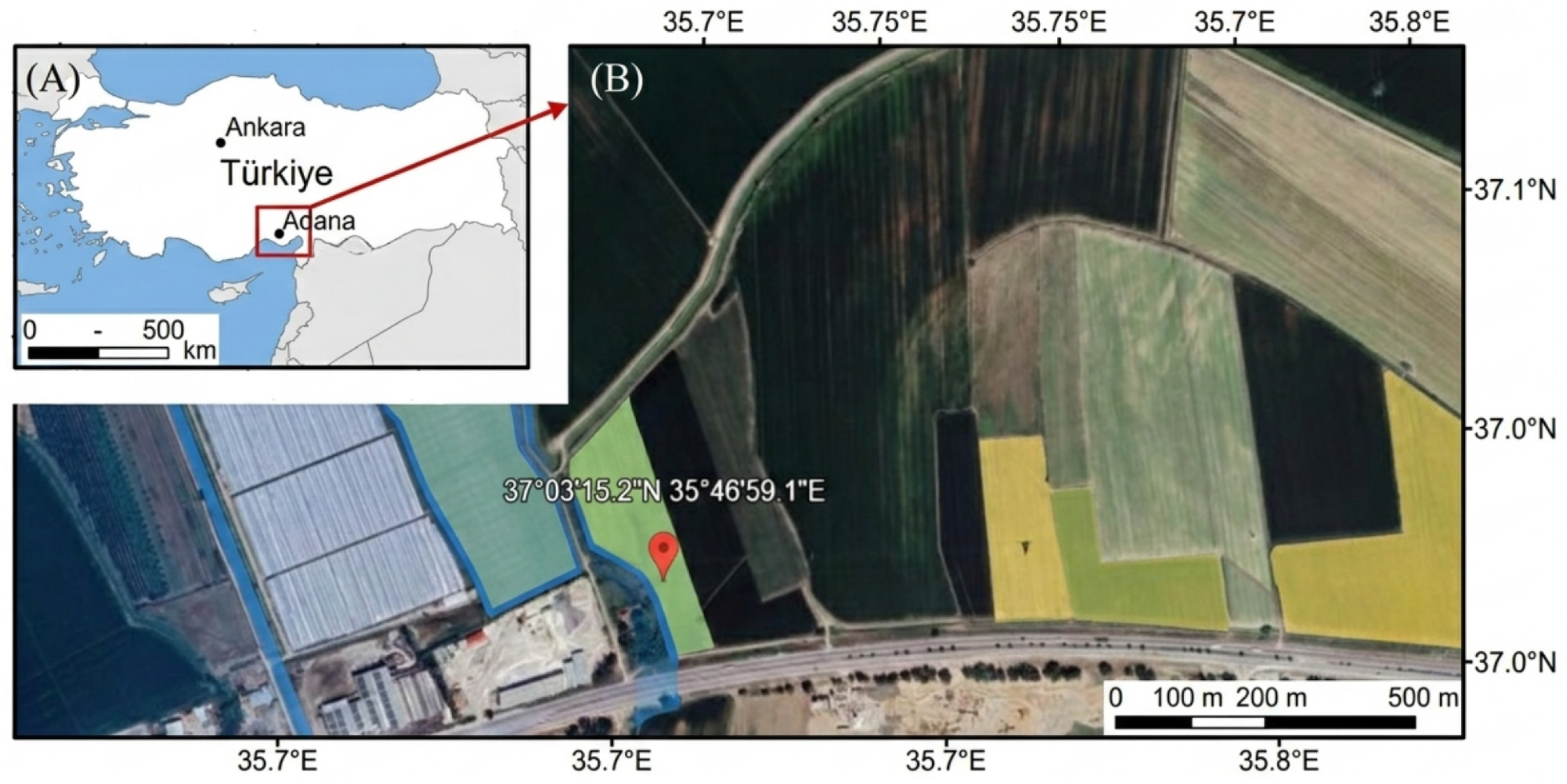
The field experiment was conducted during the 2024 and 2025 growing seasons on the Çukurova Plain in Adana Province, southern Türkiye (37°03′15.2″ N, 35°46′59.1″ E). The region is characterized by a Mediterranean climatic regime and constitutes one of the major agricultural production areas in Türkiye (Figure 1).
Figure 1.
Location of the experimental site. (A) Regional map of Türkiye showing the position of Adana Province. (B) Satellite view of the experimental field in Adana.
Soil samples were collected from the 0–20 cm layer prior to sowing. The soil was classified as clay loam according to the USDA soil texture classification system, consisting of 24.2% sand, 38.45% silt, and 36.4% clay. Bulk density was 1.33 g cm−3, organic matter content was 2.8%, soil pH was 7.23, and electrical conductivity was 1.48 dS m−1.
2.2. Climatic Conditions During the Emergence Period
Daily climatic data for the cotton emergence period (21 June–5 July) were obtained from the official meteorological records of the Turkish State Meteorological Service [28]. The analyzed variables included daily mean air temperature (Tmean), daily maximum temperature (Tmax), daily minimum temperature (Tmin), and total precipitation. Descriptive statistics for the 14-day emergence period in 2024 and 2025 are presented in Table 1.
Table 1.
Descriptive statistics of climatic characteristics during the 14-day sowing-to-emergence period in 2024 and 2025.
Mean air temperature values were 29.81 °C in 2024 and 29.41 °C in 2025. The maximum temperature recorded during the period reached 40.5 °C in 2025, while cumulative precipitation amounted to 2.8 mm in 2024 and 0.0 mm in 2025.
2.3. Experimental Design and Tillage Treatments
The experiment was conducted during the 2024 and 2025 growing seasons under field conditions. Two tillage systems, conventional tillage (CT) and strip tillage (ST), were established in separate field plots each year. Within each treatment plot, eight sampling units were randomly selected to determine emergence parameters, soil moisture loss, and yield to characterize within-plot variability. Tillage system constituted the main factor, and the study was conducted under a wheat–cotton rotation system, where cotton was sown as a second crop following wheat harvest.
Cotton (Gossypium hirsutum L.) was used as the test crop, and the Ceyhan 520 cultivar was selected for both experimental years. The thousand-seed weight of the cultivar was 105 g.
Each tillage treatment was established in plots measuring 250 m × 125 m. In the CT method, wheat residues were incorporated into the soil through a sequence of primary and secondary tillage operations, including stubble chopping, moldboard plowing, two passes with a disc harrow, and final leveling using a float. In the ST method, wheat stubble was retained on the soil surface, and soil tillage was limited to 20 cm-wide tilled strips along the planting rows using a 4-row strip tillage machine. All tillage and planting operations were performed using a Massey Ferguson 5710 M 105 hp tractor (AGCO, Duluth, GA, USA). Details of the machinery used and the number of field passes associated with each tillage system are presented in Table 2.
Table 2.
Field operations and machinery used in conventional (CT) and strip tillage (ST) systems.
Cotton was planted in both tillage systems using a 4-row pneumatic precision seeder configured with 70 cm row spacing, 4 cm in-row spacing, and a seeding depth of 4 cm. Thus, planting conditions were kept identical across treatments to ensure that observed differences were attributable solely to tillage practices. Irrigation and fertilization practices were uniformly applied across all plots in accordance with regional recommendations.
2.4. Soil Moisture Monitoring and Soil Moisture Loss (SML)
To evaluate the effect of the two tillage systems on soil moisture dynamics during the emergence period, soil moisture measurements were conducted from the 0–10 cm soil layer in each plot. Soil samples were collected starting on the sowing date (21 June 2024) and continued daily for 14 consecutive days until crop emergence stabilized. All soil moisture measurements were performed separately for each tillage treatment to enable comparative evaluation during the emergence period.
Soil samples were taken from representative locations within each plot to minimize spatial variability. Gravimetric soil moisture content (%) was determined by oven-drying the samples at 105 °C until constant weight.
Soil moisture loss (SML) during the monitoring period was calculated as the difference between the initial soil moisture content measured on the sowing date and the subsequent daily measurements, expressed as follows:
In this equation, SML represents %, SM0 denotes the initial soil moisture content measured at sowing (%), and SMt refers to the soil moisture content measured at time t (%).
2.5. Plant Emergence Measurements
To evaluate cotton emergence, mean emergence date (MED), emergence rate index (ERI), and percentage of emerged seedlings (PE) were calculated according to procedures commonly applied in emergence studies [29]. Daily counts of emerged plants were conducted in the experimental plots from the first observed emergence until no further emergence was observed. For each tillage treatment, eight randomly selected 2.5 m row segments were designated as sampling units.
The parameters were calculated from the daily emergence counts as follows:
In the above equations, Ni denotes the number of newly emerged plants recorded on day i, and Di represents the number of days after sowing. Ste refers to the total number of emerged plants per meter of row (plants m−1), while n indicates the number of seeds sown per meter of row (seeds m−1). The parameters MED, ERI, and PE are defined as described above.
2.6. Yield Determination
Cotton harvesting was carried out manually when approximately 90% of the bolls had opened. For each tillage treatment, eight randomly selected sampling units were harvested from different locations within the plots to ensure representative yield determination. The harvested seed cotton was weighed, and yield was expressed on a per-hectare basis (kg ha−1). All yield values were standardized to a seed cotton moisture content of 8%.
2.7. Fuel Consumption Measurement
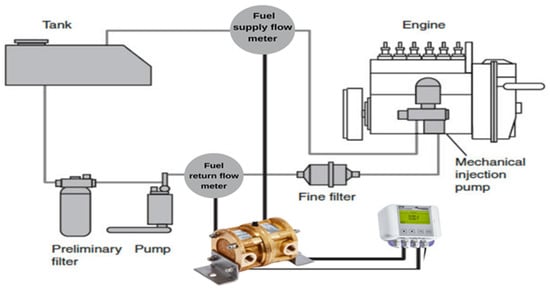
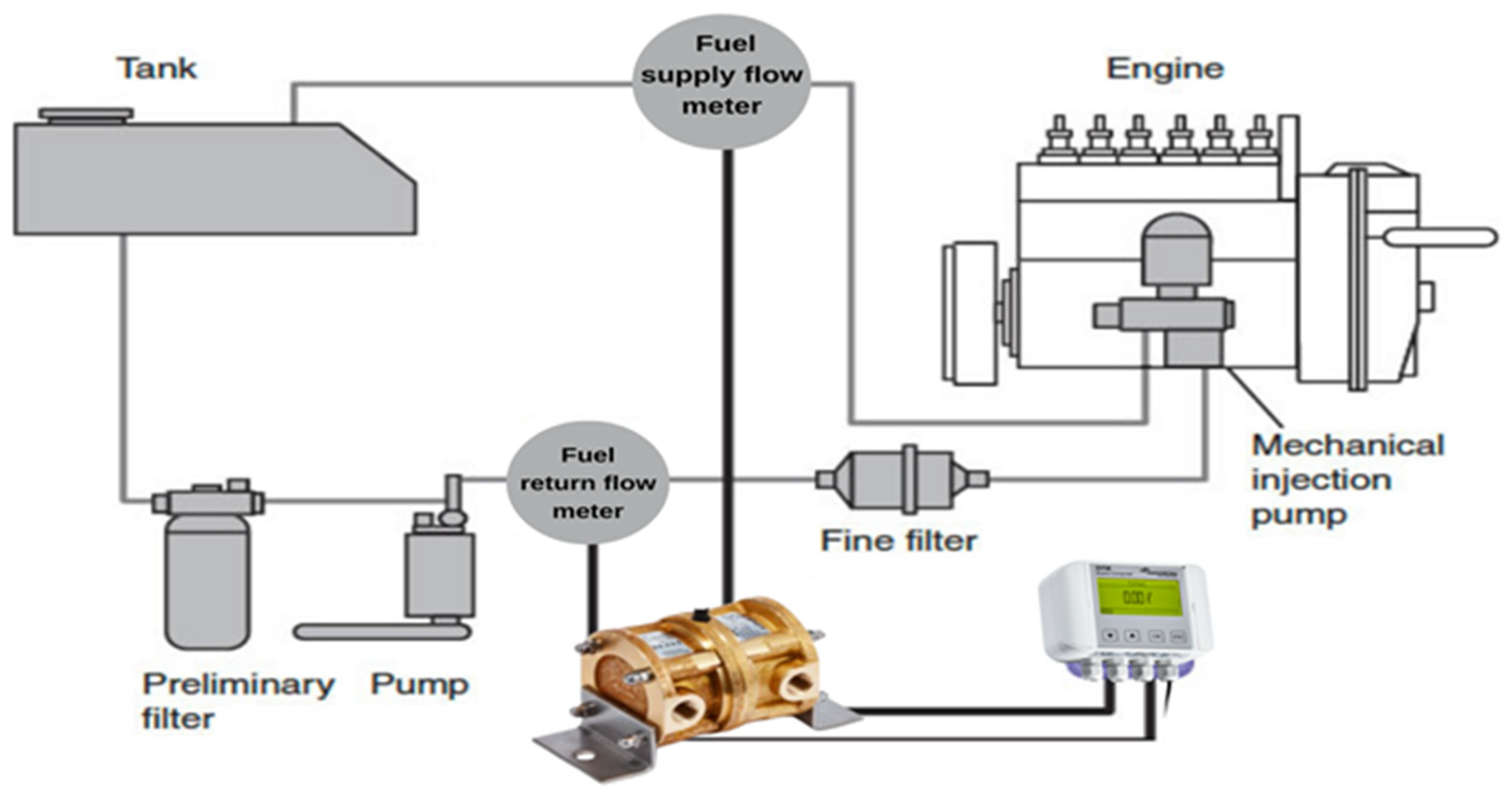
Fuel consumption was determined using a differential fuel flow measurement system (CONTOIL DFM8 ECO, Aquametro Oil & Marine, Reinach, Switzerland). The flow meters were installed on the fuel supply and return lines of the tractor engine to allow differential measurement of fuel consumption. Net fuel consumption was calculated as the difference between the measured supply and return flow rates (Figure 2).
Figure 2.
Schematic diagram of the fuel flow measurement setup.
Measurements were recorded separately for each field operation associated with CT and ST treatments. Fuel consumption values were subsequently expressed on an area basis (L ha−1) for comparative analysis between tillage systems.
2.8. Energy Use and CO2 Emission Calculations
Energy use and carbon dioxide (CO2) emissions were derived from the measured fuel consumption values using standardized energy equivalents and emission factors recommended by international guidelines [30,31].
Energy use was calculated based on the lower heating value (LHV) of diesel fuel (35.8 MJ L−1) [30], according to the following equation:
In this equation, E represents energy use (MJ ha−1), F denotes fuel consumption expressed on an area basis (L ha−1), and LHV refers to the lower heating value of diesel fuel.
Carbon dioxide emissions from diesel combustion were estimated using the emission factor for diesel fuel (2.68 kg CO2 L−1) [31]:
In this equation, CO2 represents carbon dioxide emissions (kg CO2 ha−1), F denotes fuel consumption (L ha−1), and EF represents the emission factor for diesel fuel. CO2 emissions were estimated based on fuel consumption using standard emission factors, representing operational (on-field) emissions associated with field machinery use rather than full life-cycle emissions.
2.9. Statistical Analysis
All statistical analyses were conducted separately for each response variable using a two-factor analysis of variance (ANOVA) framework. Year (2024 and 2025) and tillage system (CT; ST) were considered fixed factors. For emergence parameters (MED, ERI, PE), soil moisture loss (SML), and yield, the main effects of Year and Tillage, as well as their interaction (Year × Tillage), were evaluated. Each treatment combination consisted of eight replications.
The statistical model used in the analysis was as follows:
When significant effects were detected (p ≤ 0.05), means were separated using Tukey’s honestly significant difference (HSD) test at the 5% probability level. Normality and homogeneity of variance assumptions were checked prior to analysis.
Fuel consumption, energy use, and CO2 emissions were calculated on an area basis (per hectare) for each year and tillage system. Because these indicators were derived from cumulative operational measurements, descriptive comparisons between systems were performed.
The relationships between soil moisture loss (SML) and mean emergence date (MED) were evaluated separately within each tillage system using simple linear regression analysis. Coefficients of determination (R2) and regression slopes were reported, and statistical significance was assessed at p ≤ 0.05.
All statistical analyses were performed using Minitab statistical software (version 21, Minitab LLC, State College, PA, USA).
3. Results
3.1. Emergence Parameters
Emergence parameters were significantly affected by year, tillage method, or their interaction, depending on the variable considered (Table 3).
Table 3.
Effects of year and tillage system on cotton emergence parameters (mean ± SE, n = 8).
3.1.1. Mean Emergence Date (MED)
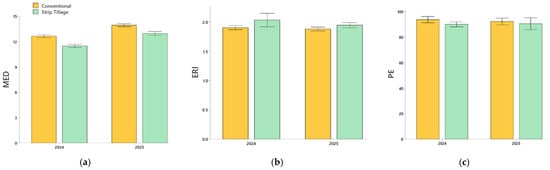
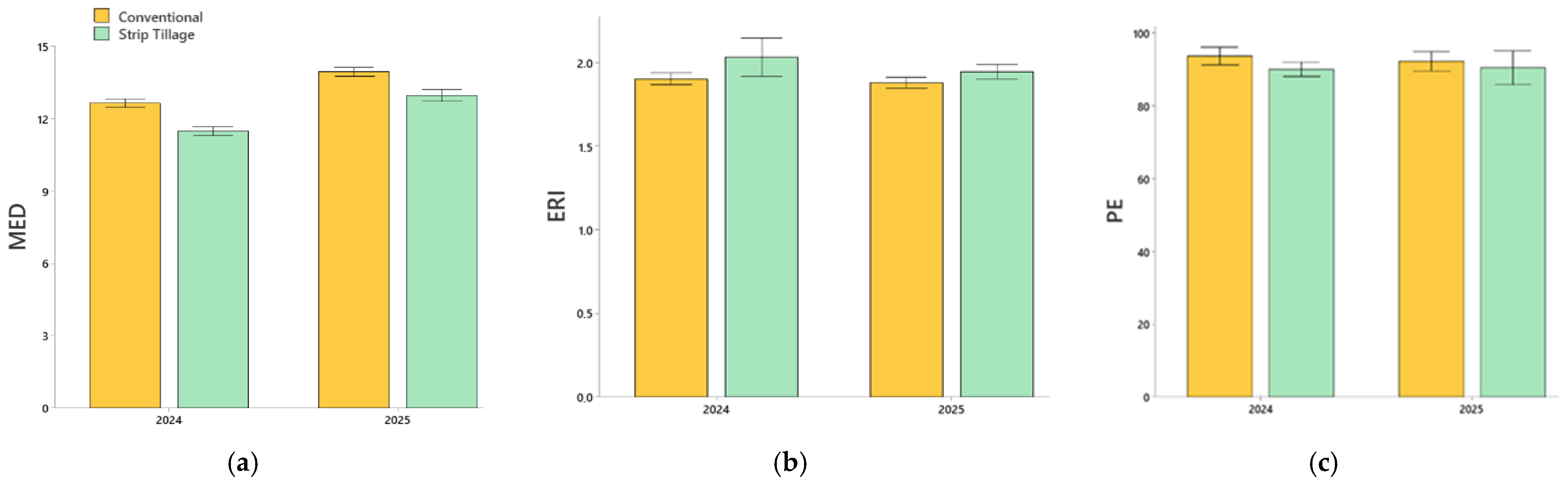
MED was significantly affected by both year and tillage system (p < 0.001 for both factors), whereas the Year × Tillage interaction was not significant (p = 0.646) (Table 3). MED values were lower under ST than under CT in both years (Figure 3a). In 2024, MED was 1.17 days lower under ST than under CT. A similar difference (0.98 days) was observed in 2025.
Figure 3.
Mean emergence date (MED) (a), emergence rate index (ERI) (b) and percentage emergence (PE) (c) as affected by year and tillage method.
3.1.2. Emergence Rate Index (ERI)
ERI was significantly affected by tillage system (p = 0.001), whereas the effects of year (p = 0.057) and the Year × Tillage interaction (p = 0.277) were not statistically significant (Table 3). ERI values were higher under ST than under CT in both years (Figure 3b). In 2024, ERI was 2.032 under ST compared with 1.904 under CT. In 2025, the corresponding values were 1.946 and 1.879, respectively.
3.1.3. Percentage Emergence (PE)
PE was significantly affected by tillage method (p = 0.046), whereas the effects of year and the Year × Tillage interaction were not significant (p = 0.512) (Table 3). PE values were lower under ST than under CT in both years (Figure 3c). In 2024, PE was 93.75% under CT and 90.12% under ST. In 2025, the corresponding values were 92.38% and 90.50%, respectively.
3.2. Soil Moisture Loss (SML)
SML during the 14-day sowing-to-emergence period was significantly affected by year, tillage system, and their interaction (p < 0.001 for all effects) (Table 4).
Table 4.
Effects of year and tillage system on soil moisture loss (0–10 cm) during the 14-day emergence period (mean ± SE, n = 8).
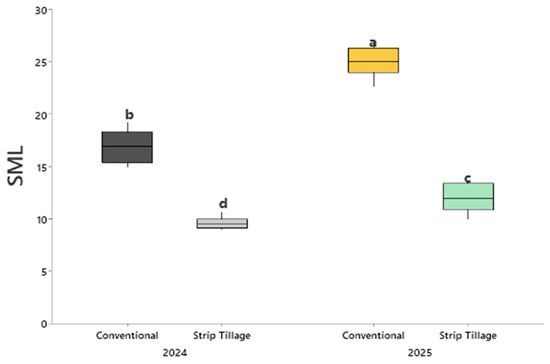
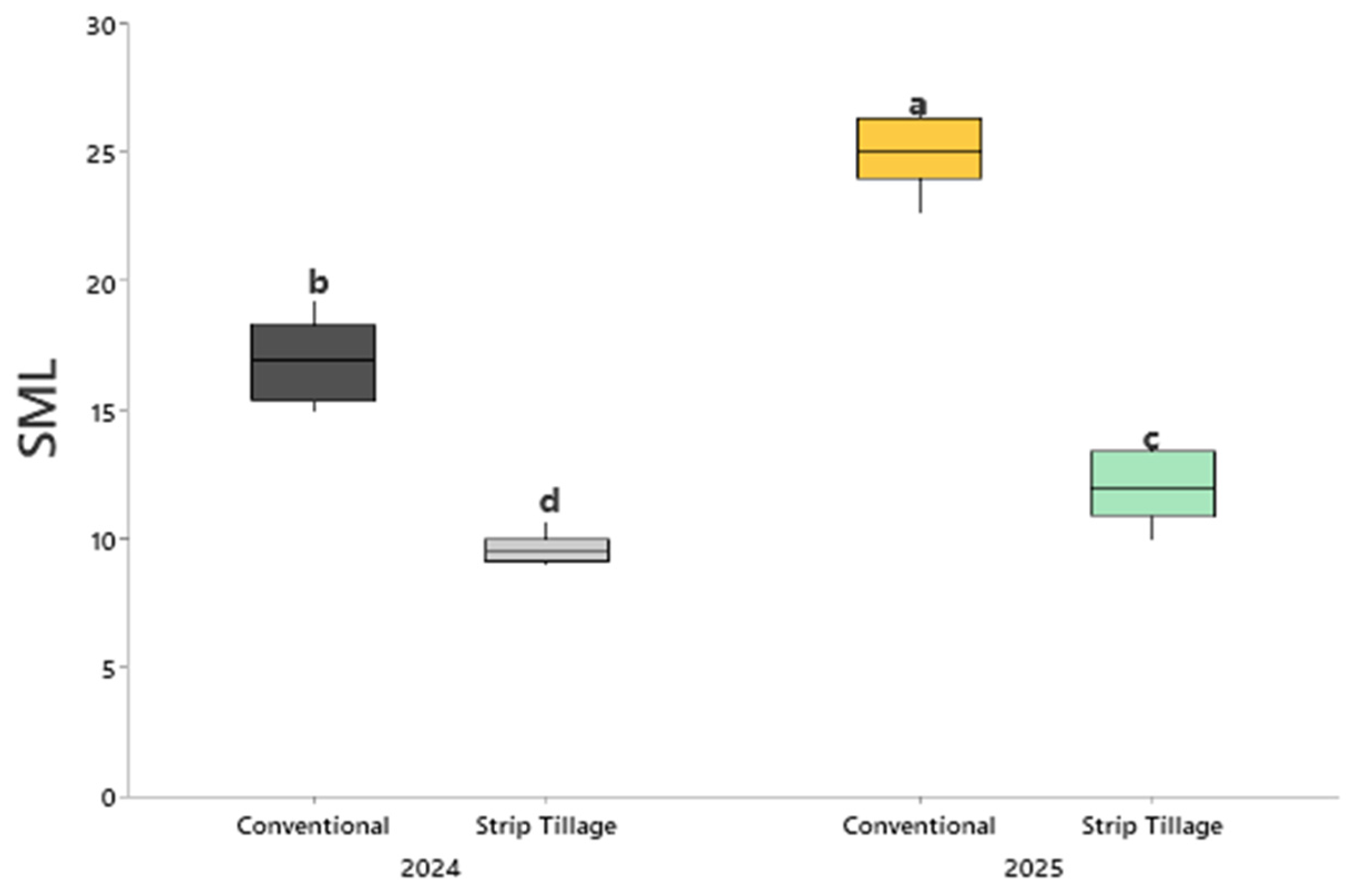
In 2024, SML was 16.86% under CT and 9.54% under ST, corresponding to a 43% reduction under ST relative to CT. In 2025, SML increased to 24.95% under CT, whereas ST recorded 11.96%, representing a 52% reduction compared with CT.
The significant Year × Tillage interaction indicates that the magnitude of the difference between CT and ST varied between years. As shown in Figure 4, the separation between tillage systems was larger in 2025 than in 2024.
Figure 4.
Interaction effects of year and tillage system on soil moisture loss (SML) during the 14-day sowing-to-emergence period (mean ± SE). Different lowercase letters indicate statistically significant differences between treatments within each year according to Tukey’s HSD test (p ≤ 0.05).
3.3. Yield Response
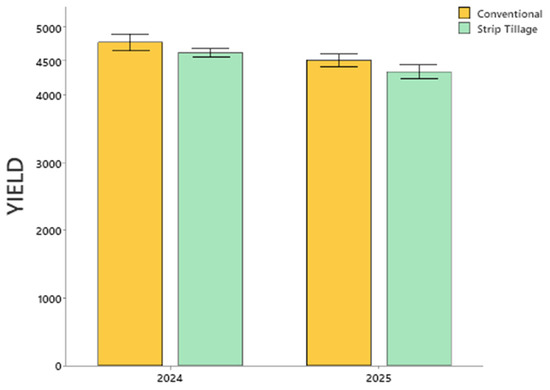
Cotton yield was significantly affected by both year and tillage system (p < 0.001 for year; p = 0.001 for tillage), whereas the Year × Tillage interaction was not significant (p = 0.859) (Table 5).
Table 5.
Effects of year and tillage system on cotton yield (kg ha−1) (mean ± SE, n = 8).
Yield values were higher under CT than under ST in both years (Figure 5). In 2024, yield was 4773.8 kg ha−1 under CT and 4622.5 kg ha−1 under ST, corresponding to a 3.2% difference. In 2025, the respective yields were 4507.5 and 4341.2 kg ha−1, representing a 3.7% difference. Overall yield was lower in 2025 than in 2024 across both tillage systems.
Figure 5.
Cotton yield as affected by year and tillage system.
3.4. Fuel Consumption, Energy Use and CO2 Emissions
Fuel consumption, associated energy use, and CO2 emissions per unit area differed between tillage systems in both experimental years (Table 6).
Table 6.
Fuel consumption, energy use, and CO2 emissions per unit area under conventional (CT) and strip tillage (ST).
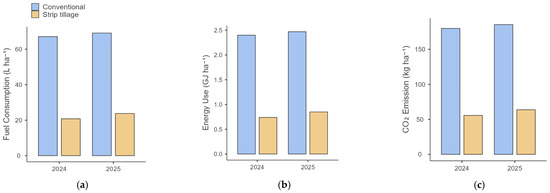
Under CT, fuel consumption reached 67.08 and 69.12 L ha−1 in 2024 and 2025, respectively, whereas ST required 20.80 and 23.80 L ha−1. These values correspond to reductions of 69% in 2024 and 66% in 2025 under ST relative to CT (Figure 6a).
Figure 6.
Fuel consumption (a), energy use (b), and CO2 emissions (c) per unit area as affected by tillage system and year.
Based on a diesel lower heating value of 35.8 MJ L−1, energy use under CT amounted to 2401.5 and 2475.5 MJ ha−1 in 2024 and 2025, respectively. In contrast, energy use under ST was 744.6 and 852.0 MJ ha−1 (Figure 6b).
Similarly, CO2 emissions were 180.0 and 185.2 kg ha−1 under CT, compared with 55.7 and 63.8 kg ha−1 under ST in 2024 and 2025, respectively (Figure 6c).
Yield-Scaled Efficiency Indicators
Yield-scaled fuel, energy, and CO2 indicators are presented in Table 7.
Table 7.
Yield-scaled fuel, energy, and CO2 indicators under conventional (CT) and strip tillage (ST).
In 2024, yield per unit of fuel input was 222.2 kg L−1 under ST and 71.1 kg L−1 under CT. In 2025, the corresponding values were 182.4 and 65.2 kg L−1, respectively.
Energy use per unit yield was 0.160 and 0.196 MJ kg−1 under ST in 2024 and 2025, respectively, compared with 0.503 and 0.548 MJ kg−1 under CT.
Similarly, CO2 emissions per unit yield were 0.0121 and 0.0147 kg CO2 kg−1 under ST, whereas CT resulted in 0.0377 and 0.0411 kg CO2 kg−1 in 2024 and 2025, respectively.
3.5. Relationship Between Soil Moisture Loss (SML) and Mean Emergence Date (MED)
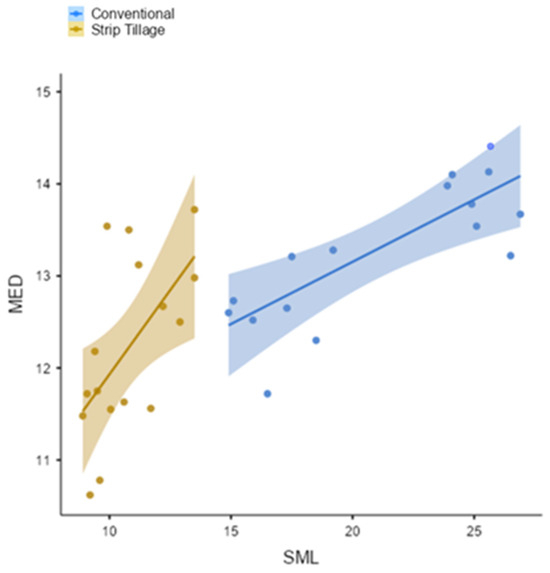
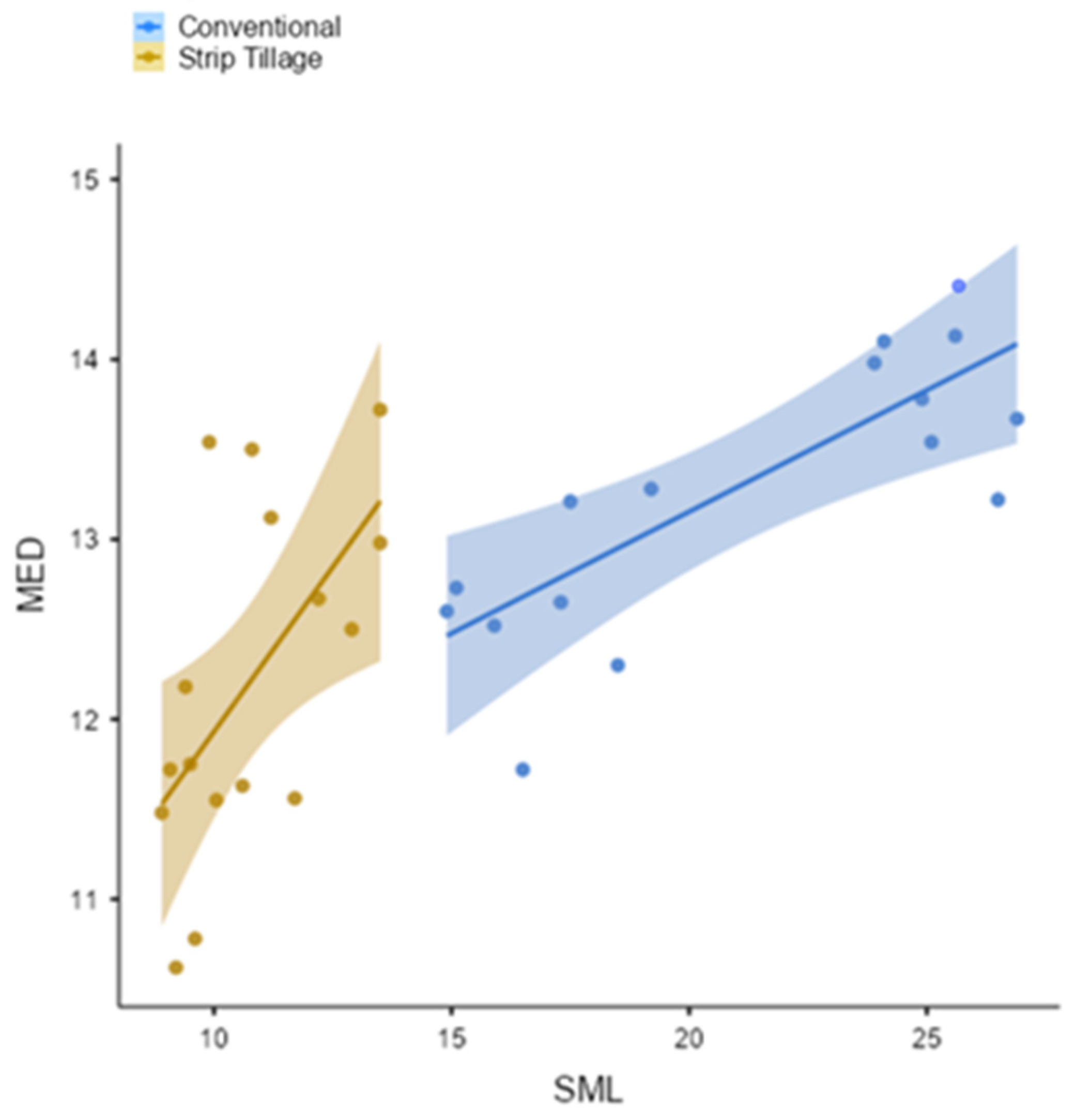
The relationship between SML during the 14-day sowing-to-emergence period and MED was evaluated separately within each tillage system (Figure 7).
Figure 7.
Relationship between soil moisture loss (SML) and mean emergence date (MED) under conventional and strip tillage.
Under CT, SML was positively associated with MED (R2 = 0.51, p = 0.002). MED increased by 0.135 days for each 1% increase in SML. Under ST, a positive association was also observed (R2 = 0.35, p = 0.015), with MED increasing by 0.366 days per 1% increase in SML.
No significant linear relationships were detected between SML and ERI, PE, or seed cotton yield (p > 0.05).
4. Discussion
4.1. Climatic Context and System Sensitivity During the Emergence Window
The present study provides a two-year field evaluation of strip tillage (ST) compared with conventional tillage (CT) for cotton grown as a second crop after wheat under Mediterranean summer conditions. As summarized in Table 1, the emergence period coincided with pronounced thermal stress in both years, while rainfall during the sowing-to-emergence window was limited in 2024 and absent in 2025. Under such atmospheric demand, rapid depletion of near-surface soil moisture becomes a critical constraint for successful crop establishment [32].
In Mediterranean semi-arid systems, soil water availability during early growth stages is widely recognized as a primary determinant of crop performance under climatic variability [33,34]. Accurate assessment of soil water dynamics has been shown to be essential for explaining yield variability and supporting adaptive management in water-limited agroecosystems [35]. Previous research under hot, water-limited summer sowing conditions has demonstrated that crop responses are strongly governed by the interaction between thermal stress and soil moisture availability [36]. It has been further reported that conservation-oriented systems can modify early establishment dynamics and seedling vigor under contrasting climatic environments, although early establishment advantages do not necessarily translate into proportional yield gains [37].
Although several of these studies focused on cereals, the underlying hydrothermal mechanisms are transferable to summer-sown crops such as cotton, where germination and early seedling growth occur under high evaporative demand. Long-term strip tillage experiments have shown that localized soil disturbance can alter near-surface hydrothermal conditions and crop establishment dynamics relative to full-width tillage, supporting the relevance of disturbance intensity during sensitive developmental stages.
Within this climatic framework, management practices capable of moderating short-term soil moisture depletion during the emergence phase may significantly influence system resilience. The comparison between ST and CT in the present study therefore provides insight into how contrasting soil disturbance intensities interact with Mediterranean atmospheric conditions during a particularly sensitive developmental window. This is particularly relevant for strip tillage systems, where residue retention and reduced soil disturbance can limit surface evaporation and enhance soil moisture conservation during the critical emergence phase.
4.2. Strip Tillage Moderates Early-Season Moisture Depletion Under Thermal Stress
SML during the 14-day sowing-to-emergence period was significantly affected by both tillage system and year, with a strong Year × Tillage interaction (Table 4). As shown in Figure 4, ST consistently reduced SML relative to CT, and the magnitude of this difference became more pronounced under the drier 2025 conditions. The wider separation between systems in the absence of rainfall indicates that the functional advantage of ST intensified as atmospheric demand increased.
These contrasting SML responses are primarily explained by differences in surface condition between the two systems. Under CT, intensive soil operations resulted in a largely bare soil surface, whereas ST preserved crop residues across the inter-row area. A bare surface is more directly exposed to solar radiation and high air temperatures, promoting rapid evaporation during the emergence window. Intensive tillage systems have been associated with accelerated short-term moisture depletion due to reduced surface protection and greater evaporative exposure [24,38].
In contrast, residue retention under ST provided partial surface cover that reduced direct radiation load, buffered soil temperature fluctuations, and limited near-surface evaporation. Residue-mediated soil protection is widely recognized as a central mechanism in conservation systems for improving short-term moisture conservation under semi-arid and Mediterranean conditions [39]. Recent syntheses of ST systems further report that localized soil disturbance combined with inter-row residue preservation enhances early-season soil water retention relative to full-width disturbance regimes [40]. Similar responses have been reported in strip tillage systems under double-cropping conditions, where improved soil hydrothermal regulation has been associated with reduced disturbance intensity and residue retention [41].
Although soil moisture dynamics are influenced by climatic drivers such as temperature and vapor pressure deficit, the consistently lower SML under ST indicates that residue-mediated surface protection is the dominant mechanism reducing evaporative stress during establishment. Under the clay loam conditions of the study site, this effect likely enhanced short-term moisture stability in the upper soil layer [42]. This moisture conservation effect is particularly critical during the emergence phase, as it supports more stable seed-zone conditions and reduces the risk of delayed or uneven crop establishment under high evaporative demand.
4.3. Emergence Parameters and Hydrothermal Regulation
ST modified crop establishment dynamics, as reflected in the emergence parameters. Mean emergence date (MED) was consistently lower under ST, decreasing by approximately one day relative to CT (Table 3), while ERI increased in both experimental years, indicating accelerated and more synchronized seedling emergence (Figure 3a). Cotton is known to exhibit strong sensitivity to hydrothermal conditions during early growth stages, with soil moisture and temperature jointly regulating radicle protrusion and emergence timing [43]. Under high thermal load, even moderate differences in near-surface water availability can substantially influence emergence rate and synchronization. Previous studies have demonstrated that MED in cotton is highly responsive to soil management–induced changes in moisture and temperature regimes [18]. Similarly, reduced tillage has been reported to alter seedling emergence rates without consistently improving yield, suggesting that early establishment advantages do not necessarily translate into proportional productivity gains [19].
Modifications in seedbed microclimatic conditions under strip tillage (ST) contributed to these differences. Strip tillage modifies soil temperature gradients and moisture distribution within the planting row, thereby influencing early growth responses. Reduced tillage systems can modify soil thermal regimes within the seed zone, affecting emergence timing; Licht and Al-Kaisi [22] similarly reported that ST altered soil temperature dynamics and influenced early crop development relative to CT systems.
In the present study, the regression analysis between SML and MED provides further mechanistic support for this interpretation. Within both tillage systems, increasing soil moisture depletion during the 14-day establishment period was associated with delayed emergence, confirming that moisture availability during the emergence window acted as a limiting factor under Mediterranean summer conditions [44]. Interactions between soil temperature and moisture during crop establishment have been reported to exert a synergistic regulatory effect under conservation systems [45]. Consequently, the reduced early-season moisture depletion observed under ST likely improved hydrothermal balance within the seed zone, thereby facilitating earlier and more synchronized emergence under high atmospheric demand.
Although ST enhanced emergence timing and rate, PE was slightly lower compared with CT (Figure 3c), while the absolute difference remained limited. Because seeding depth and planter configuration were kept constant across treatments, this small PE difference is unlikely to reflect operational factors and more plausibly relates to residue-mediated microenvironmental variability or seed–soil contact heterogeneity within strip-tilled rows. ST systems are known to modify near-surface physical conditions without necessarily increasing total plant establishment, particularly in semi-arid cotton systems [46].
Overall, the combined evidence from emergence metrics and regression analysis indicates that hydrothermal regulation played a central role in shaping establishment responses. The earlier emergence observed under ST was not incidental, but mechanistically linked to improved moisture conservation during the critical sowing-to-emergence phase under Mediterranean summer conditions.
4.4. Interpretation of Yield Response
Cotton yield was slightly higher under CT in both experimental years; however, the magnitude of the difference remained limited (approximately 3–4%) (Table 5). Although the year effect was significant, the absence of a Year × Tillage interaction indicates that the relative yield difference between systems was stable across seasons.
The earlier and more synchronized emergence observed under ST did not translate into proportional yield gains. Similar decoupling between establishment performance and final yield has been reported in conservation systems. Cotton, in particular, exhibits substantial plasticity in branching and boll formation, enabling partial compensation for moderate differences in stand establishment [47].
The slight yield superiority of CT is associated with differences in seedbed structure and early root–soil interactions. More intensive soil preparation under CT can produce a relatively more homogeneous tilled layer, which may facilitate early root expansion during the vegetative phase [48]. In contrast, ST localizes soil tillage within the planting strip while preserving untilled inter-row zones. Although this configuration enhances moisture conservation, it may also create spatial contrasts in soil physical conditions within the seedbed, potentially influencing early root distribution and establishment. Comparable yield responses under conservation and CT systems have been documented in cotton grown under variable moisture regimes, where yield stability rather than yield maximization differentiated management strategies [26].
In Mediterranean semi-arid environments, yield performance is often more closely linked to seasonal water availability and mid-season stress dynamics than to establishment speed alone [49]. System-level analyses further indicate that conservation-oriented practices can maintain comparable productivity while modifying soil structural and biological properties. Within this context, the relatively small yield gap observed in the present study suggests that establishment advantages under ST were partially moderated by subsequent growth processes rather than fundamentally constraining productivity.
Overall, the small and consistent yield difference between CT and ST indicates comparable yield levels between the two systems. Despite earlier emergence under ST, this advantage did not translate into higher yield, suggesting that factors beyond early establishment influenced final productivity under the conditions of this study.
4.5. Fuel Consumption, Energy Use, and Carbon Emissions: Operational Efficiency Gains
The most pronounced separation between tillage systems was observed in fuel consumption and the associated energy and CO2 indicators on an area basis. ST reduced fuel consumption by approximately 66–69% relative to CT across the two experimental years (Table 6), with proportional reductions observed for energy use and CO2 emissions. These differences reflect clear contrasts in operational intensity between systems.
CT required a higher level of soil-engaging operations and field traffic, resulting in greater cumulative engine load and fuel demand per hectare. In contrast, ST confined soil disturbance to narrow planting zones and substantially reduced the number and intensity of field passes. Comparable reductions in diesel consumption under conservation-oriented tillage systems have been reported in Mediterranean and semi-arid environments, where simplified operational sequences constitute a primary driver of energy savings [16,50]. Similar reductions in fuel consumption and improved operational efficiency under ST have been documented across varying soil conditions [51].
Because energy use and CO2 emissions were derived directly from measured fuel consumption, reductions in diesel demand translated proportionally into lower energy input and greenhouse gas intensity per unit area. Mechanization-related emissions in row crop systems are strongly governed by the frequency and intensity of soil tillage operations, making tillage configuration a critical leverage point for mitigation strategies [52,53].
The consistency of reductions across both years indicates that operational efficiency gains under ST were structurally embedded in the system design rather than season-dependent. Overall, the findings demonstrate that localized soil tillage combined with reduced field traffic improves mechanization-level energy and carbon performance under Mediterranean double-cropping conditions.
This indicates that strip tillage offers a structurally more energy-efficient and lower-emission mechanization strategy without compromising system functionality under Mediterranean production conditions.
4.6. Yield-Scaled Indicators and the Sustainability Trade-Off
Because yield differences between systems were relatively small, yield-scaled efficiency indicators clearly favored ST. When expressed per unit of fuel input, cotton yield under ST was nearly three times higher than under CT in both years. Likewise, energy intensity (MJ kg−1) and carbon intensity (kg CO2 kg−1) were consistently lower under ST across seasons (Table 7).
These yield-scaled metrics provide a more integrated assessment of system performance by linking agronomic output to resource consumption and sustainability performance [51,54,55]. Although CT achieved slightly higher absolute yields, this additional production required substantially greater energy input and resulted in higher emissions per unit of cotton produced.
The resulting trade-off profile indicates that, within the studied Mediterranean double-cropping context, ST was associated with substantially improved environmental performance despite only a minor reduction in yield. From a system perspective, this balance may be particularly relevant under increasing climate and energy constraints.
Within this context, evaluating tillage systems through integrated agronomic and environmental metrics enables a more comprehensive interpretation of production system performance under Mediterranean conditions. While short-term yield comparisons remain indispensable, the present results demonstrate that mechanization intensity, energy demand, and emission intensity constitute equally decisive components of system sustainability. Under increasing thermal stress, constrained water availability, and rising energy costs, analytical frameworks that jointly assess productivity and resource-use efficiency provide a more resilient basis for agronomic decision-making. Consequently, strip tillage is better evaluated not only in terms of yield outcomes but also in relation to its contribution to system-level efficiency and environmental performance under climate-constrained double-cropping conditions. This integrated perspective highlights the importance of aligning agronomic performance with resource-use efficiency in sustainable cotton production systems.
5. Conclusions
This two-season field evaluation showed that strip tillage (ST) reduced soil moisture loss (SML) during the sowing-to-emergence phase and resulted in earlier and more synchronized cotton emergence under Mediterranean conditions. Conventional tillage (CT) produced slightly higher yield; however, the difference remained limited (approximately 3–4%) and consistent across years.
ST substantially reduced fuel consumption, which resulted in proportional decreases in energy use and CO2 emissions compared to CT. Accordingly, yield-scaled energy and carbon efficiency indicators were consistently higher under ST.
Overall, the results indicate that ST and CT achieved comparable yield levels, while ST provided clear advantages in terms of reduced fuel use, lower energy demand, and lower carbon emissions under the studied conditions.
Consequently, strip tillage improves moisture conditions during the crop establishment phase while reducing energy demand and carbon intensity under Mediterranean conditions. Further research may extend these findings by examining long-term soil physical responses together with economic and system-level resilience aspects. These findings highlight the relevance of strip tillage for supporting energy-efficient and low-emission agricultural practices within Mediterranean production systems.
Funding
This research received no external funding.
Institutional Review Board Statement
Not applicable.
Informed Consent Statement
Not applicable.
Data Availability Statement
The original contributions presented in this study are included in the article. Further inquiries can be directed to the corresponding author.
Acknowledgments
The author gratefully acknowledges the field staff for their technical assistance during field operations.
Conflicts of Interest
The author declares no conflicts of interest.
Abbreviations
| CT | Conventional Tillage |
| ST | Strip Tillage |
| BD | Bulk Density |
| EC | Electrical Conductivity |
| OM | Organic Matter |
| Tmean | Daily Mean Air Temperature |
| Tmax | Daily Maximum Air Temperature |
| SML | Soil Moisture Loss |
| MED | Mean Emergence Date |
| ERI | Emergence Rate Index |
| PE | Percentage Emergence |
| LHV | Lower Heating Value |
| EF | Emission Factor |
| IPCC | Intergovernmental Panel on Climate Change |
| EPA | U.S. Environmental Protection Agency |
References
- Bibi, F.; Rahman, A. An overview of climate change impacts on agriculture and their mitigation strategies. Agriculture 2023, 13, 1508. [Google Scholar] [CrossRef] [Scilit]
- Li, F.; Zhou, M.; Shao, J.; Chen, Z.; Wei, X.; Yang, J. Maize, wheat and rice production potential changes in China under the background of climate change. Agric. Syst. 2020, 182, 102853. [Google Scholar] [CrossRef] [Scilit]
- Dumitru, E.A.; Berevoianu, R.L.; Tudor, V.C.; Teodorescu, F.-R.; Stoica, D.; Giucă, A.; Ilie, D.; Sterie, C.M. Climate change impacts on vegetable crops: A systematic review. Agriculture 2023, 13, 1891. [Google Scholar] [CrossRef] [Scilit]
- Mishra, J.S.; Poonia, S.P.; Kumar, R.; Dubey, R.; Kumar, V.; Mondal, S.; Dwivedi, S.K.; Rao, K.K.; Kumar, R.; Tamta, M.; et al. An impact of agronomic practices of sustainable rice-wheat crop intensification on food security, economic adaptability, and environmental mitigation across eastern Indo-Gangetic Plains. Field Crops Res. 2021, 261, 108164. [Google Scholar] [CrossRef] [Scilit]
- DeLaune, P.B.; Mubvumba, P.; Ale, S.; Kimura, E. Impact of no-till, cover crop, and irrigation on cotton yield. Agric. Water Manag. 2020, 232, 106038. [Google Scholar] [CrossRef] [Scilit]
- Cárceles Rodríguez, B.; Durán Zuazo, V.H.; Soriano Rodríguez, M.; Gálvez Ruiz, B.; García-Tejero, I.F. Soil erosion and the efficiency of the conservation measures in Mediterranean hillslope farming (SE Spain). Eur. Soil Sci. 2021, 54, 792–806. [Google Scholar] [CrossRef] [Scilit]
- Issaka, F.; Zhang, Z.; Zhao, Z.-Q.; Asenso, E.; Li, J.-H.; Li, Y.-T.; Wang, J.-J. Sustainable conservation tillage improves soil nutrients and reduces nitrogen and phosphorous losses in maize farmland in southern China. Sustainability 2019, 11, 2397. [Google Scholar] [CrossRef] [Scilit]
- Failla, S.; Pirchio, M.; Sportelli, M.; Frasconi, C.; Fontanelli, M.; Raffaelli, M.; Peruzzi, A. Evolution of smart strategies and machines used for conservative management of herbaceous and horticultural crops in the Mediterranean Basin: A review. Agronomy 2021, 11, 106. [Google Scholar] [CrossRef] [Scilit]
- Georgopoulou, E.; Gakis, N.; Kapetanakis, D.; Voloudakis, D.; Markaki, M.; Sarafidis, Y.; Lalas, D.P.; Laliotis, G.P.; Akamati, K.; Bizelis, I.; et al. Climate change risks for the Mediterranean agri-food sector: The case of Greece. Agriculture 2024, 14, 770. [Google Scholar] [CrossRef] [Scilit]
- Rai, A.; Sarkar, S. Adapting soil and nutrient management to a changing climate: Emerging innovations and policy priorities. In Drought and Heat Stress in Agriculture: Implications, Adaptation and Mitigation; Springer: Singapore, 2025; pp. 1–25. [Google Scholar] [CrossRef] [Scilit]
- Şahin, İ.; Çay, A. Çanakkale yöresi tarım işletmelerinin toprak işleme alışkanlıklarının belirlenmesi. ÇOMÜ Ziraat Fak. Derg. 2023, 11, 377–390. [Google Scholar] [CrossRef] [Scilit]
- Raju, B.; Kamalakar, J.; Madavi, B.; Kumar, A. Long-term conservation tillage: Impacts on soil structure, moisture, and erosion—A review. J. Adv. Agric. Res. 2025; in press. [CrossRef] [Scilit]
- Özdemir, S.; Barut, Z.B. Doğrudan ekim makinalarında kullanılan farklı T tipi çizi açıcı ayakların ekim başarısına etkisinin belirlenmesi üzerine bir araştırma. Tarım Makinaları Bilim. Derg. 2020, 16, 26–34. [Google Scholar]
- Özdemir, S.; Barut, Z.B. Wheat agriculture and application of conservation tillage methods in Adana. In International Current Research on Agriculture and Food Technologies; Erdem, T., Çelik Güney, M., Güney, H., Eds.; Akademisyen Kitabevi: Ankara, Türkiye, 2022; pp. 57–70. [Google Scholar]
- Özpınar, S. Determination of agricultural farm structure and mechanisation level in the Canakkale region. AMA Agric. Mech. Asia Afr. Lat. Am. 2022, 53, 21–37. [Google Scholar]
- Özdemir, S.; Barut, Z.B. Koruyucu Tarımda Şeritvari Toprak İşleme Sistemlerinin Mekanizasyonu ve Prototip Geliştirme Yaklaşımı. In Sürdürülebilir Tarımda Yenilikçi Yaklaşımlar: Bitki, Toprak, Mekanizasyon ve Ekosistem Perspektifleri; Baran, M.F., Aktaş, H., Eds.; ISPEC Publishing House: Ankara, Türkiye, 2026; pp. 59–87. [Google Scholar]
- Carman, K.; Citil, E.; Marakoglu, T. Energy use efficiency of strip tillage systems for corn silage production in Middle Anatolia. J. Agric. Sci. Technol. 2021, 23, 293–306. [Google Scholar]
- Alghamdi, R.S.; Daigh, A.L.M.; DeJong-Hughes, J.; Wick, A.F. Soil temperature and water contents among vertical tillage, strip tillage, and chisel plowing in the Upper Great Plains. Can. J. Soil Sci. 2021, 101, 647–660. [Google Scholar] [CrossRef] [Scilit]
- Burke, J.A.; Lewis, K.L.; DeLaune, P.B.; Cobos, C.J.; Keeling, J.W. Soil water dynamics and cotton production following cover crop use in a semi-arid ecoregion. Agronomy 2022, 12, 1306. [Google Scholar] [CrossRef] [Scilit]
- Demo, A.H.; Bogale, G.A. Enhancing crop yield and conserving soil moisture through mulching practices in dryland agriculture. Front. Agron. 2024, 6, 1361697. [Google Scholar] [CrossRef] [Scilit]
- Wen, L.; Peng, Y.; Lin, Y.; Zhou, Y.; Cai, G.; Li, B.; Chen, B. Conservation tillage increases nutrient accumulation by promoting soil enzyme activity: A meta-analysis. Plant Soil 2025, 508, 531–546. [Google Scholar] [CrossRef] [Scilit]
- Licht, M.A.; Al-Kaisi, M.M. Strip-tillage effect on seedbed soil temperature and other soil physical properties. Soil Tillage Res. 2005, 80, 233–249. [Google Scholar] [CrossRef] [Scilit]
- Adee, E.; Hansel, F.D.; Ruiz Diaz, D.A.; Janssen, K. Corn response as affected by planting distance from the center of strip-till fertilized rows. Front. Plant Sci. 2016, 7, 1232. [Google Scholar] [CrossRef] [Scilit] [PubMed]
- Cicek, H.; Kim, I.; Blanco-Moreno, J.M.; Urrutia Larrachea, I.; Cheikh M’hamed, H.; Gultekin, I.; Ouabbou, H.; Zine El Abidine, A.; Schoeber, M.; Özdemir, F. Strategic tillage in the Mediterranean: No universal gains, only contextual outcomes. Environments 2025, 12, 422. [Google Scholar] [CrossRef] [Scilit]
- Štros, V.; Kincl, D.; Kabelka, D.; Vopravil, J. Rainfall induced changes in soil moisture: A comparative study of conventional and strip tillage. Soil Water Res. 2025, 20, 234–242. [Google Scholar] [CrossRef] [Scilit]
- Wang, J.; Du, G.; Tian, J.; Jiang, C.; Zhang, Y.; Zhang, W. Mulched drip irrigation increases cotton yield and water use efficiency via improving fine root plasticity. Agric. Water Manag. 2021, 255, 106992. [Google Scholar] [CrossRef] [Scilit]
- Karayel, D.; Šarauskis, E. Influence of tillage methods and soil crust breakers on cotton seedling emergence in silty-loam soil. Soil Tillage Res. 2024, 239, 106054. [Google Scholar] [CrossRef] [Scilit]
- Turkish State Meteorological Service (TSMS). Official Meteorological Data for the Çukurova Region; TSMS: Ankara, Türkiye, 2025. Available online: https://www.mgm.gov.tr (accessed on 2 January 2026).
- Barut, Z.B.; Çelik, İ. Different Tillage Systems Affect Plant Emergence, Stand Establishment and Yield in Wheat–Corn Rotation. Philipp. Agric. Sci. 2010, 93, 392–398. [Google Scholar]
- IPCC. 2006 IPCC Guidelines for National Greenhouse Gas Inventories; Eggleston, H.S., Buendia, L., Miwa, K., Ngara, T., Tanabe, K., Eds.; Institute for Global Environmental Strategies (IGES): Hayama, Japan, 2006.
- U.S. Environmental Protection Agency (EPA). Emission Factors for Greenhouse Gas Inventories; EPA: Washington, DC, USA, 2022. Available online: https://www.epa.gov/climateleadership/ghg-emission-factors-hub (accessed on 10 January 2026).
- Dai, T.; Wang, L.; Li, T.; Qiu, P.; Wang, J. Study on the characteristics of soil erosion in the black soil area of Northeast China under natural rainfall conditions: The case of Sunjiagou small watershed. Sustainability 2022, 14, 8284. [Google Scholar] [CrossRef] [Scilit]
- DeLaune, P.B.; Lewis, K.L.; Burke, J.A. Managing soil and water resources by tillage, crop rotation, and cover cropping. In Soil and Drought; CRC Press: Boca Raton, FL, USA, 2023; pp. 1–28. [Google Scholar]
- Ghazouani, H.; De Caro, D.; Ippolito, M.; Capodici, F.; Ciraolo, G. Assessment of AquaCrop inputs from ERA5-Land and Sentinel-2 for soil water content estimation and durum wheat yield prediction under semi-arid Mediterranean conditions. Water 2025, 17, 3522. [Google Scholar] [CrossRef] [Scilit]
- Wang, H.; Cao, H.; Jiang, F.; Wang, X.; Gao, Y. Analysis of soil moisture, temperature, and salinity in cotton field under non-mulched drip irrigation in South Xinjiang. Agriculture 2022, 12, 1589. [Google Scholar] [CrossRef] [Scilit]
- Dominguez-Bohorquez, J.D.; Wittling, C. Early-stage impacts of conservation agriculture on soil health in a French Mediterranean irrigated system. Arch. Agron. Soil Sci. 2025, 71, 1–23. [Google Scholar] [CrossRef] [Scilit]
- Barão, L.; Ramos, T.; Basch, G.; Ribeiro, I. Improved agricultural management systems for soil conservation in the Mediterranean. In Sustainable Soil Management in Agroecosystems; Ferreira, C.S.S., Destouni, G., Kalantari, Z., Eds.; Springer: Cham, Switzerland, 2024; pp. 145–168. [Google Scholar] [CrossRef] [Scilit]
- Sleiderink, J.; Deru, J.G.C.; Weide, R.V.D.; van Eekeren, N. Effects of reduced tillage and prolonged cover cropping in maize on soil quality and yield. Soil Tillage Res. 2024, 244, 106196. [Google Scholar] [CrossRef] [Scilit]
- Blanco-Canqui, H.; Ruis, S.J. Cover crop impacts on soil physical properties: A review. Soil Sci. Soc. Am. J. 2020, 84, 1527–1576. [Google Scholar] [CrossRef] [Scilit]
- Mirás-Avalos, J.M.; Silva Araujo, E.; Grimplet, J.; Julián-Lagunas, C.; Ksouri, N.; González García, V. Immediate effects of reduced tillage on soil health in a rainfed vineyard under Mediterranean conditions. Appl. Soil Ecol. 2026, 218, 106740. [Google Scholar] [CrossRef] [Scilit]
- Xu, C.; Liu, W.; Li, J.; Wu, J.; Zhou, Y.; Kader, R. Dynamic change of soil aggregate stability and infiltration properties during crop growth under four tillage measures in Mollisols region of northeast China. Front. Earth Sci. 2024, 12, 1357467. [Google Scholar] [CrossRef] [Scilit]
- Sadiq, M.; Li, G.; Rahim, N.; Tahir, M.M. Sustainable conservation tillage technique for improving soil health by enhancing soil physicochemical quality indicators under wheat mono-cropping system conditions. Sustainability 2021, 13, 8177. [Google Scholar] [CrossRef] [Scilit]
- Pimentel, D.; Burgess, M. Soil erosion threatens food production. Agriculture 2013, 3, 443–463. [Google Scholar] [CrossRef] [Scilit]
- Materia, S.; Ardilouze, C.; Prodhomme, C.; Donat, M.G.; Benassi, M.; Doblas-Reyes, F.J.; Peano, D.; Caron, L.-P.; Ruggieri, P.; Gualdi, S. Summer Temperature Response to Extreme Soil Water Conditions in the Mediterranean Transitional Climate Regime. Clim. Dyn. 2022, 58, 1943–1963. [Google Scholar] [CrossRef] [Scilit]
- Mo, Y.; Wang, L.R.; Guo, Q.S.; Wu, D.Z.; Wang, D.J.; Zhang, Q.Y.; Li, Y.G.; Wang, D.; Gao, Y.X. Effects of Furrow Depth on Soil Hydrothermal Properties and Corn Germination with Alternate Row/Bed Planting under Subsurface Drip Irrigation. In Proceedings of the 2019 ASABE Annual International Meeting, St. Joseph, MI, USA, 7–10 July 2019; p. 1900699. [Google Scholar] [CrossRef] [Scilit]
- Jiang, F.; Xu, J.; Zhang, H.; Hao, C.; Zheng, W.; Zuo, Y.; Zhang, L.; Dong, Z.; Bian, L.; Meng, F. A Five-Year Field Investigation of Conservation Tillage on Soil Hydrothermal Regimes and Crop Yield Stability in Semi-Arid Agroecosystems. Agriculture 2026, 16, 312. [Google Scholar] [CrossRef] [Scilit]
- Akplo, T.M.; Yemadje, P.L.; Imorou, L.; Sanni, B.; Boulakia, S.; Sekloka, E.; Tittonell, P. Minimum tillage reduces variability and economic risks in cotton-maize rotations in Northern Benin. Field Crops Res. 2025, 324, 109795. [Google Scholar] [CrossRef] [Scilit]
- Engonopoulos, V.; Papastylianou, P.; Kakabouki, I.; Bilalis, D. Agro-Meteorological Indices in Relation to Cotton Yield in a Mediterranean Environment. Not. Sci. Biol. 2025, 17, 12330. [Google Scholar] [CrossRef] [Scilit]
- Georgiou, P.; Koukouli, P. Evaluation of Climate Change Impacts on Cotton Yield Using Cropsyst and Regression Models. J. Adv. Agric. 2018, 8, 7779. [Google Scholar] [CrossRef] [Scilit]
- Šarauskis, E.; Vaitauskienė, K.; Romaneckas, K.; Jasinskas, A.; Butkus, V.; Kriaučiūnienė, Z. Fuel Consumption and CO2 Emission Analysis in Different Strip Tillage Scenarios. Energy 2017, 118, 961–968. [Google Scholar] [CrossRef] [Scilit]
- Wang, Y.; Sha, Y.; Ren, Z.; Huang, Y.; Gao, Q.; Wang, S.; Li, X.; Feng, G. Conservative Strip Tillage System in Maize Maintains High Yield and Mitigates GHG Emissions but Promotes N2O Emissions. Sci. Total Environ. 2024, 932, 173067. [Google Scholar] [CrossRef] [Scilit]
- Jaskulski, D.; Jaskulska, I.; Różniak, E.; Radziemska, M.; Klik, B.; Brtnický, M. Smart strip-till one-pass machine: Winter wheat sowing accuracy assessment. Agriculture 2025, 15, 411. [Google Scholar] [CrossRef] [Scilit]
- Bhattacharyya, S.S.; Leite, F.F.G.D.; France, C.L.; Adekoya, A.O.; Ros, G.H.; de Vries, W.; Melchor-Martínez, E.M.; Iqbal, H.M.N.; Parra-Saldívar, R. Soil carbon sequestration, greenhouse gas emissions, and water pollution under different tillage practices. Sci. Total Environ. 2022, 826, 154161. [Google Scholar] [CrossRef] [Scilit] [PubMed]
- Hailu, T.A.; Devkota, P.; Osoko, T.O.; Singh, R.K.; Zak, J.C. No-till and crop rotation are promising practices to enhance soil health in cotton-producing semiarid regions: Insights from citizen science. Soil Syst. 2024, 8, 108. [Google Scholar] [CrossRef] [Scilit]
- Guo, X.; Wang, H.; Ahmad, N.; Wang, R.; Wang, X.; Li, J. Effects of 12-Year Cropping Systems and Tillage Practices on Crop Yield and Carbon Trade-Off in Dryland Loess Plateau. Field Crops Res. 2024, 318, 109598. [Google Scholar] [CrossRef] [Scilit]

Disclaimer/Publisher’s Note: The statements, opinions and data contained in all publications are solely those of the individual author(s) and contributor(s) and not of MDPI and/or the editor(s). MDPI and/or the editor(s) disclaim responsibility for any injury to people or property resulting from any ideas, methods, instructions or products referred to in the content. |
© 2026 by the author. Licensee MDPI, Basel, Switzerland. This article is an open access article distributed under the terms and conditions of the Creative Commons Attribution (CC BY) license.