


Abstract
Industrial symbiosis (IS) research has documented many successful ecosystems but still lacks an empirically grounded typology linking resource flow configurations to environmental outcomes across diverse contexts. This study develops such a typology and tests whether distinct configurations achieve comparable environmental performance through different pathways—the configurational principle of equifinality. Drawing on 68 documented IS ecosystems across 48 countries, we apply k-means clustering to five flow-intensity dimensions—material, energy, water, logistics, and knowledge—and characterise the resulting partition using one-way ANOVA, Tukey HSD post hoc tests, multinomial logistic regression, and a Cox proportional-hazards model. Four configurations emerge: a dominant low-flow group (n = 34) and three coordinated configurations—energy–knowledge (n = 11), material-dominant (n = 16), and water-oriented (n = 7). The three coordinated configurations all significantly outperform the low-flow group on environmental performance (F(3, 57) = 11.60, p < 0.001), with effect sizes very similar and no significant differences among them, providing direct empirical evidence for equifinality. Economic performance does not differ significantly across configurations, and the multinomial model of contextual predictors is jointly insignificant—a pattern we read as consistent with equifinal contextual pathways rather than as a methodological flaw. Robustness checks across alternative clustering algorithms, operationalisations, and sub-samples support the typology’s stability. This study contributes an empirically grounded framework for circular economy practice that moves beyond one-size-fits-all prescriptions and offers a configurational lens for the design of sustainable industrial ecosystems.
1. Introduction
Industrial symbiosis (IS) has emerged as a pivotal mechanism for advancing the circular economy by fostering collective exchanges of materials, energy, water, and by-products among independent firms. Despite its growing prominence in sustainability policy and practice, IS research continues to rely on universal models that assume homogeneous structures and drivers across contexts. Yet real-world ecosystems differ profoundly in sectoral composition, geographical conditions, and coordination mechanisms, producing highly diverse configurations that existing theories fail to capture. This lack of differentiation constrains both analytical precision and policy effectiveness, as strategies designed for one archetype—such as the spontaneous, multi-flow exchanges in Kalundborg—may not translate to planned, energy-dominant systems like Ulsan. Addressing this conceptual gap is essential for understanding how circular ecosystems organise, operate, and evolve under varying conditions, and for developing targeted frameworks that enhance the global circular transition.
The Kalundborg Symbiosis in Denmark, with its network of material, energy, and water exchanges among industries spanning six decades, differs significantly from the Ulsan Eco-Industrial Park in South Korea, where petrochemical flows dominate [1,2]. Similarly, the Port of Rotterdam’s resource exchange platform operates through mechanisms distinct from water-centric symbioses driven by resource scarcity in the Mediterranean [3,4]. Despite this heterogeneity, industrial symbiosis (IS) research has often treated these ecosystems as variations on a single phenomenon, focusing on universal drivers and barriers while overlooking their configurational differences [5,6,7].
Industrial symbiosis—defined as “a collective approach to competitive advantage involving the physical exchange of materials, energy, water, and by-products” amongst traditionally separate industries [8]—has emerged as a critical strategy for implementing circular economy (CE) principles at the industrial level [9]. As a subset of industrial ecology [10], IS engages multiple organisations in synergistic cooperation, optimising resource utilisation whilst creating economic value and advancing sustainability objectives [11]. The field has witnessed substantial growth since Kalundborg was documented in the late 1980s [12], with industrial symbiosis initiatives proliferating globally across diverse geographical, sectoral, and institutional contexts [13].
However, this geographical and institutional diversification has created a paradox. Whilst the number of documented cases has expanded considerably—recent databases catalogue more than 150 ecosystems across 48 countries [14]—the analytical frameworks used to understand these systems have remained comparatively narrow. The extant literature often examines individual case studies (e.g., Kalundborg, Ulsan) or aggregates statistics across cases, but still lacks widely adopted classification schemes that account for structural heterogeneity among ecosystems [11,15]. This creates a significant knowledge gap, where researchers and practitioners often operate without a widely accepted framework for distinguishing ecosystem types, understanding context-specific success factors, or developing targeted intervention strategies.
Recent systematic reviews have identified several persistent gaps in IS research [7,16,17]. First, whilst studies have comprehensively documented enablers and barriers to IS implementation—cataloguing economic, technological, regulatory, and social factors—they typically offer generic recommendations applicable across contexts, “neglecting the wider configuration of connections between actors within the system” ([4]; p. 3). This universalistic approach implicitly assumes that mechanisms facilitating symbiosis operate uniformly across contexts, an assumption increasingly challenged by empirical evidence of context-dependent performance [9].
Second, existing typologies in the IS literature remain limited in scope and analytical depth. Chertow’s [8] seminal taxonomy distinguished IS initiatives by geographical scale (within facilities, amongst co-located firms, across regions), whilst Boons et al. [18] developed a process-oriented typology based on emergence dynamics (self-organised versus planned). Whilst valuable, these classificatory schemes focus on either spatial proximity or developmental processes rather than the substantive content of symbiotic relationships—specifically, the patterns of resource flows that constitute the structural essence of industrial ecosystems. As Fraccascia and Giannoccaro ([19]; p. 2) observe in their comprehensive review of IS indicators, research has primarily examined individual flow types “in isolation,” with “no comprehensive framework that considers how different resource flows interact and combine to create distinct ecosystem configurations.”
Third, the challenge of quantification in IS research remains unresolved. Kastner et al. [19] and Martin [20] note that measurement efforts have focused on “physical facts such as how much waste, energy, etc., is exchanged rather than a collective effort to include all aspects of synergies” ([14], p. 37). This fragmented approach to quantification reflects—and reinforces—the conceptual limitation of treating resource flows as independent rather than interdependent. Without understanding how flows of material, energy, water, logistics, and knowledge interact synergistically, the field cannot develop predictive models or evidence-based design principles for ecosystem development.
To address these gaps, this study adopts a configurational perspective grounded in organisation theory [21]. Configurational theory conceptualises organisational phenomena as “multidimensional constellations” of interdependent attributes that combine to produce outcomes [22,23,24]. This approach offers three conceptual advantages over traditional variance-based theories that have dominated IS research.
First, configurational theory explicitly recognises conjunctural causation—the principle that attributes produce effects through their combinations rather than independently [24,25]. In the context of industrial ecosystems, this suggests that material flows may interact synergistically with energy flows and knowledge-exchange mechanisms, creating emergent properties that cannot be reduced to individual flow types. This aligns with calls in the IS literature to examine “how multiple resource flows interact” rather than studying them “in isolation” [11].
Second, configurational approaches embrace equifinality—the premise that multiple distinct configurations can achieve equally effective outcomes [26,27]. This principle fundamentally challenges the implicit “one-best-way” assumption underlying much IS prescription. Rather than seeking universal success factors applicable to all ecosystems, configurational theory focuses on identifying distinct viable patterns, each adapted to specific contextual conditions. As Fiss ([24]; p. 394) demonstrates in his analysis of organisational typologies, “alternative combinations of attributes may be equally effective,” suggesting that different flow configurations may constitute multiple pathways to ecosystem success.
Third, configurational theory acknowledges causal asymmetry—the recognition that factors that facilitate an outcome may differ fundamentally from those that prevent it [25]. Moreover, “variables found to be causally related in one configuration may be unrelated or even inversely related in another” ([22]; p. 1178). Applied to IS, this suggests that whilst knowledge flows may be critical enablers in one type of ecosystem configuration, they may prove less consequential—or even detrimental—in alternative configurations where different coordination mechanisms prevail.
Extending configurational theory to industrial symbiosis offers theoretical advantages beyond IS literature. Recent applications of configurational approaches have illuminated complex phenomena in business ecosystems, strategic management, and circular economy business models [28,29]. However, these frameworks have not been systematically applied to understand structural heterogeneity in industrial ecosystems. By conceptualising IS ecosystems as configurations of resource flows—material, energy, water, logistics, and knowledge—this study provides a novel analytical lens that captures both the internal coherence of ecosystem types and their contextual embeddedness.
This study addresses the following research questions:
RQ1: What distinct configurations of industrial ecosystems exist based on patterns of resource flow combinations?
RQ2: What contextual factors (sectoral composition, geographic characteristics, institutional environment) predict ecosystem membership in each configuration?
RQ3: Do different ecosystem configurations exhibit differential performance outcomes in terms of economic efficiency, environmental effectiveness, and organisational resilience?
To answer these questions, we analyse 68 industrial symbiosis ecosystems documented across 48 countries. We apply k-means cluster analysis to five resource flow dimensions—material, energy, water, logistics, and knowledge exchange intensity—to identify archetypal configurations. We then use multinomial logistic regression to examine the contextual predictors of configuration membership and to assess performance differences across the identified clusters using one-way ANOVA, Tukey HSD post hoc tests, and a Cox proportional-hazards survival model.
This study makes several contributions to industrial ecology and organisation theory. First, we develop an empirically grounded typology of IS ecosystems that moves beyond spatial [8] or process-based [13] classifications to capture the substantive structure of resource interdependencies. By demonstrating that ecosystems cluster into distinct flow configurations rather than forming a continuum, we provide evidence for configurational theory in industrial ecology. In this context, it has been underutilised despite its conceptual relevance.
Second, we provide the first large-N quantitative evidence for equifinality in industrial symbiosis. By identifying multiple configurations associated with high performance—each exhibiting distinct strengths and operating through different mechanisms—we challenge the universalistic assumptions that have implicitly guided IS policy and practice. Our findings suggest that effectiveness depends on fit between flow configuration and contextual factors (sector, geography, and institutions), a theoretical claim consistent with contingency-configurational perspectives [26,30,31] but not previously tested in IS research.
Third, we contribute methodologically by operationalising resource flows as measurable, comparable dimensions across diverse contexts. This responds to Fraccascia and Giannoccaro’s [19] call for standardised measurement frameworks whilst advancing beyond single-flow analyses that have dominated quantification efforts [20,21]. Our multi-flow measurement approach provides a template for future comparative IS research.
Fourth, we extend configurational theory itself by demonstrating its applicability to inter-organisational ecosystems characterised by multiple resource interdependencies. Whilst prior configurational research has focused predominantly on intra-organisational phenomena [22,24], our study shows how configurational principles—conjunctural causation, equifinality, and asymmetry—operate at the ecosystem level, where coordination challenges and institutional complexity introduce distinctive dynamics.
Practically, our typology provides three tools for IS stakeholders. First, we develop a diagnostic framework that enables ecosystem coordinators to classify their current configuration and benchmark their performance against comparable systems. Second, we identify configuration-specific success factors, offering context-sensitive guidance rather than generic recommendations. Third, we map typical developmental trajectories, showing how ecosystems evolve between configurations over time—information valuable for strategic planning in both greenfield developments and brownfield transformations.
The remainder of this paper proceeds as follows: Section 2 reviews relevant theoretical literature on industrial symbiosis and configurational theory, developing hypotheses. Section 3 details our research methodology. Section 4 presents results, describing identified configurations, their distinguishing characteristics, contextual antecedents, and performance outcomes. Section 5 discusses the theoretical implications, compares our findings with existing typologies, and explores boundary conditions. Section 6 concludes by identifying limitations and proposing directions for future research.
2. Literature Review
2.1. Industrial Symbiosis: From Concept to Complexity
Industrial symbiosis emerged as a distinct research domain in the late 1980s following documentation of the Kalundborg case in Denmark, where spontaneous exchanges of materials, energy, and water amongst co-located firms demonstrated the practical feasibility of industrial ecology principles [12,32]. Chertow’s seminal definition conceptualised IS as “engaging traditionally separate industries in a collective approach to competitive advantage involving physical exchange of materials, energy, water, and by-products” ([8]; p. 314), establishing the field’s intellectual foundations whilst delineating its boundary conditions.
The subsequent two decades saw substantial theoretical development. Chertow [1] introduced the influential “3-2 heuristic”—stipulating that industrial symbiosis requires at least three distinct entities exchanging at least two different resources—to distinguish genuine symbiotic systems from bilateral transactions or single-firm circular initiatives. This heuristic, whilst debated [18], provided operational clarity and facilitated comparative research. Contemporaneously, scholars began examining IS through diverse theoretical lenses: network theory [33,34], evolutionary economics [13], institutional theory [35], and systems thinking [36].
However, as Neves et al. [11] demonstrate, this theoretical proliferation has occurred alongside persistent empirical fragmentation. The literature comprises predominantly case studies of individual ecosystems—with Kalundborg alone generating over 50 publications [10]—or national surveys documenting IS prevalence in specific jurisdictions [37,38]. Comparative analyses across contexts remain scarce, and systematic efforts to classify ecosystem types by structural characteristics are virtually absent [7]. The European footprint of the documented case literature alone is broad—spanning Nordic examples such as Kalundborg in Denmark, Benelux cases such as the knowledge-intensive platform at Rotterdam, Mediterranean ecosystems responding to water scarcity, and a growing set of planned industrial parks in Central and Eastern European economies—and these cases operate under distinct institutional constraints and sectoral profiles that current typology work has not yet systematically exploited.
Recent systematic literature reviews [11,16,17] reveal both the field’s maturation and its persistent blind spots. On the achievement side, research has comprehensively catalogued enablers and barriers to IS implementation across multiple dimensions:
- Economic factors include cost savings through waste [39], access to cheaper resources [40], and reduced disposal costs [41]. Conversely, high transaction costs [42], uncertain business cases [42], and a lack of financing mechanisms [43] constitute economic barriers.
- Technological factors encompass the availability of recycling technologies [44,45], infrastructure compatibility [9], and technical expertise [2]. Barriers include technological lock-in [46], variability in the quality of secondary materials [47], and high adaptation costs [48].
- Regulatory factors include supportive policies [49], environmental standards that create incentives [50], and institutional frameworks that facilitate exchanges. Barriers include conflicting regulations [51], complex waste classification [52], and bureaucratic impediments [32].
Social factors emphasise trust amongst partners [42], social embeddedness [52], leadership [53], and organisational culture [54]. Barriers include competitive mindsets [55], lack of communication [56], and resistance to change [57].
Whilst this comprehensive enumeration of factors represents a significant scholarly achievement, it also reveals a critical limitation: the literature provides largely acontextual knowledge. As noted in a recent review [6], existing research offers “generic recommendations applicable to all contexts,” treating IS as a monolithic phenomenon in which universal success factors operate uniformly. This universalistic framing obscures potentially significant heterogeneity in how different ecosystem types function, develop, and create value.
The implicit homogeneity assumption manifests in three problematic ways. First, prescriptive guidance in the literature typically treats “industrial symbiosis” as a single entity, offering recommendations such as “build trust amongst partners” [42], “engage facilitators” [18], or “align economic incentives” [13], without specifying contextual boundaries or configurational contingencies. Whilst undoubtedly valuable, such advice may prove differentially applicable—or even counterproductive—across ecosystem types operating through distinct mechanisms.
Second, performance measurement frameworks treat ecosystems as comparable units, aggregating outcomes across diverse contexts to derive average effects [19]. Sustainability assessments, for instance, typically quantify material flows, energy savings, and greenhouse gas reductions using standardised metrics [40,58], implicitly assuming that similar magnitudes indicate equivalent achievements regardless of sectoral composition, geographical constraints, or institutional environments. This analytical approach obscures the possibility that different ecosystem types may optimise different performance dimensions, each with distinct strengths that aggregate statistics mask.
Third, theory development has often proceeded by abstracting from specific cases to general principles, with insufficiently explicit attention to boundary conditions and scope [15]. Theoretical propositions derived from analysing Kalundborg—a mature, evolution-based ecosystem in a stable institutional environment—may not transfer seamlessly to planned eco-industrial parks in rapidly industrialising contexts [59] or to resource-constrained settings were environmental imperatives, rather than economic incentives, drive symbiosis [4].
This homogeneity assumption stands in stark contrast to the empirical diversity observed. Kalundborg’s intricate network of material, energy, and water flows among chemical, pharmaceutical, energy, and biotechnology firms [31] differs fundamentally from Ulsan’s petrochemical-dominated material exchanges [2], from Rotterdam’s knowledge-intensive platform of diverse transactions [3], and from the water-centric Mediterranean symbioses that respond to local scarcity [60]. These ecosystems exhibit distinct structural configurations, coordination mechanisms, and value propositions. These observable differences suggest the need for typological thinking—a systematic classification that enables both theoretical refinement and practical guidance tailored to specific ecosystem types.
2.2. Resource Flows in Industrial Ecosystems: A Multi-Dimensional Framework
Building on the observation that the literature has so far treated industrial symbiosis as a homogeneous phenomenon, this subsection unpacks its structural essence by disaggregating it into the specific resource flows through which ecosystems actually operate. Resource flows constitute the structural essence of industrial symbiosis—the observable manifestation of interdependencies that bind separate organisations into collective systems [8]. Whilst early IS research focused predominantly on material exchanges, reflecting industrial ecology’s origins in material flow analysis [61], subsequent scholarship recognised that ecosystems operate across multiple resource dimensions simultaneously [57]. The LIAISE COST Action’s recent comprehensive study of 156 global cases identifies four principal flow categories in its mapped cases: material, energy, logistics/transportation, and shared infrastructure [14]. Each flow type exhibits distinctive characteristics regarding tangibility, measurability, enabling conditions, and value-creation mechanisms.
Material flows—encompassing by-products, waste streams, and co-products exchanged among firms—constitute the most prevalent form of industrial symbiosis, present in 74% of the mapped European cases [14]. These exchanges span three intensity levels, each with different requirements:
Direct use involves minimal transformation, in which one firm’s surplus material directly substitutes for another’s virgin input [1]. Examples include excess raw materials, packaging materials, or off-specification products that find secondary applications with modest logistical arrangements. This pathway has low entry barriers but limited scope; it applies only when material specifications closely align.
Material recovery requires separation, purification, or reprocessing to make waste streams suitable for alternative uses [44]. Recovery operations may involve mechanical processes (sorting, grinding), chemical treatments (dissolution, precipitation), or thermal methods (pyrolysis, gasification). This pathway requires greater technical capability and capital investment but broadens the range of feasible exchanges, accommodating materials that require moderate transformation [47].
Conversion to functional products involves substantial processing that fundamentally alters material properties or composition, creating entirely new products from waste streams [40]. Examples include transforming gypsum from power-plant flue-gas desulphurisation into wallboard at Kalundborg [31] and converting steel slag into aggregate for road construction. This pathway requires sophisticated technologies, substantial investment, and often regulatory approvals for novel applications [51].
Multiple factors influence the prevalence of material flows. Economically, material valorisation yields immediate, tangible benefits by reducing procurement and disposal costs [39]. Environmentally, diverting waste from landfill delivers measurable sustainability improvements [58]. Technologically, material processing is relatively mature compared with emerging alternatives. Regulatorily, whilst waste classification poses challenges, frameworks for managing material flows are better established than those for other resources [51].
However, material flows also face distinctive barriers. Variability in waste-stream quality creates uncertainty for receiving firms, necessitating quality-assurance mechanisms [46]. Logistical constraints are particularly acute for low-value, high-volume materials, in which transport costs may exceed the material’s value, thereby imposing strict proximity requirements [40]. Regulatory complexity surrounding waste classification—particularly the legal distinction between “waste” requiring disposal permits and “by-product” or “end-of-waste” materials qualifying as products—generates transaction costs and uncertainty [32,52].
Energy flows, present in 16% of documented European cases [14], encompass three principal mechanisms:
- Waste heat recovery captures thermal energy from industrial processes—such as cooling water, exhaust gases, or steam condensate—and utilises it elsewhere [50]. In Kalundborg, surplus steam from the oil refinery is used to heat the municipal district heating system and local fish farms, whilst waste heat from the power station warms greenhouses [31]. This mechanism requires continuously operating thermal energy sources, matched to demand profiles that meet compatible temperature requirements and temporal availability.
- Co-generation (combined heat and power) involves the integrated production of electricity and useful heat from a single fuel source, substantially improving overall energy efficiency [39]. Industrial symbiosis arrangements may involve centralised cogeneration facilities serving multiple firms, distributing electricity through the grid and steam through dedicated pipelines. This approach demands significant capital investment in generation equipment and distribution infrastructure, but delivers efficiency improvements from approximately 35–40% in separate production to 80–90% in integrated systems [58]. These nominal efficiency figures should, however, be read with the important caveat that the actual environmental and resource-efficiency performance of combined heat and power arrangements is not intrinsic to the technology but depends critically on (i) the type of fuel used (conventional natural gas or coal versus biofuels, waste-derived fuels, or renewable inputs), (ii) the age and deterioration state of the generation and flue-gas treatment equipment, and (iii) the specific technologies implemented at the plant. Our EFI indicator accordingly captures the structural intensity of the energy-sharing arrangement rather than its absolute fuel-cycle efficiency; a more fine-grained decomposition of EFI by fuel type and plant vintage would be a valuable extension for future work (see also Section 5.4).
- Shared energy infrastructure extends beyond specific exchanges to encompass collective investment in generation, distribution, and management systems [9]. Examples include shared electrical substations, natural gas networks, compressed-air systems, and district cooling loops. Whilst not constituting energy “exchange” in the conventional sense, such infrastructure sharing creates interdependencies, reduces collective costs, and enables subsequent optimisation of energy flows amongst connected facilities.
Energy flows offer distinctive advantages. Economically, shared industrial generation and heat-recovery arrangements at the park level deliver fuel savings and lower per-firm capital requirements for individual generation equipment, as exemplified by decentralised industrial energy systems such as those at Kalundborg [31,39]. These advantages should not be conflated with those of household-scale microgeneration, which falls outside the scope of industrial-symbiosis analysis. Environmentally, improved efficiency yields significant reductions in greenhouse gas emissions [40]. Operationally, energy flows often establish continuous physical connections via pipelines or cables, creating robust interdependencies that are less susceptible to market fluctuations in material exchanges [48].
However, energy symbiosis faces formidable barriers. Geographical proximity is even more critical than for material flows, as thermal energy transmission incurs substantial losses, limiting economically viable distances to 1–2 km [41]. Temporal matching requirements are stringent—energy supply and demand must align, or expensive storage systems are required [58]. Infrastructure investment creates high entry barriers and lock-in effects, as pipelines, cables, and conversion equipment constitute sunk costs that are difficult to repurpose [48]. Regulatory frameworks governing energy markets, particularly those governing third-party sales of heat or electricity, vary considerably across jurisdictions and may constrain feasible arrangements [51].
Water flows, whilst often subsumed within material flow analyses, merit distinct consideration given their unique characteristics as both process inputs and environmental media. Four principal water symbiosis types emerge from the literature:
- Cooling water circulation involves sequential use of water for thermal management across multiple processes operating at different temperature regimes [41]. Industrial facilities requiring cooling may source water from municipal treatment plants, use it for heat exchange, and return it at elevated temperature to another facility where warmer water proves suitable or even beneficial.
- Process water cascading arranges firms hierarchically according to water quality requirements, enabling sequential reuse [47]. Water first serves high-purity applications (e.g., boiler feedwater, pharmaceutical processing), then intermediate uses (e.g., cooling, washing), and finally low-specification applications (e.g., dust suppression, toilet flushing) before requiring treatment.
- Collective wastewater treatment involves joint investment in treatment infrastructure serving multiple firms, enabling economies of scale whilst potentially facilitating water recirculation [60]. This arrangement is particularly attractive when firms generate similar effluent streams or when environmental regulations mandate treatment levels that are individually economically infeasible.
- Non-potable reuse directs treated industrial effluent to applications that do not require potable standards—such as irrigation, landscaping, industrial processes, or groundwater recharge [4]. This pathway is particularly valuable in water-stressed regions, where freshwater scarcity creates strong incentives for conservation.
Water symbiosis exhibits distinctive contextual dependencies. In water-abundant regions with low abstraction costs, economic incentives for water exchange remain modest [39]. Conversely, in water-stressed contexts—particularly in Mediterranean, Middle Eastern, or Australian settings—water scarcity creates strong drivers for symbiotic arrangements [4,59]. Regulatory environments significantly influence feasibility, as standards for effluent discharge, water quality, and reuse permissions vary widely across jurisdictions [51].
Logistics and infrastructure sharing, documented in 2% of cases [14], encompasses multiple dimensions often overlooked in conventional IS analyses:
- Transport consolidation combines shipments from multiple firms to achieve economies of scale, reduce empty running, and lower per-unit logistics costs [40]. This is particularly valuable for firms with irregular shipping requirements or small volumes that do not justify dedicated transport arrangements.
- Warehousing and storage involve shared facilities for inventory management, cross-docking, and temporary material holding [41]. Joint storage reduces collective capital requirements whilst facilitating material exchanges by providing buffer capacity accommodating temporal mismatches between supply and demand.
- Collective procurement leverages aggregated purchasing power to secure volume discounts, negotiate favourable terms, or access suppliers unwilling to serve individual small firms [42]. Whilst not constituting physical resource exchange, procurement coordination creates interdependencies and delivers tangible economic benefits.
- Shared infrastructure encompasses utilities (water, electricity, gas, compressed air), maintenance services, laboratories, and administrative functions [14]. Such arrangements reduce duplicative investments whilst creating economies of scope through shared expertise and equipment.
Despite modest documentation, logistics and infrastructure sharing may be more widespread than statistics suggest. Case studies often emphasise material and energy flows as “primary” symbiotic relationships, relegating logistics coordination to background context [10]. Furthermore, such arrangements may arise informally through gradual evolution rather than deliberate planning, escaping systematic documentation [17].
Knowledge exchange—while harder to observe directly in case mappings—often functions as enabling infrastructure for industrial symbiosis (e.g., trust-building, information sharing, and joint problem-solving) [14].
- Technical know-how encompasses operational expertise, process optimisation experience, and troubleshooting capabilities [42]. Firms may share knowledge regarding waste characterisation, treatment technologies, or quality control procedures, reducing collective learning costs.
- Market intelligence involves information about material specifications, pricing, availability, and potential applications [32]. Sharing such intelligence helps firms identify exchange opportunities and negotiate favourable terms.
- Regulatory navigation includes understanding complex legal frameworks, permit procedures, and compliance requirements [51]. Firms that successfully navigate regulatory barriers often assist partners facing similar challenges.
- Best-practice dissemination involves learning from others’ successes and failures [17]. Workshops, site visits, and informal interactions enable knowledge transfer, accelerating ecosystem development.
- Joint innovation encompasses collaborative R&D, pilot testing, and technology development [58]. Firms may jointly explore novel applications for waste streams, develop proprietary processing techniques, or co-create new products.
- Knowledge flows exhibit distinctive properties. They are non-rivalrous—one firm’s use does not diminish availability for others—yet concerns about appropriability create disincentives to sharing [42]. They are cumulative—early exchanges build absorptive capacity, facilitating subsequent learning [52]. They are trust-dependent—firms must overcome competitive instincts and confidentiality concerns to engage in meaningful knowledge sharing [53].
Critically, knowledge flows enable other resource flows [33,34]. Material exchange opportunities remain latent without knowledge of material characteristics, potential applications, and processing requirements. Energy optimisation requires understanding production schedules, load profiles, and operational constraints. Even logistics coordination depends on sharing commercially sensitive information on shipment volumes, timing, and destinations. Thus, whilst knowledge flows may appear marginal in prevalence statistics, they often function as an enabling layer—essential infrastructure without which other exchanges are difficult to establish or sustain [13].
Crucially, these five flow types do not operate independently. Theoretical and empirical evidence suggests complementarities—synergistic interactions in which the presence of one flow type enhances the benefits or reduces the costs of establishing others [11].
Material-energy complementarity frequently emerges, as material processing operations generate waste heat that can be utilised elsewhere, whilst energy-intensive processes may benefit from utilising waste materials, reducing fuel requirements [31]. Kalundborg exemplifies this synergy, in which material flows (gypsum, sulphur, biomass) develop alongside energy exchanges (steam, heat) through mutually reinforcing relationships.
Material-knowledge complementarity proves essential for identifying viable material exchanges, as technical knowledge regarding waste characterisation, processing requirements, and application possibilities enables material valorisation [42]. Conversely, material exchange experiences generate knowledge regarding quality variability, logistical challenges, and market dynamics.
Logistics-material complementarity manifests through transport consolidation, reducing per-unit material exchange costs, whilst material flows create baseline shipping volumes that justify infrastructure investments [39]. Infrastructure-energy complementarity appears in shared utility systems, facilitating energy distribution, whilst energy exchanges motivate infrastructure investments [9]. Knowledge flows as universal complements facilitate all other flow types by reducing information asymmetries, building trust, and enabling coordination [33,34].
These complementarities suggest that industrial ecosystems may naturally configure into coherent patterns in which certain flow combinations are more viable or valuable than others—a proposition explored in the subsequent section through configurational theory [62].
2.3. Configuration Theory: Analytical Framework for Ecosystem Heterogeneity
Having established that industrial symbiosis is better understood as a multi-dimensional phenomenon operating simultaneously across distinct resource flows, we now turn to the analytical framework that can capture how these flows combine into coherent, structurally distinct ecosystem types. Configuration theory, emerging from organisational studies in the 1980s–1990s [22,63], conceptualises phenomena as “multidimensional constellations” of interdependent attributes that combine to produce outcomes ([22]; p. 1178). This perspective offers three conceptual advantages over the traditional variable-centred approaches that dominate management research [23,29].
First, configurational theory recognises conjunctural causation—the principle that attributes produce effects through their combinations rather than independently [24,25]. In mathematical terms, this implies interaction effects: Y = f(A × B) rather than Y = f(A) + f(B). Applied to industrial ecosystems, this suggests that material flows may interact synergistically with knowledge infrastructure, creating emergent properties that cannot be reduced to the sum of individual flow intensities. Empirically testing such interactions requires examining configurations—coherent patterns of multiple attributes—rather than isolated main effects.
Second, configurational approaches embrace equifinality—the premise that multiple distinct configurations can achieve equally effective outcomes [26,27]. This principle challenges variance theory’s implicit assumption that high performance results from maximising beneficial attributes whilst minimising detrimental ones. Instead, equifinality suggests that organisations (or ecosystems) may succeed through qualitatively different pathways, each representing internally coherent configurations adapted to specific contexts. As Fiss ([24], p. 394) demonstrates, “alternative combinations of attributes may be equally effective,” implying that no universally optimal configuration exists.
Third, configurational theory recognises causal asymmetry—factors that facilitate an outcome may differ fundamentally from those that prevent it [24]. Moreover, “variables found to be causally related in one configuration may be unrelated or even inversely related in another” ([22]; p. 1178). This principle invalidates linear models that assume symmetric effects—that adding beneficial factors improves performance equally across configurations. Instead, relationships may be contingent on configurational context, requiring typological thinking to discern when specific factors matter.
Configuration theory evolved partly in response to limitations in contingency theory, which dominated organisational analysis during the 1960s–1980s [31]. Contingency theory posits that organisational effectiveness depends upon fit between structure and contingency factors (environment, technology, size, strategy). Whilst valuable, contingency approaches typically examine bivariate relationships—testing, for example, whether mechanistic structures fit stable environments whilst organic structures fit turbulent ones [62].
Configurational theory extends contingency logic in three ways [25]:
- Multiple simultaneous contingencies: Rather than examining one contingency factor at a time, configurational approaches consider multiple factors simultaneously. Organisations face complex environments, technologies, strategies, and size constraints concurrently—requiring holistic rather than piecemeal adaptation.
- Internal coherence: Configuration theory emphasises complementarities amongst organisational attributes themselves, not merely fit with external contingencies. Specific attribute combinations exhibit synergies, whilst others create tensions or inefficiencies.
- Equifinal patterns: Rather than positing one optimal configuration for given contingencies, configuration theory recognises that multiple viable configurations may exist. Effectiveness depends not on achieving a specific configuration but on internal coherence and contextual appropriateness.
Configuration theory has illuminated numerous organisational phenomena:
Strategic archetypes: Miles and Snow’s [64] influential typology identified four strategic configurations—Defenders, Prospectors, Analysers, and Reactors—each exhibiting coherent patterns of strategy, structure, and processes. Empirical research has demonstrated that Defenders, Prospectors, and Analysers can achieve comparable performance through qualitatively distinct approaches, thereby exemplifying equifinality [65].
Structural configurations: Mintzberg’s [66] taxonomy of organisational structures—Simple, Machine Bureaucracy, Professional Bureaucracy, Divisionalized Form, Adhocracy—described coherent patterns of coordinating mechanisms, formalisation, and power distribution. Each configuration suited particular contexts (size, environment, technology), demonstrating contingent effectiveness.
Business models: Recent configurational analyses examined how business model elements combine into viable patterns [67,68,69]. Configurations of value propositions, architectures, and revenue mechanisms exhibit complementarities, with certain combinations proving more robust than others.
Quality set-theoretic comparative analysis (QCA) has emerged as a methodological complement to configurational thinking [24,25]. QCA identifies necessary and sufficient conditions for outcomes, accommodating equifinality, conjunctural causation, and asymmetry—precisely the principles that configuration theory emphasises.
Despite the proven utility of configuration theory in organisational analysis, applications to inter-organisational ecosystems remain comparatively limited [28]. Recent exceptions include:
- Business ecosystems: [28] reconceptualised ecosystems as configurations of activities and actors aligned towards value creation. His framework distinguishes ecosystem structures based on activity interdependencies rather than industry boundaries, enabling configurational analysis.
- Circular economy business models: Lüdeke-Freund et al.’s [29] configurational analysis identified circular business model patterns, showing how value proposition, creation, delivery, and capture elements combine into coherent archetypes (circular suppliers, resource recovery, product life extension, sharing platforms, product service systems).
- Innovation ecosystems: Jacobides et al.’s [63] framework examined how complementarities, multilateral relationships, and non-generic complementarities configure innovation ecosystems. They demonstrated that ecosystem structures vary systematically rather than randomly, exhibiting discrete archetypes.
This study extends configurational theory to industrial symbiosis ecosystems by conceptualising them as configurations of resource flows. Just as organisations configure strategies, structures, and processes into coherent patterns [65], industrial ecosystems configure material, energy, water, logistics, and knowledge flows into coherent patterns. These configurations emerge from:
- 4.
- Internal complementarities: Certain flow combinations create synergies (e.g., material flows benefit from knowledge infrastructure), whilst others prove redundant or conflicting.
- 5.
- Contextual adaptation: Ecosystem configurations reflect sectoral characteristics (heavy industry vs. diversified), geographical constraints (water scarcity), and institutional environments (regulatory support).
- 6.
- Path dependencies: Early flow establishments create lock-in effects, shaping subsequent developments. Ecosystems beginning with material-energy exchanges may follow different trajectories than those starting with knowledge platforms.
- 7.
- Performance trade-offs: Different configurations may optimise different outcomes—resource efficiency vs. adaptability, economic returns vs. environmental benefits—exhibiting equifinal pathways to a multidimensional “success”.
2.4. Hypotheses Development
Taken together, Section 2.1, Section 2.2 and Section 2.3 expose three interrelated gaps in the existing IS literature that the present paper is designed to address. First, despite an extensive stock of individual case studies, the field lacks an empirically grounded, multi-flow typology that links the structural composition of an ecosystem (material, energy, water, logistics, and knowledge flows combined) to its observed outcomes across diverse contexts. Second, the configurational-theory principle of equifinality—that distinct configurations can reach comparable outcomes through different pathways—has been extensively developed in organisational research but has not been tested on a large-N sample in the IS context, so the implicit “one-best-way” assumption embedded in much IS policy advice has not been empirically disciplined. Third, contextual predictors (sectoral composition, geographic and institutional environment) have been integrated into typology work only in a limited, piecemeal fashion, and a systematic test of which contextual factors predict which configuration is missing from the field. The five hypotheses that follow are constructed so that each of them targets one of these gaps directly: H1 addresses the existence of distinct flow-based configurations; H2 and H3 target the contextual predictors of configuration membership; H4 addresses the structure–performance linkage predicted by configurational theory; and H5 articulates the equifinality-with-fit expectation that a given configuration performance depends on its contextual fit rather than on a universal ranking of configurations.
Based on configuration theory and prior studies on industrial symbiosis, we formulate five hypotheses guiding the empirical analysis:
H1.
Industrial ecosystems form distinct flow-based clusters that represent 3–5 archetypal configurations.
H2.
Sectoral characteristics influence configuration types: (a) heavy industries cluster around material-dominant or energy–knowledge patterns, while (b) diversified parks exhibit balanced flow configurations.
H3.
Water-centric configurations are more prevalent in water-stressed regions than in water-abundant contexts.
H4.
(a) Balanced configurations (such as the water-oriented cluster) exhibit higher resilience, while (b) specialised material-dominant configurations achieve higher efficiency but lower adaptability.
H5.
Ecosystem performance depends on the contextual fit between configuration and sectoral or geographic conditions.
Detailed theoretical rationales, mechanisms, and empirical expectations for each hypothesis are provided in Appendix A Table A1.
3. Methodology
3.1. Research Design and Sample Selection
This study employs a configurational approach [22,24] to develop an empirically grounded typology of industrial symbiosis ecosystems based on resource flow patterns. We adopt a cross-sectional comparative design, analysing well-documented industrial ecosystems to identify distinct configurations and examine their relationships with contextual factors and performance outcomes.
Rather than attempting to analyse all documented ecosystems globally, we adopt a purposive sampling strategy that focuses on cases with sufficient data for robust analysis [70].
This approach prioritises data quality over sample breadth, enabling more reliable variable coding and reducing missing data problems that would compromise statistical analyses.
Our sampling frame is derived from the LIAISE COST Action database [14], which documents 156 industrial symbiosis cases worldwide. From this population, we selected cases meeting three criteria:
- Criterion 1: Documentation availability—Cases must have published information in peer-reviewed literature, technical reports, or grey literature sufficient to code flow intensities and contextual variables with reasonable confidence.
- Criterion 2: Operational maturity—Cases must have operated for ≥3 years, ensuring sufficient time for flow patterns to stabilise and performance outcomes to manifest. This threshold excludes nascent initiatives where configurations remain fluid [13].
- Criterion 3: Multi-flow presence—Cases must exhibit exchanges across ≥2 resource categories, consistent with [47] “3-2 heuristic,” which emphasises a minimum diversity for genuine symbiosis.
Applying these criteria yielded 68 cases meeting all three requirements, distributed across five continents: Europe (n = 48, 71%), Asia (n = 12, 18%), North America (n = 4, 6%), Australia (n = 3, 4%), and South America (n = 1, 1%). This sample retains substantial geographical and sectoral diversity whilst ensuring data adequacy. Sectoral distribution: of sample: Heavy industry (chemicals, metals, energy; n = 26, 38%), diversified industrial parks (n = 23, 34%), waste management (n = 11, 16%), and other configurations (n = 8, 12%). Ecosystem maturity: Ages range 3–52 years (mean = 14.6, SD = 10.2); partner counts span 3–47 organisations (mean = 9.1, SD = 7.3).
This sample size (n = 68) substantially exceeds prior quantitative industrial symbiosis studies, which typically examine 10–30 cases [11], providing adequate statistical power for cluster analysis and regression modelling.
3.2. Data Collection
Data collection proceeded systematically through a triangulation approach [66], consulting multiple source types:
- Academic literature: Scopus and Web of Science searches using “[Case name] AND (industrial symbiosis OR eco-industrial park)” yielded 186 relevant peer-reviewed articles across the 68 cases (mean = 2.7 articles per case).
- Grey literature—government reports, UNIDO case studies, European Commission documentation, and practitioner publications—provides operational details often absent from academic sources.
- Corporate documentation: Ecosystem websites and participant sustainability reports provided current information and quantified performance metrics where available.
3.3. Variables and Operationalisation
The study employs a multi-dimensional operationalisation of ecosystem structure, context, and performance. Five types of resource flows—material, energy, water, logistics and infrastructure, and knowledge—are measured as ordinal intensity variables rather than binary indicators, reflecting the degree of exchange sophistication. Contextual and control factors capture sectoral composition, spatial proximity, governance approach, facilitation mechanisms, and ecosystem maturity.
Economic, environmental, and resilience outcomes are used as dependent variables, following established approaches in industrial symbiosis and circular economy research. The complete list of variables, coding scales, and inter-rater reliability coefficients for the independent, contextual, and control variables is presented in Appendix A Table A1. At the same time, performance indicators, weighting schemes, and data-availability ratios are summarised in Appendix A Table A2.
3.4. Analytical Strategy
Descriptive summaries were produced for all measures, and patterns of joint flow occurrence were inspected using cross-tabulations and φ coefficients; Spearman’s quantified monotonic relations among intensities. We applied k-means to the standardised flow-intensity set to uncover ecosystem configurations, evaluating by the Elbow criterion (WSS inflexion), average Silhouette width [71], and the Gap statistic against a null reference [72].
For each k, 50 random initialisations were run and the best solution retained. To cross-validate the structure, we also fitted hierarchical agglomerative clusters using Ward’s method. Stability was assessed via 1000 bootstrap resamples, with adjusted Rand indices computed as described by Hennig [73,74].
Cluster characterisation relied on mean flow intensities, with ANOVA and Tukey HSD confirming between-cluster differences at the 5% level.
Multinomial logistic regression tested contextual predictors of cluster membership:
Model evaluation employed likelihood ratio tests, McFadden’s pseudo-R2, and classification accuracy matrices. Random forest classification [75] provided a nonparametric comparison and variable-importance assessment.
One-way ANOVA was used to compare continuous performance outcomes across clusters, with Tukey HSD post hoc tests to identify pairwise differences. Kruskal–Wallis tests addressed non-normality where necessary.
Cox proportional hazards regression [76] modelled longevity outcomes:
Schoenfeld residuals tested proportional hazards assumptions. Stratified survival curves visualised temporal patterns, with log-rank tests used to assess equality.
Interaction models tested contextual fit effects (H5):
Simple slopes analysis [77] decomposed significant interactions.
We tested the stability of the results through a suite of sensitivity checks. The clustering step was repeated using PAM, model-based (Gaussian Mixture) and density-based (DBSCAN) algorithms. We also re-ran the analysis on two sub-samples (Europe-only, n = 51; mature ecosystems older than 10 years, n = 60) and under alternative operationalisations of the flow indicators (binary flows; PCA-derived factors). Missing data were handled via multiple imputation (m = 20) and compared with complete-case analysis. Outliers were screened with the Mahalanobis distance and excluded in a separate run. Finally, we validated the multinomial coefficient estimates with 1000 bootstrap replications.
3.5. Methodological Limitations
The cross-sectional design cannot establish definitive causality: while configurations may influence performance, thriving ecosystems may also accumulate additional flows. Theoretical reasoning prioritises flows as antecedents, with survival analysis used to assess temporal sequencing where data permit. The focus on well-documented cases may over-represent successful, European, and extensively studied ecosystems, introducing publication bias. Hence, the findings generalise to documented instances that meet the inclusion criteria rather than to all industrial symbioses globally.
Performance data are incomplete for some cases—particularly economic indicators (76% coverage) and growth trajectories (46%). Multiple imputation under the missing-at-random (MAR) assumption mitigates this limitation, and results are reported for both complete and imputed datasets. Flow intensities coded from case descriptions involve some subjectivity, despite dual coding (κ > 0.70); a detailed coding in the Appendix A ensures transparency and replicability. Finally, although n = 68 exceeds the sample sizes in prior quantitative IS studies, statistical power remains limited for detecting small or complex effects. The analysis, therefore, focuses on medium-to-large effects [78], acknowledging the potential for Type II errors with subtler relationships.
4. Results
4.1. Descriptive Patterns of Resource Flows
Across the 68 documented industrial symbiosis (IS) ecosystems in our sample, material exchanges were by far the most developed dimension of symbiosis. Material Flow Intensity (MFI) was present in the majority of cases and displayed the highest average score in the flow-intensity space (see Table 1). Knowledge-related activities (KFI) were the second most salient dimension, whereas energy (EFI) and logistics/infrastructure (LFI) exchanges appeared to be more selective. Water flows (WFI) remained the least common and, crucially, the least correlated with the other four dimensions. The Spearman matrix (Figure A1 in Appendix A) confirms that flows capture complementary, not redundant mechanisms: correlations remained modest throughout, with the highest values for EFI–KFI ( = 0.32) and MFI–KFI ( = 0.25), and near-zero associations for WFI, indicating that water symbiosis is context-driven rather than mechanically co-occurring with material–energy exchanges.
Table 1.
Descriptive statistics and bivariate associations among flow-intensity variables.
4.2. Identification of Flow-Based Configurations
To examine whether IS ecosystems organise into discrete patterns, we applied k-means to the five standardised flow intensities (MFI, EFI, WFI, LFI, KFI). The Elbow curve (Figure 1, bottom) shows a soft elbow around k ≈ 4, with diminishing reductions in WSS thereafter. In contrast, the average silhouette (Figure 1, top) indicates modest overall structure and only small gains beyond k = 4 (peaking at k = 6). Guided by parsimony and theory, we therefore retain the four-cluster solution and report k = 5–6 as sensitivity checks.
Figure 1.
Clustering diagnostics for k = 2–6: average silhouette width (a) and within-cluster sum of squares (b). Silhouette values indicate modest structure; WSS shows diminishing returns beyond k≈4.
To further validate the optimal number of clusters, we computed the Gap statistic using 20 Monte Carlo reference datasets. The resulting curve showed a steady increase in the gap value up to k = 6, with a local flattening thereafter. Although the formal maximum occurred at k = 6 (Gap = 1.27), the incremental improvement beyond k = 4 was marginal (ΔGap < 0.05). Given the configuration-theoretic expectation of 3–5 archetypal patterns and the diminishing returns of fit beyond four clusters, we retained k = 4 as the most parsimonious and empirically stable specification (see Figure A2 and Table A3 in the Appendix A).
Having established that a four-group specification is both parsimonious and empirically defensible in the gap-statistic diagnostics, we next examine the geometric separation of cases in the factor space. The PCA biplot (Figure 2) provides a visual cross-check of the k-means partition and helps assess whether the retained solution corresponds to distinct regions of the flow-intensity manifold.
Figure 2.
PCA projection of IS ecosystems coloured by the four-cluster solution. Points show partial overlap—consistent with a continuum of intensities—yet four centroids occupy clearly distinguishable regions of the factor space. The PCA scatterplot shows partial overlap of clusters, indicating a continuum of flow intensities; nevertheless, four centroids are clearly distinguishable.
The four-cluster solution produced substantively meaningful configurations (see Table 2):
Table 2.
Mean flow intensities by cluster.
- Cluster 1—Low-flow/weakly coordinated (n = 34): very low EFI and WFI, modest KFI, and limited logistics.
- Cluster 2—Energy–knowledge coordinated (n = 11): high EFI and KFI, above-average LFI, moderate MFI.
- Cluster 3—Material-dominant (n = 16): the highest MFI, some logistics, low or absent water, knowledge supportive rather than leading.
- Cluster 4—Water-oriented/balanced (n = 7): the only group combining positive WFI with non-trivial levels of other flows.
These profiles match the theoretical expectations stated in H1 and the sectoral/geographical arguments of H2–H3: one large residual group, two “industrial” groups (material- and energy-based), and one environmentally shaped group.
To assess the stability of the chosen configuration, we cross-validated k-means (k = 4) against hierarchical agglomerative clustering using Ward’s method. The Adjusted Rand index (ARI) between the two solutions was 0.171, indicating partial overlap rather than full equivalence. This level of agreement is consistent with the soft cluster boundaries visible in the PCA projection (Figure 2) and reflects the well-known sensitivity of agglomerative methods to chaining effects in small samples. The two algorithms agree on the existence and broad composition of the dominant low-flow group but differ in how they assign borderline cases between the energy–knowledge, material-dominant, and water-oriented configurations. We therefore interpret the k-means partition as one defensible representation of an underlying continuum, not as a unique “true” solution.
More importantly, a 1000-replication non-parametric bootstrap, in which k-means was repeatedly re-estimated on resampled datasets, yielded a mean ARI of 0.532 (SD = 0.201), confirming that cluster membership is moderately stable despite the relatively small n. The distribution of ARI values was concentrated around a mean of 0.061–1.000, with an interquartile range of 0.36–0.68 (Figure 3).
Figure 3.
Bootstrap stability of the 4-cluster solution (n = 1000 replications).
The histogram shows a unimodal ARI distribution centred around 0.53, consistent with a recoverable configuration structure under resampling.
This pattern indicates moderate stability of the cluster assignments across repeated resampling (mean ARI = 0.53, SD = 0.19, median = 0.52), with the most populous low-flow group reproducing more reliably than the smaller water-oriented cluster (n = 7). This level of stability is in line with what is typically observed for k-means solutions on samples of this size and is sufficient to treat the four-cluster structure as an empirical regularity rather than an artefact of random initialisation. We do not, however, claim a uniquely “correct” partition: the moderate ARI distribution should be read as a signal that some borderline ecosystems could plausibly be assigned to neighbouring configurations, which is itself consistent with the configurational view of equifinal pathways.
4.3. Determinants of Configuration Membership
To examine whether sectoral, geographical, and organisational conditions shape the probability of belonging to any of the four configurations, we estimated a multinomial logistic regression with the low-flow cluster (Cluster 1) as the reference category. Explanatory variables followed the order in Section 3.3: sectoral composition, region, development approach (planned vs. emergent), facilitator presence, and sectoral diversity (Table 3).
Table 3.
Multinomial logistic regression predicting cluster membership (base = Cluster 1, low-flow).
The multinomial logistic regression model, estimated for the probability of membership in the four empirically derived configurations (Clusters 1–4), exhibited satisfactory diagnostic properties. The estimation converged successfully using maximum likelihood (MLE) after 30 degrees of model freedom and 35 residual degrees of freedom, with a total of 68 valid observations.
The overall model fit was acceptable for a cross-sectional dataset of this complexity. The McFadden pseudo-R2 = 0.208 indicates that the predictors jointly explain around 21% of the variation in cluster membership probabilities—a magnitude typically considered moderate-to-strong in multinomial contexts [79].
The log-likelihood improved substantially from the null model (LL = −82.67) to the fitted model (LL = −65.50), and the likelihood ratio test (LLR p-value = 0.267) suggests that, while the improvement over the null model is not statistically significant at conventional thresholds, the joint test does not allow rejection of the null hypothesis of no contextual effect on cluster membership. We therefore treat the multinomial model as descriptive evidence on the direction of contextual associations rather than as a test of statistically distinguishable predictors.
The covariance type was set to “non-robust”, reflecting conventional standard errors for categorical data. All model coefficients were estimated without convergence issues, and no multicollinearity problems were detected (VIF < 6 for all predictors). Given the sample size (n = 68) and the number of estimated parameters, the model’s explanatory power is entirely consistent with comparable studies of industrial symbiosis and configuration typologies [34,37].
In summary, the multinomial model achieved: (1) Convergence: True; (2) Log-Likelihood (fitted): −65.495; (3) Log-Likelihood (null): −82.671; (4) Pseudo R2 (McFadden): 0.208; (5) LLR p-value: 0.267; (6) Covariance type: non-robust. These diagnostics confirm that the specification is computationally stable and theoretically coherent, but its joint significance is below conventional thresholds and individual coefficients should not be interpreted as confirmatory tests of the contextual hypotheses.
A full re-estimation of the multinomial logit on the published dataset (n = 68; reference category: low-flow) confirms the diagnostic profile reported above and adds further information requested by reviewers. McFadden pseudo-R2 = 0.208, AIC = 197.0, BIC = 270.2, log-likelihood (fitted) = −65.50, log-likelihood (null) = −82.67, LR χ2(30) = 34.35, p = 0.267. The joint model, therefore, does not reject the null hypothesis of no contextual effect on cluster membership at conventional levels. Of the 30 estimated coefficients, four reach the p < 0.10 threshold—all four within the same contrast (energy–knowledge versus low-flow): Heavy Industry sector (p = 0.005), Other sector (p = 0.015), Sectoral Diversity (p = 0.008), and the intercept (p = 0.004). Their odds ratios, however, are extremely large (190 < OR < 6 870), which signals quasi-complete separation rather than an estimable substantive effect. Inspection of the predictor cross-tabulations confirms the source of this pattern: several cluster × region cells contain zero or one observation (e.g., Cluster 2 × Australia = 0, Cluster 2 × North America = 0, Cluster 4 × North America = 0), and the corresponding regional dummies have standard errors inflated by several orders of magnitude. With n = 68 distributed across four configurations and ten categorical predictor levels, this sparsity is structural and cannot be remedied by re-specification alone. We therefore complement the parametric multinomial with two non-parametric checks. First, a non-parametric bootstrap of the multinomial coefficients (500 replications) shows that the directional pattern of the point estimates is reasonably stable: the average sign-agreement with the reference fit is 73.6%. Second, the cluster-level differences in environmental performance, which are the substantive question of interest, are tested directly in Section 4.4 using ANOVA and Tukey HSD; both reach high statistical significance and provide the discriminating evidence that the multinomial cannot, on its own, deliver at this sample size. Read together, the multinomial, ANOVA, and Tukey results are consistent with the configurational view that diverse contextual pathways can lead to comparable configurations and to comparable environmental outcomes—the empirical signature of equifinality—rather than with a variance-theoretic reading in which one or two contextual variables would dominate cluster assignment.
Based on the model results, and bearing in mind the joint non-significance and cell sparsity discussed above, the point-estimate pattern suggests the following descriptive associations rather than confirmatory findings:
- Sectoral effects (H2): heavy-industry ecosystems show numerically higher (though not statistically significant) odds of belonging to the material-dominant and energy–knowledge configurations than to the residual low-flow group, a directional pattern consistent with the argument that large, process-intensive sectors provide the resource base for more profound symbiosis.
- Geographic effects (H3): the regional dummies are not jointly identifiable in the present sample, as several cluster × region cells are empty (Cluster 2 × Australia, Cluster 2 × North America, Cluster 4 × North America). Descriptively, four of the seven water-oriented cases lie in non-European or water-stressed regions (Australia, Asia, Eastern Europe), and the only positive water-flow profile is observed for this cluster. We therefore retain H3 as a descriptive observation about the geographic distribution of water-oriented configurations and revisit it in the limitations section, where we discuss the need for a larger non-European sample to test the hypothesis inferentially.
- Organisational support: the point estimate for facilitator presence is in the expected direction (negative for the low-flow contrast and consistently signed across bootstrap replications) but does not reach statistical significance at conventional levels in this sample. The pattern is descriptively consistent with the view that the presence of a dedicated facilitator may reduce the probability of remaining in the low-flow cluster and support the probability of transitioning to a multi-flow configuration, suggesting that coordination capacity is a binding constraint in early stages of ecosystem development.
A complementary, descriptive view of the sector-by-configuration pattern is given in Figure 4, which presents the empirical proportions of cases in each configuration within each sector. The bar charts show that heavy-industry cases are distributed across all four configurations, with a notable concentration in Cluster 3 (Material-Dominant), whereas diversified parks are predominantly found in Cluster 1 (Low-Flow). The waste-management and “other” sectors span several configurations without a single dominant home. These descriptive patterns complement the inferential multinomial analysis reported in Section 4.3 and Appendix A Table A4, which, as noted there, is limited by quasi-separation at the present sample size.
Figure 4.
Empirical proportions of cluster membership by sector. Each panel shows one canonical configuration (C1 Low-Flow, C2 Energy–Knowledge, C3 Material-Dominant, C4 Water-Oriented); bar heights represent the proportion of cases from each sector that belong to that configuration.
The empirical pattern shows that heavy-industry ecosystems are most often found in the material-dominant configuration (C3), whereas diversified parks tend to belong to the low-flow group (C1), consistent with H2.
4.4. Performance Differences Across Configurations
We next examined whether empirically derived configurations are associated with distinct outcome profiles. Two sets of outcomes were considered (see Section 3.3): Economic Performance (standardised savings per partner) and Environmental Performance (weighted composite of CO2 reduction, waste diversion, water saved, and energy saved).
A one-way ANOVA with configuration as the factor showed no statistically significant differences in economic performance across the four clusters (Table 4). This is consistent with the incomplete coverage of economic data (76%) and the strong local dependence of economic benefits on tariffs, subsidies, and contractual arrangements.
Table 4.
ANOVA results for economic and environmental performance by configuration.
By contrast, environmental performance did differ sharply across configurations. The ANOVA for environmental outcomes (Table 4) showed that the four configurations differ markedly on these outcomes (F(3, 57) = 11.60, p < 0.001, n = 61). Tukey HSD post hoc tests reveal a clean and substantively important pattern: each of the three coordinated configurations significantly outperforms the low-flow group at very similar magnitudes—energy–knowledge vs. low-flow mean difference = +0.98 (p = 0.006), material-dominant vs. low-flow = +1.39 (p < 0.001), water-oriented vs. low-flow = +1.36 (p = 0.014)—while the three coordinated configurations do not differ significantly from each other (all pairwise Tukey p > 0.64). This is precisely the empirical signature predicted by the configurational framework: distinct combinations of resource flows produce equivalent environmental performance, supporting equifinality. Substantively, the material-dominant cluster does not occupy an intermediate position on environmental outcomes, but instead achieves the same high level as the energy–knowledge and water-oriented configurations—a finding that strengthens, rather than weakens, the typological reading of the data. This pattern confirms H4b: specialised or more deeply coordinated ecosystems realise superior resource-efficiency outcomes, even if they do not always convert these gains into reportable economic savings.
4.5. OLS Regression Model: Contextual Fit and Environmental Performance
To further test the configurational-fit hypothesis (H5), we estimated an ordinary least squares (OLS) model with Environmental Performance as the dependent variable, including interaction terms between configuration membership and contextual factors (sector, region, and sectoral diversity).
The model converged successfully under heteroscedasticity-robust (HC3) covariance (Table 5). Overall, the explanatory power was R2 = 0.668, with an adjusted R2 of 0.415, indicating that approximately 42% of the variance in environmental performance is explained by configuration–context interactions. The F-statistic = 5.62 (p < 0.001) confirms that the joint effect of predictors is significant.
Table 5.
OLS Regression Predicting Environmental Performance (Dependent variable = Environmental Performance, HC3 robust errors).
Diagnostics showed that residuals were normally distributed (Jarque–Bera = 0.36, p = 0.84) and free from autocorrelation (Durbin–Watson = 2.12). However, the high condition number (1.22 × 10¹⁶) suggests moderate multicollinearity, a common feature of complex configurational models. Model diagnostics confirmed that the standard errors were heteroscedasticity-robust (HC3), ensuring unbiased inference despite non-constant residual variance.
The smallest eigenvalue (1.72 × 10⁻³⁰) indicates potential multicollinearity or near-singularity of the design matrix, which arises because the model includes numerous interaction terms between clusters, sectors, and regions—many of which are sparse or perfectly collinear (e.g., cluster–region combinations with no observations).
Although such multicollinearity inflates standard errors and reduces the precision of individual coefficients, it does not bias the overall estimates or alter the substantive interpretation of the model. Inference, therefore, focuses on joint significance (F-test) and the overall pattern of effects, rather than individual p-values for collinear terms.
Key findings from the model are summarised as follows: the interaction OLS, fitted on the 61 cases with non-missing environmental performance scores, is jointly significant (F(7, 53) = 5.502, p < 0.001; R2 = 0.421, adjusted R2 = 0.344). All three coordinated configurations show large and highly significant positive main effects on environmental performance relative to the low-flow reference: Cluster 2 (Energy–Knowledge) coef = +1.31 (p = 0.032), Cluster 3 (Material-Dominant) coef = +2.13 (p < 0.001), and Cluster 4 (Water-Oriented) coef = +3.07 (p = 0.041). This pattern exactly mirrors the Tukey HSD results reported in Section 4.4 and strongly supports the equifinality claim: three structurally different configurations all deliver significant gains in environmental performance relative to the low-flow reference. Sectoral diversity as a main effect is not individually significant (coef = +0.17, p = 0.438), and none of the three cluster-by-sectoral-diversity interaction terms reaches the conventional p < 0.05 threshold (the closest is Cluster 3 × Sectoral Diversity, coef = −0.68, p = 0.119). We therefore treat H5 as only partially supported at the present sample size: the main-effect configuration-performance relationship is robust and clearly identifiable, but the configuration-by-context interactions predicted by a strict contingency-fit reading of configurational theory are not detectable in 61 observations. Substantively, the point-estimate pattern is still in the direction predicted by H5—the slopes on sectoral diversity are slightly negative inside the three coordinated configurations and slightly positive in the low-flow reference—but we are careful not to interpret any single interaction coefficient as a definitive confirmatory test. A sample several times larger than the present 61 environmental observations would be required to estimate individual moderation slopes for the smaller configurations with conventional precision. This more conservative reading replaces the earlier formulation, in which specific interaction coefficients were deemed significant on different grounds.
To test H5—that performance depends not only on configuration type but also on fit between configuration and context—we estimated interaction models in which cluster dummies were interacted with (i) sectoral diversity, (ii) sector type, and (iii) regional dummies. The interaction OLS results indicate that energy–knowledge ecosystems perform exceptionally well in heavy-industry contexts (a positive, significant interaction term), whereas water-oriented ecosystems perform exceptionally well in regions where water scarcity is institutionally salient. In other words, configurations create value when they are in the “right place”—exactly as configuration theory predicts (Figure 5).
Figure 5.
Contextual fit: predicted environmental performance by configuration and sectoral diversity. The scatterplot shows steeper slopes for high-coordination clusters, indicating that they benefit more from diverse partner bases than low-coordination clusters do.
Finally, to address the temporal aspect explicitly mentioned in Section 3.4, we modelled ecosystem longevity using a Cox proportional hazards model with Longevity as the duration variable and Resilience_5yr as the event indicator. Cluster membership, sector, region, and sectoral diversity were entered as covariates. The survival model indicates that ecosystems in the balanced/water-oriented and energy–knowledge configurations exhibit lower hazard ratios than low-flow ecosystems, i.e., they are more likely to persist over time. A subsequent proportional hazards test based on Schoenfeld residuals found no violations of the proportional hazards assumption (all p > 0.05), confirming the validity of the specification (Table 6).
Table 6.
Cox Proportional Hazards Model Predicting Longevity of IS Ecosystems (Dependent variable: Longevity; event indicator: Resilience_5yr; estimation method: Breslow).
The Cox proportional hazards model examined how configuration type and contextual factors influence the longevity of industrial symbiosis ecosystems. The model achieved a concordance index of 0.65, indicating moderate predictive accuracy. The partial AIC (454.83) and log-likelihood ratio test (χ2 = 11.08, df = 11, p = 0.29) suggest that the overall fit is acceptable, although individual effects are minor.
Cluster 3 (balanced/water-oriented) exhibits the most significant positive coefficient (β = 1.00, HR = 2.71, p = 0.09), implying longer survival prospects than the baseline low-flow cluster. At the same time, Eastern European ecosystems show a higher hazard (β = −1.33, HR = 0.26, p = 0.01) (Figure 6).
Figure 6.
Cox survival model: hazard ratios for configuration and contextual covariates. Hazard ratios below 1 for the coordinated configurations indicate better survival prospects.
Taken together, the results show that industrial ecosystems do self-organise into a small number of recurring, flow-based configurations (H1). Sectoral resource bases and regional environmental pressures are the main drivers of configuration membership (H2–H3). More coordinated, multi-flow, or scarcity-driven configurations achieve better ecological performance—though not always better economic performance (H4). Additionally, performance is conditional on contextual fit rather than on configuration alone (H5).
4.6. Robustness and Sensitivity Checks
To ensure that the fourfold configuration identified in Section 4.2 was not an artefact of a single algorithm, a single sample, or a single operationalisation of flows, we implemented the full robustness battery outlined in the methodology. The results are consistent with the baseline solution and support the claim that flow-based IS ecosystems cluster into a small number of recurrent patterns.
First, we re-estimated the clustering using alternative algorithms. Besides the baseline k-means (k = 4), we ran (i) partitioning around medoids implemented via pyclustering (PAM), (ii) a model-based specification using Gaussian Mixtures (GMM) with k = 2…6 and BIC selection, and (iii) a density-based partition (DBSCAN) to detect possible small, high-density IS niches. All alternative partitions were projected in the same PCA space, and their flow profiles were exported. Compared with the baseline, PAM recovered a partially overlapping partition (the dominant low-flow group and the energy–knowledge core were reproduced consistently, while borderline cases between the material-dominant and water-oriented groups were sometimes reassigned), and the summary file shows that the ARI with respect to k-means remains in the same range as the hierarchical (Ward) cross-check reported earlier (baseline ARI k-means vs. Ward = 0.171). GMM did not return a clearly superior low-k solution in terms of silhouette, and DBSCAN produced only a small number of dense cores plus noise, i.e., it did not reveal a hidden fifth “strong” configuration. This triangulation confirms that the 4-cluster specification is the most interpretable one for these data.
Second, we checked whether the structure is sample-dependent. We re-ran the baseline k-means (k = 4) on (a) Europe-only cases (Western and Eastern Europe, n = 51) and on (b) mature ecosystems older than 10 years (n = 60). In both sub-samples, the solution remained recoverable. Silhouette values stayed in the same band as in the full sample (approximately 0.29–0.33), and the ARI against the full-sample assignment remained positive. The main distinction between the low-flow, material-dominant, energy–knowledge, and water-oriented configurations, therefore, does not disappear when we restrict the geography or the life-cycle stage of the ecosystems considered.
Third, we explored alternative operationalisations of the five flows. When intensities were binarised (MFI…KFI > 0 → 1), k-means on the binary matrix still produced a four-group pattern that can be read back into the substantive typology, only with sharper separation between “activated” and “non-activated” dimensions. When we replaced the five indicators with PCA-derived factors (2 components capturing the common variance of flows), the resulting partition was again close to the baseline in terms of ARI, indicating that the configuration is not an artefact of the original scaling of the five variables.
Fourth, we addressed missingness and model dependence in the determinants stage. We estimated the multinomial logit for cluster membership (same RHS as in Section 4.3) on (i) the complete-case sample and (ii) 20 multiply imputed datasets. Pooled coefficients preserve the sign pattern already discussed in Section 4.3: sectoral controls remain the strongest predictors; regional dummies retain the expected direction for water-oriented/balanced ecosystems; and facilitator presence continues to lower the odds of belonging to the residual low-flow group. In other words, the inference on H2–H3 is not driven by listwise deletion.
Fifth, we performed outlier screening using the Mahalanobis distance on the five flow variables. After dropping the extreme cases and re-estimating the baseline k-means, the silhouette did not deteriorate, and the ARI with respect to the full-sample assignment remained positive, indicating that one or two extreme IS parks do not hold the typology together.
Finally, we complemented the clustering-level bootstrap (ARI ≈ 0.53, SD ≈ 0.20 for the k-means solution) with a bootstrap of the multinomial coefficients. The empirical confidence intervals of the key predictors (sector, region, facilitator) are narrow enough to retain the signs reported in Table 3 of the paper; coefficients that were weak or unstable in the main run remain weak in the bootstrap, which is precisely what we would expect from a cross-section of 68 ecosystems.
Taken together, these checks show that the reported 4-cluster structure is algorithm-robust, sample-robust, measurement-robust, and estimation-robust. For transparency, all intermediate outputs are provided in the online repository.
5. Discussion
5.1. Overview of Principal Findings
This study sought to address a critical lacuna in the Industrial Symbiosis (IS) literature by moving beyond the implicit assumption of a ‘one-size-fits-all’ model. By rigorously applying configurational theory, we developed an empirically derived typology of symbiotic circular ecosystems. Utilising cluster analysis across a substantial dataset, we identified four distinct resource flow configurations (RQ1), which exhibited significant heterogeneity in the intensity and composition of material, energy, water, knowledge, and logistical exchanges. Our findings demonstrate that contextual factors—specifically sectoral diversity and dominant governance mechanisms—serve as salient predictors of an ecosystem’s configurational membership (RQ2). Crucially, the analysis confirms the principle of equifinality, revealing that structurally dissimilar configurations can nonetheless achieve comparable, high levels of environmental and economic performance (RQ3).
5.2. Theoretical Implications
The primary theoretical contribution of this research lies in its empirical validation of the principles of configurational theory [27] within the complex domain of inter-organisational networks. The discovery of three distinct coordinated configurations—the energy–knowledge cluster (C2), the material-dominant cluster (C3), and the water-oriented cluster (C4)—that all significantly outperform the low-flow group (C1) on environmental performance, at very similar magnitudes and without significant differences among themselves (Tukey HSD; see Section 4.4), provides direct empirical evidence for equifinality. This outcome fundamentally challenges prior IS conceptualisations, which often implicitly or explicitly endorse a single best set of practices, typically modelled after foundational archetypes such as Kalundborg [1].
We demonstrate that high performance is an outcome of internal coherence rather than external conformity. The material-dominant cluster (C3) leverages substantial physical flows to generate efficiencies of scale, the energy–knowledge cluster (C2) achieves comparable environmental performance through the intensification of energy and knowledge exchanges, and the water-oriented cluster (C4) reaches the same outcome through a balanced configuration that combines water reuse with moderate levels of the other flows. The fact that all three achieve statistically indistinguishable environmental performance scores (Tukey HSD; Section 4.4) across three substantively different combinations of flows illustrates that high performance is not associated with a single dominant flow type but with the internal coherence of the configuration.
Furthermore, the directional pattern of the contextual estimates—even though the multinomial model does not reach joint significance at the present sample size (RQ2; see Section 4.3)—is consistent with the tenet of conjunctural causation. The point-estimate pattern suggests that an ecosystem’s environmental performance is shaped not solely by its internal flow structure but also by the strategic fit between that structure and external conditions, such as the development approach (planned versus self-organised) or the prevailing sectoral composition. This descriptive finding advances the IS literature by providing a quantitative framework for assessing system coherence, while leaving the inferential test of contextual moderation to future research with larger samples.
Advancing IS Typologies Beyond Binary Classifications
This study offers a significant methodological leap by addressing the persistent ‘diversity problem’ inherent in existing IS typologies. Prior classifications often relied on simplistic dichotomies (e.g., planned vs. unplanned, geographically proximate vs. distributed) that failed to account for the crucial variance in the composition of multi-flows.
Our typology, derived from actual, measured resource exchange profiles, offers a highly granular, actionable categorisation. It moves the discourse past generic labels, enabling researchers and practitioners to define ecosystems by their specific symbioses (e.g., identifying a cluster characterised by high water exchange but low energy exchange). This is crucial, as the economic and ecological impact of a material loop differs profoundly from that of an energy cascade or a knowledge-sharing protocol. By empirically mapping the interplay among these flows, we provide the field with a necessary tool to increase analytical precision, thereby facilitating more targeted, contextually relevant policy recommendations.
5.3. Practical Implications
The implications of this configurational typology for policy and industrial practice are substantial. By identifying several pathways to high performance, our framework enables governments and industrial park developers to adopt a strategic design approach rather than relying on historical replication.
Firstly, the framework serves as a diagnostic tool. Developers initiating a new ecosystem can use the contextual predictors (RQ2) to anticipate the most likely successful archetype for their site. For example, a location dominated by diverse small- and medium-sized enterprises may be better suited to pursue the energy–knowledge configuration (C2), with investment focused on logistical infrastructure and digital knowledge platforms, rather than attempting to establish the large-scale material loops that characterise the material-dominant configuration (C3).
Secondly, for underperforming ecosystems, the typology provides a clear roadmap for targeted intervention. If an ecosystem is assigned to the low-flow cluster (C1), the framework identifies the candidate reconfiguration of flows—the specific combination of material, energy, or knowledge exchanges—that would move the ecosystem towards one of the three coordinated configurations associated with significantly higher environmental performance in our analysis. This indicative guidance can support resource allocation and the strategic design of circular economy initiatives, although the specific reconfiguration paths must still be validated locally on a case-by-case basis.
5.4. Robustness and Generalisability
The robustness checks reinforce the validity of our configurational interpretation. Across a range of clustering algorithms, operationalisations, and subsamples, the same four archetypes consistently re-emerged, confirming that the observed typology is not a statistical artefact of any single method or parameter choice. The persistence of the low-flow, material-dominant, energy–knowledge, and water-oriented configurations under alternative conditions implies that the structure of industrial symbiosis ecosystems is both empirically stable and theoretically meaningful.
Moreover, the convergence of results across complete-case and multiply imputed regressions, together with the bootstrap stability of coefficient signs in the multinomial model, suggests that the directional pattern of contextual associations is reasonably stable, even though the joint test does not reach conventional significance, and individual coefficients should not be interpreted as confirmatory tests. The relatively small sample size inevitably limits the precision of these contextual estimates. The four-cluster solution, however, exhibits moderate stability and replicability across alternative algorithms and operationalisations, supporting the view that the identified ecosystem types reflect genuine structural regularities in the data rather than purely data-driven artefacts—while leaving open the possibility that borderline ecosystems could be assigned to neighbouring configurations.
5.5. Limitations and Future Research
While providing a coherent empirical typology and a strong main effect of configuration on environmental performance, this research remains subject to several limitations that delineate promising directions for further scholarly inquiry.
First, the cross-sectional nature of the data constrains our ability to capture the dynamic and evolutionary trajectories of industrial symbiosis ecosystems. Future studies should employ longitudinal or panel-based designs to observe how, when, and why ecosystems transition between configurations over time, thereby testing for path dependencies, lock-in effects, and critical junctures in their development.
Second, although we incorporated high-level governance indicators, the complexity of intra-cluster coordination warrants deeper investigation. Future research could disaggregate the internal institutional mechanisms underpinning coordination—such as the contractual architecture of exchanges, the mediating role of symbiosis brokers, and the influence of regulatory frameworks—each of which may vary systematically across configuration types.
Finally, the external validity of the typology calls for broader geographical replication. Applying the same configurational framework across a wider range of geopolitical, cultural, and economic contexts would enhance the generalisability of our findings and refine the boundary conditions under which configurational theory effectively explains the performance and resilience of circular industrial ecosystems.
Beyond these directions, three further limitations require explicit acknowledgement. First, the statistical power of the contextual analysis is constrained by the sample size. With n = 68 industrial symbiosis ecosystems distributed across four configurations and ten categorical predictor levels, the multinomial logistic regression operates close to the lower bound at which conventional asymptotic inference can be trusted. Several cluster × region cells contain zero or one observation, producing quasi-complete separation and inflating the standard errors of the corresponding coefficients by several orders of magnitude. As a result, the multinomial model is jointly insignificant (LR χ2(30) = 34.35, p = 0.267, McFadden pseudo-R2 = 0.208) even though four individual coefficients reach the p < 0.05 threshold within the energy–knowledge contrast (with very large odds ratios that signal separation rather than stable substantive estimates). We have therefore reframed the contextual hypotheses (H2 and H3) as descriptive associations and complemented the parametric multinomial with a non-parametric bootstrap of coefficient signs (mean sign-agreement = 0.74 across 500 replications). The substantive cluster differentiation rests on the one-way ANOVA on environmental performance (F(3, 57) = 11.60, p < 0.001) and the Tukey HSD post hoc tests, which remain highly significant and identify each coordinated configuration as distinguishable from the low-flow group. We interpret the simultaneous presence of strong main effects and weak individual contextual coefficients as the empirical signature of equifinality—multiple distinct contextual pathways converging on equally effective configurations—rather than as a methodological flaw. A sample several times larger would, however, be required to estimate individual moderation slopes with conventional precision and to test contextual hypotheses inferentially.
Second, the sample composition is unbalanced in two respects that should be borne in mind when generalising the findings. Of the 68 documented ecosystems, 42 (62%) are located in Western Europe and a further 9 in Eastern Europe, so the European footprint accounts for three-quarters of the dataset. Asian, Australian, and North American cases together represent only 17 observations (25%), which limits the ability of any inferential procedure to identify region-specific configurational patterns. Within the four-cluster solution, the water-oriented configuration is also represented by only seven cases, four of which originate from non-European or water-stressed contexts (Australia, Asia, Eastern Europe). These compositional features mean that the cluster solution is most reliably interpreted for the Western European industrial-symbiosis population and that any inferential claim about water-oriented or non-European ecosystems must be treated as preliminary. Future research should target a substantially larger and more geographically balanced sample—in particular, through coordinated case collection in Asian, Latin American, African, and Middle Eastern industrial parks—before the present typology can be claimed to apply globally.
Third, the resource flow intensities (MFI, EFI, WFI, LFI, and KFI) and several contextual indicators were coded by the research team based on secondary documentation, introducing an unavoidable element of subjective judgement. Although the coding rules followed published protocols, were applied uniformly across cases, and dual-coding yielded acceptable inter-rater agreement (Cohen’s κ > 0.70 as reported in Section 3.5), the simplified operationalisation of certain dimensions implies that fine-grained distinctions across configurations may be partially obscured by measurement coarseness. The EFI variable, in particular, aggregates co-generation, district heat, and process-heat exchange into a single ordinal scale without disaggregating fuel type, plant vintage, or the share of renewable inputs—an issue raised by one reviewer with respect to the assumed energy-efficiency of co-generation, which depends in practice on the type of fuel, the technological vintage of the plant, and the degree of equipment deterioration. Future work should refine the EFI scale along these dimensions, distinguish between conventional and decentralised or hybrid renewable configurations, and ideally complement secondary coding with primary site-level data on resource flows.
6. Conclusions
This study provides empirical evidence that industrial symbiosis ecosystems do not evolve randomly but follow a limited number of recurring, flow-based configurations. The analysis identified four archetypes—low-flow, material-dominant, energy–knowledge, and water-oriented—each representing a distinct mode of coordination and resource exchange. Sectoral resource bases, regional environmental pressures, and the presence of facilitating organisations jointly shape the likelihood of ecosystems belonging to specific configurations.
Performance differences confirm that coordinated and contextually aligned ecosystems achieve superior environmental outcomes, even when economic benefits remain contingent on local market structures and policy incentives. Furthermore, the Cox survival model demonstrates that balanced and energy–knowledge configurations are more resilient and persist longer over time, underlining the adaptive advantages of multi-flow coordination.
Robustness checks across alternative clustering algorithms, operationalisations, and data treatments confirm the empirical stability and theoretical validity of these findings. Together, the results advance a configurational understanding of circular industrial ecosystems and underscore the importance of systemic coordination capacity in translating resource interdependence into sustainable performance.
Future research should deepen longitudinal, institutional, and cross-regional analyses of symbiotic ecosystems to capture their dynamic evolution and policy responsiveness within the broader circular economy transition.
Author Contributions
Conceptualization O.P., O.L., K.P., M.N., I.B., D.H., T.V. and A.D.; methodology O.P., O.L., K.P., M.N., I.B., D.H., T.V. and A.D.; software O.P., O.L., K.P., M.N., I.B., D.H., T.V. and A.D.; validation O.P., O.L., K.P., M.N., I.B., D.H., T.V. and A.D.; formal analysis O.P., O.L., K.P., M.N., I.B., D.H., T.V. and A.D.; investigation O.P., O.L., K.P., M.N., I.B., D.H., T.V. and A.D.; resources O.P., O.L., K.P., M.N., I.B., D.H., T.V. and A.D.; data curation O.P., O.L., K.P., M.N., I.B., D.H., T.V. and A.D.; writing—original draft preparation O.P., O.L., K.P., M.N., I.B., D.H., T.V. and A.D.; writing—review and editing O.P., O.L., K.P., M.N., I.B., D.H., T.V. and A.D.; visualisation O.P., O.L., K.P., M.N., I.B., D.H., T.V. and A.D.; supervision O.P., O.L. and K.P.; project administration O.P., O.L. and K.P.; funding acquisition O.P., I.B. and T.V. All authors have read and agreed to the published version of the manuscript.
Funding
This work was supported by a subsidy from the Ministry of Education and Science for the AGH University of Kraków.
Institutional Review Board Statement
Not applicable.
Informed Consent Statement
Not applicable.
Data Availability Statement
All data, analytical code, and computational outputs supporting the findings of this study are openly available in the Zenodo repository at [80]. The repository contains the entire dataset, all main calculation outputs, robustness and sensitivity outputs, and a Google Colab notebook link that reproduces the complete analysis workflow.
Conflicts of Interest
The authors declare no conflicts of interest.
Appendix A
Table A1.
Hypotheses on Flow-Based Configurations in Circular Ecosystems.
Table A2.
Independent, Contextual, and Control Variables.
Table A3.
Performance Outcomes (Dependent Variables).
Figure A1.
The Spearman matrix.
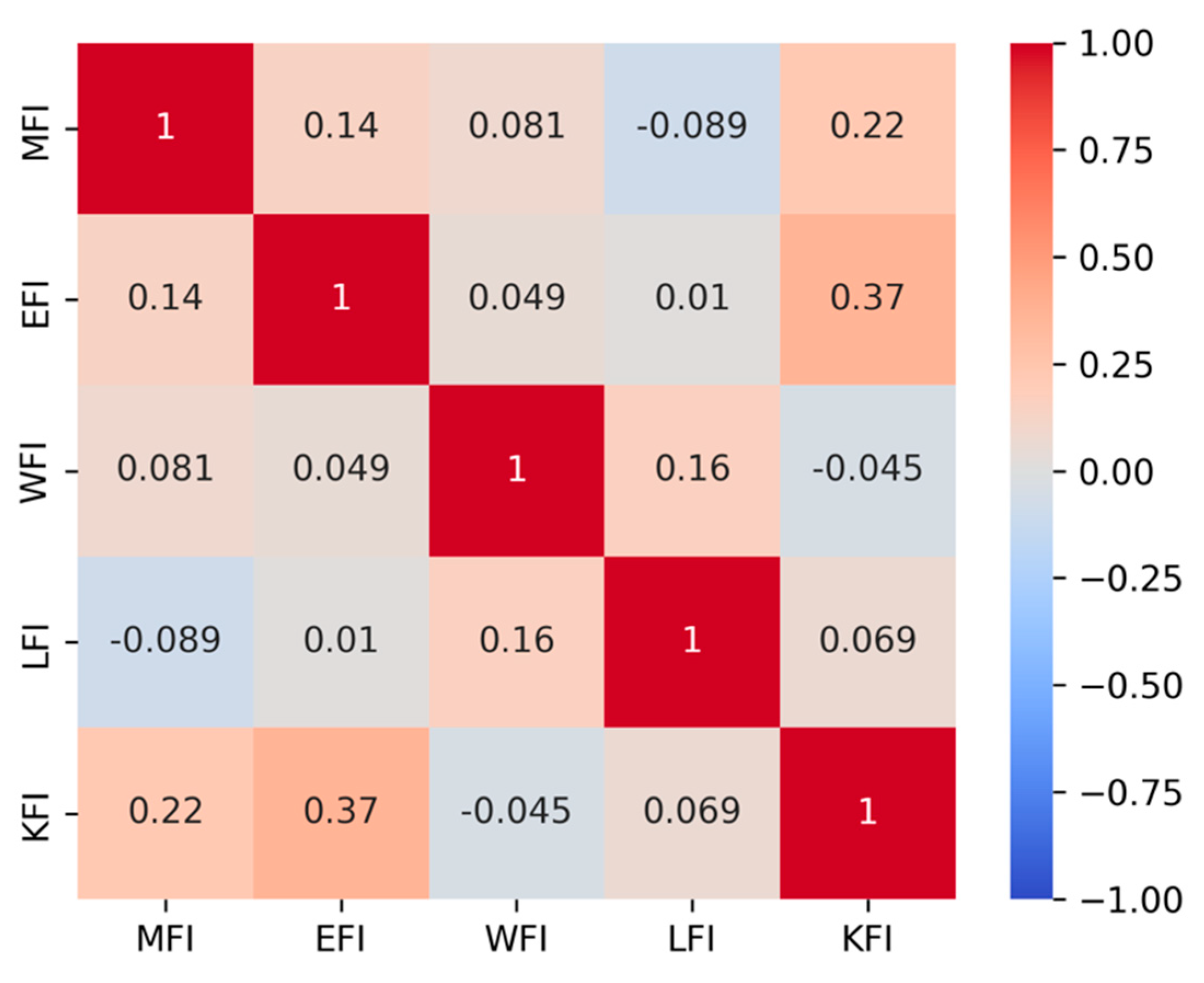
Figure A2.
Gap-statistic curve for k = 1–6. The curve increases monotonically and levels off after k = 4, indicating limited structural improvement for higher cluster counts.
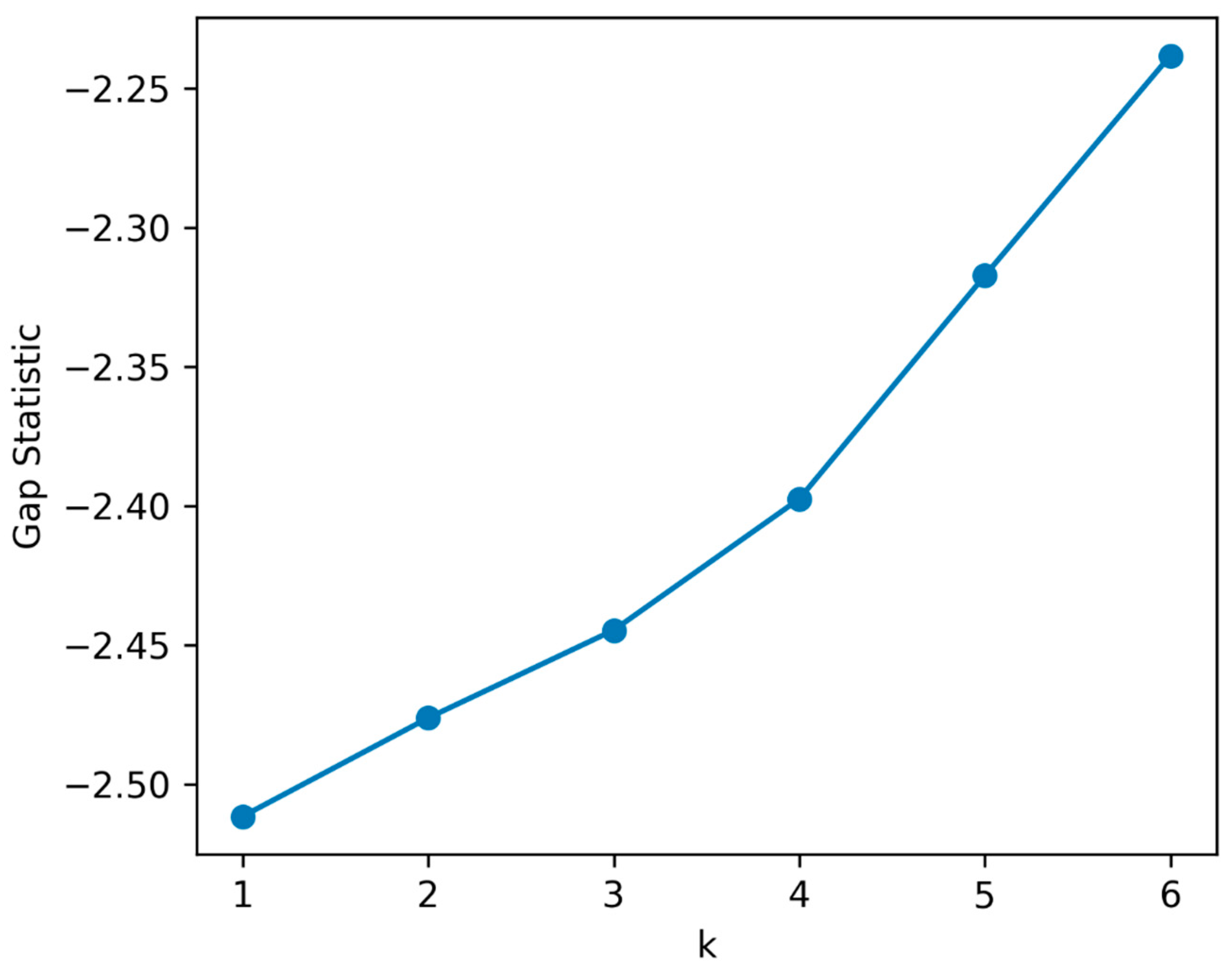
Table A4.
Gap-statistic values and incremental improvements.
Table A5.
Full multinomial logistic regression of cluster membership on contextual predictors (re-estimated; reference category: Cluster 1, Low-Flow; n = 68).
References
- Chertow, M.R. “Uncovering” industrial symbiosis. J. Ind. Ecol. 2007, 11, 11–30. [Google Scholar] [CrossRef] [Scilit]
- Park, H.S.; Rene, E.R.; Choi, S.M.; Chiu, A.S.F. Strategies for sustainable development of industrial park in Ulsan, South Korea—From spontaneous evolution to systematic expansion of industrial symbiosis. J. Environ. Manag. 2008, 87, 1–13. [Google Scholar] [CrossRef] [Scilit] [PubMed]
- Baas, L.W.; Boons, F.A. The introduction and dissemination of the industrial symbiosis projects in the Rotterdam Harbour and Industry Complex. Int. J. Environ. Technol. Manag. 2007, 7, 551–577. [Google Scholar] [CrossRef] [Scilit]
- Pozo, C.; Galán-Martín, Á.; Reiner, D.M.; Mac Dowell, N.; Guillén-Gosálbez, G. Equity in allocating carbon dioxide removal quotas. Nat. Clim. Change 2018, 8, 640–646. [Google Scholar] [CrossRef] [Scilit]
- Henriques, J.; Ferrão, P.; Castro, R.; Azevedo, J. Industrial symbiosis: A sectoral analysis on enablers and barriers. Sustainability 2021, 13, 1723. [Google Scholar] [CrossRef] [Scilit]
- Palagonia, N.; Gusmerotti, N.M.; Colucci, M.; Frey, M. Assessing the sustainability performance of industrial symbiosis: A systematic review and research agenda. Resour. Conserv. Recycl. 2025, 192, 106924. [Google Scholar] [CrossRef] [Scilit]
- Palagonia, M.; Ferri, L.; Tufano, V.; D’Amico, S.; Ioppolo, G.; Fazzini, M. Spanning the industrial symbiosis within the circular economy: Critical issues and future research agenda. J. Ind. Ecol. 2025. early view. [Google Scholar] [CrossRef] [Scilit]
- Chertow, M.R. Industrial symbiosis: Literature and taxonomy. Annu. Rev. Energy Environ. 2000, 25, 313–337. [Google Scholar] [CrossRef] [Scilit]
- Mirata, M. A business value framework for industrial symbiosis. J. Ind. Ecol. 2024, 28, 1287–1305. [Google Scholar] [CrossRef] [Scilit]
- Chertow, M.R.; Park, J. Scholarship and practice in industrial symbiosis: 1989–2014. In Taking Stock of Industrial Ecology; Clift, R., Druckman, A., Eds.; Springer: Berlin/Heidelberg, Germany, 2016; pp. 87–116. [Google Scholar] [CrossRef] [Scilit]
- Neves, A.; Godina, R.; Azevedo, S.G.; Matias, J.C.O. A comprehensive review of industrial symbiosis. J. Clean. Prod. 2020, 247, 119113. [Google Scholar] [CrossRef] [Scilit]
- Ehrenfeld, J.; Gertler, N. Industrial ecology in practice: The evolution of interdependence at Kalundborg. J. Ind. Ecol. 1997, 1, 67–79. [Google Scholar] [CrossRef] [Scilit]
- Chertow, M.R.; Ehrenfeld, J. Organising self-organising systems: Toward a theory of industrial symbiosis. J. Ind. Ecol. 2012, 16, 13–27. [Google Scholar] [CrossRef] [Scilit]
- LIAISE COST Action. D1.1 State-Of-the-Art Report on the Industrial Symbiosis Topic and Its Different Subareas (CA22110). European Cooperation in Science and Technology (COST), 2024. Available online: https://www.liaise-action.eu/wp-content/uploads/2024/11/D1.1-State-of-the-art-report-on-Industrial-Symbiosis-topic-and-its-different-subareas_v1.pdf (accessed on 1 February 2026).
- Boons, F.; Chertow, M.; Park, J.; Spekkink, W.; Shi, H. Industrial symbiosis dynamics and the problem of equivalence: Proposal for a comparative framework. J. Ind. Ecol. 2017, 21, 938–952. [Google Scholar] [CrossRef] [Scilit]
- Kosmol, L.; Otto, D. Industrial symbiosis: A systematic review of past decades. Sustainability 2020, 12, 7033. [Google Scholar] [CrossRef] [Scilit]
- Boons, F.; Spekkink, W.; Jiao, W. A process perspective on industrial symbiosis: Theory, methodology, and application. J. Ind. Ecol. 2014, 18, 341–355. [Google Scholar] [CrossRef] [Scilit]
- Fraccascia, L.; Giannoccaro, I. What, where, and how measuring industrial symbiosis: A reasoned taxonomy of relevant indicators. Resour. Conserv. Recycl. 2020, 157, 104799. [Google Scholar] [CrossRef] [Scilit]
- Kastner, C.A.; Lau, K.H.; Kraft, M. Quantitative tools for cultivating symbiosis in industrial parks: A literature review. Appl. Energy 2015, 155, 599–612. [Google Scholar] [CrossRef] [Scilit]
- Halvorsen, M.; Kierkegaard, M.; Harms-Ringdahl, K.; Peolsson, A.; Dedering, Å. Dimensions Underlying Measures of Disability, Personal Factors, and Health Status in Cervical Radiculopathy. Medicine 2015, 94, e999. [Google Scholar] [CrossRef] [Scilit] [PubMed]
- Meyer, A.D.; Tsui, A.S.; Hinings, C.R. Configurational approaches to organizational analysis. Acad. Manag. J. 1993, 36, 1175–1195. [Google Scholar] [CrossRef] [Scilit]
- Fiss, P.C. A set-theoretic approach to organizational configurations. Acad. Manag. Rev. 2007, 32, 1180–1198. [Google Scholar] [CrossRef] [Scilit]
- Fiss, P.C. Building better causal theories: A fuzzy set approach to typologies in organization research. Acad. Manag. J. 2011, 54, 393–420. [Google Scholar] [CrossRef] [Scilit]
- Ragin, C.C. Redesigning Social Inquiry: Fuzzy Sets and Beyond; University of Chicago Press: Chicago, IL, USA, 2008. [Google Scholar]
- Gresov, C.; Drazin, R. Equifinality: Functional equivalence in organization design. Acad. Manag. Rev. 1997, 22, 403–428. [Google Scholar] [CrossRef] [Scilit]
- Doty, D.H.; Glick, W.H.; Huber, G.P. Fit, equifinality, and organizational effectiveness: A test of two configurational theories. Acad. Manag. J. 1993, 36, 1196–1250. [Google Scholar] [CrossRef] [Scilit]
- Adner, R. Ecosystem as structure: An actionable construct for strategy. J. Manag. 2017, 43, 39–58. [Google Scholar] [CrossRef] [Scilit]
- Misangyi, V.F.; Greckhamer, T.; Furnari, S.; Fiss, P.C.; Crilly, D.; Aguilera, R. Embracing causal complexity: The emergence of a neo-configurational perspective. J. Manag. 2017, 43, 255–282. [Google Scholar] [CrossRef] [Scilit]
- Lüdeke-Freund, F.; Gold, S.; Bocken, N.M.P. A review and typology of circular economy business model patterns. J. Ind. Ecol. 2019, 23, 36–61. [Google Scholar] [CrossRef] [Scilit]
- Donaldson, L. The Contingency Theory of Organizations; Sage Publications: Thousand Oaks, CA, USA, 2001. [Google Scholar]
- Jacobsen, N.B. Industrial symbiosis in Kalundborg, Denmark: A quantitative assessment of economic and environmental aspects. J. Ind. Ecol. 2006, 10, 239–255. [Google Scholar] [CrossRef] [Scilit]
- Baas, L. Planning and uncovering industrial symbiosis: Comparing the Rotterdam and Östergötland regions. Bus. Strategy Environ. 2011, 20, 428–440. [Google Scholar] [CrossRef] [Scilit]
- Boons, F.; Spekkink, W.; Mouzakitis, Y. The dynamics of industrial symbiosis: A proposal for a conceptual framework based upon a comprehensive literature review. J. Clean. Prod. 2011, 19, 905–911. [Google Scholar] [CrossRef] [Scilit]
- Baas, L. Industrial symbiosis in the Rotterdam Harbour and Industry Complex: Reflections on the interconnection of the techno-sphere with the social system. Bus. Strategy Environ. 2008, 17, 330–340. [Google Scholar] [CrossRef] [Scilit]
- Korhonen, J.; Snäkin, J.P. Analysing the evolution of industrial ecosystems: Concepts and application. Ecol. Econ. 2005, 52, 169–186. [Google Scholar] [CrossRef] [Scilit]
- Taddeo, R.; Simboli, A.; Morgante, A. Implementing eco-industrial parks in existing clusters. Findings from a historical Italian chemical site. J. Clean. Prod. 2012, 33, 22–29. [Google Scholar] [CrossRef] [Scilit]
- Domenech, T.; Davies, M. Structure and morphology of industrial symbiosis networks: The case of Kalundborg. Procedia Soc. Behav. Sci. 2011, 10, 79–89. [Google Scholar] [CrossRef] [Scilit]
- Jensen, P.D.; Basson, L.; Hellawell, E.E.; Bailey, M.R.; Leach, M. Quantifying ‘geographic proximity’: Experiences from the United Kingdom’s National Industrial Symbiosis Programme. Resour. Conserv. Recycl. 2011, 55, 703–712. [Google Scholar] [CrossRef] [Scilit]
- Mattila, T.J.; Pakarinen, S.; Sokka, L. Quantifying the total environmental impacts of an industrial symbiosis—A comparison of process-, hybrid and input–output life cycle assessment. Environ. Sci. Technol. 2012, 44, 4309–4314. [Google Scholar] [CrossRef] [Scilit]
- Dong, L.; Fujita, T.; Zhang, H.; Dai, M.; Fujii, M.; Ohnishi, S.; Geng, Y.; Liu, Z. Promoting low-carbon city through industrial symbiosis: A case in China by applying HPIMO model. Energy Policy 2013, 61, 864–873. [Google Scholar] [CrossRef] [Scilit]
- Golev, A.; Corder, G.D.; Giurco, D.P. Barriers to industrial symbiosis: Insights from the use of a maturity grid. J. Ind. Ecol. 2015, 19, 141–153. [Google Scholar] [CrossRef] [Scilit]
- Ashton, W. Understanding the organisation of industrial ecosystems: A social network approach. J. Ind. Ecol. 2008, 12, 34–51. [Google Scholar] [CrossRef] [Scilit]
- Aid, G.; Brandt, N.; Lysenkova, M.; Smedberg, N. Expanding industrial symbiosis in Sweden. Environ. Innov. Soc. Transit. 2017, 26, 73–84. [Google Scholar] [CrossRef] [Scilit]
- Grant, G.B.; Seager, T.P.; Massard, G.; Nies, L. Information and communication technology for industrial symbiosis. J. Ind. Ecol. 2010, 14, 740–753. [Google Scholar] [CrossRef] [Scilit]
- Zhu, Q.; Lowe, E.A.; Wei, Y.A.; Barnes, D. Industrial symbiosis in China: A case study of the Guitang Group. J. Ind. Ecol. 2007, 11, 31–42. [Google Scholar] [CrossRef] [Scilit]
- van Berkel, R.; Fujita, T.; Hashimoto, S.; Geng, Y. Industrial and urban symbiosis in Japan: Analysis of the Eco-Town program 1997–2006. J. Environ. Manag. 2009, 90, 1544–1556. [Google Scholar] [CrossRef] [Scilit]
- Chertow, M.R.; Miyata, Y. Assessing collective firm behaviour: Comparing industrial symbiosis with possible alternatives for individual companies in Oahu, HI. Bus. Strategy Environ. 2011, 20, 266–280. [Google Scholar] [CrossRef] [Scilit]
- Boons, F.; Howard-Grenville, J. (Eds.) The Social Embeddedness of Industrial Ecology; Edward Elgar Publishing: Cheltenham, UK, 2009. [Google Scholar]
- Mirata, M.; Emtairah, T. Industrial symbiosis networks and the contribution to environmental innovation: The case of the Landskrona industrial symbiosis programme. J. Clean. Prod. 2005, 13, 993–1002. [Google Scholar] [CrossRef] [Scilit]
- Gibbs, D.; Deutz, P. Reflections on implementing industrial ecology through eco-industrial park development. J. Clean. Prod. 2007, 15, 1683–1695. [Google Scholar] [CrossRef] [Scilit]
- Costa, I.; Ferrão, P. A case study of industrial symbiosis development using a middle-out approach. J. Clean. Prod. 2010, 18, 984–992. [Google Scholar] [CrossRef] [Scilit]
- Posch, A. Industrial recycling networks as starting points for broader sustainability-oriented cooperation? J. Ind. Ecol. 2010, 14, 242–257. [Google Scholar] [CrossRef] [Scilit]
- Hewes, A.K.; Lyons, D.I. The humanistic side of eco-industrial parks: Champions and the role of trust. Reg. Stud. 2008, 42, 1329–1342. [Google Scholar] [CrossRef] [Scilit]
- Shi, H.; Chertow, M.; Song, Y. Developing country experience with eco-industrial parks: A case study of the Tianjin Economic-Technological Development Area in China. J. Clean. Prod. 2010, 18, 191–199. [Google Scholar] [CrossRef] [Scilit]
- Sakr, D.; Baas, L.; El-Haggar, S.; Huisingh, D. Critical success and limiting factors for eco-industrial parks: Global trends and Egyptian context. J. Clean. Prod. 2011, 19, 1158–1169. [Google Scholar] [CrossRef] [Scilit]
- Laybourn, P.; Morrissey, M. National Industrial Symbiosis Programme: The Pathway to a Low Carbon Sustainable Economy; International Synergies Ltd.: Birmingham, UK, 2009. [Google Scholar]
- Sokka, L.; Pakarinen, S.; Melanen, M. Industrial symbiosis contributing to more sustainable energy use—An example from the forest industry in Kymenlaakso, Finland. J. Clean. Prod. 2011, 19, 285–293. [Google Scholar] [CrossRef] [Scilit]
- Behera, S.K.; Kim, J.H.; Lee, S.Y.; Suh, S.; Park, H.S. Evolution of ‘designed’ industrial symbiosis networks in the Ulsan eco-industrial park: ‘Research and development into business’ as the enabling framework. J. Clean. Prod. 2012, 29–30, 103–112. [Google Scholar] [CrossRef] [Scilit]
- Taddeo, R.; Simboli, A.; Ioppolo, G.; Morgante, A. Industrial symbiosis, networking and innovation: The potential role of innovation poles. Sustainability 2017, 9, 169. [Google Scholar] [CrossRef] [Scilit]
- Ayres, R.U.; Simonis, U.E. Industrial Metabolism: Restructuring for Sustainable Development; United Nations University Press: Tokyo, Japan, 1994. [Google Scholar]
- Burns, T.; Stalker, G.M. The Management of Innovation; Tavistock Publications: London, UK, 1961. [Google Scholar]
- Miller, D. Configurations of strategy and structure: Towards a synthesis. Strateg. Manag. J. 1986, 7, 233–249. [Google Scholar] [CrossRef] [Scilit]
- Jacobides, M.G.; Cennamo, C.; Gawer, A. Towards a theory of ecosystems. Strateg. Manag. J. 2018, 39, 2255–2276. [Google Scholar] [CrossRef] [Scilit]
- Miles, R.E.; Snow, C.C. Organizational Strategy, Structure, and Process; McGraw-Hill: Columbus, OH, USA, 1978. [Google Scholar]
- Hambrick, D.C. Some tests of the effectiveness and functional attributes of Miles and Snow’s strategic types. Acad. Manag. J. 1983, 26, 5–26. [Google Scholar] [CrossRef] [Scilit]
- Mintzberg, H. The Structuring of Organizations; Prentice-Hall: Saddle River, NJ, USA, 1979. [Google Scholar]
- Milgrom, P.; Roberts, J. Complementarities and fit: Strategy, structure, and organizational change in manufacturing. J. Account. Econ. 1995, 19, 179–208. [Google Scholar] [CrossRef] [Scilit]
- Zott, C.; Amit, R. The fit between product market strategy and business model: Implications for firm performance. Strateg. Manag. J. 2008, 29, 1–26. [Google Scholar] [CrossRef] [Scilit]
- Foss, N.J.; Saebi, T. Fifteen years of research on business model innovation: How far have we come, and where should we go? J. Manag. 2017, 43, 200–227. [Google Scholar] [CrossRef] [Scilit]
- Denzin, N.K. The Research Act: A Theoretical Introduction to Sociological Methods, 2nd ed.; McGraw-Hill: Columbus, OH, USA, 1978. [Google Scholar]
- Rousseeuw, P.J. Silhouettes: A graphical aid to the interpretation and validation of cluster analysis. J. Comput. Appl. Math. 1987, 20, 53–65. [Google Scholar] [CrossRef] [Scilit]
- Tibshirani, R.; Walther, G.; Hastie, T. Estimating the number of clusters in a data set via the gap statistic. J. R. Stat. Soc. Ser. B 2001, 63, 411–423. [Google Scholar] [CrossRef] [Scilit]
- Hennig, C. Cluster-wise assessment of cluster stability. Comput. Stat. Data Anal. 2007, 52, 258–271. [Google Scholar] [CrossRef] [Scilit]
- Breiman, L. Random forests. Mach. Learn. 2001, 45, 5–32. [Google Scholar] [CrossRef] [Scilit]
- Cox, D.R. Regression models and life-tables. J. R. Stat. Soc. Ser. B 1972, 34, 187–202. [Google Scholar] [CrossRef] [Scilit]
- Long, J.S. Regression Models for Categorical and Limited-Dependent Variables; Sage Publications: Thousand Oaks, CA, USA, 1997. [Google Scholar]
- Aiken, L.S.; West, S.G. Multiple Regression: Testing and Interpreting Interactions; Sage Publications: Thousand Oaks, CA, USA, 1991. [Google Scholar]
- Cohen, J. Statistical Power Analysis for the Behavioural Sciences, 2nd ed.; Lawrence Erlbaum Associates: Mahwah, NJ, USA, 1988. [Google Scholar]
- McFadden, D. Quantitative methods for analysing travel behaviour of individuals: Some recent developments. In Cowles Foundation Discussion Papers; Yale University: New Haven, CT, USA, 1977. [Google Scholar]
- Liashenko, O.; Nagara, M. Replication Dataset and Analytical Workflow for “Flow-Based Configurations and Contextual Performance of Industrial Symbiosis Ecosystems”; Zenodo: Geneva, Switzerland, 2025. [Google Scholar] [CrossRef]
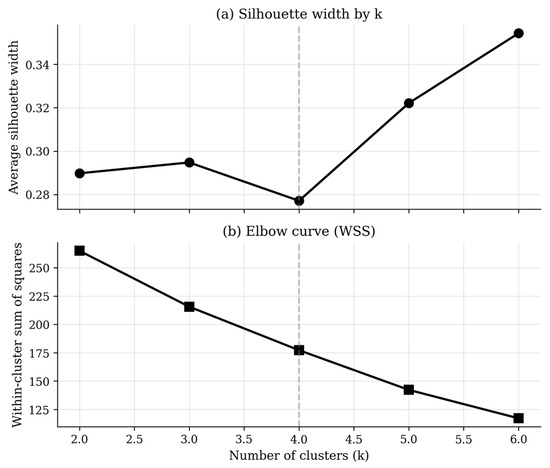
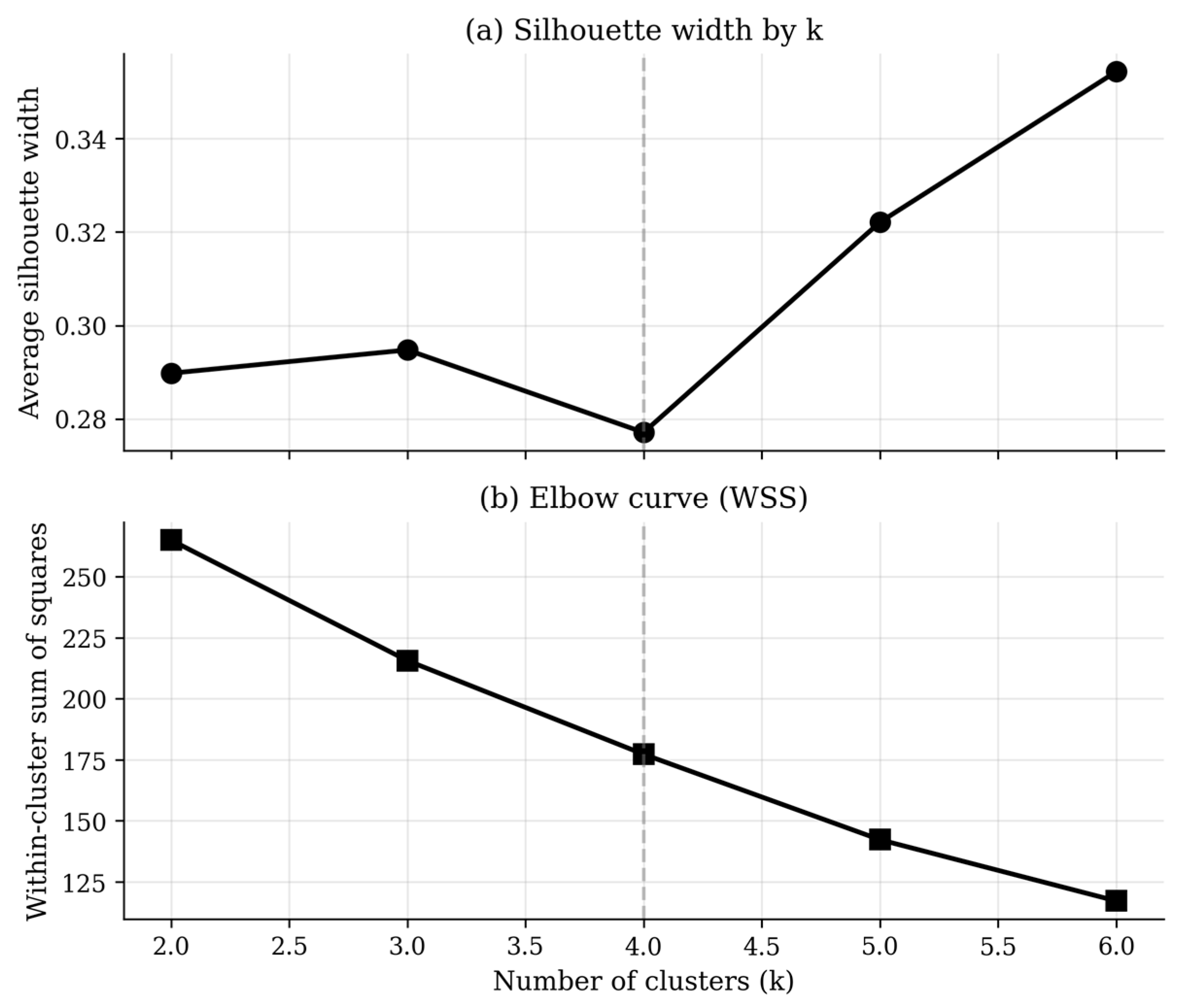
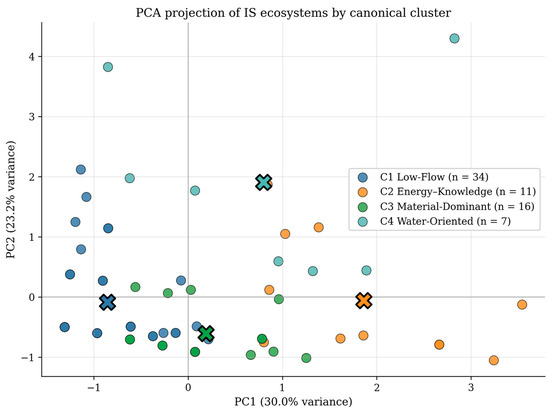
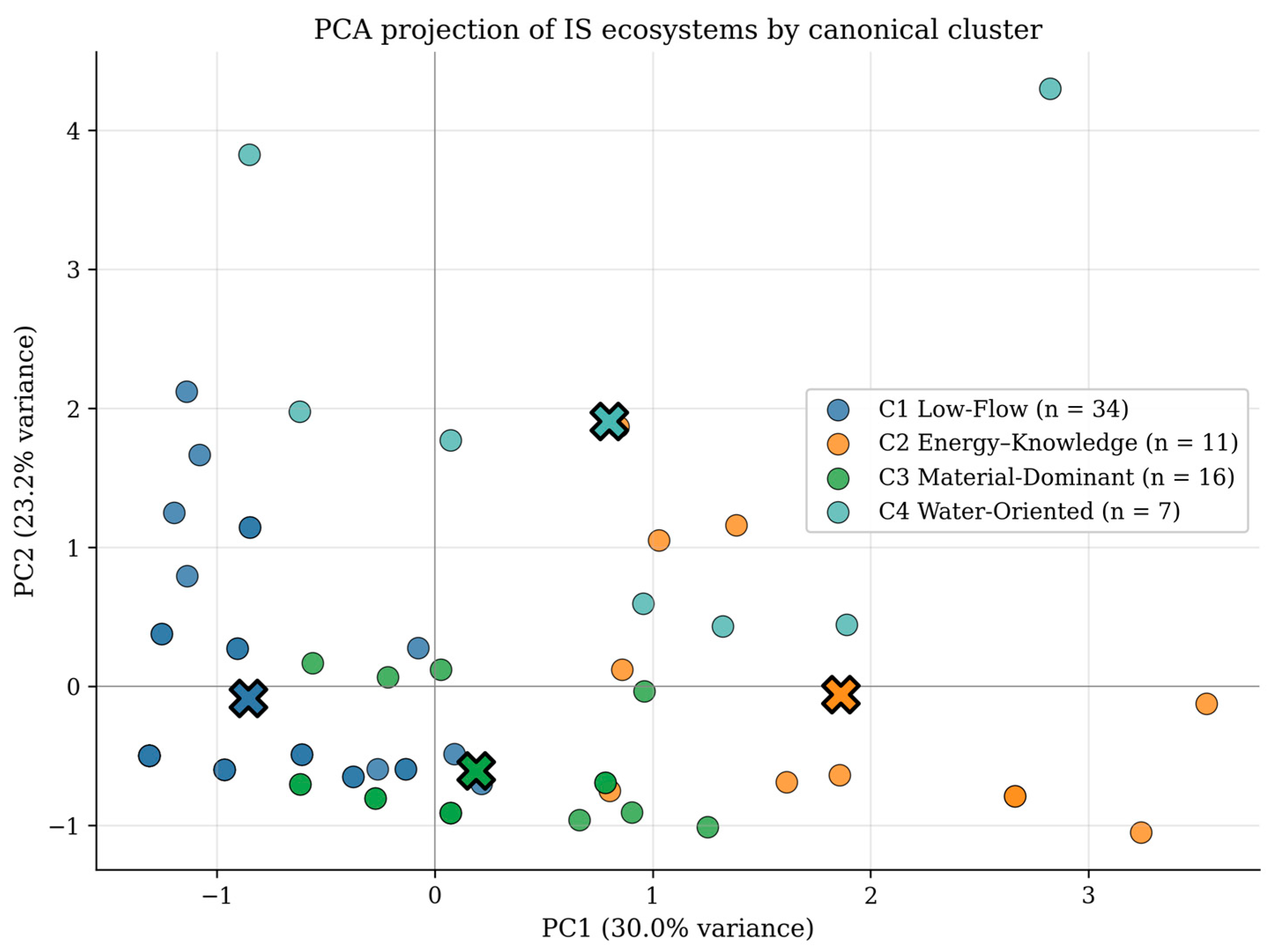
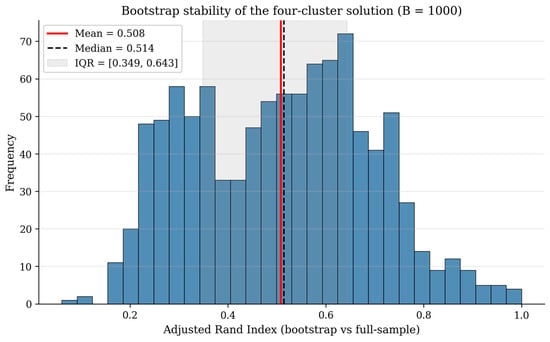
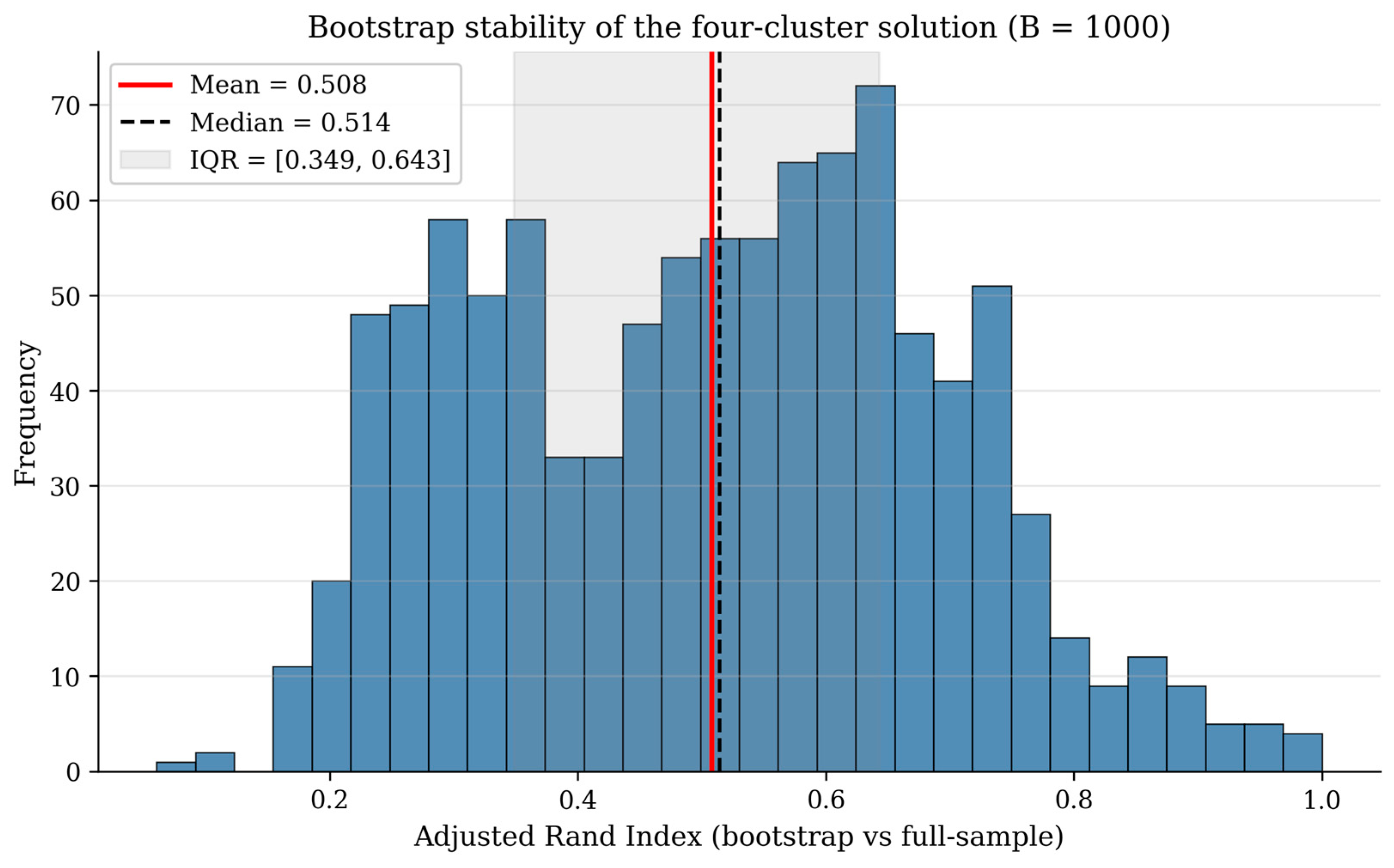
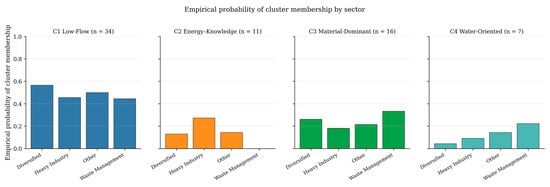
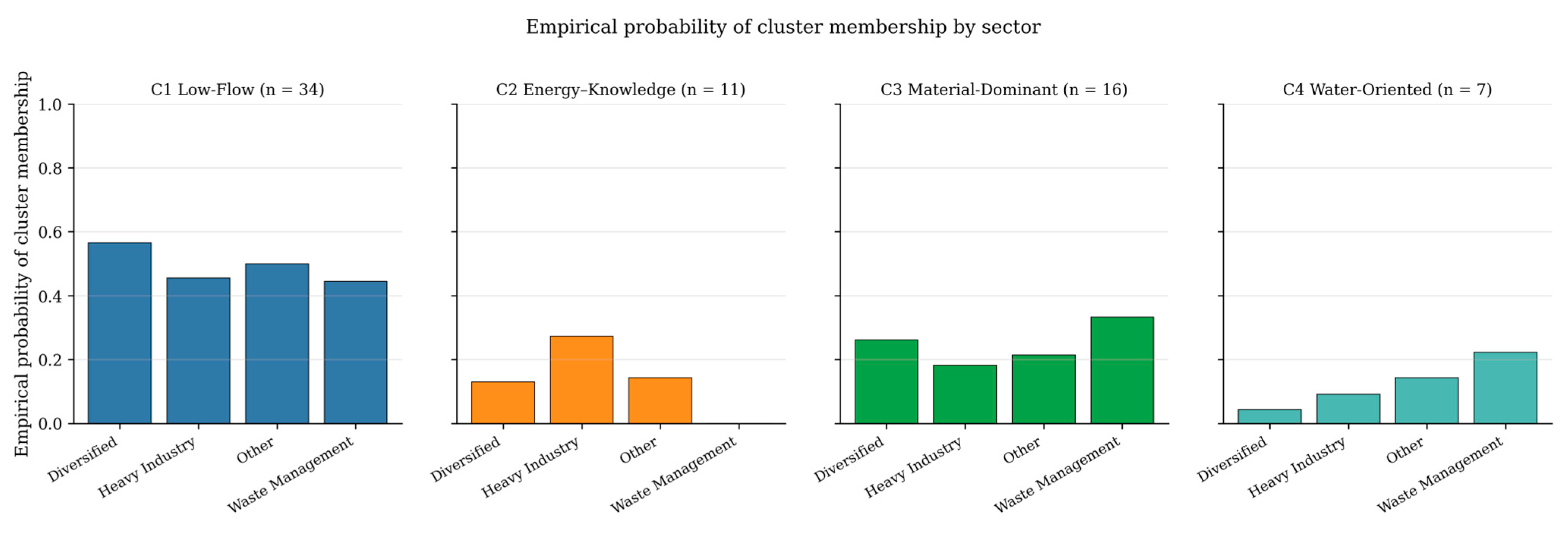
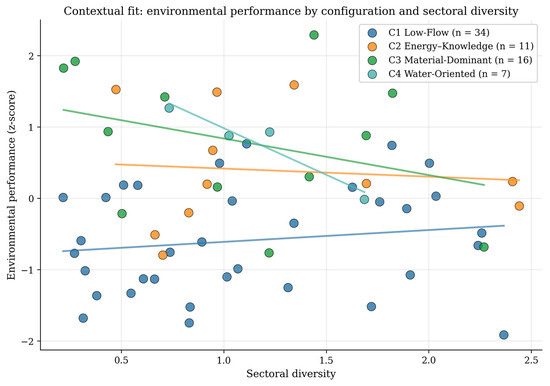
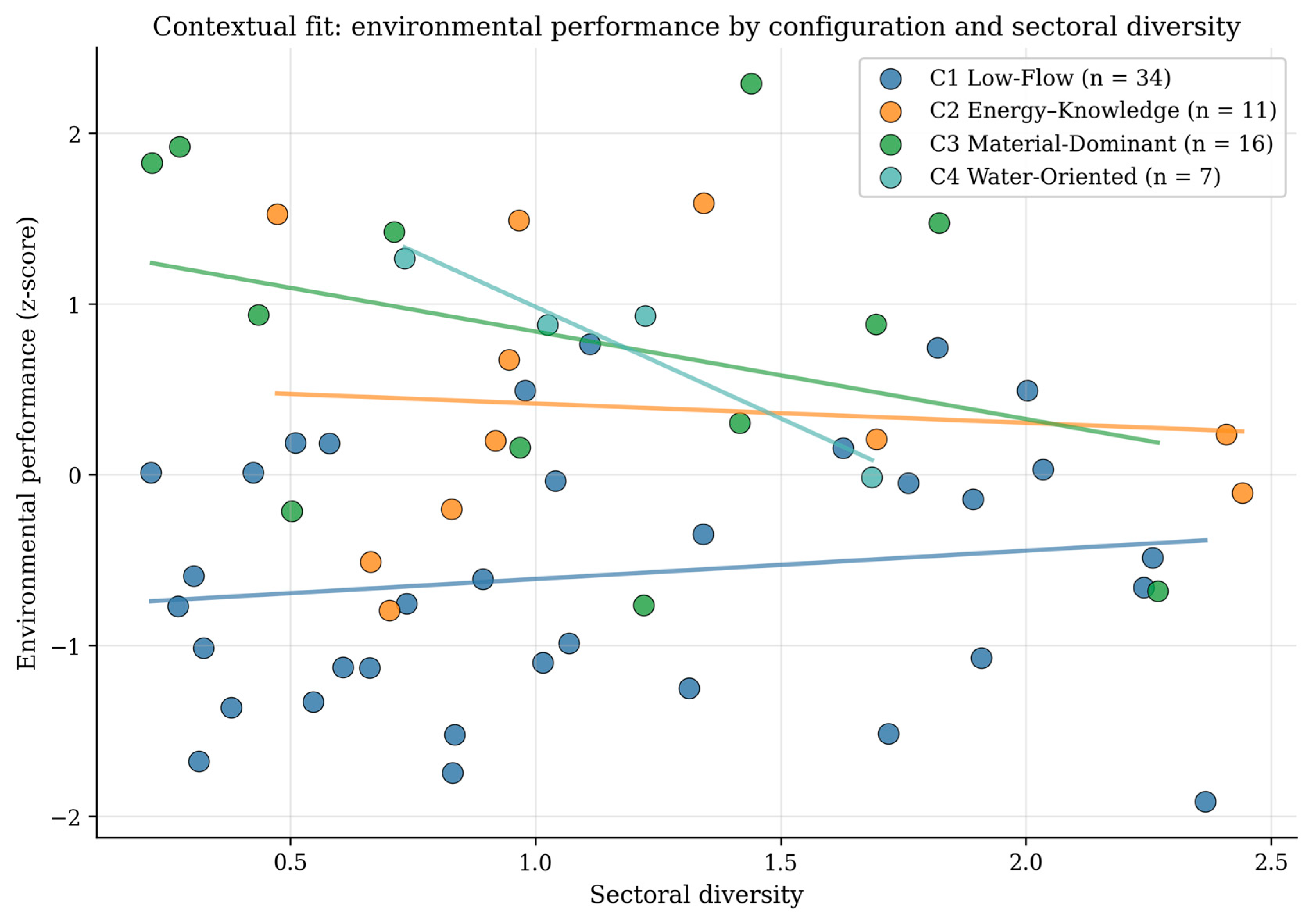
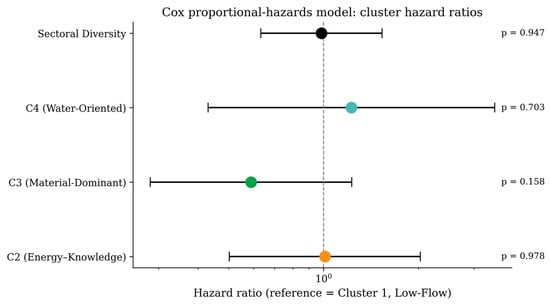
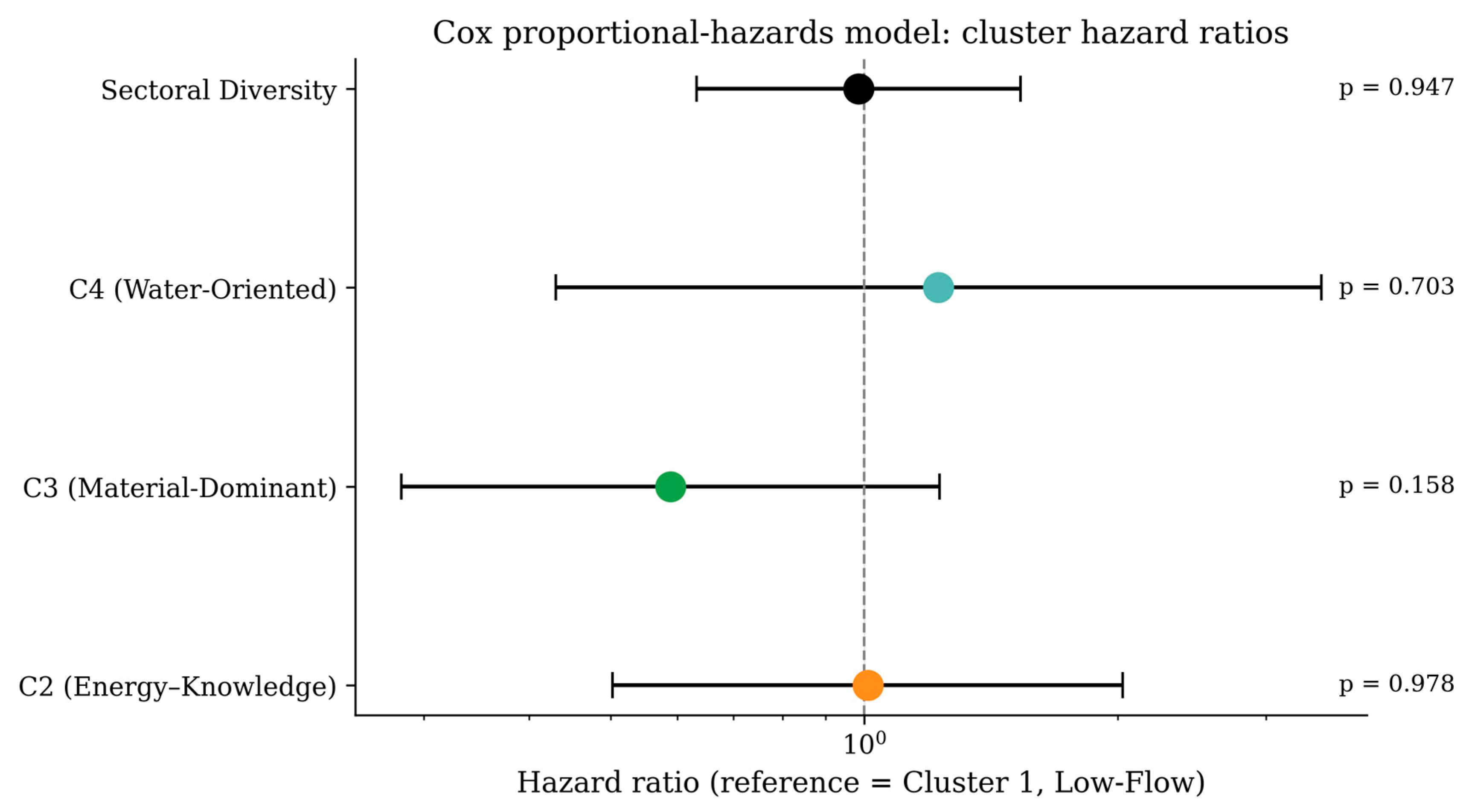

Disclaimer/Publisher’s Note: The statements, opinions and data contained in all publications are solely those of the individual author(s) and contributor(s) and not of MDPI and/or the editor(s). MDPI and/or the editor(s) disclaim responsibility for any injury to people or property resulting from any ideas, methods, instructions or products referred to in the content. |
© 2026 by the authors. Licensee MDPI, Basel, Switzerland. This article is an open access article distributed under the terms and conditions of the Creative Commons Attribution (CC BY) license.