


Abstract
In digital marketing, consumers often face decision dilemmas due to either excessive or insufficient green information. How can firms manage green information load to enhance green purchase intention? Grounded in the principle of least effort and uncertainty reduction theory, this study examines the impact of green information load on green purchase intention and its underlying mechanisms. Results from six experiments show that: (1) Green information load positively influences green purchase intention; (2) Information credibility mediates this relationship; (3) Digital literacy moderates the effect of green information load on credibility, and this moderating effect is context-dependent: negative under low-load levels, positive under medium-load levels, and insignificant under high-load levels; (4) Green self-efficacy positively moderates the effect of credibility on purchase intention. Taken together, these findings suggest a nonlinear moderating role of digital literacy, offering a potential extension to cognitive bias theory, and provide preliminary practical guidance for businesses seeking to tailor information strategies to populations with varying levels of digital literacy.
1. Introduction
In today’s highly digitalized world, consumers are immersed in a deluge of green information [1]. Confronted with abundant and specialized information about green products on e-commerce platforms and social media, consumers increasingly struggle to identify relevant content and make informed decisions, often experiencing information overload [2,3]. This reality poses challenges for corporate green marketing: How should the “volume” of product information be managed? Insufficient information may fail to build trust, whereas excessive information can trigger aversion and raise suspicions of “greenwashing” [4]. Within this context, the total quantity of information related to a product’s environmental attributes—termed green information load [3]—serves as one of consumers’ most intuitive perceptual cues [5]. Therefore, understanding how green information load influences purchase intention is crucial for optimizing marketing strategies and advancing theoretical research.
However, the underlying mechanisms by which green information load influences consumer decisions remain insufficiently explained. The current literature on green consumption predominantly focuses on information content, such as green attribute centrality [6], types of green advertising messages [7], green advertising styles [8], green advertising appeals [9], and product transformation salience [10]. By contrast, research on the quantitative dimension of information remains underdeveloped. More critically, even among studies that do examine information load, the findings regarding its effect on decision outcomes remain mixed—for instance, between perspectives proposing an “optimal range” [11] and those suggesting “more is better” [12]—implying that significant boundary conditions govern its impact. To reconcile this theoretical tension, it is imperative to identify these specific boundary conditions. Furthermore, prior work indicates that differences in individuals’ information-processing capacities lead to divergent behavioral responses, which may moderate or even alter the relationship between information load and decision-making [3]. In the context of modern e-commerce, emerging literature has increasingly recognized digital literacy as a crucial manifestation of this capacity. Recent studies demonstrate its power to help consumers navigate complex eco-claims, build green trust, and translate environmental awareness into actual purchases [13,14,15]. However, this growing body of research predominantly focuses on information quality or internal psychological states, leaving its interaction with the quantitative dimension of external stimuli (i.e., information load) unexplored. Therefore, this study introduces digital literacy [16]—the comprehensive ability to critically process information in digital environments—as a key moderator to address these issues. Building on this, this study proposes a nonlinear moderating mechanism, which differs from previous research that typically assumes linear moderating effects of individual capabilities.
Grounded in the principle of least effort and uncertainty reduction theory, this study adopts the relatively underexplored perspective of green information load. Using information credibility as a mediator, it investigates how individual differences in digital literacy moderate the effect of green information load on credibility, which in turn influences green purchase intention. The study also examines the moderating role of green self-efficacy. Specifically, across five studies: Experiment 1 tests the impact of green information load on green purchase intention; Experiment 2 examines whether digital literacy directly moderates this relationship; Experiment 3 verifies the mediating role of information credibility and the moderated mediation effect of digital literacy; Experiment 4 supports the moderating role of green self-efficacy; Experiment 5 employs a cross-sectional design to examine variations in consumers’ green purchase intention across different levels of green information load.
Theoretically, this research contributes in two key ways. First, it helps reconcile the theoretical tension between “more is better” and the “information overload” perspectives by revealing a context-dependent, nonlinear moderating role of digital literacy. Moving beyond traditional linear paradigms that assume a uniform effect of individual traits, this study shows that the impact of digital literacy shifts from negative under low load to positive under medium load and becomes insignificant under high load. This nonlinear perspective offers a useful lens for understanding heterogeneous consumer responses in green information processing. Second, it enriches the literature on green information load by establishing how the “quantity heuristic” operates as a baseline mechanism for credence goods, while precisely delineating its boundary conditions. Practically, the findings offer preliminary insights that may inform the optimization of green product information presentation. Based on these findings, firms may consider tailoring the amount of green information to consumers’ digital literacy levels: for instance, providing streamlined information for low-literacy segments and moderately detailed information for high-literacy segments. Additionally, efforts to enhance perceived information credibility and to strengthen consumers’ green self-efficacy may serve as complementary pathways to promote green consumption. These suggestions, however, are derived from controlled experimental settings and warrant further validation in real-world contexts.
2. Literature Review and Hypothesis Development
2.1. Green Information Load
Green information load denotes the total volume of information describing a product’s environmental attributes—a construct derived from the broader concept of product information load [3]. Its content is multifaceted, encompassing metrics of environmental contribution (e.g., raw-material sustainability, packaging recyclability) as well as comparative information framed as “gains and losses” (e.g., energy savings, resource waste from non-environmentally friendly alternatives) [17]. Crucially, it serves as the direct information source for consumers’ perception of a product’s green attributes [5].
Current research on green information load presents two conflicting perspectives regarding its effect on consumer purchase intention. The first perspective advocates an “optimal range” [11]. Proponents of this view argue that while a medium information load can effectively reduce consumers’ perceived risk and establish green trust by conveying transparency and professionalism [3], exceeding an individual’s cognitive-processing threshold induces cognitive fatigue. Consequently, excessive information can backfire; consumers may defensively interpret it as “greenwashing”—a deceptive tactic to mask substantive shortcomings with overwhelming amounts of data—ultimately eroding credibility [2,18,19].
In sharp contrast, a competing perspective suggests a “more is better” approach [12]. From this viewpoint, a higher volume of green information is generally treated as a positive signal of a product’s superiority. Instead of carefully scrutinizing every detail, consumers may equate greater information volume directly with stronger environmental commitment and product value, leading to more favorable evaluations as information load increases. Thus, a critical examination of the existing literature reveals a distinct theoretical tension regarding the efficacy of green information load, characterized by these two conflicting perspectives.
This tension highlights a critical theoretical gap: why does increased information load persuade in some contexts but trigger “greenwashing” suspicions in others? While existing literature suggests that the effects of information load are heavily contingent on context and individual processing capacity [20,21], prior studies have largely failed to identify the specific capabilities that resolve this tension in today’s digitalized green market. In reality, the point at which information transitions from a “helpful signal” to an “overwhelming burden” is highly dependent on individual processing capabilities.
To understand the baseline mechanism before accounting for these individual differences, consumers’ tendency to rely on heuristic information processing offers a key theoretical entry point. To conserve cognitive effort, individuals often depend on easily processed perceptual cues to make swift judgments when faced with complex decisions [22]. This tendency leads them to favor items with more positive information [23] or more elaborate appearances [24], even when such cues are not directly related to core product quality. Extending this logic, the sheer volume of green information may itself serve as a critical heuristic cue. Consumers may unconsciously employ a “quantity heuristic” [25], intuitively associating greater information load with more comprehensive and credible product descriptions. This heuristic perspective offers a plausible baseline mechanism for the “more is better” effect, yet it has not been systematically tested in the green consumption context.
In summary, a major shortcoming of existing research is the failure to systematically identify the boundary conditions that determine whether this “quantity heuristic” or “information overload” prevails. Furthermore, while prior studies acknowledge the general role of processing capacity [26], they have overlooked the core competency required in modern digital consumption. To address these gaps, this study introduces digital literacy [16]—the comprehensive ability to critically evaluate and integrate online information—as the key theoretical solution. By examining how digital literacy nonlinearly moderates the effect of green information load, this research can delineate when and for whom the persuasive benefits of information volume outweigh the cognitive costs, thereby offering a unified theoretical framework to resolve the conflicting findings in the literature.
2.2. Green Purchase Intention
Green purchase intention refers to the motivation consumers form based on environmental, economic, and social considerations. As a behavioral intention, it directly influences actual consumption behavior and serves as a key predictor of green consumption [27,28,29]. Existing research has primarily examined its antecedents along two pathways. First, one stream focuses on the content and presentational features of information, such as the centrality of a product’ s green attributes [6], types of green advertising messages [7], green advertising styles [8], green advertising appeals [9], and the salience of product transformation [10]. Second, other studies emphasize consumers’ intrinsic traits, including the influence of self-construal types [30], ethical obligation [31], future self-connection [32], face consciousness [33], and personal norms [34].
Recently, in response to the rapid digitalization of the consumer market, emerging literature has increasingly positioned digital literacy as a pivotal factor in green marketing effectiveness. For instance, Mume and Sun [13] found that, in an e-commerce context, digital literacy significantly moderates the relationship between green trust and purchase intention for sustainable products, indicating that consumers with higher digital competence are more capable of converting environmental trust into actual purchases. Extending this to a Theory of Planned Behavior (TPB) framework, He et al. [14] demonstrate that digital literacy not only directly enhances green purchase intention but also indirectly strengthens it by fostering positive attitudes and perceived behavioral control. Complementing these findings, Yang et al. [15] revealed a chain mediation pathway whereby digital literacy promotes green consumption behavior through enhanced environmental awareness and green self-efficacy. Collectively, these recent contributions underscore that digital literacy is not merely an access tool but a cognitive and motivational mechanism that shapes how consumers process, trust, and act upon green marketing signals.
While these recent advancements have significantly enriched our understanding of digital literacy as a cognitive and motivational driver, a crucial theoretical gap remains. Currently, this emerging stream of literature predominantly examines digital literacy in relation to evaluating information quality (e.g., verifying authenticity, building trust) or internal psychological states (e.g., attitudes, self-efficacy). However, it remains largely unexplored how digital literacy interacts with the fundamental quantitative dimension of external stimuli—specifically, green information load. When confronted with varying volumes of green claims, it is unclear whether high digital literacy helps mitigate the cognitive fatigue associated with “information overload” or if it amplifies the persuasive power of the “quantity heuristic”.
To bridge this specific gap, this study integrates green information load and digital literacy into a unified framework. By doing so, it moves beyond treating digital literacy merely as a tool for evaluating information accuracy or building general trust; instead, it examines how it fundamentally alters consumers’ psychological processing of varying volumes of green information.
2.3. The Influence of Green Information Load on Green Purchase Intention
The principle of least effort (PLE) posits that individuals naturally gravitate toward completing tasks with minimal cognitive exertion [35]. In consumption decisions, this principle often leads consumers to adopt heuristic processing, relying on easily accessible cues to make quick judgments [22]. For example, consumers may base their decisions on external signals such as expert endorsements [36], brand type [37], or ranking information [38]. During such heuristic processing, consumers are susceptible to representativeness bias—forming intuitive judgments based on salient and easily perceived features rather than investing effort to process all available information [39]. For instance, research shows that consumers may overestimate product quality based merely on positive advertising messages [23], and marketers can strategically leverage such cognitive biases to influence decisions [40].
In green consumption contexts, environmental attributes are inherently “credence qualities” that are highly abstract and difficult for consumers to verify directly even after purchase [41]. Consequently, consumers experience high levels of initial decision uncertainty. While excessive information theoretically poses a risk of information overload, in this specific context of credence goods, the fundamental psychological need for uncertainty reduction often takes precedence [42]. Green information load represents one of the most immediate sources of product perception before purchase [5] and functions as a cue for inferring a product’s environmental attributes [43]. To minimize cognitive effort, consumers are likely to use heuristic processing, treating green information load as a key signal of greenness [25]. In this process, the “quantity heuristic” dominates over the fear of information overload: a higher green information load is often equated with greater information completeness, lower perceived risk, and stronger environmental benefits, thereby enhancing product preference. Therefore, the persuasive benefits of increased information load may outweigh its potential cognitive costs at the aggregate level. Based on the preceding analysis, the following hypothesis is proposed:
H1.
Green information load positively influences green purchase intention.
2.4. Mediating Role of Information Credibility
Information credibility refers to an individual’s perception of the truthfulness of information [44]. Objectively, it comprises two dimensions: source credibility (trust in the information provider) and content credibility (acceptance of the informational content) [45]. However, as Flanagin and Metzger [46] note, credibility is not an inherent property of the information or its source; rather, it is a subjective judgment formed by the receiver, influenced by objective attributes of both the information and its source. From an information quality perspective, Fogg et al. [47] similarly characterize credibility as the perceived quality of information by its users. Consequently, consumers’ judgments of credibility may rely more on perceptions of informational characteristics than on in-depth verification of content veracity. In other words, consumers may base credibility assessments on cues that are not directly related to the factual accuracy of the product information.
Green information load can shape consumers’ subjective perceptions of product information, thereby influencing their credibility judgments. Although an excessive green information load can theoretically reduce consumers’ accuracy in assessing product sustainability [18], heuristic processing often leads consumers to interpret a higher load of green information as a signal of greater informational completeness and transparency. When consumers encounter increased green information, they tend to view the seller’s presentation as more comprehensive. This perception reduces their decision uncertainty and, consequently, boosts the information’s perceived credibility [3]. Thus, green information load enhances information credibility.
Enhanced information credibility, in turn, strengthens consumers’ willingness to engage in green consumption. Prior studies show that when consumers perceive green advertising content as authentic and credible, they are more inclined to purchase products with environmental labels [4]. Empirical research by Wang and Li [48] further indicates that perceived information authenticity positively predicts green purchase intention. This is because credible information reduces consumer skepticism toward green claims [8], thereby directly elevating green purchase intention.
Based on the above reasoning, an increase in green information load enhances consumers’ perceptions of information credibility, thereby strengthening green purchase intention. Therefore, the following hypothesis is proposed:
H2.
Information credibility mediates the relationship between green information load and green purchase intention.
2.5. The Moderating Role of Digital Literacy
Digital literacy refers to an individual’s comprehensive ability to access, understand, organize, and critically evaluate digital information [16]. Allan and Jan [49] expand this definition to include the cognitive, attitudinal, and practical competencies that enable people to use digital tools appropriately in specific contexts. In consumer decision-making, this competency shapes how individuals process information. Consumers with high digital literacy can systematically collect, integrate, and evaluate product information, cross-checking credibility across multiple sources. In contrast, those with low digital literacy tend to receive information passively and fragmentarily, relying heavily on single cues and allowing emotion and intuition to dominate their judgments of information authenticity [50,51].
According to uncertainty reduction theory, acquiring information is a primary way consumers reduce decision uncertainty [3]. Aligning with recent green marketing studies that identify digital literacy as a pivotal mechanism for building green trust and fostering sustainable behaviors [13,14,15], this study argues that its influence extends fundamentally to credibility assessments. In green consumption contexts, it not only directly enhances environmental risk awareness and green attitudes by improving consumers’ capacity to obtain, analyze, and integrate environmental information from multiple digital sources [52,53], but, more importantly, it also strengthens consumers’ ability to process information efficiently and critically assess its credibility, thereby boosting their confidence in the reliability of green information [54,55]. Consequently, differences in digital literacy are likely to influence how consumers perceive products with varying levels of green information load [56].
Specifically, under a low green information load, the limited amount of available information makes information overload unlikely regardless of digital literacy. However, higher digital literacy implies stronger information-gathering and evaluation skills, which may make individuals more sensitive to information gaps or inadequacies. In such cases, low information load may not reduce uncertainty [42] and could even amplify skepticism about the product’s green attributes, thereby lowering perceived credibility. Hence, higher digital literacy likely negatively moderates the effect of low green information load on credibility. We thus propose:
H3a.
Digital literacy negatively moderates the effect of low green information load on information credibility, thereby moderating the mediating role of information credibility.
Under a medium green information load, the relatively ample information provides a basis for credibility assessment. When digital literacy is low, limited processing capacity may still lead to information overload, causing consumers to resort to simple heuristics and limiting the trust-enhancing effect of additional information. As digital literacy increases, however, consumers’ improved discernment enables them to evaluate and filter information more effectively, reducing decision uncertainty and raising trust in the product’s green attributes [3]. Therefore, higher digital literacy should positively moderate the effect of medium green information load on credibility. Accordingly, we hypothesize:
H3b.
Digital literacy positively moderates the effect of medium green information load on information credibility, thereby moderating the mediating role of information credibility.
Under a high green information load, the cognitive cost of processing becomes substantial. Because human cognitive resources are finite, even individuals with high digital literacy will instinctively conserve cognitive effort when confronted with overwhelming volumes of green information, shifting from systematic to heuristic processing modes for rapid decision-making [57]. In this context, consumers with both high and low digital literacy simplistically equate “information load with credibility”. Their perceived levels of information credibility converge, no longer showing significant differentiation based on individual ability. Thus, enhanced digital literacy does not influence the perceived credibility of product information under high green information load. Therefore, the following hypothesis is proposed:
H3c.
Under high green information load conditions, the moderating effect of digital literacy on the mediating role of information credibility is not significant.
2.6. The Moderating Role of Green Self-Efficacy
Self-efficacy refers to an individual’s judgment of their capability to perform target behaviors; higher self-efficacy generally leads to better behavioral outcomes [58]. In the domain of green consumption, this concept extends to green self-efficacy [58,59], defined as consumers’ confidence in their ability to undertake environmentally friendly actions in specific contexts [60]. Research shows that enhancing green self-efficacy can effectively promote pro-environmental behavior—for example, by encouraging sustainable travel choices [61], narrowing the attitude–behavior gap in green consumption [62], and strengthening repurchase intention through improved experiential satisfaction [63].
Green self-efficacy may also moderate information processing. Grounded in social cognitive theory, self-efficacy shapes how individuals perceive and utilize external information [64]. When consumers have higher green self-efficacy, they are more likely to perceive credible green information as feasible and actionable guidance, thereby strengthening their behavioral intention [63]. Conversely, consumers with lower green self-efficacy may doubt their ability to act on such information, weakening the positive effect of credible messages even when the information itself is judged trustworthy. Hence, the following hypothesis is proposed:
H4.
Green self-efficacy positively moderates the effect of information credibility on green purchase intention, thereby moderating the mediating role of information credibility.
Figure 1 presents the proposed research model.
Figure 1.
The research model of the present study.
3. Research Design and Results Analysis
3.1. Pre-Experiment
The purpose of the pre-experiment is to select suitable stimuli for the formal experiments. The pre-experiment adopts the approach of stimulus selection from established practices in green consumption research [7]. First, through focus group discussions, seven green products closely related to consumers’ daily lives were preliminarily identified: recycled paper products, new-energy vehicles, biodegradable eco-friendly garbage bags, organic pure milk, mercury-free and cadmium-free alkaline batteries, fluorine-free inverter air conditioners, and natural laundry detergent. A pre-test was conducted on the Credamo platform with 30 participants to assess their accurate judgment and familiarity regarding the green products (1 = unfamiliar, 7 = familiar). Green product recognition was assessed via a two-item scale adapted from Lin and Chang [65], which includes: “I believe this product is environmentally friendly” and “I believe this product qualifies as a green product.”
Recognition rates were: recycled paper products (100%), new-energy vehicles (93.3%), biodegradable eco-friendly garbage bags (90%), organic pure milk (86.7%), mercury-free and cadmium-free alkaline batteries (80%), fluorine-free inverter air conditioners (76.7%), and natural laundry detergent (70%). Familiarity rankings were as follows: MNew Energy Vehicle = 5.13, MRenewable Tissue Paper = 4.93, MOrganic Pure Milk = 4.93, MBiodegradable Eco-friendly Garbage Bags = 4.7, MNatural Laundry Detergent = 4.33, MMercury-free and Cadmium-free Alkaline batteries = 4.2, MFluorine-freeinverter Air Conditioner = 3.8.
Based on recognition (≥70%) and familiarity (M ≥ 4) criteria, we selected five products for formal experiments: recycled paper products, new-energy vehicles, eco-friendly garbage bags, organic pure milk, and natural laundry detergent. These five products were randomly assigned to Experiments 1–5. The primary consideration is to use different product categories across experiments to reduce the risk that any observed effect is idiosyncratic to a single product type, thereby enhancing the generalizability of the findings. The two excluded products—mercury-free and cadmium-free alkaline batteries and fluorine-free inverter air conditioner—had lower familiarity scores (4.20 and 3.80, respectively), making them less suitable for ensuring consistent participant comprehension across conditions.
To ensure that observed effects could be attributed to the manipulation of green information load rather than to extraneous factors, the following control measures were implemented across all five experiments:
Price omission. To eliminate the confounding effect of price sensitivity, price information was omitted from all stimuli. Participants were explicitly instructed to focus solely on the green information presented and to disregard other factors.
Visual standardization. Across all load conditions, product information was presented using identical product-detail images, with the same background, layout, font, and image dimensions. Green information items were evenly distributed across two product images, and the position of the information within each image was held constant across conditions; only the text content varied.
Manipulation check verification. Across all experiments, a manipulation check item assessed participants’ perceived green information load immediately after stimulus exposure. This included a manipulation check aimed at confirming the differentiation between the intended low, medium, and high levels of green information load (p < 0.05).
Cross-experiment consistency. The same operationalization of green information load (low = 2 items, medium = 6 items, high = 10 items) was used across all experiments, following prior research [3], allowing meaningful comparison of results across experiments.
3.2. Experiment 1
3.2.1. Experimental Design
Experiment 1 aims to examine the effect of green information load on green purchase intention. This experiment employed organic pure milk as the stimulus. Following previous research [3], three levels of green information load were defined: low (2 items), medium (6 items), and high (10 items). The textual stimuli were crafted based on actual product listings from major e-commerce platforms. The descriptions were as follows:
Low load: “From pasture to cup, a pure promise with zero carbon footprint” and “Organic certified, Earth certified”.
Medium load: In addition to the two low-load items, four more were included: “Organic living, protected by me,” “Sip organic milk, preserve a touch of grassland green,” “No-hormone-fed grass, no-hormone-fed milk—natural is organic,” and “Green supply chain, naturally delicious”.
High load: All medium-load items plus four additional statements: “Natural pasture breath, organic milk nourishment,” “Drink purity, live green,” “Organic pastures, guardians of biodiversity,” and “Recharge the Earth, sustain health”.
Participants were randomly assigned to one of the three load conditions. They were instructed to imagine browsing an e-commerce platform and encountering the described organic pure milk. After viewing the information (which was evenly distributed across two visually standardized product-detail images), participants rated the item “How much green information do I perceive in this product?” (1 = very little, 7 = very much). Finally, they completed the Green Purchase Intention Scale [66] and provided demographic information.
All measurement scales used in the present study (including green purchase intention, information credibility, digital literacy, and green self-efficacy) are presented in Table A1, along with their respective sources and items.
3.2.2. Empirical Analysis
The experiment collected 147 questionnaires from MBA students at Xi’an University of Architecture and Technology and the Credamo platform, with 116 valid responses (36, 38, and 42 for the low, medium, and high green information load groups, respectively). Among the participants, 62.1% were female and 43.1% were aged 31–40. In terms of education, 74.1% held undergraduate degrees and 24.1% held graduate degrees.
Scale reliability and validity testing. Analysis using SPSS 27.0 yielded a Cronbach’s α of 0.921 for the Green Purchase Intention Scale, demonstrating high reliability. For the 116 samples, the KMO value was 0.819 and Bartlett’s test of sphericity was significant (p < 0.001), confirming the suitability of the data for factor analysis and supporting scale validity.
Manipulation check. A manipulation check supported the successful differentiation of green information load across the low, medium, and high groups. This involved comparing participants’ scores across groups on the following item: “How much green information do I perceive in this product?”. Analysis of variance (ANOVA) conducted on 116 samples revealed that group assignment significantly influenced ratings of green information load (Mlow = 3.17, SD = 1.384; Mmedium = 4.87, SD = 1.07; Mhigh = 5.83, SD = 1.342; F(2, 113) = 43.075, p < 0.001). Post hoc Tukey HSD tests revealed that the low green information load group (Mlow = 3.17, SD = 1.384) scored significantly lower than the medium green information load group (Mmedium = 4.87, SE = 0.296, MD = −1.702, p < 0.001) and the high green information load group (Mhigh = 5.83, SE = 0.289, MD = −2.667, p < 0.001). The mean score for the medium green information load group (Mmedium = 4.87, SD = 1.07) was significantly lower than that for the high green information load group (Mhigh = 5.83, SE = 0.285, MD = −0.965, p = 0.003). These results confirm the successful manipulation of green information load.
Main effects analysis. After standardizing and mean-centering the data, linear regression analysis was conducted with perceived green information load as the independent variable and green purchase intention as the dependent variable. Results revealed that increased green information load significantly positively influenced green purchase intention (F(1, 114) = 10.07, B = 0.185, t = 3.173, p = 0.002). Bootstrap sampling (N = 5000, 95% confidence interval) further confirmed the positive effect (B = 0.185, p = 0.006, 95% CI: 0.057 to 0.31), thereby validating H1. The hypothesis-testing results for Experiment 1 are summarized in Table 1.
Table 1.
Hypothesis-testing result for Experiment 1.
3.3. Experiment 2
3.3.1. Experimental Design
Experiment 2 was designed to test the main effect of green information load and to conduct an exploratory test to verify whether digital literacy moderates this direct main effect. Renewable tissue paper served as the experimental stimulus. Consistent with prior research [3], three levels of green information load were defined: low (2 items), medium (6 items), and high (10 items). The textual stimuli were crafted based on actual product listings from major e-commerce platforms. The descriptions were as follows:
Low load: “Recycled tissue paper—protecting the heartbeat of forests with the power of recycling.” “The second life of tissue paper begins with choosing recycled.”
Medium load: In addition to the two low-load items, four more were included: “Every wipe is a promise to stop trees from weeping.” “Natural bamboo pulp + recycled fibers—a win for health and the planet.” “Use recycled tissue paper to save more tree rings for Earth.” “The magic of transforming waste paper into new life lies in our hands.”
High load: All medium-load items plus four additional statements: “Prevent desertification: “Write a green future with recycled tissue paper.” “One wipe, one clean world: Recycling is more considerate.” “Recycled tissue turns every wipe into an eco-medal.” “Short paper, lasting care—recycling is our responsibility. Environmentalism starts at your fingertips.”
For the experimental procedure, participants first completed the Digital Literacy Scale [52]. They were then randomly assigned to one of the three green information load conditions and instructed to imagine shopping for tissue paper on an e-commerce platform where they encountered a store selling recycled tissue products. The green information was evenly presented across two visually standardized product-detail images. After viewing the stimuli, participants responded to a manipulation-check item: “How much green information do I perceive in this product?” (1 = very little, 7 = very much). Finally, they completed the Green Purchase Intention Scale [66] and provided demographic information.
3.3.2. Data Analysis
The experiment collected 147 questionnaires through MBA graduate students at Xi’an University of Architecture and Technology and Credamo, with 109 valid responses (41, 31, and 37 for low, medium, and high green information load groups, respectively). Among the participants, 60.6% were female and 40.4% were aged 31–40. In terms of education, 72.5% held undergraduate degrees and 22% held graduate degrees.
Scale reliability and validity testing. Analysis using SPSS 27.0 demonstrated good reliability for both scales, with Cronbach’s α coefficients of 0.872 (digital literacy) and 0.923 (green purchase intention). For the 109 samples, the KMO values (0.873 and 0.795, respectively) exceeded the threshold of 0.70, and Bartlett’s tests of sphericity were significant (p < 0.001) for both, confirming the data’s suitability for analysis and supporting scale validity.
Manipulation check. A manipulation check supported the successful differentiation of green information load across the low, medium, and high groups. This involved comparing participants’ scores across groups on the following item: “How much green information do I perceive in this product?” A one-way ANOVA analysis of 109 samples revealed that group assignment significantly influenced perceived green information load scores (Mlow = 3.68, SD = 1.46; Mmedium = 5.03, SD = 1.17; Mhigh = 5.73, SD = 0.804; F(2, 106) = 30.083, p < 0.001). Post hoc Tukey HSD tests revealed that the low green information load group (Mlow = 3.68, SD = 1.46) scored significantly lower than the medium green information load group (Mmedium = 5.03, SE = 0.282, MD = −1.35, p < 0.001) and the high green information load group (Mhigh = 5.73, SE = 0.269, MD = −2.047, p < 0.001). The mean score for the medium green information load group (Mmedium = 5.03, SD = 1.17) was significantly lower than that for the high green information load group (Mhigh = 5.73, SE = 0.289, MD = −0.697, p = 0.046). These results confirm the successful manipulation of green information load.
Main effect analysis. After standardizing and mean-centering the data, linear regression analysis revealed that green information load significantly positively influenced green purchase intention (F(1, 107) = 10.473, B = 0.212, t = 3.236, p = 0.002). Bootstrap sampling (N = 5000, 95% confidence interval) confirmed that increased green information load still significantly positively influenced green purchase intention (B = 0.212, p = 0.011, 95% CI: 0.048 to 0.365), thereby suggesting H1.
Analysis of the moderating effect of digital literacy in the main effects. To examine whether digital literacy moderates the direct influence of green information load on green purchase intention, an analysis utilizing PROCESS Model 1 was conducted (N = 5000 bootstraps, 95% confidence interval). The results revealed that digital literacy did not significantly moderate the direct relationship between green information load and green purchase intention under the low-load condition (B = 0.07, t = 0.4849, p = 0.6306, 95% CI: −0.2226 to 0.3626), the medium-load condition (B = 0.1415, t = 0.5886, p = 0.561, 95% CI: −0.3518 to 0.6348), or the high-load condition (B = 0.5391, t = 1.9826, p = 0.0558, 95% CI: −0.0141 to 1.0923). The hypothesis-testing results for Experiment 2 are summarized in Table 2.
Table 2.
Hypothesis-testing result for Experiment 2.
3.4. Experiment 3
3.4.1. Experimental Design
Experiment 3 aims to examine the mediating role of information credibility and the moderating role of digital literacy within that pathway. A commonly used green product—biodegradable eco-friendly garbage bags—served as the experimental stimulus. Following previous research [3], three levels of green information load were defined: low (2 items), medium (6 items), and high (10 items). The textual stimuli were crafted based on actual product listings from major e-commerce platforms. The descriptions were as follows:
Low load: “This product is made from plant starch.” “Protect the environment by using eco-friendly garbage bags”.
Medium load: In addition to the two low-load items, four more were included: “This product has received multiple authoritative certifications.” “Biodegradable into water and carbon dioxide.” “Compostable and biodegradable within 180 days.” “Made with eco-friendly ink to reduce pollution.”
High load: All medium-load items plus four additional statements: “Use eco-friendly garbage bags to say goodbye to white pollution and embrace a green future.” “Choose eco-friendly garbage bags to protect our green planet.” “Eco-friendly garbage bags hold daily life while preserving green mountains.” “Eco-friendly garbage bags reduce pollution and promote health.”
Participants first completed the Digital Literacy Scale [52]. They were then randomly assigned to a low, medium, or high green information load condition. Participants were asked to imagine shopping for garbage bags online, finding an eco-friendly option, and viewing the product details (which were visually standardized and evenly distributed across two images). After browsing, they responded to the manipulation-check item: “How much green information does this product display?” (1 = very little, 7 = very much). Finally, participants completed the Information Credibility Scale [67] and the Green Purchase Intention Scale [66] (both measured on a 7-point Likert scale) and provided their demographic information.
3.4.2. Pre-Experiment Results
The pre-experiment aims to validate the effectiveness of manipulating the three groups’ green information load levels. Questionnaires were administered to MBA graduate students at Xi’an University of Architecture and Technology. Seventy-six participants took part in the pre-experiment. After excluding invalid samples, 70 valid responses were obtained (17, 18, and 35 for the low, medium, and high green information load groups, respectively).
Manipulation check. A manipulation check supported the successful differentiation of green information load across the low, medium, and high groups. This involved comparing participants’ scores across groups on the following item: “How much green information do I perceive in this product?”. Analysis of variance (ANOVA) on 70 samples revealed that group assignment significantly influenced perceived green information load scores (Mlow = 3.47, SD = 0.717; Mmedium = 4.56, SD = 1.29; Mhigh = 5.49, SD = 1.29; F(2, 67) = 17.014, p < 0.001). Post hoc Tukey HSD tests revealed that the low green information load group (Mlow = 3.47, SD = 0.717) scored significantly lower than the medium green information load group (Mmedium = 4.56, SE = 0.399, MD = −1.085, p = 0.023) and the high green information load group (Mhigh = 5.49, SE = 0.349, MD = −2.015, p < 0.001). The mean score for the medium green information load group (Mmedium = 4.56, SD = 1.29) was significantly lower than that for the high green information load group (Mhigh = 5.49, SE = 0.342, MD = −0.93, p = 0.023). These results confirm the successful manipulation of green information load.
3.4.3. Formal Experimental Results
The formal experiment invited 370 participants to participate online, yielding a valid sample size of 292 (95, 105, and 92 participants in the low, medium, and high green information load groups, respectively). Among the participants, 56.2% were female and 61.3% were aged 18–25. In terms of education, 63% held undergraduate degrees and 27.7% held graduate degrees.
Scale reliability and validity testing. Analysis using SPSS 27.0 demonstrated acceptable to good reliability across all three scales, with Cronbach’s α coefficients of 0.771 (digital literacy), 0.784 (information credibility), and 0.837 (green purchase intention). For the 292 samples, KMO values (0.818, 0.763, 0.779) were all above 0.70, and Bartlett’s tests of sphericity were significant for all variables (p < 0.001), confirming the data’s suitability for factor analysis and supporting the scales’ validity.
Manipulation check. A one-way ANOVA analysis of the 292 samples revealed that the grouping of green information load significantly influenced the ratings of green information load (Mlow = 3.65, SD = 1.29; Mmedium = 4.95, SD = 1.2; Mhigh = 5.45, SD = 1.05; F(2, 289) = 57.226, p < 0.001). Post hoc Tukey HSD tests revealed significantly lower scores in the low green information load group (Mlow = 3.65, SD = 1.29) compared to the medium group (Mmedium = 4.95, SE = 0.17, MD = −1.3, p < 0.001) and the high green information load group (Mhigh = 5.45, SE = 0.17, MD = −1.79, p < 0.001). The mean score for the medium green information load group (Mmedium = 4.95, SD = 1.2) was significantly lower than that for the high green information load group (Mhigh = 5.45, SE = 0.17, MD = −0.49, p = 0.011). This further confirms the validity of manipulating the three levels of green information load.
Main effects analysis. After standardizing and mean-centering the data, linear regression analysis revealed that increased green information load significantly positively influenced green purchase intention (F(1, 290) = 29.887, B = 0.191, t = 5.467, p < 0.001). Bootstrap sampling (N = 5000, 95% confidence interval) confirmed that increased green information load still significantly positively influenced green purchase intention (B = 0.191, p < 0.001, 95% CI: 0.119 to 0.262), thereby suggesting H1.
Mediating effect of information credibility. Using PROCESS Model 4 (N = 5000 bootstraps, 95% CI), results indicated that green information load significantly and positively influenced information credibility (B = 0.2808, SE = 0.0267, t = 10.5102, p < 0.001, 95% CI: 0.2282 to 0.3334). Additionally, information credibility significantly and positively influenced green purchase intention (B = 0.3995, SE = 0.0732, t = 5.4545, p < 0.001, 95% CI: 0.2554 to 0.5437), and the mediating effect of information credibility was significant (β = 0.1795, SE = 0.037, 95% CI: 0.1112 to 0.2567). These results provide support for H2. Figure 2 illustrates this mediating path.
Figure 2.
Mediating role of information credibility.
- Low Green Information Load Group
Main effects analysis. After standardizing and mean-centering the data, linear regression analysis revealed that increased green information load significantly positively influenced green purchase intention (F(1, 93) = 5.482, B = 0.166, t = 2.341, p = 0.021). Bootstrap sampling (N = 5000, 95% CI) confirmed that increased green information load still significantly positively influenced green purchase intention (B = 0.166, p = 0.021, 95% CI: 0.025 to 0.299).
Analysis of the moderating effect of digital literacy on information credibility. Using PROCESS Model 7 (N = 5000 bootstraps, 95% CI), results indicate that digital literacy significantly and negatively moderated the relationship between low green information load and information credibility (B = −0.1986, t = −2.0317, p = 0.0451, 95% CI: −0.3927 to −0.0044). Consequently, the moderated mediation index was significant (β = −0.0866, 95% CI: −0.1939 to −0.0058). Thus, H3a was validated, with the mediating path illustrated in Figure 3.
Figure 3.
Moderating effect of digital literacy in the low green information load group.
- 2.
- Medium Green Information Load Group
Main effects analysis. After standardizing and mean-centering the data, linear regression analysis revealed that an increase in green information load significantly and positively influenced green purchase intention (F(1, 103) = 9.512, B = 0.222, t = 3.084, p = 0.003). Bootstrap sampling (N = 5000, 95% confidence interval) confirmed that increased green information load still significantly positively influenced green purchase intention (B = 0.222, p = 0.004, 95% CI: 0.087 to 0.381).
Analysis of the moderating effect of digital literacy on information credibility. Using PROCESS Model 7 (N = 5000 bootstraps, 95% CI), results indicate that digital literacy significantly and positively moderated the influence of medium green information load on information credibility (B = 0.1765, t = 1.9876, p = 0.0496, 95% CI: 0.0003 to 0.3527). Consequently, the moderated mediation index was significant (β = 0.0714, 95% CI: 0.0069 to 0.1838). Thus, H3b was validated, with the mediating path illustrated in Figure 4.
Figure 4.
Moderating effect of digital literacy in the medium green information load group.
- 3.
- High Green Information Load Group
Main effects analysis. After standardizing and mean-centering the data, linear regression analysis revealed that increased green information load significantly positively influenced green purchase intention (F(1, 90) = 9.769, B = 0.232, t = 3.126, p = 0.002). Bootstrap sampling (N = 5000, 95% confidence interval) confirmed that increased green information load still significantly positively influenced green purchase intention (B = 0.232, p = 0.002, 95% CI: 0.055 to 0.387).
Analysis of the moderating effect of digital literacy on information credibility. Using PROCESS Model 7 (N = 5000 bootstraps, 95% CI), results indicate that the moderated mediation index of digital literacy on information credibility was not significant (β = 0.0238, 95% CI: −0.0462 to 0.0999). Thus, H3c is validated. The hypothesis-testing results for Experiment 3 are summarized in Table 3.
Table 3.
Hypothesis-testing result for Experiment 3.
3.5. Experiment 4
3.5.1. Experimental Design
Experiment 4 aims to examine the moderating role of green self-efficacy within the mediation pathway of information credibility. New-energy vehicles, a green product familiar in daily life, served as the experimental stimulus. Following previous research [3], three levels of green information load were defined: low (2 items), medium (6 items), and high (10 items). The textual stimuli were crafted based on actual product listings from major e-commerce platforms. The descriptions were as follows:
Low load: “New energy vehicles: lighten the future’s burden, green the Earth.” “New energy vehicles: full charge runs ≈ zero emissions!”
Medium load: In addition to the two low-load items, four more were included: “Achieve industry-leading clean power for eco-friendly, worry-free driving.” “Reduce approximately 277 million kilograms of CO2 emissions—equivalent to planting about 15.29 million trees.” “Drive new energy vehicles: recharge the Earth with ‘green’ energy.” “Embrace green, drive a new life.”
High load: All medium-load items plus four additional statements: “Pure electric vehicles: Enjoy low-carbon, efficient travel.” “Battery recycling enables true sustainability.” “Choose new energy, embrace fresh air.” “Eco-friendly travel, green pioneer.”
Participants were randomly assigned to a low, medium, or high green information load condition. They were instructed to imagine shopping for a car on an e-commerce platform, finding a new-energy vehicle, and examining the product details. The green information was evenly presented across two visually standardized images. After viewing the stimuli, participants answered manipulation-check questions: “How many pieces of information are there in the two images?” and “How would you rate the quantity of green information in this product?” (1 = very little, 7 = very much). Subsequently, they completed the Green Self-Efficacy Scale [68], the Information Credibility Scale [67], and the Green Purchase Intention Scale [66] on a 7-point Likert scale. Finally, participants provided demographic information.
3.5.2. Pre-Experiment Results
The pre-experiment aims to validate the effectiveness of manipulating the three groups’ green information load levels. Participants were recruited online for this study. A total of 152 participants took part in the pre-experiment. After excluding invalid samples, the final valid sample size was 124 (43, 39, and 42 participants in the low, medium, and high green information load groups, respectively).
Manipulation check. A manipulation check supported the successful differentiation of green information load across the low, medium, and high groups. This involved comparing participants’ scores across groups on the following item: “How much green information do you perceive in this product?” Analysis of variance (ANOVA) on 124 samples revealed that group assignment significantly influenced ratings of green information load (Mlow = 3.98, SD = 1.58; Mmedium = 4.9, SD = 1.37; Mhigh = 5.64, SD = 0.91; F(2, 121) = 17.048, p < 0.001). Post hoc tests (Tukey HSD) revealed that the low green information load group’s score (Mlow = 3.98, SD = 1.58) was significantly lower than that of the medium green information load group (Mmedium = 4.9, SE = 0.291, MD = −0.921, p = 0.006) and the high green information load group (Mhigh = 5.64, SE = 0.286, MD = −1.666, p < 0.001). The mean score for the medium green information load group (Mmedium = 4.9, SD = 1.37) was significantly lower than that for the high green information load group (Mhigh = 5.64, SE = 0.293, MD = −0.745, p = 0.033). These results confirm the successful manipulation of green information load.
3.5.3. Formal Experiment Results
The formal experiment invited 363 participants to participate online, with 308 valid samples (97, 110, and 101 participants in the low, medium, and high green information load groups, respectively). Statistical results revealed that females constituted 61% of the sample, with 56.5% aged 18–25 years; 65.3% held bachelor’s degrees, and 22.7% held master’s degrees.
Scale reliability and validity testing. Analysis using SPSS 27.0 indicated acceptable reliability for all measured scales, yielding Cronbach’s α coefficients of 0.793 (information credibility), 0.801 (green self-efficacy), and 0.736 (green purchase intention). Based on the 308 samples, both KMO values (0.791 for green self-efficacy; 0.835 for green purchase intention) exceeded 0.70, and Bartlett’s tests were significant (p < 0.001), supporting the factorability of the data and the scales’ validity.
Manipulation check. Analysis of variance (ANOVA) revealed that the grouping of green information load significantly influenced ratings of green information load across 308 samples (Mlow = 4, SD = 1.41; Mmedium = 5.33, SD = 0.92; Mhigh = 5.7, SD = 0.88; F(2, 305) = 67.533, p < 0.001). Post hoc Tukey HSD tests revealed that the low green information load group (Mlow = 4, SD = 1.41) scored significantly lower than the medium green information load group (Mmedium = 5.33, SE = 0.15,MD = −1.33, p < 0.001) and the high green information load group (Mhigh = 5.7, SE = 0.15, MD = −1.71, p < 0.001). The mean score for the medium green information load group (Mmedium = 5.33, SD = 0.92) was significantly lower than that for the high green information load group (Mhigh = 5.7, SE = 0.15, MD = −0.38, p = 0.034). This further confirms the effectiveness of manipulating the three levels of green information load.
Main effects analysis. After standardizing and mean-centering the data, linear regression analysis revealed that increased green information load significantly positively influenced green purchase intention (F(1, 306) = 9.375, B = 0.086, t = 3.062, p = 0.002). Bootstrap sampling (N = 5000, 95% confidence interval) confirmed that increased green information load still significantly and positively influenced green purchase intention (B = 0.086, p = 0.003, 95% CI: 0.029 to 0.145), thereby suggesting H1.
Analysis of the mediating effect of information credibility. The analysis was conducted using PROCESS Model 4 with 5000 bootstrap samples and a 95% confidence interval. Results indicate a significant mediating effect of information credibility (β = 0.2003, SE = 0.0334, 95% CI: 0.1388 to 0.269). Specifically, green information load significantly positively influenced information credibility (B = 0.2378, SE = 0.0288, t = 8.2454, p < 0.001, 95% CI: 0.1810 to 0.2945), and information credibility significantly positively influenced green purchase intention (B = 0.4181, SE = 0.0501, t = 8.3491, p < 0.001, 95% CI: 0.3196 to 0.5167). These results provide support for H2
Moderated mediation effect of green self-efficacy. The analysis was conducted using PROCESS Model 14 (N = 5000 bootstraps, 95% CI). Results indicated a significant index of moderated mediation (β = 0.0189, SE = 0.117, 95% CI: 0.0022 to 0.0489). Specifically, green information load significantly positively influenced information credibility (B = 0.2378, t = 8.25, p < 0.001, 95% CI: 0.181 to 0.2945). Information credibility significantly positively influenced green purchase intention (B = 0.2103, t = 4.32, p < 0.001, 95% CI: 0.1145 to 0.3061), and green self-efficacy significantly positively moderated the effect of information credibility on green purchase intention (B = 0.08, t = 2.09, p = 0.037, 95% CI: 0.0048 to 0.154). Thus, H4 is validated. The hypothesis-testing results for Experiment 4 are summarized in Table 4.
Table 4.
Hypothesis-testing result for Experiment 4.
3.6. Experiment 5
3.6.1. Experimental Design
Experiment 5 employed a cross-sectional comparison design to examine consumers’ green purchase intentions across products with low, medium, and high levels of green information load. Natural laundry detergent, a commonly encountered green product, served as the experimental stimulus. Consistent with prior experiments, the three load levels were defined as low (2 items), medium (6 items), and high (10 items) [3]. The textual stimuli were crafted based on actual product listings from major e-commerce platforms. The descriptions were as follows:
Low load: “Biodegradable formula—cleans clothes while returning nature to its pristine state.” “Water-saving formula + biodegradability—a gentle embrace for our planet”.
Medium load: In addition to the two low-load items, four more were included: “Natural laundry detergent washes without burdening the environment.” “Every step reduces your carbon footprint—start by choosing this natural detergent.” “Zero phosphates, zero fluorescent agents—cleans clothes while protecting lakes.” “Natural cleanliness, ecological responsibility”.
High load: All medium-load items plus four additional statements: “Rejects chemical additives, prioritizes natural ingredients.” “Plant-based cleansing, zero pollution for Earth.” “Dissolves instantly upon contact with water, leaving no burden on rivers.” “Choose natural laundry detergent, be an eco-practitioner, clean clothes, pure earth”.
Participants were asked to imagine shopping for laundry detergent on an e-commerce platform and finding three stores selling the same natural product. They were sequentially shown visually standardized product images corresponding to low, medium, and high green information loads. Participants were informed that all other product attributes were identical across the three stores. For each store sequentially, participants rated the perceived green information load and completed the Green Purchase Intention Scale [66] (7-point Likert scale). Finally, participants indicated their primary reason for favoring one store over the others and provided demographic information.
3.6.2. Experimental Results
The formal experiment collected 60 samples via the Credamo platform, with 50 valid responses. Statistical analysis revealed that males constituted 52% of the sample, while females accounted for 48%.
Scale reliability and validity testing. Internal consistency for the Green Purchase Intention Scale across its three administrations was high, with Cronbach’s α coefficients of 0.905, 0.883, and 0.873, as yielded by SPSS 27.0. For the 50 samples, KMO values for the tested constructs (0.832, 0.795, 0.756) were all above 0.70, and Bartlett’s tests of sphericity were significant (p < 0.001), indicating the data were suitable for subsequent analysis and affirming the measurement’s reliability and validity.
Manipulation check. Analysis of variance (ANOVA) revealed that the grouping of green information load significantly influenced ratings of green information load across 50 samples (Mlow = 2.48, SD = 1.3; Mmedium = 4.76, SD = 0.82; Mhigh = 6.58, SD = 0.57; F(2, 147) = 235.377, p < 0.001). Post hoc Tukey HSD tests revealed that the low green information load group (Mlow = 2.48, SD = 1.3) scored significantly lower than the medium green information load group (Mmedium = 4.76, SE = 0.19, MD = −2.28, p < 0.001) and the high green information load group (Mhigh = 6.58, SE = 0.19, MD = −4.1, p < 0.001). The mean score for the medium green information load group (Mmedium = 4.76, SD = 0.82) was significantly lower than that for the high green information load group (Mhigh = 6.58, SE = 0.19, MD = −1.82, p < 0.001). These results confirm the successful manipulation of green information load.
Main effect analysis. After standardizing and mean-centering the data, linear regression analysis revealed that increased green information load significantly positively influenced green purchase intention (F(1, 148) = 292.1, B = 0.518, t = 17.091, p < 0.001). Bootstrap sampling (N = 5000, 95% confidence interval) further confirmed that increased green information load still significantly and positively influenced green purchase intention (B = 0.518, p < 0.001, 95% CI: 0.454 to 0.581), thereby suggesting H1.
Comparing differences in green purchase intention among low, medium, and high green information load groups. A one-way ANOVA revealed that the grouping of green information load significantly influenced green purchase intention scores (Mlow = 2.87, SD = 0.99; Mmedium = 4.17, SD = 0.8; Mhigh = 5.05, SD = 0.71; F(2, 147) = 84.939, p < 0.001). Post hoc Tukey HSD tests revealed that the green purchase intention score in the low green information load group (Mlow = 2.87, SD = 0.99) was significantly lower than that in the medium green information load group (Mmedium = 4.17, SE = 0.17, MD = −1.3, p < 0.001) and the high green information load group (Mhigh = 5.05, SE = 0.17, MD = −2.18, p < 0.001). The green purchase intention score of the medium green information load group (Mmedium = 4.17, SD = 0.8) was significantly lower than that of the high green information load group (Mhigh = 5.05, SE = 0.17, MD = −0.88, p < 0.001).
When asked for their reasons, 92% of participants stated a preference for high information load products. This preference was driven by the perception that greater information load implies more comprehensive, transparent, and reliable product descriptions, as well as better efficacy. In contrast, only 8% considered a medium load of information to be optimal.
4. Discussion
This study investigates how green information load influences green purchase intention, examining the mediating role of information credibility and the conditional moderating roles of digital literacy and green self-efficacy. The integrated results from five experiments offer insights into these mechanisms.
First, Experiment 1 supports H1, suggesting that green information load positively predicts green purchase intention (F(1, 114) = 10.07, B = 0.185, t = 3.173, p = 0.002). This finding supports the “more is better” perspective [12] at the baseline level, indicating that, on average, consumers may rely on information load as a heuristic to assess a product’s green attributes. Because environmental attributes are credence qualities with high initial uncertainty, consumers appear to use information load as a heuristic cue to infer corporate transparency and product reliability, temporarily overshadowing the potential risks of information overload.
Second, results from Experiment 2 support H1 and further indicate that digital literacy did not significantly moderate the direct relationship between green information load and green purchase intention. (low: B = 0.07, 95% CI: −0.2226 to 0.3626; medium: B = 0.1415, 95% CI: −0.3518 to 0.6348; high: B = 0.5391, 95% CI: −0.0141 to 1.0923). This finding may suggest that digital literacy does not merely amplify or attenuate the surface-level effect of information load. Instead, it is possible that digital literacy operates at a deeper cognitive level by influencing how consumers interpret and evaluate information credibility, rather than directly shaping the initial willingness prompted by quantity alone.
Furthermore, Experiment 3 provides support for H1, H2, H3a, H3b, and H3c. It provides support for the mediating role of information credibility (β = 0.1795, SE = 0.037, 95% CI: 0.1112 to 0.2567), suggesting that increased green information load enhances credibility, thereby boosting green purchase intention. This aligns with the findings of Wang et al. [63], Wang et al. [48], and Eunjin et al. [8]. Specifically, consumers perceive that increased green information load reduces decision uncertainty, improves judgments of information credibility, diminishes skepticism toward green information, and consequently boosts green purchase intention. More importantly, the moderating role of digital literacy varies across different levels of green information load. It plays a negative moderating role under low green information load (β = −0.0866, 95% CI: −0.1939 to −0.0058), a positive moderating role under medium load (β = 0.0714, 95% CI: 0.0069 to 0.1838), and no significant moderation at high information load (β = 0.0238, 95% CI: −0.0462 to 0.0999). Crucially, the observed nonlinear pattern offers a way to reconcile the theoretical tension between the “more is better” and “information overload” perspectives. Taken together, these findings suggest that this pattern is context-dependent: “more is better” primarily holds under medium load for consumers with higher digital literacy, who can effectively evaluate and filter information. Under conditions of scarcity, however, greater literacy may heighten sensitivity to information gaps, increasing skepticism. Conversely, the information overload perspective manifests universally under high-load conditions, where cognitive thresholds are breached. In such cases, even highly literate individuals resort to heuristic processing to conserve cognitive resources [57], neutralizing the advantage of digital literacy. These results not only clarify why digital literacy fails to enhance outcomes in both low- and high-load settings but also explain the null finding in Experiment 2—suggesting that digital literacy operates primarily in earlier cognitive stages (credibility assessment) rather than directly on behavioral intention.
Subsequently, Experiment 4 supports H1, H2 and H4, suggesting that green self-efficacy significantly moderates the credibility–intention link (β = 0.0189, SE = 0.117, 95% CI: 0.0022 to 0.0489). That is, consumers’ confidence in their ability to perform eco-friendly behaviors may amplify the effect of credible information on purchase intention [63], indicating that even when information is judged credible, the translation into behavioral intent depends on individuals’ belief in their own capacity to act.
Finally, Experiment 5 supports H1 by providing convergent evidence for the positive effect of green information load on green purchase intention. Notably, 92% of participants explicitly reported preferring high-information products because “more information indicates a more comprehensive and reliable presentation.” This finding suggests that, in comparative settings, consumers also use information load as a heuristic cue to infer both informational quality and manufacturer sincerity when evaluating green attributes.
5. Research Conclusions
Grounded in the principle of least effort, this empirical study investigates the influence mechanism of green information load on green purchase intention, including the mediating role of information credibility and the moderating effects of digital literacy and green self-efficacy. The key findings are summarized below.
Under the experimental conditions tested, green information load has a significant positive effect on consumers’ green purchase intention. In digital environments, faced with abundant and specialized green information, consumers tend to rely on information load as an intuitive heuristic to minimize cognitive effort. They treat “more information” as a signal of “higher information quality” and “greater product reliability,” thereby simplifying their decision-making. In other words, a greater load of green information more readily evokes positive expectations about a product’s environmental attributes, which in turn strengthens green purchase intention in hypothetical scenarios.
Information credibility significantly mediates the relationship between green information load and green purchase intention. Green information load induces a form of consumer “heuristic bias,” leading individuals to perceive the provided information as more comprehensive and transparent. This elevated perception enhances their assessment of the information’s credibility, which ultimately reinforces green purchase intention.
Digital literacy exerts a differentiated moderating effect on the mediating pathway via information credibility. Unlike traditional linear models, our findings show that digital literacy nonlinearly shifts consumers’ processing modes:
Under a low green information load, digital literacy exerts a significant negative moderating effect on credibility. Higher digital literacy improves consumers’ ability to detect information gaps and uncertainties, which paradoxically lowers their credibility assessment, thereby weakening the mediation effect.
Under a medium green information load, digital literacy shows a significant positive moderating effect on credibility. Increased literacy enables consumers to effectively filter and cross-verify information within a sufficiently rich informational context, significantly boosting information credibility and thus strengthening the mediation.
Under a high green information load, the moderating effect of digital literacy on credibility becomes nonsignificant. At this point, cognitive costs exceed individual processing capacity. Regardless of literacy level, consumers resort to heuristic processing, directly equating information load with credibility, leading to convergent credibility perceptions across different literacy groups.
Green self-efficacy positively moderates the relationship between information credibility and green purchase intention. Consumers with high green self-efficacy hold stronger beliefs in their own ability to perform green behaviors; they are therefore more likely to report a stronger intention to purchase based on credible green information. In contrast, consumers with low self-efficacy tend to doubt their ability to act even on information they judge credible, thereby weakening its motivational impact on behavioral intention.
6. Theoretical Contributions
This study enriches the literature on green information load within green marketing. While prior research has predominantly focused on aspects such as the types [7], styles [8], or frames [9] of green advertising messages, this study systematically introduces the quantitative dimension of information. By identifying green attributes as credence qualities, it establishes how the “quantity heuristic” operates as a fundamental antecedent in consumer decision-making under uncertainty.
This study advances theoretical conversation by uncovering the nonlinear and context-dependent moderating role of digital literacy. Moving beyond previous literature that predominantly assumes a linear effect of individual capabilities, this research delineates a dynamic shift: digital literacy exerts a negative effect under low load, a positive effect under medium load, and a nonsignificant effect under high load. This nonlinear framework provides a more nuanced understanding of boundary conditions in green information processing. Concurrently, it confirms the positive moderating role of green self-efficacy. These findings collectively illuminate important boundary conditions stemming from individual differences in green consumption decisions.
By introducing digital literacy as a nonlinear boundary condition, this study helps to reconcile the theoretical tension between the “more is better” and “information overload” perspectives. The findings show that the “more is better” dominates under medium information load for consumers with higher digital literacy, whereas the information overload perspective manifests under high load regardless of digital literacy. The findings demonstrate that the two perspectives are not mutually exclusive but capture context-bound phenomena, thereby extending cognitive bias theory.
7. Practical Insights
Based on our empirical findings, a “one-size-fits-all” approach to green marketing is inadequate. Because the effectiveness of green information load heavily depends on consumers’ digital literacy, self-efficacy, and evaluation contexts, marketers must conduct case-by-case analyses to adopt adaptive, context-specific strategies. While these actionable insights are grounded in our experimental results, their effectiveness requires further validation in complex real-world markets. Accordingly, firms can implement the following targeted strategies:
Implement a targeted information stratification and framing strategy. Managers are advised to avoid a uniform approach to information presentation. For target segments identified as having higher digital literacy, firms might optimize the quantity to a medium level while enhancing the framing of verifiability (e.g., providing structured links to third-party life-cycle assessments or detailed carbon footprint data). This caters to their critical evaluation needs. Conversely, for consumer segments with lower digital literacy, the quantity of information could be streamlined—neither too sparse to induce skepticism nor too dense to cause cognitive fatigue. The framing for this group could rely heavily on intuitive visual heuristics, such as recognized eco-labels or simple infographics, to convey core environmental benefits without overwhelming them. These suggestions warrant pilot testing in real market settings.
Dynamically configure information breadth and depth based on the evaluation context. In joint evaluation settings (e.g., e-commerce listing pages, comparison interfaces) where consumers tend to rely on heuristics for quick decisions, emphasis could be placed on information load and comparative advantages (e.g., using icon-based checklists to highlight multiple eco-friendly features). In individual evaluation contexts (e.g., product detail pages, brand websites) where consumers may engage in deeper browsing, firms might consider offering a structured, layered information architecture (e.g., “click to read more” drop-downs) that allows highly interested users to access detailed data. The effectiveness of this contextual adaptation should be validated in live e-commerce environments.
Strengthen information credibility and behavioral conversion through dual pathways. While our study primarily measures purchase intention, mitigating the actual intention–behavior gap likely requires reinforcing both perceived information credibility and consumer self-efficacy. Simultaneously, enhancing consumers’ green self-efficacy—such as by designing low-threshold eco-interactions (e.g., carbon footprint trackers) and providing tangible feedback—has the potential to increase the conversion of credible information into actual purchase decisions. Further research is needed to examine whether these pathways translate into actual purchase behavior under real-world constraints such as price competition and time pressure.
8. Limitations and Future Directions
This study has several limitations that point to valuable directions for future research. First, regarding methodology, the research relies on scenario-based experiments and self-reported measures of purchase intention. While effective for establishing internal validity, this approach inherently limits ecological validity, and the well-documented “intention–behavior gap” in sustainable consumption suggests that reported willingness may not fully translate into actual choices. In addition, the samples consisted primarily of university students and online panel participants, which may not fully represent the broader consumer population in terms of age, education, or prior knowledge of green products, thereby limiting generalizability. To address these limitations, future research could complement self-reports with objective methods such as eye-tracking to capture real-time cognitive processes and, more importantly, employ field experiments or real-world behavioral data (e.g., actual purchases) to test the robustness of the findings across more diverse and representative samples.
Second, regarding the theoretical boundaries of the study, the data were drawn exclusively from Chinese consumer samples. This cultural specificity suggests caution when generalizing the findings to other populations. Cultural dimensions—such as uncertainty avoidance, individualism versus collectivism, and societal norms around sustainability—could shape how consumers perceive information load and apply digital literacy in green consumption contexts. Future research would benefit from cross-cultural replications to test the proposed nonlinear model across diverse cultural settings.
Finally, regarding the exploration of dynamic processes, the present study, based on cross-sectional data, reveals a static snapshot of these psychological mechanisms. However, the development of consumer digital literacy, prolonged exposure to green information, and the long-term impact of corporate communication strategies are all inherently dynamic. Future research employing longitudinal designs could investigate how these factors evolve over time and dynamically shape consumers’ information-processing patterns and decision-making behaviors, thereby offering more temporally nuanced managerial insights.
Author Contributions
Conceptualization, M.D. and H.Z.; methodology, M.D. and H.Z.; validation, M.D. and H.Z.; investigation, M.D. and H.Z.; resources, M.D.; data curation, H.Z.; writing—original draft preparation, H.Z.; writing—review and editing, M.D. and H.Z.; supervision, M.D.; funding acquisition, M.D. All authors have read and agreed to the published version of the manuscript.
Funding
This work is supported by the National Natural Science Foundation of China (Grant No. 72574178), Natural Science Basic Research Foundation of Shaanxi Province, China (Grant No. 2025JC-YBMS-811), and the Fundamental Research Funds for the Central Universities, CHD (Grant No. 300102235502).
Institutional Review Board Statement
Ethical review and approval were waived by School of Management, Xi’an University of Architecture and Technology for this study because the research does not involve the collection of sensitive personal information, nor does it entail medical interventions or human physiological experiments. The data collection process was entirely anonymous and posed no potential physiological or psychological risks to the participants.
Informed Consent Statement
Informed consent was obtained from all subjects involved in the study.
Data Availability Statement
The data presented in this study are available on request from the corresponding author. Due to the nature of this research, participants of this study did not agree that their data be shared publicly.
Conflicts of Interest
The authors declare no conflicts of interest.
Appendix A
Table A1.
Research scale and references.
References
- Poulis, A.; Theodoridis, P.; Zacharatos, T. Green Branding in the Digital Era: The Role of Influencer Credibility and Greenwashing in Shaping Brand Authenticity, Trust and Purchase Intentions. Sustainability 2026, 18, 451. [Google Scholar] [CrossRef] [Scilit]
- Li, A.M.; Che, J.S.; Liu, N.; Sun, H.L.; Zhou, W. How does massive information affect intertemporal decision-making? A theoretical perspective based on attentional resources. Adv. Psychol. Sci. 2021, 29, 1521–1533. [Google Scholar] [CrossRef] [Scilit]
- Wang, J.M.; Yang, L. The impact of green information load on green brand trust. J. Manag. 2023, 36, 44–60. [Google Scholar]
- Sun, Y.; Luo, B.; Wang, S.; Fang, W. What you see is meaningful: Does green advertising change the intentions of consumers to purchase eco-labeled products? Bus. Strategy Environ. 2021, 30, 694–704. [Google Scholar] [CrossRef] [Scilit]
- Sheng, G.H.; Yue, B.B.; Gong, S.Y. The matching effect of green advertising appeal and information frame on consumer response. Chin. J. Manag. 2019, 16, 439–446. [Google Scholar]
- Zhang, K.; Sun, X.; Yuan, B.; Tan, Y.; Yang, C. Easy to Know, Hard to Act: How Do Green Attribute Centrality, Environmental Concern, and Trust Exert a Chain Effect on Purchase Decisions? Sustainability 2025, 17, 10540. [Google Scholar] [CrossRef] [Scilit]
- Sun, J.; Miao, P.; Yang, J.S. “Self-love” or “pro-social”: The influence of green consumption benefit appeals on green purchase intention. Nankai Bus. Rev. 2024, 27, 83–95. [Google Scholar]
- Kim, E.; Shoenberger, H.; Kwon, E.; Ratneshwar, S. A narrative approach for overcoming the message credibility problem in green advertising. J. Bus. Res. 2022, 147, 449–461. [Google Scholar] [CrossRef] [Scilit]
- Sheng, G.H.; Dai, J.T.; Yue, B.B. The association of “green”: A contingent mechanism study on how green product packaging color influences consumers’ green purchase intention. Foreign Econ. Manag. 2021, 43, 91–105. [Google Scholar]
- Lin, J.; Huang, Y.; Li, M. Enhancing Green Purchase Intentions: The Effects of Product Transformation Salience and Consumer Traceability Knowledge. Sustainability 2023, 15, 12612. [Google Scholar] [CrossRef] [Scilit]
- Jacoby, J.; Speller, D.; Berning, C. Brand Choice Behavior as a Function of Information Load. J. Consum. Res. 1974, 1, 33–42. [Google Scholar] [CrossRef] [Scilit]
- Malhotra, N.K.; Jain, A.K.; Lagakos, S.W. The Information Overload Controversy: An Alternative Viewpoint. J. Mark. 1982, 46, 27–37. [Google Scholar] [CrossRef] [Scilit]
- Mume, A.H.; Sun, X. Driving Sustainable Consumption Online: The Interplay of Green Digital Marketing and Digital Literacy in Shaping Purchase Intentions for Sustainable Coffee in Urban Ethiopia’s E-Commerce. J. Theor. Appl. Electron. Commer. Res. 2026, 21, 25. [Google Scholar] [CrossRef] [Scilit]
- He, J.; Liu, K.; Ma, Z.; He, Z. Digital literacy, ecological values, and green food consumption: An extended Theory of Planned Behavior model in Chinese universities. Front. Public Health 2025, 13, 1723436. [Google Scholar] [CrossRef] [Scilit]
- Yang, M.; Ren, G.; Xiao, Y.; Guo, L. The impact of digital literacy on green consumption behavior under the moderation of prosocial behavior. Sci. Rep. 2026, 16, 4459. [Google Scholar] [CrossRef] [Scilit]
- Gilster, P. Digital Literacy; John Wiley & Sons, Inc.: New York, NY, USA, 1997. [Google Scholar]
- Mi, L.Y.; Ding, C.Q.; Yu, X.Y.; Cong, J.Q.; Qiao, L.J. A longitudinal experimental study on the intervention effects of different information frames on urban household electricity-saving behavior. Manag. Rev. 2020, 32, 292–304. [Google Scholar]
- Aljanabi, A.; Al-Hadban, W. The impact of information factors on green consumer behaviour: The moderating role of information overload. Inf. Dev. 2023, 42, 70–88. [Google Scholar] [CrossRef] [Scilit]
- Appiah Kusi, G.; Rumki, M.; Hammond Quarcoo, F.; Otchere, E.; Fu, A. The Role of Information Overload on Consumers’ Online Shopping Behavior. J. Bus. Manag. Stud. 2022, 4, 172–188. [Google Scholar] [CrossRef] [Scilit]
- Moon, S.-J.; Costello, J.P.; Koo, D.-M. The impact of consumer confusion from eco-labels on negative WOM, distrust, and dissatisfaction. Int. J. Advert. 2017, 36, 246–271. [Google Scholar] [CrossRef] [Scilit]
- Furner, C.P.; Zinko, R.; Zhu, Z. Electronic word-of-mouth and information overload in an experiential service industry. J. Serv. Theory Pract. 2016, 26, 788–810. [Google Scholar] [CrossRef] [Scilit]
- Bohner, G.; Moskowitz, G.; Chaiken, S. The Interplay of heuristic and systematic processing of social information. Eur. Rev. Soc. Psychol. 1995, 6, 33–68. [Google Scholar] [CrossRef] [Scilit]
- Tan, Y.; Geng, S.; Katsumata, S.; Xiong, X. The effects of ad heuristic and systematic cues on consumer brand awareness and purchase intention: Investigating the bias effect of heuristic information processing. J. Retail. Consum. Serv. 2021, 63, 102696. [Google Scholar] [CrossRef] [Scilit]
- Basu, A.K.; Dulleck, U. Why do (some) consumers purchase complex financial products? An experimental study on investment in hybrid securities. Econ. Anal. Policy 2020, 67, 203–220. [Google Scholar] [CrossRef] [Scilit]
- Schwarz, N.; Bless, H.; Strack, F.; Klumpp, G.; Rittenauerschatka, H.; Simons, A. Ease of Retrieval as Information—Another Look at the Availability Heuristic. J. Personal. Soc. Psychol. 1991, 61, 195–202. [Google Scholar] [CrossRef]
- Cheng, P.; Ouyang, Z.; Liu, Y. The effect of information overload on the intention of consumers to adopt electric vehicles. Transportation 2020, 47, 2067–2086. [Google Scholar] [CrossRef] [Scilit]
- Ding, Z.H.; Chen, P.C.; Wang, Y.W. An empirical study on green consumption intention from the perspective of intergenerational inheritance. Manag. Rev. 2022, 34, 173–182. [Google Scholar]
- Dang, N.; Wu, B.H.; Zhang, W.X. Planned behavior or reasoned action? A study on suburban recreational behavior of Shanghai residents. Hum. Geogr. 2017, 32, 137–145. [Google Scholar]
- Ajzen, I. The theory of planned behavior. Organ. Behav. Hum. Decis. Process. 1991, 50, 179–211. [Google Scholar] [CrossRef] [Scilit]
- Sun, J.; Chen, C. “Self” or “others”: Research on the effectiveness of green advertising appeals. Nankai Bus. Rev. 2023, 26, 4–16. [Google Scholar]
- Kumar, R.; Kumar, K.; Singh, R.; Sá, J.C.; Carvalho, S.; Santos, G. Modeling Environmentally Conscious Purchase Behavior: Examining the Role of Ethical Obligation and Green Self-Identity. Sustainability 2023, 15, 6426. [Google Scholar] [CrossRef] [Scilit]
- Chen, C.; Zhu, Y.H.; Hu, J.J. Choose “now” or “future”? The influence of benefit appeals and future self-connectedness on customers’ green consumption intention. Tour. Sci. 2025, 1–16. [Google Scholar] [CrossRef]
- Li, H.T.; Sun, C.W. Research on the relationship between green advertising appeals and consumers’ purchase intention: The moderating role of product type and face consciousness. J. Nanjing Tech Univ. 2022, 21, 81–94+112. [Google Scholar]
- Lin, C.A.; Wang, X.; Yang, Y. Sustainable Apparel Consumption: Personal Norms, CSR Expectations, and Hedonic vs. Utilitarian Shopping Value. Sustainability 2023, 15, 9116. [Google Scholar] [CrossRef] [Scilit]
- Zou, D.; Zhang, J. Measuring the “invisible”: Clarifying the concept of cognitive effort in translation and interpreting processes. Curr. Trends Transl. Teach. Learn. E 2023, 10, 217–258. [Google Scholar] [CrossRef] [Scilit]
- Chen, S.; Chaiken, S. The heuristic-systematic model in its broader context. In Dual-Process Theories in Social Psychology; Trope, S.C.Y., Ed.; The Guilford Press: New York, NY, USA, 1999; pp. 73–96. [Google Scholar]
- Chu, X.; Liu, Y.; Chen, X.; Ling, H. Whose and what content matters?: Consumers’ liking behavior toward advertisement in microblogs. J. Electron. Commer. Res. 2020, 21, 252–276. [Google Scholar]
- Zhang, K.Z.K.; Zhao, S.J.; Cheung, C.M.K.; Lee, M.K.O. Examining the influence of online reviews on consumers’ decision-making: A heuristic–systematic model. Decis. Support Syst. 2014, 67, 78–89. [Google Scholar] [CrossRef] [Scilit]
- Ziano, I.; Villanova, D. Spontaneous anchors bias consumers’ divisions, judgments, and behavior. J. Econ. Psychol. 2022, 92, 102534. [Google Scholar] [CrossRef] [Scilit]
- Sun, X. Decision bias: Consumer behaviour influenced by bias. J. Educ. Humanit. Soc. Sci. 2023, 23, 527–531. [Google Scholar] [CrossRef] [Scilit]
- Riskos, K.; Dekoulou, P.; Mylonas, N.; Tsourvakas, G. Ecolabels and the Attitude–Behavior Relationship towards Green Product Purchase: A Multiple Mediation Model. Sustainability 2021, 13, 6867. [Google Scholar] [CrossRef] [Scilit]
- Luo, G.-L.; Zheng, H.; Guo, Y.-L. Impact of consumer information capability on green consumption intention: The role of green trust and media publicity. Front. Psychol. 2023, 14, 1247479. [Google Scholar] [CrossRef] [Scilit]
- Rao, A.R.; Monroe, K.B. The effect of price, brand name, and store name on buyers’ perceptions of product quality: An integrative review. J. Mark. Res. 1989, 26, 351–357. [Google Scholar]
- Appelman, A.; Sundar, S.S. Measuring Message Credibility: Construction and Validation of an Exclusive Scale. J. Mass Commun. Q. 2015, 93, 59–79. [Google Scholar] [CrossRef] [Scilit]
- Hendriks, F.; Kienhues, D.; Bromme, R. Measuring Laypeople’s Trust in Experts in a Digital Age: The Muenster Epistemic Trustworthiness Inventory (METI). PLoS ONE 2015, 10, e0139309. [Google Scholar] [CrossRef] [Scilit]
- Flanagin, A.J.; Metzger, M.J. The role of site features, user attributes, and information verification behaviors on the perceived credibility of web-based information. New Media Soc. 2007, 9, 319–342. [Google Scholar] [CrossRef] [Scilit]
- Fogg, B.J.; Marshall, J.; Laraki, O.; Osipovich, A.; Varma, C.; Fang, N.; Paul, J.; Rangnekar, A.; Shon, J.; Swani, P.; et al. What makes Web sites credible?: A report on a large quantitative study. Proc. SIGCHI Conf. Hum. Factors Comput. Syst. 2001, 3, 61–68. [Google Scholar]
- Wang, J.; Li, A. The Impact of Green Advertising Information Quality Perception on Consumers’ Response: An Empirical Analysis. Sustainability 2022, 14, 13248. [Google Scholar] [CrossRef] [Scilit]
- Martin, A.; Grudziecki, J. DigEuLit: Concepts and Tools for Digital Literacy Development. Innov. Teach. Learn. Inf. Comput. Sci. 2006, 5, 249–267. [Google Scholar] [CrossRef] [Scilit]
- Sirlin, N.; Epstein, Z.; Arechar, A.; Rand, D.G. Digital literacy is associated with more discerning accuracy judgments but not sharing intentions. Harv. Kennedy Sch. Misinf. Rev. 2021, 2. [Google Scholar] [CrossRef] [Scilit]
- Nemmers, N.; Cheng, J. Decision experience in hyperchoice: The role of numeracy and age differences. Curr. Psychol. 2020, 41, 5399–5411. [Google Scholar] [CrossRef] [Scilit]
- Hu, X.; Meng, H. Digital literacy and green consumption behavior: Exploring dual psychological mechanisms. J. Consum. Behav. 2022, 22, 272–287. [Google Scholar] [CrossRef] [Scilit]
- Zhao, L.; Zhang, Y.; Zhang, H. Research on the Impact of Digital Literacy on Farmer Households’ Green Cooking Energy Consumption: Evidence from Rural China. Int. J. Environ. Res. Public Health 2022, 19, 13464. [Google Scholar] [CrossRef] [Scilit] [PubMed]
- Lee, T.; Lee, B.-K.; Lee-Geiller, S. The effects of information literacy on trust in government websites: Evidence from an online experiment. Int. J. Inf. Manag. 2020, 52, 102098. [Google Scholar] [CrossRef] [Scilit]
- Zrnec, A.; Poženel, M.; Lavbič, D. Users’ ability to perceive misinformation: An information quality assessment approach. Inf. Process. Manag. 2022, 59, 102739. [Google Scholar] [CrossRef] [Scilit]
- Prior, D.D.; Mazanov, J.; Meacheam, D.; Heaslip, G.; Hanson, J. Attitude, digital literacy and self efficacy: Flow-on effects for online learning behavior. Internet High. Educ. 2016, 29, 91–97. [Google Scholar] [CrossRef] [Scilit]
- Bar-Tal, Y. When the Need for Cognitive Structure does not Cause Heuristic Thinking: The Moderating Effect of the Perceived Ability to Achieve Cognitive Structure. Psychology 2010, 1, 96–105. [Google Scholar] [CrossRef]
- Zhou, L.; Xu, J.N.; Shen, P.Y. Research on customer participation behavior in e-commerce live streaming: Based on the analysis of stimulating customer social presence and self-efficacy. Price Theory Pract. 2023, 152–155+203. [Google Scholar] [CrossRef]
- Huang, H. Media use, environmental beliefs, self-efficacy, and pro-environmental behavior. J. Bus. Res. 2016, 69, 2206–2212. [Google Scholar] [CrossRef] [Scilit]
- Cai, X.; Cebollada, J.; Cortiñas, M. Impact of seller- and buyer-created content on product sales in the electronic commerce platform: The role of informativeness, readability, multimedia richness, and extreme valence. J. Retail. Consum. Serv. 2023, 70, 103141. [Google Scholar] [CrossRef] [Scilit]
- Khan, A. Elucidating the effects of environmental consciousness and environmental attitude on green travel behavior: Moderating role of green self-efficacy. Sustain. Dev. 2023, 32, 2223–2232. [Google Scholar] [CrossRef] [Scilit]
- Tawde, S.; Kamath, R.; ShabbirHusain, R.V. ‘Mind will not mind’—Decoding consumers’ green intention-green purchase behavior gap via moderated mediation effects of implementation intentions and self-efficacy. J. Clean. Prod. 2023, 383, 135506. [Google Scholar] [CrossRef] [Scilit]
- Wang, J.; Xu, S.; Zhang, S.; Sun, C.; Wu, L. Research on the Impact of Consumer Experience Satisfaction on Green Food Repurchase Intention. Foods 2023, 12, 4510. [Google Scholar] [CrossRef] [Scilit]
- Bandura, A. Social foundations of thought and action: A social cognitive theory. J. Appl. Psychol. 1986, 12, 169. [Google Scholar]
- Lin, Y.-C.; Chang, A. Double Standard: The Role of Environmental Consciousness in Green Product Usage. J. Mark. 2012, 76, 125–134. [Google Scholar] [CrossRef] [Scilit]
- Nekmahmud, M.; Naz, F.; Ramkissoon, H.; Fekete-Farkas, M. Transforming consumers’ intention to purchase green products: Role of social media. Technol. Forecast. Soc. Change 2022, 185, 122067. [Google Scholar] [CrossRef] [Scilit]
- Salwen, M.B. Mass media issue dependency and agenda-setting. Commun. Res. Rep. 1987, 4, 26–31. [Google Scholar] [CrossRef] [Scilit]
- Zheng, M.; Zheng, Q.; Chen, J.; Tang, D. Are non-competitors greener? The effect of consumer awareness differences on green food consumption. Front. Psychol. 2023, 14, 1276261. [Google Scholar] [CrossRef] [Scilit]
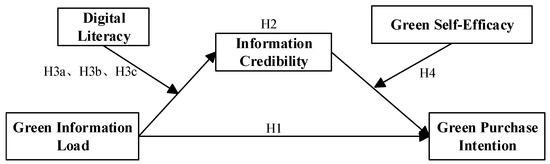
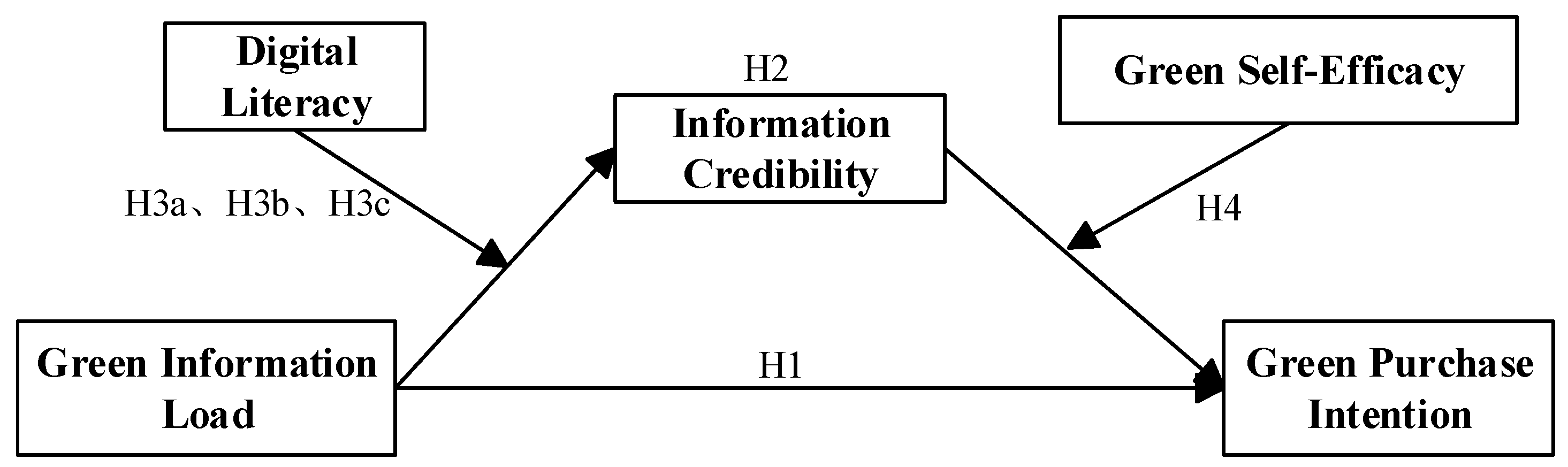
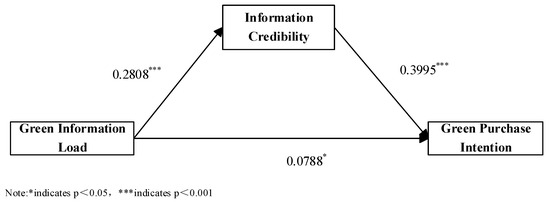
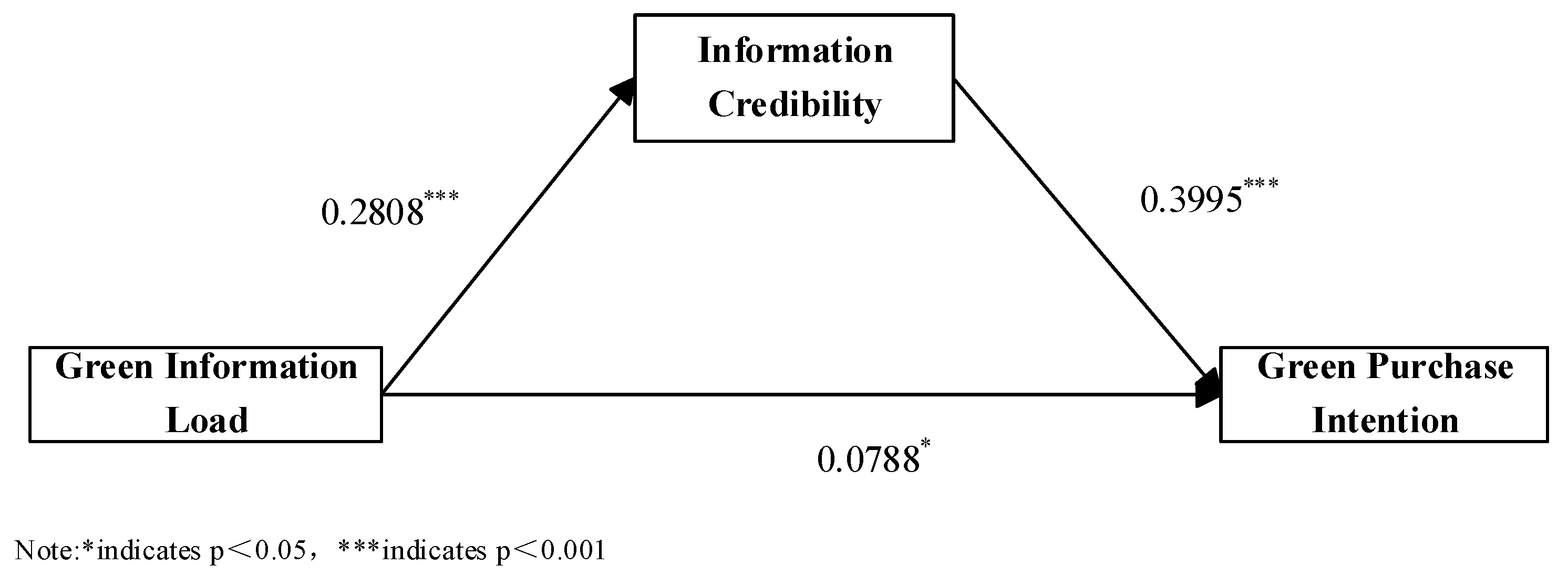
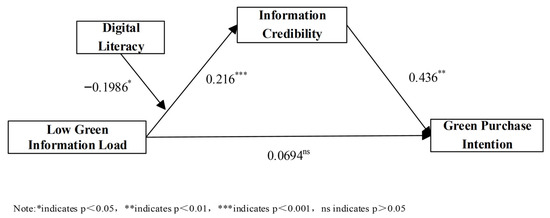
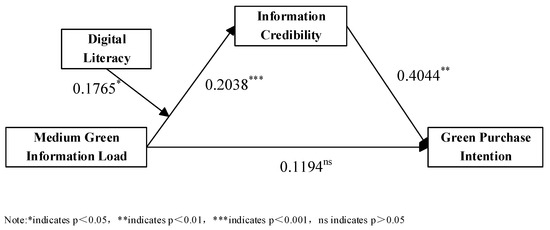

Disclaimer/Publisher’s Note: The statements, opinions and data contained in all publications are solely those of the individual author(s) and contributor(s) and not of MDPI and/or the editor(s). MDPI and/or the editor(s) disclaim responsibility for any injury to people or property resulting from any ideas, methods, instructions or products referred to in the content. |
© 2026 by the authors. Licensee MDPI, Basel, Switzerland. This article is an open access article distributed under the terms and conditions of the Creative Commons Attribution (CC BY) license.