1. Introduction
World camel milk production has increased fivefold since 1962, exceeding the growth rate of any other ruminant’s milk [
1]. This increase can be partially explained by the many health-promoting effects of camel milk, as suggested by recent research, including antidiabetic, anticancer and hypo-allergenic properties and its high vitamin content [
2,
3]. In North Africa, Sub-Saharan Africa and the Middle East, camel milk has long been integrated into traditional diets, yet its formal market remains underdeveloped [
4,
5]. Morocco, with its significant camel population and growing urban demand for specialty dairy products, is well positioned to expand this niche market [
6]. About 9000 tons of camel milk were declared produced in Morocco in 2023 and the country has experienced a growth of 1.6% annually since 1990 [
7]. However, the successful commercialization of camel milk depends not only on production and processing, but also on a nuanced understanding of consumer demand. Even though various studies have examined the Moroccan market for dairy products, particularly for cow milk [
8,
9,
10], there is still a lack of research on the camel dairy market [
11].
Morocco is highly culturally diverse owing to the presence of multiple ethnic groups, such as Berbers, Arabs and Sahraouis, who bring a wide variety of culinary traditions [
12]. Eating habits, including those in urban areas, are deeply rooted in Moroccan society since they form part of daily life and are passed down through generations [
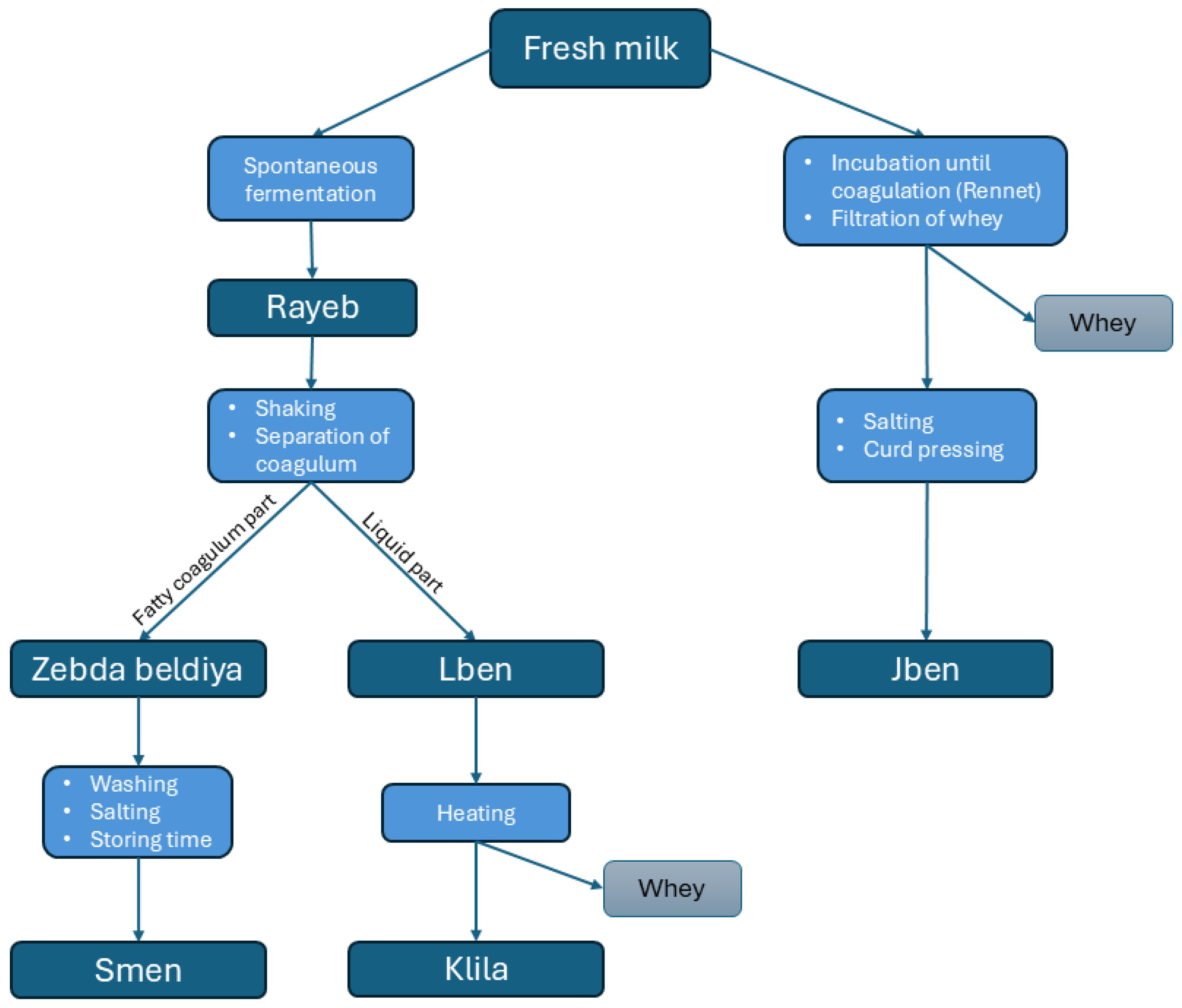
12]. Morocco has a variety of traditional dairy products within the context of these food traditions, as shown in
Figure 1 [
13].
The first series of products is based on the spontaneous fermentation of fresh milk, which is mainly obtained from cows but may also be from goats or sheep. The fermentation results in a coagulated, semi-solid, sour, and drinkable milk called
rayeb. This product can then be shaken to separate the fermented milk, known as
lben, from the butter,
zebda beldiya.
Lben holds profound cultural significance in Moroccan cuisine, particularly in connection with ritual meals such as Friday couscous. Further processing involves heating to obtain a curd, which is then drained and dried to produce
klila.
Zebda beldiya can also be further transformed into another traditional product called
smen. The initial butter is first washed with warm water, then with fresh salted water, until all the
lben has been completely washed out. The product is then salted, packed in anaerobic conditions, and stored in the dark for 3–6 months to mature. The second product made from fresh milk is
jben, a traditional spreadable curd cheese produced using lactic acid bacteria through coagulation with rennet or sometimes by spontaneous coagulation. The drained curd is then shaped into molds and can be pressed to create the final product [
6,
13].
There are three main traditional dairy products based on camel milk:
lfrik (the most widely consumed),
sligh and
mtame. They are all produced from fermented camel milk but with different fermentation times (12, 3 and 24 h, respectively), which result in sensory differences [
6,
10]. The existence of these products illustrates that camel milk is not only a raw material with nutritional value, but also part of a specific socio-technical and cultural heritage that could be mobilized in support of more sustainable dryland dairy value chains.
Although camel milk has a composition similar to bovine milk, it has distinct physicochemical and nutritional characteristics [
14]. The main protein of camel milk is casein, which constitutes 52% to 87% of the total protein. Camel milk has about twice the amount of beta-casein as cow milk (65% in camel milk, 36% in cow milk) and slightly less alpha-casein (21% in camel milk, 38% in cow milk) [
14]. The second main component of camel milk is whey proteins, which make up 20 to 25% of the total protein content. They differ substantially from those in cow milk. For example, beta-lactoglobulin, which is the major allergen in cow milk, is absent from camel milk, in which alpha-lactalbumin is the dominant protein [
14]. The fat in camel milk consists of smaller globules, which may improve digestibility. Camel milk is also significantly richer in sodium, potassium, iron, copper, and manganese than cow milk [
14,
15]. It is a rich source of vitamins A, B, C, D and E, with vitamin C levels reported to be three to five times higher than in cow milk [
14,
16].
The composition of camel milk poses significant challenges to its processing and product development, requiring dedicated technological research. In this context, incorporating consumer feedback into product development can improve market alignment and can ensure the economic viability of investments in production and processing [
17]. At the same time, aligning product development with consumer expectations may also contribute to the sustainability of the sector by reducing market uncertainty, supporting more efficient valorization strategies, and strengthening the long-term viability of camel milk value chains. While most previous studies in Morocco have focused on the production constraints and nutritional analysis of camel milk [
2,
10,
14,
15,
16], the study by Ait El Alia et al. [
11] stands out for addressing certain aspects of consumption. Their research highlights consumer perceptions and health-related motivations. However, there is still a need for a broader integration of detailed consumer insights into product development strategies. Existing studies on Moroccan dairy consumption show a preference among urban, high-income households for processed dairy products [
18,
19]. However, the market significance and consumption patterns of camel dairy products within this market remain largely unexplored. These studies do not adequately address specific aspects of consumption relating to camel dairy products, such as consumer preferences and behaviors, popular product types, and price sensitivity [
11]. Indeed, there remains a lack of comprehensive understanding regarding how tastes, values, and purchasing habits of target audiences guide product innovation [
20]. Furthermore, few studies have systematically examined the role of consumer-centric approaches in identifying barriers to market entry, such as cultural biases or low awareness of the nutritional and functional benefits of camel milk [
21]. Finally, there is little empirical evidence on using consumer-driven research to enable precise market segmentation and targeting of the high-potential market segment in the camel milk sector [
22].
To address these gaps, this study adopts an exploratory qualitative approach aimed at better understanding the preferences, perceptions, and consumption behaviors of urban Moroccan consumers regarding dairy products and the potential integration of camel milk products into their diets. The goal of this research is to understand the dairy product consumption habits of higher-class urban Moroccan consumers and their perceptions of camel milk in order to identify high-potential camel dairy products for future technological product development. To achieve this objective, the study is guided by the following research questions: (1) What are the dairy consumption habits of higher-class urban consumers? (2) What are consumers’ perceptions and awareness regarding camel milk? (3) Which camel milk-based dairy products align best with the preferences and consumption patterns of this target group together with the technological functionality of camel milk?
2. Materials and Methods
2.1. Focus Group Discussions
This qualitative study was performed through six different focus group discussions (FGDs) to gain in-depth understanding of consumer perceptions, attitudes, and practices related to dairy consumption, with a particular emphasis on emerging interest in camel milk and other traditional dairy products. This method was chosen for its exploratory nature, as it allows an understanding of subjective experiences, cultural perceptions and market barriers, which are not easily captured through quantitative methods [
23,
24]. The focus groups were carried out between 27 April and 4 May 2024 in three different cities (Marrakech, Agadir, and Taroudant). The groups were divided by gender to encourage a freer exchange of ideas [
25,
26]. There was a male and a female focus group in each of the cities, i.e., a total of six focus groups, each comprising five to seven participants i.e., a total of 38 participants (18 women and 20 men).
2.2. Operationalization of Research Questions and Development of Discussion Guide
Research questions were operationalized by translating abstract concepts into thematic areas that guide data collection and analysis. In this study, the research questions were operationalized through a semi-structured focus group discussion (FGD) guide. The discussion guide was organized around key themes derived from the research objectives in the following order [
26]:
Current consumption habits and preferences of dairy products
Purchasing behavior (location, frequency, etc.)
Price sensitivity and other factors influencing purchasing decisions
Knowledge and perception of camel milk products
Comparison of camel milk products with other dairy products
The question guideline is available in the
Supplementary data S1 in French (original used questionnaire) and translated into English [
27].
For each theme, open-ended questions and probing prompts were developed to encourage participants to reflect on their experiences, attitudes, and purchasing behaviors. For example, questions on dairy consumption explored frequently consumed products, consumption contexts, and factors influencing product choice, while questions on camel milk focused on awareness, perceived health benefits, and willingness to try camel milk products. Finally, participants were invited to discuss their interest in different camel milk product formats (e.g., milk, yogurt, cheese) and the attributes that might influence their acceptance. This thematic operationalization ensured that the FGDs generated data directly relevant to the research questions while allowing flexibility for participants to introduce additional perspectives.
The thematic framework guiding the FGDs was established through a comprehensive review of existing literature employing focus group methodologies to investigate consumer behaviors, habits, attitudes, and preferences for food and dairy products. Specifically, the semi-structured discussion guide was informed by studies on dairy consumption contexts in Morocco [
9] and on broader food consumption contexts [
28,
29,
30,
31,
32,
33]. The selected questions were aligned with the specific objectives of the project to develop high-potential dairy products and were subsequently adapted to the specific context of the Moroccan camel dairy market to ensure relevance and methodological rigor. This internal validation process helped ensure the relevance and coherence of the discussion topics prior to data collection.
2.3. Participant Recruitment
Participants were recruited using convenience and purposive sampling [
34] aimed at capturing a diversity of age (from 19 to 57 years old) and gender. They were identified through local contacts and word-of-mouth in urban neighborhoods. Inclusion criteria required participants to be regular consumers of dairy products.
Camel milk products are generally positioned as niche or premium items in Moroccan urban markets, often priced significantly higher than cow milk products. The study therefore targeted higher-income consumers who represent the potential early adopters of these emerging products [
7]. Participants from mainly the fourth and fifth quintiles of the urban population with the highest incomes were selected (40% of the wealthiest urban dwellers). These were households that had more than MAD 2047 per capita per month in 2019 [
35]. This amount was adjusted based on the change in GDP per capita between 2019 and 2022 in terms of purchasing power parity and current international dollars, to set the minimum income per capita per month at MAD 2281 (~EUR 212). In addition, preference was given to participants from households whose head belonged to one of the following socio-professional categories: managers, directors, and administrative executives of companies, senior executives, and members of the liberal professions or middle managers, merchants, and commercial and financial intermediaries.
Participants were selected to reflect population characteristics based on urban demographic data reported by the High Commission for Planning in “Social Indicators in Morocco” [
35]. This approach aimed to ensure that the sample was representative of the country’s population. The demographic profile of the focus group participants is presented in
Table 1.
2.4. Data Collection Procedure
Each focus group was facilitated by a trained moderator, an assistant note-taker and a co-moderator. Discussions were conducted in a relaxed setting with co-moderation in French and in the local dialect (Darija), depending on participants’ language preferences. Key points were occasionally summarized in the other language to ensure a shared understanding among participants and moderators. The conversation was audio-recorded with the verbal consent of the participants and lasted approximately 60 to 90 min.
The number of focus groups was determined through a pragmatic compromise between available resources and methodological recommendations from the qualitative research literature [
24,
28]. Following the principle of thematic saturation, we considered saturation to be reached when no new substantive themes emerged across consecutive groups, and additional data served only to elaborate existing categories.
Data saturation was defined for each question as the point at which no substantively new themes appeared, and additional data served only to elaborate, rather than extend, the existing thematic structure.
2.5. Addressing Moderator and Research Bias
It is important to note the potential bias in our sample of participants, who mainly came from academia and many of whom had a background in natural sciences, and so were not representative of the average population of Morocco. However, this bias was planned and important for the coherence with the targeting of the high-income consumers needed for these niche products. Generalization to Morocco should be used with caution due to the geographical choices and sample size. It is also necessary to distinguish between hypothetical and real behavior (e.g., prices). Furthermore, the group dynamic should be considered, particularly in the men’s group in Marrakech, in which one participant was quite dominant [
25,
26].
Because the focus groups and interviews were moderated by a member of the research team, we implemented several procedures to identify and mitigate potential moderator and researcher bias. First, in order to avoid the bias concerning camel milk, the recruiting process only mentioned a study about dairy product consumption and not about camel milk. The subject of the study was only revealed at the very end of the discussion as a conclusion. In addition, moderator bias was minimized by using a semi-structured discussion guide with non-leading and non-judgmental questions. The moderator adopted a facilitative role, encouraging all participants to contribute while avoiding evaluative feedback that could influence responses. All sessions were audio-recorded and transcribed, allowing the research team to review the discussions and ensure that moderator interventions did not shape participants’ views.
2.6. Data Analysis
The audio recordings were transcribed verbatim for analysis. The analysis began with an initial read followed by a thematic coding of the transcripts with a mix of deductive and inductive coding. A preliminary codebook was developed based on the discussion guide and corresponding research questions. The analysis was not structured around a specific theoretical framework but focused on themes emerging from participants’ discussions. In order to ensure its reliability, two members of the research team (PW and SG) agreed on the study’s coding framework. The results were organized into a table based on the thematic categories (available in
Supplementary data S2 [
36]) as outlined in the discussion guide, with each focus group represented separately. The category and the sub-category of the coding are presented in
Table 2. Qualitative analysis was subsequently conducted using thematic analysis based on the predefined thematic categories [
37].
2.7. Ethical Considerations
Verbal informed consent was obtained from all the participants. Verbal rather than written consent was used because the study involved recorded discussions conducted in a low-risk setting, where participants were informed in advance that no identifying information would be disclosed and that anonymized data would be used for research and publication purposes, in accordance with accepted practices for such studies. The study was conducted in accordance with the Declaration of Helsinki and approved by the Internal Ethical Commission of Bern University of Applied Sciences.
3. Results
3.1. Current Dairy Product Consumption Habits and Preferences
Across the focus groups, no clear differences were observed between genders or locations regarding overall dairy consumption patterns.
Cow dairy products were identified as the most dominant and accessible dairy choice. Participants reported that cow dairy products are widely available in various forms and are valued for their affordability and versatility, despite some consumers reporting occasional digestive issues. In contrast, participants stated that goat dairy products occupy a niche market because of their higher price (MAD 15/L for goat versus MAD 7–10/L for cow milk) and limited availability. According to the participants, they are primarily available in supermarkets or in rural areas where there are goat keepers. Although camel milk was highly valued by focus group participants for its cultural and health significance in southern Morocco, it remains the least accessible dairy product in urban areas. There was strong interest in camel milk among those with southern roots, but little is consumed because of the lack of availability.
Fresh milk was the most frequently consumed dairy product in urban areas, and is typically used on a daily basis, particularly at breakfast or added to coffee. Pasteurized milk emerged as the most consumed type, viewed as a practical compromise: it is more affordable and is generally preferred for its taste compared to UHT milk and has a longer shelf life than raw milk. Despite its shorter storage time, many participants value the flavor and richness of raw milk. Some consumers from the focus groups associated the homogeneity of pasteurized and UHT milk with a quality drop. They perceived visible creaminess or particulates as an indicator of freshness and nutritional benefits. Raw and pasteurized milk mainly come from cows but can also come from goats or camels. Plant-based alternatives were mentioned by only a few participants.
Focus group participants reported the widespread daily consumption of fresh cheeses, particularly industrial varieties such as La Vache qui Rit and Kiri, which are frequently consumed in children’s meals and snacks. Their observed omnipresence in both supermarkets and neighborhood stores demonstrates how industrial dairy products have become part of everyday routines. At the same time, traditional fresh cheeses such as jben remain important, particularly among the interviewed consumers who value artisanal products.
The discussions revealed that consumption of hard cheese was largely centered on imported varieties, including gouda, edam, and parmesan. Mozzarella was also mentioned. These cheeses are commonly used in cooking and are consumed several times a month by the participants. While they are considered useful culinary ingredients, some consumers felt that, for health reasons, it is not advisable to eat cheese regularly as one grows older. These cheeses are mainly derived from cow milk but may also be based on goat milk.
Participants highlighted the importance of lben, which is consumed weekly. They valued this product for its taste, digestive properties, and cultural significance, as it is traditionally consumed with couscous on Fridays. Although participants reported that lben is not always consumed specifically on this day, most reported consuming it regularly during the week. When this product was mentioned, it was always associated with positive reactions, such as laughter and smiles, suggesting the strong cultural and emotional attachment associated with it, even among urban consumers.
Yogurt emerged from the focus groups as a widely consumed product, particularly among children, the elderly, and individuals recovering from illness. It was mainly reported as being consumed daily or several times a week. Participants explained that yogurt is mostly made from cow milk but can also be made from goat milk. It comes in both flavored and plain forms, which are often sweetened. Traditional preparation methods persist, particularly during Ramadan, when homemade yogurt is common. Specifically, rayeb, a traditional fermented milk product similar to yogurt, continues to hold cultural significance and was still consumed in some participants’ households.
Butter was identified as a less-consumed dairy product. It was indeed mentioned mainly in relation to cooking, baking or for use on specific occasions. Three different forms were mentioned: two traditional and one more industrial. The first traditional form was zebda beldiya, a raw, fresh butter. It was referred to in the discussions as highly appreciated, particularly for its authenticity and taste, and is traditionally consumed with bread or used in cooking, often on special occasions. The other traditional product was smen, a fermented salted butter. It was said to be primarily used in the preparation of couscous and other traditional dishes. Participants referred to this butter as being both symbolic and practically important in Moroccan cuisine. By contrast, European-style industrial butter, which was sometimes confused with margarine during the discussion, is primarily used for cooking and baking, and has less cultural significance.
Several less common dairy products were also reported during the discussions. Kefir was mentioned exclusively in Agadir, where it was reportedly produced by local associations. Powdered milk was occasionally consumed, primarily by larger families with limited budgets. While it was considered useful for cooking (e.g., in pizza dough) and for infant nutrition, it was generally viewed as inferior and less healthy, and was also referred to as an ingredient in cosmetics. Adrass, a cheese made from colostrum (the first milk produced after calving), was mentioned once, but was infrequently consumed. Finally, fresh cream was reported to be used occasionally in cooking and pastry preparation to make more specialized or festive meals.
3.2. Distribution Channels for Dairy Products
Participants reported using four main retail channels to purchase dairy products: supermarkets, direct sales, local neighborhood stores, and cooperatives. Each channel was associated with distinct roles and perceived trade-offs. No clear differences were observed between genders or locations regarding the use of these retail channels.
Participants reported that supermarkets are not deeply rooted in Moroccan shopping culture and are primarily used for monthly bulk purchases of long-shelf-life products, such as UHT or pasteurized cow milk and processed cheese (e.g., La Vache qui Rit). Supermarkets were also valued for their wide product assortment, including imported dairy products such as gouda and mozzarella, as well as milk and dairy products from goats or plant-based milk. Participants indicated that supermarkets are trusted for their reliable cold chain and affordable prices. However, supermarkets were perceived as offering fewer traditional beldi (artisanal and local) products and, according to the focus groups, the products they propose are perceived as less healthy due to the high industrial processing and potential additives in their products.
In contrast, the participants valued artisanal dairy products sold directly by the producer, including raw milk, jben, lben, and yogurt, for their taste and authenticity. However, these products were also associated with several challenges, such as higher prices, hygiene concerns, and limited urban availability. The need for trust when buying artisanal products was a recurring theme during the discussions. Some expressed concerns about hygiene and product quality (e.g., mixing goat or camel milk with water or cow milk). Participants noted that purchasing decisions were often based on established relationships with known sellers. Once this trust had been developed, many participants indicated that they were willing to travel outside urban areas on a regular basis to purchase these artisanal products.
Local stores were mentioned as the most frequently visited type of store and are deeply rooted in the culture. They offer a mix of industrial and select artisanal products, providing a culturally familiar and convenient option for daily purchases where children can also be sent.
Lastly, dairy cooperatives were described as a hybrid model, blending the attributes of industrial and traditional systems. Often based outside urban centers, they provide access to beldi products with minimal additives and a degree of standardization that fosters consumer trust. These “organized traditional” systems were perceived as both authentic and reliable. However, this purchasing channel appeared to be less commonly used among participants. It was mentioned in only four of the six focus groups (the three male groups and one female group), whereas the other retail channels were mentioned in all six discussions.
3.3. Key Drivers of Dairy Product Purchases
FGDs revealed across cities and genders that the choice of products was influenced by a complex interplay of factors related to sensory experience, health, economics and consumer trust as summarized in
Table 3. However, taste clearly emerged as the primary driver, often overriding considerations such as price and nutritional value. This was reflected in statements such as “I would add that the most important quality is the taste” (man, Marrakech). Traditional
beldi products were repeatedly valued for their superior flavor, though industrial brands such as Jaouda and Chergui were also cited.
Perceptions of product quality were strongly influenced by perceived nutritional value and health attributes. The term “real milk” was used to describe products that were considered to retain their nutritional integrity, particularly in contrast to those seen as overly processed, such as UHT milk. Processed milk was sometimes criticized for being over-processed in statements such as “UHT milk isn’t real milk. That’s because the processing destroys all the nutrients it contains” (man, Agadir). Consumers tend to favor products with higher fat and protein content. Price sensitivity was evident; however, it was centered on perceived value rather than absolute cost. For example, households balanced raw, pasteurized, and UHT milk according to shelf-life, affordability, and taste. Large families showed higher price sensitivity and often limited premium products to occasional use. Certain items, particularly those associated with child nutrition or family rituals, such as breakfast spreads and yogurts, were considered essential and purchased regardless of price. Higher-cost products, such as Cherguis’ products priced at MAD 12 versus a baseline of MAD 8, were still deemed acceptable in specific circumstances.
Ingredient purity, particularly the absence of additives or preservatives, was repeatedly mentioned as a key indicator of trust, complemented by regulatory certifications as summarized in
Table 3. Certification by the Moroccan National Office for Food Safety (ONSSA, Office National de Sécurité Sanitaire des Produits Alimentaires) was frequently cited as the key indicator of product safety. In contrast, the other labels, such as “local” and “organic”, were considered more of a “bonus” than a necessity. Most participants were willing to pay more for products with a label. However, a couple of focus groups mentioned skepticism toward the monitoring of labeling. For example, a man in Marrakech mentioned “The people doing the research are the ones being paid. So when I pay you, you have to say what I want you to say,” which illustrates the skepticism towards the labeling process. Products suspected of containing chemical preservatives, artificial flavorings or GMOs were devalued, and brand preference was often directly tied to perceptions of ingredient purity. Furthermore, quality indicators, such as packaging quality and design, and storage conditions, such as visible refrigeration, also influenced consumer choice. Products in clean, well-sealed, and durable containers were preferred, while flimsy or leaking cartons were considered unsanitary and untrustworthy. These extrinsic quality indicators often informed purchasing decisions in settings where brand or label information was ambiguous. Convenience was also mentioned as playing a critical role, particularly for large families. Preferences were driven by long shelf-life, resealable packaging, and child-friendly, easy-to-use formats. Spreadable cheeses (e.g., Kiri) fall into this category, which helps to explain their strong market success. Finally, local origin, signaled by labels such as
beldi or
Terroir du Maroc, evoked authenticity and cultural resonance, but was cited less frequently (in three out of six focus groups), making it a secondary criterion. When it was mentioned, consumers preferred local products for freshness, shorter supply chains, and lower risk of spoilage. However, imported options were sometimes favored thanks to clearer labeling and presumed adherence to international quality standards. This discrepancy illustrates a tension between local loyalty and institutional trust.
3.4. Consumption and Perception of Camel Milk Products
3.4.1. Consumption Patterns of Camel Milk
The majority of participants reported that they had never consumed camel milk, citing limited availability as the primary reason. Nevertheless, many expressed an openness to trying it if it became more widely available from trusted sources. Those who had tried camel milk (typically one or two people per focus group) had only done so on one or two occasions. These encounters usually occurred in specific contexts, such as travelling to southern regions (e.g., Dakhla, Laâyoune, Taroudant, Guelmim), attending weddings or cultural events, or visiting local souks (e.g., the Sidi Bibi market near Agadir). No clear differences were observed across cities or between genders. However, geographic context appeared to play an important role: participants with exposure to southern regions, where camel milk is more readily available and culturally embedded, were more likely to have tried it.
A smaller group reported more regular consumption, which was often linked to family ties with southern Morocco or routine access through nomadic networks. In some cases, camel milk was encountered in contexts targeting tourists or during promotional activities intended to introduce the product to a broader public.
3.4.2. Perception of Camel Milk
Across focus groups of both genders and in all three cities, camel milk was widely perceived as a healthy product, and in some cases as having medicinal properties. Its nutritional profile was considered superior to that of cow milk, with references to vitamin C, amino acids, probiotics and mineral salts, reinforcing its reputation as a therapeutic beverage. Participants associated camel milk with health benefits, particularly in relation to chronic conditions such as diabetes, asthma, and allergies, as well as improved digestion, attributed to its natural probiotic content. Illustrative examples of participants’ statements about the perceived nutritional and health benefits of camel milk are presented in
Table 4.
Participants described camel milk as having a strong taste that was different from cow milk. Reactions were both positive and negative, depending on individual preferences and cultural familiarity. It should be noted that only a small minority of participants had tried camel milk. Among those who had not yet tried this milk, uncertainty about its flavor was the most cited concern but different consumers expressed “if I like it, I’ll buy it”. There was a widespread fear that the milk would taste too strong or different to the familiar flavor of cow milk. Those who had consumed camel milk described its taste as unique; sometimes much better than other milks, and sometimes challenging, though tolerable when the health benefits were clearly perceived.
Moreover, camel milk products were associated with traditional pastoral practices and
beldi authenticity, particularly when sourced from camels grazing on natural vegetation from rangeland. As presented in
Table 4, participants were concerned that if camel milk production increased, the camels would be fed with industrial feed, which would decrease the milk’s quality. Overall, the perception of camel milk was very positive.
3.4.3. Barriers to Camel Milk Consumption
FGDs identified three main barriers to camel milk consumption in Morocco: limited availability, lack of trust, and high price. No clear differences were observed across cities or between genders with regard to these barriers. Focus group participants repeatedly emphasized the scarcity of camel milk in urban markets, noting that the product is primarily available in Saharan regions and, to a limited extent, through short-lived cooperative initiatives. Participants recalled efforts to market camel milk in small, affordable bags priced at MAD 12 per liter, but noted that these have largely disappeared.
Safety concerns often arose during the FGDs, with participants expressing distrust in unregulated products and citing the risk of adulteration (particularly the addition of cow milk to camel milk), contamination, and unhygienic handling practices during collection. For example, one woman in Agadir said: “My husband buys it. But I haven’t tasted it. Because it’s really a matter of trust, there’s no label, no indication of which village or producer it comes from, or anything like that. It’s just in a bottle, so I don’t know if the camel’s in there. That’s why I don’t trust it.” Key factors influencing perceived safety that were mentioned included packaging integrity, reliable cold chains, and clear labeling, particularly regarding the milk’s origin and confirmation that it has not been mixed with cow milk or water. Trust is enhanced when products display expiration dates, traceability indicators, and certifications or statements confirming traditional feeding practices. The ONSSA certification for camel milk was mentioned in every focus group and was considered to be a key factor in increasing trust in the product. A focus group member further underscored these concerns by sharing personal experiences of gastrointestinal illness following consumption of camel milk. A participant (woman, Agadir) mentioned that: “I think it would be good if they [camel milk products] were certified more than ONSSA”, suggesting that labeling would increase the trust in the product. However, in contrast, another woman participant from Agadir mentioned: “I think we are limiting ourselves to ONSSA certification,” which demonstrates the need for ONSSA certification but not necessarily for another label.
Finally, focus group participants consistently described camel milk as expensive, reflecting the widespread perception that it remains inaccessible to the average Moroccan consumer. Although a minority of participants indicated a willingness to pay up to 50% more than the price of cow milk, most considered an acceptable premium to lie within the 20–30% range. One woman in Taroudant reported: “As for me, I always focus on the health benefits and nutritional value. No matter the price, I’ll buy it.” This willingness to pay, however, was conditional on several factors, including product safety, certification, taste, and, importantly, the expected frequency of consumption. For initial or trial use, price was generally not a barrier, especially when driven by curiosity or health motivations. By contrast, for regular consumption, prices became a critical factor in decision-making, particularly for bigger households. Participants considered MAD 8–10/L an acceptable price for cow milk, and MAD 12–15/L acceptable for camel milk. Some participants believed there would be a market, making statements such as: “I don’t think it [camel milk] will be rejected, even if it is a bit more expensive than cow milk. There is a category of people who will consume it and buy it” (woman, Agadir). For occasional or artisanal use, some would be willing to pay MAD 25–35/L, though this was generally considered expensive. Similar trends were observed for camel yogurt, where a price of MAD 7–8/yogurt (compared to MAD 2.5–3 for cow yogurt) was considered as acceptable for weekly consumption, but not daily. Regarding cheese, participants indicated that they would accept to pay a premium price of up to MAD 20 for a high-quality camel milk cheese (e.g., spreadable type similar to Kiri) if its quality and origin could be guaranteed.
3.4.4. Experiences and Vision About Camel Milk Products
The few participants who had already tried camel milk had only tasted it in its raw milk form, except for one participant who had also tried camel butter, which he described as less fatty and with a distinct flavor compared to cow butter. Fermented camel milk (lfrik) was mentioned positively and associated with digestive health, but nobody in the discussion had ever tasted it. There was no awareness of other derivatives, such as yogurt or cheese. Although camel milk is not currently widely consumed in the three selected cities and is much better known in the Saharan region, interest in this milk and its related products was strong. Many participants expressed a desire to try camel milk if it was available and some mentioned the need to have it in a safe and reliable form before trying it. There was also a widespread belief that camel milk products could eventually compete with cow milk products, particularly if the nutritional benefits were clearly communicated and industrial production methods preserved the milk’s traditional qualities.
Among potential derivatives, liquid milk was considered the most important and desirable product by every focus group. Various forms of milk were mentioned, including raw milk, which was perceived as having the highest health benefits, and pasteurized milk, which was valued for its shelf life. However, UHT camel milk was very rarely considered as an option. The second most frequently cited product was spreadable cheese, particularly jben, which was mentioned by every focus group. The opinion of the participants about industrial types of spreadable cheese (e.g., Kiri) was divided. Some consumers were completely against it, arguing that unhealthy industrial cheese does not mix well with very healthy products like camel milk. However, others thought that using a high-quality product to make an everyday product would be a good compromise. Lben was the third most popular product, mentioned in five out of six focus groups, but doubts about replacing cow milk were also noted during the discussions. Other products mentioned included yogurt, which aroused quite a lot of interest, as well as hard cheese, butter and powdered milk. The latter three products were mentioned occasionally as possibilities.
4. Discussion
4.1. Dairy Product Consumption Habits
This consumer-focused study revealed that dairy products occupy an important place in everyday diets and are consumed in a wide variety of forms, ranging from raw and artisanal products to processed and industrial products, most of which are derived from cow milk. Across the focus groups, no significant differences were observed by gender or city, suggesting a relatively similar pattern of dairy consumption among urban participants. At the same time, local food traditions appeared to shape certain specific preferences. For instance, participants in Marrakech had the habit of drinking coffee with milk, whereas it was not mentioned in Agadir or Taroudant.
Milk consumption in Moroccan households spans several animal sources, each associated with distinct levels of accessibility, perceived value, and cultural meaning. Cow milk remains the most dominant and accessible form, while goat and camel milk are consumed less frequently, due to limited availability and cost.
The observed diversity of dairy products was extensive and covered all types of products from raw milk to powdered milk. The only dairy product not mentioned during any of the FGDs was ice cream, possibly because it is not a product associated with the dairy product category by the consumers. The preference for pasteurized milk strikes a balance between safety and superior taste compared to raw and UHT milk. This finding aligns with national trends showing a growing shift towards safer, more standardized dairy products in urban centers [
8]. The consumers’ perception of lower product quality when the creaminess is not visible is aligned with similar findings by Sraïri et al. [
19] and Tibère et al. [
38]. It may come from traditional views associating creaminess and visible particulates with higher nutritional value. This notion is reinforced in rural settings, where raw milk remains a staple, acquired through informal markets because of economic limitations and cultural continuity [
19,
38].
The extremely high consumption of industrial spreadable cheese, mentioned during all the FGDs, corresponds with urban consumer trends documented in the literature. These spreadable cheeses are considered household staples due to their affordability, long shelf life, and ease of use [
8,
39], all of which were aspects widely mentioned during the FGDs.
The weekly consumption of
lben by almost all participants strongly supports previous research highlighting its deeply entrenched place in traditional cuisine, particularly in rural areas, where cultural continuity remains strong [
38]. The tradition was present among almost all the participants in the focus groups, who talked very positively about
lben and couscous on Fridays, expressing its importance. The strong emotional link between consumers and this traditional product was also evident in other studies, such as Soula and Zirari’s [
40], in which
lben was referred to as “A product that everyone has known forever”. The results from our study demonstrate its importance in urban areas and reinforce the literature’s findings that, despite increasingly adopting modern dietary trends, urban households continue to value traditional dairy products for their symbolic and cultural significance [
8,
38].
More widely, our study highlighted the importance of artisanal products throughout the FGDs, suggesting a strong cultural attachment to traditions. For example, it was evident in the traditional manner of purchasing groceries from local stores, even in urban areas with large supermarkets. This finding is consistent with Amine and Lazzaoui [
41], who emphasized the importance of social bonds present in local stores.
Another product that was discussed is yogurt. The focus groups suggested that this product is mainly consumed by children, the elderly, and sick people, which aligns with some literature on dairy products in Morocco highlighting yogurt’s association with health and nutritional needs, especially among vulnerable or transitional age groups [
8,
39].
Dairy consumers’ criteria were balanced between sensory, health, economic, and trust-related considerations, with taste being the most important factor. Indeed, if a product is cheap and healthy, but consumers do not appreciate the taste, they will not buy or consume it. Nutritional value and health perception played a key role in defining quality, with consumers favoring “real milk”. However, trust had to be very high for consumers to drink raw milk. ONSSA certification was clearly seen as the most credible assurance of safety, demonstrating the importance of this certification when developing a new product, even within a cooperative. Price sensitivity varied according to household size and context of use: consumers sought an optimal quality-to-price ratio, reserving premium products for special occasions.
4.2. Camel Milk Consumption and Perception
The focus groups revealed that camel milk has a very healthy and positive reputation. However, this finding should be interpreted with caution, as only around one fifth of participants had previously consumed camel milk. Most opinions therefore reflected second-hand knowledge, based on what participants had heard or read rather than on direct experience. The FGDs did not show any significant differences of opinion between the three cities or between genders. Nevertheless, it is important to note that the focus groups were primarily representative of higher-income urban populations rather than of the broader Moroccan population. This sampling strategy was intentional, as the study aimed to assess the perceptions of a consumer segment more likely to afford camel milk and to represent a realistic target market for higher-value camel dairy products. If the presented results are representative of the upper class, the outcomes of the study show a positive sign for the development of camel milk dairy products, as most participants were curious and willing to try them. The prominence of camel milk as a medical food among Moroccan urban consumers appears to be consistent with findings from another study conducted in the Zagora region [
42], in which camel milk producers reported that their main clientele originated from major northern cities, where camel milk, butter and fat were primarily used in the context of arthritis treatment and sand bathing. That camel milk is healthy is not only a consumer perception but is also supported by the literature. Indeed, some studies confirm the hypoallergenic characteristics of camel milk [
43], as well as its high level of vitamins A, B, C, D and E [
14,
16,
44]. Some studies also show some promising findings that camel milk could have a positive effect on asthma [
45,
46], diabetes [
5,
47], and inflammation [
48].
As mentioned during the FGDs, the main reason participants did not consume camel milk was its limited availability. The fact that camel milk was marketed in the past but is currently not available reinforced the perceptions of an unstable supply chain. These reported experiences mirror the barriers documented in the literature: Labriji et al. [
49] highlighted the logistical difficulties of sourcing camel milk from remote production zones. This challenge is compounded by the fragmented nature of the camel milk value chain, which lacks coordination between producers, processors, and distributors [
50]. This fragmentation has led to frequent supply interruptions, inconsistent quality, and the product’s marginal presence in major retail networks. Quantitative data further supports these observations, with 42.74% of consumers identifying unavailability as the primary reason for not purchasing camel milk, followed by lack of dietary habit (31.6%) and high cost (12.1%) [
11]. In cities such as Rabat and Casablanca, camel milk is primarily sold through niche outlets such as FreCheese, whereas in rural areas, it is sold by informal vendors and cooperatives [
50]. However, even if the milk was available, it was mentioned in the focus groups that there would be uncertainty surrounding its practical use, specifically how it behaves in cooking applications compared to cow milk. As cow milk remains a daily staple for most Moroccan households, camel milk would be positioned as an occasional luxury or health-specific product rather than a viable everyday substitute.
The trust effect was evident when general dairy product habits were discussed, and even more so when camel milk was discussed. Indeed, the fear of buying spoiled or diluted camel milk was widespread. Quantitative evidence from Ait El Alia similarly highlights fears of adulteration (5.86%) and taste-related barriers (4.4%) as the fourth and fifth reasons not to consume camel milk (after cost, habits and availability) [
11]. In the present study, consumers seemed to consider the trustworthiness of the product to be more important than the price, even though only a small majority were willing to pay 50% more than the price of cow milk. These attitudes towards price are firmly substantiated in the literature, with prices ranging from MAD 35 to 70 per liter because of high production costs and cold-chain logistics, often corresponding to more than double the price of cow milk [
11,
35,
49,
50,
51]. As a result, camel milk cannot generally compete with cow milk in lower-income households, while wealthier consumers may occasionally justify the expense; this serves to underline Morocco’s pronounced economic inequality.
Some participants were already familiar with various existing Moroccan camel milk products, such as raw milk, fermented milk and butter. Regarding existing camel milk products,
klila, described in the literature as a traditional fresh cheese obtained by heating
lben (see
Figure 1) to obtain a curd, was not mentioned in any of the six focus groups [
6]. This absence aligns with participants’ comments indicating that camel milk and its derivatives are primarily known in specific regions. The literature supports it, noting that
klila is traditionally prepared in areas such as Taza, Tetouan, Tangier, and Oujda in Morocco [
6].
4.3. Consumers’ Perspective on Camel Milk Products and Their Technological Feasibility
During the discussion about potential products to develop, the most popular option was simple liquid milk, either raw or pasteurized. However, few consumers considered the production of UHT camel milk as an option. This is consistent with the perception that UHT milk is less healthy than raw milk. The idea that heat treatment reduces nutritional benefits contradicts the image of camel milk as a healthy product. Similar concerns appeared when participants discussed industrial spreadable camel milk cheese: some participants felt that highly processed industrial spreadable cheese was not compatible with the strong health image of camel milk. Others, however, viewed the combination of high-quality ingredients with an everyday product as a reasonable compromise.
The consumers’ second preference was for traditional spreadable cheese (Jben) based on camel milk. Lben ranked third, and was mentioned in five of the six focus groups, which reflects its strong traditional value. Although lben is present in everyone’s mind, it is also difficult to replace the traditional cow milk version with the camel milk version. Other suggested products were considered less of a priority.
In Morocco, processing cooperatives, such as those in Guelmim and Dakhla, have emerged, transforming camel milk into products such as pasteurized milk, yogurt, and cheese [
50]. However, processing camel milk presents unique challenges due to its distinct biochemical and structural properties. The composition of camel milk differs from that of cow milk, influencing its technological functionalities and processing possibilities, making it impossible to directly transfer the processing technology from cow, sheep or goat milk to camel milk [
14]. As the focus group results demonstrated a high level of curiosity and willingness to try camel milk dairy products, it is important to consider these results alongside the technological feasibility of the different products, which are already known. It is therefore important to invest time only in products with the possibility of processing development and market potential.
The literature reports that raw camel milk has a longer shelf life than raw cow milk thanks to its higher concentration of antimicrobial components [
52]. Camel milk proteins are also more heat-stable during pasteurization than those in cow milk, with no functional alteration observed at temperatures below 100 °C. This means that the same pasteurization method can be applied to both types of milk [
15]. However, camel milk becomes less stable than cow milk at higher temperatures. Sterilization of camel milk at high temperatures and its natural pH leads to protein denaturation and sedimentation, which limits processability. This low thermal stability during sterilization is likely due to the low content of kappa-casein and the absence of beta-lactoglobulin [
15]. When combined with the focus group results, these properties suggest that pasteurized camel milk has strong market potential. Camel milk does not present processing challenges during pasteurization and is also the form most desired by consumers, offering a good balance between shelf life and nutritional value. As strongly emphasized during the FGDs, trust plays a key role in consumer purchasing decisions. Pasteurizing the milk increases consumer confidence in product safety while preserving most of its nutritional value.
The commercial production of camel cheese remains underdeveloped, with only a few examples. In southern regions, some cooperatives produce small quantities, processing between 70 and 150 L per week in Guelmim and up to 2800 L per week in Dakhla. Their distribution networks remain limited [
50]. The limited commercial development of camel cheese may be due to the complexity of the production process and the low yield of cheese from raw camel milk—around 12% compared to 50% for cow milk, although ultrafiltration can increase yields to 20% by extending the protein recovery time [
14,
15]. Coagulation time is two to three times longer than for cow milk, and the resulting coagulum contains larger casein micelles, which reduces curd strength [
14,
15]. High antimicrobial activity also prolongs coagulation [
15]. Furthermore, the kappa-casein ratio of camel milk, which is a key determinant of curd firmness, is four times lower than that of cow milk [
15]. These findings indicate that developing a hard cheese should not be a priority, either from a technological perspective or in terms of consumer interest, which remains moderate. Fresh or industrial spreadable cheeses, however, have much stronger potential. The weakness of the curd is less problematic in soft cheeses, and there is a high demand for this type of product in the Moroccan dairy market. Moreover, Ho et al. [
15] identified ten types of soft cheese that can be produced from camel milk.
In line with the challenges observed for cheese, yogurt made from camel milk also tends to form a weak, watery structure and cannot be produced using the same methods used for cow milk [
15]. However, some possibilities exist to improve texture, such as the addition of stabilizers and hydrocolloids such as gum acacia, sodium alginate, calcium chloride, modified starch, gelatine, or carboxymethyl cellulose. Moreover, coagulation can be improved by adding calcium chloride, using camel gastric enzymes instead of bovine rennet, adding lactic acid bacteria alongside rennet, or decreasing the pH to 5.6 while raising the temperature to 42 °C [
14,
15,
53]. To illustrate the range of possibilities, Ho et al. [
15] reported nine viable formulations of camel milk yogurt. In our study, the absence of additives was seen by the participants as a quality criterion for a product. For this reason, the use of additives may be a concern for consumers seeking healthier camel milk products, although yogurt based on camel gastric enzymes could address these concerns.
According to the literature, butter production is only feasible from cream separated at 20–25 °C, which is a much higher temperature than the 8–12 °C used for cow milk [
14]. After 24 h, the creaming rate is 12 times slower than that of cow milk, and fat extraction via traditional churning is difficult due to the small fat globules being bound to proteins and the lack of agglutinin, preventing conventional butter-making techniques used for cow milk [
14,
15,
54]. Some traditional methods using fermented milk do allow butter extraction, but the yield is low [
15]. The complexity of this process associated with the rare demand from the participants for butter lowers the priority of developing this product.
In general, the processing of camel milk is more complex than that of cow milk. Nevertheless, several strategies exist to improve its functionality and to develop specific products. According to the focus group results, the main priorities for camel milk production would be pasteurized milk, followed by fermented milk, and possibly soft cheese or yogurt. By contrast, butter and hard cheese appear to be much more challenging to produce, and consumer demand for them is low, which makes their development difficult to justify. However, according to the producers interviewed in the producer-focused part of the study, there is a specific demand for camel milk butter for therapeutic purposes [
42].
4.4. Theoretical Implications
Given the exploratory qualitative design and the limited number of participants involved in the FGDs, the theoretical implications presented here should only be interpreted as preliminary insights that may inform future research on consumer perceptions and acceptance of camel milk products. This study contributes to the literature on consumer food behavior by providing qualitative insights into how higher-income consumers perceive camel milk-based dairy products within their existing dairy consumption and habits. The findings highlight the role of perceived health benefits, product familiarity, and trust in products toward novel dairy products. In particular, they suggest that consumers express curiosity and openness toward alternative dairy products based on camel milk, while price, taste and trust are factors influencing potential adoption. Although the study was exploratory and not guided by a predefined theoretical framework, the findings provide empirical information on consumer perception and acceptance of camel milk dairy products.
4.5. Practical Implications
Given the exploratory nature of this qualitative study, the practical implications outlined below should be considered as indicative insights that may guide stakeholders in the camel dairy sector, rather than as definitive recommendations. The findings also provide practical insights for stakeholders involved in the development and commercialization of camel milk products in Morocco. The results indicate that high-income urban consumers are interested in camel milk-based dairy products, particularly when these products are associated with health benefits and when the producer can be trusted (for example, presence of labels). Producers and marketers should focus on developing products that align with existing consumption habits, such as pasteurized milk, fermented dairy products, and spreadable cheeses. In addition, transparent labeling and clear communication about product characteristics and health attributes may help build consumer trust and reduce uncertainty. Pricing strategies should also carefully balance the premium nature of camel milk with consumers’ expectations of affordability. Overall, these insights can support stakeholders in designing product development, marketing, and communication strategies that better respond to consumer perceptions and preferences.
5. Conclusions
This study explored the potential for camel milk-based dairy products among higher-class urban consumers in Morocco by examining their dairy consumption habits, perceptions of camel milk, and factors influencing product acceptance. In doing so, it also contributes to reflection on the sustainability potential of camel-based dairy value chains, particularly in the context of arid regions where camels represent a locally adapted livestock resource.
The findings show that dairy products are an integral part of the consumers’ diet, with consumption largely centered on cow milk products such as milk, yogurt, and fresh cheeses. They are consumed for their nutritional value and taste, and are mainly purchased in supermarkets, local stores or directly from producers. Although camel milk is recognized for its perceived health benefits, its higher price limits accessibility. Nevertheless, during the FGDs the high-income participants targeted in this study revealed a strong curiosity towards and a general willingness to try camel milk products, should they become more widely available.
The present study highlighted the clear potential of camel milk products, given consumers’ enthusiasm for their perceived health benefits. Participants were generally willing to pay more for camel milk products, on the condition that they remain affordable and are clearly labeled to build trust. The combination of technological feasibility and consumer interest suggests that pasteurized milk, as well as fermented and spreadable cheeses, could be successfully developed from camel milk. To attract consumers, products should remain reasonably priced and accompanied by transparent and reliable labeling. From a sustainability perspective, these conditions are important not only for market uptake but also for supporting the long-term viability of inclusive and regionally embedded camel milk value chains.
These findings should not be interpreted as confirmation of market readiness but rather as strategic indications requiring quantitative validation. Future research should therefore test the extent to which perceived health benefits, price thresholds, labeling transparency, and product familiarity drive purchase intention and willingness to pay. In particular, large-scale surveys and experimental pricing studies in northern urban regions such as Rabat and Casablanca are necessary to assess demand more robustly. Pilot production and controlled market testing of pasteurized milk, fermented products, and spreadable cheeses would further allow evaluation of consumer acceptance under real purchasing conditions. Additionally, comprehensive value chain and economic feasibility analyses are required to determine whether production scaling can sustain a competitive yet affordable premium positioning. Such analyses should also examine whether scaling camel milk production can generate sustainability co-benefits in economic, social, and territorial terms, especially for populations living in arid and marginal areas. Overall, camel milk products appear to constitute a potentially viable but price-sensitive innovation in the Moroccan dairy sector, warranting systematic quantitative assessment and phased pilot implementation before broader commercialization.



 ,
,