


Abstract
Bangladesh is one of the major global garment-sourcing hotspots. Sustainability has become a megatrend and is shaping the international apparel industry. Given that Bangladesh is one of the largest garment exporters, it is essential to investigate the current sustainability initiatives being developed within the Bangladesh garment industry. Therefore, this study investigated the types of sustainability practices currently adopted within the garment industry in Bangladesh by analyzing publicly available sustainability reports from 25 garment factories published between 2020 and 2021. Guided by the triple bottom line theory, this study revealed through content analysis that companies prominently highlight environmental and social sustainability efforts, while economic sustainability receives comparatively limited attention. These insights identify areas for improvement in the current sustainable practices of the Bangladesh garment industry. Industry professionals, scholars in academia, and other stakeholders may use the primary findings of this study to holistically devise and implement strategies for sustainability practices in the Bangladesh garment industry.
1. Introduction
Future development of the Bangladesh garment industry is closely tied to its ability to implement socially responsible and comprehensive sustainability practices [1,2]. However, a study revealed that the existing system within the Bangladesh textile and garment industry is unsustainable, uncontrollable, and insufficient for supporting sustainable production [3]. The reputation of the term “Made in Bangladesh” was tarnished by numerous, tragic reports of deadly fires and building collapses in garment factories [4,5,6]. Consequently, concern has risen over the Bangladesh garment industry’s sustainability practices [5,7]. Such an issue is urgent due to the rapid climb of the textile industry in the 21st century, in terms of both production volume and employment [8,9]. It requires huge natural resources and has a major impact on society, the economy, and the environment [10,11]. Bangladesh has been recognized as one of the largest garment-exporting countries in the world over the past decade [12,13,14]. However, while sustainability practices in the garment industry have been discussed in the literature, and researchers have tried to describe them, there is no consensus among researchers [15]. Hasanspahic (2016) associated it with various designations such as ecological, ethical, green, and slow fashion [16].
Despite the ambiguity about sustainability, the impacts of this industry have recently become a focus of media scrutiny [17], indicating the importance of adopting sustainability practices [10]. Several past studies have examined sustainability efforts within the Bangladesh garment industry, including Uddin et al.’s investigation on how sustainable supply chain management influences competitive advantage in the Bangladesh ready-made garment (RMG) industry [18], and Julie et al.’s study on the current stakeholder forces for sustainable supply chain management in the Bangladeshi garment industry [19]. Kafi and Romeo evaluated social and environmental practices in the Bangladesh garment industry as communicated by industry professionals who were working exclusively in export-oriented garment factories [1]. However, developing a comprehensive understanding of current sustainability within the Bangladesh garment industry is fundamental for determining optimal sustainability practices to warrant long-term viability for the industry. What is needed is a comprehensive examination of all dimensions of sustainability practices embraced by the Bangladesh garment industry.
Therefore, this study aimed to explore current sustainability practices presently used within the Bangladesh garment industry. Based on a foundation of Elkington’s (1998) triple bottom line (TBL) theory [20], the following research questions were addressed: (a) How does the Bangladesh garment industry focus on environmental sustainability? (b) How do they support their people? (c) How does the industry impact the economy of the country, and what are they doing to sustain their profit?
The remainder of this paper is organized as follows. Section 2 reviews the relevant background literature on sustainability practices and the Bangladesh garment industry. Section 3 presents the research method, including data collection, data analysis procedures, and validity. Section 4 reports the findings, and Section 5 discusses the findings in relation to the existing literature. Finally, Section 6 concludes the study with implications and future research directions.
2. Literature Review
2.1. Sustainability Practices
A company’s sustainability practices refer to the holistic, balanced, and long-term approach to running the company that contributes to the social, economic, and environmental aspects of sustainability by satisfying present stakeholder needs without compromising the requirements for future generations [21,22,23,24]. Sustainability practices encompass social, economic, and environmental realms [24,25,26]. Such practices within the textile and apparel industry include reduction in energy consumption and hazardous chemicals like pesticides and fertilizers, adopting environmentally friendly production processes; optimizing energy usage; and the 3R principles—reducing, reusing, and recycling [10,27]. These practices allow a company to develop long-term value by creating opportunities and managing environmental, economic, and social risks [21,28]. Thus, in this study, sustainability in the garment industry will be defined as a philosophy and an ideology to improve our present situation alongside securing our future by deploying different strategies in each stage and activity within the supply chain of the garment industry, from concept development, sourcing sustainable materials, and ethical production processes to the end use and disposal of a garment.
2.2. The Bangladesh Ready-Made Garment Industry and Its Sustainability
The Bangladesh garment industry has boomed since the dawn of its journey in the late 1970s, becoming one of the largest producers globally by volume [5,14,29]. The Bangladesh Garment Manufacturers and Exporters Association (2025) states that more than 4500 garment factories constitute the largest industrial sector of Bangladesh and contribute 6.5% of the global ready-made garment market share as well as 84% of the overall exports of Bangladesh [14]. As one of the top contributors to global apparel production, Bangladesh competes with major competitors China and Vietnam among eight countries that collectively produce half of the world’s apparel [30].
The Bangladesh garment industry is a result of globalization, and it entails a high degree of dependency on overseas markets, including North America and western Europe [14,31]. Bangladesh has exploited its cheap labor force, its limited employment options for women, and simplistic technologies to facilitate the swift growth of the ready-made garment industry [7,14,18,32]. Most of the Bangladesh ready-made garment factories did not comply with international standards, such as the minimum standards described in construction legislation, safe working environments, environmental safety, and labor rights [33]. As a consequence, there have been several occupational disasters in those Bangladeshi factories [5,34]. One of the worst was the 2013 collapse of the Rana Plaza building, which resulted in at least 1134 deaths of garment workers [4]. Consequently, the Bangladesh garment industry started encountering challenges as consumers’ awareness of sustainability practices and their interest in the company’s corporate social responsibility have increased [5,35,36].
This industry has caused significant environmental damage and is now one of the most environmentally polluting industries in Bangladesh [37], resulting in an increase in disease among Bangladeshis [38]. In response to these concerns, European and American buyers started regular audits and monitoring to ensure that their supplier factories in Bangladesh adhere properly to international standards of social and environmental responsibility [4,5,39]. As a result, garment factories also initiated integrating different sustainability practices in compliance with international standards of social and environmental responsibility [1,5].
Globally, companies have lately realized that socially responsible activities and sustainability initiatives need to be disclosed to improve their brand image [40]. However, a recent debate highlights that sustainability reporting may enable greenwashing with misleading narratives, selective disclosure, and impression management tactics in sustainability reports, which can obscure actual performance and undermine stakeholder trust in disclosures [41,42]. Such concerns are particularly relevant in global industries where sustainability disclosures are often shaped by stakeholder expectations and legitimacy pressures, such as textiles [41,42,43].
Bangladeshi garment factories are not an exception. To align with the global sustainability movement, a few larger garment factories in Bangladesh used to put social and environmental governance information in their annual report [44,45]. After the Rana Plaza disaster in 2013, most factories began publishing corporate social responsibility and sustainability reports due to pressure from audit and compliance investigators [45,46,47]. Thus, this study explored the current sustainability practices of the Bangladesh garment industry, as reported, through the TBL theoretical lens.
3. Method
Content analysis is an approach used to systematically structure the interpretation of text and identify themes or patterns for insight into the phenomenon under study [48]. Hsieh and Shannon (2005) contrast traditional, deductive content analysis, which often quantifies qualitative data from more qualitative approaches that can range from a strict application of a priori framework to a summative approach to inductively clustering themes that may later be compared with pre-existing models [48]. Before selecting an approach, it is important to note that content analysis has been used in the study of sustainability reports, including in the garment industry.
Landrum and Ohsowski (2018) note that content analysis is an effective tool for analyzing the rhetoric of sustainability reports [49]. However, the insights have so far spotlighted particular issues. For example, Dobbs and van Staden [50] analyzed the motivations behind reporting corporate social and environmental information voluntarily in New Zealand and concluded that there was a great deal of performativity in reporting. Kozlowski et al. (2015) identified more than 86 indicators across corporate sustainability reports, other documents, and the websites of 14 apparel brands affiliated with the Sustainable Apparel Coalition (SAC) in Canada [51]. In contrast, Kamal and Deegan (2013) found that governance disclosures lagged behind sustainability reports in Australia [44]. Stakeholder influence has been reviewed, too, and Manetti and Toccafondi (2014) suggested that it may be a growing source of pressure towards more comprehensive sustainability reporting [52]. Meanwhile, echoing Kozlowski et al. (2015), Roca and Searcy (2012) also found more than 96 indicators in use in Canada [51,53], but beyond quantity, they also found great variability in the number of times each indicator was used. Thus, while content analysis of reports has proven to be useful and insightful, the variability in reporting has hindered the development of a standardized framework for analysis.
3.1. The Study Sample
The data were drawn from the sustainability reports of leading, export-oriented garment factories in Bangladesh, defined as earning the highest export revenue and engaging international buyer contracts. These companies were identified by first searching the open internet, using typical search engines (e.g., Google) with keywords such as top green garment factories of Bangladesh,” “best garment factories of Bangladesh,” and “top garment factories of Bangladesh.” Published newspapers and/or media articles [54,55,56], which were encountered in the search, were also used to identify major companies. The final list included the 50 leading garment industries, along with the top 20 green Bangladeshi garment industries that were published online in the year 2021. Although there are differences in company size, revenue, and production capacity, the selected firms share common features, including export-oriented production, international compliance requirements, and the adoption of environmental and social sustainability initiatives, which make them suitable cases for examining sustainability reporting practices in the Bangladesh garment industry.
After creating a list of potential companies, their websites were browsed to find sustainability reports. The criteria for inclusion of reports were as follows: (a) the garment company provided publicly accessible documents or websites with extractable text, (b) the reports were written in English, (c) they revealed their social and environmental practices, and (d) were published between 2020 and 2021. Three dominant standard frameworks are usually used for reporting sustainability practices [49]; among those, over 95% of the companies use the Global Reporting Initiative (GRI) [57]. The GRI is a widely adopted, universally accepted framework for organizations to report their economic, environmental, and social impacts transparently [58]. However, it was not considered as a criterion for inclusion, since the objective of this study was not to check the standard of the reports.
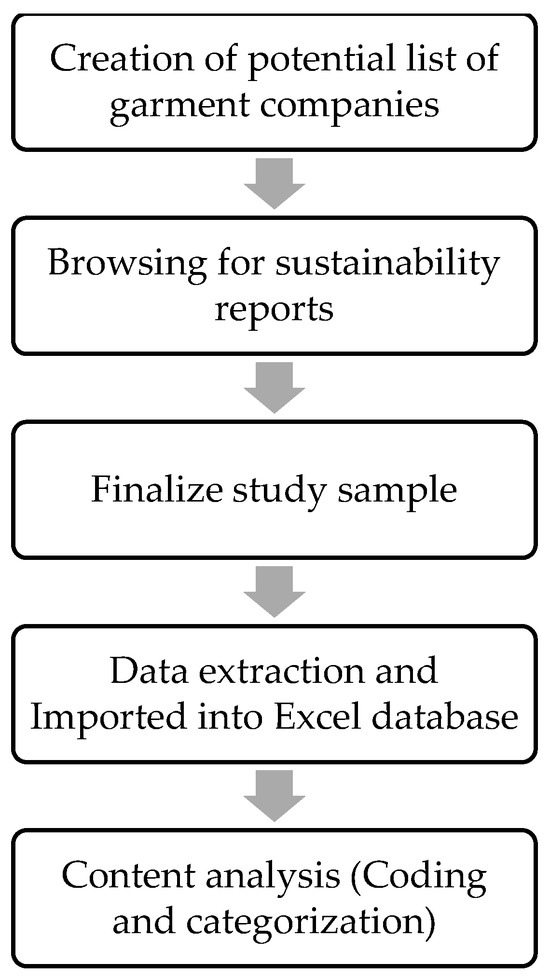
The final tally included sustainability reports from 25 renowned Bangladeshi garment factories. The reports were reviewed before deciding on an approach for analysis. Complete texts from all available reports were extracted with their sources and imported into an Excel sheet. The company name has been coded with “Company A, B, C … Y” to maintain anonymity. A de-identified Supplementary Materials Table S1 is available on request. To provide a clear overview of the research procedure of this study, Figure 1 presents the stages of the research design.
Figure 1.
Research process of the study.
3.2. Data Analysis Procedure
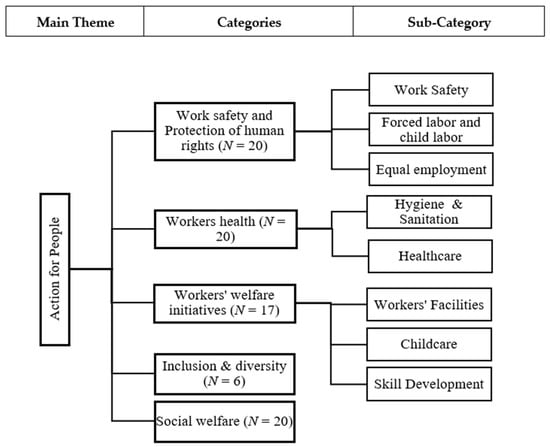
Summative content analysis was chosen because it offers the opportunity to evolve contextually relevant categories, and the intent was to demonstrate what sustainability initiatives are taken and reported by the Bangladesh garment industry [48]. The TBL framework was then used to create an unstructured categorization matrix for the analysis [59], using the three themes of the TBL framework: people (care for workers), planet (environment), and profit (financial sustainability). Using an unstructured approach with a prior framework allows for the exploration of how or whether textual material fits the matrix, rather than a strict deductive approach, in which much text may be omitted in the search for a good fit [59]. The next step was therefore that text in the reports was coded by clustering meaningfully connected items into the matrix, but also creating new codes when material required. Codes were organized into categories based on the clustered meanings of codes (see Figure 2 and Figure 3). As Elo and Kyngas (2008) note, coding involves an appropriate level of detail in the unit of analysis, sensible cohering of concepts when moving to categorization, and an overall sense-making [59]. While the TBL framework was a good guide, the non-standardized way of reporting required the development of definitions for each category (see below in findings). Revisions were also made to maximize the mutual exclusivity and exhaustiveness of the categories and codes [48].
Figure 2.
Main theme: action for people, with categories and subcategories.
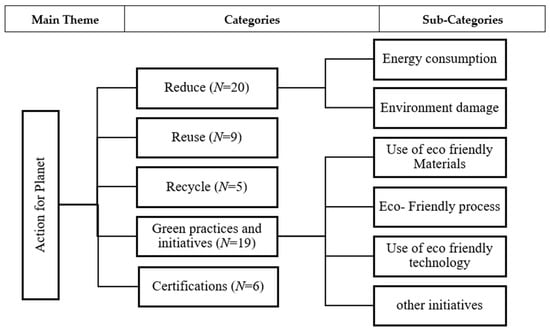
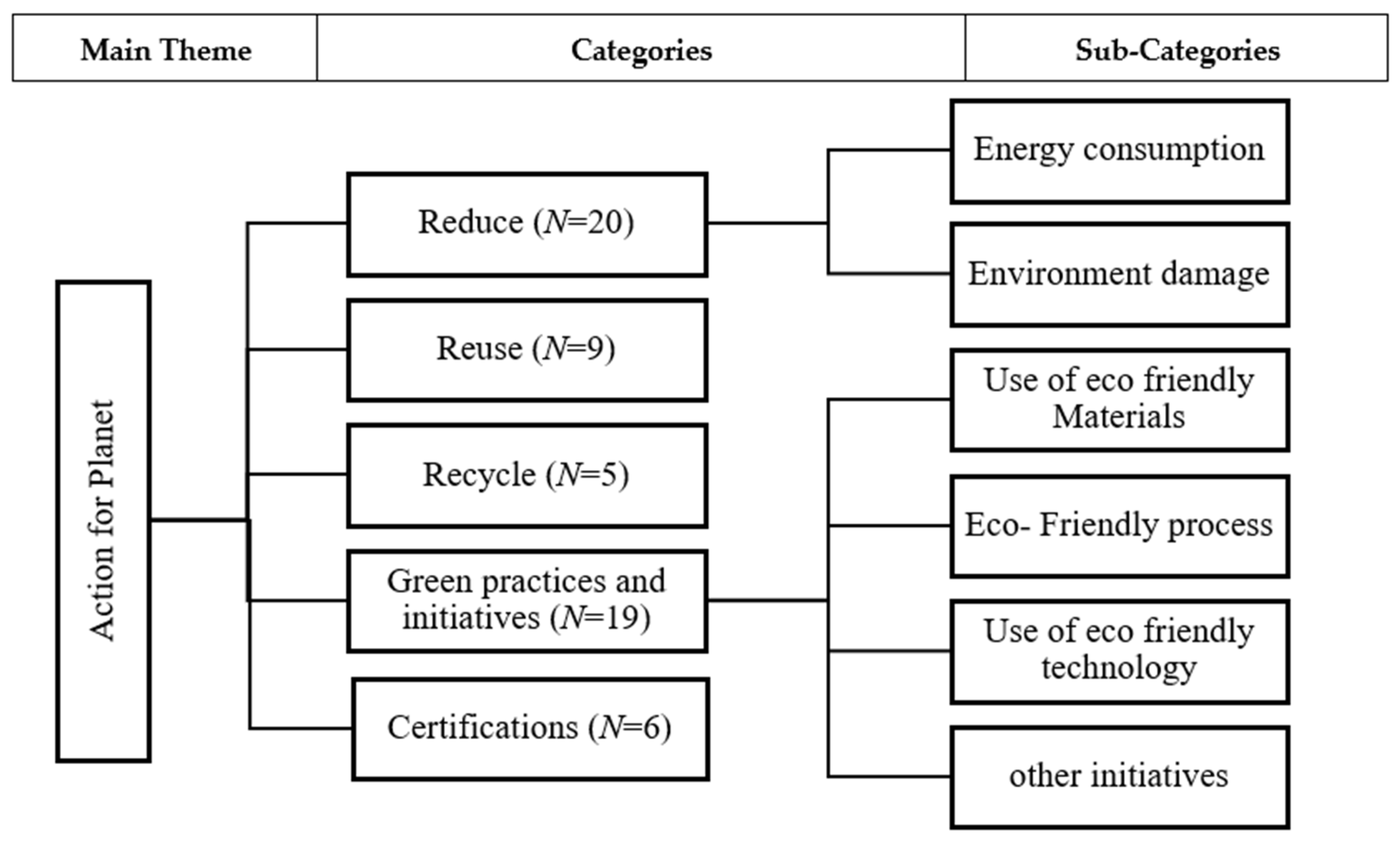
Figure 3.
Main theme: action for planet with categories and subcategories.
3.3. Validity
Content analysis relies on consistency and clarity of coding to develop internal validity. Elo and Kyngas (2008) point out that the process requires developing meaningful categories by first selecting and applying material appropriately to codes and then aggregating codes to categories [59]. In this study, the TBL framework, which is widely used, helped establish meaningful parameters for thematic categories. However, the codes were then developed from the reports and fitted to confirm or prove the TBL thematic categories. Examples have been provided to demonstrate internal coherence between the data and the analysis in this deductive–inductive process. Although inter-rater reliability was not attempted, as the coding framework was developed by the first author, the second author reviewed the evolving framework multiple times, querying applications and results, and the third author checked the category framework and consistency.
For validity, both Elo and Kyngas (2008) and Hsieh and Shannon (2005) reference the criterion of trustworthiness originally described by Lincoln and Guba (1985), which ultimately refers to persuading readers about the quality of the study [48,59,60]. The first aspect focuses on procedural, or analytic and research design processes, described above, but also includes how potential bias is addressed [60]. The second aspect refers to whether readers trust themselves to implement the findings [60]. Flyvbjerg (2001) describes the effectiveness of qualitative studies in terms of theoretical generalizability, or whether the reader can apply the lessons to real-world examples, rather than exactly matching the conditions [61]. However, in this case, correspondence to the TBL framework assists in applying the examples, while contextualization to the Bangladesh context of leading garment industries provides real-world correspondence.
The findings are presented below under the headings of the TBL framework, while the contents of the categories, as well as the subcategories, are illustrated using the codes and examples from the dataset.
4. Findings
Three main themes were investigated based on the TBL theory: (a) actions for people, (b) actions for the environment, and (c) actions for making responsible profit. Five categories with six subcategories were further developed under the main theme of each company’s actions for their people (see Figure 2 and Table 1 for subcategories). There are four categories and seven subcategories under the theme of companies’ actions regarding the environment for our planet, shown in Figure 3 and Table 2. The categories, along with the subcategories, are presented below. No categories are presented for the third bottom line, action for profit, as is explained below.
Table 1.
Subcategories with the codes related to the action for people.
Table 2.
Subcategories with the codes related to action for the planet.
4.1. Actions for People
Every company stated its efforts to create a safe, comfortable, and healthy work environment for its employees. Companies’ initiatives for both employees and society have been combined in this theme and are described through five categories: (a) worker safety and protection of human rights, (b) workers’ health, (c) workers’ welfare initiatives, (d) inclusion and diversity, and (e) social welfare. All subcodes are shown in Figure 2 and Table 1.
4.2. Worker Safety and Protection of Human Rights
The 15 out of 25 companies strongly indicated their commitment to zero occupational accidents by indicating their current steps for assuring employees’ safety and protection from any fire, building, and electrical hazards, as well as any harassment in the workplace. Phrases from the sustainability reports that demonstrate such codes were “Keep our internal and external ambiance hazard-free”—Company E, “Assuring Safety for employees”—Company G, and “Zero tolerance for sexual harassment”—Company Q. This category also included commitments to uphold core principles of workers’ welfare by emphasizing adherence to buyers’ codes of conduct regarding human rights in statements such as “Follows buyers’ code of conduct of human rights”—Company A and “Prohibition of child labor & forced labor”—Company I. The two categories have been described together due to their similarities.
4.3. Workers’ Health
The majority of the companies (20 out of 25) reported their care for employees’ health, including their hygiene and sanitation. Phrases that denoted the workers’ healthcare subcategory were “On-site well-equipped medical facilities”—Company F and “Medical care with insurance”—Company D. The phrases associated with the hygiene and sanitation subcategory were “Supports menstrual hygiene”—Company R and “Providing showers and washing facilities for staff”—Company J.
4.4. Workers’ Welfare Initiatives
This category represents the various initiatives aimed at fostering a healthy work-life balance by promoting personal and professional growth and overall productivity. This category included a variety of services and benefits that employers offer to enhance the quality of their employees’ lives and well-being. This category encompassed initiatives for improved living arrangements, childcare support, and skill development training programs. These initiatives were often evident in company reports (Supplementary Materials Table S1 is available on request). Reports included mentions of workers’ facilities such as “Daycare facilities for children of all the working mothers”—Company G, “Accommodation facilities and medical care with insurance”—Company D, and “Subsidized Fair Price shop for all staff-workers, In-campus dormitory, dedicated transport”—Company V. Initiatives for developing workers’ skills included “Technical and Vocational Education Training (TVET)”—Company H, “Training center for underprivileged minorities”—Company L, and “Professional Development Training”—Company T.
4.5. Inclusion and Diversity
Some impressive equity and inclusion strategies were reported by a few companies, which described ways to diversify the work environment and enhance the sustainability of the company. No subcategories were identified under this theme, but companies that went beyond standard statements include mentions of “Gender Equality”—multiple companies, “Differently abled human resource inclusion”—multiple companies, and “Employed senior citizen”—Company X, which indicated commitment toward inclusion and diversity.
4.6. Social Welfare
This category included such issues as support for individual colleges or laboratories, community schools or facilities, and community benefits such as blood collection, scholarship, or library support. No subcategories were derived for this theme. Some companies have not stated much about the initiatives for the betterment of their employees but communicated heavily about their different kinds of social activities such as “School for the unprivileged child”—Company G, “Community Engagement and Development”—Company H, “Monthly blood collection and the donation from employees”—Company L, and assisting medical and educational infrastructure development. However, some of the companies reporting strong social contributions did not report much about efforts to provide benefits to their employees.
4.7. Actions for the Planet
All the companies explicitly communicated what they were doing to mitigate the negative impacts on the environment. Different strategies have been incorporated by different companies, such as reducing energy or resource consumption, recycling and reusing waste and other used materials, and disclosing their various green practices and initiatives. Categories have been made based on it, with the subcategories shown in Figure 3 and codes shown in Table 2.
4.8. Reduce
Reduction in energy consumption and mitigating environmental damage were two subcategories under the category “reduce”. These two were the most declared environmental initiatives by all companies. Indicators in the environmental damage reduction subcategory dealt with the codes “Reduce ozone depletion”—Company J and “Reduce heat-based emission”—Company B. Phrases expressing the action for reducing energy consumption were “Saving power consumption”—Company D and “Process for tracking the energy consumption”—Company L.
4.9. Reuse and Recycle
Within this category, companies have not communicated much about the steps taken for reusing and recycling resources separately, such as materials and energy. Hence, these two are combined. Indicators from the sustainability reports demonstrating the reuse code were “Reusing Water & Energy”—Company D, “Recycling organic waste”—Company K, and “Miscellaneous manufacturing operations are recycled”—Company U.
4.10. Green Practices and Initiatives
The reports revealed that many companies use eco-friendly materials and eco-friendly technology, and incorporate eco-friendly processes as part of their green practices and initiatives. Subcategories have been named after these, but they were all under the category. The most stated initiative was establishing ETP for wastewater and incorporating energy-efficient technologies for cleaner production. They have also reported using organic and sustainable fibers as well as green chemicals. Indicators of other green initiatives apart from it were “Promoting Sustainable Fashion”—Company E and “Research and Development on Sustainable Issues”—Company G.
4.11. Certifications
Certificates are issued for the proper implementation of international sustainability standards, as these are concerned with the safety of the consumer, the manufacturer, society, and the environment at large [10]. Several companies mentioned in their sustainability reports that they received third-party certifications after meeting some standards of social and environmental performance for sustainability practices. These reports represented their investment in driving business sustainably. Phrases represented in this category were “Certified as Worldwide Responsible Accredited Production (WRAP)”—Company V and “All manufacturing facilities are LEED certified”—Company P.
4.12. Action for Profit
Although profit is an important pillar of the TBL since it guarantees the sustainability of operations [62], this theme was only included in seven companies’ sustainability reports. The reports typically mentioned their annual revenue and growth, and how they are improving it, including their impact on the local economy. Reports represented the economic aspects of sustainability through phrases such as “Economic performance and economic impacts have been described” (Company H) and “We foster local economies at the private and public level” (Company N). No categories or subcategories were developed due to insufficient data; however, of the three companies that provided some detail, Company P mentioned responsible profit, and Company X mentioned “Healthy financial growth is our key factor for existence” (details are available in a Supplementary Materials Table S1, which is available on request.) These examples demonstrate how more companies could include profit as part of their sustainability actions.
- Key Findings of the Study
The analysis of sustainability reports from 25 Bangladeshi garment companies appears to function as a communication tool for demonstrating compliance with global sustainability expectations and buyer requirements, thus revealing:
- There is a strong emphasis on the garments company’s initiatives related to social sustainability (people), including worker safety, healthcare, social welfare programs, and community development.
- Environmental sustainability practices are widely communicated, incorporating the company’s actions related to energy reduction, wastewater treatment (e.g., ETP), sustainable materials, and green technologies.
- Economic sustainability (profit dimension) is under-reported, as only a small number of companies disclosed information related to economic performance or responsible profit within the sustainability context.
5. Discussion
The findings indicate that, overall, these top garment companies do present their current practices for the betterment of their work environment, employees’ lives, and environmental governance. The findings also demonstrate that they do not disclose much about their initiatives to maintain their profit in conjunction with sustainability practices. The sustainability reports served as the primary mechanism that garment factories use to communicate with their stakeholders about their efforts, commitments, and achievements in various sustainability-related domains such as environmental protection, social responsibility, and governance practices.
This detailed review of 25 top Bangladesh garment companies demonstrates some strengths and gaps in reporting TBL elements. Among the strengths were a consistent attention to a range of worker benefits and to some community benefits, captured under “action for people.” These included workers’ welfare, hygiene, health, safety, women’s health, childcare, and diversity support. However, none of these categories were consistently mentioned, and often there was no external benchmark or standardized reviewing framework. Other benefits for people that were mentioned but less often included in the reports were childcare, skill development, or protection against child labor. Often, benefits for the community were mentioned together with benefits for employees, making it unclear who the benefits were for. Some companies focused more on their social welfare efforts, including initiatives benefiting society or the community outside of their workforce, rather than direct employee benefits, which are provisions provided directly to employees.
Very few companies even mentioned the third sustainability dimension, profit for sustainability. Actions for the planet were not as complexly described as actions for people. The most frequently described actions for the planet included reducing environmental damage, which had two subcategories, and green initiatives, which comprised four subcategories. While this is laudable, less well discussed were the principles of reuse and recycle and corporate practices. Corporate practices are particularly important for indicating system-wide practices. Given that initiatives connected to maintaining business profitability are underemphasized in the reports we reviewed, whereas a business can only endure by generating profits, the reader may be dubious about the connection with other TBL claims. It seems that companies might have published their reports in alignment with the global community’s expectations after being pressured and criticized to maintain their position [44]. This is consistent with the stakeholder theory of corporate governance, which asserts that business entities are becoming more responsive to the needs and desires of their many stakeholders, but perhaps these examinations demonstrate reactivity rather than proactive initiatives [63].
The reporting style also demonstrates some inconsistencies. Sometimes similar issues were indicated and phrased differently by different companies. Only three companies followed the GRI standards. Others did not adhere to any standard, suggesting a lack of uniformity in sustainability reporting practices by Bangladesh garment factories. Companies that follow the recognized standards, like GRI, may have more credibility and be more comparable. Adhering to the standards reinforces the legitimacy of sustainability initiatives, as it enables their stakeholders to assess company performance more easily. External standards may also engender a sense of security among stakeholders who rely on these reports for decision-making purposes.
Surveying the content of reports is important because companies may demonstrate their commitment to sustainability by mentioning positive sustainability practices. Companies may use these reports to enhance their reputation and brand image. Positive reports may assist companies in attracting buyers and investors, who are increasingly considering sustainability factors such as environmental, social, and governance. Stakeholders may access and use sustainability reports during their decision-making process. However, what concerned researchers was that some top renowned garment factories, including those first on our lists, did not publish any sustainability reports, which was surprising as they included some large companies. However, of those companies that did have reports, they may respond to issues for which companies have been pressured or criticized, so as to present a clean or reformed image, particularly about their safety and infrastructure. Without a consistent external standard, reports may seem self-serving rather than authentic.
A crucial component for improving trust is therefore transparency, which would allow stakeholders to scrutinize the authenticity and precision of the information proffered within these reports with confidence. However, most of the reports lacked traceable information, which may engender concerns about possible greenwashing or manipulation of sustainability information. Although recognizing sustainability achievements is important, it is also crucial to boost the credibility of sustainability disclosures and reassure stakeholders about the indicated efforts, so that they do not view the claims as greenwashing. Using third-party verification could be a wise strategy to address this issue as it may prevent stakeholders from interpreting the asserted claims as examples of greenwashing.
Limitations and Implications for Future Research
The findings of this study emanate from a meticulous examination of the corporate sustainability reports that were publicly provided by the companies, which might overstate some CSR commitment due to image branding. In addition, companies publish reports in diverse formats and styles, so some exemplary practices might have been overlooked in our analysis due to these stylistic differences. Information may also have been missed because some companies upload a stand-alone sustainability report, and some have information embedded under tabs on their websites, which were not examined, as our sample was focused on reports. More renowned factories have started reporting sustainable initiatives, but it is also still a new practice for most companies, especially for small garment companies in Bangladesh, and this may have resulted in the variability that we observed. For this study, only the top garment factories in Bangladesh have been considered, presuming that these would be the industry leaders and have the best practices. The practices of smaller companies should also be examined, although a broader sample of randomly chosen garment factories may not provide proper insights because of a lack of capacity to produce sustainability reports. Therefore, another strength in the purposive choice is that the top garment factories have more of an impact on people and the planet, so their reports about sustainability practices are more relevant for this study. This study did not systematically compare the operational characteristics of the selected garment companies, such as workforce size, production capacity, or revenue levels. Future research could extend this work by analyzing sustainability practices among companies with similar organizational scale or production capacity to enable a more direct comparison. Although the focus of this study was on the Bangladesh garment industry, the findings may also provide insights for other developing countries with similar socio-technical and industrial contexts, particularly those with export-oriented garment sectors, as other similar countries are facing increased global pressure to adopt sustainable practices. Future research can extend this work by examining sustainability reporting practices across multiple developing countries to better understand similarities and differences in sustainability implementation under comparable socio-technical conditions.
Despite the care taken, limiting the dataset to 2020–2021 may have missed the evolution of corporate strategies and practices. In addition, only publicly available reports were analyzed, so all industry activity may not be accurately represented. Although the intention was to survey the Bangladesh garment industry, the coding framework should be cautiously applied to other countries and industries. Smaller, more local companies may also have more innovative practices that are not captured in reports.
However, the desirability of sustainability for images is an indication of motivation to work towards the TBL as well. These reports, though pertaining solely to the designated years of 2020–2021, enabled comparisons, but the dynamism of corporate strategies and practices evolves as they contribute to evolution. Regular reviews would help document the evolution of TBL practices. In addition, only publicly available reports were analyzed. Future research could benefit by gathering other forms of data, such as attendance at investor presentations or interviews with company personnel, to invite explanations of the underpinning tenets of strategic approaches and outcomes. Furthermore, findings may be extended by incorporating overview reports that utilize industry data, rather than only company-level reports. Researchers could also use the triple bottom line analytic framework developed here to conduct more sophisticated analyses.
6. Conclusions
As a review of the reported sustainability practices, this study provides detailed insights into sustainability reporting practices currently within the Bangladesh garment industry by presenting that the Bangladesh garment companies are trying to align with global sustainability practices. This study highlights the key activities that most of the larger garment companies are practicing, which can potentially serve as a roadmap for other companies that are looking to integrate sustainability practices. The coding framework used for this study may provide a basis for the future in-depth examination of sustainability practices, which may help both industry stakeholders and scholars in academia devise better approaches to holistically implement sustainability practices in the Bangladesh garment sector. Moreover, other stakeholders will be able to find potential opportunities for collaboration between different actors within the sector, such as suppliers, manufacturers, and government agencies, among others, by identifying the possible areas of improvement from this study’s findings. By providing useful information about what needs attention when designing policies around sustainable initiatives, these findings can help devise strategies that encompass all dimensions of sustainability.
Supplementary Materials
The following supporting information can be downloaded at: https://www.mdpi.com/article/10.3390/su18073234/s1, Table S1: The Data Set from The Sustainability Reports of The Companies.
Author Contributions
Conceptualization, U.H.B. and Y.-A.L.; methodology, formal analysis, and validation, U.H.B. and S.V.; writing—original draft preparation, U.H.B.; writing—review and editing, Y.-A.L., S.V. and U.H.B.; supervision, Y.-A.L. and S.V. All authors have read and agreed to the published version of the manuscript.
Funding
This research received no external funding.
Institutional Review Board Statement
Not applicable.
Informed Consent Statement
Not applicable.
Data Availability Statement
The data presented in this study are available on request from the corresponding author to maintain the company’s privacy.
Conflicts of Interest
The authors declare no conflicts of interest.
References
- Kafi, M.A.; Romeo, L.D. Evaluating sustainable practices of bangladeshi apparel and textile industry: Triple bottom line approach. In Proceedings of the International Textile and Apparel Association Annual Conference Proceedings; Iowa State University Digital Press: Ames, IA, USA, 2017; Volume 74. [Google Scholar]
- Kumar Saha, P.; Ng, B.-K.; Fung, H.-N. Revolutionising the Ready-Made Garments Firms in Bangladesh: Strategies for Transformative Change towards Sustainable Product Innovation. Asian J. Technol. Innov. 2025, 33, 780–804. [Google Scholar] [CrossRef] [Scilit]
- Hossain, K. Sustainable System Transition of Bangladeshi Textile Industry. Master’s Thesis, Lappeenranta-Lahti University of Technology (LUT), Lappeenranta, Finland, 2020. [Google Scholar]
- Ashraf, H.; Prentice, R. Beyond Factory Safety: Labor Unions, Militant Protest, and the Accelerated Ambitions of Bangladesh’s Export Garment Industry. Dialect. Anthropol. 2019, 43, 93–107. [Google Scholar] [CrossRef] [Scilit]
- Pouillard, V.; Dubé-Senécal, V. Bangladesh Garment Industry. In The Routledge History of Fashion and Dress, 1800 to the Present; Routledge: London, UK, 2023; ISBN 978-0-429-29560-7. [Google Scholar]
- Ahmed, S. Wage Theft, Secrecy, and Derealization of ‘Ideal Workers’ in the Bangladesh Garment Industry. Organ. Stud. 2024, 45, 881–901. [Google Scholar] [CrossRef] [Scilit]
- Haque, M.Z.; Azmat, F. Corporate Social Responsibility, Economic Globalization and Developing Countries: A Case Study of the Ready Made Garments Industry in Bangladesh. Sustain. Account. Manag. Policy J. 2015, 6, 166–189. [Google Scholar] [CrossRef] [Scilit]
- Muthu, S. (Ed.) Sustainability in the Textile Industry, 1st ed.; Springer: Singapore, 2017; ISBN 978-981-10-2638-6. [Google Scholar]
- Kabish, A.K. Textile and Clothing Production and Trading- the Way to Industrial Economy Development. Ethiop. J. Sci. Technol. 2023, 16, 1–12. [Google Scholar]
- Amutha, K. Sustainable Practices in Textile Industry: Standards and Certificates. In Sustainability in the Textile Industry; Muthu, S.S., Ed.; Springer: Singapore, 2017; pp. 79–107. ISBN 978-981-10-2639-3. [Google Scholar]
- Dzhengiz, T.; Haukkala, T.; Sahimaa, O. (Un)Sustainable Transitions towards Fast and Ultra-Fast Fashion. Fash. Text. 2023, 10, 19. [Google Scholar] [CrossRef] [Scilit]
- Alam, M.S.; Natsuda, K. The Competitive Factors of the Bangladeshi Garment Industry in the Post-MFA Era. Can. J. Dev. Stud./Rev. Can. D’études Du Dév. 2016, 37, 316–336. [Google Scholar] [CrossRef] [Scilit]
- Fontana, E.; Dawkins, C. Contesting Corporate Responsibility in the Bangladesh Garment Industry: The Local Factory Owner Perspective. Hum. Relat. 2024, 77, 1003–1036. [Google Scholar] [CrossRef] [Scilit]
- Swazan, I.S.; Das, D. Bangladesh’s Emergence as a Ready-Made Garment Export Leader: An Examination of the Competitive Advantages of the Garment Industry. Int. J. Glob. Bus. Compet. 2022, 17, 162–174. [Google Scholar] [CrossRef] [Scilit]
- Harris, F.; Roby, H.; Dibb, S. Sustainable Clothing: Challenges, Barriers and Interventions for Encouraging More Sustainable Consumer Behaviour. Int. J. Consum. Stud. 2016, 40, 309–318. [Google Scholar] [CrossRef] [Scilit]
- Hasanspahic, M. Sustainable Fashion—Practices, Strategies and Meanings. Master’s Thesis, Lund University, Lund, Sweden, 2016. [Google Scholar]
- Peters, G.; Li, M.; Lenzen, M. The Need to Decelerate Fast Fashion in a Hot Climate—A Global Sustainability Perspective on the Garment Industry. J. Clean. Prod. 2021, 295, 126390. [Google Scholar] [CrossRef] [Scilit]
- Uddin, M.H.; Razzak, M.R.; Rahman, A.A. Sustainable Supply Chain Management Practices, Dynamic Capabilities and Competitive Advantage: Evidence from Bangladesh. Bus. Strat. Dev. 2023, 6, 176–188. [Google Scholar] [CrossRef] [Scilit]
- Julie, S.; Potter, A.; Geng, R. Examining the Effects of Stakeholder Forces on Sustainable Practices in the Bangladeshi Garment Industry. Clean. Logist. Supply Chain 2024, 12, 100162. [Google Scholar] [CrossRef] [Scilit]
- Elkington, J. Partnerships from Cannibals with Forks: The Triple Bottom Line of 21st-Century Business. Environ. Qual. Manag. 1998, 8, 37–51. [Google Scholar] [CrossRef] [Scilit]
- Chakrabarty, S.; Wang, L. The Long-Term Sustenance of Sustainability Practices in MNCs: A Dynamic Capabilities Perspective of the Role of R&D and Internationalization. J. Bus. Ethics 2012, 110, 205–217. [Google Scholar] [CrossRef] [Scilit]
- Miska, C.; Szőcs, I.; Schiffinger, M. Culture’s Effects on Corporate Sustainability Practices: A Multi-Domain and Multi-Level View. J. World Bus. 2018, 53, 263–279. [Google Scholar] [CrossRef] [Scilit]
- Svensson, G.; Wood, G.; Callaghan, M. A Corporate Model of Sustainable Business Practices: An Ethical Perspective. J. World Bus. 2010, 45, 336–345. [Google Scholar] [CrossRef] [Scilit]
- Moursellas, A.; De, D.; Wurzer, T.; Skouloudis, A.; Reiner, G.; Chaudhuri, A.; Manousidis, T.; Malesios, C.; Evangelinos, K.; Dey, P.K. Sustainability Practices and Performance in European Small-and-Medium Enterprises: Insights from Multiple Case Studies. Circ. Econ. Sust. 2023, 3, 835–860. [Google Scholar] [CrossRef] [Scilit]
- Høgevold, N.M.; Svensson, G.; Klopper, H.B.; Wagner, B.; Valera, J.C.S.; Padin, C.; Ferro, C.; Petzer, D. A Triple Bottom Line Construct and Reasons for Implementing Sustainable Business Practices in Companies and Their Business Networks. Corp. Gov. 2015, 15, 427–443. [Google Scholar] [CrossRef] [Scilit]
- Kealy, T. (Ed.) Review of the Interlinked Environmental, Economic and Social Realms of Sustainability. In Empirical Evaluation of Renewable Energy Projects for Sustainable Development; Springer Nature: Cham, Switzerland, 2024; pp. 1–33. ISBN 978-3-031-65191-5. [Google Scholar]
- Li, M.; Zhao, L. Exploring Global Fashion Sustainability Practices through Dictionary-Based Text Mining. Cloth. Text. Res. J. 2023, 41, 175–190. [Google Scholar] [CrossRef] [Scilit]
- López, M.V.; Garcia, A.; Rodriguez, L. Sustainable Development and Corporate Performance: A Study Based on the Dow Jones Sustainability Index. J. Bus. Ethics 2007, 75, 285–300. [Google Scholar] [CrossRef] [Scilit]
- How Bangladesh Offers Lessons for Sustainable Industrialization in Africa. Available online: https://www.weforum.org/stories/2024/02/how-bangladesh-offers-lessons-for-sustainable-industrialization-in-africa/ (accessed on 21 September 2025).
- Gambhir, D. Major Apparel Exporting Countries in Asia: A Study of Technical Efficiency and Its Determinants. Jindal J. Bus. Res. 2023, 12, 44–57. [Google Scholar] [CrossRef] [Scilit]
- Rahman, I. The Interplay of Product Involvement and Sustainable Consumption: An Empirical Analysis of Behavioral Intentions Related to Green Hotels, Organic Wines and Green Cars. Sustain. Dev. 2018, 26, 399–414. [Google Scholar] [CrossRef] [Scilit]
- Hoque, A.; Clarke, A. Greening of Industries in Bangladesh: Pollution Prevention Practices. J. Clean. Prod. 2013, 51, 47–56. [Google Scholar] [CrossRef] [Scilit]
- Islam, M.S.; Rubel, M.R.B.; Rimi, N.N.; Amin, M.B.; Quadir, P. Attaining Sustainable Excellence: Investigating the Impact of Sustainable Scm and Circular Economy on Green Garment Industry in Bangladesh. Sustain. Futures 2024, 8, 100234. [Google Scholar] [CrossRef] [Scilit]
- Barua, U.; Ansary, M.A. Workplace Safety in Bangladesh Ready-Made Garment Sector: 3 Years after the Rana Plaza Collapse. Int. J. Occup. Saf. Ergon. 2017, 23, 578–583. [Google Scholar] [CrossRef] [Scilit]
- Shen, B. Sustainable Fashion Supply Chain: Lessons from H&M. Sustainability 2014, 6, 6236–6249. [Google Scholar] [CrossRef] [Scilit]
- Islam, M.T.; Hassan, M.N.; Kabir, M.; Robin, M.A.H.; Farabi, M.M.H.; Alauddin, M. Sustainable Development of Apparel Industry in Bangladesh: A Critical Review. J. Manag. Sci. Eng. Res. 2022, 5, 45–62. [Google Scholar] [CrossRef] [Scilit]
- Hossain, L.; Sarker, S.K.; Khan, M.S. Evaluation of Present and Future Wastewater Impacts of Textile Dyeing Industries in Bangladesh. Environ. Dev. 2018, 26, 23–33. [Google Scholar] [CrossRef] [Scilit]
- Jani, S.A.; Jatmika, S. Impact of Fast Fashion in Bangladesh: An Analysis of the Role of the UN Alliance for Sustainable Fashion. Int. J. Multicult. Multireligious Underst. 2023, 9, 592–605. [Google Scholar]
- Curran, L.; Nadvi, K. Shifting Trade Preferences and Value Chain Impacts in the Bangladesh Textiles and Garment Industry. Camb. J. Reg. Econ. Soc. 2015, 8, 459–474. [Google Scholar] [CrossRef] [Scilit]
- Christofi, A.; Christofi, P.; Sisaye, S. Corporate Sustainability: Historical Development and Reporting Practices. Manag. Res. Rev. 2012, 35, 157–172. [Google Scholar] [CrossRef] [Scilit]
- Moodaley, W.; Telukdarie, A. Greenwashing, Sustainability Reporting, and Artificial Intelligence: A Systematic Literature Review. Sustainability 2023, 15, 1481. [Google Scholar] [CrossRef] [Scilit]
- Janik, A.; Ryszko, A. Greenwashing in Sustainability Reporting: A Systematic Literature Review of Strategic Typologies and Content-Analysis-Based Measurement Approaches. Sustainability 2025, 18, 17. [Google Scholar] [CrossRef] [Scilit]
- Sundarasen, S.; Zyznarska-Dworczak, B.; Goel, S. Sustainability Reporting and Greenwashing: A Bibliometrics Assessment in G7 and Non-G7 Nations. Cogent Bus. Manag. 2024, 11, 2320812. [Google Scholar] [CrossRef] [Scilit]
- Kamal, Y.; Deegan, C. Corporate Social and Environment-Related Governance Disclosure Practices in the Textile and Garment Industry: Evidence from a Developing Country. Aust. Account. Rev. 2013, 23, 117–134. [Google Scholar] [CrossRef] [Scilit]
- Global Reporting Initiative. Sustainability Reporting and Integration of SDGs—The Bangladesh Status; Global Reporting Initiative: Amsterdam, The Netherlands, 2024; Available online: https://www.globalreporting.org/media/0g3ivp35/final-status-of-sustainability-reporting-in-bangladesh.pdf (accessed on 14 March 2026).
- Auke, E.; Simaens, A. Corporate Responsibility in the Fast Fashion Industry: How Media Pressure Affected Corporate Disclosure Following the Collapse of Rana Plaza. Int. J. Entrep. Innov. Manag. 2019, 23, 356–382. [Google Scholar] [CrossRef] [Scilit]
- Sinkovics, N.; Hoque, S.F.; Sinkovics, R.R. Rana Plaza Collapse Aftermath: Are CSR Compliance and Auditing Pressures Effective? Account. Audit. Account. J. 2016, 29, 617–649. [Google Scholar] [CrossRef] [Scilit]
- Hsieh, H.-F.; Shannon, S.E. Three Approaches to Qualitative Content Analysis. Qual. Health Res. 2005, 15, 1277–1288. [Google Scholar] [CrossRef] [Scilit]
- Landrum, N.E.; Ohsowski, B. Identifying Worldviews on Corporate Sustainability: A Content Analysis of Corporate Sustainability Reports. Bus. Strategy Environ. 2018, 27, 128–151. [Google Scholar] [CrossRef] [Scilit]
- Dobbs, S.; van Staden, C. Motivations for Corporate Social and Environmental Reporting: New Zealand Evidence. Sustain. Account. Manag. Policy J. 2016, 7, 449–472. [Google Scholar] [CrossRef] [Scilit]
- Kozlowski, A.; Searcy, C.; Bardecki, M. Corporate Sustainability Reporting in the Apparel Industry: An Analysis of Indicators Disclosed. Int. J. Prod. Perform. Manag. 2015, 64, 377–397. [Google Scholar] [CrossRef] [Scilit]
- Manetti, G.; Toccafondi, S. Defining the Content of Sustainability Reports in Nonprofit Organizations: Do Stakeholders Really Matter? J. Nonprofit Public Sect. Mark. 2014, 26, 35–61. [Google Scholar] [CrossRef] [Scilit]
- Roca, L.C.; Searcy, C. An Analysis of Indicators Disclosed in Corporate Sustainability Reports. J. Clean. Prod. 2012, 20, 103–118. [Google Scholar] [CrossRef] [Scilit]
- Kiron, M.I. List of Top Ten Textile Industries in Bangladesh. Available online: https://textilelearner.net/textile-industries-in-bangladesh/ (accessed on 25 October 2021).
- Report, S.B. Bangladesh Now Has 150 Green Garment Factories—Highest in the Globe. Available online: https://www.thedailystar.net/business/news/bangladesh-now-has-150-green-garment-factories-highest-the-globe-2200791 (accessed on 20 December 2025).
- Bangladesh Leads World in Green Garment Factories. Available online: https://www.tbsnews.net/economy/rmg/bangladesh-leads-world-green-garment-factories-1166351 (accessed on 20 December 2025).
- Calace, D. Battle of Giants: GRI vs SASB vs IR|Greenbiz. Available online: https://www.greenbiz.com/article/battle-giants-gri-vs-sasb-vs-ir (accessed on 21 October 2022).
- Tavanti, M. Global Sustainability Reporting Initiatives: Integrated Pathways for Economic, Environmental, Social, and Governance Organizational Performance. In Corporate Social Performance: Paradoxes, Pitfalls and Pathways to the Better World; Stachowicz-Stanusch, A., Ed.; Emerald Publishing Limited: Leeds, UK, 2015; p. 265. ISBN 978-1-68123-165-5. [Google Scholar]
- Elo, S.; Kyngäs, H. The Qualitative Content Analysis Process. J. Adv. Nurs. 2008, 62, 107–115. [Google Scholar] [CrossRef] [Scilit]
- Lincoln, Y.S.; Guba, E.G. Naturalistic Inquiry; SAGE: Thousand Oaks, CA, USA, 1985; ISBN 978-0-8039-2431-4. [Google Scholar]
- Flyvbjerg, B. Making Social Science Matter: Why Social Inquiry Fails and How It Can Succeed Again; Cambridge University Press: Cambridge, UK, 2001; ISBN 978-0-521-77568-7. [Google Scholar]
- Turletti, P. Sustainability and Profitability: Why They Can and Should Go Hand in Hand. Available online: https://www.forbes.com/sites/forbescommunicationscouncil/2022/05/20/sustainability-and-profitability-why-they-can-and-should-go-hand-in-hand/ (accessed on 27 October 2022).
- Awa, H.O.; Etim, W.; Ogbonda, E. Stakeholders, Stakeholder Theory and Corporate Social Responsibility (CSR). Int. J. Corp. Soc. Responsib. 2024, 9, 11. [Google Scholar] [CrossRef] [Scilit]

Disclaimer/Publisher’s Note: The statements, opinions and data contained in all publications are solely those of the individual author(s) and contributor(s) and not of MDPI and/or the editor(s). MDPI and/or the editor(s) disclaim responsibility for any injury to people or property resulting from any ideas, methods, instructions or products referred to in the content. |
© 2026 by the authors. Licensee MDPI, Basel, Switzerland. This article is an open access article distributed under the terms and conditions of the Creative Commons Attribution (CC BY) license.