


Abstract
Afforestation of former agricultural land is widely promoted as a strategy to mitigate climate change and support sustainable land management. However, soils subjected to long-term cultivation often retain chemical legacies that may persist for decades after land-use change, influencing soil functioning and ecosystem development. This study investigates the persistence of selected agricultural soil chemical properties following afforestation using a chronosequence approach. Post-agricultural soils afforested for 15, 40, and 80 years were examined on Dystric Brunic Arenosols developed from sandy parent material. Composite samples were collected from forest-floor horizons (Ol and Ofh) and upper mineral horizons (A and B). The analyzed parameters included organic carbon (Corg), total nitrogen (Nt), sulfur (S), soil pH, hydrolytic acidity (Ha), exchangeable base cations (EBC), and cation exchange capacity (CEC). The results show that agricultural soil legacies persist for several decades after afforestation. Soils under the 15-year-old stand were characterized by higher exchangeable calcium, higher base saturation, and lower hydrolytic acidity, reflecting the persistence of historical liming. With increasing stand age, soil acidity increased, and base-cation concentrations declined, while organic carbon accumulated mainly in forest-floor horizons. These findings highlight the importance of considering agricultural soil legacies when evaluating the sustainability of afforestation and its role in long-term ecosystem services.
1. Introduction
Afforestation is one of the most widespread land-use changes occurring globally and particularly across Europe [1,2,3]. This process plays a crucial role in soil restoration and in halting land degradation [4,5]. In Europe, forest area increased by 1.4% between 1992 and 2015, and 66% of this expansion resulted from forest spread rather than regeneration [6]. Understanding how long agricultural soil legacies persist after afforestation is important for assessing the sustainability of land-use change and for optimizing afforestation strategies aimed at improving ecosystem services.
Large areas of former agricultural land have been converted into forest ecosystems, especially in regions dominated by low-productivity soils. As a result, post-agricultural soils now represent a substantial proportion of newly established forest habitats. The conversion of arable land to forest fundamentally alters soil-forming processes. Forest vegetation introduces new pathways of organic matter input, modifies nutrient cycling, and gradually transforms the physical, chemical, and biological properties of soils. Changes in physical properties are often visible relatively quickly [7,8].
A characteristic feature of afforestation is the development of organic surface horizons, which are absent under long-term agricultural management [9,10]. However, the emergence of forest-type horizons does not imply immediate convergence toward soil conditions typical of long-established forests. Numerous studies have shown that afforestation of agricultural land affects many soil properties. In addition to physical characteristics, chemical and biological properties also change [11,12,13].
The issue of afforesting formerly cultivated soils has long attracted scientific attention. Most studies have focused mainly on carbon stocks and the potential for CO2 sequestration by soils. However, the results remain inconclusive: some studies report a drastic decline in carbon content in the humus horizon [14], others show an increase in carbon with stand age [15], while some find no clear changes [16]. The process of organic matter accumulation is highly complex and influenced by many factors, including soil type, climatic conditions, tree species composition, and others. The magnitude of Corg accumulation in forest soils depends on the type of humus formed, the amount and quality of incoming organic matter, and the conditions controlling its transformation, which affect the intensity of mineralization and humification processes [17,18,19].
An increase in total soil carbon—calculated as the sum from both organic and mineral horizons—is often observed, which is why afforestation or natural succession of former arable land can be an important measure for mitigating climate change [20,21,22,23]. The entry of forest vegetation into agricultural or fallow land also affects the quality of organic matter [24]. Changes in soil carbon are closely linked to nitrogen dynamics [25]. Alterations in C and N stocks lead to changes in the C:N ratio. Humus horizons of agricultural soils typically show a clearly lower C:N ratio compared with forest soils. In afforested soils under young stands, this ratio is higher than under older forests, reflecting the presence of less decomposed organic matter [26].
Despite the growing body of literature on afforestation effects, a key research gap remains regarding the persistence of specific agricultural soil characteristics over time. In particular, it is still insufficiently understood how long chemical properties associated with former cultivation—such as reduced acidity, elevated base saturation, or enhanced calcium availability—remain detecsoftwa after afforestation, and how these legacies differ among soil horizons. Most studies focus either on surface organic layers or on aggregated soil profiles, while fewer investigate horizon-specific trajectories extending from the forest floor into mineral horizons.
Long-term monitoring of soil transformation following land-use changes is rare, and historical data are often unavailable. Consequently, chronosequence approaches, based on comparisons among sites afforested at different times under similar environmental conditions, are commonly applied to infer long-term trends. Although this space-for-time substitution cannot fully capture temporal variability, it provides valuable insights into persistent land-use legacies when interpreted cautiously.
The present study addresses this gap by examining post-agricultural soils afforested for different durations, using a chronosequence of forest stands representing early, intermediate, and advanced stages of afforestation. The study focuses on the forest floor (OL and OF horizons) and upper mineral horizons (A and B), which are most responsive to land-use change and play a central role in nutrient cycling and carbon sequestration.
The main objectives of this study were:
(i) To assess how selected chemical soil properties differ among soils afforested for different lengths of time;
(ii) To determine which agricultural soil characteristics persist longest after afforestation;
(iii) To identify horizon-specific patterns in soil transformation along the afforestation chronosequence.
By addressing these objectives, the study aims to improve understanding of long-term soil responses to afforestation on former agricultural land and to contribute to the assessment of afforestation as a tool for soil restoration and sustainable land management. Although the chronosequence approach is widely used to infer long-term soil changes, it cannot fully replace long-term monitoring.
2. Materials and Methods
2.1. Study Area and Sampling Procedure
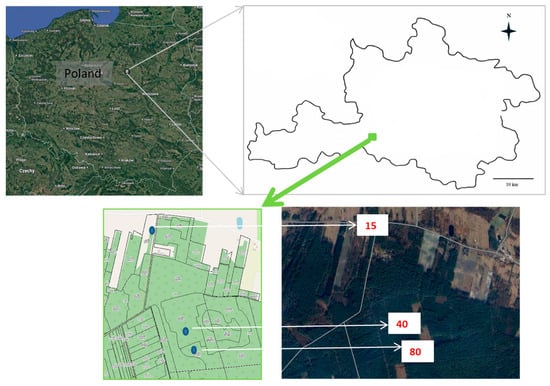
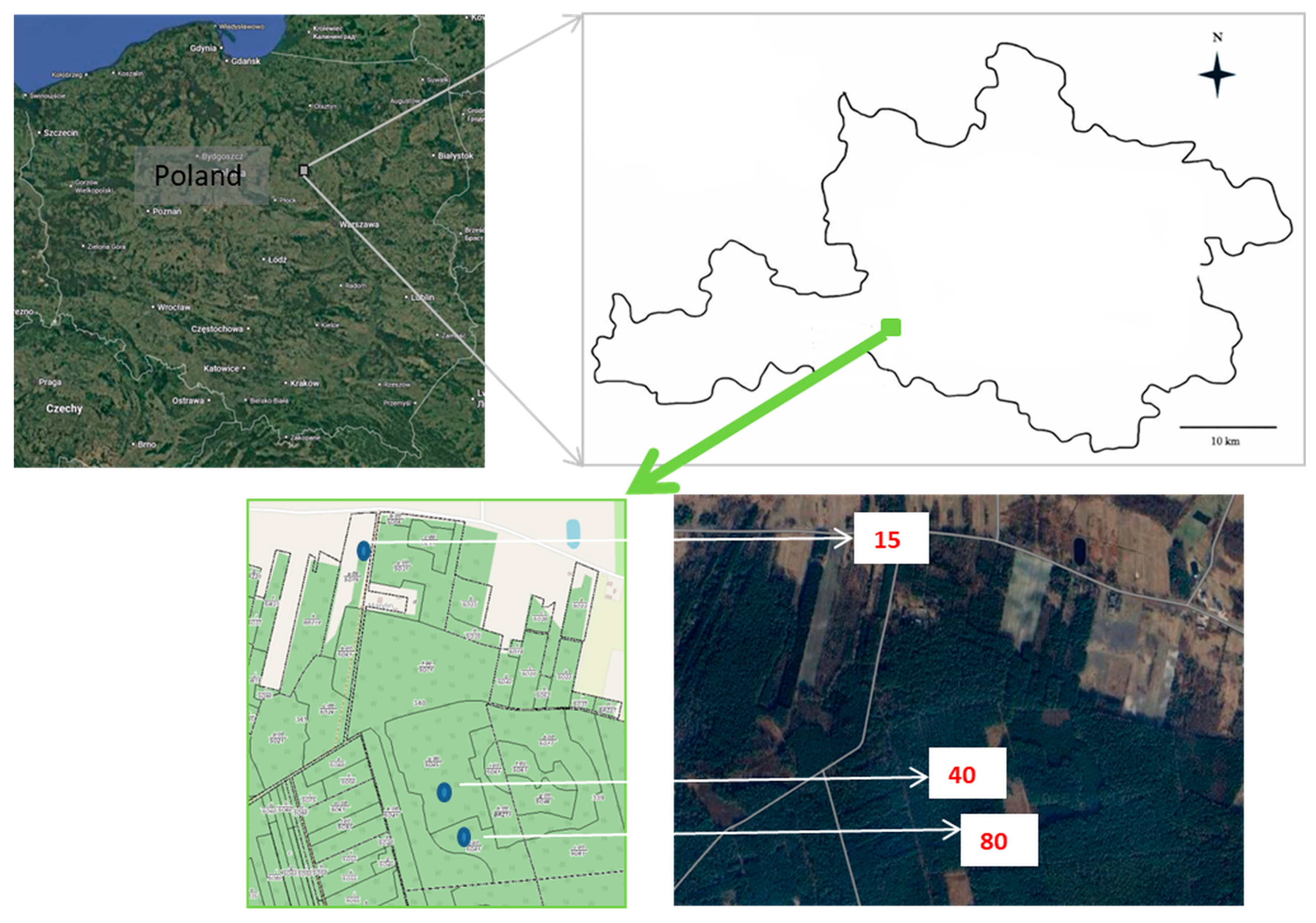
The study was conducted in the Ciechanów Forest District, located in the northern part of the Mazowieckie Province in central Poland (Figure 1). The present landforms were shaped during the Middle Polish (Riss) glaciation. The geological formations found in the study area are primarily fluvioglacial sand deposition [27]. The soils across the study area were classified as Dystric Brunic Arenosols (Aric, Ochric) according to the World Reference Base classification (WRB) [28], occurring within the fresh mixed coniferous forest habitat type. A significant proportion of the soils in this area are post-agricultural [29]. Forest cover in this mesoregion is very low, amounting to only 12%. The Forest District is located almost entirely within the Wkra River catchment [30].
Figure 1.
Location of the Ciechanów Forest District in Poland (top row) and distribution of study sites in forest sections—forest data bank maps (bottom left); Google maps (bottom right). The numbers 15, 40, and 80 indicate the location of areas with 15-year-old, 40-year-old, and 80-year-old trees.
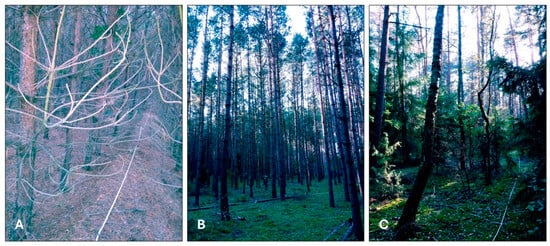
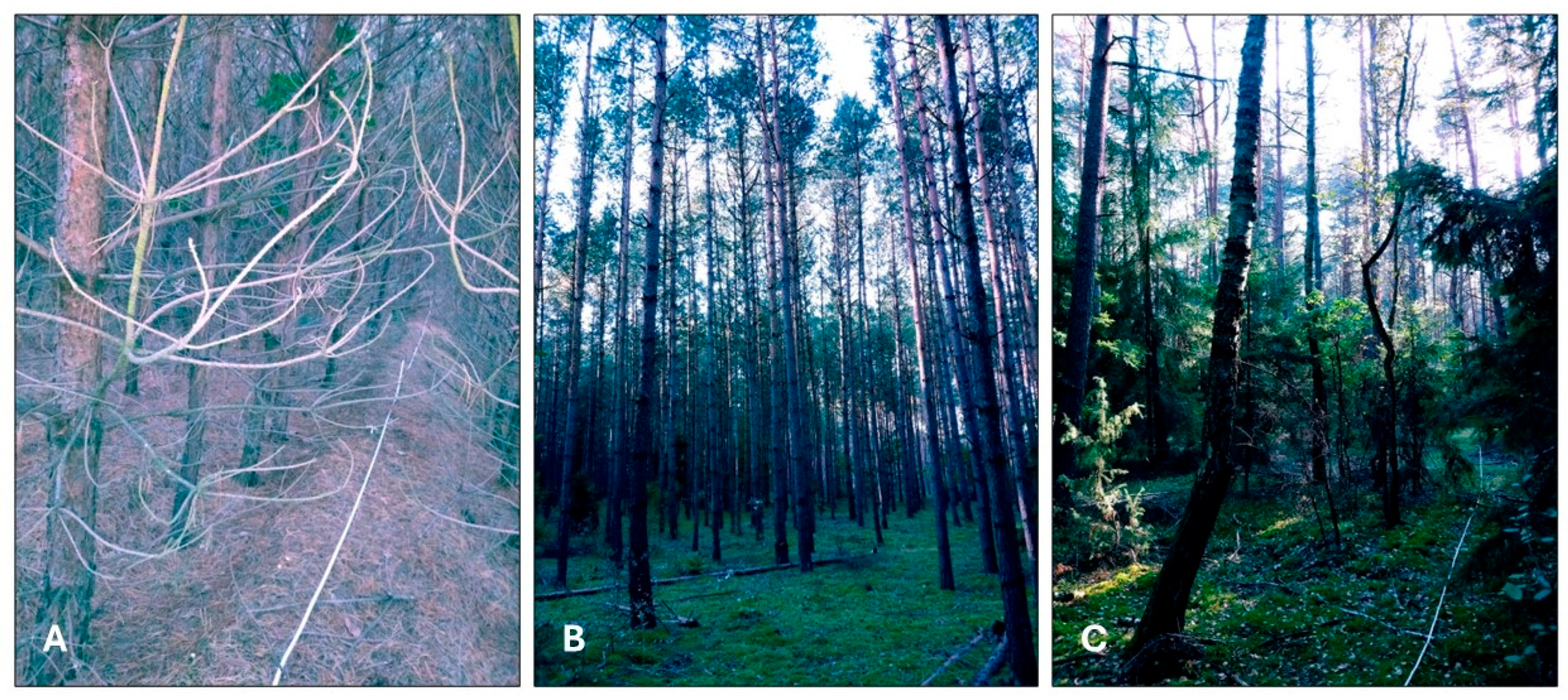
This study was based on three sites situated on post-agricultural soils that lie close to one another (Figure 1). The sites differed in the age of the forest stand (15, 40, and 80 years) (Figure 2). Their characteristics are presented in Table 1.
Figure 2.
Study plots: (A) a plot with 15-year-old pine trees; (B) a plot with 40-year-old pine trees; (C) a plot with 80-year-old pine trees.
Table 1.
Stands characteristics.
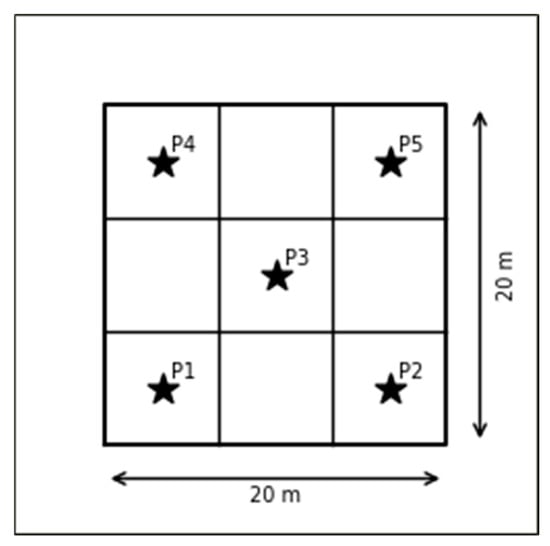
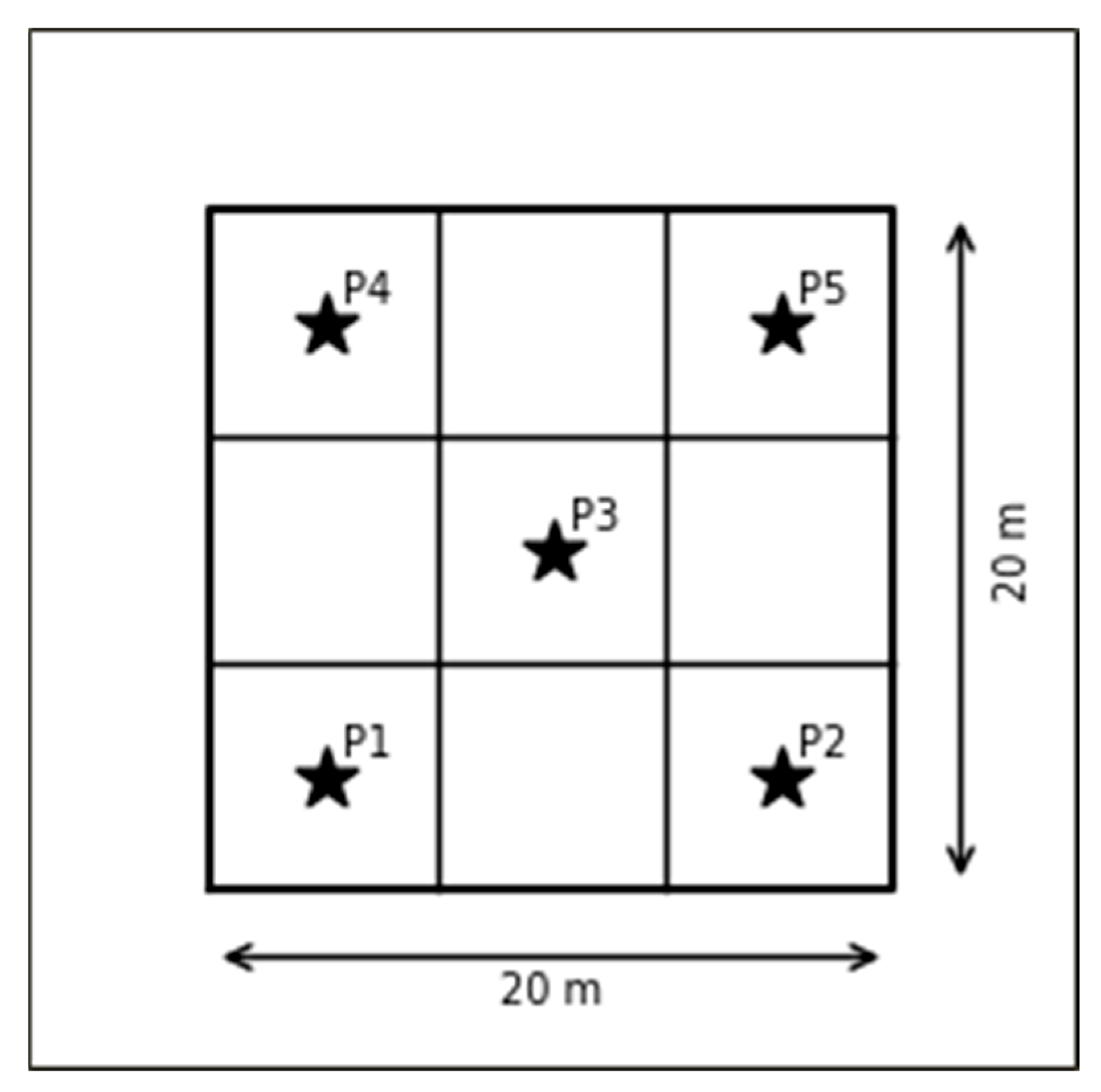
In each site, one 20 × 20 m plot was designated. Soil samples were collected down to 30 cm depth using an auger, with separation into the A and B horizons following the sampling scheme shown in Figure 3. Each sample consisted of four random subsamples taken at the given location. From each mineral horizon, a composite sample of approximately 1 kg was obtained. In total, five samples from the A horizon and five from the B horizon were collected at each plot.
Figure 3.
Sampling diagram for plots. P1–P5 mixed sampling locations.
At the same time, mixed litter samples were collected, with separation into the OL (litter) and the OF (fragmented) subhorizons [31], at the same points where the mineral soil samples were taken. Soil sampling was conducted as a single-term survey, with all samples collected during one field campaign.
2.2. Chemical Analyses
Chemical analyses were carried out using standard methods commonly applied in soil studies. Data on total organic carbon (Corg), total nitrogen (Nt) were taken from the bachelor’s thesis [32]. Corg, Nt, and S were determined using the dry combustion method at 850 °C with an Elementar MacroCube CHNS analyzer. The pH was determined using the potentiometric method, adjusting the soil weight to 1 M KCl and water at a 1:2.5 ratio. Hydrolytic acidity (Ha) in organic and mineral horizons was determined using the Kappen method, which involves displacing H+ and Al3+ ions from the sorption complex by means of a buffered salt solution (ammonium acetate) at pH 8.2, followed by titration of the solution with sodium hydroxide. Base cations (calcium, Ca; magnesium, Mg; potassium, K; and sodium, Na) were extracted only from mineral horizons using an ammonium acetate solution at pH 7. The amounts of individual cations were determined with a Perkin-Elmer ICP-OES instrument. Based on the quantities of individual exchangeable cations, the sum of exchangeable base cations (EBC) was calculated. Soil cation exchange capacity (CEC) was also calculated as the sum of EBC and Ha, as well as the percentage of exchangeable base cations (%EBC) in the soil sorption complex. EBC in the organic horizons was not determined; therefore, CEC and %EBC were calculated only for the mineral horizons.
2.3. Methods for Figure Preparation
Figures were prepared in PowerPoint and subsequently converted into images using ChatGPT 5.0.
2.4. Statistical Methods
On the basis of the obtained results, basic descriptive statistics were computed, i.e., mean and standard deviation. To identify the main gradients of soil property variability and determine which parameters most differentiate samples between variants (15-, 40-, 80-year-old), Principal Component Analysis (PCA) was performed using Statistica 13.3. The analysis was performed separately for the organic horizons (OL and OF) and the mineral horizons (A and B). PCA was used as an exploratory tool to identify the main gradients of variation in soil properties and to visualize differences among soils afforested for different lengths of time. Given the limited number of plots per stand age, statistical comparisons reflect site-specific chronosequence patterns rather than fully independent spatial replication.
3. Results
The soils at the youngest site (15-year-old stand) exhibited higher pH values in the organic horizons compared with the older sites, but lower pH values in the mineral horizons (Table 2). At the 15-year-old plot, the organic horizons had higher pH than the mineral horizons, whereas the opposite pattern was observed at the 40- and 80-year-old plots, where the organic horizons were more acidic.
Table 2.
Mean ± SD values of pH in the studied soils (n = 5).
The lowest pH values among all investigated post-agricultural soils were recorded in the organic horizons of the stand representing the middle-aged class.
Differences were observed in the content of Corg, Nt, and S between the litter horizons (OL, OF) and the mineral horizons (A, B), as well as depending on stand age. The OL horizon was characterized by very high and relatively uniform Corg content, whereas in the OF horizon, the values were lower and more variable (Table 3). Nt content was lower in the OL horizon than in the OF horizon. Higher mean values of this element in the OL horizon were recorded in the 80-year-old stand. The C/N ratio was distinctly higher in the OL horizon compared to the OF horizon. S content in the litter was highest in the OF horizon and slightly lower in the OL horizon. The highest mean S content in the OL horizon was found in the 80-year-old stand, while in the OF horizon, higher values were recorded in the 15- and 40-year-old stands.
Table 3.
Mean ± SD values of elemental contents in the studied soils (n = 5).
In the mineral horizons, Corg content was several times lower than in the litter horizons (Table 3). In the A horizon, the lowest Corg content was found in the 15-year-old stand, while higher values were observed in the 40- and 80-year-old stands. In the B horizon, Corg content was even lower, with trends similar to those observed in the A horizon. Nt content in the A horizon was similar across all stands, whereas in the B horizon, slightly lower values were found in the 15-year-old stand. S content in the mineral horizons was low and similar across all stands, with no clear relationship to stand age. The C/N ratio in the mineral horizons was lower than in the litter horizons, which is typical, and was lowest in the soil of the 15-year-old stand compared to the other two stands.
Ha varied both among the study sites and between genetic soil horizons (Table 4). In the forest-floor horizons, the lowest Ha values were found at the youngest site, in both OL and OF horizons. Ha in the OL horizon at the 40- and 80-year-old sites was similar and markedly higher than in the 15-year-old stand. A comparable trend was observed in the OF horizon, although differences between the youngest site and the two older sites were substantially greater. In the 15-year-old stand, Ha in the OF horizon slightly exceeded that in the OL horizon, whereas at the 40- and 80-year-old sites it was nearly twice as high (Table 4).
Table 4.
Mean ± SD values of sorption parameters in the studied soils (n = 5).
Similar tendencies were recorded in the mineral horizons. In both the A and the B horizons, Ha values were significantly lower in the 15-year-old site compared with the 40- and 80-year-old stands. These differences were considerable and more pronounced in the A horizon than in the B horizon.
Total CEC was largely determined by hydrolytic acidity, while the pool of exchangeable base cations was considerably smaller. Consequently, the patterns observed for CEC among stands of different ages closely mirrored those recorded for Ha (Table 4). The %EBC in the sorption complex of the mineral horizons decreased with increasing stand age. Lower acidity and substantially higher exchangeable Ca concentrations resulted in markedly higher base saturation in the soils of the youngest afforestation, in both the A and B horizons.
Among the exchangeable cations measured—Ca, Mg, K, and Na—only Ca displayed clear differences among stands of different ages (Table 5). The highest Ca concentrations were found in the A horizons of the 15-year-old soils, followed by the 40-year-old soils, whereas the 80-year-old soils contained the least Ca. Differences among the B horizons were smaller; only the 15-year-old plot exhibited higher Ca content compared with the 40- and 80-year-old plots.
Table 5.
Mean ± SD values of exchangeable base cations in the studied soils (n = 5).
Because the remaining exchangeable cations occurred at comparable levels across all sites, the sum of base cations was primarily governed by Ca concentrations.
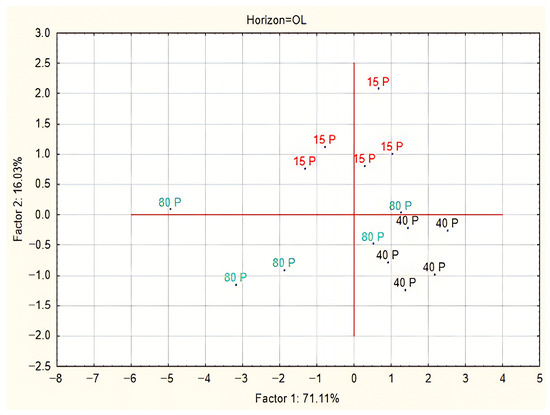
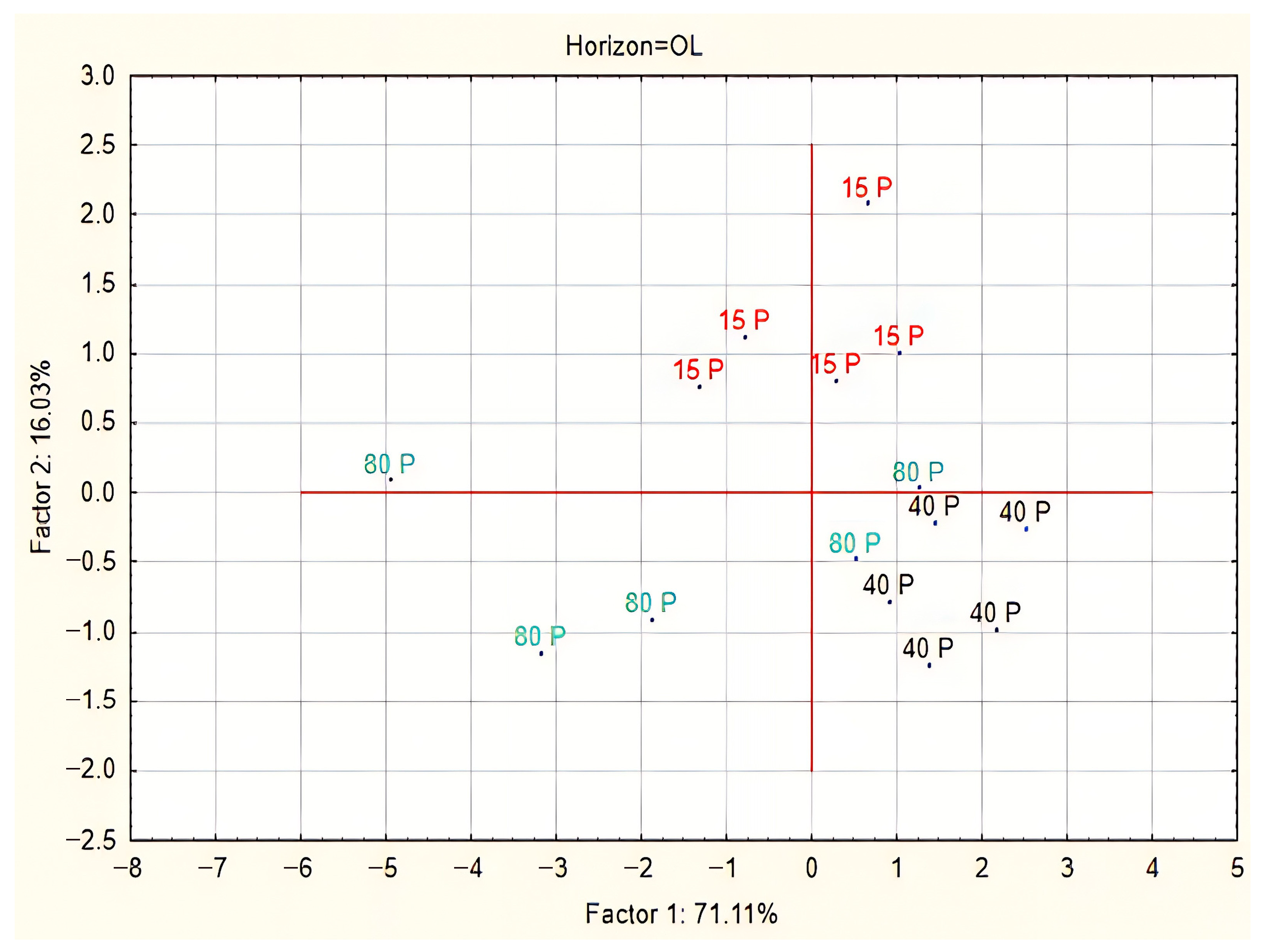
PCA enabled us to compare the combined effects of various soil characteristics as factors that allow us to identify differences between the sites separately for individual soil horizons. The litter of the OL horizons differs significantly between the three plots considered (Figure 4, Table 6). OL from the youngest site (15 years old) is characterized by relatively high Corg content and a broad C/N ratio, with significantly lower Ha and higher pH. OL from the 40-year-old site exhibits similar characteristics, such as a high Corg content and a broad C/N ratio, but lower pH and higher Ha. OL from the 80-year-old site, unlike the previous ones, is characterized by a lower Corg content but a significantly higher Nt and S content.
Figure 4.
Projection of cases onto the factor plane for OL horizons. The first principal component (PC1) explains 71.11% of the total variance, and the second component (PC2) explains 16.03%.
Table 6.
OL horizon. Factor–variable correlations (factor loadings).
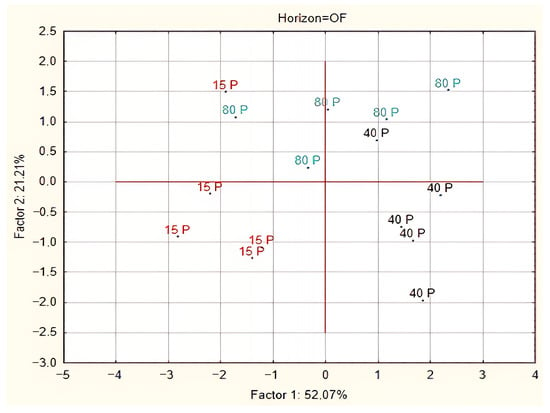
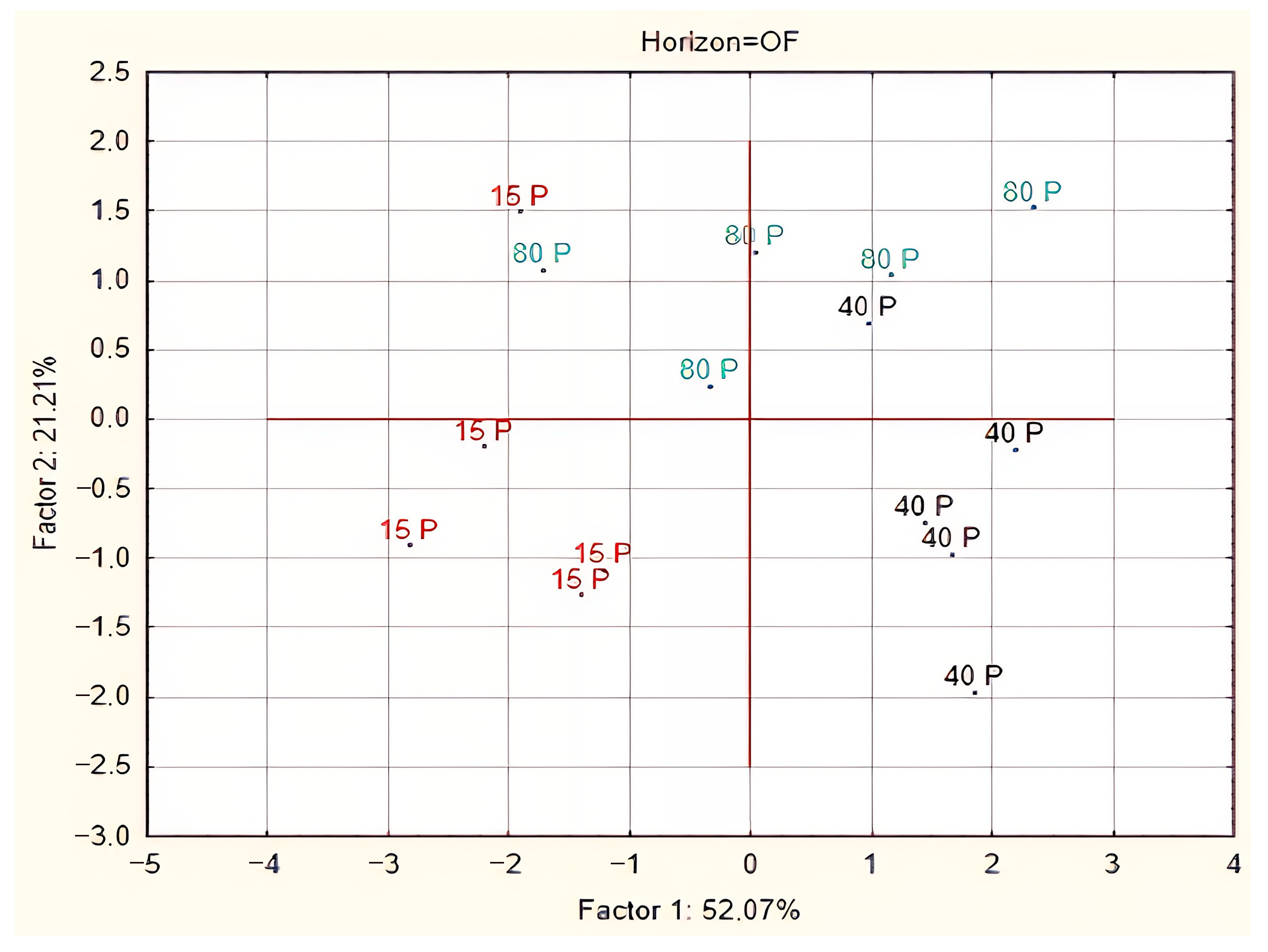
Factor 1 in the case of the OF horizons (Figure 5, Table 7) represents a gradient from soils with high Ha, high organic matter content, and high C/N ratio (right side)—mainly 40-year-old and partly 80-year-old sites, to soils with higher pH and lower acidity, lower Corg content as well (left side)—mainly 15-year-old sites. The OF horizon of the oldest site was distinguished from the other plots by its lower sulfur content.
Figure 5.
Projection of cases onto the factor plane for OF horizons. The first principal component (PC1) explains 52.07% of the total variance, and the second component (PC2) explains 21.21%.
Table 7.
OF horizon. Factor–variable correlations (factor loadings).
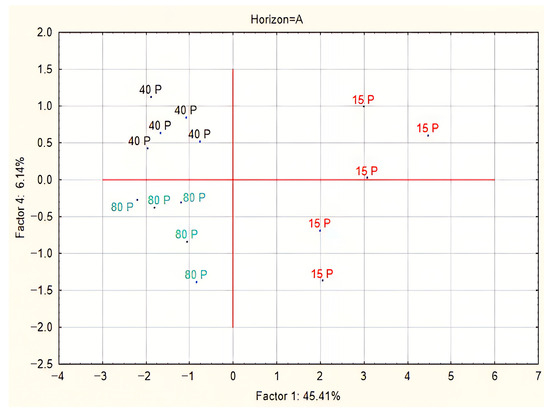
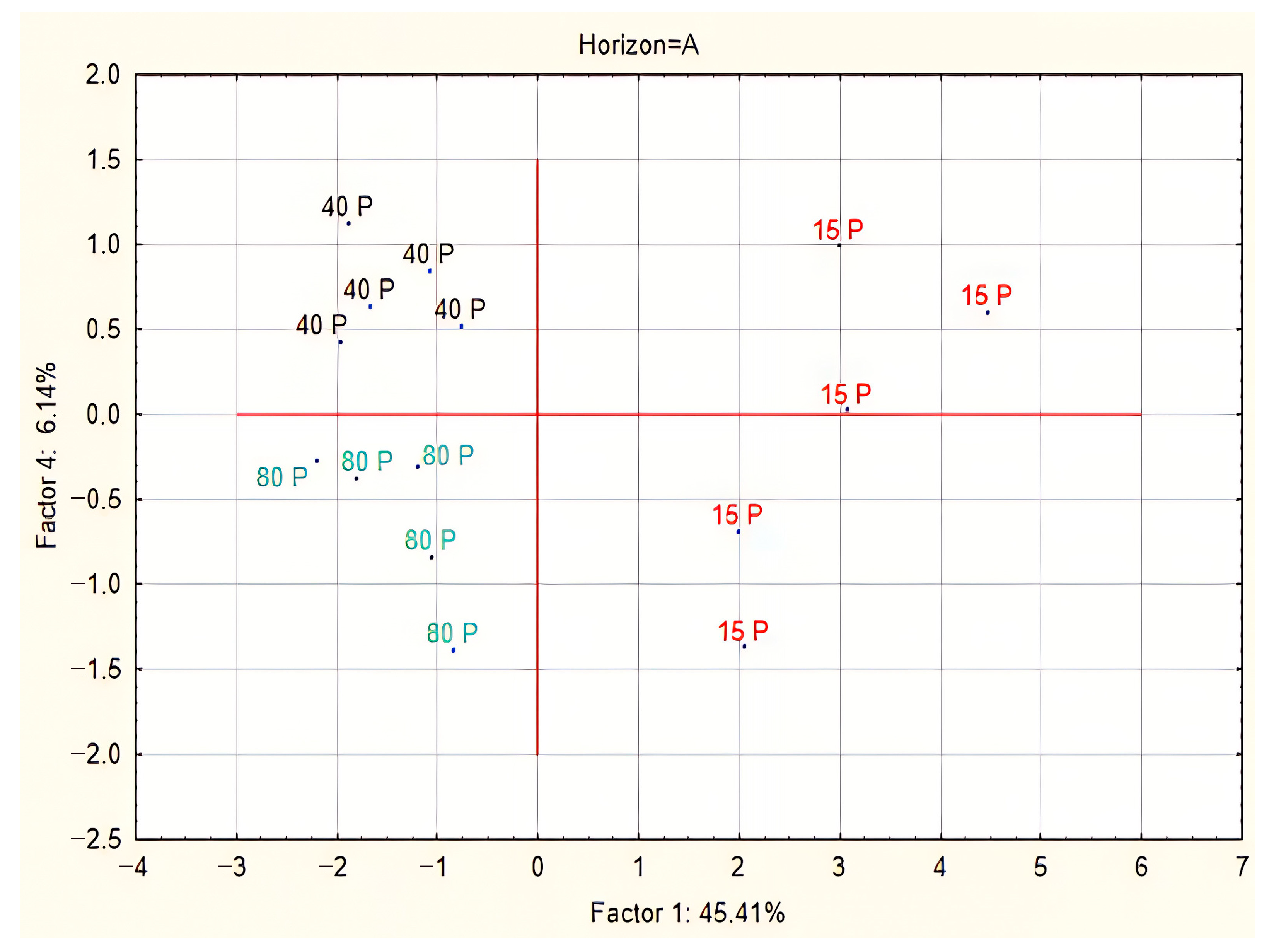
The use of Factor 4 for horizon A results from the fact that Factors 2 and 3 did not clearly differentiate the samples studied, while Factor 4 revealed an additional, albeit relatively weak, gradient of variability (Table 8). PCA for horizons A revealed clear differences between the variants studied (Figure 6, Table 8). Horizons A of the 15-year-old habitat are concentrated on the right side of the graph and represent soils with the highest content of exchangeable Ca, EBC, and Nt, and the lowest amount of Corg and S. In terms of these characteristics, the 40- and 80-year-old habitats are similar to each other. They differ only in exchangeable Na content.
Table 8.
A horizon. Factor–variable correlations (factor loadings).
Figure 6.
Projection of cases onto the factor plane for A horizons. The first principal component (PC1) explains 45.41% of the total variance, and the second component (PC4) explains 6.14%.
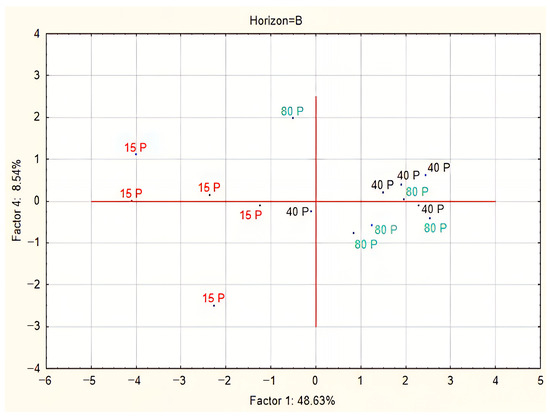
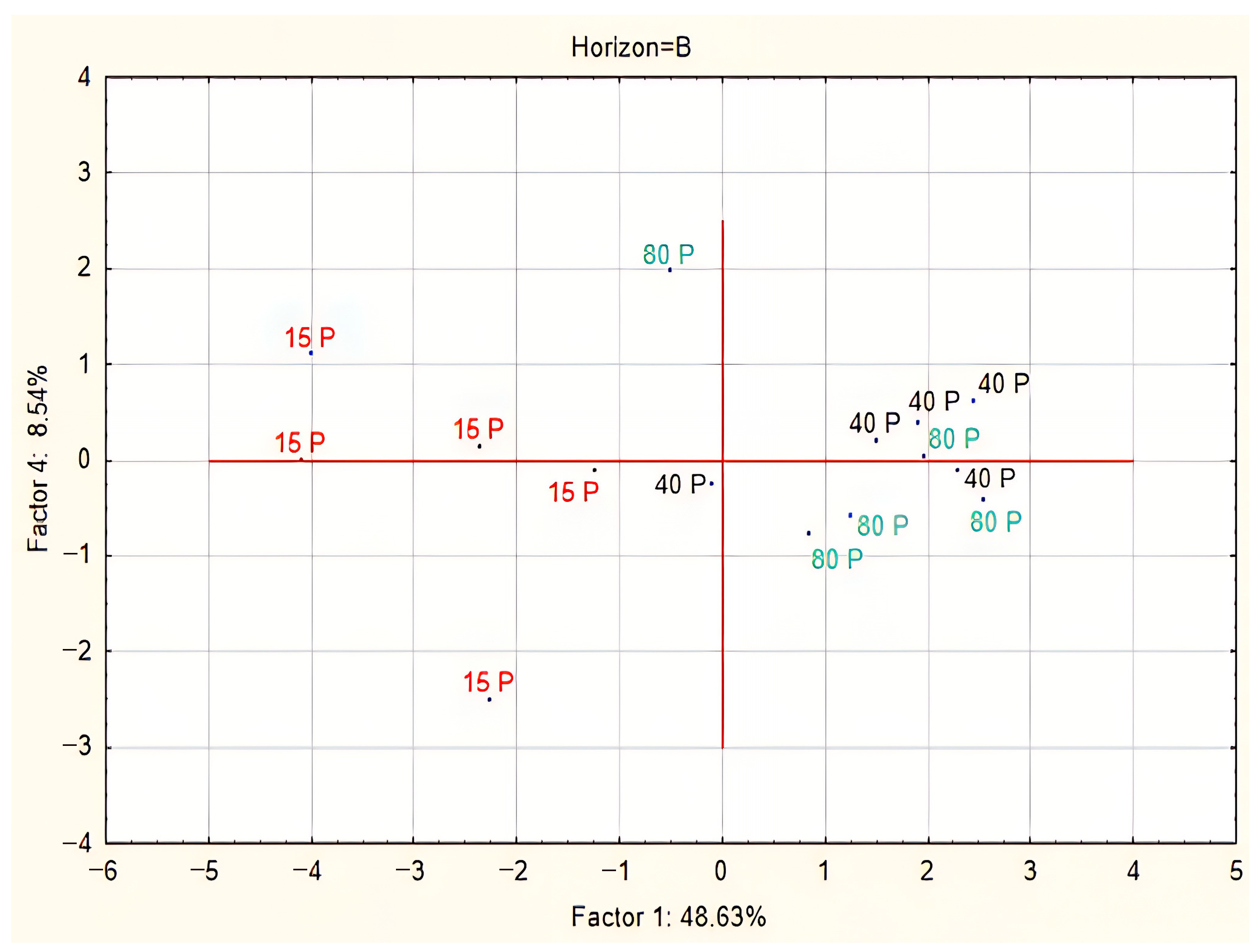
The B horizons of the 40- and 80-year-old sites differ significantly in Corg, Nt, S content, and pHKCl (on the right side of the graph) compared to the youngest site (on the opposite side) (Figure 7, Table 9). However, the B horizons of the youngest site were characterized by significantly more Ca, Mg, and generally higher EBC and lower Corg, Nt, S. Factor 4 partially distinguishes the 40- and 80-year-old sites in terms of pHH2O. The 40-year-old site was characterized by a higher pHH2O.
Figure 7.
Projection of cases onto the factor plane for B horizons. The first principal component (PC1) explains 48.63% of the total variance, and the second component (PC4) explains 8.54%.
Table 9.
B horizon. Factor–variable correlations (factor loadings).
4. Discussion
Changes in land use impose substantial consequences for soil properties. The results of this study demonstrate that the majority of soil properties in the 15-year-old stand differ substantially from those observed in the 40- and 80-year-old stands established on post-agricultural land. Although the absence of a mature forest reference growing on typical forest soils prevents us from determining whether the older stands have reached natural conditions, our findings reveal a clear transition away from soil characteristics typical of agricultural use. These features remain visible in the 15-year-old stand but are no longer apparent in the 40-year-old stand, and soil properties appear relatively stable over the subsequent decades. It should be noted that the study was based on a single-term sampling design and does not represent repeated temporal measurements.
In our study, differences were detected already in the fresh litter layer (OL horizon), which results from recent deposition of plant material. Many studies on afforested post-agricultural soils overlook this horizon or provide values for the entire organic layer without distinguishing subhorizons [33,34]. The 15-year-old stand was characterized by markedly lower mean Ha and higher pH compared with the older stands. This pattern indicates a clear legacy effect of liming, which remains detectable for more than a decade following land-use change but diminishes in older stands. The similar Ha values observed in the 40- and 80-year-old stands suggest a relative stabilization of this property over time. The Ol horizon of the 15-year-old stand contains slightly higher total nitrogen (Nt) content and comparable organic carbon (Corg) and sulfur (S) concentrations compared with the 40-year-old stand. Post-agricultural soils are typically characterized by elevated Nt levels, which are commonly associated with historical fertilization practices. Nutrients absorbed by tree roots return to the soil surface via litterfall [35], which is essential for nutrient cycling. However, as noted by Rustowska [36], even 15 years after conversion from agriculture to forestry, this nutrient cycle may still be disrupted. The OL horizon at the 80-year-old stand showed substantial variation in Corg, Nt, and S contents, suggesting greater heterogeneity of this site. This may be related to higher vegetation diversity: although Scots pine dominates the canopy, the lower strata contain a richer assemblage of deciduous species, together with a more developed shrub layer and herbaceous understory compared with the other stands. Birch, Beech, and other broadleaf tree species are much more foliar-rich than pine trees [37,38]. Such structural complexity is typical of mature forests and plays an important role in soil processes [39,40].
The properties of the OF horizon also clearly separated the 15-year-old stand from the two older stands. As in the OL horizon, differences were primarily concerned with hydrolytic acidity and pH, with smaller differences in soil organic matter characteristics. In this subhorizon, considerable variability was observed within the 80-year-old stand in terms of basic chemical properties. Overall, its characteristics were more similar to those of the 40-year-old stand, with a tendency toward lower S concentrations compared with the other stands. Beyond differences among stands, Ha was significantly higher in the OF horizon than in the OL horizon, particularly in the older stands, where it was nearly twice as high. Soil acidification following the establishment of forest vegetation, especially conifers, is a natural process driven by the acidifying effect of litterfall [41]. During needle decomposition, a variety of acidic organic compounds are produced [42,43], further slowing mineralization and humification processes and promoting litter accumulation on the surface [44]. Afforestation of post-agricultural land may sometimes lead to a decline in site quality. In the study by Kruczkowska et al. [45], soils previously used for agricultural purposes were generally characterized by higher trophism than their afforested counterparts, as expressed by the site soil index (including Corg, Nt, Ha, and EBC). The authors also showed that loamy soils exhibit greater stability in their capacity to provide selected ecosystem services after afforestation compared with sandy soils. These findings may partly explain the differences observed in nutrient availability and soil chemical properties in our study area, which is dominated by sandy soils with relatively low buffering capacity. In this context, several soil indicators may be interpreted in terms of ecosystem functioning. Base saturation can be considered an indicator of an ecosystem’s capacity to develop productive soils, while total organic carbon (TOC) stocks reflect the potential of soils to act as carbon sinks. In turn, the carbon-to-nitrogen (C/N) ratio provides insight into the decomposition dynamics of organic matter and the functioning of nutrient cycling processes. These indicators, therefore, link observed soil chemical changes with broader ecosystem services, such as carbon sequestration, nutrient retention, and soil productivity. One of the key ecosystem functions attributed to forests is the sequestration of organic carbon. Forest harvesting decreases soil carbon stocks [46], whereas afforestation—including that of post-agricultural land—is widely recognized as an effective strategy for CO2 sequestration [47,48]. Usually, greater accumulation of Corg is observed in the forest-floor layers of older stands [11,49]. In our study, however, such a relationship could not be clearly confirmed. The amount of Corg accumulated in forest soils depends on the type of humus formed, which is closely linked to tree species composition and pedogenic processes [17].
Even though the mineral horizons naturally contain much less Corg than the O horizons, a comparison of the stands allows us to conclude that forest establishment influences the accumulation of this element in the A and B horizons [50], and Corg quantity were similar between the 40- and 80-year-old stands, suggesting that these soils may have reached a state of equilibrium with respect to organic carbon sequestration. The A and B horizons still bear clear traces of past agricultural use: high concentrations of exchangeable Ca, low Corg content, and lower acidity distinguish the 15-year-old stand from the older stands. These processes are directly linked to ecosystem services provided by forest soils, including carbon storage, nutrient cycling, and long-term soil productivity, which are key components of sustainable land management.
Soil property changes related to land use typically occur in the uppermost horizons. However, in our study, differences between the 15-year-old and the 40- and 80-year-old stands were also found in the B horizon. These differences involved the concentrations of exchangeable Ca, Mg, K, and Na alone, and the total content of base cations (EBC). The B horizons of the 15-year-old stand were more nutrient-rich.
Overall, the study demonstrates clear differences in soil properties among stands of different ages following afforestation, while highlighting the need for future research integrating not only chemical but also biological indicators to better understand long-term soil transformation processes.
5. Conclusions
This study demonstrates that afforestation of post-agricultural land leads to gradual and horizon-dependent changes in soil chemical properties, while distinct agricultural legacies may persist for several decades after land-use change. Soils under the 15-year-old stand retained clear characteristics associated with former agricultural management, including higher exchangeable calcium, lower hydrolytic acidity, and elevated base saturation in mineral horizons. These patterns reflect the lingering effects of historical liming and fertilization practices. With increasing stand age, soil acidity increased, and base cation concentrations declined, indicating progressive depletion of agricultural inputs and ongoing leaching processes under forest vegetation. The similar hydrolytic acidity values observed in the 40- and 80-year-old stands suggest relative stabilization of this property over time. Although organic carbon accumulation in forest-floor horizons was evident, no consistent increase was confirmed across all stands, highlighting the influence of humus type, vegetation composition, and site heterogeneity on carbon dynamics. Agricultural legacy effects were not restricted to surface layers but were also detectable in mineral horizons, including the B horizon, where differences in exchangeable base cations remained evident. This confirms that land-use history influences soil chemical properties beyond the immediate surface. Due to the absence of undisturbed forest reference soils and pre-afforestation data, full convergence toward natural forest soil conditions cannot be confirmed. Therefore, afforestation should be regarded as initiating long-term soil transformation rather than rapid soil restoration.
From a practical perspective, the results highlight the importance of considering agricultural soil legacies when designing sustainable afforestation strategies and evaluating long-term soil ecosystem services. In particular, the persistence of liming effects, nutrient availability, and soil acidity should be taken into account during the early stages of forest establishment, especially on sandy soils where changes in nutrient dynamics may influence long-term soil productivity and ecosystem development. Accounting for land-use history is therefore essential when evaluating soil functioning, carbon sequestration potential, and management outcomes in afforested landscapes.
Author Contributions
Conceptualization, L.O. and K.P.; analysis, K.P.; investigation, L.O.; data curation, K.P. and M.K.; statistics, M.K.; writing—original draft preparation, K.P.; writing—review and editing, L.O., K.P. and M.K.; visualization—L.O. All authors have read and agreed to the published version of the manuscript.
Funding
This research received no external funding.
Institutional Review Board Statement
Not applicable.
Informed Consent Statement
Not applicable.
Data Availability Statement
The raw data supporting the conclusions of this article will be made available by the authors on request.
Acknowledgments
The authors would like to thank Klaudia Poboża for field investigations and sample pretreatment.
Conflicts of Interest
The authors declare no conflicts of interest.
References
- Palmero-Iniesta, M.; Espelta, J.; Gordillo, J.; Pino, J. Changes in forest landscape patterns resulting from recent afforestation in Europe (1990–2012): Defragmentation of pre-existing forest versus new patch proliferation. Ann. For. Sci. 2020, 77, 43. [Google Scholar] [CrossRef] [Scilit]
- Breil, M.; Schneider, V.; Pinto, J. The effect of forest cover changes on the regional climate conditions in Europe during the period 1986–2015. Biogeosciences 2024, 21, 811–824. [Google Scholar] [CrossRef] [Scilit]
- Klepacka, A.; Romaniuk, A.; Gajda, J.; Chećko, E. From farms to forests: An exploration of afforestation efforts in Poland under the Rural Development Programme (2007–2020). Sustainability 2025, 17, 1027. [Google Scholar] [CrossRef] [Scilit]
- Rodríguez, L.; Hogarth, N.; Zhou, W.; Xie, C.; Zhang, K.; Putzel, L. China’s conversion of cropland to forest program: A systematic review of the environmental and socioeconomic effects. Environ. Evid. 2016, 5, 24. [Google Scholar] [CrossRef] [Scilit]
- Holátko, J.; Holubík, O.; Hammerschmiedt, T.; Vopravil, J.; Kintl, A.; Brtnický, M. Afforestation of agricultural land affects soil structural stability and related preconditions to resist drought. J. For. Sci. 2022, 68, 496–508. [Google Scholar] [CrossRef] [Scilit]
- Palmero-Iniesta, M.; Pino, J.; Pesquer, L.; Espelta, J. Recent forest area increase in Europe: Expanding and regenerating forests differ in their regional patterns, drivers and productivity trends. Eur. J. For. Res. 2021, 140, 793–805. [Google Scholar] [CrossRef] [Scilit]
- Mongil-Manso, J.; Navarro-Hevia, J.; Martín, S. Impact of land use change and afforestation on soil properties in a mediterranean mountain area of central Spain. Land 2022, 11, 1043. [Google Scholar] [CrossRef] [Scilit]
- He, W.; Qian, H.; Jiang, H.; Gao, X.; Hu, Y. Effects of afforestation on soil aggregate stability, carbon, and nitrogen in alpine sandy lands. Forests 2025, 16, 782. [Google Scholar] [CrossRef] [Scilit]
- Sewerniak, P. Wpływ porolności na cechy gleby leśnej na tle problemów kartowania siedlisk porolnych (The effect of former agricultural use on the forest soil features against problems with mapping of post-agricultural forest habitats). In Siedliska Leśne Zmienione i Zniekształcone; Zielony, R., Ed.; Centrum Informacyjne Lasów Państwowych: Warsaw, Poland, 2016; pp. 43–62. [Google Scholar]
- Krawczyk, R.; Kowalczuk, S.; Ksepko, M.; Sierota, Z. Las na gruncie porolnym—Oczekiwania i rzeczywistość (Forest on post-agricultural land—Expectations and reality). Leśne Pr. Badaw. 2021, 82, 75–86. [Google Scholar] [CrossRef] [Scilit]
- Dłużewski, P.; Wiatrowska, K.; Kuśmierz, S. The role of stand age in soil carbon dynamics in afforested post-agricultural ecosystems: The case of scots pine forests in dfb-climate one. Forests 2024, 15, 2127. [Google Scholar] [CrossRef] [Scilit]
- Berber, A.S.K.; Farasat, S.; Namli, A. Afforestation effects on soil biochemical properties. Eurasian J. For. Sci. 2014, 1, 25–34. [Google Scholar]
- Huang, H.; Tian, D.; Zhou, L.; Su, H.; Ma, S.; Feng, Y.; Tang, Z.; Zhu, J.; Ji, C.; Fang, J. Effects of afforestation on soil microbial diversity and enzyme activity: A meta-analysis. Geoderma 2022, 423, 115961. [Google Scholar] [CrossRef] [Scilit]
- Oktaba, L.; Kondras, M. Przemiany materii organicznej gleb łąkowych w pierwszych latach po zalesieniu (Organic matter transformation in meadow soils during the first years after afforestation). Sylwan 2015, 159, 126–134. [Google Scholar]
- Cukor, J.; Vacek, Z.; Linda, R.; Bílek, L. Carbon sequestration in soil following afforestation of former agricultural land in the Czech Republic. Cent. Eur. For. J. 2017, 63, 109–127. [Google Scholar] [CrossRef] [Scilit]
- Malica, J.; Urbanowski, C.K.; Rączka, G.; Skorupski, M.; Pers-Kamczyc, E.; Kamczyc, J. Soil Environment and Fauna Communities in Europe after Afforestation of Post Agricultural Lands—A Review. Forests 2022, 13, 1713. [Google Scholar] [CrossRef] [Scilit]
- Zwydak, M.; Błońska, E.; Lasota, J. Akumulacja węgla organicznego w glebach różnych typów siedlisk leśnych (Organic carbon accumulation in soil of different forest site types). Sylwan 2017, 161, 62–70. [Google Scholar]
- Eze, S.; Magilton, M.; Magnone, D.; Varga, S.; Gould, I.; Mercer, T.; Goddard, M. Meta-analysis of global soil data identifies robust indicators for short-term changes in soil organic carbon stock following land use change. Sci. Total Environ. 2022, 860, 160484. [Google Scholar] [CrossRef] [Scilit]
- Błońska, E.; Lasota, J.; Prazuch, W.; Ilek, A. Stabilization of soil organic matter following the impact of selected tree species in temperate climate. Catena 2024, 243, 108185. [Google Scholar] [CrossRef] [Scilit]
- Vesterdal, L.; Ritter, E.; Gundersen, P. Change in soil organic carbon following afforestation of former arable land. For. Ecol. Manag. 2002, 169, 137–147. [Google Scholar] [CrossRef] [Scilit]
- Smal, H.; Ligęza, S.; Olszewska, M. Wpływ zalesienia piaszczystych gleb porolnych na jakość materii organicznej i skład chemiczny roztworu glebowego (The effect of afforestation of sandy post-agricultural soils on the quality of organic matter and the chemical composition of the soil solution). Rocz. Gleb. 2004, 55, 139–148. [Google Scholar]
- Bárcena, T.; Kiær, L.; Vesterdal, L.; Stefánsdóttir, H.; Gundersen, P.; Sigurdsson, B. Soil carbon stock change following afforestation in Northern Europe: A meta-analysis. Glob. Change Biol. 2014, 20, 2393–2405. [Google Scholar] [CrossRef] [Scilit]
- Kondras, M.; Czępińska-Kamińska, D.; Sienicka, P.; Otręba, A.; Torzewski, K.; Oktaba, L. The stock of organic carbon in forest soils in phytocenosis of the continental mixed coniferous forest in Kampinos National Park. Soil Sci. Annu. 2012, 63, 26–33. [Google Scholar] [CrossRef] [Scilit]
- Jonczak, J.; Oktaba, L.; Pawłowicz, E.; Chojnacka, A.; Regulska, E.; Słowińska, S.; Olejniczak, I.; Oktaba, J.; Kruczkowska, B.; Kondras, M.; et al. Soil organic matter transformation influenced by silver birch (Betula pendula Roth) succession on abandoned from agricultural production sandy soil. Eur. J. For. Res. 2023, 142, 367–379. [Google Scholar] [CrossRef] [Scilit]
- Oktaba, L.; Kusińska, A. Mineral nitrogen in soils of different land use. Ecol. Chem. Eng. A 2011, 18, 585–592. [Google Scholar]
- Gawęda, T.; Błońska, E.; Małek, S.; Bijak, S.; Zasada, M. Zastosowanie ITGL w ocenie gleb porolnych z naturalnym odnowieniem brzozy (Application of ITGL in the assessment of post–agricultural soils with natural regeneration of silver birch). Sylwan 2018, 162, 396–402. [Google Scholar]
- PIG-PIB. Szczegółowa Mapa Geologiczna Polski 1:50,000. Arkusz 368 Strzegowo-Osada. Detailed Geological Map of Poland 1:50,000. Sheet 368 Strzegowo-Osada; PIG-PIB: Warsaw, Poland, 2006. [Google Scholar]
- IUSSWorking Group WRB. World Reference Base for Soil Resources. In International Soil Classification System for Naming Soils and Creating Legends for Soil Maps, 4th ed.; International Union of Soil Sciences (IUSS): Vienna, Austria, 2022. [Google Scholar]
- Office of Forest Management and Geodesy; Olsztyn Branch. Program Ochrony Przyrody. Nature Conservation Program; Nadleśnictwo Ciechanów: Obręb Ciechanów/Olsztyn, Poland, 2014. [Google Scholar]
- Zielony, R.; Kliczkowska, A. Regionalizacja Przyrodniczo-Leśna Polski 2010. Natural-Forestry Regionalization of Poland 2010; Centrum Informacyjne Lasów Państwowych: Warsaw, Poland, 2012.
- Zanella, A.; Jabiol, B.; Ponge, J.F.; Sartori, G.; Waal, R.; van Delft, B.; Graefe, U.; Cools, N.; Katzensteiner, K.; Hager, H.; et al. Available online: https://hal.science/hal-00541496/file/Humus_Forms_ERB_31_01_2011.pdf (accessed on 26 January 2026).
- Poboża, K. Comparison of Organic Carbon and Nitrogen Content in Post-Agricultural and Forest Soils in the Ciechanów Forest District. Ph.D. Thesis, Faculty of Agriculture and Biology, Warsaw University of Life Sciences, Warsaw, Poland, 2021. [Google Scholar]
- Šurda, P.; Lichner, Ľ.; Kollár, J.; Zvala, A.; Igaz, D. Evaluation of soil properties in variously aged Scots pine plantations established on sandy soil. J. Hydrol. Hydromech. 2021, 69, 347–355. [Google Scholar] [CrossRef] [Scilit]
- Yin, X.; Zhao, L.; Fang, Q.; Ding, G. Differences in soil physicochemical properties in different-aged Pinus massoniana plantations in southwest China. Forests 2021, 12, 987. [Google Scholar] [CrossRef] [Scilit]
- Jasińska, J.; Sewerniak, P.; Puchałka, R. Litterfall in a scots pine forest on inland dunes in central Europe: Mass, seasonal dynamics and chemistry. Forests 2020, 11, 678. [Google Scholar] [CrossRef] [Scilit]
- Rustowska, B.; Jonczak, J.; Kondras, M. Nutrient distribution in silver birch (Betula pendula Roth) biomass growing on post-arable soils. Soil Sci. Annu. 2024, 75, 195922. [Google Scholar] [CrossRef] [Scilit]
- Hansson, K.; Olsson, B.A.; Olsson, M.; Johansson, U.; Kleja, D.B. Differences in soil properties in adjacent stands of Scots pine, Norway spruce and silver birch in SW Sweden. For. Ecol. Manag. 2011, 262, 522–530. [Google Scholar] [CrossRef] [Scilit]
- Leuschner, C.; Wulf, M.; Bäuchler, P.; Hertel, D. Soil C and nutrient stores under Scots pine afforestations compared to ancient beech forests in the German Pleistocene: The role of tree species and forest history. For. Ecol. Manag. 2013, 310, 405–415. [Google Scholar] [CrossRef] [Scilit]
- McIntosh, A.; Macdonald, S.; Quideau, S.; Lamb, E.; Graduate, C.; Killam, I. Understory plant community composition is associated with fine-scale above- and below-ground resource heterogeneity in mature lodgepole pine (Pinus contorta) forests. PLoS ONE 2016, 11, e0151436. [Google Scholar] [CrossRef] [Scilit]
- Li, Z.; Wang, X.; Huang, Y.; Yang, X.; Wang, R.; Zhang, M. Increasing the proportion of broadleaf species in mixed conifer-broadleaf forests improves understory plant composition and promotes soil carbon fixation. Plants 2025, 14, 1392. [Google Scholar] [CrossRef] [Scilit]
- Holubík, O.; Podrazský, V.; Vopravil, J.; Khel, T.; Remeš, J. Effect of agricultural lands afforestation and tree species composition on the soil reaction, total organic carbon and nitrogen content in the uppermost mineral soil profile. Soil Water Res. 2014, 9, 192–200. [Google Scholar] [CrossRef] [Scilit]
- Yavitt, J.; Fahey, T. Litter decay and leaching from the forest floor in pinus contorta (lodgepole pine) ecosystems. J. Ecol. 1986, 74, 525–545. [Google Scholar] [CrossRef] [Scilit]
- Banach-Szott, M.; Debska, B. Content of phenolic compounds in fulvic and humic acid fractions of forest soils. Pol. J. Environ. Stud. 2008, 17, 463–472. [Google Scholar]
- Michalski, A.; Sałek, P.; Płatek, K. Zależność grubości ściółki od wieku drzewostanów sosnowych rosnących na glebach porolnych i leśnych. Sylwan 2006, 8, 20–25. [Google Scholar]
- Kruczkowska, B.; Jonczak, J.; Kondras, M.; Oktaba, L.; Pawłowicz, E.; Chojnacka, O.; Jankiewicz, U.; Oktaba, J.; Olejniczak, I.; Słowińska, S.; et al. The use of trophic status indicator as a tool to assess the potential of birch-afforested soils to provide ecosystem services. Agric. Ecosyst. Environ. 2023, 348, 108434. [Google Scholar] [CrossRef] [Scilit]
- Jamroz, E.; Weber, J.; Debicka, M. Trophic soil index of the rusty soils affected by clear-cutting in the Spala Forest District. Sylwan 2014, 158, 669–674. [Google Scholar]
- Lal, R. Carbon sequestration. Philos. Trans. R. Soc. Lond. B Biol. Sci. 2008, 363, 815–830. [Google Scholar] [CrossRef] [Scilit]
- du Toit, F.; Coops, N.C.; Mulverhill, C.; Toomey, A. Assessing the impact of afforestation as a natural climate solution in the Canadian boreal Environ. Res. Ecol. 2024, 3, 035004. [Google Scholar]
- Smal, H.; Ligęza, S.; Pranagal, J.; Urban, D.; Pietruczyk-Popławska, D. Changes in the stocks of soil organic carbon, total nitrogen and phosphorus following afforestation of post-arable soils: A chronosequence study. For. Ecol. Manag. 2019, 451, 117536. [Google Scholar] [CrossRef] [Scilit]
- Dłużewski, P.; Wiatrowska, K.; Kozłowski, M. Seasonal changes in organic carbon content in post-arable forest soils. Soil Sci. J. 2019, 70, 3–12. [Google Scholar] [CrossRef] [Scilit]

Disclaimer/Publisher’s Note: The statements, opinions and data contained in all publications are solely those of the individual author(s) and contributor(s) and not of MDPI and/or the editor(s). MDPI and/or the editor(s) disclaim responsibility for any injury to people or property resulting from any ideas, methods, instructions or products referred to in the content. |
© 2026 by the authors. Licensee MDPI, Basel, Switzerland. This article is an open access article distributed under the terms and conditions of the Creative Commons Attribution (CC BY) license.