


Abstract
This study situates Environmental Product Declarations (EPDs) within the broader challenge of decarbonising the built environment, arguing that efficiency-oriented approaches remain insufficient unless complemented by a sufficiency paradigm that already questions “how much is necessary” in the meta-design phase. Building on an interdisciplinary reading of standards and the scientific literature, the paper analyses the regulatory architecture of Type III environmental declarations and discusses the operational implications of the two main reference frameworks for construction EPDs—ISO 21930 (global) and EN 15804 (European)—with attention paid to methodological rigidity, system boundaries, and the granularity of climate-related indicators. The paper highlights that the declared aim of comparability is frequently undermined in practice by heterogeneous Product Category Rules, background databases, modelling assumptions, and verification practices, producing an “illusion of comparability” and limiting the reliability of product-to-product comparisons. Emphasis is placed on the epistemic role of the functional unit and reference service life, showing how narrowly product-based units can conceal system-level effects and bias decision-making. The paper concludes that EPDs are most effective when interpreted as boundary objects linking policy, industry, and design, and when embedded in a sufficiency-oriented “critical ecology of materials” that integrates embodied and operational carbon within contextualised project decisions.
1. Introduction: The Sufficiency Approach and the Reversal of Hypertrophic Consumption Trajectories
Within the context of the climate crisis and the urgent need to transition towards a sustainable development model, the construction sector emerges as one of the main areas of intervention. It plays an important role in reducing greenhouse gas (GHG) emissions and resource consumption. However, despite the growing focus on energy efficiency and carbon neutrality, critical analysis of the initial decision-making stages preceding design remains marginal. It is precisely at the founding moment of the building process—the meta-project—that the strategic guidelines, environmental objectives, technological and material choices are established, which will largely determine the ecological footprint of the whole life cycle of the building. The fundamental question—whether it is necessary to build—is often sidestepped, despite increasingly lucid reflections on the urgent need to radically rethink the production logics of construction. This is accompanied by the observation, supported by HM Treasury’s Infrastructure Carbon Review [1], that the early stages of the process are the most effective lever for triggering a profound transformation in the way architecture is conceived and implemented.
In contemporary debate, “decarbonization” has become a key concept for climate change mitigation, but it risks proving conceptually reductive if separated from a systemic reflection on built environment metabolism [2]. It is not enough to simply account for emissions or to reduce them in purely quantitative terms. Instead, we need to question the quality and quantity of the resources mobilised, adopting a sufficiency-oriented paradigm capable of introducing structural limits to dissipative development models and promoting a more equitable and balanced use of available resources [3,4,5].
The sufficiency approach, recently referred to in the context of international climate negotiations [6,7,8,9], calls for moving beyond the incremental logic of technological efficiency, which has proved insufficient in relation to the speed and depth of the transformations required. Instead, it proposes a cultural and design change aimed at reversing the hypertrophic trajectories of consumption and rethinking models of well-being and material demand [10].
Within the theoretical and operational framework of the transition towards decarbonization of the built environment, sufficiency is emerging as a perspective capable of integrating the technological dimension with the socio-cultural one of sustainability. It does not aim to maximise performance or innovate exclusively in terms of efficiency (“doing better with less” [4]), but to redefine the criteria of adequacy, recognising the need for a balance between essential human needs and the ecological limits of the planet [11]. According to the Wuppertal Institute, sufficiency is not an optional choice, but a prerequisite for achieving sustainability [12]. In a context defined by strict biophysical limits related to climate, soil, water, and biodiversity, the current global model of production and consumption consistently exceeds the carrying capacity of ecosystems. Without a fundamental reduction in overall demand, no technology—regardless of its efficiency or low-emission qualities—can ensure that socio-technical systems remain ecologically compatible [13].
From this perspective, sufficiency is not limited to a technical principle, but is an ethical, cultural, and operational paradigm. It is therefore able of guiding design, production, and consumption practices in a more sober, adaptive and regenerative direction, as it suggests that what is important is not so much that everyone has the same (according to one of the three dimensions of sustainability: social equity), but that everyone has enough (distributive justice: defining a minimum level of goods or opportunities).
In the context of technological environmental design, the concept of satisficing, developed by Herbert A. Simon [14] in the field of decision theory and based on the paradigm of bounded rationality, offers an important interpretative key for framing the principles of sufficiency and sustainability applied to transformative projects in the built environment. The technological–environmental design process is, in fact, a complex decision-making activity, characterised by uncertainty, sometimes incomplete information and a multitude of constraints—technical, economic, regulatory, social and environmental—that make it impractical to seek optimal solutions in an absolute sense.
In this perspective, the design action is not only geared towards maximising formal, technological or energy performance, but also towards identifying spatial and construction configurations that are appropriate to the context. Satisficing thus allows the project to be redefined not as an exercise in optimisation, but as a process of selecting “sufficiently good” solutions that meet the essential needs of the inhabitants while reducing resource consumption and overall environmental impact. In relation to the paradigms of sufficiency, this approach involves the conscious introduction of design adequacy thresholds—in terms of surface area, comfort, energy performance and technological equipment—which replace the logic of maximisation with that of moderation.
In this regard, satisficing is a conceptual and operational tool for orienting architectural design towards outcomes that are compatible with the biophysical limits of the planet, contributing to a conception of sustainability that integrates technical, spatial, and socio-cultural dimensions.
In this technical–theoretical framework, the concept that defines the condition of ‘just enough’ from a dimensional point of view must be integrated with the regulatory concept that determines its sufficiency. In this direction, the descriptive dimensional component identifies the thresholds of adequacy—i.e., in energy or material balances—that allow comfort and safety needs to be met with the minimum use of resources. This is accompanied by the normative dimension, which allows a value judgement to be made on the organisation of life and production systems. In this sense, the quantity and quality of what we build, consume and use is called into question, a process in which sufficiency also takes the form of an ethical criterion of justice and responsibility, aimed at establishing the limits of “what is necessary” and distinguishing “need” from “want” and the necessary from the superfluous.
In the field of built environment design, the sufficiency approach takes on particular significance as it allows us to move beyond a predominantly technological conception of sustainability, which is still largely anchored to the paradigms of energy efficiency and eco-compatibility of materials. While recognising their contribution, these paradigms mainly operate within established socio-technological regimes, without questioning the underlying logic that structures the demand for space, comfort and performance. From this perspective, sufficiency is a transformative paradigm, aimed at redefining the levels of adequacy of the built environment in relation to biophysical limits and essential needs.
Considering Geels’ Multi-Level Perspective [15], architectural design can be interpreted as an area of intersection between dominant regimes and innovation dynamics that emerge at the niche level. The dominant regimes consist of building regulations, performance standards, professional practices and production chains. In this context, sufficiency strategies in the design of the built environment can be read as niche innovations of a socio-spatial and cultural nature, capable of challenging established models such as the continuous expansion of surface areas, functional hyper-specialisation and high standardisation of comfort levels. The project thus becomes a space for experimentation in which alternative practices—such as the reduction in per capita surface areas, flexibility of use, and the sharing of spaces and services—can progressively influence the dominant regimes of the construction sector.
At the same time, the contribution of social practice theories developed by Shove [16] allows us to reinterpret the role of architecture not only as a response to a given demand, but as an active device in the configuration of everyday practices. The energy and environmental performance of buildings do not depend exclusively on the technical characteristics of their envelopes and plant systems but are deeply influenced by the practices of use that spaces enable, encourage, or discourage. From this perspective, architectural design geared towards sufficiency intervenes on the triad of materials–skills–meanings, helping to reorganise the practices of living, working and moving to structurally reduce the intensity of consumption.
It follows that the effectiveness of sufficiency strategies in the built environment depends on a process of co-evolution between design choices, usage practices, and broader socio-technological settings. Architectural design does not act independently but is part of a multi-level system in which spatial and typological innovations can contribute, if adequately supported by public policies, regulations, and infrastructure, to the transformation of dominant building regimes. In this sense, sufficiency is a perspective capable of integrating design, social, and institutional dimensions, guiding the built environment towards transition trajectories that are compatible with ecological limits and a non-expansive conception of well-being.
In this regard, the desires are considered potentially unlimited and subjective, while the needs are shared and measurable; for this reason, sufficiency is anchored to a notion of distributive justice that considers ‘enough’ to be that which guarantees a dignified life without compromising the possibility of others to do the same (today: principle of social equity; in the future: principle of intergenerational equity). This approach is particularly important in the built environment, where an excess of materials, energy, or technology does not necessarily correspond to a higher quality of living but often generates waste and environmental diseconomies.
Given the growing body of research on decarbonization in the built environment, the sufficiency approach finds a very important point of contact with the role of Environmental Product Declarations (EPDs). By providing objective and comparable data on the environmental impacts of materials and processes, EPDs are an essential information tool for guiding more informed decisions throughout the whole life cycle of a building. However, their effectiveness depends on the value framework within which they are interpreted: if read from a purely efficiency-based perspective, they risk remaining a technical optimisation tool; if, on the other hand, they are integrated into a sufficiency approach, they become a means of reconsidering the very need for certain products, quantities or performances, favouring the selection of solutions that are truly adequate and not excessive in relation to needs.
From this perspective, sufficiency transforms EPDs from a tool for impact measurement to a critical tool for design decision-making. It allows environmental data to be interpreted not only in terms of emissions reduction but also as an opportunity to question the appropriateness and necessity of technological choices [17]. The goal is not only to improve material performance or reduce embodied emissions, but to resize the entire production and design paradigm, favouring what is durable, repairable, adaptable, and locally consistent.
Sufficiency can therefore be understood both as a necessary constraint and as a desirable state; it is a constraint insofar as ecological limits impose an overall reduction in energy and material consumption, but it is also a desirable state because it proposes a new balance between well-being, moderation, and freedom. In this context, the goal of technological design of architecture and environment becomes that of making what is necessary desirable, transforming sufficiency from a constraint into a value, from a restriction into a culture.
Similarly, the drive towards carbon neutrality should not be seen merely as a best practice to be gradually integrated into conventional building practice. Such an approach carries the risk of reductionism, whereby carbon neutrality is pursued primarily through emissions accounting, often limited to the operational phase of a building’s life cycle, in line with current regulatory frameworks. This approach tends to overlook the growing contribution of embodied carbon, i.e., emissions associated with the extraction, production, processing and transport of building materials, whose impact is all the more significant with higher energy performance during use.
In this context, carbon-intensive materials such as cement and steel, while constituting essential structural components of the built environment, emerge as critical vectors of embodied emissions, requiring the adoption of advanced analytical tools and life cycle assessment approaches for a reliable estimate of their overall environmental impact [18,19,20].
According to this scenario, numerous research studies [18,21,22,23,24] confirm that EPDs are tools for promoting and implementing sustainability in the construction sector, providing detailed information on the environmental impact of materials throughout their life cycle, with the undoubted advantage of greater transparency in technological choices. In this perspective, adequacy is understood not merely as compliance with predefined performance standards, but as a relational and context-sensitive criterion that defines the minimum sufficient level of service required to fulfil functional, environmental, and socio-technical objectives without inducing unnecessary material and energetic intensification.
To translate this conceptual shift into design practice, the present study outlines a sufficiency-oriented decision workflow [4,12] that connects normative requirements, performance verification, and environmental assessment within a coherent evaluative sequence. First, the “adequate service” must be defined at the level of the building element or system, shifting the focus from product performance alone to the quantifiable service delivered over time (e.g., thermal transmittance, load-bearing capacity, acoustic performance, durability as resistance to degradation mechanisms). Second, adequacy thresholds are established as minimum performance requirements consistent with regulatory constraints and contextual conditions, including thermal transmittance U, reference service life (RSL), and adaptability parameters.
Subsequently, environmental indicators are selected across scales: at the product level, embodied carbon metrics based on life cycle modules defined by EN 15804 are considered; at the building level, whole life cycle (WLC) indicators enable the assessment of aggregated impacts [19,21]. The process incorporates comparability checks—functional unit alignment, system boundaries consistency, and data quality verification—to avoid distortions in interpretation.
Within this framework, adequacy operates not as a purely normative abstraction, but as a structured methodological lens for decision-making in low-carbon building design.
2. EPDs as Tools of Environmental Governance
Given the significant impact of the construction sector on global climate change, quantifying greenhouse gas (GHG) emissions associated with specific design choices is essential [2]. This analysis is not only an essential tool for pursuing decarbonization objectives but also plays a fundamental role in the context of sufficiency principles, as it allows the demand for resources and materials to be assessed and limited throughout the entire life cycle of a building. From this perspective, the systematic evaluation of design alternatives becomes a prerequisite for an integrated approach to sustainable design, in which the optimisation of technological performance and the adequacy of consumption levels co-evolve within broader socio-technical regimes. To promote these sustainable decision-making processes, it is necessary to have access to up-to-date, transparent, and reliable data on the environmental performance of products, enabling a comprehensive assessment of the impacts generated at different stages of a building’s life cycle. To this end, over the last twenty years, international (ISO) and European (CEN) standardisation bodies have developed a complex regulatory framework to enable the assessment of the sustainability of buildings and the environmental performance of construction products. In the 2000s, the international standard ISO 14020 [25] introduced the guiding principles for developing and using environmental labels and declarations, with a system of standards divided into three main groups: environmental labelling (ISO 14024 [26]), self-declared environmental declarations (ISO 14021 [27]), and Environmental Product Declarations (ISO 14025 [28]). The latter provide environmental information on a product based on life cycle assessment (LCA) to enable comparisons between products in the same category [29].
EPDs can be a key tool in promoting the ecological transition of the construction sector, as the standardised methodology on which they are based is designed to support informed choices by the various stakeholders involved in the design and construction process (designers, builders, policy makers, end users, and other relevant actors). However, the effectiveness of EPDs depends on the ability to address persistent critical issues, such as the real comparability between products and processes [30] and the assurance of data quality through Data Quality Assurance (DQA) systems [31].
The main reference standards for the development of EPDs are the international standard ISO 21930 [32] and the European standard EN 15804 [33] (Figure 1), which have many points in common, but also substantial differences, especially after the 2019 update of EN 15804 [33] (Table 1). It is important that these differences are well understood by all those involved in the production of materials, the design of buildings, or compliance with sustainability requirements, especially if they operate in both European and international markets. The ISO 21930:2017 [32] standard describes the principles, requirements, and structure of EPDs, focusing on the environmental impacts of construction products throughout their life cycle, excluding economic and social aspects. EPDs do not require a minimum acceptability threshold to be exceeded (as is the case, for example, with the Ecolabel), nor do they lead to a performance rating scale, but provide quantitative data on the environmental profile of a product, calculated according to the LCA methodology and expressed through impact indicators.
Figure 1.
Global vs. European EPD: a comparison of ISO21930 and EN 15804 (Concept by authors, image elaborated with AI).
Table 1.
Comparison table ISO 21930 vs. EN 15804.
The EN 15804:2019 [33] standard, which implements and updates the previous 2012 standard, provides a fundamental framework for the development of EPDs, starting with the definition of Product Category Rules (PCR).
2.1. Regulatory Architecture and Standard Harmonisation of EPDs
EPDs are designed, in principle, as tools to enable the comparison of environmental performance between products belonging to the same category, if they are developed according to the same PCRs, functional units, system boundaries, databases, and methodological assumptions. For each specific category of products/services, the PCRs define the shared principles and requirements that manufacturers must comply with when developing the EPD to allow a consistent comparison of the environmental impacts of the same product/service. In the absence of these conditions, the comparability between EPDs must be considered limited and highly dependent on the context of use.
The EN 15804: 2019 [33] standard also played an important role in aligning EPDs for construction with the European Commission’s Product Environmental Footprint (PEF) initiative [30]. Del Borghi et al. (2020) [34] had in fact reported that a comparison between the reference parameters defined in the PEFs and the average impacts in the EPDs revealed a generally low level of comparability, which was in any case limited to the category of impact on climate change.
In the complex process of developing an EPD (Figure 2), the first step is for the manufacturer to select a specific PCR that is suitable for their product. In the second step, manufacturers use the identified PCRs to derive methodological instructions, guidelines and requirements for the development of EPDs [35]:
Figure 2.
Overview of the Environmental Product Declaration (EPD) development and publication workflow and of the main factors influencing EPD reliability.
- System boundaries;
- Processes included and life cycle stages;
- Functional unit, which defines the quantifiable performance of the product, including quantity, weight and useful life of the product;
- Definition of the use phase and end-of-life options;
- Impact categories and indicators.
According to ISO 14025, the development of a PCR must be led by a programme operator who also manages the publication of the PCR and the resulting EPDs.
The programme operator, which may be a company, trade association, public agency, or independent body, is responsible for ensuring credibility and transparency in the operation [36].
In the third phase, data must be collected on the environmental impacts at different stages of the life cycle, relating to the materials, energy, and processes used to manufacture the product. This data can come from different types of sources: previous LCA studies, industry databases, LCA databases, and company records, such as invoices for material purchases, fuel, and electricity consumption [35].
In the next phase, the LCA of the product must be carried out in accordance with the identified PCR, ISO 14025, and ISO 21930, using the data collected in the previous phase [37]. The objective is to calculate the environmental impact of the product using specific indicators. Software is usually used for this purpose. The environmental impact must be expressed in the standard format provided by the programme operator.
Finally, the manufacturer must prepare the Basic Report: a non-public report that accompanies the public EPD and provides details on the methodology, assumptions, approach, and compliance with LCA standards [37].
Further third-party verification is also required: each EPD must be reviewed by an independent third-party certifier who verifies the EPD’s compliance with international LCA standards and PCRs before the EPD is published on the manufacturer’s website or on a common platform for EPDs.
Finally, another key role is assigned by ISO 14025 to programme operators, i.e., the independent agencies responsible for publishing EPDs, which are required to establish rules for defining the geographical scope and additional guidelines for the development of EPDs.
2.2. From Linear to Circular Economy: EPDs as Transitional Tools for Transparency in Technological Choices, from LCA to C2C Approach
EPDs play a strategic role in addressing the need to change current linear models of resource consumption, promoting circularity in processes and products, which is recognised as fundamental to reducing GHG emissions. This is particularly true for a high-emission sector such as construction.
Andersen et al. [38] have thoroughly analysed the potential of EPDs in promoting circularity in the construction sector, highlighting how these declarations, although not including specific Circular Economy (CE) indicators, can still be a relevant source of information when integrated into building-scale LCAs. In particular, the authors emphasise that the actual ability of EPDs to support reliable assessments of resource management and end-of-life strategies depends on the explicit presence of phases C1–C4 and module D, i.e., information flows relating to demolition/deconstruction, transport, disposal or recovery processes, and the potential benefits of recycling or reusing materials. However, these phases remain among the most complex to define, as they require modelling uncertain future scenarios related to technologies, infrastructure, and operational practices that will be available in 50 or 100 years, with a predictive logic that has a high-risk component.
The EN 15804:2019 standard specifically addresses these issues, introducing substantial updates for the LCA of construction products, particularly in modules C1–C4 and module D. The standard expands and refines the scope of information relating to end-of-life processes, making it possible to more accurately account for the potential impacts and benefits associated with different material treatment options. The update, as also noted by Otero et al. [18], reduces the structural uncertainty that characterised previous versions of the standard and allows for a more transparent and credible analysis of the environmental performance of products in the post-use phases. However, this comes at the price of greater methodological complexity, requiring a more accurate dataset, more robust predictive models, and rigorous alignment between PCRs, databases, and scenario assumptions.
Roberts et al. [39], using LCA to assess the environmental impacts of a building designed according to CE strategies, such as Design for Disassembly (DfD), found that clear procedures are lacking, highlighting the need for a clearer distinction between end-of-life and Module D. In this evolving context, EPDs act as a bridging tool between the traditional LCA approach, which is mainly focused on quantifying impacts along a linear path from cradle to grave, and the Cradle-to-Cradle (C2C) paradigm, which offers a broader vision more consistent with the circular economy approach. Through the structured description of the production and end-of-life phases, and thanks to the increase in information required by current legislation, EPDs make it possible to highlight the still largely linear nature of most construction materials. They also help identify areas where redesign is needed to promote durability, recyclability, separability, and reintegration into technical or biological cycles [40].
Moreover, current industrial sustainability is based on the idea that “Products can be perpetually recycled and ‘reincarnated’, leased again and again to a customer base, nurturing a company’s relationship with its customers and enabling it to retain ownership at the end of each ‘useful life’.” [41]. The paradigm introduced by the circular economy [42] and, specifically, by the Cradle-to-Cradle (C2C) framework takes on a disruptive operational and conceptual meaning in the context of the built environment. It no longer concerns exclusively the design of materials or building components but implies a redefinition of the role of actors throughout the entire life cycle of the building. In this model, the end user—who may be the client, the manager, or the tenant—does not assume the role of owner-consumer, but rather that of user-renter, with shared responsibility for the management and return of building components [43,44].
In the traditional linear model, based on private ownership of goods, materials and components are purchased, installed, and often discarded without any systemic accountability for their end-of-life; ownership implicitly allows for discretionary use, leaving the fate of materials hidden in production cycles [45]. Instead, the borrowing model shifts responsibility for material management within a controlled system, where the producer retains ownership of the components and ensures their regeneration or recycling. Users who benefit from materials or building components are aware of the need to return them, thus facilitating disassembly, reuse, or integration into future production cycles [44].
Applying this approach to the built environment enables the effective closing of material flows and significantly reduces embodied emissions, promoting sustainability that goes beyond just the operational efficiency of buildings, incorporating aspects such as shared responsibility, modular design and systemic management of materials. The borrowing of building components is therefore an operational strategy for decarbonization and for the construction of buildings consistent with the principles of sufficiency, redefining the relationship between space use, resource management and overall environmental impact [43,44,45].
While ownership is based on the idea of use–disposal–discard, renting is based on use–return–regeneration, generating widespread accountability: the goods cannot be abandoned or compromised, they are expected to have further life cycles. This transformation is not only economic, but also cultural and ontological: it shifts the focus from “duration of ownership” to “durability of the material”, placing enormous value on the variable of time [46], and allows products to be conceived as temporary configurations of resources, destined to re-enter the technical or biological cycle [43]. The result is a model in which objects are no longer consumed but temporarily hosted, and in which sustainability does not depend on the virtuous behaviour of individuals but on a systemic architecture that makes regeneration the normal condition of operation.
This principle aligns the declarative logic of EPDs with the objectives of a fully circular economy, based on the concept of effectiveness rather than efficiency.
Attia’s 2018 study [47] emphasises the need to move beyond a paradigm of mere efficiency—based on incremental reduction in impacts—to adopt a regenerative framework in which buildings become systems capable not only of minimising emissions but also of generating positive environmental value throughout their existence.
Attia notes that the transition to a regenerative built environment requires healthy materials, multiple life cycles, disassembly methods that ensure the recyclability of materials, and design strategies capable of dynamically integrating technical and biological flows, according to a model in which the building becomes a temporary repository of resources rather than a terminal point for their transformation. From this point of view, EPDs are not yet fully fledged circular economy tools; rather, they represent the technical and informational infrastructure necessary for the transition to take place. Their standardised and verifiable nature makes it possible to compare products, identify critical issues in the life cycle, distinguish energy-intensive processes, and recognise potential future benefits from recycling or reuse [47].
Furthermore, by integrating additional indicators such as recyclability, recycled content, durability, or disassembly, EPDs can evolve from tools that describe environmental performance to true tools for governing the transition, capable of steering the market towards materials designed for multiple life cycles [23].
The further development of modules C1–C4 and D, along with the increasing quality standards set by EN 15804:2019 [33] and the gradual alignment between EPDs and circular design strategies, confirms that EPDs are a strategic hub for the evolution of the construction sector. In this perspective, the key concept that allows us to understand the transition from the Life Cycle Assessment paradigm to the Cradle-to-Cradle paradigm [43,48] concerns the shift from an evaluative and mitigative logic to a design and regenerative logic (Table 2).
Table 2.
Conceptual transition from the LCA to the Cradle-to-Cradle paradigm.
LCA is a methodological tool aimed at quantifying the environmental impacts throughout a product’s life cycle to identify the most critical stages and reduce their negative effects through efficiency and process optimisation strategies. Although this approach represents a fundamental advance over previous models of environmental analysis, it remains anchored to a linear view of the material cycle, in which end-of-life is interpreted as a terminal phase to be managed, rather than as a potential resource to be exploited. The Cradle-to-Cradle paradigm, on the other hand, proposes a radical methodological discontinuity, as it assumes that simply limiting impacts is not enough to address the dynamics of resource depletion and ecosystem degradation. It introduces a model in which materials are no longer considered waste, but technical or biological nutrients destined for continuous cycles of regeneration, and in which design becomes the privileged place for integrating criteria of reversibility [49], material quality, separability, and post-use valorisation. As a result, while LCA looks to the past and makes the actual environmental performance of a product measurable, C2C looks to the future and reformulates the life cycle as an open system of regenerative opportunities. This epistemological difference makes it clear that the transition between the two approaches does not consist in replacing one tool with another, but in the progressive convergence between impact assessment and cycle design, within a methodological framework that recognises the transparency of LCA information, and in particular EPDs, as a necessary condition for operating according to the principles of circularity [50] and material regeneration.
3. Operational vs. Embodied Carbon: A Critical Reframing of Design Priorities
In the complex and articulated path towards the decarbonization of the building sector, most of the strategies and actions undertaken initially focused on the operational phase of buildings, with particular attention to reducing the energy consumption associated with their use—such as heating, cooling, lighting, ventilation and domestic hot water production—and the corresponding greenhouse gas emissions. However, in recent years, partly as a result of significant improvements in the energy performance of buildings and the consequent reduction in operational carbon, research and design practice has gradually shifted its focus to the need to limit embodied emissions, i.e., those generated in other phases of the life cycle, from the production of building materials to the construction, maintenance and end of life of the building.
The scientific literature highlights how most studies and mitigation policies have so far focused on reducing Operational Carbon (OC), while strategies aimed at reducing Embodied Carbon (EC), as well as systematic assessments of their effectiveness, are still relatively limited and fragmented [51,52,53]. This imbalance appears particularly significant considering that, in high-energy-performance buildings, embodied carbon can account for a substantial, if not predominant, share of total emissions throughout the entire life cycle [54].
In current environmental assessment procedures for buildings and construction products, the term Embodied Carbon (EC) refers to the total GHG emissions associated with life cycle stages other than the operational functioning of the building. It represents the greenhouse gas emissions incorporated into materials and processes throughout the non-operational stages of the life cycle (production of materials and components, construction, maintenance and end of life), conventionally reported in modules A–C, while any benefits or burdens beyond the boundaries of the system (module D) are reported separately [33,55]. Emissions from energy use during operation, such as heating, cooling, ventilation, domestic hot water production, and lighting, are therefore excluded from EC. Similarly, strategies for offsetting, removing, or neutralising emissions, typical of “net” or carbon neutrality approaches, are not included in the quantification of EC in the strict sense and must be declared and considered separately from the results of the Life Cycle Assessment. EC is a quantitative indicator of greenhouse gas emissions associated with one or more stages of the life cycle of a building or building product, including emissions released into the atmosphere and, where relevant, those stored, removed, or offset. These contributions are expressed in terms of carbon dioxide equivalent (CO2eq) and normalised to an appropriate functional unit, generally measured in kilograms of CO2 equivalent (kgCO2eq) [56]. The assessment of the EC is commonly conducted using LCA methodologies, in accordance with international standards, and refers to a 100-year time horizon for the calculation of global warming potentials (GWP100), as recommended by the Intergovernmental Panel on Climate Change [52,55,57,58,59].
In this paper, a distinction is made between: OC (referring to emissions associated with energy use during the operational phase of the building), EC (relating to emissions embodied in materials and processes throughout the non-operational life cycle) and Whole Life Carbon (WLC), understood as their combination over a defined period of time. The concepts of carbon neutrality or net zero, which may include offsets or removals of emissions, are, however, considered as subsequent balancing strategies and are not equivalent to the results of LCA quantification.
Most of the embodied carbon is typically attributable to the production phase of materials and products, including the sourcing and extraction of raw materials, transport to processing and production facilities, and manufacturing activities (phases A1–A3), i.e., what is referred to as the cradle-to-gate phase. In the United States, for example, for typical low- and medium-rise houses, 65–80% of total embodied carbon emissions come from the production of building materials [60].
Therefore, in building design, and especially in building envelope design, there is an increasingly urgent need for a paradigm shift in the choice of materials and construction processes, aimed not only at optimising the energy performance of the envelope to reduce emissions during the operational phase, but also at reducing EC through informed choices that take into account the impacts associated with the different options. Despite these considerations, embodied carbon still represents “a gap in climate policy” [61].
EPDs can be a useful tool to support the decarbonization process by guiding the choice of building materials and components, especially to prevent impacts from shifting from one phase to another of the building’s life cycle [62]. In other words, they can provide important information that is useful for mediating between operational and embodied carbon. In this context, interpreting the life cycle in terms of upstream and downstream processes helps clarify the relationship between EC and OC. The upstream phases include raw material extraction, production, and processing of building materials and components, i.e., those processes that determine the initial emissions associated with the building before its commissioning. The downstream phases, on the other hand, include the use, maintenance, replacement and end of life of products, affecting both operational emissions and the ability of the building system to maintain its expected performance over time.
EPDs, structured according to the modular logic of EN 15804, clarify this distinction, preventing partial or unbalanced interpretations of environmental impacts and reducing the risk of burden shifting between different stages of the life cycle. Specifically, the ongoing reduction in operational emissions, driven by enhanced energy efficiency and the progressive decarbonization of electricity mixes, tends to amplify the relative weight of upstream emissions, which become a determining factor in climate mitigation strategies in the construction sector [2]. Within this context, the use of EPDs should not be limited to a specific comparison between products, but rather integrated into a design assessment capable of correlating initial material choices with their downstream effects in terms of durability, replaceability, and performance over time [62]. Considering this integrated reading of upstream and downstream dynamics, it emerges that the decisions taken in the initial stages of the design process (meta-project) play a decisive role in balancing EC and OC throughout the entire life cycle of the building. It is precisely in the meta-project that the material choice plays a central role in the overall emissions reduction, since it is at this stage that the conditions are defined and decisions are made that influence the behaviour of the building/built environment in terms of impact.
To this end, GWP, which quantifies a product or process’s potential impact on climate change by measuring it in kilograms of carbon dioxide equivalent (kg CO2eq), emerges as a key indicator within EPDs for measuring GHG emissions associated with different stages of the life cycle, allowing EC to be assessed.
EC represents a portion of the Carbon Footprint (CF), which is to be understood not as a compensatory balance, but as a quantification of climate-changing emissions associated with a system within defined boundaries. Any carbon compensation or removal strategies, such as biological or technological sequestration, are separate from the LCA and are not included in standard EPD accounting.
EPDs provide information on both the total GWP, which considers all GHG emissions, with reference to the stages included in the assessment, and the fossil GWP, which focuses specifically on emissions from the combustion of fossil fuels during production, through a more detailed analysis of how much CO2 is emitted in relation to the fossil energy consumed.
A recent study [63] analysed GHG emission data for construction products from the 27 Member States of the European Union (EU-27), highlighting that the raw material supply phase (A1) has the greatest impact, contributing 80% to the total GWP. The other phases have a significantly lower influence: transport (A2) with 1%, production (A3) with 7%, transport (A4) with 3%, construction (A5) with 3%, use phase (B1–B3) with less than 1%, waste treatment (C3) with 1% and disposal (C4) with 3%.
The concentration of emissions in the upstream stages of the life cycle makes it clear that the issue of EC is closely linked to energy production and consumption patterns in energy-intensive industrial sectors, suggesting that reducing emissions in building materials could also have a structural impact on overall primary energy demand. The challenge of reducing emissions related to initial EC is becoming increasingly urgent. Addressing this issue is important not only because building materials contribute significantly to industrial emissions, but also because these emissions can be as substantial, if not more so, than operational emissions. Embodied carbon emissions are those that will be “locked in” over the next 10 years and, once released into the atmosphere, cannot be directly recovered. In contrast, emissions associated with the operational phase (OC) occur gradually over the building’s useful life and can be mitigated over time through energy efficiency measures [64]. In this context, focusing more on EC serves not only as a climate mitigation strategy, but also as a factor that can structurally affect energy production and consumption patterns in energy-intensive industrial sectors: “Strengthening the role of embodied carbon promises to both diffuse and entrench shifts towards sustainable energy use” [65].
Growing awareness of the environmental impacts associated with EC has highlighted the need for greater transparency and objectivity in information relating to the environmental performance of construction products, to simplify and improve the effectiveness of assessment and communication by those involved in building design and construction processes [66]. Furthermore, in relation to the responsibility of supply chains about carbon emissions, EPDs can play an important role, enabling suppliers of construction materials to document the reduction in embodied carbon, and consequently ‘downstream users of these products who wish to carry out LCAs of buildings will be able to declare a reduced impact on global warming potential (GWP) for certified construction materials’ [65].
To optimise design choices with a view to reducing embodied carbon, it is necessary to compare the EPDs of building products and materials, focusing on those with the lowest environmental impact, while verifying certain key factors that are essential for ensuring an effective comparison.
Before proceeding with the comparison, it is therefore necessary to use a checklist [67] to verify that the EPDs to be compared (Figure 3):
Figure 3.
Checklist for assessing the comparability of Environmental Product Declarations (EPDs) prior to comparison.
- Use an equivalent functional unit;
- Have been created using the same PCR;
- Are based on the same life cycle stages, as defined by the EN 15804 standard;
- Adopt the same system boundaries (in terms of identifying the stages and processes to be included in the analysis).
The identification of functional unit is a crucial methodological element in assessing environmental impacts. Comparisons between products, components, or materials can only be considered scientifically valid if they refer to the same functional unit, which is capable of uniquely representing their function and performance. Otherwise, differences in functional units compromise the comparability of results, rendering the comparison analytically meaningless or introducing significant methodological distortions.
3.1. The Choice of Functional Unit
In this framework, the choice of functional unit defines not only the basis for comparison between products, but also the very meaning of the performance being assessed. A functional unit expressed exclusively in terms of mass or volume tends to represent materials as isolated entities, whereas, from a sufficiency-oriented perspective, it becomes essential to relate the assessment to adequate performance over time. This implies considering not only the quantity of material used, but also the capacity of the construction system to provide the required level of service throughout its useful life, consistently integrating embodied emissions and implications for the operational phase. In this sense, the definition of the functional unit is a meta-design choice, as it guides the interpretation of EPD data and influences design decisions before the choice of the individual product.
A classic example of the critical issues involved in choosing the functional unit in EPDs concerns insulating materials, for which thermal performance and service life are decisive factors in environmental assessment. For insulation materials, Asdrubali, Grazieschi, and Gandola [62] used 1 m2 of a panel with a thickness such as to provide a thermal resistance of R = 1 m2K/W and an expected lifespan of 50 years. This choice, which is quite common in the literature, allows the level of insulation and therefore performance during the operational phase to be considered, albeit indirectly, thus also including phases B1–B4. For this type of material, it is especially important to optimise both embodied and operational carbon, identifying the right balance.
However, EPDs that use other functional units, such as kilograms or cubic metres of material, are also widespread, making it necessary to convert using data such as the density and thermal conductivity of the panel [62].
While the adoption of functional performance units for specific product categories, such as insulation materials, represents a (methodologically correct) attempt to indirectly include the use phase in the assessment, it risks producing excessive simplification if taken as a general reference for design decisions. Focusing on a functional unit defined by a standardised thermal resistance and a predetermined useful life allows for the comparison of products that are apparently equivalent in terms of energy performance, but tends to consider the material separately from the building system in which it is used, neglecting interactions with the overall construction configuration, the climatic context and the plant engineering choices, as well as the behaviour of the direct user (in many cases given very little consideration by standardised technological design methodologies, despite their great importance). In this sense, the choice of functional unit is never neutral, but implicitly incorporates a vision of the project and the role attributed to materials within the decarbonization process.
Recent studies [19,38,68,69], based on a critical analysis of EPDs in the construction sector, show that the comparability of LCA results is strongly influenced not only by data quality or PCR consistency, but also by the scale at which the analysed function is defined. When the functional unit refers exclusively to the product, the differences between alternatives tend to be concentrated in the early stages of the life cycle, while the systemic effects on the later stages are partially invisible or heavily dependent on external assumptions.
A notable example of this dynamic is found in high-material-intensity structural materials like concrete. Analyses based on sector-specific EPDs indicate that when the functional unit is defined at the product level—such as 1 cubic meter of concrete or 1 kg of steel—the differences between alternatives primarily occur during the cradle-to-gate production phases. In these phases, the indicators for GWP and energy consumption show relatively consistent and comparable values. However, the same studies show that in the later stages of the life cycle, particularly those related to use, maintenance, and end-of-life, the differences between scenarios become much greater and highly dependent on the assumptions made about the application context, durability, and disassembly and recovery methods. In the absence of a functional unit that explicitly integrates the function of the material within the building system, these systemic effects remain largely invisible in the assessment, leading to an overestimation of the relevance of product differences and an underestimation of the role of design choices at the element or building scale [18].
Conversely, when the assessment is extended to building elements or the entire building, it becomes clearer how the increased performance of a single component can have marginal, zero, or even counterproductive effects on the overall impact balance, particularly in high-energy-performance contexts.
A similar critical issue arises in the case of high-carbon structural materials, such as reinforced concrete. Studies conducted on the envelope of Passive House buildings show that, compared to building configurations with already very low operational energy requirements, the contribution of concrete to overall emissions is dominant in the production and end-of-life phases, significantly affecting the overall environmental balance of the building. A comparative analysis of different envelope solutions highlights how design changes aimed at improving energy performance have marginal effects on consumption during use, while the weight of concrete in terms of GWP remains substantially unchanged or increases in absolute terms, precisely because of the additional mass and construction complexity required. If the assessment is conducted with reference to a functional product unit, such as a cubic metre of concrete, these dynamics are difficult to interpret; on the contrary, an assessment referring to the building element or the entire building makes it clear that structural choices have a decisive impact on embodied carbon, regardless of the energy performance achieved during operation, confirming the need for functional units capable of reflecting the function of the material within the building system as a whole [70].
Transversally across the various materials and components analysed, case studies on high-performance buildings highlight how incremental improvements in the performance of individual construction elements produce increasingly marginal operational benefits, while making the impacts associated with the production and end-of-life phases become increasingly significant, reinforcing the need for assessments based on functional units capable of providing an overall environmental balance at building level. In these cases, a functional unit based exclusively on the thermal performance of the material risks emphasising local improvements without considering the real environmental effectiveness of the solution over time and on a building scale. On the other hand, assessment based on the usable floor area and service life of the building allows the balance between performance and sufficiency to be struck, making explicit the trade-offs between reducing energy requirements and increasing the impacts of the production and end-of-life phases.
Based on these considerations, the choice of functional unit plays an epistemic role that guides the interpretation of EPD data and influences its application in design. An overly narrow definition risks reinforcing incremental optimisation approaches focused on individual materials, while a broader definition, referring to the building function, allows for the coherent integration of operational and embodied carbon within a design logic oriented towards sufficiency. From this perspective, the functional unit not only ensures the comparability of results but also helps to construct the very meaning of environmental performance, shifting the focus from maximising product performance to the ecological quality of design choices in their context of application.
3.2. From ZEB to CNB: Between “Think First” and “Fabric First”, Understanding Comes First
As global decarbonization goals become more stringent, there is a growing need to address not only operational emissions but also embodied emissions. This shift has prompted a transition from the concept of Zero Energy Building (ZEB) to that of Carbon-Neutral Building (CNB) at the design level.
For the ZEB model, in line with the standards for calculating the energy performance of buildings, actions are required that first minimise net energy demand (through optimisation of the shape, orientation, and configuration of the building and its envelope), then reduce total primary energy demand (optimising systems), and finally integrate renewable energy sources to cover residual energy demand. Consequently, all actions to improve building energy performance should start with improving the efficiency of the building envelope. The slogan “fabric first” highlights an approach whereby efficiency measures on systems and the integration of renewable energy sources should only be implemented after eco-oriented technological design of the building envelope aimed at reducing net energy requirements and maximising comfort. The concept of “fabric first” has been widely supported for both new construction and refurbishment projects in the UK since the 1970s. More recently, the slogan “think first” has emerged in contrast to the previous “fabric first”, supporting the theory that a heat pump or other zero-carbon heating system may be sufficient to address the decarbonization of the building sector, without the need to retrofit a building.
In practice, it is necessary to adopt a highly complex analytical approach based on a critical, in-depth, and informed assessment, consistent with an “understanding first” paradigm and calibrated to the specific characteristics of individual buildings [71,72]. This approach requires systematic consideration of all the potential costs and benefits associated with the interventions—of an energy, economic, environmental and social nature—in relation to the different building types and contextual conditions, as well as the occupants’ needs in terms of comfort, health and indoor environmental quality [73,74,75].
The transition from the ZEB concept to the CNB concept further increases the complexity of the assessment process, as it requires the integrated accounting of all climate-changing emissions associated with different design and technology choices, including both operational emissions and those embedded throughout the entire life cycle of the building [51,54,76]. In this context, EC plays a central role, acting as a founding element of the paradigm shift that characterises the transition from a traditional focus on minimising specific energy consumption (kWh/m2) to one based on reducing overall greenhouse gas emissions, expressed in terms of kgCO2eq [52,77].
Concerning building envelope design, EPDs can make a significant contribution to ensuring that the reduction in the Operational Carbon Footprint, achieved through the adoption of energy efficiency strategies, does not come at the expense of an increase in initial embodied carbon. In this regard, EPDs promote a conscious design approach, geared towards the progressive decarbonization of building materials and components [62,78,79]. In fact, they allow the quantification of the GWP of building materials, facilitating the adoption of methodologies based on LCA [80], which can consider both operational and embodied emissions throughout the entire life cycle of the building in an integrated manner.
Promoting the use of low-carbon materials has been identified by the United Nations as one of the priority actions for reducing embodied carbon in the construction sector [81]. In this context, mitigation strategies should focus on both optimising material quantities and replacing conventional materials with alternatives that have lower climate-changing emissions. In this perspective, the role of EPDs—as tools capable of providing standardised, comparable, and third-party verified environmental data on the performance of construction products—becomes fundamental in guiding design choices towards CNB objectives.
EPDs therefore play a key role in the transition to the CNB paradigm, as they support designers and builders in identifying materials with a lower environmental impact and, at the same time, encourage the development and adoption of innovative, sustainable construction solutions that are consistent with the principles of the circular economy.
This means that EPDs are not just about comparing products that are already on the market but also help when new materials and building solutions are being developed. The ability to quantify and make transparent environmental impacts throughout the life cycle is also an operational reference point for industrial research and innovation, guiding design choices toward alternative materials with lower emissions and more consistent with the principles of circularity. This function is particularly relevant in the case of building envelope materials, and in particular insulation materials, for which it is necessary to balance energy performance during operation with the reduction in initial embodied carbon [82]. Within this framework, applied studies demonstrate that the systematic use of EPDs extends beyond the selection of existing products. They can also be applied in research and development phases, guiding material design processes toward lower-emission solutions. The ability to assess environmental impacts throughout the entire life cycle in a structured manner enables the early identification of the most critical stages in terms of EC and to verify the effectiveness of material alternatives based on renewable resources or industrial by-products. In operational terms, the systematic use of EPDs introduces a feedback loop based on comparable metrics into the development process of a new material: for the same declared function, the quantification of impacts allows for the testing of compositional variants, supply scenarios, and process options, identifying early on the emission hotspots that determine the initial embodied carbon. This shift is crucial because it enables action to be taken when there is still a high degree of design freedom, preventing choices already consolidated in prototyping or industrialisation from constraining the product’s emission profile. In this way, the reduction in EC does not depend solely on the “downstream” replacement of one material with another, but on the ability to “upstream” guide the design of the material towards configurations that minimise the energy and emissions associated with the most impactful stages of the life cycle. The same logic makes EPDs immediately usable in building design: if the data is already structured according to consistent declarative rules and functional units, it can be integrated into the criteria for selecting components and into comparative assessments in the pre-design phase, transforming product innovation into a concrete lever for reducing the embodied carbon of the building.
In this perspective, Arellano-Vazquez et al. [83] analysed the development of bio-based insulation panels made from pineapple industry by-products, demonstrating how the use of the EPD system can accompany the material design process, supporting the comparison between conventional and alternative solutions and encouraging the adoption of innovative materials consistent with embedded carbon reduction targets.
The demonstrative value of this type of application lies in the fact that the environmental statement is not treated as a final “reporting” document, but as a guideline: a comparative reading of the impacts of the alternatives under development makes it possible to trace the emissions contribution of components and the supply chain, and allows the EC reduction target to be translated into motivated and verifiable design choices, facilitating its adoption in building envelope design decisions and, more generally, in CNB strategies.
This reinforces the idea that EPD integration should take place at an early stage in the design process, to inform meta-design choices in accordance with Life Cycle Thinking.
3.3. Life Cycle Thinking in the Meta-Design Phase
Within this context, the meta-project assumes the role of a generative moment in which the carbon footprint of the built environment is defined, anticipating and guiding the choices that will determine the overall CO2 emissions balance of the architectural work. Far from being a purely exploratory or preliminary phase, the meta-project is an epistemological and operational device able of translating the principles of decarbonization into criteria for design consistency, material selection, and systemic configuration. It defines the underlying structure of the project’s sustainability, as the decisions made at this stage—concerning functional organisation, construction strategy, durability and reversibility of components [49]—have a decisive impact on embodied carbon and, consequently, on the overall footprint of the building.
Considering the meta-project as a space for anticipating the carbon footprint acknowledges that sustainability cannot be applied retrospectively as a set of mitigating or compensatory techniques, but rather must be an intrinsic quality of architectural design. The adoption of analytical tools, such as EPDs, finds its deepest meaning in this dimension: not as a simple reporting tool, but as a cognitive foundation that informs the design process from the outset. The meta-project thus becomes a laboratory for the integration of technical knowledge and critical vision, in which environmental quantification is intertwined with the ethical and cultural dimensions of the project. In fact, the definition of the carbon footprint in the meta-project does not coincide with a predictive calculation exercise, but rather with the construction of a matrix of possibilities/feasibility that guides the project towards scenarios of low emission intensity and high regenerativity.
The approach shifts from limiting impacts to designing relationships between materials, processes, and contexts, acknowledging that every design choice is also an energy and climate-oriented choice. The meta-project, therefore, not only anticipates future emissions but also outlines the very morphology of the ecological transition: a morphology that is not limited to reduction but aims to regenerate. Within this perspective, the carbon footprint becomes a critical design parameter and an index of the cultural and environmental responsibility of architecture.
Depending on the context, EPDs fit into the meta-project as tools for mediating between vision/scenario/plan/project and forecast/assessment/calculation/measurement, transforming design solutions into verifiable parameters and allowing formal and material choices to become a conscious expression of environmental policies and industrial strategies geared towards decarbonization.
EPDs can, in fact, be interpreted as boundary objects between politics, industry, and design, as they operate simultaneously across multiple epistemic and operational domains, maintaining a common structure but taking on different meanings and functions of use.
From a political perspective, they represent an environmental governance tool: converting the macro-objectives of ecological transition—emission reduction, production responsibility, market transparency—into verifiable metrics and operational reporting criteria. They mediate between the regulatory and economic spheres, transforming principles and directives (such as those of the Green Deal or EU Taxonomy for Sustainable Activities) into technical requirements and comparison parameters, enabling forms of regulation based on evidence rather than prescription. In this sense, EPDs embody a form of technical-political sustainability, in which scientific knowledge becomes the infrastructure for legitimacy and action.
On the industrial side, EPDs serve as tools for competitive innovation and productive accountability. They require companies to be more transparent in their environmental communication (and not greenwashing), yet at the same time, they open space for technological differentiation and the promotion of virtuous supply chains. The obligation to quantify impacts throughout the entire life cycle stimulates investment in research, eco-design processes, circular economy strategies, and cross-sector partnerships. In this sense, EPDs are not mere technical documents, but tools that reorganise the relationships between production, knowledge, and value, generating a new form of industrial culture oriented towards sustainability.
In the design field, EPDs become tools for knowledge and design, capable of translating complex environmental data into decision-making criteria according to the logic of “possible quality”. They allow designers to assess the ecological impact of material and construction choices, compare alternatives, and build a shared language with manufacturers, consultants, and clients. Rather than simply being tools to support material selection, EPDs introduce a reflective dimension to the design process, encouraging consideration of the materiality of architecture as an expression of a balance between construction, functional, ecological, and socio-economic requirements. In this sense, they act as epistemic mediators, capable of connecting the quantitative logic of production with the qualitative logic of design, in compliance with regulatory requirements [84]. Their effectiveness stems from the possibility of being interpretable and negotiable between different actors—policymakers, industries, designers—while maintaining formal and methodological consistency. In this way, they not only contribute to the construction of a common sustainability language but also enable the co-production of knowledge and responsibility among the different domains that contribute to the decarbonization of the built environment.
3.4. The Informative and Performative Function of EPDs in Design Practice
The adoption of EPDs during building design enables the identification of solutions with low environmental impact, promoting the use of recycled materials, low-emission production processes, and the optimisation of resources in a circular perspective (also assuming an evolution/integration from the LCA to the C2C approach). This helps to compare reliable data on materials and components, supporting informed design choices that minimise the transfer of environmental impact and ensure an effective balance between reducing operational emissions and limiting embodied carbon.
In line with the decarbonization of the construction sector, CO2eq emissions accounting must be extended to the entire life cycle of a building through an assessment known as WLC, which considers both operational emissions and embodied ones in an integrated manner. This approach provides an overall assessment of a building’s climate impact and serves as a methodological reference for developing strategies aimed at achieving Net Zero Whole Life Carbon buildings (GWP), which includes both direct equivalent emissions and indirect equivalent emissions, is the sum of contributions from fossil, biogenic, and land use change sources, and can be taken as a component of WLC [56,85]. To measure embodied carbon, a LCA must be used, which can be at the material, product, or whole building level. Pichette et al. [78] believe that using EPDs to conduct a whole building life cycle assessment (WBLCA) can help professionals obtain a relatively accurate picture of their project, as they represent an accessible and reliable source of data. They also point out that the use of EPD data is more effective in the overall assessment of the building’s life cycle than in the comparative selection of individual materials.
Environmental assessment at the building level (top level) requires a high degree of standardisation of input data in terms of functional units, system boundaries, allocation, indicators, and data quality [86]. It should preferably be used during the design phase, precisely to identify the most effective strategies for reducing embodied carbon [87] and allows emissions to be quantified and converted into parameters that reflect their effects on the environment.
In this context, harmonised tools and databases for the LCA of buildings play a fundamental role, allowing for the transparent monitoring of environmental impact performance throughout the entire life cycle. To promote decarbonization strategies through the dissemination of LCA-based assessments, making them more accessible to operators through a common language, the European Commission has published a framework on the environmental sustainability of buildings, called Level(s), which responds to the need to define a set of indicators that can be used to measure and manage the performance of buildings. The Level(s) framework comprises sixteen main indicators, grouped into six macro-objectives, covering areas such as energy, material use, waste management, water, and indoor air quality, enabling users to measure the environmental impact of relevant aspects of buildings, including GWP [88]. In practice, Level(s) is an open-source assessment framework that can support building design, guiding it towards greater sustainability through the informed use of the indicators provided.
EPDs are the primary source of data for several indicators. Concerning Macro-objective 1 (Greenhouse gas and air pollutant emissions throughout the life cycle of a building), EPDs are essential for calculating the life cycle GWP (indicator 1.2), expressed in kgCO2-eq per square metre. For each building element, the designer must calculate this indicator using specific data derived from production processes, specifically from product EPDs containing cradle-to-gate A1–A3 values, along with optional downstream phases. EPDs can also provide essential information on the content of secondary (recycled) materials and water consumption in relation to Macro-objective 2—Resource efficiency.
In the meta-project phase, the use of this indicator can help identify the aspects of the building that contribute most to GHG emissions, with a view to setting up a design geared towards decarbonization. In the actual project phase, the calculation of emissions resulting from different design scenarios and future life cycle scenarios can guide the choice of the most sustainable design solutions. The validity of a building’s LCA is closely linked to the type of data used for the assessment, which may be generic data derived from statistics or the literature, or specific data provided by a manufacturer, usually expressed in the form of an EPD [23]. EPDs, as voluntary labels subject to third-party verification, provide transparent quantitative environmental data based on a life cycle analysis. To calculate the carbon footprint of a building, it is necessary to know the carbon embedded in each building product integrated into the construction, and for this purpose, EPDs are considered the most accurate sources for obtaining specific data from manufacturers [21].
Several studies [38,65] have identified green building certification systems, such as HQE, Green Star, LEED, BREEAM, and DGNB, as one of the main drivers for the spread of EPDs in the construction sector, as these schemes translate the need for reliable environmental data for LCA into operational requirements, including direct (use of EPDs) or indirect (building LCA) criteria in their guidelines. In this way, the use of products with EPDs is encouraged through reward mechanisms that affect the overall assessment of the building, helping to strengthen the adoption of specific and verified data in design processes.
4. Ambivalences and Criticalities in the Use of EPDs
The spread of LCA and EPD schemes in the construction sector, starting in the mid-1990s, reflects the growing focus on improving the environmental performance of buildings and is closely linked to the need for transparent, accurate, reliable, and systematic environmental information [86].
Rangelov et al. [89] highlighted that the real value of EPDs as a source of data for reducing the environmental impact of materials is subject to aspects relating to the consistency of EPDs and the harmonisation and prescriptiveness of PCRs. PCRs should establish which life cycle stages are mandatory, excluded, or optional [61].
However, it should be noted that PCRs can be published by different organisations, which creates the risk of conflicting standards leading to inconsistencies and compromising the comparability of EPDs. The possibility of using different guidelines for the same product can lead to discrepancies in the impact scores contained in EPDs, which are still compliant but not comparable, creating a serious harmonisation problem within the system. This raises questions about the central role assigned to EPDs in the decarbonization process of the construction sector, as there is still significant uncertainty surrounding their use as input data in building LCAs [30].
4.1. The Limits of Comparability
The comparability and reliability of EPDs are critical aspects for their use in the construction sector. The key challenge lies in the consistency of data within the same product categories and in the developers’ ability to correctly apply the product category rules (PCRs) and related sub-PCRs. One study found that only a small proportion of the EPDs analysed—0.04%—could be considered fully comparable, distinguishing between three levels of comparability: fully comparable, comparable with caution, and not comparable [29]. The authors highlight that the integrity of an EPD depends not only on the rules applied, but also on the developers’ ability to follow them correctly.
At the same time, recent surveys have shown that users often have doubts about the reliability of EPDs, mainly due to the quality of the LCA data used in their preparation. Using a combined approach involving a literature review, group discussions and questionnaires, the study by Olanrewaju et al. [35] confirmed this perception, highlighting how the availability of reliable databases is essential for boosting the credibility and usefulness of EPDs.
To overcome some of the problems identified, Olanrewaju and other scholars propose a conceptual framework for ensuring data quality in a database, based on five main components [31]:
(1) Standardisation and protocols: inherent in the use of unified LCA methodologies, data reporting protocols, and verification criteria.
(2) Data collection and management: involves a centralised database, automated data collection, and a data governance framework.
(3) Data quality assurance mechanisms: include continuous monitoring, quality controls, and verification audits.
(4) Graphical user interface: includes interactive dashboards, educational resources, and publicly accessible and transparent reports.
(5) Stakeholder collaboration: relates to collaboration between manufacturers and collaboration between EPD programme operators, with regular feedback loops to establish a continuous link between users, manufacturers, and database operators, based on continuous improvement.
In the same paper, the researchers analysed both EPD databases and published EPDs, addressing the issue of significant differences in structure and content between EPDs published by different programme operators in relation to various aspects such as data format and ease of use for the end user. The main criteria for evaluating databases were derived from existing studies and related to geographical coverage, language, data format, completeness, licence, standards, and ease of use.
The availability and quality of the data to be used depend on several factors, including type of EPD (product-specific, average or generic), geographical relevance to the project context, temporal representativeness, life cycle system boundaries, existence of third-party verification of the EPD, and compatibility with reliable regulatory standards such as ISO 14025 and EN 15804 [21].
The most common type is the single-company, single-product EPD. It describes the environmental impact of the life cycle for a specific product and manufacturer and is expected to use accurate data that is representative of the actual supply chain [67].
There are also manufacturer average EPDs, in which the impacts refer to average data from multiple facilities belonging to the same manufacturer (EPD of multiple products), and sector or industry-average EPDs, which can also be defined as generic EPDs, in which the impacts are calculated based on aggregate data provided by a sample of manufacturers in the sector. Finally, to meet the growing demand for data in digital format, EPDs in machine-readable format are becoming increasingly widespread [90].
The comparability of EPDs depends significantly on the selection of data to be included, which must consider both the type of material and the actual availability of information. In this context, Asdrubali et al. [62] highlighted how several factors can significantly influence the variability of the GWP incorporated in building materials, making a careful and systematic approach necessary. To obtain meaningful comparisons, it is not sufficient to rely on a few representative data points: it is necessary to consider a wide range of values that reflect the intrinsic characteristics of the materials, such as the density and fossil GWP of modules A1–A3, but also the production conditions, including the energy mix used, the proportion of secondary material, the country of production and the methodological choices related to the programme operator and the reference LCA database. Only in this way is it possible to guarantee a robust and consistent analysis, capable of highlighting real differences between products and supporting reliable decisions in design and environmental assessment.
Consumers’ lack of knowledge and understanding of EPDs is still one of the main barriers to their widespread use, limiting their effectiveness as a tool for environmental transparency, as highlighted by Ibáñez-Forés, Pacheco-Blanco, Capuz-Rizo and Bovea [91]. Digitalisation, while offering significant opportunities, raises new challenges, particularly regarding the automatic integration of EPDs into BIM or LCA tools without prior human interpretation of the content, an issue analysed by Aragon and Alberti [90].
Analysis of existing global certification systems, like EPDs, shows that many schemes use PCRs without always complying with the rigorous methodology required by ISO 14025, as reported by Marzocchini et al. [36], introducing further elements of heterogeneity and uncertainty. Digital platforms dedicated to the collection and dissemination of EPDs play a key role in facilitating access to information, but their usefulness depends on the actual reliability of the data they provide.
The “illusion of comparability” thus emerges as a central issue in the debate on the transparency of environmental information in the construction sector. Although comparability is one of the stated objectives of EPD schemes, in practice it is strongly influenced by the heterogeneity of PCRs, background databases, modelling assumptions and system boundaries adopted, significantly limiting the possibility of direct comparisons between products. Consequently, although EPDs are designed to provide verifiable and comparable data on the environmental impacts of products in accordance with ISO 14025 [28], the proliferation of heterogeneous schemes, platforms and PCRs has progressively reduced their comparative value.
ECO Platform, founded in 2013 as an umbrella organisation for EPD programme operators, is now Europe’s leading initiative for harmonisation and mutual recognition between different schemes. With over 12,000 EPDs registered according to EN 15804, it brings together leading international operators, including The International EPD System AB, Institut Bauen und Umwelt e.V. (Germany), Association PEP (France) and BRE Global (UK)—serving as a common digital infrastructure for the collection, validation and dissemination of declarations (Eco Platform AISBL [92]). However, it is precisely the central role of these platforms that makes it crucial to verify their actual reliability, as the comparability of results depends on methodological consistency and the quality of the underlying data. The problem lies in the lack of uniformity among PCRs, which should ensure consistency in system boundaries, impact categories, and inventory assumptions, but which in practice are developed according to divergent geographical and sectoral logics. Marzocchini et al. [36] show that only some of the 39 EPD programmes active in 2022 were fully compliant with ISO 14025, while differences in the definition of PCRs create technical barriers to trade and compromise the comparability of LCA results. The analysis by Christiansen et al. (2006) [93] already highlighted consumers’ perception of a lack of clarity and incompleteness of environmental information, confirming that the multiplicity of formats and rules weakens confidence in the Type III labelling system.
On a regulatory level, the framework outlined by Wall [24] emphasises how European regulations on construction products (Regulation 305/2011/EU—CPR— [94]) and the EN 15804 standard have introduced a harmonised technical language to express environmental performance, but without yet achieving full integration of the principles of sustainability and circularity. In this context, ECO Platform is a strategic hub for EPD data interoperability, but at the same time highlights the illusion of guaranteed comparability. Real comparability between products requires, in addition to a common platform, substantial alignment of PCRs and LCA databases, as well as governance capable of ensuring data quality and traceability. In the absence of these conditions, comparability remains partial and potentially misleading: two products declared according to formally compatible schemes may be based on different assumptions, boundaries or datasets, producing scientifically non-equivalent results.
4.2. Operationalizing Adequacy in EPD-Based Design Assessment
Adequacy can be operationalized within EPD-based design processes through a structured evaluative sequence that integrates performance verification and life cycle assessment. The starting point is the definition of the “adequate service” at the level of the building element or system, shifting the analytical focus from product attributes to the quantifiable service delivered over time. To translate adequacy into an operational criterion within EPD-based design assessment, the evaluative process must articulate performance verification and environmental appraisal within a unified decision structure. The preliminary step consists in defining the service delivered by a building element or system in measurable and normatively verifiable terms. Rather than considering product attributes in isolation, the assessment is anchored to the performance delivered over a defined time horizon.
For envelope systems, thermal adequacy is quantified through parameters such as thermal transmittance (U-value, W/m2K), thermal resistance (R-value, m2K/W), and, where relevant, dynamic thermal indicators including periodic transmittance and decrement factor. Structural components are evaluated according to ultimate and serviceability limit states (ULS/SLS), expressed through design resistance (kN, kNm), stiffness (EI), and partial safety factors consistent with Eurocode-based procedures. Acoustic performance is measured through airborne sound insulation (Rw, dB), impact sound pressure level (Ln, w, dB), and façade sound reduction indices. Durability is operationalized through Reference Service Life (RSL, years), exposure class, maintenance requirements, and resistance to degradation mechanisms such as carbonation, corrosion, or moisture ingress.
Once performance conditions are explicitly defined, environmental assessment is conducted across scales. At product level, embodied carbon indicators derived from EN 15804-compliant EPDs—primarily Global Warming Potential (GWP) across declared life cycle modules—provide the quantitative basis for comparison. Embodied carbon indicators—primarily GWP for modules A1–A3 and, where available, A4–A5, B, C, and D according to EN 15804—are considered; at building level, whole life cycle (WLC) metrics are adopted (e.g., kgCO2e/m2, consistent with Level(s) indicators) [56,78,85]. This phase includes robustness checks addressing data quality, PCR consistency, and alignment of system boundaries [30,35,37,61].
The reliability of the comparison depends on strict alignment of functional units, system boundaries, declared modules, methodological assumptions, and data quality requirements, ensuring that environmental differentials reflect actual performance differences rather than artefacts of modelling choices. Within this structured sequence, adequacy operates as a methodological constraint that precedes impact comparison: only alternatives satisfying predefined sufficiency thresholds are compared, and preference is assigned to solutions that reduce material intensity while avoiding burden shifting across life cycle stages. The proposed sequence can be embedded within existing LCA-based workflows (e.g., building LCA, Level(s)) without requiring new tools, but by redefining the decision-making criteria.
5. Discussion: Towards a Critical Ecology of Materials
Based on the analysis developed in this paper, the idea of a critical ecology of materials emerges not as an abstract theoretical framework, but as a key to critically interpreting the evidence that has emerged on the role of materials and assessment tools in the decarbonization of the built environment. The concept of critical ecology, which is not yet firmly established, expresses the growing desire to integrate critical ecological perspectives into research through the multidisciplinary contribution of scholars, professionals and communities [95]. In line with [95], it is understood, in this paper, as an approach to stimulate collaboration between researchers, designers and stakeholders to address global challenges and work towards a meaningful eco-sustainable transformation of the construction sector.
In this contribution, a critical ecology of materials is articulated along three interrelated dimensions of critique:
- a critique of technological determinism, which challenges the assumption that decarbonization can be achieved solely through incremental efficiency improvements;
- a critique of growth-oriented performance logics, which question the implicit escalation of material intensity and comfort standards;
- a critique of the presumed neutrality of assessment tools, highlighting how functional units, system boundaries and databases embed normative assumptions.
Correspondingly, critical ecology implies a reconfiguration of material flows (towards sufficiency and circularity), data flows (towards transparency, interoperability and continuous quality assurance), and responsibility flows (towards distributed accountability across policy, industry, and design actors).
The focus on embodied carbon, the quality of EPD data and the moment when this information is integrated into the design process has shown that reducing emissions cannot be addressed exclusively as a technical or regulatory issue, but as the result of cultural and design choices that concern the relationship between design, materials and environmental responsibility. In this sense, decarbonization does not appear as an isolated or additive goal, but as the result of a more profound rethinking of design practices, production logic and decision-making criteria that govern the use of materials, questioning established models based on material abundance, performance standardisation and an implicitly unlimited conception of resources.
Within this cultural transition, EPDs therefore take on a role that is ambiguous in some cases but potentially strategic. While they were created as environmental reporting tools based on standardised LCA procedures, they can also be reinterpreted as critical devices capable of reorienting the concept of material responsibility. In fact, EPDs make explicit the environmental impacts associated with technological choices, shifting the focus from performance results alone to the material history of products, the industrial processes that generate them and the environmental consequences that arise throughout their entire life cycle. In this sense, responsibility is no longer confined to the individual actor or the final stage of use, but is distributed throughout the entire value chain, involving manufacturers, designers, and public decision-makers [69].
However, the analysis developed in this paper shows that the ability of EPDs to effectively influence design processes and reduce embodied carbon is still hampered by several structural issues. In particular, the fragmentation between the various actors involved—manufacturers, LCA professionals, programme operators, and regulatory authorities—emerges as one of the main factors limiting the consistency and operational effectiveness of EPDs, reducing their transformative potential. In this sense, the discussion in this paper confirms the evidence reported by Olanrewaju et al. [31], according to which greater harmonisation between stakeholders is essential to overcome the current heterogeneity of databases and reporting structures, which hinders the comparability and reliability of data. The discussion also highlighted how the lack of continuous data quality assurance systems and the limited interoperability between EPD databases, including in relation to digital formats, represent concrete obstacles to the integration of EPDs into design practices, especially in the early stages when decisions have the greatest impact. It has been seen that greater harmonisation between these actors is functional not only for the standardisation of EPD databases and structures, which still have significant gaps, but also for the construction of a shared framework of trust regarding data quality and reliability. In this direction, there is a need to introduce continuous quality assurance systems in EPD databases, moving beyond a logic of spot checks in favour of dynamic control that can be updated over time. At the same time, improving user interfaces and interoperability between platforms, including in relation to EPD digital formats, are essential conditions for promoting the widespread and informed use of these tools in design processes.
A further condition for the effective and equitable dissemination of EPDs concerns the broadening of the field of observation beyond the academic literature alone. A significant contribution comes from the so-called grey literature, including institutional reports, strategic policy documents, sectoral guidelines and technical specifications, which allows for a significant broadening and deepening of the scope of critical review. In this context, publications promoted by the governments of the Nordic countries and other organisations that have made available concrete and operational case studies are particularly valuable. These represent reference experiences worthy of careful analysis in order to draw lessons directly from applied practice [29], contributing to a transition that is not only technically correct but also socially equitable.
This critical interpretation takes on particular relevance when applied to construction materials with higher energy and emission intensity, such as concrete, steel and aluminium. Concrete, due to its widespread use and the weight of emissions associated with cement production, represents a central hub for the decarbonization of the sector. Critical ecology invites us to question not only the possibilities for reducing emissions per unit of product, but also the overall quantity of material used, structural oversizing and the real need for the required performance. Steel, although characterised by high energy intensity in the production phase, introduces the theme of cyclicality and the permanence of material value over time, emphasising design for reuse, quality recycling and the reversibility of construction solutions. Finally, aluminium emblematically highlights the tension between a high initial emission load and a significant potential for material recirculation, recalling the importance of assessing impacts in relation to useful life and possible end-of-life scenarios.
According to the evidence discussed, EPDs can be seen as tools for mediating between design requirements, environmental constraints and industrial responsibilities, but only to the extent that their use is accompanied by an interpretative framework capable of recognising both their limitations and their potential. The analysis has shown that, if taken purely in terms of performance or comparison, EPDs risk being reduced to reporting devices, while their most significant contribution emerges when they are integrated into a broader design vision. In this sense, the perspective of a critical ecology of materials can be understood as a project-oriented interpretation, which does not replace LCA-based tools, but relocates them within specific ecological, cultural and decision-making contexts, avoiding treating materials as neutral vectors of quantified environmental performance.
The discussion in the paper suggests that a critical ecology of materials does not aim to identify universally valid optimal solutions, nor to reduce design to an exercise in numerical comparison, but rather to create the conditions for material choices to be based on an informed understanding of the trade-offs between impacts, performance and context, consistent with a focus on sufficiency. From this perspective, decarbonization emerges not as an isolated goal, but as the outcome of a design culture capable of integrating quantitative data, design values, and environmental responsibilities, transforming tools such as EPDs from simple information labels into potential levers for systemic change in the construction sector.
6. Conclusions
This contribution offers critical and conceptual analysis of the scientific literature and reference standards relating to EPDs and life cycle carbon assessment in the construction sector. Rather than proposing design applications or quantitative case studies, the article aims to clarify the methodological assumptions and conditions for using EPDs in decision-making processes, highlighting their limitations in terms of comparability and the role of meta-design choices, such as the definition of the functional unit, system boundaries and reference service life. In this perspective, the contribution proposes an interpretative framework that reinterprets the use of EPDs according to a sufficiency-oriented design approach, emphasising not only the quantitative reduction of materials but also the definition of performance levels that remain appropriate over time and the balance between embodied and operational carbon.
This critical assessment does not intend to question the value of EPDs as environmental assessment tools, but rather to clarify the conditions for their effectiveness within the design process. The informative potential of EPDs only emerges fully when LCA data are interpreted in context, avoiding simplified or purely comparative readings and integrating them into meta-design choices oriented towards sufficiency. In this sense, the ability of EPDs to support informed design decisions depends not so much on the availability of the data itself, but on the conceptual framework within which they are used.
In fact, when derived from rigorous life cycle assessments (LCA), EPDs provide verified and transparent data on the environmental impact of construction products, enabling an informed and methodologically sound comparison between design alternatives based on the principles outlined above and supporting the selection of lower-emission solutions. Their adoption makes it possible to promote recycled materials, innovative production processes and resource optimisation strategies in accordance with the principles of the circular economy. Looking ahead, the integration of the LCA approach and cradle-to-cradle (C2C) models could further enhance the potential of EPDs, positioning them not only as measurement tools but as catalysts for conscious and regenerative design, capable of reducing the initial carbon footprint without transferring it to other stages of the life cycle. In this way, EPDs can help redefine the concept of design, supporting a substantial and not merely formal transformation of the built environment, consistent with the objectives of ecological transition and social justice.
On a broader, institutional and systemic level, critical analysis of the literature and standards examined highlights how the main opportunities for reducing emissions throughout the life cycle of the built environment are concentrated in the initial stages of the design process, particularly at the meta-design level. Rather than being a contingent outcome of successive technological optimisations, decarbonization emerges as the result of design choices that concern not only spatial organisation, required performance and the relationship between building, context and ecosystem, but above all the use of materials in terms of quantity and quality. In this context, the meta-design is the place of mediation between design vision and quantitative assessment, in which LCA and EPD tools take on an informative and orientative role rather than a prescriptive one. This has significant design implications concerning the need to integrate environmental assessments already in the preliminary stages and to take sufficiency (i.e., adequacy of performance over time) as the guiding criterion for design choices. From a methodological point of view, this implies a contextualised and critical use of EPDs.
The sufficiency approach offers a particularly effective interpretative framework for reconsidering the role of EPDs within design processes and, more generally, for guiding the transition towards a low-emission built environment. Rather than limiting itself to the incremental optimisation of materials or production processes, sufficiency emerges as a criterion capable of redefining the performance thresholds considered adequate, explicitly questioning “how much is necessary” in relation to the services provided by the building over time. In this sense, EPDs cease to be interpreted as mere tools for comparing product alternatives and take on an informative role in supporting design decisions concerning material intensity, durability, useful life and the balance between embodied and operational emissions. The design implications of this perspective concern the adoption of sufficiency criteria already in the initial stages of the project, while, on a methodological level, it requires critical use of EPDs, paying close attention to the definition of the functional unit, system boundaries and time assumptions.
From this perspective, the implications of the framework discussed extend beyond methodological refinement and directly concern institutional, regulatory and professional practices. For policymakers, the critical use of EPDs implies that environmental requirements embedded in public procurement and sustainability policies cannot rely on the formal presence of declarations alone, but must be accompanied by explicit comparability conditions, transparency regarding functional units and system boundaries, and alignment of PCRs and verification procedures. For standard-setting institutions and programme operators, the findings highlight the need for stronger harmonisation mechanisms, continuous data quality assurance systems and interoperable digital infrastructures capable of reducing methodological fragmentation and increasing trust in environmental information. For design practitioners, the adoption of a sufficiency-oriented approach requires the integration of EPD data within meta-design decisions, privileging building-scale assessments and contextual interpretation over automatic product ranking, and explicitly addressing the balance between embodied and operational carbon within defined performance thresholds.
The comparability of EPDs is certainly a stated objective of standardisation systems, but in practice it is based on a delicate balance between standardisation processes and margins of methodological discretion. When these conditions are not fully aligned, the comparison between EPDs can take on a predominantly formal character, reducing it to only apparent comparability. This limitation directly affects the effectiveness of EPDs as tools to support design decisions and as an operational reference in sustainability policies and, for example, in green procurement, where the comparison between product alternatives is often taken as a given [29]. This has design implications that suggest integrating EPD data into broader assessments, avoiding purely prescriptive or automatic use in decision-making phases.
Better coordination between EPD programme owners and further development of digitised EPD data would help make EPDs easier for technicians to use [96].
Analysis of the literature reviewed shows that, although the comparability of EPDs is a stated objective of standardisation systems, it cannot be taken for granted in the absence of effective methodological and institutional harmonisation. In the absence of consistent alignment of PCRs, background databases and verification procedures, the environmental assessment of products is based on foundations that are not fully homogeneous, limiting the possibility of robust comparisons between alternatives. As highlighted by Bragança et al. [69], only through mutual recognition agreements between operators, cross-checking mechanisms for databases and transparent governance of PCRs is it possible to overcome the current fragmentation of EPD schemes and strengthen their comparative reliability. These conditions are crucial for EPDs to effectively support both European sustainability policies and the decision-making processes of designers, contracting authorities and other professional users.
Future research developments could translate this conceptual framework into empirical applications through comparative case studies and sensitivity analyses aimed at operationally verifying the impact of meta-design choices on the interpretation of LCA results. In particular, further investigations could focus on sensitivity analyses of functional unit definitions and reference service life (RSL) assumptions in order to quantify how meta-design parameters influence embodied carbon outcomes and the interpretation of comparability between alternatives. Additional research may also examine the empirical robustness of the proposed comparability gate and assess the implications of integrating digital, machine-readable EPDs within BIM–LCA workflows, evaluating potential risks of automated interpretation detached from contextual sufficiency criteria.
Author Contributions
Conceptualization, A.V., M.C. and A.B.; methodology, A.V. and M.C.; validation, A.V., M.C. and A.B.; writing—original draft preparation, A.V. and M.C.; writing—review and editing, A.V., M.C. and A.B.; supervision, A.V. and A.B. All authors have read and agreed to the published version of the manuscript.
Funding
This research received no external funding.
Institutional Review Board Statement
Not applicable.
Informed Consent Statement
Not applicable.
Data Availability Statement
The original contributions presented in the study are included in the article, further inquiries can be directed to the corresponding author.
Acknowledgments
The research was developed within the Carbon-Neutral Built Environment (CNBe) Research Group of the Department of Architecture at the University of Campania ‘L. Vanvitelli’ and the Interuniversity Centre for Bioecological Architecture and Technological Innovation for the Environment (ABITA), in collaboration between the University of Campania ‘L. Vanvitelli’ and Sapienza University of Rome.
Conflicts of Interest
The authors declare no conflicts of interest.
Abbreviations
The following abbreviations are used in this manuscript:
| AISBL | Association Internationale Sans But Lucratif |
| BIM | Building Information Modelling |
| BREEAM | Building Research Establishment Environmental Assessment Method |
| C2C | Cradle-to-Cradle |
| CE | Circular Economy |
| CEN | European Committee for Standardization |
| CNB | Carbon-Neutral Building |
| CNBe | Carbon-Neutral Built Environment (research group) |
| CO2eq | Carbon dioxide equivalent |
| COP27 | Conference of the Parties 27 |
| COP28 | Conference of the Parties 28 |
| DfD | Design for Disassembly |
| DGNB | Deutsche Gesellschaft für Nachhaltiges Bauen (German Sustainable Building Council) |
| DQA | Data Quality Assurance |
| EC | Embodied Carbon |
| EN | European Standard |
| EPD | Environmental Product Declaration |
| EU | European Union |
| GHG | Greenhouse Gas |
| GWP | Global Warming Potential |
| HQE | Haute Qualité Environnementale |
| ISO | International Organization for Standardization |
| LCA | Life Cycle Assessment |
| LEED | Leadership in Energy and Environmental Design |
| OC | Operational Carbon |
| PCR | Product Category Rule |
| PEF | Product Environmental Footprint |
| WBLCA | Whole Building Life Cycle Assessment |
| WLC | Whole Life Carbon |
| ZEB | Zero Energy Building |
References
- HM Treasury. Infrastructure Carbon Review; HM Treasury: UK, London, 2013. Available online: https://assets.publishing.service.gov.uk/media/5a7c9803ed915d12ab4bbd33/infrastructure_carbon_review_251113.pdf (accessed on 25 September 2025).
- Tucci, F.; Cecafosso, V.; Altamura, P.; Turchetti, G. Verso la Neutralità Climatica di Architetture e Città Green: Approcci, Indirizzi, Strategie, Azioni; Franco Angeli: Milano, Italy, 2023. [Google Scholar]
- Lorek, S.; Fuchs, D. Strong sustainable consumption governance–precondition for a degrowth path? J. Clean. Prod. 2013, 38, 36–43. [Google Scholar] [CrossRef] [Scilit]
- Ness, D. Technological efficiency limitations to climate mitigation: Why sufficiency is necessary. Build. Cities 2023, 4, 139–157. [Google Scholar] [CrossRef] [Scilit]
- Wolfgang, S. Sufficiency. In Nathanaël Wallenhorst & Christoph Wulf, Handbook of the Anthropocene; Springer: Cham, Switzerland, 2023; pp. 799–803. [Google Scholar]
- Intergovernmental Panel on Climate Change. Climate Change 2022: Mitigation of Climate Change: Contribution of Working Group III to the Sixth Assessment Report of the Intergovernmental Panel on Climate Change; Cambridge University Press: Cambridge, UK, 2022. [Google Scholar] [CrossRef] [Scilit]
- Intergovernmental Panel on Climate Change. Climate Change 2022: Impacts, Adaptation, and Vulnerability: Contribution of Working Group II to the Sixth Assessment Report of the Intergovernmental Panel on Climate Change; Pörtner, H.-O., Roberts, D.C., Tignor, M., Poloczanska, E.S., Mintenbeck, K., Alegría, A., Craig, M., Langsdorf, S., Löschke, S., Möller, V., et al., Eds.; Cambridge University Press: Cambridge, UK; New York, NY, USA, 2022; p. 3056. [Google Scholar] [CrossRef] [Scilit]
- United Nations Framework Convention on Climate Change. In Proceedings of the Conference of the Parties (COP27): Climate Implementation Summit, Sharm el-Sheikh, Egypt, 7–8 November 2022.
- United Nations Framework Convention on Climate Change. In Proceedings of the Conference of the Parties (COP28), Dubai, United Arab Emirates, 30 November–13 December 2023.
- Jackson, T. Prosperity Without Growth—Foundations for the Economy of Tomorrow; Routledge: London, UK, 2017. [Google Scholar]
- Raworth, K. Doughnut Economics: Seven Ways to Think Like a 21st-Century Economist; Chelsea Green Publishing: Chelsea, VT, USA, 2017. [Google Scholar]
- Sachs, W. Sufficiency. In Handbook of the Anthropocene; Wallenhorst, N., Wulf, C., Eds.; Springer: Cham, Switzerland, 2023. [Google Scholar] [CrossRef] [Scilit]
- European Commission. A Clean Planet for all. In A European Strategic Long-Term Vision for a Prosperous, Modern, Competitive and Climate Neutral Economy; COM (2018) 773 Final, Brussels, 28 November 2018; European Commission: Brussels, Belgium, 2018; Available online: https://eur-lex.europa.eu/legal-content/EN/TXT/PDF/?uri=CELEX:52018DC0773 (accessed on 25 September 2025).
- Simon, H.A. Models of Bounded Rationality; MIT Press: Cambridge, MA, USA, 1985. [Google Scholar]
- Geels, F.W. The multi-level perspective on sustainability transition: Responses to seven criticism. Environ. Innov. Soc. Transit. 2011, 1, 24–40. [Google Scholar] [CrossRef] [Scilit]
- Shove, E.; Pantzar, M.; Watson, M. The Dynamics of Social Practice: Everyday Life and How it Changes; SAGE: Thousand Oaks, CA, USA, 2012. [Google Scholar] [CrossRef] [Scilit]
- Ness, D. Towards sufficiency and solidarity: COP27 implications for construction and property. Build. Cities 2022, 3, 912–919. [Google Scholar] [CrossRef] [Scilit]
- Otero, M.S.; Garnica, T.; Montilla, S.; Conde, M.; Tenorio, J.A. Analysis of Sectoral Environmental Product Declarations as a Data Source for Life Cycle Assessment. Buildings 2023, 13, 3032. [Google Scholar] [CrossRef] [Scilit]
- Giordano, R.; Gallina, F.; Quaglio, B. Analysis and Assessment of the Building Life Cycle. Indicators and Tools for the Early Design Stage. Sustainability 2021, 13, 6467. [Google Scholar] [CrossRef] [Scilit]
- Minunno, R.; O’Grady, T.; Morrison, G.M.; Gruner, R.L. Investigating the embodied energy and carbon of buildings: A systematic literature review and meta-analysis of life cycle assessments. Renew. Sustain. Energy Rev. 2021, 143, 110935. [Google Scholar] [CrossRef] [Scilit]
- Santos, A.K.; Ferreira, V.M.; Dias, A.C. Promoting decarbonization in the construction of new buildings: A strategy to calculate the Embodied Carbon Footprint. J. Build. Eng. 2025, 103, 112037. [Google Scholar] [CrossRef] [Scilit]
- Moshood, T.D.; Rotimi, J.O.B.; Rotimi, F.E. Combating Greenwashing of Construction Products in New Zealand and Australia: A Critical Analysis of Environmental Product Declarations. Sustainability 2024, 16, 9671. [Google Scholar] [CrossRef] [Scilit]
- Del Rosario, P.; Palumbo, E.; Traverso, M. Environmental Product Declarations as Data Source for the Environmental Assessment of Buildings in the Context of Level(s) and DGNB: How Feasible Is Their Adoption? Sustainability 2021, 13, 6143. [Google Scholar] [CrossRef] [Scilit]
- Wall, S. CE Marking of Construction Products—Evolution of the European Approach to Harmonisation of Construction Products in the Light of Environmental Sustainability Aspects. Sustainability 2021, 13, 6396. [Google Scholar] [CrossRef] [Scilit]
- ISO 14020:2000; Environmental Labels and Declarations—General Principles. ISO: Geneva, Switzerland, 2000.
- ISO 14024:2018; Environmental Labels and Declarations—Type I Environmental Labelling—Principles and Procedures. ISO: Geneva, Switzerland, 2018.
- ISO 14021:2016; Environmental Labels and Declarations—Self-Declared Environmental Claims (Type II Environmental Labelling). ISO: Geneva, Switzerland, 2016.
- ISO 14025:2006; Environmental Labels and Declarations—Type III Environmental Declarations—Principles and Procedures. ISO: Geneva, Switzerland, 2006.
- Morè, F.B.; Galindro, B.M.; Soares, S.B. Assessing the completeness and comparability of environmental product declarations. J. Clean. Prod. 2022, 375, 133999. [Google Scholar] [CrossRef] [Scilit]
- Konradsen, F.; Hansen, K.S.H.; Ghose, A.; Pizzol, M. Same product, different score: How methodological differences affect EPD results. Int. J. Life Cycle Assess. 2024, 29, 291–307. [Google Scholar] [CrossRef] [Scilit]
- Olanrewaju, O.I.; Enegbuma, W.I.; Donn, M.; Oyefusi, O.N. Assessment of environmental product declaration and databases: Towards ensuring data quality assurance practices. Environ. Impact Assess. Rev. 2025, 112, 107803. [Google Scholar] [CrossRef] [Scilit]
- ISO 21930:2017; Sustainability in Buildings and Civil Engineering Works—Core Rules for Environmental Product Declarations of Construction Products and Services. ISO: Geneva, Switzerland, 2017.
- EN 15804:2012+A2:2019; Sustainability of Construction Works—Environmental Product Declarations—Core Rules for the Product Category of Construction Products. European Committee for Standardization; CEN: Brussels, Belgium, 2019. Available online: https://nmfv.dk/wp-content/uploads/2024/01/EN-15804-A2.pdf (accessed on 25 September 2025).
- Del Borghi, A.; Moreschi, L.; Gallo, M. Communication through ecolabels: How discrepancies between the EU PEF and EPD schemes could affect outcome consistency. Int. J. Life Cycle Assess. 2020, 25, 905–920. [Google Scholar] [CrossRef] [Scilit]
- Olanrewaju, O.I.; Enegbuma, W.I.; Donn, M. Challenges in life cycle assessment implementation for construction environmental product declaration development: A mixed approach and global perspective. Sustain. Prod. Consum. 2024, 49, 502–528. [Google Scholar] [CrossRef] [Scilit]
- Marzocchini, M.; Echazarreta, J.M.; Gulivart, V.; Mathisen, M.L. Environmental Product Declarations worldwide: A case study in Argentina. Int. J. Life Cycle Assess. 2023, 28, 955–966. [Google Scholar] [CrossRef] [Scilit]
- Carbon Leadership Forum. Embodied Carbon Policy Toolkit—EPD 101 Embodied Carbon Accounting for Materials. 2024. Available online: https://carbonleadershipforum.org/environmental-product-declarations-epd-101/ (accessed on 20 January 2026).
- Andersen, S.C.; Larsen, H.F.; Raffnsøe, L.; Melvang, C. Environmental Product Declarations (EPDs) as a competitive parameter within sustainable buildings and building materials. In Proceedings of the IOP Conference Series: Earth and Environmental Science, Graz, Austria, 11–14 September 2019; SBE19 Conference. Volume 323, p. 012145. [Google Scholar] [CrossRef] [Scilit]
- Roberts, M.; Allen, S.; Clarke, J.; Searle, J.; Coley, D. Understanding the global warming potential of circular design strategies: Life cycle assessment of a design-for-disassembly building. Sustain. Prod. Consum. 2023, 37, 331–343. [Google Scholar] [CrossRef] [Scilit]
- Yang, Y.; Guan, J.; Nwaogu, J.M.; Chan, A.P.C.; Chi, H.; Luk, C.W.H. Attaining higher levels of circularity in construction: Scientometric review and cross-industry exploration. J. Clean. Prod. 2022, 375, 133934. [Google Scholar] [CrossRef] [Scilit]
- Ness, D.; Field, M.S. Cradle to cradle carpets and cities. In Proceedings of the CIB International Conference on Smart and Sustainable Built Environment (SASBE03), Brisbane, Australia, 19–21 November 2003. [Google Scholar] [CrossRef] [Scilit]
- Lavagna, M.; Giorgi, S.; Pimponi, D.; Porcari, A. Enabling technologies for circular economy in the construction sector. TECHNE-J. Technol. Archit. Environ. 2023, 25, 214–224. [Google Scholar] [CrossRef] [Scilit]
- Braungart, M.; McDonough, W. Cradle to Cradle: Remaking the Way We Make Things; North Point Press: New York, NY, USA, 2002. [Google Scholar]
- Tukker, A. Product Services for a Resource-Efficient and Circular Economy—A Review. J. Clean. Prod. 2015, 97, 76–91. [Google Scholar] [CrossRef] [Scilit]
- Hoekstra, R.; Van den Bergh, J.C. Structural Decomposition Analysis of Physical Flows in the Economy. Environ. Resour. Econ. 2002, 23, 357–378. [Google Scholar] [CrossRef] [Scilit]
- Talamo, C.; Lavagna, M.; Monticelli, C.; Zanelli, A.; Campioli, A. Remanufacturing: Strategies to enhance the life extension of short-cycle building products. TECHNE-J. Technol. Archit. Environ. 2021, 22, 71–78. [Google Scholar] [CrossRef] [Scilit]
- Attia, S. Regenerative and Positive Impact Architecture: Learning from Case Studies; Springer: Cham, Switzerland, 2018. [Google Scholar] [CrossRef] [Scilit]
- Ellen MacArthur Foundation. Towards the Circular Economy Vol. 1: An Economic and Business Rationale for An Accelerated Transition. 2013. Available online: https://www.ellenmacarthurfoundation.org/towards-the-circular-economy-vol-1-an-economic-and-business-rationale-for-an (accessed on 20 January 2026).
- Lavagna, M.; Campioli, A.; Dalla Valle, A.; Giorgi, S.; Caroli, T. Constructive strategies and environmental assessments towards temporariness, circularity and reversibility. TECHNE-J. Technol. Archit. Environ. 2020, 20, 157–166. [Google Scholar] [CrossRef] [Scilit]
- Kalmykova, Y.; Sadagopan, M.; Rosado, L. Circular economy—From review of theories and practices to development of implementation tools. Resour. Conserv. Recycl. 2018, 135, 190–201. [Google Scholar] [CrossRef] [Scilit]
- Pomponi, F.; Moncaster, A. Circular economy for the built environment: A research framework. J. Clean. Prod. 2017, 143, 710–718. [Google Scholar] [CrossRef] [Scilit]
- Royal Institution of Chartered Surveyors. Whole Life Carbon Assessment for the Built Environment; RICS: London, UK, 2017. [Google Scholar]
- Hu, M. Strategies and Techniques of Life Cycle–Embodied Carbon Reduction from the Building and Construction Sector: A Review. J. Arch. Eng. 2023, 29, 04023017. [Google Scholar] [CrossRef] [Scilit]
- International Energy Agency. Building Sector Emissions: Tracking Clean Energy Progress; IEA: Paris, France, 2022. [Google Scholar]
- EN 15978:2011; Sustainability of Construction Works—Assessment of Environmental Performance of Buildings—Calculation method. European Committee for Standardization; CEN: Brussels, Belgium, 2011. Available online: https://cdn.standards.iteh.ai/samples/31325/775270c812e34949941a8edf5cd52f18/SIST-EN-15978-2011.pdf (accessed on 25 September 2025).
- Andreotti, J.; Giordano, R. Strumenti per la Decarbonizzazione Valutazione Della Whole Life Carbon (WLC) e Della Circular Economy (CE) di un Manufatto Edilizio. 2024. Available online: https://gbcitalia.org/wp-content/uploads/2024/11/Strumenti-per-la-decarbonizzazione_Valutazione-della-Whole-Life-Carbon-WLC-e-della-Circular-Economy-CE-di-un-manufatto-edilizio.pdf (accessed on 20 January 2026).
- ISO 14040:2006; Environmental Management—Life Cycle Assessment—Principles and Framework. ISO: Geneva, Switzerland, 2006.
- ISO 14044:2006; Environmental Management—Life Cycle Assessment—Requirements and Guidelines. ISO: Geneva, Switzerland, 2006.
- Intergovernmental Panel on Climate Change. Sixth Assessment Report (AR6)—Working Group I: The Physical Science Basis; Cambridge University Press: Cambridge, UK, 2021. [Google Scholar]
- Magwood, C.; Huynh, T. The Hidden Climate Impact of Residential Construction; RMI: Basalt, CO, USA, 2023; Available online: https://rmi.org/insight/hidden-climate-impact-of-residential-construction/ (accessed on 20 January 2026).
- Carbon Leadership Forum. Embodied Carbon Policy Toolkit—Carbon 101. 2024. Available online: https://carbonleadershipforum.org/embodied-carbon-101-v2/ (accessed on 20 January 2026).
- Asdrubali, F.; Grazieschi, G.; Gandola, D.M. The Role of Environmental Product Declarations in the Decarbonization of Building Materials and Components. Energies 2025, 18, 1308. [Google Scholar] [CrossRef] [Scilit]
- Hoxha, E.; Birgisdottir, H.; Röck, M. Climate IMPACT of EU building materials: Data compilation and statistical analysis of global warming potential in environmental product declarations. Sustain. Prod. Consum. 2025, 54, 64–74. [Google Scholar] [CrossRef] [Scilit]
- Lewis, M.; Huang, M.; Carlisle, S.; Simonen, K. Aia-Clf Embodied Carbon Toolkit for Architects—Part I: Introduction to Embodied Carbon. 2021. Available online: https://carbonleadershipforum.org/toolkit-1-introduction/ (accessed on 20 January 2026).
- Jordan, N.D.; Bleischwitz, R. Legitimating the governance of embodied emissions as a building block for sustainable energy transitions. Glob. Transit. 2020, 2, 37–46. [Google Scholar] [CrossRef] [Scilit]
- Durão, V.; Silvestre, J.D.; Mateus, R.; de Brito, J. Assessment and communication of the environmental performance of construction products in Europe: Comparison between PEF and EN 15804 compliant EPD schemes. Resour. Conserv. Recycl. 2020, 156, 104703. [Google Scholar] [CrossRef] [Scilit]
- Lewis, M.; Huang, M.; Carlisle, S.; Simonen, K. Aia-Clf Embodied Carbon Toolkit For Architects—Part II: Measuring Embodied Carbon. 2021. Available online: https://carbonleadershipforum.org/toolkit-2-measuring/ (accessed on 20 January 2026).
- Campioli, A.; Dalla Valle, A.; Ganassali, S.; Giorgi, S. Progettare il ciclo di vita della materia: Nuove tendenze in prospettiva ambientale. Techne-J. Technol. Archit. Environ. 2018, 16, 86–95. [Google Scholar]
- Bragança, L.; Griffiths, P.; Askar, R.; Salles, A.; Ungureanu, V.; Tsikaloudaki, K.; Bajare, D.; Zsembinszki, G.; Cvetkovska, M. (Eds.) Circular Economy Design and Management in the Built Environment. A Critical Review of the State of the Art. In Springer Tracts in Civil Engineering; Springer: Berlin/Heidelberg, Germany, 2025. [Google Scholar] [CrossRef] [Scilit]
- Palumbo, E. Effect of LCA Data Sources on GBRS Reference Values: The Envelope of an Italian Passive House. Energies 2021, 14, 1883. [Google Scholar] [CrossRef] [Scilit]
- Eyre, N.; Fawcett, T.; Topouzi, M.; Killip, G.; Oreszczyn, T.; Jenkinson, K.; Rosenow, J. Fabric first: Is it still the right approach? Build. Cities 2023, 4, 965–972. [Google Scholar] [CrossRef] [Scilit]
- Eyre, N.; Killip, G.; Sorrell, S. A critical review of “fabric first” and “understanding first” approaches to building decarbonization. Energy Res. Soc. Sci. 2023, 97, 102987. [Google Scholar]
- Ürge-Vorsatz, D.; Cabeza, L.F.; Serrano, S.; Barreneche, C.; Petrichenko, K. Heating and cooling energy trends and drivers in buildings. Renew. Sustain. Energy Rev. 2020, 41, 85–98. [Google Scholar] [CrossRef] [Scilit]
- Ortiz, O.; Castells, F.; Sonnemann, G. Sustainability in the construction industry: A review of recent developments based on LCA. Constr. Build. Mater. 2009, 23, 28–39. [Google Scholar] [CrossRef] [Scilit]
- Ramesh, T.; Prakash, R.; Shukla, K.K. Life cycle energy analysis of buildings: An overview. Energy Build. 2010, 42, 1592–1600. [Google Scholar] [CrossRef] [Scilit]
- Cabeza, L.F.; Rincón, L.; Vilariño, V.; Pérez, G.; Castell, A. Life cycle assessment (LCA) and life cycle energy analysis (LCEA) of buildings and the building sector: A review. Renew. Sustain. Energy Rev. 2014, 29, 394–416. [Google Scholar] [CrossRef] [Scilit]
- Dixit, M.K.; Fernández-Solís, J.L.; Lavy, S.; Culp, C.H. Identification of parameters for embodied energy measurement: A literature review. Energy Build. 2010, 42, 1238–1247. [Google Scholar] [CrossRef] [Scilit]
- Pichette, G.; Blanchet, P.; Essoua Essoua, G.G.; Breton, C. Environmental product declaration (EPD) usage in early building design stages: Review of effects on the environmental life cycle of a multi-residential building. BioResources 2023, 18, 8134–8150. [Google Scholar] [CrossRef] [Scilit]
- Udisi, B.; Osman, F.; Gorgolewski, M.; Saunders, K.; Devraj-Kizuk, R.; Kemp, S. Embodied Carbon Impacts of Building Envelope Systems. IOP Conf. Ser. Earth Environ. Sci. 2024, 63, 012070. [Google Scholar] [CrossRef] [Scilit]
- Campioli, A.; Lavagna, M. Environmental innovations in the construction sector and life cycle approach. TECHNE-J. Technol. Archit. Environ. 2013, 5, 66–73. [Google Scholar] [CrossRef] [Scilit]
- United Nations Environment Programme. 2021 Global Status Report for Buildings and Construction: Towards a Zero-Emission, Efficient and Resilient Buildings and Construction Sector. Nairobi. 2021. Available online: https://globalabc.org/resources/publications/2021-global-status-report-buildings-and-construction (accessed on 10 January 2026).
- Violano, A.; Cannaviello, M. The Carbon Footprint of Thermal Insulation: The Added Value of Circular Models Using Recycled Textile Waste. Energies 2023, 16, 6768. [Google Scholar] [CrossRef] [Scilit]
- Arellano-Vazquez, D.A.; Moreschi, L.; Del Borghi, A.; Gallo, M.; Islas Valverde, G.; Mayorga Rojas, M.; Romero-Salazar, L.; Arteaga-Arcos, J.C. Use of EPD System for Designing New Building Materials: The Case Study of a Bio-Based Thermal Insulation Panel from the Pineapple Industry By-Product. Sustainability 2020, 12, 6864. [Google Scholar] [CrossRef] [Scilit]
- Violano, A.; Iraldo, F. Regulation and project: A self-feeding iterative process. TECHNE-J. Technol. Arch. Environ. 2024, 27, 289–295. [Google Scholar] [CrossRef] [Scilit]
- World Green Building Council. EU Policy Whole Life Carbon Roadmap. 2022. Available online: www.worldgbc.org/ (accessed on 20 January 2026).
- Aydýn, A.B.; Çelebi, G. Comparative analysis of environmental Product declaration (epd) schemes: Starting Points for a proposal of harmonization. In Proceedings of the 1st International CIB Endorsed METU Postgraduate Conference Built Environment & Information Technologies, Ankara, Turkey, 16–18 March 2006. [Google Scholar]
- U.S. Department of Energy, Office of Energy Efficiency & Renewable Energy. Embodied Carbon Reduction in New Construction: Reference Guide (DOE/EE-2812). 2024. Available online: https://www.energy.gov/sites/default/files/2024-02/bto-abc-embodied-carbon-022624.pdf (accessed on 10 January 2026).
- De Wolf, C.; Cordella, M.; Dodd, N.; Byers, B.; Donatello, S. Whole life cycle environmental impact assessment of buildings: Developing software tool and database support for the EU framework Level(s). Resour. Conserv. Recycl. 2023, 188, 106642. [Google Scholar] [CrossRef] [Scilit]
- Rangelov, M.; Dylla, H.; Mukherjee, A.; Sivaneswaran, N. Use of environmental product declarations (EPDs) of pavement materials in the United States of America (U.S.A.) to ensure environmental impact reductions. J. Clean. Prod. 2021, 283, 124619. [Google Scholar] [CrossRef] [Scilit]
- Aragon, A.; Alberti, M.G. Limitations of machine-interpretability of digital EPDs used for a BIM-based sustainability assessment of construction assets. J. Build. Eng. 2024, 96, 110418. [Google Scholar] [CrossRef] [Scilit]
- Ibáñez-Forés, V.; Pacheco-Blanco, B.; Capuz-Rizo, S.F.; Bovea, M.D. Environmental Product Declarations: Exploring their evolution and the factors affecting their demand in Europe. J. Clean. Prod. 2016, 116, 157–169. [Google Scholar] [CrossRef] [Scilit]
- Eco Platform AISBL. The ECO EPD Programs. 2022. Available online: https://www.eco-platform.org/the-eco-epd-programs.html (accessed on 1 October 2025).
- Christiansen, K.; Wesnæs, M.; Weidema, B.P. Consumer Demands on Type III Environmental Declarations. In Report Commissioned by ANEC—The Consumer Voice in Standardisation (AISBL); ANEC: Brussels, Belgium, 2006; pp. 1–122. [Google Scholar]
- Regulation (EU) No 305/2011 of the European Parliament and of the Council of 9 March 2011 Laying Down Harmonised Conditions for the Marketing of Construction Products and Repealing Council Directive 89/106/EEC. Available online: https://eur-lex.europa.eu/eli/reg/2011/305/oj/eng (accessed on 20 January 2026).
- Kang, K.; Ichihara, M.; Correa-Sánchez, N. Five principles for practicing critical ecology: Reflections on a collective effort to push beyond disciplinary boundaries. J. Integr. Glob. STEM 2025. [Google Scholar] [CrossRef] [Scilit]
- Rasmussen, F.N.; Andersen, C.E.; Wittchen, A.; Hansen, R.N.; Birgisdóttir, H. Environmental Product Declarations of Structural Wood: A Review of Impacts and Potential Pitfalls for Practice. Buildings 2021, 11, 362. [Google Scholar] [CrossRef] [Scilit]
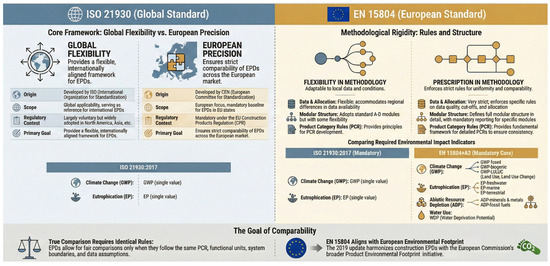


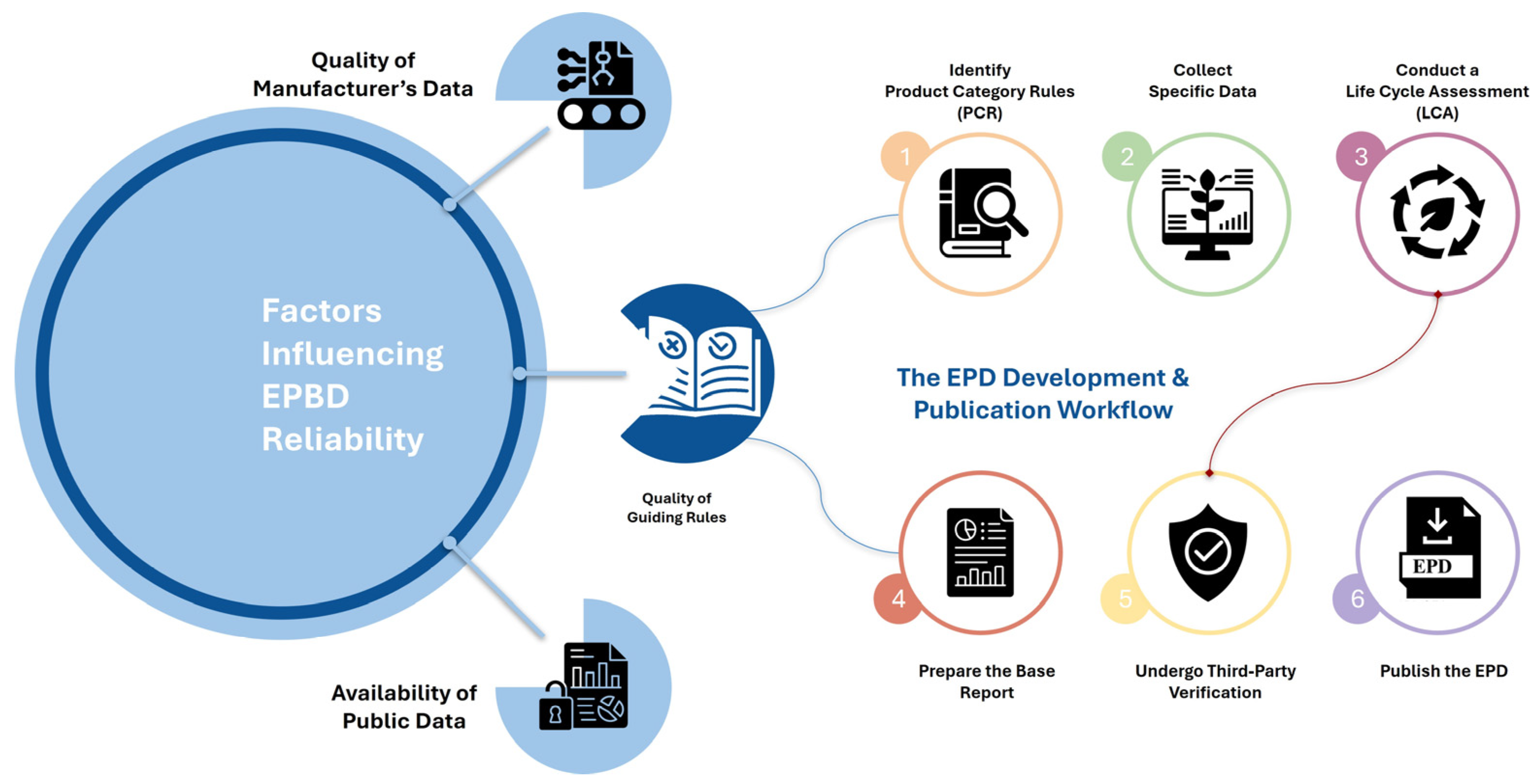



Disclaimer/Publisher’s Note: The statements, opinions and data contained in all publications are solely those of the individual author(s) and contributor(s) and not of MDPI and/or the editor(s). MDPI and/or the editor(s) disclaim responsibility for any injury to people or property resulting from any ideas, methods, instructions or products referred to in the content. |
© 2026 by the authors. Licensee MDPI, Basel, Switzerland. This article is an open access article distributed under the terms and conditions of the Creative Commons Attribution (CC BY) license.