


Abstract
The sustainable development of university safety governance is an important component of the national security management system and also serves as a fundamental safeguard for protecting the life and health of students and staff on campus. The improvement of university safety risk governance relies on analyzing the identification of various safety risks and maintaining an effective crisis management process for potential sudden safety risks. The 24Model and the 4R model have respectively demonstrated strong analytical advantages in the fields of accident causation analysis and emergency crisis management; however, few studies have examined the internal relationship between them. This study attempts to integrate the 24Model and the 4R crisis management framework to propose and analyze a 2-4-4R model for university safety risk management. Through a case study, the model is applied to analyze a laboratory explosion accident at a university. The results show that the risk factors leading to campus safety accidents can be analyzed from four aspects: safety culture, safety management system, individual factors, and unsafe acts and physical conditions. University safety management should comprehensively identify these four types of factors and propose governance measures sequentially from the four stages of reduction, readiness, response, and recovery in order to improve safety management capacity. The case analysis confirms that the 2-4-4R model has applicability and practical value in the identification and governance analysis of university safety risks. It provides a systematic research perspective for the identification and management of safety risks in universities, and is of great significance for promoting the sustainable development of universities.
1. Introduction
Universities are comprehensive institutions that integrate education, scientific research, and social services, and play a crucial role in promoting sustainable social development. Health and safety are important pillars of a functional higher education system [1]. As an important component of social security work, campus safety has long been a focus of public concern. By 2023, China had 498,300 schools of all types and levels, 291 million students in all forms of formal education, and 18.9178 million full-time teachers [2]. In the face of such a large-scale education system, campus safety governance has become a daunting challenge. From 2004 to 2024, a total of 137 laboratory safety accidents occurred in Chinese universities, resulting in 177 injuries and 19 deaths, with heavy losses [3]. In 2024 alone, approximately 447,000 campus safety hazards were identified and corrected [4]. Various types of safety incidents, such as campus bullying, public health events, accidental injuries, and behavioral misconduct, coexist on campus, showing diversified characteristics of risk categories [5]. The interaction of multiple risks together creates hidden dangers for the safety of students and staff on campus, not only threatening their life and health, but also seriously hindering the sustainable development of higher education institutions. The sustainable development of campus safety still has a long way to go. Based on this, this paper focuses on the identification and governance of safety risks in universities, explores the construction of a new governance model framework to guide practical application, and is of great significance for promoting the modernization of the education governance system and governance capacity, as well as the sustainable development of universities.
Previous research on university safety management has generally focused on two major directions. One focuses on university safety risk identification and prevention, emphasizing the importance of arrangements before crises occur by conducting detailed investigations and analyses of potential risk sources within university settings to minimize the probability of risk occurrence. At present, various management frameworks and analytical methods have been developed to identify risk sources in universities [6,7]. The other direction focuses on crisis management and emergency response to university safety risks, examining how organizations respond to sudden incidents and recover from crises, aiming to achieve rapid response and carry out emergency rescue work at the earliest stage of a crisis [8,9]. Analytical models such as the crisis management cycle and the 4R crisis management framework have been widely applied in fields such as public management and crisis governance. However, although both risk identification and crisis management play important roles in addressing campus safety crises, research in these two areas largely belongs to independent fields. The former focuses on reducing the probability of accidents during the prevention stage, while the latter focuses on improving safety management capacity during the response stage. Few studies have analyzed and connected the governance relationship between the two, and the relationship between risk identification and crisis governance across temporal stages has not been sufficiently explored. Therefore, there is still a lack of a comprehensive governance model framework that integrates risk identification with full-cycle crisis management. Such a comprehensive analytical approach is crucial for understanding and implementing university safety management and for promoting the establishment of a sustainable safety risk identification and governance system in universities.
Based on this, this study proposes a 2-4-4R model for university safety risk identification and governance. The model is constructed on the basis of the accident causation model 24Model and the 4R crisis management theoretical model. The model is aligned with the university context and can comprehensively identify potential hazards that are likely to occur in university environments from both the individual level and the organizational level, while guiding campus emergency governance actions from the perspective of the full cycle of safety management. It represents the result of connecting the functions of the two models and aims to build a comprehensive, full-process, closed-loop safety risk identification and governance model, which is beneficial for enhancing the sustainable development capacity of university safety management.
In order to better realize the management value of the accident causation model 24Model and the 4R crisis management theory, achieve complementary advantages between the two, further promote the sustainable development of university safety construction, and improve campus safety management capacity, this study addresses the following research questions:
- How can the accident causation model 24Model and the 4R crisis management theory be integrated to form a more comprehensive model for university safety risk identification and governance?
- How can the 2-4-4R management framework be applied to identify risks in university safety accident cases and propose governance measures?
- What theoretical and practical advantages does the 2-4-4R management framework have in improving campus safety governance?
This study focuses on the construction of a university safety risk identification and governance model. First, it reviews previous literature on campus safety risk identification and crisis management. Then, it introduces the research methods of this study and the process of proposing the 2-4-4R management framework, and explains its practical application. Subsequently, taking the explosion accident in a laboratory of a university in Beijing as an example, the study discusses the application of the 2-4-4R model in identifying risk factors and guiding safety governance actions. Finally, the theoretical contributions of this study in promoting university safety management construction and advancing the sustainable development of universities are summarized, and the research limitations and future research directions are identified.
2. Literature Review
2.1. Methods for Campus Safety Risk Identification
To improve the level of campus safety management and safeguard campus safety construction, it is first necessary to accurately identify potential risk sources on campus. Scientific and effective methods for campus safety risk identification have become the first move to promote campus safety construction. Many scholars at home and abroad have carried out extensive research on methods for identifying campus safety risks. Some scholars have attempted to embed frontier scientific and technological methods into campus safety risk identification and to design campus safety risk assessment models. For example, Alireza Dehdashti [10] focused on the data collection and analysis framework of safety risk management in university settings and proposed a methodology for campus risk identification based on multidimensional monitoring. Jamaica Kim Lopez Mabanglo [11], through case studies of Philippine universities, conducted a comparative analysis of risk assessment methods in different dimensions such as physical security and cyber security, and revealed the operating mechanisms and room for improvement of multi-level safety risk prevention and control systems in universities. WANG Lei [12] proposed a campus safety risk assessment method based on multi-criteria decision making to identify key objectives, threats, consequences, and vulnerabilities of campus safety, and to consider the correlations between factors as well as between elements within factors. YANG Jincang [13] analyzed various cases, in-depth interviews, and relevant previous literature, determined a two-level indicator structure, and, through a case study of Mashan School in China, developed a method combining the analytic hierarchy process and the entropy weight method to comprehensively evaluate first-level and second-level risk indicators, providing management implications for responding to campus safety risk assessment. LI Xiaomeng [14] proposed, by using big data intelligence, the development of four new platforms, including a machine-learning-based safety education platform, a big-data-based risk prediction and early warning platform, an artificial-intelligence-based monitoring and response platform, and an Internet-of-Things-based safety information sharing platform, to improve the level of school safety management. Sepadi Maasago Mercy [1] adopted a document-based qualitative research method, guided by the public health and victimology frameworks, to examine systemic risk factors and institutional response measures on university campuses, and found that problems such as poor infrastructure management, weak inter-institutional communication, and failure to implement relevant recommendations after major incidents were widespread. Dehdashti A. [10] constructed a university environmental health, safety, and environment (HSE) risk assessment system and identified and ranked campus risks through probability and severity evaluation methods, which can be used for university safety risk management. Existing campus safety risk identification models have made extensive attempts based on qualitative or quantitative research methods, but they often fail to comprehensively identify risk factors and clarify the relationships among them. FU Gui [15], based on the domino series model, the Swiss cheese model, the human factors classification system, and the excellent safety management model, proposed the accident causation “2-4” model (24Model), which has comprehensively summarized accident causation from both the individual level and the organizational level as well as shown good application effects in tracing accident causes and formulating accident prevention measures, and has been widely applied in safety governance in industries such as coal mining and hospitals. Existing studies have actively explored the construction of new risk assessment in campus safety management, in order to explore more scientific paths to enhance the grasp of campus risk identification, assessment, early warning, and prevention.
2.2. Construction of the Campus Crisis Management System
To promote the modernization and sustainable development of campus safety construction, it is imperative to build a sound campus crisis management system, which is also an essential part of realizing long-term social stability in China. Previous studies on campus emergency management systems have approached the topic from diversified research perspectives and have provided theoretical references. Some scholars, from the perspective of building campus resilience and enhancing the adaptive capacity of campuses to cope with risks, have provided analytical frameworks and thinking paths for the innovation of China’s campus emergency management system. For example, RONG Zhi [16] and others applied the theory of “community resilience” to the study of campus safety issues and proposed “university community resilience” with organizational resilience, spatial resilience, governance resilience, cultural resilience, and digital resilience as the main components. Jessica L. Ford [17], based on relational embeddedness, structural embeddedness, and uncertainty management theory, understood uncertainty management and resilience in campus emergencies, and proposed measures and suggestions to improve information flow, uncertainty management, and resilience before, during, and after crises. Some scholars have also combined the practical situation of China’s campus emergency management system and the characteristics of campus risk accidents to conduct analyses from the perspective of constructing a new campus emergency management system. For example, XIE Minxia [18] pointed out the loopholes in campus emergency management from the aspects of laws and regulations, organizational structure, plan formulation, training, and supervision, and proposed measures to improve the emergency management mechanism for sudden incidents in university campuses. YANG Yang [19], by analyzing the constituent elements of the emergency management system for network security in universities, proposed establishing a sound network security emergency management system, and, under the guidance of emergency plans, organically combining various elements through on-site disposal plans to organize and carry out emergency management work, which is of great significance for university network security work. Cain Lauren [20] and others took university campuses as the object to explore how maps, by indicating the location of threats relative to users, clarify who should take protective measures, and whether maps affect risk perception, expected actions, and trust in information sources. This study evaluated the necessity of incorporating maps into campus emergency alert systems. LI Shengfang [21], in response to the problem of flood disasters faced by universities, took China University of Geosciences (Wuhan) as an example and established a framework to promote cooperation among various ecosystems on university campuses to respond to flood disasters, making it possible to effectively enhance flood resistance capacity and promote the ecological and sustainable development of university campuses. Looking at the global context, scholars from different cultural backgrounds have also constructed adaptable university crisis management systems, providing diversified perspectives for the study of campus safety governance. Kapucu N. [22] discussed the role of social media in university safety governance and crisis communication, arguing that the efficiency of information dissemination is of great significance for campus emergency management. Kalvach Z. [23] analyzed the response mechanism of university crisis management teams through a real campus shooting incident and explored the effectiveness of the crisis management system.
Safety risk identification and crisis governance together form the entire process of safety risk response. In the study of campus safety risk issues, it is essential to balance both aspects to ensure that safety risk governance is comprehensive, holistic, and applicable. However, based on the review of previous literature, most research by scholars both domestically and internationally focuses either on identifying campus safety risk sources or constructing campus emergency management systems, addressing only a single dimension. Faced with increasingly complex risk challenges, meeting the integrated governance needs from risk identification to recovery and reconstruction seems somewhat inadequate. To address this, this paper proposes a campus safety risk 2-4-4R management model framework based on the integration of the 24Model and the 4R crisis management model. The framework analyzes the response measures taken by universities at four different stages of risk occurrence from both the organizational level of the university and the individual level of teachers and students. It also explains the rationale of this framework through case studies of campus safety accidents, aiming to improve the identification and governance capacity of campus safety risks in China’s higher education institutions.
3. Research Methods
3.1. Research Design
This study mainly adopts a qualitative research analysis method. The research content includes two parts: the construction of the 2-4-4R theoretical model for university safety risk identification and governance and a case analysis of the laboratory explosion accident at Beijing Jiaotong University. The purpose is to propose an integrated analytical framework that considers both systematic identification of university safety risks and full-cycle governance, and to demonstrate the scientificity and applicability of this analytical method in the field of university safety management. The causes of campus safety incidents are often diverse and complex, and the occurrence of accidents may be the result of the interaction of multiple factors. Therefore, if quantitative methods are used to calculate the proportion of influence of different factors and explain accident causation, it may not be possible to clearly clarify the causal mechanisms among people, objects, environments, and actions behind the occurrence of accidents. In this context, the design logic of combining theoretical model construction with specific case analysis can maximize the scientific value of this study and provide an appropriate analytical approach for exploring university safety risk identification and governance.
3.2. Case Selection and Analysis Method
In the case study part of this paper, a laboratory explosion accident that occurred at Beijing Jiaotong University is selected as the research object for analysis. By reviewing the causes of the accident and the rescue measures taken after the accident, the effectiveness of the 2-4-4R management framework is illustrated. The selection of the Beijing Jiaotong University laboratory explosion as the case for analysis is based on considerations of case suitability and data availability. First, laboratory safety is an important component of the university safety management system, and ensuring laboratory safety is of great significance for universities where scientific research experiments are commonly conducted. However, laboratory safety accidents occur frequently, seriously threatening the life and health of university students and staff. Identifying safety risks in university laboratories and proposing governance measures has a direct impact on promoting the sustainable development of universities. Second, this case provides relatively rich materials and data for analysis. The laboratory explosion not only caused loss of life and property to the persons involved, but also triggered public discussion on laboratory safety issues on the internet. At the same time, relevant departments intervened to investigate the causes of the accident and issued public reports, which makes it possible to clearly understand the background and development of the accident. The detailed materials provide a solid basis for conducting this study. Finally, this case is highly representative in the field of university safety accidents. The causes of the accident involve multiple factors, including laboratory managers, teachers and students involved, laboratory environment and equipment, and the campus safety management system. These characteristics indicate that the case is highly suitable for systematically demonstrating how the 2-4-4R management framework can be used to identify university safety risks and propose governance measures. The data used in this study consist of multiple types, including official accident investigation reports, news reports from online media about the accident, publicly available university safety regulations and policy documents of the university, and relevant academic literature. By comparing and analyzing data from multiple sources, the study reduces excessive reliance on any single source of information, thereby enhancing the credibility and scientific rigor of the research.
The case analysis process in this study mainly includes three parts: case review, laboratory risk identification, and full-cycle crisis management measures. First, the collected case materials are reviewed in detail to understand the background of the laboratory accident, the course of the accident, the casualties, the laboratory environment and equipment conditions, and the university’s laboratory safety management system. Based on the official accident investigation report, the direct and indirect causes of the accident are identified. Second, based on the accident causation model 24Model, the causes of the accident are analyzed from both the organizational level and the individual level, examining how multiple factors—such as laboratory safety culture, safety management systems, habitual behaviors of teachers, students and managers, occasional behaviors, and physical conditions—jointly contributed to the explosion of the laboratory, with attention to improper operations, violations, and unsafe concepts in experimental activities. Third, the identified risk factors are embedded into the 4R crisis management stages, which helps reveal vulnerabilities in the laboratory safety management system. This approach has practical value for creating a sound safety management atmosphere, strengthening the safety awareness of campus personnel, improving laboratory safety governance processes, and enhancing laboratory safety management capacity.
4. Model Construction and Theoretical Analysis
4.1. Proposal of the 2-4-4R Management Model Framework
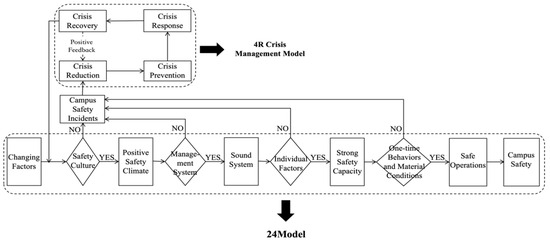
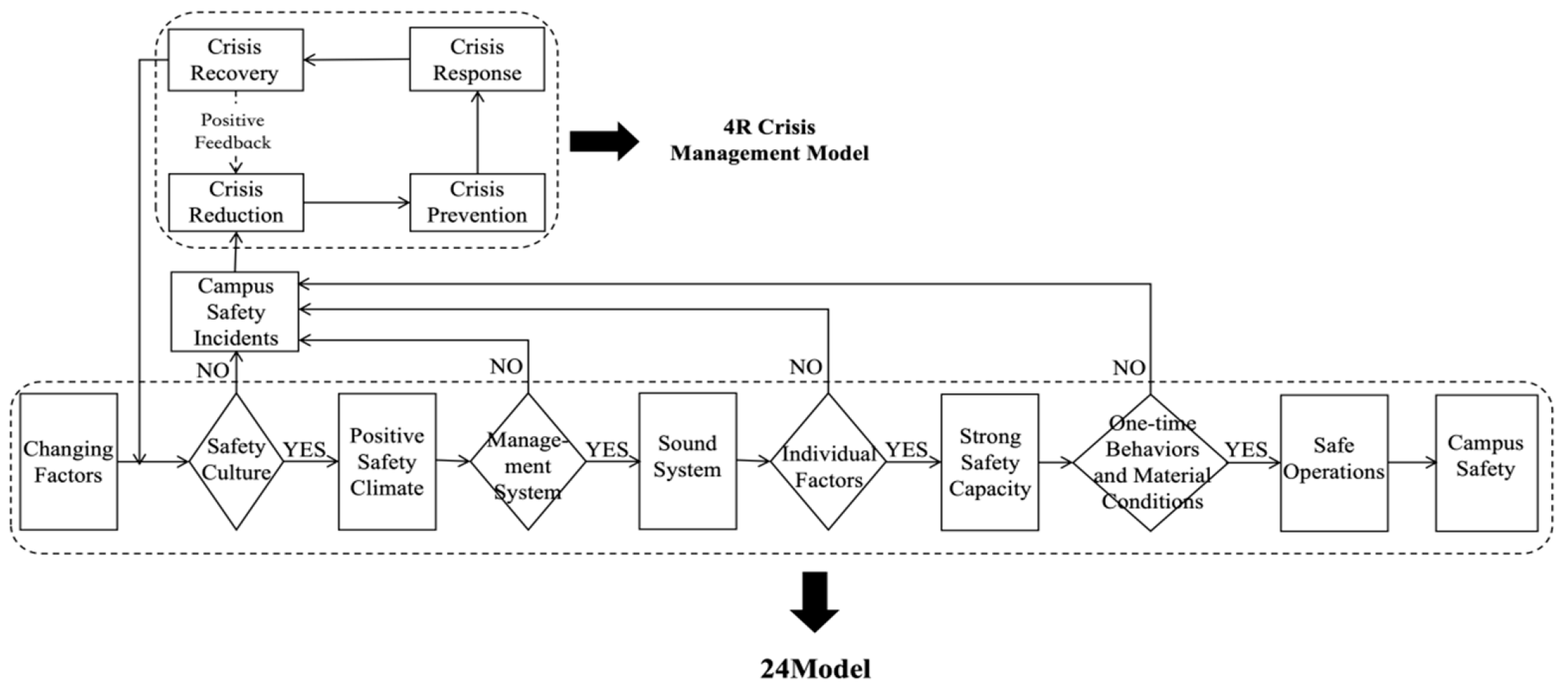
In order to address the limitations of existing studies in which accident causation identification and governance recommendations are relatively independent and cannot achieve coherent governance, this study proposes a comprehensive university safety management model that integrates risk identification and governance measures. As shown in Figure 1, the 2-4-4R management model framework is a composite model for campus safety risk governance, built upon the accident causation model 24Model and the 4R crisis management model. It consists of two main modules: risk source identification and risk governance system. The 24Model analysis method is characterized by hierarchy and standardization, enabling the analysis of deep-rooted cultural and institutional causes [24]. At the organizational level, it primarily includes the behavioral guidance phase, which relates to the deficiencies in organizational safety culture (root causes), and the operational behavior phase, which pertains to the deficiencies in the safety management system (fundamental causes) as sources of danger. At the individual level, it includes the habitual behavior phase, which involves inadequate safety knowledge, awareness, habits, psychological and physiological conditions (indirect causes), and the one-time behavior and material phase, which involves unsafe individual actions and materials (direct causes) as sources of danger. The 4R crisis management model consists of four stages: reduction, preparedness, response, and recovery. Crisis reduction is the core content of crisis management, running throughout the entire crisis management process. During this phase, efforts should be made to reduce the likelihood of a crisis occurring and to minimize its destructive impact. Crisis preparedness primarily involves preventive work for crises, including developing crisis management plans, establishing crisis early warning systems, and achieving preparedness through training and drills. Crisis response emphasizes how organizations take practical actions to respond to and resolve crises after they have occurred, minimizing the damage caused by the crisis. Crisis recovery refers to both the recovery and enhancement of the organization’s image after the crisis is controlled, as well as the post-crisis lessons learned to prevent similar situations from occurring again.
Figure 1.
2-4-4R Management model architecture.
The 2-4-4R management model framework for campus safety risks proposed in this paper is a composite governance model. By using the accident causation model 24Model to identify risk sources in organizational aspects such as school culture and management systems, and individual aspects such as habitual and one-time behaviors, it then applies the 4R crisis management model to construct crisis response measures, as shown in Figure 1. The operational path of this framework can clearly and intuitively identify the sources of risks that lead to campus safety accidents and recognize the process of addressing these risk sources to prevent safety accidents. The 2-4-4R management framework combines the risk source identification capability of the 24Model with the stage-based management system of the 4R model. Through this integration, university safety governance can be organized into a closed-loop process that links risk identification with the four stages of crisis reduction, readiness, response, and recovery.
4.2. Safety Risk Identification in Universities Based on the Framework
The 2-4-4R management model framework for campus safety risks includes requirements for both risk identification and crisis management, and the accident causation model 24Model can effectively identify risk sources. As an accident causation model, 24Model divides the main risk sources leading to accidents into three categories: human factors, material factors, and organizational factors. Since the sixth edition, external organizational factors have been attributed to the lack of internal organizational response measures and have been incorporated into four internal factors: individual actions, individual abilities, organizational culture, and management systems. Therefore, this paper will analyze campus safety risk sources only from these four internal factors. The following is an application of 24Model in identifying campus safety risks based on the left-to-right sequence of the model.
First, the safety culture deficiency at the organizational level. With a large and diverse group of faculty, staff, and students, and a lack of regular safety education and training in universities, the educational methods are often one-dimensional, with low frequency and unengaging content, resulting in ineffective safety education [11]. Without forming a strong safety atmosphere, a considerable number of people will have weak safety awareness and a sense of complacency. This can lead to violations of safety procedures in actual work and study [25].
Second, deficiencies in the safety management system. A well-established and comprehensive safety management system should align with the basic principles of the modernization of the university governance system [26]. While the safety management system in universities has made significant progress, issues such as an inefficient organizational structure, outdated team development, poor communication efficiency, weak evaluation and incentive effects, inadequate emergency response, and insufficient technological support have emerged [27]. Furthermore, the frequent laboratory explosion accidents indicate that the laboratory safety management system is not fully developed, with issues such as non-standard management systems, incomplete organizational structures, and unclear accident responsibilities.
Third, habitual behavior at the individual level, which refers to both faculty and student groups. Universities have large populations, with varying levels of education and personal qualities, leading to differences in their understanding of safety knowledge and the importance of campus safety management. Faculty and students with insufficient safety awareness may engage in unsafe behaviors in their daily activities, such as operating equipment incorrectly or ignoring safety protocols, thus creating potential risks. In laboratory safety accidents, habitual unsafe behaviors are commonly manifested as improper use or lack of protective equipment during experiments [28], which poses a threat to both the laboratory and its personnel’s safety.
Fourth, one-time behavior and material conditions at the individual level, including unsafe human actions and unsafe material conditions. Common campus safety accidents include explosions, fires, traffic accidents, intentional injuries, campus loans, sports injuries, suicides, and poisoning [29]. Unsafe human behaviors in these incidents include operating equipment improperly and subjective actions, while unsafe material conditions involve aging school infrastructure, substandard equipment, improper placement of hazardous materials, and improper storage of goods. In some cases, university dormitories built many years ago have aging electrical wiring, missing fire safety equipment, and narrow fire exits, creating fire hazards, reflecting the “unsafe material conditions” [30]. Organizational behaviors are influenced by organizational culture, as mentioned earlier, when some faculty and students do not identify with the campus safety management culture, leading to weak safety awareness and the likelihood of unsafe behaviors that trigger accidents. This reflects the systemic nature of the 24Model of accident causation, which not only analyzes the deficiencies in the factors within the system but also examines the interactions between these factors. It requires moving beyond simple chain-like models of accident causation and viewing the accident system as an integrated whole, analyzing the functions and interconnections of internal factors. According to the 24Model, university campus safety risk factors can be classified into several categories, and the classification system is shown in Table 1.
Table 1.
Cause classification system of university security based on 24Model.
The above analysis, based on the 2-4-4R management model framework, identifies potential campus safety risks from the perspective of the accident causation 24Model.
4.3. Campus Safety Risk Governance Based on the Framework
Building a campus safety risk governance system based on the 2-4-4R framework also requires attention to the role of the 4R crisis management model. By fully leveraging the management advantages generated from combining the 24Model and the 4R crisis management model, the joint governance effect can achieve a “1 + 1 > 2” outcome, thereby constructing a comprehensively coordinated campus safety risk governance system. The governance mechanism of the 2-4-4R framework links the risk identification capability of the 24Model with the four stages of crisis governance, thereby establishing a dynamic and cyclical safety management process. The core governance advantage of the 2-4-4R management model framework lies in its structural integration of the accident causation identification capability of the 24Model with the full-cycle governance capability of the 4R crisis management model. This integration enables a systematic governance transition in university safety management, covering the entire process from risk source identification and safety accident explanation to “full-domain risk source identification–full-cycle safety governance.” It addresses the key governance questions of university safety accidents: “when to manage, how to manage, what to manage, and where to start managing,” providing administrators with specific and easily implementable governance methods. This model can not only extend theoretical research on safety management system construction but also highly adapt to and serve practical campus safety governance, offering unique advantages not found in other models. It is important to note that the combination of the 24Model and the 4R crisis management theory in this paper is not a simple conceptual superposition, but a structurally embedded integration that unites the strengths of both. The 2-4-4R model has dual governance objectives: risk identification and prevention, as well as crisis response and recovery. The 24Model focuses on the function of risk identification and governance anchoring, while the 4R crisis management model is embedded into the 24Model’s accident causation identification structure along a temporal sequence. This transforms risk governance from a static “identify–govern” reactive process into a dynamic, cyclical governance process, representing an effective attempt to move the safety management model toward automated management process functions. By integrating the accident causation structure with the full-cycle logic of the 4R crisis management model, the 2-4-4R model presents a new paradigm for university safety management that combines precise risk identification, automated governance processes, timely feedback, and effective post-crisis recovery. Table 2 shows the university crisis governance system based on the 2-4-4R model.
Table 2.
2-4-4R Crisis management system.
4.3.1. Campus Safety Governance at the Organizational Level
First, governance is explored across the four stages from the two organizational dimensions: campus safety culture construction and campus safety management system. To establish a comprehensive safety management system, an organization needs a strong safety culture as guidance. Safety culture essentially serves as the guiding ideology of safety work and primarily exists at the level of thought leadership, without involving specific safety management actions [31]. Its construction focuses on the pre-crisis stage; once the safety culture becomes effective, its influence will persist throughout the crisis. Universities can leverage the educational and promotional role of safety culture to enhance the safety awareness of all faculty, staff, and students, reduce unsafe actions and material conditions that may lead to risks, and achieve crisis reduction. In addition, a strong safety culture can guide the construction of the university safety management system with scientific safety principles, forming a complete campus crisis risk response mechanism. This allows universities to anticipate and prevent campus safety accidents, achieving crisis preparedness. Moreover, effective safety culture construction can instill safety awareness into every teacher and student, guiding them to develop safe behavioral patterns and habits [17]. This helps faculty and students respond to ongoing crises scientifically and maintain effective control, achieving crisis response. Finally, universities can summarize and communicate the causes, losses, and hazards of safety incidents to all faculty and students, conducting safety education, training, and publicity to prevent similar incidents in the future, thus achieving crisis recovery.
A scientific and systematic campus safety management system can guide all functional departments to perform their respective duties, proactively participate in campus safety management before a crisis occurs, ensure the proper operation of safety management work, reduce the likelihood of campus risks, and achieve crisis reduction. Before a crisis, universities should independently develop multi-level, coordinated emergency response plans [32] to improve their emergency management capabilities and response levels, and continuously optimize these plans to ensure rapid activation in the event of a crisis, achieving crisis preparedness. A qualified safety management system should include comprehensive safety management regulations and a scientific crisis response mechanism, enabling rapid activation and scientific handling of a crisis when it occurs, achieving crisis response. After a crisis, universities should promptly summarize the risk sources that led to the crisis, learn lessons, and revise and improve existing management systems and governance structures. At the same time, attention should be paid to the negative impact of the crisis on the organization’s image, and the incident should be reasonably attributed and communicated publicly to restore and enhance the organization’s reputation, achieving crisis recovery. Finally, as the safety management system is continually supplemented and improved through each incident, it provides increasingly mature guidance for future crisis management. This process reflects the content of crisis reduction work and allows the safety management system to operate as a closed-loop function within the 4R model.
4.3.2. Campus Safety Governance at the Individual Level
The individual level refers to the application of habitual behavior as well as one-time behavior and material conditions within the four stages of the 4R crisis management model. The main actors in campus safety management generally include the university party committee, university security departments, public security agencies, other university-affiliated units, faculty and students, and social forces. Among these, the university party committee, public security agencies, and social forces mainly participate in campus safety management through issuing documents, formulating policies, and creating a social atmosphere, and are therefore classified at the organizational level. Faculty and students, the security department, and other university-affiliated units mainly participate through specific internal safety management actions and are classified at the individual level. Faculty and students should adopt an active learning attitude toward safety education and training, forming good safety habits early and relieving negative emotions, thereby reducing the likelihood of campus crises and achieving crisis reduction. Security departments should strictly follow management regulations in their daily campus safety work, ensuring reasonable duty schedules and complete security facilities to carry out crisis prevention. Other university-affiliated units and faculty and students should always pay attention to their own behaviors, focusing on controlling potential hazards depending on their environment. High-risk locations, such as canteens, dormitories, and laboratories, require maintaining good safety habits to achieve crisis preparedness. During a crisis, all personnel should follow the instructions of the university party committee, activate emergency plans to quickly stop the crisis, and minimize damage, thereby achieving crisis response. After the crisis, all personnel should proactively understand the causes of the incident, learn lessons, avoid similar unsafe habits, and complete crisis recovery. Through this individual-level safety management process, self-safety management capability can be significantly improved, reducing the likelihood of campus safety incidents and achieving crisis reduction, thus forming a closed-loop operation of the 4R crisis management model.
One-time behaviors and material conditions that trigger accidents refer to unsafe actions and material states that are temporally closest to the occurrence of the accident. From the crisis reduction stage perspective, all faculty and students should improve their safety awareness, comply with safety management regulations, and maintain a safe campus environment, fundamentally eliminating the possibility of a crisis. From the crisis preparedness stage perspective, campus personnel should promptly detect and effectively control potential safety risks. Safety monitoring and inspection systems should be established for high-risk areas such as canteens, student dormitories, and laboratories, unsafe actions and material conditions should be warned and corrected, and education and publicity should be strengthened to ensure crisis preparedness. From the crisis response stage perspective, when unsafe actions and material conditions actually cause safety incidents, the involved personnel should immediately take scientific and reasonable emergency measures to protect themselves and others, minimizing negative impacts. From the crisis recovery stage perspective, the involved personnel should reflect deeply on the unsafe actions and material conditions that caused the incident and assist the university in post-disaster recovery, minimizing losses. The widespread attention and discussion generated by crisis incidents caused by unsafe actions and material conditions can warn others to reduce similar one-time behaviors and material hazards, achieving crisis reduction and enabling the internal cycle of the 4R crisis management model.
As shown in Table 2, whether at the organizational or individual level, feasible measures can be explored across the four stages of crisis reduction, preparedness, response, and recovery. This demonstrates that the 24Model and the 4R crisis management theory can be well integrated to jointly build a systematic and comprehensive “2-4-4R” crisis governance system.
The 2-4-4R management framework constructed in this section provides the theoretical foundation for the subsequent empirical case study. By applying the 2-4-4R framework to a real university laboratory safety accident, the applicability of this framework in identifying campus safety risks and supporting crisis management decision-making is further demonstrated.
5. Model Application: A Case Analysis Based on a Laboratory Explosion Accident at a University in Beijing
5.1. Accident Background and Case Overview
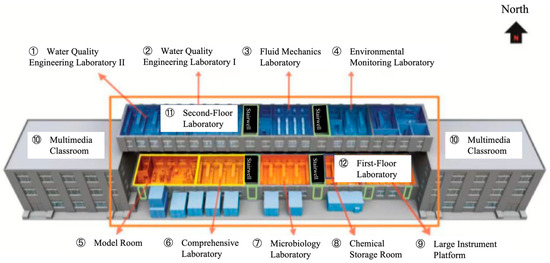
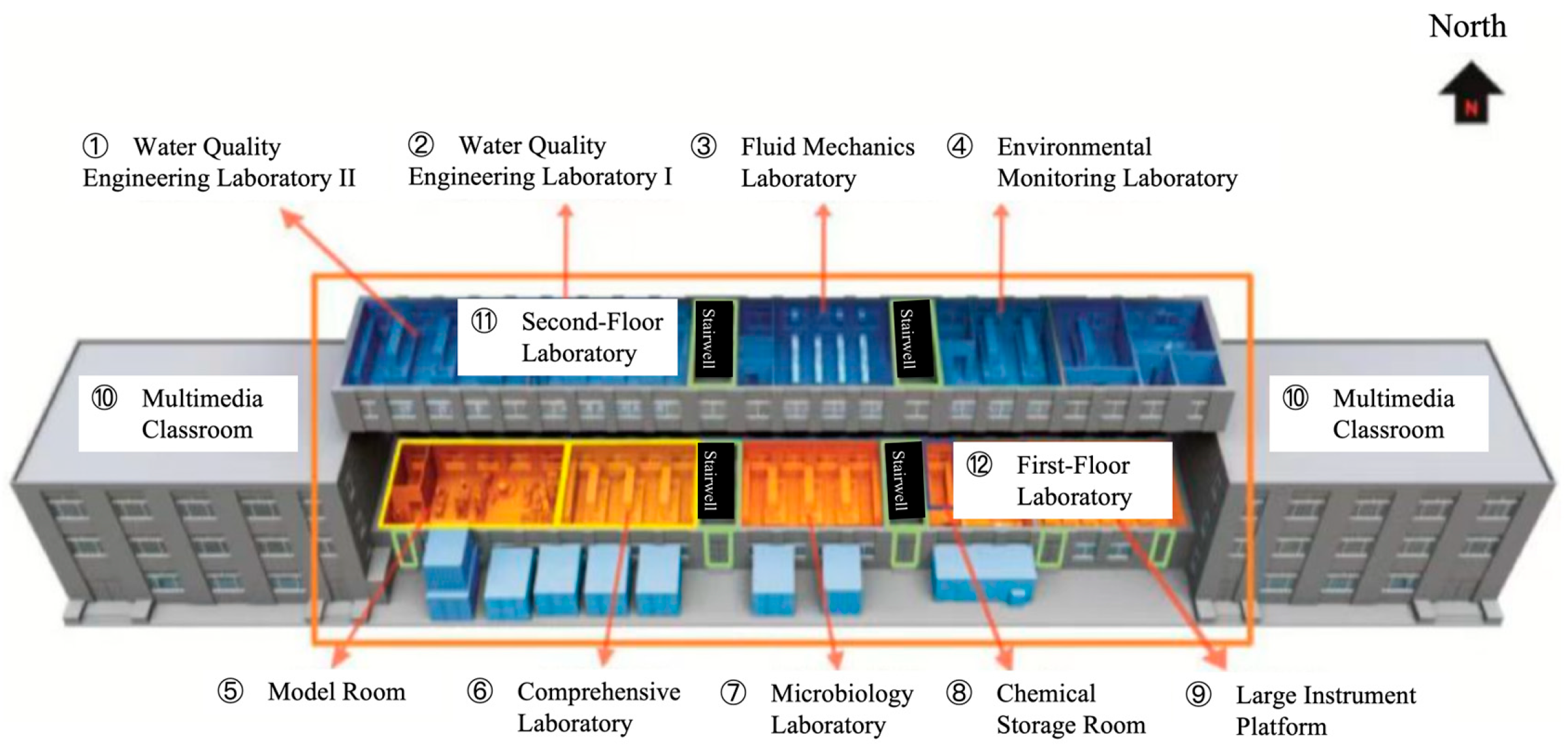
To verify the effectiveness of the 2-4-4R management model in campus safety risk scenarios, this paper analyzes a laboratory explosion incident that occurred at a university in Beijing. This case is representative, and the official accident investigation report provides complete information, making it possible to clearly understand the risk factors involved in the event and the emergency rescue process. According to the accident investigation report, the spatial layout of the laboratory where the accident occurred is shown in Figure 2 [33]. The explosion occurred in a first-floor model room, with the explosion center located at a metal mixer inside the room. The explosion first occurred in the mixer’s hopper. Following the explosion, the first-floor model room, the comprehensive laboratory, and the second-floor Water Quality Engineering I and II laboratories were all damaged. Containers placed outside the model room on the south side were also affected to varying degrees by fire. The explosive substances involved were hydrogen gas and magnesium powder inside the mixer’s hopper. The direct cause of the explosion was the ignition of hydrogen gas produced in the hopper during the mixing and reaction of magnesium powder and phosphoric acid, which was triggered by sparks caused by metal friction and collision at the mixer’s shaft. This ignited an explosion of magnesium dust clouds, which led to the burning of surrounding magnesium powder and other combustible materials, resulting in the deaths of three students at the scene. The indirect cause was the operators’ violations of experimental procedures, risky operations, illegal purchase and storage of hazardous chemicals, and inadequate safety management of the laboratory and research projects.
Figure 2.
Laboratory diagram (Source: A university laboratory “1226” large explosion accident investigation report).
5.2. Laboratory Accident Risk Identification
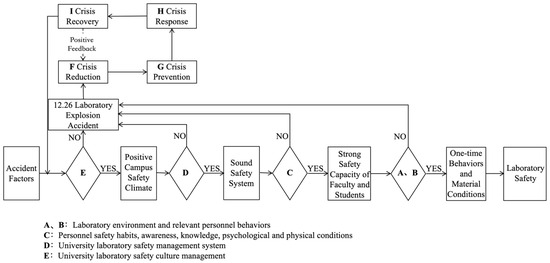
The study finds that the occurrence of this accident is related to multiple risk factors, including insufficient safety culture development, weak safety awareness among teachers and students, an irregular laboratory management system, and non-standard experimental operations. To avoid similar accidents from occurring again, it is necessary to systematically promote laboratory safety governance from the four stages of reduction, readiness, response, and recovery, in order to reduce the likelihood of a crisis at its source. Figure 3 presents an analysis of the risk sources of this laboratory explosion incident from the perspective of the 2-4-4R campus safety risk management model framework.
Figure 3.
Hazard analysis of laboratory accidents.
Analysis shows that the risk sources leading to the laboratory safety incident at this university can be divided into individual and organizational levels. At the individual level, there are human factors and material factors. Human factors include not only the unsafe actions of the individuals involved, such as the illegal purchase and storage of hazardous chemicals, failure of management personnel to perform laboratory safety inspections, failure to stop unauthorized use of the laboratory, and lack of training for laboratory safety personnel, but also deficiencies in personal safety habits, physiology, psychology, knowledge, and awareness. For example, the individuals involved lacked sufficient safety knowledge, underestimated the hazards of improperly handling hazardous chemicals in the laboratory, and failed to take effective protective measures. Material factors mainly refer to unsafe material conditions, such as unreasonable laboratory layout and structure, the use of flammable materials in interior decoration and evacuation passages, a small laboratory area with severe space constraints, and the storage of a wide variety of hazardous chemicals. At the organizational level, the factors include the safety management system and safety culture. In this incident, the university failed to establish an effective and routine laboratory safety supervision mechanism and lacked an effective emergency response plan, exposing gaps in the construction of the laboratory safety management system. In addition, deficiencies in meeting safety training needs, insufficient awareness of management responsibility, inadequate recognition of the role of the safety system, and limited understanding of the consequences of accidents all reflect the unsatisfactory state of the university’s laboratory safety culture construction. The specific risk identification results are shown in Table 3.
Table 3.
Identification of Risk Factors for Laboratory Explosion Accidents.
5.3. Safety Governance Analysis Based on the 2-4-4R Model
Based on the 2-4-4R model, a detailed analysis of the risk sources of the laboratory explosion incident was conducted from both the individual and organizational levels. It is evident that these risk sources could potentially trigger similar accidents in other university laboratories in the future. Therefore, it is necessary to consider and explore scientifically sound and comprehensive risk governance. The 2-4-4R crisis governance framework can provide a systematic practical perspective for laboratory safety management. (1) Individual factors: Teachers and students should actively learn laboratory safety knowledge and strengthen safety awareness to reduce the probability of crises and achieve crisis reduction and readiness. When a crisis occurs, they should follow the instructions of campus safety management departments and evacuate in an orderly manner to achieve crisis response. After the crisis ends, they should proactively and promptly identify the causes of the accident and participate in laboratory recovery and reconstruction. (2) Unsafe acts and physical conditions: Teachers and students should ensure that the storage of hazardous materials in laboratories complies with regulations during normal times and conduct experiments with safe operations to achieve crisis reduction and readiness. If unexpected situations occur during operation, they should immediately stop the experiment and evacuate to a safe area to achieve crisis response. After the crisis ends, they should actively reflect on improper behaviors and assume responsibility. (3) Safety culture: Universities should conduct routine laboratory safety training to achieve crisis reduction, and carry out safety publicity in advance during periods when accidents are more likely to occur to prevent the emergence of sudden crisis events. A good laboratory safety atmosphere can subtly influence the behavioral habits of teachers and students in laboratories and help them respond appropriately when a crisis occurs. After the accident ends, the university should promptly criticize and deal with the personnel involved to warn others. (4) Safety management system: Prevention of laboratory safety risks should begin with routine daily work, implementing regular supervision and inspection to achieve crisis reduction [34] and prevent incidents before they occur. A risk pre-control system should be established, a scientific laboratory safety management system should be developed, laboratory crisis emergency plans should be formulated, and targeted hazardous chemical safety training and drills should be conducted to achieve crisis preparedness. A university laboratory emergency response mechanism should be constructed to enhance the campus-wide crisis response capability and reduce potential losses. Finally, the responsibility of hazardous chemical safety management should be enforced, safety responsibility management systems clarified, lessons from the accident thoroughly learned, and crisis recovery effectively carried out.
In summary, the laboratory explosion incident in the case involved human factors, material factors, and organizational factors, which interacted and intertwined to form the risk sources that ultimately caused the explosion. It reflects the systematic characteristics revealed by the accident causation model 24Model. An effective crisis governance mechanism not only needs to respond after an accident occurs, but also needs to identify and control risks in advance during the reduction and readiness stages. An effective crisis governance mechanism not only needs to respond after an accident occurs, but also needs to identify and control risks in advance during the reduction and readiness stages, and ensure immediate crisis response by mobilizing all human and material resources to resolve the situation and minimize losses. After successfully controlling the crisis, comprehensive lessons and experiences should be summarized to firmly prevent similar incidents from recurring in the future.
The scientific validity of the risk factor identification and laboratory safety management system recommendations proposed above based on the 2-4-4R framework can be authoritatively verified and supported by the investigation report released by the investigation team [33] and the subsequent responses published by the university [35]. The accident investigation report clearly stated that the cause of the laboratory explosion was the improper operation of the persons involved and deficiencies in the university’s safety management system, which is consistent with the risk source conclusions identified in this study. The report required the university involved to comprehensively strengthen laboratory safety management and improve the laboratory management system, which is also consistent with the concept of laboratory safety management measures proposed in the readiness stage of the 2-4-4R framework. In the public notice released by the university, it stated that comprehensive inspections of campus safety work would be carried out to prevent similar incidents, which is consistent with the governance measures proposed in the reduction stage of this study. Actively responding to the accident and reporting the relevant situation in a timely manner is consistent with the concept of the response stage proposed in this study, while drawing lessons from the accident, conducting reflection and summarization, and adopting effective measures is consistent with the governance measures proposed in the recovery stage. By linking the research conclusions with the actual situation, the effectiveness of the 2-4-4R framework in the analysis and application of university safety accidents is further verified.
The above analysis of the risk sources in the university laboratory incident and the recommendations for constructing a laboratory safety management system are not only specific to the case but also broadly applicable. They provide a clear thinking path or approach for exploring risk sources and building safety management systems in similar university laboratories. In this sense, the 2-4-4R framework serves as an integrated structure for safety risk identification and governance, offering researchers a relatively complete exploratory approach. In comparison, the 2-4-4R framework demonstrates advantages that other system models do not possess.
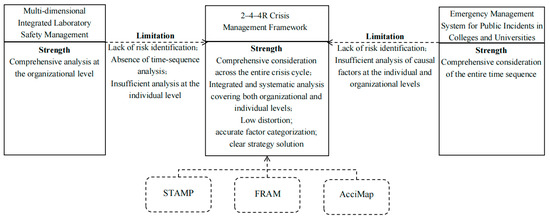
Specifically, existing studies have developed many crisis management systems. For example, university public incident emergency management systems focus on beforehand, during, and afterwards mechanisms [36], or single-element emergency management systems emphasize specific factors such as emergency information [37]. Additionally, some universities have built multi-dimensional integrated laboratory safety management system frameworks [38], which include six management measures: specialized safety inspections, safety management system checks, risk assessment and responsibility management, standardized laboratory construction, safety management information systems, and laboratory personnel access management. Although these frameworks reflect a relatively comprehensive organizational-level approach to safety management, they are still lacking at the individual level. Moreover, they do not specify concrete measures to be taken at different stages of a crisis in a temporal sequence. In comparison, the 2-4-4R framework demonstrates the advantage of full participation and comprehensive coverage throughout the entire crisis event. In addition, studies show that compared with system theory models widely used in the international academic community, such as STAMP, FRAM, and AcciMap, the 24Model has many advantages in describing accident occurrence mechanisms in socio-technical systems, including less distortion, more accurate classification of factors, and clearer behavioral solutions [39]. This further enhances the safety management capability of the 2-4-4R framework. Compared with traditional university emergency management systems, the 2-4-4R framework covers the entire process in the temporal sequence, including before, during, and after the occurrence of a crisis, while simultaneously focusing on both organizational factors and individual factors in the analytical dimension. It is more comprehensive than most emergency management systems in identifying risk sources and determining corresponding measures across the time sequence. Additionally, regarding the crisis event itself, this framework can analyze risk sources and governance methods across human, material, and organizational factors, covering every aspect of safety risks. This facilitates better implementation of analysis results and mitigation measures and further highlights the scientific and practical advantages of the 2-4-4R management model framework. This reflects the comprehensive advantages of the framework in risk identification and governance analysis. As shown in Figure 4, the advantages of the 2-4-4R framework compared with other models are illustrated.
Figure 4.
Advantages of 2-4-4R compared to other architectures.
The analysis of this case shows that the 2-4-4R management framework can systematically integrate accident causation identification with the crisis governance process, providing an analytical framework with practical guidance significance for university laboratory safety management.
6. Conclusions
6.1. Summary
This study constructs the 2-4-4R campus crisis management framework, providing a systematic analytical pathway for accident causation identification and crisis governance. The model is then applied to analyze a laboratory explosion case at a university in Beijing, which enables a relatively comprehensive identification of hazard sources and analysis of response measures, demonstrating the practical value of the model in studying university safety management. However, the current study also has some shortcomings in research design that need to be further improved in future research.
6.2. Research Findings
(1) This paper integrates the 24Model and 4R crisis management theory to construct a complete closed-loop 2-4-4R management model framework. This framework effectively leverages the combined advantages of the two models, achieving a synergistic governance effect. This framework structurally integrates risk identification with the crisis governance process, and establishes a systematic path for exploring risk sources and managing crises across the entire process, from pre-crisis to post-crisis. The framework was then applied to examine the potential risk sources and crisis management measures leading to university safety incidents, providing a systematic analytical framework for the governance of university safety accidents.
(2) The 2-4-4R model has good applicability and scientific validity when applied to university safety governance scenarios. By identifying risk sources and corresponding response measures in the university campus environment, it is found that university safety risk identification can be analyzed from the organizational level and the individual level. Risk sources at both levels run through the four stages of reduction, readiness, response, and recovery, and corresponding governance measures can be proposed accordingly. The analytical pathway of the 2-4-4R model has the advantages of a complete temporal sequence and comprehensive coverage of factors, providing a systematic perspective of risk identification and governance for campus safety.
(3) Based on the detailed analysis of accident causation and governance pathways in a laboratory explosion case at a university in Beijing, the applicability of the 2-4-4R model in the identification and governance of safety risks in universities has been verified. By identifying the hazard sources of the laboratory accident through the 2-4-4R model and proposing scientific response measures, this study provides an analytical approach with practical guidance significance for university laboratory safety management.
6.3. Research Limitations and Future Directions
Although this study proposes a campus safety governance analytical framework that integrates accident causation identification and full-cycle crisis management, there are still some limitations.
(1) The study only analyzes a single case of a laboratory explosion accident at a university in China. Although this case has strong applicability in studying campus safety accidents caused by the interaction of multiple levels and multiple factors and provides valuable research results, incorporating other suitable cases for multi-case analysis in the future would help enhance the generalizability of the study.
(2) The study mainly adopts qualitative analysis rather than quantitative analysis methods. This study primarily conducts discussion through model construction and case study methods. In the future, quantitative analysis methods can be incorporated to further verify the effectiveness of the 2-4-4R model in the field of university safety governance, such as examining changes in the probability of university safety accidents or the level of campus crisis management capacity after the introduction of the model.
(3) The study mainly focuses on university safety management within the context of China’s organizational and institutional system and does not discuss applicability under other cultural or institutional contexts. In the future, based on the current 2-4-4R model, consideration of university safety management characteristics under different cultural or institutional backgrounds should be incorporated, and the model can be further applied to campus safety management in different national contexts to expand its scope of application.
In summary, the 2-4-4R management framework proposed in this study provides a novel analytical method for the structured integration of university risk identification and crisis governance. It has important theoretical value and practical significance for promoting the sustainable development of university safety, effectively identifying and preventing campus crises, and enhancing the capacity of campus safety management.
Author Contributions
Conceptualization, P.Q.; methodology, P.Q.; formal analysis, Y.C.; investigation, Y.C.; data curation, Y.C.; writing-original draft preparation, Y.C.; writing-review and editing, P.Q.; project administration, P.Q.; funding acquisition, P.Q. All authors have read and agreed to the published version of the manuscript.
Funding
This research was funded by Humanities and Social Sciences Research Fund of the Ministry of Education of China, grant number 2024Z08010001.
Institutional Review Board Statement
Not applicable.
Informed Consent Statement
Not applicable.
Data Availability Statement
The original contributions presented in this study are included in the article. Further inquiries can be directed to the corresponding author.
Conflicts of Interest
The authors declare no conflict of interest.
References
- Mercy, M.S.; Martha, C. Health and Safety Challenges in South African Universities: A Qualitative Review of Campus Risks and Institutional Responses. Int. J. Environ. Res. Public Health 2025, 22, 989. [Google Scholar]
- Ministry of Education, Department of Development Planning. Basic Situation of National Education Development in 2023. 2024. Available online: http://www.moe.gov.cn/fbh/live/2024/55831/sfcl/202403/t20240301_1117517.html (accessed on 18 February 2026).
- Guo, Z.; Ding, Y.; Liu, Y.; Gao, T.; Li, X. Statistical Analysis and Countermeasures of Laboratory Safety Incidents in Universities and Research Institutes from 2004 to 2024. Experimental Science and Technology, 1–6. 2025. Available online: https://link.cnki.net/urlid/51.1653.n.20250314.1014.002 (accessed on 30 December 2025).
- Xinhua, School-Related Crimes Drop for 12 Consecutive Years in China: Ministry. 2025. Available online: https://global.chinadaily.com.cn/a/202501/16/WS67886fa1a310f1265a1db3ae.html (accessed on 18 February 2026).
- Zhang, S. Research on Safety Management Strategies in University Campuses: A Review of Risk Analysis of Campus Safety Incidents. Sci. Technol. Manag. Res. 2022, 42, 267. [Google Scholar]
- Yang, F.; Mao, Y.; Tao, J. Safety management of university laboratories based on FDA accident causation model. Exp. Technol. Manag. 2021, 38, 307–311. [Google Scholar]
- Gong, S.; Chen, X.; Li, B.; Zhu, J. Campus food safety risk assessment based on safety management correlation model. Safety 2022, 43, 30–33+123+7. [Google Scholar]
- Shao, Y. Exploring the path of digital empowerment for handling campus crisis events in colleges and universities. Big Data Era 2025, 6, 64–70. [Google Scholar]
- Liu, X. Exploration and innovation of crisis management mechanism in college campuses. Mod. Vocat. Educ. 2020, 40, 226–227. [Google Scholar]
- Dehdashti, A.; Fatemi, F.; Janati, M.; Asadi, F.; Kangarloo, M.B. Data of risk analysis management in university campuses. BMC Res. Notes 2020, 13, 554. [Google Scholar] [CrossRef] [Scilit] [PubMed]
- Mabanglo, J.K. Campus security practices assessment of Philippine College of Science and Technology. Int. J. Adv. Res. Publ. 2020, 4, 14–19. [Google Scholar]
- Wang, L. Research on campus safety risk assessment based on multi-criteria decision-making. Syst. Sci. Math. 2021, 41, 2843–2854. [Google Scholar]
- Yang, J.; Dong, X.; Liu, S. Safety Risks of Primary and Secondary Schools in China: A Systematic Analysis Using AHP–EWM Method. Sustainability 2022, 14, 8214. [Google Scholar] [CrossRef] [Scilit]
- Li, X. Integrating big data intelligence into K-12 schools campus safety management. Front. Educ. Res. 2023, 6, 25–30. [Google Scholar] [CrossRef] [Scilit]
- Fu, G.; Chen, Y.; Xu, S.; Chen, P.; Yuan, C.; Wu, Y. Analysis of the “2-4” Model of Accident Causes and the Research of Its Sixth Edition. Chin. J. Saf. Sci. 2022, 32, 12–19. [Google Scholar]
- Rong, Z.; Lai, T. Construction of University Campus Safety System Based on Resilience Theory. J. Guangzhou Univ. Soc. Sci. Ed. 2022, 21, 44–59. [Google Scholar]
- Ford, J.L.; Ford, J.S.; Frei, S.S.; Pilny, A.; Berkelaar, B.L. A network under stress: Using embeddedness to understand uncertainty management and resilience in campus emergencies. J. Appl. Commun. 2016, 44, 316–335. [Google Scholar] [CrossRef] [Scilit]
- Xie, M. Research on Emergency Management Mechanisms for University Campus Emergencies. Sci. Educ. Lit. Rev. 2024, 4, 25–28. [Google Scholar]
- Yang, Y. Research and Practice on Cybersecurity Emergency Management System in Smart University Campuses. Cyberspace Secur. 2023, 14, 81–84, 93. [Google Scholar]
- Lauren, C.; Emina, H.; Kevin, W. “You are here”: Assessing the inclusion of maps in a campus emergency alert system. J. Contingencies Crisis Manag. 2021, 29, 332–340. [Google Scholar] [CrossRef] [Scilit]
- Li, S.; Zhu, Y.; Yang, J.; Gong, B. Research on Renewal Design of College Campus Based on Flood Bearing Resilience. Sustainability 2023, 15, 11489. [Google Scholar] [CrossRef] [Scilit]
- Brittany, H.; Naim, K.; Jeffrey, M. The use of social media for campus safety. J. Emerg. Manag. 2017, 15, 17–28. [Google Scholar] [CrossRef] [Scilit]
- Kalvach, Z.; Sláma, O.; Hrinko, M.; Hromada, M. Assessment the effectiveness of central crisis management at Charles University during the 2023 active shooter incident: A thematic analysis. Secur. J. 2025, 38, 36. [Google Scholar] [CrossRef] [Scilit]
- Yuan, C.; Fu, G.; Zhao, J.; Wu, Z.; Lyu, Q.; Wang, Y. Comparative study of FTA and 24Model: Taking the cause analysis of the Quanzhou Xinjia hotel collapse accident as an example. Int. J. Occup. Saf. Ergon. 2023, 30, 31–36. [Google Scholar]
- Xu, S.; Zhou, S.; Han, M.; Du, H. Analysis of Causes of University Safety Incidents and Strategies for Safety Education. Safety 2022, 43, 84–88. [Google Scholar]
- Liu, Z.; Sheng, J. Potential Risks and Countermeasures of University Student Safety and Stability under the Overall National Security Perspective. Sch. Party Build. Ideol. Educ. 2023, 1, 83–86. [Google Scholar]
- Cao, R.; Shan, C. Research on Campus Safety Culture Construction in Universities in the New Era. Univ. Logist. Res. 2021, 5, 43–44, 48. [Google Scholar]
- Chen, Y.; Luo, B.; Du, G. Construction of University Campus Safety Management System: Promoting Modernization of University Governance. Univ. Logist. Res. 2022, 11, 26–29. [Google Scholar]
- Xu, C.; Guo, L.; Zhao, C.; Ai, Z. Causes and Countermeasures of Flammable and Explosive Laboratory Accidents in Universities Based on the “2-4” Model. Exp. Technol. Manag. 2021, 38, 248–254. [Google Scholar]
- Zhou, J. Strengthening Campus Governance through Campus Safety Culture Construction: A Review of Prevention of Campus Safety Incidents and Safety Culture Construction. J. Saf. Environ. 2023, 23, 2145–2146. [Google Scholar]
- Yu, H.; Zhang, Y.; Qin, T.; Wang, J.; Zhang, Y.; Gao, Y. Research on Dormitory Fire Risk Assessment Method Considering Casualties in Universities. China Saf. Sci. J. 2022, 18, 81–86. [Google Scholar]
- Yang, J. Optimization and Management of Emergency Plans for University Emergencies under the New Situation. Saf. Health 2022, 1, 46–50. [Google Scholar]
- Beijing Jiaotong University. Investigation Report on the “12.26” Major Explosion Accident. 2018. Available online: https://baijiahao.baidu.com/s?id=1625348601432282183&wfr=spider&for=pc (accessed on 18 February 2026).
- Guo, H.; Tang, H.; Wang, K.; Yu, Y.; Wu, Y.; Xu, C. Analysis and Countermeasures of Hazardous Chemical Laboratory Accidents in Universities Based on the 24Model. Chin. J. Saf. Sci. 2022, 32, 168–174. [Google Scholar]
- Beijing Jiaotong University News Network. Available online: https://news.bjtu.edu.cn/ (accessed on 18 February 2026).
- Zhu, J.; Chen, J.; Zheng, J. Research on Public Event Emergency Management System in Universities: A Perspective Based on 4R Crisis Management Theory. Mod. Vocat. Educ. 2023, 1, 117–120. [Google Scholar]
- Yan, D.; Ma, Y. Constructing a Full-Process Community Emergency Information Management System: An Analysis Based on 4R Crisis Management Theory. North. Rev. 2021, 1, 78–87. [Google Scholar]
- Dong, Y.; Xu, H.; Yuan, H.; Liu, X. Construction of a Multi-Integrated Laboratory Safety Management System. Lab. Res. Explor. 2024, 43, 239–244. [Google Scholar]
- Research on accident causation models and an introduction to the “2–4” model. Safety 2023, 44, 9.

Disclaimer/Publisher’s Note: The statements, opinions and data contained in all publications are solely those of the individual author(s) and contributor(s) and not of MDPI and/or the editor(s). MDPI and/or the editor(s) disclaim responsibility for any injury to people or property resulting from any ideas, methods, instructions or products referred to in the content. |
© 2026 by the authors. Licensee MDPI, Basel, Switzerland. This article is an open access article distributed under the terms and conditions of the Creative Commons Attribution (CC BY) license.