


Abstract
This study examines the first corporate disclosures issued under the IFRS Sustainability Standards, with full alignment to IFRS S2, using natural language processing and text mining techniques, and contributes evidence to an underexplored phase of sustainability reporting research. Focusing on an emerging market setting, the analysis covers the 2024 reports of 18 firms included in the Borsa Istanbul Sustainability 25 Index. The reports are evaluated through readability metrics (Flesch–Kincaid, Gunning Fog, and SMOG), conceptual concentration measures (TF–IDF), semantic proximity analysis (Cosine Similarity), and network-based methods. The findings indicate a strong degree of technical discipline and standard adherence in the first year of implementation, alongside a pronounced barrier to linguistic accessibility. Average Gunning Fog and Flesch–Kincaid scores of 18.94 and 14.90 suggest that meaningful interpretation of these disclosures requires advanced academic proficiency. The observed technical density reflects the detailed and standard-driven structure of IFRS-based sustainability reporting and points to a persistent tension between technical precision and interpretability, consistent with the Managerial Obfuscation perspective (H1). High levels of semantic overlap further indicate that, under conditions of reporting uncertainty, firms rely heavily on established disclosure patterns, reinforcing professional convergence through both coercive (regulatory alignment) and mimetic (uncertainty-driven emulation) isomorphism (H2). In contrast, distinct narrative configurations identified through principal component and network analyses are evaluated as potential credibility-enhancing signals within the framework of Signaling Theory (H3). Overall, IFRS Sustainability Standards reporting functions in emerging markets as a learning-oriented and strategically relevant disclosure mechanism that may potentially mitigate information asymmetry through its linguistic properties.
1. Introduction
Corporate transparency in global capital markets has reached a stage of strategic maturity as of 2024. Recent evidence indicates that approximately 12,900 firms, representing nearly 91% of global market capitalization, now publish sustainability disclosures. This figure marks a clear expansion of the reporting ecosystem when compared with the 86% coverage observed in 2022, confirming the growing institutionalization of sustainability reporting practices worldwide [1]. This quantitative progress is accompanied by a structural change in the reporting framework, from the Task Force on Climate-related Financial Disclosusres (TCFD) guidelines to the IFRS S1 and IFRS S2 Sustainability Disclosure Standards issued by the International Sustainability Standards Board (ISSB). The international scope of this change can be seen in the fact that over 1000 firms mentioned ISSB standards in their reports from October 2023 to March 2024, while 554 organizations in Africa and Asia-Oceania committed to compliance [2].
This paradigm shift redefines the role of the board of directors in the preservation and enhancement of enterprise value. As the stewards of enterprise value, boards of directors serve as a strategic oversight body during the risk management and opportunity reporting stages. Therefore, Bhullar et al. [3] illustrate that the quality of reporting and good governance are the essential determinants of enterprise value. Moreover, Erin and Ackers [4] argue that board composition and committee attributes enhance the quality of sustainability reporting. The new transparency standards call for an integrated approach, forcing the integration of sustainability information into the business model and strategic decision-making processes [5].
In response to these imperatives, the ISSB finalized the IFRS S1 and IFRS S2 standards in June 2023, building upon the TCFD recommendations and the technical expertise of the Sustainability Accounting Standards Board (SASB). The objective is to deliver relevant and faithfully represented information to capital market participants [6,7]. The resulting structure is designed as a flexible global baseline, allowing jurisdictions to extend disclosure requirements in line with domestic regulatory priorities while preserving international consistency [8]. Instead, the ISSB approach complements existing efforts by integrating the established frameworks developed by the IFRS Foundation, TCFD, SASB, and the International Integrated Reporting Council (IIRC) [9,10]. Although the four-pillar structure of the TCFD (governance, strategy, risk management, metrics and targets) serves as the framework for implementation, the IIRC’s focus on “connectivity” between financial and non-financial information serves as the conceptual underpinning. This institutional structure seeks to mitigate the problem of information asymmetry faced by investors by integrating sustainability disclosures into the financial decision-making framework [11].
The initial application year of IFRS S2 provides a distinct theoretical and empirical foundation when compared to prior ESG and GRI-based research. A substantial segment of the existing literature is predicated on voluntary and flexible frameworks. Mohammadrezaei et al. [12] indicate that sustainability disclosures have evolved into a multi-referential construct characterized by content heterogeneity and comparability issues. From the perspective of institutional isomorphism, this structure is predominantly explained by normative and mimetic dynamics. Dewi and Kamiliya [13] examine the level of “readiness” during the transition to IFRS S1 and S2, analyzing the impact of governance elements on this preparedness. Meanwhile, Şener and Karapolatgil [14] address the discursive positioning of corporations regarding sustainability regulations (CSRD).
On the other hand, the first year of application of IFRS S2 provides an opportunity to investigate the first real outputs of a mandatory standard, based on the financial materiality principle with specific definitions and disclosure requirements, as opposed to stories or readiness indicators based on voluntary frameworks. This period corresponds to the first real phase of the transition process from a discourse of intention and compliance to real disclosure practices. As such, as opposed to discourse analysis or readiness analysis, the analytical framework is based on the investigation of the structural and linguistic features of a mandatory and investor-oriented technical reporting language.
Before the ISSB regulations, the corporate sustainability reporting framework in Türkiye was mainly voluntary. This process, which began in the early 2000s and received its first institutional form with the creation of the BIST Sustainability Index in 2014, was marked by a high degree of structural fragmentation [15]. Although sustainability reporting was usually scattered throughout general annual reports, the trend among large-scale businesses was to follow the Global Reporting Initiative (GRI) guidelines. This resulted in a lack of standardization and comparability in the market, causing sustainability reporting to become decoupled from financial performance. Therefore, this non-standardized environment of the past represents the central reporting problem that the mandatory application of IFRS S1 and S2 standards seeks to solve.
The Turkish Sustainability Reporting Standards (TSRS), which became effective in 2024, have elevated the national reporting framework to a level of global comparability and reliability [16]. By adopting TSRS 1 and TSRS 2 in full convergence with IFRS S1 and IFRS S2, the Public Oversight, Accounting and Auditing Standards Authority (KGK) has set Türkiye apart among countries providing early application experience in the initial reporting year. It is suggested that IFRS-based sustainability reporting in emerging countries improves the learning ability of corporations and speeds up the compliance process [13]. The application of the TSRS framework goes beyond technical compliance; it is a significant indicator of the maturity of corporate governance. Therefore, the assessment of the first TSRS disclosure is important to determine the level of effectiveness of the transparency regime in Türkiye.
This study fills this gap by examining the sustainability reports of firms listed in the BIST Sustainability 25 Index in 2024, using natural language processing, readability scores, and vector-based text mining methods based on TF-IDF analysis. Moving forward from the traditional content analysis, this study offers quantitative findings on linguistic complexity, sectoral convergence, and strategic focus in the early-stage IFRS-compliant sustainability disclosures. Through this approach, the study introduces methodological depth and empirical insight into the sustainability reporting literature.
2. Literature Review
Natural Language Processing (NLP) techniques have been employed to objectively and systematically quantify unstructured text. This is because NLP enables the accurate assessment of linguistic complexity and semantic consistency, which is inherently subjective and sample-limited when performed manually. In this regard, the scope, methodologies, and major findings of the pioneering studies that examine sustainability reports via text mining and NLP analysis are briefly summarized below, and their details are presented in Table 1.
Table 1.
Selected Literature on Text Mining and Natural Language Processing Approaches in ESG and Sustainability Reporting.
The contemporary literature investigating sustainability reporting through text mining and natural language processing (NLP) techniques (Table 1) provides an in-depth methodological and theoretical examination of corporate reporting strategies. Pioneering studies by Anaraki et al. [17] and Peng et al. [19] indicate that artificial intelligence and large language models (LLMs) achieve high accuracy rates in the thematic classification and structural analysis of sustainability reports. However, advancing beyond methodological tools, the present study discusses these literature findings as a hierarchical and integrated model centered on Institutional Isomorphism, Signaling Theory, and Managerial Obfuscation.
The primary determinant within the reporting ecosystem, particularly during periods of mandatory regulations (such as IFRS S2) is Institutional Isomorphism. Organizations initially adopt similar structural templates to attain legal legitimacy. Gutiérrez-Bustamante and Espinosa-Leal [24] underscore the structural compliance induced by standardization, demonstrating that reports prepared in accordance with GRI standards can be automatically scored through semantic similarity methods. This compliance force is supported by the findings of Huang et al. [25], who find that firms in emerging economies display a “unique isomorphic behavior” in that they imitate the language use of similar firms in the face of uncertainty. Likewise, Wukich et al. [26] determined that board interactions create an inevitable standardization (mimetic pressures) in reporting practices.
In this isomorphic environment, Şener and Karapolatgil [14] show the tension between “convergence” and “differentiation” that corporations face in their multinational study. Pointing out the coexistence of formal similarity and content diversity in the reports, the authors suggest that corporations follow different strategic trajectories depending on their performance.
At this point of divergence, the Signal Theory becomes significant for high-performing firms. In their study of Italian firms, Bifulco et al. [27] verify that firms with better sustainability performance distinguish themselves by using more readable language, which verifies readability as a “trust signal”. Supporting this result, Huang et al. [18] state that transparent language plays a crucial role as a moderator that enhances the relationship between ESG ratings and firm value. Investigating the Turkish market (BIST), Akdoğan and Aydın [20] find that a positive sentiment in reports considerably reduces idiosyncratic risk. This result shows that investors value positive language as a “trust factor”, proving that linguistic quality has an economic signaling value that can decrease market uncertainty.
On the other hand, for underperforming firms, the Managerial Obfuscation theory is the main explanatory framework. According to Lagasio [23], for underperforming firms, positive but unclear language is used for self-deception, which is associated with ESG-washing. In support of the above findings, Luo et al. [22] and Huang et al. [21] employed artificial intelligence methods to identify the use of exaggerated expressions, which showed that underperforming firms use such expressions as a means of window dressing for poor environmental performance.
In general, the literature suggests that text-based analyses have a crucial role in distinguishing between transparency and obfuscation strategies of corporate transparency. Nevertheless, Mohammadrezaei et al. [12] argue that despite the increasing diversity of methodologies in the literature, there are still shortcomings in the standardization of measuring the quality of reports. Furthermore, the lack of availability of comparative and dynamic analyses related to language use is a substantial research gap.
The change in corporate reporting in Türkiye, which began with the acknowledgment of climate risk as a financial risk and the adoption of the Paris Agreement, has accelerated with the binding framework of the European Green Deal and the Carbon Border Adjustment Mechanism (CBAM). The high level of export orientation towards the EU market has made sustainability a requirement for market access for Turkish firms. Based on the external pressures, firms view the IFRS S1 and S2 standards as tools for dealing with physical and transition risks and gaining a competitive advantage. The TSRS reporting makes the legal compliance process a structural response to global supply chain risks. In this regard, the study fills the implementation gap in the early stages of emerging markets literature by analyzing the first national reporting cycle under IFRS in Türkiye in 2024. The research contributes to the literature by analyzing the strategic use of language in reporting and providing early empirical insights into how the TSRS transition impacts corporate sustainability narratives.
Methodologically, the study applies an integrated methodology that combines readability scores, natural language processing, and TF-IDF semantic vectorisation with cosine similarity analysis. In doing so, the approach enables the assessment of sustainability reports on the basis of linguistic complexity, semantic convergence, and corporate signaling effects. The proposed framework of analysis constitutes the conceptual basis of the research design and hypothesis development process, which will be discussed in the following sections.
3. Research Design and Hypothesis Development
3.1. Research Objective and Scope
The objective of this study is to investigate the sustainability reports published by firms included in the BIST Sustainability 25 Index for the 2024 reporting cycle, which marks the inaugural year of compliance with the Turkish Sustainability Reporting Standards (TSRS). This research goes beyond the thematic analysis and concentrates on the linguistic structure, narrative approach, and level of similarity among sectors employed by firms within the new framework.
The research is structured around four core areas of investigation:
- (1)
- assessing the extent to which firms align with the technical terminology and financial integration requirements of TSRS, with particular attention to the transformation of reports into an investor-oriented information set;
- (2)
- examining whether linguistic complexity in reports is associated with managerial obfuscation strategies or overly optimistic narratives linked to greenwashing practices;
- (3)
- comparing how the TSRS framework is interpreted across banking, industrial, and service sectors, with emphasis on the risk and opportunity areas that receive greater prominence;
- (4)
- identifying data and infrastructure constraints by analyzing the degree of uncertainty reflected in disclosures related to measurement-intensive areas, including Scope 3 emissions and the financial impacts of climate-related risks.
3.2. Research Questions
Adopting a multidimensional approach to the effects of TSRS adoption on reporting quality, the study addresses the following research questions:
- What is the readability level of TSRS-aligned sustainability reports based on the Flesch–Kincaid, Gunning Fog, and SMOG indices? Do the reports exhibit a level of linguistic clarity that can be understood by an average investor or stakeholder?
- To what extent do reports issued by firms operating within the same sector display similarity in terms of content structure, tone, and strategic emphasis?
- How do firms position the four core pillars of TSRS—Governance, Strategy, Risk Management, and Metrics and Targets—within their reports? Are there cases in which firms move beyond standard-driven disclosures to develop more distinctive reporting strategies?
3.3. Theoretical Framework and Hypothesis Development
Current research generally explains firms’ strategic reporting choices through four key theoretical lenses: institutional isomorphism, signaling theory, managerial obfusca-tion and agency theory [13,25,28,29,30].
Whereas in previous studies these theories were often considered separately, in this research they are combined in a hierarchical framework that is determined by the structural constraints of the new reporting regime. Institutional Isomorphism is the main theoretical perspective in the context of mandatory adoption. As Şener and Karapolatgil [14] observe, coercive pressures from new regulations inevitably compel firms toward formal convergence. Within this isomorphic landscape, however, firms diverge according to their strategic intent and performance—either by utilizing Signaling Theory to emphasize superior quality or by resorting to Managerial Obfuscation to conceal underperformance.
The Managerial Obfuscation theory maintains that complex and highly technical language serves to conceal unfavorable performance information or increase stakeholders’ information processing costs. Talbot and Boiral [29] observe that firms operating in environmentally intensive sectors, such as energy, utilize textual complexity as an impression management tool. Cho et al. [28] show that impression management in sustainability reports serves as a strategy to offset legitimacy deficits associated with poor performance. Similarly, Lagasio [23] finds that such complexity serves as a concealment mechanism among underperforming firms, consistent with ESG-washing practices.
However, interpreting textual complexity solely as a strategic obfuscation effort may be misleading, particularly during the first-time adoption of comprehensive and technical standards such as IFRS S2. The intensive terminological requirements and technical details mandated by these standards lead firms toward structural complexity, independent of any intentional concealment. Heyden [31] notes that lobbying activities during the development of IFRS S2 increased technical depth, contributing to the transformation of reports into expert-oriented documents and imposing a cognitive burden on stakeholders.
During the first year of adoption, which serves as the focus of this study, firms’ limited familiarity with reporting practices and their motivation to mitigate legal compliance risks suggest that low readability is a mandatory technical outcome of the standard rather than a strategic choice. Consequently, hypothesis H1 in this research tests the technical intensity arising from the nature of IFRS S2 rather than managerial manipulation.
H1:
Firms operating in complex sectors with extensive disclosure obligations under IFRS S2 exhibit lower readability levels (higher textual complexity) due to the structural technical requirements mandated by the standards.
Institutional isomorphism describes firms’ tendency to emulate sector leaders and widely accepted reporting templates during periods of regulatory uncertainty, particularly when reporting standards undergo substantial change [28,29]. Dewi and Kamiliya [13] observe that the transition to IFRS Sustainability Standards triggers similar alignment strategies across firms as a result of comparable governance structures and preparedness levels. Şener and Karapolatgil [14] argue that formal convergence may coexist with efforts toward discursive differentiation; however, during the first year of implementation, the adoption of similar conceptual maps is expected as firms seek to mitigate regulatory compliance risk.
H2:
Reports from firms operating under similar market conditions exhibit high semantic similarity, driven by regulatory mandates (coercive isomorphism) and imitation strategies triggered by uncertainty (mimetic isomorphism).
Signaling Theory describes how high-quality firms are able to differentiate themselves in an information-asymmetric environment by sending credible signals to the market. Huang et al. [18] point out that improved readability is used as a strategic quality signal that enhances the link between ESG ratings and firm value. However, in analyzing the reporting behavior of first-time adopters, it has been noticed that the firms have adopted a hierarchical reporting framework structure built on the four core pillars of IFRS S2, which include Governance, Strategy, Risk Management, and Metrics and Targets. This structural standardization improves the textuality of the signals, creating a firm foundation for linguistic signals. Based on evidence from Borsa Istanbul (BIST), Akdoğan and Aydın [20] argue that a clear linguistic tone in sustainability reporting is linked to lower firm-specific risk, emphasizing the economic significance of these signals. Amer et al. [30] argue that the adoption of IFRS is a mechanism that simplifies complexity and provides a positive signal about firms’ ethical reporting capability. Anaraki et al. [17] further argue that the thematic homogeneity of these signals can be evaluated by large language models, and strong and distinct narratives strengthen investor confidence.
H3:
Firms exhibiting higher readability and distinctive narratives in IFRS S2 reports provide transparent corporate signals that effectively mitigate information asymmetry for investors.
4. Methodology
4.1. Data Set and Sample Selection
The research universe includes firms that are listed on the Borsa Istanbul (BIST) Sustainability 25 Index as of 10 November 2025. This index includes the 25 firms with the highest free float market capitalization and trading volume, among which the firms’ sustainability performance exceeds a certain threshold value. This date was chosen as a critical point to capture the latest rebalancing of the index. Moreover, the degree of corporate maturity embedded in this selection process was a decisive criterion for sample selection. These firms have developed their technical infrastructure in the previous era of voluntary disclosure and have an embedded corporate sustainability memory. As such, this sample allows for the identification of the effect of the technical complexity arising from the IFRS S2 transition on “high-readiness” firms with the highest technical capability and experience, and not on firms with no experience in reporting.
The purposive sampling technique was employed for the selection of samples, as per the regulation that was released by KGK on 15 May 2025. As per paragraph 61T of TSRS 1, the regulation stated that sustainability disclosures should be disclosed separately from financial statements with the heading “TSRS Compliant Sustainability Report” [32]. This was adopted as the main criterion for selection to achieve homogeneity in the data structure.
In this context, firms that did not satisfy the technical criteria of TSRS 1, Paragraph 61T, or those that did not submit their reports in a separated format, were removed from the sample. The removal of seven firms (GARAN, BIMAS, TUPRS, TSKB, MGROS, ENKAI, and TCELL) is based on the fact that their reporting cycles were completed before the KGK regulation published on 15 May 2025. Since these firms published in “Integrated Report” formats before the “TSRS Compliant Sustainability Report” became mandatory, they technically could not fulfill the requirements for the criteria of structural homogeneity and comparability (separated text structure) required for text mining analysis.
After the elimination process, the final sample comprises eighteen firms (n = 18) that are fully compliant with regulations and provide comparable information. Although the small sample size may be a limitation in terms of statistical generalizability, this study takes a census approach in analyzing the entire population of compliance, rather than attempting to obtain a random sample from a large population. As highlighted in a similar NLP study on Borsa Istanbul by Akdoğan and Aydın [20], a small but qualified data set has high representational power in determining the features of ESG communication, especially in emerging markets.
This selection helps to ensure that there is consistency in terms of structure and concepts among the reports that are analyzed, hence improving the internal validity of the study. Additionally, the inclusion of firms representing the primary sectors of the BIST Sustainability Index supports the generalizability of the findings. The research focuses on TSRS-compliant sustainability reports issued for the 2024 reporting period. Linguistic and structural characteristics were assessed using natural language processing (NLP) techniques. All analyses were conducted in a Python 3.11 environment, leveraging pandas for data preparation, numpy for numerical computations, and matplotlib and seaborn for visualization.
4.2. Method
In this study, NLP and unsupervised machine learning methods developed within the Python ecosystem was utilized to examine the semantic structure of TSRS-compliant sustainability reports. The analytical process was conducted in three stages: data preparation, vector space modeling, and clustering analysis. The mathematical algorithms and syllable-counting rules of the Flesch–Kincaid, Gunning Fog, and SMOG readability metrics are specifically designed for English syntax. Consequently, to ensure linguistic validity and eliminate measurement errors arising from the original language of the reports, all texts were standardized to English prior to analysis. As observed by Gutierrez-Bustamante and Espinosa-Leal [24], basing the analysis on a single target language is a methodological necessity to prevent semantic shifts that multilingual structures might trigger in text mining algorithms. Computational analyses were performed on the translated text sets; readability levels were determined algorithmically, while similarities and relational network structures between reports were modeled using TF-IDF and Cosine Similarity.
The TF-IDF method was utilized for the numerical representation of the reports. Gutierrez-Bustamante and Espinosa-Leal [24] observe that the combination of TF-IDF and cosine similarity is as effective as Latent Semantic Analysis (LSA) in detecting the semantic proximity of texts within the context of GRI-compliant reports.
A similarity coefficient of 0.50 was established as the threshold for constructing the inter-report semantic similarity matrix, following the sensitivity testing of Şener and Karapolatgil [14], who observe that scores above this level provide the most distinct evidence of structural isomorphism.
The value of the number of clusters (k) in the K-Means algorithm was fixed at 3 to classify corporate reporting strategies. This is in line with the three major strategic positions proposed by Şener and Karapolatgil [14], namely ‘Compliance-Oriented’, ‘Transformation-Oriented’, and ‘Value-Creation Positioning’, and is also justified by the Elbow method. To ensure that the data has fewer dimensions, the study adopted the method proposed by Akdoğan and Aydın [20], using Principal Component Analysis (PCA) to retain components that account for 85% of the total variation in the data, ensuring minimal loss of data while ensuring accuracy.
To maintain data integrity, the raw texts were organized into a structured format using the pandas library and subjected to standard pre-processing steps before analysis. The raw texts were broken down into distinct lexical units through tokenization, followed by the removal of stop words, punctuation, and numeric characters to remove linguistic noise and maintain semantic focus. Finally, the words were lemmatized to their dictionary forms to maintain semantic interpretation.
The Vector Space Model is used to get the numerical form of the reports. The TfidfVectorizer class from the scikit-learn library is used to transform the vocabulary of the reports into a vector space. TF–IDF weighting reduces the influence of frequently occurring but weakly discriminative terms across documents, while increasing the weight of distinctive expressions that reflect firms’ strategic priorities. The resulting vector representation captures thematic variation across texts.
Semantic similarity between reports is measured using cosine similarity, which computes the cosine of the angle between document vectors and normalizes content proximity on a scale from 0 to 1 independently of text length. This procedure allows the degree of semantic isomorphism in corporate reporting language to be quantified.
Relationships among reports are modeled as a semantic network derived from the similarity matrix. Using the NetworkX library, each firm is represented as a node, while similarity links between firms are defined as edges. A similarity threshold is applied to remove weak connections, allowing firms occupying central “benchmark” positions and those located in more peripheral “niche” positions to be identified statistically. Network visualization and examination of topological properties are conducted using the matplotlib library.
The linguistic structure of sustainability reports is analyzed not only on the lexical level but also on the level of meaning and patterns of relations. Semantic isomorphism, discursive convergence, and strategic narrative differentiation in corporate reporting are made quantitatively observable.
4.3. Metrics and Formulations Used in Data Analysis
In the process of converting text information into numerical values, the study relies on mathematical models that have been established in the literature. This section highlights the major formulations applied in the calculation of readability, word values, and similarity.
4.3.1. Readability Indices
The linguistic complexity of corporate reports is examined using three widely applied readability formulas based on sentence length, word count, and average syllable frequency.
- (a)
- Flesch–Kincaid Grade Level (FKGL):
This index is designed to estimate the level of text comprehension based on the average number of words per sentence and the average number of syllables per word.
- (b)
- Gunning Fog Index (GFI):
This index measures the proportion of “complex words” that affect text readability. Words consisting of three or more syllables are classified as complex words. The formula is expressed as follows:
- (c)
- SMOG Index (Simple Measure of Gobbledygook):
This index is particularly suited to longer technical texts and is based on the square root of the number of polysyllabic words.
These three indices are considered jointly to construct an objective measurement set capturing the linguistic complexity of each report.
4.3.2. TF–IDF Weighting Method
The TF–IDF (Term Frequency–Inverse Document Frequency) algorithm is applied to identify the strategic relevance of words used in the reports and to distinguish sector-specific keywords. The model assigns greater weight to terms that appear frequently within a given report while reducing the influence of generic terms that recur across multiple reports. This weighting scheme yields report-specific word sets that carry strategic significance. All computations are performed using the TfidfVectorizer function from the scikit-learn library (Scikit-learn Version 1.8.0).
4.3.3. Cosine Similarity
Semantic similarity across reports is quantified using cosine similarity. This measure computes the cosine of the angle between two vectors, producing a similarity score that is independent of text length. Values closer to 0 indicate lower similarity between reports, whereas values approaching 1 indicate higher semantic proximity.
The application of cosine similarity allows the degree of semantic convergence in corporate reporting to be quantified numerically.
4.3.4. Degree Centrality
In the network analysis, each firm (v) is evaluated based on the intensity of semantic connections established with other firms. Degree centrality is used for this purpose. Degree centrality represents the number of edges connected to a given node and is calculated as follows:
Here, deg (v) denotes the number of connections associated with the firm within the similarity network, while N represents the total number of firms included in the network. This measure facilitates the identification of firms occupying central positions in reporting language as well as those located in more peripheral positions.
5. Findings
The findings derived from the first TSRS-compliant sustainability reports of 18 firms included in the BIST Sustainability 25 Index are presented below. The analyses are organized around three main dimensions: linguistic complexity, structural architecture, and the degree of sectoral similarity (isomorphism).
5.1. General Readability and Cognitive Load Analysis
The first research question is concerned with the linguistic accessibility of TSRS-compliant sustainability reports and the cognitive load involved. The results show that sustainability reports following TSRS use a technical and academically oriented narrative style, which targets a specialized audience rather than the general public. The high use of technical vocabulary and the frequent use of complex sentence structures reduce the textual comprehensibility. This trend shows that sustainability reporting under TSRS creates high cognitive demands on the users.
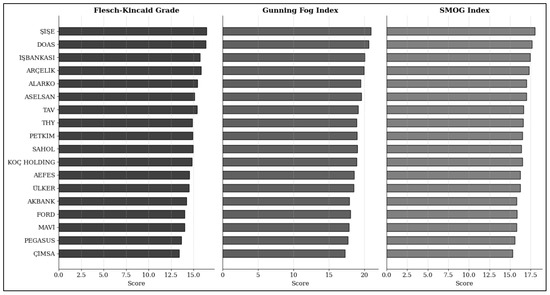
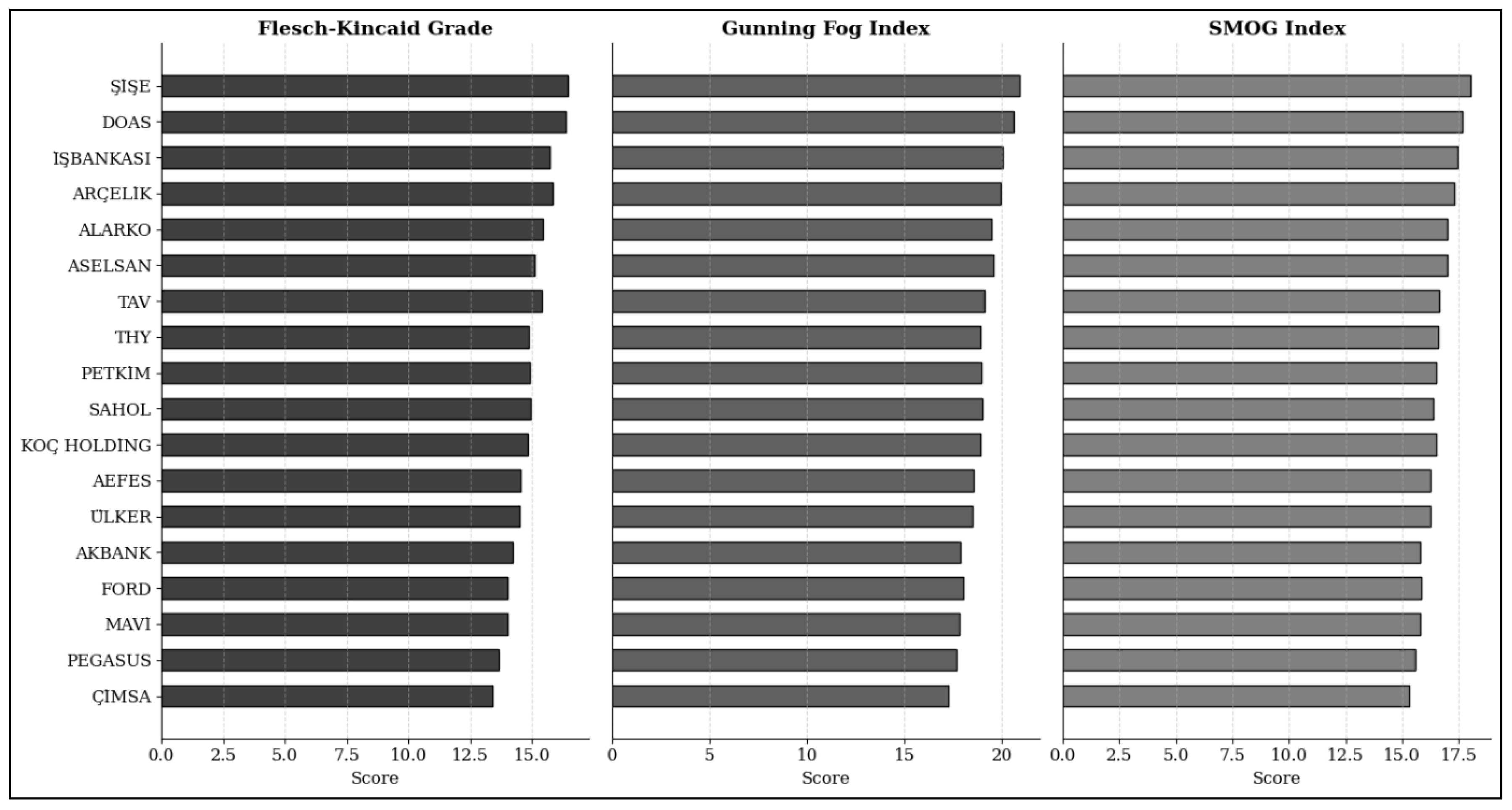
The comparative distribution of readability indices for the 18 firms included in the analysis is presented in Figure 1.
Figure 1.
Comparative Readability Indices of TSRS-Compliant Reports of BIST Sustainability Index Firms.
The results of the Flesch–Kincaid Grade Level, Gunning Fog Index, and SMOG Index indicate that the reports exhibit a high level of cognitive complexity and rely on a language structure that requires advanced reading proficiency. Consistent with the general patterns observed in Figure 1, Table 2 presents firm-level readability scores in detail, illustrating the quantitative distribution of linguistic asymmetry in TSRS-compliant reporting.
Table 2.
Firm-Level Readability Scores.
Analysis of the results of readability statistics shows that the first IFRS S2-compatible reports are converted into highly specialized technical texts at the postgraduate level, requiring high-level expertise.
The noted high linguistic complexity is directly attributed to the nature of the standard rather than intentional textual complexity [21] or the strategies proposed by the Managerial Obfuscation theory, which is reported in the literature as an attempt to hide poor performance or increase information asymmetry [23]. The high average values in Table 2 are not intended to conceal information but are a structural effect of the necessary cognitive burden resulting from the strict technical requirements of the IFRS S2 standards developed in the context of the international arena and the specific risk scenarios described therein [31].
On the other hand, the tendencies of semantic convergence and clustering in the analyzed texts show that firms display a clear pattern of institutional isomorphism by resorting to standardized templates in response to a new and challenging standard [14]. In particular, the general sets of terminology used and the regulatory pressures in sectors that have high environmental risks clearly show the transformative and standardizing effect of the adoption of IFRS on the sustainability practices of corporations [30]. Therefore, the above findings confirm that the first-year implementations of the initial year transform the sustainability reporting from a flexible public relations tool to a financial reporting system where technical accuracy is given priority.
5.2. Readability Across Report Sections
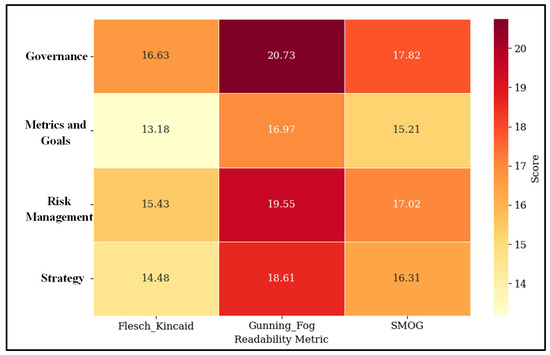
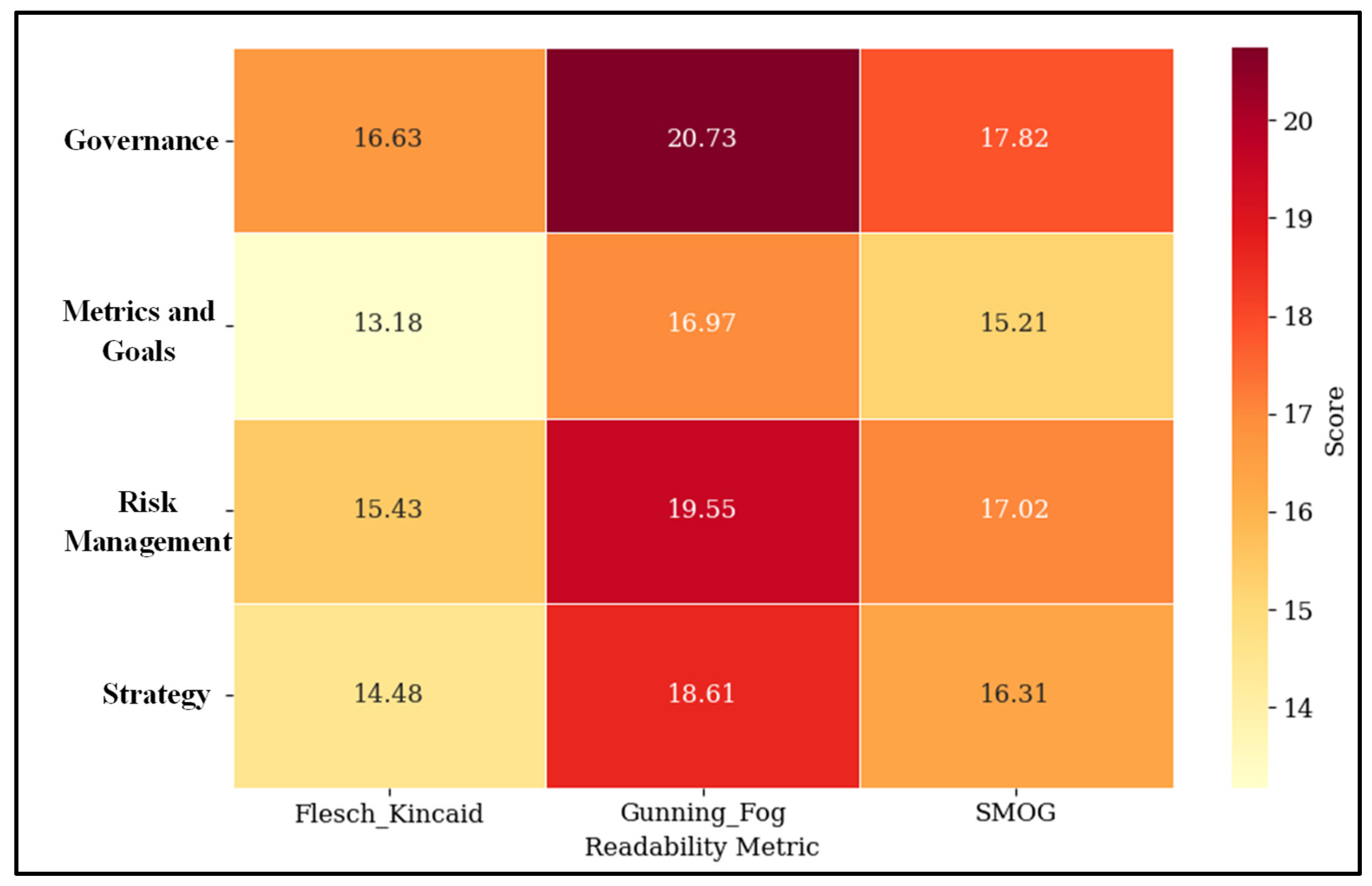
The internal structure of TSRS-compliant sustainability reports is analyzed in detail across the Governance, Strategy, Risk Management, and Metrics and Targets sections. This segmentation allows assessment of how linguistic complexity varies across different parts of the reports. Figure 2 presents a heatmap comparing the average Flesch–Kincaid, Gunning Fog, and SMOG index values for each section. Figure 2 reveals a consistent pattern of differentiation in readability across report sections.
Figure 2.
Average Readability Scores by Report Section (Heatmap).
As shown in Figure 2, the Governance (Gunning Fog: 20.73) and Risk Management (Gunning Fog: 19.55) sections display the highest levels of complexity across all readability indices, while the Metrics and Targets section (Gunning Fog: 16.97) exhibits a comparatively lower level of cognitive load. This systematic variation across sections indicates that reporting language responds both to technical requirements and to institutional isomorphism shaped by standardized disclosure formats.
The elevated scores observed in governance and risk-related disclosures suggest that regulatory compliance and legitimacy concerns shift narrative structures toward a more technical register. This pattern aligns with firms’ preference for reporting practices that conform closely to economic and operational objectives. The emphasis placed by the ISSB on conceptual argumentation in revised standards, however, has resulted in more detailed and complex disclosures in areas such as governance and risk management, contrary to firms’ expectations of greater flexibility.
5.3. Cosine Semantic Similarity Analysis
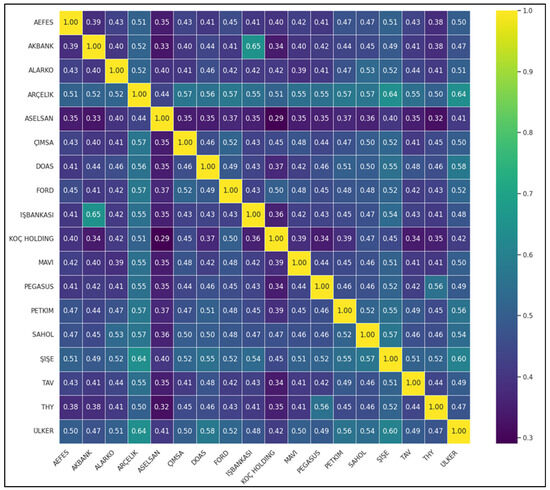
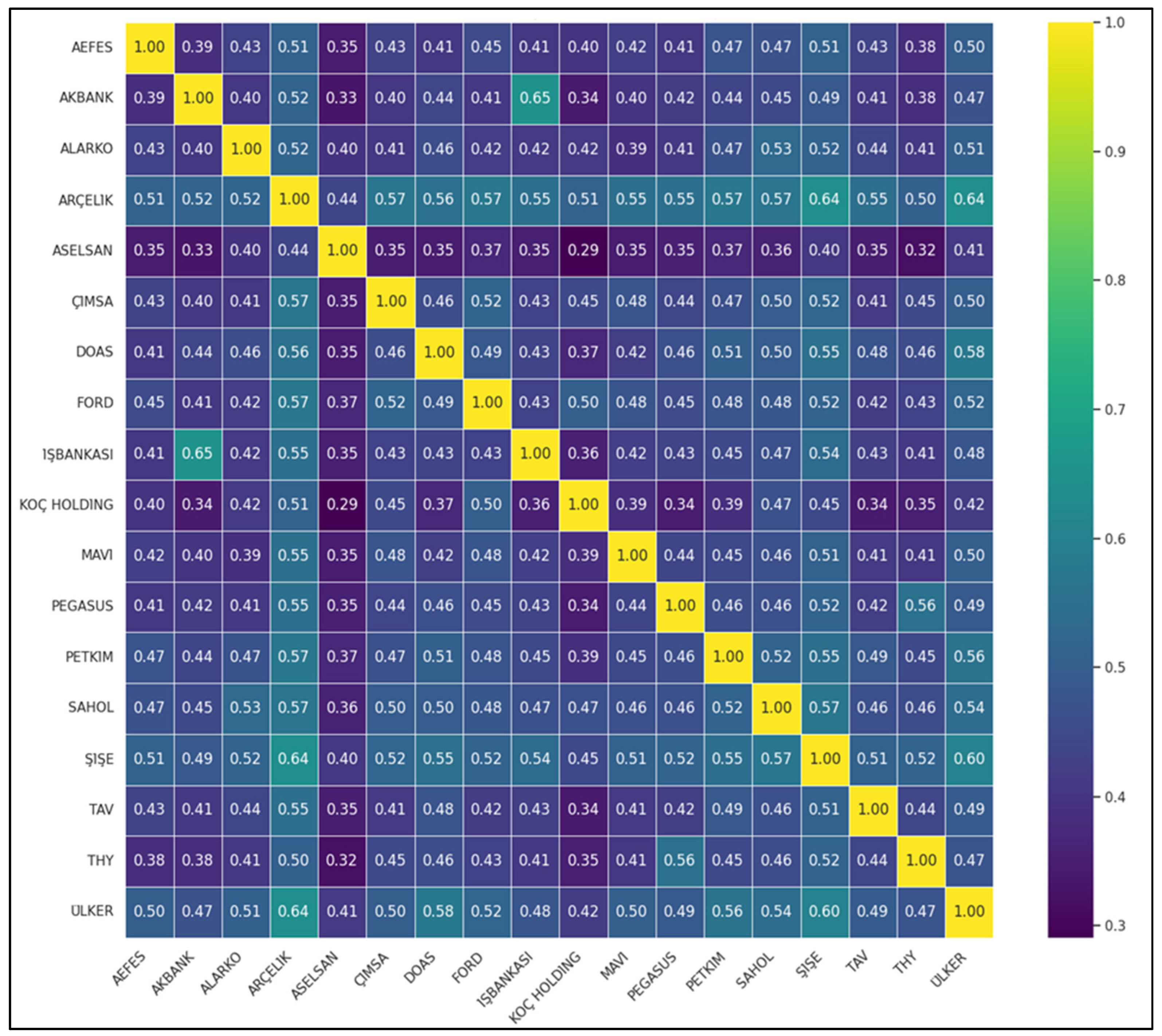
Structural and semantic similarity across sustainability reports is evaluated using cosine similarity applied to the full set of report texts. Similarity scores ranging from 0 to 1 capture the degree of alignment in reporting language and thematic focus between firm pairs, based on their relative positions within the TF–IDF vector space. The analysis supports testing of the institutional isomorphism hypothesis (H2) and enables visualization of linguistic convergence across sectoral and strategic groupings. A heatmap displaying pairwise similarity scores for the 18 firms included in the BIST Sustainability 25 Index is presented in Figure 3.
Figure 3.
Cosine Semantic Similarity Heatmap.
The semantic similarity matrix shown in Figure 3 indicates distinct sectoral and strategic clustering patterns in reporting language. Financial institutions, particularly Akbank and İş Bankası, exhibit a high degree of internal linguistic similarity, as do production-oriented firms such as Arçelik, Şişecam, and Ülker. In contrast, certain firms, including ASELSAN, display a more isolated similarity profile.
The ten highest pairwise similarity scores identified in the analysis are summarized in Table 3, highlighting sectoral convergence and peak similarity levels.
Table 3.
Ten Firm Pairs with the Highest Semantic Similarity.
According to the values reported in Table 3, the highest similarity score is observed between Akbank and İş Bankası (0.650), indicating a high level of standardization in reporting language within the financial sector. Arçelik’s presence in more than half of the top ten most similar firm pairs suggests that its report functions as a central conceptual reference point within the reporting ecosystem. The range of similarity scores between 0.55 and 0.65 in production and holding firms reveals that the TSRS standards promote a common corporate reporting language among firms, which provides evidence for institutional convergence. In general, the high similarity scores achieved indicate coercive isomorphism from legal requirements and mimetic isomorphism from firms’ imitation practices among each other because of the uncertainty in the initial year of implementation.
5.4. Clustering and PCA Dimensional Analysis
The structural clustering and dimensional characteristics of linguistic similarity across reports are examined through the combined use of the K-Means clustering algorithm and Principal Component Analysis (PCA). These methods reveal how text data group within a high-dimensional vector space and along which principal axes separation occurs, both numerically and visually. The analysis is conducted using TF–IDF vectors and reflects patterns of strategic convergence and semantic differentiation in firms’ sustainability reporting narratives. PCA performs dimensionality reduction while preserving the maximum possible proportion of total variance in the data, whereas the K-Means algorithm groups report with similar content profiles within the same cluster.
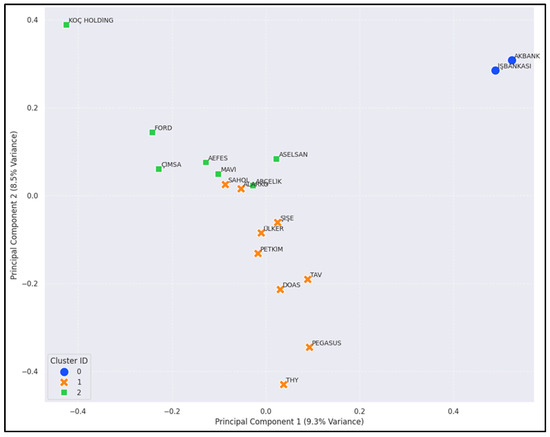
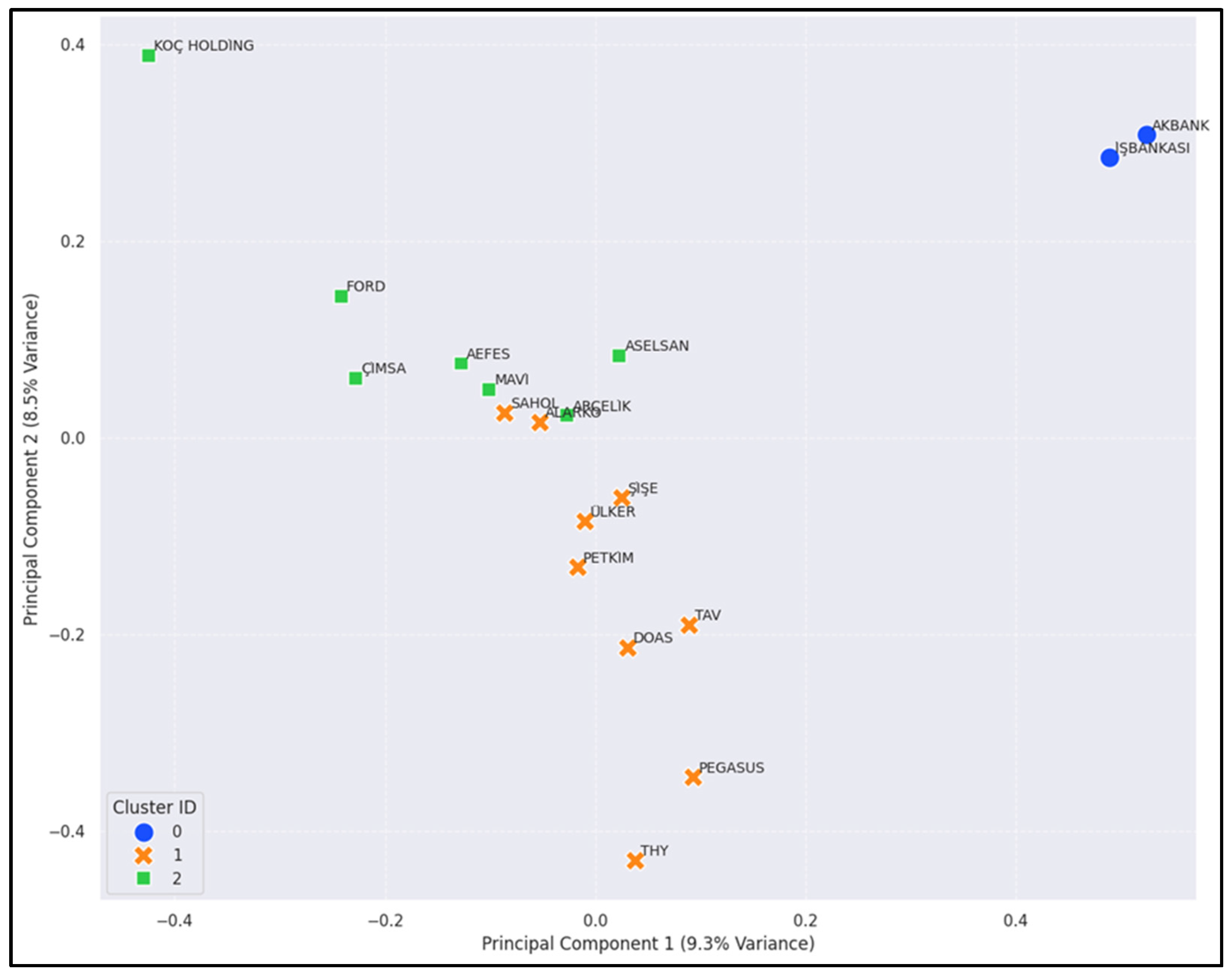
The PCA–K-Means scatter plot presented in Figure 4 displays firms’ positions and assigned clusters along the first two principal component axes.
Figure 4.
Principal Component Analysis (PCA) and K-Means Clustering Distribution.
The PCA projection shown in Figure 4 visualizes the core differentiation dynamics embedded in the linguistic structure of TSRS-compliant sustainability reports. The first two principal components (PC1 and PC2) account for approximately 17.8% of the total variance. Three clusters identified through the K-Means algorithm indicate the presence of distinct strategic and sectoral groupings in sustainability narratives.
- Cluster 0—Finance-Oriented Cluster (Akbank, İş Bankası): Firms within this cluster are clearly separated from the others along the PC1 axis. This separation indicates that sustainability reporting in the financial sector relies on a conceptual framework distinct from that of the real sector, with a strong emphasis on financial risk management, green finance instruments, and regulatory capital requirements. Cluster 0 reflects a shared linguistic model in which sustainability is framed primarily through risk, opportunity, and market intermediation.
- Cluster 1—Manufacturing and Heavy Industry-Oriented Cluster (Arçelik, Şişecam, Ford Otosan, Doğuş Otomotiv, Petkim, Çimsa): This cluster comprises firms operating in energy-intensive sectors such as manufacturing, automotive, chemicals, and glass production. Reporting language concentrates on energy efficiency, Scope 1 and Scope 2 emissions, waste management, and operational performance indicators. The central position of Cluster 1 within the PC plane indicates that firms exposed to similar environmental pressures and regulatory constraints converge toward a standardized reporting language.
- Cluster 2—Mixed/Consumption and Services-Oriented Cluster (Sabancı Holding, Koç Holding, Alarko, Anadolu Efes, Ülker, Turkish Airlines, Pegasus, TAV Airports, ASELSAN, Mavi Giyim): The linguistic profile of this cluster is more heterogeneous, encompassing holding structures, consumer goods, aviation, and retail sectors. Report narratives extend beyond operational themes to include brand reputation, consumer behavior, innovation, and social responsibility. The presence of holding firms within this cluster reflects integrated narratives that span multiple subsidiaries and business lines.
Analysis of the component loadings reveals that PC1 (horizontal axis) is driven by the strongest linguistic divide in reporting style. The gap between the finance-driven Cluster 0 on the right-hand side and the real sector clusters grouped on the left suggests a deep divide between a “financial risk-oriented language” and an “operational/product-oriented language” in sustainability communication. PC2 (vertical axis) captures a balance in the real sector between a “technical and production-oriented language” and a “stakeholder/consumer-oriented language.”
The findings provide support for Institutional Isomorphism (H2). Strong convergence within Cluster 1 confirms that coercive and mimetic isomorphic pressures shape reporting patterns under similar sectoral environments and regulatory constraints. The clear separation of Cluster 0 indicates that distinct regulatory frameworks and business models delineate sectoral boundaries at the linguistic level. The dispersed structure of Cluster 2 suggests that firms pursue less standardized but more stakeholder-sensitive narratives.
The structural convergence observed during the first year of TSRS implementation indicates that firms rely on standardized narratives as a protective mechanism to secure legitimacy. During the development of IFRS S2, regulators prioritized conceptual argumentation over economic simplification, compelling firms toward specific linguistic patterns. While this standardization strengthens governance-related transparency, it also amplifies the need for strategic discursive differentiation in corporate sustainability reporting.
5.5. Similarity Network
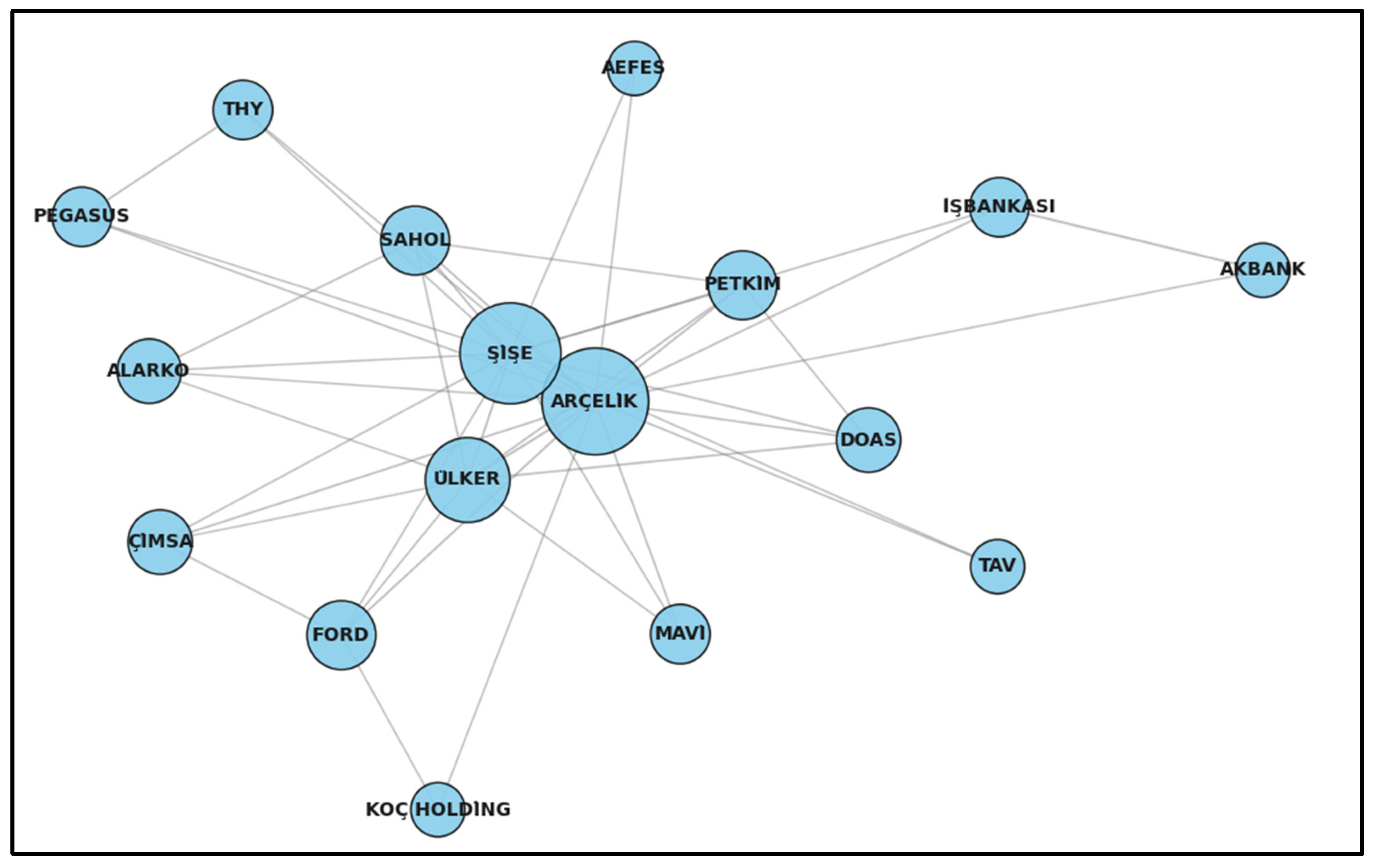
A network analysis is conducted to map the relational structure of sustainability reporting language across firms. The analysis visualizes semantic similarities among corporate reports through a connection network, allowing the topological distribution of linguistic proximity and the identification of central actors. Within the constructed network, each firm is represented as a node, while an edge between two firms is established when the cosine similarity score between their reports exceeds a threshold value of 0.50. This threshold ensures that only firm pairs exhibiting at least a moderate level of semantic overlap are included in the network.
The findings show that 17 out of the 18 firms in the sample are above the threshold and are included in the structure of the network. ASELSAN, with a similarity value of 0.4373, is below the threshold and is located outside the network as a peripheral actor. Figure 5 above shows the relationship structure and the firms around which the sustainability discourse is centered.
Figure 5.
ESG Reporting Similarity Network (Threshold > 0.50).
The similarity network presented in Figure 5 reveals the structural pattern of TSRS-compliant reporting language in Türkiye. The network displays a pronounced core–periphery configuration.
Arçelik, Şişecam, Ülker, and Sabancı Holding occupy central positions within the network, exhibiting the highest levels of connectivity and functioning as reference points. Their centrality indicates that institutional isomorphism (H2) operates strongly, particularly within manufacturing and holding structures. These core actors act as carriers of standardized linguistic norms and shape reporting templates across the broader ecosystem.
A further notable pattern concerns firms that remain isolated or weakly connected. ASELSAN remains fully disconnected from the network due to defense-industry-specific technical terminology and reporting structures, while Pegasus Airlines occupies a peripheral position linked to aviation-specific language. From a signaling theory perspective (H3), these positions suggest that such firms depart from dominant sectoral templates and convey signals of distinctiveness or niche expertise.
Akbank and İş Bankası form a tightly connected but outwardly closed subcluster, reinforcing the existence of a distinct linguistic model within the financial sector.
This topological structure suggests that the sustainability reporting process does not converge towards a single standard but rather represents a multi-layered communication space. The results reveal that the firms in the core of the network function as carriers of sectoral norms, whereas the isolated firms differentiate themselves through distinctive narratives. These results offer empirical support for both H2 (Institutional Isomorphism) and H3 (Signaling Theory).
6. Evaluation of the Findings
The empirical evidence obtained in this study indicates that sustainability reporting has initiated a comprehensive process of organizational learning and standardization in Türkiye as of the first year of TSRS implementation. Quantitative text analysis results show that, despite observable variation in linguistic structure, technical terminology density, and levels of semantic similarity, the prevailing pattern is characterized by high professionalization accompanied by limited accessibility.
The readability scores reveal that reports prepared by conglomerates and heavy industry firms with complex business models are fully comprehensible only to those with a postgraduate academic background. This confirms the expectation that the density of technical terminology and multi-component disclosure requirements in TSRS increase the cognitive load, thereby supporting Hypothesis 1 (H1). However, this finding should not be interpreted as a deliberate concealment strategy under the Managerial Obfuscation Theory; rather, it represents a natural outcome of the structural technical requirements of IFRS S2 and the learning process inherent in first-time adoption. The most significant factor that affects the readability is the strict adherence of the firms to the templates and technical definitions to avoid risks of compliance during this transition period. The emphasis on conceptual rigor by regulators over corporate flexibility is the ultimate factor that drives this technical complexity.
The high scores of semantic similarities, which fall within the range of 0.55–0.65, indicate structural convergence in the reporting language of firms operating in the same sectors. This result is consistent with the Institutional Isomorphism literature, which highlights the firms’ use of pre-existing discursive templates to gain legitimacy in the face of regulatory uncertainty. Hypothesis H2 is thus confirmed, especially in sectors that are under strong regulatory pressure, such as manufacturing, energy, and banking. Network analysis also reveals that firms such as Arçelik, Şişecam, and Sabancı Holding are the core linguistic reference points in the reporting environment.
The unique positional pattern identified for firms like Pegasus, Turkish Airlines, and İş Bankası in PCA and network analysis gives partial support to Hypothesis H3 in the context of Signaling Theory. Clarity and storytelling in reporting language have the potential to create a positive “honesty signal” in investor sentiment by conveying the quality of governance. However, the intensity of this impact reveals sectoral asymmetry. Use of simpler language has a differentiation advantage in financial and service sectors, while the preponderance of technical language under TSRS limits the scope for narrative differentiation in manufacturing sectors. The results show that TSRS-compliant reporting in Türkiye is not only a regulatory requirement but also a technical learning process to mitigate market asymmetry, as argued by Amer et al. [30].
7. Conclusions and Implications
This study contributes to the existing body of knowledge by investigating the linguistic properties of the initial sustainability reports issued within the TSRS framework. The results, based on the 2024 compliance reports of 18 firms listed on the BIST Sustainability 25 Index, show that although firms presented high levels of technicality, the readability of the texts is still remarkably low. The high Gunning Fog Index of 18.94 and Flesch–Kincaid Index of 14.90 indicate that a postgraduate level of knowledge is required to understand the texts in full. In relation to the Managerial Obfuscation Hypothesis (H1), the technical complexity found is the result of the ‘forced technicality’ imposed by the standards, rather than a purposeful attempt to conceal performance. The regulators’ focus on technical coverage has turned these reports into expert documents that impose an increased cognitive burden on the reader.
Comparative analyses across sectors indicate that the language of reporting progressively turns more technical in heavily regulated sectors like manufacturing and energy, whereas the banking and service sectors use relatively more understandable reporting. This distinction is consistent with the views of Bouzarjamehri et al. [33], who argue that the technical intensity of energy-intensive sectors is a result of structural imperatives, namely environmental risks and economic constraints, rather than a preference. The high degree of semantic overlap, as indicated by the cosine similarity measure and network analysis, suggests that the pressure to conform to professional standards is a result of the interplay between coercive and mimetic isomorphism to gain legitimacy in uncertain reporting environments (H2). However, the prevalence of standardized templates and drafts of regulations provided by consultancy agencies also has to be taken into consideration as a factor that contributes to this homogeneity. Therefore, the current state of affairs is more indicative of the early stages of learning in compliance. With regard to this, the high level of technical complexity and semantic similarity in the reports can be understood as a strategic compliance reflex developed by firms in order to ensure corporate legitimacy in the face of new regulations. This means that the results indicate that the current state of TSRS reporting does not yet represent an internalized, proactive sustainability culture, but rather the result of pressures to comply with rules in order to manage risks of legal enforcement, as well as the natural response to navigate the structural uncertainties of the first reporting year. Nevertheless, the distinct reporting patterns of firms such as İş Bankası, Pegasus, and Turkish Airlines in this overall homogeneity function as tools for corporate reputation-building as per Signaling Theory (H3).
The results underscore the basic communicative problem: the greater the density of technical information, the more the understanding of text deteriorates. Therefore, the first implication for policymakers is the need to create guidance documents and best practice guidelines that improve linguistic accessibility without sacrificing technicality. To make the decision-making process easier for ‘primary users’, the key audience for IFRS S2, policymakers should promote a ‘Tiered Reporting’ strategy. This strategy helps to distinguish technical information from simplified reports, and this strategy will help to make the sustainable finance system more inclusive.
The first limitation of this study is that it only covers one year, which makes it hard to conclude whether the linguistic density level is a fixed reporting behavior or a learning process. Thus, future research should focus on longitudinal research over the following years to assess the impact of organizational learning and whether the rule-based and mimetic compliance reflexes shown by firms in their first year of reporting change into strategic internalization within the corporate culture. Furthermore, future research using Large Language Models and tone analysis will enable a more thorough examination of the influence of textual complexity on investor decisions.
Future studies should also develop this framework by conducting cross-country comparisons, comparing the linguistic structure of TSRS reporting with reports filed under different regulations, such as the European CSRD. Furthermore, by analyzing the correlation between readability scores and actual sustainability performance data (such as GHG emissions), it will be possible to assess whether opaque language is used to conceal underlying sustainability risks. Lastly, by analyzing the effect of corporate governance mechanisms, specifically board composition and sustainability committee expertise, on report clarity, it will be possible to identify the internal drivers of text clarity.
Author Contributions
Conceptualization, M.E., O.Ö. and E.O.E.; methodology, M.E., O.Ö. and E.O.E.; formal analysis, M.E., O.Ö. and E.O.E.; data curation, M.E. and O.Ö.; writing—original draft preparation, M.E., O.Ö. and E.O.E.; Writing—review and editing, M.E., O.Ö. and E.O.E. All authors have read and agreed to the published version of the manuscript.
Funding
This research received no external funding.
Institutional Review Board Statement
Not applicable.
Informed Consent Statement
Not applicable.
Data Availability Statement
The data were derived from the following resource available in the public domain: https://www.kgk.gov.tr/surdurulebilirlik-yayimlananraporlar (accessed on 1 November 2025).
Conflicts of Interest
The authors declare no conflicts of interest.
Abbreviations
The following abbreviations are used in this manuscript:
| IFRS | International Financial Reporting Standards |
| IFRS S1 | General Requirements for Disclosure of Sustainability-related Financial Information |
| IFRS S2 | Climate-related Disclosures |
| ISSB | International Sustainability Standards Board |
| TCFD | Task Force on Climate-Related Financial Disclosures |
| SASB | Sustainability Accounting Standards Board |
| TSRS | Turkish Sustainability Reporting Standards |
| ESG | Environmental, Social and Governance |
| NLP | Natural Language Processing |
| BIST | Borsa Istanbul |
| KGK | Public Oversight, Accounting and Auditing Standards Authority |
References
- OECD. Global Corporate Sustainability Report 2025; OECD Publishing: Paris, France, 2025. [Google Scholar] [CrossRef] [Scilit]
- IFRS Foundation. Progress on Corporate Climate-Related Disclosures—2024 Report. November 2024. Available online: https://www.ifrs.org/content/dam/ifrs/supporting-implementation/issb-standards/progress-climate-related-disclosures-2024.pdf (accessed on 10 July 2025).
- Bhullar, P.; Bhatnagar, C.S.; Sahoo, S. Evolving role of integrated reporting in sustainability and governance practices: A bibliometric analysis and future research insights. J. Account. Organ. Change 2026. Epub ahead of printing. [Google Scholar] [CrossRef] [Scilit]
- Erin, O.A.; Ackers, B. Corporate board, assurance and sustainability reporting practices: A focus on selected African countries. J. Account. Organ. Change 2024, 20, 85–118. [Google Scholar] [CrossRef] [Scilit]
- World Business Council for Sustainable Development (WBCSD). Reporting Matters 2024: Changing Gears: How Are Companies Navigating Higher Expectations and Demands in Sustainability Reporting? 2024. Available online: https://www.wbcsd.org/news/reporting-matters-2024-changing-gears-in-sustainability-reporting/ (accessed on 1 December 2025).
- Deloitte. Comparison of Significant Sustainability-Related Reporting Requirements. Sustainability Spotlight. 13 May 2025. Available online: https://dart.deloitte.com/USDART/pdf/06d32bc8-417b-46b2-a060-fa87fb228f19 (accessed on 1 December 2025).
- IFRS Foundation. IFRS Foundation Announces International Sustainability Standards Board, Consolidation with CDSB and VRF, and Publication of Prototype Disclosure Requirements. 2021. Available online: https://www.ifrs.org/news-and-events/news/2021/11/ifrs-foundation-announces-issb-consolidation-with-cdsb-vrf-publication-of-prototypes/ (accessed on 10 July 2025).
- Accountancy Europe. ESRS Perspectives: Interoperability. 2024. Available online: https://accountancyeurope.eu/wp-content/uploads/2024/06/241108-04-International-interoperability-1.pdf?v1 (accessed on 10 July 2025).
- Cinamon, A.; Lowe, R.; Singh, M. TCFD Is Dead, Long Live ISSB Are You Ready? Proskauer, 2025. Available online: https://prfirmpwwwcdn0001.azureedge.net/azstgacctpwwwct0001/uploads/88bb9a704d38b639c897185c8b813213.pdf (accessed on 13 July 2025).
- IFRS Foundation. ISSB and TCFD. 2024. Available online: https://www.ifrs.org/sustainability/tcfd/ (accessed on 19 June 2025).
- Esposito, E.; Niemotko, T.J. Sustainability reporting and the greenwashing challenge can the new ınternational sustainability disclosure and assurance standards eliminate greenwashing? CPA J. 2024, 94, 30. [Google Scholar]
- Mohammadrezaei, M.; Marques, J.C.; Huq, A. Use of Text Mining and Natural Language Processing Techniques in Analyzing Sustainability Reports: A Systematic Literature Review and Assessment. 2024. Available online: https://ssrn.com/abstract=5071032 (accessed on 9 December 2025).
- Dewi, M.; Kamiliya, A. IFRS sustainability standards implementation readiness: Does board of directors matters? J. Audit. Financ. Forensic Account. 2025, 13, 91–109. [Google Scholar] [CrossRef] [Scilit]
- Şener, İ.; Karapolatgil, A.A. Beyond compliance: Multi-dimensional text mining analysis of corporate sustainability reporting. Amfiteatru Econ. 2025, 27, 1032–1051. [Google Scholar] [CrossRef] [Scilit]
- Akbulut, A.; Özçevik, Ö. A review of the environmental sustainability history of the World and Turkey. Plan. Derg. 2021, 31, 141–150. [Google Scholar] [CrossRef] [Scilit]
- Ataman, B.; Şimşek, K. Sürdürülebilirlik raporlama standartları ile finansal raporlama standartları arasındaki ilişki üzerine bir değerlendirme. Finans Ekon. Ve Sos. Araştırmalar Derg. 2026, 10, 529–545. [Google Scholar] [CrossRef] [Scilit]
- Anaraki, S.A.M.; Croce, D.; Basili, R. Large language models for sustainability reporting: A systematic review and research agenda. Sustain. Futures 2025, 10, 101494. [Google Scholar] [CrossRef] [Scilit]
- Huang, J.; Hu, P.; Wang, D.D.; Wang, Y. The double signal of ESG reports: Readability, growth, and institutional influence on firm value. Sustainability 2025, 17, 2514. [Google Scholar] [CrossRef] [Scilit]
- Peng, J.; Gao, J.; Tong, X.; Guo, J.; Yang, H.; Qi, J.; Li, R.; Li, N.; Xu, M. Advanced unstructured data processing for ESG reports: A methodology for structured transformation and enhanced analysis. arXiv 2024, arXiv:2401.02992. [Google Scholar] [CrossRef] [Scilit]
- Akdoğan, Y.E.; Aydın, B. NLP-based quantification of ESG in sustainability reports and firm-specific risk: Evidence from Borsa İstanbul. Bus. Econ. Res. J. 2025, 16, 417–433. [Google Scholar] [CrossRef] [Scilit]
- Huang, J.; Wang, D.D.; Wang, Y. Textual attributes of corporate sustainability reports and ESG ratings. Sustainability 2024, 16, 9270. [Google Scholar] [CrossRef] [Scilit]
- Luo, Y.; Cui, X.; Liu, Q.; Zhou, Q.; Zhang, Y. Identifying exaggeration in ESG reports using machine learning techniques. Data Inf. Manag. 2025, 9, 100084. [Google Scholar] [CrossRef] [Scilit]
- Lagasio, V. ESG-washing detection in corporate sustainability reports. Int. Rev. Financ. Anal. 2024, 96, 103742. [Google Scholar] [CrossRef] [Scilit]
- Gutierrez-Bustamante, M.; Espinosa-Leal, L. Natural language processing methods for scoring sustainability reports—A study of Nordic listed companies. Sustainability 2022, 14, 9165. [Google Scholar] [CrossRef] [Scilit]
- Huang, Q.; Zhang, Y.; Li, X.; Mu, X.; Wang, M. Unmasking isomorphic behaviors in corporate sustainability: Evidence from ESG disclosure and practices in emerging markets. Corp. Soc. Responsib. Environ. Manag. 2025, 32, 4690–4725. [Google Scholar] [CrossRef] [Scilit]
- Wukich, J.J.; Neuman, E.L.; Fogarty, T.J. Show me? Inspire me? Make me? An institutional theory exploration of social and environmental reporting practices. J. Account. Organ. Change 2024, 20, 673–701. [Google Scholar] [CrossRef] [Scilit]
- Bifulco, G.M.; Caserio, C.; di Donato, F.; Trucco, S. Does sustainable performance matter for nonfinancial disclosure readability? A fog index analysis on Italian-Listed companies. Bus. Strategy Environ. 2025, 34, 5601–5623. [Google Scholar] [CrossRef] [Scilit]
- Cho, H.C.; Michelon, G.; Patten, D.M. Impression management in sustainability reports: An empirical investigation of the use of graphs. Account. Public Interest 2012, 12, 16–37. [Google Scholar] [CrossRef] [Scilit]
- Talbot, D.; Boiral, O. GHG reporting and impression management: An assessment of sustainability reports from the energy sector. J. Bus. Ethics 2018, 147, 367–383. [Google Scholar] [CrossRef] [Scilit]
- Amer, A.M.M.; Azimli, A.; Adedokun, M.W. Earnings management and IFRS adoption influence on corporate sustainability performance: The moderating roles of institutional ownership and board independence. Sustainability 2025, 17, 7981. [Google Scholar] [CrossRef] [Scilit]
- Heyden, E. Shaping international sustainability standards: An analysis of lobbying effects on the IFRS S2. Manag. Decis. 2025. Epub ahead of printing. [Google Scholar] [CrossRef] [Scilit]
- Public Oversight, Accounting and Auditing Standards Authority (KGK), Türkiye Sürdürülebilirlik Raporlama Standardı 1′e “T” Paragrafı Eklenmesine ilişkin Kurul Kararı [Board Decision on Adding Paragraph “T” to the Turkish Sustainability Reporting Standard 1]; Resmi Gazete 2025, 32894; Public Oversight, Accounting and Auditing Standards Authority (KGK): Ankara, Turkey, 2025. Available online: https://www.kgk.gov.tr/Portalv2Uploads/files/Duyurular/v2/Kurul%20Kararları/61T_Kurul_Karari.pdf (accessed on 15 May 2025).
- Bouzarjamehri, S.S.; Mehrani, S.; Homayoun, S. Climate-related sustainability reporting in Iran’s steel industry: An economic and environmental approach. Account. Audit. Rev. 2026, 33, 1–23. [Google Scholar] [CrossRef]

Disclaimer/Publisher’s Note: The statements, opinions and data contained in all publications are solely those of the individual author(s) and contributor(s) and not of MDPI and/or the editor(s). MDPI and/or the editor(s) disclaim responsibility for any injury to people or property resulting from any ideas, methods, instructions or products referred to in the content. |
© 2026 by the authors. Licensee MDPI, Basel, Switzerland. This article is an open access article distributed under the terms and conditions of the Creative Commons Attribution (CC BY) license.