


Abstract
University campus green spaces function as critical microcosms of urban building environments, directly advancing Sustainable Development Goals 3 (Good Health and Well-being) and 11 (Sustainable Cities and Communities) through evidence-based landscape design. Taking a large university in China as the research object, this study integrates virtual reality (VR) simulations with synchronized psychophysiological measurements and perceptual scales to quantify how three planting modes—clustered, scattered, and regular—influence restorative experiences across teaching, living, and administrative areas. Rigorous data processing ensured robustness. The results revealed functional-area-specific restoration pathways: clustered planting enhanced relaxation in living zones, scattered planting elevated vitality in teaching areas, and regular planting reinforced security perception in administrative spaces. A path model was used to elucidate how four-dimensional (4D) landscape indicators (openness, pleasantness, diversity, focus) mediate psychological and physiological responses. Theoretically, this 4D framework translates abstract restorative experiences into operable design dimensions; methodologically, VR-based multi-source measurement offers a replicable technical pathway for scheme verification; practically, it serves as a quantitative tool for planting optimization. Critically, these campus-derived insights offer transferable design principles for enhancing well-being across urban building environments, delivering a replicable VR-assisted framework that directly contributes to sustainable cities through human-centered, evidence-based landscape solutions.
1. Introduction
University students are increasingly exposed to sustained psychological load and stress under the cumulative effects of high-intensity academic demands, social adaptation challenges, and restructured daily rhythms. In many countries, the creation of campuses is one of various options. As high-frequency interactive settings in students’ daily lives, the green space systems and plant landscapes of university campuses not only fulfill ecological regulation and spatial beautification functions but also represent actionable health-promoting environmental resources that can influence stress recovery and psychological well-being through place experience, emotional regulation, and cognitive support [1]. Consequently, landscape architecture research oriented toward campus renewal and quality enhancement necessitates the establishment of an evidence-based scientific framework along the space–perception–health pathway, which can be further translated into implementable planting optimization strategies. Restorative environment theory provides a classical explanatory framework for how external environments facilitate psychological restoration. Attention Restoration Theory (ART) posits that the soft fascination inherent in natural environments reduces directed attention fatigue and promotes attentional resource recovery through experiential dimensions, such as being away, extent, and compatibility [1]. Stress Reduction Theory (SRT) emphasizes that natural landscapes rapidly attenuate physiological arousal and negative affect, manifesting as mitigated stress responses and stabilized emotional states [2,3]. Within the broader context of deepening research on nature exposure and health effects, restorative theories have evolved from early environment–psychology explanatory pathways toward integrated public health-oriented frameworks, highlighting the multi-channel mechanisms through which nature experiences operate via emotion, stress, and health behaviors [4]. Frontier research on landscape perception indicates that exposure measurement is shifting from conventional area- and distance-based indicators toward visualized, contextualized, and subjective perceptual dimensions more closely aligned with everyday experience. For instance, evidence derived from street view imagery and social media platforms reveals significant associations between eye-level visible greenness and expressions of negative emotions, underscoring the salience of perceivable environmental quality—“what you see is what you get”—in emotional regulation [5]. Furthermore, perceived greenness and quality often mediate the relationship between objective greenness and mental health, and may even exhibit stronger direct associations with mental disorders, such as anxiety and depression, compared to objective indicators [6]. At the campus scale, research on campus environments and on student mental health similarly demonstrates that campus environmental perception influences health outcomes through mediating pathways, including campus life experiences and psychological processes [7]. Collectively, this evidence suggests that campus landscape optimization must transcend mere greenness augmentation to focus on spatial interface quality and plant landscape structural characteristics that can be stably perceived and repeatedly utilized by students.
University campuses constitute high-frequency activity settings for young adults over extended temporal scales, with outdoor blue–green spaces supporting multiple daily functions, including circulation, stationary activities, social interaction, and quiet respite, thereby exhibiting prototypical potential for mental health intervention [8]; it should be noted that higher education campuses exhibit diverse spatial morphologies. For this study, university campus outdoor spaces were selected as the research context for controlled experiments and design translation within a representative unit of young adults’ daily environments, with findings potentially providing methodological references for other educational spaces and public open spaces. The extant literature generally supports positive associations between campus blue–green spaces and mental health or quality of life, yet two limitations pertinent to landscape practice persist. First, functional zoning granularity is insufficient: numerous studies treat campuses as holistic units, obscuring differential restorative needs and responses across teaching areas, living areas, and administrative or ceremonial spaces. Even when studies have confirmed associations between campus greenness or perceived greenness and student quality of life, they have failed to conduct controlled verification at the functional area scale [9]. Second, design parameters and operational variables are inadequately identified: campus research frequently remains at macro-level comparisons such as woodland versus lawn, lacking systematic identification of the mechanistic chain linking planting organization patterns, differentiated spatial visual organizations, and psychological or physiological restoration; consequently, refined configuration guidelines applicable to renewal and retrofitting remain relatively underdeveloped [10,11]. Within the Chinese university context, campus population density, management regimes, and usage rhythms exhibit distinct characteristics, and recent orientations, such as green campus and healthy campus, have been increasingly emphasized, generating clearer demands for verifiable and implementable landscape optimization strategies [12,13].
Early restorative research predominantly relied on questionnaires and subjective evaluations, such as the Perceived Restorativeness Scale (PRS) and Restoration Outcomes Scale (ROS), which are susceptible to expectancy effects, recall bias, and non-replicable contexts. In recent years, physiological signals, such as electrodermal activity (EDA), heart rate variability (HRV), and electroencephalogram (EEG), have been employed to characterize changes in autonomic nervous activity and attentional states, providing process-level evidence more proximal to restorative effects. However, their interpretation necessitates mutual corroboration with subjective experience to avoid the pitfall of seeing indicators without experiencing phenomena [14,15]. Immersive VR offers an experimental platform that simultaneously accommodates variable manipulation and scene immersion. Compared to static images or 360° photographs, VR more readily enables controlled designs with consistent boundary conditions and single-variable manipulation while enhancing participants’ sense of presence and contextual engagement. Concurrently, debates regarding VR’s capacity to substitute for real environments have stimulated the accumulation of ecological validity tests, and extant research suggests that VR can achieve partial equivalence or comparability on certain perceptual and restorative indicators, yet the equivalence of psychological and physiological restorative indicators remains contingent upon device characteristics, audiovisual fidelity, and task parameters, necessitating rigorous testing and reporting within specific research contexts [16,17,18]. Therefore, integrating VR scene experiments with psychological–physiological multi-source measurements facilitates a more interpretable equilibrium between controlled evidence and external validity.
To enhance the restorative potential of campus outdoor blue–green spaces, this study adopts ART and SRT as explanatory frameworks and translates restorative assessment from abstract mechanisms into designable and measurable spatial–planting variables. On the one hand, different campus functional areas exhibit structural differences in built density, blue–green patch configurations, pedestrian activity loads, and multi-sensory environments. Field-based studies employing synchronized psychological–physiological measurements have demonstrated significant differentiation in stress recovery and attention recovery effects between building-dominated spaces (e.g., teaching and living areas) and composite blue–green spaces, providing real-world evidence for zonal comparisons [19]. On the other hand, ART emphasizes pathways such as being away, soft fascination, extent, and compatibility, while SRT points to physiological arousal reduction driven by affective pleasure and low-threat appraisal. Recent scholarship and revisions to classical theories also indicate the necessity of employing operational landscape perception parameters to articulate the perception–restoration causal chain [20,21,22]. Accordingly, this study proposes the Openness–Pleasantness–Diversity–Focus (4D) indicator framework. Openness is operationalized through spatial enclosure, visual permeability, and landscape penetrability, directly relating to fundamental perceptions such as visual scale and sense of safety; the mediating relationship excessive vegetation density → safety/privacy perception → preference/willingness to stay provides empirical support for openness-oriented design directions [23,24,25]. Pleasantness emphasizes the comfort and aesthetic pleasure jointly constituted by visual landscape quality together with soundscape and thermal environment; multi-sensory empirical evidence demonstrates that landscape–soundscape quality synergistically promotes stress recovery and subjective restoration [6,8,9]. Diversity centers on plant community species richness, vertical structure, and visual complexity, corresponding to ART’s soft fascination, while enhancing the readability of seasonal aspects and landscape layering in campus environments; the moderating effects of biodiversity and multi-sensory cues on restorative assessments in campus contexts have been explored [26,27,28]. Focus enhances spatial recognizability and attentional guidance through the organization of visual foci, landscape nodes, and salient elements. Eye-tracking studies indicate stable differences in fixation allocation across landscape elements that influence overall evaluations, and immersive VR combined with eye-tracking provides quantifiable handles for visual–perceptual dimensions such as focus [29]. This framework aims to instantiate restorative theoretical logic into operational expressions of functional area–planting pattern–landscape indicators, forming a closed loop from restorative assessment to design decision making. The framework thus can be used to more directly address how different planting organization patterns affect restorative experiences across distinct campus functional areas and serve the evidence-based and transferable requirements of campus landscape renewal within Chinese universities [30,31]. The restorative enhancement of campus outdoor blue–green spaces, addressed in this study, directly aligns with multiple Sustainable Development Goals (SDGs). First, as a daily-life setting for young adults, optimizing restorative environments contributes to SDG 3 (Good Health and Well-being). Second, campus environmental quality is intimately linked to learning experiences and educational equity, responding to SDG 4 (Quality Education). Third, as an integral component of urban living–learning systems, campus blue–green spaces can provide micro-scale evidence for livability and public space quality improvement under SDG 11 (Sustainable Cities and Communities). Furthermore, planting optimization emphasizes biodiversity and adaptive configuration, conceptually resonating with goals such as SDG 15 (Life on Land) [32,33,34].
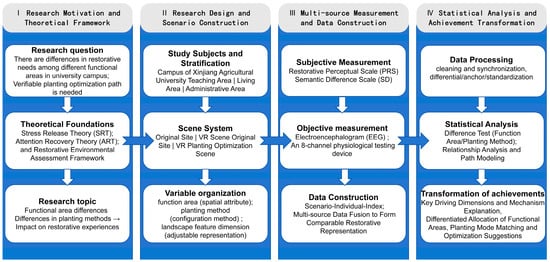
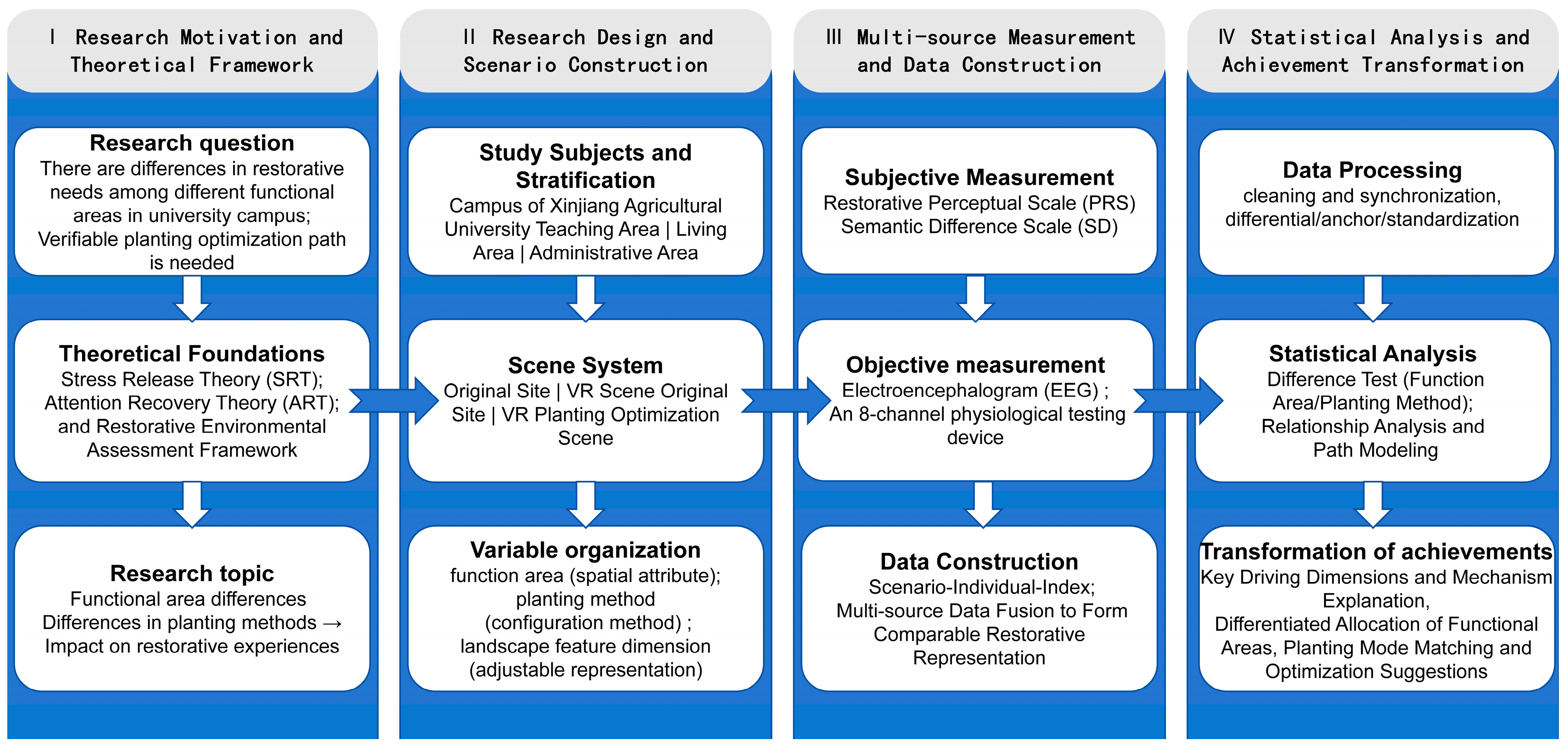
Based on the identified research gaps, this study constructs a refined evaluation framework that integrates functional areas, planting modes, and plant landscape indicators. Taking teaching, living, and administrative areas as research objects, the study examines how spatial attributes shape restorative needs and responses. Three typical planting modes—dispersed, clustered, and regular—are analyzed as key variables to investigate their influence on visual organization and psychological restoration. With openness, pleasantness, diversity, and focus as core indicators, an associative pathway between plant landscape characteristics and psycho-physiological responses is established. Building on restorative environment theory, this framework emphasizes the operational representation of botanical and spatial perception, aiming to directly address how different greening configurations affect restorative experiences (Figure 1). This study’s contributions are threefold. Theoretically, it advances ART and SRT frameworks by demonstrating that campus restorative potential depends not merely on greenness but on operational planting organization patterns and their spatial–visual mechanisms, culminating in a design-oriented 4D indicator framework. Methodologically, it develops an immersive VR-based controlled experiment for campus planting scenarios, integrating subjective scales with physiological signals to achieve psycho-physiological corroboration that enhances variable identification and interpretability. Practically, it delivers area-differentiated planting optimization strategies and indicator-based guidelines tailored to the Chinese university context, providing verifiable references for restorative enhancement and health-oriented campus renewal [6,10,14].
Figure 1.
Overview of the research technical roadmap.
2. Materials and Methods
2.1. Study Area and Functional Stratification
The teaching, living, and administrative areas of Xinjiang Agricultural University were selected as the research objects for two reasons for this: first, these areas can represent different functional attributes of campus spaces in universities; second, they are convenient for virtual modeling and experimental implementation. Geographical location, campus spatial layout, and current vegetation status were comprehensively considered.
The teaching area is oriented towards cognitive restoration. It includes green spaces between teaching buildings, open lawns, and a small number of tree arrays. Students frequently make short stops here during breaks, requiring a quiet and focused atmosphere. The restorative needs are mainly concentrated on attention recovery and mental concentration. The living area is oriented towards emotional healing. It includes green spaces around dormitories, resting spaces, and shaded walkways. As the place where students stay the longest and have the highest emotional dependence, its environmental atmosphere emphasizes comfort, pleasure, and social interaction, which play a prominent role in relieving emotional tension and promoting physical and mental relaxation. The administrative area is oriented towards order and safety and mainly comprises ceremonial spaces such as the school gate and the square in front of the administrative building, which are mostly composed of symmetrical landscapes, regular tree arrays, and open lawns. Emphasizing a sense of solemnity and sequence, it provides psychological security and a sense of order and is suitable for psychological reset and emotional stability.
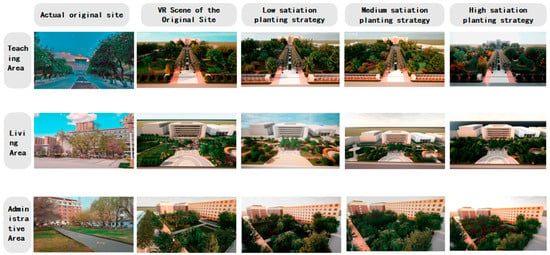
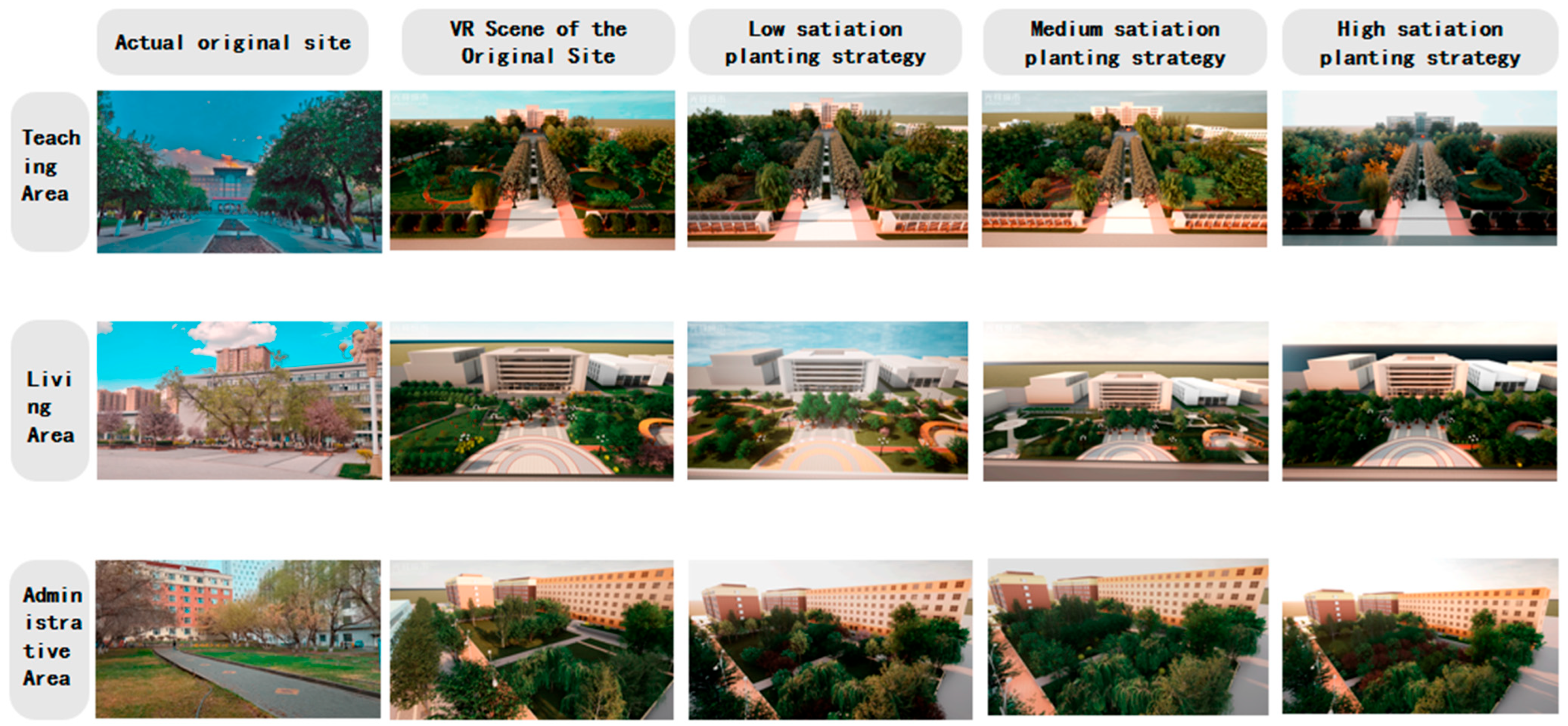
Within each functional area, three types of experimental scenarios are set (Figure 2). In the field scenario, in which subjects conducted short-term stays and perception measurements in the real sites, the aim was to obtain physiological and psychological data that are closest to the natural environment. The VR original site scenario, in which 3D modeling technology (SketchUp + Mars platform) was utilized to recreate the original site environment, enabled subjects to experience the original landscape in VR for comparing the restorative differences between virtual and real. In the VR-optimized planting scenario, three typical planting patterns (dispersed, clustered, and regular) were set on the basis of the original site. In combination with four indicators, namely openness, pleasantness, diversity, and focus, control and simulation were carried out to form nine typical combined scenarios.
Figure 2.
Demonstration of the experimental scenario.
This study employed a VR exposure experiment conducted within an outdoor campus setting. In total, 45 volunteer students (n = 45, including 20 males and 25 females) currently enrolled at the university participated in the experiment. Participants were mostly young adults, with a mean age of 21.0 years (SD = 2.1). To minimize potential confounding effects of inter-individual differences on restorative evaluations, group assignment was strategically balanced to ensure comparability across sex and age structures. Statistical analyses further accounted for between-group differences by reporting effect sizes, along with their associated uncertainty ranges.
The first group experienced three scenarios in the teaching area; the second group experienced three scenarios in the living area; and the third group experienced three scenarios in the administrative area. Each subject was required to fill out the PRS and the Semantic Differential Questionnaire before and after the experiment, and wear EEG and polygraph physiological monitoring equipment during the experiment. The data from the three groups of subjects were pooled and analyzed comparatively to test the research hypotheses. This study qualifies for ethical review exemption based on China’s Measures for Ethical Review of Life Sciences and Medical Research Involving Human Participants (2023); no participants experienced any harm during the experiment. All participants provided written informed consent prior to their involvement. Due to the relatively modest sample size, statistical power may constrain the sensitivity of significance testing. Accordingly, when reporting between-group differences, this study emphasizes effect sizes and their confidence intervals, while interpreting p-values with appropriate caution as supplementary evidence.
2.2. Hypotheses
The hypotheses of this study were developed based on two interrelated lines of theoretical and empirical evidence. First, restorative environment research consistently suggests that natural settings facilitate attention restoration and stress reduction, with subjective restorativeness commonly assessed using instruments such as the PRS—an approach that aligns with the foundational premises of ART and SRT [35]. Second, while immersive VR offers robust experimental control in environmental psychology and restorative research, its capacity to fully replicate real-world experiences remains limited. Therefore, ecological validity and applicability boundaries must be examined through targeted in situ versus virtual comparisons [36,37]. Additionally, research on campus landscapes indicates that restorative outcomes vary considerably across viewpoints and along commuting or study routes, shaped by factors such as proximity to stressors, route exposure, and multi-location contact. The above findings suggest that campus restoration is not merely a function of overall greenness but is more critically influenced by fine-grained spatial organization and landscape composition. Studies on planting organization further demonstrate that different functional areas and vegetation configurations can elicit distinct restorative responses, thereby providing empirical grounding for operationalizing planting pattern as a manipulable variable in the present study [38,39].
The following hypotheses are proposed to verify the effects of different functional areas, planting methods, and plant landscape indicators on the restorativeness of the university campus environment:
Hypothesis 1.
There are significant differences in restorative perception, emotional regulation, and physiological relaxation effects among different functional areas (teaching, living, and administrative areas). Specifically, the teaching area is more conducive to attention restoration, the living area is more suitable for emotional relief, and the administrative area emphasizes a sense of order and psychological security.
Hypothesis 2.
Different planting methods (scattered, clustered, and regular) show significant differences in physiological and psychological responses. Scattered planting may enhance exploration and intimacy and is more likely to trigger positive psychological restoration; regular planting may more easily bring a sense of order and stability, and is more effective in physiological relaxation indicators.
Hypothesis 3.
Four indicators, openness, pleasantness, diversity, and focus, are significantly and positively correlated with the restorative experience. Higher openness and focus may be more conducive to improving attention concentration, while diversity and pleasantness may play key roles in emotional pleasure and physiological relaxation.
Hypothesis 4.
Psychological perception data and physiological measurement data show consistency in the restorative effect, but there are also certain differences; for example, questionnaire perception may be more sensitive to pleasantness, while electroencephalogram indicators may be more sensitive to changes in focus and openness.
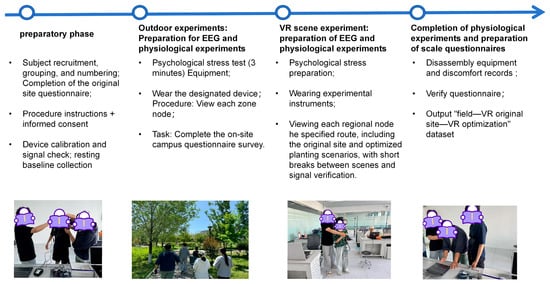
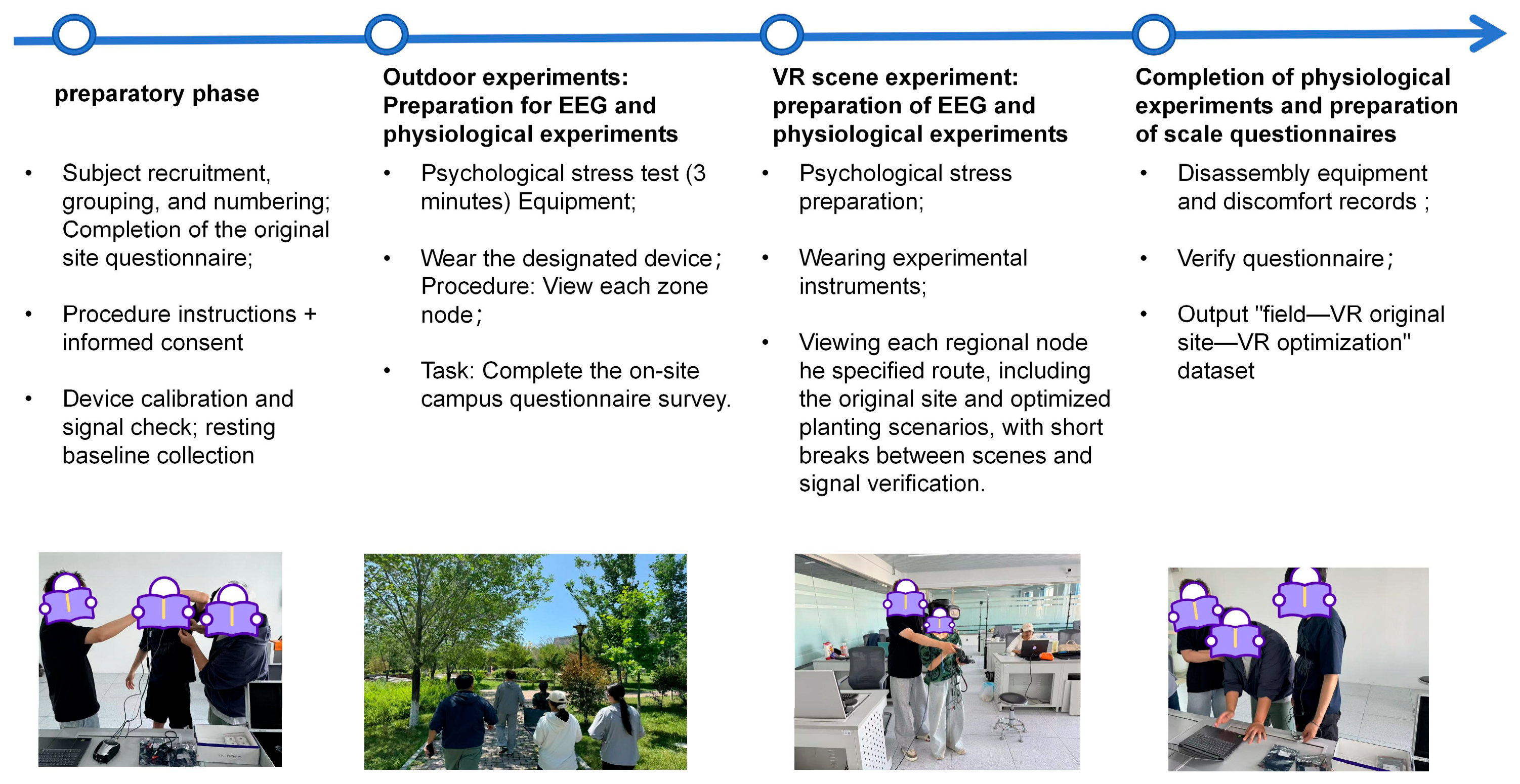
Finally, it is hypothesized that there are interactions among functional areas, planting methods, and four-dimensional (4D) indicators. For example, in teaching areas, decentralized planting, combined with relatively high focus, may be more effective in stimulating attention restoration; in living areas, the combination of medium diversity and high pleasantness may be more effective in enhancing positive emotional valence. The hypotheses form the theoretical framework and empirical test objectives of this study, providing logical support for experimental design and data collection (Figure 3).
Figure 3.
Overview of the experimental protocol.
2.3. Multi-Source Data Collection and Measurement Methods
2.3.1. Psychological Data Collection
Researchers provided three questionnaires, namely the questionnaire for on-site real-scene observation, the questionnaire for on-site VR observation, and the questionnaire for VR observation of three planting methods. Two psychological scale methods were used to obtain restorative perception data. One was the PRS, which includes three dimensions: being away, fascination, and extent. Each subject was required to fill out this scale before and after experiencing the real and virtual scenes, and they needed to evaluate each dimension according to a seven-level rating system. The changes in scores were used to reflect the subjects’ restorative experiences in different scenarios. The other scale was the Semantic Differential Questionnaire, for which openness, pleasantness, diversity, and focus were taken as the core indicators. Each subject needed to select a rating from strongly disagree to strongly agree, in order to reveal the subjects’ intuitive evaluations of the characteristics of plant landscapes. Psychological data were combined with physiological data to more comprehensively reflect the restorative effects of each scene; among them, the VR scenes were compared using a Vive headset connected to Steam software (version 2.0).
2.3.2. EEG Data Collection
Portable 32-channel EEG equipment from Beijing Hengzhi Technology Co., Ltd. (Beijing, China). was used to collect EEG signals, which were concentrated in the prefrontal and parietal regions. The α wave represents the degree of relaxation, while the β wave represents the level of attention. The α/β ratio was calculated. If the ratio was greater than 1.2, the subject was in a relatively relaxed state. Additionally, the valence and arousal indices were calculated. Valence was obtained from the difference in the power spectral density of the α and β waves between F3 and F4, and arousal was calculated from the ratio of the α to β waves in the frontal channels. These indices can quantify the changes in the subjects’ emotions and concentration levels in different scenarios.
2.3.3. Physiological Data Collection
The portable Biopac SmartCenter eight-channel biological sensor from Beijing Hengzhi Technology Co., Ltd. (Beijing, China). was used to collect EDA, HRV, respiration rate (RSP), and blood volume pulse (BVP). EDA reflects the activity level of the sympathetic nerve, and the electrodermal change rate is calculated using the ΔΦGSR formula. A lower value indicates more significant physiological stress recovery. HRV reflects the balance state of the autonomic nervous system, and RSP and BVP data are used to assist in interpreting the overall physiological response. These indicators help in understanding the effects of different vegetation scenarios on physical recovery.
2.3.4. Data Collection Process
Before the experiment, all subjects received unified training, including in the operation of VR equipment, the norms for filling out questionnaires, and the wearing methods of physiological sensors. Subjects were required to sit quietly for five minutes before entering the experiment to obtain baseline data. After the experiment began, subjects experienced the real-world field scene, the original VR site, and the optimized VR planting scene, in sequence. In each scene, continuous EEG and physiological signals were collected, and questionnaire data were collected immediately after each scene ended. The experimental procedures for each subject were strictly standardized to ensure the comparability of the data (Table 1).
Table 1.
Experimental scenarios and data collection schemes.
2.4. Experimental Design and Variable Control
Forty-five subjects were divided into three groups of 15 people each, corresponding to the teaching area, living area, and administrative area, respectively. Each group of subjects was required to experience three types of scenarios: on-site scenarios, original VR sites, and optimized VR planting scenarios. The optimized VR planting scenarios included three planting methods: decentralized, clustered, and regular. Each method was then combined with the indicators of openness, pleasantness, diversity, and focus to form nine typical combined scenarios. Each subject was required to complete psychological scales and physiological measurements while experiencing each scenario. Subjects were designated to enter the scenarios in chronological order to avoid the interference of order effects. The experience time for each scenario was approximately three minutes, and the entire experimental period was controlled over a one-hour duration.
Openness captures the interplay between visual access and spatial enclosure, modulated by canopy spread, sub-canopy permeability, interface continuity, and view corridor organization. Recent evidence indicates that overhead views more readily trigger attention restoration than near-view scenes [40], and that vegetation cover exhibits non-linear, context-dependent relationships with restorative outcomes [41]. Pleasantness corresponds to landscape preference and positive affective responses, operationalizing SRT’s affective pathway through attributes such as color, texture, and orderliness, and shows consistent associations with restorative evaluations [42,43,44]. Diversity emphasizes the contribution of multi-layered vegetation structure, species assemblages, and seasonal heterogeneity to perceived naturalness and biodiversity, which, in turn, enhance restorativeness by fostering momentary nature connectedness [45,46]. Focus refers to salient elements—such as specimen trees, focal plant groupings, or reflective water surfaces—that anchor visual attention and evoke soft fascination; its effects can be quantified through eye-tracking metrics, and landscape complexity exhibits design-relevant coupling with fixation patterns [47]. Together, these four dimensions align with the psychological and physiological mechanisms articulated through ART and SRT, while remaining operationalizable through established planting design parameters—structure, layering, seasonality, and focal elements—thereby providing a quantifiable framework for restoration-oriented landscape assessment and optimization.
The independent variables in this study included functional areas, planting methods, and 4D plant landscape indicators. The functional areas were divided into teaching areas, living areas, and administrative areas; the planting methods were divided into decentralized, clustered, and regular; the plant landscape indicators included openness, pleasantness, diversity, and focus. The dependent variables in this study included psychological perception indicators and physiological response indicators. The psychological perception indicators were PRS scores and semantic differential scores; the physiological response indicators were the α/β ratio, valence, and arousal in electroencephalogram data, as well as EDA, HRV, RSP, and BVP.
The following variables were controlled: First, the experimental time: All experiments were conducted from 2 p.m. to 5 p.m. to avoid the influence of morning and evening light differences on the subjects’ perceptions. Second, the experimental order: Subjects were randomly assigned to experience different scenarios to avoid learning effects and order effects. Third, the experimental environment: The VR scenarios were uniformly displayed using the HTC VIVE headset (HTC Corporation, Taipei, Taiwan Province, China) and the Mars3D v 3.0 platform (Hefei Mars Technology Co., Ltd., Hefei, Anhui Province, China), and the on-site scenarios were selected on days with clear weather and stable climate. Fourth, the sample characteristics: The basic consistency of the three groups of subjects, in terms of gender ratio, age range, and academic background, was ensured to reduce the interference of individual differences on the results.
2.5. Data Analysis Methods
2.5.1. In-Depth Exploration of Data Using Analysis of Variance (ANOVA)
A descriptive statistical analysis was conducted; the means and standard deviations of each indicator were calculated, and box plots and distribution histograms were drawn (Table 2) to intuitively present the general situation of restorativeness in different scenarios and the data distribution patterns. ANOVA was used to conduct an in-depth exploration of the data. When the sample variances lack homogeneity, Welch ANOVA was used instead of one-way ANOVA. For the repeated-measures data, where the same subjects experienced different scenarios, repeated-measures ANOVA was used. In case of non-homogeneity of variance, Games–Howell post hoc tests were performed to compare the differences. Based on the above metrics, it was determined whether independent variables, such as different functional areas, planting methods, and 4D plant landscape indicators, had significant effects on dependent variables, such as restorative perception, emotional regulation, and physiological relaxation effects. Regression analysis was utilized to further analyze the internal relationship between psychological perception and physiological responses. Psychological indicators, such as ΔPRS and 4D semantic differences, were treated as independent variables; physiological indicators, such as Δα/β and ΔEDA, as dependent variables; and dummy variables were included for functional areas, gender, and grade, as control variables for analysis using the multiple regression method. HC3 robust standard errors were used to correct potential variance estimation biases in the case of small samples, so as to reveal the relationship between psychological and physiological indicators and make comparisons among different functional areas.
Table 2.
Flowchart of data analysis and modeling.
2.5.2. Structural Equation Model (SEM) Construction
An SEM was constructed with the model path of plant landscape indicators → psychological perception → physiological response. Indicators such as ΔPRS, 4D indicators, Δα/β, and ΔEDA were used as observed variables, and the plant landscape quality synthesized the degree of openness, pleasantness, diversity, and focus as a latent variable. For the estimation method, the maximum likelihood method (ML) was selected, combined with Bootstrap 5000 times to extract the confidence interval. When examining whether there are significant differences among functional areas, multi-group analysis was conducted, and the paths were tested by using functional areas as groups to clearly present the complete impact path from plant landscapes to psychological and physiological aspects.
2.5.3. Geographically Weighted Regression (GWR) Analysis
A spatial heterogeneity analysis was carried out, and the restorative differences among functional areas were compared, with functional areas as the basic spatial units. The relatively anchored RelEffect was used as a unified scale, and regression models and GWR analysis were used to reveal the differences in strength of restorative effects among different functional areas.
3. Results
3.1. Suitability Differences in Planting Methods Among Different Functional Areas
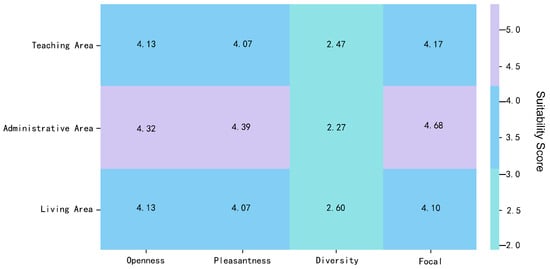
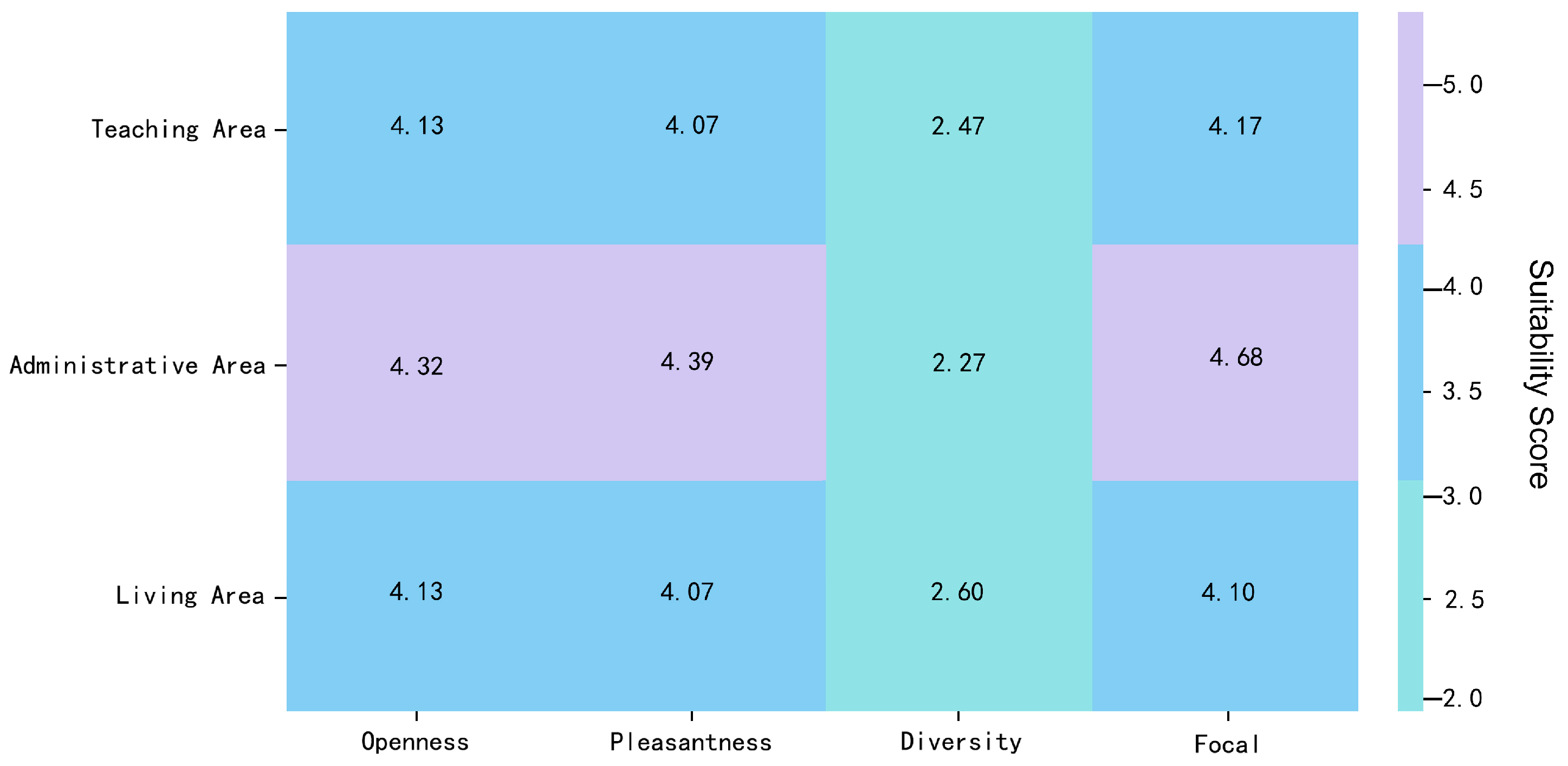
A comparative analysis of the perception of plant landscapes in teaching, living, and administrative areas was conducted (Table 3). The three types of functional areas showed differences in the 4D indicators of openness, pleasantness, diversity, and focus. Overall, the administrative area had relatively high mean values and small dispersions in pleasantness (4.386 ± 0.479) and focus (4.682 ± 0.252), indicating that its spatial order and landscape elements were relatively stable. The living area had a higher mean value in the diversity dimension (2.600 ± 0.632), suggesting that daily rest spaces had stronger demands for the richness of plant types and landscape levels. The overall values of each indicator in the teaching area were at medium levels, reflecting the need to strike a balance between learning concentration and relaxation. This suggests that, in the teaching area, a configuration with clear hierarchy and unobstructed sightlines should be adopted to enhance readability and support for concentration (Figure 4).
Table 3.
Comparative analysis of the perception of plant landscapes in different functional areas measured using 4D indicators (mean ± SD).
Figure 4.
Comparison of the average pleasantness levels of different functional areas.
3.2. Correlation Between Planting Methods and Restoration Effects
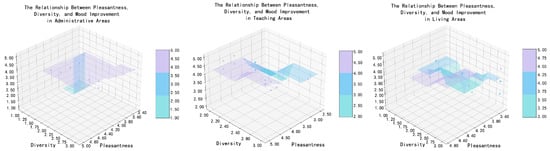
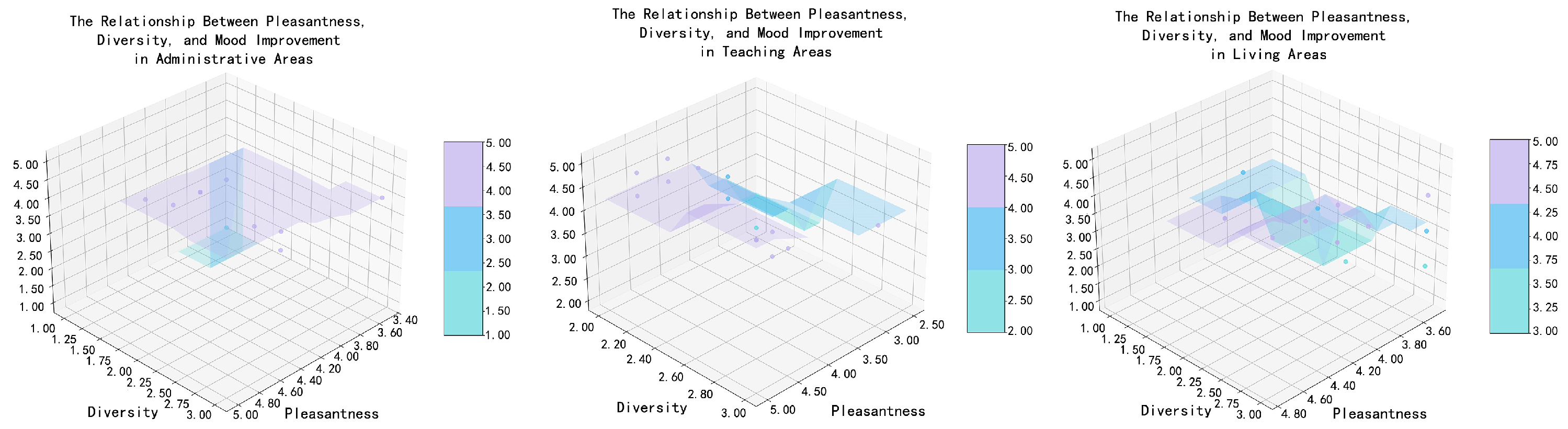
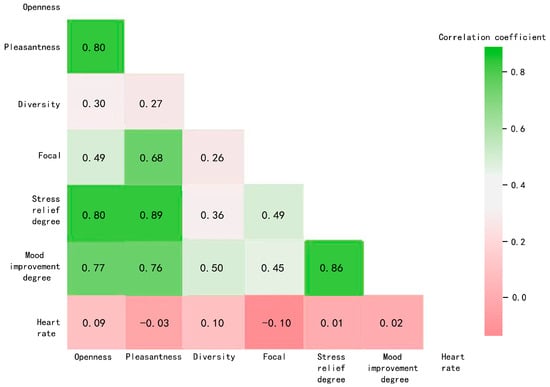
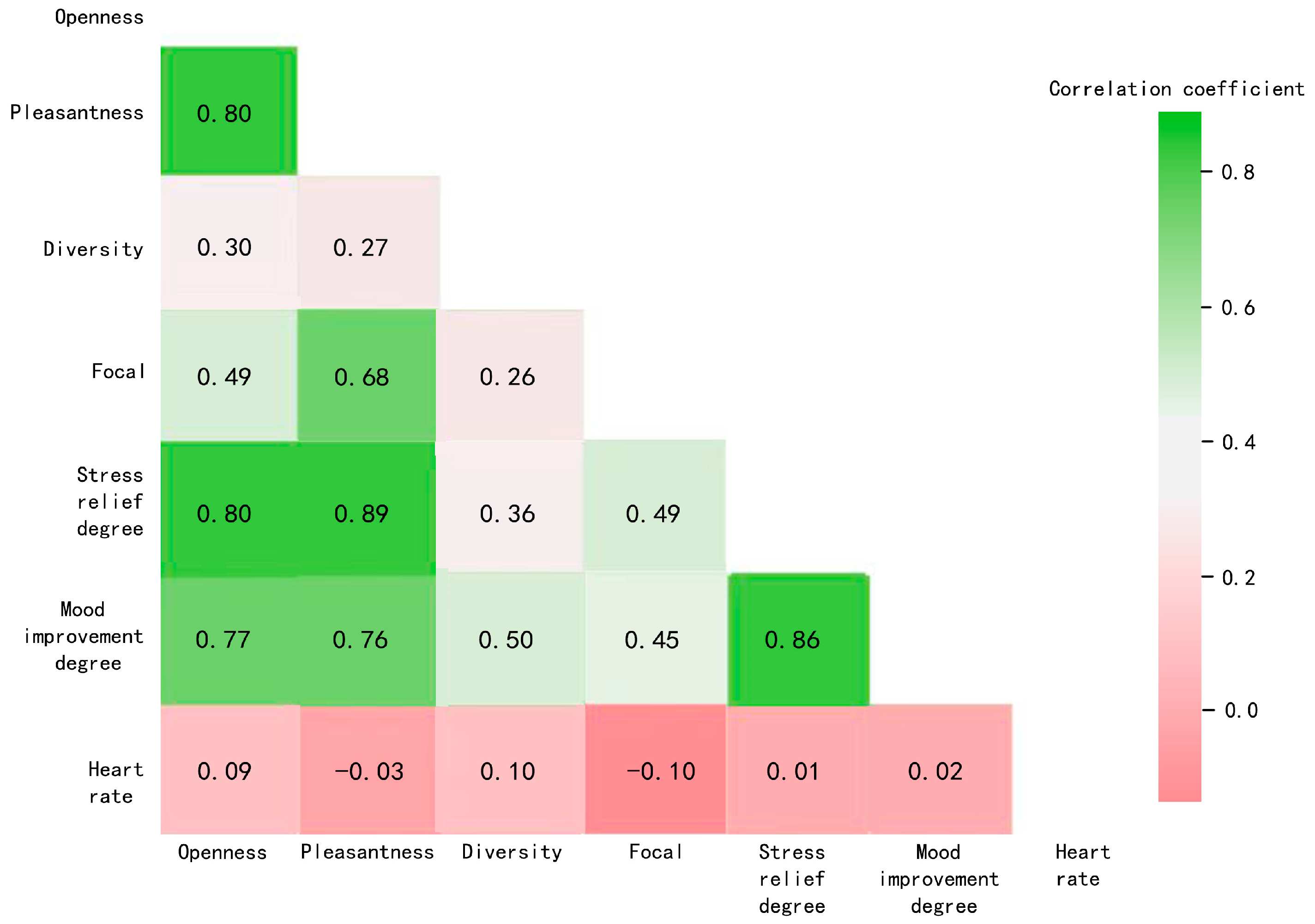
Correlation analysis showed that there was a significant association between the 4D plant landscape indicators and the restorative effect indicators (Figure 5). Among them, pleasantness and openness had the highest correlations with stress relief and mood improvement; diversity and focus were moderately correlated with the restorative effect. The results indicated that enhancing the overall comfort and open scale of the space was more crucial for activating rapid emotional soothing and stress reduction. The results showed that both pleasantness and openness were significantly positively correlated with stress relief and mood improvement. Specifically, the correlation coefficient between pleasantness and stress relief was 0.89, and that between openness and stress relief was 0.83; the correlation coefficient between pleasantness and mood improvement was 0.74, and that between openness and mood improvement was 0.77. These data suggest that environmental comfort and spatial openness were key factors for achieving psychological restoration. The influence of diversity on mood improvement (correlation coefficient 0.53) was greater than that on stress relief (correlation coefficient 0.34), while focus was moderately positively correlated with the restorative effect (correlation coefficient 0.49). The correlations between the heart rate indicator and various planting dimensions were all weak (the absolute values were all less than 0.13), indicating that it was not suitable as an evaluation indicator for planting effects.
Figure 5.
Correlation between the four indicators of planting methods and the effect indicators.
3.3. Environmental Characteristics and Restorative Performance of Functional Areas
Combining psychological scales and physiological indicators, it can be seen that the living area generally performs more prominently in stress relief and mood improvement, which is consistent with its functional positioning of rest and social interaction. The restorative performance of the administrative area is relatively stable, but generally weak, which may be related to its emphasis on order and passage efficiency, as well as the restricted staying behavior (Table 4).
Table 4.
Multiple analyses of satisfaction of spatial restorativeness.
The restorative performance of the teaching area is at a medium level, being more affected by learning tasks and passage behavior. From the statistical indicators of each functional area, the administrative area has relatively high mean values and small standard deviations in pleasantness and focus, indicating that its environmental characteristics are consistent. The living area has the highest mean values and the smallest standard deviations in stress relief and mood improvement, suggesting that its restorative effect is the most stable. In contrast, the administrative area has a large standard deviation in mood improvement, reflecting a large difference in environmental experience within the area. Therefore, the living area can more easily achieve restorative benefits due to its leisure orientation. The administrative area has relatively weak and less stable restorative performance, due to the limitations of its office nature. The restorative performance of the teaching area is at a medium level (Table 5).
Table 5.
Test of between-subjects effects.
3.4. Matching Strategies Between Planting Methods and Functional Areas
Based on the results of the matching analysis, the three areas need to reach the “high” level in the three dimensions of openness, pleasantness, and focus, while maintaining the “medium” level in the diversity dimension, indicating that different areas need to create open, comfortable environments with certain focal points, and the diversity of plant species should be moderately controlled to avoid disrupting the overall coordination (Figure 6). In actual planting design, the planting dimensions should be prioritized according to the core requirements of each functional area.
Figure 6.
Dimensions of the most suitable planting methods for different functional areas.
3.5. Comparison of Consistency Between Psychological and Physiological Indicators
Within the restorative environment framework, this study treats subjective psychological restoration and objective physiological responses as complementary evidence for the same restorative process. Psychologically, an index capturing overall stress reduction and mood improvement was constructed; at the functional area level, this index ranked the living area highest, followed by teaching and administrative areas. Physiologically, wearable recordings of EDA, HRV, heart rate (HR), and RSP were analyzed. Decreases in EDA, HR, and RSP, alongside increases in HRV, were interpreted as indicative of restorative shifts toward parasympathetic dominance and reduced sympathetic activation. To enable cross-modal comparison, each functional area was ranked from most to least restorative for each physiological indicator based on these directional criteria. Consistency was defined as alignment between an area’s physiological and psychological ranks; misalignment was classified as inconsistent.
Table 6 presents the composite psychological restoration levels across the three functional areas, as well as the rank consistency between psychological and physiological indicators. The psychological index exhibited a clear gradient: highest in the living area, intermediate in the teaching area, and lowest in the administrative area. Physiological indicators showed only partial alignment with psychological rankings: EDA and HRV were consistent in the living area, whereas HR and RSP were consistent in the teaching area.
Table 6.
Consistency check between psychological and physiological indicators across campus functional areas.
At the subjective level, the living area showed the highest stress reduction and mood improvement. Physiologically, EDA and HRV aligned with this ranking (lowest EDA, highest HRV), indicating that the spatial and contextual features of this area are more conducive to a restorative pathway characterized by low arousal and enhanced parasympathetic activity. This pattern echoes prior findings of synchronized psychological–physiological restoration in the university campus green spaces. Conversely, HR and RSP were inconsistent in the living area, but aligned with psychological rankings in the teaching area, where they registered intermediate values, a discrepancy that may stem from the sensitivity of cardiorespiratory indicators to walking exposure, commuting intensity, thermal conditions, and physical fitness, which can decouple them from subjective recovery. In contrast, EDA and HRV more directly reflect autonomic regulation and, thus, serve as more reliable physiological markers of restoration.
In the administrative area, psychological restoration was lowest, yet physiological indicators did not consistently reflect the least favorable state, suggesting that perceived restoration deficits may arise from spatial imagery, accessibility, activity appeal, or socio-psychological atmosphere, rather than from physiological arousal alone. For campus landscape optimization, restoration resources should be prioritized in living areas; in teaching areas, planting structure, shade provision, and multi-sensory comfort should be leveraged to mitigate commuting load; and in administrative areas, interface greening, stayable micro-spaces, and legible spatial organization should be enhanced to improve subjective restoration and place attachment.
4. Discussion
4.1. Verification of the Research Hypotheses
This study conceptualizes restorative experiences on university campuses—high-frequency everyday settings—as shaped by four planting-related spatial dimensions: openness, pleasantness, diversity, and focus. Using psychological scales and physiological signals as complementary evidence, it examines contextual differences in restorative effects. Overall, Hypothesis 1 (functional area differences) and Hypothesis 3 (positive associations between the four dimensions and restorativeness) were confirmed, while Hypothesis 2 (planting organization differences) and Hypothesis 4 (psychological–physiological consistency with differences) were only partially confirmed. Functional areas exhibited distinct restorative profiles, and the four perceived dimensions—particularly pleasantness and openness—showed strong correlations with psychological restoration. Planting pattern effects were evident in neural responses, but not consistently across psychological or other physiological indicators. Psychological and physiological measures generally trended in the same direction, yet their coupling was moderated by contextual factors, such as activity load and environmental conditions. These findings underscore the need for coordinated optimization of spatial morphology, planting interface, and usage rhythm in campus landscape design, rather than relying on any single indicator or scene.
Descriptive results (Table 3) show distinct spatial profiles across living, administrative, and teaching areas. The living area scored highest on mood improvement, indicating that planting landscapes in stay- and leisure-oriented contexts better facilitate emotional recovery through comfort and affinity. The administrative area exhibited higher mean values and lower dispersion in pleasantness and focus, reflecting stable interface quality, clear visual anchors, and strong spatial legibility. The teaching area remained intermediate across indicators, consistent with the diluting effect of time pressure and task orientation on restorative experience in high-circulation settings.
EEG results revealed differentiated neural responses across planting patterns (in situ original and VR-simulated high/medium/low density). At Node 1, prefrontal alpha power differed significantly (p = 0.0025), with medium-density planting eliciting higher values than the original VR context—interpreted as a balanced state of visual permeability, moderate enclosure, and low arousal. Occipital alpha/beta ratio also showed a main effect of planting pattern (p = 0.0174), with the original VR context outperforming low-density conditions, which suggests that sparse vegetation and exposed hard interfaces may increase visual load and hinder soft fascination; however, these neural differences were not consistently mirrored in psychological or other physiological indicators, indicating modality-specific sensitivity and supporting the partial confirmation of Hypothesis 2.
Correlation analyses showed strong associations between psychological restoration and both pleasantness (r = 0.89 with stress reduction) and openness (r = 0.83 with stress reduction; r = 0.77 with mood improvement), findings which support two complementary pathways: a pleasantness pathway, rooted in interface comfort, perceived greenness, and microclimatic experience; and an openness pathway, based on visual access, spatial permeability, and boundary clarity. Restorative quality thus arises not from green quantity alone, but from the interplay of planting and spatial form—delivering visible greenness, comfortable interfaces, and a balanced rhythm of enclosure and openness. These results robustly confirm Hypothesis 3.
Psychological indicators were highly sensitive to pleasantness and openness, whereas heart rate showed negligible correlations with the four dimensions (|r| < 0.13), a dissociation that suggests that subjective evaluations capture perceived restorative quality more directly, while physiological measures such as heart rate are susceptible to contextual confounders—circulation rhythm, activity intensity, thermal conditions, and task load. Psychological and physiological responses, thus, do not always align: the former reflects restorative appraisal, the latter reflects arousal and physical load, and their coupling varies across functional areas and planting contexts; this pattern of same-direction trends coexisting with contextual disturbance supports the partial confirmation of Hypothesis 4.
4.2. Contextualized Interpretation and International Comparison
The restorative performance of Chinese university campuses is shaped by their distinct spatial context, which typically features clear functional zoning—teaching, living, and administration—along with walkable accessibility and highly concentrated daily activities. Within enclosed campuses, green spaces function as everyday accessible nature resources, and empirical research has linked visible greenness and accessible green space to student mental health [48]. This contextual background helps explain the higher mood improvement observed in the living area in the present study, where daily staying and social activities align more closely with restorative opportunities.
These findings resonate with international evidence. Reviews focusing on higher education settings indicate that campus green space and nature exposure are associated with multidimensional well-being outcomes, often mediated by spatial quality, accessibility, and usage patterns [49]. The strong correlations observed here, between psychological restoration and both pleasantness and openness, are directionally consistent with the broader conclusion that environmental quality and spatial experience serve as key explanatory variables in restorative processes.
Methodologically, immersive VR offers enhanced controllability and repeatability for manipulating design variables such as planting organization, enclosure, and landscape element combinations under standardized viewing conditions; however, VR cannot fully substitute for real environments [32]. In situ settings provide richer multisensory cues—microclimate, soundscape, crowd activity, material tactility—and behavioral affordances that enhance ecological validity. Conversely, VR realism, interaction modes, and presence levels can influence perceptual and restorative evaluations, and cybersickness may confound affective and autonomic responses. The above factors contribute to incomplete one-to-one correspondence across perceptual, psychological, and physiological indicators [50,51]. To address this, the present study included both in situ and VR original-site scenes within the same functional area to establish interpretable references for virtual–real differences, followed by controlled experiments on manipulable planting variables within VR.
Viewed through a broader lens, campuses function as micro-urban environments for young people’s daily activities. Their safety, stayability, and integration of natural elements align with the agenda of youth mental-health-friendly environments. Interdisciplinary research emphasizes that safe public spaces, social connection, and inclusive environmental design are critical levers for supporting adolescent and young adult mental health [52]. Within this framework, the proposed 4D indicators (openness, pleasantness, diversity, focus) offer a shared language linking landscape quality to restorative outcomes, enabling campus greening renewal to align natural element configuration with welfare-oriented spatial quality for youth.
4.3. Reflections and Limitations
While VR provides a controlled platform for manipulating design variables and comparing planting schemes, it cannot fully replicate the multisensory richness of real environments. Cues such as light, thermal conditions, wind, odor, and soundscape are partially or entirely absent in virtual simulations, potentially influencing the completeness of restorative experiences and the intensity of physiological responses. Reviews of VR-based stress reduction research further indicate that device types and interaction modalities can introduce effect heterogeneity, underscoring the need to interpret findings within the specific immersion conditions employed [53,54]. In order to mitigate this limitation, the present study included both in situ and VR original-site scenes within the same functional area, establishing a reference for interpreting virtual–real differences before conducting controlled experiments on manipulable planting variables.
The sample size and grouped exposure design of this study also warrant caution in generalization. The findings are most appropriately interpreted as explaining restorative differences and indicator associations within this specific sample, campus, and setting type. Extrapolation to all universities or campus types should be approached with care. For more complex questions involving planting pattern interactions and functional area dynamics, future research with expanded samples and crossover designs would enhance robustness and generalizability.
Additionally, the relatively short exposure duration in this experiment is better suited to capturing immediate affective changes than to explaining long-term stress recovery or habitual use patterns. Accordingly, the conclusions primarily pertain to the evidence scope of short-term experiences and immediate restorative responses, rather than sustained restorative outcomes over time.
4.4. Future Research Directions
Future studies should expand sample diversity by including participants from different grades, majors, and activity preferences, and employ within-subject crossover designs across functional areas to enhance comparability and robustness. Extending observation periods to capture seasonal and behavioral dynamics would enable examination of restorative effects across temporal scales, yielding evidence more closely aligned with everyday campus use. While retaining VR’s controllability, increasing the frequency and types of in situ comparisons can further clarify the transferable scope and applicable conditions of VR-based findings. Finally, applying the same analytical framework to other public open spaces—such as urban parks and community green spaces—would test the generalizability of the spatial function–planting organization–restorative experience relationship and inform evidence-based renewal of broader urban green infrastructure. By employing the four-dimensional planting landscape indicators as a bridge for evidence expression, this study translates restorative evaluation outcomes into actionable landscape strategies for scheme selection, renewal design, and management adjustments. The resulting framework offers a reusable working model and a shared communication platform for evidence-based design and multi-disciplinary collaboration in campus outdoor spaces.
5. Conclusions
This study reveals three key findings: (i) restorative effects vary significantly across teaching, living, and administrative areas; (ii) pleasantness and openness show stronger associations with psychological restoration, while moderate diversity optimizes recovery experiences; and (iii) physiological measures exhibit weaker sensitivity than subjective evaluations, necessitating integrated interpretation. Theoretically, the 4D indicator framework (openness, pleasantness, diversity, and focus) translates abstract restorative experiences into operable design dimensions, giving a theoretical fulcrum for explaining spatial differences in campus restorative effects. Methodologically, VR-based multi-source measurement offers a technical path for preliminary scheme verification, enhancing the scientificity of design decisions. Practically, this framework serves as a quantitative tool for planting optimization, scheme comparison, and refined maintenance. Future research should expand sample diversity, employ crossover designs, and validate findings through field experiments.
Author Contributions
Conceptualization, Q.M. and J.M.; methodology, F.K., J.M. and Q.M.; software, F.K. and J.M.; validation, F.K., J.M. and Q.M.; formal analysis, F.K. and J.M.; investigation, F.K., J.M. and Q.M.; resources, F.K. and J.M.; data curation, F.K., J.M. and Q.M.; writing—original draft preparation, F.K.; writing—review and editing, J.M. and Q.M.; visualization, F.K., J.M. and Q.M.; supervision, Q.M. and J.M.; project administration, Q.M. All authors have read and agreed to the published version of the manuscript.
Funding
This research was funded by the Key R&D Program Projects of Xinjiang, grant number 2024B02017.
Institutional Review Board Statement
Ethical review and approval were waived for this study due to China’s Measures for Ethical Review of Life Sciences and Medical Research Involving Human Participants (2023); no participants experienced any harm during the experiment.
Informed Consent Statement
Informed consent was obtained from all subjects involved in the study.
Data Availability Statement
The original contributions presented in this study are included in the article; further inquiries can be directed to the corresponding authors.
Acknowledgments
The authors gratefully acknowledge Chuanmiao Su, Haiqing Xie, and Xudong Liu (Xinjiang Agricultural University). The authors also thank the 45 volunteers participated in the physiological testing of campus landscape perception.
Conflicts of Interest
The authors declare no conflicts of interest.
References
- Kaplan, R.; Kaplan, S. The Experience of Nature: A Psychological Perspective; Cambridge University Press: Cambridge, UK, 1989. [Google Scholar]
- Ulrich, R.S. Aesthetic and affective response to natural environment. In Behavior and the Natural Environment; Altman, I., Wohlwill, J.F., Eds.; Springer: New York, NY, USA, 1983; pp. 85–125. [Google Scholar]
- Ulrich, R.S.; Simons, R.F.; Losito, B.D.; Fiorito, E.; Miles, M.A.; Zelson, M. Stress recovery during exposure to natural and urban environments. J. Environ. Psychol. 1991, 11, 201–230. [Google Scholar] [CrossRef] [Scilit]
- Baumann, H.; Grêt-Regamey, A. Exploring the interplay of urban form and greenery in residents’ affective and cognitive responses. Urban For. Urban Green. 2024, 101, 128553. [Google Scholar] [CrossRef] [Scilit]
- Zhu, W.; Wang, J.; Qin, B. The relationship between urban greenness and mental health: A national-level study of China. Landscape Urban Plan. 2023, 238, 104830. [Google Scholar] [CrossRef] [Scilit]
- Naghibi, M. Rethinking small vacant lands in urban resilience: Decoding cognitive and emotional responses to cityscapes. Cities 2024, 151, 105167. [Google Scholar] [CrossRef] [Scilit]
- Hung, S.-H. Does perceived biophilic design contribute to human well-being in urban green spaces? A study of perceived naturalness, biodiversity, perceived restorativeness, and subjective vitality. Urban For. Urban Green. 2025, 107, 128752. [Google Scholar] [CrossRef] [Scilit]
- Wu, C.-C.; Chang, C.-Y.; Deal, B.; Li, D.; Sullivan, W.C. Unraveling urban plant diversity: The independent effects of plant species richness and greenness on health. Urban For. Urban Green. 2025, 113, 129028. [Google Scholar] [CrossRef] [Scilit]
- Cao, Y.; Huang, L. Research on the Healing Effect Evaluation of Campus’ Small-Scale Courtyard Based on the Method of Semantic Differential and the Perceived Restorative Scale. Sustainability 2023, 15, 8369. [Google Scholar] [CrossRef] [Scilit]
- Bock, J.L.; Nesbitt, L.; Mavoa, S.; Jarvis, I. Literature review of human interactions with urban nature and their mental health associations. Environ. Behav. 2026, 58, 262–302. [Google Scholar] [CrossRef] [Scilit]
- Lan, Y.X.; Liu, Q.Y.; Zhu, Z.P. Exploring landscape design intensity effects on visual preferences and eye fixations in urban forests: Insights from eye tracking technology. Forests 2023, 14, 1628. [Google Scholar] [CrossRef] [Scilit]
- Da, C.L.; Li, Y.S.; Gao, X.M.; Chen, Q.; Wang, Y. Seasonal variations in psychophysiological stress recovery from street greenery: A virtual reality study on vegetation structures and configurations. Build. Environ. 2024, 266, 112058. [Google Scholar] [CrossRef] [Scilit]
- Gao, S.; Ma, Y.; Wang, C.; Xue, H.; Zhu, K.; Hou, S.; Feng, C. Assessing urban greenery impact on human psychological and physiological responses through virtual reality. Build. Environ. 2025, 272, 112696. [Google Scholar] [CrossRef] [Scilit]
- Mostajeran, F.; Krzikawski, J.; Steinicke, F.; Stuerzlinger, W.; Riecke, B.E.; Kühn, S. Adding virtual plants leads to higher cognitive performance and sustained attention. Sci. Rep. 2023, 13, 6686. [Google Scholar] [CrossRef] [Scilit]
- Tao, W.; Li, C.; Song, R.C.; Cheng, J.; Liu, Y.; Wan, F.; Chen, X. EEG-based emotion recognition via channel-wise attention and self attention. IEEE Trans. Affect. Comput. 2023, 14, 382–393. [Google Scholar] [CrossRef] [Scilit]
- Seiz, A.; Kweon, B.-S.; Ellis, C.D.; Oh, H.; Pietro, K. Exploring the Psychophysiological Effects of Viewing Urban Nature through Virtual Reality Using Electroencephalography and Perceived Restorativeness Scale Measures. Sustainability 2023, 15, 13090. [Google Scholar] [CrossRef] [Scilit]
- Yu, C.D.; Kwan, M.P.; Liu, Y. Does activity context and its temporality matter in the stress-relieving effect of greenspace? Evidence based on individual mobile sensing. Cities 2026, 169, 106526. [Google Scholar] [CrossRef] [Scilit]
- Zhao, W.; Li, X.; Zhu, X.; Ye, H.; Xu, H. Restorative properties of green sheltered spaces and their morphological characteristics in urban parks. Urban For. Urban Green. 2023, 86, 127986. [Google Scholar] [CrossRef] [Scilit]
- Li, Y.; Du, H. Research on the restorative benefits of sky gardens in high-rise buildings based on wearable biosensors and subjective evaluations. Build. Environ. 2024, 260, 111691. [Google Scholar] [CrossRef] [Scilit]
- Yuan, Y.; Wang, L.; Wu, W.; Zhong, S.; Wang, M. Locally contextualized psycho-physiological wellbeing effects of environmental exposures: Experimental-based evidence. Urban For. Urban Green. 2023, 88, 128070. [Google Scholar] [CrossRef] [Scilit]
- Cho, Y.; Lee, D.; Choi, A.; Sung, M. EEG-based evaluation of illuminance and correlated color temperature adjusted to fatigue levels in a VR residential environment. Build. Environ. 2025, 286, 113702. [Google Scholar] [CrossRef] [Scilit]
- Shen, W.; Zheng, Z.C.; Pan, L.; Zhang, Y.; Li, X. An integrated method for assessing the urban ecosystem health of rapid urbanized area in China based on SFPHD framework. Ecol. Indic. 2021, 121, 107071. [Google Scholar] [CrossRef] [Scilit]
- Zhang, N.; Liu, C.; Ren, Y.Y.; Wang, J.; Chen, L. Effects of plant aromas on stress recovery and brain activity in university students. Build. Environ. 2025, 273, 112716. [Google Scholar] [CrossRef] [Scilit]
- Kanelli, A.A.; Vardaka, M.L.; Malesios, C.; Katima, Z.J.; Kalantzi, O.-I. Can Campus Green Spaces Be Restorative? A Case Study from Tanzania. Sustainability 2024, 16, 1094. [Google Scholar] [CrossRef] [Scilit]
- Liu, R.; Pan, X.; Xia, Z.H.; Li, Y.; Zhang, H. How to lead the optimization of parks spatial patterns more comprehensively with the philosophy of green equity: A case of Chengdu. Habitat Int. 2025, 157, 103318. [Google Scholar] [CrossRef] [Scilit]
- Kramer, M.; Winhard, M.; Juckel, G.; Paraskevi, M. Nature exposure impacts affect and brain activation in health and major depression. J. Environ. Psychol. 2025, 106, 102730. [Google Scholar] [CrossRef] [Scilit]
- Mostajeran, F.; Krzikawski, J.; Steinicke, F.; Kühn, S. Effects of exposure to immersive computer-generated virtual nature and control environments on affect and cognition. Sci. Rep. 2023, 13, 1136. [Google Scholar] [CrossRef] [Scilit]
- Huang, Y.F.; Zhong, C.J.; He, T.T.; Wang, L.; Chen, X. Dynamics of street environmental features and emotional responses in urban areas: Implications for public health and sustainable development. Front. Public Health 2025, 13, 1589183. [Google Scholar] [CrossRef] [Scilit] [PubMed]
- Meng, L.; Li, S.; Zhang, X. Assessing biodiversity’s impact on stress and affect from urban to conservation areas: A virtual reality study. Ecol. Indic. 2024, 158, 111532. [Google Scholar] [CrossRef] [Scilit]
- Pang, X.; Jia, M.; Zhang, Y. Campus landscape perception decoded by surveys combined with eye tracking: Visual and cultural perception for user well-being. Build. Environ. 2025, 283, 113341. [Google Scholar] [CrossRef] [Scilit]
- Unal, A.B.; Pals, R.; Siero, F.W.; van Zomeren, M. Is virtual reality a valid tool for restorative environments research? Urban For. Urban Green. 2022, 74, 127673. [Google Scholar] [CrossRef] [Scilit]
- Lu, Y.; Lau, S.K. Ecological validity of VR experiments for psychological and physiological responses to audio-visual environments. Build. Environ. 2025, 274, 112767. [Google Scholar] [CrossRef] [Scilit]
- Jang, E.; Choi, H.B.; Kim, M. The restorative effects of urban parks on stress control ability and community attachment. Sustainability 2024, 16, 2113. [Google Scholar] [CrossRef] [Scilit]
- Domjan, S.; Arkar, C.; Medved, S. Study on occupants’ window view quality vote and their physiological response. J. Build. Eng. 2023, 68, 106119. [Google Scholar] [CrossRef] [Scilit]
- Bower, I.; Tucker, R.; Enticott, P.G. Impact of built environment design on emotion measured via neurophysiological correlates and subjective indicators: A systematic review. J. Environ. Psychol. 2019, 66, 101344. [Google Scholar] [CrossRef] [Scilit]
- Mihara, K.; Hii, D.J.C.; Takasuna, H.; Katsuhiko, S. How does green coverage ratio and spaciousness affect self-reported performance and mood? Build. Environ. 2023, 245, 110939. [Google Scholar] [CrossRef] [Scilit]
- Karaca, E.; Çakar, T.; Karaca, M.; Yılmaz, S. Designing restorative landscapes for students: A Kansei engineering approach enhanced by VR and EEG technologies. Ain Shams Eng. J. 2024, 15, 102901. [Google Scholar] [CrossRef] [Scilit]
- Chen, Z.; Zhu, T.Y.; Guo, X.; Wang, Y.; Liu, J. Landscape characteristics influencing the spatiotemporal dynamics of soundscapes in urban forests. Forests 2024, 15, 2171. [Google Scholar] [CrossRef] [Scilit]
- Jeon, J.Y.; Jo, H.I.; Lee, K. Psycho-physiological restoration with audio-visual interactions through virtual reality simulations of soundscape and landscape experiences in urban, waterfront, and green environments. Sustain. Cities Soc. 2023, 99, 104929. [Google Scholar] [CrossRef] [Scilit]
- Nitidara, N.P.A.; Sarwono, J.; Suprijanto, S.; Soelami, F.X.N. The multisensory interaction between auditory, visual, and thermal to the overall comfort in public open space: A study in a tropical climate. Sustain. Cities Soc. 2022, 78, 103622. [Google Scholar] [CrossRef] [Scilit]
- Li, Y.; Yu, Y.; Hu, D.; Shang, X.; Wang, T.; Liu, K.; Mou, S.; Zhang, X. The Influence of Campus Landscape Color Environment on Students’ Emotions: A Case Study of Shandong Agricultural University. Buildings 2025, 15, 4290. [Google Scholar] [CrossRef] [Scilit]
- Lin, J.; Liu, S.; Ma, J.; Gong, Y.; Hu, R.; Liu, J. Floral walls versus green wall in an underground environment: A virtual reality-based study on stress recovery and cognitive performance. Dev. Built Environ. 2025, 23, 100819. [Google Scholar] [CrossRef] [Scilit]
- Saorín, J.L.; Carbonell-Carrera, C.; Jaeger, A.J.; Melián-Díaz, D. Landscape design outdoor-indoor VR environments user experience. Land 2023, 12, 376. [Google Scholar] [CrossRef] [Scilit]
- Cheng, Y.N.; Tan, M. The quantitative research of landscape color: A study of Ming Dynasty City Wall in Nanjing. Color Res. Appl. 2018, 43, 436–448. [Google Scholar] [CrossRef] [Scilit]
- Luo, L.; Yu, P.; Jiang, B. Differentiating mental health promotion effects of various bluespaces: An electroencephalography study. J. Environ. Psychol. 2023, 88, 102010. [Google Scholar] [CrossRef] [Scilit]
- Peterson, M.N.; Larson, L.R.; Hipp, A.; Beall, J.M.; Lerose, C.; Desrochers, H.; Lauder, S.; Torres, S.; Tarr, N.A.; Stukes, K. Birdwatching linked to increased psychological well-being on college cam-puses: A pilot-scale experimental study. J. Environ. Psychol. 2024, 96, 102306. [Google Scholar] [CrossRef] [Scilit]
- Chen, H.; Zhong, X.; Sha, F.; Wu, Y.; Lin, W.; Yan, H.; Bao, Z.; Nie, W.; Wu, R. Mechanisms linking urban plant landscape spatial characteristics to stress regulation and attention recovery. Land Degrad. Dev. 2026, 37, 347–368. [Google Scholar] [CrossRef] [Scilit]
- Lo, C. Effects of urban green space landscape elements on perceived sensory dimensions, landscape preference, stress restoration, and anxiety in women. Cities 2026, 170, 106595. [Google Scholar] [CrossRef] [Scilit]
- Aghabozorgi, K.; Jagt, A.V.D.; Bell, S.; Smith, H. The role of university campus landscape characteristics in students’ mental health. Urban For. Urban Green. 2025, 111, 128863. [Google Scholar] [CrossRef] [Scilit]
- Cao, W.; Wang, L.; Wang, J.; Elsadek, M.; Zhang, D. Nonlinear health benefits of public green space: Evidence from a nationwide machine learning study in China. Front. Public Health 2025, 13, 1680591. [Google Scholar] [CrossRef] [Scilit]
- Hao, J.; Gao, T.; Qiu, L. How do species richness and colour diversity of plants affect public perception, preference and sense of restoration in urban green spaces? Urban For. Urban Green. 2024, 100, 128487. [Google Scholar] [CrossRef] [Scilit]
- Morán Uriel, J.; Camerin, F.; Córdoba Hernández, R. Urban Horizons in China: Challenges and Opportunities for Community Intervention in a Country Marked by the Heihe-Tengchong Line. In Diversity as Catalyst: Economic Growth and Urban Resilience in Global Cityscapes; Siew, G., Allam, Z., Cheshmehzangi, A., Eds.; Urban Sustainability; Springer: Singapore, 2024; pp. 105–125. [Google Scholar] [CrossRef] [Scilit]
- Liu, Q.; Lin, X.; Wang, Q.; Lan, Y.; Zhu, Z.; Yao, X.; Gao, Y.; Shen, Y.; Huang, M.; Wang, H. How do nature type and expertise impact restorative perceptions and eye movements? A between-subjects eye-tracking study. People Nat. 2025, 7, 1198–1210. [Google Scholar] [CrossRef] [Scilit]
- Lu, M.; Fu, J. Attention restoration space on a university campus: Exploring restorative campus design based on environmental preferences of students. Int. J. Environ. Res. Public Health 2019, 16, 2629. [Google Scholar] [CrossRef] [Scilit] [PubMed]

Disclaimer/Publisher’s Note: The statements, opinions and data contained in all publications are solely those of the individual author(s) and contributor(s) and not of MDPI and/or the editor(s). MDPI and/or the editor(s) disclaim responsibility for any injury to people or property resulting from any ideas, methods, instructions or products referred to in the content. |
© 2026 by the authors. Licensee MDPI, Basel, Switzerland. This article is an open access article distributed under the terms and conditions of the Creative Commons Attribution (CC BY) license.