1. Introduction
The hilly Loess Plateau is one of China’s most severely eroded regions, with a soil erosion modulus reaching 7500–15,000 t/(km
2·a) [
1,
2,
3]. Prolonged erosion has led to severe depletion of topsoil organic matter and nutrients [
4], degradation of the soil structure [
5], and reduced water retention capacity [
6]. These factors directly constrain the crop root development and compromise the yield stability [
7,
8]. Plant root systems enhance soil resistance to erosion through physical reinforcement, playing a critical role in erosion mitigation [
9,
10,
11], as roots bind soil particles to form stable root–soil composites. This reinforcement restricts soil displacement, increases the shear strength, and thereby reduces erosion [
12,
13].
Plastic mulching can conserve irrigation water and enhance crop yields, but its use causes significant environmental pollution [
14,
15,
16]. In response, biodegradable mulch has been promoted as a sustainable alternative [
17,
18,
19]; it can increase the topsoil moisture, elevate the soil temperature, and enhance nutrient cycling, thereby promoting maize root growth [
20]. In cooler parts of the Loess Plateau, biodegradable mulch application has improved key root morphological parameters—including the root length density (RLD), root volume density (RVD), and root surface area density (RSAD)—enhancing the root system distribution [
21]. Similarly, on the Weibei Plateau, biodegradable mulch improved the maize growth environment by increasing the soil temperature and water retention, leading to a 31% increase in water use efficiency and a 35% increase in yield [
22]. Moreover, biodegradable mulch can reduce NH
3 volatilization and N
2O emissions, decrease nitrogen loss, and improve nitrogen fertilizer use efficiency. These effects are crucial for mitigating global warming and reducing agricultural non-point source pollution [
23].
Exogenous organic amendments enhance soil fertility and improve its physical and chemical properties [
24]. The humic acids abundant in peat can promote the formation of soil microaggregates through the chelation of metal ions [
25], thereby improving the soil pore structure and reducing the root penetration resistance. This, in turn, facilitates root system expansion and biomass accumulation in the soil matrix [
26]. Organic amendments such as biochar and livestock manure can promote root growth by improving the soil’s physicochemical properties [
27,
28,
29]. For instance, biochar, with its high porosity and cation exchange capacity, can enhance soil aeration and delay nutrient leaching, thereby providing a favorable physical environment for root growth [
30].
Soil erosion on the Loess Plateau is severe due to the concentrated summer rainfall and inherently low soil erosion resistance. Consequently, soil erosion control measures for this region have attracted extensive research attention globally [
31,
32,
33]. However, it remains unclear whether organic amendments and biodegradable mulch exert a synergistic effect under field conditions and, if so, whether this synergy enhances soil shear resistance by regulating the root system architecture. To address these questions, we conducted a split-plot field experiment with maize in the hilly Loess Plateau. This research aimed to answer the following questions: (1) How do different organic amendments shape maize root system architecture in the 0–20 cm soil layer under semi-arid conditions? (2) Which root morphological parameters are the most effective indicators for predicting the cohesion (a key erosion resistance metric) of the root–soil composite? By systematically quantifying the individual and combined effects of organic amendments and biodegradable mulch (which conserves soil moisture) on the root architecture and soil mechanical properties, we elucidate their underlying mechanisms on soil shear performance. The findings are expected to provide an integrated management strategy that enhances soil stabilization and delivers ecological co-benefits, thereby supporting soil and water conservation and sustainable agriculture on the Loess Plateau.
2. Materials and Methods
2.1. Overview of the Study Site
The field experiment was conducted in Xiyuan Village, Liulin County, Shanxi Province, China (111°0′45.1″ E, 37°24′10.5″ N). The site lies within the hilly–gully region of the Loess Plateau and has a continental monsoon climate, with windy dry springs, hot rainy summers, rapidly cooling frost-prone autumns, and cold dry winters with scant precipitation. The experimental plots were situated on the tableland of a loess yuan. The soil was classified as loessal soil. The key physicochemical properties of the 0–20 cm soil layer were as follows: bulk density of 1.29 g cm
−3; field capacity of 24.50%; pH of 8.11; organic carbon of 5.62 g kg
−1; total nitrogen of 0.36 g kg
−1; available phosphorus of 8.64 mg kg
−1; and available potassium of 100.49 mg kg
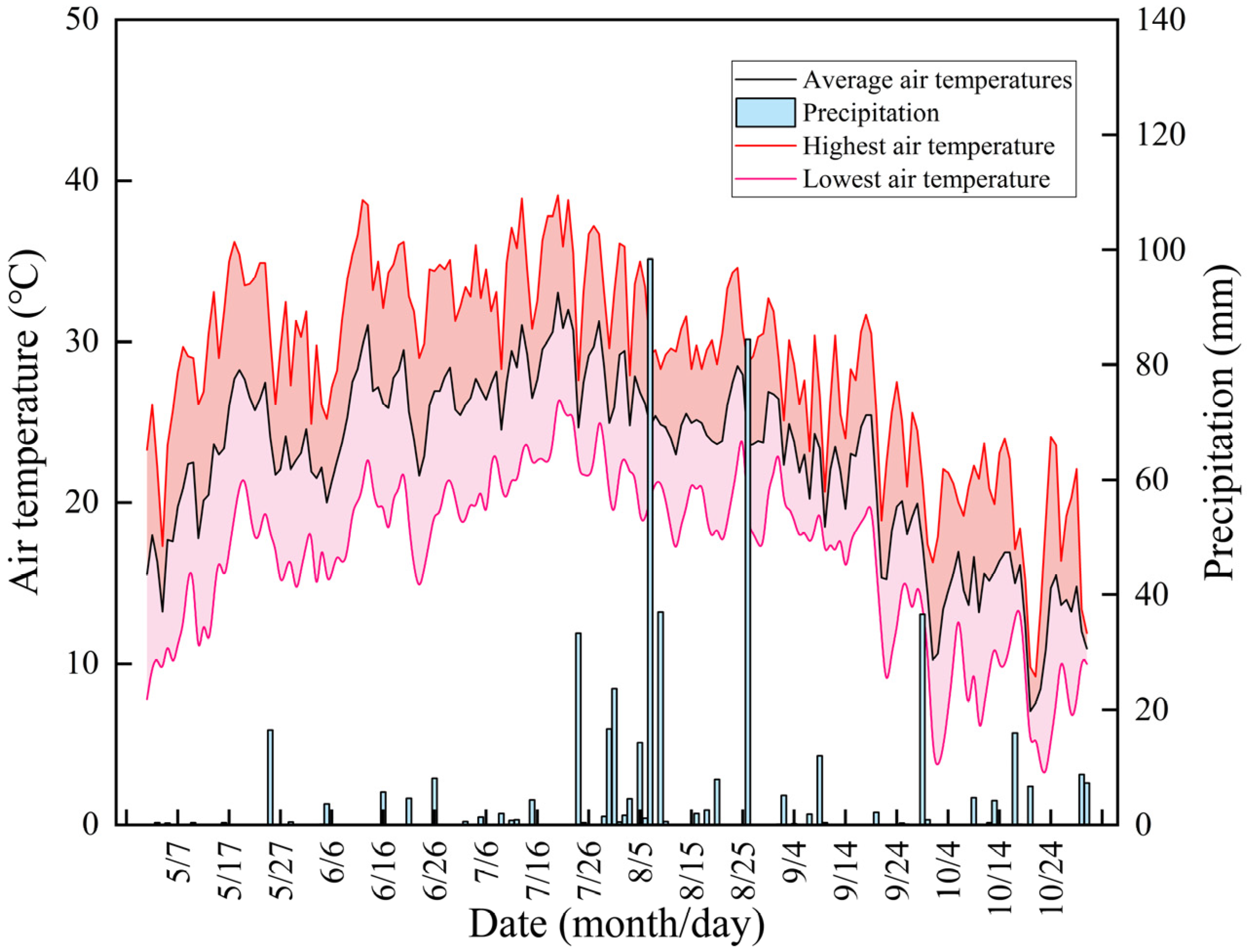
−1. The distribution of precipitation and air temperature during the maize growing season is presented in
Figure 1.
2.2. Experimental Design
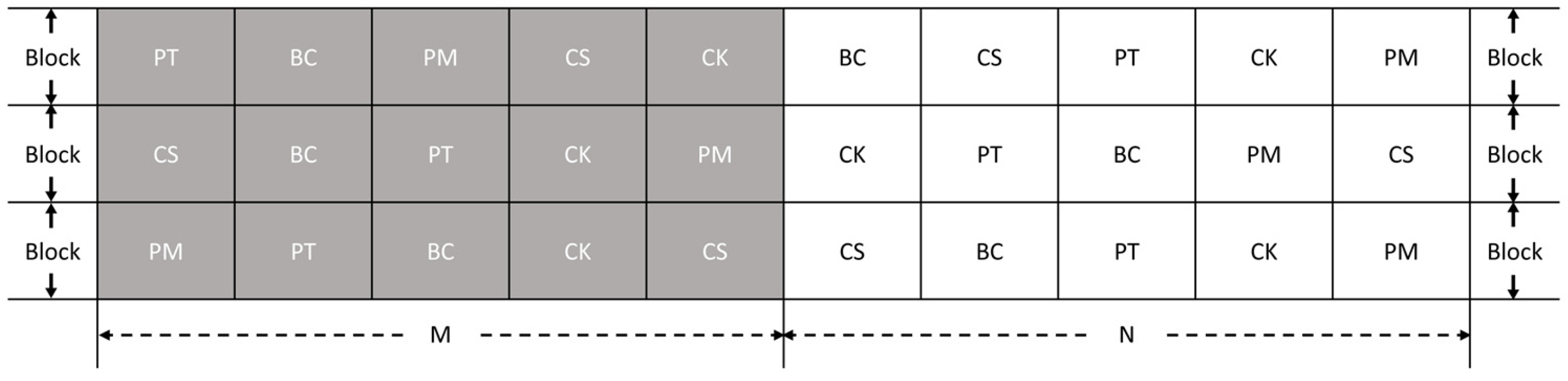
The field experiment was initiated on 7 May 2024, and a two-factor split-plot design was employed. The main-plot factor was mulch treatment: no mulch (N) and biodegradable mulch (M). The subplot factor was organic amendment type, with five treatments: control (CK, no amendment), peat (PT), biochar (BC), fermented pig manure (PM), and corn stover (CS). The experiment consisted of 10 treatments with three blocks, and each plot had an area of 5 m × 8 m (40 m
2), resulting in a total of 30 plots (
Figure 2).
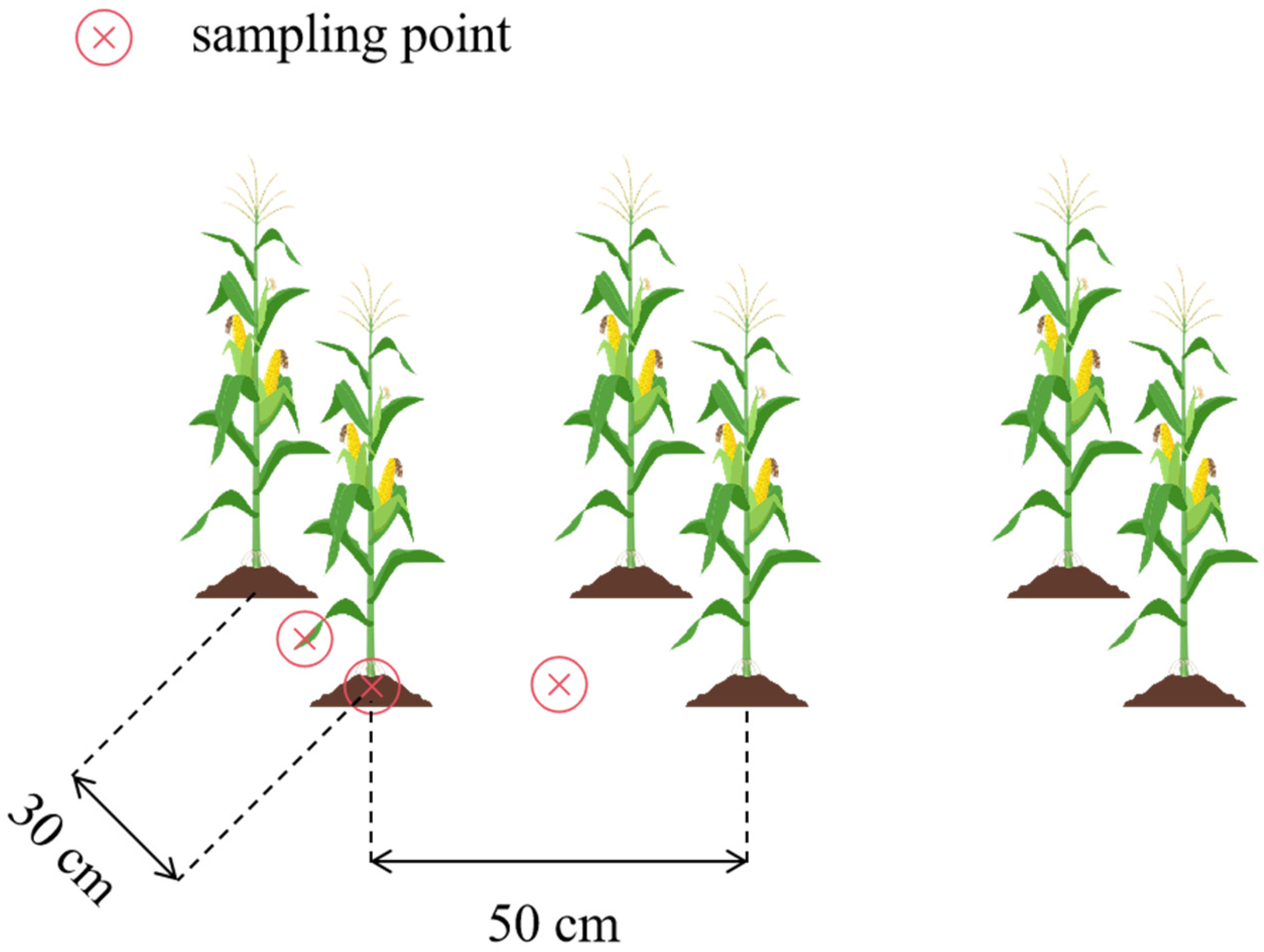
All organic amendments were incorporated into the soil by plowing prior to sowing. The application rates were calculated to supply an equivalent carbon input of 1200 kg C ha−1, a rate comparable to local practices for full straw return. The corresponding application rates were peat at 3077 kg ha−1; biochar at 2000 kg ha−1; fermented pig manure at 3871 kg ha−1; and corn stover at 2927 kg ha−1. Following organic amendment incorporation, biodegradable mulch was applied to the designated plots. Maize (cultivar ‘Dafeng 1407’) was then hand-sown through the mulch at a density of 30 cm × 50 cm (row spacing × plant spacing). The cultivar ‘Dafeng 1407’ was selected due to its adaptability to the local climatic conditions and the representativeness of its growth characteristics.
The fertilization was consistent across all treatments. Basal fertilizer was applied at rates of 120 kg N ha−1, 120 kg P2O5 ha−1, and 120 kg K2O ha−1. An additional topdressing was applied at the twelve-leaf stage, providing 207 kg N ha−1, 30 kg P2O5 ha−1, and 30 kg K2O ha−1. All other field management followed local practices. The crop growth relied solely on natural precipitation.
2.3. Sample Collection
Sampling of Root–Soil Composites for Shear Testing: At the maize filling stage (30 August), four representative plants of uniform growth were selected per plot. At a horizontal distance of 10 cm from each plant base, four undisturbed cylindrical soil cores were collected using a cutting-ring sampler (diameter 61.8 mm, height 20 mm). The cores were extracted from the 0–10 cm depth. These root–soil composites were subsequently used for direct shear tests under normal stresses of 100, 200, 300, and 400 kPa. Immediately after collection, the top and bottom surfaces of each core were sealed with plastic film to minimize moisture loss. The selection of the 0–10 cm topsoil layer for the shear tests was based on the following considerations: (1) soil erosion in the hilly region of the Loess Plateau is primarily manifested as rill erosion on the surface soil, with the 0–10 cm layer being the critical zone directly subjected to runoff-induced shear stress [
34]; (2) the mechanical properties of the surface root–soil composite directly determine the erosion resistance of the topsoil and serve as a core indicator for evaluating the soil reinforcement effect of vegetation [
12].
Sampling of Roots for Characteristic Analysis: During the same period, three representative plants of uniform growth were selected per plot. The aboveground biomass was removed. Root-containing soil samples were collected from three positions relative to each plant: the plant center, the inter-row midpoint, and the intra-row midpoint between adjacent plants. At each position, samples were taken from 0 to 20 depth intervals using a specialized soil corer that produced cylindrical cores 70 mm in diameter and 200 mm in height (
Figure 3). The soil cores were then carefully transferred to a 0.25 mm mesh sieve and gently washed with running water to separate the roots from the soil matrix.
Soil sampling was conducted at the V3, V6, V12, filling, and maturity stages of maize growth. The sampling points were selected at the midpoint between two adjacent rows of maize plants. Soil cores were collected from the 0–200 cm soil layer in 20 cm increments using a professional auger. The soil water content was determined by oven-drying the samples.
2.4. Measurements
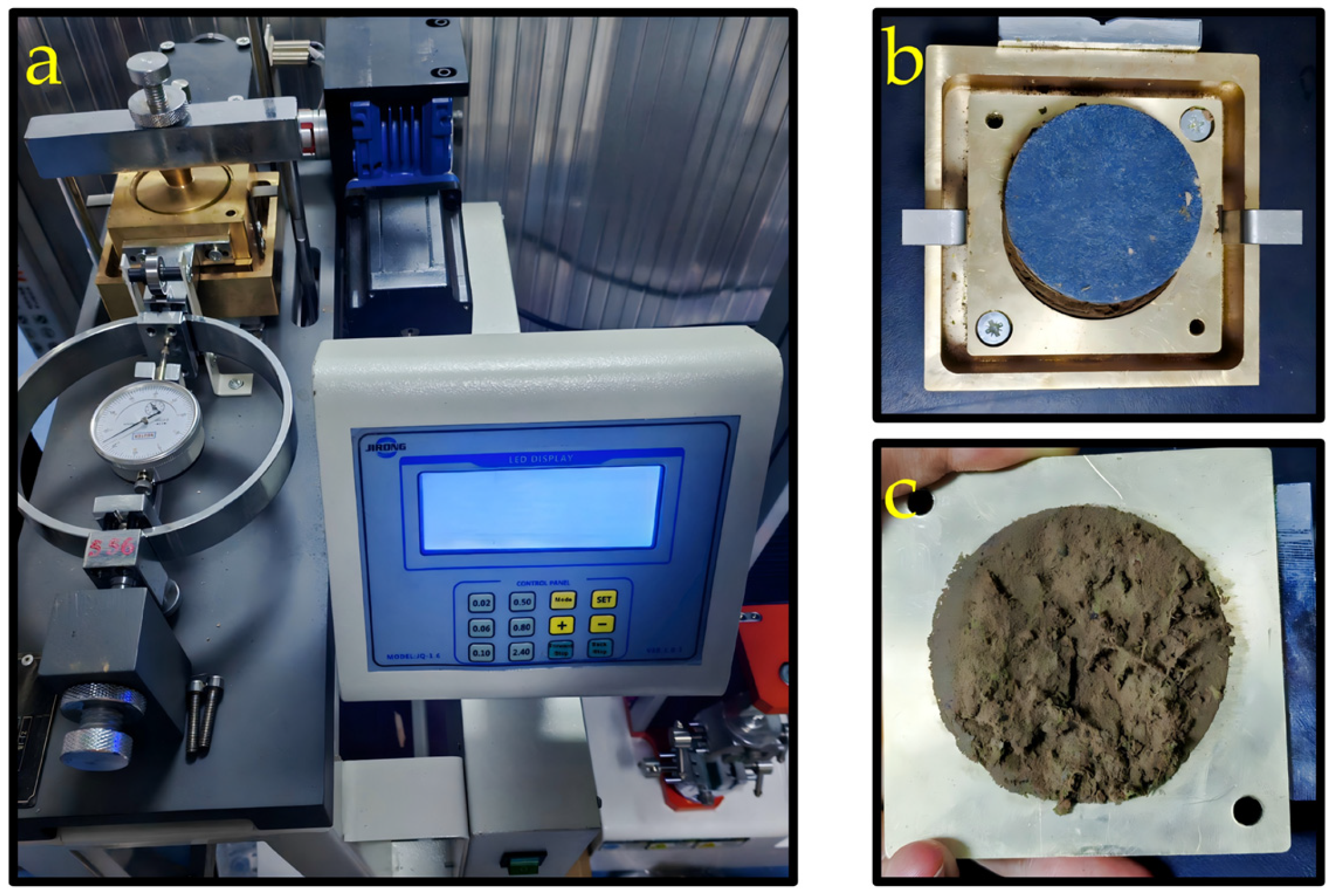
Direct Shear Test of Root–Soil Composites: Direct shear tests were conducted on the undisturbed root–soil composite cores using a ZJ-type strain-controlled direct shear apparatus (
Figure 4). Tests were run at a constant shear displacement rate of 0.8 mm/min. For each plot, four cutting rings were used to measure the shear strength (
τ, kPa) under vertical loads (
σ, kPa) of 100, 200, 300, and 400 kPa, respectively, yielding four (
σ,
τ) data points [
35]. Linear regression using the least squares method was performed on these four data points according to the Coulomb failure criterion (Equation (1)). The intercept of the regression equation was taken as the soil cohesion (
c, kPa), and the internal friction angle (
φ, °) was obtained by applying the arc tangent function to the slope.
Following shear testing, the average soil water content of the cores, determined by the oven-drying method, was 9.48%.
Determination of Root Characteristics: The cleaned roots were scanned using an Epson Perfection V750 Pro scanner (Epson, Nagano, Japan). The resulting images were analyzed with the WinRhizo root analysis system (WinRHIZO 2009a; Regent Instruments Inc., Quebec, QC, Canada) to obtain morphological parameters, including the total root length, average root diameter, root surface area, and root volume. After scanning, the roots were oven-dried at 105 °C for 30 min to terminate biological activity, followed by drying at 80 °C for 48 h until a constant weight was achieved to determine the root dry weight. Root samples from the three sampling points within each plot were scanned and analyzed individually. For each root characteristic parameter, the values from the three sampling points were first calculated separately; then, the arithmetic mean of these three values was computed as the representative value for that plot for use in subsequent statistical analyses. The average root diameter (RD) was calculated as the mean value across all three sampling positions per plant. The root length density (RLD), root volume density (RVD), root surface area density (RSAD), and root weight density (RWD) were calculated using the following formulas:
2.5. Statistical Analysis
All statistical analyses were performed using R software (version 4.5.2). A mixed linear model for the split-plot design was fitted using the lmer() function from the lme4 package. The model included mulch, amendment, and their interaction as fixed effects and block and the block-by-mulch interaction (as the main-plot error) as random effects. Significance testing for the model was conducted using the Kenward–Roger approximation for degrees of freedom provided by the lmerTest package, and p-values for F-tests were obtained via the anova() function. Pairwise comparisons among different organic amendments within the same mulch level were performed using the Tukey HSD test for multiple comparison correction (α = 0.05).
Pearson correlation analysis and principal component analysis (PCA) were performed to explore the relationships among the seven indicators (five root parameters and two mechanical parameters). The analyses were based on a dataset comprising 30 experimental plots (10 treatments × 3 replicates). For each plot, the root parameters (RLD, RVD, RSAD, RD, RWD) were represented by the arithmetic mean of measurements from three sampling points within the plot, while the mechanical parameters (cohesion c and internal friction angle φ) were single plot-level values derived from direct shear tests on four undisturbed cores per plot. All variables were standardized (Z-score) prior to PCA. The suitability of the data for PCA was assessed using the Kaiser–Meyer–Olkin (KMO) measure and Bartlett’s test of sphericity. Principal components with eigenvalues higher than one were retained, and the factor loading structure was optimized via Varimax orthogonal rotation. A scree plot was used to confirm the number of retained principal components. Figures were generated using OriginPro 2021 and R 4.5.2.
3. Results and Discussion
3.1. Shear Strength of the Root–Soil Composite
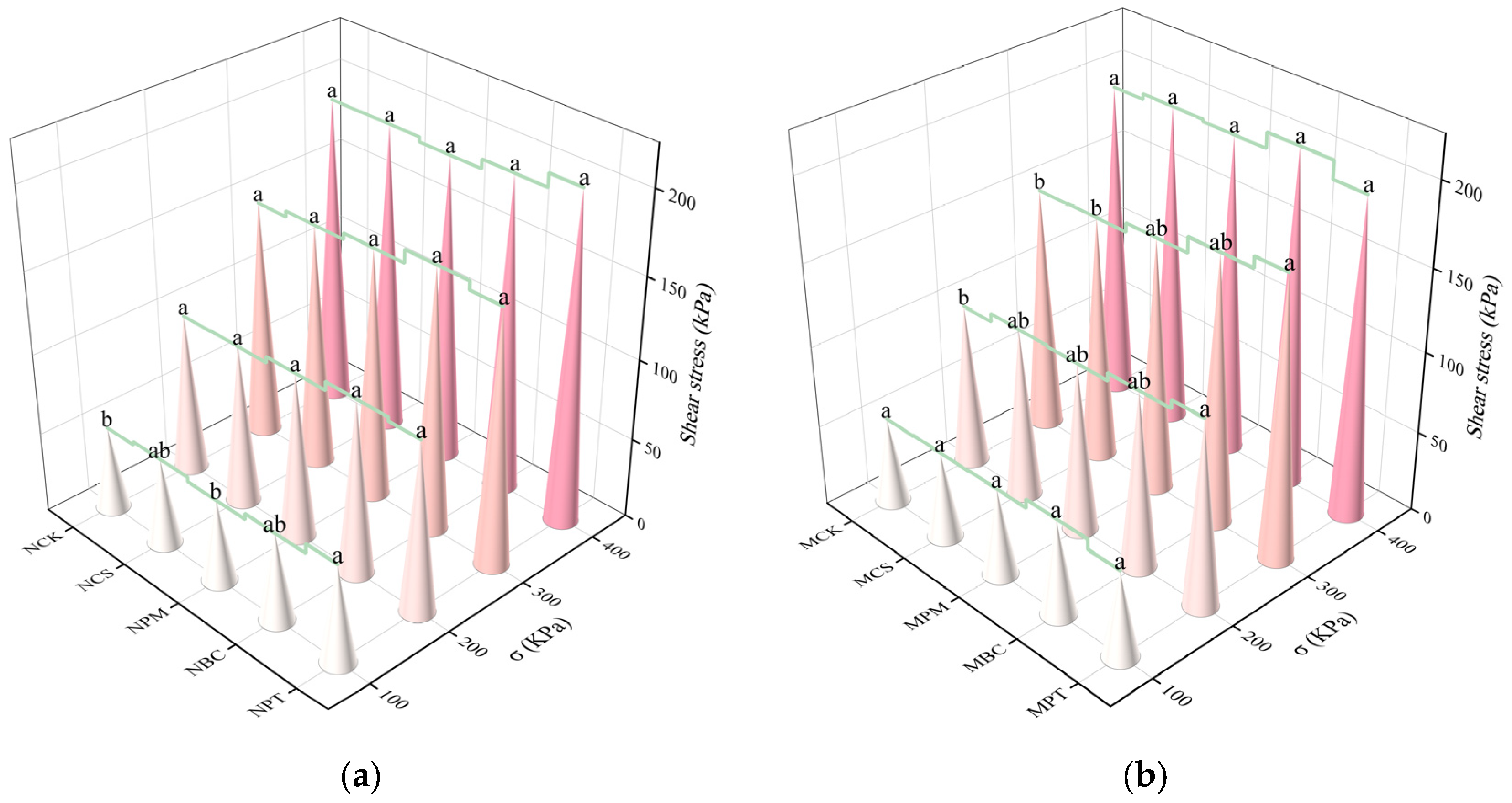
Figure 5 shows the shear strength of the root–soil composites under different organic amendments, with and without biodegradable mulch, across a range of vertical loads. The shear strength of all the treatments increased linearly with the increasing vertical load. Under the no-mulch condition, the NPT and NBC treatments exhibited relatively higher shear strength. Compared to NCK, the shear strength of NPT increased by 16.92%, 7.38%, 6.93%, and 5.79% at the four load levels, respectively, while that of NBC increased by 5.45%, 9.68%, 10.46%, and 1.53%, respectively. Biodegradable mulching led to a modest increase in shear strength: compared to NCK, the MCK treatment showed increases of 2.37%, 1.16%, 1.67%, and 0.99% at the four load levels. Furthermore, the shear strength of the MPT treatment under the 200 kPa and 300 kPa vertical loads was significantly higher than that of the MCK treatment.
3.2. Cohesion and Internal Friction Angle of the Root–Soil Composite
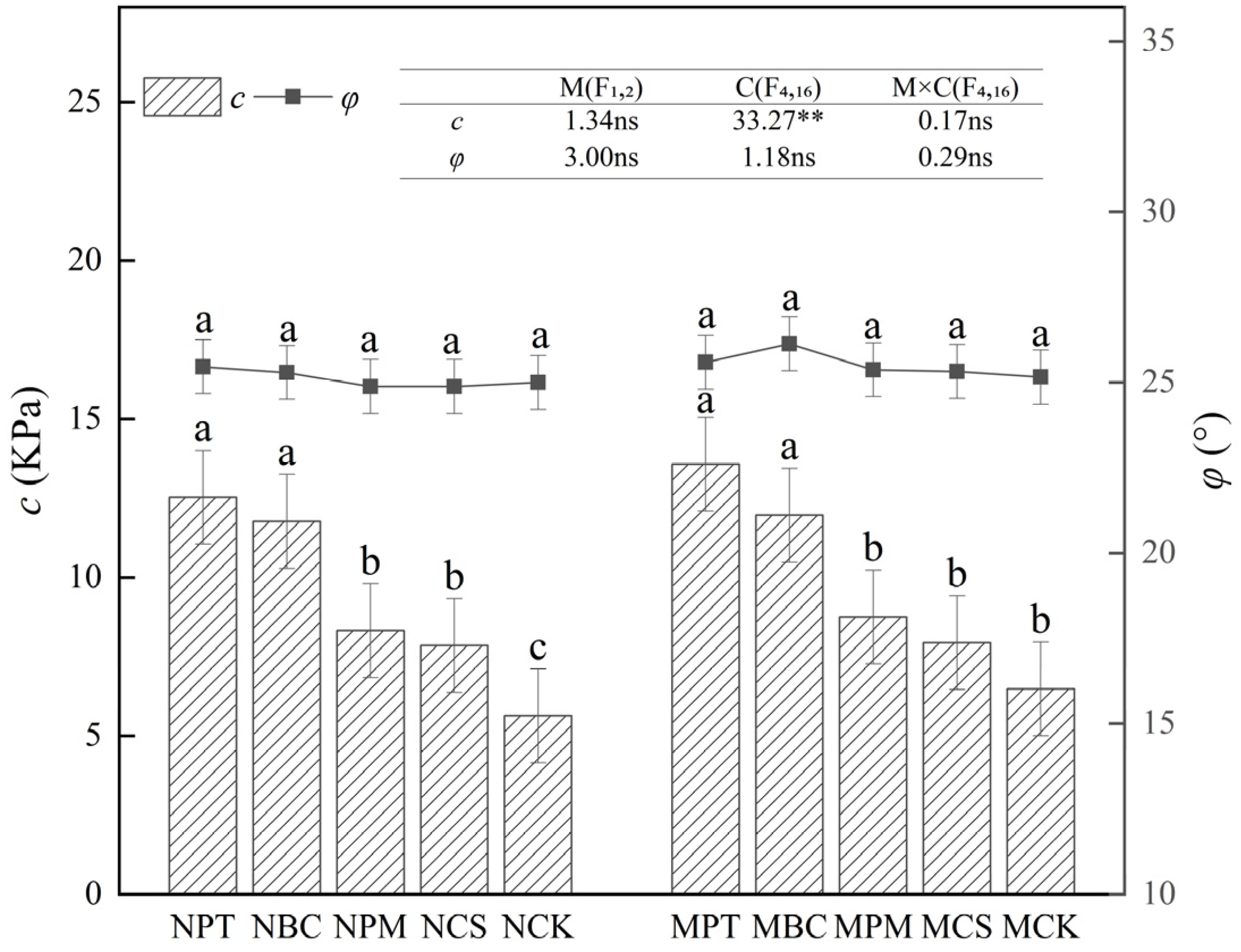
Figure 6 shows the cohesion and internal friction angle of the root–soil composites under different treatments, with and without biodegradable mulch. The internal friction angle showed no significant differences among treatments within either mulch condition. Under no mulch, the cohesion values ranked as NPT > NBC > NPM > NCS > NCK. Compared to NCK, the cohesion increased by 122.56% for NPT and 109.06% for NBC. In contrast, NPM and NCS showed no significant increase relative to NCK. Under mulching, the cohesion for MPT and MBC was significantly higher than for other treatments, representing increases of 109.41% and 84.57%, respectively, over MCK. The cohesion for MCK was 15.10% higher than for NCK. Furthermore, for a given amendment, the cohesion under mulch was marginally higher than under no mulch: by 8.30% (MPT vs. NPT), 1.61% (MBC vs. NBC), 5.17% (MPM vs. NPM), and 1.15% (MCS vs. NCS).
Biodegradable mulching had no significant effect (ns) on the cohesion or the internal friction angle. In contrast, organic amendments had a highly significant effect on the cohesion (p < 0.01) but not on the internal friction angle (ns). No significant interaction was found between mulching and the amendment type for either parameter (ns). These results demonstrate that organic amendments, particularly peat and biochar, can significantly enhance the cohesion of maize root–soil composites.
3.3. Root Characteristics Under Different Treatments
The root characteristic parameters (RSAD, RD, RLD, RVD, RWD) for different treatments are presented in
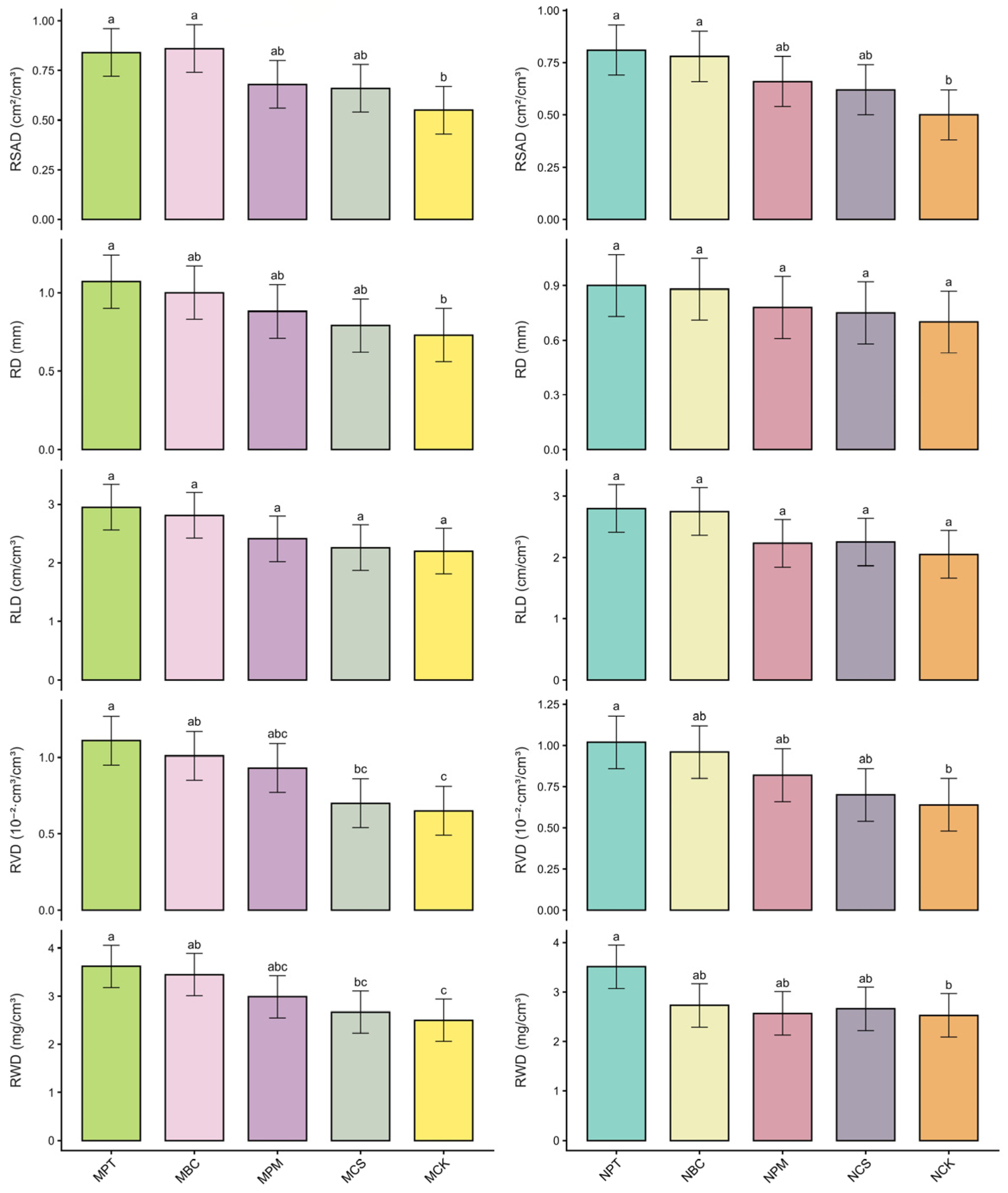
Figure 7. In the no-mulch group, the NPT treatment exhibited significantly higher RSAD, RVD, and RWD than the control (NCK) (
p < 0.05). The NBC, NPM, and NCS treatments showed significantly higher RSAD than the NCK control (
p < 0.05), while no significant differences were observed in the other root parameters. Under biodegradable mulch conditions, the MPT treatment had significantly higher RSAD, RD, RVD, and RWD than the control (MCK) (
p < 0.05). The MBC treatment also exhibited significantly higher RSAD, RVD, and RWD than the MCK control (
p < 0.05). In contrast, all the root parameters for the MPM and MCS treatments showed no significant differences compared to the MCK control.
The analysis of mixed linear models indicated that the organic amendment type (C) was the predominant factor governing the variations in root morphology (
Table 1). For all five root parameters, factor C exhibited large effect sizes (Partial η
2 > 0.14) and was statistically significant (
p < 0.01). Specifically, the effect sizes of C on RSAD, RD, RLD, RVD, and RWD were as high as 0.78, 0.60, 0.61, 0.74, and 0.66, respectively, accounting for the major proportion of the variance in these parameters. In contrast, neither the mulching method (M) nor its interaction with organic amendments (M × C) reached statistical significance (
p ≥ 0.05). In summary, the effect size analysis quantitatively confirmed that organic amendment was the predominant factor governing maize root system architecture.
3.4. Relationship Between Maize Root Characteristics and Soil Stabilization Capacity
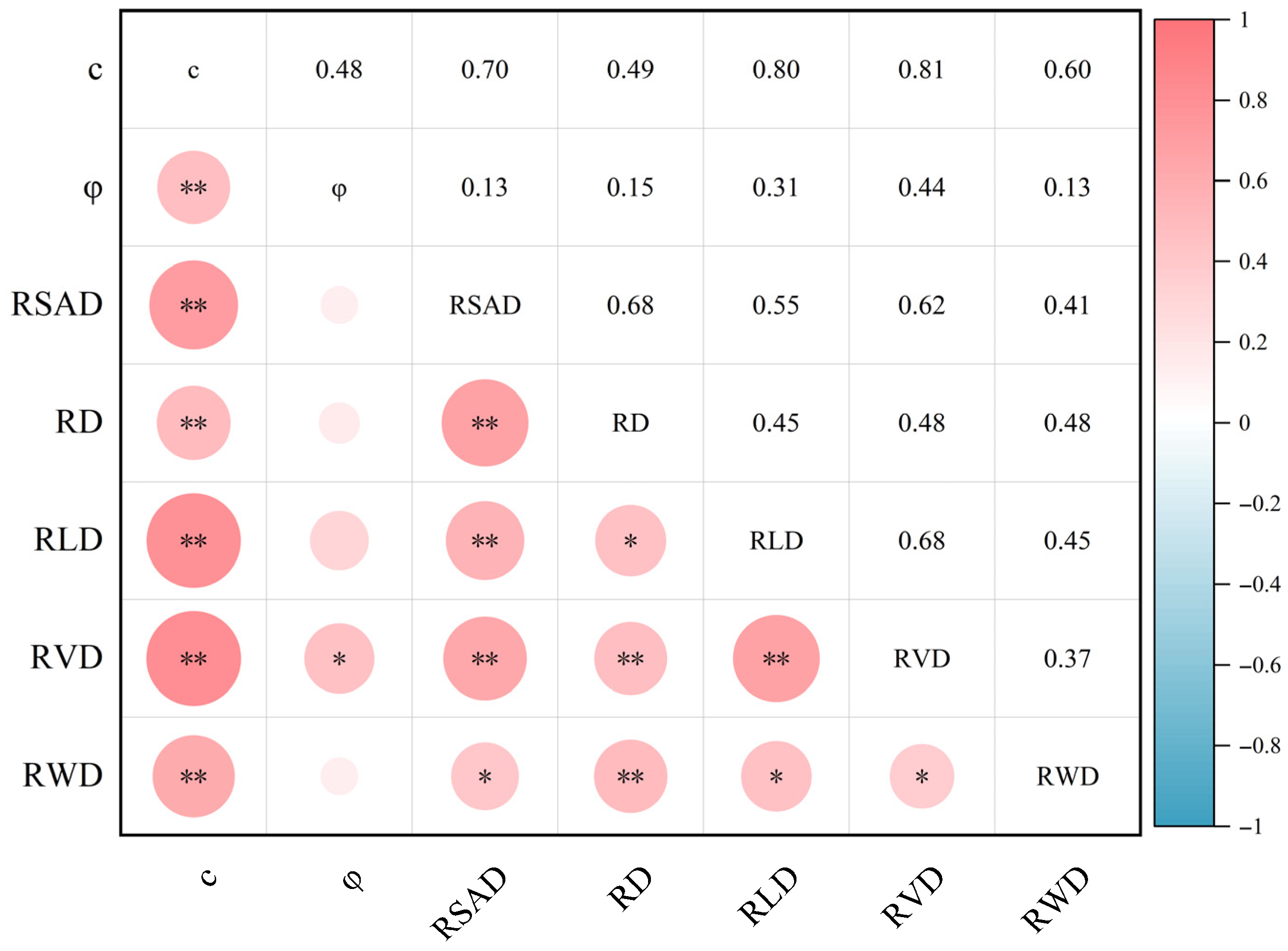
Pearson correlation analysis based on root parameters (RLD, RVD, RSAD, RD, RWD) from the 0–20 cm soil layer and mechanical parameters (cohesion
c, internal friction angle
φ) from the 0–10 cm soil layer (
Figure 8) revealed the interactive relationships between the mechanical properties of the root–soil composite and root system characteristics. The cohesion was strongly and positively correlated with all root parameters (
p < 0.01). It correlated most strongly with RLD (r = 0.80) and RVD (r = 0.81), indicating these were the primary contributors to cohesion enhancement. In contrast, the internal friction angle showed only a moderate correlation with RVD (r = 0.44) and weak correlations with the other parameters, revealing the differential influences of root characteristics on the two shear strength components. Moderate-to-strong correlations were also found among root parameters, notably between RSAD and RD (r = 0.68) and between RLD and RVD (r = 0.68). This demonstrates that RLD and RVD are key morphological indicators underlying variations in both the cohesion and the internal friction angle.
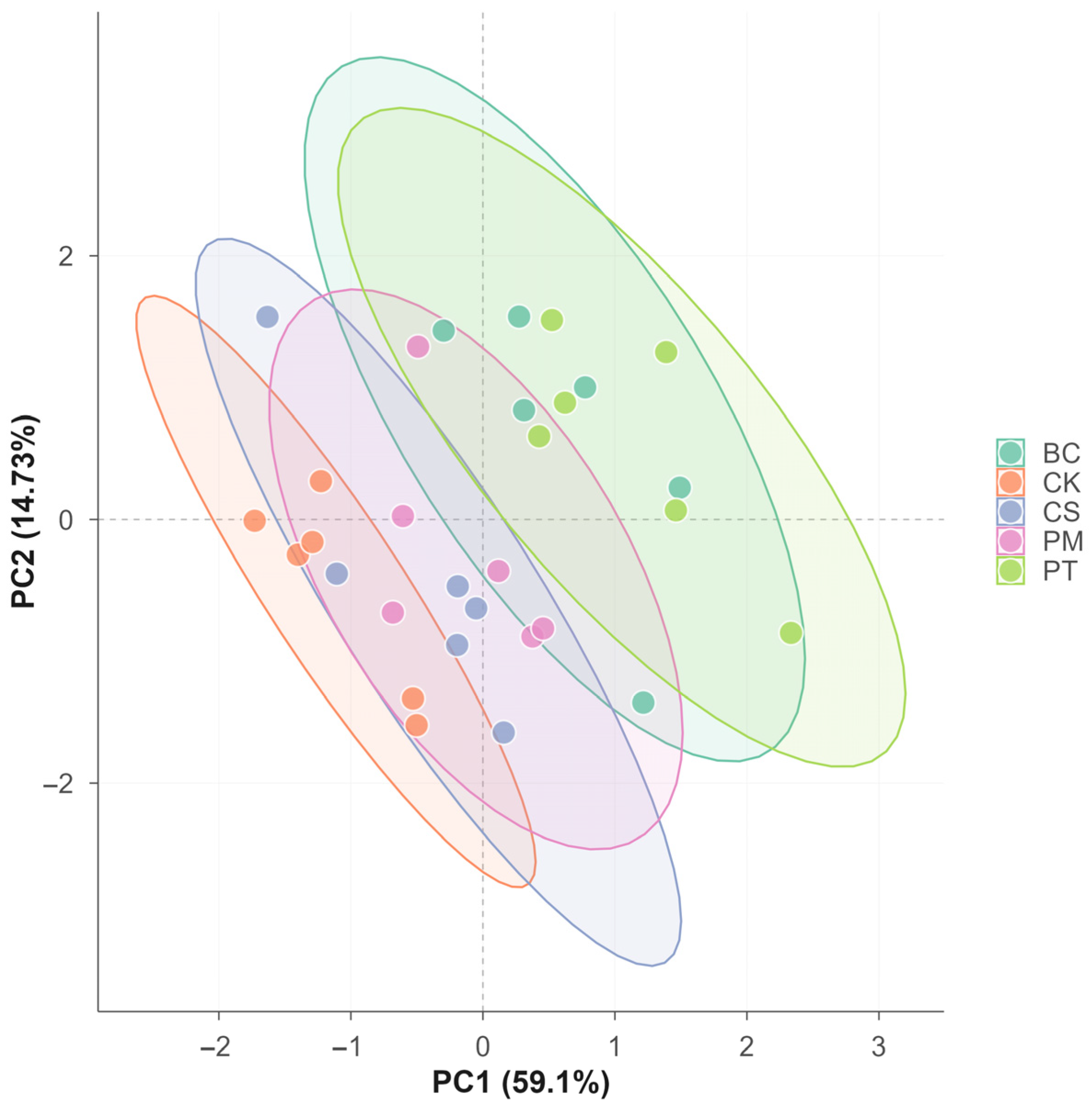
Principal component analysis (PCA) was used to reduce the dimensionality of the dataset, which included the cohesion, the internal friction angle, and root parameters. Data were standardized using Z-score normalization prior to analysis to eliminate the scale effects. The suitability of the data for PCA was confirmed by Bartlett’s test of sphericity (
p < 0.01) and a Kaiser–Meyer–Olkin (KMO) measure of 0.786. Principal components were extracted based on eigenvalues larger than one. The factor loading structure was optimized via Varimax orthogonal rotation with Kaiser normalization. Two principal components (PC1 and PC2) were extracted, which cumulatively explained 73.83% of the total variance (
Table 2). PC1, the dominant component (59.10% of variance), showed high positive loadings on the root parameters including RSAD (0.385), RLD (0.395), and RWD (0.225). This indicates that PC1 primarily represents the overall root system development and biomass accumulation. PC2 explained 14.73% of the total variance and exhibited high loadings for the internal friction angle (0.665), RVD (0.265), and
c (0.255), thus representing a dimension associated with soil friction mechanisms and root spatial occupancy.
The PCA score plot (
Figure 9) visually distinguishes the overall effects of different organic amendments. The biochar (BC) and peat (PT) treatments achieved higher scores on PC1, clearly separating them from other treatments. This indicates their superior overall performance in promoting root system development and biomass accumulation. Fermented pig manure (PM) and corn stover (CS) treatments occupied intermediate positions, while the control (CK) scored lowest on PC1. This ranking is consistent with the significant advantages of BC and PT for most root parameters and cohesion, as shown in the univariate analyses (
Figure 6 and
Figure 7). Thus, PCA confirms from a multivariate perspective that biochar and peat amendments can systematically optimize key functional traits of the root–soil system.
4. Discussion
To assess whether mulching and organic amendment could enhance the soil stabilization capacity of maize roots without altering the soil physical properties and to ensure the comparability of the results, all root–soil cores used in this study were undisturbed soil cores collected from the same batch in the field. This study systematically analyzed the effects of different organic amendments and mulching on the maize root characteristics and the mechanical properties of the root–soil composite, aiming to elucidate the regulatory mechanisms of their combined effects on the root development and soil stabilization.
4.1. Effects of Different Organic Amendments on Maize Root Characteristics
Crop root characteristics serve as indicators of soil nutrient status and microenvironmental quality. An optimal soil environment, with sufficient water and nutrients, promotes root growth and enhances nutrient acquisition [
36,
37]. Previous studies indicate that biochar and peat improve soil microenvironments, enhancing root nutrient uptake and use efficiency [
30,
38,
39]. Consistent with this, a split-plot mixed linear model in our study revealed distinct regulatory effects of different organic amendments on maize root morphology. The results identified the organic amendment type as the predominant factor driving root trait differentiation. Specifically, the root surface area density (RSAD) of the peat and biochar treatments was significantly higher than that of the control, while the fermented pig manure and corn stover treatments were comparable to the control. The humic acids abundant in peat promote the formation of soil microaggregates through the chelation of metal ions [
40], thereby improving the soil pore structure and reducing the root penetration resistance. This facilitates the root volume expansion (significantly increased RVD) and biomass accumulation (significantly increased RWD) within the soil matrix [
41,
42]. The increases in root volume and biomass enhance the frictional anchoring effect at the root–soil interface, ultimately manifested as a substantial increase in cohesion. Biochar, with its porous structure, improves soil aeration and microbial habitats, thereby promoting root branching and fine root proliferation [
30,
43,
44]. This results in a significant increase in the root surface area density (RSAD), but its enhancement of the root volume density (RVD) and root weight density (RWD) is limited. In contrast, although fermented pig manure supplies readily available nitrogen and phosphorus [
45], potential salt accumulation and initial ammonia volatilization can inhibit shallow root development [
46]. Corn stover, with its high carbon-to-nitrogen ratio and slow decomposition rate, provides limited mineralizable nutrients in the short term. This may intensify the resource competition for roots, particularly in deeper soil layers [
47].
The peat and biochar treatments promoted root growth and biomass accumulation in the shallow soil layer by improving the soil physicochemical properties (
Figure 7). This increased root biomass forms a dense network structure within the soil, binding soil particles together as “biological anchors”, thereby effectively constraining soil displacement and preventing soil erosion in hilly landscapes [
12,
13]. Compared with engineered soil stabilization measures, this crop root-based biological anchoring effect offers significant sustainability advantages: roots undergo natural renewal with the crop growth cycle without requiring additional inputs; meanwhile, it simultaneously fulfills the dual objectives of agricultural production and soil and water conservation, aligning with the sustainable development needs of the ecologically fragile Loess Plateau region.
4.2. Effects of Biodegradable Mulch on Maize Root Characteristics
The split-plot mixed linear model indicated that in the 0–20 cm soil layer, neither mulching (M) nor its interaction with amendment type (M × C) had a significant effect (ns) on the maize root morphological traits. The limited effect of biodegradable mulch on root development can be attributed to water stress during a critical growth period. Notably, during a key vegetative growth period (three-leaf to twelve-leaf stage, 30 May–23 July 2024), the cumulative precipitation was only 32.1 mm. This persistent drought caused the topsoil (0–20 cm) water content to drop to 5–7%, below the threshold for normal growth. Under these severe drought conditions, the difference in soil water content within the main root zone (0–60 cm) between the mulched and unmulched plots was only 4.28%. Consequently, the water supply conditions were similar, resulting in homogeneous root characteristics (e.g., length, surface area, dry weight) and spatial distribution between the mulched and unmulched plots.
4.3. Relationship Between Maize Root Characteristics and Cohesion
In mitigating soil erosion, plant root systems interact with soil particles to restrain soil displacement [
48]. A study on tall fescue by Jun’e Liu et al. on the Loess Plateau demonstrated that the root length density is the most effective parameter for evaluating the root effects on gully erosion and erodibility [
34], a conclusion consistent with our findings.
Our study confirmed that biochar and peat significantly enhanced the shear strength of the root–soil composite under no-mulch conditions (e.g., a 109.06% increase in cohesion for NBC), aligning with findings by Li Yuanyuan et al. on the Loess Plateau [
49]. However, the magnitude of increase observed here was higher than the approximately 40–50% increase reported by Li et al. This discrepancy may be attributed to the experimental design of Li et al., who incorporated biochar after removing all pre-existing vegetation and roots, thus excluding the influence of plant roots on soil cohesion. The more pronounced increase in cohesion observed here can also be ascribed to the distinctive physicochemical properties of biochar and peat, which promoted maize root growth. The resultant enhancement in root tensile strength and soil-anchoring capacity subsequently increased the cohesion of the root–soil composite [
50].
Given the non-renewable nature of peat resources, the large-scale application of biochar offers higher sustainability potential. However, the choice between these two amendments requires a trade-off between agronomic benefits and environmental costs. In this study, the peat treatment exhibited slightly superior effects on promoting root volume (RVD) and biomass (RWD) compared to biochar, along with a 13.5 percentage point higher increase in cohesion (122.56% vs. 109.06%), indicating a stronger overall root expansion effect. However, this agronomic advantage comes with significant environmental costs: peat is a non-renewable resource that requires thousands of years to form [
40]; peatland extraction releases large amounts of long-sequestered organic carbon, transforming carbon sinks into carbon sources, and destroys unique wetland ecosystems and biodiversity [
51]. In contrast, although the biochar in this study only significantly increased the root surface area density (RSAD) with limited promotion of root volume and biomass, its environmental benefits are substantial. Biochar can be produced through the pyrolysis of agricultural wastes such as maize stover and fruit tree pruning, enabling waste valorization [
52]; once incorporated into soil, the aromatic structure of biochar resists microbial decomposition, achieving carbon sequestration for centuries to millennia [
53], offering dual benefits of soil improvement and climate change mitigation.
Several limitations of this study should be acknowledged. The findings are based on data from a single year (2024) characterized by specific drought conditions, which may affect the generalizability of the conclusions regarding the effectiveness of biodegradable mulching. The shear strength was measured at only one time point (the grain filling stage), thus failing to capture seasonal dynamics. The mechanical parameters (cohesion
c and internal friction angle
φ) were derived solely from undisturbed soil cores collected from the 0–10 cm surface layer, whereas the root morphological analysis covered the 0–20 cm soil layer. Analysis of the split-plot mixed linear model revealed that the interaction between mulching and organic amendments (M × C) did not reach statistical significance for either root parameters or soil mechanical properties (
Table 1,
Figure 5). The observed “independent” rather than “synergistic” effects may be attributable to the relatively short study duration. Future multi-year research is warranted to validate these findings under diverse climatic conditions. Subsequent studies should further evaluate soil erosion resistance through the direct measurement of erosion indicators (e.g., soil loss, runoff volume), accompanied by cost–benefit analyses to assess the economic feasibility and payback periods for farmers investing in biochar and biodegradable mulching.
5. Conclusions
Through field experiments, this study elucidated the distinct regulatory mechanisms of biodegradable mulch and organic amendments on maize root-mediated soil stabilization in the Loess Plateau. The main conclusions are as follows:
(1) Organic materials indirectly enhanced the soil shear strength by modulating the shallow root system architecture. The peat treatment significantly increased the root surface area density (RSAD), root volume density (RVD), and root weight density (RWD) (p < 0.05). The biochar treatment significantly increased the RSAD (p < 0.05). Furthermore, the biochar treatment significantly enhanced the soil cohesion (a 109.06% increase compared to NCK), an effect magnitude comparable to that of the peat treatment (PT, 122.56%), while offering the advantage of higher resource sustainability.
(2) Under the sustained drought conditions during the critical growth period of the experimental year, the biodegradable film mulch had no significant effect (ns) on the root parameters or the cohesion of the root–soil composite in the 0–20 cm soil layer. The interaction effect between the biodegradable film mulch and organic materials was also not statistically significant (ns).
(3) Correlation analysis revealed that the soil cohesion was highly significantly and positively correlated with the root length density (RLD, r = 0.80) and root volume density (RVD, r = 0.81), confirming that spatial occupancy by roots is a key mechanism for enhancing shear resistance. In contrast, the internal friction angle showed only a moderate correlation with RVD (r = 0.44) and weak correlations with other root parameters, indicating that root traits primarily influence soil cohesion.
Considering the effects of the various treatments on root development, soil mechanical properties, and resource sustainability, the “biochar” treatment is recommended for enhancing shallow soil fixation capacity. Given that the root parameters in this study were confined to the 0–20 cm soil layer and based on a single year of data, the generalizability and long-term effects of this practice require further validation. Future research should (1) investigate more sensitive root physiological parameters (e.g., root activity), (2) incorporate direct measurements of erosion indicators (e.g., soil loss, runoff) to comprehensively evaluate soil anti-erodibility, and (3) conduct a cost–benefit analysis to assess the economic feasibility and payback period for farmers investing in biochar and biodegradable film mulch.
Author Contributions
L.S.: writing—review and editing, resource, and funding acquisition. J.S.: investigation. J.H.: data curation. L.W.: investigation. G.G.: visualization. R.W.: conceptualization, investigation, and writing—original draft. All authors have read and agreed to the published version of the manuscript.
Funding
This research was funded by the earmarked fund for Modern Agro-industry Technology Research System of Shanxi Province (2025CYJSTX18).
Institutional Review Board Statement
Not applicable.
Informed Consent Statement
Not applicable.
Data Availability Statement
The data that support the findings of this study are available from the corresponding author upon reasonable request.
Conflicts of Interest
The authors declare no conflicts of interest.
Abbreviations
The following abbreviations are used in this manuscript:
| τ | shear strength |
| σ | vertical normal stress |
| c | cohesion |
| φ | internal friction angle |
| RD | root diameter |
| RLD | root length density |
| RVD | root volume density |
| RSAD | root surface area density |
| RWD | root weight density |
References
- Di, B.; Yang, Z.; Liu, L.; Yang, Y.; Li, J. The Regionalized Ecological, Economic and Social Benefit of China’s Sloping Cropland Erosion Control during the 12th Five-Year Plan (2011–2015). J. Environ. Manag. 2020, 276, 111314. [Google Scholar] [CrossRef] [PubMed]
- Cui, Y.; Pan, C.; Liu, C.; Luo, M.; Guo, Y. Spatiotemporal Variation and Tendency Analysis on Rainfall Erosivity in the Loess Plateau of China. Hydrol. Res. 2020, 51, 1048–1062. [Google Scholar] [CrossRef]
- Cheng, Y.; Li, J.; Xiong, L.; Tang, G. Clustering Gully Profiles for Investigating the Spatial Variation in Landform Formation on the Chinese Loess Plateau. J. Mt. Sci. 2021, 18, 2742–2760. [Google Scholar] [CrossRef]
- Wu, L.; Qi, T.; Zhang, J. Spatiotemporal Variations of Adsorbed Nonpoint Source Nitrogen Pollution in a Highly Erodible Loess Plateau Watershed. Pol. J. Environ. Stud. 2017, 26, 1343–1352. [Google Scholar] [CrossRef]
- Wilson, M.G.; Maggi, A.E.; Castiglioni, M.G.; Gabioud, E.A.; Sasal, M.C. Conservation of Ecosystem Services in Argiudolls of Argentina. Agriculture 2020, 10, 649. [Google Scholar] [CrossRef]
- Durán Zuazo, V.H.; Rodríguez Pleguezuelo, C.R. Soil-Erosion and Runoff Prevention by Plant Covers. A Review. Agron. Sustain. Dev. 2008, 28, 65–86. [Google Scholar] [CrossRef]
- Tuo, D.; Xu, M.; Gao, G. Relative Contributions of Wind and Water Erosion to Total Soil Loss and Its Effect on Soil Properties in Sloping Croplands of the Chinese Loess Plateau. Sci. Total Environ. 2018, 633, 1032–1040. [Google Scholar] [CrossRef]
- Wang, J.; Xie, Y.; Liu, G.; Zhao, Y.; Zhang, S. Soybean Root Development Under Water Stress in Eroded Soils. Acta Agric. Scand. B—Soil Plant Sci. 2015, 65, 374–382. [Google Scholar] [CrossRef]
- Loades, K.W.; Bengough, A.G.; Bransby, M.F.; Hallett, P.D. Planting Density Influence on Fibrous Root Reinforcement of Soils. Ecol. Eng. 2010, 36, 276–284. [Google Scholar] [CrossRef]
- Fu, J.-T.; Hu, X.-S.; Li, X.-L.; Zhao, J.-M.; Xing, G.-Y.; Liu, C.-Y. Impact of Meadow Degradations on the Probabilistic Distribution Patterns of Physical and Mechanical Indices of Rooted Soil in the Upper Regions of the Yellow River, China. Water 2024, 16, 1205. [Google Scholar] [CrossRef]
- Li, Q.; Liu, G.; Zhang, Z.; Tuo, D.; Xu, M. Effect of Root Architecture on Structural Stability and Erodibility of Topsoils during Concentrated Flow in Hilly Loess Plateau. Chin. Geogr. Sci. 2015, 25, 757–764. [Google Scholar] [CrossRef]
- Li, X.; Jin, K.; Qin, P.; Liu, C.; Zhu, X.; Zhang, Y.; Zong, Q. Enhancement Effect of Phragmites Australis Roots on Soil Shear Strength in the Yellow River Delta. Sustainability 2024, 16, 10657. [Google Scholar] [CrossRef]
- Reubens, B.; Poesen, J.; Danjon, F.; Geudens, G.; Muys, B. The Role of Fine and Coarse Roots in Shallow Slope Stability and Soil Erosion Control with a Focus on Root System Architecture: A Review. Trees 2007, 21, 385–402. [Google Scholar] [CrossRef]
- Khalid, N.; Aqeel, M.; Noman, A.; Fatima Rizvi, Z. Impact of Plastic Mulching as a Major Source of Microplastics in Agroecosystems. J. Hazard. Mater. 2023, 445, 130455. [Google Scholar] [CrossRef]
- Zhou, J.; Jia, R.; Brown, R.W.; Yang, Y.; Zeng, Z.; Jones, D.L.; Zang, H. The Long-Term Uncertainty of Biodegradable Mulch Film Residues and Associated Microplastics Pollution on Plant-Soil Health. J. Hazard. Mater. 2023, 442, 130055. [Google Scholar] [CrossRef]
- Mansoor, Z.; Tchuenbou-Magaia, F.; Kowalczuk, M.; Adamus, G.; Manning, G.; Parati, M.; Radecka, I.; Khan, H. Polymers Use as Mulch Films in Agriculture—A Review of History, Problems and Current Trends. Polymers 2022, 14, 5062. [Google Scholar] [CrossRef]
- Serrano-Ruiz, H.; Martin-Closas, L.; Pelacho, A.M. Biodegradable Plastic Mulches: Impact on the Agricultural Biotic Environment. Sci. Total Environ. 2021, 750, 141228. [Google Scholar] [CrossRef]
- Tang, K.H.D. Microplastics in Agricultural Soils in China: Sources, Impacts and Solutions. Environ. Pollut. 2023, 322, 121235. [Google Scholar] [CrossRef]
- Hofmann, T.; Ghoshal, S.; Tufenkji, N.; Adamowski, J.F.; Bayen, S.; Chen, Q.; Demokritou, P.; Flury, M.; Hüffer, T.; Ivleva, N.P.; et al. Plastics Can Be Used More Sustainably in Agriculture. Commun. Earth Environ. 2023, 4, 332. [Google Scholar] [CrossRef]
- Fang, S.; Xie, B.; Liu, D.; Liu, J. Effects of Mulching Materials on Nitrogen Mineralization, Nitrogen Availability and Poplar Growth on Degraded Agricultural Soil. New For. 2011, 41, 147–162. [Google Scholar] [CrossRef]
- Jia, Q.; Chen, K.; Chen, Y.; Ali, S.; Manzoor; Sohail, A.; Fahad, S. Mulch Covered Ridges Affect Grain Yield of Maize through Regulating Root Growth and Root-Bleeding Sap under Simulated Rainfall Conditions. Soil Tillage Res. 2018, 175, 101–111. [Google Scholar] [CrossRef]
- Li, R.; Hou, X.; Jia, Z.; Han, Q.; Yang, B. Effects of Rainfall Harvesting and Mulching Technologies on Soil Water, Temperature, and Maize Yield in Loess Plateau Region of China. Soil Res. 2012, 50, 105–113. [Google Scholar] [CrossRef]
- Fang, H.; Li, Y.; Gu, X.; Yu, M.; Chen, P.; Li, Y.; Liu, F. Optimizing the Impact of Film Mulching Pattern and Nitrogen Application Rate on Maize Production, Gaseous N Emissions, and Utilization of Water and Nitrogen in Northwest China. Agric. Water Manag. 2022, 261, 107350. [Google Scholar] [CrossRef]
- Zhang, F.; Chen, M.; Xing, Y.; Han, J.; Wang, X. Reduction of Nitrogen Fertilizer and Simultaneously Application of Organic Fertilizer Optimizes Yield, Water Productivity and Nitrogen Metabolism of Spring Maize by Improving Soil Properties in the Loess Plateau of China. J. Agric. Food Res. 2025, 19, 101634. [Google Scholar] [CrossRef]
- Totsche, K.U.; Amelung, W.; Gerzabek, M.H.; Guggenberger, G.; Klumpp, E.; Knief, C.; Lehndorff, E.; Mikutta, R.; Peth, S.; Prechtel, A.; et al. Microaggregates in Soils. J. Plant Nutr. Soil Sci. 2018, 181, 104–136. [Google Scholar] [CrossRef]
- Leiber-Sauheitl, K.; Bohne, H.; Böttcher, J. First Steps toward a Test Procedure to Identify Peat Substitutes for Growing Media by Means of Chemical, Physical, and Biological Material Characteristics. Horticulturae 2021, 7, 164–181. [Google Scholar] [CrossRef]
- Baldi, E.; Toselli, M. Root Growth and Survivorship in Cow Manure and Compost Amended Soils. Plant Soil Environ. 2013, 59, 221–226. [Google Scholar] [CrossRef]
- Nabti, E.; Jha, B.; Hartmann, A. Impact of Seaweeds on Agricultural Crop Production as Biofertilizer. Int. J. Environ. Sci. Technol. 2017, 14, 1119–1134. [Google Scholar] [CrossRef]
- Edussuriya, R.; Rajapaksha, A.U.; Jayasinghe, C.; Pathirana, C.; Vithanage, M. Influence of Biochar on Growth Performances, Yield of Root and Tuber Crops and Controlling Plant-Parasitic Nematodes. Biochar 2023, 5, 68. [Google Scholar] [CrossRef]
- Joseph, S.; Cowie, A.L.; Van Zwieten, L.; Bolan, N.; Budai, A.; Buss, W.; Cayuela, M.L.; Graber, E.R.; Ippolito, J.A.; Kuzyakov, Y.; et al. How Biochar Works, and When It Doesn’t: A Review of Mechanisms Controlling Soil and Plant Responses to Biochar. GCB Bioenergy 2021, 13, 1731–1764. [Google Scholar] [CrossRef]
- Jia, L.; Zhao, W.; Zhai, R.; Liu, Y.; Kang, M.; Zhang, X. Regional Differences in the Soil and Water Conservation Efficiency of Conservation Tillage in China. CATENA 2019, 175, 18–26. [Google Scholar] [CrossRef]
- Zhuang, J.; Peng, J.; Zhu, Y. Study of the Effects of Clay Content on Loess Slope Failure Mode and Loess Strength. Bull. Eng. Geol. Environ. 2021, 80, 1999–2009. [Google Scholar] [CrossRef]
- Han, Q.; Siddique, K.H.M.; Li, F. Adoption of Conservation Tillage on the Semi-Arid Loess Plateau of Northwest China. Sustainability 2018, 10, 2621. [Google Scholar] [CrossRef]
- Liu, J.; Zhang, X.; Zhou, Z. Quantifying Effects of Root Systems of Planted and Natural Vegetation on Rill Detachment and Erodibility of a Loessial Soil. Soil Tillage Res. 2019, 195, 104420. [Google Scholar] [CrossRef]
- Jin, H.; Shi, D.; Zeng, X.; Wang, S.; Duan, T.; Lou, Y. Mechanisms of Root-Soil Reinforcement in Bio-Embankments of Sloping Farmland in the Purple Hilly Area, China. J. Mt. Sci. 2019, 16, 2285–2298. [Google Scholar] [CrossRef]
- Oldroyd, G.E.D.; Leyser, O. A Plant’s Diet, Surviving in a Variable Nutrient Environment. Science 2020, 368, eaba0196. [Google Scholar] [CrossRef]
- Lopez, G.; Ahmadi, S.H.; Amelung, W.; Athmann, M.; Ewert, F.; Gaiser, T.; Gocke, M.I.; Kautz, T.; Postma, J.; Rachmilevitch, S.; et al. Nutrient Deficiency Effects on Root Architecture and Root-to-Shoot Ratio in Arable Crops. Front. Plant Sci. 2023, 13, 1067498. [Google Scholar] [CrossRef]
- Garcia, M.M.; Pereira, L.C.; Braccini, A.L.; Angelotti, P.; Suzukawa, A.K.; Marteli, D.C.V.; Felber, P.H.; Bianchessi, P.A.; Dametto, I.B. Effects of Azospirillum brasilense on Growth and Yield Compounds of Maize Grown at Nitrogen Limiting Conditions. Rev. Ciências Agrárias 2017, 40, 41–52. [Google Scholar] [CrossRef]
- Ruan, R.; Zhang, P.; Lambers, H.; Xie, W.; Zhang, Z.; Xie, S.; Wang, Y.; Wang, Y. Biochar Application Improves Maize Yield on the Loess Plateau of China by Changing Soil Pore Structure and Enhancing Root Growth. Sci. Total Environ. 2024, 956, 177379. [Google Scholar] [CrossRef]
- Leng, L.Y.; Ahmed, O.H.; Jalloh, M.B. Brief Review on Climate Change and Tropical Peatlands. Geosci. Front. 2019, 10, 373–380. [Google Scholar] [CrossRef]
- Canellas, L.P.; Olivares, F.L.; Aguiar, N.O.; Jones, D.L.; Nebbioso, A.; Mazzei, P.; Piccolo, A. Humic and Fulvic Acids as Biostimulants in Horticulture. Sci. Hortic. 2015, 196, 15–27. [Google Scholar] [CrossRef]
- Mariotti, B.; Oliet, J.A.; Andivia, E.; Tsakaldimi, M.; Villar-Salvador, P.; Ivetić, V.; Montagnoli, A.; Janković, I.K.; Bilir, N.; Bohlenius, H.; et al. A Global Review on Innovative, Sustainable, and Effective Materials Composing Growing Media for Forest Seedling Production. Curr. For. Rep. 2023, 9, 413–428. [Google Scholar] [CrossRef]
- Chai, J.; Yang, H.; Chen, Z.; Li, W.; Li, D.; Yu, X. Biochar and Nitrogen Fertilizer Promote Alfalfa Yield by Regulating Root Development, Osmoregulatory Substances and Improve Soil Physicochemical Properties. Agriculture 2025, 15, 239. [Google Scholar] [CrossRef]
- Ren, T.; Wang, H.; Yuan, Y.; Feng, H.; Wang, B.; Kuang, G.; Wei, Y.; Gao, W.; Shi, H.; Liu, G. Biochar Increases Tobacco Yield by Promoting Root Growth Based on a Three-Year Field Application. Sci. Rep. 2021, 11, 21991. [Google Scholar] [CrossRef]
- Zhang, Y.; Li, T.; Bei, S.; Zhang, J.; Li, X. Growth and Distribution of Maize Roots in Response to Nitrogen Accumulation in Soil Profiles after Long-Term Fertilization Management on a Calcareous Soil. Sustainability 2018, 10, 4315. [Google Scholar] [CrossRef]
- Pan, W.L.; Madsen, I.J.; Bolton, R.P.; Graves, L.; Sistrunk, T. Ammonia/Ammonium Toxicity Root Symptoms Induced by Inorganic and Organic Fertilizers and Placement. Agron. J. 2016, 108, 2485–2492. [Google Scholar] [CrossRef]
- Wang, X.; Samo, N.; Zhao, C.; Wang, H.; Yang, G.; Hu, Y.; Peng, Y.; Rasul, F. Negative and Positive Impacts of Rape Straw Returning on the Roots Growth of Hybrid Rice in the Sichuan Basin Area. Agronomy 2019, 9, 690. [Google Scholar] [CrossRef]
- Lann, T.; Bao, H.; Lan, H.; Zheng, H.; Yan, C.; Peng, J. Hydro-Mechanical Effects of Vegetation on Slope Stability: A Review. Sci. Total Environ. 2024, 926, 171691. [Google Scholar] [CrossRef]
- Li, Y.; Yuan, Y.; Zhao, J.; Yang, J.; Yan, C.; Yang, M.; Wang, B.; Zhang, F. Biochar Addition Enhances Silt Loam Soil Resistance to Rill Flow: A Study Based on Three Years of Field Monitoring Data on China’s Loess Plateau. Soil Tillage Res. 2025, 245, 106320. [Google Scholar] [CrossRef]
- Wang, R.; Qin, C.; Sun, H.; Feng, Y. Effects of Root Morphologies on Shearing Characteristics of the Root-Soil Composite: An Experimental Case Study of Ficus Virens in Chongqing, China. CATENA 2024, 246, 108407. [Google Scholar] [CrossRef]
- Doelman, J.C.; Verhagen, W.; Stehfest, E.; Van Vuuren, D.P. The Role of Peatland Degradation, Protection and Restoration for Climate Change Mitigation in the SSP Scenarios. Environ. Res. Clim. 2023, 2, 035002. [Google Scholar] [CrossRef]
- Lehmann, J.; Rillig, M.C.; Thies, J.; Masiello, C.A.; Hockaday, W.C.; Crowley, D. Biochar Effects on Soil Biota—A Review. Soil Biol. Biochem. 2011, 43, 1812–1836. [Google Scholar] [CrossRef]
- Pang, J.; Tian, Z.; Zhang, M.; Wang, Y.; Qi, T.; Zhang, Q.; Liu, E.; Zhang, W.; Ren, X.; Jia, Z.; et al. Enhancing Carbon Sequestration and Greenhouse Gas Mitigation in Semiarid Farmland: The Promising Role of Biochar Application with Biodegradable Film Mulching. J. Integr. Agric. 2025, 24, 517–535. [Google Scholar] [CrossRef]
Figure 1.
Temperature and precipitation at the study site.
Figure 1.
Temperature and precipitation at the study site.
Figure 2.
Schematic diagram of the split-plot experimental design showing the arrangement of mulch treatments (main plots) and organic amendment treatments (subplots).
Figure 2.
Schematic diagram of the split-plot experimental design showing the arrangement of mulch treatments (main plots) and organic amendment treatments (subplots).
Figure 3.
Maize planting pattern and sampling points.
Figure 3.
Maize planting pattern and sampling points.
Figure 4.
(a) ZJ-type strain-controlled direct shear apparatus (Tianjin, China); (b) and (c) samples and displacement.
Figure 4.
(a) ZJ-type strain-controlled direct shear apparatus (Tianjin, China); (b) and (c) samples and displacement.
Figure 5.
Shear strength of the root–soil composites under different organic amendment treatments at vertical loads of 100, 200, 300, and 400 kPa for conditions (a) without mulch and (b) with biodegradable mulch. Note: Conical heights represent marginal means estimated from the split-plot mixed model. Within the same mulch level, different lowercase letters indicate significant differences among organic amendments (Tukey HSD test, p < 0.05).
Figure 5.
Shear strength of the root–soil composites under different organic amendment treatments at vertical loads of 100, 200, 300, and 400 kPa for conditions (a) without mulch and (b) with biodegradable mulch. Note: Conical heights represent marginal means estimated from the split-plot mixed model. Within the same mulch level, different lowercase letters indicate significant differences among organic amendments (Tukey HSD test, p < 0.05).
Figure 6.
Cohesion and internal friction angle of different treatments. Note: Bar heights represent marginal means estimated from the split-plot mixed model; error bars indicate 95% confidence intervals (with degrees of freedom estimated using the Kenward–Roger method). Within the same mulch level, different lowercase letters denote significant differences among organic amendments (Tukey HSD test, p < 0.05). M: mulching treatment; C: organic amendment type. ns, not significant; ** indicates significance at p < 0.01, respectively.
Figure 6.
Cohesion and internal friction angle of different treatments. Note: Bar heights represent marginal means estimated from the split-plot mixed model; error bars indicate 95% confidence intervals (with degrees of freedom estimated using the Kenward–Roger method). Within the same mulch level, different lowercase letters denote significant differences among organic amendments (Tukey HSD test, p < 0.05). M: mulching treatment; C: organic amendment type. ns, not significant; ** indicates significance at p < 0.01, respectively.
Figure 7.
Maize root characteristics under different treatments. Note: Bar heights represent marginal means estimated from the split-plot mixed model; error bars indicate 95% confidence intervals (with degrees of freedom estimated using the Kenward–Roger method). Within the same mulch level, different lowercase letters denote significant differences among organic amendments (Tukey HSD test, p < 0.05).
Figure 7.
Maize root characteristics under different treatments. Note: Bar heights represent marginal means estimated from the split-plot mixed model; error bars indicate 95% confidence intervals (with degrees of freedom estimated using the Kenward–Roger method). Within the same mulch level, different lowercase letters denote significant differences among organic amendments (Tukey HSD test, p < 0.05).
Figure 8.
Correlation between maize root characteristic parameters (0–20 cm) and soil stabilization capacity indicators (0–10 cm) under different treatments. Note: * and ** indicate significance at p < 0.05 and p < 0.01, respectively.
Figure 8.
Correlation between maize root characteristic parameters (0–20 cm) and soil stabilization capacity indicators (0–10 cm) under different treatments. Note: * and ** indicate significance at p < 0.05 and p < 0.01, respectively.
Figure 9.
Ordination of different organic amendment treatments in the principal component analysis (PCA) based on root characteristic parameters (0–20 cm) and soil mechanical indicators (0–10 cm).
Figure 9.
Ordination of different organic amendment treatments in the principal component analysis (PCA) based on root characteristic parameters (0–20 cm) and soil mechanical indicators (0–10 cm).
Table 1.
Analysis of maize root parameters, including the root surface area density (RSAD), average root diameter (RD), root length density (RLD), root volume density (RVD), and root weight density (RWD), using a split-plot mixed linear model.
Table 1.
Analysis of maize root parameters, including the root surface area density (RSAD), average root diameter (RD), root length density (RLD), root volume density (RVD), and root weight density (RWD), using a split-plot mixed linear model.
| Index | Source of Variation | Molecular df | Denominator df | F Value | Partial η2 |
|---|
| | M | 1 | 2 | 0.8 ns | 0.29 |
| RSAD | C | 4 | 16 | 13.83 ** | 0.78 |
| | M × C | 4 | 16 | 0.11 ns | 0.03 |
| | M | 1 | 2 | 4.97 ns | 0.71 |
| RD | C | 4 | 16 | 5.93 ** | 0.60 |
| | M × C | 4 | 16 | 0.37 ns | 0.08 |
| | M | 1 | 2 | 1.08 ns | 0.35 |
| RLD | C | 4 | 16 | 6.28 ** | 0.61 |
| | M × C | 4 | 16 | 0.07 ns | 0.02 |
| | M | 1 | 2 | 1.23 ns | 0.38 |
| RVD | C | 4 | 16 | 11.26 ** | 0.74 |
| | M × C | 4 | 16 | 0.18 ns | 0.04 |
| | M | 1 | 2 | 3.04 ns | 0.60 |
| RWD | C | 4 | 16 | 7.67 ** | 0.66 |
| | M × C | 4 | 16 | 1.1 ns | 0.22 |
Table 2.
Principal component analysis of maize root characteristic parameters and soil stabilization capacity indicators.
Table 2.
Principal component analysis of maize root characteristic parameters and soil stabilization capacity indicators.
| Principal Components (PC) | PC1 | PC2 |
|---|
| Eigenvalues | 4.137 | 1.031 |
| Variance (%) | 59.1 | 14.73 |
| Cumulative (%) | 59.1 | 73.83 |
| Weighting value | 0.8 | 0.2 |
| Factor loading | | |
| Cohesion (c) | 0.095 | 0.255 |
| Friction angle (φ) | −0.322 | 0.665 |
| RSAD | 0.385 | −0.203 |
| RD | 0.094 | 0.202 |
| RLD | 0.395 | −0.267 |
| RVD | 0.066 | 0.265 |
| RWD | 0.225 | −0.022 |
| Disclaimer/Publisher’s Note: The statements, opinions and data contained in all publications are solely those of the individual author(s) and contributor(s) and not of MDPI and/or the editor(s). MDPI and/or the editor(s) disclaim responsibility for any injury to people or property resulting from any ideas, methods, instructions or products referred to in the content. |