1. Introduction
The accelerating transition toward low-carbon energy systems has intensified global interest in innovative photovoltaic (PV) [
1] technologies capable of delivering reliable, cost-efficient, and space-effective renewable electricity [
1]. Among these, floating photovoltaic (FPV) systems—solar arrays installed on buoyant platforms over water bodies—represent one of the most rapidly expanding subfields of solar engineering. Since the first commercial FPV deployment in 2008 [
2], global installed capacity has surpassed 3 GW by 2023 [
3], with projections exceeding 10–15 GW in the coming five years, driven by decreasing installation costs and increasing land scarcity in urban and industrial regions [
4].
FPV technology offers multiple advantages over ground-mounted systems:
higher energy yield due to reduced module temperatures,
avoidance of land-use conflicts,
reduced water evaporation,
improved ecological conditions in reservoirs.
These benefits have fueled FPV adoption in Asia, Europe, and North America, particularly in reservoirs, hydropower lakes, and protected port basins.
Recently, interest has expanded toward nearshore [
4] and sheltered coastal environments, including ports—complex, energy-intensive infrastructures requiring reliable, low-carbon power [
4].
The Black Sea region, with its semi-enclosed hydrological characteristics and high solar resource potential, represents an emerging area for FPV development. The Port of Constanța, the largest port on the Black Sea and among the most strategically important in Europe, provides extensive sheltered water surfaces, electrical infrastructure, and industrial energy demand suitable for FPV-based renewable energy systems [
4]. However, marine FPV deployments face multiple challenges, including hydrodynamic forces, corrosion, biofouling [
3,
5,
6].
Advantages and Disadvantages of Floating Photovoltaic Farms
One of the most primary advantages of floating photovoltaic farms is the saving of land. In many urban or agricultural regions [
2,
4], land is either expensive or reserved for other uses, such as agriculture, infrastructure, or nature conservation. Installing solar panels on artificial lakes, water reservoirs, industrial pools, or in port dock areas allows unused areas to be utilized without conflicting with other economic activities. Furthermore, within maritime jurisdictions such as the Port of Constanța, underutilized water basins offer significant potential for conversion into efficient energy platforms to generate electricity for their own consumption [
6].
Another significant advantage is related to energy efficiency. Panels mounted on water benefit from the natural cooling effect of the aquatic environment, which lowers the temperature of the panels and increases their performance. Studies show that the efficiency of floating panels can be 5–15% higher than that of ground-mounted panels, depending on local conditions and the type of equipment used.
In addition, floating solar farms can also help reduce water evaporation from reservoirs, especially in arid areas, thus offering a double benefit: energy production and water conservation. They can also help inhibit algae growth, thereby reducing water quality maintenance costs.
However, the technology is not without its challenges. One of the main disadvantages of floating solar farms is the higher cost of installation and maintenance. Special structures are needed to float and withstand wind, waves, or water level variations. Electrical connections must also be properly protected to avoid the risks associated with the wet environment and corrosion.
A significant operational challenge is related to their installation. Access to the water surface can be difficult, and regular maintenance requires equipment and procedures adapted to aquatic conditions. Floating parks can also have an impact on aquatic ecosystems, especially if they are located in sensitive areas or on natural lakes [
7,
8]. Therefore, a careful assessment of the environmental impact is necessary before implementation [
6].
2. Materials and Methods
2.1. Potential Implementation of FPVs
The potential implementation of Floating Photovoltaic Systems (FPVs) in the Black Sea region is particularly promising due to its favorable solar resources, extensive coastal infrastructure, and growing strategic need for clean energy solutions. The semi-enclosed nature of the Black Sea, with generally lower wave energy compared to open oceans, offers several nearshore zones—such as sheltered bays, port basins, industrial maritime areas, and coastal lagoons—where FPVs could be safely deployed with minimal hydrodynamic stress. Ports like Constanța, Varna, Burgas, and Samsun possess large, semi-protected water surfaces and high local electricity demand, making them ideal candidates for FPVs aimed at powering port operations, logistical hubs, and naval facilities [
2]. Additionally, inland reservoirs within the Black Sea catchment, including hydropower lakes along the Danube and adjacent river systems, provide stable water bodies where FPV projects can be integrated with existing hydroelectric infrastructure to optimize grid flexibility and energy security [
9]. However, the ecological particularities of the Black Sea—such as stratified water layers, localized eutrophication, and sensitive marine habitats—require detailed environmental assessments to prevent disruptions to biodiversity and water quality. Successful implementation must also consider maritime safety regulations, ice formation in winter, sediment dynamics, and compatibility with navigation routes. When engineered and managed responsibly, FPVs in the Black Sea can become a valuable component of regional decarbonisation efforts, contributing to sustainable energy development while supporting coastal resilience and technological innovation [
6].
2.2. Geographical and Climatic Characteristics of the Port of Constanța
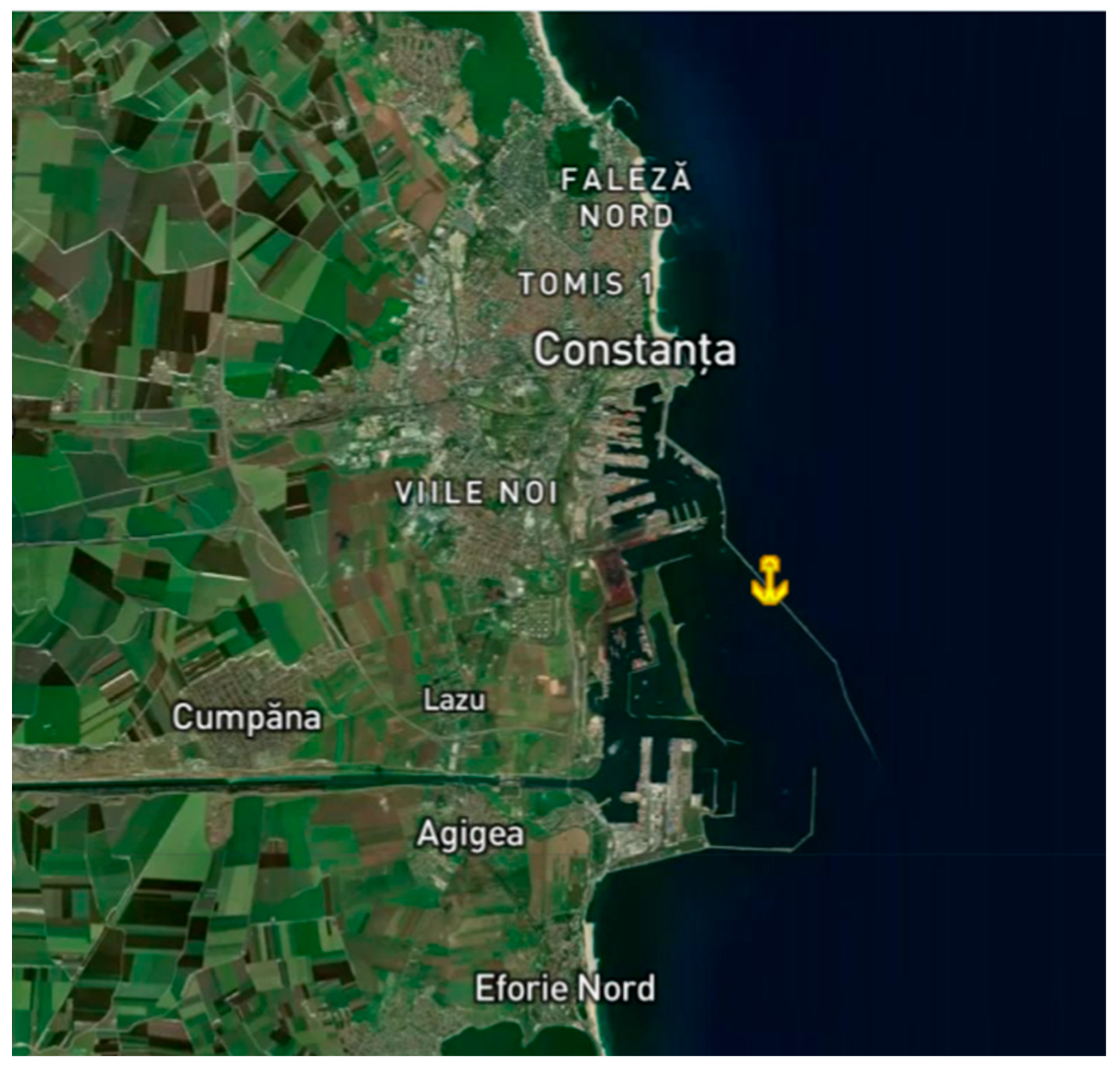
The Port of Constanța is located in southeastern Romania, approximately 200 km east of Bucharest, on the western shore of the Black Sea, 179 nautical miles northwest of the Bosphorus Strait and 85 nautical miles from the Sulina branch of the Danube (
Figure 1).
With a total area of approximately 3926 ha (of which approximately 1313 ha is land and 2613 ha is water), the port has two protective breakwaters—the northern one with a length of 8344 m and the southern one with a length of 5560 m, which ensure stable conditions for operation in any season.
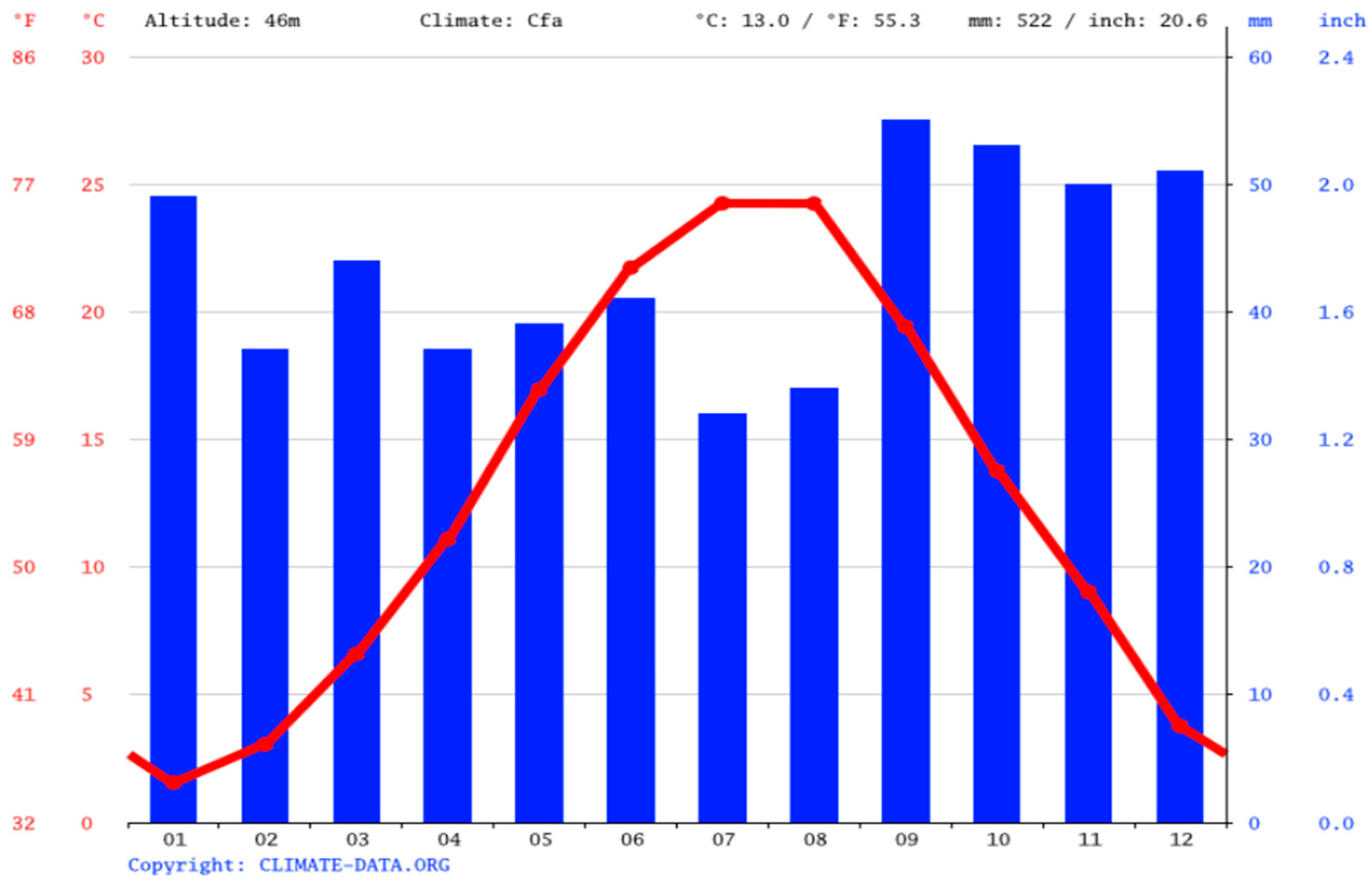
The climate in Constanța is classified as humid subtropical (Cfa) according to the Köppen–Geiger system [
10]. The average annual temperature is around 13 °C, with mild winters (average daily temperature between 1–2 °C in January) and warm summers, with average highs of 23–23.5 °C in July–August (
Figure 2). Precipitation amounts to about 520–530 mm annually, being relatively well distributed throughout the year, with a minimum in July (~32 mm) and a maximum towards autumn (September, ~55 mm).
The influence of the Black Sea is notable, tempering winters and bringing sea winds, especially in the summer months, when it creates a pleasant and moderate climate for port activities.
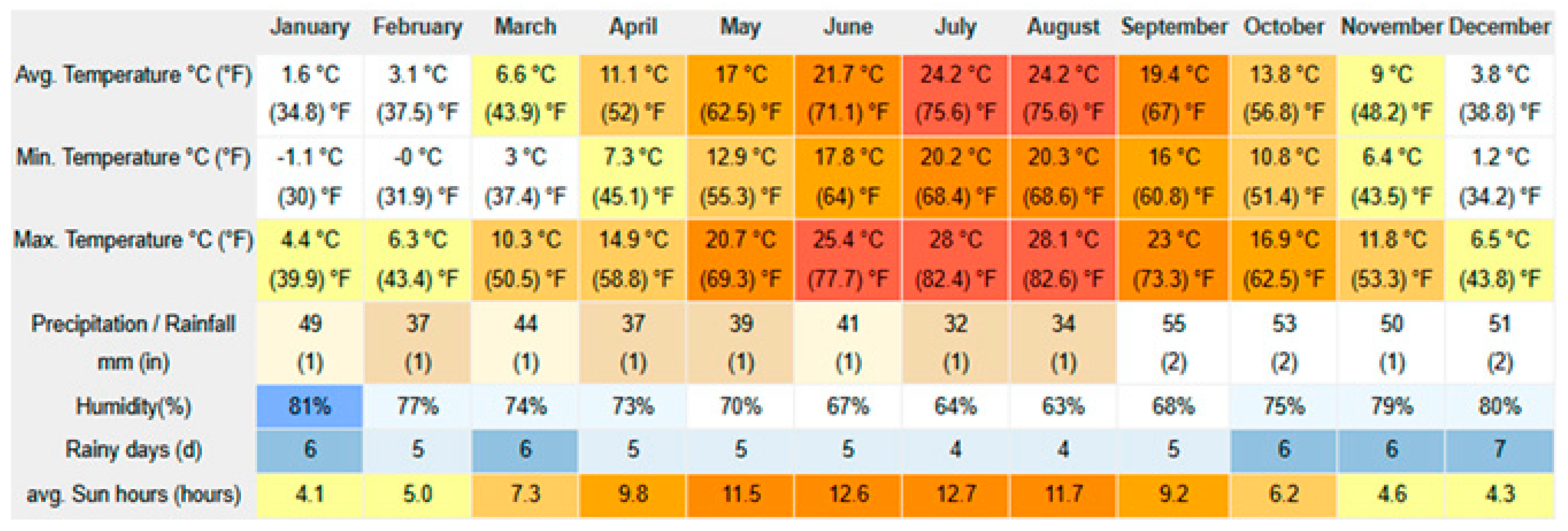
At the same time, the region is prone to strong winds and storms, which can affect port operations during certain periods (December–March) (
Figure 3) [
4,
10]. Thus, its privileged geographical position and moderate climate make the Port of Constanța a strategic logistics hub, capable of supporting intense and adaptable port activities throughout the year. This unique combination of factors supports the active, modern, and sustainable development of port infrastructure, including renewable energy and energy storage projects.
2.3. Analysis of Solar Radiation and Energy Potential
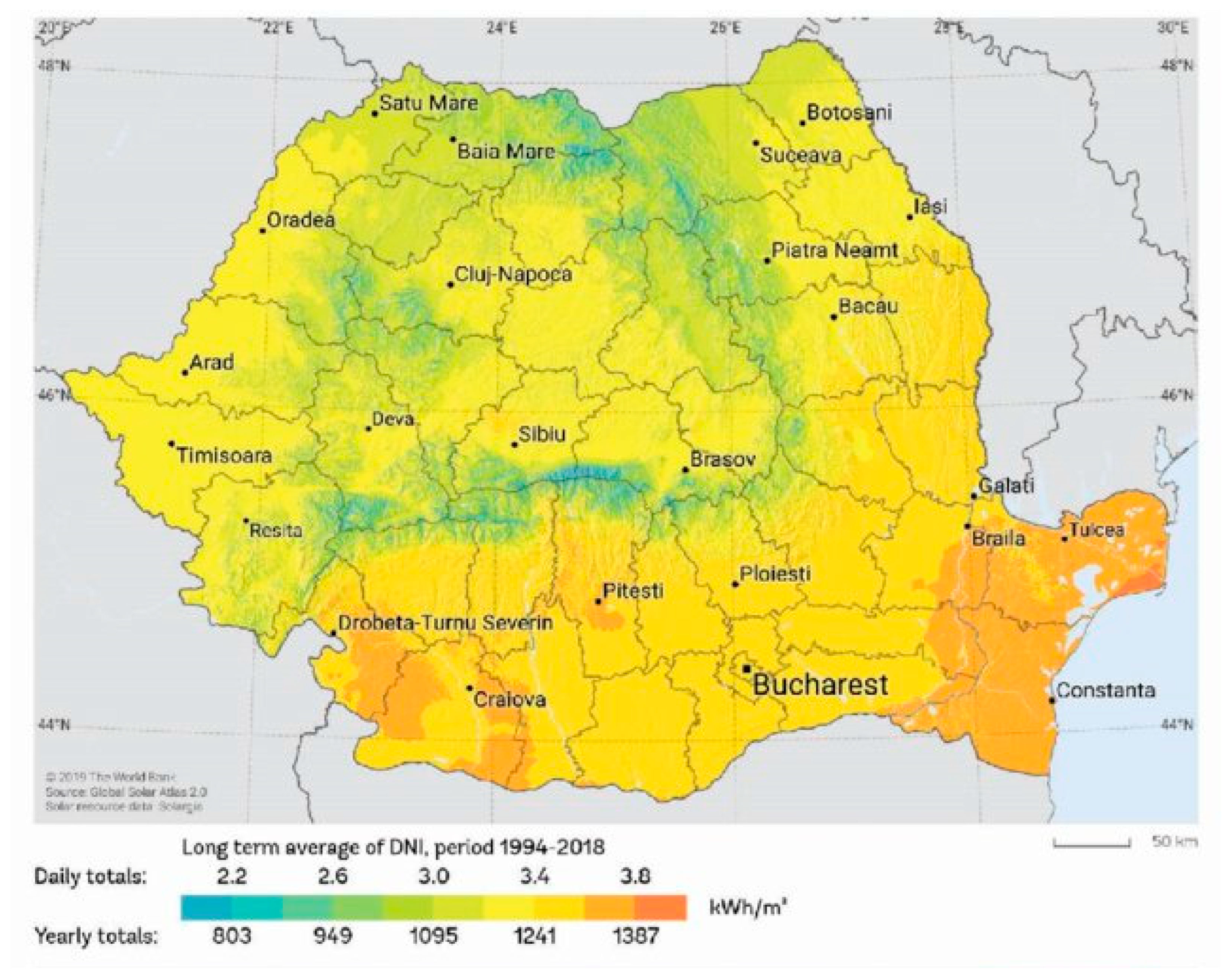
The Port of Constanța characterized by high levels of solar radiation, being located in one of the sunniest regions of Romania. On average, between 1100 and 1300 kWh/m
2 per year are recorded here, providing excellent conditions for photovoltaic energy production. These values are comparable to those in the southeast of the country, known for its high solar potential, which gives projects in the area a solid foundation for long-term energy efficiency [
10,
11].
During the summer, the Port of Constanța can generate an average of over 7 kWh/m
2 per day using photovoltaic panels, while in winter this value drops to approximately 1.5 kWh/m
2 (
Figure 4). The difference between seasons is significant, but the months from April to September provide an extended period of high production. To compensate for the declines in the cold season, energy storage solutions need to be integrated or consumption needs to be adapted to production.
Solar resource data and irradiation estimates were cross-validated using the Photovoltaic Geographical Information System (PVGIS), European Commission Joint Research Centre (JRC), Ispra, Italy, which provides long-term satellite-derived solar radiation datasets for Europe.
Another major advantage of floating photovoltaic projects is their location directly on the water. In the case of the Port of Constanța, this solution is particularly effective: the water helps to cool the panels naturally, which can lead to an increase in efficiency of up to 10% compared to land-based systems. Also, using the water surface for solar infrastructure reduces pressure on usable land, which is especially important in crowded urban or industrial areas where space is limited and expensive.
In addition to the technical and economic benefits, floating panels also help to limit water evaporation from reservoirs by directly shading the surface, which can be an additional advantage during hot or dry periods. Thus, photovoltaic systems located on water not only produce green energy, but can also become a multifunctional and sustainable solution for managing local resources. Located in the port area, floating panels benefit from natural cooling (through evaporation), which can increase the efficiency of the system by 5–10%. Furthermore, the use of water surfaces avoids land occupation and reduces land costs compared to ground-mounted solar parks [
12].
Assessment of Solar Resource
The general formula for estimating annual irradiation is:
where
represent monthly global radiation, (kWh/m
2/month). According to climatic data for the Constanța area, the annual global horizontal irradiation ranges between 1100 and 1300 kWh/m
2/year. This value serves as the basis for estimating the energy potential of a floating photovoltaic (FPV) system.
Estimating the Annual Energy Output of the FPV System
The annual electrical energy production of a PV installation is estimated using:
Lower-bound scenario (1100 kWh/kWp):
Moderate scenario (1200 kWh/kWp):
Upper-bound scenario (1300 kWh/kWp):
The detailed modelling results (22–24 GWh/year) exceed this theoretical estimate due to reduced module temperature, natural cooling effect of water and higher reflectance (albedo) [
13].
For a 1 MW installation, annual production would be between 1200–1300 MWh, correlated with the radiation level for this region.
Equations (1) and (2) were used exclusively as first-order screening expressions to estimate the theoretical annual energy potential of the floating photovoltaic (FPV) system based on long-term average solar irradiation and installed capacity. These formulations provide an indicative benchmark but do not capture the temporal variability, thermal behavior, or operational constraints of a hybrid FPV–BESS.
The instantaneous PV power output was computed as Equation (3):
where
is the nominal installed capacity,
is plane-of-array irradiance,
is the module temperature coefficient,
is the cell temperature,
accounts for inverter, wiring, and availability losses.
The cell temperature was adjusted to reflect the water-cooling effect, modeled through a reduced operating temperature compared to land-based installations, consistent with FPV literature.
Increase in Efficiency Due to Water Cooling
FPV modules operate at lower temperatures than ground-mounted systems, resulting in a 6–10% efficiency increase.
The formula used is Equation (4):
Example for a module with 20% baseline efficiency:
2.4. Concept and Design of Floating, Nearshore and Offshore PV Systems
The concept and design of floating, nearshore and offshore photovoltaic (PV) systems are driven by the need to maximize solar energy generation in aquatic environments while ensuring structural resilience, environmental compatibility, and operational reliability. Floating PV (FPV) systems installed on inland water bodies—such as reservoirs, lakes, or protected port basins—typically use modular HDPE pontoons, lightweight aluminum frames, and flexible mooring systems that accommodate water-level fluctuations and minimize mechanical stress [
14]. These systems benefit from calm hydrodynamic conditions, simplified anchoring, and proximity to electrical infrastructure, making them ideal for early-stage deployment. Nearshore PV systems, positioned within sheltered coastal zones or behind breakwaters, require more robust structural components due to increased exposure to waves, currents, and saline corrosion [
4]. Their design incorporates marine-grade materials, dynamic catenary mooring lines, and anti-biofouling protections, while ensuring compatibility with navigation, port operations, and coastal management plans. Offshore PV platforms represent the most technologically advanced segment, integrating large-scale floating structures capable of withstanding significant wave energy, storm conditions, and long-term marine degradation. Offshore designs draw heavily on offshore wind engineering principles, including multi-point mooring systems, high-durability composites, aerodynamic PV layouts, and modular platform architectures that can be scaled or hybridized with wind or wave energy converters [
2]. Across all configurations, considerations such as load distribution, buoyancy optimization, cabling protection, corrosion control, maintainability, and environmental impact [
15] assessments are essential to achieve safe, efficient, and sustainable deployment [
6]. As technology evolves, floating, nearshore, and offshore PV systems are becoming increasingly feasible solutions for expanding renewable energy production in diverse aquatic environments, including semi-enclosed basins like the Black Sea.
2.5. Existing Infrastructure and Integration Opportunities
The Port of Constanța has a well-developed electrical infrastructure, making it a suitable location for the integration of a modern energy production and storage system. The existing network includes several transformer stations, medium and high voltage power lines, as well as direct connections to the National Energy System (SEN), which simplifies the process of connecting a new energy project.
Some of the concrete advantages of the port infrastructure are:
- ▪
the existence of 110 kV and 20 kV networks that allow easy connection to the grid;
- ▪
direct access to industrial consumers within the port, who can use the energy produced locally;
- ▪
the presence of water basins and underutilized logistics platforms, which can be used for the installation of floating solar panels;
- ▪
the possibility for the energy generated to directly supply port or industrial facilities, thus reducing dependence on the general grid.
In addition, economic operators in the area and port authorities are increasingly interested in sustainable solutions that not only reduce energy costs but also contribute to environmental and energy efficiency goals. Thus, a public–private partnership could accelerate the implementation of such initiatives, transforming the port into a model of green and smart infrastructure.
At the same time, the port’s strategic location at the intersection of land and sea energy transport networks provides a favorable framework for the development of regional energy hubs capable of supporting both local consumption and the export of renewable energy to the national or international grid.
Components of a Floating PV System [
4]
Apart from traditional components of a GPV installation, a floating PV system includes several additional elements characterized in
Table 1 [
14].
2.6. Technological Components, Innovations, and Challenges
Floating, nearshore, and offshore photovoltaic (PV) systems rely on a complex set of technological components that must operate efficiently in aquatic environments while withstanding mechanical, environmental, and operational stresses. Core components include high-efficiency PV modules—often bifacial for enhanced albedo gains—mounted on buoyant platforms made from UV-stabilized HDPE or advanced composite materials engineered for long-term durability. Mooring and anchoring systems represent another essential technological element, with designs ranging from simple catenary lines in reservoirs to multi-point, dynamically tensioned moorings in offshore conditions. Electrical subsystems, including marine-grade cabling, waterproof connectors, inverters, transformers, and grounding equipment, are adapted to resist salinity, humidity, and corrosion. Recent innovations in the field focus on lightweight composite pontoons, self-healing polymers, anti-biofouling coatings, and hybrid platforms that integrate solar generation with wind or wave-energy technologies. Smart monitoring systems—including IoT sensors, SCADA platforms, AI-based predictive maintenance tools, and real-time environmental diagnostics—have improved reliability and reduced operational costs. However, FPV technologies continue to face significant challenges, such as material degradation in saline environments, mechanical stress from waves and storms, the need for specialized anchoring in deep or dynamic waters, and the risk of biofouling affecting buoyancy and electrical components [
16].
Environmental challenges, including impacts on aquatic ecosystems, temperature stratification, water quality, and interactions with birds or marine life, also require ongoing research and site-specific assessments. Additionally, the design of offshore PV systems must incorporate advanced resilience features borrowed from offshore wind engineering, such as aerodynamic platform geometries, redundancy in mooring lines, and corrosion-resistant alloys. Overall, while rapid technological innovation is expanding the feasibility of floating and offshore PV, engineering challenges and environmental uncertainties remain central considerations for sustainable implementation.
Environmental Stresses
Environmental stresses represent a critical consideration in the design, deployment, and long-term performance of floating, nearshore, and offshore photovoltaic (PV) systems, as aquatic environments expose these installations to a range of dynamic, often unpredictable forces. Among the most significant stressors are wind loads and storm events, which can generate high wave action, platform oscillation, and structural fatigue [
17,
18], particularly in nearshore and offshore locations. Water-level fluctuations—driven by seasonal hydrology, tidal cycles, storm surges, or extended droughts—can affect mooring tension, anchoring stability, and cabling integrity. Temperature extremes and thermal cycling result in material expansion and contraction, potentially accelerating the degradation of plastics, metals, adhesives, and electrical insulation. Salinity and humidity introduce continuous risks of corrosion, especially for metallic frames, connectors, and inverters, requiring advanced coatings or marine-grade materials. Biofouling—caused by algae, barnacles, mussels, and microbial films—can increase hydrodynamic drag, reduce buoyancy, and interfere with mechanical components, contributing to higher maintenance requirements. UV radiation further accelerates the aging of pontoons and polymeric components, while sediment movement and turbidity can influence anchoring stability and reduce water reflectance, impacting bifacial module performance. In environmentally sensitive areas, FPV systems must also account for ecological stresses such as interactions with birds, fish, and aquatic vegetation, as well as potential effects on water temperature, dissolved oxygen, and submerged habitats. Collectively, these environmental stresses underscore the need for robust engineering, site-specific environmental assessments, and long-term monitoring protocols to ensure sustainable and reliable operation of floating, nearshore, and offshore PV systems.
Materials for Floating Structures
Materials used in floating structures for photovoltaic (FPV) systems must combine buoyancy, mechanical strength, environmental resistance, and long-term durability to withstand the challenging conditions of aquatic environments. The most widely used material is high-density polyethylene (HDPE), chosen for its excellent buoyancy, UV stability, corrosion resistance, and ability to tolerate wide temperature fluctuations without cracking or deformation. HDPE pontoons are lightweight, cost-effective, and easy to assemble, making them ideal for freshwater reservoirs and protected coastal zones. In more demanding environments—such as nearshore and offshore locations—composite materials reinforced with fiberglass or carbon fibers are increasingly employed due to their superior structural stiffness, high fatigue resistance, and reduced susceptibility to marine degradation. Marine-grade aluminum alloys (e.g., 5083 or 6061) are used for supporting frames or hybrid structures, offering a balance between strength, lightweight properties, and corrosion resistance when properly coated. In applications requiring extreme durability, stainless steel components (316L or duplex grades) are incorporated into mooring connections and fasteners, although cost and corrosion risks must be managed. Innovations in self-healing polymers, anti-fouling coatings, and UV-resistant composite laminates are further enhancing service life by reducing maintenance needs and mitigating degradation from sunlight, waves, and biofouling. Material selection ultimately depends on environmental conditions, deployment depth, hydrodynamic loads, salinity, and the expected operational lifespan, making it a critical factor in the design and engineering of reliable floating PV platforms.
Mooring Systems and Connectors
Mooring systems and connectors are critical components in floating photovoltaic (FPV) installations, ensuring the long-term positional stability, structural integrity, and operational safety of the platform under varying hydrodynamic and meteorological conditions [
5,
6]. The design of a mooring system must account for site-specific forces such as wind load, wave action, current velocity, and water-level fluctuations, all of which influence the tension, movement, and fatigue experienced by floating structures [
17,
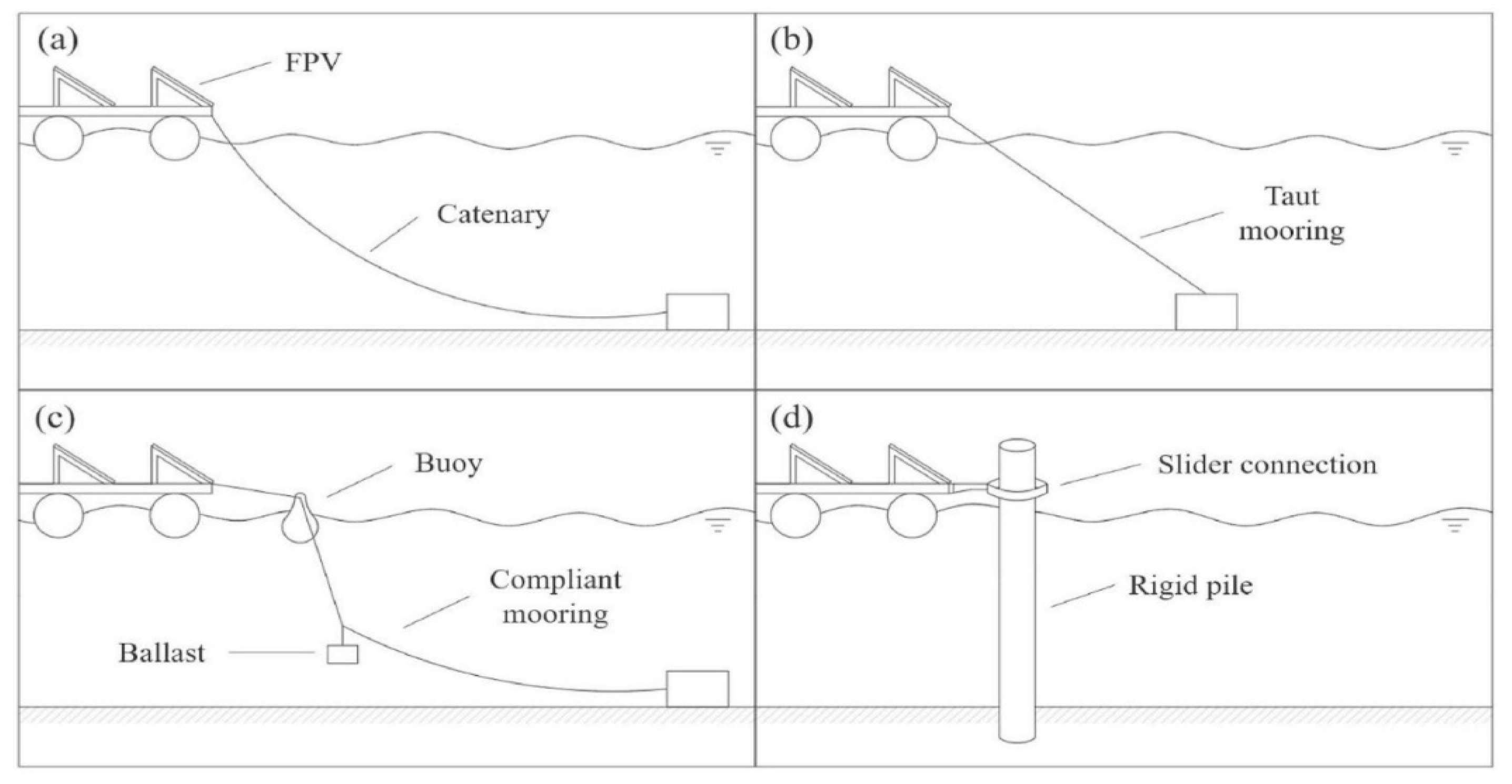
19]. In calm freshwater reservoirs, simple catenary mooring lines anchored with concrete blocks or screw anchors are commonly used, offering flexibility and cost-efficiency. For nearshore installations exposed to moderate waves and currents, taut-line mooring systems employing elastic or semi-elastic materials provide better energy dissipation and reduced platform drift. Offshore or highly dynamic environments require more advanced multi-point mooring configurations, inspired by offshore wind technology, which distribute loads evenly and maintain stability even during storms. Connectors—linking pontoons, mooring lines, and anchoring elements—must be engineered using high-grade materials such as marine-grade stainless steel, galvanized steel, or composite alloys to resist corrosion, fatigue, and biofouling (
Figure 5). Articulated connectors, hinges, and flexible joints allow controlled movement of the platform while preventing excessive stress on PV modules and cabling systems. Additional components, including chain stoppers, swivels, shackles, and load cells integrated for real-time tension monitoring, enhance reliability and predictive maintenance. Ultimately, the choice of mooring and connector design is driven by environmental conditions, water depth, platform size, and the desired operational lifespan, making these systems fundamental to the safe and sustainable deployment of FPV technologies [
20].
2.7. Overview of Recent FPV Projects Worldwide
Table 2 highlights the distribution of potential locations for the implementation of floating photovoltaic (FPV) systems in the Black Sea basin, emphasizing not only the type of water bodies and areas specific to each country, but also the technical and operational suitability of these locations. The comparative analysis shows that Romania and Turkey have the highest opportunities for FPV development, due to the combination of intense solar radiation, extensive port infrastructure, and the existence of well-protected water basins. The ports of Constanța, Midia, and Varna, as well as the lakes and hydro-technical reservoirs in Dobrogea and Anatolia, offer stable hydrodynamic conditions and easy access to the electricity grid, which facilitates the implementation of large-scale floating technologies.
In contrast, countries such as Georgia, Ukraine, and Russia have an average level of suitability, influenced by factors such as increased exposure to waves in certain coastal areas, variable climatic conditions, or administrative constraints. However, hydroelectric reservoirs such as Enguri or the port basins in Odessa remain promising locations for demonstration or small-scale projects. The table also highlights that the implementation of FPV in the Black Sea requires consideration of factors such as biodiversity protection, hydrodynamic stability, port infrastructure integrity, and potential navigation restrictions.
2.8. Stages of Development of a Floating Photovoltaic Park
The implementation of a floating photovoltaic park involves a rigorous, phased process that includes technical analysis, compliance with existing legislation, technology selection, and specialized execution. In the case of the Port of Constanța, this process is even more complex due to the industrial and navigable nature of the area [
4].
Pre-Feasibility and Feasibility study
The pre-feasibility and feasibility studies are the fundamental pillars in the decision-making and planning process of any energy infrastructure project [
4]. In the case of a floating photovoltaic park in the Port of Constanța, these analyses are all the more important given the atypical nature of the site—an active port area with specific hydro-meteorological conditions and strict requirements regarding navigation safety and environmental protection.
Pre-feasibility study—assessment of potential and opportunity
The purpose of the pre-feasibility study is to determine whether the project is technically, economically, and environmentally justified at an early stage, without going into implementation details. At this stage, the analysis focuses on:
Assessment of local solar potential: Constanța benefits from annual solar radiation of between 1300 and 1700 kWh/m2, which creates solid conditions for the energy efficiency of a floating park.
Identifying available water areas: Port basins with low or partial use are selected, which do not affect shipping traffic and where the water bottom allows the floating structure to be anchored.
Analysis of existing infrastructure: Proximity to 20 kV or 110 kV transformer stations, as well as the existence of industrial consumers in the port, can support the rapid integration of the energy produced.
Preliminary cost estimate: An approximate budget for the total investment is outlined, including costs for equipment, installation, connection, anchoring and monitoring systems.
Identification of funding sources: The possibilities for accessing European funds (e.g., European funds, PNRR, private investors), environmental grants, or public–private partnerships are analyzed.
Feasibility study—detailed analysis of technical and economic parameters
The feasibility study provides an in-depth analysis and a detailed framework for making investment decisions. Among the elements included are:
Technology selection: Choice of monocrystalline panels, floating structures (e.g., HDPE or aluminum pontoon type), inverters compatible with humid environments, and anchoring systems adapted to local conditions (e.g., with ballast or piles).
Energy production modeling: Using specialized software (e.g., PVsyst), the annual amount of energy produced is estimated based on local radiation, average temperature, and panel orientation.
Risk assessment: The possible impacts on maritime traffic, aquatic biodiversity, and platform stability in storm conditions or water level variations are assessed.
Environmental impact: An environmental impact assessment (EIA) is prepared, including accident scenarios, chemical risks (e.g., battery fluid leaks), and measures to reduce the impact on local fauna and flora.
Financial analysis: A detailed plan of expenses and revenues (CAPEX and OPEX) is drawn up, calculating the payback period, internal rate of return (IRR), and net present value (NPV) [
21].
Legislative and regulatory aspects: Identifying the necessary approvals from the Romanian Naval Authority, the Maritime Ports Administration, ANRE, and the Environmental Protection Agency.
Thus, pre-feasibility and feasibility studies are essential to determine whether a floating photovoltaic park in the Port of Constanța can become a sustainable and efficient project, both from an energy, financial, and environmental point of view.
These analyses help reduce uncertainties, optimize design, and identify potential constraints that may arise in later phases of the project.
2.9. Uncertainty Analysis and Model Validation Approach
The modeling approach involves several sources of uncertainty related to climatic variability, hydrodynamic boundary conditions, and economic assumptions. Solar irradiation data were subject to interannual variability of approximately ±5–8%, consistent with regional meteorological records. The water-cooling efficiency gain was considered within a conservative range of 6–10%, in line with values reported in previous FPV studies. Hydrodynamic loads were evaluated using a 50-year return period storm scenario, acknowledging uncertainties associated with wave directionality and extreme wind events. Economic indicators such as LCOE were tested against variations in CAPEX and OPEX to assess result robustness.
3. Results
3.1. Sensitivity Analysis of Specific Yield Assumptions
To address uncertainties related to solar irradiation and floating-system thermal gains, a sensitivity analysis was conducted using three representative specific yield values appropriate for the Port of Constanța (
Table 3):
The 1100 kWh/kWp value reflects conservative estimates derived from long-term Romanian PV operational data without enhanced cooling effects. The 1200 kWh/kWp scenario corresponds to regional utility-scale averages in Dobrogea. The 1300 kWh/kWp case includes a modest 5–7% floating-system thermal gain.
This sensitivity analysis demonstrates that, even under conservative assumptions, the floating photovoltaic system remains technically and economically viable.
3.2. Monthly Energy Yield Modeling (20 MWp FPV System)
The monthly energy production was estimated (
Table 4) considering the specific solar irradiance of the Port of Constanța, using a conservative specific yield range between 1100 and 1300 kWh/kWp, consistent with long-term PV performance data for southeastern Romania [
11] and a Performance Ratio (PR) of 0.72–0.82 and limited cooling gain (4–6%).
Monthly energy production was calculated using a conservative specific yield assumption of 1200 kWh/kWp, corresponding to an annual generation of approximately 24 GWh for the 20 MWp FPV system. The distribution reflects long-term solar radiation patterns for southeastern Romania and incorporates realistic system losses, including inverter efficiency, wiring losses, and availability constraints.
Performance ratios (PRm) vary between 0.75 and 0.82, consistent with utility-scale photovoltaic installations operating in coastal environments. The floating configuration was modeled with a limited thermal gain of 4–6%, reflecting moderate water-cooling benefits without assuming idealized temperature reductions.
The highest monthly production occurs between May and August, with peak output of approximately 3.6–3.7 GWh in July, corresponding to maximum solar altitude and longer daylight duration. Winter production remains significantly lower (0.4–0.9 GWh), confirming the pronounced seasonal variability typical for the Black Sea region.
The seasonal production gap—from 0.40 GWh in December to 3.65 GWh in July—justifies the integration of the 40 MWh Battery Energy Storage System (BESS). The storage system concept corresponds to utility-scale lithium-ion containerized battery technology (e.g., Megapack battery system, Tesla Inc., Austin, TX, USA, or equivalent commercial systems). Although the storage capacity cannot compensate for long-term seasonal deficits, it enables:
intraday load shifting,
peak shaving during high-demand port operations,
improved self-consumption ratio,
enhanced grid stability during summer production peaks [
22,
23].
The applied BESS control strategy maintains conservative state-of-charge (SOC) limits to preserve battery lifetime while maximizing operational flexibility within the port energy system.
3.3. Comparative Analysis: FPV (Floating) vs. LPV (Land-Based)
To ensure a representative and transparent comparison, the land-based photovoltaic (LPV) system considered in this study corresponds to a utility-scale ground-mounted solar power plant located in the Dobruja region (southeastern Romania), an area with the highest solar potential in the country and extensive PV deployment. The reference LPV system reflects the average technical and economic characteristics of operational plants commissioned between 2019 and 2023, as reported in national energy statistics and recent Romanian PV studies (
Table 5).
The economic performance of FPV and LPV systems was evaluated using the Levelized Cost of Electricity (LCOE), calculated as:
where
—represents initial investment costs,
—includes annual operation and maintenance expenses,
—is the electricity generated in year ,
—is the discount rate (assumed 6%),
—is the project lifetime (25 years).
As a result, the FPV system achieves an LCOE in the range of 0.046–0.052 €/kWh, which is comparable to or slightly lower than that of the reference LPV system in Dobruja (0.048–0.055 €/kWh). This demonstrates that FPV technology, when deployed in sheltered port environments, can be economically competitive with conventional land-based PV installations [
23].
Unlike land-based systems in the Dobrogea region, which experience significant efficiency drops when ambient temperatures exceed 30 °C, the FPV system utilizes the Black Sea’s water mass as a natural heat sink. This maintains the PV modules at an operating temperature closer to Standard Test Conditions (STC), resulting in a much more stable production curve during peak sun hours (
Table 4).
In major logistics hubs like the Port of Constanța, land is an extremely valuable asset reserved for storage and terminal operations. Implementing a 20 MWp land-based system would require the permanent conversion of over 20 hectares of prime industrial land. The FPV system utilizes “dead water” zones within the port basins, increasing the economic density of the port perimeter without interfering with heavy traffic or logistics.
Terrestrial PV plants in South-Eastern Romania are frequently affected by dust accumulation (soiling), especially during dry seasons. In a marine environment, the distance from agricultural dust sources and the presence of high humidity significantly reduce the frequency of manual cleaning, although specific anti-corrosion and anti-bird measures are required.
While FPV provides a superior energy yield, the initial Capital Expenditure (CAPEX) is approximately 15–20% higher due to the specialized HDPE floaters and corrosion-resistant mooring systems. However, the technical results demonstrate that this cost is offset by the increased annual energy production (GWh/year) and the avoidance of land leasing costs, resulting in a more attractive Levelized Cost of Energy (LCOE) in the long term.
3.4. Extreme Storm Scenario Analysis
The comparative data in the table above demonstrates the structural robustness of the proposed 20 MWp FPV plant. Under Normal Operating Conditions, the system operates with extremely high safety margins, with mooring tensions barely reaching 5% of the Minimum Breaking Load (MBL) (
Table 6).
During the Extreme Storm Scenario [
4,
5], although loads increase exponentially (specifically wind drag and wave-induced tension), the system maintains a Safety Factor of 2.66. This confirms that the three-point taut mooring configuration is not only sufficient but provides a necessary buffer for the non-linear dynamic loads characteristic of the Black Sea’s “Northeaster” storms. The pitch and roll angles remain below the 15° threshold, ensuring that the underwater power cables and inter-row connectors do not experience mechanical fatigue or short-circuiting due to excessive torsion.
Considering the identified uncertainty ranges, the annual energy yield of the FPV system is estimated to be between 22 and 26 GWh. Sensitivity analysis indicates that solar resource variability has the highest influence on annual output, followed by thermal performance assumptions. Even under conservative scenarios, the FPV system maintains a higher specific yield than equivalent land-based PV installations in the region.
4. Discussion
The integration of a 20 MW Floating Photovoltaic (FPV) system and a 40 MWh Battery Energy Storage System (BESS) at the Port of Constanța presents a multi-dimensional optimization challenge. The following sections evaluate the implications of our findings.
4.1. Energy Performance in the Context of Regional Solar Potential
The sensitivity analysis confirms that a realistic specific yield for the Port of Constanța lies between 1100 and 1300 kWh/kWp, with a moderate scenario of approximately 1200 kWh/kWp. These values are consistent with long-term photovoltaic performance data for southeastern Romania and align with operational ranges reported for floating systems in temperate climates.
Previous studies, such as [
12,
24], report floating-system gains between 5% and 12% depending on climatic conditions and water-body characteristics. In the present study, the estimated floating-related gain (approximately 5–8%) remains conservative and avoids overestimation of the cooling effect. Unlike tropical FPV installations, where temperature reduction significantly boosts output, the temperate coastal climate of the Black Sea moderates thermal differentials, resulting in incremental—but not exaggerated—efficiency gains.
The results therefore support the working hypothesis that FPV systems in sheltered marine basins can achieve performance at the upper boundary of regional PV potential, without exceeding realistic climatic limits. Importantly, even under the conservative 1100 kWh/kWp scenario, the system remains economically viable, reinforcing the robustness of the hybrid configuration.
4.2. Thermodynamic Advantages and the “Cooling Effect”
The simulation results indicate a specific yield increase of approximately 11.2% compared to land-based systems in the Dobruja region. This is primarily attributed to the “cooling effect” of the water body. The heat transfer coefficient () for FPV systems is significantly higher than that of ground-mounted systems due to the high thermal mass of the Black Sea and the convective cooling provided by maritime breezes.
As defined in the energy yield model, the cell temperature
can be expressed as:
In the Port of Constanța, the proximity of the water surface maintains closer to the ambient temperature , reducing the efficiency loss typically associated with the high solar irradiance of the Romanian coast.
The enhanced performance of the FPV system is primarily attributed to reduced module operating temperature. The proximity of the water surface increases convective heat transfer and stabilizes cell temperature, particularly during peak summer irradiance.
However, the cooling effect should not be interpreted as a uniform or constant performance multiplier. Water temperature stratification, wind speed variability, humidity, and array spacing all influence thermal exchange efficiency. In the Port of Constanța, the marine breeze effect and high thermal inertia of the Black Sea contribute to temperature stabilization rather than dramatic cooling. This distinction is essential to avoid unrealistic yield projections sometimes observed in early FPV literature.
Thus, the results confirm a moderate thermodynamic benefit, consistent with international findings, while maintaining methodological conservatism.
4.3. Structural Resilience and Hydrodynamic Feasibility
The hydrodynamic assessment under a 50-year return period storm scenario indicates a Safety Factor of 2.66 for the taut three-point mooring configuration. This exceeds Eurocode and DNV recommended minimum values (>2.0) [
17], demonstrating adequate structural robustness.
Compared to offshore renewable platforms, the semi-enclosed nature of the Port of Constanța significantly reduces extreme wave heights and dynamic loading. Nevertheless, the Black Sea exhibits steep wave profiles during northeaster storms [
10], requiring careful fatigue assessment of connectors and anchoring systems.
The analysis confirms that sheltered port basins provide an optimal transitional environment between inland FPV and fully offshore platforms. This finding aligns with recent marine engineering research emphasizing nearshore zones as scalable entry points for maritime solar technologies.
4.4. Economic Implications and Hybrid System Value
The economic assessment indicates that the proposed FPV–BESS configuration achieves a Levelized Cost of Electricity (LCOE) in the range of 0.046–0.052 €/kWh, positioning the system within the competitive spectrum of utility-scale photovoltaic installations in southeastern Europe. While the capital expenditure (CAPEX) of floating systems remains approximately 15–20% higher than land-based equivalents [
23] due to floating structures, marine-grade components, and corrosion-resistant anchoring systems, this initial premium must be evaluated within a broader economic framework.
First, floating deployment eliminates land acquisition or opportunity costs—an especially relevant factor in high-value industrial areas such as the Port of Constanța, where land is primarily reserved for logistics, storage, and heavy cargo operations. The ability to utilize underexploited water surfaces effectively increases the energy productivity per unit of port territory, enhancing spatial efficiency and long-term asset optimization.
Second, the slightly higher specific yield (4–8% above land-based systems) contributes directly to improved lifetime energy output. Over a 25-year operational horizon, even marginal annual performance gains translate into substantial cumulative generation increases, partially offsetting the higher initial investment.
The integration of the 40 MWh Battery Energy Storage System (BESS) significantly enhances the economic and operational value of the project [
25]. While the battery increases upfront costs, it enables multiple revenue-stabilizing mechanisms beyond simple energy arbitrage. These include:
Intraday peak shaving during periods of elevated port electricity demand [
25]
Load shifting aligned with vessel shore-to-ship power (cold ironing) operations [
26]
Reduction of grid congestion within the port distribution network
Enhanced self-consumption ratio of locally generated renewable electricity
Potential participation in ancillary service markets (frequency regulation, reserve capacity)
From a systems perspective, the FPV–BESS configuration should therefore be interpreted not solely as a power generation facility, but as a distributed energy management platform embedded within a complex industrial microgrid [
9]. In this context, economic viability is influenced not only by LCOE, but also by avoided fuel costs, reduced carbon pricing exposure under EU ETS mechanisms, and improved energy security for critical maritime infrastructure.
Sensitivity testing of CAPEX, OPEX, and discount rate assumptions indicates that the hybrid system remains economically robust under conservative irradiation scenarios (1100 kWh/kWp). This resilience reinforces the conclusion that floating photovoltaic systems, when strategically integrated with storage in sheltered port environments, can achieve both financial competitiveness and operational flexibility.
Ultimately, the economic advantage of the proposed configuration lies in its multifunctionality: it simultaneously supports decarbonization targets, enhances grid resilience, increases spatial efficiency, and reduces dependency on fossil-fuel-based auxiliary generation within port operations.
4.5. Environmental Considerations and Sustainability Context
The environmental effects of floating photovoltaic (FPV) systems in port environments must be evaluated through a balanced perspective that considers both localized ecosystem interactions and broader decarbonization benefits [
27].
The primary ecological mechanism associated with FPV deployment is surface shading. Partial coverage of the water body may reduce light penetration and influence phytoplankton activity, dissolved oxygen levels, and benthic conditions [
8]. In industrial basins such as the Port of Constanța, where ecosystems are already modified, these effects are expected to remain localized and manageable, particularly if coverage ratios are moderate.
Thermal impacts beneath floating arrays are typically limited to small shaded zones and are unlikely to alter basin-scale stratification in well-mixed port waters. Nevertheless, seasonal monitoring of temperature profiles and water quality indicators would strengthen environmental oversight [
27]. Biofouling accumulation also requires attention, both from an operational and ecological standpoint, emphasizing the need for non-toxic materials and maintenance protocols.
When assessed within a life-cycle framework, the environmental benefits of reduced diesel consumption, lower greenhouse gas emissions, and improved air quality outweigh the limited and controllable local impacts. However, long-term ecological monitoring—focusing on dissolved oxygen, turbidity, and habitat response—remains essential to ensure that renewable deployment aligns with sustainable marine management principles.
In this context, FPV systems in industrial port basins represent a controlled and comparatively low-risk pathway for expanding marine renewable energy.
4.6. Broader Implications for Black Sea Energy Transition
The results of this study have broader relevance for renewable energy deployment in the Black Sea region. Semi-enclosed basins such as those found in major ports provide favorable conditions for floating photovoltaic (FPV) systems due to reduced wave exposure, existing grid infrastructure, and concentrated industrial electricity demand.
Ports operate as energy-intensive microgrids, supporting cargo handling, refrigeration, electrified cranes, and shore-to-ship power [
26]. Integrating FPV with battery storage enhances local energy autonomy, reduces fossil-fuel dependence, and increases operational resilience. In this context, FPV–BESSs should be viewed not only as generation assets but as integrated energy management solutions within port infrastructure.
The Port of Constanța illustrates a replicable model for other Black Sea ports with similar characteristics, including Varna, Burgas, and Samsun. By utilizing underused water surfaces, such systems improve spatial efficiency while contributing to European decarbonization targets.
However, regional deployment must consider site-specific environmental conditions, storm patterns, and long-term climate variability. With appropriate engineering design and environmental monitoring, floating photovoltaic systems can represent a practical and scalable component of the Black Sea’s maritime energy transition.
5. Conclusions
The proposed 20 MW floating photovoltaic park integrated with a 40 MWh battery energy storage system represents a strategic step toward the decarbonization of the Port of Constanța. By generating approximately 22–26 GWh of renewable electricity annually, the system has the potential to significantly reduce reliance on fossil-fuel-based electricity and auxiliary diesel generation within port operations. Based on standard European grid emission factors, this corresponds to a substantial annual reduction in CO2 emissions, contributing meaningfully to national and EU climate targets.
Through the synergy between local renewable generation, storage capacity, and the electrification of port infrastructure (including shore-to-ship power), the project enhances energy resilience, reduces carbon intensity, and supports the long-term transformation of the port into a sustainable and energy-efficient maritime hub.
The main conclusions are:
The Port of Constanța offers favorable geographical, climatic, and technical conditions for the implementation of a renewable energy production solution based on floating photovoltaic technology;
Currently available technologies allow for the creation of efficient floating systems that are resistant to the marine environment, with increasingly competitive costs compared to land-based solutions;
The integration of an energy storage system adds significant value to the project by ensuring flexibility, reliability, and the ability to optimize energy consumption;
From an economic point of view, the project is feasible and attractive for investment, especially if it is supported by non-reimbursable European funds and public energy transition policies;
The environmental impact can be effectively managed through preliminary studies, monitoring, and technical prevention measures, and the climate and sustainability benefits are considerable [
15];
The FPV system demonstrates a realistic specific yield range of 1100–1300 kWh/kWp under Port of Constanța climatic conditions. While floating systems benefit from moderate thermal efficiency gains (approximately 5–8%), the results confirm that energy performance remains within the upper bounds of Romanian photovoltaic potential rather than exceeding it dramatically.
The sensitivity analysis confirms that system feasibility is maintained even under conservative irradiation scenarios, strengthening the robustness of the proposed hybrid FPV–BESS configuration.