


Abstract
This study investigates managers’ perceptions of digitalization and artificial intelligence (AI) adoption within the framework of Industry 4.0, emphasizing the relationship between technological modernization, organizational culture, and sustainability. Drawing on empirical data collected in 2025 from 150 Romanian companies ’managers by applying a structured questionnaire, followed by a multivariate analytical approach supported by the Benjamini–Hochberg correction, the research identifies critical managerial perceptions that influence the success of digital transformation. The findings show that managers recognize digitalization as a strategic opportunity for process optimization and competitiveness. At the same time, they perceive it as a structural challenge driven by legacy systems, financial constraints, and limited digital competencies. Similarly, managers view AI as a valuable tool for data analysis and market forecasting, while also expressing concerns related to ethical, technical, and cybersecurity risks. The study further reveals managerial ambivalence toward Industry 4.0. Although automation and IoT are considered inevitable for maintaining competitiveness, their implementation remains constrained by logistical and cultural barriers. By integrating technological, organizational, and human dimensions, this research contributes to the literature on sustainable digital transformation. It provides an in-depth understanding of how managerial perceptions mediate the balance between innovation, responsibility, and long-term resilience. Finally, the results offer actionable insights for policymakers and business leaders seeking to align digitalization and AI initiatives with sustainable development objectives.
1. Introduction
In today’s rapidly evolving business environment, managerial decision-making regarding digitalization and artificial intelligence (AI) has become a critical factor in achieving both competitive advantage and operational excellence. Digital technologies enable organizations to integrate real-time data, automate operational processes, and redesign business models, thereby transforming value creation mechanisms [1,2,3]. At the same time, organizations increasingly align digital innovation with environmental and social responsibility to support long-term sustainable development [4,5]. As a result, digitalization and sustainability have become closely interconnected strategic priorities.
Previous research approaches digital transformation from multiple theoretical perspectives. Technology-oriented studies emphasize the role of digital infrastructure, Industry 4.0 technologies, and automation in enhancing productivity and operational performance [6,7]. Organizational and managerial research highlights the importance of leadership, managerial competencies, and digital capabilities in shaping transformation outcomes [8,9,10,11,12]. Sustainability-oriented frameworks analyze how firms use digital technologies to support responsible innovation and resource efficiency [4,5,13].
Despite these advances, the literature remains fragmented and theoretically inconsistent. Many studies examine isolated dimensions of digital transformation, such as technological readiness [14], leadership and organizational culture [15,16], or governance and compliance requirements [17,18], without investigating their combined effects. Moreover, recent research highlights the central role of managerial perceptions in shaping digital strategies and investment decisions [19,20]. However, studies provide limited evidence on how technological, organizational, and human factors simultaneously influence these perceptions.
Artificial intelligence further amplifies this complexity. Research shows that AI supports managerial decision-making, process optimization, and organizational resilience [21,22,23]. At the same time, numerous studies identify substantial barriers to AI adoption, including digital skill shortages, governance challenges, cybersecurity risks, and ethical concerns [24,25,26]. These constraints particularly affect small and medium-sized enterprises and organizations in emerging economies.
In addition, recent studies report mixed and sometimes contradictory effects of digital transformation on organizational performance. Some research highlights efficiency gains and innovation benefits [27,28], while others signal rising operational costs, declining asset efficiency, and the emergence of digitalization paradoxes [29,30]. These findings suggest that digital technologies do not automatically generate sustainable competitive advantages. More, some authors emphasize strategic renewal and innovation, while others highlight organizational restlessness, structural constraints, and increasing managerial complexity [31,32,33,34]. These inconsistencies reflect fragmented theoretical approaches that treat technological, organizational, and human dimensions separately and rarely capture their dynamic interdependencies.
To address these gaps, this study conceptualizes digital transformation as the joint optimization of technological infrastructures, organizational structures, human capabilities, and governance mechanisms [21,22,35]. Within this framework, the study investigates Romanian managers’ perceptions of digital transformation, artificial intelligence, and sustainability in the context of Industry 4.0.
Specifically, this research formulates the following central question: How do technological, organizational, and human factors jointly shape managers’ perceptions of digital transformation, AI adoption, and sustainability-oriented competitiveness in Romanian firms?
To answer this question, we collect survey data from firms across diverse sectors and apply an exploratory multivariate analytical approach combined with the Benjamini–Hochberg correction to control the false discovery rate. We direct the survey exclusively to managers, who possess in-depth knowledge of organizational processes, digital strategies, and investment decisions, thereby strengthening the reliability and validity of the empirical evidence.
Accordingly, this study makes four main contributions to the literature on digital transformation and sustainability. First, we demonstrate how managerial ambivalence toward digital and AI technologies shapes organizations’ ability to translate technological investments into sustainable performance outcomes, thereby explaining previously mixed empirical findings. Second, we integrate technological, organizational, and human capability perspectives within a sociotechnical framework and provide a comprehensive explanation of why digital transformation succeeds in some contexts but generates unintended constraints in others. Third, through an exploratory, hypothesis-generating approach in an emerging economy context, we reveal hidden interdependencies among digital capabilities, strategic priorities, and sustainability-oriented performance that remain underexplored in prior research. Fourth, the study distinguishes itself by applying multivariate analysis techniques in conjunction with the Benjamini–Hochberg correction. This combination provides robust statistical reliability and improves the management of complex variable interdependencies, offering a more rigorous empirical foundation compared to conventional approaches.
From a sustainability perspective, this study highlights the novelty of an integrated approach: digital transformation, guided by strategic alignment and supported by digital literacy, can directly contribute to the Sustainable Development Goals (SDGs), such as SDG 9—Industry, Innovation and Infrastructure, and SDG 12—Responsible Consumption and Production. By linking technological progress with the imperatives of sustainability, firms can achieve not only economic resilience but also lasting environmental and social impact.
This study contributes to academic research by offering an integrated and nuanced view of managerial perceptions of digitalization and artificial intelligence across multiple economic sectors. By simultaneously addressing technological, organizational, and cultural dimensions, the study enhances understanding of the key factors driving digital technology adoption. Moreover, it supports the design of more targeted strategies for the practical and sustainable implementation of these technologies in contemporary organizations, providing actionable insights for both scholars and practitioners.
2. Literature Review and Hypotheses Development
We conducted a bibliometric analysis of the correlation between keywords “Managerial decision, Digital transformation, Industry 4.0” using Web of Science database. Only document types: articles and proceeding papers was selected, resulting 128 papers published in journals from the field of Management, Business, Computer Science Interdisciplinarity applications, Engineering Industrial, Engineering Manufacturing, Operations Research Management Science, Economics, Green Sustainable Science Technology.
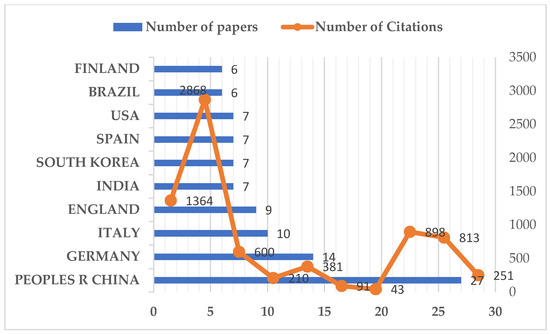
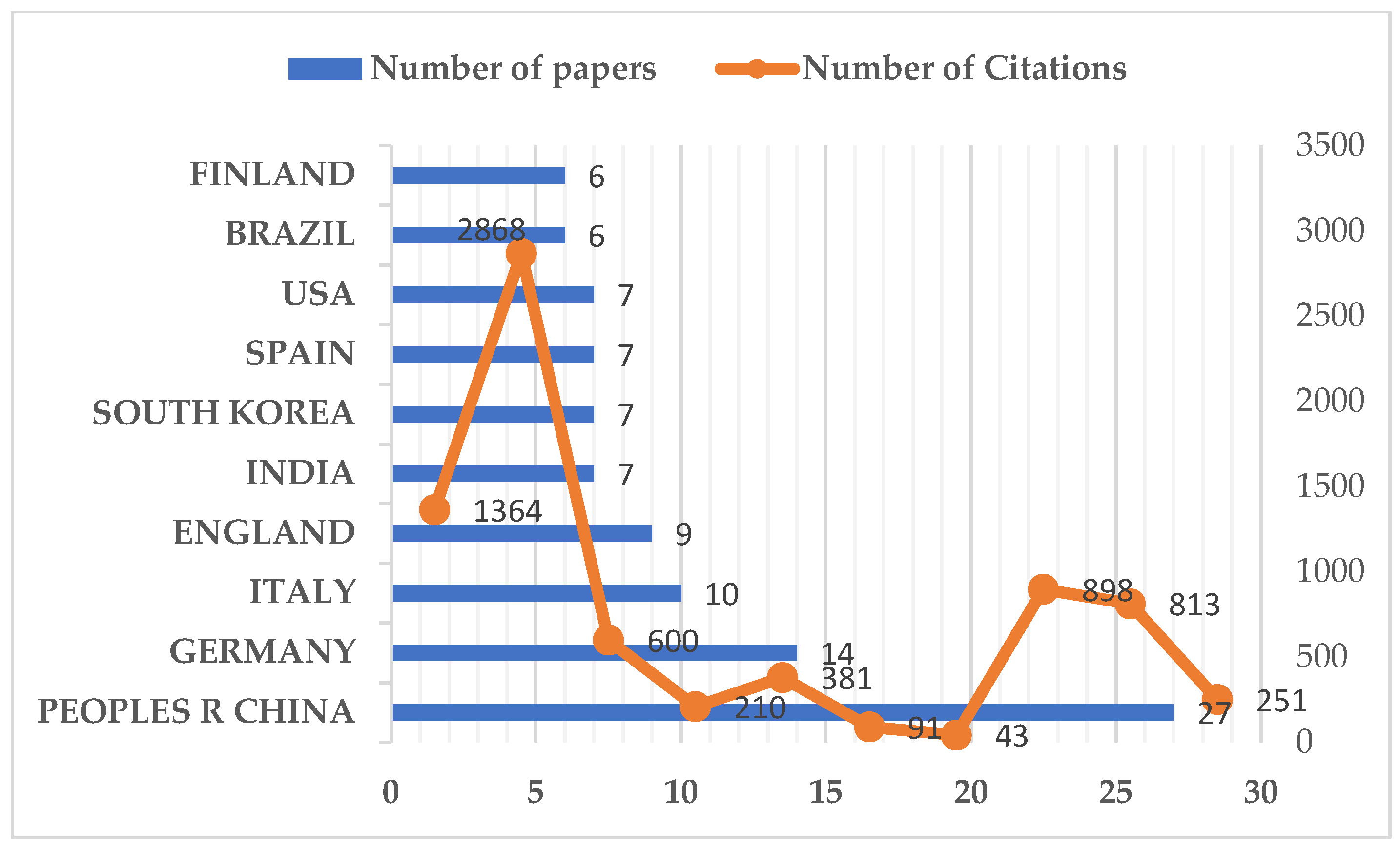
Figure 1 explores the main 10 countries that analyzed the most managers’ perceptions of digitalization and artificial intelligence (AI) adoption within the framework of Industry 4.0.
Figure 1.
Top 10 countries most active in publishing and most cited. Source: own processing using Web of Science database.
China is the most active country on this theme, 27 papers, which represents 21.09% of total publications indexed in Web of Science, followed at a considerable distance by Germany with 17 papers (11%) and Italy (8%). Other major contributing countries include the United Kingdom, South Korea, Spain, India, and the United States, each with seven to eight publications, as well as Finland, Russia, and Croatia. A similar pattern emerges in terms of citation impact. Germany leads in total citations (2868), followed by China (1364) and the United States (898), indicating strong international visibility and scholarly influence of research produced in these countries.
Over 100 articles were published from 2020 to 2025, demonstrating rapid growth in digital transformation and Industry 4.0 research. The peak of 23 publications in 2024 underscores the increasing academic focus, with the earliest relevant study dating back to 2016. This trend underscores the growing importance of this research area in the international literature.
Regarding journal outlets, Sustainability ranks first with 11 publications, followed by the International Journal of Production Economics with four publications and the International Entrepreneurship and Management Journal with three publications. This distribution showcases the broad scope and collaborative nature of research on digital transformation, management, and sustainability.
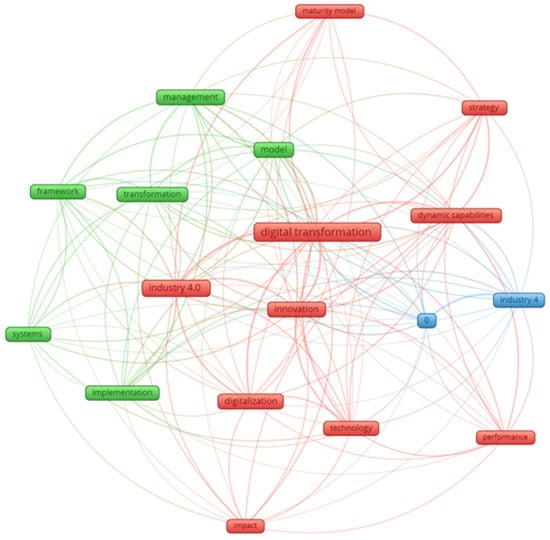
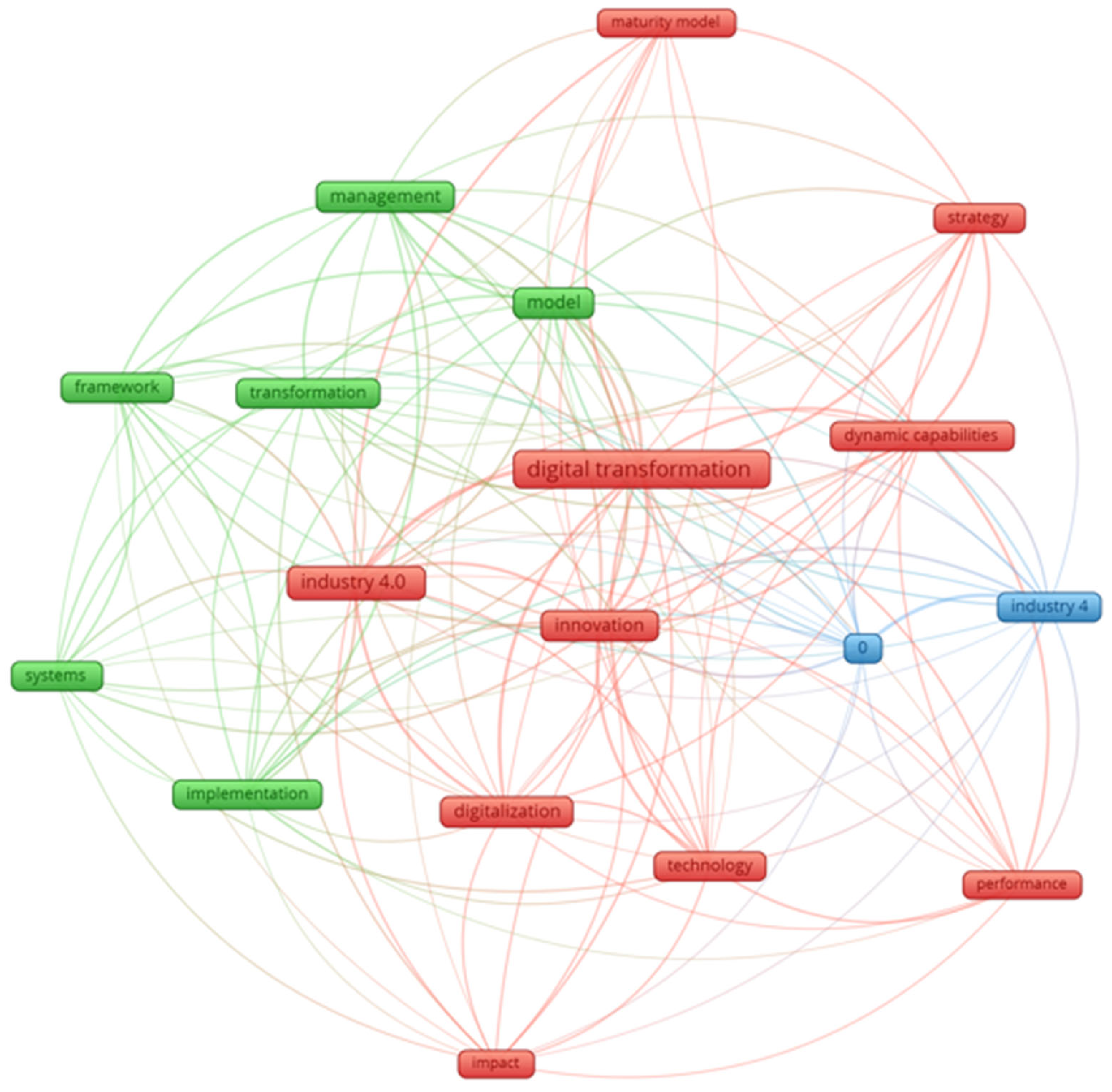
Figure 2 displays the co-occurrence network of key terms such as digital transformation, Industry 4.0, management, technology, and innovation, created using VOSviewer (version 1.6.20). This visualization highlights the main thematic structures and research clusters shaping the field. However, despite this growing body of research, empirical evidence remains uneven across regions and methodological approaches, particularly in emerging European economies.
Figure 2.
Keywords correlation map. Source: Web of Science database using keywords processed in VOS viewer 1.6.20 software.
The keyword co-occurrence network shows that 18 items form three distinct clusters, generating 137 links with a total link strength of 478. This structure indicates a relatively dense and interconnected research field.
Cluster 1 (red), comprising ten items, focuses on digital transformation and includes keywords such as innovation, Industry 4.0, dynamic capabilities, strategy, technology, digitalization, performance, and maturity models. This cluster reflects the strong emphasis on technological development and organizational performance in the existing literature.
Cluster 2 (green), consisting of six items, centers on managerial and organizational aspects, including systems, models, frameworks, implementation, and transformation. This cluster highlights the growing interest in governance structures and managerial processes supporting digital initiatives.
Cluster 3 (blue), composed of two items, relates to Industry 4.0-specific technologies and infrastructure, emphasizing the technical foundations of digital transformation.
Overall, the bibliometric results indicate a substantial increase in scholarly interest in managerial perceptions of digitalization and AI within the Industry 4.0 framework. While China leads in publication output and Germany dominate in citation impact, the distribution of research remains geographically uneven. Moreover, existing studies primarily emphasize technological and organizational dimensions, while integrated analyses linking managerial perceptions, sustainability objectives, and digital transformation outcomes remain limited. These findings highlight the need for further empirical research to clarify the synergies between digital transformation, management practices, and sustainable Industry 4.0 implementation, particularly in emerging European economies.
Research on digital transformation within the Industry 4.0 paradigm has evolved along three main theoretical streams: technological capability theory, organizational and managerial capability theory, and sustainability-oriented innovation frameworks. Together, these perspectives emphasize that digital transformation represents a complex socio-technical process shaped by technological infrastructure, organizational arrangements, and human capabilities [2,4].
Technology-oriented studies highlight the role of digital infrastructure, automation, data analytics, and artificial intelligence in enhancing operational efficiency and competitive advantage [1,2]. However, empirical findings remain mixed. While some studies report substantial performance gains, others observe diminishing returns when organizations fail to integrate digital technologies into existing structures and workflows [6,35]. These findings suggest that digitalization may simultaneously generate efficiency improvements and structural constraints, shaping managerial perceptions of transformation outcomes. Accordingly, we formulate the following hypotheses:
H1.
Level of digital transformation is significantly correlated with managers’ perceptions of organizational and structural constraints.
Digitalization is perceived to enhance productivity and increase efficiency in service provision. However, its adoption brings in new constraints, such as the need for continuous adaptivity to evolving changes in tech and changes in infrastructure to adapt to the new technologies. Eliminating traditional barriers and the introduction of complex challenges associated with digitalization pose significant structural challenges in its adoption [36].
H2.
Managers perceive that digitalization is positively correlated with process optimization and operational efficiency.
Analysis of recent academic literature shows that managers must integrate both technological knowledge, which evolves rapidly (“know-what”), and a strong understanding of internal business processes (“know-how”), while fostering an organizational culture based on continuous learning, collaboration, and adaptability [10].
In the industrial environment, Dióssy et al. [11] identify a “leadership paradox”: a task-oriented leadership style not only accelerates digitalization processes and improves operational performance, but also has potential for positive effects during the early stages of digital transformation, as it can provide clear direction and focus.
From a strategic perspective, Cai, Geng, and Yang [9] demonstrate that executives with academic experience play a crucial role in the success of digital transformation. Such educational backgrounds foster innovation, critical thinking, and a higher tolerance for uncertainty, thereby shaping a new generation of leaders suited to the digital era. Moreover, Ye [15] emphasizes that digital leadership plays a central role in strengthening organizational resilience by encouraging employees’ proactive behaviors, such as job crafting.
Organizational and managerial research emphasizes leadership, strategic orientation, and digital competencies as key enablers of transformation [8,9,11]. Studies show that managers with strong strategic vision and innovation-oriented mindsets foster organizational learning and adaptability. At the same time, hierarchical structures and rigid routines may limit the effectiveness of digital initiatives, particularly in transition economies. These mixed findings indicate that managerial orientation and organizational context jointly influence transformation success. Lack of adequate internal expertise is an active barrier to the adoption of AI in firms [24]. Artificial intelligence adoption has received increasing scholarly attention due to its potential to enhance predictive analytics, decision-making quality, and process optimization [12,21]. Nevertheless, several studies document substantial barriers, including limited technical expertise, data quality issues, cybersecurity risks, and ethical concerns [24,26]. Firms lacking internal competencies often struggle to implement and govern AI systems effectively. Therefore, we propose the following hypotheses:
H3.
Managers perceive that limitations in internal technical expertise are positively correlated with perceived barriers to AI adoption.
H4.
Managers perceive that usefulness of artificial intelligence is positively correlated with managers’ evaluations of data analytics and market forecasting capabilities.
Research on Industry 4.0 technologies highlights the strategic importance of IoT, automation, and cyber-physical systems in improving real-time monitoring, predictive maintenance, and supply chain integration [6,37]. These capabilities enhance operational responsiveness and organizational competitiveness. However, scholars also emphasize that performance gains depend on effective integration with legacy systems and organizational routines [35]. Insufficient system compatibility often reduces the impact of digital investments. Various studies suggest that IoT has positive impacts on organizational competitiveness, to enhance performance and better strategic positioning in the industry. It also enhances supply chain integration and a better competitive advantage [38]. Therefore, the positive perceptions of automation and IoT lead to firms investing in them. Consequently, we propose:
H5.
Managers perceive that IoT technologies and automation are positively correlated with organizational competitiveness.
H6.
Managers’ perception of Industry 4.0 as an opportunity positively influences the perceived success of digital transformation.
Implementing the Industry 4.0 (I4.0), involves far more than automation and data analytics; it requires a redefinition of leadership, the development of digital competencies, and an organizational culture that fosters continuous learning and adaptability. In this context, managers play a crucial role, as their ability to interpret, evaluate, and operationalize technology determines the extent to which digital potential is transformed into sustainable performance. Roth, K., & Farahmand, K. [35] highlight that maintenance managers perceive I4.0 as an integrated socio-technical process built on the interdependence between people, processes, and technology. Their qualitative study, conducted in Swedish industrial firms, shows that leaders often face resistance to change and digital skill gaps, necessitating a transition from a technically oriented leadership style to one centered on collaboration, mentoring, and emotional support. This shift in leadership style underscores the need for adaptability in managerial roles in the face of digital transformation. This view is reinforced by Le et al. [12], who examine the role of managerial competencies in I4.0 adoption in Thailand and Vietnam. Their structural modeling results indicate that organizational readiness serves as a key mediator between managerial competencies and adoption intention. They integrate the Technology Acceptance Model (TAM), which focuses on user acceptance of technology, and the Technology-Organization-Environment (TOE) framework, which considers the organizational context in technology adoption, suggesting that effective leadership must combine strategic foresight with practical implementation and operational adaptability. A complementary approach is offered by Młody, Ratajczak-Mrozek, and Sajdak [37], who analyze how I4.0 technologies reshape managerial decision-making across the value chain. Drawing on interviews with Polish managers, the study shows that different stages of the production process benefit from distinct digital tools. Specifically, 3D printing supports the design phase, IoT and M2M technologies improve maintenance activities, while Business Intelligence and Big Data enhance logistics and sales decisions. These findings highlight the role of digital technologies in improving both operational performance and managerial decision-making. Similarly, Yüksel [6] examines the internal factors shaping Industry 4.0 transformation in Turkish firms. The results indicate that automation, lean practices, and investment in R&D are the primary drivers of digital success, whereas firm size and organizational agility play a more limited role. Furthermore, the effects of Industry 4.0 are observed mainly within the organization, reflected in higher productivity, advanced data analytics, and improved process traceability. This suggests that companies tend to prioritize internal integration before extending digital initiatives to external partners [39,40].
Moreover, perceived usefulness of artificial intelligence remains a central determinant of managerial support for digital technologies. These arguments lead to the following hypotheses:
H7.
There is a positive correlation between the perceived integration of advanced digital technologies with legacy systems and digital transformation outcomes.
H8.
Employees’ digital skills are positively correlated with perceptions of successful technology integration.
Human capital and digital skills constitute essential components of successful transformation processes. Prior studies indicate that employees’ technological competencies facilitate system adoption, knowledge sharing, and cross-functional collaboration [11,12]. In the context of contemporary social and ethical challenges, Buonocore et al. [5] emphasize the need to adopt responsible innovation strategies. These strategies, involving the ethical and sustainable use of digital technologies, combine digital agility with social responsibility. The aim is to achieve a sustainable balance between economic performance and societal impact. Similar, Wen, Zhong, and Lee [28], examined the correlation between the digitalization of the manufacturing industry and corporate innovation investment, using information from Chinese listed manufacturing companies. Empirical evidence indicates that manufacturing enterprises have significantly increased their investment in innovation activities in the process of digital transformation. Manufacturing enterprises with higher viability are more adaptable to digital transformation and tend to implement differentiated competitive strategies, benefiting from a stimulating effect of innovation.
The growing academic discourse increasingly emphasizes that digitalization represents a strategic necessity, not a one-off technological project. That leadership plays a decisive role in turning it into a sustainable competitive advantage. Literature reviews show that effective leaders articulate a digital vision, orient the organization toward customers and ecosystems, build internal capabilities, and tolerate experimentation—thus reframing digitalization as an integrated organizational strategy [8,16]. Therefore, the “strategic necessity” lies not merely in adopting digital tools but in aligning resources, capabilities, and decisions with a clear strategy communicated vertically and horizontally, underscoring the strategic importance of your role [41]. Organizations that invest in continuous skill development strengthen their absorptive capacity and innovation potential. These insights support the following hypothesis:
Finally, sustainability-oriented research emphasizes that digital transformation entails substantial financial and organizational investments [4,5]. High implementation and maintenance costs may discourage managerial commitment and increase perceived risk. When managers view these costs as excessive, they are more likely to discount long-term benefits and adopt conservative strategies. Therefore, we formulate:
H9.
Perceived implementation costs (upfront investment requirements) are negatively correlated with managers’ evaluation of digital and AI adoption.
In an increasingly complex digital environment marked by stringent regulations and rapid technological change, managers face a crucial challenge: transforming regulatory compliance from a legal obligation into a strategic tool for risk management and organizational governance. Mubarkoot et al. [18] analyze software compliance requirements and policies and show that their success depends directly on managerial involvement. Organizational leadership plays a crucial role in developing a compliance climate through education, training, and awareness (through SETA—Security Education, Training, and Awareness programs), as well as through the automation of control processes. According to the authors, individual factors such as self-efficacy, risk perception, and attitudes toward rules are effective only when managers actively support them. By allocating resources, enforcing clear sanctions, and encouraging responsible behavior, management transforms compliance from a perceived constraint into a sign of maturity in governance and risk management.
Taken together, the reviewed literature suggests that technological capabilities, organizational structures, and human resources jointly shape managerial perceptions and strategic orientations toward digital transformation and sustainability. In line with this integrated perspective, this study draws on the Technology Acceptance Model (TAM), the Technology–Organization–Environment (TOE) framework, the socio-technical approach, and dynamic capability theory. Building on dynamic capability theory, digital transformation is conceptualized as a process of sensing technological opportunities, seizing strategic investments, and transforming organizational structures and skills. These complementary perspectives provide the theoretical foundation for the development of the research hypotheses.
3. Research Design
From a methodological standpoint, the study is characterized by a high level of scientific rigor and analytical precision, achieved through the application of multivariate analysis (MVA) and the Benjamini–Hochberg (B–H) correction. This advanced statistical approach reduces the risk of Type I errors and enhances result validity in contexts marked by high complexity and variable interdependence, instilling confidence in the findings.
The empirical data for this study were collected through a structured questionnaire designed to examine the relationships among digital transformation, artificial intelligence (AI) adoption, and the challenges associated with their implementation within organizations. The data is collected from 150 Romanian managers across various industries such as transport, manufacturing, and service provision. We administered the survey to managers from the transport, manufacturing, and service sectors in Romania between January and March 2025. We used a purposive and convenience sampling strategy to recruit participants who were directly involved in digitalization and artificial intelligence initiatives. We contacted respondents through institutional email lists and professional networks and selected them based on their managerial roles. In total, we distributed 176 questionnaires, of which 150 were valid, resulting in a response rate of approximately 85%.
We designed the questionnaire to include 25 items, grouped into five thematic subgroups, as illustrated in Table 1. Each subgroup represented a distinct research variable aligned with the conceptual model developed for this study. All items were formulated using a five-point Likert scale, ranging from “Strongly Disagree” (1) to “Strongly Agree” (5), allowing for a quantitative assessment of respondents’ perceptions and attitudes.
Table 1.
The variable subgroups.
To examine interdependencies among perception-based variables, we adopted a regression-based multivariate analytical framework. We treated each questionnaire item as an independent variable and calculated all possible pairwise associations, yielding a total of 300 statistical tests.
We applied the Benjamini–Hochberg procedure to control the false discovery rate at 5% and reduce the likelihood of Type I errors, given the large number of simultaneous comparisons. After adjustment, 166 associations remained statistically significant. The outcome of the regression gave the Chi-square values, the Cramer’s V correlation coefficient, the raw p-value, and the BH adjusted p-value which is appropriate for ordinal data derived from Likert-type scales. The strength of the correlations was assessed by the Chi-square value, while the correlations were given by Cramer’s V. We reported the raw p-value and the adjusted p-values to give the strength of the associations. Our criteria for accepting or rejecting the null hypothesis were based on the BH adjusted p-value, where the threshold was α = 0.05. We reported both raw and adjusted p-values to enhance transparency and reproducibility. We selected the strongest relationships based on adjusted significance levels and effect sizes to identify robust empirical patterns.
Although researchers can apply alternative multivariate techniques, such as structural equation modeling or multivariate regression, these methods require strict assumptions regarding causal structures and larger sample sizes. Given the exploratory nature of this study and the data’s perceptual characteristics, we adopted a correlation-based multivariate approach as the most appropriate analytical strategy.
Each of the questions was treated as a variable and was tested against each other variable, where the order did not matter [1]. The total number of combinations were 300, as below:
N = The total number of combinations where order does not matter
n = the total number of variables to choose from
m = the variable combinations., Variable 1 vs. Variable 2
The analysis identified 166 statistically significant results, with adjusted p-values below 0.05, after applying the Benjamini–Hochberg correction to control the False Discovery Rate (FDR) [13,42]. For the statistical assessment, the study ranked the top five variable associations by Cramér’s V correlation coefficients [1], presenting the corresponding p-values and adjusted p-values for each association.
4. Results and Findings
H1.
Level of digital transformation is significantly correlated with managers’ perceptions of organizational and structural constraints.
From a managerial perspective, digitalization represents a significant challenge, particularly when it requires adapting existing technological infrastructures. The empirical results reveal a statistically significant correlation between the level of digitalization and managers’ perceptions of structural constraints, indicating that greater digitalization is correlated with greater awareness of organizational complexity and coordination demands. This finding suggests that managers perceive digital transformation as a systemic process involving interconnected technological, cultural, and strategic changes rather than as a purely technical upgrade. Although managers recognize the operational benefits of digital technologies, they simultaneously acknowledge the risks and uncertainties associated with infrastructural reconfiguration and process integration.
Consequently, the results indicate that successful digital transformation depends not only on technological investment but also on managers’ ability to anticipate, interpret, and manage organizational complexities over time. The results of the hypothesis analysis are presented in Table 2.
Table 2.
Challenges in adapting the existing infrastructure.
The digitalization challenges related to “lack of financial resources” and the perception that digitalization “is not a company priority” showed a statistically significant correlation (adjusted p-value = 0.023). This relationship underscores the urgent need to address financial constraints and elevate the organizational priority for digital transformation, as these are major factors hindering the adoption of technological infrastructure in traditional companies.
The analysis revealed a significant relationship between the digitalization challenge “lack of qualified personnel” and the AI challenge “lack of financial resources” (adjusted p-value = 0.019). These results indicate that the modernization and integration of technological infrastructure are severely limited in the absence of adequately skilled personnel for digitalization and sufficient financial resources to implement AI technologies. In addition, a significant correlation was identified between the digitalization challenge “lack of a company-wide strategy” and the AI challenge “not being a company priority” (adjusted p-value = 0.046). This correlation highlights that the absence of a coherent strategic vision for digitalization, coupled with low prioritization of AI implementation, impedes adaptation of technological infrastructure and delays the overall digital transformation at the organizational level.
Finally, a strongly significant relationship was observed between the digitalization challenge “lack of a company-wide strategy” and the AI challenge “ethical and privacy issues” (adjusted p-value = 0.004) suggesting that, in the absence of unified digitalization strategies, ethical and data protection concerns add to the uncertainty, further complicating managers’ efforts to adapt existing technological infrastructure. Consequently, the lack of clear digital governance and the growing importance of ethical and privacy considerations consolidate as significant obstacles to technological transformation.
H2.
Managers perceive that digitalization is positively correlated with process optimization and operational efficiency.
Managers play a pivotal role in digital transformation decisions and subsequent performance. Our empirical results indicate a statistically significant positive correlation between digitalization and managers’ perceptions of process optimization and operational efficiency, as reported in Table 3.
Table 3.
Optimizing operational efficiencies using digitalization and AI.
This finding aligns with Nakandala et al. [43], who show that managers’ intentions to adopt Industry 4.0 technologies depend strongly on their perceived usefulness for improving internal processes. Similarly, Wang and Shao [27] demonstrate that digitalization enhances production efficiency by optimizing resource allocation and reducing operational costs. The results suggest that managerial perceptions of digital technologies translate into strategic orientations focused on efficiency, adaptability, and continuous improvement. By streamlining workflows and minimizing resource waste, digital transformation becomes a key driver of sustainable operational performance.
The analysis revealed a significant correlation between the perceived importance of digital technology and AI’s role in driving innovation and technological development (adjusted p-value = 0.008). This finding underscores the transformative potential of AI and confirms that organizational leaders perceive digital innovation not merely as an operational objective but as a source of sustainable efficiency. The continuous development of AI-based solutions refines internal processes and enhances adaptability to the dynamic economic environment, thereby transforming the way organizations operate. Another significant relationship was identified between investment in software solutions and the use of AI for providing personalized customer services, with a positive correlation (adjusted p-value = 0.002) indicating that digitalization through personalization contributes to process optimization and improved service efficiency. This finding confirms that integrating AI into customer interactions allows organizations to achieve tangible gains in productivity and consumer satisfaction. Similarly, software investments were found to be significantly correlated with AI use in cybersecurity (p-value = 0.0001). This relationship indicates that AI-driven digital solutions optimize data protection processes and enhance operational efficiency by automating threat detection and response. Consequently, investments in intelligent technologies not only strengthen information security but also reduce costs associated with operational risks.
Finally, we observed a strong correlation between software investments and the use of AI for data analytics and insight generation (p < 0.001). This finding confirms that investments in analytical technologies support evidence-based decision-making and improve organizational analytical capabilities.
Overall, the identified relationships between managerial perceptions, technological investments, and AI applications demonstrate the positive impact of digitalization on organizational performance and its strategic role in fostering sustainability, resilience, and long-term competitiveness, which represent core dimensions of sustainable digital transformation.
H3.
Managers perceive that limitations in internal technical expertise are positively correlated with perceived barriers to AI adoption. Managers perceive the implementation of artificial intelligence (AI) in decision-making processes as a significant challenge, primarily because their teams lack technical and digital skills. Skill shortages and limited team expertise shape managerial perceptions of AI more as a challenge than an opportunity for transformation—with significant implications for organizational sustainability, resilience, and strategic digitalization.
As reported in Table 4, we identified a statistically significant correlation between the AI-related challenge of “lack of qualified personnel” and “rejection of AI by staff” (adjusted p-value = 0.000). This result suggests that organizations currently face a dual barrier: a shortage of skilled professionals and resistance from existing employees. Together, these factors severely limit the effective adoption and implementation of intelligent technologies.
Table 4.
Implementation of AI in decision-making process.
These findings highlight the importance of investing in digital training, change management, and organizational learning to enhance AI readiness and support sustainable digital transformation.
We identified a statistically significant correlation between the challenges “lack of qualified personnel” and “AI is not a company priority” (p < 0.001). This result highlights the need for strategic investment in digital training, as weak organizational prioritization reinforces deficiencies in technical competencies. These conditions delay digital transformation and encourage organizations to adopt reactive approaches to AI implementation.
We also observed a significant relationship between the insufficient availability of qualified AI personnel and the absence of a coherent company-wide strategy for AI integration (p < 0.001). This finding indicates that limited technical expertise constrains managers’ ability to design and implement effective digital transformation strategies.
Through a comparative analysis of digitalization- and AI-related challenges, we further identified a significant correlation between the lack of qualified personnel for digitalization initiatives and insufficient financial resources for AI implementation (adjusted p-value = 0.019). This result emphasizes the interdependence of human and financial capital in supporting sustainable AI adoption.
In addition, we found a strong correlation between the lack of personnel capable of implementing digitalization strategies and the shortage of staff qualified to deploy AI solutions (p < 0.001). This relationship demonstrates that technological expertise represents a cross-cutting capability that simultaneously affects both digital and AI-driven transformation processes.
Overall, these findings indicate that persistent skill shortages and insufficient strategic prioritization of digital capability development represent significant barriers to effective and sustainable AI adoption.
H4.
Managers perceive that usefulness of artificial intelligence is positively correlated with managers’ evaluations of data analytics and market forecasting capabilities.
Our analysis reveals a statistically significant positive correlation between managers’ perceptions of AI usefulness and their evaluations of data analytics and market forecasting capabilities, as reported in Table 5. This finding indicates that managers view AI as a strategic tool for enhancing analytical accuracy, predictive performance, and decision-making quality.
Table 5.
Relation between AI as an efficient analytics tool but poses security risks.
This result aligns with existing literature, which emphasizes the role of AI in supporting advanced data processing and market intelligence [27]. At the same time, managers adopt a cautious approach, recognizing that while AI strengthens competitive potential, it also raises challenges related to algorithmic governance, transparency, and ethical accountability.
These findings suggest that perceived usefulness represents a key driver of AI acceptance and integration, particularly when organizations balance technological benefits with responsible and sustainable governance practices.
The analysis releases a statistically significant correlation between digitalization initiatives focused on information security and the use of artificial intelligence for data analytics (adjusted p-value = 0.003). This result confirms that investments in digital security measures support both data protection and advanced analytical capabilities. This finding not only validates the effectiveness of digital measures in protecting critical company information but also underscores the practical benefits of AI in large-scale data analytics. We also observed a significant relationship between cybersecurity-oriented digitalization initiatives and managers’ perceptions of AI’s role in protecting data and technological infrastructure (adjusted p-value = 0.001). This finding highlights the integration of AI into organizational security strategies and emphasizes its importance for ethical governance and institutional resilience. Managers increasingly perceive AI as a critical tool for mitigating risks associated with cyberattacks and data breaches.
Furthermore, we found a statistically significant correlation between the use of AI-based analytical algorithms and concerns related to ethics and privacy (adjusted p-value = 0.047). This result reflects growing managerial awareness regarding transparency, accountability, and responsible data management, reinforcing the need for robust governance frameworks.
In addition, we identified a significant correlation between the use of AI in data analytics and managerial perceptions of technological overdependence (adjusted p-value = 0.019). This finding suggests that excessive reliance on automated systems may create organizational vulnerabilities and increase exposure to operational and cybersecurity risks.
Overall, these results indicate that organizations must balance technological innovation with effective human oversight to ensure long-term sustainability, security, and resilience in an increasingly digital environment.
H5.
Managers perceive that IoT technologies and automation are positively correlated with organizational competitiveness.
Our analysis reveals a statistically significant positive correlation between managers’ perceptions of IoT technologies and automation and their evaluations of organizational competitiveness, as reported in Table 6. This finding indicates that managers increasingly perceive Industry 4.0 technologies as essential drivers of productivity, operational flexibility, and market positioning.
Table 6.
Relation between logistical challenges and the need for automation.
This result aligns with recent studies showing that managers no longer regard digital transformation as a discretionary strategic option but rather as a necessary condition for organizational survival and competitiveness [44,45]. Emerging technologies, including IoT, intelligent automation, big data analytics, and artificial intelligence, constitute core components of contemporary business models.
At the same time, the findings reflect a form of managerial ambivalence, as managers simultaneously recognize the strategic importance of these technologies and the operational complexity of their implementation. This tension highlights the challenges organizations face in translating technological potential into sustainable competitive advantage through effective resource allocation, organizational learning, and governance mechanisms.
The results suggest that the successful adoption of IoT and automation strengthens organizational competitiveness when firms manage implementation complexity and align technological investments with long-term sustainability objectives.
Table 6 presents the findings of the hypothetical analysis.
The findings managers’ perceptions of automation- and Internet of Things (IoT)–driven digitalization initiatives as strategic imperatives for maintaining organizational competitiveness. Managers increasingly view artificial intelligence as a transformative technology, particularly for automating repetitive tasks (adjusted p-value = 0.012), enhancing large-scale data analytics (p < 0.001), and enabling personalized customer service (adjusted p-value = 0.0005). These results indicate substantial potential for improving operational efficiency and customer satisfaction through AI-enabled solutions. Furthermore, we identified significant gains in automation efficiency associated with the integration of cloud computing technologies, especially when organizations migrate data and services to cloud environments, thereby enhancing system flexibility and accessibility (p < 0.001).
These findings emphasize the importance of balanced digital strategies that extend beyond technological adoption. Organizations must leverage the operational benefits of automation and artificial intelligence while simultaneously investing in human capital development and technological resilience. These dimensions represent key pillars of sustainable digital transformation and are essential for achieving long-term organizational performance and competitiveness.
H6.
Managers’ perception of Industry 4.0 as an opportunity positively influences the perceived success of digital transformation.
Managers perceive the value of digital transformation not only in technology adoption, but also in the organization’s capacity to learn, collaborate, and integrate digital services into a renewed business identity. This holistic approach is associated with more positive perceptions of digital transformation outcomes. The results of the hypothesis test are presented in Table 7.
Table 7.
Challenges in developing business models in service industries.
In the context of Industry 4.0, the emergence of new business models based on digital and artificial intelligence (AI) services is transforming the traditional way tasks are performed, generating profound cultural shifts within organizations. Empirical results indicate a significant relationship between employee resistance and the use of AI systems for product and service innovation (adjusted p-value = 0.0002); a highly significant correlation between resistance and the absence of company-wide strategic frameworks for AI implementation (adjusted p-value = 0.0000); and a significant link between employee rejection and AI-driven customized service provision (adjusted p-value = 0.0004). These findings suggest that employee opposition to digital transformation arises primarily from the fear of technological replacement and the perceived loss of professional identity as AI systems take on increasingly complex and creative tasks.
H7.
There is a positive correlation between the perceived integration of advanced digital technologies with legacy systems and digital transformation outcomes.
Managers perceive the integration of digital technologies as a significant challenge due to the lack of compatibility between legacy systems and new technologies. Overcoming interoperability issues can lead to the successful implementation of digital solutions and unlock organizations’ ability to capitalize on Industry 4.0′s benefits. Interoperability issues are widely recognized in the literature as major structural barriers to digitalization processes [7,14]. Empirical data from this study further support the relevance of this challenge, indicating a significant correlation between the lack of prioritization of digitalization initiatives and difficulties in integrating existing systems with new digital solutions (adjusted p-value = 0.019). These findings suggest that addressing interoperability constraints may facilitate more effective digital transformation. The detailed results are presented in Table 8.
Table 8.
Challenges in integration of systems.
One of the significant obstacles identified in the technology integration process was the lack of prioritization of both digitalization (adjusted p-value = 0.019) and artificial intelligence implementation (adjusted p-value = 0.034) within companies. These findings suggest that lower levels of prioritization are associated with greater difficulty in integrating traditional systems with new technological solutions. This pattern suggests that insufficient managerial emphasis on digital initiatives may, to some extent, constrain organizations’ transition toward more sustainable, digitally oriented practices.
H8.
Employees’ digital skills are positively correlated with perceptions of successful technology integration.
Managers perceive the practical implementation of Industry 4.0 technologies—such as artificial intelligence, automation, and advanced data analytics—as closely related to the level of digital competencies available within their organizations. They frequently identify insufficient technical expertise as a key challenge to technology adoption, underscoring the importance of workforce digital skills. Both previous studies [23,24,25] and the present empirical findings support this perspective by revealing significant correlations between various AI applications and limitations in technical expertise (adjusted p-values ranging from 0.003 to 0.034). Table 9 presents the detailed results of the hypothesis tests.
Table 9.
Challenges posed by lack of digital skills.
H9.
Perceived implementation costs (upfront investment requirements) are negatively correlated with managers’ evaluation of digital and AI adoption.
Managers frequently express concerns about the initial costs of implementing digitalization and AI solutions, even while acknowledging their long-term benefits. The empirical findings reveal a significant negative correlation between perceived upfront investment requirements and the evaluation of digital and AI adoption (adjusted p-value = 0.014). At the same time, the results indicate that managers continue to recognize the strategic relevance of digital transformation for organizational sustainability, as also highlighted in previous studies [2,46]. Table 10 presents the detailed results of the analysis.
Table 10.
The impact of initial costs on digitalization and AI implementation.
Although managers clearly acknowledge the long-term benefits of implementing AI-based technologies, uncertainties about initial costs remain a significant barrier to decision-making. Among the long-term advantages found to have statistically significant relationships with these financial concerns are: the ability of AI to identify and prevent cybersecurity threats (adjusted p-value = 0.047); the use of AI to drive innovation and develop new products and services (adjusted p-value = 0.001); and the support for strategic decision-making through data-driven analysis (adjusted p-value = 0.038). These findings suggest that cost considerations are closely linked to managers’ evaluations of digital transformation outcomes and may, to some extent, influence perceptions of organizational competitiveness and sustainability.
5. Discussions and Practical Implications
In light of the results discussed above, this study shows that managerial perceptions, organizational constraints, and perceived risks significantly influence the success of digital transformation and the adoption of artificial intelligence. Based on these findings, organizations can translate the study’s conclusions into concrete managerial practices adapted to their specific operational and strategic contexts.
First, given the relationship between limited strategic prioritization and difficulties in digital integration, managers should translate general digitalization objectives into clear operational plans. In practice, this involves developing digital roadmaps that include timelines, responsibilities, and measurable performance indicators, and integrating these plans into the organization’s strategic planning and budgeting processes.
Second, the findings highlight the significant impact of skill shortages on AI adoption, a result consistent with recent studies by Sánchez, Calderón and Herrera [47], Sienkiewicz-Małyjurek [23], Hall and Agarwal [24], and Xiao, Li and Zhang [25]. These observations underscore the critical need for systematic professional training programs. To address this, firms should implement internal courses focused on data analytics and AI applications, appoint digital mentors within each department, and periodically assess employee competence levels to tailor training initiatives to actual organizational needs.
Third, the correlation between employee resistance and the weak performance of digital initiatives underscores the importance of actively involving staff in change processes. This observation aligns with findings by Horváth and Szabó [48], who identify human resistance as a primary cause of digital transformation failure. To address this, managers can organize consultation sessions before implementing new technologies, test digital solutions through pilot projects, and create mechanisms that enable employees to provide continuous feedback on their use [49].
Fourth, difficulties related to legacy system integration and interoperability highlight the need for more rigorous management of IT infrastructure. This aligns with Vial [50], Dalenogare et al. [7] and Roth & Farahmand [35] who identifies legacy inertia as a primary structural barrier to digital transformation. In practice, to overcome the lack of interoperability, organizations can conduct regular technology audits, identify redundant applications, and plan phased system modernization [49].
Fifth, the findings regarding the impact of high implementation costs on adoption decisions indicate the need for a prudent financial approach, a conclusion strongly supported by Müller et al. [51] and Mubarkoot et al. [18], who identify financial constraints as the primary barrier for SMEs. To address this, managers can conduct rigorous cost–benefit analyses for each digital project and establish multi-year budgets for technological investments. Furthermore, to mitigate initial financial pressure, organizations should actively access public funding programs [50] or establish strategic partnerships with technology providers to share investment risks.
Sixth, concerns related to cybersecurity, data privacy, and the ethical use of AI require the development of clear digital governance mechanisms. This necessity is strongly supported by Martin [52], who argue that ethical and security challenges are the primary non-technical barriers to AI adoption. To mitigate these risks, organizations can formulate internal data management policies, appoint information protection officers, and introduce risk assessment procedures before implementing AI-based applications [53].
Finally, the managerial ambivalence identified in this study indicates that leaders must develop specific digital leadership competencies. In practice, this involves participating in digital transformation training programs, using strategic analysis tools to evaluate risks and opportunities, and forming interdisciplinary teams to support decision-making.
By implementing these measures, organizations can transform research findings into concrete management tools that support balanced, responsible, and sustainability-oriented digital transformation.
6. Conclusions
This study examined managerial perceptions of digital transformation and artificial intelligence (AI) adoption within the Industry 4.0 framework and assessed their implications for sustainable organizational performance. The rigorous multivariate analysis and application of the Benjamini–Hochberg correction provide statistically robust insights that close several gaps in the literature while revealing new, actionable patterns. By integrating empirical findings with core theoretical perspectives, including the Technology Acceptance Model (TAM), the Technology–Organization–Environment (TOE) framework, the socio-technical approach, and dynamic capability theory, this study explains how organizations translate digital initiatives into competitive and sustainability-oriented outcomes. The results show that managers evaluate digital technologies by continuously balancing perceived usefulness and perceived risk, as reflected in the positive relationships between digital investments and improvements in operational efficiency, innovation, data analytics, and strategic decision-making, alongside persistent concerns related to ethics, privacy, cybersecurity, and technological dependence. These findings extend technology acceptance research by demonstrating that, in Industry 4.0 environments, managers increasingly base adoption decisions on governance-related and sustainability-oriented considerations rather than on efficiency gains alone.
At the organizational and environmental levels, the results indicate that firms achieve different digital transformation outcomes through the joint configuration of technological, structural, and contextual factors. The findings suggest clear sectoral differences. Manufacturing firms face greater technological barriers, yet they also benefit most from digital solutions that reduce emissions and overproduction. Service firms, by contrast, associate digital transformation with new, less resource-intensive business models. Barriers related to legacy system integration and interoperability, limited strategic prioritization and organizational readiness, and growing ethical and regulatory pressures jointly shape firms’ adoption trajectories. By showing how organizational readiness and responsible governance actively mediate the relationship between technological availability and effective implementation, this study strengthens the TOE framework, particularly in emerging economy contexts. Moreover, the relationships between skill shortages, employee resistance, lack of strategic coherence, and limited AI adoption demonstrate that organizations cannot separate technological change from human capabilities and institutional routines. When firms introduce digital initiatives without aligning technological systems, workforce competencies, and organizational practices, they generate resistance and suboptimal performance, thereby creating systemic socio-technical misalignments rather than isolated human resource problems.
When analyzed through the lens of dynamic capability theory, the findings highlight the central role of managerial ambivalence in generating sustainable value from digital investments. Managers identify technological opportunities and risks, translate strategic priorities into investment decisions, and reconfigure organizational structures, competencies, and routines through transforming activities such as reskilling and change management. The coexistence of positive expectations and persistent constraints explains why some firms successfully convert digital investments into long-term competitive advantages. In contrast, others remain trapped in partial or fragmented transformation trajectories. In this context, managerial ambivalence serves as a fundamental micro-level mechanism that links individual perceptions to organizational renewal processes in Industry 4.0 environments.
From a theoretical perspective, this study makes significant incremental contributions to the literature on digital transformation and sustainability. First, it demonstrates how technological, organizational, and human factors interact through managerial ambivalence to explain mixed performance outcomes. Second, it integrates ethical, privacy, and cybersecurity risks into technology acceptance models, thereby extending existing explanatory frameworks. Third, it conceptualizes skill shortages and employee resistance as systemic socio-technical misalignments rather than isolated barriers. Fourth, it identifies sensing, seizing, and transforming processes as key mechanisms that link digital investments to sustainable performance within the dynamic capability framework. Finally, by providing empirical evidence from Romanian firms, this study enriches existing knowledge in a previously underrepresented regional context. Together, these contributions clarify why similar digital initiatives often generate divergent outcomes across firms and institutional settings.
We demonstrated that applying the Benjamini–Hochberg correction enhances the reliability of results and offers a robust analytical framework. This rigor aims to reassure researchers, policymakers, and industry professionals that our findings are dependable and can inform future strategies for digital sustainability. This study highlights how digital transformation, when guided by strategic alignment and supported by digital literacy, can directly contribute to multiple Sustainable Development Goals (e.g., SDG 9—Industry, Innovation and Infrastructure; SDG 12—Responsible Consumption and Production).
From a managerial perspective, the findings show that successful digital transformation requires firms to move beyond technology-centered initiatives and adopt capability-centered and governance-oriented strategies. Managers should prioritize the development of coherent digital roadmaps aligned with sustainability objectives, invest systematically in workforce reskilling and digital literacy, establish formal structures for ethical and cybersecurity oversight, and integrate financial planning and external funding mechanisms into digital strategies to reduce cost-related barriers and strengthen long-term commitment to transformation initiatives. These actions enhance organizational resilience and improve the strategic coherence of digital investments.
Despite its contributions, this study has several limitations. The reliance on convenience sampling and cross-sectional data limits generalizability and restricts causal inference, while the focus on managerial perceptions may not fully capture operational-level dynamics. Future research should adopt longitudinal designs, cross-country comparative approaches, and mixed-method methodologies to examine how digital transformation trajectories evolve and how managerial perceptions translate into measurable sustainability outcomes.
Overall, this study demonstrates that managerial perceptions constitute a fundamental micro-level driver of sustainable digital transformation. By systematically linking empirical evidence with core theoretical frameworks, this research promotes a more integrated, responsible, and strategically grounded approach to Industry 4.0 implementation. It contributes to both theoretical advancement and evidence-based managerial practice in the field of digital sustainability.
Author Contributions
Conceptualization, C.-D.S.-P., A.-G.F., H.W.J., D.-C.P. and R.H.; methodology, C.-D.S.-P. and R.H., software, H.W.J.; validation, C.-D.S.-P., A.-G.F., H.W.J. and D.-C.P.; formal analysis, A.-G.F., H.W.J., D.-C.P., R.H. and C.-D.S.-P.; investigation, A.-G.F., H.W.J. and C.-D.S.-P.; resources, A.-G.F., D.-C.P. and R.H.; data curation, D.-C.P. and R.H.; writing—original draft preparation, A.-G.F., H.W.J. and D.-C.P.; writing—review and editing, C.-D.S.-P. and R.H.; visualization, H.W.J.; supervision, C.-D.S.-P. and D.-C.P.; project administration, C.-D.S.-P., A.-G.F. and D.-C.P.; funding acquisition, C.-D.S.-P. All authors have read and agreed to the published version of the manuscript.
Funding
The publication fee for this article is supported by the scientific research budget of the University of Oradea.
Institutional Review Board Statement
Ethical review and approval were waived for this study. According to Romanian and EU regulations, including GDPR (Regulation (EU) 679/2016), anonymous research conducted through non-invasive surveys does not require approval from an Ethics Committee or an Institutional Review Board (IRB). Consequently, this type of study is exempt from ethical review under Romanian academic standards and national data protection regulations.
Informed Consent Statement
Informed consent was obtained from all subjects involved in the study.
Data Availability Statement
The data that support the findings of this study are available from the corresponding author upon reasonable request.
Conflicts of Interest
The authors declare no conflicts of interest.
References
- Bharadwaj, A.; El Sawy, O.A.; Pavlou, P.A.; Venkatraman, N. Digital business strategy: Toward a next generation of insights. MIS Q. 2013, 37, 471–482. [Google Scholar] [CrossRef] [Scilit]
- Warner, K.S.R.; Wäger, M. Building dynamic capabilities for digital transformation: An ongoing process of strategic renewal. Long Range Plan. 2019, 52, 326–349. [Google Scholar] [CrossRef] [Scilit]
- Marcon, É.; Le Dain, M.-A.; Frank, A.G. Designing business models for Industry 4.0 technologies provision: Changes in business dimensions through digital transformation. Technol. Forecast. Soc. Change 2022, 185, 122078. [Google Scholar] [CrossRef] [Scilit]
- Müller, J.M.; Kiel, D.; Voigt, K.-I. What Drives the Implementation of Industry 4.0? The Role of Opportunities and Challenges in the Context of Sustainability. Sustainability 2018, 10, 247. [Google Scholar] [CrossRef] [Scilit]
- Buonocore, F.; Annosi, M.C.; de Gennaro, D.; Riemma, F. Digital transformation and social change: Leadership strategies for responsible innovation. J. Eng. Technol. Manag. 2024, 74, 101843. [Google Scholar] [CrossRef] [Scilit]
- Yüksel, H. Industry 4.0 transformation: Factors affecting adoption and impacts on companies. Int. J. Ind. Eng. Oper. Manag. 2022, 4, 63–89. [Google Scholar] [CrossRef] [Scilit]
- Dalenogare, L.S.; Benitez, G.B.; Ayala, N.F.; Frank, A.G. The expected contribution of Industry 4.0 technologies for industrial performance. Int. J. Prod. Econ. 2018, 204, 383–394. [Google Scholar] [CrossRef] [Scilit]
- Hausberg, J.P.; Liere-Netheler, K.; Packmohr, S.; Pakura, S.; Vogelsang, K. Research streams on digital transformation from a holistic business perspective: A systematic literature review and citation network analysis. J. Bus. Econ. 2019, 89, 931–963. [Google Scholar] [CrossRef] [Scilit]
- Cai, C.; Geng, Y.; Yang, F. Academic background of senior executives and enterprise digital transformation. Sci. Rep. 2024, 14, 72878. [Google Scholar] [CrossRef] [Scilit]
- Amadoru, M.; Van Osch, W.; Gosselin, L. The Missing Link in Digital Transformation Leadership: Unpacking the Role of Knowledge. Inf. Syst. J. 2025, 36, 230–246. [Google Scholar] [CrossRef] [Scilit]
- Dióssy, K.; Losonci, D.; Aranyossy, M.; Demeter, K. The role of leadership in digital transformation—A paradox way to improve operational performance. J. Manuf. Technol. Manag. 2025, 36, 528–549. [Google Scholar] [CrossRef] [Scilit]
- Le, L.T.N.; Jeenanunta, C.; Ueki, Y.; Intalar, N.; Komolavanij, S. The role of managerial competencies in driving Industry 4.0 adoption: A comparative study of Thailand and Vietnam’s manufacturing sectors. Sustainability 2025, 17, 77. [Google Scholar] [CrossRef] [Scilit]
- Bechtsis, D.; Tsolakis, N.; Vlachos, D.; Iakovou, E. Sustainable supply chain management in the digitalization era: The impact of Automated Guided Vehicles. J. Clean. Prod. 2017, 142, 3970–3984. [Google Scholar] [CrossRef] [Scilit]
- Castelo-Branco, I.; Cruz-Jesus, F.; Oliveira, T. Assessing Industry 4.0 readiness in manufacturing: Evidence for the European Union. Comput. Ind. 2019, 107, 22–32. [Google Scholar] [CrossRef] [Scilit]
- Ye, Q. Digital leadership enhances organizational resilience by fostering job crafting: The moderating role of organizational culture. Sci. Rep. 2025, 15, 24640. [Google Scholar] [CrossRef] [Scilit] [PubMed]
- Tagscherer, F.; Carbon, C.-C. Leadership for successful digitalization: A literature review on companies’ internal and external aspects of digitalization. Sustain. Technol. Entrep. 2023, 2, 100039. [Google Scholar] [CrossRef] [Scilit]
- Zaguir, N.A.; de Magalhães, G.H.; Spinola, M.d.M. Challenges and enablers for GDPR compliance: Systematic literature review and future research directions. IEEE Access 2024, 12, 81608–81630. [Google Scholar] [CrossRef] [Scilit]
- Mubarkoot, M.; Altmann, J.; Rasti-Barzoki, M.; Egger, B.; Lee, H. Software compliance requirements, factors, and policies: A systematic literature review. Comput. Secur. 2023, 124, 102985. [Google Scholar] [CrossRef] [Scilit]
- Michelotto, F.; Joia, L.A. Organizational Digital Transformation Readiness: An Exploratory Investigation. J. Theor. Appl. Electron. Commer. Res. 2024, 19, 3283–3304. [Google Scholar] [CrossRef] [Scilit]
- Qiao, G.; Li, Y.; Hong, A. The Strategic Role of Digital Transformation: Leveraging Digital Leadership to Enhance Employee Performance and Organizational Commitment in the Digital Era. Systems 2024, 12, 457. [Google Scholar] [CrossRef] [Scilit]
- Zemlyak, S.; Gusarova, O.; Sivakova, S. Assessing the Influence of Collaborative Technology Adoption—Mediating Role of Sociotechnical, Organizational, and Economic Factors. Sustainability 2022, 14, 14271. [Google Scholar] [CrossRef] [Scilit]
- Sánchez-Rodríguez, A.; Pérez-Campdesuñer, R.; García-Vidal, G.; Fernández-Ochoa, Y.; Martínez-Vivar, R.; Alvarez-Subía, F.I. Digital Organizational Resilience in Latin American MSMEs: Entangled Socio-Technical Systems of People, Practices, and Data. Systems 2025, 13, 889. [Google Scholar] [CrossRef] [Scilit]
- Sienkiewicz-Małyjurek, K. Artificial intelligence adoption in public administration: Opportunities, challenges, and managerial perceptions. Gov. Inf. Q. 2023, 40, 101828. [Google Scholar] [CrossRef] [Scilit]
- Hall, M.; Agarwal, R. Barriers to AI and ML adoption in the nuclear energy sector: The role of expertise and human-technology integration. Prog. Nucl. Energy 2024, 172, 105295. [Google Scholar] [CrossRef] [Scilit]
- Xiao, J.; Li, W.; Zhang, H. Digital literacy gaps and the challenges of AI adoption across countries: Evidence from 116 national economies. J. Innov. Knowl. 2024, 9, 100622. [Google Scholar] [CrossRef] [Scilit]
- Madanchian, M.; Taherdoost, H. Barriers and Enablers of AI Adoption in Human Resource Management: A Critical Analysis of Organizational and Technological Factors. Information 2025, 16, 51. [Google Scholar] [CrossRef] [Scilit]
- Wang, D.; Shao, X. Research on the impact of digital transformation on the production efficiency of manufacturing enterprises: Institution-based analysis of the threshold effect. Int. Rev. Econ. Financ. 2024, 91, 883–897. [Google Scholar] [CrossRef] [Scilit]
- Wen, H.; Zhong, Q.; Lee, C.-C. Digitalization, competition strategy and corporate innovation: Evidence from Chinese manufacturing listed companies. Int. Rev. Financ. Anal. 2022, 82, 102166. [Google Scholar] [CrossRef] [Scilit]
- Wen, H.; Zhong, Q.; Lee, C.-C. Does digital transformation improve the firm’s performance? From the perspective of digitalization paradox and managerial myopia. J. Bus. Res. 2023, 164, 113868. [Google Scholar] [CrossRef] [Scilit]
- Gao, Z.; Li, M.; Sun, Y.; Zhao, X. The digitalization paradox in manufacturing firms. J. Manuf. Technol. Manag. 2025, 36, 245–262. [Google Scholar] [CrossRef] [Scilit]
- Besio, C.; Jöstingmeier, M.; Posner, C. Digital transformation and organizational restlessness. Front. Sociol. 2024, 9, 1430384. [Google Scholar] [CrossRef] [Scilit] [PubMed]
- Fernandes, E.; Burcharth, A. Why traditional firms from the same industry reject digital transformation: Structural constraints of perception and attention. Long Range Plan. 2024, 57, 102426. [Google Scholar] [CrossRef] [Scilit]
- Jöhnk, J.; Ollig, P.; Rövekamp, P.; Oesterle, S. Managing the complexity of digital transformation—How multiple concurrent initiatives foster hybrid ambidexterity. Electron. Mark. 2022, 32, 547–569. [Google Scholar] [CrossRef] [Scilit]
- Liu, J.; Hu, S.; Jin, Y.; Weng, L. Digital red tape in public organizations: Challenges to sustainable digital transformation. Sustainability 2025, 17, 10681. [Google Scholar] [CrossRef] [Scilit]
- Roth, K.; Farahmand, K. A study of current socio-technical design practices in the Industry 4.0 context among small, medium, and large manufacturers in Minnesota and North Dakota. Sustainability 2023, 15, 16438. [Google Scholar] [CrossRef] [Scilit]
- Javaid, M.; Khan, S.; Haleem, A.; Rab, S. Adoption of modern technologies for implementing industry 4.0: An integrated MCDM approach. Benchmarking Int. J. 2023, 30, 3753–3790. [Google Scholar] [CrossRef] [Scilit]
- Młody, M.; Ratajczak-Mrozek, M.; Sajdak, M. Industry 4.0 technologies and managers’ decision-making across value chain: Evidence from the manufacturing industry. Eng. Manag. Prod. Serv. 2023, 15, 69–83. [Google Scholar] [CrossRef] [Scilit]
- Kohnová, L.; Salajová, N. Re-thinking Industry 4.0 effect on competitive forces: Empirical study on innovation. Sustainability 2023, 15, 2637. [Google Scholar] [CrossRef] [Scilit]
- Afshan, N.; Govindarajulu, C.; Subramanian, G.; Gunasekaran, A.; Motwani, J. Supply chain integration and performance paradox: Is relational performance the missing link? Int. J. Logist. Res. Appl. 2025, 28, 630–654. [Google Scholar] [CrossRef] [Scilit]
- Chen, H.; Amoako, T.; Quansah, C.E.; Danso, S.A.; Jidda, D.J. Assessment of the impact of management commitment and supply chain integration on SMEs’ innovation performance: Moderation role of government support. Heliyon 2023, 9, e15914. [Google Scholar] [CrossRef] [Scilit]
- Kringelum, L.B.; Holm, C.G.; Holmgren, J.; Friis, O.; Jensen, K.F. Digital transformation: Strategy comes first to lay the groundwork. J. Bus. Strategy 2025, 46, 3–10. [Google Scholar] [CrossRef] [Scilit]
- Arnold, C.; Kiel, D.; Voigt, K.I. How the industrial internet of things changes business models in different manufacturing industries. Int. J. Innov. Manag. 2016, 20, 1640015. [Google Scholar] [CrossRef] [Scilit]
- Nakandala, D.; Yang, R.C.; Elias, A.; Fanousse, R. Effects of managers’ environmental consciousness and digital expertise on their technology adoption intentions. J. Clean. Prod. 2024, 474, 143558. [Google Scholar] [CrossRef] [Scilit]
- Ahmetoglu, S.; Che Cob, Z.; Ali, N. Internet of Things adoption in the manufacturing sector: A conceptual model from a multi-theoretical perspective. Appl. Sci. 2023, 13, 3856. [Google Scholar] [CrossRef] [Scilit]
- Aniceski, T.A.; Miranda, L.T.P.; Canciglieri Junior, O.; Benitez, G.B. The four smarts of Industry 4.0 and barriers for technology deployment: A TOE perspective. Comput. Ind. Eng. 2024, 193, 110345. [Google Scholar] [CrossRef] [Scilit]
- Frank, A.G.; Dalenogare, L.S.; Ayala, N.F. Industry 4.0 technologies: Implementation patterns in manufacturing companies. Int. J. Prod. Econ. 2019, 210, 5–26. [Google Scholar] [CrossRef] [Scilit]
- Sánchez, E.; Calderón, R.; Herrera, F. Artificial Intelligence Adoption in SMEs: Survey Based on TOE–DOI Framework, Primary Methodology and Challenges. Appl. Sci. 2025, 15, 6465. [Google Scholar] [CrossRef] [Scilit]
- Horváth, D.; Szabó, R.Z. Driving forces and barriers of Industry 4.0: Do multinational and small and medium-sized companies have equal opportunities? Technol. Forecast. Soc. Change 2019, 146, 119–132. [Google Scholar] [CrossRef] [Scilit]
- Ghobakhloo, M. Industry 4.0, digitization, and opportunities for sustainability. J. Clean. Prod. 2020, 252, 119869. [Google Scholar] [CrossRef] [Scilit]
- Vial, G. Understanding digital transformation: A review and a research agenda. J. Strateg. Inf. Syst. 2019, 28, 118–144. [Google Scholar] [CrossRef] [Scilit]
- Müller, J.M.; Buliga, O.; Voigt, K.-I. Fortune favors the prepared: How SMEs approach business model innovations in Industry 4.0. Technol. Forecast. Soc. Change 2018, 123, 2–17. [Google Scholar] [CrossRef] [Scilit]
- Martin, K. Ethical Implications and Accountability of Algorithms. J. Bus. Ethics 2019, 160, 835–850. [Google Scholar] [CrossRef] [Scilit]
- Jobin, A.; Ienca, M.; Vayena, E. The global landscape of AI ethics guidelines. Nat. Mach. Intell. 2019, 1, 389–399. [Google Scholar] [CrossRef] [Scilit]

Disclaimer/Publisher’s Note: The statements, opinions and data contained in all publications are solely those of the individual author(s) and contributor(s) and not of MDPI and/or the editor(s). MDPI and/or the editor(s) disclaim responsibility for any injury to people or property resulting from any ideas, methods, instructions or products referred to in the content. |
© 2026 by the authors. Licensee MDPI, Basel, Switzerland. This article is an open access article distributed under the terms and conditions of the Creative Commons Attribution (CC BY) license.