


Abstract
This integrative literature review synthesises five strands of recent scholarships on port city regions (PCRs): (1) their multidimensional transitions, (2) skills foresight and future competences, (3) challenges and reforms in vocational education and training (VET) systems, (4) social inclusion and equity in skills development, and (5) innovative VET methodologies in port-adjacent sectors. Drawing on the interdisciplinary academic and policy-oriented literature, this article adopts a qualitative, integrative review approach to examine how the twin green and digital transition is reshaping port city regions and their associated skills ecosystems. The review demonstrates that PCR transitions are not only technical but socio-institutional: while Onshore Power Supplies (OPSs), alternative fuels, and digital platforms are transforming operational landscapes, the success of these innovations depends critically on the adaptive capacity of workers, training systems, and governance arrangements. The article further examines emerging pedagogical approaches in port-adjacent VET, including work-based learning, micro-credentials, and immersive training methods. Taken together, the evidence converges on a central claim: the resilience and sustainability of port city regions depend on integrated skills systems that combine foresight, inclusivity, and pedagogical innovation. Without such systems, decarbonisation and digitalisation risk exacerbating social and spatial inequalities rather than fostering sustainable growth. The article concludes by outlining implications for research, policy, and practice, calling for integrative performance metrics, longitudinal evaluation, and quadruple helix collaboration to support inclusive, competitive, and sustainable port transitions.
1. Introduction
Port city regions (PCRs) have historically been focal points of economic exchange, urban development, and industrial clustering. From the early interface models that described the shifting relationship between ports and their host cities [1] to contemporary analyses of regionalization [2], the literature underscores the dynamic and contested nature of port evolution. Today, PCRs are undergoing intertwined transformations driven by decarbonisation, digitalisation, and changing governance frameworks. These shifts extend beyond the fence line of the port to affect hinterland integration, urban economies, and local communities. At the same time, the twin transition—green and digital—places unprecedented demands on VET systems [1,2,3]. While the maritime and logistics sectors face acute pressures to decarbonise and digitalise, existing training regimes often fall short of preparing workers for sustainability-oriented decision-making, advanced technologies, and collaborative governance [4,5,6]. The labour market is simultaneously marked by widening inequalities, raising questions of social justice and inclusion [5,7,8].
Against this background, this article consolidates five strands of scholarships into an integrated review of port city transitions and their implications for skills, inclusion, and training systems. The five strands are:
- Port City Regions in Transition—spatial, institutional, environmental, and digital shifts.
- Skills Foresight and Future Competences—anticipating emerging occupations and transversal skills.
- VET Challenges and Reforms—structural gaps in training provision for the twin transition.
- Social Inclusion and Equity—ensuring vulnerable groups are not left behind.
- Innovative VET Methodologies—emerging pedagogies, micro-credentials, and living labs.
By synthesising these perspectives, the article offers a holistic framework for understanding how PCRs can navigate the twin transition while promoting inclusive and future-ready skill ecosystems.
Despite the growing volume of research on port city regions, sustainability transitions, skills development, and vocational education and training, the literature remains highly fragmented. Existing studies tend to examine these themes in isolation: port and logistics research often prioritises infrastructure, governance, and environmental performance; skills and VET research focuses on labour markets and education systems with limited spatial sensitivity; while social inclusion and just transition perspectives remain marginal in both strands. As a result, there is a lack of integrative analyses that connect port city transitions with skills ecosystems, training systems, and equity considerations within a coherent analytical framework. In particular, limited attention has been paid to how green and digital transformations in port city regions reshape competence demands, how VET systems respond to these changes, and whether emerging training models adequately address risks of social and spatial exclusion. This gap provides the main rationale for consolidating five complementary strands of scholarship in the present review.
The aim of this article is to provide an integrative review of the academic and policy-oriented literature on port city regions (PCRs) in the context of the twin green and digital transition, with a particular focus on skills development, vocational education and training (VET), and social inclusion. To achieve this aim, the article pursues four specific objectives: First, it synthesises key strands of the literature on the spatial, institutional, environmental, and digital transformation of PCRs. Second, it examines how skills foresight and VET systems are responding to emerging competence demands in port-adjacent sectors. Third, it explores the extent to which social inclusion and equity considerations are integrated into current skills and training approaches. Finally, it identifies innovative VET methodologies that can support a just and sustainable transition in port city regions.
The present study is structured as follows: Section 2 reviews the relevant literature and theoretical background regarding port city regions in transition and the VET challenges. Section 3 describes the methodology, including the selection criteria, and scope of the literature examined. Section 4 presents the main thematic findings derived from the analysis of the selected studies. Section 5 discusses the implications of these findings from policy, governance, and inclusion perspectives. Finally, Section 6 concludes the paper and outlines directions for future research.
2. Literature Review
The following literature review is organised into three main areas: First, Section 2.1 examines the multidimensional nature of PCR transitions, including spatial, institutional, environmental, and digital dimensions, and their socio-spatial dynamics. Second, Section 2.2 explores strategies for skills foresight and future competences, highlighting methodologies for anticipating emerging job roles and the transversal skills required across sectors such as the blue economy, logistics, and digital infrastructure. Third, Section 2.3 and Section 2.4 focus on VET challenges, reforms, and inclusive approaches, emphasising policy frameworks, governance mechanisms, and barriers to participation, with particular attention to equity, gender, and access issues. This structured review establishes the foundation for the subsequent synthesis and discussion of innovative VET methodologies in port-adjacent sectors.
2.1. Port City Regions in Transition
Focusing on the transition term in the PCR literature, it seems to have at least four overlapping meanings:
- Spatial-functional transition from waterfront concentration to regionalised, corridor-based systems with inland nodes [2,9].
- Institutional transition through corporatisation, cluster orchestration, and evolving port authority roles [10,11].
- Environmental/energy transition, where decarbonisation, OPSs, and fuel shifts re-prioritise investments and stakeholder coalitions [12,13,14].
- Digital transition via data platforms and automation reshaping coordination and capabilities across the region [15].
Crucially, these layers interact. OPS rollout is mediated by governance capacity and digital readiness; hinterland strategies hinge on data and contracts; and decarbonisation redistributes costs/benefits among local communities, logistics firms, and energy actors. The most robust research studies, therefore, combine spatial analysis, institutional history, and technological specificity [16,17].
The academic literature converges on PCRs as multidimensional, institutionally mediated systems in which spatial regionalisation, governance reform, environmental/energy transition, and digitalisation co-evolve. Foundational models (interface, regionalisation) still organise debates, but the frontier shifts toward integrating decarbonisation and data infrastructures with inclusive, place-sensitive planning. Taken together, the published academic literature since 2000 converges on three claims: (1) PCRs are regionalised systems whose performance depends on inland integration and multi-actor governance; (2) energy transition and digitalisation are now core—not peripheral—drivers of spatial and institutional change; and (3) durable transition requires place-sensitive governance that aligns environmental objectives with economic upgrading and social inclusion. The challenge ahead is to design metrics and methods that travel across cases, combine technological specificity with social justice, and illuminate how investment decisions reverberate through the port–city–hinterland continuum over time.
2.1.1. Conceptual Foundations: From Interface to Regionalisation
Hoyle’s formulation of the port–city interface framed land–maritime co-evolution and the shift from port functions located in central waterfronts to peripheral facilities, underpinning decades of waterfront redevelopment research. Ducruet extended this through typologies and a metageography that formalised variations in port–city relations across scales. Together, these works explain why PCRs are not static spatial artefacts but evolving relational systems [1,3,18].
A decisive turn came with port regionalisation: Notteboom and Rodrigue [2] proposed a new phase of port development in which inland terminals, logistics zones, and corridor governance form larger functional regions beyond the seafront. This shifted analysis from the interface to multi-node territorial systems, and linked port studies to global supply chain geographies. Subsequent works refined mechanisms (load centres, inland port integration, intermodal strategies), stressing institutional conditions for successful regionalization [9].
Across Europe, Asia, and the Americas, hinterland strategies have become the crucible of PCR transition: intermodal services, dry ports and rail corridors extend port control inland, redistribute value capture, and reconfigure urban–regional planning. According to the literature, outcomes depend on port actor involvement and contractual integration, as without this, inland terminals struggle to anchor flows. The broader literature on transport geography situates these dynamics within the rise in logistics networks and gateway regions [19,20].
2.1.2. Governance, Institutions, and Multi-Level Coordination
The governance of PCRs has diversified beyond classic public ownership models. Neo-institutional analyses document corporatisation, decentralisation, and path-dependent reforms that shape port authority roles, strategic beliefs, and internationalisation. Parallel scholarships frame ports as economic clusters, emphasising coordination failures, agglomeration and dis-agglomeration forces, and the role of the port authority as cluster manager and orchestrator. Overall, governance change is a central mechanism through which transitions unfold, affecting investment selection, spatial planning, and stakeholder alignment in port–city territories [21,22,23].
A related strand examines port–city institutional relations: case-based work on Amsterdam, Rotterdam, and others show how policy paradigms (e.g., “port out, city in”) morph toward more relational models that stress multi-scalar interdependencies and contested land-use trade-offs. This underpins contemporary debates on coexistence, planning integration, and the “license to operate” [24,25,26].
2.1.3. Environmental and Energy Transition
The large and rapidly growing literature links PCR transition to sustainability and energy. Reviews synthesise the proliferation of measures (e.g., emissions control, eco-efficiency, green procurement) and criticise the environmental bias in indicators related to social dimensions. Work on energy management in ports positions port authorities as active coordinators for energy generation/consumption, renewables uptake, and demand management. Empirical and review studies on OPS/cold ironing identify economic, technical, managerial, and regulatory barriers, along with public health co-benefits. Recent state-of-the-art reviews map standardisation and scale-up challenges. Parallel reviews on alternative marine fuels, such as Liquefied Natural Gas (LNG), methanol, ammonia, biofuels, and hydrogen, chart technology trade-offs and port infrastructure implications. Collectively, these strands show that environmental transition is not a peripheral add-on but constitutive of PCR restructuring of capital allocation, land use, and community exposure to externalities [27,28].
2.1.4. Digitalisation and Smart Port Ecosystems
Digital transformation functions are a cross-cutting enabler of PCR transitions. Systematic and sectoral reviews document the diffusion of Port Community Systems, IoT/AI applications, and data-sharing platforms, as well as organisational barriers to cooperation in competitive settings. The evidence indicates that “smart port” initiatives can not only tighten port–hinterland coordination and improve environmental performance, but also amplify governance challenges around interoperability, cyber-risk, and uneven capabilities between actors. The literature has been divided between technological and institutional lenses, but integrative work is emerging [15,17,29,30].
2.1.5. Socio-Spatial Dynamics
Newer research reframes PCRs as relational socio-spatial entities where multiple interfaces coexist (e.g., sector-specific industrial linkages), complicating the simplistic “port vs. city” narratives. Comparative case work on European ports illustrates how redevelopment, industrial footprint, and mobility systems interact with local political economies, producing multi-faceted land-use conflicts that can no longer be explained solely by “highest and best use” logic. Emerging work on inclusive policy and just transition highlight worker and community dimensions but are less prominent compared to the environmental and logistics literature. This remains an important gap [7,31,32,33,34].
2.2. Skills Foresight and Future Competences
The rapid transformation of port city regions, driven by green and digital transitions, is reshaping the nature of work and the competences required across sectors such as the blue economy, logistics, and digital infrastructure. In this context, the ability to anticipate future skill needs have become a central concern for policy makers, VET systems, and industry stakeholders. This literature review explores the strategies and methodologies that have been employed to forecast emerging job roles, examines the transversal competences considered essential for the future workforce, and analyses how issues of gender, diversity, and access can be integrated into skills planning.
2.2.1. Strategies and Methodologies That Have Been Adopted to Generate Forecasts and Research on Emerging Job Roles
In recent years, Europe has faced a series of profound crises, including the economic crisis of 2009, the COVID-19 pandemic, and the Russia–Ukraine war, that have demonstrated the urgent need to strengthen citizens’ resilience. More than ever, it is therefore crucial to identify and assess the methodologies and strategies that have been adopted to forecast emerging job roles. Within our literature review, one on the most significant approaches identified is the skills forecast modelling developed by the European Centre for the Development of Vocational Training (CEDEFOP). Their 2023 Skills Forecast Modelling Report provides a systematic framework for anticipating labour market needs across Europe [34].
In a different approach, the World Economic Forum’s “Future of Jobs Report 2025” adopts a quantitative methodology to forecast the future of jobs [4]. The survey comprises five interrelated sections, covering a total of 38 questions: the business trends 2024-30, the occupation trends 2024-30, the skills trends 2024-30, the workforce practices 2024-30, and the people and technology. The report identifies two contrasting trends: on the one hand, geoeconomics fragmentation, rising living costs, and the rapid adoption of AI tools in the workforce are creating more complex environments among policymakers, employers and workers, thereby increasing uncertainty; on the other hand, the report highlights a net positive global outlook, where reskilling and upskilling initiatives are expected to reduce the rate of obsolescence. Furthermore, it observes a growing global awareness and willingness to adopt hiring practices that emphasise diversity, equity, and inclusion. However, skills gaps remain the predominant barrier to transformation across most sectors, underscoring the need for proactive and dynamic job transitions, as well as renewed debate on the appropriate balance between deeper automation and broader human augmentation [4].
It is also of interest to examine how reports predicted the future of jobs prior to the COVID-19 pandemic. In its 2017 report, the McKinsey Global Institute adopted a “micro-to-macro” methodology, examining microeconomic labour trends to better understand the macroeconomic forces shaping business strategy [35]. At that time, the research focused on six core themes: productivity and growth, natural resources, labour markets, the evolution of global financial markets, the economic impact of technology and innovation, and urbanisation. The report also examined the implications of digital economy, the impact of AI and automation on employment, income inequality, the productivity puzzle, the economic benefits of tackling gender inequality, Chinese innovation, and digital and financial globalisation. According to McKinsey’s estimates, between 60 million and 375 million individuals globally might need to transition to new occupational categories by 2030. Several drivers are expected to act as catalysts for job creation and labour demand, including skills such as caring for ageing populations, especially in European societies, raising energy efficiency and addressing climate challenges, and producing goods and services for the expanding consuming class. In addition, technology-driven innovation is anticipated to fuel new employment opportunities. The report concluded that the potential for job growth to more than offset the jobs lost to automation would depend on whether businesses and governments seized opportunities to boost job creation and ensure the effective functioning of labour markets [35].
Apart from large organisations with the resources to conduct extensive research and scenario planning, several academic researchers have also attempted to forecast the future of jobs. Kolade and Owoseni [36] introduced the concept of “Employment 5.0” to describe the future of work in the era of digital transformation. Their study employs three approaches grounded in theory, including a socio-technical system theory, skill-biassed technological change, and the political economy of digital transformation, in order to generate insights into the emerging challenged such as technological unemployment, job polarisation, and the growing imperative of reskilling/upskilling. Duggan and Jooss [37] introduced the concept of “gig work,” defining it as employment that leverages advanced technological capabilities—such as AI and machine learning—to build service-oriented digital infrastructures dependent on connectivity. A key characteristic of this model is that digital platform organisations act as intermediaries, matching supply and demand between workers and users through algorithmic technologies, rather than directly delivering the services themselves.
Focusing on the blue economy, its sustainability, and the future of its workforce, the World Resources Institute applied the Delphi method to develop forecasts [38]. The Delphi method, first developed at RAND in the 1950s, is a structured process for building expert consensus through anonymous, iterative surveys and feedback. For this study, 414 experts were invited of which 183 finally participated, ensuring diversity across geography, gender, and sector. Over four rounds, these experts identified and ranked key drivers of change in ocean economy employment, assessed their short and long-term impacts, and refined forecasts on the most affected sectors. This process reduced bias, encouraged revision of views, and produced a qualitative consensus on workforce transformations, and was supported by generative AI in the final analysis. As a result, 27 key drivers of change by the year 2030 were identified including climate change; the investment and access to finance; the adoption of sustainable practices by industries, governments, or consumers (can be regulatory—through international or national policy—or voluntary); emerging and innovative industry sectors (such as marine biotechnology, offshore renewable energy, or robotics and automation); changing demands for ocean-based goods and services; changing demands for energy; changing demands for sustainability and regeneration (in all sectors, including tourism); increases in the scientific understanding of the ocean (including environmental health/human health relationships); projected economic growth, political instability and geopolitical disputes; digitalisation; artificial intelligence; population growth and the changing age structure; population migration; trade volume growth; labour shortages; the overexploitation of resources (including fisheries); changes in availability of terrestrial resources (e.g., oil and gas, freshwater and food); the approach to collaboration between organisations and across sectors (including public/private collaboration and data sharing); the development of the circular economy; pollution (e.g., noise, light, chemical, plastics, marine habitat loss); changes in trade patterns; education upskilling and ocean literacy; urbanisation; just transitions and equity; and the occurrence of global pandemics [38]. Table 1 summarise the results of the strategies and methodologies that have been adopted to generate forecasts and research on emerging job roles.
Table 1.
Results of the literature review regarding methodologies used to predict future of jobs.
2.2.2. Expected Transversal Competences for the Future Workforce
Taken together, these diverse approaches, when coming from large-scale institutional models (CEDEFOP, WEF, McKinsey), theory-based academic perspectives (Kolade and Owoseni or Duggan and Jooss), or sector-specific applications such as the World Resources Institute’s Delphi study, demonstrate that while methodologies differ, they converge on one common conclusion: the world of work is undergoing rapid and uncertain transformation. Anticipating the specific occupations of the future is challenging, but what emerges clearly across the literature is the importance of preparing individuals with the competences that will allow them to adapt, transition, and thrive in this changing environment. Thus, it is important to identify the transversal competences, such as adaptability, digital literacy, and soft skills, which are increasingly recognised as essential for the future workforce.
A growing body of research highlights that, beyond technical expertise, transversal competences are increasingly essential for navigating future labour markets [39,40,41,42]. Focusing specifically on the blue economy and green logistics, transversal competences are taking on a particularly critical role. Workers in these sectors are facing new skills challenges; nowadays, workers are required to combine digital capabilities in order to ensure the sustainability of the sector. This means that the economic activities should be align with decarbonisation, circular economy principles, and the protection of ecosystems [43,44].
The year 2023 has been designated as the European Year of Skills with the aim of fostering the development and effective use of skills among young people and adults; according to the European Centre of the Development of Vocational Training’s report “Skills in transition: the way to 2035,” it is difficult to identify the required skills that are needed for the green transition when compared to digital transitions [34]. Skill needs vary across sectors, ranging from soft skills to transversal, technical, and job-specific competences. For instance, systems thinking has been identified as a fundamental competence in the circular economy, while empathy plays an important role in enabling inclusive and sustainable green transitions [33].
Adaptability stands out as a core competence in these sectors. According to the ILO, employees must continuously respond to evolving regulatory frameworks, technological innovation (e.g., automation in ports, AI in logistics), and global shocks such as supply chain disruptions [45]. The capacity to transition between roles, such as from traditional maritime operations to emerging fields like offshore renewable energy or marine biotechnology, requires flexibility and lifelong learning.
Digital literacy is another transversal competence of growing importance. As ports and shipping systems adopt smart logistics solutions, blockchain for supply chain transparency, and AI-driven predictive maintenance, digital skills have become foundational across both technical and non-technical roles [33,34]. Without these competences, workers risk exclusion from the rapidly digitalizing labour market of port city regions.
Finally, soft skills such as collaboration, problem-solving, and intercultural communication are essential in global maritime industries, where cross-border cooperation and coordination are daily realities [5]. Moreover, sustainability transitions demand systems thinking and the ability to integrate environmental, economic, and social considerations into decision-making processes [6]. In this sense, transversal competences function as enablers of a “just transition,” ensuring that the workforce can embrace green transformation without deepening inequalities. Table 2 provides a summary of the key transversal competences relevant to the blue economy and identifies green logistics in several sources.
Table 2.
Key transversal competences of the blue economy and green logistics.
2.2.3. Gender, Diversity, and Access Considerations in Skill Trends and Public Planning
While transversal competencies are increasingly recognised as essential (adaptability, digital literacy, soft skills), it is equally important to consider who has access to them. For example, the OECD Skills Outlook 2023 reported that adults from disadvantaged socio-economic backgrounds participated less in formal and informal training needed for new green and digital skills [48]. The Blue Skills Study conducted by the EU’s Blue Economy Observatory found regional inequalities, where some regions, particularly the remote or outermost regions of the EU, have fewer training programmes or less access to them, creating gaps not only in skills development but also in future employment prospects [8]. These findings reflect broader global trends that workers in developing economies often lack the infrastructure and institutional support needed to fully benefit [5].
Gender is another factor of inequality. Digital skills frameworks and surveys such as the “Digital Skills: a deep-dive,” have noted that women report on average lower self-confidence or lower participation in more advanced digital training [49]. At the same time, frameworks such as the “Mapping Digital Competence” emphasised the attitudes and participation of all groups, including minorities and those underrepresented in education and technology [50]. Similarly, a report from the World Bank highlighted the difficulties that women face in acquiring advanced digital competences, which were rooted from gendered educational pathways and cultural constraints in certain industry sectors such as technology-related fields [51].
Taken together, these findings suggest that gender, diversity, and equitable access must be explicitly integrated into workforce planning for digital and green transitions. Ensuring inclusive access to transversal competences such as adaptability, digital literacy, intercultural collaboration, and systems thinking is essential not only for fairness but also for the resilience and competitiveness of port city economies undergoing transformation. Table 3 provides a summary of the identified barriers and inequalities in access to transversal competences for the green and digital transitions in the blue economy.
Table 3.
Barriers and inequalities in access the transversal competences.
2.3. VET Challenges and Reforms
2.3.1. Twin Transition and VET Challenges
The European Union is currently navigating what has been termed the twin transition—the simultaneous pursuit of ecological (green) and digital transformations. This dual agenda is recognised as one of the most pressing issues on the EU policy horizon, with wide-ranging impacts across industries, economies, and societies. Although distinct in their drivers, the green and digital transitions are increasingly seen as mutually reinforcing, requiring digital tools to achieve ecological objectives efficiently, while digital innovation opens pathways to new sustainable practices.
The maritime sector is a prime case where the twin transition is both urgent and transformative. As a major contributor to global greenhouse gas emissions, the industry is under strong pressure to decarbonise by adopting renewable energy sources, alternative fuels, and energy-efficient propulsion systems. Parallel to these efforts, digitalisation is reshaping operations by introducing automated systems, data-driven emissions monitoring, and AI-enabled route optimisation [52,53]. Ports, as nodal points in global supply chains, stand at the forefront of this transition, but their operational environment has already changed significantly due to declining public ownership, the increasing role of international private operators, growing vessel sizes, and trade globalisation [54,55,56,57].
In this evolving context, human capital emerges as a decisive factor. Maritime and port professionals play a pivotal role in translating sustainability policies into actionable practices. Yet existing training and development programmes often fall short. Traditional maritime education focuses primarily on technical competencies, including navigation, cargo management, and vessel operations, while overlooking broader sustainability competencies such as green technology integration, regulatory compliance leadership, and environmentally responsible decision-making [58,59,60,61]. The result is a widespread sustainability literacy gap among decision-makers, leading to inefficiencies, non-compliance, and missed opportunities for innovation. This gap is exacerbated by the rapid evolution of sustainability-driven technologies, such as alternative fuels, emission monitoring software, and predictive AI systems, which demand new knowledge and adaptive learning frameworks.
2.3.2. Challenges for VET in Maritime and Port Sectors
Two interrelated challenges are central to the VET landscape: first, the emergence of new occupational profiles, such as Environmental Officer, Compliance Officer, Digital/Cybersecurity Officer, and Ship Security Officer, reflect the expanding professional demands of the twin transition; and second, the continuously updating skills within existing profiles remains a challenge, necessitating lifelong learning and flexible training structures. Professionals are now expected to combine technical, digital, interpersonal, and strategic competencies in ways that support green and digital transformation while maintaining safety and competitiveness.
Structural issues further complicate training provisions. Requirements for skills certification vary widely across countries, ranging from stringent state-mandated training to laissez-faire approaches that rely on general labour laws. The regulation of employment and access to training also differs sharply, from liberalised regimes to tightly controlled labour pools. Similarly, the diversity of VET providers, ranging from state institutions and national port authorities to local port communities and individual employers, creates a fragmented landscape that undermines coherence and comparability.
2.3.3. Transformations in VET Practices
In response, VET systems are urged to adopt green, digital, and inclusive curricula that go beyond compliance and minimum standards (such as those set by the IMO STCW Convention). The EU’s Green Deal, Skills Agenda, and Fit-for-55 legislative package provide policy scaffolding for this transition [62]. The key directions include: raising qualification standards to embed inclusiveness, sustainability, and excellence, supported by EU-level certification and quality frameworks; promoting intersectoral mobility and business orientation, moving beyond narrow technical skills to include entrepreneurship, efficiency, and sustainability-focused business models; harnessing new learning technologies such as e-learning, simulation, extended reality (XR), and virtual reality (VR) to train professionals in complex, hazardous, or expensive-to-replicate scenarios, while supporting lifelong learning; and expanding collaborative networks, particularly through the quadruple helix model (government, academia, industry, and civil society), which fosters innovation, entrepreneurship, and the co-creation of training programmes aligned with regional needs.
2.3.4. Policy and Governance Frameworks
At the EU level, a variety of regulatory and training-focused initiatives underpin the twin transition in maritime sectors. Environmental measures include the EU Emissions Trading System (ETS) for shipping, the Renewable Energy Directive (RED II), and FuelEU Maritime, all aimed at reducing carbon intensity and promoting alternative fuels. On the digital side, initiatives such as the European Maritime Single Window environment (EMSWe), the Digital Transport and Logistics Forum, and the River Information Services Directive advance procedural and operational digitalisation. The NIS2 Directive introduces mandatory cybersecurity training for maritime entities, reflecting the critical importance of digital resilience. Supporting these frameworks, the EMSA (European Maritime Safety Agency) plays a vital role in both capacity building and workforce upskilling.
At the international level, the International Association of Ports and Harbors (IAPH), through its World Ports Sustainability Program and regional collaborations such as the APEC Port Services Network, provides platforms for global exchange and training initiatives [63,64].
2.3.5. Collaborative Governance and Social Partners
The success of VET reforms hinges on the role of social partners and governance frameworks. Maritime clusters increasingly rely on cross-sector partnerships that link MET (Maritime Education and Training) institutions, industry actors, regulators, and civil society. Examples such as the PIVOT project in Valencia demonstrate the benefits of dual VET models, where learners alternate between educational centres and workplaces, ensuring that training is directly aligned with industry needs [65,66]. Broader initiatives like SECOVE underline the need to integrate inclusion by involving schools, companies, families, and communities in shaping STEM pathways and maritime training ecosystems.
2.4. Social Inclusion and Equity in VET
2.4.1. The Need for Inclusive VET
VET occupies a central position in the European skills policy, aiming to prepare individuals for the labour market while fostering social inclusion and personal development [67]. In recent years, the EU has emphasised that VET must not only be competitive and responsive to labour market needs but also inclusive and equitable, ensuring access for all citizens regardless of socio-economic background, gender, age, or migration status [68].
The need for inclusive VET is driven by structural challenges in European societies. Demographic changes, technological innovation, and the transition to a green economy are reshaping labour markets [46]. At the same time, the EU faces persistent inequalities, with groups such as migrants, NEETs, women, and people with disabilities experiencing higher risks of unemployment and social exclusion [69]. In this context, VET is both an economic necessity and a social justice imperative.
2.4.2. Barriers to Participation in VET
Despite its strategic importance as a driver of employability, inclusion, and sustainable growth, participation in VET across the European Union is shaped by persistent and multi-layered barriers. These obstacles disproportionately affect disadvantaged groups, such as migrants, refugees, women, NEETs, low-qualified adults, and people with disabilities, who often face multiple disadvantages simultaneously. The challenges are structural as well as socio-cultural, reflecting both the systemic limitations of VET systems and the entrenched inequalities in European societies, which are as follows.
- Financial and Structural Barriers
The most visible obstacles are financial. Participation in VET often requires learners to cover tuition fees, purchase training materials, and pay for transport, which are costs that weigh heavily on low-income households. Beyond direct expenses, indirect costs such as foregone income from reduced working hours can make training practically inaccessible for workers in precarious or low-wage jobs. Adults with caring responsibilities—particularly women—and those in irregular employment also struggle to find the necessary time. The evidence from surveys shows that over 40% of European adults cite costs and the lack of time as primary reasons for non-participation [67]. These barriers are especially acute in Greece and Cyprus, where financial support is limited and part-time learning options are underdeveloped. Employers also play a gatekeeping role, where access to workplace training is more common in larger firms, while employees of small companies or temporary workers are often excluded, deepening inequalities [46].
- Information and Guidance Deficits
Even when financial barriers can be overcome, information gaps and weak guidance systems constrain participation. Vulnerable groups—particularly NEETs and migrants—often remain unaware of available training opportunities or are unable to navigate the complex and fragmented application systems. Career guidance services are patchy and underfunded in many EU Member States, reducing the chances that disadvantaged individuals will re-engage with training pathways [70,71].
- Migrants and Refugees
Migrants and refugees encounter additional layered barriers. The recognition of prior learning and the qualifications acquired abroad is slow and inconsistent across EU countries, leaving many underemployed or excluded from suitable training. A limited proficiency in host-country languages further restricts participation, as most programmes are only offered in national languages. Although tailored “language-with-VET” initiatives exist, their scale remains limited [71]. Refugees may also face psycho-social challenges, including trauma, uncertain legal status, and unstable housing, which reduce training retention [72]. The East Mediterranean illustrates these challenges vividly, as between 2015 and 2022, the region received over 2 million asylum applications, with Greece and Italy bearing the largest share [55]; however, many of these migrants remain underrepresented in VET due to language barriers and inadequate recognition mechanisms [73].
- NEETs and Low-Qualified Adults
NEETs and adults with low qualifications form another large at-risk group. Many lack the confidence or motivation to re-enter education, particularly if previous experiences were negative. They are often concentrated in declining sectors such as agriculture or low-skill manufacturing, where reskilling is urgently needed but hard to achieve. In 2022, the rates of NEETs in East Mediterranean countries were alarmingly high, where Greece (19.7%), Italy (19.0%), and Cyprus (13.2%) all exceeded the EU average of 11.7% [74]. This situation underscores the urgency of targeted outreach and tailored programmes to prevent long-term exclusion from labour markets.
- Gender Inequality and Stereotypes
Persistent gender disparities shape VET access and outcomes. Women remain underrepresented in technical and STEM-related programmes, reflecting entrenched stereotypes, a lack of female role models, and cultural expectations. Instead, they are overrepresented in traditionally low-paid sectors such as healthcare, social care, and other services. This division reinforces labour market segregation and limits women’s upward mobility [47]. Across the EU, only 15.5% of VET students are enrolled in STEM pathways; in Greece, the figure drops to around 12% [75]. This imbalance undermines efforts to build inclusive and future-oriented skill ecosystems.
- Disability and Accessibility Barriers
People with disabilities face barriers linked to both physical and institutional accessibility. Many VET providers lack universal design approaches, adapted teaching materials, or assistive technologies that would enable equal participation. According to Eurostat [74], around 27% of young people with disabilities in the EU are neither in employment nor in education or training, compared to only 10% of their peers without disabilities. The gap is even wider in East Mediterranean countries, where disability support frameworks are weaker. These figures highlight the importance of integrating accessibility standards, universal design, and targeted support services into VET systems [76].
2.4.3. Policy and Legal Frameworks Supporting Inclusive VET
The EU has developed a comprehensive policy and legal framework to promote inclusive vocational education and training (VET), recognising its role in employability, social cohesion, and equity.
At the core is the Council Recommendation on VET [68], which calls for flexible and accessible systems for all learners. This is reinforced by the Osnabrück Declaration [77], setting objectives for inclusivity and resilience, and by the European Pillar of Social Rights [69], which affirms education and training as a fundamental right. Other instruments include the Upskilling Pathways Recommendation [78], targeting low-qualified adults, and the Council Recommendation on validation of non-formal and informal learning [79], which helps recognise prior learning within the European Qualifications Framework (EQF).
Financial support is provided through the European Social Fund Plus (ESF+) 2021–2027, worth €95.8 billion, with a quarter of this dedicated to social inclusion. National allocations include €5.3 billion for Greece and €222 million for Cyprus with a focus on NEETs and migrants. Complementary initiatives include the Youth Guarantee, which has reached over 24 million young people since 2013, and Erasmus+, which funds mobility projects with dedicated support for disadvantaged learners. Disability rights are addressed through the EU Disability Strategy 2021–2030 and the European Accessibility Act (2019/882), mandating accessibility standards in training.
Alongside policy frameworks, emerging practices across Europe illustrate effective approaches:
- Recognition of Prior Learning (RPL), such as Germany’s IQ Network.
- Micro-credentials and modular learning for flexible upskilling.
- Work-based learning with stipends and mentoring for vulnerable groups.
- Language-with-VET pathways to support migrant integration.
- Gender-responsive initiatives encouraging women’s participation in STEM-VET.
- Disability inclusion through universal design and assistive technologies.
- Digitalisation of training, offering flexibility but requiring measures to prevent digital exclusion.
In summary, the EU’s policy architecture combines legal commitments, funding mechanisms, and practical innovations to ensure VET is more inclusive. While progress has been significant, challenges in implementation remain, especially in countries with high NEET rates, migration pressures, and limited institutional capacity.
The East Mediterranean presents a more complex picture of inclusion in VET. Greece reports one of the highest NEET rates in Europe (19.7% in 2022), nearly double the EU average. Cyprus fares better (13.2%) but is still above average. Italy records that nearly one in five young people are NEETs, while Malta is closer to the EU average (10.5%) [74]. Yet participation rates in VET remain comparatively low. In Cyprus, just 18% of upper-secondary learners are enrolled in vocational programmes, one of the lowest rates in Europe, while in Greece, the figure is 30%, compared to the EU average of nearly 48%. This low prestige of VET pathways reinforces exclusion, as vulnerable groups are disproportionately concentrated in less prestigious routes.
Employment outcomes also diverge; in Northern Europe, graduates from vocational pathways have employment rates above 80%, while in Greece and Cyprus this drops to around 60–65% [67]. Migration adds another layer, as between 2015 and 2020, Greece registered over 500,000 asylum applications, while Italy registered nearly 700,000 [74]. Despite EU and national programmes, the recognition of qualifications remains slow.
In general, according to Eurostat indicators, persistent disparities are observed in VET participation, NEET rates, and the gender composition of STEM-oriented VET across East Mediterranean and Southern EU countries, while migration pressures vary significantly in scale and intensity [80,81,82,83]. The EU has developed a comprehensive framework for inclusive VET, supported by significant funding instruments; however, barriers remain for disadvantaged groups, and implementation challenges are particularly acute in the East Mediterranean.
Addressing these challenges requires context-sensitive policies that account for migration flows, youth unemployment, and fiscal constraints. Emerging practices, such as the recognition of prior learning, modular learning pathways, and integrated language training, offer promising models. Ultimately, strengthening inclusive VET is essential not only for social justice but also for Europe’s capacity to meet its skill needs in the digital and green transitions. Based on the analysis, policy recommendations for the East Mediterranean can be recognised as the following:
- Fast-track recognition of prior learning (RPL) through regional hubs and bridging modules linked to EQF/NQFs.
- Modular, micro-credential VET with flexible schedules, stipends, and digital access vouchers.
- Inclusive apprenticeships with employer incentives, mentor training, and subsidies for disadvantaged groups.
- Gender-responsive STEM-VET initiatives which include scholarships, mentoring, and anti-harassment measures.
- Disability-inclusive digital VET with assistive technologies and universal design, ensuring compliance with the European Accessibility Act.
Cross-cutting measures:
- Use disaggregated EQAVET indicators (gender, disability, migrant status).
- Establish national “inclusion in VET” taskforces.
- Leverage EU funds (ESF+, Erasmus+, AMIF) more effectively.
- Build regional cooperation via Interreg MED and Erasmus+ partnerships.
3. Methodology
This article adopted a qualitative, integrative literature review methodology to synthesise and critically examine interdisciplinary academic and policy-oriented research on port city regions (PCRs), skills development, vocational education and training (VET), and social inclusion in the context of the twin green and digital transition. An integrative review approach was selected as it enabled the combination of diverse theoretical perspectives, empirical findings, and policy analyses that are typically dispersed across disciplinary boundaries. Unlike systematic reviews that prioritise narrowly defined research questions and homogeneous evidence, the integrative approach was particularly suited to emerging and complex research domains—such as port city transitions—where conceptual frameworks, governance models, and skills ecosystems intersect.
The review process followed three main stages. First, a structured search of academic databases (including Scopus and Web of Science) and key institutional repositories was conducted, targeting peer-reviewed journal articles, edited volumes, and authoritative policy reports published primarily from 2000 onwards. Search strings combined terms related to port city regions, sustainability transitions, skills foresight, vocational education and training, social inclusion, and innovative pedagogies. Second, the sources were screened based on their relevance to at least one of the five analytical strands guiding the review: (i) port city regions in transition; (ii) skills foresight and future competences; (iii) VET challenges and reforms; (iv) social inclusion and equity; and (v) innovative VET methodologies. Third, selected publications were analysed through qualitative thematic coding based on iterative close reading and interpretive comparison, enabling the identification of recurring concepts, methodological approaches, policy framings, and empirical patterns across strands.
Rather than aiming for statistical generalisation, the methodology emphasised analytical integration and interpretive synthesis across thematic strands. Evidence from the different bodies of literature was compared and cross-referenced in order to identify complementarities, tensions, and persistent gaps, particularly regarding how green and digital transformations in port city regions could translate into changing competence demands, institutional training responses, and distributional outcomes. This approach supported the identification of emerging vocational education and training practices, governance arrangements, and inclusion challenges, while remaining sensitive to spatial and institutional diversity across port city regions. While this article is not a project report, its analytical focus was informed by the authors’ engagement in the Erasmus+ Centres of Vocational Excellence (CoVE) initiative PortAbility, which highlighted the central role of skills development, vocational education and training, and inclusion in supporting sustainable transitions in port city regions. This engagement provided a practical lens that helped shape the review’s emphasis on training systems and innovative VET methodologies, without predetermining the analytical framework or the conclusions drawn from the literature. By structuring the analysis around five functionally interrelated strands, the methodology established the foundation for the presentation of findings and their discussion.
Figure 1 summarises the review procedure, which illustrates the sequential stages of the integrative literature review, including the literature search, screening and selection, thematic coding and qualitative analysis, integrative synthesis, and the development of findings and discussion.
Figure 1.
Integrative literature review process.
4. Results
4.1. Evidence on Innovative VET Methodologies in Port-Adjacent Sectors
This section presents the key findings emerging from the integrative synthesis of the literature on innovative vocational education and training (VET) methodologies in port-adjacent sectors. Across European contexts, the reviewed evidence indicates that innovative, standards-aligned VET approaches contribute to improved employability, operational safety, and workforce adaptability in maritime and port-related activities.
The first consistent finding concerns the effectiveness of work-based and dual learning models supported by competence-based curricula. The literature shows that these approaches help bridge the gap between classroom instruction and workplace practice by translating port procedures, such as OPS connections or terminal operating system (TOS) tasks, into measurable learning outcomes. This alignment enhances training relevance while ensuring compliance with international technical and safety standards.
A second key finding relates to the growing role of micro-credentials as modular and stackable qualifications. The evidence from EU-level initiatives highlights how micro-credentials enable workers to progressively build competences through flexible learning pathways. The EU framework for micro-credentials and the Europass digital infrastructure support portability, transparency, and verification, facilitating alignment with rapidly evolving labour-market demands in port ecosystems [84].
The literature further identifies immersive digital technologies—including virtual and augmented reality (VR/AR), simulators, and digital twins—as particularly effective in safety-critical port environments. These tools enhance hazard awareness, procedural accuracy, and rare-event rehearsal while reducing operational risks and disruptions. Empirical examples from specialised maritime training institutions, such as simulator-based port training centres, demonstrate the capacity of immersive technologies to support the acquisition of high-fidelity skills.
Another recurring finding concerns the emergence of living labs and challenge-based learning environments, which embed learners within real-world innovation processes. Through quadruple helix collaboration between education providers, industry, public authorities, and research actors, these approaches enable authentic competence development aligned with EU initiatives, such as the Centres of Vocational Excellence and the Pact for Skills.
Finally, the synthesis highlights the increasing use of learning analytics derived from digital platforms and simulators to support adaptive learning pathways. By identifying performance gaps and tracking progression, learning analytics facilitate continuous improvement within quality-assurance frameworks such as EQAVET. Across the reviewed studies, standards-aligned safety training also emerges as a critical enabler, ensuring consistency with IEC/IEEE, IALA, and IMO model courses and strengthening recognition and industry trust.
Taken together, these findings illustrate how innovative, evidence-based VET methodologies contribute to preparing port professionals for the challenges of digitalisation, sustainability, and global competitiveness. Table 4 summarises the main advantages and limitations of the identified methodologies in port-adjacent sectors.
Table 4.
Pros and cons of innovative VET methodologies in port-adjacent sectors.
4.2. Ready to Deploy Micro-Credential Courses
The literature identifies a growing set of ready-to-deploy micro-credential courses designed as outcomes-based, assessment-intensive, and digitally issued qualifications via Europass (EDC/EDCI), referenced to the European Qualifications Framework (EQF). These micro-credentials complement rather than replace regulated international model courses (e.g., IMO, IALA, IEC/IEEE), thereby maintaining compliance and sectoral recognition.
Across port-adjacent domains, evidence points to several recurring application areas. In energy and environmental operations, micro-credentials address high-voltage shore connection (OPS/HVSC) safety and maintenance, alternative fuel handling (including LNG, methanol, and ammonia), and MARPOL-compliant waste management and emissions reporting. In terminal and logistics operations, simulator-based micro-credentials focus on crane and yard equipment proficiency, task sequencing, efficiency optimisation, and error recovery, as well as TOS operation and disruption management under extreme conditions.
For marine services and port security, the literature highlights micro-credentials aligned with IALA V-103 standards [85] for vessel traffic services (VTS) communication and human factors, alongside XR-based refresher training for Port Facility Security Officers (PFSOs) consistent with IMO Model Course 3.21. In shipbuilding, repair, and offshore activities, micro-credentials address green retrofit skills, shore-power integration, offshore renewables marshalling, heavy-lift operations, and health, safety, and environmental (HSE) protocols relevant to offshore wind logistics.
Overall, the reviewed evidence suggests that these micro-credentials provide flexible, standards-aligned pathways to address emerging skill requirements in port sustainability, digitalisation, and safety-critical operations. Table 5 summarises indicative areas of ready-to-deploy micro-credentials across port-adjacent sectors.
Table 5.
Summarising example areas of ready-to-deploy micro-credentials in port-adjacent sectors.
5. Discussion
The synthesis of the findings presented above indicates that innovative VET methodologies in port-adjacent sectors are not limited to curricula updates but reflect a broader reconfiguration of skills architectures within port city regions. Work-based learning, micro-credentials, immersive technologies, and living lab approaches collectively signal a shift towards modular, adaptive, and practice-embedded training systems capable of responding to accelerating technological and environmental change.
From a policy perspective, the evidence underscores the importance of standards-driven integration between training provision and international regulatory frameworks. Aligning micro-credentials and simulator-based training with IMO, IALA, IEC/IEEE, and EU quality-assurance mechanisms enhances portability, recognition, and industry trust, addressing a long-standing barrier to workforce mobility within port ecosystems.
The discussion also points to the role of innovative VET methodologies in supporting a just and inclusive transition. Flexible learning pathways, digital credentials, and workplace-embedded training models lower entry barriers for diverse learner groups, including mid-career workers and those affected by structural change. However, the literature also cautions that without coordinated governance and investment, such innovations risk an uneven adoption across regions and institutions.
Finally, these findings suggest that the effectiveness of innovative VET methodologies depends on their integration within multi-level governance frameworks connecting education providers, port authorities, industry actors, and public institutions. Initiatives such as Centres of Vocational Excellence illustrate the potential of coordinated approaches to scale pilot solutions while maintaining contextual sensitivity.
The findings of the present review are aligned with the boarder literature on sustainability transitions and VET systems. More specifically, the research on socio-technical transitions emphasises the systemic reconfiguration of institutional approaches and competences rather than incremental change [94]. From this perspective, the transformation of VET systems in port city regions can be explicated as part of a boarder regime-level adjustment driven by decarbonisation and digitalisation pressures. In addition, the literature focused on skill ecosystems highlights the importance of coordinated, multi-actor governance arrangements linking firms, education providers and public institutions [95]. The present review is extending these perspectives by demonstrating how such ecosystem dynamics operate specifically within port-adjacent sectors facing simultaneous environmental and digital transitions.
In addition, the existing literature on micro-credentials and modular learning pathways underscores their potential to enhance flexibility and labour market responsiveness [96]. Moreover, the literature on just transitions highlights the need for inclusive skills strategies to prevent social exclusion during structural changes [97]. Our review confirms these claims and further highlights the regulatory dimension of port-related training, where alignment with international maritime and technical standards adds an additional layer of institutional complexity that is less prominent in the general literature on VET reform.
Overall, the discussion reinforces the argument that innovative VET methodologies constitute a critical enabler of sustainable and competitive port transitions, provided they are embedded within coherent policy frameworks, aligned with international standards, and designed to promote both operational excellence and social inclusion.
6. Conclusions
Building on the integrative analysis, the review identifies several priority areas for future research as follows.
- Integrative metrics for PCR performance: We lack indicators that jointly capture logistics efficiency, environmental externalities, local economic linkages, and social outcomes at the regional (not just port) scale. Comparative KPI frameworks bridging port and urban datasets are a priority, and bibliometric studies should highlight fragmentation and the need for common measures [98].
- Just transition and labour/community impacts: There is limited empirical work on workers’ reskilling, distributive impacts of automation, and procedural justice in decarbonisation projects (e.g., OPS siting, alternative-fuels bunkering). Early comparative studies on inclusion in European port cities are promising but need longer-term evidence [7].
- Longitudinal evaluation of environmental measures: Many studies are ex-ante or cross-sectional, but few have evaluated OPS or fuel-switching projects over time, including rebound effects, electricity mix dependency, and regional grid constraints; recent reviews may map barriers but not long-run outcomes [26,27].
- Digitalisation–governance coupling: Causal evidence is needed on how digital maturity shapes governance outcomes (e.g., data trusts, interoperability standards) and port–hinterland integration, as the most current work is conceptual or limited to single ports [13,15].
- More inclusive studies beyond core hubs: Studies are mostly about a handful of OECD PCRs. More work in the Global South and in medium-sized ports could reveal alternative transition pathways. Reviews of sustainability actions emphasise this bias [14].
Addressing these gaps would enable stronger, more generalisable conclusions, comparability, and policy transferability in PCRs.
The reviewed evidence suggests that port city regions sit at the crossroads of Europe’s green and digital transition, and that their success ultimately hinges on people and not just technology. The evidence across the report shows that inclusive, quality-assured VET—anchored in EU frameworks, aligned to international standards, and delivered through work-based learning, micro-credentials, and immersive/simulator training—can close critical skills gaps while improving safety and performance. To unlock this value, systems must tackle persistent barriers (cost, guidance, recognition of prior learning, gender/disability access) as well as reinforce equity through targeted support and language-with-VET pathways, especially in the East Mediterranean. Practically, ports and training providers should co-design stackable courses tied to OPS/HVSC, alternative fuels, TOS/VTS, security, and green retrofits, issuing verifiable Europass credentials to build portable careers. Measuring outcomes via EQAVET KPIs and learning analytics will sustain continuous improvement and employer trust [97]. In short, by investing in people, standardising what matters, and scaling what works, the twin transition can deliver competitiveness, safety, and social justice overall.
Author Contributions
Funding
This research was funded by the European Union, WP2, PORTABILITY PROJECT Strategies for Vocational Education & Training to support Port City Economies towards a Just Transition. Project Number: 101194158—https://portability-project.eu/.
Data Availability Statement
No new data were created or analyzed in this study. Data sharing is not applicable to this article.
Acknowledgments
During the preparation of this study, the authors used ChatGPT 5 in order to improve the readability and language of the study. The authors have reviewed and edited the output and take full responsibility for the content of this publication.
Conflicts of Interest
The authors declare no conflicts of interest.
Abbreviations
The following abbreviations are used in this manuscript:
| EU | European Union |
| OECD | Organisation for Economic Co-operation and Development |
| CEDEFOP | European Centre for the Development of Vocational Training |
| ILO | International Labour Organisation |
| NEET | Not in Education, Employment, or Training |
| EQAVET | European Quality Assurance in Vocational Education and Training |
| IEC | International Electrotechnical Commission |
| IEEE | Institute of Electrical and Electronics Engineers |
| IALA | International Organization for Marine Aids to Navigation and Lighthouse Authorities |
| IMO | International Maritime Organisation |
| UNCTAD | United Nations Conference on Trade and Development |
| DNV | Det Norske Veritas |
| SECOVE | Sustainable Energy Centres for Vocational Excellence |
| STEM | Science, Technology, Engineering, and Mathematics |
References
- Hoyle, B.S. The Port—City Interface: Trends, Problems and Examples. Geoforum 1989, 20, 429–435. [Google Scholar] [CrossRef] [Scilit]
- Notteboom, T.E.; Rodrigue, J.-P. Port Regionalization: Towards a New Phase in Port Development. Marit. Policy Manag. 2005, 32, 297–313. [Google Scholar] [CrossRef] [Scilit]
- Ducruet, C. A Metageography of Port-City Relationships. In Ports, Cities, and Global Supply Chains; Wang, J.J., Oliver, D., Notteboom, T.E., Slack, B., Eds.; Ashgate Publishing: Aldershot, UK, 2017; pp. 157–172. [Google Scholar]
- World Economic Forum. Future of Jobs Report 2025; World Economic Forum: Geneva, Switzerland, 2025. [Google Scholar]
- UNCTAD. Review of Maritime Transport 2023: Towards a Green and Just Transition; UN Trade and Development: Geneva, Switzerland, 2023. [Google Scholar]
- European Union. Supporting Sustainability Transitions Under the European Green Deal with Cohesion Policy. Toolkit for National and Regional Decision-Makers Regional and Urban Policy; European Union: Brussels, Belgium, 2020. [Google Scholar]
- van den Berghe, K.B.J.; Louw, E.; Pliakis, F.A.; Daamen, T.A. When “Port out–City in” Becomes a Strategy Revisiting the Land-Use Conflict in the European Port-City Interface. In Proceedings of the IAME 2021, Rotterdam, The Netherlands, 25–27 November 2021. [Google Scholar]
- European Commission. Study to Support and Design Skills Development in the Blue Economy; Final Report; European Commission: Brussels, Belgium, 2025. [Google Scholar]
- Monios, J.; Wilmsmeier, G. Giving a Direction to Port Regionalisation. Transp. Res. Part A Policy Pract. 2012, 46, 1551–1561. [Google Scholar] [CrossRef] [Scilit]
- Ng, A.K.Y.; Pallis, A.A. Port Governance Reforms in Diversified Institutional Frameworks: Generic Solutions, Implementation Asymmetries. Environ. Plan. A Econ. Space 2010, 42, 2147–2167. [Google Scholar] [CrossRef] [Scilit]
- Langen, P. De Governance in Seaport Clusters. Marit. Econ. Logist. 2004, 6, 141–156. [Google Scholar] [CrossRef] [Scilit]
- Alamoush, A.S.; Ballini, F.; Ölçer, A.I. Revisiting Port Sustainability as a Foundation for the Implementation of the United Nations Sustainable Development Goals (UN SDGs). J. Shipp. Trade 2021, 6, 19. [Google Scholar] [CrossRef] [Scilit]
- Acciaro, M.; Ghiara, H.; Cusano, M.I. Energy Management in Seaports: A New Role for Port Authorities. Energy Policy 2014, 71, 4–12. [Google Scholar] [CrossRef] [Scilit]
- Nikolaidis, E.; Maniati, M. Is Cold Ironing (Onshore Power Supply, or Alternative Maritime Power, or Shore-to-Ship Power): A Viable Solution for Reducing Greenhouse Gas Emissions in Ports? EU/Greek Ports Perspective. Multidiscip. Adapt. Clim. Insights 2024, 1, 21. [Google Scholar] [CrossRef] [Scilit]
- Tijan, E.; Jović, M.; Aksentijević, S.; Pucihar, A. Digital Transformation in the Maritime Transport Sector. Technol. Forecast. Soc. Change 2021, 170, 120879. [Google Scholar] [CrossRef] [Scilit]
- Williamsson, J.; Costa, N.; Santén, V.; Rogerson, S. Barriers and Drivers to the Implementation of Onshore Power Supply—A Literature Review. Sustainability 2022, 14, 6072. [Google Scholar] [CrossRef] [Scilit]
- Heilig, L.; Lalla-Ruiz, E.; Voß, S. Digital Transformation in Maritime Ports: Analysis and a Game Theoretic Framework. NETNOMICS Econ. Res. Electron. Netw. 2017, 18, 227–254. [Google Scholar] [CrossRef] [Scilit]
- Wang, J.; Oliver, D.; Notteboom, T.E.; Slack, B. Ports, Cities, and Global Supply Chains; Ashgate: Aldershot, UK, 2007. [Google Scholar]
- Hesse, M.; Rodrigue, J.-P. The Transport Geography of Logistics and Freight Distribution. J. Transp. Geogr. 2004, 12, 171–184. [Google Scholar] [CrossRef] [Scilit]
- Monios, J.; Wilmsmeier, G. The Role of Intermodal Transport in Port Regionalisation. Transp. Policy 2013, 30, 161–172. [Google Scholar] [CrossRef] [Scilit]
- Carta, M.; La Greca, P.; Ronsivalle, D.; Lino, B. Analysis and Assessment Techniques of European Port Cities. In Planning Complex Waterfront Interfaces; Springer: Cham, Switzerland, 2025; pp. 29–55. [Google Scholar]
- Notteboom, T.; De Langen, P.; Jacobs, W. Institutional Plasticity and Path Dependence in Seaports: Interactions between Institutions, Port Governance Reforms and Port Authority Routines. J. Transp. Geogr. 2013, 27, 26–35. [Google Scholar] [CrossRef] [Scilit]
- de Langen, P.W.; Haezendonck, E. Ports as Clusters of Economic Activity. In The Blackwell Companion to Maritime Economics; Wiley: Hoboken, NJ, USA, 2012; pp. 638–655. [Google Scholar]
- Wiegmans, B.W.; Louw, E. Changing Port–City Relations at Amsterdam: A New Phase at the Interface? J. Transp. Geogr. 2011, 19, 575–583. [Google Scholar] [CrossRef] [Scilit]
- Hall, P.V.; Jacobs, W. Why Are Maritime Ports (Still) Urban, and Why Should Policy-Makers Care? Marit. Policy Manag. 2012, 39, 189–206. [Google Scholar] [CrossRef] [Scilit]
- Van den Berghe, K.; Jacobs, W.; Boelens, L. The Relational Geometry of the Port-City Interface: Case Studies of Amsterdam, the Netherlands, and Ghent, Belgium. J. Transp. Geogr. 2018, 70, 55–63. [Google Scholar] [CrossRef] [Scilit]
- Acciaro, M.; Vanelslander, T.; Sys, C.; Ferrari, C.; Roumboutsos, A.; Giuliano, G.; Lam, J.S.L.; Kapros, S. Environmental Sustainability in Seaports: A Framework for Successful Innovation. Marit. Policy Manag. 2014, 41, 480–500. [Google Scholar] [CrossRef] [Scilit]
- Abu Bakar, N.N.; Bazmohammadi, N.; Vasquez, J.C.; Guerrero, J.M. Electrification of Onshore Power Systems in Maritime Transportation towards Decarbonization of Ports: A Review of the Cold Ironing Technology. Renew. Sustain. Energy Rev. 2023, 178, 113243. [Google Scholar] [CrossRef] [Scilit]
- Fruth, M.; Teuteberg, F. Digitization in Maritime Logistics—What Is There and What Is Missing? Cogent Bus. Manag. 2017, 4, 1411066. [Google Scholar] [CrossRef] [Scilit]
- Jović, M.; Tijan, E.; Brčić, D.; Pucihar, A. Digitalization in Maritime Transport and Seaports: Bibliometric, Content and Thematic Analysis. J. Mar. Sci. Eng. 2022, 10, 486. [Google Scholar] [CrossRef] [Scilit]
- Velicu, I.; Barca, S. The Just Transition and Its Work of Inequality. Sustain. Sci. Pract. Policy 2020, 16, 263–273. [Google Scholar] [CrossRef] [Scilit]
- Van den Berghe, K.B.J.; Daamen, T.A. From Planning the Port/City to Planning the Port-City: Exploring the Economic Interface in European Port Cities. In European Port Cities in Transition; Carpenter, A., Lozano, R., Eds.; Springer: Berlin/Heidelberg, Germany, 2020; pp. 89–108. [Google Scholar]
- Zhao, R.; Edelenbos, J.; de Jong, M.; Belabas, W.; Björner, E. Challenges of Implementing Inclusive City Policies in Three European Port Cities. Npj Urban Sustain. 2025, 5, 47. [Google Scholar] [CrossRef] [Scilit]
- CEDEFOP. Skills in Transitions: The Way to 2035; European Centre for the Development of Vocational Training: Luxembourg, 2023. [Google Scholar]
- Manyika, J.; Lund, S.; Chui, M.; Bughin, J.; Woetzel, J.; Batra, P.; Ko, R.; Sanghvi, S. Jobs Lost, Jobs Gained: Workforce Transitions in a Time of Automation; McKinsey Global Institute: New York, NY, USA, 2017. [Google Scholar]
- Kolade, O.; Owoseni, A. Employment 5.0: The Work of the Future and the Future of Work. Technol. Soc. 2022, 71, 102086. [Google Scholar] [CrossRef] [Scilit]
- Duggan, J.; Jooss, S. Gig Work, Algorithmic Technologies, and the Uncertain Future of Work. In The Future of Work; Palgrave Macmillan: Cham, Switzerland, 2023; pp. 53–66. [Google Scholar]
- Ben Hassen, L.; Colgan, C.S.; Spalding, M.J.; Ashford, O.S.; Castelletto, A.; Ding, H.; Grasso, M.; James, P.A.S.; Narula, K.; Pouponneau, A.; et al. The Future of the Workforce in a Sustainable Ocean Economy; World Resources Institute: Washington, DC, USA, 2025. [Google Scholar]
- Calero López, I.; Rodríguez-López, B. The Relevance of Transversal Competences in Vocational Education and Training: A Bibliometric Analysis. Empir. Res. Vocat. Educ. Train. 2020, 12, 12. [Google Scholar] [CrossRef] [Scilit] [PubMed]
- Carvalho, C.; Almeida, A.C. The Adequacy of Accounting Education in the Development of Transversal Skills Needed to Meet Market Demands. Sustainability 2022, 14, 5755. [Google Scholar] [CrossRef] [Scilit]
- Mancaniello, M.R.; Lavanga, F. Adolescence in the Italian Labour Market: In Search of an Equilibrium Among Instability, Uncertainty, and AI Challenges. Soc. Sci. 2024, 13, 688. [Google Scholar] [CrossRef] [Scilit]
- Khajuria, A. Integrating Circular Economy Education into Education for Sustainable Development: A Conceptual Advancement and Typology of Integration Strategies. J. Environ. Educ. 2025, 56, 493–507. [Google Scholar] [CrossRef] [Scilit]
- Kandpal, V.; Jaswal, A.; Santibanez Gonzalez, E.D.R.; Agarwal, N. Circular Economy Principles: Shifting Towards Sustainable Prosperity. In Sustainable Energy Transition; Circular Economy and Sustainability; Springer: Cham, Switzerland, 2024; pp. 125–165. [Google Scholar]
- Ghosh, S.K.; Ghosh, S.K. Circular Economy Catalysing Decarbonization. In Circular Economy Adoption; Ghosh, S.K., Ghosh, S.K., Eds.; Springer Nature: Singapore, 2023; pp. 3–33. [Google Scholar]
- International Labour Organization. Skills for a Greener Future; International Labour Organization: Geneva, Switzerland, 2019. [Google Scholar]
- OECD. Education at a Glance 2021; Education at a Glance; OECD Publishing: Paris, France, 2021. [Google Scholar]
- Ecorys. Ecorys CSR Report 2021–2022; Ecorys: Rotterdam, The Netherlands, 2022. [Google Scholar]
- OECD. OECD Skills Outlook 2023; OECD Skills Outlook; OECD: Paris, France, 2023. [Google Scholar]
- Sanz, L.F. Digital Skills: A Deep-Dive. Available online: https://digital-skills-jobs.europa.eu/en/latest/briefs/digital-skills-deep-dive?utm_source=chatgpt.com (accessed on 1 September 2025).
- Ala-Mutka, K. Mapping Digital Competence: Towards a Conceptual Understanding; European Commission: Luxembourg, 2011. [Google Scholar]
- The World Bank. Gender Integration in the Blue Economy Portfolio; The World Bank: Washington, DC, USA, 2022. [Google Scholar]
- Boadu, S.; Anu Thompson, E.; Godavarthy, R.; Boateng, A.; Penneigh, R. A Decade of Smart Port Concept: A Comprehensive Review of Past, Present, and Future Implications. Aust. J. Marit. Ocean. Aff. 2025, 1–27. [Google Scholar] [CrossRef] [Scilit]
- Liu, X.; Yuen, K.F. A Systematic Review on Artificial Intelligence Applications in Seaports—A Network Analysis Approach. Expert Syst. Appl. 2025, 289, 128309. [Google Scholar] [CrossRef] [Scilit]
- Haralambides, H.E. Gigantism in Container Shipping, Ports and Global Logistics: A Time-Lapse into the Future. Marit. Econ. Logist. 2019, 21, 1–60. [Google Scholar] [CrossRef] [Scilit]
- Haralambides, H. Globalization, Public Sector Reform, and the Role of Ports in International Supply Chains. Marit. Econ. Logist. 2017, 19, 1–51. [Google Scholar] [CrossRef] [Scilit]
- Knatz, G. How Competition Is Driving Change in Port Governance, Strategic Decision-Making and Government Policy in the United States. Res. Transp. Bus. Manag. 2017, 22, 67–77. [Google Scholar] [CrossRef] [Scilit]
- Becker, A.H.; Acciaro, M.; Asariotis, R.; Cabrera, E.; Cretegny, L.; Crist, P.; Esteban, M.; Mather, A.; Messner, S.; Naruse, S.; et al. A Note on Climate Change Adaptation for Seaports: A Challenge for Global Ports, a Challenge for Global Society. Clim. Change 2013, 120, 683–695. [Google Scholar] [CrossRef] [Scilit]
- Lopes, L.S.; Nabais, J.L.; Pinto, C.; Caldeirinha, V.; Pinho, T. Essential Competencies in Maritime and Port Logistics: A Study on the Current Needs of the Sector †. Sustainability 2025, 17, 2378. [Google Scholar] [CrossRef] [Scilit]
- Yu, Y.-U.; Lee, C.-H.; Ahn, Y.-J. Developing a Competency-Based Transition Education Framework for Marine Superintendents: A DACUM-Integrated Approach in the Context of Eco-Digital Maritime Transformation. Sustainability 2025, 17, 6455. [Google Scholar] [CrossRef] [Scilit]
- Cahyadi, T.; Winarno, W.; Malau, A.G. Leadership and Management Training for Future-Ready Engineers: Transforming Maritime Education. Res. Dev. Educ. 2025, 5, 111–120. [Google Scholar] [CrossRef] [Scilit]
- Garay-Rondero, C.L.; Issa-Zadeh, S.B. Integrating Sustainability Thinking in Maritime Education. Cogent Educ. 2025, 12, 2479205. [Google Scholar] [CrossRef] [Scilit]
- European Commission. Fit for 55: Delivering on the Proposals—European Commission. Available online: https://commission.europa.eu/topics/climate-action/delivering-european-green-deal/fit-55-delivering-proposals_en (accessed on 12 October 2025).
- IAPH World Ports Sustainability Program. Available online: https://www.iaphworldports.org/iaph-wpsp/ (accessed on 12 October 2025).
- APEC. Update Report on the APEC Port Services Network (APSN) Presenter: Capt. Mohamad Halim Bin Ahmed. Available online: https://mddb.apec.org/Documents/2024/TPTWG/MEG-TM1/24_tptwg_meg_tm1_011.pdf (accessed on 12 October 2025).
- Guerrero Puerta, L.; Lorente García, R. Exploring the Professional’s Perceptions on Dual Vocational Education and Training (Dual VET) Process of Implementation in Spain. High. Educ. Ski. Work.-Based Learn. 2025, 15, 16–32. [Google Scholar] [CrossRef] [Scilit]
- Farran, I.; Nunez, I. Converging Pathways: New Approaches to Integrate Vocational Education Training and Higher Education. J. Vocat. Educ. Train. 2025, 77, 1147–1165. [Google Scholar] [CrossRef] [Scilit]
- Cedefop. Vocational Education and Training in Europe, 1995–2035: Scenarios for European Vocational Education and Training in the 21st Century.; Publication Office of the European Union: Luxembourg, 2020; Volume 55. [Google Scholar]
- European Council. COUNCIL RECOMMENDATION of 24 November 2020 on Vocational Education and Training (VET) for Sustainable Competitiveness, Social Fairness and Resilience. Off. J. Eur. Union 2020, 1–16. [Google Scholar]
- European Commission. European Pillar of Social Rights; Publication Office of the European Union: Luxembourg, 2017; pp. 1–24. [Google Scholar]
- Watts, A.G.; Sultana, R.G. Career Guidance Policies in 37 Countries: Contrasts and Common Themes. Int. J. Educ. Vocat. Guid. 2004, 4, 105–122. [Google Scholar] [CrossRef] [Scilit]
- Koehler, C.; Schneider, J. Vocational Education and Training for Refugees: Bridging the Gap between Skills and Employment. J. Vocat. Educ. Train. 2019, 71, 568–587. [Google Scholar]
- Cerna, L. Refugee Education: Integration Models and Practices in OECD Countries. OECD Educ. Work. Pap. 2019, 203. [Google Scholar] [CrossRef]
- Triandafyllidou, A.; Gropas, R. Migration and Integration in Europe: Challenges for Education and Training. Eur. Rev. 2021, 29, 59–74. [Google Scholar]
- Eurostat. Youth Unemployment Statistics; Eurostat: Luxembourg, 2022. [Google Scholar]
- European Commission. Women in VET and STEM; European Commission: Brussels, Belgium, 2021. [Google Scholar]
- European Disability Forum. Nothing About Us Without Us: Disability Inclusion in Education; European Disability Forum: Brussels, Belgium, 2021. [Google Scholar]
- European Commission. Osnabrück Declaration on Vocational Education and Training as an Enabler of Recovery and Just Transitions to Digital and Green Economies; European Commission: Brussels, Belgium, 2020; pp. 1–11. [Google Scholar]
- European Council. Council Recommendation of 19 December 2016 on Upskilling Pathways: New Opportunities for Adults; European Council: Brussels, Belgium, 2016. [Google Scholar]
- Council of the European Union. COUNCIL RECOMMENDATION of 20 December 2012 on the Validation of Non-Formal and Informal Learning—2012/C 398/01. Off. J. Eur. Unon 2012, C 398, 1–5. [Google Scholar]
- Eurostat. Participation in Vocational Education and Training (VET). EU Labour Force Survey Database. Available online: https://ec.europa.eu/eurostat/statistics-explained/index.php?title=Vocational_education_statistics (accessed on 14 January 2026).
- Eurostat. Young People Neither in Employment nor in Education and Training (NEET). EU Labour Force Survey Database. Available online: https://ec.europa.eu/eurostat/statistics-explained/index.php?title=Statistics_on_young_people_neither_in_employment_nor_in_education_or_training (accessed on 14 January 2026).
- Eurostat. Students Enrolled in STEM Fields by Sex and Education Level. Education and Training Database. Available online: https://ec.europa.eu/eurostat/databrowser/view/educ_uoe_enra31/default/table (accessed on 14 January 2026).
- Eurostat. Asylum Applications by Citizenship and Country of Destination. Migration and Asylum Database. Available online: https://ec.europa.eu/eurostat/web/migration-asylum/international-migration-citizenship/database (accessed on 14 January 2026).
- Europass. European Digital Credentials for Learning. Available online: https://europass.europa.eu/en/european-digital-credentials (accessed on 12 October 2025).
- IALA. IALA Recommendation V-103 on Training and Certification of VTS Personnel; IALA World-Wide Academy: Saint-Germain-en-Laye, France, 2020; Volume 0103. [Google Scholar]
- IEC/ISO/IEEE 80005-1; Utility Connections in Port. Part 1, High Voltage Shore Connection (HVSC) Systems—General Requirements. International Organization for Standardization: Geneva, Switzerland, 2016; Volume 1.
- International Maritime Organization. Interim Guidelines for the Safety of Ships Using Alternative Fuels; International Maritime Organization: London, UK, 2023. [Google Scholar]
- IMO. MARPOL Consolidated Edition 2017; International Maritime Organization: London, UK, 2018. [Google Scholar]
- UNCTAD. Review of Maritime Transport 2022; UN Trade and Development (UNCTAD): Geneva, Switzerland, 2022; pp. 52–55. [Google Scholar]
- IALA WWA Academy V-103 Model Courses for VTS Personnel. Available online: https://academy.iala.int/wwa/ (accessed on 1 September 2025).
- IMO. Model Course 3.21: Port Facility Security Officer; International Maritime Organization: London, UK, 2015. [Google Scholar]
- DNV. Alternative Fuels and Ship Technology Outlook 2023; Det norske Veritas: Oslo, Norway, 2023. [Google Scholar]
- OECD. Rethinking Innovation for a Sustainable Ocean Economy; OECD Publishing: Paris, France, 2019. [Google Scholar]
- Geels, F.W. Technological Transitions as Evolutionary Reconfiguration Processes: A Multi-Level Perspective and a Case-Study. Res. Policy 2002, 31, 1257–1274. [Google Scholar] [CrossRef] [Scilit]
- Finegold, D. Creating Self-Sustaining, High-Skill Ecosystems. Oxf. Rev. Econ. Policy 1999, 15, 60–81. [Google Scholar] [CrossRef] [Scilit]
- Wheelahan, L.; Moodie, G. Gig Qualifications for the Gig Economy: Micro-Credentials and the ‘Hungry Mile’. High. Educ. 2022, 83, 1279–1295. [Google Scholar] [CrossRef] [Scilit]
- Newell, P.; Mulvaney, D. The Political Economy of the ‘Just Transition’. Geogr. J. 2013, 179, 132–140. [Google Scholar] [CrossRef] [Scilit]
- Zarei, M.; Arasteh, M.; Shahab, S. Exploring Port–City Relationships: A Bibliometric and Content Analysis. Sustainability 2024, 16, 4341. [Google Scholar] [CrossRef] [Scilit]
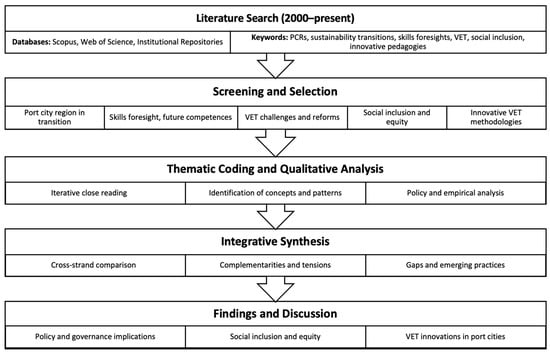
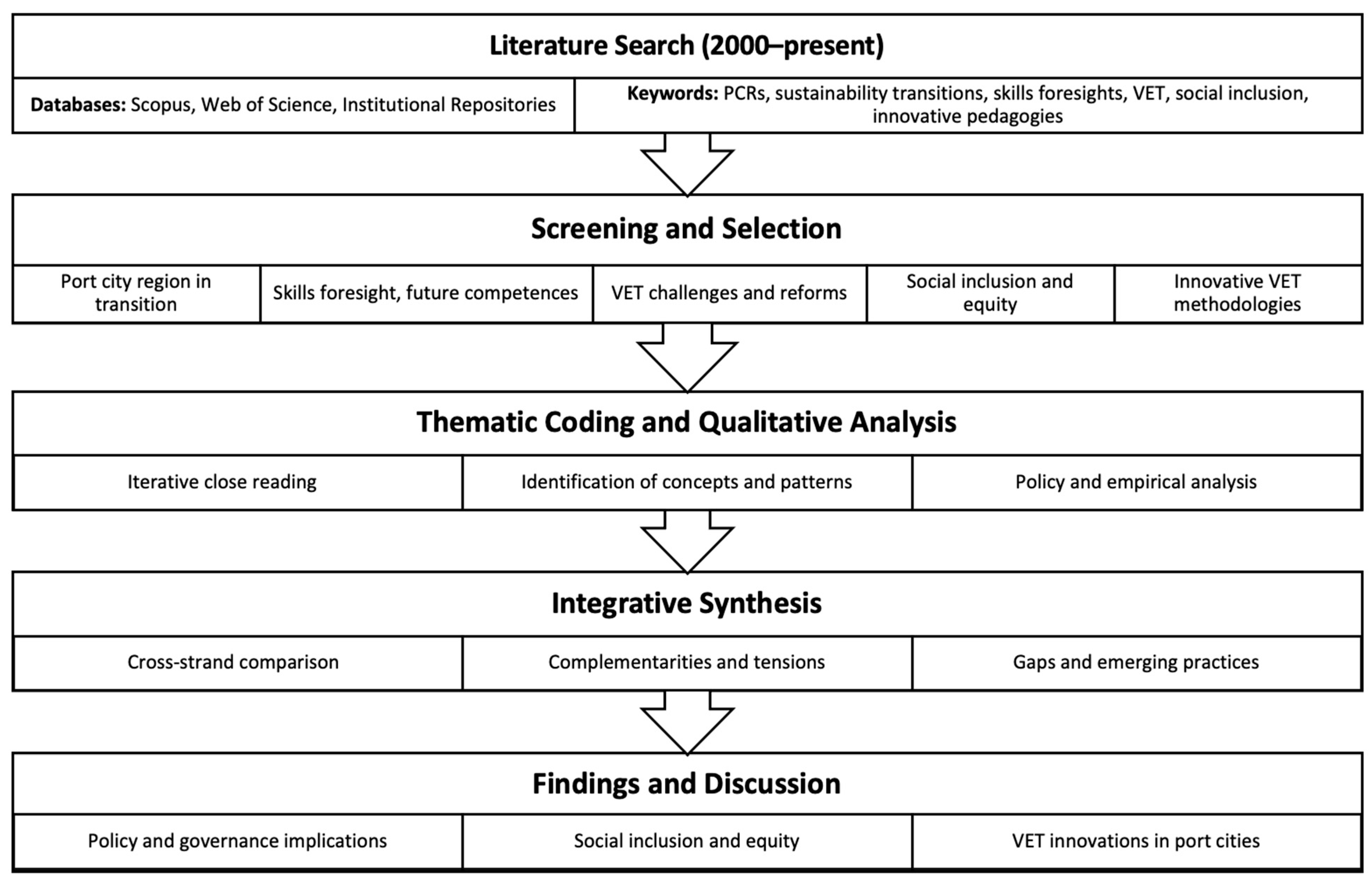

Disclaimer/Publisher’s Note: The statements, opinions and data contained in all publications are solely those of the individual author(s) and contributor(s) and not of MDPI and/or the editor(s). MDPI and/or the editor(s) disclaim responsibility for any injury to people or property resulting from any ideas, methods, instructions or products referred to in the content. |
© 2026 by the authors. Licensee MDPI, Basel, Switzerland. This article is an open access article distributed under the terms and conditions of the Creative Commons Attribution (CC BY) license.