


Abstract
Gas-phase oxidation of volatile organic compounds (VOCs) with the aid of ozone can be an attractive, energy-efficient way of treating exhaust gas streams in a low-temperature process, enabling the sustainable operation of industrial installations in a natural environment. This work is focused on the efficiency and kinetics of toluene oxidation with ozone towards CO2 and H2O in the presence of a SiO2-supported cobalt catalyst. A kinetic model is proposed based on a simplified reaction mechanism, with the parameters determined from measurements carried out in a fixed-bed reactor at 40–65 °C under conditions ensuring negligible mass transfer resistance. The proposed model provided satisfactory agreement between the predicted and measured toluene and ozone conversion rates and the formation rate of CO2, as well as in conditions when mass transfer resistance due to internal diffusion in the catalyst pellet was necessary to consider. The discussed results provide an assessment of the space velocity and ozone usage necessary to achieve a given degree of toluene conversion and mineralization to CO2. The proposed model can be used for the design of a sustainable, low-temperature ozone-assisted catalytic process of VOC abatement.
1. Introduction
Volatile organic compounds (VOCs), indoors or when released into the atmosphere (e.g., with ventilation exhaust gas streams), are hazardous to human health and often harmful to the environment. Some VOCs can also impair quality of life due to their nuisance odor, even in trace concentrations. The methods of VOC removal include physical separation (recovery) from gas streams by means of condensation, adsorption, or absorption, which often allows for their reusage or valorization. If the recovery is not feasible (e.g., due to low VOC concentrations or chemical instability after adsorption or condensation), the VOCs are usually destroyed in a thermal oxidation process such as co-incineration with fuel gas, which is necessary to achieve a high enough temperature of combustion. However, this method raises environmental concerns due to the increased CO2 emissions from burnt fuel and can be very costly if the volumes of contaminated exhaust gas streams to be treated are high. The application of catalysts allows for the oxidation processes to be carried out at a lower temperature, thus minimizing the total auxiliary fuel consumption and CO2 production and reducing the operational cost of thermal VOC oxidation. Some review papers have presented the state of the art in low-temperature catalytic removal of VOCs via oxidation [1,2]. Traditionally, supported noble metals (Pt, Pd) were used as catalysts for this purpose, but recently, supported transition metal oxides have been proposed as a less costly alternative. Developments of such catalytic materials, which are active at low temperatures, are the focus of current research. Supported copper oxide seems to be a good candidate for such a purpose and shows high potential in lowering the temperature required for the catalytic oxidation of toluene. The application of silica nanotubes as a novel support for Cu-based catalysts allowed for the complete toluene oxidation to CO2 with air at a lower temperature (330 °C) than traditional silica-based support materials (450–500 °C) [3]. Copper-impregnated TiO2 allowed for 90% conversion of toluene in dry air at 225 °C, as reported in [4]. It was also possible to achieve high toluene conversion (90%) in the presence of CO (1:1) using Cu/Al/Ce mixed oxides derived from layered double hydroxides at 275 °C, as reported in [5]. The costs can be reduced further by applying ozone as the primary oxidant in combination with catalysts that are capable of treating diluted gas streams, thus achieving VOC oxidation and ozone decomposition, even at room temperature. Although on-site ozone generation involves additional costs, utilizing electricity from renewable sources may reduce ozone costs and the total carbon footprint connected with the VOC abatement method.
Ozone can oxidize VOCs directly or indirectly via the active oxygen species resulting from ozone decomposition at the catalyst active sites [6,7,8,9]. The catalysts for this process are usually based on metal (Mn, Co, Fe, Cu, Ag, Ni) oxides supported by γ-Al2O3, SiO2 or TiO2 [10]. An investigation into the catalytic ozonation of benzene vapor over ZSM-5-supported metal oxides revealed that benzene removal efficiency was the highest for MnO2 and followed the order: MnO2 > CoO > CuO > NiO > ZnO > CeO2 [11]. Indeed, many studies are focused on manganese oxides due to their high activity in ozone decomposition and the oxidation of organic compounds [12,13,14,15,16]. Cobalt-based catalysts, although less investigated for this purpose until recently, also seem to be an attractive option for ozone decomposition and VOC removal [17,18].
The catalytic oxidation of VOCs with ozone can be efficiently carried out even at room temperature; however, the accumulation of oxidation by-products of low volatility and accumulation of water, especially if the treated gases are humid, leads to a deterioration in catalytic activity with time. Huang et al. [19] reported catalyst deactivation due to competitive water adsorption during benzene oxidation with ozone over MnO2/ZSM-5 at ambient temperature and 50% relative humidity. The catalyst activity recovered after lowering the humidity to 5%. When the reactor temperature was increased to 50 °C, catalyst “poisoning” was not observed. Similar behavior was observed with the Co(II)/SiO2 catalyst, which showed a 90% drop in water sorption capacity at 40 °C compared to that at 20 °C (cf. [18]).
As VOC oxidation is accompanied by ozone decomposition, optimizing ozone use and effectively utilizing the active oxygen species generated during its decomposition are crucial for achieving high degrees of VOC mineralization at low cost. On the other hand, the unreacted ozone might itself pose as a dangerous pollutant, so the catalyst should effectively decompose all residual ozone before releasing the treated gases to the atmosphere. This issue is critical if catalytic ozonation is to be applied indoors for air treatment and purification [20].
Cabrol et al. [21] investigated toluene degradation with ozone on open glass foam impregnated with ruthenium nanoparticles. They simulated the influence of operational parameters on toluene and ozone removal efficiency using the developed model of reaction kinetics. The authors concluded that it was possible to achieve 88% toluene removal and 97% ozone degradation at a moderate reaction length of 0.11 m, at 90 °C, with a high ozone excess (nO3/nT = 46). However, no information was given on the degree of organic carbon mineralization achieved nor on CO2 selectivity. Nevertheless, in terms of investment and operational costs, it was concluded that catalytic toluene abatement with ozone is an efficient alternative to catalytic thermal oxidation in air. Even higher toluene conversion (95%) with 90% CO2 selectivity can be achieved at a lower ozone/toluene ratio (nO3/nT = 20 ÷ 30) using a cobalt-impregnated SiO2 catalyst at the same temperature (90 °C), as reported in [18]. High activity of supported MnOx on γ-alumina or MCM-41 for ozone-assisted toluene conversion (89–97% at 80 °C) was also reported in [8] at an even lower ozone/toluene ratio (nO3/nT = 9), although lower CO2 selectivity (53–65%) was obtained in this case.
Photocatalytic oxidation (e.g., on TiO2) is also considered as an energy-efficient and cost-effective alternative for VOC abatement in air, especially if solar radiation can be utilized for this purpose, although the formation of incomplete oxidation by-products, which may be more toxic than the original volatile contaminant and impair catalyst activity, poses a problem for the broader application of this technology [22]
Biofiltration is also regarded as an energy-efficient and sustainable method of VOC abatement, which is economically attractive compared to catalytic (thermal) combustion methods [23]. Considering the requirements for a longer residence time and the investment cost of the larger biofilter, it usually does not require additional energy to heat the treated air. However, a biofilter bed must be periodically refreshed to remove blockages caused by biomass growth. Problems may also arise if the composition of contaminants in the treated air varies over time, especially if toxic components appear, which are harmful to microorganisms inhabiting the biofilter. The remedy for this may be pretreatment of the biofiltered gases with ozone (e.g., in an additional catalytic bed), which may improve the biodegradability of toxic contaminants and help control excessive biomass growth when ozone is injected directly into the biofilter or to remove odorous VOCs downstream of the biofilter. Synergies emerging from the combination of Advanced Oxidation Processes with VOC biofiltration are discussed in [23,24]
The scope of this work included investigating the activity of the Co(II)/SiO2 catalyst for gas-phase ozone and toluene decomposition and developing a kinetic model of this process for reactor design purposes. Toluene was used as an aromatic test compound (volatile contaminant) because of its widespread use as a reagent/solvent. It is often detected as an unwanted by-product in industrial exhaust gas streams or automobile flue gases. Aside from its direct effect on living organisms, it is regarded as a potential precursor constituent of photochemical smog (c.f. [25]). A comprehensive overview of ozone applications for low-temperature catalytic abatement of various types of VOCs (aromatic and aliphatic hydrocarbons, oxygenated, chlorinated, or sulphur-containing VOCs) is covered in a review paper [26].
2. Materials and Methods
The catalysts were prepared by impregnating silica gel particles in an aqueous solution of CoCl2 (0.060 mole/dm3), rinsing with distilled water, and subsequently drying at 120 °C for 12 h. The specific surface area of the catalyst and the total volume of pores were determined from the nitrogen adsorption isotherm at 77.4 K and analyzed using a Micromeritics (3Flex) surface analyzer (Micromeritics, Norcross, GA, USA). The estimated total pore volume of the catalyst support was 0.68 cm3/g, with an average pore size of 7.5 nm (BJH method) and a specific surface area of 300 m2/g, determined by the Brunauer–Emmett–Teller (BET) method. The parameters were not affected by the impregnation of silica gel with a solution containing cobalt ions. Cobalt content in the impregnated silica gel outer surface layer and over the cross-section of a catalyst pellet was relatively uniform and fell within a range of 0.7–0.8% mass, as determined with a microanalytic Brucker Energy-Dispersive Spectroscopy (EDS) system (127 eV energetic resolution) linked with Zeiss Ultra Plus scanning electron microscope (Zeiss Group, Jena, Germany). The cobalt concentration in the ground silica gel was confirmed spectrophotometrically after dissolving the cobalt from the impregnated catalyst particles with concentrated hydrochloric acid. The ground catalyst grains fraction of average size, approx. 0.2 mm (mesh 60–80), was used for ozone decomposition and toluene oxidation kinetics measurements to minimize the influence of internal diffusion resistance. The larger catalyst pellets (3 mm in diameter) were used for comparison in several experimental runs to estimate the influence of internal diffusion resistance, which is often significant in industrial conditions.
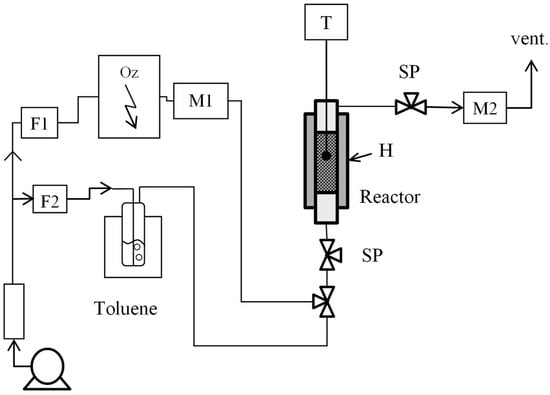
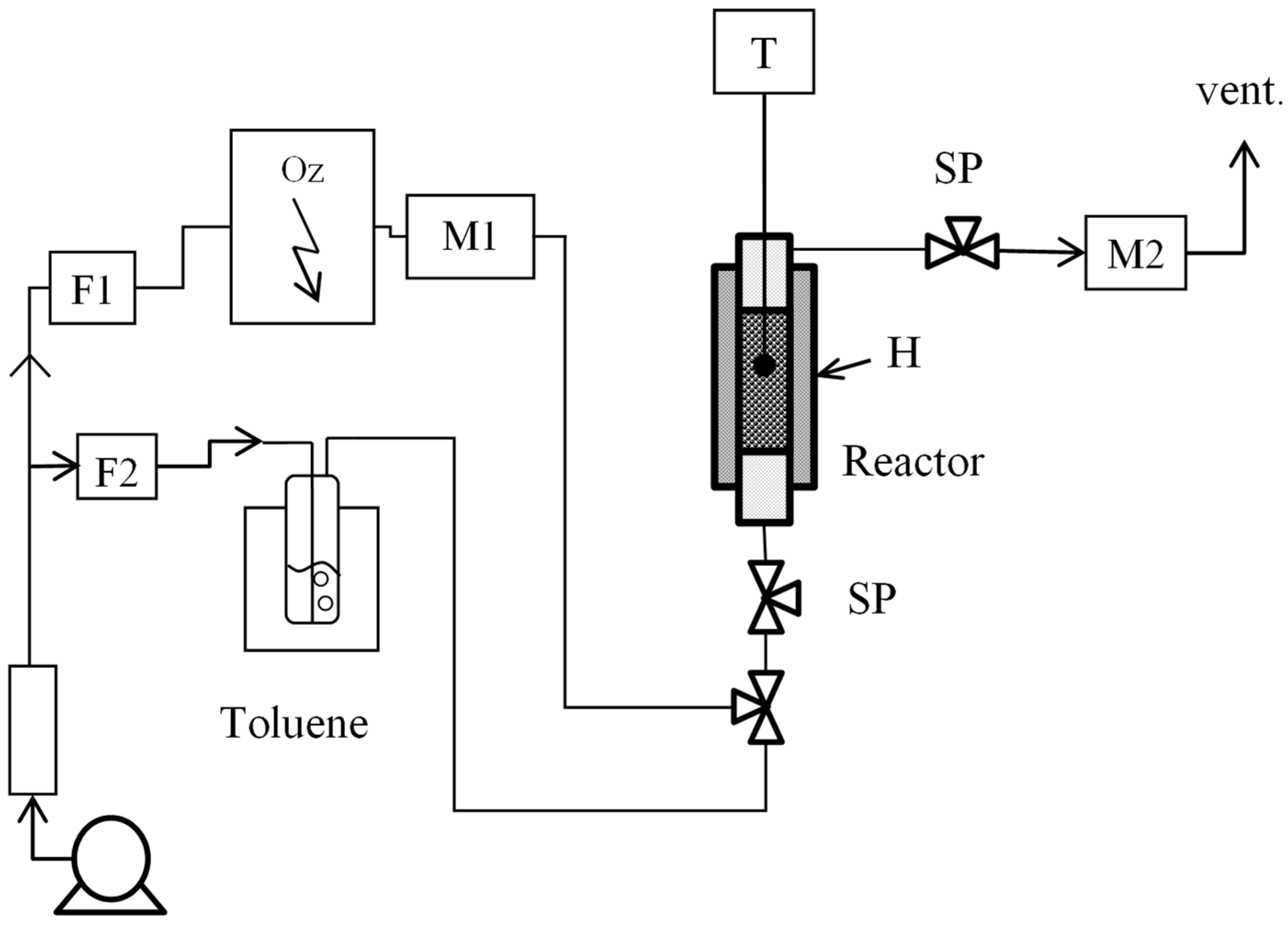
The experimental setup is shown schematically in Figure 1. Toluene decomposition was carried out in a tubular glass flow reactor (12 mm ID) containing 0.5-1 g of the catalyst, inserted between glass wool plugs placed over a layer of glass beads. A heating coil (H) placed over the inlet section was used to control the temperature, as measured by two thermocouples: one in the upper part of the catalyst bed and the other near the reactor outlet. The temperature was set between 40 and 65 °C during the measurements. Ozone was produced by silent discharge in dehumidified air (RH approx. 10–15%) supplied to the ozone generator (Oz). Before entering the reactor, the ozone–air gas mixture was mixed with the air stream saturated with toluene vapor in a thermostatic bubbler flask containing liquid toluene at 0 °C. Ozone concentration was measured at the reactor inlet (M1) and outlet (M2) with a spectrophotometric meter based on UV absorption at 254 nm (BMT Messtechnik, Stahnsdorf, Germany). Toluene concentration was measured using an Agilent 6890 gas chromatograph equipped with a gas sampling valve and a flame ionization detector. Gas samples were collected via sampling ports (SPs) located at the reactor inlet and outlet. The concentration of evolved CO2 was measured with an NDIR gas sensor. The gas flow rate through the reactor was set between 40 and 70 dm3/h to maintain toluene or ozone conversion between 10% and 90% in most experimental runs. Toluene concentration at the inlet was set in a range between 3.7 × 10⁻³ mole/m3 and 0.027 mole/m3 by varying the flow rate through the toluene vapor saturator (bubbler flask).
Figure 1.
Scheme of experimental setup. F1, F2—flow meters/controllers, Oz—ozone generator, M1, M2—ozone meters, S—desiccant, SP—sampling port, H—heating jacket, T—thermocouple temperature meter.
Ozone concentration at the inlet was set between 5 and 20 g/m3 (0.104–0.416 mole/m3). Ozone and toluene concentrations at the outlet were measured until a steady state was achieved, and the steady-state values observed for 0.5–1 h were used in the subsequent analysis. Ozone decomposition rate (in the absence of toluene) was first investigated in a series of measurements, after initial oxidation of the adsorbed cobalt ions, accompanied by increased ozone consumption and a change in the fresh catalyst color from blue to dark (black) brown. Ozone decomposition measurements were followed by measurements of catalyst activity towards toluene oxidation with ozone. The FTIR spectrum of the catalyst was examined before and after toluene ozonation.
3. Results and Discussion
The results of the measurements were interpreted using the developed kinetic model of ozone and toluene decomposition, presented and discussed in the following sections.
To estimate the rate of gas-phase toluene oxidation with ozone, a series of measurements was carried out in the reactor without the catalyst bed and with a bare SiO2 bed. The conversion rate of ozone or toluene in the empty reactor was undetectable within the analytical method’s accuracy. Ozone decomposition on bare SiO2 was found to be approximately 10–100-times slower than on the Co/SiO2 catalyst over the investigated temperature range (see Table 1) and was, therefore, neglected as a separate reaction path in the model presented below.
Table 1.
Comparison of ozone decomposition rates on bare and Co(II)-impregnated silica gel. (inlet cO3 = 0.2 ÷ 0.21 mol/m3).
3.1. Catalytic Ozone Decomposition in Absence of Toluene
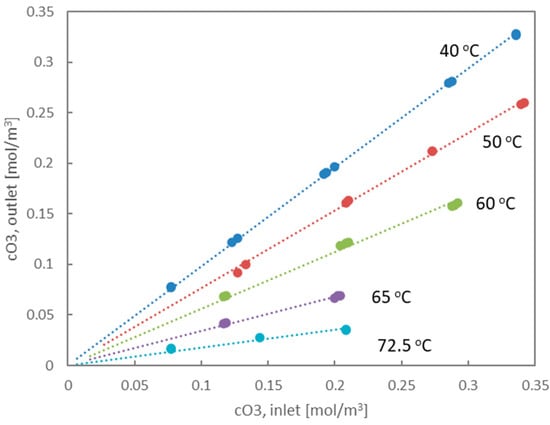
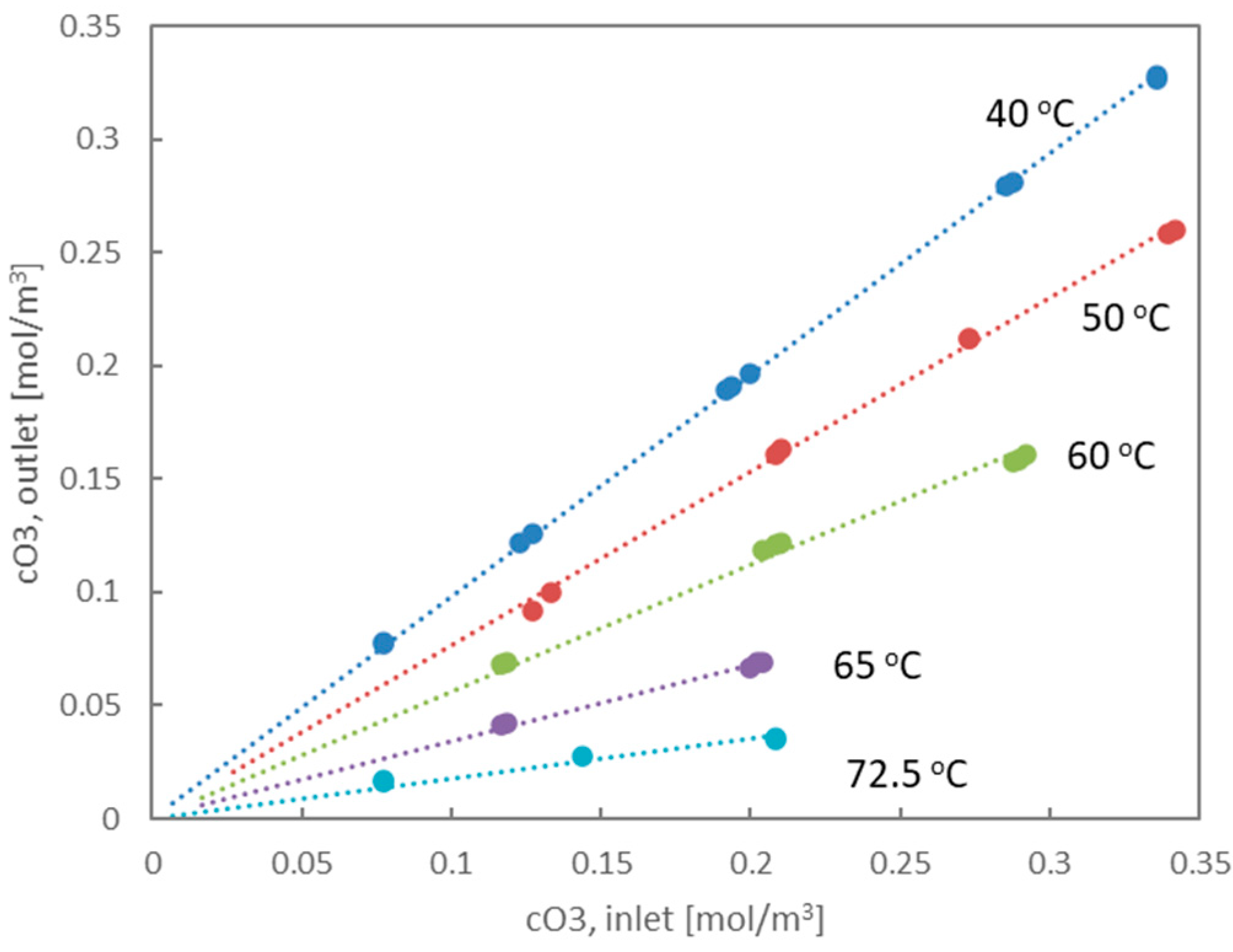
The influence of temperature on the rate of catalytic ozone decomposition was examined in the first part of the measurements, conducted without toluene supply. The observed dependence of the outlet ozone concentration on its inlet value was linear for all the tested samples and reactor temperatures, as shown in Figure 2.
Figure 2.
Effect of temperature on outlet ozone concentration as a function of its concentration at the inlet.
Diverse results are reported in the literature regarding the order of the ozone decomposition reaction. Although Dhanpani and Oyama [12] observed that the ozone decomposition rate for a MnO2/γ-Al2O3/cordierite catalyst was proportional to ozone partial pressure to the power of 0.68, measurements carried out by other researchers indicate first-order kinetics regarding ozone decomposition on CuO/MnO2 [27] or various alumina-supported catalysts containing Pt or Ag, Cu, Mn oxides (cf. [28,29]). These observations are consistent with our observations, i.e., the linearity of the outlet vs. inlet ozone concentration plot in Figure 2, which indicates first-order kinetics of ozone decomposition on the Co(II)/SiO2 catalyst at all temperatures tested.
Rakitska et al. [30] investigated the catalytic activity of Co(II) ions adsorbed on silica gel for ozone decomposition. By observing the pH drop during SiO2 impregnation, it was concluded that the Co(II) cations are bound to the silica gel surface via ion exchange as follows:
The mechanism of ozone decomposition on Co(II)-loaded SiO2, suggested by the authors [30], involves the formation of OH radicals and reversible oxidation of Co(II) ions to Co(III) in the form of silica-bound cobalt hydroxide:
Investigations of ozone decomposition on transition-metal-incorporated zeolites [31], cobalt oxides and Co-based spinels [32] also revealed the formation of other active oxygen and peroxide species (O−, O2−, O22−). Based on the above findings, a simplified mechanism of ozone decomposition, assuming the formation of the oxidized metal ion sites and various reactive oxygen species (designated as O*), which may react further on with ozone, can be represented by the following reactions (R1–R2).
Assuming the Eley–Rideal mechanism for the reaction of ozone with surface-bound oxygen species (reaction R2), the kinetics of ozone decomposition in the absence of VOC based on this reaction scheme is governed by the sum of the corresponding reaction rates:
Applying pseudo steady-state approximation for surface-bound reactive oxygen species (O*), the rate of ozone decomposition (in the absence of toluene) resulting from the above scheme agrees with the first-order reaction rate observed in the experiments performed without toluene:
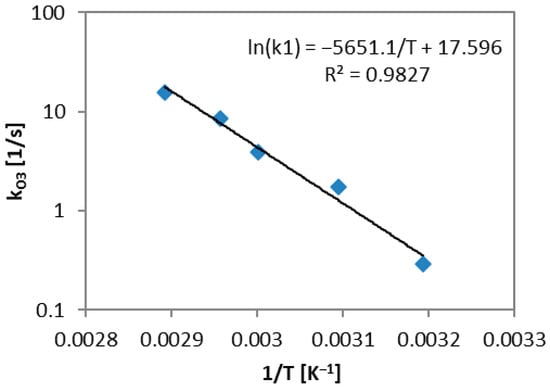
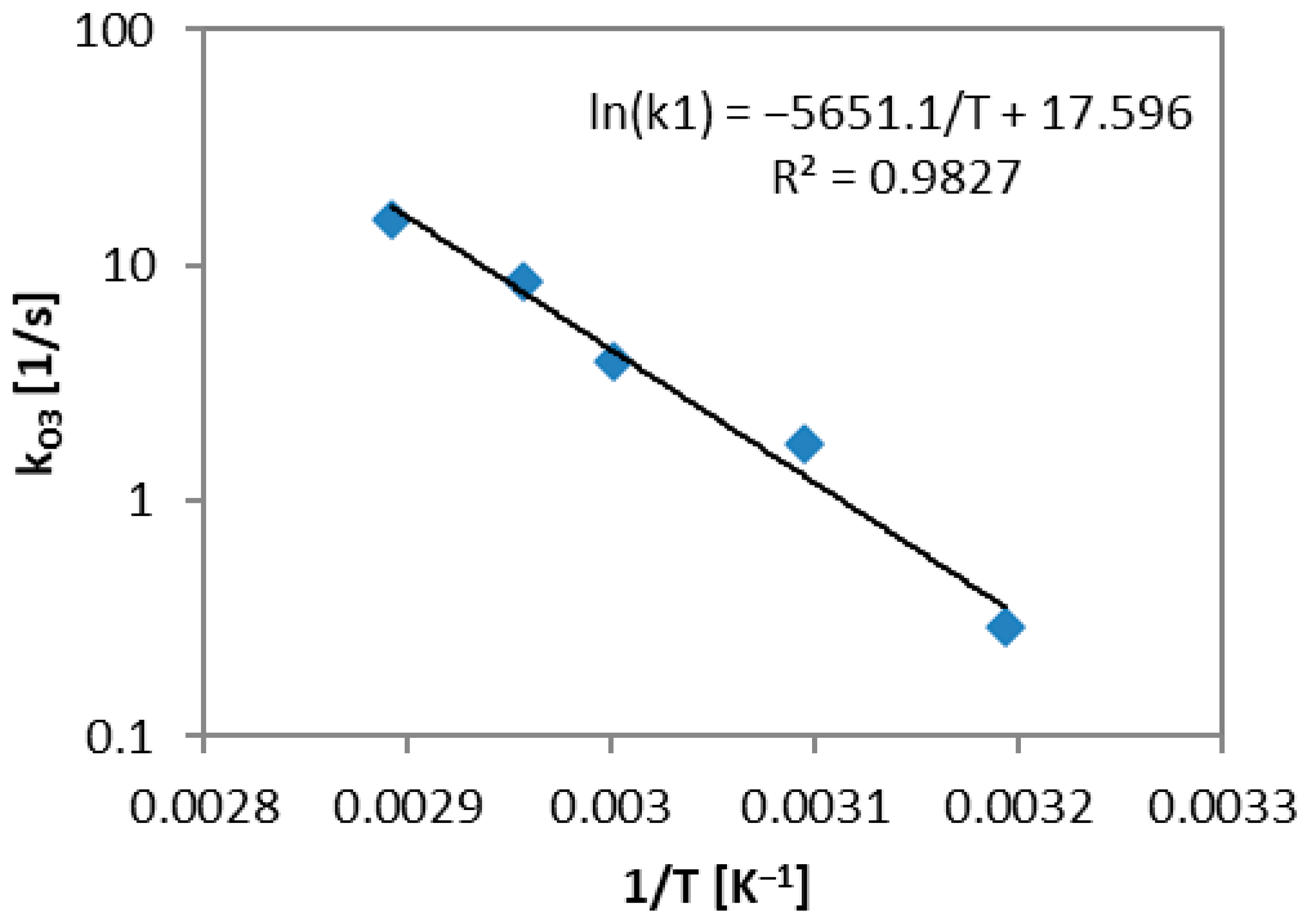
The first-order rate constant for ozone decomposition was estimated by fitting the predicted outlet ozone concentration to the measured value, assuming plug flow in the catalyst bed and neglecting mass transfer resistances. The calculated values of the rate constant are shown in the Arrhenius plot (see Figure 3), which allowed for estimation of the apparent activation energy and pre-exponential factor for ozone decomposition reaction by linear regression:
Figure 3.
Effect of temperature on first-order ozone decomposition reaction rate constant.
The resulting value of apparent activation energy E1 = 48.842 kJ/mol for ozone decomposition in this work is very close to the value for ozone decomposition on Co3O4 (48.99 kJ/mol) observed by Zhang et al. [32]. A similar value, 47 kJ/mol, was estimated by Naydenov et al. [33] for ozone decomposition on CeO2, whereas a higher value of 52.4 kJ/mol was reported for ozone decomposition on Fe2O3 (cf. [28]) and 52 kJ/mol on Ag/γ-Al2O3 [29].
3.2. Toluene Decomposition with Ozone
In the case of toluene decomposition with ozone, it is assumed that the adsorbed toluene (TS) reacts with the active oxygen species formed during ozone decomposition on the catalyst surface and then with ozone in a sequence of reactions that ultimately leads to total oxidation to CO2 and H2O.
The assumed simplified mechanism for catalytic toluene decomposition with ozone can be represented by Equations (R3)–(R6).
The decomposition process begins with activation of the adsorbed toluene (Ts + O* → Ts*) via hydrogen abstraction from the methyl group by the active oxygen species (e.g., hydroxyl radical), leading to benzyl radicals and further on to carbonyl and carboxyl intermediates (benzaldehyde, benzoic acid) [34,35,36]. The other possible route of toluene activation is via aromatic ring hydroxylation, resulting from reactions involving active oxygen species [37], which also facilitates the electrophilic reaction with ozone and aromatic ring cleavage. Its further oxidation in reaction with oxygen species and ozone leads to the formation of lower-carbon-number by-products (ToxS) (reaction R4). These toluene oxidation by-products are supposedly C2-and C3-carbonyl and/or carboxylic compounds (e.g., produced by ozonolysis of double bonds in compounds, which may have formed after aromatic ring cleavage, according to the Criegee mechanism). Acetaldehyde, formic acid, oxalic acid, acetic acid, maleic anhydride, glyoxal, and methylglyoxal were detected as typical by-products of toluene decomposition with ozone [5,38].
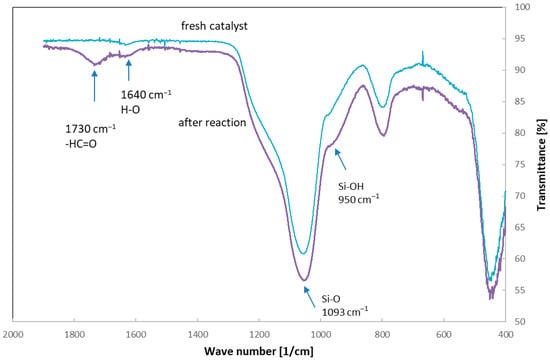
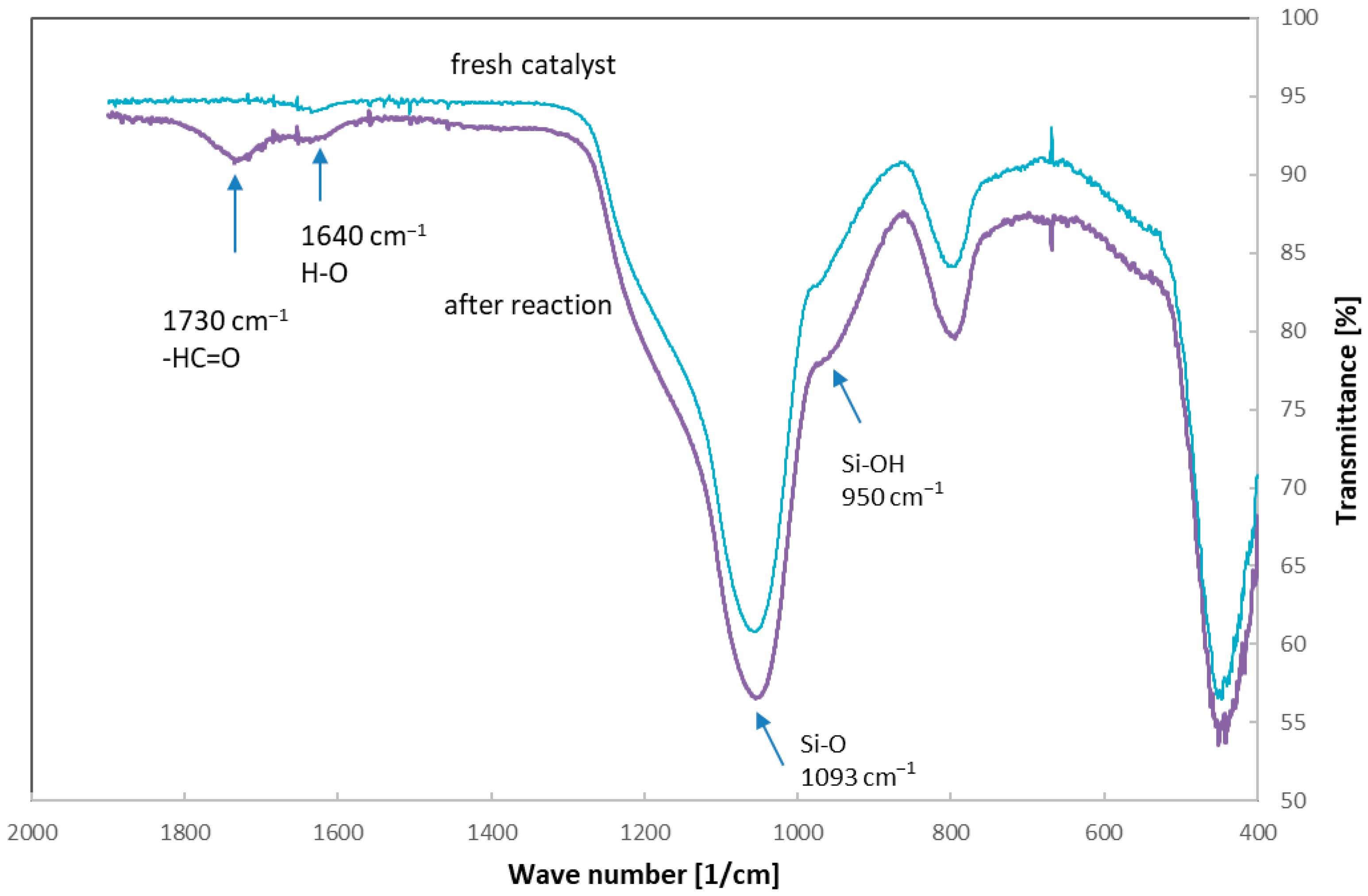
They are responsible for a clear peak, which is characteristic of aldehyde carbonyl groups (at 1730 cm−1) and evident in the FTIR spectrum of the spent catalyst used in this work for toluene oxidation with ozone (Figure 4). The by-products are eventually oxidized to CO2 if the ozone/VOC contact time in the catalytic bed is long enough (reaction R5).
Figure 4.
FTIR spectra of the fresh catalyst and the used one, taken from the reactor after toluene ozonation reaction.
As with toluene itself, the adsorbed decomposition by-products are also volatile, so the adsorption/desorption equilibrium (R6) was also considered in the kinetic model developed in this work.
Since the reactions of adsorbed toluene or its by-products with reactive oxygen species are very complex and usually relatively fast, it is assumed that the kinetics of toluene and by-product oxidation is determined by the rate of reactive oxygen species supply initiated by ozone decomposition. For simplicity, the rate is represented in the form of equations (Equations (5) and (6)), proportional to ozone concentration and fraction of available active sites necessary for the initiation of ozone decomposition:
Assuming that the adsorption and desorption of toluene and its decomposition by-products are much faster than the oxidation reactions, pseudo-steady-state approximation for the adsorbed species allows us to express their fractional coverages as a function of their gas-phase concentrations in the following form:
Accepting that z4 moles of ozone are used per mole of activated toluene (Ts*) to decompose its aromatic ring, the total ozone consumption rate can, thus, be approximated as:
The last term in the above expression is the rate of ozone self-decomposition on active sites unoccupied by the adsorbed toluene and its decomposition by-products. The rate of ozone decomposition given by Equation (9) is equivalent to Equation (3) if toluene is absent, so that the fractional converges (ΘTs, ΘToxs) are zero.
Since, stoichiometrically, 3.5 moles of the C2-by-products should be formed per 1 mole of decomposed toluene, the net formation rates of the by-products and carbon dioxide can be expressed as (Equations (10) and (11)):
The toluene consumption rate in the above equations is designated as R4.
Theoretically, only 3 or 4 moles of ozone are necessary to activate 1 mole of toluene molecules and react with each of the double bonds after aromatic ring decomposition, producing C2- or C3-carbonyl products; however, the value of z4 = 5 assumed in this work allowed for a better fit to experimental data.
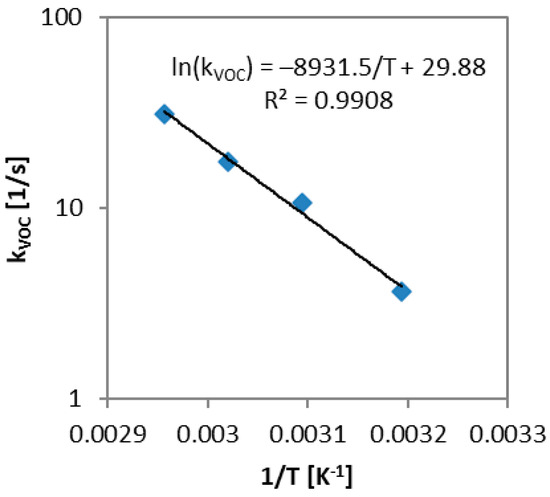
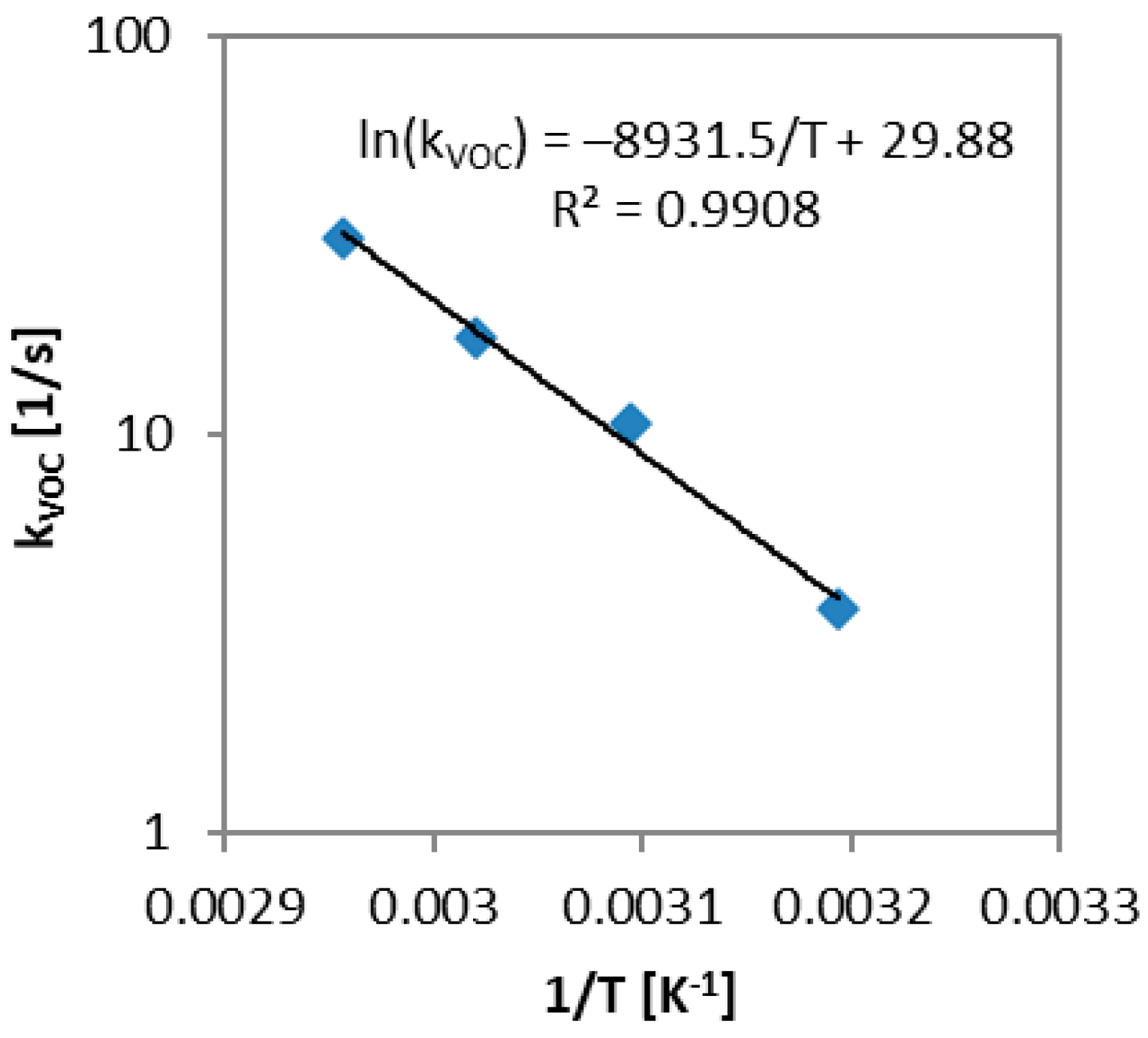
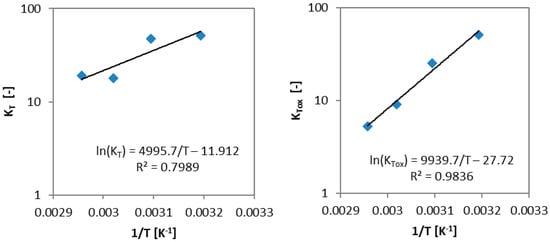
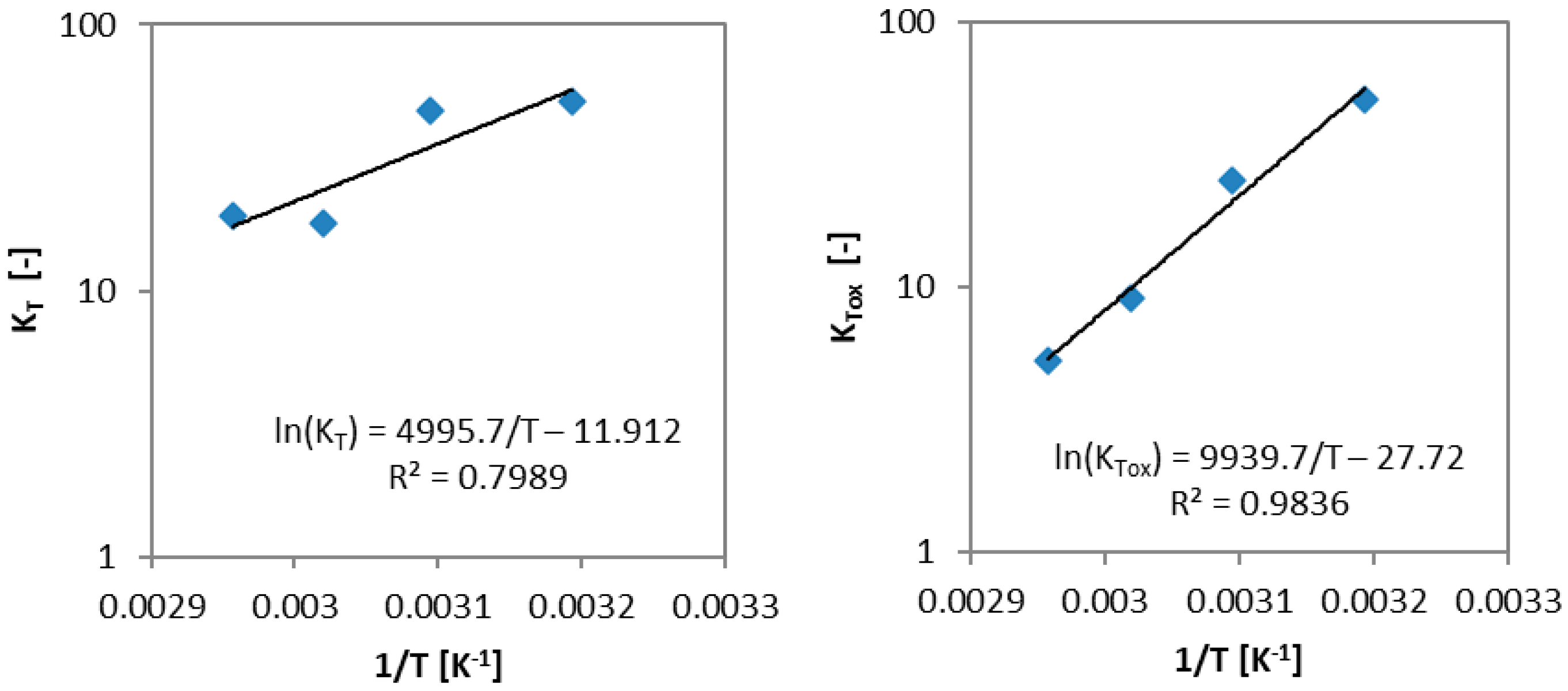
The rate constant kVOC and adsorption equilibrium constants KT and KTox were estimated by fitting the predicted ozone, toluene, and carbon dioxide concentrations at the reactor outlet to the measured values, assuming plug flow in the catalyst bed and neglecting mass transfer resistance outside the catalyst particles. Justification for these assumptions is presented in Appendix A. Possible effects of internal diffusion of the reactants and products were considered by numerically integrating species mass balance inside a spherical catalyst pellet, as described further.
The estimated values of the reaction rate and adsorption equilibrium constants as a function of temperature are shown in the Arrhenius plots (see Figure 5 and Figure 6).
Figure 5.
Effect of temperature on kVOC reaction rate constant.
Figure 6.
Effect of temperature on toluene (KT) and its decomposition by-products’ (KTox) adsorption equilibrium constants.
The functional dependences of these constants on temperature were identified via linear regression in the following form:
Negative values of apparent enthalpy and entropy of adsorption for toluene and the oxidation by-products, evident from the parameters in Equations (13) and (14), indicate that the obtained relationships are also qualitatively meaningful physically. The apparent activation energy for toluene oxidation and its by-products (derived from Equation (12)) corresponds to ~74 kJ/mol, and the adsorption enthalpies for toluene and its by-products are on the order of −41 kJ/mol and −82 kJ/mol, respectively (negative, indicating exothermic adsorption). The activation energy for VOC oxidation is somewhat higher than the value (61 kJ/mol) estimated by Cabrol et al. [21] for toluene oxidation with ozone on open glass foam impregnated with ruthenium nanoparticles or (43.9 kJ/mol) obtained for toluene oxidation with active oxygen species on MnO2/graphene [14] or (48 kJ/mol) on MnO2/γ-alumina [16]. However, it must be kept in mind that the value of apparent activation energy obtained in this work pertains not only to the oxidation of adsorbed toluene but also to the subsequent oxidation of less reactive by-products towards CO2 (Equations (4) and (5)).
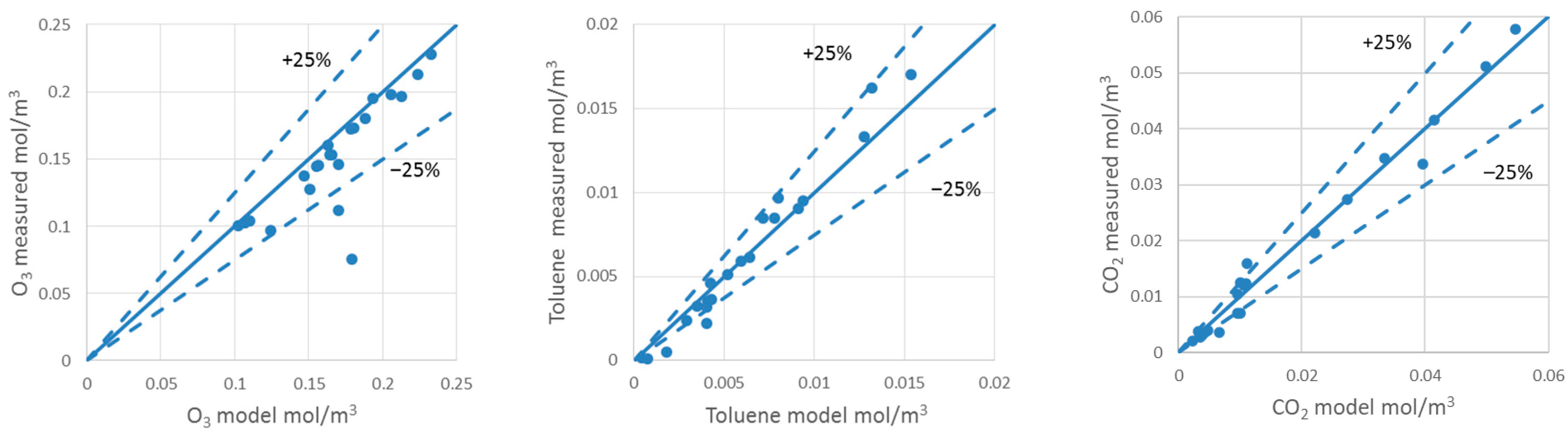
The values of ozone, toluene, and carbon dioxide concentrations at the reactor outlet, calculated using Equations (4) and (12)–(14), compare favorably with the measured values in the parity plots (see Figure 7). It can be observed that most points deviate from the perfect-fit line by less than 25%.
Figure 7.
Comparison of the measured and calculated outlet concentrations (parity plots).
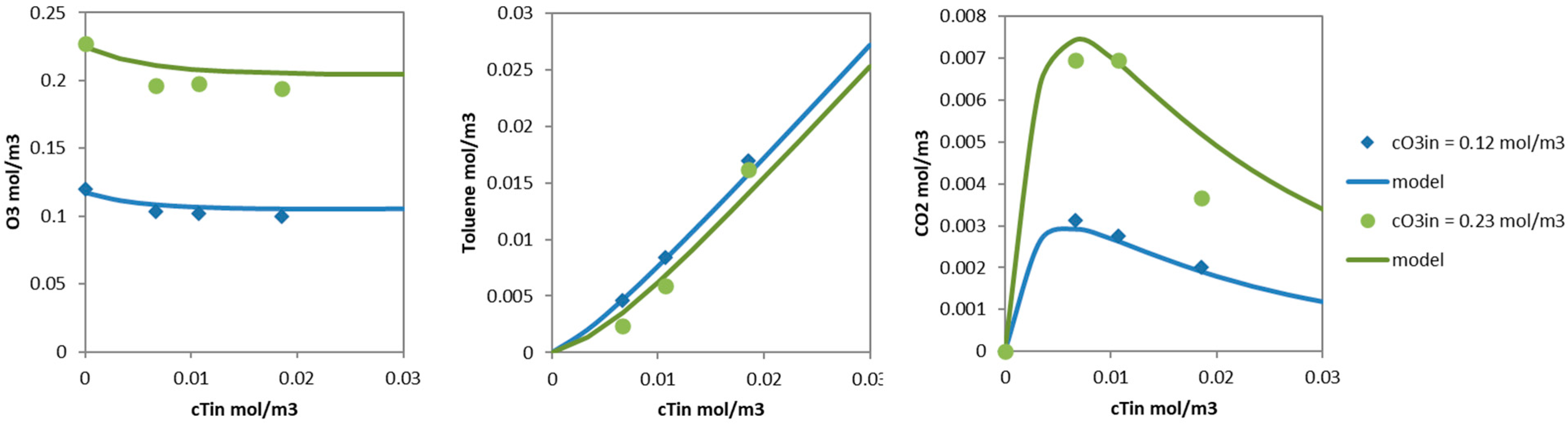
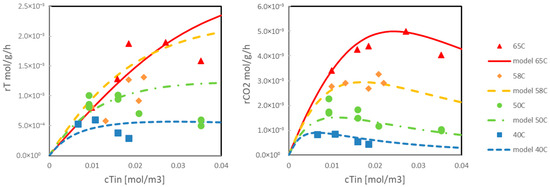
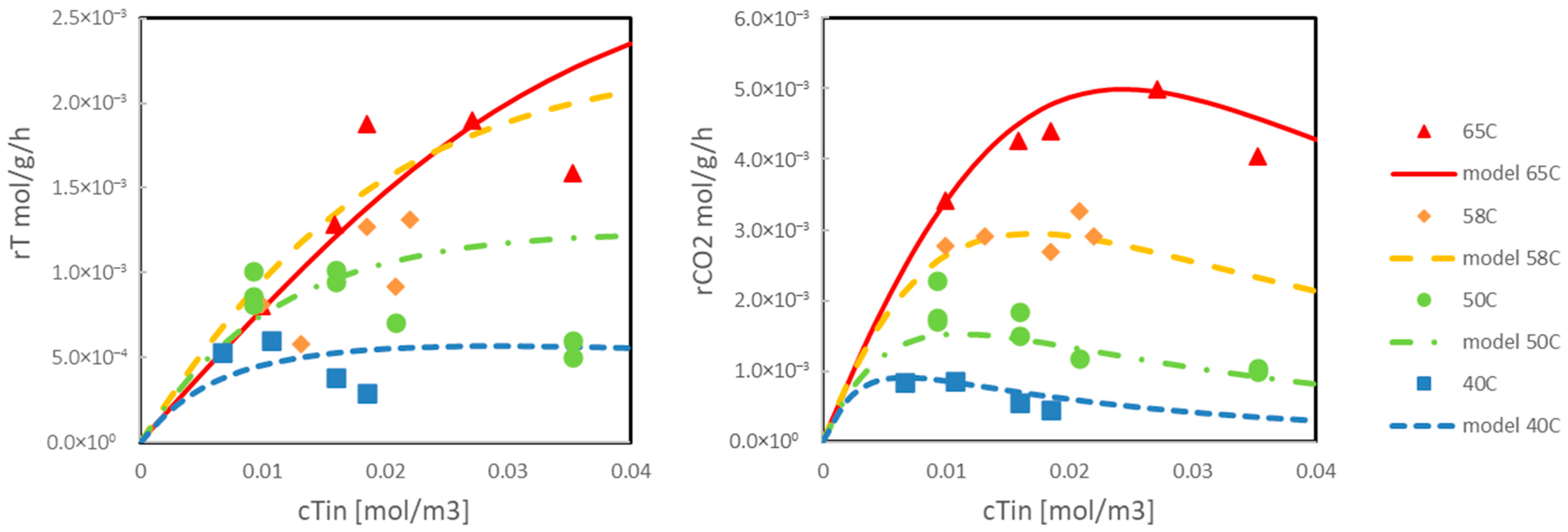
The concentrations of toluene, ozone and CO2 measured at 40 °C at the outlet (points) can also be compared in Figure 8 with the values calculated from the model (lines) as a function of inlet ozone and toluene concentrations fed to the catalyst bed containing fine (0.2 mm) particles at gas hourly space velocity (GHSV) 61,000 h−1. The model fits the measurements quite well and predicts the non-monotonic (maximum) dependence of CO2 formation rate on toluene load in the gas fed to the reactor. The effect of temperature and inlet toluene concentration on the average rate of its decomposition and the rate of CO2 formation is shown in Figure 9. It can be observed that the toluene decomposition rate tends to constant values or even decreases at inlet toluene concentrations above 0.01 mol/m3 at lower temperatures (i.e., 40–50 °C). The non-monotonic dependence of the CO2 formation rate on the inlet toluene concentration is even more pronounced and visible at higher temperatures. This effect can be attributed to the blockage of active sites by the adsorbed toluene and its decomposition by-products.
Figure 8.
Measured and calculated outlet concentrations at 40 °C as a function of toluene and ozone concentrations at the inlet.
Figure 9.
Comparison of the modelled and measured overall rates of toluene decomposition (left) and CO2 formation (right). Effect of inlet toluene concentration (cTin) and temperature at the inlet ozone concentration cO3in = 0.2–0.25 mol/m3 (dp = 0.2 mm).
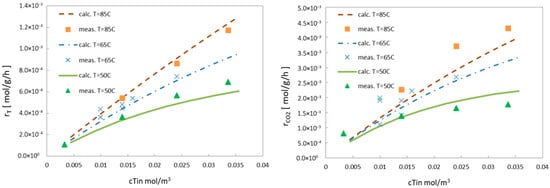
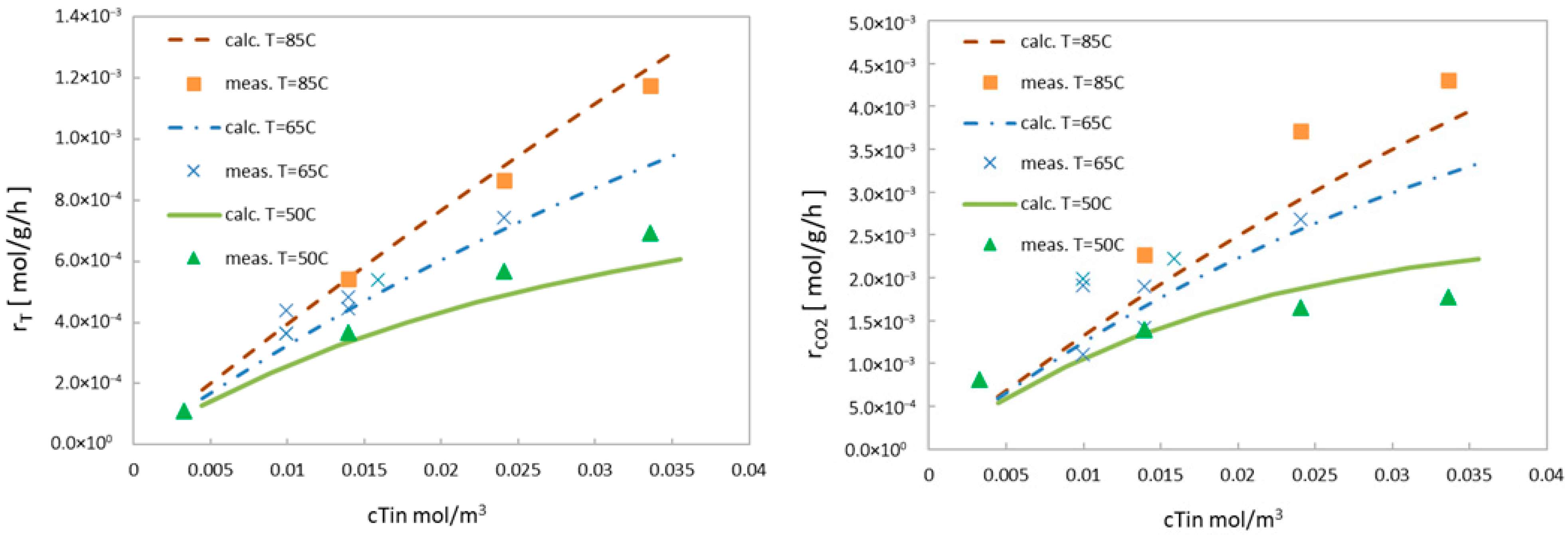
The model of reaction kinetics discussed above was also used to predict the rate of the process for larger catalyst pellets, where internal diffusion resistance is more significant. The overall reaction rates calculated for the bed (2 cm long) formed with 3 mm catalyst pellets are compared with the measured values in Figure 10. The calculations assumed plug flow with negligible axial dispersion and negligible mass transfer resistance between the gas phase bulk and the catalyst pellet surface. In order to account for diffusional resistance in the catalyst pellet, species mass balance (diffusion equation) with reaction source/sink terms according to Equations (4)–(10) was solved numerically for ozone, toluene, oxidation by-products and CO2, assuming the spherical geometry of the pellet. The reacting species mixture was very diluted, and the effective diffusivity of each of the species (De,i) was estimated according to Equation (14), where the Knudsen diffusion coefficient (DK,i) was evaluated based on the values of silica gel porosity εS = 0.55 and its tortuosity factor of τ = 1.5 according to Equation (15), where 2εS/(AS ρS) represents an estimate of mean pore radius.
Figure 10.
The overall reaction rates of toluene decomposition (left) and CO2 formation (right) at 50 °C, 65 °C and 85 °C (dp = 3 mm).
Molecular (bulk) diffusivity (Di,air), although less important here, was estimated according to the Fuller method [39].
The calculated overall rates of toluene decomposition and CO2 formation in the bed formed with larger (dp = 3 mm) catalyst pellets are shown in Figure 10. The results calculated based on the model (lines) are compared with the measurements (points) taken over the temperature range 50–85 °C in this figure. The overall reaction rate in these conditions is predicted with an average relative error of 25% compared to experimental data. The agreement is quite good despite extrapolating the model predictions to 85 °C, i.e., outside the range (40–65 °C) used to estimate the model parameters.
Comparing the results presented in Figure 9 and Figure 10, it can be observed that the rates of toluene removal and CO2 formation are significantly lower for 3 mm catalyst pellets than for 0.2 mm catalyst particles, which illustrates the influence of mass transfer resistance due to internal diffusion.
However, larger pellets result in a lower pressure drop across the catalyst bed, which is important in practical applications. Also, the degree of VOC mineralization (CO2 selectivity) may not be much worse or can be even better than that obtained with very fine (0.2 mm) particles.
The degree of toluene mineralization, i.e., oxidation towards CO2 and H2O, can be evaluated based on the CO2 selectivity, defined as:
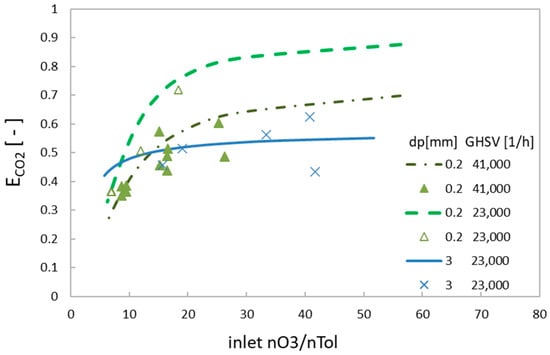
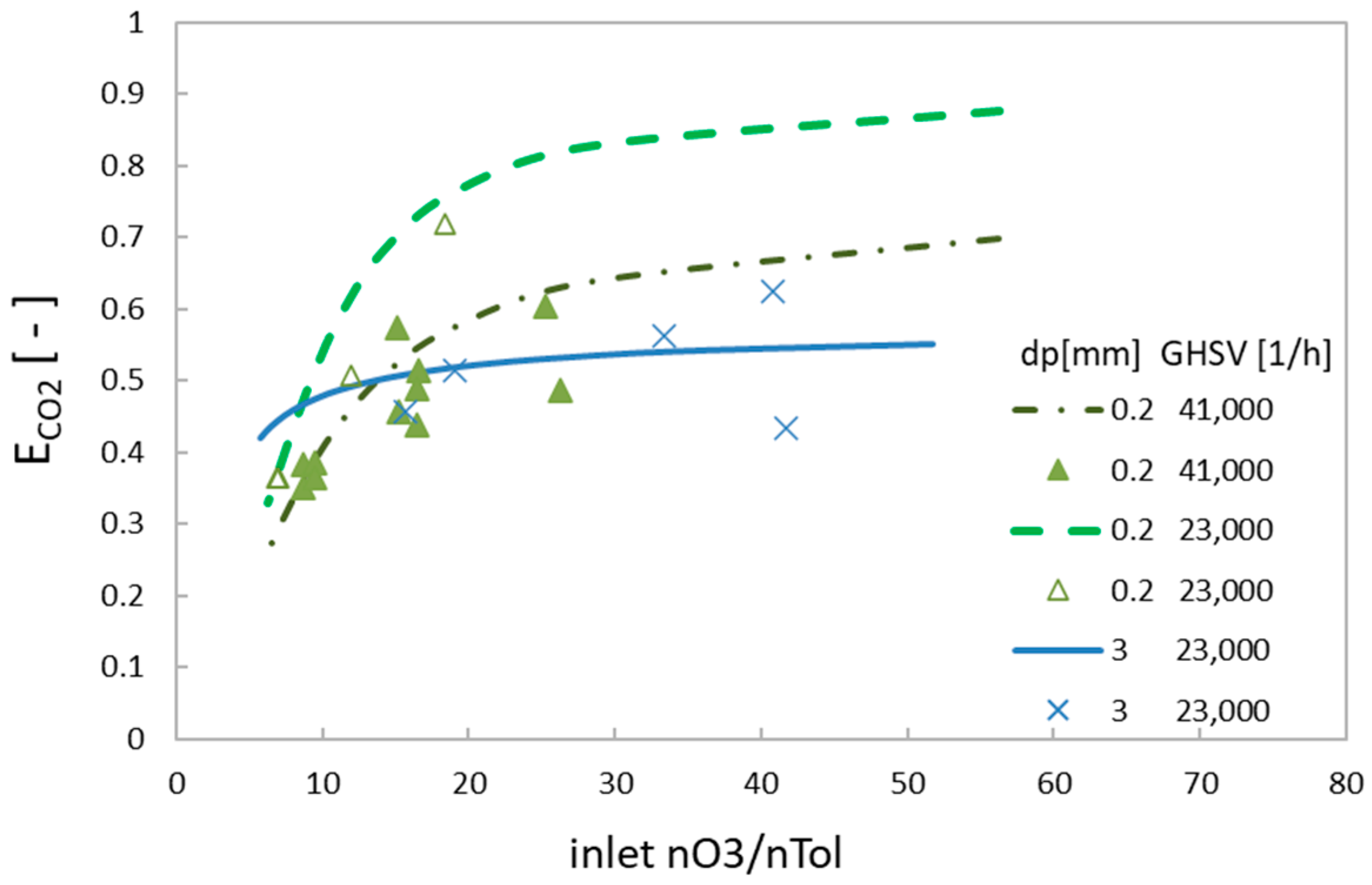
The CO2 selectivity, calculated from Equation (16) based on the measured and simulated changes in CO2 and toluene concentrations in the reactor, is shown in Figure 11 as a function of the inlet O3/toluene molar ratio and GHSV value, for beds formed with 0.2 mm and 3 mm catalyst pellets at 65 °C. It can be observed that CO2 selectivity reaches approximately the same level regardless of catalyst pellet size and GHSV for nO3/nTol ≈ 10. CO2 selectivity for 3 mm pellets might even exceed that of 0.2 mm catalyst grains, e.g., at the lower O3/toluene ratios (nO3/nTol < 8) or at higher GHSV values. This can be attributed to the blockage of the more accessible active sites in the fine catalyst particles by unreacted toluene and its oxidation by-products, compared with larger (3 mm) pellets. In the latter case, internal diffusion restricts the inflow of toluene and the outflow of the by-products from the pellet, thereby allowing deeper oxidation of the by-products to CO2 by ozone (which diffuses faster than toluene).
Figure 11.
Carbon dioxide selectivity at T = 65 °C calculated (lines) and measured (points).
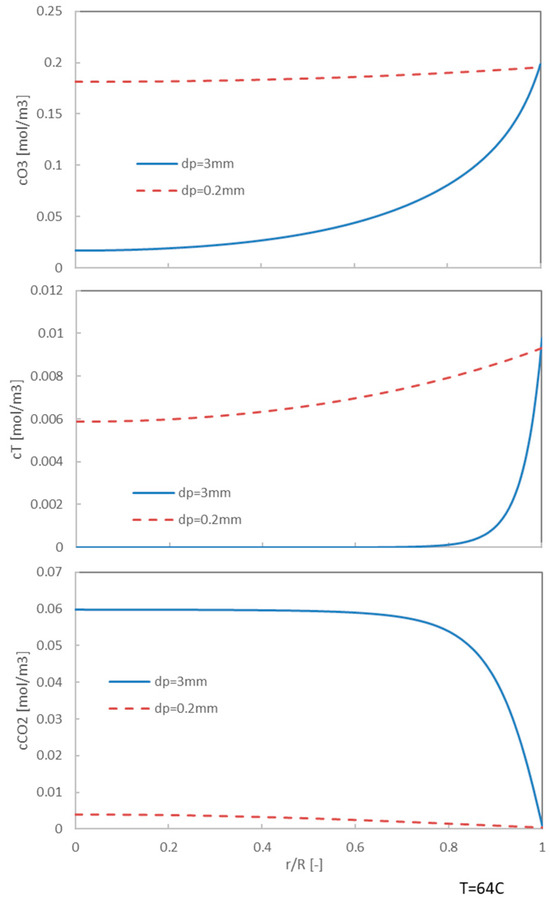
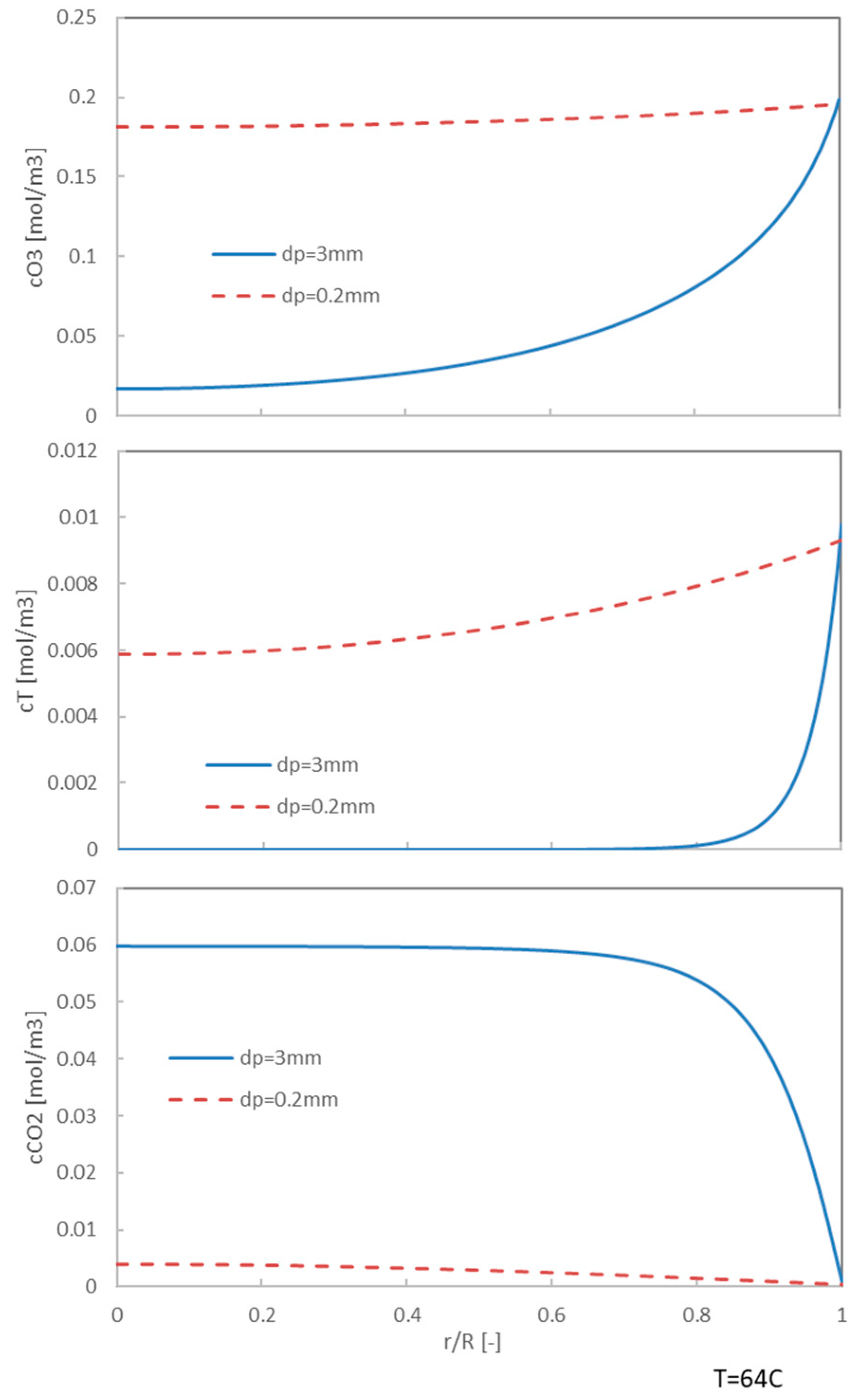
The simulated profiles of toluene, ozone and CO2 concentrations in spherical pellets (dp = 0.2 mm and dp = 3 mm) located close to the inlet at 65 °C are shown in Figure 12. The flat profiles of ozone and toluene concentration in the 0.2 mm particles support the assumption of a kinetic regime in the treatment of the experimental data.
Figure 12.
Calculated profiles of ozone, toluene and CO2 concentrations in the catalyst pellet (T = 65 °C, (nO3/nT)in = 20).
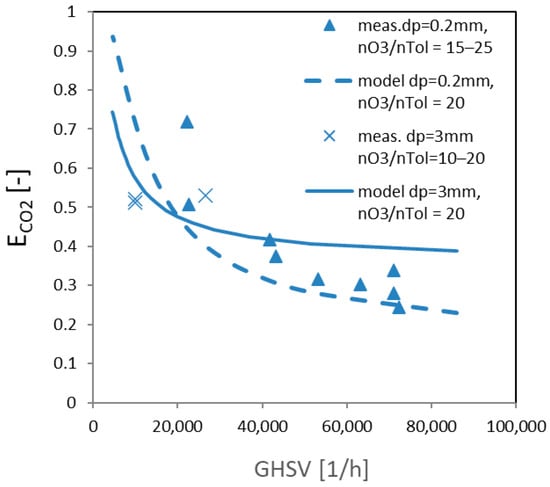
The profiles shown in Figure 12 correspond to a location in the bed very close to the inlet (bed volume → 0 or space velocity GHSV → ∞) so that concentrations at the pellet surface (r/R = 1) are approximately the same for both diameters. The results indicate that toluene is almost completely converted within the 3 mm pellets (i.e., for r/R < 0.7) under these conditions and that the CO2 concentration is much higher than that in 0.2 mm particles. This may explain why CO2 selectivity observed for 3 mm pellets may be higher than for 0.2 mm pellets at GHSV > 20,000 h−1 (nO3/nTol = 20) (cf. Figure 13).
Figure 13.
Effect of GHSV on carbon dioxide selectivity at T = 55–65 °C, calculated (lines) and measured (points).
However, CO2 selectivity will exceed that of 3 mm pellets if the bed is long enough or the space velocity (GHSV) is small. Indeed, it can be observed in Figure 13 that, at GHSV < 15,000 h−1, mineralization of toluene (CO2 selectivity) in a bed composed of smaller (0.2 mm) catalyst particles should be higher.
As catalyst beds for industrial applications should preferably ensure a low-pressure drop, properly designed and optimized catalytically active porous structures composed of smaller Co/SiO2 catalyst particles should allow for high conversion of both toluene and ozone, with high CO2 selectivity at moderately low temperatures.
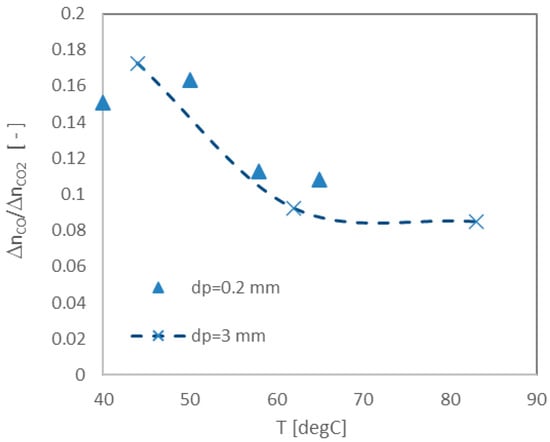
Although the measurements carried out in this work were aimed at determining reaction kinetics, avoiding complete conversion of the reactants (the maximum CO2 selectivity observed in this work reached 0.7), measurements of the outlet carbon monoxide concentration were attempted in some experimental runs using an electrochemical sensor to evaluate carbon balance.
The CO/CO2 ratio produced seemed insensitive to catalyst pellet size and decreased with increasing temperature from approximately 0.17 to 0.1 (see Figure 14).
Figure 14.
Effect of temperature on produced CO/CO2 ratio in the reactor for inlet nO3/nT = 18 ÷ 25.
Since small amounts of volatile by-products were observed or detected in the gas chromatograms of outlet gas samples (their peaks accounted for less than 20% of the total peak area—see Table 2), this indicates that approximately 10–20% of the organic carbon missing in the carbon balance might have been undetected or remained in the catalyst bed, where it could accumulate over extended operation. However, no significant decrease in the toluene decomposition rate was observed over several hours of measurement. Stabilization of outlet concentrations occurred within approximately 1–2 h after setting inlet concentrations. It was possible to regenerate the catalyst after extended measurement series by burning out the accumulated carbonyl by-products at 120 °C, maintaining the inlet ozone concentration at 20 g/m3 until the outlet CO2 concentration dropped to the inlet value (typically after 20–30 min).
Table 2.
GC-FID peaks report of outlet gas sample (nO3/nT = 9, T = 62 °C).
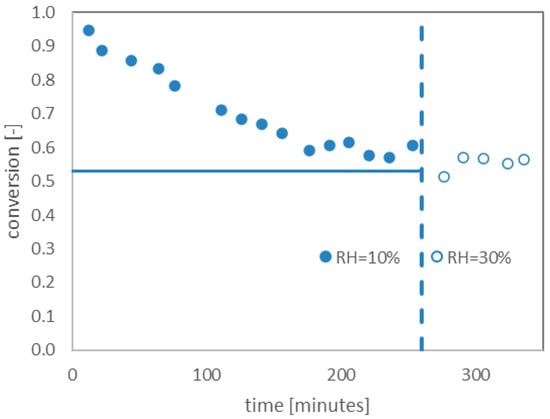
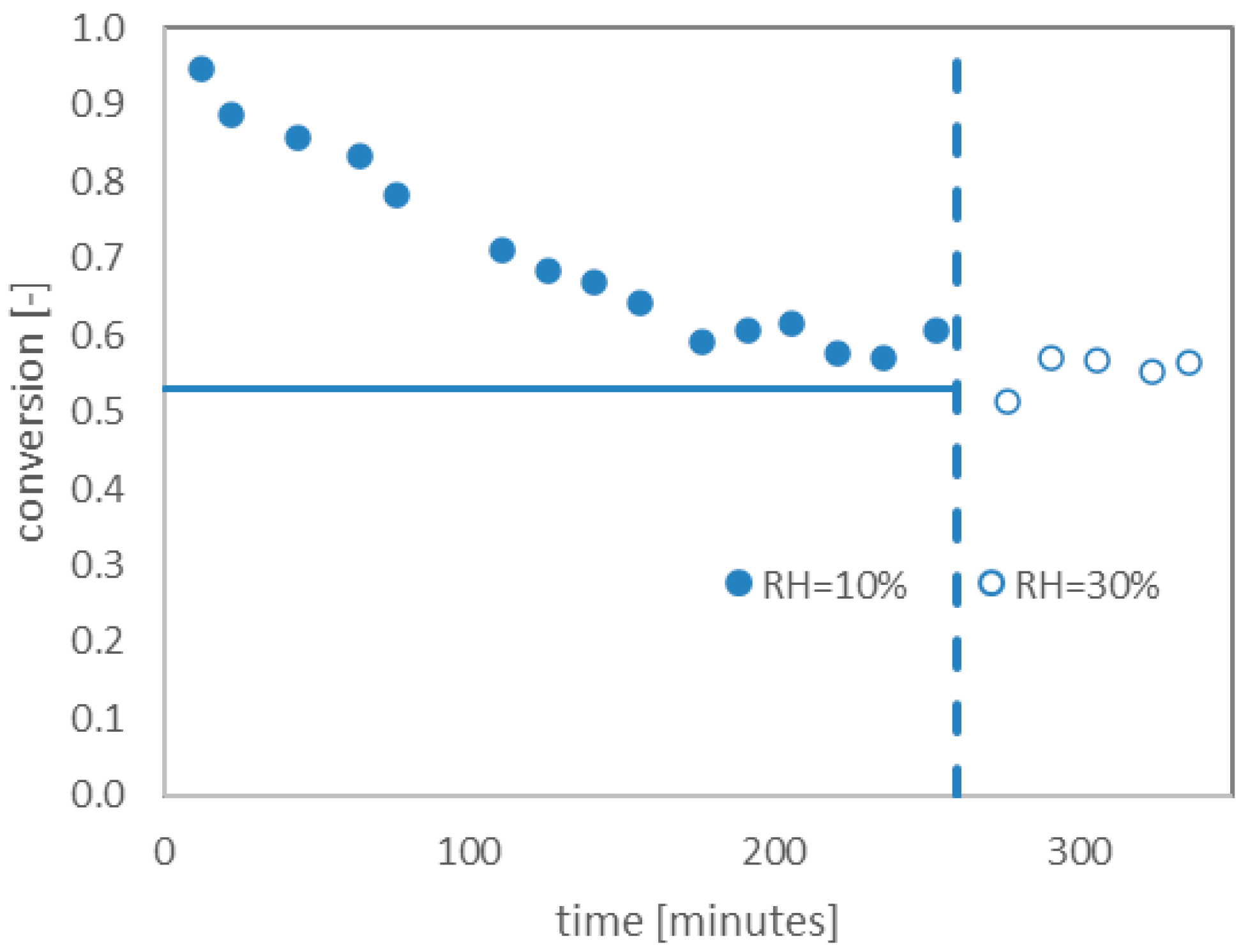
The transient behavior of the regenerated catalyst is shown in Figure 15, where solid points denote toluene conversion in the ozone–air mixture of lower humidity (RH = 10%), and open circles denote higher-humidity conditions (RH = 30%). It can be observed that increased humidity at 260 min basically did not change the conversion level, which agrees with the findings reported in [18,19] that water “poisoning” can be minimized if the catalyst temperature is higher than 35–40 °C
Figure 15.
Approaching steady-state toluene conversion after catalyst regeneration at T = 62 °C (cTin = 0.0243 mol/m3, nO3/nT = 9). Horizontal line: previous steady-state level (cTin = 0.0254 mol/m3, nO3/nT = 8.5). Vertical (dashed) line designates change in relative humidity (from 10% to 30%).
4. Conclusions
The kinetics of gas-phase ozone and toluene decomposition on a Co/SiO2 catalyst in a low-temperature process (40–65 °C) were investigated in this work. Ozone decomposition in the absence of toluene follows first-order reaction kinetics.
The model of toluene abatement with ozone based on a simplified reaction mechanism proposed in this work allows for reasonable predictions of the process rate and CO2 selectivity, even under conditions of considerable mass transfer resistance due to internal diffusion in the catalyst pellet. Although the overall oxidation rate is lower in these conditions, the degree of VOC mineralization (CO2 selectivity) may be higher, especially at higher GHSV values. The catalyst can be regenerated after prolonged usage by burning out the accumulated incomplete oxidation by-products in an air–ozone mixture at 120 °C
Author Contributions
Conceptualization, methodology, data curation and analysis, original draft preparation, P.M.; investigation, data curation and analysis, B.B. All authors have read and agreed to the published version of the manuscript.
Funding
This work was sponsored by the Warsaw University of Technology under a grant from the Council of Scientific Discipline, Chemical Engineering.
Institutional Review Board Statement
Not applicable.
Informed Consent Statement
Not applicable.
Data Availability Statement
The original contributions presented in this study are included in the article. Further inquiries can be directed to the corresponding author(s).
Acknowledgments
The authors are grateful to Robert Cherbański for his help with specific surface measurements and Jolanta Czerska-Duszak and Michał Wojasiński for their help with FTIR measurements.
Conflicts of Interest
The authors declare no conflicts of interest. The funders had no role in the design of the study; in the collection, analyses, or interpretation of data; in the writing of the manuscript; or in the decision to publish the results.
Abbreviations
The following abbreviations and symbols are used in this manuscript.
| GHSV | gas hourly space velocity (h−1) |
| FTIR | Fourier-transformed infrared spectroscopy |
| Toxs | adsorbed toluene oxidation by-product |
| VOC | volatile organic compound |
| Ts | adsorbed toluene |
| Ts* | adsorbed toluene activated after reaction with O* |
| O3 | ozone |
| O* | active oxygen |
| c | concentration (mol/m3) |
| D | diffusivity (m2/s) |
| dp | catalyst pellet diameter (m) |
| k | reaction rate constant (1/s) |
| K | adsorption equilibrium constant (-) |
| M | molar mass (kg/mole) |
| R | reaction rate (mol/m3/s) |
| Rg | universal gas constant (J/mol/K) |
| r | radial coordinate (m) |
| T | temperature (K), toluene (as subscript) |
| Θ | adsorbed species coverage |
Appendix A
The estimations of internal and external diffusion resistance for the two pellet sizes used in this work were based on calculations performed for the highest reaction rates observed during the measurements. The significance of internal diffusion resistance can be estimated based on the Weisz–Prater criterion [40]:
The significance of external mass transfer resistance can be estimated by calculating differences between bulk concentrations (cg) and those at the pellet surface (cs) [40]:
The calculated left-hand sides of the inequalities (Equations (A1) and (A2)) are presented in Table A1 for the experimental conditions of the observed reaction rate (Robs) at 65 °C and nO3/nT = 14–16. Mass transfer coefficients (kc) were estimated based on the Chilton–Colburn j-factor jD = f(Re), calculated according to the correlation proposed by Bird et al. [41] for forced convection through packed beds.
It can be observed that although the Weisz–Prater criterion of negligible internal mass transfer resistance is fulfilled only in the case of 0.2 mm catalyst particles, external mass transfer resistance can be disregarded for both pellet sizes. External mass transfer resistance was significantly higher for 3 mm pellets. Nevertheless, they were disregarded during the calculations of model predictions presented in Figure 10 in view of limited precision and scatter of the experimental data used for comparison with the model’s predictions.
Table A1.
Significance of internal and external mass transfer resistance (T = 65 °C, nO3/nT = 14–16).
The assumption of plug flow was verified by calculating the relative difference in outlet concentrations for ozone and toluene assuming pseudo-first-order reactions in the reactor with axial dispersion compared to that with plug flow (Dax = 0), in accordance with [40]. The differences calculated for the two pellet diameters are shown in Table A2.
Table A2.
Relative deviations of outlet concentrations estimated with assumption of plug flow from that based on axial dispersion model (T = 65 °C, nO3/nT = 14–16).
Within the range of Reynolds number values, Re = 4 ÷ 71, observed during experiments carried out for both pellet sizes, 0.2 mm and 3 mm, the value of the Péclet number (based on pellet diameter) was Pe = 2 (see [40], p. 282). It is evident from Table A2 that the deviation from plug flow was more significant in the case of the bed composed of 3 mm pellets. Nevertheless, the relative differences in outlet concentration from those predicted by the axial dispersion model were below 1.5% and 0.25% for toluene and ozone, respectively. Considering that glass beads were present in the reactor and high flow ensured good mixing in the lateral direction, the assumption of plug flow was justified in modeling the reactor used in this work.
References
- Zhang, Z.; Jiang, Z.; Shangguan, W. Low-temperature catalysis for VOCs removal in technology and application: A state-of-the-art review. Catal. Today 2016, 264, 270–278. [Google Scholar] [CrossRef] [Scilit]
- Huang, H.; Xu, Y.; Feng, Q.; Leung, D.Y.C. Low temperature catalytic oxidation of volatile organic compounds: A review. Catal. Sci. Technol. 2015, 5, 2649–2669. [Google Scholar] [CrossRef] [Scilit]
- Deboos, V.; Calabrese, C.; Giraudon, J.-M.; Morent, R.; DeGeyter, N.; Liotta, L.F.; Lamonier, J.-F. Copper-Based Silica Nanotubes as Novel Catalysts for the Total Oxidation of Toluene. Nanomaterials 2023, 13, 2202. [Google Scholar] [CrossRef] [Scilit]
- Zou, M.; Wang, M.; Wang, J.; Zhu, D.; Liu, J.; Wang, J.; Xiao, Q.; Chen, J. Weak Metal–Support Interaction over CuO/TiO2 Catalyst Governed Low-Temperature Toluene Oxidation. Nanomaterials 2023, 13, 1859. [Google Scholar] [CrossRef] [Scilit] [PubMed]
- Paris, C.; Dib, H.; Bounoukta, C.E.; Genty, E.; Poupin, C.; Siffert, S.; Cousin, R. Benefit of LDH-Derived Mixed Oxides for the Co-Oxidation of Toluene and CO Exhausted from Biomass Combustion. Catalysts 2024, 14, 455. [Google Scholar] [CrossRef] [Scilit]
- Gervasini, A.; Vezzoli, G.C.; Ragaini, V. VOC removal by synergic effect of combustion catalyst and ozone. Catal. Today 1996, 29, 449–455. [Google Scholar] [CrossRef] [Scilit]
- Einaga, H.; Futamura, S. Catalytic oxidation of benzene with ozone over alumina-supported manganese oxides. J. Catal. 2004, 227, 304–312. [Google Scholar] [CrossRef] [Scilit]
- Rezaei, E.; Soltan, J. Low temperature oxidation of toluene by ozone over MnOx/γ-alumina and MnOx/MCM-41 catalysts. Chem. Eng. J. 2012, 198–199, 482–490. [Google Scholar] [CrossRef] [Scilit]
- Fang, R.; Huang, W.; Huang, H.; Feng, Q.; He, M.; Ji, J.; Liu, B.; Leung, D.Y.C. Efficient MnOx/SiO2@AC catalyst for ozone-catalytic oxidation of gaseous benzene at ambient temperature. Appl. Surf. Sci. 2019, 470, 439–447. [Google Scholar] [CrossRef] [Scilit]
- Dhandapani, B.; Oyama, S.T. Gas phase ozone catalysts. Appl. Catal. B Environ. 1997, 11, 129–166. [Google Scholar] [CrossRef] [Scilit]
- Huang, H.; Huang, W.; Xu, Y.; Ye, X.; Wu, M.; Shao, Q.; Ou, G.; Peng, Z.; Shi, J.; Chen, J.; et al. Catalytic oxidation of gaseous benzene with ozone over zeolite-supported metal oxide nanoparticles at room temperature. Catal. Today 2015, 258, 627–633. [Google Scholar] [CrossRef] [Scilit]
- Dhandapani, B.; Oyama, S.T. Kinetics and mechanism of ozone decomposition on a manganese oxide catalyst. Chem. Lett. 1995, 24, 413–414. [Google Scholar] [CrossRef] [Scilit]
- Li, W.; Gibbs, G.V.; Oyama, T. Mechanism of Ozone Decomposition on a Manganese Oxide Catalyst. 1. In Situ Raman Spectroscopy and Ab Initio Molecular Orbital Calculations. J. Am. Chem. Soc. 1998, 120, 9041–9046. [Google Scholar] [CrossRef] [Scilit]
- Hu, M.; Yao, Z.; Hui, K.N.; Hui, K.S. Novel mechanistic view of catalytic ozonation of gaseous toluene by dual-site kinetic modelling. Chem. Eng. J. 2017, 308, 710–718. [Google Scholar] [CrossRef] [Scilit]
- Rezaei, E.; Soltan, J.; Chen, N. Catalytic oxidation of toluene by ozone over alumina supported manganese oxides: Effect of catalyst loading. Appl. Catal. B Environ. 2013, 136–137, 239–247. [Google Scholar] [CrossRef] [Scilit]
- Rezaei, E.; Soltan, J. EXAFS and kinetic study of MnOx/γ-alumina in gas phase catalytic oxidation of toluene by ozone. Appl. Catal. B Environ. 2014, 148–149, 70–79. [Google Scholar] [CrossRef] [Scilit]
- Li, M.; Huy, K.N.; Hui, K.S.; Lee, S.K.; Cho, Y.R.; Lee, H.; Zhou, W.; Cho, S.; Chao, C.Y.H.; Li, Y. Influence of modification method and transition metal type on the physicochemical properties of MCM-41 catalysts and their performances in the catalytic ozonation of toluene. Appl. Catal. B Environ. 2011, 107, 245–252. [Google Scholar] [CrossRef] [Scilit]
- Machniewski, P.; Biń, A.; Kłosek, K. Effectiveness of toluene mineralization by gas-phase oxidation over Co(II)/SiO2 catalyst with ozone. Environ. Technol. 2021, 42, 3987–3994. [Google Scholar] [CrossRef] [Scilit]
- Huang, H.; Ye, X.; Huang, W.; Chen, J.; Xu, Y.; Wu, M.; Shao, Q.; Peng, Z.; Ou, G.; Shi, J.; et al. Ozone-catalytic oxidation of gaseous benzene over MnO2/ZSM-5 at ambient temperature: Catalytic deactivation and its suppression. Chem. Eng. J. 2015, 264, 24–31. [Google Scholar] [CrossRef] [Scilit]
- Sun, Y.; Zhang, Y.; Hou, B.; He, Y.; Weng, W.; Zhu, Y.; Wang, Z. Catalytic Ozonation of Formaldehyde with an Oxygen-Vacancy-Rich MnOx/γ-Al2O3 Catalyst at Room Temperature. Catalysts 2024, 14, 885. [Google Scholar] [CrossRef] [Scilit]
- Cabrol, A.; Lejeune, A.; Lebullenger, R.; Denicourt-Nowicki, A.; Roucoux, A.; Couvert, A.; Biard, P.-F. Simulation and optimization of the removal of toluene in air by ozonation with a catalytic open-cell foam. Chem. Eng. Res. Des. 2021, 168, 453–464. [Google Scholar] [CrossRef] [Scilit]
- Tulebekov, Y.; Orazov, Z.; Satybaldiyev, B.; Snow, D.D.; Schneider, R.; Uralbekov, B. Reaction Steps in Heterogeneous Photocatalytic Oxidation of Toluene in Gas Phase—A Review. Molecules 2023, 28, 6451. [Google Scholar] [CrossRef] [Scilit]
- Silva, J.R.; Quinta-Ferreira, R.M.; Castro, L.M. Biological Treatments for VOC-Contaminated Off-Gas: Advances, Challenges, and Energetic Valorization Opportunities. Sustainability 2025, 17, 4802. [Google Scholar] [CrossRef] [Scilit]
- Elimian, E.A.; Kiki, C.; Amenaghawon, A.N.; Djellabi, R. Biofiltration as a sustainable approach for the treatment of hydrophobic volatile organic compounds: Improvement strategies and integrated systems. J. Water Process Eng. 2025, 69, 106726. [Google Scholar] [CrossRef] [Scilit]
- Chameides, W.L.; Fehsenfeld, F.; Rodgers, M.O.; Cardelino, C.; Martinez, J.; Parrish, D.; Lonneman, W.; Lawson, D.R.; Rasmussen, R.A.; Zimmerman, P.; et al. Ozone precursor relationships in the ambient atmosphere. J. Geophys. Res. Atmos. 1992, 97, 6037–6055. [Google Scholar] [CrossRef] [Scilit]
- Liu, B.; Ji, J.; Zhang, B.; Huang, W.; Gan, Y.; Leung, D.Y.C.; Huang, H. Catalytic ozonation of VOCs at low temperature: A comprehensive review. J. Hazard. Mater. 2022, 422, 126847. [Google Scholar] [CrossRef] [Scilit] [PubMed]
- Pei, J.; Lu, Y.; Yin, X. Catalytic Decomposition of Ozone by CuO/MnO2-Performance, Kinetics and Application Analysis. Procedia Eng. 2015, 121, 792–800. [Google Scholar] [CrossRef] [Scilit]
- Batacliev, T.; Georgiev, V.; Anachkov, M.; Rakovsky, S.; Zaikov, G.E. Ozone decomposition. Interdiscip. Toxicol. 2014, 7, 47–59. [Google Scholar] [CrossRef] [Scilit]
- Naydenov, A.I. Catalytic decomposition of ozone: From laboratory fixed bed reactor to design of adiabatic monolithic reactor. Bulg. Chem. Commun. 2015, 47, 49–53. [Google Scholar]
- Rakitskaya, T.L.; Ennan, A.A.; Granatyuk, I.V.; Bandurko, A.Y.; Balavoine, G.G.A.; Geletii, Y.V.; Paina, V.Y. Kinetics and mechanism of low-temperature ozone decomposition by Co-ions adsorbed on silica. Catal. Today 1999, 53, 715–723. [Google Scholar] [CrossRef] [Scilit]
- Mohamed, E.F.; Awad, G.; Zaitan, H.; Andriantsiferana, C.; Manero, M.-H. Transition metals-incorporated zeolites as environmental catalysts for indoor air ozone decomposition. Environ. Technol. 2018, 39, 878–886. [Google Scholar] [CrossRef] [Scilit]
- Zhang, L.; Huo, F.; Wang, A.; Chai, S.; Guan, J.; Fan, G.; Yang, W.; Ma, G.; Han, N.; Chen, Y. Coordination-Controlled Catalytic Activity of Cobalt Oxides for Ozone Decomposition. Inorg. Chem. 2023, 62, 9178–9189. [Google Scholar] [CrossRef] [Scilit] [PubMed]
- Naydenov, A.; Stoyanova, R.; Mehandijev, D. Ozone decomposition and CO oxidation on CeO. J. Mol. Catal. A Chem. 1995, 98, 9–14. [Google Scholar] [CrossRef] [Scilit]
- Aghbolaghy, M.; Soltan, J.; Chen, N. Role of surface carboxy lates in the gas phase ozone-assisted catalytic oxidation of toluene. Catal. Lett. 2017, 147, 2421–2433. [Google Scholar] [CrossRef] [Scilit]
- Alejandro-Martín, S.; Valdés, H.; Zaror, C.A. Catalytic Ozonation of Toluene over Acidic Surface Transformed Natural Zeolite: A Dual-Site Reaction Mechanism and Kinetic Approach. Catalysts 2021, 11, 958. [Google Scholar] [CrossRef] [Scilit]
- Zhou, B.; Ke, Q.; Chen, K.; Wen, M.; Cui, G.; Zhou, Y.; Gu, Z.; Weng, X.; Lu, H. Adsorption and catalytic ozonation of toluene on Mn/ZSM-5 at low temperature. Appl. Catal. A Gen. 2023, 657, 119146. [Google Scholar] [CrossRef] [Scilit]
- Chen, S.; Liu, B.; Xu, Q.; Zhu, Q.; Zhu, L.; Wang, Z. Probing the ozone-assisted low-temperature oxidation chemistry of toluene. Combust. Flame 2025, 277, 114176. [Google Scholar] [CrossRef] [Scilit]
- Ryu, H.W.; Song, M.Y.; Park, J.S.; Kim, J.M.; Jung, S.-C.; Song, J.H.; Kim, B.-J.; Park, Y.-K. Removal of toluene using ozone at room temperature over mesoporous Mn/Al2O3 catalysts. Environ. Res. 2019, 172, 649–657. [Google Scholar] [CrossRef] [Scilit] [PubMed]
- Poling, B.E.; Prausnitz, J.M.; O’Connell, J.P. Properties of Gases and Liquids; Mc-Graw Hill Inc.: New York, NY, USA, 2001. [Google Scholar]
- Levenspiel, O. Chemical Reaction Engineering, 2nd ed.; John Wiley & Sons: New York, NY, USA, 1972. [Google Scholar]
- Bird, R.B.; Steward, W.E.; Lightfoot, E.N. Transport Phenomena, 2nd ed.; John Wiley & Sons: New York, NY, USA, 2002. [Google Scholar]

Disclaimer/Publisher’s Note: The statements, opinions and data contained in all publications are solely those of the individual author(s) and contributor(s) and not of MDPI and/or the editor(s). MDPI and/or the editor(s) disclaim responsibility for any injury to people or property resulting from any ideas, methods, instructions or products referred to in the content. |
© 2026 by the authors. Licensee MDPI, Basel, Switzerland. This article is an open access article distributed under the terms and conditions of the Creative Commons Attribution (CC BY) license.