


Abstract
AgriRover was developed to address key operational constraints faced by smallholder vineyards in Peru, including sandy and saline soils, labor shortages, and limited access to advanced agricultural machinery. The platform features an articulated, all-wheel-drive chassis designed to ensure mobility and stability on loose terrain while minimizing soil compaction. This study presents the simulation-driven development of a digital pre-twin, conceived as a virtual prototype prepared for future sensor integration but currently operating without real-time data feedback. The pre-twin was implemented in MATLAB/Simulink (vers. 2024b) using a multibody dynamics model and evaluated through eight scenario-based simulations, varying field geometry, soil type, and slope conditions. The results show stable operation on slopes up to 10°, wheel sinkage values ranging between approximately 20 and 45 mm depending on terrain conditions, and a moderate battery state-of-charge reduction across most scenarios, with higher power demand observed on sandy soils. A scenario-based comparison indicates a potential reduction of approximately 50% in total monitoring time relative to manual field scouting, while advanced sensing, autonomous navigation, and AI-based analytics remain part of future developments. The current pre-twin provides a validated, low-cost foundation for context-specific phenological monitoring and early-stage precision agriculture applications in developing regions.
1. Introduction
Agriculture in rural areas of developing countries—such as Peru—faces persistent challenges. Land is often fragmented, terrain is complex, mechanization is low, and access to technology is limited. These issues are especially evident in the traditional vineyards of the Ica region. In this region, smallholder farmers work in narrow rows, manage saline and sandy soils, and rely on weak irrigation networks [1,2]. The terrain’s constitution can be a problem for wheel deepening and power consumption.
Recent studies highlight the urgent need for technologies that fit local contexts and address both agronomic and socio-economic constraints [3]. In such conditions, autonomous agricultural vehicles show strong potential. The use of such solutions can support crop monitoring, canopy management, and yield estimation while reducing labor demands and environmental pressure [4]. Furthermore, cost-accessible tools will improve productivity in remote agricultural areas [5]. Despite the benefits of precision agriculture, the adoption in developing countries remains limited. High costs, technical complexity, and poor alignment with local practices are significant barriers [2,6]. For instance, phenological monitoring of grapevines using the BBCH scale [7] is essential for managing inputs and scheduling tasks. However, it is rarely done consistently in these regions, mainly because of labor shortages and limited digital tools [8]. To address this gap, the authors introduced the AgriRover, a modular, cost-aware unmanned ground vehicle (UGV) designed for small vineyards. The platform is intended to operate within tight rows, soft soils, and irregular terrain. Its lightweight articulated chassis, low-compaction tires, and four-wheel-drive suspension provide stable maneuverability. An open-hardware approach and the use of locally available components support easy repair and long-term adoption. A simplified ground pressure estimation was performed under this worst-case condition. Based on the wheel geometry extracted from the CAD model (outer diameter ≈ 0.62 m, tread width ≈ 0.25 m) and assuming low-pressure agricultural tires, the resulting average ground pressure is estimated to be in the range of 18–24 kPa. This value falls within the range commonly considered low-impact for sandy agricultural soils, supporting the use of low-compaction wheels [9]. Given financial and technological constraints, we adopted a simulation-driven design strategy. This work builds upon the AgriRover concept previously introduced in [3], where the platform requirements, environmental impact assessment, socio-economic context of smallholder viticulture in the Ica region (Peru), and sustainability implications were analyzed. That study also included a preliminary cost evaluation and a comparative analysis with existing commercial vineyard robots, highlighting the accessibility gap faced by small-scale farmers. While the first study focused on conceptual design, environmental evaluation, and contextual feasibility, the present paper shifts the focus toward a simulation-based pre-twin framework to support rover development and future deployment. The proposed approach consists of developing a digital pre-twin: a virtual prototype that represents system behavior before physical sensors are integrated [10,11]. At this stage, the model does not aim to provide real-time crop monitoring or predictive agronomic outputs. Instead, it relies on multibody dynamics implemented in MATLAB/Simulink to enable virtual testing of suspension settings, torque distribution, and wheel–ground interaction prior to field trials. Scenario-based tests conducted in a virtual environment reproduce representative vineyard conditions, including slope, soil texture, and row geometry. These simulations guide control-system development and help anticipate mechanical and operational failure modes. As a result, the pre-twin reduces development costs and provides a safe and repeatable framework for exploring early-stage intelligent automation strategies. Simulation results serve two primary purposes: (1) evaluating mechanical performance under realistic operational constraints and (2) generating synthetic data to support future developments in predictive maintenance and control strategies. This simulation-first approach follows current digital-twin frameworks while remaining appropriate for developing-country settings. The broader goal of the AgriRover project is to support smallholders in their transition toward sustainable viticulture. Building on the environmental and socio-economic assessments presented in [3], the proposed approach aligns with several Sustainable Development Goals (SDGs), including SDG 2 (Zero Hunger), SDG 9 (Industry, Innovation, and Infrastructure), and SDG 12 (Responsible Consumption and Production). This paper presents the conceptual design and digital prototyping of the AgriRover, developed through a collaboration between Peruvian and Italian researchers. Structural modeling was carried out using CAD tools, while dynamic evaluation and system integration were performed in MATLAB/Simulink. Design choices were guided by affordability, simplicity, and future scalability, offering a first step toward the development of cost-accessible autonomous systems for precision agriculture in smallholder contexts within developing countries. The remainder of the paper is organized as follows. Section 2 reviews the state-of-the-art on the use of Digital Twins in agriculture, with particular attention to smallholder and developing-country contexts. Section 3 introduces the case study and outlines the AgriRover concept and system requirements. Section 4 presents the simulation-based pre-twin framework and the virtual testing scenarios adopted in this work. Section 6 discusses the results and their implications, while Section 7 concludes the paper and outlines future research directions.
2. The Use of Digital Twins in Agriculture
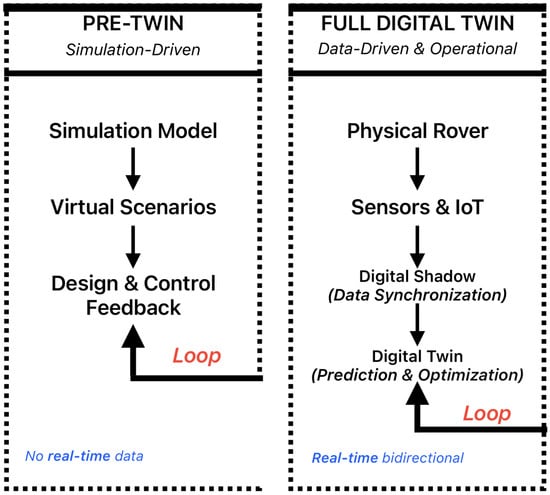
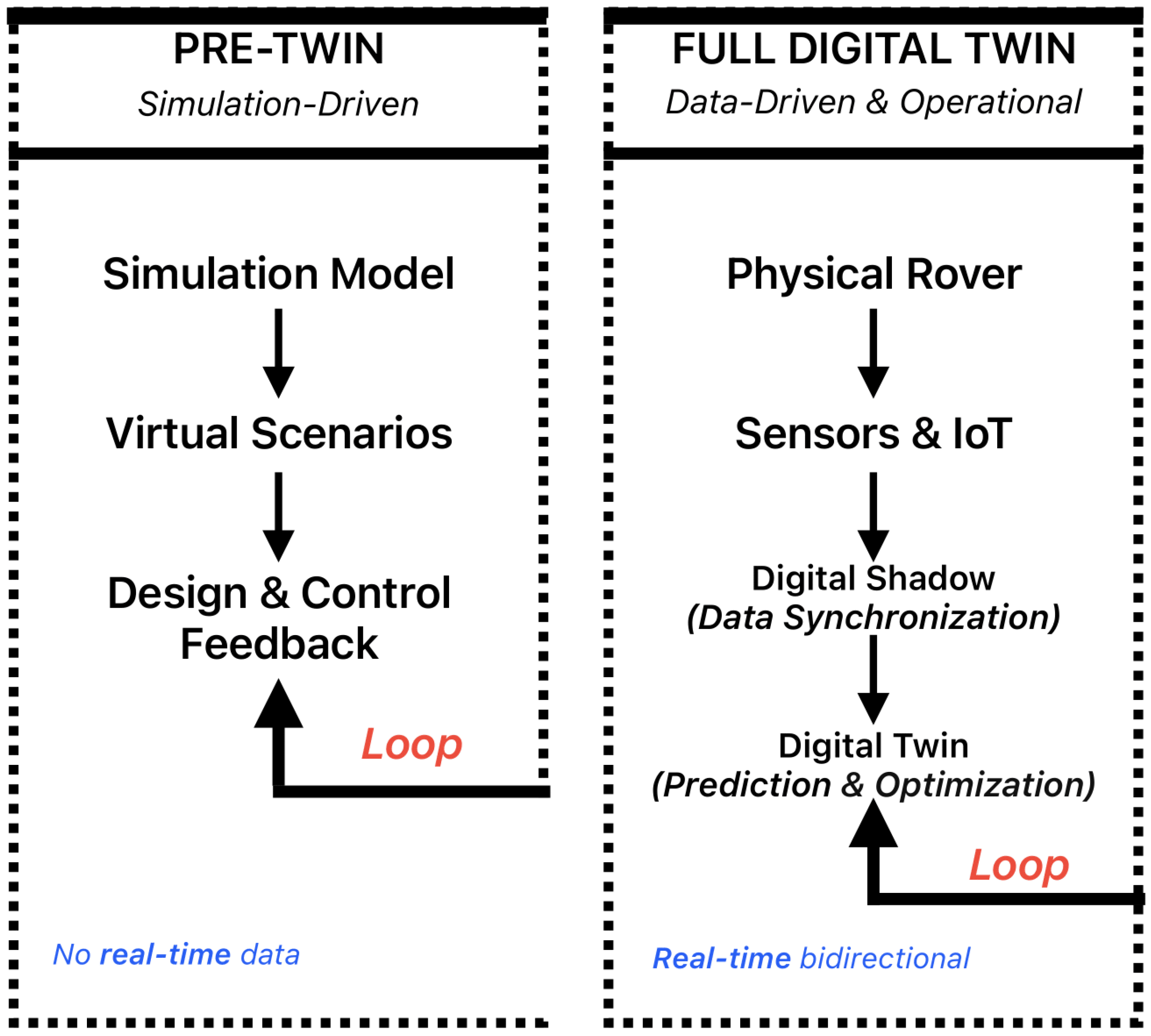
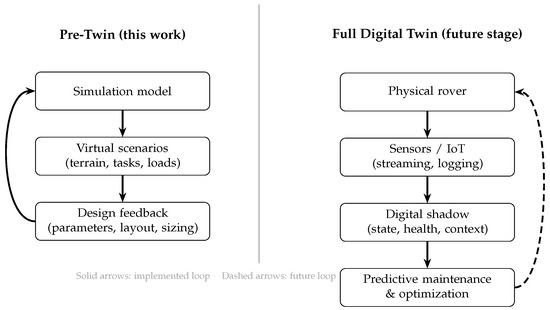
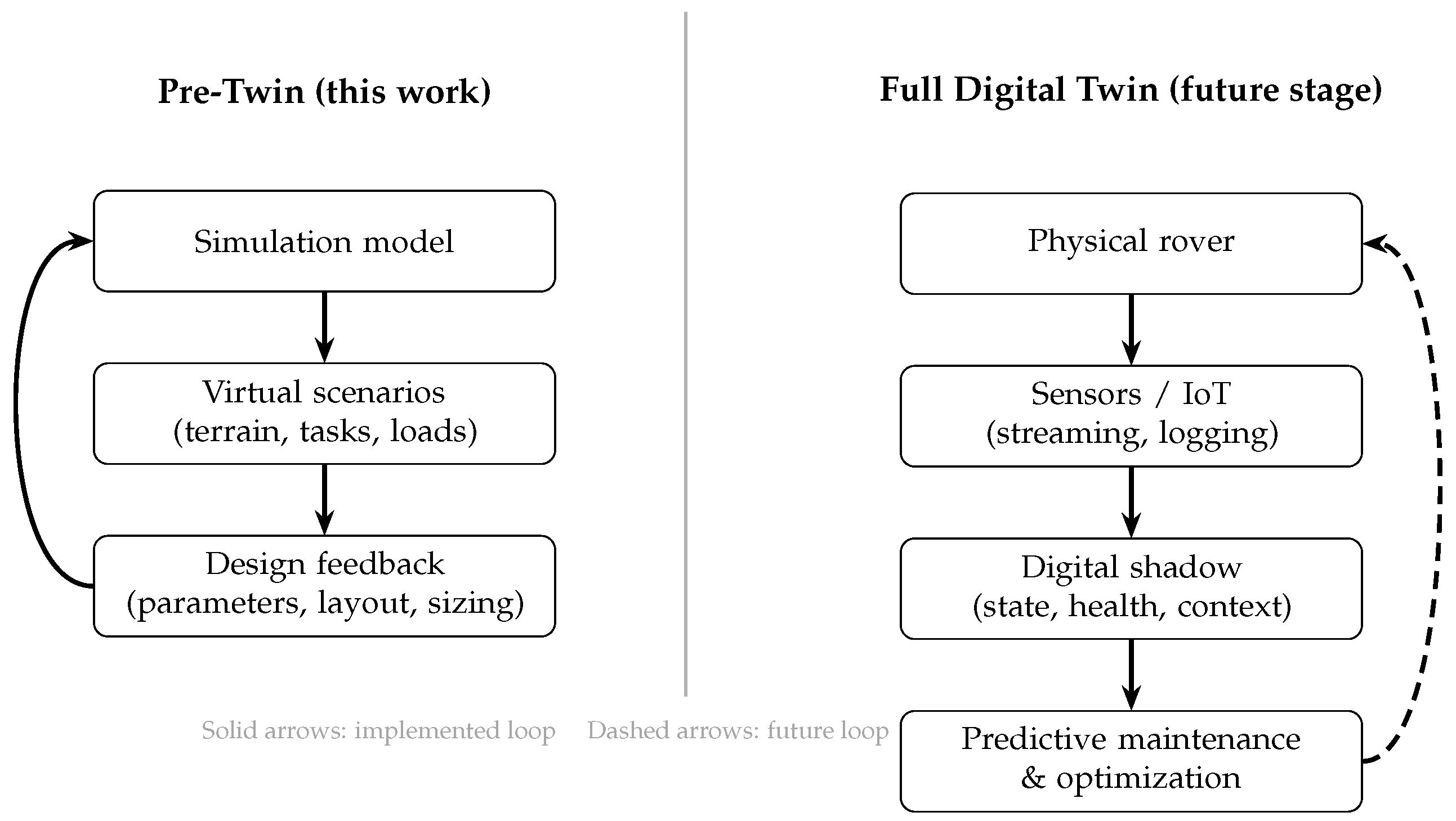
The application of Digital Twins (DTs) in agriculture is a rapidly growing research area. Such a method allows for the potential to transform traditional farming practices through advanced modeling, simulation, and real-time decision support [12,13]. Although DTs have reached considerable maturity in manufacturing, aerospace, and healthcare, their use in agricultural settings—especially among smallholder systems in developing countries—remains relatively underexplored and underutilized [14,15], while digital twin technologies have already been explored for real-time crop health monitoring, optimization, and predictive analysis of soil nutrient content, most existing approaches focus on data-intensive, sensor-rich, and computationally demanding systems. These solutions are typically designed for well-instrumented agricultural environments and rely on continuous data availability. In contrast, this work addresses a complementary and less explored direction: the development of a simulation-only pre-digital twin aimed at low-cost, low-complexity deployment scenarios, where access to sensing infrastructure, connectivity, and technical expertise is limited. The proposed approach emphasizes accessibility and gradual scalability, enabling smallholder farmers to adopt digital twin concepts starting from early-stage modeling and simulation. Digital twins are typically defined as dynamic, virtual representations of physical systems that remain continuously synchronized with their real-world counterparts through sensor data and control interfaces [16,17,18]. The use of such methods allows the creation of feedback loops for predictive modeling, control, optimization, and anomaly detection. In this terminology, a Digital Shadow refers to a one-way data flow from the physical system to the virtual model, while a Digital Twin implies a bidirectional exchange enabling feedback and control. The present work is positioned prior to both, as a simulation-only pre-twin developed without real-time data streams. This conceptual distinction between the proposed Digital Pre-Twin and a conventional data-driven Digital Twin ecosystem is summarized in Figure 1.
Figure 1.
Conceptual comparison between the proposed Digital Pre-Twin and a full Digital Twin ecosystem. The Digital Pre-Twin operates as a simulation-driven closed loop supporting early-stage design, control tuning, and scenario-based validation, without real-time data from the physical system. In contrast, the full Digital Twin ecosystem relies on real-time bidirectional data exchange enabled through sensor integration and a Digital Shadow, allowing prediction, optimization, and operational decision support.
Within this paradigm, a pre-digital twin, or pre-twin, represents a preparatory stage of the digital twin lifecycle in which a simulation-only model is developed without real-time data feedback. In contrast to a digital twin, which passively reflects real-world conditions using collected data, a pre-twin is designed to guide system development before deployment through dynamic simulation, active formal scenario testing, and model-based control tuning [19].
To enhance system reliability before real-world deployment, formal scenario-based testing has gained traction as a methodology that models representative conditions in simulation. Several authors in the literature highlight that embedding structured scenario definitions into virtual environments allows developers to rigorously test system behavior under varying terrain conditions, dynamic obstacles, and sensor uncertainties [20]. The results of such simulated scenarios allow for the identification of performance thresholds, failure modes, and safety margins. For AgriRover, scenario-based simulation enables safe and repeatable validation of chassis stability, traction on sandy or saline soils, and navigation through narrow vineyard rows—without risking hardware or requiring field access during early development.
Several recent studies demonstrate the use of simulation frameworks for digital twin prototyping in agriculture. For instance, Monteiro et al. [21] explored integrating robotic platforms and remote sensing data into virtual greenhouse models. Mitsanis et al. [14] introduced a 3D Functional Structural Plant Modeling (FSPM) approach to incorporate plant physiology into crop monitoring twins. Additionally, Chrono- and FMI-based co-simulation strategies have been applied to simulate off-road vehicle dynamics and control before prototyping [22].
In the context of vineyards, the DIWINE project [23] used UAV imagery and cloud-based infrastructure to generate a partial digital twin of vine growth. However, such efforts have typically focused on high-capacity commercial farms. Despite easier access to broadband connectivity and the widespread use of advanced machinery, there remains a significant gap with scalable and affordable solutions tailored for smallholder farmers.
To support practical adoption in such contexts, the literature increasingly emphasizes the value of modular, layered digital twin architectures that allow systems to evolve from basic data-driven models into autonomous, prescriptive decision-support frameworks [15,24]. This approach involves a multi-stage implementation roadmap, where early simulation-based models, such as AgriRover’s pre-twin, become a foundational stage for gradually incorporating sensing, machine learning, and control features [25].
Despite the recognized potential of DTs to improve sustainability, efficiency, and system resilience, there remains a critical need to translate these concepts into deployable, low-cost platforms appropriate for rural and resource-constrained settings. This work addresses that gap by presenting a simulation-only pre-twin configuration of the AgriRover, developed for the Ica region’s terrain and socio-economic conditions. It demonstrates how early-stage modeling, in the absence of field-deployed sensors, can provide a tangible, low-risk entry point for digital innovation in smallholder agriculture, paving the way for future digital shadow and full digital twin development.
3. Materials and Methods
This section details the methodology used in the conceptualization, design, and virtual evaluation of AgriRover—a simple and robust agricultural rover intended for deployment in rural, smallholder vineyard contexts typical of developing countries such as Peru. The authors’ goal is to provide a low-cost, modular, and adaptable solution to the terrain that will bridge the technological gap characterizing small-scale viticulture. This article presents the rationale behind the main engineering choices made and discusses the modeling tools and simulation strategies that will enable the development of the innovative platform.
AgriRover is designed to address monitoring and decision-making challenges in low-infrastructure settings, particularly those associated with data scarcity and variability in smallholder vineyards. The AgriRover’s purpose is not to replace labor for repetitive agricultural tasks, but rather to support them by collecting relevant data on plants and fruits, according to the phenological phases of the BBCH [3]. These data will enable agronomists to make localized decisions, thanks to early disease detection, assessment of microclimate effects, and identification of plant stress. AgriRover will also be usable as a transport platform for tools and materials, facilitating mobility in the field and increasing human activity without full automation. Its open hardware architecture and use of locally sourced components will support affordability, ease of assembly, and maintenance in rural settings.
Among the functional requirements designed for the AgriRover is its structure to support advanced functionality in future iterations. This study addresses the kinematic and dynamic analysis needed for its design. A modeling-based approach based on Model Based Design (MBD) allows for the pre-validation of design decisions, reducing the need for costly field tests and accelerating prototyping.
From an environmental perspective, the rover is developed with sustainability in mind through intelligent monitoring capabilities and low-impact mobility. Lifecycle-oriented design considerations include modularity, energy efficiency, and the use of recyclable materials, aligning the platform with the principles of sustainable development and responsible innovation.
3.1. Design Objectives and Alignment to Challenges
AgriRover’s design directly responds to the specific constraints of traditional Peruvian vineyards in the Ica region—irregular fields, sandy and clayey soils, labor shortages, and limited access to advanced tools. Each rover feature targets these validated challenges, lowering development risks where real-world prototyping is limited and turning agronomic constraints into focused design objectives.
- Terrain Adaptability. Vineyard terrain in Ica is often sandy, uneven, and affected by salinity. AgriRover uses a lightweight articulated chassis and independent suspension with four-wheel drive to maintain stability over irregular terrain, including salt stones and loose soils [11,26].
- Affordability. The design emphasizes low cost by using off-the-shelf components and materials. Its open hardware structure enables replication and community-driven repair [2,27].
- Modularity and Reparability. Subsystems such as drive units and sensor mounts are modular and easy to replace, facilitating local repairs and reducing maintenance burden [28].
- Autonomy-Ready Architecture. The rover includes features for future automation, including path-following capabilities, on-board computing support, and sensor integration options. Virtual navigation simulations in vineyard scenarios demonstrate its readiness for advanced functionalities [10,29].
- Collaborative and Context-Driven Development. The project is a joint effort between Peruvian and Italian institutions. Field challenges were identified locally, and the mechanical architecture was developed and validated in close collaboration [3,30].
3.2. Analysis of Technical Requirements
AgriRover’s engineering specifications are informed by the agronomic and logistical realities of Peruvian vineyards [3]. Priority areas include:
- Crop Type: Viticulture. Narrow row crops like grapevines demand precision movement and minimal soil disturbance. The chassis supports BBCH-aligned phenological monitoring through stability and low profile [11].
- Soil Conditions. High salinity, sandy texture, and embedded stones require flexible chassis articulation and robust ground contact. Low-compaction wheels and slope tolerance (up to 15 degrees) support operational stability [26,31].
- Size and Weight Constraints. The rover must navigate row spacings of 1.5–2.5 m and be light enough for operational efficiency. A modular frame supports maintenance and upgrades [28,29].
- Interaction with Environment. Sensors must be mounted between 0.8 and 1.2 m to align with the typical canopy height while maintaining 0.25 m ground clearance. This setup enables plant monitoring while avoiding foliage interference [32].
3.3. Mechanical Design of AgriRover
The design emphasizes mechanical simplicity, adaptability to rugged and saline terrains, and ease of assembly and repair using locally available components. The mechanical system is divided into three interrelated subsystems: the chassis and mobility structure, the terrain-adaptive suspension system, and an open hardware platform designed for accessibility and modularity.
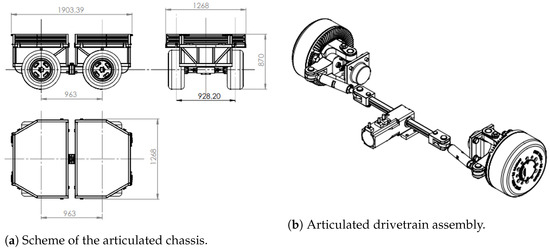
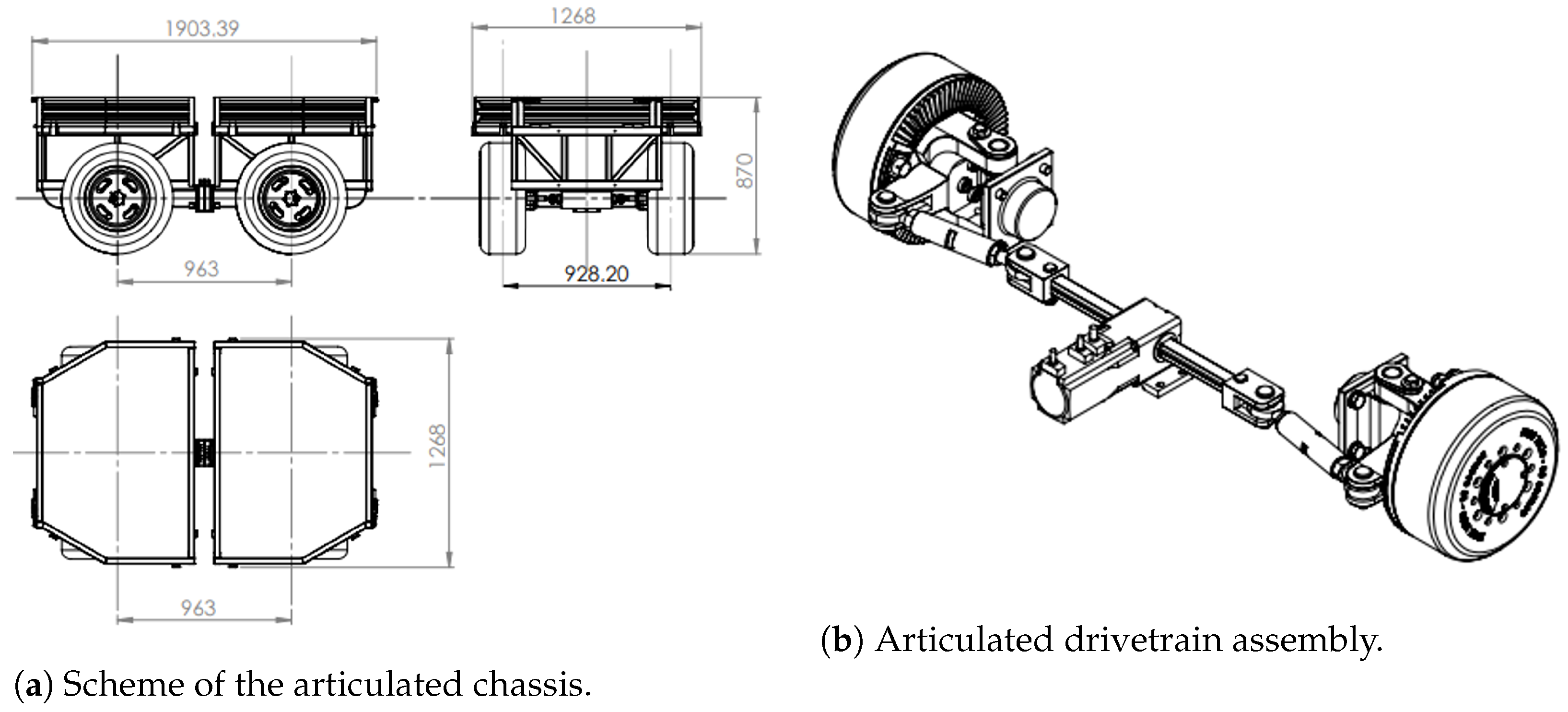
The structural core of AgriRover consists of an articulated chassis designed for robust operation in rough agricultural environments, particularly in regions with loose or uneven soil conditions. The overall dimensions of the rover are 1.90 × 1.27 × 0.87 m (Figure 2a), with a total weight of approximately 560 kg and a payload capacity of up to 300 kg. The reported total mass of approximately 560 kg, with an additional payload capacity of up to 300 kg, represents a conservative worst-case configuration, corresponding to the maximum modular payload foreseen for the platform. The AgriRover architecture is inherently modular, and typical monitoring configurations are expected to operate at significantly lower masses, depending on the installed sensing and transport modules. The articulated configuration divides the chassis into multiple interconnected segments using a sequence of rigid bodies, flexible elements, and mechanical joints. This mechanical architecture, illustrated in Figure 2b, enhances terrain adaptability by allowing independent motion between front and rear sections and improving ground contact. This reduces mechanical stress over obstacles such as soft sand or protruding stones.
Figure 2.
Mechanical design of the AgriRover: (a) chassis dimensional layout used for terrain adaptability and modular design; (b) drivetrain and suspension articulation system.
The rover features a four-wheel-drive system, each powered by a dedicated motor and supported by steering and suspension components that prioritize simplicity and durability. This setup provides reliable traction on mixed terrain profiles while maintaining mechanical efficiency and reducing strain on the drivetrain. Differential steering is implemented through independent wheel actuation, minimizing the need for complex linkages and allowing tight-radius turns—especially valuable in narrow vineyard rows.
Materials and construction methods were selected based on availability and cost-efficiency for developing regions. The frame uses locally sourced steel and aluminum profiles, which are compatible with standard tools and welding methods, enabling in situ fabrication or repair without specialized equipment. This supports the goal of scalable deployment in rural or underserved areas where access to advanced manufacturing infrastructure is limited.
The chassis structure emphasizes modularity and ease of assembly, allowing components to be swapped or upgraded without reengineering the full platform. This feature ensures that future additions, such as sensor payloads or autonomy kits, can be integrated into the rover without requiring fundamental structural redesigns.
3.4. Open Hardware and Local Repairability
The AgriRover platform follows an open hardware philosophy, prioritizing the use of non-proprietary and easily sourced components, along with community-accessible documentation. Rather than relying on digital fabrication techniques such as 3D printing or laser cutting, the design emphasizes the use of materials and enclosures that are readily available in local hardware stores and agricultural supply markets.
Structural elements, brackets, and sensor housings are built using commercially available containers, tubing, and steel profiles. Protective boxes for future sensors are repurposed from waterproof junction boxes or durable storage units, enabling rapid local adaptation without specialized equipment. This choice ensures ease of replacement and resilience in environments with limited access to custom manufacturing services.
In terms of maintenance, the system is modular: motors, suspension arms, wheels, and the central electronics bay can be detached and replaced independently. Standard fasteners, open-source motor drivers, and commonly available enclosures were selected to enhance durability and serviceability. This repair-friendly and adaptable design supports long-term system use and empowers local technicians, students, and farmers to maintain and extend the platform based on evolving needs.
4. Pre-Twin Development and Simulation Environment
The development of the AgriRover digital twin adheres to a staged methodology aligned with resource constraints typical of smallholder agriculture. At this phase, the system is modeled as a pre-digital twin (pre-twin)—a fully simulated, sensor-free configuration used to virtually validate the rover’s mechanical and dynamic behavior. This simulation-based approach supports early iteration without physical prototyping, enabling design optimization in realistic vineyard scenarios.
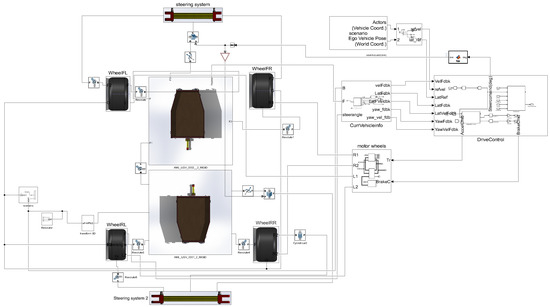
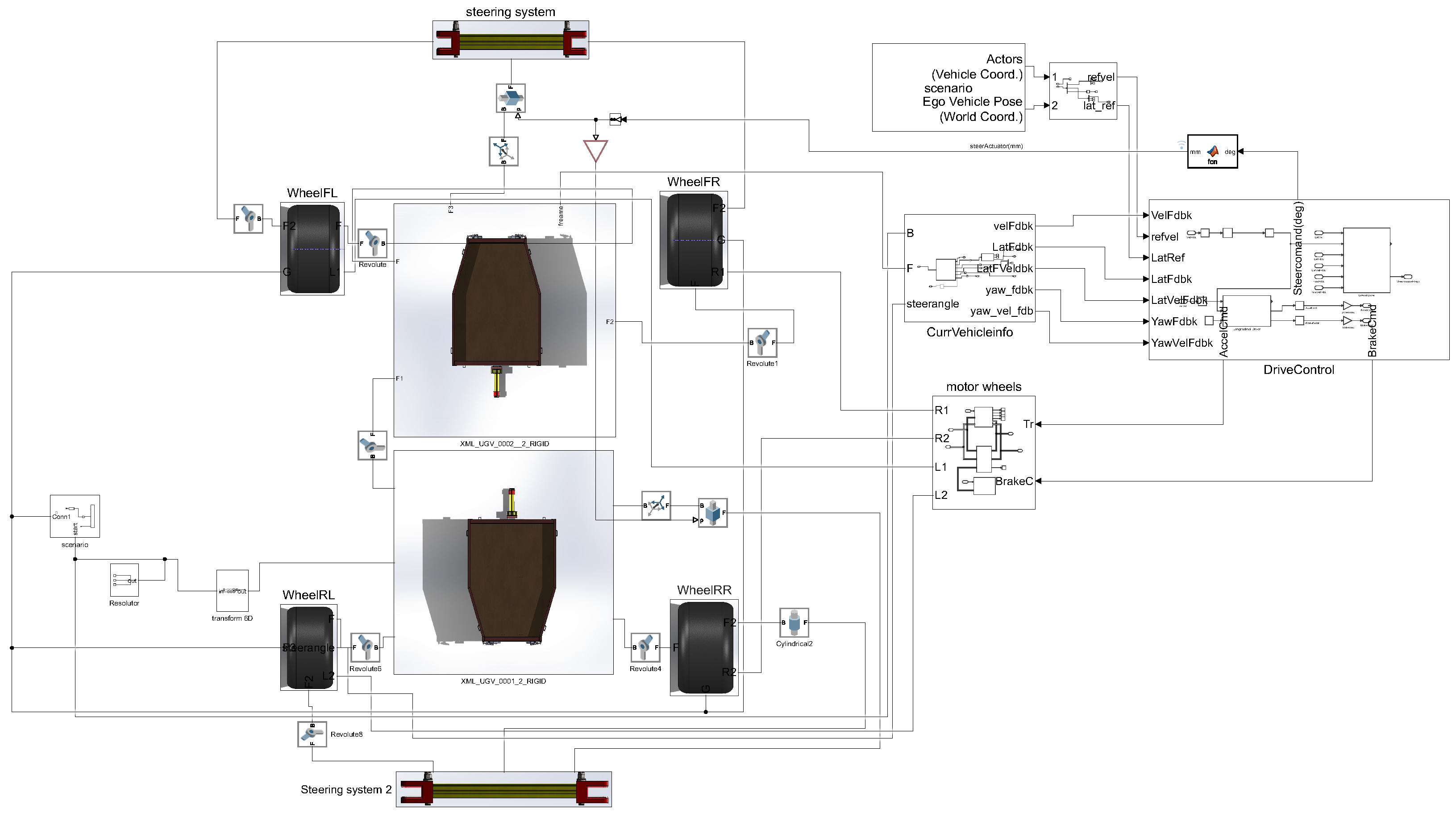
The complete Simscape Multibody implementation of the pre-twin model is shown in Figure 3, which integrates chassis dynamics, wheel–ground interaction, drivetrain subsystems, and virtual sensing into a single simulation environment.
Figure 3.
Simscape Multibody implementation of the AgriRover pre-twin, integrating chassis dynamics, wheel–ground interaction, drivetrain modules, and virtual sensing.
In particular, the pre-twin represents a simulation-centered development loop, used prior to physical deployment to validate design assumptions through virtual scenarios. In contrast, a full digital twin relies on continuous data exchange between the physical system and its digital counterpart. A conceptual comparison between the AgriRover pre-twin and a full digital twin architecture is illustrated below (Figure 4):
Figure 4.
Conceptual comparison between the pre-twin loop adopted in this work and a full digital twin architecture.
4.1. Virtual Scenario Configuration
To validate the mechanical behavior and motion characteristics of AgriRover prior to physical prototyping, we adopted a scenario-based testing (SBT) strategy within a simulation framework. Scenario-based testing, originally developed for safety validation in autonomous driving systems, decomposes the operational environment into abstract and parameterized scenarios to systematically assess the system under test (SUT) in a controlled and repeatable manner [33,34].
In this context, we defined virtual vineyard environments reflecting the geometrical and physical properties typical of Peruvian plots, including row spacing, terrain slope, and soil conditions. The scenario types used in our testing captured critical operational situations for AgriRover, such as turning between rows, traversing uneven sandy ground, and avoiding static obstacles like protruding roots or rocks [23,35]. Guided by formal scenario-based testing methodologies [20], simulations assess AgriRover’s stability, maneuverability, and adaptability.
Each parameterized scenario was defined using a combination of terrain variables and structural features. Scenario parameters include:
- Terrain slope: 0 degrees to 15 degrees.
- Soil profiles: compact clay, loose sand, and salt-stone mix.
- Row spacing: 1.5 m to 2.5 m.
- Static obstacles: positioned to simulate stones, uneven surfaces, and vegetation irregularities.
- Surface roughness: simulated with stochastic elevation profiles.
The characteristics of several terrains were chosen based on the geographic disposition of agricultural installations, where values like slope angle and type are important. These parameterized configurations were instantiated into scenario test cases and executed using a multibody simulation model in MATLAB/Simulink. Figure 5 illustrates the workflow adopted.
Figure 5.
Simulation workflow integrating scenario-based testing in AgriRover’s pre-twin development.
The execution of SBT allowed us to evaluate how the rover responds under a wide range of realistic field conditions. Specific performance indicators—such as wheel sinkage, required power, wheel speed and torque, and battery state of charge (SoC)—were extracted from each scenario to guide design adjustments. Importantly, this structured testing methodology helped reveal not only performance thresholds but also robustness under environmental variability, supporting the transition from a pre-twin to a more complete digital shadow.
Having established a parameterized virtual environment through SBT, the next step is to assess AgriRover’s motion control strategies under these conditions. This ensures not only structural robustness but also effective adaptation of the control system to diverse operational challenges.
In summary, scenario-based testing provided a flexible yet rigorous approach to validate AgriRover’s capabilities in a virtual vineyard environment, aligning well with the requirements of complex terrain robotics in smallholder agriculture. It also opens pathways for future safety validation when the platform integrates autonomy and sensor-based control.
4.2. Scenario-Based Motion Simulation and Control Strategy
Building on the virtual vineyard scenarios defined in Section 4.1, we extend the analysis to the evaluation of AgriRover’s motion dynamics and control strategies. While the previous section focused on structural behavior and environmental robustness, here we investigate how controller design influences torque distribution, suspension response, and energy efficiency. The use of scenario-based testing (SBT) within the pre-twin environment thus supports a systematic validation of control performance before hardware deployment [33,34].
It is hypothesized that combining inverse kinematics and direct dynamics will enable AgriRover to adapt motion characteristics—including speed, steering angles, and torque distribution—to diverse terrain challenges. In particular, inverse dynamics supports optimal torque allocation across the four motors, improving propulsion efficiency and stability under variable payload and slope conditions (Figure 6).
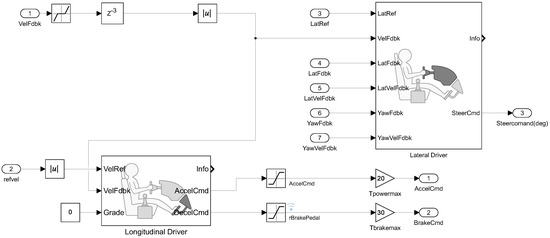
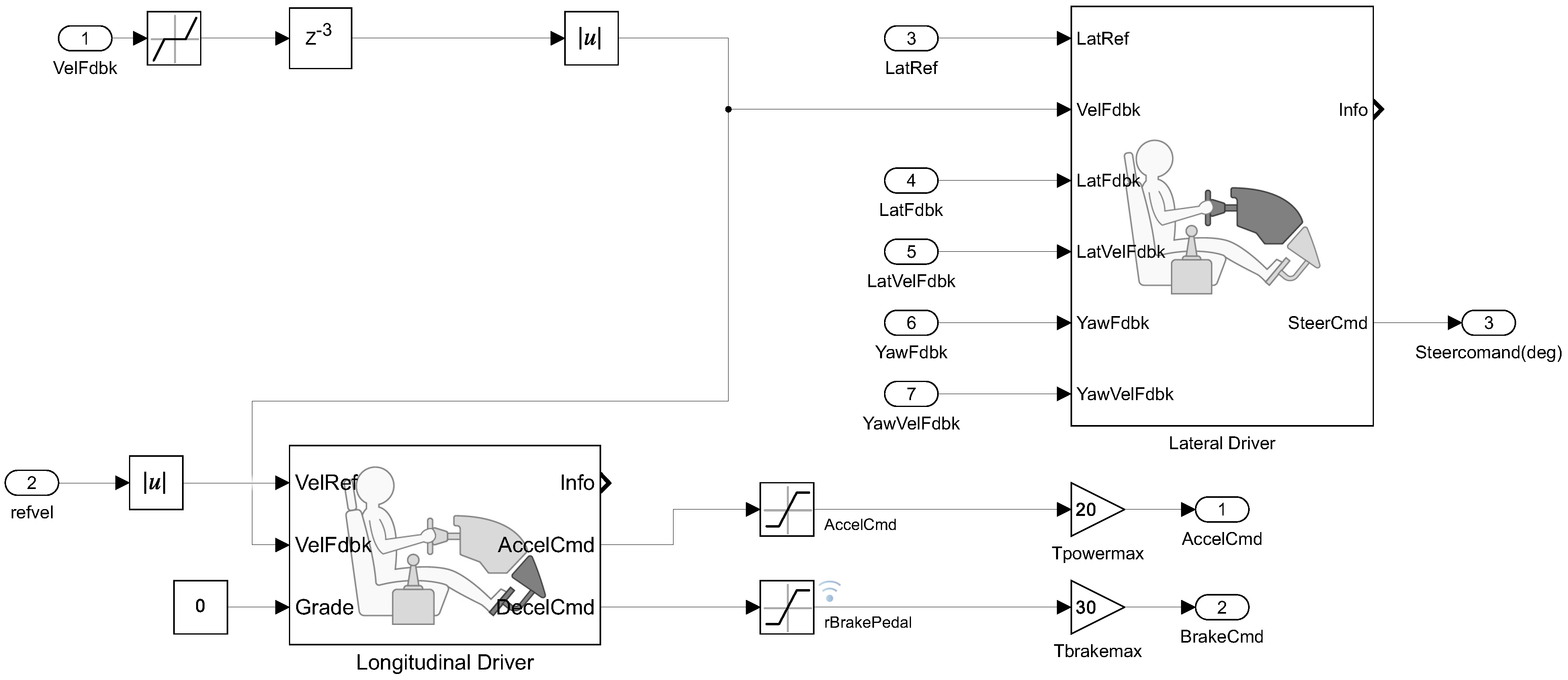
Figure 6.
Control framework in MATLAB/Simulink with a virtual driver for longitudinal and lateral dynamics. The driver processes reference trajectories and provides steering, acceleration, and braking commands for scenario-based motion testing.
Using MATLAB/Simulink with Simscape Multibody, various motion scenarios were configured based on vineyard terrain profiles. Scenario types include:
- Row Navigation: Traversal along straight inter-row paths with variable row spacing.
- Slope Ascension: Uphill movement on slopes from 0 degrees to 15 degrees with varying friction coefficients.
- Soft Terrain Response: Adaptation to sandy or loamy substrates with simulated wheel sinkage.
Each scenario was used to evaluate controller response and mechanical integrity in terms of:
- Wheel sinkage and suspension deflection.
- Wheel torque and speed response.
- Energy demand and battery SoC.
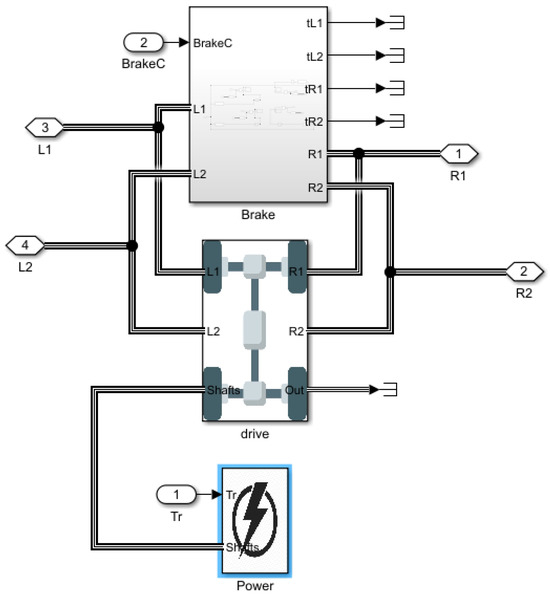
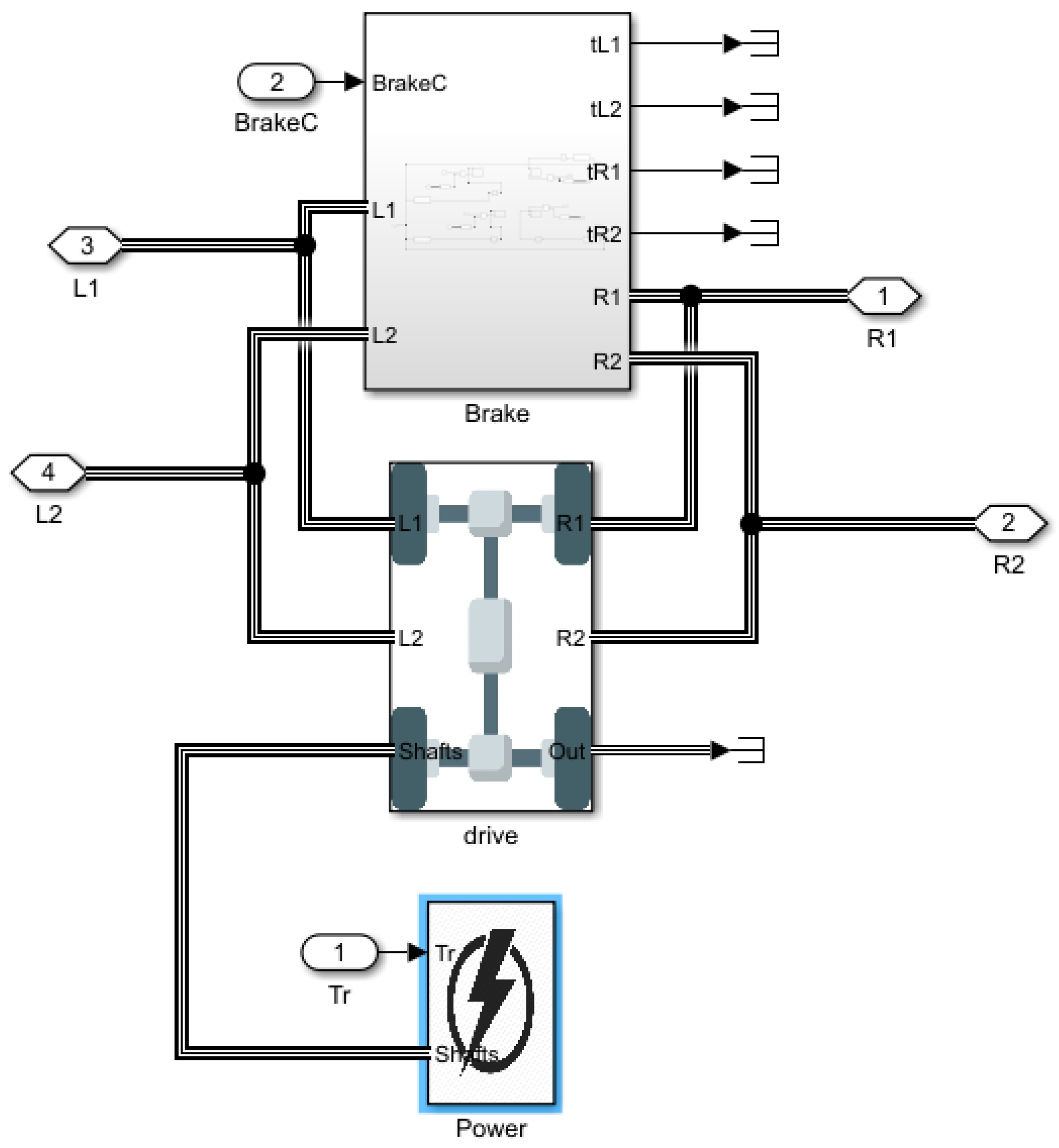
The powertrain and braking subsystem implemented in Simscape is shown in Figure 7. This model allows torque distribution to be evaluated across the four wheels, together with braking effects and power demand, providing the basis for analyzing wheel sinkage, wheel torque and velocity, and battery SoC under different terrain conditions.
Figure 7.
Powertrain and braking subsystem of AgriRover, including independent wheel torque distribution.
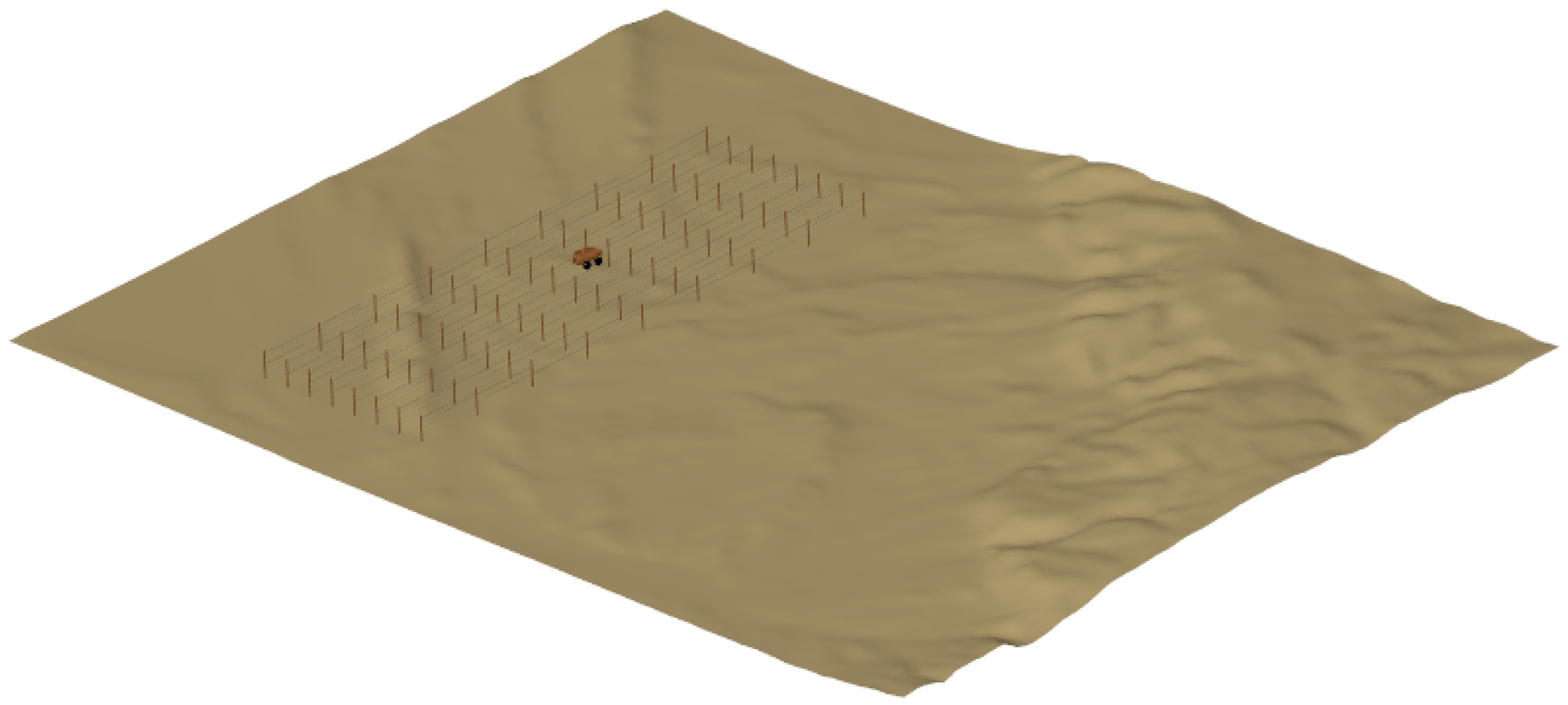
As shown in Figure 8, simulations covered terrains including loose sand, compact clay, embedded stone paths, and slope transitions. These results inform future controller development and mechanical refinements in preparation for transitioning from a pre-twin to a data-integrated digital shadow. The terrain’s surface was created with the SIMULINK block Grid Surface, which creates a Cartesian grid surface that you can use to model contact problems. The points cloud was generated starting from an STL file of a real terrain through a custom MATLAB function.
Figure 8.
Simulated terrain scenarios for dynamic motion analysis in AgriRover’s digital pre-twin.
A total of eight simulations were performed to evaluate the dynamic response of AgriRover under different operating conditions. All simulations were carried out at full load, with an additional mass of 300 kg. Table 1 summarizes the tested conditions and relevant parameters, including field length, row spacing, transmission ratio, and other specifications.
Table 1.
Simulation conditions for AgriRover dynamic tests.
Through this strategy, the pre-twin environment serves not only for component-level validation but also as a simulation-based testing bed compliant with modern validation frameworks for autonomous systems. This contributes to more robust and transparent development processes in line with SDG 9 (Industry, Innovation, and Infrastructure) and SDG 12 (Responsible Consumption and Production).
4.3. Modeling of the Tire-Road Contact
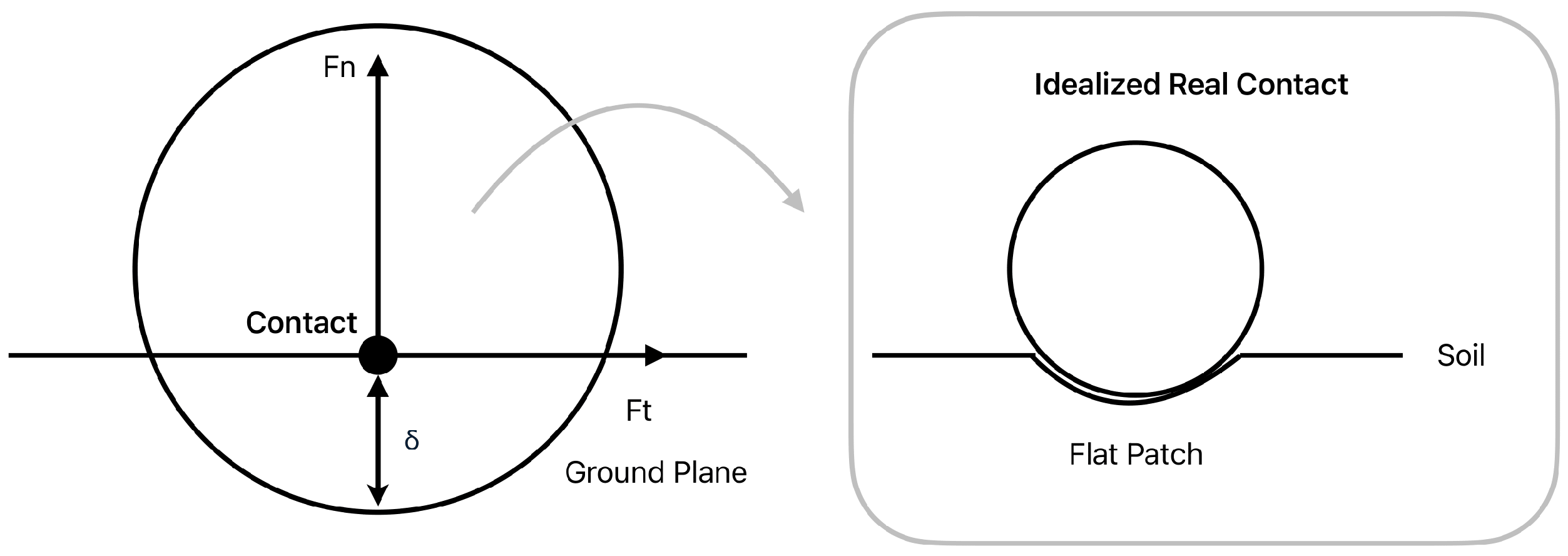
The tire–road contact was modeled using the Spatial Contact Forceblock in Simscape with a sphere–plane interaction geometry. The tire is approximated as a rigid sphere. The virtual penetration into the ground represents the local tire deformation. The contact scheme is shown in Figure 9.
Figure 9.
Schematic representation of the sphere–plane contact simplification. The wheel is approximated as a sphere interacting with a ground plane through a penetration depth , generating a normal force and a tangential force . The inset highlights the idealized real-world interaction with a flattened tire contact patch on soil.
The normal force is computed as a linear function of the penetration depth and the penetration velocity :
where is the stiffness coefficient and is the damping coefficient.
The tangential vectorial force is modeled using an extended Coulomb friction approach, taking into account the tangential relative velocity between the tire and the ground:
where represents the static () or dynamic () friction coefficient depending on whether or .
The wheel–ground interaction is modeled using the Simscape Multibody Contact Force block [36], which implements a rigid contact model with Coulomb friction. The static and dynamic friction coefficients do not represent measured soil parameters, but effective contact parameters used to emulate different levels of surface adhesion. Two contact conditions were considered:
- High-adhesion rigid/compacted surface , .
- A very-high-adhesion rigid surface , , representing compacted or salt-stone-like crusts commonly encountered in arid vineyard soils.
Terrain slope is introduced separately in the gravitational model and does not modify the friction coefficients. Although this modeling choice introduces a geometric approximation with respect to the actual tire-terrain contact, it provides a good compromise between physical fidelity and computational cost, making it particularly suitable for rover mobility analysis and preliminary studies on dynamic stability. The wheel–terrain interaction is modeled using a simplified sphere–plane contact geometry combined with a penalty-based contact formulation. While suitable for a pre-twin comparative analysis, this approach does not explicitly represent soil plasticity, compaction history, or material flow. In particular, the bulldozing effect, i.e., soil accumulation in front of the wheel on soft ground, is not directly modeled. As a result, rolling resistance and energy consumption for the wheeled configuration are expected to be underestimated, with a plausible reality gap on the order of 10–20% under soft-soil conditions.
5. Experimental Stable and Preliminary Validation
This section presents simulation-based validation results for the AgriRover platform during its current pre-digital twin (pre-twin) development phase. The virtual prototype was subjected to a range of scenario-based testing (SBT) configurations that replicate vineyard-representative terrain profiles from smallholder plots in the Ica region of Peru. The results are organized into four main pillars:
- Navigation performance and terrain versatility;
- Comparative monitoring performance and contextual viability;
- Sustainability alignment through ESG and SDG evaluation.
5.1. Navigation Performance and Terrain Versatility
The articulated chassis and four-wheel-drive architecture of AgriRover were evaluated under diverse terrain configurations, including soft sand, salt-affected zones, and furrow discontinuities. Formal scenario-based testing ensured coverage of representative operating conditions and validation of terrain-conforming dynamics.
The outputs selected for the analysis of the dynamic response over time were:
- Battery State Of Charge (SOC) [%];
- The comparison between wheel speed and torque [m/s and Nm];
- Power [W];
- Wheel sinking [mm].
Across multiple simulated runs, AgriRover’s pre-twin demonstrated stable mechanical behavior [37]. The platform maintained ground contact across all four wheels on slopes up to 10 degrees and on irregular topographies, validating its terrain-conforming design.
Key motion metrics extracted from simulations include:
- Body roll angle: within ±5 degrees under nominal slopes.
- Chassis travel: consistent damping under micro-elevation changes.
- Slip ratio: remained under threshold limits on dry and compacted soil.
- Energy use: consistent propulsion with minimal peak loads during turns or ascents.
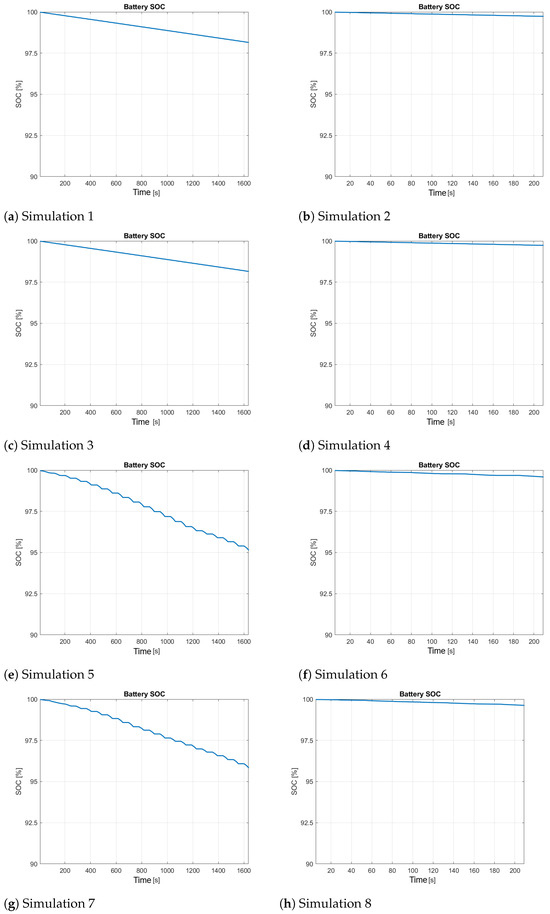
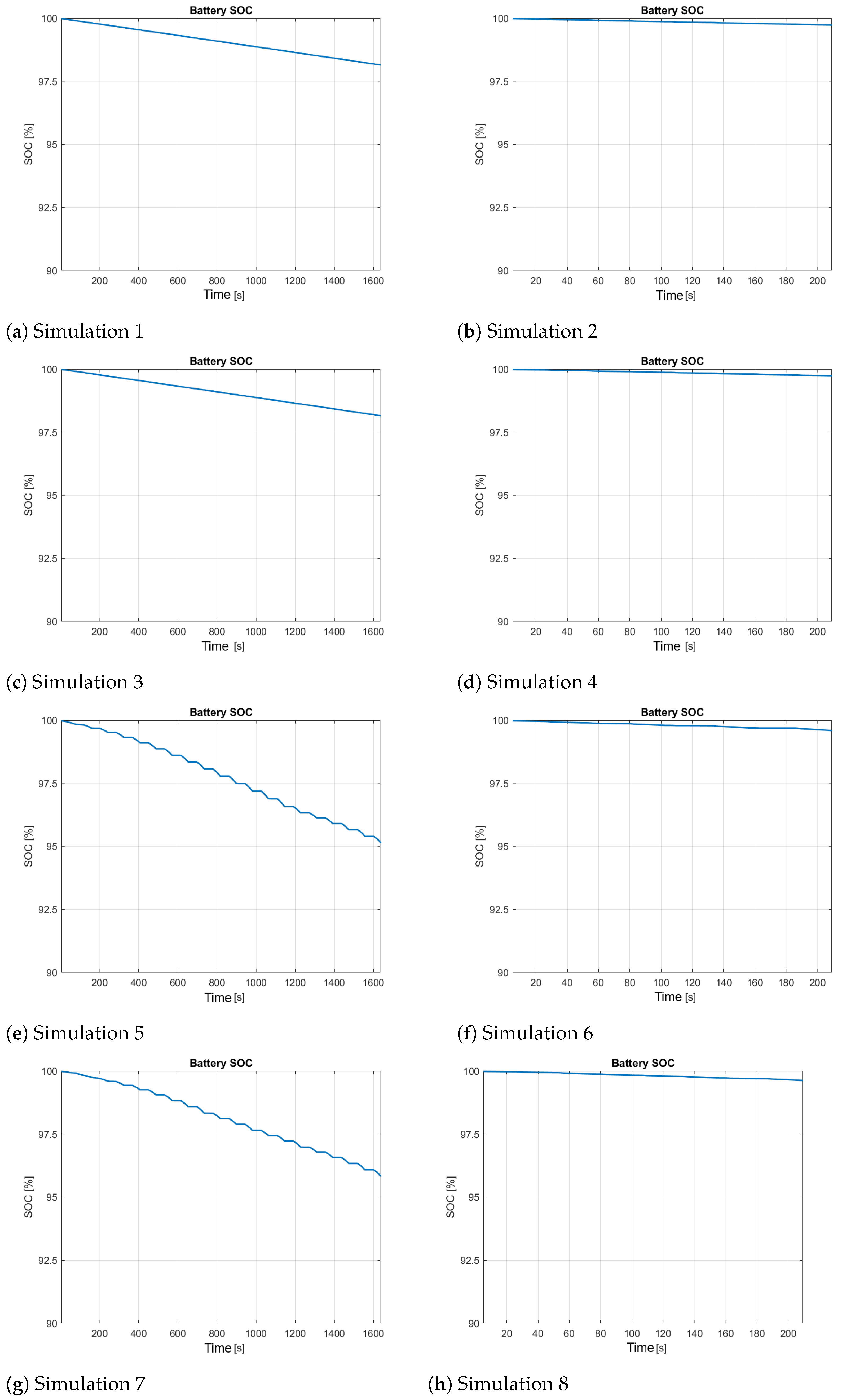
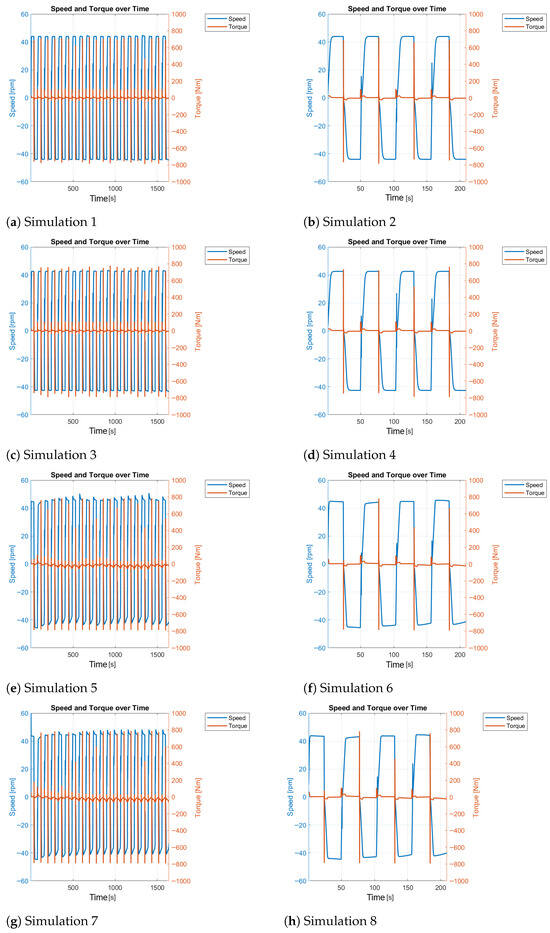
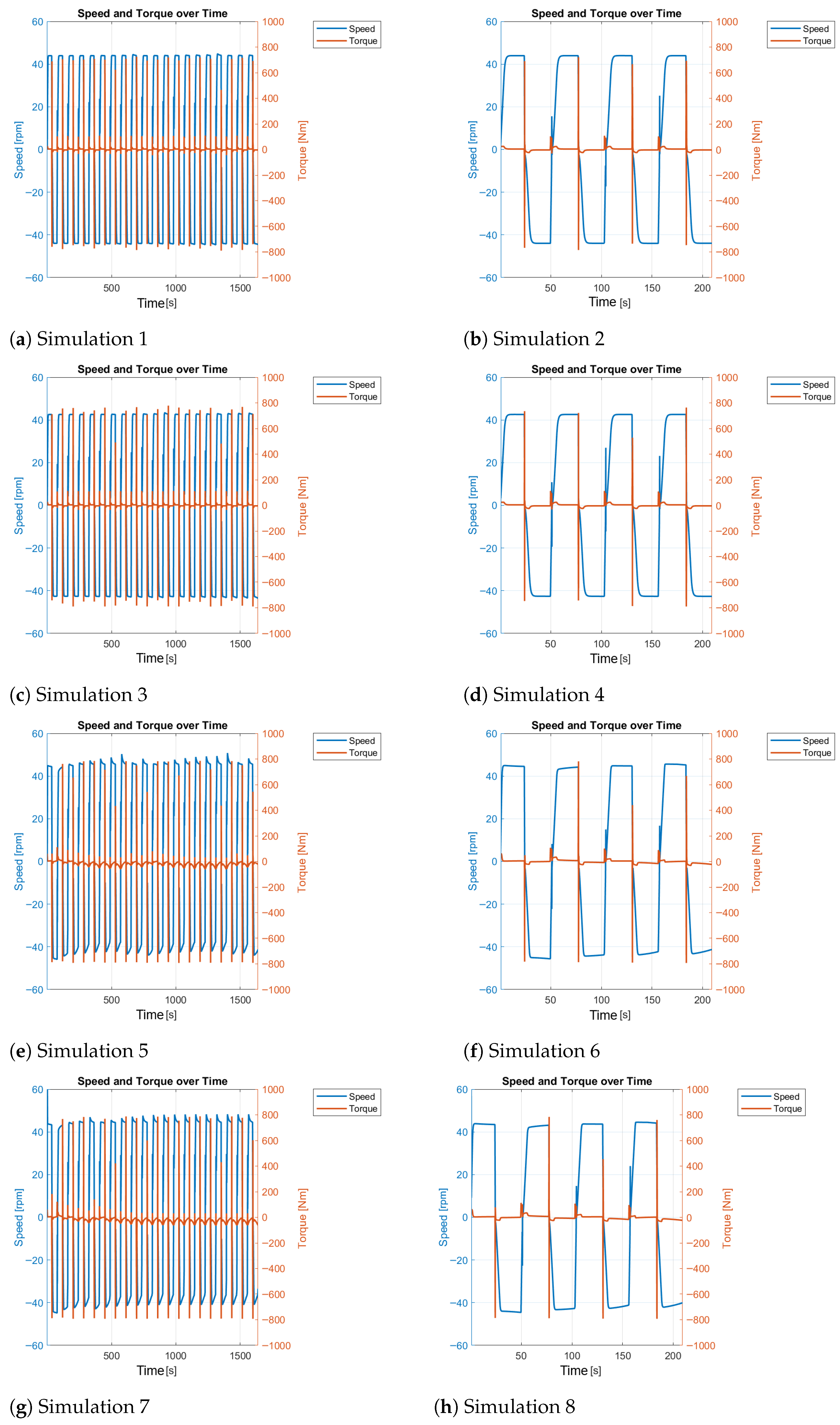
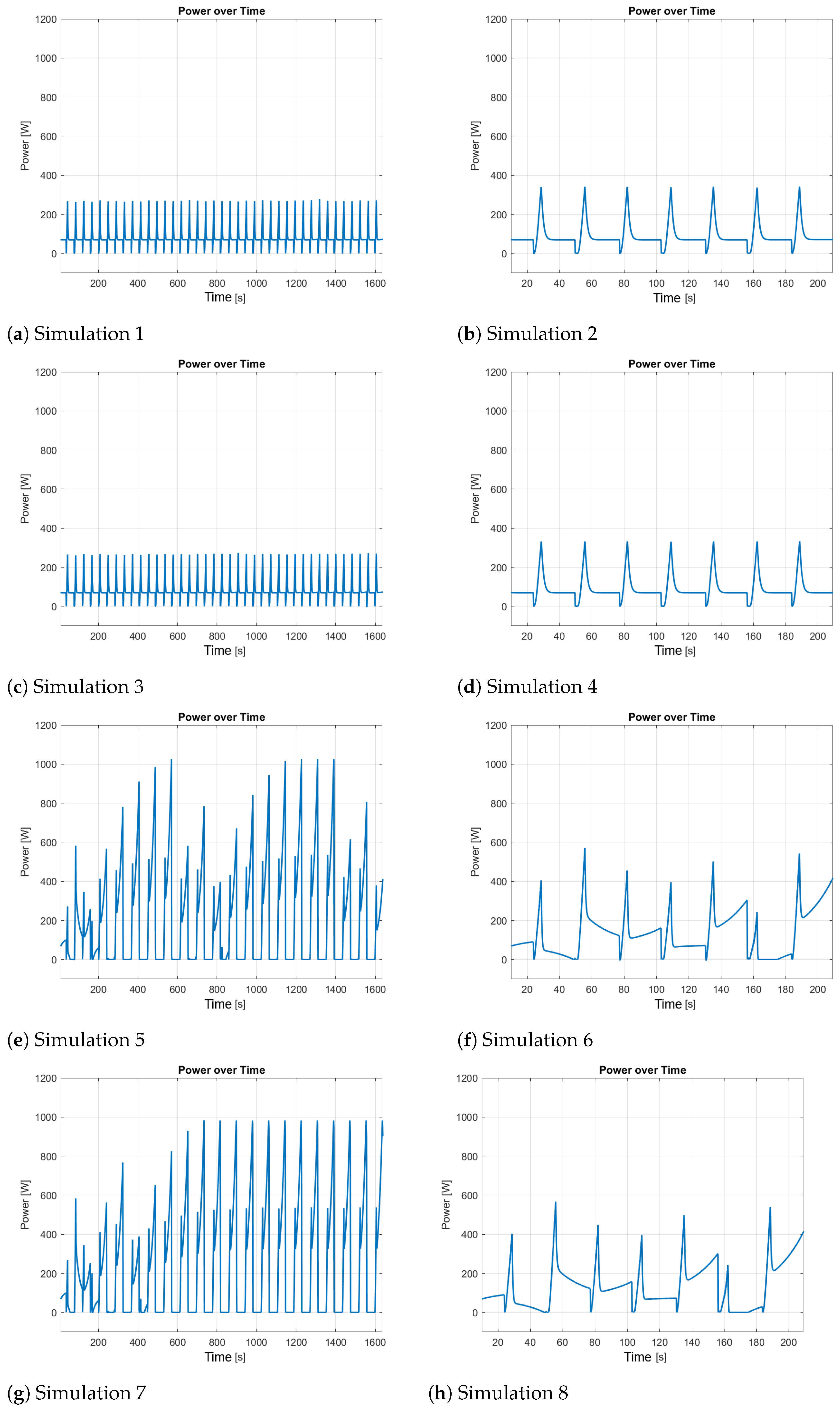
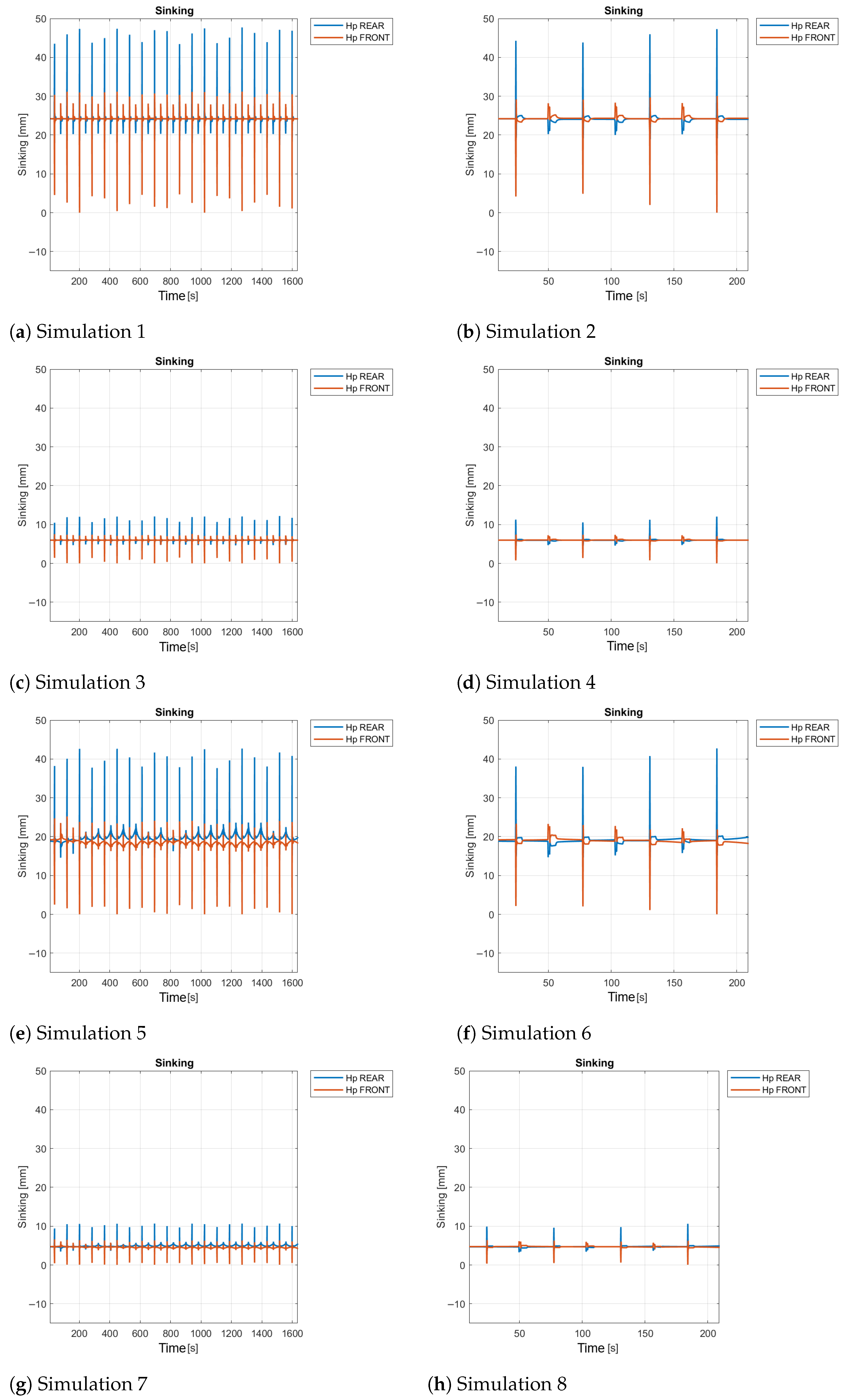
The simulations were conducted considering two soil types—sandy and clayey—and two slope configurations: 0 degrees and 10 degrees. This setup allowed for the evaluation of AgriRover’s dynamic behavior under representative operational conditions commonly found in Peruvian vineyards. The corresponding plots (Figure 10, Figure 11, Figure 12 and Figure 13) illustrate the time evolution of the main output variables for each scenario, highlighting the rover’s energy efficiency and mechanical stability across varying terrains and slopes.
Figure 10.
Comparison of the state of charge for the eight simulations.
Figure 11.
Comparison of speeds and torques developed by the machines for the eight simulations.
Figure 12.
Comparison of the absorbed power for the eight simulations.
Figure 13.
Comparison of front and rear axle sinking for the eight simulations.
Figure 10 illustrates the battery state of charge (SOC) trend during eight simulations. Overall, the SOC remains stable [38], showing only minor decreases even during the most demanding tests. This observation demonstrates that the rover achieves high energy efficiency, with no excessive consumption or critical spikes, enabling sustainable operation for extended periods in both small and large-scale vineyards. However, simulations 5 and 7 exhibit a steeper SOC decline, primarily due to the larger plot size (20 rows) and the 10 degrees slope, rather than terrain type. Thus, battery discharge is more affected by field geometry and slope than soil composition.
Figure 11 illustrates the evolution of speed and driving torque over time. Both parameters exhibit symmetrical oscillation around zero: the speed varies within the range of –40 to +40 m/s, while the torque oscillates between –800 and +800 Nm. The trend is similar in all simulations, with differences mainly limited to the sequence and relative amplitude of the peaks.
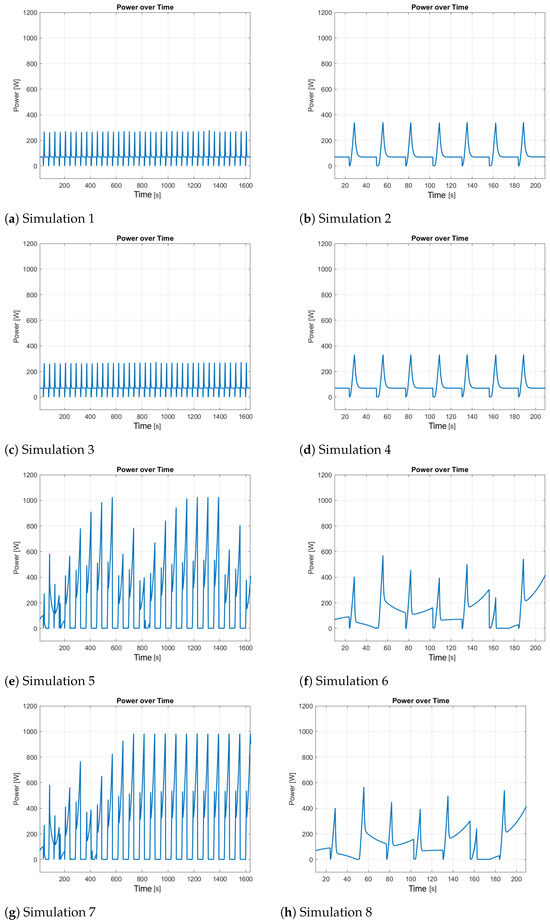
Figure 12 shows the power profiles over time. Generally, conditions with a 10 degrees slope (simulations 5–8) lead to a significant increase in power demand compared to flat scenarios. In particular, simulations 5 and 7, conducted on larger plots (20 rows), show the maximum values. A comparison of the two soils shows that sandy soil (Sim. 5) requires more power than clay soil (Sim. 7), confirming that sandy texture, due to greater wheel sinking and associated slippage, results in higher rolling resistance and therefore greater energy consumption. These mechanical resistance conditions are directly reflected in consumption peaks while remaining within sustainable operating thresholds. This result highlights that the proposed mechanical architecture ensures robustness and functional stability even in scenarios characterized by critical environmental conditions.
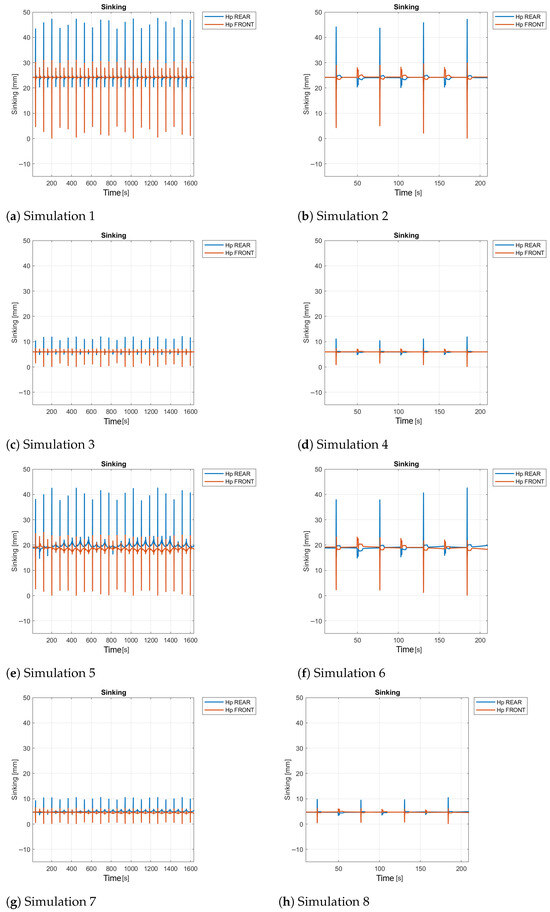
Figure 13 shows a comparison of front and rear wheel sinkage in the various simulations. The values generally remain between 20 and 45 mm, with a tendency for greater sinkage in sandy soils, while clay soils, which are more compact, show lower values. The rover’s behavior is balanced between the front and rear axles, confirming that the chassis ensures balanced load distribution and adequate adaptability to the heterogeneous soils typical of Peruvian vineyards.
The simulations reported in Figure 10, Figure 11, Figure 12 and Figure 13 confirm that the rover ensures mechanical stability, energy efficiency, and adaptability across vineyard terrain. These outcomes validate the preliminary design and provide a robust foundation for future integration with sensing systems and autonomous control modules.
Even without real sensor input, the model produces consistent projections based on realistic vineyard parameters, thereby offering a reliable framework for the development of a fully synchronized digital shadow. The simulated wheel sinkage (20–45 mm) is limited to the superficial soil layer in the inter-row area. Since grapevine root systems in the Ica region generally develop at depths well below this range, the observed sinkage is not expected to interfere with vine roots and can be considered acceptable from an agronomic standpoint.
Overall, the adopted mechanical and control architecture supports safe navigation in vineyard systems of different scales while minimizing soil compaction and maintaining efficient energy utilization.
5.2. Comparative Monitoring Performance and Contextual Viability
To assess AgriRover’s performance in vineyard monitoring versus manual labor, a comparative benchmark was created using real data from Ica region vineyards.
Table 2 details the essential parameters for comparing human and robotic monitoring. The analysis specifically considers operational factors—including monitoring duration, terrain adaptability, and data consistency—to evaluate the system’s effectiveness in local viticulture.
Table 2.
Key parameters for vineyard monitoring—Human vs. AgriRover. AgriRover values are not experimental and do not derive from field trials. They originate from design requirements and scenario-based simulations, together with operating assumptions reported in the literature (see Section 5.2). Real vineyard data are used only to define representative field layouts and monitoring scenarios. The table serves a comparative role. It is used to discuss relative trends, not field-validated results. Monitoring time increase refers to the additional effort beyond traversal only. Instead, monitoring and traversal time reductions indicate the time saved compared with manual monitoring.
A comparative analysis with existing robotic vineyard platforms is provided in [3] and is not repeated here, as that comparison was conducted at a general system level. In the present study, AgriRover’s performance is evaluated through simulation-based pre-twin experiments under specific terrain configurations (soil type, slope, and row geometry), which cannot be directly replicated for other platforms due to the lack of homogeneous simulation models and scenario-matched data.
Manual observation is affected by fatigue and subjective variability, whereas AgriRover operates at a consistent speed, supports continuous sensor-based monitoring, and provides more uniform data, enabling objective and repeatable assessments.
To realistically represent operating conditions, vineyards were divided into smaller monitoring units, a common approach in viticultural studies. For example, a 1.3 ha vineyard can be divided into 13 sub-plots of 0.1 ha each to capture intra-block variability [39].
In this study, small sections were further divided into micro-lots to observe the soil’s dynamic response more accurately and reduce computational load in flat areas (0 degrees) and, in particular, moderately sloped areas (10 degrees) [40]. This approach reflects the modular structure of the vineyards of small producers in Ica (often sub-hectare) [3], and is consistent with the principles of precision viticulture, according to which site-specific monitoring and management require segmentation to ensure accurate data acquisition [41,42]. The methodological choice is also justified by the marked soil variability of the region, where sand and clay alternate within the same plot, affecting traction, stability, and the consistency of sensory signals [3,43]. The adoption of smaller monitoring units, therefore, enables the collection of more representative and comparable data.
For a more in-depth assessment, the monitoring time included an operational overload in addition to base travel time. No study explicitly reports the total percentage increase in time for manual and autonomous monitoring. However, many studies show that manual monitoring is much more time-consuming. Autonomous monitoring adds only a modest operational overload. Based on agricultural monitoring and human–robot interaction literature [44,45,46], manual monitoring time is assumed to increase by 20–40% due to breaks for inspection, annotations, and fatigue. Robotic monitoring incurs a 5–10% increase, as data are acquired in motion and mostly processed in parallel or off-board. Following these references, this study uses a 20% overhead for human monitoring and 5% for robotic monitoring (AgriRover), applied as multiplicative factors to travel time in estimation models. The lower monitoring overhead assumed for AgriRover is due to its ability to acquire data continuously while moving, without requiring frequent stops. Data are collected on-the-fly at a moderate cruising speed of 1.4 m/s, which limits motion-related effects such as image blur. The remaining 5 pct. overhead accounts for turning maneuvers at row ends and minor speed adjustments. To connect these overhead estimates to real-world scenarios, monitoring times were calculated for nine representative vineyards, based on realistic operating assumptions (Equations (3) and (4) and Table 3). Monitoring time calculations are defined as follows:
Table 3.
Variables used in monitoring time models.
Table 4.
Monitoring time comparison for typical vineyards in Ica.
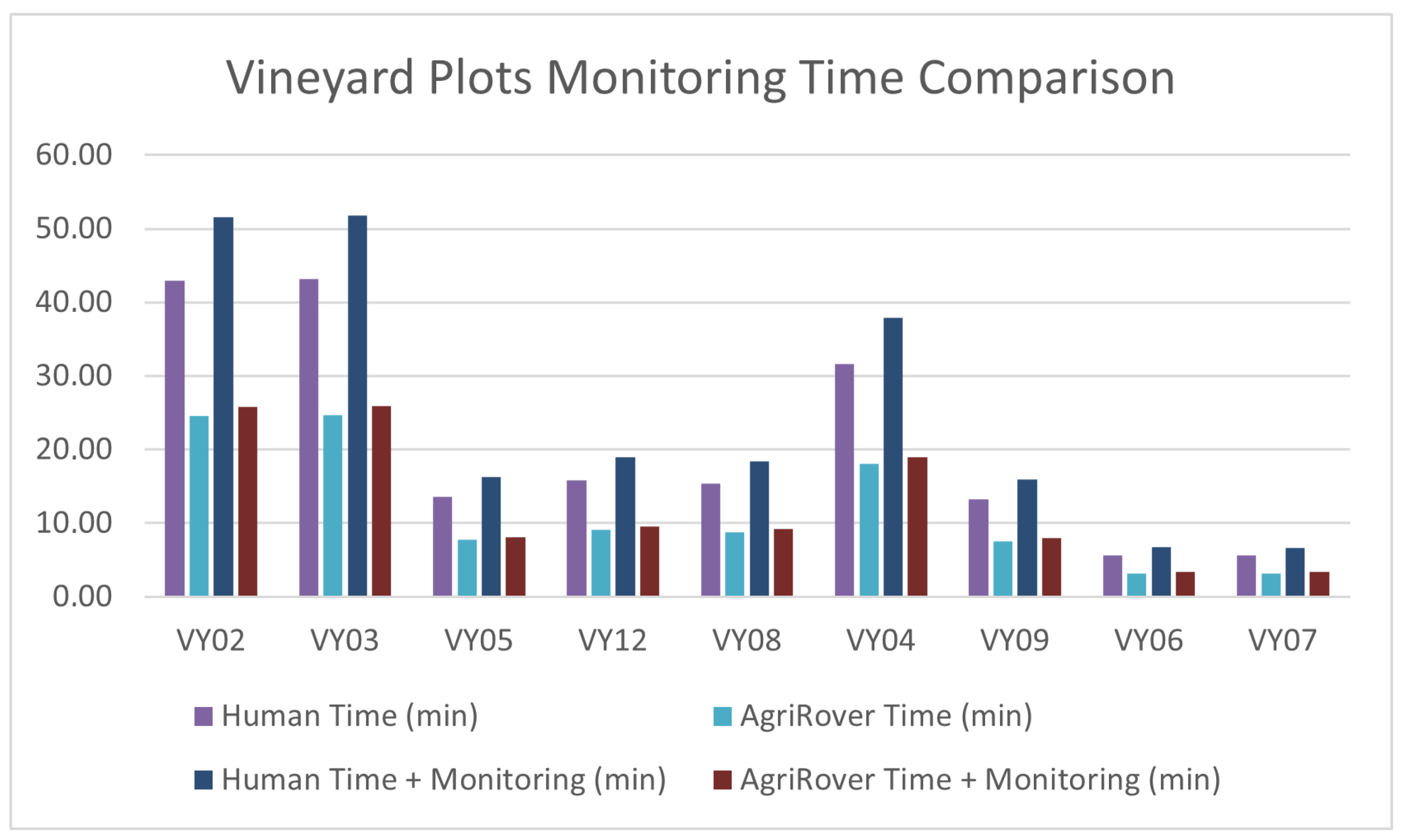
Figure 14.
Comparison of traversal and monitoring times for human and AgriRover operations across the vineyard plots.
As shown, AgriRover reduces overall traversal times by approximately 43% and total monitoring times by about 50% compared to human operators (Table 2 and Table 4), owing to its constant speed and continuous data acquisition.
These benchmarking results are consistent with field-scale observations reported in precision viticulture and agricultural robotics studies [44,45], reinforcing the contextual suitability of the system for small producers’ vineyards in the Ica region and demonstrating how the platform not only reduces manual labor but also constitutes an effective means of precision monitoring, enhancing vineyard intelligence, facilitating timely interventions, and optimizing agronomic interventions, i.e., key elements for sustainable small-scale viticulture.
5.3. Sustainability Alignment: ESG and SDG Integration
AgriRover’s sustainability performance is evaluated according to the ESG–SDG framework; the main indicators are reported in Table 5. It demonstrates how AgriRover supports sustainable agriculture through environmentally sound design, socially inclusive deployment, and transparent governance structures.
Table 5.
Alignment of AgriRover’s ESG contributions with selected SDG targets.
Environmental (E)
AgriRover was developed with a focus on limiting mechanical and energy-related environmental impacts through a lightweight chassis, an electric drivetrain, and the adoption of Lithium Iron Phosphate (LFP) batteries. In addition, the platform is designed to support future sensor integration aimed at improving irrigation management and reducing chemical inputs.
The sustainability indicators reported here are consistent with the life cycle assessment previously carried out for the AgriRover platform [3] and are recalled to ensure continuity between the two studies. In particular, the cumulative operational energy demand is expressed as 0.54 kWh/g, obtained by normalizing the total energy consumption over the system’s lifetime by the rover mass. This indicator is not intended for external benchmarking but rather to provide a relative measure useful for design evaluation within the same project framework.
The recyclability of core materials, equal to 38%, is derived from a mass-weighted aggregation of material-specific end-of-life recycling rates, based on the assumed material composition and locally available waste management data. Together, these indicators provide a quantitative reference for discussing the environmental implications of the proposed platform and its alignment with broader sustainability objectives.
On this basis, the environmental dimension of the project contributes to:
- SDG 12.2: Efficient use of natural resources.
- SDG 13.1: Strengthen climate resilience.
Social (S)
Modular design supports local manufacturing and skill development, enabling job creation and inclusion. Simulation results indicate a potential reduction in labor time of approximately 40–50%, supporting:
- SDG 8.2: Promote decent work and productivity.
- SDG 10.2: Foster inclusion and empowerment.
Governance (G)
Participatory development and open hardware philosophy support transparency, traceability, and replication. Aligned with:
- SDG 9.5: Boost local innovation capacity.
- SDG 17.6: Promote tech collaboration.
6. Discussion
The development of AgriRover in its current pre-digital twin (pre-twin) stage offers a concrete demonstration of how autonomous agricultural platforms can be designed and validated in simulation before physical implementation—particularly for low-resource environments such as smallholder vineyards in the Ica region of Peru. The simulation-driven design methodology enabled efficient iteration, risk mitigation, and early performance evaluation without requiring full-scale prototyping or field deployment. This is particularly relevant in contexts where economic constraints and infrastructure limitations pose significant barriers to agricultural innovation.
Simulation outcomes confirm that AgriRover’s articulated, all-wheel-drive chassis performs robustly across heterogeneous terrain types common in Peruvian vineyards, including sandy soils and salt-affected zones. The ability to maintain vehicle balance and minimize energy consumption in these virtual trials reflects the system’s structural viability and readiness for scaled testing. The observed improvements in navigation efficiency, suspension stability, and terrain adaptability support the pre-twin approach as a valid method for performance assessment and early optimization.
In addition, the project illustrates that modularity and local manufacturability—key design pillars of AgriRover—can coexist with digital twin principles. By using locally sourced materials and open hardware strategies, the platform demonstrates a replicable model for affordable agricultural robotics that meets the operational realities of underserved farming communities. The potential to support ESG-aligned outcomes, such as labor reduction, resource conservation, and participatory development, reinforces its broader sustainability relevance.
The analysis of the simulations provides further quantitative information. As shown in Figure 10, the battery maintains stable SOC levels in most cases, with more pronounced drops in simulations 5 and 7 (10 degrees slope on large fields), demonstrating that vineyard geometry and slope have a greater impact on energy consumption than soil type. In Figure 12, power peaks are significantly higher in sandy soils than in clayey soils, confirming the need for a lightweight chassis and adaptive suspension to limit slippage. Wheel sinking (Figure 13) remains within sustainable operating values (20–45 mm), with greater variability on sand, but without loss of overall stability. Finally, a comparison with manual monitoring times (Table 4 and Figure 14) reveals a 40–50% saving, which in operational terms means the possibility of increasing the frequency of observations without incurring additional labor costs.
To further assess AgriRover’s versatility, a Scenario-Based Testing (SBT) approach was adopted, with simulations performed on different surface compositions—ranging from dry sand to compacted clay soil. These conditions reflect the variability of soils commonly encountered in the Ica region. The rover’s performance was evaluated through key indicators:
- Wheel–ground contact: at least three wheels maintained ground contact in all tests, ensuring stability even on irregular surfaces.
- RMS vibration: stayed within thresholds compatible with the safety of the electronics bay, supporting system robustness.
- Energy expenditure: although peak power demand increased significantly on sandy soils, the normalized energy consumption per meter rose by only 6–9% under flat conditions and by 10–15% when slope was introduced, indicating efficient adaptability and showing that higher instantaneous loads did not translate into disproportionate long-term penalties.
These results highlight AgriRover’s ability to operate across heterogeneous vineyard soils, confirming that the articulated chassis and four-wheel drive configuration provide robustness and adaptability while preserving energy efficiency—a key requirement for sustainable, inclusive, and replicable agricultural robotics in resource-constrained contexts.
A distinction must be made between limitations related to the simulation model and intrinsic limitations of the mechanical design. From a simulation perspective, the representation of tire-ground contact using sphere-plane geometry is a useful simplification, but it does not take into account complex phenomena such as progressive soil compaction, non-linear behavior under water saturation conditions, or the cumulative effects of repeated travel over rows. The friction values used also derive from idealized scenarios and do not fully reflect real variability. From a design perspective, however, the overall weight of the rover (approximately 560 kg), the energy autonomy linked to the batteries, the costs and assembly times, as well as the current absence of integrated sensors, are aspects that will require field testing and further optimization to ensure full operability and replicability.
ESG–SDG analysis goes beyond formal compliance and reveals some practical sustainability levers. From an environmental perspective (E), the reduction in simulated energy consumption and the possibility of integrating sensors to optimize irrigation and phytosanitary treatments contribute to the achievement of SDG 12 (responsible consumption) and SDG 13 (climate action). However, the adoption of LFP batteries introduces new challenges in terms of production, logistics, and end-of-life, which will need to be addressed through more comprehensive life cycle assessments. On a social level (S), the potential to reduce manual labor by 40–50% frees up time and resources, promoting more dignified working conditions (SDG 8). Finally, in terms of governance (G), the open hardware approach and design transparency strengthen local innovation capacity (SDG 9), but also raise the need to define quality standards and shared metrics to promote replicability.
Another key area for future research is transferability. While the AgriRover system has been tailored to Ica’s vineyard ecosystems, its open design and simulation pipeline offer potential for adaptation to other crop types, terrains, and regions. Integrating community feedback loops and real-time governance metrics (aligned with GRI or SASB) could further enhance impact and scalability.
In conclusion, AgriRover’s pre-twin design and validation process exemplify a context-sensitive pathway toward inclusive precision agriculture. Through modularity, affordability, and early-stage digital modeling, it bridges the gap between advanced robotics and the practical realities of smallholder farming, setting the stage for sustainable technological adoption aligned with both ESG frameworks and Sustainable Development Goals (SDGs).
7. Conclusions and Future Work
This study presented the design, modeling, and simulation-based validation of AgriRover, a modular, low-cost autonomous platform developed as a digital pre-twin to address the monitoring needs of smallholder vineyards in developing regions, with a focus on the Ica region of Peru. The platform’s development followed a simulation-first methodology using multibody dynamics in MATLAB/Simulink, enabling early-stage evaluation of navigation performance, energy consumption, and terrain adaptability without the need for expensive field trials.
The articulated chassis, all-wheel-drive configuration, and modular open hardware design proved effective under scenario-based testing in representative vineyard conditions. AgriRover exhibited favorable performance across a range of terrains and geometries, confirming its ability to operate efficiently in challenging, low-infrastructure environments. Moreover, simulation benchmarks suggest significant gains in labor efficiency and data collection reliability, highlighting its potential to complement human activities through targeted automation and sensor-supported monitoring.
Beyond technical feasibility, the platform demonstrates alignment with Environmental, Social, and Governance (ESG) criteria and contributes to multiple Sustainable Development Goals (SDGs), including SDG 2 (zero hunger), SDG 8 (decent work), SDG 12 (responsible consumption), and SDG 13 (climate action). Its pre-twin configuration serves as a cost-effective entry point to digital agriculture, designed to be replicable using local materials, tools, and knowledge networks.
Looking forward, several development milestones will shape the evolution of AgriRover from a pre-twin into a data-integrated, operationally autonomous system:
- Field deployment and physical prototyping in smallholder vineyards to validate and calibrate digital assumptions with real-world performance data.
- Integration of lightweight sensor suites (e.g., temperature, humidity, and spectral cameras) for phenological tracking aligned with BBCH stages and disease detection.
- Implementation of closed-loop control and navigation algorithms, allowing real-time adaptation to vineyard geometry, crop rows, and terrain irregularities.
- Edge computing and connectivity integration to enable a transition from pre-twin to digital shadow through live data streaming, logging, and remote diagnostics.
- Lifecycle and sustainability assessments aligned with SDG and ESG frameworks to quantify AgriRover’s long-term value proposition.
In this context, the reference to edge computing is intended to denote lightweight, low-power embedded processing for basic data handling, such as preprocessing, buffering, and health monitoring. More computationally demanding tasks are deliberately foreseen to remain off-board in order to preserve the low-cost and low-energy objectives of the platform. Although created as a specific response to the challenges faced by vineyards in the Ica region, the methodological value of AgriRover extends beyond this context. The combination of simulation-first design, modular architecture, and open hardware principles creates a replicable framework for different crops and regions in the Global South, where economic and infrastructural constraints hinder the adoption of conventional agricultural robotics. In practical terms, the proposed framework is particularly suited to row-based perennial and semi-perennial crops characterized by defined inter-row spaces and firm ground conditions, such as vineyards, olive groves, citrus orchards, or similar tree and shrub crops. Conversely, cropping systems requiring operation on flooded or highly deformable soils, such as paddy rice fields, fall outside the intended scope of the current platform. In this sense, AgriRover is not just a local case study, but an adaptable paradigm for promoting accessible, inclusive, and sustainable precision agriculture.
In conclusion, AgriRover contributes to the growing body of evidence that simulation-based, modular robotics can bridge the digital divide in agriculture when tailored to the socio-technical realities of smallholder farmers. Its development reflects a convergence of digital twin innovation, sustainable engineering, and local empowerment—laying the groundwork for scalable, inclusive, and resilient agricultural technologies in the Global South. The most critical next step is the transition from simulation to initial field validation, aimed at verifying the assumptions underlying both the mechanical behavior and the data acquisition pipeline. Rather than isolating a single subsystem, early physical prototyping will focus on validating the integrated interaction between mobility, suspension response, and basic sensing under representative vineyard conditions.
Author Contributions
Conceptualization, A.P. and M.C.D.S.; methodology, Z.B.R.C. and A.P.; software, A.P.; validation, M.C.D.S., D.d.F., and D.G.; formal analysis, A.P.; investigation, Z.B.R.C.; data curation, A.P.; visualization, D.d.F.; supervision, D.G. All authors have read and agreed to the published version of the manuscript.
Funding
This research received no external funding.
Institutional Review Board Statement
Not applicable.
Data Availability Statement
Data are contained within the article.
Acknowledgments
The authors have reviewed and edited the output and take full responsibility for the content of this publication.
Conflicts of Interest
Alessia Porcaro was employed by the MEID4, University Spin-Off and Research Institution for AI-Based Innovation. The remaining authors declare that the research was conducted in the absence of any commercial or financial relationships that could be construed as a potential conflict of interest.
Abbreviations
The following abbreviations are used in this manuscript:
| AI | Artificial Intelligence |
| BBCH | Biologische Bundesanstalt, Bundessortenamt und Chemische Industrie (phenological scale) |
| CAD | Computer-Aided Design |
| COFIDE | Corporación Financiera de Desarrollo |
| DIWINE | DIWINE (Vineyard digital twin project name) |
| DT | Digital Twin |
| ESG | Environmental, Social, and Governance |
| FMI | Functional Mock-up Interface |
| FSPM | Functional Structural Plant Modeling |
| ITSC | IEEE International Conference on Intelligent Transportation Systems |
| LFP | Lithium Iron Phosphate |
| MATLAB | Matrix Laboratory |
| ROS 2 | Robot Operating System 2 |
| SBT | Scenario-Based Testing |
| SDG | Sustainable Development Goals |
| SOC | State Of Charge |
| SUT | System Under Test |
| UAV | Unmanned Aerial Vehicle |
| UGV | Unmanned Ground Vehicle |
| WIPO | World Intellectual Property Organization |
| WoWMoM | IEEE International Symposium on a World of Wireless, Mobile and Multimedia Networks |
References
- COFIDE. Annual Report 2021. Available online: https://documentos.cofide.com.pe/wp-content/uploads/2024/09/TRAD-EEFF-COFIDE-2021-vf.pdf (accessed on 10 January 2025).
- Gil, G.; Casagrande, D.E.; Cortés, L.P.; Verschae, R. Why the low adoption of robotics in the farms? Challenges for the establishment of commercial agricultural robots. Smart Agric. Technol. 2023, 3, 100069. [Google Scholar] [CrossRef] [Scilit]
- Rivera Chavez, Z.B.; Porcaro, A.; De Simone, M.C.; Guida, D. Improving Sustainable Viticulture in Developing Countries: A Case Study. Sustainability 2025, 17, 5338. [Google Scholar] [CrossRef] [Scilit]
- Flores, S.S. What is sustainability in the wine world? A cross-country analysis of wine sustainability frameworks. J. Clean. Prod. 2018, 172, 2301–2312. [Google Scholar] [CrossRef] [Scilit]
- World Intellectual Property Organization (WIPO). Global Innovation Index 2023; World Intellectual Property Organization (WIPO): Geneva, Switzerland, 2023; Available online: https://www.wipo.int/global_innovation_index/en/2023/ (accessed on 10 January 2025).
- Bakker, T.; van Asselt, K.; Bontsema, J.; Müller, J.; van Straten, G. An autonomous weeding robot for organic farming. In Field and Service Robotics: Results of the 5th International Conference; Springer: Berlin/Heidelberg, Germany, 2006; pp. 579–590. [Google Scholar]
- Lorenz, D.; Eichhorn, K.; Bleiholder, H.; Klose, R.; Meier, U.; Weber, E. Growth Stages of the Grapevine: Phenological growth stages of the grapevine (Vitis vinifera L. ssp. vinifera)—Codes and descriptions according to the extended BBCH scale. Aust. J. Grape Wine Res. 1995, 1, 100–103. [Google Scholar] [CrossRef] [Scilit]
- Carbajal, L.R.; Laurel, L.R.; Muñoz, J.C. Perfil productivo agropecuario de Ica. Nota Técnica de Coyuntura Económica Agraria 028-2024-MIDAGRI; Ministerio de Desarrollo Agrario y Riego (MIDAGRI): Lima, Peru, 2024; Available online: https://www.gob.pe/institucion/midagri/informes-publicaciones/5063792-nota-tecnica-n-28-perfil-productivo-agropecuario-de-ica (accessed on 10 March 2025).
- Hamza, M.; Anderson, W.K. Soil compaction in cropping systems: A review of the nature, causes and possible solutions. Soil Tillage Res. 2005, 82, 121–145. [Google Scholar] [CrossRef] [Scilit]
- Steward, B.L.; Tekeste, M.Z.; Gai, J.; Tang, L. Modeling, Simulation, and Visualization of Agricultural and Field Robotic Systems. In Fundamentals of Agricultural and Field Robotics; Springer: Cham, Switzerland, 2021; pp. 297–334. [Google Scholar]
- Califano, F.; Cosenza, C.; Niola, V.; Savino, S. Multibody model for the design of a rover for agricultural applications: A preliminary study. Machines 2022, 10, 235. [Google Scholar] [CrossRef] [Scilit]
- Tao, F.; Zhang, H. Digital twin shop-floor: A new shop-floor paradigm towards smart manufacturing. IEEE Access 2022, 5, 20418–20427. [Google Scholar] [CrossRef] [Scilit]
- Pylianidis, C.; Osinga, S.A.; Athanasiadis, I.N. Smart farming technologies—Description, taxonomy and economic impact. Inf. Process. Agric. 2021, 8, 319–334. [Google Scholar]
- Mitsanis, C.; Hurst, W.; Tekinerdogan, B. A 3D functional plant modelling framework for agricultural digital twins. Comput. Electron. Agric. 2024, 218, 108733. [Google Scholar] [CrossRef] [Scilit]
- Verdouw, C.; Tekinerdogan, B.; Beulens, A.; Wolfert, S. Digital twins in smart farming. Agric. Syst. 2021, 189, 103046. [Google Scholar] [CrossRef] [Scilit]
- Singh, M.; Fuenmayor, E.; Hinchy, E.P.; Qiao, Y.; Murray, N.; Devine, D. Digital twin: Origin to future. Appl. Syst. Innov. 2021, 4, 36. [Google Scholar] [CrossRef] [Scilit]
- Grieves, M.; Vickers, J. Digital twin: Mitigating unpredictable, undesirable emergent behavior in complex systems. In Transdisciplinary Perspectives on Complex Systems; Springer: Cham, Switzerland, 2017; pp. 85–113. [Google Scholar]
- Jones, D.; Snider, C.; Nassehi, A.; Yon, J.; Hicks, B. Characterising the digital twin: A systematic literature review. CIRP J. Manuf. Sci. Technol. 2020, 29, 36–52. [Google Scholar] [CrossRef] [Scilit]
- Steward, K.; Schneider, R. Digital twin infrastructure for low-resource agriculture. Comput. Electron. Agric. 2021, 182, 105995. [Google Scholar]
- Fremont, D.J.; Kim, E.; Pant, Y.V.; Seshia, S.A.; Acharya, A.; Bruso, X.; Wells, P.; Lemke, S.; Lu, Q.; Mehta, S. Formal Scenario-Based Testing of Autonomous Vehicles: From Simulation to the Real World. In 2020 IEEE 23rd International Conference on Intelligent Transportation Systems (ITSC); IEEE: Piscataway, NJ, USA, 2020; pp. 1–8. [Google Scholar] [CrossRef] [Scilit]
- Monteiro, J.; Barata, J.; Veloso, M.; Veloso, L.; Nunes, J. Towards sustainable digital twins for vertical farming. In 2018 Thirteenth International Conference on Digital Information Management (ICDIM); IEEE: Piscataway, NJ, USA, 2018; pp. 234–239. [Google Scholar]
- Foldager, F.F.; Thule, C.; Balling, O.; Larsen, P. Towards a digital twin-modelling an agricultural vehicle. In Leveraging Applications of Formal Methods, Verification and Validation: Tools and Trends; Springer: Cham, Switzerland, 2020; pp. 109–123. [Google Scholar]
- Edemetti, F.; Maiale, A.; Carlini, C.; D’Auria, O.; Llorca, J.; Tulino, A.M. Vineyard Digital Twin: Construction and characterization via UAV images–DIWINE Proof of Concept. In 2022 IEEE 23rd International Symposium on a World of Wireless, Mobile and Multimedia Networks (WoWMoM); IEEE: Piscataway, NJ, USA, 2022; pp. 601–606. [Google Scholar]
- Fakeye, I.A.; Maas, E.D.v.L.; Harris, P.; Oulaid, B.; Baker, C. Towards A Framework For Farm Scale Digital Twin. In Proceedings of the ACM/IEEE 27th International Conference on Model Driven Engineering Languages and Systems; Association for Computing Machinery: New York, NY, USA, 2024; pp. 486–491. [Google Scholar]
- Barbie, A.; Hasselbring, W. From digital twins to digital twin prototypes: Concepts, formalization, and applications. IEEE Access 2024, 12, 75337–75365. [Google Scholar] [CrossRef] [Scilit]
- Borkar, K.K.; Aljrees, T.; Pandey, S.K.; Kumar, A.; Singh, M.K.; Sinha, A.; Singh, K.U.; Sharma, V. Stability analysis and navigational techniques of wheeled mobile robot: A review. Processes 2023, 11, 3302. [Google Scholar] [CrossRef] [Scilit]
- Dutta, S.; Lanvin, B.; Rivera León, L.; Wunsch-Vincent, S. (Eds.) Global Innovation Index 2023: Innovation in the Face of Uncertainty; World Intellectual Property Organization: Geneva, Switzerland, 2023. [Google Scholar]
- Zakrajsek, J.; McKissock, D.; Woytach, J.; Zakrajsek, J.; Oswald, F.; McEntire, K.; Hill, G.; Abel, P.; Eichenberg, D.; Goodnight, T. Exploration rover concepts and development challenges. In Proceedings of the 1st Space Exploration Conference: Continuing the Voyage of Discovery, Orlando, FL, USA, 30 January–1 February 2005; p. 2525. [Google Scholar] [CrossRef] [Scilit]
- Roure, F.; Moreno, G.; Soler, M.; Faconti, D.; Serrano, D.; Astolfi, P.; Bardaro, G.; Gabrielli, A.; Bascetta, L.; Matteucci, M. GRAPE: Ground robot for vineyard monitoring and protection. In ROBOT 2017: Third Iberian Robotics Conference; Springer: Cham, Switzerland, 2018; Volume 1, pp. 249–260. [Google Scholar]
- Terrado, M.; Bojovic, D.; Octenjak, S.; Christel, I.; Clair, A.L.S. Good practice for knowledge co-development through climate related case studies. Clim. Risk Manag. 2023, 40, 100513. [Google Scholar] [CrossRef] [Scilit]
- Santos, L.; Santos, F.; Mendes, J.; Costa, P.; Lima, J.; Reis, R.; Shinde, P. Path planning aware of robot’s center of mass for steep slope vineyards. Robotica 2020, 38, 684–698. [Google Scholar] [CrossRef] [Scilit]
- Portela, F.; Sousa, J.J.; Araújo-Paredes, C.; Peres, E.; Morais, R.; Pádua, L. A Systematic Review on the Advancements in Remote Sensing and Proximity Tools for Grapevine Disease Detection. Sensors 2024, 24, 8172. [Google Scholar] [CrossRef] [Scilit]
- Kolb, N.; Schmidt, T.; Fröhlich, J.; Pretschner, A. When to Apply Scenario-Based Testing to a New System Domain? In 2023 IEEE 26th International Conference on Intelligent Transportation Systems (ITSC); IEEE: Piscataway, NJ, USA, 2023; pp. 399–404. [Google Scholar]
- Neurohr, C.; Westhofen, L.; Henning, T.; De Graaff, T.; Möhlmann, E.; Böde, E. Fundamental considerations around scenario-based testing for automated driving. In 2020 IEEE Intelligent Vehicles Symposium (IV); IEEE: Piscataway, NJ, USA, 2020; pp. 121–127. [Google Scholar]
- Madni, A.M.; Madni, C.C.; Lucero, S.D. Leveraging digital twin technology in model-based systems engineering. Systems 2019, 7, 7. [Google Scholar] [CrossRef] [Scilit]
- MathWorks. Simscape Multibody™ Contact Forces Library: Spatial Contact Force. Available online: https://it.mathworks.com/help/sm/ref/spatialcontactforce.html (accessed on 10 March 2025).
- Yan, X.; Bianco, A.; Post, M.; Niu, C.; Palazzetti, R.; Melville, C.; Kisdi, A.; Tubby, W. The agrirover: A mechatronic platform from space robotics for precision farming. In Reinventing Mechatronics; University of Strathclyde: Glasgow, UK, 2018; pp. 112–119. [Google Scholar]
- Gao, Y.; Onori, S. Advancing SOC estimation in LiFePO4 batteries: Enhanced dQ/dV curve and short-pulse methods. eTransportation 2025, 26, 100466. [Google Scholar] [CrossRef] [Scilit]
- Aggelopoulos, N.; Stateras, D.; Papadopoulos, A.; Priovolou, A.; Kalivas, D. Geospatial technologies in spatially defined viticulture: Case study of a vineyard with Agiorgitiko variety in Koutsi, Nemea, Greece. In Proceedings of the Poster 21st GiESCO International Meeting, Thessaloniki, Greece, 23–28 June 2019. [Google Scholar]
- Poblete-Echeverria, C.; Íñiguez, R.; Barrio, I.; Tardáguila, J. Impact of sample size on yield estimation in commercial vineyards. In Proceedings of the The 23rd GiESCO Conference, Geisenheim, Germany, 27–31 July 2025. [Google Scholar]
- Yuan, Y.; Shi, B.; Yost, R.; Liu, X.; Tian, Y.; Zhu, Y.; Cao, W.; Cao, Q. Optimization of Management Zone Delineation for Precision Crop Management in an Intensive Farming System. Plants 2022, 11, 2611. [Google Scholar] [CrossRef] [Scilit]
- Santesteban, L.G. Precision viticulture and advanced analytics. A short review. Food Chem. 2019, 279, 58–62. [Google Scholar] [CrossRef] [Scilit]
- Ferro, M.V.; Catania, P. Technologies and Innovative Methods for Precision Viticulture: A Comprehensive Review. Horticulturae 2023, 9, 399. [Google Scholar] [CrossRef] [Scilit]
- Benos, L.; Moysiadis, V.; Kateris, D.; Tagarakis, A.C.; Busato, P.; Pearson, S.; Bochtis, D. Human–Robot Interaction in Agriculture: A Systematic Review. Sensors 2023, 23, 2611. [Google Scholar] [CrossRef] [Scilit]
- Khadatkar, A.; Sawant, C.P.; Thorat, D.; Gupta, A.; Jadhav, S.; Gawande, D.; Magar, A.P. A comprehensive review on grapes (Vitis spp.) cultivation and its crop management. Discov. Agric. 2025, 3, 9. [Google Scholar] [CrossRef] [Scilit]
- Tardaguila, J.; Stoll, M.; Gutiérrez, S.; Proffitt, T.; Diago, M.P. Smart applications and digital technologies in viticulture: A review. Smart Agric. Technol. 2021, 1, 100005. [Google Scholar] [CrossRef] [Scilit]



Disclaimer/Publisher’s Note: The statements, opinions and data contained in all publications are solely those of the individual author(s) and contributor(s) and not of MDPI and/or the editor(s). MDPI and/or the editor(s) disclaim responsibility for any injury to people or property resulting from any ideas, methods, instructions or products referred to in the content. |
© 2026 by the authors. Licensee MDPI, Basel, Switzerland. This article is an open access article distributed under the terms and conditions of the Creative Commons Attribution (CC BY) license.