Article

Digitalization and the Rural Timescape: A Case Study of Algorithmic Time, Agricultural Rhythms, and Social Sustainability in Rural China

National Institute of Cultural Development, Wuhan University, Wuhan 430072, China
*
Author to whom correspondence should be addressed.
Sustainability 2026, 18(4), 2149; https://doi.org/10.3390/su18042149
Submission received: 21 January 2026 / Revised: 16 February 2026 / Accepted: 20 February 2026 / Published: 22 February 2026

Abstract

Digital infrastructure in rural China acts as a significant temporal intervention, yet its impact on social sustainability remains under-explored. Adopting the “timescape” lens, this study examines the interaction between linear algorithmic time and cyclical agricultural rhythms. Focusing on Qing Village, a hollowed-out settlement in the Wuling Mountains, we employed a mixed-methods approach combining ethnography, time-use surveys, and logistics trace data. The findings depict a transforming rural timescape characterized by specific temporal tensions: (1) digital connectivity tends to permeate the interstices of agricultural labor, blurring the traditional boundaries between work and recovery; (2) the “digital nanny” phenomenon emerges as a temporal trade-off, where caregivers utilize devices to manage labor pressure, modifying the sequence of intergenerational interaction; and (3) logistics systems facilitate a loose re-synchronization of consumption, and villagers further demonstrate behavioral elasticity by leveraging natural interruptions to reclaim social time. We suggest that digital intervention reconfigures the local temporal order. Consequently, achieving genuine social sustainability requires moving beyond coverage metrics to establish a resilient “ecology of social time” that respects diverse rural temporalities.

1. Introduction

Time is not merely a linear metric for measuring physical motion but a multidimensional structure that deeply shapes social organization and human experience. The concept of “timescape”, proposed by sociologist Barbara Adam [1,2], provides a core framework for understanding this complexity. She points out that time cannot exist independently of space and matter; instead, it is a dynamic network constituted by the interweaving of rhythm, timing, tempo, and the past-present-future modalities [3]. This perspective has been widely applied to analyze spatiotemporal interactions in various social domains, such as the spatial reconfiguration within the home [4], gendered experiences in work [5], and temporal governance in smart cities [6]. In traditional agrarian societies, human activities were primarily governed by natural “cyclical time” and the “eigenzeiten” of ecosystems [7]. This synchronization with natural rhythms maintained the stability of social systems. To ensure analytical precision, this study operationalizes the rural timescape through four specific dimensions. “Tempo” is defined as the speed and density of activities, specifically analyzing the friction between algorithmic frequency and crop growth. “Timing” refers to the synchronization of collective schedules, focusing on how digital logistics reorganize traditional gatherings. “Sequence” examines the ordering of social events, particularly the displacement of intergenerational interaction by digital engagement. Finally, “temporal modalities” refer to the orientation towards past, present, and future in consumption practices.
However, with the evolution from industrialization to digitalization, this timescape has undergone a fundamental rupture. If the Industrial Revolution established standardized “clock time” [8,9], then the proliferation of digital infrastructures has precipitated a novel “network time” [10,11]. This temporal form is described as digitally compressed clock time, characterized by “instantaneity”, “acceleration” and “fragmentation”, deeply reshaping the logic of knowledge production and everyday life [12]. Furthermore, scholars point out that digital technology serves as an infrastructure of time, embedding specific temporal orders into society through hardwired mechanisms [13]. At the micro-level, screen-mediated tasks introduce “algorhythms”—the fusion of algorithmic logic with social life rhythms—which often prioritize task completion efficiency over natural duration, thereby exerting a disciplinary effect on traditional social practices [14]. This technology-driven temporal acceleration often clashes with local socio-ecological rhythms. Yet, as argued by Held, sustainable development is fundamentally a temporal concept, demanding that we not only focus on economic efficiency but also respect “temporal diversity” [7]. Indeed, achieving social sustainability requires a balanced integration of technological advancement with local cultural fabrics [15]. Contextualizing this within China, Ji recently proposed the concept of “rural social timescape”, characterizing it as a synthesis of ecological rhythms and collective cultural practices that is currently undergoing fragmentation due to media intervention [16]. To fully understand this transformation, it is necessary to clarify the structural differences in lifestyles. Historically, rural time is governed by “task-orientation”—a cyclical rhythm dictated by nature and agricultural needs—whereas urban time is dominated by “clock-orientation”, characterized by linear, synchronized industrial schedules [8]. Furthermore, the rural context in developing countries like China differs significantly from the “post-productivist” countryside often seen in developed nations. In many Western contexts, rural areas have transformed into spaces of consumption and leisure. In contrast, China’s hinterlands remain deeply “productivist”, where agriculture is a survival-based livelihood rather than a lifestyle choice. Consequently, when digital technologies—carriers of urban, efficiency-driven temporal logic—enter these labor-intensive, developing rural areas, the resulting temporal friction is likely to be more acute and disruptive than in developed or urban settings. Building on these foundations, this study adopts the multidimensional “timescape” perspective [1,2,3,4,17,18] as the theoretical lens. Instead of treating time as a linear metric, we deconstruct the rural temporal experience into four key constitutive dimensions: Tempo (the speed and density of activities), Timing (the synchronization of collective schedules), Sequence (the ordering of social events like intergenerational care), and Temporal Modalities (the orientation towards past, present, and future). Therefore, understanding how digital technologies reconfigure (or disrupt) these specific dimensions is crucial for assessing the social sustainability of rural society. Crucially, applying this framework to China requires sensitivity to the local social ontology. Unlike the individualized time of the West, traditional Chinese rural time is structured around the “differential mode of association”, where time allocation is dictated by relational closeness rather than abstract efficiency [19]. Therefore, this study examines how digital time interacts with this specific “relational time”.
Since 2020, China has aggressively promoted the “Digital Village” strategy, positioning information infrastructure as a critical public good for rural revitalization [20]. Recent scholarship highlights that such digital interventions are pivotal not only for economic growth but also for reshaping rural social resilience [21]. Policy documents indicate a clear goal: to achieve a 5G accessibility rate of over 90% in administrative villages by 2025 [22,23]. This large-scale infrastructure construction has fundamentally changed the material basis of rural society. However, this process is not merely a spatial expansion of networks; it represents a profound temporal intervention by the state [17,24]. By embedding digital logic into rural areas, the state is effectively synchronizing the traditional, cyclical time of agriculture with the linear, accelerated time of modern information society.
This digital infrastructure has triggered profound socio-spatial transformations. Early research largely focused on the economic dimension, such as the Taobao village phenomenon, noting how e-commerce reshaped rural industrial structures and spatial layouts [25,26]. However, scholars increasingly argue that the impact of digitalization extends beyond economics to everyday life, fostering a hybrid rurality where modern logic intertwines with traditional customs [27]. Digital platforms have become the new infrastructure of daily life, enabling a co-evolution pattern where traditional ecological rhythms and modern commercial logic coexist [16]. Furthermore, the concept of “rural mobilities” suggests that mobility shapes not only identities but also everyday lives, connecting movement with fixity in rural places [28]. Digitalization intensifies this mobility, creating a time-space compression effect where villagers traverse virtual spaces while remaining physically fixed [29].
The impact of this infrastructural upgrade on the local lifeworld is vivid. Li (female, 28), a local telecom clerk, articulates this material transformation through distinct metaphors of speed and coverage:
  • “Our new equipment is designed for quality… specifically pure fiber optics. Technically, it is direct, like a car driving straight to its destination. Unlike old routers that covered only a room or two, the new signal spreads like fireworks, covering a whole floor.”
Her description—highlighting the shift from scarce, patchy connections to what she calls a “fireworks-like” ubiquity—corroborates the reality of high-velocity connectivity. Under this coverage, as Wu and Liu (2025) revealed, villagers have become active “prosumers”, utilizing platforms like WeChat and Douyin to blend agricultural production and leisure [30]. Crucially, these digital practices are characterized by a homogeneity-heterogeneity paradox: while villagers use the same platforms as urbanites, their usage is deeply embedded in local acquaintance networks and traditional life rhythms, rather than simply mimicking urban lifestyles.
However, while these studies effectively map the spatial and economic reconfiguration of the countryside, they often treat time merely as a metric of efficiency or a background for mobility, failing to capture how digital immediacy clashes with the intrinsic temporal order of rural life. Despite the extensive literature on rural digitalization, three specific dimensions warrant further empirical scrutiny to provide a more holistic understanding. First, regarding the geographical context, existing evidence is predominantly drawn from economically developed coastal regions or specialized e-commerce clusters [31,32,33,34]. Research extending to inland, mountainous hinterlands—where industrial foundations are less consolidated and agricultural traditions remain deeply entrenched—remains relatively limited. Second, concerning the analytical level, macro-structural perspectives on infrastructure coverage [20,35] would benefit from complementary micro-ethnographic insights. Recent scholarship has extensively mapped the spatial evolution and driving mechanisms of digital villages in Western China, utilizing GIS and GeoDetector to reveal significant regional imbalances and “center–periphery” structures [36,37]. However, while these macro-geographical perspectives provide a crucial structural overview, a finer-grained understanding is needed regarding how digital logic is woven into the fabric of everyday life and how individual villagers negotiate with algorithms in their daily practices. Finally, and most critically, while the spatial expansion of digital networks has been well-mapped, the micro-temporal dimension is often overlooked [26,38,39]. Specifically, the potential conflict between the linear, algorithmic time of digital platforms and the cyclical, agricultural rhythms of village life requires in-depth investigation. Understanding these temporal mechanisms is essential for addressing the challenges of rural sustainability in the digital age [13].
This study focuses on Qing Village in the hinterland of Wuling Mountains, Southwest Hubei Province, where the intersection of high digital coverage and traditional topographic constraints offers a distinct window for observing the evolution of the rural timescape. Adopting a mixed-methods approach, the research integrates 49 semi-structured interviews, 46 time-use surveys, and objective digital trace data (such as express delivery logs and internet usage records) to capture the micro-mechanisms of temporal reconfiguration. We argue that digital infrastructure functions as a mechanism of resource redistribution that reshapes the local temporal order. By examining how “algorhythms” penetrate daily life and interact with local “eigenzeiten”, this paper aims to reveal how digital time influences the social sustainability of rural areas—specifically in terms of social integration, intergenerational transmission, and lifestyle transformation—thereby contributing to the understanding of temporal diversity in sustainable development. First, theoretically, it operationalizes Adam’s “timescape” framework within the under-researched context of rural digitalization, validating the analytical utility of tempo, timing, and sequence in explaining the friction between technology and agriculture. Second, empirically, it offers unique micro-evidence from a hinterland tea village, complementing existing studies that predominantly focus on coastal e-commerce hubs. Third, regarding sustainability, it links temporal order to specific social sustainability criteria—namely, community cohesion and intergenerational equity—arguing that maintaining “temporal diversity” is a prerequisite for long-term rural resilience.

2. Materials and Methods

2.1. Study Area

This study was conducted in Qing Village, Hubei Province, a typical mountainous settlement in central China. The village was selected as the research sample for two reasons: (1) It represents the “last mile” of China’s digital infrastructure construction, having achieved full fiber-optic coverage in recent years; (2) It exhibits a typical “hollowed-out” demographic structure, making it an ideal laboratory for observing the impact of digital time on left-behind groups.

2.1.1. Geo-Temporal Context

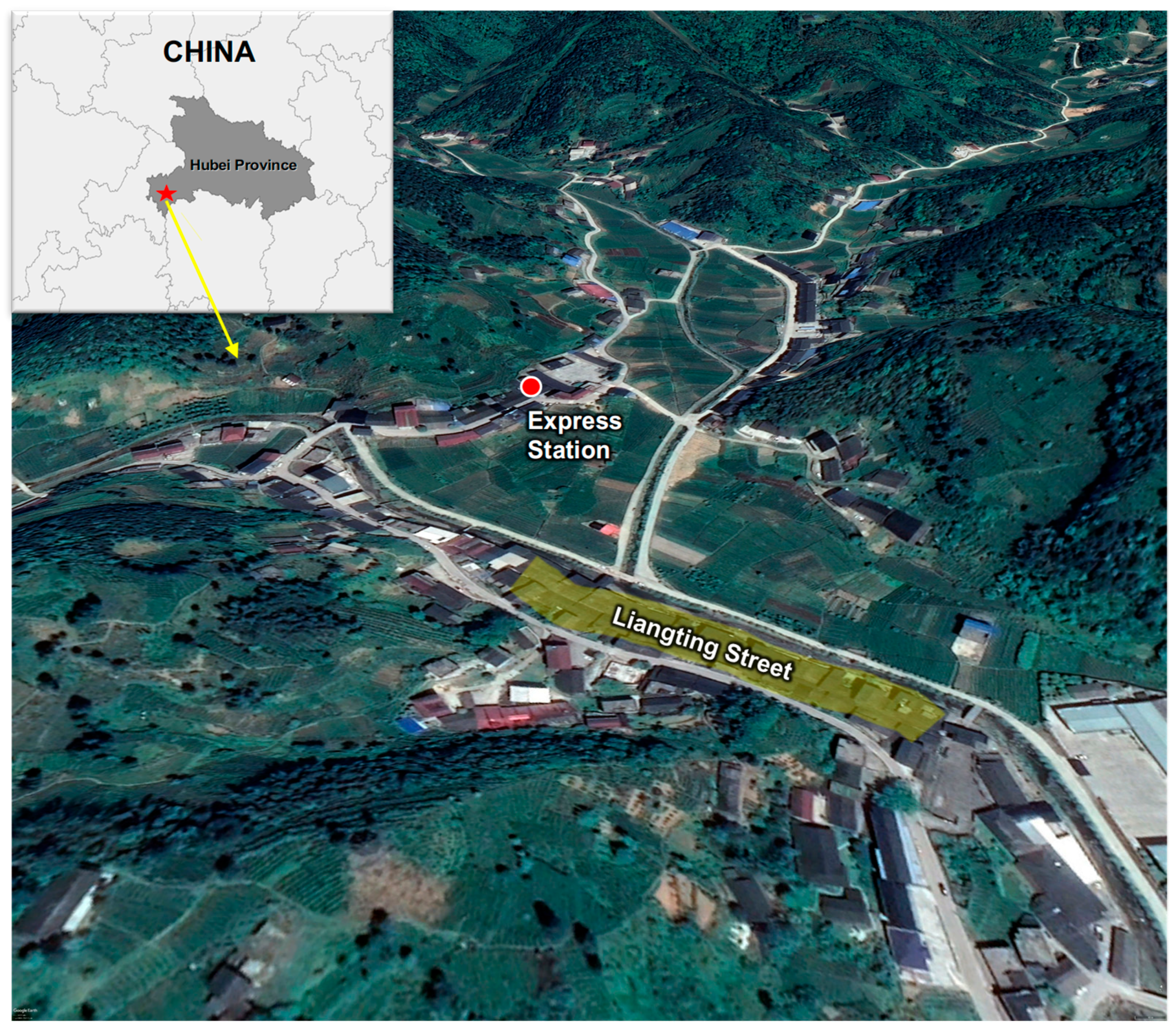
Located 18 km from the county seat, Qing Village has historically served as a critical node on the “Sichuan-Hubei Ancient Salt Road”. As illustrated in Figure 1, the village’s core settlement, “Liangting Street” (Pavilion Street, highlighted in yellow), features traditional “stilt style” architecture. This spatial morphology bears witness to its past as a regional trade hub where mule caravans and merchants converged. Today, the village is integrated into a modern half-hour traffic circle, which facilitates high-frequency logistics and personnel flow between the village and the urban center.
Within this context, the local lifestyle is structured by two distinct temporal patterns:
  • Ecological Rhythm (Tea Cultivation): As one of the birthplaces of the renowned “Yulu Tea” with a cultivation history spanning over 300 years, the village’s economy is dominated by tea production. This industry strictly adheres to Solar Terms and dictates a specific seasonal rhythm that differs from grain-producing regions. For tea farmers in Qing Village, the period from late March to June is the absolute peak season (the “busy season”), involving the continuous harvesting of spring tea and summer tea. During this window, tea leaves sprout rapidly, requiring farmers to harvest daily to maintain value, creating a high-pressure race against nature. In contrast, Autumn and Winter are relatively slack seasons dedicated to pruning and maintenance. Therefore, this study selected the period from April to June for data collection. This window represents the time of highest labor intensity and temporal density, offering an ideal stress test scenario to observe the maximum tension between agricultural rhythms and digital interruptions. While the results capture this peak-conflict period, they may differ from the more relaxed rhythms of the autumn/winter slack season.
  • Market Schedule vs. Logistics Operations: The village retains the tradition of “Ganchang” (Periodic Market Fairs) held on lunar dates ending in 2, 5, and 8. Historically a regional gathering, the market’s scale has reduced with the rise of the migrant economy, now serving primarily the left-behind elderly. In terms of spatial layout (see Figure 1), the traditional market street operates periodically. In contrast, the logistics node (express station, indicated by the red dot), located along the main highway nearby, operates on a daily basis. This spatial arrangement places the periodic, face-to-face trading venue adjacent to the daily, logistics-based service point.

2.1.2. Demographic Hollowness

The village exhibits a severe “hollowed-out” structure. According to verified village committee records from mid-2024, the registered population is 2180. However, the permanent resident population has shrunk to approximately 1350. The substantial gap between these figures indicates that nearly 38% of the registered population—primarily the young and middle-aged labor force—has migrated to urban areas for employment. Within the remaining resident population, the aging trend is pronounced. Data indicates that the number of elderly residents (over 60 years old) stands at 469. While this constitutes about 21% of the registered records, significantly, it accounts for 34.7% of the actual resident population. This creates a specific demographic landscape of “absent middle generation and immobile elderly”.

2.2. Data Collection

Data collection was conducted from April to June 2024. This study employs a mixed-methods design, integrating ethnographic fieldwork, time-use surveys, and digital trace analysis. The dataset comprises three distinct sources.

2.2.1. Ethnographic Fieldwork

  • Participant Observation: The author resided with a focal household (Mr. Yang and Mrs. Tang, aged 65 and 62) for the entire duration. “Participant observation logs” were maintained to record daily activity flows, behavioral responses to weather changes, and the frequency of digital interruptions (providing data for the analysis of “tempo”).
  • Semi-structured Interviews: A total of 49 villagers were recruited through purposive sampling to ensure diversity in roles (e.g., village cadres, left-behind elderly, and returning youths). The interviews focused on their subjective experiences of time and intergenerational interactions (providing data for the analysis of “sequence” and “modalities”). All participant names presented in this paper are pseudonyms. While the broader ethnographic context was informed by the full cohort, Table 1 lists the profiles of the 9 key informants whose narratives are explicitly cited in the text.

2.2.2. Time-Use Survey

A survey focusing on digital behavior and time allocation was conducted.
  • Sampling Strategy: Given the village’s “hollowed-out” demographic structure and the limited digital literacy among the elderly, random mass sampling was unfeasible. We adopted a saturation sampling strategy targeting residents capable of independent digital device usage. This yielded 46 valid samples. While the absolute sample size is small, it covers approximately 60% of the active digital users within the village’s central activity radius, fulfilling the requirement for ecological validity in a single-case study.
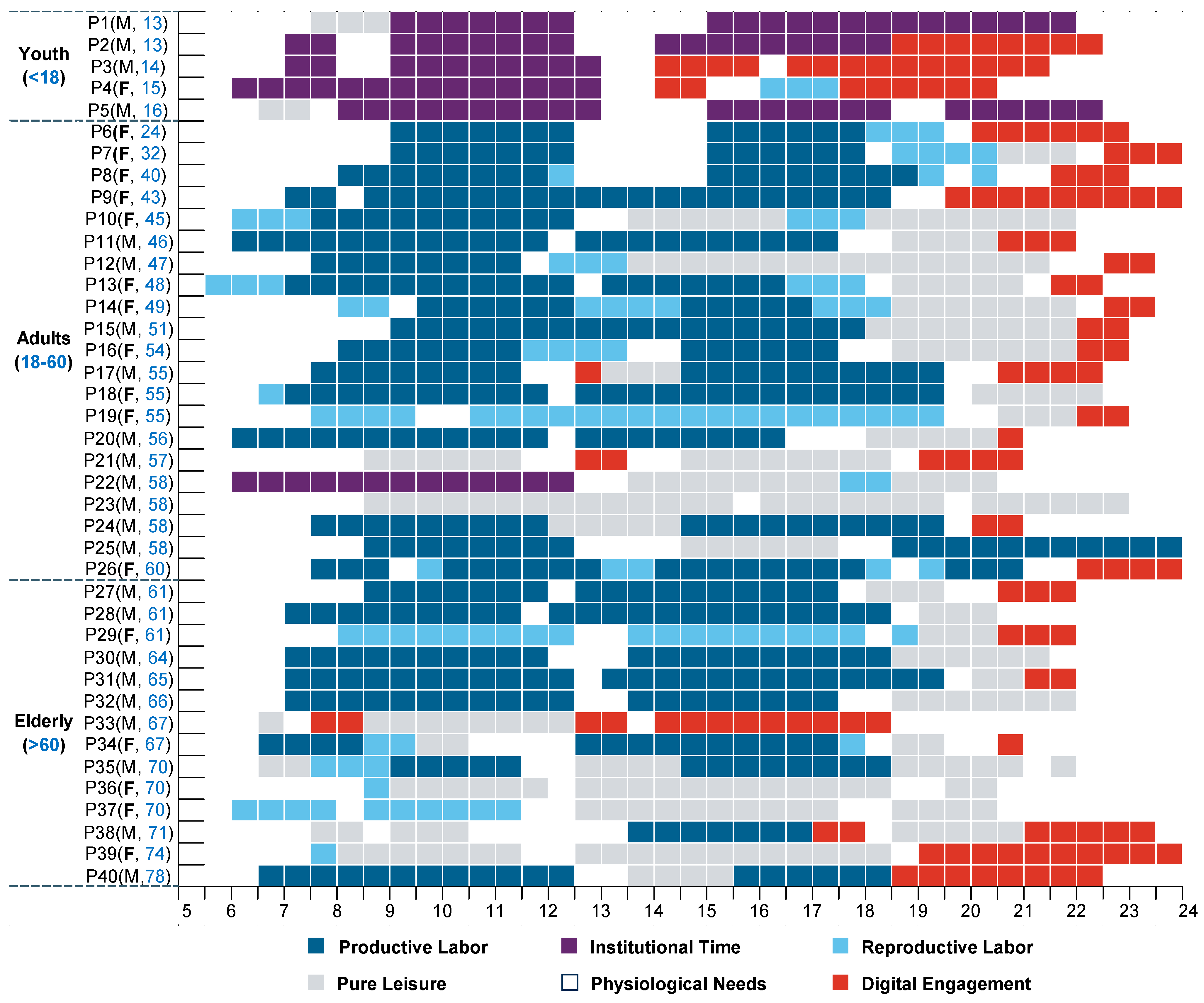
  • Twenty-four-hour Recall Method: Respondents were asked to reconstruct their activities from the previous day in 15 min intervals. After excluding incomplete records, 40 valid daily schedules were obtained. These records serve as the raw data for the heatmap Gantt chart, visualizing the temporal distribution of labor and digital engagement.

2.2.3. Digital Trace Analysis

To capture the authentic digital consumption rhythms and demographic characteristics of the villagers, this study collected logistics data from the village’s sole express service station. Unlike conventional studies that rely solely on backend metadata—which often lacks accurate user identity due to shared family accounts or proxy purchasing—we adopted a rigorous image-based visual content analysis method.
  • Data Acquisition: With the permission of the station operator and in compliance with privacy standards, we accessed the snapshot logs captured by the station’s high-speed photographic apparatus during the pickup process from 1 May to 7 May 2024 (N = 952 parcels).
  • Visual Verification Method: Unlike backend metadata that may misidentify users due to shared family accounts, we employed a manual visual verification method on the pickup snapshots. This process involved: (1) identifying the actual recipient (e.g., distinguishing an elderly person collecting a package for a migrant child); and (2) categorizing the product type based on package labels. This step was crucial for objectively verifying the “timing” of consumption and the “digital nanny” phenomenon.
  • Desensitization: All personal identifiers (names, phone numbers, and facial images) were strictly anonymized immediately after coding. Only categorical data were retained for statistical analysis.

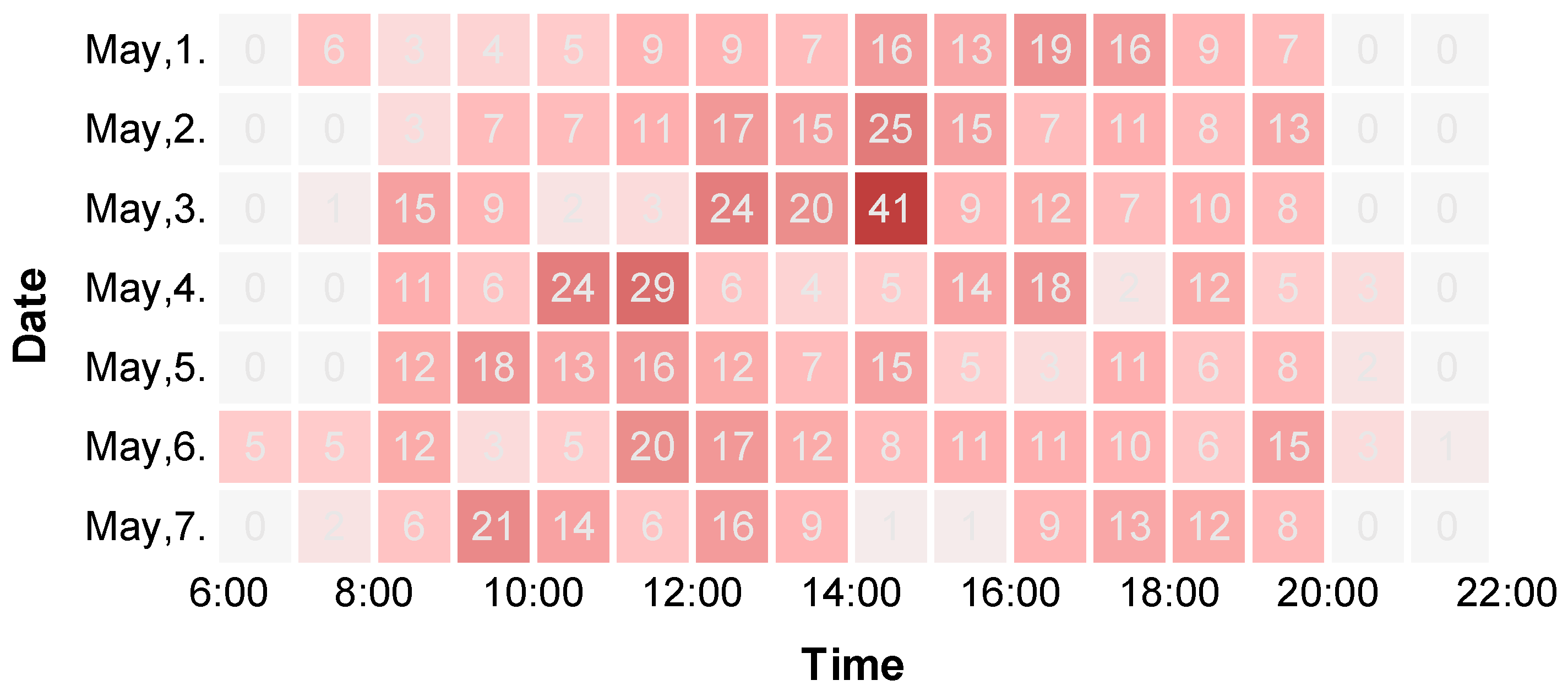
These records serve as the raw data for the heatmap Gantt chart, visualizing the temporal distribution of labor and digital engagement. The demographic characteristics of the participants from both the qualitative (Phase I) and quantitative (Phase II) phases are detailed in Table 2.
Table 2. Demographic characteristics of participants in different data collection phases.
CategorySub-CategoryPhase I: Qualitative Interviews (N = 49)Phase II: Survey Respondents (N = 46)
GenderMale27 (55.10%)23 (50.0%)
Female22 (44.9%)23 (50.0%)
Age GroupYouth (<30)3 (6.12%)8 (17.4%)
Middle-aged (30–60)26 (53.06%)18 (39.1%)
Elderly (>60)20 (40.82%)20 (43.5%)
Note: the two sample groups are not mutually exclusive but were recruited during different fieldwork phases. The 40 valid daily schedules utilized in Figure 2 are a subset derived from the Phase II Survey Respondents.
Figure 2. Heatmap visualization of daily time allocation for 40 villagers on 1 June.
Sustainability 18 02149 g002
Regarding ethical protocols, informed consent was obtained from all interviewees and survey participants, and all digital trace data were anonymized at the source to protect privacy. It is important to acknowledge a sampling limitation: the reliance on digital logs and smartphone-based surveys inevitably excludes the digitally illiterate elderly population. Therefore, our findings primarily reflect the experiences of the “connected” rural population, rather than the village in its entirety.

2.3. Data Analysis

Qualitative data served primarily as a complementary explanatory tool to contextualize the quantitative findings. Instead of exhaustive line-by-line coding, we performed selective content analysis. Field notes and interview excerpts were extracted to interpret specific behavioral patterns observed in the statistical data. This narrative evidence provides the necessary thick description to make sense of the abstract numbers.
Quantitative Analysis relied on descriptive statistics and visualization techniques.
  • Time-Use Data: The 24 h schedules were aggregated to calculate the frequency and duration of digital usage. These data were visualized as a heatmap Gantt chart to intuitively display the fragmentation of labor rhythms.
  • Logistics Data: Logistics records were processed to calculate the proportions of consumption categories. Chi-square tests (via IBM SPSS Statistics 21) were utilized specifically to examine the statistical significance of consumption differences between age and gender groups.

3. Results

3.1. Daily Activity Patterns and Digital Usage Rhythms

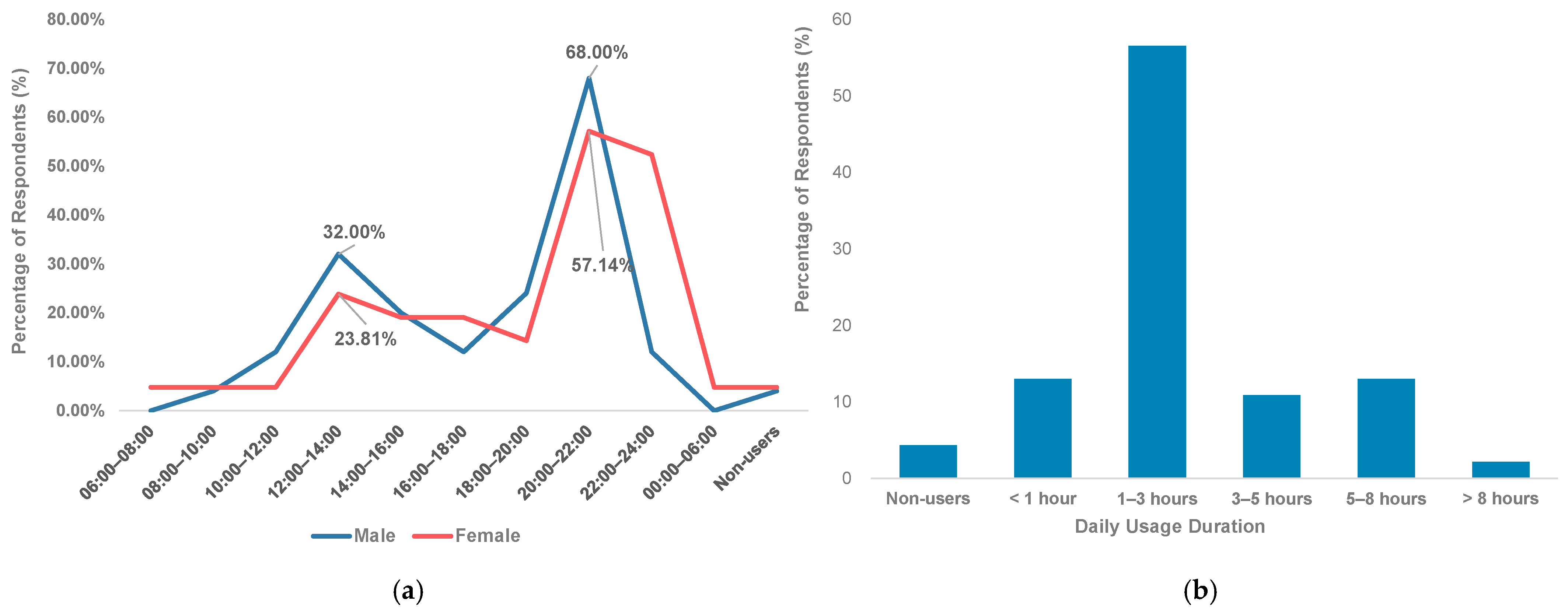
To capture the temporal baseline of the village, this study documented the 24 h daily activity logs of 40 villagers (23 males and 17 females, aged 13 to 78) and mapped them using a heatmap Gantt chart (Figure 2). To complement this, a questionnaire survey was conducted among 46 villagers to detail the temporal distribution and duration of their digital usage (Figure 3). The heatmap displays activity logs for 40 participants, sorted hierarchically by age group (youth < 18, adults 18–60, elderly > 60) and gender. The period from 00:00 to 05:00 is omitted as it uniformly consists of sleep.
Macroscopically, the “active daytime” (06:00–19:00) in Figure 2 is visually characterized by high-density blocks of productive and reproductive labor (deep blue and light blue blocks). Quantitative analysis indicates that these obligated tasks occupy approximately 58.6% of the daytime hours. However, the lunch break (12:00–14:00) emerges as a distinct physiological gap. Figure 3a shows a notable usage increase during this window, with 32.00% of males and 23.81% of females going online. Ethnographic interviews reveal that this digital peak is strictly delimited by physiological exhaustion. As Villager Yang (Male, 65) noted, “the noon sun is too fierce for tea leaves; that’s the only time my hands are clean enough to hold the phone”. This narrative confirms that the digital window is not a choice of leisure but a structural gap dictated by the agricultural environment.
Zooming into specific cases in the heatmap, the data highlights structural differences between genders. First, for male laborers, the timeline is predominantly linear. As shown in Participant 11 (Male, 46), his day consists of high-intensity tea harvesting from 05:30 to 17:00. The heatmap records only sporadic “digital spots” (red) during transport wait times or lunch breaks. This linear constraint is mirrored in Figure 3a: after the lunch peak, male usage drops to 20.00% (14:00–16:00) and further to 12.00% (16:00–18:00) as they return to field work.
Second, female villagers exhibit a “dual burden” pattern. Ethnographic interviews enrich the visual data by uncovering micro-interactions that exist within solid labor blocks. As Interviewee Qin (Female, 53), caring for a grandson, described:
  • “When the child plays alone, takes a nap, or after housework is done, I will also take time to browse my phone and watch Douyin.”
This fragmented usage is reflected in Figure 3a, where female usage in the afternoon remains relatively steady (maintaining around 19.05% from 14:00 to 18:00) and is higher than that of males during the same period.
For the youth (<18 years), the heatmap is dominated by “institutional time” (deep purple), reflecting the boarding school schedule. As Interviewee Yang (male, 65), retired teacher of the village primary school, explained:
  • “Since the village primary school was cancelled in 2021 due to insufficient enrollment, children below Grade 5 must leave at 6:00 AM… while those from Grade 5 onwards board there.”
The survey timing, which coincided with the Dragon Boat Festival, provided a unique opportunity to observe behavioral shifts. The heatmap reveals that once students returned home, the rigid institutional blocks were immediately replaced by “digital engagement” (red). Regarding intensity, Figure 3b reveals that 40.00% of the youth group spend 5–8 h online daily. This indicates a latent demand for connection, which manifests as extended digital immersion whenever external discipline is removed. To validate the representativeness of these findings, we cross-referenced the “Third National Time Use Survey Bulletin (No. 3)” [40]. The national data reports a rural internet participation rate of 90.2%, confirming that digital engagement has become a fundamental aspect of rural life. Regarding duration, the national average for rural residents is 4 h and 43 min. Our survey reveals a slightly lower average (approximately 3.5 h) for the middle-aged labor force. This deviation quantitatively corroborates the “tempo clash” during the busy farming season: the rigid demands of the tea harvest (April–June) structurally compress the leisure time available for digital consumption. Meanwhile, the national average for residents aged over 60 reaches 4 h and 52 min, aligning with our observation that the elderly have become a primary demographic for digital consumption, utilizing connectivity to fill the void of the “hollowed-out” village structure.
Visual analysis of the heatmap highlights a dramatic shift in the post-productive hours. After 18:00, continuous and extensive blocks of “digital engagement” (red) emerge as the dominant visual feature for the evening period. Quantitative analysis confirms this surge. Figure 3a indicates a usage peak between 20:00 and 22:00, with 68.00% of males and 57.14% of females online. Notably, a significant gender divergence appears in the late-night block (22:00–24:00). While male usage drops to 12.00%, female usage remains at 52.38%. This suggests that for women, digital access is structurally delayed. This is visually evident in Figure 2, where “reproductive labor” (light blue) blocks often persist into the evening (18:00–21:00), effectively pushing their continuous digital relaxation into the late night.
In terms of duration, Figure 3b shows that the elderly (>60) present a polarized pattern: while 12.50% are non-users, 6.25% exceed 8 h. This aligns with the observations of Participant 39 (female, 74) and Participant 40 (male, 78) in the heatmap, who exhibit “Digital Saturation” comparable to teenagers. This suggests that once the “labor constraints” are suspended at night, the elderly are equally vulnerable to algorithmic capture, using digital connectivity to fill the temporal void. This deep permeation of digital life has been rationalized by villagers as a new necessity. As described by the telecom clerk Li (female, 28):
  • “Now, everyone uses WeChat. Even the elderly feel that a 100-yuan monthly fee is acceptable because they need to video call their grandchildren during breaks or watch videos when they rest.”
This evidence underscores that digital connectivity has transcended economic sensitivity to become an indispensable layer of the local lifestyle.

3.2. Digital Engagement and Intergenerational Interactions

The data reveals a structural transformation that begins with individual digital consumption habits and extends to intergenerational interactions.

3.2.1. The Hierarchy of Digital Engagement: From Fragmentation to Utility

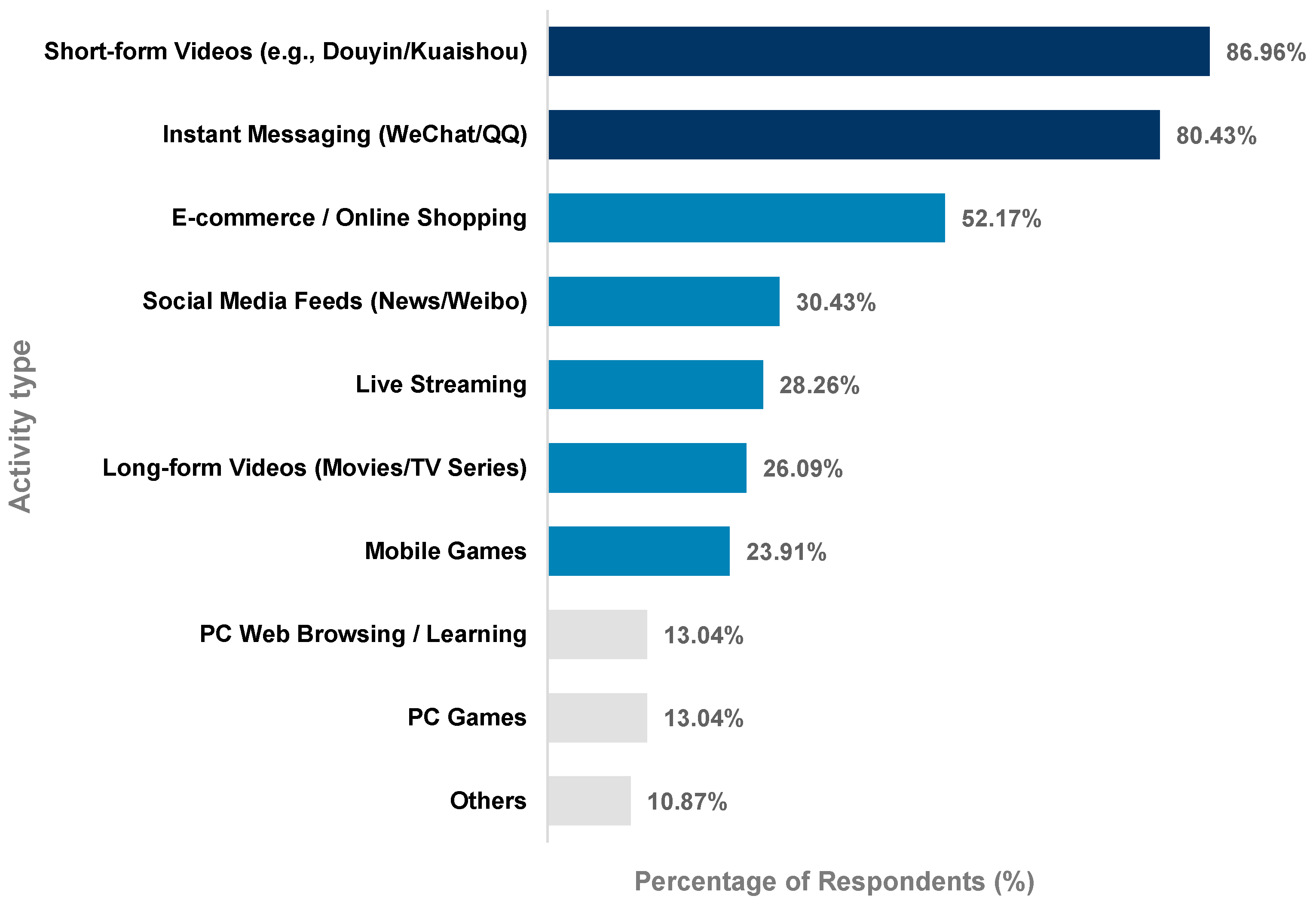
Figure 4 presents a detailed breakdown of villagers’ online activities, revealing a distinct “center–periphery” structure in their digital usage. Short-form videos (e.g., Douyin/Kuaishou, 86.96%) and instant messaging (WeChat, 80.43%) occupy the absolute core of this hierarchy. Being the only two categories exceeding the 80% threshold, their dominance indicates that visual interaction and immediate connectivity constitute the primary mode of digital life in the village. Beyond entertainment, e-commerce activities (52.17%) represent a significant portion of usage, ranking third. This figure notably surpasses traditional media forms like long-form videos (26.09%) or mobile games (23.91%), suggesting that the smartphone functions as a crucial tool for economic transactions alongside its recreational roles. Conversely, PC-based activities remain on the periphery. Both “PC web browsing/learning” and “PC games” sit at the bottom of the hierarchy (13.04%). This data confirms that the village’s digital ecosystem is overwhelmingly characterized by mobile-based access, with minimal dependence on fixed desktop interfaces.

3.2.2. The “Digital Nanny”: Outsourcing Care for Production Efficiency

The acceleration of life rhythm profoundly impacts the structure of intergenerational interaction, forming a closed loop between caregiving strategies and adolescent usage habits.
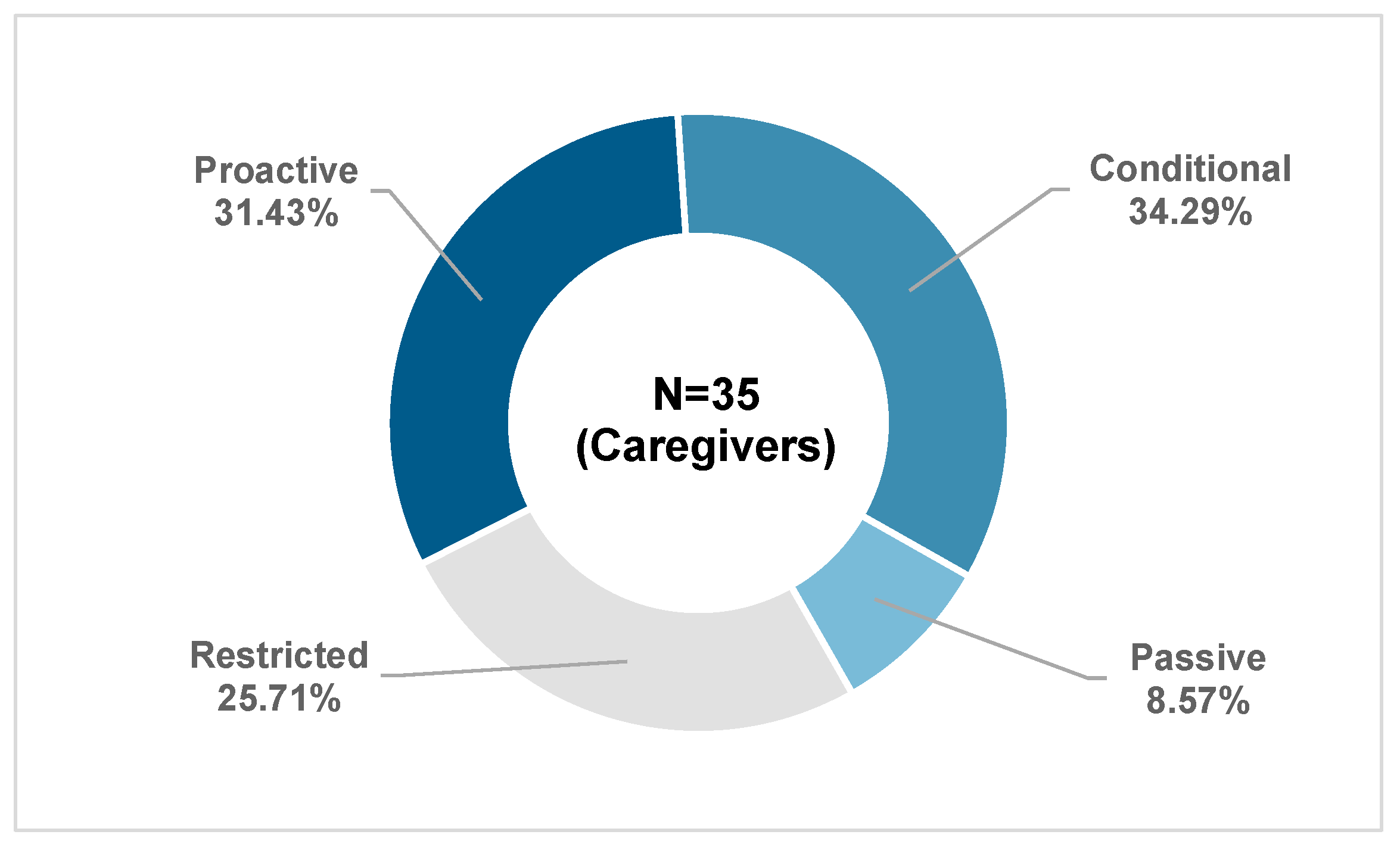
In the context of the village’s “hollowed-out” demographic structure, caregiving responsibilities primarily fall on grandparents and left-behind mothers. Regarding parental attitudes, we focused on a valid sub-sample of 35 respondents who serve as primary caregivers for minors (excluding 11 non-caregiver households). Figure 5 illustrates their coping mechanism. As in Figure 5, “proactive” refers to using devices as a “digital nanny” during busy labor hours; “conditional” implies providing devices depending on the situation; “passive” indicates rarely giving devices, mostly for pacification; “restricted” means strictly forbidding access. The data reveals that 65.72% of caregivers adopt a permissive strategy (combining the “proactive” and “conditional” categories). Specifically, 31.43% fall into the “proactive” category, effectively utilizing the device as a “digital nanny” during busy labor hours. This statistical trend is vividly illustrated by the case of Interviewee Qin’s grandson. During the peak tea-harvesting window, the 3-year-old was observed sitting alone with a tablet for two consecutive hours. Qin (Female, 53) explained, “it’s the only way to keep him safe while I’m in the fields”. This qualitative vignette validates the survey data, showing that “proactive” device use is a survival strategy for labor-constrained households. Another 34.29% adopt a “conditional” approach, adjusting access based on situational needs. In contrast, only 25.71% maintain a “restricted” stance.
Field interviews further clarify the context of the “proactive” behavior. Caregivers reported that the provision of phones often coincides with periods of domestic or agricultural labor to manage the conflict between labor demands and caregiving needs. This reliance is vividly illustrated by Ran (female, 35), who frequently cares for her niece:
  • “My niece is only two years old… but on rainy days, she can sit on the sofa and watch the phone all day. She even mimics the way people talk in TikTok videos.”
This vignette highlights that the “digital nanny” does not merely occupy time; it begins to shape cognitive and behavioral patterns from toddlerhood, marking the onset of algorithmic enculturation.
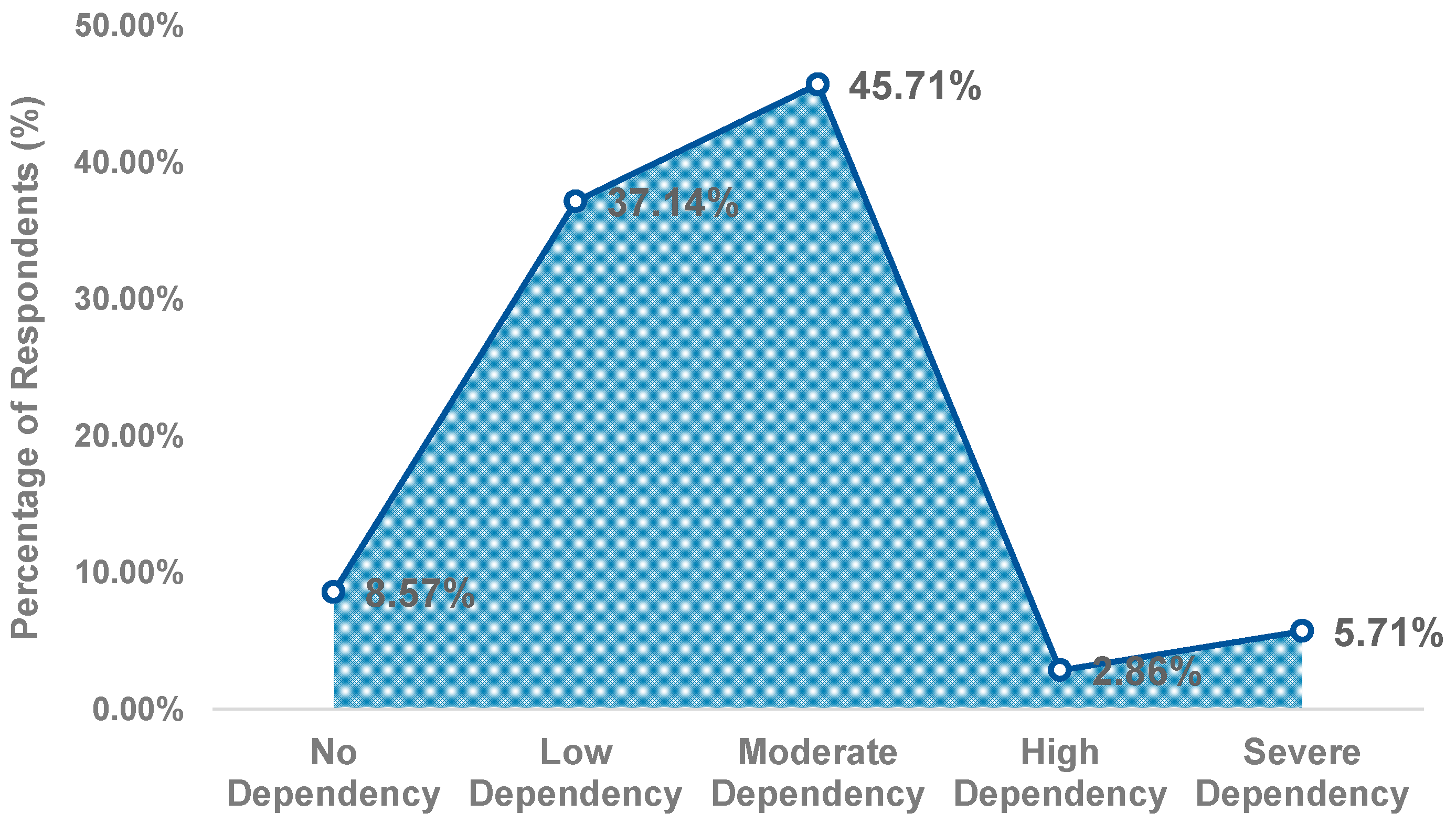
This “provisioning for efficiency” strategy directly shapes the digital habits of the younger generation. To capture the spectrum of this engagement, we categorized usage into five distinct levels based on frequency and purpose: “no dependency” (non-users), “low dependency” (educational use only), “moderate dependency” (occasional recreational use), “high dependency” (daily controlled use), and “severe addiction” (uncontrolled, excessive usage). As shown in Figure 6, the distribution of digital dependency exhibits a “spindle-shaped” pattern. While only 8.57% of teenagers are categorized as “no dependency” (non-users), the majority fall into the intermediate spectrum. Specifically, 37.14% exhibit “low dependency”, where usage is ostensibly limited to educational purposes, and 45.71% show “moderate dependency”, characterized by occasional recreational engagement. However, the tail of the distribution warrants attention: 5.71% of adolescents have escalated to “severe addiction” (uncontrolled use), surpassing the 2.86% in the “high dependency” (daily controlled) category. This suggests that once usage exceeds moderate recreational boundaries, parental control mechanisms may tend to fail, leading directly to addiction rather than controlled daily use.
Observations recorded instances where educational tools were utilized to expedite task completion. For example, a primary school student (Wang’s grandson, 10) was observed using a homework assistant app to scan questions and obtain answers directly, bypassing the calculation process. This qualitative evidence implies that the pursuit of speed has been transmitted intergenerationally: just as adults use devices to “accelerate” caregiving, children use them to “accelerate” learning, prioritizing immediate outcomes over the process itself.

3.3. The Exprssion Station as a New Sacial Node

3.3.1. Temporal Distribution of Package Pickups

The express station operates on a specific timeline. The logistics van typically arrives at the village around 7:00 am. The station owner Liu (female, 52) completes sorting between 8:00 and 9:00 am, at which point the digital system automatically triggers pickup notifications to villagers’ smartphones.
The darkest regions on the heatmap are concentrated between 11:00 and 17:00, forming a “core activity band”. Aggregate data confirms that the total hourly pickup volume in this interval remained consistently high (averaging > 70 parcels), with 14:00 (total 111 parcels) and 12:00 (total 101 parcels) representing the two highest traffic peaks of the day. This “dual-peak” characteristic manifests as a continuous high-saturation band on the heatmap. While activity levels fluctuate across specific days—for instance, 14:00 on 3 May marked the highest single-hour spike of the week (41 parcels), whereas the same period on 7 May was relatively quiet—the overall pattern indicates that the majority of villagers prefer to utilize midday breaks and afternoon mobility routines to complete package collection. This synchronization is not accidental but a calculated adaptation. As the station operator Liu (Female, 55) observed, “villagers treat picking up packages like a ‘midday break’—they rush here right after lunch and before returning to the tea mountains”. This triangulation confirms that the logistics rhythm (timing) is subordinate to and constrained by the rigid demands of agricultural production.
The evening period exhibits a characteristic of “phased discontinuation”. The data shows that activity remains stable between 18:00 and 19:00 (aggregating 63 and 64 parcels, respectively), with the corresponding heatmap regions displaying medium color intensity. However, 20:00 marks a definitive physical boundary. The heatmap area after 20:00 rapidly turns blank; statistics show only 8 records total for this hour across the entire week, and just 1 record for 21:00. This cessation of physical mobility contrasts sharply with the data in Figure 3, which identifies 20:00–21:00 as the peak for online interaction, reaching an activity rate of 63.04%. The results in Figure 7 visually present this divergence: within the same timeframe, while online digital time is highly active, physical package collection behaviors have essentially ceased. Furthermore, this temporal pattern reveals a complementary ecology between the logistics node and the traditional periodic market. The traditional market operates on cyclical time (dates ending in 2, 5, 8 of the lunar calendar), serving as a space for ritualized social exchange and fresh produce. In contrast, the express station operates on linear clock time (daily 8:00–22:00), filling the temporal voids of non-market days with industrial goods. Thus, digital infrastructure has not obliterated the traditional market but has established a temporal division of labor, allowing modern consumption to coexist with traditional exchange rhythms.

3.3.2. Stratified Consumption: Intersectional Divergence of Age and Gender

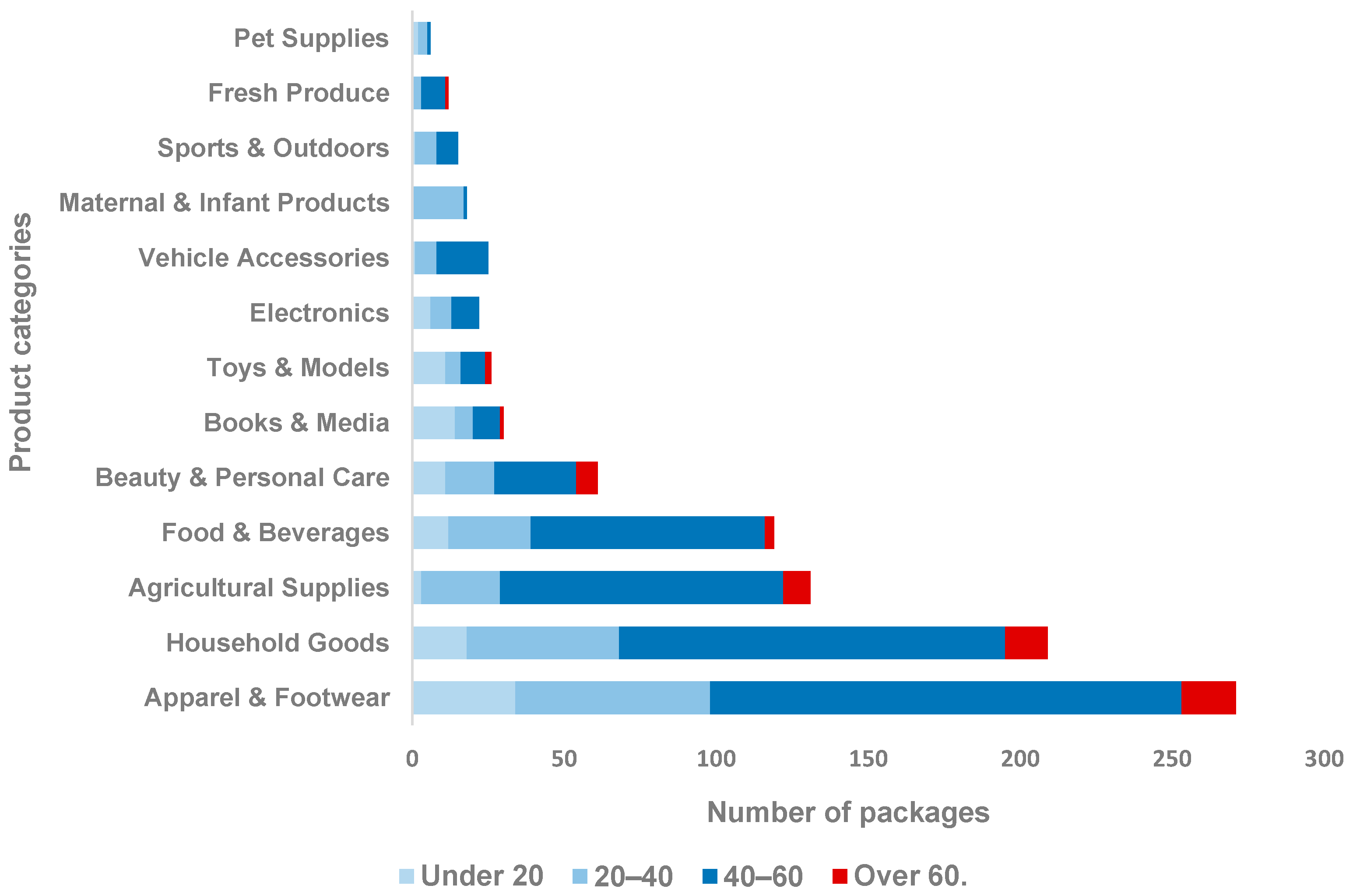
Analysis of the 945 valid packages collected during the observation week—after excluding 7 records from the original dataset (N = 952) due to missing or ambiguous descriptions—reveals a stark generational stratification in participation in the digital logistics network. As shown in Figure 8, the middle-aged group (40–60 years old) serves as the core of digital consumption, accounting for 57.03% (539 items) of the total volume. This is followed by the youth group (20–40 years old) with 25.18% (238 items) and adolescents (under 20) with 11.96% (113 items). In contrast, the elderly population (over 60) accounts for only 5.8% (55 items), indicating a low participation rate relative to their population size. To statistically verify this divergence, a chi-square test of independence was performed. The results demonstrate a highly significant association between age groups and consumption categories (χ2 = 64.37, p < 0.001), statistically confirming that consumption patterns are structurally distinct across generations.
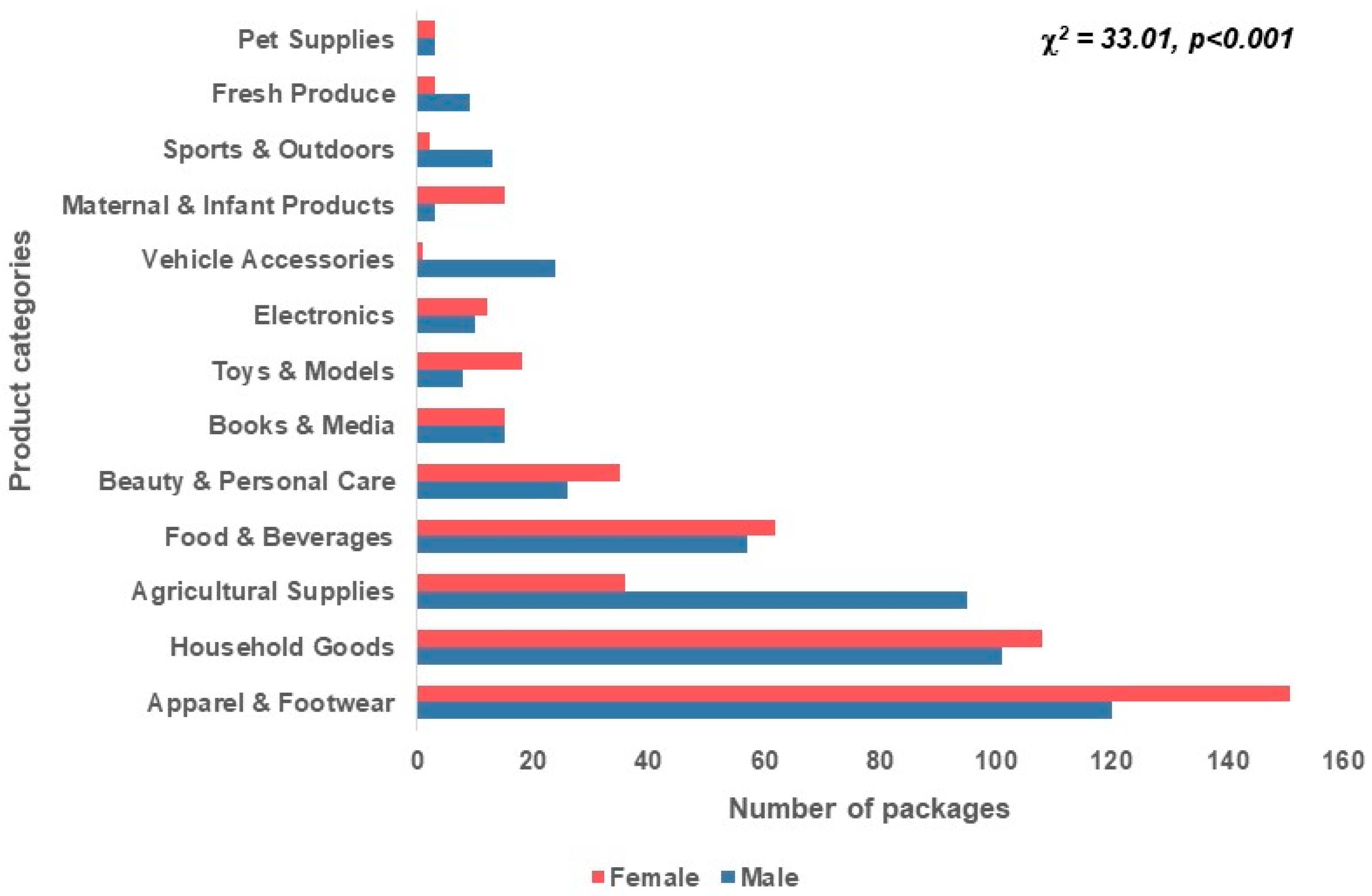
Beyond age, gender constitutes another critical dimension of differentiation. As illustrated in Figure 9, while consumption in general categories is balanced, significant disparities exist in specific domains. Females significantly surpass males in the purchase of “apparel & footwear”, “maternal & child products”, “beauty & personal care” and “toys & models”. Conversely, males clearly dominate in “sports & outdoors”, “agricultural production supplies” and “vehicle accessories”. A Chi-square test indicated a significant association between gender and consumption categories (χ2 = 33.01, p < 0.001). This result highlights that male consumption is more oriented towards production tools and outdoor mobility, whereas female consumption is heavily concentrated on household care and personal grooming.
To reveal the specific content often obscured by macro-categories, we conducted a granular analysis of log entries (see Table 3). For adolescents (<20), consumption patterns show a detachment from local life: females purchase visual symbols like “JK uniforms” and “Lolita accessories,” while males buy “game peripherals.” In the adult group (20–60), male consumption logs include not only production inputs like “pesticides” but also leisure items such as “fishing gear,” reflecting a mix of labor and recreation. In contrast, young female consumption is characterized by “pelvic floor trainers” and “skincare sets,” pointing to a focus on modern body management. This reliance on digital channels to access non-local resources is explicitly articulated by Yin (female, 23), a returning youth:
  • “I buy things online that I can’t find in the village; it’s fast and convenient.”
Her statement corroborates the log data, confirming that e-commerce serves as a crucial compensatory mechanism for the scarcity of the local market. Finally, for the elderly (>60), the presence of distinctive items such as “medicines”, “hair dye” and “calcium tablets” indicates that their limited digital engagement is primarily driven by physiological health needs.

3.4. Behavioral Responses to Natural Rhythms

Long-term participant observation of the focal household, Yang (male, 65) and Tang (female, 62) reveals that villagers’ daily schedules are not uniformly dominated by digital time. Instead, their behavioral patterns exhibit significant elasticity contingent on natural conditions.
As summarized in Table 4, the couple’s time allocation shifts dramatically between “production days” (sunny) and “interruption days” (rainy/market days). On sunny days (e.g., 14 April, 18 May), their schedule follows a rigid high-intensity labor rhythm, with working hours often exceeding 10 h (06:00–18:00). During these periods, digital devices are rarely used.
However, weather changes act as a trigger for behavioral switching. The logs from 29 April and 26 May indicate that once rainfall suspends agricultural labor, the villagers immediately transition into a “social/leisure mode”. Activities shift from tea harvesting to card playing, shopping in town, or personal grooming.
Notably, digital tools are utilized differently in these two modes. In the “interruption mode”, smartphones are primarily used to facilitate offline coordination. Field observations recorded that Yang used WeChat calls to organize card games immediately after the rain started (26 May), while Tang used ride-hailing groups to coordinate carpools to the county seat (29 April). This suggests that digital infrastructure serves as a logistical support for maintaining local social networks during non-labor time. Comparing these rainy day logs with the survey data in Figure 2 reveals a distinct behavioral switch. The “digital silence” observed on sunny days is structurally inverted during rainfall, where social coordination via WeChat spikes. This comparison highlights that digital engagement in the village is contingent on ecological variables, rather than being a constant background noise as seen in urban settings.

4. Discussion

Based on the empirical findings from Qing Village, this study proposes that digital infrastructure acts not merely as a tool for spatial connectivity, but as a force of temporal reconfiguration. Integrating the perspective of “timescape”—specifically utilizing the analytical dimensions of tempo, timing, sequence, and temporal modalities [1,3]—we analyze how the interaction between algorithmic logic and agrarian rhythms reshapes the rural lifeworld.

4.1. Tempo: The Structural Friction of Algorithmic Acceleration

The data reveals not merely a correlation between phone usage and farming but a mechanism of time compression. Digital infrastructure does not passively exist alongside agriculture; it actively inserts high-frequency information flows into the low-frequency agricultural cycle [7]. This insertion effectively densifies the villager’s experience of time, creating a structural “tempo clash” that reconfigures the traditional boundary between labor and leisure [11,41].
Notably, this friction appears to vary by gender and age, reflecting how different groups organize their time—distinct modalities of temporal experience [3]. The heatmap reveals that male laborers generally follow a “linear rhythm” synchronized with field work, where digital usage is largely confined to distinct break times. In contrast, female villagers exhibit a more “interwoven rhythm”, characterized by the mixing of domestic care and digital engagement. The higher afternoon usage rates among females (Figure 3a) suggest that digital devices are frequently used during the gaps of reproductive labor (e.g., watching a child). This observation implies that digital connectivity may further fragment women’s time, making the boundary between “caregiving” and “digital distraction” increasingly blurred, adding a layer of cognitive load to their existing “dual burden” [5,42]. Similarly, the polarized usage among the elderly—either non-use or high-duration use—reflects an uneven inclusion to this digital tempo.
The friction arises when this high-speed algorithmic tempo invades the low-speed agricultural rhythm. As shown in the results, digital content has effectively filled the “pores” of agricultural labor. This filling process is not merely a passive occupation of time but involves a mechanism of “time immersion” and “time compression” [43]. Unlike the traditional “idle time” used for physical recovery and low-cognitive drifting, short-form video platforms compress narrative content into seconds and push it continuously. This high-intensity information flow requires villagers to process dense digital information within limited breaks, which may lead to a state of high cognitive arousal during what was historically downtime.
Consequently, the boundaries of lived experience seem to be undergoing restructuring. Modern technology compresses time, creating a sense of urgency even during leisure [44]. Our findings provide contextual evidence for this within a rural setting: the boundary between “labor” and “rest” becomes increasingly porous due to ubiquitous connectivity. While the villagers’ physical bodies remain constrained by the low-speed cycles of the tea harvest, their attention is frequently engaged by the linear, accelerated timeline of the screen.
This “tempo clash” signifies a shift in the quality of rural life. The gaps originally intended for physical recovery or face-to-face interaction are now occupied by fragmented algorithmic content. This does not imply a complete decoupling from agricultural reality, but rather the emergence of a layered temporal experience: the continuity of the natural rhythm is punctuated by algorithmic acceleration, rendering the experience of time increasingly dense and fragmented. This observation resonates with Wajcman’s analysis of the “harriedness” of digital life [44], confirming that the “acceleration” driven by algorithms is not exclusive to urban white-collar workers but has also permeated the agricultural labor process. Furthermore, this friction serves as a micro-cosmic instantiation of the “desynchronization” inherent in late modernity [12]. It exemplifies how the global regime of social acceleration actively subsumes the rural hinterland, attempting to synchronize the organic, cyclical temporality of agriculture with the accelerated, linear logic of the digital economy.

4.2. Timing: The Re-Synchronization of Logistics and Local Schedules

The temporal lag observed in Figure 7—where the digital notification at 9:00 A.M. is met with physical responses at 12:00 and 18:00—suggests more than a mere delay; it points to a structural shift in the community’s temporal organization. This shift can be analyzed as a dual process: the disembedding of consumption from traditional collective rhythms and its re-synchronization within a new, albeit looser, socio-temporal order.
From a historical perspective, rural consumption was often regulated by periodic markets, which functioned as dominant “institutional projects” that synchronized the community [19]. The market served as a temporal anchor, compelling villagers to converge simultaneously, thereby maintaining social cohesion through collective rituals. However, the algorithmic logic of the logistics system appears to disembed economic exchange from this local social fabric. The standardized “digital trigger” attempts to install a universal industrial time, which does not align with the specific “coupling constraints” of agricultural labor [45,46]. The decline of the periodic market thus leads to a “de-synchronization” of the traditional collective rhythm—villagers no longer need to coordinate their presence for transaction purposes. This transition fundamentally represents a mechanism of “temporal disembedding” [47]. The logistics system detaches economic transactions from the local social fabric (the collective market day) and re-embeds them into an abstract, standardized industrial timetable. This structural shift precipitates a negotiation between two distinct temporalities: the “peasant time”, which is flexible and task-oriented (e.g., waiting for rain to stop), and the “logistics time”, which is rigid and clock-oriented (e.g., the delivery truck departing at 8:00 A.M.). Unlike the traditional market that accommodated the agrarian rhythm, the digital logistics network imposes a strict industrial discipline. Villagers must therefore exert temporal agency to fit their flexible labor schedules into the rigid windows of the logistics node, resulting in the observed pattern of loose re-synchronization.
However, this de-synchronization does not dissolve into pure chaos. Instead, the express station has emerged as a new node facilitating a mechanism of “re-synchronization”. Unlike the intentional gathering of the market, the convergence at the logistics node is formed by the intersection of individual “daily paths” [48,49]. Villagers, constrained by their labor schedules, insert the “pickup task” into the fragmented gaps of their day. The peaks at 12:00 and 18:00 represent the formation of an “activity bundle” where multiple individual paths contingently converge at a specific space-time coordinate.
Crucially, this new aggregation is distinct from complete isolation. While the express station is primarily an instrumental node for consumption, it retains a dimension of relationality. The data indicates that these overlapping paths create a “weak public space”. During the brief windows of queuing and pickup, villagers engage in information exchange and light social interaction. This mechanism offers a critical dialog with the “smart city” discourse. While smart urbanism typically emphasizes “real-time synchronization” and seamless flows of data and goods [50], our findings in the rural hinterland reveal a pattern of “loose coupling”. The digital village does not simply replicate the immediate efficiency of the smart city; instead, through nodes like the express station, it creates a buffer zone where the rigid, accelerated logic of urban infrastructure negotiates with, rather than dominates, the flexible, cyclical time of the peasantry. This suggests that the digital infrastructure is fostering a “loose coupling”—a form of connectivity that lacks the ritual intensity of the traditional market but offers a flexible cohesion adapted to the fragmented rhythms of modern rural life.

4.3. Sequence: The Displacement of Intergenerational Socialization

The prevalence of the “digital nanny” strategy (Figure 5) reveals a fundamental disruption in the sequence of rural socialization. Social continuity relies on a specific temporal order, traditionally characterized by the transmission of knowledge and authority from elders to the younger generation [2]. However, our empirical data indicates a misalignment in this sequence. To cope with high-intensity agricultural labor (as shown in the heatmap of tea picking), caregivers utilize digital devices as mediators in early childhood. This act shifts the starting point of socialization: the primary interaction partner for the younger generation transitions from family elders to algorithmic platforms. Consequently, the authority over “time-structuring”—the power to decide when to play and what to learn—is partially ceded to the algorithm, disrupting the traditional linear transmission of family culture [51]. This shift signifies a deeper erosion of the indigenous “Renqing” (human sentiment) time. In the local moral economy, caregiving is not merely a task but a ritual of maintaining the “differential mode of association” [19]. However, the “digital nanny” replaces this emotionally dense, slow-paced interaction with efficient but hollow algorithmic feedback. Consequently, the “sequence” of cultural transmission is disrupted: the younger generation is increasingly synchronized with the standardized time of the internet rather than the differential time of the kinship network.
Driven by the exigencies of agricultural labor, this practice implies a subtle substitution within the household’s temporal economy. “Relational time” refers to the shared time essential for building emotional bonds and maintaining family cohesion, which is inherently flexible and process-oriented [52,53]. In the context of Qing Village, however, this time appears to be increasingly displaced by algorithmic interaction. Parents tend to trade “relational time” for “labor time” (clock time) to maximize economic output [5]. The smartphone thus functions as a low-cost substitute for companionship. This phenomenon mirrors the concept of being “alone together” [54], yet in this rural context, it is driven less by personal preference and more by the economic necessity of liberating adult labor. As observed in the case of the 2-year-old mimicking Douyin, the device fills the temporal void left by the caregivers. The cost of this substitution is the atomization of family life [55]: while family members remain physically co-present, they are often temporally separated into different digital worlds, potentially eroding the shared temporal foundation necessary for deep emotional connection.
Ultimately, this substitution alters the temporality of cultural transmission. The high rate of digital dependency among youth (Figure 6) suggests that this is not a temporary diversion but a potential long-term shift in habitus. The traditional “slow” process of oral transmission and behavioral modeling is replaced by the “fast,” fragmented interaction with algorithms. Consequently, the carrier of cultural inheritance shifts: the younger generation is no longer molded solely by the cyclical time of the village community, but is increasingly shaped by the instantaneous, feedback-driven time of the digital platform [56,57]. This structural replacement constitutes a challenge to the continuity of rural social sustainability. Thus, the digital infrastructure functions as a mechanism of sequence displacement. It inserts itself between the elder and the child, disrupting the linear transmission of local knowledge and replacing it with algorithmic feedback loops, thereby altering the fundamental order of rural socialization.

4.4. Temporal Modalities: The Reconstruction of Temporal Identities via Consumption

The empirical evidence from the focal household’s daily logs (Table 4) suggests that while digital infrastructure introduces a rigid algorithmic rhythm, it does not completely determine villagers’ temporal experiences. Such behavioral elasticity underscores the dynamic tension between rigid, institutionally imposed “time frames” and malleable, subjective temporal experiences [3,14]. In the context of tea cultivation, labor is typically governed by a rigid frame dictated by crop growth and daylight. However, natural interruptions, such as heavy rainfall, appear to act as a mechanism that disrupts this rigidity, creating an opening for the assertion of “temporal sovereignty” [58].
As observed in the “rainy day” logs (Table 4), once the external constraint of farming is suspended, villagers rapidly transition into a subjective frame characterized by leisure and socialization. Crucially, digital tools play a facilitating role in this exercise of autonomy. Rather than isolating individuals, tools like WeChat group calls are used to coordinate traditional, slow-paced face-to-face interactions. This behavior indicates a form of “time frame fluidity”: villagers utilize digital connectivity to “re-synchronize” their local social networks within the gaps of productive time [59,60]. This suggests that individuals are not merely passive subjects of structural constraints but active agents who weave their own “paths” through available “projects” [48]. However, we must avoid romanticizing this resilience. This flexibility is often reactive and contingent on nature, rather than a structural power to overturn the algorithmic logic. While villagers can find temporary relief, the structural pressure of the digital economy continues to erode the boundaries of their lifeworld.
Furthermore, avoiding technological determinism requires examining the villagers’ lived experience. Subjectively, they perceive digital time not merely as a tool but as a source of acceleration pressure that invades their rest. However, they retain “temporal agency.” As seen in the rainy day logs, they employ specific negotiation strategies: consciously utilizing natural interruptions to suspend digital labor and repurposing tools like WeChat to coordinate traditional face-to-face gatherings. This demonstrates that villagers actively navigate between the rigidity of algorithms and the flexibility of nature.
Moreover, the stratified consumption patterns (Table 3) reveal how villagers utilize digital access to reconstruct their “temporal modalities” (past, present, and future) [3,61]. Consumption in the digital age is not merely about acquiring material goods but about constructing a temporal orientation. For the youth, purchasing symbolic items like “JK uniforms” represents an attempt to synchronize with an “urban future”, constructing a modern identity that transcends the village’s local temporality. In contrast, the elderly’s purchases of production supplies reflect a fixation on the “cyclical present”. This divergence implies that digital infrastructure provides a medium for temporal reconstruction, enabling different generations to project themselves into distinct temporal horizons. This divergence manifests as a structural asymmetry in temporal autonomy, creating a new form of digital stratification. The divide is no longer merely about access to infrastructure, but about the uneven distribution of “temporal sovereignty”—the capacity to control one’s own rhythm against the systemic imperatives of connectivity [58].
Synthesizing these observations with the broader frictions discussed in previous sections, this study suggests that rural social sustainability involves a significant, often overlooked, temporal dimension. First, regarding intergenerational equity, the “digital nanny” phenomenon disrupts the sequence of cultural transmission, threatening the continuity of local knowledge. Second, concerning community cohesion, the shift from “market gatherings” to “logistics pickups” represents a thinning of social ties, challenging the collective resilience of the community. Finally, in terms of individual well-being, the “tempo clash” introduces cognitive overload, suggesting that sustainability policies must address “temporal health” alongside economic growth. While current policies typically prioritize “acceleration” and spatial connectivity, sustainable development necessitates a temporal perspective that respects the diversity of time rather than imposing a single industrial rhythm [7]. This implies a shift from singular linear timescales—which measure progress solely by efficiency—to complex “timescapes” that acknowledge the coexistence of heterogeneous temporalities [62]. In the context of Qing Village, the “slowness” of agricultural cycles and intergenerational care constitutes a necessary layer of community stability rather than a sign of backwardness.
Given the observed tension between digital flows and local life, maintaining community resilience relies on an “ecology of social time”, which emphasizes a dynamic equilibrium between different temporal orders [63]. This implies supporting the villagers’ existing capacity for time frame fluidity. Rather than imposing external constraints, interventions might profit from reinforcing the temporal boundaries of face-to-face interaction and supporting villagers’ active utilization of digital tools to sustain their local social networks, thereby balancing the “movement” of digital information with the “fixity” of rural place [28].

5. Conclusions

This study, anchored in the theoretical framework of “timescapes”, investigates the profound temporal reconfiguration triggered by digital infrastructure in Qing Village. Moving beyond the conventional spatial perspective of “connectivity coverage”, we argue that digitalization functions as a profound temporal intervention that alters the rhythm, timing, and sequence of rural life. While 5G and logistics networks have successfully integrated the village into the external market, they have simultaneously induced a “polychronic dissonance” between the instantaneous, linear logic of algorithms and the cyclical, slow-paced nature of agrarian existence. By highlighting this “polychronic dissonance”, this study advances the literature on rural digitalization, which has traditionally prioritized the digital divide (access and infrastructure). We demonstrate that bridging the access gap does not eliminate inequality; rather, it shifts the challenge to a temporal divide, where the friction lies in the incompatibility of rhythms.
The research yields three critical conclusions regarding the micro-mechanisms of this transformation. First, regarding tempo, digital time has infiltrated the “pores” of agricultural life through a mechanism of “time immersion” and “time compression”. The friction between the high-speed algorithmic tempo and low-speed labor rhythms leads to the fragmentation of daily experience. Second, in terms of timing, the logistics system has disembedded economic transactions from the local social fabric. However, rather than complete chaos, this disruption forces villagers to engage in a loose re-synchronization, where individual daily paths intersect contingently at logistics nodes to form a flexible connection. Third, concerning sequence, the “digital nanny” phenomenon reveals a structural misalignment in socialization. This represents a substitution where family relational time is traded for labor time, thereby shifting the locus of cultural authority from intergenerational interaction to algorithmic feedback loops.
Crucially, our findings challenge the narrative of technological determinism. Villagers exhibit “Temporal Autonomy” by leveraging “time frame fluidity”—such as utilizing natural interruptions (e.g., rainfall) to reclaim social time—and by reconstructing their temporal modalities through stratified consumption. This resilience suggests that rural sustainability in the digital age relies on a diverse ecology of social time. Sustainable development requires policy interventions that go beyond infrastructure metrics to establish temporal justice. Finally, engaging with post-growth temporalities, our findings suggest that rural sustainability requires valuing “slowness” not as backwardness, but as a resource for resilience. Policies should protect these endogenous rhythms to ensure a balanced lifeworld. Therefore, policy interventions should act as enablers of temporal justice rather than replacements for local customs. Policies should respect and support endogenous temporal practices—such as adapting logistics schedules to agricultural seasons—rather than imposing a rigid industrial clock. The goal is to empower villagers to negotiate a balance between connectivity and their own temporal rhythms.
This study has limitations inherent to its single-case design. The specific topographic and demographic characteristics of Qing Village (a hollowed-out mountain village) may limit the generalizability of the findings to plain or coastal regions with different industrial structures. Additionally, the data collection was concentrated during the peak tea-harvesting season (April–June). While this allowed for the observation of acute temporal conflicts, the interactions between digital usage and labor might present different patterns during the agricultural slack season (autumn/winter), where time pressure is less severe. Future research should expand to comparative studies across diverse geographical timescapes and employ longitudinal methods to track the long-term cognitive and cultural consequences of this algorithmic shift.

Author Contributions

Conceptualization, L.Z.; methodology, L.Z.; software, L.Z. and Y.O.; validation, L.Z.; formal analysis, L.Z. and Y.O.; investigation, L.Z.; resources, L.Z.; data curation, L.Z. and Y.O.; writing—original draft preparation, L.Z.; writing—review and editing, L.P.; visualization, L.Z. and Y.O.; supervision, L.P.; funding acquisition, L.P. All authors have read and agreed to the published version of the manuscript.

Funding

This research was funded by the Fundamental and Interdisciplinary Disciplines Breakthrough Plan of the Ministry of Education of China (Project No. JYB2025XDXM911).

Institutional Review Board Statement

This study is waived for ethical review as non-sensitive social-science research by National Institute of Cultural Development, Wuhan University.

Informed Consent Statement

Informed consent for participation was obtained from all subjects involved in the study.

Data Availability Statement

Data is contained within this article.

Acknowledgments

We thank the undergraduate students from Hubei Minzu University for their efforts in data collection.

Conflicts of Interest

The authors declare no conflicts of interest.

References

  1. Adam, B. Timescapes of Modernity: The Environment and Invisible Hazards; Routledge: London, UK, 1998. [Google Scholar]
  2. Adam, B.E. Time; Polity Press: Cambridge, UK, 2004. [Google Scholar]
  3. Adam, B. The Timescapes Challenge: Engagement with the Invisible Temporal. In Researching Lives Through Time: Time, Generation and Life Stories; Timescapes Working Paper Series; University of Leeds: Leeds, UK, 2008; pp. 7–12. [Google Scholar]
  4. Liu, C. Rethinking the Timescape of Home: Domestic Practices in Time and Space. Prog. Hum. Geogr. 2020, 45, 343–361. [Google Scholar] [CrossRef]
  5. Lowson, E.; Arber, S. Preparing, Working, Recovering: Gendered Experiences of Night Work among Women and Their Families. Gend. Work Organ. 2014, 21, 231–243. [Google Scholar] [CrossRef]
  6. Kitchin, R. The Timescape of Smart Cities. Ann. Am. Assoc. Geogr. 2019, 109, 775–790. [Google Scholar] [CrossRef]
  7. Held, M. Sustainable Development from a Temporal Perspective. Time Soc. 2001, 10, 351–366. [Google Scholar] [CrossRef]
  8. Mumford, L. Technics and Civilization; Winner, L., Ed.; University of Chicago Press: Chicago, IL, USA, 2010. [Google Scholar]
  9. Adam, B. Time. Theory Cult. Soc. 2006, 23, 119–126. [Google Scholar] [CrossRef]
  10. Hassan, R. Network Time and the New Knowledge Epoch. Time Soc. 2003, 12, 226–241. [Google Scholar] [CrossRef]
  11. Castells, M. The Rise of the Network Society; Wiley-Blackwell: Cambridge, MA, USA, 2000. [Google Scholar]
  12. Rosa, H. Social Acceleration: A New Theory of Modernity; Columbia University Press: New York, NY, USA, 2013. [Google Scholar]
  13. Stine, K.; Volmar, A. Infrastructures of Time: An Introduction to Hardwired Temporalities. In Media Infrastructures and the Politics of Digital Time: Essays on Hardwired Temporalities; Volmar, A., Stine, K., Eds.; Amsterdam University Press: Amsterdam, The Netherland, 2021; pp. 9–38. [Google Scholar]
  14. Alirezabeigi, S.; Masschelein, J.; Decuypere, M. The Timescape of School Tasks: Towards Algorhythmic Patterns of on-Screen Tasks. Crit. Stud. Educ. 2023, 64, 101–117. [Google Scholar] [CrossRef]
  15. Bogan, E.; Cercleux, A.-L.; Grigore, E. Determinants and Characteristics of Socio-Demographically Fragile Rural and Urban Areas in the Trascău Mountains, Romania. Sustainability 2026, 18, 954. [Google Scholar] [CrossRef]
  16. Guangxu, J. From Field to Screen: An Anthropological Study on the Transformation of Rural Social Temporal Landscapes. J. China Agric. Univ. Soc. Sci. 2025, 42, 169–183. [Google Scholar]
  17. Howlett, M.; Goetz, K.H. Introduction: Time, Temporality and Timescapes in Administration and Policy. Int. Rev. Adm. Sci. 2024, 80, 477–492. [Google Scholar] [CrossRef]
  18. Felt, U. Of Timescapes and Knowledgescapes: Re-Timing Research and Higher Education. New Lang. Landsc. High. Educ. 2016, 129, 148. [Google Scholar]
  19. Fei, X.; Hamilton, G.G.; Zheng, W. From the Soil: The Foundations of Chinese Society; University of California Press: Berkeley, CA, USA, 1992. [Google Scholar]
  20. Zhang, Y.; Xie, W.; Ding, B. Research on the Impact Mechanism and Spatial Effects of Digital Technology Empowering Rural Revitalization. Sustainability 2026, 18, 230. [Google Scholar] [CrossRef]
  21. Xue, Z.; Xiao, H. Exploring the Mechanisms of Digital Economy’s Impact on Rural Revitalization Efficiency: A Framework of Shared Technologies and Sustainable Concepts. Sustainability 2026, 18, 278. [Google Scholar] [CrossRef]
  22. Office of the Central Cyberspace Affairs Commission. Digital Village Development Action Plan (2022–2025). Available online: https://www.cac.gov.cn/2022-01/25/c_1644713315749608.htm (accessed on 19 January 2026).
  23. Office of the Central Cyberspace Affairs Commission. 2025 Key Points for Digital Village Development. Available online: https://www.cac.gov.cn/2025-05/13/c_1748846147356189.htm (accessed on 23 December 2025).
  24. Kitchin, R. Digital Timescapes: Technology, Temporality and Society; Polity Press: Cambridge, UK; Hoboken, NJ, USA, 2023. [Google Scholar]
  25. Li, A.H.F. E-Commerce and Taobao Villages: A Promise for China’s Rural Development? China Perspect. 2017, 2017, 57–62. [Google Scholar] [CrossRef]
  26. Cui, X.; Huang, W.; Zhang, J.; Deng, W. Exploring the Spatiotemporal Evolution Mechanism of Rural E-Commerce: Insights from the Experience of Taobao Towns in China. Humanit. Soc. Sci. Commun. 2024, 11, 789. [Google Scholar] [CrossRef]
  27. Lin, G.; Xie, X.; Lv, Z. Taobao Practices, Everyday Life and Emerging Hybrid Rurality in Contemporary China. J. Rural Stud. 2016, 47, 514–523. [Google Scholar] [CrossRef]
  28. Milbourne, P.; Kitchen, L. Rural Mobilities: Connecting Movement and Fixity in Rural Places. J. Rural Stud. 2014, 34, 326–336. [Google Scholar] [CrossRef]
  29. Harvey, D. The Condition of Postmodernity: An Enquiry into the Origins of Cultural Change; Wiley-Blackwell: Cambridge, MA, USA, 1991. [Google Scholar]
  30. Wu, X.; Liu, C. Digitalising Rural Lifestyles: Online Platforms and Everyday Life in Chinese Villages. Geoforum 2025, 159, 104206. [Google Scholar] [CrossRef]
  31. Lin, J.; Tao, J. Digital Resilience: A Multiple Case Study of Taobao Village in Rural China. Telemat. Inform. 2024, 86, 102072. [Google Scholar] [CrossRef]
  32. Wang, C.C.; Miao, J.T.; Phelps, N.A.; Zhang, J. E-Commerce and the Transformation of the Rural: The Taobao Village Phenomenon in Zhejiang Province, China. J. Rural Stud. 2021, 81, 159–169. [Google Scholar] [CrossRef]
  33. Wu, W.; Zhang, Y.; Fan, Y. ICT Empowers the Formation and Development of Rural E-Commerce in China. IEEE Access 2020, 8, 135264–135283. [Google Scholar] [CrossRef]
  34. Wei, Y.D.; Lin, J.; Zhang, L. E-Commerce, Taobao Villages and Regional Development in China. Geogr. Rev. 2020, 110, 380–405. [Google Scholar] [CrossRef]
  35. Mao, Z.; Zhu, X.; Zou, Q.; Jin, W. How Can Digital Villages Improve Basic Public Services Delivery in Rural Areas? Evidence from 1840 Counties in China. Agriculture 2024, 14, 1802. [Google Scholar] [CrossRef]
  36. Li, W.; Zhang, P.; Zhao, K.; Chen, H.; Zhao, S. The Evolution Model of and Factors Influencing Digital Villages: Evidence from Guangxi, China. Agriculture 2023, 13, 659. [Google Scholar] [CrossRef]
  37. Zhang, P.; Li, W.; Zhao, K.; Zhao, Y.; Chen, H.; Zhao, S. The Impact Factors and Management Policy of Digital Village Development: A Case Study of Gansu Province, China. Land 2023, 12, 616. [Google Scholar] [CrossRef]
  38. Wang, C.; Zhou, T.; Ren, M. Driving Spatial Network Connections in Rural Settlements: The Role of e-Commerce. Appl. Geogr. 2023, 159, 103067. [Google Scholar] [CrossRef]
  39. Lin, J.; Li, H.; Lin, M.; Li, C. Rural E-Commerce in China: Spatial Dynamics of Taobao Villages Development in Zhejiang Province. Growth Change 2022, 53, 1082–1101. [Google Scholar] [CrossRef]
  40. National Bureau of Statistics. Third National Time Use Survey Bulletin (No. 3). Available online: https://www.stats.gov.cn/sj/zxfb/202410/t20241031_1957215.html (accessed on 16 February 2026).
  41. Hassan, R. Network Time. In 24/7 Time and Temporality in the Network Society; Stanford University Press: Redwood City, CA, USA, 2007. [Google Scholar]
  42. Davies, K. Women and Time: Weaving the Strands of Everyday Life; University of Lund: Lund, Sweden, 1989. [Google Scholar]
  43. Dingwei, N.; Lucang, W.; Cuixia, Y.; Haiyang, L. Spatiotemporal Impact of Short-Video on Rural Leisure Life in Mountainous Areas:Taking Puchen Village in the Qinling-Daba Mountains as an Example. Prog. Geogr. 2023, 42, 1285–1297. [Google Scholar]
  44. Wajcman, J. Pressed for Time: The Acceleration of Life in Digital Capitalism; The University of Chicago Press: Chicago, IL, USA; London, UK, 2016. [Google Scholar]
  45. Hägerstraand, T. What about People in Regional Science? Pap. Reg. Sci. 1970, 24, 7–21. [Google Scholar] [CrossRef]
  46. Carlstein, T. Time Resources, Society and Ecology: On the Capacity for Human Interaction in Space and Time, 1st ed.; Routledge: London, UK, 2019. [Google Scholar]
  47. Giddens, A. The Consequences of Modernity; Stanford University Press: Redwood City, CA, USA, 1990. [Google Scholar]
  48. Pred, A. Social Reproduction and the Time-Geography of Everyday Life. Geogr. Ann. Ser. B Hum. Geogr. 1981, 63, 5–22. [Google Scholar] [CrossRef]
  49. van Tienoven, T.P. A Multitude of Natural, Social and Individual Time. Time Soc. 2019, 28, 971–994. [Google Scholar] [CrossRef]
  50. Kitchin, R. The Real-Time City? Big Data and Smart Urbanism. GeoJournal 2014, 79, 1–14. [Google Scholar] [CrossRef]
  51. Wang, Q.; Zheng, X.; Zhang, S. Digital Compensation: Smartphone Use in the Emotion Socialisation of Left-behind Children in Rural China. New Media Soc. 2023, 27, 2434–2454. [Google Scholar] [CrossRef]
  52. Munn, N.D. The Cultural Anthropology of Time: A Critical Essay. Annu. Rev. Anthropol. 1992, 21, 93–123. [Google Scholar] [CrossRef]
  53. Ladner, S. ‘Agency Time’: A Case Study of the Postindustrial Timescape and Its Impact on the Domestic Sphere. Time Soc. 2009, 18, 284–305. [Google Scholar] [CrossRef]
  54. Turkle, S. Alone Together: Why We Expect More from Technology and Less from Each Other; Basic Books: New York, NY, USA, 2011. [Google Scholar]
  55. Guan, C.; Tang, J.; Wang, M. The Family Politics of New Media Domestication: An Ethnographic Study of Mobile Phones’ Influences on Rural Adolescents’ Socialization in a Central Chinese Town. Asian J. Commun. 2020, 30, 1–19. [Google Scholar] [CrossRef]
  56. Li, M.; Tan, C.K.K.; Yang, Y. Shehui Ren: Cultural Production and Rural Youths’ Use of the Kuaishou Video-Sharing App in Eastern China. Inf. Commun. Soc. 2020, 23, 1499–1514. [Google Scholar] [CrossRef]
  57. Kral, I. Youth Media as Cultural Practice: Remote Indigenous Youth Speaking out Loud. Aust. Aborig. Stud. 2011, 1, 4–16. [Google Scholar]
  58. Nowotny, H. Neville Plaice Time: The Modern and Postmodern Experience; Polity Press: Cambridge, UK, 1996. [Google Scholar]
  59. Faxon, H.O. Welcome to the Digital Village: Networking Geographies of Agrarian Change. Ann. Am. Assoc. Geogr. 2022, 112, 2096–2110. [Google Scholar] [CrossRef]
  60. Green, N. On the Move: Technology, Mobility, and the Mediation of Social Time and Space. Inf. Soc. 2002, 18, 281–292. [Google Scholar] [CrossRef]
  61. Hodges, M. The Time of the Interval: Historicity, Modernity, and Epoch in Rural France. Am. Ethnol. 2010, 37, 115–131. [Google Scholar] [CrossRef]
  62. Bensaude-Vincent, B. Rethinking Time in Response to the Anthropocene: From Timescales to Timescapes. Anthr. Rev. 2022, 9, 206–219. [Google Scholar] [CrossRef]
  63. Cheng, T.-Y. The Ecology of Social Time: An Outline of an Empirical Analytic Framework of the Sociology of Time. Time Soc. 2015, 26, 137–164. [Google Scholar] [CrossRef]
Figure 1. The geographical location and spatial morphology of the study area. The inset map (top left) indicates the location of Qing Village in Hubei Province, central China (based on Standard Map GS(2019)1822). The main map presents a satellite view of the core settlement (Satellite imagery: Map data © 2026 Google), illustrating how the Logistics Node (Express Station, indicated by the red dot) is embedded within the traditional Social Space (Liangting Street, highlighted in yellow).
Sustainability 18 02149 g001
Figure 3. Patterns of digital usage: (a) Temporal distribution by gender; (b) Daily duration by age group.
Sustainability 18 02149 g003
Figure 4. Types of online entertainment activities among villagers.
Sustainability 18 02149 g004
Figure 5. Caregivers’ willingness to provide digital devices to children.
Sustainability 18 02149 g005
Figure 6. Status of internet addiction among teenagers.
Sustainability 18 02149 g006
Figure 7. Temporal heatmap of package pickups (1–7 May 2024).
Sustainability 18 02149 g007
Figure 8. Composition of packages by age group.
Sustainability 18 02149 g008
Figure 9. Comparison of package categories by gender.
Sustainability 18 02149 g009
Table 1. Profiles of key informants cited in this study.
PseudonymGenderAgeSocial Identity/Background
YinFemale24Village committee staff; returning youth.
LiuFemale55Operator of the village express service station.
LiFemale28Clerk at the local telecommunications service center.
QinFemale53Tea farmer; primary caregiver for her 3-year-old granddaughter.
TangFemale62Tea farmer; wife of interviewee Yang.
WangMale62Director of the village cultural station
ChenFemale59Tea farmer; neighbor of Yang and Tang.
RanFemale35Returning youth; tea farmer.
YangMale65Retired village primary school teacher; tea farmer.
Table 3. Typical consumption items across demographics.
Generation
(Age)
GenderTypical Items (Key Terms from Logs)
Adolescents
(Under 20)
MaleJK Uniforms, game merchandise, stationery. etc.
FemaleLolita accessories, “Baji” (badge) sets, anime merchandise. etc.
Young adults
(20–40)
MaleMower parts, fishing gear. etc.
FemalePelvic floor trainer, skincare sets. etc.
Middle-aged
(40–60)
MalePesticides, herbicides, Wuchang rice, cabbage seeds. etc.
FemaleSickles, grinders, fertilizer, electric eyebrow trimmers. etc.
Elderly
(Over 60)
MalePesticides, herbicides, medicines, hair dye, fertilizer, sprayers. etc.
FemaleCalcium tablets, cockscomb flower seeds. etc.
Table 4. Comparative Daily Routines of Focal Household under Different Conditions.
Date (Weather)TimeActivity Description (Yang and Tang)Context Note
14 April (Sunny)05:06–06:30Wake up early; preparation.Rigid production rhythm
06:30–13:30Continuous tea harvesting (7 h).
13:30–18:40Brief lunch; afternoon labor; selling tea.
18 May (Sunny)05:50–19:45Full-day labor cycle (picking tea, feeding pigs, building shed).High labor intensity
29 April (Heavy rain)09:19Interruption: Heavy rain halted tea harvesting.Natural suspension
10:10–14:30Yang: Organized card game at neighbor’s house. Tang: Carpooled to town for shopping and hair perm.Switch to leisure
26 May (Rain)09:00–09:40Rain started; returned home. Yang went out to find card partners.Social coordination
12:45–13:30Neighbor (Chen, female, 59) came over for chatting.Face-to-face interaction
17 June (Rain)08:00–16:00Tang went to the county for shopping (clothes, jewelry).Cross-local mobility
Disclaimer/Publisher’s Note: The statements, opinions and data contained in all publications are solely those of the individual author(s) and contributor(s) and not of MDPI and/or the editor(s). MDPI and/or the editor(s) disclaim responsibility for any injury to people or property resulting from any ideas, methods, instructions or products referred to in the content.