


Abstract
In advancing the green transformation of the livestock industry, whether “carrots” or “sticks” prove more effective remains to be further tested. Drawing on micro-level survey data from 273 beef cattle farmers in Yunnan Province, China, this study employs farmers’ subjective evaluations of green subsidies and environmental regulation intensity to characterize corresponding policy instruments. An ordered Probit model is used to analyze the impact and underlying mechanisms of green subsidies and environmental regulations on farmers’ green production behaviors. Results indicate: (1) Both green subsidies and environmental regulations promote green production practices among beef cattle farmers, with green subsidies demonstrating stronger effects that remain robust across a series of stability tests. (2) Heterogeneity analysis reveals that both policy instruments positively influence various types of green production behaviors, with the most significant effect observed on manure resource utilization. This effect is stronger among risk-preferring farmers and those participating in cooperatives. Furthermore, green subsidies significantly promote green production behaviors among small and medium-sized farmers, while environmental regulations enhance green production behaviors across all farmer sizes, with larger farmers experiencing stronger effects. (3) Mechanism analysis indicates that green subsidies and environmental regulations primarily promote green production practices by encouraging farmers to participate in green training, build green facilities, and enhance their green awareness. (4) Further analysis reveals no synergistic effects between green subsidies and environmental regulations. The research conclusion of this study can provide a reference for optimizing policy tool combinations in regions with similar beef cattle farming structures and regional characteristics.
1. Introduction
In recent years, the issue of carbon emissions in the global livestock industry has become increasingly prominent. According to the 2023 report of the Food and Agriculture Organization of the United Nations (FAO), livestock-related greenhouse gas emissions accounted for approximately 12% of total anthropogenic greenhouse gas emissions worldwide in 2015. China’s livestock industry is also facing severe pressure to reduce emissions. The First Biennial Transparency Report on Climate Change in the People’s Republic of China indicates that agricultural greenhouse gas emissions accounted for 6.5% of the national total in 2021, while emissions from animal husbandry represented more than half of agricultural production emissions. Among them, beef cattle and pig farming are considered the key drivers of carbon emissions from animal husbandry [1]. Unlike pig farming, beef cattle, as a typical ruminant animal, have significantly higher greenhouse gas emissions per unit product [2,3]. In this context, promoting the green transformation of the beef cattle breeding industry has become a crucial pathway for achieving low-carbon development in agriculture.
However, China’s beef cattle breeding industry still faces numerous challenges in its process of green transformation. Firstly, from the perspective of production structure, beef cattle breeding is still mainly based on family operation and small-scale free-range farming [4], which are often characterized by fragmented production, inadequate infrastructure, and limited access to information and advanced technologies [5], objectively restricting the promotion and application of green production technology. Secondly, from the perspective of industry incentives, green production often requires cattle farmers to bear higher financial, technological, and management inputs in the short term, while the associated environmental and economic benefits are often delayed and uncertain [6,7]. Due to resource endowment and cognitive level, small and medium-sized cattle farmers have a relatively insufficient understanding of the externalities of greenhouse gas emissions and tend to pursue immediate yield and price benefits, thereby weakening their intrinsic motivation to participate in green transformation [8]. In addition, green production behavior has significant positive externalities and public goods attributes, making it difficult to achieve a socially optimal allocation solely through market-based price mechanisms [9,10]. Therefore, it is necessary to incentivize and regulate the green behavior of cattle breeding entities through policy tools.
The existing literature generally believes that the government mainly plays a role in agricultural environmental governance through two types of policy tools. One is the incentive tool represented by green subsidies and reward policies, commonly known as “carrots”, and the other is the constraint tool centered on environmental supervision and punishment, known as “sticks”. These two policy instruments differ substantially in their mechanisms and behavioral impact pathways. Subsidies, as a typical economic incentive, can alleviate the financial constraints of farmers in green investment, facility renovation, and environmental governance by compensating costs and increasing expected returns, thereby enhancing the endogenous driving force of green production [11]. Numerous studies have found that subsidy policies can effectively promote farmers to adopt energy-saving, emission-reducing, and environmentally friendly production technologies [12,13,14], and have a significant positive effect on the construction of manure treatment facilities and the promotion of ecological breeding models in the field of animal husbandry [15]. However, at the same time, some studies also indicate that subsidies may induce unintended consequences, such as subsidy dependence, adverse selection, and efficiency decline, and may even lead to behavioral rebound or environmental deterioration after policy withdrawal, thereby weakening their long-term effects [16,17]. In contrast, regulations and punishment are constraint-based tools that increase the cost of violations, strengthen compliance constraints and risk perception, and encourage breeding entities to adjust their production behavior under external pressure. Related studies have shown that regulatory constraints are often more stringent and immediate in promoting the greening of entities, which can, to some extent, suppress pollution behavior and force technological upgrades [18,19]. Nevertheless, in areas where small-scale farmers dominate, grassroots regulatory capacity is limited, and information asymmetry is prominent; excessive reliance on punishment may trigger resistance and avoidance behavior, and even lead to production withdrawal, thereby weakening the long-term effect of policies [20]. From this, it can be seen that both “carrots” and “sticks” have their own advantages and limitations, and there is no consensus on their relative effectiveness. Furthermore, subsidies and penalties do not work in isolation, and there may be complex combination effects such as complementarity, substitution, or a threshold between the two. However, existing research mostly focuses on green innovation at the enterprise level, and Systematic identification of agricultural environmental governance, particularly at the micro-level of cattle breeding households’ behaviors, remains insufficient.
Existing research provides important theoretical references for this paper, but there is still a lack of systematic empirical analysis examining the synergistic and comparative effects of green subsidies and environmental regulations on cattle farmers’ green production behaviors. Therefore, against the backdrop of China’s beef cattle industry being dominated by small-scale, dispersed operations, can green subsidies and environmental regulations promote green production behaviors among cattle farmers? Do synergistic or crowding-out effects exist between the two? Which is more effective—the “carrot” or the “stick”? Through what pathways do green subsidies and environmental regulations influence cattle farmers’ green production behaviors? Based on these questions, this paper utilizes micro-level survey data collected from cattle farmers in Xundian County in September 2023 by the research team. It employs an Order Probit model to empirically examine the effects of green subsidies and environmental regulations, as well as their synergistic effects, on cattle farmers’ green production behaviors. Furthermore, the study explores the heterogeneity in policy effects across different types of green production behaviors, farming scale, and risk preferences. Compared to existing research, this paper’s main contributions are threefold: First, in terms of research perspective, existing literature primarily analyzes the impact of policy instruments on individual green production behaviors from the policy implementation or institutional supply level, with research subjects mainly focused on industrial and commercial entities or crop farming households, while relatively little attention has been paid to the green production behaviors of beef cattle farmers. This study adopts a micro-level perspective of farmers’ policy perceptions to examine the effects of green subsidies and environmental regulations on cattle farmers’ green production behaviors, aligning more closely with actual farmer decision-making processes and filling a research gap in this area. Second, at the policy instrument level, this study explicitly distinguishes between incentive-based and constraint-based policy tools. It not only examines the separate effects of green subsidies and environmental regulations on cattle farmers’ green production behaviors but also further explores their synergistic effects, providing more comprehensive empirical evidence for understanding how different policy tool configurations influence farmers’ green production behaviors. Third, at the data level, this study analyzes micro-level survey data collected from cattle farmers in Xundian County, China. Located in a mountainous region, Xundian County is characterized by predominantly small-to-medium-scale farming operations. It faces both the practical demands of ensuring stable livestock production and supply, as well as pressures related to ecological governance and green transition, making its policy implementation context relatively representative. The findings of this study can provide a reference for optimizing policy tool combinations at the grassroots level and enhancing the green governance performance of the beef cattle farming industry, offering valuable insights for promoting the sustainable development of the livestock sector.
The remaining parts of this study are as follows: Section 2 presents the theoretical analysis and develops research hypotheses. Section 3 describes the data sources, variable definitions, and model specifications. Section 4 reports the empirical results. Section 5 further examines the synergistic effects of green subsidies and environmental regulations. Section 6 discusses the main findings, identifies the limitations of this study, and outlines directions for future research. Section 7 summarizes the conclusions and proposes corresponding policy recommendations.
2. Theoretical Analysis and Research Hypotheses
2.1. Analysis of the Impact of Green Subsidies and Environmental Regulations on the Green Production Behavior of Cattle Farmers
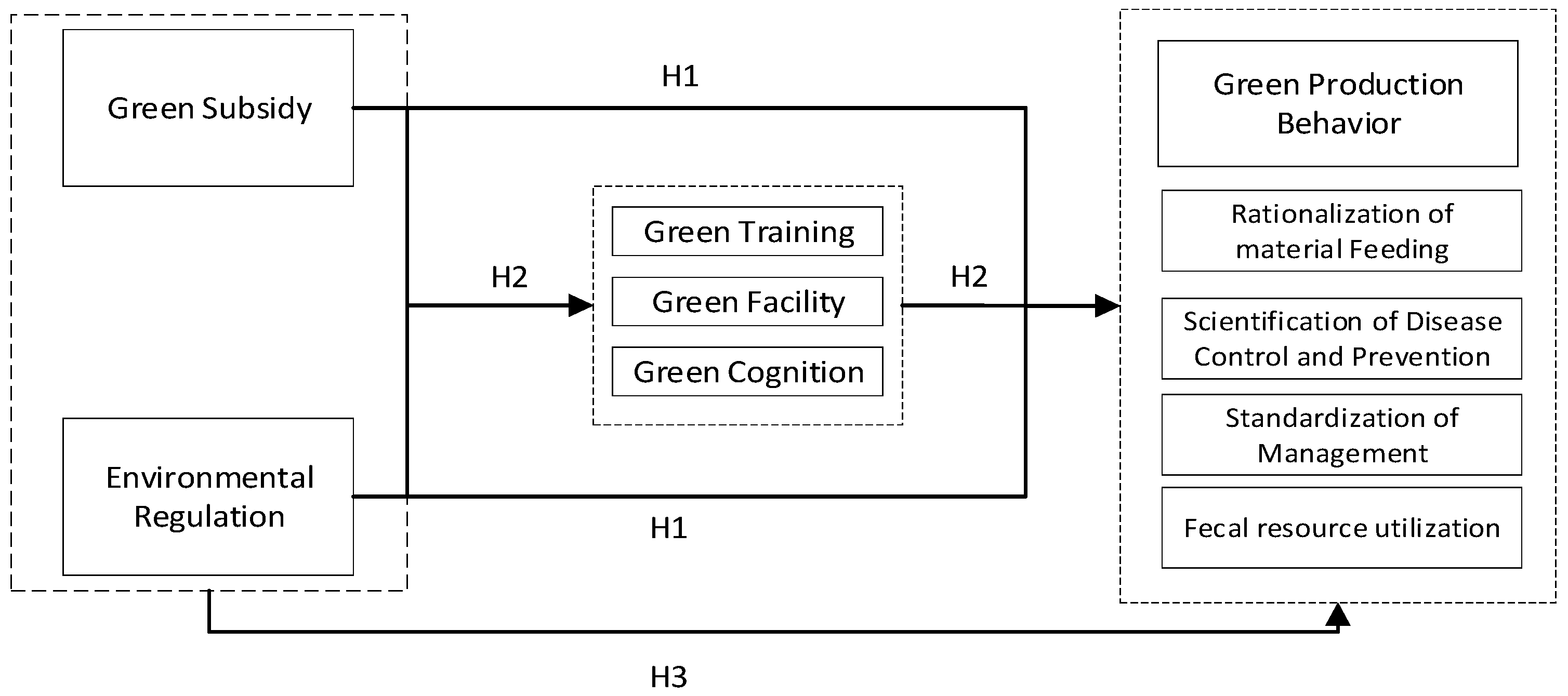
Against the backdrop of agricultural green transformation, government intervention is regarded as a crucial institutional tool for correcting the negative externalities of agricultural production and guiding farmers toward green production practices. According to institutional economics, governments can influence farmers’ production decisions by reshaping their structures through incentive-based and regulatory policy instruments [21]. As an incentive-based policy tool, green subsidies can directly reduce the initial investment costs and risk levels associated with adopting green production practices among cattle farmers through financial assistance, incentive-based subsidies, or technical support. This enhances the relative returns of green production methods, thereby strengthening farmers’ endogenous motivation to adopt green technologies and sustain green production practices [11,22]. Furthermore, environmental regulations, as constraint-based policy instruments, can increase the compliance costs of non-green production practices by establishing livestock pollution discharge standards and strengthening environmental enforcement oversight. This compels farmers to adjust their farming methods and management practices to meet regulatory requirements [23,24]. However, since green production often entails additional inputs and technical barriers, its policy effectiveness largely depends on farmers’ resource endowments and capacity to bear costs. Particularly in developing regions dominated by small-to-medium-scale cattle farmers, households commonly face financial and technological constraints and exhibit high risk aversion. Green subsidies alleviate these constraints while providing positive incentives, exerting a more direct and stable behavioral guidance effect that better motivates cattle farmers to voluntarily adopt green production practices [20,25]. The specific graphical logic can be seen in Figure 1 below. Based on the above analysis, this study proposes Hypothesis H1:
H1:
Both green subsidies and environmental regulations promote green production practices among cattle farmers, but green subsidies exert a stronger promotional effect.
2.2. Analysis of the Mechanism by Which Green Subsidies and Environmental Regulations Influence Green Production Practices Among Cattle Farmers
The theory of bounded rationality posits that individuals face constraints in decision-making processes due to factors such as information access, cognitive capacity, and behavioral capabilities, making it difficult to achieve perfectly rational choices [26]. Against this backdrop, external policy tools can reduce the complexity and uncertainty of green decision-making for cattle farmers, thereby driving their production decisions towards green adjustments. Specifically, green subsidies and environmental regulations mainly promote green production practices by encouraging cattle farmers to participate in green training, establishing green production facilities, and enhancing their green awareness. First, regarding training mechanisms, green subsidies reduce the opportunity costs for cattle farmers to acquire green production knowledge and receive technical guidance through financial support and public service provision. This enhances their willingness and effectiveness in participating in green training and absorbing extension services, thereby promoting the accumulation of human capital and improving the accessibility of technology [27,28,29]. The improvement of human capital and the enhancement of technological accessibility can translate into actual green production capacity, thereby promoting farmers’ green production. Concurrently, environmental regulations create institutional pressure through inspections, compliance requirements, and enforcement communication, prompting farmers to proactively seek technical guidance and green training support to mitigate violation risks [30]. Second, regarding facility mechanisms, green production often relies on essential physical infrastructure. Green subsidies alleviate financial constraints and lower the threshold for one-time fixed asset investments, significantly increasing the probability and intensity of farmers’ green facility construction. This provides a more stable foundation for implementing green production practices [31]. Additionally, environmental regulations can increase the anticipated costs of non-compliance through emission standards, breeding restrictions, and compliance inspections, compelling farmers to upgrade facilities for compliant production and thereby promoting green practices among cattle farmers [32,33]. Finally, regarding cognitive mechanisms, green subsidies improve farmers’ expectations regarding the costs and benefits of green production through stable economic support and clear policy signals. This enhances their trust in green technologies and policy credibility to some extent, thereby increasing their intrinsic willingness to adopt green production practices [34,35]. Environmental regulations, through emission standards, enforcement oversight, and liability constraints, enable farmers to more clearly recognize the potential economic losses and operational risks associated with polluting behaviors. This prompts them to incorporate environmental consequences into decision-making and reinforces their understanding of the necessity and compliance requirements of green production [24,36]. The specific graphical logic can be seen in Figure 1 below. In summary, this paper proposes Hypothesis H2:
H2:
Green subsidies and environmental regulations promote green production practices among cattle farmers by encouraging participation in green training, facilitating the construction of green facilities, and enhancing green awareness.
2.3. Analysis of Synergistic Effects of Green Subsidies and Environmental Regulations on Green Production Practices Among Cattle Farmers
The traditional “Porter hypothesis” posits that modest yet stringent environmental regulations can drive technological progress by compelling firms to improve both environmental and economic performance. Concurrently, green subsidies provide positive incentives for economic actors to adopt green production practices by alleviating financing constraints and reducing innovation risks. Theoretically, therefore, these two approaches should generate a synergistic “carrot-and-stick” effect [37,38]. However, this mechanism typically requires stable policy expectations, accessible technologies, and scaled organizational structures. For small-scale, capital-constrained beef cattle farmers, environmental regulations are more likely to manifest as increased compliance costs and heightened operational uncertainty, making it difficult to translate into short-term benefits. Under these circumstances, the primary function of green subsidies is not to amplify innovation incentives under regulatory pressure, but rather to offset the additional compliance costs imposed by regulations—that is, to exert a “compensatory effect” rather than an “incentive spillover effect” [39]. The specific graphical logic can be seen in Figure 1 below. In summary, this paper proposes Hypothesis H3:
H3:
The Green subsidies and environmental regulations do not exhibit significant synergistic effects.
Figure 1.
Theoretical Framework And Hypotheses.
3. Methods
3.1. Study Area
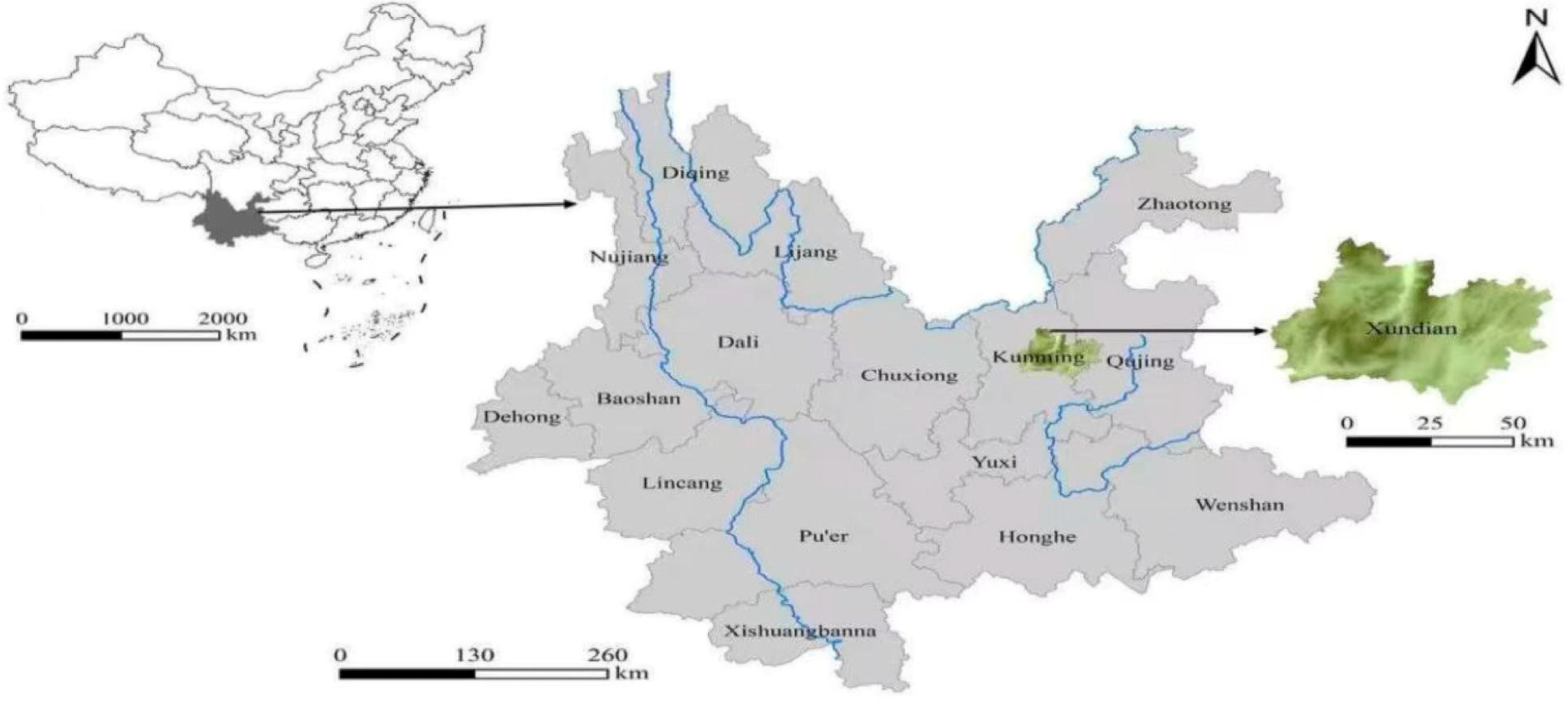
The research area is situated in Xundian Hui and Yi Autonomous County, northeast of Kunming City, Yunnan Province, China. It is situated in the transitional zone from the central Yunnan Plateau to the Wumeng Mountains, with the terrain mainly consisting of plateau mountains and hills. The distribution of villages is relatively scattered, and agricultural production presents typical characteristics of strong resource constraints and diverse management entities. The specific location is shown in Figure 2 below. Animal husbandry is one of the pillar industries of the agricultural economy in Xundian County. According to the Statistical Yearbook of Xundian County 2024, the output value of animal husbandry in the county was 2238.82 million yuan in 2024, accounting for 34.5% of the total agricultural output value and occupying an important position in the county’s agricultural structure. Among them, the beef cattle industry is the core part of animal husbandry. The inventory and output of beef cattle in this county rank among the top in Yunnan Province, and a relatively complete industrial chain covering breeding, processing, and sales has been formed. As an important beef cattle production base in southwestern China, Xundian County has a typical industrial organization form, based on scattered breeding of small and medium-sized farmers, while the main body of large-scale breeding continues to develop, presenting a production model of “coexistence of scattered breeding of small farmers and large-scale breeding”. Its farmer production and governance response has strong representativeness.
Figure 2.
Study Area.
3.2. Data Source
The research data comes from a micro household survey of beef cattle farming households conducted by the research team in Xundian Hui and Yi Autonomous County, Yunnan Province, in September 2023. The beef cattle breeding industry in Xundian County is relatively concentrated, covering a wide range of towns and villages, with certain regional typicality and representativeness, making it easy to observe the green production behavior of cattle farmers. The survey adopts a combination of stratified sampling and random sampling methods. Firstly, randomly select 1–3 sample villages within the county based on the scale and concentration of breeding. Subsequently, 1–3 beef cattle breeding clusters were selected in each sample village; Finally, 5–10 cattle farmers will be selected through simple random sampling within each gathering area. To ensure data quality, the survey adopts a one-on-one interview format, where the investigator first explains concepts such as green production to the respondents, and then fills out the questionnaire after they fully understand. The survey mainly includes three parts: basic information of cattle farmers and families, breeding and operation situation, and green production behavior and cognition. A total of 290 questionnaires were distributed for the survey, and 286 were actually collected. After excluding invalid questionnaires, 273 valid questionnaires were obtained, with an effective response rate of 95.45%. The sample basically covers the main beef cattle breeding areas in Xundian County, and the sample distribution is consistent with the local breeding structure, with strong representativeness.
3.3. Variable Settings
3.3.1. Explained Variable
Referring to existing research on green production behavior of Breeding farmers [40,41,42], this paper posits that green production behavior among cattle farmers refers to a set of environmentally friendly, resource-efficient, and health-oriented production activities undertaken during beef cattle farming. These practices aim to reduce environmental pollution, enhance resource utilization efficiency, ensure livestock product quality and safety, and promote sustainable development in the livestock industry. These practices span the entire production cycle, encompassing input management, disease prevention, environmental control, and waste disposal. Their core objective is to achieve a harmonious balance of economic, social, and ecological benefits, specifically manifesting in four dimensions: rational feeding practices, scientific disease control, standardized management, and manure resource utilization. Based on the types of green production technologies in Xundian County and the characteristics of local beef cattle farming, this paper further subdivides the aforementioned four dimensions into 12 behavioral characteristics. These include whether to adopt feed comprehensive utilization technology, whether to understand the hazards of prohibited drugs and additives, and whether to breed improved beef cattle breeds. Specific definitions are provided in Table 1 below. Given the systemic and continuous nature of green production practices, the presence of a single behavioral characteristic may not fully reflect whether a farmer genuinely implements the corresponding green practice within a dimension. To avoid misclassifying incidental or fragmented actions as green production practices, this study employs stricter criteria at the secondary indicator level: a farmer is deemed to have implemented a green production practice and assigned a value of 1 only when two or more practices exist within a given dimension; otherwise, the value is 0. Based on this, the values of the four variables are summed to obtain the composite score for green production practices among cattle-raising farmers: 0 (no green practices), 1 (one practice), 2 (two practices), 3 (three practices), and 4 (four practices). The proportions of cattle farmers not implementing, implementing one, two, three, and four green production practices were 24.5%, 33.7%, 20.9%, 11.7%, and 9.2%, respectively. Overall, the implementation status of green production practices among local cattle farmers is not optimistic, with a relatively low adoption intensity.
Table 1.
Construction of green production behavior indicators.
3.3.2. Core Explanatory Variable
This paper focuses on the actual impact of policy instruments at the micro level. Given that farmers’ production decisions are more influenced by their subjective perceptions of policy incentives and constraints than by the policies themselves, this study adopts a farmer-perception perspective. It uses farmers’ subjective evaluations of green subsidies and environmental regulation intensity to characterize the actual micro-level effects of green subsidies and environmental regulations. Specifically, both green subsidies and environmental regulations are quantified using a five-point Likert scale. For green subsidies, the study employs the questionnaire item: “How strong is the financial support provided by local governments to cattle farmers who adopt green production methods?” Response options range from “None at all” to “Full coverage of subsidies,” assigned scores from 1 to 5, respectively. Higher scores indicate stronger perceived financial support among cattle farmers. Environmental regulations are represented by the questionnaire item: “To your knowledge, how stringent are local government penalties for the following practices? These include: misuse of feed additives, non-compliance with withdrawal periods, failure to maintain livestock records, substandard manure treatment, inadequate disposal of diseased/dead cattle, and illegal farming in prohibited zones. Responses ranged from “very weak” to “very strong,” and were assigned values from 1 to 5. To comprehensively reflect the overall intensity of environmental regulations, this study calculates the average score across the six dimensions. A higher score indicates stronger perceived environmental regulation intensity among respondents.
3.3.3. Control Variable
Drawing on existing research [41,42,43], this study selected corresponding control variables at three levels: individual, household, and farming characteristics. The specific definitions and descriptive statistics for each variable are presented in Table 2.
Table 2.
Descriptive Statistics.
3.4. Model Specification
Given that the explained variable, the green production behavior of cattle farmers, is a discrete variable ranging from 0 to 4, which represents the number of green production behaviors implemented by them. Therefore, this article uses the Ordered Probit model for analysis, and the specific model is as follows:
(1) In this equation, represents the latent variable for green production behaviors among cattle-raising households, while denotes the green subsidies and environmental regulations for the i-th household. serves as the control variable, and indicates the random disturbance term. (2) In this equation, – respectively denote the unknown cut-off points for the implementation levels of green production behaviors among cattle-raising households, with .
Theoretical analysis and research hypotheses indicate that green subsidies and environmental regulations primarily promote green production practices among cattle farmers by encouraging their participation in green training, establishing green facilities, and enhancing green awareness. To test this mechanism, this paper follows the approach of Jiang (2022) [44] and employs a two-step method to construct the following model for verification:
Given that “green training” and “green facilities” are binary decision variables, this article uses the Probit model to analyze them. For the “green cognition” variable measured using a 0–5-point Likert scale, an ordered Probit model is used for estimation. Where denotes whether farmer participated in green training, established green facilities, and their level of green awareness, respectively, while the remaining variables are consistent with Equation (1).
Furthermore, to examine whether green subsidies and environmental regulations exhibit synergistic effects, this paper constructs the following model for testing:
where and denote the green subsidies and environmental regulations for farmer , respectively, represents the interaction term, and the remaining variables are consistent with Equation (1).
4. Results
Prior to conducting the regression analysis, this study first performed multicollinearity tests on the variables. The results indicated that the maximum variance inflation factor (VIF) was 1.41, which is significantly below the critical threshold of 10. This suggests that no multicollinearity issues exist among the variables.
4.1. Benchmark Regression Results
Table 3 reports the effects of green subsidies and environmental regulations on the green production practices of cattle farmers. It can be observed that, regardless of whether control variables are included, both green subsidies and environmental regulations effectively promote the adoption of green production practices among cattle farmers. A further comparison of the regression coefficients reveals that the coefficient for green subsidies is higher than that for environmental regulations, indicating a stronger incentive effect in promoting green production practices among cattle farmers. Thus, Hypothesis H1 is validated.
Table 3.
Baseline Regression Results.
4.2. Endogenous Analysis and Robustness Testing
Endogenous Analysis
Considering that farmers with better green production practices often gain easier access to green subsidies, while those facing penalty risks may proactively adjust their production behaviors, this creates a bidirectional causality issue. To avoid outcome biases stemming from endogeneity problems, this study employs both instrumental variables (IV) and propensity score matching (PSM) for correction.
First, the study selects “whether the household has a Party member” as an instrumental variable to identify the endogeneity of green subsidies and environmental regulations, respectively. Theoretically, households with Party members are more sensitive to policy trends, enabling them to understand green subsidy details and penalty regulations more promptly and accurately. Thus, this variable exhibits significant correlation with the green subsidies and environmental regulations faced by farmers, satisfying the condition that the instrumental variable is related to the endogenous variable. Simultaneously, Party member households do not directly determine farmers’ green production decisions, satisfying the exclusion constraint requirement. Thus, this instrumental variable theoretically fulfills both relevance and exogeneity requirements. Building upon Roodman (2011) [45], this study employs the Conditional Mixed Process (CMP) estimator to address potential endogeneity issues in the ordered Probit model. Prior to CMP estimation, this study first tests the instrumental variable’s correlation using linear two-stage least squares (2SLS). The Cragg–Donald Wald F-statistics for the first-stage regression are 26.748 and 17.024, respectively, both significantly exceeding the conventional threshold of 10, indicating no apparent weak instrumental issues. CMP estimation results in Table 4 show that the estimated atanhrho values for green subsidies and environmental regulations are −0.786 and −1.071, respectively, both significant at the 1% level. This indicates a significant correlation between the error terms of the two equations in the simultaneous model, confirming the necessity of the CMP approach. The instrumental variable estimation results further confirm that green subsidies and environmental regulations exert a significant positive influence on the green production behavior of cattle-raising households. Moreover, the coefficient for green subsidies remains larger than that for environmental regulations, further substantiating the validity of H1.
Table 4.
Endogenous Analysis 1.
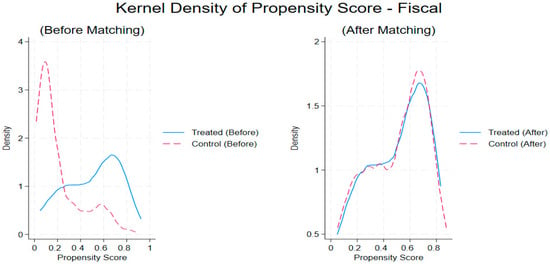
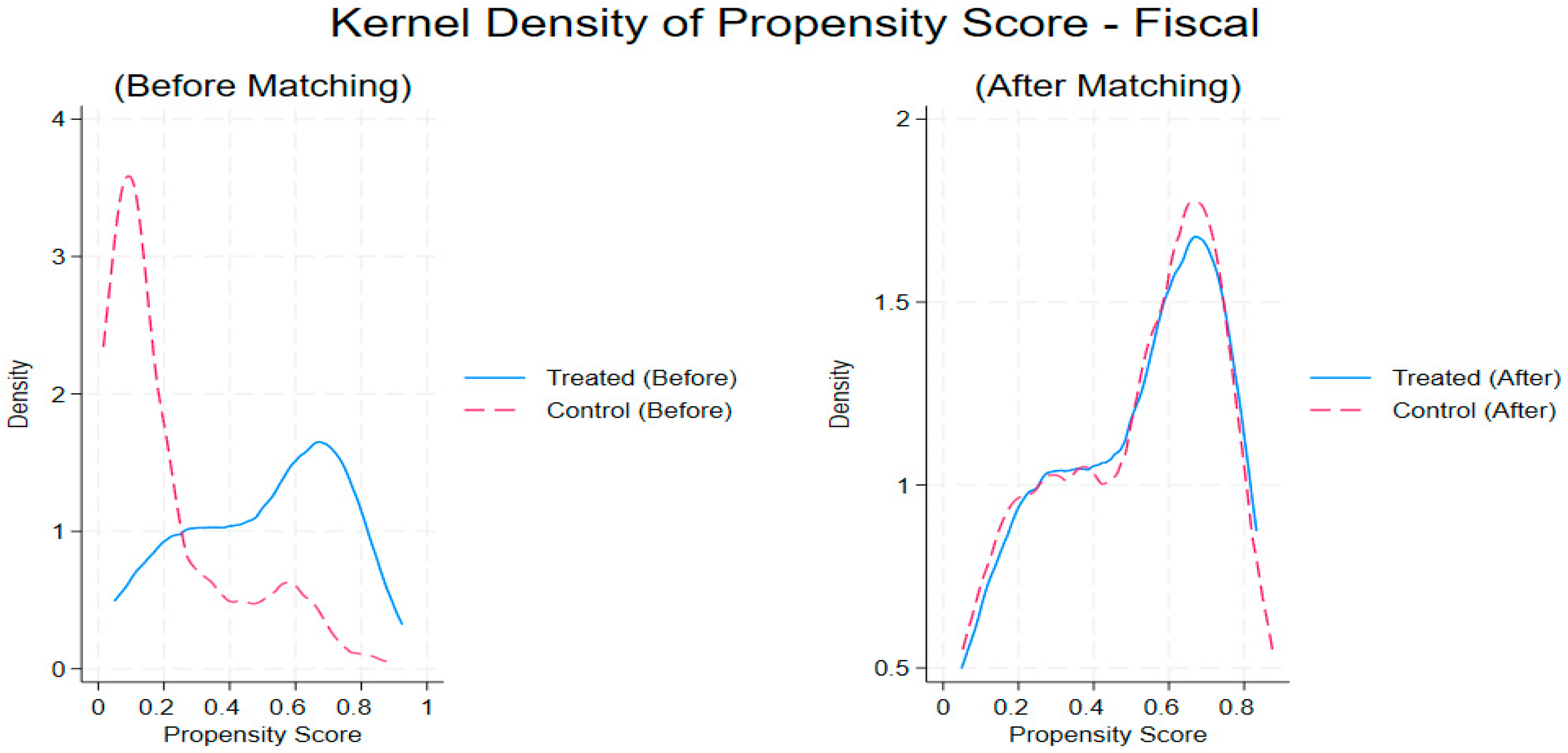
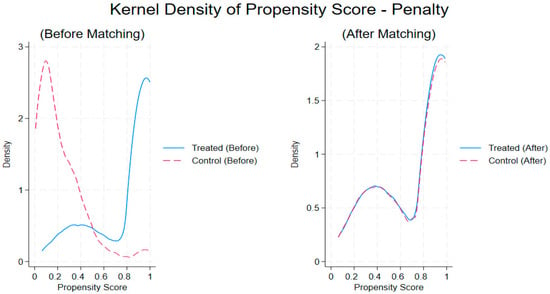
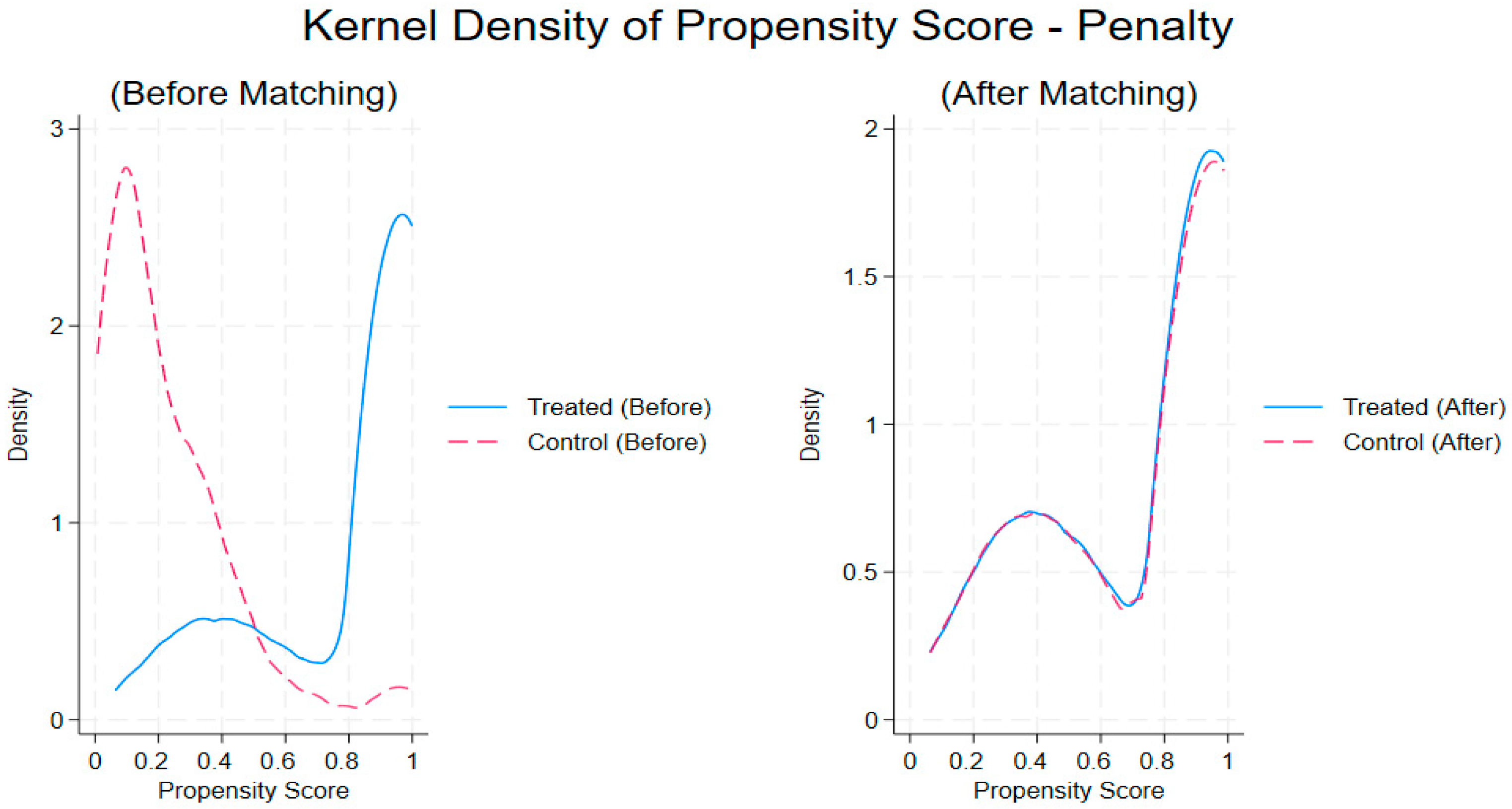
Building upon existing research [46], this study further employs the propensity score matching (PSM) method. Households with green subsidies and environmental regulations above the mean are assigned to the experimental group (assigned a value of 1), while those below the mean are assigned to the control group (assigned a value of 0). Using all control variables from the baseline regression as covariates, we conducted tests with four matching methods: nearest-neighbor one-to-four matching, caliper-based one-to-four nearest-neighbor matching, kernel matching, and radius matching. Table 5 reports estimation results for each matching method. Both green subsidies and environmental regulations yield significantly positive average treatment effects (ATT) in the treatment group, with green subsidies showing a larger ATT value. This indicates that both incentives effectively promote green production practices among cattle farmers, though green subsidies exert a stronger effect. Additionally, this study conducted common support domain tests and balance tests on the results of the 1-to-4 caliper matching for green subsidies and environmental regulations, respectively. Figure 3 and Figure 4 present the kernel density plots for green subsidies and environmental regulations, respectively. The results indicate that both green subsidies and environmental regulations exhibit substantial overlap in the propensity score ranges between the matched treatment group and the control group. Most observed values fall within a common range, suggesting that the propensity score matching (PSM) estimation results are reliable. In summary, the findings for Hypothesis H1 are robust.
Table 5.
Endogenous Analysis 2.
Figure 3.
Common Support Domain Inspection (Green Subsidies).
Figure 4.
Common Support Domain Inspection (Environmental Regulation).
4.3. Robustness Test
To further test the robustness of the benchmark regression results, this study conducted robustness tests by removing specific samples, replacing the regression model, and replacing the dependent variable. Firstly, following the approach of Gong et al. (2016) [47], this article re-regresses after excluding samples aged 60 and above. The results show that the coefficient between green subsidies and environmental regulations is significantly positive. Secondly, this article uses the Ologit (Order logit) model to examine the impact of green subsidies and environmental regulations on the green production behavior of cattle farmers. The results show that the coefficient of the core explanatory variable is still significantly positive, and the coefficient of green subsidies is greater than that of environmental regulations. Finally, this article uses two methods to reconstruct the variables of green production behavior. Firstly, this article summarizes the 12 behavioral characteristics of green production behavior and constructs a counting variable () with values ranging from 0 to 12; Secondly, relax the criteria for determining the green production behavior of farmers in various dimensions to the existence of at least one specific behavioral characteristic, and based on this, construct a substitute variable for green production behavior (). The estimated results are shown in columns (5)–(8) of Table 6, indicating that green subsidies and environmental regulations can still promote the green production behavior of beef cattle farmers, and the driving effect of green subsidies is stronger. In summary, hypothesis H1 is robust.
Table 6.
Robustness test.
4.4. Heterogeneity Analysis
4.4.1. Based on Different Dimensions of Green Production Behavior
Considering that green production behavior covers dimensions such as manure resource utilization, rational feeding, and standardized management, and the impact of green subsidies and environmental regulations on different dimensions of green production behavior may differ significantly, this article further analyzes the impact of green subsidies and environmental regulations on different dimensions of green production behavior. The estimated results are shown in columns (1)–(8) of Table 7, indicating that both green subsidies and environmental regulations can effectively promote various green production behaviors among cattle farmers; However, in terms of the estimated coefficient size, whether it is green subsidies or environmental regulations, the promotion effect on the utilization of manure resources is the strongest, followed by standardized management and scientific disease control behaviors, while the marginal impact on the rationalization of feeding is the smallest. The reason may be that, firstly, manure treatment has stronger environmental externalities, and emission results are easier to observe, making it easier to form regulatory constraints and guide behavioral adjustments [48]. In addition, this process often relies on “capital and acceptable” inputs such as manure storage tanks, separation, composting fermentation, etc. Green subsidies usually have a more direct promoting effect on the adoption of such technologies [49]. Secondly, the standardization of management and the scientificization of disease control are more inclined towards process-oriented and continuous management, and their improvement requires knowledge updating and long-term execution, which belongs to a typical “information and capability constraint” situation. Therefore, although policy tools can promote marginal changes, they are relatively limited [50,51,52]. Thirdly, the rationalization of feeding is often consistent with the goal of reducing costs and increasing efficiency for farmers, and may have become more popular in the sample areas with relatively high overall levels. Therefore, the further improvement space is relatively limited. Therefore, the marginal promotion of green subsidies and environmental regulations on this dimension is relatively small [53].
Table 7.
Heterogeneity Analysis 1.
4.4.2. Based on Whether or Not to Join Cooperative
Cooperatives not only serve as an important link between farmers and the market, but may also play a special role in information transmission, resource integration, and risk sharing during policy implementation. Environmental regulations and green subsidies may have differentiated effects on the green production behavior of cattle farmers who join cooperatives and those who do not. Therefore, this article divides the sample into two groups: those who have joined the cooperative and those who have not joined the cooperative for group regression. As shown in columns (1)–(4) of Table 8, regardless of whether cattle farmers join cooperatives or not, green subsidies and environmental regulations can effectively promote their implementation of green production behavior; However, compared to cattle farmers who have not joined cooperatives, the above two types of policies have a stronger promoting effect on green production behavior among cattle farmers who have joined cooperatives.
4.4.3. Based on Risk Preference
Farmers with different risk preferences have varying sensitivities to uncertain returns, cash flow fluctuations, and policy implementation risks. Therefore, there may be significant differences in the marginal effects of policy tools. Based on this, this article divides the sample into a risk avoidance group and a risk preference group to examine the heterogeneity of the impact of green subsidies and environmental regulations on the green production behavior of cattle farmers. The regression results are shown in columns (5)–(8). It can be seen that both green subsidies and environmental regulations have a stronger promoting effect on the green production behavior of cattle farmers in the risk preference group. The main reason is that compared to risk-averse farmers, risk-preference cattle farmers are often more willing to try new practices and adjust production methods, and may respond faster and stronger to external policies [54]. Therefore, when facing environmental regulations and green subsidies, the possibility of implementing green production behaviors is also stronger.
Table 8.
Heterogeneity Analysis 2.
4.4.4. Based on Breeding Scale
Considering the significant differences in financial constraints, technical and management capabilities, and regulatory exposure among cattle farmers of different breeding scales, the marginal impact of green subsidies and environmental regulations on their green production behavior may exhibit significant heterogeneity. Therefore, this article uses the number of breeding as the basis for dividing the breeding scale, combined with the standards for large-scale breeding of beef cattle in the “Notice on Strengthening the Information Management of Livestock and Poultry Farm Filing and Fecal Resource Utilization Institutions” issued by the Chinese Ministry of Agriculture in 2017. The samples are divided into three groups: small-scale (<10 heads), medium-scale (10–100 heads), and large-scale (>100 heads), and grouped regression is conducted accordingly. The estimated results are shown in columns (1) to (6) of Table 9. The results indicate that green subsidies significantly promote the green production behavior of small-scale and medium-sized cattle farmers, but the driving effect on large-scale farmers is not significant. This is mainly due to the strong financial and credit constraints faced by small and medium-sized entities. Subsidies can directly alleviate their financial pressure, reduce green investment costs, and thus enhance their willingness to adopt green technologies and facilities [55]. However, large-scale farmers themselves have relatively abundant funds, and the marginal adjustment cost of production and operation is high. The existing subsidy level has limited incentive strength for them [56]. In addition, environmental regulations have a promoting effect on green production behavior among cattle farmers of different scales, and this effect gradually increases with the expansion of breeding scale. The reason is that the larger the scale of aquaculture, the easier it is to become a key target of environmental regulation, with higher emission intensity and observability. The probability of law enforcement inspections and compliance pressure is relatively stronger, thus promoting the adjustment of green behavior by increasing the expected cost of violations [57].
Table 9.
Heterogeneity Analysis 3.
4.5. Mechanism Analysis
The estimated results are shown in columns (1)–(6) of Table 10 below. Specifically, columns (1) and (2) indicate that both green subsidies and environmental regulations exert a significant positive influence on farmers’ participation in green technology training, suggesting that both can promote the implementation of green production practices by encouraging training participation. Columns (3) to (4) demonstrate that green subsidies and environmental regulations also assist beef cattle farmers in establishing green facilities, thereby promoting their adoption of green production practices. Furthermore, columns (5) to (6) reveal that both significantly enhance farmers’ green awareness, and this heightened green cognition similarly exerts a positive effect on their green production behaviors. In summary, hypothesis H2 has been validated.
Table 10.
Mechanism Analysis.
5. Further Analysis
To further identify whether there is a synergistic or substitutive relationship between green subsidies and environmental regulations in promoting green production behavior among cattle farmers, this paper tests two paths based on the benchmark model. One is to directly include subsidies and penalties and their interaction terms to examine the marginal synergistic effect. The other is to construct a “high or low” binary grouping and form a four-quadrant combination using the mean of green subsidies and penalties as the threshold, in order to compare the overall differences of different policy combinations relative to the “low subsidy low penalty” benchmark group in discrete scenarios. Column (1) in Table 11 shows that the green subsidy coefficient is 0.589 and significant at the 5% level, and the environmental regulation coefficient is 0.326 and also significant at the 5% level, indicating that when another type of policy tool does not exist, both subsidies and penalties can significantly promote green production behavior among cattle farmers; However, the coefficient of the interaction term between the two is not significant, indicating that no significant synergistic amplification effect was observed in the continuous variable framework, and the two are closer to a relationship of “each playing a role, overlapping but not mutually reinforcing”. The results of the four quadrants in column (2) also echo this, with a coefficient of 2.113 for the high subsidy and severe punishment group based on low subsidies and low penalties, and significant. The coefficients for the high subsidy and low punishment group and the low subsidy and severe punishment group are 2.089 and 0.867, respectively, which are equally significant. This indicates that whether increasing green subsidies or environmental regulations alone, they can significantly promote green production behavior among cattle farmers, but the increase in green subsidies is significantly greater than that of environmental regulations. It is worth noting that even with lower penalties, the effect of high subsidies and high penalties can be achieved in high subsidy situations, which further confirms the dominant role of green subsidies. The possible reason for this is that, firstly, in beef cattle breeding areas dominated by small and medium-sized, farmers generally face financial and technological constraints, weak risk resistance ability, and relatively limited education level, resulting in insufficient motivation to adopt green production models [40]; In this case, green subsidies are often directly used to offset compliance costs arising from environmental regulations, rather than actively promoting production transformation. Secondly, from a macro implementation perspective, the insufficient coordination of policies between departments and levels further constrains the synergistic effect. At the institutional level, green subsidies in China are mostly led by the agricultural and rural sectors, with a focus on industrial incentives; Environmental regulation is the responsibility of the ecological environment department, with a focus on constraint and control. There is a lack of efficient information sharing and policy linkage mechanisms between the two departments, resulting in subsidy distribution often not being deeply linked to environmental compliance, and regulatory enforcement rarely relies on subsidies for positive guidance [58]. Even though there are some connections in top-level design or joint law enforcement, there is still a common phenomenon in the specific implementation process at the grassroots level where policies are “each performing their own duties”, execution links are disconnected, and incentives and constraints are not always integrated [59]. The lack of a collaborative mechanism from departments to grassroots levels has resulted in a “parallel rather than integrated” state of the two types of policies in practice, making it impossible to form a policy synergy effect of “carrot” and “stick”. In summary, it can be concluded that hypothesis H3 has been validated.
Table 11.
Further Analysis.
6. Discussion
Against the backdrop of the continuous promotion of the “dual carbon” target, how to effectively guide beef cattle farmers to adopt green production behavior through a reasonable policy combination is a key issue in promoting the sustainable transformation of animal husbandry. Based on this, this article simultaneously examines the impact of green subsidies and environmental regulations on the green production behavior of beef cattle farmers, and systematically analyzes their internal mechanisms, heterogeneity characteristics, and synergistic effects. The results indicate that, firstly, both green subsidies and environmental regulations can effectively promote green production behavior among beef cattle farmers. This finding is consistent with Chen and Gao (2025) [60], who emphasize the role of green subsidies in fostering agricultural green production, as well as with Li et al. (2025) [61], who provide evidence that environmental regulation can effectively promote farmers’ pro-environmental behavior. Further analysis reveals that there is no significant synergistic effect between the two, with a stronger promoting effect of green subsidies. It highlights a critical issue in real-world policy design: policy synergy does not arise automatically from the coexistence of multiple instruments. Rather, it depends on factors such as the alignment of policy objectives, the coordination of implementation timing, the precision of target group identification, and the degree of institutional linkage across policy tools [62]. This finding contributes to the policy-mix literature by underscoring the conditional nature of interaction effects in agricultural environmental governance. The mechanism analysis further reveals that green subsidies and environmental regulations promote green production behavior primarily by encouraging farmers’ participation in green training programs, facilitating the construction of green production facilities, and enhancing environmental awareness. Heterogeneity analysis shows that green subsidies and environmental regulations have the strongest promoting effect on the utilization of manure resources, followed by standardized management, scientific disease prevention and control, and rational feeding, reflecting the differences in investment intensity and controllability among different green behaviors. In addition, both types of policy tools have a stronger promoting effect on risk preference farmers, indicating that policy effectiveness not only depends on tool design, but is also closely related to the psychological characteristics and decision-making patterns of farmers. In terms of breeding scale, green subsidies mainly target small and medium-sized farmers, while environmental regulations have a significant promoting effect on different scale cattle farmers, and increase with the expansion of scale, indicating that subsidies are more effective in supporting the initial investment of green transformation for small and medium-sized farmers, whereas environmental regulations play a more prominent role in promoting large-scale breeding farmers to achieve standardized and institutionalized production. The above findings not only have guiding significance for other regions in China, but also provide useful references for many developing countries. Taking China as an example, the current beef cattle farming is still dominated by small and medium-sized [4], which is also common in Asia, Africa, and Latin America, where small and medium-sized farmers often face challenges such as limited funding, insufficient investment in green technology, and weak environmental governance capabilities. Based on this, the findings of this study can provide valuable policy insights for promoting the green transformation of the cattle breeding industry in relevant regions. Specifically, a gradual promotion path should be established with green subsidies as the mainstay and environmental regulations as the auxiliary. On the one hand, subsidy resources need to be clearly tilted towards small and medium-sized farmers to directly alleviate the financial constraints they face in the process of green transformation; On the other hand, the design and implementation of environmental regulations should fully consider the heterogeneity and actual carrying capacity of farmers, adopt differentiated and phased guidance methods, and avoid the impact on production caused by a one size fits all approach.
Despite these contributions, this study has several limitations that warrant further discussion. First, due to the use of cross-sectional data, it is difficult to capture the long-term dynamic effects of green subsidies and environmental regulations on farmers’ green production behavior. While policy instruments may induce short-term behavioral responses, whether such behaviors can be sustained and internalized into stable production practices remains an open question. Future research could employ longitudinal surveys or quasi-natural experiments associated with policy adjustments or withdrawals to systematically examine the persistence and evolution of green behavior, as well as the role of complementary mechanisms such as cooperative constraints, green certification, and price premiums in facilitating a transition from policy-driven to market-oriented green production. Second, the sample in this study is limited to Yunnan Province. Although this region exhibits a certain degree of representativeness, it cannot fully capture regional differences in agricultural structures, ecological conditions, and policy environments across China. Expanding the geographic scope or conducting cross-regional comparative analyses would help improve the external validity and robustness of future findings. Third, the empirical research in this article may have certain shortcomings. Although “whether there are Party members in the household” is used as an instrumental variable and meets both theoretical and statistical requirements, micro-survey data may not fully capture household-level heterogeneity, and this variable could influence green production behavior through alternative channels. Future studies could strengthen causal identification by identifying more exogenous instrumental variables or applying quasi-experimental methods where data permit. Finally, based on farmers’ subjective perceptions of policy instruments, this study finds no significant synergistic effects between green subsidies and environmental regulations in the current stage of China’s beef cattle green transformation. However, actual policy effectiveness is also shaped by objective factors such as enforcement intensity, policy consistency, and local governance capacity. Future research could therefore examine policy interaction effects from the perspective of implementation conditions, exploring whether and under what governance contexts policy instruments can generate synergies.
7. Summary and Recommendations
This study employs an Order Probit model to empirically analyze the impact of green subsidies and environmental regulations on the green production practices of cattle farmers in Xundian County, China, based on micro-level survey data. The findings reveal: (1) Both green subsidies and environmental regulations effectively promote green production practices among cattle farmers, with green subsidies demonstrating a stronger promotional effect. This conclusion remains valid after a series of robustness tests. (2) Heterogeneity analysis reveals: First, among specific green production behaviors, green subsidies and environmental regulations most strongly promote Fecal resource utilization behavior, followed by Standardized management behavior, Scientific behavior in epidemic control, and Rationalization of feeding behavior. Second, regarding organizational participation, policy instruments exert a stronger promotional effect on farmers who have joined cooperatives than on those who have not. From a risk preference perspective, green subsidies and environmental regulations exerted a stronger promotional effect on risk-preferring farmers’ green production behaviors. Finally, regarding farm scale, green subsidies significantly promoted green production behaviors among small-to-medium-scale cattle farmers but had no effect on large-scale farmers. Environmental regulations promoted green production behaviors across all cattle farm scales, with this effect gradually increasing as farm scale expanded. (3) Analysis of the mechanism reveals that green subsidies and penalties primarily promote green production practices by encouraging farmers to participate in green training, build green facilities, and enhance their green awareness. (4) Further analysis reveals that while both perceived green subsidies and penalties effectively promote green production practices among cattle farmers, no synergistic effect exists between them. Quadrant analysis results further confirm the absence of synergies between green subsidies and environmental regulations. Moreover, green subsidies play a dominant role across different policy combinations.
Based on these findings, this paper offers the following implications regarding the “carrot or stick” policy choices: (1) Optimize the design of green subsidy systems to enhance incentive intensity. Findings indicate that green subsidies exert a stronger effect than environmental regulations. Therefore, policy support for green subsidies should be further strengthened by linking them to specific production behaviors, improving subsidy precision and incentive intensity, and fully leveraging the positive motivational role of “carrot-based” policy tools. (2) Improve the implementation methods of environmental regulations to enhance guidance and inclusiveness. Although environmental regulations effectively promote green production practices among cattle farmers, their impact varies across different farm sizes and types. Thus, reliance on punitive measures alone should be avoided. Instead, adopt a “regulation + service” approach through enforcement communication, technical guidance, and information support. This helps farmers accurately understand regulatory requirements and improve compliance capabilities, thereby reducing burdens while enhancing the guidance function of regulations. (3) Coordinate green subsidies with environmental regulations to avoid simple policy tool stacking. Further analysis reveals no significant synergistic effects between green subsidies and environmental regulations, with green subsidies playing a dominant role across different policy combinations. Thus, policy design should avoid indiscriminate tool stacking. Instead, green subsidies should serve as the core, with environmental regulations as foundational constraints. Clearly define the functional boundaries and priorities of each tool to establish an overall policy system centered on incentives, with constraints as a supplement. (4) Implement differentiated policy combinations based on farm size and characteristics. Research indicates that green subsidies exert stronger incentives on small-to-medium-sized farms, while environmental regulations progressively enhance their constraining and guiding effects as farm scale increases. Thus, for small-to-medium farms, green subsidies should primarily alleviate financial constraints. For large-scale operations, environmental regulations should strengthen their guiding and standardizing roles alongside supporting measures to maximize policy effectiveness. (5) Enhance policy effectiveness through cooperative participation and capacity building. Research indicates that farmers participating in cooperatives respond more strongly to green subsidies and environmental regulations. Training, facility construction, and raising green awareness serve as crucial transmission mechanisms for policy implementation. Therefore, it is necessary to integrate policy tools with platforms like cooperatives. By strengthening technical training and capacity building, the sustainability of farmers’ green production practices can be further enhanced.
Author Contributions
Data curation, S.L. and S.Q.; methodology, J.M.; writing—original draft preparation, S.L.; writing—review and editing, S.L. and S.Q.; supervision, S.L. and S.Q. All authors have read and agreed to the published version of the manuscript.
Funding
This research was funded by the Western Project of the National Social Science Fund of China (Grant No. 25XGL043).
Institutional Review Board Statement
The study was conducted in accordance with the Declaration of Helsinki, and the protocol was approved by the Institutional Review Board of the College of Economics, Sichuan Agricultural University (25XGL043) on 8 July 2023.
Informed Consent Statement
Informed consent for participation was obtained from all subjects involved in the study.
Data Availability Statement
The datasets presented in this article are not uploaded as attachments because the data are part of an ongoing study. But they are available from the corresponding author on reasonable request.
Acknowledgments
Thank you to Yi Wei and Yinong Chen for their support of this study, and sincerely thank the anonymous reviewers for their valuable suggestions, as well as the editors for their meticulous and responsible handling of the manuscript. Their help played an important role in improving the paper.
Conflicts of Interest
The authors declare no conflicts of interest.
References
- Tian, Y.; Xia, R.; Li, B. Re-evaluation of China’s animal husbandry carbon emission: Current characteristics, dynamic evolution, and spatial correlation. China. Environ. Sci. 2025, 45, 1686–1698. [Google Scholar] [CrossRef]
- Gerber, P.J.; Steinfeld, H.; Henderson, B.; Mottet, A.; Opio, C.; Dijkman, J.; Falcucci, A.; Tempio, G. Tackling Climate Change Through Livestock: A Global Assessment of Emissions and Mitigation Opportunities; Food and Agriculture Organization of the United Nations: Rome, Italy, 2013. [Google Scholar]
- Poore, J.; Nemecek, T. Reducing food’s environmental impacts through producers and consumers. Science 2018, 360, 987–992. [Google Scholar] [CrossRef] [Scilit]
- Li, X.; Wang, M. Study on the livelihood capital level, structural characteristics, and coupling coordination degree of Chinese beef cattle farmers. Agriculture 2023, 13, 1371. [Google Scholar] [CrossRef] [Scilit]
- Li, X.; Ma, X.; Wang, M.; Zhang, H. International evaluation of China’s beef cattle industry development level and lagging points. Agriculture 2022, 12, 1597. [Google Scholar] [CrossRef] [Scilit]
- Han, C.; Lyu, J.; Zhong, D. The impact of financial support and innovation awareness on farmers’ adoption of green production technology. Financ. Res. Lett. 2025, 79, 107259. [Google Scholar] [CrossRef] [Scilit]
- Liu, M.; Liu, H. Farmers’ adoption of agriculture green production technologies: Perceived value or policy-driven? Heliyon 2024, 10, e23925. [Google Scholar] [CrossRef] [Scilit]
- Garnett, T.; Godfray, C. Sustainable Intensification in Agriculture. Navigating a Course Through Competing Food System Priorities; Food Climate Research Network and the Oxford Martin Programme on the Future of Food; University of Oxford: Oxford, UK, 2012. [Google Scholar]
- Samuelson, P.A. The pure theory of public expenditure. Rev. Econ. Stat. 1954, 36, 387–389. [Google Scholar] [CrossRef] [Scilit]
- Pigou, A. The Economics of Welfare, 1st ed.; Routledge: London, UK, 2002. [Google Scholar] [CrossRef] [Scilit]
- Yu, W.Z.; Luo, X.F.; Tang, L.; Huang, Y.Z. Farmers’ Adoption of Green Production Technology: Policy Incentive or Value Identification? J. Ecol. Rural Environ. 2020, 36, 318–324. [Google Scholar] [CrossRef]
- Duflo, E.; Kremer, M.; Robinson, J. Nudging farmers to use fertilizer: Theory and experimental evidence from Kenya. Am. Econ. Rev. 2011, 101, 2350–2390. [Google Scholar] [CrossRef] [Scilit]
- Kassie, M.; Teklewold, H.; Jaleta, M.; Marenya, P.; Erenstein, O. Understanding the adoption of a portfolio of sustainable intensification practices in eastern and southern Africa. Land Use Policy 2015, 42, 400–411. [Google Scholar] [CrossRef] [Scilit]
- Zhang, Q.; Ye, F.; Razzaq, A.; Chen, C.; Li, Z. The synergistic effects of green subsidy policies on grain and land productivity in China’s farming sector. Cogent Food Agric. 2025, 11, 2572433. [Google Scholar] [CrossRef] [Scilit]
- Wei, S.; Zhu, Z.; Zhao, J.; Chadwick, D.; Dong, H. Policies and regulations for promoting manure management for sustainable livestock production in China: A review. Front. Agric. Sci. Eng. 2021, 8, 45–57. [Google Scholar] [CrossRef] [Scilit]
- Goulder, L.H.; Parry, I.W.H. Instrument choice in environmental policy. Rev. Environ. Econ. Policy 2008, 2, 152–174. [Google Scholar] [CrossRef] [Scilit]
- Zhang, R.; Ma, W.; Liu, J. Impact of government subsidy on agricultural production and pollution: A game-theoretic approach. J. Clean. Prod. 2021, 285, 124806. [Google Scholar] [CrossRef] [Scilit]
- Gray, W.B.; Shimshack, J.P. The effectiveness of environmental monitoring and enforcement: A review of the empirical evidence. Rev. Environ. Econ. Policy 2011, 5, 3–24. [Google Scholar] [CrossRef] [Scilit]
- Zhang, Y.; Wang, J.; Xue, Y.; Yang, J. Impact of environmental regulations on green technological innovative behavior: An empirical study in China. J. Clean. Prod. 2018, 188, 763–773. [Google Scholar] [CrossRef] [Scilit]
- Ke, C.; Huang, S.Z. The effect of environmental regulation and green subsidies on agricultural low-carbon production behavior: A survey of new agricultural management entities in Guangdong Province. Environ. Res. 2024, 242, 117768. [Google Scholar] [CrossRef] [Scilit]
- North, D.C. Institutions, Institutional Change and Economic Performance; Cambridge University Press: Cambridge, UK, 1990. [Google Scholar]
- Feder, G.; Just, R.E.; Zilberman, D. Adoption of agricultural innovations in developing countries: A survey. Econ. Dev. Cult. Change 1985, 33, 255–298. [Google Scholar] [CrossRef] [Scilit]
- Becker, G.S. Crime and punishment: An economic approach. J. Polit. Econ. 1968, 76, 169–217. [Google Scholar] [CrossRef] [Scilit]
- Li, M.; Liu, Y.; Huang, Y.; Wu, L.; Chen, K. Impacts of risk perception and environmental regulation on farmers’ sustainable behaviors of agricultural green production in China. Agriculture 2022, 12, 831. [Google Scholar] [CrossRef] [Scilit]
- Liu, L.; Tan, Y.; Deng, Y. The impact of green subsidies on farmers’ low-carbon production transition. Int. J. Clim. Change Strateg. Manag. 2025, 17, 595–613. [Google Scholar] [CrossRef] [Scilit]
- Simon, H.A. A behavioral model of rational choice. Q. J. Econ. 1955, 69, 99–118. [Google Scholar] [CrossRef] [Scilit]
- Anderson, J.R.; Feder, G. Agricultural extension: Good intentions and hard realities. World Bank Res. Obs. 2004, 19, 41–60. [Google Scholar] [CrossRef] [Scilit]
- Luo, L.; Qiao, D.; Tang, J.; Wan, A.; Qiu, L.; Liu, X.; Liu, Y.; Fu, X. Training of farmers’ cooperatives, value perception and members’ willingness of green production. Agriculture 2022, 12, 1145. [Google Scholar] [CrossRef] [Scilit]
- Sui, Y.; Gao, Q. Farmers’ endowments, technology perception and green production technology adoption behavior. Sustainability 2023, 15, 7385. [Google Scholar] [CrossRef] [Scilit]
- Li, H.; Zeng, E.Y.; You, J. Mitigating pesticide pollution in China requires law enforcement, farmer training, and technological innovation. Environ. Toxicol. Chem. 2014, 33, 963–971. [Google Scholar] [CrossRef] [Scilit]
- Wu, S.; Xie, J.; Tian, F.; Chen, Q.; Liu, Y. Dual-Wheel Drive of Government Subsidies and Technical Support: A Study on the Mechanism of Promoting Rural Residents’ Green Production. Sustainability 2024, 16, 5574. [Google Scholar] [CrossRef] [Scilit]
- Atari, D.O.; Yiridoe, E.K.; Smale, S.; Duinker, P.N. What motivates farmers to participate in the Nova Scotia environmental farm plan program? Evidence and environmental policy implications. J. Environ. Manag. 2009, 90, 1269–1279. [Google Scholar] [CrossRef] [Scilit] [PubMed]
- Gunningham, N.; Kagan, R.A.; Thornton, D. Social license and environmental protection: Why businesses go beyond compliance. Law Soc. Inq. 2004, 29, 307–341. [Google Scholar] [CrossRef]
- Lei, S.; Qiao, Q.; Gao, X.; Feng, J.; Wen, Y.; Han, Y. Ecological awareness, policy perception, and green production behaviors of farmers living in or near protected areas. Forests 2023, 14, 1339. [Google Scholar] [CrossRef] [Scilit]
- Hong, X.; Chen, Y.J.; Gong, Y.; Wang, H. Farmers’ green technology adoption: Implications from government subsidies and information sharing. Nav. Res. Logist. 2024, 71, 286–317. [Google Scholar] [CrossRef] [Scilit]
- Li, M.; Zhao, P.; Sun, Y. Impacts of Green Perception Benefits and Environmental Regulation Intensity on Farmers’ Agricultural Green Production Willingness: A New Perspective of Technology Acquisition. Agriculture 2025, 15, 1414. [Google Scholar] [CrossRef] [Scilit]
- Porter, M.E.; Linde, C. Toward a new conception of the environment-competitiveness relationship. J. Econ. Perspect. 1995, 9, 97–118. [Google Scholar] [CrossRef] [Scilit]
- Jaffe, A.B.; Palmer, K. Environmental regulation and innovation: A panel data study. Rev. Econ. Stat. 1997, 79, 610–619. [Google Scholar] [CrossRef] [Scilit]
- Liu, J.; Zhao, M.; Wang, Y. Impacts of government subsidies and environmental regulations on green process innovation: A nonlinear approach. Technol. Soc. 2020, 63, 101417. [Google Scholar] [CrossRef] [Scilit]
- He, Z.; Jia, Y.; Ji, Y. Analysis of influencing factors and mechanism of farmers’ green production behaviors in China. Int. J. Environ. Res. Public Health 2023, 20, 961. [Google Scholar] [CrossRef] [Scilit]
- Liang, Y.; Zhang, P.; Bi, W.; Qi, Q.; Xie, F. Contract farming and pro-environmental behavior: Insights from beef cattle farmers. Front. Sustain. Food Syst. 2025, 9, 1590726. [Google Scholar] [CrossRef] [Scilit]
- Zheng, W.C.; Ji, Y.F.; He, Z.J.; Jia, Y.F. Performance evaluation and its obstacle factors analysis on green production behaviors of pig farmers. J. Henan Agric. Univ. 2023, 57, 865–873. [Google Scholar] [CrossRef]
- Zhang, D.; Dong, F.; Li, Z.; Xu, S. How Can Farmers’ Green Production Behavior Be Promoted? A Literature Review of Drivers and Incentives for Behavioral Change. Agriculture 2025, 15, 744. [Google Scholar] [CrossRef] [Scilit]
- Jiang, T. Mediating effects and moderating effects in causal inference. China Ind. Econ. 2022, 5, 100–120. [Google Scholar] [CrossRef]
- Roodman, D. Fitting fully observed recursive mixed-process models with cmp. Stata J. 2011, 11, 159–206. [Google Scholar] [CrossRef] [Scilit]
- Geng, N.; Wang, S.; Han, X. Efficacy of Social Networks in Promoting the Green Production Behaviors of Chinese Farmers: An Empirical Study. Agriculture 2025, 15, 599. [Google Scholar] [CrossRef] [Scilit]
- Gong, Y.; Baylis, K.; Kozak, R.; Bull, G. Farmers’ risk preferences and pesticide use decisions: Evidence from field experiments in China. Agric. Econ. 2016, 47, 411–421. [Google Scholar] [CrossRef] [Scilit]
- Stavins, R.N. Experience with market-based environmental policy instruments. In Handbook of Environmental Economics; Elsevier: Amsterdam, The Netherlands, 2003; Volume 1, pp. 355–435. [Google Scholar] [CrossRef] [Scilit]
- Ntakirutimana, L.; Li, F.; Huang, X.; Wang, S.; Yin, C. Green manure planting incentive measures of local authorities and farmers’ perceptions of the utilization of rotation fallow for sustainable agriculture in Guangxi, China. Sustainability 2019, 11, 2723. [Google Scholar] [CrossRef] [Scilit]
- Allen, W.; Bosch, O.; Kilvington, M.; Oliver, J.; Gilbert, M. Benefits of collaborative learning for environmental management: Applying the Integrated Systems for Knowledge Management approach to support animal pest control. Environ. Manag. 2001, 27, 215–223. [Google Scholar] [CrossRef] [Scilit]
- Banhazi, T.M.; Black, J.L. Precision livestock farming: A suite of electronic systems to ensure the application of best practice management on livestock farms. Aust. J. Multi-Discip. Eng. 2009, 7, 1–14. [Google Scholar] [CrossRef] [Scilit]
- Aly, S.M.; Fathi, M. Advancing aquaculture biosecurity: A scientometric analysis and future outlook for disease prevention and environmental sustainability. Aquac. Int. 2024, 32, 8763–8789. [Google Scholar] [CrossRef] [Scilit]
- Akintan, O.; Gebremedhin, K.G.; Uyeh, D.D. Animal feed formulation—Connecting technologies to build a resilient and sustainable system. Animals 2024, 14, 1497. [Google Scholar] [CrossRef] [Scilit] [PubMed]
- Jin, J.; Gao, Y.; Wang, X.; Pham, K.N. Farmers’ risk preferences and their climate change adaptation strategies in the Yongqiao District, China. Land Use Policy 2015, 47, 365–372. [Google Scholar] [CrossRef] [Scilit]
- Li, G.; Jia, X.; Khan, A.A.; Khan, S.U.; Ali, M.A.S.; Ali, M.; Luo, J. Role of agricultural credit guarantee policies in encouraging green agricultural development: Farmers’ perspectives and responses, and the regulatory function of household capital. Environ. Sci. Pollut. Res. 2023, 30, 66314–66327. [Google Scholar] [CrossRef] [Scilit]
- He, G.; Feng, J.; Xiao, T. Effect of agricultural subsidies on heterogeneous farmers’ fertilizer application intensity and its mediating mechanism: Based on China household finance survey database. Front. Environ. Sci. 2022, 10, 1043434. [Google Scholar] [CrossRef] [Scilit]
- Huang, Q.; Wang, H.; Chen, C. The Influence of Government Regulation on Farmers’ Green Production Behavior—From the Perspective of the Market Structure. Int. J. Environ. Res. Public Health 2022, 20, 506. [Google Scholar] [CrossRef] [Scilit] [PubMed]
- Jiang, Q.; Cheng, S. Conflict or coordination? The cross-departmental interaction in local environmental governance of China. Environ. Res. 2024, 260, 119657. [Google Scholar] [CrossRef] [Scilit] [PubMed]
- Chen, X.C.; Schubert, G. China in the era of ‘Top-level design’: Hard steering by the central commission for comprehensively deepening reform (CCCDR) in National policymaking. J. Chin. Gov. 2024, 9, 537–557. [Google Scholar] [CrossRef] [Scilit]
- Chen, L.; Gao, Y. How to implement the government subsidy policy in promoting the green development of agriculture in Hebei province? J. Clean. Prod. 2025, 496, 145141. [Google Scholar] [CrossRef] [Scilit]
- Li, J.; Liu, H.; Zheng, X.; Liu, W.; Wang, H. The Impact of Environmental Regulation and Cognition of Manure Treatment on the Resource Utilization Behaviors of Swine Farmers. Agriculture 2025, 15, 2131. [Google Scholar] [CrossRef] [Scilit]
- Kosow, H.; Weimer-Jehle, W.; León, C.D.; Minn, F. Designing synergetic and sustainable policy mixes-a methodology to address conflictive environmental issues. Environ. Sci. Policy 2022, 130, 36–46. [Google Scholar] [CrossRef] [Scilit]

Disclaimer/Publisher’s Note: The statements, opinions and data contained in all publications are solely those of the individual author(s) and contributor(s) and not of MDPI and/or the editor(s). MDPI and/or the editor(s) disclaim responsibility for any injury to people or property resulting from any ideas, methods, instructions or products referred to in the content. |
© 2026 by the authors. Licensee MDPI, Basel, Switzerland. This article is an open access article distributed under the terms and conditions of the Creative Commons Attribution (CC BY) license.