


Abstract
Despite the significant potential of diverse natural, agricultural, cultural, and historical resources, Northern Kazakhstan, as well as the whole country, demonstrates the underdevelopment and unpopularity of agritourism and rural tourism. By Kazakh standards, it is characterized by relatively well-developed agriculture. At the same time, it is characterized by a monopolized rural labor market, lack of a service sector, low incomes, and progressive depopulation of the population. During the implementation of the research project, secondary data analysis (content, historical, statistical) were used. According to the study, the key factors determining the paradoxical underdevelopment of rural tourism and agritourism in a key agricultural region include the state policy of supporting agriculture, the conservatism of farmers, and passive rural stakeholder attitudes, which are influenced by the Soviet past. In addition, the lack of attractiveness of rural tourist and recreational resources in the eyes of travelers plays a significant role. To activate the tangible and intangible assets of rural areas in order to develop the tourism and hospitality industry, both administrative and utilitarian measures are proposed that can diversify the rural economy. This paper is not only a case study of tourism barriers in Kazakhstan, but a theory-informed diagnosis of rural modernization failure.
1. Introduction
In the 1970s, developed countries faced a complex of socio-economic problems in rural areas—agricultural overproduction, declining farmer incomes, and an exodus of people to cities—that marked the end of the era of old strategies for developing rural communities and finding new ways to provide for themselves [1]. A simple answer to the difficult question of the socio-economic development of rural areas while maintaining the sustainability of natural complexes was rural tourism [2], which became a multiplier for the development of rural areas and triggered additional economic and social benefits for farmers and rural communities [3]. One of its key advantages is the diversity of natural, agricultural, and socio-economic resources in rural areas, as well as the easy interchangeability and complementarity of tangible and intangible assets based on a balance of tradition and innovation, and the ability to adapt to the changing needs of travelers. Since then, there has been a significant transformation in rural tourism, from the simple exploration of rural attractions to the development of niche tourism products for a new generation [4]. The development of rural tourism in Western countries was rapid, and its popularity among travelers was so high that the issue of its sustainability became systemic [5]. The COVID-19 pandemic has become a global trigger for the diversification of rural economies and the reduced dependence on agriculture. Many countries have taken advantage of the opportunities created by the pandemic, including the closure of borders and foreign tourist destinations, to develop sustainable domestic tourism, particularly rural tourism [6]. However, in Kazakhstan, since the beginning of the pandemic, instead of developing domestic, in particular rural, tourism, the government has demonstrated disinterest in exploiting the potential of rural areas, continuing to stimulate existing seaside and beach tourism destinations.
China’s successful experience highlights the unprecedented role of the government in promoting rural tourism, which is based on both institutional measures and the strengthening of social capital in rural areas [7]. Researchers have noted a twofold increase in employment outside of agriculture, and the profitability of rural tourism has increased tenfold compared to the value of agricultural products [8]. At the same time, some developing and transition economies continue to show rejection of alternative ways of developing rural economies, while maintaining their traditional agricultural profile, which is growing stronger every year, not because of objective circumstances, but due to government intervention and support.
Against the background of the steady growth of the global tourism market ($10.9 trillion—10% of global GDP, 2024), Kazakhstan’s GDP is characterized not only by a moderate contribution from the service sector (58.24% in 2024), but also by an extremely low share of tourism among post–Soviet countries—3.2%, compared with 13% in Georgia [9]. This casts doubt on the achievement of the 8% target announced by the Kazakh authorities, despite a huge (38%) increase in investment in the industry—over $2 billion [9]. The participation of the tourism industry in the formation of GRP in the regions of Kazakhstan varies greatly, from 5.9% in Astana and 3.9% in Almaty to 0.3% in Atyrau region and 0.8% in Northern Kazakhstan region [10], which is explained by the dominance of the primary sector in the GRP structure there.
The purpose of the study is to identify the reasons for the absolute underdevelopment of rural tourism in the agricultural regions of Kazakhstan. The article tests the hypothesis that the objective prerequisites for activating the potential of rural tourism are not the availability of natural, agricultural, and socio-economic resources, but the lack of interest on the part of the actors: the government, farmers, and members of rural communities. The additional value of the study lies in highlighting the importance of often-ignored socio-historical factors that directly influence the transformation of the production sector in rural areas of former communist countries with planned economies. An analysis of changes and the state of agricultural development in post-Soviet Kazakhstan can help assess the negative impact of continued government support for the agricultural sector on the diversification of the rural economy and the development of the services sector.
When implementing the research design, we used the methods of desk research, which include analysis of the literature on the subject and available statistics. This selection of methods was dictated by the need to answer the question about the lack of interest in rural agritourism and agritourism in Northern Kazakhstan.
In addition, the article uses the results of the authors’ own research in rural areas of the Northern Kazakhstan region (1994–2025).
The importance and urgency of this research are determined by the growing contradiction between the objectively high potential of rural tourism (in the form of natural and cultural-historical resources) and its almost complete absence in the agricultural regions of Kazakhstan, and especially in the Northern Kazakhstan. International studies show that since the crisis of traditional rural development models in the 1970s, diversification has become a key strategic direction for rural territories [11,12]. Rural tourism has been recognized as one of the most effective responses to agricultural overproduction, declining farm incomes, and rural depopulation [13,14], providing new sources of employment, stimulating small entrepreneurship, and enhancing the socio-economic sustainability of rural communities.
The importance of the study is further supported by the fact that rural tourism has a strong multiplier effect on local economies, ensuring the complementarity of agricultural, natural, cultural, and social resources [14,15]. At the same time, researchers emphasize that the rapid growth of rural and nature-based tourism in Western countries has made sustainability issues systemic, requiring balanced governance and long-term planning [16]. This demonstrates that rural tourism is not merely an auxiliary activity, but a strategically significant sector capable of transforming rural economic structures.
The urgency of the research is intensified by the global changes triggered by the COVID-19 pandemic, which significantly strengthened domestic and rural tourism and made it a key instrument for regional recovery and resilience [17]. Many countries used the closure of borders and restrictions on international travel as an opportunity to develop sustainable national tourism systems, especially in rural areas [17]. In this context, Kazakhstan risks missing a historically favorable moment for activating its rural tourism potential, despite having substantial natural, agricultural, and socio-cultural resources.
Particularly important for this study is the experience of China, which demonstrates the unprecedented role of the state in rural tourism development through institutional support, infrastructure investment, and the strengthening of social capital in rural communities [18]. Empirical research showed that rural tourism in China has led to a twofold increase in non-agricultural employment and that income from tourism can exceed the profitability of traditional agricultural production by several times [19]. This confirmed that the success of rural tourism depends not only on resource availability, but primarily on the interest, motivation, and coordinated actions of key actors.
At the same time, studies conducted in post-socialist and transition economies show that rural areas often remain locked in an agrarian-invariant development model due to historical legacies of planned economies, paternalistic expectations, and weak entrepreneurial culture [20]. These socio-historical factors significantly limit diversification and innovation, even when objective prerequisites for alternative development paths exist. Therefore, Kazakhstan represents a particularly relevant case for analyzing how institutional inertia and government policy priorities can suppress the development of non-agricultural sectors in rural areas.
The urgency of this research is also related to the continued dominance of state support for agriculture, which, as international experience shows, can unintentionally reinforce economic monoculture and dependence on subsidies while weakening incentives for diversification [12,21]. In contrast, tourism is viewed as a driver of innovation, structural transformation, and resilience in rural economies [22]. Without a shift toward supporting service-based activities such as rural tourism, rural regions remain vulnerable to market fluctuations, climate risks, and demographic decline.
Finally, the importance of this study is heightened by the almost complete absence of statistical and analytical data on rural tourism in Kazakhstan. In such conditions, empirical research based on desk analysis and long-term field observations becomes critically important for building an evidence-based foundation for rural development policy. By shifting the focus from resource availability to the motivation and interests of key stakeholders, this research contributes to the international discourse on rural diversification and offers a new perspective for understanding the barriers to sustainable rural development in post-Soviet countries [13,18,20].
The core marginal contribution of the study is not that Northern Kazakhstan has tourism potential, nor that barriers exist, but the fact that rural tourism is weak because rural space itself is still institutionally and culturally constructed as purely agricultural.
Nevertheless, the study faced a number of limitations:
- The complete lack of statistical data on rural tourism both in Kazakhstan as a whole and in the Northern Kazakhstan region.
- The lack of freely available information on qualitative (crop structure) and quantitative (average area of arable land) characteristics of land use, as well as income levels of both large and small farmers in the region. This information is also not provided by the Department of Agriculture and Land Relations.
- The reluctance of farmers to participate in the discussion of preliminary conclusions.
- Given the qualitative and exploratory nature of the study, the hypotheses are examined through interpretive analysis rather than formal statistical testing.
To summarize, the theoretical contribution of the study lies in four interrelated points:
- Shifting from “tourism development” to “rural restructuring failure” (rural tourism and especially agritourism can be treated not as a sectoral activity but as a marker of post-productivist transition and a diagnostic indicator of institutional modernization).
- Introducing “coincidence of actor disinterest” as an explanatory model (most literature studies barriers separately: government problems, farmer problems, and community problems. In this study, all three align in disinterest: the state protects agriculture, farmers depend on subsidies, and communities are passive. This creates a stable equilibrium of non-development that is relevant to other post-Soviet contexts.
- Extending path dependence from economics to rural tourism (path dependence is usually applied to industries, technologies, and national economies; in the study, it was applied to rural tourism development, which is a quite novel application of institutional theory to tourism geography).
- Reinterpreting “resource paradox” in rural tourism (in the study, the “resource paradox” was adapted to rural tourism, showing that rich resources and weak tourism is not a market failure, but an institutional–cultural failure).
The study conceptualizes the underdevelopment of agritourism in Kazakhstan not as a lack of resources or policy tools, but as a manifestation of incomplete rural restructuring caused by institutional path dependence and a systemic coincidence of actor disinterest rooted in the Soviet agrarian legacy.
2. Theoretical Framework and Research Hypotheses
The development of rural tourism and agritourism is most often interpreted in the literature through three main analytical perspectives: the resource-based approach, the institutional approach, and the actor-centered/social capital approach. Traditionally, early studies of rural tourism emphasized the importance of natural, cultural, and agricultural resources as the basic prerequisites for tourism development [4,5]. Within this framework, rural tourism is understood as a direct function of landscape attractiveness, cultural heritage, and the multifunctionality of agricultural space. If such resources exist, tourism is assumed to emerge almost “automatically” as an economic activity.
However, more recent research has demonstrated that resource endowment alone is insufficient to explain either the success or failure of rural tourism. Saxena et al. [23] emphasize that rural tourism must be seen as an integrated system that links economic, social, cultural, and governance dimensions. Wilson et al. [1] show that the success of rural tourism depends not only on assets but also on cooperation between stakeholders, leadership, community support, and appropriate institutional frameworks. Similarly, Kataya [2] and Yang et al. [8] argue that tourism becomes a real development tool only when it is embedded in broader rural development strategies and supported by local communities and governance structures.
From the perspective of institutional economics, rural tourism can develop only when formal and informal institutions jointly support diversification of the rural economy [24,25]. Formal institutions include laws regulating land use, business activity, property rights, and tourism, as well as financial instruments such as subsidies, grants, and preferential credit. Informal institutions consist of behavioral norms, cultural values, and historically shaped perceptions of what is considered “proper” economic activity in rural areas. When these two institutional dimensions are misaligned, innovative activities such as agritourism remain marginal or impossible to scale.
This institutional problem is particularly characteristic of post-socialist and post-Soviet countries. Studies of rural transformation in Central and Eastern Europe show that the transition from a planned to a market economy created deep structural inertia in rural areas [26,27]. While some countries managed to institutionalize rural tourism relatively quickly (e.g., Poland, Czechia, Slovenia), others, especially in the post-Soviet space, retained a strong agricultural bias in rural policy [28,29].
In the post-Soviet context, agriculture has continued to be seen as the “core” and socially legitimate function of rural areas, while services, tourism, and small entrepreneurship remain secondary or even suspicious activities. This corresponds to what Pianciola [30] and Pashkov [31] describe as a historically entrenched agrarian model shaped by state planning, collectivization, and massive state intervention. As a result, rural development remains locked into an agricultural path, even when this path becomes economically inefficient or socially unsustainable.
This situation can be interpreted through the concept of path dependence and institutional lock-in [24,32]. Once a development trajectory becomes dominant and is reinforced by subsidies, administrative practices, and cultural expectations, alternative models (such as tourism-based diversification) face extremely high entry barriers. In Kazakhstan, this lock-in is further strengthened by continuous state support for agriculture, which reproduces paternalistic relations between the state and farmers [29,33].
At the actor level, rural tourism requires the convergence of interests of three groups: the state, farmers, and rural communities [1,23]. The state must recognize tourism as a legitimate form of rural economy and create enabling institutions. Farmers must be willing to diversify their activities and accept tourism as compatible with agriculture. Rural communities must possess sufficient social capital, initiative, and trust to cooperate and co-produce tourism services.
Social capital is therefore a central analytical category. Wu and Liu [7] showed, using the example of China, that rural tourism development depends strongly on the density of social networks, trust, and community participation. Yang et al. [8] demonstrate that rural revitalization policies succeed only when they activate local communities rather than rely solely on top-down planning. In contrast, low social capital, community fragmentation, and political alienation suppress collective action and entrepreneurial initiatives [34].
In Kazakhstan, several authors indirectly pointed to these problems. Tleubayeva [35] and Seken et al. [36] emphasized that rural tourism remains mostly declarative and lacks real implementation mechanisms. Tleubayeva et al. [37] identify weak digitalization as a barrier, which further reduces the capacity of rural areas to integrate into modern tourism markets. Uglis et al. [38] showed that contemporary agritourism consumers expect a high level of service quality, communication, and diversification of experiences, which presupposes entrepreneurial skills and openness to innovation among providers.
At the same time, Ostapenko [39] notes that in many post-Soviet countries, agritourism is still perceived primarily as a social buffer against poverty rather than as a пoлнoцeннaя (full-fledged) economic sector. This perception limits its strategic importance in development policy and keeps it at the margins of rural modernization.
Thus, the underdevelopment of rural tourism in Kazakhstan cannot be sufficiently explained by geographical, climatic, or infrastructural arguments alone. It must be interpreted as the result of a structural coincidence of institutional barriers (lack of legal recognition and economic incentives), actor disinterest (state, farmers, and communities), low social capital, and the Soviet legacy of paternalism and sectoral rigidity. This shifts the analytical focus from “what resources exist” to “why actors do not activate these resources”.
Rural tourism has been increasingly recognized as a significant driver of regional sustainability, supporting economic diversification, environmental stewardship, cultural preservation, and social well-being. For example, empirical research from China using a difference-in-differences framework shows that rural tourism policies significantly increase per capita GDP while maintaining comparatively low environmental costs, demonstrating its measurable contribution to balanced regional development and sustainability outcomes [40]. Additionally, comprehensive reviews of rural tourism and agritourism research highlight that these forms of tourism contribute to diversifying farmers’ incomes, alleviating rural depopulation, and promoting sustainable agricultural practices and cultural heritage preservation, reinforcing their multidimensional sustainability impacts [41]. Case studies from Europe likewise indicate that rural tourism can accelerate infrastructure development, enrich local cultural activities, and embed green economy principles in rural regions [42]. Within Kazakhstan, several studies have underscored the potential of rural tourism development to enhance socio-economic vitality in rural oblasts, assess tourism resource potential, and inform strategies for sustainable regional development, suggesting that best practices from international contexts can be adapted to Kazakhstan’s unique cultural and natural resource endowments [43]. Together, the above publications provide clear scientific evidence that rural tourism can contribute to increasing regional sustainability and that international best practices—when tailored to local institutional contexts—can be suitable for informing sustainable tourism development in Kazakhstan.
Research Hypotheses
Based on the theoretical framework, the following research hypotheses were formulated:
H1.
The underdevelopment of rural tourism in the agricultural regions of Kazakhstan is primarily determined by the lack of its institutionalization as a form of non-agricultural economic activity, rather than by the absence of tourism resources.
H2.
The key constraint on rural tourism development is the absence of interest and motivation among the main actors of rural development—the state, farmers, and rural communities—whose priorities remain focused on agriculture and social stability rather than economic diversification.
H3.
Low levels of social capital, community cohesion, and local initiative significantly reduce the capacity of rural communities to act as agents of rural tourism development.
H4.
In Kazakhstan, the richness of natural, cultural, and agricultural resources does not translate into tourism development because institutional and behavioral barriers dominate over geographical and infrastructural factors.
These hypotheses are not statistical hypotheses but analytical propositions guiding the interpretation of qualitative and historical evidence. Their purpose is to structure the analysis rather than to be tested through quantitative modeling.
3. The Development Potential of Kazakh Agritourism
A review of publications by Kazakhstani and foreign authors covering the issues of rural (agricultural) tourism in Kazakhstan has demonstrated that, due to its underdevelopment, all of them are rather declarative in nature: they assess its potential or point out the significant advantages of this service sector. In reality, however, Kazakhstan, including northern Kazakhstan, offers many tourist attractions, both natural and cultural (Table 1).
Table 1.
Tourism assets of rural areas in Kazakhstan (including Northern Kazakhstan) (Source: authors’ elaboration based on the literature [43,44,45,46,47,48,49,50]).
For spatial visualization, we have compiled a map of potential natural sites of rural tourism in Northern Kazakhstan. Special attention should be paid to the natural areas near the capital (first of all, Burabay), which are very popular among the capital’s residents as a destination for beach tourism, but have not yet proved themselves as objects of rural tourism (Figure 1).
Figure 1.
Natural potential sites of rural tourism in Northern Kazakhstan (compiled by the authors).
Today, rural tourism in Kazakhstan is not even at the stage of its inception, but only at the stage of understanding its role and recognizing its potential for regional development. An analysis of foreign models of rural tourism development and areas of specialization showed the complexity of their implementation in Kazakhstan, as there is no institutional framework, except for the mention in the Concept for the Development of the Tourism Industry [28]. Some researchers associate the development of rural tourism exclusively with agriculture. Given the high degree of government regulation of the agro-industrial complex, it is proposed to include rural tourism in the list of state support measures for the industry by integrating agricultural activities with tourism through intersectoral cooperation [29], especially in the capital region, as the most promising [35]. On the contrary, other authors have identified and evaluated the potential of natural and climatic, cultural and historical, socio-geographical, and other factors in addition to agriculture. The article identifies the subtypes of rural tourism, identifies the factors hindering its development in Kazakhstan, and provides recommendations based on the best foreign practices [36].
Weak development of the transport network and poor quality of transport infrastructure limit the tourist accessibility of rural areas and undermine their competitiveness in the tourism market [51]. The underdevelopment of social infrastructure (healthcare, public services, etc.) also hinders the development of tourism in rural areas. An audit of all types of resources is necessary to understand the potential of rural tourism, which can contribute to the diversification of the rural economy, the slowdown of urbanization, and the revival of rural areas [52].
Tleubayeva and the co-authors consider weak digitalization to be a key limiting factor in activating the potential of rural tourism. Its current level is not capable of fully contributing to the renewal of tourism infrastructure and the full-fledged year-round operation of rural tourism facilities. At the same time, the use of information and communication technologies will improve the quality of agritourism services, increasing their accessibility [37]. Uglis et al. [38] and Uglis [53] also point to the importance of internet access as a key factor in choosing agritourism services. First and foremost, based on the example of Poland, these authors point out that the key factors influencing the choice of rural tourism and agritourism offers are the opportunity to spend time with family, regional cuisine and homemade products, the attractive cultural heritage of the region, distance from large cities, and the opportunity to practice sports. In this context, the location of tourist facilities in rural areas, away from large cities, is their main advantage.
The monetization of the material and intangible cultural objects of the Kazakh people is an important tool for the development of rural tourism, which can revive some forgotten crafts, dishes, sports, and games. The synergy of rural ethno-tourism with other types of tourism can have a multiplier effect on the formation of a tourist cluster in rural areas [46].
According to Ostapenko, in Kazakhstan, agritourism is only a way to reduce social tension and poverty in rural areas, but if its full potential is realized, it can help overcome the country’s economic, social, and spiritual crisis [39].
The long-term sustainable development of Kazakhstan’s northern agricultural regions in the context of resource-depleting agriculture and continuous depopulation is impossible without moving away from the agrarian invariant of the rural economy, diversifying the population’s income, and developing the service sector. The most preferable option for the service economy is the development of rural tourism, which is the most underestimated segment of the country’s tourism market. It is capable of forming sustainable network connections between the economic, environmental, and sociocultural resources of rural areas [23], becoming an alternative to agricultural development in rural areas, and consolidating members of rural communities in solving their accumulated problems (Table 2).
Table 2.
Expected advantages of rural tourism for rural development in agricultural regions of Kazakhstan (Source: authors’ elaboration).
One of the key reasons for the depressed rural development and the low income levels of the population in the agricultural regions of Northern Kazakhstan is the seasonal nature of agriculture, which dominates the agricultural sector (up to 80% of value production). The sharply continental climate—prolonged cold winters and short hot summers—provides a short growing season with relatively favorable agro-climatic conditions. The main risk factor, dry summers, still plays a key role in crop production productivity [54,55]. At the same time, it should be understood that a high harvest in favorable years for farmers does not guarantee an increase in income for hired workers; as a rule, its value is consistently low. The entire period of field work lasts just over 4 months (end of May–September), which generates cyclical employment of hired workers, who make up the vast majority of the able-bodied rural population (with the exception of social workers), and forms a narrow agricultural labor market. The redundancy of labor resources in rural areas that has persisted since Soviet times, caused by state support for extensive grain farming, has an extremely negative effect on the effectiveness of their use in a monopolistic (agricultural) labor market. The development of agri- and rural tourism will contribute not only to the diversification of the rural labor market but, most importantly, will ensure the year-round employment of hired workers, thereby increasing their incomes and contributing to the sustainable development of rural areas.
The current monopolized (agricultural) rural economy of Northern Kazakhstan has led to a clear predominance of male labor market professions, combine harvesters, machine operators, drivers, etc., while the female part of the rural community is forced to limit itself to employment only in the social sphere, which does not need a large number of employees. The development of the service sector will not only smooth out the gender imbalance of the rural labor market but will also allow the creative potential of socially active women to be realized.
4. Research Area
The Northern Kazakhstan region (NKR), a typical agricultural region within northern Kazakhstan and a large natural and economic region that received a powerful impetus for the development of productive forces during the virgin lands campaign of the 1950s, was chosen for the study. The share of agricultural land is 74%, including 50% of arable land, making it the most developed region in Kazakhstan. Although it ranks second to last in the country in terms of both area (98,000 square kilometers) and population (514,700 people as of 1 December 2025) [10], the NKR is one of the key producers of agricultural products. The agricultural sector accounts for up to 50% of the region’s gross regional product and is a monopoly in the rural economy and labor market. However, in the post-Soviet period, the NKR faced unprecedented depopulation; the change in the socio-economic structure and the decline in production due to a lack of experience in market economy led to a massive outflow of people from rural areas, an increase in the proportion of elderly people (the aging index is the highest in the country at 81), and a decrease in the birth rate (−13.8% compared to 2024) [10]. As a result, the rural population decreased by 65%, and in the most peripheral areas, it decreased by 3.5 times, while the average density decreased to 2.62 people per square kilometer. The only exceptions are the suburban areas within a 10–15 km radius of the regional center, which are deeply integrated into the urban labor market. This threatens not only the depopulation of rural areas, but also the acute shortage of labor resources in the agricultural sector and the decline in agricultural production in the foreseeable future.
5. Results and Discussion
5.1. Post-Soviet Trends in Tourism Development in Kazakhstan
The development of tourism during the Soviet period was limited by the centralized planned economy, which set the direction for the development of the service sector. Health and wellness tourism dominated, supported by a large-scale network of departmental sanatoriums managed by the relevant trade unions. Trade union members (who were automatically all employees) were provided with discounted travel packages for a nominal fee, making this type of tourism accessible and popular among urban residents. With the acquisition of independence and the denationalization of all service sector institutions, the system of sanatorium and resort treatment has degraded and fallen into decline, while new infrastructure facilities have emerged and tourism patterns have changed. Beach and religious tourism have become the most popular types of tourism in modern Kazakhstan [56,57]. Unfortunately, the expected deconcentration of tourism did not occur; on the contrary, the contribution of the three main (and in fact, the only) destinations—the Almaty mountain cluster, Aktau, and Shchuchinsk-Borovskaya resort areas—to the national tourist product is regularly growing. In 2024, the share of visits these areas exceeded 79%, and the volume of services provided amounted to 87% of the national level [10]. Nevertheless, recently, the development of the industry has been characterized by the emergence of premium niche destinations, such as space tourism [58], social and environmental tourism [59], and gambling tourism [60]. At the same time, the lack of competition, outdated infrastructure, and overtourism, which lead to a paradoxical prevalence of the cost of domestic tourism services over outbound tourism [61], have resulted in the low popularity and minimal demand among Kazakhstan citizens for sustainable local tourism. The development of tourism in the NKR is also characterized by excessive concentration, with over 90% of visits and services provided in the Shalkar-Imantau resort zone [10].
Thus, the narrative of the exclusive agricultural orientation of the rural labor market, which has historically developed and taken root over time in the minds of the state, farmers, and rural communities, has resulted in an integrative disinterest in changing the traditional structure of the rural economy, fueled by the relentless support of the authorities and unwillingness to undergo institutional transformations.
5.2. Tourist and Transport Accessibility of NKR
The transport factor plays a key role in the development of rural tourism, especially considering the vast expanses of Kazakhstan [44]. In order to confirm or refute the transport-related underdevelopment of rural tourism in NKR, we have analyzed its transport network, which consists of roads and railways (Figure 2). The railway network includes sections of three sub-latitudinal (Trans-Siberian and Central Siberian) and sub-meridional (Trans-Kazakhstan) highways, with a total length of 882 km. They pass through 11 of the 13 administrative districts, as well as the regional center, Petropavlovsk, connecting NKR with Russia and the neighboring regions of Northern Kazakhstan. At the same time, the largest resort and recreational area of NKR, the Shalkar-Imantau resort zone, is directly connected to the capital and the nearby regional centers of Kokshetau and Kostanay. However, the backbone of the NKR’s transportation network consists of national-, regional-, and district-level roads. These roads were primarily constructed during the period of active virgin land development, and the region ranks second in terms of road length and first in terms of road density in the country (Table 3).
Figure 2.
Transport network of the North Kazakhstan region (compiled by the authors according to [62]).
Table 3.
Characteristics of the highway network in Kazakhstan in the context of administrative regions (compiled and calculated by the authors according to [10]).
The analysis of the density of the highway network in the Northern Kazakhstan region demonstrated significant spatial differentiation in the context of administrative districts. However, even in the peripheral Ualikhanov district, which has the least developed network, it turned out to be higher than the average Kazakh indicator (Table 4).
Table 4.
Density of highways in the NKR by administrative districts (compiled by the authors based on data [10]).
Thus, the region is characterized by high tourist and transport accessibility; therefore, transport is not a limiting factor in the development of rural tourism.
5.3. Causes of the Depressive Development of Kazakhstan’s Agricultural Regions
Due to the monofunctional nature of the rural economy in Kazakhstan’s agricultural regions, which has been continuously shaped over 270 years of agricultural development, it is crucial to analyze the determinants of rural development based on the phenomenon of agrarianism. The extensive farming practices established in the 20th century and the shift in socioeconomic conditions have not only led to the depressed development of rural areas but also created a negative image and aversion towards rural areas as tourist and recreational destinations.
Bi-Directional Relationship Between Agriculture and Rural Areas in Northern Kazakhstan
The rural area of Northern Kazakhstan began to form in the second half of the 18th century, immediately after the accession of the Kazakhs of the Middle and Younger Zhuzes to the Russian Empire and the beginning of the development of new lands by Cossacks and peasants from the Tobolsk province. However, the institution of nomadic farming of the indigenous population did not undergo major changes until the October Revolution of 1917, despite the gradual withdrawal of pasture lands in favor of wave-like migrating Russian and Ukrainian peasant farmers. The economic and bioecological foundations of nomadic cattle breeding and the traditional way of life of the Kazakh village were undermined by the reduction in pastures and the transfer of their most productive part to the arable land category. This led to the famine of 1930–1932, which caused the death of more than 2 million people [30] and the mass exodus of 1.3 million people outside the republic, exclusively rural residents [63]. At the same time, repressed Ukrainians, Poles, and later Germans were massively exiled to Northern Kazakhstan [64]. The deportees were located only in rural areas, thus creating excessive labor resources, which led to a high proportion of manual labor in organized collective farms, and the extensive nature of agriculture remained from then until the collapse of the USSR.
The virgin land campaign of 1954–1959, due to the massive influx of labor resources from the central regions of the country, completed the formation of Kazakhstan as the grain base of the USSR, but the frontal plowing of 25 million hectares of pastures led to progressive wind erosion and dehumification of arable land [65]. Agriculture of the steppe frontier, with its wheat invariant, has been hostage to the arid climate ever since [31]. Animal husbandry also continued to regress due to administrative intervention; cattle from private subsidiary farms were forcibly withdrawn by the state to fulfill a meat harvesting plan, and the number of horses sharply decreased due to the mass plowing of pastures. By the end of the virgin land campaign, the formation of a dense network of rural settlements in the north of the country, populated exclusively by migrants, was almost completed [66]. Thanks to government support, not so much in the form of fixed purchase prices as continuous subsidies to unprofitable farms at the expense of oil revenues, in the 60 s and 70 s, the villages’ infrastructures flourished; the decline in grain production during lean years was tirelessly dampened by the authorities, tirelessly supporting the trompe-l’œil of virgin abundance. Thus, a model of extensive farming was formed and implemented, in which, however, peasants were guaranteed a steady income, regardless of the profitability of production.
The collapse of the USSR and independence led to the denationalization of collective farms and state farms. Each resident of a village became the nominal owner of 5 hectares of arable land at his place of residence, which, for objective reasons, he was unable process and sell due to amendments to the Land Code introduced in 2016 [67]. As a result, he would lease this land share to a local farmer, in return receiving a floating rent (depending on the value of the harvest) in cash or in kind. The breakdown of cooperative ties and the subsequent decline in agricultural production, as well as the technological re-equipment of the industry, provoked large-scale unemployment in rural areas, which is much higher than the official 4.9% [10], since this figure does not take into account the self-employed (with a personal subsidiary farm) and seasonal workers.
During the years of independence, due to the financial instability of agricultural enterprises and the reduction in state aid, the infrastructure of villages has seriously deteriorated. In addition, living conditions have seriously deteriorated: stove heating of houses remains widespread, central water supply in most rural areas has been disrupted, there is no gas network and organized collection of household waste, and mobile communications and the Internet are unavailable in peripheral villages. As a result of population migration, many villages were depopulated [68], and abandoned houses became a familiar element of the rural landscape. These are serious barriers to the development of agritourism and rural tourism. Whereas Polish studies identify beautiful landscapes as a primary attractor [69], in Northern Kazakhstan, the same landscapes are associated with socio-economic hardship, limiting their appeal.
All of the above processes and phenomena integratively caused the decline of rural areas and naturally formed in the collective consciousness of the townspeople an acute hostility to the countryside and rural lifestyle, given the high degree of contrast [70]. Rural areas, especially their peripheral areas, are now strongly associated with a zone of discomfort: low-paid agricultural work, unsettled territory, unsatisfactory leisure and living conditions, and limited access to basic goods. This, in turn, completely devalues in the eyes of travelers the tourist and recreational value of the natural resources of interuniverse territories (mountains, forests, lakes, rivers). The problem is all the more serious because agritourism can be an important aspect of economic diversification in rural areas. According to Uglis and Jęczmyk [69], its development can contribute to the creation of new jobs, the diversification and stabilization of the local economy, the emergence of an additional market for food products, and the improvement of the infrastructure and esthetics of rural areas. On the other hand, it is the level of local development itself that influences tourist attractiveness, as pointed out by Kosmaczewska [71]. A poor and neglected village will not be attractive to tourists.
In addition, due to their general accessibility, they are a priori perceived as elementary goods and are considered as an independent resource, abstracted from potential tangible and intangible recreational assets of rural ekistic space (the current system of rural settlement), which isn’t interesting for travelers. With regard to Polish conditions, a similar problem was noted by [72], who states that the low interest in agritourism is because a significant proportion of the population has rural roots and still has relatives and friends in the countryside.
In summary, the events described led to economic mono-culture, a degraded rural image, and a paternalistic state–farmer relationship, which persists today and stifles diversification.
5.4. Multifactorial Underdevelopment of Rural Tourism
5.4.1. Farmers’ Conservatism as a Pattern of Behavioral Model of Unwillingness to Restructure the Agricultural Economy
One of the underlying reasons for the stability of the agricultural invariant of the rural economy over the three post-Soviet decades in most post-Soviet countries, including Kazakhstan, was the phenomenon of “red directors” [73]. This refers to the heads of state farms and collective farms, experienced party officials who held their positions during the Soviet era due to their loyalty to the ideological dogmas of the ruling party rather than their professionalism or business acumen. Moreover, any initiative at the local level that went against the principles of the planned economy and the directives of the party leadership was hypothetically impossible and was suppressed by centralized management and top-down planning. The vast majority of the “Red directors” successfully retained their position after Kazakhstan gained independence, which allowed them to privatize an agricultural enterprise (for very little or even free of charge—for privatization investment coupons of employees of former state farms) in the context of a change in socio–economic formation within the framework of a large-scale national denationalization program [74]. However, along with the position, they fully inherited and transferred to the new realities the managerial traits and style formed by the command-and-control economy and typical of Soviet managers: authoritarianism in decisions, inertia and rigidity of thinking, and hence the rejection of any ideas, but most importantly, the unpreparedness and inability to market transformations. Heredity is inherent in agribusiness in independent Kazakhstan, so children or relatives heading an agricultural enterprise, as a rule, also retain the continuity of conservative views alien to the principles of a liberal economy. All of this is fueled by the ongoing government support for agriculture, as the industry continues to play a crucial economic and social role (11% of employment, 5% of GDP) [10]. Additionally, strengthening the country’s food security is a significant reason for the extensive support provided to the agricultural sector. However, despite significant investments in agricultural production, Kazakhstan remains highly dependent on imports for a range of livestock products (cheese, cottage cheese, and poultry meat) and plant-based products (sugar, sunflower oil, and cereals) [75]. The main reasons for this are low labor productivity due to technological backwardness, a negligible share of innovation in the industry, and a lack of qualified personnel, which forces the government to regularly increase agricultural subsidies [76], as was the case during the Soviet era, using the same oil revenues. However, these measures are palliative, not solving the problem but rather reinforcing the dependence on subsidies and creating serious corruption risks in the industry [77]. By damping out negative processes and contributing huge amounts of money into the industry in the form of subsidies and grants, the government is supporting the structure of crops and livestock that is beneficial to it, while preserving and strengthening the Soviet-era regulatory system of government–farmer relations, which can be described as agrarian-conservative paternalism, forming a system of established relations between the state and farmer, in which the authorities provide guaranteed amounts of financial and technological support to farmers, receiving in return not only the desired structure of agricultural production, but also the rural labor market. Thanks to this, farmers have a guaranteed basic income based on the size of their farmland or livestock, and they don’t have to engage in non-agricultural activities, diversify their income, or even increase the value added to their agricultural products. The issue of social capital is crucial for the development of agritourism and rural tourism for several reasons. Firstly, agritourism service providers are private enterprises, so their owners must have entrepreneurial skills. Secondly, modern tourists require more than just accommodation. They should also provide local attractions, such as bonfires or safe fun with animals. Uglis and Jęczmyk [69] list the following characteristics that a person running an agritourism farm should have: diligence, self-confidence, commitment, and problem-solving skills.
While the structure of small farms and horse ownership shows potential, this potential is nullified by behavioral conservatism and economic disincentives, as described in Section 5.4.1.
If we disregard the conservatism of farmers’ behavior described above and focus on the agrarian structure (Table 5), it can be seen that it indicates moderate opportunities for the development of rural tourism in Northern Kazakhstan, with high potential for natural and cultural attractiveness. It should be assumed that small farms in particular may be potentially interested in providing agritourism services. Of course, under certain conditions, big farmers also show increasing interest in agritourism because it diversifies income, strengthens branding, and uses their large assets effectively. However, interest varies, and some prefer to avoid the complexity and risk of mixing tourism with large-scale production. Therefore, concerning the situation in Kazakhstan, where large entities are encouraged by the government to produce food, it can be assumed that they are unlikely to be interested in diversifying their activities. Small farms, on the other hand, predominate in terms of numbers (75.8%), although they occupy only 21.0% of the UAA. This is not a major problem, because the provision of tourist services does not require large areas but rather the esthetics inside and attractions outside the farm. The structure of livestock farming also has the potential to support the development of agritourism. Animals such as pigs and poultry are kept almost entirely on large farms. Horses, which can be an attraction in themselves, are predominant on small farms.
Table 5.
The structure of farms, land use, and livestock in Northern Kazakhstan in 2024 (compiled and calculated by the authors according to [10]).
5.4.2. The Reasons for the Community’s Disinterest in Restructuring the Rural Economy
Despite the obvious interest in the sustainability of livelihoods, income diversification, the transformation of a low-functioning economy, and the development of its non-productive sector [78], members of the rural community demonstrate minimal social activity and involvement in the work of local governments. Such alienation is largely due to the Soviet background of centralization of power and suppression of any kind of initiatives under authoritarian governance. Indirectly, in the formal participation in government (through the election of deputies of district and regional executive authorities), the exclusion from the elections of the head of the local executive authority (akim) gave rise to the indifference of community members. Until recently, the appointment of the head of the community (rural district) took place under the direction of the district center, with the approval of the regional leadership, and it was not always a member of this community; often, the decisive factor was membership in the ruling party (CPSU–Otan–Nur-Otan–Amanat). The direct election of the heads of rural districts (akims) was initiated by President K. Tokayev after his announced policy of liberalizing the political system and electoral legislation in order to develop local self-government [79]. The program of direct elections of rural district mayors was launched in a pilot mode in 2021, and it was only in 2025 that it became widespread. However, even now, the akim is functionally limited in terms of their institutional and financial tools for the effective management and support of entrepreneurial initiatives of rural residents. His role as a manager is formalized and comes down to the enforcement of laws and regulations, the regulation of non-agricultural land relations within the boundaries of the village.
The social activity of the rural community has significantly degraded in the post-Soviet period, and the age structure of the rural population has undergone major changes due to mass migration (Figure 3).
Figure 3.
Comparison of the age structure of the rural population of the North Kazakhstan region in 1991 and 2025 (compiled by the authors based on the data [10]).
One of the most significant manifestations of rural depopulation was a threefold increase in the number of elderly and senior citizens, while the proportion of young people (19–35 years old), the most proactive and creative part of the community, decreased by 60% in the economically active rural population. The Billeter Index [80] of rural areas reached −38, and the average age of residents exceeded 42 years, compared to the national average of 32.3 years [81]. The mass closure or reduction in schools, libraries, cultural houses, and cultural centers in small villages has led to the outflow of rural intellectuals, who are active members of the rural community. This has not only severely disrupted the direct communication of community members but has also undermined their already limited opportunities for personal and spiritual growth. The limited (seasonal) employment of hired workers in agricultural production, unemployment, and the isolation of household farming have also led to the disunity of rural community members and a decrease in emotional and personal contact, thereby narrowing the socio-cultural space of the village [82]. In addition, the post-Soviet shift in the socio-economic formation has led to an increase in the isolation and segregation of the rural population based on ethnicity [83]. This has resulted in a sharp decline in social capital, which is a crucial factor in rural development [7,84]. While in neighboring China, the solution to this problem has been elevated to the status of a national task and is the focus of a national program [85], in Kazakhstan, it is currently being ignored by the government, and the aforementioned concept [86] is a set of non-functional declarative norms in the absence of bylaws. As a result, the community, which is de jure the actor most interested in diversifying income and increasing material well-being, is de facto socially disintegrated and demonstrates absolute indifference to the development of the diversified rural economy and its future. In many cases, the community itself creates narratives of rejection of socio-economic transformation.
5.5. Institutional Development of Rural Tourism in Kazakhstan
The main obstacle to the development of rural tourism in Kazakhstan is the lack of its institutionalization, which is based on the prohibition of private ownership of land and any other activities on agricultural land [87] and its transfer to other categories [86]. The formal presence of rural tourism (agritourism) in the list of priority areas of development from the previous State Program for the Development of the Tourism Industry [88] has been smoothly transferred to the current concept [89], with only a brief mention of the potential of this segment of the service economy. Because of this, the activities of the Kazakhstan Association of Agri- and Rural Tourism are fundamentally different from those of similar foreign organizations and are symbolic in nature; instead of being a central coordinating structure for service providers, it acts as a consulting service, limited to providing information and educational services such as training seminars, workshops, and roundtables. Educational activities are, of course, valuable, especially in the context of the aforementioned social capital deficiencies in rural areas of Kazakhstan. Nevertheless, the activities of these organizations should be significantly expanded to include, for example, the promotion of specific areas both at home and abroad. Both the financial costs involved and the marketing skills required exceed the capabilities of individual tourism service providers. The official documents on the development of rural areas [86] establish the agricultural profile of the rural economy, and the authorities see the increase in their contribution to the socio-economic development of Kazakhstan exclusively through the lens of agricultural intensification. Unlike the Eastern European countries that were satellites of the USSR and also developed under a centralized and planned economy, but successfully implemented the main EU norms in the rural economy services sector [90], the processes of agricultural economy transformation in the post-Soviet space became more active much later, facing active resistance from agricultural lobbies [91]. Despite this, a number of countries that have adopted the principle of developing rural tourism (agritourism) have accumulated significant experience in institutionalizing it, taking into account the best foreign practices of its positive impact on the improvement of rural areas (Table 6).
Table 6.
Institutionalization of rural tourism (agritourism) in post-Soviet countries. Source: authors’ elaboration based on the literature [92,93,94,95,96,97,98,99,100].
Analyzing the above-mentioned institutionalization measures, the successful experience of two countries deserves special attention. The active development of rural tourism (agritourism) in Belarus is due to the highest level of urbanization in the CIS and Eastern Europe (82%) and the high-intensity agriculture with its agro-towns phenomenon [101]. Their well-developed transport and social infrastructure were easily adapted to the needs of agritourism [102], creating agro-ecological farms that are successfully developing around major cities and are popular not only in the country but also among residents of Russia’s border regions. At the same time, the rapid development of rural tourism in Georgia has been made possible by the country’s unique tourism and recreational resources, rich traditions of their use, and the synergy of efforts made by the government, urban entrepreneurs, local communities, and non-governmental associations, with the participation of European organizations under the Association Agreement between Georgia and the EU [103]. The institutional framework regulates the activities of rural tourism businesses in order to stimulate non-agricultural initiatives by all actors. In order to institutionalize rural tourism in Kazakhstan, it is necessary to clarify its definition, as the current definition differs significantly from the one commonly accepted in foreign countries:
- In legal acts [86,89], the term “rural tourism” is always used in conjunction with agritourism in the context of using agricultural assets in rural areas, although there are significant differences between them [13,104,105]. At the same time, other important subtypes of rural tourism are overlooked, such as ethno-tourism, ecotourism, gastronomic tourism, and others. Thus, in the Concept for the Development of the Tourism Industry [89], ecotourism is considered as an independent area, but only from the perspective of using the potential of specially protected natural areas in the context of environmental protection activities.
- Rural tourism is positioned by domestic authorities and researchers as a soft power tool for popularizing the everyday life and traditions of the Kazakh village, rather than as a promising mechanism for diversifying the agricultural economy and increasing the income of rural communities. As a result, the economic aspect of rural tourism is not taken seriously.
Institutionalization based on the best practices of Western and CIS countries will help to establish rural tourism as a sustainable business with well-defined products, which can then be integrated into the Kazakhstani and international tourism landscape.
5.6. Determinants of the Unpopularity of Rural Tourism Among the Local Population in the Agrarian Regions of Kazakhstan
For the population of the NKR, the natural, economic, cultural, and historical resources of rural areas do not represent any tourist and recreational value. This is due to historical experience, since the socio-economic difficulties of rural life have always negated the attractiveness of the natural and cultural sites of the place of residence. These plots, called dachas, were allocated free of charge by the state in the suburban area, as a rule, near picturesque places (rivers, lakes, birch spikes), for growing vegetables and berries. Subsequently, the owners built small houses for recreation and storage of gardening equipment, and the authorities supplied engineering networks and transport infrastructure. Some townspeople, nostalgic for their rural childhood, visit them not only on weekends and holidays, but also seasonally relocate there during the summer and autumn holidays. In addition to gardening, they also keep farm animals (most often rabbits and chickens). However, in recent decades, due to the increased rhythm of urban life, as well as the year-round availability of high-quality vegetables and fruits, there has been an intensive socio-economic transformation of rural farming. Plots are increasingly being used for the construction of houses directly for recreation and picnics, fruit trees are being planted instead of beds, using landscaping, flower beds, and lawns are being laid out [106,107], and barbecue areas are being equipped. The phenomenon of cottage farming, which has formed a suburban subculture characteristic only of the territory of the former USSR with its regional values and established practices, is unique primarily in that each citizen determines the nature of the use of cottages, building a balance of work and leisure.
The purpose of these trips is to participate in numerous family events, most often rituals, such as celebrating the birth of a child, celebrating their coming of age, attending weddings, and participating in funerals, memorial services, and visits to the graves of deceased ancestors. Thus, such visits not only strengthen family ties and maintain the connection between urban Kazakhs and those who remain in the countryside but have also become an alternative to rural recreation.
Given the dominance of domestic tourism overall in Kazakhstan, it is likely that a non-negligible share of domestic travelers—especially those interested in nature, lower costs, or authentic rural experiences—choose rural/agrarian regions. However, due to the lack of consistent national data categorizing trips as “rural tourism,” it is impossible with publicly available sources to state what percentage of domestic or foreign tourists opt for rural/agrarian-region tourism specifically. Thus, rural tourism can be described as an emerging and expanding segment, even if its precise share is unclear.
The above-mentioned phenomena, although heterogeneous in content, collectively act as a key factor in the underdevelopment of rural tourism.
6. Conclusions
Unfortunately, there are currently no objective prerequisites for the development of rural tourism in Kazakhstan. The underdevelopment of rural tourism in agricultural areas is due to a combination of factors, including the following:
- The state’s lack of interest: Rural tourism is not recognized as a form of non-agricultural economy in the strategic documents for the development of tourism and rural areas. The absolute investment unattractiveness of the rural services sector is exacerbated by the prohibition of private ownership of land and its use for non-agricultural purposes, as well as the prohibitively high interest rates on loans for small businesses (up to 38%). In contrast, basic agricultural production is supported by government incentives. In addition to affordable preferential loans (2.5% at the National Bank’s base rate of 18%), there are also numerous subsidies for the purchase of agricultural machinery, pedigree livestock, mineral fertilizers and pesticides, the production of technical crops, milk, meat, and others.
- The lack of motivation among farmers: Large agricultural holdings, which occupy 3/4 of the cultivated land, are focused on producing export crops such as wheat and oilseeds, as well as profitable (in our case, highly subsidized) dairy farming. At the same time, small-scale farms, which are fragmented, low-budget, and critically dependent on subsidies, are unable to become the founders of promising rural tourism projects due to their lack of resources and personnel for developing the tourism and hospitality economy. In addition, in both cases, the conservatism of farmers, who perceive the rural economy as exclusively agrarian and perform the strategically important function of “feeding” the country, plays an extremely important role. Thus, the agricultural model of the economy and labor market in rural areas, which has persisted since Soviet times, is explained by the coincidence of interests between the state and farmers, as the stable subsidies are fully satisfactory for both forms of production organization, despite the polarity of causal relationships.
- Lack of demand among the population: The region is one of the most “rural” in Kazakhstan and the least urbanized in Northern Kazakhstan (50%). Taking into account small towns (up to 10,000 people), whose population lives in the private sector and mostly keeps a household farm, the circle of potential travelers is narrowed to 40% (residents of the regional center). However, they also own large numbers of dacha plots, which are increasingly used for recreation in the countryside. Given the negative experiences of living in the countryside [108], they completely reject the natural, agricultural, and cultural–historical resources of rural areas as recreational resources.
We come to the conclusion that in the current conditions of the lack of institutional regulation and support for the rural services sector, and, on the contrary, the ever-increasing subsidization of agricultural production, neither the government, nor farmers, nor rural communities are interested in a multi-sectoral economy in agricultural areas.
The monopolization of Kazakhstan’s agricultural market, characterized by an excessive concentration of land and resources in the hands of large agricultural holdings, has led to unfair competition due to limited access of small farms to agricultural land (primarily arable land) and new technologies. This has resulted in a distorted rural labor market, leading to a slowdown in average wages, a decrease in income and quality of life, and, consequently, a migration of skilled workers to urban areas.
The most preferred for the domestic consumer is a combined tourist product (tour) with a predominance of natural and socio-cultural, and to a lesser extent, agricultural facilities. Rural tourism implies short-term visits, which makes it a priority for its development, given the main preferences of Kazakhstani travelers [109], transport accessibility, and glamping in suburban areas. Inspired by the best practices in rural tourism development and taking into account the specificities of agricultural production in Kazakhstan, the potential actors in the rural tourism business in agricultural regions are small-scale farmers who are most interested in diversifying and increasing both their own income and that of their rural community members. The interest of small farmers in rural tourism is largely due to their understanding of the looming threat of labor resource loss and the risk of changes (reductions) in agricultural subsidies.
Based on the above, the following measures should be taken to develop rural tourism in Kazakhstan:
- Institutionalization of rural tourism as a form of rural economy, taking into account the best practices of foreign countries.
- Developing tourism in suburban agricultural areas with maximum natural, economic, and social potential, based on public–private partnerships, with the aim of piloting the restructuring of the rural economy, increasing the role of the service sector, and subsequently branding the established tourist destinations.
- Financial support by the government of initiatives of non-governmental organizations and rural communities in the form of grants, subsidizing farmers’ interest rates for rural tourism projects, as well as partial reimbursement of costs in proportion to the volume of services provided.
- Restart of the Association of Rural Tourism (Agritourism), de facto coordinating the interaction of all stakeholders in the field of tourism and the economy of rural hospitality, as an aggregator of training and professional development in the planning, administration, and marketing of rural tourism business projects at the regional and national levels.
- Conducting a detailed inventory of natural and cultural attractions in Northern Kazakhstan, including mainly the location of forests, lakes, open areas (valuable for horse riding tourism), and historical monuments. It is important to find attractions that are unique and not found in other places.
- Long-term activities aimed at shaping entrepreneurial attitudes among the population in rural areas, as well as advisory services on running one’s own business, marketing, and accounting.
- Change in agricultural policy, moving away from unilateral subsidies for production towards multifunctional rural development. Public support for non-agricultural economic activity (including tourism) is important, particularly because of the lack of capital among the rural population.
- Promotion of rural areas (and their natural and cultural attractions) of Northern Kazakhstan in other regions of the country (especially in large cities such as Astana and Almaty) and abroad. The reluctance of the urban population of Northern Kazakhstan to spend their holidays in the countryside, resulting from recent migration processes, as mentioned in the study, makes it necessary to look for potential tourists in other places.
The instruments presented above can be grouped into the following categories:
- Foundation: Institutionalization, inventory.
- Support: Financial grants, association restart, training.
- Outreach: Promotion, demand creation.
In conclusion, measures should be taken both to increase the supply of tourist services in rural areas and to create demand for them. However, it should be realized that tourist activity in the countryside will not be an antidote to current shortages everywhere, but only where there are suitable attractions.
The implementation of these measures will not only help to achieve the recovery and sustainability of the rural economy through the monetization of unique natural, agricultural, and socio-economic assets, but also serve as an eventual tool for reframing rural areas.
It should also be noted that these activities, which aim not only to develop rural tourism but also to promote the multifunctional development of rural areas, are essential. Due to the ongoing process of modernization, contemporary agriculture requires increasingly fewer labor resources. This is particularly evident in Kazakhstan, where large farms dominate. In order to maintain the vitality of rural areas, it is therefore necessary to take measures to create non-agricultural workplaces, but also to take care of infrastructure, esthetics and social capital. The last point is especially important because of the need to overcome the passive attitude that comes from the still-present post-Soviet legacy.
All the hypotheses formulated in the paper are logically coherent, internally consistent with the theoretical framework, theoretically grounded in institutional economics, path dependence, and social capital theory, and they are empirically supported by the evidence.
H1.
The underdevelopment of rural tourism in the agricultural regions of Kazakhstan is primarily determined by the lack of its institutionalization as a form of non-agricultural economic activity, rather than by the absence of tourism resources.
Northern Kazakhstan has rich tourist resources, including natural landscapes, national parks, ethnic and cultural heritage, agrarian traditions, and niche tourism opportunities. Nevertheless, rural tourism is not institutionalized in legal or economic terms, agricultural land cannot be freely used for tourism activities, strategic documents only mention rural tourism in declarative terms, and there are no effective financial or legal instruments to support tourism businesses in rural areas. This confirms that the institutional barriers outweigh the wealth of resources.
H2.
The key constraint on rural tourism development is the absence of interest and motivation among the main actors of rural development—the state, farmers, and rural communities—whose priorities remain focused on agriculture and social stability rather than economic diversification.
In Northern Kazakhstan, rural development relies on three entities: the state, farmers, and communities. The state prioritizes agricultural subsidies, ignores tourism as a non-agricultural sector of the economy, blocks flexibility in land-use, and offers no financial incentives for rural services. Farmers receiving subsidies are dependent on conservative production models and have no incentives to diversify their sources of income. Local communities are characterized by low social capital, demographic aging, passivity, and political alienation, which weakens collective initiative. The concept of “coincidence of actor disinterest” has been empirically confirmed. This is one of the strongest contributions of the paper.
H3.
Low levels of social capital, community cohesion, and local initiative significantly reduce the capacity of rural communities to act as agents of rural tourism development.
Depopulation and aging of the rural population have weakened community structures in Northern Kazakhstan. Schools, cultural centers, and libraries have been closed. This has led to increased ethnic and socio-economic segregation, minimal participation in local governance, and a weak collective action and entrepreneurial culture. These factors directly confirm that rural communities lack the social infrastructure necessary to engage in tourism entrepreneurship.
H4.
In Kazakhstan, the richness of natural, cultural, and agricultural resources does not translate into tourism development because institutional and behavioral barriers dominate over geographical and infrastructural factors.
According to the available data, transport accessibility in Northern Kazakhstan is high (the density of the road network in NKR exceeds the national average). Tourism resources are rich and diverse, as described in Table 1. However, tourism still does not exist because land-use regulations prohibit non-agricultural activities, farmers are satisfied with subsidies, communities lack initiative, and the countryside is culturally perceived as a space not intended for recreation. Thus, the dominance of behavioral and institutional factors has been convincingly demonstrated.
Concluding, rural tourism underdevelopment in Kazakhstan is not a market or resource failure, but a manifestation of incomplete rural restructuring caused by institutional lock-in and the systemic coincidence of actor disinterest.
Author Contributions
Conceptualization, S.P., A.S. (Arkadiusz Sadowski) and L.P.-S.; methodology, S.P., A.S. (Arkadiusz Sadowski) and S.G.; validation, S.S., M.U. and D.W.; formal analysis, S.P., L.P.-S. and D.W.; investigation, A.S. (Armanay Savanchiyeva); resources, S.P., S.S. and A.S. (Armanay Savanchiyeva); data curation, A.S. (Arkadiusz Sadowski), D.W. and S.G.; writing—original draft, A.S. (Armanay Savanchiyeva) and M.U.; writing—review and editing, A.S. (Arkadiusz Sadowski), M.U. and S.G.; visualization, S.P., S.S. and S.G.; supervision, S.P. and L.P.-S.; project administration, A.S. (Arkadiusz Sadowski); funding acquisition, L.P.-S. All authors have read and agreed to the published version of the manuscript.
Funding
The publication was financed by the Polish Ministry of Science and Higher Education as part of the strategy of Poznan University of Life Sciences (Uniwersytet Przyrodniczy w Poznaniu) for 2024–2026 in the field of improving scientific research and development work in priority research areas.
Institutional Review Board Statement
Not applicable.
Informed Consent Statement
Not applicable.
Data Availability Statement
The original contributions presented in this study are included in the article. Further inquiries can be directed to the corresponding authors.
Conflicts of Interest
The authors declare no conflicts of interest.
References
- Wilson, S.; Fesenmaier, D.R.; Fesenmaier, J.; Van Es, J.C. Factors for success in rural tourism development. J. Travel Res. 2001, 40, 132–138. [Google Scholar] [CrossRef] [Scilit]
- Kataya, A. The Impact of Rural Tourism on the Development of Regional Communities. J. East. Eur. Res. Bus. Econ. 2021, 2021, 20652463. [Google Scholar] [CrossRef] [Scilit]
- Chiran, A.; Jităreanu, A.F.; Gîndu, E.; Ciornei, L. Development of rural tourism and agrotourism in some european countries. Lucr. Științ. Manag. Agric. 2016, 18, 225. [Google Scholar]
- Lane, B.; Kastenholz, E. Rural tourism: The evolution of practice and research approaches—Towards a new generation concept? J. Sustain. Tour. 2015, 23, 1133–1156. [Google Scholar] [CrossRef] [Scilit]
- Bramwell, B. Rural tourism and sustainable rural tourism. J. Sustain. Tour. 1994, 2, 1–6. [Google Scholar] [CrossRef] [Scilit]
- Vaishar, A.; Šťastná, M. Impact of the COVID-19 pandemic on rural tourism in Czechia preliminary considerations. Curr. Issues Tour. 2022, 25, 187–191. [Google Scholar] [CrossRef] [Scilit]
- Wu, B.; Liu, L. Social capital for rural revitalization in China: A critical evaluation on the government’s new countryside programme in Chengdu. Land Use Policy 2020, 91, 104268. [Google Scholar] [CrossRef] [Scilit]
- Yang, J.; Yang, R.; Chen, M.H.; Su, C.H.; Zhi, Y.; Xi, J. Effects of rural revitalization on rural tourism. J. Hosp. Tour. Manag. 2021, 47, 35–45. [Google Scholar] [CrossRef] [Scilit]
- The World Travel & Tourism Council. Available online: https://wttc.org/ (accessed on 15 January 2026).
- Bureau of National Statistics of the Republic of Kazakhstan. Statistics of Bureau of National Statistics of the Republic of Kazakhstan. Available online: https://stat.gov.kz/ru/ (accessed on 1 December 2025).
- OECD. Creating Rural Indicators for Shaping Territorial Policy; OECD: Paris, France, 1994.
- Ashley, C.; Maxwell, S. Rethinking rural development. Dev. Policy Rev. 2001, 19, 395–425. [Google Scholar] [CrossRef] [Scilit]
- Lane, B. What is rural tourism? J. Sustain. Tour. 1994, 2, 7–21. [Google Scholar] [CrossRef] [Scilit]
- Sharpley, R.; Sharpley, J. Rural Tourism: An Introduction; International Thomson Business Press: London, UK, 1997. [Google Scholar]
- Roberts, L.; Hall, D. Rural Tourism and Recreation: Principles to Practice; CABI: Wallingford, UK, 2001.
- Butler, R.W. Sustainable tourism: A state-of-the-art review. Tour. Geogr. 1999, 1, 7–25. [Google Scholar] [CrossRef] [Scilit]
- UNWTO. Tourism and Rural Development—A Policy Perspective; World Tourism Organization: Madrid, Spain, 2021.
- Gao, S.; Huang, S.; Huang, Y. Rural tourism development in China. Int. J. Tour. Res. 2009, 11, 439–450. [Google Scholar] [CrossRef] [Scilit]
- Su, B. Rural tourism in China. Tour. Manag. 2011, 32, 1438–1441. [Google Scholar] [CrossRef] [Scilit]
- Iorio, M.; Corsale, A. Rural tourism and livelihood strategies in Romania. J. Rural Stud. 2010, 26, 152–162. [Google Scholar] [CrossRef] [Scilit]
- World Bank. Thinking CAP: Supporting Agricultural Jobs and Incomes in the EU; World Bank: Washington, DC, USA, 2018.
- Hall, D.; Williams, A. Tourism and Innovation; Routledge: London, UK, 2008. [Google Scholar]
- Saxena, G.; Clark, G.; Oliver, T.; Ilbery, B. Conceptualizing Integrated Rural Tourism. Tour. Geogr. 2007, 9, 347–370. [Google Scholar] [CrossRef] [Scilit]
- North, D.C. Institutions, Institutional Change and Economic Performance; Cambridge University Press: Cambridge, UK, 1990. [Google Scholar]
- Scott, W.R. Institutions and Organizations: Ideas, Interests, and Identities, 4th ed.; Sage: Thousand Oaks, CA, USA, 2014. [Google Scholar]
- Woods, M. Rural Geography: Processes, Responses and Experiences in Rural Restructuring; Sage: London, UK, 2005. [Google Scholar]
- Swain, N. Agriculture “East of the Elbe” and the Common Agricultural Policy. Sociol. Rural. 2013, 53, 369–389. [Google Scholar] [CrossRef] [Scilit]
- Mamraeva, D.G.; Borbasova, Z.N.; Tashenova, L.V. World experience in the development of rural tourism. Probl. AgriMark. 2019, 2, 108–115. (In Russian) [Google Scholar]
- Aimurzina, B.; Yertargyn, S.; Nurmaganbetova, A.; Narynbayeva, A.; Abdramanova, G.; Mizambekova, Z. State Policy Regulations of Agriculture for Sustainable Development of Rural Tourism. J. Environ. Manag. Tour. 2023, 14, 2004–2014. [Google Scholar] [CrossRef] [Scilit] [PubMed]
- Pianciola, N. The collectivization famine in Kazakhstan, 1931–1933. Harv. Ukr. Stud. 2001, 25, 237–251. [Google Scholar]
- Pashkov, S.V. Evolution of Virgin Agriculture in Northern Kazakhstan: Determinants of Regional Development. Bull. Irkutsk State Univ. Ser. Earth Sci. 2022, 42, 68–89. (In Russian) [Google Scholar] [CrossRef] [Scilit]
- Arthur, W.B. Competing technologies, increasing returns, and lock-in by historical events. Econ. J. 1989, 99, 116–131. [Google Scholar] [CrossRef] [Scilit]
- Pashkov, S.V.; Mazhitova, G.Z. Agritourism as an Alternative Form of Development of Rural Area. Bull. Irkutsk State Univ. Ser. Earth Sci. 2021, 36, 75–87. (In Russian) [Google Scholar] [CrossRef] [Scilit]
- Putnam, R.D. Bowling Alone: The Collapse and Revival of American Community; Simon & Schuster: New York, NY, USA, 2000. [Google Scholar]
- Tleubayeva, A. Rural tourism as one of the priority factors for sustainable development of rural territories in Kazakhstan. J. Environ. Manag. Tour. 2018, 9, 1312–1326. [Google Scholar] [CrossRef] [Scilit]
- Seken, A.; Duissembayev, A.; Tleubayeva, A.; Akimov, Z.; Konurbaeva, Z.; Suieubayeva, S. Modern potential of rural tourism development in Kazakhstan. J. Environ. Manag. Tour. 2019, 10, 1211–1223. [Google Scholar] [CrossRef] [Scilit] [PubMed]
- Tleubayeva, А.; Rsaldin, Y.; Zhakupov, А. Rural tourism in the Republic of Kazakhstan: The use of digital technologies. Probl. AgriMark. 2024, 4, 55–68. [Google Scholar] [CrossRef] [Scilit]
- Uglis, J.; Jęczmyk, A.; Wojcieszak-Zbierska, M. Consumer expectations of agritourism offerings. Ann. PAAAEAnn. Pol. Assoc. Agric. Agribus. Econ. 2023, 25, 422–437. [Google Scholar] [CrossRef] [Scilit]
- Ostapenko, I.I. Agrotourism: Foreign experience and prospects. Actual Probl. Humanit. Nat. Sci. 2011, 33, 289–291. (In Russian) [Google Scholar]
- Li, J.; Yang, Y.; Ye, Y. Rural Tourism, Economic Growth, and Environmental Sustainability: Empirical Evidence Based on County-Level Data in China. Sustainability 2025, 17, 9215. [Google Scholar] [CrossRef] [Scilit]
- Turtureanu, A.-G.; Crețu, C.-M.; Pripoaie, R.; Marinescu, E.Ș.; Sîrbu, C.-G.; Talaghir, L.-G. Sustainable Development Through Agritourism and Rural Tourism: Research Trends and Future Perspectives in the Pandemic and Post-Pandemic Period. Sustainability 2025, 17, 3998. [Google Scholar] [CrossRef] [Scilit]
- Mazur, P.; Jezierska-Thule, A.; Kozłowska-Adamczak, M. The role of rural tourism in sustainable rural development using the example of Kashubia. Geogr. Tour. 2024, 1, 67–78. [Google Scholar] [CrossRef]
- Saparov, K.; Omirzakova, M.; Yeginbayeva, A.; Sergeyeva, A.; Saginov, K.; Askarova, G. Assessment for the Sustainable Development of Components of the Tourism and Recreational Potential of Rural Areas of the Aktobe Oblast of the Republic of Kazakhstan. Sustainability 2024, 16, 3838. [Google Scholar] [CrossRef] [Scilit]
- UNESCO World Heritage Centre. Petroglyphs Within the Archaeological Landscape of Tanbaly. Available online: https://whc.unesco.org/en/list/1145/ (accessed on 15 October 2025).
- The Development Strategy of JSC NC Kazakh Tourism for 2022–2031 Was Approved by the Decree of the Government of the Republic of Kazakhstan. Available online: https://qaztourism.kz/en/about-company/our-work/mission/ (accessed on 15 October 2025).
- Tleubayeva, A. Ethno-Cultural Factors Influencing the Development of Rural Tourism in Kazakhstan. J. Environ. Manag. Tour. 2019, 10, 772–787. [Google Scholar] [CrossRef] [Scilit]
- Dłużewska, A.; Giampiccoli, A.; Mergalieva, L.; Yegzaliyeva, A.; Sharafuidinova, A. Aims & reviews: Tourism Development in Kazakhstan—Issues and Ways Forward. Ann. Univ. Marie Curie Skłodowska Lub. Pol. 2022, 77, 55–71. [Google Scholar] [CrossRef] [Scilit]
- Iskakova, K.; Bayandinova, S.; Aliyeva, Z.; Aktymbayeva, A.; Baiburiyev, R. (Eds.) Ecological Tourism in the Republic of Kazakhstan; Springer: Berlin/Heidelberg, Germany, 2021. [Google Scholar]
- Nurasheva, K.K.; Ageleuova, A.T.; Abenova, E.A. Creation of agro-tourism cluster in Kazakhstan as a new trend in development of domestic tourism. Cent. Asian Econ. Rev. 2024, 6, 110–126. [Google Scholar] [CrossRef] [Scilit]
- Patterson, I.; Aslam, M.U. Agritourism as an Emerging Sustainable Tourism Industry in Uzbekistan. Sustainability 2024, 16, 7519. [Google Scholar] [CrossRef] [Scilit]
- Omirzakova, M.; Wendt, J.A. Transport as a factor in the development of rural tourism in Aktobe region, Republic of Kazakhstan. Geoj. Tour. Geosites 2025, 59, 952–964. [Google Scholar] [CrossRef] [Scilit]
- Tleuberdinova, A.; Kulik, X.V.; Pratt, S.; Kulik, V.B. Exploring the Resource Potential for the Development of Ecological Tourism in Rural Areas: The Case of Kazakhstan. Tour. Rev. Int. 2022, 26, 321–336. [Google Scholar] [CrossRef] [Scilit]
- Uglis, J. Oczekiwania turystów względem oferty agroturystycznej (Tourists’ expectations regarding agritourism offers). Stud. Oeconomica Posnaniensia 2018, 6, 137–148. [Google Scholar] [CrossRef] [Scilit]
- Shayakhmetova, A.; Il, D.; Belgibayeva, A.; Sadowski, A.; Genstwa-Namysł, N.; Zmyślona, J.; Timurbekova, A.; Kaliyeva, A.; Arynova, S.; Chidunchi, I.; et al. Natural and Anthropogenic Determinants of Productivity, Emission Intensity and Environmental Efficiency of Central Asian Countries Against a Worldwide Background. Agriculture 2025, 15, 559. [Google Scholar] [CrossRef] [Scilit]
- Panyushkina, I.P.; Shayakhmetova, A.; Pashkov, S.; Agafonov, L.I. Unstable State of Hydrologic Regime and Grain Yields in Northern Kazakhstan Estimated with Tree-Ring Proxies. Agriculture 2024, 14, 790. [Google Scholar] [CrossRef] [Scilit]
- Omarkozhayeva, A.N.; Zhunusova, А.А.; Tercan, T. Development of Tourism Services through Sacred Sites in Kazakhstan. Migr. Lett. 2023, 20, 657–669. [Google Scholar]
- Kuralbayev, A.; Abishov, N.; Abishova, A.; Urazbayeva, G. The measurement of the spiritual tourism in regions of south Kazakhstan. Eur. Res. Stud. J. 2017, 20, 115–133. [Google Scholar] [CrossRef] [Scilit]
- Kazakhstan Is Turning a Soviet-Era Cosmodrome into a Tourist Center. Available online: https://ru.euronews.com/culture/2025/09/10/kazahstan-prevrashaet-kosmodrom-sovetskoj-epohi-v-turisticheskij-centr (accessed on 15 October 2025). (In Russian)
- How Tourism Is Developing in Aralsk and Why the First Geopark in Central Asia, the Aral, Was Opened at the Bottom of the Lake. Available online: https://www.zakon.kz/stati/6450626-kak-v-aralske-razvivayut-turizm-i-zachem-na-dne-ozera-otkryli-pervyy-v-tsentralnoy-azii-Geopark-Aral.html (accessed on 15 October 2025). (In Russian)
- Ismailova, R.A.; Shainazarova, A. The influence of gambling on the development of the tourism industry: The experience of China and Kazakhstan. In International Research Conference State of the Future: New Technologies and Public Administration; Academy of Public Administration Under the President of the Republic of Kazakhstan: Astana, Kazakhstan, 2019; pp. 41–48. Available online: https://repository.apa.kz/handle/123456789/1580?show=full (accessed on 15 January 2026). (In Russian)
- Kazakhstanis Travel Abroad More Often Than They Do Within the Country. Available online: https://ranking.kz/digest/kazahstantsy-chasche-vyezzhayut-na-otdyh-za-rubezh-chem-otdyhayut-vnutri-strany.html (accessed on 5 December 2025). (In Russian)
- Department of Passenger Transport and Highways of Akimat of North Kazakhstan region. Available online: https://www.gov.kz/memleket/entities/sko-transport?lang=ru (accessed on 15 January 2026).
- Ivnitskiy, N.A. The Famine of 1932–1933 in the USSR: Ukraine, Kazakhstan, the North Caucasus, the Volga Region, the Central Black Earth Region, Western Siberia, the Urals; Sobranie Publ.: Moscow, Russia, 2009. (In Russian) [Google Scholar]
- Wyszyński, W. Deportacje Ludności Polskiej do Kazachstanu w 1936 Roku; Opinie i Ekspertyzy, Kancelaria Senatu RP: Warsaw, Poland, 2016.
- Mazhitova, Z.; Zhalmurzina, A.; Kolganatova, S.; Orazbakov, A.; Satbai, T. Environmental consequences of Khrushchev’s Virgin Land Campaign in Kazakhstan (1950s−1960s). E3S Web Conf. 2021, 258, 05036. [Google Scholar] [CrossRef] [Scilit]
- Buktugutova, R.S.; Zhanaeva, G.K. Demographic consequences of the development of virgin and fallow lands in Kazakhstan (some aspects). Sci. Real. 2021, 2, 154–157. (In Russian) [Google Scholar]
- On the Suspension of Certain Provisions of the Land Code of the Republic of Kazakhstan and the Enactment of the Law of the Republic of Kazakhstan Dated 2 November 2015 “On Amendments and Additions to the Land Code of the Republic of Kazakhstan”. The Law of the Republic of Kazakhstan. Available online: https://adilet.zan.kz/rus/docs/Z1600000005 (accessed on 15 October 2025). (In Russian)
- Big Purge: 45 Villages to Be Abolished in North Kazakhstan Region at Once. 2024. Available online: https://pkzsk.info/bolshaya-chistka-srazu-45-sjol-uprazdnyat-v-severo-kazakhstanskojj-oblasti/ (accessed on 15 October 2025). (In Russian)
- Uglis, J.; Jęczmyk, A. Agritourism as a chance for rural areas boom. Ann. PAAAE 2009, XI, 341–346. [Google Scholar]
- How Different Is Life in Cities and Villages in Kazakhstan. Available online: https://news.mail.ru/society/66207625/ (accessed on 15 October 2025). (In Russian)
- Kosmaczewska, J. Social and economic development of a rural commune versus the performance of tourist functions—Methodological concept of empirical research. Folia Pomer. Univ. Technol. Stetin Oeconomica 2011, 288, 103–112. [Google Scholar]
- Przezbórska-Skobiej, L. Uwarunkowania rozwoju rynku turystyki wiejskiej w Polsce [Conditions for the development of the rural tourism market in Poland]. J. Tour. Reg. Dev. 2015, 3, 101–115. (In Polish) [Google Scholar]
- Rothacher, A. Post-Soviet Industrial Policy: From the Red Directors to the New State Oligarchs. In Putinomics; Springer Nature: Cham, Switzerland, 2021; pp. 43–104. [Google Scholar]
- On the National Program of Denationalization and Privatization in the Republic of Kazakhstan for 1993–1995 (Stage II). Available online: https://zakon.uchet.kz/rus/history/U930001135_/18.06.2009 (accessed on 15 October 2025). (In Russian)
- Food Addiction: How Imports Affect Prices in Kazakhstan. Available online: https://dknews.kz/ru/ekonomika/357983-prodovolstvennaya-zavisimost-kak-import-vliyaet-na (accessed on 15 October 2025). (In Russian)
- Food Security Was Discussed at Parliamentary Hearings. Available online: https://mtrk.kz/ru/2024/12/06/obespechenie-prodovolstvennoy-bezop/ (accessed on 15 October 2025). (In Russian)
- Tampering of 2 Million Head of Cattle and 3 Million Tons of Milk Were Found in Kazakhstan. Available online: https://eldala.kz/novosti/zhivotnovodstvo/19510-pripiski-2-mln-golov-skota-i-3-mln-tonn-moloka-vyyavili-v-kazahstane (accessed on 15 October 2025). (In Russian)
- Liu, Y.L.; Chiang, J.T.; Ko, P.F. The benefits of tourism for rural community development. Humanit. Soc. Sci. Commun. 2023, 10, 137. [Google Scholar] [CrossRef] [Scilit]
- On Amendments and Additions to Certain Legislative Acts of the Republic of Kazakhstan on the Implementation of Certain Instructions of the Head of State. The Law of the Republic of Kazakhstan. Available online: https://adilet.zan.kz/rus/docs/Z2200000177 (accessed on 15 October 2025). (In Russian)
- Billeter, E.P. Eine Masszahl zur Beurteilung der Altersversteilung einer Bevölkerung. Swiss J. Econ. Stat. 1954, 90, 496–505. (In German) [Google Scholar]
- Ilyasova, G.S.; Sadykov, T.S. Сhanges in the Age Structure of the Northern Region of the Republic of Kazakhstan. Proc. Komi Sci. Cent. Ural Branch RAS 2022, 1, 98–104. (In Russian) [Google Scholar] [CrossRef] [Scilit]
- Yeszhanova, Z.; Abdykadyr, T. Сomparative Analysis of Socio-Cultural Environment Development of Kazakhstan’s Regions. Eurasian J. Econ. Bus. Stud. 2024, 68, 20–34. [Google Scholar] [CrossRef] [Scilit]
- Berezina, G.M. The genetic structure of rural populations in Kazakhstan. Med. Genet. 2005, 2, 50–55. (In Russian) [Google Scholar]
- Bulhairova, Z.S.; Balkibayeva, A.M.; Aydinov, Z.P. Human Capital in Agriculture of Kazakhstan: Contemporary Trends. Probl. ArgiMark. 2017, 4, 180–184. [Google Scholar]
- Liu, C.Y.; Doub, X.T.; Lia, J.F.; Caib, L.A. Analyzing government role in rural tourism development: An empirical investigation from China. J. Rural Stud. 2020, 79, 177–188. [Google Scholar] [CrossRef] [Scilit]
- On Approval of the Concept of Rural Development of the Republic of Kazakhstan for 2023–2027. Resolution of the Government of the Republic of Kazakhstan. Available online: https://adilet.zan.kz/rus/docs/P2300000270 (accessed on 15 October 2025). (In Russian)
- Land Code of the Republic of Kazakhstan. Available online: https://cawater-info.net/bk/land_law/files/kz_land_code_e.pdf (accessed on 15 October 2025). (In Russian)
- On Approval of the State Program for the Development of the Tourism Industry of the Republic of Kazakhstan for 2019–2025. Decree of the Government of the Republic of Kazakhstan. Available online: https://adilet.zan.kz/rus/docs/P1900000360 (accessed on 15 October 2025). (In Russian)
- On Approval of the Concept of Development of the Tourism Industry of the Republic of Kazakhstan for 2023–2029. Resolution of the Government of the Republic of Kazakhstan. Available online: https://adilet.zan.kz/rus/docs/P2300000262 (accessed on 15 October 2025). (In Russian)
- Ibanescu, B.C.; Stoleriu, O.M.; Munteanu, A.; Iaţu, C. The impact of tourism on sustainable development of rural areas: Evidence from Romania. Sustainability 2018, 10, 3529. [Google Scholar] [CrossRef] [Scilit]
- Visser, O.; Mamonova, N.; Spoor, M. Oligarchs, megafarms and land reserves: Understanding land grabbing in Russia. J. Peasant Stud. 2012, 39, 899–931. [Google Scholar] [CrossRef] [Scilit]
- About the Development of Agriecotourism. Decree of the President of the Republic of Belarus. Available online: https://president.gov.by/ru/documents/ukaz-no-351-ot-4-oktyabrya-2022-g (accessed on 15 October 2025). (In Russian)
- On Amendments to Article 19 of the Federal Law “On Peasant (Farmer) Farming” and the Federal Law “On the Development of Agriculture”. Federal Law. Available online: https://rg.ru/documents/2024/06/25/160fz.html (accessed on 15 October 2025). (In Russian)
- The State Will Support the Development of Agritourism and Ecotourism in the Regions of Georgia. Available online: https://spress.ge/57729/ (accessed on 15 October 2025). (In Russian)
- According to the Government’s Strategy, by 2030 Georgia Will Become the Leading Ecotourism Country in the Caucasus Region. Available online: https://1tv.ge/lang/ru/news/soglasno-strategii-pravitelstva-k-2030-godu-gruzija-stanet-vedushhej-stranoj-jekoturizma-v-kavkazskom-regione/ (accessed on 15 October 2025). (In Russian)
- A Program to Promote Rural Tourism Has Been Launched in Armenia. Available online: https://www.ekhokavkaza.com/a/27972178.html (accessed on 15 October 2025). (In Russian)
- The Strategy of the Main Directions Ensuring Economic Development in Agricultural Sector of the Republic of Armenia for 2020–2030”. Available online: https://mineconomy.am/en/page/1467# (accessed on 15 October 2025).
- The State Program of the Kyrgyz Republic “Development of Tourism in Rural Areas Until 2010”. Available online: https://online.zakon.kz/Document/?doc_id=30301806&pos=6;-108#pos=6;-108 (accessed on 15 October 2025). (In Russian)
- About Personal Farming. The Law of Ukraine. Available online: https://online.zakon.kz/Document/?doc_id=31403893 (accessed on 15 October 2025). (In Russian)
- About the Organization and Implementation of Tourism Activities in the Republic of Moldova. Law of the Republic of Moldova. Available online: https://base.spinform.ru/show_doc.fwx?rgn=18582# (accessed on 15 October 2025). (In Russian)
- Slivinskaya, L. Rural Development in Belarus: The “agrogrodok”: Between Rural and Urban? SHS Web Conf. 2019, 63, 05001. [Google Scholar] [CrossRef] [Scilit]
- Klitsounova, V. Networking, Clustering, and Creativity as a Tool for Tourism Development in Rural Areas of Belarus. In Tourism Development in Post-Soviet Nations; Palgrave Macmillan: Cham, Switzerland, 2020; pp. 155–173. Available online: https://link.springer.com/book/10.1007%2F978-3-030-30715-8 (accessed on 15 October 2025).
- Khartishvili, L.; Muhar, A.; Dax, T.; Khelashvili, I. Rural Tourism in Georgia in Transition: Challenges for Regional Sustainability. Sustainability 2019, 11, 410. [Google Scholar] [CrossRef] [Scilit]
- Oppermann, M. Rural tourism in Southern Germany. Ann. Tour. Res. 1996, 23, 86–102. [Google Scholar] [CrossRef] [Scilit]
- Fleischer, A.; Tchetchik, A. Does rural tourism benefit from agriculture? Tour. Manag. 2005, 26, 493–501. [Google Scholar] [CrossRef] [Scilit]
- Potapchuk, E.Y. The importance of a dacha in the life of a modern citizen. Int. Sci. Res. J. 2021, 2–3, 152–158. (In Russian) [Google Scholar] [CrossRef]
- Lovell, S. Summerfolk: A History of the Dacha, 1710–2000; DNK: Saint Petersburg, Russia, 2008. (In Russian)
- Wojciechowska, J.; Uaisova, A. Możliwości rozwoju agroturystyki w Kazachstanie (Opportunities for the development of agritourism in Kazakhstan). Warsztaty Geogr. Turyzmu 2014, 5, 313–327. (In Polish) [Google Scholar]
- Shaken, A.; Mika, M.; Plokhikh, R.V. Exploring the social interest in agritourism among the urban population of Kazakhstan. Misc. Geogr. 2020, 24, 16–23. [Google Scholar] [CrossRef] [Scilit]
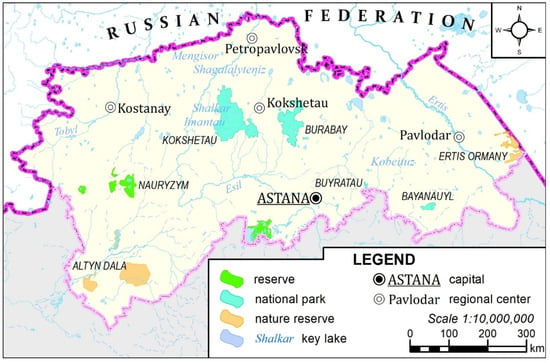
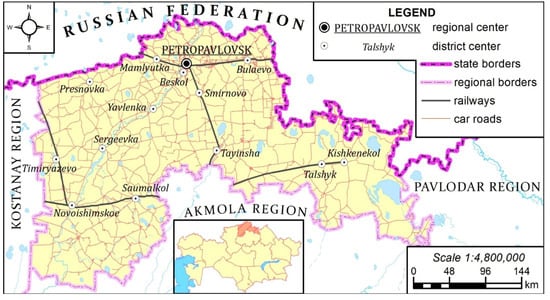
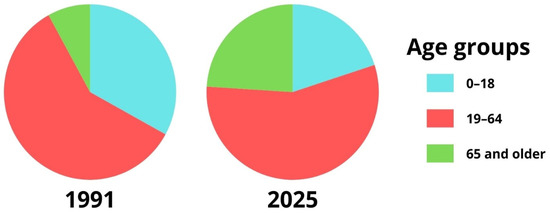

Disclaimer/Publisher’s Note: The statements, opinions and data contained in all publications are solely those of the individual author(s) and contributor(s) and not of MDPI and/or the editor(s). MDPI and/or the editor(s) disclaim responsibility for any injury to people or property resulting from any ideas, methods, instructions or products referred to in the content. |
© 2026 by the authors. Licensee MDPI, Basel, Switzerland. This article is an open access article distributed under the terms and conditions of the Creative Commons Attribution (CC BY) license.