


Abstract
This study develops and validates the Cultural Heritage Awareness Scale (CHAS), a multidimensional measurement instrument designed to assess individuals’ awareness of cultural heritage within the context of sustainable heritage management. The study addresses the need to move beyond cognitively oriented awareness models by conceptualising cultural heritage awareness as an integrated construct encompassing ethical responsibility, functional engagement, and governance-oriented conservation. The scale was developed using a quantitative scale development design, informed by expert-generated items and psychometric validation procedures applied to university student samples. Factor analyses confirmed a stable three-dimensional structure with satisfactory model fit and strong internal consistency, indicating that the proposed model reliably captures distinct yet interrelated dimensions of heritage awareness. The findings demonstrate that cultural heritage awareness extends beyond recognition and appreciation to include ethical accountability, engagement with use, and participation in governance-related processes. By integrating ethical, functional, and governance dimensions within a single validated instrument, the CHAS offers an original contribution to heritage awareness measurement. The scale provides a practical tool for assessing heritage awareness in educational, planning, and policy-related contexts, particularly in relation to participatory and sustainability-oriented heritage governance. While the scale shows robust performance within a university-based sample, further research is recommended to examine its applicability across more diverse socio-cultural contexts.
1. Introduction
Cultural heritage constitutes a multidimensional phenomenon that shapes historical identity, collective memory, and societal value systems. Rapid transformations in contemporary urban environments affect not only the physical fabric of heritage but also its symbolic, social, and ethical meanings. While such transformations may generate new opportunities for conservation and adaptive reuse, they also pose significant risks to authenticity, integrity, and social continuity [1,2]. In response to these challenges, the UNESCO Historic Urban Landscape (HUL) Recommendation promotes an integrated approach to heritage management that considers the social, economic, cultural, and environmental dimensions simultaneously in pursuit of sustainability [2].
Within this integrative perspective, recent scholarship increasingly emphasises that sustainable heritage management extends beyond technical conservation practices to include community well-being, participatory governance, and social responsibility [3,4]. As individuals’ perceptions, values, and behaviours directly influence conservation outcomes, awareness has emerged as a critical determinant of heritage sustainability. Consequently, cultural heritage awareness can no longer be conceptualised solely as informational knowledge but must also encompass ethical orientations and governance-related engagement [5].
The preservation of cultural heritage is closely linked to socio-cultural sustainability and identity formation. The marginalisation of local memory weakens collective belonging, whereas heritage conservation is increasingly recognised as a human rights-based responsibility grounded in ethical commitment and civic participation [1,6]. Empirical studies demonstrate that a sense of responsibility and belonging strengthens individuals’ relationships with heritage and fosters long-term engagement [7]. From this perspective, awareness is best understood as a multidimensional construct integrating cognitive understanding, ethical responsibility, and participatory citizenship.
Sustainable cultural heritage policies require cross-sectoral approaches that reconcile economic utilization with social benefit and environmental responsibility. While heritage-related activities such as cultural tourism and creative industries contribute to local development, the literature consistently warns of the risks associated with over-economisation and commodification [8]. Balancing individual property rights with the public interest, as well as ensuring accountability and participatory governance mechanisms, remains central to sustainable heritage management [6,8,9]. Furthermore, tourism should be considered not only as an economic driver but also as a sociocultural phenomenon through which authenticity, heritage narratives, and institutional branding processes reshape local meanings, identity constructions, and power relations. Research demonstrates that heritage-based tourism practices can be strategically mobilised for regional development, yet they also generate structural tensions related to authenticity, representation, and cultural authority [10]. Despite this recognition, much of the literature continues to examine cultural heritage awareness primarily from cognitive or behavioural perspectives, providing limited insight into its ethical and governance dimensions [3,11]. This gap underscores the need for a conceptual shift that frames awareness as a value-driven, policy-relevant construct rather than a narrowly defined knowledge-based attribute. Recent measurement efforts have begun to operationalise heritage-related dispositions through psychometric instruments. For instance, Veggi et al., [12] developed a Rasch-based scale to assess caring for cultural heritage, focusing on graded behavioural engagement among young adults. Although this approach offers valuable insights into the behavioural hierarchies of heritage-related actions, it primarily conceptualises caring as an individual behavioural tendency and does not explicitly address the ethical and governance-oriented dimensions of awareness that are central to sustainable heritage management. This limitation demonstrates the need for measurement models that extend beyond behaviour-only frameworks to incorporate value-based and policy-relevant components of awareness.
To address this gap, the present study introduces a multidimensional measurement model that situates cultural heritage awareness within the broader context of sustainable heritage governance. The model conceptualises awareness through three analytically distinct yet interrelated dimensions: usage awareness, reflecting individuals’ cognitive and evaluative understanding of heritage; conservation awareness, capturing governance-oriented participation and stewardship practices; and responsibility awareness, emphasising ethical commitment, rights, and obligations. This distinction clarifies a persistent conceptual ambiguity in the literature between individual use-related practices and collective governance processes. Unlike existing caring- or behaviour-oriented measures, the CHAS framework conceptualises awareness as a governance- and ethics-sensitive construct, explicitly integrating rights, responsibilities, and stewardship orientations alongside cognitive evaluations of heritage use. Accordingly, the main objective of this research is to develop and validate a psychometrically robust scale to comprehensively assess individuals’ perceptions, attitudes, and behaviours regarding cultural heritage. The study addresses the following research questions:
- (1)
- What are the fundamental dimensions of cultural heritage awareness?
- (2)
- Is the proposed scale a valid and reliable instrument for measuring cultural heritage awareness?
- (3)
- How do ethical, functional, and governance-oriented dimensions interact within sustainable heritage management?
To operationalise this framework, the study employs a quantitative scale development design based on established psychometric procedures, including theory-driven item generation, expert evaluation, and exploratory and confirmatory factor analyses. The resulting Cultural Heritage Awareness Scale (CHAS) is intended to provide a systematic and transferable tool for future research and policy-oriented assessments of awareness-based heritage governance.
Conceptual Framework for Sustainable Cultural Heritage Awareness
This study is grounded in an integrated theoretical framework that links cultural heritage awareness to the principles of sustainable heritage management. The proposed model conceptualises heritage as a socio-cultural, economic, governance, and ethical system in which these dimensions are interconnected and mutually reinforcing. In this regard, Marzano and Castellini [4] frame cultural heritage as a measurable governance instrument aligned with the Sustainable Development Goals (SDGs), while Ripp et al., [11] define heritage as a dynamic and adaptive system supporting learning, transformation, and resilience in contexts such as disaster risk reduction, climate adaptation, and urban regeneration. Collectively, these perspectives emphasise that heritage extends beyond physical preservation and should be understood as a participatory and value-driven process embedded within broader governance structures. Within this framework, awareness emerges as a foundational element of sustainable heritage governance [3,4].
Sustainable heritage management is inherently multi-layered, encompassing social well-being, economic value creation, transparency in governance, and ethical responsibility. Although heritage-related economic activities—such as cultural tourism and creative industries—contribute to local development, the literature consistently highlights the need to balance economic utilisation with social benefit and environmental sustainability [6,8,9,13]. This tension between economic valorisation and socio-cultural responsibility has been widely discussed in planning and urban heritage studies, which demonstrate that culture-led development and creative industry strategies may generate economic benefits while simultaneously intensifying risks of commodification, social exclusion, and the instrumentalisation of heritage when they are not guided by ethical, public-interest-oriented, and governance-based planning frameworks [14,15]. The reconciliation of individual property rights with the public interest, alongside accountability and participatory governance mechanisms, therefore constitutes a central challenge for sustainable heritage policies [6,8,9,13].
This integrative perspective is institutionalised by the UNESCO Historic Urban Landscape (HUL) Recommendation (2011), which explicitly extends heritage conservation beyond physical fabric to include stakeholder participation, knowledge exchange, and the co-creation of shared values [2]. Complementing this framework, the Faro Convention defines access to and participation in cultural heritage as fundamental human rights [16]. While these international frameworks provide a comprehensive and progressive normative foundation for participatory and rights-based heritage governance, they have also been the subject of sustained critical debate within both critical heritage studies and international legal scholarship. Within this body of critique, heritage is increasingly understood not as an inherently neutral phenomenon, but as a discursive field ideologically constructed through identity, belonging, and power relations. The concept of the “authorized heritage discourse” has been central in illustrating how international normative systems reproduce particular values, pasts, and actors by defining what is recognised as legitimate heritage [17,18]. In parallel, UNESCO’s conservation approach, grounded in claims of “universal value,” has been criticised for largely reflecting a Eurocentric, modern Western understanding of heritage that cannot be considered independent of colonial legacies [19,20]. These critiques are not merely theoretical but carry direct implications for measurement practices. If heritage is shaped by power relations, rights claims, and contested meanings, awareness instruments must capture not only individual knowledge or participation, but also orientations toward governance legitimacy, ethical responsibility, and collective accountability. Moreover, the state-centred structure of this normative regime constitutes a significant area of concern, as it tends to treat states as homogeneous representatives of society, marginalises alternative heritage narratives and local or community-based perspectives, and often limits participation to a symbolic level [17,21].
Rather than being reducible to the sovereign domain of states alone, cultural heritage represents a multidimensional field encompassing the multiple cultural rights of individuals and communities, which must be addressed through the interaction of different legal regimes, including human rights law, minority rights, and cultural rights frameworks [22]. In this context, rights-based instruments such as the Faro Convention provide important normative definitions of access to and participation in heritage; however, their implementation continues to exhibit structural weaknesses, as it remains largely dependent on national regimes’ discretion. Furthermore, the frequent conflation of binding and non-binding instruments in international heritage law, the limited scope of enforcement mechanisms, and the growing influence of states’ political–economic interests contribute to the instrumentalisation of this normative framework in practice, thereby weakening its overall effectiveness [5,23,24].
Against this background, awareness emerges as a critical mediating element between normative frameworks and their practical realisation. Blake (2011) further argues that the effective exercise of heritage-related rights depends on the development of awareness, which may be understood as a measurable indicator of participatory capacity [6]. Accordingly, awareness constitutes a core pillar of sustainable heritage governance rather than a secondary or supportive attribute.
From an economic perspective, defining heritage as a usable resource introduces significant ethical and political challenges. Ashworth [8] cautions that excessive emphasis on economic valuation risks commodifying heritage and detaching it from its cultural meaning, while Brousseau-Gauthier and Brousseau [13] emphasise that ethical principles, social welfare, and environmental responsibility should govern heritage value. Maintaining a balance between individual benefit and collective good is therefore essential, reinforcing the need to conceptualise cultural heritage awareness as a multidimensional construct rather than a purely cognitive one.
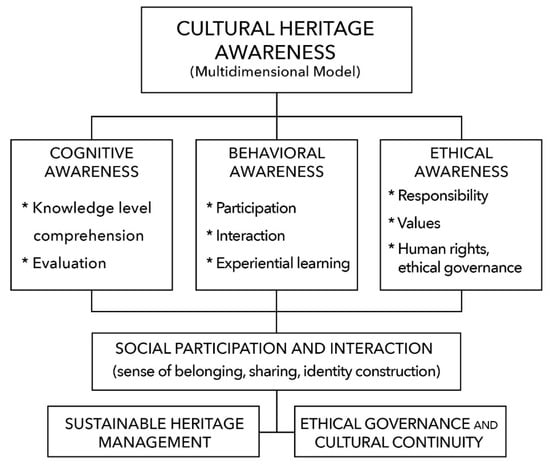
Empirical studies further demonstrate that limited public awareness and insufficient participation remain significant barriers to sustainable heritage practices. Community-based and experiential approaches have been shown to enhance understanding and long-term engagement with heritage [25,26]. Moreover, awareness becomes a sustained form of civic consciousness only when reinforced through behavioural participation and ethical responsibility [27,28]. Recent scale validation studies further indicate that heritage-related behaviours tend to cluster according to difficulty levels, with low-threshold engagement differing from responsibility-intensive or governance-oriented actions. Veggi et al. (2025) demonstrate this hierarchical structure using a Rasch framework, reinforcing the need to analytically distinguish between usage-, governance-, and responsibility-related orientations within awareness research [12]. To synthesise these empirical and theoretical insights, Figure 1 presents the conceptual model underlying the proposed multidimensional structure of cultural heritage awareness [2,6,8,16].
Figure 1.
Conceptual model of the multidimensional structure of cultural heritage awareness (developed by the authors).
Building on this holistic understanding, the proposed model conceptualises cultural heritage awareness through three analytically distinct yet interrelated dimensions, each capturing a different level of individual engagement with heritage and its governance. While these dimensions are conceptually separable, they are understood as mutually reinforcing components of a broader awareness structure that supports sustainable heritage governance.
The first dimension, usage awareness (cognitive dimension), refers to individuals’ knowledge, perceptions, and evaluative understanding of cultural heritage, including its meanings, functions, and potential uses [1,8]. This dimension reflects how heritage is recognised, interpreted, and valued at an individual level, particularly in relation to everyday use, cultural consumption, and symbolic appreciation. Usage awareness, therefore, constitutes the foundational layer of heritage engagement, operating primarily at a low-threshold level of interaction [1,4].
The second dimension, conservation awareness (governance-oriented behavioural dimension), captures individuals’ orientations toward heritage protection through participation in collective decision-making processes, support for conservation policies, and engagement with institutional and community-based governance mechanisms [2,6,9]. Unlike usage awareness, which focuses on interpretation and use, conservation awareness reflects a shift toward active involvement in the governance structures that regulate, legitimise, and sustain heritage conservation practices.
The third dimension, responsibility awareness (ethical dimension), frames cultural heritage as a domain of shared rights and obligations, encompassing ethical responsibility, intergenerational accountability, and normative commitment to collective heritage values. This dimension reflects a higher-order form of awareness in which heritage is no longer approached merely as a resource or governance object, but as a moral and social responsibility embedded within broader principles of social justice, cultural rights, and sustainability [1,7,29,30].
Together, these dimensions define cultural heritage awareness as both a cognitive process and a moral–communal orientation, extending beyond individual knowledge or behavioural participation alone. The proposed model thus provides a conceptual basis for understanding how awareness mediates between international normative frameworks, governance structures, and everyday heritage practices, positioning awareness as a core pillar of sustainable cultural heritage governance [2,6,23,31].
2. Materials and Methods
2.1. Theoretical Foundations of the Scale, Dimensions, and Item Pool
The Cultural Heritage Awareness Scale (CHAS) was developed based on international conservation frameworks, contemporary theoretical models, and empirical findings from recent scholarly research. In this context, cultural heritage awareness is defined as a multidimensional construct that includes usage awareness, conservation awareness, and responsibility awareness. Collectively, these dimensions encompass individuals’ cognitive evaluations of heritage use, their participation in governance and stewardship, and their ethical and civic orientations toward cultural heritage.
Specifically, usage awareness refers to individuals’ evaluative understanding of the social, cultural, and functional uses of heritage. Conservation awareness pertains to engagement with governance and stewardship in heritage protection and management. Responsibility awareness encompasses ethical commitment, civic responsibility, and value-based orientations toward heritage preservation. This conceptual framework provides a clear analytical distinction between functional use, governance participation, and ethical responsibility, addressing conceptual ambiguities present in previous heritage awareness research.
The scale development process employed a theory-driven quantitative design, adhering to principles of conceptual consistency, theoretical saturation, and content validity. Item generation was based on established academic literature and normative policy frameworks to ensure alignment between theoretical constructs and empirical measures. To enhance content validity and conceptual clarity, the initial item pool underwent expert evaluation, and revisions were implemented according to expert feedback before psychometric testing. This approach ensured that items accurately represented each dimension and were theoretically grounded, linguistically precise, and analytically distinct.
Usage Awareness Dimension
The conceptual foundation of the Usage Awareness dimension is based on Forero’s (2015) framework of socio-cultural sustainability, which asserts that disregarding local identity and collective memory during modernization threatens cultural continuity [1]. This perspective forms the theoretical basis for scale items addressing participation in cultural activities, spatial experience, and the continuity of cultural identity.
In line with this perspective, Ashworth (2014) and Brousseau-Gauthier and Brousseau (2013) contend that the economic value of cultural heritage should be balanced with social welfare and environmental sustainability [8,13]. Heritage use should therefore be assessed not only through market or tourism perspectives, but also by its ability to sustain cultural meaning, social cohesion, and community well-being. These considerations inform key item themes in this dimension, such as ethical use, benefit-sharing, adaptive reuse, and balancing economic utilization with cultural values (Table 1).
Table 1.
Functional and Socio-Cultural Usage Awareness Dimension: Items and Resources.
Table 1 lists the items and theoretical sources that underpin the Functional and Socio-Cultural Usage Awareness dimension, demonstrating how each item operationalizes core principles of holistic and sustainable heritage use as identified in the literature.
The items in this dimension collectively capture how individuals perceive the socio-cultural and functional value of cultural heritage with respect to use, ethics, and sustainability. Usage awareness thus reflects a primarily cognitive and evaluative orientation toward heritage, emphasizing how heritage is understood, valued, and justified in daily social and economic contexts.
Building on this cognitive foundation, the subsequent dimension, Conservation Awareness, addresses the behavioral and governance-related aspects of cultural heritage awareness. This dimension shifts the analytical focus from evaluative understanding to individual engagement with stewardship, participation, and conservation-oriented decision-making, thereby linking knowledge-based awareness with experiential and participatory practices.
Conservation Awareness
The theoretical foundation of the Conservation Awareness dimension is primarily grounded in the UNESCO Historic Urban Landscape (HUL) Recommendation (2011), which advocates an integrated approach to managing change in historic cities by simultaneously considering social, cultural, economic, and environmental layers [2]. The HUL framework emphasises the achievement of a sustainable balance between conservation and development, guiding transformation processes without compromising the authenticity and integrity of cultural heritage. Within this context, the principle of manageable change provides the core conceptual basis for items addressing governance-oriented regulatory responsibility, authenticity, and integrity (Table 2).
Table 2.
Rights-Based Conservation Awareness Dimension: Items and Resources.
Beyond the HUL framework, the ethical sustainability principles articulated by Forero (2015) and Ashworth (2014) further reinforce this dimension by underscoring the need to balance heritage conservation with functional use [1,8]. These perspectives collectively frame conservation not as a purely technical activity, but as a governance process shaped by ethical judgement, social participation, and long-term stewardship. Accordingly, the Conservation Awareness dimension focuses on individuals’ orientations toward regulatory frameworks, collective decision-making processes, and the legitimacy of restrictions and incentive mechanisms in heritage management (Table 2).
Importantly, this dimension differs from Usage Awareness by shifting the analytical focus from individuals’ evaluative perceptions of heritage use to their engagement with governance mechanisms that regulate, guide, and legitimise conservation practices. Findings associated with Conservation Awareness indicate that effective heritage management requires not only technical expertise, but also an internalised understanding of governance principles, legal constraints, and ethical limits.
Building on this governance-oriented perspective, the subsequent dimension—Responsibility Awareness—extends the analytical focus from institutional compliance to moral and civic engagement. While Conservation Awareness emphasises support for and adherence to collective conservation frameworks, Responsibility Awareness conceptualises awareness as an ethical commitment grounded in social values, highlighting individuals’ sense of duty, advocacy, and accountability in sustaining cultural heritage.
Responsibility Awareness Dimension
The Responsibility Awareness dimension is theoretically grounded in rights-based and participatory approaches to cultural heritage governance. Blake (2011) conceptualises cultural heritage preservation as a fundamental human right and emphasises the central role of community-based participation in democratising heritage governance [6]. This normative perspective provides the conceptual foundation for scale items addressing participation, ownership, advocacy, and ethical responsibility within this dimension.
From a behavioural perspective, the Extended Theory of Planned Behaviour (ETPB) [33] offers an explanatory framework for individuals’ intentions to engage in heritage-related actions through attitudes, subjective norms, and perceived behavioural control. This framework informs items related to participation intention, volunteering, civic initiative, and cooperation with other stakeholders in heritage protection processes. Empirical evidence further supports this dimension. Shankar and Swamy’s (2013) study conducted in Mysore demonstrates that participatory practices—such as heritage walks, exhibitions, and volunteering—play a significant role in enhancing community heritage awareness and fostering long-term engagement [26]. Similarly, Srivastava (2015) highlights that ethical responsibility and active intervention are critical components in sustaining heritage through everyday civic behaviour [27].
Table 3 presents the items developed for the Collective and Individual Responsibility Awareness dimension, primarily grounded in the normative principles of the Faro Convention [16], which frames cultural heritage as a shared societal responsibility encompassing both rights and obligations.
Table 3.
Collective and Individual Responsibility Awareness Dimension: Items and Resources.
The items operationalise ethical sensitivity, active participation, advocacy, and collective action, reflecting the progression of heritage awareness from cognitive understanding to behavioural commitment and moral engagement. Together, these items capture individuals’ willingness to assume responsibility, support collective conservation efforts, and intervene when cultural heritage values are threatened.
Overall, the Responsibility Awareness dimension conceptualises cultural heritage awareness as an ethical and civic commitment rooted in social values. Unlike Usage Awareness, which focuses on evaluative perceptions of heritage use, and Conservation Awareness, which emphasises governance-oriented compliance and stewardship, Responsibility Awareness foregrounds moral agency, advocacy, and collective responsibility. This distinction reinforces the multidimensional structure of the Cultural Heritage Awareness Scale (CHAS) and strengthens its conceptual coherence across cognitive, governance, and ethical domains.
2.2. Content Validity of the Scale
The content validity of the Cultural Heritage Awareness Scale (CHAS) was assessed using the Davis technique [39], which is widely employed in scale development studies to evaluate the relevance and clarity of scale items. An expert panel consisting of six academics specialising in cultural heritage conservation and two experts holding doctoral degrees in measurement and evaluation was consulted.
According to the Davis technique, each item is evaluated on a four-point scale as (a) definitely appropriate, (b) appropriate, (c) needs revision, or (d) inappropriate. The Content Validity Index (CVI) for each item was calculated using the formula:
where Ne represents the number of experts rating the item as either “definitely appropriate” or “appropriate,” and N denotes the total number of experts.
CVI = Ne/N
In line with Davis’s methodological recommendations, items with a CVI value of 0.80 or higher were considered to demonstrate acceptable content validity. In the present study, CVI values ranged between 0.50 and 1.00, with an overall mean CVI of 0.82. Items rated as appropriate or definitely appropriate were retained without modification, while items identified as requiring revision were refined based on expert feedback. Items failing to meet the minimum CVI threshold were either substantially revised or removed prior to the factor analysis stage.
This procedure ensured that the retained items were conceptually coherent, theoretically grounded, and adequately representative of the three dimensions of cultural heritage awareness.
2.3. Methods of Analysis
Methodological best practices in scale development recommend conducting exploratory and confirmatory factor analyses on independent samples to enhance model robustness, validity, and replicability [40]. Accordingly, the present study employed Exploratory Factor Analysis (EFA) on the first sample (N = 451) to identify the underlying latent factor structure, followed by Confirmatory Factor Analysis (CFA) on a second, independent sample (N = 296) to test and validate the proposed measurement model.
To address potential concerns regarding disciplinary bias in cultural heritage awareness and related attitudes, careful attention was given to the composition of both samples. Participants were drawn from a broad spectrum of academic fields, including architecture and planning, design, social sciences, education, engineering-related programs, health sciences, and practice-oriented programs offered by vocational schools (see Table A1 and Table A2). Most importantly, the samples were not confined to students enrolled in tourism, cultural studies, architecture and planning or art history programs, which are often associated with higher baseline familiarity with cultural heritage concepts.
This heterogeneous sample composition reduces the likelihood that the observed factor structure merely reflects discipline-specific knowledge or attitudes. Instead, it supports the interpretation that the proposed scale captures generalisable dimensions of cultural heritage awareness across diverse academic backgrounds. Moreover, the use of two independent and academically diverse samples strengthens the evaluation of the scale’s structural validity and enhances its applicability within broader higher education contexts.
2.4. Sample Selection and Study Groups
Data collection was conducted via face-to-face questionnaire administration among students at Amasya University during two periods (April–June 2022 and September–November 2023). Ethical approval was granted by the Social Sciences Ethics Committee of Amasya University (Decision No: E-30640013-108.01-69926; Date: 10 May 2022). To ensure disciplinary diversity, participants were recruited from multiple faculties and vocational schools.
Independent-samples EFA and CFA were employed, in line with established recommendations for factor-analytic research [40,41]. Considering Comrey and Lee’s (2013) criteria and the commonly accepted minimum item-to-sample ratio of 10:1, both samples were deemed sufficient for robust factor analysis [42]. Although the sample was drawn from a single university, the inclusion of students from multiple faculties and vocational schools allowed the scale to be examined across diverse academic subcontexts, thereby supporting its preliminary generalisability.
The EFA sample comprised 451 undergraduate students drawn from six faculties, whereas the CFA sample included 296 undergraduate students from three vocational schools. The use of two distinct study groups contributed to the construct validity and replicability of the measurement model.
2.5. Data Analysis Process
Exploratory Factor Analysis (EFA) was conducted using Principal Axis Factoring with Promax rotation. Factor retention decisions were based on eigenvalues greater than 1, inspection of the scree plot, and the proportion of explained variance. Items with factor loadings below 0.40 or substantial cross-loadings were removed, resulting in a final scale comprising 18 items.
Confirmatory Factor Analysis (CFA) was performed using Jamovi (v.2.3.28) with Maximum Likelihood Estimation. Model fit was evaluated using multiple goodness-of-fit indices, including χ2/df, CFI, TLI, RMSEA, and SRMR. Established cutoff criteria were applied to assess model adequacy (CFI > 0.90; TLI > 0.90; RMSEA < 0.08; SRMR < 0.08) [43,44,45].
Internal consistency reliability was assessed using Cronbach’s α and McDonald’s ω coefficients. Given the non-normal distribution of the data, relationships among subscales were examined using Spearman’s rank-order correlation. The consistent performance of the scale across independent samples provides evidence for its measurement stability and generalisability within academic contexts.
3. Results
As part of the construct validation process of the Cultural Heritage Awareness Scale (CHAS), the suitability of the data for factor analysis was first assessed using the Kaiser–Meyer–Olkin (KMO) measure and Bartlett’s test of sphericity. The KMO value (0.891) indicated adequate sampling adequacy, while Bartlett’s test (χ2 = 8624.174, p < 0.001) confirmed that the correlation matrix was appropriate for factor extraction [46].
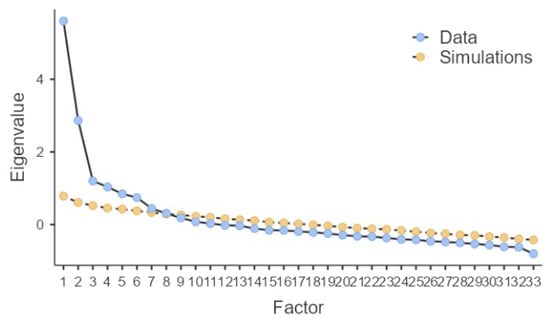
Initial exploratory factor analysis (EFA) yielded 7 factors with eigenvalues greater than 1, accounting for 59.92% of the total variance. However, inspection of the scree plot revealed a precise inflexion after the third factor, indicating that the remaining factors contributed limited explanatory power (Figure 2). Accordingly, a three-factor solution was retained as the most parsimonious and theoretically meaningful representation of cultural heritage awareness, consistent with accepted thresholds for multifactorial measurement models [41,47].
Figure 2.
Cultural Heritage Awareness Scale EFA Scree Plot.
The retained three-factor structure aligned with the conceptual framework outlined in Section 2, which conceptualises cultural heritage awareness as a multidimensional construct encompassing ethical, functional, and governance-oriented dimensions. These dimensions were operationalised as responsibility awareness, usage awareness, and conservation awareness, reflecting individuals’ ethical orientation, cognitive evaluation of heritage use, and participatory engagement in heritage governance.
Factor extraction was conducted using the Maximum Likelihood (ML) method with Oblimin rotation to account for correlations among latent dimensions [40,46]. Items with factor loadings below 0.40 were excluded. Accordingly, items 10, 13, 01, 21, 23, 16, 14, 11, 09, 04, 15, 26, 12, and 22 were removed, while item 03 was excluded due to a high uniqueness value (0.816), indicating limited contribution to the latent construct (see Table A3 and Table A4). Most excluded items were either conceptually redundant or weakly aligned with the theoretical dimensions of the scale.
The final three-factor solution explained 47.5% of the total variance, with the first, second, and third factors accounting for 20.20%, 17.42%, and 9.92%, respectively. Factor loadings ranged from 0.464 to 0.815, and communalities ranged between 0.38 and 0.71, indicating satisfactory item representation across factors.
The first factor, responsibility awareness (F1), reflects the ethical and participatory dimension of cultural heritage awareness and includes items related to individual and collective responsibility, stakeholder cooperation, and civic engagement in heritage protection.
The second factor, usage awareness (F2), represents the functional and cognitive dimension of the construct, encompassing attitudes toward the adaptive and economic use of heritage assets, including tourism-related use and functional transformation under ethical and sustainability constraints.
The third factor, conservation awareness (F3), corresponds to the governance-oriented dimension and includes items emphasising legal responsibility, regulatory legitimacy, and public support mechanisms for heritage protection.
Together, these three interrelated dimensions—responsibility, usage, and conservation awareness—capture the ethical, cognitive, behavioural, and governance components of sustainable cultural heritage awareness, confirming the multidimensional structure of the CHAS.
To validate the factor structure identified through EFA, Confirmatory Factor Analysis (CFA) was conducted using Jamovi (v.2.3.28). Before estimation, standardised residuals were examined, and items with residual correlations exceeding 0.10 were excluded, following established model refinement guidelines [48].
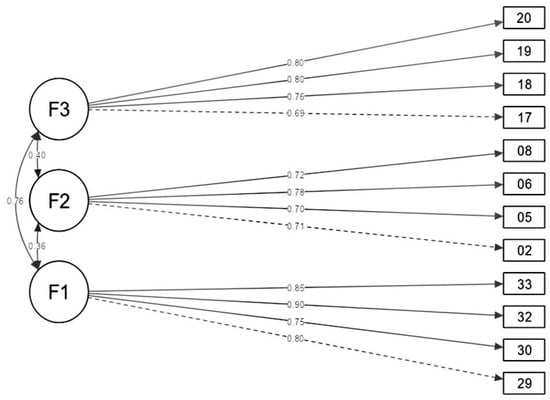
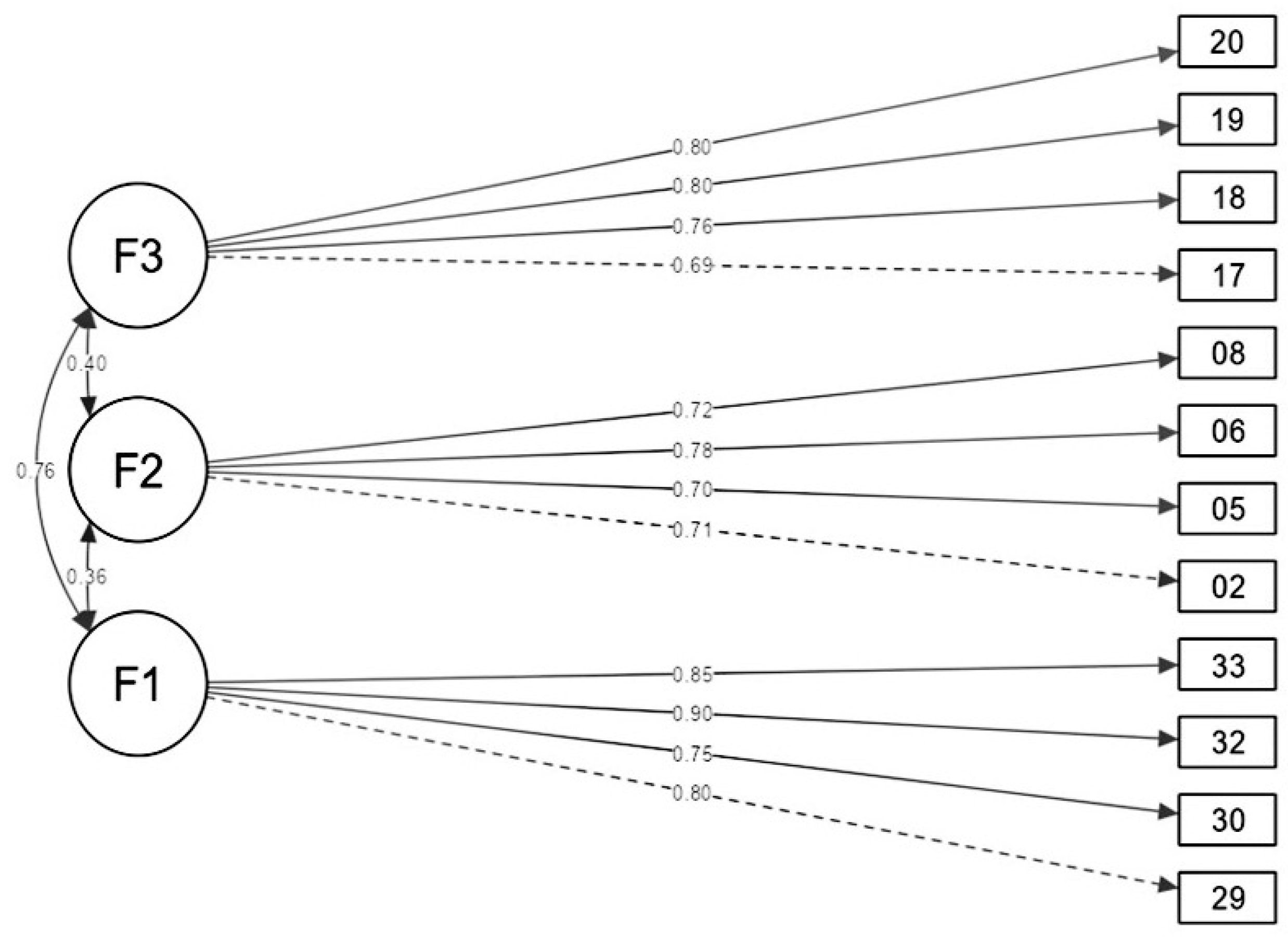
During model refinement, both statistical adequacy and conceptual coherence were considered. Items 24, 25, 27, 31, 28, and 07 exhibited high residual correlations and semantic overlap across dimensions, reducing conceptual distinction between ethical, functional, and governance components. These items were therefore removed to enhance theoretical clarity and internal consistency [43,49,50]. The resulting 12-item, three-factor model preserved the construct’s theoretical integrity while achieving parsimony and satisfactory model fit (Table 4; Figure 3).
Table 4.
Goodness-of-Fit Statistics for the Three-Factor Structure of the CHAS [43,44,49,51].
Figure 3.
Path Diagram of the Dimensions of the Cultural Heritage Awareness Scale.
The CFA results demonstrated an overall satisfactory model fit (χ2/df = 2.09, RMSEA = 0.0607, CFI = 0.956, TLI = 0.943, NFI = 0.988, GFI = 0.993, AGFI = 0.982, IFI = 0.995, and SRMR = 0.0391). Model evaluation followed fit criteria commonly adopted in recent confirmatory factor analysis and structural equation modelling studies [43,44,49,51]. Elevated GFI and NFI values were attributed to the relatively large sample size and the parsimonious model structure. Overall, the findings confirmed strong construct validity and data–model consistency for the three-factor CHAS.
Covariance analysis indicated the strongest association between responsibility awareness (F1) and conservation awareness (F3) (r = 0.76), whereas the weakest relationship was observed between usage awareness (F2) and responsibility awareness (F1) (r = 0.36). The covariance between usage awareness (F2) and conservation awareness (F3) was 0.40. These findings suggest a close conceptual linkage between ethical responsibility and conservation-oriented attitudes, reflecting the normative basis of the theoretical framework [52]. This weaker association suggests that recognising and supporting the functional or economic use of cultural heritage does not necessarily translate into a sense of ethical responsibility or civic obligation. In line with the proposed conceptual framework, usage awareness operates at a lower threshold of engagement, whereas responsibility awareness reflects a higher-order normative orientation grounded in ethical accountability and intergenerational commitment. The observed pattern therefore empirically supports the analytical distinction between functional engagement and ethical responsibility embedded in the CHAS model (Table A4).
Internal consistency was assessed using McDonald’s Omega (ω), given its robustness for multidimensional constructs [53,54]. Omega coefficients were 0.846 (F1), 0.742 (F2), and 0.786 (F3), with a total composite reliability of 0.856 for the 12-item scale, indicating strong internal consistency (Table A5). Cronbach’s alpha values showed a comparable pattern (α = 0.842, 0.737, and 0.782).
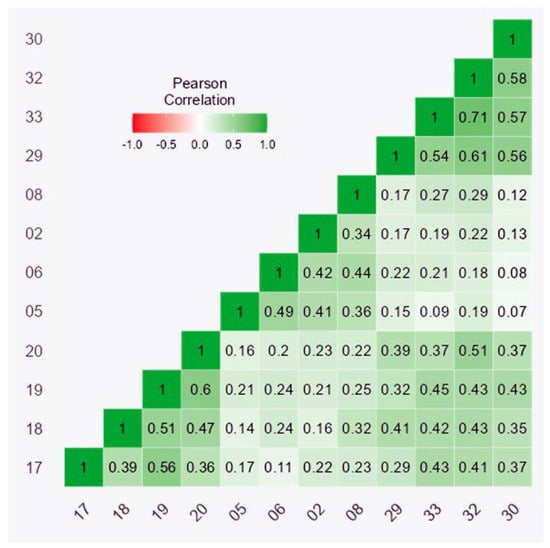
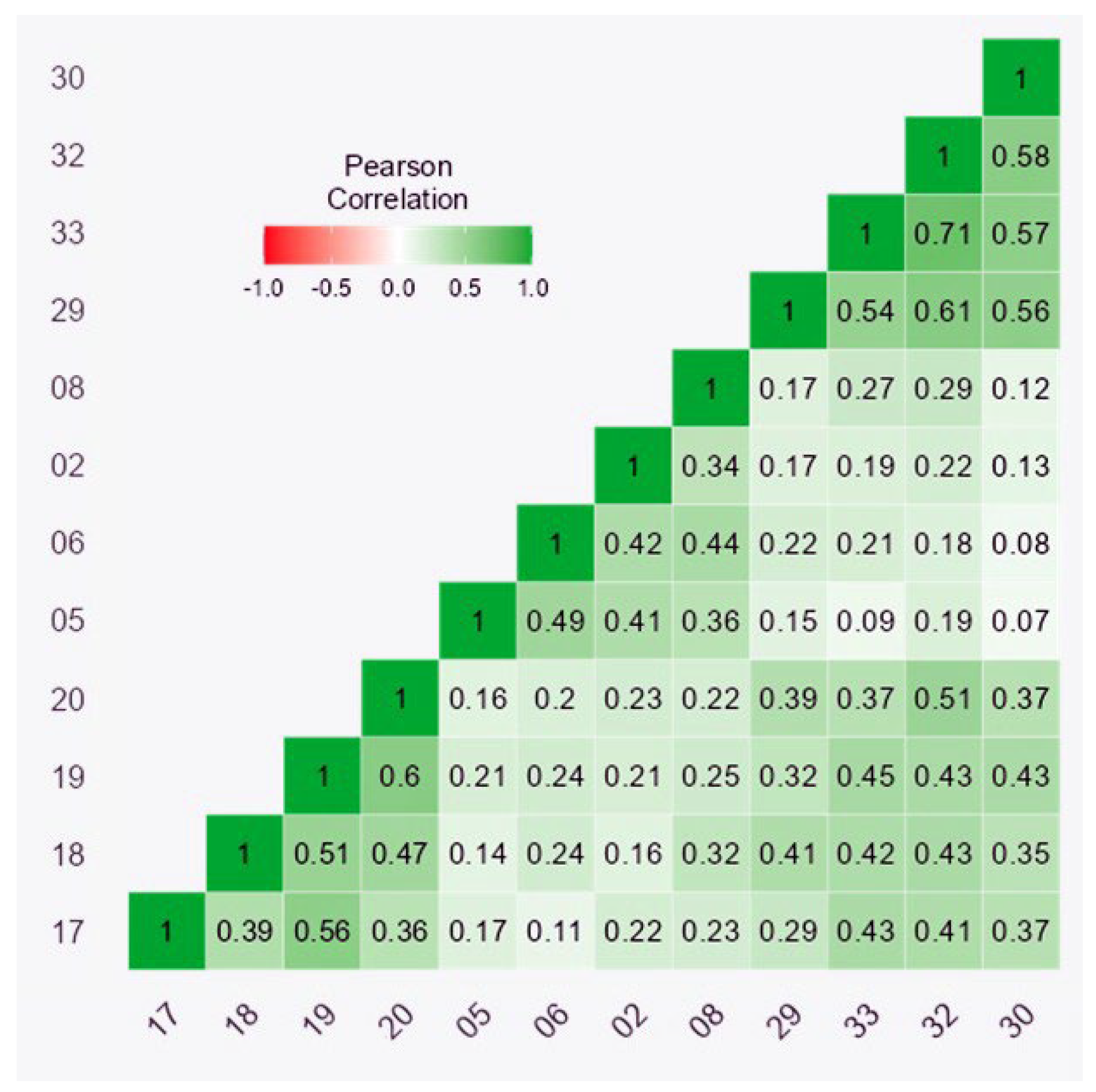
Correlation heat map analysis (Figure 4) demonstrated consistently positive inter-item relationships. Moreover, associations between the total scale score and each subdimension, examined using Spearman’s rho correlations, were positive and statistically significant (p < 0.001). Together, these results confirm the convergent validity of the CHAS and support the cohesive functioning of its three dimensions in measuring sustainable cultural heritage awareness (Table 5).
Figure 4.
Correlation Heat Map of the Cultural Heritage Awareness Scale.
Table 5.
Spearman’s rho correlation results between the total scale score and its subdimensions.
4. Discussion
The analyses conducted in this study yielded several key empirical findings on the structure and measurement properties of the Cultural Heritage Awareness Scale (CHAS). Exploratory factor analysis showed that cultural heritage awareness includes three interrelated dimensions: responsibility, usage, and conservation awareness. This multidimensional structure indicates that heritage awareness involves not only cognitive evaluations but also ethical responsibility, functional engagement, and conservation perspectives oriented toward governance. These results align with the study’s theoretical framework and support the validity of the CHAS as a holistic measurement model.
Importantly, the components of cultural heritage awareness are internalised unequally by individuals. Ethical responsibility and usage dimensions appear more salient than governance and institutional conservation. This suggests that awareness related to governance and institutional protection is more strongly shaped by structural, legal, and policy contexts, rendering these aspects comparatively less visible at the individual level.
The relative explanatory power of these dimensions was not uniform. Responsibility awareness (F1) emerged as the strongest component, accounting for 20.20% of the total variance, with the highest eigenvalue (3.64) and consistently strong factor loadings ranging from 0.605 to 0.815. Usage awareness (F2) explained 17.42% of the variance and showed high loadings on items related to adaptive and functional uses of heritage, reaching 0.894. Conservation awareness (F3), although accounting for a smaller proportion of variance (9.92%), represents a conceptually distinct dimension focused on governance, institutional responsibility, and regulatory frameworks for heritage protection.
Confirmatory factor analysis further provided strong support for the three-factor structure. The model demonstrated excellent fit indices (χ2/df = 2.09; RMSEA = 0.0607; CFI = 0.956; GFI = 0.993), indicating that the final 12-item structure is both parsimonious and psychometrically robust. Reliability analyses confirmed moderate to strong internal consistency across all dimensions (ω = 0.846–0.786), with an overall composite reliability of ω = 0.856, suggesting that the CHAS produces stable and reliable measurements.
Inter-factor covariance analysis revealed the strongest association between responsibility awareness (F1) and conservation awareness (F3) (r = 0.76), while the relationship between usage awareness (F2) and responsibility awareness (F1) was weaker (r = 0.36). The association between usage and conservation awareness was moderate (r = 0.40). These findings indicate that ethical responsibility and governance-oriented conservation tend to reinforce one another, whereas economic and functional uses of heritage may remain only partially aligned with ethical accountability.
The strong covariance between responsibility awareness and conservation awareness further underscores the close linkage between ethical responsibility and collective protection obligations. This finding supports theoretical arguments concerning the principle of proportionality between heritage protection and property rights [9] and reinforces governance-oriented perspectives suggesting that sustainable heritage protection emerges when individual ethical commitments are translated into collective governance practices [24].
By contrast, the weaker association between usage awareness and responsibility awareness reveals a persistent tension between economic and functional uses of heritage and ethical accountability. This pattern aligns with critiques of the economisation of heritage [8] and concerns regarding commodification through tourism [55]. Although adaptive reuse is widely recognised as a key sustainability tool [56], the findings indicate that individual awareness alone is insufficient without supportive legal, institutional, and participatory frameworks. Recent applied studies further demonstrate that economic utilisation of heritage assets may undermine social legitimacy and long-term sustainability if not accompanied by shared responsibility and participatory governance mechanisms [12,57].
Overall, the results reveal a dynamic sustainability configuration in which ethical responsibility and governance participation mutually reinforce one another, while economic use may generate tension if inadequately regulated. This interpretation is consistent with recent applied studies emphasising the role of cultural heritage as a resilience-building resource through education, public engagement, and participatory governance frameworks [58]. From a governance perspective, these findings highlight the importance of aligning individual-level awareness with institutional capacity and collaborative decision-making structures in order to achieve socially legitimate and resilient heritage management outcomes [57].
5. Conclusions
Taken together, the findings firmly establish cultural heritage awareness as a multidimensional construct comprising interrelated ethical, functional, and governance-oriented dimensions. By moving beyond cognitively weighted definitions of awareness, the CHAS provides a robust, participatory, and values-driven measurement framework that captures responsibility, participation, and governance as integral components of heritage awareness.
Importantly, the scale is theoretically grounded in the heritage communities approach of the Faro Convention [16] and UNESCO’s Historic Urban Landscape (HUL) framework [2]. In this respect, the CHAS aligns with contemporary sustainability-oriented heritage governance models that emphasise social participation, ethical responsibility, and shared governance.
By operationalising these normative frameworks at the individual level, the CHAS functions as a transformative bridge linking abstract heritage governance principles with applied measurement practice. Rather than treating awareness as knowledge or aesthetic appreciation alone, the scale reframes heritage awareness as a rights-based and value-oriented form of consciousness, enabling stakeholders to assess and strengthen the ethical, social, and participatory foundations required for inclusive, community-centred, and resilient cultural heritage management [12,24,57].
The findings of this study offer several concrete implications for cultural heritage policy, education, and governance practices. First, the strong association between responsibility awareness and conservation awareness highlights the importance of policy frameworks that explicitly link individual ethical responsibility with institutional governance mechanisms. Heritage policies that remain solely regulatory, without fostering civic responsibility and participation, may fail to achieve long-term social legitimacy [5].
Second, the identified tension between usage awareness and ethical responsibility suggests that adaptive reuse and economic valorisation strategies should be accompanied by participatory governance models and ethical accountability mechanisms. Policymakers and heritage managers should therefore integrate CHAS-like assessment tools into participatory planning processes to evaluate social readiness and ethical awareness prior to implementing reuse or tourism-driven interventions.
From an educational perspective, the CHAS demonstrates strong potential as a pedagogical instrument for fostering governance literacy and ethical awareness in higher education. Integrating the scale into curricula for planning, architecture, heritage management, and public administration could support early-stage professional socialisation aligned with rights-based and participatory heritage governance principles.
Finally, for heritage governance practice, the scale provides a practical diagnostic tool to assess the alignment between individual-level awareness and institutional capacity. Such alignment is critical for developing resilient, socially inclusive, and democratically accountable heritage management strategies.
6. Methodological Limitations and Future Research
Although the study demonstrates robust psychometric properties, several methodological limitations require consideration. First, the sample consisted exclusively of students from a single university, which restricts the generalisability of the findings beyond this specific institutional and spatial context. University students generally share similar age ranges, educational backgrounds, and levels of cognitive capital; consequently, cultural heritage awareness and related attitudes may be concentrated within a narrower experiential framework.
However, this limitation should be interpreted with caution. Student samples are widely considered methodologically appropriate in scale development and validation studies, particularly during initial instrument testing phases. Moreover, the sample included students from a broad range of faculties and academic disciplines, indicating that cultural heritage awareness extends beyond tourism- or art-related fields to include engineering, health sciences, education, and social sciences.
Second, given the socially sensitive and normatively charged nature of cultural heritage issues, participants’ responses may have been influenced by social desirability bias. To mitigate this risk, anonymous and voluntary participation procedures were applied, and reverse-coded items were included. Additionally, Harman’s single-factor test was used as a preliminary diagnostic for common method bias and did not indicate factor dominance; however, consistent with methodological literature, this test should be regarded as indicative rather than definitive.
Future research should replicate the CHAS using more diverse cultural, geographical, and socio-demographic samples, particularly beyond the university context. Further studies employing advanced statistical techniques, such as structural equation modelling, could explore causal relationships between awareness dimensions and behavioural outcomes, including participation in conservation practices or support for heritage-related policies. Assessing criterion-related validity by linking CHAS scores to observed behaviours would further enhance the scale’s explanatory power and practical relevance.
7. Patents
The authors declare that no patents are associated with this research.
Author Contributions
Conceptualization, A.A.; methodology, A.A.; investigation, E.E. and A.A.; formal analysis, A.A.; data curation, E.E. and A.A.; writing—original draft preparation, A.A.; writing—review, editing, and interpretation, A.A. and E.E.; visualization, A.A.; supervision, A.A.; project administration, A.A. All authors have read and agreed to the published version of the manuscript.
Funding
This research received no external funding.
Data Availability Statement
Due to ethical and privacy restrictions involving participant information, the data supporting the findings of this study are not publicly available. Data may be provided by the authors upon reasonable request and with permission from the Amasya University Ethics Committee.
Acknowledgments
The authors thank the students of Amasya University who voluntarily participated in the study and the academic staff who provided the necessary institutional permissions. During the preparation of the manuscript, the authors take full responsibility for the final content of the publication.
Conflicts of Interest
The authors declare no conflicts of interest. The funders had no role in the design of the study; in the collection, analyses, or interpretation of data; in the writing of the manuscript; or in the decision to publish the results.
Abbreviations
The following abbreviations are used in this manuscript:
| CHAS | Cultural Heritage Awareness Scale |
| EFA | Exploratory Factor Analysis |
| CFA | Confirmatory Factor Analysis |
| KMO | Kaiser–Meyer–Olkin Test |
| RMSEA | Root Mean Square Error of Approximation |
| CFI | Comparative Fit Index |
| GFI | Goodness of Fit Index |
| SRMR | Standardized Root Mean Square Residual |
| α (Alpha) | Cronbach’s Alpha |
| ω (Omega) | McDonald’s Omega |
| UNESCO HUL | UNESCO Historic Urban Landscape Approach |
| Faro Convention | Council of Europe Framework Convention on the Value of Cultural Heritage for Society |
Appendix A
Table A1.
Demographic and Academic Characteristics of the Participants (n = 451).
Table A2.
Demographic and Academic Characteristics of the Participants (n = 296).
Table A3.
AFA Results of the Cultural Heritage Awareness Scale and Items that Failed to Establish Structural Validity.
Table A4.
Cultural Heritage Awareness Scale: Item Factor Loads and Reliability Coefficients.
Table A5.
Factor-Level and Composite Reliability Findings for the Cultural Heritage Awareness Scale.
References
- Forero, J. The Social Function of Cultural Heritage: Conservation Practices on the Basis of Sociocultural Sustainability. In Perceptions of Sustainability in Heritage Studies; Albert, M.T., Ed.; De Gruyter: Berlin, Germany, 2015; pp. 173–189. [Google Scholar]
- UNESCO; World Heritage Convention. Recommendation on the Historic Urban Landscape. In Proceedings of the Records of the General Conference 36th Session, Paris, France, 25 October–10 November 2011. [Google Scholar]
- Cocco, C.; Sousa de Sena, Í.; Crowe, P.; Madhu, K.; Lopez Pelayo, J.H.; Ahmed, T.; Pilla, F. Co-Creating Strategies for Heritage Reactivation: HeritACT Pilot Cases in Eleusis, Milan and Ballina. J. Cult. Herit. Manag. Sustain. Dev. 2025. ahead of print. [Google Scholar] [CrossRef] [Scilit]
- Marzano, M.; Castellini, M. Cultural Heritage and Sustainability: What Is the State of the Art? A Systematic Literature Review. Sinergie Ital. J. Manag. 2024, 42, 61–89. [Google Scholar] [CrossRef] [Scilit]
- Cardak, F.S. Community Engagement and Heritage Awareness for the Sustainable Management of Rural and Coastal Archaeological Heritage Sites: The Case of Magarsus (Karataş, Turkey). Sustainability 2025, 17, 5302. [Google Scholar] [CrossRef] [Scilit]
- Blake, J. Taking a Human Rights Approach to Cultural Heritage Protection. Herit. Soc. 2011, 4, 199–238. [Google Scholar] [CrossRef] [Scilit]
- Kafadar, T. Cultural Heritage in Social Studies Curriculum and Cultural Heritage Awareness of Middle School Students*. Int. J. Progress. Educ. 2021, 17, 260–274. Available online: https://ijpe.inased.org/makale/2078 (accessed on 29 January 2026). [CrossRef] [Scilit]
- Ashworth, G.J. Heritage and Economic Development: Selling the Unsellable. Herit. Soc. 2014, 7, 3–17. [Google Scholar] [CrossRef] [Scilit]
- De Clippele, M.S.; Lambrecht, L. Art Law & Balances. Increased Protection of Cultural Heritage Law vs. Private Ownership: Towards Clash or Balance? Int. J. Cult. Prop. 2015, 22, 259–278. [Google Scholar] [CrossRef] [Scilit]
- Gonzalez de la Fuente, E. Recentering the Cartographies of Karate: Artial Arts Tourism in Okinawa. Ido Mov. Cult. 2021, 21, 51–66. [Google Scholar] [CrossRef] [Scilit]
- Ripp, M.; Egusquiza, A.; Lückerath, D. Urban Heritage Resilience: An Integrated and Operationable Definition from the SHELTER and ARCH Projects. Land 2024, 13, 2052. [Google Scholar] [CrossRef] [Scilit]
- Veggi, M.; von Gal, A.; Piccardi, L.; Pescarin, S.; Nori, R. How Much Do We Care About Cultural Heritage? A Rasch Scale Validation Study Among Young Adults. Heritage 2025, 8, 317. [Google Scholar] [CrossRef] [Scilit]
- Brousseau-Gauthier, F.; Brousseau, Y. A Heritage Economy: Business Model Innovation for Economic Wealth, Social Well-Being, and Environmental Health. Technol. Innov. Manag. Rev. 2013, 3, 32–37. [Google Scholar] [CrossRef]
- Altanlar, A.; Sınmaz, S. Culture-Led Urban Transformation Strategies for Industrial Heritage and Industrial Areas in Istanbul. Iconarp Int. J. Archit. Plan. 2021, 9, 1010–1035. [Google Scholar] [CrossRef] [Scilit]
- Altanlar, A.; Sinmaz, S.; Çakiroğlu, A. The Role of Creative Industries on Urban Transformation: A Project Experience in Antalya Weaving Factory Area. J. Urban Acad. 2020, 1, 123–145. [Google Scholar] [CrossRef] [Scilit]
- Council of Europe. Council of Europe CETS 199—Council of Europe Framework Convention on the Value of Cultural Heritage for Society; Council of Europe: Strasbourg, France, 2005. [Google Scholar]
- Smith, L. Uses of Heritage; Routledge: London, UK; New York, NY, USA, 2006. [Google Scholar]
- Harrison, R. Heritage: Critical Approaches; Routledge: London, UK; New York, NY, USA, 2012; ISBN 978-0-415-59195-9. [Google Scholar]
- Lowenthal, D. The Heritage Crusade and the Spoils of History; Cambridge University Press: Cambridge, UK, 1998; ISBN 0521635624. [Google Scholar]
- Ashworth, G.J.; Graham, B.; Tunbridge, J.E. Pluralising Pasts: Heritage, Identity and Place in Multicultural Societies; Pluto Books: London, UK, 2007; ISBN 1783716118. [Google Scholar]
- Labadi, S. UNESCO, Cultural Heritage, and Outstanding Universal Value: Value-Based Analyses of the World Heritage and Intangible Cultural Heritage Conventions; Bloomsbury Publishing PLC: London, UK, 2013. [Google Scholar]
- Francioni, F. Public and Private in the International Protection of Global Cultural Goods. Eur. J. Int. Law 2012, 23, 719–730. [Google Scholar] [CrossRef] [Scilit]
- Lixinski, L. Between Orthodoxy and Heterodoxy: The Troubled Relationships between Heritage Studies and Heritage Law. Int. J. Herit. Stud. 2015, 21, 203–214. [Google Scholar] [CrossRef] [Scilit]
- Vrdoljak, A.F. Human Rights and Cultural Heritage in International Law. In The Oxford Handbook of International Cultural Heritage Law; Francioni, F., Lenzerini, M., Eds.; Oxford University Press: Oxford, UK, 2014; pp. 139–174. [Google Scholar]
- Shimray, S.R. Ways to Create Awareness on Cultural Heritage: An Overview. Libr. Philos. Pract. 2019, 2577. Available online: https://digitalcommons.unl.edu/libphilprac/2577/ (accessed on 29 January 2026).
- Shankar, B.; Swamy, C. Creating Awareness for Heritage Conservation in the City of Mysore: Is-Sues and Policies. Int. J. Mod. Eng. Res. 2013, 2, 698–703. [Google Scholar]
- Srivastava, S. A Study of Awareness of Cultural Heritage among the Teachers at University Level. Univers. J. Educ. Res. 2015, 3, 336–344. [Google Scholar] [CrossRef] [Scilit]
- Güneş, E.; Alagöz, G. Turizm Eğitimi Alan Öğrencilerin Kültürel Miras Tutumları Üzerine Bir Araştırma. Adıyaman Üniv. Sos. Bilim. Enst. Derg. 2018, 753–777. [Google Scholar] [CrossRef] [Scilit]
- Cernicova-Buca, M.; Pevnaya, M.V.; Fedorova, M.; Bystrova, T. Students’ Awareness of the Local Cultural and Historical Heritage in Post-Communist Regional Centers: Yekaterinburg, Gyumri, Timisoara. Land 2022, 11, 1443. [Google Scholar] [CrossRef] [Scilit]
- Li, H.; Ding, L.; Ren, M.; Li, C.; Wang, H. Sponge City Construction in China: A Survey of the Challenges and Opportunities. Water 2017, 9, 594. [Google Scholar] [CrossRef] [Scilit]
- Ashworth, G.J. Preservation, Conservation and Heritage: Approaches to the Past in the Present through the Built Environment. Asian Anthropol. 2011, 10, 1–18. [Google Scholar] [CrossRef] [Scilit]
- Kalman, H.; Létourneau, M.R. Heritage Planning: Principles and Process; Routledge: Oxon, UK, 2020; ISBN 0429431694. [Google Scholar]
- Tang, D.; Gong, X.; Liu, M. Residents’ Behavioral Intention to Participate in Neighborhood Micro-Renewal Based on an Extended Theory of Planned Behavior: A Case Study in Shanghai, China. Habitat Int. 2022, 129, 102672. [Google Scholar] [CrossRef] [Scilit]
- Tu, H.M. The Attractiveness of Adaptive Heritage Reuse: A Theoretical Framework. Sustainability 2020, 12, 2372. [Google Scholar] [CrossRef] [Scilit]
- Graham, F. New Heritage Frontiers Heritage and Beyond; Council of Europe Publishing: Strasbourg, France, 2009. [Google Scholar]
- Byrne, D. Heritage as Social Action. Herit. Read. 2008, 149–173. Available online: https://researchers.westernsydney.edu.au/en/publications/heritage-as-social-action/ (accessed on 29 January 2026).
- Graham, B.; Ashworth, G.J.; Tunbridge, J.E. The Uses and Abuses of Heritage. In Heritage, Museums and Galleries; Routledge: Oxon, UK, 2004; pp. 28–40. [Google Scholar]
- Karaca, Ş.; Akkuş, G.; Şahbudak, E.; Işkın, M. Cultural Heritage Awareness: Study of an Application for the Cumhuriyet University Students. Akad. Araştırmalar Çalışmalar Derg. (AKAD) 2017, 9, 86–100. [Google Scholar] [CrossRef] [Scilit]
- Davis, L.L. Instrument Review: Getting the Most from a Panel of Experts. Appl. Nurs. Res. 1992, 5, 194–197. [Google Scholar] [CrossRef] [Scilit]
- Matsunaga, M. How to Factor-Analyze Your Data Right: Do’s, Don’ts, and How-to’s. Int. J. Psychol. Res. 2010, 3, 97–110. [Google Scholar] [CrossRef] [Scilit]
- Costello, A.B.; Osborne, J. Best Practices in Exploratory Factor Analysis: Four Recommendations for Getting the Most from Your Analysis. Pract. Assess. Res. Eval. 2005, 10, 7. [Google Scholar]
- Comrey, A.L.; Lee, H.B. A First Course in Factor Analysis; Psychology Press: East Sussex, UK, 2013; ISBN 1315827506. [Google Scholar]
- Hussain, M.; Khan, M.; Al-Aomar, R. A Framework for Supply Chain Sustainability in Service Industry with Confirmatory Factor Analysis. Renew. Sustain. Energy Rev. 2016, 55, 1301–1312. [Google Scholar] [CrossRef] [Scilit]
- Perry, J.L.; Nicholls, A.R.; Clough, P.J.; Crust, L. Assessing Model Fit: Caveats and Recommendations for Confirmatory Factor Analysis and Exploratory Structural Equation Modeling. Meas. Phys. Educ. Exerc. Sci. 2015, 19, 12–21. [Google Scholar] [CrossRef] [Scilit]
- Tungkunanan, P. Learning Model of Undergraduate Students: Confirmatory Factor Analysis. Int. J. Instr. 2020, 13, 665–678. [Google Scholar] [CrossRef] [Scilit]
- Howard, M.C. A Review of Exploratory Factor Analysis Decisions and Overview of Current Practices: What We Are Doing and How Can We Improve? Int. J. Hum. Comput. Interact. 2016, 32, 51–62. [Google Scholar] [CrossRef] [Scilit]
- Altanlar, A.; Aktuğlu Aktan, E.Ö.; Erkan, N.Ç. Determination of Environmental Ethics Approaches of Urban and Regional Planning Students. Iconarp Int. J. Archit. Plan. 2023, 11, 650–671. [Google Scholar] [CrossRef] [Scilit]
- Kline, R.B. Principles and Practice of Structural Equation Modeling; Guilford Publications: New York, NY, USA, 2023; ISBN 1462551912. [Google Scholar]
- Demir, M. Jamovi ve JASP Programı Ile Temel ve İleri Düzey Nicel Veri Analizi; Pegem Akademi: Ankara, Turkey, 2021. [Google Scholar]
- Harrington, D. Confirmatory Factor Analysis; Oxford University Press: Oxford, UK, 2009; ISBN 0195339886. [Google Scholar]
- Wang, K.; Xu, Y.; Wang, C.; Tan, M.; Chen, P. A Corrected Goodness-of-Fit Index (CGFI) for Model Evaluation in Structural Equation Modeling. Struct. Equ. Model. 2020, 27, 735–749. [Google Scholar] [CrossRef] [Scilit]
- George, D.; Mallery, P. IBM SPSS Statistics 29 Step by Step: A Simple Guide and Reference; Routledge: Oxon, UK, 2024; ISBN 1032622156. [Google Scholar]
- Dunn, T.J.; Baguley, T.; Brunsden, V. From Alpha to Omega: A Practical Solution to the Pervasive Problem of Internal Consistency Estimation. Br. J. Psychol. 2014, 105, 399–412. [Google Scholar] [CrossRef] [Scilit]
- Ursachi, G.; Horodnic, I.A.; Zait, A. How Reliable Are Measurement Scales? External Factors with Indirect Influence on Reliability Estimators. Procedia Econ. Financ. 2015, 20, 679–686. [Google Scholar] [CrossRef] [Scilit]
- Uzzell, D. Interpreting Our Heritage: A Theoretical Interpretation. In Contemporary Issues in Heritage and Environmental Interpretation: Problems and Prospects; The Stationery Office: London, UK, 1998; pp. 11–25. [Google Scholar]
- Bullen, P.A.; Love, P.E.D. Adaptive Reuse of Heritage Buildings. Struct. Surv. 2011, 29, 411–421. [Google Scholar] [CrossRef] [Scilit]
- Della Spina, L. Community Branding and Participatory Governance: A Glocal Strategy for Heritage Enhancement. Heritage 2025, 8, 188. [Google Scholar] [CrossRef] [Scilit]
- Fiorentino, S.; Vandini, M. Resilience and Sustainable Territorial Development: Safeguarding Cultural Heritage at Risk for Promoting Awareness and Cohesiveness Among Next-Generation Society. Sustainability 2024, 16, 10968. [Google Scholar] [CrossRef] [Scilit]
- Özdamar, K. Paket Programlar Ile Istatistiksel Veri Analizi, 2nd ed.; Kaan Kitapevi: İzmir, Turkey, 1999. [Google Scholar]

Disclaimer/Publisher’s Note: The statements, opinions and data contained in all publications are solely those of the individual author(s) and contributor(s) and not of MDPI and/or the editor(s). MDPI and/or the editor(s) disclaim responsibility for any injury to people or property resulting from any ideas, methods, instructions or products referred to in the content. |
© 2026 by the authors. Licensee MDPI, Basel, Switzerland. This article is an open access article distributed under the terms and conditions of the Creative Commons Attribution (CC BY) license.