Article

Multi-Objective Optimization of Monitoring Point Placement in Water Supply Networks Based on Pressure-Driven Analysis and the Virtual Node Method

School of Water Conservancy Engineering, Zhengzhou University, Zhengzhou 450001, China
*
Author to whom correspondence should be addressed.
Sustainability 2026, 18(3), 1460; https://doi.org/10.3390/su18031460 (registering DOI)
Submission received: 6 December 2025 / Revised: 18 January 2026 / Accepted: 28 January 2026 / Published: 1 February 2026

Abstract

To improve the safe operation of urban water supply networks and support sustainable water resource management, this study proposes a multi-objective optimization framework for monitoring point placement by integrating pressure-driven analysis (PDA) and the virtual node method (VNM). A PDA-based hydraulic model combined with Wagner’s relationship is employed to overcome the limitations of traditional demand-driven analysis in simulating extreme conditions such as pipe burst events, while the VNM enables efficient representation of burst scenarios without altering network topology. Based on node pressure variations, a binary fault perception matrix is constructed by comparing pressure responses under burst conditions with background noise thresholds to quantify the detectability of pipe burst events by candidate monitoring points. A bi-objective optimization model is then formulated to maximize fault monitoring and minimize the number of monitoring points, and it is solved using the NSGA-III and NSGA-II algorithms. Case studies on the Net3 benchmark network and the real-world Drumchapel network demonstrate that NSGA-III outperforms NSGA-II in terms of convergence performance and spatial perception capability, particularly by reducing spatial redundancy and improving monitoring efficiency under limited monitoring budgets. The proposed framework provides a practical decision-support tool for optimal monitoring point deployment and contributes to the long-term sustainability of urban water supply infrastructure.

1. Introduction

With the rapid economic development in China and the accelerating pace of urbanization, water demand for both industrial production and domestic use has continued to increase. As a critical component of urban infrastructure, water supply and drainage pipelines play an indispensable role in supporting daily life and industrial activities. However, prolonged service life, material deterioration, and the combined effects of various environmental factors have led to an increasing frequency of pipeline failures. Accurately identifying pipeline segments that are at high risk of failure and implementing timely repair or replacement measures has therefore become an urgent challenge for urban water utilities.
Addressing this challenge requires sustained effort and long-term investment in routine pipeline monitoring, and extensive research has therefore been conducted on burst detection and failure identification in urban water distribution systems. Chen et al. [1] optimized the node water age method using hydraulic simulation software and proposed a multi-factor-based procedure for water quality monitoring point placement. Zhao et al. [2] developed a multi-objective non-dominated differential optimization algorithm to optimize pressure monitoring point placement by minimizing the number of monitoring points while maximizing burst leakage detection capability. Lin et al. [3] proposed a genetic algorithm based on node similarity to optimize monitoring point arrangement and demonstrated its effectiveness in improving hydraulic model calibration accuracy. Liu [4] formulated an optimization model for pressure monitoring point placement by maximizing the number of monitored nodes, subject to constraints including inter-node pressure correlation, shortest path distance, and pressure sensitivity, and solved the model using the ant lion algorithm. Chen [5] introduced a fuzzy clustering-based approach in which a node sensitivity matrix is first constructed and nodes are clustered, with the node having the minimum average Euclidean distance within each cluster selected as the monitoring point. Other studies have focused on heuristic algorithms, clustering strategies, and intelligent optimization techniques. Yue [6] constructed a single-objective optimization model by maximizing monitoring range while considering pressure correlation and pressure sensitivity between nodes. Wang et al. [7] combined particle swarm optimization with fuzzy C-means clustering to determine pressure monitoring point locations, effectively alleviating the tendency of conventional clustering methods to fall into local optima. He et al. [8] proposed a heuristic algorithm for optimal placement of pressure measurement points under pipe burst conditions by constructing a binary burst judgment matrix based on historical thresholds. Diwold et al. [9] applied ant colony optimization to sensor placement in water supply networks and demonstrated improved monitoring effectiveness compared with previous schemes. Peng et al. [10] proposed a graph neural network-based method that partitions the network through clustering and selects sensors based on burst perception capability within each partition. Santos-Ruiz et al. [11] developed an information-theory-based approach that ranks candidate sensor nodes by their leakage information contribution while accounting for pressure correlation. Zhang et al. [12] and Siyi et al. [13] further introduced graph convolutional networks and re-clustering strategies to enhance sensor placement performance under complex network conditions. Cheng et al. [14] proposed a pressure sensitivity matrix clustering method combined with K-means to improve computational efficiency, while Nejjari et al. [15] introduced an exhaustive search strategy enhanced by clustering to maximize diagnostic capability. Guan et al. [16] formulated a multi-objective optimization model incorporating monitoring range and demand coverage, and demonstrated that the multi-objective Moby Dick optimization algorithm outperformed NSGA-II in search performance.
In summary, existing studies on the optimal deployment of monitoring points in urban water distribution networks have established a solid theoretical and methodological foundation. However, as water distribution systems become increasingly complex, single-objective optimization approaches are no longer sufficient to meet practical engineering requirements, and multi-objective optimization has consequently become an active research direction. Previous studies have shown that variations in nodal pressure provide a direct and effective indicator for identifying pipe burst events; nevertheless, most existing approaches are based on demand-driven analysis and do not explicitly capture pressure-dependent hydraulic behavior under burst conditions. To address this limitation, this study develops a multi-objective optimization framework that integrates pressure-driven analysis (PDA) and the virtual node method (VNM) for the optimal placement of monitoring points in urban water distribution networks. The VNM is employed to efficiently simulate pipe burst scenarios without modifying network topology, while PDA enables a more realistic representation of pressure-dependent system responses.
The research framework of this study is summarized as follows:
  • Hydraulic Model Development and Calibration: A high-fidelity hydraulic model of the water distribution network (WDN) is developed using EPANET 2.2. This stage involves rigorous calibration of nodal water demands, boundary conditions, and steady-state pressure distributions to establish a reliable baseline for subsequent simulation of pipe burst scenarios.
  • Pipe Burst Scenario Simulation Based on Pressure Driven Analysis (PDA): To accurately represent hydraulic behavior under pipeline failure conditions, pressure-driven analysis (PDA) is adopted in combination with the Wagner model. The virtual node method (VNM) is employed to simulate pipe burst events at different pipe segments without altering the original network topology.
  • Construction of the Fault Awareness Matrix: A binary fault awareness matrix is constructed by evaluating nodal pressure variations against a predefined background noise threshold. This matrix quantitatively characterizes the sensitivity and spatial awareness of each candidate monitoring point and serves as the fundamental input for the subsequent optimization process.
  • Construction of a Multi-Objective Optimization Model: A bi-objective optimization model is formulated to address the trade-off between maximizing monitoring coverage (fault detectability) and minimizing the total number of monitoring points (economic cost). Practical engineering constraints, such as minimum spatial separation between monitoring points, are incorporated to ensure the feasibility of the deployment scheme.
  • Algorithm Solution and Performance Comparison: Two advanced multi-objective evolutionary algorithms, NSGA-III and NSGA-II, are employed to solve the optimization problem. Their performance is systematically evaluated using metrics including hypervolume (HV) and spacing (SP), with respect to convergence behavior, solution diversity, and computational efficiency in complex WDN environments.
This study aims to establish a rigorous, verifiable, and scientifically grounded framework for the optimal deployment of pressure sensors in urban water supply networks. The effectiveness of the proposed optimization model is demonstrated through a comparative analysis of the NSGA-III and NSGA-II algorithms on the benchmark Net3 network, followed by validation on the real-world Drumchapel network. Beyond addressing engineering optimization challenges, the framework provides strategic technical support for reducing non-revenue water (NRW) losses and enhancing the long-term sustainability, resilience, and reliability of critical urban water supply infrastructure.

2. Methods

2.1. Overall Research Framework

To achieve a scientifically sound and optimized deployment of monitoring points in urban water distribution networks, this study proposes a multi-objective optimization approach based on pressure-driven analysis (PDA). As illustrated in Figure 1, the overall research workflow consists of five main stages:

2.2. The Virtual Node Method (VNM)

Pipe burst events cause abrupt pressure drops and flow redistribution within the network, resulting in noticeable pressure fluctuations at surrounding nodes. In this study, the virtual node method (VNM) is employed to simulate pipe burst events. This approach introduces a virtual node at the burst location and represents the burst as a virtual connection with specific boundary conditions, thereby capturing the hydraulic impact of pipe failure without modifying or re-partitioning the original network topology.
The hydraulic state variables of the virtual node, including pressure and flow rate, are iteratively solved using the hydraulic equations governing the adjacent nodes, enabling steady-state or quasi-steady-state simulations under burst conditions. The hydraulic behavior of water distribution networks is described by fundamental physical laws combined with fluid mechanics theory, which are used to determine key hydraulic parameters such as flow rate and pressure distribution. Specifically, the continuity equation and the loop energy equation, derived from the conservation of mass and energy, are presented in Equations (1) and (2), respectively [17].
Q i = q i j
In the Equation: Q i —denotes the nodal water discharge;
q i j —represents the flow rate of the pipe segment connected to the node;
i , j —denote the indices of the start and end nodes of the pipe segment.
I L h i j = Δ H k
In the Equation: h i j —denotes the head loss of the closed pipe segment;
Δ H k —represents the pressure drop difference across the closed pipe segment;
I —denotes the number of pipes in the l -th loop of the pipe network.
The virtual node method has been applied in previous studies of water distribution systems. For example, Hyundong Lee and Si Hwan Choi incorporated virtual nodes to simulate flow and pressure variations in water distribution networks [18]. Similarly, Kumar et al. applied this concept to crack modeling [19], while Molino et al. used it to represent changes in network topology [20].
Building on these studies, the present work applies the virtual node method specifically to pipe burst modeling in order to capture pressure fluctuations and flow redistribution during burst events without reconstructing the original network topology. This modeling strategy improves computational efficiency and enhances numerical stability in large-scale water distribution network simulations.

2.3. The Pressure-Driven Analysis (PDA)

Traditional demand-driven analysis (DDA) assumes that nodal water demand remains constant regardless of the available pressure. Although this assumption is computationally convenient, it may lead to negative pressures or other non-physical results under pipe burst conditions, low-pressure states, or supply-deficit scenarios. To more accurately represent the hydraulic behavior of water distribution networks under failure conditions, this study adopts a pressure-driven analysis (PDA) framework.
Within the PDA formulation, the actual nodal outflow is pressure-dependent, and the delivered demand is governed by explicit pressure–demand relationships. Among the commonly used formulations, the Wagner model is adopted in this study and is expressed in Equation (3) [21,22].
Q j , a c t = 0 , P j , a c t H m i n Q j , r e q P j , a c t H m i n H s H m i n α , H m i n < P j , a c t < H s Q j , r e q , P j , a c t H s
In the Equation: Q j , act —The actual water demand of node j , reflecting the flow rate that the user can obtain under the current pipeline pressure conditions.
Q j , r e q —The required water demand of node j , representing the expected consumption under sufficient pressure.
P j , a c t —The current actual pressure head at node j .
H m i n —The minimum pressure head, below which water cannot flow from the node.
H s —The service pressure head, at which the user’s water demand is fully met.
α —The pressure–flow sensitivity index, reflecting the responsiveness of flow rate to changes in pressure. In this study, a value of 0.5 is adopted, which has been demonstrated as suitable for pipe modeling in the previous literature [23].

2.4. Failure Perception Matrix for Water Distribution Networks

To quantify the impact of different pipe-burst events on nodes throughout the network, a Failure Perception Matrix is introduced. Prior to simulating pipe failures, an extended-period hydraulic analysis is performed to obtain nodal pressures under normal operating conditions. Each pipe is then subjected to a failure simulation using the Pressure-Driven Analysis (PDA) model, and a pressure-difference matrix Δ H is constructed based on the resulting changes in nodal pressure.
A background noise threshold Δ Y is defined, and each element in the pressure-difference matrix is compared against this threshold. If an element exceeds the threshold, the corresponding variable a i j is assigned a value of 1; otherwise, it is assigned a value of 0. A value of 1 indicates that the monitoring point at node j is capable of detecting the failure occurring in pipe i , whereas a value of 0 indicates that the failure at pipe i cannot be detected from node j . Through this process, a binary Failure Perception Matrix A is obtained, as expressed in Equation (4) [24]:
A = a 11 a 1 n a m 1 a m n
In the Equation: m—denotes the total number of pipes.
n—denotes the total number of nodes.

2.5. Multi-Objective Optimization Formulation

The placement of monitoring points can be formulated as a multi-objective optimization problem, in which multiple, often conflicting, objectives are considered simultaneously. In contrast to single-objective optimization, multi-objective optimization involves a set of objective functions that must be optimized concurrently rather than a single performance criterion. Depending on the problem formulation, objective functions may be defined for maximization or minimization.
When solving multi-objective optimization problems, it is commonly assumed that higher values of certain objective functions indicate better performance with respect to the corresponding goals, whereas lower values are preferred for others. To ensure a consistent optimization direction, objective functions can be appropriately transformed, such that minimization objectives are converted into maximization form or vice versa. This transformation facilitates unified treatment of all objectives within the optimization framework.
According to previous studies [25,26], the number of monitoring points should be minimized as much as possible while maintaining an adequate monitoring rate in order to improve economic efficiency. Accordingly, this study formulates a bi-objective optimization model with the objectives of minimizing the number of monitoring points and maximizing pipeline leakage detection performance. The corresponding objective functions are defined in Equations (5) and (6), and the associated constraints are presented in Equation (7).
min N = j = 1 n X j max G = i = 1 m L i Q i A i
A i = 0 , s u m a i j X j a i , j + 1 X j + 1 a i n X n < 2 1 , s u m a i j X j a i , j + 1 X j + 1 a i n X n 2
C X j , , X n D
In the Equations: N —denotes the total number of monitoring points in the deployment scheme.
G—denotes the amount of pipe leakage.
X j —indicates whether node j   is selected as a monitoring point.
L i —denotes the length of pipe segment i .
Q i —denotes the flow rate of pipe segment i .
a i j —denotes the corresponding element in the judgment matrix.
A i —indicates whether the failure of pipe segment i can be detected for a given deployment option.
C—denotes the shortest distance between monitoring points in a given layout scenario.
D—denotes the threshold for the shortest path distance between monitoring points.
The final performance indicator for the deployment scheme is defined in terms of monitoring coverage, as shown in Equation (8):
K = i = 1 m L i A i i = 1 n L i

2.6. Multi-Objective Optimization Algorithms

The NSGA-III algorithm is an extension of NSGA-II, specifically developed for multi-objective optimization problems with high-dimensional objective spaces. NSGA-III is a non-dominated sorting-based multi-objective optimization method that incorporates reference points to guide the distribution of solutions. This mechanism ensures that solutions are evenly distributed along the Pareto front in high-dimensional spaces, thereby enhancing solution diversity and preventing excessive clustering of solutions [27].
A key innovation of NSGA-III compared to NSGA-II is the use of reference points to maintain diversity within the solution set [28]. During the reference point selection phase, a set of reference points is first generated. The construction of the reference point network depends on both the number of objectives and the population size. Reference points are then distributed using either Latin Hypercube Sampling (LHS) or a uniform grid. Typically, the number of reference points is chosen to exceed the population size to ensure uniform coverage of the Pareto front. The specific number of reference points, R , can be estimated using Equation (9).
R N P 1 m
In the Equation: N—denotes the population size.
P—denotes the dimensionality of the objective space.
m—denotes the number of objectives.
In the crowding-comparison phase, the traditional NSGA-II algorithm employs crowding distance to preserve solution diversity. In contrast, NSGA-III replaces this mechanism with the distance between solutions and reference points. For each reference point, the proximity of solutions determines their selection priority, which promotes a more uniform distribution of the solution set in high-dimensional objective spaces.
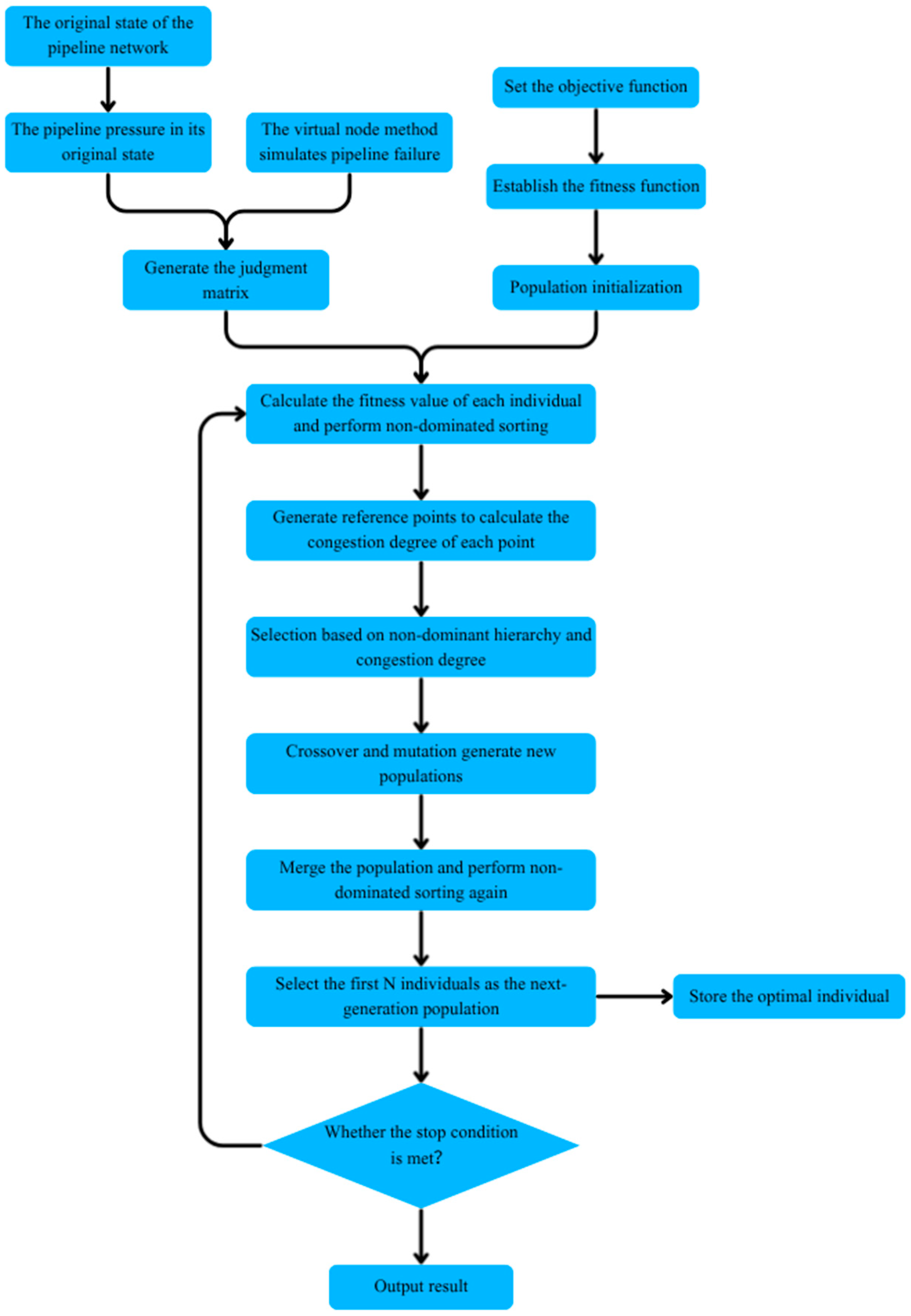
In summary, NSGA-III is an evolutionary algorithm particularly well-suited for high-dimensional multi-objective optimization problems. Its core innovation lies in using reference points to guide the uniform distribution of solutions, effectively mitigating the clustering or uneven distribution of solutions that often arises as the number of objectives increases [29]. While inheriting the non-dominated sorting framework from NSGA-II, NSGA-III significantly enhances solution diversity in high-dimensional spaces, making it a powerful tool for complex multi-objective optimization tasks. Given that the multi-objective placement of monitoring points in urban water supply networks constitutes a highly complex optimization problem, this study employs the NSGA-III algorithm for layout optimization and conducts a comparative analysis with NSGA-II. The workflow of the NSGA-III algorithm is illustrated in Figure 2.

3. Results and Discussion

3.1. Research Cases and Experimental Setup

In this study, the classic Net3 water distribution network is selected as the research case, and its network topology is shown in Figure 3.
The Net3 water distribution network is characterized by two water sources, three elevated storage tanks, 92 junctions, and 117 pipes. Pipe diameters range from DN250 to DN750, with a total length of 65.7 km. Following the settings reported in [30], the background noise threshold is set to 1.9 m, the additional flow velocity induced in the pipes is 1.0 m/s, and the minimum distance between monitoring points is constrained to 1000 m.
In the pressure-driven analysis (PDA) model adopted in this study, the relationship between nodal head and available discharge follows the pressure–demand function proposed by Wagner. To ensure physical realism and prevent overestimation of demand under high-pressure conditions, a flow saturation mechanism is incorporated. The model parameters are set as follows: the minimum pressure threshold, H m i n , is 0 m, at which the node has no supply capacity; the service pressure threshold, H s , is 20 m, above which the discharge remains constant at 100% of the required demand, thereby satisfying the physical constraint of demand saturation.
The pressure exponent, α , is set to 0.5. This exponent characterizes the recovery of supply capacity within the partial-service zone (0 m < P j , a c t < 20 m). Its concave functional form captures the rapid initial increase in delivered flow as pressure rises from zero, while the H s cutoff ensures that consumption does not increase indefinitely.
The uniform choice of H s = 20 m is dictated by the characteristics of the Net3 benchmark network, which lacks localized data on building heights, consumer types, or precise topographic variations. In the absence of such metadata, 20 m provides a robust surrogate for the standard service pressure required by typical multi-story residential buildings. By employing this piecewise function, the model more accurately represents actual demand behavior under extreme conditions, such as pressure drops caused by pipe bursts, thereby providing a reliable hydraulic foundation for the optimization of sensor placement.
A time-delayed hydraulic state simulation is employed, in which pressures at all junctions under normal operating conditions are first computed and subsequently used to perform the delayed-response hydraulic analysis. As described previously, the virtual node method (VNM) is applied to simulate pipe failures. Specifically, the original pipe between two nodes is removed and replaced with two pipes of identical diameter and material, each with half of the original length, connected through an additional virtual node. The resulting network topology after inserting the virtual nodes is illustrated in Figure 4.
After the insertion of virtual nodes, a pressure-driven analysis (PDA) model is applied. A burst-flow demand is assigned to each virtual node, with the corresponding increase in flow velocity set to 1.0 m/s. Subsequently, the Dijkstra algorithm is employed to compute the shortest paths. This algorithm, based on a greedy strategy that expands outward from a source node, is widely used to determine the shortest paths from a single source to all other nodes in a weighted graph [31]. Finally, the computed results are incorporated into the NSGA-III and NSGA-II algorithms for simulation-based optimization, yielding the final solutions.

3.2. Optimization Results and Algorithm Performance Evaluation

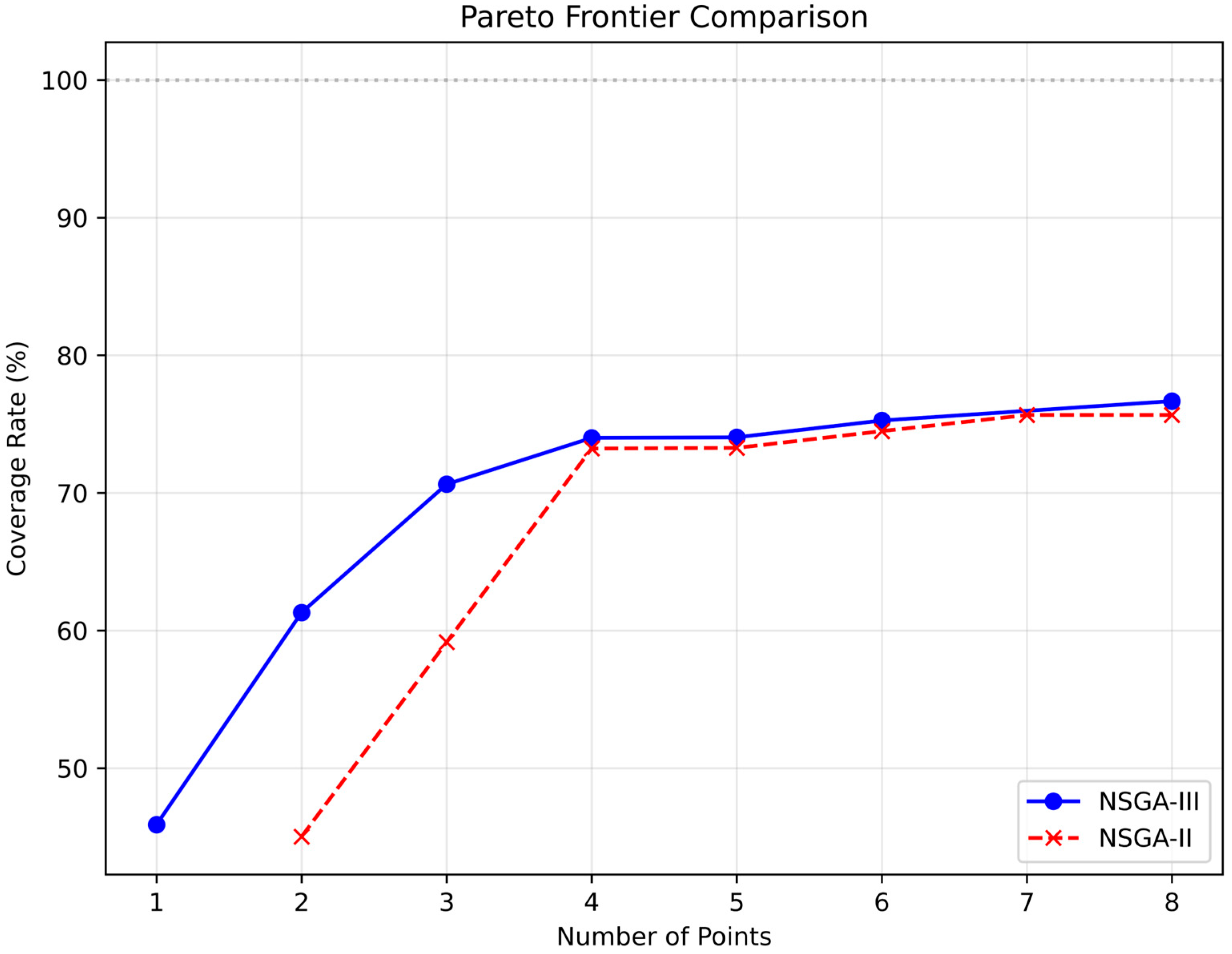
Table 1 and Table 2 present the failure coverage of different schemes obtained using the NSGA-III and NSGA-II algorithms, respectively. Figure 5 illustrates the Pareto front comparison between the two algorithms.
In practical applications of optimized monitoring point deployment, coverage rate is a key indicator for evaluating the spatial awareness of a monitoring system, and the quality of the deployment scheme directly determines the network’s control over critical areas. A comparison of NSGA-II and NSGA-III performance under varying numbers of monitoring points shows that, as the deployment scale increases, the coverage rate of optimized schemes obtained by both algorithms exhibits a pronounced upward trend. However, at the initial stage with limited deployment resources, NSGA-III demonstrates spatial optimization efficiency far exceeding that of NSGA-II. This indicates that, under low-cost deployment conditions, NSGA-III can effectively identify and cover key nodes within the monitoring area through a more systematic Pareto search mechanism, avoiding the premature formation of monitoring blind spots and providing a robust solution for initial network deployment under budget constraints.
Further analysis of the evolution characteristics of the deployment schemes reveals that both algorithms reach an “inflection point” in coverage rate growth when the number of monitoring points is four. As the number of points increases from four to eight, the incremental gain in coverage narrows significantly, and the curve approaches a plateau. This phenomenon indicates a spatial coverage redundancy effect in the monitoring point layout. During this stage, NSGA-III maintains its leading coverage performance, achieving a maximum coverage rate of approximately 76.67%, whereas the NSGA-II scheme shows slightly lower coverage. This difference is primarily attributed to NSGA-II’s crowding distance mechanism, which, in high-dimensional objective spaces, tends to generate unnecessary clustering of monitoring points in local areas, reducing overall spatial balance. In contrast, NSGA-III, guided by predefined reference points, ensures a more uniform distribution of solutions along the Pareto front, providing diverse and representative deployment combinations that enable decision-makers to achieve a scientific trade-off between coverage effectiveness and construction and maintenance costs.
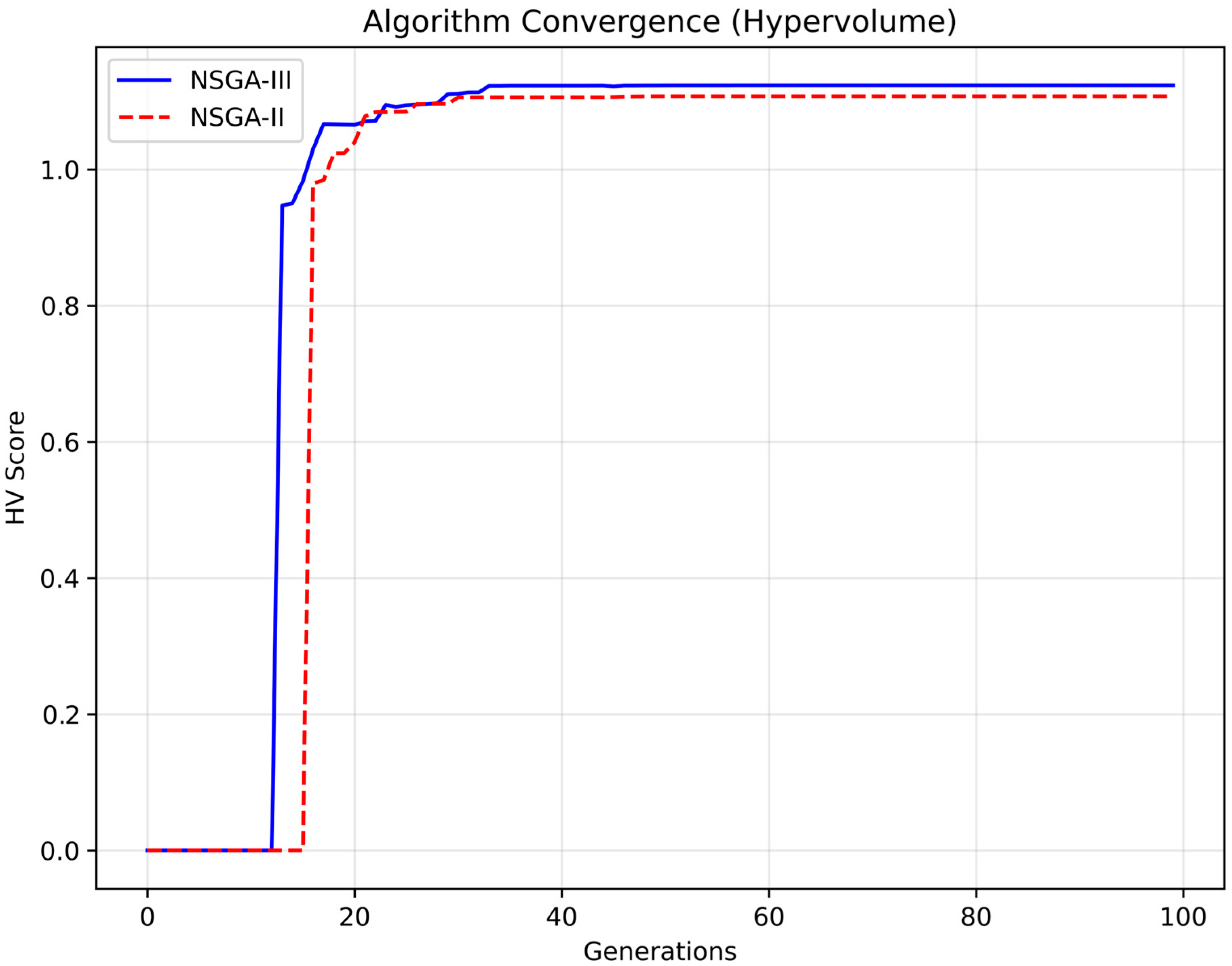
To further evaluate the reliability of the optimization schemes, this study employs the hypervolume (HV) and spacing (S-Metric) metrics to assess the convergence process and solution set diversity of the algorithms. Figure 6 illustrates the HV evolution of the two algorithms over 100 generations. The results indicate that NSGA-III exhibits a marked advantage in convergence speed, with its HV value rising sharply around generation 12 and entering the high-coverage search region earlier than NSGA-II. Ultimately, NSGA-III converges to a higher HV level, demonstrating that its set of monitoring point placement schemes possesses superior Pareto dominance and broader coverage in the objective space, providing decision-makers with more effective overall deployment options.
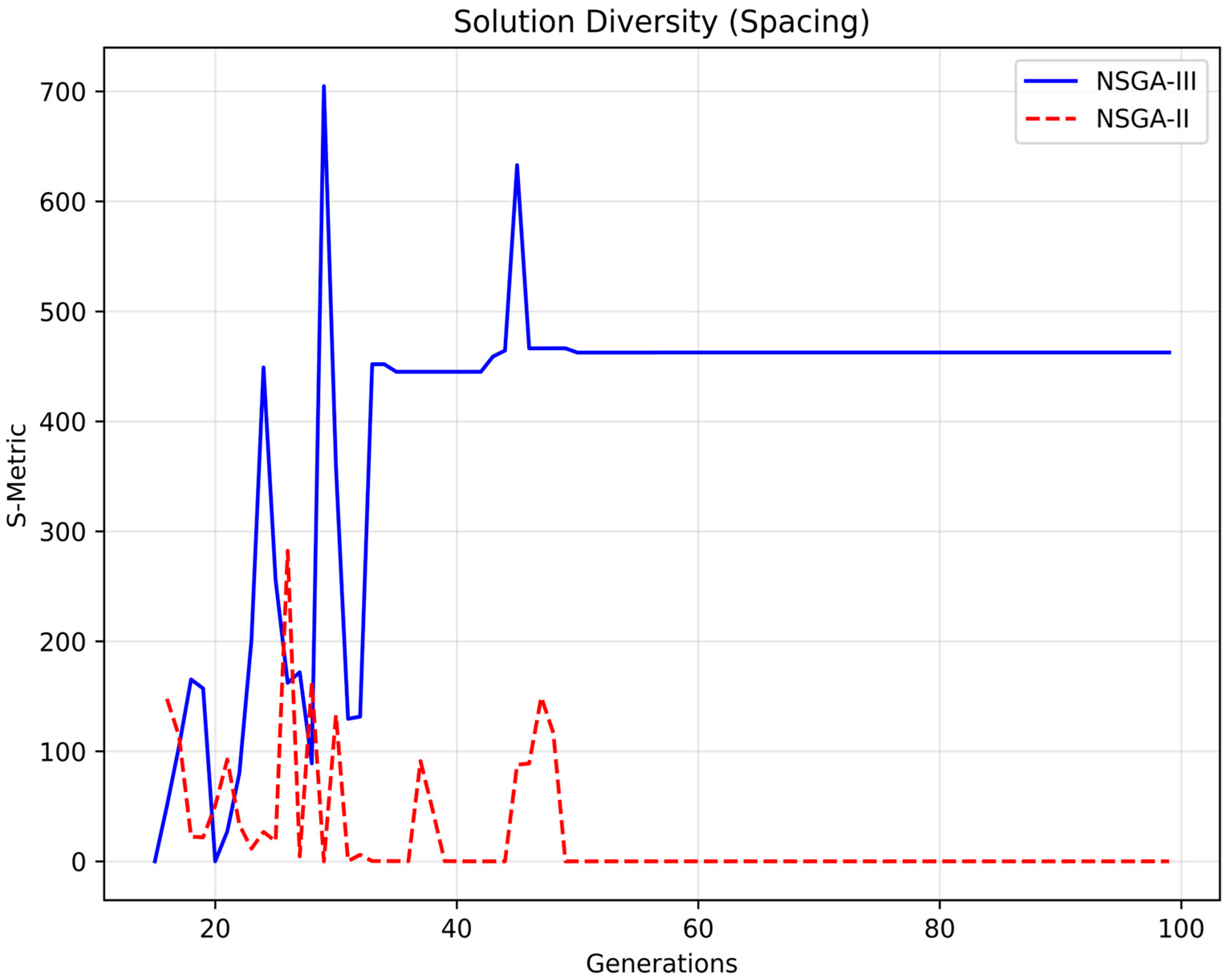
Figure 7 presents the analysis of the spacing metric, highlighting the essential differences between the two algorithms in the spatial distribution of monitoring points. The spacing metric quantifies the uniformity of distribution among solutions in the Pareto set, where smaller and more stable values indicate greater homogeneity. Observations show that NSGA-II’s S-Metric rapidly approaches zero in the later stages of evolution, which typically signals premature convergence or homogenization, meaning that the identified schemes are highly similar in spatial location or coverage performance, lacking diversity. In contrast, NSGA-III maintains a higher S-Metric with remarkable stability after generation 50, reflecting a well-balanced distribution of monitoring schemes that capture significant spatial differences and diverse objectives—such as balancing local high-precision monitoring with global wide-area coverage—thereby avoiding redundancy and overlap in deployment schemes.
Considering both convergence speed and solution diversity, NSGA-III demonstrates stronger robustness in monitoring point optimization. It not only rapidly identifies high-coverage areas but, through its reference-point-guided mechanism, preserves representative schemes with distinct spatial layouts. This has important practical implications: when a pre-selected monitoring point cannot be implemented due to site constraints (e.g., lack of power supply or unstable geology), the diverse scheme set provided by NSGA-III allows engineers to quickly switch to geographically complementary alternatives without compromising overall monitoring effectiveness, significantly enhancing the flexibility and scientific rigor of monitoring system planning.

3.3. Sensitivity Analysis of Key Parameters

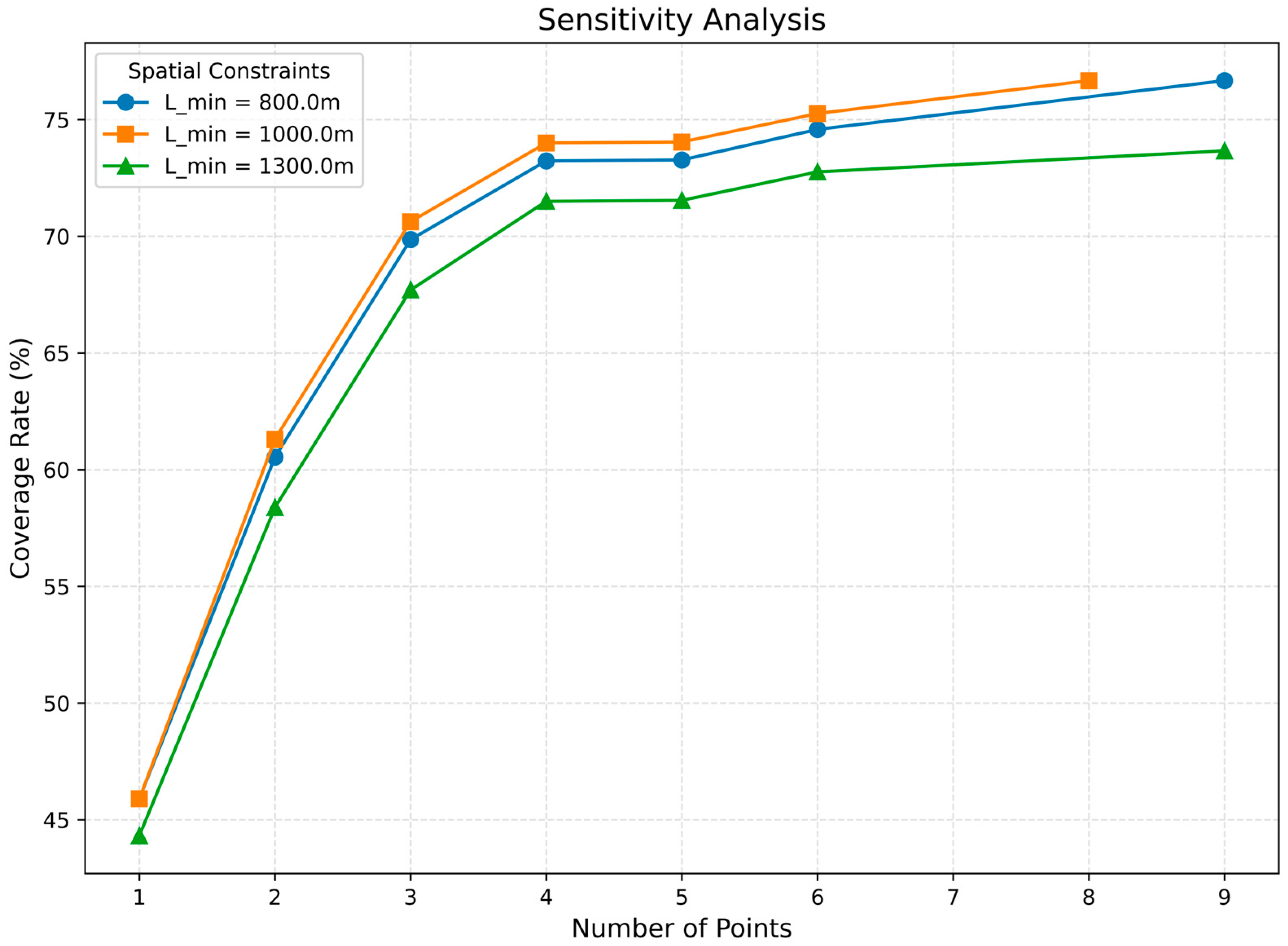
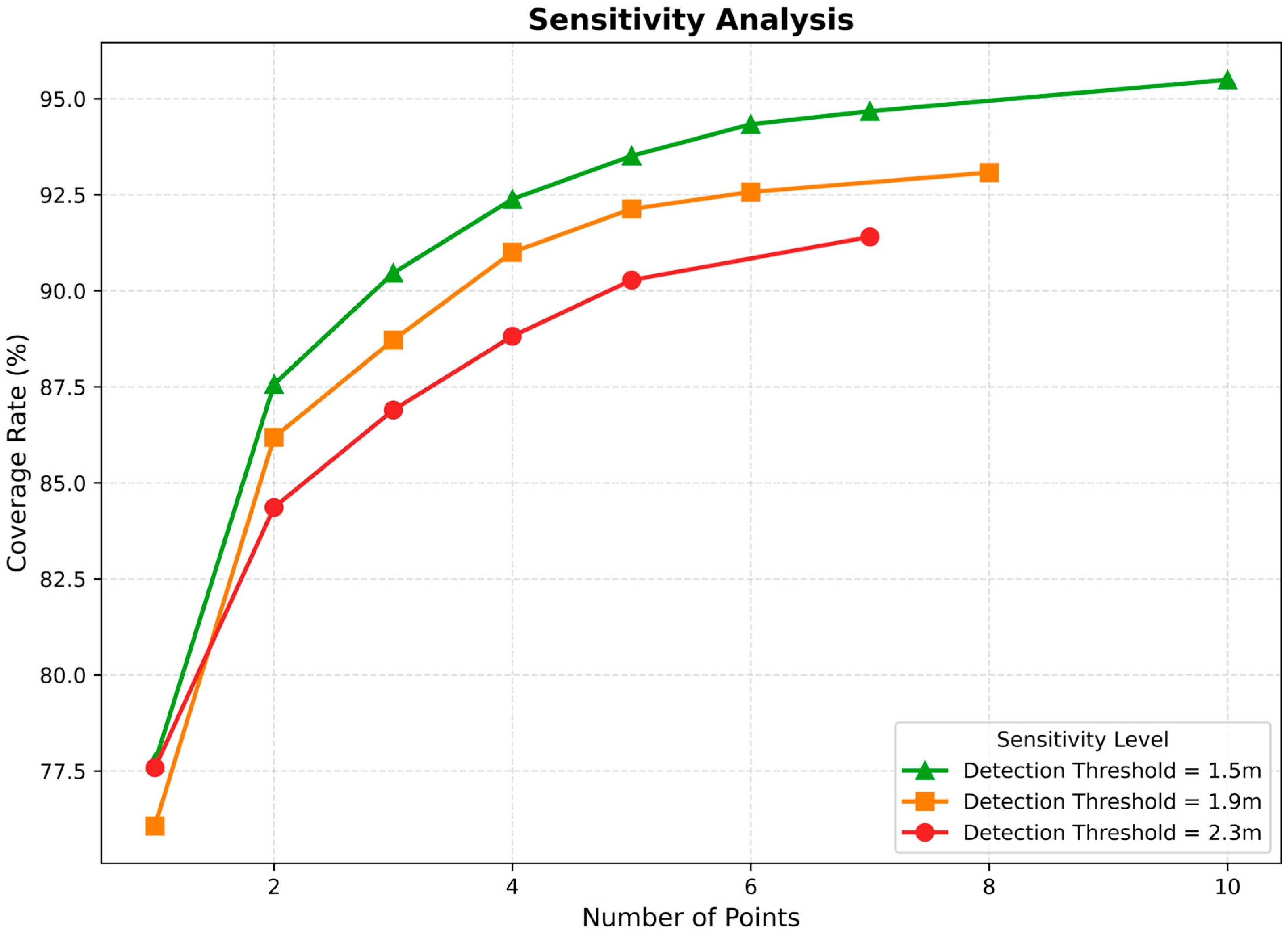
To further assess the robustness of the proposed optimization framework, sensitivity analyses were performed on two key experimental parameters: the minimum distance between monitoring points and the background noise detection threshold. These parameters play a critical role in balancing the spatial distribution of the monitoring network with detection accuracy. Figure 8 and Figure 9 present the sensitivity analyses of the minimum monitoring point distance and the detection threshold, respectively.
Minimum distance constraints prevent monitoring points from clustering excessively in locally highly sensitive areas, thereby ensuring a more uniform spatial distribution of sensors. As shown in Figure 8, when the minimum distance is set to a smaller value, the optimization algorithm can place monitoring points more flexibly on nodes with higher sensitivity. As the distance constraint increases, monitoring points are forced to become more dispersed. Although larger distance constraints can enhance global spatial diversity, for a fixed number of monitoring points, this may reduce the maximum achievable coverage. For the Net3 network, a value of 1000 m provides an optimal balance between avoiding redundant sensor deployment and maintaining high fault awareness across the entire system.
The detection threshold represents the system’s sensitivity to pressure changes induced by pipe ruptures. Based on historical data and background noise, this study sets the threshold at 1.9 m. Figure 9 illustrates the response of monitoring coverage to changes in this threshold. Coverage is highly sensitive to the threshold value: a lower threshold allows more nodes to detect a single rupture event, effectively expanding the fault perception matrix and improving overall coverage. Conversely, as the threshold increases, the sensing range of each monitoring point decreases because only significant pressure drops are recorded as valid fault signals. Consequently, more monitoring points would be required to achieve the same level of network security. This analysis confirms that a threshold of 1.9 m is appropriate for the Net3 network, ensuring the detection of significant rupture events while minimizing the influence of minor hydraulic fluctuations.

3.4. Extended Case Study

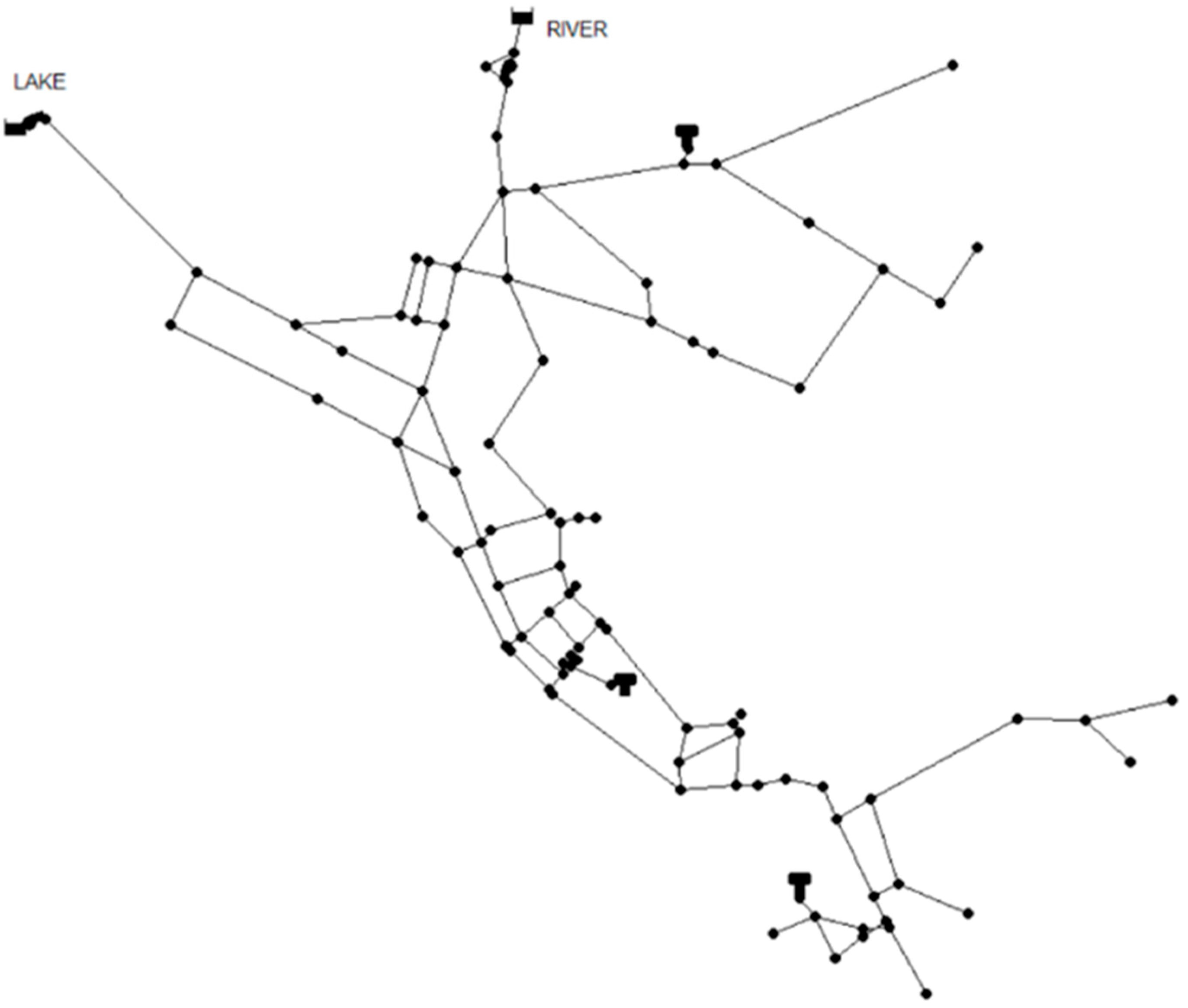
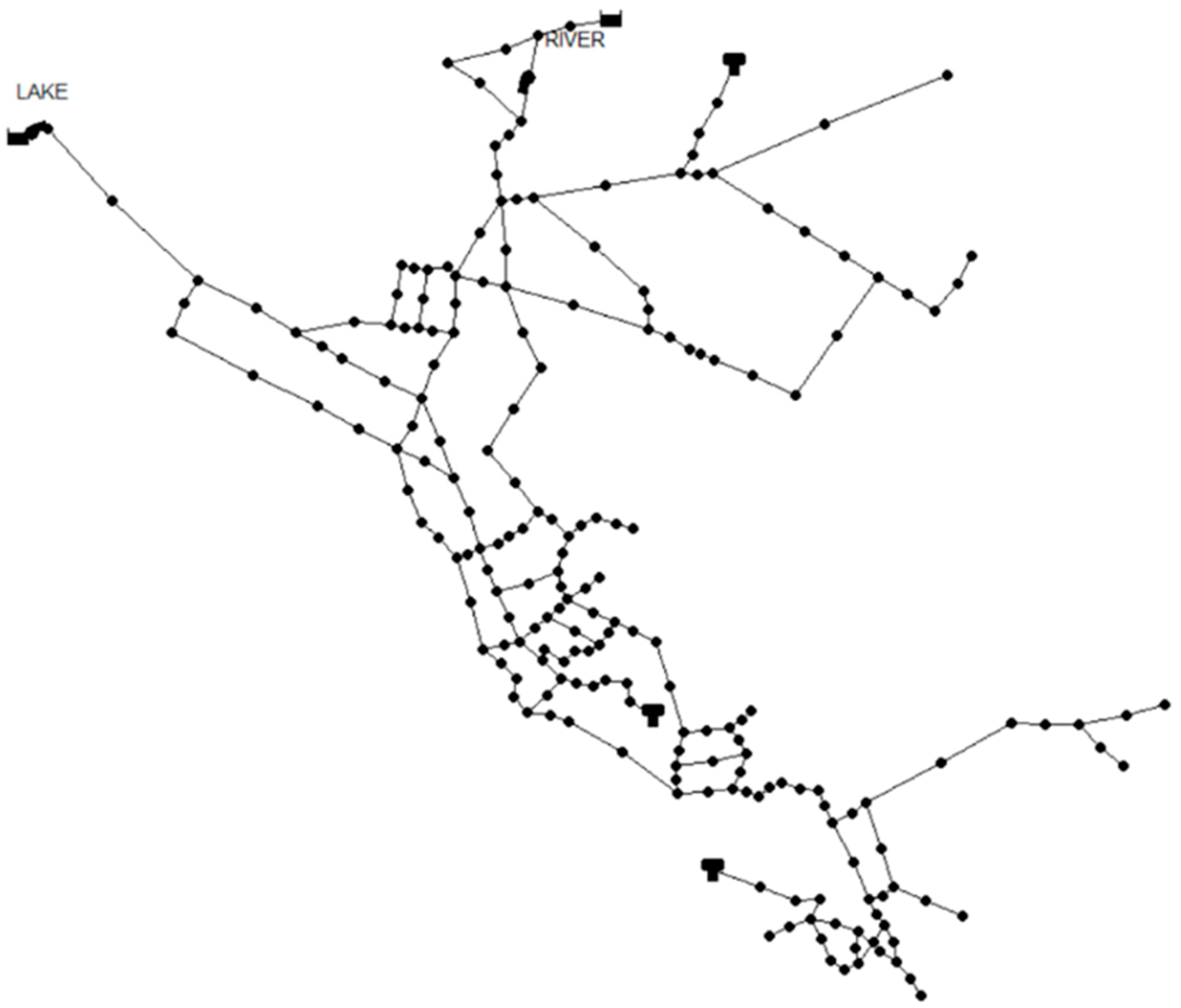
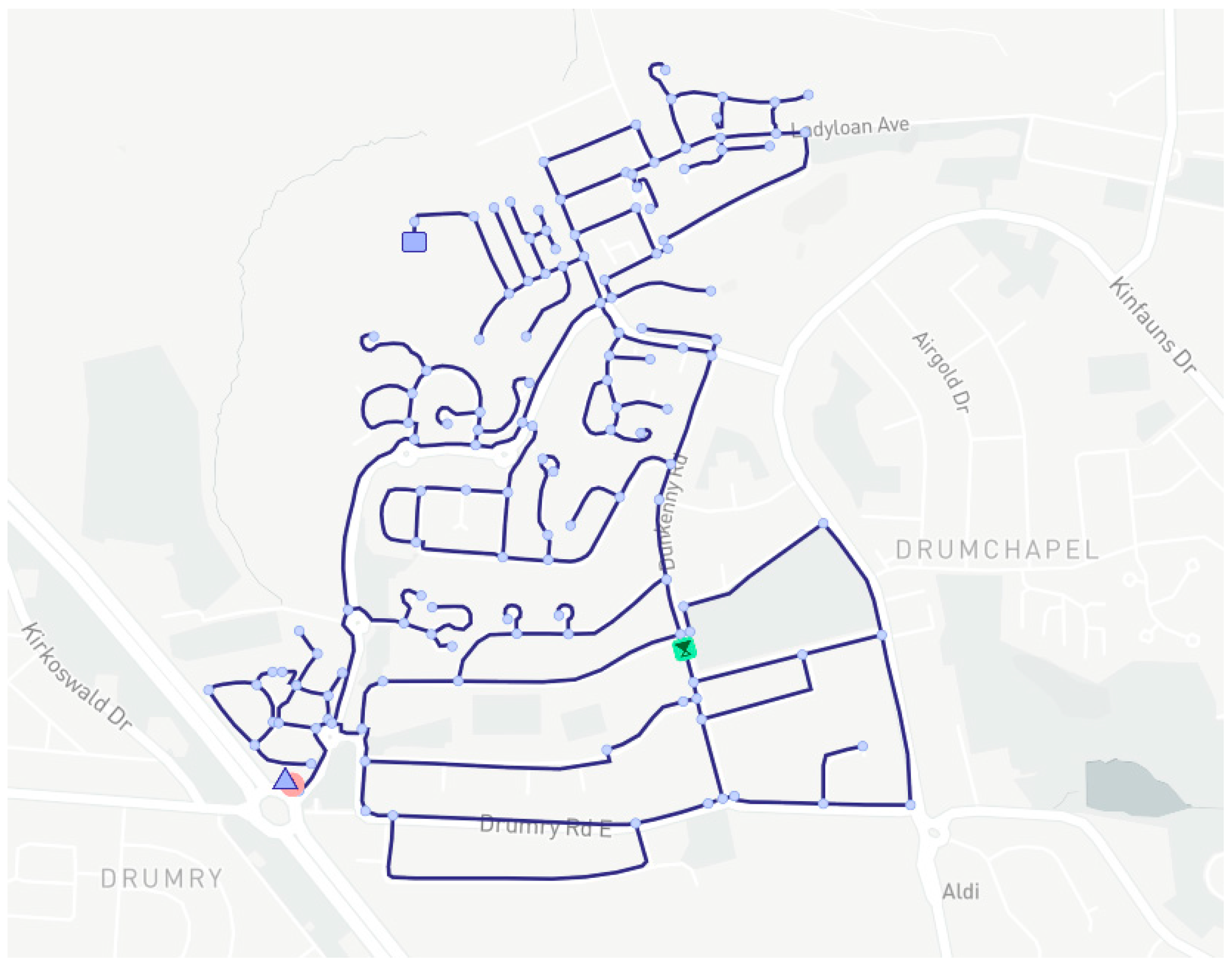
To further validate the generalizability of the results and strengthen the reliability of the conclusions, a small section of the water distribution network in the Drumchapel area, northwest of Glasgow, Scotland, was selected for verification. The network topology is shown in Figure 10.
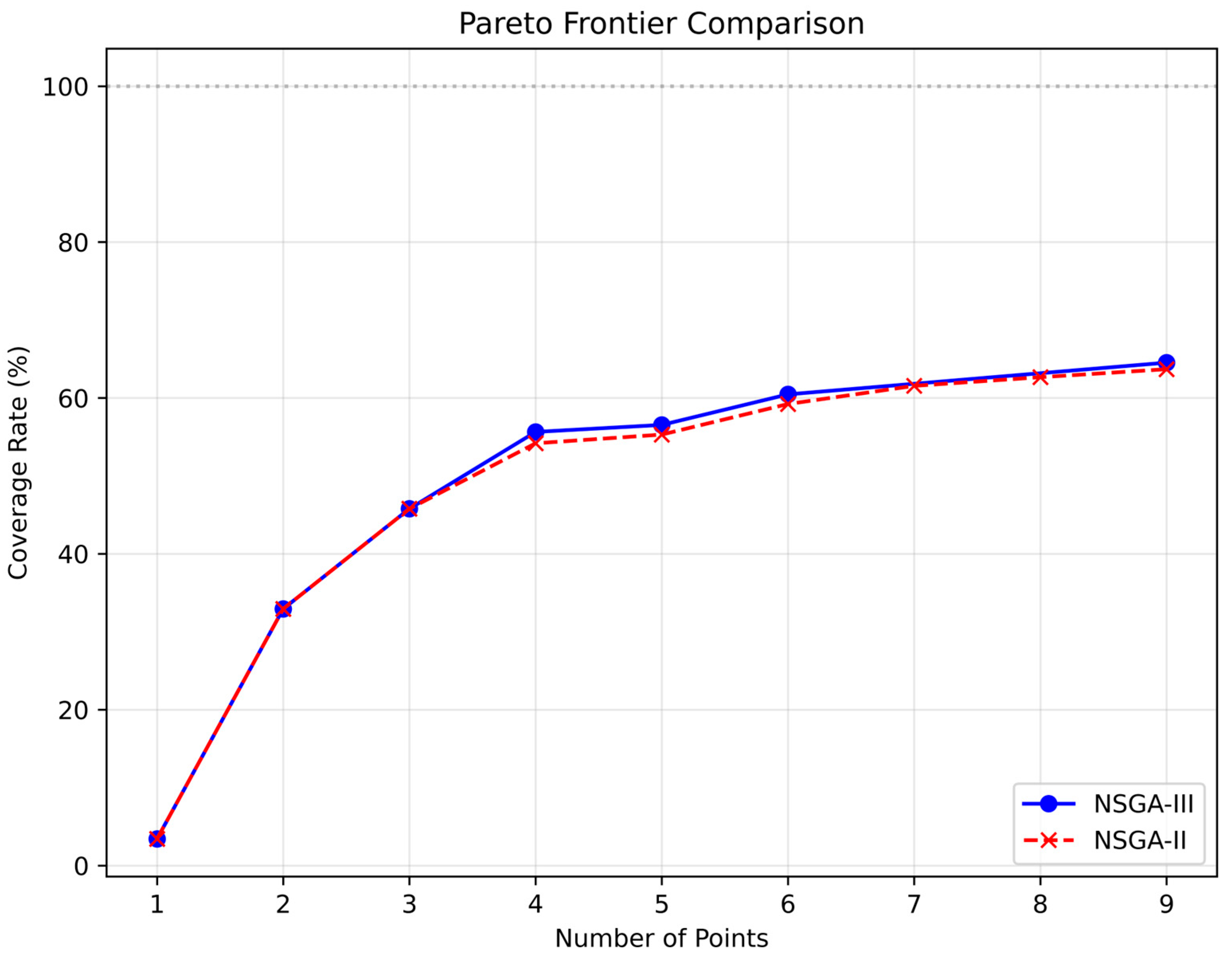
Using the same methodology and appropriately selected parameters, the optimized monitoring point placement for the Drumchapel network was obtained. Table 3 and Table 4 present the fault coverage rates of different schemes generated by the NSGA-III and NSGA-II algorithms, respectively. Figure 11 provides a comparison of the Pareto fronts obtained by the two algorithms.
An extended case study of the Drumchapel water distribution network demonstrates that both NSGA-III and NSGA-II are effective in handling monitoring point layouts for complex real-world networks. As the number of monitoring points increases, the fault coverage rates of both algorithms exhibit a stepwise upward trend, largely consistent with the findings from the Net3 case study.
Specifically, regarding coverage performance, when nine monitoring points are deployed, NSGA-III achieves a maximum coverage rate of 64.53%, slightly surpassing NSGA-II’s 63.69%. This further highlights the superiority of NSGA-III in global search capability and in producing a well-distributed Pareto solution set. The comparison of Pareto fronts in Figure 11 illustrates that NSGA-III generates a more evenly distributed solution set across the objective space, providing decision-makers with a range of representative deployment schemes under different budget scenarios (i.e., varying numbers of monitoring points).
The verification results from this case study further confirm that the PDA- and NSGA-III-based optimization framework proposed in this study is highly versatile. It can be effectively applied not only to standard benchmark networks but also to real-world urban water distribution systems with diverse topologies, thereby enhancing the network’s fault perception capability and improving the efficiency of operation and maintenance in response to sudden failures, such as pipe bursts.

4. Conclusions

This study proposes a multi-objective optimization framework for the placement of pressure monitoring points in urban water supply networks. The framework integrates pressure-driven analysis (PDA), the virtual node method (VNM), and evolutionary optimization algorithms. By explicitly accounting for pressure-dependent hydraulic behaviors under pipeline rupture conditions, it overcomes the limitations of traditional demand-driven approaches and more realistically captures the network’s response to faults.
A fault perception matrix based on nodal pressure changes is constructed to quantify the detectability of candidate monitoring points for pipeline rupture events. Based on this, a bi-objective optimization model is formulated to maximize fault coverage while minimizing the number of monitoring points, incorporating practical engineering constraints such as minimum spatial separation between sensors. The proposed method is systematically evaluated using the Net3 benchmark network, and further validated on a real-world network (Drumchapel) to demonstrate its general applicability.
Results indicate that NSGA-III outperforms NSGA-II in solution quality, convergence speed, and spatial diversity of the Pareto solution set. Under constrained deployment conditions, NSGA-III achieves higher fault coverage, highlighting its superior capability to identify critical monitoring locations and reduce spatial redundancy. Sensitivity analysis shows that key parameters, including the minimum distance between monitoring points and the pressure detection threshold, significantly influence monitoring coverage, confirming the robustness of the framework within practical parameter ranges.
Overall, this study presents a systematic, engineering-oriented approach for pressure sensor deployment in urban water distribution networks. The proposed framework enhances pipe burst detection capabilities, supports efficient resource allocation, and provides practical guidance for improving the reliability and sustainability of water supply systems.
Despite these promising results, several limitations warrant future investigation. First, variations in key parameters directly affect the structure of the fault perception matrix, which in turn impacts optimization outcomes. More comprehensive analyses could quantify these effects on monitoring performance. Second, the PDA model uses uniform minimum and service pressure thresholds due to the lack of detailed node-specific water demand and building data. While appropriate for benchmark studies, this assumption may not fully capture the spatial heterogeneity of real urban networks. Future research could integrate GIS, remote sensing, or other geographic information to assign refined, node-specific pressure thresholds, thereby more accurately reflecting variations in elevation, building height, and user type. Finally, this study focuses on steady-state failure scenarios; extending the framework to incorporate time-varying water demand and transient pressure responses would further enhance its applicability for real-time monitoring and operational decision-making in urban water supply systems.

Author Contributions

Author Contributions: Conceptualization, Q.L. and A.C.; methodology, Z.L.; software, Z.L.; validation, Q.L., Z.L. and A.C.; formal analysis, Z.L.; investigation, A.C.; resources, Q.L.; data curation, Z.L.; writing—original draft preparation, Z.L.; writing—review and editing, A.C.; visualization, A.C.; supervision, Q.L.; project administration, Q.L.; funding acquisition, Q.L. All authors have read and agreed to the published version of the manuscript.

Funding

This research was funded by National Key Research and Development Program of China, grant number 2022YFC3801000 and The APC was funded by National Key Research and Development Program of China.

Institutional Review Board Statement

Not applicable.

Informed Consent Statement

Not applicable.

Data Availability Statement

The raw data supporting the conclusions of this article will be made available by the authors on request.

Conflicts of Interest

The authors declare no conflicts of interest. The funders had no role in the design of the study; in the collection, analyses, or interpretation of data; in the writing of the manuscript; or in the decision to publish the results.

References

  1. Chen, B.; Zhang, Z.; Fu, H.; Tu, J.; Wang, T.; Zhao, M.; Ding, X.; Wu, F.; Liu, W. Research on Multi-Factor Optimization Method for Water Quality Monitoring Point Layout Based on Hydraulic Model. J. Chongqing Univ. 2019, 42, 92–100. [Google Scholar]
  2. Zhao, W.; Du, K.; Meng, F.; Luo, X.; Zhou, M.; Song, Z. Multi-Objective Optimization of Pressure Monitoring Points for Pipe Burst Detection in Water Supply Networks. China Water Wastewater 2023, 39, 57–62. [Google Scholar] [CrossRef]
  3. Lin, B.; Zhou, H.; Yu, T. Layout of Hydraulic Calibration Monitoring Points Based on Node Similarity in Water Supply Networks. Sci. Technol. Bull. 2023, 39, 52–55+75. [Google Scholar] [CrossRef]
  4. Liu, S. Optimization of Pressure Monitoring Point Layout and Leakage Localization in Water Supply Networks Based on Hydraulic Modeling. Master’s Thesis, Qingdao University of Technology, Qingdao, China, 2022. [Google Scholar]
  5. Chen, Y. Pipe Burst Localization in Water Supply Networks Based on Model-Driven and Pipe Flow Sensitivity Analysis. Master’s Thesis, Kunming University of Science and Technology, Kunming, China, 2022. [Google Scholar]
  6. Yue, H. Optimization of Pressure Monitoring Point Layout and Pipe Burst Early Warning in Water Supply Networks Based on Swarm Intelligence Algorithms. Master’s Thesis, Qingdao University of Technology, Qingdao, China, 2021. [Google Scholar]
  7. Wang, T.; Yang, J.; Zhang, H.; Zhang, K.; Zhou, X. Optimization of Pressure Monitoring Point Layout in Water Networks Using Particle Swarm Improved FCM Clustering Algorithm. China Water Wastewater 2021, 57, 140–144. [Google Scholar] [CrossRef]
  8. He, R.; Yu, T.; Shao, Y. Optimal Placement of Pressure Measurement Points for Pipe Burst Monitoring in Water Supply Networks. China Water Wastewater 2020, 36, 36–40. [Google Scholar] [CrossRef]
  9. Diwold, K.; Ruhnke, T.; Middendorf, M. Sensor Placement in Water Networks Using a Population-Based Ant Colony Optimization Algorithm. In Proceedings of the 2nd International Conference on Computational Collective Intelligence: Technologies and Applications, Kaohsiung, Taiwan, 10–12 November 2010; pp. 426–437. [Google Scholar]
  10. Peng, S.; Cheng, J.; Wu, X.; Fang, X.; Wu, Q. Pressure Sensor Placement in Water Supply Network Based on Graph Neural Network Clustering Method. Water 2022, 14, 150. [Google Scholar] [CrossRef]
  11. Santos-Ruiz, I.; Lopez-Estrada, F.-R.; Puig, V.; Valencia-Palomo, G.; Hernandez, H.-R. Pressure Sensor Placement for Leak Localization in Water Distribution Networks Using Information Theory. Sensors 2022, 22, 443. [Google Scholar] [CrossRef]
  12. Zhang, T.; Shuai, J.; Shuai, Y.; Hua, L.; Xu, K.; Xie, D.; Mei, Y. Efficient prediction method of triple failure pressure for corroded pipelines under complex loads based on a backpropagation neural network. Reliab. Eng. Syst. Saf. 2023, 231, 108990. [Google Scholar] [CrossRef]
  13. Siyi, W.; Xiangwei, Z.; Jiaying, W.; Tao, T.; Kunlun, X.; Hexiang, Y.; Shuping, L. Optimal sensor placement for the routine monitoring of urban drainage systems: A re-clustering method. J. Environ. Manag. 2023, 335, 117579. [Google Scholar] [CrossRef] [PubMed]
  14. Li, C.; Du, K.; Tu, J.; Dong, W. Optimal Placement of Pressure Sensors in Water Distribution System Based on Clustering Analysis of Pressure Sensitive Matrix. Procedia Eng. 2017, 186, 405–411. [Google Scholar] [CrossRef]
  15. Nejjari, F.; Sarrate, R.; Blesa, J. Optimal pressure sensor placement in water distribution networks minimizing leak location uncertainty. In Proceedings of the Computing and Control for the Water Industry (CCWI2015)—Sharing the Best Practice in Water Management, Leicester, UK, 2–4 September 2015; pp. 953–962. [Google Scholar]
  16. Guan, Y.; Lv, M.; Li, S.; Su, Y.; Dong, S. Optimized Sensor Placement of Water Supply Network Based on Multi-Objective White Whale Optimization Algorithm. Water 2023, 15, 2677. [Google Scholar] [CrossRef]
  17. Su, Y. Optimization of Pressure Monitoring Point Placement and Multi-Scenario Leakage Localization Based on Hydraulic Model of Water Supply Networks. Master’s Thesis, Qingdao University of Technology, Qingdao, China, 2023. [Google Scholar]
  18. Lee, H.; Choi, S.-H. Flow analysis using RDDA method with actual usage in water distribution network. Int. J. Eng. Technol. 2018, 7, 218. [Google Scholar] [CrossRef]
  19. Kumar, S.; Singh, I.V.; Mishra, B.K.; Rabczuk, T. Modeling and simulation of kinked cracks by virtual node XFEM. Comput. Methods Appl. Mech. Eng. 2015, 283, 1425–1466. [Google Scholar] [CrossRef]
  20. Molino, N.P.; Bao, Z.; Fedkiw, R. A virtual node algorithm for changing mesh topology during simulation. ACM Trans. Graph. 2004, 23, 385–392. [Google Scholar] [CrossRef]
  21. Cai, Y.; Long, Z.; Shao, Y.; Chu, S.; Yu, T. Optimization of Pressure Monitoring Point Layout for Pipe Burst Monitoring in Water Supply Networks. China Water Wastewater 2023, 39, 59–64. [Google Scholar] [CrossRef]
  22. Wagner, J.M.; Shamir, U.; Marks, D.H. Water Distribution Reliability: Simulation Methods. J. Water Resour. Plan. Manag. 1988, 114, 276–294. [Google Scholar] [CrossRef]
  23. van Zyl, J.E.; Cassa, A.M. Modeling Elastically Deforming Leaks in Water Distribution Pipes. J. Hydraul. Eng. 2014, 140, 182–189. [Google Scholar] [CrossRef]
  24. Dai, X.; Guo, J.; Jin, J. Online Optimization of Pressure Monitoring Points in Water Supply Networks for Pipe Burst Detection. Water Supply Technol. 2023, 17, 46–50. [Google Scholar]
  25. Dai, Y. Optimization of Pressure Monitoring Points in Water Supply Networks Based on K-means Clustering. Build. Saf. 2014, 29, 74–77. [Google Scholar]
  26. Li, D.; Xue, H.; Zhang, W. Optimization of Pressure Monitoring Point Placement in Water Supply Networks for Fault Diagnosis. Civ. Archit. Environ. Eng. 2018, 40, 53–61. [Google Scholar]
  27. Xie, Z.; Wang, P.; Wang, F.; Huang, S.; Wang, L.; Tian, S.; Jiang, S.; Zhang, J. Optimization and Application of Network Monitoring Point Location Based on Comprehensive Safety Evaluation. China Water Wastewater 2023, 39, 59–67. [Google Scholar] [CrossRef]
  28. Yuan, Z.; Yang, K.; Chen, J.; Qian, L.; Li, Z.; Wu, J. Multi-Objective Optimization Scheme for Regional Water Resources Based on NSGA-III. People’s Yellow River 2024, 46, 79–84+153. [Google Scholar]
  29. Ji, R.; Wang, Z.; Long, Z.; Zhang, Z.; Zhou, Z.; Tu, Y.; Li, B. Optimization Model for Water Quality Monitoring Points in Water Supply Networks Based on Risk Assessment. China Water Wastewater 2021, 37, 52–59. [Google Scholar] [CrossRef]
  30. Cheng, W.; Chen, Y.; Xu, G. Optimizing Sensor Placement and Quantity for Pipe Burst Detection in a Water Distribution Network. J. Water Resour. Plan. Manag. 2020, 146, 04020088. [Google Scholar] [CrossRef]
  31. Li, X. Multi-Objective Optimization of Water Quality Monitoring Point Placement in Water Supply Networks. Master’s Thesis, Lanzhou University of Technology, Lanzhou, China, 2023. [Google Scholar]
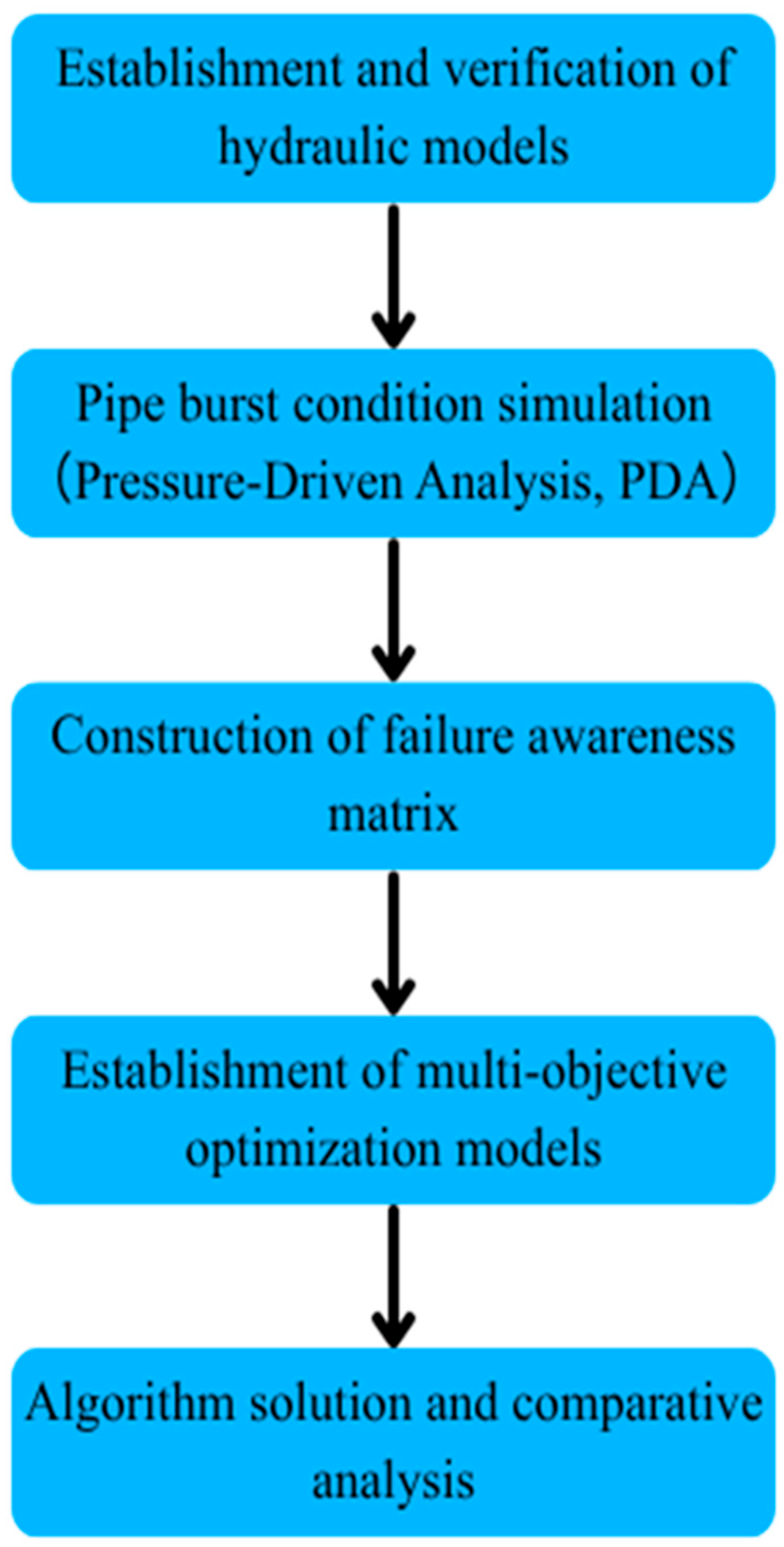
Figure 1. Overall research flowchart.
Sustainability 18 01460 g001
Figure 2. Flowchart of the NSGA-III algorithm optimization model.
Sustainability 18 01460 g002
Figure 3. Topology of the Net3 water distribution network.
Sustainability 18 01460 g003
Figure 4. Topology of the water distribution network after virtual node insertion.
Sustainability 18 01460 g004
Figure 5. Comparison of Pareto fronts obtained by NSGA-III and NSGA-II for the Net3 network.
Sustainability 18 01460 g005
Figure 6. Algorithm convergence evaluated by hypervolume.
Sustainability 18 01460 g006
Figure 7. Solution diversity assessed using spacing.
Sustainability 18 01460 g007
Figure 8. Sensitivity analysis of the minimum distance between monitoring points.
Sustainability 18 01460 g008
Figure 9. Sensitivity analysis of the background noise detection threshold.
Sustainability 18 01460 g009
Figure 10. Topology of the Drumchapel water distribution network (the blue rectangle, blue triangle, and green icon represent the tank, reservoir, and valve, respectively).
Sustainability 18 01460 g010
Figure 11. Comparison of Pareto fronts obtained using NSGA-III and NSGA-II for the Drumchapel network.
Sustainability 18 01460 g011
Table 1. Failure coverage of different schemes using the NSGA-III algorithm.
Number of PointsSelected NodesCoverage Rate
121345.9
2107; 21361.31
315; 107; 21370.63
4107; 131; 141; 21374
5107; 131; 141; 183; 21374.04
6107; 131; 141; 183; 206; 21375.26
8101; 107; 131; 141; 183; 206; 213; 26176.67
Table 2. Failure coverage of different schemes using the NSGA-II algorithm.
Number of PointsSelected NodesCoverage Rate
2131; 14545.03
3103; 131; 14559.16
4103; 131; 145; 21373.23
5103; 131; 145; 183; 21373.27
6103; 131; 145; 183; 206; 21374.49
7103; 117; 131; 145; 183; 206; 21375.66
861; 103; 117; 131; 145; 183; 206; 21375.66
Table 3. Fault coverage of different monitoring schemes obtained using NSGA-III for the Drumchapel network.
Number of PointsSelected NodesCoverage Rate
11183.43
218; 11832.94
383; 18; 11845.78
483; 109; 18; 11855.64
583; 109; 18; 118; 3356.54
683; 109; 18; 100; 118; 3360.46
983; 109; 18; 100; 118; 125; 33; 4; 6564.53
Table 4. Fault coverage of different monitoring schemes obtained using NSGA-II for the Drumchapel network.
Number of PointsSelected NodesCoverage Rate
11193.43
2119; 6332.94
383; 119; 6345.78
483; 88; 119; 6354.18
583; 88; 27; 119; 6355.3
683; 88; 100; 27; 119; 6359.22
783; 88; 100; 27; 119; 4; 6361.55
883; 88; 100; 27; 119; 4; 57; 6362.66
983; 88; 100; 27; 119; 4; 41; 57; 6363.69
Disclaimer/Publisher’s Note: The statements, opinions and data contained in all publications are solely those of the individual author(s) and contributor(s) and not of MDPI and/or the editor(s). MDPI and/or the editor(s) disclaim responsibility for any injury to people or property resulting from any ideas, methods, instructions or products referred to in the content.