


Abstract
Contemporary higher education is increasingly bound within a neoliberal paradigm that commodifies learning and marginalizes Indigenous Knowledge Systems. We present a case for Cultural Sustainability as a candidate fourth pillar of higher education, via a PRISMA-ScR-guided ADO (Antecedents-Decisions-Outcomes) scoping review. A single-database Scopus search (20 April 2026), a limitation, screened 135 records; 110 were included and coded across 23 variables. Initial inter-coder reliability was low (κ = 0.293), rising to κ = 0.946 only after non-independent reconciliation. The most prevalent antecedent, decision, and outcome were colonial legacy (26.4%), decolonial pedagogy (29.1%), and epistemic parity (46.4%), respectively. Arts integration was the smallest decision cluster (14 articles, 12.7%). It shows complete (100%) overlap with the coding instrument’s arts-as-epistemology variable—an artifact of two closely related codes capturing the same underlying judgment rather than independent convergence—but only 42.9% co-occurrence with the broader Fourth Pillar construct, below decolonial pedagogy’s 73.8%. Evidence is geographically concentrated in South Africa, limiting generalizability. SDG alignment was coded in only 4 of 110 articles (3.6%)—a gap that makes the SDG framing here largely our own interpretive contribution, not a finding from the literature. None of the included records used the terms “cultural sustainability” or “NEP 2020” directly; the NEP 2020 mapping is likewise interpretive, offered as testable propositions rather than an implementation-ready model.
1. Introduction
The modern university is in an increasingly paradoxical position. Formally, it was designated as a seat of knowledge creation and guidance for civilization. Under prolonged pressure from neoliberal restructuring, it gradually reoriented itself toward narrow economic value. In this configuration, knowledge is primarily human capital, a tradable input to national productivity; education is a market transaction, calibrated by graduate employability and institutional rankings. Tikly [1] asserts that the current neoliberal social imaginary is, therefore, structurally at odds with the epistemic reorientations on transformation and sustainability that genuinely sustainable universities require.
Higher education has responded to this sustainability agenda by adopting the Triple Bottom Line model. The Triple Bottom Line is a framework for balancing economic, social, and environmental impacts. This model has enabled major developments in sustainability reporting and campus curricula. It seems, however, that even committed institutions struggle to hold the three dimensions together, let alone extend beyond them to a fourth.
The Triple Bottom Line model has a constitutive silence; it is more the absence of a vocabulary for the cultural dimension of sustainability, by which is meant the living systems of meaning, memory, and identity through which communities interpret and relate to the natural and social worlds. This is not an omission at the periphery; it is foundational. As Koya and Chowdhury [2] show through a systematic analysis of UNESCO policy documents, though culture has been formally recognized as the Fourth Pillar of sustainable development since Agenda 21 for Culture, its integration into higher-education practices remains structurally underdeveloped and epistemically contested.
Throughout this paper, “Cultural Sustainability” and “Fourth Pillar” are capitalized when referring to the specific construct this review advances; they are left lowercase when used as general descriptive terms, when referring to other authors’ or policy frameworks’ usage, or when quoted directly from search strings.
This “fourth pillar” framing did not originate in higher education. It was first proposed by Hawkes [3] for municipal and civic planning, and formalized as global policy through Agenda 21 for Culture [4], the document Koya and Chowdhury [2] trace above. Two decades of subsequent cultural-policy and urban-sustainability scholarship have further developed this framework, largely within civic and municipal governance contexts rather than higher education, and largely without engaging decolonial theory or Indigenous Knowledge Systems. What this paper does is different in kind, not merely in setting: it takes an established structural argument from cultural policy studies and reconstructs it through a decolonial, epistemic-justice lens, applied specifically to the university as an institution rather than the city or municipality.
This gap is compounded by what is increasingly being identified as a crisis of knowledge within the university. The historical record has not simply been distorted by colonialism; it has institutionalized a specific architecture of knowledge in which a single predominantly Western epistemic tradition is considered universally authoritative, and diverse Indigenous, communal, and non-Western knowledge systems are structurally subordinated [5]. The effects are strong and well-documented. Higher education is simultaneously portrayed by Khoo et al. [6] as a keystone for the continued reproduction of epistemic asymmetry and a crucial opportunity space for challenging that asymmetry and allowing more just and sustainable alternatives to proliferate. Walker and Martinez-Vargas [7] make a similar case for the foundational status of curriculum decolonization, not for justice alone but for the epistemic contribution capability of all students and their ability to participate as legitimate knowers within the shared academic enterprise. Mbah and Ezegwu [8] go further to argue that the continuous negation and alienation of Indigenous and local knowledge from the educational frameworks make it structurally impossible for learners to link the academic content with their lived sociocultural realities, with quantifiable effects on the quality of learning and relevance to the community.
What is missing from the current body of theory, however, is the mechanism through which Cultural Sustainability can be put into practice within higher education as a politically and organizationally real epistemic practice. Much of the existing literature on decoloniality and epistemic justice, while theoretically dense, has been developed within disciplinary silos; no synthesizing framework traces the pathway from structural conditions to pedagogical interventions to measurable outcomes. And it is this gap that the present article aims to fill.
We examine whether arts integration—not aesthetic enrichment, but a rigorous, boundary-crossing epistemic practice—functions as a distinctive institutional pathway through which Cultural Sustainability can be advanced as the Fourth Pillar of higher education. This question concerns arts integration’s coupling with the Fourth Pillar construct specifically, not its prevalence relative to other decision-layer responses; both are examined directly in Section 4. We also ask whether this pathway aligns with normative frameworks set at the level of international policy. Three frameworks are relevant: the mandate of SDG 4.7 for transformative global citizenship education that recognizes cultural literacy as cognitive competence [9]; SDG 11.4’s mandate to protect and safeguard the world’s cultural and natural heritage [10]—a mandate this synthesis considers in relation to higher education institutions specifically, an interpretive move developed further at RQ4; and India’s National Education Policy (NEP) 2020, which mandates arts integration across educational tiers as a mechanism for cultivating multidisciplinary and culturally grounded cognitive architectures [11].
This translational orientation matters specifically for readers situated in the Asia-Pacific context. The empirical literature on decoloniality and epistemic justice that this review draws on is disproportionately generated outside the region, particularly in South Africa; direct, India-specific scholarship engaging cultural sustainability, Indigenous Knowledge Systems, or NEP 2020 [12] by name remains scarce. Rather than treating this asymmetry as a limitation on relevance, we treat it as the problem this review is positioned to address. Translating a theoretically mature but geographically concentrated decolonial literature into the policy vocabulary of an Asia-Pacific education system currently undergoing its own IKS-oriented reform is precisely the synthesis work that a single-region evidence base cannot do on its own—and that a systematic, cross-regional review can. What this review offers to NEP 2020 implementation, then, is not a summary of existing India-based findings, of which there are very few, but an explicit, auditable mapping of globally dispersed decolonial and arts-integration evidence onto the structural provisions of a specific Asia-Pacific policy instrument, a mapping whose evidentiary limits we return to directly in the Discussion and Limitations. We state the central one here rather than only later: none of the 135 screened records use the terms “National Education Policy,” “NEP 2020,” or “cultural sustainability” directly, so the mapping onto those constructs throughout this review is our own interpretive contribution, not a finding reported by the included studies themselves.
Despite the urgency of scholarly discourse on epistemic justice and cultural sustainability, no existing review has used an integrated methodological framework to synthesize how arts integration might function as a candidate mechanism for advancing Cultural Sustainability across the fragmented disciplinary literatures. Studies that address decoloniality, Indigenous Knowledge Systems (IKS), and arts-based pedagogy individually are substantial; their theoretical integration into a unified institutional model remains absent. The current study addresses this gap.
Guided by these questions, the objective of this review is threefold. First, to develop a theoretically grounded argument for Cultural Sustainability as a structural, rather than peripheral, prerequisite for epistemically just universities. Second, to determine whether arts integration functions as a rigorous, boundary-crossing methodology—rather than a soft pedagogical option—capable of bridging indigenous, artistic, and scientific epistemologies, a claim tested against the RQ2 prevalence data in Section 4 rather than assumed. Third, to synthesize the corpus into a Fourth Pillar model connecting the global literatures to the policy context of NEP 2020, offered as a conceptual and testable framework rather than a causal model. Whether the literature in fact supports Cultural Sustainability as such a structural component is accordingly the question this review tests, not a conclusion it assumes in advance.
2. Materials and Methods
This scoping review followed the PRISMA-ScR reporting guidelines [13], an extension of the PRISMA 2020 statement [14] developed specifically for scoping-review reporting. This review was not registered, and no review protocol was prepared in advance of the review. The review was guided by four research questions:
RQ1. What structural conditions (antecedents) within modern systems of higher education create and continue the epistemic marginalization of cultural and Indigenous knowledge systems, and in doing so, block the recognition of Cultural Sustainability as a pillar that should be woven into HE?
RQ2. What decisions in pedagogy, curriculum, and institutions, with a focus on arts integration and decolonial methodologies, have been suggested in the literature as strategic responses to the structural conditions?
RQ3. What results are reported or projected to follow from these interventions in terms of epistemic parity, student learning, institutional transformation, and alignment with the Sustainable Development Goals?
RQ4. In what ways can the synthesized evidence be applied to develop a coherent, transferable model for the integration of Cultural Sustainability as the Fourth Pillar of higher education, with specific reference to the policy context of India’s NEP 2020?
Coding was organized around an Antecedent-Decision-Outcome (ADO) framework, borrowed from management research and increasingly applied in education-focused systematic reviews [15]. It sorted the literature into three parts: structural barriers (RQ1), curricular or institutional responses (RQ2), and reported effects (RQ3), with a fourth domain (RQ4) capturing direct engagement with Cultural Sustainability itself.
The identification phase began with a structured search conducted on 20 April 2026 via Scopus, selected for its broad indexing coverage, transparent metadata structure, and empirically validated suitability as a principal search system for systematic-style evidence synthesis [16,17]. Scopus also indexes a substantially larger number of exclusive journals than Web of Science across all disciplines [18]; however, like Web of Science, its coverage remains skewed toward the Natural Sciences, Engineering, and Biomedical Research relative to the Social Sciences and Humanities in which this review is situated [18]—a disciplinary skew directly relevant to the single-database limitation discussed in Section 5.1. The search combined two ANDed term clusters in titles, abstracts, and keywords: a higher-education cluster (higher education, universit*, academ*) and a second cluster drawing on the three overlapping literatures relevant to RQ1–RQ4. This second cluster spanned political-economy critiques of the university (neoliberalism, academic capitalism, commodification of knowledge), epistemic-justice and decolonial theory (epistemic injustice, epistemic violence, epistemic parity, decolonial*, pluriversal*, epistemologies of the south, cognitive justice, scriptocentrism), and arts-based or transformative pedagogy (arts-based research, embodied methodology, transformative learning, emancipatory pedagogy, transdisciplinarity), alongside the review’s own core constructs (Cultural Sustainability, social justice, equity). Truncation captured morphological variants (e.g., decolonial* retrieves decolonial, decoloniality, and decolonizing). The full Boolean search string as executed is reproduced in Figure 1. No date restriction was imposed in advance; retrieved records spanned 2007–2026, with a concentration from 2020 onward. No language restriction was applied in the Scopus interface itself; because the search string used English-language terms, retrieval was effectively limited to records with English-language titles, abstracts, or keywords indexed by Scopus. No restrictions were placed on document type, methodological approach, or geographic origin. The search was conducted in a single database, Scopus—a departure from the multi-database, gra y-literature-inclusive search strategy generally recommended for scoping reviews (e.g., Web of Science, ERIC). This narrows the retrieved corpus relative to a broader search strategy; the implications for comprehensiveness are addressed directly in Limitations.
Figure 1.
PRISMA flow diagram of study identification and inclusion. The diagram traces four stages (Identification, Screening, Eligibility, Included): records identified through Scopus database searching (n = 135); records screened at title-and-abstract level, with exclusions (n = 25); 110 reports assessed for eligibility at full-text level, with no further exclusions (n = 0); and articles retained for full coding and qualitative synthesis (n = 110). Within the Scopus Search Query, terms in double quotation marks were searched as exact phrases, and the asterisk (*) is a truncation operator matching all word endings (e.g., universit* retrieves university and universities).
Records were eligible if the title and abstract engaged substantively with epistemic justice, decoloniality, cultural sustainability, or arts-based practice within higher education, and were excluded where the primary focus was general online learning, academic plagiarism, museum contexts, epistemically neutral institutional governance, or K-12 education. Eligibility was assessed at the title-and-abstract level; full texts of all 110 title/abstract-eligible records were subsequently retrieved and read in full during coding. No records were excluded at that stage, so a separate full-text exclusion log was not maintained.
Two reviewers—the first and second authors—independently screened all 135 title-and-abstract records using a three-category classification (Yes/No/Maybe); disagreements were resolved through reconciliation. Of 135 records identified, all proceeded to title-and-abstract screening. Twenty-five records were excluded at this stage, leaving 110 articles for full coding and qualitative synthesis, documented in an auditable coding spreadsheet and summarized in Figure 1.
The 110 included articles were coded using a purpose-built instrument of 23 variables across four domains. The antecedents domain comprised six variables (neoliberal, colonial, curricular-exclusionary, digital-divide, governance-control, and gender/race barriers); the decisions domain comprised six variables (arts integration, IKS integration, decolonial curriculum reform, participatory action research, plurilingual pedagogy, institutional reform); the outcomes domain comprised six variables (epistemic parity, student learning, institutional transformation, SDG alignment, wellbeing, conceptual-only status); and the Fourth Pillar domain comprised five variables (direct engagement with Cultural Sustainability, arts-as-epistemology, NEP 2020 relevance, SDG 4.7, SDG 11.4). These were supplemented by four bibliographic descriptors and two open-text synthesis fields. Each substantive variable was coded dichotomously (Yes/No) against operational definitions specified in a coding guide developed prior to full-corpus coding.
To distinguish observed, reported, advocated, and projected effects, a supplementary evidential-status layer was applied to each of the 93 instances in which an outcome variable was coded Yes. Four categories were defined: Observed (the outcome was directly measured or empirically documented within the study itself); Reported (the outcome is stated as having occurred on the study’s own account, without independent measurement); Advocated (the outcome is argued for or recommended as desirable, without a claim that it has occurred); and Projected (the outcome is anticipated as a future or contingent possibility). Each outcome-positive article was classified against these definitions from its title and abstract; this layer was coded by a single reviewer and has not undergone the independent dual-coding and reconciliation process applied to the primary ADO variables.
Two coders—the first author and the second author—independently applied the instrument to all included articles in a first, blind round, with neither coder accessing the other’s judgments. Cohen’s κ and Gwet’s AC1 were calculated across the 23 substantive variables (110 articles, 2530 coded cells). Initial reliability was low (κ = 0.293, raw agreement 69.1%; AC1 = 0.472), below the conventional threshold for adequate agreement, partly driven by low base rates in several variables (e.g., OUT_SDG_ALIGN), which are known to artificially depress kappa. To resolve this, the first coder conducted a second coding pass, reviewing the corpus in light of the divergences identified against the second coder’s original judgments and revising codes accordingly—a reconciliation toward consensus rather than an independent, blind replication. Following this reconciliation, reliability rose to κ = 0.946 and AC1 = 0.980. Because this second round was informed by, rather than blind to, the first round’s disagreements, this figure should be read as a post-reconciliation consensus measure rather than a statistically independent replication; the more conservative κ = 0.293 is accordingly the more defensible basis for judging the instrument’s baseline reliability, a point developed further in Limitations.
Consistent with PRISMA-ScR guidance, under which critical appraisal of included sources is an optional rather than required item [13], no formal quality-appraisal instrument was applied. The corpus is methodologically heterogeneous by design—conceptual (n = 49), qualitative (n = 49), mixed-methods (n = 7), systematic review (n = 3), and quantitative (n = 2) articles coded together against a shared conceptual instrument. Standard risk-of-bias tools are built for methodologically homogeneous, typically empirical corpora suited to meta-analytic syntheses that pool effect sizes [19]; the heterogeneous, largely conceptual and qualitative corpus assembled here is scoped for conceptual mapping rather than pooled effect estimation, which is the appraisal context those tools presuppose. The review instead assesses conceptual fit and substantive engagement via the SCREENED classification and the coding guide’s operational definitions, not methodological rigor—a limitation of the review’s design, reported as such. No claims are made about the methodological quality of individual included articles, only the prevalence of the constructs they engage.
Coded data were aggregated into frequency counts and cross-tabulations across the four domains, with N = 110 as the denominator for all prevalence calculations. Variables within each domain are not mutually exclusive—each was coded independently (Yes/No), so a single article could be coded positively on multiple antecedents, decisions, or outcomes at once, which is why co-occurrence counts are reported alongside, rather than in place of, marginal prevalence. This is a descriptive, count-based synthesis; no other association tests were computed. Several variables have small marginal counts (e.g., FP_SDG47, n = 8; DEC_PAR, n = 10; DEC_IKS_INTEG, n = 11), and cross-tabulating these against other sparse variables would routinely produce expected cell counts below the threshold of 5 required for chi-square validity. The antecedent–decision–outcome mapping (RQ1–RQ3) and Fourth Pillar cross-reference (RQ4) are accordingly reported as descriptive prevalence and co-occurrence patterns rather than tested associations, synthesized narratively rather than through meta-analytic pooling. No sensitivity analyses were conducted, consistent with the descriptive nature of the synthesis. The open-text theoretical-framework field grouped articles by dominant theoretical lens, and the key-quotation field selected illustrative evidence for each recurring pathway.
3. Results
3.1. Sample Characteristics and PRISMA Flow
A keyword audit of the full set of 135 screened records found that none used the terms “National Education Policy,” “NEP 2020,” or “cultural sustainability” directly. The mapping of this corpus onto those constructs, developed across Section 3.2, Section 3.3, Section 3.4 and Section 3.5, is accordingly an interpretive contribution of the present synthesis rather than a finding reported by the included studies themselves. This distinction governs how every result below should be read and is not repeated at every instance.
Scopus search returned 135 records, all of which proceeded to title-and-abstract screening; 25 were excluded based on topic, leaving 110 reports assessed for eligibility at the full-text level. All 110 full texts were retrieved and read in full during coding, and eligibility criteria applied at this stage confirmed the title-and-abstract-level determination in every case, so no further records were excluded; all 110 proceeded to full coding and qualitative synthesis (Figure 1). Inter-coder reliability rose from κ = 0.293 in the first, independent blind round to κ = 0.946 after a second coding pass in which the first coder (A.C.) revised codes in light of the disagreements identified against the second coder’s (M.V.’s) original judgments (Gwet’s AC1 = 0.980). Because this second pass was informed by the first round’s disagreements rather than blind to them, it reflects post-reconciliation consensus rather than an independently replicated reliability estimate, a point developed further in Limitations.
The corpus under consideration is primarily focused on the post-2020 period, with 93 out of 110 articles (84.5%) falling between 2020 and 2026. This is indicative of an accelerating scholarly interest in epistemic justice and decoloniality post the global COVID-19 shake-up and the formalization of Indigenous Knowledge Systems in India’s National Education Policy 2020. In terms of the single largest national context, South Africa stands at 29 articles (26.4%). The settings in the Global North and those with no specified geographic anchor follow this at 28 (25.5%) and 35 (31.8%), respectively; the Global South contexts other than South Africa contribute 11 articles (10.0%), multi-country studies 6 (5.5%), and India specifically 1 article (0.9%). This is a gap that rather motivates than undermines the attempt of this synthesis to translate a predominantly South African decolonial literature into the NEP 2020 context. Methodologically, the corpus is split almost evenly between conceptual (49, 44.5%) and qualitative (49, 44.5%) contributions, with small mixed-methods (7, 6.4%), systematic review (3, 2.7%), and quantitative (2, 1.8%) subsets. Most articles engage at the institutional level (43, 39.1%) or cut across more than one level of the education system (36, 32.7%).
More generally, Table 1 and Table 2, and the marginal-prevalence and co-occurrence figures reported in the narrative that follows, are directly coded results: counts and percentages produced by applying the coding instrument to the 110 included articles, with N = 110 as the consistent denominator for all prevalence figures and each outcome-positive subgroup’s own n as the denominator for its evidential-status breakdown in Table 1. The complete pairwise cross-tabulation matrix across all 23 substantive variables—beyond the selected co-occurrence figures highlighted in the text—is provided in Supplementary Table S1, so that the principal findings can be reconstructed directly from the coded data rather than depending on the narrative alone. By contrast, the Fourth Pillar pathway model (Section 3.5), the decolonial-washing risk assessment (Section 4.2), and the policy propositions (Section 4.3) are the authors’ interpretive synthesis built on top of that coded data, not additional coded variables themselves, and are presented as such throughout.
Table 1.
Evidential status of coded outcomes.
Table 2.
Frequency of Antecedent, Decision, and Outcome Variables Coded Across the 110 Included Articles (N = 110).
Table A1 (Appendix A) presents the full list of the 110 included studies, together with their document type, geographic context, and methodological orientation.
3.2. RQ1: Structural and Systemic Antecedents of Cultural Unsustainability
A total of 87 out of 110 articles (79.1%) that were coded had at least one antecedent, which aggregated into five structural clusters. The most frequently coded antecedent is that of colonial legacy and epistemic subordination, at 26.4%, n = 29. In the entire corpus, colonial knowledge hierarchies are described as continuing to govern curriculum design, assessment regimes, and appointment criteria. This pattern is most extensively documented in South Africa’s historically white universities. According to the authors, the coloniality of the curriculum persists even after formal institutional transformation policies have been implemented [20,21]. This relationship is made most directly within the review’s own corpus by three studies. Zerai [22] frames the westernized university itself as an epistemically colonizing institution. Walker and Martinez-Vargas [7] theorize “epistemic governance” as the mechanism through which colonial epistemic structures are reproduced, and call for epistemic humility as a corrective. Shava and Nkopodi [23], meanwhile, treat curricular coloniality as the proximate barrier to epistemic access in their account of indigenizing the university curriculum in Southern Africa.
Neoliberal restructuring is the second most common antecedent (24.5%, n = 27), closely coupled with colonial legacy, commodifying knowledge production and rewarding measurable outputs in ways that marginalize culturally situated epistemologies. Shin [24] traces governance under neoliberalism reorganizing universities around market logics; Hamer and Lang [25] showcase how racialized structural violence is compounded for faculty and students of color by neoliberal restructuring; Laval [26] posits that the neoliberal transformation of the university explicitly produces a distinct “capitalist episteme” in displacement of alternative ways of knowing. In other words, governance control (21.8%, n = 24) and curricular exclusion (20.9%, n = 23) are coded as the structural pathways through which the logics of coloniality and neoliberalism are described in the corpus as becoming institutionalized in day-to-day academic practice. This argument stands in tension with the more optimistic shared-governance frameworks of Ward and Cate [27], and aligns instead with Babu et al.’s [28] proposal that curriculum should be understood as a site of epistemic contestation rather than a neutral content carrier. Gender and race hierarchies (18.2%, n = 20) are described in the corpus as compounding these effects for women, Black academics, and first-generation students, as Mupawose and Ojo [29] document in their account of decolonial feminism in postgraduate supervision in post-apartheid South Africa.
The digital divide (12.7%, n = 14) functions as a more context-bound antecedent, more specific to the South African and broader African higher-education literature published during the window of the pandemic. Timmis and Valladares-Celis [30] document intersecting digital inaccessibilities across the Global South and North, while Maringe and Chiramba [31] reframe pandemic-era online learning as a question of equity and epistemic justice, not just technological access.
Antecedents rarely work alone: 43 articles (39.1%) coded two or more antecedents at the same time, with the pairs of colonial × curricular exclusion (n = 10) and neoliberal × governance control (n = 11) most often seen. This pattern is consistent with the framing of the corpus on a theoretical level: academic capitalism is coded as a structural condition that co-occurs with epistemic fragility across multiple antecedent pairings, rather than as a discrete or isolated cause. This directly echoes Ndlovu and Woldegiorgis’s [32] characteriz ation of a “neoliberal labyrinth” that confines epistemic freedom in the higher education of the Global South, and supports treating the five clusters of RQ1 as co-determining rather than competing explanations.
3.3. RQ2: Pedagogical and Institutional Decisions Advancing Cultural Sustainability
Seventy-seven articles (70.0%) coded at least one decision-layer variable. Institutional reform proposals (31.8%, n = 35) and decolonial pedagogical decisions (29.1%, n = 32) dominate this layer, showing that the corpus is weighted toward structural intervention over incremental curricular adjustment. Co-occurrence data show that decolonial decisions are nearly inseparable from epistemic-parity outcomes: 31 of 32 articles coding DEC_DECOLONIAL (96.9%) also code OUT_EPI_PARITY—the strongest such co-occurrence in the corpus, and a pattern consistent with decolonial pedagogy functioning as a central proposed response to epistemic injustice in this literature. Co-occurrence alone cannot establish that this pathway causally produces the outcome rather than simply being reported alongside it, a caveat that applies to all RQ2–RQ3 associations reported here. Illustration within the corpus includes Ghemmour’s [33] decolonial reimagining of the research-methods curriculum and Joseph and Kennedy’s [34] account of decolonizing English studies by teaching the Native American literatures in South Indian universities, which is a rare instance in the corpus where decolonial curricular decision-making is enacted within an Indian institutional setting.
Arts integration as epistemic practice, such as photovoice, student-authored fables, creative writing, and performative methods, constitutes a smaller but high-signal cluster (12.7%, n = 14). Every article coding arts integration as a decision also codes FP_ARTS_AS_EPIST, the coding instrument’s dedicated arts-as-epistemology variable (14 of 14, 100%); as Section 5.2 details, this complete overlap reflects two closely related codes capturing the same underlying judgment rather than independent empirical convergence. Against the broader Fourth Pillar construct (FP_CULT_SUSTAIN), co-occurrence is considerably lower (6 of 14, 42.9%). This cluster is discussed further as the arts-as-epistemology pathway reported under RQ4. In their corpus, Magruder Waisome and Henderson [35] use photovoice explicitly to elevate minoritized students’ visions of equity and culture in engineering education—one illustrative case of how arts-based practice might operate as such a pathway at the level of a single decision. It broadly accords with evidence from outside the review’s own corpus that participatory, image- and narrative-based methods function as legitimate epistemic tools rather than merely illustrative exercises [36], and that art-science integration can support transdisciplinary, participatory learning oriented toward social and sustainability action [37]. The integration of Indigenous Knowledge Systems (IKS) is relatively low in overall prevalence (10.0%, n = 11), but heavily concentrated within South African and broader Global South contexts (9 of 11 articles). In all cases, it co-occurs with NEP 2020 relevance (11/11) and SDG 11.4 transferability (11/11). This linkage is made explicitly outside the review’s own corpus by Singh-Pillay and Madlala [38], who frame the legitimation of IKS as a direct pathway to sustainable development; within the corpus, Shava and Nkopodi [23] ground a related claim institutionally in curriculum practice. Thus, together, they mirror calls elsewhere in the sustainability-education literature for indigenous and modern knowledge systems to be treated as complementary rather than hierarchical [39].
Participatory action research (9.1%, n = 10) and plurilingual pedagogy (9.1%, n = 10) stand as the next layer of decisions as methodological and linguistic manifestations of the same broad decolonial project. In the corpus, Walker et al. [40] offer the clearest theorization of this mechanism, explicitly framing PAR as a route toward epistemic justice in a South African university, albeit of a “non-ideal” variety. This point is later extended by Lac et al. [41], who examine the affective labor facilitators undertake to sustain epistemic reciprocity with minority youth coresearchers. Arató [42] proposes a structural cooperative-learning framework for scaling plurilingual practice across higher education. This is parallel to the broader claim made in this review that linguistic and epistemic justice are entangled rather than separable agendas. Li, Xu, and Qin [43] find that plurilingual pedagogies in the foreign language classroom raise learners’ epistemic participation. The remaining 30.0% of articles (33 of 110) name a structural antecedent without proposing or reporting any specific decision. They work as diagnostic literature that answers RQ1 but do not go on to RQ2.
3.4. RQ3: Outcomes Associated with Cultural Sustainability-Oriented Decisions
Epistemic parity emerges as the most common outcome in the corpus (46.4%, n = 51), most frequently co-occurring with decolonial pedagogy (31 co-occurrences), IKS integration (8), and participatory action research (8). Of these 51 articles, 11 are based on outcomes the study itself measured or observed, 14 report the outcome on the study’s own account, and 26 advocate epistemic parity as a goal without claiming it has occurred. Simultaneously, it is also the only outcome with strong theoretical and empirical representation at once: Fricker’s [44] concept of epistemic injustice is not only the most-cited theoretical framework in the corpus (23 articles) but also the most frequently coded construct as an outcome, a pattern consistent with the theoretical and empirical layers of this literature reinforcing one another rather than running in parallel. Illustrative examples of this alignment appear in the corpus: Babu et al. [28] and Lortan and Maistry [45] each frame epistemic injustice as a barrier to the articulation of curricula and institutions, while Brust and Taylor [46] reframe the achievement of epistemic parity as the active professional responsibility of educators at historically and predominantly White institutions, rather than a passive institutional outcome.
Student learning and academic outcomes (13.6%, n = 15) pertain to the plurilingual and arts-integration clusters, where positive learning effects are typically measured empirically, rather than conceptually asserted—9 of the 15 articles are based on directly observed outcomes, against 2 reported, and 4 advocated. Loots et al. [47] offer their narrative of curriculum renewal as an act of institutional “imagination,” with direct implications for student learning. Wellbeing (10.9%, n = 12) is seen across the decolonial, participatory-action-research, and plurilingual clusters, reflecting the affective and ontological, and not merely cognitive, dimensions of epistemic injustice in this literature (5 of the 12 articles observed, 4 reported, 3 advocated). This is most vivid in Xaba’s [48] concept of “epistemic healing” among Black students under the structural and spiritual violence of coloniality in South African universities, and in Hlatshwayo and Ngcobo’s [49] account of Black women early-career academics navigating a ‘publish or perish’ culture that erodes wellbeing alongside epistemic standing. The category of institutional transformation (10.0%, n = 11) features in fewer articles and is the outcome least grounded in direct observation (1 of 11 articles observed, 4 reported, 6 advocated). It appears mostly when there is longitudinal follow-up or documented policy trace with institutional-reform decisions, illustrated within the corpus by Sokolova’s [50] 2025 account of “formative epistemic justice,” which places the classroom teacher in a longer trajectory of change. A parallel account outside the corpus is offered by Jimenez Garcia et al.’s [51] cross-institutional analysis of governance models and management challenges.
SDG alignment is explicitly coded in only four articles (3.6%). This is a substantial gap, given that the current paper itself argues for SDG 4.7 and SDG 11.4 relevance. It suggests the SDG framing presented here is largely a claim of the present synthesis rather than one already made within the component studies: none of the four articles report a directly measured SDG-alignment outcome, and one is reported via literature synthesis while three simply advocate for it. Of the very few corpus articles that name the SDGs explicitly, Matsieli and Mutula [52] present post-pandemic digital transformation in higher education as related to SDG 4 on inclusive and equitable access. Outside the corpus, Singh-Pillay and Madlala [38] make the same connection directly, relating IKS legitimation to sustainable development. Lastly, 38 articles (34.5%) are coded as OUT_NONE: primarily conceptual or critical pieces that diagnose structural antecedents without a proposal or appraisal of a decision-outcome pathway. Their contribution to RQ1 does not diminish in the absence of a coded outcome; it marks a literature that is more developed, at this time, in naming the problem of epistemic injustice than in evaluating solutions to it. The evidential basis for each outcome category is summarized in Table 1. This breakdown is by outcome category; it does not stratify evidential status by the methodological type of the source article (conceptual, qualitative, quantitative, mixed, systematic review).
3.5. RQ4: A Transferable Fourth Pillar Model
Forty-two papers (38.2%) talk about Cultural Sustainability explicitly as a governance and epistemic framework in higher education, a sub-corpus big enough to synthesize a transferable Fourth Pillar model that comprises three identifiable antecedent-decision-outcome pathways. The antecedent, decision, and outcome for each pathway are shown schematically in Figure 2. Because articles may engage more than one pathway simultaneously, the three pathway counts sum to more than the 42-article Fourth Pillar sub-corpus (31 decolonial + 11 IKS + 6 arts = 48 against N = 42). Each pathway maps onto a distinct provision of NEP 2020 and a distinct SDG target. The Decolonial-Epistemic pathway (31 of 42, 73.8%) aligns with NEP 2020 §22 (multidisciplinary, values-based education) and SDG 4.7 (intercultural understanding). The IKS-Heritage pathway (11 of 42, 26.2%) aligns with NEP 2020 §4 (Indian Knowledge Systems) and SDG 11.4 (cultural/natural heritage safeguarding). Finally, the Arts-as-Epistemology pathway (6 of 42, 14.3%, discussed further in Section 4.1 and Section 5.2) aligns with NEP 2020 §5 (arts and culture integration) and SDG 4.7 (inclusive quality education).
Figure 2.
The Fourth Pillar Model: three transferable pathways from antecedent through decision to outcome, synthesized from 42 articles explicitly engaging the Cultural Sustainability construct (FP_CULT_SUSTAIN = Yes).
The Decolonial-Epistemic Pathway is both the dominant and most internally consistent chain within the corpus (31 articles). It is theoretically grounded in Fricker’s [44] account of epistemic injustice and de Sousa Santos’s epistemologies of the South and supported within the review’s own corpus by Zerai [22], Walker and Martinez-Vargas [7], and Ghemmour [33]. The IKS-Heritage Pathway is most directly transferable to the Indian context. All 11 articles coding IKS integration as a decision also code for NEP 2020 relevance. This complete co-occurrence, as Section 5.2 details, reflects overlapping operational definitions in the coding instrument rather than three independently varying judgments, and should be read with that qualification throughout what follows. Even so, it speaks to the explicit mandate of the policy to integrate Indian Knowledge Systems into the curriculum [53], and to broader evidence that indigenous knowledge integration is most transformative when it recenters, rather than merely supplements, existing curricula [54]. Outside the higher-education setting this review is bound to, recent work on Kerala’s own IKS traditions illustrates that such knowledge systems persist as lived, functioning practice rather than as historical material awaiting curricular revival—for instance, Mukil et al.’s [55] account of deity-centered human–nature epistemology at a Nāgarāja temple. This is a distinction relevant to how the IKS-Heritage pathway is operationalized in the pathway model that follows. Yet, it must be underlined that this claim on transferability is more of an analytic claim than a descriptive one: a keyword audit of the titles, abstracts, and keywords of the 135 screened records reveals no instance of an article that uses the exact phrases “National Education Policy,” “NEP 2020,” or “cultural sustainability.” The NEP 2020 and Fourth Pillar framings are thus the interpretive contribution of the present ADO synthesis, built by mapping the corpus’s substantive IKS and decolonial findings onto the policy’s stated provisions, rather than a claim that the included studies themselves invoke NEP 2020 or a “fourth pillar” of higher education. The Arts-as-Epistemology Pathway is the thinnest of the three (6 articles within the Fourth Pillar sub-corpus, out of 14 arts-integration decisions coded across the full 110-article corpus). It is illustrated within the corpus by Magruder Waisome and Henderson’s [35] photovoice study—one case in which arts-based practice functions as a legitimate epistemic vehicle in its own right rather than a supplementary pedagogical technique, not a corpus-wide finding.
The corpus exhibits structural presence of SDG alignment—8 articles for SDG 4.7 and 11 for SDG 11.4—but the component studies themselves seldom explicitly name it; therefore, making this alignment visible becomes a contribution of the present synthesis, rather than a recitation of existing claims. Specifically for NEP 2020, the most direct policy translation comes from the IKS-Heritage pathway and the plurilingual-pedagogy cluster, in line with the policy’s emphasis on mother-tongue instruction, cultural heritage, and knowledge-system plurality.
4. Discussion
The problem of this study was located in a particular structural absence. The Triple Bottom Line model, which has framed higher education’s response to the sustainability agenda, balances the economic, social, and environmental, but has no settled vocabulary for the cultural: the living systems of meaning, memory, and identity through which communities interpret their relation to the natural and social worlds. We characterized this absence as constitutive rather than incidental, drawing on Koya and Chowdhury’s [2] documentation of culture’s formal but structurally underdeveloped status as the Fourth Pillar of sustainable development since Agenda 21 for Culture. Above, we have reported descriptive findings consistent with that diagnosis; consistency of this kind, in a count-based synthesis, indicates the pattern is present in the corpus rather than substantiating the diagnosis as an empirically demonstrated claim. Explicit outcome coding of article alignment with the Sustainable Development Goals was present in only four of the 110 included articles (3.6%). This is despite relevance to SDG 4.7 and SDG 11.4 being structurally present in as many as a further nineteen articles (n = 8 and n = 11, respectively). This combined figure assumes no overlap between the two subsets, which has not been independently verified against the co-occurrence data. If the silence of the Triple Bottom Line on culture is only a terminological issue, one would expect that the underlying empirical work names cultural and sustainability outcomes together more often than it does. Instead, we find the two largely separate literatures in the corpus, one on theorizing epistemic injustice and decoloniality, and the other on theorizing sustainability and the SDGs, seldom citing the same outcome variables in the same study. This is the empirical signature of the constitutive silence the Introduction described: not an argument that has been made and rejected, but a connection that has not yet been made at all. Synthesizing that connection rather than finding it fully formed in the primary literature is thus the central contribution of this review, and the findings should be viewed in that light throughout.
The Introduction further argued that the university occupies a double position: it is the institutional site at which a single Western epistemic tradition has been naturalized as universally authoritative, and the opportunity space in which that architecture can be most directly contested, following Tobi [5] and Khoo et al. [6]. The RQ1 findings give this double position empirical texture. The most prevalent antecedents in the corpus are colonial legacy and curricular exclusion (26.4% and 20.9%, respectively), and they co-occur more often with each other than with any other antecedent pair (n = 10). This indicates that the university does not merely inherit a colonial epistemic architecture passively but actively reproduces it through the ordinary, unremarkable mechanics of curriculum design and assessment—precisely the reproduction function theorized by Tobi [5] and Khoo et al. [6]. At the same time, the RQ2 and RQ4 findings provide descriptive support for the opportunity-space half of that double position: 77 articles (70.0%) document a decision-layer response, and 42 (38.2%) engage the Fourth Pillar construct directly, evidence that the same institutional site theorized as reproducing epistemic asymmetry is also, empirically, where the literature locates its contestation.
4.1. Theoretical Contribution: From Diagnosis to a Transferable Model
The paper makes four claims in relation to the stated contributions of the Introduction. First, it organizes 110 heterogeneous articles through the lens of Antecedent-Decision-Outcome, thereby transforming a predominantly diagnostic literature—38 articles (34.5%) name structural antecedents without evaluating a response—into an explicit set of theories of change. This answers the observation made in the Introduction that existing scholarship on decoloniality and epistemic justice, while theoretically dense, has developed within disciplinary silos without a synthesizing framework that traces structural conditions through to measurable outcomes. Second, the near-total co-occurrence between decolonial decisions and epistemic-parity outcomes (96.9%) is a descriptive pattern consistent with treating decolonial pedagogy not just as a critical stance but as a proposed explanatory pathway through which epistemic injustice may be addressed. Co-occurrence of this kind, however, establishes neither temporal order nor a causal mechanism. It is reported here as an association within the coded corpus, not as evidence that decolonial pedagogy causes epistemic-parity outcomes. This is consistent with case-level findings from South African curricular-justice research [16,20], and with the foundational status Walker and Martinez-Vargas [7] assign to curriculum decolonization for students’ epistemic contribution capability in the Introduction. Third, the corpus itself contains a descriptive parallel to this claim in subsequent work by the same authors: Walker and Martinez-Vargas’s [7] analysis of epistemic governance, included in this review at RQ1, extends the argument the Introduction anticipates into an account of the colonial epistemic structures that decolonial pedagogy must dismantle.
Fourth, the Introduction’s hedged claim that arts integration functions as a distinctive institutional pathway for Cultural Sustainability can now be tested directly against the RQ2 findings, and the test does not support the hypothesis as originally framed. In terms of basic prevalence, arts integration is the smallest of the three decision clusters examined for RQ2 (14 articles, 12.7%), well behind decolonial pedagogy (32, 29.1%) and institutional reform (35, 31.8%). The corpus does not support arts integration as the principal mechanism when read by frequency, and it does not support it as the most tightly coupled mechanism either. Every article coding DEC_ARTS_INTEG also codes FP_ARTS_AS_EPIST, the coding instrument’s dedicated arts-as-epistemology variable (14 of 14, 100%). As detailed in Section 5.2, this complete overlap most plausibly reflects two closely related codes capturing the same underlying judgment about a study’s treatment of arts-based practice, rather than independent empirical convergence. It should not be read as evidence that arts integration is unusually definitional of Cultural Sustainability engagement. Tested instead against the broader, independently defined Fourth Pillar construct (FP_CULT_SUSTAIN), arts integration’s coupling is considerably weaker: only 6 of its 14 articles (42.9%) also code FP_CULT_SUSTAIN, below the decolonial-pedagogy figure of 31 of 42 Fourth-Pillar-engaged articles (73.8%) and well below IKS integration’s complete overlap (11 of 11, 100%). On this measure, arts integration is the pathway least, not most, coupled to Cultural Sustainability engagement as coded in this corpus.
This is a genuine null result for the Introduction’s stronger hypothesis, and it is reported as such rather than reframed to preserve it. T he finding does support is more modest. Arts-based methods remain a small (12.7%) but conceptually distinct decision-layer response in the literature, theoretically motivated by the same deficit Mbah and Ezegwu [8] identify: that alienating Indigenous and local knowledge from educational frameworks makes it structurally difficult for learners to connect academic content to lived, embodied, culturally situated meaning. The present corpus, however, does not show this pathway converging with Cultural Sustainability engagement at a rate exceeding decolonial or IKS-oriented pathways. Whether arts integration is nonetheless a qualitatively distinct route to the Fourth Pillar, undercounted by a coding instrument built primarily to capture decolonial and IKS-based interventions, is a question this descriptive synthesis cannot resolve and is flagged here as a direction for future coding-instrument validation rather than asserted as a finding.
4.2. Case Observation: Decolonial-Washing and the Limits of Symbolic Reform
The risk of adopting the Decolonial-Epistemic and IKS-Heritage pathways symbolically rather than substantively is not speculative; it is directly documented in the literature on which this synthesis draws. Le Grange et al. [56] present a multiple case study of four South African higher education institutions in response to the demand for curriculum decolonization. They find a consistent pattern across otherwise dissimilar institutions: over-reliance on public lectures, seminars, and workshops as a visible but low-cost strategy of compliance, described by one interviewee as an activity that “washes away the institution’s other sins”: institutional activity that performs responsiveness to decolonial demands without altering the underlying curricular architecture those demands target. A complementary single-case account from outside the African context would serve to reinforce the same finding at the level of individual practice. Moosavi [57] reflexively evaluates his own attempt to decolonize a sociology and social theory course in Singapore. He concludes that such efforts can inadvertently sustain exclusion while claiming to be inclusive, maintain the status quo while claiming to be radical, and reinscribe Western-centrism while claiming to overturn it. This happens, in his account, not through bad faith but through the structural difficulty of enacting decoloniality from within institutions still organized on Western epistemic premises.
These comments do not underplay but rather bolster the model advanced at RQ4. A pathway labeled (DEC_DECOLONIAL or DEC_IKS_INTEG) in this synthesis means that a study reports the occurrence or advocacy of such a decision; it does not, and given the corpus’s reliance on self-reported and conceptual accounts (49 of 110 articles are purely conceptual), cannot certify that the decision escaped the decolonial-washing pattern Le Grange et al. [56] document. The same caveat goes for NEP 2020 itself: comparative policy analysis has noted that the policy’s emphasis on reviving “Vedic” and Sanskrit-based knowledge traditions has drawn criticism for risking the reinscription of caste-based hierarchy even as it pursues epistemic pluralism [53], an institutional-level version of exactly the risk Moosavi [57] identifies at the level of a single course. In other words, the future application of the Fourth Pillar model, and more especially its translation into NEP 2020 implementation, should treat epistemic parity as a result that needs empirical verification, not as one that automatically follows from the presence of a decolonial or IKS-oriented decision. That verification should be measured against Le Grange et al.’s [56] criteria: does the reform alter assessment and governance structures, or only their public presentation?
4.3. Testable Propositions for Policy Translation
Another tool in the Indian policy landscape is worth noting here, though the corpus under review does not discuss it because no included article engages NEP 2020 by name. In 2023, the University Grants Commission of India issued guidelines for the empanelment of Kala Guru—in this case, artists and artisans in residence within higher education institutions—explicitly framing it as an implementation mechanism for the Indian Knowledge Systems mandate of NEP 2020. The scheme is deliberately cross-disciplinary in design: impaneled practitioners will be engaged not only within art schools but across science, commerce, technical education, and business management programs.
Placed against the Arts-as-Epistemology pathway identified at RQ4, the Kala Guru scheme is a real-world example of the kind of institutional mechanism this synthesis’ arts-integration pathway describes: it installs practitioners of non-textual, embodied knowledge as co-equal epistemic authorities within the credentialing structure of the university, rather than as guest contributors to an otherwise unchanged curriculum. As Section 4.1 details, this pathway is the smallest and, against the independently defined Fourth Pillar construct, the least tightly coupled of the three examined here—a caveat that applies to the scheme’s evidentiary weight as much as to its conceptual promise. Whether this scheme in practice sidesteps the decolonial-washing pattern above by treating artisan involvement as a symbolic add-on to unchanged assessment regimes or merely reiterates it is an empirical matter that the present corpus of this review cannot settle and that institutional evaluators should treat as a first-order priority rather than assumed success.
Three testable propositions follow from the pathway structure identified here. They are offered as an agenda for empirical validation within Indian institutions, not as implementation guidance for institutions or policymakers, given that only one of the 110 included articles is India-specific. The first is that the IKS-Heritage pathway is the most directly testable proposition for policy translation. Its 100% co-occurrence with NEP 2020-coded and SDG 11.4-coded articles—an artifact of the coding instrument’s overlapping definitions rather than independent convergence, as Section 5.2 details—nonetheless indicates something at the level of the coding instrument’s own construct: where higher-education institutions have begun integrating Indigenous Knowledge Systems, they have done so in ways structurally compatible with NEP 2020s Section 4 mandate and with SDG 11.4’s mandate to safeguard cultural and natural heritage [10]. This synthesis interprets that compatibility as extending to universities’ custodial role—a connection this review draws rather than one already established in the primary literature. The compatibility is, however, presently established by analogy from a corpus in which India-specific evidence remains scarce (1 of 110 articles), rather than by direct evaluation within Indian institutions.
Third, institutions that pursue Sustainable Development Goal reporting may find it worth testing whether the Arts-as-Epistemology pathway and instruments like the Kala Guru scheme, which makes it operational, function as a separate line of accountability, rather than as evidence embedded within decolonial curricular reform more broadly. This follows the framing of SDG 4.7 in the prior part as a mandate for cultural literacy as cognitive competence rather than supplementary content [9]. It is a proposition, not a recommendation, given how few corpus articles engage SDG reporting explicitly. This is because the explicit but under-named presence of SDG 4.7 and SDG 11.4 across the corpus (8 and 11 articles respectively, out of 110) is a small subset worth testing as a distinct accountability line, not an evidence base that can be treated as already established, particularly since institutions have not yet adopted the language to report it.
Explicit SDG alignment was coded in only four articles (3.6%), despite the paper’s own argument for SDG 4.7 and SDG 11.4 relevance. This gap indicates that the SDG framing advanced in this review is substantially a contribution of the present synthesis rather than a connection already established within the primary literature, and the outcome distribution reported for RQ3 should be read with that in mind.
5. Limitations
5.1. Methodological and Search Limitations
Several methodological boundaries qualify this review’s findings. First, the identification phase relied exclusively on Scopus; omitting Web of Science, ERIC, or regional gra y literature may have narrowed the corpus and excluded relevant institutional reports. This also precluded a formal assessment of reporting bias; because gray literature and other unpublished sources were not searched, the possibility that relevant unpublished or non-indexed work was systematically excluded cannot be ruled out. A supplementary search adding India- and NEP-2020-specific terms (e.g., “NEP 2020,” “National Education Policy,” “Indian Knowledge Systems”) to the original query was considered, given the corpus’s near-absence of India-specific evidence, but was not conducted within the timeline of this revision; the scarcity of India-specific literature reported here should accordingly be read as reflecting the search as executed, not as a confirmed characteristic of the broader indexed literature. Second, full texts of all 110 title/abstract-eligible records were retrieved and read during coding; no separate, per-record full-text exclusion log was maintained, consistent with the broader inclusion criteria characteristic of scoping-review methodology. Third, inter-coder reliability was low on first application of the coding instrument (κ = 0.293; Gwet’s AC1 = 0.472), below the conventional threshold for adequate agreement. Agreement rose substantially after a second coding pass (κ = 0.946; AC1 = 0.980), conducted by the first coder in light of the divergence from the second coder’s original judgments. Because this pass was undertaken by one of the original two coders rather than a third, naive adjudicator, the final statistic reflects convergence between the same two coders rather than an independently replicated blind test; the initial κ = 0.293 is accordingly the more conservative basis for judging the instrument’s reliability, and this uncertainty should be assumed to carry through to the prevalence and co-occurrence statistics reported in Results. Fourth, consistent with PRISMA-ScR guidance, under which critical appraisal of included sources is an optional rather than required item [12], no formal quality-appraisal or risk-of-bias instrument was applied given the extreme methodological heterogeneity of the included articles (44.5% conceptual, 44.5% qualitative); the review charts descriptive prevalence rather than appraising empirical rigor. Finally, several variables had low marginal counts (e.g., SDG alignment, 3.6%), precluding inferential association tests or meta-analytic pooling.
Fifth, this review was not prospectively registered, and no protocol was prepared in advance of the search; a protocol reflecting the eligibility criteria, coding framework, and analytic plan described in this Methods section has since been registered on the Open Science Framework (OSF Registries, https://doi.org/10.17605/OSF.IO/6TFNC, registered 17 August 2026) to provide a permanent, publicly accessible record. Because this registration postdates the search, screening, and coding reported above, it constitutes retrospective documentation of a completed review rather than a prospective protocol, and does not confer the safeguard against post hoc changes to eligibility criteria or coding definitions that true prospective registration provides; future applications of this ADO framework should register prospectively, before the search is conducted.
5.2. Contextual and Interpretive Skew
The corpus also exhibits geographical and conceptual asymmetry. South African post-apartheid decolonial scholarship accounts for 26.4% of the literature, while Global North and unanchored conceptual pieces represent over half the sample (25.5% and 31.8%); India, despite being this paper’s policy focus, contributed a single article (0.9%). A keyword audit further found that none of the 135 screened records used the phrases “National Education Policy,” “NEP 2020,” or “cultural sustainability.” The Fourth Pillar model’s alignment of these constructs with NEP 2020 is therefore an interpretive contribution of this synthesis, built by mapping the corpus’s decolonial and IKS findings onto stated policy provisions, rather than a claim already made within the underlying studies. A related coding-level check found that the FP_NEP2020_RELEVANT, FP_SDG114, and DEC_IKS_INTEG codes show complete co-occurrence across the corpus (11 of 11 articles in each case, in both directions), indicating these were not independently varying judgments for this subset of the literature but a single underlying determination—an article’s engagement with Indigenous Knowledge Systems—recorded under three variable names. The reported alignment between IKS integration and NEP 2020/SDG 11.4 relevance should accordingly be read as an artifact of the coding instrument’s operational definitions for this topic rather than as independent empirical convergence. Section 3.5’s NEP 2020 relevance claims for the Decolonial-Epistemic and Arts-as-Epistemology pathways are, likewise, the authors’ interpretive extension rather than a claim carried by the FP_NEP2020_RELEVANT coding itself, which was applied only to the IKS-Heritage pathway’s articles.
A parallel check applies to the Arts-as-Epistemology pathway. DEC_ARTS_INTEG and FP_ARTS_AS_EPIST show complete co-occurrence across the 14 articles coding the former (14 of 14, 100%, in both directions), indicating these too are not independently varying judgments but a single determination—whether a study treats arts-based practice as an epistemic method—recorded under two variable names. Unlike the IKS-Heritage case, however, this pair does not also align with the broader Fourth Pillar construct: only 6 of the 14 DEC_ARTS_INTEG-coded articles also code FP_CULT_SUSTAIN (42.9%), the lowest rate of the three decision-layer pathways discussed in Section 3.5, against 73.8% for decolonial pedagogy and 100% for IKS integration. Section 3.5 and Section 4.1 report this divergence directly rather than the tautological FP_ARTS_AS_EPIST figure as evidence of pathway strength.
6. Future Research
Four directions follow from these constraints. First, the interpretive IKS-Heritage and Arts-as-Epistemology pathways need localized empirical investigation within the Asia-Pacific region, for instance, documenting whether India’s UGC 2023 Kala Guru scheme, which brings non-textual, embodied-knowledge practitioners into credentialed spaces, yields measurable gains in student learning and cognitive equity. Second, long-term qualitative and ethnographic tracking is needed to audit “decolonial-washing,” distinguishing cosmetic compliance (e.g., low-cost public seminars) from structural reforms that genuinely alter curriculum, assessment, and governance. Third, reliability should be re-established through fully independent recoding, ideally with a third coder blind to both original judgment sets and disagreements resolved by adjudication rather than by one original coder revising toward the other; reporting the pre-adjudication figure alongside the final one, as done here, gives future replications a more defensible comparison point than the agreement statistic alone. Finally, subsequent reviews should broaden identification to multi-database, multi-language searches across the Global South, building a corpus that could support structural equation modeling to statistically validate the ADO framework’s causal trajectories.
7. Conclusions
This review set out to trace how epistemic marginalization in higher education is structurally produced, how the literature responds to it pedagogically and institutionally, what outcomes are reported or projected from those responses, and whether this evidence can be organized into a transferable model connecting Cultural Sustainability to policy frameworks such as India’s NEP 2020.
On RQ1, colonial legacy and neoliberal restructuring are the most frequently coded antecedents in the corpus, with governance control and curricular exclusion described as the pathways through which these logics become embedded in institutional practice. On RQ2, institutional reform and decolonial pedagogy are the most prevalent decision-layer responses. Arts integration is smaller in raw prevalence and, once its complete overlap with the coding instrument’s near-synonymous arts-as-epistemology variable is set aside as an artifact of the coding scheme (Section 5.2), shows the weakest coupling of the three examined pathways to the broader Fourth Pillar construct. This is a genuine null result for the hypothesis, tested in the Introduction, that arts integration is a distinctively definitional route to Cultural Sustainability. On RQ3, epistemic parity is the most commonly coded outcome, though SDG alignment is coded in only four articles (3.6%)—a gap in the literature rather than a finding of absence. On RQ4, the corpus supports a three-pathway Fourth Pillar model (Decolonial-Epistemic, IKS-Heritage, Arts-as-Epistemology), which we map onto NEP 2020 and SDG provisions as an interpretive synthesis: this mapping is a contribution of the present review, not a claim already established within the underlying studies, since none of the included records use the terms “cultural sustainability” or “NEP 2020” directly.
The review’s most defensible contribution is this ADO-based synthesis itself—a framework that organizes a fragmented, largely conceptual and qualitative literature into a structured account of antecedents, decisions, and outcomes, and that generates testable propositions about Cultural Sustainability’s institutional pathways in higher education. It is offered as exactly that: a set of propositions for future empirical validation, not a causally demonstrated model. Given the descriptive, prevalence-based nature of the underlying data, the single-database search, and the near-absence of India-specific evidence in the corpus, readers should treat the NEP 2020 and SDG connections drawn here as an agenda for further research rather than as an implementation-ready framework.
Supplementary Materials
The following supporting information can be downloaded at: https://www.mdpi.com/article/10.3390/su182111371/s1, Table S1: ADO Synthesis Analysis—Frequency Tables, Co-occurrence Tables, and Fourth Pillar Model for the 110 Included Articles Across 23 Coded Variables; Checklist S1: PRISMA-ScR Checklist.
Author Contributions
Conceptualization, A.C.; Methodology, A.C.; Formal Analysis, A.C. and M.V.; Investigation, A.C. and M.V.; Data Curation, A.C.; Writing—Original Draft Preparation, A.C.; Writing—Review and Editing, A.C. and M.V.; Visualization, A.C.; Supervision, M.V.; Project Administration, A.C. M.V. served as the second independent coder for inter-coder reliability assessment, in addition to the roles listed above. All authors have read and agreed to the published version of the manuscript.
Funding
This research received no external funding.
Institutional Review Board Statement
Not applicable. This study is a literature-based scoping review of previously published sources and did not involve human or animal research subjects.
Informed Consent Statement
Not applicable.
Data Availability Statement
The ADO synthesis analysis presented in this study—frequency tables, co-occurrence tables, and the Fourth Pillar model—is available in the Supplementary Materials. The review protocol is publicly available via OSF Registries (https://doi.org/10.17605/OSF.IO/6TFNC). The underlying article-level coding dataset, the raw search export, and the intercoder reliability report are available from the corresponding author upon reasonable request.
Acknowledgments
The APC was funded by the Provost’s Office, Amrita Vishwa Vidyapeetham.
Conflicts of Interest
The authors declare no conflicts of interest.
Appendix A
Table A1.
Characteristics of the 110 studies included in the scoping review. The bracketed number after each study is its corresponding entry number in the References list, where full bibliographic details are provided.
References
- Tikly, L. Transforming Knowledge and Research for Just and Sustainable Futures: Implications for Higher Education Policy and Practice. J. Educ. Sustain. Dev. 2025, 19, 259–273. [Google Scholar] [CrossRef] [Scilit]
- Koya, K.; Chowdhury, G. Cultural Heritage Information Practices and iSchools Education for Achieving Sustainable Development. J. Assoc. Inf. Sci. Technol. 2020, 71, 696–710. [Google Scholar] [CrossRef] [Scilit]
- Hawkes, J. The Fourth Pillar of Sustainability: Culture’s Essential Role in Public Planning; Common Ground: Melbourne, Australia, 2001. [Google Scholar]
- United Cities and Local Governments. Agenda 21 for Culture; Committee on Culture, United Cities and Local Governments: Barcelona, Spain, 2004. [Google Scholar]
- Tobi, A.T. Towards a Plausible Account of Epistemic Decolonisation. Philos. Pap. 2020, 49, 253–278. [Google Scholar] [CrossRef] [Scilit]
- Khoo, S.M.; Mucha, W.; Pesch, C.; Wielenga, C. Epistemic (In)justice and Decolonisation in Higher Education: Experiences of a Cross-Site Teaching Project. Acta Acad. 2020, 52, 54–75. [Google Scholar] [CrossRef] [Scilit]
- Walker, M.; Martinez-Vargas, C. Epistemic Governance and the Colonial Epistemic Structure: Towards Epistemic Humility and Transformed South-North Relations. Crit. Stud. Educ. 2022, 63, 556–571. [Google Scholar] [CrossRef] [Scilit]
- Mbah, M.F.; Ezegwu, C. The Decolonisation of Climate Change and Environmental Education in Africa. Sustainability 2024, 16, 3744. [Google Scholar] [CrossRef] [Scilit]
- Khoo, S.M.; Jørgensen, N.J. Intersections and Collaborative Potentials Between Global Citizenship Education and Education for Sustainable Development. Glob. Soc. Educ. 2021, 19, 470–481. [Google Scholar] [CrossRef] [Scilit]
- United Nations. Transforming Our World: The 2030 Agenda for Sustainable Development; (A/RES/70/1); United Nations: New York, NY, USA, 2015. Available online: https://sdgs.un.org/2030agenda (accessed on 1 September 2026).
- Kandakatla, R.; Joshi, R.; Agrawal, A. Post-Colonial Agenda for Engineering Education Research in India. In Proceedings of the Research in Engineering Education Symposium; Curran Associates, Inc.: New York, NY, USA, 2024; pp. 14–23. [Google Scholar]
- Ministry of Education, Government of India. National Education Policy 2020; Ministry of Education: New Delhi, India, 2020. Available online: https://www.education.gov.in/en/national-education-policy-2020-2 (accessed on 1 September 2026).
- Tricco, A.C.; Lillie, E.; Zarin, W.; O’Brien, K.K.; Colquhoun, H.; Levac, D.; Moher, D.; Peters, M.D.J.; Horsley, T.; Weeks, L.; et al. PRISMA Extension for Scoping Reviews (PRISMA-ScR): Checklist and Explanation. Ann. Intern. Med. 2018, 169, 467–473. [Google Scholar] [CrossRef] [Scilit] [PubMed]
- Page, M.J.; McKenzie, J.E.; Bossuyt, P.M.; Boutron, I.; Hoffmann, T.C.; Mulrow, C.D.; Shamseer, L.; Tetzlaff, J.M.; Akl, E.A.; Brennan, S.E.; et al. The PRISMA 2020 Statement: An Updated Guideline for Reporting Systematic Reviews. BMJ 2021, 372, n71. [Google Scholar] [CrossRef] [Scilit] [PubMed]
- Raman, R.; Achuthan, K.; Nedungadi, P. Generative AI Integration in Education: Theoretical Review and Future Directions Informed by the ADO Framework. Information 2026, 17, 241. [Google Scholar] [CrossRef] [Scilit]
- Gusenbauer, M.; Haddaway, N.R. Which Academic Search Systems Are Suitable for Systematic Reviews or Meta-Analyses? Evaluating Retrieval Qualities of Google Scholar, PubMed, and 26 Other Resources. Res. Synth. Methods 2020, 11, 181–217. [Google Scholar] [CrossRef] [Scilit] [PubMed]
- Pranckutė, R. Web of Science (WoS) and Scopus: The Titans of Bibliographic Information in Today’s Academic World. Publications 2021, 9, 12. [Google Scholar] [CrossRef] [Scilit]
- Mongeon, P.; Paul-Hus, A. The Journal Coverage of Web of Science and Scopus: A Comparative Analysis. Scientometrics 2016, 106, 213–228. [Google Scholar] [CrossRef] [Scilit]
- Achuthan, K.; Kolil, V.K.; Tang, K.-Y.; Raman, R. Large Language Model Adoption: Systematic Review, Theoretical Frameworks, and Meta-Analytic Evidence. Information 2026, 17, 615. [Google Scholar] [CrossRef] [Scilit]
- Naidoo, K.; Trahar, S.; Lucas, L. ‘You Have to Change, the Curriculum Stays the Same’: Decoloniality and Curricular Justice in South African Higher Education. Comp. J. Comp. Int. Educ. 2020, 50, 961–977. [Google Scholar] [CrossRef] [Scilit]
- Asea, W.B. Epistemic Decoloniality of Westernised Higher Education: A Discourse on Curriculum Justice and Knowledge Integration at Historically White Universities in South Africa. Arts Humanit. High. Educ. 2022, 21, 375–393. [Google Scholar] [CrossRef] [Scilit]
- Zerai, A. Black Feminist Interventions to Decolonize the Westernized University: Epistemology, Research Methodology, and Pedagogy; Bloomsbury: London, UK, 2025. [Google Scholar] [CrossRef] [Scilit]
- Shava, S.; Nkopodi, N. Indigenising the University Curriculum in Southern Africa. In Indigenous Studies: Breakthroughs in Research and Practice; IGI Global Scientific Publishing: New York, NY, USA, 2019; pp. 243–254. [Google Scholar] [CrossRef] [Scilit]
- Shin, J.C. Higher Education Governance Under Neoliberalism. High. Educ. Forum 2014, 11, 37–52. [Google Scholar] [CrossRef] [PubMed]
- Hamer, J.F.; Lang, C. Race, Structural Violence, and the Neoliberal University: The Challenges of Inhabitation. Crit. Sociol. 2015, 41, 897–912. [Google Scholar] [CrossRef] [Scilit]
- Laval, C. The Neoliberal Transformation of the University and Its Relations with the Capitalist Episteme. Cad. CRH 2025, 38, e025048. [Google Scholar] [CrossRef] [Scilit]
- Ward, R.; Cate, L. The Balance of Power: A Contemporary Framework for Enhancing Shared Governance in Higher Education. New Dir. High. Educ. 2026, 2026, 43–50. [Google Scholar] [CrossRef] [Scilit]
- Babu, Y.; Mishra, P.; Kumar, A.; Pandey, C.S.; Pandey, S. Epistemic Injustices and Curriculum: Strategizing for Justice. Soc. Sci. Humanit. Open 2025, 11, 101220. [Google Scholar] [CrossRef] [Scilit]
- Mupawose, A.; Ojo, E. Decolonial Feminism and Indigenisation: Reimagining Postgraduate Research Supervision in Post-Apartheid South Africa. Agenda 2023, 37, 110–120. [Google Scholar] [CrossRef] [Scilit]
- Timmis, S.; Valladares-Celis, M.C. Digital Inequalities and the COVID Legacy in Higher Education in the Global South and North: Intersecting Inaccessibilities and Institutional Assumptions. Compare 2025. [Google Scholar] [CrossRef] [Scilit]
- Maringe, F.; Chiramba, O. Online Teaching and Learning in the COVID-19 Era: Perspectives on Equity and Epistemic Justice; Springer: Cham, Switzerland, 2024. [Google Scholar] [CrossRef] [Scilit]
- Ndlovu, S.; Woldegiorgis, E.T. Neoliberal Labyrinth: Epistemic Freedom and Knowledge Production in Higher Education in the Global South. Transform. High. Educ. 2024, 9, a412. [Google Scholar] [CrossRef] [Scilit]
- Ghemmour, R. Reimagining Research Methods Curriculum in Education Otherwise: A Decolonial Turn. In Palgrave Studies in Creativity and Culture; Palgrave Macmillan: Cham, Switzerland, 2024; pp. 223–243. [Google Scholar] [CrossRef] [Scilit]
- Joseph, G.; Kennedy, J.J. Decolonizing English Studies in India: Teaching of Native American Literatures in South Indian Universities. In Exploring Multicultural Dimensions of Literary, Linguistic, and Educational Frontiers; IGI Global Scientific Publishing: New York, NY, USA, 2025; pp. 107–136. [Google Scholar] [CrossRef] [Scilit]
- Magruder Waisome, J.A.; Henderson, J.A. Elevating Community Visions of Equity, Culture, and Social Justice in Education (ECSJ) for Minoritized Students Through Photovoice. In ASEE Annual Conference and Exposition, Conference Proceedings; ASEE: Bangkok, Thailand, 2025. [Google Scholar] [CrossRef] [Scilit]
- Massengale, K.E.C.; Strack, R.W.; Orsini, M.M. Photovoice as Pedagogy for Authentic Learning. Pedagog. Health Promot. 2016, 2, 117–126. [Google Scholar] [CrossRef] [Scilit]
- Trott, C.D.; Even, T.L.; Frame, S.M. Merging the Arts and Sciences for Collaborative Sustainability Action: A Methodological Framework. Sustain. Sci. 2020, 15, 1067–1085. [Google Scholar] [CrossRef] [Scilit]
- Singh-Pillay, A.; Madlala, A. Legitimising Indigenous Knowledge Systems as a Pathway to Sustainable Development. Discov. Educ. 2026, 5, 87. [Google Scholar] [CrossRef] [Scilit]
- Handayani, R.D.; Wilujeng, I.; Prasetyo, Z.K. Elaborating Indigenous Knowledge in the Science Curriculum for the Cultural Sustainability. J. Teach. Educ. Sustain. 2018, 20, 74–88. [Google Scholar] [CrossRef] [Scilit]
- Walker, M.; Martinez-Vargas, C.; Mkwananzi, F. Participatory Action Research: Towards (Non-Ideal) Epistemic Justice in a University in South Africa. J. Glob. Ethics 2020, 16, 77–94. [Google Scholar] [CrossRef] [Scilit]
- Lac, V.T.; Antunes, A.C.; Daniel, J.; Mackey, J. What Is the Role of Adult Facilitators in Critical Participatory Action Research? Employing Affective Labor While Navigating the Politics and the Perils Alongside Minoritized Youth Researchers. Educ. Policy 2022, 36, 142–168. [Google Scholar] [CrossRef] [Scilit]
- Arató, F. Plurilingual Cooperative Learning in Higher Education: A Structural Framework for Equitable Success. Educ. Sci. 2025, 15, 1319. [Google Scholar] [CrossRef] [Scilit]
- Li, D.; Xu, G.; Qin, J. Enhancing Chinese Learners’ Epistemic Participation Through Plurilingual Pedagogies in a Spanish as a Foreign Language Classroom. System 2025, 133, 103795. [Google Scholar] [CrossRef] [Scilit]
- Fricker, M. Epistemic Injustice: Power and the Ethics of Knowing; Oxford University Press: Oxford, UK, 2007. [Google Scholar]
- Lortan, D.B.; Maistry, S. Epistemic Injustice: Barrier to Articulation Management Between Higher Education Institutions in South Africa. Proc. Int. Conf. Multidiscip. Res. 2018, 2018, 283–298. [Google Scholar] [CrossRef] [Scilit]
- Brust, C.M.; Taylor, R.M. Resisting Epistemic Injustice: The Responsibilities of College Educators at Historically and Predominantly White Institutions. Educ. Theory 2023, 73, 551–571. [Google Scholar] [CrossRef] [Scilit]
- Loots, R.; Moloto, M.; von der Heyde, V. The Power of Imagination: Leading Curriculum Renewal for Transformative Higher Education. In Higher Educational Leadership in VUCA Contexts; Emerald Publishing Limited: Leeds, UK, 2025; pp. 1–20. [Google Scholar] [CrossRef] [Scilit]
- Xaba, W. In Pursuit of Epistemic Healing in South African Universities: Black Students’ Encounters with the Structural and Spiritual Violence of Coloniality in Higher Education; Routledge: Abingdon, UK, 2025. [Google Scholar] [CrossRef] [Scilit]
- Hlatshwayo, M.N.; Ngcobo, B. “Doing Just Enough to Get By”: Voices of Black Women Early Career Academics on Navigating the Publish or Perish Discourse in South Africa. Educ. Change 2023, 27, 13352. [Google Scholar] [CrossRef] [Scilit] [PubMed]
- Sokolova, M. Formative Epistemic Justice in Education: The Teacher’s Position Within the Trajectory of Institutional Transformation. Topos 2025, 55, 225–226. [Google Scholar] [CrossRef] [Scilit]
- Jimenez Garcia, J.A.; Valera Aredo, J.C.; Valencia-Arias, A.; Patiño-Vanegas, J.C.; Benjumea-Arias, M.L.; Moreno López, G.A.; Gallegos, A.; Valencia, J. Governance in Higher Education: Models, Institutional Transformations and Management Challenges. Qubahan Acad. J. 2026, 6, 78–97. [Google Scholar] [CrossRef] [Scilit]
- Matsieli, M.; Mutula, S. COVID-19 and Digital Transformation in Higher Education Institutions: Towards Inclusive and Equitable Access to Quality Education. Educ. Sci. 2024, 14, 819. [Google Scholar] [CrossRef] [Scilit]
- Bora, D.; Mathew, S. Reshaping Higher Education: A Comparative Study of India’s National Education Policies. Int. J. Multidimens. Res. Perspect. 2024, 2, 72–85. [Google Scholar] [CrossRef] [Scilit]
- Tarisayi, K.S. Integrating Indigenous Knowledge in South African Geography Education Curricula for Social Justice and Decolonization. E-J. Humanit. Arts Soc. Sci. 2024, 5, 1195–1206. [Google Scholar] [CrossRef] [Scilit]
- Mukil, M.V.; Anandhu, S.; Raju, N.; Rao, R.B.; Rashed, T. A Deity-Centered Approach to Human–Nature Connection: Insights from Serpent King (Nāgarāja) Temple in Kerala. Hum. Ecol. 2025, 53, 929–944. [Google Scholar] [CrossRef] [Scilit]
- Le Grange, L.; du Preez, P.; Ramrathan, L. Decolonising the University Curriculum or Decolonial-Washing? A Multiple Case Study. J. Educ. 2020, 80, 25–41. [Google Scholar] [CrossRef] [Scilit]
- Moosavi, L. Turning the Decolonial Gaze Towards Ourselves: Decolonising the Curriculum and ‘Decolonial Reflexivity’ in Sociology and Social Theory. Sociology 2022, 57, 137–156. [Google Scholar] [CrossRef] [Scilit]
- Lee, A. Toward a conceptual model of hierarchical microaggression in higher education settings: A literature review. Educ. Rev. 2022, 74, 321–352. [Google Scholar] [CrossRef] [Scilit]
- Manathunga, C.; Qi, J.; Raciti, M.M. Forgetting culturally diverse equity groups in Australian doctoral policy: What happens when population parity is reached? Discourse 2025, 46, 688–700. [Google Scholar] [CrossRef] [Scilit]
- Mirhosseini, S.-A.; Rashed, F. English for publication or publication for English? Academics navigate publishing policies in Iran. J. Engl. Res. Publ. Purp. 2025, 6, 93–112. [Google Scholar] [CrossRef] [Scilit]
- Maposa, A.M.; Chakanyuka, V.B. Managing Change from Face-to-Face to Online Teaching and Learning in Higher Education During the COVID-19 Pandemic: Implications for Equity and Epistemic Justice. In Online Teaching and Learning in the COVID-19 Era: Perspectives on Equity and Epistemic Justice; Springer: Cham, Switzerland, 2024; pp. 157–204. [Google Scholar] [CrossRef] [Scilit]
- Raghuram, P.; Sondhi, G. Decolonising This, Decolonising That: Beyond Rhetorical Decolonisation in Migration Studies; IMISCOE Research Series; Springer: Cham, Switzerland, 2026; Part F1086; pp. 117–134. [Google Scholar] [CrossRef] [Scilit]
- Zanatta, R.P.P.; Filho, N.C.S.; de Lima Dias, M.S. Education and the postmodern subject in neoliberal society and the possibilities of emancipation by Paulo Freire’s pedagogy. Acta Sci. 2021, 23, 52–76. [Google Scholar] [CrossRef] [Scilit]
- Dick, L.; Painter, D. On the verge of a nervous breakthrough: Neoliberal subjectivities and precarious resistance in the contemporary south african university. Acta Acad. 2020, 52, 37–51. [Google Scholar] [CrossRef] [Scilit] [PubMed]
- Graham, D.; Hornsby, D.J.; Turner, N.K. Structures, Systems, and Supports for Equitable, Open, and Online Learning in a Post-Pandemic World. In Online Learning, Open Education, and Equity in a Post-Pandemic World; Springer Nature: Cham, Switzerland, 2024; pp. 3–20. [Google Scholar] [CrossRef] [Scilit]
- Walker, M. Failures and possibilities of epistemic justice, with some implications for higher education. Crit. Stud. Educ. 2020, 61, 263–278. [Google Scholar] [CrossRef] [Scilit]
- Walwyn, D.R.; Combrinck, C. Epistemic justice during a global pandemic: Transforming curricula and pedagogical practices to improve student experiences of innovation studies. Ind. High. Educ. 2021, 35, 598–608. [Google Scholar] [CrossRef] [Scilit]
- Samuel, M.A. No student left behind: ‘Pedagogies of comfort’ or ‘pedagogies of disruption’? SOTL South 2022, 6, 117–139. [Google Scholar] [CrossRef] [Scilit]
- Rowan, L. Higher Education and Social Justice: The Transformative Potential of University Teaching and the Power of Educational Paradox; Springer: Cham, Switzerland, 2018; pp. 1–141. [Google Scholar] [CrossRef] [Scilit]
- Ellingson, L.L. Vigilance in/as feminist research. In Feminist Vigilance; Springer Nature: Cham, Switzerland, 2021; pp. 147–164. [Google Scholar] [CrossRef] [Scilit]
- Zembylas, M. On the entanglement of epistemic violence and affective injustice in higher education: A conceptual analysis. High. Educ. 2025, 89, 791–805. [Google Scholar] [CrossRef] [Scilit]
- Slater, S.; Inagawa, M. Bridging Cultural Divides: Role Reversal as Pedagogy. J. Teach. Int. Bus. 2019, 30, 269–308. [Google Scholar] [CrossRef] [Scilit]
- Herrmann, A.F. The Beatings Will Continue until Morale Improves. Cult. Stud.-Crit. Methodol. 2017, 17, 347–356. [Google Scholar] [CrossRef] [Scilit]
- Davis, C.; Pamenter, L. Student-staff partnerships at work: Epistemic confidence, research-engaged teaching and vocational learning in the transition to higher education. Educ. Action Res. 2021, 29, 292–309. [Google Scholar] [CrossRef] [Scilit]
- Karunaratne, N. Toward a Methodology of Healing: Promoting Radical Healing Among Student Survivors Through Research. J. Women Gend. High. Educ. 2023, 16, 39–51. [Google Scholar] [CrossRef] [Scilit]
- Malahlela, M.K.; Sadiki, M.C., Sr. Breaking Structural Inequality and Enhancing Social Justice in Higher Education; IGI Global: Hershey, PA, USA, 2025; pp. 1–551. [Google Scholar] [CrossRef] [Scilit]
- Falcón Orta, V.; Monk, G. Creating Change in Higher Education Through Transfronterizx Student-led Grassroots Initiatives in the San Diego-Tijuana Border Region. J. Borderl. Stud. 2021, 36, 281–300. [Google Scholar] [CrossRef] [Scilit]
- R’boul, H. Intercultural philosophy and internationalisation of higher education: Epistemologies of the South, geopolitics of knowledge and epistemological polylogue. J. Furth. High. Educ. 2022, 46, 1149–1160. [Google Scholar] [CrossRef] [Scilit]
- Ferreira, P.; Cruz, M. Developing Teaching Competencies Through Intercultural Communication: Fostering Teacher Professionality for Pedagogical and Curricular Innovation in Higher Education. In Developing Teaching Competencies for Pedagogical and Curricular Innovation; IGI Global Scientific Publishing: Hershey, PA, USA, 2026; pp. 61–98. [Google Scholar] [CrossRef] [Scilit]
- Kim, J. Seminars as spaces for mediating affordances: Plurilingual students’ perceived sociocultural norms and expectations for participation. J. Multiling. Multicult. Dev. 2026, 47, 1511–1527. [Google Scholar] [CrossRef] [Scilit]
- Schiller, U.; Hlophe, Y.N.; van Coller, A.; Singh, S.; Moema, E.B.E. Unpacking the Understanding of Social Justice in Higher Education From the Perspectives of Educators in Law, Health and Social Work. Int. J. Afr. High. Educ. 2024, 11, 76–107. [Google Scholar] [CrossRef] [Scilit]
- Furuto, L.H.L. Pacific ethnomathematics: Pedagogy and practices in mathematics education. Teach. Math. Its Appl. 2014, 33, 110–121. [Google Scholar] [CrossRef] [Scilit]
- Skopec, M.; Fyfe, M.; Issa, H.; Ippolito, K.; Anderson, M.; Harris, M. Decolonization in a higher education stemm institution—Is ‘epistemic fragility’ a barrier? Lond. Rev. Educ. 2021, 19, 1–21. [Google Scholar] [CrossRef] [Scilit]
- Calderón, J.Z. Transformative community engagement: Democratic trend for the future. In The Cambridge Handbook of Service Learning and Community Engagement; Cambridge University Press: Cambridge, UK, 2017; pp. 500–510. [Google Scholar] [CrossRef] [Scilit]
- van der Hout, F. From Colonial Extractivism to Hearting and Feelthinking Reflections on Accompanying Women Territory Defenders in Bolivia. Contention 2022, 10, 46–64. [Google Scholar] [CrossRef] [Scilit]
- Maleswena, T. How Do Students Pull Themselves Up by Their Bootstraps When They Have No Shoes? A Perspective on the Function of Meritocracy at South African Tertiary Institutions During Emergency Remote Teaching and Learning. SOTL South 2022, 6, 49–67. [Google Scholar] [CrossRef] [Scilit]
- Carreiro, G.N. Decolonial Research in Education: Assumptions, Commitments and Possibilities for a Decolonized Methodology. Rev. Pesqui. Qual. 2025, 13, 579–600. [Google Scholar] [CrossRef] [Scilit]
- Nkambule, T. Student teacher preparation for rural education: An issue of social justice in a post-apartheid South Africa. In Rurality, Social Justice and Education in Sub-Saharan Africa Volume II: Theory and Practice in Higher Education; Springer Nature: Cham, Switzerland, 2020; pp. 101–125. [Google Scholar] [CrossRef] [Scilit]
- Blell, M.; Liu, S.-J.S.; Verma, A. Working in unprecedented times: Intersectionality and women of color in UK higher education in and beyond the pandemic. Gend. Work Organ. 2023, 30, 353–372. [Google Scholar] [CrossRef] [Scilit]
- Singer-Brodowski, M.; Förster, R.; Eschenbacher, S.; Biberhofer, P.; Getzin, S. Facing Crises of Unsustainability: Creating and Holding Safe Enough Spaces for Transformative Learning in Higher Education for Sustainable Development. Front. Educ. 2022, 7, 787490. [Google Scholar] [CrossRef] [Scilit]
- Ramezani, S.G. The Hybrid Model of Academic Capitalism in Iranian Higher Education: A Complex Interplay of Neoliberal and State-Controlled Practices. High. Educ. Policy 2025, 38, 665–692. [Google Scholar] [CrossRef] [Scilit]
- ahmed Shafi, A. Decolonising Knowledge: Start at the Beginning. In Innovations in Decolonising the Curriculum: Multidisciplinary Perspectives; Emerald Group Publishing: Leeds, UK, 2026; pp. 11–22. [Google Scholar] [CrossRef] [Scilit]
- Timmis, S.; de Wet, T.; Naidoo, K.; Trahar, S.; Lucas, L.; Mgqwashu, E.M.; Muhuro, P.; Wisker, G. Rural Transitions to Higher Education in South Africa: Decolonial Perspectives; Routledge: London, UK, 2022; pp. 1–203. [Google Scholar] [CrossRef] [Scilit]
- Cotter, G. All Aboard: Charting a Community-linked Course in Development Education. Policy Pract. 2023, 2023, 72–89. [Google Scholar]
- Lami, R.; Pacukaj, S. Academic Research and Educational Policies under the Neoliberal Umbrella: The Case of Albania. Eur. J. Soc. Sci. Educ. Res. 2025, 12, 41–55. [Google Scholar] [CrossRef] [Scilit]
- Regmi, K.D. Decolonising meritocratic higher education: Key challenges and directions for change. Glob. Soc. Educ. 2025, 23, 766–783. [Google Scholar] [CrossRef] [Scilit]
- Shafi, A.A. Decolonising Higher Education Institutions: Start at the Top. In Innovations in Decolonising the Curriculum: Multidisciplinary Perspectives; Emerald Group Publishing: Leeds, UK, 2026; pp. 167–178. [Google Scholar] [CrossRef] [Scilit]
- Duma, P.T.; Chamane, L. Epistemic Access for Students using Assistive Technology in the Introduction of Online Teaching in South Africa. Disabil. CBR Incl. Dev. 2023, 34, 27–45. [Google Scholar] [CrossRef]
- Harland, T. The University, Neoliberal Reform and the Liberal Educational Ideal. In The Routledge International Handbook of Higher Education; Routledge: London, UK, 2009; pp. 511–521. [Google Scholar] [CrossRef] [Scilit]
- Bowser, D.; Danaher, P.A.; Somasundaram, J. Indigenous, pre-undergraduate and international students at Central Queensland University, Australia: Three cases of the dynamic tension between diversity and commonality. Teach. High. Educ. 2007, 12, 669–681. [Google Scholar] [CrossRef] [Scilit][Green Version]
- Van Viegen, S.; Lau, S.M.C. Philosophy, principle and practice—‘3ps’ to implement plurilingual pedagogies. Educ. Linguist. 2020, 42, 323–339. [Google Scholar] [CrossRef] [Scilit]
- Clegg, J.W.; Ostenson, J.A.; Wiggins, B.J. Manufacturing the Industrial Citizen. Cult. Psychol. Educ. 2018, 7, 219–231. [Google Scholar] [CrossRef] [Scilit]
- Mkhize, N.; Rashied, N. Dismantling Neo-Colonialism at the (South) Afrikan University. In Rethinking Higher Education in Post-Apartheid South Africa: Transformative Trajectories within a Decolonial Paradigm; Taylor & Francis: Abingdon, UK, 2025; pp. 32–51. [Google Scholar] [CrossRef] [Scilit]
- Steynberg, L.; Grundling, J.P.; Venter, M. Neo-Liberalism’s Shadows: Modern slavery in South African Higher Education. Transform. High. Educ. 2024, 9, a405. [Google Scholar] [CrossRef] [Scilit]
- Hurtado, S. The Transformative Paradigm: An Evolving Journey in Methods and Social Justice Aims. In Advancing Culturally Responsive Research and Researchers: Qualitative, Quantitative, and Mixed Method; Taylor & Francis: Abingdon, UK, 2022; pp. 15–29. [Google Scholar] [CrossRef] [Scilit]
- Chiramba, O.; Maringe, F. Rethinking Hybrid Teaching in the South African Higher Education System: Promoting Equity and Epistemic Justice. In Online Teaching and Learning in the COVID-19 Era: Perspectives on Equity and Epistemic Justice; Springer International Publishing: Cham, Switzerland, 2024; pp. 1–24. [Google Scholar] [CrossRef] [Scilit]
- Liasidou, A. Inclusive pedagogies in digital post-COVID-19 higher education. Br. J. Spec. Educ. 2023, 50, 6–27. [Google Scholar] [CrossRef] [Scilit]
- Nikolaidis, A.C.; Thompson, W.C.; Fricker, M. Education, epistemic justice, and truthfulness: Miranda Fricker interviewed by A. C. Nikolaidis and Winston C. Thompson. J. Philos. Educ. 2023, 57, 791–802. [Google Scholar] [CrossRef] [Scilit]
- Nhedzi, A.; Azionya, C.M. The digital activism of marginalized South African gen z in higher education. Humanit. Soc. Sci. Commun. 2025, 12, 362. [Google Scholar] [CrossRef] [Scilit]
- Quan, X.; Wang, J.; Li, X.; He, X.; Zhang, C. BOARD #171: Understanding Epistemic Beliefs of Chinese Students to Bridge the Cultural Gaps in Teaching and Learning. In Proceedings of the ASEE Annual Conference and Exposition, Conference Proceedings, Montreal, QC, Canada, 22–25 June 2025. [Google Scholar] [CrossRef] [Scilit]
- Sarpong, J. Performance funding and the academic profession: A New Zealand case study. High. Educ. Ski. Work-Based Learn. 2023, 13, 502–514. [Google Scholar] [CrossRef] [Scilit]
- Bori, P.; Block, D. The discursive construction of academic capitalism in HE: The case of Catalan university websites. Crit. Inq. Lang. Stud. 2024, 21, 23–42. [Google Scholar] [CrossRef] [Scilit]
- Ndzinisa, N.; Dlamini, R. Responsiveness vs. accessibility: Pandemic-driven shift to remote teaching and online learning. High. Educ. Res. Dev. 2022, 41, 2262–2277. [Google Scholar] [CrossRef] [Scilit]
- Magoqwana, B.; Maqabuka, Q.; Tshoaedi, M. “Forced to Care” at the Neoliberal University: Invisible Labour as Academic Labour Performed by Black Women Academics in the South African University. S. Afr. Rev. Sociol. 2019, 50, 6–21. [Google Scholar] [CrossRef] [Scilit]
- Gumbo, M.; Gaotlhobogwe, M.; Pedzisai, C.; Jojo, Z.M.M.; Knaus, C. Global Perspectives on Decolonizing Postgraduate Education; IGI Global: Hershey, PA, USA, 2024; pp. 1–339. [Google Scholar] [CrossRef] [Scilit]
- Pika, S.T.; Reddy, S. Unintended Pedagogical Consequences of Emergency Remote Teaching at a Rural-Based University in South Africa. Educ. Sci. 2022, 12, 830. [Google Scholar] [CrossRef] [Scilit]
- van Vuuren, N. Navigating the Neoliberal maze: South African academics’ coping strategies in modern higher education. SA J. Ind. Psychol. 2025, 51, a2234. [Google Scholar] [CrossRef] [Scilit]
- Caron, R.; Lee, E.O.J.; Pullen Sansfaçon, A. Transformative Disruptions and Collective Knowledge Building: Social Work Professors Building Anti-oppressive Ethical Frameworks for Research, Teaching, Practice and Activism. Ethics Soc. Welf. 2020, 14, 298–314. [Google Scholar] [CrossRef] [Scilit]
- Santucci, A.; Dineen, K.; Thelen, S. Whose Knowledge is it Anyway? Epistemic Injustice and the Supervisor/Supervisee Relationship. Teach. Learn. Inq. 2024, 12. [Google Scholar] [CrossRef] [Scilit]
- Hailu, M.; Mackey, J.; Pan, J.; Arend, B. Turning good intentions into good teaching: Five common principles for culturally responsive pedagogy. In Promoting Intercultural Communication Competencies in Higher Education; IGI Global Scientific Publishing: New York, NY, USA, 2016; pp. 20–53. [Google Scholar] [CrossRef] [Scilit]
- Murray, B.P. Differences in Expressions of Social Justice Evidenced in College Students’ Fables. In Language and Social Justice; Emerald Publishing Limited: Leeds, UK, 2022; pp. 23–45. [Google Scholar] [CrossRef] [Scilit]
- van Vuuren, N. Decoding South African lecturers’ frustrations with neoliberal governance approaches. Transform. High. Educ. 2024, 9, a404. [Google Scholar] [CrossRef] [Scilit]
- Mooken, M. Developing critical consciousness of epistemic (in)justice. Int. J. Action Res. 2024, 20, 161–173. [Google Scholar] [CrossRef] [Scilit]
- Kumalo, S.H. Developing epistemic impartiality to deliver on justice in higher education South Africa. Educ. Citizsh. Soc. Justice 2023, 18, 85–97. [Google Scholar] [CrossRef] [Scilit]
- Godden, N.J. Implementing feminist, participatory, and decolonial approaches to social work research. In Handbook of Research Methods in Social Work; Edward Elgar Publishing: Cheltenham, UK, 2025; pp. 307–321. [Google Scholar] [CrossRef] [Scilit]
- Bekker, T.; Carrim, N. Education lecturers’ perceptions of organising systematic online teaching and learning during COVID-19 pandemic conditions in 2020 at two selected universities in South Africa. J. Educ. 2021, 48–66. [Google Scholar] [CrossRef] [Scilit]
- Sims, D.A.; Naidu, T. How to … do decolonial research. Clin. Teach. 2024, 21, e13806. [Google Scholar] [CrossRef] [Scilit] [PubMed]
- Seyama, S. “Leading in the Glass Cages”: Critical Perspectives of Leadership for Academic Performance Management in Higher Education. In Rethinking Higher Education in Post-Apartheid South Africa: Transformative Trajectories within a Decolonial Paradigm; Routledge: London, UK, 2025; pp. 123–142. [Google Scholar] [CrossRef] [Scilit]
- Nikolaidis, A.C. Epistemic injustice in education: Exploring structural approaches, envisioning structural remedies. J. Philos. Educ. 2023, 57, 842–861. [Google Scholar] [CrossRef] [Scilit]
- Jones, S.R. Getting to the Complexities of Identity: The Contributions of an Autoethnographic and Intersectional Approach. In Development and Assessment of Self-Authorship: Exploring the Concept Across Cultures; Routledge: London, UK, 2023; pp. 223–243. [Google Scholar] [CrossRef] [Scilit]
- Jaggar, A.M.; Tobin, T.W. Moral Justification and Structural Epistemic Injustice. In What is Structural Injustice? Oxford Academic: Oxford, UK, 2024; pp. 168–186. [Google Scholar] [CrossRef] [Scilit]
- Back, M. Identity, Diversity, Equity, and Inclusion. In The Handbook of Plurilingual and Intercultural Language Learning; John Wiley & Sons: Hoboken, NJ, USA, 2024; pp. 17–27. [Google Scholar] [CrossRef] [Scilit]
- Feldman, G. You Have the Right to Remain Silent: How Social Work Academics Cope with the Neoliberal University. Br. J. Soc. Work 2023, 53, 3305–3322. [Google Scholar] [CrossRef] [Scilit]
- De Sousa Santos, B. The epistemologies of the South and the future of the university. J. Philos. Educ. 2024, 58, 166–188. [Google Scholar] [CrossRef] [Scilit]
- Vasilopoulos, E. Transformative plurilingualism pedagogies in English academic writing: Instructor perceptions. Lang. Educ. 2026, 40, 449–469. [Google Scholar] [CrossRef] [Scilit]
- Omodan, B.I. Unveiling Epistemic Injustice in Education: A critical analysis of alternative approaches. Soc. Sci. Humanit. Open 2023, 8, 100699. [Google Scholar] [CrossRef] [Scilit]
- Modiba, M.A.; Emsley, M.R. e-Pedagogies and Teacher Efficacy: A Case of Rapid Adjustment. In Online Teaching and Learning in Higher Education: Issues and Challenges in an African Context; Springer Nature: Cham, Switzerland, 2024; pp. 87–105. [Google Scholar] [CrossRef] [Scilit]
- Andrews, G.; Fouche, I. Emergency Remote Teaching in Unequal Contexts: Reflections on Student Feedback on Two Online Courses during the COVID-19 Lockdown in South Africa. Int. J. Inf. Educ. Technol. 2022, 12, 518–528. [Google Scholar] [CrossRef] [Scilit]
- Dreamson, N. Culturally inclusive global citizenship education: Metaphysical and non-western approaches. Multicult. Educ. Rev. 2018, 10, 75–93. [Google Scholar] [CrossRef] [Scilit]
- Walker, M. Why epistemic justice matters in and for education. Asia Pac. Educ. Rev. 2019, 20, 161–170. [Google Scholar] [CrossRef] [Scilit]
- Boni, A.; Walker, M. Potential of participatory action research processes to overcome epistemic injustice in non-ideal university settings. In Participatory Research, Capabilities and Epistemic Justice: A Transformative Agenda for Higher Education; Springer International Publishing: Cham, Switzerland, 2020; pp. 243–259. [Google Scholar] [CrossRef] [Scilit]
- Patel, L. Decolonizing Educational Research: From Ownership to Answerability; Routledge: London, UK, 2015; pp. 1–103. [Google Scholar] [CrossRef] [Scilit]
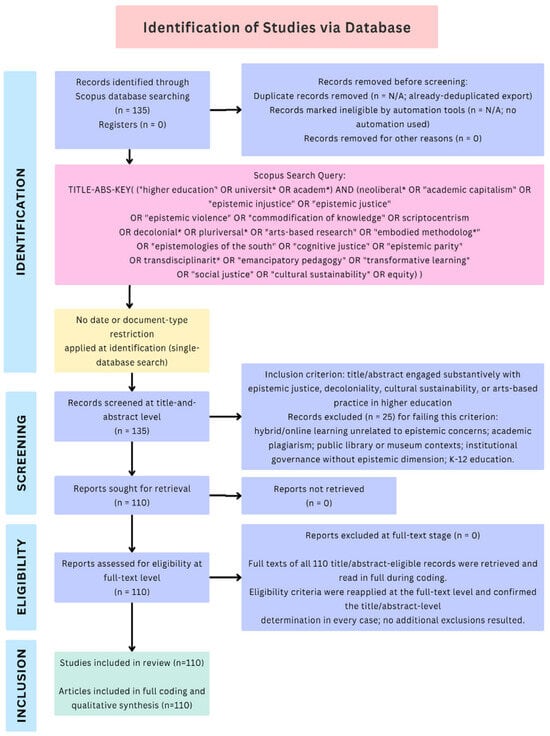
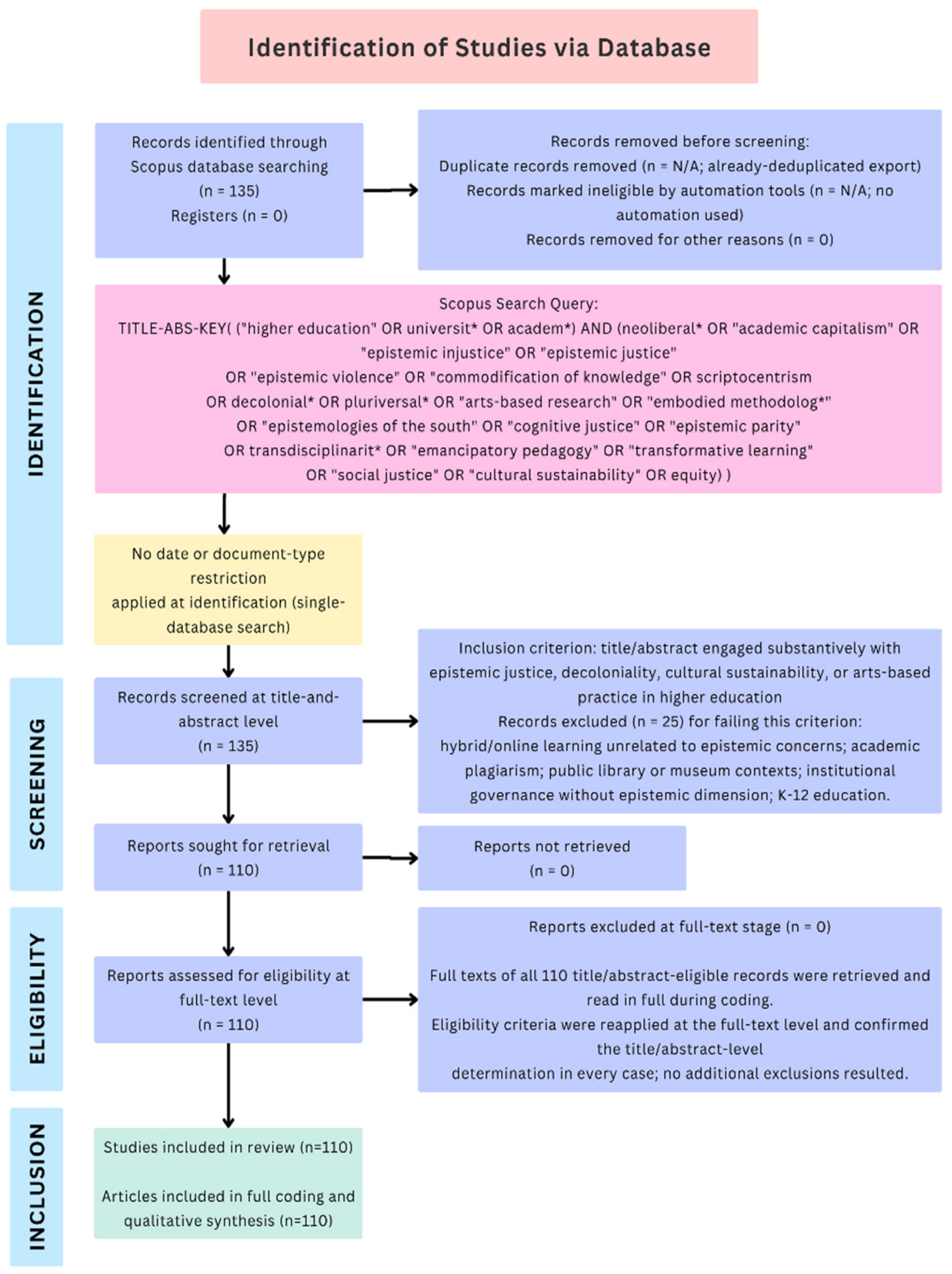
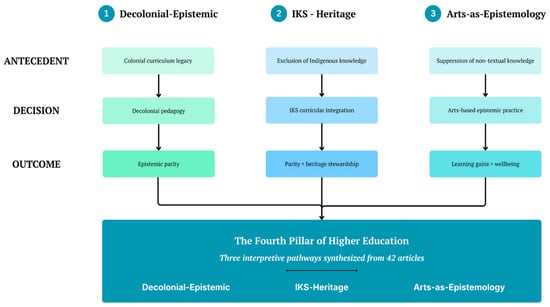
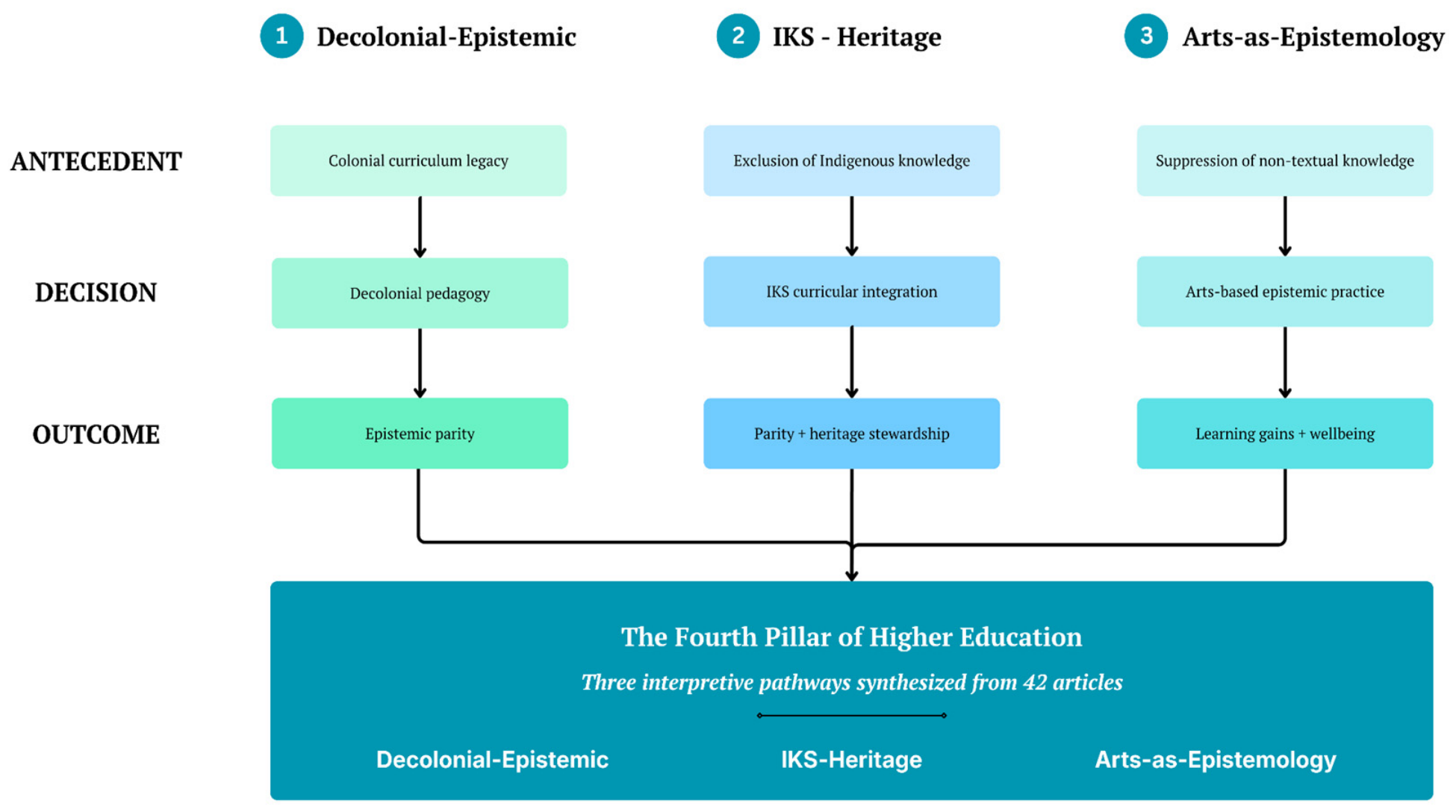

Disclaimer/Publisher’s Note: The statements, opinions and data contained in all publications are solely those of the individual author(s) and contributor(s) and not of MDPI and/or the editor(s). MDPI and/or the editor(s) disclaim responsibility for any injury to people or property resulting from any ideas, methods, instructions or products referred to in the content. |
© 2026 by the authors. Licensee MDPI, Basel, Switzerland. This article is an open access article distributed under the terms and conditions of the Creative Commons Attribution (CC BY) license.