


Abstract
Compost quality assessment remains fragmented globally, with most standards evaluating parameters in isolation rather than providing a unified quality score. This study developed and validated a Quality Criteria Index (QCI) model comprising three composite sub-indexes to holistically quantify organic waste-derived compost quality. The Fertility Criteria Index integrates plant nutrients. The General Criteria Index assesses physicochemical properties and contaminants. The Toxic Criteria Index covers potentially toxic elements. The model was validated using compost samples from 20 commercial-scale Sri Lankan producers. International applicability was assessed using data extracted from 20 peer-reviewed studies across 20 countries. The Shapiro–Wilk test confirmed that model residuals were normally distributed. Multiple linear regression confirmed a model fit: R2 = 0.939 for the Fertility Criteria Index, R2 = 0.875 for the General Criteria Index, and R2 = 0.919 for the Toxic Criteria Index. Most predictors showed low multicollinearity, and all indices showed good correlation between the actual and predicted values, confirming the validity of the model. The Wilcoxon rank-sum test revealed no significant differences between Sri Lankan and international compost index values. Based on the index values, a three-tier classification system is proposed: First Class, Second Class, and Rejected Compost. This index-based approach provides a single, interpretable quality metric for producers, regulators, and end-users and offers a framework for revising national compost standards. The final benefits of this approach include sustainable waste management and sustainable soil quality in agricultural systems.
1. Introduction
Compost quality is influenced by several factors, including raw material origin and characteristics, composting facility conditions, composting methodology, and process management [1]. Multiple physical, chemical, and biological parameters are used to assess compost quality in Sri Lanka and other countries [2,3,4,5]. Chemical qualities include plant nutrients, organic matter, pH, toxic elements, and soluble salts. General quality parameters include moisture, particle size, texture, sand composition, and non-compostable material [6]. Compost contains viable weed seeds and plant and human pathogens that also influence its quality [7]. Compost quality depends on its maturity, and maturity and nitrogen content are chemically indicated by the carbon-to-nitrogen ratio (C:N) [8]. Effective compost assessment criteria should include physical and chemical properties [9]. Compost pH, electrical conductivity, nitrogen, phosphate, potassium, organic carbon, and carbon-to-nitrogen ratio are essential for enhancing soil health and agricultural productivity. Low-fertility composts neither harm the agro-ecosystem nor improve crop yields [8,10]. Some countries neglect nutrient concentration limitations in compost quality requirements, suggesting that nutrient content should be stated by application [11,12].
Contaminants, including stones, sand, glass, metal, and plastic, must be excluded from compost. These contaminants primarily become mixed with compost when the feedstock contains similar materials [13,14]. Microplastics in compost are recognized as emerging pollutants in the soil ecosystem, with compost serving as the principal source of microplastics in agricultural fields [15,16]. Compost should not contain excess moisture, and overly bulky compost is not cost-effective [17]. Compost quality evaluation should include more than chemical, physical, and agronomic characteristics. It must examine how toxic compounds influence the environment, health, and agro-ecosystems. Compost that includes persistent organic pollutants (POPs) and potentially toxic elements (PTEs) may harm the environment and human health [9,13,18].
Regardless of the raw materials used, compost is intended for agricultural systems. From an end-user perspective, a single quality standard for compost should be established in Sri Lanka and other countries. However, current quality control guidelines in most countries do not distinguish between different grades of compost quality [4,5,11,19,20,21,22,23]. The grading of compost is necessary due to the lack of uniformity in feedstock composition and composting methods. The composting industry is expected to help end users categorize various applications, including certified organic farming, high-value crops, food crops, non-food crops, lawn and garden establishments, and the rehabilitation of degraded lands and mining areas [10,24]. Composting involves multiple stakeholders, including municipal authorities, commercial compost producers, farmers, and various organizations. Farmers value compost for its nutrient content and soil enhancement properties, whereas municipal officials prioritize waste recycling and reduced landfill emissions. Manufacturers perceive composting as a commercial enterprise, aiming for profit optimization. Grading compost benefits all stakeholders by optimizing nutrient utilization, enhancing profitability, recycling waste, and safeguarding the environment.
Several index-based methods have been developed to evaluate compost quality and assign simple scores. These include the fertility index, clean index, compost quality indexes, germination index, maturity index, and other indices that serve to guide regulation, marketing, and land-application decisions [24,25,26,27]. The fertility index assesses the fertilizing potential of compost primarily based on its nutrient content. The clean index evaluates compost concerning heavy metal contamination, including elements such as cadmium (Cd), lead (Pb), chromium (Cr), nickel (Ni), copper (Cu), and zinc (Zn) [24,28,29]. To integrate multiple dimensions, several compost quality indexes (CQIs) have been proposed. Some CQIs combine factors such as nutrient value, microbial activity, and phytotoxicity to classify compost quality on a scale from poor to extremely good [30]. Other CQIs are developed based on stability/maturity and biological indicators to differentiate between high, moderate, and low-quality composts [31]. Numerous studies utilize maturity and stability indices—such as the carbon-to-nitrogen ratio (C/N), germination index, respiration, and humification degree—to assess compost readiness and its safety for crops [26,27,32,33,34]. These indices are conceptually distinct from those focused on nutrients and metals. The index-based methods discussed above convert multiple measurements into a single score while accounting for various quality aspects. However, no single index is universally accepted; each has its strengths and limitations. The literature emphasizes the necessity for integrated, standardized quality indices. These indices should also remain practical and affordable for routine use in both industrial and small-scale composting systems [29,31,32,35].
Given these considerations, establishing a quality assurance protocol that accurately represents overall compost quality and is understandable to both producers and consumers is essential. Therefore, this study established a methodology for assigning quality indicators to grade compost based on fertility, physicochemical, and potentially toxic element parameters. A model for quality indexing has been proposed to help producers and users evaluate the quality of composts and enhance their decision-making processes.
2. Materials and Methods
2.1. Collection of Compost Samples
A stratified random sampling technique was used to select twenty compost producers, proportional to the number of producer strata and their production capacity, ensuring representative coverage of Sri Lanka’s municipal solid waste compost (MSWC) and agricultural waste compost (AWC) sectors. The selected producers consisted of twelve from MSWC and eight from AWC facilities. Samples of marketable compost were collected in accordance with the sampling principles outlined in Sri Lanka Standard - SLS 1934:2019 [4,5]. Unopened compost bags were selected at random from various places within each lot. Approximately 200–300 g of compost was obtained from the top, middle, and bottom sections of each selected bag. The incremental samples were thoroughly mixed to make a representative composite sample, which was then reduced to about 2 kg through the quartering method. The composite samples were securely sealed in polyethylene bags and transported to the laboratory for analysis.
2.2. Laboratory Analysis
In the laboratory, samples were carefully prepared for analysis through processes of homogenization and air-drying prior to conducting analyses of compost physicochemical properties and potentially toxic elements. Samples were replicated twice and then analyzed in multiple laboratories, taking into account the resources available for the examination of each element or property. The digestion mixture without compost was used as a blank sample. The analysis was conducted in accordance with the protocols outlined in SLS 1634: 2019 [4]. Certified Reference Material (SRM 1515, Apple Leaves; National Institute of Standards and Technology (NIST), Gaithersburg, Maryland, USA) was used during the analysis to verify calibration accuracy, following EPA Method 3052.
2.3. Develop Quality Assurance Protocol
This quality assurance protocol is based on three principles that directly influence final compost quality: fertility values, general quality, and potentially toxic element content. The fertility values examined included total carbon (C), nitrogen (N), phosphorus (P), potassium (K) percentages, and the carbon-to-nitrogen (C:N) ratio. The general quality was evaluated by examining several factors, including electrical conductivity (EC), the percentage of sand, moisture content, the presence of foreign matter, and microplastics. Additionally, eight potentially toxic elements [cadmium (Cd), chromium (Cr), lead (Pb), mercury (Hg), nickel (Ni), arsenic (As), zinc (Zn), and copper (Cu)] were assessed for their potential toxicity. The compost quality standards from Sri Lanka and other countries, along with relevant literature [4,5,11,19,20,21,22,23], served as a basis for the proposed index. To evaluate the quality of the compost, three indexes were proposed: the fertility criteria index (FCI), the general criteria index (GCI), and the toxic element criteria index (TCI). To calculate the quality criteria index mentioned earlier, score values were assigned to each quality parameter. These score values and their corresponding boundaries were established by examining the limits set forth by the compost quality standards of Sri Lanka and other countries [4,5,11,19,20,21,22,23], as well as relevant literature [28,36,37,38,39,40,41,42,43,44,45,46,47,48,49,50,51,52] and the analytical results from this study.
2.3.1. Fertility Criteria Index (FCI)
Compost serves as a source of plant nutrients and as a soil conditioner; therefore, its fertilizing efficacy is significant to farmers. Each fertility parameter that enhances soil productivity (total carbon, nitrogen, phosphorus, potassium content, and carbon-to-nitrogen ratio) was assigned a score value according to the categories in Table 1. Higher score values were assigned to suitable parameter values.
Table 1.
Score value of each fertility criterion.
The fertility criteria index is calculated using the following formula:
where ‘Sf’ is the score value of analytical parameters and ‘n’ is the number of observed parameters.
FCI = ΣSf/n
2.3.2. General Criteria Index (GCI)
Physical parameters and chemical characteristics that influence compost composition, nutrient availability, and market value (electrical conductivity, sand percentage, moisture percentage, foreign matter percentage, and microplastics) were assigned scores ranging from 0 to 5. A score of 5 was assigned for higher-purity compost according to the categories in Table 2.
Table 2.
Score value of each general criterion.
The general criteria of the composts are calculated using the following formula.
where ‘Sg’ is the score value of analytical parameters and ‘n’ is the number of observed parameters.
GCI = ΣSg/n
2.3.3. Toxic Elements Criteria Index (TCI)
Potentially toxic elements (PTE) significantly impact the environment and public health; therefore, governments and environmental organizations require thorough PTE analysis in compost. PTE content was considered in developing the TCI. Score values were assigned to each analytical PTE measurement according to Table 3. Higher score values were assigned to lower values of any PTE parameter.
Table 3.
Score value of each compost toxic element quality parameter.
The toxic elements criteria of the compost are calculated using the following formula.
where ‘St’ is the score value of analytical parameters and ‘n’ is the number of observed parameters.
TCI = ΣSt/n
2.4. Evaluation and Validation of the Proposed Quality Criteria Index Models
The validation and evaluation of the proposed compost quality index were conducted by comparing it with the findings of this study, which were also compared with the existing global compost quality standards and the Sri Lankan standards [4,5,11,19,20,21,22,23]. To gather international data on compost quality, a literature review was conducted, resulting in the selection of 20 studies from 20 different countries. These studies examine the physical, chemical, and toxic characteristics of compost. Data were extracted to calculate the fertility criteria index, general criteria index, and toxic elements criteria index. These indices were then computed and compared to the index value of Sri Lanka in relation to those from other countries.
2.5. Statistical Analysis
First, a bivariate correlation was carried out to study the correlation of each variable with the relevant index value by the Spearman correlation method. For this, multiple linear regression was performed to assess the combined/independent effects of each compost quality parameter on the proposed index value. Prior to interpretation, model assumptions were assessed. Multicollinearity among predictors was evaluated using the Variance Inflation Factor (VIF), and normality of residuals was tested using the Shapiro–Wilk test. Results were visualized in a scatter chart with linear regression lines. The Wilcoxon rank-sum test (Mann–Whitney U test) was performed to evaluate the mean difference in suggested quality criteria between compost from Sri Lanka and that from other countries at a significance threshold of α = 0.05 and visualized as violin plots overlaid with boxplots. All statistical analyses were performed in R (version 4.6.1).
Claude.ai (Claude Sonnet 5.5, Anthropic, San Francisco, CA, USA) was used for the development of the required R script for the analysis and interpretation of data. Quillbot (Online writing and research assistant) was used during the preparation of this manuscript to assist with language editing, grammar correction, and improvement of readability. Finally, a graphical abstract was developed using ChatGPT (GPT-6).
3. Results and Discussion
3.1. Quality of the Compost
3.1.1. Quality of the Analyzed Compost Sample
Table 4 presents the general, fertility, and toxic element characteristics of analyzed compost samples compared with standards from Sri Lanka and other countries. These results were used to calculate FCI, GCI, and TCI values and to conduct regression analysis for index validation.
Table 4.
Compares the properties of fertility values, general quality values, and potentially toxic elements in composts from the study sample with Sri Lanka and other recognized countries’ standards.
3.1.2. Quality of the Compost in Selected Countries
Table 5 presents the characteristics of compost from various countries, emphasizing general properties, fertility, and the presence of potentially toxic elements. These findings were used to calculate the FCI, GCI, and TCI values of other countries, which were subsequently compared to the compost quality index of Sri Lanka.
Table 5.
Characteristics of the compost in selected countries.
3.2. Quality Index Values
3.2.1. Calculated Indexed Values for Analyzed Samples
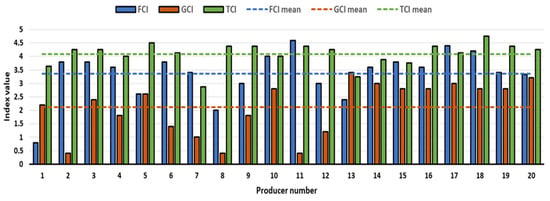
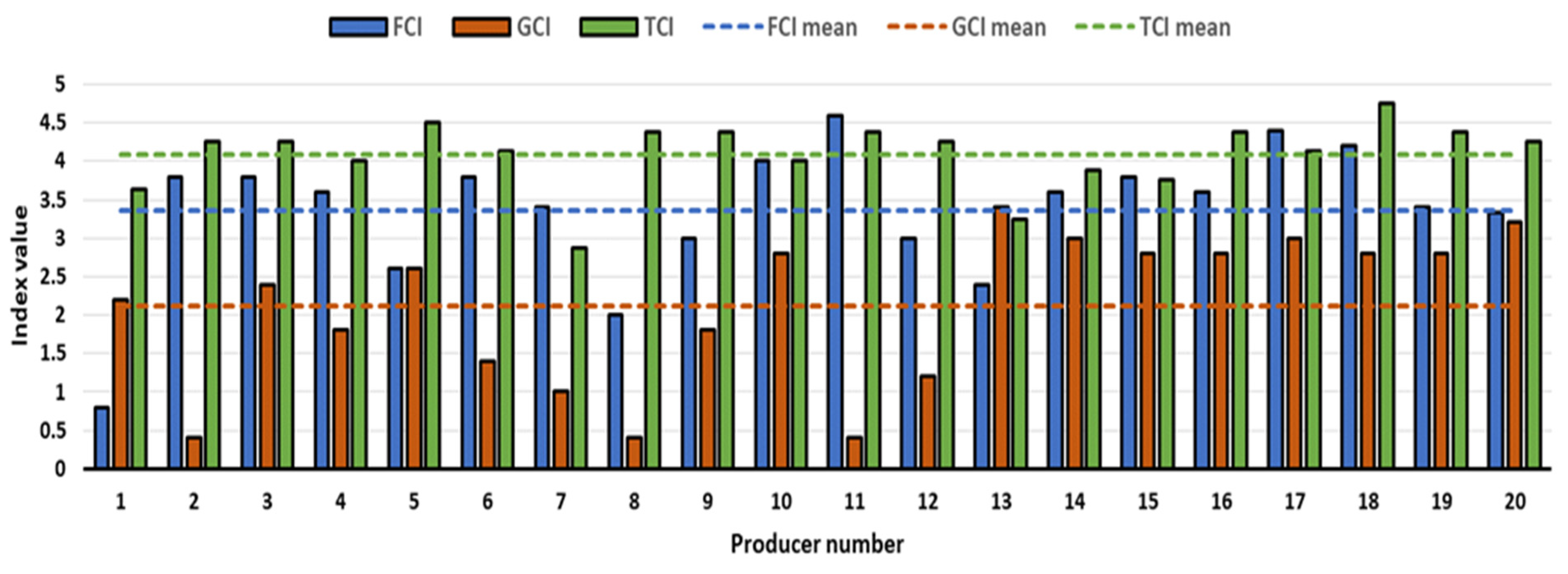
The FCI, GCI, and TCI values for analyzed composts ranged from 1.6 to 4.8 (median 3.5), 0.4 to 3.4 (median 2.5), and 2.88 to 4.75 (median 4.25), respectively, on a 5.0-point scale (Figure 1). The general quality of analyzed compost samples was comparatively low, attributed to high moisture, sand, foreign matter, and microplastics in the compost.
Figure 1.
Fertility criteria index (FCI), general criteria index (GCI), and toxic element criteria index (TCI) values of the analyzed compost samples in Sri Lanka.
3.2.2. Calculated Indexed Values for Other Country Data
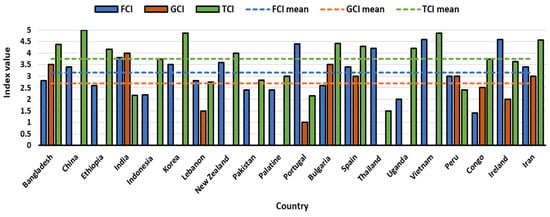
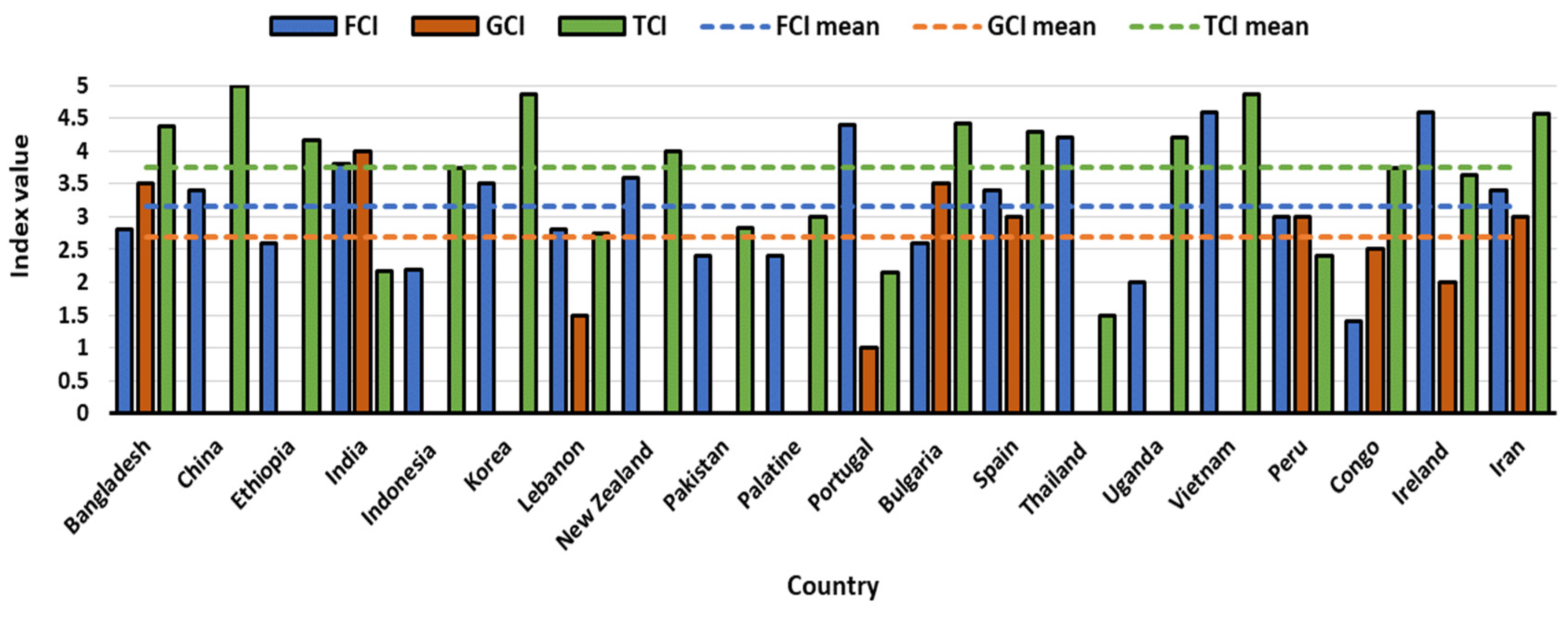
The FCI, GCI, and TCI values for the other countries’ composts ranged from 1.4 to 4.6 (median 3.2), 1.00 to 4.00 (median 3), and 1.5 to 5.00 (median 3.88), respectively, on a 5.0-point scale (Figure 2). The GCI cannot be calculated for some countries that were not assessed for general compost quality.
Figure 2.
Values for the fertility criteria index (FCI), general criteria index (GCI), and toxic element criteria index (TCI) for the compost quality parameters of other countries.
In many countries, including Sri Lanka, pH is recognized as a crucial physicochemical parameter in compost. However, the proposed index model does not incorporate pH as a factor. It is recommended that, regardless of the index value, the pH of the compost should be maintained between 6.5 and 8.5 for agricultural applications.
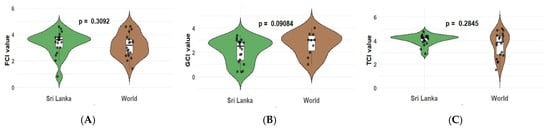
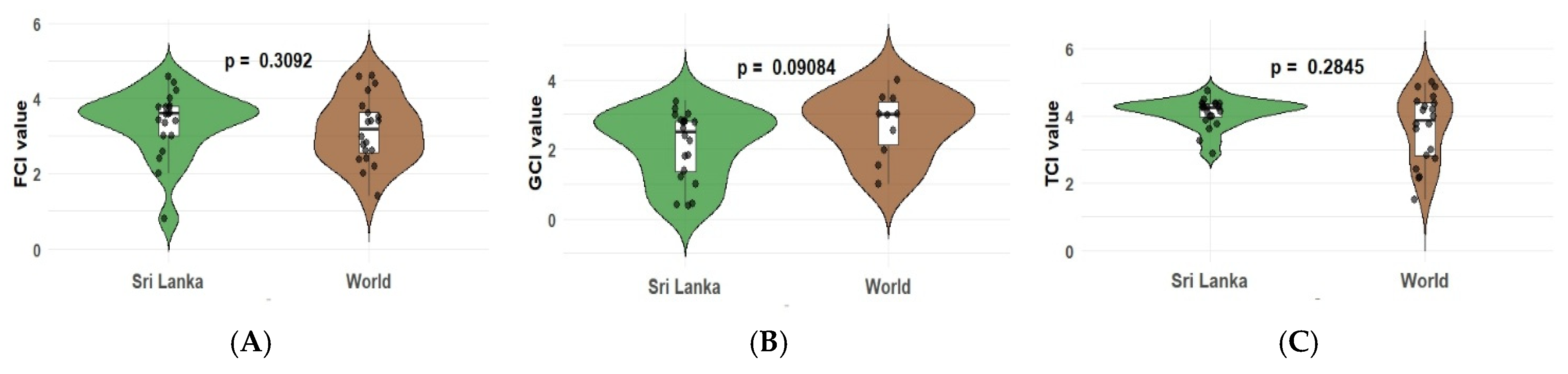
Figure 3 presents a comparison of the index values of compost produced in Sri Lanka with those from other countries. No statistically significant differences were observed in the FCI, GCI, and TCI among the composts from Sri Lanka and those from other countries (p ≥ 0.05). This suggests that the proposed quality index model is applicable to other countries as well.
Figure 3.
The comparison of fertility criteria index (FCI) (A), general criteria index (GCI) (B), and toxic element criteria index (TCI) (C) values derived from data from selected countries (n = 20) along with values obtained from this study (n = 20).
3.3. Validation of the Compost Quality Index Model
The Shapiro–Wilk test and the multicollinearity test, followed by multiple linear regression, were performed to evaluate the quality index against analyzed quality parameter values. In the first analysis, total nitrogen, total phosphorus, total potassium, total organic carbon, and carbon-to-nitrogen ratio were associated with the fertility criteria index. The second analysis focused on electrical conductivity, moisture percentage, sand percentage, foreign matter percentage, and microplastic percentage in compost. The study also investigated the effects of potentially toxic element concentrations (Cd, Cr, Pb, Hg, Ni, As, Zn, and Cu) on the toxic element quality index in compost.
3.3.1. Validation of the Fertility Criteria Index (FCI)
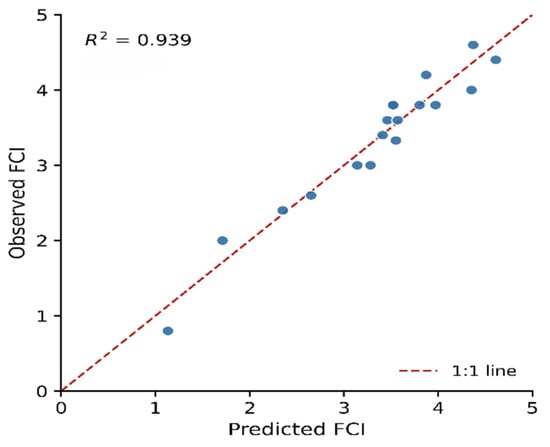
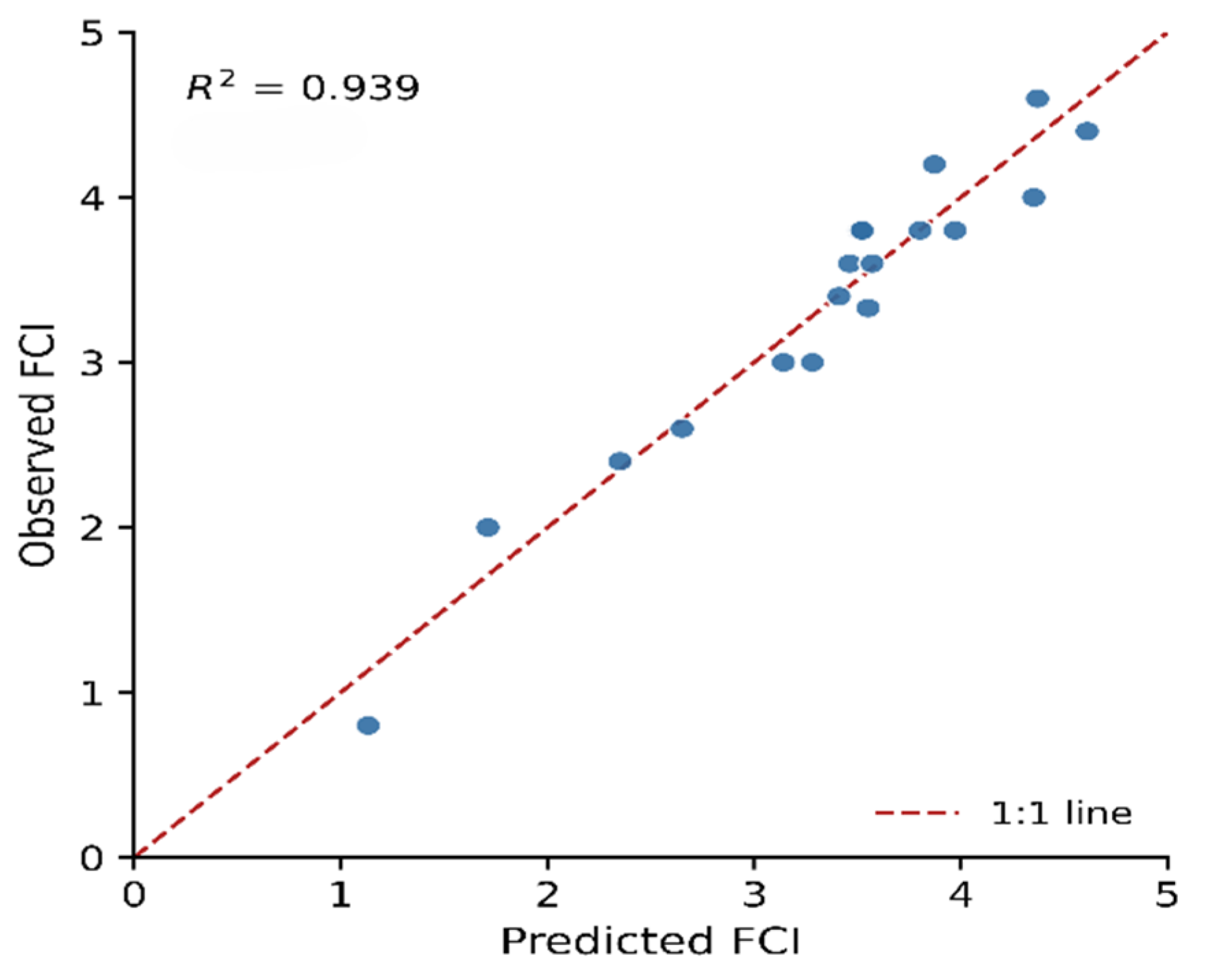
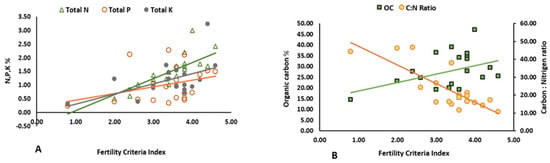
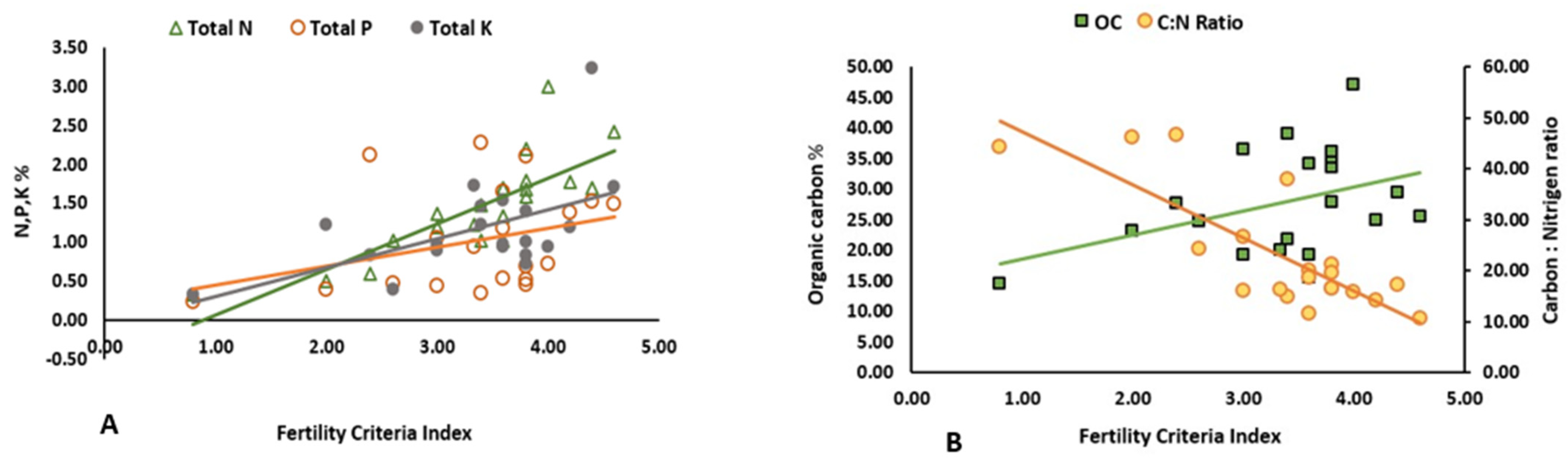
The performed multiple linear regression was highly significant, F (5, 14) = 43.27, p < 0.001 (Table 6). The five predictors (N, P, K, OC, and CN) jointly explain 93.9% of the variance in FCI (adjusted R2 = 0.918). Nitrogen (N) did not significantly predict FCI independently (β = 0.145, p = 0.563, VIF = 7.31). All other predictors showed low multicollinearity, with VIF values ranging from 1.09 to 4.81, below the threshold of 5. Residuals were normally distributed (Shapiro–Wilk W = 0.946, p = 0.315), supporting the validity of the model. The close agreement between observed and predicted FCI values (R2 = 0.939; Figure 4), with no major systematic deviation, further confirmed the strong predictive performance of the model. The relationship between the fertility criteria index (FCI) and various fertility parameters of compost is presented in Figure 5. These findings indicate a relationship between the overall fertility parameters and the proposed FCI.
Table 6.
Multiple linear regression coefficients of FCI on fertility parameters.
Figure 4.
Scatterplot of observed versus predicted Fertility Criteria Index (FCI) values from the multiple linear regression model (R2 = 0.939, adjusted R2 = 0.918). The dashed red line represents the 1:1 line of perfect agreement.
Figure 5.
Multiple linear regression that demonstrates the relationship between the fertility criteria index (FCI) and various fertility parameters of compost. (A) Relationship between the simulated FCI and the N, P, and K% of the tested compost sample. (B) Relationship between the simulated FCI and the Organic Carbon% and the Carbon: Nitrogen ratio of the tested compost sample. Percent values are given as mass on dry weight basis.
3.3.2. Validation of the General Criteria Index (GCI)
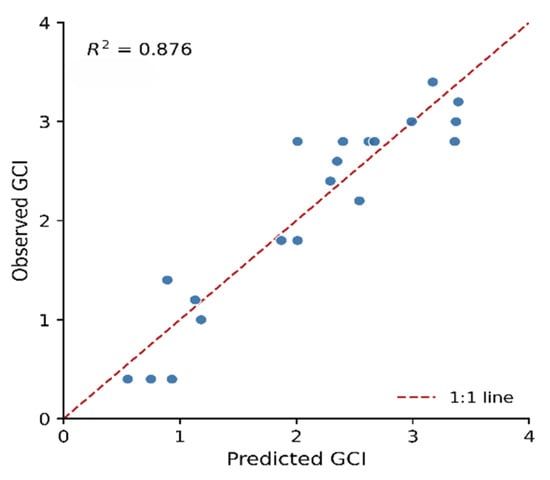
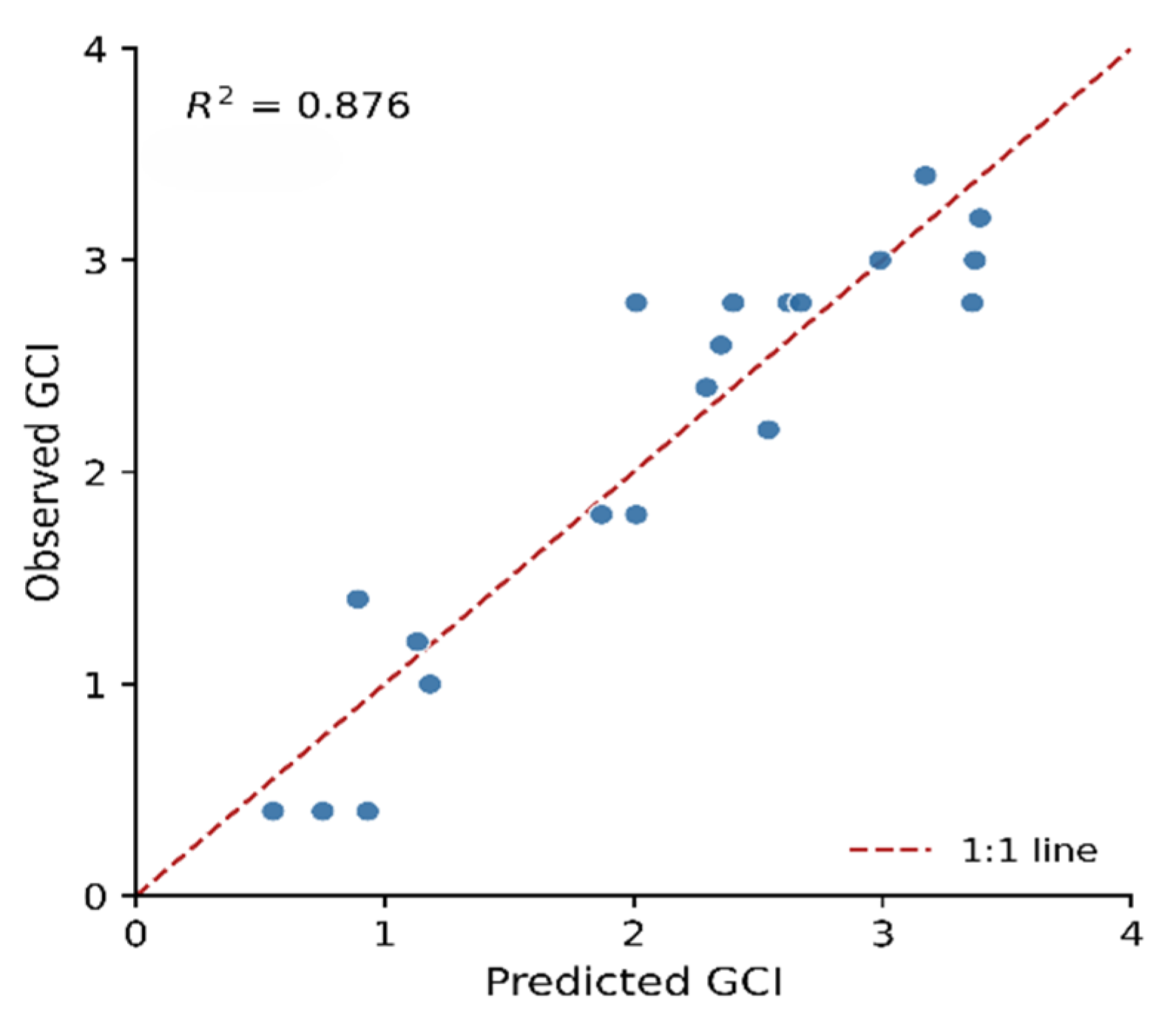
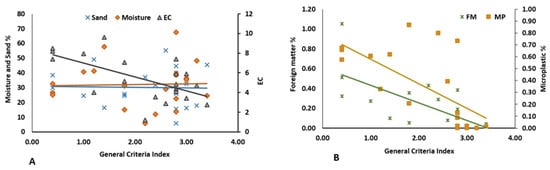
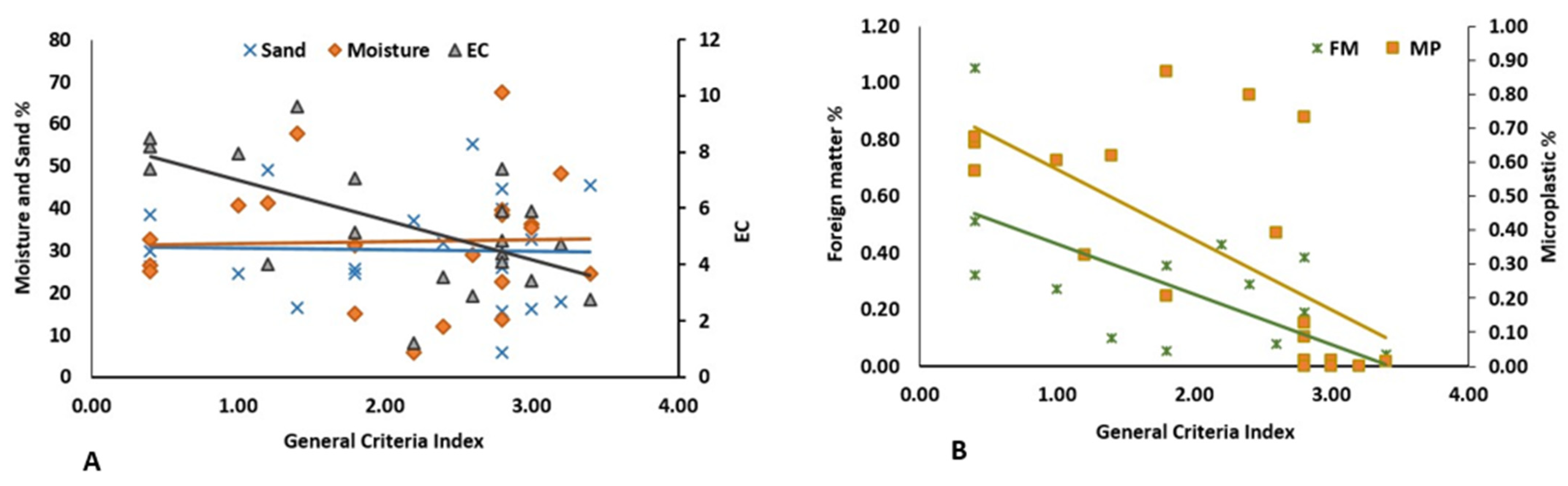
Table 7 presents the results of the multiple linear regression conducted to evaluate the combined effect of Sand, Moisture, EC, FM, and MP on GCI. The overall model was statistically significant, F (5, 14) = 19.72, p < 0.001, and explained 87.6% of the variance in GCI (adjusted R2 = 0.831). This means ~83% of the variability in GCI is explained by these five predictors jointly, even after adjusting for the number of predictors relative to sample size. Sand, EC, FM, and MP were significant negative predictors of GCI, indicating that increases in these variables were associated with reductions in GCI. All predictors showed low multicollinearity, with VIF values ranging from 1.37 (FM) to 2.78 (Moisture), well below the commonly used threshold of 5, indicating that multicollinearity did not substantially affect the regression estimates. The Shapiro–Wilk test confirmed that model residuals were normally distributed (W = 0.971, p = 0.767), supporting the validity of the regression model. The correlation between observed and predicted FCI values (R2 = 0.939; Figure 6), with no deviation, further confirmed the strong predictive performance of the model. The relationship between the general criteria index (GCI) and various general quality parameters of compost is presented in Figure 7.
Table 7.
Multiple linear regression coefficients of GCI on general quality parameters.
Figure 6.
Scatterplot of observed versus predicted General Criteria Index (GCI) values from the multiple linear regression model (R2 = 0.876, adjusted R2 = 0.831). The dashed red line represents the 1:1 line of perfect agreement.
Figure 7.
The figure presents a multiple linear regression analysis that shows the relationship between the general criteria index (GCI) and general quality parameters. (A) Correlation between the simulated GCI and the moisture, sand, and electrical conductivity (EC) of the analyzed compost sample. (B) Correlation between the simulated GCI and the foreign matter and microplastic percentage of the analyzed compost sample. Values are presented as a percentage based on dry weight, with the exception of EC.
3.3.3. Validation of the Toxic Element Criteria Index (TCI)
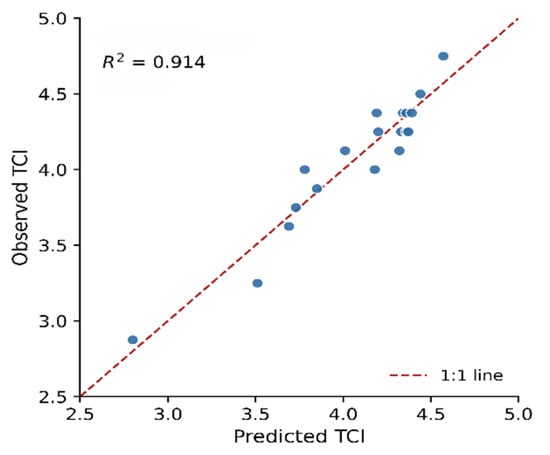
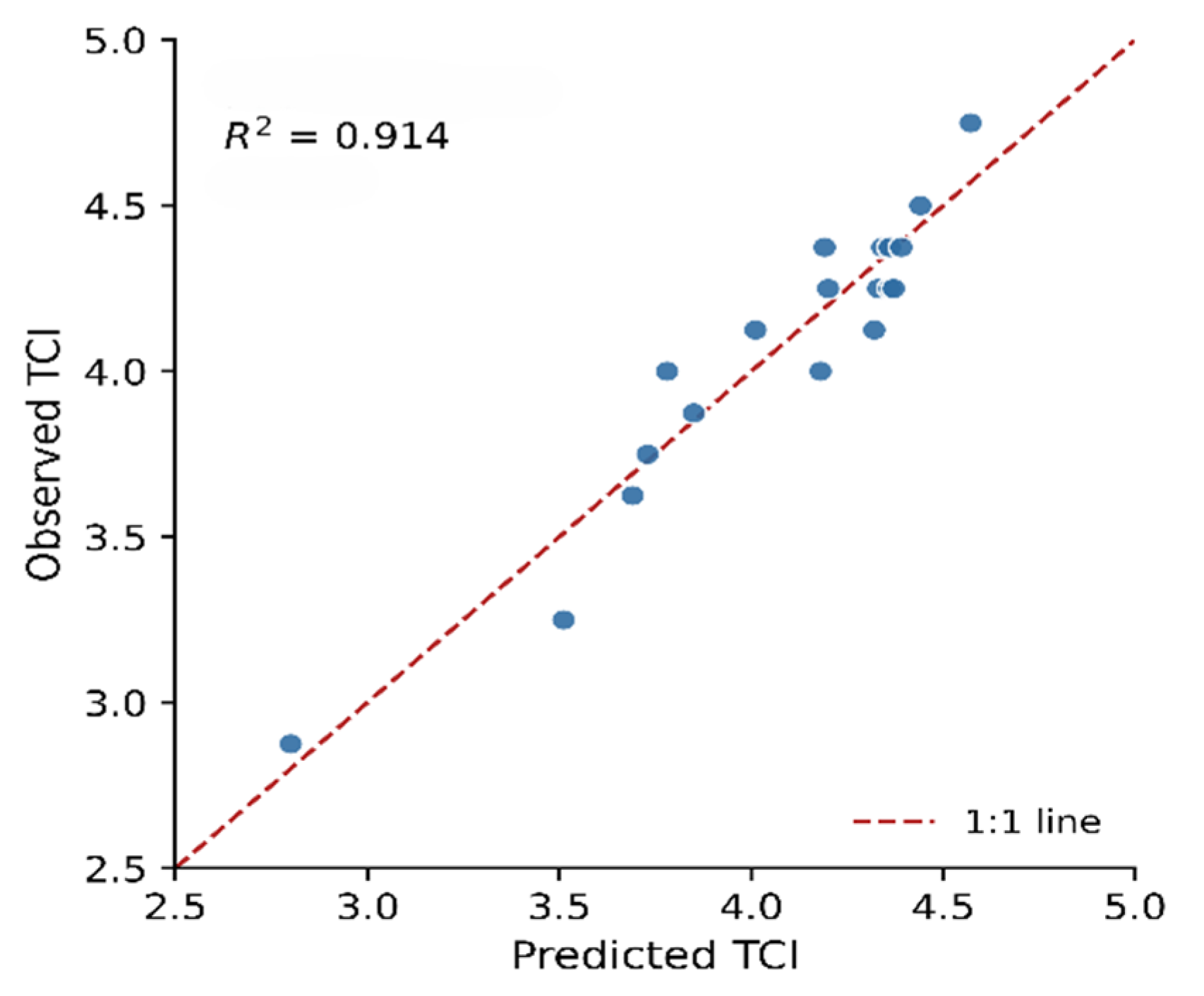
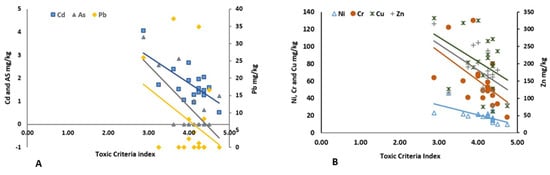
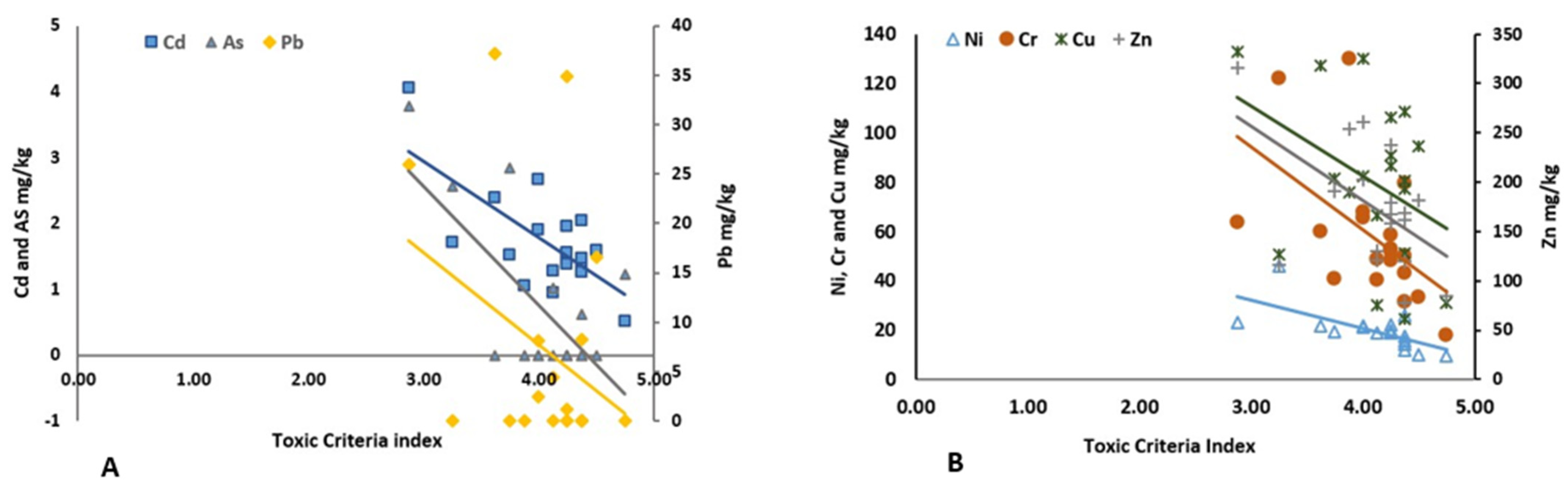
In the multiple linear regression model incorporating all eight potentially toxic elements, the model explained 92.0% of the variance in TCI (adjusted R2 = 0.861; F (8,11) = 15.71, p < 0.001) (Table 8). All variance inflation factors were below 5 (range: 1.13–4.79), indicating no problematic multicollinearity. Model residuals satisfied assumptions of normality (Shapiro–Wilk W = 0.970, p = 0.748). The good correlation between the actual and predicted FCI values (R2 = 0.914; Figure 8), with no major deviation, further confirmed the strong performance of the model. The relationship between the toxic criteria index (TCI) and various potential toxic element contents of compost is shown in Figure 9.
Table 8.
Multiple linear regression coefficients of TCI on potentially toxic elements.
Figure 8.
Scatterplot of observed versus predicted Toxic Element Criteria Index (TCI) values from the multiple linear regression model (R2 = 0.914, adjusted R2 = 0.831). The dashed red line represents the 1:1 line of perfect agreement.
Figure 9.
Multiple linear regression showing the relationship between the toxic criteria index (TCI) and the potential toxic element content of the tested compost sample. (A) Relationship between the simulated TCI and the Cd, As, and Pb content. (B) Relationship between the simulated TCI and the Ni, Cr, Cu, and Zn content of the tested compost sample. The values for Cd, Cr, As, Ni, Pb, Cu, and Zn are expressed in mg/kg on a dry weight basis.
In the composting sector, various compost quality index methods focus on different aspects of compost quality, including the fertilizing index, clean index, germination index, and various compost quality indices (CQIs). The fertility index condenses nutrient content into a single score that correlates directly with fertilizer value. This index typically accounts for total nitrogen (N), phosphorus (P), and potassium (K), categorizing composts into quality classes for agricultural use. However, it overlooks contaminants such as potentially toxic elements (PTEs), persistent organic pollutants (POPs), and microplastics [10,29,53]. The clean index evaluates composts based on their heavy metal content, employing a threshold-based scoring system with weighted assessments for more hazardous elements [10,29,53]. Nonetheless, this approach may result in compost that is nutritionally deficient or immature, as it often fails to account for physical impurities, organic pollutants, and overall biological quality [34,35,53]. Some researchers have developed Compost Quality Indexes (CQIs) that combine physicochemical and biological indicators [31,54,55]. However, this approach necessitates additional analyses and statistical refinement; the structures of these indexes are often specific to particular sites and feedstocks, which diminishes their transferability [31,35].
Maturity and stability indices, such as the respiration, self-heating, humification, and germination index, are commonly utilized as quality indicators [34,35,56,57,58]. The germination index is closely linked to maturity and is widely regarded as a reference indicator for manure composts [33]. However, single parameters like the humification ratios are not entirely reliable on their own, and optimal critical values may differ based on raw material and method [35,56,58]. Additionally, there is still a lack of standardization for the germination index, including seed type and protocol [56,59]. Many of the index methods discussed previously lack sufficient validation against actual quality parameters in compost and are frequently restricted to particular geographic regions. No single index is universally accepted, and each has its strengths and limitations; each method captures only a portion of overall compost quality [24,29,59].
Although several countries have established compost quality standards, these are predominantly threshold-based and yield only a pass/fail judgement for individual parameters. Consequently, they neither differentiate between composts of varying quality within the acceptable range nor provide an integrated assessment of their agronomic value and environmental risk. Moreover, considerable disparity in permissible limits among national standards reflects differing regulatory priorities rather than a unified scientific basis, hindering the comparison of compost quality across regions. To overcome these limitations, the present study proposes three separate indices: a Fertility Criteria Index, a General Criteria Index, and a Toxicity Element Criteria Index. Keeping these dimensions separate prevents the nutrient richness of a compost from masking its contamination risk, a shortcoming inherent in single aggregated scores. Together, the indices enable continuous grading, ranking, and end-use-specific recommendations. They are intended to complement, not replace, regulatory limits, and they offer a transparent, adaptable decision-support tool for producers, users, and regulators, particularly in regions where compost standards are absent or inadequately enforced.
Based on the results of this study, it can be concluded that the proposed quality index clarifies and illustrates the interactions among fertility, physicochemical, and potentially toxic element compost quality. Consequently, it serves as an exceptional instrument for assessing compost quality more efficiently than isolated quality parameters. The model seems to provide accurate predictions concerning the impact of fertility and general and potentially toxic element parameters on compost quality. Furthermore, the model provides a foundational analysis, facilitating additional assessment and enhancement to establish an index-based quality evaluation protocol for compost production.
The proposed index-driven quality assurance methodology has some limitations, as it incorporates only key compost quality features (fertility, physicochemical properties, and PTE) while excluding other important dimensions such as stability, phytotoxicity, pathogens, salinity, organic pollutants, and biological features. A more comprehensive indexing model integrating these additional factors is needed in future work.
3.4. Classification of Composts Based on FCI, GCI, and TCI
Composting involves multiple stakeholders, including farmers, public and private entities, commercial compost producers, and municipal authorities. Farmers emphasize nutrient content and organic matter quality in compost as a soil amendment. Local authorities seek to maximize biodegradable waste recycling through compost production, while producers view composting as a commercial venture and require appropriate pricing to enhance profitability. Compost quality evaluation is expected to benefit all stakeholders by maximizing nutritional component utilization, improving profitability for producers and consumers (farmers), increasing waste recycling, and protecting the environment. Based on critical analysis of the fertility, general, and toxic elements criteria indexes, three compost classes are proposed (Table 9) to define specific applications and marketability. The median values of the developed FCI, GCI, and TCI were used as threshold levels for proposed classification.
Table 9.
Classification of composts based on FCI, GCI, and TCI.
The criteria for these classifications were as follows:
- ➢
- Compost with minimal potentially toxic elements, superior fertility properties, and favorable general quality parameters was designated as first class.
- ➢
- Compost containing minimal potentially toxic elements and varying general properties with distinct fertility parameters was categorized as second class.
- ➢
- Compost contaminated with additional potentially toxic elements is rejected for agricultural application without considering its general and fertility parameters.
Classes 1 and 2 present minimal environmental pollution risks due to low potentially toxic element concentrations. First-class compost has optimal FCI, GCI, and TCI values, making it suitable for organic agriculture and high-value crops. Second-class compost has high TCI values (minimal heavy metals and environmental pollution risk) but variable nutrient content and general characteristics; therefore, it should be used under supervision. Rejected-class compost is unsuitable for commercial distribution and is designated for limited applications, such as non-food crop cultivation, including floriculture, fiber crops, agroforestry plantations, and lawn establishment. However, such land must never be used for food crop production.
Compost grading is based on quality characteristics (FCI, GCI, and TCI), which determine selling price. Therefore, higher-quality composts can command premium prices. Although current quality standards in Sri Lanka and other countries list quality parameters, prevailing guidelines fail to represent comprehensive compost quality. Therefore, quality control limits for these parameters should be recommendations rather than legal requirements. Compost classification can provide essential information about agricultural suitability and necessary pre-application treatment levels.
The result of this study contributes to sustainability by converting the parameter-by-parameter compost evaluation into a single, interpretable quality criterion index. This concept promotes the circular economy and organic waste management. Scientifically, the model incorporates fertility, physicochemical, and possibly toxic element properties into three composite sub-indexes. On the socio-economic level, the three-tier categorization provides a clear aim for producers to improve product quality, assists farmers and customers in choosing safe and dependable compost, and creates market confidence. Finally, it adds value to municipal and agricultural waste.
4. Conclusions
Compost quality is an important issue for sustainable agriculture, waste management, soil health, and environmental protection. The proposed method for indexing compost quality evaluates fertility properties, general characteristics, and potential toxic element levels. This technique provides numerical quality ratings for composts derived from biodegradable solid waste. Analysis of the proposed indexes indicates no differences between compost produced in Sri Lanka and other countries in fertility, general, and toxic element quality index values. This indexing model allows users to assess the quality of compost and serves as an indicator for determining its grade. The proposed index has limitations, covering only fertility, physicochemical properties, and PTE; future work should develop a more comprehensive model incorporating stability, phytotoxicity, pathogens, and other factors. The study proposes dividing composts into two marketable categories: first class and second class. This classification helps users identify appropriate compost grades and assess treatment levels required before agricultural application.
Furthermore, this index interactively links environmental protection, agricultural productivity, and public health in one framework in line with SDG 2 (Zero Hunger), SDG 3 (Good Health), SDG 11 (Sustainable Cities), SDG 12 (Responsible Consumption and Production), SDG 13 (Climate Action), and SDG 15 (Life on Land). It may be used as a tool for sustainability in quality certification, producer benchmarking, procurement, and regular compliance monitoring. On a policy level, it provides regulators with an evidence-based framework to update national compost standards, provide enforceable quality grades, and align standards worldwide, therefore promoting the safe utilization of waste and sustainable soil management.
Author Contributions
All authors contributed to the conception and design of the study. Y.P.R. was responsible for material preparation, data collection and analysis, and the original draft. A.K.K. conducted the review and editing. All authors have read and agreed to the published version of the manuscript.
Funding
This research was funded by the National Agriculture Research Plan (NARP) of the Sri Lanka Council for Agricultural Research Policy (SLCARP).
Institutional Review Board Statement
Not applicable.
Informed Consent Statement
Not applicable.
Data Availability Statement
The original contributions presented in this study are included in the article. Further inquiries can be directed to the corresponding author.
Acknowledgments
The authors wish to express their gratitude to the Department of Agriculture, Sri Lanka, for their institutional support. During the preparation of this manuscript, the authors used Quillbot (Online writing and research assistant) for the purposes of grammar checking, improving fluency, and improving the clarity of the manuscript. Claude.ai (Claude Sonnet 5.5) was used for the development of the required R script for the analysis and interpretation of data. Furthermore, the authors wish to thank ChatGPT (GPT-6)) for assisting in the development of the graphical abstract. The authors have reviewed and edited the output and take full responsibility for the content of this publication.
Conflicts of Interest
The authors declare no conflict of interest.
References
- Hargreaves, J.C.; Adl, M.S.; Warman, P.R. A review of the use of composted municipal solid waste in agriculture. Agric. Ecosyst. Environ. 2007, 123, 1–14. [Google Scholar] [CrossRef] [Scilit]
- Brinton, W.F. Compost Quality Standards and Guidelines: An International View; Woods End Research Laboratory: Augusta, ME, USA, 2000. [Google Scholar]
- Bernal, M.P.; Sommer, S.G.; Chadwick, D.; Qing, C.; Guoxue, L.; Michel, F.C., Jr. Current Approaches and Future Trends in compost Quality Criteria for agronomic, environmental, and Human Health benefits. In Advances in Agronomy; Academic Press Inc.: Cambridge, MA, USA, 2017; pp. 143–233. [Google Scholar]
- SLSI 1634:2019; Specification for Compost Made from Municipal Solid Waste. Sri Lanka Standards Institute: Colombo, Sri Lanka, 2019.
- SLSI 1635:2019; Specification for Compost Made from Raw Materials of Agricultural Origin. Sri Lanka Standards Institute: Colombo, Sri Lanka, 2019.
- Proietti, P.; Calisti, R.; Gigliotti, G.; Nasini, L.; Regni, L.; Marchini, A. Composting optimization: Integrating cost analysis with the physical-chemical properties of materials to be composted. J. Clean. Prod. 2016, 137, 1086–1099. [Google Scholar] [CrossRef] [Scilit]
- Amery, F.; Vandaele, E.; Korner, I.; Loades, K.; Viaene, J.; Vandecasteele, B.; Willekens, K. Compost Quality Indicators; Soilcom-Report-1. 2020. Available online: https://northsearegion.eu/media/15220/soilcom-report-1-compost-quality-indicators.pdf (accessed on 4 April 2026).
- Favoino, E.; Hogg, D. The potential role of compost in reducing greenhouse gases. Waste Manag. Res. J. A Sustain. Circ. Econ. 2008, 26, 61–69. [Google Scholar] [CrossRef] [Scilit] [PubMed]
- Cesaro, A.; Belgiorno, V.; Guida, M. Compost from organic solid waste: Quality assessment and European regulations for its sustainable use. Resour. Conserv. Recycl. 2014, 94, 72–79. [Google Scholar] [CrossRef] [Scilit]
- Hameed, M.; Bhat, R.A.; Pandit, B.A.; Ramzan, S.; Dijoo, Z.K.; Wani, M.A. Qualitative assessment of compost engendered from municipal solid waste and green waste by indexing method. J. Air Waste Manag. Assoc. 2021, 72, 210–219. [Google Scholar] [CrossRef] [Scilit] [PubMed]
- European Union Fertilizing Products and Amending Regulations, EU-2019/1009. Available online: http://data.europa.eu/eli/reg/2019/1009/oj (accessed on 10 August 2026).
- Wang, L.; Wang, D.; Wang, Y.; Zheng, G.; Wang, M.; Liu, Z. ETV analysis of earthworm composting technology in municipal sludge. In IOP Conference Series Earth and Environmental Science; IOP Publishing Ltd.: Bristol, UK, 2020; Volume 508, p. 012019. [Google Scholar] [CrossRef] [Scilit]
- Brandli, R.C.; Bucheli, T.D.; Kupper, T.; Furrer, R.; Stadelmann, F.X.; Tarradellas, J. Persistent Organic pollutants in Source-Separated Compost and its Feedstock Materials—A Review of Field Studies. J. Environ. Qual. 2005, 34, 735–760. [Google Scholar] [CrossRef] [Scilit] [PubMed]
- Farrell, M.; Jones, D.L. Critical evaluation of municipal solid waste composting and potential compost markets. Bioresour. Technol. 2009, 100, 4301–4310. [Google Scholar] [CrossRef] [Scilit] [PubMed]
- Watteau, F.; Dignac, M.-F.; Bouchard, A.; Revallier, A.; Houot, S. Microplastic detection in soil amended with municipal solid waste composts as revealed by Transmission Electronic Microscopy and Pyrolysis/GC/MS. Front. Sustain. Food Syst. 2018, 2, 81. [Google Scholar] [CrossRef] [Scilit]
- Zhang, J.; Wang, X.; Xue, W.; Xu, L.; Ding, W.; Zhao, M.; Liu, S.; Zou, G.; Chen, Y. Microplastics pollution in soil increases dramatically with long-term application of organic composts in a wheat–maize rotation. J. Clean. Prod. 2022, 356, 131889. [Google Scholar] [CrossRef] [Scilit]
- Agnew, J.M.; Leonard, J.J. The physical properties of compost. Compost. Sci. Util. 2003, 11, 238–264. [Google Scholar] [CrossRef] [Scilit]
- Srivastava, V.; De Araujo, A.S.F.; Vaish, B.; Bartelt-Hunt, S.; Singh, P.; Singh, R.P. Biological response of using municipal solid waste compost in agriculture as fertilizer supplement. Rev. Environ. Sci. Bio/Technol. 2016, 15, 677–696. [Google Scholar] [CrossRef] [Scilit] [PubMed]
- India. Fertilizer (Control) Order India, 1985, Second Amendment 2020. Available online: https://www.legitquest.com/act/fertiliser-inorganic-organic-or-mixed-control-second-amendment-order-2020/10014 (accessed on 10 August 2026).
- PAS-100, 2018; Specification for Composted Materials. British Standard Institute (BIS): London, UK, 2018.
- AS4454-2012; Australian Standard for Composts, Soil Conditioners and Mulches. Standards Australia: Sydney, Australia, 2012.
- Canadian Council of Ministers of the Environment (CCME). Guidelines for Compost Quality (PN 1340); Canadian Council of Ministers of the Environment (CCME): Winnipeg, MB, Canada, 2005. [Google Scholar]
- NY 525-2021; Organic Fertilizer Standard. Chinese Ministry of Agriculture: Beijing, China, 2021.
- Mandal, P.; Chaturvedi, M.K.; Bassin, J.K.; Vaidya, A.N.; Gupta, R.K. Qualitative assessment of municipal solid waste compost by indexing method. Int. J. Recycl. Org. Waste Agric. 2014, 3, 133–139. [Google Scholar] [CrossRef] [Scilit]
- Aweez, S.J.; Darwesh, D.A. Assessment the clean index and fertilizing index of some imported composts to Erbil City. ZANCO J. Pure Appl. Sci. 2019, 31, 123–128. [Google Scholar] [CrossRef] [Scilit]
- Estrella-González, M.J.; Suárez-Estrella, F.; Jurado, M.M.; López, M.; López-González, J.; Siles-Castellano, A.; Muñoz-Mérida, A.; Moreno, J. Uncovering new indicators to predict stability, maturity and biodiversity of compost on an industrial scale. Bioresour. Technol. 2020, 313, 123557. [Google Scholar] [CrossRef] [Scilit] [PubMed]
- Martínez, M.; Ortega, R.; Janssens, M.; Angulo, J.; Fincheira, P. Selection of maturity indices for compost derived from grape pomace. J. Soil Sci. Plant Nutr. 2016, 16, 262–267. [Google Scholar] [CrossRef] [Scilit]
- Kabasiita, J.K.; Opolot, E.; Malinga, G.M. Quality and Fertility Assessments of Municipal Solid Waste Compost Produced from Cleaner Development Mechanism Compost Projects: A Case Study from Uganda. Agriculture 2022, 12, 582. [Google Scholar] [CrossRef] [Scilit]
- Borisova, D.V.; Kostadinova, G.S.; Petkov, G.S.; Dermendzhieva, D.M.; Beev, G.G. An assessment of two types of industrially produced municipal green waste compost by quality control indices. Appl. Sci. 2022, 12, 10668. [Google Scholar] [CrossRef] [Scilit]
- Jalal, S.Y.; Shekha, Y.A. Compost quality assessment for the household solid wastes of Erbil city. ZANCO J. Pure Appl. Sci. 2019, 31, 143–149. [Google Scholar] [CrossRef] [Scilit]
- Bedolla-Rivera, H.I.; Conde-Barajas, E.; Galván-Díaz, S.L.; Gámez-Vázquez, F.P.; Álvarez-Bernal, D.; Negrete-Rodríguez, M.d.l.L.X. Compost Quality Indexes (CQIS) of biosolids using physicochemical, biological and ecophysiological indicators: C and N mineralization dynamics. Agronomy 2022, 12, 2290. [Google Scholar] [CrossRef] [Scilit]
- Kong, Y.; Zhang, J.; Yang, Y.; Liu, Y.; Zhang, L.; Wang, G.; Liu, G.; Dang, R.; Li, G.; Yuan, J. Determining the extraction conditions and phytotoxicity threshold for compost maturity evaluation using the seed germination index method. Waste Manag. 2023, 171, 502–511. [Google Scholar] [CrossRef] [Scilit] [PubMed]
- Ji, Z.; Zhang, L.; Liu, Y.; Li, X.; Li, Z. Evaluation of composting parameters, technologies and maturity indexes for aerobic manure composting: A meta-analysis. Sci. Total Environ. 2023, 886, 163929. [Google Scholar] [CrossRef] [Scilit] [PubMed]
- Oviedo-Ocaña, E.R.; Torres-Lozada, P.; Marmolejo-Rebellon, L.F.; Hoyos, L.; Gonzales, S.; Barrena, R.; Komilis, D.; Sanchez, A. Stability and maturity of biowaste composts derived by small municipalities: Correlation among physical, chemical and biological indices. Waste Manag. 2015, 44, 63–71. [Google Scholar] [CrossRef] [Scilit] [PubMed]
- Azim, K.; Soudi, B.; Boukhari, S.; Perissol, C.; Roussos, S.; Alami, I.T. Composting parameters and compost quality: A literature review. Org. Agric. 2017, 8, 141–158. [Google Scholar] [CrossRef] [Scilit]
- Rahman, M.M.; Bhuiyan, M.S.H.; Rouf, M.A.; Sarker, R.R.; Rashid, M.H. Quality assessment of municipal solid waste compost. Acta Chem. Malays. 2020, 4, 33–39. [Google Scholar] [CrossRef] [Scilit]
- Guo, W.; Zhou, Y.; Zhu, N.; Hu, H.; Shen, W.; Huang, X.; Zhang, T.; Wu, P.; Li, Z. On site composting of food waste: A pilot scale case study in China. Resour. Conserv. Recycl. 2018, 132, 130–138. [Google Scholar] [CrossRef] [Scilit]
- Dadi, D.; Sulaiman, H.; Leta, S. Evaluation of Composting and the Quality of Compost from the Source Separated Municipal Solid Waste. J. Appl. Sci. Environ. Manag. 2013, 16, 5–10. [Google Scholar]
- Haryanta, D.; Sa’adah, T.T. Indarwati Characterization of composting process and chemical composition of compost from recycling centers in Surabaya City, Indonesia. J. Ilm. Pertan. 2024, 21, 51–62. [Google Scholar] [CrossRef] [Scilit]
- Jeong, K.-H.; Kim, J.K.; Ravindran, B.; Lee, D.J.; Wong, J.W.-C.; Selvam, A.; Karthikeyan, O.P.; Kwag, J.-H. Evaluation of pilot-scale in-vessel composting for Hanwoo manure management. Bioresour. Technol. 2017, 245, 201–206. [Google Scholar] [CrossRef] [Scilit] [PubMed]
- Sawaya, R.; Halwani, J.; Nehme, N.; Alawiye, H.; Diab, W. Assessment of the Characteristics of the Municipal Solid Waste Compost in Lebanon. J. Geosci. Environ. Prot. 2024, 12, 17–39. [Google Scholar]
- Mensah, S. Development and Trial of a Methodology for the Quantification and Evaluation of Home Composting in Palmerston North, New Zealand. Master’s Thesis, Massey University, Palmerston North, New Zealand, 2017. [Google Scholar]
- Shah, Z.; Jani, Y.M.; Khan, F. Evaluation of organic wastes for composting. Commun. Soil Sci. Plant Anal. 2014, 45, 309–320. [Google Scholar] [CrossRef] [Scilit]
- Al-Sari, M.I.; Sarhan, M.A.; Al-Khatib, I.A. Assessment of compost quality and usage for agricultural use: A case study of Hebron, Palestine. Environ. Monit. Assess. 2018, 190, 223. [Google Scholar] [CrossRef] [Scilit] [PubMed]
- Chelinho, S.; Pereira, C.; Breitenbach, P.; Baretta, D.; Sousa, J.P. Quality standards for urban waste composts: The need for biological effect data. Sci. Total Environ. 2019, 694, 133602. [Google Scholar] [CrossRef] [Scilit] [PubMed]
- Alvarez-Alonso, C.; Pérez-Murcia, M.D.; Sánchez-Méndez, S.; Martínez-Sabater, E.; Irigoyen, I.; López, M.; Nogués, I.; Paredes, C.; Orden, L.; García-Rández, A.; et al. Municipal solid waste Management in a decentralized composting scenario: Assessment of the process reproducibility and quality of the obtained composts. Agronomy 2023, 14, 54. [Google Scholar] [CrossRef] [Scilit]
- Sreesai, S.; Peapueng, P.; Tippayamongkonkun, T.; Sthiannopkao, S. Assessment of a potential agricultural application of Bangkok-digested sewage sludge and finished compost products. Waste Manag. Res. 2013, 31, 925–936. [Google Scholar] [CrossRef] [Scilit] [PubMed]
- Quynh, H.T.; Kazuto, S.; Binh, N.T. Evaluation of composted municipal solid waste for agricultural use in Vietnam. J. Adv. Agric. Technol. 2018, 5, 11–18. [Google Scholar] [CrossRef] [Scilit]
- Flores, H.V.L.C.; Zárate-Quiñones, R.H.; Carbajal-Morán, H.; Osorio-Berrocal, E.; Mazzarrino, M.J. Use of the Organic Fraction of Urban Solid Waste to Recover Degraded Areas in Chilca, Peru. Pol. J. Environ. Stud. 2025, 34, 151–164. [Google Scholar] [CrossRef] [Scilit] [PubMed]
- Bassouka-Miatoukantama, R.K.; Lerch, T.; Bocko, Y.E.; Pando-Bahuon, A.; Watha-Ndoudy, N.; Nzila, J.d.D.; Loumeto, J.-J. Composting Urban Biowaste: A potential solution for waste management and soil fertility improvement in Dolisie, Congo. Sustainability 2025, 17, 560. [Google Scholar] [CrossRef] [Scilit]
- Herity, L. A Study of the Quality of Waste Derived Compost in Ireland; Composting Association of Irland TEO: Enfield, Ireland, 2003. [Google Scholar]
- Jalalipour, H.; Jaafarzadeh, N.; Morscheck, G.; Narra, S.; Nelles, M. Potential of Producing Compost from Source-Separated Municipal Organic Waste (A Case Study in Shiraz, Iran). Sustainability 2020, 12, 9704. [Google Scholar] [CrossRef] [Scilit]
- Puyuelo, B.; Arizmendiarrieta, J.S.; Irigoyen, I.; Plana, R. Quality assessment of composts officially registered as organic fertilisers in Spain. Span. J. Agric. Res. 2019, 17, e1101. [Google Scholar] [CrossRef] [Scilit]
- Hissham, N.F.N.; Kadir, A.A.; Sarani, N.A.; Hassan, M.I.H. Conservation Analysis of Food Waste Composting: Insight from the Nutrient Content and Compost Quality Index (CQI) Assessment. E3S Web Conf. 2023, 437, 03009. [Google Scholar] [CrossRef] [Scilit]
- Zakarya, I.A.; Suhaimi, N.S.; Kamaruddin, A. Comparative evaluation of compost quality, process and organic materials and adoptability potential to complement by Compost Quality Index (CQI). In IOP Conference Series Earth and Environmental Science; IOP Publishing Ltd.: Bristol, UK, 2020; Volume 616. [Google Scholar] [CrossRef] [Scilit]
- Kong, Y.; Zhang, J.; Zhang, X.; Gao, X.; Yin, J.; Wang, G.; Li, J.; Li, G.; Cui, Z.; Yuan, J. Applicability and limitation of compost maturity evaluation indicators: A review. Chem. Eng. J. 2024, 489, 151386. [Google Scholar] [CrossRef] [Scilit]
- Jakubus, M. A Comparative Study of Composts Prepared from Various Organic Wastes Based on Biological and Chemical Parameters. Agronomy 2020, 10, 869. [Google Scholar] [CrossRef] [Scilit]
- Mahapatra, S.; Ali, M.H.; Samal, K. Assessment of compost maturity-stability indices and recent development of composting bin. Energy Nexus 2022, 6, 100062. [Google Scholar] [CrossRef] [Scilit]
- Bera, R.; Bose, S.; Dey, G.; Sarkar, R. Comparative Evaluation of Compost Quality, Process Convenience and Cost under Different Composting Methods to assess their Large Scale Adoptability Potential as also Complemented by Compost Quality Index. Int. J. Sci. Res. Publ. 2013, 3, 6. [Google Scholar]

Disclaimer/Publisher’s Note: The statements, opinions and data contained in all publications are solely those of the individual author(s) and contributor(s) and not of MDPI and/or the editor(s). MDPI and/or the editor(s) disclaim responsibility for any injury to people or property resulting from any ideas, methods, instructions or products referred to in the content. |
© 2026 by the authors. Licensee MDPI, Basel, Switzerland. This article is an open access article distributed under the terms and conditions of the Creative Commons Attribution (CC BY) license.