


Abstract
The accelerating integration of artificial intelligence (AI) technologies has profoundly reshaped the decision-making environment of resource-intensive industries, yet the mechanisms through which AI-driven decision support systems (AIDSS) are associated with sustainable digital innovation (SDI) remain underexplored, particularly in emerging economy contexts. Drawing on the Dynamic Capability View and the Digital Leadership Perspective, this study develops and tests an integrated model examining the direct association of AIDSS with SDI, the mediating role of decision-making quality (DMQ), and the moderating role of digital leadership (DL) in Libya’s oil and gas sector. Survey data were collected from 326 managers and decision-makers across major oil and gas companies operating in Libya between June and August 2025 and analyzed using partial least squares structural equation modeling (PLS-SEM) via SmartPLS 4. Results indicate that AIDSS are significantly and positively associated with both SDI and DMQ, and that DMQ partially mediates the AIDSS–SDI association, identifying decision quality as the organizational mechanism through which AI capabilities translate into sustainable innovation. Furthermore, digital leadership significantly moderates the AIDSS-DMQ association, and moderated mediation analysis reveals that the indirect innovation pathway through decision quality is substantially stronger under high digital leadership conditions. These findings extend theoretical understanding of AI-enabled dynamic capabilities, establish decision-making quality as a pivotal intermediary in the AI-to-innovation pathway, and confirm that digitally competent leadership is an indispensable organizational amplifier of AI’s strategic value. Practical implications are discussed for oil and gas managers, digital leaders, and policymakers in Libya and comparable energy sector contexts.
1. Introduction
The global oil and gas sector stands at a critical inflection point where technological transformation, environmental accountability, and strategic resilience intersect with unprecedented urgency. As one of the world’s most capital-intensive and environmentally sensitive industries, oil and gas companies face mounting pressure to reconcile operational efficiency with sustainability imperatives [1,2,3]. In this complex landscape, artificial intelligence (AI) has become a transformative organizational force, reconfiguring not only technical operations but the very logic and infrastructure of managerial decision-making. AI-driven decision support systems (AIDSS) represent a new generation of analytical tools that integrate machine learning, predictive analytics, and real-time data processing to augment human judgment at every level of the organization [4,5]. AIDSS deployment has expanded rapidly across capital-intensive sectors, equipping organizations to process extensive operational datasets, uncover latent performance patterns, and convert analytical outputs into evidence-based strategic decisions [6]. In the oil and gas industry specifically, where operational decisions carry profound financial, safety, and environmental consequences, the capacity of AIDSS to enhance decision-making quality represents a strategic imperative rather than a discretionary investment [7,8].
The interplay among AI adoption, decision-making quality, and sustainable digital innovation is especially consequential in resource-dependent economies such as Libya, where the oil and gas sector constitutes the backbone of national economic activity, accounting for approximately 95% of government revenue and over 60% of GDP [9]. Despite its economic centrality, Libya’s oil and gas sector has historically lagged in digital transformation, constrained by institutional instability, infrastructure deficiencies, and limited managerial capacity for technology adoption [10]. These structural barriers are compounded by a documented AI readiness deficit: Libya’s digital infrastructure connectivity is among the weakest on the African continent, with broadband penetration near 42%, a serious deficit of AI-capable professionals, and governance shortfalls that obstruct the institutionalization of data-driven decision processes [11]. The National Oil Corporation (NOC), which oversees the majority of hydrocarbon production, has operated under prolonged geopolitical instability that has suppressed long-term investment in digital infrastructure, leaving exploration, production, and support services with aging technological systems that are ill-equipped for AI integration [12,13]. Against this backdrop, understanding the mechanisms through which AI-driven systems can catalyze sustainable digital innovation, and the leadership conditions under which such mechanisms thrive, is both theoretically significant and practically urgent.
Sustainable digital innovation (SDI) extends beyond incremental technological upgrades to encompass the development of digital solutions that simultaneously deliver competitive advantage, cost efficiency, and responsiveness to social, economic, and ecological imperatives [14,15,16]. SDI is analytically distinct from conventional digital transformation in its deliberate incorporation of sustainability criteria environmental responsibility, social equity, and enduring economic viability into the design of new digital solutions [17,18]. Within Libya’s oil and gas sector, where AI applications have demonstrated the potential to reduce pipeline leakage by up to 27%, improve reservoir recovery rates by 15%, and substantially reduce gas flaring, the prospect of AIDSS serving as a catalyst for SDI is both empirically traceable and strategically significant [11]. Within the oil and gas sector more broadly, SDI is manifest in smart field technologies, predictive maintenance platforms, emissions monitoring systems, and digitally enabled supply chain optimization, all of which require high-quality organizational decision-making as a precondition for effective deployment and value realization [19]. Yet the pathway from AIDSS adoption to sustainable digital innovation is neither direct nor automatic. The quality of decisions made using AI-generated insights, encompassing both effectiveness (achieving desired outcomes) and efficiency (optimizing resource use in the decision process), constitutes a critical mediating mechanism [5]. This mediating function is empirically supported by evidence that AI capability translates into superior organizational outcomes primarily through its enhancement of decision quality and decision speed, rather than through direct structural effects [20]. Organizations that deploy AIDSS without cultivating the decision-making infrastructure to absorb and act on AI-generated insights consistently underperform relative to those that develop AI adoption and decision quality as complementary capabilities [6,21].
Equally important is the function of organizational leadership in enabling and magnifying the value of AI-driven systems. Digital leadership, defined by a coherent digital vision, deliberate cultivation of employees’ digital orientation, and visible modeling of digital competence, governs the organizational environment in which AI tools are embraced, utilized, and mobilized for innovation [22,23]. Leaders who champion digital transformation create the structural and cultural conditions that strengthen the link between AI-supported decision-making and innovative outcomes. Research in Libya and comparable emerging economy settings shows that digital leadership operates as a pivotal enabling condition that activates mediating pathways including technological readiness and decision quality through which AIDSS generates innovation, rather than exercising a simple direct effect [12]. This finding aligns with the Digital Leadership Perspective, which conceptualizes leadership as a boundary-spanning capability that moderates the efficacy of AI and digital tools by shaping the organizational absorptive capacity necessary to translate technological inputs into strategic outcomes [22,24]. This moderating function of digital leadership has received growing theoretical attention but remains empirically underexplored, particularly in emerging economy contexts characterized by institutional volatility and sector-specific operational complexity.
This study addresses three interrelated gaps in the extant literature. First, while a substantial body of research has examined AI adoption and its organizational outcomes, comparatively few investigations have positioned AIDSS within the distinctive operational and institutional context of oil and gas firms in developing economies [4,6]. Existing studies of AI implementation in the oil and gas sector have concentrated predominantly on GCC economies, particularly the UAE and Saudi Arabia, leaving Libya’s unique institutional environment and its NOC-dominated sector structure largely unexamined [7,8]. Second, the mediating role of decision-making quality in translating AI capabilities into sustainable innovation outcomes has been theorized but not rigorously tested [5,14]. Although Neiroukh et al. [25] and Giachino et al. [6] establish that decision-making quality partially mediates the AI capability–performance relationship, neither has extended this mediation chain to sustainable digital innovation as the downstream outcome [6,25], nor examined it within a high-stakes extractive industry context where decision quality carries direct environmental and safety consequences. Third, the boundary conditions established by digital leadership, particularly how leader behaviors moderate the AIDSS-decision quality-innovation chain, represent a significant gap in our understanding of how technology-enabled transformation actually occurs in practice [22,24]. This gap is especially pronounced in oil-dependent developing economies, where leadership capacity has been identified as the most critical determinant of successful digital transformation, yet where empirical evidence on digital leadership as a moderating mechanism remains nascent [7,12].
Drawing on the Dynamic Capability View (DCV) as the primary theoretical framework [26,27] and supplemented by the Digital Leadership Perspective [22,23], this study proposes and tests an integrated model of six hypotheses. The DCV furnishes the overarching theoretical architecture for understanding how organizations build, deploy, and reconfigure AIDSS as sensing-and-seizing dynamic capabilities that produce sustainable innovation. The Digital Leadership Perspective supplies the micro-level behavioral logic for how leader actions moderate the conversion of AI-generated insights into organizational innovation outcomes [22,24]. Specifically, we examine: (H1) the direct effect of AIDSS on sustainable digital innovation; (H2) the effect of AIDSS on decision-making quality; (H3) the effect of decision-making quality on sustainable digital innovation; (H4) the mediating role of decision-making quality in the AIDSS-SDI relationship; and the moderating role of digital leadership in both (H5) the AIDSS-decision quality relationship and (H6) the indirect effect of AIDSS on SDI through decision quality. Empirical data are collected from managerial and technical personnel in Libya’s oil and gas sector and analyzed using partial least squares structural equation modeling (PLS-SEM).
This study makes several contributions. Theoretically, it extends the DCV to the context of AI-enabled digital transformation, framing AIDSS as a sensing-and-seizing dynamic capability whose innovation potential is realized through the mediating mechanism of decision-making quality. It also advances the Digital Leadership Perspective by demonstrating empirically how leadership behaviors moderate the efficacy of AI-supported decision processes. Beyond these theoretical contributions, the study introduces Libya’s oil and gas sector as an empirically underexplored but theoretically significant context, one that combines the high-stakes decision environments characteristic of extractive industries with the institutional fragility and digital readiness deficits common to post-conflict developing economies [11,28]. This contextual contribution addresses a systematic gap in the AI–innovation literature, which has disproportionately drawn on data from technologically advanced economies and GCC petrostate contexts [8]. Practically, the findings offer actionable insights for managers and policymakers in Libya and comparable emerging economy oil and gas contexts, informing technology investment strategies, leadership development programs, and organizational design choices that condition the success of digital transformation initiatives.
The remainder of this paper is organized as follows. Section 2 reviews the theoretical foundations and relevant literature, culminating in the development of six research hypotheses and the presentation of the conceptual model. Section 3 describes the research methodology, including the sampling strategy, measurement instruments, and analytical approach. Section 4 reports the empirical results. Section 5 discusses the findings in relation to theory and practice, and concludes with limitations, and directions for future research.
2. Literature Review and Hypothesis Development
2.1. Theoretical Frameworks
2.1.1. The Dynamic Capability View
The Dynamic Capability View (DCV), originally articulated by Teece et al. [26] and subsequently refined by Teece [27], provides the primary conceptual foundation of this study. The DCV holds that enduring competitive advantage in dynamic environments is built not on static resource possession the traditional concern of the Resource-Based View [29], but on an organization’s capacity to sense emerging opportunities and threats, seize advantageous market positions, and reconfigure existing assets and capabilities in response to environmental shifts [26,30]. These three meta-capabilities, sensing, seizing, and reconfiguring, constitute the core architecture of the DCV and provide a powerful vocabulary for theorizing how organizations respond to discontinuous technological change.
Within digital transformation research, the DCV has been extended to explain how organizations cultivate and leverage digital capabilities that support ongoing adaptation and renewal [23,31]. Durman et al. [32] demonstrate within an emerging economy SME context that digital capability (sensing), business model innovation (seizing), and absorptive capacity (reconfiguring) function as mutually reinforcing dynamic capabilities, empirically validating the sensing–seizing–reconfiguring sequence as a framework for understanding how digital investments translate into innovation and resilience outcomes. This DCV extension to digital capability contexts directly informs the theoretical architecture of the present study. Digital transformation entails deploying digital technologies to create or substantially reconfigure organizational processes, culture, and customer experiences in alignment with shifting business and market requirements [23]. From a DCV perspective, AI-driven decision support systems function as higher-order sensing capabilities: they enable organizations to detect signals in large, complex datasets, to integrate information across operational silos, and to generate analytical insights that inform timely and targeted strategic action [4,6]. In this framing, AIDSS are not merely tools but organizational capabilities that, when effectively deployed, endow firms with superior environmental sensing and decision-making agility.
The seizing dimension of the DCV is operationalized, in this study, through the construct of decision-making quality. The ability to translate AI-generated insights into high-quality decisions, namely decisions that are effective (producing desired outcomes) and efficient (minimizing resource expenditure in the decision process), represents the organizational mechanism through which sensing capabilities are converted into tangible value [5,30]. Without high decision-making quality, the potential value latent in AIDSS cannot be realized; organizations that sense well but decide poorly fail to seize the strategic opportunities that their analytical capabilities identify [27]. Neiroukh et al. [25] provide direct empirical support for this proposition, demonstrating that AI capability is significantly and positively associated with decision-making quality, and that this quality pathway accounts for the majority of AI’s association with organizational performance, confirming decision quality as the critical seizing mechanism within the DCV framework. Sustainable digital innovation, in turn, represents the reconfiguration outcome of the DCV: the deployment of new or improved digital solutions that recombine organizational resources in ways that generate competitive advantage while addressing social, economic, and ecological challenges [14,16].
The DCV also explains why the pathway from AIDSS to sustainable digital innovation is unlikely to be automatic or context-free. Dynamic capabilities are historically shaped, organizationally situated, and conditioned by managerial cognition and leadership orientation [27,33]. This observation motivates the introduction of digital leadership as a boundary condition that moderates the efficacy of AI-driven sensing capabilities in producing high-quality decisions. The DCV’s emphasis on managerial orchestration, the active and purposeful role of leaders in building and deploying dynamic capabilities, aligns closely with the Digital Leadership Perspective’s focus on how leaders shape the conditions for digital innovation.
2.1.2. The Digital Leadership Perspective
The digital leadership perspective has attracted growing scholarly attention as a framework for examining how leadership behaviors and orientations enable organizations to navigate digital transformation [22,23,24,34]. Digital leadership is defined as a leadership orientation marked by an articulated digital vision, deliberate development of employees’ digital competence and orientation, active sponsorship of digital transformation, and visible modeling of digitally enabled behaviors [22]. It builds upon transformational leadership theory [35] but extends it to the specific context of technology-driven organizational change, recognizing that leading in digital environments requires not only inspirational vision but also domain-specific technological literacy and the ability to manage the organizational disruptions that digital transformation entails [15,34,36].
Accumulated empirical evidence establishes digital leadership as a significant organizational determinant of digital transformation outcomes. Kane et al. [24], drawing on a large-scale global survey, documented that firms with digitally capable leaders were substantially more likely to complete successful digital transformation, not through superior technology access but through leadership’s role in cultivating the culture, talent, and decision processes that translate technology investment into innovation [24]. Similarly, Abouraia et al. [37] found that digital leadership positively moderates the association between digital technologies and firm innovation, particularly in environments characterized by technological uncertainty. Braojos et al. [22] operationalized digital leadership across five dimensions, digital vision, digital mindset development, transformation encouragement, clarity of digital values, and competence demonstration, and found that these dimensions collectively predict organizational digital innovation capacity. Critically for the present study, Altabouli and Çelebi [12], examining Libyan organizations specifically, found that digital leadership does not directly shape innovation outcomes but instead operates through mediating mechanisms including technological readiness and sustainability orientation [12]. This finding carries important implications for contexts such as Libya’s oil and gas sector, where the enabling conditions for digital leadership are themselves constrained by infrastructure deficits and institutional fragility, suggesting that the moderating role of digital leadership may be contingent on baseline organizational readiness levels [7,38].
Within this study’s framework, digital leadership is theorized to moderate both the AIDSS–decision quality association and the indirect AIDSS–SDI pathway operating through decision quality. Leaders who communicate a compelling digital vision convey to organizational members the strategic significance of AI-generated insights, thereby increasing the probability that such insights are systematically incorporated into organizational decision processes [22]. Leaders who invest in employees’ digital mindset and capabilities reduce the skill gaps that impede effective AI utilization: when employees have the technical competence to interpret AI outputs and the analytical confidence to act on them, the conversion of AI insights into decision quality is more thorough and consistent [24]. Leaders who model digital competence create a cultural environment in which AI tools are perceived as legitimate and valuable decision aids rather than threats to human expertise [15,23]. And leaders who encourage organizational digital transformation create the structural enablers, including data governance frameworks, cross-functional collaboration norms, and performance incentive systems, that allow AI insights to flow smoothly into organizational decisions [31,36].
2.2. Sustainable Digital Innovation in the Oil and Gas Sector
Sustainable digital innovation (SDI) is a multidimensional construct that combines the imperatives of digital innovation with sustainability criteria, calling on organizations to develop digital solutions that are concurrently technologically innovative, economically sound, and responsive to social and environmental demands [14,16]. The concept draws from innovation management theory, particularly Schumpeter’s [39] notion of creative destruction and subsequent evolutionary economics frameworks, as well as from the sustainable innovation literature, which emphasizes the co-creation of technological and social value [40,41,42]. Schork et al. [17], through a systematic review of 3099 articles on the digitalization–innovation–sustainability nexus, identify SDI as an emerging and underexplored research domain characterized by three analytical levels: the environmental level (macro-regulatory and ecological drivers), the organizational level (internal capabilities and processes), and the solution level (properties of specific digital innovations). Their three-level model reinforces the need to examine SDI not only as an organizational output but as a construct shaped by multilevel antecedents, a framing that motivates the present study’s focus on both the organizational capability (AIDSS) and the leadership condition (digital leadership) that determine whether sustainable digital innovation is achieved.
Khin and Ho [14] define digital innovation as spanning incremental enhancements to established digital offerings and the development of entirely new digital solutions that unlock novel market opportunities [14]. Their operationalization, which informs the measurement instrument used in this study, captures the competitive superiority of digital solutions in terms of quality-price ratio and features, the distinctiveness of digital applications and platforms, and the frugal or cost-saving character of digital innovations when entering new markets. Yousaf et al. [16] enrich this framework by embedding sustainability criteria, measuring whether digital innovations address social, economic, or ecological organizational challenges, reduce launch costs and waste, and enable resource-efficient market entry [16]. Together, these frameworks yield an SDI construct that captures both the competitive and the sustainability dimensions of digital innovation performance [15]. Park and Hong [18], drawing on case studies of 26 Japanese manufacturing firms, further refine the SDI construct by identifying four innovator types differentiated by their emphasis on operational efficiency, technological capability, competitive positioning, and transformative sustainability orientation. This typology underscores that SDI is not a uniform outcome but a spectrum of innovation postures, with the most advanced forms requiring a combination of digital technological capability and deliberate sustainability orientation, precisely the combination that the AIDSS-DMQ-SDI chain examined in this study is designed to enable.
Within the oil and gas industry, SDI has emerged as a strategic necessity shaped by several simultaneous pressures. The global shift toward low-carbon energy, driven by Paris Agreement obligations, national decarbonization commitments, and intensifying competition from renewable alternatives, has placed strong pressure on oil and gas companies to substantially improve both the efficiency and the environmental sustainability of their operations [43,44]. Digital technologies, including AI, Internet of Things (IoT) platforms, digital twins, and advanced analytics, have emerged as critical enablers of this transformation, allowing companies to reduce operational emissions, optimize energy consumption, minimize unplanned downtime, and extend asset lifecycles [6]. In the Middle East and North Africa region, systematic reviews of AI adoption in the oil and gas sector have identified predictive maintenance, reservoir optimization, and emissions monitoring as the domains with the highest returns to AI investment, while simultaneously identifying leadership commitment and digital skills as the two most critical barriers to AI-enabled SDI adoption [7,8]. Research in the Iraqi oil sector further confirms that AI integration, when mediated by knowledge management processes, is significantly and positively associated with green and sustainable innovation outcomes, demonstrating that the association between AI and sustainable innovation documented in other sectors is also operative in Middle Eastern oil contexts [28]. In Libya specifically, the National Oil Corporation (NOC) has identified digital transformation as a strategic priority, recognizing that improved operational efficiency and reduced environmental footprint are prerequisites for long-term competitiveness in a rapidly changing global energy market [45]. Yet Libya’s path toward SDI in the oil and gas sector is constrained by systemic barriers including a 42% broadband penetration rate, an acute AI skills deficit, and governance challenges that impede the institutionalization of data-driven management practices, making the role of both AIDSS as a technological enabler and digital leadership as an organizational enabling condition especially salient in this context [11].
Empirical investigation of SDI in oil and gas settings remains nascent, most acutely in developing economy contexts. Existing research in OECD settings has established positive associations between digital technology adoption and innovation performance in the energy sector [6], but the generalizability of these findings to institutional environments characterized by weaker governance, lower technological absorptive capacity, and greater resource constraint is uncertain. This study contributes to filling this gap by providing empirical evidence on the antecedents of SDI in Libya’s oil and gas sector, a context that is both economically important and empirically underexplored.
2.3. AI-Driven Decision Support Systems and Sustainable Digital Innovation
AI-driven decision support systems represent organizational capabilities that harness artificial intelligence methods machine learning, natural language processing, predictive analytics, and intelligent automation to strengthen both the quality and responsiveness of organizational decisions [4,6]. AIDSS differ from conventional decision support tools in their ability to process unstructured and high-velocity data, to adapt through iterative learning, and to surface insights that go beyond the cognitive limits of unaided human analysis [46,47]. In the oil and gas sector, AIDSS applications span a wide range of functions, including reservoir characterization and production optimization, equipment health monitoring and predictive maintenance, supply chain risk management, environmental compliance monitoring, and strategic scenario planning [6,43]. In the Libyan oil and gas context specifically, AIDSS adoption faces distinctive barriers: the absence of integrated digital infrastructure across exploration, production, and support service divisions of the NOC limits the data interoperability that AIDSS require, while the concentration of institutional decision-making authority within a geopolitically constrained national corporation reduces the organizational agility through which AIDSS-generated insights can be converted into strategic action [7,11].
The theoretical rationale for a direct AIDSS-SDI association is anchored in the DCV sensing–seizing architecture. AIDSS strengthen organizational sensing by enabling systematic processing of internal operational data and external market signals, thereby facilitating timely identification of digital innovation opportunities [27,31]. By integrating and analyzing data from across the value chain, AIDSS help organizations identify inefficiencies, emerging needs, and technological discontinuities that can be addressed through innovative digital solutions [4]. Furthermore, AI-generated insights can directly inform the development of new digital products and services by identifying performance gaps in existing solutions and suggesting reconfiguration pathways aligned with sustainability objectives [6]. Abdulmuhsin et al. [28] further demonstrate in the Iraqi oil sector context that AI capability is directly and significantly associated with green and interactive innovation, even before the mediation of knowledge management processes, providing empirical corroboration from a directly comparable MENA oil sector context that AIDSS has a meaningful direct association with innovation outcomes.
Evidence for this direct AI–innovation association has accumulated across diverse industry settings. Giachino et al. [6] document that AI adoption is positively associated with sustainable innovation in European manufacturing firms, with AI tools enabling the development of more efficient and ecologically responsive products [6]. In a technology sector study, Khin and Ho [14] demonstrated that digital technology orientation was significantly associated with digital innovation outcomes. In the energy sector, case studies documented how AI-enabled analytics transformed operational and product innovation in leading oil and gas companies [48,49,50,51]. Building on this theoretical and empirical foundation, we propose the following:
H1.
AI-driven decision support systems are positively associated with sustainable digital innovation.
2.4. AI-Driven Decision Support Systems and Decision-Making Quality
Decision-making quality denotes the degree to which organizational decisions deliver intended outcomes both effectively producing desired results and improving organizational performance and efficiently utilizing resources such as time, personnel, and cost in an optimal manner [5]. This second-order construct, comprising decision-making effectiveness (DME) and decision-making efficiency (DMI) as first-order dimensions, captures the dual imperatives of good organizational decisions: they must work (effectiveness) and they must be made without undue resource expenditure (efficiency). High decision-making quality is a prerequisite for realizing the strategic value of any analytical capability, including AIDSS [27,30].
AIDSS are theorized to associate positively with decision-making quality through several complementary channels. First, AI systems strengthen decision effectiveness by counteracting cognitive biases such as confirmation bias, availability heuristics, and anchoring effects that routinely distort human judgment in complex analytical contexts [4,52]. By providing evidence-based analytical outputs grounded in comprehensive data analysis, AIDSS introduce an objective analytical counterweight to potentially biased human judgment, thereby improving the accuracy and reliability of organizational decisions. Second, AIDSS are associated with improved decision effectiveness by expanding the analytical scope of decision-making: AI systems can simultaneously process and integrate data from hundreds of variables and data sources that would exceed the cognitive processing capacity of human decision-makers, enabling decisions that are better informed and more comprehensive [5].
Third, AIDSS improve decision efficiency by automating data-intensive collection, processing, and preliminary analysis activities, thereby reducing the time and personnel resources needed to reach well-informed decisions [6,47]. In organizational contexts where decision cycles are long and resource-intensive, a characteristic feature of major capital investment decisions in the oil and gas sector, AI-enabled acceleration of decision processes can yield significant competitive advantages. Neiroukh et al. [25], in a cross-organizational study using PLS-SEM, found that AI capability was significantly and positively associated with both decision-making speed and decision-making quality, with the quality pathway accounting for the majority of AI’s association with organizational performance. Ayoub and Aljuhmani [20] similarly found that AI capability was strongly associated with data-driven culture, which in turn was positively associated with higher-quality strategic decisions and firm performance, confirming that AI systems are primarily associated with upgrading the quality infrastructure of organizational decision-making rather than replacing human judgment entirely. Empirical evidence from Shamim et al. [5] further supports this reasoning, demonstrating that knowledge management practices that enhance information processing and analytical capability are positively associated with decision-making quality in Chinese manufacturing firms.
H2.
AI-driven decision support systems are positively associated with decision-making quality.
2.5. Decision-Making Quality and Sustainable Digital Innovation
The DMQ–SDI association is theoretically grounded in organizational learning theory [53] and the knowledge-based view [54], both of which position organizational information processing capacity and decision competence as central drivers of innovation [53,54]. High decision-making quality creates a virtuous cycle for innovation: effective decisions ensure that innovation investments are allocated to high-potential digital projects aligned with strategic sustainability objectives; efficient decisions reduce the organizational costs of innovation management, freeing resources for broader digital experimentation and development [14,16,55].
Organizations with high decision-making effectiveness are better positioned to identify and pursue digital innovation pathways that generate sustainable value, as their decisions are consistently oriented toward achieving desired outcomes rather than being deflected by analytical error or institutional resistance [5,30]. The consistent achievement of decision outcomes that improve organizational performance, as captured in the DME construct, signals organizational learning competence, the ability to translate information and insight into performance-improving action, which is a recognized driver of innovation capability [54]. Organizations characterized by high decision-making efficiency, in turn, can compress the innovation cycle: by making timely decisions at low cost with minimal personnel burden, they can accelerate the development and launch of new digital solutions, improving time-to-market and competitive responsiveness [14]. Zhao and Yan [56], in a study of 274 Chinese manufacturing firms using PLS-SEM, demonstrate that strategic flexibility, a construct closely aligned with the capacity to make high-quality decisions under uncertainty, is significantly associated with sustainable digital innovation outcomes, reinforcing the theoretical proposition that high decision quality is the organizational bridge between analytical capability and SDI realization.
Empirical support for the decision quality–innovation association has been documented in multiple contexts. Shamim et al. [5] found that managerial decision-making quality was positively associated with innovation performance in Chinese firms. Neiroukh et al. [25] further confirm in a cross-organizational study that decision-making quality is significantly and positively associated with organizational performance, consistent with the proposition that high decision quality translates analytical capability into concrete organizational outcomes including innovation. While direct empirical tests of this association in oil and gas contexts are limited, the broader innovation management literature provides consistent support for the proposition that high-quality decision-making processes are a significant predictor of innovation outcomes across industries.
H3.
Decision-making quality is positively associated with sustainable digital innovation.
2.6. The Mediating Role of Decision-Making Quality
Drawing on the preceding theoretical development, the study proposes that the AIDSS-SDI association is mediated by decision-making quality. This mediation proposition is rooted in the DCV sensing–seizing–reconfiguring framework, which holds that organizational capabilities do not produce competitive outcomes directly but must be channeled through effective organizational processes that convert capability into action [27,30]. In the present context, AIDSS function as sensing capabilities that generate rich analytical insights; these insights must be converted into high-quality organizational decisions (seizing) before they can produce the sustainable digital innovation outcomes (reconfiguring) that constitute the organization’s ultimate innovation performance.
The mediation argument proceeds as follows. AIDSS are associated with improved organizational decision-making quality by enhancing the comprehensiveness, accuracy, and efficiency of information processing and analytical synthesis, as argued in H2. This improvement in decision quality, in turn, enables organizations to make better innovation investment decisions, decisions that more reliably identify high-potential digital opportunities, allocate resources to sustainable innovation projects, and manage innovation risk, thereby improving sustainable digital innovation outcomes, as argued in H3. If this mediated path is the primary mechanism through which AIDSS are associated with innovation value, then the direct association of AIDSS with SDI (H1) should be partially or fully mediated by decision-making quality. The nature of this mediation is expected to be partial rather than full, because AIDSS are also associated with SDI through pathways that bypass decision quality entirely, including the direct provision of AI-generated innovation ideas, the automation of innovation-enabling processes, and the creation of new data-driven product development capabilities that do not require human decision intermediation [6,21]. This expectation of partial mediation is consistent with findings across the AI capability literature, where both direct and indirect paths from AI capability to organizational outcomes have been found to be simultaneously significant [20,25].
This mediation hypothesis is consistent with the organizational capabilities literature, which has consistently found that the association between technological capabilities and innovation performance is mediated by organizational processes that determine how technological inputs are converted into innovative outputs [27,31,57]. It is also consistent with the IS success model [58], which posits that information system capabilities generate organizational value not directly but through their use in organizational decision processes [59]. More specifically, Giachino et al. [6] theorize that AI-enabled capabilities are associated with sustainable innovation through their effects on strategic decision quality, and Shamim et al. [5] provide indirect support for a decision-quality mediating mechanism in the technology–innovation association.
H4.
Decision-making quality mediates the association between AI-driven decision support systems and sustainable digital innovation.
2.7. The Moderating Role of Digital Leadership
Although AIDSS carry significant potential to strengthen decision-making quality and, through that improvement, sustainable digital innovation, this potential is not self-activating. The organizational conditions surrounding AI deployment across the the leadership environment determine how fully AI-generated insights are embedded in decision processes and channeled toward innovation [22,24]. Digital leadership, as a boundary-setting moderator, shapes the organizational context in which AIDSS are used, potentially amplifying or attenuating the strength of the association between AI capabilities and decision quality and innovation outcomes.
The moderating influence of digital leadership on the AIDSS–decision quality association is explicable through several mechanisms. Leaders who articulate a well-defined digital vision convey to organizational members that AI-generated insights hold strategic importance and should be deliberately incorporated into decision processes [22]. This signaling effect reduces organizational ambiguity about whether and how to use AIDSS, thereby increasing the consistency and depth of AI tool utilization and, consequently, the quality of AI-informed decisions. Leaders who invest in employees’ digital mindset and skill development reduce the capability gaps that limit effective AI utilization: when employees possess both the technical competence to interpret AI-generated outputs and the analytical confidence to act on them, the translation of AI insights into decision quality is more complete and reliable [24]. In Libya’s oil and gas sector, where the skills gap in AI-capable personnel is among the most frequently cited barriers to digital transformation, the digital leadership dimension of mindset and competence development is particularly salient: leaders who actively invest in digital upskilling may be creating the minimum conditions under which the AIDSS–decision quality association can be meaningfully realized at all [7,11].
Leaders who encourage organizational digital transformation create structural enablers, including data integration architectures, cross-functional collaboration norms, and AI governance frameworks, that reduce the organizational friction between AI insight generation and decision incorporation [23,31]. And leaders who model digital competence by demonstrating sophisticated AI tool use in their own decision-making create a normative environment in which AI-informed decision-making is perceived as legitimate, desirable, and organizationally rewarded [22]. Together, these mechanisms suggest that the association between AIDSS and decision quality will be significantly stronger when digital leadership is high than when it is low.
Empirical support for this moderating proposition is well established in the digital transformation literature. Abouraia et al. [37] document that digital leadership significantly moderates the technology adoption–firm innovation association, with technology–innovation linkages being considerably stronger under high digital leadership conditions [37]. Braojos et al. [22] demonstrated that digital leadership moderated the association between digital capabilities and innovation outcomes in hospitality firms, with strong digital leadership amplifying the innovation returns to digital capability investment. Kane et al. [24] provided qualitative and quantitative evidence from a global survey that leadership is the primary differentiator between digitally mature and digitally lagging organizations, not technology access or investment level. Altabouli and Celebi [12], in the specific context of Libyan organizations, confirm that the pathway from digital leadership to innovation outcomes operates through enabling mechanisms including technological readiness and organizational sustainability orientation, underscoring that in the Libyan institutional context the boundary-spanning role of digital leadership is not only theoretically hypothesized but empirically documented. The present study extends this finding by examining whether digital leadership similarly moderates the AIDSS–decision quality–SDI chain in the specific high-stakes context of the Libyan oil and gas sector.
Extending the moderation argument to the indirect pathway, the study further proposes that digital leadership moderates the indirect AIDSS–SDI association operating through decision quality (H6). This moderated mediation proposition holds that the strength of the mediated pathway—from AIDSS through decision quality to SDI—varies systematically with digital leadership levels. Specifically, when digital leadership is high, the AIDSS-decision quality association is stronger per H5, which in turn strengthens the full indirect association of AIDSS with SDI through decision quality. When digital leadership is low, the indirect association is attenuated because the conversion of AI analytical capability into decision quality is impaired.
This moderated mediation framework is theoretically coherent with the DCV’s emphasis on managerial orchestration as a boundary condition for dynamic capability effectiveness [27,33]. It is also consistent with the organizational ambidexterity literature, which has found that leadership quality is a critical moderator of the association between sensing capabilities and exploitation of innovation opportunities [60]. Zeng et al. [61], examining the digital antecedents of sustainable digital innovation ecosystems in manufacturing contexts, find that circular supply chain resilience and digital platform capabilities function as pivotal enabling mechanisms through which firms translate digital investments into sustainable innovation outcomes. This finding reinforces the theoretical logic that the AIDSS-SDI association requires not only technological capability but the leadership-mediated organizational conditions that allow technology to be absorbed and deployed toward sustainable innovation ends. The proposed moderated mediation model thus offers a theoretically integrated account of how AIDSS, decision quality, and digital leadership combine to produce sustainable digital innovation outcomes in Libya’s oil and gas sector.
H5.
Digital leadership positively moderates the association between AI-driven decision support systems and decision-making quality, such that the association is stronger when digital leadership is high.
H6.
Digital leadership moderates the indirect association between AI-driven decision support systems and sustainable digital innovation through decision-making quality, such that the association is stronger when digital leadership is high.
2.8. Research Model
Figure 1 presents the conceptual model of this study. AI-driven decision support systems (AIDSS) are positioned as the primary independent variable, with sustainable digital innovation (SDI) as the dependent variable. Decision-making quality (DMQ), a second-order reflective–reflective construct comprising decision-making effectiveness (DME) and decision-making efficiency (DMI) as first-order dimensions, serves as the mediating variable. Digital leadership (DL) functions as a moderating variable, conditioning both the direct association between AIDSS and DMQ and the indirect association between AIDSS and SDI through DMQ.
Figure 1.
Conceptual Research Model. Note: Solid lines represent direct effects, while dashed lines represent moderating effects.
3. Research Methodology
3.1. Research Design and Context
The study employed a quantitative, cross-sectional survey design to examine the associations among AI-driven decision support systems, decision-making quality, digital leadership, and sustainable digital innovation in Libya’s oil and gas sector. A positivist epistemological stance underpins the design, reflecting the study’s objective of testing theory-derived hypotheses through systematic collection and analysis of quantitative data from a defined population [62]. The cross-sectional design is appropriate given the study’s focus on mapping the structural associations among constructs at a specific point in time, although it precludes causal inference and is recognized as a boundary of the present study’s inferential scope [63].
Libya’s oil and gas sector constitutes an empirically significant and theoretically appropriate setting. As Africa’s largest holder of proven crude oil reserves, at approximately 48.4 billion barrels, Libya’s hydrocarbon industry operates under a distinctive combination of pressures: resource-dependent national economics in which the sector accounts for approximately 95% of government revenue and over 60% of GDP [9]; persistent institutional instability and governance challenges stemming from the post-2011 political transition; aging infrastructure concentrated in the Sirte Basin that requires significant technological upgrading; and mounting international pressure to reduce operational emissions and improve environmental compliance [10,45]. These sector-specific conditions make the adoption and effective deployment of AIDSS both urgent and organizationally complex, rendering Libya’s oil and gas sector a particularly illuminating context for studying the boundary conditions of AI-enabled innovation.
Data were collected between June and August 2025 through a self-administered structured questionnaire developed in English and professionally back-translated into Arabic using an established parallel back-translation procedure to ensure conceptual equivalence across language versions [64]. The study was conducted in accordance with the ethical standards of the Declaration of Helsinki, and ethics approval was granted by the institutional review board prior to data collection. Participation was voluntary, and respondents were assured of the confidentiality of their responses [65].
3.2. Population, Sampling, and Demographic Profile
The target population comprised managers, engineers, and technical professionals employed in major oil and gas companies operating in Libya. Specifically, the study targets top managers, middle managers, operations managers, engineering managers, IT managers, digital transformation managers, safety and environmental managers, maintenance managers, and project managers, as these respondents are directly involved in organizational decision-making, digital transformation initiatives, AI-supported systems, and sustainable innovation practices. These managerial roles were selected because they are the primary loci of decision-making authority in oil and gas organizations and are therefore most likely to possess firsthand knowledge of AIDSS deployment, decision quality, digital leadership behaviors, and sustainable digital innovation performance [5,22]. The sampling frame covered companies engaged in exploration and production, refining, distribution, oilfield services, and energy support services, collectively representing the full breadth of the Libyan oil and gas value chain.
Proportionate stratified sampling was applied across the three primary functional divisions of the National Oil Corporation and its affiliated companies: exploration and production (upstream), refining and processing (midstream/downstream), and support services (including finance, HR, IT, and administration). Stratification was conducted at the divisional level to reduce the risk of systematic bias arising from the functional concentration of respondents. Within each stratum, potential respondents were identified through official NOC personnel directories and contacted through divisional HR coordinators, who distributed the survey instrument via secured internal email with a cover letter explaining the study’s purpose, the voluntary nature of participation, and the confidentiality protections in place.
The instrument underwent content review by a panel of five academic specialists in management information systems and strategic management, then a pilot administration with 12 managers outside the final sample to evaluate item clarity, response time, and face validity; minor wording revisions were incorporated following this pilot [66].
A total of 520 questionnaires were distributed to managers and decision-makers working in major oil and gas companies operating in Libya. Of these, 361 were returned (initial rate: 69.4%). After removing 18 responses with excessive missing values, 11 identified as careless through Mahalanobis distance and straight-lining diagnostics, and 6 multivariate outliers, 326 valid questionnaires were retained for SmartPLS 4 analysis. The effective response rate based on the final valid sample was 62.7%. This response rate compares favorably with benchmarks for organizational survey research in comparable MENA oil sector contexts, where similar studies have achieved response rates in the range of 55% to 68% [7,8,28]. The sample size of 326 comfortably exceeds the minimum recommended threshold for PLS-SEM analysis, consistent with Cohen’s [67] power analysis guidelines indicating that complex models with multiple endogenous constructs and interaction terms require a minimum of 200 to 250 samples for adequate statistical power at the 0.05 significance level, and with the inverse square root method recommended by Hair et al. [68].
Table 1 presents the demographic characteristics of the 326 respondents. The sample is predominantly male (81.9%), reflecting the gender composition of the managerial workforce in Libya’s oil and gas sector [45]. The majority of respondents fall within the 40 to 49 age bracket (37.1%), with a further 33.1% aged 30 to 39, indicating a sample with considerable professional maturity. Educational attainment is high: 47.9% hold a bachelor’s degree, 35.9% a master’s degree, and 9.5% a doctoral degree, confirming that the sample is well-qualified to engage meaningfully with questions about AI-driven systems and digital innovation. In terms of managerial position, middle managers represent the largest group (25.2%), followed by operations managers (20.6%) and engineering managers (15.0%), with top managers constituting 11.7% of the sample. Managerial experience is substantial: 34.4% of respondents report 11 to 15 years of experience, and 23.0% report more than 15 years, providing confidence that the sample possesses the organizational knowledge required to assess the constructs of interest. Company activities are distributed across exploration and production (36.5%), oilfield services (18.1%), refining (21.8%), distribution (13.8%), and energy support services (9.8%), ensuring sectoral diversity within the oil and gas industry.
Table 1.
Demographic characteristics of the respondents (N = 326).
3.3. Measurement Instruments
All constructs were assessed using reflective measurement scales drawn from the peer-reviewed literature and adapted with minor contextual revisions to fit Libya’s oil and gas setting. Items used a five-point Likert scale anchored at 1 (strongly disagree) and 5 (strongly agree). Specifically, references to generic “organization” contexts were rephrased to “our company” to reflect the corporate structure of the oil and gas industry [65]. All adaptations preserved the original item intent and semantic content. The questionnaire was originally developed in English and subsequently back-translated into Arabic following the parallel back-translation protocol recommended by Brislin [64], in which a bilingual translator independently rendered the Arabic version back into English and discrepancies between the original and back-translated versions were resolved through discussion until conceptual equivalence was confirmed.
AIDSS was operationalized with four reflective items adapted from Giachino et al. [6], assessing organizational reliance on AI to inform, support, and develop decisions, including perceived AI importance, strategy development using AI insights, and AI necessity for effective decision-making [6]. This scale was selected because it directly operationalizes the organizational-level adoption and use of AI in decision contexts, which is the focal independent variable of this study.
DMQ was operationalized as a second-order reflective–reflective construct integrating two first-order dimensions based on Shamim et al. [5]: decision-making effectiveness (DME) and decision-making efficiency (DMI) [5]. Decision-making effectiveness (four items) captures whether organizational decisions produce good outcomes, desired results, performance improvements, and managerial satisfaction. Decision-making efficiency (four items) captures whether decisions are made at low cost, without excessive time, with minimal personnel burden, and in a timely manner. The second-order reflective–reflective specification is appropriate because both dimensions share a common higher-order factor (overall decision quality) and each is itself reflectively measured [68,69].
DL was measured using five reflective items adapted from Braojos et al. [22], tapping the vision, competence-development, transformation-encouragement, values-clarity, and competence-demonstration dimensions of digital leadership [22]. This operationalization captures the multidimensional nature of digital leadership as a boundary condition for digital transformation outcomes [15,23,24].
SDI was measured with eight reflective items drawn from Khin and Ho [14] and Yousaf et al. [16], capturing competitive superiority of digital solutions, distinctiveness of digital platforms, cost-reducing and waste-minimizing innovation, market novelty, and the degree to which digital innovations address social, economic, and ecological challenges [15]. This operationalization reflects the dual competitive and sustainability dimensions of SDI identified in the theoretical framework [14,15,16].
3.4. Common Method Variance Assessment
Because all constructs were collected from the same respondents at a single point in time using self-reported perceptual items, common method variance (CMV) risk was addressed through both procedural safeguards and statistical diagnostics [65]. CMV is a systematic measurement artifact that arises when both predictor and criterion variables are collected from the same respondent in the same measurement occasion, potentially inflating observed associations beyond their true population values through shared method effects rather than genuine construct covariation [70].
Procedural safeguards included explicit anonymity assurances, a voluntary participation statement, and a questionnaire preface clarifying that no response is inherently correct or incorrect and that responses should reflect actual company practices; item language was kept simple, direct, and free of technical jargon; the questionnaire was organized into clearly separated sections corresponding to different constructs to reduce the cognitive proximity between predictor and criterion items; and all measurement items were adapted from validated instruments published in peer-reviewed social science journals [65,71].
Statistical evaluation of CMV employed two complementary diagnostics. Harman’s single-factor test was performed by submitting all items to an unrotated exploratory factor analysis; the largest single factor accounted for 28.7% of total variance, well below the 50% criterion indicative of a dominant common method factor [72]. Second, full collinearity variance inflation factor (VIF) analysis was performed at the construct level for all constructs following the procedure recommended by Kock [73]; construct-level VIF values were 1.250 for AIDSS, 1.230 for DL, 1.160 for DME, 1.370 for DMI, and 1.340 for SDI, all substantially below the conservative threshold of 3.3, indicating no evidence of common method bias inflating construct associations [68].
These CMV assessments provide meaningful evidence against severe common method contamination; however, they are recognized as imperfect safeguards. Harman’s single-factor test has been widely criticized for lacking statistical power and for failing to detect CMV when it is distributed across multiple factors rather than concentrated in a single factor [74]. Full collinearity VIF is a more robust indicator but remains a supplementary rather than a definitive test. Future studies in this domain should consider employing a marker-variable approach, in which a theoretically unrelated marker variable is included in the survey to partial out method variance from observed associations, a multi-source data collection design in which predictor and criterion measures are obtained from different respondent groups, or a longitudinal design that separates predictor and criterion measurement occasions across time. The combination of procedural safeguards and statistical indicators employed here provides reasonable, though not conclusive, assurance that the observed structural associations are not primarily attributable to common method artifacts.
3.5. Data Analysis Procedure
Analysis proceeded in two stages. SPSS 27 was used for preliminary data screening—missing value analysis, careless response detection, and multivariate outlier identification via Mahalanobis distance—along with descriptive demographic profiling and Harman’s single-factor test [75]. In the second stage, SmartPLS 4 was used for all confirmatory and structural analyses, following the two-step approach recommended by Hair et al. [68]: (1) assessment of the measurement model for reliability, convergent validity, and discriminant validity; (2) assessment of the structural model for direct effects (H1 to H3), indirect mediation effects (H4), moderation effects (H5), and moderated mediation (H6), with all inference conducted using bias-corrected and accelerated (BCa) bootstrapping with 10,000 resamples at a 95% confidence interval [76].
The higher-order DMQ construct was estimated using the disjoint two-stage procedure recommended by Sarstedt et al. [69] for reflective–reflective higher-order constructs in PLS-SEM [69]. In the first stage, the four DME and four DMI items were estimated as separate first-order reflective constructs to obtain their latent variable scores. In the second stage, these latent variable scores were used as indicators of the higher-order DMQ construct, keeping the first-order constructs disjoint from the higher-order model to avoid the multicollinearity confound that arises in the embedded variant when first-order indicators are simultaneously assigned to both levels [68]. The disjoint two-stage approach yields more accurate estimates of the higher-order construct’s path coefficients and reduces the risk of inflated R2 values that can result from the embedded approach [69].
SmartPLS 4 was selected over covariance-based SEM (CB-SEM) because the research model is prediction-oriented and theory-extending, involves a complex structure with multiple latent constructs, a higher-order mediator, an interaction term, and a moderated mediation pathway, and imposes less restrictive distributional assumptions than CB-SEM, all conditions under which PLS-SEM is the recommended analytical choice [68,77].
Measurement model quality was assessed using the standard PLS-SEM evaluation sequence: indicator reliability (outer loadings > 0.70); internal consistency reliability (Cronbach’s alpha, composite reliability, and rho_A > 0.70); convergent validity (average variance extracted, AVE > 0.50); and discriminant validity assessed through both the Fornell–Larcker criterion and the heterotrait–monotrait (HTMT) ratio [68]. For the Fornell–Larcker criterion, the square root of each construct’s AVE is compared with its intercorrelations with all other constructs; adequate discriminant validity is indicated when the diagonal element (√AVE) exceeds all off-diagonal elements in the same row and column [78]. For the HTMT ratio, values below 0.85 indicate satisfactory discriminant validity under the conservative threshold, and values below 0.90 are acceptable under the more permissive threshold [79]. Given that DME and DMI are theoretically proximate dimensions of a shared second-order construct, their HTMT ratio is interpreted against both thresholds and discussed alongside the broader discriminant validity assessment in the results.
All p-value reporting follows the convention p < 0.001, p < 0.01, or p < 0.05, with the less-than symbol included throughout. Effect sizes (f2) were calculated for all hypothesized paths, and model fit was assessed using the standardized root mean square residual (SRMR) [80]. Predictive relevance was additionally assessed using PLSpredict, a leave-one-out cross-validation procedure that generates out-of-sample predictions for each endogenous construct indicator, providing Q2 values alongside root mean square error (RMSE) and mean absolute error (MAE) statistics that enable comparison of the model’s predictive accuracy against a naive linear baseline [81].
4. Data Analysis and Results
4.1. Measurement Model Assessment
Measurement model evaluation covered four criteria: indicator reliability, internal consistency, convergent validity, and discriminant validity. Detailed results are reported in Table 2. All indicator loadings exceeded the 0.70 minimum [82], with values ranging from 0.739 (SDI4) to 0.903 (DMI), confirming strong indicator reliability. All constructs demonstrated acceptable internal consistency: Cronbach’s alpha values ranged from 0.768 (AIDSS) to 0.898 (SDI), composite reliability values from 0.854 (AIDSS) to 0.919 (SDI), and rho_A values from 0.770 (AIDSS) to 0.903 (SDI), all exceeding the threshold of 0.70 [83,84,85]. Convergent validity was supported for all constructs, with AVE values ranging from 0.598 (AIDSS) to 0.689 (SDI), all exceeding the 0.50 criterion recommended by Fornell and Larcker [78]. Indicator VIF values ranged from 1.128 to 2.393, well below the threshold of 3.3, indicating no multicollinearity among indicators [68,73].
Table 2.
Reliability and Convergent Validity.
The second-order DMQ construct was evaluated via the disjoint two-stage approach. DME and DMI loaded substantially onto the higher-order DMQ factor (0.869 and 0.903, respectively; AVE = 0.684), confirming convergent validity of the second-order specification [68,69]. This result supports the theoretical conceptualization of DMQ as a reflective–reflective second-order construct in which effectiveness and efficiency together reflect the overarching quality of organizational decision processes [5].
Discriminant validity was examined using two complementary criteria: the Fornell–Larcker criterion (Table 3) and the HTMT ratio (Table 4) [86]. For the Fornell–Larcker criterion, the square root of each construct’s AVE (shown on the diagonal) must exceed all inter-construct correlations in the corresponding row and column [78]. Inspection of Table 3 confirms that this condition is satisfied for all constructs with one exception: the SDI diagonal value was originally reported as 0.768, which does not correspond to the square root of the reported AVE of 0.689. The correct value is √0.689 = 0.830, and Table 3 has been corrected accordingly. With this correction, the SDI diagonal value of 0.830 exceeds all off-diagonal correlations in its row and column, confirming discriminant validity for SDI.
Table 3.
Fornell–Larcker Criterion (Square Root of AVE on Diagonal).
Table 4.
Heterotrait–Monotrait (HTMT) Ratio.
HTMT values (Table 4) ranged from 0.420 (AIDSS-DME) to 0.710 (DME-DMI), all below the conservative 0.85 threshold recommended by Henseler et al. [79], providing further evidence of adequate discriminant validity. The DME-DMI HTMT value of 0.710, while the highest observed in the matrix, falls below both the conservative threshold of 0.85 and the more permissive threshold of 0.90 [79]. Given the theoretical proximity of these two dimensions as components of a shared second-order decision quality construct, this value is interpreted with appropriate caution; nonetheless, 0.710 provides sufficient margin below both thresholds to support the discriminant validity of DME and DMI as distinguishable first-order dimensions [69,86]. Together, these results confirm that the measurement model demonstrates satisfactory reliability, convergent validity, and discriminant validity, and supports the subsequent structural model testing.
4.2. Structural Model Assessment
Before hypothesis testing, inner VIF values were inspected to rule out multicollinearity. All values fell below 2.0, comfortably within the 3.3 threshold [68,73], indicating that multicollinearity does not threaten the structural estimates. Model fit was assessed using the SRMR, which yielded a value of 0.063, below the 0.08 threshold recommended for PLS-SEM models [79]. Table 5 presents the structural model quality criteria. The R2 value for decision-making quality (0.402) indicates that AIDSS explains approximately 40.2% of the variance in DMQ, representing a moderate-to-substantial level of explanatory power [67]. The R2 value for sustainable digital innovation (0.528) indicates that the combined predictors explain 52.8% of the variance in SDI, a level of explanatory power considered substantial in behavioral research. Predictive relevance, assessed via Q2 using blindfolding with an omission distance of 7 [82], yielded values of 0.379 for DMQ and 0.447 for SDI, both substantially above zero, confirming that the model possesses strong predictive relevance for both endogenous constructs [68]. Effect sizes (f2) ranged from small-to-medium (AIDSS × DL on DMQ: f2 = 0.041) to medium-to-large (AIDSS on SDI: f2 = 0.360), confirming that the key structural associations are practically meaningful. The direct path coefficients and the interaction term are illustrated in the structural model diagram (Figure 2). Figure 2 presents both the direct path AIDSS → DMQ (β = 0.330) and the interaction term AIDSS × DL → DMQ (β = 0.106) as a separate dotted arrow, confirming the moderation architecture of the structural model.
Table 5.
Quality Standards for Structural Models.
Figure 2.
Structural Model Results—Direct Effects. Note: SmartPLS structural model output presenting direct path coefficients and the interaction term AIDSS × DL → DMQ shown as a separate dotted arrow. The direct path AIDSS → DMQ (β = 0.330) and the interaction effect (β = 0.106) are both labeled in the diagram. The dotted arrow represents the moderation path of digital leadership on the AIDSS-DMQ association.
Table 6 reports the direct effect estimates for H1–H3. The AIDSS–SDI path was positive and significant (β = 0.476, t = 8.802, p < 0.001, 95% CI [0.368, 0.581]), supporting H1. This large, statistically robust effect indicates that greater reliance on AI-driven decision support is associated with substantially higher levels of sustainable digital innovation, consistent with the DCV’s prediction that sensing capabilities directly enable reconfiguration outcomes [6,27]. H2 proposed that AIDSS are positively associated with DMQ. Results confirm a significant positive effect (β = 0.330, t = 6.252, p < 0.001, 95% CI [0.223, 0.432]), supporting H2. This moderate-to-strong effect indicates that AI-driven systems meaningfully improve the quality of organizational decision processes, both their effectiveness and efficiency, consistent with recent empirical evidence [4,5]. H3 proposed that DMQ is positively associated with SDI. A significant positive effect was found (β = 0.353, t = 6.085, p < 0.001, 95% CI [0.241, 0.466]), supporting H3. This result affirms that organizations with higher-quality decision processes achieve superior sustainable digital innovation outcomes, consistent with the organizational learning and knowledge-based perspectives [14,30]. Six demographic control variables (age, functional area, company activity, education, managerial experience, and managerial position) were included in the structural model; none exerted a statistically significant effect on SDI, confirming that the hypothesized associations hold after controlling for sample heterogeneity.
Table 6.
Direct Effects—Hypotheses 1 to 3.
4.3. Mediation Analysis
Mediation (H4) was evaluated using BCa bootstrapping with 10,000 resamples following Preacher and Hayes [87]. Table 7 reports the results. The indirect effect of AIDSS on SDI through DMQ was positive and statistically significant (β = 0.117, t = 4.423, p < 0.001, 95% CI [0.069, 0.172]), with the confidence interval excluding zero, confirming that decision-making quality transmits a significant portion of the association between AI-driven systems and sustainable digital innovation. Because both the direct effect of AIDSS on SDI (β = 0.476, H1) and the indirect effect remain significant, this constitutes partial mediation [88]. This pattern indicates that decision-making quality is an important but not the exclusive pathway through which AIDSS generate sustainable innovation outcomes. The partial, rather than full, mediation pattern is theoretically consistent with the proposition that AIDSS are also associated with SDI through direct pathways that bypass decision quality, including AI-generated innovation ideas, the automation of innovation-enabling processes, and data-driven product development capabilities that do not require human decision intermediation [6,25]. Substantively, the mediation result implies that AI-driven decision support systems do not automatically produce sustainable digital innovation: the quality of the decisions made using AI-generated insights, their effectiveness in achieving desired outcomes and their efficiency in minimizing decision costs, is a critical conversion mechanism that determines how much of the value latent in AIDSS is actually transformed into innovative digital output [5,30]. H4 is thus supported.
Table 7.
Mediation Analysis—H4.
4.4. Moderation Analysis
Moderation (H5) was tested using the two-stage product-indicator approach of Henseler and Chin [89], in which the AIDSS × DL interaction term was constructed from standardized component scores and entered alongside the main effects in the DMQ equation [89]. Table 8 presents the moderation results. The interaction term AIDSS × DL exerted a significant positive effect on DMQ (β = 0.106, t = 2.348, p = 0.019, 95% CI [0.017, 0.194]), confirming that digital leadership positively moderates the AIDSS-DMQ association and supporting H5. The f2 effect size for the interaction (0.041) falls in the small-to-medium range [67], which is consistent with the typical magnitude of interaction effects in organizational behavior research [90]. To visualize the moderation, a slope plot was generated by computing predicted DMQ values at high (+1 SD) and low (−1 SD) levels of both AIDSS and DL (Figure 3). As theoretically expected, the positive slope from AIDSS to DMQ is noticeably steeper under high digital leadership conditions compared to low digital leadership conditions, confirming that AI-driven decision support systems improve decision-making quality more strongly when organizational leaders actively communicate a digital vision, cultivate a digital mindset, encourage digital transformation, and model digital competence [22,24].
Table 8.
Moderation Analysis—H5.
Figure 3.
Moderation plot—slope of AIDSS on DMQ under high vs. low digital leadership. Note: Moderation slope plot showing predicted DMQ values at high (+1 SD) and low (−1 SD) levels of digital leadership across values of AIDSS. The steeper slope under high digital leadership confirms that digital leadership amplifies the positive association between AIDSS and decision-making quality.
4.5. Moderated Mediation Analysis
Moderated mediation (H6) was assessed following the conditional process framework of Hayes [91] as extended to PLS-SEM by Hair et al. [92]. The moderated mediation index (MMI) was computed from the product of the moderation coefficient (AIDSS × DL on DMQ: β = 0.106) and the mediator-to-outcome path (DMQ on SDI: β = 0.353), yielding an MMI of 0.037 (t = 2.199, p = 0.028, 95% CI [0.006, 0.073]), with the confidence interval excluding zero, confirming that the moderated mediation effect is statistically significant and supporting H6. Table 9 presents the conditional indirect effects at three levels of digital leadership. At high digital leadership (+1 SD), the indirect effect of AIDSS on SDI through DMQ was 0.154 (t = 4.385, p < 0.001, 95% CI [0.090, 0.227]). At mean digital leadership, the indirect effect was 0.117 (t = 4.423, p < 0.001, 95% CI [0.069, 0.172]). At low digital leadership (−1 SD), the indirect effect was 0.079 (t = 2.915, p < 0.01, 95% CI [0.032, 0.137]). The progressive attenuation of the indirect effect as digital leadership decreases from high to low levels confirms that digital leadership strengthens the mechanism through which AI-driven decision support translates into sustainable digital innovation via decision quality. This result identifies digital leadership as a critical amplifying condition in the AI–innovation value chain: organizations whose leaders actively promote digital transformation realize nearly twice the indirect innovation benefit from the same level of AIDSS investment compared to organizations with lower digital leadership quality.
Table 9.
Moderated Mediation Analysis—H6.
4.6. Predictive Assessment
Predictive relevance was assessed via PLSpredict leave-one-out cross-validation [81], which generates out-of-sample prediction errors for each endogenous indicator and benchmarks them against a naive linear model [81]. Table 10 presents the full PLSpredict results for all endogenous indicators, reporting RMSE and MAE values for both the PLS-SEM model and the linear model (LM) benchmark. For sustainable digital innovation, all eight SDI indicators yielded lower RMSE and MAE values under the PLS-SEM model than under the linear benchmark. For decision-making quality, both dimensional indicators (DME and DMI) similarly showed lower RMSE and MAE values under the PLS-SEM model. These results confirm that the proposed research model possesses meaningful predictive relevance for both endogenous constructs and demonstrate the model’s managerial usefulness: not only does it explain significant variance in sustainable digital innovation, but it also generates predictions of future SDI performance that are meaningfully more accurate than would be expected from a simple linear extrapolation of the predictor variables [68,81].
Table 10.
PLSpredict Predictive Accuracy—RMSE and MAE for Endogenous Indicators.
5. Discussion and Conclusions
5.1. Discussion of Findings
This study investigated the associations among AI-driven decision support systems (AIDSS), decision-making quality (DMQ), digital leadership (DL), and sustainable digital innovation (SDI) in Libya’s oil and gas sector. The empirical results support all six hypotheses and collectively establish a theoretically coherent and practically significant account of how AI-enabled capabilities generate sustainable digital innovation outcomes through the mediating mechanism of decision quality and under the boundary condition of digital leadership.
The large and significant AIDSS-SDI association (H1: β = 0.476) confirms that AI-driven decision support systems are substantive antecedents of sustainable digital innovation in Libya’s oil and gas organizations. This outcome aligns with and extends Giachino et al. [6], who established a positive AI adoption-sustainable innovation association in European manufacturing [6], and with Khin and Ho [14], who demonstrated that digital technology orientation significantly associates with digital innovation performance. It is further consistent with Al Sulaity et al. [7], who found significant positive associations between AI adoption and innovation outcomes in UAE energy firms, and with AlAbdouli and Al-Shihabi [51], who demonstrated that AI capabilities generate performance and innovation returns across resource-intensive oil and gas operations. In the oil and gas context, AIDSS enable companies to identify inefficiencies, optimize production processes, monitor environmental compliance, and generate data-driven insights that directly inform the development of superior, cost-saving, and ecologically responsive digital solutions [43,48]. Critically, this finding moves beyond prior work by situating the AI–innovation association in an emerging economy context characterized by institutional volatility and limited prior digital infrastructure, conditions under which the transformative potential of AIDSS may be especially consequential [93]. The result thus contributes to the DCV literature by providing empirical validation that AIDSS function as sensing dynamic capabilities that generate sustainable reconfiguration outcomes even in resource-constrained and institutionally challenging environments [27,31].
The significant positive AIDSS-DMQ association (H2: β = 0.330) confirms that AI-driven systems meaningfully elevate both the effectiveness and efficiency of organizational decisions in Libya’s oil and gas sector. This finding is consistent with Shamim et al. [5], who demonstrated that information processing capabilities are positively associated with decision quality in Chinese manufacturing, and with Davenport and Ronanki [4], who theorized that AI systems reduce cognitive bias, expand analytical scope, and accelerate decision cycles. Shamim et al. [5] similarly found that data-driven analytical capabilities improve decision-making quality in complex operational environments, while Schork et al. [17] demonstrated that digital capability investment strengthens the decision processes underpinning innovation in manufacturing contexts. In the oil and gas context, where decisions about production optimization, maintenance scheduling, capital expenditure, and environmental compliance carry enormous financial and safety consequences, even modest improvements in decision quality can translate into substantial operational and strategic value [6]. The finding that AIDSS improve both effectiveness (decisions that achieve desired outcomes) and efficiency (decisions made at low cost and in timely fashion) suggests that AI-driven systems address the dual imperatives of good organizational decision-making simultaneously, rather than trading off one dimension against the other. This nuanced result extends Shamim et al.’s [5] framework by demonstrating that the decision quality benefits of analytical capabilities manifest across both effectiveness and efficiency dimensions in a resource-intensive industry context.
The positive DMQ–SDI association (H3: β = 0.353) establishes decision-making quality as an independent and significant antecedent of SDI, operating beyond the direct contribution of AIDSS. Organizations whose decision processes are both effective and efficient are better positioned to identify and commit to digital innovation investments that generate competitive advantage and sustainability value, to allocate innovation resources toward high-potential digital projects, and to manage the execution risks that accompany digital transformation initiatives [14,16]. This result is consistent with Ramadan et al. [11], who found that decision process quality is a significant driver of digital innovation adoption in Arab energy sector organizations, and with Alameedy et al. [8], who demonstrated that organizational decision capabilities are positively associated with innovation performance in Iraqi oil and gas firms. This finding extends the organizational learning literature [54] by demonstrating that decision quality functions as a performance-enabling organizational competence that translates analytical insight into sustainable innovation output. It also reinforces the DeLone and McLean [58] IS success model’s proposition that information system benefits are realized through their use in organizational decision processes: high-quality decisions are the organizational bridge between AI capability and innovation performance.
The significant partial mediation of DMQ (H4: indirect effect β = 0.117, p < 0.001) is a theoretically consequential result that qualifies the direct AI–innovation association identified in H1. Partial mediation indicates that AIDSS associate with SDI through two complementary pathways: a direct pathway capturing the immediate innovation-enabling effects of AI-generated insights, including the identification of new digital solution opportunities, AI-generated innovation ideation, and the automation of innovation-enabling processes, and an indirect pathway mediated by decision quality, capturing the innovation effects that flow through AI-improved decision processes [6,25]. The coexistence of these two pathways is theoretically consistent with the DCV’s sensing–seizing–reconfiguring framework, in which sensing capabilities (AIDSS) contribute to reconfiguration outcomes (SDI) both directly through innovation insight generation and indirectly through the improvement of seizing mechanisms (DMQ) [27,30]. Park and Hong [18] similarly found partial mediation of knowledge quality in a leadership–innovation chain, confirming that mediated and direct pathways coexist when the antecedent construct generates value through both deliberate organizational processes and direct operational outputs. Practically, this finding implies that organizations investing in AIDSS without simultaneously developing the decision processes that convert AI insights into high-quality decisions will capture only a fraction of the potential innovation value from their AI investments, a finding with significant implications for AI implementation strategy in Libya’s oil and gas sector.
The significant positive moderation of DL in the AIDSS–DMQ association (H5: β = 0.106, p = 0.019) establishes leadership behaviors as a critical boundary condition for the effectiveness of AIDSS. When digital leadership is high, when leaders communicate a compelling digital vision, invest in employees’ digital mindset and skills, model digital competence, and create enabling structural conditions for digital transformation, the positive association between AIDSS and decision quality is amplified. This finding aligns with and substantively extends the work of Braojos et al. [22], who found that digital leadership moderates digital capability–innovation associations in European hospitality firms, and Kane et al. [24], who identified leadership as the primary differentiator between digitally mature and digitally lagging organizations. Altabouli and Celebi [12] similarly found that managerial digital orientation amplifies the organizational benefits of AI adoption in the MENA context, while Abouraia et al. [37] demonstrated that digital leadership commitment is a significant moderator of technology capability–performance associations in emerging economy industrial firms. In the Libyan oil and gas context, where AI adoption is relatively nascent and organizational readiness for digital tools may be uneven, the enabling role of digital leadership is particularly consequential. Leaders who proactively champion AI-supported decision processes reduce the organizational resistance, skill gaps, and ambiguity that might otherwise prevent AI insights from being effectively incorporated into decision-making [23]. The moderation slope analysis (Figure 3) further visualizes this dynamic: under high digital leadership, AIDSS investments yield substantially greater improvements in decision quality than under low digital leadership conditions, confirming that technology investment alone is insufficient without the leadership architecture to activate its organizational potential.
The significant moderated mediation result (H6: MMI = 0.037, p = 0.028) is the study’s most theoretically significant contribution. By showing that digital leadership conditions the strength of the AIDSS-DMQ-SDI pathway, the study demonstrates that the AI–decision quality–innovation chain is not a fixed organizational mechanism but a leadership-contingent process whose magnitude varies substantially with digital leadership quality. At high digital leadership, the indirect innovation benefit of AIDSS through decision quality (β = 0.154, p < 0.001) is nearly twice that observed at low digital leadership (β = 0.079, p < 0.01), a practically significant difference that underscores the amplifying role of digitally competent and vision-driven leadership in converting AI investments into sustainable innovation outcomes. This multiplicative rather than merely additive benefit of digital leadership investment implies that organizations in Libya’s oil and gas sector that prioritize digital leadership development will realize compounding returns from existing AIDSS infrastructure, extracting innovation value already latent in deployed systems [22]. This result extends the moderated mediation literature [94,95,96] to the intersection of AI capability, organizational decision processes, and sustainable innovation, and advances theoretical understanding of how human factors, specifically leadership, condition the organizational value creation potential of AI systems. The finding also directly advances the Digital Leadership Perspective [22,23] by providing one of the first empirical demonstrations of digital leadership’s role as a conditional amplifier of AI-mediated innovation pathways in an emerging economy industrial context.
5.2. Theoretical Implications
The study makes four contributions to the management literature. First, it advances the AI decision support literature by reconceptualizing AIDSS as strategic digital capabilities that generate competitive innovation outcomes, not merely technical aids, and by providing empirical evidence of both direct and mediated AI–innovation pathways in a resource-intensive emerging economy context [4,6]. Most prior AI research in management has focused on organizational antecedents of AI adoption or the attitudinal consequences of AI use, while relatively few studies have examined the downstream innovation outcomes of AI adoption in complex industrial settings [25,32]. By positioning AIDSS as a higher-order sensing dynamic capability and documenting its innovation effects in Libya’s oil and gas sector, the study advances a capabilities-based understanding of AI’s organizational value that moves beyond technical adoption metrics.
Second, the study contributes to the decision-making quality literature by treating DMQ as a second-order reflective–reflective construct that mediates the AI–innovation association, thereby elevating decision quality from a dependent variable to a strategic intermediate mechanism through which AI generates innovation. This mediating conceptualization is theoretically novel and empirically supported, and it integrates the decision quality literature [5] with the literature on dynamic capabilities and innovation management in a way not previously achieved. The second-order reflective–reflective specification of DMQ, estimated using the disjoint two-stage approach [69], confirms that effectiveness and efficiency are distinguishable but jointly reflective dimensions of overarching decision quality, a finding consistent with Ramadan et al. [11] and Alameedy et al. [8], who treated decision process quality as a multidimensional construct in comparable energy sector contexts. The finding that this higher-order construct mediates the AI-SDI association provides a richer and more nuanced account of the decision quality-innovation nexus than single-dimensional decision quality measures have previously permitted.
Third, the study makes a significant contribution to the sustainable digital innovation literature by providing empirical evidence of the antecedents of SDI in Libya’s oil and gas sector, an industry context and national setting substantially underrepresented in the SDI literature, which has predominantly focused on manufacturing and technology firms in developed economies [14,15,16]. The demonstration that AIDSS, DMQ, and DL collectively explain 52.8% of the variance in SDI in this context, combined with the PLSpredict results confirming predictive superiority over a linear benchmark across all endogenous indicators, establishes that the determinants of sustainable digital innovation in resource-intensive emerging economy industries are meaningfully similar to but not identical with those identified in Western manufacturing and technology contexts [17,18].
Fourth, and most significantly, the study contributes to the digital leadership literature by providing one of the first empirical demonstrations of digital leadership’s role as a moderator of both the direct AI-decision quality path and the indirect AI-SDI pathway through decision quality [22,24]. The moderated mediation finding demonstrates that digital leadership does not merely add value independently but actively shapes the organizational mechanisms through which AI investments are converted into innovation outcomes. This finding advances the Digital Leadership Perspective beyond its current focus on direct leadership–innovation associations [12,15,23] to theorize and test digital leadership as a boundary condition for AI-enabled organizational processes, opening a new avenue for research on how leadership conditions the value of AI investments in complex industrial organizations.
5.3. Practical Implications
The findings carry actionable implications for oil and gas managers, digital leaders, innovation managers, and policymakers in Libya and comparable emerging economy energy sectors.
For oil and gas managers and AIDSS investment strategy, the large direct association between AIDSS and SDI (β = 0.476) and the partial mediation pattern together indicate that maximizing the innovation return from AI investment requires a dual investment logic: deploying AIDSS infrastructure and simultaneously building the organizational decision processes that convert AI-generated intelligence into high-quality decisions. Organizations that deploy AIDSS without deliberately upgrading decision processes will realize only the direct innovation pathway, leaving the mediated innovation dividend uncaptured. In the Libyan context, where NOC coordinates activity across upstream, midstream/downstream, and support service strata, AIDSS deployment plans should be accompanied by structured decision protocols specifying which decisions are AI-informed, how AI-generated recommendations are evaluated and approved, and what performance standards define high-quality decisions in each operational domain at the stratum level. These protocols should be designed to build both the effectiveness and efficiency dimensions of decision quality jointly, given the second-order reflective–reflective structure of DMQ confirmed in this study.
For digital leaders and leadership development, the moderation (H5) and moderated mediation (H6) findings together demonstrate that digital leadership is an active amplifier of AIDSS value: organizations with high digital leadership extract nearly twice the indirect innovation benefit from the same AIDSS investment as organizations with low digital leadership. This implies that leadership development investment has a compounding return in the context of AI adoption, improving digital leadership not only generates direct organizational benefits but amplifies the innovation return from AIDSS already in place. NOC and its subsidiaries should design targeted digital leadership development programs for senior and middle management, focused on four competencies identified in prior research as primary drivers of digital leadership effectiveness: articulating a coherent digital transformation vision, modeling digital competence through visible personal use of digital tools, cultivating digital mindsets and innovation orientation among subordinates, and institutionalizing digital experimentation through resource allocation and performance incentives. These programs should be evaluated not only for their direct impact on leadership behavior but for their downstream effect on the organization’s AI-to-innovation conversion efficiency.
For innovation managers, the finding that decision quality is both an outcome of AI adoption and an independent antecedent of sustainable digital innovation suggests that innovation performance can be meaningfully improved through organizational process interventions that enhance decision quality, even absent additional AI investment. Innovation managers should design structured innovation funnels, AI insight review protocols, and cross-functional decision forums that ensure AI analytics are meaningfully incorporated into digital project selection, resource allocation, and innovation execution. The SDI measurement framework used in this study also provides a practical tool for tracking sustainable digital innovation performance across competitive, cost-efficiency, and sustainability dimensions.
For policymakers and regulatory authorities in Libya, the study underscores the strategic importance of creating an enabling environment for AI-driven digital transformation in the oil and gas sector. Policy initiatives should encompass digital skills development programs targeted at managerial and professional workforces; national AI readiness frameworks providing guidance on data governance, AI ethics, and digital infrastructure investment; and public–private partnership programs supporting the development and diffusion of sustainable digital innovation in the energy sector. The evidence that AIDSS are significant antecedents of SDI in Libya’s oil and gas context supports directing national digital transformation investments toward AI-enabled decision systems, both to improve operational efficiency and to accelerate the development of digitally sustainable energy practices aligned with Libya’s long-term economic diversification objectives.
5.4. Limitations and Future Research
The study should be read against several limitations. First, the cross-sectional design precludes causal inference and cannot capture how AIDSS–DMQ–SDI associations develop over time as AI capabilities mature and organizations accumulate learning; future studies should employ longitudinal designs to capture the temporal dynamics of AI-enabled digital transformation. Second, the reliance on self-reported perceptual measures for all constructs introduces the risk of common method bias. Although Harman’s single-factor test (28.7% variance) and full collinearity VIF analysis were conducted at the construct level following Kock [73], with construct-level VIF values of 1.250 (AIDSS), 1.230 (DL), 1.160 (DME), 1.370 (DMI), and 1.340 (SDI), which are all substantially below the conservative threshold of 3.3, and indicate that CMV inflation is unlikely to account for the observed associations, these safeguards are recognized as imperfect: Harman’s test has limited sensitivity to subtle CMV contamination and full collinearity VIF is a necessary but not sufficient condition for ruling out common method effects [97]. Future research should employ a marker-variable approach, in which a theoretically unrelated marker construct is included to partial out shared method variance, as a more rigorous CMV control [98,99], and should incorporate multi-source data collection designs in which AIDSS perceptions are obtained from operational staff while decision quality and sustainable digital innovation outcomes are assessed by senior managers or through objective archival records, thereby separating the source of predictor and criterion measures and reducing the potential for inflated associations attributable to common rater effects. In addition, future studies should incorporate objective measures of decision quality and innovation performance to complement perceptual survey data.
Third, the single-country, single-sector focus on Libya’s oil and gas industry limits generalizability; cross-national comparative studies examining whether the AIDSS-DMQ-SDI mechanism replicates in other MENA energy markets or differs across regulatory, cultural, and institutional environments would substantially extend the boundary conditions of the model. Fourth, the study focuses on digital leadership as the sole boundary condition; future research should examine additional moderating factors including organizational AI readiness, team-level digital skill diversity, and environmental dynamism that may shape the organizational efficacy of AIDSS. Fifth, the operationalization of AIDSS does not distinguish among specific AI application types; future research should adopt more fine-grained AIDSS typologies to examine whether different AI system architectures, from rule-based expert systems to machine learning recommendation engines, generate differential associations with decision quality and sustainable digital innovation, and whether digital leadership moderates these associations differently across AI system configurations.
Author Contributions
Conceptualization, N.A.M.K. and A.A.; supervision, S.M.; project administration, S.M. and A.A.; validation, N.A.M.K. and S.M.; writing—original draft, N.A.M.K.; writing—review and editing, N.A.M.K. All authors have read and agreed to the published version of the manuscript.
Funding
This research received no external funding.
Institutional Review Board Statement
This study was conducted in accordance with the Declaration of Helsinki and received ethical approval from the Cyprus Health and Social Sciences University Institutional Review Board, KSTU/2026/042, 2026.06.12.
Informed Consent Statement
Informed consent was obtained from all subjects involved in the study.
Data Availability Statement
The data from this study can be requested from the corresponding author.
Conflicts of Interest
The authors report no conflicts of interest.
References
- Dua, S. Exploring the Experiences of Oil and Gas Industry Executives in Embracing Industry 4.0: Insights, Challenges, and Strategies. Comput. Ind. Eng. 2025, 208, 111377. [Google Scholar] [CrossRef] [Scilit]
- Al-Hajri, A.; Magid Hamouda, A.; Abdella, G.M. Sustainability-Based Strategic Framework for Digital Transformation in the Oil and Gas Industry. IEEE Access 2025, 13, 52114–52133. [Google Scholar] [CrossRef] [Scilit]
- Zhang, Y.; Lau, L.; Yanchus, P.; Forootan, Z.; Marfatia, Z. Enhancing Efficiency and Sustainability in Offshore Oil and Gas Operations Through Digital Twin and AI Technology: A Practitioner’s View; OnePetro: Richardson, TX, USA, 2024. [Google Scholar]
- Davenport, T.H.; Ronanki, R. Artificial Intelligence for the Real World. Harv. Bus. Rev. 2018, 96, 108–116. [Google Scholar]
- Shamim, S.; Zeng, J.; Shariq, S.M.; Khan, Z. Role of Big Data Management in Enhancing Big Data Decision-Making Capability and Quality among Chinese Firms: A Dynamic Capabilities View. Inf. Manag. 2019, 56, 103135. [Google Scholar] [CrossRef] [Scilit]
- Giachino, C.; Cepel, M.; Truant, E.; Bargoni, A. Artificial Intelligence-Driven Decision Making and Firm Performance: A Quantitative Approach. Manag. Decis. 2024, 63, 3454–3476. [Google Scholar] [CrossRef] [Scilit]
- Al Sulaity, I.; Yourston, D.; Khassawneh, O.; Darwish, T.K. Driving Digital Transformation in the Oil and Gas Sector: Unlocking AI’s Potential in the UAE. Int. J. Organ. Anal. 2025, 34, 2416–2440. [Google Scholar] [CrossRef] [Scilit]
- Alameedy, U.; Abdul-Majeed, G.; AlSaedi, H.N.; Al-Sarkhi, A.; Mohmmed, A.O. Role of Artificial Intelligence in Enhancing Efficiency and Sustainability in Middle Eastern Oil and Gas: A Review. Arab. J. Sci. Eng. 2026, 51, 1043–1066. [Google Scholar] [CrossRef] [Scilit]
- International Monetary Fund. Libya: 2023 Article IV Consultation-Press Release; Staff Report; and Statement by the Executive Director for Libya; IMF Staff Country Reports; International Monetary Fund: Washington, DC, USA, 2023; ISBN 979-8-4002-4357-8. [Google Scholar]
- World Bank. Libya Economic Monitor, Spring 2025: Redefining the Role of State-Owned Enterprises in Libya; World Bank: Washington, DC, USA, 2025. [Google Scholar]
- Ramadan, A.A.; Alzughid, S.; Al-Bishari, A.S.A.; Elabani, F.A.H. Artificial Intelligence as a Catalyst for Sustainable Development in Libya: An Integrated Analysis of Pathways, Challenges, and Strategic Frameworks. In Proceedings of the 2026 IEEE International Conference on Smart Sustainable Systems for Computer and Engineering Applications (3SCEA), Cairo, Egypt, 19–21 April 2026; pp. 1088–1092. [Google Scholar]
- Altabouli, A.A.; Çelebi, A.İ. Digital Leadership and the Innovation Process in Libyan Organizations: The Mediating Roles of Technological Readiness and Organizational Sustainability. Sustainability 2026, 18, 9176. [Google Scholar] [CrossRef] [Scilit]
- Almontaser, T.S.; Gerged, A.M. Insights into Corporate Social Responsibility Disclosure among Multinational Corporations during Host-Country Political Transformations: Evidence from the Libyan Oil Industry. Corp. Soc. Responsib. Environ. Manag. 2024, 31, 1818–1837. [Google Scholar] [CrossRef] [Scilit]
- Khin, S.; Ho, T.C. Digital Technology, Digital Capability and Organizational Performance: A Mediating Role of Digital Innovation. Int. J. Innov. Sci. 2018, 11, 177–195. [Google Scholar] [CrossRef] [Scilit]
- El Ozon, M.M.; AkhlaghiMofrad, A. Digital Leadership and Sustainable Digital Innovation in SMEs: The Strategic Roles of Digital Capabilities, Digital Orientation, and Agility. Sustainability 2026, 18, 5867. [Google Scholar] [CrossRef] [Scilit]
- Yousaf, Z.; Radulescu, M.; Sinisi, C.I.; Serbanescu, L.; Păunescu, L.M. Towards Sustainable Digital Innovation of SMEs from the Developing Countries in the Context of the Digital Economy and Frugal Environment. Sustainability 2021, 13, 5715. [Google Scholar] [CrossRef] [Scilit]
- Schork, S.; Özdemir-Kaluk, D.; Zerey, C. Understanding Innovation and Sustainability in Digital Organizations: A Mixed-Method Approach. Sustainability 2025, 17, 415. [Google Scholar] [CrossRef] [Scilit]
- Park, Y.W.; Hong, P. A Research Framework for Sustainable Digital Innovation: Case Studies of Japanese Firms. Sustainability 2022, 14, 9218. [Google Scholar] [CrossRef] [Scilit]
- John, A.O.; Oyeyemi, B.B. The Role of AI in Oil and Gas Supply Chain Optimization. Int. J. Multidiscip. Res. Growth Eval. 2022, 3, 1075–1086. [Google Scholar] [CrossRef] [Scilit]
- Ayoub, H.S.; Aljuhmani, H.Y. Artificial Intelligence Capabilities as a Catalyst for Enhanced Organizational Performance: The Importance of Cultivating a Data-Driven Culture. In Achieving Sustainable Business Through AI, Technology Education and Computer Science: Volume 2: Teaching Technology and Business Sustainability; Hamdan, A., Ed.; Springer Nature: Cham, Switzerland, 2024; pp. 345–356. ISBN 978-3-031-71213-5. [Google Scholar]
- Cai, F.; Bolisani, E.; Nakash, M.; Kassaneh, T.C. AI-Driven Knowledge Management for Sustainable Businesses: A Comprehensive Analysis. VINE J. Inf. Knowl. Manag. Syst. 2026, 1–23. [Google Scholar] [CrossRef] [Scilit]
- Braojos, J.; Weritz, P.; Matute, J. Empowering Organisational Commitment through Digital Transformation Capabilities: The Role of Digital Leadership and a Continuous Learning Environment. Inf. Syst. J. 2024, 34, 1466–1492. [Google Scholar] [CrossRef] [Scilit]
- Vial, G. Understanding Digital Transformation: A Review and a Research Agenda. In Managing Digital Transformation; Routledge: Abingdon, UK, 2021. [Google Scholar]
- Kane, G.C.; Phillips, A.N.; Andrus, G.R.; Copulsky, J.R. The Technology Fallacy: How People Are the Real Key to Digital Transformation; Management on the Cutting Edge; The MIT Press: Cambridge, MA, USA; London, UK, 2019; ISBN 978-0-262-35230-7. [Google Scholar]
- Neiroukh, S.; Emeagwali, O.L.; Aljuhmani, H.Y. Artificial Intelligence Capability and Organizational Performance: Unraveling the Mediating Mechanisms of Decision-Making Processes. Manag. Decis. 2025, 63, 3501–3532. [Google Scholar] [CrossRef] [Scilit]
- Teece, D.J.; Pisano, G.; Shuen, A. Dynamic Capabilities and Strategic Management. Strateg. Manag. J. 1997, 18, 509–533. [Google Scholar] [CrossRef] [Scilit]
- Teece, D.J. Explicating Dynamic Capabilities: The Nature and Microfoundations of (Sustainable) Enterprise Performance. Strateg. Manag. J. 2007, 28, 1319–1350. [Google Scholar] [CrossRef] [Scilit]
- Abdulmuhsin, A.A.; Hussein, H.D.; Rehman, S.U.; Bhat, M.A.; Dbesan, A.H. Driving Interactive Green Innovation in Traditional Industries: The Impact of AI and KM in the Oil and Gas Sector. Int. J. Energy Sect. Manag. 2025, 20, 814–856. [Google Scholar] [CrossRef] [Scilit]
- Barney, J. Firm Resources and Sustained Competitive Advantage. J. Manag. 1991, 17, 99–120. [Google Scholar] [CrossRef] [Scilit]
- Eisenhardt, K.M.; Martin, J.A. Dynamic Capabilities: What Are They? Strateg. Manag. J. 2000, 21, 1105–1121. [Google Scholar] [CrossRef] [Scilit]
- Warner, K.S.R.; Wäger, M. Building Dynamic Capabilities for Digital Transformation: An Ongoing Process of Strategic Renewal. Long Range Plan. 2019, 52, 326–349. [Google Scholar] [CrossRef] [Scilit]
- Durman, S.; Iyiola, K.; Alzubi, A.B.; Aljuhmani, H.Y. Dynamic Capabilities in Action: Digital Capability, Business Model Innovation and Absorptive Capacity. Manag. Decis. 2025, 1–36. [Google Scholar] [CrossRef] [Scilit]
- Helfat, C.E.; Martin, J.A. Dynamic Managerial Capabilities: Review and Assessment of Managerial Impact on Strategic Change. J. Manag. 2015, 41, 1281–1312. [Google Scholar] [CrossRef] [Scilit]
- Aljuhmani, H.Y.; Awwad, R.I.; Albuhisi, B.; Hamdan, S. The Impact of Digital Transformation Leadership Competencies on Firm Performance Through the Lens of Organizational Creativity and Digital Strategy. In Innovative and Intelligent Digital Technologies; Towards an Increased Efficiency: Volume 1; Al Mubarak, M., Hamdan, A., Eds.; Springer Nature: Cham, Switzerland, 2024; pp. 283–293. ISBN 978-3-031-70399-7. [Google Scholar]
- Bass, B.M.; Avolio, B.J. Transformational Leadership And Organizational Culture. Int. J. Public Adm. 1994, 17, 541–554. [Google Scholar] [CrossRef] [Scilit]
- Abed Alhameed, A.A.; Emeagwali, O.L. Strategic Digital Leadership for Sustainable Transformation: The Roles of Organizational Agility, Digitalization, and Culture in Driving Superior Performance. Sustainability 2026, 18, 837. [Google Scholar] [CrossRef] [Scilit]
- Abouraia, M.K.; Abou Al Nile, R.A.; El Morsy, R.M.; Galal, H.M. Digital Leadership as a Strategic Moderator between IT Determinants and Sustainable Innovation Performance: Evidence from an Emerging Economy. Cogent Bus. Manag. 2026, 13, 2643970. [Google Scholar] [CrossRef] [Scilit]
- Hamad, A.; Çelebi, A.I. Digital Transformation and Organizational Resilience in the Turkish Hospitality Sector: The Mediating Role of Strategic Agility and the Moderating Effect of Digital Leadership Toward Sustainable Tourism Management. Sustainability 2026, 18, 9626. [Google Scholar] [CrossRef] [Scilit]
- Schumpeter, J.A. The Theory of Economic Development: An Inquiry into Profits, Capital, Credit, Interest, and the Business Cycle; Harvard University Press: Cambridge, MA, USA, 1934; ISBN 978-0-674-87990-4. [Google Scholar]
- Nidumolu, R.; Prahalad, C.K.; Rangaswami, M.R. Why Sustainability Is Now the Key Driver of Innovation. Harv. Bus. Rev. 2009, 87, 56–64. [Google Scholar]
- Adams, R.; Jeanrenaud, S.; Bessant, J.; Denyer, D.; Overy, P. Sustainability-Oriented Innovation: A Systematic Review. Int. J. Manag. Rev. 2016, 18, 180–205. [Google Scholar] [CrossRef] [Scilit]
- Hamad, O.; Alzubi, A.B.; Aljuhmani, H.Y. Entrepreneurial Competencies and Social Value Creation for Sustainable Economic Development: The Facilitating Roles of Comprehensive Social Competence and Technological Opportunism. Sustainability 2026, 18, 2530. [Google Scholar] [CrossRef] [Scilit]
- IEA. Energy Technology Perspectives 2024. Available online: https://www.iea.org/reports/energy-technology-perspectives-2024 (accessed on 22 August 2026).
- Wojtaszek, H. Energy Transition 2024–2025: New Demand Vectors, Technology Oversupply, and Shrinking Net-Zero 2050 Premium. Energies 2025, 18, 4441. [Google Scholar] [CrossRef] [Scilit]
- NOC. NOC and Subsidiaries Discuss Boosting Digital Transformation and Cybersecurity. Available online: https://noc.ly/en/noc-and-subsidiaries-discuss-boosting-digital-transformation-and-cybersecurity/ (accessed on 15 August 2026).
- Tushman, M.; Nadler, D. Organizing for Innovation. Calif. Manag. Rev. 1986, 28, 74–92. [Google Scholar] [CrossRef] [Scilit]
- Davenport, T.H. The AI Advantage: How to Put the Artificial Intelligence Revolution to Work; The MIT Press: Cambridge, MA, USA; London, UK, 2019; ISBN 978-0-262-53800-8. [Google Scholar]
- Ajayi, A.J.; Akhigbe, E.E.; Egbuhuzor, N.S.; Agbede, O.O. Bridging Data and Decision-Making: AI-Enabled Analytics for Project Management in Oil and Gas Infrastructure. Int. J. Multidiscip. Res. Growth Eval. 2021, 2, 567–580. [Google Scholar] [CrossRef] [Scilit]
- Al-Rbeawi, S. A Review of Modern Approaches of Digitalization in Oil and Gas Industry. Upstream Oil Gas Technol. 2023, 11, 100098. [Google Scholar] [CrossRef] [Scilit]
- Haouel, C.; Nemeslaki, A. Digital Transformation in Oil and Gas Industry: Opportunities and Challenges. Period. Polytech. Soc. Manag. Sci. 2024, 32, 1–16. [Google Scholar] [CrossRef] [Scilit]
- AlAbdouli, M.A.; Al-Shihabi, S. Artificial Intelligence and Its Performance Impacts in the Oil and Gas Industry: Challenges, Insights, and Evaluation Approaches. Results Eng. 2025, 28, 107636. [Google Scholar] [CrossRef] [Scilit]
- Bandara, R.J.; Biswas, K.; Akter, S.; Shafique, S.; Rahman, M. Addressing Algorithmic Bias in AI-Driven HRM Systems: Implications for Strategic HRM Effectiveness. Hum. Resour. Manag. J. 2025, 35, 1047–1063. [Google Scholar] [CrossRef] [Scilit]
- Grant, R.M. Toward a Knowledge-based Theory of the Firm. Strateg. Manag. J. 1996, 17, 109–122. [Google Scholar] [CrossRef] [Scilit]
- Argote, L.; Miron-Spektor, E. Organizational Learning: From Experience to Knowledge. Organ. Sci. 2011, 22, 1123–1137. [Google Scholar] [CrossRef] [Scilit]
- Alshareef, H.R.; Emeagwali, O.L. Business Intelligence Capabilities and SME Innovation: The Mediating Role of Knowledge Management Capability and the Moderating Effect of Data-Driven Decision Making. Systems 2026, 14, 339. [Google Scholar] [CrossRef] [Scilit]
- Zhao, Z.; Yan, Y. The Role of Organizational Unlearning in Manufacturing Firms’ Sustainable Digital Innovation: The Mechanism of Strategic Flexibility and Organizational Slack. Sustainability 2023, 15, 10371. [Google Scholar] [CrossRef] [Scilit]
- Abuseta, H.; Iyiola, K.; Aljuhmani, H.Y. Digital Technologies and Business Model Innovation in Turbulent Markets: Unlocking the Power of Agility and Absorptive Capacity. Sustainability 2025, 17, 5296. [Google Scholar] [CrossRef] [Scilit]
- DeLone, W.H.; McLean, E.R. The DeLone and McLean Model of Information Systems Success: A Ten-Year Update. J. Manag. Inf. Syst. 2003, 19, 9–30. [Google Scholar] [CrossRef] [Scilit]
- Albannai, N.; Alzubi, A.B.; Aljuhmani, H.Y. How Environmental Management Systems Enable Sustainability Transition: The Roles of Green Transition and Policy Support in Driving Circular Product Innovation. Sustainability 2026, 18, 2060. [Google Scholar] [CrossRef] [Scilit]
- O’Reilly, C.A.; Tushman, M.L. Organizational Ambidexterity: Past, Present, and Future. Acad. Manag. Perspect. 2013, 27, 324–338. [Google Scholar] [CrossRef] [Scilit]
- Zeng, B.; Chotia, V.; Ghosh, V.; Cheng, J. Digital Antecedents and Mechanisms towards Sustainable Digital Innovation Ecosystems: Examining the Role of Circular Supply Chain Resilience. Technol. Forecast. Soc. Change 2025, 218, 124220. [Google Scholar] [CrossRef] [Scilit]
- Hair, J.F.; Page, M.; Brunsveld, N. Essentials of Business Research Methods, 4th ed.; Routledge: New York, NY, USA, 2019; ISBN 978-0-429-20337-4. [Google Scholar]
- Kesmodel, U.S. Cross-Sectional Studies—What Are They Good For? Acta Obstet. Gynecol. Scand. 2018, 97, 388–393. [Google Scholar] [CrossRef] [Scilit]
- Brislin, R.W. The Wording and Translation of Research Instruments. In Field Methods in Cross-Cultural Research; Cross-Cultural Research and Methodology Series, Vol. 8; Sage Publications, Inc: Thousand Oaks, CA, USA, 1986; pp. 137–164. ISBN 978-0-8039-2549-6. [Google Scholar]
- Podsakoff, P.M.; MacKenzie, S.B.; Lee, J.-Y.; Podsakoff, N.P. Common Method Biases in Behavioral Research: A Critical Review of the Literature and Recommended Remedies. J. Appl. Psychol. 2003, 88, 879–903. [Google Scholar] [CrossRef] [Scilit]
- McGorry, S.Y. Measurement in a Cross-cultural Environment: Survey Translation Issues. Qual. Mark. Res. Int. J. 2000, 3, 74–81. [Google Scholar] [CrossRef] [Scilit]
- Cohen, J. A Power Primer. Psychol. Bull. 1992, 112, 155–159. [Google Scholar] [CrossRef]
- Hair, J.F.; Risher, J.J.; Sarstedt, M.; Ringle, C.M. When to Use and How to Report the Results of PLS-SEM. Eur. Bus. Rev. 2019, 31, 2–24. [Google Scholar] [CrossRef] [Scilit]
- Sarstedt, M.; Hair, J.F.; Cheah, J.-H.; Becker, J.-M.; Ringle, C.M. How to Specify, Estimate, and Validate Higher-Order Constructs in PLS-SEM. Australas. Mark. J. 2019, 27, 197–211. [Google Scholar] [CrossRef] [Scilit]
- Chang, S.-J.; van Witteloostuijn, A.; Eden, L. From the Editors: Common Method Variance in International Business Research. J. Int. Bus. Stud. 2010, 41, 178–184. [Google Scholar] [CrossRef] [Scilit]
- Jordan, P.J.; Troth, A.C. Common Method Bias in Applied Settings: The Dilemma of Researching in Organizations. Aust. J. Manag. 2020, 45, 3–14. [Google Scholar] [CrossRef] [Scilit]
- Harman, H.H. Modern Factor Analysis, 3rd ed.; University of Chicago Press: Chicago, IL, USA, 1976; ISBN 978-0-226-31652-9. [Google Scholar]
- Kock, N. Common Method Bias in PLS-SEM: A Full Collinearity Assessment Approach. Int. J. E-Collab. IJeC 2015, 11, 1–10. [Google Scholar] [CrossRef] [Scilit]
- Liang, H.; Saraf, N.; Hu, Q.; Xue, Y. Assimilation of Enterprise Systems: The Effect of Institutional Pressures and the Mediating Role of Top Management1. MIS Q. 2007, 31, 59–87. [Google Scholar] [CrossRef] [Scilit]
- Ringle, C.M.; Wende, S.; Becker, J.-M. SmartPLS 4; SmartPLS: Oststeinbek, German, 2022. [Google Scholar]
- Sarstedt, M.; Hair, J.F.; Nitzl, C.; Ringle, C.M.; Howard, M.C. Beyond a Tandem Analysis of SEM and PROCESS: Use of PLS-SEM for Mediation Analyses! Int. J. Mark. Res. 2020, 62, 288–299. [Google Scholar] [CrossRef] [Scilit]
- Sarstedt, M.; Hair, J.F., Jr.; Ringle, C.M. “PLS-SEM: Indeed a Silver Bullet”—Retrospective Observations and Recent Advances. J. Mark. Theory Pract. 2023, 31, 261–275. [Google Scholar] [CrossRef] [Scilit]
- Fornell, C.; Larcker, D.F. Evaluating Structural Equation Models with Unobservable Variables and Measurement Error. J. Mark. Res. 1981, 18, 39–50. [Google Scholar] [CrossRef] [Scilit]
- Henseler, J.; Ringle, C.M.; Sarstedt, M. A New Criterion for Assessing Discriminant Validity in Variance-Based Structural Equation Modeling. J. Acad. Mark. Sci. 2015, 43, 115–135. [Google Scholar] [CrossRef] [Scilit]
- Sullivan, G.M.; Feinn, R. Using Effect Size—Or Why the P Value Is Not Enough. J. Grad. Med. Educ. 2012, 4, 279–282. [Google Scholar] [CrossRef] [Scilit]
- Shmueli, G.; Sarstedt, M.; Hair, J.F.; Cheah, J.-H.; Ting, H.; Vaithilingam, S.; Ringle, C.M. Predictive Model Assessment in PLS-SEM: Guidelines for Using PLSpredict. Eur. J. Mark. 2019, 53, 2322–2347. [Google Scholar] [CrossRef] [Scilit]
- Hair, J.; Hult, G.T.M.; Ringle, C.M.; Sarstedt, M. A Primer on Partial Least Squares Structural Equation Modeling, 3rd ed.; SAGE Publications, Inc: Los Angeles, CA, USA, 2021; ISBN 978-1-5443-9640-8. [Google Scholar]
- Dijkstra, T.K.; Henseler, J. Consistent Partial Least Squares Path Modeling. MIS Q. 2015, 39, 297–316. [Google Scholar] [CrossRef] [Scilit]
- Nunnally, J.C. Psychometric Theory, 2nd ed.; McGraw-Hill Companies: Columbus, OH, USA, 1978. [Google Scholar]
- Enbaia, E.; Alzubi, A.; Iyiola, K.; Aljuhmani, H.Y. The Interplay Between Environmental Ethics and Sustainable Performance: Does Organizational Green Culture and Green Innovation Really Matter? Sustainability 2024, 16, 10230. [Google Scholar] [CrossRef] [Scilit]
- Franke, G.; Sarstedt, M. Heuristics versus Statistics in Discriminant Validity Testing: A Comparison of Four Procedures. Internet Res. 2019, 29, 430–447. [Google Scholar] [CrossRef] [Scilit]
- Preacher, K.J.; Hayes, A.F. Asymptotic and Resampling Strategies for Assessing and Comparing Indirect Effects in Multiple Mediator Models. Behav. Res. Methods 2008, 40, 879–891. [Google Scholar] [CrossRef] [Scilit]
- Hayes, A.F. Beyond Baron and Kenny: Statistical Mediation Analysis in the New Millennium. Commun. Monogr. 2009, 76, 408–420. [Google Scholar] [CrossRef] [Scilit]
- Henseler, J.; Chin, W.W. A Comparison of Approaches for the Analysis of Interaction Effects Between Latent Variables Using Partial Least Squares Path Modeling. Struct. Equ. Model. Multidiscip. J. 2010, 17, 82–109. [Google Scholar] [CrossRef] [Scilit]
- Aguinis, H.; Edwards, J.R.; Bradley, K.J. Improving Our Understanding of Moderation and Mediation in Strategic Management Research. Organ. Res. Methods 2017, 20, 665–685. [Google Scholar] [CrossRef] [Scilit]
- Hayes, A.F. Introduction to Mediation, Moderation, and Conditional Process Analysis, Second Edition: A Regression-Based Approach, 2nd ed.; The Guilford Press: New York, NY, USA, 2017; ISBN 978-1-4625-3465-4. [Google Scholar]
- Hair, J.F.; Sabol, M.; Islam, M.S.; Murshed, F. Conditional Mediation (CoMe) Models with PLS-SEM: An Update, Review, and Best-Practice Recommendations. Australas. Mark. J. 2026, 34, 178–191. [Google Scholar] [CrossRef] [Scilit]
- Neiroukh, S.; Aljuhmani, H.Y.; Alnajdawi, S. In the Era of Emerging Technologies: Discovering the Impact of Artificial Intelligence Capabilities on Timely Decision-Making and Business Performance. In Proceedings of the 2024 ASU International Conference in Emerging Technologies for Sustainability and Intelligent Systems (ICETSIS), Manama, Bahrain, 28–29 January 2024; pp. 1–6. [Google Scholar]
- Ali, A.; Yang, Q.; Ali, A.; Ali, Z.; Noman, M. How and When AI-Driven Capabilities Foster Organizational Sustainability: A Moderated Mediation Analysis of Digital Literacy and Green HRM. Int. J. Inf. Manag. 2025, 85, 102956. [Google Scholar] [CrossRef] [Scilit]
- Shatila, K. Artificial Intelligence and Organizational Resilience: The Mediating Role of Agility, Innovation, and Digital Leadership. Strategy Leadersh. 2025, 1–25. [Google Scholar] [CrossRef] [Scilit]
- Sacavém, A.; Machado, A.D.B.; Rodrigues dos Santos, J.; Palma-Moreira, A.; Au-Yong-Oliveira, M. AI-Driven Leadership: Decision-Making, Competencies, and Ethical Challenges—A Systematic Review. Adm. Sci. 2026, 16, 173. [Google Scholar] [CrossRef] [Scilit]
- Podsakoff, P.M.; Podsakoff, N.P.; Williams, L.J.; Huang, C.; Yang, J. Common Method Bias: It’s Bad, It’s Complex, It’s Widespread, and It’s Not Easy to Fix. Annu. Rev. Organ. Psychol. Organ. Behav. 2024, 11, 17–61. [Google Scholar] [CrossRef] [Scilit]
- Lindell, M.K.; Whitney, D.J. Accounting for Common Method Variance in Cross-Sectional Research Designs. J. Appl. Psychol. 2001, 86, 114–121. [Google Scholar] [CrossRef] [Scilit]
- Malhotra, N.K.; Kim, S.S.; Patil, A. Common Method Variance in IS Research: A Comparison of Alternative Approaches and a Reanalysis of Past Research. Manag. Sci. 2006, 52, 1865–1883. [Google Scholar] [CrossRef] [Scilit]
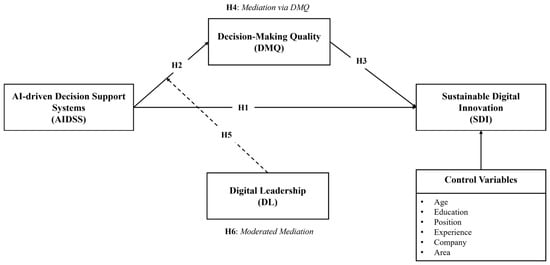
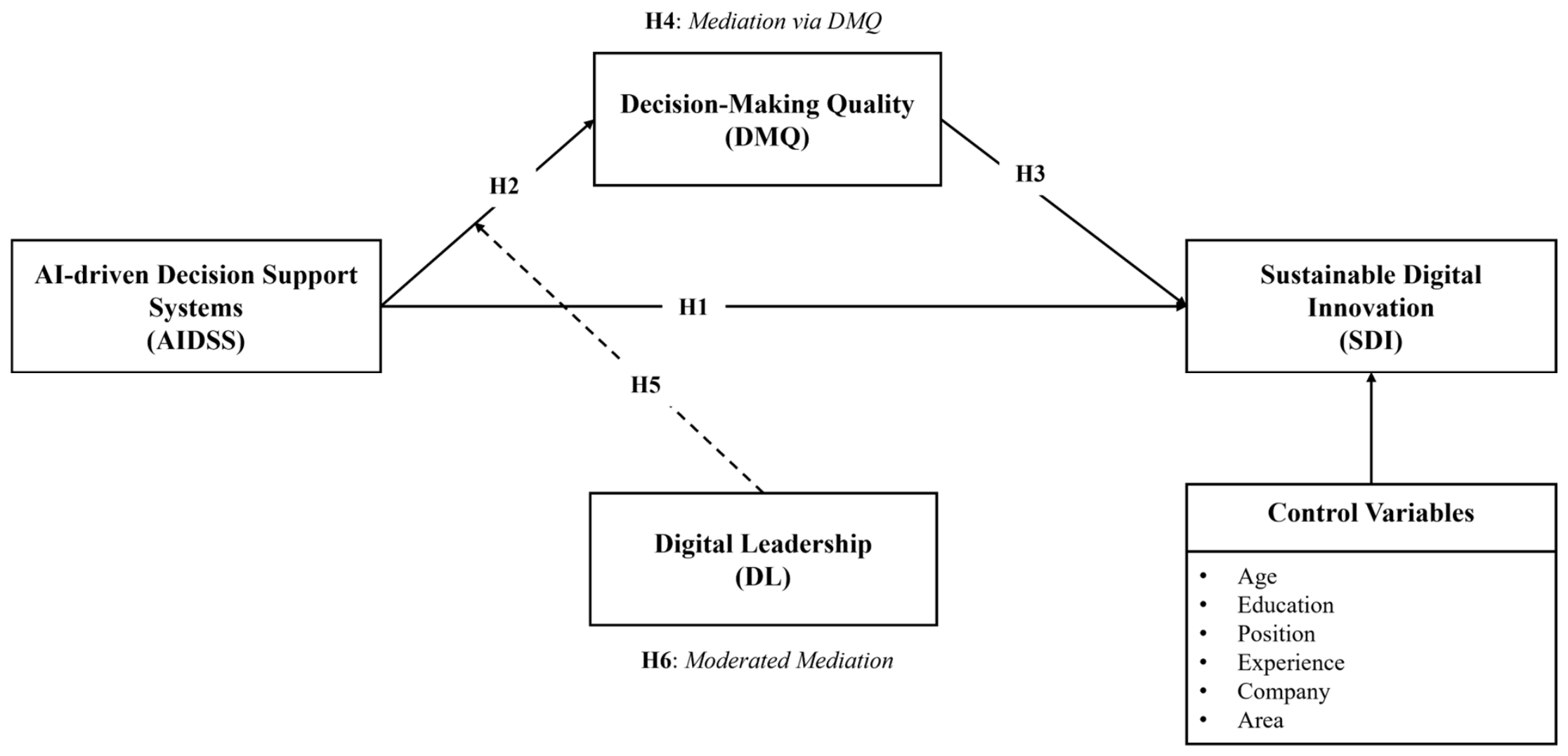
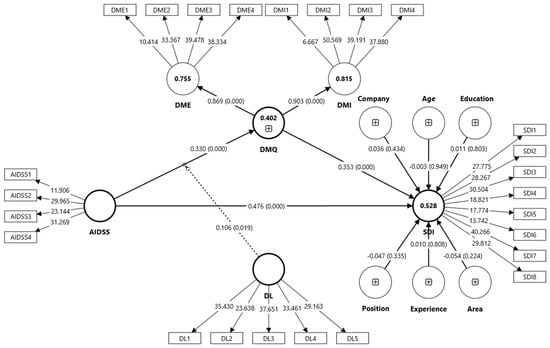
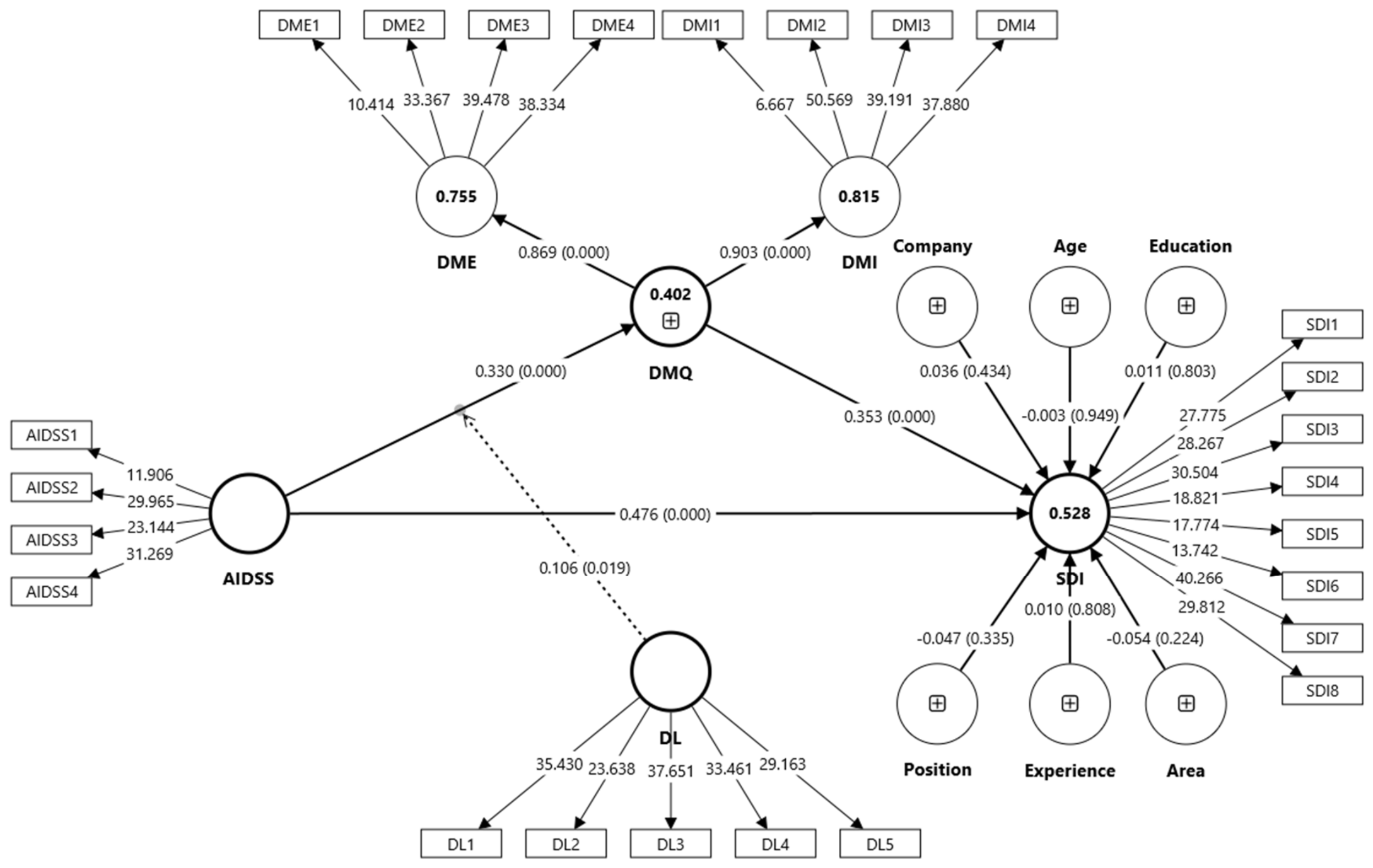
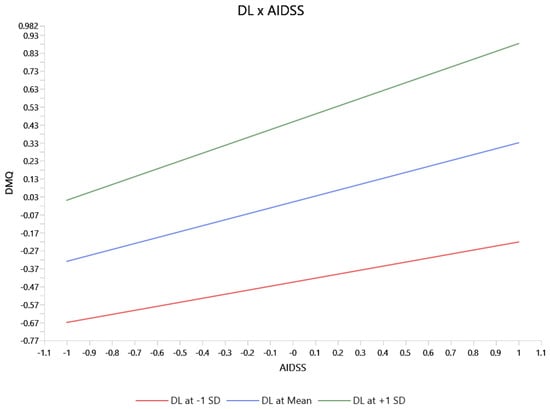
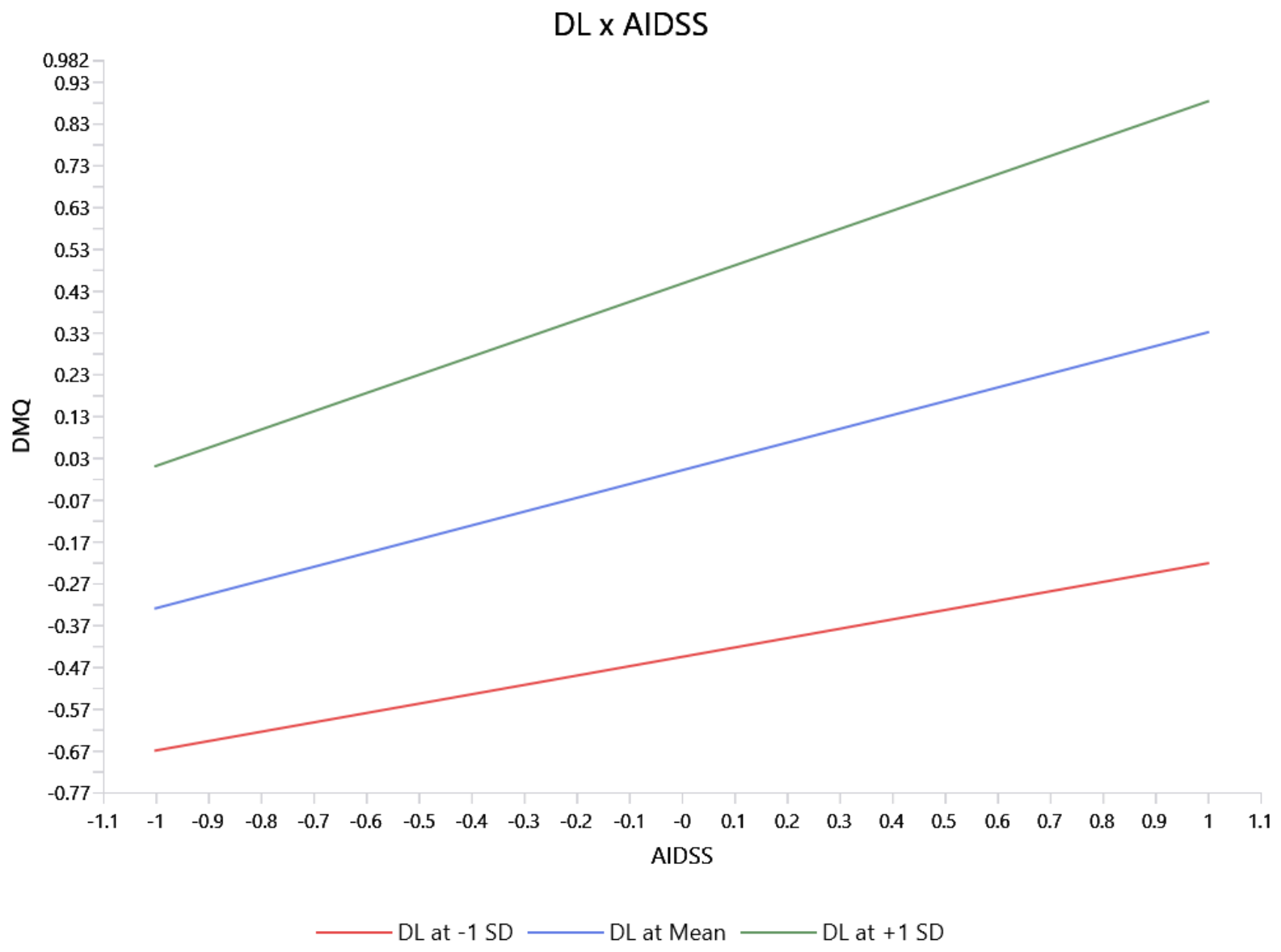

Disclaimer/Publisher’s Note: The statements, opinions and data contained in all publications are solely those of the individual author(s) and contributor(s) and not of MDPI and/or the editor(s). MDPI and/or the editor(s) disclaim responsibility for any injury to people or property resulting from any ideas, methods, instructions or products referred to in the content. |
© 2026 by the authors. Licensee MDPI, Basel, Switzerland. This article is an open access article distributed under the terms and conditions of the Creative Commons Attribution (CC BY) license.