


Abstract
Hospital laboratory wastewater (HLW) presents severe environmental, occupational, and infrastructure risks due to its complex, highly variable, and hazardous composition. In facilities lacking dedicated on-site treatment plants, unmanaged discharge into public sewers threatens municipal biological treatment systems and receiving aquatic ecosystems. This study presents a comprehensive characterization and source-segregation management framework for HLW generated across five diagnostic units—hematology, immunology/serology, histopathology, parasitology, and clinical chemistry—at a major hospital in Cairo, Egypt to assess compliance with national regulatory limits for municipal sewer discharge. Investigated streams demonstrated extreme heterogeneity: routine hematology and urine parasitology met municipal discharge standards, whereas clinical chemistry and serology exhibited elevated COD (up to 5511 mg/L), phenol (up to 1.2 mg/L), and boron (up to 36.7 mg/L). Histopathology waste was highly polluted (COD > 45,000 mg/L, BOD5 > 8800 mg/L, oil and grease 4472 mg/L) while specific blood-laden hematology streams recorded COD values up to 18,639 mg/L. Rather than applying unselective dilution, a quantitative four-tiered framework was implemented. Source segregation combined with controlled equalized blending and batch chlorination enabled 56% of the total laboratory wastewater volume to safely comply with municipal sewer standards leaving 44% of hyper-hazardous volume for specialized off-site contractor disposal. Compared to full off-site contractor hauling or installing capital-intensive treatment infrastructure, this strategy reduces disposal costs of 56% of wastewater without requiring capital investment, providing a practical, scalable model for healthcare facilities. This eco-efficient management strategy reduces off-site disposal costs by 56% without requiring capital expenditure (CapEx), providing a practical, scalable decision tool for healthcare facilities to advance sustainable development goals (SDG 6 and SDG 12) in resource-constrained settings.
1. Introduction
Hospital laboratory wastewater (HLW) is among the most complex components of hospital waste originating from various laboratory departments, including hematology, clinical chemistry, immunology, serology, microbiology, histopathology, parasitology, blood gas analysis, and flow cytometry units [1]. It typically contains a diverse mixture of chemical reagents, biological materials, pharmaceuticals, disinfectants, pathogens, heavy metals, and other hazardous substances that differ from those found in domestic waste [2,3]. Many of these constituents are partially resistant to conventional municipal treatment processes. Direct discharge into public sewer networks may pose environmental, occupational, and public health risks and contribute to the dissemination of antimicrobial resistance if not properly managed [4,5]. Microbiological contaminants may contribute to the dissemination of infectious agents and antimicrobial-resistant microorganisms, while chemical pollutants can exert toxic, mutagenic, carcinogenic, or endocrine-disrupting effects on aquatic ecosystems [6]. Histopathology laboratories are major sources of formaldehyde and xylene residues, whereas microbiology and serology units may release viable pathogens and antibiotic residues [7]. Furthermore, pharmaceutical compounds and heavy metals can persist in the environment and accumulate within the food chain [7].
Laboratory analyzers generate wastewater during sample preparation, reagent dispensing, washing and rinsing cycles, equipment cleaning, and the disposal of residual analytical fluids [8]. Depending on the analyzer and test type, the wastewater may contain fractions of blood residues, serum, urine, stool particles, tissue residues, buffers, stains, dyes, surfactants, preservatives, heavy metals, phenolic compounds, alcohols, fixatives, solvents, salts, and disinfectants [9,10]. Managing healthcare waste sits is the intersection of environmental protection, public health, and resource management. Conventional end-of-pipe wastewater treatment approaches in healthcare facilities often demand significant capital investment, high chemical consumption, and intensive energy inputs, which can compromise overall institutional sustainability [11]. Developing decentralized, eco-efficient management tools aligns directly with the United Nations Sustainable Development Goals (UN SDGs)—specifically SDG 6 (Clean Water and Sanitation) by preventing aquatic contamination, SDG 12 (Responsible Consumption and Production) through waste minimization and source control, and SDG 3 (Good Health and Well-Being) by mitigating environmental exposure to toxic chemicals and pathogens [12]. Establishing empirical, decision-driven frameworks to quantify and monitor wastewater streams provides a scalable approach to integrated sustainable development in healthcare infrastructure.
Generally, conventional wastewater treatment plants are not specifically designed to remove many hospital-derived contaminants [13], including HLW; they are designed mainly for the removal of biodegradable organic matter, suspended solids, and nutrients, but they are not optimized for the removal of pharmaceuticals, antimicrobial residues, disinfectants, solvents, resistant microorganisms, or resistance genes [14]. Many preliminary studies have been conducted on laboratory wastewater [15]. They include source segregation and neutralization of acidic or alkaline streams. Physical methods such as sedimentation, filtration, ultrafiltration [16,17,18] and membrane separation for the removal of suspended solids and microorganisms [19]. Chemical treatments, including coagulation-flocculation, chlorination, ozonation, Fenton oxidation, and advanced oxidation processes, effectively degrade organic contaminants and provide disinfection [20,21]. Also, biological wastewater treatment processes, including activated sludge systems and membrane bioreactors (MBRs), are widely used to reduce organic loads and nutrients in wastewater [22,23]. Recent studies have shown that hybrid approaches combining different technologies can achieve superior removal efficiencies for complex hospitals [24,25]. Each technology has advantages and limitations depending on wastewater composition, required effluent quality, operational cost, energy demand, maintenance requirements, sludge production, and local regulatory conditions [22].
On-site treatment reduces the direct release of hazardous constituents into municipal sewers and improves control of pathogen and resistance-gene discharge [26]. However, high cost, operational complexity, and inadequate regulatory frameworks remain limiting factors in many cases [23]. Furthermore, source-specific management and pretreatment of high-risk streams can substantially reduce pollutant loading before discharge to public sewer systems. Therefore, focused management strategies are required beyond typical domestic wastewater approaches. Effective management involves source control, on-site pretreatment, appropriate centralized treatment, and robust monitoring and risk assessment [6]. The World Health Organization (WHO) recommends safe segregation, pretreatment, and disposal of healthcare waste to minimize the release of hazardous substances into the environment [27]. Current approaches to laboratory wastewater management emphasize source control, segregation of hazardous streams, on-site pretreatment, disinfection, monitoring, and compliance with local discharge regulations. In contrast, in many regions, medical laboratory wastewater is still discharged directly into public sewage networks without adequate characterization or separation from lower-risk streams [9]. To overcome these challenges, a source-segregation strategy based on stream-specific characterization and mass-balance controlled blending offers a practical, cost-effective alternative [28]. However, existing literature lacks standardized, quantitative decision frameworks that categorize diagnostic waste streams based on parameters of concern and empirical compliance testing under local regulatory benchmarks [29]. Furthermore, environmental regulations strictly prohibit dilution as a substitute for treatment; thus, blending strategies must be rigorously evaluated to ensure that toxic, non-biodegradable fractions are isolated while only chemically compatible, low-to-medium strength streams are equalized [30].
The main objective of this study was to develop a cost-effective and operationally simple management framework for the safe disposal of hospital laboratory wastewater (HLW) into municipal sewer systems without constructing a capital-intensive on-site treatment plant. The specific objectives are to characterize wastewater generated from different streams within the hospital laboratory units, identify high-risk wastewater streams that may require special handling, and evaluate feasible, cost-effective, and operationally simple management and disposal options to achieve full compliance with local environmental discharge limits specified by Egyptian Ministerial Decree 44/2000. Furthermore, it aims to develop actionable recommendations for best-practice wastewater management that can be implemented without a dedicated wastewater treatment plant, while minimizing environmental and public health risks.
2. Materials and Methods
2.1. Laboratory Audit and Wastewater Mapping
A comprehensive site audit of a hospital laboratory in Cairo, Egypt, covered hematology, immunology, chemistry, histopathology, and parasitology units. The study included all automated liquid diagnostic streams generated by routine diagnostic analyzers across the five selected departments. The microbiology diagnostic department was explicitly excluded from this chemical characterization framework because infectious liquid culture wastes at the facility are managed under strict Biosafety Level 2 (BSL-2) protocols [31], which require mandatory dedicated autoclave thermal sterilization before internal handling.
Effluent generation from each diagnostic analyzer is intrinsically driven by reagent consumption and operational wash cycles. Consequently, daily wastewater production is directly proportional to clinical sample throughput and analytical test protocols, resulting in variable discharge rates without fixed peak volumes. Spent fluids accumulate in dedicated collection vessels attached to each analyzer; upon reaching full capacity, integrated level sensors trigger an alarm prompting manual container replacement. Each analyzer was evaluated based on its function, wastewater generation rate, discharge frequency, chemical reagents used, and sample coding. The flow paths and segregation practices are documented in Table 1. In addition, the chemical reagents used in the analyses and their constituents were reviewed based on the material safety data sheets (MSDS).
Table 1.
List of hospital laboratory departments and wastewater generated from each analyzer.
2.2. Wastewater Sampling
Wastewater samples were collected separately from each device using clean, coded containers. To ensure representativeness and guarantee reproducibility, sampling was conducted across three independent temporal sampling campaigns over a three-month operational window. For each code, wastewater samples were collected in 2 L high-density polyethylene (HDPE) containers, while a 1 L glass bottle was used for collecting samples for oil and grease analysis. Samples were preserved immediately according to APHA Standard Methods (24th ed.) guidelines [32]: cooling at 4 °C for BOD5/COD/TSS/TDS; acidification with concentrated HNO3 to pH < 2 for heavy metals; acidification with concentrated H2SO4 to pH < 2 for TKN and TP; and H3PO4/CuSO4 preservation for phenols.
2.3. Characterization
Comprehensive wastewater analyses were conducted in accordance with the parameters and permissible limits specified in the national regulatory standard for wastewater discharge into the public sewage network (National Ministerial Decree 44/2000) [33]. The analyses included physicochemical parameters such as pH, total suspended solids (TSS), biochemical oxygen demand (BOD5), chemical oxygen demand (COD), total dissolved solids (TDS), oils and grease, total Kjeldahl nitrogen (TKN), total phosphorus, phenol, detergents, and heavy metals. All analyses were performed in accordance with the Standard Methods for the Examination of Water and Wastewater guidelines (APHA, 24th ed.) [32].
2.4. Wastewater Management
Wastewater from each analyzer was classified into four risks based on explicit, quantitative threshold criteria in the Egyptian regulatory discharge standards (Decree 44/2000) as follows:
- Low Risk: COD ≤ 1100 mg/L, BOD5 ≤ 600 mg/L, TSS ≤ 800 mg/L, heavy metals within limits. Permitted for direct release post-disinfection.
- Medium Risk: COD 1100–5000 mg/L, BOD5 600–2000 mg/L (<5-fold exceedance), zero toxic metals or phenols. Suitable for equalized blending.
- High Risk: COD 5000–10,000 mg/L, elevated nutrients/phenols. Admitted under metered release.
- Very High/Extremely Hazardous: COD > 10,000 mg/L, toxic heavy metals (Pb, Cr, Hg), formalin/xylene. Blending is strictly prohibited; 100% isolated for off-site contractor incineration.
According to this classification, four sustainable management scenarios were developed to identify optimal options for safe disposal of wastewater into the public sewage network. Several factors were evaluated in determining the recommended options, including cost-effectiveness, operational simplicity, and adherence to the municipality’s safe disposal criteria. To avoid organic shock loading, a controlled release strategy was maintained through adjusting the ratios of samples with low and high contaminant concentrations.
2.5. Equalization Tank Design
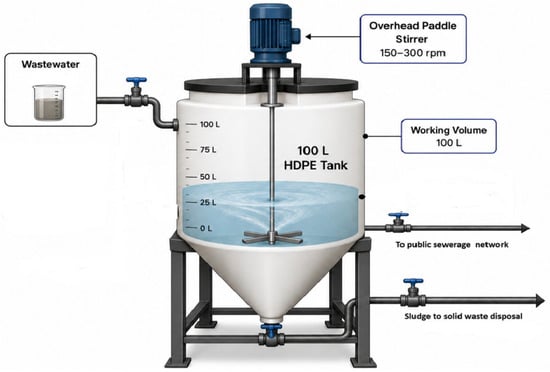
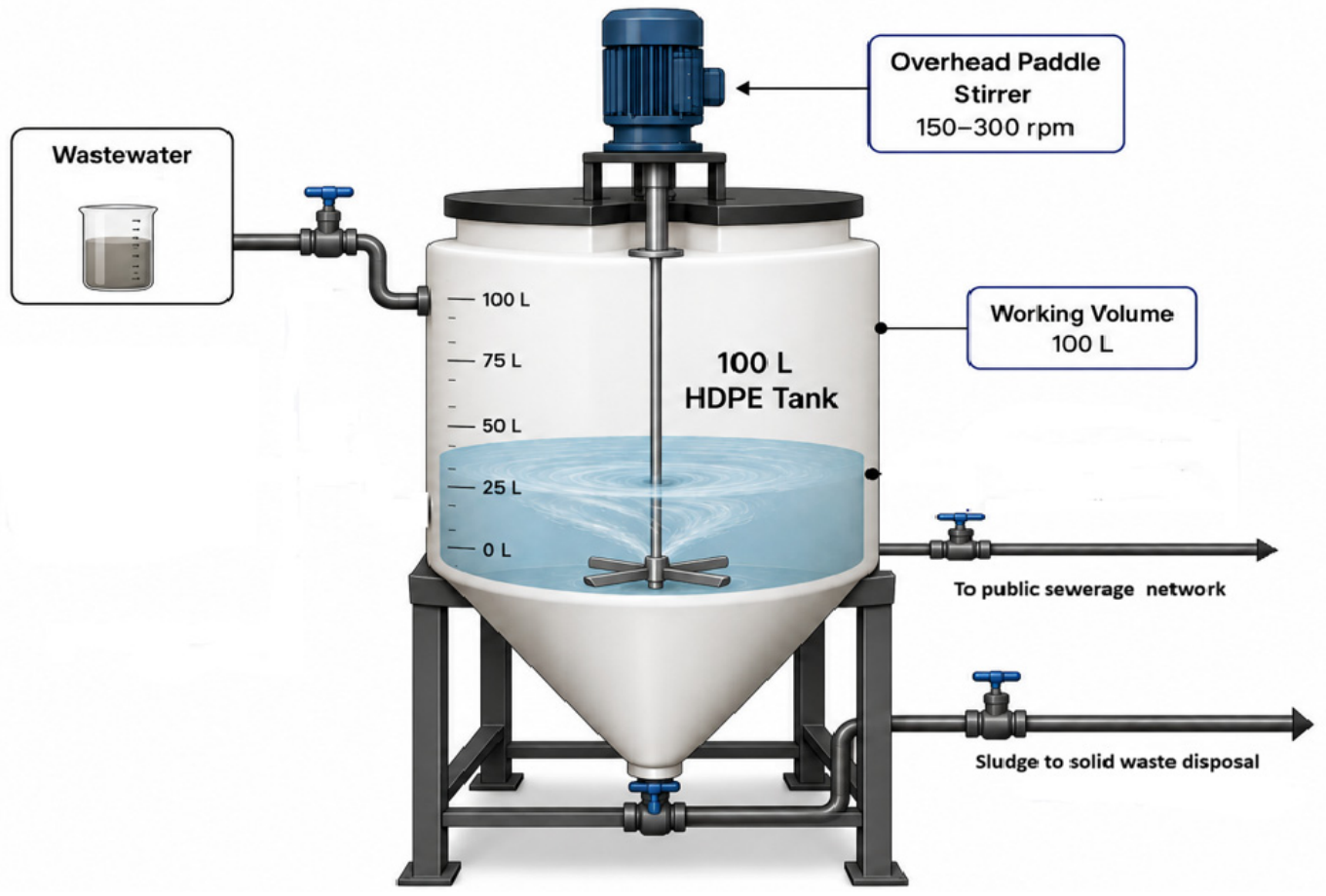
Equalization and controlled blending were executed using a dedicated 100 L HDPE equalization tank with 80 cm height, 40 cm diameter and a conical bottom integrated into the primary laboratory sewer manifold (Figure 1). The tank features an overhead paddle stirrer operated at 150–300 rpm for 10 min to achieve complete hydraulic homogeneity. Following equalization, batches were disinfected using sodium hypochlorite (0.1% active chlorine, dosing rate 5–10 mg/L) with a minimum contact time of 30 min. Residual free chlorine was monitored via DPD colorimetry (target range 0.5–1.0 mg/L) to ensure complete pathogen inactivation before final discharge. Before final discharge, each blended batch undergoes mandatory compliance verification testing for key field indicators: pH, COD, and residual chlorine.
Figure 1.
Equalization tank design.
Suspended solids and chemical precipitates accumulate in the conical bottom section. It is periodically drained via the bottom valve, collected in sealed containers, and handed over to an authorized medical waste management contractor.
3. Results
To determine an operationally viable, cost-effective disposal pathway that avoids building an expensive full-scale wastewater treatment plant, complete characterization of wastewater from different hospital laboratory departments was carried out. Based on the characterization results, a management strategy was developed and implemented.
3.1. Characterization of Wastewater from Different Laboratory Departments
3.1.1. Hematology Department
Wastewater quality parameters generated by the five hematology devices (H1–H5) showed marked variability across analytical protocols and reagent compositions (Table 2).
Table 2.
Physicochemical characterization of hematology laboratory wastewater streams.
Hematology wastewater varied from essentially compliant rinsing-type effluent to highly concentrated, blood- and reagent-affected waste. H1 and H4 complied with the permissible limits for pH, COD, BOD5, TSS, TKN, TP, phenol, oil and grease, and the measured metals; however, the Pb concentration in H1 (0.90 mg/L) was close to the 1.0 mg/L limit and warrants routine surveillance. H2 exceeded the COD and BOD5 limits by approximately 4.5- and 1.9-fold, respectively, but did not show a metal, phenol, nutrient, or oil-and-grease exceedance. This profile supports its characteristic as a medium-risk stream suitable only for controlled blending and verification.
H3 and H5 were the critical hematology streams. H3 had an alkaline pH of 10.1, a COD of 18,639 mg O2/L, a BOD5 of 7725 mg O2/L, and a boron concentration of 35 mg/L, corresponding to approximately 16.9, 12.9, and 35 times their respective permissible limits.H5 contained COD of 9278 mg O2/L, BOD5 of 3210 mg O2/L, TP of 759 mg/L, phenol of 1.2 mg/L, and oil and grease of 304 mg/L. The TP and phenol concentrations were 30 and 24 times higher than their respective permissible limits. These multiple exceedances preclude direct sewer discharge and justify segregated off-site management.
3.1.2. Parasitology Department
Characterization of parasitology streams (P1–P3) revealed significant disparities between routine urine testing and stool preparation procedures (Table 3).
Table 3.
Physicochemical characterization of parasitology laboratory wastewater streams.
The parasitology streams also showed contrasting characteristics. P1 was the most concentrated stream, with COD of 24,555 mg O2/L and BOD5 of 4150 mg O2/L, approximately 22.3 and 6.9 times the discharge limits. Its TP (48.8 mg/L) and oil and grease (192 mg/L) also exceeded the limits, indicating that dilution-free discharge would impose a substantial organic and grease load on the sewer.
P2 had COD, BOD5, TSS, TKN, oil-and-grease, and copper concentrations within the listed limits, while TP (29.4 mg/L) was marginally above the 25 mg/L limit. It may therefore be included in the low-risk management batch only when mixing with the other low-strength streams and final-batch verification reduces TP to a compliant level. P3 met the COD and BOD5 limits but contained TP of 170 mg/L, 6.8 times the limit; it should remain segregated unless a validated treatment or blending step specifically demonstrates phosphorus compliance.
3.1.3. Histopathology, Flow Cytometry, and Serology Departments
Wastewater from histopathology (TH1), flow cytometry (TH2), and serology (S1) is summarized in Table 4.
Table 4.
Physicochemical characterization of histopathology, flow cytometry, and serology wastewater streams.
TH1 was the most highly polluted stream in the study. COD reached 45,389 mg O2/L and BOD5 8865 mg O2/L, approximately 41 and 15 times the limits. TKN (417 mg/L), TP (335 mg/L), and oil and grease (4472 mg/L) were also markedly elevated, with oil and grease nearly 45 times the limit. Boron was slightly above the limit, whereas the other measured metals remained below their individual limits. The low BOD5/COD ratio (approximately 0.20) together with the very high organic and grease load indicates a substantial non-readily biodegradable fraction and supports mandatory segregation and off-site management.TH2 and S1 were less concentrated than TH1 but were still unsuitable for direct discharge. TH2 exceeded the COD, BOD5, TKN, and oil-and-grease limits, while S1 exceeded the COD, BOD5, TKN, oil-and-grease, and boron limits.
These results support conditional, limited blending for S1 only when mass-balance and final-batch analyses demonstrate compliance; TH2 should otherwise remain in the off-site management group.
3.1.4. Blood Chemistry Department
Blood chemistry analyzer effluents (C1 and C2) demonstrated substantial pollutant loads for both organic and inorganic indicators (Table 5).
Table 5.
Physicochemical characterization of blood chemistry wastewater streams.
Both clinical chemistry streams required management beyond direct discharge. C1 contained COD of 5511 mg O2/L, BOD5 of 2100 mg O2/L, TKN of 142.8 mg/L, TP of 142.8 mg/L, and oil and grease of 272 mg/L. These values correspond to exceedances of approximately 5.0, 3.5, 1.4, 5.7, and 2.7 times, respectively. C2 had a BOD5 value just below the limit, but COD (2140 mg O2/L), TKN (546.6 mg/L), phenol (0.55 mg/L), and boron (36.7 mg/L) were elevated. Phenol and boron were 11 and 37 times the applicable limits. Consequently, the use of C1 or C2 in a blended batch must be volume-limited and conditional on verified compliance, particularly for nitrogen, phenol, and boron.
3.2. Wastewater Management
To determine an operationally viable and cost-effective disposal pathway, management options were first modeled using predictive mass-balance calculations and subsequently evaluated and validated through empirical pilot-scale testing using the 100 L conical-bottom equalization tank setup. While mass-balance modeling established theoretical volumetric ratios, physical verification ensured that chemical compatibility, settling efficiency, and batch disinfection achieved actual regulatory compliance without unexpected synergistic precipitation or toxicity. The analytical results confirmed that laboratory wastewater is highly heterogeneous. Variability reflects differences in analytical techniques, reagent composition, and biological content. Wastewater streams can be broadly classified into:
- Low-strength wastewater: Generated from routine hematology and some chemistry analyzers, characterized by moderate COD, low concentrations of metals, and near-neutral pH.
- High-strength wastewater: Originating mainly from immunology, histopathology, and certain parasitology devices, characterized by high COD, BOD5, nutrients, and occasionally elevated metals.
- Extremely hazardous wastewater: Streams containing high blood content or tissue residues, such as blood bank waste, blood gas analyzers, and specific hematology devices.
3.2.1. Option 1: Direct Discharge of Low-Risk Wastewater
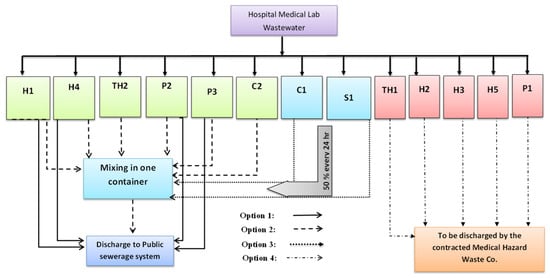
Low-risk streams H1 (20 L/48 h), H4 (2.5 L/48 h), P2 (20 L/48 h), and P3 (20 L/month, equivalent to approximately 1.3 L/48 h) were blended. H1 and H4 formed the compliant core of the low-risk batch. P2 could contribute a substantial volume because of its low organic load, although its marginal TP exceedance required dilution within the defined batch, followed by final verification. P3 was included based on the operational mapping and confirmatory batch assessment.
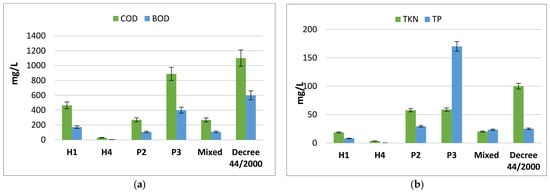
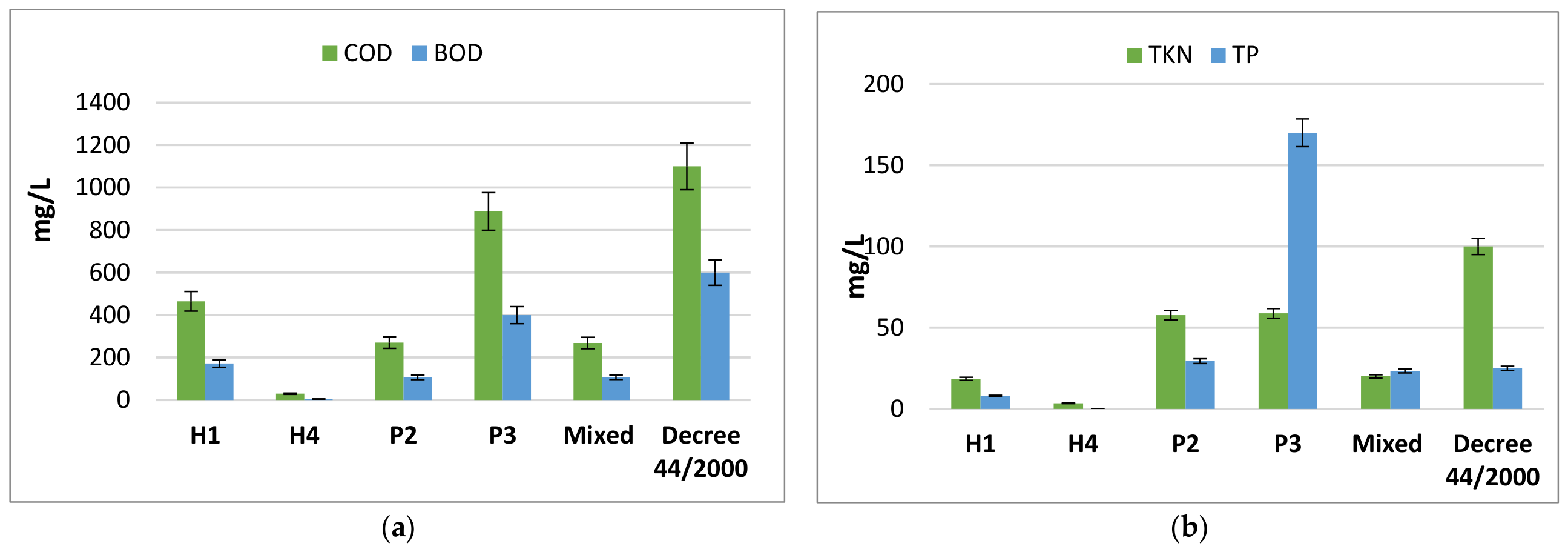
After homogenization, all parameters in Option 1 remained safely below Decree 44/2000 thresholds, confirming that low-risk streams can be discharged directly into public sewers following routine chlorination. The composite volumetric flow was 43.8 L/48 h.
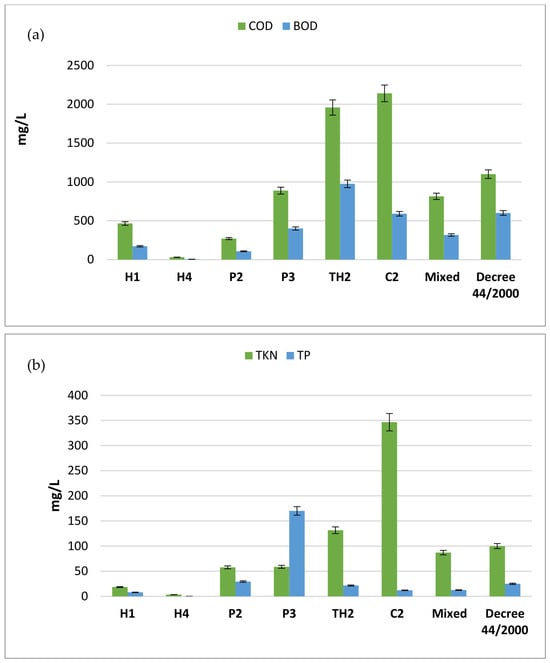
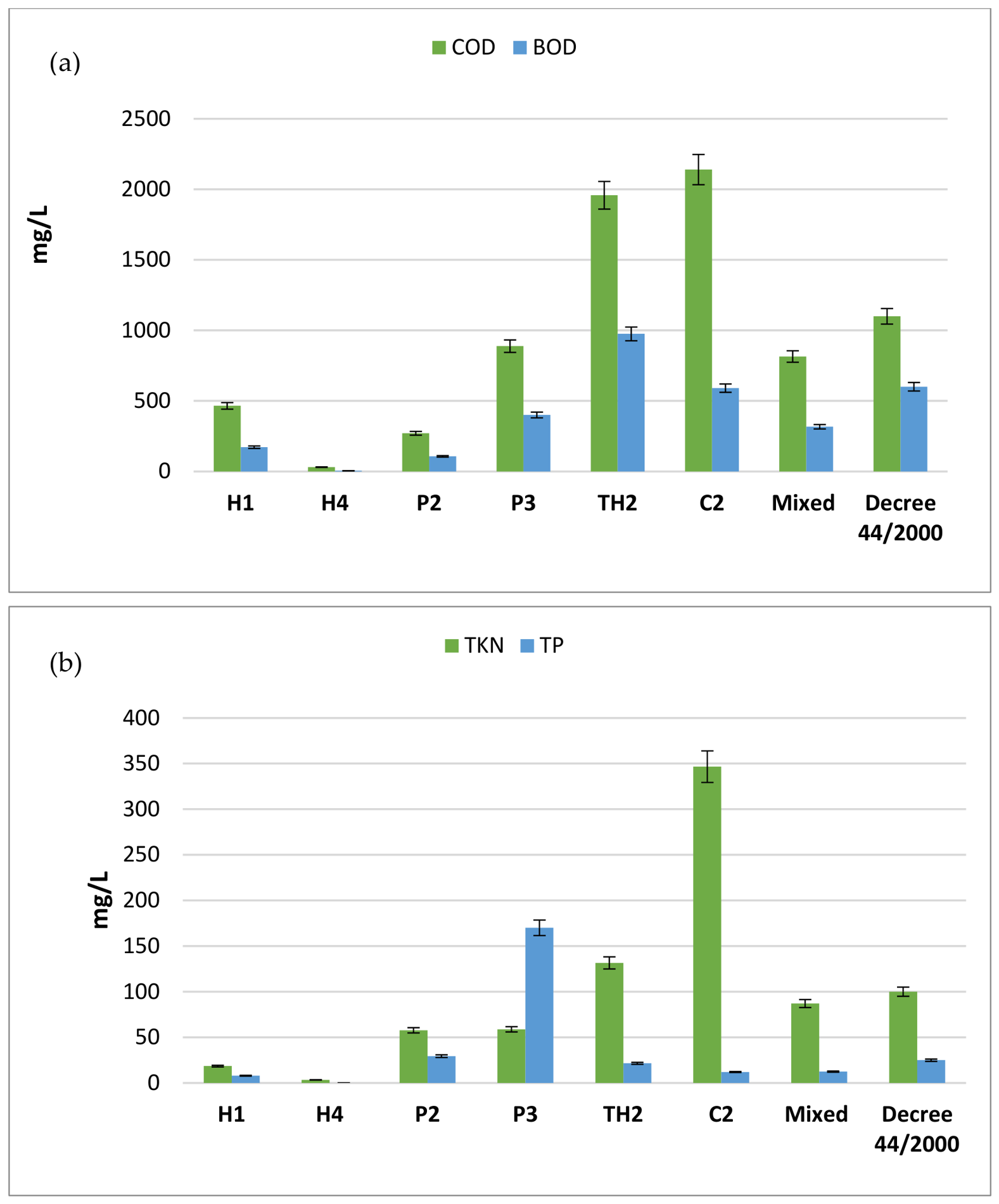
As shown in Figure 2, mass-balance calculations yielded a COD concentration of 338.4 mg O2/L (permissible limit: 1100 mg O2/L) and a BOD5 concentration of 128.5 mg O2/L. However, the TKN and TP concentrations in the P2 and P3 samples, which initially exceeded the permissible limits, decreased to 20.0 and 26.9 mg/L, respectively. The elevated total phosphorus (TP) concentrations in stream P3 initially caused a marginal exceedance in the mixed sample. To overcome this slight overlimit, the volume of P3 introduced into the blending tank was restricted to . Blending this controlled volume with the remaining streams produced a total volumetric flow of and successfully reduced the TP concentration in the mixed sample to , bringing it safely within regulatory limits.
Figure 2.
Characteristics of low-risk wastewater from H1, H4, P2, and P3 mixed wastewater compared to Decree 44/200 as: (a) for COD and BOD; (b) for TKN and TP.
3.2.2. Option 2: Blending Medium-Risk Streams
TH2 and C2 were considered for controlled blending in addition to the Option 1 batch. TH2 was limited mainly by COD and BOD5, whereas C2 was constrained by COD, TKN, phenol, and particularly boron ( vs. limit). Therefore, acceptance could not be based on uncritical dilution of COD alone. To achieve the strict boron threshold, stream C2 was introduced under a staged, fractionated volumetric feed rate (restricted to 25% of its generated volume per cycle, i.e., instead of the full ).
Medium-risk streams TH2 () and the restricted C2 volume () were introduced into the Option 1 holding tank. The resulting blended stream () yielded a predicted and empirically verified COD of , BOD of , TKN of , and phenol (Limit: ) as indicated in Figure 3 and Table 6. Controlled agitation and optimized dilution brought all parameters, including boron, within regulatory limits.
Figure 3.
Characteristics of medium-risk wastewater after addition of TH2 and C2 to Option 1 and mixed wastewater compared to Decree 44/2000 as: (a) for COD and BOD; (b) for TKN and TP.
Table 6.
Physicochemical characterization of mixed wastewater samples of H1, H4, P2, P3, TH2, C2.
3.2.3. Option 3: Controlled Release of High-Risk Wastewater
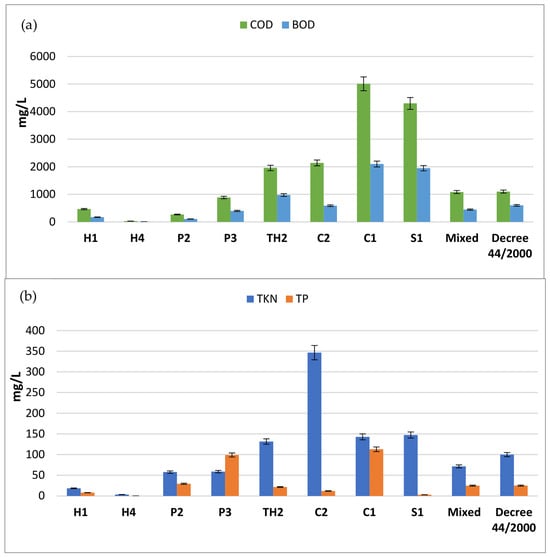
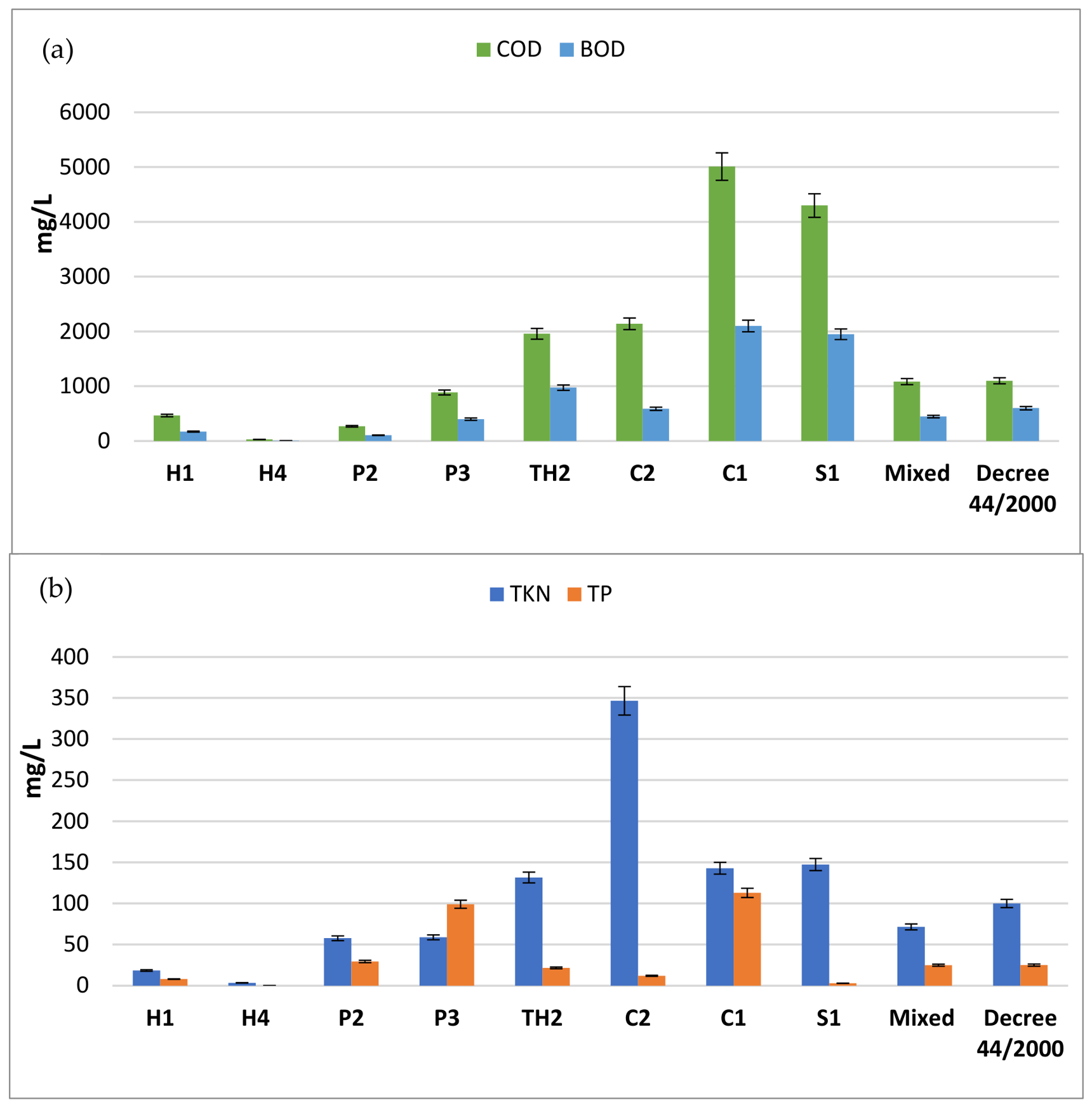
The staged-release option allowed no more than 50% of the generated C1 and S1 volumes to be evaluated during a 24 h cycle. This reduced instantaneous loading and allowed the lower-strength batch volume to buffer the high COD and BOD5 of both streams. Because C1 also contained elevated phosphorus and oil and grease and S1 contained elevated boron, the staged volume was considered acceptable only when the final mixed sample complied with every regulated parameter. Very high-risk streams C1 (4.0 L/48 h) and S1 (3.0 L/48 h) were fed into the Option 2 holding tank using a controlled release rate of 50% per 48 h (3.5 L total per 48-h cycle). The combined composite stream (59.3 L/48 h) demonstrated full compliance (Figure 4), as the concentration of COD was 1038.5 mg O2/L, BOD: 392.10 mg O2/L, TKN: 74.20 mg N/L, TP: 18.40 mg P/L. By restricting the feed rate of C1 and S1, 56% of the total laboratory wastewater volume was rendered compliant for municipal sewer discharge.
Figure 4.
Characteristics of medium-risk wastewater after addition of C1 and S1 to Option 2 and mixed wastewater compared to Decree 44/2000 as: (a) for COD and BOD; (b) for TKN and TP.
3.2.4. Option 4: Off-Site Handling for Hazardous Streams
The remaining 44% of total laboratory wastewater, consisting of hyper-polluted streams H2, H3, H5, TH1, and P1, contained extreme levels of phenol, heavy metals, and organic loads that could not be mitigated by dilution. These streams were assigned to segregated off-site management due to their severe or multiple exceedances. Overall, the selected combination of source segregation, controlled blending, batch verification, and disinfection enabled approximately 56% of the laboratory wastewater volume to be directed safely to the municipal sewer, while the remaining approximately 44% required specialized off-site handling and treatment by an authorized hazardous waste contractor. Figure 5 shows the proposed management options for the wastewater generated from hospital laboratory.
Figure 5.
Proposed management options for the hospital laboratory wastewater.
4. Discussion
The detailed characterization of diagnostic laboratory effluents conducted in this study highlights the severe chemical and biological heterogeneity inherent to hospital laboratory wastewater (HLW). Unlike general hospital sewage, which is primarily domestic in nature, HLW composition is dictated by specialized analytical reagents, automated washing protocols, fixatives, and residual sample matrices [34,35].
The results demonstrate that unsegregated laboratory wastewater poses significant ecotoxicological and operational risks. Histopathology streams (TH1) exhibited extreme organic loads (COD > 45,000 mg/L) and solvent content, primarily attributable to xylene, formalin, and tissue-staining dyes. Similarly, specific hematology (H3, H5) and blood chemistry (C1, C2) streams contain elevated phenolic compounds, boron, and heavy metals (Pb, Hg, Cu, Ni). If discharged directly into municipal sewers, these pollutants can cause sewer pipe corrosion, disrupt biological activated sludge processes at municipal WWTPs, and lead to heavy metal bioaccumulation in receiving aquatic ecosystems [36].
Installing full-scale, dedicated wastewater treatment plants within healthcare facilities is frequently impractical due to severe spatial constraints, high capital expenditures, and demanding operational requirements [22]. The four-tiered management options evaluated in this study provide an operationally simple and cost-effective alternative. Mass-balance calculations and laboratory analyses confirmed that source segregation combined with controlled blending and disinfection (Options 1–3) allows 56% of total laboratory wastewater volume to safely comply with the National Decree 44/2000 discharge limits. Controlled release of high-load streams (C1 and S1) prevented organic shock loading while remaining below threshold concentrations for COD, BOD, TKN, and phosphorus.
Crucially, segregating the highly toxic 44% fraction (Option 4) for specialized off-site disposal eliminates the risk of pass-through contamination at municipal WWTPs. This hybrid approach—combining controlled municipal discharge of low-risk blended streams with off-site handling of hyper-hazardous fractions—substantially reduces off-site disposal volume and operational costs while maintaining full environmental compliance [13].
The results confirmed that hospital laboratory wastewater cannot be represented by a single average composition. Even within the hematology and parasitology departments, streams ranged from near-compliant rinsing wastewater to highly concentrated waste with organic loads one to two orders of magnitude above the sewer limits. This heterogeneity explains why end-of-pipe mixing without prior characterization is unreliable: a small-volume analyzer discharge can dominate the pollutant mass of a much larger combined flow [21,37].
Organic loading was the most frequent cause of noncompliance. H3, H5, P1, TH1, S1, and C1 showed particularly high COD and BOD5 values. The BOD5/COD ratio serves as a vital indicator of biological treatment. In this study, BOD5/COD ratios exhibited distinct patterns across diagnostic departments:
Refractory/Recalcitrant Waste (BOD5/COD = 0.17–0.20): Histopathology stream TH1 (0.20) and parasitology stool prep P1 (0.17) demonstrated low biodegradability, reflecting high concentrations of synthetic dyes, fixatives (formalin), and organic solvents. These streams are non-biodegradable in conventional municipal treatment systems, justifying mandatory Tier 4 off-site isolation.
Moderately Biodegradable Waste (BOD5/COD = 0.35–0.38): Clinical chemistry streams C1 (0.38) and serology S1 (0.38) contained moderate biodegradable organic fractions alongside complex chemical reagents, qualifying them for Tier 3 metered equalized blending.
Readily Biodegradable Waste (BOD5/COD = 0.40–0.45): Routine hematology H1 (0.37) and urine parasitology P2 (0.40) showed favorable biodegradability, confirming their suitability as buffering core volumes in Tier 1 and Tier 2 blending operations.
The data also demonstrates that COD-based classification alone would be insufficient. H5 was controlled by TP, phenol, and oil and grease in addition to organic load; C2 was strongly constrained by TKN, phenol, and boron despite a BOD5 concentration below the limit; and P3 required attention because of phosphorus even though COD and BOD5 complied. Similarly, TH1 combined extreme organic and oil-and-grease loads with high nitrogen and phosphorus. A parameter-by-parameter compliance check is therefore necessary whenever blending is proposed.
The pollutant concentrations observed in Cairo HLW align with and expand upon global literature findings (Table 7). Organic loads in histopathology (TH1 COD 45,389 mg/L) significantly exceeded those reported in Turkish clinical labs [22] (COD 12,000–25,000 mg/L) and Indonesian university medical labs [5] (COD 8000–15,000 mg/L). Heavy metal concentrations (Pb, Cu, Ni) were comparable to values reported in South American hospital surveys [7]. The high concentration of specific parameters (e.g., boron in C2 at 36.7 mg/L) highlights the necessity of parameter-specific compliance screening beyond standard COD/BOD metrics.
Table 7.
Comparative analysis of hospital laboratory wastewater characterization across global studies.
The four-option framework applies the waste-management hierarchy at the scale of individual analyzers. Directly manageable streams are preserved as a recoverable water fraction, streams with limited exceedances are admitted only at a calculated rate, and concentrated hazardous streams remain segregated for specialist treatment. This approach reduces the quantity requiring costly off-site disposal without using the municipal sewer as an uncontrolled dilution system. The reported 56% sewer-discharge fraction represents an operational benefit, but it remains conditional on batch-specific analytical confirmation. A crucial risk in wastewater blending is synergistic toxicity—where combining different chemical waste streams creates secondary toxic reactions, precipitation, or gas generation (e.g., acid-cyanide or bleach-ammonia reactions). To prevent synergistic toxicity, excluding equalizing tanks, blending is restricted to organic-rich, chemically non-reactive streams. Empirical batch-wise testing of composite blended samples (Table 6) verified the absence of hazardous precipitate formation, heavy metal leaching, or unexpected exothermic/gaseous reactions.
Implementation depends on disciplined operation. Collection containers and tank inlets must remain clearly labeled; staff must be trained not to combine excluded streams; the holding tank must provide adequate mixing and containment; and every release must be documented. Changes in analyzer model, reagent formulation, test workload, or cleaning cycle can alter both flow and composition and should trigger re-characterization and revision of the mass balance. Contractor manifests and temporary storage controls are also required for the off-site fraction.
Installing centralized, hospital-wide advanced treatment plants requires massive capital investment (CapEx), specialized technical labor, and continuous operational funding (OpEx) that healthcare institutions in resource-constrained settings frequently lack [21,30]. Source segregation coupled with mass-balance blending (Options 1–3) offers a pragmatic operational alternative. The implementation of this four-tiered management strategy directly addresses key pillars of sustainability: environmental protection, economic viability, and operational feasibility. Environmentally, isolating hyper-hazardous streams (44% of total volume) prevents persistent organic pollutants, heavy metals (such as boron and lead), and recalcitrant solvents from entering municipal sewerage networks, thereby safeguarding downstream biological treatment infrastructure and receiving surface water bodies. Socio-economically, full off-site contractors hauling or installing centralized, capital-intensive wastewater treatment plants imposes an unsustainable financial burden on healthcare systems, particularly in low- and middle-income countries. By diverting 56% of non-hazardous, equalized wastewater to municipal discharge without requiring CapEx or operational chemical additives beyond basic chlorination, this framework reduces off-site disposal costs by 56%. This quantitative balance between environmental compliance and cost-effectiveness presents a replicable tool for defining and monitoring sustainability in clinical and institutional settings.
The proposed approach is intended as a practical source-control system rather than a substitute for treatment where a hospital-wide treatment plant is required. Its transfer to another facility requires a new analyzer inventory, representative sampling across operating conditions, locally applicable discharge limits, and verification of the blended batch. Future work should report temporal replication, disinfection performance, residual chlorine, and full-scale composite-batch results to quantify variability and confirm long-term robustness.
5. Conclusions
This study demonstrates that hospital laboratory wastewater (HLW) generated across five diagnostic departments at a healthcare facility in Cairo, Egypt cannot be managed as a uniform effluent stream due to extreme departmental heterogeneity. Physicochemical characterization across three independent temporal sampling campaigns revealed significant variation, with histopathology () clinical chemistry, and specific hematology units generating raw effluents that severely violate Egyptian Ministerial Decree 44/2000 standards for municipal sewer discharge. The core innovation of this work lies not in inventing a novel chemical reactor, but in establishing a data-driven, quantitative source-segregation framework and mass-balance decision model tailored for healthcare facilities in low- and middle-income countries.
By implementing a data-driven, four-tiered management strategy—utilizing a 100 L conical-bottom equalization tank with paddle agitation, batch chlorination, and sludge purging—the facility successfully rendered 56% of total generated wastewater volume fully compliant for municipal sewer release. Segregating the remaining 44% hyper-hazardous volume for a specialized off-site contractor prevented toxic chemical pass-through into municipal infrastructure, directly reducing specialized disposal expenses by 56% while requiring no capital expenditure for an on-site treatment plant. This management serves as a practical, scalable tool for healthcare administrators and environmental regulators seeking to integrate sustainable development principles into daily laboratory operations.
Author Contributions
Conceptualization, S.I.A.-E.; methodology, M.S.H. and M.E.F.; formal analysis, M.S.H. and M.E.F.; investigation, S.I.A.-E., M.S.H. and M.E.F.; data curation, M.S.H.; writing—original draft preparation, M.S.H.; writing—review and editing, S.I.A.-E. and M.E.F.; supervision, S.I.A.-E. All authors have read and agreed to the published version of the manuscript.
Funding
This research received no external funding.
Institutional Review Board Statement
Not applicable.
Informed Consent Statement
Not applicable.
Data Availability Statement
All data and results generated from this work are available upon reasonable request.
Acknowledgments
During the preparation of this manuscript/study, the authors used Google Gemini advanced tool for the purposes of drafting the schematic layout for Figure 1. The authors have reviewed and edited the output and take full responsibility for the content of this publication.
Conflicts of Interest
The authors declare no conflicts of interest.
References
- Sharma, S.; Prakash, D.; Agnihotri, S. Sustainable Strategies for Hospital Wastewater Treatment: Bioremediation, Phytoremediation, and Hybrid Approaches for Emerging Pollutants. Front. Microbiol. 2026, 16, 1710583. [Google Scholar] [CrossRef] [Scilit] [PubMed]
- Balakrishnan, A.; Jacob, M.M.; Senthil Kumar, P.; Kapoor, A.; Ponnuchamy, M.; Sivaraman, P.; Sillanpää, M. Strategies for Safe Management of Hospital Wastewater during the COVID-19 Pandemic. Int. J. Environ. Sci. Technol. 2023, 20, 13941–13956. [Google Scholar] [CrossRef] [Scilit] [PubMed]
- Akin, B.S. Contaminant Properties of Hospital Clinical Laboratory Wastewater: A Physiochemical and Microbiological Assessment. J. Environ. Prot. 2016, 7, 635–642. [Google Scholar] [CrossRef]
- Saengchut, P.; Iadtem, N.; Wonglertarak, W.; Kokaphan, C.; Obpat, S.; Klaiklung, P. Properties of Laboratory Wastewater Having Influence Heavy Metals Treatment Efficiency by Chemical Precipitation. J. Ecol. Eng. 2024, 25, 72–83. [Google Scholar] [CrossRef] [Scilit] [PubMed]
- Novita, E.; Andriyani, I.; Hartiningsih, E.S.; Pradana, H.A. Characterisation of Laboratory Wastewater for Planning Wastewater Treatment Plants in a University Campus in Indonesia. Ecol. Environ. Conserv. 2022, 28, S45–S50. [Google Scholar] [CrossRef] [Scilit]
- Shekhawat, S.S.; Saini, P.; Upadhyay, A.; Pareek, N.; Arora, S.; Gupta, A.B.; Vivekanand, V. Treatment of Clinical Laboratory Sewage Using a Decentralized Treatment Unit and Risk Reduction for Its Reuse in Irrigation Using Hybrid Disinfection. J. Environ. Manag. 2023, 344, 118684. [Google Scholar] [CrossRef] [Scilit] [PubMed]
- Aguilar-Rangel, E.J.; Paredes-Cárcamo, F.; Andrade, M.D.; Contreras-Sánchez, D.; Rain-Medina, V.; Campanini-Salinas, J.; Medina, D.A. Hospital Wastewater as a Reservoir of Contaminants of Emerging Concern: A Study Report from South America, Chile. Antibiotics 2025, 14, 1111. [Google Scholar] [CrossRef] [Scilit] [PubMed]
- Basturk, I.; Varank, G.; Murat-Hocaoglu, S.; Yazici-Guvenc, S.; Can-Güven, E.; Oktem-Olgun, E.E.; Canli, O. Simultaneous Degradation of Cephalexin, Ciprofloxacin, and Clarithromycin from Medical Laboratory Wastewater by Electro-Fenton Process. J. Environ. Chem. Eng. 2021, 9, 104666. [Google Scholar] [CrossRef] [Scilit]
- Basturk, I.; Varank, G.; Murat Hocaoglu, S.; Yazici Guvenc, S. Medical Laboratory Wastewater Treatment by Electro-fenton Process: Modeling and Optimization Using Central Composite Design. Water Environ. Res. 2021, 93, 393–408. [Google Scholar] [CrossRef] [Scilit] [PubMed]
- Agbere, S.; Kpemissi, M.; Melila, M.; Ouro-Sama, K.; Dorkenoo, A.; Tanouayi, G.; Solitoke, H.D.; Adje, K.; Gnandi, K. Physico-Chemical Quality of Ashes Post-Incineration and Waste from Laboratory Automaton Biochemistry, Hematology and Serology in Togo. J. Biosaf. Biosecur. 2023, 5, 107–115. [Google Scholar] [CrossRef] [Scilit]
- Li, H.; Xu, J.; Zhao, Y.; Lian, J. Challenges of Precise Aeration Implementation in Conventional Wastewater Treatment Processes: A Review. J. Water Process Eng. 2025, 78, 108737. [Google Scholar] [CrossRef] [Scilit]
- United Nations Department of Economic and Social Affairs. United Nations The Sustainable Development Goals Report; United Nations Publication; United Nations Department of Economic and Social Affairs: New York, NY, USA, 2017; pp. 1–56. [Google Scholar] [CrossRef] [Scilit]
- Boutros, M.; Puig, R.; Bartoli, E.; El Bachawati, M. Sustainability Assessment of Hospital Wastewater Treatment Techniques: A Comprehensive Review. Sustainability 2025, 17, 4930. [Google Scholar] [CrossRef] [Scilit]
- Bijlsma, L.; Pitarch, E.; Fonseca, E.; Ibáñez, M.; Botero, A.M.; Claros, J.; Pastor, L.; Hernández, F. Investigation of Pharmaceuticals in a Conventional Wastewater Treatment Plant: Removal Efficiency, Seasonal Variation and Impact of a Nearby Hospital. J. Environ. Chem. Eng. 2021, 9, 105548. [Google Scholar] [CrossRef] [Scilit]
- Basturk, I.; Varank, G.; Murat-Hocaoglu, S.; Yazici-Guvenc, S.; Oktem-Olgun, E.E.; Canli, O. Characterization and Treatment of Medical Laboratory Wastewater by Ozonation: Optimization of Toxicity Removal by Central Composite Design. Ozone Sci. Eng. 2021, 43, 213–227. [Google Scholar] [CrossRef] [Scilit]
- Radha, F.H.S.; Shwan, D.M.S.; Kaufhold, S. Adsorption Study and Removal of Basic Fuchsin Dye from Medical Laboratory Wastewater Using Local Natural Clay. Adsorpt. Sci. Technol. 2023, 2023, 1–13. [Google Scholar] [CrossRef] [Scilit]
- Gliniak, M.; Nawara, P.; Bieszczad, A.; Górka, K.; Tabor, J. The Use of E-Peroxone to Neutralize Wastewater from Medical Facilities at a Laboratory Scale. Sustainability 2023, 15, 1449. [Google Scholar] [CrossRef] [Scilit]
- Mahdavi, M.; Mahvi, A.H.; Salehi, M.; Sadani, M.; Biglari, H.; Tashauoei, H.R.; Ebrahimi, A.; Yengejeh, R.J.; Fatehizadeh, A. Wastewater Reuse from Hemodialysis Section by Combination of Coagulation and Ultrafiltration Processes: Case Study in Saveh-Iran Hospital. Desalin. Water Treat. 2020, 193, 274–283. [Google Scholar] [CrossRef] [Scilit]
- Kim, J.; Wu, B.; Jeong, S.; Jeong, S.; Kim, M. Recent Advances of Membrane-Based Hybrid Membrane Bioreactors for Wastewater Reclamation. Front. Membr. Sci. Technol. 2024, 3, 1361433. [Google Scholar] [CrossRef] [Scilit]
- Fawzy, M.E.; Abdelfattah, I.; Abuarab, M.E.; Mostafa, E.; Aboelghait, K.M.; El-Awady, M.H. Sustainable Approach for Pharmaceutical Wastewater Treatment and Reuse: Case Study. J. Environ. Sci. Technol. 2018, 11, 209–219. [Google Scholar] [CrossRef] [Scilit]
- Agustina, T.E.; Arita, S.; Melwita, E.; Bahrin, D.; Marcelina, R.; Irdiansyah, H.; Karimah, T. Laboratory Wastewater Treatment by Using Combination Methods of AOPs and Chemical-Physical Pretreatments. Ecol. Eng. Environ. Technol. 2024, 25, 216–226. [Google Scholar] [CrossRef] [Scilit]
- Partal, R.; Murat Hocaoglu, S.; Yigit, N.Ö. Acute Inhibition of Hospital and Medical Laboratory Wastewater on Activated Sludge. Environ. Technol. 2024, 45, 262–271. [Google Scholar] [CrossRef] [Scilit] [PubMed]
- Pariente, M.I.; Segura, Y.; Álvarez-Torrellas, S.; Casas, J.A.; de Pedro, Z.M.; Diaz, E.; García, J.; López-Muñoz, M.J.; Marugán, J.; Mohedano, A.F.; et al. Critical Review of Technologies for the on-Site Treatment of Hospital Wastewater: From Conventional to Combined Advanced Processes. J. Environ. Manag. 2022, 320, 115769. [Google Scholar] [CrossRef] [Scilit] [PubMed]
- Ahmed, Y.; Maya, A.A.S.; Akhtar, P.; AlMohamadi, H.; Mohammad, A.W.; Ashekuzzaman, S.M.; Olbert, A.I.; Uddin, M.G. Advancements and Challenges in Fenton-Based Advanced Oxidation Processes for Antibiotic Removal in Wastewater: From the Laboratory to Practical Applications. J. Environ. Chem. Eng. 2025, 13, 115068. [Google Scholar] [CrossRef] [Scilit]
- Zhang, C.; Yu, Z.; Wang, X. A Review of Electrochemical Oxidation Technology for Advanced Treatment of Medical Wastewater. Front. Chem. 2022, 10, 1002038. [Google Scholar] [CrossRef] [Scilit] [PubMed]
- Sáenz-Arias, S.; Garcés-Ordóñez, O.; Córdoba-Meza, T.; Blandon, L.; Espinosa Díaz, L.; Vivas-Aguas, L.; Canals, M. Contaminación Por Vertidos de Aguas Residuales: Una Revisión de Las Interacciones Microorganismos–microplásticos Y Sus Posibles Riesgos Ambientales En Aguas Costeras Colombianas. Ecosistemas 2023, 32, 2489. [Google Scholar] [CrossRef] [Scilit]
- World Health Organization. WHO Safe Management of Wastes from Health-Care Activities; World Health Organization: Geneva, Switzerland, 2014; p. 329. [Google Scholar]
- Abou-Elela, S.I.; El-Shafai, S.A.; Fawzy, M.E.; Hellal, M.S.; Kamal, O. Management of Shock Loads Wastewater Produced from Water Heaters Industry. Int. J. Environ. Sci. Technol. 2018, 15, 743–754. [Google Scholar] [CrossRef] [Scilit]
- Judijanto, L.; Saputra, C.D. The Role of Environmental Law Enforcement in Improving Company Compliance with Hazardous Waste Management Regulations. West Sci. Law Hum. Rights 2025, 3, 50–55. [Google Scholar] [CrossRef] [Scilit]
- Rossetto, R.; Marchina, C.; Ercoli, L. Onsite Wastewater Treatment Systems Are a Major Source of Pharmaceutical Products in Surface Water of Peri-Urban/rural Areas. City Environ. Interact. 2024, 21, 100140. [Google Scholar] [CrossRef] [Scilit]
- Cong, Y.; Li, J.; Lou, D.; Zhu, J.; Zhang, D.; Cheng, D.; Chen, X. Analysis of Compliance Issues and Influencing Factors in the Management of BSL-2 Laboratories for Pathogenic Microorganisms in Lishui, China. Front. Bioeng. Biotechnol. 2025, 13, 1637056. [Google Scholar] [CrossRef] [Scilit] [PubMed]
- APHA. Standard Methods for the Examination of Water and Wastewater, 24th ed.; Lipps, W.C., Braun-Howland, E.B., Baxter, T.E., Eds.; American Public Health Association: Washington, DC, USA; American Water Works Association: Denver, CO, USA; Water Environment Federation: Alexandria, VA, USA, 2023. [Google Scholar]
- Ministry of Irrigation. Ministerial Decree 92/2013 for Discharge Limits of Treated Wastewater on Surface Water; AlAmeria Publishing House: Giza, Egypt, 2013. [Google Scholar]
- Khan, N.A.; Ahmed, S.; Vambol, S.; Vambol, V.; Farooqi, I.H. Field Hospital Wastewater Treatment Scenario. Ecol. Quest. 2019, 30, 57–69. [Google Scholar] [CrossRef] [Scilit]
- Amin, N.; Foster, T.; Shimki, N.T.; Willetts, J. Hospital Wastewater (HWW) Treatment in Low- and Middle-Income Countries: A Systematic Review of Microbial Treatment Efficacy. Sci. Total Environ. 2024, 921, 170994. [Google Scholar] [CrossRef] [Scilit] [PubMed]
- Chaemiso, T.D. Removal Methods of Heavy Metals from Laboratory Wastewater. J. Nat. Sci. Res. 2019, 9, 36–42. [Google Scholar] [CrossRef] [Scilit] [PubMed]
- Maeda, T.; Furusawa, C. Laboratory Evolution of Antimicrobial Resistance in Bacteria to Develop Rational Treatment Strategies. Antibiotics 2024, 13, 94. [Google Scholar] [CrossRef] [Scilit] [PubMed]

Disclaimer/Publisher’s Note: The statements, opinions and data contained in all publications are solely those of the individual author(s) and contributor(s) and not of MDPI and/or the editor(s). MDPI and/or the editor(s) disclaim responsibility for any injury to people or property resulting from any ideas, methods, instructions or products referred to in the content. |
© 2026 by the authors. Licensee MDPI, Basel, Switzerland. This article is an open access article distributed under the terms and conditions of the Creative Commons Attribution (CC BY) license.