


Abstract
This study applies the value–belief–norm theory to examine how personal values and social responsibility influence pro-environmental behavior among military officers and soldiers in Taiwan. It further explores how personal values, shaped by military organizational members, leverage non-combat missions to enhance combat-related actions. Using a questionnaire to collect data from 395 participants, this study developed a research framework to examine how military organizational members influence pro-environmental behavior. The results show that military organizational members’ involvement in pro-environmental behavior depends on their personal values, perceived military social responsibility, and environmental awareness. While higher levels of perceived military social responsibility generally enhance pro-environmental behavior, the extent of this effect varies with environmental awareness. This underscores the importance of managers strategically addressing military organizational members’ demands to develop pro-environment policy objectives aligned with environmental and social responsibilities.
1. Introduction
The 2030 Agenda for Sustainable Development, adopted by the United Nations (UN) in 2015, established the Sustainable Development Goals (SDGs), which mandate a balance between economic growth, social progress, and environmental protection [1]. In response, national governments are increasingly enacting stringent environmental regulations that apply to all state sectors. Consequently, military organizations now face escalating pressure to comply with these rules, particularly regarding emissions, waste disposal, and hazardous materials in non-combat operations. This has made the integration of green procurement into defense acquisition processes a strategic imperative. The rationale is twofold: primarily, it is a crucial compliance measure to preempt future financial liabilities, such as carbon taxes or pollution fines. Additionally, by proactively embracing environmental and social responsibilities, the defense sector can enhance its public image and strengthen its international standing [2,3].
Military organizations increasingly incorporate environmental protection into non-combat activities [4]. For military personnel, environmental practices such as waste sorting and recycling may occur within an organizational context in which formal requirements coexist with individuals’ own environmental concerns and motivations. These influences are not necessarily mutually exclusive; research in nonmilitary workplaces has found that perceived organizational environmental responsibility is associated with stronger intrinsic pro-environmental motivation at work [5]. The present study therefore focuses on military personnel’s broader pro-environmental behavioral engagement rather than distinguishing formally between duty-related and private-sphere environmental behavior. Understanding the psychological and organizational drivers of such behavior is important for fostering a broader culture of sustainability within military organizations, yet this issue remains under-researched.
To examine the psychological and organizational correlates of pro-environmental behavior, the value–belief–norm (VBN) perspective provides a useful theoretical foundation [6]. The VBN theory emphasizes the role of personal values in shaping beliefs, norms, and environmentally relevant behavior [7], and prior research has applied this perspective across a variety of civilian and organizational settings [8,9]. Environmental behavior has also been examined in military contexts; however, less is known about how individual value orientations are linked to environmentally responsible behavior through perceptions of the military organization’s social responsibility, and how this relationship may depend on the environmental awareness characterizing the team context. Drawing on selected elements of the VBN perspective, the present study therefore examines personal values, perceived military social responsibility (PMSR), and general pro-environmental behavior among Taiwanese military personnel. Its contribution lies in introducing PMSR as an organizationally specific perceptual pathway linking personal values with PEB and in examining team-level environmental awareness as a contextual condition shaping the PMSR–PEB association and the corresponding indirect relationship. This approach extends prior military PEB research by integrating individual value processes with an organizationally specific mediator and a team-level contextual moderator.
Military Social Responsibility represents an organization’s commitment to stakeholders, encompassing legally mandated actions like disaster relief and voluntary initiatives such as environmental protection and community engagement [10]. These organizational-level actions send powerful signals to its members. However, the impact of these actions on individual behavior is not direct; it is mediated by individual perception. This leads to the crucial concept of PMSR, defined as an individual service member’s perception and interpretation of the military’s commitment to its social and environmental duties [11]. When personnel perceive their organization as socially responsible, it can foster a stronger sense of pride and shared values, shaping their personal norms and beliefs [12].
This study posits that PMSR acts as a critical psychological bridge between the organizational context and individual PEB. We employ the VBN theory to unpack this mechanism. Within the VBN framework, PMSR can be conceptualized as a salient contextual belief that activates an individual’s underlying environmental values. This activation, in turn, fosters a personal norm to act environmentally, ultimately driving PEB. While the importance of military social responsibility is recognized, there is a significant gap in understanding how soldiers’ perception of these organizational efforts influences their personal, voluntary actions. Therefore, this study investigates the psychological mechanism through which military personnel’s personal values influence their PEB, with a specific focus on the mediating role of PMSR.
Drawing from social identity theory, when an organization champions social values, it fosters members’ pride and identification [13]. We advance this premise by proposing that PMSR acts as a powerful psychological mechanism within the VBN framework. Specifically, we argue that PMSR functions as a potent contextual belief, shaping an individual’s ascription of responsibility [14]. When personnel perceive that their organization takes environmental responsibility seriously, it reinforces their own sense of obligation, thus activating the VBN causal chain from personal norms to PEB. This process, however, is not uniform; its efficacy is likely amplified by an individual’s environmental awareness, which enhances their sensitivity to and appreciation of the organization’s green initiatives, thereby strengthening the norm-behavior link.
The present study addresses the following research question: Among Taiwanese military personnel, how are personal values associated with PEB, both directly and through PMSR, and does team-level environmental awareness condition the PMSR–PEB association and the indirect pathway? By examining these relationships, this study applies selected elements of the value–belief–norm perspective to a military setting while considering both individual perceptions and the team-level context. Our study makes several key theoretical contributions. First, we contextualize and extend the VBN theory by demonstrating its utility in the unique military setting, where collective norms and hierarchical structures present a critical test for a theory traditionally applied to private citizens. Second, by introducing PMSR as a specific form of ascription of responsibility belief, we forge a crucial bridge between organizational psychology and environmental psychology, clarifying how macro-level organizational values are psychologically translated into micro-level individual behaviors. Finally, our moderated mediation model offers a high-resolution theoretical picture that moves beyond simplistic linear effects. It provides a nuanced understanding of how personal values translate into action (via the PMSR-driven normative pathway) and when this pathway is most effective (in teams characterized by higher levels of environmental awareness), offering significant implications for both theory and practice.
2. Literature Review and Hypothesis Development
2.1. Value–Belief–Norm Theory
The VBN theory proposes that personal values inform environmental beliefs and personal norms, which are associated with environmentally significant behavior [6,15]. Stern [6] further distinguishes private-sphere practices, such as personal consumption, from public-sphere participation, such as environmental advocacy and support for collective initiatives. In military organizations, this behavioral distinction intersects with a separate institutional consideration: personnel may act under formal directives or exercise discretion in their environmental practices [16]. Public-sphere participation should therefore not be equated with compliance with military orders, nor should the voluntary character of an action be inferred solely from where it occurs. Accordingly, the present study does not operationalize PEB as either voluntary private-sphere behavior or mandated military compliance; rather, it assesses broader self-reported pro-environmental engagement.
This distinction is exceptionally pronounced in the military. Within their professional roles (the public sphere), the conduct of officers and soldiers is dictated by organizational mandates and policies, largely independent of personal intentions [16]. Therefore, the true measure of an individual soldier’s intrinsic pro-environmental commitment lies in their voluntary, private-sphere actions outside of work. While the VBN theory provides a powerful lens to examine these private-sphere motivations, it has been underexplored in such a high-constraint context. This study, therefore, applies the VBN framework to investigate the specific values and beliefs that drive the private-sphere pro-environmental behavior of military personnel, beyond their mandated duties.
2.2. Relationship Between Personal Values and Pro-Environmental Behavior
Personal values provide enduring priorities for evaluating environmental issues and are positioned as antecedents of beliefs and behavioral responses in the VBN theory [6,17]. Environmental value research distinguishes egoistic, altruistic, and biospheric orientations according to whether the focal concern is the self, other people, or the natural environment [18]. This distinction identifies different sources of motivation. Research has also examined personal values through a single analytic variable when the question concerns their broader association with an outcome, although the meaning of that variable depends on how values are defined and measured [19]. Although the candidate items were drawn from egoistic, altruistic, and biospheric value orientations, the present study does not model these orientations as three separate latent constructs. Instead, it examines personal values at an overall level by estimating a single personal-value construct in the proposed model. This specification should not be interpreted as implying that egoistic, altruistic, and biospheric values constitute a single higher-order value orientation within the VBN theory.
Personal values are a fundamental antecedent of PEB [20]. An individual’s values determine their priorities and what they care about. Most relevant to PEB are biospheric values (concern for the natural environment itself) and altruistic values (concern for the welfare of others). These deep-seated values, in turn, shape an individual’s core beliefs about the world, making them more likely to accept and internalize the ‘New Ecological Paradigm’—the belief that human activities pose a threat to the environment. This subsequently activates a sense of moral responsibility. Individuals develop an awareness of consequences of environmental degradation and an ascription of responsibility to themselves for taking action. Together, these two elements foster a strong personal norm—a sense of moral obligation that “I should do something to protect the environment” [18]. Ultimately, this internalized moral obligation becomes the direct motivation driving PEB. Personal values, therefore, stand as the starting point of this entire causal chain. They establish an individual’s cognitive framework and moral compass, making them more likely to form pro-environmental intentions and engage in corresponding actions when confronted with environmental issues. Consequently, the following hypothesis was proposed:
Hypothesis 1 (H1).
The personal values of military personnel have a positive influence on their PEB.
2.3. Relationship Between Personal Values and Perceived Military Social Responsibility
This study posits that personal values are a key antecedent of PMSR. Personal values are not merely abstract ideals; rather, they function as a “perceptual lens” that profoundly shapes how individuals screen, interpret, and evaluate information from their environment [21]. In an organization as multifaceted as the military, whose actions are wide-ranging, it is unlikely that individual personnel grant equal attention or weight to all organizational activities. We argue that an individual’s value system directs their attention toward organizational actions that are congruent with their own values. For instance, a soldier holding altruistic values, when forming judgments about the organization’s social responsibility, will more readily notice and assign greater weight to the military’s disaster relief operations and social services. Similarly, a soldier with strong biospheric values will be more sensitive to the military’s environmental protection and carbon reduction initiatives. This process of selective attention and interpretation implies that an individual’s perception of military social responsibility is not a purely objective assessment but is, to a large extent, colored by their own core values.
This perspective is widely supported in the literature. Research indicates that personal values are a critical antecedent of social perceptions [22] and directly influence how individuals perceive an organization’s social responsibility [23]. Therefore, we expect that the personal values of military personnel will fundamentally shape their perception of the military’s fulfillment of its social role. Therefore, the following hypothesis is proposed:
Hypothesis 2 (H2).
Personal values have a positive influence on the PMSR of military personnel.
2.4. Mediating Effect of Perceived Military Social Responsibility
This study proposes that PMSR mediates the relationship between personal values and PEB. The initial link in this causal chain is the shaping of PMSR by personal values. As previously argued, personal values function as a perceptual lens, making individuals with stronger pro-environmental values more likely to notice, positively interpret, and consequently report higher levels of PMSR, particularly concerning the military’s environmental initiatives. We argue that PMSR functions as a powerful organizational social norm that fosters PEB by activating the core mechanisms of the Norm Activation Model. Specifically, when the military as an institution demonstrates a commitment to environmental protection (i.e., a high PMSR), it heightens its members’ awareness of consequences regarding environmental problems. Simultaneously, by taking institutional-level action, the military signals that protecting the environment is a shared duty, which strengthens an individual’s ascription of responsibility to contribute personally.
According to Norm Activation Model, the combination of heightened awareness of consequences and ascription of responsibility activates a strong personal norm—an internalized sense of moral obligation to protect the environment. This feeling of obligation, in turn, serves as the direct driver of pro-environmental behavior. This perspective is consistent with findings from previous research that perceived corporate social responsibility positively influences employees’ voluntary green behaviors [24,25]. Therefore, PMSR is not merely a passive perception but a critical socio-psychological mechanism that channels the influence of personal values into tangible action. Therefore, the following hypothesis was proposed:
Hypothesis 3 (H3).
PMSR has a positive mediating effect on the relationship between personal values and PEB.
2.5. Moderating Effect of Environmental Awareness
Environmental awareness reflects individuals’ understanding of and concern for environmental issues [26,27]. In military units, however, personnel encounter common operational routines and institutional messages concerning environmental responsibility [28,29]. These shared experiences may make environmental issues similarly salient to members of the same team, while differences across units may give rise to variation between teams. It functions here as a critical moderating variable, acting as a catalyst that amplifies the motivational impact of PMSR. As an external, organization-level signal, PMSR communicates the importance of environmental protection. However, the efficacy of this signal depends on the individual’s capacity to interpret its significance. For military personnel with low environmental awareness, the signal from PMSR may be faint; they might observe the organization’s actions but fail to fully grasp their profound implications, resulting in a weaker impetus for action.
Conversely, for personnel with high environmental awareness, the PMSR signal resonates strongly with their pre-existing knowledge and concerns [27]. These individuals can readily connect the military’s environmental initiatives with the broader environmental issues they already understand and care about [28]. This creates a synergistic effect, wherein the external organizational norm (PMSR) combines with an internal cognitive readiness (environmental awareness) to generate a more potent motivation to engage in PEB. For example, environmentally conscious officers and soldiers, driven by values reinforced by the military’s perceived social responsibility, may be more inclined to purchase sustainable products over environmentally harmful ones [29]. Therefore, the positive influence of PMSR on behavior should be significantly more pronounced among individuals who possess a higher level of environmental awareness. The following hypothesis was proposed:
Hypothesis 4 (H4).
Team-level environmental awareness positively moderates the association between individual PMSR and PEB.
2.6. Moderated Mediating Effect of Environmental Awareness
This study seeks to elucidate whether the personal values of career military personnel exert a sustained influence on their PEB amidst their continuous transition between combat and non-combat roles. We propose that military personnel with strong pro-environmental values are more inclined to attend to, identify with, and positively appraise the environmental policies and actions implemented by the military, thereby forming a higher PMSR. This perception that the “organization is doing the right thing” establishes a potent situational norm, compelling individuals to align their personal behaviors with organizational objectives, which in turn manifests as greater PEB. However, the efficacy of this mediating process is not uniform across all individuals. Personnel with high environmental awareness not only “observe” the military’s environmental activities (e.g., energy conservation, ecological restoration) but also profoundly “comprehend” the scientific rationale, environmental benefits, and long-term significance behind these actions. When they perceive a high PMSR, this external organizational signal generates a strong resonance with their deeply held internal knowledge and concerns, which substantially enhances their motivation to translate organizational identification into personal action [30]. For this group, PMSR is not merely an organizational policy but an affirmation for actualizing their personal environmental values.
Conversely, personnel with low environmental awareness may observe the same environmental measures, but lacking the requisite knowledge base and intrinsic concern, they are unable to fully apprehend the deeper meaning of these actions. To them, PMSR is likely interpreted as just another “order” or “regulation” to be complied with, rather than a value-driven pursuit worthy of internal endorsement. This mode of signal transmission is superficial and is unlikely to trigger deep-seated behavioral motivation [31]. Consequently, even when they perceive an equivalent level of PMSR, this perception fails to effectively translate into spontaneous and stable PEB. In this context, the mediating effect of PMSR on pro-environmental behavior is significantly attenuated, if not rendered inconsequential. Accordingly, the following hypothesis was proposed:
Hypothesis 5 (H5).
The positive indirect association between personal values and PEB through PMSR is stronger at higher levels of team-level EA.
3. Methodology and Measurement
3.1. Data Collection and the Sample
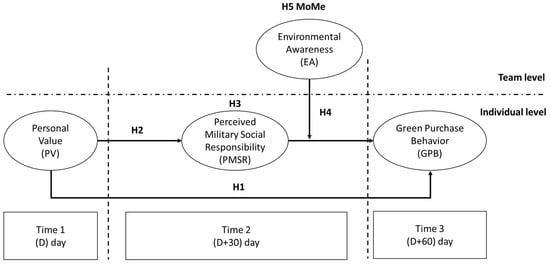
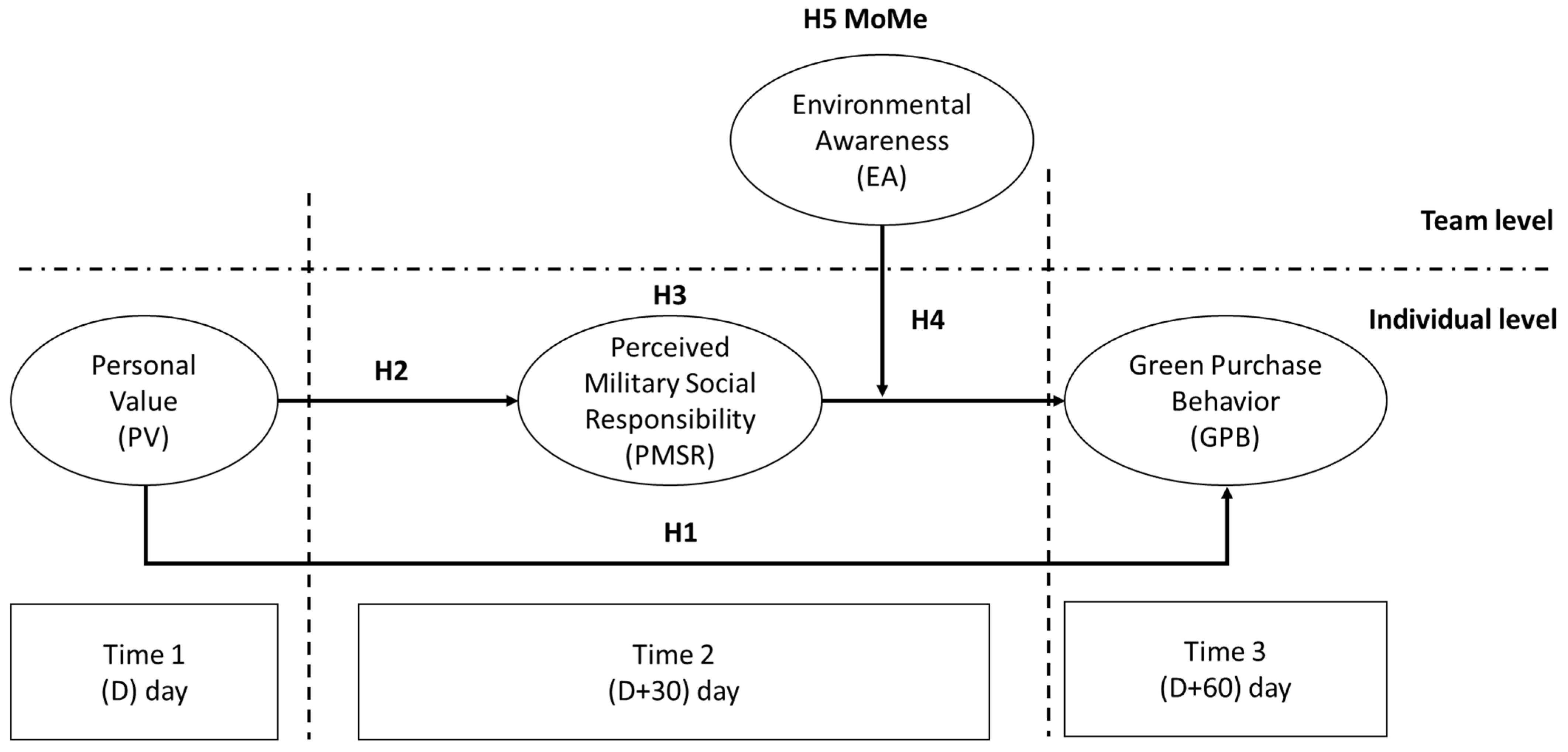
Figure 1 presents the research framework. Data were collected from personnel serving in Taiwan’s all-volunteer military. Recruitment was stratified by service affiliation, with four strata corresponding to the Army, Navy, Air Force, and Central Military units. The number of questionnaires allocated to each stratum was determined proportionally according to the relative troop size of each service branch [32]. Within these strata, questionnaires were distributed through participating military units. The questionnaires were mailed with postage-paid return envelopes, and personnel were asked to complete them during working hours.
Figure 1.
Research framework.
Participants were nested within 87 existing military work teams rather than being grouped post hoc for statistical analysis. Final team sizes ranged from three to five members: 14 teams included three participants, 12 included four participants, and 61 included five participants, yielding 395 individuals in total. A two-level model was estimated in Mplus with individuals (Level 1) nested within teams (Level 2). Personal values, PMSR, and PEB were modeled at the individual level, whereas aggregated environmental awareness was modeled at the team level. The PMSR–PEB slope was specified as random at Level 1 and was regressed on team-level environmental awareness at Level 2 to estimate the cross-level moderation.
Questionnaires were administered in three waves [33]. At Wave 1, questionnaires were distributed to 515 military personnel to assess personal values. The Wave 1 cohort was then followed across the subsequent two waves, with Wave 2 administered one month after Wave 1 to assess PMSR and environmental awareness, and Wave 3 administered one month after Wave 2 to assess PEB. Responses were matched at the individual level across the three waves. A total of 395 participants provided complete, matched data for all three waves and were retained for the final analysis. Thus, 76.7% of the initial 515-person cohort was included in the analytic sample, corresponding to an overall sample loss of 120 cases (23.3%).
Of the 395 participants in the final sample, 200 served in the Army (50.6%), 63 in the Navy (15.9%), 68 in the Air Force (17.2%), and 64 in Central Military units (16.2%). The sample included 306 men (77.5%) and 89 women (22.5%). Mean age was 28.16 years (SD = 6.736).
3.2. Definitions and Measurements of the Constructs
This study measured four constructs: personal values, PMSR, environmental awareness (EA), and PEB. Personal values and PMSR were assessed using five-point Likert-type scales ranging from 1 (“strongly disagree”) to 5 (“strongly agree”), whereas environmental awareness and PEB were assessed using seven-point Likert-type scales ranging from 1 (“strongly disagree”) to 7 (“strongly agree”). The measurement items were developed with reference to the original scales reported in the cited studies. To enhance their contextual relevance to military personnel, military experts assisted in reviewing and adapting the item wording by incorporating terminology and situations commonly encountered in military units while retaining the substantive meaning of the original measures. Appendix A reports the retained items used in the analysis together with the original source of each construct. As shown in Appendix A, the Cronbach’s value of each construct exceed the threshold value, 0.7. The personal-value measure began with 13 candidate items adapted for a green-product context from the egoistic (five items), altruistic (four items), and biospheric (four items) orientations described by de Groot and Steg [18]. Six candidate items with reported factor loadings of 0.500–0.697 in the item-comparison record were removed. The seven retained items comprise two assigned to egoistic values, two to altruistic values, and three to biospheric values (Appendix B).
According to Fornell and Larcker [34], a construct has satisfactory discriminant validity if its Average Variance Extracted (AVE) is higher than 0.5 and the root mean square value of its AVE is higher than the correlation coefficients between it and all the other constructs in the model. Table 1 and Table 2 report the available reliability and validity statistics, including construct-level Cronbach’s alpha, composite reliability, and average variance extracted (AVE).
Table 1.
Means, SDs, correlations, and mean square root of the average variance extracted of the constructs.
Table 2.
Loadings (λ) of the items and the Cronbach’s α coefficients and AVEs of the constructs.
4. Results
4.1. Results Obtained with the Measurement Model
Environmental awareness was originally assessed through individual reports. Conceptually, however, military personnel working within the same team are operated within a common unit context and routinely shared operational procedures, supervisory structures, institutional communications, and task-related interactions. Repeated interaction under these shared conditions may produce convergence in members’ environmental awareness. Accordingly, the present study aggregated individual EA ratings to represent the average level of environmental awareness characterizing each team, rather than assuming that all team members possessed identical levels of awareness.
The empirical appropriateness of aggregation was evaluated using within-group agreement and intraclass correlation coefficients. ICC(1) indicates the extent to which variation in individual responses is attributable to team membership, whereas ICC(2) reflects the reliability of team-level mean scores [37]. In the present study, ICC(1) and ICC(2) were 0.567 and 0.856, respectively. In addition, rwg(j) values for EA ranged from 0.720 to 0.990, exceeding the commonly used 0.70 criterion for within-group agreement [38]. Taken together, these results provided empirical support for aggregating individual EA ratings to the team level.
4.2. Hypothesis Testing
Hypothesis testing was conducted in accordance with the research framework presented in Figure 1. The results are reported sequentially for H1–H5, beginning with the direct associations, followed by the mediating role of PMSR, the moderating role of team-level environmental awareness, and the conditional indirect effect. The results obtained for Model 2 (Table 3) indicated that personal values had a statistically significant and positive relationship with PEB (unstandardized regression coefficient b = 0.619, p < 0.001); thus, Hypothesis 1 was supported. Personal values also had a statistically significant and positive relationship with PMSR (unstandardized regression coefficient b = 0.284 p < 0.001); thus, Hypothesis 2 was supported.
Table 3.
Analysis Results for the Structural Model.
We tested the indirect path from personal values to PEB through PMSR. The results obtained with Model 2 suggested that personal values and PMSR had statistically significant and positive relationships with PEB (for the relationship between PMSR and PEB: unstandardized regression coefficient b = 0.139, p < 0.001). This result suggests that PMSR partially mediated the relationship between personal values and PEB when the direct effect of personal values on PEB was significant. The indirect effect was 0.284 (bootstrap SE = 0.056, 95% bootstrap CI [0.176, 0.401]); the confidence interval excluded zero. Furthermore, we conducted the Sobel test to examine the indirect effect (Z = 3.712, p < 0.001), and the results of this test supported Hypothesis 3.
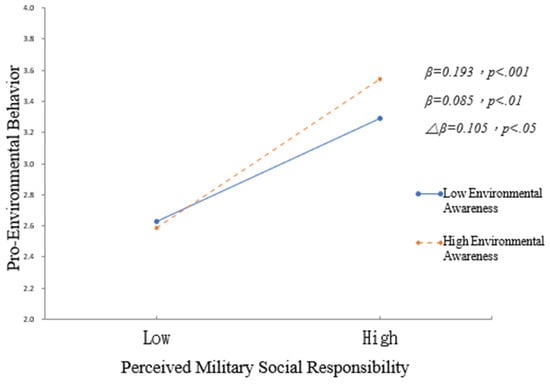
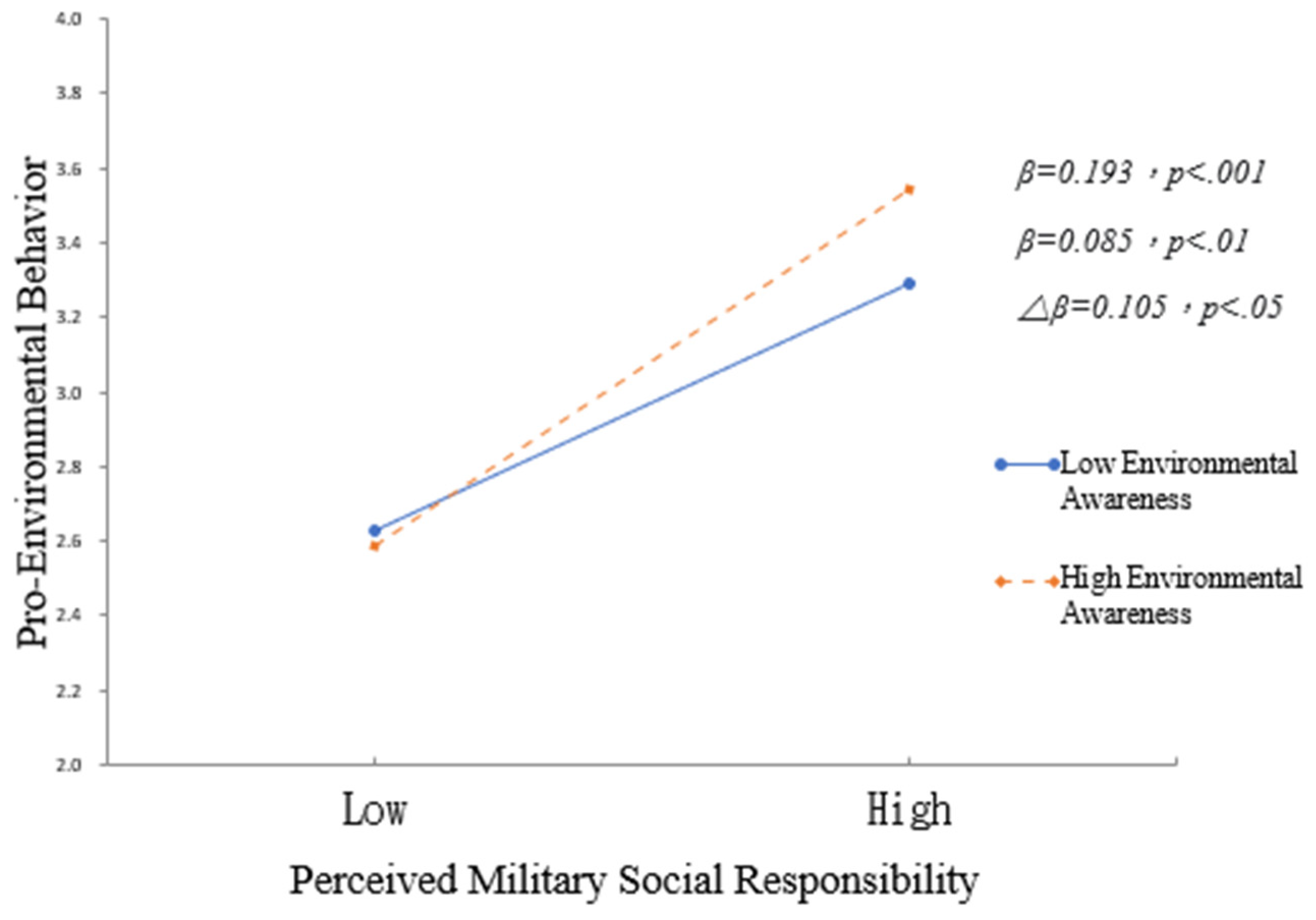
The results obtained for Model 2 indicated that environmental awareness moderated the relationship between PMSR and PEB (unstandardized regression coefficient b = 0.193, p < 0.001). The interaction between environmental awareness and PMSR indicated that a higher level of environmental awareness strengthened the positive relationship between PMSR and PEB (Figure 2). The interaction among PMSR, PEB, and environmental awareness was also examined by plotting a simple slope [39]. The relevant results indicated that the relationship between PMSR and PEB was positively significant at a high level of environmental awareness (simple slope = 0.193, p < 0.001) and significant at a low level of environmental awareness (simple slope = 0.085, p < 0.01). The difference between the values of the two slopes was significant (slope difference = 0.105, p < 0.001); thus, Hypothesis 4 was supported.
Figure 2.
Effect of environmental awareness on the relationship between PMSR and PEB.
On the basis of the procedures suggested by Sardeshmukh and Vandenberg [40], we examined moderated mediation effects. Table 4 presents the examination results, indicating the strengths and 95% confidence intervals (CIs) of the indirect relationship between personal values and PEB through PMSR at various levels of environmental awareness. At a high level of environmental awareness, a positive and significant correlation existed between personal values and PEB (indirect effect = 0.090, CI = [0.023, 0.172]), and the CI of this correlation did not include 0. At a low level of environmental awareness, a negative and nonsignificant correlation existed between personal values and PEB (indirect effect. = −0.015, CI = [−0.086, 0.053]), and the CI of this correlation included 0. We also noted a significant difference between the coefficients of the aforementioned indirect effect (coefficient difference = 0.105, CI = [0.006, 0.228]) for high and low levels of environmental awareness; thus, Hypothesis 5 was supported.
Table 4.
Conditional indirect effects and total effects of moderated mediation.
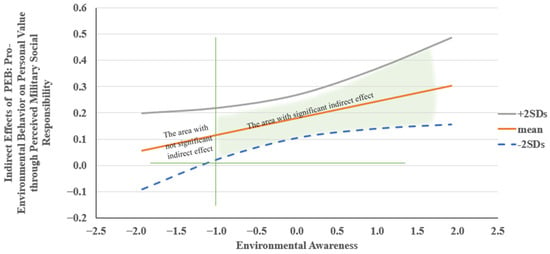
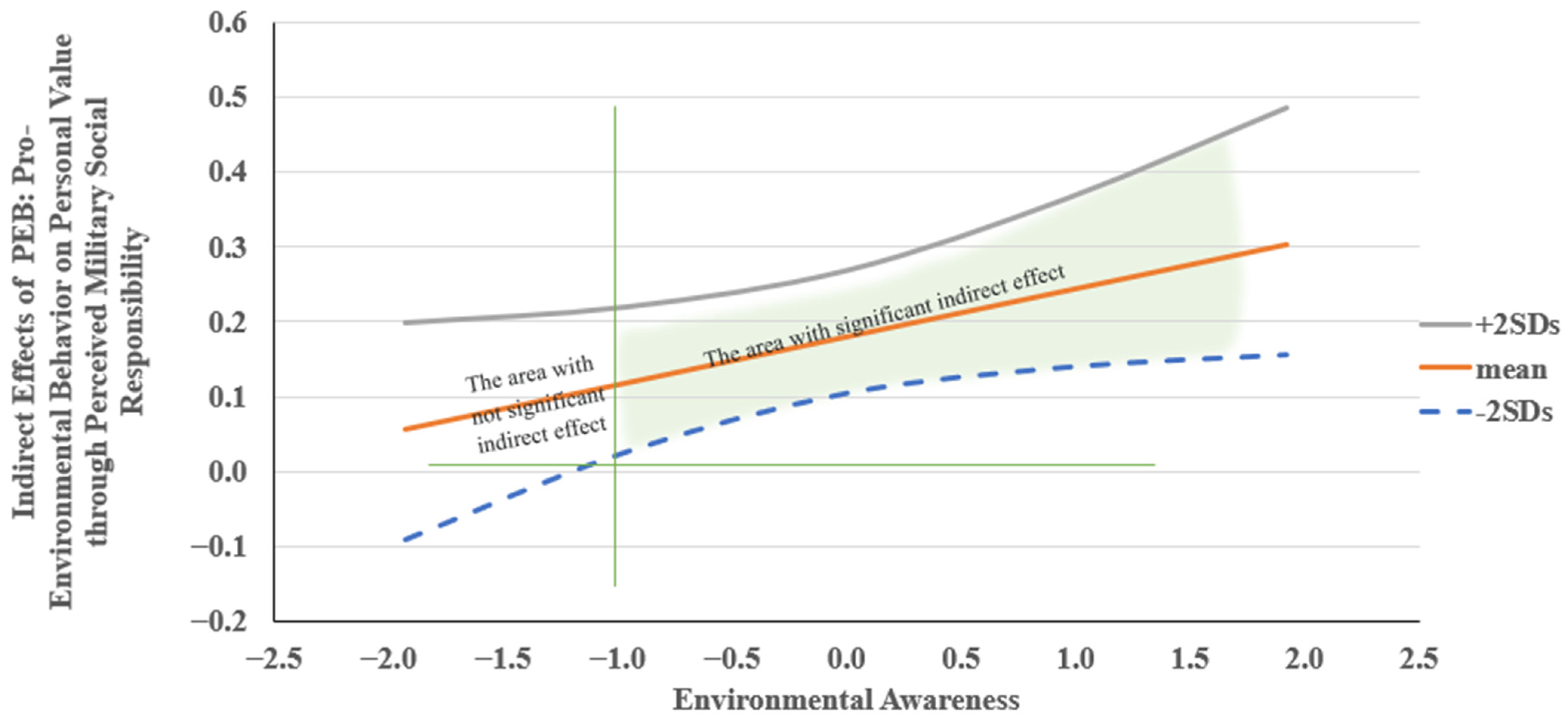
In addition, following the work of Wayne et al. [41], we examined the conditional indirect effect of personal values on PEB through PMSR across different levels of team environmental awareness. We used 5000 Monte Carlo simulations to estimate 95% confidence intervals for the conditional indirect effects. Figure 3 presents the estimates at three illustrative levels of team environmental awareness: −2 SD, the sample mean, and +2 SD. At −2 SD, the conditional indirect effect was not statistically significant (estimate = −0.015, 95% CI [−0.086, 0.053]). At +2 SD, the conditional indirect effect was positive and statistically significant (estimate = 0.090, 95% CI [0.023, 0.172]). Thus, the positive indirect association between personal values and PEB through PMSR became stronger as team environmental awareness increased. Additional probing indicated that the 95% confidence interval for the conditional indirect effect excluded zero when team environmental awareness exceeded approximately −1.24 SD relative to the mean. This indirect effect was significant only when the level of environmental awareness was higher than −1.24 SDs below the mean value.
Figure 3.
Indirect effect of personal values on PEB through PMSR under different levels of environmental awareness.
5. Discussion
Drawing on selected elements of the VBN theory, this study contributes to the literature by examining how personal values are associated with pro-environmental behavior in a military organizational context. Its primary theoretical contribution lies in positioning perceived military social responsibility (PMSR) as an organizationally relevant pathway linking personal values with PEB. This perspective extends the analysis beyond a purely individual value–behavior association by showing how perceptions of the military organization’s social responsibility may help connect personal values with environmentally responsible behavior.
A second contribution concerns the role of team context. By incorporating aggregated team-level environmental awareness as a moderator, this study shows that the association between PMSR and PEB, as well as the indirect association between personal values and PEB through PMSR, varies across teams characterized by different levels of environmental awareness. This finding highlights the importance of considering both individual-level value processes and shared contextual conditions when examining environmental behavior in hierarchical organizations.
These contributions should be interpreted as an application of selected VBN-related relationships rather than as a test of the complete VBN sequence. This study therefore extends the value-based perspective on environmental behavior to a military setting while identifying PMSR and team-level environmental awareness as organizationally relevant mechanisms and boundary conditions [42].
6. Implications
6.1. Theoretical Implications
This study makes several theoretical contributions to the literature on environmental psychology and organizational behavior. First, this study pioneers the construction of a psychological mechanism that explains the PEB of military personnel in Taiwan, specifically elucidating the role of individual values. By shifting the empirical focus from traditional student populations [43] to a military context, this research significantly broadens the applicability and generalizability of value-based behavioral theories.
Second, this research advances the scholarship on social responsibility by empirically validating the mediating role of PMSR in the relationship between personal values and PEB. While prior work has established that perceived social responsibility influences the environmental actions of organizational members [44,45], this study delves deeper. By treating PMSR as a key mediating variable, we provide a micro-level analysis of the antecedents and consequences of organizational responsibility, clarifying the precise pathways through which it operates. Third, this study contributes to the literature on social norms by integrating an organization-specific normative factor into the VBN framework. Although the VBN theory is frequently used to predict pro-environmental behavior, the role of potent, context-specific social norms as a direct antecedent has been underexplored [46,47]. By conceptualizing and testing PMSR as a critical normative belief, our research framework extends the original VBN model. This integration enriches the VBN theory by incorporating an organizational-level construct (PMSR) to explain individual-level psychological processes and behaviors, thereby making a distinct theoretical contribution to the environmental behavior field.
6.2. Management Implications
This study offers several practical implications for military leadership and policymakers. First, the findings suggest that environmental responsibility may be more effectively promoted when it is connected to broader organizational values and social responsibility. Military leaders may therefore incorporate environmental objectives into routine communication, training, and unit-level management practices in ways that link environmental stewardship with organizational responsibilities and professional identity.
Second, the moderating role of team-level environmental awareness highlights the importance of the local team context. Environmental initiatives may be strengthened by creating consistent environmental messages, reinforcing shared expectations, and providing training that helps personnel recognize the relevance of environmental responsibility to everyday military activities. These recommendations should be viewed as practical directions for implementation and future evaluation rather than as interventions whose effectiveness has been directly established by the present study.
Beyond behavioral and organizational initiatives, environmental responsibility may also inform decisions concerning the environmental performance of technologies and equipment. For example, ref. [48] used a cradle-to-grave life-cycle assessment to evaluate optimized commercial refrigeration technologies and showed that changes in refrigerants, monitoring systems, and energy consumption can materially alter environmental impacts across the product life cycle. Such evidence suggests that sustainable procurement decisions should rely on life-cycle environmental performance rather than being inferred from pro-environmental behavior alone.
6.3. Limitations of This Study and Directions for Future Research
This study has several limitations. All variables were self-reported, leaving open the possibility of common-method and social-desirability bias. Although the measures were administered in three sequential waves at one-month intervals, this study remained observational. The temporal separation establishes the order in which personal values, PMSR and environmental awareness, and PEB were measured, but it does not by itself establish causal relationships. Unmeasured confounding, reciprocal relationships, and alternative temporal processes cannot be ruled out. Accordingly, the reported mediation and moderated mediation results should be interpreted as indirect and conditional associations rather than definitive causal mechanisms.
Another limitation concerns the operationalization of personal values. The seven retained items were adapted from indicators associated with three theoretically distinct value orientations [18], yet were modeled as a single construct. Some items also refer to environmental awareness or green-product choices, potentially capturing responses closer to behavioral tendencies than the broad value priorities proposed by the value–belief–norm theory [6]. Finally, the sample was drawn exclusively from Taiwan’s military. Organizational structures, environmental policies, and cultural contexts may differ across national military systems; therefore, the present findings should not be assumed to generalize directly to military personnel in other countries. Future research should replicate and compare the proposed relationships across different military settings to assess their cross-national generalizability.
Author Contributions
Y.-R.C.: Conceptualization, research framework development, and supervision of this study. W.-L.W.: Methodology, research design, and critical revision of the manuscript. T.-W.C.: Writing—original draft, writing—review and editing, and preparation of the English manuscript. F.-Y.J.: Formal analysis, data interpretation, and validation of the empirical results. All authors have read and agreed to the published version of the manuscript.
Funding
This research received no external funding.
Institutional Review Board Statement
The study was conducted in accordance with the Declaration of Helsinki, and the protocol was approved by the Human Research Ethics Committee of National Cheng Kung University (NCKU HREC) (No. NCKU HREC-E-115-0154-2) on [9 July 2026].
Informed Consent Statement
Informed consent for participation was obtained from all subjects involved in the study.
Data Availability Statement
The raw data supporting the conclusions of this article will be made available by the authors on request.
Conflicts of Interest
On behalf of all authors, the corresponding author states that there are no conflicts of interest.
Appendix A
| Constructs | Measurement Items | Cronbach’s α | CR | AVE | Resources |
| Personal Values | 0.902 | 0.886 | 0.534 | De Groot and Steg (2008) [18] | |
| 1. I think green products are more important than other products due to their dominance. | |||||
| 2. I own environmental awareness which promotes me to purchase green products to ensure the health. | |||||
| 3. Everyone has the responsibility to maintain the natural environment which could promote a balance for survival. | |||||
| 4. In order to promote the sustainable development goal of environmental protection, energy-saving, and carbon reduction, I would like to reduce the pollution and damage to the natural environment. | |||||
| 5. I purchase green products which would reduce the damage to the natural environment and increase harmony with it because the earth is unique. | |||||
| 6. I purchase green products because they could reduce the damage to the natural environment and increase the integration into the natural environment. | |||||
| 7. Based on the maintenance of the natural environment, I think that the purchase of green products could contribute to the maintenance of the natural environment. | |||||
| Perceived Military Social Responsibility | 0.917 | 0.920 | 0.591 | Jiang et al. (2023) [3] | |
| 1. I perceive that the unit strictly monitors the task performance. | |||||
| 2. I perceive that the unit has established a long-term strategy for embattled armaments. | |||||
| 3. I perceive that the unit requires the all-volunteer force to comply with the law. | |||||
| 4. I perceive that the unit seeks to comply with all laws related to the hiring and legal benefits of the all-volunteer force. | |||||
| 5. I perceive that the unit provides complete and accurate information to the all-volunteer force. | |||||
| 6. I perceive that the leaders remind us of the potential negative impacts of our activities on our unit. | |||||
| 7. I perceive that the unit enables the all-volunteer force to better coordinate their work and personal life. | |||||
| 8. I perceive that the unit encourages partnerships with local communities and schools. | |||||
| Pro-environmental Behavior | 0.908 | 0.907 | 0.710 | Yang, Chen, Wang & Dong (2022) [36] | |
| 1. I often notice and think about environmental problems. | |||||
| 2. I often implement environmental behaviors. | |||||
| 3. I publicly speak in support of environmental protection or join environmental protection organizations. | |||||
| 4. I encourage others to implement environmental behaviors. | |||||
| Environmental Awareness | 0.994 | 0.945 | 0.812 | Han and Yoon (2015) [35] | |
| 1. The effects of pollution on public health are worse than we realize. | |||||
| 2. Over the next several decades, thousands of species will become extinct. | |||||
| 3. Claims that current levels of pollution are changing the Earth’s climate and species are correct. | |||||
| 4. Environmental protection will provide a better world for me and my children. | |||||
Appendix B
| Concept | Original Item | Measurement Items | Factor Loading | Decision | Resources |
| Egoistic value orientation | Social power | I think green products are more important than other products due to their dominance. | 0.767 | De Groot and Steg (2008) [18] | |
| Wealth | I consider choosing green products to also serve as a symbol of personal wealth and financial means. | 0.585 | Remove | ||
| Authority | I feel that purchasing green products affords me a sense of leadership or authority regarding environmental issues. | 0.541 | Remove | ||
| Influential | I feel that choosing green products confers an intangible influence over environmental groups and practitioners. | 0.505 | Remove | ||
| Ambitious | I own environmental awareness which promotes me to purchase green products to ensure the health. | 0.706 | |||
| Altruistic value orientation | Equality | Everyone has the responsibility to maintain the natural environment which could promote a balance for survival. | 0.861 | ||
| A world at peace | In order to promote the sustainable development goal of environmental protection, energy-saving, and carbon reduction, I would like to reduce the pollution and damage to the natural environment. | 0.824 | |||
| Social justice | The natural environment belongs to all of us; when I encounter the misuse or pollution of environmental resources, I intervene to correct these behaviors and promote sustainable development. | 0.678 | Remove | ||
| Helpful | I am willing to recommend green products to those around me and to help advance sustainability initiatives related to environmental protection, energy conservation, and carbon reduction. | 0.500 | Remove | ||
| Biospheric value orientation | Preventing pollution | I believe it is necessary to choose green products to avoid polluting and damaging the natural environment and to protect natural resources. | 0.697 | Remove | |
| Respecting the earth | I purchase green products which would reduce the damage to the natural environment and increase harmony with it because the earth is unique. | 0.777 | |||
| Unity with natur | I purchase green products because they could reduce the damage to the natural environment and increase the integration into the natural environment. | 0.784 | |||
| Protecting the environment | Based on the maintenance of the natural environment, I think that the purchase of green products could contribute to the maintenance of the natural environment. | 0.807 |
References
- United Nations. Department of Economic and Social Affairs Sustainable Development. Available online: https://sdgs.un.org/goals (accessed on 28 August 2024).
- Waqas, M.; Meng, Q.; Ahmad, N.; Iqbal, M. Green brands, customer satisfaction and sustainable performance in the Chinese manufacturing industry. Manag. Decis. 2023, 61, 3545–3572. [Google Scholar] [CrossRef] [Scilit]
- Jiang, F.Y.; Chang, T.W.; Hung, C.Z.; Yen, K.C. The myth that military culture could not drive environmental sustainability? Cross-level influence of military culture on pro-environmental behavior. J. Environ. Plan. Manag. 2024, 67, 3339–3358. [Google Scholar] [CrossRef] [Scilit]
- Chang, T.W.; Li, H.X.; Hung, C.Z.; Huang, T.Y. A military organisation with a green outlook: Using the theory of planned behaviour to explore the influences of military culture and environmental values on the green building appearance acceptance intentions of Taiwanese military personnel. Asia Pac. Viewp. 2025, 66, 256–269. [Google Scholar] [CrossRef] [Scilit]
- Sharpe, E.; Ruepert, A.; van der Werff, E.; Steg, L. Corporate environmental responsibility leads to more pro-environmental behavior at work by strengthening intrinsic pro-environmental motivation. One Earth 2022, 5, 825–835. [Google Scholar] [CrossRef] [Scilit]
- Stern, P.C. Toward a coherent theory of environmentally significant behavior. J. Soc. Issues 2000, 56, 407–424. [Google Scholar] [CrossRef] [Scilit]
- Schwartz, S.H. Universals in the content and structure of values: Theoretical advances and empirical tests in 20 countries. Adv. Exp. Soc. Psychol. 1992, 25, 1–65. [Google Scholar] [CrossRef] [Scilit]
- Pontes, S.; Naranjo-Zolotov, M.; Painho, M. From intention to action: How environmental setback perception mediates green purchase behaviour. J. Clean. Prod. 2024, 470, 143285. [Google Scholar] [CrossRef] [Scilit]
- Yan, C.; Xiang, X.; Li, L.; Li, G. Environmental credit constraints and the enterprise choice of environmental protection behavior. Sustainability 2023, 15, 16638. [Google Scholar] [CrossRef] [Scilit]
- Chang, T.W.; Chen, Y.S.; Lee, T.K.; Hung, Y.T. Will health risk perceptions under global environmental change really lead to pro-environmental behaviors? Explore the psychological mechanism between health-risk perception and green building appearance acceptance intentions and moderated effect of death anxiety. Commer. Manag. Q. 2023, 24, 133–161. [Google Scholar]
- Sangle, S. Critical success factors for corporate social responsibility: A public sector perspective. Corp. Soc. Responsib. Environ. Manag. 2010, 17, 205–214. [Google Scholar] [CrossRef] [Scilit]
- Bodziany, M.; Kałużny, R. Pro-social and altruistic behaviors of military students in random events. J. Acad. Ethics 2021, 19, 555–569. [Google Scholar] [CrossRef] [Scilit] [PubMed]
- Ashforth, B.E.; Mael, F. Social identity theory and the organization. Acad. Manag. Rev. 1989, 14, 20–39. [Google Scholar] [CrossRef] [Scilit]
- Woolfolk, R.L.; Hannah, S.T.; Wasserman, R.; Doris, J.M. Attributions of responsibility for military misconduct: Constraint, identification, and severity. Mil. Psychol. 2021, 33, 1–14. [Google Scholar] [CrossRef] [Scilit] [PubMed]
- Stern, P.C. Information, incentives, and proenvironmental consumer behavior. J. Consum. Policy 1999, 22, 461–478. [Google Scholar] [CrossRef] [Scilit]
- Smaliukiene, R.; Labutis, G.; Juozapavicius, A. Pro-environmental energy behavior in the military: Assessing behavior change factors at a selected military unit. Energies 2020, 13, 219. [Google Scholar] [CrossRef] [Scilit]
- Rokeach, M. The Nature of Human Values; Free Press: New York, NY, USA, 1973. [Google Scholar]
- De Groot, J.I.; Steg, L. Value orientations to explain beliefs related to environmental significant behavior: How to measure egoistic, altruistic, and biospheric value orientations. Environ. Behav. 2008, 40, 330–354. [Google Scholar]
- Kim, M. A systematic literature review of the personal value orientation construct in hospitality and tourism literature. Int. J. Hosp. Manag. 2020, 89, 102572. [Google Scholar] [CrossRef] [Scilit]
- Gifford, R.; Nilsson, A. Personal and social factors that influence pro-environmental concern and behaviour: A review. Int. J. Psychol. 2014, 49, 141–157. [Google Scholar] [CrossRef] [Scilit] [PubMed]
- Feather, N.T. Values, valences, and choice: The influences of values on the perceived attractiveness and choice of alternatives. J. Personal. Soc. Psychol. 1995, 68, 1135–1151. [Google Scholar] [CrossRef]
- González-Rodríguez, M.R.; Díaz-Fernández, M.C.; Biagio, S. The perception of socially and environmentally responsible practices based on values and cultural environment from a customer perspective. J. Clean. Prod. 2019, 216, 88–98. [Google Scholar] [CrossRef] [Scilit]
- Paillé, P.; Mejía-Morelos, J.H. Antecedents of pro-environmental behaviours at work: The moderating influence of psychological contract breach. J. Environ. Psychol. 2014, 38, 124–131. [Google Scholar] [CrossRef] [Scilit]
- Raineri, N.; Paillé, P. Linking corporate policy and supervisory support with environmental citizenship behaviors: The role of employee environmental beliefs and commitment. J. Bus. Ethics 2016, 137, 129–148. [Google Scholar] [CrossRef] [Scilit]
- Su, L.; Swanson, S.R.; Hsu, M.; Chen, X. How does perceived corporate social responsibility contribute to green consumer behavior of Chinese tourists. Int. J. Contemp. Hosp. Manag. 2017, 29, 3157–3176. [Google Scholar] [CrossRef] [Scilit]
- Kim, Y.; Han, H. Intention to pay conventional-hotel prices at a green hotel—A modification of the theory of planned behavior. J. Sustain. Tour. 2010, 18, 997–1014. [Google Scholar] [CrossRef] [Scilit]
- Dunlap, R.E.; Liere, K.V.; Mertig, A.G.; Jones, R.E. Measuring endorsement of the new ecological paradigm: A revised NEP scale. J. Soc. Issues 2000, 56, 425–442. [Google Scholar] [CrossRef] [Scilit]
- Vallaster, C. Managing a company crisis through strategic corporate social responsibility: A practice-based analysis. Corp. Soc. Responsib. Environ. Manag. 2017, 24, 509–523. [Google Scholar] [CrossRef] [Scilit]
- Smit, H.A. How green is your army? The military environmental narrative of the South African Army. S. Afr. Geogr. J. 2018, 100, 308–325. [Google Scholar] [CrossRef] [Scilit]
- Robertson, J.L.; Barling, J. Greening organizations through leaders’ influence on employees’ pro-environmental behaviors. J. Organ. Behav. 2013, 34, 176–194. [Google Scholar] [CrossRef] [Scilit]
- Ansari, H.U.H.; Khan, S.N. Linking green transformational leadership and employee pro-environmental behavior: The role of intention and work environment. Sustain. Futures 2024, 8, 100336. [Google Scholar] [CrossRef] [Scilit]
- Global Firepower. Taiwan Military Strength. Available online: https://www.globalfirepower.com/country-military-strength-detail.php?country_id=taiwan (accessed on 28 August 2024).
- Podsakoff, P.M.; MacKenzie, S.B.; Lee, J.Y.; Podsakoff, N.P. Common method biases in behavioral research: A critical review of the literature and recommended remedies. J. Appl. Psychol. 2003, 88, 879–903. [Google Scholar] [CrossRef] [Scilit] [PubMed]
- Fornell, C.; Larcker, D.F. Evaluating structural equation models with unobservable variables and measurement error. J. Mark. Res. 1981, 18, 39–50. [Google Scholar] [CrossRef] [Scilit]
- Han, H.; Yoon, H.J. Hotel customers’ environmentally responsible behavioral intention: Impact of key constructs on decision in green consumerism. Int. J. Hosp. Manag. 2015, 45, 22–33. [Google Scholar] [CrossRef] [Scilit]
- Yang, R.; Chen, J.; Wang, C.; Dong, Y. The influence mechanism and path effects of pro-environmental behavior: Empirical study based on the structural equation modeling. Pol. J. Environ. Stud. 2022, 31, 4447–4456. [Google Scholar] [CrossRef] [Scilit] [PubMed]
- Bliese, P.D. Within group agreement, non-independence, and reliability: Implications for data aggregation and analysis. In Multilevel Theory, Research, and Methods in Organizations: Foundations, Extensions, and New Directions; Klein, K.J., Kozlowski, S.W.J., Eds.; Jossey-Bass: Hoboken, NJ, USA, 2000; pp. 349–381. [Google Scholar]
- James, L.R.; Demaree, R.G.; Wolf, G. Rwg: An assessment of within-group interrater agreement. J. Appl. Psychol. 1993, 78, 306–309. [Google Scholar] [CrossRef]
- Aiken, L.S.; West, S.G.; Reno, R.R. Multiple Regression: Testing and Interpreting Interactions; Sage: Thousand Oaks, CA, USA, 1991. [Google Scholar]
- Sardeshmukh, S.R.; Vandenberg, R.J. Integrating moderation and mediation: A structural equation modeling approach. Organ. Res. Methods 2016, 20, 721–745. [Google Scholar]
- Wayne, S.J.; Lemmon, G.; Hoobler, J.M.; Cheung, G.W.; Wilson, M.S. The ripple effect: A spillover model of the detrimental impact of work–family conflict on job success. J. Organ. Behav. 2017, 38, 876–894. [Google Scholar] [CrossRef] [Scilit]
- Ghazali, E.M.; Nguyen, B.; Mutum, D.S.; Yap, S.F. Pro-environmental behaviours and Value-Belief-Norm theory: Assessing unobserved heterogeneity of two ethnic groups. Sustainability 2019, 11, 3237. [Google Scholar] [CrossRef] [Scilit]
- Kis, A.; Verschoor, M.; Sargisson, R.J. Who is more likely to influence others? A value-based approach to pro-environmental social influence behavior. Sustain. J. Rec. 2020, 13, 262–270. [Google Scholar] [CrossRef] [Scilit]
- Blok, V.; Wesselink, R.; Studynka, O.; Kemp, R. Encouraging sustainability in the workplace: A survey on the pro-environmental behaviour of university employees. J. Clean. Prod. 2015, 106, 55–67. [Google Scholar] [CrossRef] [Scilit]
- Wesselink, R.; Blok, V.; Ringersma, J. Pro-environmental behaviour in the workplace and the role of managers and organisation. J. Clean. Prod. 2017, 168, 1679–1687. [Google Scholar] [CrossRef] [Scilit]
- Choi, H.; Jang, J.; Kandampully, J. Application of the extended VBN theory to understand consumers’ decisions about green hotels. Int. J. Hosp. Manag. 2015, 51, 87–95. [Google Scholar] [CrossRef] [Scilit]
- Yeow, P.H.; Loo, W.H. Antecedents of green computer purchase behavior among Malaysian consumers from the perspective of rational choice and moral norm factors. Sustain. Prod. Consum. 2022, 32, 550–561. [Google Scholar] [CrossRef] [Scilit]
- Temporim, R.B.L.; Di Giuseppe, A.; de Albuquerque Landi, F.F.; Nicolini, A. Assessing the environmental performance of optimized commercial refrigerators with alternative refrigerants and remote monitoring system: A cradle-to-grave life cycle assessment. Heliyon 2024, 10, e29753. [Google Scholar] [CrossRef] [Scilit] [PubMed]

Disclaimer/Publisher’s Note: The statements, opinions and data contained in all publications are solely those of the individual author(s) and contributor(s) and not of MDPI and/or the editor(s). MDPI and/or the editor(s) disclaim responsibility for any injury to people or property resulting from any ideas, methods, instructions or products referred to in the content. |
© 2026 by the authors. Licensee MDPI, Basel, Switzerland. This article is an open access article distributed under the terms and conditions of the Creative Commons Attribution (CC BY) license.