


Abstract
Population ageing and rural–urban transformation are reshaping the living arrangements of older adults in China, with important implications for health equity, later-life well-being, and the social sustainability of rural–urban development. Using the China Longitudinal Aging Social Survey (CLASS), this study examines how changing living arrangements affect the multidimensional well-being of rural older adults. Four living arrangements—rural–urban mobility co-residence, left-behind living, urban co-residence with children, and rural co-residence with children—are identified, and a double machine learning approach is employed to address nonlinearities and high-dimensional confounding. The results show that, compared with left-behind living, rural–urban mobility co-residence significantly improves the well-being of rural older adults. However, this mobility dividend is accompanied by multidimensional trade-offs: it improves mental health, living conditions, and health behaviors while negatively affecting physical health, social participation, and economic security. Rural co-residence also generates significant well-being gains, suggesting that relocation to urban areas is not the only pathway to improving later-life well-being. Moreover, the benefits of rural–urban mobility co-residence vary substantially with family characteristics, particularly children’s gender composition and educational attainment. Mechanism analyses further reveal a dual effect of mobility: it enhances well-being by strengthening intergenerational support and facilitating self-development, but may simultaneously increase intergenerational contribution and weaken social identification. These findings highlight the importance of social integration of mobile older adults, local elderly-care services, and family support in reducing inequalities in later-life well-being among mobile older adults.
1. Introduction
Population ageing is a defining demographic condition that China is currently confronting and will continue to face for decades to come. Meeting the care needs of older adults is closely connected to the well-being of hundreds of millions of people and the country’s sustainable social development. As shown in Figure 1, both the number and proportion of adults aged 65 and above increased substantially between 2010 and 2024, accompanied by a rising old-age dependency ratio. These trends highlight the growing importance of addressing older adults’ care needs and improving their quality of life. However, population ageing has progressed unevenly across urban and rural areas. Figure 2 illustrates that the proportion of older adults aged 65 and above has consistently been higher in rural areas than in urban areas, with the disparity becoming more pronounced over time. Data from the Seventh National Population Census show that people aged 65 and above account for 17.72% of China’s rural population, 6.61 percentage points higher than the corresponding proportion in urban areas. Meanwhile, the proportion of empty-nest older adults in rural areas has reached 61.9%, making rural areas a central arena for China’s response to population ageing. As China’s rural population has undergone sustained, selective out-migration, the hollowing out of its rural demographic structure has become increasingly pronounced, with population aging and intergenerational family separation particularly acute [1]. At the same time, policy concerns regarding later-life care in rural areas have expanded beyond basic livelihood security to encompass the multidimensional well-being of older adults [2]. Improving the well-being of rural older adults amid changing family structures and sustained population mobility has become a pressing issue in efforts to respond proactively to population aging.
Figure 1.
Trends in the number, proportion, and old-age dependency ratio of China’s elderly population aged 65 and above, 2010–2024.
Alongside these demographic changes, population mobility has become an important factor reshaping later-life living arrangements in China. Although rural–urban migration has historically been dominated by working-age adults, an increasing number of older adults have also participated in population mobility, often in connection with family reunification, grandchild care, and intergenerational support. According to the 2016 China Migrant Population Development Report, the number of older migrants in China reached approximately 18 million, of whom around 43% (approximately 8 million) are “elderly mobile residents.” These data highlight the significant scale of mobility among China’s elderly population and provide important context for research on the mobile elderly population and for understanding the increasingly diverse living arrangements of older adults.
Rapid urbanization and population mobility have reshaped the living arrangements of rural older adults in China. While some older adults remain in rural areas as their adult children migrate for employment, forming left-behind living arrangements [3], others co-reside with their children in rural areas [4] or relocate to urban areas for relatively stable co-residence [5]. In addition to these relatively stable arrangements, rural–urban mobility co-residence has emerged as a distinct pattern among rural older adults [6]. Some rural older adults relocate from rural to urban areas to co-reside with their adult children in response to changing family caregiving needs, later-life support requirements, and their children’s employment circumstances. These increasingly diverse living arrangements suggest that the conventional distinction between older adults who remain in rural areas and those who migrate to urban areas may not fully capture the complexity of later-life residential patterns. Accordingly, this study distinguishes four types of living arrangements among rural older adults: rural–urban mobility co-residence, left-behind living, urban co-residence with children, and rural co-residence with children. These arrangements may influence older adults’ multidimensional well-being by shaping family support, living conditions, and social relationships.
The well-being of older adults is a crucial indicator of successful ageing, reflecting not only their material security and physical health but also their psychological experiences, social relationships, and overall quality of life. For rural older adults, limited access to formal eldercare services and continued reliance on intergenerational support make their well-being especially sensitive to changes in family living arrangements. Although migration and co-residence with adult children may improve access to family support and material resources, they may also disrupt established social relationships, increase caregiving responsibilities, and generate psychological adjustment difficulties [7,8]. Therefore, improvements in objective living conditions do not necessarily translate into corresponding improvements in subjective well-being. Examining the well-being of older adults from multiple perspectives is crucial for understanding the varying impacts that different living arrangements may have against the backdrop of China’s demographic and socioeconomic transformation.
Against this backdrop, this study uses data from the 2016–2023 waves of the China Longitudinal Aging Social Survey (CLASS) and applies double machine learning (DML) to examine how rural–urban mobility co-residence, left-behind living, urban co-residence, and rural co-residence shape the well-being of rural older adults is therefore essential for addressing the challenges of later-life care in rural areas, improving the allocation of eldercare resources, and enhancing the quality of life of rural older adults.
2. Literature Review
Existing studies on living arrangements and the well-being of older adults have mainly focused on three related themes: patterns and changes in living arrangements, the relationship between different living arrangements and older adults’ well-being, and the mechanisms through which living arrangements shape well-being.
First, a substantial body of research has examined patterns and changes in older adults’ living arrangements. Western societies place greater emphasis on individual independence, and living alone or in institutional care is relatively common among older adults [9]. In China, longstanding family values and norms of filial piety have made co-residence with adult children [10] and living near them [11] central to family care in old age. However, rapid demographic and socioeconomic changes have gradually reshaped these traditional living arrangements [12,13]. Lower fertility, longer life expectancy, and labor migration to urban areas have reduced intergenerational co-residence, increased the number of rural older adults living in empty-nest households, and contributed to the emergence of skipped-generation households [14,15]. At the same time, mobility between rural and urban areas has become increasingly common among rural older adults, driven by needs for elder care, grandchild care, or reunification with their children [16].
Second, against the backdrop of changing residential patterns, a growing body of research has examined the relationship between living arrangements and older adults’ well-being. Existing studies commonly use indicators such as life satisfaction, subjective well-being, and self-rated health to assess the psychological and health-related implications of different living arrangements [17]. Some scholars argue that living with adult children benefits older adults’ physical and mental health. Using longitudinal data from the Chinese Longitudinal Healthy Longevity Survey (CLHLS), Yuan et al. [5] found that older adults living with their adult children had higher subjective well-being than those who did not, with a stronger association among rural older adults. Zheng et al. [18] found that older adults in empty-nest households were more likely to experience depressive symptoms than those in non-empty-nest households. Other scholars contend that living alone or with a spouse may be more beneficial to older adults’ physical and mental health. They argue that multigenerational living can create friction and conflict, straining intergenerational relationships and increasing psychological stress. Using data from the China Family Panel Studies (CFPS), Ren and Treiman [19] found that, compared with older adults living independently with a spouse, those living with adult children or in skipped-generation households reported lower happiness and more depressive symptoms. Feng et al. [20] found that older adults whose children lived elsewhere in the same city had better mental health than those living with their children or in the same neighborhood. The authors suggested that a moderate residential distance may reduce everyday intergenerational friction and preserve autonomy while maintaining access to family support. Maruyama [21] found that co-residence with adult children could adversely affect parental health, particularly when parents had substantial care needs but lacked the resources to compensate their children financially.
Third, recent research has begun to move beyond examining the direct relationship between living arrangements and well-being to investigate the mechanisms underlying this relationship. Honjo et al. [22] found that neighborhood social cohesion moderated the association between living arrangements and mental health among older adults. Yang et al. [23] argue that intergenerational support, including financial, instrumental, and emotional assistance from adult children, may affect older adults’ well-being. In rural China, Silverstein et al. [24] found that remittances from adult children contribute to the mental well-being of older adults living in multigenerational households. Gao et al. [25] identified resources for daily living, access to timely medical care, and participation in activities as pathways linking empty-nest living arrangements to older adults’ health.
In summary, this study makes three marginal contributions. First, it extends the classification of living arrangements among rural older adults. It moved beyond the traditional approach of categorizing living arrangements solely based on whether individuals live alone or with others, or whether they move to the urban areas or remain in the rural areas, and included rural–urban mobility co-residence within the scope of the study. Second, this paper enriches the measurement of well-being among rural older adults, overcoming the limitations of using a single indicator to assess their well-being. By integrating China’s framework for evaluating healthy aging, it constructs an indicator system for the well-being of rural older adults, thereby providing a more comprehensive picture of their living conditions. Third, it deepens the analysis of the mechanisms through which living arrangements affect the well-being of rural older adults. Specifically, it identifies four pathways: intergenerational support and intergenerational contributions within the dimension of family relationships, and self-improvement and social identification within the dimension of social adaptation. By uncovering these underlying mechanisms, this study provides empirical evidence for optimizing the allocation of rural elderly-care resources and improving the old-age support system.
3. Theoretical Analysis
Older adults’ well-being is a multidimensional concept that encompasses not only individual aspects such as mental health, physical health, and health behaviours, but also broader conditions related to economic security, living environments, and social participation. In China, persistent urban-rural disparities and changing family structures make rural older adults’ well-being particularly sensitive to differences in living arrangements. Therefore, a comprehensive well-being framework incorporating six dimensions—physical health, mental health, social participation, living conditions, economic security, and health behaviours—provides a more holistic assessment of rural older adults’ well-being by capturing both subjective experiences and objective living conditions.
3.1. Living Arrangements and the Well-Being of Rural Older Adults
Changes in rural family structures and population mobility have given rise to increasingly diverse living arrangements among rural older adults in China, including rural–urban mobility residence, left-behind living, urban co-residence with children, and rural co-residence with children. Different living arrangements imply differences in living conditions, intergenerational distance, and forms of family support, thereby generating heterogeneous effects on older adults’ well-being.
According to the family support hypothesis, compared with left-behind living, rural–urban mobility residence reduces the spatial distance between older parents and their adult children, facilitating more frequent daily contact, emotional interaction, and timely provision of family care [26,27]. Greater proximity to adult children may compensate for the emotional deprivation associated with prolonged parent–child separation, alleviate loneliness and anxiety, and consequently improve the psychological well-being of older adults. In addition, rural–urban mobility may provide rural older adults with greater access to transportation, healthcare, and other public and social services, thereby improving their residential conditions and overall convenience of daily life [28,29]. Living closer to or with adult children may also facilitate regular health examinations, timely medical care, and access to health-related knowledge and medical information through children’s assistance, which in turn may encourage healthier behaviors. Therefore, rural–urban mobility co-residence has a positive impact on the mental health, living environment, and health behaviors of rural older adults. Correspondingly, rural co-residence with adult children may provide older parents with sustained instrumental care and emotional support, thereby contributing positively to their well-being.
According to intergenerational conflict theory, intergenerational co-residence may intensify older adults’ role obligations within the household, requiring them to undertake greater responsibilities for domestic work and grandchild care [30,31]. At the same time, differences in lifestyles, daily routines, and intergenerational values may increase the likelihood of family tensions and conflicts. Older adults in rural areas have lived in the countryside for a long time; living in village communities allows them to maintain their established way of life and social relationships, thereby avoiding the stress of adapting to a new environment. Moderate engagement in agricultural production and routine physical labor may also help them maintain relatively high levels of physical activity [32]. By contrast, mobile residence may have adverse consequences for the physical health and social participation of some older adults because of changes in activity patterns, the pressures of adapting to unfamiliar environments, and disruptions to established social networks. In addition, older adults living in rural areas may continue to draw on locally embedded resources, including owner-occupied housing, contracted farmland, and household garden production [33], thereby reducing their living costs and enhancing their sense of security.
3.2. The Indirect Impact of Living Arrangements on the Well-Being of Rural Older Adults
The mechanisms through which living arrangements affect the well-being of rural older adults can be understood in terms of two dimensions: the “family relationship dimension” and the “social adaptation dimension”. Specifically, the family relationship dimension captures reciprocal exchanges between generations, including support that older adults receive and contributions they make to family members. The social adaptation dimension concerns changes in older adults’ capabilities and values, reflected in self-development and social identification. These changes may have both positive and negative effects on their well-being. Figure 3 shows the theoretical framework illustrating the impact of living arrangements on the well-being of rural older adults.
Figure 3.
Theoretical framework on the impact of living arrangements on the well-being of rural older adults.
3.2.1. Family Relationship Dimension: Intergenerational Support and Intergenerational Contributions
The effects of living arrangements on the family relationship dimension among rural older adults are primarily reflected in intergenerational support and intergenerational contributions.
The theory of intergenerational reciprocity in families posits that there is an exchange of giving and receiving between generations [34]. This reciprocal exchange directly determines older adults’ mental health, the quality of care, and their subjective well-being [35]. Within the family context, compared with left-behind living, rural–urban mobility co-residence reduces spatial and temporal barriers between older adults and their adult children, thereby increasing the frequency of intergenerational contact and opportunities for everyday interaction. It also deepens the “cultural and digital reverse mentoring” that younger generations provide to their elders, helping older adults bridge the digital divide and strengthening emotional bonds. By contrast, left-behind older adults are constrained by intergenerational distance, making it more difficult for them to receive immediate material and emotional support. Insufficient intergenerational support may increase the risk of anxiety and depression, thereby contributing to a decline in subjective well-being and adversely affecting the well-being of rural older adults [36].
However, co-residence with adult children does not necessarily imply that rural older adults are merely recipients of family support. Under the combined influence of traditional family-centered norms and broader social transformation, grandparents providing substantial childcare in three-generation households is becoming increasingly common and is even showing signs of becoming an “obligatory character”. While mobile older adults benefit from the convenience of intergenerational co-residence, they also assume greater family responsibilities, shifting from the traditional role of “care recipients” to “providers of household labor and caregiving”, thereby increasing their physical demands and their financial burdens [37]. These additional responsibilities may offset some of the benefits of co-residence and ultimately reduce older adults’ well-being.
3.2.2. Social Adaptation Dimension: Self-Development and Social Identification
The effects of living arrangements on the social adaptation dimension among rural older adults are primarily reflected in self-development and social identification.
The capability approach emphasizes that individual well-being depends not only on the availability of resources, but also on people’s ability to mobilize and convert those resources into valued opportunities and functionings within a given environment [38]. Compared with left-behind living, rural–urban mobility co-residence may provide rural older adults with access to a broader range of information, services, and social resources in urban areas. Access to these resources may enhance their autonomy in everyday life, strengthen their sense of self-efficacy, and expand their opportunities to participate in personally meaningful activities. Engagement with new environments and resources may also help older adults respond to the challenges associated with population ageing and rapid social change, thereby facilitating self-development and improving overall well-being [39].
Social identification refers to individuals’ subjective understandings and evaluations of their social roles, social value, relationships with others, and sense of belonging [40]. Older adults in rural areas have lived in the countryside for a long time, living in village communities. For older adults who have spent most of their lives in village communities, social identification is often deeply rooted in “attachment to the land”, “longstanding clan” and “local reputation and standing” [41]. These place-based relationships, life experiences, and local social networks provide an important emotional and social foundation for maintaining a stable sense of personal worth and belonging in later life. Rural–urban mobility co-residence, however, may disrupt the locally embedded relationships and social roles on which rural older adults’ social identification has long been based. Moreover, rural older adults who move to urban areas may become more dependent on their adult children for daily assistance and financial support, reducing their autonomy and changing their roles and standing within the household [42]. When older adults struggle to establish stable roles in their new social environment, they may experience a diminished sense of social value and belonging. These changes may weaken their sense of social identification and undermine their overall well-being.
4. Materials and Methods
All empirical analyses and statistical tests were conducted using Stata/MP 19.0.
4.1. Data
The data used in this study were obtained from the China Longitudinal Aging Social Survey (CLASS), a nationally representative longitudinal survey conducted by Renmin University of China. CLASS collects comprehensive information on Chinese adults aged 60 years and above, covering demographic characteristics, family relationships, living arrangements, health conditions, social participation, and well-being. The survey uses structured questionnaires administered through face-to-face interviews with respondents. Detailed information regarding the data collection procedure is available at http://class.ruc.edu.cn/.
Based on the research topic, the four most recently released waves of data from 2016 to 2023 were selected, with the sample restricted to older adults holding rural household registration (the 2016 data are primarily used to help identify whether the living arrangements of rural older adults changed in 2018, while the subsequent empirical analysis is based on the three-wave panel data from 2018 to 2023). During data processing, respondents were matched across different survey waves based on their unique identification codes. This study selected a sample of rural older adults who could be tracked over time. Their living arrangements were identified based on the residential locations of the older adults and their children in each wave. Observations with substantial missing values in key variables or those that could not be consistently identified across waves were excluded. The final sample consists of 2109 rural older adults, yielding 6327 observations in a three-wave balanced panel dataset.
4.2. Model Design
4.2.1. Double Machine Learning
To estimate the effects of living arrangements on the well-being of older adults in rural areas, this study applies the Double Machine Learning (DML) framework of Chernozhukov et al. [43]. Living arrangements are represented by a set of indicator variables, with left-behind living as the reference group. Because the relationships between observed characteristics, living-arrangement choices, and well-being may be nonlinear and involve complex interactions, random forests are used to estimate the nuisance functions in the baseline specification. Cross-fitting is further implemented to mitigate the potential biases in treatment-effect estimation arising from overfitting and model misspecification. In the baseline specification, random forests are employed as the nuisance-function learners, together with five-fold cross-fitting. This combination of orthogonalization and five-fold cross-fitting reduces the sensitivity of the estimated coefficients to errors in the nuisance-function estimates and limits bias arising from overfitting.
The living arrangement considered in this study is a categorical variable with four mutually exclusive categories: rural–urban mobility co-residence, left-behind living, urban co-residence, and rural co-residence. Because these four living arrangements constitute an unordered categorical variable, they are not directly coded as a continuous variable. Instead, left-behind living is treated as the reference category, and the other three living arrangements are represented by separate dummy variables: rural–urban mobility co-residence (Flowit), urban co-residence (Urbanit), and rural co-residence (Ruralit). When all three dummy variables take the value of zero, the individual is classified as living under the left-behind living. The model is specified as follows:
Construct the treatment variable vector as follows:
Among them, subscript i represents individuals and t denotes years. Yit represents the well-being of rural older adults, while Dit denotes their living arrangement. Xit is a high-dimensional set of control variables, including individual and household-level characteristics as well as year fixed effects. Given that the effects of continuous variables, such as age and the number of social security benefits received, on both the well-being of rural older adults and their choice of living arrangement may be nonlinear, this study includes quadratic terms in addition to their linear terms to better capture potential nonlinear relationships. g0(·), m0k(·) and l0(·) are unknown nuisance functions, while Uit and Vkit denote stochastic error terms. The treatment coefficient θ is the primary parameter of interest in this study and captures the treatment effect of different living arrangements on the well-being of rural older adults.
For the multivalued treatment variable, machine-learning methods are used to estimate the probability of each living arrangement conditional on observed individual and household-level characteristics. Specifically, for the three dummy variables representing rural–urban mobility co-residence, urban co-residence, and rural co-residence, the corresponding orthogonalized treatment variables are first constructed as follows:
Second, machine-learning methods are used to estimate the conditional expectation function of the outcome variable: , from which the orthogonalized outcome variable is obtained: . Finally, the treatment effects of different living arrangements are estimated using the cross-fitted residualized treatment and outcome variables. This procedure helps mitigate the impact of estimation errors in high-dimensional nuisance parameters on the estimation of the target parameters. The estimator is given by:
4.2.2. Mediating Analysis Model
To explore the potential channels linking different living arrangements to the well-being of rural older adults, this study follows Jiang [44] and related studies employing double machine learning [45] to examine the associations between living arrangements and theoretically identified mechanism variables. Specifically, we estimate whether different living arrangements are significantly associated with intergenerational support, intergenerational contributions, self-development, and social identification. This study focuses on examining whether different living arrangements significantly influence the theoretically identified mechanism variables. The mechanism-testing model is specified as follows:
Among them, Mit denotes respectively, intergenerational support, intergenerational contributions, self-improvement, and social identification. h(·) is an unknown nuisance function, and is the coefficient of interest, the parameter to be estimated. All other variables are defined as above.
4.3. Variable Selection
4.3.1. Research Instrument and Variable Measurement
This study uses data collected through the standardized questionnaires of the China Longitudinal Aging Social Survey (CLASS). The research variables are derived from relevant questionnaire items covering older adults’ well-being, living arrangements, intergenerational support, intergenerational contribution, self-development, social identification, and sociodemographic characteristics.
To ensure measurement consistency across the three survey waves (2018, 2020, and 2023), the corresponding questionnaire items and response categories were examined and harmonized where necessary. The operational definitions and construction procedures of the main variables are described in the following subsections. Given the number of questionnaire items involved, the detailed survey items, response categories, and coding schemes are provided in Table S1.
4.3.2. Dependent Variable
Rural Older Adults’ Well-being. Building on the multidimensional conceptualization of well-being developed in the theoretical framework, this study constructs a comprehensive well-being index encompassing six domains: physical health, mental health, social participation, living conditions, economic security, and health behaviours. Drawing on the healthy ageing framework proposed by Beard et al. [46], this study constructs a multidimensional well-being index that incorporates both subjective and objective indicators to capture different aspects of well-being among rural older adults. The definitions and measurements of the individual indicators are presented in Table 1.
Table 1.
Measurement Indicator System for the Well-Being of Older Adults in Rural Areas.
Indicator weights are determined using a combined entropy weight-CRITIC method. Specifically, the entropy weight method captures the informational variation across indicators, whereas the CRITIC method accounts for both the degree of variation in each indicator and the correlations among indicators. The final weight assigned to each indicator is calculated as the average of the weights obtained from the two methods. To ensure comparability over time, the samples from 2018, 2020, and 2023 are pooled and jointly standardized, and indicator weights are estimated using the pooled sample. The well-being index for each wave is then calculated based on these common weights. The specific definitions and measurements of the indicators are presented in Table 1.
4.3.3. Core Explanatory Variable
Living Arrangements. Based on changes in older adults’ rural–urban place of residence and whether they co-reside with their children, this study classifies living arrangements into four categories: “rural–urban mobility co-residence,” “left-behind residence,” “urban co-residence,” and “rural co-residence.” Given the availability of information in the CLASS database, living arrangements are identified using four survey items: “Where is your household registration located? “, “What type of community do you currently live in? “, “Who currently lives and eats with you? “, and “Where do your children usually reside? “. The four living arrangements are mutually exclusive.
Living arrangements are defined dynamically based on residential location and intergenerational co-residence status across two consecutive survey waves. Specifically, where (t) denotes the current survey wave and (t − 1) denotes the immediately preceding survey wave, an older rural adult is classified as being in rural–urban mobility co-residence if he or she lived in a rural area in wave (t − 1), moved to an urban area by wave (t), and co-resided with his or her children at wave (t). An older adult is classified as being in a left-behind residence if he or she lived in a rural area at wave (t) while his or her children resided in an urban area. Urban co-residence refers to older adults who resided in an urban area and co-resided with their children in both waves (t − 1) and (t), with no rural–urban residential transition between the two waves. Rural co-residence refers to those who resided in a rural area and co-resided with their children in both waves (t − 1) and (t). Left-behind residence is used as the reference category in the regression analyses.
As shown in Table 2, the distribution of the four living arrangements remained broadly stable between 2018 and 2023. Rural–urban mobility co-residence, left-behind living, and rural co-residence each accounted for relatively large shares of the sample, whereas urban co-residence was less common. Over the study period, the share of older adults in mobile residence declined slightly, while the proportion in rural co-residence increased modestly.
Table 2.
Distribution of Living Arrangements among Rural Older Adults.
4.3.4. Mediating Variables
- (1)
- Family relationship dimension: intergenerational support and intergenerational contributions. Following Li C et al. [47] and given the availability of the CLASS questionnaire, intergenerational support is measured using the survey item, “During the past 12 months, did your children help you with housework?” This indicator captures the practical dimension of intergenerational support, particularly everyday assistance within family relationships, rather than all dimensions of intergenerational support. Intergenerational contributions are measured using two items: “During the past 12 months, did you help your children with housework?” and “During the past 12 months, did you help your children take care of your grandchildren?”
- (2)
- Social adaptation dimension: self-development and social identification. Self-development is operationalized through older adults’ participation in activities that promote learning, personal enrichment, and active engagement. Specifically, this study considers regular participation (at least once a week) in activities such as educational or training courses, reading, and square dancing. Although participation opportunities may differ between rural and urban communities, these activities are not exclusive to urban settings. Social identification is measured using eight questionnaire items reflecting older adults’ perceived social value and sense of belonging.
The selection and measurement of the mediating variables are detailed in Table S2.
4.3.5. Control Variables
Rural older adults’ well-being may also be jointly influenced by family resource endowments and the level of social welfare. Therefore, the control variables reported in Table 3 include two groups of factors. Family resource endowments are captured by individual characteristics of rural older adults, including age, gender, marital status, educational attainment, and ethnicity. The level of social welfare is measured by the number of social security benefits received by rural older adults.
Table 3.
Respondent characteristics, variable definitions, and descriptive statistics (N = 6327 Person-Wave Observations).
In addition to defining the study variables, Table 3 provides an overview of the demographic characteristics of the 2109 rural older adults included in the analysis, resulting in a total of 6327 person-wave observations. The respondents had a mean age of 71.55 years (SD = 6.47), and 52.7% were male. Approximately 74.8% were married or partnered, 21.0% had attained at least a junior high school education, and 91.3% were of Han ethnicity. Furthermore, a more detailed sociodemographic profile of the respondents, including the frequency and percentage distributions of key characteristics, is provided in Table S3.
5. Results
5.1. Benchmark Regression
Based on the DML framework, this study employs a random forest algorithm to estimate the effects of different living arrangements on the well-being of rural older adults, with the results reported in Table 4. Using the left-behind living as the reference category. Column (1) presents the estimates after controlling for the linear terms of individual- and household-level characteristics as well as year fixed effects. The estimated coefficient for the rural–urban mobility co-residence is 0.027 and is significantly positive at the 1% level. Column (2) further incorporates quadratic terms for continuous control variables, such as age and the number of social security benefits received, to account for potential nonlinear relationships. The estimated coefficient for the rural–urban mobility co-residence decreases to 0.011 but remains significantly positive at the 1% level, indicating that, relative to the left-behind living, rural–urban mobility co-residence significantly improves the overall well-being of rural older adults. Meanwhile, the estimated coefficients for rural co-residence are 0.013 and 0.010 in Columns (1) and (2), respectively, both of which are significantly positive. This suggests that rural co-residence with adult children in rural areas is also conducive to improving the well-being of older adults. Although the coefficients for urban co-residence are positive, they are not statistically significant, suggesting no significant difference in overall well-being between older adults co-residing with their children in urban areas and those remaining in rural areas without their children.
Table 4.
Baseline regression results.
Columns (3)–(8) further examine the effects of different living arrangements on individual dimensions of well-being. The results show that, compared with left-behind living, rural–urban mobility co-residence significantly improves mental health, living conditions, and health behaviors, while exerting significant negative effects on physical health, social participation, and economic security. On the one hand, relocating to urban areas and living with adult children may improve older adults’ living conditions and access to health-related information, while family companionship and intergenerational support may contribute to better psychological well-being. On the other hand, migrant older adults may face challenges related to the reconstruction of social networks, adaptation to new living conditions, and family caregiving responsibilities, which may constrain their social participation, physical health, and economic security.
In addition, rural co-residence with adult children generally exhibits relatively pronounced positive effects on physical health, social participation, living conditions, economic security, and health behaviors, whereas the effects of urban co-residence with adult children are comparatively limited. Overall, the well-being of rural older adults does not depend solely on whether they reside in rural or urban areas; rather, it is closely associated with residential stability, intergenerational co-residence, and the family support available to them.
5.2. Robustness Tests
To assess the robustness of the baseline findings, this study conducts several checks, including replacing the outcome measure, adopting an alternative identification criterion for rural–urban mobility co-residence, incorporating alternative fixed-effects specifications, adjusting the number of cross-fitting folds, and employing alternative machine-learning learners. The results are reported in Table 5.
Table 5.
Robustness check results.
- (1)
- Replace the dependent variable. Following Steptoe A et al. [48], we reconstruct the well-being measure using self-rated health, life satisfaction, and depressive status. After recoding the indicators so that higher values consistently represent better outcomes and standardizing them, an equally weighted average is calculated to obtain an alternative measure of well-being. As shown in Column (1), the estimated coefficient remains significantly positive (0.043, p < 0.01), supporting the baseline finding even when the well-being measure excludes resource-related dimensions.
- (2)
- Alternative identification criterion for rural–urban mobility co-residence. Following Liang Z et al. [49], we redefine rural–urban mobility co-residence based on respondents’ answers to the question, “Is your household registration located in this district (county)?” As shown in Column (2), the coefficient is 0.044 (p < 0.01), compared with the baseline estimate of 0.011. Although the magnitude increases under this alternative classification, the positive association remains statistically significant.
- (3)
- Individual-by-year fixed effects. To account for unobserved individual-specific factors that vary over time, we adopt an alternative fixed-effects specification. The estimated coefficient is 0.014 (p < 0.01), slightly higher than the baseline estimate of 0.011, while remaining positive and statistically significant.
- (4)
- Adjust the number of cross-fitting folds. Specifically, the number of folds in the baseline DML model is changed to three and eight, respectively, to examine whether the estimates are sensitive to the cross-fitting specification. As reported in Columns (4) and (5), the estimated coefficients are 0.017 (p < 0.05) and 0.016 (p < 0.01), respectively, both exceeding the baseline estimate of 0.011. However, the difference between the two cross-fitting specifications is small, indicating limited sensitivity to the number of folds within these settings.
- (5)
- Alternative machine-learning learners. We further employ Lasso, Gradient Boosting, and Elastic Net as alternative learners. The corresponding coefficients are 0.013 (p < 0.05), 0.014 (p < 0.01), and 0.016 (p < 0.01), respectively. Although these estimates differ somewhat in magnitude, they consistently remain positive and statistically significant, suggesting that the main finding is not driven by a particular machine-learning algorithm.
Although the estimated coefficients vary somewhat in magnitude across specifications, they consistently retain their positive signs and statistical significance. These findings suggest that the positive association between rural–urban mobility co-residence and elderly well-being is not driven by a particular cross-fitting specification or machine-learning algorithm, thereby lending further support to the robustness of the main findings.
6. Further Analyses
6.1. Heterogeneity Analysis
6.1.1. Heterogeneity by Children’s Gender Composition
According to gender role theory, sons and daughters are often subject to different social expectations regarding their responsibilities toward aging parents. Previous studies have suggested that sons tend to provide greater financial support, whereas daughters are more likely to devote time to daily care and emotional companionship [50]. Column (1) of Table 6 divides the sample into three groups according to the gender composition of rural older adults’ children: those with daughters only, those with sons only, and those with both sons and daughters. The results show that, among older adults with daughters only, the estimated coefficients for rural–urban mobility co-residence, urban co-residence, and rural co-residence are all positive. In particular, the coefficient for rural–urban mobility co-residence is 0.011 and is statistically significant at the 1% level, indicating that, relative to the left-behind living, rural–urban mobility co-residence significantly improves their well-being. Among older adults with sons only, neither the rural–urban mobility co-residence nor urban co-residence has a statistically significant effect, whereas rural co-residence exhibits a significant positive effect. For older adults with both sons and daughters, the estimated coefficient for the rural–urban mobility co-residence reaches 0.019 and is significant at the 1% level, while both rural and urban co-residence also show positive effects to varying degrees.
Table 6.
Heterogeneity analysis check results.
These findings suggest that the positive association between rural–urban mobility co-residence and elderly well-being is evident among older adults with daughters only and those with both sons and daughters, while no statistically significant association is observed among those with sons only. One possible explanation is that daughters may have a comparative advantage in providing daily care and emotional companionship, while families with both sons and daughters may be better able to combine financial support, practical care, and emotional support. By contrast, among families with sons only, the potential advantages of rural–urban mobility co-residence in terms of family caregiving and adaptation to new living conditions may be less fully realized. In such cases, rural co-residence with children in rural areas may be more conducive to preserving older adults’ established lifestyles and social ties.
6.1.2. Heterogeneity by Children’s Educational Attainment
The characteristics of adult children may play an important role in shaping the well-being of older adults [51]. Column (2) of Table 6 further divides the sample into two groups according to the average educational attainment of their children: a low-education group and a medium- to high-education group. The results show that, among families with less-educated children, the estimated coefficient of rural–urban mobility co-residence is −0.013 and statistically significant at the 5% level, whereas neither urban co-residence nor rural co-residence has a significant effect. In contrast, among families whose children have medium to high levels of education, rural–urban mobility co-residence, urban co-residence, and rural co-residence all exhibit significantly positive effects, with rural–urban mobility co-residence generating the largest improvement in older adults’ well-being.
These findings suggest that children’s human capital is an important factor conditioning the well-being effects of rural–urban mobility co-residence among older adults. Better-educated children generally possess greater economic resources, stronger access to information, and a greater capacity to provide family support. These advantages can help older adults adapt to urban life, gain access to healthcare and public services, and receive more adequate emotional and daily-life support, thereby amplifying the beneficial effects of rural–urban mobility co-residence on their well-being. By contrast, when children have lower levels of education, relatively limited household resources and care-giving capacity may expose older adults to greater economic burdens and adaptation difficulties after moving to urban areas, thereby constraining the potential well-being gains from rural–urban mobility co-residence.
6.2. Mechanism Analysis
Based on the theoretical framework developed above, this study introduces intergenerational support and intergenerational contributions under the dimension of family relations, as well as self-development and social identification under the dimension of social adaptation, as potential mechanism variables. Table 7 reports the results of the mechanism analysis based on the DML framework.
Table 7.
Mechanism analysis check results.
First, with respect to family relationships, rural–urban mobility co-residence significantly increases both intergenerational support and intergenerational contributions relative to left-behind living. As shown in Column (1), the estimated coefficient for rural–urban mobility co-residence on intergenerational support is 0.031 and is statistically significant at the 1% level. This suggests that rural–urban mobility co-residence reduces the spatial distance between older adults and their children, thereby facilitating greater access to daily care and family assistance. In Column (2), the estimated effect of rural–urban mobility co-residence on intergenerational contributions is 0.022 and is also significant at the 1% level. This finding indicates that although co-residence with children strengthens the support received by older adults, it may also require them to undertake more household chores and grandchild caregiving responsibilities. Excessive caregiving obligations may crowd out time that would otherwise be devoted to rest and personal activities and may also increase their physical burden. Meanwhile, both urban co-residence and rural co-residence significantly increase intergenerational support and intergenerational contributions, further suggesting that co-residence constitutes an important channel through which intergenerational family ties are strengthened.
Second, with respect to social adaptation, rural–urban mobility co-residence exhibits a pronounced dual effect. Column (3) shows that the estimated coefficient on self-development is 0.038 and is significant at the 1% level, suggesting that greater exposure to information, public services, and social resources after moving to urban areas may enhance older adults’ knowledge, skills, and capacity for self-development. In Column (4), the estimated coefficient on social identification is −0.022 and is statistically significant at the 1% level. This indicates that leaving a long-established rural living environment may weaken existing social networks and place-based attachment, thereby increasing the costs of social identification. The results further show that urban co-residence significantly promotes self-improvement while reducing social identification, whereas rural co-residence has no significant effect on either mechanism. These findings suggest that the resource advantages associated with urban residence may be accompanied by certain social identification.
Overall, the potential effect of rural–urban mobility co-residence on the well-being of rural older adults operates through multiple channels rather than a single mechanism. These findings are consistent with the possibility that rural–urban mobility co-residence entails both opportunities and challenges for rural older adults. Thus, the overall well-being effect of rural–urban mobility co-residence reflects the combined influence of intergenerational support and self-development benefits, as well as intergenerational contributions and weakened social identification.
7. Discussion, Conclusions, and Policy Implications
7.1. Discussion
This study distinguishes four types of living arrangements among rural older adults in China and examines their differential effects on well-being. Notably, compared with the left-behind living arrangement, rural–urban mobility co-residence is associated with improvements in overall well-being, despite its negative associations with physical health, social participation, and economic security. In contrast, urban co-residence with adult children is also found to be negatively associated with the well-being of rural older adults. These findings are partially consistent with previous research on older adults’ well-being [52,53,54].
7.1.1. The Multidimensional Effects of Rural–Urban Mobility on Older Adults’ Well-Being
The findings of this study reveal a multidimensional relationship between rural–urban mobility co-residence and the well-being of rural older adults. Compared with left-behind living, rural–urban mobility co-residence significantly improves overall well-being, but its effects differ considerably across specific dimensions. In particular, improvements in mental health, living conditions, and health behaviors coexist with declines in physical health, social participation, and economic security. This pattern suggests that the relationship between residential mobility and well-being cannot be adequately understood through a single dimension of well-being. This finding supports prior research that highlights the crucial role of living arrangements in shaping the well-being of rural older adults [17,19,20].
One possible explanation for these differences lies in the opportunities and challenges associated with changes in residential environments. Moving to urban areas may provide rural older adults with greater access to public services, improved living facilities, and additional opportunities for family interaction, potentially contributing to better mental health, living conditions, and health behaviors [55,56,57]. However, these advantages do not necessarily translate into improvements in all aspects of well-being. The decline in social participation may reflect difficulties in rebuilding social networks after leaving familiar rural communities, while weaker economic security may be associated with the greater financial demands of urban living [58,59]. Similarly, the negative association with physical health suggests that access to urban resources alone may be insufficient to offset the health-related challenges faced by older adults during residential transitions [60,61,62].
These findings highlight the importance of distinguishing between overall well-being and its individual dimensions when evaluating the consequences of later-life rural–urban mobility. In particular, improvements in material living conditions and psychological well-being may coexist with disadvantages in physical health, economic security, and social integration. Therefore, rural–urban mobility co-residence should not be understood as a uniformly beneficial living arrangement, but rather as a residential transition involving potential gains and losses across different dimensions of well-being.
7.1.2. The Role of Family Co-Residence
This study highlights the importance of stable family co-residence in shaping the well-being of rural older adults, suggesting that the benefits of living arrangements extend beyond geographical location. Specifically, rural co-residence is consistently associated with higher well-being compared with left-behind living, whereas urban co-residence shows no statistically significant overall effect.
This finding suggests that relocating to urban areas does not necessarily translate into improved well-being for rural older adults. Rather, it underscores the importance of family-based support and the continuity of familiar living environments in later life [57]. The contrasting effects of rural and urban co-residence may reflect differences in older adults’ access to emotional support, everyday companionship, and established social networks, highlighting that the well-being implications of intergenerational co-residence depend not only on living with family members but also on the broader social and environmental context in which co-residence occurs.
7.1.3. Family-Level Heterogeneity in the Well-Being Effects of Mobility
This study reveals substantial family-level heterogeneity in the well-being effects of rural–urban mobility co-residence, highlighting the important role of adult children’s characteristics in shaping the benefits of later life. This finding is broadly consistent with previous research emphasizing the importance of intergenerational support and family resources for older adults’ well-being [63,64,65].
Going beyond existing studies, our analysis further demonstrates that the benefits of rural–urban mobility co-residence vary considerably according to children’s gender composition and educational attainment. Specifically, rural–urban mobility co-residence is associated with significantly higher well-being among older adults with only daughters or with both sons and daughters, whereas no significant association is found among those with only sons. Similarly, its positive association with well-being is concentrated among older adults whose children have medium or high levels of education, while a negative association is observed among those whose children have relatively low levels of education. These findings suggest that the well-being benefits of rural–urban mobility co-residence are conditional on family characteristics rather than being universally shared.
These findings highlight the family-dependent nature of the well-being benefits associated with rural–urban mobility co-residence. Rather than benefiting uniformly from urban relocation, rural older adults may experience different well-being outcomes depending on the resources and support available within their families. This suggests that the implications of later-life migration for well-being are shaped not only by residential relocation itself but also by the family context in which such mobility takes place.
7.1.4. The Potential Roles of the Family Relationships Dimension and the Social Adaptation Dimension
This study reveals that rural–urban mobility co-residence affects the well-being of rural older adults through multiple pathways, involving both beneficial and adverse consequences.
This finding is broadly consistent with previous research highlighting the complex implications of intergenerational co-residence and later-life migration for older adults’ well-being [5,24,66]. On the one hand, living closer to adult children may strengthen intergenerational support and facilitate access to urban resources and services, thereby contributing to improved well-being [67,68]. On the other hand, intergenerational co-residence may also increase older adults’ responsibilities for household chores and grandchild care, while relocation from familiar rural communities may disrupt established social networks and weaken their sense of belonging [69]. These findings suggest that rural–urban mobility co-residence is not uniformly beneficial, as its implications for well-being depend on the balance between the support gained and the social and familial costs associated with relocation.
Building on previous research, this study extends our understanding of the well-being implications of rural–urban mobility co-residence by integrating family relations and social adaptation into a unified analytical framework. This integrated perspective reveals that rural–urban mobility co-residence simultaneously generates benefits and costs across both dimensions. Within the family sphere, increased intergenerational support may be accompanied by greater caregiving and household responsibilities, while within the social sphere, expanded access to urban resources and opportunities may come at the expense of established social ties and a sense of belonging. These findings suggest that the well-being effects of rural–urban mobility co-residence cannot be fully understood through either family relationships or social adaptation alone. Rather, they reflect the coexistence of supportive and disruptive processes, highlighting the need to consider both dimensions when assessing the implications of later-life migration for rural older adults.
7.2. Conclusions
Using three waves of data from the China Longitudinal Aging Social Survey (CLASS) in 2016–2023, this study employs Double Machine Learning (DML) to examine the relationship between living arrangements and the well-being of rural older adults, with family-level heterogeneity and the underlying mechanisms.
The findings demonstrate that rural–urban mobility co-residence significantly improves the overall well-being of rural older adults compared with left-behind living, although its effects vary across well-being dimensions. Improvements in mental health, living conditions, and health behaviors coexist with adverse effects on physical health, social participation, and economic security. Moreover, rural co-residence also contributes positively to well-being, while the overall effect of urban co-residence is not statistically significant. These findings suggest that the benefits associated with later-life living arrangements cannot be explained by residential location alone.
The analysis further reveals substantial family-level heterogeneity. The benefits of rural–urban mobility co-residence differ according to children’s gender composition and educational attainment, highlighting the importance of family resources and intergenerational support. Mechanism analysis indicates that mobility operates through both family relations and social adaptation, generating potential benefits from increased intergenerational support and access to resources alongside costs associated with greater family responsibilities and weakened social connections.
Overall, this study highlights the multidimensional and family-dependent nature of the relationship between rural–urban mobility and older adults’ well-being. Improving well-being in later life requires attention not only to residential mobility but also to family support, social adaptation, and the diverse circumstances of rural older adults.
8. Limitations and Future Research
This study presents several limitations and offers suggestions for future research.
First, this study primarily focuses on a non-Western context in China, and the data used are from the Chinese Longitudinal Ageing Social Survey (CLASS). This data are derived from self-reports by older adults, which may introduce subjective bias. Respondents might experience recall bias or social desirability effects when answering survey questions, potentially compromising the accuracy and objectivity of the data. These limitations suggest that future research should incorporate additional data collection methods to mitigate the subjective biases inherent in self-reported data. Second, this study is limited by the relatively narrow scope and lack of precision in measuring living arrangements, which may not fully capture changes in the living arrangements of rural older adults across survey waves. Future research should incorporate more comprehensive information on residential locations and more precise measures of residential mobility to better understand the association between living arrangements and the well-being of rural older adults. Third, although this study employed longitudinal balanced panel data and combined double machine learning (DML) with a two-way fixed-effects model to reduce the influence of observed confounding factors and other sources of interference, the possibility of reverse causality cannot be entirely ruled out, thereby posing limitations to causal inference. Furthermore, while the use of balanced panel data ensures sample consistency across survey waves, excluding individuals who were lost to follow-up or died during the observation period may introduce selection bias. In particular, such exclusions may disproportionately affect older adults with poorer health, greater residential mobility, or higher levels of vulnerability, thereby limiting the representativeness and generalizability of the findings. Future research could incorporate unbalanced panel data, together with information on attrition and mortality, and employ longer-term longitudinal follow-up or appropriate quasi-experimental designs to enhance the robustness of the findings and the credibility of causal inference.
Despite these limitations, this study contributes to the existing literature on the association between living arrangements and the well-being of rural older adults. The findings reveal patterns of change in the well-being of rural older adults across different living arrangements, providing valuable insights for future research on promoting active aging and improving the well-being of older adults. Overall, addressing these limitations would provide a stronger foundation for future research and deepen our understanding of these complex issues.
Supplementary Materials
The following supporting information can be downloaded at: https://www.mdpi.com/article/10.3390/su182110848/s1, Table S1: Indicators of Well-being; Table S2: Indicators of Mediating; Table S3: Descriptive statistics of the sample characteristics (N = 6327).
Author Contributions
Conceptualization, J.O. and Y.Z.; Methodology, J.O. and Y.Z.; Software, J.O. and Y.Z.; Validation, Y.Z.; Formal analysis, J.O. and Y.Z.; Investigation, J.O.; Resources, J.O. and W.X.; Data curation, J.O.; Writing—original draft, J.O. and Y.Z.; Writing—review & editing, W.X. (lead), J.O. (supporting); Visualization, Y.Z.; Supervision, W.X.; Project administration, W.X.; Funding acquisition, W.X. and J.O. All authors have read and agreed to the published version of the manuscript.
Funding
This research was supported by the National Social Science Fund of China (grant number 23BGL206) and the Tarim University Postgraduate Scientific Research Innovation Project (grant number TDGRI2025113).
Data Availability Statement
The data presented in this study are available on request from the corresponding author. The data are not publicly available due to privacy or ethical restrictions.
Conflicts of Interest
The authors declare no conflicts of interest.
References
- Guo, B.; Bian, Y.; Pei, L.; Zhu, X.; Zhang, D.; Zhang, W.; Guo, X.; Chen, Q. Identifying Population Hollowing-Out Regions and Their Dynamic Characteristics across Central China. Sustainability 2022, 14, 9815. [Google Scholar] [CrossRef] [Scilit]
- Zheng, Q.; Lei, M.; Zhao, J.; Jiang, X.; Liu, H. The Well-Being of Rural Elderly Surrounding Chinese Megacities: A Case Study of Xi’an, Shaanxi. Sustainability 2025, 17, 530. [Google Scholar] [CrossRef] [Scilit]
- Jiang, Y.; Wang, X.; Gan, Y.; Adili, M.; He, Y.; Wei, X. Changing Landscape of Multidimensional Poverty among Rural Left-Behind Elderly in China: Where and Why Does It Persist? J. Rural Stud. 2026, 123, 104060. [Google Scholar] [CrossRef] [Scilit]
- Zheng, J.; Ni, Z. Living arrangements, health outcomes, and the buffering role of social capital among older adults in China. Front. Public Health 2025, 13, 1469914. [Google Scholar] [CrossRef] [Scilit]
- Yuan, Z.-Q.; Zheng, X.; Hui, E.C.M. Happiness under One Roof? The Intergenerational Co-Residence and Subjective Well-Being of Elders in China. J. Happiness Stud. 2021, 22, 727–765. [Google Scholar] [CrossRef] [Scilit]
- Khan, A.; Bibi, S.; Lee, Y.; Babar, Z.U.; Li, H. Connecting Lives: Exploring the Interplay between Residential Mobility, Internet Usage, and Aging Well in China. SAGE Open 2025, 15, 1–18. [Google Scholar] [CrossRef] [Scilit]
- Zhou, T.; Harris, R.; Manley, D. The Association of Internal Migration and Intergenerational Educational Mobility with Mental and Cognitive Well-Being in Later Life: Evidence from China. Popul. Space Place 2025, 31, e70137. [Google Scholar] [CrossRef] [Scilit]
- Wangliu, Y.; Guo, J.; Hu, Y.; Liu, Y. A Mixed-Methods Study of Adaption Challenges and Social Networks of Older Urban Relocators in China. BMC Public Health 2025, 25, 1881. [Google Scholar] [CrossRef] [Scilit]
- Gober, P. Urban housing demography. Prog. Hum. Geogr. 1992, 16, 171–189. [Google Scholar] [CrossRef] [Scilit]
- Xie, Y.; Guo, Q.; Liu, F. Living Arrangements, Activity Participation and Depression among Older Chinese Adults. Public Health 2023, 225, 258–262. [Google Scholar] [CrossRef] [Scilit]
- Hikichi, H.; Ni, M.Y.; Leung, G.M. Parental Cohabitation and Mental Well-Being Amongst Young Adults in the World’s Densest Population with Least Affordable Housing: Evidence from the FAMILY Cohort. J. Affect. Disord. 2020, 274, 698–703. [Google Scholar] [CrossRef] [Scilit]
- Yang, S.; Wang, M.Y.L.; Wang, C. Socio-Spatial Restructuring in Shanghai: Sorting Out Where You Live by Affordability and Social Status. Cities 2015, 47, 23–34. [Google Scholar] [CrossRef] [Scilit]
- Sun, R.; Zimmer, Z. Is Transition in Living Arrangements Associated with Older Adults’ Life Satisfaction When Preference Is Considered? J. Gerontol. Ser. B 2022, 77, 2296–2305. [Google Scholar] [CrossRef] [Scilit]
- Fang, Y.; Wang, H.; Ouyang, Z. An overview report on the situation of elderly people in urban and rural China: 2000–2015. China Popul. Dev. Stud. 2019, 2, 323–345. [Google Scholar] [CrossRef] [Scilit]
- Zheng, Z. From the past to the future: What we learn from China’s 2020 census. China Popul. Dev. Stud. 2021, 5, 101–106. [Google Scholar] [CrossRef] [Scilit]
- Wang, X.; Luo, T. Unintended Welfare Consequences of High-Speed Rail Development: Evidence from Rural China’s Elderly. Transp. Policy 2026, 186, 104253. [Google Scholar] [CrossRef] [Scilit]
- Schafer, M.H.; Sun, H.; Lee, J.A. Compensatory Connections? Living Alone, Loneliness, and the Buffering Role of Social Connection among Older American and European Adults. J. Gerontol. Ser. B 2022, 77, 1550–1560. [Google Scholar] [CrossRef] [Scilit]
- Zheng, P.; Yang, H.; Wang, Z. Association of empty nest with depressive symptom among Chinese elderly population: The China Longitudinal Aging Social Survey. Medicine 2022, 101, e29841. [Google Scholar] [CrossRef] [Scilit]
- Ren, Q.; Treiman, D.J. Living Arrangements of the Elderly in China and Consequences for Their Emotional Well-being. Chin. Sociol. Rev. 2015, 47, 255–286. [Google Scholar] [CrossRef] [Scilit]
- Feng, S.; Wang, C.; Zhou, S. The closer, the better? The impact of generational residential distance on older adults’ mental health: Evidence from China. Front. Public Health 2026, 14, 1829724. [Google Scholar] [CrossRef] [Scilit]
- Maruyama, S. The effect of coresidence on parental health in Japan. J. Jpn. Int. Econ. 2015, 35, 1–22. [Google Scholar] [CrossRef] [Scilit]
- Honjo, K.; Tani, Y.; Saito, M.; Sasaki, Y.; Kondo, K.; Kawachi, I.; Kondo, N. Living alone or with others and depressive symptoms, and effect modification by residential social cohesion among older adults in Japan: The JAGES longitudinal study. J. Epidemiol. 2018, 28, 315–322. [Google Scholar] [CrossRef] [Scilit]
- Yang, S.; Xie, L.; Li, T. Living Arrangements and Intergenerational Support among Older Chinese: Does the Gender of the Co-Resident Adult Children Make a Difference? Int. Soc. Work 2023, 66, 936–954. [Google Scholar] [CrossRef] [Scilit]
- Silverstein, M.; Cong, Z.; Li, S. Intergenerational Transfers and Living Arrangements of Older People in Rural China: Consequences for Psychological Well-Being. J. Gerontol. Ser. B 2006, 61, S256–S266. [Google Scholar] [CrossRef] [Scilit]
- Gao, M.; Li, Y.; Zhang, S.; Gu, L.; Zhang, J.; Li, Z.; Zhang, W.; Tian, D. Does an empty nest affect elders’ health? Empirical evidence from China. Int. J. Environ. Res. Public Health 2017, 14, 463. [Google Scholar] [CrossRef] [Scilit]
- Hank, K. Proximity and Contacts between Older Parents and Their Children: A European Comparison. J. Marriage Fam. 2007, 69, 157–173. [Google Scholar] [CrossRef] [Scilit]
- Schoeni, R.F.; Cho, T.-C.; Choi, H. Close Enough? Adult Child-to-Parent Caregiving and Residential Proximity. Soc. Sci. Med. 2022, 292, 114627. [Google Scholar] [CrossRef] [Scilit]
- Lewis, J.P.; Kim, S.M.; Asquith-Heinz, Z.; Thompson, L. Cyclical Migration in Alaska Native Elders and Its Impact on Elders’ identification and Later Life Well-Being. J. Gerontol. Ser. B 2024, 79, gbad072. [Google Scholar] [CrossRef] [Scilit]
- Doebler, S. Access to Transport, Life Satisfaction and the Mental Wellbeing of Rural Older People in England under Austerity. J. Rural Stud. 2025, 117, 103680. [Google Scholar] [CrossRef] [Scilit]
- Hu, S.; Mu, Z. Extended Gender Inequality? Intergenerational Coresidence and Division of Household Labor. Soc. Sci. Res. 2021, 93, 102497. [Google Scholar] [CrossRef] [Scilit]
- Chen, F.; Liu, G.; Mair, C.A. Intergenerational Ties in Context: Grandparents Caring for Grandchildren in China. Soc. Forces 2011, 90, 571–594. [Google Scholar] [CrossRef] [Scilit]
- Jiang, Z.; Shi, S.; Sun, Q.; Xu, Z.; Zhou, M.; Zhang, X.; Liu, T.; Zhou, S. Study on the current status and influencing factors of physical activity in pre-frail rural empty-nest older adults. BMC Geriatr. 2025, 25, 347. [Google Scholar] [CrossRef] [Scilit]
- Shin, J.-H.; Ma, Y.; Siu, K.W.M. Rooted in Earth, Rooted in Community: Aging in Rural Houses of Northern China. J. Aging Stud. 2022, 61, 101025. [Google Scholar] [CrossRef] [Scilit]
- Silverstein, M.; Conroy, S.J.; Wang, H.; Giarrusso, R.; Bengtson, V.L. Reciprocity in Parent-Child Relations over the Adult Life Course. J. Gerontol. Ser. B 2002, 57, S3–S13. [Google Scholar] [CrossRef] [Scilit]
- Zhan, Y.; Zhan, X.; Wu, M. From Financial Assistance to Emotional Care: The Impact of Intergenerational Support on the Subjective Well-Being of China’s Elderly. J. Happiness Stud. 2025, 26, 17. [Google Scholar] [CrossRef] [Scilit]
- Cong, Z.; Silverstein, M. Intergenerational Support and Depression Among Elders in Rural China: Do Daughters-in-Law Matter? J. Marriage Fam. 2008, 70, 599–612. [Google Scholar] [CrossRef] [Scilit]
- Chen, F.; Liu, G. The Health Implications of Grandparents Caring for Grandchildren in China. J. Gerontol. Ser. B 2012, 67, 99–112. [Google Scholar] [CrossRef] [Scilit]
- Robeyns, I. The capability approach: A theoretical survey. J. Hum. Dev. 2005, 6, 93–117. [Google Scholar] [CrossRef] [Scilit]
- Pearce, C.; Berry, K.; Ward Thompson, C. This is where I can be myself’: Places that enable flourishing in older age. Health Place 2026, 98, 103624. [Google Scholar] [CrossRef] [Scilit]
- Hogg, M.A.; Abrams, D.; Brewer, M.B. Social identification: The role of self in group processes and intergroup relations. Group Process. Intergroup Relat. 2017, 20, 570–581. [Google Scholar] [CrossRef] [Scilit]
- Zhang, J.; Wang, B. Rural Place Attachment and Urban Community Integration of Chinese Older Adults in Rural-to-Urban Relocation. Ageing Soc. 2022, 42, 1299–1317. [Google Scholar] [CrossRef] [Scilit]
- Tang, S.; Zhou, J.; Druta, O.; Li, X. Settlement in Nanjing Among Chinese Rural Migrant Families: The Role of Changing and Persistent Family Norms. Urban Stud. 2023, 60, 1083–1101. [Google Scholar] [CrossRef] [Scilit]
- Chernozhukov, V.; Chetverikov, D.; Demirer, M.; Duflo, E.; Hansen, C.; Newey, W.; Robins, J. Double/debiased machine learning for treatment and structural parameters. Econom. J. 2018, 21, C1–C68. [Google Scholar] [CrossRef] [Scilit]
- Jiang, T. Mediation and moderation effects in empirical studies of causal inference. China Ind. Econ. 2022, 5, 100–120. (In Chinese) [Google Scholar] [CrossRef] [Scilit]
- Chen, K.; Xu, Y.; Chen, P. The impact of clean heating on urban climate risk: Empirical analysis with double machine learning method. Sustain. Cities Soc. 2025, 132, 106822. [Google Scholar] [CrossRef] [Scilit]
- Beard, J.R.; Officer, A.; de Carvalho, I.A.; Sadana, R.; Pot, A.M.; Michel, J.-P.; Lloyd-Sherlock, P.; Epping-Jordan, J.E.; Peeters, G.M.E.E.; Mahanani, W.R.; et al. The World Report on Ageing and Health: A Policy Framework for Healthy Ageing. Lancet 2016, 387, 2145–2154. [Google Scholar] [CrossRef] [Scilit]
- Li, C.; Jiang, S.; Zhang, X. Intergenerational relationship, family social support, and depression among Chinese elderly: A structural equation modeling analysis. J. Affect. Disord. 2019, 248, 73–80. [Google Scholar] [CrossRef] [Scilit]
- Steptoe, A.; Deaton, A.; Stone, A.A. Subjective well-being, health, and ageing. Lancet 2015, 385, 640–648. [Google Scholar] [CrossRef] [Scilit]
- Liang, Z.; Li, Z.; Ma, Z. Changing patterns of the floating population in China, 2000–2010. Popul. Dev. Rev. 2014, 40, 695–716. [Google Scholar] [CrossRef] [Scilit]
- Lei, L. Sons, Daughters, and Intergenerational Support in China. Chin. Sociol. Rev. 2013, 45, 26–52. [Google Scholar] [CrossRef] [Scilit]
- Ma, Y.; Dong, S.; Liao, T.F.; Zhang, Y. Understanding the Effect of Adult Children’s Education on Older Parents’ Subjective Well-Being: Evidence from China. J. Happiness Stud. 2026, 27, 43. [Google Scholar] [CrossRef] [Scilit]
- Wang, J.J.; Lai, D.W.L. Mental health of older migrants migrating along with adult children in China: A systematic review. Ageing Soc. 2022, 42, 786–811. [Google Scholar] [CrossRef] [Scilit]
- Jia, Q.; Li, S.; Kong, F. Association between intergenerational support, social integration, and subjective well-being among migrant elderly following children in Jinan, China. Front. Public Health 2022, 10, 870428. [Google Scholar] [CrossRef] [Scilit]
- Yang, Y.; Evandrou, M.; Vlachantoni, A. The impact of living arrangements and intergenerational support on the health status of older people in China: Are rural residents disadvantaged compared to urban residents? Ageing Soc. 2023, 43, 469–494. [Google Scholar] [CrossRef] [Scilit]
- Tian, T.; Kong, F.; Li, S. Effects of living conditions, subjective integration, and social networks on health-related quality of life among the migrant elderly following children in Jinan, China. Healthcare 2021, 9, 414. [Google Scholar] [CrossRef] [Scilit]
- Wang, J.; Pang, M.; Jiang, X.; Li, H.; Xu, J.; Liu, G.; Li, S.; Kong, F. The chain mediation model of social support and life satisfaction among migrant older adults with children: The role of mental health and sleep quality. Arch. Gerontol. Geriatr. 2023, 115, 105122. [Google Scholar] [CrossRef] [Scilit]
- Cui, Y.; Yang, F. Accessibility of basic public health service promotes social integration of elderly migrants in China. Sci. Rep. 2025, 15, 10685. [Google Scholar] [CrossRef] [Scilit]
- Cheng, Y.; Rosenberg, M.; Winterton, R.; Blackberry, I.; Gao, S. Mobilities of Older Chinese Rural-Urban Migrants: A Case Study in Beijing. Int. J. Environ. Res. Public Health 2019, 16, 488. [Google Scholar] [CrossRef] [Scilit]
- Tang, D.; Xie, L. Whose migration matters? The role of migration in social networks and mental health among rural older adults in China. Ageing Soc. 2023, 43, 1389–1408. [Google Scholar] [CrossRef] [Scilit]
- Xu, L.; Chen, Y. Effects of rural-to-urban migration on healthcare utilization of middle-aged and older adults: Evidence from the China Health and Retirement Longitudinal Study. Front. Public Health 2025, 13, 1576285. [Google Scholar] [CrossRef] [Scilit]
- Xie, Y.; Guo, Q.; Meng, Y. The health service use of aged rural-to-urban migrant workers in different types of cities in China. BMC Health Serv. Res. 2021, 21, 606. [Google Scholar] [CrossRef] [Scilit]
- Li, S.; Song, L.; Feldman, M.W. Intergenerational support and subjective health of older people in rural China: A gender-based longitudinal study. Australas. J. Ageing 2009, 28, 81–86. [Google Scholar] [CrossRef] [Scilit]
- Yuan, J.; Xiang, J.; Liu, F. Intergenerational Support and Subjective Well-Being of Older Adults in China. J. Appl. Gerontol. 2025, 44, 949–958. [Google Scholar] [CrossRef] [Scilit]
- Zhang, Y.; Harper, S. The impact of son or daughter care on Chinese older adults’ mental health. Soc. Sci. Med. 2022, 306, 115104. [Google Scholar] [CrossRef] [Scilit]
- Pan, Z.; Dong, W. Can money substitute adult children’s absence? Measuring remittances’ compensation effect on the health of rural migrants’ left-behind elderly parents. J. Rural Stud. 2020, 79, 216–225. [Google Scholar] [CrossRef] [Scilit]
- Xu, Q.; Wang, J.; Qi, J. Intergenerational coresidence and subjective well-being of older adults in China: The moderating effect of living arrangement preference and intergenerational contacts. Demogr. Res. 2019, 41, 1347–1372. [Google Scholar] [CrossRef] [Scilit]
- Bao, L. Children’s Relative Living Proximity and Intergenerational Support to Older Parents in China. Res. Aging 2022, 44, 241–253. [Google Scholar] [CrossRef] [Scilit]
- Li, M.; Luo, Y.; Li, P. Intergenerational Solidarity and Life Satisfaction among Empty-nest Older Adults in Rural China: Does Distance Matter? J. Fam. Issues 2021, 42, 626–649. [Google Scholar] [CrossRef] [Scilit]
- Silverstein, M.; Zuo, D. Grandparents caring for grandchildren in rural China: Consequences for emotional and cognitive health in later life. Aging Ment. Health 2021, 25, 2042–2052. [Google Scholar] [CrossRef] [Scilit]
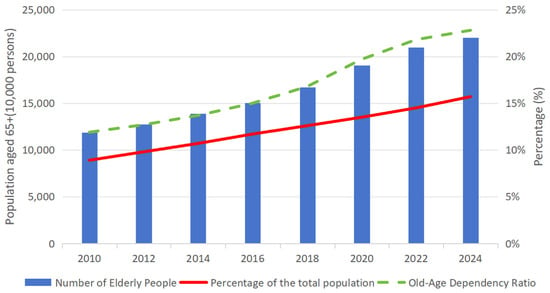
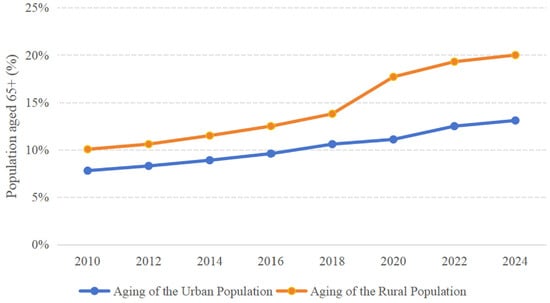
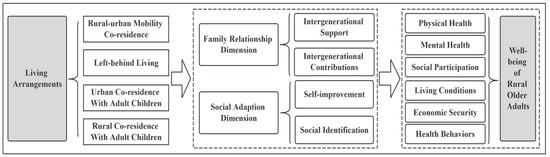
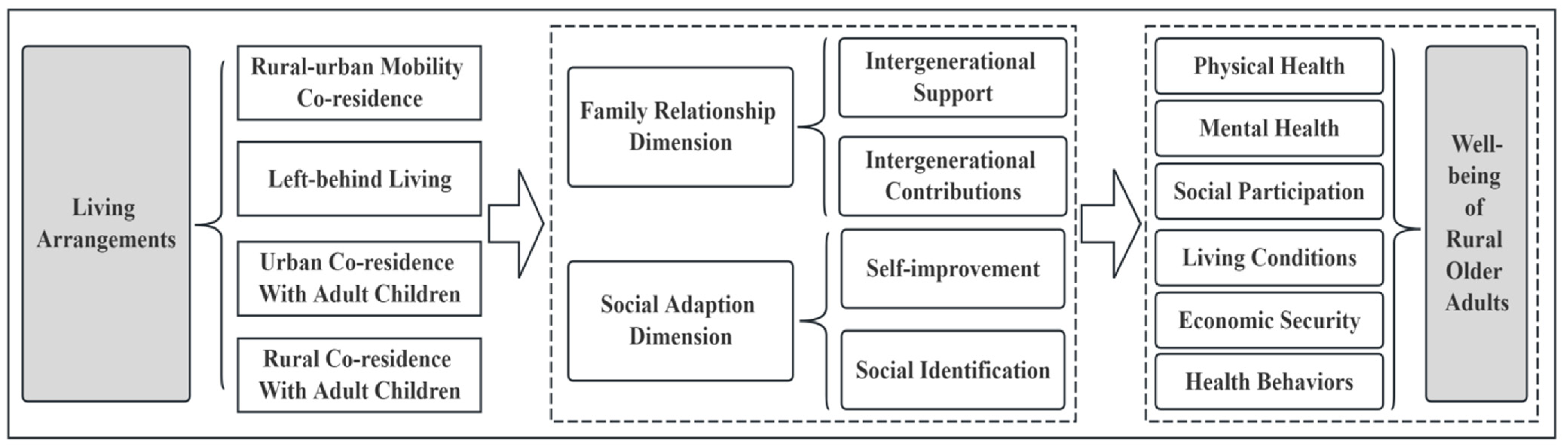

Disclaimer/Publisher’s Note: The statements, opinions and data contained in all publications are solely those of the individual author(s) and contributor(s) and not of MDPI and/or the editor(s). MDPI and/or the editor(s) disclaim responsibility for any injury to people or property resulting from any ideas, methods, instructions or products referred to in the content. |
© 2026 by the authors. Licensee MDPI, Basel, Switzerland. This article is an open access article distributed under the terms and conditions of the Creative Commons Attribution (CC BY) license.