


Abstract
Environmental alterations arising from restoration, land-use modification, and climate change alter the physical and chemical conditions of freshwater ecosystems, ultimately driving ecological responses. Yet, a wide range of modelling frameworks has been developed that differ substantially in their ecological resolution, data requirements, and management applications. Addressing the lack of a synthesis of these frameworks for urban stream management, this narrative review analyses modelling approaches for predicting ecological responses in freshwater ecosystems and their applicability to urban stream management. The reviewed frameworks are organised according to increasing ecological detail of modelling outputs, from habitat models to approaches predicting biotic indicators, community composition, and mechanistic ecological processes. For each modelling framework, the ecological questions addressed, underlying assumptions, required data, strengths, limitations, and representative applications are examined. The review identifies a clear trade-off between ecological resolution and the data and ecological knowledge required for model development, as well as transferability. It also highlights research gaps, including the limited integration of hydrology, hydraulics, water quality, and geomorphology, the propagation of uncertainty across modelling cascades, and the scarcity of modelling applications targeting urban streams. The review demonstrates that different modelling approaches address complementary ecological questions and should be selected according to the management objective, available information, and decision context. Combining complementary approaches can help link environmental processes with ecologically meaningful predictions, supporting restoration planning, evaluation of management alternatives, and the long-term ecological sustainability of urban streams.
1. Introduction
Urban streams present a critical challenge to freshwater conservation because they are simultaneously exposed to multiple interacting stressors [1,2]. Urban pressures, including water quality impairment, riparian degradation, and altered hydromorphology, are further exacerbated by the effects of climate change, such as altered precipitation patterns and more frequent extreme events [3].
Management actions to protect or restore urban streams are particularly challenging due to the complex interactions among multiple stressors and the different components of lotic freshwater ecosystems, often resulting in unexpected ecological responses [4,5,6]. Despite increasing efforts to restore urban streams, many projects still fail to achieve the primary goal of restoration, namely improving biological quality [7,8,9]. Indeed, many studies have found bioindicator groups (e.g., macroinvertebrates) to exhibit weak or no response to rehabilitation measures [7,10,11].
Considering the high cost and complexity of intervening in urban environments [12,13,14], modelling tools have become increasingly important for evaluating management scenarios, including restoration actions and the effects of land-use or climate change [15,16,17]. Currently, many advanced physically based models exist to simulate the abiotic components of rivers and streams, including hydrology, hydraulics, sediment transport, and water quality [16,18]. At the same time, ecological prediction has also advanced [19], albeit independently from physically based environmental models [17].
A diverse range of ecological modelling frameworks has been developed to translate environmental change into ecological responses in freshwater ecosystems, differing in their representation of environmental processes and the level of ecological resolution they provide. However, despite their potential relevance for urban stream rehabilitation, no review has synthesised these frameworks from the perspective of urban stream management. Although studies specifically targeting urban streams remain scarce, understanding the strengths and limitations of alternative modelling approaches is essential for addressing the complex ecological challenges of urban streams. This narrative review aims to fill this gap by analysing representative studies that have developed or applied modelling frameworks to predict ecological responses of freshwater ecosystems to environmental change, including river restoration, land-use change, climate change, and other management scenarios. Rather than reviewing individual modelling tools or software implementations, it focusses on the underlying modelling approaches and their application to ecological prediction.
Specifically, this review aims to: (i) synthesise the principal modelling frameworks used to predict ecological responses in freshwater ecosystems; (ii) examine the ecological questions addressed by these frameworks, together with their underlying assumptions, data requirements, strengths, and limitations; (iii) evaluate their suitability for addressing the unique challenges of urban stream management; and (iv) identify current research gaps and future research directions.
2. Methods
The literature included in this narrative review was identified through iterative searches for studies modelling ecological responses of lotic freshwater ecosystems to environmental change. Searches were primarily conducted in Web of Science and complemented by Google Scholar and citation tracking. Search terms combined concepts related to rivers and streams, environmental drivers (e.g., hydrology, hydraulics, geomorphology, and water quality), ecological responses, restoration or rehabilitation, and modelling. The search initially focussed on urban streams but was later expanded to broader freshwater ecosystems because few eligible urban stream studies were identified.
As the review was developed iteratively over approximately four years, searches were conducted at different stages as new modelling approaches and relevant studies were identified. Studies were selected based on their relevance to the modelling framework under consideration, their ability to illustrate distinct ecological questions or applications, and their contribution to understanding the strengths and limitations of each approach. Studies focussing exclusively on abiotic processes, bioassessment without predictive modelling, statistical analyses lacking a modelling or predictive component, post-restoration assessments without simulation of biological responses, or biological models without an abiotic component were excluded.
To illustrate the search process, the most recent searches were conducted in Web of Science in May 2026 using four complementary search sets addressing (1) abiotic drivers and biological responses, (2) restoration outcome prediction, (3) integrated modelling of urban streams, and (4) ecohydrological and biological modelling of stream restoration. These searches retrieved 6181, 2095, 226, and 171 records, respectively. Records were screened according to their relevance to the review objectives, resulting in 38 papers being selected for further consideration, in addition to studies that had already been identified and included in earlier versions of the review. Because these searches represent only the most recent stage of an iterative review process, they do not provide a complete account of the literature identification and screening undertaken throughout the development of the review.
Finally, ChatGPT Images 2.0 (OpenAI, San Francisco, CA, USA) was used to generate icons for Figure 1 and Figure 2. The figures were assembled by the authors, who reviewed and edited the generated output.
Figure 1.
Progression of the ecological resolution of modelling outputs, from habitat conditions to individual life-cycle processes, highlighting the associated trade-off between data and knowledge requirements for biological parameterisation, as well as transferability across systems. Source: Created by the authors using icons generated with generative AI.
Figure 2.
Proposed modular framework for predicting ecological responses to environmental alteration in urban streams. Environmental changes, including climate change, restoration and land-use change, can be represented through physically based models of hydrology, hydraulics, sediment transport and water quality, generating simulated environmental conditions such as flow, habitat and nutrients. These conditions can be combined with contextual predictors describing anthropogenic pressures and natural site characteristics, and ecological predictors representing processes such as interspecific interactions and recolonisation potential, according to the ecological question and management objective. The resulting information can be incorporated into ecological modelling techniques to estimate responses including species occurrence, abundance, biotic condition, community composition and ecological processes, providing information to support urban stream management. Source: Created by the authors using icons generated with generative AI.
3. Ecological Modelling Approaches
Freshwater ecosystems respond to environmental change through interacting abiotic and biotic processes. Changes in climate, land-use, or restoration measures modify environmental conditions, which in turn influence the distribution, abundance, and dynamics of aquatic organisms. Predicting these ecological responses has led to the development of a wide range of modelling frameworks, often independently of each other.
Existing modelling approaches differ in the ecological questions they address and the level of ecological detail represented in their outputs. In this review, we use the term “ecological resolution” to refer to the level of ecological detail represented in model predictions. This perspective provides a basis for organising the approaches reviewed here according to the ecological information they provide. Accordingly, the review progresses from models describing habitat conditions to those predicting biological indicators, community composition, and ecological processes. Thus, the goal of this review is not to propose a new classification system for ecological models; existing classifications and reviews based on model types, modelling methods, mechanistic representation, and other dimensions are available in the literature [18,19,20,21]. Instead, the organisation adopted here is purely analytical and intended to facilitate comparison of the ecological questions, data requirements, strengths, limitations, and management applications of different approaches in the particular context of urban streams.
3.1. Habitat Conditions
Habitat selection models are based on the concept of habitat suitability. The distribution of bioindicator organisms, such as fish and macroinvertebrates, is influenced by in-channel conditions because they can tolerate only a certain range of environmental parameters, including flow velocity, water depth, and substrate composition [22].
Habitat suitability curves (HSCs) represent empirical relationships between habitat conditions and the preference or suitability of a species, expressed as suitability indices [23]. These relationships are derived from observations of species-habitat associations and can be incorporated into physically based models to estimate habitat availability under alternative environmental conditions. Among the earliest approaches linking hydraulic simulations with ecological responses were ecohydraulic habitat models, such as the Physical Habitat Simulation model, PHABSIM [24], and the Computer-Aided Simulation Model for Instream Flow Requirements, CASiMiR [25]. These frameworks translate hydraulic outputs into habitat metrics such as the Weighted Usable Area (WUA), which represents the amount of suitable physical habitat available for a target species.
Applications of habitat suitability frameworks have demonstrated their value in planning and assessing river restoration projects. For instance, evaluating how restoration designs will influence the availability of suitable habitat for target fish species, as well as the resilience of planned infrastructure to withstand high flow events [26,27]. Although suitable habitat was predicted to decrease during high flows, Gard et al. [27] found that this reduction did not negate the overall benefits achieved by restoration under more typical flow conditions, a finding that was subsequently supported by post-restoration field observations.
Additionally, habitat models can be used to iteratively simulate the effects of alternative hydromorphological restoration measures, including fords, pools, riffles, woody debris and point bars [28]. For instance, Anim et al. [29] found that increasing channel complexity reduced bed mobility, enhanced hydraulic diversity and increased the availability of shallow, slow-flowing refuge habitats. Nevertheless, even the most complex rehabilitation scenarios failed to reproduce the habitat conditions observed in reference streams, highlighting that reach-scale morphological reconfiguration alone cannot compensate for catchment-wide altered hydrological regimes [29].
Empirical habitat-biota relationships can also be represented using approaches other than conventional suitability curves. For instance, Theodoropoulos et al. [30] developed site-specific habitat suitability curves for fish from field observations, while for macroinvertebrates they used a fuzzy rule-based Bayesian model trained on 380 observed microhabitats. Their simulations showed that widespread use of instream structures was not cost-effective unless they enhanced habitat for specific sensitive or endangered species in intermittent rivers under near-dry conditions. Rivaes et al. [31] adopted a different empirical approach, developing a mesohabitat classification based on indicator species from four biological groups (macrophytes, macroalgae, diatoms and macroinvertebrates). Their simulations projected substantial shifts in mesohabitat distribution and aquatic communities under projected climates, with indicator species cover changing by up to 76%.
Some modelling frameworks extend habitat-based approaches by incorporating biological predictions. Kiesel et al. [32] developed the Habitat Evaluation Tool (HET) to predict macroinvertebrate assemblages from substrate composition. HET uses empirical habitat preferences to estimate species abundances through stochastic Multi-Habitat Sampling simulations. The integration of hydrodynamic modelling with Species Distribution Models (SDMs) also advanced the ecological relevance of modelling outputs. SDMs predict the probability of species occurrence from empirical species-environment relationships. Jähnig et al. [33] demonstrated that incorporating hydraulic metrics describing flow and sediment conditions improved occurrence predictions of the freshwater bivalve Sphaerium corneum.
The application of SDMs has expanded to incorporate additional ecological processes that influence species distributions. Baldan et al. [34,35] integrated hydraulic modelling with an SDM to predict the occurrence of the freshwater pearl mussel (Margaritifera margaritifera) under current and future climate conditions. To account for connectivity limitations, fine bed material deposition was incorporated as a post-processing ecological constraint to identify habitat patches unsuitable for mussel dispersal. More recently, Silva et al. [36] modelled Margaritifera margaritifera together with its obligatory fish hosts, demonstrating that incorporating biotic predictors improved the interpretation of distribution patterns beyond environmental filtering alone.
Indeed, one of the long-recognised limitations of habitat modelling is that ecological responses are inferred from habitat availability. Although suitable habitat is a prerequisite for species persistence, it does not necessarily translate into species occupancy, as community responses are also constrained by dispersal limitations, recolonisation processes and biotic interactions. Consequently, habitat-based restoration has often relied on the implicit “build it and they will come” assumption that creating suitable physical habitat will lead to biological recovery [37,38]. In reality, restored reaches may remain unoccupied simply because source populations are absent or disconnected [39,40].
Kail et al. [41] addressed this limitation by explicitly incorporating recolonisation potential into an integrated ecohydrological modelling framework. Rather than evaluating habitat suitability alone, their framework coupled hydrological, hydraulic, morphodynamic and habitat models with species dispersal modules to assess whether restored reaches were both suitable and accessible to aquatic organisms. Fish dispersal was simulated using the Fish Dispersal Model (FIDIMO), whereas macroinvertebrate recolonisation was represented through least-cost path analyses accounting for species-specific dispersal abilities and migration barriers. This enabled restoration success to be evaluated not only in terms of habitat quality but also according to the capacity of organisms to recolonise restored reaches.
These studies have demonstrated how hydrologic and hydrodynamic modelling can aid the planning and assessment of restoration designs and forecast environmental change under projected future climate scenarios. These models provide a physically realistic representation of the abiotic environment experienced by freshwater organisms and can simulate habitat conditions under novel scenarios. Grounded in physical laws and parameterised using site-specific conditions, they can extrapolate beyond observed conditions without relying solely on previously established empirical relationships. However, their accuracy remains dependent on the quality of the input data, parameterisation, and model calibration. Some of the reviewed studies used tools such as River2D, HEC-RAS, SWAT and TUFLOW. Hydrological models typically require a digital elevation model (DEM) of the area, with resolutions ranging from 1 cm, for site-specific topographic surveys, to approximately 1 km. Additional inputs may include soil properties, catchment and channel geometry, initial conditions, etc. [18,42,43]. In practice, physically based models can be as sophisticated as the available data permit.
The reviewed approaches span a gradient in the ecological resolution of their modelling outputs, ranging from the prediction of suitable habitat to species occurrence, dispersal constraints, and biotic interactions. Nevertheless, the reviewed applications were predominantly focussed on hydraulic variables, while other environmental gradients known to influence freshwater communities, such as water quality, catchment characteristics, and anthropogenic pressures, were less frequently incorporated.
3.2. Biotic Indicators
The following frameworks predict biological condition directly through aggregated indicators such as richness, diversity indices or multimetric bioassessment scores. Applications of these modelling approaches include identifying the environmental drivers of biological integrity using statistical and machine learning models trained on empirical monitoring data of biotic and abiotic observations. Such models can identify the main stressors associated with biological degradation through variable selection techniques [19]. For instance, Ambelu et al. [44] found water and habitat quality metrics to be the main drivers of macroinvertebrate-based indicators (BMWP, %EPT, taxa richness and % scrapers), and thus guide restoration priorities. Additionally, statistical modelling approaches can represent nonlinear relationships between environmental stressors, site characteristics and biological condition to predict indicators of native fish richness [45] or macroinvertebrate-based indices, e.g., the Macroinvertebrate Multimetric Index, MMI [46]. By quantifying these relationships, such models reveal ecological thresholds and optima that inform river management while identifying the principal drivers of ecological degradation, therefore supporting the prioritisation of stream reaches and restoration actions according to their predicted ecological improvement.
Modelling approaches predicting biotic indicators have also been used to evaluate management scenarios, like predicting native fish richness to assess alternative rehabilitation strategies [47]. Scenarios including the removal of abandoned weirs and increasing riffle cover can be simulated by modifying environmental predictors representing instream habitat and river connectivity. While Olaya-Marín et al. [47] demonstrated that rehabilitated reaches could recover fish richness comparable to reference conditions, reducing the mean annual discharge according to projected climate change scenarios (10%, 20%, and 25%) showed that future hydrological alterations could substantially offset the ecological benefits of restoration. Likewise, Valerio et al. [48] predicted macroinvertebrate (IBMWP) and diatom (IPS) indices under nutrient concentrations corresponding to the Water Framework Directive (WFD) ecological status thresholds. Their results suggested that compliance with current nutrient standards alone may be insufficient to achieve good biological status, highlighting the need for stricter nutrient reduction targets and improved riparian management.
While the previous studies assessed environmental change by directly altering abiotic predictors, Sedighkia et al. [49,50] introduced physically based models into the modelling cascade. Their framework coupled hydrodynamic models with water quality indices to evaluate alternative environmental flow scenarios, while a statistical model translated these environmental outputs into the Shannon biodiversity index for macroinvertebrates and native fishes. The framework demonstrated that maintaining biodiversity requires considering multiple interacting environmental processes other than flow.
Zhao et al. [51] further advanced ecological realism by incorporating mechanistic food-web dynamics into the modelling framework. After identifying the principal hydrological and water quality drivers of aquatic communities using partial least squares regression, the authors coupled these environmental variables with the food-web model Ecosim to simulate biomass dynamics of fish, zoobenthos and algae under undisturbed conditions. Biodiversity responses were subsequently expressed as Shannon diversity indices and related statistically to environmental variation. By explicitly representing trophic interactions, this framework moved beyond statistical ecological models and provided a more mechanistic description of ecosystem functioning.
Although modelling approaches predicting biotic indicators provide a direct means of estimating biological condition, they remain limited in some aspects. First, biological responses are aggregated into summary metrics, limiting ecological interpretation and obscuring which components of the community are responsible for the predicted change. Second, ecological responses are inferred from empirical relationships between environmental predictors and biological condition rather than explicit representations of the physical and ecological processes linking environmental change to biological responses. Consequently, future scenarios are typically simulated by estimating predictor values instead of modelling the underlying environmental processes. Overall, these approaches can predict how ecological conditions are likely to respond to environmental change, but provide limited insight into how communities reorganise or the processes underlying those responses.
3.3. Community Composition
Whereas biotic indicator models summarise biological responses into aggregated measures of condition, community composition models retain information on the taxa contributing to those responses. This distinction lies in the ecological resolution of the model outputs, as both approaches can be trained using empirical observations of biological assemblages and associated environmental conditions. Biotic indicator models predict only summary measures such as richness, diversity indices, or multimetric indices, providing a concise assessment of ecological condition but limiting information on the identity and relative responses of individual taxa [52]. In contrast, community composition models can predict information on the occurrence and abundance of individual taxa, allowing changes in community structure and, where functional traits are available, associated changes in functional composition and potential implications for ecosystem functioning to be examined [53,54,55]. Thus, community composition models can provide a more detailed ecological interpretation of environmental responses by revealing which components of the community are affected and how ecosystem functioning may change in response.
Statistical models have been used to predict biological assemblages from environmental stressors. For instance, Gwinn et al. [56] trained a Bayesian hierarchical model relating the abundance of 29 macroinvertebrate families to reach-scale riparian integrity and catchment imperviousness. These predictors were then directly modified to compare urban stream restoration scenarios in which either riparian integrity was improved or catchment imperviousness was reduced. Model predictions showed that macroinvertebrate communities responded more to improvements in riparian integrity than imperviousness.
The representation of environmental conditions has also broadened to include a wider range of stressors. For instance, Jovem-Azevêdo et al. [57] trained a machine learning ensemble model using 28 environmental predictors describing both site characteristics and anthropogenic pressure. The trained model was then used to predict the occurrence of 60 taxa under restoration scenarios represented by 25% and 75% improvements in water quality variables. The results showed that, despite increases in biological quality, water quality improvement alone was insufficient to restore the ecological quality of severely degraded sites, indicating that additional measures would be required.
The ecological realism of predictive community models has also been improved through more sophisticated representations of biological assemblages. Rather than modelling species independently, Deflem et al. [58] used Joint Species Distribution Models (JSDMs) to predict the occurrence of 29 fish species under WFD restoration targets using nine environmental covariates, including water quality, hydromorphology and connectivity metrics. JSDMs simultaneously model multiple species while accounting for shared environmental responses, spatial structure and residual species associations. Model predictions suggested that achieving “good” ecological status would result in only limited biological improvements compared with more ambitious restoration targets. Building on this approach, Silva et al. [59,60] further improved ecological realism by incorporating obligatory biotic interactions into SDMs. Accounting for host availability avoided the overprediction of freshwater mussel distributions under future climate scenarios.
The applicability of predictive community models has also expanded from evaluating individual restoration scenarios to supporting large-scale environmental planning. Wilkes et al. [61] modelled the abundance of 188 macroinvertebrate taxa using hierarchical zero-inflated generalised Poisson models driven by 17 environmental predictors encompassing catchment characteristics, habitat modification, water quality and availability, as well as hydrological anomalies. The framework combined four restoration actions with six climate change projections to evaluate a total of 15 alternative management scenarios across England’s river network. Although taxon-specific abundances were predicted under each scenario, these outputs were ultimately synthesised into a Multi-Species Indicator (MSI) to facilitate restoration prioritisation at the national scale. This study illustrates how predictive community models can be applied to simultaneously evaluate the combined effects of multiple environmental pressures, restoration actions and future climate scenarios.
Although these studies differed in methodology, they shared a common modelling workflow, including the reviewed frameworks of the previous section, in which environmental change was represented by directly altering environmental predictor variables. An alternative modelling strategy has emerged in which these predictors are themselves generated through physically based environmental models before being used for ecological prediction. For instance, Kakouei et al. [62] developed an integrated modelling cascade by coupling hydrological simulations with hierarchical logistic regression models to predict the effects of climate change on the abundance of 294 macroinvertebrate taxa across two German catchments. The framework first simulated future discharge regimes under climate projections, and the resulting hydrological metrics were subsequently used to predict biological responses through five ecologically relevant Indicators of Hydrologic Alteration (IHA) describing the magnitude, frequency, duration, timing and rate of flow events. Model predictions showed that alterations in low-flow conditions produced the strongest biological responses and that the magnitude of these responses varied between catchments with contrasting hydrological characteristics. Nevertheless, the environmental drivers were limited to hydrological metrics.
Building upon this concept, Zerega et al. [63] expanded the environmental component of the modelling framework by predicting macroinvertebrate assemblages from a broader suite of 41 environmental variables encompassing climatic, hydrological, physico-chemical, habitat and catchment characteristics. Hydrodynamic simulations were coupled with a machine learning model to generate the flow-related predictors within this larger environmental dataset under future climate scenarios. Predictions showed that the magnitude of biological response to climate change depended on the initial level of ecosystem degradation. Together, these studies demonstrate how physically based environmental simulations can be integrated with predictive ecological models, providing an alternative framework in which environmental change is first simulated before biological responses are estimated.
Overall, community composition models provide a more complete picture of biological responses to environmental change than frameworks predicting aggregated biological metrics. These models are trained using empirical observations of biological assemblages together with environmental predictors that can include climate, hydrology, water quality, habitat and catchment characteristics. Their empirical nature allows the incorporation of a wide range of environmental predictors and, when coupled with physically based environmental simulations, provides a flexible framework for representing complex freshwater ecosystems.
However, although few studies have begun to incorporate additional ecological constraints, such as dispersal potential and obligatory host availability, most frameworks reviewed thus far still assume that biological communities are the result of environmental conditions. Consequently, they remain correlative representations of community dynamics and do not explicitly represent the ecological processes (such as demographic dynamics, species interactions and life-history processes) that ultimately shape aquatic communities. The following section presents modelling approaches that address these limitations by mechanistically representing these ecological processes.
3.4. Ecological Processes
Mechanistic models adopt a completely different modelling approach from the frameworks reviewed thus far. Instead of predicting patterns from statistical or habitat relationships, these models simulate the biological processes underlying ecological responses. Like environmental physically based models, ecological mechanistic models are based on causal relationships between the different components of the ecosystem through mathematical equations. Two main modelling paradigms have been adopted in freshwater management: food web models and individual-based models.
Dynamic food web models represent the transfer of energy and organic matter among trophic levels. Thus, management scenarios can be evaluated through the ecological mechanisms by which they alter ecosystem productivity. For instance, Bellmore et al. [64] proposed the Aquatic Trophic Productivity (ATP) model, which links stream physical habitat and riparian conditions with ecosystem productivity by simulating the flow of energy from basal resources through aquatic and terrestrial invertebrates to juvenile salmon. The application of this tool showed that ecosystem productivity changes under restoration scenarios as a result of modifications to resource availability and trophic interactions. Additionally, restoration effectiveness depends on food web structure, as the inclusion of competitors, predators and invasive species alters energy pathways and reduces the expected benefits for target populations. A broader application of this tool to a river network also showed why restoration effectiveness can vary spatially, revealing that local productivity, nutrient availability, temperature, riparian conditions and food-web composition all mediate ecological responses [65]. This demonstrated the value of mechanistic ecosystem models not only for comparing restoration alternatives but also for identifying the ecological processes that limit recovery and explaining why identical interventions may produce contrasting outcomes across river networks.
Among the modelling approaches reviewed here, individual-based life-cycle models (IBMs) provide the highest ecological resolution by explicitly representing individual organisms and life-history processes [66]. IBMs simulate how individuals respond to environmental conditions through processes such as habitat selection, growth, survival and reproduction. This modelling paradigm was established through the inSTREAM and inSALMO frameworks, which coupled hydraulic conditions with salmon populations to evaluate the ecological consequences of environmental change [67,68].
Applications of IBMs span from evaluating restoration to addressing increasingly complex management questions. Earlier applications demonstrated how IBMs could identify the environmental factors limiting population recovery and reveal thresholds beyond which further restoration provided little additional ecological benefit [69]. More recent work has focussed on optimising environmental flow management in regulated rivers by evaluating alternative hydropeaking regimes and minimum flow releases for Atlantic salmon and brown trout across different life stages and river reaches [70,71]. The framework has subsequently been extended to integrated restoration planning by coupling IBMs with 2D hydrodynamic models to assess the combined effects of operational and morphological restoration measures [72].
Complementary to IBMs, mechanistic life-cycle models represent populations through successive life stages rather than individual organisms. For example, the Habitat Assessment and Restoration Planning (HARP) framework links restoration actions and climate-induced habitat changes to life-stage-specific demographic processes, enabling the evaluation of alternative restoration strategies under future climate scenarios [73]. Using this approach, Beechie et al. [73] identified restoration strategies that enhanced salmon population resilience under projected changes in flow and temperature.
Overall, mechanistic ecological models represent the greatest ecological resolution among the modelling frameworks reviewed. They explicitly simulate the demographic, behavioural and trophic processes that generate those responses. This mechanistic representation enables them to address management questions that extend beyond predicting ecological outcomes, including identifying the processes limiting recovery. However, this increased process representation requires detailed biological parameterisation and increases model complexity. Mechanistic frameworks may require information on demographic rates, habitat selection, species interactions and physiological responses, which are often unavailable for most taxa and river systems. Indeed, current applications are still disproportionately represented by salmonids, reflecting the substantial ecological knowledge and life-history data required. Extending mechanistic modelling to more diverse freshwater communities will require comparable ecological information for a much broader range of taxa. Consequently, despite providing the most mechanistic understanding of restoration outcomes, their extensive data requirements and calibration effort currently limit their widespread application.
4. Synthesis and Research Gaps
Several modelling approaches have been developed to translate environmental change into ecological responses in freshwater ecosystems. The reason so many different frameworks exist is that there is no single “best” model capable of representing the complex and nonlinear nature of freshwater ecosystems. Although all have been applied to support river management, including the planning and assessment of stream restoration, each modelling framework provides a different level of ecological resolution (Figure 1). Higher ecological resolution provides more detailed ecological information but also requires progressively greater expert knowledge and more extensive or detailed datasets, which limits their transferability across different systems. For each modelling approach, we identified the ecological question it addresses, the assumptions underpinning its predictions, how predictions are generated, the required data, and its principal strengths and limitations, summarised in Table 1. This section synthesises the main research gaps that emerged across the reviewed modelling frameworks.
Table 1.
Comparison of the principal ecological modelling frameworks reviewed, including the ecological questions they address, typical methods, data requirements, strengths, limitations and representative applications.
Modelling approaches that predict habitat conditions can be used to answer the question “where is suitable habitat created or lost following environmental change?”. In urban streams, these approaches are particularly suited to representing stressors that alter flow, hydraulics and physical habitat, such as catchment-level hydrological alteration and channel modification. Their fundamental assumption is that habitat suitability is a reliable indicator of ecological quality. While physically based models are powerful tools for simulating freshwater environments under alternative management and climate scenarios, the reviewed frameworks relied almost exclusively on hydrodynamic simulations. None explicitly modelled water quality processes, and only a few incorporated geomorphological dynamics. Beyond the limitations of individual models, developing integrated modelling cascades introduces additional challenges, including the interoperability of disparate modelling platforms, mismatches in spatial and temporal scales, data fusion requirements, and the increasing complexity of calibration and validation [18,21].
A persistent limitation of current environmental modelling is the representation of geomorphological processes. While most hydrodynamic models commonly assume a static channel geometry, rivers undergo continuous adjustment through interactions among flow, sediment transport, bank erosion and riparian vegetation, substantially altering habitat conditions over time [74]. Although a few integrated frameworks have begun incorporating channel evolution through geomorphological modules [41], fully coupled hydro-morphodynamic-ecological models remain uncommon because simulating channel evolution requires complex process representation, extensive calibration and detailed field observations [75].
Another important challenge associated with integrated modelling frameworks is the propagation of uncertainty. Modelling cascades rely on sequential simulations in which the outputs of climate, hydrological, hydraulic and habitat models become inputs for subsequent components. Consequently, uncertainties arising from model structure, input data, parameterisation and calibration accumulate throughout the modelling chain, ultimately influencing ecological predictions. Quantifying these uncertainties becomes increasingly difficult as additional models are incorporated because conventional sensitivity and uncertainty analyses become computationally impractical, while opportunities for independent validation progressively decline towards the ecological end of the cascade [76]. As integrated modelling frameworks continue to increase in complexity, robust uncertainty quantification should become an integral component of model development rather than a post hoc assessment. Equally important is the transparent communication of predictive uncertainty, enabling decision-makers to interpret model outputs in the context of their associated confidence, evaluate the robustness of alternative restoration strategies, and make informed decisions despite incomplete knowledge [19,21]. In this context, uncertainty should not be regarded solely as a limitation of integrated modelling frameworks, but as valuable information that supports transparent, risk-informed environmental management.
Modelling approaches predicting biotic indicators answer the question “how does biological integrity change following environmental change?”, whereas community models seek to identify “which taxa increase, decline, appear or disappear?”. Because they can incorporate multiple environmental predictors, these models can represent biological responses to several urban stressors simultaneously, although they generally do not explicitly represent the physical processes generating those changes. Despite substantial advances in predictive performance, empirical ecological models remain constrained by several methodological challenges. Most frameworks are trained using regional monitoring datasets, meaning that relationships learned between environmental predictors and biological responses may not be transferable beyond the calibration domain. Reliable model application therefore requires evaluation against observations independent of model calibration, as good in-sample fit does not necessarily translate into accurate predictions under new environmental conditions [77]. This is particularly important when models are used to evaluate future or management scenarios outside the calibration domain, for which transferability should be explicitly considered [78,79].
Furthermore, there is no consensus on variable selection, with studies employing different combinations of hydrological, physicochemical, habitat and anthropogenic predictors, depending on the biological community studied and available data [19]. Because predictor selection influences both model performance and ecological interpretation, different modelling approaches may identify different environmental drivers as the principal limiting stressors. At the community level, species-level predictions remain particularly data-demanding, requiring extensive biological monitoring, taxonomic expertise and sufficient occurrence records to reliably estimate species-environment relationships. This limitation is particularly important for rare and sensitive species, which are often indicators of stream health.
Finally, although increasingly sophisticated machine learning algorithms can provide high predictive accuracy, their flexibility may come at the expense of interpretability, making it more difficult to explain why ecological responses are predicted and reducing their usefulness for transparent environmental decision-making [19,80]. In ecological applications with limited numbers of observations, model performance may also be sensitive to sample size, making appropriate validation particularly important when assessing predictive reliability [81,82].
Mechanistic ecological models address the question “why do populations change, and how do ecological processes drive those changes?”. These frameworks represent the highest level of ecological resolution among the reviewed approaches because they explicitly simulate demographic, behavioural and trophic processes through mathematical equations. However, representing the multiple environmental stressors affecting urban streams may require coupling with hydrological, hydraulic, water quality or geomorphological models. As already mentioned, this increased ecological realism entails substantial biological parameterisation and computational demands. Mechanistic ecological models can be challenging to apply to biological groups with many species, such as invertebrates or diatoms, because parameterising life-history processes, behaviour, physiology and species interactions requires detailed ecological knowledge that is unavailable for many taxa. In contrast, empirical and statistical approaches may require extensive spatial sampling of communities across environmental gradients to develop robust relationships and support transferability. Thus, the approaches differ not simply in the amount of data required, but in the type of information on which their predictive capacity depends: mechanistic models rely on detailed biological parameterisation, whereas empirical models depend on sufficiently broad and representative observations (see Figure 1).
Collectively, the reviewed frameworks span different levels of ecological realism, from predicting habitat availability, to biological condition, community composition and, ultimately, the ecological processes governing population dynamics. Rather than replacing one another, these approaches should be viewed as complementary tools suited to different management questions and data availability.
5. Implications for Urban Streams
The motivation for the present review stems from the need for modelling frameworks capable of predicting how urban streams respond to environmental change associated with stream restoration and climate change [15,17,30]. Urban streams are among the most degraded freshwater ecosystems worldwide [83], yet when in good ecological condition they provide essential ecosystem services to the (predominantly urban) human population [84,85,86]. Consequently, international legislation and environmental policies increasingly promote their conservation and ecological restoration [87,88,89]. However, restoration efforts have often produced disappointing biological outcomes because ecological responses emerge from complex interactions among multiple environmental processes rather than improvements in a single environmental component [8,90,91]. Since restoration projects are commonly constrained by limited resources and the complexities of urban planning, decisions regarding their design and implementation should be supported by the best available scientific evidence. Thus, predictive modelling frameworks provide an important means of informing these decisions.
Modelling urban streams remains particularly challenging. Indeed, the present review had to broaden its scope to modelling frameworks developed for freshwater ecosystems more generally because relatively few studies have applied these approaches specifically to urban streams. The scarcity of urban applications is itself one of the principal findings of this review and likely reflects the unique complexity of urban freshwater ecosystems. Here we discuss how the reviewed modelling frameworks can be adapted to address the particular challenges of urban stream management.
A defining characteristic of urban streams is the simultaneous influence of multiple interacting stressors acting across both the reach and catchment scales. Stressors include altered hydrological regimes, degraded water quality, channel modifications, habitat loss and fragmentation [1,2]. These stressors interact across multiple spatial and temporal scales, generating ecological responses that cannot usually be explained by a single environmental driver.
Ultimately, the most appropriate modelling framework depends on the management objective. Different objectives require different types of ecological information and may benefit from different modelling approaches. For example, where the objective is to recover or protect a particular species of concern, mechanistic or individual-based models may help identify the environmental factors or ecological processes limiting population recovery [68,69]. If habitat availability is identified as a limiting factor, habitat suitability approaches can then be used to evaluate whether alternative restoration designs provide suitable conditions for the target species [30]. Where dispersal or connectivity is limiting, dispersal and connectivity models can further be used to identify barriers and explore alternative restoration scenarios [41]. In contrast, where the objective is to improve overall ecological condition, biotic indicator approaches or community composition models may provide more appropriate outputs by predicting responses across multiple taxa [61].
Different approaches can therefore be combined according to the ecological question. Physically based models can simulate changes in hydrology, hydraulics, geomorphology or water quality under alternative management scenarios, while ecological models can translate these changes into responses at the level of habitat, individual taxa, communities or populations.
Nevertheless, data availability remains an important challenge, especially considering that most catchments worldwide are ungauged [92,93], and hydrometric monitoring is typically concentrated in larger rivers rather than smaller streams [94]. Similar limitations apply to water quality and biological monitoring [95,96], restricting both the development and validation of integrated ecological modelling frameworks [97]. However, data availability should not be regarded solely as a constraint on model selection. Attempting to apply different modelling approaches can itself reveal which types of information are currently limiting ecological prediction. For example, a habitat model may identify a need for more detailed spatial information on channel characteristics, whereas a community composition model may reveal insufficient biological observations across environmental gradients. Similarly, dispersal or connectivity models may highlight the need for information on source populations, dispersal capacity or migration barriers. Identifying these limitations can help prioritise future monitoring and data collection towards information that is most relevant to management decisions.
Importantly, modelling is only one component of urban stream management. Decisions are also shaped by policy objectives, regulatory requirements, available funding, land-use constraints, stakeholder interests and public acceptance [98,99,100]. Consequently, modelling outputs should be expressed in forms that support these decisions, for example, by comparing the ecological consequences of alternative interventions and identifying potential trade-offs among management objectives [21,101,102]. The integration of modelling with monitoring and stakeholder-informed management can therefore support an iterative process in which predictions inform interventions, observed responses inform subsequent model evaluation and refinement, and newly identified information needs guide future monitoring [21,103].
Overall, the modelling approaches reviewed here should be regarded as complementary components that can be selected and combined according to the ecological question, management objective, available information and decision context. The integrated framework proposed in Figure 2 should be regarded as a modular approach in which different components can be selected and combined. Existing examples of multi-stressor ecological modelling demonstrate the potential to evaluate biological responses to interacting environmental changes and management scenarios, providing a basis for extending such approaches to urban streams [47,48,49,50,51]. Although the degree of integration achievable will inevitably depend on available data, modelling expertise and computational resources, applying alternative models can also help identify the information most needed to improve future predictions and support more targeted monitoring and management.
6. Summary and Conclusions
Urban streams contribute to the sustainability of cities by providing a range of ecosystem services, but these systems are increasingly threatened by the multiple interacting stressors associated with urbanisation. In this context, modelling tools that improve the understanding and prediction of ecological responses can provide valuable scientific support for effective urban stream management and, consequently, contribute to sustainable urban development.
This review analysed the principal modelling approaches used to predict ecological responses to environmental change in freshwater ecosystems and discussed their applicability to urban stream management. We reviewed modelling frameworks ranging from habitat-based approaches and models predicting biotic indicators and community composition to mechanistic models that explicitly represent ecological processes. For each framework, we examined the ecological questions addressed, the underlying assumptions, data requirements, strengths and limitations, and identified the principal research gaps.
The reviewed approaches provide different levels of ecological resolution, highlighting that no single modelling framework is universally appropriate for representing the complexity of urban streams. Instead, habitat-based, biotic indicator, community composition and mechanistic approaches should be regarded as complementary tools that address different ecological questions and involve trade-offs between the ecological resolution of their outputs and the data, modelling expertise and ecological knowledge required for their application. Therefore, model selection should be guided primarily by the ecological question and management objective. Future advances in urban stream modelling will depend on the continued integration of complementary approaches capable of linking environmental processes with ecologically meaningful predictions. Such integrated frameworks can support restoration planning, evaluation of management alternatives, and the conservation of urban streams.
Author Contributions
Conceptualization, A.Z., M.J.F. and N.E.S.; research, A.Z.; drafting the initial manuscript, A.Z.; manuscript review and editing, N.E.S. and M.J.F. All authors have read and agreed to the published version of the manuscript.
Funding
This research was funded by doctoral grants UI0308/EngAmbiente.1/2021, supported by INESC Coimbra through FCT Pluriannual Funding 2020–2023 (UIDB/00308/2020), and by the Portuguese Foundation for Science and Technology (FCT) under the MIT Portugal Program (PRT/BD/154262/2022; https://doi.org/10.54499/PRT/BD/154262/2022). Additional support from INESC Coimbra was provided through FCT Pluriannual Funding UID/00308/2025 (https://doi.org/10.54499/UID/00308/2025). Support from MARE/ARNET was funded by FCT through the Pluriannual Funding UID/04292/2020 and LA/P/0069/2020 (https://doi.org/10.54499/LA/P/0069/2020). M.J.F. acknowledges the FCT CEEC Individual Contract (2021.02942.CEECIND/CP1656/CT0005; https://doi.org/10.54499/2021.02942.CEECIND/CP1656/CT0005).
Institutional Review Board Statement
Not applicable.
Informed Consent Statement
Not applicable.
Data Availability Statement
No new data were created or analysed in this study. Data supporting the findings of this review consist exclusively of previously published articles and publicly available institutional reports cited within the manuscript.
Acknowledgments
Conflicts of Interest
The authors declare no conflicts of interest.
References
- Walsh, C.J.; Roy, A.H.; Feminella, J.W.; Cottingham, P.D.; Groffman, P.M.; Morgan, R.P. The Urban Stream Syndrome: Current Knowledge and the Search for a Cure. J. N. Am. Benthol. Soc. 2005, 24, 706–723. [Google Scholar] [CrossRef]
- Booth, D.B.; Roy, A.H.; Smith, B.; Capps, K.A. Global Perspectives on the Urban Stream Syndrome. Freshw. Sci. 2016, 35, 412–420. [Google Scholar] [CrossRef] [Scilit]
- van Vliet, M.T.H.; Thorslund, J.; Strokal, M.; Hofstra, N.; Flörke, M.; Ehalt Macedo, H.; Nkwasa, A.; Tang, T.; Kaushal, S.S.; Kumar, R.; et al. Global River Water Quality under Climate Change and Hydroclimatic Extremes. Nat. Rev. Earth Environ. 2023, 4, 687–702. [Google Scholar] [CrossRef] [Scilit]
- Hughes, R.M.; Dunham, S.; Maas-Hebner, K.G.; Yeakley, J.A.; Schreck, C.; Harte, M.; Molina, N.; Shock, C.C.; Kaczynski, V.W.; Schaeffer, J. A Review of Urban Water Body Challenges and Approaches: (1) Rehabilitation and Remediation. Fisheries 2014, 39, 18–29. [Google Scholar] [CrossRef] [Scilit]
- Herrington, C.S.; Horndeski, K. Is Urban Stream Restoration Really a Wicked Problem? Urban Ecosyst. 2023, 26, 479–491. [Google Scholar] [CrossRef] [Scilit]
- Birk, S.; Chapman, D.; Carvalho, L.; Spears, B.M.; Andersen, H.E.; Argillier, C.; Auer, S.; Baattrup-Pedersen, A.; Banin, L.; Beklioğlu, M.; et al. Impacts of Multiple Stressors on Freshwater Biota across Spatial Scales and Ecosystems. Nat. Ecol. Evol. 2020, 4, 1060–1068. [Google Scholar] [CrossRef] [Scilit] [PubMed]
- Hörchner, S.; Moulinec, A.; Ulshöfer, L.; Sundermann, A.; Oehlmann, J.; Oetken, M. Ecotoxicological Impacts and Macroinvertebrate Responses as Indicators of River Restoration Success. Environ. Sci. Eur. 2025, 37, 167. [Google Scholar] [CrossRef] [Scilit]
- Violin, C.R.; Cada, P.; Sudduth, E.B.; Hassett, B.A.; Penrose, D.L.; Bernhardt, E.S. Effects of Urbanization and Urban Stream Restoration on the Physical and Biological Structure of Stream Ecosystems. Ecol. Appl. 2011, 21, 1932–1949. [Google Scholar] [CrossRef] [Scilit] [PubMed]
- Lemaire, G.G.; Jessen Rasmussen, J.; Höss, S.; Figari Kramer, S.; Schittich, A.R.; Zhou, Y.; Köppl, C.J.; Traunspurger, W.; Bjerg, P.L.; McKnight, U.S. Land Use Contribution to Spatiotemporal Stream Water and Ecological Quality: Implications for Water Resources Management in Peri-Urban Catchments. Ecol. Indic. 2022, 143, 109360. [Google Scholar] [CrossRef] [Scilit]
- Omoniyi, G.E.; Piscart, C.; Pellan, L.; Bergerot, B. Responses of Macroinvertebrate Communities to Hydromorphological Restoration of Headwater Streams in Brittany. Water 2022, 14, 553. [Google Scholar] [CrossRef] [Scilit]
- Feio, M.J.; Ferreira, W.R.; Macedo, D.R.; Eller, A.P.; Alves, C.B.M.; França, J.S.; Callisto, M. Defining and Testing Targets for the Recovery of Tropical Streams Based on Macroinvertebrate Communities and Abiotic Conditions. River Res. Appl. 2015, 31, 70–84. [Google Scholar] [CrossRef] [Scilit]
- Halama, J.; McKane, R.; Barnhart, B.; Pettus, P.; Brookes, A.; Djang, K.; Phan, V.; Chokshi, S.; Graham, J. Improved Urban Runoff Prediction Using High-Resolution Land-Use, Imperviousness, and Stormwater Infrastructure Data Applied to a Process-Based Ecohydrological Model. PLoS Water 2023, 2, e0000155. [Google Scholar] [CrossRef] [Scilit] [PubMed]
- Abdi, R.; Endreny, T.; Nowak, D. A Model to Integrate Urban River Thermal Cooling in River Restoration. J. Environ. Manag. 2020, 258, 110023. [Google Scholar] [CrossRef] [Scilit] [PubMed]
- Cockerill, K.; Anderson, W.P. Creating False Images: Stream Restoration in an Urban Setting. J. Am. Water Resour. Assoc. 2014, 50, 468–482. [Google Scholar] [CrossRef] [Scilit]
- Mosleh, L.; Negahban-Azar, M. Role of Models in the Decision-Making Process in Integrated Urban Water Management: A Review. Water 2021, 13, 1252. [Google Scholar] [CrossRef] [Scilit]
- Keller, A.A.; Garner, K.; Rao, N.; Knipping, E.; Thomas, J. Hydrological Models for Climate-Based Assessments at the Watershed Scale: A Critical Review of Existing Hydrologic and Water Quality Models. Sci. Total Environ. 2023, 867, 161209. [Google Scholar] [CrossRef] [Scilit] [PubMed]
- Larned, S.T.; Snelder, T.H. Meeting the Growing Need for Land-Water System Modelling to Assess Land Management Actions. Environ. Manag. 2024, 73, 1–18. [Google Scholar] [CrossRef] [Scilit] [PubMed]
- Brewer, S.K.; Worthington, T.A.; Mollenhauer, R.; Stewart, D.R.; McManamay, R.A.; Guertault, L.; Moore, D. Synthesizing Models Useful for Ecohydrology and Ecohydraulic Approaches: An Emphasis on Integrating Models to Address Complex Research Questions. Ecohydrology 2018, 11, e1966. [Google Scholar] [CrossRef] [Scilit]
- Hernandez-Suarez, J.S.; Nejadhashemi, A.P. A Review of Macroinvertebrate- and Fish-based Stream Health Modelling Techniques. Ecohydrology 2018, 11, e2022. [Google Scholar] [CrossRef] [Scilit]
- Jørgensen, S.E. Overview of the Model Types Available for Development of Ecological Models. Ecol. Model. 2008, 215, 3–9. [Google Scholar] [CrossRef] [Scilit]
- Schuwirth, N.; Borgwardt, F.; Domisch, S.; Friedrichs, M.; Kattwinkel, M.; Kneis, D.; Kuemmerlen, M.; Langhans, S.D.; Martínez-López, J.; Vermeiren, P. How to Make Ecological Models Useful for Environmental Management. Ecol. Model. 2019, 411, 108784. [Google Scholar] [CrossRef] [Scilit]
- Nestler, J.M.; Milhous, R.T.; Payne, T.R.; Smith, D.L. History and Review of the Habitat Suitability Criteria Curve in Applied Aquatic Ecology. River Res. Appl. 2019, 35, 1155–1180. [Google Scholar] [CrossRef] [Scilit]
- Bockelmann, B.N.; Fenrich, E.K.; Lin, B.; Falconer, R.A. Development of an Ecohydraulics Model for Stream and River Restoration. Ecol. Eng. 2004, 22, 227–235. [Google Scholar] [CrossRef] [Scilit]
- Bovee, K.D. A Guide to Stream Habitat Analysis Using the Instream Flow Incremental Methodology; Instream Flow Information Paper; Western Energy and Land Use Team, Office of Biological Services, Fish and Wildlife Service, U.S. Department of the Interior: Washington, DC, USA, 1982; Volume 1.
- Schneider, M.; Noack, M.; Gebler, T. Handbook for the Habitat Simulation Model: CASiMiR; SJE Schneider & Jorde Ecological Engineering Ltd.: Stuttgart, Germany; University of Stuttgart: Stuttgart, Germany, 2008. [Google Scholar]
- Schwartz, J.S.; Neff, K.J.; Dworak, F.E.; Woockman, R.R. Restoring Riffle-Pool Structure in an Incised, Straightened Urban Stream Channel Using an Ecohydraulic Modeling Approach. Ecol. Eng. 2015, 78, 112–126. [Google Scholar] [CrossRef] [Scilit]
- Gard, M. Modelling Changes in Salmon Habitat Associated with River Channel Restoration and Flow-Induced Channel Alterations. River Res. Appl. 2014, 30, 40–44. [Google Scholar] [CrossRef] [Scilit]
- Lange, C.; Schneider, M.; Mutz, M.; Haustein, M.; Halle, M.; Seidel, M.; Sieker, H.; Wolter, C.; Hinkelmann, R. Model-Based Design for Restoration of a Small Urban River. J. Hydro-Environ. Res. 2015, 9, 226–236. [Google Scholar] [CrossRef] [Scilit]
- Anim, D.O.; Fletcher, T.D.; Vietz, G.J.; Burns, M.J.; Pasternack, G.B. How Alternative Urban Stream Channel Designs Influence Ecohydraulic Conditions. J. Environ. Manag. 2019, 247, 242–252. [Google Scholar] [CrossRef] [Scilit] [PubMed]
- Theodoropoulos, C.; Stamou, A.; Vardakas, L.; Papadaki, C.; Dimitriou, E.; Skoulikidis, N.; Kalogianni, E. River Restoration Is Prone to Failure Unless Pre-Optimized within a Mechanistic Ecological Framework | Insights from a Model-Based Case Study. Water Res. 2020, 173, 115550. [Google Scholar] [CrossRef] [Scilit] [PubMed]
- Rivaes, R.P.; Feio, M.J.; Almeida, S.F.P.; Calapez, A.R.; Sales, M.; Gebler, D.; Lozanovska, I.; Aguiar, F.C. River Ecosystem Endangerment from Climate Change-Driven Regulated Flow Regimes. Sci. Total Environ. 2022, 818, 151857. [Google Scholar] [CrossRef] [Scilit] [PubMed]
- Kiesel, J.; Schröder, M.; Hering, D.; Schmalz, B.; Hörmann, G.; Jähnig, S.C.; Fohrer, N. A New Model Linking Macroinvertebrate Assemblages to Habitat Composition in Rivers: Development, Sensitivity and Univariate Application. Fundam. Appl. Limnol. 2015, 186, 117–133. [Google Scholar] [CrossRef] [Scilit]
- Jähnig, S.C.; Kuemmerlen, M.; Kiesel, J.; Domisch, S.; Cai, Q.; Schmalz, B.; Fohrer, N. Modelling of Riverine Ecosystems by Integrating Models: Conceptual Approach, a Case Study and Research Agenda. J. Biogeogr. 2012, 39, 2253–2263. [Google Scholar] [CrossRef] [Scilit]
- Baldan, D.; Kiesel, J.; Hauer, C.; Jähnig, S.C.; Hein, T. Increased Sediment Deposition Triggered by Climate Change Impacts Freshwater Pearl Mussel Habitats and Metapopulations. J. Appl. Ecol. 2021, 58, 1933–1944. [Google Scholar] [CrossRef] [Scilit]
- Baldan, D.; Piniewski, M.; Funk, A.; Gumpinger, C.; Flödl, P.; Höfer, S.; Hauer, C.; Hein, T. A Multi-Scale, Integrative Modeling Framework for Setting Conservation Priorities at the Catchment Scale for the Freshwater Pearl Mussel Margaritifera margaritifera. Sci. Total Environ. 2020, 718, 137369. [Google Scholar] [CrossRef] [Scilit] [PubMed]
- da Silva, J.P.; Gonçalves, D.V.; Garcia-Raventós, A.; Lopes-Lima, M.; Varandas, S.; Froufe, E.; Teixeira, A.; Hui, F.K.C.; Filipe, A.F.; Sousa, R. Joint Species Distribution Models Unveil Co-occurrences between Freshwater Mussels and Their Fish Hosts. J. Biogeogr. 2023, 50, 730–742. [Google Scholar] [CrossRef] [Scilit]
- Palmer, M.A.; Hondula, K.L.; Koch, B.J. Ecological Restoration of Streams and Rivers: Shifting Strategies and Shifting Goals. Annu. Rev. Ecol. Evol. Syst. 2014, 45, 247–269. [Google Scholar] [CrossRef] [Scilit]
- Walsh, C.J.; Breen, P.F. A Biological Approach to Assessing the Potential Success of Habitat Restoration in Urban Streams. Verh. Int. Ver. Theor. Angew. Limnol. 2001, 27, 3654–3658. [Google Scholar] [CrossRef] [Scilit]
- Brederveld, R.J.; Jähnig, S.C.; Lorenz, A.W.; Brunzel, S.; Soons, M.B. Dispersal as a Limiting Factor in the Colonization of Restored Mountain Streams by Plants and Macroinvertebrates. J. Appl. Ecol. 2011, 48, 1241–1250. [Google Scholar] [CrossRef] [Scilit]
- Tonkin, J.D.; Stoll, S.; Sundermann, A.; Haase, P. Dispersal Distance and the Pool of Taxa, but Not Barriers, Determine the Colonisation of Restored River Reaches by Benthic Invertebrates. Freshw. Biol. 2014, 59, 1843–1855. [Google Scholar] [CrossRef] [Scilit]
- Kail, J.; Guse, B.; Radinger, J.; Schröder, M.; Kiesel, J.; Kleinhans, M.; Schuurman, F.; Fohrer, N.; Hering, D.; Wolter, C. A Modelling Framework to Assess the Effect of Pressures on River Abiotic Habitat Conditions and Biota. PLoS ONE 2015, 10, e0130228. [Google Scholar] [CrossRef] [Scilit] [PubMed]
- Zhu, H.; Chen, Y. A Study of the Effect of DEM Spatial Resolution on Flood Simulation in Distributed Hydrological Modeling. Remote Sens. 2024, 16, 3105. [Google Scholar] [CrossRef] [Scilit]
- Zhou, X.; Mou, L.; Ao, T.; Huang, X.; Yang, H. Effect of the Spatial Resolution of Digital Terrain Data Obtained by Drone on Urban Fluvial Flood Modeling of Mountainous Regions. Hydrol. Earth Syst. Sci. 2025, 29, 1963–1980. [Google Scholar] [CrossRef] [Scilit]
- Ambelu, A.; Lock, K.; Goethals, P. Comparison of Modelling Techniques to Predict Macroinvertebrate Community Composition in Rivers of Ethiopia. Ecol. Inform. 2010, 5, 147–152. [Google Scholar] [CrossRef] [Scilit]
- Unni, G.S.G.; Sreeparvathi, C.K.; Remia, K.M. Predicting Native Fish Diversity in River Bharathapuzha: Non-Linear Responses to Environmental Drivers Revealed by Generalised Additive Models. Indian J. Fish. 2025, 72, 31–37. [Google Scholar] [CrossRef] [Scilit]
- Lu, J.; Calabria, J. Prioritizing Urban Streams for Ecological Enhancement in the Southeast Piedmont Using a Structural Equation Modeling-Based Tool. Environ. Model. Softw. 2026, 195, 106747. [Google Scholar] [CrossRef] [Scilit]
- Olaya-Marín, E.J.; Martínez-Capel, F.; Soares Costa, R.M.; Alcaraz-Hernández, J.D. Modelling Native Fish Richness to Evaluate the Effects of Hydromorphological Changes and River Restoration (Júcar River Basin, Spain). Sci. Total Environ. 2012, 440, 95–105. [Google Scholar] [CrossRef] [Scilit] [PubMed]
- Valerio, C.; De Stefano, L.; Martínez-Muñoz, G.; Garrido, A. A Machine Learning Model to Assess the Ecosystem Response to Water Policy Measures in the Tagus River Basin (Spain). Sci. Total Environ. 2021, 750, 141252. [Google Scholar] [CrossRef] [Scilit] [PubMed]
- Sedighkia, M.; Abdoli, A. A Fish Biodiversity Protection Based Approach for Assessing Environmental Flow Regime in Rivers. J. Clean. Prod. 2024, 449, 141834. [Google Scholar] [CrossRef] [Scilit]
- Sedighkia, M.; Abdoli, A. Analyzing the Impact of Environmental Flow Indices on Protecting the Biodiversity of Macroinvertebrates. AQUA Water Infrastruct. Ecosyst. Soc. 2024, 73, 302–321. [Google Scholar] [CrossRef] [Scilit]
- Zhao, C.S.; Pan, T.L.; Yang, S.T.; Sun, Y.; Zhang, Y.; Ge, Y.R.; Dong, B.E.; Zhang, Z.S.; Zhang, H.M. Quantifying the Response of Aquatic Biodiversity to Variations in River Hydrology and Water Quality in a Healthy Water Ecology Pilot City, China. Mar. Freshw. Res. 2019, 70, 670–681. [Google Scholar] [CrossRef] [Scilit]
- Gallardo, B.; Gascón, S.; Quintana, X.; Comín, F.A. How to Choose a Biodiversity Indicator—Redundancy and Complementarity of Biodiversity Metrics in a Freshwater Ecosystem. Ecol. Indic. 2011, 11, 1177–1184. [Google Scholar] [CrossRef] [Scilit]
- Verberk, W.C.E.P.; van Noordwijk, C.G.E.; Hildrew, A.G. Delivering on a Promise: Integrating Species Traits to Transform Descriptive Community Ecology into a Predictive Science. Freshw. Sci. 2013, 32, 531–547. [Google Scholar] [CrossRef] [Scilit]
- Schmera, D.; Heino, J.; Podani, J.; Erős, T.; Dolédec, S. Functional Diversity: A Review of Methodology and Current Knowledge in Freshwater Macroinvertebrate Research. Hydrobiologia 2016, 787, 27–44. [Google Scholar] [CrossRef] [Scilit]
- van der Plas, F. Biodiversity and Ecosystem Functioning in Naturally Assembled Communities. Biol. Rev. 2019, 94, 1220–1245. [Google Scholar] [CrossRef] [Scilit] [PubMed]
- Gwinn, D.C.; Middleton, J.A.; Beesley, L.; Close, P.; Quinton, B.; Storer, T.; Davies, P.M. Hierarchical Multi-Taxa Models Inform Riparian vs. Hydrologic Restoration of Urban Streams in a Permeable Landscape. Ecol. Appl. 2018, 28, 385–397. [Google Scholar] [CrossRef] [Scilit] [PubMed]
- Jovem-Azevêdo, D.; Bezerra-Neto, J.F.; Molozzi, J.; Feio, M.J. Rehabilitation Scenarios for Reservoirs: Predicting Their Effect on Invertebrate Communities through Machine Learning. River Res. Appl. 2020, 36, 1109–1123. [Google Scholar] [CrossRef] [Scilit]
- Deflem, I.S.; Bennetsen, E.; Opedal, Ø.H.; Calboli, F.C.F.; Ovaskainen, O.; Van Thuyne, G.; Volckaert, F.A.M.; Raeymaekers, J.A.M. Predicting Fish Community Responses to Environmental Policy Targets. Biodivers. Conserv. 2021, 30, 1457–1478. [Google Scholar] [CrossRef] [Scilit]
- da Silva, J.P.; Sousa, R.; Gonçalves, D.V.; Miranda, R.; Reis, J.; Teixeira, A.; Varandas, S.; Lopes-Lima, M.; Filipe, A.F. Streams in the Mediterranean Region Are Not for Mussels: Predicting Extinctions and Range Contractions under Future Climate Change. Sci. Total Environ. 2023, 883, 163689. [Google Scholar] [CrossRef] [Scilit] [PubMed]
- da Silva, J.P.; Gonçalves, D.V.; Lopes-Lima, M.; Anastácio, P.M.; Banha, F.; Frimpong, E.; Gama, M.; Miranda, R.; Reis, J.; Filipe, A.F.; et al. Predicting Climatic Threats to an Endangered Freshwater Mussel in Europe: The Need to Account for Fish Hosts. Freshw. Biol. 2022, 67, 842–856. [Google Scholar] [CrossRef] [Scilit]
- Wilkes, M.A.; Mungee, M.; Naura, M.; Bell, V.A.; Brown, L.E. Predicting Nature Recovery for River Restoration Planning and Ecological Assessment: A Case Study from England, 1991–2042. River Res. Appl. 2025, 41, 68–81. [Google Scholar] [CrossRef] [Scilit]
- Kakouei, K.; Kiesel, J.; Domisch, S.; Irving, K.S.; Jähnig, S.C.; Kail, J. Projected Effects of Climate-Change-Induced Flow Alterations on Stream Macroinvertebrate Abundances. Ecol. Evol. 2018, 8, 3393–3409. [Google Scholar] [CrossRef] [Scilit] [PubMed]
- Zerega, A.; Simões, N.E.; Calapez, A.R.; Santos, J.; Ribeiro, A.; da Silva, J.P.; Feio, M.J. Integrating Hydrodynamic and Predictive Ecological Modelling to Forecast the Effects of Climate Change on Urban Stream Macroinvertebrates. J. Environ. Manag. 2026, 413, 130407. [Google Scholar] [CrossRef] [Scilit] [PubMed]
- Bellmore, J.R.; Benjamin, J.R.; Newsom, M.; Bountry, J.A.; Dombroski, D. Incorporating Food Web Dynamics into Ecological Restoration: A Modeling Approach for River Ecosystems. Ecol. Appl. 2017, 27, 814–832. [Google Scholar] [CrossRef] [Scilit] [PubMed]
- Whitney, E.J.; Bellmore, J.R.; Benjamin, J.R.; Jordan, C.E.; Dunham, J.B.; Newsom, M.; Nahorniak, M. Beyond Sticks and Stones: Integrating Physical and Ecological Conditions into Watershed Restoration Assessments Using a Food Web Modeling Approach. Food Webs 2020, 25, e00160. [Google Scholar] [CrossRef] [Scilit]
- Grimm, V.; Railsback, S.F. Individual-Based Modeling and Ecology; Princeton University Press: Princeton, NJ, USA, 2005. [Google Scholar]
- Railsback, S.F.; Ayllón, D.; Harvey, B.C. InSTREAM 7: Instream Flow Assessment and Management Model for Stream Trout. River Res. Appl. 2021, 37, 1294–1302. [Google Scholar] [CrossRef] [Scilit]
- Railsback, S.F.; Gard, M.; Harvey, B.C.; White, J.L.; Zimmerman, J.K.H. Contrast of Degraded and Restored Stream Habitat Using an Individual-Based Salmon Model. N. Am. J. Fish. Manag. 2013, 33, 384–399. [Google Scholar] [CrossRef] [Scilit]
- Dudley, P.N. Insights from an Individual Based Model of a Fish Population on a Large Regulated River. Environ. Biol. Fishes 2019, 102, 1069–1095. [Google Scholar] [CrossRef] [Scilit]
- Hajiesmaeili, M.; Addo, L.; Watz, J.; Norrgård, J.; Railsback, S.F.; Syrjänen, J.; Blixt, M.; Piccolo, J.J. Sustaining High-Value Salmonid Populations in Regulated Rivers: Insights from Individual-Based Modelling of Brown Trout and Atlantic Salmon. Glob. Ecol. Conserv. 2024, 51, e02887. [Google Scholar] [CrossRef] [Scilit]
- Hajiesmaeili, M. Scaling Up Individual-Based Models for Salmonid Populations in Hydropower-Regulated Rivers: Key Advances and Challenges. River Res. Appl. 2025, 41, 1832–1863. [Google Scholar] [CrossRef] [Scilit]
- Addo, L.; Watz, J.; Piccolo, J.J.; Norrgård, J.; Syrjänen, J.T.; Railsback, S.F.; Hajiesmaeili, M. Individual-Based Modeling of Atlantic Salmon and Brown Trout Outmigrants in a Hydropeaking-Regulated River: Effects of Minimum Baseflow and Gravel Augmentation on Smolt Production. Glob. Ecol. Conserv. 2026, 66, e04111. [Google Scholar] [CrossRef] [Scilit]
- Beechie, T.J.; Fogel, C.; Nicol, C.; Jorgensen, J.; Timpane-Padgham, B.; Kiffney, P. How Does Habitat Restoration Influence Resilience of Salmon Populations to Climate Change? Ecosphere 2023, 14, e4402. [Google Scholar] [CrossRef] [Scilit]
- Vargas-Luna, A.; Crosato, A.; Anders, N.; Hoitink, A.J.F.; Keesstra, S.D.; Uijttewaal, W.S.J. Morphodynamic Effects of Riparian Vegetation Growth after Stream Restoration. Earth Surf. Process. Landf. 2018, 43, 1591–1607. [Google Scholar] [CrossRef] [Scilit]
- Parsapour-Moghaddam, P.; Rennie, C.D. Calibration of a 3D Hydrodynamic Meandering River Model Using Fully Spatially Distributed 3D ADCP Velocity Data. J. Hydraul. Eng. 2018, 144, 04018010. [Google Scholar] [CrossRef] [Scilit]
- Kiesel, J.; Guse, B.; Bormann, H. Projecting the Consequences of Climate Change on River Ecosystems. In Multiple Stressors in River Ecosystems; Sabater, S., Elosegi, A., Ludwig, R., Eds.; Elsevier: Amsterdam, The Netherlands, 2019; pp. 281–301. [Google Scholar]
- Power, M. The Predictive Validation of Ecological and Environmental Models. Ecol. Model. 1993, 68, 33–50. [Google Scholar] [CrossRef] [Scilit]
- Wenger, S.J.; Olden, J.D. Assessing Transferability of Ecological Models: An Underappreciated Aspect of Statistical Validation. Methods Ecol. Evol. 2012, 3, 260–267. [Google Scholar] [CrossRef] [Scilit]
- Chollet Ramampiandra, E.; Scheidegger, A.; Wydler, J.; Schuwirth, N. A Comparison of Machine Learning and Statistical Species Distribution Models: Quantifying Overfitting Supports Model Interpretation. Ecol. Model. 2023, 481, 110353. [Google Scholar] [CrossRef] [Scilit]
- Pichler, M.; Hartig, F. Machine Learning and Deep Learning—A Review for Ecologists. Methods Ecol. Evol. 2023, 14, 994–1016. [Google Scholar] [CrossRef] [Scilit]
- Wisz, M.S.; Hijmans, R.J.; Li, J.; Peterson, A.T.; Graham, C.H.; Guisan, A. Effects of Sample Size on the Performance of Species Distribution Models. Divers. Distrib. 2008, 14, 763–773. [Google Scholar] [CrossRef] [Scilit]
- Todman, L.C.; Bush, A.; Hood, A.S.C. ‘Small Data’ for Big Insights in Ecology. Trends Ecol. Evol. 2023, 38, 615–622. [Google Scholar] [CrossRef] [Scilit] [PubMed]
- Vörösmarty, C.J.; McIntyre, P.B.; Gessner, M.O.; Dudgeon, D.; Prusevich, A.; Green, P.; Glidden, S.; Bunn, S.E.; Sullivan, C.A.; Liermann, C.R.; et al. Global Threats to Human Water Security and River Biodiversity. Nature 2010, 467, 555–561, Erratum in Nature 2010, 468, 334. https://doi.org/10.1038/nature09549. [Google Scholar] [CrossRef] [Scilit] [PubMed]
- Ranta, E.; Vidal-Abarca, M.R.; Calapez, A.R.; Feio, M.J. Urban Stream Assessment System (UsAs): An Integrative Tool to Assess Biodiversity, Ecosystem Functions and Services. Ecol. Indic. 2021, 121, 106980. [Google Scholar] [CrossRef] [Scilit]
- Calapez, A.R.; Serra, S.R.Q.; Mortágua, A.; Almeida, S.F.P.; Feio, M.J. Unveiling Relationships between Ecosystem Services and Aquatic Communities in Urban Streams. Ecol. Indic. 2023, 153, 110433. [Google Scholar] [CrossRef] [Scilit]
- Sousa, M.C.; Martins, R.; Simões, N.E.; Feio, M.J. Ecosystem Services of Urban Rivers: A Systematic Review. Aquat. Sci. 2025, 87, 10. [Google Scholar] [CrossRef] [Scilit]
- Dias, M.; Calapez, A.R.; Aragão, A.; Dantas, C.; Machado, N.; op den Akker, H.; Feio, M.J. Unveiling the Adequacy of Existing Legislation in Protecting Urban River Ecosystems in the Context of One Health. Environ. Manag. 2026, 76, 14. [Google Scholar] [CrossRef] [Scilit] [PubMed]
- Pradilla, G.; Hack, J. An Urban Rivers Renaissance? Stream Restoration and Green–Blue Infrastructure in Latin America—Insights from Urban Planning in Colombia. Urban Ecosyst. 2024, 27, 2245–2265. [Google Scholar] [CrossRef] [Scilit]
- Feio, M.J.; Hughes, R.M.; Callisto, M.; Nichols, S.J.; Odume, O.N.; Quintella, B.R.; Kuemmerlen, M.; Aguiar, F.C.; Almeida, S.F.P.; Alonso-EguíaLis, P.; et al. The Biological Assessment and Rehabilitation of the World’s Rivers: An Overview. Water 2021, 13, 371. [Google Scholar] [CrossRef] [Scilit] [PubMed]
- Brettschneider, D.J.; Spring, T.; Blumer, M.; Welge, L.; Dombrowski, A.; Schulte-Oehlmann, U.; Sundermann, A.; Oetken, M.; Oehlmann, J. Much Effort, Little Success: Causes for the Low Ecological Efficacy of Restoration Measures in German Surface Waters. Environ. Sci. Eur. 2023, 35, 31. [Google Scholar] [CrossRef] [Scilit]
- Palmer, M.A.; Menninger, H.L.; Bernhardt, E. River Restoration, Habitat Heterogeneity and Biodiversity: A Failure of Theory or Practice? Freshw. Biol. 2010, 55, 205–222. [Google Scholar] [CrossRef] [Scilit]
- Hrachowitz, M.; Savenije, H.H.G.; Blöschl, G.; McDonnell, J.J.; Sivapalan, M.; Pomeroy, J.W.; Arheimer, B.; Blume, T.; Clark, M.P.; Ehret, U.; et al. A Decade of Predictions in Ungauged Basins (PUB)—A Review. Hydrol. Sci. J. 2013, 58, 1198–1255. [Google Scholar] [CrossRef] [Scilit]
- Krebs, G.; Kokkonen, T.; Setälä, H.; Koivusalo, H. Parameterization of a Hydrological Model for a Large, Ungauged Urban Catchment. Water 2016, 8, 443. [Google Scholar] [CrossRef] [Scilit]
- Sando, R.; Jaeger, K.L.; Kelleher, C.A.; Hammond, J.; Christensen, J.R.; Segura, C.; Golden, H.E.; Cheng, F.; Husic, A.; Jones, C.N.; et al. Streamflow and Surface-Water Presence Data Availability Across the Conterminous United States: A Review for Headwater Systems. Hydrol. Process. 2026, 40, e70572. [Google Scholar] [CrossRef] [Scilit] [PubMed]
- Nilsson, C.; Pizzuto, J.E.; Moglen, G.E.; Palmer, M.A.; Stanley, E.H.; Bockstael, N.E.; Thompson, L.C. Ecological Forecasting and the Urbanization of Stream Ecosystems: Challenges for Economists, Hydrologists, Geomorphologists, and Ecologists. Ecosystems 2003, 6, 659–674. [Google Scholar] [CrossRef] [Scilit]
- Lucas, L.V.; Brown, C.J.; Robertson, D.M.; Baker, N.T.; Johnson, Z.C.; Green, C.T.; Cho, S.J.; Erickson, M.L.; Gellis, A.C.; Jasmann, J.R.; et al. Gaps in Water Quality Modeling of Hydrologic Systems. Water 2025, 17, 1200. [Google Scholar] [CrossRef] [Scilit]
- Holguin-Gonzalez, J.E.; Everaert, G.; Boets, P.; Galvis, A.; Goethals, P.L.M. Development and Application of an Integrated Ecological Modelling Framework to Analyze the Impact of Wastewater Discharges on the Ecological Water Quality of Rivers. Environ. Model. Softw. 2013, 48, 27–36. [Google Scholar] [CrossRef] [Scilit]
- Smith, R.F.; Hawley, R.J.; Neale, M.W.; Vietz, G.J.; Diaz-Pascacio, E.; Herrmann, J.; Lovell, A.C.; Prescott, C.; Rios-Touma, B.; Smith, B.; et al. Urban Stream Renovation: Incorporating Societal Objectives to Achieve Ecological Improvements. Freshw. Sci. 2016, 35, 364–379. [Google Scholar] [CrossRef] [Scilit]
- Zingraff-Hamed, A.; Greulich, S.; Wantzen, K.; Pauleit, S. Societal Drivers of European Water Governance: A Comparison of Urban River Restoration Practices in France and Germany. Water 2017, 9, 206. [Google Scholar] [CrossRef] [Scilit]
- Walsh, C.J.; Fletcher, T.D.; Bos, D.G.; Imberger, S.J. Restoring a Stream through Retention of Urban Stormwater Runoff: A Catchment-Scale Experiment in a Social–Ecological System. Freshw. Sci. 2015, 34, 1161–1168. [Google Scholar] [CrossRef] [Scilit]
- Borsuk, M.E.; Schweizer, S.; Reichert, P. A Bayesian Network Model for Integrative River Rehabilitation Planning and Management. Integr. Environ. Assess. Manag. 2012, 8, 462–472. [Google Scholar] [CrossRef] [Scilit] [PubMed]
- Lamouroux, N.; Gore, J.A.; Lepori, F.; Statzner, B. The Ecological Restoration of Large Rivers Needs Science-Based, Predictive Tools Meeting Public Expectations: An Overview of the Rhône Project. Freshw. Biol. 2015, 60, 1069–1084. [Google Scholar] [CrossRef] [Scilit]
- Zuniga-Teran, A.A.; Fisher, L.A.; Meixner, T.; Le Tourneau, F.-M.; Postillion, F. Stakeholder Participation, Indicators, Assessment, and Decision-Making: Applying Adaptive Management at the Watershed Scale. Environ. Monit. Assess. 2022, 194, 156. [Google Scholar] [CrossRef] [Scilit] [PubMed]
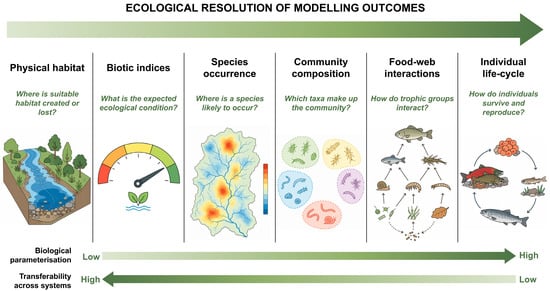
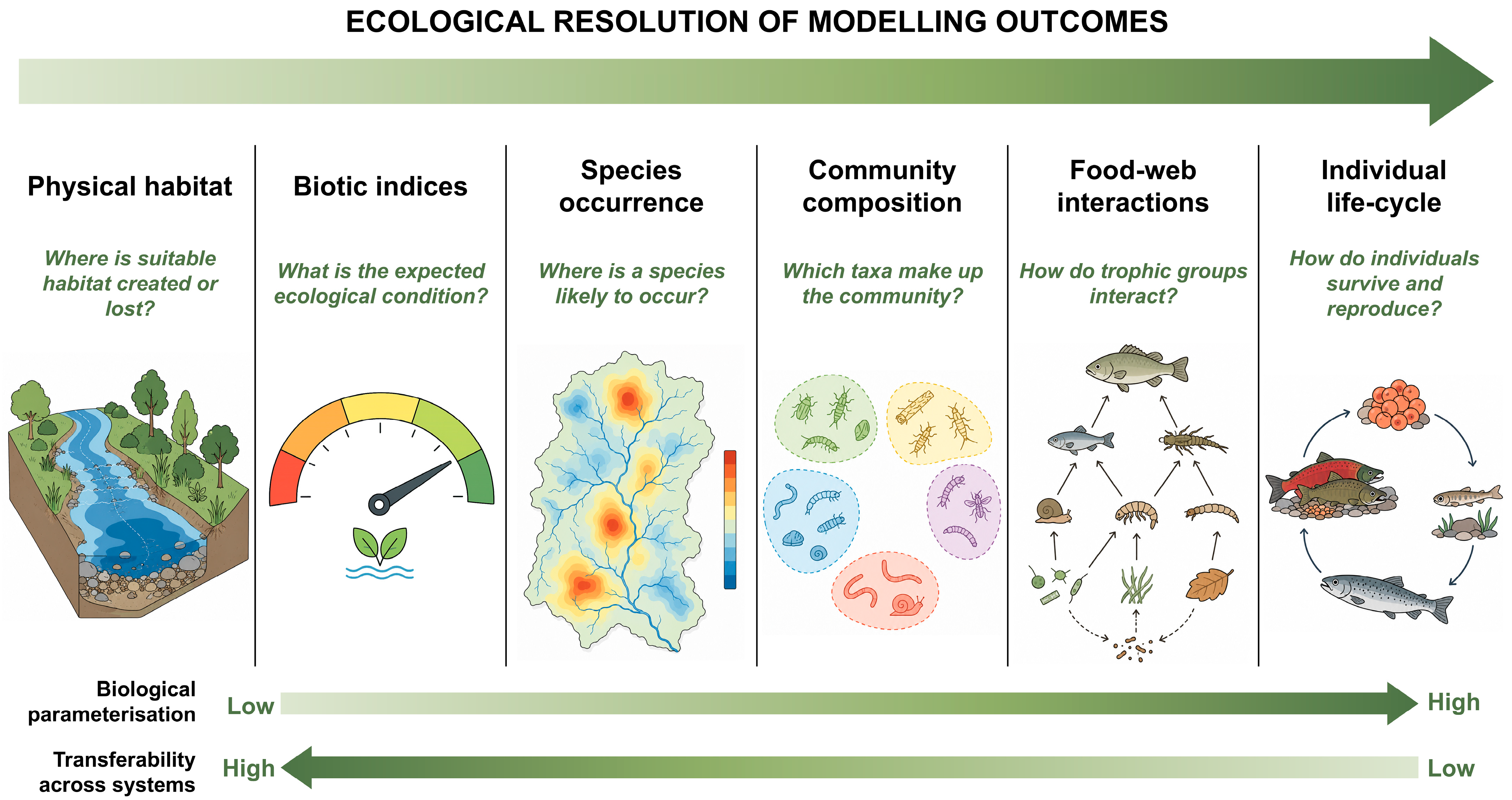
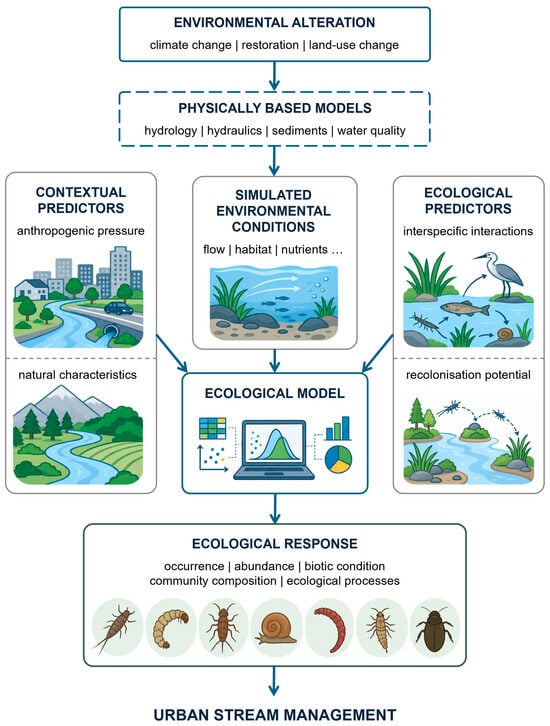
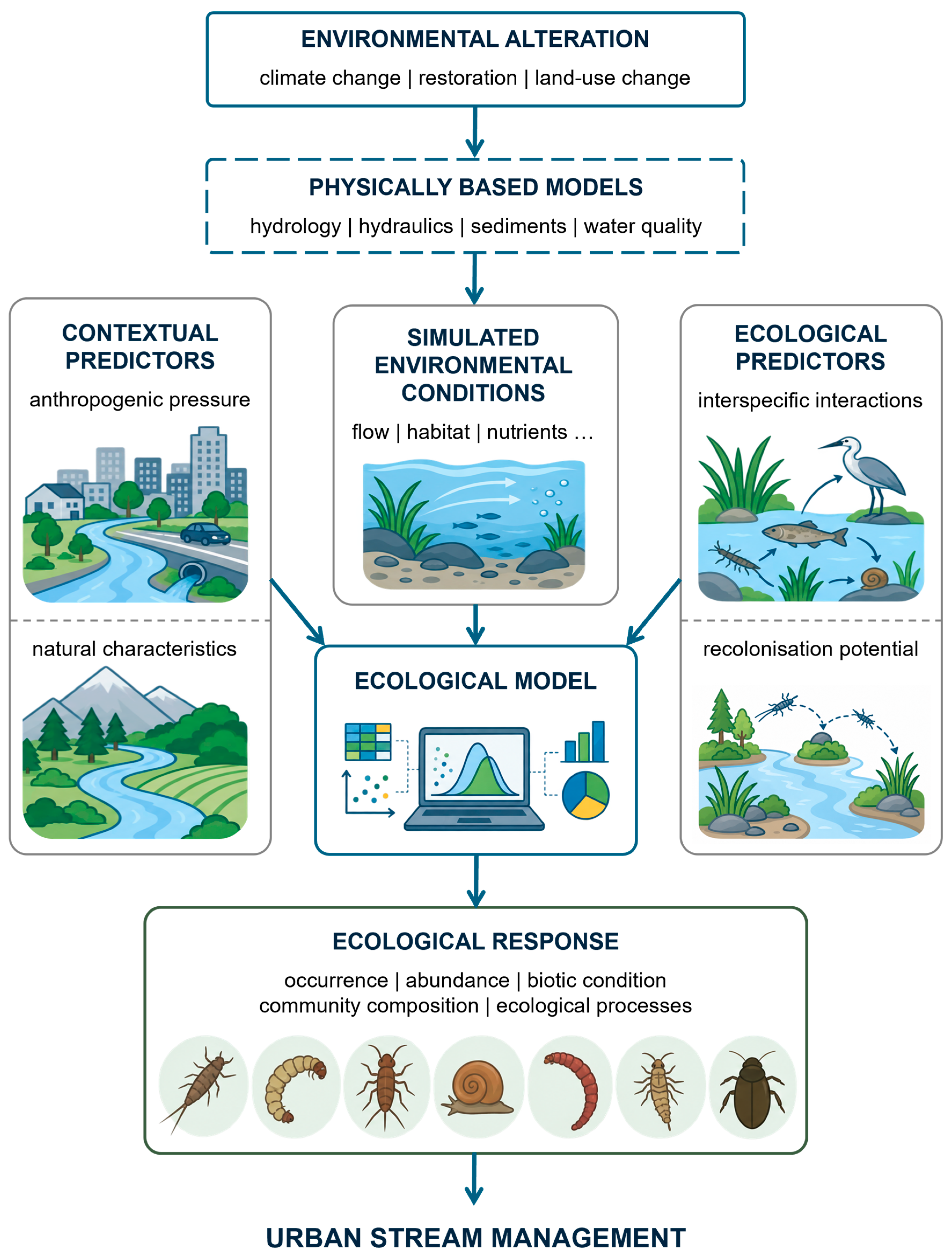

Disclaimer/Publisher’s Note: The statements, opinions and data contained in all publications are solely those of the individual author(s) and contributor(s) and not of MDPI and/or the editor(s). MDPI and/or the editor(s) disclaim responsibility for any injury to people or property resulting from any ideas, methods, instructions or products referred to in the content. |
© 2026 by the authors. Licensee MDPI, Basel, Switzerland. This article is an open access article distributed under the terms and conditions of the Creative Commons Attribution (CC BY) license.