


Abstract
Financialisation has an increasing influence on the functioning of non-financial enterprises. It is therefore important to examine whether and to what extent food sector enterprises are subject to the process of financialisation. The research objective was to determine the level of financialisation of food industry enterprises in Poland in relation to the whole industry sector. To achieve this objective, the following research hypothesis was formulated: the process of financialisation of food industry enterprises proceeds similarly to the analogous process undergoing in industrial enterprises but varies across different sectors of the food industry. The research was conducted on the basis of statistical data from Statistics Poland (SP) published in various statistical studies. Financial data from 2010 to 2023 were analysed. For this purpose, research tools used in the paper are referred to in the literature as measures of the level of financialisation, so-called balance sheet indicators. The main limitation of the research is that the results can only be applied to countries with similar economic conditions, especially post-communist countries, and that balance sheet indicators are used to measure financialisation, which, although widely used, are limited in their effectiveness because they focus only on balance sheet data. The results support the research hypothesis. The companies in the analysed industries are characterised by a low level of financialisation. The process of financialisation of food industry companies is similar to the one in industrial companies and is more intense in beverage production than in other food industry sectors. There is room for a sustainable financing policy. The results indicate that there is room for higher financing of food industry enterprises in Poland, but excessive financing may lead to excessive concentration and monopolisation of enterprises and even to speculation on agricultural markets. To maintain financial stability, it will be important to pursue a stable monetary policy, limit the risk of food price volatility, improve communication and coordination in international monetary policy, and increase national food self-sufficiency. This study fills a research gap in understanding the process of financialisation, assessing its degree of advancement and diversity in the main sectors of food processing enterprises.
1. Introduction
In the era of advancing globalisation, the financial sector is playing an increasingly important role in the global economy, as evidenced by the growing importance of financial markets and the detachment of their foundations from the real economy [1]. Looking through the prism of economic activity, there has been a decline in the sphere of material production in favour of the financial sphere, which leads to greater dependence of the financial condition of enterprises on the situation in the financial markets. The growing importance of financial incentives, entities, markets, and institutions is also observed in the functioning of the food sector. This situation relates to many phenomena: speculation in the food sector market, financing of the sector, the influence of financial entities on the organisation of value chains, etc. This phenomenon has been termed financialisation, and its role in the economy is justified by numerous studies covering many important topics. Ref. [2] points to the complexity of the concept of financialisation, which, they argue, stems from the existence of many different approaches that have led to divergent claims about the nature of financialisation, resulting from the perception of financialisation as a single specific phenomenon: the growing power of financial interests over politics, the growing dominance of financial logic or “shareholder value,” changes in the spatial organisation of the global economy, the reconfiguration of society and the class system, or the mutation of culture and the way we relate to ourselves. They believe that these are not mutually exclusive and that only together do they provide a complete picture of the situation. They propose that definitions of financialisation cover this issue broadly and be based on specific principles, i.e., they should be as follows: (1) restrictive, clearly indicating what financialisation is and what is not; (2) mechanism-oriented, explaining the cause-and-effect relationship; and (3) contextual, clearly defining the contexts in which they declare their validity. Meanwhile, some of the research focuses on theoretical issues related to clarifying the definition of financialisation, determining the type of phenomenon, or its stage of development [3,4,5,6,7,8,9,10]. Some researchers focus their attention on more empirical issues, attempting to measure the nature and extent of financialisation, determine its impact on important phenomena such as financial crises, productive investment, productivity growth, wages, and income distribution [10,11,12,13,14,15,16]. Much of the research focuses on policy and structural changes [3,17]. The literature indicates that there are many questions surrounding “financialisation,” meaning that it remains an important area of both theoretical and empirical research. Empirical research shows that activity in financial markets is growing faster than real activity; financial profits account for a larger share of total profits, and households and the non-financial sector are incurring significantly more debt [18,19]. This indicates that capital markets and banks, which also affect the food industry, are of particular importance in financing the economy.
It is therefore important to examine whether and to what extent food sector companies are subject to the process of financialisation. From this perspective, it seems reasonable to ask whether the degree of financialisation of individual sectors of the food industry is uniform and similar to that of the industry.
The aim of the study was to assess the level of financialisation of food industry companies in Poland in comparison with the industry. To achieve this aim, the following research hypothesis was formulated: the process of financialisation of food industry companies proceeds in a similar manner to the analogous process in industrial companies but varies across different sectors of the food industry. The Polish food industry comprises three main subsectors: food production, tobacco production, and beverage production. Each sector has its own specific characteristics, and the same is true for the subsectors. They differ in terms of average employment levels, production value, concentration levels, scale of operations, distribution channels, access, and specific characteristics of debt and equity financing, which also translates into differences in the financing of the subsectors. The analyses, therefore, expect differences in the level of financing of individual subsectors. Research by Keenan et al. [20] points to the key role of financialisation in transforming the global food system. They argue that financialisation is more intense in sectors that are more susceptible to mergers and acquisitions and indicate that most transactions of this type are horizontal (within the same sub-sector) and domestic (within the same country). They point out that the scale of activity within each sub-sector varies greatly, with some sub-sectors (e.g., food and beverage production) experiencing more intense mergers and acquisitions than others (e.g., fertilisers, machinery). It is therefore expected that in more concentrated companies, in large ones (beverage and tobacco products sector), financialisation processes will occur more intensively, as indicated by the research of Szczepankowski, who proves that the level of financialisation of the industrial enterprise sector in Poland is more intense in large enterprises with a higher degree of concentration and is low compared to highly developed or developing economies. This study focuses on one specific aspect, i.e., the financing of the food sector by financial entities, which manifests itself, among other things, in the incurring of debt and a growing interest in financial assets.
Financialisation is understood here as the replacement of tangible assets with financial assets, an increase in the level of debt, mainly loans and debt securities in the value of liabilities, and the focus of economic entities on generating profits from non-operating activities. It seems reasonable to address this issue, given that one of the topics that has not yet been thoroughly analysed is the degree of financialisation of Polish food sector enterprises. There are many studies in the literature on the financialisation of enterprises that attempt to compare the economies of individual developing countries [21] and emerging economies, including Poland [22,23,24]. There are also many studies on non-financial sector companies that also concern the impact of financialisation on capital accumulation [25], the impact on business activity, differences in financialisation between large enterprises and SMEs, and the impact on individual sectors [24,25,26,27,28]. Numerous studies are being conducted on the effects of financialisation in the agri-food sector, its impact on prices, and the behaviour of companies [29,30,31,32]. In the literature on the subject, we do not find studies that analyse and compare the level of financialisation in food processing companies broken down by major subsectors against industrial companies in post-communist countries. Achieving the goal will fill a research gap in the analysed area and may contribute to broadening and deepening the discussion on various aspects of this phenomenon, which also affects food industry enterprises.
The article consists of seven parts. The introduction presents the rationale for choosing the research problem, objective, and hypothesis. The second part covers a review of the literature on financialisation and its impact on the activities of non-financial enterprises, including in particular the effects of financialisation in the food sector. The third part is a description of the food sector in Poland. The fourth part concerns the research methodology and describes the indicators used to conduct the research. The fifth part presents the research results. The sixth part is a discussion that compares the results of the research with the results of other researchers. The seventh part includes a summary and conclusions from the research, the contribution of this research to science, and the limitations associated with the adopted research methodology.
2. Financialisation of Enterprises—Literature Review
Alongside investment decisions, financing the economic activities of enterprises is a key element of corporate capital management. The search for an optimal capital structure supports the achievement of the main long-term goal of corporate management, which is to maximise its value [33]. Today, to a much greater extent than a few decades ago, companies finance their current and investment projects from external funds obtained on the financial market. This is closely related to changing trends in the modern economy (globalisation, free movement of capital, ease of obtaining information, growing importance of institutional investors) and the emergence of innovative sources of financing (development of capital markets). The greater-than-ever exposure of companies to the financial market, particularly in its debt segment, means that the financial condition of these entities is increasingly dependent on current conditions in the financial markets [34]. The consequence of this is a change in revenue, which is associated with a growing share of revenue from financial activities rather than from traditionally understood operating and investment activities [35,36]. Moreover, companies are increasingly using debt to finance asset purchases, which in turn become collateral for additional debt incurred to purchase further assets. This leads to an increase in risk both at the company level and across the economy. This strategy is accompanied by an increase in the indebtedness of economic entities, which is often the result of a relaxation of requirements for borrowers in the calculation of credit risk by financial institutions [37]. According to Hudson [38], this systematic increase in debt is one of the sources of so-called financialisation, which increases even, or especially, when the economy slows down, and companies and people earn low incomes. Financialisation is a process of economic transformation that affects the nature and size of the financing gap. On the one hand, it can increase the availability of instruments and create new opportunities, but on the other hand, it can exacerbate problems with access to financing, especially for small entities or projects that do not meet the criteria for generating quick profits. The Fi-Compass report [39] estimates the financing gap for the agri-food sector in Poland at EUR 84 million, mainly affecting small businesses and, in terms of loan products, long-term loans. Access to financing is limited for enterprises due to a lack of adequate collateral, insufficient management and planning skills, and a general reluctance of entrepreneurs to take risks in relation to external financing. On the supply side, it has been observed that lending conditions are not favourable due to the sector’s high exposure to risk. In addition, banks consider that assessing creditworthiness for the agri-food sector is more complex than for other businesses. A review of the literature on the subject indicates that financialisation is a complex concept. This complexity stems from the fact that it can be analysed at the macro and micro levels and, depending on the economic scale to which it refers, takes on different meanings. At the macroeconomic level, the definition of financialisation refers to the growing influence of the financial sector, financial activities, and financial instruments on the functioning of modern economies and social life [5,36] and thus the increase in the share of revenues from financial services or the derivatives market in a country’s GDP. It can also be defined as the continuous growth of the economic and political power of new elites associated with finance, which is linked to the idea of inequality and the capture of financial and economic rents [4]. Financialisation can also be defined as the accumulation of capital derived more from financial flows than from trade or traditional production [4], which means the growing importance of finance in non-financial enterprises and the deep involvement of financial enterprises in financial markets [25]. This approach points to an increase in the activity of financial entities in the process of creating added value not only at the macro level (economies) but also at the micro level (enterprises). Therefore, from a micro perspective, financialisation refers to the growing role of investment funds and financial instruments in the production process itself and is associated with the growing importance of financial activities in the core business of these economic entities. A hallmark of the financialisation process is the separation of the process of value acquisition from the process of value creation, which has been made possible by the proliferation of a range of innovative financial instruments and securities that are often only loosely linked to the underlying assets [40]. Financialisation of non-financial enterprises understood in this way poses certain risks to enterprises and their stakeholders (customers, business partners, lenders, etc.). The negative aspects of the financialisation process for entrepreneurs may mean an increase in overall business risk caused by financial risk, an increase in debt, or a reduction in investment in non-financial assets [41,42,43]. For the purposes of this study, the authors assumed that the financialisation of a company is a long-term process characterised by an increase in the share of the financial sector in financing the development of its activities, which manifests itself in the replacement of tangible assets with financial assets, an increase in the level of debt, mainly loans and debt securities in the value of liabilities, and the focus of economic entities on generating profits from non-operating activities.
Financialisation in the Food Sector and Its Consequences
The link between finance and food is nothing new. Financial entities have long been associated with the agricultural and food industry, mainly through the development of stock exchanges and futures markets [44], and their activities have intensified in recent decades. This is pointed out by Clapp [29], who notes that investors are increasingly willing to engage in entire agricultural value chains, from production to retail, which influences the shaping and transformation of the agri-food system [45]. This has implications for the food security of countries and the ability of their food systems to provide livelihoods and achieve long-term sustainability, especially in the context of the climate crisis. Recently, particularly since the global crisis of 2007–2008, academic attention has focused on exploring the new and diverse ways in which financial actors are transforming the food system through processes of financialisation [46,47,48]. Food sector entities are therefore active participants in the financial market, and the range of financial instruments and forms of participation is wide and depends on the current needs of a given entity.
In agriculture, the process of financialisation can take three forms, among others: investment in agricultural land, investment in commodities and raw materials, including agricultural raw materials, and an increase in debt levels [49]. Companies from the broadly understood food sector may behave similarly on the market, and the instruments through which the financial sector directly influences the food industry include loans and credits (the loan is governed by the Banking Law Act of 29 August 1997, Article 69(1) (Journal of Laws of 2021, item 2439, as amended) and the Civil Code, Article 720(1) (Act of 23 April 1964—Civil Code (Journal of Laws of 2020, item 1740, as amended)). A credit may only be granted by a bank, in cash, and only for a strictly defined purpose. A loan may be granted by an entity other than a bank and does not have to have a specific purpose or be in cash, factoring, guarantees, letters of credit, or stock trading on the stock exchange. It follows that the financialisation of the food and agriculture sector can be viewed in three different ways: through a significant increase in the sale and purchase of financial products related to food commodities, such as derivatives based on commodity futures contracts; through the transformation of agricultural cultural resources, mainly land, into a new class of financial assets; and through participation in the banking turnover of funds intended for investment.
An interesting issue seems to be the consideration of financialisation from the perspective of entrepreneurs’ intensive search for additional capital, primarily external capital, where banks and other financial institutions play a major role. As noted by Szczepankowski [24], as the economy has developed financially, access to capital markets has become easier, and their importance in financing economic entities has increased, using traditional credit instruments as well as more complex forms of securitisation and the spread of financial innovations, especially derivatives. This is important because the demand for external capital is growing in food industry enterprises. This is explained, among other things, by the two-factor Cobb–Douglas production function, whose explanatory variables are capital and labour inputs expressed in value terms. A statistical analysis of the structure of expenditure in the domestic food industry has shown that capital plays a dominant role, with total expenditure in the long term being on average seven times greater than labour expenditure. The marginal productivity of capital is significantly higher than that of labour [50]. As a result, the technical equipment of labour is systematically increasing, labour is being substituted by capital, and labour-intensive technologies are being replaced by capital-intensive ones. Large capital expenditure requires large investment expenditure, which in turn requires adequate financing. Food industry entities are active participants in the financial market and use a wide range of financial instruments [51].
However, creating new areas of capital accumulation through the development of new financial investment tools linked to agriculture and food requires greater caution, as these sectors are particularly sensitive to various types of crises (climate change, disease threats, international conflicts, changing consumer preferences), which lead to disruptions between and within these sectors. On the other hand, the development of these sectors and food security is not possible without investment in new technologies, biotechnology, sustainable production methods, as well as logistics and distribution infrastructure. Research [46] indicates that financialisation in the food system in recent years has complicated agri-food markets and contributed to an increase in the role of investors in the food system, who profit from all links in the chain and have encouraged greater detachment of the commodity from its original form.
Financialisation can increase market concentration, negatively affecting small farmers and food security. For example, a study [52] showed that financialisation can exacerbate the phenomenon of land expropriation, whereby large investors acquire land in developing countries for agricultural purposes. This can lead to the displacement of small farmers and negatively affect their livelihoods, which in turn can contribute to food insecurity. Excessive concentration can contribute to financial instability, which hinders long-term and stable investment. It is worth noting that financialisation influences business behaviour, for example, by motivating companies to engage in mergers and acquisitions to generate value for shareholders. There is therefore an indirect link between increasing financialisation and increasing concentration in the food value chain. Some of the effects of increasing concentration in the food system include threats to the livelihoods of small farmers, environmental quality, food security, and sustainable business development. The effects of increasing financialisation are also evident in the area of ownership and management, especially in the case of large companies. Increasingly, the owners of property rights to enterprises are institutional owners from the financial sector who are not interested in the sustainable growth of the entity, which will only bring stable profits in the future, but in large profits achieved in the short term.
On the other hand, the pursuit of profits comes at the expense of investment in product development, workplace safety, environmentally sustainable practices, and other activities that contribute to broader social welfare and the long-term profitability of agri-food businesses [53]. Financialisation can therefore also benefit food security by increasing investment in agricultural production. This can help to increase food supply and improve food security, as shown by [29]. In contrast, a study by [54] shows that, on the one hand, financialisation has a positive effect on agricultural prices, but on the other hand, it can increase volatility, which can have a negative impact on food security. It is worth noting that improving food security is a key element of sustainable development (UN Sustainable Development Goal 2) and translates into health, human and community well-being, economic stability, and environmental protection.
To sum up the above considerations, financialisation causes changes in the agri-food sector that are not always positive, especially when financial transactions become a source of prosperity for the elite rather than work and the production of goods. Furthermore, excessive growth of the financial sector in the food system may jeopardise the achievement of the European Community’s priority objectives, such as sustainable development, prosperity, democracy, and human rights [55]. Achieving these goals is a significant challenge for financial markets. From a sustainable development perspective, it requires the financial sector to not only be guided by economic cost and benefit calculations but also to take into account social and corporate governance (ESG) aspects. On 10 March 2021, EU regulations on the disclosure of information related to sustainable development in the financial services sector came into force. Under the SFDR [56], financial institutions must declare the extent to which their products affect sustainability risks, which may motivate companies seeking financing to take action towards sustainable development (providing investors with information on ESG activities). Furthermore, the financial sector will be forced to direct capital towards investments that support pro-environmental innovation and are geared towards the needs of employees, communities, and the natural environment, which is crucial for long-term sustainability. Sustainable finance, therefore, has a key role to play in supporting the achievement of the European Green Deal policy objectives, as well as the EU’s international commitments on climate and sustainable development goals.
3. Characteristics of the Food Industry in Poland
The agri-food industry in Poland is one of the most important sectors of the economy, with the food industry playing a key role in this regard, as it is the main channel for the processing of domestic and imported agricultural raw materials and the distribution of food products. The economic and social importance of the food industry is confirmed by its share in global production and total industrial employment, which in 2023 amounted to 6.2% and 14.5%, respectively. The food industry also determines the systematic growth of the positive balance of foreign trade in agri-food products, although the balance of foreign trade in agricultural raw materials is negative [57]. The food industry in Poland comprises approximately 5000 industrial enterprises, of which only about 6.0% are large entities. Food industry enterprises are mainly located in smaller towns and therefore have a positive impact on the development of rural areas. The Polish food industry includes companies involved in the production of food, beverages, and tobacco products and is an important industrial processing sector, as evidenced by its share in GDP, global production, and employment. The food sector is also a major employer in industrial processing (approx. 17% of employees). The value of global production in the food sector in 2023 accounted for just over 6.5% of domestic production, and its share in GDP measured by gross value added in 2023 was 3.1%. These data indicate that the share of the food sector in global production was 8.3 percentage points lower than in employment, which may indicate a difference in labour productivity between the food sector and industry. A long-term analysis of this phenomenon shows the significant contribution of the food industry to the development of the national economy.
According to data from the SP, the nominal level of investment expenditure in the food industry in 2010–2023 increased almost 2.5 times from PLN 6.7 billion to PLN 16.1 billion, which accounted for 9.7% and 10.1% of the total industry investment, respectively. The largest investments in the food sector in 2023 concerned the purchase of machinery, technical equipment, and tools (66.3%), while the smallest investments concerned the purchase of means of transport (5.8%). Along with the increase in investments, the scale of debt of food industry entities also increased, but its share in the industry’s debt decreased from 13.9% in 2010 to 10.6% in 2023. The debt of the food industry in 2023 was almost twice as high in nominal terms as in 2010, amounting to PLN 98 billion, with loans and borrowings alone increasing by approx. 82% (nominal increase from PLN 18.7 billion to PLN 33.9 billion), but their share in the total debt of the food sector decreased by 2.5 percentage points. Considering the increase in the sector’s debt, it can be estimated that bank loans covered approximately 35–47% of its investment expenditure during this period. Such a high scale and rate of credit debt growth raise certain concerns from the point of view of companies’ financial security and may indicate a high degree of their financing.
4. Research Methodology
The study of the financing of individual sectors of the food industry, i.e., food, beverage, and tobacco manufacturers, was conducted against the backdrop of the entire industry, which includes mining and quarrying, manufacturing, and electricity, gas, and water supply. The analysis was based on the method of examining cumulative balance sheet data published by the Central Statistical Office in a study entitled Balance sheet financial results of non-financial enterprises in 2010–2023. Due to the extensive research material and the significant heterogeneity of activities carried out in individual sectors of the national economy, construction, trade, transport, and agriculture were excluded from the analysis, which was limited to industry as a whole.
The time frame of the study covers the years 2010–2023, which corresponds to the most recent statistical data available. The information used concerns non-financial enterprises keeping accounting books and tax revenue and expense ledgers, with at least 10 employees. The sample of non-financial enterprises in individual years was diverse and included the results of over 16,000 industrial enterprises, including 2000 to 2700 entities from the food sector.
The analysis covered selected balance sheet items, in particular assets and liabilities, as well as companies’ revenues broken down into sales revenues and other operating and financial revenues. The balance sheet values are presented as at the end of the calendar year and refer to companies understood as single legal entities. These data were used to calculate indicators determining the level of financing of individual sectors of the food industry in Poland in relation to the industry as a whole. Due to the limited availability of data, the breakdown of companies by size was not taken into account, which could significantly differentiate the scale of financing in individual groups of entities (small, medium, and large).
The following measures were used to assess the degree of financing of the food industry sectors surveyed in relation to the entire industry in Poland:
- the share of tangible fixed assets and individual financial assets in total assets (%), with changes in these indicators reflecting the directions of companies’ investment policies;
- the dynamics of changes in the analysed asset categories, indicating the pace of progress in the financing process;
- the share of liabilities, in particular loans and debt securities, in total liabilities (%), indicating the degree of dependence of companies’ development on external sources of financing, especially funds obtained from institutions and financial markets;
- the share of sales revenue and other operating revenue, including financial revenue, in total operating revenue, enabling an assessment of the financialisation of income, although due to the lack of data on the structure of profits, the analysis was limited to the structure of revenue;
- the share of long-term and short-term liabilities in total operating revenue, allowing for an assessment of the importance of external capital in the business activities of entities in the examined divisions and sectors of the national economy.
Financialisation refers to the process of the growing role of finance in the economy and society, which means that when measuring it, indicators appropriate for studying the development of the financial sector should be used (e.g., financial sector assets and financial assets, % of GDP; value added created by the financial sector, % of total value added, etc.). However, in order to capture phenomena such as the increasing investment of non-financial companies in financial assets, the growing share of financial income in total household income, etc. [58], the appropriate measures are often supplemented with additional indicators that reflect these phenomena. These indicators are balance sheet-based (based on the results of company balance sheets) and are only applicable at the micro level. This approach allows for financialisation to be considered in both a broad and narrow sense. The indicators used in the micro dimension largely relate to the development of the financial sector, but they allow for a preliminary look at and measurement of financialisation. If we analyse it in a narrow sense, then it should be linked to the growing importance of financial activities in the activities of non-financial entities. A symptom of financialisation in the narrow sense is the increase/predominance of financial assets in total assets and financial income and expenses in the total sum of the relevant result categories. Balance sheet indicators are proxy measures for examining the degree of financialisation; they can be used to reflect changes in the structure of the balance sheet and results over time. In the context of financialisation (the dominance of financial markets over the real economy), they can be used to determine whether a company is more dependent on external financing (growing debt), whether it invests in financial assets (and not only in production), whether its results (revenue ratios) are strongly linked to financial markets, and whether the company’s decisions (e.g., share buybacks) have a greater impact on prices than its operational activities.
The analysis of selected categories of assets and liabilities, as well as the resulting revenue categories, enabled the achievement of the study’s objective, which was to determine the level of financing of entities in the food sector in Poland compared to the industry as a whole.
5. Research Results
The increase in the share of financial assets, along with a decrease in the share of tangible fixed assets in the total balance sheet, means an increase in the level of financialisation. The structure of selected types of assets in the analysed sectors is presented in Table 1. When analysing the data from this table, no long-term increase in the scale of the described phenomenon in the analysed sectors was observed. Some symptoms of financialisation could be observed in industrial enterprises, especially in 2010–2016, when there was a slow decline in the share of tangible fixed assets, accompanied by an increase in financial assets. In 2010, tangible fixed assets in industrial enterprises accounted for approximately 46% of the balance sheet total (Table 1), and in 2016 this share decreased by 1 p.p. In turn, financial assets increased by 2 p.p. At the same time, there was an increase in the share of long-term financial assets (from 11.6% to 15.0%), with a slightly lower share of short-term financial assets (from 9.5% to 8%, respectively), which may indicate an increase in the use of financial instruments in the operating activities of enterprises. In the following years of the analysis, a further decline in the share of tangible fixed assets in the industrial enterprise sector can be observed, accompanied by a slow decline in the share of financial assets. This situation may indicate a slowdown in investment activity (both new investments and modernisation and replacement investments) and a reduction in financial reserves, e.g., to cover losses or settle liabilities in order not to lose liquidity. This may be a precursor to a slowdown in the growth of Polish industrial enterprises in the future.
Table 1.
Structure of selected assets of industrial enterprises, including the food industry (%).
An analysis of the asset structure in food industry enterprises revealed significant irregularities in financial asset exposure (Table 1). Until 2015, the share of financial assets increased to approx. 17%, and since 2016, there has been a steady decline in the share of financial assets to 13% in 2023. The share of financial assets is also significantly lower (by an average of approx. 5–7 percentage points) than in the industry, which may indicate a significantly higher share of smaller companies (SMEs), which invest their funds in financial assets to a much lesser extent. There is also a decline in the share of long-term financial assets (from 8.8% in 2013 to 5.1% in 2023) in favour of an increase in short-term financial assets, which may indicate the accumulation of reserves for future activities. This situation may indicate a slowdown in the growth of food production companies, which is confirmed by systematic research into the economic and financial situation of these companies. However, certain symptoms of financialisation can be observed primarily in beverage manufacturing enterprises. This group has the highest and rapidly growing share of financial assets in total assets. It is higher than the average share of these assets in the total assets of all industrial companies surveyed. This phenomenon is mainly due to the high level of long-term financial assets, which remained at 21–34% until 2018, with a slow decline to around 14-16% in the last two years since 2019. However, it is worth noting that the share of short-term financial assets has been growing throughout the period, which may indicate the simultaneous accumulation of reserves for future operations. The high share of long-term financial assets may result from the dominance of financial investors in the ownership structure of market beverage producers, who have a significant influence on capital allocation decisions. This is indicated by the research of Szczepankowski [24], who notes that in entities with a large share of financial investors, the degree of financialisation is always greater. When analysing other sectors, i.e., the production of food and tobacco products, no clear symptoms of financialisation were observed, as evidenced by the significantly lower-than-average level of the ratio of financial assets to total assets for the entire sample.
An analysis of the dynamics of changes in the value of total assets of industrial enterprises in nominal terms revealed increases in these values, which could mean that these enterprises were investing in various asset groups. Two distinct periods of growth in the assets of industrial enterprises were recorded, namely 2012 and 2023 (Figure 1). Throughout the entire period under review, the growth rate of financial assets was higher than that of tangible fixed assets, which can be seen as a sign of an increase in the level of financing of industrial enterprises. The value of debt capital in relation to the total assets of the analysed industrial enterprises increased slightly from approx. 36% in 2010–2014 to approx. 40–42% in 2021–2023, which allowed for greater financial flexibility and increased the ability to respond quickly to investment needs. During this period, the rate of change in the value of long-term financial assets was lower than the rate of change in the value of short-term financial assets, which should be considered an optimal strategy for the allocation of financial surpluses and external capital, given their degree of liquidity at the time of reporting the need for additional financing for tangible investments.
Figure 1.
Dynamics of the nominal value of selected assets of industrial enterprises (2010 = 100). Source: own study based on [59], GUS. Balance sheet financial results of non-financial enterprises in 2010–2023. https://stat.gov.pl/obszary-tematyczne/podmioty-gospodarcze-wyniki-finansowe/przedsiebiorstwa-niefinansowe/bilansowe-wyniki-finansowe-przedsiebiorstw-niefinansowych-w-2023-r-,10,18.html (accessed on 14 March 2025).
In the analysed food industry branches, the dynamics of changes in the value of individual asset groups varied greatly. In food manufacturing companies, a relatively stable and sustained increase in tangible fixed assets can be observed throughout the analysed period, which may indicate a strengthening of production capacity but also less flexibility of companies in this sub-sector and an increase in fixed costs. It may also indicate that these companies are at a relatively early stage of development, investing in and modernising their machinery. However, given the declining growth rate of sales revenue and the relatively high level of debt compared to the industry as a whole, this phenomenon indicates increasingly weaker utilisation of assets in the management process. The largest changes were recorded in beverage manufacturing companies (Figure 2), where certain symptoms of their financing can be observed, manifested in faster growth of financial assets than tangible fixed assets. Increased financing allows for greater financial flexibility and increased investment opportunities but exposes companies to concentration risk and the associated potential for large losses, and it may also increase financial risk when the share of debt in the capital structure rises above what is considered safe. This situation may threaten the financial security of companies.
Figure 2.
Dynamics of the nominal value of selected assets of food industry companies by sector (2010 = 100). Source: own study based on [59], GUS. Balance sheet financial results of non-financial enterprises in 2010–2023. https://stat.gov.pl/obszary-tematyczne/podmioty-gospodarcze-wyniki-finansowe/przedsiebiorstwa-niefinansowe/bilansowe-wyniki-finansowe-przedsiebiorstw-niefinansowych-w-2023-r-,10,18.html (accessed on 14 March 2025).
The literature concerning the area of financialisation assumes that the higher the level of debt, the higher the level of financialisation in each group of enterprises. When analysing the situation in food industry enterprises in comparison with other industrial enterprises, it is difficult to give a clear answer. A comparison of the structure of financing sources for industrial enterprises, including those in the food industry, shows that only beverage and tobacco manufacturers showed certain signs of financialisation in the analysed period, but this phenomenon is not permanent. In the case of beverage production, the main source of financing in the analysed period (except for 2017 and 2018) was liabilities, which accounted for 40 to 80% of liabilities. However, these companies are seeing a continuing trend of declining overall debt, driven by a decreasing share of short- and long-term liabilities. The rate of decline in the share of short-term liabilities was significantly slower than that of long-term liabilities, which was influenced by the growing share of current liabilities. In recent years, there has also been a downward trend in the share of long-term loans and funds obtained through the issue of long-term debt securities. Periodically, there has been increased interest in loans and debt securities in the beverage production sector, but this does not indicate a permanent dependence of companies on financial markets and institutions. These situations can be interpreted as a reduction in the degree of dependence on financial markets and institutions in the analysed period.
In the production of tobacco products, the period from 2015 to 2020 stands out, during which the sector’s liabilities exceeded the value of equity and remained at 48–58%. In this sector, the visible upward trend in the share of liabilities in the structure of liabilities was mainly due to an increase in the share of short-term liabilities, which rose from around 30% to 58% between 2010 and 2018. This was mainly due to the growing share of current liabilities until 2016, with a relatively very low share of short-term loans. Since 2017, we have observed an increase in the share of short-term loans and a decrease in current liabilities, which may indicate an increase in the financing of current liabilities with working capital loans. This situation may indicate slow financing of tobacco product manufacturers.
In food production, the primary source of financing for their activities was equity capital, which accounted for between 50% and almost 56%. This is confirmed by research conducted by Bank Gospodarstwa Krajowego (BGK) [60], which shows that industrial processing companies finance their investments mainly from their own funds and subsidies, and only then from bank loans and credits.
In the case of industry, a slow increase in the share of liabilities was visible until 2022, with long-term liabilities growing until 2016 and in 2019–2020, and short-term liabilities from 2016 to 2022. In food production, there is a downward trend in the share of liabilities in liabilities. While financialisation can be observed in industry, there are no clear signs of this phenomenon in food production when using this indicator.
Indicators confirming the phenomenon of financialisation may also include indicators of the structure of financing sources, i.e., the share of loans and debt securities in total liabilities (Figure 3). In the industry, the share of total loans in total liabilities remained stable at around 14%, while the share of debt securities grew from 0.5% to 6.7% until 2017, and since 2018, there has been a sharp decline in its share to 1.3% of total liabilities. The process of financing sectors (especially beverage and tobacco production) mainly took place between 2010 and 2014, when the share of loans in liabilities increased significantly. In the tobacco industry, this phenomenon could still be observed in 2017–2018; however, these companies remained financially stable throughout the entire period under review. Among the sectors analysed, beverage producers were the most likely to use debt securities to cover their capital needs, followed to a lesser extent by food producers (Figure 4). However, these sources of financing were not a substitute for loans but became complementary external debt capital covering the growing financial needs of companies. It should be clearly emphasised, however, that the share of debt securities in liabilities is significantly lower than that of loans taken out at the same time. Looking at the financing of the analysed entities, it should be emphasised that this is a symptom of the financialisation of food sector companies, but these companies nevertheless maintain financial stability. Financialisation processes are much slower in companies where the final financial result depends on numerous external factors, including the sector’s high exposure to production risk or the high degree of fragmentation of the sector in terms of legal forms and company size (food production). According to Szczepankowski [24], large and medium-sized capital companies (especially joint-stock companies) are more interested in financing their activities with debt securities, as they have easier access to market capital products.
Figure 3.
Share of loans in corporate liabilities. Source: own study based on [59], Central Statistical Office. Balance sheet financial results of non-financial enterprises in 2010–2023. https://stat.gov.pl/obszary-tematyczne/podmioty-gospodarcze-wyniki-finansowe/przedsiebiorstwa-niefinansowe/bilansowe-wyniki-finansowe-przedsiebiorstw-niefinansowych-w-2023-r-,10,18.html (accessed on 14 March 2025).
Figure 4.
Share of debt securities in corporate liabilities. Source: own study based on [59], Central Statistical Office. Balance sheet financial results of non-financial enterprises in 2010–2023. https://stat.gov.pl/obszary-tematyczne/podmioty-gospodarcze-wyniki-finansowe/przedsiebiorstwa-niefinansowe/bilansowe-wyniki-finansowe-przedsiebiorstw-niefinansowych-w-2023-r-,10,18.html (accessed on 14 March 2025).
Revenue structure indicators show that there is no significant increase in the share of financial revenues among the surveyed economic entities (industrial companies, including food companies) (Table 2). Therefore, the sources of revenue in the analysed sectors did not change in the period under review. They are almost entirely based on the results of operating activities. Other operating and financial activities are insignificant. The similarity between industrial enterprises and food producers is confirmed by a high Spearman correlation coefficient (0.841). The increase in the index is noticeable among beverage and tobacco manufacturers, which have a different revenue structure compared to industry and food production, confirming the low degree of similarity between these two subsectors and industry (0.623 and 0.337, respectively) and food production (0.516 and 0.127). The dynamics of operating and financial revenues are variable. The highest increase in their value in the industry occurred in 2011, 2021, and 2022. This high growth rate of other operating and financial revenues was accompanied by an equally high increase in sales revenues. It can therefore be concluded that the growing share of enterprises in financial investments translates into income impulses, which may result from the allocation of resources mainly to long-term financial assets that generate steady additional income. A similar situation occurs in the production of beverages and tobacco products. The increase in other operating and financial revenues is accompanied by an increase in sales revenues, but the growth rate of sales revenues is lower than that of non-operating (including financial) revenues. This situation may be a symptom of the financialisation of the income of industrial enterprises, such as beverage and tobacco product manufacturers. It may also indicate financial difficulties in the companies’ operations, as in such cases, companies are more likely to try to generate their income from areas not related to their operating activities.
Table 2.
Structure of revenues of industrial enterprises (in %), including the food industry.
In the case of food production, 2014 saw a substitution of revenues—high growth in other operating and financial revenues was accompanied by a decline in sales revenues, which may indicate that these companies allocate their resources mainly to short-term financial assets, which does not translate into additional income and does not indicate the financialisation of revenues in this sector.
Debt capital plays an important role in business operations. Its acquisition contributes to the growth of a company’s scale of operations (increase in assets), which potentially increases sales revenue if overall efficiency does not decrease [61]. Due to the lower risk for creditors compared to the risk for business owners, the cost of debt capital is lower than the cost of equity capital. This is an important factor in optimising the capital structure, which should lead to the minimisation of the weighted average cost of capital. The Spearman correlation coefficient (0.695) indicates a similarity in the debt structure between industrial companies and beverage producers.
Measuring the share of liabilities (long-term and short-term) in the value of total operating revenue allows us to assess the importance of debt capital in the business activities of entities and industries (Table 3). In the analysed sectors, the highest average value of this indicator throughout the entire period under review was achieved by beverage manufacturers (39.85%), and it was slightly higher than the level of this indicator in the industry (34.5%). In the manufacture of tobacco products and foodstuffs, the average value of this indicator was 25.6%.
Table 3.
Financing of industrial enterprises’ production (in %), including the food industry.
An increase in the level of debt in the analysed period occurred in the industry as a whole and in beverage production, while decreases were recorded in the production of food and tobacco products. The highest level of debt throughout the entire period under review was recorded by companies producing beverages and tobacco products. Food producers had a significantly higher level of debt than the average for the entire industry.
6. Discussion
Research conducted from the perspective of assessing the level of financialisation of food industry enterprises in Poland against the background of the entire industry allows us to express an opinion on the course of this process and its diversity in individual sectors of the food industry, and to compare it with a similar process in industrial enterprises. The analysis shows that, in industrial enterprises and the food industry in the analysed period, there were some short-term manifestations of financialisation.
The analysis showed that the level of financialisation in the analysed sectors of the food industry in Poland is low and varied but higher than in the industry as a whole. This is confirmed by the research of Chmiel and Pitera [62], which indicates that financialisation in Poland is not a process with a strong influence on enterprises, and the scale of the processes taking place within its framework is still low. This level is so low that it may still increase in the coming decades. This phenomenon is characteristic of the so-called post-communist countries of Central and Central-Eastern Europe. This is also confirmed by the literature studies of Rudny [63], who points to the strong concentration of ownership and consequently the insignificant share of short-term institutional investors in company assets as the reason for this phenomenon. This is also pointed out by Gumuła [64], who states that in 2006, financial assets in Poland exceeded 100% of GDP, and in 2019, they were at around 130%. In contrast, in the EU in 2019, this figure was as high as 466% of GDP. Thus, a relative balance between the financial and real sectors continues to exist in Poland, while in the OECD, for example, there is a great imbalance, with financial assets exceeding six times the total GDP of the member countries.
An analysis of the share of financial assets in total assets indicates a periodic increase in the importance of financial assets in corporate assets, especially in large enterprises. According to Orhangazi [31], the increase in the share of financial assets is one of the manifestations of the financialisation of investment assets, which, according to Davis [65], in the case of an increase in the share of financial revenues, leads to an increase in the interest of non-financial companies in financial investments. However, research conducted on companies in the food sector indicates that the increase in financial assets in industrial companies and in beverage production did not translate into an increase in financial revenues. These companies increased their financial investments, but there are no clear indications that their goal was to achieve quick profits. Industrial processing companies and beverage manufacturers undergoing financialisation pursued a balanced financing policy, which manifested itself in the allocation of financial surpluses and external capital to both long-term and short-term financial assets. In recent years (2021–2023), these companies have seen an increase in the share of financial assets, which may be due to the increase in the number of hedging instruments related to the effects of the COVID-19 pandemic. The results observed in the analysis are consistent with those obtained by Rydzewska [27] and Rabinovich [66,67]. They indicate that non-financial companies in both Poland and the United States, in order to maximise shareholder value (ROE), focus on activities such as mergers and acquisitions. According to Crotty [68], the growing importance of various forms of debt as a source of corporate financing is a manifestation of the financialisation of liabilities. By increasing their debt capital, companies can increase their return on equity (ROE) as a measure of shareholder value [69].
The analysis of the financialisation of liabilities indicated a downward trend in the share of passive financial instruments in the total value of liabilities. This analysis revealed certain periodic symptoms of financialisation among beverage and tobacco product manufacturers, but this trend is not permanent, which may indicate a relatively low degree of capital financialisation. Companies mainly used loans, especially short-term ones, to finance their activities, and to a lesser extent, debt securities. This is indicated by the studies of Kubiak and Stereńczak [70], which show that the financing of Polish companies is largely based on short-term capital, the relatively high level of which leads to increased business risk. Research by Gumuła [71] points out that the foundation of the financial system in Poland is banks, not financial markets. He indicates that companies are characterised by low bank debt, which results from their greater tendency to finance investments with their own funds rather than external financing. However, he adds that the share of external financing by banks is significantly higher than that provided by non-bank financial institutions and financial markets. In the latter case, this mainly involves leasing, with significantly fewer long-term bond issues and marginal involvement of private equity. The results obtained also confirm the research of Szczepankowski [24], who states that large and medium-sized capital companies (especially joint-stock companies) are more interested in financing their activities with debt securities, which results from their easier access to market capital products. Meanwhile, in Poland, there are only nineteen listed companies, including four beverage producers.
The increase in the share of revenues in the subject literature is considered one of the symptoms of financialisation. The analysis did not show a significant upward trend in corporate revenues and eliminated the influence of the leverage effect on their growth. It also pointed out that the effects of enterprise activities are mainly a reflection of the operating activities of enterprises. The research conducted indicated that industrial and food sector companies did not report a significant upward trend in revenues. The results obtained are consistent with the research of Chmiel and Pitera [62], who conducted an analysis of companies in the Visegrad Group countries (Poland, the Czech Republic, Slovakia, and Hungary), where no increase in revenue was recorded in active (operating) companies. They are also consistent with the research of Socha and Urban, who, based on an analysis of companies listed on the Warsaw Stock Exchange, indicated that these companies showed no signs of financialisation of their operating activities, and their financial activities had no significant impact on the results generated [72]. The results obtained also confirm Rydzewska’s research [27] showed that the performance of non-financial companies in Poland is independent of financial leverage but shows a strong correlation with return on assets (ROA) and is determined by the operating results of companies. The results achieved by Polish industrial and food companies are not confirmed by the shareholder perspective concept, which is related to decisions aimed at rapid growth in the market value of assets [73,74,75].
Taking into account individual sectors, this diverse and low level of financialisation of the analysed entities in Poland can be explained as follows:
Firstly, food processing companies are characterised by high fragmentation and low concentration. This is indicated by research by Szczepaniak [57], who notes that the food industry is one of the industries characterised by high dispersion and low concentration. This is mainly due to the lower level of technical development of this sector and the nature of the work, determined by the variability of the agricultural products processed. This is also noted by Karasiewicz and Trojanowski [76], who point out that over the last decade, Polish entrepreneurs in the food sector have not been particularly active in mergers and acquisitions. Between 2002 and 2023, the number of food producers decreased by 30%, which was determined by bankruptcy processes that resulted in the cessation of operations, as well as, to a lesser extent, the consolidation of smaller economic entities into larger enterprises [50].
Secondly, in Poland, most companies in the food industry are owned by domestic entities. According to Tereszczuk [77], food production is one of the sectors with the highest degree of control exercised by Polish companies. The literature also emphasises the relationship between the ownership structure of companies and the degree of financialisation of their economic activity. This is confirmed by studies by Morin [78] and Höpner [79], which indicate a strong and statistically significant correlation between the share of institutional investors in the ownership structure of companies and the propensity for financial accumulation and large-scale mergers and acquisitions. This is also emphasised by Rudny [63], who points out that the separation of ownership from management in large companies and strong pressure from shareholders on managers to ensure high rates of return on capital are factors stimulating the development of financialisation. This is particularly true for companies whose shareholders are investment funds.
Thirdly, market growth attracts investors in beverage production. The beverage market is developing dynamically, and investor interest in the beverage market is growing. This is confirmed by a recent report on this market [80], which indicates double-digit sales growth, attracting capital. Growing categories include bottled water, energy and sports drinks, and coffee- and tea-based products. On the other hand, consumer interest is declining in the juice, nectar, and still beverage segments. A stable or growing market share attracts investor interest, suggesting that the products resonate with consumers and generate stable sources of revenue, as highlighted by the authors of the report Market Share in Focus: Driving Trends and Business Success [81]. This slightly greater propensity of beverage manufacturers to seek financing may be due to increased investor interest in this market. Research by Alexiou et al. [82] indicates that investors influence the financialisation process and that this relationship is unidirectional. Better company performance attracts institutional investors. This is also confirmed by research by Fang et al. [83], which shows that investor attention contributes significantly to the financialisation of companies and is more pronounced among companies with less information uncertainty, large companies, companies in monopolistic industries, and companies in the high-tech industry.
Fourthly, trends in the food and beverage production market are changing. The non-alcoholic beverage market is worth nearly PLN 28 billion, which means that it has grown by 7% year-on-year in terms of value and 2% in terms of volume [80]. At the same time, its structure is changing—functional products that respond to health and convenience needs are playing an increasingly important role. Currently, the development of the sector is shaped not only by the market environment but also by new consumer trends resulting from the growing awareness of Poles in the field of healthy lifestyles. Changes in lifestyle, especially among Generation Z, are accelerating the transformation of the beverage market. Today’s consumers expect not only good taste but also functionality, transparent ingredients, and no alcohol content.
The considerations presented in the analysis concerning sectors and differences in subsectors indicate the complexity of the problem of assessing and interpreting the phenomenon of financialisation in enterprises, as pointed out by Faust and Kädler [84]. It is worth noting certain limitations in the interpretation of the results, as the analysis focused on a specific dimension of balance sheet financialisation at the company level, which prevented the use of advanced tools to assess the degree of financialisation.
Based on research by Yang and Chen [85], the reasons for the low level of financing of Polish enterprises can be found in the attitudes of entrepreneurs and the state of the market.
Research by Sahay et al. shows that the regional development index for Poland is 0.5, which means that the state of development of the financial sector in Poland is optimal, and the financial process itself is atypical compared to that of other countries. This is pointed out by Gumuła [64,71], who indicates its lower sophistication and the opposite direction of market and financial institution trends compared to other major economies in the world (increased share of banks compared to the share of financial markets in financing the economy). The dominant model of financing investments from own funds is cited as the reason for this phenomenon [86]. It is also emphasised that the untypical trends in financialisation in our region are due to the COVID-19 pandemic and the conflict in Ukraine, which have highlighted the adverse effects of financialisation [71]. Financialisation in the Polish food industry has its unique aspects, influenced by political transformation, EU integration, and a structure dominated by SMEs alongside the growth of large enterprises. This leads to a combination of traditional practices, significant foreign investment, and challenges associated with financing smaller enterprises. This fact is confirmed by research by Welsh and White [87], who point to differences in the way SMEs operate and their ability to raise capital from outside the company compared to large enterprises. This is also noted by Figura [88], who points out that differences in the shape of debt ratios between small, medium-sized, and large enterprises are inevitable due to differences in assets, management methods, bargaining power in the market, and access to sources of financing.
Economic transformation has enabled the creation of a modern financial system, but the Polish market still lags behind the financial markets of countries with mature market economies, which continues to create opportunities for the development of financial institutions and traditional products and services [27,89]. This situation means that Polish companies have a lower level of financing, as a higher degree of financialisation characterises models based on the dominance of financial markets [23]. However, this situation allows companies to achieve financial stability, which Davis’ research shows [90]. Stability in financial markets is necessary to ensure both domestic and global food security. This is confirmed by the results of research [91], which point out that loose monetary policy intensifies financialisation processes, which have a negative impact on food price volatility and food security. In the United States, since the 1950s, there has been an increase in the degree of dependence of economic entities on financial markets and institutions. A moderate level of financialisation promotes real economic growth, while both insufficient and excessive levels of financialisation have a negative impact on economic growth [92].
Despite economic growth, there is a significant financing gap, particularly for small and medium-sized enterprises, as many of them do not meet the requirements for credit. Although production is concentrated, it remains less concentrated than the EU average, creating space for diverse businesses.
Polish food sector companies were in good financial condition during the period under review, as confirmed by reports on the economic situation of companies, which indicate that, having achieved satisfactory results in terms of operating indicators, they were not interested in seeking additional profits by increasing their financial exposure. This phenomenon was also noticeable in other economies, as pointed out by Cupertino et al. [93] and Zhu [94].
The results obtained answer the research question, indicating that the process of financialisation of food industry enterprises is similar to that in the industry as a whole, with the level of financialisation being higher in enterprises with a higher degree of production concentration and a diversified capital structure, as evidenced by more pronounced changes in the assets, liabilities, and revenues of beverage producers.
The limitations associated with the study are primarily the possibility of using only a few tools, which are, however, common measures of financialisation used in empirical studies by many authors. The limitation of these tools is that they can only be used to analyse financial data. Future research directions include, above all, an attempt to assess the effectiveness of tools for measuring the level of financialisation, and research into new (more synthetic) measures for assessing the processes and degree of financialisation in the food sector.
Summary and Conclusions
The literature review, along with ongoing research, indicates that financialisation in the food industry should be broadly perceived as a set of various activities undertaken by entities to increase the share of income generated from financial operations or transactions in place of that generated from the production of goods and services. Research has shown that the level of financialisation of the analysed food industry companies in Poland is low and varies across different sectors but is higher than in the industry. It is so low that it is expected to increase in the coming years. This phenomenon is characteristic of countries classified as post-communist. The financialisation of the food sector was mainly evident in beverage production and manifested itself in the financing of assets, capital, and income. Among the factors that may have contributed to the process of financialisation in beverage production are the rapid growth of the industry, concentration of production, and a relatively high share of large companies in the overall industry. The independence of the Polish food industry is supported by several important factors, including the dominance of Polish capital in small and medium-sized food industry companies and the relatively high share of family businesses compared to corporations.
The results obtained indicate a balanced policy of conducting and financing activities, which, however, results from the immaturity of the food market in Poland (high fragmentation of enterprises, small scale of production), which continues to affect the low interest of investors in this sector and, consequently, limited access to innovative financial instruments. There is room for higher financing of food industry enterprises in Poland, but excessive financing may lead to excessive concentration and monopolisation of enterprises and even to speculation on agricultural markets. This impact can be mitigated by improving the self-sufficiency ratio.
Given that financialisation has both negative and positive consequences and is more significant in developing countries than in developed countries, it is recommended that developing countries strengthen the regulatory framework for agricultural futures markets, manage prices through the use of price-setting functions, and limit excessive speculative activity. Improving communication and coordination in international monetary policy will be important for maintaining a stable monetary policy and limiting the risk of food price volatility. It is also important to continuously increase national food self-sufficiency, which is a fundamental strategy for all countries, especially developing countries, to ensure food security and achieve financial stability. However, economic and financial results indicate the need for the food sector to adapt to changes related to new EU regulations (restrictions on food additives, contaminants, and packaging), introduce new technologies to increase productivity and sustainable development, and develop strategies to compete on quality in foreign markets. It will therefore be important to support investments from EU aid programmes and national funds. New investments aimed at developing the potential of the food industry will be particularly desirable, including in the area of high-quality food production and the creation of strong brands, which offer the possibility of greater added value and advancement within global supply chains. Measures related to the need to transition to sustainable, digitally advanced food production and consumption systems in line with the requirements of the European Green Deal will also be important. Such measures can strengthen the position of Polish companies without an excessive financial burden.
Author Contributions
Conceptualization, J.P.-T.; methodology, J.D.; software, J.D.; validation, J.D.; formal analysis, J.P.-T.; investigation, J.D.; resources, J.P.-T. and J.D.; data curation, J.D.; writing—original draft preparation, J.P.-T.; writing—review and editing, J.P.-T.; visualization, J.P.-T. and J.D.; supervision, J.P.-T.; project administration, J.P.-T.; funding acquisition, J.P.-T. All authors have read and agreed to the published version of the manuscript.
Funding
This research received no external funding.
Institutional Review Board Statement
Not applicable.
Informed Consent Statement
Not applicable.
Data Availability Statement
The original contributions presented in this study are included in the article. Further inquiries can be directed to the corresponding author.
Conflicts of Interest
The authors declare no conflict of interest.
References
- Remlein, M. (Ed.) Consolidated Financial Statements of Capital Groups. Examples and Tasks; Poznań University of Economics Press: Poznań, Poland, 2018. [Google Scholar]
- Madera, F.; Martens, D.; van der Zwan, N. Financialization: An Introduction. In The Routledge International Handbook of Financialization; Routledge: Oxfordshire, UK, 2020. [Google Scholar] [CrossRef] [Scilit]
- Krippner, G.R. The financialisation of the American economy. Socio-Econ. Rev. 2005, 3, 173–208. [Google Scholar] [CrossRef] [Scilit]
- Krippner, G. Capitalising on Crisis: The Political Origins of the Rise of Finance; Harvard University Press: Cambridge, MA, USA, 2012. [Google Scholar]
- Epstein, G. (Ed.) Introduction. In Financialisation and the World Economy; Edward Elgar Publishing: Northampton, UK, 2005. [Google Scholar]
- Palley, T.I. Financialisation: The Economics of Finance Capital Domination; Palgrave MacMillan: New York, NY, USA, 2013; p. 8. [Google Scholar]
- Hein, E. The Macroeconomics of Finance-Dominated Capitalism-and Its Crisis; Edward Elgar Publishing: Northampton, MA, USA, 2012. [Google Scholar]
- Sen, S. Dominant Finance and Stagnant Economies; Oxford University Press: New Delhi, India, 2014. [Google Scholar]
- Dumenil, G.; Levy, D. Costs and Benefits of Neo-liberalism: A Class Analysis. In Financialisation and the World Economy; Epstein, G., Ed.; Edward Elgar Publishing: Northampton, UK, 2005; pp. 46–76. [Google Scholar]
- Lapavitsas, C. Profiting Without Producing: How Finance Exploits Us All; Verso Books: London, UK, 2013. [Google Scholar]
- Epstein, G.; Montecino Juan, A. Banking from Financial Crisis to Dodd-Frank: Five Years on, How Much Has Changed? PERI Working Paper Series; Political Economy Research Institute: Amherst, MA, USA, 2015. [Google Scholar]
- de Souza, J.P.; Epstein, G. Sectoral Net Lending in Six Financial Centres; PERI Working Paper Series; Political Economy Research Institute: Amherst, MA, USA, 2014. [Google Scholar]
- Admati, A.; Hellwig, M. The Bankers’ New Clothes; Princeton University Press: Princeton, NJ, USA, 2013. [Google Scholar]
- Turner, A. Debt, Money and Mephistopheles: How Do We Get Out of This Mess? Occasional Paper; Group of Thirty: Washington, DC, USA, 2013. [Google Scholar]
- Minsky, H.P. The Financial Instability Hypothesis; Working Paper; The Jerome Levy Economics Institute of Bard College: Annandale-On-Hudson, NY, USA, 1992. [Google Scholar]
- Jarsulic, M. The Origin of the US Financial Crisis of 2007: How a House-Price Bubble, A Credit Bubble and Regulatory Failure Caused the Greatest Economic Disaster since the Great Depression. In The Handbook of The Political Economy of Financial Crises; Wolfson, M.H., Epstein, G.A., Eds.; Oxford University Press: New York, NY, USA, 2013; pp. 21–46. [Google Scholar]
- Vercelli, A. Financialisation in a Long-Run Perspective; An Evolutionary Approach. Int. J. Political Econ. 2013, 42, 19–46. [Google Scholar] [CrossRef] [Scilit]
- Stockhammer, E. Financialisation and the global economy. Political Econ. Res. Inst. Work. Pap. 2010, 240, 1–17. Available online: https://ideas.repec.org/p/uma/periwp/wp240.html (accessed on 29 December 2025).
- Manogna, R.L.; Mishra, A.K. Forecasting spot prices of agricultural commodities in India: Application of deep-learning models. Intell. Syst. Account. Financ. Manag. 2021, 28, 72–83. [Google Scholar] [CrossRef] [Scilit]
- Keenan, L.; Monteath, T.; Wójcik, D. Hungry for power: Financialization and the concentration of corporate control in the global food system. Geoforum 2023, 147, 103909. [Google Scholar] [CrossRef] [Scilit]
- Lapavitsas, C.; Powell, J. Financialisation varied: A comparative analysis of advanced economies. Camb. J. Reg. Econ. Soc. 2013, 6, 359–379. [Google Scholar] [CrossRef] [Scilit]
- Karwowski, E.; Stockhammer, E. Financialisation in emerging econnomies: A systematic overview and comparison with Anglo-Saxon economies. Econ. Political Stud. 2017, 5, 60–86. [Google Scholar] [CrossRef] [Scilit]
- Gołębiowski, G.; Szczepankowski, P. Finansyzacja gospodarki krajów Europy Środkowo-Wschodniej. Ruch Praw. Ekon. Społeczny 2015, 77, 197–215. [Google Scholar] [CrossRef] [Scilit]
- Szczepankowski, P. Financialisation of industrial enterprises in Poland. Q. J. Bus. Sci. 2016, 38, 31–47. Available online: https://econjournals.sgh.waw.pl/KNoP/article/view/1901 (accessed on 29 December 2025).
- Stockhammer, E. Financialisation and the slowdown of accumulation. Camb. J. Econ. 2004, 28, 719–741. [Google Scholar] [CrossRef] [Scilit]
- Szczepankowski, P. Financialisation of the non-financial corporations and enterprise value migration: Evidence from the polish stock market: 2000–2015. Stud. Pr. WNEiZ US 2017, 50, 155–172. [Google Scholar] [CrossRef] [Scilit]
- Rydzewska, A. Wpływ finsjalizacji na działalność gospodarczą przedsiębiorstw niefinansowych w Polsce. Ekon. Prawo 2023, 22, 4. [Google Scholar] [CrossRef] [Scilit]
- Socha, B.; Urban, D. The financialization of companies listed on the Warsaw Stock Exchange: The sector analysis. Ann. Univ. Mariae Curie-Skłodowska: Sect. H 2018, 52, 93–102. [Google Scholar] [CrossRef] [Scilit]
- Clapp, J.; Desmarais, A.A.; Marguils, M.E. FFS—Financialisation in the food system. Can. Food Stud. Rev. Can. études Sur L’alimentation 2015, 2, 256–257. [Google Scholar] [CrossRef] [Scilit]
- Kornher, L.; von Braun, J.; Algieri, B. Speculation risks in food commodity Markets in the Context of the 2022 Price Spikes—Implications for Policy. ZEF Policy Brief 2022, 40, 1–8. [Google Scholar] [CrossRef] [Scilit]
- Orhangazi, Ö. Financialisation and capital accumulation in the non-financial corporate sector: A theoretical and empirical investigation on the US economy: 1973–2003. Camb. J. Econ. 2008, 32, 863–886. [Google Scholar] [CrossRef] [Scilit]
- Burch, D.; Lawrence, G. Financialization in Agri-Food Supply Chains: Private Equity and the Transformation of the Retail Sector. Agric. Hum. Values 2013, 30, 247–258. [Google Scholar] [CrossRef] [Scilit]
- Szczepankowski, P. Ways of Financing the Development of Polish Firms. Economics. Mark. Econ. Soc. 2003, 11, 117–131. Available online: https://ekonomia.wne.uw.edu.pl/ekonomia/getFile/536 (accessed on 29 December 2025).
- Nawrot, W. Minsky’s Theory of Financial Crises and Its Impact on Contemporary Economics. Gospod. Nar. Pol. J. Econ. 2009, 235, 49–70. [Google Scholar] [CrossRef] [Scilit]
- Nölke, A.; Perry, J. The Power of Transnational Private Governance: Financialisation and the IASB. Bus. Politics 2007, 9, 1–25. [Google Scholar] [CrossRef] [Scilit]
- Ratajczak, M. Economic Growth and Financialisation. Stud. Oeconomica Posnaniensia 2017, 5, 23–37. Available online: https://bazekon.uek.krakow.pl/gospodarka/171481230 (accessed on 29 December 2025). [CrossRef] [Scilit]
- Dec, P. Business Demography: Quantitative Analysis of Bankruptcy in Poland and in the World. Econ. Bus. Organ. 2016, 1, 101–117. [Google Scholar]
- Hudson, M. Tech Bubble: Who Benefited? 30 August 2003. Available online: https://michael-hudson.com/2003/08/tech-bubble-who-benefited/ (accessed on 1 September 2025).
- Fi-Compas Report (EAFRD). Financial Needs in the Agriculture and Agri-Food Sectors in Poland; European Investment Bank: Luxembourg, 2020. [Google Scholar]
- Styhre, A. The Financialisation of the Firm. Managerial and Social Implications; Edward Elgar Publishing: Cheltenham, UK, 2015. [Google Scholar]
- Ratajczak, M. Financialisation of the Economy. Ekonomista 2012, 3, 281–301. Available online: https://ekonomista.pte.pl/pdf-155761-82589?filename=Finansyzacja%20gospodarki.pdf (accessed on 5 November 2025).
- Gostomski, E. Financialisation in the world economy. Int. Bus. Glob. Econ. 2014, 33, 299–311. [Google Scholar] [CrossRef]
- Stockhammer, E. Financialisation and the Global Economy. In The Political Economy of Financial Crises; Wolfson, M.H., Epstein, G.H., Eds.; Oxford University Press: New York, NY, USA, 2013; pp. 512–525. [Google Scholar]
- Clapp, J. Financialisation, distance and global food politics. J. Peasant. Stud. 2014, 41, 797–814. [Google Scholar] [CrossRef] [Scilit]
- McMichael, P. The land grab and corporate food regime restructuring. J. Peasant. Stud. 2012, 39, 681–701. [Google Scholar] [CrossRef] [Scilit]
- Clapp, J.; Isakson, S.R. Risky Returns: The Implications of Financialisation in the Food System. Dev. Change 2018, 49, 437–460. [Google Scholar] [CrossRef] [Scilit]
- Clapp, J.; Isakson, S.R. Speculative Harvests. Financialisation, Food, and Agriculture; Agrarian Change & Peasant Studies; Practical Action Publishing: Rugby, UK, 2018; Available online: https://practicalactionpublishing.com/book/2046/speculative-harvests (accessed on 7 November 2025).
- Burch, D.; Lawrence, G. Towards a third food regime: Behind the transformation. Agric. Hum. Values 2009, 26, 267–279. [Google Scholar] [CrossRef] [Scilit]
- Franc-Dąbrowska, J.; Bereżnicka, J. Financialisation of the economy vs. the scope and scale of agricultural farms. Res. Pap. Wrocław Univ. Econ. 2018, 533, 73–82. [Google Scholar] [CrossRef] [Scilit]
- Szajner, P.; Pawłowska-Tyszko, J.; Łopaciuk, W.; Kosior, K. Sustainable Concentration in the Polish Food Industry in the Context of the EU-MERCOSUR Trade Agreement. Sustainability 2025, 17, 5640. [Google Scholar] [CrossRef] [Scilit]
- Skrobiszewski, A. Financing of the Agri-Food Sector by the Banking Sector. Further Prospects for Financing in the Post-COVID-19 Era and the Situation of Armed Conflict in Ukraine; GreenLab Foundation: Warsaw, Poland, 2022; Available online: www.fgreenlab.org/wp-content/uploads/2022/07/Finansowanie-sektora-rolno-spozywczego_RAPORT_3.pdf (accessed on 28 August 2025).
- Cotula, L. The international political economy of the global land rush: A critical appraisal of trends, scale, geography and drivers. J. Peasant. Stud. 2012, 39, 649–680. [Google Scholar] [CrossRef] [Scilit]
- Cohn, J.B.; Wardlaw, M.I. Financing Constraints and Workplace Safety. J. Financ. 2016, 71, 2017–2058. [Google Scholar] [CrossRef] [Scilit]
- Hernandez, M.A.; Torero, M. Examining the Dynamic Relationship Between Spot and Future Prices of Agricultural Commodities. IFPRI Discussion Paper 988, June 2010. Available online: https://hdl.handle.net/10568/154364 (accessed on 10 November 2025).
- Księżyk, M. Sources and Economic Effects of Financial Crises. Social Inequalities and Economic Growth; University of Rzeszów Press: Rzeszów, Poland, 2013; Volume 30, p. 11. [Google Scholar]
- Regulation (EU) 2019/2088 of the European Parliament and of the Council of 27 November 2019 on Sustainability-Related Disclosures in the Financial Services Sector (Text with EEA Relevance), PE/87/2019/REV/1, OJ L 317, 9.12. 2019. Available online: https://eur-lex.europa.eu/legal-content/EN/TXT/?uri=CELEX%3A02019R2088-20240109&qid=1764638714385 (accessed on 29 December 2025).
- Szczepaniak, I. The Role of Small and Medium-Sized Enterprises (SMEs) in the Economy (on the Example of the Food Industry). Equilibrium. Q. J. Econ. Econ. Policy 2009, 2, 71–81. Available online: https://economic-policy.pl/index.php/eq/article/view/563/527 (accessed on 10 October 2025). [CrossRef] [Scilit]
- Fligstein, N.; Goldstein, A. The emergence of a finance culture in American households, 1989–2007. Socio-Econ. Rev. 2015, 13, 575–601. [Google Scholar] [CrossRef] [Scilit]
- Central Statistical Office. Balance Sheet Financial Results of NON-Financial Enterprises in 2010–2023. Available online: https://stat.gov.pl/obszary-tematyczne/podmioty-gospodarcze-wyniki-finansowe/przedsiebiorstwa-niefinansowe/bilansowe-wyniki-finansowe-przedsiebiorstw-niefinansowych-w-2023-r-,10,18.html (accessed on 14 March 2025).
- Bank Gospodarstwa Krajowego. Financing Companies from the Industrial Processing Sector Towards the Development of Industry 4.0; Research and Analysis Department, Bank Gospodarstwa Krajowego: Warsaw, Poland, 2021. [Google Scholar]
- Remlein, M. Financialisation and its effects in the financial statements of Polish listed companies in the fuel industry (Financialisation in the activity of Polish listed companies). Zesz. Teoretyczne Rachun. Theor. J. Account. 2015, 82, 129–139. Available online: https://ztr.skwp.pl/article/33529/en (accessed on 29 December 2025).
- Chmiel, J.; Pitera, R. Financialisation and financial problems of enterprises in the Visegrad Group countries. Soc. Inequalities Econ. Growth 2021, 68, 161–173. [Google Scholar] [CrossRef] [Scilit]
- Rudny, W. The Growing Importance of the Financial Sector in the Economy. Econ. Stud. Sci. J. Univ. Econ. Katow. 2018, 359, 37–47. Available online: https://www.ue.katowice.pl/fileadmin/user_upload/wydawnictwo/SE_Artyku%C5%82y_341_360/SE_359/03.pdf (accessed on 29 December 2025).
- Gumuła, W. The Irony of Financialisation. Transformations of the Social World in the 21st Century from the Perspective of Economics and the Sociology of Finance; Wydawnictwo Naukowe PWN: Warsaw, Poland, 2023. [Google Scholar]
- Davis, L.E. Identifying the financialization of the nonfinancial corporation in the US economy: A decomposition of firm-level balance sheets. J. Post Keynes. Econ. 2016, 39, 115–141. [Google Scholar] [CrossRef] [Scilit]
- Rabinovich, J. The financialization of the non-financial corporation: A critique to the financial turn of accumulation hypothesis. Matroeconomica 2019, 70, 738–775. [Google Scholar] [CrossRef] [Scilit]
- Rabinovich, J. The financialisation of the nonfinancial corporation: A critique to the financial rentieralization hypothesis. CEPN Work. Pap. 2017, 70, 738–775. Available online: https://hal.science/hal-01691435/document (accessed on 29 December 2025).
- Crotty, J. The neoliberal paradox: The impact of destructive product market competition and modern financial markets on nonfinancial corporation performance in the neoliberal era. In Financialization and the World Economy; Epstein, G.A., Ed.; Edward Elgar Publishing: Glos, UK, 2005; pp. 217–279. [Google Scholar]
- Froud, J.; Haslam, C.; Johal, S.; Williams, K. Shareholder value and financialistaion: Consultancy promises, management moves. Econ. Soc. 2000, 29, 80–110. [Google Scholar] [CrossRef] [Scilit]
- Kubiak, J.; Stereńczak, S. Capital structure of enterprises in Poland and its determinants compared to EU countries. Studia BAS 2024, 2, 7–28. [Google Scholar] [CrossRef] [Scilit]
- Gumuła, W. The Peculiar Course of Financialisation in Poland: What Next? Obserwator Finansowy.pl, 2 June 2020. Available online: www.obserwatorfinansowy.pl/tematyka/rynki-finansowe/bankowosc/osobliwy-przebieg-finansjalizacji-w-polsce-co-dalej/ (accessed on 3 November 2025).
- Socha, B.; Urban, D. Przejawy finansjalizacji spółek giełdowych w opinii menadżerów: Wynik badań własnych. Ann. Univ. Mariae Curie-Skłodowska: Sect. H 2019, 53, 141–152. [Google Scholar] [CrossRef] [Scilit]
- Palley, T.I. Financialization: What it is and why it matters. Levy Econ. Inst. Work. Pap. 2007, 525, 1–31. [Google Scholar] [CrossRef] [Scilit]
- Palley, T.I. Financialization revisited: The economics and political economy of the vampire squid economy. Rev. Keynes. Econ. 2021, 9, 461–492. [Google Scholar] [CrossRef] [Scilit]
- Dore, R.P. Collected Writings of R.P. Dore, 1st ed.; Routledge: Oxfordshire, UK, 2002. [Google Scholar] [CrossRef] [Scilit]
- Karasiewicz, G.; Trojanowski, M. Transformation in Polish Retailing—Identification and Analysis of Transformation Phases. Intern. Trade 2016, 2, 216–227. Available online: https://bazekon.uek.krakow.pl/gospodarka/171444334 (accessed on 3 November 2025).
- Tereszczuk, M. The Position of the Polish Food Industry in the European Union, Agronomist, 17 December 2019. Available online: https://agronomist.pl/artykuly/pozycja-polskiego-przemysu-spozywczego-w-unii-europejskiej (accessed on 3 November 2025).
- Morin, F. A Transformation in the French Model of Shareholding and Management. Econ. Soc. 2000, 29, 36–53. [Google Scholar] [CrossRef] [Scilit]
- Höpner, M. Corporate Governance in Transition: Ten Empirical Findings on Shareholder Value and Industrial Relations in Germany. Max Planck Inst. Study Soc. Work. Pap. 2001, 5, 1–61. [Google Scholar] [CrossRef] [Scilit]
- Jurkitewicz, K. Beverage Report 2025: Poles Spend Almost PLN 28 Billion a Year on These Products. Wiadomości Spożywcze.pl, 2 September 2025. Available online: https://wiadomoscispozywcze.pl/artykuly/15213/raport-napojowy-2025-polacy-wydaja-na-te-produkty-niemal-28-mld-z-rocznie/ (accessed on 3 November 2025).
- Market Share in Focus: Driving Trends and Business Success, 2 April 2025. Available online: https://tradethepool.com/fundamental/market-share-in-focus/ (accessed on 20 October 2025).
- Alexiou, C.; Mohamed, A.; Nellis, J. The impact of institutional investors on firms’ performance in the context of financialisation. Int. J. Financ. Econ. 2021, 26, 290–309. [Google Scholar] [CrossRef] [Scilit]
- Ju, C.; Fang, X.; Shen, Z. Investor attention and corporate financialisation: Evidence from internet search volume. Int. Rev. Financ. Anal. 2024, 96, 103576. [Google Scholar] [CrossRef] [Scilit]
- Faust, M.; Kädler, J. Die Finanzialisierung von Unternehmen. Kölner Z. Für Soziologie Sozialpsychologie 2018, 70, 167–194. [Google Scholar] [CrossRef] [Scilit]
- Yang, B.; Chen, F. The financialization of nonfinancial companies in China: A macroeconomic perspective. Financ. Res. Lett. 2023, 53, 103407. [Google Scholar] [CrossRef] [Scilit]
- Narodowy Bank Polski (NBP). Aktywność Kredytowa Sektora Przedsiębiorstw Niefinansowych w Polsce w Okresie Pandemii COVID 19: Wybrane Zagadnienia. 2020. Available online: https://nbp.pl/wp-content/uploads/2022/11/Aktywnosc-kredytowa-przedsiebiorstw-COVID19.pdf (accessed on 12 June 2023).
- Welsh, J.; White, J. A Small Business is not a Little Big Business, Havard Businessd Review. Eur. Small Bus. J. 1981, 59, 18. [Google Scholar] [CrossRef] [Scilit]
- Figura, P. Wartości rekomendowane wskaźników wspomagania finansowego dla przedsiębiorstw z sektora MSP Zeszyty Naukowe Uniwersytetu Szczecińskiego 848. Ekon. Probl. Usług 2015, 116, 384–395. [Google Scholar]
- Marszazłek, P. Finansyzacja w Polsce w latach 2010–2020: Skala i problemy. In Bankowość Komercyjna i Spółdzielcza w Polsce: Refleksje po Trzech Dekadach Transformacji. Szkice ku Pamięci Doktora Ryszarda Mikołajczaka; Kotliński, G., Ed.; Uniwersytet Ekonomiczny w Poznaniu: Poznań, Poland, 2022; pp. 36–54. [Google Scholar] [CrossRef] [Scilit]
- Davis, L.E. Financialization and the nonfinancial corporation: An investigation of firm-level investment behavior in the U.S. 1971–2011. Econ. Dep. Work. Pap. Ser. 2013, 161, 1–25. [Google Scholar] [CrossRef]
- Chen, Y.; Tang, J. Will the financialisation of agricultural products exacerbate food security risks? Empirical analysis from major grain-producing countries worldwide. Agric. Econ. Czech 2024, 70, 178–186. [Google Scholar] [CrossRef] [Scilit]
- Wu, J.; Wang, Y. The measurement of financialization and its dynamic relevance with the real economy growth: A TVP-VAR analysis. Int. Rev. Financ. Anal. 2025, 106, 104545. [Google Scholar] [CrossRef] [Scilit]
- Cupertino, S.; Consolandi, C.; Vercelli, A. Corporate social performance, financialization, and real investment n us manufacturing firms. Sustainability 2019, 11, 1836. [Google Scholar] [CrossRef] [Scilit]
- Zhu, J.; Tang, Y.; Wei, Y.; Wang, S.; Chen, Y. Corporate financialization, financing constraints, and innovation efficiency: Empirical evidence based on listed Chinese pharmaceutical companies. Front. Public Health 2023, 11, 1085148. [Google Scholar] [CrossRef] [Scilit]
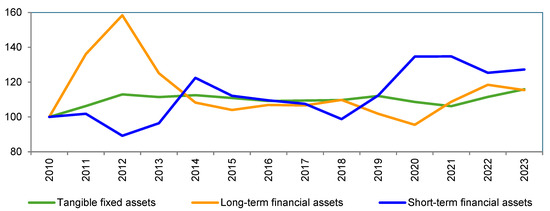
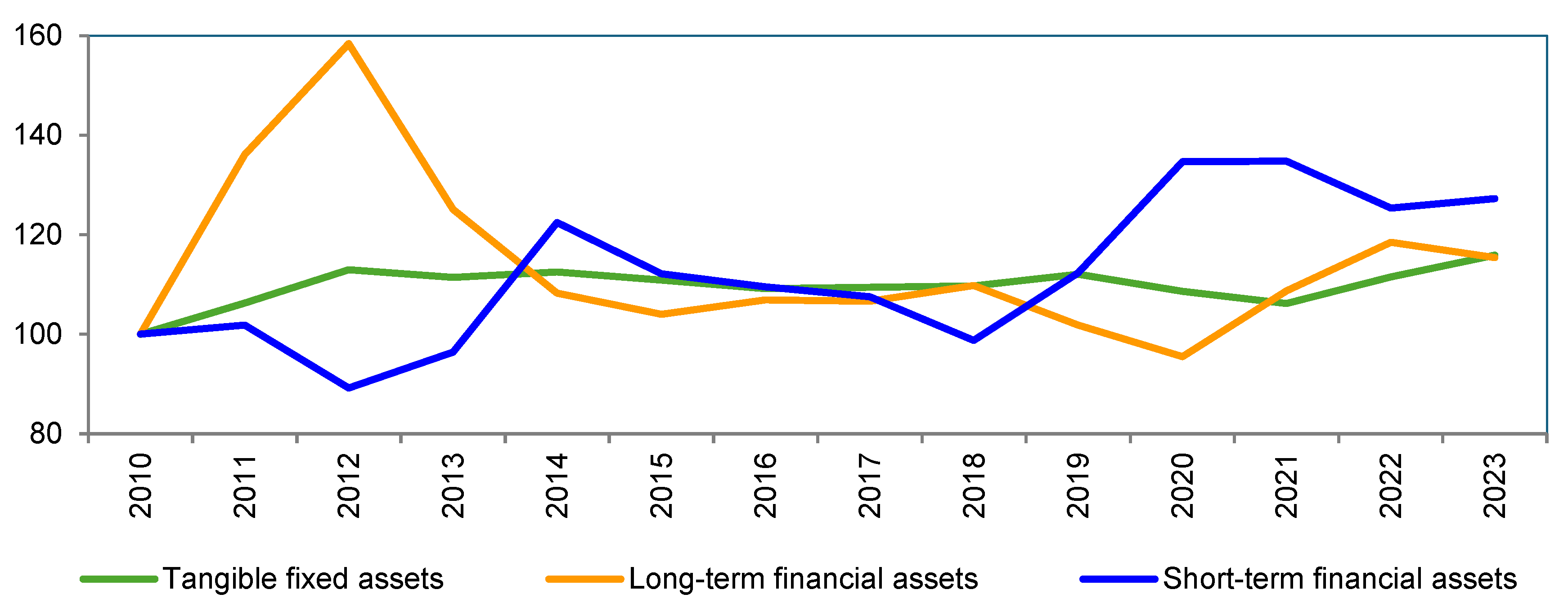
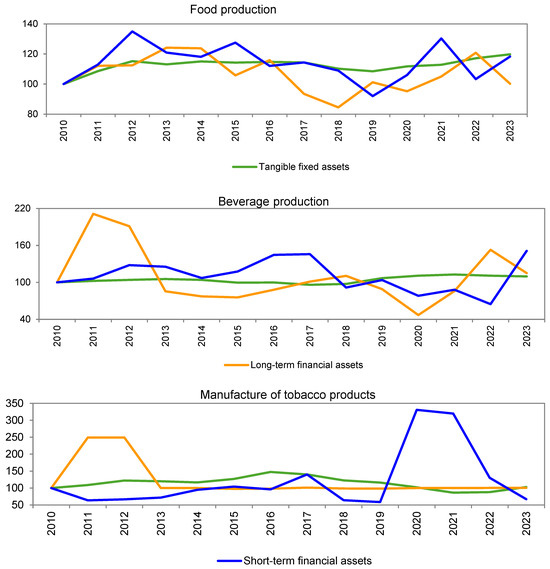
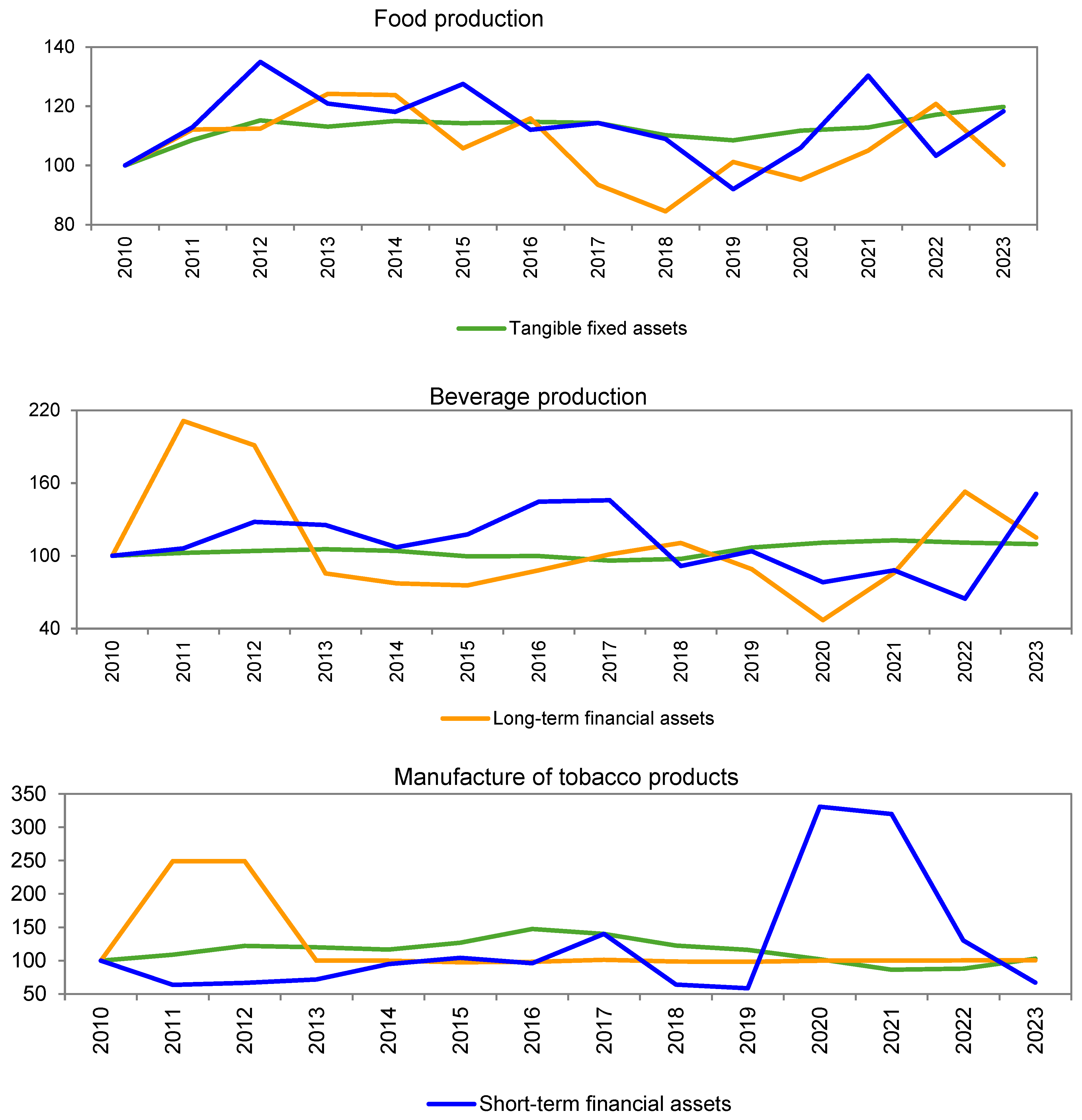
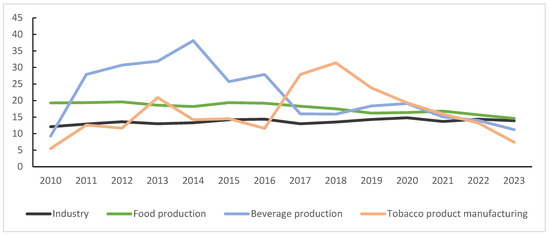
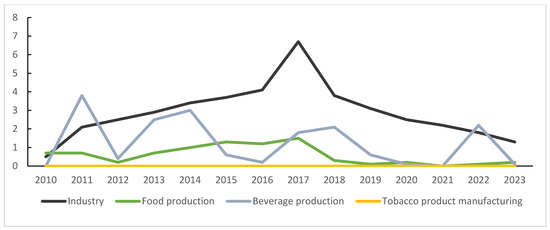

Disclaimer/Publisher’s Note: The statements, opinions and data contained in all publications are solely those of the individual author(s) and contributor(s) and not of MDPI and/or the editor(s). MDPI and/or the editor(s) disclaim responsibility for any injury to people or property resulting from any ideas, methods, instructions or products referred to in the content. |
© 2026 by the authors. Licensee MDPI, Basel, Switzerland. This article is an open access article distributed under the terms and conditions of the Creative Commons Attribution (CC BY) license.