


Abstract
The application of Generative Artificial Intelligence (GenAI)—defined as a class of AI systems capable of autonomously generating new content such as images, texts, and design solutions based on learned data patterns—has become increasingly widespread in creative design. By supporting ideation, rapid trial-and-error, and data-driven decision-making, GenAI enables designers to explore design alternatives more efficiently and enhances human–computer interaction experiences. In design practice, GenAI functions not only as a productivity-enhancing tool but also as a collaborative partner that assists users in visual exploration, concept refinement, and iterative development. However, users still face a certain learning curve before effectively adopting these technologies. Within the framework of human-centered artificial intelligence, contemporary design practices place greater emphasis on inclusivity across diverse user groups and on enabling intuitive “what-you-think-is-what-you-get” interaction experiences. From a sustainable design perspective, GenAI’s capabilities in digital simulation, rapid iteration, and automated feedback contribute to more efficient design workflows, reduced collaboration costs, and broader access to creative participation for users with varying levels of expertise. These characteristics play a crucial role in enhancing the accessibility of design resources and supporting the long-term sustainability of creative processes. Focusing on the context of China’s digital design industry, this study investigates the application of GenAI in design workflows through an empirical case study of Zhitu AI, a generative design tool developed by Beijing Didi Infinity Technology Development Co., Ltd. The study conducts a literature review to outline the role of GenAI in visual design processes and employs observation-based experiments and semi-structured interviews with users of varying levels of design expertise. The findings reveal key pain points across stages such as prompt formulation, secondary editing, and asset generation. Drawing on the Kano model, the study further identifies potential design opportunities and discusses their value in improving efficiency, supporting non-expert users, and promoting more sustainable and inclusive design practices.
1. Introduction
With the continuous advancement of artificial intelligence generation technologies such as Large Language Models (LLMs), Diffusion Models, Generative Artificial Intelligence (GenAI) have become increasingly prevalent, permeating various aspects of both production and everyday life [1]. From text generation to image and video generation, a wide range of applications has emerged, making GenAI an important tool for enhancing productivity. GenAI not only alleviates users’ technical burdens during the creative ideation phase but also reduces the cost of creative production, enabling users to focus more on high-level cognitive activities such as needs analysis and conceptual development [2,3].
However, the interaction between humans and GenAI still faces multiple challenges [4]. One key issue is the discrepancy in how different types of generative models interpret user intent. Compared to text-based models, which possess relatively stronger semantic understanding capabilities, image- and video-based generative tools require users to provide more precise and structured expressions [5]. Prior research has indicated that AI tools may, to some extent, constrain creative expression and lead to conceptual ambiguities [6]; moreover, their widespread use in creative work can result in users becoming overly dependent on external tools, potentially undermining the development of professional skills [7]. Fundamentally, AI products rely on algorithms and large-scale case libraries to learn and generate outputs, making them inherently procedural, whereas human creativity is often abstract, ambiguous, and unpredictable. This highlights the fundamental differences between machine learning mechanisms and human cognitive processes [8].
Moreover, artificial intelligence introduces new opportunities for design equity and the sustainability of design processes. The rapid iteration and digital validation enabled by GenAI help reduce material waste and time costs typically associated with traditional design workflows. At the same time, GenAI provides participatory creation channels for users with varying levels of design expertise, thereby improving access to design resources and skills and fostering the sustainable development of creative production. Building on this, the present study examines GenAI’s potential value in reducing resource consumption, enhancing workflow efficiency, and promoting equitable creative participation from a sustainable design perspective. In addition to evaluating efficiency, this study delves into the underlying differences in user cognition (novice vs. expert), examines the emotional dynamics shaping the interaction experience, and investigates how design intentions can be aligned with users’ understanding to achieve mutual intelligibility.
Against this backdrop, this research conducts a large-scale user study to map the interaction workflows of existing GenAI tools in design practice and to identify users’ needs and pain points. Grounded in a human–computer interaction perspective, the study aims to explore how optimizing interaction workflows can help AI better understand human intentions and thereby enhance the effective use of GenAI in design scenarios. It further investigates the sustainability of the Human–AI collaboration ecosystem, including how users can collaborate with AI over the long term to support a more stable and resilient future ecosystem of Human–AI collaboration.
2. Background of Analysis
Currently, text-based GenAI tools, exemplified by ChatGPT and Deep Seek, have reached a relatively mature stage. These systems are capable of accurately interpreting human language and demonstrate a certain degree of empathy through contextual understanding and multi-turn dialogs [9]. By contrast, GenAI tools in other modalities, such as image, video, and audio, exhibit varying levels of performance and typically place higher demands on user input. For example, Text-to-Image applications such as Midjourney depend heavily on user-generated prompts that must be interpretable by the model, which means users must invest considerable effort in learning prompt engineering techniques to produce satisfactory results. Recent studies have explored strategies and frameworks for prompt engineering to reduce users’ learning costs [10,11].
Meanwhile, Human–Computer interaction (HCI) under the influence of AI is evolving along multiple dimensions: user groups have expanded from professionals to the general public; system dependence on human input has shifted from strong to weak; interaction modes are evolving from unimodal to multimodal; information presentation has moved from two-dimensional to multidimensional formats; interaction patterns have transitioned from one-time input to multi-turn conversations; and generated outputs have shifted from standardized to personalized forms. In this transformation, users have raised higher expectations for interactive systems, particularly regarding their ability to accurately interpret complex and ambiguous human expressions [12,13]. Addressing this challenge requires not only continuous advancements in underlying AI technologies but also significant improvements in user interface design, to enable more natural and efficient interactions [14].
2.1. Literature Review
At present, research on GenAI products primarily focuses on the technical dimensions, such as large language models, or the humanistic dimensions, such as intellectual property and ethical protection. However, there remains a lack of in-depth exploration of human–AI interaction behaviors throughout these processes. Existing studies mainly examine GenAI’s role in supporting creative idea generation and improving productivity during design workflows, while paying insufficient attention to the practical challenges users face in actual user experience. Existing research has primarily focused on the creative output capabilities of GenAI, but has insufficiently examined its potential to enhance the sustainability and equity of design processes.
In terms of collaborative design research, Ge, P. et al. (2025) conducted a literature review to investigate the influence of GenAI on designers’ critical thinking skills during the design stages [15]. They proposed a structured set of recommendations for enhancing and cultivating designers’ critical thinking abilities. Wang, S. et al. (2024), based on the Stimulus–Organism–Response model, examined creative workers’ attitudes toward and acceptance of generative artificial intelligence [16]. Their findings revealed that while GenAI possesses certain capabilities for improving work efficiency, users remain concerned about legal protection, ethical risks, and fairness. Lin, H. et al. (2024) compared how GenAI and traditional design methods influence designers’ creativity in the initial work stages of design [17]. Their study showed that while GenAI methods may offer advantages, they are not necessarily superior to traditional methods, and the quality of generated images can significantly affect creativity.
In terms of design process research, Yu, W. F. (2025) explored the influence of AI on design workflows [18]. The study demonstrated AI’s transformative capacity to amplify creative processes and support evaluation and decision-making in design practice, while also highlighting issues such as cognitive load and user dependency. Wu, J. et al. (2025) systematically reviewed the literature on GenAI applications in design based on the PRISMA framework, summarizing the extant scholarly discourse and revealing the mechanisms of AIGC use across the four stages of the design practice, thereby providing an understanding of the evolving integration of GenAI and design [19]. Jin, J. et al. (2025) examined the latest technologies related to generative artificial intelligence and analyzed how these technologies drive design innovation [20]. Their findings indicate that integrating GenAI products into customer-centered design innovation presents significant opportunities for enhancing the overall design workflow.
In terms of Human–AI collaborative research, Zhou et al. (2019) argue that, with the continuous advancement of self-learning and reasoning capabilities in artificial intelligence systems, the mode of human–machine collaboration within Human–Cyber–Physical Systems (HCPS) is undergoing a fundamental transformation [21]. Humans are no longer merely system operators but are increasingly becoming collaborative agents who participate in decision-making and creative processes alongside AI. In this context, intelligent systems, through supportive and augmentative functionalities, contribute to the enhancement of human potential and the development of creative capabilities. Lou et al. (2024) examines industrial HCPS from a human-centered perspective and identify three distinct paradigms, highlighting the challenges associated with achieving effective integration between humans and intelligent systems in production activities [22]. Meanwhile, Romero et al. (2016) argue that the emergence of Industry 4.0 has reshaped modes of human–machine collaboration [23,24]. With the advent of artificial intelligence, human roles within Human–Automation Symbiosis Work Systems have evolved from Operator 1.0 to Operator 4.0, enabling individuals to leverage intelligent systems as supportive partners in task execution and decision-making. This transformation contributes to the development of a more sustainable workforce capable of adapting to increasingly complex socio-technical environments.
In terms of design education research, Huang, K. et al. (2024) investigated the hands-on implementation of AI-generated content in design thinking education, exploring its potential to enhance students’ higher-order thinking skills (HOTS) and emphasizing the importance of tailoring pedagogical strategies to students with varying abilities [25]. Zhou, Z. et al. (2023) further discussed the potential impact of GenAI on design education, examining both the benefits and limitations it brings to the next generation of designers and proposing ways to address these complex issues through educational approaches [26].
In summary, GenAI has demonstrated significant potential in improving work efficiency, driving design innovation, and optimizing design workflows. At the same time, it poses new demands for the development of design education and the design industry, particularly concerning the cultivation of future designers’ innovative capabilities. First, GenAI lowers the entry barriers for design practice, enabling non-professional users to participate in creative activities, which intensifies competition within the design industry. Second, it challenges professional designers’ ways of thinking and innovative abilities, requiring higher levels of professional literacy. Over the past decade, breakthroughs in related technologies, GenAI products have continued to improve in generation quality and technical capabilities [27]. However, from a human–AI interaction perspective, existing research tends to focus on optimizing technical performance while paying relatively little attention to the user dimension [28]. Therefore, this study proposes a user-centered user experience research pathway. By optimizing interaction experiences and reducing learning costs, it aims to improve the alignment between human cognition and AI generation mechanisms, thereby supporting the enhancement of the efficiency and accuracy of GenAI products.
2.2. Theoretical Support
As artificial intelligence technologies continue to evolve, HCI has evolved through several stages: from Command-Line Interaction to Graphical User Interfaces, Natural Interaction, and ultimately Intelligent Interaction [29]. Although the forms of interaction have undergone constant transformation, their fundamental structure remains centered on three core elements: users, machines, and the interaction environment [30]. In the era of intelligent interaction, these elements have acquired new characteristics: user groups have become increasingly diverse, machines have gained enhanced intelligence and autonomy, and interaction environments have grown more adaptive and personalized [31,32]. Within this evolving landscape, a key challenge for both design practice and academic research lies in humanizing technology and sustainability—ensuring that interactive systems are designed to align with human needs, values, and cognitive processes. Critical dimensions in this regard include usability, ease of use, inclusivity, and overall user experience.
To address this challenge, the methodological framework of this study draws on Donald Norman’s Emotional Design Theory, complemented by user experience research methods within the HCI field. Norman conceptualizes emotional design across three hierarchical levels: visceral, behavioral, and reflective [33,34]. This framework emphasizes that user interaction encompasses multiple layers: immediate perceptual and affective responses (visceral), practical and task-oriented usability experiences (behavioral), and higher-order reflections on the product’s meaning and long-term value (reflective).
Grounded in this theoretical perspective, the present study examines how GenAI can better interpret and respond to user needs through intelligent interaction mechanisms. By embedding emotional design principles into interaction processes, the study aims to explore how GenAI systems can facilitate more natural, efficient, and human-centered interaction experiences, ultimately improving both functional performance and user satisfaction.
2.2.1. Emphasizing Usability and Ease of Use
Usability and ease of use have consistently served as core dimensions for evaluating the effectiveness of interaction systems throughout the evolution of artificial intelligence [35,36,37]. Within the methodological framework of this study, Norman’s Behavioral Level in Emotional Design Theory is integrated with the “user–machine–interaction environment” triad from HCI to systematically examine the cognitive load and operational barriers encountered by users during task flows in GenAI-based graphic design tools [38].
Through a combination of user journey mapping, usability testing, and observational studies, this research focuses on three key aspects: task completion efficiency, the intuitiveness of interaction logic, and the ease of interface learning. The objective is to ensure that GenAI tools provide low-entry barriers, clear and transparent interaction pathways, and high operational efficiency for users with varying levels of expertise in intelligent interactive environments, thereby achieving human-centered technological optimization.
By combining observational experiments with semi-structured interviews, the study systematically evaluates GenAI tools in terms of task performance, interaction clarity, and learning costs, ensuring their operability and applicability within real-world design practices.
2.2.2. Focusing on Users’ Emotional Experience
Beyond usability and operational efficiency, this study further emphasizes the emotional dimension of user experiences. In the era of intelligent interaction, interaction is no longer merely about task accomplishment, but also about the perception and accumulation of experience [39].
Drawing on Norman’s Visceral and Reflective levels, this study investigates how users experience GenAI tools—from immediate visual and sensory feedback during interaction to reflective evaluations of the product’s long-term value after task completion. To achieve this, the research employs a combination of semi-structured interviews and emotional questionnaires, capturing users’ emotional trajectories during key stages such as prompt input, image generation, and secondary editing.
This process identifies critical factors that shape user satisfaction, immersion, and trust. By examining not only users’ emotional fluctuations during interaction but also how these affect their continued use intentions and value perception in professional contexts, the study elucidates the affective foundations underlying human–AI interaction.
2.2.3. Respecting User Diversity
In increasingly intelligent and personalized interaction environments, user groups exhibit unprecedented diversity [40]. Users differ significantly in their behaviors, preferences, and skill levels when operating GenAI tools—differences that not only shape interaction experiences but also influence the equity and sustainability of human–AI collaboration [41,42,43]. Based on this premise, the methodological approach of this study emphasizes respect for user diversity and, from a sustainable design perspective, adopts a stratified user research framework that categorizes participants into novice, intermediate, and expert users. This approach ensures that design recommendations remain accessible, inclusive, and sustainable across varied user groups.
The study systematically examines differences in task execution strategies, prompt formulation abilities, and secondary editing needs, and applies the Kano model to prioritize multi-level user requirements. By comparing variations in usability, emotional experience, functional expectations, and resource efficiency across user groups, the research further uncovers the deeper mechanisms through which user diversity affects human–AI interaction and the sustainability of collaborative ecosystems.
Ultimately, the study aims to propose more inclusive, differentiated, and sustainability-oriented design optimization strategies, enabling GenAI tools to achieve long-term applicability, resource efficiency, and maximized value across diverse user populations, thereby fostering a more stable and sustainable future human–AI collaboration ecosystem.
By integrating multi-level emotional design analysis with empirical HCI research methods, this study provides an integrated strategy to understanding user interactions with GenAI products. It not only captures users’ immediate experiences and interaction challenges but also uncovers their long-term value perceptions and design expectations. This methodological framework offers a practical analytical basis for optimizing the user experience of GenAI products and provides valuable insights for future research in multimodal human–AI interaction.
Building upon the aforementioned theoretical foundations, this study proposes three research hypotheses:
H1.
GenAI can effectively enhance design efficiency by supporting users in ideation, iteration, and decision-making processes.
H2.
GenAI can contribute to the sustainability of design practices at the user level by improving access to design resources and supporting more inclusive creative participation.
H3.
Optimizing the interaction design of GenAI products from a user-centered perspective facilitates long-term human–AI collaboration and supports the sustainable development of the human–AI collaboration ecosystem.
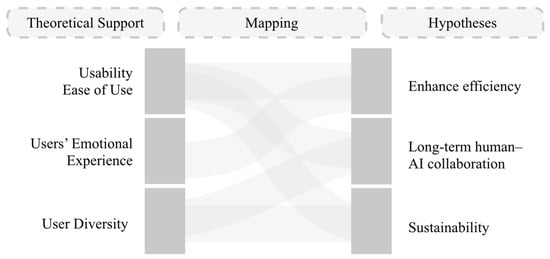
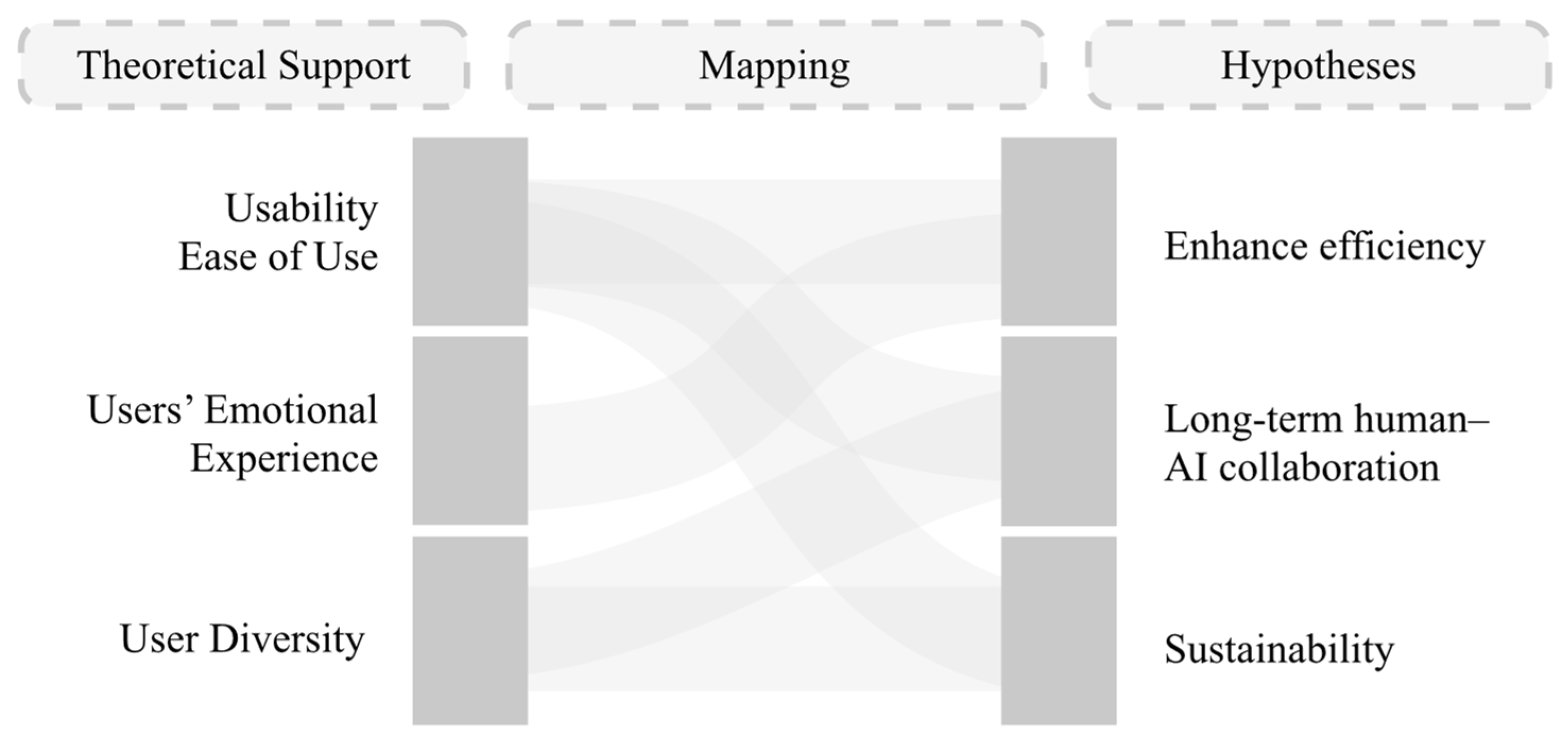
These hypotheses are developed from a user-centered perspective to examine the role of artificial intelligence in real-world production contexts, with a particular focus on its impacts on efficiency, sustainability, and the function of interaction design in long-term human–AI collaboration (Figure 1).
Figure 1.
Research Mapping (Source: From author).
3. Methodology
3.1. Research Background
As AI technologies continue to evolve at an unprecedented pace and their adoption expands across multiple domains. In particular, GenAI has crystallized into a paradigm-shifting catalyst. Technologies are now capable of generating multimodal content, including text, images, videos, and audio, which not only diversifies technological forms but also significantly expands the boundaries of AI applications [44,45].
Meanwhile, the ongoing digital transformation of society and the growing demand for personalized user experiences have driven the proliferation of GenAI product types [46]. Alongside general-purpose applications designed for the mass market, a wide range of domain-specific and vertical GenAI tools tailored to specialized industries and professional contexts have also emerged.
Against this backdrop, many enterprises have begun to view GenAI as a strategic means to enhance productivity and competitiveness. On one hand, by developing and adopting GenAI products, companies can improve efficiency and innovation across various functions, including content production, marketing and promotion, customer service, and data analysis [47]. On the other hand, the integration of GenAI helps optimize internal workflows, reduce repetitive tasks, and enable employees to focus more on creative and high-value activities [48]. Consequently, GenAI is increasingly becoming a key driving force for digital upgrading and organizational transformation.
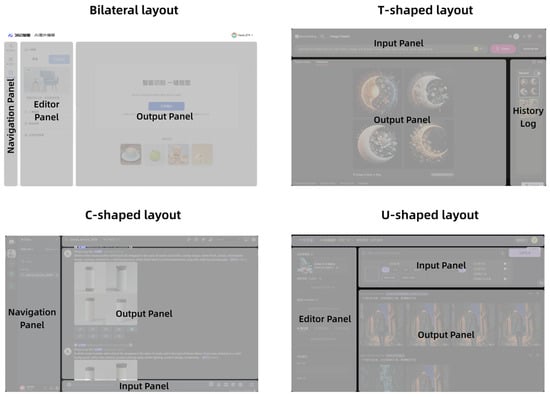
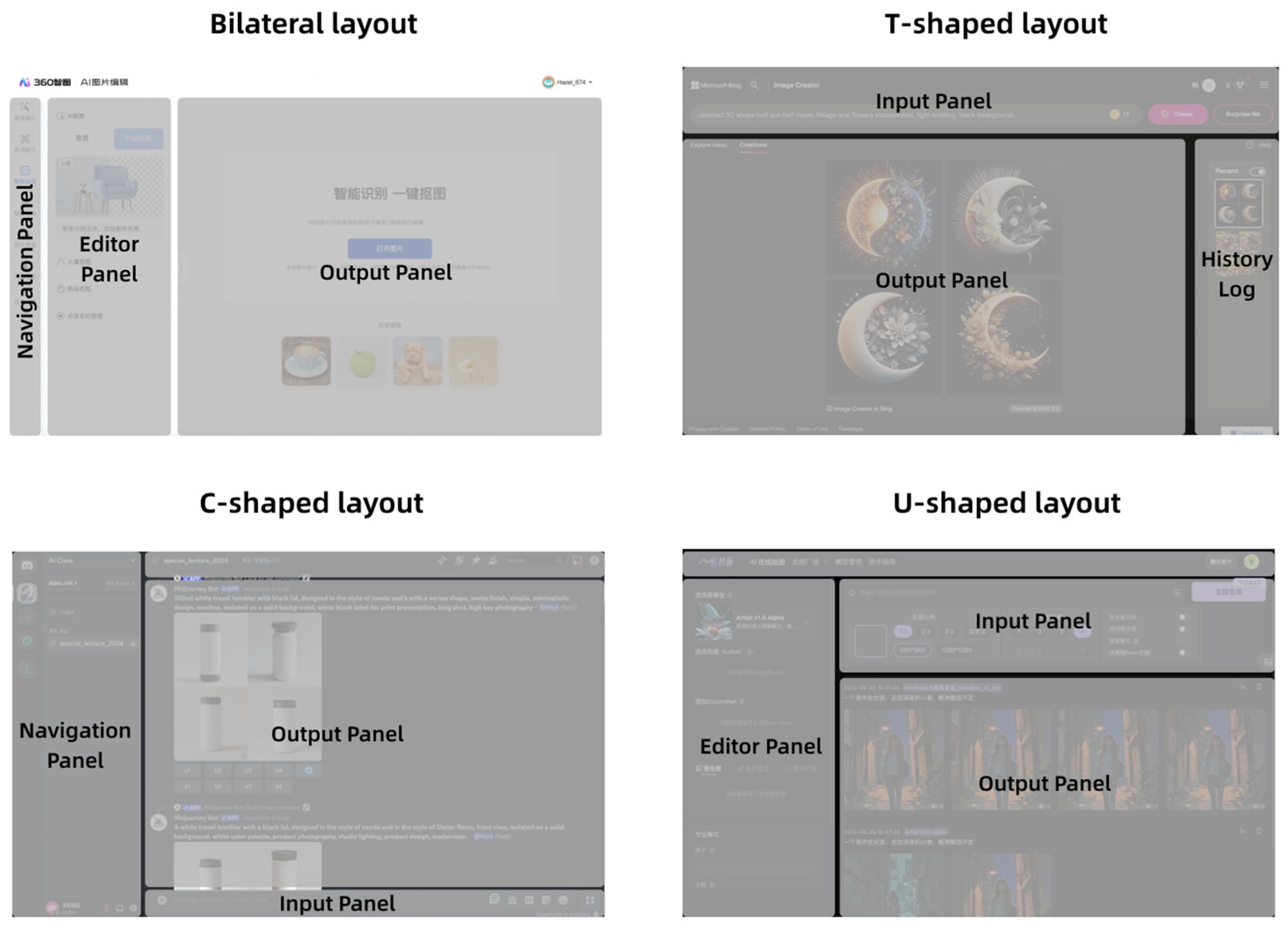
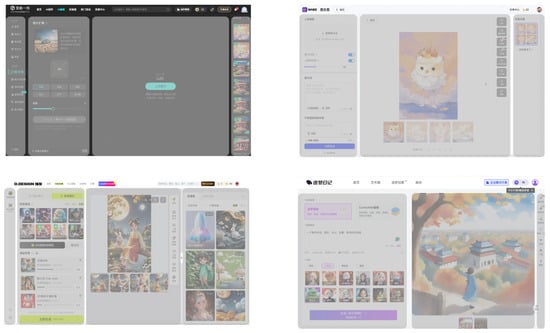
This study focuses on GenAI-based graphic design tools in China, conducting a systematic analysis of their primary interface layouts, core functions, and interaction patterns. The most common interface layout patterns observed include the bilateral layout, T-shaped layout, C-shaped layout, and U-shaped layout (Figure 2).
Figure 2.
GenAI-based graphic design tools in China (Source: From author).
In the Bilateral layout pattern, the interface typically adopts a left–right partitioned structure: the left section functions as the global navigation module, while the right section serves as the main content area. This layout has advantages in enhancing navigation visibility and improving page-switching efficiency. Due to its simple structure, it is widely used in websites with relatively shallow functional hierarchies. The T-shaped layout is commonly seen in social media or news-oriented platforms. Its top-level global navigation serves as the primary integration point for various entry paths, while the content area is further divided into a menu (or sidebar) and a main content module. This structure maintains overall simplicity while accommodating the need for multi-level information organization. The C-shaped layout can be regarded as an extended form of the T-shaped pattern. By combining horizontal and vertical navigation elements, it provides a clearer distinction between core business functions and auxiliary modules. This layout is particularly suitable for complex back-end management systems with multiple functional modules and intricate operations. The U-shaped layout is a further evolution of the C-shaped pattern, with an additional sidebar module. It is often applied to tool-based or information-rich websites. This layout makes full use of the available screen space and can accommodate a large amount of information and functions. However, its downside lies in the relatively crowded interface and limited interaction flexibility.
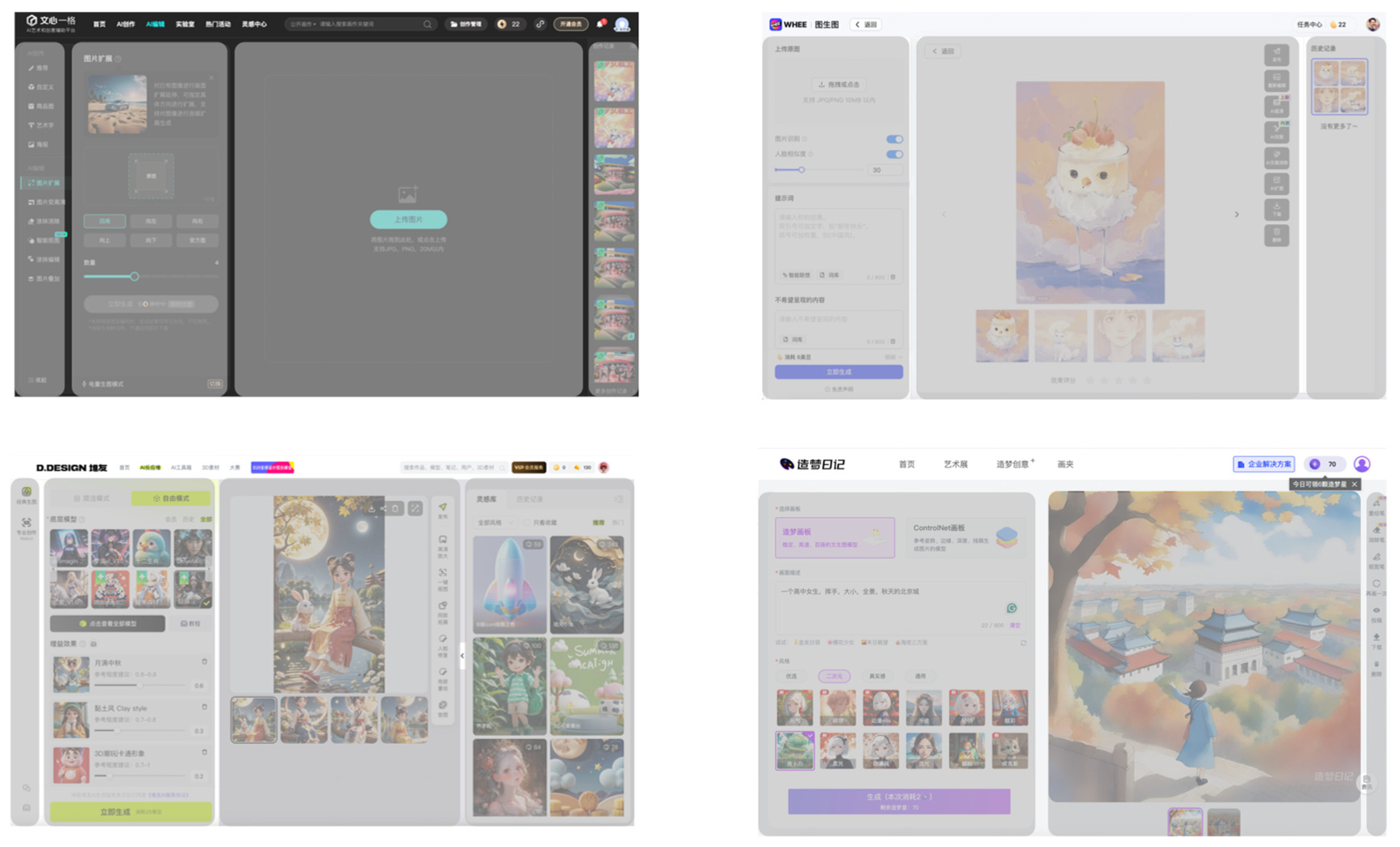
Among these patterns, the Bilateral layout is the dominant structure used in Chinese GenAI-based graphic generation tools. Typically, the left panel contains the main operation and control functions, the center area is used for result display, and the right panel presents historical records and reference styles. Secondary interaction modes often rely on pop-up windows or page reloads within the current interface (Figure 3).
Figure 3.
Case of Bilateral Layout (Source: From author).
The advantages of the Bilateral layout can be summarized in three aspects:
- The front-loaded control layer effectively improves tool usage frequency and operational efficiency.
- A clear and logical page structure enhances navigation visibility.
- The layout provides strong guidance for predicting user interaction behaviors.
Overall, this layout performs well in terms of user flow and product usability. Building on this foundation, this study further explores the underlying logical needs and interaction patterns of users to uncover potential areas for optimization in the interaction design of GenAI products.
3.2. Research Object
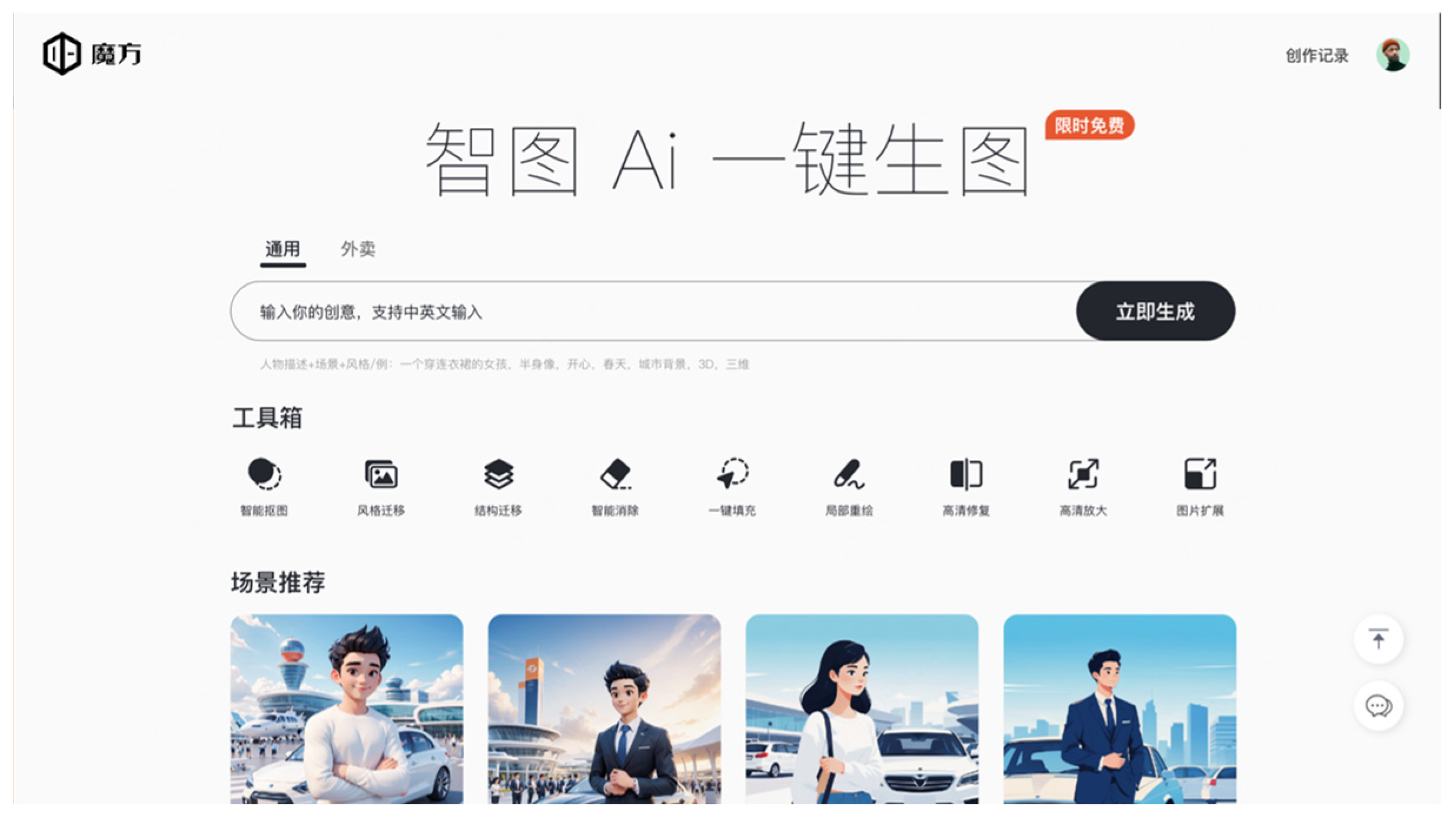
This study examines Zhitu AI, a GenAI -based graphic design tool developed by Beijing Didi Infinity Technology Development Co., Ltd. (Didi), as a case study, with a particular focus on its interaction workflows and user engagement patterns (Figure 4).
Figure 4.
Zhitu AI (Source: From Didi).
Zhitu AI is designed for internal use within Didi, leveraging large-scale models trained on the company’s commonly adopted visual styles. The tool aims to streamline user operations, enhance the precision of image generation, and subsequently improve the efficiency of image deployment in commercial contexts. Functionally, Zhitu AI supports rapid image generation while offering secondary editing capabilities tailored to enterprise-specific scenarios. Given that most generated outputs require refinement prior to practical use, these features allow users to perform adjustments directly within the platform, thereby reducing reliance on external image editing tools and facilitating a more seamless workflow. Additionally, Zhitu AI integrates a “one-click resource slot generation” feature. In this context, a “resource slot” refers to a designated display space on digital platforms for presenting content, products, or service information, effectively functioning as a digital shelf. By occupying these slots, different content providers (e.g., merchants, creators, or marketing campaigns) can increase user reach and engagement, ultimately driving exposure, clicks, and conversions.
This functionality enables users to automatically adapt generated images to standardized dimensions appropriate for distinct business scenarios, significantly enhancing workflow continuity and efficiency while eliminating the need for cross-platform resizing operations. The design and implementation of Zhitu AI reflect a dual objective: to fulfill enterprise-specific operational requirements and to optimize the user experience, offering valuable empirical insights into the application of GenAI within professional design practices. By examining how users interact with the tool across different tasks, this study contributes to understanding human–AI collaboration in commercial graphic design contexts and informs user-centered design strategies for GenAI systems.
3.3. User Research
As mentioned above, Zhitu AI is made accessible to all employees within the company. Considering the variations in users’ design proficiency, this study initially categorized the user population into three groups during the preliminary investigation: Novice users refer to individuals with little to no professional design background or formal design training. These users typically lack theoretical design knowledge and practical experience with design tools, and they tend to rely on intuition or template-based tools to complete basic creative tasks. Intermediate users are those who possess a certain level of design knowledge and practical experience, often having received relevant coursework or participated in design-related tasks in their work, but who have not yet reached a professional level of expertise. Expert users refer to individuals with systematic design education or extensive professional design experience; they demonstrate well-developed design thinking, strong esthetic judgment, and rich practical experience, enabling them to engage deeply with design processes and tools (Table 1).
Table 1.
Three types of users.
Given that different user types have distinct goals and expectations when using the product, the design of subsequent interview protocols was tailored accordingly. To map experiential contours and unmet needs, semi-structured interviews served as the principal design ethnography tool. The interview protocol was designed around three main themes: users’ interaction with GenAI products, their intended goals, and the challenges they encountered during use, with appropriate adjustments made for different user groups based on their backgrounds.
For participant selection, we utilized system backend data to identify 206 users with relatively high platform activity—including image generation and download operations—as the candidate pool. Ultimately, 47 users participated in the interviews, comprising 23 design experts, 12 product managers, and 12 operations personnel.
All interviews were conducted online, and the protocol included 15 core questions covering user demographics, AI product usage patterns, and other business-related needs. The goal was to systematically uncover the characteristics of user needs and key pain points when using GenAI-based graphic design tools (Table 2).
Table 2.
The Interview Guide.
4. Results
4.1. Representative Workflow
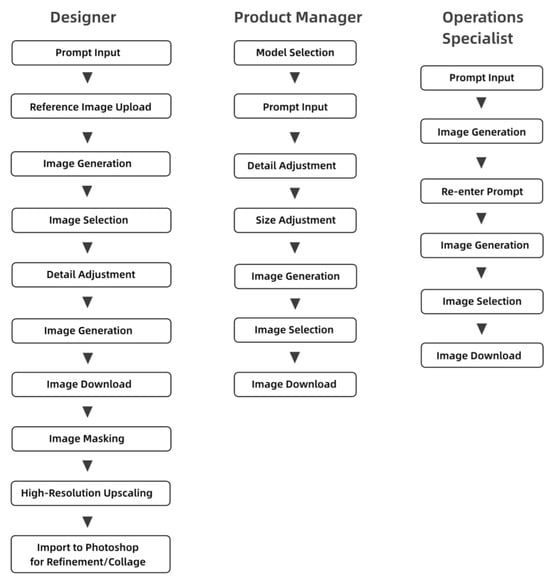
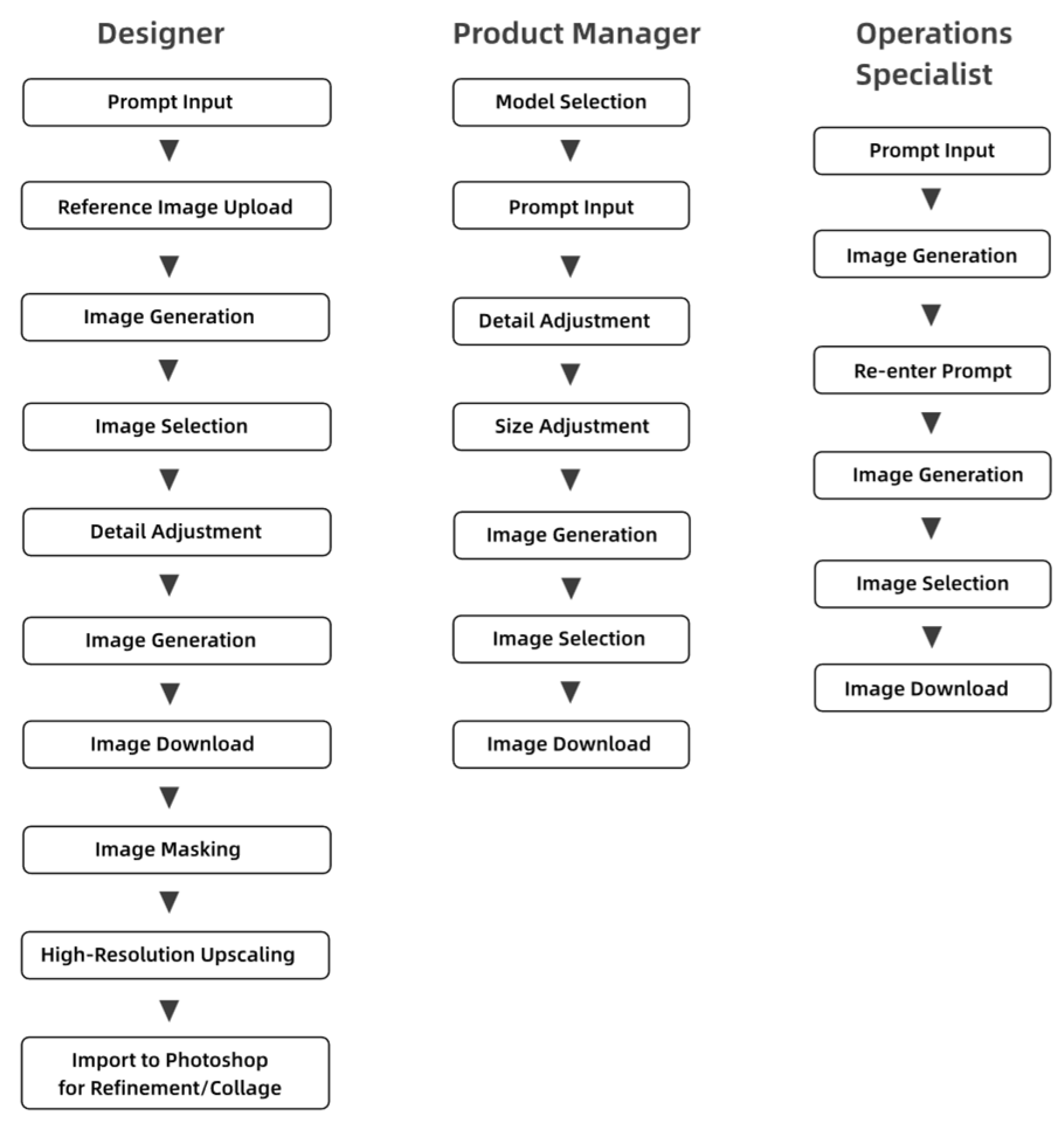
During the interview process, this study not only systematically recorded participants’ verbal feedback but also conducted an in-depth analysis of their interaction behaviors by observing how users completed design tasks with GenAI products in real business scenarios. Based on these observations, we further identified the typical usage paths of three user groups and constructed representative workflow diagrams using usage ability, usage purpose, and task completion approach as the core dimensions (Figure 5).
Figure 5.
Representative Workflow Diagrams (Source from author).
The behavioral path of designers (expert users) is the longest. From prompt input to image conditioning, they tend to provide the most specific requirements and reference images, thereby generating visuals that more closely align with their design intentions. Moreover, they demonstrate greater proficiency in utilizing auxiliary functions to support creative image generation. In contrast, operation staff (novice users) exhibit the shortest usage path, relying primarily on textual descriptions and repetitive prompt inputs to produce visual outputs. Product managers (intermediate users) demonstrate a relatively complete behavioral path, showing the ability to employ various basic functions to accomplish creative graphic generation tasks.
4.2. Main Point
After completing all user interviews, we categorized and analyzed the data based on the frequency with which users mentioned specific issues, ultimately identifying four major pain points:
- (1)
- Priority of preset input requirements
Most users emphasized that in order to improve the accuracy of generated images, they placed a high priority on the availability of preset input functions. Common presets include reference images, style models, image dimensions, and frequently used prompts. In particular, for scenarios involving human figures and food images, users heavily relied on reference images to reduce errors in AI’s interpretation of body movements, facial expressions, and food details. However, most current AI tools lack stable input interfaces for fixed parameters, forcing users to repeatedly re-enter and confirm the same settings, which significantly reduces operational efficiency.
- (2)
- High-frequency demand for background removal and element extraction
Interviews revealed that users frequently needed to remove backgrounds from generated images to enable their reuse in subsequent design tasks, making background removal a high-frequency requirement. Although some AI tools offer one-click background removal features, their overall accuracy remains insufficient. For users who generate icons and other small design elements, transparent-background outputs are especially important. In actual workflows, product managers often rely on external material libraries such as Iconfont to collect resources before passing them to UI designers for further composition and editing, which substantially increases their workload.
- (3)
- Demand for high-resolution image generation and upscaling
Some users pointed out that in offline advertising scenarios, image resolution becomes a critical requirement, leading to strong demand for high-definition image generation and image upscaling tools. While image size is not strictly specified in most cases, users generally agreed that “the larger and clearer the image, the better,” in order to support flexible secondary use. In practice, one-click upscaling functions are widely used, especially for offline material production, where enhanced image clarity is essential. Currently, most GenAI technologies are unable to directly produce high-resolution images due to computational and resource constraints. As a result, when high-resolution outputs are required, generated images must undergo secondary processing to meet resolution demands.
- (4)
- Insufficient text design and editing functionalities
Users also expressed a strong demand for text design and editing capabilities, particularly among operations personnel, who hoped that tools could support flexible features such as tags and text boxes. Once the design materials are finalized, text editing often constitutes a significant portion of the workload. However, current AI tools face substantial limitations in Chinese text design—for example, they often cannot recognize or generate Chinese characters, have limited font libraries, lacked font scaling options, and offer few decorative or visually engaging title fonts. As a result, text-related design and editing tasks remain heavily dependent on traditional tools such as Photoshop.
4.3. As-Is User Journey Map
Building on these findings, this study developed an As-Is User Journey Map to comprehensively depict the end-to-end workflow of users when interacting with GenAI-based graphic design tools—from entering prompts, selecting models, adding reference images, generating outputs, downloading and editing, to creating resource slots. Through a systematic analysis of various touchpoints, we identified users’ core challenges at each stage and classified them using a matrix-based approach. This process allowed us not only to clarify users’ pain points, but also to define clear design goals and optimization directions, ensuring that the proposed design solutions align with users’ actual operational logic while responding to their diverse application scenarios and value needs. The table illustrates how user pain points can be systematically mapped into corresponding design opportunities within GenAI-based graphic design tools. A total of eighteen opportunity points is identified in this study. Specifically, six opportunities are categorized under the Prompt Input stage; two each under the Model Selection, Image Conditioning, and Image Generation stages; and three each under the Download and Edit and Design Asset Placement stages. For each stage, the study identifies the corresponding user needs and potential design solutions, which are subsequently numbered for reference (Table 3).
Table 3.
As-Is User Journey Map.
In particular, the findings emphasize the importance of improving prompt engineering support, such as providing prompt references, optimization, and historical reuse, to lower the entry barrier for novice users. Additionally, opportunities related to parameter presets, icon generation, and style model diversification reflect users’ demand for efficiency and creative flexibility. Post-generation editing functions, including high-resolution enhancement, transparent PNG export, and basic color adjustments, further address practical requirements in downstream workflows. Finally, the customization of resource slots and font libraries demonstrates the need for more adaptable and context-sensitive design solutions. Together, these opportunities suggest directions for optimizing the interaction flow and enhancing user experience in future GenAI product development.
In summary, the three research hypotheses proposed in Section 2 can be addressed as follows:
H1.
GenAI can effectively enhance design efficiency by supporting users in ideation, iteration, and decision-making processes.
GenAI has the potential to enhance design efficiency to a certain extent; however, its actual effectiveness is influenced by users’ competencies and ways of interaction. Existing studies and practical applications indicate that many non-expert users are not yet able to fully leverage the capabilities of GenAI tools, resulting in noticeable variations in efficiency gains. Therefore, while GenAI demonstrates clear potential in improving design efficiency, its impact largely depends on users’ understanding of and proficiency in using these tools.
H2.
GenAI can contribute to the sustainability of design practices at the user level by improving access to design resources and supporting more inclusive creative participation.
GenAI provides new opportunities for users with diverse backgrounds and skill levels to participate in design activities, thereby lowering the traditional professional barriers within the design domain and enhancing the accessibility and inclusiveness of design resources. Although the performance of AI-assisted design remains inconsistent in practice, GenAI offers an important entry point for non-expert users to engage in design processes. In this sense, it contributes to the long-term sustainability of design practices by enabling broader user participation.
H3.
Optimizing the interaction design of GenAI products from a user-centered perspective facilitates long-term human–AI collaboration and supports the sustainable development of the human–AI collaboration ecosystem.
In human–AI collaboration, the interaction interface serves as a critical medium between users and intelligent systems, playing a decisive role in collaboration efficiency and user experience. User-centered interaction design helps lower barriers to use and enhances users’ understanding and sense of control over AI systems, thereby improving the effectiveness of human–AI collaboration. Especially in the context of rapidly evolving technologies, well-designed interactions can compensate for limitations in algorithmic capabilities, reduce users’ cognitive load, and facilitate more harmonious human–AI cooperation, ultimately supporting the development of a stable and sustainable collaborative ecosystem.
5. Discussion
5.1. Priority Ranking
To prioritize user needs, this study adopted the Kano model, which was proposed by Professor Noriaki Kano of the Tokyo University of Science in the early 1980s [49,50]. The Kano model is a widely used framework for classifying and prioritizing user requirements, as it helps to explain why not all features contribute equally to user satisfaction.
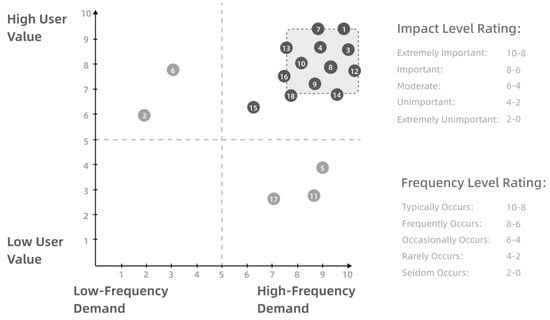
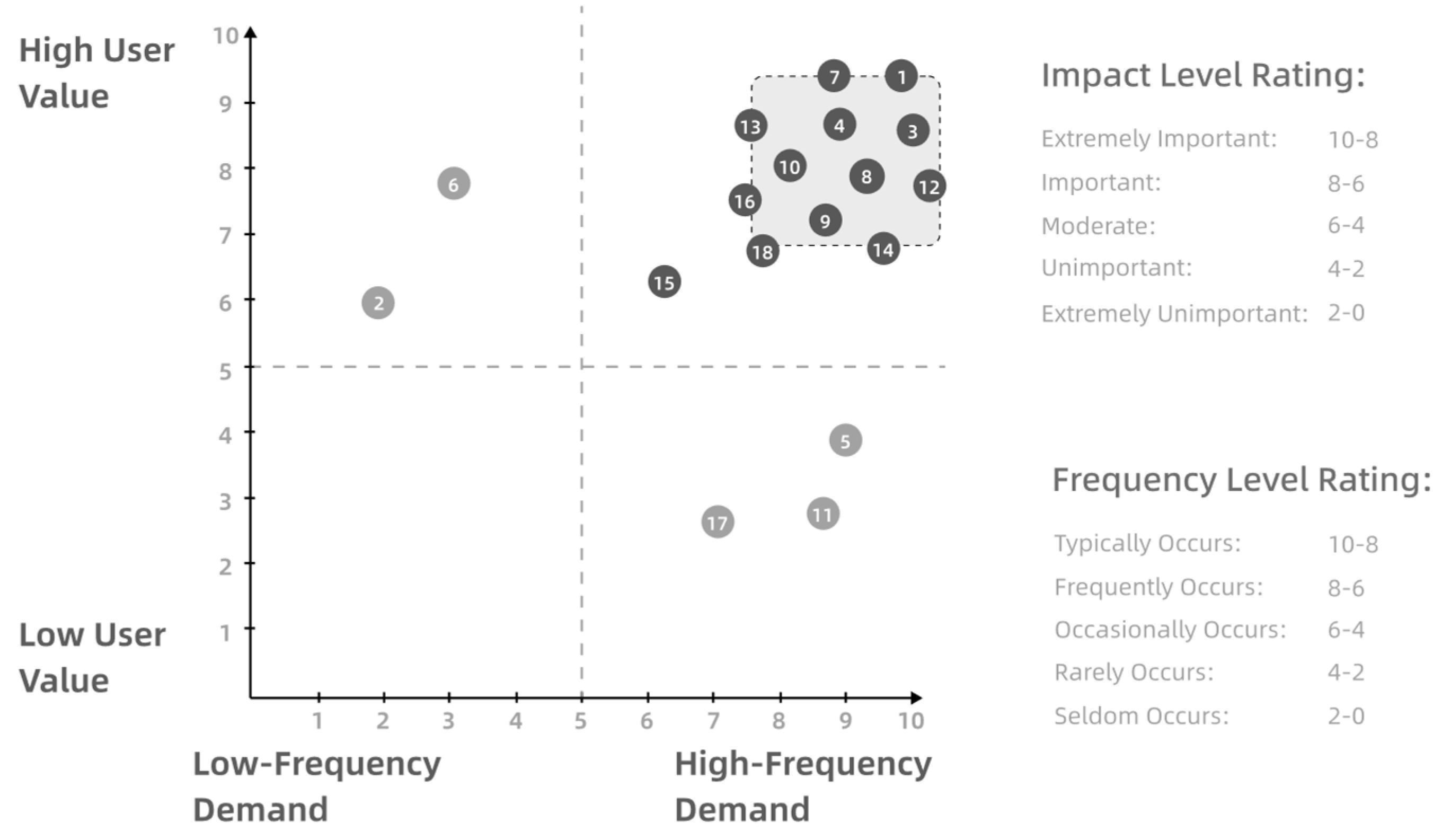
Based on the theoretical foundation of the Kano model, this study designed a questionnaire covering eighteen opportunity areas, evaluating them along two dimensions: functional impact and frequency of use. The influence dimension was assessed on a five-point scale—extremely important, important, moderate, unimportant, and extremely unimportant—while the frequency dimension was rated on another five-point scale—typically occurs, frequently occurs, occasionally occurs, rarely occurs, and seldom occurs. Each opportunity point was evaluated accordingly, allowing the study to determine its corresponding user value and the priority level of user needs. The questionnaire was conducted over a period of five days, yielding a total of 246 responses, among which 238 were valid. The summarized findings are presented as follows (Figure 6).
Figure 6.
Evaluation of Design Opportunities (Source from author).
The results indicate that user needs are most concentrated and generally ranked at higher levels during the “prompt input stage.” Enhancing the user experience at this stage depends not only on incorporating a wider range of style models but also on introducing more intuitive and low cognitive cost auxiliary input methods during the interaction process.
Currently, AI systems typically expect users to provide highly detailed and precise graphic descriptions in order to generate satisfactory results. However, for ordinary users, this expectation is difficult to fully meet, as their actual needs are often ambiguous. Field investigations revealed that users generally do not perceive large models as human-like conversational agents; instead, they tend to describe their needs in vague and imprecise ways. In response to this, users expect GenAI products to integrate intelligent prompt generation and reference image (image grounding) functions as auxiliary input methods, thereby enabling the AI to better interpret user intent and produce more accurate outputs.
During the “secondary editing stage,” user demands for basic features—such as high-resolution processing, transparent background generation, and color adjustments—are also at a high level. This phenomenon can be attributed to two main factors. First, due to limitations in computational resources and generation costs, current GenAI systems often struggle to produce high-quality and high-resolution outputs in a single iteration. Second, constraints in algorithmic capability and model generalization mean that generated results may not fully meet users’ expectations in terms of semantic accuracy, visual details, and esthetic coherence. As a result, within practical design workflows, users typically need to perform multiple rounds of refinement and post-editing, making iterative modification an inevitable part of the creative process. Consequently, commonly used and easy-to-operate secondary editing functions should be prioritized in design considerations.
Overall, users expressed positive evaluations of the current GenAI products in terms of their ability to improve the efficiency of the design process. Users exhibit voluntary investment of cognitive resources to master the input standards of these products, and they believe that these products can effectively meet most on-demand requirements in current work environments, while providing feasible graphic creativity support for both professional and non-professional users.
5.2. Limitation
From a discussion perspective, the findings of this study should be interpreted within their specific contextual boundaries. As the data were collected within particular cultural and platform settings, users’ cognitive patterns, technological familiarity, and usage motivations may vary accordingly. Therefore, the identified patterns of human–AI collaboration and user mental models primarily reflect context-dependent outcomes, and their generalizability to other cultural settings or different types of GenAI tools requires further empirical validation.
Despite these limitations, the results provide meaningful insights into the role of user-centered interaction design in enhancing the effectiveness of GenAI systems. The findings suggest that, especially during the early stages of GenAI development when technological capabilities remain imperfect, well-designed interaction mechanisms can compensate for technical limitations and support users in achieving more accurate and controllable outcomes. This underscores the importance of viewing AI performance not solely as a function of algorithmic advancement, but as a product of the dynamic relationship between users and intelligent systems.
Furthermore, by examining variations in user behavior and performance, this study reveals differences in users’ competencies, cognitive strategies, and levels of confidence when interacting with GenAI tools. These findings indicate that GenAI has the potential to lower the threshold for engaging in design activities, enabling users with diverse backgrounds to gradually acquire design-related capabilities. In this sense, GenAI may contribute to greater inclusivity and equity in design practices. From a practical perspective, the adoption of GenAI in professional contexts also reduces the time and cognitive effort required to learn design skills, thereby improving work efficiency and facilitating more effective collaboration across roles and disciplines.
5.3. Human–AI Collaboration
1. Human creativity retains a critical advantage in problem framing and contextual interpretation.
Despite the significant capabilities of Generative AI in visual generation and rapid iteration, our findings indicate that human creativity remains decisive in real-world production and design activities. In particular, during innovative tasks, participants are required to systematically decompose and analyze the problems they face, and to construct effective prompts to guide AI generation, thereby achieving collaborative creative outcomes. This aligns with prior studies on smart production workers, which emphasize that creativity in complex socio-technical systems relies on human abilities to integrate contextual knowledge, cultural understanding, and situational judgment. In this sense, GenAI functions more effectively as a supportive tool rather than an autonomous creative agent, reinforcing the human advantage in early-stage creative reasoning and problem definition.
2. Human judgment and reflective decision-making are essential for sustaining creativity in long-term human–AI collaboration.
The empirical results further suggest that sustained creative performance in human–AI collaboration depends on human judgment and reflective decision-making rather than automated generation alone. Although GenAI accelerates asset generation and lowers technical barriers for non-expert users, participants often relied on their own esthetic evaluation, experience-based preferences, and iterative reflection to refine and select outputs. This process illustrates a clear creative boundary where AI-generated results require human interpretation and validation to become meaningful design outcomes. From a sustainability perspective, such reflective engagement supports long-term creative agency and prevents over-reliance on automated generation, underscoring the importance of human-centered interaction design in maintaining creativity and adaptability within evolving GenAI-supported workflows.
In summary, GenAI reshapes but does not replace human creativity. Humans retain a critical advantage in problem framing, contextual interpretation, and reflective judgment, which ensures meaningful and adaptive design outcomes. Sustainable human–AI collaboration should therefore be viewed as an augmentative partnership, with AI supporting and extending human creative agency rather than substituting it.
6. Conclusions
Against the backdrop of rapid developments in artificial intelligence, the user cognition landscape of GenAI products has undergone significant changes. Traditionally, AI products were primarily designed for expert users with professional backgrounds. However, as the technology has become more widespread and its application purposes have diversified, an increasing number of novice and general users have begun adopting AI products to address practical problems encountered in their work environments. This trend has blurred traditional user roles and diversified user cognition, presenting new and complex challenges for product design and interaction. Specifically, GenAI products must account for different levels of user cognition, skill, and usage patterns, and must be designed to ensure usability and learnability for a broader audience—while still maintaining generation efficiency and output quality. This has become a critical issue in current AI product design.
In response to this context, the present study employs a user-centered design approach to conduct a systematic analysis of user experiences with GenAI graphic design tools. By integrating semi-structured user interviews with Kano model analysis, this study classifies user needs and pain points and evaluates their priorities. The findings reveal that user needs are particularly concentrated during the prompt input stage. In particular, general users frequently exhibit ambiguity and imprecision in input expression, indicating a strong need for low cognitive load and easily understandable auxiliary input mechanisms, such as prompt optimization, reference image (image grounding) assistance, and style/model pre-mixing functions. These features can help users more accurately convey their design intentions, thereby improving the precision of generated outputs.
Furthermore, this study highlights that, amid the ongoing transformation of user roles, GenAI tools enable non-professional users to participate in design activities, thereby expanding the boundaries of creative expression and design capability. This democratization of creative engagement provides important support for the development of future human–AI collaboration ecosystems. From a sustainable design perspective, such capabilities not only promote equitable access to design resources and skills but also advance the social sustainability of creative production processes.
At the same time, the deep integration of GenAI into design workflows significantly improves design efficiency through streamlined human–AI collaboration mechanisms, reducing material and energy waste traditionally caused by repetitive trial-and-error, physical prototyping, and rework. In this way, GenAI reinforces the environmental sustainability of design practice. Moreover, stable and long-term human–AI collaboration processes contribute to the formation of a sustainable collaboration ecosystem, ensuring the continued effectiveness of AI-assisted design in the future.
Overall, this study demonstrates the significant value of user-centered design methods in the development of GenAI products and sustainable design in Human–AI Collaboration. A systematic analysis of user needs and pain points across different interaction stages not only provides clear guidance for product optimization and iterative design, but also deepens our understanding of user behavioral patterns and expectations during psychological interaction with AI systems. Furthermore, the research identifies several major human–AI interaction challenges faced by current GenAI products, including uncertainty in user expression and ambiguities in generated results.
Future research may further explore the role of generative artificial intelligence in human–computer collaborative design from multiple perspectives. First, with regard to multimodal interaction, experimental studies can be conducted to compare how different input modalities—such as text, voice, and images—affect users’ creative efficiency, cognitive load, and overall experience. Second, in terms of intelligent assistance, future work may investigate how GenAI supports idea generation, refinement, and decision-making processes, and how such support influences users’ creative performance and efficiency.
In addition, future studies may focus on personalized interaction mechanisms, examining how systems can adapt to users’ levels of expertise and usage behaviors to provide differentiated support. Such efforts can enhance the accessibility of GenAI for non-expert users while improving creative efficiency for professional users. Overall, these research directions can contribute to the sustainable development of human–AI collaborative design and better address diverse creative needs.
Author Contributions
Conceptualization, G.S.; methodology, C.X. and G.S.; validation, C.X. and G.S.; investigation, C.X.; resources, K.N. and G.S.; data curation, C.X.; writing—original draft preparation, C.X. and G.S.; writing—review and editing, G.S., K.N., and C.X.; visualization, C.X. All authors have read and agreed to the published version of the manuscript.
Funding
This research received no external funding.
Institutional Review Board Statement
The study was conducted in accordance with the Declaration of Helsinki, and approved by the Institutional Review Board of Korea National University of Transportation on 11 April 2025.
Informed Consent Statement
Informed consent was obtained from all subjects involved in the study.
Data Availability Statement
The data presented in this study are available from the corresponding author upon reasonable request. Due to corporate confidentiality agreements, the data are not publicly available.
Conflicts of Interest
The authors declare no conflicts of interest.
References
- Cao, Y.; Li, S.; Liu, Y.; Yan, Z.; Dai, Y.; Sun, Y.; Cheng, B.; Huang, W.; Zheng, G.; Xie, E. A comprehensive survey of AI-generated content (AIGC): A history of generative AI from GAN to ChatGPT. arXiv 2023. [Google Scholar] [CrossRef] [Scilit]
- Fang, C.; Zhu, Y.; Fang, L.; Long, Y.; Lin, H.; Cong, Y.; Wang, S.J. Generative AI-enhanced human-AI collaborative conceptual design: A systematic literature review. Des. Stud. 2025, 97, 101300. [Google Scholar] [CrossRef] [Scilit]
- Dorst, K.; Cross, N. Creativity in the design process: Co-evolution of problem–solution. Des. Stud. 2001, 22, 425–437. [Google Scholar] [CrossRef] [Scilit]
- Hancock, P.A.; Chignell, M.H. Adaptive control in human-machine systems. In Advances in Psychology; Hancock, P.A., Ed.; Elsevier: Amsterdam, The Netherlands, 1987; Volume 47, pp. 305–345. [Google Scholar] [CrossRef] [Scilit]
- Pacaux-Lemoine, M.P.; Trentesaux, D.; Rey, G.Z.; Millot, P. Designing intelligent manufacturing systems through human-machine cooperation principles: A human-centered approach. Comput. Ind. Eng. 2017, 111, 581–595. [Google Scholar] [CrossRef] [Scilit]
- Flechtner, R.; Stankowski, A. AI is not a wildcard: Challenges for integrating AI into the design curriculum. In Proceedings of the 5th Annual Symposium on HCI Education, Hamburg, Germany, 28 April 2023; Association for Computing Machinery: New York, NY, USA, 2023; pp. 72–77. [Google Scholar] [CrossRef] [Scilit]
- Yang, Q.; Steinfeld, A.; Rosé, C.; Zimmerman, J. Re-examining whether, why, and how human-AI interaction is uniquely difficult to design. In Proceedings of the 2020 CHI Conference on Human Factors in Computing Systems, Honolulu, HI, USA, 25–30 April 2020; Association for Computing Machinery: New York, NY, USA, 2020; pp. 1–14. [Google Scholar] [CrossRef] [Scilit]
- Purcell, A.T.; Gero, J.S. Drawings and the design process: A review of protocol studies in design and other disciplines and related research in cognitive psychology. Des. Stud. 1998, 19, 389–430. [Google Scholar] [CrossRef] [Scilit]
- Liu, J. ChatGPT: Perspectives from human–computer interaction and psychology. Front. Artif. Intell. 2024, 7, 1418869. [Google Scholar] [CrossRef] [Scilit]
- Peng, X.; Koch, J.; Mackay, W.E. DesignPrompt: Using multimodal interaction for design exploration with generative AI. In Proceedings of the 2024 Designing Interactive Systems Conference (DIS ′24), Copenhagen, Denmark, 1–5 July 2024; Association for Computing Machinery: New York, NY, USA, 2024; pp. 2092–2108. [Google Scholar] [CrossRef] [Scilit]
- Foo, L.G.; Rahmani, H.; Liu, J. AI-generated content (AIGC) for various data modalities: A survey. ACM Comput. Surv. 2025, 57, 1–66. [Google Scholar] [CrossRef] [Scilit]
- Zhou, S.; Chang, F.; Liu, Z. A review of human-computer interaction emotion research based on embodied intelligent systems [基于具身智能系统的人机交互情感研究综述]. Packag. Eng. [包装工程] 2025, 46, 12–26. [Google Scholar] [CrossRef]
- Ma, C.; Zhao, D.; Xin, H. Design of human-computer interaction interface for intelligent equipment based on user experience [基于用户体验的智能装备人机交互界面设计]. Comput. Integr. Manuf. Syst. [计算机集成制造系统] 2020, 26, 2650–2660. [Google Scholar] [CrossRef]
- Peña, M.L.C.; Carballal, A.; Rodríguez-Fernández, N.; Santos, I.; Romero, J. Artificial intelligence applied to conceptual design: A review of its use in architecture. Autom. Constr. 2021, 124, 103550. [Google Scholar] [CrossRef] [Scilit]
- Ge, P.; Meng, D.; Fan, F. AIGC in design: Critical thinking challenges and opportunities revealed through systematic review. In International Conference on Human-Computer Interaction; Springer: Cham, Switzerland, 2025; pp. 25–43. [Google Scholar] [CrossRef] [Scilit]
- Wang, S.F.; Chen, C.C. Explore the driving factors of designers’ AIGC usage behavior based on SOR framework. Front. Comput. Sci. 2024, 6, 1417016. [Google Scholar] [CrossRef] [Scilit]
- Lin, H.; Jiang, X.; Deng, X.; Bian, Z.; Fang, C.; Zhu, Y. Comparing AIGC and traditional idea generation methods: Evaluating their impact on creativity in the product design ideation phase. Think. Ski. Creat. 2024, 54, 101649. [Google Scholar] [CrossRef] [Scilit]
- Yu, W.F. AI as a co-creator and a design material: Transforming the design process. Des. Stud. 2025, 97, 101303. [Google Scholar] [CrossRef] [Scilit]
- Wu, J.; Cai, Y.; Sun, T.; Ma, K.; Lu, C. Integrating AIGC with design: Dependence, application, and evolution—A systematic literature review. J. Eng. Des. 2025, 36, 758–796. [Google Scholar] [CrossRef] [Scilit]
- Jin, J.; Yang, M.; Hu, H.; Guo, X.; Luo, J.; Liu, Y. Empowering design innovation using AI-generated content. J. Eng. Des. 2025, 36, 1–18. [Google Scholar] [CrossRef] [Scilit]
- Zhou, J.; Zhou, Y.; Wang, B.; Zang, J. Human–cyber–physical systems (HCPSs) in the context of new-generation intelligent manufacturing. Engineering 2019, 5, 624–636. [Google Scholar] [CrossRef] [Scilit]
- Lou, S.; Hu, Z.; Zhang, Y.; Feng, Y.; Zhou, M.; Lv, C. Human-cyber-physical system for industry 5.0: A review from a human-centric perspective. IEEE Trans. Autom. Sci. Eng. 2024, 22, 494–511. [Google Scholar] [CrossRef] [Scilit]
- Romero, D.; Bernus, P.; Noran, O.; Stahre, J.; Fast-Berglund, Å. The operator 4.0: Human cyber-physical systems & adaptive automation towards human-automation symbiosis work systems. In Advances in Production Management Systems: Initiatives for a Sustainable World; Moon, I., Lee, G.M., Park, J., Kiritsis, D., von Cieminski, G., Eds.; Springer International Publishing: Cham, Switzerland, 2016; pp. 677–686. [Google Scholar] [CrossRef] [Scilit]
- Romero, D.; Noran, O.; Stahre, J.; Bernus, P.; Fast-Berglund, Å. Towards a human-centred reference architecture for next generation balanced automation systems: Human-automation symbiosis. In Advances in Production Management Systems: Innovative Production Management Towards Sustainable Growth; Umeda, S., Nakano, M., Mizuyama, H., Hibino, H., Kiritsis, D., von Cieminski, G., Eds.; Springer International Publishing: Cham, Switzerland, 2015; pp. 556–566. [Google Scholar] [CrossRef] [Scilit]
- Huang, K.-L.; Liu, Y.-C.; Dong, M.-Q. Incorporating AIGC into design ideation: A study on self-efficacy and learning experience acceptance under higher-order thinking. Think. Ski. Creat. 2024, 52, 101508. [Google Scholar] [CrossRef] [Scilit]
- Jiang, Y.; Liu, Y.; Mo, R. The opportunities and challenges of AIGC platforms in design practice and education. Sustainability 2023, 15, 15413. [Google Scholar]
- Blandino, G.; Montagna, F.; Cantamessa, M.; Colombo, S. A comparative review on the role of stimuli in idea generation. AI EDAM 2023, 37, e19. [Google Scholar] [CrossRef] [Scilit]
- Liu, Z.; Wang, J. Human-cyber-physical systems: Concepts, challenges, and research opportunities. Front. Inf. Technol. Electron. Eng. 2020, 21, 1535–1553. [Google Scholar] [CrossRef] [Scilit]
- Harrison, S.; Tatar, D.; Sengers, P. The three paradigms of HCI. In Proceedings of the Alt. CHI Session at the SIGCHI Conference on Human Factors in Computing Systems, San Jose, CA, USA, 28 April–3 May 2007; pp. 1–18. [Google Scholar]
- Cheng, P.J. Development of a mobile app for generating creative ideas based on exploring designers’ on-line resource searching and retrieval behavior. Des. Stud. 2016, 44, 74–99. [Google Scholar] [CrossRef] [Scilit]
- Han, Y.; Moghaddam, M. Analysis of sentiment expressions for user-centered design. Expert Syst. Appl. 2021, 171, 114604. [Google Scholar] [CrossRef] [Scilit]
- Issa, T.; Isaias, P. Usability and human–computer interaction (HCI). In Sustainable Design: HCI, Usability and Environmental Concerns; Springer: Cham, Switzerland, 2022; pp. 23–40. [Google Scholar] [CrossRef] [Scilit]
- Norman, D. The Design of Everyday Things: Revised and Expanded Edition; Basic books: New York, NY, USA, 2013. [Google Scholar]
- Norman, D.A.; Verganti, R. Incremental and radical innovation: Design research vs. technology and meaning change. Des. Issues 2014, 30, 78–96. [Google Scholar] [CrossRef] [Scilit]
- Sowe, S.K.; Simmon, E.; Zettsu, K.; De Vaulx, F.; Bojanova, I. Cyber-physical-human systems: Putting people in the loop. IT Prof. 2016, 18, 10–13. [Google Scholar] [CrossRef] [Scilit]
- Obidat, O.; Modery, G.; Wang, W.; Guo, X.; Zhou, M. A multifaceted user study for the teaching-learning-prediction-collaboration framework in human-robot collaborative tasks. In Proceedings of the 2024 IEEE 20th International Conference on Automation Science and Engineering (CASE), Bari, Italy, 28 August–1 September 2024; IEEE: New York, NY, USA, 2024; pp. 2895–2900. [Google Scholar] [CrossRef] [Scilit]
- Parthasarathy, R.; Olcay, G.A.; Rangarajan, A. Industry 5.0: Advancing a research agenda at the intersection of sustainability and human-centricity enabled through technology. In Proceedings of the 2025 International Conference on Artificial Intelligence, Computer, Data Sciences and Applications (ACDSA), Antalya, Türkiye, 7–9 August 2025; IEEE: New York, NY, USA; 2025, pp. 1–8. [Google Scholar] [CrossRef] [Scilit]
- Jain, R.; Garg, N.; Khera, S.N. Effective human–AI work design for collaborative decision-making. Kybernetes 2023, 52, 5017–5040. [Google Scholar] [CrossRef] [Scilit]
- Li, B.H.; Hou, B.C.; Yu, W.T.; Lu, X.B.; Yang, C.W. Applications of artificial intelligence in intelligent manufacturing: A review. Front. Inf. Technol. Electron. Eng. 2017, 18, 86–96. [Google Scholar] [CrossRef] [Scilit]
- Zheng, N.N.; Liu, Z.Y.; Ren, P.J.; Ma, Y.Q.; Chen, S.T.; Yu, S.Y.; Xue, J.R.; Chen, B.L.; Wang, F.Y. Hybrid-augmented intelligence: Collaboration and cognition. Front. Inf. Technol. Electron. Eng. 2017, 18, 153–179. [Google Scholar] [CrossRef] [Scilit]
- Wang, D.; Churchill, E.; Maes, P.; Fan, X.; Shneiderman, B.; Shi, Y.; Wang, Q. From human-human collaboration to Human-AI collaboration: Designing AI systems that can work together with people. In Proceedings of the Extended Abstracts of the 2020 CHI Conference on Human Factors in Computing Systems, Honolulu, HI, USA, 25–30 April 2020; Association for Computing Machinery: New York, NY, USA, 2020; pp. 1–6. [Google Scholar] [CrossRef] [Scilit]
- Shi, Y.; Gao, T.; Jiao, X.; Cao, N. Understanding design collaboration between designers and artificial intelligence: A systematic literature review. Proc. ACM Hum.-Comput. Interact. 2023, 7, 1–35. [Google Scholar] [CrossRef] [Scilit]
- Fan, M.; Yang, X.; Yu, T.; Liao, Q.V.; Zhao, J. Human-AI collaboration for UX evaluation: Effects of explanation and synchronization. Proc. ACM Hum.-Comput. Interact. 2022, 6, 1–32. [Google Scholar] [CrossRef] [Scilit]
- Koh, J.Y.; Fried, D.; Salakhutdinov, R.R. Generating images with multimodal language models. Adv. Neural Inf. Process. Syst. 2023, 36, 21487–21506. [Google Scholar]
- Zhang, X.; Guo, J.; Zhao, S.; Fu, M.; Duan, L.; Hu, J.; Chng, Y.X.; Wang, G.-H.; Chen, Q.-G.; Xu, Z.; et al. Unified multimodal understanding and generation models: Advances, challenges, and opportunities. arXiv 2025. [Google Scholar] [CrossRef] [Scilit]
- Kitsios, F.; Kamariotou, M. Artificial intelligence and business strategy towards digital transformation: A research agenda. Sustainability 2021, 13, 2025. [Google Scholar] [CrossRef] [Scilit]
- Magistretti, S.; Dell’Era, C.; Petruzzelli, A.M. How intelligent is Watson? Enabling digital transformation through artificial intelligence. Bus. Horiz. 2019, 62, 819–829. [Google Scholar] [CrossRef] [Scilit]
- Oyekunle, D.; Boohene, D. Digital transformation potential: The role of artificial intelligence in business. Int. J. Prof. Bus. Rev. 2024, 9, e04499. [Google Scholar] [CrossRef] [Scilit]
- Xu, Q.; Jiao, R.J.; Yang, X.; Helander, M.; Khalid, H.M.; Opperud, A. An analytical Kano model for customer need analysis. Des. Stud. 2009, 30, 87–110. [Google Scholar] [CrossRef] [Scilit]
- Tontini, G. Integrating the Kano model and QFD for designing new products. Total Qual. Manag. Bus. Excell. 2007, 18, 599–612. [Google Scholar] [CrossRef] [Scilit]

Disclaimer/Publisher’s Note: The statements, opinions and data contained in all publications are solely those of the individual author(s) and contributor(s) and not of MDPI and/or the editor(s). MDPI and/or the editor(s) disclaim responsibility for any injury to people or property resulting from any ideas, methods, instructions or products referred to in the content. |
© 2026 by the authors. Licensee MDPI, Basel, Switzerland. This article is an open access article distributed under the terms and conditions of the Creative Commons Attribution (CC BY) license.