


Abstract
This study evaluates the environmental outcomes of integrating anaerobic digestion (AD) with pyrolysis (Py) and hydrothermal carbonization (HTC) to treat cattle slurry and grass silage in an Irish agricultural context. A consequential life cycle assessment (CLCA) was carried out for six scenarios based on 1 t of feedstock (0.4:0.6 cattle slurry/grass silage on a VS basis): two standalone AD systems (producing bioelectricity and biomethane) and four integrated AD–Py/HTC systems with different product utilisation pathways. Across all impact categories, the integrated systems performed better than standalone AD. This improvement is mainly due to the surplus bioenergy (electricity, biomethane, hydrocarbon fuel, hydrochar) that replaces marginal fossil energy (hard coal, natural gas and heavy fuel oil), together with the displacement of mineral NPK fertilisers by digestate-derived biochar and HTC process water. Among the configurations, the AD–HTC bioelectricity scenario (S4) achieved the best overall performance, driven by higher hydrochar yields, a favourable heating value, and a lower pretreatment energy demand compared with Py-based options. Across the integrated scenarios, climate change, freshwater eutrophication, and fossil depletion impacts were reduced by up to 84%, 86%, and 99%, respectively, relative to the fossil-based reference system, while avoiding digestate and fertiliser application reduced terrestrial acidification by up to 74%. Overall, the results show that the cascading utilisation of digestate via AD–Py/HTC can simultaneously enhance bioenergy production and nutrient recycling, providing a robust pathway for low-emission management of agricultural residues. These findings are directly relevant to Ireland’s renewable energy and circular economy targets and are transferable to other livestock-intensive regions seeking to valorise slurry and grass-based residues as low-carbon energy and biofertiliser resources.
1. Introduction
The global energy demand, which is predominantly met by fossil fuels, is projected to increase by 48% over the next two decades, exacerbating environmental degradation, climate change, and associated social and health impacts [1]. To combat these challenges, it is essential to reduce fossil fuel consumption by adopting environmentally friendly, sustainable, and renewable energy resources [2]. Ireland, in particular, has set an ambitious target of achieving a 70% renewable energy contribution by 2030, though its renewable energy share was only 13% in 2022, compared to the EU average of 23% [3].
One promising avenue for enhancing renewable energy production in Ireland is the utilisation of biomass waste and by-products as feedstocks for bioenergy and bio-based products like biofertilisers [4]. Implementing innovative strategies, such as “cascading” biomass utilisation and “closed-loop” principles, could optimise resource efficiency, promote nutrient recycling, and support sustainable farming, all of which are vital for achieving Ireland’s climate goals [5]. These approaches are integral to Ireland’s transition towards a circular economy, which aims to eliminate waste, circulate materials, and restore nature [6].
Among the developed waste-to-energy technologies available, anaerobic digestion (AD) and pyrolysis (Py) are notable for their ability to convert biomass into valuable energy products [7]. AD, a well-established and cost-effective process, employs functional microorganisms to convert biological feedstocks into biogas and residual digestate [8]. The biogas generated can be upgraded to biomethane or used in combined heat and power (CHP) systems [9]. To maximise the energy potential of the digestate, researchers are increasingly exploring thermochemical processes like pyrolysis (Py) and hydrothermal carbonization (HTC) as complementary treatments [10,11]. These methods are being investigated to enhance the overall efficiency and energy recovery of AD systems.
Pyrolysis converts biomass into syngas, bio-oil, and biochar, the latter being a nutrient-rich solid that is useful for plant growth [12]. Py can potentially recover energy from AD digestate, making AD followed by Py an efficient pathway for energy (biogas, bio-oil, syngas) and nutrient recovery (biochar) [12]. While pyrolysis can effectively recover energy from AD digestate, it is energy-intensive, especially during feedstock pretreatment [13]. In contrast, HTC, which carbonises biomass in a liquid environment at moderate temperatures, is gaining attention for its lower energy demands and improved dewatering characteristics [14]. The integration of AD with HTC has shown greater environmental savings than standalone AD, particularly when treating sewage sludge [11].
Ireland’s agricultural landscape offers abundant feedstocks for AD, particularly grass silage and cattle slurry. Grass silage is widely produced in Ireland, where 80% of agricultural land is dedicated to pasture and grass silage [15]. Surplus grass silage, not required for grazing, presents a viable feedstock for biomethane production [4]. Cattle slurry, rich in nutrients, can replace inorganic fertilisers in grazing systems, enhancing nutrient recycling [16]. Pretreating cattle slurry through AD reduces organic content and captures methane, mitigating greenhouse gas emissions [2]. Co-digesting cattle slurry with grass silage improves biomethane efficiency, reducing production costs and increasing yields [8].
Understanding the environmental impacts of utilising these feedstocks for biogas production and the subsequent conversion of digestate into biochar or hydrochar through Py or HTC is crucial. Consequential life cycle assessment (CLCA) is an appropriate method for evaluating the environmental performance of these cascading systems, as it captures the consequences throughout the entire supply chain [17,18]. While much research has focused on the use of AD with various feedstocks, including sludge and slurry, there is growing interest in integrating AD with other technologies like pyrolysis (Py) and hydrothermal carbonization (HTC) to enhance environmental benefits and resource recovery [10,17,19,20,21].
Recent studies have begun exploring integrated AD–Py and AD–HTC systems, highlighting their potential to reduce environmental burdens compared to standalone AD or PY processes. Coupling AD with PY has been shown to offer significant environmental savings, particularly when managing organic waste streams [19,20], while integration with HTC has demonstrated enhanced energy recovery and nutrient recycling [11,22,23]. However, most of this work focuses on food waste, sewage sludge, or digestate in non-agricultural or municipal contexts, with limited attention given to agricultural residues such as cattle slurry and grass silage.
Recent LCAs on integrated AD–Py or AD–HTC systems have further highlighted both the potential and the remaining challenges of these technologies. Zhang et al. [24] assessed an integrated AD–pyrolysis system for food waste and reported substantial climate benefits, but under feedstock, policy, and grid conditions that differ markedly from those in pasture-based agriculture. Similarly, Yadav et al. [25] and Ogunleye et al. [26] examined HTC-based valorisation of digestate and organic residues, identifying opportunities and modelling challenges, yet without considering grass-based biogas systems in a consequential framework. More recent reviews also emphasise unresolved issues around HTC process water management and techno-economic barriers to large-scale deployment [27,28]. Overall, there is a noticeable gap regarding the cascading utilisation of AD digestate in integrated AD–Py/HTC pathways for agricultural feedstocks, particularly under the specific conditions of Irish grass-based livestock systems.
This study addresses these gap by applying the consequential LCA (CLCA) of integrated AD–Py/HTC pathways for cattle slurry and grass silage in Ireland, a pasture-dominated system where national policy explicitly targets biomethane injection and circular nutrient management. By coupling a regional feedstock assessment with cascading digestate utilisation and by explicitly crediting marginal fossil energy and mineral fertiliser substitution, this study provides context-specific insights that have not been captured by previous attributional or non-agricultural studies. The overall aim is to assess the environmental consequences of integrating AD with Py and HTC for digestate utilisation from cattle slurry and grass silage and to evaluate how such cascading systems can maximise bioenergy production and nutrient recycling while supporting Ireland’s renewable energy and sustainable agriculture objectives.
2. Materials and Methods
The current study was performed using the open-source software package of OpenLCA (version 1.10.3), developed by GreenDelta GmbH, Berlin, Germany. Consequential life cycle assessment (CLCA) methodology was used for this study due to its suitability for assessing the environmental consequences associated with the standalone AD process, as well as its combination with two distinct thermochemical processes (Py and HTC) across six different scenarios. The LCA consisted of the four main phases outlined by ISO: goal and scope definition, inventory analysis, impact assessment, and interpretation. Based on the final product utilisation (CHP or biomethane upgrading), the current study analyses two different scenarios, including AD as a standalone technology, as well as four different scenarios involving AD coupled with other thermochemical technologies (AD + Py and AD + HTC).
2.1. Goal and Scope
The primary purpose of this research was to analyse the consequences of combining AD with Py and HTC technologies in a cascading pathway of utilisation of AD digestate, specifically focusing on cattle slurry and grass silage as feedstocks. This study aims to provide a quantitative understanding of the burdens associated with the production of bioenergy and biofertilisers from thermochemical products such as biogas, syngas, bio-oil, and hydrochar. Additionally, this research seeks to conduct a comprehensive environmental comparison of the processes involved in each scenario, identifying which processes contribute most significantly to environmental burdens and which mitigate them, in order to determine the most sustainable option for this specific agricultural context in Ireland.
The current study evaluates the benefits of energy production systems (CHP and biomethane upgrading) utilising biogas, bio-oil, hydrochar, biochar, and HTC process water as soil conditioners by system expansion. These systems aim to replace fossil fuel, particularly natural gas, heavy fuel oil, and hard coal, and prevent emissions resulting from processing for energy generation. These aims are a result of the primary energy consumption and emissions produced by a comparable amount of heat or electricity produced utilising fossil fuels. The upgraded biomethane is supposed to substitute heating by natural gas, and the bio-electricity produced is supposed to substitute electricity derived from fossil fuels, especially coal. Moreover, the upgraded bio-oil displaces heavy fuel oil, and hard coal briquettes replace hydrochar. The by-products biochar and HTC process water, is assumed to replace conventional N-P-K fertilisers.
In a multifunctional system, defining a main product is necessary as the system produces several other products of interest. However, assigning functions to a single main product becomes challenging when co-products are present, as this can lead to a shift in environmental burdens and misrepresentation of results. In order to fairly represent all the system functions, it is generally accepted to select a function unit (FU) that encompasses all the functions [20]. This is why an FU centred around the input of biomass is frequently selected [19], despite its limited alignment with the study’s purpose. It effectively bypasses the selection of a primary product and facilitates the comparison with other research studies. Hence, in this study, the FU was based on the amount of feedstock entering the system, i.e., 1 ton of feedstock mix of cattle slurry and grass silage (0.4:0.6 VS ratio). The selection of an FU based on the biomass entering the system is often carried out in LCA studies assessing the integration of AD and Py systems [19,20,29]. In the current study, the feedstock quantity was chosen based on the determined theoretical potential of feedstock available in different electoral divisions of Tipperary County [9], which represents the geographical scope of this study. And the plant’s operational life cycle was considered one year. The potential availability of feedstock for AD utilisation was determined for Tipperary County, a location in Ireland known for its substantial population of cattle and dairy cows [9]. This region has the second highest number of these livestock in the country and exhibits considerable potential for rural AD implementation. The digestate obtained is assumed to be transported to a Py or HTC plant located within a 50 km radius.
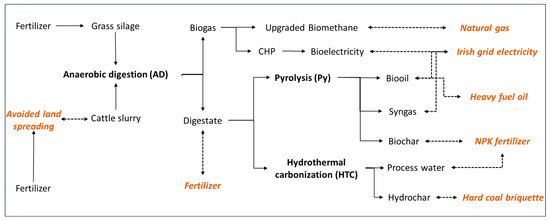
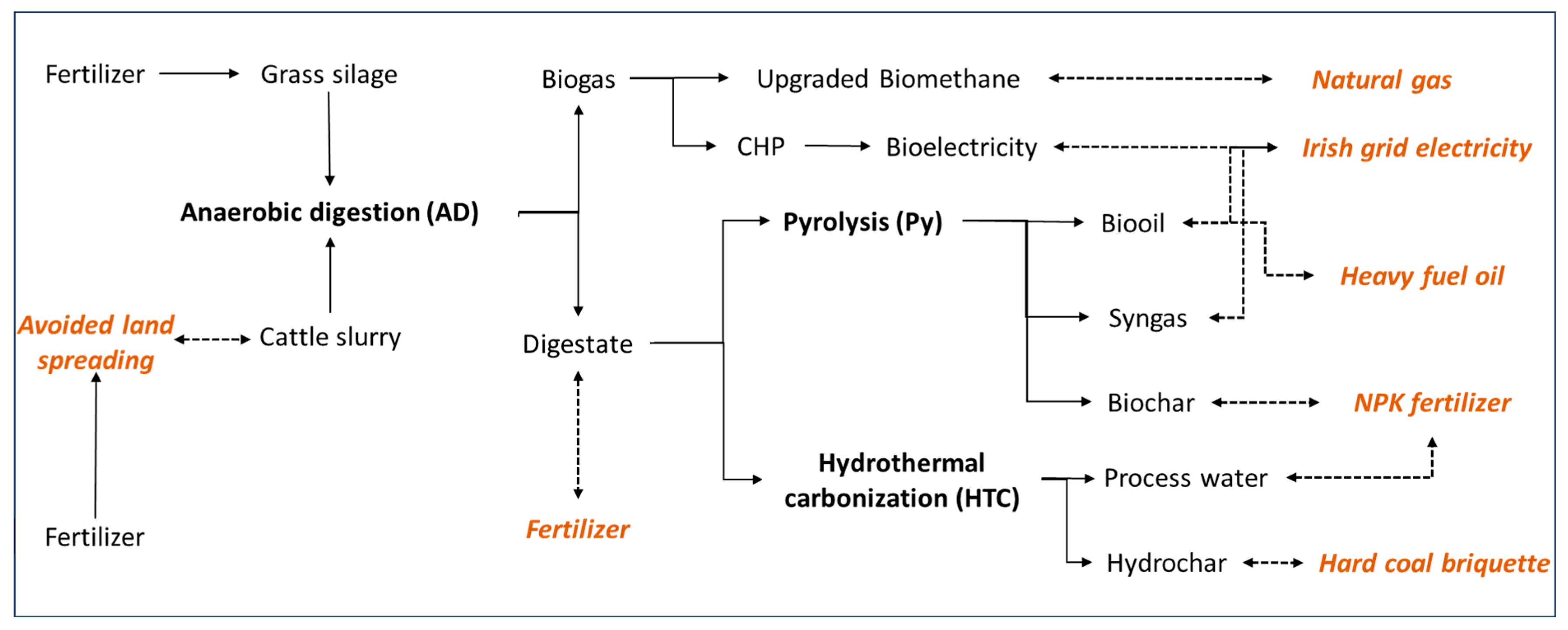
The system boundaries of this study are shown in Figure 1. The following processes are included in the biogas plant operations: AD digester, CHP, digestate storage, and transport to the PY/HTC plant; Py plant-dewatering, drying of digestate, and Py reactor; and HTC plant–HTC reactor, drying and pelletizing of raw hydrochar, and reverse osmosis (RO) system. In this study, the creation of capital goods for AD, Py, and HTC facilities is not included in the LCA analysis. These assets have long lifespans, with their environmental impacts spread over many years, making their contribution relatively minor compared to operational impacts [30]. This study focuses on the environmental consequences of feedstock processing and bioenergy production, aligning with standard LCA practices that prioritise the most significant impact categories.
Figure 1.
System boundaries of this study, showing the cascading technologies and processes considered. The solid lines pointing towards black letters depict the incurred processes and the dotted lines pointing towards orange letters indicate the avoided processes. (AD: 37 °C; HRT: 75 d; VS ratio: 0.4:0.6; CH4 yields 358 and 186 m3 CH4 t−1 VS; Py: fast pyrolysis at 500 °C; product yield: 0.65; assumed combustion efficiency: 75%; HTC: 200–250 °C; energy demand: 611 kWh t−1 dw; hydrochar yield: 56–72% (according to Owsianiak et al. [31], and Miliotti et al. [32]).
The processes that are substituted by the utilisation of the feedstocks/co-products are referred to as avoided processes. This includes avoiding spreading cattle slurry across large areas of land, replacing electricity from the national grid with CHP-generated electricity, substituting natural gas heating with upgraded biomethane, and using biochar and HTC liquid as soil conditioners to replace NPK fertilisers. The incurred processes also include the additional N fertiliser applied to achieve excess available grass silage (excess livestock requirements) for AD from the pasture through intensification [9].
2.2. Life Cycle Inventory (LCI)
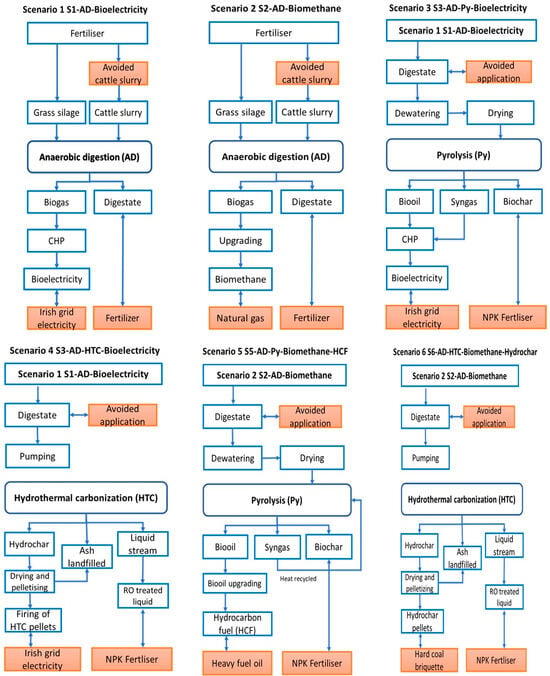
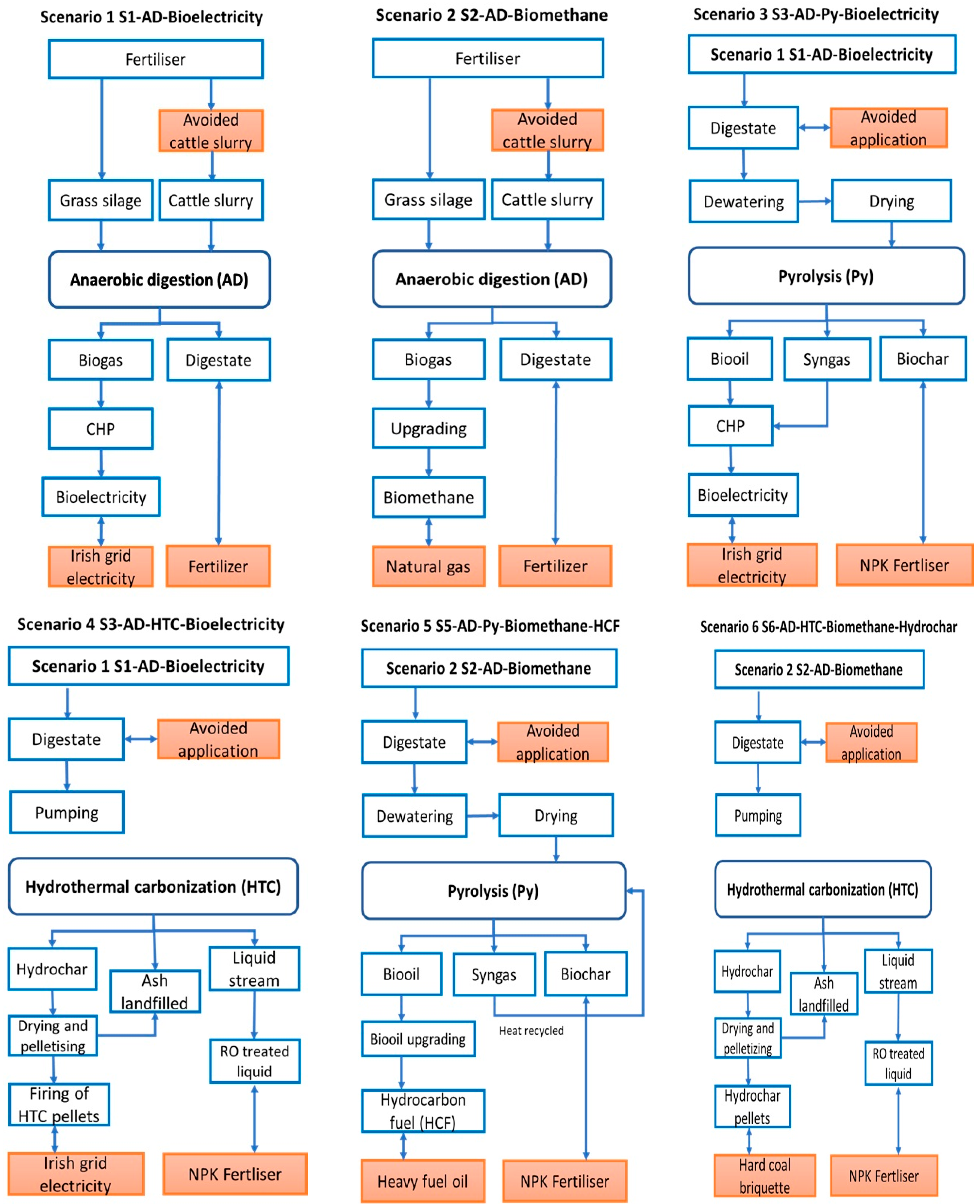
Foreground data for the AD system (digester configuration, operating conditions, and biogas yields) were taken from Himanshu et al. [8] and Beausang et al. [9], which describe a farm-scale co-digestion plant in Ireland. Pyrolysis operating conditions, energy requirements, and product yields were based on a study by Mehta et al. [10], representing a fast pyrolysis process at 500 °C applied to digestate solids. HTC operating conditions, energy use, and hydrochar/process water yields were adapted from those of the industrial-scale Ingelia S.L. plant reported by Owsianiak et al. [31]. The background data utilised in this study were sourced from the Ecoinvent 3.5 Consequential model database. The LCIs of the studied scenarios were normalised with the selected FU of the study and are presented in the Supplementary Material. Figure 2 illustrates a detailed graphical representation of the process stages, as well as the incurred and avoided processes investigated in each scenario within this research.
Figure 2.
Scenarios demonstrating the incurred processes (blue boxes) and avoided processes (orange boxes) involved in integrated pathways for bioenergy and biofertiliser production (blue boxes represent incurred process stages within each scenario, while orange boxes represent avoided processes attributed to system expansion (e.g., displaced fossil electricity, mineral fertiliser substitution). The upgraded bio-oil was assumed to displace heavy fuel oil used in the transport sector (S5), while hydrochar was assumed to displace hard coal briquettes typically used in domestic heating (S6) [11].
The AD system examined in this study is based on a farm-scale facility located in Teagasc, Grange, Dunsany, Co. Meath, as described by Himanshu et al. [8]. This facility includes a 1500 m3 single-stage digester designed to co-digest grass silage and cattle slurry. Located on a grassland farm with a cattle production enterprise, the AD facility efficiently utilises slurry collected from slatted-floor housing. This study focuses on co-digesting cattle slurry and grass silage at an optimal volatile solids (VS) ratio of 0.4:0.6. With grass silage yielding 358 m3 CH4 per ton of VS and cattle slurry producing 186 m3 CH4 per ton of VS, the process is optimised for biomethane production. The digester operates at a mesophilic temperature of 37 °C, with a total retention time of 75 days, ensuring effective biogas generation and feedstock utilisation. The operational and energy requirements for the Py and HTC systems are discussed later in this section, with additional details provided in the Supplementary Material.
Scenario 1 (S1) AD bioelectricity: This scenario describes the feedstock (grass silage and cattle slurry) conversion from AD to biogas and subsequent generation of heat and electricity through a CHP engine. The electricity used was 10% of the total produced, with the excess assumed to be exported to the national grid, while heat was used within the system and the excess was dissipated. The electricity produced was assumed to displace the fossil-based fuels (especially coal) used for electricity production in the grid mix. The AD digestate was assumed to replace commonly utilised mineral fertilisers in Ireland such as Calcium Ammonium Nitrate (CAN) and Diammonium Phosphate (DAP) [33]. This scenario also takes into account the emissions resulting from the displaced slurry, as well as the emissions associated with the additional fertiliser used as a substitute for the slurry. The fertiliser replacement values were calculated by MANNER-NPK software v1.01, as suggested in a study by Beausang et al. [9].
Scenario 2 (S2) AD biomethane: The primary application of biogas in Ireland has predominantly been the generation of electricity and heat through CHP systems. Nevertheless, there has been a growing inclination towards enhancing the quality of biogas by converting it into biomethane, which can be injected into the gas grid or utilised as a fuel for transportation purposes. The Irish Government has established a target to achieve a 10% share of green biogas in the country’s gas demand by 2030 [34]. This scenario assumes that around 90% of the biogas generated from the co-digestion of grass silage with cattle slurry (0.4:0.6 VS) is allocated for the purpose of biomethane upgrading, which is then injected into the grid. The remaining 10% of biogas is utilised for the production of heat and electricity using CHP systems in order to meet the energy requirements within the system. A water scrubbing process was implemented as biogas upgrading technology, which necessitates the consumption of 770 MJ of power and 129 kg of water for every ton of CO2 removed [35]. The outcomes of the digestate and avoided processes were same as in S1.
Scenario 3 (S3) AD–Py bioelectricity: This scenario considers the combination of AD and Py processes, where AD digestate is used as feedstock in the Py process for the production of bio-oil, syngas, and biochar. Under the assumption of a 75% combustion efficiency, the bio-oil and syngas derived from the Py process would yield 6.52 kWh kg−1 and 4.36 kWh kg−1 of energy, respectively [10]. The AD process assumptions are the same as in S1, whereas avoided emissions from digestate application were included in this scenario. However, the digestate produced by AD undergoes dewatering and drying in this scenario prior to the Py process. A decanter centrifuge was used to separate solids from liquids, requiring 3.5 kWh of electrical energy per ton of digestate [36]. Following dewatering, the solid component is dried with a belt dryer system, producing dried solids with a 10% moisture content [12] and an energy content of 4.66 kWh kg−1 [37]. The energy requirement for the drying process of solids was reported to be a 0.72 kWh t−1 input solid fraction [10]. The process of pyrolysis was performed on dried solids at a temperature of 500 °C, resulting in a product yield efficiency of 0.65 [12]. The carbon content of biochar was reported to reach 80% at 500 °C and then remain constant with respect to the pyrolysis temperature [38].
Scenario 4 (S4) AD–HTC bioelectricity: This scenario demonstrates the HTC treatment of AD digestate, resulting in the digestion of feedstock (grass silage and cattle slurry) for biogas production and subsequent heat and electricity production through the CHP system. The assumptions for AD and electricity production via the CHP system are similar to in S1, whereas avoided emissions from digestate application are included in this scenario. The inventory data for the HTC process were adopted from Owsianiak et al. [31], which presented an LCI based on a currently operational HTC plant at Ingelia S.L. The inventory data for the pilot scale were normalised in line with the current study’s FU. The energy requirements for pumping the feedstock and maintaining the reactor heat in the 200–250 °C range were 50 and 611 kWh t−1 dw, respectively. Hydrochar drying and palletisation utilised 40 kWh of electrical energy per ton of dry weight, and RO for liquid treatment required 1.2 kWh m−3. The energy produced from hydrochar combustion was assumed to be 5.55 kWh kg−1, with a thermal efficiency of 0.7 [31].
Scenario 5 (S5) AD–Py biomethane–hydrocarbon fuel (HCF): This scenario is similar to S3; however, the biogas from AD is upgraded to biomethane and supposed to be input to the national grid, where it would replace natural gas. Bio-oil was upgraded to HCF with a yield of 47% and energy content of 12.34 kWh kg−1 HCF [39]. The syngas was assumed to be reused within the process to cover the energy requirements for the Py process [40].
Scenario 6 (S6) AD–HTC biomethane–hydrochar: This scenario is similar to S4; however, the biogas from AD is upgraded to biomethane and input to the national grid, displacing natural gas. The hydrochar produced from the HTC process has a yield of 56% and dried solid energy content of 5.66 kWh kg−1 dry weight hydrochar pellets [31]. In both HTC scenarios (S4 and S6), the liquid HTC process water is subjected to reverse osmosis (RO) prior to reuse. The electricity demand for RO treatment is included in the LCI based on a study by Owsianiak et al. [31]. No additional downstream wastewater treatment is modelled; instead, the RO-treated process water is assumed to be applied on grassland as a fertiliser solution in line with emerging practice and the principles of EU Regulation 2020/741 [41] on water reuse.
2.3. Avoided Processes
In the model systems, co-products were assumed to replace short-term marginal technologies in line with consequential LCA principles. Small changes in demand for energy or fertilisers were therefore modelled as affecting the output of marginal, predominantly fossil-based technologies. The electricity generated in the systems was assumed to be exported to the grid and displace fossil-based electricity, with coal representing a short-term marginal fuel (Scenarios S1, S3 and S4). Upgraded biogas (biomethane) was assumed to be input to the natural gas grid and to replace marginal natural gas (Scenarios S2, S5 and S6). The biochar produced from the Py process (S3, S5) and the RO-treated liquid from the HTC process (S4, S6) were assumed to be used as soil conditioners and to replace mineral NPK fertilisers [12,42].
When applying these waste-derived amendments to agricultural soils, it is essential to monitor contaminants, particularly heavy metals, to avoid adverse environmental impacts and maintain soil health [43]. The average N–P–K values for biochar (1.45–1.85–4.85%) were adopted from Monlau et al. [42], where heavy metal concentrations were within the acceptable limits set by the IBI Biochar Standard [44]. For the RO-treated liquid from HTC, N–P–K values of 1.34–0.23–2.50% were taken from a study by Owsianiak et al. [31], with heavy metal contents reported to be below the permissible levels according to relevant EU industrial standards [41].
2.4. Life Cycle Impact Assessment (LCIA)
The ReCiPe 2016 v.1.1 LCIA methodology was employed in this research. This approach was selected due to its comprehensive nature and recent update, making it the most up-to-date impact assessment method available in openLCA v1.9.0 [45]. The characterisation elements that were chosen were situated at the midpoint level, as they exhibited a more robust correlation with environmental fluxes and possessed a comparatively lower degree of uncertainty [45]. The impact categories—climate change (CC, kg CO2-Eq), freshwater eutrophication (FWE, kg P-Eq), acidification potential (AP, SO2-Eq), and fossil depletion (FD, kg oil-Eq)—were chosen for this study because they represent the most critical environmental challenges associated with bioenergy production and waste treatment systems [19,29]. By concentrating on these categories, this study ensures a comprehensive assessment of the most pertinent environmental impacts, aligning with the study’s objectives and the priorities of stakeholders in sustainable waste management. The impact factors used in the study for the impact categories are as follows: CC-CO2 (1), CH4 (34), and N2O (298); TA- SOx (1), NH3 (2.45), and NOx (0.56); FWE-P (1) and phosphoric acid (0.32); and FD-hard coal (0.434), brown coal (0.225), natural gas (1.11), and crude oil (1.04).
2.5. CLCA Modelling Approach
For each scenario, s, and impact category, k, the total life cycle impact, is calculated as follows:
where denotes the foreground and background activities incurred in scenario s (e.g., electricity consumption, fertiliser production, digestate storage, drying energy), denotes the activities avoided by system expansion (e.g., marginal fossil electricity, natural gas, heavy fuel oil, hard coal briquettes, mineral NPK fertiliser, and land spreading of raw slurry), and and are the ReCiPe 2016 midpoint characterisation factors for category k.
All results are expressed per functional unit (1 t of feedstock mix) and reflect the net difference between incurred and avoided burdens. The marginal technologies substituted were chosen according to consequential LCA principles, assuming the displacement of Irish grid electricity, natural gas in the heating sector, and commonly used mineral fertilisers (CAN and DAP) in Irish grassland systems [32].
3. Results
3.1. Overall Comparison of Scenarios
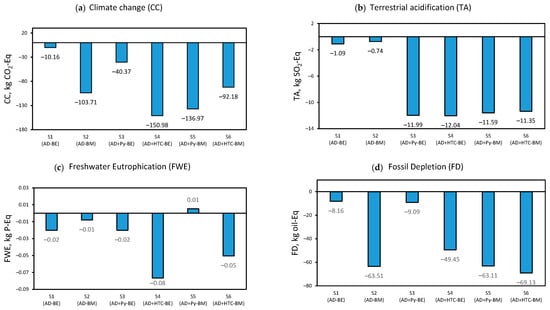
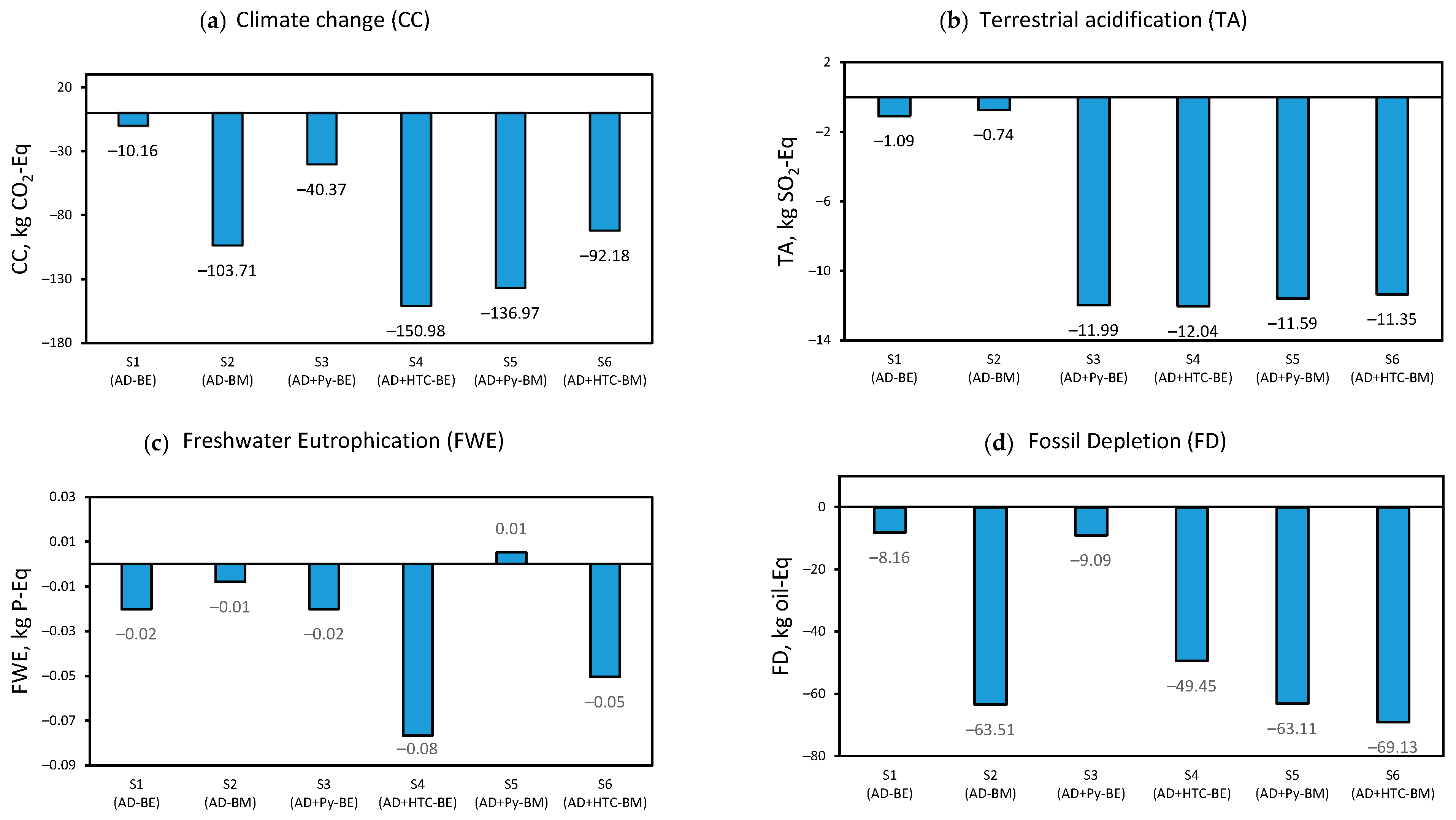
Across all impact categories, the integrated AD–Py/HTC scenarios (S3–S6) delivered greater net environmental benefits than the standalone AD scenarios (S1–S2) (Figure 3). S1 (AD–bioelectricity) was the only configuration with a small net increase in climate change (CC) impact, whereas all the other scenarios achieved net savings. Among the integrated options, S4 (AD–HTC bioelectricity) provided the highest overall reductions, followed by S6 (AD–HTC biomethane). This pattern reflects the higher energy recovery and fertiliser substitution potential in the HTC configurations relative to the Py-based systems (S3 and S5).
Figure 3.
Life cycle impacts of scenarios considered in the study based on the functional unit (FU) of 1 tonne of feedstock treated (AD—anaerobic digestion; Py—pyrolysis; HTC—hydrothermal carbonization; BE—bioelectricity; BM—biomethane).
3.2. Climate Change (CC)
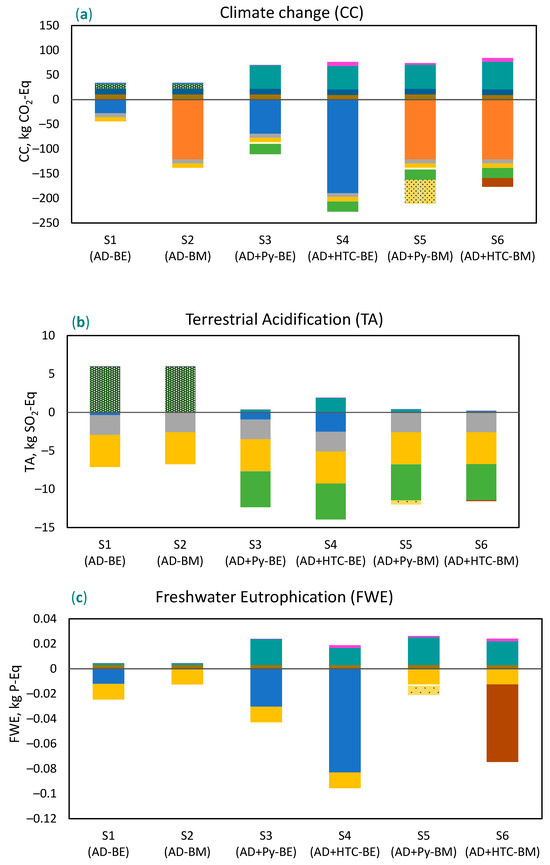
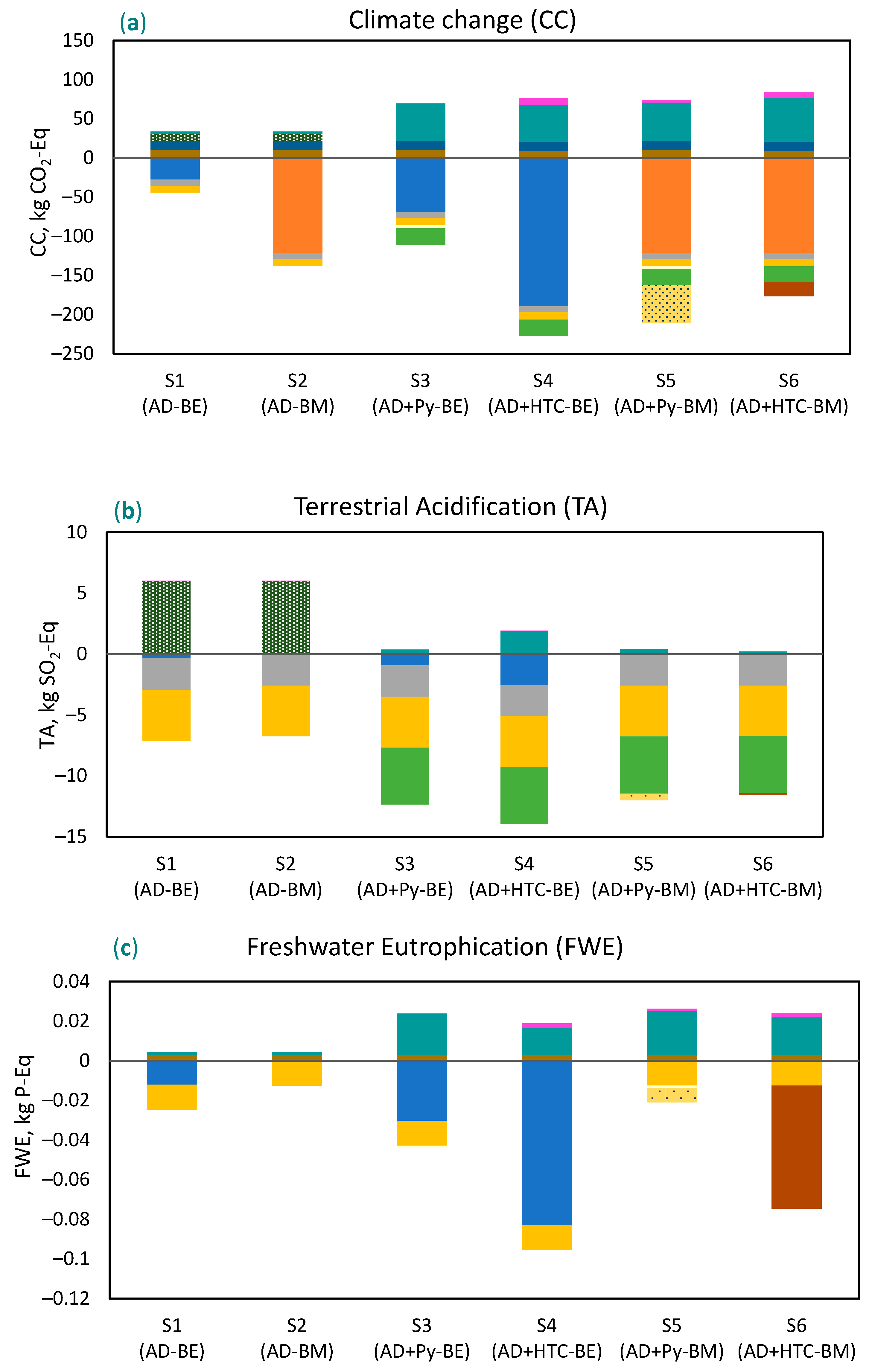
For climate change, S1 showed a marginal net burden, while S2–S6 all achieved net greenhouse gas savings (Figure 3a). The poorest performance of S1 is mainly due to the additional mineral fertiliser production and application required to support grassland intensification, which account for more than half of its total incurred emissions (Figure 4a). In contrast, S3–S6 compensate for these incurred emissions through substantial avoided burdens. In S3 and S4, avoided fossil electricity displaced by bioelectricity represents the dominant saving, whereas in S2, S5 and S6, avoided natural gas and other fossil fuels displaced by biomethane and hydrocarbon fuel are the main contributors (Figure 4a). Overall, the largest net climate benefit is obtained in S4, where the combination of a high hydrochar yield and the efficient use of HTC process water leads to the highest level of fossil energy and fertiliser substitution.
Figure 4.
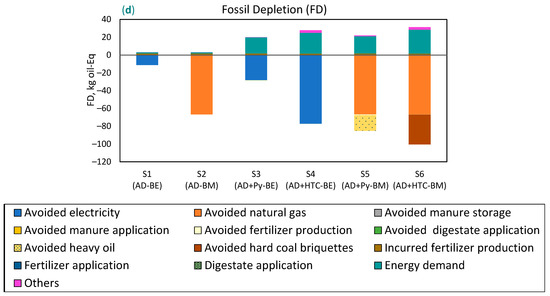
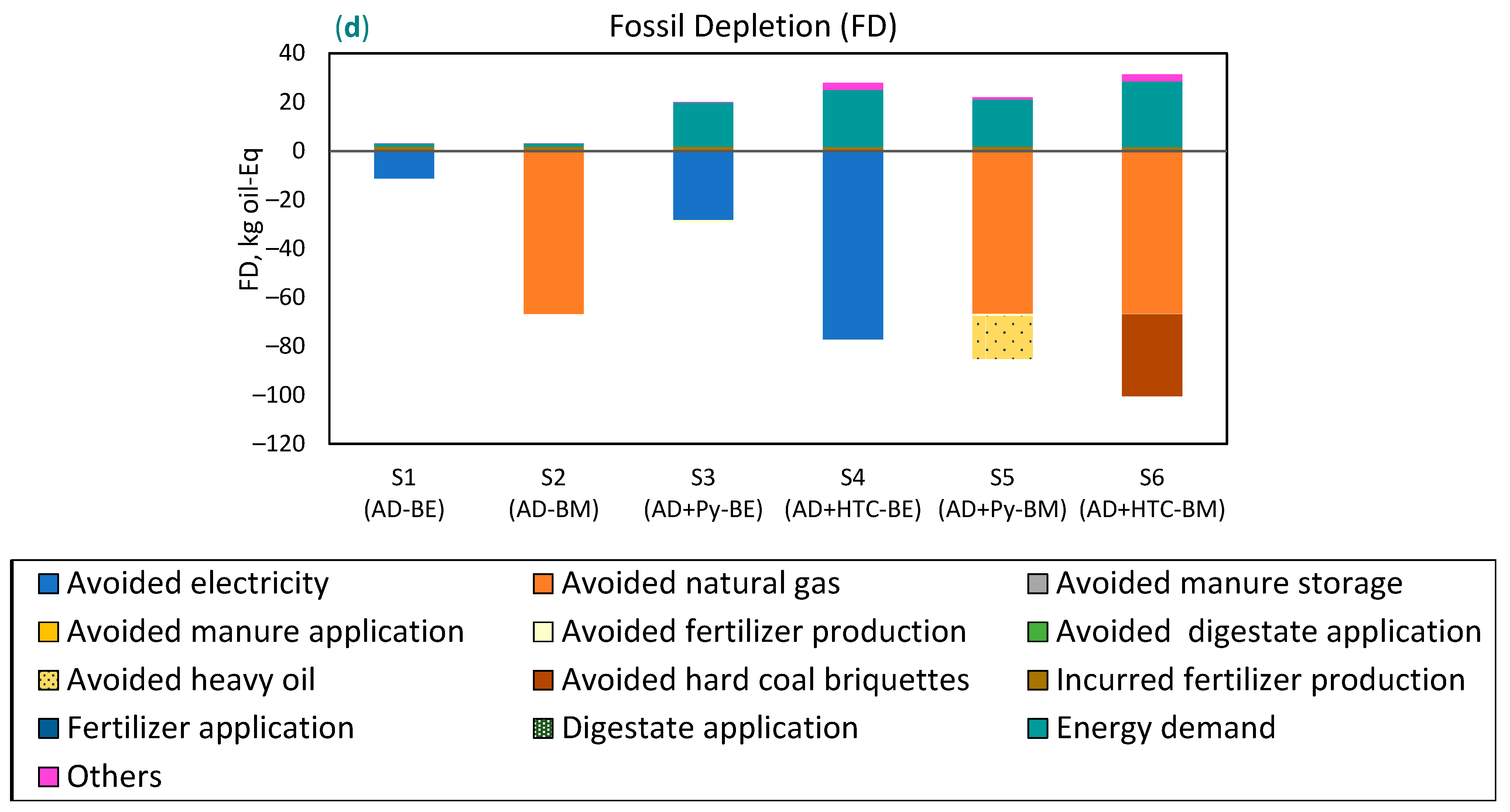
Contribution of individual process stages to net environmental impacts for each scenario (per 1 t feedstock). Positive stacked bars represent incurred emissions (e.g., fertiliser production and application, feedstock supply and transport, AD and Py/HTC operation), while negative bars represent avoided burdens (e.g., displaced fossil electricity, natural gas and heavy fuel oil, avoided mineral fertiliser production and avoided slurry management). Colours denote process groups, as indicated in the legend (fertiliser production, digestate/fertiliser application, AD operation, Py/HTC operation, avoided electricity, avoided heat/natural gas, avoided mineral fertiliser, and avoided slurry management). BE—bioelectricity; BM—biomethane; Py—pyrolysis; HTC—hydrothermal carbonization. AD—anaerobic digestion.
3.3. Terrestrial Acidification (TA)
All integrated scenarios (S3–S6) reduce terrestrial acidification compared with the standalone AD cases (Figure 3b). In S1 and S2, acidification is mainly driven by NH3 and NOx emissions from fertiliser and digestate application (Figure 4b). In S3–S6, these emissions are partially offset by replacing mineral fertilisers with biochar, hydrochar, and HTC process water and by reducing slurry storage and land spreading. The largest reductions are again achieved in S4 and S6, where avoided mineral fertiliser production and avoided slurry management represent the main negative contributions (Figure 4b).
3.4. Freshwater Eutrophication (FWE)
Freshwater eutrophication impacts follow a similar pattern to terrestrial acidification (Figure 3c). Standalone AD scenarios show residual positive impacts due to P emissions from fertiliser and digestate application, whereas integrated scenarios achieve net savings. Contribution analysis (Figure 4c) indicates that the key drivers are P emissions from fertiliser use on intensively managed grassland and avoided P emissions when mineral fertilisers and raw slurry are displaced by digestate-derived products. Scenarios with higher substitution of mineral P (notably S4 and S6) show the largest net reductions.
3.5. Fossil Depletion (FD)
For fossil depletion, all scenarios deliver net savings of up to 99% compared with the fossil reference, with integrated configurations clearly outperforming standalone AD (Figure 3d). In S1, savings are modest and entirely associated with displaced grid electricity. In S2–S6, a combination of avoided fossil electricity, natural gas, and heavy fuel oil leads to substantially higher net benefits. Scenario S4 again performs best, as hydrochar and surplus electricity displace coal- and gas-based energy, while S6 provides the highest avoided fossil fuel use in the transport and heating sectors through biomethane and hydrocarbon fuel substitution (Figure 4d).
4. Discussion
This study provides valuable insights into the environmental performance of integrating AD with Py and HTC for the treatment of cattle slurry and grass silage. The results highlight the potential of cascading technologies to improve bioenergy production, nutrient recovery, and overall environmental sustainability. The findings underscore the importance of system integration and provide a roadmap for optimising bioenergy production while minimising environmental impacts.
4.1. Standalone AD vs. Integrated Systems
The standalone AD process, which uses cattle slurry and grass silage to produce biogas, demonstrated environmental benefits across all impact categories (Figure 3). However, its performance varied based on how the biogas was utilised. In this study, Scenario S2, which upgraded biogas to biomethane, outperformed Scenario S1, where biogas was used for cogeneration of electricity. This is consistent with the findings of Beausang et al. [9], who showed that upgrading biogas to biomethane for grid injection provides greater environmental savings by reducing reliance on fossil-based fuels for heating. Additionally, Styles et al. [46] highlighted that biomethane used for heating offers better environmental performance than its use in electricity production. This is particularly relevant in the Irish context, where there is a growing emphasis on renewable gas for heating, and the biomethane pathway aligns well with national energy targets.
However, the most significant environmental savings were observed in the integrated AD + Py and AD + HTC systems (S3–S6) (Figure 3). These integrated systems not only produced more energy but also delivered substantial reductions in key impact categories, such as CC, FWE, and FD. This aligns with the work of Wang et al. [19] and Medina-Martos et al. [11], who found that coupling AD with thermochemical processes like Py or HTC enhanced system efficiency by avoiding emissions from digestate landfilling and improving energy recovery. In this study, the integration of Py and HTC with AD facilitated surplus bioenergy production, which replaced fossil-based fuels, contributing significantly to reduced emissions.
Li and Feng [29], however, presented a different perspective by showing that standalone AD outperformed AD + Py systems in specific cases, particularly when treating sewage sludge. Their research indicated that AD requires less energy and material than integrated systems. Yet, the authors also noted that integrated systems become advantageous when exporting surplus energy, supporting the findings in this study, where Scenarios S3 and S5 demonstrated significant environmental benefits due to the additional energy (bio-oil, syngas, and hydrocarbon fuel) produced from the Py system. These energy carriers displaced fossil-based fuels, such as coal and heavy fuel oil, considerably reducing emissions. Thus, while standalone AD has its merits, the integrated systems evaluated here offer far greater environmental savings under conditions where surplus bioenergy is recovered and utilised efficiently.
4.2. Pyrolysis vs. Hydrothermal Carbonization
The comparison between AD + Py and AD + HTC systems revealed notable differences in environmental performance. The AD + Py systems (S3 and S5) effectively reduced CC and FD impacts by generating bio-oil, syngas, and hydrocarbon fuel, which replaced fossil-based energy sources like coal and natural gas. However, Scenario S5 had higher freshwater eutrophication (FWE) impacts due to the energy-intensive drying process required in the Py process, showing the importance of factoring in the energy demands of such processes when designing environmentally sustainable systems.
On the other hand, the AD + HTC systems (S4 and S6) showed superior performance across multiple impact categories. Miliotti et al. [32] found that HTC achieved much higher solid yields from AD digestate (up to 72.6% w/wdb) compared to pyrolysis (33.1% w/w db), making HTC more efficient in material recovery. Additionally, HTC requires less energy for dewatering, further contributing to its environmental benefits. Belete et al. [47] also demonstrated that hydrochar has a higher heating value (HHV) than biochar, making it a more energy-dense and efficient fuel for bioenergy production. With its higher solid yields and more energy-efficient fuel, HTC proves to be the more sustainable option when integrated with AD. The combination of better material recovery and enhanced energy efficiency makes HTC a more effective choice than Py for minimising environmental impacts while maximising energy recovery.
4.3. Cascading Use of Digestate
One of the critical advantages of integrated AD + Py and AD + HTC systems is the cascading use of digestate. Both biochar and hydrochar helped stabilise essential nutrients like nitrogen (N), phosphorus (P), and potassium (K) in the digestate, preventing nutrient leaching and making them effective as soil conditioners. This reduces the need for synthetic fertilisers and mitigates nutrient runoff in agricultural systems. Monlau et al. [42] found that pyrolyzed digestate biochar is richer in P and K than solid digestate, making it a suitable substitute for conventional fertilisers. In this study, Scenarios S3 and S5, where biochar was used as a soil conditioner, achieved significant emissions savings in the CC and FD categories by displacing synthetic NPK fertilisers.
Similarly, in the HTC-integrated scenarios (S4 and S6), hydrochar was effectively used as a soil conditioner, with the additional benefit of using treated HTC process water as a substitute for conventional fertilisers. This practice aligns with EU Regulation 2020/741, which promotes the use of treated wastewater in agriculture to enhance water management and support a circular economy. The avoided production of synthetic fertilisers contributed to further emissions savings, particularly in the CC and FD categories. However, the environmental benefits of avoided fertiliser production were less pronounced than those associated with avoided digestate application, which had a more significant influence on TA impacts (Figure 4).
4.4. Challenges and Opportunities in HTC
Despite its advantages, HTC faces challenges, particularly with the treatment of its highly organic process water. Without proper treatment, this water cannot be released into the environment, which limits HTC’s scalability and sustainability. However, using HTC process water as a fertiliser presents an innovative solution, as demonstrated in Spain, where reverse osmosis (RO)-concentrated HTC water is being applied in citrus plantations [31]. In this study, Scenarios S4 and S6 assumed the use of RO-treated HTC process water in grasslands, contributing to additional environmental savings through avoiding synthetic fertiliser production. This novel approach highlights the potential role of HTC in sustainable nutrient management, provided that proper treatment solutions are implemented.
To unlock HTC’s full potential, further research is needed to refine process water treatment methods and explore broader agricultural applications. This will not only enhance the sustainability of the HTC process but also expand its adoption in biowaste management systems.
4.5. Potential for Circular Economy and Sustainable Waste Management
The results of this study highlight the significant potential of integrated AD + Py and AD + HTC systems to support circular economy objectives. By efficiently recovering energy and nutrients from agricultural waste, these systems offer a sustainable pathway for waste management, aligning with resource efficiency and zero-waste principles. Beausang et al. [9] emphasised the importance of maximising biogas utilisation pathways to enhance the environmental sustainability of bioenergy production, particularly in agricultural systems. In Ireland, where bioresources like cattle slurry and grass silage are abundant, cascading systems such as those evaluated in this study offer a robust solution for optimising biomass waste utilisation. However, it is crucial to ensure that these integrated systems complement rather than disrupt existing sustainable biomass management practices. As this study recommends, emphasis should be placed on valorising residual wastes from current systems, focusing on improving energy recovery and nutrient recycling without undermining environmental, economic, or social sustainability.
4.6. Uncertainty and Sensitivity Considerations
This study is subject to the typical sources of uncertainty in LCA, including parameter uncertainty (e.g., feedstock yields, emission factors, energy efficiencies), model uncertainty (e.g., choice of marginal technologies in the consequential approach) and scenario uncertainty (e.g., fertiliser substitution ratios and the degree of grassland intensification). These uncertainties mainly affect the absolute magnitude of impacts.
To test the robustness of our conclusions, we carried out simple deterministic sensitivity checks, in which key parameters such as biomethane upgrading efficiency, electricity conversion efficiency, grass silage yield, and fertiliser substitution efficiency were varied around the baseline LCI values. Across these tests, the ranking of scenarios remained unchanged: integrated AD–HTC configurations consistently performed better than standalone AD and AD–Py pathways, indicating that the main conclusions are robust to reasonable parameter variation. A full quantitative uncertainty and global sensitivity analysis would provide additional insight into the influence of individual parameters and is therefore identified as a priority for future work.
4.7. Policy and Stakeholder Implications
The results suggest that integrating AD with Py/HTC could make a meaningful contribution to Ireland’s renewable energy and climate targets by converting existing livestock residues into low-carbon bioenergy and biofertiliser streams. In particular, AD–HTC biomethane configurations align well with national ambitions for biomethane grid injection and decarbonisation of heat while reducing reliance on imported mineral fertilisers and supporting circular nutrient management on grassland farms [48,49]. For policymakers, this highlights the importance of coordinated support measures that simultaneously address renewable gas incentives, recognition of digestate-derived fertilisers within fertiliser regulations, and investment in regional Py/HTC infrastructure. For farmers and AD operators, the cascading pathways studied here provide options to diversify revenue streams (energy, fertiliser products, potential carbon credits) while reducing environmental externalities associated with slurry storage and land spreading.
4.8. Economic Considerations and Implementation Barriers
Previous LCA studies on AD–Py/HTC systems indicate that these integrated configurations face several economic and practical barriers [8,9,10,31]. Pyrolysis and HTC introduce additional capital costs (reactors, drying or dewatering equipment, solid fuel handling) and operating costs (electricity and heat for drying, pumping and pressure/temperature maintenance), which must be offset by revenues from surplus energy and valorised co-products such as biochar, hydrochar, or carbon removal benefits. In line with these findings, our results show that avoided fossil energy and fertiliser production drive the environmental benefits of integrated scenarios; in economic terms, this suggests that policies recognising the value of low-carbon heat and fertiliser substitution (e.g., through carbon pricing or green-gas support schemes) will be critical for commercial deployment. Additional barriers include limited existing Py/HTC infrastructure in rural areas, uncertainties around the long-term agronomic performance and regulatory acceptance of biochar-/hydrochar-based fertilisers, and the need for robust quality standards and monitoring, particularly regarding heavy metals and other contaminants. Addressing these barriers will require coordinated action among technology providers, AD operators, fertiliser regulators, and policymakers.
5. Conclusions
This study provides a comprehensive environmental assessment of integrating AD with Py and HTC to optimise bioenergy production and nutrient management from cattle slurry and grass silage. The integrated AD + HTC systems (particularly Scenario S4) demonstrated the best overall environmental performance, outperforming both standalone AD and AD + Py systems. The higher solid yield and superior heating value of hydrochar, coupled with the effective use of treated process water, resulted in significant emissions savings across key impact categories.
By cascading the utilisation of AD digestate for bioenergy and biofertiliser production, the integrated systems offer a multifunctional solution that supports circular nutrient management and more sustainable treatment of livestock residues. In Ireland, the abundant availability of cattle slurry and grass silage, together with policy ambitions for renewable gas, provides a strong case for the development and deployment of AD–HTC configurations as part of national energy and climate strategies
Further work is needed to optimise HTC process water treatment, reduce the energy demand of pyrolysis drying (e.g., through low-temperature or waste-heating options) and quantify the techno-economic performance of integrated plants at different scales. Advancements in energy recovery, nutrient recycling, and system design, supported by collaboration between industry, policymakers, and researchers, will be crucial to unlocking the full environmental and economic potential of these technologies.
Although this case study is grounded in Irish grass-based livestock systems, the methodological framework and key findings are relevant to other regions with high densities of cattle or mixed livestock and surplus grass or forage. In such contexts, integrating AD with Py/HTC and cascading the resulting digestate could provide a flexible platform for converting agricultural residues into low-emission energy carriers and nutrient-rich soil amendments. The CLCA approach applied here can be readily adapted to other feedstocks, energy mixes, and policy settings, offering a useful decision-support tool for designing circular, low-carbon bioenergy strategies based on agricultural waste.
Supplementary Materials
The following supporting information can be downloaded at https://www.mdpi.com/article/10.3390/su18021040/s1: Supplementary Sheet S1: Life cycle inventory (LCI) inputs and outputs for the six AD, AD–Py and AD–HTC scenarios modelled in this study, based on a functional unit of 1 t feedstock (0.4:0.6 cattle slurry:grass silage, VS basis); Supplementary Sheet S2: Mapping of scenario process flows to the corresponding ecoinvent datasets, and share of energy source fuels in the Irish electricity grid mix used in the background system.
Author Contributions
M.K.M.: Conceptualisation, data curation, formal analysis, investigation, methodology, software, validation, visualisation, writing—original draft preparation, and writing—review and editing. N.T.: Validation, writing—review and editing. F.M.: Conceptualisation, investigation, funding acquisition, project administration, supervision, and writing—review and editing. All authors have read and agreed to the published version of the manuscript.
Funding
This work was supported by the Sustainable Energy Authority of Ireland (SEAI) under the SEAI National Energy Research, Development & Demonstration (RDD&D) Funding Programme 2018 (Grant No. 18/RDD/365) as part of the ABC Economy project. Additional financial support was provided by the Department of Agriculture, Food and the Marine (DAFM).
Institutional Review Board Statement
Not applicable.
Informed Consent Statement
Not applicable.
Data Availability Statement
Data will be made available on request.
Acknowledgments
The authors gratefully acknowledge the support of the Sustainable Energy Authority of Ireland (SEAI) and the Department of Agriculture, Food and the Marine (DAFM). This research was conducted as part of the ABC Economy project.
Conflicts of Interest
The authors declare no conflicts of interest.
References
- Bertrand, S. Fact Sheet: Climate, Environmental, and Health Impacts of Fossil Fuels. 2021. Available online: https://www.eesi.org/files/FactSheet_Fossil_Fuel_Externalities_2021.pdf (accessed on 16 August 2023).
- EPA. The Role of Incentivising Biomethane in Ireland Using Anaerobic Digestion. 2019. Available online: https://www.epa.ie/publications/research/waste/Research_Report_279.pdf (accessed on 10 August 2023).
- SEAI. Energy in Ireland 2023 Report. 2023. Available online: https://www.seai.ie/publications/Energy-in-Ireland-2023.pdf (accessed on 7 May 2024).
- SEAI. Assessment of Cost and Benefits of Biogas and Biomethane in Ireland. 2017. Available online: https://www.seai.ie/publications/Assessment-of-Cost-and-Benefits-of-Biogas-and-Biomethane-in-Ireland.pdf (accessed on 18 August 2023).
- Government of Ireland. Bioeconomy Action Plan Consultation and Discussion Document. 2022. Available online: https://www.gov.ie/pdf/?file=https://assets.gov.ie/240374/042b595a-de62-469e-85b9-000f401caed2.pdf#page=null (accessed on 11 September 2023).
- EPA. The Circular Economy Programme 2021–2027. 2021. Available online: https://www.epa.ie/publications/circular-economy/resources/EPA_Circular_Economy_2021_Programme_Apr22_Web.pdf (accessed on 14 September 2023).
- Hendriks, C.M.A.; Lambrecht, E.; Nabuurs, G.J.; Gellynck, X.; Welck, H. Publishable Version of Compendium on Research Results on Agro and Forest-Biomass Side-Streams: Deliverable 1.1. EU-Horizon2020 Project AGRIFORFALOR, Project ID: 696394. European Commission. 2016. Available online: https://research.wur.nl/en/publications/publishable-version-of-compendium-on-research-results-on-agro-and (accessed on 18 August 2023).
- Himanshu, H.; Murphy, J.D.; Lenehan, J.J.; O’Kiely, P. Impacts of characteristics of grass silage and cattle slurry feedstocks on the cost of methane production. Biofuel Bioprod. Biorefining 2019, 13, 129–139. [Google Scholar] [CrossRef] [Scilit]
- Beausang, C.; McDonnell, K.; Murphy, F. Assessing the environmental sustainability of grass silage and cattle slurry for biogas production. J. Clean. Prod. 2021, 298, 126838. [Google Scholar] [CrossRef] [Scilit]
- Mehta, N.; Anderson, A.; Johnston, C.R.; Rooney, D.W. Evaluating the opportunity for utilising anaerobic digestion and pyrolysis of livestock manure and grass silage to decarbonise gas infrastructure: A Northern Ireland case study. Renew. Energy 2022, 196, 343–357. [Google Scholar] [CrossRef] [Scilit]
- Medina-Martos, E.; Istrate, I.R.; Villamil, J.A.; Gálvez-Martos, J.L.; Dufour, J.; Mohedano, Á.F. Techno-economic and life cycle assessment of an integrated hydrothermal carbonization system for sewage sludge. J. Clean. Prod. 2020, 277, 122930. [Google Scholar] [CrossRef] [Scilit]
- Monlau, F.; Sambusiti, C.; Antoniou, N.; Barakat, A.; Zabaniotou, A. A new concept for enhancing energy recovery from agricultural residues by coupling anaerobic digestion and pyrolysis process. Appl. Energy 2015, 148, 32–38. [Google Scholar] [CrossRef] [Scilit]
- Cavali, M.; Junior, N.L.; de Almeida Mohedano, R.; Belli Filho, P.; da Costa, R.H.R.; de Castilhos Junior, A.B. Biochar and hydrochar in the context of anaerobic digestion for a circular approach: An overview. Sci. Total Environ. 2022, 822, 153614. [Google Scholar] [CrossRef] [Scilit]
- Pawlak-Kruczek, H.; Niedzwiecki, L.; Sieradzka, M.; Mlonka-Mędrala, A.; Baranowski, M.; Serafin-Tkaczuk, M.; Magdziarz, A. Hydrothermal carbonization of agricultural and municipal solid waste digestates–Structure and energetic properties of the solid products. Fuel 2020, 275, 117837. [Google Scholar] [CrossRef] [Scilit]
- Government of Ireland, Fact Sheet on Irish Agriculture—January 2018. Available online: https://www.agriculture.gov.ie/media/migration/publications/2018/January2018Factsheet120118.pdf (accessed on 18 August 2023).
- Lalor, S.T. Cattle Slurry on Grassland-Application Methods and Nitrogen Use Efficiency. Ph.D. Dissertation, Wageningen University and Research, Wageningen, The Netherlands, 2014. Available online: https://research.wur.nl/en/publications/cattle-slurry-on-grassland-application-methods-and-nitrogen-use-e (accessed on 22 January 2024).
- Mayer, F.; Bhandari, R.; Gäth, S.A. Life cycle assessment on the treatment of organic waste streams by anaerobic digestion, hydrothermal carbonization and incineration. Waste Manag. 2021, 130, 93–106. [Google Scholar] [CrossRef] [Scilit]
- Weidema, B.P.; Pizzol, M.; Schmidt, J.; Thoma, G. Attributional or consequential life cycle assessment: A matter of social responsibility. J. Clean. Prod. 2018, 174, 305–314. [Google Scholar] [CrossRef] [Scilit]
- Wang, J.; Okopi, S.I.; Ma, H.; Wang, M.; Chen, R.; Tian, W.; Xu, F. Life cycle assessment of the integration of anaerobic digestion and pyrolysis for treatment of municipal solid waste. Bioresour. Technol. 2021, 338, 125486. [Google Scholar] [CrossRef] [Scilit]
- Caiardi, F.; Belaud, J.P.; Vialle, C.; Monlau, F.; Tayibi, S.; Barakat, A.; Oukarroum, A.; Zeroual, Y.; Sablayrolles, C. Waste-to-energy innovative system: Assessment of integrating anaerobic digestion and pyrolysis technologies. Sustain. Prod. Consum. 2022, 31, 657–669. [Google Scholar] [CrossRef] [Scilit]
- Ferrentino, R.; Merzari, F.; Fiori, L.; Andreottola, G. Coupling hydrothermal carbonization with anaerobic digestion for sewage sludge treatment: Influence of HTC liquor and hydrochar on biomethane production. Energies 2020, 13, 6262. [Google Scholar] [CrossRef] [Scilit]
- Sarrion, A.; Medina-Martos, E.; Iribarren, D.; Diaz, E.; Mohedano, A.F.; Dufour, J. Life cycle assessment of a novel strategy based on hydrothermal carbonization for nutrient and energy recovery from food waste. Sci. Total Environ. 2023, 878, 163104. [Google Scholar] [CrossRef] [Scilit] [PubMed]
- Mannarino, G.; Caffaz, S.; Gori, R.; Lombardi, L. Environmental life cycle assessment of hydrothermal carbonization of sewage sludge and its products valorisation pathways. Waste Biomass Valoriz. 2022, 13, 3845–3864. [Google Scholar] [CrossRef] [Scilit]
- Zhang, Q.; Wang, S.; Sun, H.; Arhin, S.G.; Yang, Z.; Liu, G.; Tong, Y.W.; Tian, H.; Wang, W. Anaerobic digestion+ pyrolysis integrated system for food waste treatment achieving both environmental and economic benefits. Energy 2024, 288, 129856. [Google Scholar] [CrossRef] [Scilit]
- Yadav, S.; Doki, M.M.; Ghangrekar, M.M.; Dubey, B.K. Postliminary treatment of food-waste digestate via combined hydrothermal carbonization and microbial fuel cell for bio-energy recovery: A comparative life cycle impact assessment. Green Chem. 2024, 26, 11673–11685. [Google Scholar] [CrossRef] [Scilit]
- Ogunleye, A.; Flora, J.; Berge, N. Life cycle assessment of hydrothermal carbonization: A review of product valorization pathways. Agronomy 2024, 14, 243. [Google Scholar] [CrossRef] [Scilit]
- Abdelfatah-Aldayyat, E.; Gómez, X. Hydrothermal Treatment of Digestates: Challenges and Perspectives. Environments 2025, 12, 347. [Google Scholar] [CrossRef] [Scilit]
- Gamaralalage, D.; Rodgers, S.; Gill, A.; Meredith, W.; Bott, T.; West, H.; Alce, J.; Snape, C.; McKechnie, J. Biowaste to biochar: A techno-economic and life cycle assessment of biochar production from food-waste digestate and its agricultural field application. Biochar 2025, 7, 50. [Google Scholar] [CrossRef] [Scilit]
- Li, H.; Feng, K. Life cycle assessment of the environmental impacts and energy efficiency of an integration of sludge anaerobic digestion and pyrolysis. J. Clean. Prod. 2018, 195, 476–485. [Google Scholar] [CrossRef] [Scilit]
- Cao, Y.; Pawłowski, A. Life cycle assessment of two emerging sewage sludge-to-energy systems: Evaluating energy and greenhouse gas emissions implications. Bioresour. Technol. 2013, 127, 81–91. [Google Scholar] [CrossRef] [Scilit] [PubMed]
- Owsianiak, M.; Ryberg, M.W.; Renz, M.; Hitzl, M.; Hauschild, M.Z. Environmental performance of hydrothermal carbonization of four wet biomass waste streams at industry-relevant scales. ACS Sustain. Chem. Eng. 2016, 4, 6783–6791. [Google Scholar] [CrossRef] [Scilit]
- Miliotti, E.; Casini, D.; Rosi, L.; Lotti, G.; Rizzo, A.M.; Chiaramonti, D. Lab-scale pyrolysis and hydrothermal carbonization of biomass digestate: Characterization of solid products and compliance with biochar standards. Biomass Bioenergy 2020, 139, 105593. [Google Scholar] [CrossRef] [Scilit]
- Dillon, E.; Buckley, C.; Moran, B.; Lennon, J.; Wall, D. Teagasc National Farm Survey Fertiliser Use Survey 2005–2015. 2018. Available online: https://teagasc.ie/wp-content/uploads/media/website/publications/2018/Fertiliser-Use-Survey---290518.pdf (accessed on 20 August 2023).
- Gas Networks Ireland. Gas Network Is at the Heart of Ireland’s New Energy Future—New Gas Networks Ireland Report. 2023. Available online: https://www.gasnetworks.ie/corporate/news/active-news-articles/gas-report-2022 (accessed on 30 August 2023).
- Tsapekos, P.; Khoshnevisan, B.; Alvarado-Morales, M.; Symeonidis, A.; Kougias, P.G.; Angelidaki, I. Environmental impacts of biogas production from grass: Role of co-digestion and pretreatment at harvesting time. Appl. Energy 2019, 252, 113467. [Google Scholar] [CrossRef] [Scilit]
- Cathcart, A.; Smyth, B.M.; Lyons, G.; Murray, S.T.; Rooney, D.; Johnston, C.R. An economic analysis of anaerobic digestate fuel pellet production: Can digestate fuel pellets add value to existing operations? Clean. Eng. Technol. 2021, 3, 100098. [Google Scholar] [CrossRef] [Scilit]
- Brassard, P.; Godbout, S.; Hamelin, L. Framework for consequential life cycle assessment of pyrolysis biorefineries: A case study for the conversion of primary forestry residues. Renew. Sustain. Energy Rev. 2021, 138, 110549. [Google Scholar] [CrossRef] [Scilit]
- Song, W.; Guo, M. Quality variations of poultry litter biochar generated at different pyrolysis temperatures. J. Anal. Appl. Pyrolysis 2012, 94, 138–145. [Google Scholar] [CrossRef] [Scilit]
- Winjobi, O.A. Techno-Economic and Life Cycle Assessments of Biofuel Production from Woody Biomass Through Torrefaction-fast Pyrolysis and Catalytic Upgrading. Ph.D. Dissertation, Michigan Technological University, Houghton, MI, USA, 2017. Available online: https://core.ac.uk/download/pdf/151510828.pdf (accessed on 8 May 2024).
- da Costa, T.P.; Murphy, F.; Roldan, R.; Mediboyina, M.K.; Chen, W.; Sweeney, J.; Capareda, S.; Holden, N.M. Technical and environmental assessment of forestry residues valorisation via fast pyrolysis in Ireland. Biomass Bioenergy 2023, 173, 106766. [Google Scholar] [CrossRef] [Scilit]
- European Parliament, & Council of the European Union. Regulation (EU) 2020/741 of the European Parliament and of the Council of 25 May 2020 on Minimum Requirements for Water Reuse (Text with EEA Relevance); Official Journal of the European Union; European Union: Brussels, Belgium, 2018; Available online: https://eur-lex.europa.eu/legal-content/EN/TXT/?uri=CELEX:32020R0741 (accessed on 8 August 2024).
- Monlau, F.; Francavilla, M.; Sambusiti, C.; Antoniou, N.; Solhy, A.; Libutti, A.; Zabaniotou, A.; Barakat, A.; Monteleone, M. Toward a functional integration of anaerobic digestion and pyrolysis for a sustainable resource management. Comparison between solid-digestate and its derived pyrochar as soil amendment. Appl. Energy 2016, 169, 652–662. [Google Scholar] [CrossRef] [Scilit]
- Kookana, R.S.; Sarmah, A.K.; Van Zwieten, L.; Krull, E.; Singh, B. Biochar application to soil: Agronomic and environmental benefits and unintended consequences. Adv. Agron. 2011, 112, 103–143. [Google Scholar] [CrossRef] [Scilit]
- International Biochar Initiative (IBI). Standardized Product Definition and Product Testing Guidelines for Biochar That Is Used in Soil; International Biochar Initiative: Norfolk, VA, USA, 2015; Volume 23, Available online: https://biochar-international.org/wp-content/uploads/2020/06/IBI_Biochar_Standards_V2.1_Final2.pdf (accessed on 8 May 2024).
- Huijbregts, M.A.; Steinmann, Z.J.; Elshout, P.M.; Stam, G.; Verones, F.; Vieira, M.; Zijp, M.; Hollander, A.; Van Zelm, R. ReCiPe2016: A harmonised life cycle impact assessment method at midpoint and endpoint level. Int. J. Life Cycle Assess. 2017, 22, 138–147. [Google Scholar] [CrossRef] [Scilit]
- Styles, D.; Dominguez, E.M.; Chadwick, D. Environmental balance of the UK biogas sector: An evaluation by consequential life cycle assessment. Sci. Total Environ. 2016, 560, 241–253. [Google Scholar] [CrossRef] [Scilit]
- Belete, Y.Z.; Mau, V.; Spitzer, R.Y.; Posmanik, R.; Jassby, D.; Iddya, A.; Kassem, N.; Tester, J.W.; Gross, A. Hydrothermal carbonization of anaerobic digestate and manure from a dairy farm on energy recovery and the fate of nutrients. Bioresour. Technol. 2021, 333, 125164. [Google Scholar] [CrossRef] [Scilit]
- Bakkaloglu, S.; Hawkes, A. A comparative study of biogas and biomethane with natural gas and hydrogen alternatives. Energy Environ. Sci. 2024, 17, 1482–1496. [Google Scholar] [CrossRef] [Scilit]
- Singlitico, A.; Goggins, J.; Monaghan, R.F. Lifecycle Assessment of Biomethane Production in Ireland via Gasification and Methanation. Eur. Biomass Conf. Exhib. Proc. 2016, 2016, 1502–1509. [Google Scholar]
Disclaimer/Publisher’s Note: The statements, opinions and data contained in all publications are solely those of the individual author(s) and contributor(s) and not of MDPI and/or the editor(s). MDPI and/or the editor(s) disclaim responsibility for any injury to people or property resulting from any ideas, methods, instructions or products referred to in the content. |
© 2026 by the authors. Licensee MDPI, Basel, Switzerland. This article is an open access article distributed under the terms and conditions of the Creative Commons Attribution (CC BY) license.