Review

Macaúba (Acrocomia aculeata) as a Sustainable Alternative for the Bioindustry: A Bibliometric Review of Applications as Phytochemicals, Bioactives, and Biodiesel


by
Lucas Costa da Silva
1,
Maria Vanderly Nascimento Cavalcante
1,
Mauricio Dorneles Lima
2,
Bruna Araújo de Sousa
1,
Ângella Eduarda da Silva Sousa
3,
Alisson Justino Alves da Silva
3,
Nair Silva Macêdo
3,
Zildene de Sousa Silveira
4,
Francisco Nascimento Pereira Junior
5,
Francisco Assis Bezerra da Cunha
3,
Luciana Medeiros Bertini
6 and
Maria Alexsandra de Sousa Rios
1,*
1
Grupo de Inovações Tecnológicas e Especialidades Químicas, Departamento de Engenharia Mecânica, Universidade Federal do Ceará, Campus do Pici, Bl. 714, Fortaleza 60440-554, Brazil
2
Grupo de Inovações Tecnológicas e Especialidades Químicas, Departamento de Engenharia Química, Universidade Federal do Ceará, Campus do Pici, Bl. 714, Fortaleza 60440-554, Brazil
3
Laboratório de Bioprospecção do Semiárido e Métodos Alternativos—LABSEMA, do Universidade Regional Cariri—URCA, Rua Cel. Antônio Luíz, 1161-Pimenta, Crato 63105-010, Brazil
4
Programa de Pós-Graduação em Ciências Biológicas—PPGCB, Universidade Federal de Pernambuco—UFPE, Av. Prof. Moraes Rego, 1235-Cidade Universitária, Recife 50670-901, Brazil
5
Centro de Ciências Agrárias e da Biodiversidade—CCAB, Universidade Federal do Cariri—UFCA, Av. Ten. Raimundo Rocha, 1639-Cidade Universitária, Juazeiro do Norte 63048-080, Brazil
6
Instituto Federal de Educação, Ciência e Tecnologia do Rio Grande do Norte, Campus Apodi, Sítio Lagoa do Clementino, nº 999, RN 233, Km 2, Apodi 59700-971, Brazil
*
Author to whom correspondence should be addressed.
Sustainability 2026, 18(2), 1035; https://doi.org/10.3390/su18021035
Submission received: 3 November 2024 / Revised: 7 February 2025 / Accepted: 11 February 2025 / Published: 20 January 2026

Abstract

This research aimed to conduct a bibliometric review on Acrocomia aculeata (Jacq.) Lodd. ex Mart., popularly known as “macaúba”, a palm tree of the Arecaceae family with great potential to promote sustainable practices. The review focused on the applications associated with the oil, pulp, and almonds of the fruit, products that can be used in industries such as food, cosmetics, and bioenergy, contributing to the development of more ecological production chains with less environmental impact. Data were collected from the Scopus, Web of Science, and ScienceDirect databases for publications related to phytochemical and bioactive aspects, while only Web of Science was used for data on energy aspects. The documents found were analyzed in the VOSviewer software (version 1.6.20), allowing the creation of bibliometric networks (clusters) and tables on scientific production. The analyses included authors, co-authors, countries, institutions, journal sources, and keywords. For phytochemical and bioactive aspects, the search resulted in 1026 articles, of which 261 were selected after applying the exclusion criteria. For energy aspects, 99 publications were found. Based on the data, it was possible to analyze the existing research on A. aculeata, identifying the state of the research and possible gaps in studies related to this oilseed. The results highlight the importance of macaúba as a sustainable alternative for diversifying agricultural and bioindustrial products, promoting the bioeconomy and contributing to the mitigation of environmental impacts. In addition, the research allowed us to identify the universities and researchers most dedicated to this species, their main results and the areas that still require investment to advance research. Thus, A. aculeata emerges as a relevant option to strengthen sustainable practices in key sectors, integrating economic, social, and environmental benefits.

1. Introduction

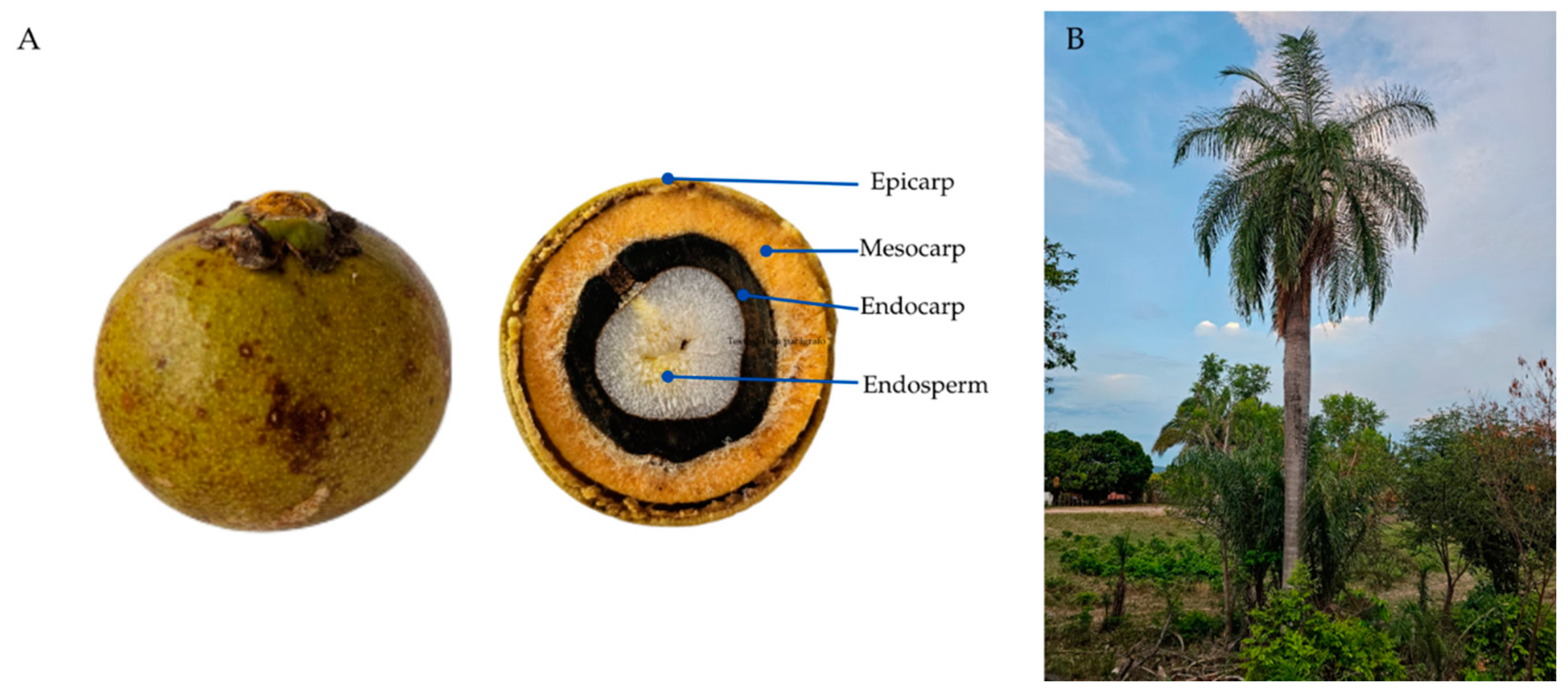
Acrocomia aculeata (Jacq.) Lodd. ex Mart. (A. aculeata), popularly known as “macaúba”, belongs to the order Arecales/Palmae, family Arecaceae, and is characterized by presenting monocotyledonous inflorescences. It is a palm tree native to tropical America distributed in Brazilian territory in the Cerrado, Atlantic Forest, Amazon Forest, and Pantanal biomes [1]. This species has an arboreal size measuring approximately 15 to 20 m in height. It is classified as a monoecious species with an erect stem with cylindrical spines along its entire length, with compound and pinnate green leaves (Figure 1). In addition, it has a set of yellow inflorescences, while the fruits are spherical with a smooth surface composed of epicarp, mesocarp, and endosperm [2]. The macaúba palm (Acrocomia aculeata) is a highly versatile species, recognized for its rich nutritional profile and significant industrial potential. Its kernel is rich in oils, especially essential fatty acids such as lauric and oleic, making it an excellent raw material for producing edible and industrial oils. Similarly, pulp (mesocarp) is a valuable source of fixed oil, also rich in oleic acid and antioxidants such as carotenoids, with applications in the food, cosmetic, and biofuel industries. Together, the kernel and pulp highlight the species’ ability to produce oils for various uses, including biofuels, where the mesocarp and endosperm are integral components. The sustainable exploitation of macaúba supports economic and industrial advancements, promotes rural development, and contributes to a growing bioeconomy [3,4,5,6]. Furthermore, rural communities use the fruit to produce charcoal through its endocarp and the endosperm to produce oil and soap for domestic and commercial purposes [3,7,8].
In the literature, applications in popular medicine for A. aculeata are also described due to its laxative, healing and analgesic, anti-inflammatory properties, and treatment of diabetes [9]. Chemical characterization studies of A. aculeata components have also been described in the literature, with oleic acid being identified as the most frequent compound, followed by linoleic acid, palmitic acid, lauric acid, myristic acid, stearic acid, linolenic acid, palmitoleic acid, caprylic acid, and β-carotene [10,11,12,13,14,15]. Some studies report on the amount of carotenoids present in the constituents of macauba (epicarp, mesocarp, and endocarp), demonstrating the nutritional importance of the fruit and how to store and transport it to avoid loss of the material. A large amount of carotenoids present in the pulp (mesocarp) is visible due to the strong yellowish color of the pulp and reddish color of the oil, presenting approximately 300 (µgg−1) [1]. The almond presents in a smaller amount, approximately 1.82 (µgg−1), resulting in an almost white color in natura and an oil of a transparent light yellow depending on the ripening time and/or harvest of the fruit [2].
The literature also highlights the association of these compounds with several biological activities presented by A. aculeata derivatives, including antibacterial [16], anti-inflammatory [17], antioxidant, and antidiabetic [18].
In addition to biological activities, A. aculeata has been explored in the literature as a raw material for biodiesel, biogas, and biohydrogen production. Although numerous studies have investigated the potential of macaúba, a comprehensive bibliometric analysis is lacking. In this context, bibliometrics is a technique based on the quantitative data of scientific production, relevant for evaluating knowledge production in different areas and identifying current and future trends [19,20]. Bibliometric analysis represents a scoping review, presenting the main scientific articles based on current evidence on a topic [21].
In 2021, the work of Ampese et al. initiated the idea of a bibliometric study on macauba. In this article, it is possible to have an initial idea of the “state of the art” of macauba, mainly portraying its use for energy production. Therefore, it is recognized that a more in-depth bibliometric study on other industrial aspects of macauba is necessary. There are studies related to specific applications for each constituent of the fruit; however, bibliometric and economic studies become interesting from an economic-industrial point of view that can guide companies and new research on the subject. An example is the recent interest of Brazilian companies in acting in research involving the macauba industrial chain, such as the company Acelen, which began studies for the construction of an industry for SAF production from macauba oil in 2023.
Therefore, the study presents a bibliometric review of Acrocomia aculeata emphasizing its bioactivities, phytochemical characteristics, botanical species, and biodiesel production. By applying bibliometric methods, it is possible to map the evolution of research and identify areas of focus, influential authors, and collaborations between institutions and countries.

2. Materials and Methods

2.1. Literature Search

To confirm the designation of the botanical species in focus and the synonyms linked to Acrocomia aculeata, we consulted the websites The World Flora Online (www.worldfloraonline.org), International Plant Name Index (www.ipni.org), and Tropicos (www.tropicos.org/name/2401428 (accessed on 10 February 2025)).
A review of the data regarding the chemical composition and biological activities of products derived from Acrocomia aculeata were collected using scientific search engines in databases including Scopus, Web of Science, and ScienceDirect. For this bibliographical investigation, the following descriptors “Acrocomia aculeata” were used; “Acrocomia aculeata AND bioactivities”; “Acrocomia aculeata AND chemical composition”. The searches included articles published between 2007 and June 2023 and were focused on an extensive review due to data deficiency.

2.2. Exclusion and Inclusion Criteria

To refine the research, inclusion and exclusion criteria were used. The inclusion criteria were based on (1) works that contained in their title, abstract, or keywords the descriptors used in the search; (2) articles that included data on the chemical composition and biological activities associated with the species Acrocomia aculeata; (3) complete articles on in vivo and in vitro studies in English.
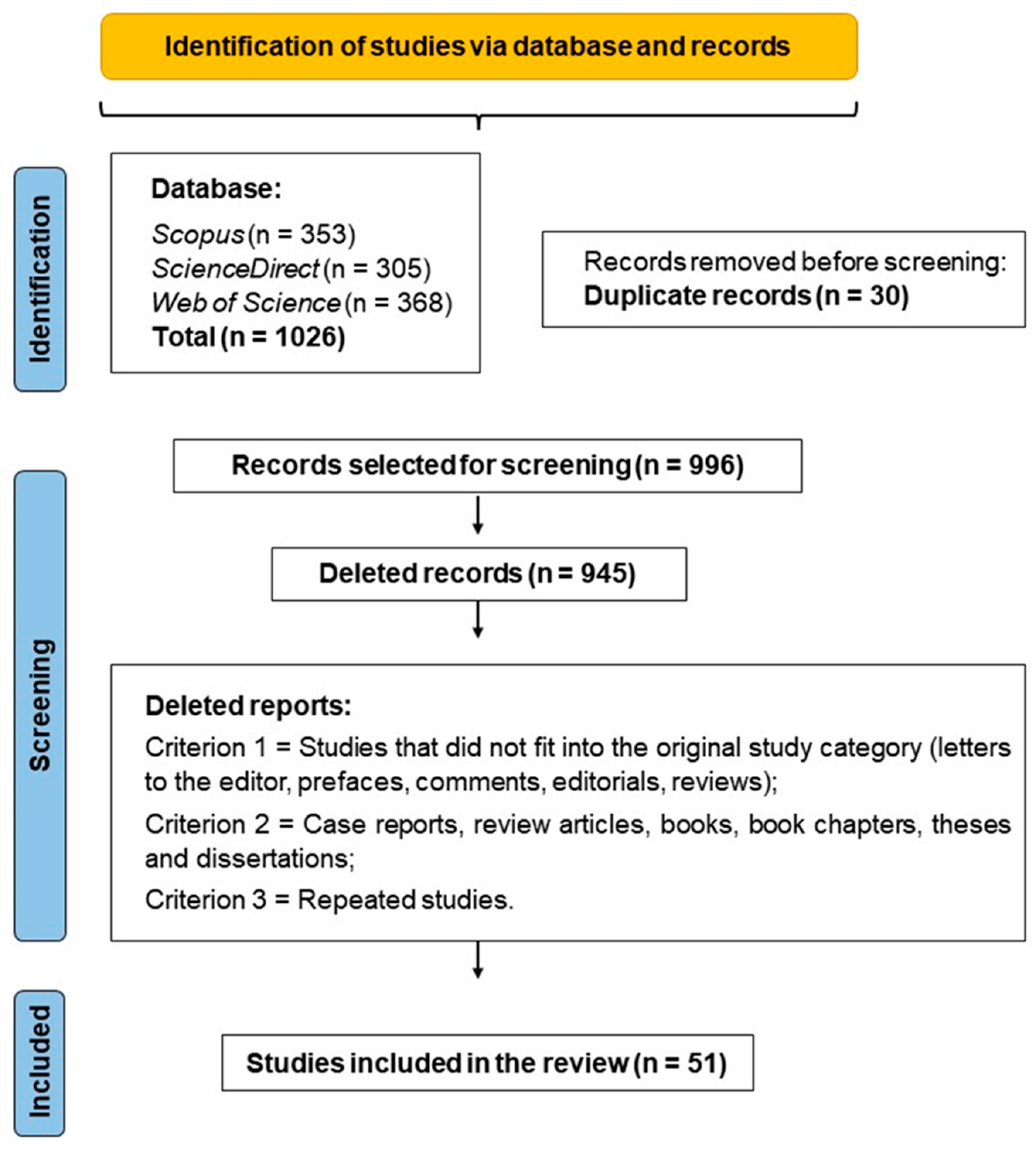
The following were excluded from the review: (1) studies that did not fit into the original work category (letters to the editor, prefaces, comments, editorials, reviews); (2) case reports, review articles, books, book chapters, theses, and dissertations; (3) repeated studies (Figure 2).

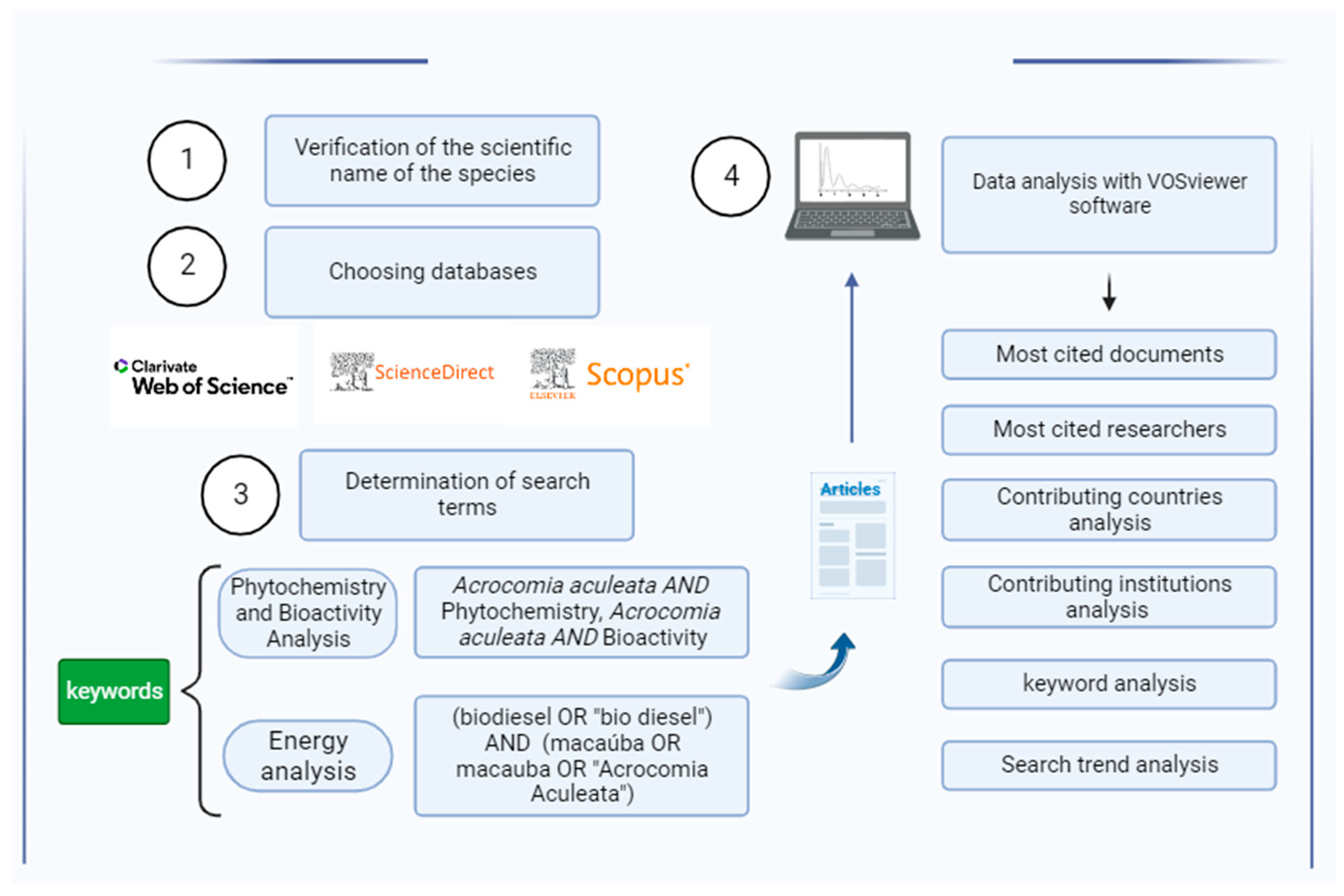
2.3. Research and Bibliometric Analysis of Biodiesel from Acrocomia aculeata

The data for the analysis in question were obtained from the Web of Science (WoS), ScienceDirect, and Scopus databases. The data for the analysis in question were obtained from the Web of Science (WoS), ScienceDirect, and Scopus databases. The inclusion criteria were only articles in English. For Acrocomia aculeata, the search terms were biodiesel AND “Acrocomia aculeata”, with 99 articles found, maintaining research areas that presented a minimum number of 10 publications from 2008 to 2022.
The VOSviewer software was used to analyze the data collected after the search, as shown in Figure 2. The analyses included authors, co-authors, countries, institutions, journal sources, and keywords so that social network maps (clusters) and tables that demonstrate the relationships between publications and summarize metric information regarding the scientific production of biodiesel from Acrocomia aculeata were obtained.

3. Results and Discussion

The search and analysis of the databases resulted in a total of 1026 articles on the species Acrocomia aculeata. After applying the inclusion and exclusion criteria in this study, 51 articles were selected that address the chemical composition and biological activities of A. aculeata products to compose this review. Figure 3 shows the study screening process.
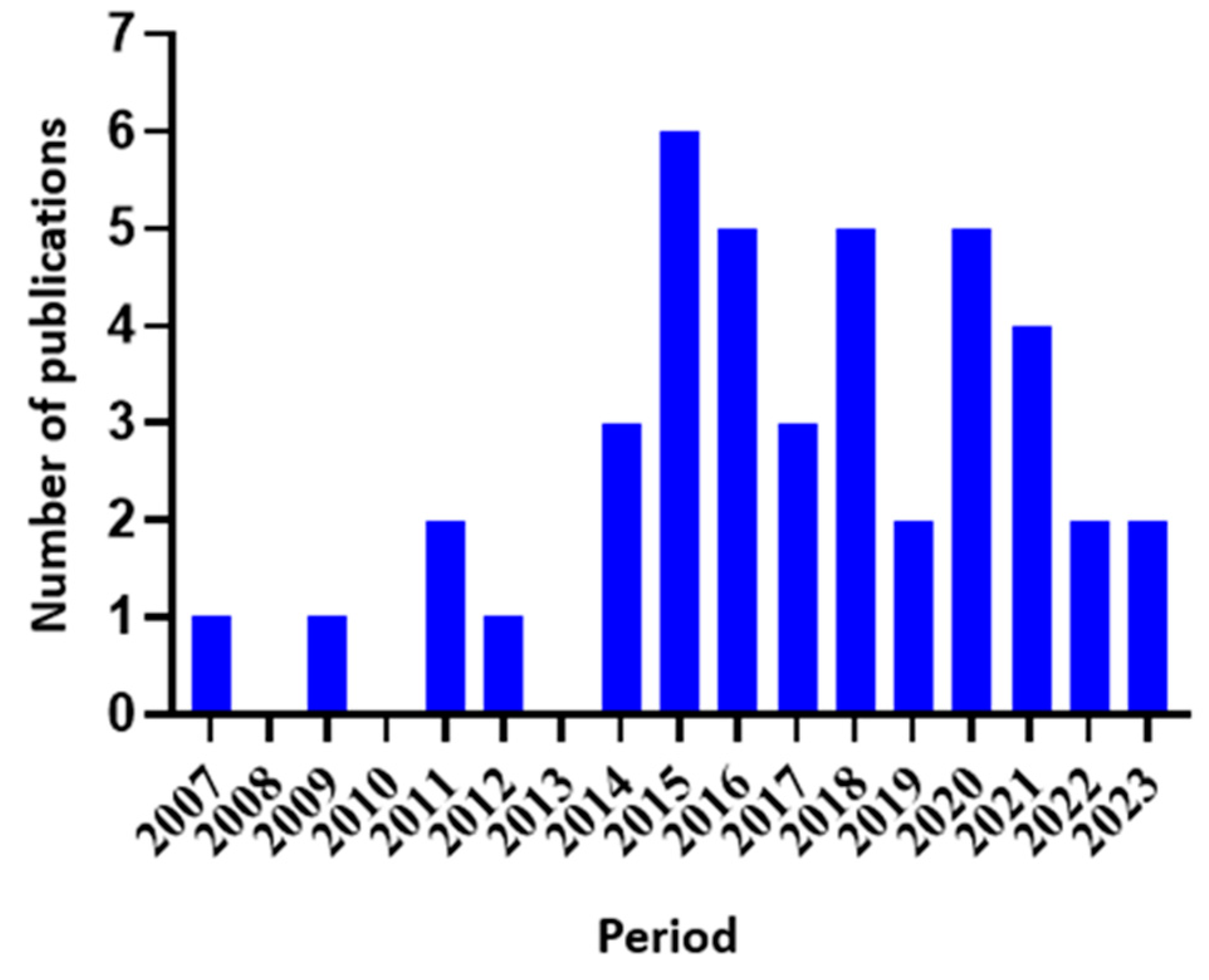
Figure 4 shows the number of publications from 2007 to 2023 on the biological activities and chemical composition of A. aculeata products, showing that the highest rate of scientific production occurred in the year 2015, followed by the years 2016, 2018, 2020, and 2021.
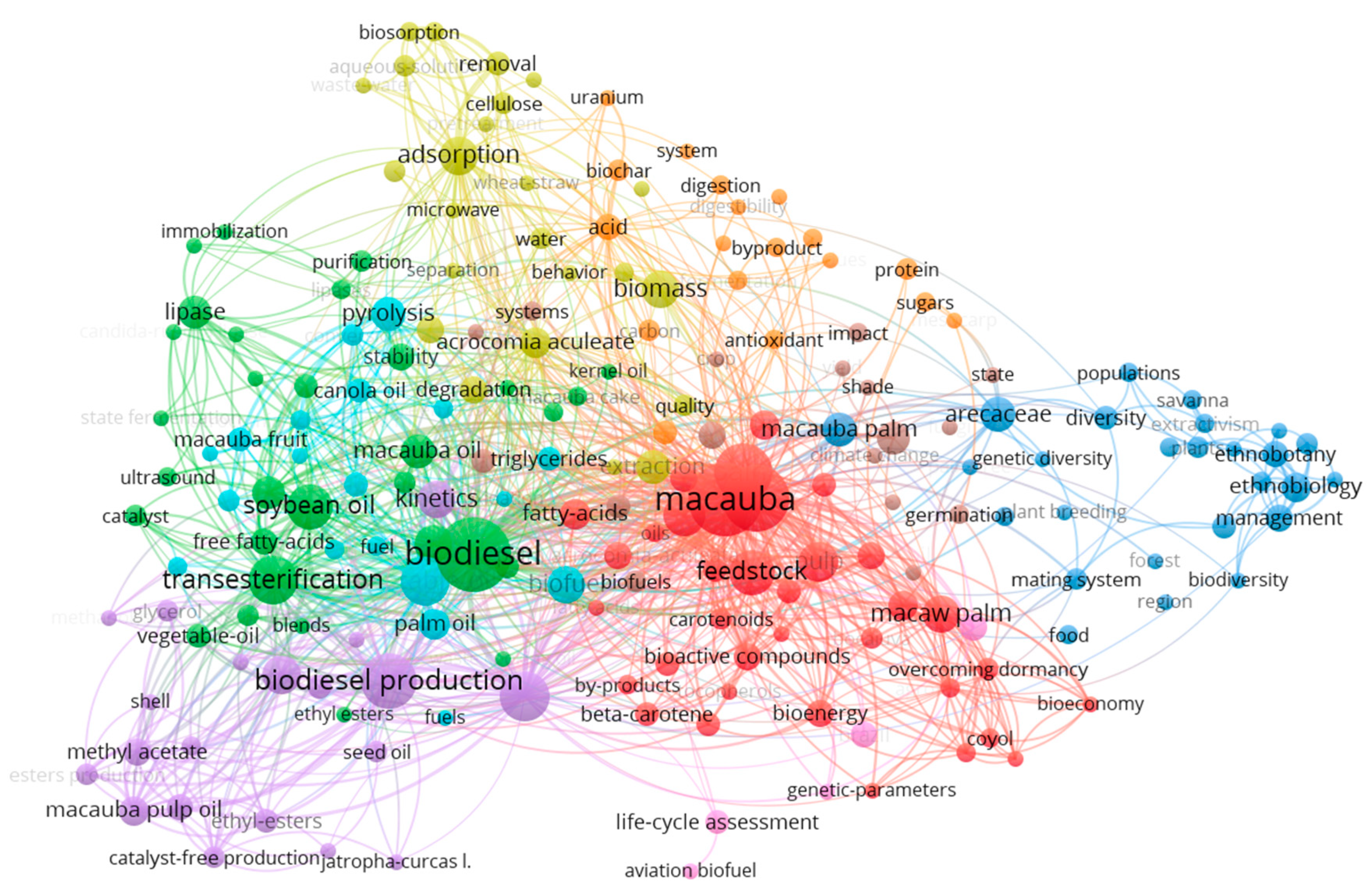
A previous bibliometric analysis was carried out using the VOSviewer software to evaluate the extent of research related to Acrocomia aculeata and its main byproducts. The data search was based on the combination of terms: “macaúba” or “Acrocomia aculeata”, “Biological Activities”, “Chemical Composition”, “Phytochemistry” and “Fruit Characterization”. After excluding articles written in Portuguese, conference articles, and early access articles, 261 documents remained. An analysis of the keywords was carried out, as illustrated in Figure 4, and its results are in line with the objectives of this investigation.
Figure 5 represents a word cloud generated by the VOSviewer software, composed of clusters of different colors. In this case, the main keywords present in the 261 selected articles were analyzed. A total of 1658 words were found in Web of Science documents, of which those were cited at least three times in different articles, totaling 195 words. The largest circles represent words with more significant connections with other words, including other clusters. The more visible the links between words, the stronger the link between them.

3.1. Botanical Aspects of the Species Acrocomia aculeata

The Arecaceae family has approximately 2700 species described in 240 genera, with 48 native plant species distributed throughout the Brazilian territory, which are dispersed in greater concentration in the Cerrado, Caatinga, and Amazon biomes [23]. The main genera present in Brazil are Trithrinax, which is endemic, and Syagrus, Butia, Attalea, Allagoptera, and Acrocomia. Among the genera that are included in this family, the genus Acrocomia stands out, represented by monoecious and spinescent palm trees that occur throughout the American continent [24].
This genus has nine accepted species, seven of which occur in the national territory and four of which are endemic to Brazil, which include: A. aculeata, A. intumescens, A. totai of arboreal size, and small size A. hassleri, A. glaucescens, A. emensis, and A. media [23].
Among the species that stand out in this genus is Acrocomia aculeata Lodd. ex Mart. (1823), popularly known as “Acrocomia aculeata”, a palm tree native to tropical and subtropical regions of Brazil, also showing records of occurrence in southeastern Mexico and northeastern Argentina, Paraguay, and Brazil [3,6].
Among the general morphological aspects of A. aculeata described in The World Flora Online, this palm tree is arboreal, measuring 15 to 20 m tall, and characterized as a monoecious species with an erect stem, measuring 20 to 40 cm in diameter. Furthermore, this species has cylindrical spines along the entire external length of the stem. Its leaves are green in color and are classified as compound and pinnate, with a length that varies from 2 to 5 m, with flowers in the form of inflorescences (about 50 cm) with a yellow color. The fruits of A. aculeata have a spherical shape and a smooth surface. The epicarp displays green or yellowish tones with remaining traces of the apical stigma. Regarding the mesocarp, it has a color that varies between yellow and orange, housing an almond-shaped seed inside, mainly composed of the endosperm.

3.2. Nutritional Composition

The nutritional composition of the Acrocomia aculeata fruit includes approximately 3 to 60% moisture, 1 to 3% ash, 3 to 15% protein, 10 to 60% lipids, 8 to 60% fiber, and 7 to 30% carbohydrates (Table 1) present in both the pulp and kernel, as well as in the pulp oil and kernel oil. Its nutritional profile stands out for its high lipid and fiber content, in addition to essential minerals, making it valuable for food, industrial applications, and as a sustainable energy source.

3.3. Phytochemistry

The physical and chemical properties of the components of an oil or plant extract can vary significantly due to the genetic variability of the specimen, storage, and processing conditions, as well as the soil and climate characteristics of the region where the plant species is located [34]. As a result of these factors, this review sought to analyze the chemical composition of products derived from the species Acrocomia aculeata, highlighting the analytical techniques and solvents used (Table 2).
After analyzing the inclusion and exclusion criteria, 37 articles were identified that detail the chemical characterization of the compounds present in A. aculeata products.
Among the extracting agents most used in the preparation of extracts and fixed oil from A. aculeata, hexane was the most widely described in the studies reviewed because it is a more selective solvent for polar components, has a low latent heat of boiling, and is immiscible in water [52]. Other solvents such as ethanol, n-hexane, ethyl acetate, isopropanol, and ether have also been described.
In identifying the components of A. aculeata products, several analytical techniques were adopted, including gas chromatography (GC), gas chromatography coupled to mass spectrometry (GC-MS), High Performance Liquid Chromatography (HPLC), and HPLC coupled to the spectrophotometer. Furthermore, other techniques such as gas chromatography with flame ionization detector (GC-FID), Spectrophotometry (UV-VIS), High Performance Liquid Chromatography, and gas chromatography coupled to mass spectrometry (HPLC/GC-SM) were used as an approach to chemical characterization of A. aculeata products.
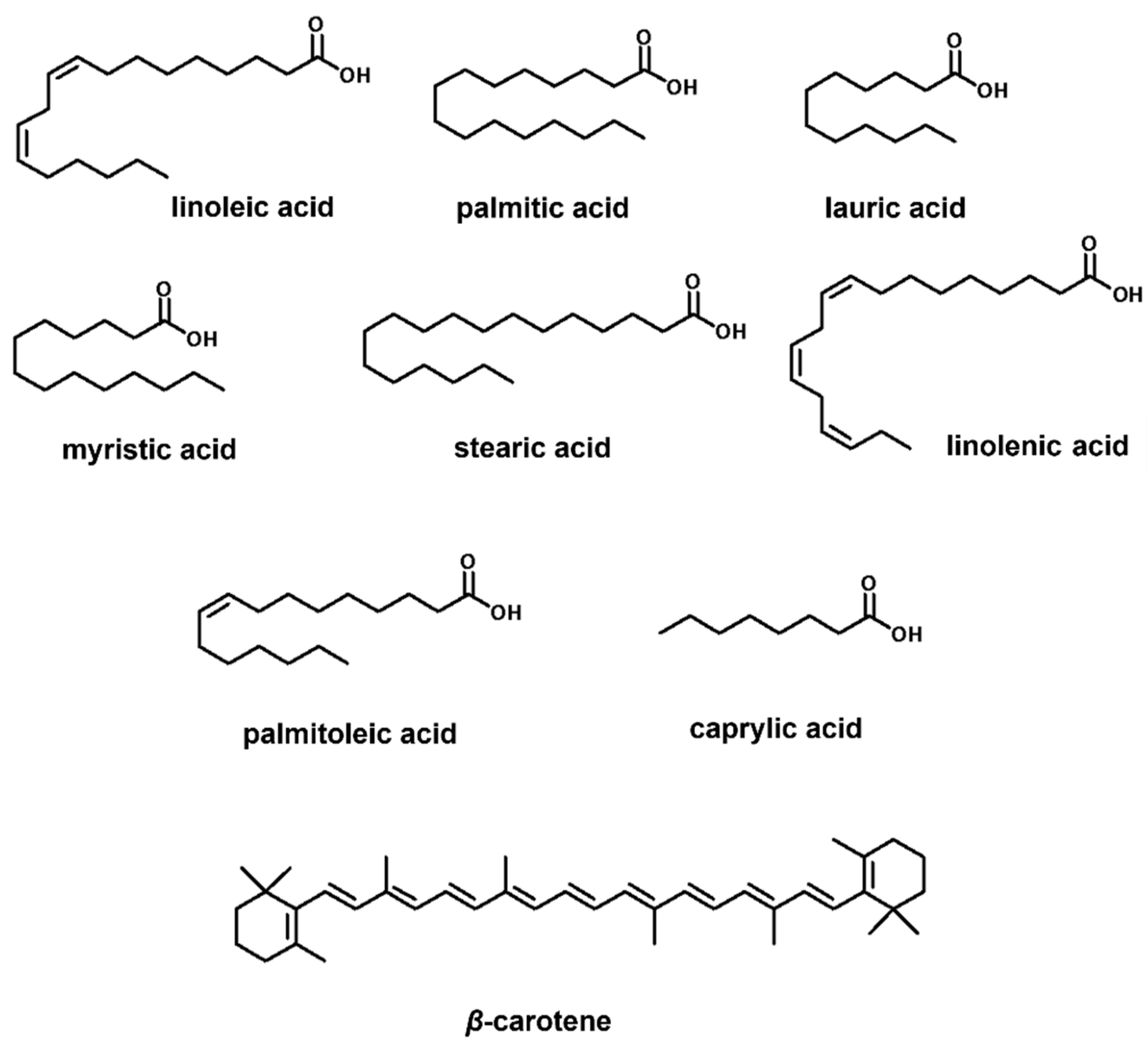
Using the techniques described, approximately 80 compounds were identified. Among the 10 most represented compounds in the studies reviewed are oleic acid; linoleic acid; palmitic acid; lauric acid; myristic acid; stearic acid; linolenic acid; palmitoleic acid; caprylic acid; and β-carotene. Figure 6 presents the molecular structures of the most prevalent compounds in the reviewed studies on A. aculeata.

3.3.1. Fatty Acids

The fatty acid composition in different parts of Acrocomia aculeata has been extensively studied. In the fixed oil from the pulp, fatty acids such as oleic, palmitic, linoleic, palmitoleic, stearic, linolenic, capric, lauric, and myristic acids were identified [10,17]. Aguieiras et al. [10] used HPLC-GC/MS for the analysis, while Lescano et al. [17] reported that the pulp oil contains 74.99% unsaturated fatty acids and 25.01% saturated fatty acids. Alfaro-Solís et al. [14] confirmed the presence of the predominant fatty acids, and GC-FID revealed a varied composition of fatty acids.
For fruit fixed oils, fatty acids such as capric, caprylic, palmitic, stearic, oleic, linoleic, and others were identified using GC and GC-MS [43,45]. Studies employing methods like NMR and Mid-Infrared also revealed the presence of polyunsaturated fatty acids in extracts obtained with hexane.
Seed fixed oils contained fatty acids including capric, lauric, oleic, linoleic, palmitic, and stearic acids, as reported by Sampaio et al. [16] and Magalhães et al. [46]. In the leaves, GC-MS analysis revealed palmitic, linoleic, linolenic, and stearic acids, as noted by Lescano et al. [28].

3.3.2. Carotenoids

Carotenoids are another important class of compounds found in Acrocomia aculeata. In both the pulp and fruit, β-carotene, zeaxanthin, trans-lycopene, lutein, neoxanthin, and luteoxanthin were identified, as reported in analyses by Arena et al. [37] and Montoya-Arroyo et al. [49]. In studies of the peels and pulp, compounds like cis-lycopene, γ-carotene, and β-cryptoxanthin were also detected. In studies on the leaves, violaxanthin and lutein were found, emphasizing the diversity of carotenoids present in the plant.

3.3.3. Phenolic Compounds

Phenolic compounds in Acrocomia aculeata have also been thoroughly studied. In pulp and peel extracts, compounds such as gallic acid and its derivatives were identified using techniques like HPLC-DAD and the Folin–Ciocalteu method. These phenolics are associated with high levels of total phenolics and flavonoids. Other studies also confirmed the presence of phenolic compounds, including flavonoids, in leaves and fruits, as reported by Sampaio et al. [6] and Lescano et al. [51].

3.3.4. Tocopherols

Tocopherols and tocotrienols have been widely identified in fixed oils from various parts of Acrocomia aculeata. In the pulp oils, compounds like α-tocopherol, β-tocopherol, γ-tocopherol, δ-tocopherol, α-tocotrienol, β-tocotrienol, γ-tocotrienol, and δ-tocotrienol were found, as observed by Montoya-Arroyo et al. [36]. For seed oils, analyses by Magalhães et al. [46] also identified a wide diversity of tocopherols and tocotrienols. Due to their antioxidant properties, these compounds show significant potential for applications in the food and cosmetic industries. Table 3 shows the compilation of studies that demonstrate the biological activities present in the literature that are associated with Acrocomia aculeata products.

3.4. The Biological Activity

Diuretics are substances used to increase the flow rate of urinary excretion by reducing sodium absorption rates through diuresis (increased water excretion), making them effective in treating hypertensive conditions and edema [17]. For instance, a study by Lescano et al. [17] evaluated the diuretic potential of Acrocomia aculeata oil, demonstrating an increase in urinary liquid excretion similar to the effect of the standard drug Furosemide, attributed to bioactive compounds like carotenoids, vitamin C, and tocopherol. In parallel, bacterial resistance is defined as the ability of microorganisms to survive and multiply despite toxic compounds or antibiotics [60]. It is facilitated by mechanisms such as enzymatic inactivation, alterations in binding sites, changes in transport systems, and active efflux. These adaptations enhance bacterial resilience to adverse conditions [61].
The relationship between natural products and their possible antibacterial action is associated with the diversity of chemical compounds produced by plants through their primary and secondary metabolism [48].
In the study, by Sampaio et al. [16] the inhibitory potential of fixed oil from A. aculeata leaves on the bacterial growth of standard strains of Escherichia coli (ATCC 25922), Pseudomonas aeruginosa (ATCC 25853), Staphylococcus aureus (ATCC 25923), and multi-resistant strains of E. coli 06, P. aeruginosa 24, and S. aureus 10 showing Minimum Inhibitory Concentration (MIC) > 512 μg/mL for both strains. However, when the fixed oil from the leaves was associated with Norfloxacin, it was demonstrated that the effect of the antibiotic was enhanced, reducing its MIC against multi-resistant strains E. coli and S. aureus.
The study by Oliveira et al. [28] evaluated the antibacterial activity of the ethanolic extract of A. aculeata leaves on strains of S. aureus (ATCC 6538), Enterococcus faecalis (ATCC 4083), E. coli (ATCC 25922), and P. aeruginosa (ATCC 27853) in an in vitro study using concentrations of 100, 50, and 25 mg/mL of the extract and found that there was no significant antibacterial activity against the microorganisms evaluated. Oliveira et al. [54] also did not obtain significant results when evaluating the inhibitory capacity of the ethanolic extract of the bark of Acrocomia aculeata on the strain of Mycobacterium tuberculosis, finding that the extract did not present antibacterial activity on the strain tested.

3.4.1. Antidiabetic Activity

Type 2 diabetes mellitus (DM2) is a chronic metabolic disease that can be caused due to the production of insulin in the pancreas not being enough to reduce blood sugar and produce energy or, in cases of insulin resistance, when the body’s cells do not capture insulin and control glucose. This pathology causes hyperglycemia, metabolic disorders in proteins, lipids, and carbohydrates, affecting a large part of the population, and is considered a public health problem [62]. Therefore, it is imperative to search for alternative methods for treating this disease, with natural products and their derivatives being viable alternatives for investigations into new antidiabetic drugs due to the chemical diversity of plants and their limited side effects.
In the study carried out by Nunes et al. [53], the in vivo antidiabetic activity of fixed oil from the seed of A. aculeata was evaluated. In this study, the application of Acrocomia aculeata fixed oil restored the serum lipid profile.
Similar results were found by Costa et al. [34] who demonstrated that the use of A. aculeata oil reduces the risk of coronary heart disease in addition to reducing the insulin index in in vivo tests. This antidiabetic activity also corroborates the findings of Silva et al. [18] who evaluated the fixed oil from the pulp in vivo rat models. In this study, a reduction in glucose levels was observed in the animal model studied.

3.4.2. Antifungal Activity

In the study carried out by Sampaio et al. [16] evaluating the antifungal activity of fixed oil from A. aculeata leaves on strains of Candida albicans (INCQS 40006), C. krusei (INCQS 40095), and C. tropicalis (INCQS 40042), it was found that there was no significant antifungal activity. The Minimum Fungicidal Concentration—MFC—of tropicalis at the respective concentrations of 15.54, 78.58, and 15.88 μg/mL of the fixed oil was analyzed. However, when the fixed oil was associated with fluconazole, used to treat fungal infections, it was demonstrated that there was significant inhibition on strains of C. albicans, C. krusei, and C. tropicalis.
Breda et al. [55] carried out a study with the ethanolic extract of A. aculeata leaves on strains of Alternaria alternata (CCT 1250), Alternaria solani (CCT 2673), and Venturia pirina (CCT 3166), and it was found that the extract did not show antifungal activity. A similar study was carried out by Oliveira et al. [28] who evaluated the ethanolic extract of A. aculeata leaves in strains of Candida albicans (4006) and C.parapsilosis (40038); however, the ethanolic extract of A. aculeata leaves did not show antifungal activity.

3.4.3. Antigenotoxic Property

The search for bioactive compounds capable of reducing the occurrence of genotoxic or mutagenic damage has increased due to the chemopreventive potential of compounds present in plants, such as antioxidants [56].
Genotoxicity is defined as the ability of some compounds to induce changes in the genetic material of exposed organisms. Traesel et al. [39] carried out a study with Acrocomia aculeata to evaluate whether the fixed oil from the pulp has a genotoxic potential. This test was carried out using the in vitro micronucleus method, which evaluates whether there is chromosomal damage in cells exposed to genotoxic agents, demonstrating that the fixed oil from the pulp does not present genotoxicity.
When evaluating the antigenotoxic activity of A. aculeata products, Magosso et al. [56] analyzed the fixed oil from the pulp of A. aculeata in an in vivo model at concentrations of 3, 15, and 30 mg/kg and found that the fixed oil of the pulp showed antigenotoxic activity. Magosso et al. [56] also analyzed the toxicogenic potential of seed fixed oil and pulp fixed oil in a comet and micronuclei study in vivo model of Swiss Rats at concentrations of 3, 15, and 30 mg/kg for both products, demonstrating that the products did not cause toxicogenic damage in the models studied, as comets and micronuclei were equally frequent in the treatments and the negative control.

3.4.4. Anti-Inflammatory Activity

Inflammation is caused when vascularized living tissue suffers an imbalance of a chemical, physical, or biological nature, triggering an inflammatory process, characterized as a defense mechanism of the body, which can isolate or sequester (fibrin mesh) the offending agent, destroy, and/or dilute the offending agent, as well as enabling reparative processes of healing and regeneration of affected tissues [63,64].
Lescano et al. [17] evaluated the anti-inflammatory potential of fixed oil from the pulp of A. aculeata in vivo tests using Wistar rats as animal models, verifying that the oil was efficient in inhibiting leukocyte migration and plasma extravasation. This study corroborates the tests by Costa et al. [34] who evaluated the fixed oil from the pulp in in vivo tests on animal models, verifying that the oil from the pulp of A. aculeata could reduce pro-inflammatory mediators.
Costa et al. [34] found that the most effective concentration used in Swiss rats to evaluate the anti-inflammatory potential was the concentration of 25 µL during the 10 days of treatment, demonstrating a 67% reduction in neutrophil migration to the peritoneal cavity when compared with the untreated control group. However, concentrations of 50 and 100 µL caused an increase in the expression of pro-inflammatory cytokines such as TNF-y, Interleukin-IL-6, and Nitric oxide (NO). Lescano et al. [17] associated the presence of fatty acids such as oleic acid and alpha-linolenic acid with factors such as the reduction in blood pressure, the anti-inflammatory aspects of the compounds present in the pulp fixed oil, and diuretic action in the models analyzed.
In the composition of the oil from the pulp of A. aculeata, there is the presence of fatty acids such as oleic acid, which is described in the study by Costa et al. [34] as responsible for the analgesic and anti-inflammatory activity, having the ability to regulate pro-inflammatory cytokines, including TNF-γ, IL-6, and NO, which are important in the inflammatory response process.

3.4.5. Antimutagenic Activity

Mutagens are agents that can cause chemical, biological, and physical mutation, inducing changes in an individual’s genes [56]. According to Costa et al. [34], the fixed oil from the pulp of A. aculeata was able to protect the DNA of animals induced by colchicine since the number of micronuclei in erythrocytes of mice treated with the pulp oil was 44% lower when compared to the group control. These studies evaluated the antimutagenic activity of fixed pulp oil and demonstrated chemopreventive properties. It was possible to observe that the fixed oil from the pulp and seed in concentrations lower than 3, 15, and 30 mg/kg did not demonstrate chemopreventive activity, whereas in concentrations of 3, 15, and 30 mg/kg, they exhibited relevant chemopreventive activity that can act as desmutagenesis and bioantimutagenesis [56].

3.4.6. Photoprotective Activity

Acrocomia aculeata has attracted interest due to its bioactive properties and photoprotective potential. The oils extracted from its pulp and almond are rich in compounds such as tocopherols (vitamin E), carotenoids, unsaturated fatty acids, and antioxidants, which act to protect against damage caused by ultraviolet (UV) radiation. Carotenoids act as natural filters, absorbing UV rays and reducing the formation of reactive oxygen species, while tocopherols offer antioxidant protection to skin cells. In addition, macaúba oil, rich in fatty acids such as oleic and linoleic acid, contributes to skin hydration, restoring the lipid barrier and preventing dehydration while combating signs of photoaging, such as wrinkles and blemishes [9,12].

3.4.7. Antioxidant Activity

Mutagenic reactive oxygen species (ROS) are unstable free radicals since when these molecules are at high levels or higher than the amounts of antioxidants, they can promote damage to DNA, proteins, carbohydrates, and lipids, causing changes from the beginning of the progression of carcinogenesis in its stages [65].
Costa et al. [34] demonstrated the antioxidant potential of A. aculeata pulp oil at concentrations of 5 to 50 μg/mL using the hydroxyl radical scavenging method, with this result being similar to the ascorbic acid control.
Assays using the free radical DPPH were carried out to verify the antioxidant potential of the aqueous extract of A. aculeata leaves, with an IC50 of 0.125 mM [57]. These data corroborate the results obtained by Dario et al. [9], evaluating the fixed oil from the pulp where an EC50 of 23.89 μg/mL was obtained using the same free radical DPPH. De Oliveira et al. [12] carried out similar trials with the same product and the same technique demonstrating the antioxidant potential. Another method used to analyze the fixed oil from the pulp, to capture free radicals, was ABTS [12].
Other methods for scavenging free radicals such as ORAC (Oxygen Radical Absorption Capacity) were used in tests with the fixed pulp oil resulting in an EC50 of 42.02 μM ET (trolox equivalent) [9].
The authors associated the antioxidant potential of A. aculeata products with the high concentration of carotenoids and phenolic compounds since these compounds protect the skin against the UV and UVA rays that cause lipid peroxidation, increasing prostaglandin production [9,12]. Furthermore, exploratory studies revealed that because almond oil is rich in nanostructured lipid carriers, it is associated with an improvement in photoprotective activity [9].
Peres et al. [51] evaluated the in vitro antioxidant activity of the ethanolic extract of A. aculeata peels using the DPPH method resulting in an IC50 of 11.81 µg/mL. The ethanolic extract of A. aculeata pulp was also evaluated by the DPPH method resulting in an IC50 of 17.3 µg/mg (Peres et al., 2013 [51]). The evaluation of antioxidant potential of the pulp flour extract was also evaluated by the DPPH method, resulting in radical inhibition of 14% and 19%, respectively [6].

3.4.8. Immunomodulation Activity

Studies analyzing the organic response of the immunomodulatory activity of fixed almond oil and fixed oil from the pulp of A. aculeata showed an increase in immunomodulatory activity and a reduction in phagocytosis rates in the spleen of Swiss rats at doses of 3, 15, and 30 mg/kg since events associated with phagocytic activity in the spleen indicate that there was damage to DNA. This effect is enhanced when associated with the use of antitumor agents such as cyclophosphamide, indicating that the association between A. aculeata oils and antitumor agents reduces the dosage of commonly used drugs, thus the work indicates that fixed oils have chemopreventive activity [56].

4. Acrocomia aculeata as a Sustainable Source for Biodiesel Synthesis

The characterization of plant species that can be potential sources of oil is important because they contain essential fatty acids in their composition. Several vegetable oils are used in food as well as raw materials for the chemical, pharmaceutical, food, and biofuel industries. The global vegetable oils market has been characterized by greater growth in demand for supply. As a result of this scenario, several species of palm trees, such as buriti, inajá, tucumã, coco-da-baía, and babassu, have proven to be promising sources of oil and the characterization of the oil extracted from species, such as Acrocomia aculeata, has not yet been explored in its entirety [38,66].
The leaves of A. aculeata are used for animal feed, while the fruits can be consumed by humans, with their endocarp and epicarp also used as sources of biomass for energy purposes such as charcoal and briquettes. Furthermore, there has been a growing interest in research on A. aculeata due to its high yield in oil extraction, being able to produce ten times more oil per hectare than Glycine max soybeans and at a disadvantage for oil production only when compared to the Elaeis guineensis palm culture [67].

4.1. General Analysis of Acrocomia aculeata as Raw Material to Produce Biodiesel

Vegetable oil is plant fat made up mainly of triglycerides. Around 90% of biodiesel produced in Brazil, as well as its production in other countries, comes from vegetable oils, mainly soybean oil [68].
Concerning raw materials for oil extraction and obtaining biodiesel, oilseed plant species have characteristics such as high oil content and resistance to pests, which favor their use as a raw material. Vegetable oils that could potentially be used in the production of biodiesel are influenced by the plant species used and geographic factors, which influence the chemical composition of each product [69,70].
Some plant species have the advantage of being found in different regions, which makes them easier to obtain and study as a potential source of renewable energy. Among these oilseed species used as raw material for biodiesel production, Acrocomia aculeata stands out.
According to Evaristo et al. [71] A. aculeata is considered a rustic, arborescent palm tree, native to tropical forests and found in biomes characterized by semi-deciduous forest or savanna, as well as anthropic areas, such as deforested areas and pastures. A. aculeata is prevalent in several states in Brazil, among which Minas Gerais stands out, with, for example, the municipality of João Pinheiro being a reference in the production and commercialization of this fruit [72]. The results found for biodiesel produced with ethanol are more satisfactory than those produced with methanol. Therefore, its use to obtain biodiesel via ethyl catalysis is very promising [73].
Souza [4] and Motta et al. [74] characterize A. aculeata as a palm tree that presents high resistance to pests and temperature variations and has the ability to grow in areas that have low annual rainfall, characteristics that contribute to the cultivation of this species in different regions. According to Antoniassi [75], the fruit of A. aculeata is made up of four parts, namely epicarp, mesocarp, endocarp, and almond, and practically all parts that make up the fruit can be used for energy and food purposes.
According to Evaristo et al. [71], two types of oil can be extracted from the fruit of A. aculeata, almond oil and pulp oil. Almond oil is fluid and crystalline, rich in lauric and oleic acid. While the pulp oil is characterized by a reddish color, rich in oleic and palmitic acid. The exploitation of this palm tree can generate greater availability of resources to produce biodiesel, in addition to promoting the economy and family farming. However, for the effective insertion of A. aculeata into the biodiesel raw material matrix, it is necessary to domesticate the species to obtain greater palm production and oil extraction [76].

4.1.1. Most Cited Scientific Journals in the Area of Biodiesel Production with Acrocomia aculeata

According to the data extracted from the Web of Science database and presented in Table 4, it is observed that publications on biodiesel from Acrocomia aculeata require greater investments in the research to increase their metrics and promote more expressive collaborations. Table 4 highlights the 10 most cited journals, with their metrics NP (Number of Publications), NC (Number of Citations), LS (Link Strength), and P (Percentage). Although the number of publications is still limited, the journal Fuel stands out, totaling 391 publications, reflecting the growing interest of the scientific community in studies related to biodiesel derived from Acrocomia aculeata.

4.1.2. Analysis of the Scientific Production of the Most Prolific Countries on Biodiesel from Acrocomia aculeata

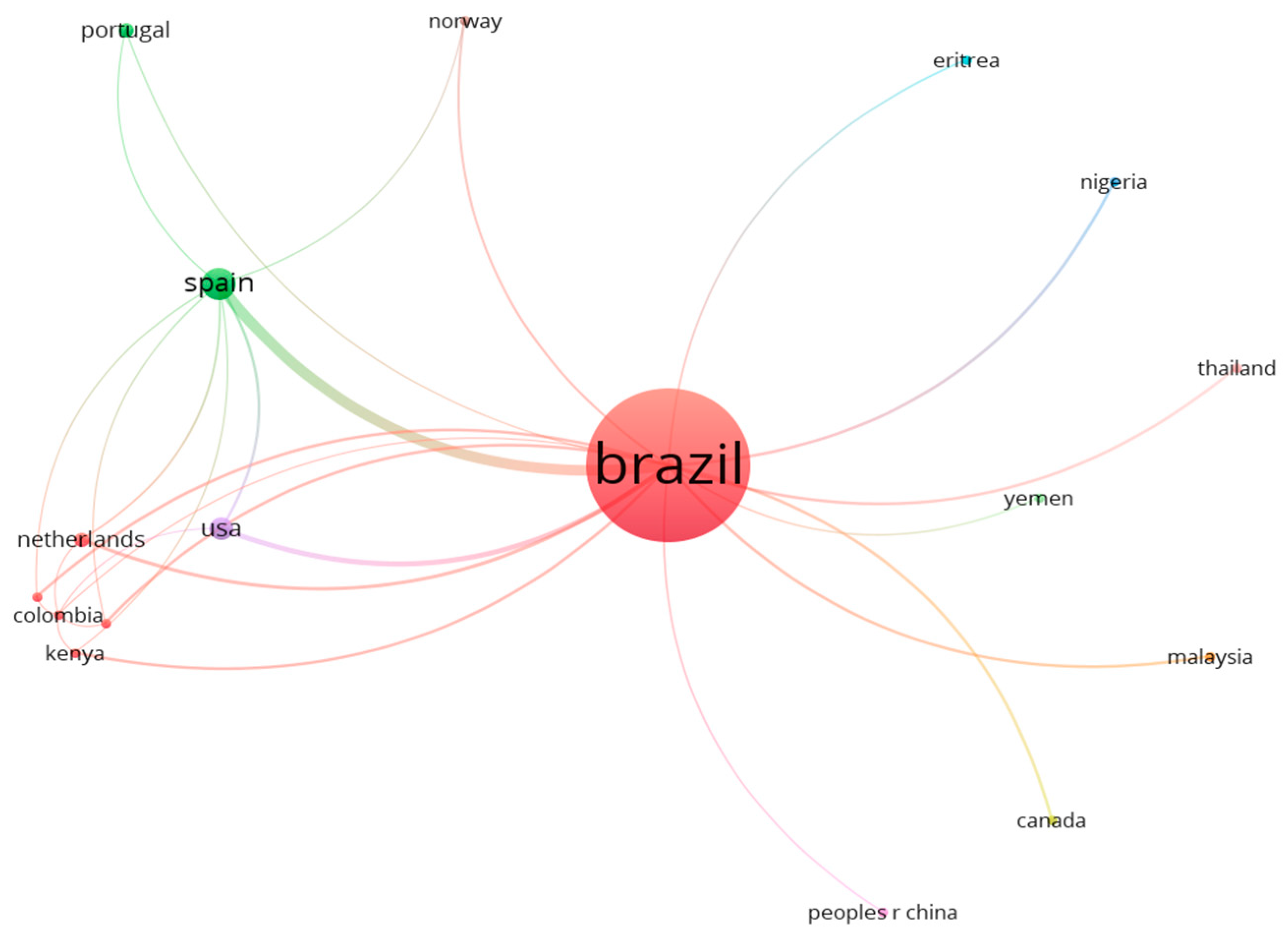
The countries most engaged in research on biodiesel from Acrocomia aculeata are represented in Figure 7. Brazil leads the way, contributing more than 95% of the most cited scientific publications, followed by Spain and the United States, which account for approximately 7% and 4%, respectively. These data highlight the need to expand the scope of this research, promoting international collaborations between countries with similar energy interests. Such cooperation can contribute to the improvement of energy matrices based on biofuels. In this context, the potential of Acrocomia aculeata remains largely unexplored and represents a valuable opportunity for joint scientific initiatives.

4.2. Analysis of Data on the Scientific Production of Biodiesel from A. aculeata

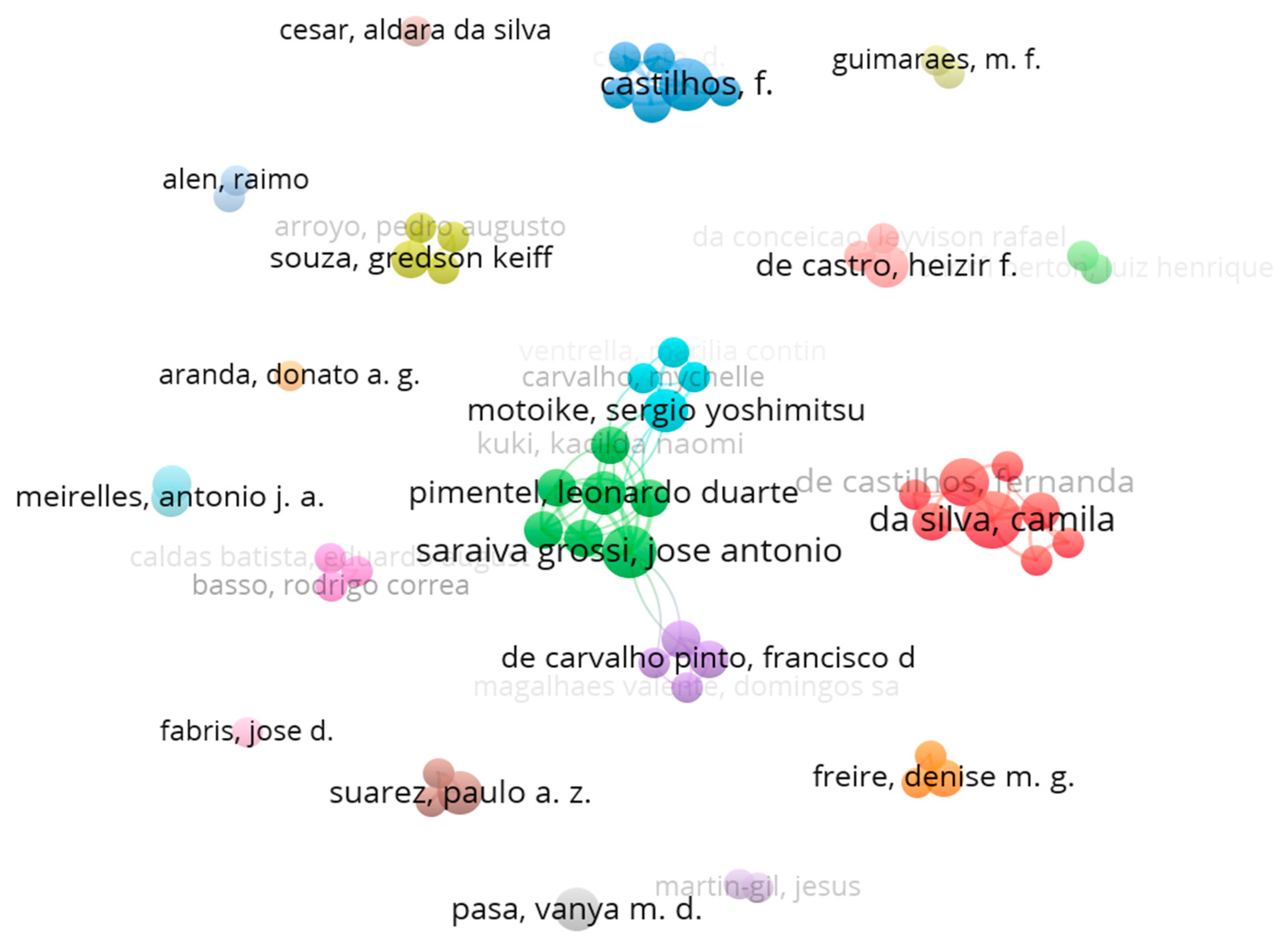
Through a search for publications on the use of A. aculeata for biodiesel production on the Web of Science, 99 publications were found, 95 of which were experimental articles and 4 review articles. For the bibliometric analysis of the publications selected to compose this manuscript, VOSviewer was used, initially analyzing authors and co-authors. To generate the word cloud in Figure 8, the option of a minimum number of two documents from one author was selected in VOSviewer. Among the 421 authors, 59 met the established limit. Therefore, we obtain a map with 19 clusters where we can see authors who work alone and others who work together, establishing a network of collaborations, as can be seen in the three main clusters in the center of the image, in cyan blue, green, and lilac.
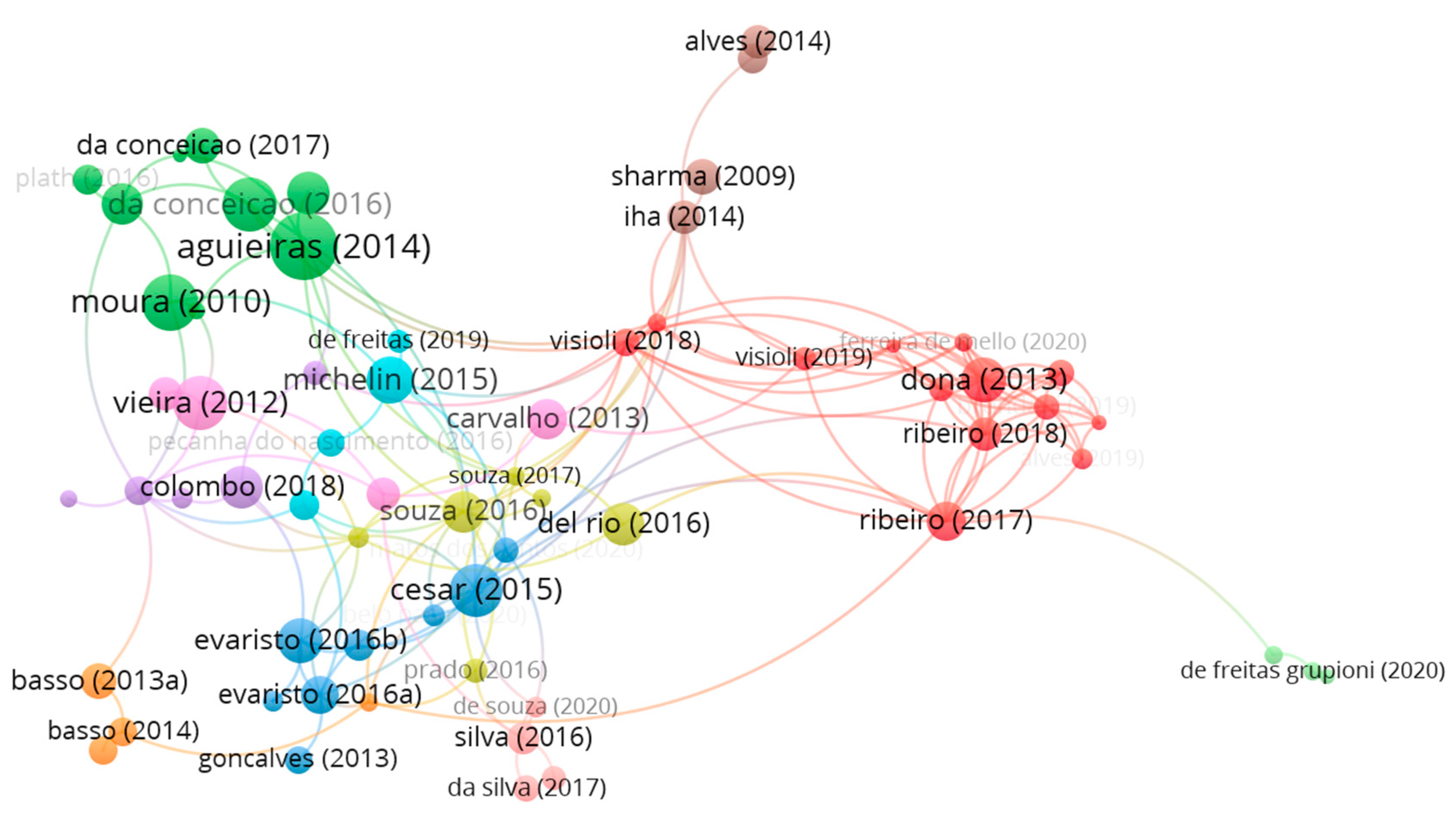
As shown in Figure 8, the largest circle corresponds to the name of Camila da Silva, who is the researcher with the largest number of publications. She collaborates with Fernanda de Castilhos, and their names can be seen in the red cluster on the right side of Figure 6. It is interesting to note that the person with the most publications is not part of the co-authorship of the most cited document, which in this case is the article by Aguieiras et al. [10] which has 109 citations in the main Web of Science collection and talks about the “Production of biodiesel from the acid oil of Acrocomia aculeata by the hydroesterification process (enzyme/enzyme): Use of vegetable lipase and fermented solid as low-cost biocatalysts”. Figure 8 was obtained from the VOSviewer, in which of the 99 available articles, documents cited at least seven times were selected, resulting in 67 articles; the main ones appear in Figure 8, which highlights the strength of the link between each publication.
According to Figure 9, we can extract valuable information about researchers and published documents. Aguieiras et al. [10], Vieira et al. [70], and César et al. [66] are the most cited documents with citation numbers higher than 60. Authors and co-authors included in a collaboration network such as Camila da Silva, José Antonio Saraiva Grossi, F. Castilhos, and Fernanda de Castilhos have the highest number of publications and, consequently, many citations. For example, Camila da Silva is a co-author involved in the highest number of publications, the most notable of which is the article entitled “Efficiency of heterogeneous catalysts in the interesterification reaction of Acrocomia aculeata oil and methyl acetate”, with 39 citations.
There are collaboration networks among researchers that generate voluminous citations; however, isolated authors such as Aldara da Silva César, who appears in Figure 9 without direct relationship with other researchers, is an author of few publications but has generated many citations, becoming a notable reference for research. Her main article deals with “Perspectives on the use of Acrocomia aculeata as a raw material for non-edible biodiesel in Brazil”. Therefore, research on biodiesel from A. aculeata still needs more collaboration.
Brazil is the country that publishes the most articles on biodiesel from A. aculeata, and this is expected thanks to the fact that this raw material is found in abundance in several regions [13,67,77]. A total of 93 of the 99 articles published are of Brazilian origin. The United States and Spain follow with related publications. As expected, higher education institutions related to publications are predominantly Brazilian, as shown in Table 5.
Considering the filters used in the Web of Science search, research areas were chosen that contained publications from 10 articles onwards as, initially, from this number onwards, the publications had a more direct relationship with the objective of this work. This helped to identify the main areas of research, as shown in Table 6, and, consequently, the main research trends. Without the application of filters, we would have data from many articles on A. aculeata that have no relation to biodiesel.
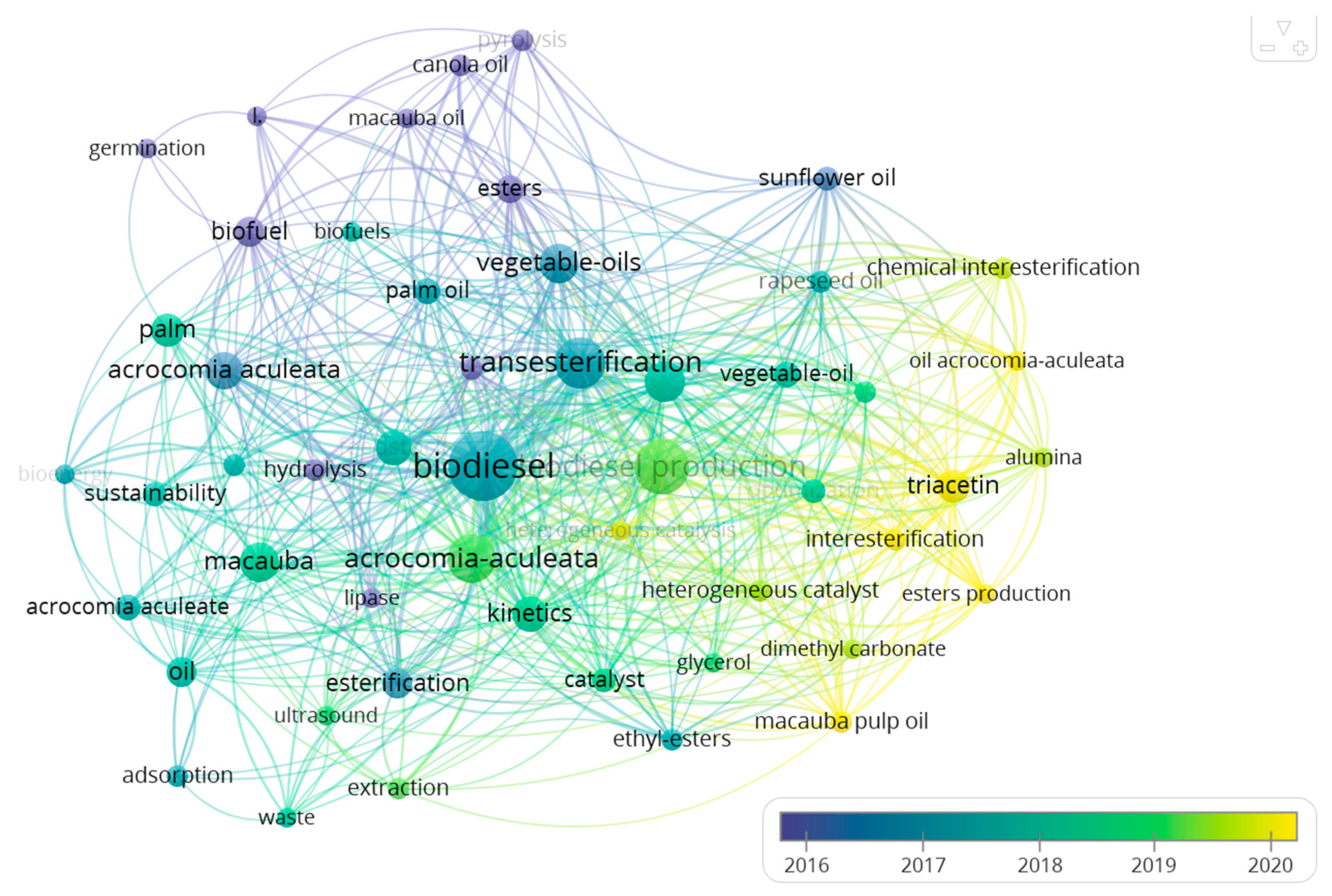
The most frequently occurring keywords can be seen in Figure 10, synthetically indicating the searches that have matured over the years and the emerging trends that still need to be explored. In VOSviewer, the option of a minimum occurrence of four times for the keyword was selected, and, of the 645 words, 51 fits this limit.
As shown in Figure 10, regarding biodiesel obtained from A. aculeata oil, we can see that the most common production routes are transesterification and esterification, which, together with pyrolysis, become the most used routes over time. The most recent way to produce biodiesel from A. aculeata is interesterification. Also notable in recently published works is the concern to study the different effects between homogeneous and heterogeneous catalysts in the production of esters. In contrast, a rarely used methodology is ultrasound. Still, the involvement of triacetin and alumina, which appear as recent trends, are underexplored gaps in this process.

5. Conclusions

The review highlighted over 80 compounds identified in studies on products derived from the species Acrocomia aculeata, with emphasis on oleic, linoleic, and palmitic acids, as well as β-carotene. The chemical composition of the plant, derived from secondary metabolites, is directly linked to its biological activities. The main bioactivities, such as antibacterial, antifungal, antioxidant, and anti-inflammatory effects, show promising results. However, the literature has not sufficiently explored the intrinsic relationship between the major compounds and these activities nor investigated potential synergies among them. Further studies will be necessary to deepen these connections. Research on A. aculeata highlights its phytochemical and bioactive properties, linking them to its chemical composition derived from secondary metabolites. A noteworthy finding is the photoprotective effect of fatty acids present in the fixed oils of the pulp and kernel. The species stands out as an oilseed rich in oil, both in its pulp and kernel. Moreover, bibliometric analyses using VOSviewer software identified the most relevant authors, countries, and keywords in biodiesel studies, contributing as a foundation for research on new biofuel sources. This integrated approach—connecting chemical composition, biological activities, and practical applications—enhances understanding and supports the future exploration of A. aculeata’s potential.
However, significant gaps were identified in the literature, such as the lack of comprehensive comparative studies between A. aculeata and other oilseeds regarding chemical composition and biological activities. Such investigations could clarify the relative value of this species in both bioenergy production and pharmaceutical applications. Additionally, there is a clear need for more detailed studies on the molecular mechanisms underlying the biological activities attributed to the plant. Research on combined effects and synergies among compounds, such as fatty acids and β-carotene, remains scarce, representing a significant opportunity for scientific advancements. Future perspectives include the valorization of A. aculeata byproducts for the production of high-value-added bioproducts, as well as assessing the environmental and economic impacts of large-scale cultivation, particularly for biodiesel production. In this context, Life Cycle Assessment (LCA) studies would be crucial to estimate and mitigate carbon emissions, fostering the development of sustainable and integrated agroforestry systems. Additionally, investing in clinical trials to validate the therapeutic properties of the species under controlled conditions is essential to consolidate its biomedical relevance and expand its potential for practical applications.

Author Contributions

Conceptualization, L.C.d.S., Â.E.d.S.S., A.J.A.d.S., N.S.M., Z.d.S.S., F.A.B.d.C., L.M.B. and M.A.d.S.R.; methodology, L.C.d.S., Â.E.d.S.S., A.J.A.d.S., N.S.M. and Z.d.S.S.; software, L.C.d.S., Â.E.d.S.S., A.J.A.d.S., N.S.M., Z.d.S.S. and M.D.L.; validation, L.C.d.S., Â.E.d.S.S., A.J.A.d.S., N.S.M., Z.d.S.S., F.A.B.d.C., L.M.B. and M.A.d.S.R.; formal analysis, L.C.d.S., Â.E.d.S.S., A.J.A.d.S., N.S.M., Z.d.S.S., M.V.N.C., M.D.L. and B.A.d.S.; investigation, L.C.d.S., Â.E.d.S.S., A.J.A.d.S., N.S.M., Z.d.S.S., M.V.N.C., M.D.L. and B.A.d.S.; resources, F.A.B.d.C., L.M.B. and M.A.d.S.R.; data curation, F.N.P.J.; writing—original draft preparation, L.C.d.S., Â.E.d.S.S., A.J.A.d.S., N.S.M. and Z.d.S.S.; writing—review and editing, F.N.P.J., L.C.d.S., Â.E.d.S.S., A.J.A.d.S., N.S.M. and Z.d.S.S.; visualization, L.C.d.S., Â.E.d.S.S., A.J.A.d.S., N.S.M., Z.d.S.S., M.V.N.C., M.D.L., B.A.d.S. and F.N.P.J.; supervision, F.A.B.d.C., L.M.B. and M.A.d.S.R.; project administration, F.A.B.d.C., L.M.B. and M.A.d.S.R.; funding acquisition, F.A.B.d.C., L.M.B. and M.A.d.S.R. All authors have read and agreed to the published version of the manuscript.

Funding

This research was funded by FUNCAP BPI 04/2022: BP5-00197-00174.01.00/22, PS1-00186-00255.01.00/21; the granting of a Master’s Scholarship by the Academic Training Scholarship Program—Modality: Master’s and Doctorate (Notice nº 09/2021); CNPq (402757/2023-8, 310037/2023-9); and CAPES (Finance Code 001).

Institutional Review Board Statement

Not applicable.

Informed Consent Statement

Not applicable.

Data Availability Statement

Dataset available on request.

Conflicts of Interest

The authors declare no conflicts of interest.

References

  1. Pires, T.P.; dos Santos Souza, E.; Kuki, K.N.; Motoike, S.Y. Ecophysiological Traits of the Macaw Palm: A Contribution towards the Domestication of a Novel Oil Crop. Ind. Crops Prod. 2013, 44, 200–210. [Google Scholar] [CrossRef]
  2. WFO. WFO—The World Flora Online. Available online: https://www.worldfloraonline.org/ (accessed on 27 October 2024).
  3. de Araújo, V.C.R.; Silva, G.A.; Ramos, R.S.; Júnior, P.A.S.; Pereira, R.R.; Motoike, S.Y.; Picanço, M.C. Distribution and Attack of Pineapple Mealybug to Macauba Palm Acrocomia aculeata. Int. J. Trop. Insect Sci. 2021, 41, 2765–2773. [Google Scholar] [CrossRef]
  4. e Souza, J.N.; Mazzottini-dos-Santos, H.C.; Dias, D.S.; Lopes, P.S.N.; Ribeiro, L.M. Seasonality and the Control of Longevity and Dormancy in Macaúba Palm Diaspores. Ind. Crops Prod. 2022, 177, 114475. [Google Scholar] [CrossRef]
  5. Dos Santos, F.L.; Scinocca, F.; Fonseca, P.B.M.; Villar, F.M.d.M. Mechanical Properties of the Macaw Palm Endocarp Aiming Seedling Production Process. CERNE 2022, 28, e103035. [Google Scholar] [CrossRef]
  6. dos Santos Correia, F.; da Silva, W.B.; de Almeida, F.J.S.; da Silva Bulhões, K.; de França Lemes, S.A. Analysis of the Proximate Composition, Bioactive Markers and Antioxidant Activity Present in the Mesocarp of Acrocomia aculeata Fruit Harvested in the State of Mato Grosso. Rev. Virtual Quim. 2022, 14, 207–213. [Google Scholar] [CrossRef]
  7. Del Río, J.C.; Evaristo, A.B.; Marques, G.; Martín-Ramos, P.; Martín-Gil, J.; Gutiérrez, A. Chemical Composition and Thermal Behavior of the Pulp and Kernel Oils from Macauba Palm (Acrocomia aculeata) Fruit. Ind. Crops Prod. 2016, 84, 294–304. [Google Scholar] [CrossRef]
  8. Da Cruz, A.V.C.; Alencar, N.L.; de Almeida, A.L.S.; Lopes, C.G.R. Aspectos Que Influenciam a Escolha de Locais de Coleta Por Extrativistas de Macaúba No Cerrado Brasileiro. Fronteiras 2021, 10, 101–113. [Google Scholar] [CrossRef]
  9. Dario, M.F.; Oliveira, F.F.; Marins, D.S.S.; Baby, A.R.; Velasco, M.V.R.; Löbenberg, R.; Bou-Chacra, N.A. Synergistic Photoprotective Activity of Nanocarrier Containing Oil of Acrocomia aculeata (Jacq.) Lodd. Ex. Martius—Arecaceae. Ind. Crops Prod. 2018, 112, 305–312. [Google Scholar] [CrossRef]
  10. Aguieiras, E.C.G.; Cavalcanti-Oliveira, E.D.; De Castro, A.M.; Langone, M.A.P.; Freire, D.M.G. Biodiesel Production from Acrocomia aculeata Acid Oil by (Enzyme/Enzyme) Hydroesterification Process: Use of Vegetable Lipase and Fermented Solid as Low-Cost Biocatalysts. Fuel 2014, 135, 315–321. [Google Scholar] [CrossRef]
  11. Trentini, C.P.; Oliveira, D.M.; Zanette, C.M.; Silva, C. da Low-Pressure Solvent Extraction of Oil from Macauba(Acrocomia aculeata) Pulp: Characterization of Oil and Defatted Meal. Cienc. Rural. 2016, 46, 725–731. [Google Scholar] [CrossRef]
  12. de Oliveira, I.P.; Correa, W.A.; Neves, P.V.; Silva, P.V.B.; Lescano, C.H.; Michels, F.S.; Passos, W.E.; Muzzi, R.M.; Oliveira, S.L.; Caires, A.R.L. Optical Analysis of the Oils Obtained from Acrocomia aculeata (Jacq.) Lodd: Mapping Absorption-Emission Profiles in an Induced Oxidation Process. Photonics 2017, 4, 3. [Google Scholar] [CrossRef]
  13. Rodrigues, K.L.T.; Pasa, V.M.D.; Cren, É.C. Kinetic Modeling of Catalytic Esterification of Non-Edible Macauba Pulp Oil Using Macroporous Cation Exchange Resin. J. Environ. Chem. Eng. 2018, 6, 4531–4537. [Google Scholar] [CrossRef]
  14. Alfaro-Solís, J.D.; Montoya-Arroyo, A.; Jiménez, V.M.; Arnáez-Serrano, E.; Pérez, J.; Vetter, W.; Frank, J.; Lewandowski, I. Acrocomia aculeata Fruits from Three Regions in Costa Rica: An Assessment of Biometric Parameters, Oil Content and Oil Fatty Acid Composition to Evaluate Industrial Potential. Agrofor. Syst. 2020, 94, 1913–1927. [Google Scholar] [CrossRef]
  15. Coimbra, M.C.; Jorge, N. Fatty Acids and Bioactive Compounds of the Pulps and Kernels of Brazilian Palm Species, Guariroba (Syagrus oleraces), Jerivá (Syagrus romanzoffiana) and Macaúba (Acrocomia aculeata). J. Sci. Food Agric. 2012, 92, 679–684. [Google Scholar] [CrossRef]
  16. Sampaio, R.S.L.; Pereira, R.L.S.; Coutinho, H.D.M.; Almeida-Bezerra, J.W.; Bezerra Morais-Braga, M.F.; Santana, M.d.S.; da Silva, M.E.P.; dos Santos, A.T.L.; Fonseca, V.J.A.; Costa, A.R.; et al. Chemical Composition and Antimicrobial Potential of Acrocomia aculeata (Jacq.) Lodd. Ex Mart. and Syagrus cearensis Noblick (Arecaceae). Microb. Pathog. 2023, 180, 106147. [Google Scholar] [CrossRef]
  17. Lescano, C.H.; Iwamoto, R.D.; Sanjinez-Argandoña, E.J.; Kassuya, C.A.L. Diuretic and Anti-Inflammatory Activities of the Microencapsulated Acrocomia aculeata (Arecaceae) Oil on Wistar Rats. J. Med. Food 2015, 18, 656–662. [Google Scholar] [CrossRef]
  18. da Silva, P.V.B.; Ramiro, M.M.; Iriguchi, E.K.K.; Corrêa, W.A.; Lowe, J.; Cardoso, C.A.L.; Arena, A.C.; Kassuya, C.A.L.; Muzzi, R.M. Antidiabetic, Cytotoxic and Antioxidant Activities of Oil Extracted from Acrocomia aculeata Pulp. Nat. Prod. Res. 2019, 33, 2413–2416. [Google Scholar] [CrossRef] [PubMed]
  19. Donthu, N.; Kumar, S.; Mukherjee, D.; Pandey, N.; Lim, W.M. How to Conduct a Bibliometric Analysis: An Overview and Guidelines. J. Bus. Res. 2021, 133, 285–296. [Google Scholar] [CrossRef]
  20. Pessin, V.Z.; Santos, C.A.S.; Yamane, L.H.; Siman, R.R.; Baldam, R.d.L.; Júnior, V.L. A Method of Mapping Process for Scientific Production Using the Smart Bibliometrics. MethodsX 2023, 11, 102367. [Google Scholar] [CrossRef]
  21. Lazarides, M.K.; Lazaridou, I.-Z.; Papanas, N. Bibliometric Analysis: Bridging Informatics with Science. Int. J. Low. Extrem. Wounds 2023, 153473462311535. [Google Scholar] [CrossRef]
  22. Page, M.J.; McKenzie, J.E.; Bossuyt, P.M.; Boutron, I.; Hoffmann, T.C.; Mulrow, C.D.; Shamseer, L.; Tetzlaff, J.M.; Akl, E.A.; Brennan, S.E.; et al. The PRISMA 2020 statement: An updated guideline for reporting systematic reviews. BMJ 2021, 372, n71. [Google Scholar] [CrossRef] [PubMed]
  23. Lorenzi, H.; Kahn, F.; Noblick, L.R.; Ferreira, E. Flora Brasileira—Arecaceae (Palmeiras); Instituto Plantarum: Nova Odessa, Brazil, 2010; 352p. [Google Scholar]
  24. Henderson, A.; Galeano, G.; Bernal, R.; Érard, C. Revue d’Écologie (La Terre et La Vie); Princeton University Press: Princeton, NJ, USA, 1995. [Google Scholar]
  25. Nunes, Â.A.; Buccini, D.F.; Jaques, J.A.S.; Portugal, L.C.; Guimarães, R.C.A.; Favaro, S.P.; Caldas, R.A.; Carvalho, C.M.E. Effect of Acrocomia aculeata Kernel Oil on Adiposity in Type 2 Diabetic Rats. Plant Foods Human Nutr. 2018, 73, 61–67. [Google Scholar] [CrossRef]
  26. Oliveira, D.M.; Clemente, E.; Da Costa, J.M.C. Bioactive Compounds and Physicochemical Parameters of Grugru Palm (Acrocomia aculeata) from Brazil: Pulp and Powder. Food Sci. Technol. Res. 2014, 20, 7–12. [Google Scholar] [CrossRef][Green Version]
  27. Oliveira, D.M.; Lima, C.G.; Clemente, E.; Afonso, M.R.A.; Costa, J.M.C. Da Stability of Bioactive Compounds and Quality Parameters of Grugru Palm Powder (Acrocomia aculeata) in Different Drying Conditions. J. Food Qual. 2015, 38, 94–102. [Google Scholar] [CrossRef]
  28. De Oliveira, A.I.T.; Mahmoud, T.S.; Nascimento, G.N.L.D.; Da Silva, J.F.M.; Pimenta, R.S.; Morais, P.B. De Chemical Composition and Antimicrobial Potential of Palm Leaf Extracts from Babaçu (Attalea speciosa), Buriti (Mauritia flexuosa), and Macaúba (Acrocomia aculeata). Sci. World J. 2016, 2016, 9734181. [Google Scholar] [CrossRef]
  29. Santos, F.d.C.V.; Martins, G.R.; Luiz, S.R.d.S.; Oliveira, I.d.A.; Silva, L.P.d.; Silva, A.J.R.d.; Pereira, M.D.; Lopes, R.C.; Alviano, C.S.; Moreno, D.S.A. Exploring the Epicarp Potential from Acrocomia aculeata Fruits: Chemical Analysis, Antioxidant and Antimicrobial Activities. Antioxidants 2025, 14, 181. [Google Scholar] [CrossRef] [PubMed]
  30. Machado, W.; Guimarães, M.; Lira, F.; Santos, J.; Takahashi, L.; Leal, A.; Coelho, G. Evaluation of two fruit ecotypes (totai and sclerocarpa) of macaúba (Acrocomia aculeata). Ind. Crops Prod. 2015, 63, 287–293. [Google Scholar] [CrossRef]
  31. Alves, A.V.; Sanjinez Argandona, E.J.; Linzmeier, A.M.; Cardoso, C.A.; Macedo, M.L. Chemical Composition and Food Potential of Pachymerus nucleorum Larvae Parasitizing Acrocomia aculeata Kernels. PLoS ONE 2016, 11, e0152125. [Google Scholar] [CrossRef]
  32. Jacobowski, A.C.; Parisotto, E.B.; Aydos, L.R.; Serafim De Souza, R.; Viveros, S.; Colín-Gonzalez, A.L.; Silva, I.S.; Sanjinez-Argandoña, E.J.; Wilhelm Filho, D.; Angel, A.S.; et al. Neuroprotective Effects of Acrocomia aculeata Pulp Oil Microcapsules on Rats Subjected to Chronic Stress. J. Med. Food 2021, 24, 1068–1075. [Google Scholar] [CrossRef]
  33. Sanjinez-Argandoña, E.J.; Chuba, C.A. Caracterização biométrica, física e química de frutos da palmeira bocaiuva Acrocomia aculeata (Jacq) Lodd. Rev. Bras. Frutic. 2011, 33, 1023–1028. Available online: http://www.scielo.br/scielo.php?script=sci_arttext&pid=S0100-29452011000300040&lng=pt&tlng=pt (accessed on 10 February 2025). [CrossRef]
  34. Costa, G.L.A.; Buccini, D.F.; Arruda, A.L.A.; Favaro, S.P.; Moreno, S.E. Phytochemical Profile, Anti-Inflammatory, Antimutagenic and Antioxidant Properties Acrocomia aculeata (Jacq.) Lodd. Pulp Oil. Food Sci. Technol. 2020, 40, 963–971. [Google Scholar] [CrossRef]
  35. Aguieiras, E.C.G.; Cavalcanti-Oliveira, E.D.; de Castro, A.M.; Langone, M.A.P.; Freire, D.M.G. Simultaneous Enzymatic Transesterification and Esterification of an Acid Oil Using Fermented Solid as Biocatalyst. J. Am. Oil Chem. Soc. 2017, 94, 551–558. [Google Scholar] [CrossRef]
  36. Montoya-Arroyo, A.; Alfaro-Solís, J.D.; Esquivel, P.; Jiménez, V.M.; Frank, J. Vitamin E Profiles in Acrocomia aculeata from Three Regions in Costa Rica. J. Food Compos. Anal. 2021, 100, 103936. [Google Scholar] [CrossRef]
  37. Arena, A.C.; Jorge, B.C.; Silva, M.C.; de Barros, A.L.; Fernandes, A.A.H.; Nóbrega, R.H.; Martinez, E.R.M.; Cardoso, C.A.L.; Anselmo-Franci, J.A.; Muzzi, R.M. Acrocomia aculeata Oil: Beneficial Effects on Cyclophosphamide-Induced Reproductive Toxicity in Male Rats. Andrologia 2018, 50, e13028. [Google Scholar] [CrossRef]
  38. Coimbra, M.C.; Jorge, N. Characterization of the Pulp and Kernel Oils from Syagrus oleracea, Syagrus romanzoffiana, and Acrocomia aculeata. J. Food Sci. 2011, 76, C1156–C1161. [Google Scholar] [CrossRef]
  39. Traesel, G.K.; Castro, L.H.A.; Silva, P.V.B.; Muzzi, R.M.; Kassuya, C.A.L.; Arena, A.C.; Oesterreich, S.A. Assessment of the Cytotoxic, Genotoxic, and Mutagenic Potential of Acrocomia aculeata in Rats. Genet. Mol. Res. 2015, 14, 585–596. [Google Scholar] [CrossRef] [PubMed]
  40. Nunes, A.A.; Favaro, S.P.; Galvani, F.; Miranda, C.H.B. Good Practices of Harvest and Processing Provide High Quality Macauba Pulp Oil. Eur. J. Lipid Sci. Technol. 2015, 117, 2036–2043. [Google Scholar] [CrossRef]
  41. Oliveira, C.D.; Pereira e Silveira, B.M.; Fernanda de Assis, N.; Rios, G.R.; Siqueira-Silva, A.I.; Baffa Júnior, J.C.; Viana, P.A.; Pereira, E.G. Synchronization between Photosynthetic Responses to Seasonality during Fruit Development and Fatty Acid Profile of Mesocarp Oil in Macauba (Acrocomia aculeata). Biocatal. Agric. Biotechnol. 2022, 43, 102423. [Google Scholar] [CrossRef]
  42. Valério, P.P.; Araujo, I.F.; Neto, J.C.B.; Ceiayeta, J.M.F.; Cren, E.C. Continuous Stirred Tank Reactor: A Process Design for Interesterification of Macauba (Acrocomia aculeata) Palm Oil. Int. J. Food Stud. 2021, 10, 173–184. [Google Scholar] [CrossRef]
  43. Da Silva, L.P.R.; Rodrigues, E.L.; Hiane, P.A.; Nunes, Â.A.; Filiú, W.F.; Cavalheiro, L.F.; Nazário, C.E.D.; Asato, M.A.; Freitas, K.D.C.; Bogo, D.; et al. Bocaiuva (Acrocomia aculeata) Nut Oil: Composition and Metabolic Impact in an Experimental Study. Food Sci. Technol. 2023, 43, e43522. [Google Scholar] [CrossRef]
  44. Alarcon, R.T.; Gaglieri, C.; Lamb, K.J.; North, M.; Bannach, G. Spectroscopic Characterization and Thermal Behavior of Baru Nut and Macaw Palm Vegetable Oils and Their Epoxidized Derivatives. Ind. Crops Prod. 2020, 154, 112585. [Google Scholar] [CrossRef]
  45. dos Santos Ribeiro, J.; Celante, D.; Simões, S.S.; Bassaco, M.M.; da Silva, C.; de Castilhos, F. Efficiency of Heterogeneous Catalysts in Interesterification Reaction from Macaw Oil (Acrocomia aculeata) and Methyl Acetate. Fuel 2017, 200, 499–505. [Google Scholar] [CrossRef]
  46. Magalhães, K.T.; de Sousa Tavares, T.; Nunes, C.A. The Chemical, Thermal and Textural Characterization of Fractions from Macauba Kernel Oil. Food Res. Int. 2020, 130, 108925. [Google Scholar] [CrossRef] [PubMed]
  47. Michelin, S.; Penha, F.M.; Sychoski, M.M.; Scherer, R.P.; Treichel, H.; Valério, A.; Di Luccio, M.; de Oliveira, D.; Oliveira, J.V. Kinetics of Ultrasound-Assisted Enzymatic Biodiesel Production from Macauba Coconut Oil. Renew. Energy 2015, 76, 388–393. [Google Scholar] [CrossRef]
  48. Monteiro, L.C.C.F.; Licenciado, E.; Química, B.; Atp-B, C.; Araujo, E.I.M. Atividade Antioxidante, Teor de Fenóis e Atividade Larvicida Frente ao Aedes Aegypti de Vitex Gardneriana Schauer. In 5o Encontro Regional de Química & 4o Encontro Nacional de Química, Blucher Chemistry Proceedings; Blucher: São Paulo, Brazil, 2015; Volume 3. [Google Scholar] [CrossRef][Green Version]
  49. Schex, R.; Lieb, V.M.; Jiménez, V.M.; Esquivel, P.; Schweiggert, R.M.; Carle, R.; Steingass, C.B. HPLC-DAD-APCI/ESI-MSn Analysis of Carotenoids and α-Tocopherol in Costa Rican Acrocomia aculeata Fruits of Varying Maturity Stages. Food Res. Int. 2018, 105, 645–653. [Google Scholar] [CrossRef] [PubMed]
  50. Ramos, M.I.L.; Siqueira, E.M.A.; Isomura, C.C.; Barbosa, A.M.J.; Arruda, S.F. Bocaiuva (Acrocomia aculeata (Jacq.) Lodd) Improved Vitamin A Status in Rats. J. Agric. Food Chem. 2007, 55, 3186–3190. [Google Scholar] [CrossRef]
  51. Peres, M.T.L.P.; Lopes, J.R.R.; da Silva, C.B.; Cândido, A.C.S.; Simionatto, E.; Cabral, M.R.P.; Oliveira, R.M.; Facco, J.T.; Cardoso, C.A.L.; Simas, P.H. Phytotoxic and Antioxidant Activity of Seven Native Fruits of Brazil. Acta Bot. Bras. 2013, 27, 836–846. [Google Scholar] [CrossRef]
  52. Regitano-d’Arce, M.A.B.; Sangaletti-Gerhard, N.; Bueno-Borges, L.B. Bioethanol as the Sole Solvent for Vegetable Oil Extraction and Biodiesel Production. In Economic Complexity and Evolution; Springer: Cham, Switzerland, 2017; pp. 325–341. [Google Scholar] [CrossRef]
  53. Nunes, Â.A.; Buccini, D.F.; dos Santos Jaques, J.A.; Portugal, L.C.; Guimarães, R.C.A.; Favaro, S.P.; de Araújo Caldas, R.; Carvalho, C.M.E. Effect of Dietary Acrocomia aculeata Kernel Oil Rich in Medium Chain Fatty Acids on Type 2 Diabetic Rats. J. Funct. Foods 2020, 75, 104295. [Google Scholar] [CrossRef]
  54. Oliveira, D.R.; Leitão, G.G.; Coelho, T.S.; Almeida da Silva, P.E.; Cristina Lourenço, M.S.; Leitão, S.G. Ethnopharmacological versus Random Plant Selection Methods for the Evaluation of the Antimycobacterial Activity. Rev. Bras. Farmacogn. Braz. J. Pharmacogn. 2011, 21, 793–806. [Google Scholar] [CrossRef]
  55. Breda, C.A.; Gasperini, A.M.; Garcia, V.L.; Monteiro, K.M.; Bataglion, G.A.; Eberlin, M.N.; Duarte, M.C.T. Phytochemical Analysis and Antifungal Activity of Extracts from Leaves and Fruit Residues of Brazilian Savanna Plants Aiming Its Use as Safe Fungicides. Nat. Prod. Bioprospect 2016, 6, 195–204. [Google Scholar] [CrossRef]
  56. Magosso, M.F.; Carvalho, P.C.; Shneider, B.U.C.; Pessatto, L.R.; Pesarini, J.R.; Silva, P.V.B.; Correa, W.A.; Kassuya, C.A.L.; Muzzi, R.M.; Oliveira, R.J. Acrocomia aculeata Prevents Toxicogenetic Damage Caused by the Antitumor Agent Cyclophosphamide. Genet. Mol. Res. 2016, 15. [Google Scholar] [CrossRef] [PubMed]
  57. Monteiro-Alfredo, T.; Oliveira, S.; Amaro, A.; Rosendo-Silva, D.; Antunes, K.; Pires, A.S.; Teixo, R.; Abrantes, A.M.; Botelho, M.F.; Castelo-Branco, M.; et al. Hypoglycaemic and Antioxidant Properties of Acrocomia aculeata (Jacq.) Lodd Ex Mart. Extract Are Associated with Better Vascular Function of Type 2 Diabetic Rats. Nutrients 2021, 13, 2856. [Google Scholar] [CrossRef]
  58. da Silva, B.P.; de Medeiros Silva, G.; Parente, J.P. Chemical Properties and Adjuvant Activity of a Galactoglucomannan from Acrocomia aculeata. Carbohydr. Polym. 2009, 75, 380–384. [Google Scholar] [CrossRef]
  59. Traesel, G.K.; de Souza, J.C.; de Barros, A.L.; Souza, M.A.; Schmitz, W.O.; Muzzi, R.M.; Oesterreich, S.A.; Arena, A.C. Acute and Subacute (28 Days) Oral Toxicity Assessment of the Oil Extracted from Acrocomia aculeata Pulp in Rats. Food Chem. Toxicol. 2014, 74, 320–325. [Google Scholar] [CrossRef] [PubMed]
  60. Bello, A.; Dingle, T.C. What’s That Resistance Mechanism? Understanding Genetic Determinants of Gram-Negative Bacterial Resistance. Clin. Microbiol. Newsl. 2018, 40, 165–174. [Google Scholar] [CrossRef]
  61. Troncoso, C.; Pavez, M.; Santos, A.; Salazar, R.; Barrientos, L.; Troncoso, C.; Pavez, M.; Santos, A.; Salazar, R.; Barrientos, L. Implicancias Estructurales y Fisiológicas de La Célula Bacteriana En Los Mecanismos de Resistencia Antibiótica. Int. J. Morphol. 2017, 35, 1214–1223. [Google Scholar] [CrossRef]
  62. Goyal, A.; Gupta, Y.; Singla, R.; Kalra, S.; Tandon, N. American Diabetes Association “Standards of Medical Care—2020 for Gestational Diabetes Mellitus”: A Critical Appraisal. Diabetes Ther. 2020, 11, 1639–1644. [Google Scholar] [CrossRef]
  63. Bechara, G.H.; Szabó, M.P.J. Processo Inflamatório. 1. Alterações Vasculares e Mediação Química. 2006. Available online: https://www.fcav.unesp.br/Home/departamentos/patologia/GERVASIOHENRIQUEBECHARA/inflam_aspectosvasculares2006.pdf (accessed on 10 February 2025).
  64. de Cerqueira, C.B.S.; Lima, S.S.; dos Santos, L.V.B.; Medrado, A.R.A.P. Análise Histomorfométrica Dos Mastócitos Em Feridas Cutâneas Tratadas Com Jato de Plasma. Rev. Ci. Méd. Biol. 2023, 22, 464–471. [Google Scholar] [CrossRef]
  65. Gouveia, S.D.S.; Lima, A.A. Relação Entre Espécies Reativas de Oxigênio e a Promoção Carcinogênica Insert Relationship Between Reactive Species of Oxygen and Carcinogenic Promotion. Braz. J. Surg. Clin. Res.-BJSCR 2017, 20, 174–179. [Google Scholar]
  66. César, A.D.S.; Almeida, F.D.A.; De Souza, R.P.; Silva, G.C.; Atabani, A.E. The Prospects of Using Acrocomia aculeata (Macaúba) a Non-Edible Biodiesel Feedstock in Brazil. Renew. Sustain. Energy Rev. 2015, 49, 1213–1220. [Google Scholar] [CrossRef]
  67. Gonçalves, D.B.; Batista, A.F.; Rodrigues, M.Q.R.B.; Nogueira, K.M.V.; Santos, V.L. Ethanol Production from Macaúba (Acrocomia aculeata) Presscake Hemicellulosic Hydrolysate by Candida Boidinii UFMG14. Bioresour. Technol. 2013, 146, 261–266. [Google Scholar] [CrossRef] [PubMed][Green Version]
  68. Rodrigues, A.C.C. Policy, Regulation, Development and Future of Biodiesel Industry in Brazil. Clean. Eng. Technol. 2021, 4, 100197. [Google Scholar] [CrossRef]
  69. Froehner, S.; Leithold, J.; Lima, L.F. Transesterificação de Óleos Vegetais: Caracterização Por Cromatografia Em Camada Delgada e Densidade. Quim. Nova 2007, 30, 2016–2019. [Google Scholar] [CrossRef]
  70. Vieira, B.; Nadaleti, W.C.; Sarto, E. The Effect of the Addition of Castor Oil to Residual Soybean Oil to Obtain Biodiesel in Brazil: Energy Matrix Diversification. Renew. Energy 2021, 165, 657–667. [Google Scholar] [CrossRef]
  71. Evaristo, A.B.; Grossi, J.A.S.; Pimentel, L.D.; de Melo Goulart, S.; Martins, A.D.; dos Santos, V.L.; Motoike, S. Harvest and Post-Harvest Conditions Influencing Macauba (Acrocomia aculeata) Oil Quality Attributes. Ind. Crops Prod. 2016, 85, 63–73. [Google Scholar] [CrossRef]
  72. Ampese, L.C.; Buller, L.S.; Monroy, Y.M.; Garcia, M.P.; Ramos-Rodriguez, A.R.; Forster-Carneiro, T. Macaúba’s World Scenario: A Bibliometric Analysis. Biomass Convers. Biorefin 2023, 13, 3329–3347. [Google Scholar] [CrossRef]
  73. Beltrão, N.E.d.M.; Oliveira, M.I.P.d. Oleaginosas Potenciais Do Nordeste Para a Produção de Biodiesel; Embrapa Algodão: Campina Grande, Brasil, 2007. [Google Scholar]
  74. Ferreira da Motta, P.E.; Curi, N.; Teixeira de Oliveira-Filho, A.; Vasconcellos Gomes, J.B. Ocorrência Da Macaúba Em Minas Gerais: Relação Com Atributos Climáticos, Pedológicos e Vegetacionais. Pesqui. Agropecu. Bras. 2002, 37, 1023–1031. [Google Scholar] [CrossRef]
  75. Antoniassi, R.; Cordeiro De Freitas, S.; Santos Silva, T.D.; De Araujo Santiago, M.C.P.; Wilhelm, A.E.; Vilela Junqueira, N.T. Impact of Genotype on Fatty Acid Profile, Oil Content and Nutritional Value of the Sweet Fruits of Acrocomia aculeata. Rev. Bras. Frutic. 2020, 42, e-796. [Google Scholar] [CrossRef]
  76. Aparecida, D.; Nobre, C.; Trogello, E.; Borghetti, R.A.; Márcia, A.; De, S.; David, S. MACAÚBA (Acrocomia aculeata): PALMEIRA DE EXTRAÇÃO SUSTENTÁVEL PARA BIOCOMBUSTÍVEL. Colloq. Agrar. 2014, 10, 92–105. [Google Scholar] [CrossRef]
  77. Colombo, C.A.; Berton, L.H.C.; Diaz, B.G.; Ferrari, R.A. Macauba: A Promising Tropical Palm for the Production of Vegetable Oil. OCL 2018, 25, D108. [Google Scholar] [CrossRef]
Figure 1. (A) Parts of the macaúba palm and (B) Acrocomia aculeata. Source: Prepared by the authors.
Sustainability 18 01035 g001
Figure 2. The steps to produce the bibliometric study.
Sustainability 18 01035 g002
Figure 3. PRISMA flow diagram with representation of the screening process of studies identified and selected in the review (Prepared by the authors adapted from GraphPad PRISMA [22]).
Sustainability 18 01035 g003
Figure 4. Number of publications of articles on the biological activity and chemical composition of Acrocomia aculeata products from 2007 to 2023.
Sustainability 18 01035 g004
Figure 5. Main keywords relevant to the scientific investigation of Acrocomia aculeata in publications covering the period from 2007 to 2023.
Sustainability 18 01035 g005
Figure 6. Schematic representation of the molecular structures of the most cited compounds in the reviewed studies on Acrocomia aculeata.
Sustainability 18 01035 g006
Figure 7. The most cited countries for scientific research on biodiesel from Acrocomia aculeata.
Sustainability 18 01035 g007
Figure 8. Authors and co-authors who publish the most on biodiesel from A. aculeata.
Sustainability 18 01035 g008
Figure 9. Most cited documents on biodiesel from A. aculeata between 2008 and 2023.
Sustainability 18 01035 g009
Figure 10. Main keywords related to searches on Acrocomia aculeata.
Sustainability 18 01035 g010
Table 1. Nutritional composition of A. aculeata.
Used PartsMoistureAshProteinLipidTotal Dietary FiberCarbohydrateReferences
Kernel19.2 mg -53.7 mg--[14]
Pulp66.4 mg--39.6 mg--[14]
Husk61.2 mg3.8 mg--27.2 mg-[14]
Pulp Oil664 mg/kg-----[12]
Kernel Oil476 mg/kg-----[12]
Pulp41.23%2.27%5.78%18.01%-32.68%[6]
Kernel Oil---646 g/kg--[25]
Pulp40.2 g-----[26]
Pulp105 g-----[27]
Dry leaves57.93%-----[28]
Pulp-2.42 g3.79 g26.31 g8.76 g-[11]
Pulp---10.6 g--[29]
Kernel---44.4 g--[29]
Kernel3.18%1.29%5.66%47.76%62.79%33.40%[30]
Pulp45.42%2.03%1.15%32.05%51.70%18.10%[30]
Kernel5.54 g2.23 g14.21 g44.96 g39.17 g-[31]
Pulp46.3%2.8%8.7%22.5%12.7%7.0%[32]
Pulp52.08%2.22%----[33]
Table 2. Fatty acid profile of A. aculeata products reported in the literature.
Used PartsSolventTechniques AnalyzedChemical ConstituentsReferences
Pulp fixed oil-TPC and TFCOleic acid, palmitic acid, linoleic acid, palmitoleic acid, stearic acid, linolenic acid, capric acid, lauric acid, myristic acid.[10]
Pulp fixed oil-GCLauric acid, palmitic acid, palmitoleic acid, stearic acid, oleic acid, linoleic acid, linolenic acid.[35]
Pulp fixed oilHexaneHPLC-GC/MSOleic acid, palmitic acid, stearic acid, palmitoleic acid, linoleic acid, α-linoleic acid.[14]
Pulp fixed oil-GCOleic acid, linoleic acid, linolenic acid, lauric acid, myristic acid, tocopherol, and carotenoids.[15]
Pulp fixed oilHexaneGC-FIDCapric acid, myristic acid, palmitic acid, palmitoleic acid, esterasic acid, elaidic acid, oleic acid, linoleic acid, linolenic acid, Cis-11-eicosenic acid.[34]
Pulp fixed oil-Spectrophotometry (UV-VIS 2100)Fatty acids, polyphenols, trace elements, and β-carotene.[9]
Pulp fixed oilHexaneHPLCα-Tocopherol, β-Tocopherol, δ-Tocopherol, α-Tocotrienol, β-Tocotrienol, γ-Tocotrienol, δ-Tocotrienol.[36]
Pulp fixed oil-GC-MSFatty acids, sterols, monoglycerides, diglycerides, triglycerides.[7]
Pulp fixed oil-GCPalmitic acid, oleic acid, palmitoleic acid, stearic acid, linoleic acid, linolenic acid, heneicosanoic acid.[13]
Pulp fixed oil-GC-MSCaproic acid; caprylic acid; capric acid; lauric acid; myristic acid, pentadecanoic acid; palmitic acid; palmitoleic acid; margyric acid, heptadecenoic acid; stearic acid; oleic acid; linoleic acid; alpha-linolenic acid; arachidic acid, gadoleic acid; behenic acid, lignoceric acid; saturated fatty acids; monounsaturated fatty acids.[17]
Pulp fixed oil-GC-FID/HPLCβ-carotene, zeaxanthin, trans-lycopene, zeinoxanthin, lycopene, oleic acid, palmitic acid.[37]
Pulp fixed oil-AOCS/SpectrophotometryPalmitic acid, oleic acid, linoleic acid, α-tocopherol, β-tocopherol, γ-tocopherol, and δ-tocopherol.[38]
Pulp fixed oil-GC-MSOleic acid, palmitic acid, lauric acid, myristic acid.[12]
Pulp fixed oil-GCOleic acid, palmitic acid, linoleic acid, and linolenic acid.[17]
Pulp fixed oil-AOCSFatty acids, total tocopherols, and α-tocopherol.[38]
Pulp fixed oilHexaneGC/DMS-FIDLauric acid; myristic acid; palmitoleic acid; palmitic acid; linoleic acid; oleic acid; stearic acid, and arachidonic acid.[39]
Pulp fixed oilEthyl acetateHPLC-Spectrophotometerβ-carotene, flavonoids, caprylic acid, lauric acid, myristic acid, palmitic acid, stearic acid, oleic acid, linoleic acid, linolenic acid.[11]
Pulp fixed oiln-hexaneHPLC-Spectrophotometerβ-carotene, caprylic acid, lauric acid, myristic acid, palmitic acid, stearic acid, oleic acid, linoleic acid, and linolenic acid.[11]
Pulp fixed oilIsopropanolHPLC-Spectrophotometerβ-carotene, caprylic acid, lauric acid, myristic acid, palmitic acid, stearic acid, oleic acid, linoleic acid, and linolenic acid.[11]
Pulp fixed oil-GC-FIDOleic acid and palmitic acid.[40]
Pulp fixed oil-GCPalmitic acid, stearic acid, oleic acid, linoleic acid, linolenic acid.[41]
Pulp fixed oil-GCCaprylic acid, undecylic acid, lauric acid, myristic acid, pentadecylic acid, palmitoleic acid, margaric acid, ginkgolic acid, stearic acid, oleic acid, linoleic acid, α-linolenic acid, arachidic acid, gadoleic acid, behenic acid, eicosadienoic acid.[42]
Pulp fixed oil-GCButyric acid, caprylic acid, capric acid, lauric acid, tridecanoic acid, myristic acid, palmitic acid, heptadecanoic acid, stearic acid, arachidic acid, behenic acid, tricosanoic acid, lignoceric acid, palmitoleic acid, oleic acid, Cis-11-acid eicosene, linoleic acid, dihomo-γ-Linolenic acid.[43]
Pulp fixed oil-MIR, H-NMR and Analysis C-NMRPolyunsaturated fatty acids.[44]
Pulp fixed oil-GC-MSPalmitic acid, stearic acid, oleic acid, linoleic acid, linolenic acid.[45]
Pulp fixed oilHexaneGC-MSCaprylic acid, capric acid, lauric acid, myristic acid, palmitic acid, palmitoleic acid, stearic acid, oleic acid, linoleic acid, arachidic acid.[12]
Pulp fixed oil-GC-MSPalmitic acid, stearic acid, oleic acid, linoleic acid, linolenic acid.[45]
Seed Fixed OilHexaneHPLC-GC/MSLauric acid, oleic acid, myristic acid, caprylic acid, palmitic acid, capric acid, linoleic acid, and stearic acid.[14]
Seed Fixed Oiln-hexaneGC-MS-FIDCaprylic acid, capric acid, lauric acid, myristic acid, palmitic acid, linoleic acid, oleic acid, stearic acid.[16]
Seed Fixed Oil--Caproic acid, caprylic acid, capric acid, lauric acid, myristic acid, palmitic acid, stearic acid, oleic acid, linoleic acid.[46]
Seed Fixed OilHexaneHPLCα-Tocotrienol, β-Tocotrienol, γ-Tocotrienol, δ-Tocotrienol.[36]
Seed Fixed Oil--Fatty acids.[25]
Seed Fixed Oil-HPLCLauric acid, myristic acid, palmitoleic acid, stearic acid, oleic acid, linoleic acid, linolenic acid.[47]
Seed Fixed Oil-GCCaproic acid, caprylic acid, capric acid, lauric acid, myristic acid, pentadecylic acid, palmitoleic acid, margaric acid, ginkgolic acid, stearic acid, oleic acid, linoleic acid, α-linolenic acid, arachidic acid, gadoleic acid, behenic acid.[42]
Seed Fixed Oil-GC-FIDLauric acid, oleic acid, myristic acid, palmitic acid, and linoleic acid.[48]
Fruit extract-HPLCα-tocopherol, violaxanthin, antheraxanthin, lutein, zeaxanthin, β-carotene, neoxanthin, luteoxanthin.[49]
Pulp Flour ExtractEthanolUV-VIS SpectrophotometerPhenolic compounds and flavonoid compounds[6]
Pulp-HPLCβ-carotene[26]
PulpEtherHPLCβ-Carotene: γ-carotene; β-cryptoxanthin, cis-lycopene, cis-flavoxanthin.[50]
Pulp-HPLCβ-carotene.[27]
PulpEthanolSpectrophotometry using the Folin–Ciocalteu methodGallic acid.[51]
Peel and pulpEthanolHPLC-DADGallic acid.[51]
PeelEthanolSpectrophotometry using the Folin–Ciocalteu methodGallic acid.[51]
Dry leavesEthanolGC-MSPalmitic acid, Phytol, citronellol, linoleic acid, linolenic acid, stearic acid.[28]
Note: AOCS = Total ion chromatograms of the certified standard ester mixture; GC = Gas chromatography; GC × CG-TOFMS = Comprehensive two-dimensional gas chromatography (GC × GC) with time-of-flight (TOF) mass spectrometry; GC/DMS-FID = Gas chromatography for Differential Mobility Spectrometry with a flame ionization detector; GC-MS-FID = Gas chromatography-mass spectrometry with a flame ionization detector; GC-FID = Gas chromatography in line with a flame ionization detector; GC-FID/HPLC = Gas chromatography in line with a flame ionization detector coupled to High Performance Liquid Chromatography; HPLC = High Performance Liquid Chromatography; HPLC-DAD = High Performance Liquid Chromatography with Diode array Detector; HPLC-GC/MS = High Performance Liquid Chromatography with gas chromatography-mass spectrometry; C-NMR = Nuclear Magnetic Resonance of the properties of carbon; GC-MS = Gas chromatography-mass spectrometry; MIR = Mid-Infrared; MIR-H-NMR = Mid-Infrared and Nuclear Magnetic Resonance of the properties of hydrogen; TFC = Total Flavonoid Content; TPC = Total Phenolic Contents; UV-VIS = Ultraviolet-Visible.
Table 3. Bioactivities described for fixed oil from the pulp, seed, fruit, and other products of the species Acrocomia aculeata.
Used Parts/
Solvent
Technique/ModelBioactivities EvaluatedFormulation/DosageControl (s)ResultsReferences
Pulp fixed oilWistar ratsDiuretic actionIn vivo 100, 300, or 700 mg/kgPositive: Furosemide
Negative: Tween solution
Increased urinary excretion of liquids[17]
Leaves/EthanolStaphylococcus aureus (ATCC 6538) Enterococcus faecalis (ATCC 4083) Escherichia coli (ATCC 25922) Pseudomonas aeruginosa (ATCC 27853)AntibacterialIn vitro 100, 50 and 25 mg/mLPositive: Gentamicin, chloramphenicol, fluconazole Negative: DMSO 10%No activity[28]
Leaf Fixed Oil/n-hexaneEscherichia coli 06, Pseudomonas aeruginosa 24 e Staphylococcus aureus 10AntibacterialIn vitro 10 mg-Reduced the MIC of tested antibiotics[16]
Seed Fixed OilAlbino Wistar ratsAntidiabeticIn vivo 40 g and 160 g-Restored serum lipid profile[53]
Epicarp/EthanolIn vitroAntioxidant and Antimicrobia10, 50, 100 µg/mLPositive: Ascorbic acid (antioxidant), Gentamicin (antimicrobial)
Negative: Vehicle
High antioxidant activity (IC50 comparable to ascorbic acid); inhibited S. aureus and E. coli growth[29]
Peel/EthanolMycobacterium tuberculose Mycobacterium tuberculosis H 37 Rv (ATCC-27294)AntibacterialIn vitro 200 μg/mLPositive: RifampicinIt did not present MIC values[54]
Pulp Fixed OilRatsAntidiabeticIn vivo 3 mg/kg-Reduced glucose levels[18]
Leaves Fixed Oil/n-hexaneCandida albicans—CA INCQS 40006, Candida tropicalis—CT INCQS 40042, Candida krusei—CK INCQS 40095AntifungalIn vitro 30 mg-IC50: 3385 μg/mL, 1164 μg/mL, 26.67 μg/mL, respectively[16]
Leaves/EthanolC. albicans (4006), C. parapsilosis (40038)AntifungalIn vitro 100, 50 and 25 mg/mLPositive: Gentamicin, chloramphenicol, fluconazole; Negative: DMSO 10%No activity[28]
Leaves/EthanolAlternaria alternata (CCT 1250), Alternaria solani (CCT 2673), Venturia pirina (CCT 3166)AntifungalIn vitro 100 μLPositive: Thiophanate-methyl; Negative: RPMI-1640-[55]
Pulp Fixed Oil/HexaneWistar ratsAntigenotoxicIn vivo 3, 15, 30 mg/kgPositive: Cyclophosphamide; Negative: Not exposedShowed antigenotoxic activity[56]
Seed Fixed Oil/HexaneWistar ratsAntigenotoxicIn vivo 3, 15, 30 mg/kgPositive: Cyclophosphamide; Negative: Not exposedDid not cause toxicogenic damage[56]
Pulp Fixed Oil/HexaneWistar ratsAntigenotoxicIn vivo 3, 15, 30 mg/kgPositive: Cyclophosphamide; Negative: Not exposedDid not cause toxicogenic damage[56]
Pulp Fixed OilWistar ratsAnti-inflammatoryIn vivo 100, 300 or 700 mg/kgPositive: Dexamethasone; Negative: Not exposedReduced anti-inflammatory aspects[17]
Pulp Fixed OilMale Wistar ratsAnti-inflammatoryIn vivo 100, 300 or 700 mg/kgPositive: Furosemide; Negative: Tween SolutionAnti-inflammatory and diuretic activity[17]
Pulp Fixed Oil/HexaneWistar ratsAnti-inflammatoryIn vivo 25 μL MPO-Reduced inflammatory mediators,[34]
Seed Fixed Oil/HexaneWistar ratsAntimutagenicIn vivo 3, 15, 30 mg/kgPositive: Cyclophosphamide; Negative: Not exposedShowed antimutagenic activity[56]
Seed Fixed Oil/HexaneWistar ratsAntimutagenicIn vivo 3, 15, 30 mg/kgPositive: Cyclophosphamide; Negative: Not exposedDid not promote mutagenic damage[56]
Pulp Fixed Oil/HexaneWistar ratsAntimutagenicIn vivo 3, 15, 30 mg/kgPositive: Cyclophosphamide; Negative: Not exposedDid not promote mutagenic damage[56]
Pulp Fixed Oil/HexaneWistar ratsAntimutagenicIn vivo 50 μL of oil or saline by gavage to 10 days.-MPO protected animals against colchicine-induced DNA damage[34]
Leaf/WaterWistar ratsAntioxidantIn vivoWistar Control (W); Wistar treated with
EA-Aa (W-EA-Aa); control GK (GK) and EA-Aa-treated GK (GK-EA-Aa).
IC50 0.125 mM[57]
Pulp Fixed OilDPPHAntioxidantIn vitro-EC50 23.89 μg/mL[9]
Pulp Fixed OilORACAntioxidantIn vitro-EC50 42.02 μM TE/g[9]
Pulp Fixed OilDPPHAntioxidantIn vitro 30 µL-Antioxidant activity 63 µg trolox/g[12]
Pulp Fixed OilABTSAntioxidantIn vitro 30 µL-Antioxidant activity 52 µg trolox/g[12]
Peel/EthanolDPPHAntioxidantIn vitro 0.625; 1.25; 2.5; 5.0 and 10.0 mg/mL-IC50 11.81 µg/mg[51]
Peel/EthanolDPPHAntioxidantIn vivo 0.625; 1.25; 2.5; 5.0 and 10.0 mg/mL-IC50 17.3 µg/mg[51]
Pulp Fixed Oil-AntioxidantIn vitro 5, 10, 25, 50 µg/mLPositive: BHT; Negative: Ethanol70.58; 69.47; 67.48; 63.94 µg/mL[34]
Pulp Fixed Oil/MethanolRatsAntioxidantIn vivo-Significant antioxidant activity (IC50 not exposed)[18]
Pulp Flour ExtractDPPHAntioxidantIn vivo 20 and 40 mg EAG/LPositive: BHT; Negative: Not exposedRadical inhibition of 14% and 19%, respectively[6]
Peel/EthanolDPPHAntioxidant---[51]
Pulp/EthanolDPPHAntioxidant---[51]
Pulp Fixed OilDPPHAntioxidantIn vitro 0.5 mL--[12]
Pulp Fixed OilWistar ratsAntioxidant and neuroprotective--Pulp oil microcapsules acted effectively[32]
Seed Fixed OilAlbino Wistar ratsEffects on glucoseIn vivo 40, 160 g/kgPositive: AIN93M; Negative: Not exposedReducing blood glucose[25]
Pulp Fixed OilWistar ratsGenotoxicityIn vivo 2000, 1000, 500, 250 and 125 mg/kgPositive: Cyclophosphamide; Negative: Saline-[39]
Pulp Fixed Oil/HexaneWistar ratsImmunomodulationIn vivo 3, 15, 30 mg/kgPositive: Cyclophosphamide; Negative: Not exposedIncreased immunomodulatory activity and reduced the rate of phagocytosis[56]
Seed Fixed Oil/HexaneWistar ratsImmunomodulationIn vivo 3, 15, 30 mg/kgPositive: Cyclophosphamide; Negative: Not exposedIncreased immunomodulatory activity and reduced the rate of phagocytosis[56]
Aqueous Leaf ExtractWistar ratsHypoglycemic PropertiesIn vivo-Reducing blood glucose[57]
Pulp/WaterWistar ratsToxicityIn vivo 0.5; 1.0; 2.5; 5.0 mgPositive: Not exposed; Negative: Saline-[58]
Pulp Fixed OilRatsToxicityIn vivo 500 μg/mL--[18]
Pulp Fixed OilWistar ratsToxicityIn vivo 2000 mg/kgPositive: Not exposed; Negative: SalineAbsence of acute and subacute toxicity[59]
Pulp Fixed OilWistar ratsToxicityIn vivo 2000, 1000, 500, 250 and 125 mg/kgPositive: Cyclophosphamide; Negative: Saline-[39]
Pulp/HexaneWistar ratsReproductive toxicityIn vivo 3 or 30 mg/kgPositive: Cyclophosphamide; Negative: Distilled waterSelk gene significantly reduced, Ckit gene expression increased[37]
Peel/Ethanol-Allelopathy1000 mg/L-Inhibition of Allium cepa germination about 30% compared to the control[51]
Note: ORAC = Oxygen Radical Absorption Capacity; DPPH-(2,2-diphenyl-1-picrylhydrazyl); ABTS = 2,2-Azino-bis (3-ethylbenzothiazoline-6-sulfonic acid); MPO = Macauba pulp oil; BHT = Butylhydroxytoluene; AIN93M = American Institute of Nutrition.
Table 4. Ten most cited scientific journals in the area of biodiesel production with Acrocomia aculeata.
ClassificationMost Cited JournalsNPNCLSP(%)
1Fuel103914210,101
2Industrial Crops and Products9219329091
3Renewable Energy6218236061
4Journal of Supercritical Fluids698306061
5Biomass and Bioenergy28582020
6Fuel Processing Technology269112020
7Bioresource Technolody25642020
8Journal of the Brazilian Chemical Society35163030
9Revista Brasileira de Zootecnia24642020
10European Journal of lipid Science and T244102020
Table 5. Universities with the highest number of publications on A. aculeata biodiesel.
InstitutionNumber of Publications
Federal University of Viçosa16
State University of Maringá13
Federal University of Minas Gerais13
Campinas State University11
Federal University of Santa Maria11
Federal University of Rio de Janeiro7
Table 6. Main areas of research involved with biodiesel from Acrocomia aculeata.
Research AreasNumber of Publications
Energy Fuels41
Engineering41
Agriculture33
Chemistry18
Science Technology other Topics14
Biotechnology Applied Microbiology10
Disclaimer/Publisher’s Note: The statements, opinions and data contained in all publications are solely those of the individual author(s) and contributor(s) and not of MDPI and/or the editor(s). MDPI and/or the editor(s) disclaim responsibility for any injury to people or property resulting from any ideas, methods, instructions or products referred to in the content.