


Abstract
This study presents an innovative approach by combining magnetized water (MW) with Bacillus megaterium to improve the sustainability of concrete under various curing conditions. These enhancements contribute directly to reduced cement use and improved durability, both essential factors in sustainable construction. An experimental program with 27 distinct mixes analyzed variables such as the type of water (tap water/TW and two magnetization sequences/MW1 and MW2), bacterial dosage (0%, 2.5%, and 5% relative to cement weight), and curing methods (traditional water curing/C1, thermal shock/C2, freeze–thaw/C3). The primary discovery is a synergistic relationship between MW and bacteria: the MW1 treatment (1.5 T followed by 0.9 T) paired with a 2.5% bacterial dosage significantly improved the mechanical and self-healing properties of the concrete. This combination led to significant improvements in workability and compressive strength, achieving an increase of as much as 46.5% compared to the control. There was also an impressive recovery of strength in pre-cracked specimens, particularly under thermal shock curing (C2), where some healed cubes exceeded the strength of the uncracked ones. On the other hand, a 5% bacterial dosage was less effective, often resulting in reduced returns due to variations in microstructure. SEM and XRD analyses confirmed a more compact matrix and increased calcite precipitation with 2.5% bacteria, illustrating the combined effects of microbial activity and microwave treatment for sustainable concrete.
1. Introduction
Concrete is one of the most important and widely used construction materials. It is highly strong, durable, and low-cost. However, it is less resistant to shrinkage cracking or tensile stress [1,2]. In recent years, the trend has been to produce sustainable materials with low cost and maintenance, such as self-healing concrete. Self-healing concrete technologies allow concrete to repair damage and restore mechanical properties [3,4]. One of these technologies is microbially induced calcium carbonate precipitation (MICP), in which microorganisms are incorporated into the concrete to facilitate calcium carbonate precipitation [5].
Shradha Jena et al. [6] studied different concentrations of Bacillus subtilis bacteria (10 to 106) cells/mL. The highest compressive strength was achieved with 105 cells/mL, with 32% at 28 days. Nidhi Nain et al. [7] used Bacillus megaterium bacteria with a concentration of 108 cells/mL. The results showed enhancements with 22.5% and 18.49% for compressive and tensile strength, respectively. Ahmad et al. [8] compared two different bacterial types and dosages with varying concentrations and nutrient content. A bacterial concentration of 2 × 10⁹ results in higher mechanical properties for Bacillus megaterium strains with a 2.5% cement content by weight. Two different bacterial strains, Bacillus koreensis and flexus, were investigated for their effectiveness in improving the hardened properties and durability of high-strength concrete. Using a bacterial strain in concrete enhances hardened properties, including resistance to acid and salt attacks, with mass loss lower than that of the control [9]. Different bacterial strains were studied in a hybrid combination. All bacterial strains reveal higher strength and durability compared to the control mix, with the greatest enhancement observed in the combination [10].
Bacterial growth in concrete is affected by temperature. The optimal temperature for activation and calcium carbonate precipitation is around 40 °C. When the temperature exceeds this level, a lag phase will exist in growth [11,12]. Wu et al. [13] studied three different temperatures: 10, 28, and 40 °C. The highest bacterial activation and the shortest lag phase were observed at 40 °C. Elmenshawy et al. [14] added different bacterial types and contents at various temperatures. The best performance of concrete was at 60 °C, with higher compressive and tensile strength ratios of 91.2% and 95.95%, respectively. Exposing bacterial concrete to high temperatures, such as 300 °C, leads to a decrease in compressive strength by 21–30% [15].
Riad et al. [16] assess the impact of bacteria on ultra-high-performance concrete. Different bacterial dosages with varying nutrient percentages were added to the concrete mix. The concrete’s fresh, hardened properties and durability improved with the addition of bacteria. The optimal bacterial dosage was 2.5% with 0.5% nutrients. Additionally, exposing concrete to high temperatures enhances its compressive strength; however, degradation occurs at temperatures exceeding 200 °C.
Three different bacterial strains were examined at high and low temperatures to determine the survivability and recovery time. At lower temperatures, Bacillus pseudofirmus and Sporosarcina pasteurii record recovery time for activation between 32.5 and 76.5 h, while Bacillus cohnii did not recover [17]. Normal and low temperatures were investigated using two bacterial types and various concentrations. Bacillus megaterium strains demonstrated greater resistance to low temperatures compared to Bacillus Sphaericus, with a 54.8% improvement in compressive strength at 0 °C [18]. Concrete specimens containing bacterial strains were exposed to freeze–thaw cycles from −20 to 20 °C. About 50% of viable spores can endure the change in temperature [19].
Three different bacterial strains, Bacillus megaterium, Bacillus subtilis, and Bacillus sphaericus, were immobilized in lightweight expanded clay aggregates and replaced a percentage of the coarse aggregate. The concrete was applied to 300 freeze–thaw cycles. The mass loss was 1.16%, 1.2%, and 1.29% for megaterium, sphaericus, and subtilis strains. While the ratio was 1.62% for non-bacterial concrete [20].
Another approach to improving concrete properties and durability is to use magnetized water during mixing. Magnetized water is affected by magnetic field strength, exposure time, flow rate, and storage time [21]. Three different flow rates were examined: 9, 18, and 27 L/min. The results recommend 9 L/min [22]. Ahmed et al. studied different numbers of cycles and recommended 150 cycles as the exposure time [23].
Jiang et al. [24] evaluate the impact of different field intensities with varying rates on concrete compressive strength and workability. The concrete strength and workability increased by 13.7% and 30.4%, respectively. Al-Maliki et al. [25] evaluate the effect of using magnetized water on concrete properties. The results indicate an increase in compressive strength and a 7.5% decrease in cement content, with the same workability. Muralidhara Rao et al. [26] used magnetic water in mixing concrete with different ratios of fly ash. Using magnetic water enhances concrete’s mechanical properties and durability. The compressive strength increases with magnetic water by 38.45% without fly ash and 73.1% with the replacement of 30% fly ash. DarvishaliNezhad et al. [27] studied concrete mixed with tap water and magnetized water, durability through absorption, and water and chloride permeability tests in addition to freeze–thaw cycles. Using magnetized water increases compressive strength by 38.1% while reducing permeability to 68.8%. Additionally, the resistance to the freeze–thaw cycles increased with magnetized water.
Khattab et al. [28] studied the use of magnetized water in geopolymer concrete. Using magnetized water enhances workability and compressive strength compared to tap water. Another approach for enhancing sustainability in concrete is using alkaline activators and precursor ratios in red mud, which improve workability, setting time, and compressive strength of geopolymer concrete [29,30]. For the impact of magnetic water on high-performance concrete, Ahmed et al. [23] apply different magnetization methods and conclude that magnetic water enhances the properties of the concrete. The effect of magnetized water on self-compacting concrete was also investigated at different w/c ratios and superplasticizer dosages. The use of magnetized water has a significant impact on fresh and hardened properties [22].
Magnetized water changes the physicochemical properties of water (for example, it raises the pH, TDS, and conductivity) and makes the clusters smaller. This helps cement hydrate more deeply and may also help bacteria move around and ions move around for MICP [23,28,31]. Bacillus megaterium shows thermal activation at around 40 °C and can endure cycles of freezing and thawing, which allows it to mend itself when temperatures change [14,18,19]. The combined interaction between magnetized water and Bacillus megaterium has not been extensively studied in the context of thermal shock and freeze–thaw curing regimes. Most available research has focused on standard curing conditions, with limited investigation into how such combined treatments may influence early-age strength development, microstructural densification, and self-healing efficiency under challenging environmental conditions. The integrated solution is predicted to show synergistic benefits in strength and fracture sealing when curing is not performed in the usual way.
This study presents an original investigation into the dual application of MW and Bacillus megaterium across three distinct curing methods: standard water curing (C1), thermal shock curing (C2), and freeze–thaw curing (C3). We consider 27 different concrete mixes comprising various water types, bacterial concentrations, and curing environments to assess whether MW enhances bacterial activity and calcium carbonate precipitation under hot and cold conditions, a largely unexplored topic in existing literature. Our findings provide new insights toward the sustainable improvement of concrete in terms of durability, self-healing capability, and adaptability to different climate scenarios.
2. Experimental Work
2.1. Materials
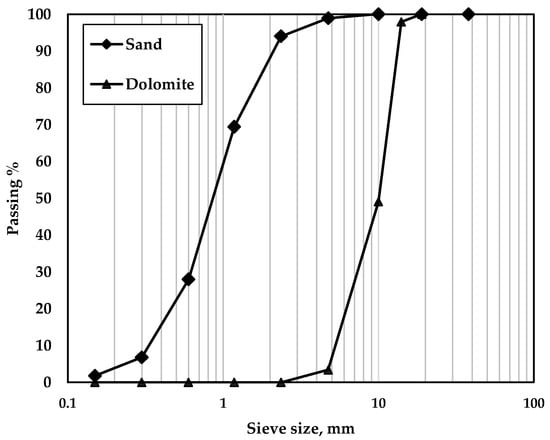
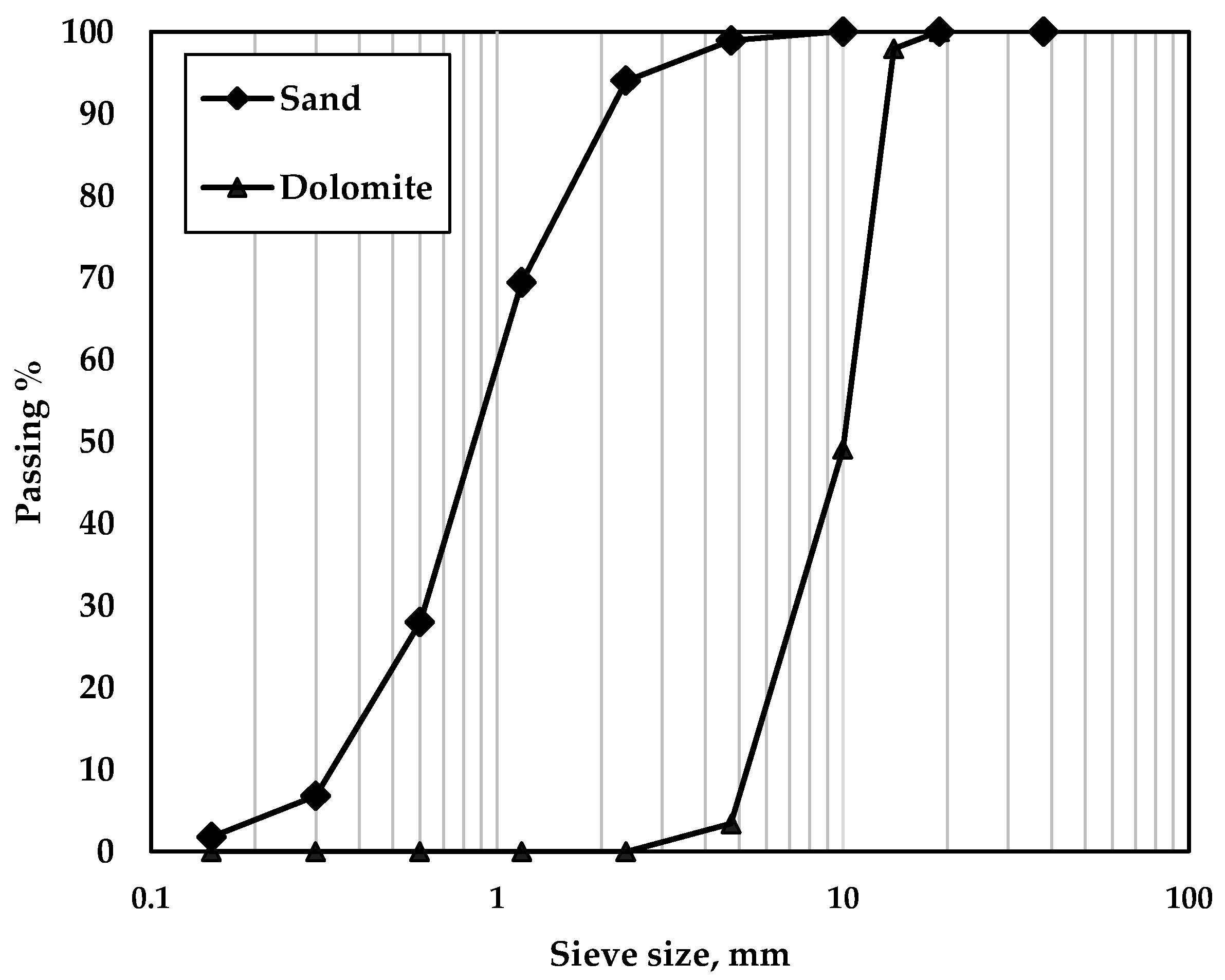
Normal Portland cement from Al Sahm company CEM I 42.5 N (Beni Suef, Egypt) was used as a binder material according to ES 4756-1/2013 and BS EN 197-1/2011 [32,33]. The silica fume and the superplasticizer, Viscocrete 3425, are supplied by Sika (Obour City, Egypt). The chemical properties of the used cement and silica fume are listed in Table 1. Natural crushed dolomite with a maximum aggregate size of 14 mm and siliceous natural sand with a fineness modulus of 2.6 were used. The properties of sand and dolomite are presented in Table 2 according to ECP 203-2020 [34]. The sieve analysis of sand and dolomite is illustrated in Figure 1. Calcium lactate from Oxford is used as a nutrient at a dosage of 0.5% of cement weight, as reported by Riad et al. [16].
Table 1.
The chemical properties of the cement and silica fume used.
Table 2.
Dolomite and sand properties.
Figure 1.
Sieve analysis of sand and dolomite.
The use of 10% silica fume as an addition to cement, as [8,14,16] and 0.5% superplasticizer by weight of cement, is based on proven methods for improving the performance of bacteria-based concrete mixes. The literature, including ACI 234R [35], suggests that the ideal range for silica fume is between 7% and 12%, with 10% being the most effective in terms of pore refinement and strength while keeping workability intact. This amount also ensures a good compromise between having a dense matrix that protects bacterial spores from environmental factors and having enough permeability to allow microbial activity, without going overboard on the dose, which may inhibit mobility or nutrient diffusion. The conservative superplasticizer dose of 0.5% gives the required workability without risking segregation or negatively affecting bacterial viability, as supported by previous studies. In addition, microwave treatment improves silica fume performance without interfering with self-healing mechanisms, contributing to both early-age strength and long-term durability. In general, this mix design corresponds with findings regarding high-performance concrete while sustaining microbial functionality.
2.2. Magnetization Water
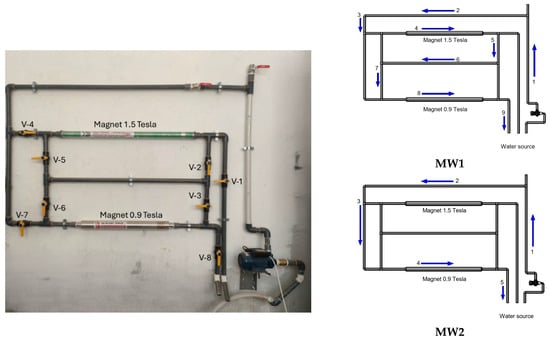
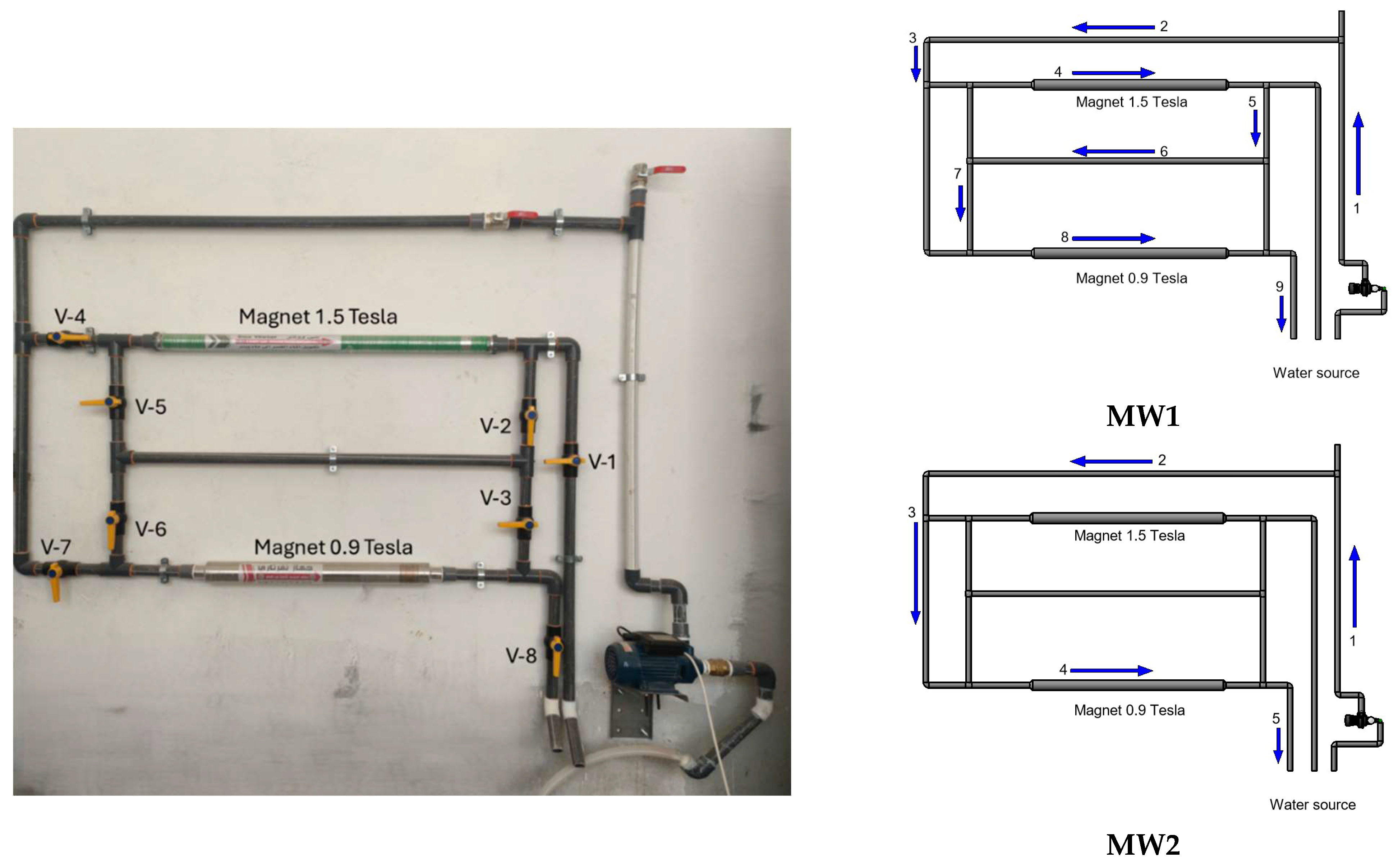
For magnetic water, TW was passed through a magnetic device from the Nefertary company with intensities of 0.9 and 1.5 Tesla. This study used two methods to prepare MW, one of which was that TW was passed through the magnetic fields for 150 cycles (105 min), according to [23]. In the first method (MW1), TW was first passed through a 1.5 Tesla magnetic field and then through a 0.9 Tesla magnetic field, whereas in the second method (MW2), TW passed only through the 0.9 Tesla magnetic field. The magnetization water system consists of a 0.5 HP water pump to ensure steady flow, valves to control the direction of water flow, and a water tank, as shown in Figure 2. The valve control details for each method are illustrated in Table 3. An optimization study by Ahmed et al. [23] was used to select 150 magnetization cycles. Their study varied the number of magnetization cycles from 50 to 200 and examined the effects of these cycles on mixing water parameters and concrete properties. They found that at 150 cycles, the mixing water parameters (pH, TDS, and conductivity) and compressive strength of concrete were optimized. Beyond this number of cycles, no further improvement was observed, indicating saturation. This effect can be interpreted in accordance with the concept that magnetic treatment is effective up to a certain number of cycles, beyond which additional exposure has diminishing returns. Two magnetization sequences were used to study the effects of field strength and polarity on water activation and concrete properties. The MW2 sequence (0.9 T only) was used as a control sequence for mild magnetic treatment. The MW1 sequence (1.5 T for 105 min followed by 0.9 T for 105 min) was used to investigate whether a stronger initial magnetic field of 1.5 T would induce greater structural changes in water molecules, such as breaking hydrogen bonds and reducing cluster size, which could then be stabilized or enhanced by subsequent exposure to a lower field of 0.9 T. Other works published previously used MW in different concrete types with 150 cycles [28,36].
Figure 2.
The magnetic device components and water flow.
Table 3.
The valve control details for each method.
Previous studies [21] have shown that sequential exposure to different magnetic fields can result in more effective and longer-lasting changes to water structure compared to exposure to a single field. Preliminary experiments, conducted outside this paper and not included in the main text for brevity, showed that MW1 consistently produced higher pH, TDS, and conductivity values than MW2, indicating greater water activation, which helped us choose these sequences.
2.3. Bacteria Suspension Preparations
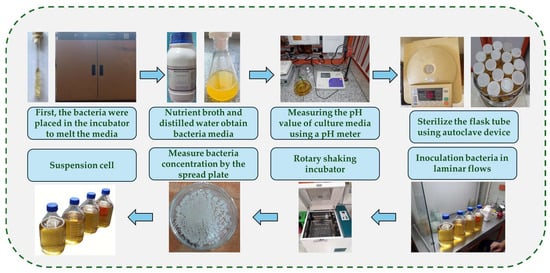
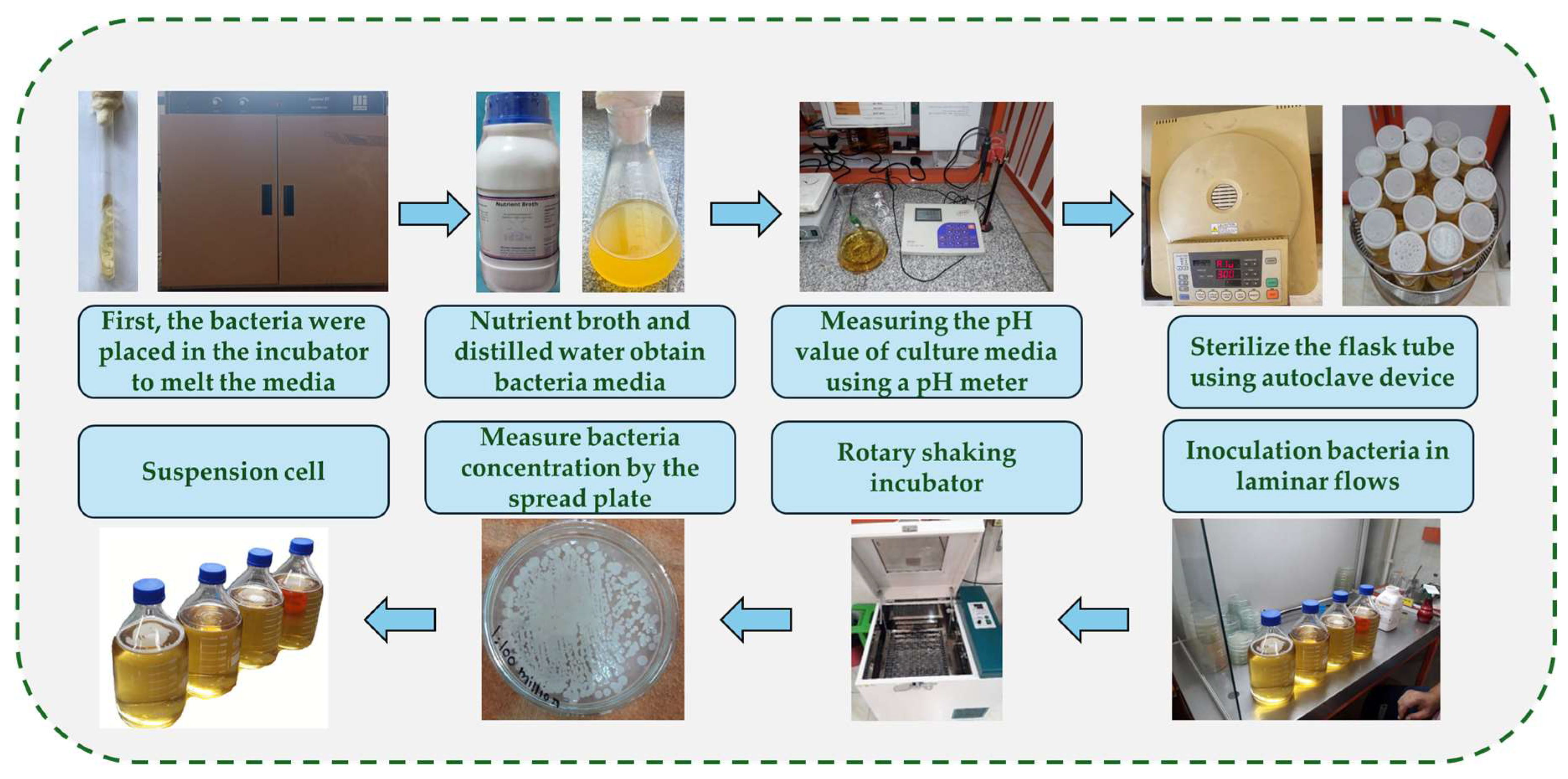
Bacillus megaterium from the Bacillus Genus was selected in this study. The bacterial stock was delivered by the Microbiological Resources Centre (MIRCEN) at the Faculty of Agriculture, Ain Shams University. To prepare the culture media, 13 g of nutrient broth was added to 1 L of distilled water. To achieve sterility, the pH value should be 7.2 ± 0.2. For the inoculation process, a few well-isolated Bacillus megaterium colonies were transferred to the growth media. Culture media was incubated in a model AURA HZ flow cabinet with shaking at 150 rpm at the optimal temperature (30 °C) for the necessary duration for bacterial growth (24 h to 48 h). Turbidity indicates bacterial growth. For the required concentration, use a plate count agar method to count the bacterial cells in the suspension, and adjust the dilution to achieve a target concentration of 2 × 10⁹ CFU/mL [8], as shown in Figure 3.
Figure 3.
Bacteria suspension preparation process.
2.4. Mixes Details
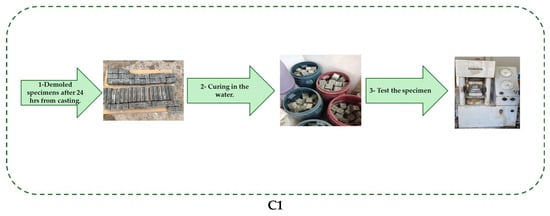
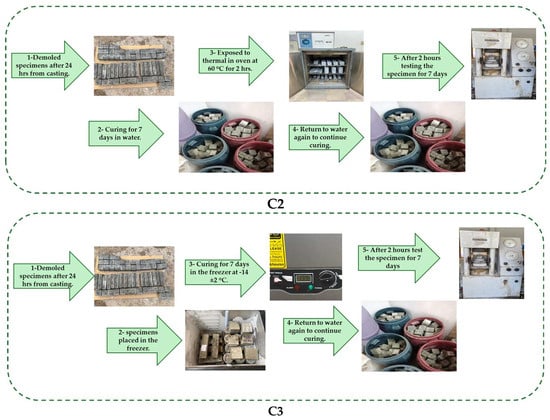
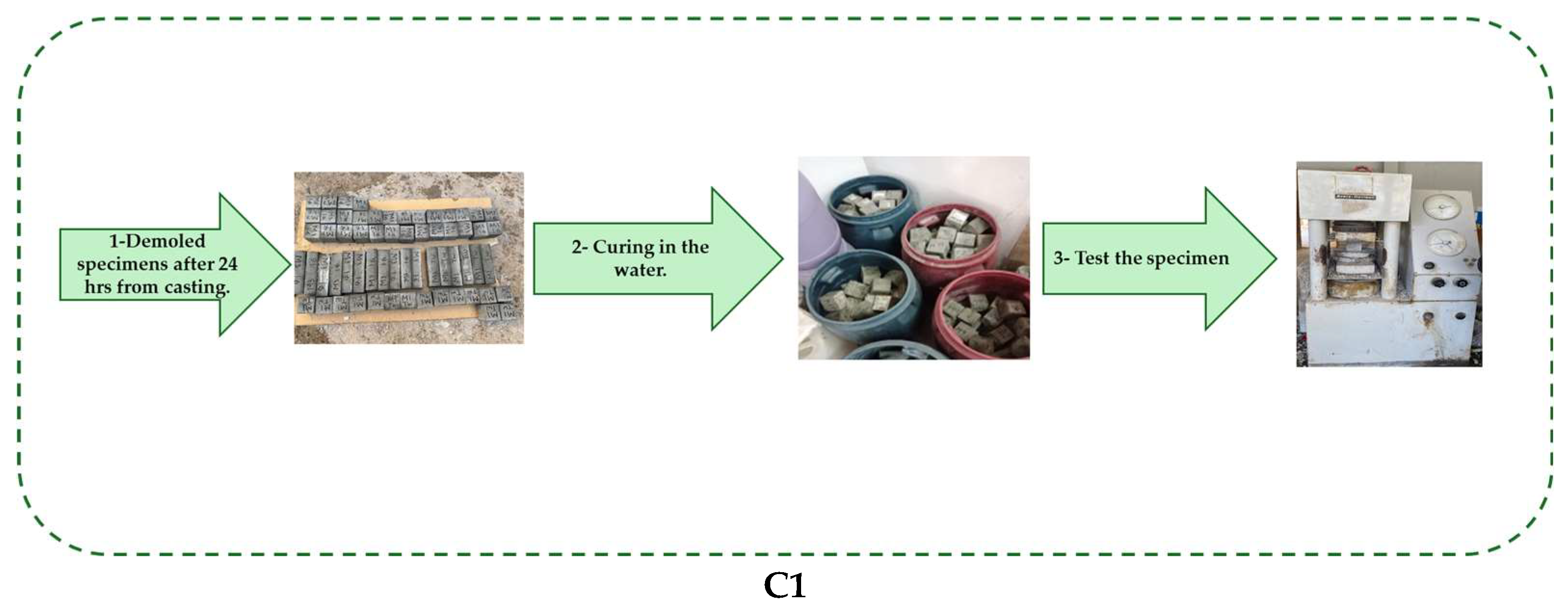
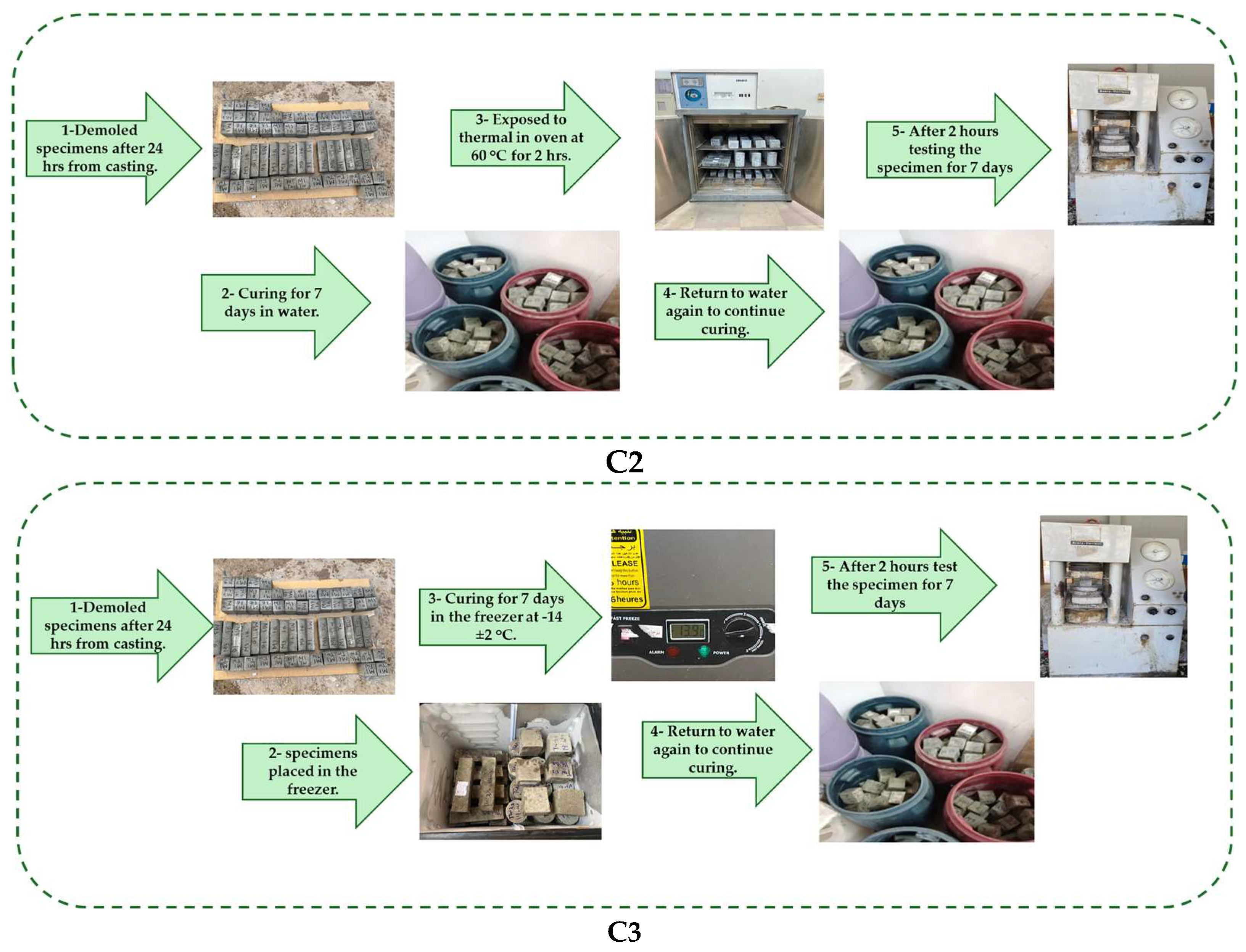
A total of twenty-seven concrete mixes were analyzed using three distinct parameters. Two varying dosages of bacteria, 2.5% and 5% of the cement weight, were incorporated into the concrete mixes, with the water content adjusted accordingly. The concrete was mixed once with tap water (TW) and once with an alternative type of mixing water (MW). Three different curing methods were utilized for the concrete: traditional water curing for a duration of 56 days (C1), curing in water for the initial 7 days followed by placement in an oven at 60 °C for two hours, and then returning to water for another 56 days (C2), as well as freezing at −14 °C ± 2 during the first 7 days before resuming curing in water for 56 days (C3). The different curing processes applied are presented in Figure 4. The components of 1 m3 of concrete were 450 kg of cement, a 10% silica fume addition, and 0.5% superplasticizer by cement weight. The sand and dolomite were 634.8 kg and 1150 kg, respectively. The varying parameters of concrete mixes were presented in Table 4.
Figure 4.
Different curing regimes at an early age. C1, C2, and C3 are defined codes representing distinct curing regimes (Traditional, Thermal Shock, and Freeze-Thaw, respectively).
Table 4.
Mix proportions and details.
2.5. Fresh, Hardened, and Microstructure Testing Details
Concrete workability was measured by the slump cone test according to ASTM C 143-2015 [37]. For concrete compressive strength, three cubes with dimensions 100 × 100 × 100 mm were tested at different ages: 7, 28, 56, and 120 days in accordance with BS EN 12390-3:2019 [38]. The healing of concrete was assessed by cracking three cubes at 56 days with 65% compressive stress. The compression test was performed on a single testing machine with a capacity of 3000 KN ± 0.5%, with a loading rate of 0.5 MPa per second. The indirect tensile strength of the concrete mixes was determined through the cylinder 100 × 200 mm at ages of 28 and 56 days according to BS EN 12390-6:2019 [39]. The flexural strength was measured from the prism with dimensions 70 × 70 × 280 mm, and a three-point bending test was applied following BS EN 12390-5:2019 [40]. The indirect tensile and flexural tests were carried out on a universal testing machine with a capacity of 1000 KN ± 0.5%. The machine loading rate was 0.05 MPa per second under tension and 0.07 MPa per second under bending according to BS EN 12390. Eleven mixes were selected for scanning electron microscope (SEM) analysis of the concrete microstructure, using a JEOL JSM-651OLV with magnification up to 300,000×. After 120 days of casting, a concrete sample from the selected mixes was prepared for the test. Before conducting the test, the specimens were dried and coated with gold using a sputter coater to obtain the clearest possible images. PAN analytical X-Ray Diffraction equipment model X’Pert PRO with Secondary Monochromator, Cu-radiation (λ = 1.542Å) at 45 K.V., 35 M.A., and scanning speed 0.04 °/s, scan range: 5–50° 2θ, and step size 0.04 °/s was used to investigate crystalline phases in cementitious materials after 120 days.
3. Results and Discussion
3.1. Characteristics of Water
Table 5 illustrates the characteristics measured for the TW and MW for different methods. As observed, the magnetization changed the properties of TW. The pH, TDS, conductivity, and temperature increased with magnetization up to 15%, 16.9%, 17.5%, and 16%, respectively, in accordance with [23,28]. The temperature increased with magnetic field strength as hydrogen bonds broke, releasing energy. Breaking the hydrogen bond means that more H+ ions are absorbed and more OH- ions are present in the water, leading to an increase in pH and TDS [31].
Table 5.
Water characteristics measured.
3.2. Concrete Workability and Water Demand
Using MW in concrete mixing increases workability, and adding different bacterial dosages further enhances it. MW affects the molecular structure and ionic content of water. The increasing ratio in concrete slump using MW is 12.5%. These improvements in workability might result from enhanced hydration or slight variations in water-cement interaction, agreeing with [23,41]. The impact of magnetized water (MW) and Bacillus megaterium on concrete performance was evaluated using slump tests. According to Table 6, using MW alone (MW1 and MW2) increased workability by up to 12.5% compared to tap water (TW). This improvement in workability is associated with the modified physicochemical properties of MW, such as a higher pH, lower surface tension, and smaller water clusters, which enhance wettability and cement particle distribution, resulting in better fluidity without the need for additional water. The inclusion of only bacterial suspension at 2.5% and 5% of the cement weight also increased workability by up to 8.75%, consistent with findings from other research. [42,43]. This enhancement is due to the lubricating properties of the bacterial culture medium and its organic compounds, which lessen friction among particles.
Table 6.
Concrete slump value.
The combination of MW and bacteria increased workability by up to 14.4% compared to the control (TW without bacteria). More importantly, this combination reduced the amount of water needed to achieve similar workability levels. The mechanism behind this is that MW enhances hydration by allowing deeper and more uniform penetration of water into cement grains due to its lower viscosity and higher solubility; bacterial spores and nutrients provide nucleation sites for early hydration products, resulting in a denser, less porous matrix while both reduce free water required for maintaining the system’s workability through improved particle lubrication and better utilization of available water.
Reduction in the amount of water required has a direct impact on hardened properties: typically, less water results in higher compressive strength, lower porosity, and greater durability. The following sections show that mixtures containing both MW and bacteria at an optimal dose of 2.5% provide improved mechanical and self-healing properties; this study confirmed the synergistic effect between reduced water demand and enhanced microstructure.
3.3. Concrete Compressive Strength
All concrete compressive strength values at various ages, along with their respective ratios compared to the control mix (TW-0B), are listed in Table 7.
Table 7.
Concrete compressive strength value.
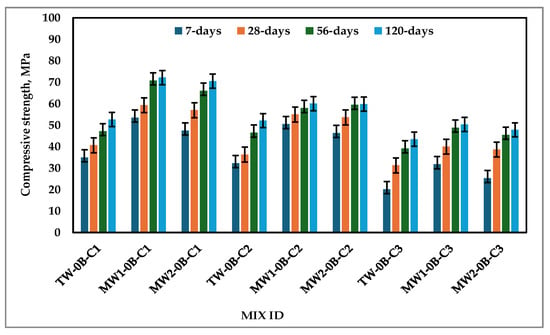
3.3.1. Effect of Using Different Water Types and Different Curing
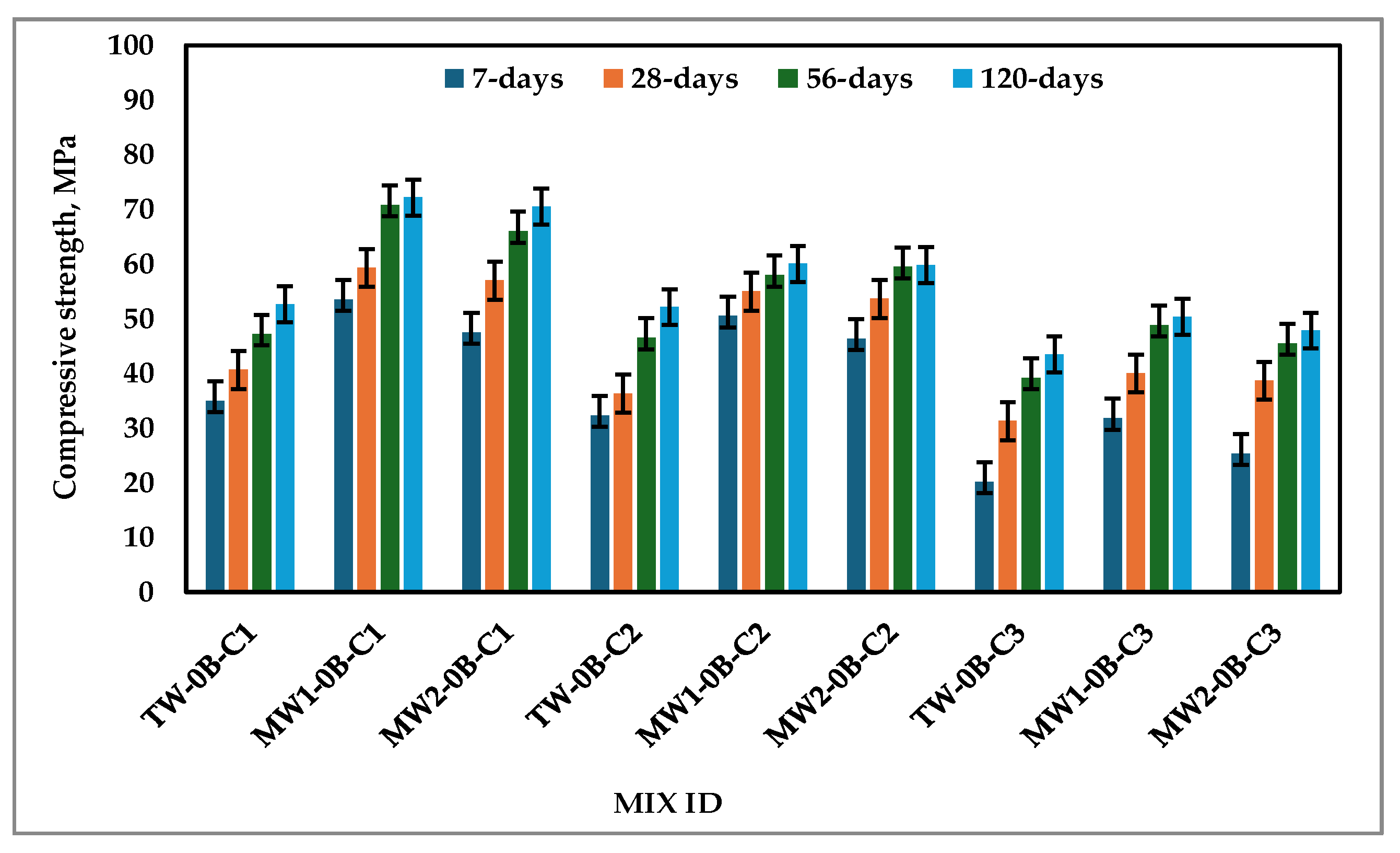
Figure 5 illustrates the impact of using different water types and different curing conditions without a bacteria dosage. At an early age, C1 shows the highest concrete strength in TW and MW, followed by C2 and C3, which show lower strength. For curing C2, the compressive strength decreases by 8% for TW and 6% for MW1 and 2% for MW2, while C3 curing decreases by higher percentages: 46% for TW and 43% for MW1 and 48% for MW2. The lowest value of C3 reflects delayed cement hydration and internal stress from ice formation [44,45], while the intermediate value of C2 is due to thermal exposure and early age curing in water. At the other ages, returning concrete to water increases the hydration of cement and silica fume particles, increasing compressive strength at 28 and 56 days, with a small variation at 120 days. At the age of 120 days, the concrete compressive strength improved by 37% and 33.86% for curing C1, 15% and 14.7% for curing C2, and 15.7% and 9.95% for curing C3 mixed with MW1 and MW2, respectively, compared with TW. Using MW enhances hydration by allowing small water molecules to penetrate cementitious particles, reducing voids, and increasing concrete strength and density [41].
Figure 5.
Compressive strength of different concrete mixes with various water types and without bacterial curing.
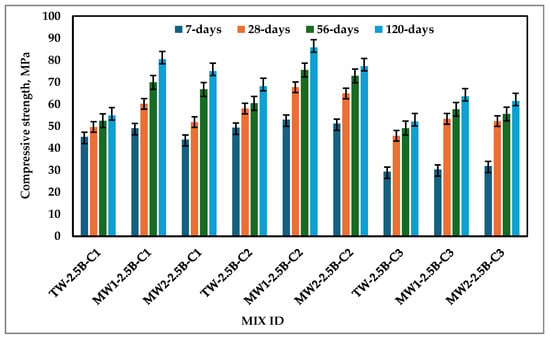
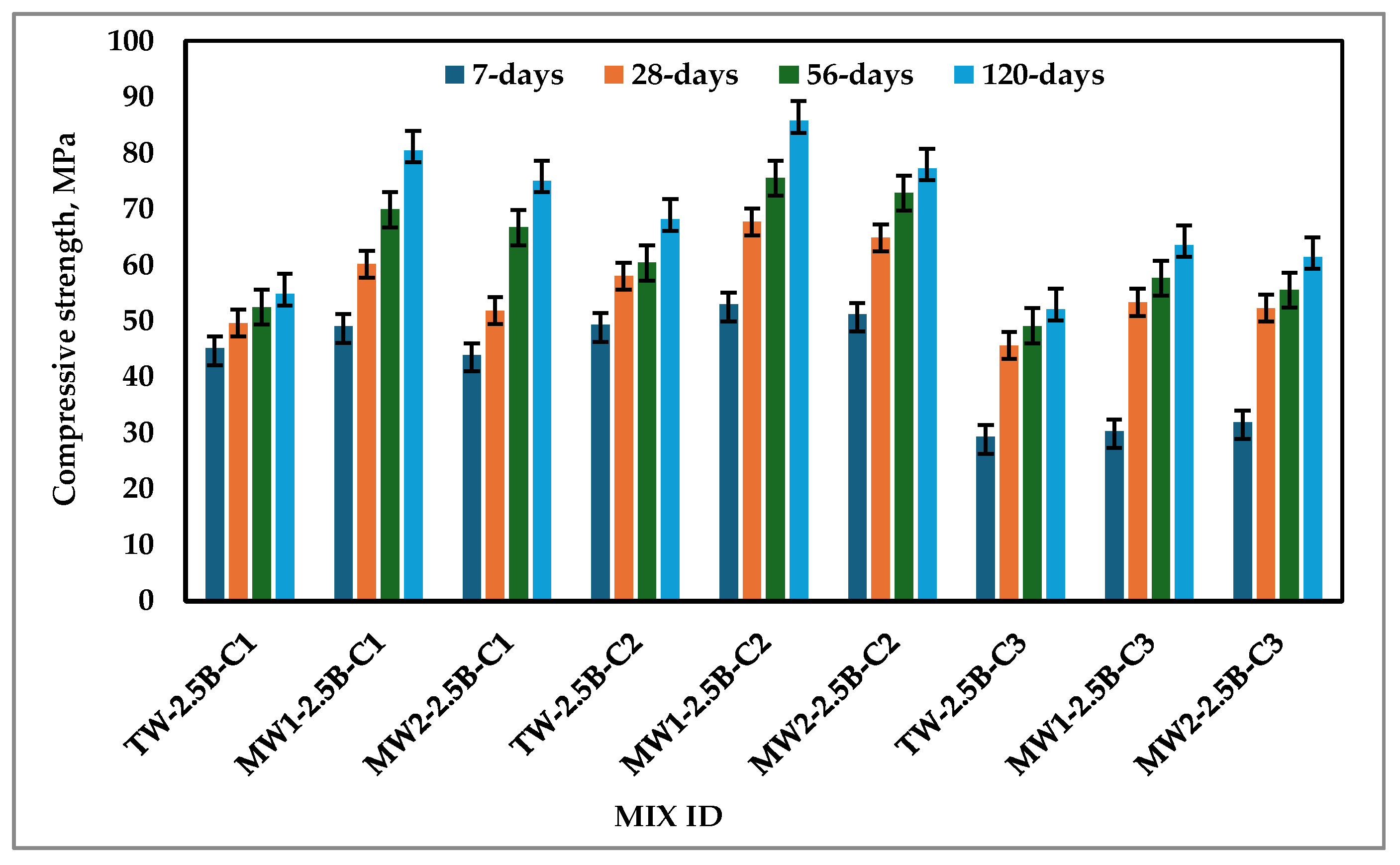
Figure 6 illustrates the influence of curing, water type, and 2.5% bacterial dosage on compressive strength development. At an early age, the compressive strength increases by 9%, 8%, and 16% for concrete mixed with TW, MW1, and MW2, respectively, under the C2 curing regimen. Despite the curing regime, C2 shows a decrease in concrete strength, with percentages of 32%, 36%, and 23% for TW, MW1, and MW2, respectively. At 120 days, the concrete compressive strength increased by 46.5% and 36.78% for curing C1, 25.68% and 13.2% for curing C2, and 21.67% and 17.61% for curing C3 with MW1 and MW2, respectively, compared with TW. For C1 curing, continuous hydration, in addition to MW and bacteria, results in denser concrete and gradually higher compressive strength at different ages [7,8]. Placing concrete in the oven C2 curing increases compressive strength. This improvement is attributed to accelerated hydration and enhanced bacterial precipitation of CaCO3 [14,46]. While curing C3, the hydration process of cement and bacterial activity were restricted due to freezing. Lower early-age compressive strength was observed, with recovery in strength at later ages [18]. Using MW and bacteria during concrete mixing results in higher concrete strength and greater durability.
Figure 6.
Compressive strength of different concrete mixes with various water types and different curing, with a bacterial dosage of 2.5% by cement weight.
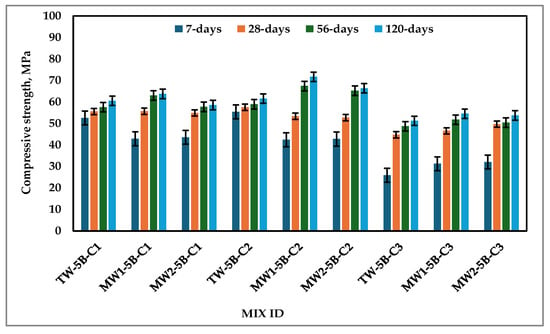
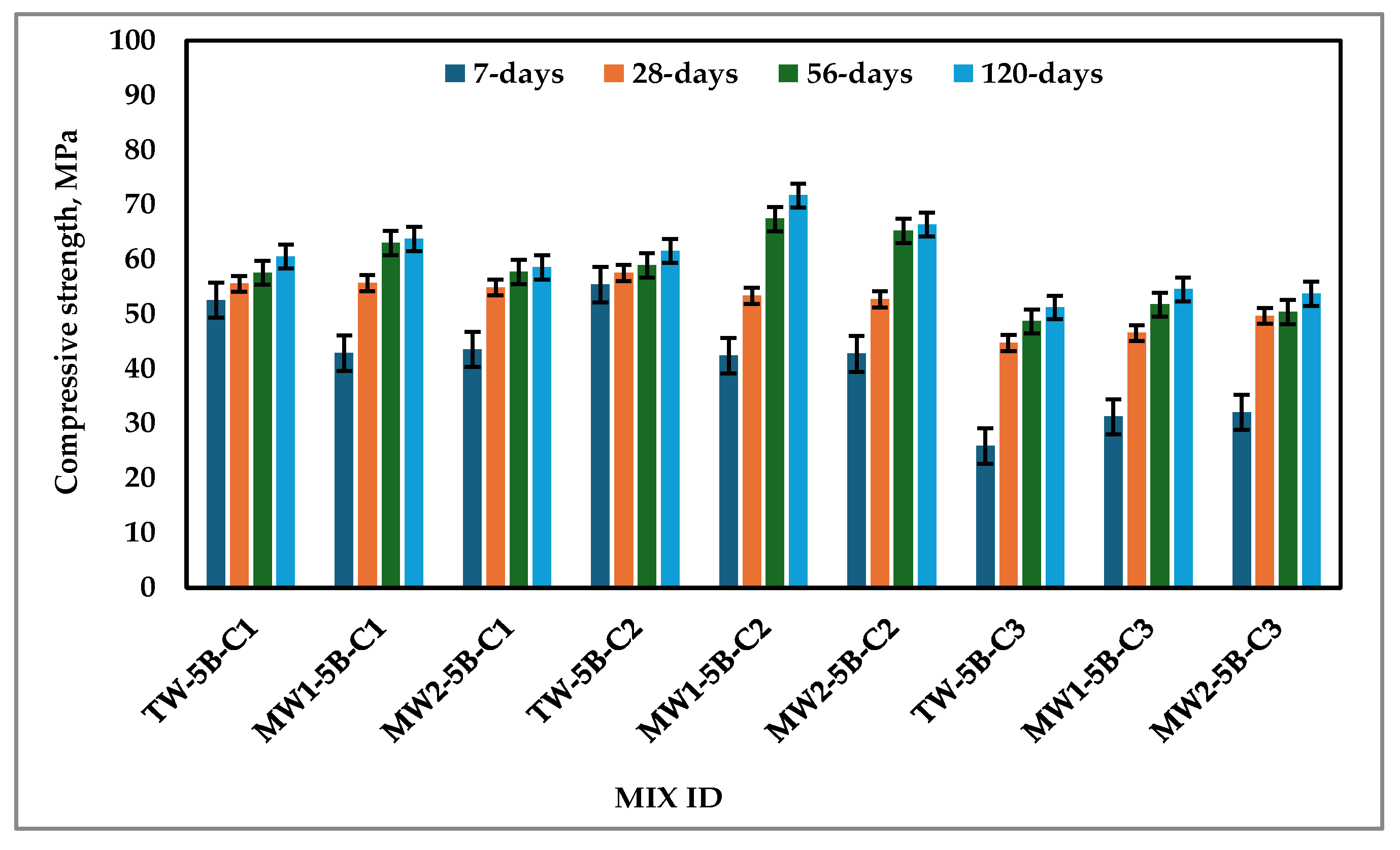
Figure 7 explains the impact of different water types, different curing, and 5% bacteria dosage on concrete compressive strength. At an early age, the compressive strength increases by 5% with TW, while it decreases by 1% and 2% for MW1 and MW2, respectively, under the C2 curing regime. In the case of C3 curing, the compressive strength decreases by 48%, 28%, and 27% for TW, MW1, and MW2, respectively. The use of MW in concrete containing 5% bacterial content shows moderate enhancement compared to TW. The increasing ratio using MW was 5.23% and 1.32% for curing C1, 16.53% and 7.86% for curing C2, and 6.51% and 4.88% for curing C3 at 120 days for MW1 and MW2, respectively, compared with TW. For curing C1, a consistent increase in compressive strength due to continuous hydration [7,8]. Despite C3 curing, lower early age compressive strength due to freezing [18]. The highest compressive strength was achieved using C2 curing, which accelerates hydration reactions and promotes bacterial precipitation [14].
Figure 7.
Compressive strength of different concrete mixes with various water types and different curing conditions, with a bacterial dosage of 5% by cement weight.
3.3.2. Effect of Using TW and Different Bacteria Dosages at Various Curing Conditions
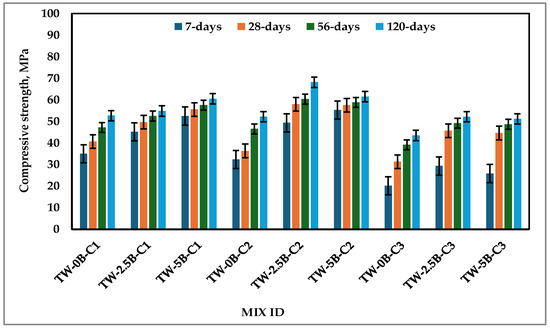
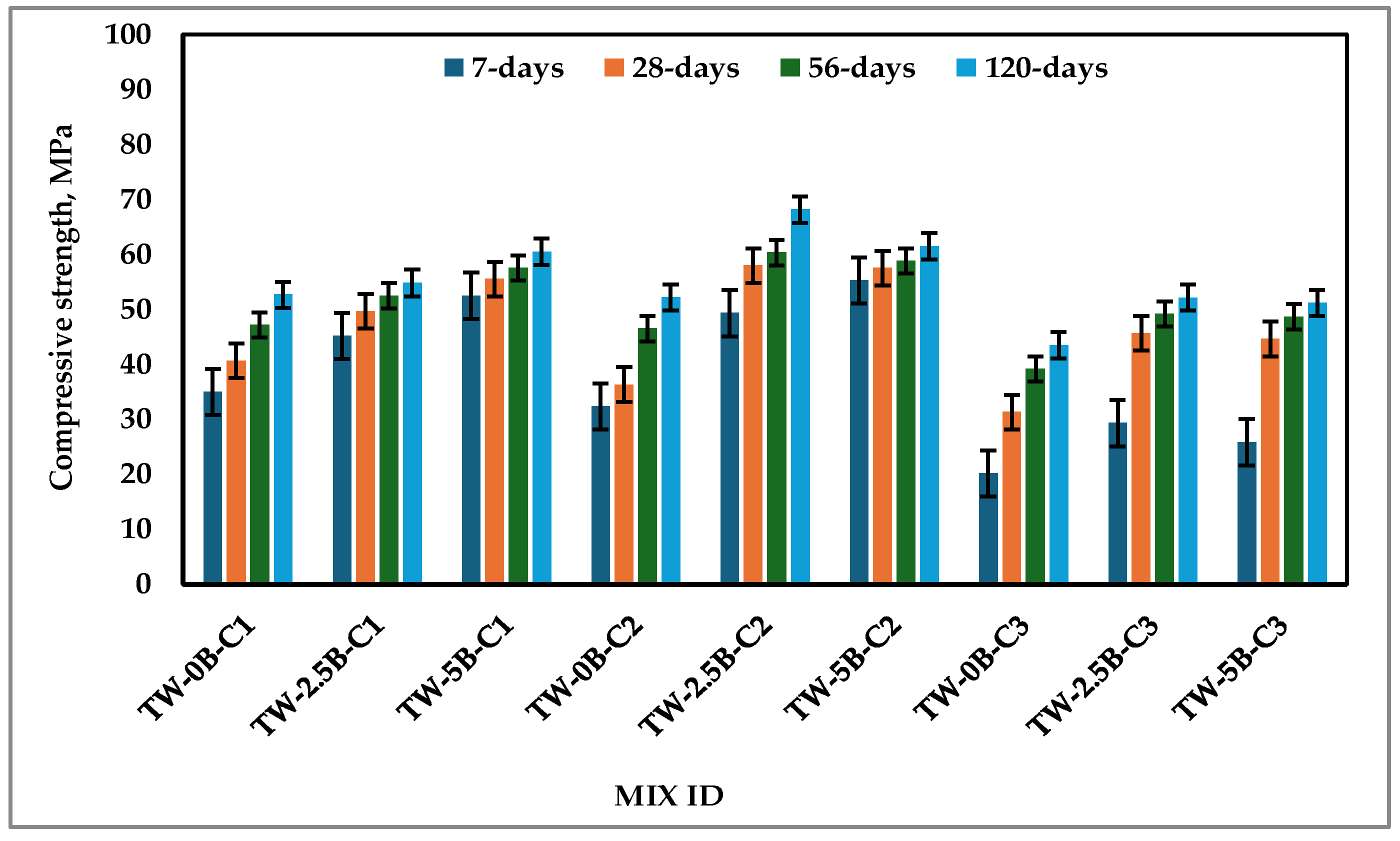
Figure 8 shows the effects of different bacterial dosages and curing methods on the compressive strength of concrete mixed with TW. Increasing the bacteria dosage increases compressive strength. The enhancements in compressive strength were 4.11% and 14.87% for C1 and 17.63% for C3 at 120 days for 2.5% and 5% bacterial dosages, respectively [8,18]. For the C2 curing regime, the 2.5% bacteria dosage yields higher strength (30.67%) than 5% (19.89%). Exposing bioconcrete to a moderately elevated temperature of 60 °C during its early curing stage enhances its strength. At this temperature, the bacteria become more active, leading to increased precipitation of CaCO3. The combination of high temperature and heat of hydration enhances cement particle hydration and, consequently, concrete strength [14,47].
Figure 8.
Compressive strength of different concrete mixes with TW and various curing conditions at different bacterial dosages.
3.3.3. Effect of Using MW and Different Bacteria Dosages at Various Curing Conditions
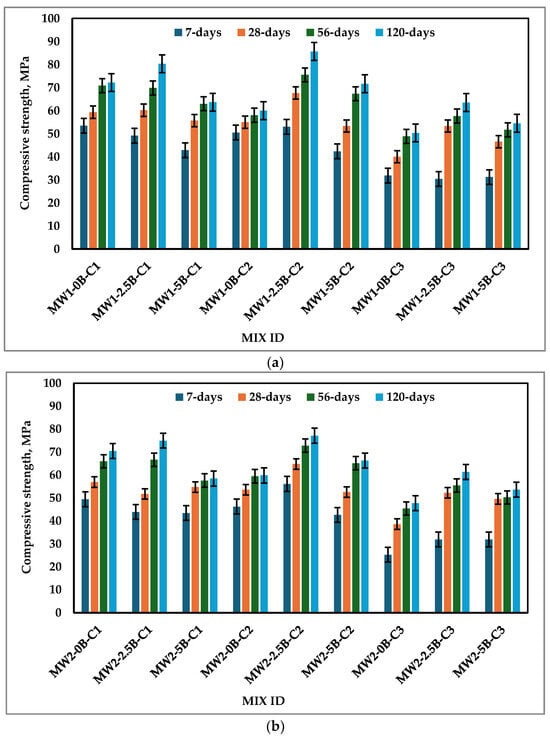
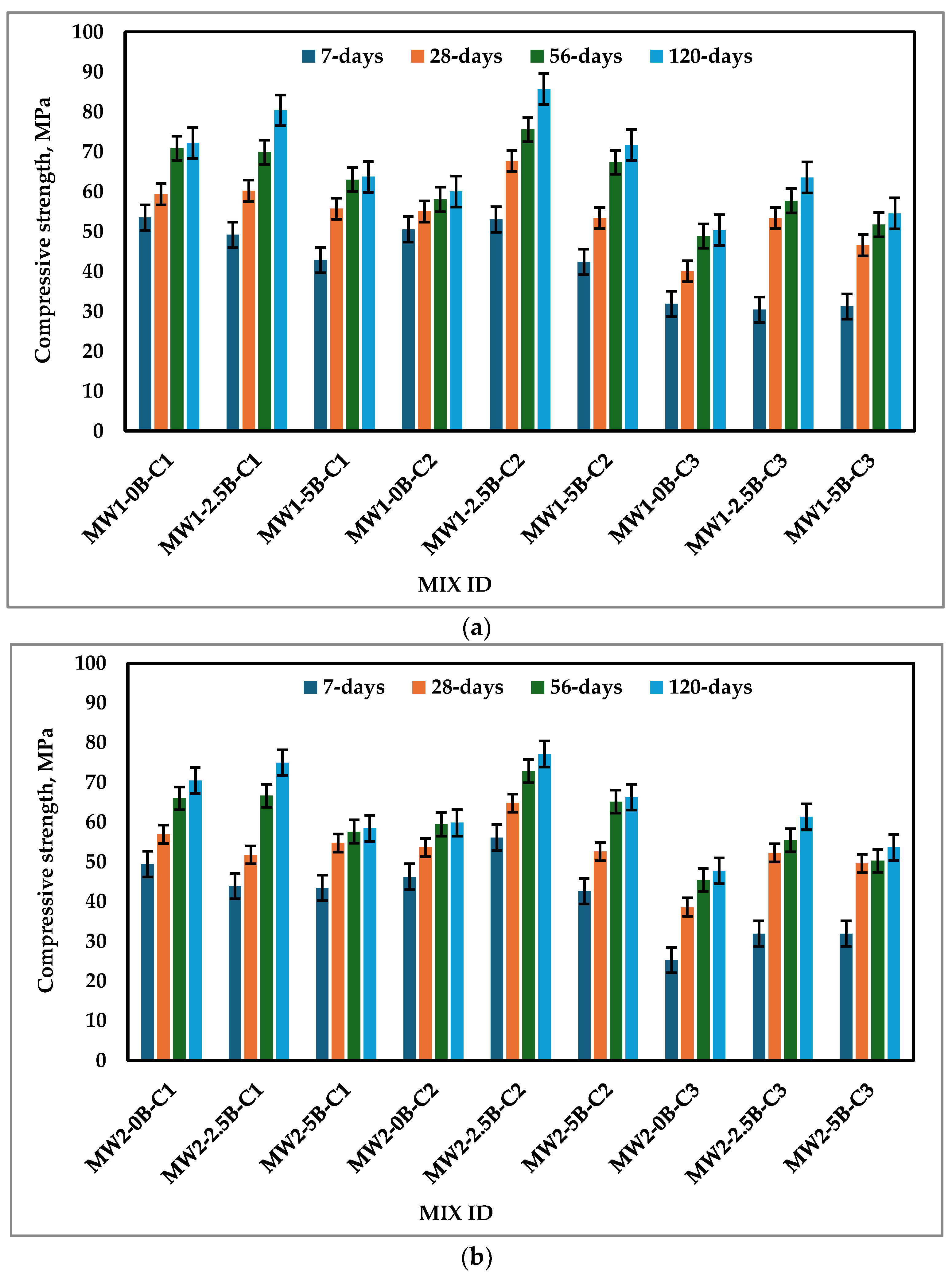
Figure 9 explains the effects of different MW types and bacterial dosage under various curing conditions. Using a 2.5% bacteria dosage increases compressive strength by 11.3% and 6.4% for MW1 and MW2, respectively, at 120 days under traditional curing C1. Although the use of 5% bacteria results in a decrease in compressive strength of 11.7% and 17% at 120 days, respectively. Exposing concrete to high-temperature C2, which reduces concrete strength without bacteria due to internal stress, despite the presence of bacteria, increases the rate of urea hydrolysis and CaCO3 formation upon re-immersion in water, leading to microcrack healing and matrix densification [46,47]. The compressive strength improved by 6.6% and 2.9% with 2.5% bacteria, 12.5% and 13.4% with 5% bacteria for MW1 and MW2, respectively. In the C3 curing regime, the low temperature restricts hydration and creates internal stresses from water freezing. When concrete is returned to the water with existing bacteria, cracks heal, with increases in concrete strength of 26.1% and 28.2% for MW1 and MW2, respectively, at 2.5% bacteria, and 8.2% and 12.2% for MW1 and MW2, respectively, at 5% bacteria. [18].
Figure 9.
Compressive strength of different concrete mixes with different curing and different bacterial dosages (a) mixed with MW1 and (b) mixed with MW2.
Microstructural Explanation for Reduced Strength at High Bacterial Dosage
The noted decline in compressive strength observed at a 5% bacterial dosage, especially under traditional curing conditions (C1), can be linked to microstructural changes observed in SEM analysis. While a moderate bacterial dosage of 2.5% fosters densification through regulated microbially induced calcite precipitation (MICP), an excessive dosage of 5% results in an accumulation of surplus biomass and organic residues within the concrete matrix. This surplus biomass creates heterogeneous zones, elevates porosity, and generates weak interfacial transition zones, ultimately affecting structural integrity and diminishing overall strength. The observed microstructural deterioration aligns with the lower compressive strength readings for mixes containing 5% bacteria, highlighting the importance of using the appropriate bacterial dosage to produce a dense, uniform concrete matrix.
3.3.4. Compressive Strength Healing of Pre-Cracked Specimens
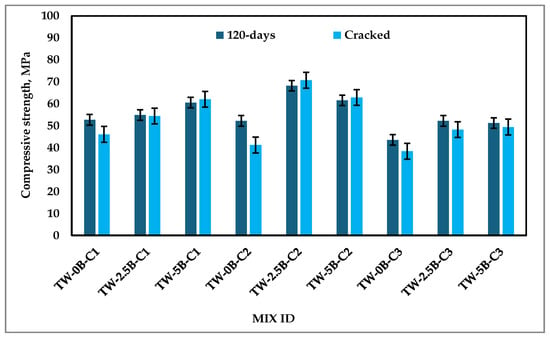
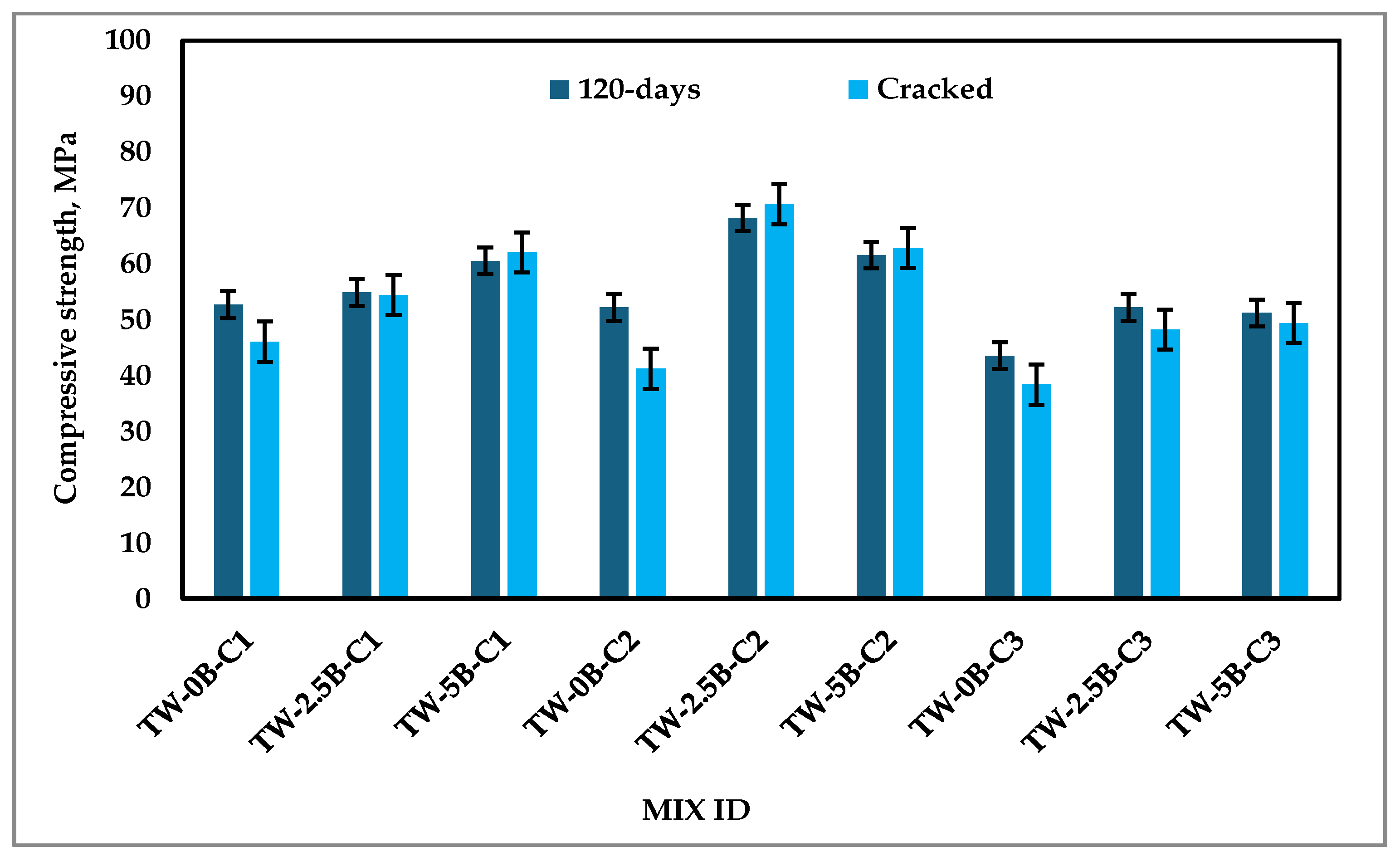
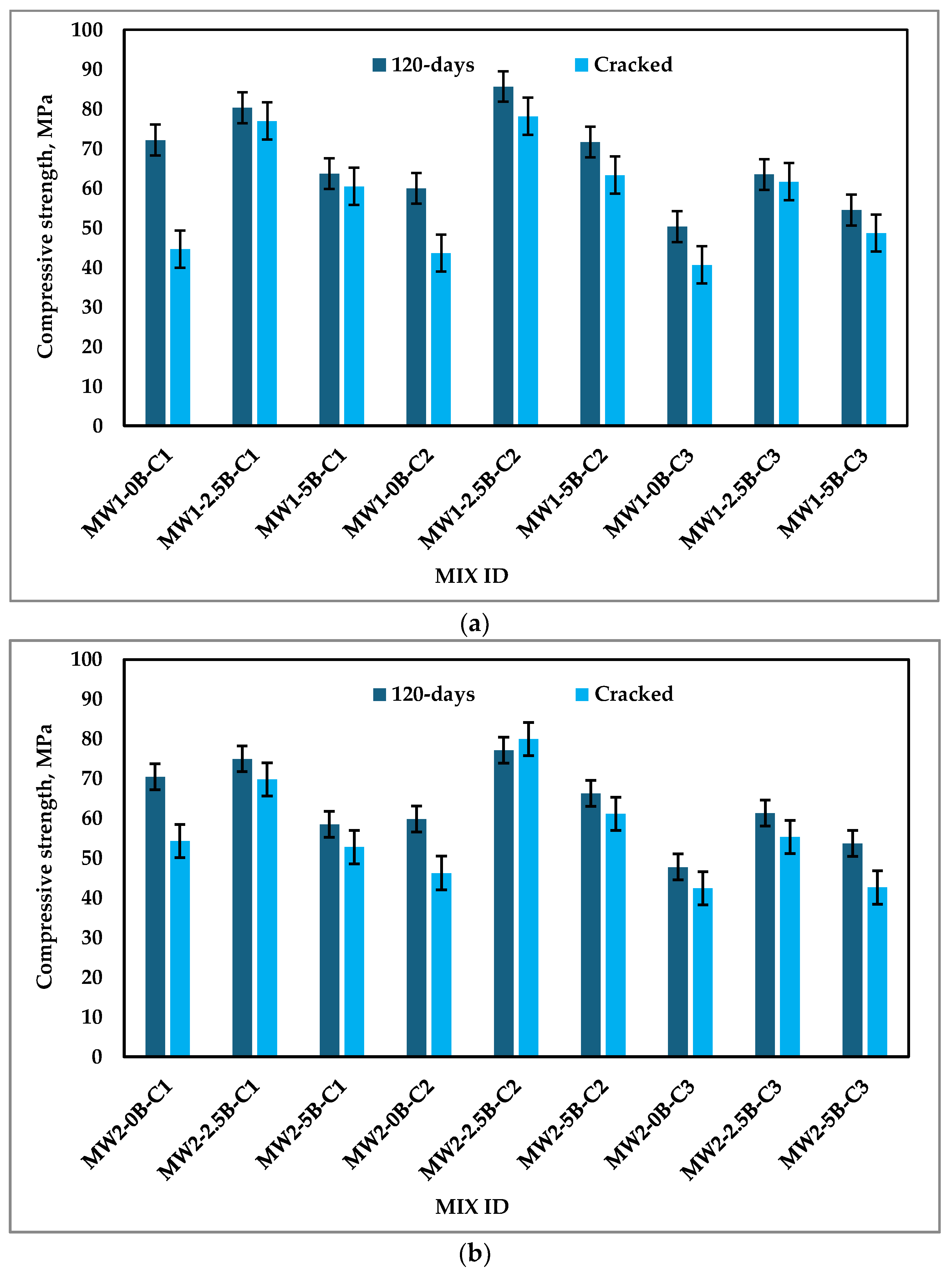
After 56 days from casting concrete, three cubes had cracked, with a 65% reduction in compressive strength compared to the other three cubes. The cracked specimen was kept in the air and reloaded at 120 days, and the results were compared with those of three cubes tested at this age. Figure 10 represents the compressive strength of cracked and uncracked cubes at 120 days for concrete mixed with TW. As shown, healing efficiency varies with bacterial dosage and curing regime. Under normal conditions, C1 concrete containing bacteria exhibits compressive strength equal to or slightly higher than uncracked strength, with a healing ratio of 102% for 5% bacteria [48]. The healing ratio reached 104% and 102% for 2.5% and 5% bacteria C2 curing, respectively. These healing ratios indicate the effectiveness of the precipitation of CaCO3 in cracks and in restoring concrete strength [8,14]. The lower healing ratio was demonstrated with C3 curing, with a restoration of 96% of uncracked specimens, with 5% bacteria [18]. In the absence of bacteria, healing remains limited and does not exceed 88% because it depends on autogenous healing, which requires humidity and unhydrated cementitious particles [49].
Figure 10.
Compressive strength recovery of concrete mixed with TW at different bacterial dosages and under different curing conditions.
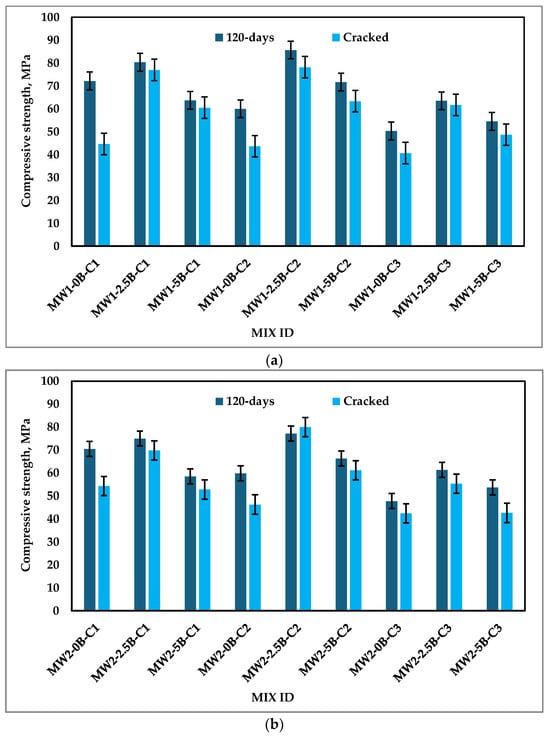
Figure 11 shows the healing recovery of concrete mixed with different MW and bacteria dosages under varying curing conditions. The recovery of strength in concrete containing bacteria is higher than that of concrete without bacteria in all curing conditions. Using MW enhances the post-cracking durability of concrete. The cracked specimens mixed with MW recovered up to 89% of the compressive strength of the corresponding uncracked specimen. Incorporating bacteria and MW improves the recovery ratio. The higher strength recovery was obtained from a 2.5% bacteria dosage exposed to high temperature, C2 curing, with a value of 103.7%. The healing ratio varies from specimen to specimen according to crack width, making it difficult to be the same across all specimens.
Figure 11.
Compressive strength recovery for concrete having different bacterial dosages and different curing (a) mixed with MW1 and (b) mixed with MW2.
The effectiveness of healing, especially during C2 (thermal shock) curing, depends not only on bacterial activity but also on the resulting microstructure. As demonstrated in the SEM images, while thermal curing accelerates MICP, an excessive bacterial load (5%) can result in uneven precipitation and localized weak spots, which could account for the variability in healing ratios and the sometimes-lower recovery observed in samples with high bacterial concentrations.
3.4. Concrete Tensile Strength
3.4.1. Effect of Using TW and Different Bacteria Dosages at Various Curing Conditions
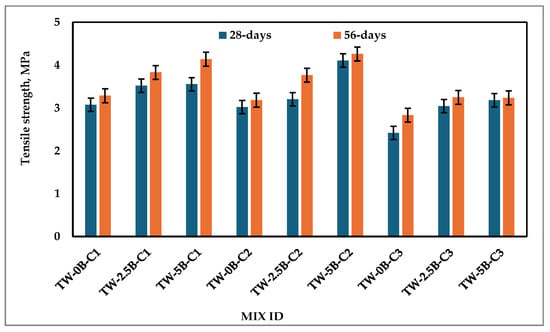
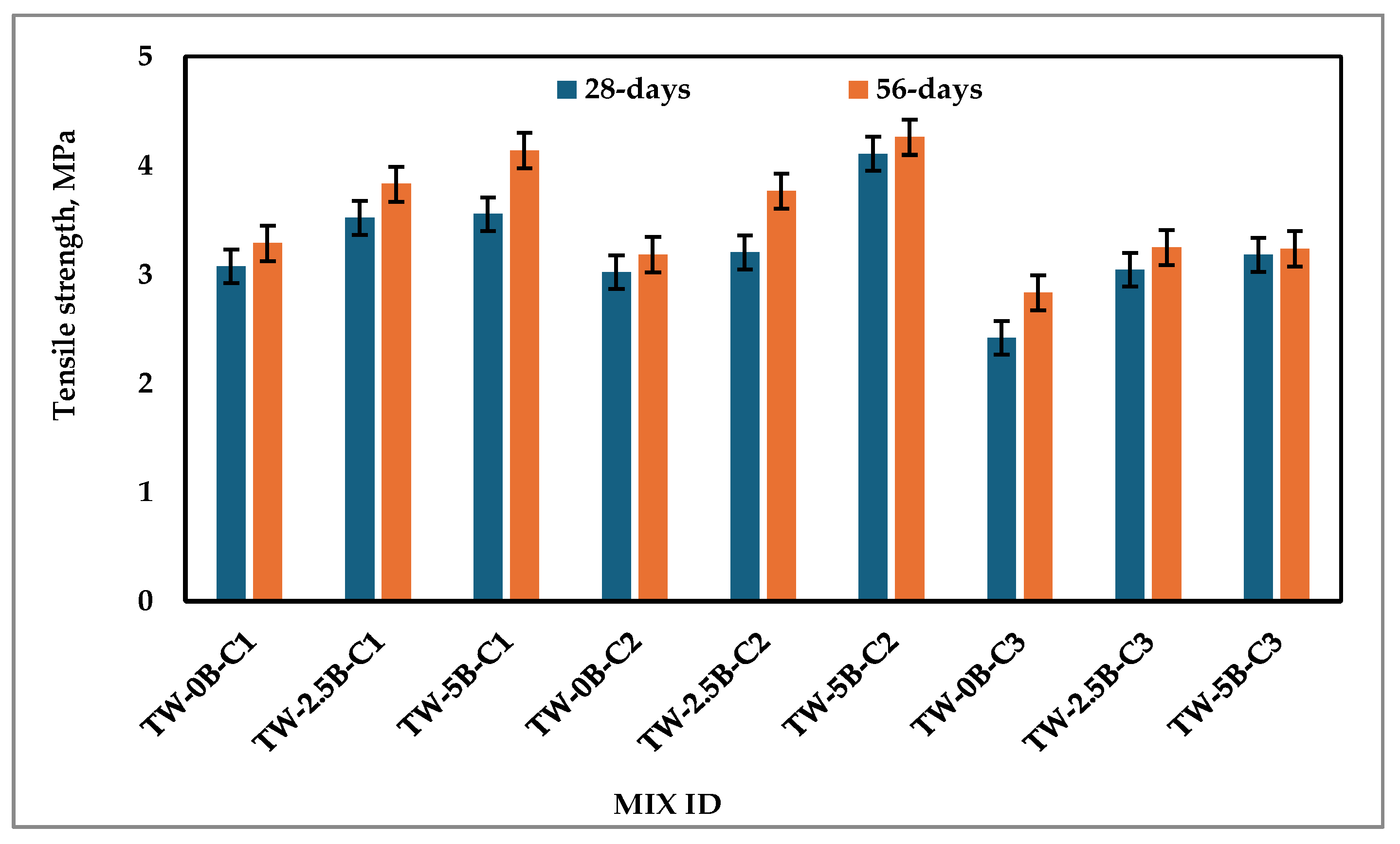
Figure 12 presents the concrete tensile strength at 28 and 56 days for concrete mixed with TW at different bacteria dosages and various curing regimes. In all curing conditions, increasing the bacteria dosage increases tensile strength. The tensile strength increases by 15.5% and 25.8% at the age of 56 days for C1 curing, 35.7% and 27.7% for C2 curing, and 31.5% and 14.2% for C3 curing with 5% bacteria. When comparing different curing regimes at the same bacteria dosage, traditional curing yields higher tensile strength. Interactions between bacteria and nutrients promote calcium carbonate precipitation and strengthen the bond between concrete components, reducing voids and increasing tensile strength [7,50].
Figure 12.
Tensile strength of different concrete mixes with TW and various curing conditions at different bacterial dosages.
3.4.2. Effect of Using MW and Different Bacteria Dosages at Various Curing Conditions
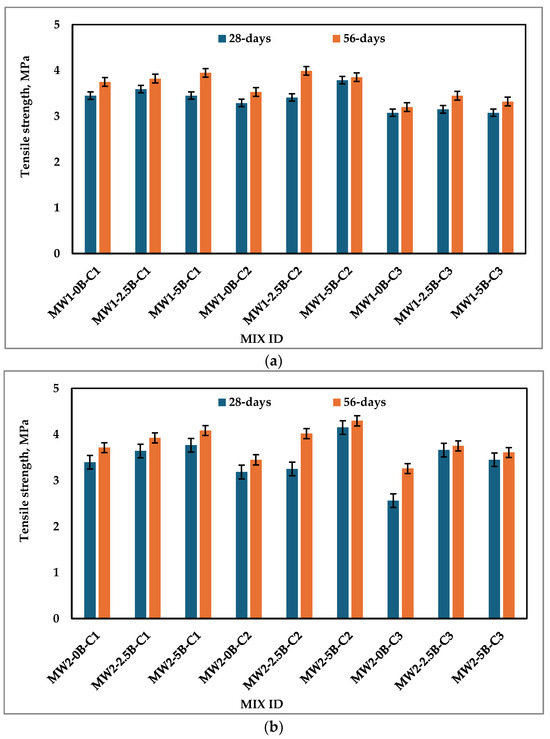
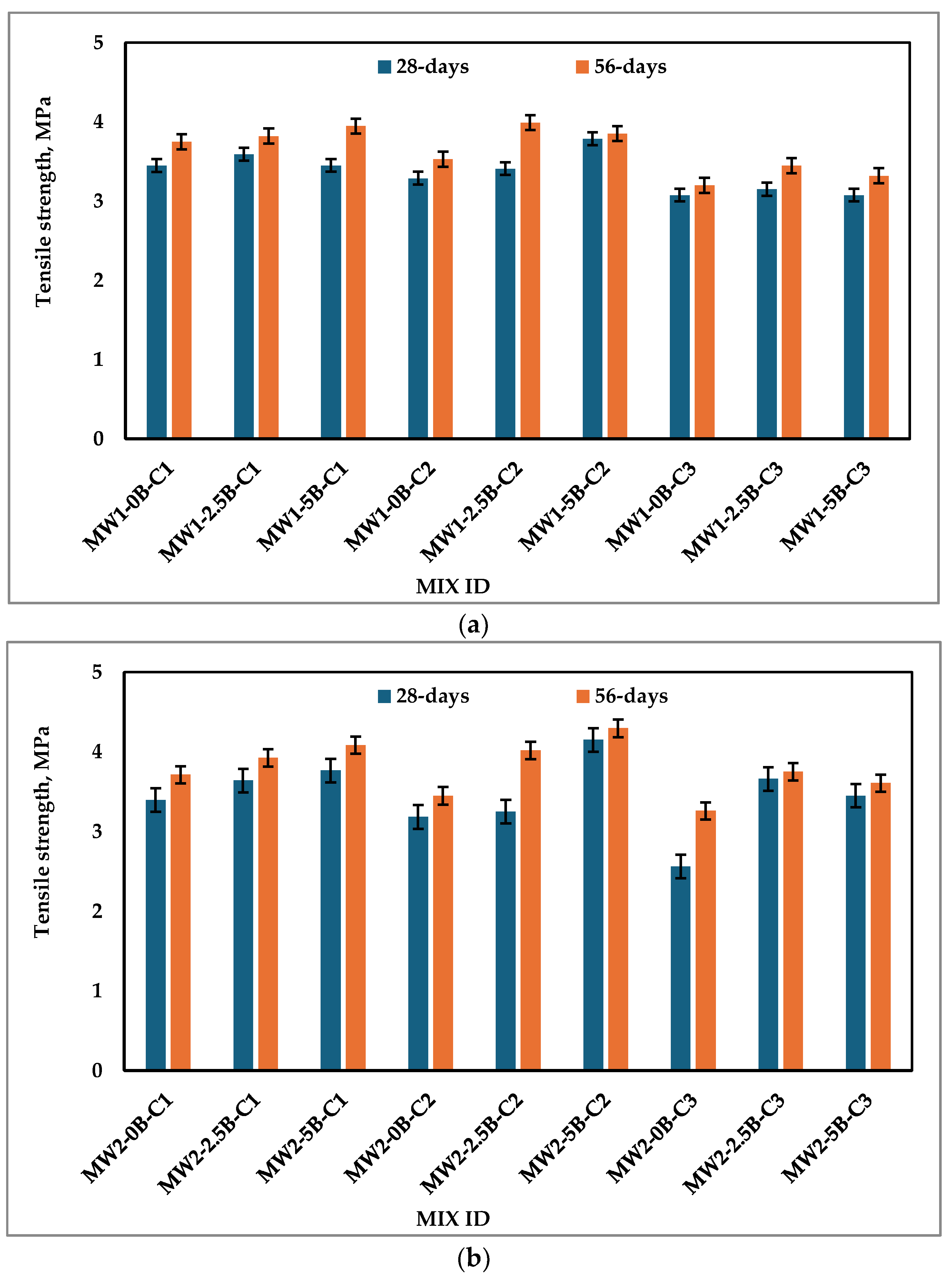
Figure 13 demonstrates the impact of using MW on mixing concrete with different bacterial dosages under various curing conditions. Tensile strength increases by 14% and 12.9% at 56 days for MW2 and MW2, respectively, compared to TW without bacteria for traditional curing C1 [41]. Combining MW with bacteria improves tensile strength with a higher dosage due to greater calcium carbonate precipitation. For C1, the tensile strength is enhanced by 5% and 10% at 56 days for MW1 and MW2, respectively, with a 5% bacterial dosage compared to non-bacterial concrete. The ratio increased with higher temperature C2, to 9% and 25% for MW1 and MW2, respectively, compared to traditional curing. Exposing concrete to moderate temperature boosts bacterial precipitation, resulting in higher tensile strength [50]. On the other hand, C3 curing decreases tensile strength relative to traditional curing [18]. Freezing concrete at an early age creates microcracks due to water expansion, reducing tensile strength. The existence of bacteria and the return of specimens to the water heal cracks and improve tensile strength.
Figure 13.
Tensile strength of different concrete mixes with different curing and different bacterial dosages (a) mixed with MW1 and (b) mixed with MW2.
3.5. Concrete Flexural Strength
3.5.1. Effect of Using TW and Different Bacteria Dosages at Various Curing Conditions
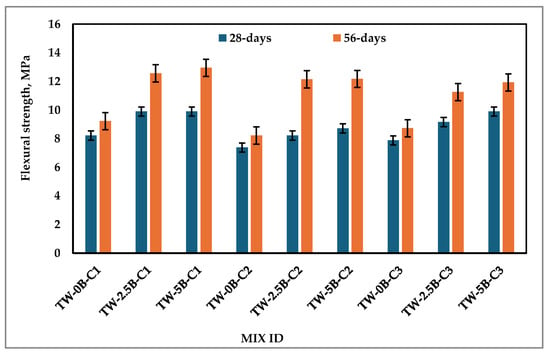
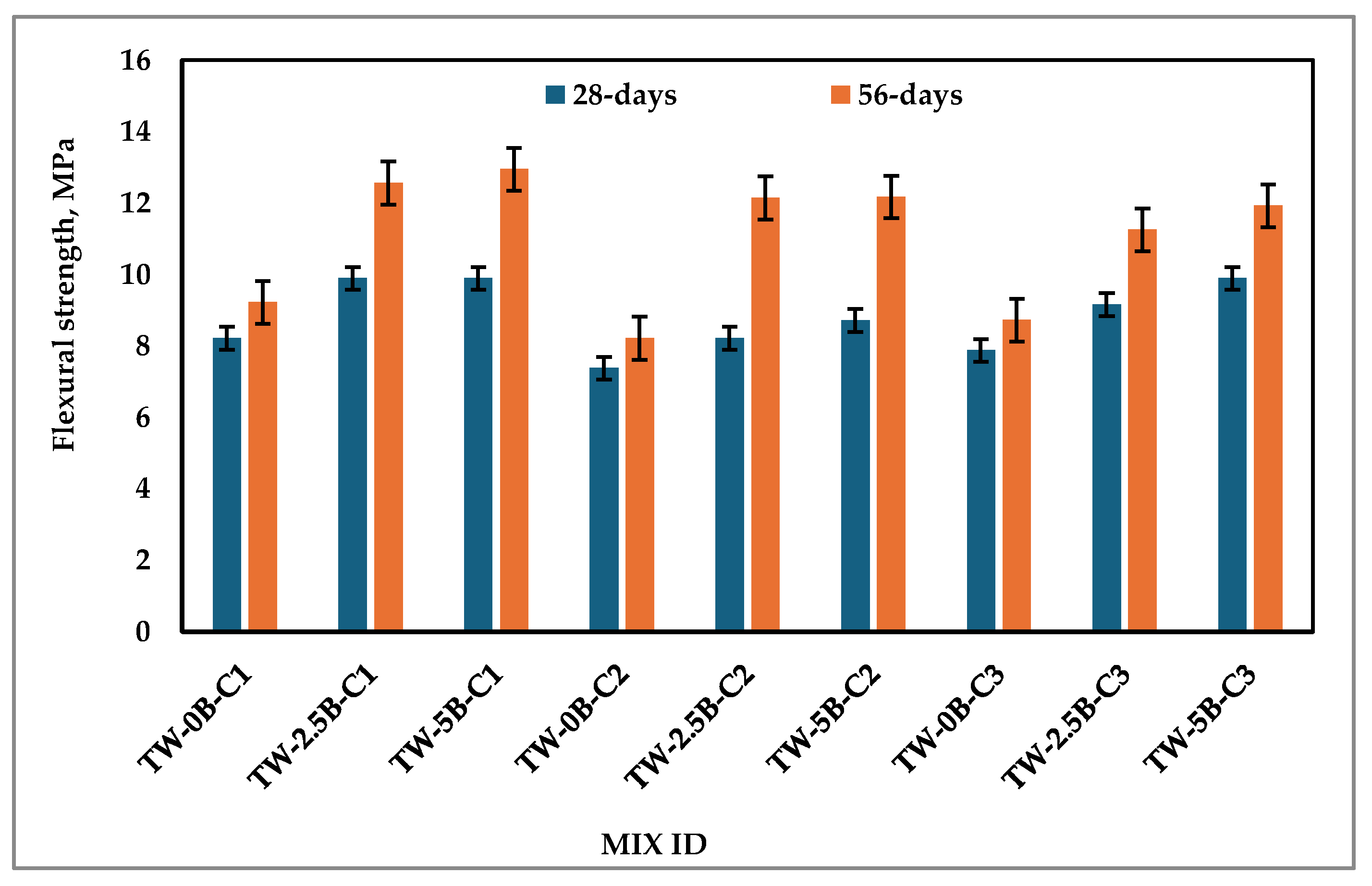
Figure 14 shows the flexural strength of concrete mixed with TW at different bacterial dosages under varying curing conditions. Flexural strength increases with higher bacterial dosage, regardless of the curing condition. Using 5% bacteria with traditional curing, the flexural strength is enhanced by 40.3% at 56 days, 48.2% for C2, and 22.6% for C3, respectively [50]. Comparing the impact of curing regimes on flexural strength, traditional curing yielded the highest tensile strength, followed by C2 and C3.
Figure 14.
Flexural strength of different concrete mixes with TW and various curing conditions at different bacterial dosages.
3.5.2. Effect of Using MW and Different Bacteria Dosages at Various Curing Conditions
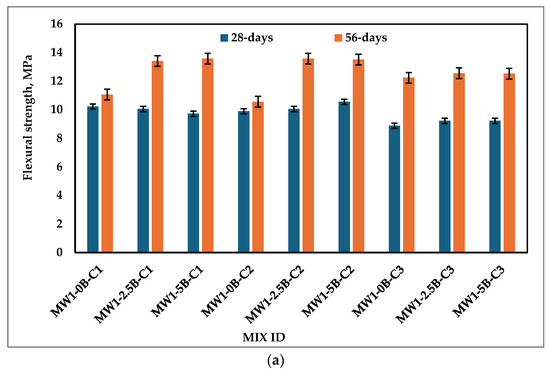
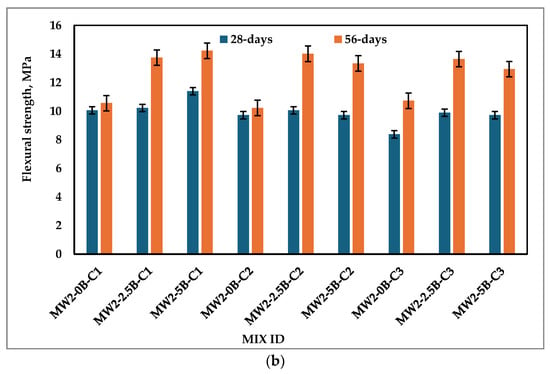
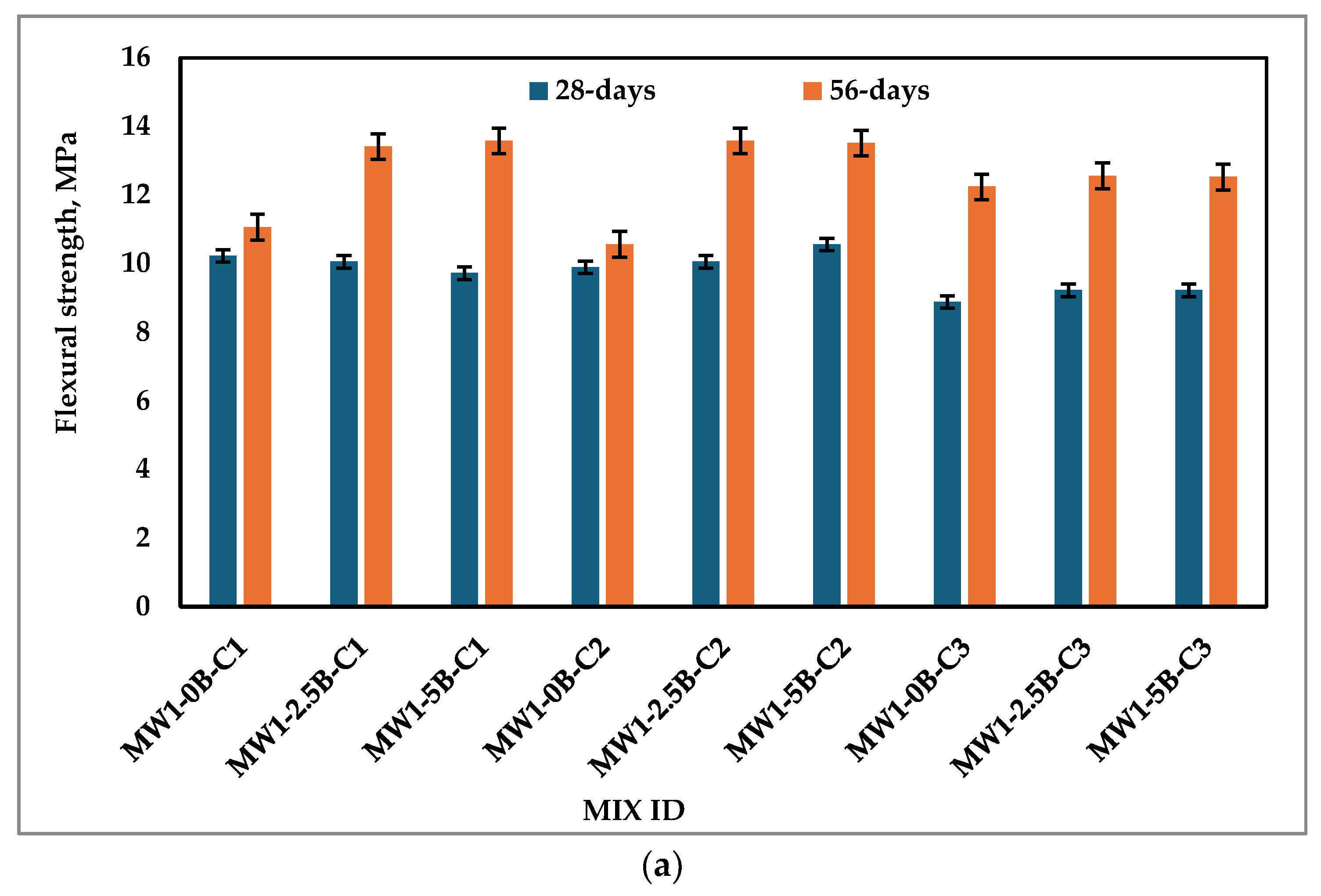
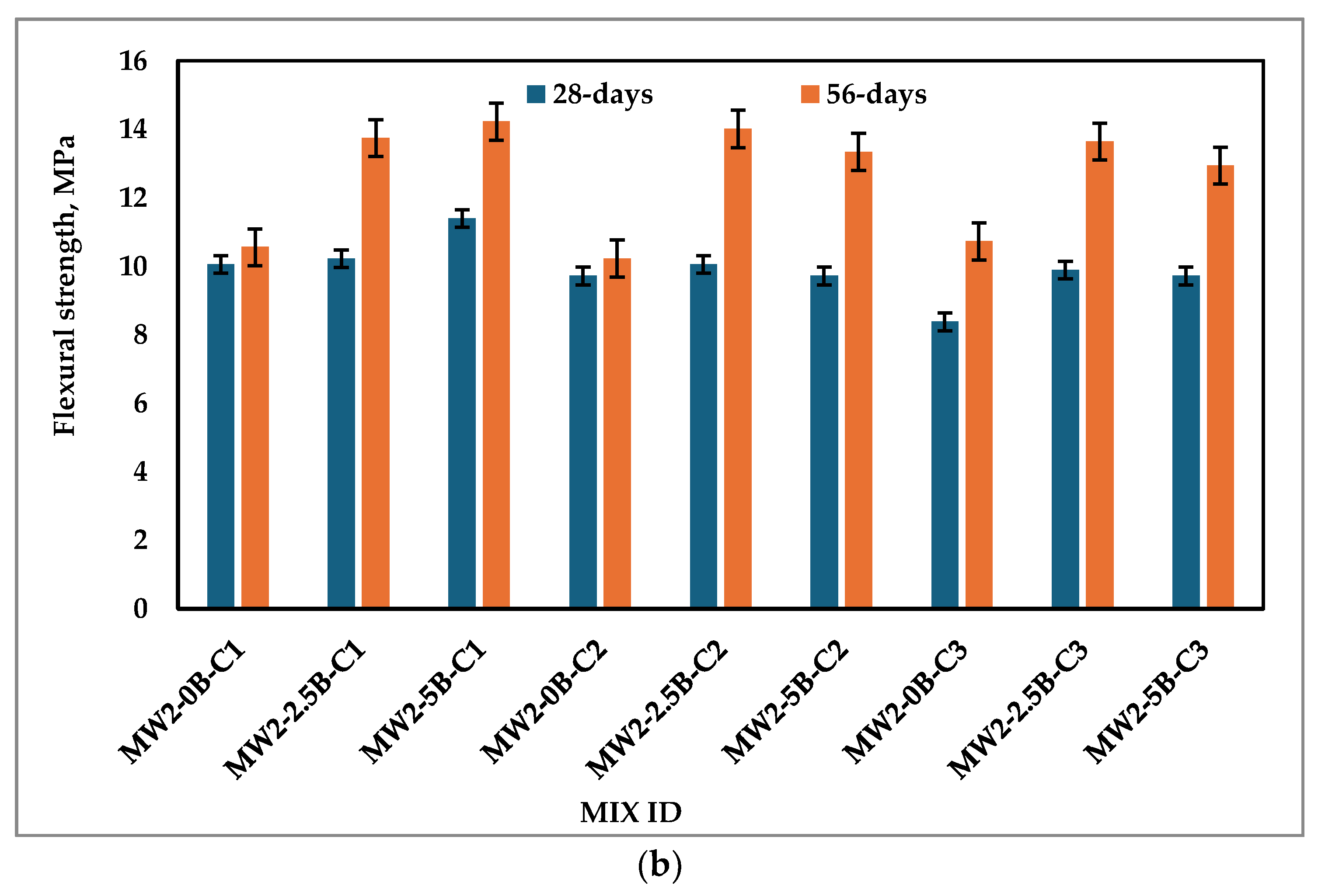
Figure 15 displays the impact of MW on concrete with different bacterial dosages and different curing regimes. The flexural strength increased by 20% and 14.5% at 56 days for MW1 and MW2, respectively, compared to TW under C1 curing, 28.6% and 24.5% for MW1 and MW2, respectively, under C2 curing, and 40.3% and 23% for MW1 and MW2, respectively, under C3 curing [41]. Adding bacteria to concrete mixed with MW improves flexural strength. The enhancement ratio with 5% bacteria at 56 days was 22.7% and 34.7% for MW1 and MW2, respectively, under C1 curing, 27.9% and 30.4% for MW1 and MW2, respectively, under C2 curing, and 23.8% and 20.6% for MW1 and MW2, respectively, under C3 curing. For the impact of different curing methods, traditional curing exhibits the highest flexural strength, followed by C2 and C3.
Figure 15.
Flexural strength of different concrete mixes with different curing and different bacterial dosages (a) mixed with MW1 and (b) mixed with MW2.
The results of tensile strength tests indicate the unique and complementary mechanisms by which MW and Bacillus megaterium bacteria influence concrete performance. To isolate their individual and combined effects on performance, a direct comparison of their respective contributions is necessary. MW primarily affects tensile strength through its influence on cement paste hydration and microstructure development. As discussed in Section 3.1 and Section 3.2, varying magnetization alters the physicochemical properties of water, including increases in pH, TDS, and conductivity, accompanied by decreased surface tension and smaller water cluster size. This promotes better diffusion into cement particles, resulting in enhanced formation of C-S-H, the main component responsible for strength, and reduced porosity, as seen in SEM images (compare Figure 16a with Figure 15a).
In actual field applications, the use of MW1 and MW2 on non-bacterial concrete cured under the traditional method C1 results in increases of about 14% and 12.9% in tensile strength at 56 days, respectively, compared to TW. This improvement can be attributed mainly to enhanced hydration processes.
On the other hand, bacteria improve tensile strength through a biological-chemical process called MICP. The metabolic activity of bacteria induces the precipitation of calcite (CaCO3) within pore spaces and micro-cracks in concrete. The precipitated calcite acts as a binding agent by effectively bridging cracks and voids, as seen from SEM images (Figure 15b) and XRD patterns showing increased intensity of calcite peaks, thereby improving aggregate-paste bond quality. In concrete with TW, the addition of bacteria at a 2.5% dosage improves tensile strength under traditional curing conditions C1 while increasing the dosage to 5% leads to further enhancement, achieving a maximum improvement of 25.8% at 56 days for C1 indicating that biological healing is effective in a dose-dependent manner, though there are diminishing returns or possible negative effects at very high doses due to differences in biomass.
In short, MW acts as a physical microstructural enhancer while the bacteria act biologically by sealing cracks. They are complementary rather than competitive. The maximum increase in tensile strength is obtained not by one of them alone but by their joint application. MW improves the initial structure and continues the hydration process, providing an ideal environment for the bacteria to exploit their self-repair potential fully. The best dosage found was 2.5% of bacteria mixed with MW1, representing the optimal balance between these two functions.
3.6. SEM Analysis
3.6.1. Effect of Using TW and Different Bacteria Dosages Under Traditional Curing C1
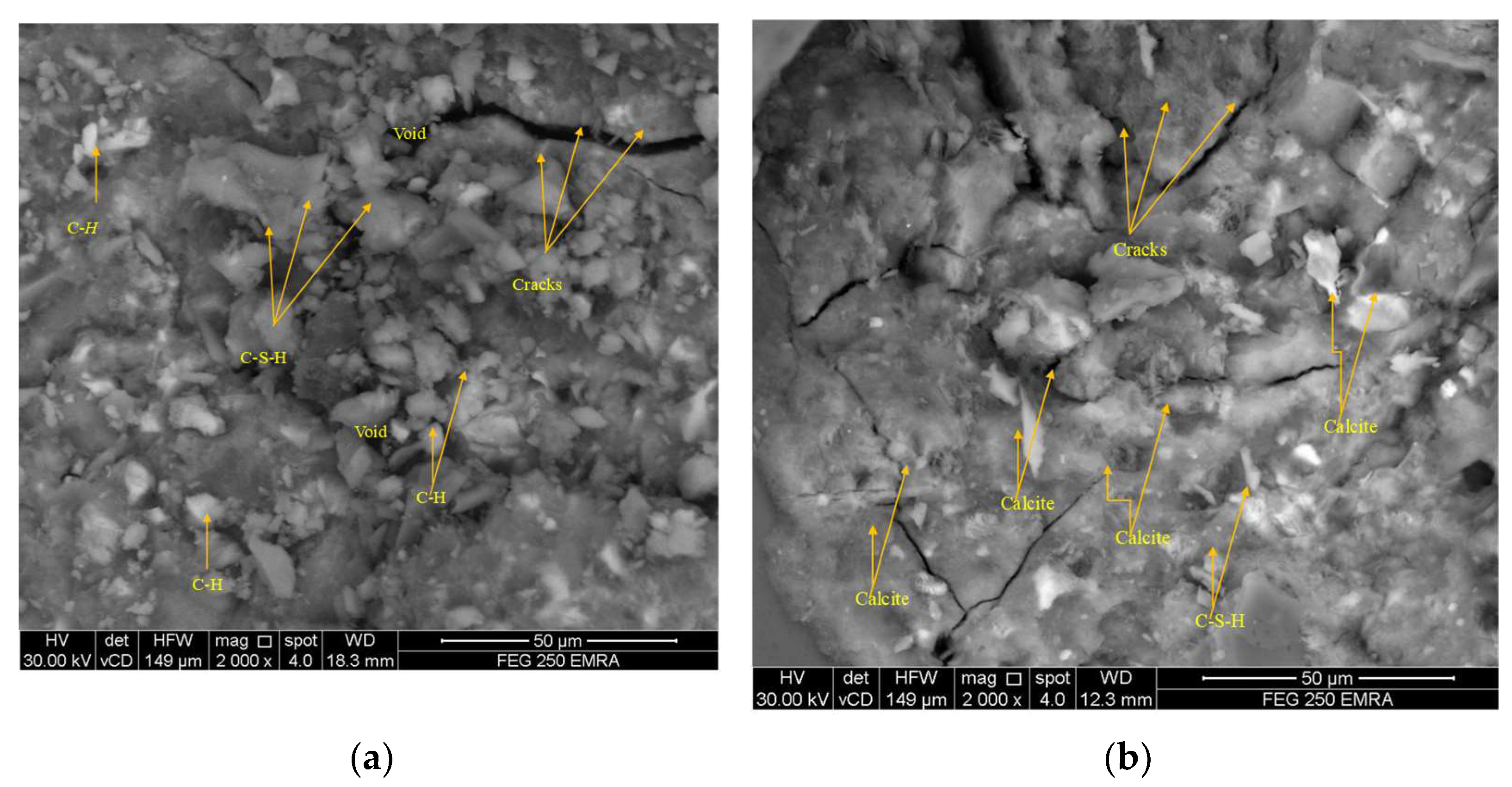
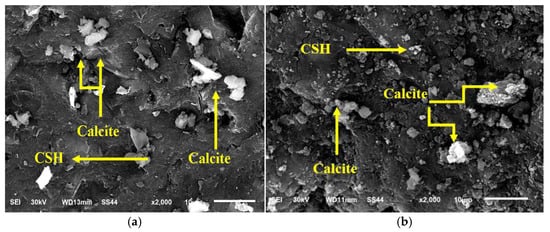
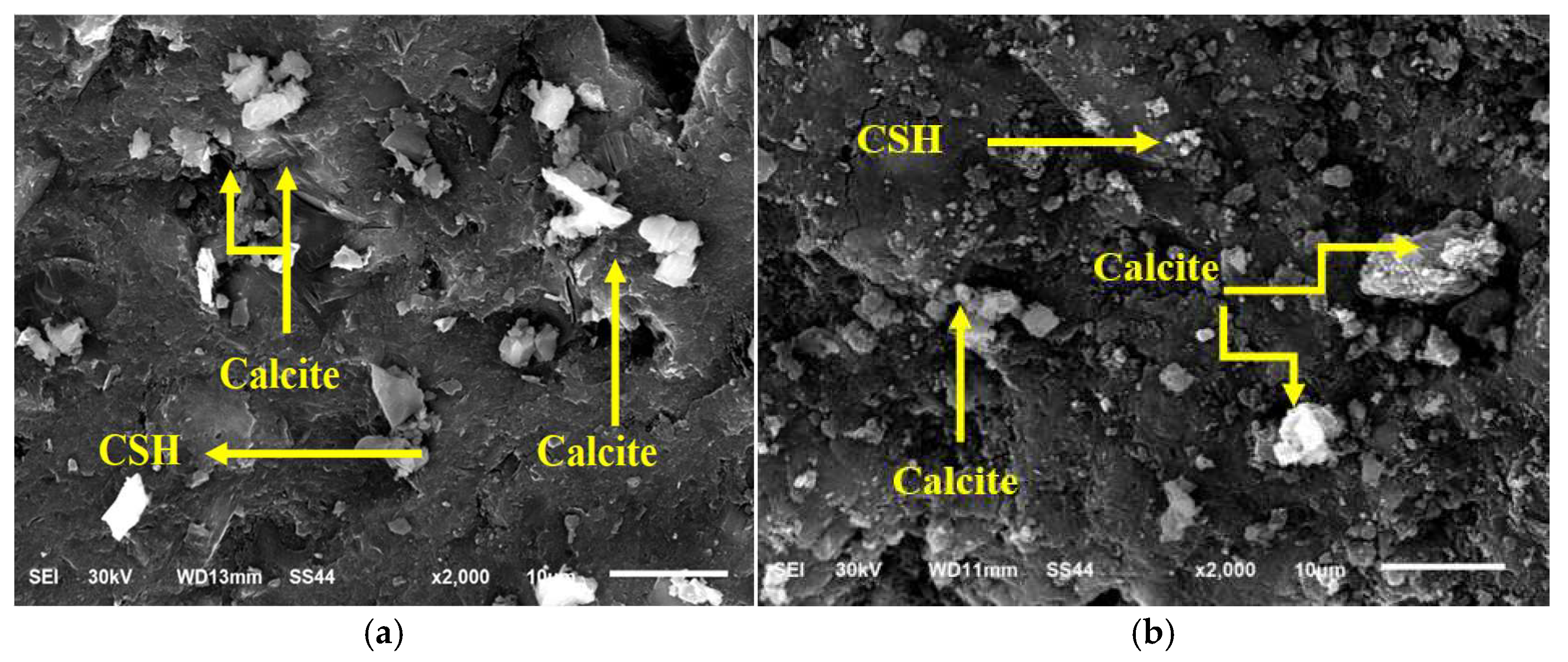
SEM was used to investigate the microstructural development of concrete mixtures, offering essential insights into how bacterial activity, pozzolanic materials, and MW influence matrix density, durability, and self-healing capacity. The first two photos of concrete mixed with TW have C1 (a) curing without bacteria and (b) with 2.5% bacteria. The symbols used in the images, calcium silicate hydrate (C-S-H), the primary binder in concrete, are responsible for the bond between raw materials and are the main source of concrete’s strength and durability. Calcium hydroxide (Ca (OH) 2), or portlandite, appears as plate-like crystals. Ahmad et al. [8] highlighted that the concrete’s mechanical properties and durability are influenced by the density and distribution of its hydration products. In Figure 16a, the non-bacterial concrete sample exhibits larger voids and less calcite precipitation, resulting in a less dense matrix. In contrast, Figure 16b demonstrates the effect of incorporating 2.5% bacteria: there is increased calcite precipitation via MICP, which fills and bridges microcracks. This process showcases the potential for autonomous repair, thereby enhancing the durability and self-healing ability of the concrete [14].
Figure 16.
SEM images of concrete mixed with TW (a) without bacteria and (b) 2.5% bacteria under C1 curing.
3.6.2. Effect of Using MW1 and Different Bacteria Dosages Under Traditional Curing C1
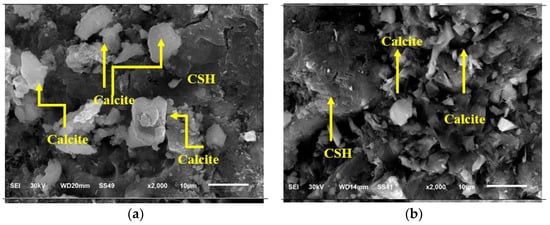
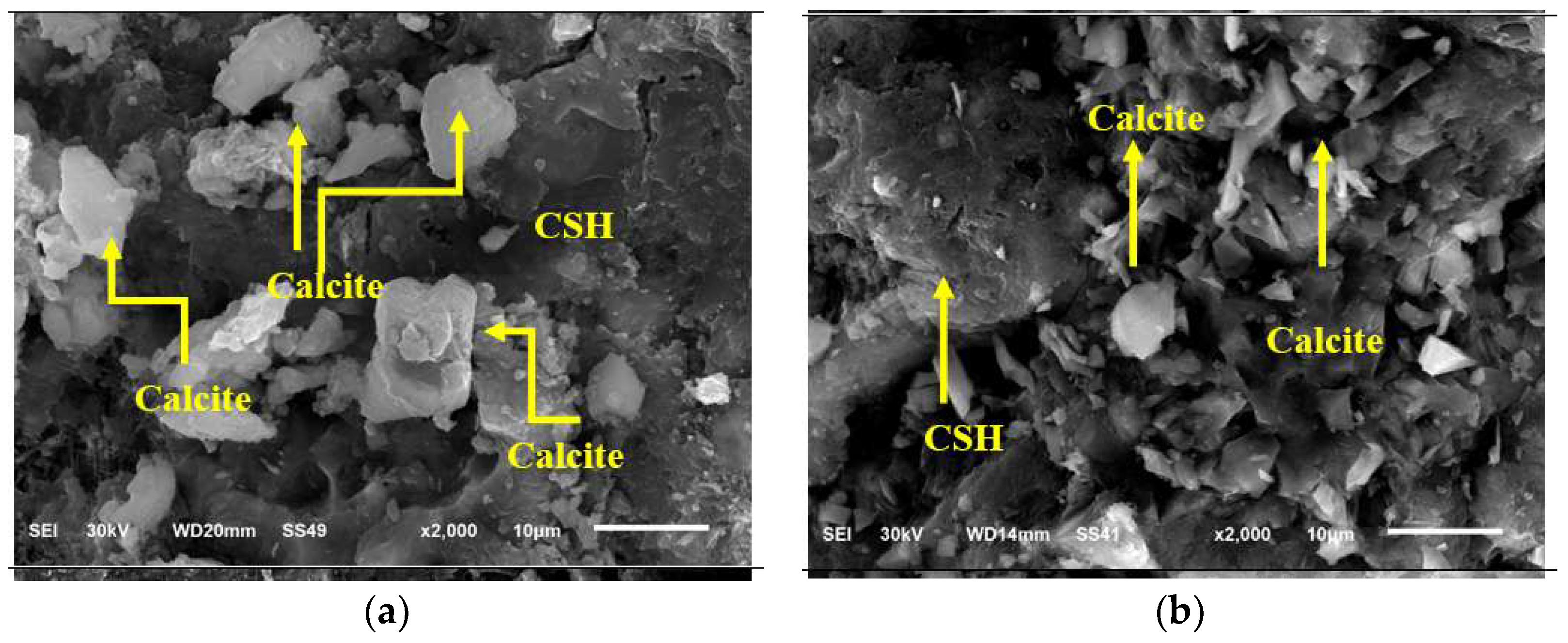
Figure 17 illustrates SEM images of concrete mixed with MW1 under C1 curing with two different bacteria dosages: 2.5% and 5%. Figure 16a shows a densified microstructure with abundant C-S-H and distinct calcite crystals, confirming the occurrence of MICP in self-healing concrete. Additionally, a strong bond between particles can be observed, indicating improved structural integrity. In contrast, increasing the bacteria dosage to 5% results in the formation of excess bacterial biomass, which creates weak zones or voids due to increased heterogeneity in the matrix [14,18].
Figure 17.
SEM images of concrete mixed with MW1 (a) 2.5% bacteria and (b) 5% bacteria under C1 curing.
3.6.3. Effect of Using MW1 and 5% Bacteria Dosages Under C2 Curing Regime
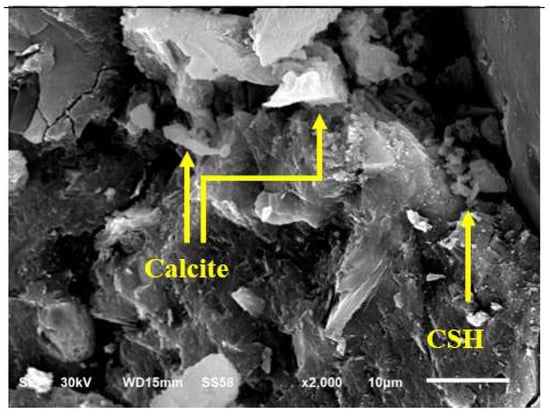
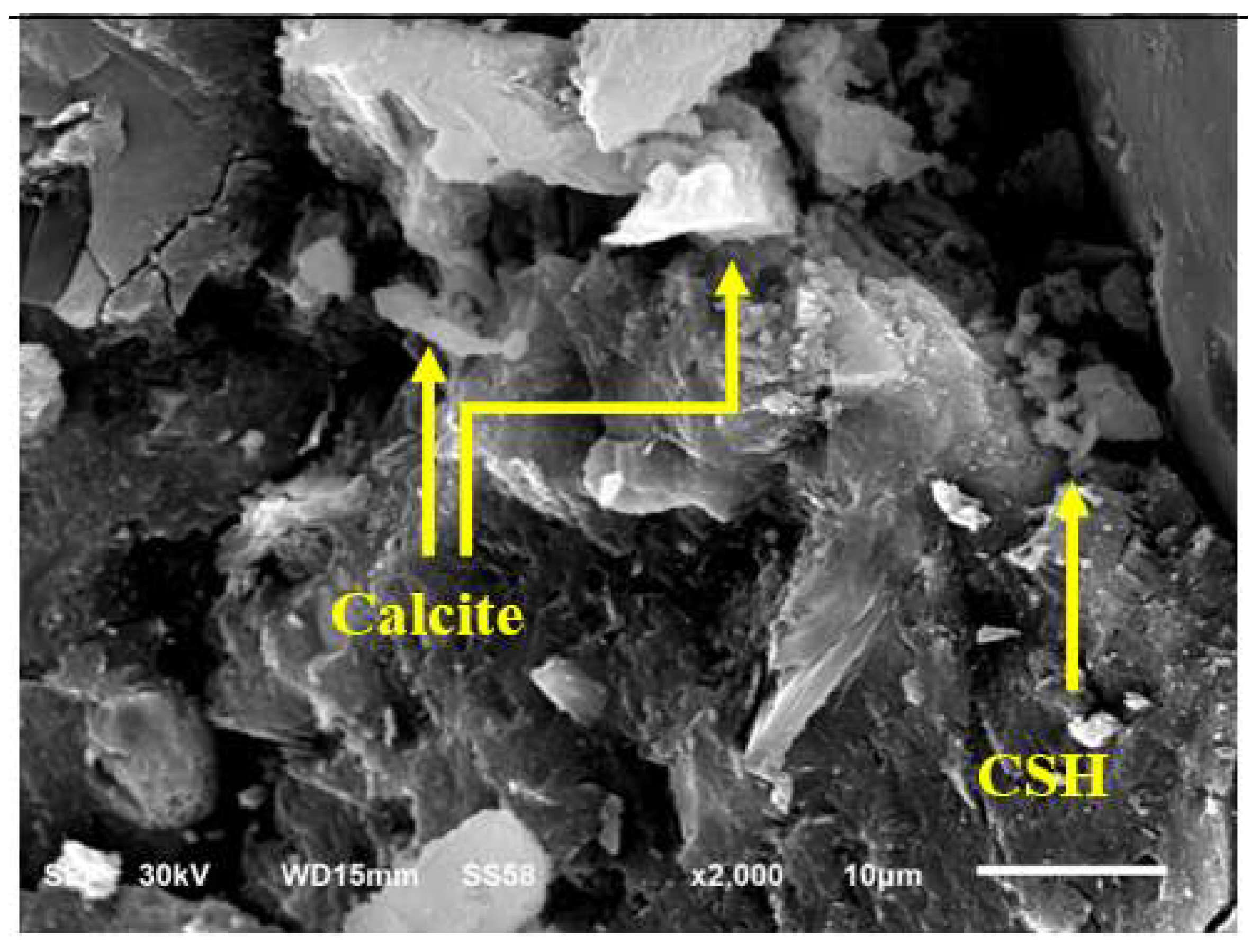
Figure 18, SEM image of concrete mixed with MW1, has 5% bacteria exposed to the curing regime C2. Exposing concrete to high temperatures significantly accelerates the hydration process, resulting in rapid C-S-H gel formation, while thermal gradients promote microcrack formation in the presence of excess biomass, leading to a less uniform and potentially less durable microstructure, especially when excessive bacteria are present.
Figure 18.
SEM image of concrete mixed with MW1 containing 5% bacteria under C2 curing.
3.6.4. Effect of Using TW and Different Bacteria Dosages Under C3 Curing Regime
Figure 19 shows SEM images of concrete mixed with TW under C3 curing with two different bacteria dosages: 2.5% and 5%. Figure 19a: The image shows a matrix characterized by a significant number of large, irregularly shaped voids and cracks. Many cement particles appear unreacted, indicating incomplete hydration and a limited presence of calcium carbonate, leading to a weak bond between particles. Despite the presence of bacteria, Figure 19b shows a compact microstructure with fewer large voids and cracks, although some porosity remains. Distinct calcite crystals and calcite precipitation confirming MICP. The interfaces between particles appear more cohesive, with bacterial byproducts acting as binding agents [18].
Figure 19.
SEM images of concrete mixed with TW (a) without bacteria and (b) 2.5% bacteria under C3 curing.
3.7. XRD Analysis
3.7.1. Effect of Using TW and Different Bacteria Dosages Under Traditional Curing C1
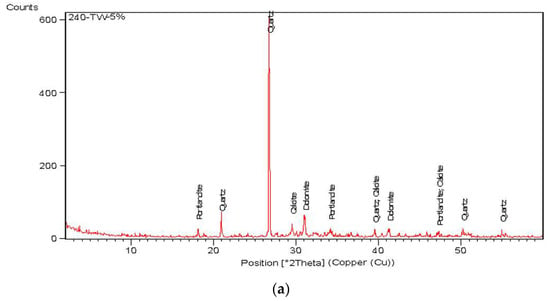
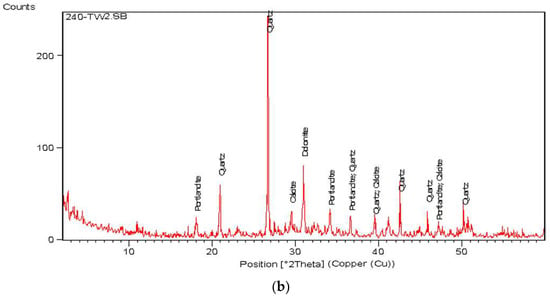
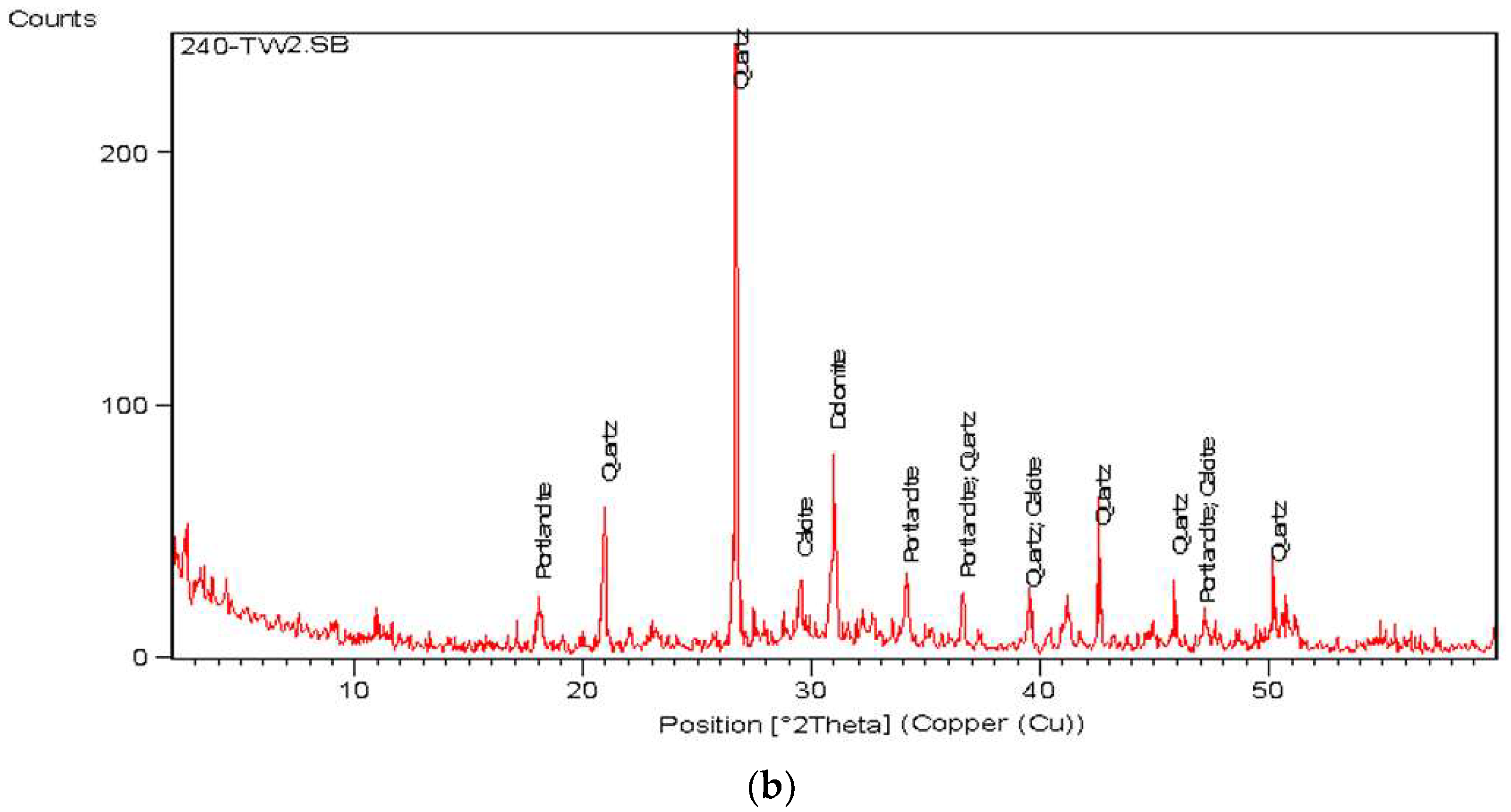
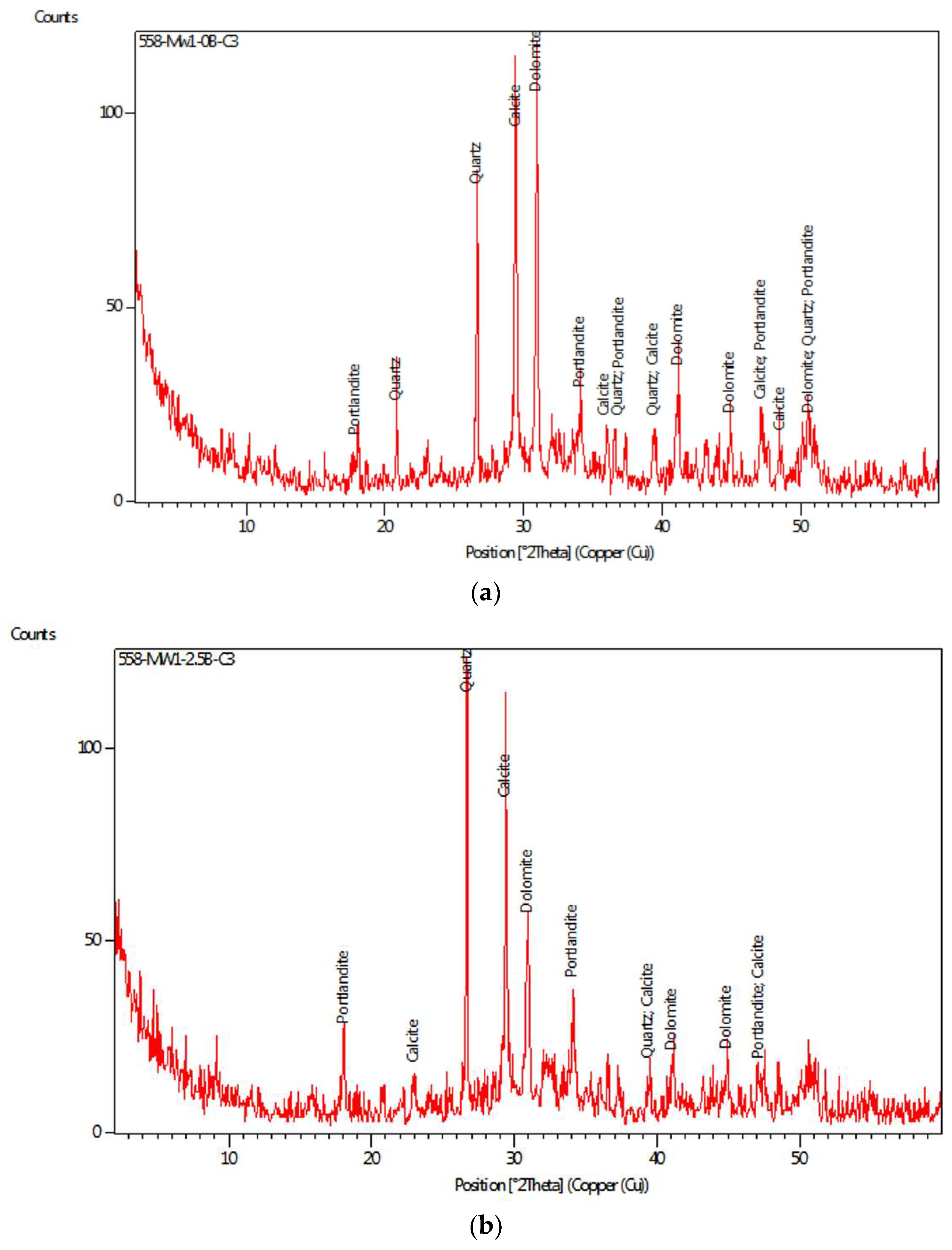
Figure 20 shows the XRD pattern of the concrete specimen mixed with TW without bacteria (a) and with a 2.5% bacteria dosage (b). The main crystalline phases detected in samples include quartz (SiO2), indicating the presence of siliceous aggregates; Portlandite (Ca(OH)2), a product of cement hydration; Calcite (CaCO3), which may come from natural carbonation or, in the presence of bacteria, from microbially induced processes; and Dolomite (CaMg(CO3)2), likely present due to the aggregates or as a result of minor secondary reactions. In Figure 20a, the XRD pattern of the nonbacterial concrete shows distinct calcite peaks, which result primarily from the natural carbonation of portlandite over time. This process is relatively slow and contributes modestly to crack filling and durability. Figure 20b demonstrates that adding a 2.5% bacteria dosage significantly increases the intensity and prominence of the calcite peaks. This enhancement is attributed to MICP, whereby bacteria actively convert available calcium sources into calcite. This process effectively fills microvoids and cracks within the concrete matrix, thereby improving its density, mechanical strength, and self-healing capacity [8,50].
Figure 20.
XRD pattern of concrete mixed with TW (a) without bacteria and (b) 2.5% bacteria under traditional curing C1.
3.7.2. Effect of Using MW1 and Different Bacteria Dosages Under Traditional Curing C1
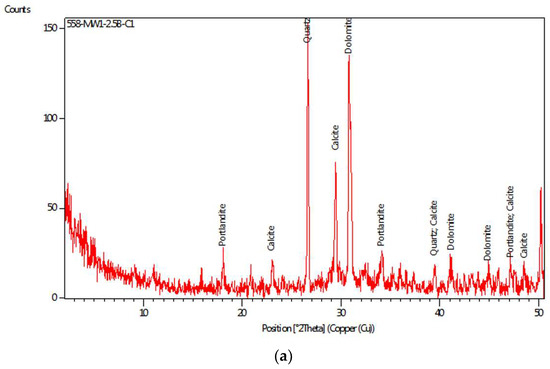
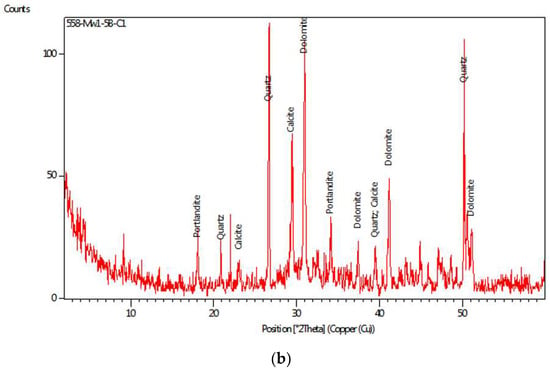
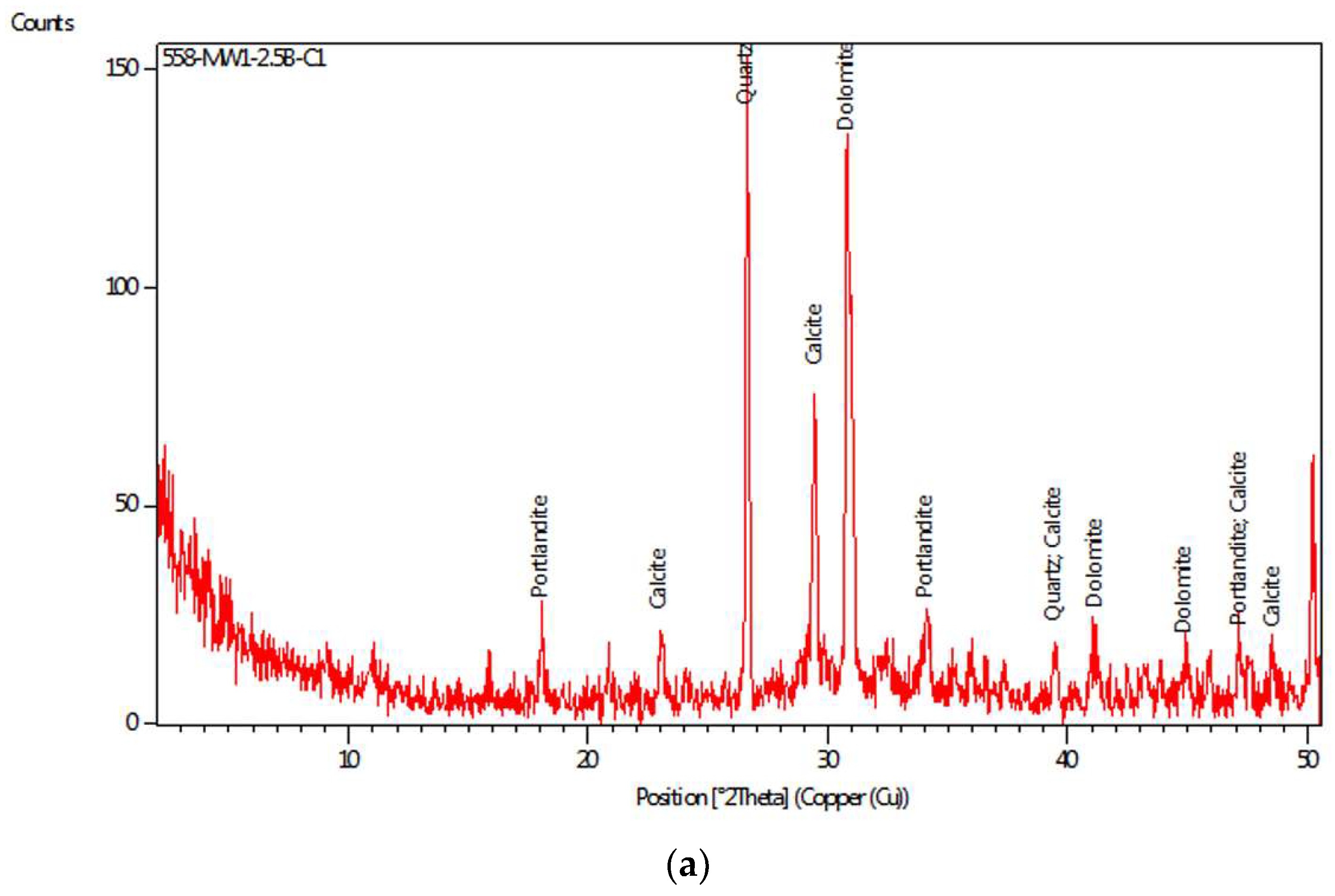
Figure 21 represents the XRD analysis of concrete mixed with MW under traditional curing, which reveals that both samples, without bacteria and with 2.5% bacteria, contain quartz, portlandite, calcite, and dolomite as primary crystalline phases. Figure 21a, the sample with 2.5% bacteria, shows notably stronger calcite peaks, indicating enhanced calcite formation due to MICP. This increased calcite content suggests improved self-healing capacity, greater crack filling, and a denser matrix compared to the non-bacterial sample in Figure 21b, where calcite formation is limited. Thus, adding bacteria to MW concrete under traditional curing significantly boosts its durability and self-repair potential.
Figure 21.
XRD pattern of concrete mixed with MW1 (a) without bacteria and (b) 2.5% bacteria under traditional curing C1.
3.7.3. Effect of Using MW1 and 5% Bacteria Dosage Exposed to C2 Curing Regime
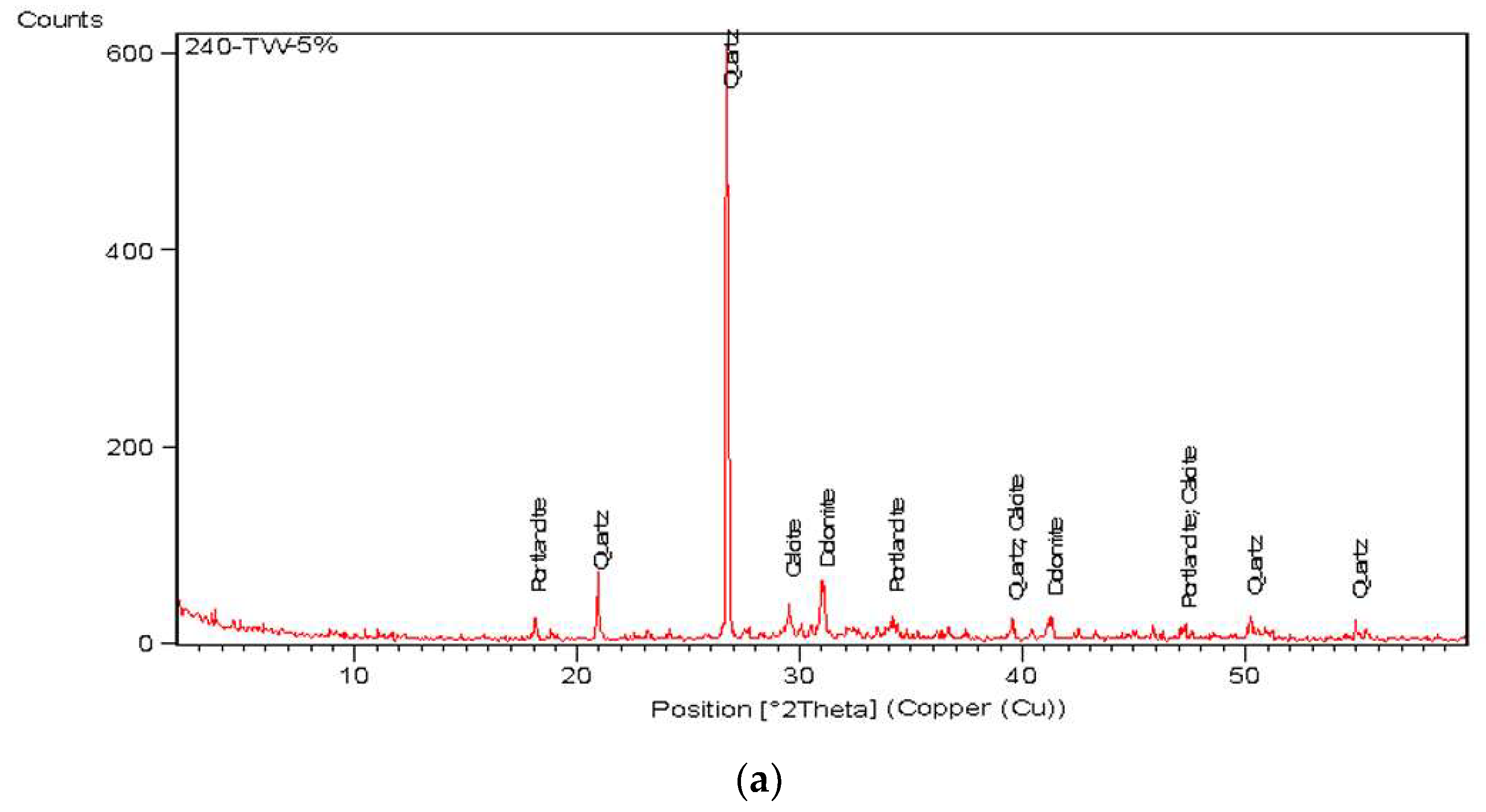
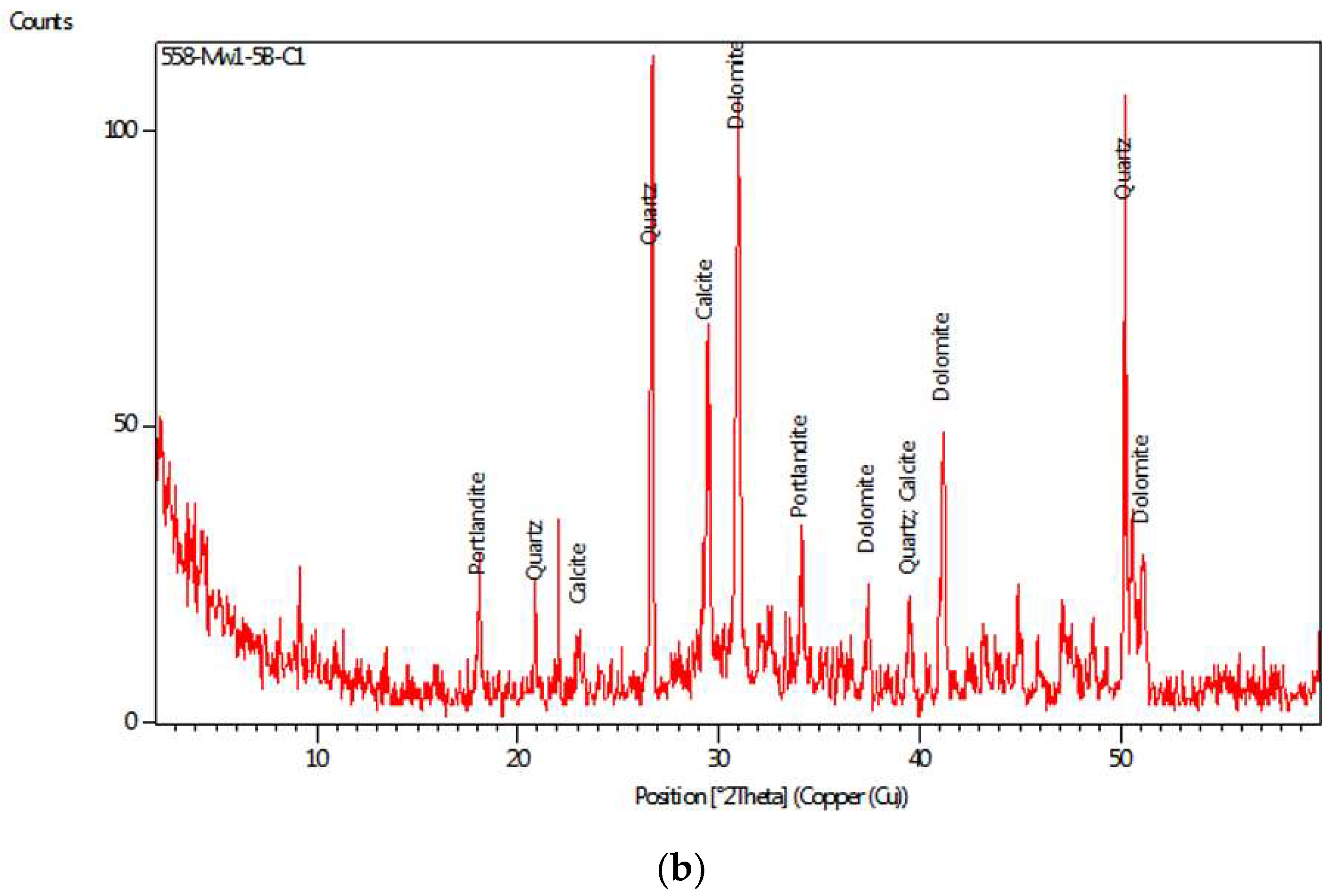
Figure 22 presents the XRD pattern of concrete mixed with MW1 and subjected to early-age thermal curing. The analysis reveals a matrix composed primarily of quartz, portlandite, calcite, and dolomite, reflecting a typical mineralogical profile for concrete containing siliceous aggregates and hydrated cement. Notably, the strong and numerous calcite peaks indicate highly active microbially induced calcite precipitation (MICP), as bacteria efficiently convert available calcium sources into calcite under elevated temperature conditions. Thermal curing not only accelerates bacterial metabolism and calcite precipitation but also enhances regular carbonation processes. This dual mechanism leads to the effective sealing of microcracks and voids within the matrix, significantly improving the concrete’s self-healing capacity and overall durability [14].
Figure 22.
XRD pattern of concrete mixed with MW1 containing 5% bacteria under C2 curing.
3.7.4. Effect of Using MW1 and Different Bacteria Dosages Under C3 Curing Regime
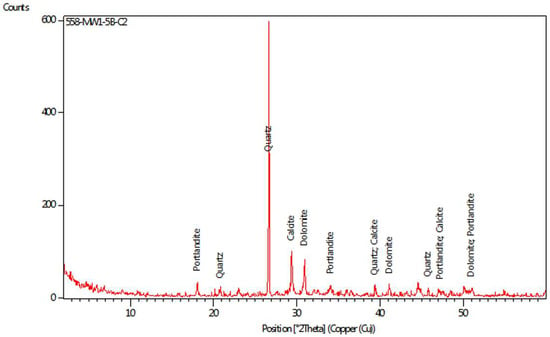
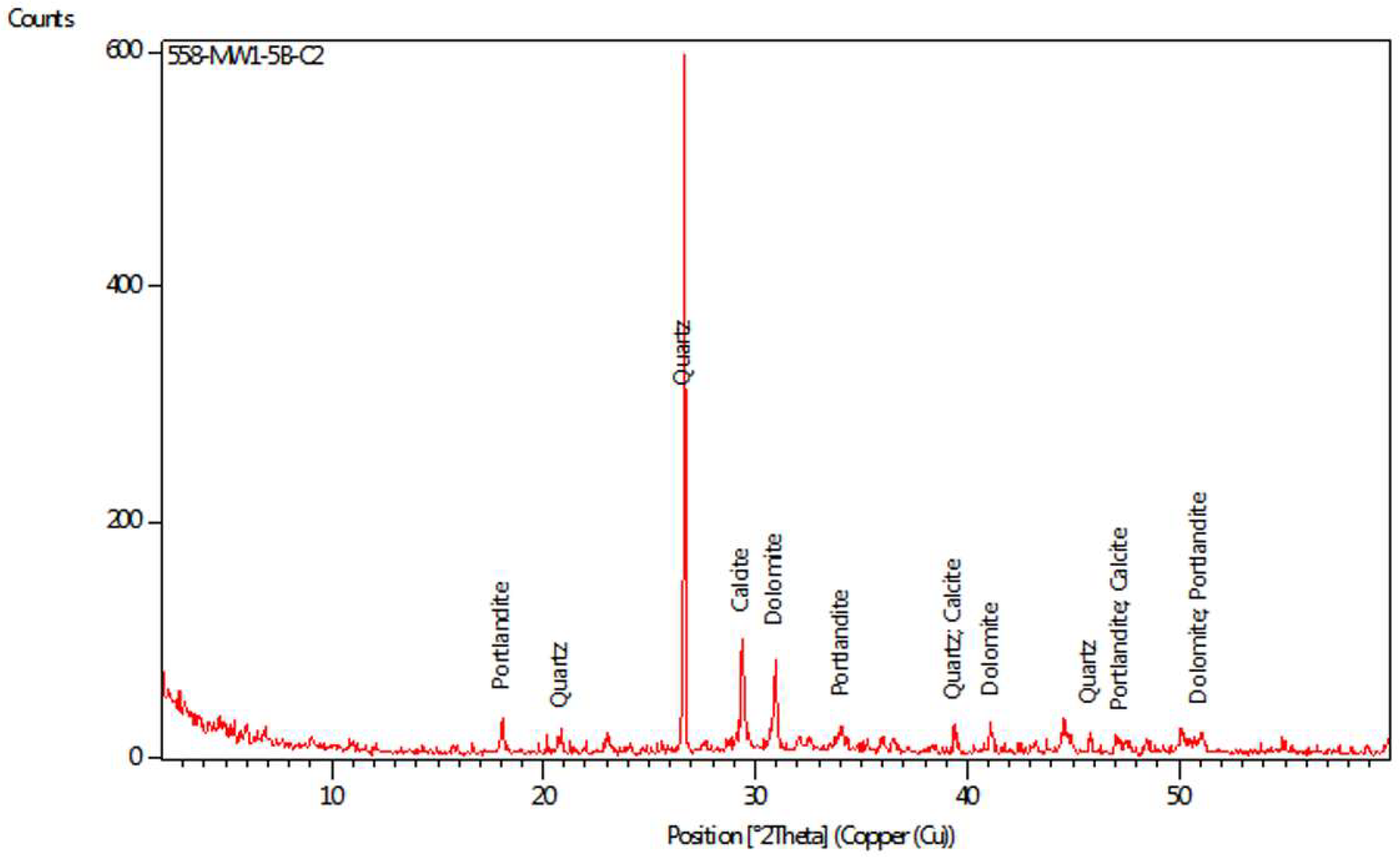
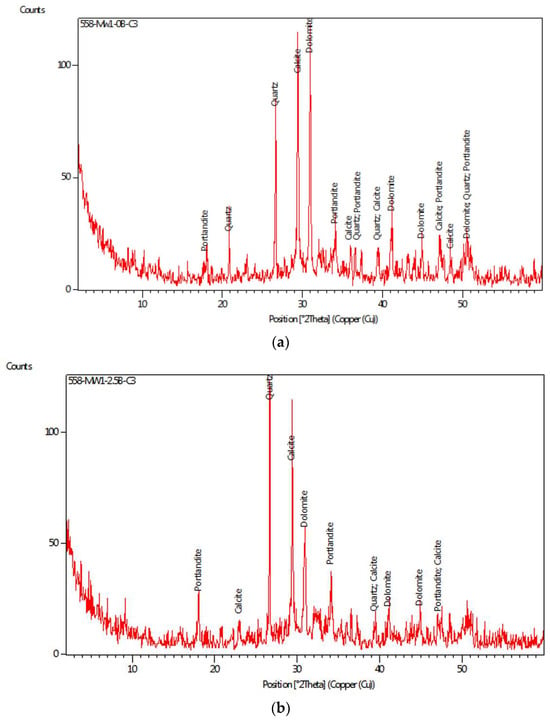
Figure 23 displays the XRD pattern of concrete mixed with TW exposed to the C3 curing regime without and with 2.5% bacteria. Both samples show strong quartz peaks and the presence of portlandite and dolomite. The sample containing 2.5% bacteria, Figure 23a, displays significantly more intense calcite peaks, a clear indication of enhanced calcium carbonate formation through MICP. This increased calcite content indicates substantial self-healing activity, resulting in better crack filling and matrix densification compared to the bacteria-free sample, Figure 23b, which exhibits weaker calcite peaks, resulting in reduced self-healing potential and lower overall durability.
Figure 23.
XRD pattern of concrete mixed with MW1 (a) without bacteria and (b) 2.5% bacteria under C3 curing.
The chemical compositions are more than just numbers; they represent the reactive substrate of the study. The elevated levels of CaO provide sufficient calcium for the main bacterial healing mechanism (MICP). The high-purity SiO2 found in silica fume contributes to pozzolanic densification, which creates a dense, low-porosity matrix that works synergistically with bacterial calcite crack-filling efficiency and hydration enhancement from MW. This chemistry is what allows for such significant increases in strength, microstructural densification (as noted in SEM), and self-healing efficiency quantified through calcite peaks in XRD and strength recovery reported in results, particularly for the best mix of MW1 and 2.5% Bacillus megaterium.
3.8. Microstructural Analyses and Mechanical Outcomes
In our investigation, mixtures containing MW1 and 2.5% bacteria demonstrated a notable strength increase of up to 46.5%, which we attribute to the enhanced microstructure seen through SEM, as displayed in Figure 17a. The plentiful and evenly distributed calcite formation resulting from microbiologically induced calcium carbonate precipitation (MICP), combined with a more cohesive C-S-H matrix, effectively lowers porosity and fills micro-voids, leading to greater compressive strength. In contrast, mixtures with 5% bacteria experienced a reduction in strength due to an excess of bacterial biomass, which generates heterogeneous weak zones and voids within the matrix, functioning as stress concentrators that weaken the overall compressive strength, despite the presence of calcite, as shown in Figure 16b. Furthermore, thermal shock curing (C2) improves strength recovery in damaged specimens, which we link to the XRD analysis presented in Figure 22. The accelerated activity of bacteria and significant calcite precipitation at higher temperatures, verified by prominent calcite peaks, are the key processes facilitating effective crack bridging and strength recovery, further illustrated in the SEM images of the healed areas.
The improved tensile and flexural strength observed at a 2.5% bacteria and MW concentration is due to a robust interfacial transition zone (ITZ) and efficient crack bridging, as shown in the SEM images. Calcite crystals connect aggregate particles and prevent crack propagation. In contrast, the diminished advantages or loss of strength at a 5% dosage is linked to reduced matrix uniformity and defects caused by excessive biomass. These problems, illustrated in SEM images, are especially harmful under tensile and flexural stress, undermining overall performance.
The strength of calcite peaks is quantitatively linked to the efficacy of the self-healing process and, consequently, the restoration of mechanical properties after cracking. For example, the pronounced calcite peaks in samples from the C2 regime (Figure 22) will be referenced as the direct cause of the over 100% recovery ratios in strength noted in Figure 11.
4. Conclusions
This study evaluates the impact of Bacillus megaterium and magnetized water on the concrete subjected to different curing regimes. The combined use of MW and 2.5% Bacillus megaterium enhances concrete sustainability by improving mechanical performance, enabling autonomous crack healing, and reducing water demand, collectively supporting lower cement consumption and longer service life. The main conclusions are as follows:
- MW improved workability by 12.5% and with bacteria by 14.4%, reducing water demand.
- Early Age Strength: Traditional curing gave the highest strength, but thermal shock curing made bacteria more active, which helped cracked specimens recover their strength quickly.
- MW1 + 2.5% bacteria increased compressive strength by up to 46.5% and enabled over 100% strength recovery in pre-cracked specimens under thermal shock.
- Tensile and flexural strength improved optimally at 2.5% bacteria; a 5% dosage led to strength reduction due to microstructural heterogeneity.
- SEM images show a denser matrix, more calcium carbonate precipitation, better crack filling, and fewer voids with a dosage of 2.5%, while 5% shows weak zones due to excessive biomass and heterogeneity.
- XRD patterns confirmed successful microbial-induced calcium carbonate precipitation, as indicated by the presence of prominent calcite peaks.
Future Work
Based on the current experimental program, different curing conditions, including thermal shock and freezing with different arrangements, can be studied. Examining the impact of various bacterial strains and other nutrients compared with Bacillus megaterium. Replacing aggregate with lightweight and recycled ones in concrete containing bacteria and magnetized water.
Author Contributions
Conceptualization S.S.E.A., Y.E. and A.A.E.; Methodology, S.S.E.A., E.A.N., M.A.A. and A.A.E.; Validation, S.S.E.A., E.-S.M.Y. and E.A.N.; Formal analysis, E.A.N., Y.E. and A.A.E.; Investigation, E.A.N. and S.S.E.A.; Data curation, E.A.N., M.A.A. and A.A.E.; Writing—original draft, E.A.N., Y.E., A.A.E. and M.A.A.; Writing—review and editing, S.S.E.A., E.-S.M.Y., E.A.N., A.A.E., M.A.A. and Y.E. All authors have read and agreed to the published version of the manuscript.
Funding
This research received no external funding.
Institutional Review Board Statement
Not applicable.
Informed Consent Statement
Not applicable.
Data Availability Statement
All data are reported in this manuscript.
Acknowledgments
This work is part of the experimental research for the second author’s Ph.D. thesis.
Conflicts of Interest
The authors declare no conflicts of interest.
References
- Su, Y.; Zheng, T.; Qian, C. Application Potential of Bacillus Megaterium Encapsulated by Low Alkaline Sulphoaluminate Cement in Self-Healing Concrete. Constr. Build. Mater. 2021, 273, 121740. [Google Scholar] [CrossRef] [Scilit]
- Njau, M.W.; Mwero, J.; Abiero-Gariy, Z.; Matiru, V. Effect of Temperature on the Self-Healing Efficiency of Bacteria and on That of Fly Ash in Concrete. Int. J. Eng. Trends Technol. 2022, 70, 174–187. [Google Scholar] [CrossRef] [Scilit]
- Aytekin, B.; Mardani, A.; Yazıcı, Ş. State-of-Art Review of Bacteria-Based Self-Healing Concrete: Biomineralization Process, Crack Healing, and Mechanical Properties. Constr. Build. Mater. 2023, 378, 131198. [Google Scholar] [CrossRef] [Scilit]
- de Brito, J.; Kurda, R. The Past and Future of Sustainable Concrete: A Critical Review and New Strategies on Cement-Based Materials. J. Clean. Prod. 2021, 281, 123558. [Google Scholar] [CrossRef] [Scilit]
- Shukla, A.; Gupta, N.; Dixit, S.; Ivanovich Vatin, N.; Gupta, M.; Saxena, K.K.; Prakash, C. Effects of Various Pseudomonas Bacteria Concentrations on the Strength and Durability Characteristics of Concrete. Buildings 2022, 12, 993. [Google Scholar] [CrossRef] [Scilit]
- Jena, S.; Basa, B.; Panda, K.C.; Sahoo, N.K. Impact of Bacillus Subtilis Bacterium on the Properties of Concrete. Mater. Today Proc. 2020, 32, 651–656. [Google Scholar] [CrossRef] [Scilit]
- Nain, N.; Surabhi, R.; Yathish, N.V.; Krishnamurthy, V.; Deepa, T.; Tharannum, S. Enhancement in Strength Parameters of Concrete by Application of Bacillus Bacteria. Constr. Build. Mater. 2019, 202, 904–908. [Google Scholar] [CrossRef] [Scilit]
- Ahmad, S.S.E.; Elmahdy, M.A.R.; ELShami, A.A.; Yousry, E.-S.M. Bacterial Sustainable Concrete for Repair and Rehabilitation of Structural Cracks. J. Sustain. Cem. Based Mater. 2023, 12, 627–646. [Google Scholar] [CrossRef] [Scilit]
- Mohammed, T.A.; Kasie, Y.M.; Assefa, E.; Getu, Y.M.; Tufa, D.H. Enhancing Structural Resilience: Microbial-Based Self-Healing in High-Strength Concrete. Int. J. Concr. Struct. Mater. 2024, 18, 22. [Google Scholar] [CrossRef] [Scilit]
- Yehia, S.; Ibrahim, A.; Ahmed, D.F.; Desouky, S.G. Bacterial Self-Healing and Mechanical Strength Enhancement in Concrete: A Comparative Study of Bacillus Subtilis, Bacillus Sphaericus, and Escherichia Coli. Innov. Infrastruct. Solut. 2025, 10, 1–16. [Google Scholar] [CrossRef] [Scilit]
- Javeed, Y.; Goh, Y.; Mo, K.H.; Yap, S.P.; Leo, B.F. Microbial Self-Healing in Concrete: A Comprehensive Exploration of Bacterial Viability, Implementation Techniques, and Mechanical Properties. J. Mater. Res. Technol. 2024, 29, 2376–2395. [Google Scholar] [CrossRef] [Scilit]
- Rajadesingu, S.; Palani, N.; Mendonce, K.C.; Vijayakumar, P.; Monisha, P.; Ayyadurai, S. State-of-the-Art Review on Advancements of Eco-Friendly Bacterial-Infused Self-Healing Concrete for Sustainable Constructions. J. Build. Eng. 2024, 91, 109669. [Google Scholar] [CrossRef] [Scilit]
- Wu, M.; Hu, X.; Zhang, Q.; Xue, D.; Zhao, Y. Growth Environment Optimization for Inducing Bacterial Mineralization and Its Application in Concrete Healing. Constr. Build. Mater. 2019, 209, 631–643. [Google Scholar] [CrossRef] [Scilit]
- Elmenshawy, Y.; Elmahdy, M.A.R.; Moawad, M.; Elshami, A.A.; Ahmad, S.S.E.; Nagai, K. Investigating the Bacterial Sustainable Self-Healing Capabilities of Cracks in Structural Concrete at Different Temperatures. Case Stud. Constr. Mater. 2024, 20, e03188. [Google Scholar] [CrossRef] [Scilit]
- Vishal, A.; Chepuri, A.; Chandana, N. Assessment of Bacteria-Based Self-Healing Concrete through Experimental Investigations—A Sustainable Approach. J. Mater. Sci. Mater. Eng. 2025, 20, 15. [Google Scholar] [CrossRef] [Scilit]
- Riad, I.M.; Amin, M.; Elsakhawy, Y.; El-hassan, K.A. Performance Study of Bacteria on Improving Fresh, Mechanical, and Durability Characteristics of Ultra-High-Performance Concrete. Innov. Infrastruct. Solut. 2025, 10, 430. [Google Scholar] [CrossRef] [Scilit]
- Ryparová, P.; Tesárek, P.; Schreiberová, H.; Prošek, Z. The Effect of Temperature on Bacterial Self-Healing Processes in Building Materials. IOP Conf. Ser. Mater. Sci. Eng. 2020, 726, 012012. [Google Scholar] [CrossRef] [Scilit]
- Ahmad, S.S.E.; Elshazly, M.A.; Elakhras, A.A.; Elshami, A.A.; Elmahdy, M.A.R.; Aboubakr, A. Thermal Dependency of Microbial Self-Healing of Concrete: Comparing the Effectiveness of Bacillus Strains at Different Temperatures, from Room Temperature to below Zero. Case Stud. Constr. Mater. 2025, 23, e05182. [Google Scholar] [CrossRef] [Scilit]
- Ivaškė, A.; Jakubovskis, R.; Boris, R.; Urbonavičius, J. Effects of Low Temperature, Freeze–Thaw Cycles, and Healing Conditions on Viability of Non-Ureolytic Bacteria in Biological Self-Healing Concrete. Materials 2024, 17, 5797. [Google Scholar] [CrossRef] [Scilit]
- Ahmad, I.; Shokouhian, M.; Owolabi, D.; Jenkins, M.; McLemore, G.L. Assessment of Biogenic Healing Capability, Mechanical Properties, and Freeze–Thaw Durability of Bacterial-Based Concrete Using Bacillus Subtilis, Bacillus Sphaericus, and Bacillus Megaterium. Buildings 2025, 15, 943. [Google Scholar] [CrossRef] [Scilit]
- Guelmine, L. Effect of Magnetic Treatment of Mixing Water on the Behavior of Cement-Based Materials: A Review. Mater. Sci.-Pol. 2023, 41, 27–43. [Google Scholar] [CrossRef] [Scilit]
- Jouzdani, B.E.; Reisi, M. Effect of Magnetized Water Characteristics on Fresh and Hardened Properties of Self-Compacting Concrete. Constr. Build. Mater. 2020, 242, 118196. [Google Scholar] [CrossRef] [Scilit]
- Ahmed, A.S.; Elshikh, M.M.Y.; Elemam, W.E.; Youssf, O. Influence of Mixing-Water Magnetization Method on the Performance of Silica Fume Concrete. Buildings 2023, 13, 44. [Google Scholar] [CrossRef] [Scilit]
- Jiang, H.; Fan, C.; Zhao, Z.; Zhou, X.; Liang, S.; Wang, X. Effect of Magnetization Conditions on the Slump and Compressive Strength of Magnetized Water Concrete. Case Stud. Constr. Mater. 2024, 21, e03920. [Google Scholar] [CrossRef] [Scilit]
- Al-Maliki, A.A.K.; Aswed, K.K.; Abraheem, A.K. Properties of Concrete with Magnetic Mixing Water. AIP Conf. Proc. 2020, 2213, 020146. [Google Scholar] [CrossRef] [Scilit]
- Muralidhara Rao, T.; Mahesh, K.; Venkatesh, C.; Sonali Sri Durga, C.; Ramamohan Reddy, B.; Shiva Tejaswi, P.; Charandeepneelesh, R. Influence of Magnetization of Water on Mechanical and Durability Properties of Fly Ash Concrete. Mater Today Proc. 2023; in press. [CrossRef] [Scilit]
- DarvishaliNezhad, A.; Mousavinejad, S.H.G.; Gholizad, A. Enhancing Concrete Sustainability and Performance with Magnetized Water: A Novel Approach for Cleaner Production. Silicon 2025, 17, 1–38. [Google Scholar] [CrossRef] [Scilit]
- Khattab, S.A.; Elshikh, M.M.Y.; Elemam, W.E.; Elshami, A.A.; Youssf, O. Effect of Magnetized Water-Based Alkaline Activator on Geopolymer Concrete Mechanical Performance and Durability. Sustainability 2023, 15, 16315. [Google Scholar] [CrossRef] [Scilit]
- Li, Z.; Dong, H.; Zhao, X.; Wang, K.; Gao, X. Utilisation of Bayer Red Mud for High-Performance Geopolymer: Competitive Roles of Different Activators. Case Stud. Constr. Mater. 2025, 23, e05047. [Google Scholar] [CrossRef] [Scilit]
- Li, Z.; Dong, H.; Wang, Y.; Men, J.; Wang, J.; Zhao, X.; Zou, S. Valorization of Alkali–Thermal Activated Red Mud for High-Performance Geopolymer: Performance Evaluation and Environmental Effects. Buildings 2025, 15, 2471. [Google Scholar] [CrossRef] [Scilit]
- Niu, L. Experimental Research on the Influence of Magnetized Water on the Compressive Strength of Concrete. Int. Core J. Eng. 2022, 8, 176–180. [Google Scholar] [CrossRef]
- BS EN 197-1/2011; BS Specifications and Conformity Criteria for Common Cement. British Standard Institute: London, UK, 2011.
- ES 4756-1/2013; Cement Part (1): Composition, Specifications and Conformity Criteria for Common Cements. Egyptian Organization for Standardization and Quality (EOS): Cairo, Egypt, 2013.
- Ministry of Housing, Utilities, and Urban Communities (MoHUUC). The Egyptian Code for Design and Construction of Concrete Structures; MoHUUC: Cairo, Egypt, 2020. [Google Scholar]
- Aldred, J.M.; Holland, T.C.; Morgan, D.R.; Roy, D.M.; Bury, M.A.; Hooton, R.D.; Olek, J.; Scali, M.J.; Detwiler, R.J.; Jaber, T.M. Guide for the Use of Silica Fume in Concrete; 234; ACI–American Concrete Institute–Committee: Farmington Hills, MI, USA, 2006. [Google Scholar]
- Elkerany, A.M.; Keshta, M.M.; Elshikh, M.M.Y.; Elshami, A.A.; Youssf, O. Characteristics of Sustainable Concrete Containing Metakaolin and Magnetized Water. Buildings 2023, 13, 1430. [Google Scholar] [CrossRef] [Scilit]
- ASTM C 143-2015; Standard Test Method for Slump of Hydraulic-Cement Concrete. ASTM: West Conshohocken, PA, USA, 2015.
- BS EN 12390-3:2019; Testing Hardened Concrete—Part 3: Compressive Strength of Test Specimens. BSI: London, UK, 2019.
- BS EN 12390-6:2019; Testing Hardened Concrete Part 6: Tensile Splitting Strength of Test Specimens. BSI: London, UK, 2019; ISBN 9780580670688.
- BS EN 12390-5:2019; Testing Hardened Concrete—Part 5: Flexural Strength of Test Specimens. BSI: London, UK, 2019.
- Hatem, W.A.; Rashid, F.L.; Al-Obaidi, M.A.; Dulaimi, A.; Mydin, M.A.O. A Bibliometric Analysis and Comprehensive Review of Magnetized Water Effects on Concrete Properties. Asian J. Civ. Eng. 2024, 25, 5017–5032. [Google Scholar] [CrossRef] [Scilit]
- Ahmed Ibrahim Ali, O.; Ibrahim Hassanin Mohamed, A.; Ibrahim, W.; Osama Abd-Al Ftah, R.; Fakhry, M.; Abd-Elnaby, S. Enhancing Concrete Performance through Microbial Intervention: A Comprehensive Experimental Study. Eng. Res. J. 2024, 183, 85–106. [Google Scholar] [CrossRef] [Scilit]
- Nguyen, T.H.; Ghorbel, E.; Fares, H.; Cousture, A. Bacterial Self-Healing of Concrete and Durability Assessment. Cem. Concr. Compos. 2019, 104, 103340. [Google Scholar] [CrossRef] [Scilit]
- Liu, D.; Tu, Y.; Shi, P.; Sas, G.; Elfgren, L. Mechanical and Durability Properties of Concrete Subjected to Early-Age Freeze–Thaw Cycles. Mater. Struct. 2021, 54, 211. [Google Scholar] [CrossRef] [Scilit]
- Huang, Y.; Zhuang, W.; Li, Z.; Yu, Z.; Shao, C. The Effect of Early-Age Freeze–Thaw Cycle Damage on Hydraulic Concrete Self-Healing. Mech. Time Depend. Mater. 2023, 27, 529–542. [Google Scholar] [CrossRef] [Scilit]
- Ma, Q.; Guo, R.; Zhao, Z.; Lin, Z.; He, K. Mechanical Properties of Concrete at High Temperature—A Review. Constr. Build. Mater. 2015, 93, 371–383. [Google Scholar] [CrossRef] [Scilit]
- Wen, J.; Smelt, J.P.P.M.; Vischer, N.O.E.; de Vos, A.L.; Setlow, P.; Brul, S. Heat Activation and Inactivation of Bacterial Spores: Is There an Overlap? Appl. Environ. Microbiol. 2022, 88, e02324-21. [Google Scholar] [CrossRef] [Scilit] [PubMed]
- AbdElFattah, I.; Ahmad, S.S.E.; Elakhras, A.A.; Elshami, A.A.; Elmahdy, M.A.R.; Aboubakr, A. Bio-Mitigation of Sulfate Attack and Enhancement of Crack Self-Healing in Sustainable Concrete Using Bacillus Megaterium and Sphaericus Bacteria. Infrastructures 2025, 10, 205. [Google Scholar] [CrossRef] [Scilit]
- Griño, A.A., Jr.; M. Daly, M.K.; Ongpeng, J.M.C. Bio-Influenced Self-Healing Mechanism in Concrete and Its Testing: A Review. Appl. Sci. 2020, 10, 5161. [Google Scholar] [CrossRef] [Scilit]
- Wilson, U.N.; Abdullahi, A.S.; Adisa, M.A.; Odeyemi, S.O. Microbial Induced Calcite Precipitation on Macrostructural Properties of Concrete: A Review. J. Infrastruct. Preserv. Resil. 2025, 6, 42. [Google Scholar] [CrossRef] [Scilit]

Disclaimer/Publisher’s Note: The statements, opinions and data contained in all publications are solely those of the individual author(s) and contributor(s) and not of MDPI and/or the editor(s). MDPI and/or the editor(s) disclaim responsibility for any injury to people or property resulting from any ideas, methods, instructions or products referred to in the content. |
© 2026 by the authors. Licensee MDPI, Basel, Switzerland. This article is an open access article distributed under the terms and conditions of the Creative Commons Attribution (CC BY) license.