


Abstract
Place attachment refers to the meaningful ties between individuals and their environments. In educational settings, multi-sensory spatial qualities enhance spatial experience and support long-term well-being. Yet, the relationship between place attachment and spatial qualities has not been sufficiently articulated from a sustainability perspective. This study investigates the associations between sensory spatial qualities and place attachment in educational settings. Accordingly, the study aims to achieve the following: (1) determine students’ place attachment scores, (2) assess multi-sensory spatial qualities in educational spaces, and (3) examine their relationship to support sustainable well-being. The empirical phase employs synchronic methodology conducted with 70 architecture students in the educational spaces of the Department of Architecture at ATU. Place attachment scores were measured via the Place Attachment to University Scale, and sensory spatial qualities were recorded on-site. The relationship is analyzed through Spearman’s correlation, linear regression, and hierarchical regression analyses. Spearman’s correlation indicates significant associations between place attachment and thermal (r = 0.312; p = 0.0086) and visual (r = −0.297; p = 0.0124) qualities. Multiple linear regression shows that thermal (β = 0.466; p = 0.001) and visual qualities (β = −0.0016; p < 0.001) are associated with place attachment. Hierarchical regression reveals that adding multi-sensory spatial variables results in a significant increase in explained variance (ΔR2 = 0.118; p < 0.001) beyond exposure-related factors (R2 = 0.685). These findings demonstrate the contribution of multi-sensory spatial quality to sustainable well-being and its alignment with sustainability-oriented educational environments.
1. Introduction
Place attachment is a phenomenon which encompasses a vast range of bonds that the individual establishes with the social and/or physical environment and employs as a key element for shaping significant emotions and behaviors intended for a specific space. These bonds are examined in different fields to reveal their nature and to interpret the qualities of the activities that take place within space in relation to place attachment [1,2]. In addition, the components of multi-sensory spatial qualities, which include thermal, visual, and acoustic sensory qualities, have direct or indirect effects on spatial experience and entail social and emotional consequences [3,4]. Improving the multi-sensory spatial qualities of space supports students’ well-being, emotional connection to place, and engagement in learning processes, thereby reinforcing sustainable well-being. In the context of sustainability, enhancing thermal, visual, and acoustic qualities in educational environments contributes not only to enhancing user comfort but also to broader sustainable development efforts.
This perspective highlights the contributions generated by improving spatial qualities and place attachment patterns to the multidimensional structure of sustainable well-being in both ecological and psycho-social aspects. Thus, it emphasizes the importance of human-centered and environmentally responsive spatial design as an essential component of sustainable campus development [5]. Although former studies have extensively examined the social and behavioral aspects of place attachment, the role of multi-sensory spatial qualities remains insufficiently explored, and even within the broader related literature, sustainability-oriented perspectives are particularly limited.
The purpose of this study is to investigate the correlation between multi-sensory spatial qualities and individuals’ place attachment scores. In this regard, the study first addresses the definition and the scope of place attachment, related concepts and its significance in providing sustainable well-being, and the relationship between place attachment and the multi-sensory spatial qualities in educational settings. In this regard, the hypotheses adopted in the study are as follows:
Hypothesis 1.
The PMV value (based on neutral comfort) to which students are exposed is positively related to the place attachment score.
Hypothesis 2.
As the vertical illuminance level (Ev) increases, the place attachment score decreases.
Hypothesis 3.
As the sound pressure level (dB(A)) increases, the place attachment score decreases.
Hypothesis 4.
When thermal, visual, and acoustic parameters are considered together, they significantly explain the place attachment score.
The research employed synchronic methodology for the measurement of place attachment scores and sensory spatial qualities. The data were processed through two complementary stages including the determination of students’ place attachment scores using a questionnaire form, and the calculation of the multi-sensory spatial qualities in the spaces through on-site measurements.
1.1. Defining the Concept and Context of Place Attachment
Place attachment refers to meaningful ties formed between an individual and a specific place, with varying degrees of attachment based on personal history of individuals in space [2,6,7]. Including emotional, cognitive, and functional bonds [2], these ties are studied in the growing body of literature in the fields of sociology [8], social psychology [9], and urban planning [10]. Through history, the concept has gained profoundness. Among former studies on the concept, there are milestone studies on the concept that focused on the bonds between the individual and the space and introduced the distinction between space and place [11], on models for attachment to place [12], and on introducing the first discussions on the concept in-depth and creating a systematic approach [8]. Also, there are more recent studies that have proposed a framework that addresses the personal, procedural, social, and physical layers of the concept systematically [2].
Place attachment is a multidimensional concept that is addressed in the existing literature in various ways: in diverse contexts such as urban settings [13] and rural regions [14] and focusing on different scales from a single public space [15] to city-scale [16]. Extending beyond, the concept is discussed in cases of spatial transformation such as urban regeneration [17,18,19] and in cases of changes in space through individual or mass movement of people, such as migration [20,21].
1.2. Place Attachment and Sustainable Well-Being: Relevant Concepts and Implications
Place attachment is the basis of various feelings and behaviors developed towards a specific environment due to its structure based on the bonds developed towards the surrounding environment [2,8,22]. This bond, which is shaped by social cohesion in specific places and leads to life satisfaction [23], is closely related to the multi-layered concept of well-being and, consequently, quality of life [24,25,26], happiness and user comfort [27], and sense of security [28]. Furthermore, the determination that the amount of time spent in a particular place is also a decisive factor for place attachment [2] confirms that place attachment influenced integration [24]. In the context of educational environments, the place attachment phenomenon has been determined to be effective on educational processes and activities in two separate layers. By contributing to the user’s levels of safety, security, comfort, and control [4], it has a positive effect on levels of self-esteem, self-pride, and self-efficacy [8,29].
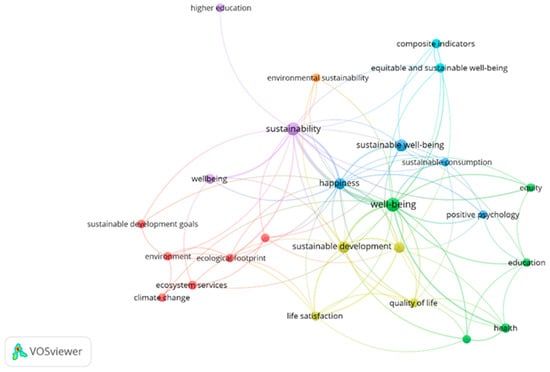
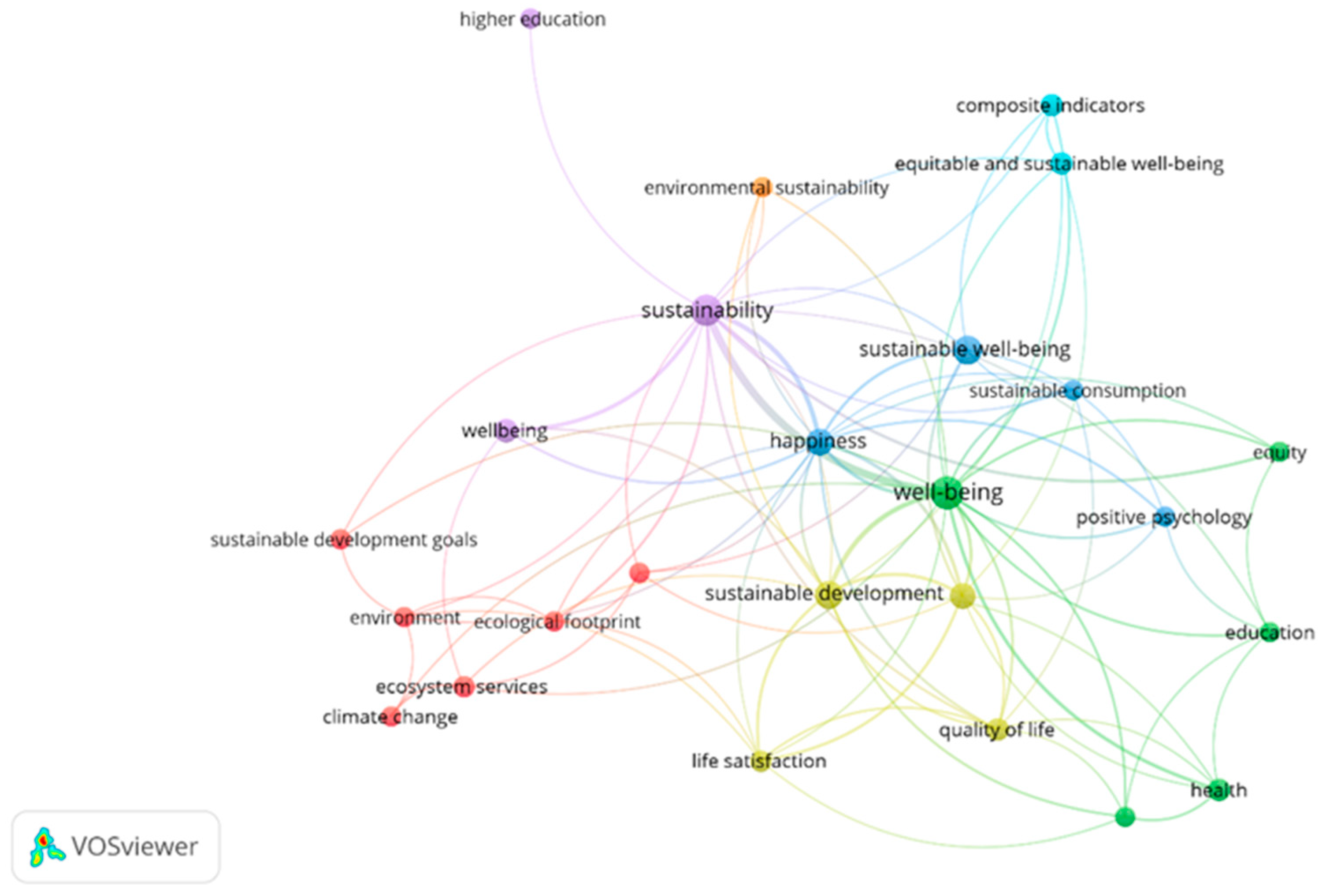
The interrelations between place attachment and positive multi-sensory spatial experiences surpass the instantaneous individual sentiments and produce long-term emotional bonds. A positive attachment establishment process contributes to the environmental satisfaction of individuals intended for a particular place [30]. Beyond the emotional aspect, place attachment is of paramount importance for providing the opportunity to nurture responsible environmental behavior as a behavioral tendency [31]. These advances in emotional and behavioral aspects lead to a superior consciousness related to the environment on a larger scale and the process ceases to be a personal state of well-being directed at the individual’s singular existence and gains a contextual, even global scale, creating environmental awareness and leading to sustainable well-being. In the literature, the concept of sustainable well-being is evaluated in relation to diverse concepts based on its multi-dimensional structure. Related concepts were visualized based on the keywords of former studies related to sustainable well-being via VOSviewer software (version 1.6.20) [32].
Among these keywords, concepts such as happiness, life satisfaction, and quality of life stand out in the literature, along with research areas such as positive psychology, environmental studies, education, and health. Along with sustainability and well-being, this thematic distribution reflects the interdisciplinary nature of the field and demonstrates that individual well-being is often examined from a psychological aspect, rather than from spatial perspectives. As shown in Figure 1, this conceptual distribution further highlights the need for studies that systematically link multisensory spatial attributes to place-based experiences (Figure 1).
Figure 1.
Co-occurrence network of keywords related to sustainable well-being. The map was generated using the VOSviewer software [32].
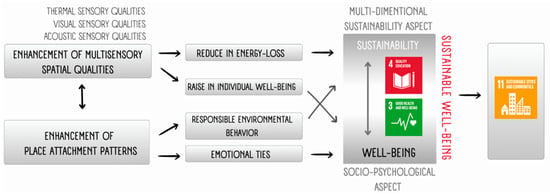
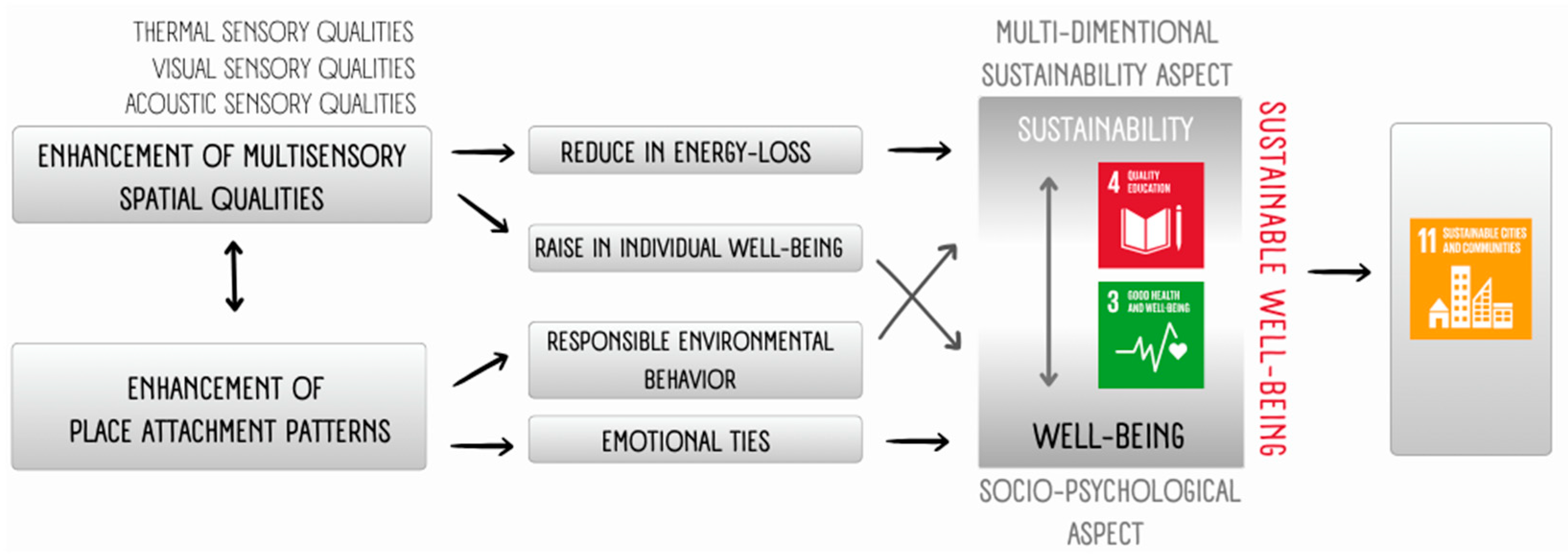
Sustainable well-being is a concept emphasizing interdependencies of well-being and nature, in which an all-inclusive increase in well-being in all aspects is strengthened through the outlined sustainability framework [5]. Aligned with the sustainability-oriented body of literature, the conceptual framework suggested in this study demonstrates several explicit and implicit relations with the social and experiential dimensions of sustainability. Supporting the spatial experience and well-being of individuals and reinforcing educational processes in educational settings [24,25,26,27,28,31], the enhancement of multi-sensory spatial qualities exerts a direct influence on Sustainable Development Goals (SDGs) propounded by United Nations, particularly SDG 3 (Good Health and Well-being) and SDG 4 (Quality Education). Within the scope of the proposed conceptual framework, place attachment is positioned as a mediating mechanism, between spatial quality and well-being, that substantially enhances the proposed influences on sustainability. From a broader perspective on sustainability, these explicit and implicit effects have comprehensive consequences for sustainable urban environments and indirectly impact SDG 11 (Sustainable Cities and Communities) by informing design approaches that support user-oriented built environments (Figure 2).
Figure 2.
Diagram on the relation between multi-sensory spatial qualities, place attachment and sustainable wellbeing.
Instilling awareness multidimensionally, the sustainable well-being concept is important for global sustainability, particularly in places designed to develop consciousness and for being used by younger generations, especially in educational structures.
1.3. Place Attachment and Multi-Sensory Spatial Qualities in Educational Settings
Previous studies have shown that academic activities influence the educational processes by increasing motivation and, as a result, contribute to academic performance by increasing academic engagement [33]. In the existing body of literature on place attachment in university campuses, past studies have focused intensively on the formation of place attachment as a process [34,35,36,37], the calculation and determination of place attachment levels of the students [33,38,39,40], and the determination of place attachment levels of specific student groups such as international and transnational students [41,42,43]. While these studies emphasize the social aspect of the phenomenon, factors related to the sensory spatial environment remain in the background.
One aspect of the multidimensional place attachment model is the “place” dimension, which also includes components related to the influencing sensory spatial qualities [2]. The spatial dimension, which examines spatial configuration [44,45], alongside functional components that focus on functional and utilization diversity [33], multi-sensory spatial qualities also affect users’ comfort levels, thus intensifying user patterns associated with the space and supporting the user’s connection with the space and raising satisfaction [31,46,47,48]. It is revealed formerly that artificial lighting can influence the sense of spatial identity by creating a sense of attachment among urban residents [3], while the effect of nature connectedness on place attachment is stated in another study, which is closely related to the design of the openings and natural lighting use [49].
In educational settings, sensory comfort conditions support opportunities for social interaction [50,51], affect perception and attitudes towards the educational curriculum, and thus influence overall satisfaction levels [4]. In addition, these factors have an impact on school attachment, attendance, and academic achievement [52,53,54], as revealed by various studies. In a study addressing place attachment in library spaces as an educational setting [55], comfortability was identified as one of the major headings, and it was determined that the correct design of components such as lighting, thermal conditions, and acoustics makes the space more attractive and pleasant. Thus, it has been determined that it contributes to place attachment both directly and indirectly.
In terms of visual components of sensory spatial qualities, it has been determined that the amount and quality of illumination and the resulting visual comfort conditions in educational environments and working spaces affect place attachment [55]. In this regard, in a study conducted for university open office spaces, ref. [56] found the acceptable range for illumination levels to be 164–1758 Lux, while the more optimal range is between 576 Lux and 1346 Lux. Light values outside this range cannot provide visual sensory quality in either the upward or downward direction [56]. According to standards, an illumination level of 500 lux (Em) and luminaires with UGR < 16/19 are deemed necessary in classroom environments for efficient education at levels higher than middle school, while this value increases to 750 lux in technical drawing classes [57,58,59].
Another key factor determining user comfort in educational settings is the thermal sensory qualities. Air quality in these spaces has been found to affect overall course satisfaction [4]. A former study on place attachment emphasized the importance of window openings and sun control elements in terms of thermal performance [55].
For indoor educational environments, a temperature range of 23–26 °C in summer and 20–24 °C in winter is considered sufficient for thermal comfort conditions in Category B buildings [60,61,62]. According to relevant standards, based on the PMV (Predicted Mean Vote) and PPD (Predicted Percentage of Dissatisfied) composite comfort model, the PMV value is ±0.2 and PPD is less than 6% in more sensitive and controlled spaces, while in Category B buildings such as educational buildings, the PMV value is ±0.5 and PPD is less than 10% [62,63,64].
Another important factor affecting users’ experience in educational settings is the acoustic sensory quality [4]. Factors such as the sound level of the space, reverberation time, and background noise play a decisive role in students’ attention, learning performance, and overall satisfaction levels [65,66]. High sound pressure levels not only reduce communication quality but also have the potential to indirectly weaken the psychological bond individuals form with the space. The noise limit value, determined according to standards, has been set at 35 dB(A) [67,68].
In response to these gaps, this study advances the existing literature by explicitly examining the relationship between place attachment and multi-sensory spatial qualities within campus educational environments through an integrated and empirically grounded approach. Unlike prior studies that predominantly focus on single sensory dimensions or rely solely on subjective assessments, this research adopts a synchronic methodology that combines objective, on-site measurements of thermal, visual, and acoustic conditions with validated place attachment scales. By pairing each participant’s attachment evaluation with the exact sensory conditions to which they were exposed, the study moves beyond descriptive associations and enables a more rigorous assessment of sensory–attachment relationships. Furthermore, by controlling exposure-related variables such as space type, duration of use, and daily occupancy patterns, and validating the findings through hierarchical regression analysis, the study demonstrates that multi-sensory spatial qualities correlate with place attachment beyond familiarity and spatial use alone. In doing so, the research conceptually extends place attachment theory by foregrounding the sensory-material foundations of emotional bonding in educational spaces and positions multi-sensory spatial quality as a critical component of sustainable well-being in campus environments.
In this respect, the theoretical innovation of the study lies in explicitly positioning objectively measured multi-sensory spatial qualities as an empirical interface between place attachment and the macro-scale sustainable well-being framework. By translating micro-scale sensory measurements into sustainability-relevant indicators through place attachment, the research bridges environmental psychology and sustainability-oriented spatial design, offering an operational pathway to integrate human well-being into broader sustainability discourses in educational environments.
2. Materials and Methods
2.1. Data Collection
In the scope of the synchronic methodology, the data collection process was carried out in two complementary methods. The subjective data regarding students’ place attachment scores were collected using a questionnaire form. The objective data regarding the multi-sensory spatial qualities of the educational spaces in which the students were located were obtained through on-site measurements simultaneously with questionnaire implementations. Thus, the sensory spatial conditions to which each participant was exposed while filling out the questionnaire were recorded individually for each participant.
The multi-sensory spatial qualities included the thermal, visual, and acoustic components of the environment: air temperature, relative humidity, airflow velocity, mean radiant temperature (Tmrt), sound pressure level (dB(A)), horizontal illuminance level (lux), and vertical illuminance level (lux).
The data collection took place at the end of June, during the late spring period, when the educational spaces were actively used. During this process, valid questionnaire–measurement matches were obtained from a total of 70 volunteer participants consisting of students of ATU Department of Architecture. A total of 70 volunteer undergraduate architecture students participated in the empirical study. The participants represented different years of their architectural education and consisted of users who regularly used all selected educational settings. All participants were users who were consistently exposed to these settings for a specific period of time as part of their routine academic activities. The selected educational settings were used on a daily or weekly basis within the formal curriculum to ensure comparable exposure conditions among participants. This approach allowed place attachment scores to reflect experiential interaction with the spaces rather than short-term or incidental use. General demographic information was collected to characterize the sample, but the primary analytical focus remained on the relationship between multisensory spatial attributes and place attachment under consistent exposure conditions.
2.2. Measurement
In the scope of the study, subjective data regarding place attachment scores of students were collected using the “Place Attachment to University Scale” developed by Li in 2012 [69] and adapted into Turkish by Yaşaroğlu in 2017 [70]. The scale consists of 17 items, each evaluated on a 5-point Likert scale (1 = “strongly disagree” to 5 = “strongly agree”). The internal consistency of the scale was measured, and Cronbach’s Alpha coefficient was calculated as 0.935, indicating a strong consistency between the 17 items.
Simultaneously with the data gathering process for place attachment scores, the multi-sensory spatial qualities of the classroom and ateliers were measured individually for each participant. Measurements were taken in the same time interval with the survey and at the locations where users were positioned. This allowed subjective data to be directly paired with objective sensory spatial data, increasing the reliability of the analyses.
- Air temperature (°C), relative humidity (%), and airflow velocity (m/s)—representing the thermal sensory component—were measured using the TFA Dostmann 35.1077 Stratos Wireless Weather Station device. Measurements were taken at sitting level (approximately 1.1 m high). This device has an accuracy of ±1 °C for temperature, ±5% for humidity, and ±0.1 m/s for airflow velocity.
- The average radiant temperature (Tmrt, °C), a key indicator of the thermal spatial qualities, is derived from the globe temperature (Tg) data measured using the Extech HT200 Heat Stress Meter device. Meteorological measurements were conducted using a wireless weather station (35.1077 Stratos, TFA Dostmann GmbH & Co. KG, Wertheim-Reicholzheim, Germany). Thermal stress measurements were conducted using a heat stress meter (HT200, Extech Instruments, Nashua, NH, USA). Utilizing a black globe sensor with a diameter of 50 mm, Tmrt is calculated using correction factors in accordance with the ISO 7726 standard [61].
- Based on the measured thermal parameters (air temperature, relative humidity, airflow velocity, and mean radiant temperature), thermal comfort conditions were determined using the Predicted Mean Vote (PMV) index. PMV values were calculated in accordance with ISO 7730 [62] and ASHRAE Standard 55 [64].
PMV is derived from Fanger’s heat balance model and is calculated as:
where M represents the metabolic rate and L denotes the thermal load, defined as the imbalance between internal heat production and heat loss to the environment. The thermal load (L) is a composite term calculated from air temperature (Ta), mean radiant temperature (Tmrt), relative humidity (RH), air velocity (Va), clothing insulation, and metabolic activity.
PMV = [0.303·exp(−0.036·M) + 0.028] · L
PMV values were calculated using standardized assumptions for metabolic rate (met = 1.2, corresponding to seated educational activities) and clothing insulation (clo = 0.6), ensuring consistency across participants. According to ISO 7730 [62], PMV values between –0.5 and +0.5 indicate thermally comfortable conditions.
- Sound pressure level (SPL, dB(A))—reflecting the acoustic sensory quality—was measured at ear level (~1.2 m) in a seated position. Measurements were taken for 1 min in A-weighted and fast response mode. The device was positioned away from direct reflections or noise sources to increase measurement accuracy.
- The horizontal illuminance level (lux) was measured at desk height (~0.75 m). This value represents the visual sensory data at the students’ working level. The vertical illuminance level (lux) was measured at eye level (~1.2 m) in a seated position, considering the direction of participants’ gaze (blackboard, instructor area, etc.). This data is significant for evaluating the directional effect of light in space and glare-related visual comfort within the context of visual spatial qualities. Measurements were made in accordance with the EN 12464-1 standard [58].
All devices were calibrated in a laboratory environment prior to data collection process. Measurements were taken at each participant’s exact location, ensuring that multi-sensory spatial qualities and perception data were directly paired. Additionally, control measurements were taken at multiple points in each environment to ensure environmental homogeneity and support the assessment of sustainable well-being-oriented spatial conditions.
2.3. Data Analysis
The data on place attachment scores of participants and multi-sensory spatial qualities were first examined through descriptive statistics, normality tests, and spatial distributions. Cronbach Alpha (α) was applied as a reliability test to measure the internal consistency of the place attachment scale, and a One-Way ANOVA test was applied to reveal the spatial distribution.
To determine a significant relationship between place attachment scores and sensory spatial data within the framework of sustainable well-being, both Spearman Correlation Analysis and Linear Regression Analysis were performed. These analyses were used to measure both the direction of the relationships and the predictive power between the variables. Additionally, a two-step hierarchical multiple linear regression was conducted to examine the additional variance that multi-sensory spatial qualities explain in place attachment scores, exceeding the predefined correlation coefficient based on the exposure-related variables. In Step 1, the exposure-related variables including (1) space type, (2) total years of use, and (3) weekly duration of use were utilized as Block-1 control variables, while in Step 2, multi-sensory spatial qualities including PMV, vertical illuminance, horizontal illuminance, and sound pressure levels were utilized as Block-2 to assess incremental explanatory power (ΔR2).
Having presented the data analysis, the subsequent section presents the characteristics of the study area where the empirical evidences were pursued.
2.4. Study Area
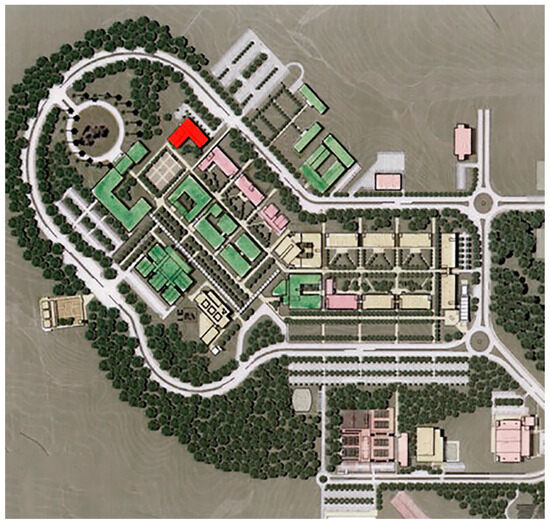
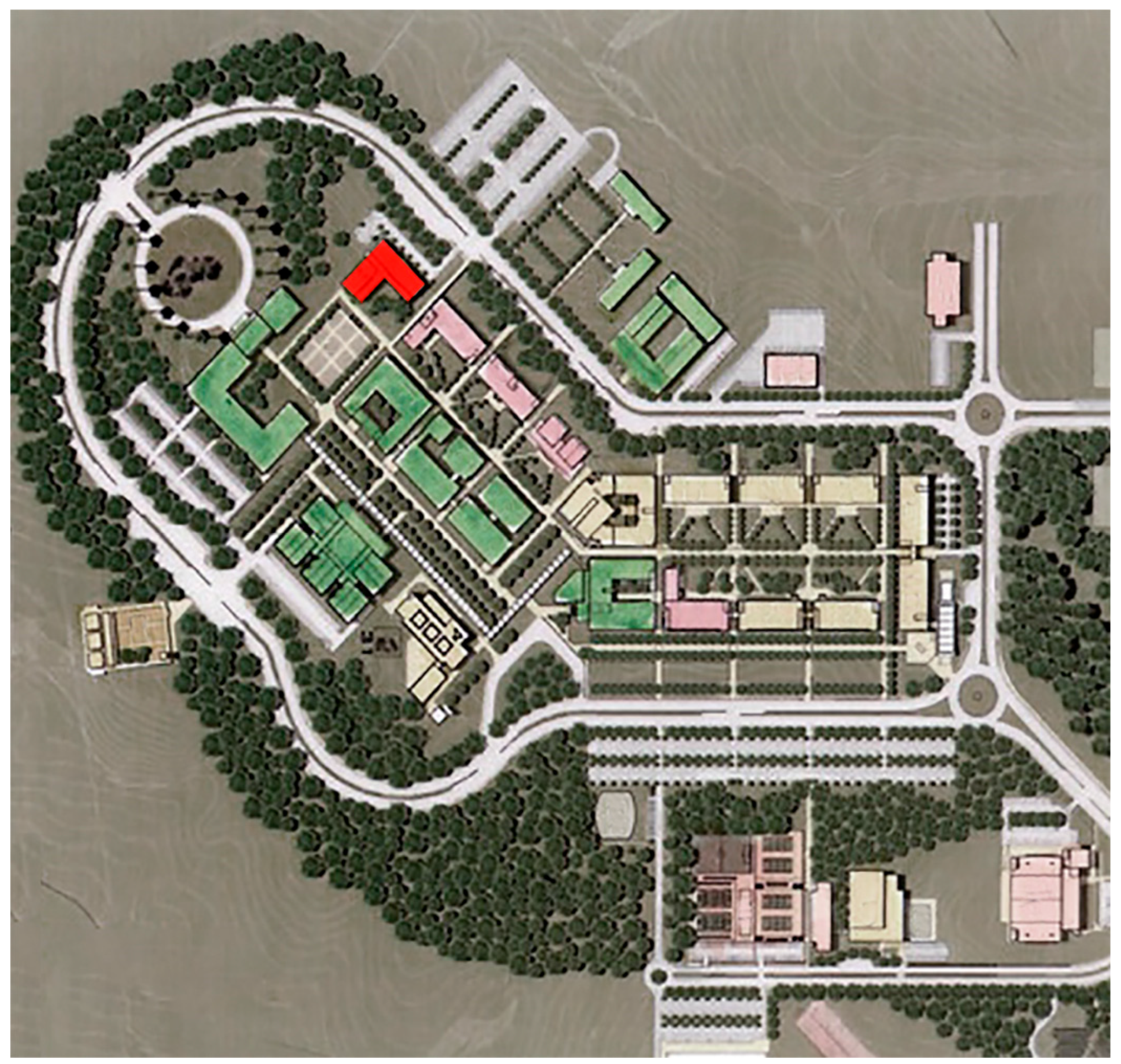
The study was conducted at Department of Architecture in Adana Alparslan Türkeş Science and Technology University, located at Adana, Türkiye. The institution was founded in 2011, and consists of nine educational buildings, and four buildings for administrative and social facilities [71]. The campus settlement was designed via an architectural competition in a holistic architectonic manner by Arıkoğlu Architects [72]. The education in Department of Architecture is carried out in 5 educational spaces in 2 temporary buildings. In this study, the three main educational spaces of the department are chosen as the study area (Figure 3). The campus setting was deliberately chosen for representing a controlled yet realistic educational environment where users are exposed to similar institutional, cultural, and functional conditions. However, the specific educational spaces as selected cases provide diverse physical and sensory characteristics. This structure allows for the examination of the effects of multisensory spatial attributes on site commitment, while minimizing confounding social and organizational variables that might arise in heterogeneous or multi-campus examples.
Figure 3.
ATU Campus site and Temporary Building of the Department of Architecture [72].
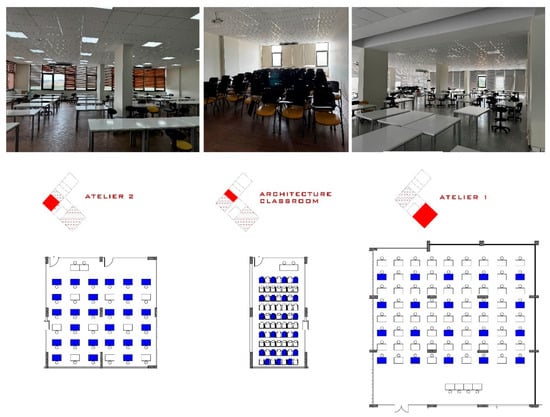
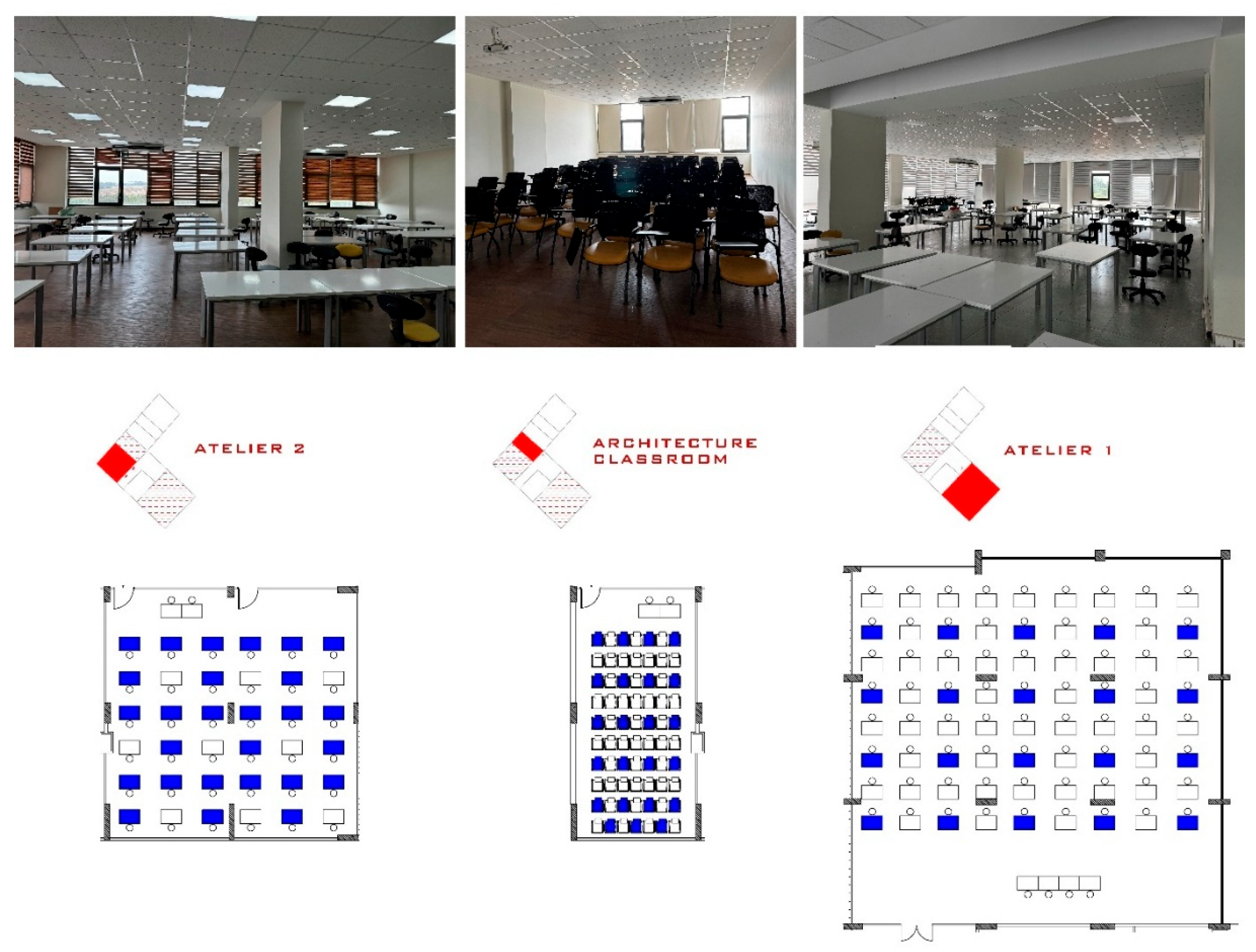
Despite serving similar educational functions for similar user groups, the differentiating characteristics that these spaces have include diverse orientation, size, spatial proportion, and envelope characteristics. Depending on these characteristics, multi-sensory spatial qualities diversify across these environments, shaping variations particularly in their thermal, visual, and acoustic sensory qualities (Figure 4). This internal diversity provides a robust analytical framework for exploring the relationship between sensory spatial qualities and users’ place attachment within the same institutional context.
Figure 4.
Three main educational spaces of the department and in situ measurement points.
Regarding generalizability, the findings of this study are not intended to represent all building types; however, the methodological framework and observed relationships between multi-sensory spatial qualities and place attachment are transferable to other educational environments with comparable functional and climatic conditions. Accordingly, the results offer a conceptual and methodological reference that can be tested and expanded in different institutional, climatic, and architectural contexts.
3. Results
3.1. Attachment-Based Findings
Descriptive statistics of the place attachment scores are listed, and Cronbach’s Alpha tests were conducted for reliability testing, revealing an adequate scale internal reliability with a reliability value of 0.936 (Table 1).
Table 1.
Reliability statistics of the overall place attachment scores.
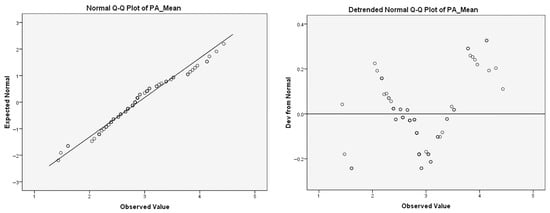
Item-level reliability results were calculated for each component to assess the contribution to the place attachment scores, and the results ranged from 0.927 to 0.938, confirming each item as a consistent component of the scale score. Additionally, the Shapiro–Wilk normality test was applied to the scale and the results yielded a significance (p-value) of 0.108, exhibiting a normal distribution (Table 2) (Figure 5).
Table 2.
Tests of Normality.
Figure 5.
Visuals of normality tests.
Considering the spatial distribution, a one-way ANOVA test was applied to the normally distributed place attachment score results to test the differences in place attachment scores across the three spaces, yielding p = 0.035. This indicates a significant diversification in place attachment score between these spaces. Tukey and Bonferroni results indicate a significant difference between Atelier-1 and Classroom (Table 3).
Table 3.
One-way ANOVA test, Tukey, and Bonferroni results.
These differentiations in place attachment across the three educational spaces suggest that the distribution of multi-sensory spatial qualities have the potential to demonstrate a correlation with place attachment scores of the users.
3.2. Sensory Spatial Findings
The descriptive statistics for the independent variables examined in the study, including sound pressure level (dB), horizontal illuminance level (lx), vertical illuminance level (lx), and PMV (Predicted Mean Vote) values, are determined as follows (Table 4). These variables represent the key components of the multi-sensory spatial qualities assessed in the educational environments.
Table 4.
Descriptive statistics for multi-sensory spatial qualities.
Horizontal and vertical illuminance levels were measured at an average of 845 lx and 445 lx, respectively; these values are sufficient for indoor spaces where natural and artificial lighting are used together and provide a basis for evaluating visual sensory qualities within the context of user experience. The PMV value, with an average of −0.31, indicates mildly cold thermal conditions, reflecting the thermal sensory dimension of these environments. On the other hand, the average sound pressure level of 53.42 dB indicates the presence of considerable background noise within the educational spaces, which is an essential indicator of the acoustic sensory qualities relevant to users’ well-being and comfort.
Collectively, these data define the overall multisensory construction of educational spaces. This construction establishes the initial infrastructure for examining the relationship between students’ attachment patterns and spatial qualities and addressing the subject within the scope of sustainable well-being, relating to both the ecological and psychosocial aspects.
3.3. Analysis of Attachment-Based and Sensory Spatial Findings
Within the scope of the study, three analysis techniques were applied to explore a significant relationship between place attachment scores and multi-sensory spatial qualities. Spearman’s rank correlation was applied to determine a significant correlation between variables and to identify the direction and strength of possible relationships. The multiple linear regression was applied to determine the combined effects of the parameters affecting the place attachment score at unity. Additionally, a two-step hierarchical multiple linear regression analysis was employed to compare two blocks of variables and examine the additional variance in place attachment scores explained by multi-sensory spatial qualities. Thus, both the individual and combined relations between variables were analyzed in detail and evaluated within a sustainable well-being perspective.
Spearman’s rank correlation was preferred due to its ability to assess non-linear monotonic relationships between data and its independence from parametric assumptions. According to the analysis results, a positive and significant relationship was found between the place attachment score and PMV (r = 0.312; p = 0.0086). This finding shows that the thermal sensory component of multi-sensory spatial qualities is associated with place attachment patterns, and stronger place attachment scores are correlated with thermal conditions within the spectrum defined as more comfortable.
A negative and significant relationship was observed between the place attachment score and the vertical illuminance level (r = −0.297; p = 0.0124), suggesting that higher visual sensory load on vertical illumination may negatively affect users’ attachment scores. The relationships between sound pressure level (r = −0.222; p = 0.0651) and horizontal illuminance level (r = 0.204; p = 0.0907) and place attachment were not identified as statistically significant (p > 0.05) (Table 5).
Table 5.
Spearman correlations between place attachment score and multi-sensory spatial qualities.
These findings indicate that place attachment is closely related to thermal and visual sensory qualities of educational spaces. The effect of other multi-sensory variables was evaluated in more detail through regression analyses.
Multiple linear regression analysis was performed to determine the combined and simultaneous effects of independent variables (PMV, sound pressure level, horizontal illuminance, and vertical illuminance) on place attachment scores. According to the findings, PMV (β = 0.466; p = 0.001) and vertical illuminance level (β = −0.0016; p < 0.001) are components that significantly affect place attachment as a combined structure. The positive effect of PMV indicates that educational environments characterized by higher thermal comfort demonstrate a correlation with stronger place attachment. In contrast, an increase in vertical illuminance level leads to a decrease in perceived attachment. Sound pressure level (p = 0.170) and horizontal illuminance level (p = 0.201) did not show statistically significant effects (Table 6).
Table 6.
Multiple linear regression analysis results for place attachment score.
The Spearman’s rank correlation and multiple linear regression analyses reveal that two dimensions of multi-sensory spatial qualities—thermal comfort indicator (PMV) and visual sensory load (vertical illuminance level)—significantly correlate with place attachment when considering both individual and combined effects. Meanwhile, acoustic sensory qualities (sound pressure level) and horizontal illuminance levels did not show a statistically significant effect in either analysis.
The measurement of multi-sensory spatial qualities and calculation of its relations to place attachment patterns reveal that these variables have strong connections through thermal sensory quality and vertical illuminance-based visual sensory quality components of multi-sensory spatial qualities.
Additionally, a two-step hierarchical multiple linear regression was conducted to examine the additional variance that multi-sensory spatial qualities explain in place attachment scores, exceeding the predefined correlation coefficient based on the exposure-related variables. In Step 1, the exposure-related variables including (1) space type, (2) total years of use, and (3) weekly duration of use were utilized as Block-1 control variables, while in Step 2, multi-sensory spatial qualities including PMV, vertical illuminance, horizontal illuminance, and sound pressure levels were utilized as Block-2 to assess incremental explanatory power (ΔR2).
The hierarchical regression analysis revealed that exposure-related variables explained a substantial variance in place attachment in Step 1 (R2 = 0.685). In Step 2, the multi-sensory spatial variables were included to the model and analysis resulted in a statistically significant increase in explained variance (ΔR2 = 0.118, p < 0.001), indicating that thermal, visual, and acoustic qualities correlate with place attachment beyond spatial familiarity and usage duration (Table 7).
Table 7.
The two-step hierarchical multiple linear regression results for the place attachment score.
In this respect, the structure provides the necessary infrastructure for supporting sustainable well-being in a dual-layered manner through both spatial and attachment-based components.
4. Discussion
This study examines the relationship between place attachment scores and multi-sensory spatial qualities, including thermal, acoustic, and visual sensory dimensions, through quantitative data in educational spaces, presenting original findings. The findings reveal both correspondence and differentiations with general tendencies in the former studies, aiming to comprehensively reveal the multi-layered effects of multi-sensory spatial qualities on place attachment within the context of sustainable well-being.
The study found a negative and significant relationship between vertical illuminance level and attachment. In the current study, the vertical illuminance level was determined to be an average of 445 lx, which falls within the optimal illuminance levels identified by Li et al. in 2021 and produces consistent results with former studies in the field [56]. Despite the illumination level remaining below 500 lx as specified by standards, the negative relationship may be linked to excessive stimulation or glare based on the qualitative structure of lighting elements. This finding reveals that visual sensory qualities are not limited to providing sufficient illumination, and that the direction, distribution, and potential discomfort caused by light also play a critical role. Indeed, the literature suggests that not only the quantitative but also the qualitative characteristics of light can influence the emotional relationship individuals establish with space. Frutos et al. emphasized the potential of artificial lighting to create a sense of belonging among citizens, noting that light can shape spatial identity through shared experiences, symbolic meanings, and atmosphere [3]. In this context, high vertical illuminance levels may create visual overstimulation for some users, leading to discomfort that potentially weakens place attachment.
On the other hand, the effects of horizontal illuminance levels on place attachment were not statistically significant. Although the horizontal illuminance level was measured at an average of 845 lx, above the IES standards, it did not significantly affect users’ attachment scores [57]. These results, aligning with prior findings, suggest that visual sensory qualities create positive effects only within certain limits and may become a source of discomfort at excessive values [56].
Within the study, a positive and significant relationship was found between the thermal sensory quality (PMV) and place attachment. The increase in PMV strengthening place attachment indicates that the thermal sensory quality of spatial experience correlates with the emotional bonding process. These findings support studies by Zamanifard et al. and Ghasemieshkaftaki et al., who revealed that users’ perception of comfort increases their emotional bonds with place [46,47]. This study also statistically confirms the findings of Abowardah et al., which indicated that providing controlled lighting correlates not only with thermal sensory quality but also with the sense of place attachment [55]. In this context, the study provides a unique contribution by demonstrating that maintaining the PMV value within the ±0.5 comfort range [64] can enhance not only instant physiological satisfaction but also the emotional bonds users establish with space through a time interval.
According to the findings, no statistically significant relationship was found between sound pressure level and place attachment. Despite the 35 dB(A) limit recommended by WHO and ANSI/ASA, the average sound level in the study was measured around 53 dB(A) [67,68]. This finding suggests that these levels do not have a direct correlation with place attachment. While this diverges from some of the literature indicating that acoustic sensory qualities affect educational processes, attention, and learning performance [65,66], it supports the inference that acoustic discomfort may play a more indirect role in attachment due to the time-dependent and long-term nature of attachment formation [2].
Beyond bivariate relationships, the hierarchical regression analysis provides an important extension to these findings by demonstrating that multi-sensory spatial qualities explain additional variance in place attachment beyond exposure-related factors such as space type, duration of use, and daily occupancy patterns. The significant increase in explained variance observed in the second step of the model (ΔR2) indicates that thermal, visual, and acoustic conditions contribute to place attachment independently of users’ spatial familiarity. From a psychological perspective, these associations can be interpreted through several interrelated perceptual and affective pathways. Sensory spatial qualities shape users’ moment-to-moment perceptual comfort by regulating sensory load and reducing environmental stressors, which in turn supports positive affective appraisal of space. Thermal comfort and balanced visual stimulation may facilitate feelings of control, ease, and environmental coherence, reinforcing emotional safety and familiarity over time. As these perceptual experiences are repeatedly encountered, they contribute to experiential continuity, allowing short-term comfort perceptions to accumulate into longer-term emotional bonds with place. Within this framework, multisensory spatial qualities do not directly determine place attachment but operate as environmental affordances that condition how users perceive, evaluate, and emotionally relate to educational settings. This result strengthens the interpretation that place attachment is not solely a function of prolonged exposure or habitual use but is also meaningfully associated with the qualitative sensory characteristics of educational environments.
Overall, the study demonstrates that while a multi-sensory spatial approach is vital to assess the formation of place attachment in educational settings, the influence of additional variables such as social and individual factors should not be overlooked. The effectiveness of thermal and visual components suggests that positive experiential qualities of space can strengthen the sense of attachment. The results support Scannell & Gifford’s model, viewing place attachment as a multidimensional structure composed of physical, social, and individual components [2] and are strongly consistent with related studies in the literature on the impact of spatial qualities on place attachment and experiential qualities [46,47,48]. The study contributes to the literature by focusing on the spatial quality aspect, often overlooked in former studies, and by quantitatively demonstrating its statistically significant relations with attachment. Prior research also emphasizes that the quality of the physical environment is strongly related to variables such as school attachment, academic achievement, and continuation [52,53], supporting the findings of the present study indirectly through place attachment.
Additionally, the results constitute a substantial contribution to existing body of research and provide a compelling theoretical framework for concept of sustainable well-being. It is discussed that the concepts addressed in the study contribute to assigning the coverage of sustainable well-being concept based on multidimensional sustainability aspect and psychosociological aspect in relation to well-being [5]. This dual structure holds great potential for reconciling future sustainability responsibilities with current well-being-oriented spatial design approaches. From the perspective of sustainable well-being, both concepts addressed in the study contribute separately to the sustainable well-being approach and have the potential to positively influence individuals’ emotional and behavioral responses to space. Accordingly, the research ensures a strong alignment with Sustainable Development Goal 3, focusing on “Health and Well-being”, by highlighting the role of multisensory spatial qualities and place attachment in supporting user well-being in educational settings. Additionally, the study emphasizes how experiential environmental attributes contribute to attachment, continued use, and emotional bonds with learning spaces, producing findings that support existing literature focusing on the contribution of physical environmental conditions to educational processes and outcomes [52,53,54,55]. Thus, the study shows a direct correlation with Sustainable Development Goal 4 on “Quality Education”.
Beyond these assessments, the findings support the integration of well-being-oriented design principles into educational environments, thereby contributing to education and consequently to societal awareness, and thus demonstrating indirect alignment with Sustainable Development Goal 11 (Sustainable Cities and Communities). Rather than directly addressing energy consumption or emissions in ecological aspect of sustainability concept, the study focuses on social aspect and conceptually contributes to sustainable strategies by framing sustainable well-being as a spatial attribute, informing long-term, resource-conscious, and human-centered approaches within educational contexts.
From a theoretical perspective, the findings empirically demonstrate that objectively measured multisensory spatial attributes, both individually and as a holistic effect of the sensory-spatial components considered, particularly thermal comfort (PMV) and vertical lighting, are significantly associated with attachment patterns in educational settings; thus, the study strengthens the multidimensional conceptualization of place attachment. By integrating hierarchical regression into the analytical framework, the study advances existing place attachment models toward a layered understanding in which sensory-spatial qualities operate alongside, but not subordinate to, exposure-related factors. By mapping on-site sensory measurements to place attachment scores, the study extends existing place attachment frameworks toward a measurable “sensory-attachment” interface in the context of sustainable well-being avoiding causality [2,5].
From a practical perspective, the results demonstrate that sustainability-focused campus design should address multisensory environmental quality as a key component of user well-being and long-term use of learning spaces. Maintaining thermal conditions within acceptable comfort ranges (e.g., PMV targets) and carefully managing vertical lighting can support stronger attachment formations with learning environments by considering not only quantitative characteristics but also qualitative characteristics such as glare risk, direction, and distribution [56,57,64]. The hierarchical regression findings further imply that improving sensory spatial quality can enhance place attachment even when users share similar exposure durations and usage patterns. In this sense, the findings will contribute to the creation of new higher-quality learning environments by contributing to sustainable well-being strategies that align sensory spatial qualities with user experience in educational institutions.
5. Conclusions
5.1. Key Findings and Implications
This study examines the potential correlations between multi-sensory spatial qualities and the place attachment scores of users. The results indicate that PMV and vertical illuminance levels in educational spaces show a significant association with users’ place attachment scores in a university setting. These findings are important to reveal that place attachment scores are shaped not only by social and behavioral factors but also by the thermal and visual sensory qualities of the physical environment. The combined assessment of these two parameters demonstrates that the emotional bond users establish with a space is closely related to the experiential qualities of the built environment. In this respect, the study not only supports previous research on comfort conditions in educational buildings but also contributes to the literature by demonstrating their correlations with place attachment scores.
Furthermore, as the study was conducted under relatively stable and standard indoor climate conditions, the comfort values remained within acceptable ranges reported in the literature. For this reason, significant relationships were not found for sound pressure level and horizontal illuminance level. These results have been interpreted as indicating the significance of limitations and extreme values in sensory spatial qualities in determining the user’s spatial experience, as well as the complementary role of the long-term effects of spatial conditions on attachment formation processes besides the absolute instant conditions.
From the perspective of sustainable well-being, the study provides significant evidence emphasizing the necessity of designing educational spaces considering multisensory spatial qualities for promoting the concept both directly through sensory spatial comfort and indirectly through place attachment establishment. Discussing the concept through different aspects, the study contributes to the development of a systematic approach to frame sustainable well-being as a comprehensive duality-based research area. This perspective additionally introduces an approach that supports sustainable resource management, as it implies the controlled use of energy resources. Enhancing the sensory, experiential, and environmental characteristics of educational environments not only supports spatial experience but also strengthens their emotional connection to space. This leads to responsive environmental behavior, ultimately contributing to sustainability-driven spatial design approaches based on well-being concept.
From a sustainable well-being perspective, the findings provide context-sensitive im-plications for the design, evaluation, and management of educational environments. Maintaining thermal comfort conditions within comfort-oriented PMV target ranges—rather than merely complying with minimum standards—may support not only immediate physiological comfort but also the long-term emotional attachment students develop toward learning spaces. Similarly, the negative association between vertical illuminance and place attachment underscores the importance of addressing lighting as a qualitative design parameter, emphasizing balanced distribution, controlled contrast, and glare mitigation instead of maximizing illuminance levels. These results suggest that sustainable educational design should move beyond energy-oriented performance metrics and integrate multisensory experiential quality as a measurable and assessable design layer. In practical terms, incorporating sensory comfort indicators into post-occupancy evaluations—alongside usage patterns and satisfaction surveys—may enable a more holistic appraisal of well-being-oriented spatial performance. In this sense, multisensory spatial quality can be translated into actionable criteria that inform design decisions, retrofit strategies, and long-term campus planning within a sustainable well-being framework.
5.2. Limitations and Future Research
Despite the considerable contributions of this study to understanding the relationship between multisensory spatial qualities and place attachment in educational settings, it has certain limitations that need to be clarified in order to interpret the findings correctly and guide future research.
The study presents a distinctive structure in terms of examining the correlation between sensory spatial conditions and the place attachment scores of users. However, due to its correlational research design, the internal validity of the study is limited. The measurement approach, based on quantitative data and the use of measurement-based scale, prevents a causal and in-depth analysis of the relationship. This structure does not allow for causal inferences about the relationship between sensory spatial qualities and place attachment scores. Although significant relationships were found between variables, the effects of factors beyond the presented sensory qualities on place attachment, which are not addressed in the study, could not be determined.
Another remarkable aspect are the limitations regarding the generalizability of the study’s findings. The study was conducted within a specific educational context, focusing on learning environments in a campus setting and a particular user group. Consequently, these context-specific findings present an obstacle to direct generalization of the results to diverse building types, educational environments, and/or user groups.
A further important limitation concerns measurement-related constraints, and there are several limitations arising from the measurement approach adopted in the study. Place attachment, based on self-reported survey responses, has been evaluated using survey data that may be influenced by momentary perceptions, response biases, or individual interpretations of survey items. Similarly, environmental measurements of thermal, visual, and acoustic conditions represent instantaneous assessments and may not accurately reflect temporal changes, repetitive or long-term exposure patterns. By their very nature, sensory experiences are dynamic and context-dependent; therefore, single-point measurements may underestimate the complexity of spatial experience. Furthermore, the failure to reflect variations such as environmental factors across time and seasonal changes also constitutes a significant measurement limitation.
Building on these limitations, future research could adopt longitudinal or experimental designs to better capture temporal dynamics and to explore potential causal pathways between sensory spatial qualities and place attachment. Incorporating repeated measurements across different seasons and times of use would provide a more comprehensive understanding of sensory variability and its experiential implications. In addition, combining objective environmental measurements with qualitative or mixed-method approaches—such as interviews, observations, or participatory methods—could offer deeper insights into the psychological and perceptual mechanisms underlying place attachment. Expanding the scope of investigation to include diverse building typologies, cultural contexts, and user groups would further strengthen the generalizability of the findings and contribute to a more nuanced understanding of sustainable well-being in the built environment.
Although the results of the study are context-specific, their potential replicability across different educational levels and institutional settings positions the study as a remarkable contribution for future research aiming to reveal similar patterns. It also offers a basis for comparisons across climatic and cultural contexts by applying similar methodological approaches. Despite limitations related to sample size and spatial diversity, the internal consistency of the findings and their alignment with former studies provide a strong foundation for advancing research in the fields of spatial design, place attachment and thereby sustainable well-being.
Author Contributions
Conceptualization, O.Ş. and E.K.; methodology, O.Ş. and E.K.; software, O.Ş.; validation, O.Ş. and E.K.; formal analysis, O.Ş.; investigation, O.Ş. and E.K.; resources, E.K.; data curation, O.Ş.; writing—original draft preparation, E.K.; writing—review and editing, E.K.; visualization, O.Ş.; supervision, E.K.; project administration, O.Ş. All authors have read and agreed to the published version of the manuscript.
Funding
This research received no external funding.
Institutional Review Board Statement
IRB approval obtained (approved by the Ethics Committee of ADANA ALPARSLAN TÜRKEŞ BİLİM VE TEKNOLOJİ ÜNİVERSİTESİ (E-76907350-050.04-132456) on 25 June 2025).
Informed Consent Statement
Informed consent was obtained from all subjects involved in the study.
Data Availability Statement
The data supporting the findings of this study are not publicly available due to ethical and privacy restrictions.
Acknowledgments
During the preparation of this study, the authors used VOSviewer software (version 1.6.20) [32] for the purposes of visualization for co-occurrence network of keywords related to the concept. The authors have reviewed and edited the output and take full responsibility for the content of this publication.
Conflicts of Interest
The authors declare no conflicts of interest.
Abbreviations
The following abbreviations are used in this manuscript:
| dB(A) | Sound pressure level |
| PMV | Predicted Mean Vote |
| PPD | Predicted Percentage of Dissatisfied |
| SDG | Sustainable Development Goals |
| Tg | globe temperature |
| Tmrt | Mean radiant temperature |
References
- Cole, L.B.; Coleman, S.; Scannell, L. Place Attachment in Green Buildings: Making the Connections. J. Environ. Psychol. 2021, 74, 101558. [Google Scholar] [CrossRef] [Scilit]
- Scannell, L.; Gifford, R. Defining Place Attachment: A Tripartite Organizing Framework. J. Environ. Psychol. 2010, 30, 1–10. [Google Scholar] [CrossRef] [Scilit]
- De Frutos, L.; Pellizzari, L.; Hvass, M. The Influence of Urban Lighting on the Sense of Belonging. IOP Conf. Ser. Earth Environ. Sci. 2024, 1320, 012011. [Google Scholar] [CrossRef] [Scilit]
- Han, H.; Moon, H.; Lee, H. Physical Classroom Environment Affects Students’ Satisfaction: Attitude and Quality as Mediators. Soc. Behav. Personal. 2019, 47, 1–10. [Google Scholar] [CrossRef] [Scilit]
- Kjell, O. Sustainable Well-Being: A Potential Synergy Between Sustainability and Well-Being Research. Rev. Gen. Psychol. 2011, 15, 255–266. [Google Scholar] [CrossRef] [Scilit]
- Hay, R. Sense of Place in Developmental Context. J. Environ. Psychol. 1998, 18, 5–29. [Google Scholar] [CrossRef] [Scilit]
- Lewicka, M. Place Attachment: How Far Have We Come in the Last 40 Years? J. Environ. Psychol. 2011, 31, 207–230. [Google Scholar] [CrossRef] [Scilit]
- Low, S.M.; Altman, I. Place Attachment: A Conceptual Inquiry. In Place Attachment; Altman, I., Low, S.M., Eds.; Springer: Boston, MA, USA, 1992; Volume 12, pp. 1–12. ISBN 978-1-4684-8755-8. [Google Scholar]
- Hidalgo, M.; Hernandez, B. Place Attachment: Conceptual and Empirical Questions. J. Environ. Psychol. 2001, 21, 273–281. [Google Scholar] [CrossRef] [Scilit]
- Manzo, L.C.; Perkins, D.D. Finding Common Ground: The Importance of Place Attachment to Community Participation and Planning. J. Plan. Lit. 2006, 20, 335–350. [Google Scholar] [CrossRef] [Scilit]
- Tuan, Y.F. Space and Place the Perspective of Experience; University of Minnesota Press: London, UK; Minneapolis, MN, USA, 1977. [Google Scholar]
- Shumaker, S.A.; Taylor, R.B. Toward a Clarification of People-Place Relationships: A Model of Attachment to Place. In Environmental Psychology: Directions and Perspectives; Feimer, N., Geller, E.S., Eds.; Praeger: Westport, CT, USA, 1983. [Google Scholar]
- Kamani Fard, A.; Paydar, M. Place Attachment and Related Aspects in the Urban Setting. Urban Sci. 2024, 8, 135. [Google Scholar] [CrossRef] [Scilit]
- Van der Star, M.E.; Hochstenbach, C. Continuity among Stayers: Levels, Predictors and Meanings of Place Attachment in Rural Shrinking Regions. J. Rural Stud. 2022, 96, 369–380. [Google Scholar] [CrossRef] [Scilit]
- Bazrafshan, M.; Tabrizi, A.M.; Bauer, N.; Kienast, F. Place Attachment through Interaction with Urban Parks: A Cross-Cultural Study. Urban For. Urban Green. 2021, 61, 127103. [Google Scholar] [CrossRef] [Scilit]
- Chen, N.; Hall, C.M.; Yu, K.; Qian, C. Environmental Satisfaction, Residential Satisfaction, and Place Attachment: The Cases of Long-Term Residents in Rural and Urban Areas in China. Sustainability 2019, 11, 6439. [Google Scholar] [CrossRef] [Scilit]
- Yarker, S. Tangential Attachments: Towards a More Nuanced Understanding of the Impacts of Cultural Urban Regeneration on Local Identities. Urban Stud. 2018, 55, 3421–3436. [Google Scholar] [CrossRef] [Scilit]
- Lomas, M.J.; Ayodeji, E.; Brown, P. Experiences of Place Attachment and Mental Wellbeing in the Context of Urban Regeneration. Health Place 2021, 70, 102604. [Google Scholar] [CrossRef] [Scilit]
- Falanga, R. Understanding Place Attachment through the Lens of Urban Regeneration. Insights from Lisbon. Cities 2022, 122, 103590. [Google Scholar] [CrossRef] [Scilit]
- Trąbka, A. From Functional Bonds to Place Identity: Place Attachment of Polish Migrants Living in London and Oslo. J. Environ. Psychol. 2019, 62, 67–73. [Google Scholar] [CrossRef] [Scilit]
- Zisakou, A.; Figgou, L.; Andreouli, E. Integration and Urban Citizenship: A Social-psychological Approach to Refugee Integration through Active Constructions of Place Attachment to the City. Political Psychol. 2024, 45, 215–233. [Google Scholar] [CrossRef] [Scilit]
- Keyes, C.L.M. Social Well-Being. Soc. Psychol. Q. 1998, 61, 121–137. [Google Scholar] [CrossRef] [Scilit]
- Liu, T.; Shen, X.; Xia, T. Mediating Power of Place Attachment for Urban Residents’ Well-Being in Community Cohesion. Sustainability 2025, 17, 6756. [Google Scholar] [CrossRef] [Scilit]
- Rollero, C.; De Piccoli, N. Does Place Attachment Affect Social Well-Being? Eur. Rev. Appl. Psychol. 2010, 60, 233–238. [Google Scholar] [CrossRef] [Scilit]
- Keyes, C.L.M. Subjective Well-Being in Mental Health and Human Development Research Worldwide: An Introduction. Soc. Indic. Res. 2006, 77, 1–10. [Google Scholar] [CrossRef] [Scilit]
- Cicognani, E.; Pirini, C.; Keyes, C.; Joshanloo, M.; Rostami, R.; Nosratabadi, M. Social Participation, Sense of Community and Social Well Being: A Study on American, Italian and Iranian University Students. Soc. Indic. Res. 2008, 89, 97–112. [Google Scholar] [CrossRef] [Scilit]
- Giuliani, M.V. Theory of Attachment and Place Attachment. In Psychological Theories for Environmental Issues; Bonnes, M., Lee, T., Bonaiuto, M., Eds.; Ashgate: Aldershot, UK, 2003; pp. 137–170. [Google Scholar]
- Hataminejad, H.; Rezayee Gorgani, A.; Rahimi, F. The Analysis of the Impact of the Sense of Place Attachment to New Residential Neighborhoods on an Increasing Sense of Security Case Study: Elahieh Neighborhood Of. Geogr. Hum. Relatsh. 2019, 2, 8–21. [Google Scholar]
- Zumbrunn, S.; McKim, C.; Buhs, E.; Hawley, L.R. Support, Belonging, Motivation, and Engagement in the College Classroom: A Mixed Method Study. Instr. Sci. 2014, 42, 661–684. [Google Scholar] [CrossRef] [Scilit]
- Moffat, É.; Rioux, L.; Scrima, F. The Relationship between Environmental Bullying and Turnover Intention and the Mediating Effects of Secure Workplace Attachment and Environmental Satisfaction: Implications for Organizational Sustainability. Sustainability 2023, 15, 11905. [Google Scholar] [CrossRef] [Scilit]
- Wu, S.J.; Ng, E.; Lin, K.B.; Cheng, Y.H.; LePage, B.A.; Fang, W.T. Influence of Landscape Preference and Place Attachment on Responsible Environmental Behavior—A Study of Taipei’s Guandu Nature Park Wetlands, Taiwan. Land 2023, 12, 2036. [Google Scholar] [CrossRef] [Scilit]
- Van Eck, N.J.; Waltman, L. Software Survey: VOSviewer, a Computer Program for Bibliometric Mapping. Scientometrics 2010, 84, 523–538. [Google Scholar] [CrossRef] [Scilit]
- Moghisi, R.; Mokhtari, S.; Heidari, A.A. Place Attachment in University Students. Case Study: Shiraz University. Procedia Soc. Behav. Sci. 2015, 170, 187–196. [Google Scholar] [CrossRef] [Scilit]
- Vidal, T.; Valera, S.; Peró, M. Place Attachment, Place Identity and Residential Mobility in Undergraduate Students. PsyEcol. Biling. J. Environ. Psychol. 2010, 1, 353–369. [Google Scholar] [CrossRef] [Scilit]
- Chow, K.; Healey, M. Place Attachment and Place Identity: First-Year Undergraduates Making the Transition from Home to University. J. Environ. Psychol. 2008, 28, 362–372. [Google Scholar] [CrossRef] [Scilit]
- Carter, J.; Hollinsworth, D.; Raciti, M.; Gilbey, K. Academic ‘Place-Making’: Fostering Attachment, Belonging and Identity for Indigenous Students in Australian Universities. Teach. High. Educ. 2018, 23, 243–260. [Google Scholar] [CrossRef] [Scilit]
- Spooner, D. Place Attachment on University Campuses: At What Point Do Undergraduates Connect to Their Academic Institutions? Plan. High. Educ. J. 2019, 27, 27–38. [Google Scholar]
- Bogdan, C.; Rioux, L.; Negovan, V. Place Attachment, Proactive Coping and Well-Being in University Environment. Procedia Soc. Behav. Sci. 2012, 33, 865–869. [Google Scholar] [CrossRef] [Scilit]
- Qingjiu, S.; Maliki, N.Z. Place Attachment and Place Identity: Undergraduate Students’ Place Bonding on Campus. Procedia Soc. Behav. Sci. 2013, 91, 632–639. [Google Scholar] [CrossRef] [Scilit]
- Mao, Y.; He, L.; Danniswari, D.; Furuya, K. College Students’ Perceptions of and Place Attachment to Rural Areas: Case Study of Japan and China. Youth 2023, 3, 737–752. [Google Scholar] [CrossRef] [Scilit]
- Terrazas-Carrillo, E.C.; Hong, J.Y.; Pace, T.M. Adjusting to New Places: International Student Adjustment and Place Attachment. J. Coll. Stud. Dev. 2014, 55, 693–706. [Google Scholar] [CrossRef] [Scilit]
- Fatemi, E.; Raschid, M.Y.M.; Maulan, S.; Fatemi, E.; Kalantari, F. Does University Campus Place Attachment Matter Among Transnational Students. In Proceedings of the 5th International Congress on Civil Engineering, Architecture and Urban Development, Tehran, Iran, 1 January 2017. [Google Scholar]
- Petrić, J.; Lukić, V. Place Identity and Urban Attachment of International Students. Sociol. Pregl. 2023, 57, 1099–1129. [Google Scholar] [CrossRef] [Scilit]
- Zhai, Y.; Usman, I.M.S. The Impact of Physical and Social Factors in the Community Environment on Place Attachment: A Case Study on the Renewal of Community Public Open Space in Chengdu, China. J. Hunan Univ. Nat. Sci. 2025, 52. [Google Scholar] [CrossRef] [Scilit]
- Zhang, L.; Zhang, C.; Wang, X. How Does the Built Environment Shape Place Attachment in Chinese Rural Communities? Buildings 2025, 15, 2250. [Google Scholar] [CrossRef] [Scilit]
- Zamanifard, H.; Alizadeh, T.; Bosman, C.; Coiacetto, E. Measuring Experiential Qualities of Urban Public Spaces: Users’ Perspective. J. Urban Des. 2019, 24, 340–364. [Google Scholar] [CrossRef] [Scilit]
- Ghasemieshkaftaki, M.; Dupre, K.; Campbell, J.; Fernando, R. Enhancing Place Attachment Through Developing Public Open Places: A Cross-Cultural Study in Gold Coast, Australia. Architecture 2025, 5, 10. [Google Scholar] [CrossRef] [Scilit]
- Rebillon, J.; Codou, O.; Hamel, J.F.; Moffat, E.; Scrima, F. The Mediating Role of Perceived Comfort between Workplace Attachment Style and Perceived Stress. Int. J. Environ. Res. Public Health 2023, 20, 5377. [Google Scholar] [CrossRef] [Scilit]
- Zhang, Z.; Liu, W.; Du, L.; Ding, L. Enhancing Place Attachment Through Natural Design in Sports Venues: The Roles of Nature Connectedness and Biophilia. Buildings 2025, 15, 2980. [Google Scholar] [CrossRef] [Scilit]
- Sıramkaya, S.B.; Aydın, D. Social Space Concept in Psycho Social Development of University Youth and Its Examplification in Faculty Buildings. Procedia Soc. Behav. Sci. 2014, 140, 246–254. [Google Scholar] [CrossRef] [Scilit]
- Kulaksızoğlu, A. Ergenlik Psikolojisi; Remzi Kitabevi: Istanbul, Turkey, 1998. [Google Scholar]
- Durán-Narucki, V. School Building Condition, School Attendance, and Academic Achievement in New York City Public Schools: A Mediation Model. J. Environ. Psychol. 2008, 28, 278–286. [Google Scholar] [CrossRef] [Scilit]
- Pacheco, E.-M.; Parrott, E.; Oktari, R.S.; Joffe, H. How Schools Can Aid Children’s Resilience in Disaster Settings: The Contribution of Place Attachment, Sense of Place and Social Representations Theories. Front. Psychol. 2022, 13, 1004022. [Google Scholar] [CrossRef] [Scilit] [PubMed]
- Elnaklah, R.; Ayyad, Y.; Alnusairat, S.; AlWaer, H.; AlShboul, A. A Comparison of Students’ Thermal Comfort and Perceived Learning Performance between Two Types of University Halls: Architecture Design Studios and Ordinary Lecture Rooms during the Heating Season. Sustainability 2023, 15, 1142. [Google Scholar] [CrossRef] [Scilit]
- Abowardah, E.; Khalil, M.; Ramadan, M. Sense of Place Attachment to the Architectural Academic Library: Toward an Interactive Learning Environment. Int. J. Des. Educ. 2019, 14, 43–69. [Google Scholar] [CrossRef] [Scilit]
- Li, Z.; Zhang, Q.; Fan, F.; Shen, S. A Comprehensive Comfort Assessment Method for Indoor Environmental Quality in University Open-Plan Offices in Severe Cold Regions. Build. Environ. 2021, 197, 107845. [Google Scholar] [CrossRef] [Scilit]
- IES. IES Lighting Handbook, 11th ed.; IES: New York, NY, USA, 2024. [Google Scholar]
- EN 12464-1; Light and Lighting—Lighting of Work Places—Part 1: Indoor Work Places. CEN: Brussels, Belgium, 2021.
- ANSI/IES RP-3-20; Recommended Practice for Lighting Educational Facilities. ANSI/IES: New York, NY, USA, 2020.
- CIBSE. CIBSE Guide A: Environmental Design; Chartered Institution of Building Services Engineers (CIBSE): London, UK, 2020. [Google Scholar]
- ISO 7726:2017; Ergonomics of the Thermal Environment—Instruments for Measuring Physical Quantities. ISO: Geneva, Switzerland, 2017.
- ISO 7730:2005; Ergonomics of the Thermal Environment—Analytical Determination and Interpretation of Thermal Comfort Using Calculation of the PMV and PPD Indices and Local Thermal Comfort Criteria. ISO: Geneva, Switzerland, 2005.
- Fanger, P.O. Thermal Comfort: Analysis and Applications in Environmental Engineering; Danish Technical Press: Copenhagen, Denmark, 1970. [Google Scholar]
- ASHRAE Standard 55-2017; Thermal Environmental Conditions for Human Occupancy. ASHRAE: Peachtree Corners, GA, USA, 2017.
- Minelli, G.; Puglisi, G.E.; Astolfi, A. Acoustical Parameters for Learning in Classroom: A Review. Build. Environ. 2022, 208, 108582. [Google Scholar] [CrossRef] [Scilit]
- Mogas-Recalde, J.; Palau, R.; Márquez, M. How Classroom Acoustics Influence Students and Teachers: A Systematic Literature Review. J. Technol. Sci. Educ. 2021, 11, 245–259. [Google Scholar] [CrossRef] [Scilit]
- ANSI/ASA S12.60-2010/Part 1 (R2020); Acoustical Performance Criteria, Design Requirements, and Guidelines for Schools, Part 1: Permanent Schools. Acoustical Society of America: New York, USA, 2020.
- WHO. Guidelines for Community Noise; WHO: Geneva, Switzerland, 1999. [Google Scholar]
- Li, M.Y. Place Attachment in University Students: Social Antecedents and Academic Motivations. Master’s thesis, The University of Pittsburgh, Pittsburgh, PA, USA, 2012. [Google Scholar]
- Yaşaroğlu, C. Place Attachment to University Scale: Turkish Adaptation Study. J. Hum. Sci. 2017, 14, 2810–2817. [Google Scholar] [CrossRef] [Scilit]
- ATU. Available online: https://www.atu.edu.tr/#!/sayfa/1/3/82473232-c83e-4644-bd43-f7a35eb7b9ac/ (accessed on 9 November 2025).
- Arıkoğlu, K. Kaya Arıkoğlu Antolojisi: Teori, Mimari ve Kentsel Tasarım; Kara, E., Ed.; Adana Alparslan Türkeş Science and Technology University: Adana, Turkey, 2024. [Google Scholar]

Disclaimer/Publisher’s Note: The statements, opinions and data contained in all publications are solely those of the individual author(s) and contributor(s) and not of MDPI and/or the editor(s). MDPI and/or the editor(s) disclaim responsibility for any injury to people or property resulting from any ideas, methods, instructions or products referred to in the content. |
© 2026 by the authors. Licensee MDPI, Basel, Switzerland. This article is an open access article distributed under the terms and conditions of the Creative Commons Attribution (CC BY) license.