


Abstract
Digital technologies are widely expected to reshape supply chains, yet the conditions under which they deliver operational and sustainability-related value in practice remain insufficiently understood. This study examines how digital technologies influence supply chain operations and performance, where performance is operationalized through demand forecasting accuracy, cost, lead time, visibility, and inter-organizational collaboration, and asks how these technologies can support more resilient, resource-efficient, and sustainable supply chain operations. The study adopts an exploratory qualitative design based on semi-structured interviews with eight supply chain professionals at manager level or above, drawn from the aluminum, elevator, railway, food, and consumer goods industries in Austria, Slovakia, and the Czech Republic, and conducted between March and June 2025. A structured literature review complements the interview evidence. Within this exploratory sample, Artificial Intelligence and Data Analytics were the most widely adopted technologies (five of eight participants each), followed by the Internet of Things (four of eight) and Automation (five of eight), while no participant reported active Blockchain deployment. Reported benefits concentrated on forecasting accuracy, operational efficiency, visibility, and collaboration, whereas high implementation costs, legacy system integration, skill shortages, and regulatory uncertainty formed the principal barriers. The central finding is a conditional relationship between adoption and competitiveness: internal operational gains did not automatically translate into competitive advantage among the professionals interviewed, but appeared to require strategic alignment, cross-functional integration, and performance measurement. Because digitally enabled forecasting, inventory positioning, and resource optimization also reduce waste and improve resource utilization, the findings link digital supply chain transformation to sustainable development objectives. This exploratory study of eight participants therefore provides practitioner-level propositions and a research agenda for digital and sustainable supply chain transformation rather than statistically generalizable findings.
1. Introduction
As markets become increasingly globalized and fragile, supply chains have become core factors of organizational competitiveness and resilience. Globalization, intense competition, and international networks have introduced new risks and uncertainties for organizations [1]. Traditional supply chains characterized by manual processes and dispersed systems are being challenged by increasing complexity and rising customer expectations. Digital technologies offer a compelling response to these pressures, yet the conditions under which they deliver value, and the barriers organizations face in adopting them, remain incompletely understood in the academic literature.
These pressures are inseparable from the sustainable development agenda. Supply chains account for a substantial share of resource consumption, emissions, and waste in industrial economies, and digitalization is increasingly discussed as an enabler of more transparent, resource-efficient, and resilient supply chain operations [2,3,4]. Understanding how digital technologies are adopted and experienced in practice is therefore relevant not only for operational performance but also for the environmental and social dimensions of sustainable supply chain management [5].
Despite the potential of supply chain digitalization, organizations face significant challenges during implementation. Recent studies emphasize the importance of understanding why and how companies adopt modern digital technologies and what impact they have on supply chains [6]. Single-industry case studies and quantitative performance analyses dominate, leaving open the question of how professionals across sectors actually perceive, adopt, and experience the impact of these technologies in practice.
To make the dependent construct explicit, this study operationalizes supply chain performance through five dimensions that recur in the digital supply chain literature [7]: demand forecasting accuracy, operational cost, lead time, supply chain visibility, and inter-organizational collaboration. All interview evidence is interpreted against these dimensions.
This study addresses the identified gaps through an exploratory qualitative, multi-industry investigation conducted with supply chain professionals in Austria, Slovakia, and the Czech Republic. The central research question and three sub-questions are numbered as follows:
RQ1: How do digital technologies influence supply chain operations and performance?
RQ2: Which digital technologies are most commonly adopted in practice, and what are the main drivers behind their adoption?
RQ3: What specific benefits do professionals associate with the use of these technologies in supply chains?
RQ4: What challenges and barriers do organizations face when implementing these technologies?
The remainder of the article is organized as follows. Section 2 outlines the theoretical background. Section 3 reports the structured literature review and derives the research gaps. Section 4 describes the materials and methods. Section 5 presents the interview results, addressing RQ2 through RQ4. Section 6 discusses the findings in relation to prior literature, addresses RQ1, and develops the sustainability implications. Section 7 concludes with theoretical and practical implications, limitations, and directions for future research.
2. Theoretical Background
2.1. From Traditional to Digital Supply Chains
A supply chain can be defined as a system of organizations, people, activities, information, and resources involved in moving a product or service from supplier to customer [8,9]. Supply chains encompass procurement, production, inventory, transportation, warehousing, and sales activities [10,11], and they constitute complex systems of material, information, and financial flows supported by strategic management and stakeholder relationships [12,13,14]. Organizations began recognizing the advantages of integrated supplier relationships in the 1980s, when the concept of supply chain management gained importance [15].
Traditional supply chains are predominantly linear and manually coordinated. Products progress sequentially from suppliers to manufacturers, distributors, and customers [16], and the model is typically associated with long delivery times, high transportation costs, complex distribution networks, dependence on economies of scale, delayed consumer response, elevated inventory levels, geographically distant production, and limited empowerment of lower-level employees [17]. These structural features constrain responsiveness and transparency, and they motivate the search for digitally enabled alternatives.
Digital supply chains, by contrast, are characterized by real-time information flows, connectivity, and data-driven decision-making [18,19]. Rather than operating as linear sequences, they function as interconnected networks that provide end-to-end visibility and improved decision-making capability [20]. The emergence of Enterprise Resource Planning systems in the 1990s provided an early integrated platform for supply chain planning and control [21], and subsequent waves of digital technology have progressively extended this integration across organizational boundaries [22].
2.2. Digital Transformation and Supply Chain Performance
Emerging digital technologies can automate processes, redesign supply chain configurations, and enable new business models, while increased connectivity improves communication and transparency across operations [22]. Demand-driven operations supported by real-time data and analytics allow organizations to manage complexity with greater speed and productivity [23], and digital supply chain performance is commonly evaluated through metrics such as operational efficiency, reliability, flexibility, cost, delivery performance, and inventory levels [7].
Digitalization also enhances transparency, collaboration, agility, and resilience. Technologies such as Blockchain, the Internet of Things, and Artificial Intelligence provide real-time visibility into operations and improve coordination between stakeholders [2,24], while predictive analytics can anticipate demand changes and support proactive planning [25]. Digital supply chains are considered more adaptable to disruptions such as geopolitical instability and demand volatility [26], and automation reduces manual work and errors while accelerating decisions [27].
Importantly for the present study, digitalization is increasingly framed as a lever for sustainable supply chain management. Improved resource utilization, waste reduction, and end-to-end transparency link digital technologies to environmental and social sustainability objectives [2,5]. The adoption of core digital technologies, namely Artificial Intelligence, Blockchain, the Internet of Things, Data Analytics, and Automation, is therefore examined in this study not only as a source of operational efficiency but also as a potential contributor to sustainable development.
3. Literature Review
3.1. Review Methodology
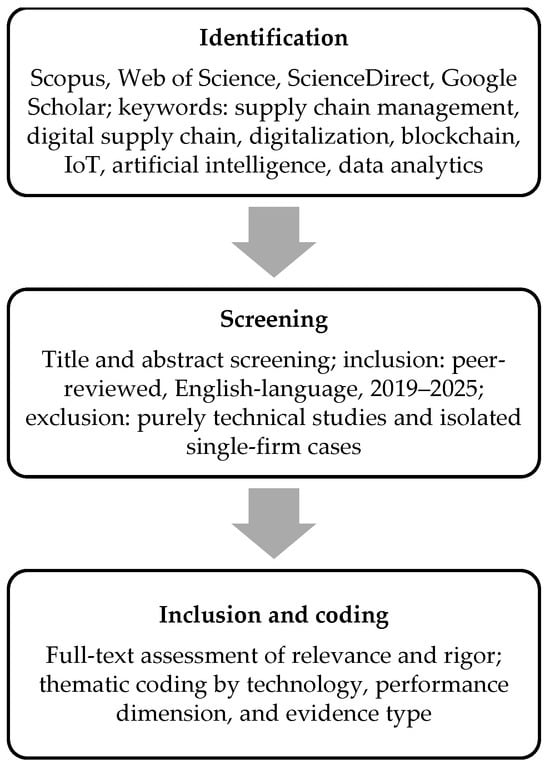
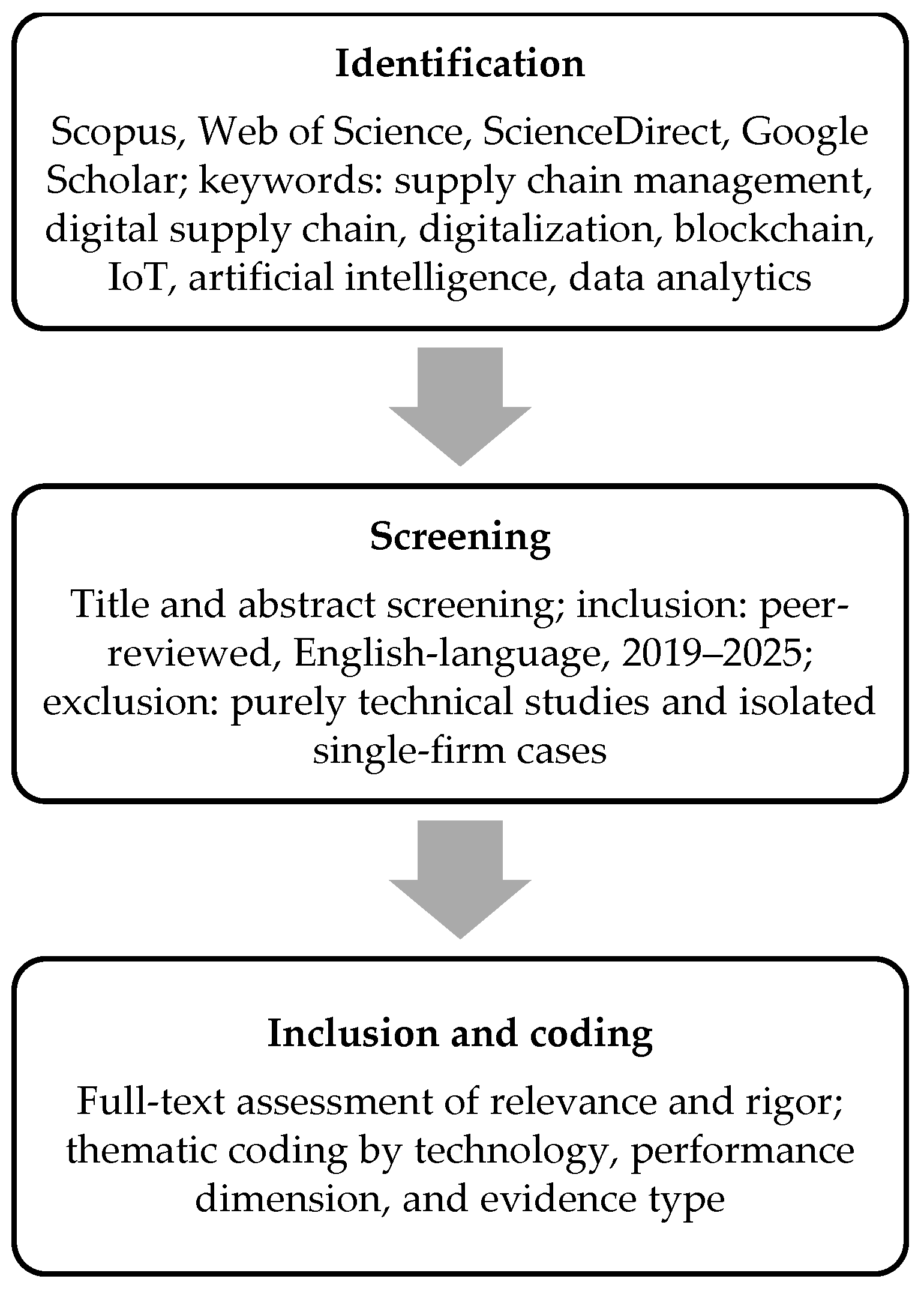
The literature review followed a structured, three-stage process aligned with the PRISMA 2020 guidelines for transparent reporting of systematic reviews [28]: identification, screening, and inclusion. The review workflow is summarized in Figure 1.
Figure 1.
Structured literature review workflow aligned with the PRISMA 2020 guidelines.
In the identification stage, the academic databases Scopus, Web of Science, ScienceDirect, and Google Scholar were searched using combinations of keywords such as supply chain management, digital supply chain, digitalization, blockchain, IoT, artificial intelligence, and data analytics. No geographical restrictions were applied, and only English-language publications were considered.
In the screening stage, titles and abstracts were assessed against pre-defined inclusion criteria: peer-reviewed publications from 2019 to 2025 addressing either supply chain foundations or supply chain digitalization. Studies focusing exclusively on technical implementation details and isolated single-firm case studies without transferable insight were excluded. Earlier seminal works were retained only where they provide foundational definitions or historical framing.
In the inclusion stage, the retained full texts were assessed for relevance and academic rigor and were coded thematically according to the technology addressed, the performance dimensions examined, and the type of evidence reported. Particular attention was given to studies discussing digitalization broadly, since this review seeks to position technology-specific evidence within an integrated picture.
3.2. Technologies Shaping Supply Chain Transformation
Five technologies recur across the reviewed literature and industry analyses as the primary enablers of digital supply chains: Artificial Intelligence, Blockchain, the Internet of Things, Data Analytics, and Automation and Robotics. The following subsections synthesize the evidence for each technology regarding adoption drivers, operational benefits, and implementation barriers. Industry 4.0 is subsequently discussed as the integrating framework within which these technologies operate.
3.3. Artificial Intelligence
Artificial Intelligence enables data-driven decision-making and process optimization across supply chains [29,30]. AI applications include demand forecasting, inventory optimization, and automated warehouse operations. AI improves operational efficiency by reducing costs and lead times while improving service levels [31]. Predictive analytics enables more accurate forecasting and proactive decision-making [32]. However, adoption requires significant investments in data infrastructure and skills. Data quality issues, skill shortages, and uncertain return on investment remain key barriers [31].
Within the performance framework of this study, AI relates most directly to the forecasting accuracy and operational cost dimensions, because machine learning models convert historical and real-time signals into demand predictions that would exceed manual planning capacity [31,32]. From a sustainability perspective, more accurate demand prediction is also a dematerialization mechanism: better alignment of production and inventory with actual demand reduces overproduction, obsolete stock, and the waste associated with disposal and emergency logistics [33].
3.4. Blockchain
Blockchain is a decentralized ledger technology that provides transparency and immutability of data across supply chains [2]. Blockchain enables product traceability and secure information sharing, reducing fraud risks and improving accountability [3]. Smart contracts automate transactions and reduce administrative costs [34]. Major adoption barriers include high costs, interoperability challenges, scalability limitations, regulatory uncertainty, and skill shortages [35,36,37].
Within the performance framework of this study, Blockchain relates primarily to the visibility and collaboration dimensions, since its value proposition rests on shared, tamper-evident records across organizational boundaries [2]. Its sustainability relevance is equally grounded in this property: verifiable traceability is a precondition for credible sustainability claims, provenance documentation, and supply chain due diligence [3]. Unlike the other four technologies, however, its benefits presuppose ecosystem-level adoption, which makes its value dependent on partner readiness and shared standards rather than on the decisions of a single organization [36].
Because Blockchain differs architecturally from conventional database systems, and because these architectural differences explain both its traceability potential and its adoption barriers, Table 1 summarizes the key distinctions. The comparison is directly relevant to RQ4: several barriers reported by the participants, notably cost, interoperability, and regulatory uncertainty, are rooted in the decentralized architecture documented in Table 1.
Table 1.
Key architectural differences between Blockchain and conventional databases (synthesized by the authors based on Sahoo et al. [3]).
3.5. Internet of Things
The Internet of Things enables real-time monitoring of goods and processes through connected devices [38]. IoT improves supply chain visibility, predictive maintenance, and inventory management while enhancing agility and responsiveness [39,40]. Implementation requires significant investments in infrastructure and reliable connectivity, creating adoption barriers particularly for smaller organizations [41].
Within the performance framework of this study, IoT relates most directly to the visibility dimension, converting physical flows into continuous digital signals [38]. This real-time visibility is also a sustainability mechanism, particularly in perishable and temperature-sensitive supply chains, where condition monitoring can prevent spoilage and cold-chain failures before they generate waste [39,41]. The infrastructure intensity of IoT, however, means that these benefits accrue first to organizations able to fund sensing, connectivity, and data integration layers.
3.6. Data Analytics
Data analytics enables organizations to extract insights from large datasets to improve decision-making and operational performance [4,42]. Analytics improves demand forecasting, visibility, and operational optimization [33,43]. Key challenges include data integration difficulties and shortages of analytical skills [44,45].
Within the performance framework of this study, Data Analytics cuts across all five performance dimensions, because it transforms the data generated by other technologies into decision-relevant information [42]. Its sustainability relevance follows from the same role: analytics makes resource consumption, emissions-relevant routes, and waste hotspots measurable, and measurement is a precondition for targeted improvement [4]. The principal barriers are organizational rather than technological, notably fragmented data landscapes and the scarcity of personnel able to interpret analytical output [44].
3.7. Automation and Robotics
Automation and robotics improve supply chain performance by increasing speed, accuracy, and reliability [46]. Automated systems reduce errors and improve workplace safety while increasing productivity [47,48]. Major challenges include high investment costs, integration complexity, and workforce concerns, as also emphasized in industry analyses [49].
Within the performance framework of this study, Automation relates most directly to the operational cost and lead time dimensions, since mechanized and robotized processes execute repetitive tasks faster and with fewer errors than manual equivalents [46,47]. The sustainability relevance of automation is primarily social: by removing physically strenuous and hazardous tasks, automation can improve occupational safety and compensate for a shrinking labor supply in aging industrial regions [48], provided that implementation is accompanied by workforce transition measures.
3.8. Industry 4.0 as an Integrating Framework
Industry 4.0 represents the integration of digital technologies into interconnected supply chain systems [50,51]. Integrated digital systems improve visibility, collaboration, agility, and resilience across supply chains [52,53,54]. Industry 4.0 is therefore best understood as a strategic transformation framework combining multiple technologies rather than as any isolated technological implementation.
3.9. Synthesis of the Literature and Research Gaps
Table 2 maps the most influential reviewed studies against their thematic focus, methods, key findings, and the specific limitation that motivates the present study. Three patterns emerge from this mapping.
Table 2.
Mapping of the reviewed literature against the research gaps of this study.
The first pattern concerns the linkage between specific technologies and performance outcomes. Foundational and framework-oriented studies define digital supply chains and their enabling technologies [18,22,55], and performance-measurement studies establish evaluation metrics [7], but the two streams rarely meet: as Table 2 shows, the reviewed frameworks discuss technologies at an aggregate level without linking individual technologies to measured performance dimensions. This constitutes the first research gap, namely the limited analysis linking specific digital technologies to supply chain performance. Section 3.3, Section 3.4, Section 3.5, Section 3.6 and Section 3.7 respond to this gap by synthesizing the available technology-specific evidence, and RQ1 and RQ3 address it empirically.
The second pattern concerns the type of evidence. The dominant contributions in Table 2 are conceptual frameworks, literature reviews, and maturity models. Empirical accounts of how practitioners experience adoption, benefits, and barriers across industries are scarce, and practitioner perspectives from Central European manufacturing and logistics contexts are largely absent. This constitutes the second research gap, namely the limited empirical insight into the experiences of supply chain professionals with digital technologies. This gap directly motivates the qualitative design reported in Section 4 and the interview results in Section 5, which address RQ2, RQ3, and RQ4.
The third pattern concerns sustainability. Several reviewed studies associate digital technologies with sustainable supply chain management [2,3,20], yet the mechanisms through which digitally enabled operational gains translate into environmental or social sustainability outcomes remain underspecified. This study, therefore, also examines how the reported benefits relate to resource efficiency and resilience, two operational antecedents of sustainable supply chains [5].
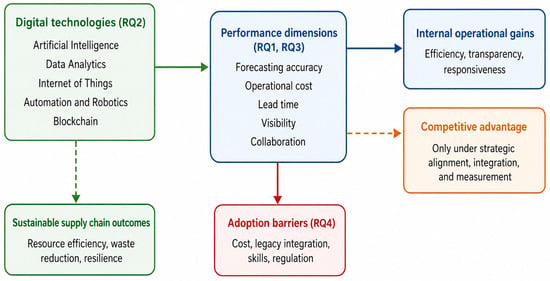
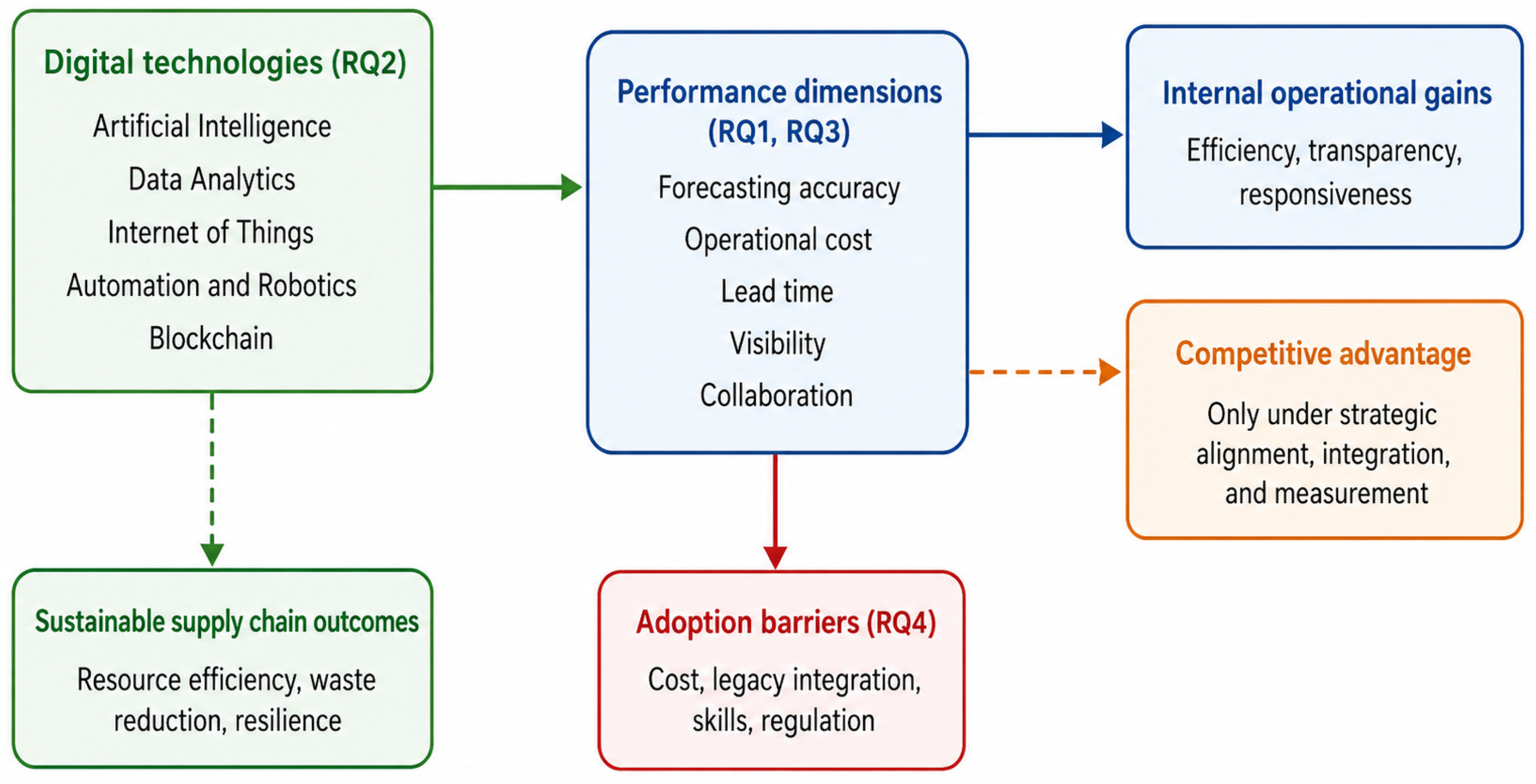
Figure 2 presents the conceptual framework of the study, which links the five technologies identified in this review to the five performance dimensions defined in Section 1 and to the adoption barriers examined in RQ4. The framework organizes the interview analysis in Section 5 and the interpretation in Section 6.
Figure 2.
Conceptual framework of the study linking the five digital technologies to performance dimensions, adoption barriers, competitive advantage, and sustainable supply chain outcomes.
4. Materials and Methods
4.1. Research Design
This study adopts an exploratory qualitative research design to examine how digital technologies influence supply chain operations and performance in practice. A semi-structured interview design was selected to capture in-depth insights from industry professionals while ensuring consistency across key topics. This approach allows flexibility in responses while maintaining comparability across participants. Given the small, purposively selected sample, the study is positioned as exploratory: its purpose is to generate practitioner-level propositions and document variation across contexts, not to estimate population parameters.
This article draws on interview data initially collected for the lead author’s Master’s thesis [57]. Relative to the thesis, the present article re-analyzes the data with a revised analytical focus on the conditional relationship between adoption and competitive advantage, adds a PRISMA-aligned literature review, and reframes the contribution toward digital and sustainable supply chain transformation. The two works therefore share an empirical base but differ in research questions, analysis, and contribution.
4.2. Participant Selection and Sample
Thirty-six supply chain professionals were contacted via LinkedIn and email using purposive sampling criteria: a minimum of five years of experience in supply chain management, seniority at the manager level or above, and active involvement in supply chain operations. Prior involvement in digital transformation was desirable but not required, in order to avoid sampling only digitalization advocates. Eight participants accepted and completed interviews, corresponding to an acceptance rate of approximately 22 percent.
Two features of this recruitment outcome require explicit discussion. The first is non-response and self-selection: professionals who agreed to be interviewed may be more digitally engaged, or more willing to discuss outcomes, than those who declined, and the sample may therefore over-represent digitally progressive organizations. The inclusion of one complete non-adopter (Participant C) and of participants reporting unrealized benefits (Participants A, E, H) partially mitigates, but does not eliminate, this concern. The second feature is sample size. Eight interviews do not support statistical generalization; they are, however, consistent with qualitative research practice in which depth, variation, and thematic saturation take precedence over enumeration [58]. The sample deliberately spans organization sizes (from a small aluminum manufacturer to large international subsidiaries), sectors (aluminum, elevator manufacturing, railway transport, food, and consumer goods), and adoption maturities (from complete non-adoption to integrated multi-technology deployment), so that contrast rather than consensus drives the analysis. Table 3 summarizes the characteristics of the participants and their organizations. The participants were based in major industrial centers across Austria (e.g., Vienna, Linz), the Czech Republic (e.g., Prague), and Slovakia (e.g., Bratislava, Košice), which collectively form a representative cross-section of the Central European manufacturing and logistics landscape.
Table 3.
Characteristics of the study participants and their organizations.
Interviews were conducted virtually between March and June 2025, each lasting 30 to 40 min. All interviews were audio-recorded with permission, transcribed verbatim, and anonymized; participants are identified only by the letters A to H, and all organizational identifiers were removed from the transcripts.
The interviews were conducted virtually via the Zoom video-conferencing platform (Zoom Video Communications, Inc., San Jose, CA, USA, version 6.2.0). The interview recordings were transcribed manually and subsequently coded using a structured coding matrix within Microsoft Excel (Microsoft office 16), following the hybrid deductive-inductive approach described in Table 4.
4.3. Interview Protocol and Data Collection
The interview protocol consisted of 21 semi-structured questions organized in three thematic blocks: block A covered professional background and the prevailing supply chain model of the organization; block B covered technology adoption, perceived benefits, implementation challenges, and performance impact; and block C covered future outlook. The semi-structured format allowed participants to elaborate beyond predefined questions, and follow-up probes were used to clarify technology-specific statements. The full interview protocol is provided in Appendix A and is referenced here as the complete instrument used for data collection.
4.4. Data Analysis
All interviews were transcribed and analyzed using qualitative content analysis. The analysis proceeded in four stages. In the familiarization stage, the transcripts were read in full, and initial memos were recorded. In the coding stage, a hybrid coding strategy was applied: a start list of deductive codes derived from the research questions and the conceptual framework (technology type, adoption driver, benefit, barrier, performance dimension) was combined with inductive codes that emerged from the transcripts, including the codes underlying the adoption-versus-competitiveness finding. Coding was conducted using a structured coding matrix in which each coded segment was tagged with the participant identifier, the technology, and the performance dimension. The complete codebook, including code families, codes, and definitions, is reported in Table 4. In the theme development stage, related codes were aggregated into candidate themes, which were reviewed against the full dataset and refined. In the interpretation stage, the finalized themes were mapped onto the research questions.
Table 4.
Codebook used in the qualitative content analysis (hybrid deductive start list and inductive additions).
Coding was performed by the lead author, and the coded material and theme structure were independently reviewed by the second author. The coding matrix was maintained in a structured spreadsheet. Disagreements in code assignment and theme boundaries were discussed until consensus was reached. Because coding and review were consensus-based rather than parallel-double-coded, no statistical intercoder reliability coefficient is reported; this is acknowledged as a limitation in Section 6.5.
4.5. Trustworthiness, Positionality, and Research Ethics
Methodological rigor was addressed through the four trustworthiness criteria of credibility, dependability, confirmability, and transferability [59]. Table 5 summarizes the criteria and the specific measures taken.
Table 5.
Trustworthiness criteria and the measures taken in this study (based on Lincoln and Guba [59]).
With respect to positionality, the interview data were initially collected within the lead author’s Master’s thesis project [57], and the lead author’s prior familiarity with the participating organizations may have shaped both access and interpretation. To limit the resulting potential for confirmation bias, the coding decisions were reviewed by the second author, and the analytic narrative distinguishes explicitly between participant statements and the authors’ interpretation.
Prior to each interview, participants were informed about the purpose of the study, the voluntary nature of participation, and the anonymization procedure, and verbal informed consent was obtained from all participants. No sensitive personal data was collected, and the anonymized transcripts are stored under restricted access. Ethical review and approval were waived for this study because the research consisted of non-interventional professional interviews that did not involve the collection of sensitive personal data. Data collection between March and June 2025 was therefore conducted under that waiver framework rather than under a later institutional approval date.
5. Results
This section reports the interview findings organized by the research questions. Section 5.1 addresses RQ2 on adoption patterns and drivers, Section 5.2 addresses RQ3 on perceived benefits, Section 5.3 addresses RQ4 on implementation barriers, and Section 5.4 reports the cross-cutting finding on the relationship between adoption and competitive advantage, which informs RQ1. Consistent with the exploratory design, all frequencies are reported as raw counts out of the eight participants rather than as percentages, and all quantitative performance figures are reported as individual self-reported data points.
5.1. Technology Adoption Patterns and Drivers
Artificial Intelligence and Data Analytics were the most widely adopted technologies in the sample: five of the eight participants reported active use of each, and six of the eight reported active use of at least one of the two. These tools are used primarily for demand forecasting, inventory optimization, and decision support, and participants emphasized that predictive capabilities improved their planning accuracy. The Internet of Things was actively used by four of the eight participants, mainly for real-time tracking and monitoring of goods. Automation was actively used by five of the eight participants, primarily in warehousing and logistics operations. No participant reported an active Blockchain deployment; two participants reported exploratory activities, one in the form of a sandbox project. This pattern reflects the sectors represented in the sample and should not be extrapolated to industries with higher Blockchain uptake, such as pharmaceuticals or high-value logistics. Table 6 presents the technology adoption matrix across all participants.
Table 6.
Technology adoption matrix across the eight participants (raw counts; n = 8).
The adoption pattern reflects what might be termed a pragmatic hierarchy: technologies with immediately measurable returns and lower deployment complexity, such as AI tools, analytics dashboards, and automation, are prioritized, while technologies requiring significant ecosystem coordination (Blockchain) or infrastructure investment (IoT at scale) lag behind.
A closer analysis shows important variance by sector and organizational scale. Participant B, a supply chain manager in elevator manufacturing, represents perhaps the most comprehensively digitalized organization in the sample, deploying AI, Data Analytics, IoT, and Automation in an integrated fashion. In contrast, Participant A from the railway transport sector adopts AI as a standalone tool without integration across other technology categories, reflecting both the inherent complexity of railway supply chain systems and the significant regulatory and procurement constraints characteristic of the sector. These differences suggest that adoption trajectories are not simply a function of organizational size or resource availability, but are also shaped by sector-specific operational contexts, regulatory environments, and the degree to which individual technologies address clearly felt operational needs.
A further structural observation concerns the role of enterprise resource planning systems as a digital foundation. Three of the eight participants (B, E, F) referenced ERP platforms as the organizational backbone onto which digital tools such as analytics modules, AI integrations, and IoT feeds are progressively layered. Although based on only three cases, this pattern is consistent with the interpretation that organizations with more mature ERP infrastructure face lower marginal barriers to adopting additional digital technologies, because the data infrastructure and process standardization required by ERP systems provide a ready platform for further digitalization. This interpretation is offered as a proposition for future research rather than as a generalizable structural finding.
Participant C’s complete non-adoption of any digital technology is itself a significant data point. This organization, a small aluminum manufacturer operating a fully traditional supply chain model, shows that not all market segments have yet entered the digital transformation journey. The traditional model continues to function adequately for their current operational context, though the participant acknowledged that this equilibrium may not persist as digital adoption becomes more widespread among competitors and customers.
The primary drivers of adoption, cited across multiple participants, are operational efficiency and cost reduction. Customer demand and compliance requirements play secondary roles. Participant A highlighted that an aging workforce with an insufficient inflow of new talent is pushing technology adoption to compensate for human resource gaps, a trend likely to intensify in the Central European context, where labor market demographics are becoming increasingly constraining across manufacturing and logistics sectors.
5.2. Perceived Benefits
Participants associated technology deployment with benefits in four primary areas, which are reported in the following subsections.
5.2.1. Forecasting Accuracy and Decision Support
AI and Data Analytics were most frequently associated with improvements in demand forecasting and planning accuracy. Participants F and G described the improvements in demand prediction as ‘significant’ and ‘noticeable’, respectively, leading to logistics optimization and reduced stockouts. Participant B reported a 15 percent reduction in lead times, attributable in part to better AI-supported forecasting, and Participant G reported a 20 percent reduction in lead times together with a 15 percent decrease in operational costs following the integrated deployment of AI and Data Analytics. These figures are single, self-reported estimates by individual managers and were not independently verified against company records; they are summarized, together with all other quantitative claims, in Table 7.
Beyond aggregate performance improvements, participants described a qualitative shift in the nature of planning work itself. The ability to process real-time signals from sales data, market trends, and external feeds to generate rolling forecasts replaces the traditional monthly or weekly planning cycle with a continuous, data-driven process. Participant F described this as enabling the planning team to move from reactive stockout management to proactive inventory positioning, a shift with practical implications for both working capital efficiency and customer service levels. In consumer goods retail, where demand volatility is high and promotional activities create unpredictable spikes, traditional statistical forecasting methods chronically underperform, and AI tools trained on multiple demand drivers, including weather, promotions, and competitor activity, can materially narrow this uncertainty.
Several participants highlighted that AI is transforming the nature of human decision-making rather than replacing it entirely. Participant H expressed a perspective common in the sample: AI tools are used to generate options and provide objective analysis, while human judgment is retained for critical business decisions.
5.2.2. Operational Efficiency and Cost Reduction
Automation generated the most specific, measurable efficiency gains in the sample. Participant B reported an 8 percent decrease in costs alongside the 15 percent reduction in lead time noted above. Participant D observed improvements in productivity, error reduction, and employee satisfaction from their automation implementation, emphasizing that the technology was introduced as a complement to employees rather than a replacement. Participant E reported that partial automation allowed them to reduce required human capital while minimizing errors.
Participant D’s implementation approach deserves particular attention as it illustrates a change management practice that appears to correlate with smoother adoption outcomes. Rather than presenting automation as a cost-cutting measure framed around headcount reduction, this organization positioned it as a tool to eliminate the most physically and cognitively repetitive elements of warehouse work, freeing employees to focus on tasks requiring judgment and adaptability.
Data Analytics contributed to cost optimization through better procurement decisions. Participant F described real-time reporting dashboards that improved inventory planning and enabled data-driven cost reductions in procurement and logistics, a pattern consistent with the link between analytics adoption and firm performance reported by Kalaitzi and Tsolakis [44]. The practical mechanism is the elimination of what practitioners often describe as ‘gut-feel’ procurement and its replacement with evidence-based decision processes that can be audited, monitored, and continuously improved. Several participants noted that this shift also reduces organizational vulnerability arising when institutional knowledge is concentrated in a small number of experienced individuals who may retire or depart.
5.2.3. Visibility and Disruption Resilience
Real-time visibility via IoT tracking, AI monitoring, and data dashboards was associated by multiple participants with improved responsiveness to supply chain disruptions. The COVID-19 pandemic emerged as a particularly important reference point: six of the eight participants (A, B, C, D, G, H) reported that digital technologies had a positive effect on their ability to respond and adapt during the crisis.
The mechanisms through which digital tools contributed to COVID-19 resilience were specific and varied by organizational context. Participant A described how the pandemic compelled a transition from paper-based processes to digital ones, which was accomplished without major operational disruption. Participant G expressed high confidence in their technological resilience. Participant H highlighted the value of automation in covering for sudden labor shortages, a function that became especially visible during pandemic-related absenteeism.
5.2.4. Collaboration and Transparency
Six of the eight participants (A, B, C, D, F, G) noted improvements in collaboration with suppliers, partners, or customers following digitalization. The mechanisms include faster processing of digitally encoded orders (Participant B), reduced error rates in inter-organizational communications, and increased data transparency enabling more confident decision-making (Participant F). Participant G described the shift as a move from ‘siloed processes to highly integrated systems’.
However, two participants (E, H) observed no change in external relationships, with Participant H specifically noting that the deployed technologies remain internal-facing. This is an important nuance: digitalization appears to improve collaboration only where tools are deployed across organizational boundaries, not merely within them.
Table 7 consolidates all quantitative performance claims made by the participants, together with the technology and the participant to which each claim refers. The table makes explicit that each figure is a single, self-reported data point from one organization, and that no independent verification against company records was performed.
Table 7.
Self-reported quantitative performance outcomes, by participant and technology (single, unverified data points).
5.3. Implementation Challenges
Participants identified four overlapping categories of implementation barriers. Financial constraints were the most frequently cited barrier (Participants A, G, H). High upfront investment costs, combined with difficulty quantifying return on investment in advance, create significant friction. Budget approval challenges were noted to be especially acute during periods of political or organizational uncertainty. Integration with legacy systems was flagged by Participants D and G as a technical barrier that can be time-consuming or, in some cases, impossible without full equipment replacement. New digital tools must interface with systems that were not designed with interoperability in mind.
Participants B and E emphasized resistance to change, insufficient digital skills, and workforce age profiles. An older workforce creates a specific challenge: shorter remaining careers reduce the individual incentive to invest in digital skill development, while the pace of technological change demands continuous learning. Regulatory complexity added a further layer for organizations in regulated sectors (Participant A) or those exploring Blockchain and data-intensive solutions. Ensuring compliance with EU regulations was cited as resource-intensive and limiting.
5.4. Technology Adoption and Competitive Advantage
One of the most notable findings revolves around the relationship between digital technology adoption and competitive positioning. Three of the eight participants (A, E, H) explicitly stated that while digital tools had improved internal operations, this had not translated into a measurable competitive advantage. Participant A stated directly that internal improvements had not placed the organization ahead of competitors. Participant E shared a similar view: internal operations had improved, but market competitiveness was unchanged. Participant H acknowledged the potential for competitive advantage but noted that it remained unrealized due to incomplete implementation and integration gaps.
Read against the adoption and benefit patterns in Section 5.1 and Section 5.2, this finding indicates a conditional rather than automatic relationship between adoption and competitiveness. Digital transformation appears to create the capability for competitive advantage, but realizing that advantage requires strategic alignment, cross-functional integration, and clear performance measurement frameworks. This conditional relationship is developed further in the Discussion.
6. Discussion
6.1. Adoption Patterns in Relation to Prior Research
The adoption hierarchy observed in this sample, in which AI and Data Analytics lead, Automation and IoT occupy an intermediate position, and Blockchain remains at an exploratory stage, both confirms and complicates the prior literature. The dominance of AI and analytics is consistent with evidence that these technologies offer comparatively accessible entry points and measurable short-term returns [31,43,44]. The findings likewise align with the maturity logic of digital supply chain frameworks, in which connectivity and analytics precede more coordination-intensive technologies [22,55].
The Blockchain result adds a contrasting data point to a literature in which Blockchain receives substantial conceptual attention [2,3]. In this sample, no participant reported an active deployment, and the two exploratory initiatives remained at an early stage. This observation should be stated cautiously: the sample is small and concentrated in aluminum, elevator, railway, food, and consumer goods industries, none of which belong to the sectors in which Blockchain uptake is reported to be most advanced, such as pharmaceuticals or high-value logistics [37]. Within these limits, the findings are consistent with barrier-focused studies that identify cost, interoperability, scalability, and regulatory uncertainty as the principal obstacles [35,36], and they suggest that, for the studied Central European mid-cap context, Blockchain remains at a pre-adoption stage rather than being practically premature in general.
The observed role of ERP systems as a digital backbone, reported by three participants, resonates with accounts of digital transformation as a layered process in which standardized data infrastructures lower the marginal cost of subsequent technology adoption [21,59]. Because this pattern rests on three cases, it is formulated here as a proposition: organizations with mature ERP infrastructure face lower marginal barriers to further digitalization than organizations operating fragmented legacy systems.
6.2. The Conditional Relationship Between Digital Adoption and Competitive Advantage
The central finding of this study is that internal operational gains did not automatically translate into competitive advantage among the professionals interviewed. This finding qualifies a widespread assumption in the digital supply chain literature, where performance improvements are frequently treated as the direct consequence of technology adoption [46,53]. It is most directly compatible with mediation accounts: Reaidy et al. [54] show that supply chain integration mediates the relationship between Industry 4.0 adoption and performance, and Huang et al. [52] demonstrate that the effect of Industry 4.0 on resilience operates through supply chain capabilities. The present findings add a practitioner-level complement to these accounts: even where operational improvements are visible, participants did not perceive competitive advantage unless strategic alignment, cross-functional integration, and explicit performance measurement were in place. In terms of the resource-based logic underlying digital capability research [52], technology adoption creates a potential capability, whereas advantage requires that the capability be embedded, orchestrated, and measured.
This conditional relationship has a straightforward practical reading. Participants whose organizations deployed technologies in an integrated fashion and tied them to explicit performance indicators (notably Participants B and G) reported the broadest benefit profiles, whereas participants describing fragmented or internally isolated deployments (notably A, E, H) reported no competitive effect. The contrast within the sample is therefore consistent with the mediation interpretation rather than with a direct adoption–advantage link. Given the exploratory design, this interpretation is offered as a proposition for testing in larger and more diverse samples.
6.3. Illustrative Use Case: Integrated Digital Deployment in the Food Industry
To demonstrate how the reported advantages and barriers materialize in a real-world setting, the case of Participant G is examined in greater detail. Participant G is a senior supply chain professional in a large food industry organization operating in a highly regulated, shelf-life-sensitive market. The organization actively deploys AI, Data Analytics, and IoT, and maintains an exploratory Blockchain sandbox.
The advantages of digital transformation are visible across three of the five performance dimensions defined in this study. In forecasting, AI-supported demand prediction was described as noticeably improved, enabling better logistics planning and fewer stockouts in a demand environment characterized by promotions and perishability. In cost and lead time, the participant reported a 20 percent reduction in lead times and a 15 percent decrease in operational costs following the integrated deployment of AI and analytics; as noted in Section 5.2, these are self-reported estimates that were not independently verified. In collaboration, the participant described a shift from siloed processes to highly integrated systems, indicating that the deployed tools reach across internal functional boundaries.
The same case also illustrates the barriers. The participant identified financial constraints as a principal obstacle, particularly the difficulty of quantifying returns before investment approval, and the Blockchain initiative remains confined to a sandbox rather than production deployment. Read together with Section 5.1 and Section 5.4, the case shows that even a comparatively advanced adopter realizes benefits unevenly across technologies: analytics and AI deliver operational gains today, while coordination-intensive technologies such as Blockchain await the ecosystem conditions, partner readiness, standards, and regulatory clarity, on which their value depends. This asymmetry within a single organization mirrors the adoption hierarchy observed across the sample.
6.4. Implications for Sustainable Supply Chain Management
Although this study did not set out to measure sustainability outcomes directly, the findings connect to the three dimensions of sustainable supply chain management in several ways [5].
With respect to the environmental dimension, the mechanisms reported by participants are the operational antecedents of dematerialization and waste reduction. Improved forecasting accuracy reduces overproduction, obsolete inventory, and emergency freight; proactive inventory positioning lowers write-offs, which is especially consequential in the food industry; and automation-driven error reduction avoids rework and the associated material and energy costs. These mechanisms are consistent with accounts linking digitalization to resource efficiency and waste reduction [2,4,33], although the present data document the operational antecedents rather than the environmental outcomes themselves.
With respect to the social dimension, two observations stand out. The finding that automation was introduced as a complement to employees rather than a replacement (Participant D) illustrates a pathway in which digitalization improves working conditions by removing physically and cognitively repetitive tasks, consistent with evidence on robotics, safety, and health [48]. At the same time, the reported skills shortages, resistance to change, and aging workforce indicate that the social sustainability of digital transformation depends on deliberate investment in training and change management, particularly in Central European labor markets with constrained talent inflows.
With respect to the economic dimension, the conditional adoption–advantage relationship implies that digitalization contributes to long-term viability only when embedded in strategy, integration, and measurement. Transparency and traceability technologies, notably IoT today and potentially Blockchain in the future, additionally provide the informational foundation on which sustainability reporting and supply chain due diligence increasingly rely [3,35]. Digital supply chain transformation and sustainable development should therefore be understood as mutually reinforcing agendas rather than separate programs.
6.5. Limitations and Future Research
Several limitations qualify the findings. The sample is small, non-random, and concentrated in Austria, Slovakia, and the Czech Republic, which limits the transferability of the results to other regions and sectors. The 22 percent acceptance rate raises the possibility of self-selection toward digitally engaged professionals. All performance figures are self-reported recollections by individual managers and were not validated against company records, and participants themselves noted the difficulty of isolating the contribution of specific technologies from concurrent organizational improvements. Coding and theme development were consensus-based between two researchers rather than parallel-double-coded, so no intercoder reliability statistic can be reported. The sectoral composition of the sample also conditions the Blockchain finding, which should not be extrapolated to sectors with higher uptake. Finally, the qualitative design cannot support causal claims about performance effects. Accordingly, the findings are not statistically generalizable beyond the studied contexts and should be read as practitioner-level propositions.
These limitations define the future research agenda. Larger and more diverse qualitative samples, or mixed-methods designs, could test the proposition that strategic alignment, integration, and measurement mediate the adoption–advantage relationship. Longitudinal designs could examine whether exploratory initiatives, such as the Blockchain sandbox reported here, mature into deployment. Comparative research across regions with different labor market and regulatory conditions could clarify the role of context, and research designs that combine practitioner reports with company records could validate the magnitude of self-reported performance gains. Finally, future work could measure the environmental outcomes of the operational improvements documented here, moving from antecedents to demonstrated sustainability effects.
7. Conclusions
This exploratory qualitative study examined how digital technologies influence supply chain operations and performance, drawing on semi-structured interviews with eight supply chain professionals across five industries in Austria, Slovakia, and the Czech Republic. Among the professionals interviewed, AI and Data Analytics were the most widely adopted technologies, followed by Automation and the Internet of Things, while Blockchain remained at an exploratory stage. The reported benefits concentrated on forecasting accuracy, operational efficiency, visibility, and collaboration, and the principal barriers were financial constraints, legacy system integration, skills shortages, and regulatory complexity.
The central finding is that internal operational improvements did not automatically translate into competitive advantage among the professionals interviewed. The findings suggest that digital transformation creates the capability for advantage, while realizing that advantage requires strategic alignment, cross-functional integration, and explicit performance measurement. This conditional relationship is the study’s principal theoretical contribution: it adds practitioner-level evidence to mediation accounts of digital supply chain performance and qualifies the assumption that adoption alone yields competitiveness. A secondary contribution is the proposition that mature ERP infrastructure lowers the marginal barriers to further digitalization.
For managers, the results indicate that technology selection should follow a pragmatic sequencing logic: prioritizing technologies with measurable short-term returns while building the data infrastructure, integration, and measurement practices on which later, coordination-intensive technologies depend. The evidence also suggests that presenting automation as a complement to employees, rather than a substitute, is associated with smoother adoption. For policymakers, the reported barriers point to the relevance of financing instruments for digital investment in small and medium-sized enterprises, of interoperability and data standards, and of workforce upskilling programs in aging industrial labor markets.
The findings also link digital supply chain transformation to sustainable development. The operational mechanisms documented in this study, including accurate forecasting, proactive inventory positioning, error reduction, and end-to-end visibility, are the same mechanisms through which overproduction, waste, and resource consumption can be reduced, and they provide the informational foundation for transparency-oriented sustainability practices. Digitalization and sustainability in supply chains should therefore be pursued as mutually reinforcing objectives.
These conclusions are limited by the exploratory design: the sample is small, non-random, and regionally concentrated; the performance figures are self-reported and unverified; and the findings are not statistically generalizable. Future research should test the proposed conditional adoption–advantage relationship in larger and more diverse samples, track exploratory technologies longitudinally, and measure the environmental outcomes of the operational gains documented here.
Author Contributions
Conceptualization, all authors; methodology, M.K. and A.A.; software, M.K.; validation, all authors; formal analysis, M.K., A.A. and N.M.; investigation, all authors; resources, M.K. and A.A.; data curation, M.K. and A.A.; writing—original draft preparation, M.K. and A.A.; writing—review and editing, all authors; visualization, M.K., A.A. and N.M.; supervision, A.A., S.K. and N.M.; project administration, A.A. All authors have read and agreed to the published version of the manuscript.
Funding
This research received no external funding.
Institutional Review Board Statement
Ethical review and approval were not required for this study in accordance with the institutional policies of the Ethics Board of Vienna University of Economics and Business (WU), as the study constituted non-interventional qualitative research. The WU Ethics Board does not require mandatory submission or prospective ethical approval for such studies.
Informed Consent Statement
Verbal informed consent was obtained from the participants. Verbal consent was obtained rather than written because, in accordance with WU’s guidelines for non-interventional qualitative research, written consent was not required as no personal, sensitive, or identifiable data were collected. Before each interview, participants were provided with a standardized consent script and gave verbal confirmation of their voluntary participation.
Data Availability Statement
The anonymized interview transcripts are available from the corresponding author upon reasonable request, subject to the confidentiality conditions agreed with the participants.
Conflicts of Interest
The authors declare no conflicts of interest.
Appendix A. Interview Protocol
Interview Questionnaire
- A.
- General Background
Can you briefly introduce your role and responsibilities within the supply chain management process?
How long have you been working in the supply chain industry, and how have you seen it evolve over time?
What type of supply chain model does your organization follow (traditional, hybrid, digital)?
- B.
- Adoption of Digital Technologies
What digital technologies have you implemented or are considering for your supply chain operations?
How would you rate the level of digital transformation in your company on a scale from 1 (not digitalized) to 10 (fully digitalized)?
What factors drive the adoption of new technologies in your organization (cost reduction, efficiency, compliance, customer demand)?
Are there any barriers or challenges that slow down the adoption of digital technologies in your supply chain processes?
In your experience, which technologies have had the most transformative impact on supply chain operations? (IoT, AI, blockchain, robotics, automation, big data analytics, cloud computing)
How is IoT used in your organization, and what benefits or challenges has it introduced?
How have AI and ML influenced decision-making and operational efficiency in your supply chain?
Has your company implemented blockchain technology? If so, what are its advantages in terms of transparency and security?
What role does data analytics play in supply chain management within your company?
Have you adopted automation and robotics in warehouse or logistics operations? How has it changed efficiency and workforce needs?
What measurable improvements have you seen after implementing these technologies (reduced lead times, lower costs, better forecasting accuracy)?
Have these technologies improved your ability to respond to supply chain disruptions and crises (COVID-19, geopolitical events, natural disasters)?
How has digitalization impacted collaboration with suppliers, partners, and customers?
Do digital technologies provide a competitive advantage in your industry? Why or why not?
What do you consider the biggest challenges in adopting and managing digital technologies in supply chains in general?
- C.
- Future Vision
What technologies do you believe will shape the future of supply chains over the next 5–10 years?
Are there any emerging trends or innovations that your organization is exploring?
What advice would you give to companies looking to start or accelerate their digital transformation in supply chain management?
References
- Tang, H.; Zhu, J.; Li, N.; Wu, W. Impact of Enterprise Supply Chain Digitalization on Cost of Debt: A Four-Flows Perspective Analysis Using Explainable Machine Learning Methodology. Sustainability 2024, 16, 8702. [Google Scholar] [CrossRef] [Scilit]
- Saberi, S.; Kouhizadeh, M.; Sarkis, J.; Shen, L. Blockchain Technology and Its Relationships to Sustainable Supply Chain Management. Int. J. Prod. Res. 2019, 57, 2117–2135. [Google Scholar] [CrossRef] [Scilit]
- Sahoo, S.; Kumar, S.; Sivarajah, U.; Lim, W.M.; Westland, J.C.; Kumar, A. Blockchain for Sustainable Supply Chain Management: Trends and Ways Forward. Electron. Commer. Res. 2024, 24, 1563–1618. [Google Scholar] [CrossRef] [Scilit]
- Mageto, J. Big Data Analytics in Sustainable Supply Chain Management: A Focus on Manufacturing Supply Chains. Sustainability 2021, 13, 7101. [Google Scholar] [CrossRef] [Scilit]
- Carter, C.R.; Rogers, D.S. A Framework of Sustainable Supply Chain Management: Moving toward New Theory. Int. J. Phys. Distrib. Logist. Manag. 2008, 38, 360–387. [Google Scholar] [CrossRef] [Scilit]
- Yang, M.; Fu, M.; Zhang, Z. The Adoption of Digital Technologies in Supply Chains: Drivers, Process and Impact. Technol. Forecast. Soc. Change 2021, 169, 120795. [Google Scholar] [CrossRef] [Scilit]
- Rasool, F.; Greco, M.; Grimaldi, M. Digital Supply Chain Performance Metrics: A Literature Review. Meas. Bus. Excell. 2022, 26, 23–38. [Google Scholar] [CrossRef] [Scilit]
- Azzi, R.; Chamoun, R.K.; Sokhn, M. The Power of a Blockchain-Based Supply Chain. Comput. Ind. Eng. 2019, 135, 582–592. [Google Scholar] [CrossRef] [Scilit]
- American Production and Inventory Control Society. APICS Dictionary, 8th ed.; Cox, J.F., Blackstone, J.H., Spencer, M.S., Eds.; APICS: Falls Church, VA, USA, 1995. [Google Scholar]
- Quinn, F.J. What’s the Buzz? Logist. Manag. 1997, 36, 43–46. [Google Scholar]
- Pienaar, W.J.; Vogt, J.J. Business Logistics Management: A Supply Chain Perspective, 3rd ed.; Oxford University Press: Cape Town, South Africa, 2009. [Google Scholar]
- Kakhki, M.D.; Gargeya, V.B. Information Systems for Supply Chain Management: A Systematic Literature Analysis. Int. J. Prod. Res. 2019, 57, 5318–5339. [Google Scholar] [CrossRef] [Scilit]
- Kumar, R.; Ganapathy, L.; Gokhale, R.; Tiwari, M.K. Quantitative Approaches for the Integration of Production and Distribution Planning in the Supply Chain: A Systematic Literature Review. Int. J. Prod. Res. 2020, 58, 3527–3553. [Google Scholar] [CrossRef] [Scilit]
- Studer, W.P.; De Brito Mello, L.C.B. Core Elements Underlying Supply Chain Management in the Construction Industry: A Systematic Literature Review. Buildings 2021, 11, 569. [Google Scholar] [CrossRef] [Scilit]
- Lummus, R.R.; Vokurka, R.J. Defining Supply Chain Management: A Historical Perspective and Practical Guidelines. Ind. Manag. Data Syst. 1999, 99, 11–17. [Google Scholar] [CrossRef] [Scilit]
- Deshmukh, A.J.; Vasudevan, H. Emerging Supplier Selection Criteria in the Context of Traditional vs Green Supply Chain Management. Int. J. Manag. Value Supply Chains 2014, 5, 19–33. [Google Scholar] [CrossRef] [Scilit]
- Ayesh, H.M.S.; Senevirathne, L.B.L.; Wijerathne, W.M.S.R.B. Impact of Traditional Supply Chain Management on Green Supply Chain Management. In Proceedings of the KDU International Research Conference, Ratmalana, Sri Lanka, 15–16 October 2020. [Google Scholar]
- Büyüközkan, G.; Göçer, F. Digital Supply Chain: Literature Review and a Proposed Framework for Future Research. Comput. Ind. 2018, 97, 157–177. [Google Scholar] [CrossRef] [Scilit]
- Nasiri, M.; Ukko, J.; Saunila, M.; Rantala, T. Managing the Digital Supply Chain: The Role of Smart Technologies. Technovation 2020, 96–97, 102121. [Google Scholar] [CrossRef] [Scilit]
- Ageron, B.; Bentahar, O.; Gunasekaran, A. Digital Supply Chain: Challenges and Future Directions. Supply Chain Forum Int. J. 2020, 21, 133–138. [Google Scholar] [CrossRef] [Scilit]
- Grabski, S.V.; Leech, S.A.; Schmidt, P.J. A Review of ERP Research: A Future Agenda for Accounting Information Systems. J. Inf. Syst. 2011, 25, 37–78. [Google Scholar] [CrossRef] [Scilit]
- MacCarthy, B.L.; Ivanov, D. The Digital Supply Chain: Emergence, Concepts, Definitions, and Technologies. In The Digital Supply Chain; MacCarthy, B.L., Ivanov, D., Eds.; Elsevier: Amsterdam, The Netherlands, 2022; pp. 3–24. [Google Scholar] [CrossRef] [Scilit]
- Gupta, S.; Modgil, S.; Gunasekaran, A.; Bag, S. Dynamic Capabilities and Institutional Theories for Industry 4.0 and Digital Supply Chain. Supply Chain Forum Int. J. 2020, 21, 139–157. [Google Scholar] [CrossRef] [Scilit]
- Ivanov, D.; Dolgui, A.; Das, A.; Sokolov, B. Digital Supply Chain Twins: Managing the Ripple Effect, Resilience, and Disruption Risks by Data-Driven Optimization, Simulation, and Visibility. In Handbook of Ripple Effects in the Supply Chain; Ivanov, D., Dolgui, A., Sokolov, B., Eds.; Springer: Cham, Switzerland, 2019; pp. 309–332. [Google Scholar] [CrossRef] [Scilit]
- Choi, T.; Wallace, S.W.; Wang, Y. Big Data Analytics in Operations Management. Prod. Oper. Manag. 2018, 27, 1868–1883. [Google Scholar] [CrossRef] [Scilit]
- Ivanov, D. Supply Chain Viability and the COVID-19 Pandemic: A Conceptual and Formal Generalisation of Four Major Adaptation Strategies. Int. J. Prod. Res. 2021, 59, 3535–3552. [Google Scholar] [CrossRef] [Scilit]
- Christopher, M. Logistics & Supply Chain Management, 5th ed.; Pearson Education: Harlow, UK, 2016. [Google Scholar]
- Page, M.J.; McKenzie, J.E.; Bossuyt, P.M.; Boutron, I.; Hoffmann, T.C.; Mulrow, C.D.; Shamseer, L.; Tetzlaff, J.M.; Akl, E.A.; Brennan, S.E.; et al. The PRISMA 2020 Statement: An Updated Guideline for Reporting Systematic Reviews. BMJ 2021, 372, n71. [Google Scholar] [CrossRef] [Scilit] [PubMed]
- Chukwu, N.; Yufenyuy, S.; Ejiofor, E.; Ekweli, D.; Ogunleye, O.; Clement, T.; Obunadike, C.; Adeniji, S.; Elom, E.; Obunadike, C. Resilient Chain: AI-Enhanced Supply Chain Security and Efficiency Integration. Int. J. Sci. Manag. Res. 2024, 7, 46–65. [Google Scholar] [CrossRef] [Scilit]
- Singh, R.K.; Modgil, S.; Shore, A. Building Artificial Intelligence Enabled Resilient Supply Chain: A Multi-Method Approach. J. Enterp. Inf. Manag. 2024, 37, 414–436. [Google Scholar] [CrossRef] [Scilit]
- Cannas, V.G.; Ciano, M.P.; Saltalamacchia, M.; Secchi, R. Artificial Intelligence in Supply Chain and Operations Management: A Multiple Case Study Research. Int. J. Prod. Res. 2024, 62, 3333–3360. [Google Scholar] [CrossRef] [Scilit]
- Nguyen, T.T.H. Applications of Artificial Intelligence for Demand Forecasting. Oper. Supply Chain Manag. Int. J. 2023, 16, 424–434. [Google Scholar] [CrossRef] [Scilit]
- Dalal, S.; Lilhore, U.K.; Simaiya, S.; Radulescu, M.; Belascu, L. Improving Efficiency and Sustainability via Supply Chain Optimization through CNNs and BiLSTM. Technol. Forecast. Soc. Change 2024, 209, 123841. [Google Scholar] [CrossRef] [Scilit]
- Yigit, E.; Dag, T. Improving Supply Chain Management Processes Using Smart Contracts in the Ethereum Network Written in Solidity. Appl. Sci. 2024, 14, 4738. [Google Scholar] [CrossRef] [Scilit]
- Singh, A.K.; Kumar, V.R.P.; Irfan, M.; Mohandes, S.R.; Awan, U. Revealing the Barriers of Blockchain Technology for Supply Chain Transparency and Sustainability in the Construction Industry: An Application of Pythagorean FAHP Methods. Sustainability 2023, 15, 10681. [Google Scholar] [CrossRef] [Scilit]
- Ganguly, K.K. Understanding the Challenges of the Adoption of Blockchain Technology in the Logistics Sector: The TOE Framework. Technol. Anal. Strateg. Manag. 2024, 36, 457–471. [Google Scholar] [CrossRef] [Scilit]
- Riedel, T. Addressing Challenges: Adopting Blockchain Technology in the Pharmaceutical Industry for Enhanced Sustainability. Sustainability 2024, 16, 3102. [Google Scholar] [CrossRef] [Scilit]
- Ben-Daya, M.; Hassini, E.; Bahroun, Z. Internet of Things and Supply Chain Management: A Literature Review. Int. J. Prod. Res. 2019, 57, 4719–4742. [Google Scholar] [CrossRef] [Scilit]
- Ahmad, K.; Islam, M.S.; Jahin, M.A.; Mridha, M.F. Analysis of Internet of Things Implementation Barriers in the Cold Supply Chain: An Integrated ISM-MICMAC and DEMATEL Approach. PLoS ONE 2024, 19, e0304118. [Google Scholar] [CrossRef] [Scilit] [PubMed]
- De Vass, T.; Shee, H.; Miah, S. IoT in Supply Chain Management: Opportunities and Challenges for Businesses in Early Industry 4.0 Context. Oper. Supply Chain Manag. Int. J. 2021, 14, 148–161. [Google Scholar] [CrossRef] [Scilit]
- Kamble, S.S.; Gunasekaran, A.; Parekh, H.; Joshi, S. Modeling the Internet of Things Adoption Barriers in Food Retail Supply Chains. J. Retail. Consum. Serv. 2019, 48, 154–168. [Google Scholar] [CrossRef] [Scilit]
- Wamba, S.F.; Dubey, R.; Gunasekaran, A.; Akter, S. The Performance Effects of Big Data Analytics and Supply Chain Ambidexterity: The Moderating Effect of Environmental Dynamism. Int. J. Prod. Econ. 2020, 222, 107498. [Google Scholar] [CrossRef] [Scilit]
- Seyedan, M.; Mafakheri, F. Predictive Big Data Analytics for Supply Chain Demand Forecasting: Methods, Applications, and Research Opportunities. J. Big Data 2020, 7, 53. [Google Scholar] [CrossRef] [Scilit]
- Kalaitzi, D.; Tsolakis, N. Supply Chain Analytics Adoption: Determinants and Impacts on Organisational Performance and Competitive Advantage. Int. J. Prod. Econ. 2022, 248, 108466. [Google Scholar] [CrossRef] [Scilit]
- Salwa, N. Real-Time Analytics and Supply Chain Transformation in the Digital Era. Sinergi Int. J. Logist. 2023, 1, 137–150. [Google Scholar] [CrossRef] [Scilit]
- Rad, F.F.; Oghazi, P.; Palmié, M.; Chirumalla, K.; Pashkevich, N.; Patel, P.C.; Sattari, S. Industry 4.0 and Supply Chain Performance: A Systematic Literature Review of the Benefits, Challenges, and Critical Success Factors of 11 Core Technologies. Ind. Mark. Manag. 2022, 105, 268–293. [Google Scholar] [CrossRef] [Scilit]
- Urrea, C.; Kern, J. Recent Advances and Challenges in Industrial Robotics: A Systematic Review of Technological Trends and Emerging Applications. Processes 2025, 13, 832. [Google Scholar] [CrossRef] [Scilit]
- Gihleb, R.; Giuntella, O.; Stella, L.; Wang, T. Industrial Robots, Workers’ Safety, and Health. Labour Econ. 2022, 78, 102205. [Google Scholar] [CrossRef] [Scilit]
- Ajewole, F.; Kelkar, A.; Moore, D.; Thirtha, M.; Shao, E. Unlocking the Industrial Potential of Robotics and Automation; McKinsey & Company. Available online: https://www.mckinsey.com/industries/industrials-and-electronics/our-insights/unlocking-the-industrial-potential-of-robotics-and-automation (accessed on 15 April 2025).
- Abdallah, A.B.; Almomani, H.A.; Al-Zu’bi, Z.M.F. Industry 4.0-Enabled Supply Chain Performance: Do Supply Chain Capabilities and Innovation Matter? Logistics 2025, 9, 36. [Google Scholar] [CrossRef] [Scilit]
- Anthony, O.O.; Olabanji, O.M.; Rameshwar, D. Impacts of Industry 4.0 on Supply Chain Management of Logistics Providers: A Methodical Review. Glob. J. Eng. Technol. Adv. 2024, 20, 53–64. [Google Scholar] [CrossRef] [Scilit]
- Huang, K.; Wang, K.; Lee, P.K.C.; Yeung, A.C.L. The Impact of Industry 4.0 on Supply Chain Capability and Supply Chain Resilience: A Dynamic Resource-Based View. Int. J. Prod. Econ. 2023, 262, 108913. [Google Scholar] [CrossRef] [Scilit]
- Jing, H.; Fan, Y. Digital Transformation, Supply Chain Integration and Supply Chain Performance: Evidence from Chinese Manufacturing Listed Firms. SAGE Open 2024, 14, 21582440241281616. [Google Scholar] [CrossRef] [Scilit]
- Reaidy, P.; Alaeddini, M.; Gunasekaran, A.; Lavastre, O.; Shahzad, M. Unveiling the Impact of Industry 4.0 on Supply Chain Performance: The Mediating Role of Integration and Visibility. Prod. Plan. Control 2024, 37, 45–66. [Google Scholar] [CrossRef] [Scilit]
- Frederico, G.F.; Garza-Reyes, J.A.; Anosike, A.; Kumar, V. Supply Chain 4.0: Concepts, Maturity and Research Agenda. Supply Chain Manag. Int. J. 2019, 25, 262–282. [Google Scholar] [CrossRef] [Scilit]
- Garay-Rondero, C.L.; Martinez-Flores, J.L.; Smith, N.R.; Morales, S.O.C.; Aldrette-Malacara, A. Digital Supply Chain Model in Industry 4.0. J. Manuf. Technol. Manag. 2019, 31, 887–933. [Google Scholar] [CrossRef] [Scilit]
- Končár, M. The Role of Digital Technologies in Enhancing Supply Chain Performance: A Multi-Industry Interview Study. Master’s Thesis, Vienna University of Economics and Business, Vienna, Austria, 2025. [Google Scholar]
- Hennink, M.; Kaiser, B.N. Sample Sizes for Saturation in Qualitative Research: A Systematic Review of Empirical Tests. Soc. Sci. Med. 2022, 292, 114523. [Google Scholar] [CrossRef] [Scilit] [PubMed]
- Lincoln, Y.S.; Guba, E.G. Naturalistic Inquiry; Sage Publications: Beverly Hills, CA, USA, 1985. [Google Scholar]

Disclaimer/Publisher’s Note: The statements, opinions and data contained in all publications are solely those of the individual author(s) and contributor(s) and not of MDPI and/or the editor(s). MDPI and/or the editor(s) disclaim responsibility for any injury to people or property resulting from any ideas, methods, instructions or products referred to in the content. |
© 2026 by the authors. Licensee MDPI, Basel, Switzerland. This article is an open access article distributed under the terms and conditions of the Creative Commons Attribution (CC BY) license.