1. Introduction
In the context of the transition toward sustainable materials and the promotion of a circular economy, lignocellulosic biomass has become an important resource for the development of eco-friendly polymer composites. While commercial pine wood (timber) is traditionally harvested and widely valorized in engineered wood composites (e.g., cross-laminated timber (CLT), glued laminated timber (glulam), particleboard, and medium-density fiberboard (MDF)), secondary non-timber forestry residues, such as bark and needles and specifically pine cones—remain largely uncollected, underutilized, and treated as low-value forest floor waste. The species
Pinus sylvestris (Scots pine) is one of the most widespread conifers in Europe. In Romania, its natural occurrence covers approximately 9000 hectares in mountainous and sub-mountainous regions, including the Suceava area [
1]. This widespread species generates a substantial annual biomass yield; mature
Pinus sylvestris stands produce between 1.5 and 5.0 kg of dry cones per tree annually, translating to an estimated 0.5 to 2.5 tons of pine cone biomass per hectare each year [
2]. This represents an abundant, localized, and low-cost lignocellulosic resource with significant potential for material valorization.
Due to their specific chemical composition—typically comprising 38–44 wt% cellulose, 28–34 wt% lignin, and 20–25 wt% hemicellulose [
3]—pine cone particles represent promising candidates for incorporation into thermoplastic matrices. Understanding the relative contents of cellulose, hemicellulose, and lignin is critical for polymer composite performance [
4,
5]. Cellulose acts as the primary mechanical reinforcement, increasing overall tensile strength and stiffness [
4]. Conversely, hemicellulose promotes moisture absorption and degrades at lower processing temperatures, adversely affecting matrix compatibility [
5]. Lignin enhances thermal stability, acts as a hydrophobic barrier, and improves resistance to thermal degradation during composite processing [
4,
5]. For polymer composites processed via melt extrusion, an ideal bio-filler should feature a high cellulose content (which acts as the primary load-bearing structural component) and a high lignin content, paired with minimal hemicellulose [
4]. Lignin provides crucial aromatic stability, acts as a natural binder, enhances thermal degradation resistance during high-temperature processing [
4,
5], and exhibits hydrophobic behavior to reduce water absorption. Specifically, pine cones contain a notable fraction of extractive compounds (4–9 wt% total extractives, consisting of 2–5 wt% condensed tannins and 1–2 wt% terpenes/resin acids) alongside higher lignin levels (~28–34 wt%) compared to typical agricultural residues [
2,
6]. Beyond the absolute quantitative content, the chemical nature of these extractives strongly influences composite processing and matrix curing [
4]. Phenolic extractives (e.g., tannins) act as radical scavengers, whereas acidic fractions (e.g., resin acids) alter pH dynamics, both of which can retard or inhibit polymerization reactions during thermoset curing or polymer matrix synthesis, even at trace concentrations [
5].
While such extractives inhibit radical or condensation polymerization during in situ synthesis, their impact during physical melt compounding with fully polymerized PLA is multifaceted [
5]. Condensed tannins act as natural antioxidants that improve thermal stability and impart pigmentation, whereas volatile terpenes evaporate at processing temperatures, causing micro-void formation and melt viscosity fluctuations if degassing is inadequate [
5]. Lignin enhances stiffness, moisture resistance, and thermal degradation resistance due to its aromatic structure [
4,
5]. However, unfunctionalized filler interfaces and low-molecular-weight extractives disrupt matrix continuity [
4]. Without covalent bonding at the interface, these processing-induced micro-voids and weak interfacial adhesion lead to stress concentration, ultimately limiting mechanical strength at higher filler loadings [
4,
5].
Additionally, the minor inorganic fraction (ash content, ~1.2–2.5 wt%) and volatile extractives can act as non-bonding inclusion sites that promote localized stress concentrations; therefore, targeted pre-treatment strategies (e.g., solvent extraction or mild washing) are essential to purify the lignocellulosic skeleton and optimize matrix–filler load transfer [
4,
5].
The integration of pine cone derivatives, ranging from raw powders to chemically treated fibers, into thermoplastic composite matrices has recently attracted significant academic interest. Traditionally, these biocomposites were developed for conventional manufacturing processes like injection or compression molding, frequently utilizing non-biodegradable matrices. For instance, several studies have focused on wood–plastic composites (WPCs) based on a polypropylene (PP) matrix [
7,
8,
9]. Researchers have demonstrated that incorporating alkali-treated and maleic-anhydride-compatibilized pine cone fibers into PP via injection molding increased Young’s modulus by up to 49% due to enhanced fiber–matrix interfacial adhesion [
8]. Similarly, Singh et al. [
9] utilized recycled thermoplastic waste combined with alkali-treated pine cones of varying particle sizes to manufacture WPC samples via microwave-assisted compression molding, yielding high-tensile materials suitable for low-load structural applications like interior panels and furniture. Valorizing pinecone particles as bio-fillers in natural rubber yields biocomposites with increased torque, enhanced tensile resistance, and superior resistance to thermo-oxidative degradation due to the rich polyphenol content; however, localized water absorption at higher loadings emphasizes the ongoing need for coupling agents or chemical surface modification to optimize matrix compatibility [
10].
Beyond traditional polyolefins, researchers have also explored alternative matrices for pine cone valorization. Synthetic biodegradable matrices, such as polycaprolactone (PCL) reinforced with pine cone powder (15–45 wt%), have been successfully fabricated via compression molding for non-structural applications [
11]. Also, recent studies confirm that the complex, rough particulate morphology of ground
Pinus sylvestris cones enhances mechanical interlocking and stress transfer within composite structures [
10,
12]. However, control over filler concentration remains critical; it has been reported that while adding up to 10 wt% pine cone flour to polypropylene matrices maintains water resistance and flexural properties, higher loadings severely compromise mechanical performance [
7,
13]. Other investigations have extended to polyester matrices [
14] and polylactic acid (PLA) reinforced with hybridized flax and pine cone fibers via compression molding [
15], where alkaline treatments were systematically applied to remove superficial lignin and hemicellulose to optimize fiber–matrix bonding.
Furthermore, recent advances demonstrate that chemical modifications—such as alkali and silane coupling treatments—significantly improve interfacial bonding, thermal degradation resistance, and mechanical properties in pine cone fiber-reinforced polymers [
16,
17], while pinecone-derived biocarbon has emerged as an innovative filler to boost the tensile strength of PLA composites for additive manufacturing [
18]. Extreme applications even report the usage of these raw residues as lightweight aggregates in concrete formulations [
19,
20].
At the same time, the rapid advancement of additive manufacturing technologies—particularly Fused Deposition Modeling (FDM)—has driven an urgent demand for innovative filaments derived entirely from renewable resources. Despite this trend, the direct utilization of
Pinus sylvestris cone biomass as a filler in custom 3D-printed filaments remains scarcely explored. A few preliminary studies have emerged using alternative polymer bases; for example, the addition of bleached pine cone fibers (2–5 wt%) to acrylonitrile butadiene styrene (ABS) improved thermal stability and maintained printability for 3D pen applications [
16]. More recently, the conversion of pinecone biomass into biocarbon fillers for PLA matrices (0.075–10 wt%) was shown to drastically increase tensile strength and yield composite filaments with tailored thermal and processability characteristics [
18,
21].
While bio-composites utilizing commercial wood flour, hemp fibers, or agricultural waste (e.g., flax, rice husk) have been widely investigated, they often suffer from high moisture absorption, coarse fiber aspect ratios, or severe thermal degradation during multi-pass processing [
22,
23]. For instance, hemp-reinforced PLA often achieves higher tensile stiffness but exhibits poor interfacial bonding and significant nozzle clogging above 5 wt% loading without chemical surface treatment [
24,
25]. Similarly, wood–PLA composites typically show strength degradation exceeding 25–30% post-printing due to thermal history and inter-layer porosity [
26,
27]. In contrast, underutilized pine cone (
Pinus sylvestris) flour offers a unique combination of high lignin content and a naturally fine, particulate morphology upon mechanical grinding, providing self-lubricating characteristics and relatively low thermal sensitivity during extrusion [
28,
29]. Recent studies have demonstrated that pine cone flour can serve as an effective reinforcing filler in thermoplastic composites, with low loading levels (e.g., up to 10%) maintaining comparable flexural properties and water resistance to traditional wood-polypropylene composites [
30,
31].
However, a significant gap remains in the existing literature regarding the end-to-end development, processing windows, and structural evolution of custom-manufactured, highly-loaded raw pine cone flour/PLA composites. Most available studies evaluate printed parts in isolation, largely neglecting the direct mechanical and topographical relationship between the unprinted composite filament and its 3D-printed counterpart. To bridge this scientific gap, the primary novelty of this study lies in a systematic, integrated tracking framework across the material lifecycle—measuring the exact retention and decay of tensile strength, ductility, and micro-topographical features ( roughness) directly from the raw extruded filament to the final 3D-printed specimens. By combining a poly(lactic acid) (PLA) matrix with varying concentrations (5 wt% and 10 wt%) of raw Pinus sylvestris flour, this work correlates compounding ratios and rheological flow limitations with post-printing performance, establishing an optimal balance of processability, surface quality, and structural integrity for circular bio-economy applications.
2. Materials and Methods
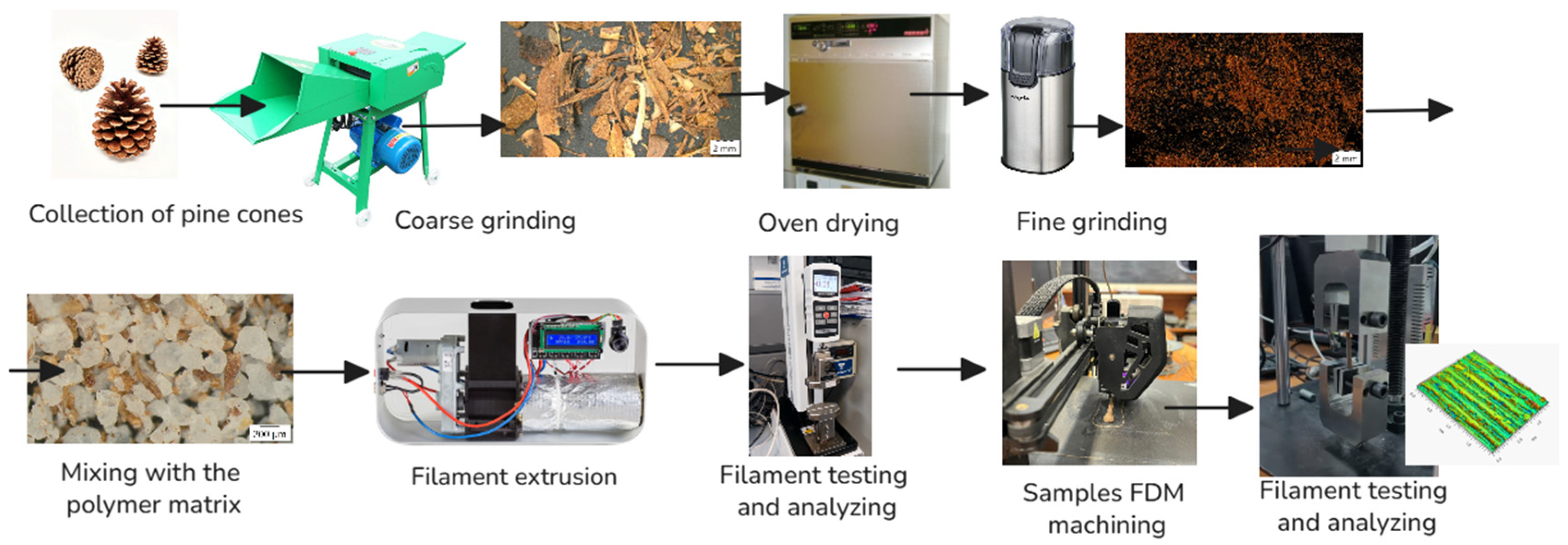
The experimental methodology and complete workflow followed in this study are schematically presented in
Figure 1. The process initiates with the raw material preparation, where
Pinus sylvestris cones undergo coarse grinding, followed by oven drying and fine grinding to obtain a uniform pine flour. Concurrently, poly(lactic acid) (PLA) powder is mixed with the prepared pine flour at two specific concentrations (5 wt% vs. 10 wt% pine flour). The resulting mixtures are subjected to filament extrusion to produce continuous biocomposite filaments, which are subsequently evaluated via single-filament tensile testing. In the next stage, the extruded filaments are processed via Fused Deposition Modeling (FDM) 3D printing to fabricate standardized dog-bone test specimens. Finally, the printed samples undergo comprehensive characterization, focusing on mechanical tensile strength and surface topographical quality (
).
Figure 1 serves as a visual guide to the experimental roadmap detailed in the following subsections.
2.1. Materials
The polymer matrix used in this study was a biodegradable commercial-grade poly(lactic acid) (PLA) powder, featuring a particle size distribution of 75–150 µm. The material was sourced from Shenzhen, China (distributed via Macking Green, China). The powder form was specifically selected to ensure an optimal dry pre-mixing stage and to enhance the distributive consistency of the lignocellulosic filler within the single-screw extrusion processing window. The raw material is characterized by a material density of 1.24 .
The lignocellulosic biomass filler consisted of Scots pine (Pinus sylvestris) cones collected from the Suceava region in northeastern Romania.
2.2. Raw Material Preparation and Filament Fabrication
The overall experimental workflow was divided into three core stages: raw material preparation, melt processing, and preliminary performance characterization. First, the collected Pinus sylvestris cones were subjected to coarse mechanical grinding using an agricultural crushing device to obtain smaller chips. To prevent moisture-induced hydrolytic degradation of the PLA matrix during thermal processing, these chips were dried in a MEMMERT UNE 200 oven (Memmert GmbH + Co. KG, Schwabach, Germany) at 40 °C for 24 h.
Following the drying stage, fine grinding was performed using a Myria MY4053 laboratory grinder (Myria, Shenzhen, China). The resulting fine powder was fractionated using a Retsch AS 200 sieve machine (Retsch GmbH, Haan, Germany) across a wide range of size intervals (>1000 µm down to <125 µm). To guarantee homogeneous dispersion and stable processing, only the 180–125 µm particle size fraction (classified as lignocellulosic pine cone flour) was selected for composite compounding. The low aspect ratio of this specific particle morphology is structurally favorable for preventing agglomeration.
The sieved pine cone flour was dry-mixed with the PLA powder at filler contents of 5 wt% and 10 wt%. These specific loadings were selected based on preliminary screening trials and literature benchmarks for raw lignocellulosic flours processed via single-screw desktop extruders. Between the two investigated compositions, 5 wt% represents a baseline for evaluating mechanical retention, whereas 10 wt% represents the operational threshold for this processing setup. Preliminary extrusion trials indicated that filler contents above 10 wt% caused excessive melt viscosity, severe particle agglomeration, and nozzle clogging (0.4 mm diameter).
The dry-blended mixtures were compounded into customized 3D-printed filaments using a single-screw desktop Felfil Evo extrusion system (Felfil Srl, Torino, Italy). Processing parameters were maintained at a melt temperature of 190 °C and a screw speed of 4 rpm to ensure a stable volumetric flow rate and prevent thermal degradation of the biomass. The target filament diameter was set to
and monitored continuously using a digital caliper during spooling. The detailed extrusion parameters are summarized in
Table 1.
Attenuated Total Reflectance Fourier-Transform Infrared Spectroscopy (ATR-FTIR) was carried out to evaluate the functional groups of the raw pine cone flour and composite formulations. Spectra were recorded in the wavenumber range of 4000–400 cm−1 using a Nicolet iS20 FTIR spectrophotometer (Thermo Scientific, Waltham, MA, USA). Dry powder formulations were placed directly on the ATR crystal. Each spectrum was acquired as an average of 32 scans at a spectral resolution of 4 cm−1. Measurements were performed in triplicate, and data were processed using SpectraGryph software (Version 1.2.11).
2.3. Three-Dimensional Printing (FDM Process)
To evaluate the mechanical performance and surface morphology of the biocomposites, standardized tensile specimens adhering to the ISO 527-2 (type 1BA) [
31] geometry were fabricated using a Creality Ender 3 V2 FDM 3D printer (Shenzhen Creality 3D Technology Co., Ltd., Shenzhen, China) fitted with a 0.4 mm brass nozzle. Specimens were printed in a flat orientation (X-Y plane) with a rectilinear raster pattern at an alternating angle of
°. The printing parameters were fixed as follows: 100% infill density, 0.2 mm layer height, 25 mm/s printing speed, 200 °C nozzle temperature, and 60 °C bed temperature.
2.4. Characterization and Testing
2.4.1. Mechanical Tensile Testing
Prior to testing, all raw filaments and 3D-printed specimens were conditioned at °C and relative humidity for a minimum of 48 h.
Raw Filament Tensile Testing: The extruded custom filaments were tested using a single-column motorized Mark-10 ESM302 test stand (Mark-10 Corp., Copiague, NY, USA) equipped with a Mark-10 Series R01 digital load cell (capacity: 1000 N, accuracy: full scale). Five independent replicates () per formulation were mounted using rubber-faced pneumatic grips to prevent jaw slipping. Testing was carried out at a constant crosshead speed of 5 mm/min with an initial gauge length of 50 mm to measure the baseline ultimate tensile strength of the unprinted filament.
Printed Specimen Tensile Testing: 3D-printed ISO 527-2-type 1BA [
31] specimens were evaluated using a custom universal testing rig developed at the Faculty of Mechanical Engineering, Automotive and Robotics (FIMAR), “Ștefan cel Mare” University of Suceava, Romania. The setup integrates a NEMA34 stepper motor driving a precision screw-nut mechanism (3 mm pitch, linear step resolution of 1.875 µm/step). Tensile loads were recorded using an S-type TAS501 load cell (maximum capacity 1960 N, measurement accuracy
) paired with an HX711 ADC and ESP32 microcontroller platform.
Tests were conducted at a constant crosshead speed of 2 mm/min with an initial gauge length (
) of 30 mm. For this preliminary investigation, three independent printed replicates (
) were tested per formulation batch. Ultimate tensile strength was calculated relative to the initial cross-sectional area. Nominal elongation at break was estimated from crosshead displacement relative to the initial gauge length; due to potential machine compliance effects in the absence of a direct optical extensometer, intrinsic elastic modulus values were not extracted. Ductility was evaluated as nominal elongation at break (
), calculated directly from crosshead displacement (
) relative to
using Equation (1):
Because displacement was derived from machine crosshead travel without local strain extensometry, these values reflect nominal deformation trends and may include minor compliance influences from the testing frame. Consequently, elongation results are interpreted strictly as comparative metrics between filler loadings rather than absolute intrinsic strain parameters.
2.4.2. Morphological and Surface Topography Analyses
To assess internal mixture homogeneity, cross-sectional integrity, and surface quality, printed and unprinted specimens were observed using an Olympus SZX10 stereomicroscope (Olympus Corporation, Tokyo, Japan) at magnification. Quantitative surface topography and roughness (, ) were measured using a Mahr CWM100 3D optical profilometer (Mahr GmbH, Göttingen, Germany).
2.5. Statistical Evaluation
Statistical evaluation was performed using a one-way Analysis of Variance (ANOVA) at a significance level of . All mechanical and surface roughness parameters are reported consistently as . Given the sample size limitation ( for printed specimens), the results are explicitly presented as preliminary data, and statistical comparisons are interpreted cautiously as indicative processing trends requiring future validation with larger sample cohorts. All statistical calculations and data processing were carried out using Microsoft Excel (Microsoft 365 version, Microsoft Corp., Redmond, WA, USA).
3. Results and Discussions
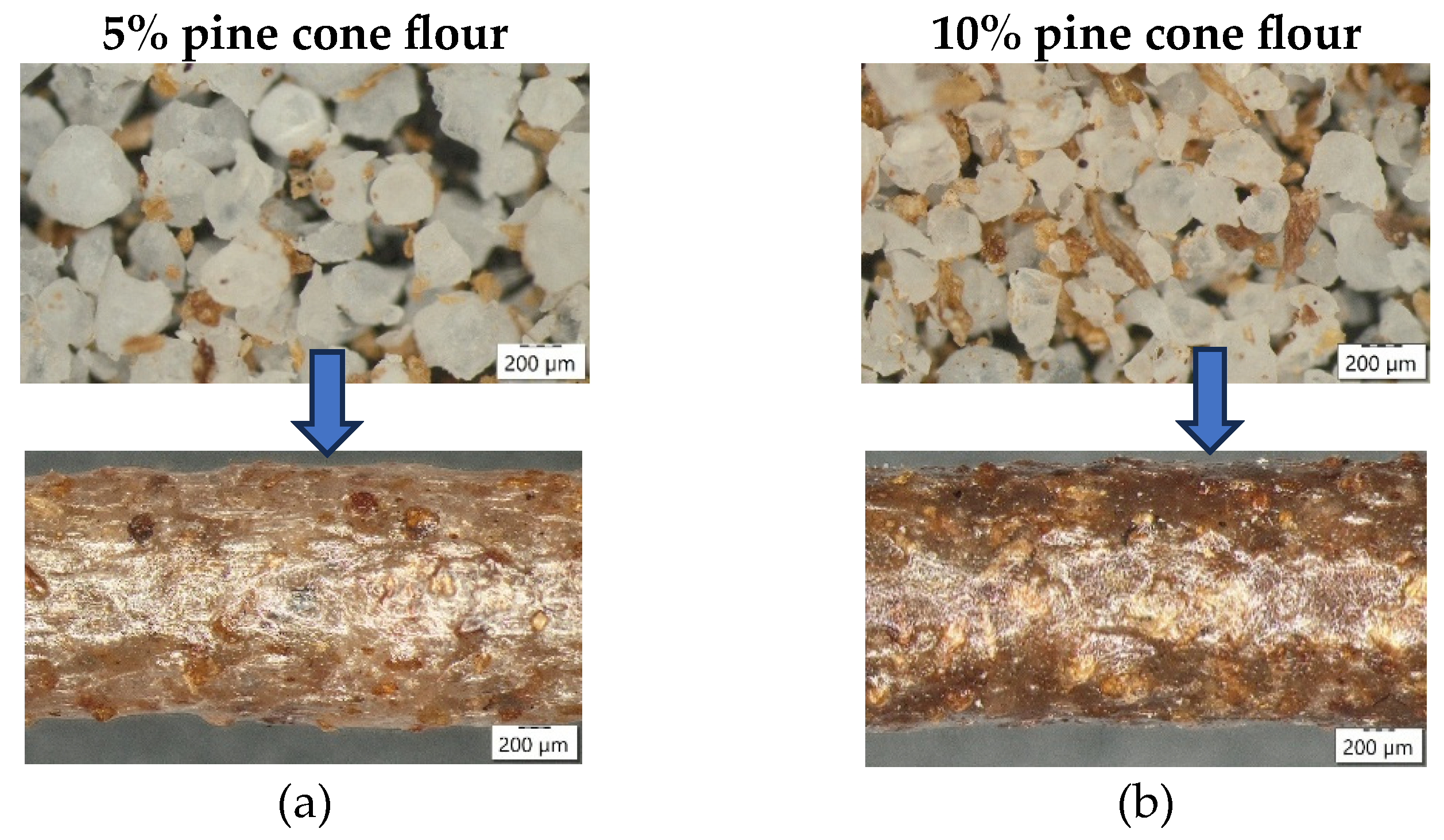
In this study, two biocomposite material variants were developed using different mass percentages of pine cone flour: 5 wt% (sample A) and 10 wt% (sample B). The powder obtained by fine grinding was mixed with the PLA matrix until a visually homogeneous distribution was obtained, a process subsequently validated by optical microscopic analysis (
Figure 2a). The pre-extrusion mixture showed a heterogeneous distribution of translucent PLA polymer particles and brownish, irregular pine cone flour particles. The pine cone filler appears as granular and fine particle fragments, indicating an effective mechanical grinding process. The formulation with 10 wt% filler content shows a visibly higher density of pine cone particles dispersed throughout the matrix.
Optical microscopy examination of the pre-mixed powders and the resulting extruded filaments (
Figure 2) provides visual evidence of the dispersion state and thermal processing stability. As shown in
Figure 2a, both 5 wt% and 10 wt% formulations exhibit a homogeneous dry dispersion of sub-180 µm pine cone particles among the PLA matrix grains prior to extrusion. Upon melt processing (
Figure 2b), clear surface morphology distinctions emerge between the two filler loadings.
The 5 wt% filament exhibits a relatively uniform cylindrical geometry with well-embedded pine cone particles and minimal surface defect density. In contrast, the 10 wt% biofilament displays pronounced surface roughness, with visible particle agglomerates protruding from the filament perimeter. These surface irregularities at 10 wt% filler loading explain the increased friction during feeding and the minor pressure fluctuations observed during the subsequent FDM 3D-printing stage, consistent with observations reported by Ayrilmis et al. [
27,
28] and Tao et al. [
26] for raw lignocellulosic flours exceeding 5–10 wt% concentration.
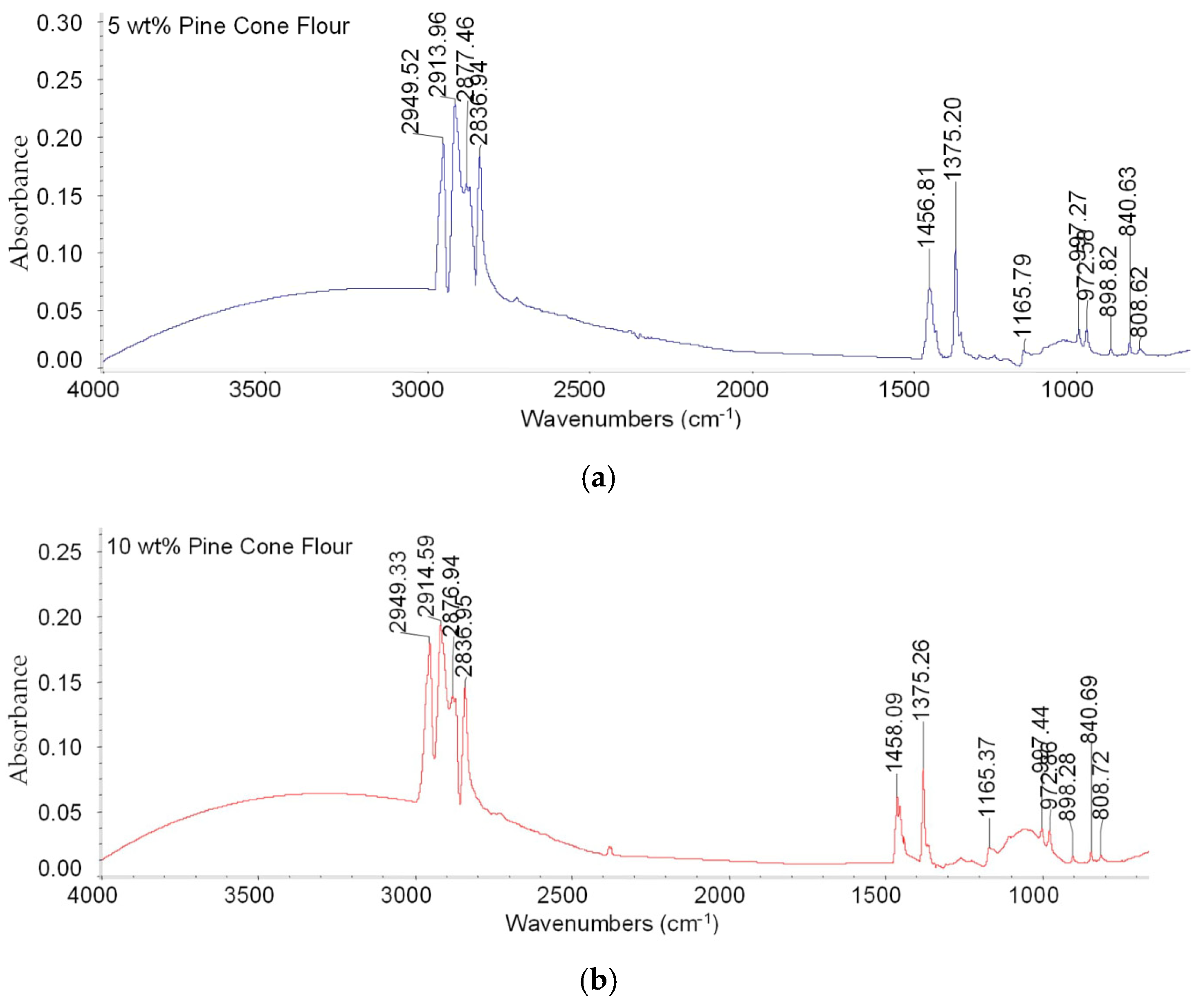
The FTIR spectra of the PLA biocomposites filled with 5 wt% and 10 wt% raw pine cone flour (
Pinus sylvestris) are depicted in
Figure 3. The spectroscopic evaluation was conducted to identify the characteristic functional groups of both the polymer matrix and the lignocellulosic biomass, as well as to assess potential chemical interactions occurring during extrusion and 3D printing.
A broad absorption band is observed in the region of 3600–3100 cm
−1, corresponding to hydroxyl groups (-OH) from the cellulose, hemicellulose, and lignin constituents [
30]. The sharp cluster of peaks in the 3000–2800 cm
−1 region (specifically at 2949, 2913/2914, 2877/2876, and 2836 cm
−1) is assigned to asymmetric and symmetric stretching modes of aliphatic -CH
2- and -CH
3 groups [
32]. The peaks at 1456/1458 cm
−1 and 1375 cm
−1 correspond to bending and deformation modes of -CH
3 groups [
32], while bands around 1165 cm
−1 and 1097–808 cm
−1 reflect C–O–C ether linkages and aromatic ring vibrations from lignin [
32].
Comparing the 5 wt% and 10 wt% spectra reveals no new absorption bands or meaningful peak shifts (e.g., 2914 cm
−1 for 5 wt% vs. 2915 cm
−1 for 10 wt%). This invariance indicates that increasing the filler content did not induce new covalent cross-linking [
32]. However, FTIR analysis alone is insufficient to directly confirm microscopic porosity, physical incompatibility, or interfacial adhesion strength.
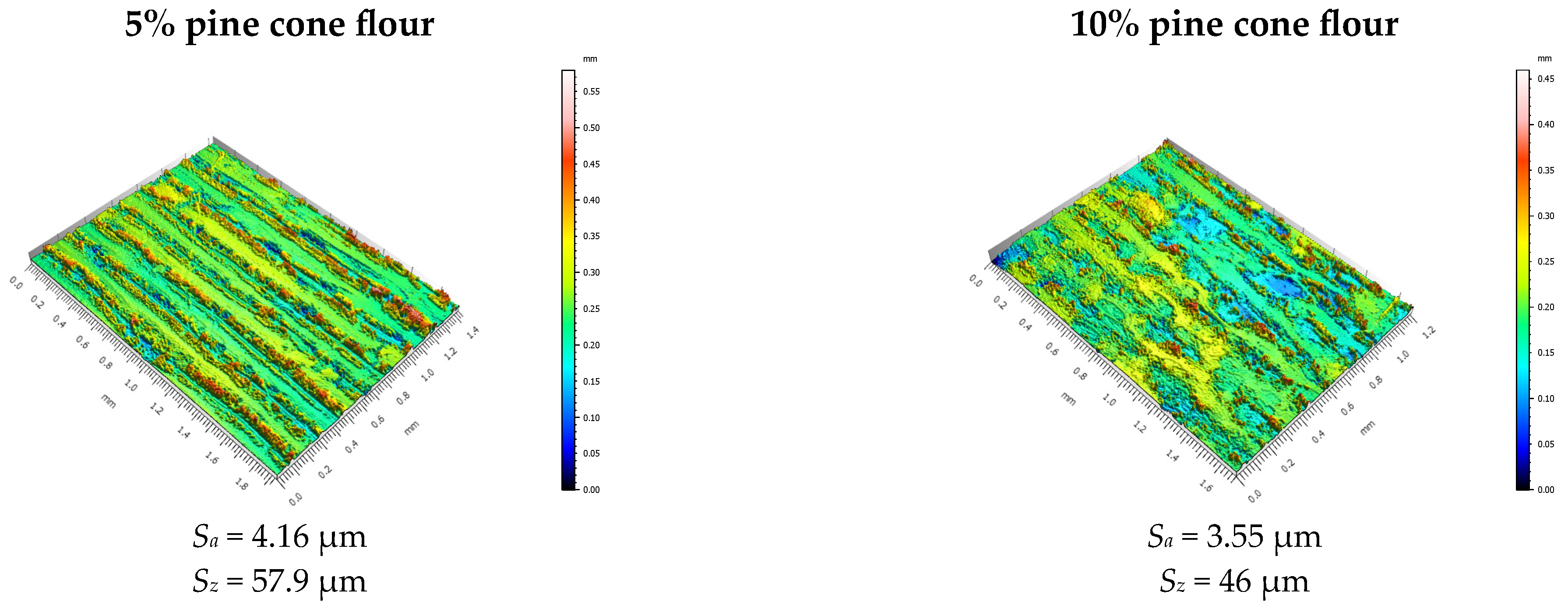
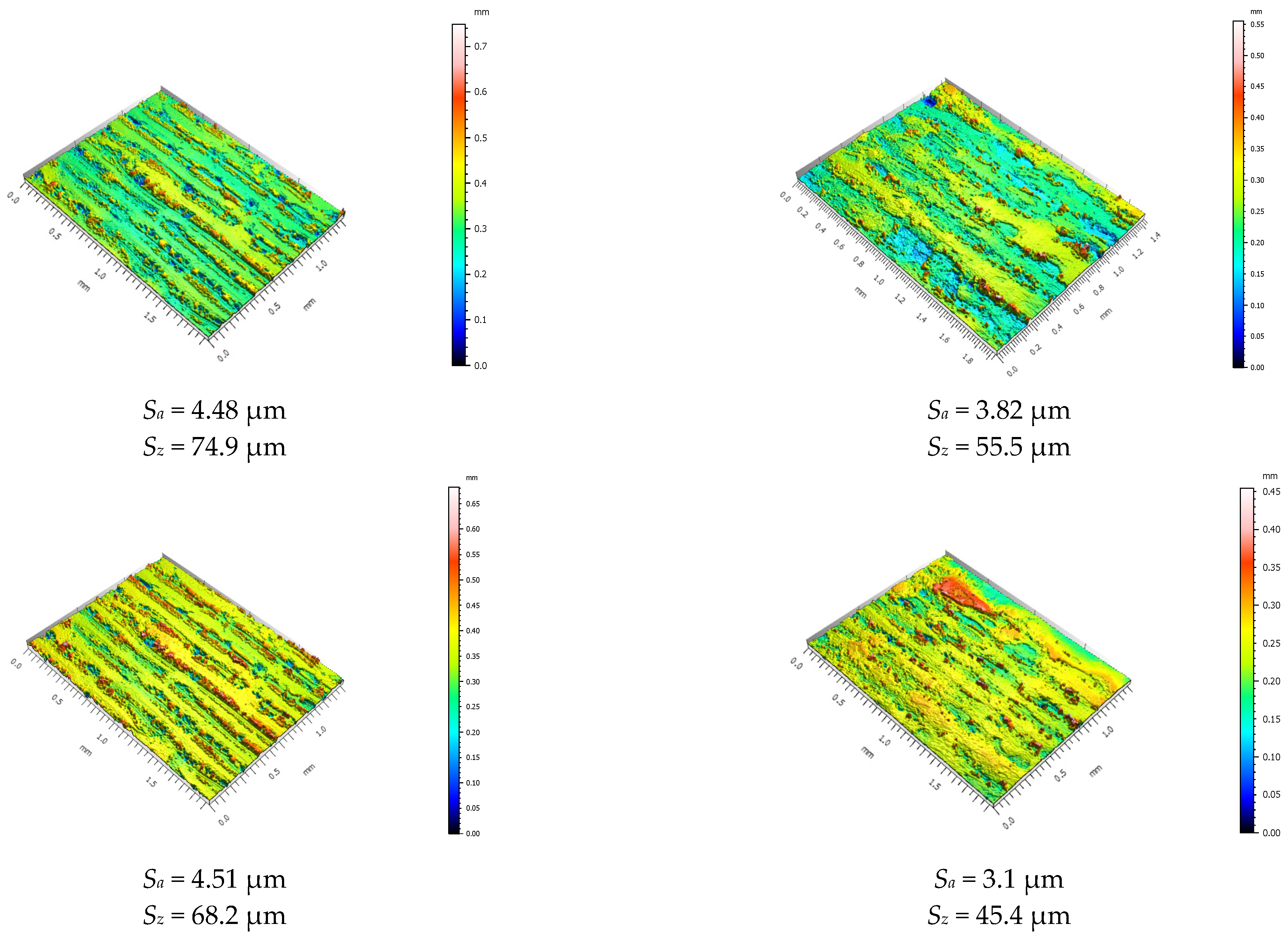
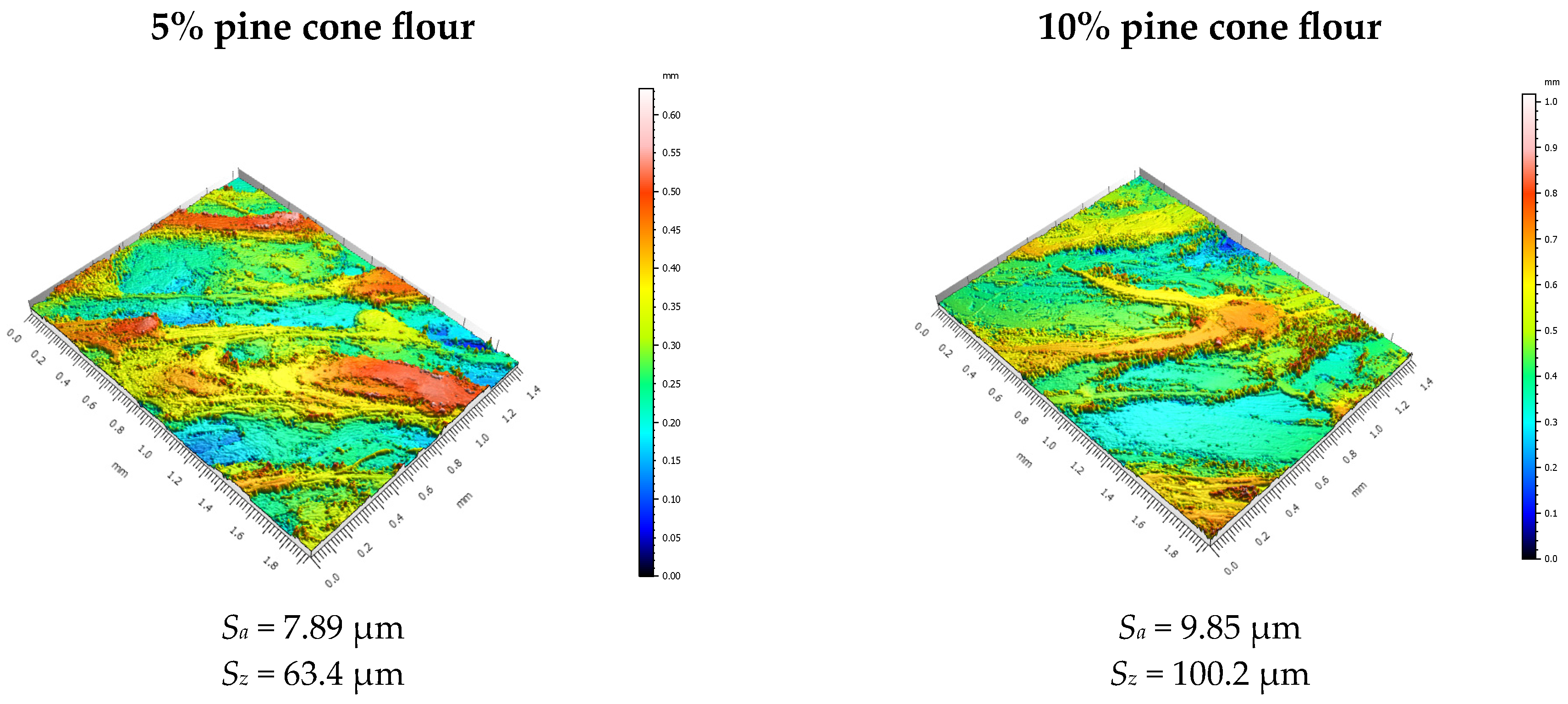
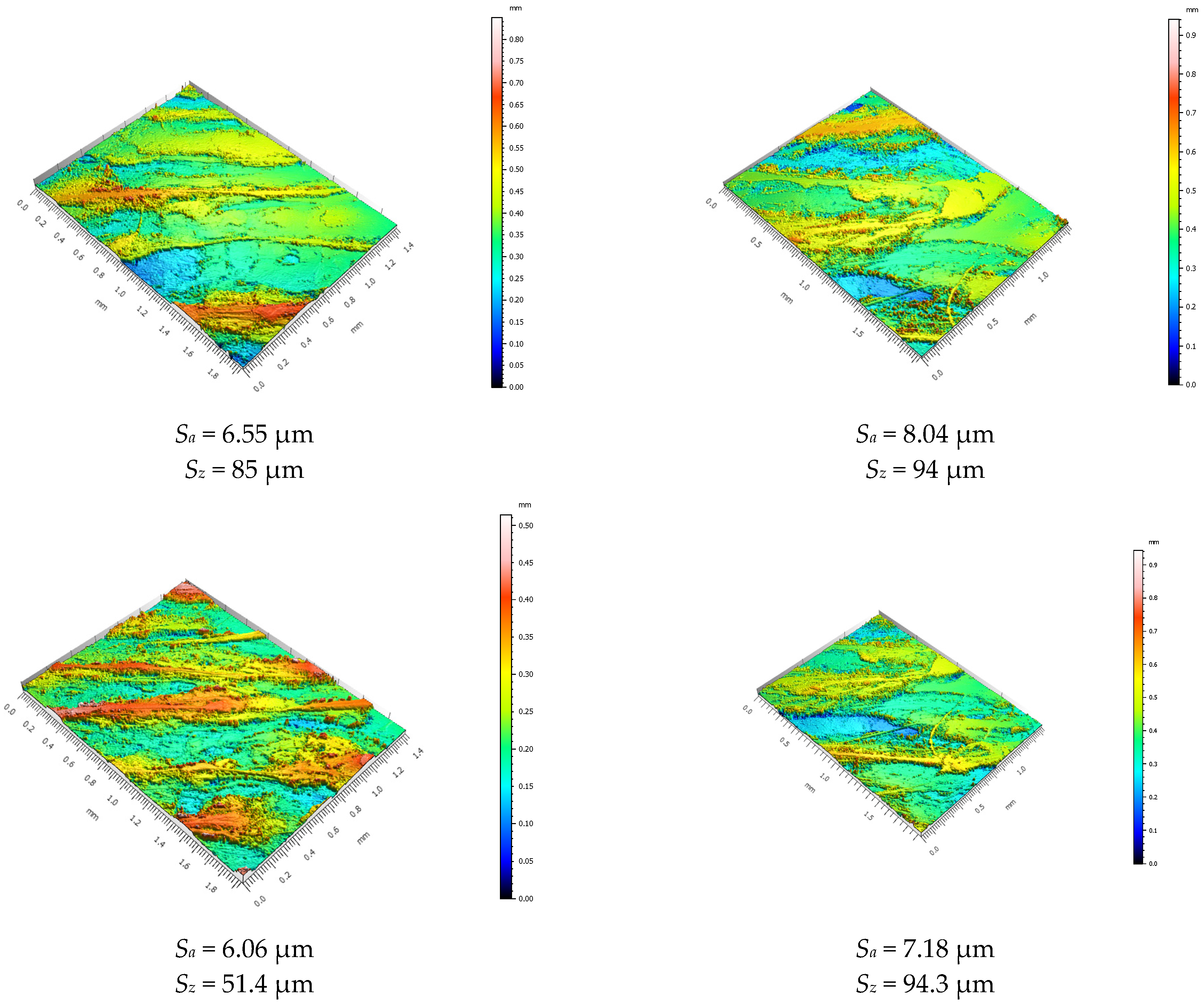
The surface topographies of the 3D-printed specimens (
Figure 4 and
Figure 5) offer critical insights into the interplay between filler loading, melt rheology, and layer deposition fidelity. For the lateral printed walls (
Figure 4), the 5 wt% composite exhibits well-defined, parallel deposition ridges with a consistent periodic profile. Quantitatively, the average surface roughness decreases from
(
) for the 5 wt% composite to
(
) for the 10 wt% filler content.
This apparent reduction in lateral roughness at 10 wt% loading is hypothesized to relate to suppressed extrudate swell upon nozzle exit, in agreement with the literature on particle-filled polymer melts [
22,
29]. Under this proposed mechanism, restricted viscoelastic swelling may cause adjacent extruded roads to flatten slightly more under nozzle pressure, yielding a locally reduced lateral amplitude (
). However, this structural compaction comes at the expense of printing process stability. The higher particle concentration in the 10 wt% formulation is suggested to induce localized viscosity variations and stick-slip flow behavior, likely promoting microstructural defects such as surface micro-cavities and particle pull-outs.
The top surface topography (
Figure 5) further corroborates this mechanism. Unlike the constrained lateral walls, the unconstrained top layer directly reveals the shearing action of the nozzle raster. Here, the average roughness increases significantly with filler loading, rising from
(
) at 5 wt% to
(
) at 10 wt%. At 5 wt%, the lower particle concentration allows the molten PLA matrix to undergo partial self-leveling and thermal inter-bead welding before solidification, yielding smooth, continuous top rasters. Conversely, the 10 wt% top surface appears fragmented, exhibiting sharp asperities and localized voids. As highlighted by Kariz et al. [
22] and Morcillo et al. [
29], elevated bio-filler content impairs matrix wetting, causing the polymer melt to ‘tear’ rather than flow smoothly as the nozzle changes direction. The resulting micro-voids between adjacent paths not only affect surface aesthetics but may also increase water absorption potential due to exposed hydrophilic pine cone particles.
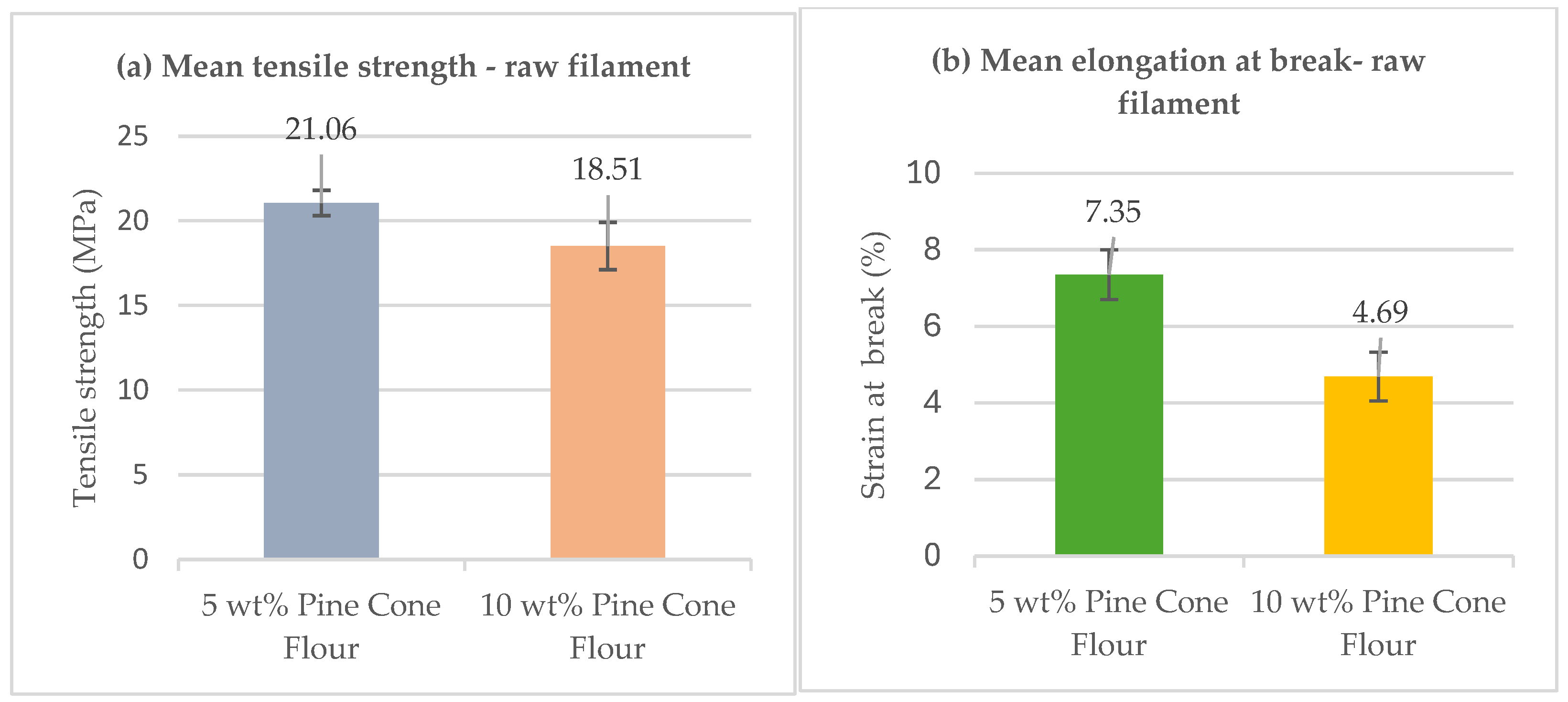
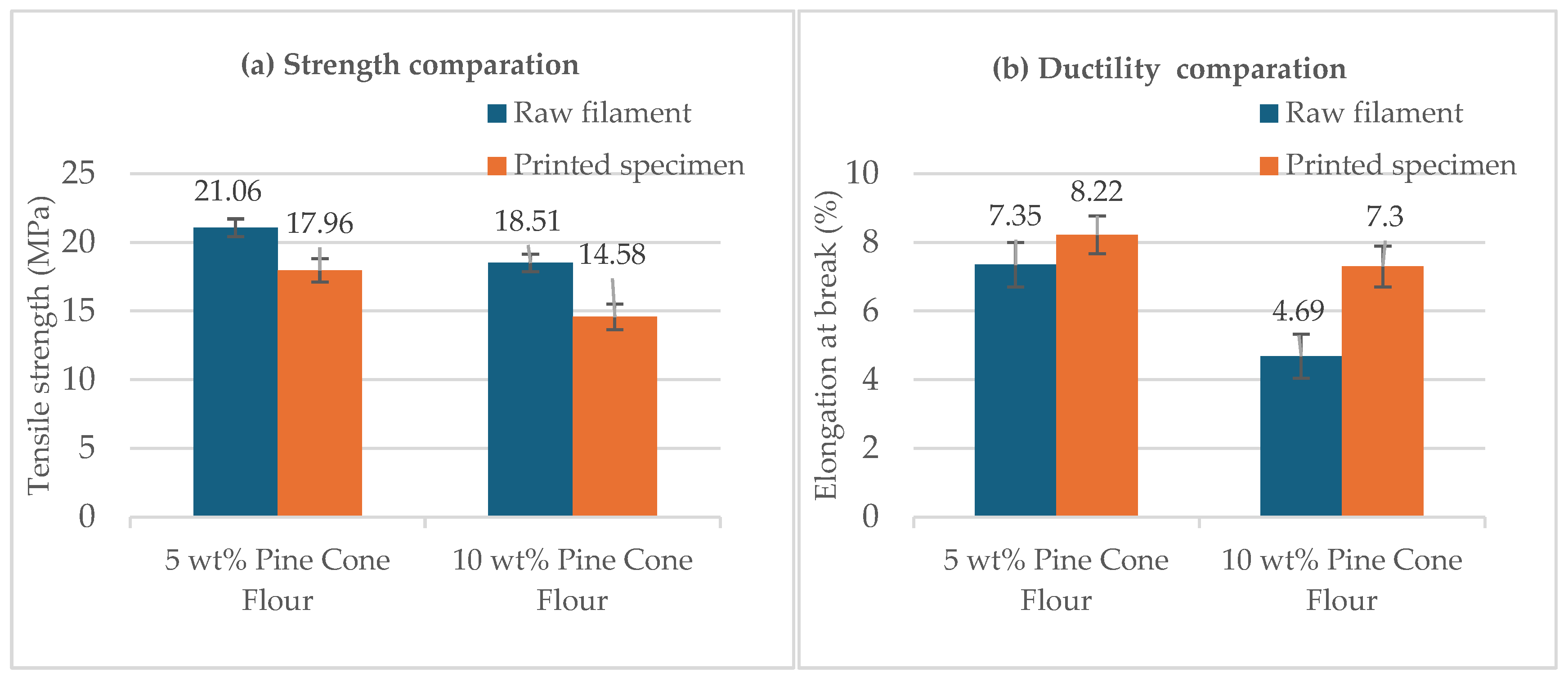
Figure 6 presents the tensile properties of the raw filaments. A reduction in tensile strength occurs with increasing pine cone flour concentration. The 5 wt% formulation achieved an average tensile strength of 21.06 MPa, whereas the 10 wt% formulation decreased to 18.51 MPa. This reduction is suggested to stem from potential agglomeration of fine particles within the matrix or insufficient wetting of the pine cone flour by the polymer. The effect is particularly pronounced on ductility, where average elongation at break decreased from 7.35% (5 wt% pine cone flour) to 4.69% (10 wt% pine cone flour). This decline suggests an increase in brittleness as filler loading increases, as higher quantities of pine cone flour may restrict polymer chain mobility and promote early filament failure.
To properly contextualize these mechanical properties, the tensile strength values of the filaments (21.06 MPa for 5 wt% and 18.51 MPa for 10 wt%) can be viewed against standard neat PLA baselines from the literature, which typically exhibit tensile strength values of ~55–60 MPa under equivalent processing [
26]. This comparison serves purely as a non-equivalent contextual reference, as no neat PLA control was processed or tested under identical experimental conditions in this study. Nevertheless, the lower strength observed indicates a non-reinforcing, filler-type behavior of untreated pine cone flour, where a lack of covalent interfacial bonding and the presence of micro-voids are hypothesized to promote premature failure under tensile loading.
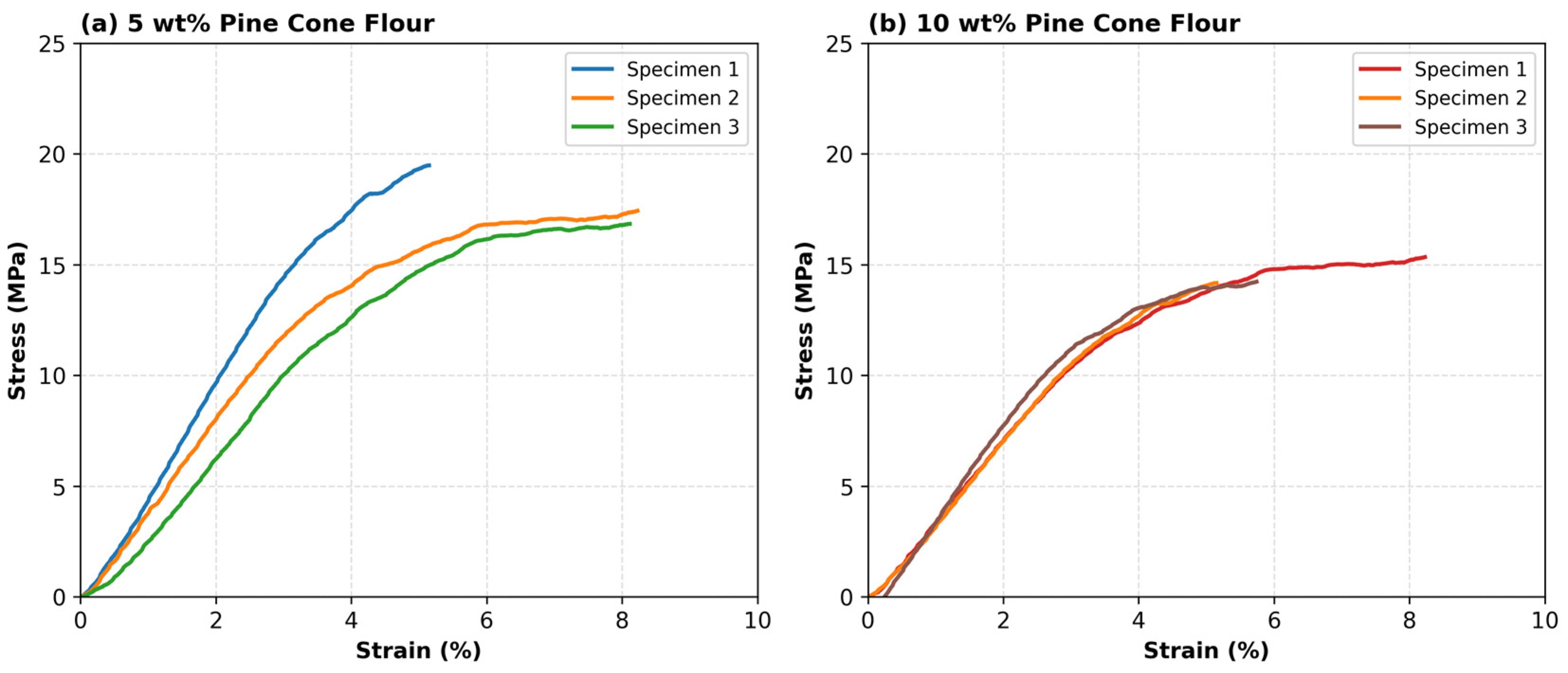
Figure 7 shows the stress–strain behavior of the 3D-printed specimens. For samples with 5 wt% filler content, maximum stress reached values between 16 and 19 MPa, showing consistency across tested specimens. For 10 wt% filler content, maximum strength decreased visibly to 14–15 MPa. Specimens with 5 wt% filler loading demonstrated higher elongation before breaking (6–8%), exhibiting an extended elastic region followed by plastic deformation. In contrast, 10 wt% specimens failed at lower strains (5–6%), reflecting increased brittleness. While pine cone flour increases matrix stiffness, exceeding 5 wt% loading appears to disrupt polymer matrix continuity and decrease overall mechanical performance.
The one-way ANOVA statistical evaluation for the tensile strength of 3D-printed specimens is detailed in the
Supplementary Materials (Table S1). The analysis indicates a statistically significant reduction in load-bearing capacity when increasing the bio-filler content from 5 wt% to 10 wt% (
). The 3D-printed specimens containing 5 wt% pine cone flour achieved an average tensile strength of 17.84 ± 0.95 MPa, whereas increasing the filler content to 10 wt% led to a reduction to 14.44 ± 1.12 MPa. One-way ANOVA suggests that this decrease in printed specimen tensile strength was statistically significant (
), pointing to the trend that higher biomass loadings disrupt structural continuity and reduce load-bearing capacity.
Figure 8 provides a direct comparison between the mechanical properties of the raw filament and the 3D-printed parts, highlighting the clear impact of FDM processing on composite performance. A reduction in tensile strength after printing is a well-known characteristic of FDM technology. Unlike the continuous, homogeneous filament, 3D-printed parts exhibit a layered architecture containing micro-voids and inter-layer fusion lines that act as local stress concentration points.
The loss of mechanical strength varies significantly depending on the biomass loading:
Pine Cone Filler (5 wt%): the printed samples retained approximately 85% of the original filament’s strength. This relatively high retention indicates satisfactory structural continuity, uniform particle distribution, and efficient inter-layer thermal fusion.
Pine Cone Filler (10 wt%): the strength retention dropped to approximately 79%, representing an additional 6% reduction compared to the lower formulation.
This enhanced strength degradation at higher filler loading stems from two primary mechanisms. First, the higher concentration of pine cone flour promotes micro-void formation during extrusion, reducing the effective load-bearing cross-sectional area and acting as crack initiation sites. Second, filler particles exposed on the filament surface physically obstruct direct polymer–polymer interdiffusion across printed layers, facilitating early delamination under tensile load.
To account for testing setup constraints and avoid over-interpreting local material deformation without extensometry, ductility was recorded as nominal elongation at break derived from crosshead displacement. For the raw extruded filaments, average nominal elongation decreased from at 5 wt% pine cone flour content to at 10 wt%. Following FDM 3D printing, nominal elongation values were measured at for the 5 wt% formulation and for the 10 wt% formulation. This relative increase in nominal ductility post-printing is tentatively attributed to localized thermal re-melting at layer interfaces during deposition and potential molecular relaxation, allowing the layered architecture to undergo minor deformation prior to final fracture. However, direct cross-sectional fractography, formal rheological testing, and optical strain measurement remain necessary to quantitatively validate these microstructural mechanisms.
Because raw pine cone flour acts as an untreated bio-filler intended primarily for aesthetic or non-structural applications, evaluating performance retention across filler loadings relative to the parent filament is critical. At 10 wt% filler loading, the expected filler-induced strength reduction occurs due to limited matrix–filler load transfer and localized micro-void formation, confirming the characteristic behavior of unfunctionalized lignocellulosic fillers in thermoplastic matrices.
The chemical incompatibility between the hydrophilic hydroxyl (-OH) groups of the biomass and the hydrophobic PLA matrix contributed to micro-void formation, resulting in a moderate decline in raw filament tensile strength (from at 5 wt% to at 10 wt%). Nevertheless, when evaluated relative to their respective unprinted composite filaments, the 3D-printed specimens retained a significant fraction of their load-bearing capability (~85% for 5 wt% and ~79% for 10 wt%).
Among the two investigated compositions, the formulation containing 5 wt% pine cone flour exhibited better overall performance in terms of processability, surface finish, and mechanical retention. While non-modified biocomposites are not intended for high-load-bearing structural applications, these eco-friendly filaments show preliminary potential for non-load-bearing prototypes, indoor decorative elements, custom architectural models, and light-duty packaging. To address the performance penalties associated with raw biomass extractives and inorganic constituents, future research will explore physical and chemical pre-treatment methods (such as solvent extraction or coupling agents) to optimize the interfacial compatibility of pinecone-derived PLA composites.
It should be noted that while the proposed physical mechanisms regarding melt viscosity, extrudate swell, and inter-layer voids align with established literature on bio-filled thermoplastics, they remain indirect hypotheses within the scope of the present study. Dedicated capillary rheometry, micro-CT porosity quantification, and high-resolution SEM cross-sectional fractography constitute essential directions for future quantitative investigation.