


Abstract
Food waste (FW) valorization through resource recovery is central to circular economy strategies that reduce environmental burden while generating sustainable, bio-based chemicals. This work investigated the effect of anaerobic sludge inoculum and the process control parameters of temperature (35 °C and 55 °C), pH value (4–10), and total solids content (2.5%, 5%, 7.5% and 10%) on the recovery of volatile fatty acids (VFAs)—chemicals used in bioplastics and bioenergy production—during acidogenic fermentation of food waste in batch reactors. While FW is well studied for biogas production, its potential for VFA recovery, a strategy that adds economic value to waste streams and supports the circular bioeconomy, remains comparatively underexplored. Mesophilic conditions favored fermentation over thermophilic conditions, and pH was the most influential factor affecting VFA accumulation, although temperature, inoculum presence, and total solids content also had statistically significant, large effects. Basic pH values provided maximum VFA yields from 2% to 25%, roughly double the acidic pH yields, while the highest solids content (10%) minimized VFA production at both temperatures. The highest yield (25%) occurred at T = 35 °C, pH 9, and TS = 5%, without sludge, while the highest yield under thermophilic conditions (T = 55 °C) reached 22.4% at TS = 2.5% and pH 9. By systematically evaluating these parameters together, this study offers a more comprehensive understanding of FW acidogenic fermentation than prior single-parameter works, guiding bioprocess design for sustainable waste management and resource efficiency.
1. Introduction
Food waste (FW) is the most generated type of biowaste worldwide, representing a major environmental, economic, and social challenge. According to Eurostat, the EU generates 58 million tons of such waste annually, which corresponds to a loss of 132 billion euros [1]. The loss of money is directly connected to food waste generation because when food is discarded, all of the economic resources invested in its production such as raw materials, energy, labor and logistics are also wasted. According to the latest Eurostat data, the average EU citizen generates 129 kg food waste each year. At the same time, almost 42 million people cannot afford a quality meal every second day [1]. The European Commission lists food waste minimization as one of the key objectives of the Circular Economy Action Plan. The plan aims to halve the amount of food waste per capita at the retail and consumer levels by 2030 [2].
Food waste disposal in the environment causes land and water pollution and the production of methane, the main gas responsible for the planet’s global warming [3]. When improperly managed, food waste can result in soil contamination through the release of organic pollutants and leachate, while also creating odor nuisance and attracting pests [4]. In addition, leachate generated during the decomposition process can contaminate surface and groundwaters, resulting in the degradation of water quality and the disruption of aquatic ecosystems. Leachate from biowaste, food waste or the municipal fraction of solid waste has a high concentration of organics, pathogens, inorganic salt, and heavy metals, which can impose threats to public health and the environment [5]. On the other hand, food waste should not be viewed solely as an environmental burden, but also as a valuable resource within the framework of the circular economy. Due to its abundance and great variety, food waste has a high potential as a low-cost raw material for producing valuable substances, such as volatile fatty acids [6].
FW mainly comprises carbohydrates, proteins, lipids, and traces of inorganic components. Due to its high organic content, it is considered as an excellent substrate for biological conversion processes [7]. Its organic fraction can be further decomposed into more simple organic compounds, like glucose, amino acids, and volatile fatty acids (VFAs) [8].
VFAs are valuable intermediates with a wide range of industrial, environmental, and biotechnological applications. They can serve as precursors for the production of polyhydroxyalkanoates (PHAs), which are eco-friendly bioplastics that have attracted great interest as sustainable alternatives to conventional petroleum-based plastics [9]. In addition, VFAs can be utilized as substrates for bioenergy production through anaerobic digestion and other biological conversion processes [10]. It is often feasible, and certainly desirable, to utilize them directly in these applications.
VFAs commonly derive from fossil fuel sources via chemical routes [11]. However, increasing environmental concerns, resource depletion, and the growing demand for sustainable chemicals have shifted interest to alternative production pathways, such as acidogenic fermentation. Fermentation is a metabolic process by which molecules, such as glucose, are broken down anaerobically by enzymes [12]. A variety of intermediate products are produced including VFAs, hydrogen, carbon dioxide, and methane. It is a sustainable and applicable method to several sectors, such as the energy and food sectors. To reduce the process cost, inexpensive organic substrates can be utilized as feedstock such as food waste [13].
In this study, the process is defined as acidogenic fermentation, encompassing the hydrolysis and acidogenesis stages of anaerobic digestion, under operating conditions (pH, temperature, and total solids content) designed to maximize VFA accumulation while limiting subsequent methanogenic conversion.
In this context, the optimization of the operational conditions of food waste fermentation is essential to maximize VFA production [14]. Many factors have been reported to influence the process efficiency and the accumulation of VFAs, including the pH value [15], the temperature [16], the use or lack of inoculum and its characteristics [17], and the solids concentration [18] in the reactor.
Several studies have investigated the effect of individual operational parameters such as pH, temperature, inoculum addition, or total solids concentration on volatile fatty acid (VFA) production from food waste fermentation. However, these parameters have been evaluated independently or only partially combined. Therefore, the novelty of the present study is linked to the systematic and integrated evaluation of four critical operational parameters—anaerobic sludge inoculum, pH, temperature, and total solids content—under controlled experimental conditions to identify the optimal configuration for maximizing VFA yield. Table 1 highlights the novelty of the present study compared to representative studies on VFA production from food waste fermentation.
Table 1.
Comparison of the representative literature on VFA production from food waste fermentation, highlighting the novelty of the present study.
Based on the mechanisms reported in the literature, the following research hypotheses were formulated: (i) alkaline pH conditions were expected to enhance hydrolysis and solubilization of particulate organic matter while inhibiting methanogenic activity, thereby favoring VFA accumulation; (ii) mesophilic temperature was expected to support a more diverse and stable microbial community than the thermophilic temperature, potentially resulting in higher VFA yields despite the faster hydrolysis rates typically linked to elevated temperatures; (iii) the total solids content was expected to exhibit a non-monotonic effect on VFA production, with high solids concentration limiting mass transfer and low concentrations limiting substrate availability and consequently resulting in lower microbial activity in the reactor; (iv) the addition of anaerobic sludge as inoculum was expected to have a dual effect, potentially enhancing hydrolysis, while also promoting further conversion of VFAs into methane due to the presence of methanogenic microorganisms. These hypotheses were tested through a systematic experimental evaluation of the four operational parameters, as described in the following sections.
2. Materials and Methods
2.1. Food Waste Characterization and Feedstock Preparation
The fermentation substrate was a mixture of different types of food, to simulate real household food waste. Meat, vegetables, fish, fruits, and bread were mixed into a homogenized pulp in a blender. The exact ratio between the different ingredients was not the same throughout the experiments. In each fermentation process, the substrate characteristics were analyzed in terms of total solids (TS), volatile solids (VS), total suspended solids (TSS), volatile suspended solids (VSS), total and dissolved COD, total organic carbon (TOC), total nitrogen (TN), total phosphorus (TP), ammonium (NH4-N), phosphorus (PO4-P), and volatile fatty acid (VFA) content. The simulated food waste was stored in 4 °C until use.
2.2. Anaerobic Sludge
Anaerobically digested sludge was used in some experiments as inoculum microbial culture. The anaerobic sludge was obtained from the Psytalleia wastewater treatment plant (Athens, Greece). The specific microbial species present in the anaerobic sludge inoculum used in this study were not characterized (e.g., via 16S rRNA gene or metagenomic sequencing), as microbial community analysis was outside the scope of the present work. However, based on the literature, mesophilic anaerobic digesters treating municipal sewage sludge are typically dominated, among bacteria, by the phyla Proteobacteria, Firmicutes, and Bacteroidetes, while the archaeal community is dominated by acetoclastic methanogens of the genus Methanothrix (formerly Methanosaeta), together with Methanosarcina [23]. The anaerobic sludge inoculum used in this study can therefore be reasonably assumed to contain a comparable mixed consortium of hydrolytic, acidogenic, acetogenic, and methanogenic microorganisms typical of full-scale municipal digesters, although its exact community composition may differ from the literature values cited.
2.3. Chemicals and Reagents
Sulfuric acid (H2SO4, 95–97%, analytical grade), and sodium hydroxide (NaOH, ≥99%, analytical grade) were used for pH adjustment throughout the fermentation experiments. All chemicals and reagents used in this study were of analytical grade and were purchased from Merck KGaA (Darmstadt, Germany). Deionized water was used for the preparation of all solutions and dilutions.
2.4. Experimental Setup
Batch assays were performed under acidic (4, 5, and 6), neutral (7), and basic (8, 9, and 10) pH values both at 35 °C and 55 °C. These two temperatures were selected to examine and compare the fermentation process under both mesophilic (35 °C) and thermophilic (55 °C) conditions, as both regimes are widely applied in anaerobic and acidogenic fermentation systems; comparing the two temperatures therefore allows the identification of the temperature regime that maximizes VFA production from food waste fermentation. In some of the experiments, anaerobic sludge was used as an inoculum. The food waste used was in fact simulated food waste, including meat, fish, vegetables, fruits, and bread, while the anaerobic sludge was taken from the anaerobic reactors of the Psyttaleia wastewater treatment plant in Greece. The employed TS contents (2.5%, 5%, 7.5%, and 10%) were selected to cover low solids conditions ensuring efficient mixing and enhanced contact between microorganisms and the organic substrate. Via examination of the sludge presence and the kinetics impact factors of pH, Total solids content, and temperature, a system of optimum conditions prevailing in the fermentation process was obtained to maximize VFA production from FW fermentation.
In all experiments, batch reactors were used. In each batch reactor, the simulated food waste was diluted in deionized water to adjust its total solids content to a certain value (ratio of food waste to water approximately 1:5). The working volume of each batch reactor was 200 mL. Anaerobic sludge was used in some of the experiments to examine the effect of inoculum in the fermentation process. In the reactors where sludge was used, the ratio of VS content of food waste to sludge was 1:1 (VSfood waste (g):VSsludge (g) = 1:1). The ratio of 1:1 was selected to provide adequate inoculum availability while maintaining sufficient substrate concentration for VFA production. The pH was adjusted to acidic levels with the addition of sulfuric acid (1 M H2SO4) and to basic levels with the addition of sodium hydroxide (4 M NaOH). The temperature was adjusted to 35 °C for mesophilic conditions and to 55 °C for thermophilic conditions in incubators with integrated stirring at 100 rpm. In total, eight sets of experiments were conducted to evaluate an optimum system for maximum VFA production. All of the experiments were duplicated to ensure the accuracy of the results.
The fermentation experiments were conducted for 16–24 days. Table 2 presents an overview of all the experiments conducted in this scientific work. The constant conditions across all sets were a working volume of 200 mL, continuous stirring at 100 rpm, and each experiment being duplicated.
Table 2.
Summary of the eight experimental sets, showing the operational parameters and objective of each experiment.
2.4.1. Experimental Sets 1 and 2
In the 1st set of experiments, four batch reactors, each with a working volume of 200 mL, were filled with food waste as the substrate and with anaerobic sludge as the inoculum (VSfw:VSsludge = 1:1). The TS content was equal to 5% in each reactor at the beginning of the fermentation process, and the pH value was adjusted to 4, 6, 8, and 10, respectively, throughout the experiment. The fermentation process was conducted at T = 35 °C inside an incubator with a stirring speed of 100 rpm. The configuration of the 2nd set of experiments was exactly the same as the 1st, except that the fermentation process was conducted at T = 55 °C.
2.4.2. Experimental Sets 3 and 4
In the 3rd set of experiments, four batch reactors, each with a working volume of 200 mL, were filled with food waste alone diluted in water to a final TS content 5%. Anaerobic sludge was not added. The pH value was adjusted to a different value per reactor, 4, 6, 8, and 10, throughout the experiment. The fermentation process was conducted at T = 35 °C inside an incubator with a stirring speed of 100 rpm. The configuration of the 4th set was exactly the same as the 3rd, except for the temperature of the fermentation process, which was set at 55 °C.
2.4.3. Experimental Sets 5 and 6
In the 5th set of experiments, three batch reactors were used, each with a working volume of 200 mL. Food waste was diluted in water to a final TS content 5%. Anaerobic sludge was not added. The pH value was adjusted to 5, 7, and 9, with the addition of H2SO4 and NaOH, respectively, throughout the experiment. All of the reactors were incubated at 35 °C with a stirring speed of 100 rpm. The 6th set of experiments had the exact same configuration as the 5th set but conducted at T = 55 °C.
2.4.4. Experimental Sets 7 and 8
In the 7th set of experiments, four batch reactors, each with a working volume of 200 mL, were filled with different quantities of food waste to a final TS content equal to 2.5%, 5%, 7.5%, and 10%, respectively. The pH value in all the reactors was adjusted to 9 since this was proven to be the most favorable pH value for VFA production in the previous sets of experiments. Anaerobic sludge was not added to the reactors. The incubation was conducted at 35 °C in an incubator with stirring at 100 rpm. The 8th set of experiments was exactly the same as the 7th set, but the reactors were incubated at 55 °C.
2.5. Daily Analysis
Acidogenic fermentation was conducted for 16 to 24 days. Daily readings of the pH values were collected and then the pH in each reactor was re-adjusted to its fixed value with the use of H2SO4 or NaOH. In addition, 2–3 mL samples were taken from each reactor daily with a pipette for analysis of VFAs. After each sampling event, the withdrawn volume was replaced with an equivalent volume of deionized water to maintain an approximately constant working volume of 200 mL throughout the fermentation experiment. However, repeated sampling resulted in the removal of small amounts of VFAs. The removed volumes represented only a minor fraction of the total working volume at each event, and the corresponding VFA mass removed was quite small relative to the total VFA mass produced, so its effect on the overall trends and comparative interpretation of VFA production across treatments was considered negligible. Accordingly, no mass-balance correction was applied for the VFAs removed through daily sampling. VFA production yields were calculated by dividing the measured VFA concentrations at each sampling event by the initial TS content of the reactor, based on the VFA concentrations remaining in the reactor at that time point, without accounting for the amounts of VFAs removed during previous sampling events.
2.6. Analytical Methods
Regarding the food waste and sludge characterization, the TS, VS, TSS and VSS content was analyzed according to the standard methods. The pH was measured using a pH meter (MPC227, Mettler Toledo, Columbus, OH, USA). Regarding the analysis of VFAs, TN, NH4-N, PO4-P, dissolved COD and TOC, the samples were centrifuged at 3500 rpm for 10 min and vacuum-filtrated with 1.2 μm and 0.45 μm pore diameter filters. The filtrated samples, after dilution, went through TOC and TN analysis in a TOC analyzer (Shimadzu Total Carbon Analyzer Ver.1.08.00, Shimadzu Corporation, Kyoto, Japan). For the analysis of NH4-N, PO4-P, VFAs and dissolved COD, a Pharo 300 spectrophotometer (Merck, Darmstadt, Germany) was used. For total COD and TP, no filtration was conducted. Samples, diluted in deionized water, were directly analyzed in the spectrophotometer.
Volatile fatty acids (VFAs) were quantified using the Spectroquant® Volatile Organic Acids Test (Merck KGaA, Darmstadt, Germany; cat. No. 1.01809.0001), a photometric cell-test kit measuring total VFA concentration as acetic acid equivalents. The method is based on the reaction of lower fatty acids with a diol under acidic conditions to form fatty acid esters, which are subsequently converted to hydroxamic acids by reaction with hydroxylamine; the hydroxamic acids then react with iron (III) ions to form red complexes, quantified photometrically at 513 nm using a Pharo 300 spectrophotometer (Merck, Darmstadt, Germany). This wavelength corresponds to the modified hydroxamic acid–iron (III) complex procedure applied by the Spectroquant® kit (Merck KGaA, Darmstadt, Germany), as distinct from the original Montgomery colorimetric method (495 nm), which relies on a different derivatization scheme. The manufacturer-stated measuring range of the kit is 50–3000 mg/L (as acetic acid equivalents), covering the concentration range of the VFAs observed in this study. No separate detection limit is specified by the manufacturer; the lower bound of the measuring range (50 mg/L as acetic acid equivalents) therefore represents the practical quantification limit of the method. Samples were centrifuged (3500× g rpm, 10 min) and vacuum-filtered (1.2 μm and 0.45 μm) prior to analysis; dilution with deionized water was applied where necessary to bring sample concentrations within the kit’s measuring range. The analysis followed the manufacturer’s procedure: A total of 0.75 mL of Reagent OA-1 was pipetted into a clean round cell, followed by 0.50 mL of Reagent OA-2 and 0.50 mL of pretreated sample; the cell was closed, mixed, and heated at 100 °C for 15 min in a Spectroquant® Thermoreactor (Merck KGaA, Darmstadt, Germany), then cooled to room temperature under running water. Reagents OA-3, OA-4, and OA-5 (1.0 mL each) were then added sequentially, with mixing after each addition, and the cell was left to stand for 1 min before photometric measurement. To verify the accuracy of the photometric measurement system, a freshly prepared standard solution of 2.05 g/L sodium acetate anhydrous (equivalent to 1500 mg/L acetic acid) was analyzed before each measurement series, in accordance with the manufacturer’s recommended quality-control procedure. This method quantifies total VFAs as a single lumped acetic-acid-equivalent parameter and does not distinguish the individual acid species.
2.7. Statistical Analysis
All fermentation experiments were performed in duplicate, and the results are presented as the mean values ± standard deviation (SD). To determine the statistical significance of the operational parameters and their interactions, multi-factor analysis of variance (ANOVA) was performed separately for each experimental phase, consistent with the experimental design: a three-way ANOVA (inoculum presence × temperature × pH) for experimental sets 1–4; a two-way ANOVA (temperature × pH) for experimental sets 5–6; and a two-way ANOVA (temperature × total solids content) for experimental sets 7–8. Statistical significance was set up at p < 0.05. Partial eta-squared (η2) was calculated for each factor to assess its relative effect size.
3. Results
3.1. Food Waste Characterization
The simulated food waste used in this study consisted of a mixture of meat, vegetables, fish, bread, and fruits, formulated to represent typical household food waste. Table 3 and Table 4 present the food waste composition for each of the eight individual fermentation experiments, while Table 5 presents the corresponding average values across all of the fermentation experiments.
Table 3.
Ingredient composition (%w/w) of the simulated food waste used in the fermentation experiments 1–4.
Table 4.
Ingredient composition (%w/w) of the simulated food waste used in the fermentation experiments 5–8.
Table 5.
Average ingredient composition (%w/w) of the simulated food waste across all fermentation experiments.
The average values of the food waste characteristics, analyzed in all of the fermentation experiments, are presented in Table 6. The characterization results indicate that food waste is highly biodegradable and rich in organic matter, making it a suitable substrate for biological treatment processes, such as anaerobic digestion. The total solids (TS) content is 43.83% w/w food waste, while the volatile solids (VS) content is equal to 38.11%, indicating that the majority of the solids are organic, since the VS/TS ratio is high. The humidity is 56.17% indicating a relatively wet substrate, which favors microbial activity. Half of the total solids (TS) are suspended (TSS = 21.37%), and most of the suspended solids are volatile (VSS = 21.09%). The concentration of volatile fatty acids (VFAs) is relatively low (0.57%), suggesting that the waste has not undergone significant fermentation or acidification prior to analysis. As for the nutrient composition, the total nitrogen (TN) content is 1.53%, while the ammonium nitrogen (NH4+-N) content is very low (0.01%), indicating that most nitrogen is present in organic form. The total phosphorus (TP = 0.2%) and phosphate phosphorus (PO4-P = 0.11%) contents indicate that half of the phosphorus is in organic form. The C/N ratio of the food waste is approximately 16.5. The composition profile overall indicates high biodegradability and nutrient availability of food waste, making it suitable for biological conversion.
Table 6.
Average values of food waste characteristics.
3.2. Effect of Anaerobic Sludge Addition as an Inoculum in Food Waste Fermentation
Table 7 shows the physicochemical characteristics of the anaerobically digested sludge. The total solids (TS) concentration of the sludge is equal to 30.97 g/L, while the volatile solids (VS) concentration accounts for 20.53 g/L, indicating that a significant proportion of the sludge consists of organic matter. However, the VS/TS ratio (66.3%) indicates that a considerable proportion of the biodegradable organic matter has already been degraded during anaerobic digestion. The volatile fatty acids (VFAs) concentration is equal to 3.25 g/L, indicating some accumulation of intermediate fermentation products during anaerobic degradation. However, the total COD is also high at 25.64 g/L, indicating the continued presence of organic compounds despite prior stabilization. The total nitrogen (TN) concentration is 1.66 g/L, while most of it is in ammoniacal form (NH4+-N) equal to 1.15 g/L due to nitrogen solubilization during the anaerobic digestion process. Finally, the total phosphorus (TP) and phosphate phosphorus (PO4-P) concentrations are 0.20 g/L and 0.05 g/L, respectively, indicating the presence of phosphorus in both particulate and soluble forms.
Table 7.
Characterization of the anaerobically digested sludge.
The use of anaerobic sludge as inoculum in food waste fermentation was examined for the production of VFAs, both in mesophilic and thermophilic conditions. Food waste is an organic substrate, rich in polymeric compounds, such as carbohydrates, proteins, and fats. The different stages of fermentation (hydrolysis, acidogenesis, and acetogenesis) are conducted by different types of microorganisms. Hydrolysis is primarily performed by hydrolytic and fermentative bacteria belonging to phyla such as Firmicutes and Bacteroidetes, whereas acetogenesis is carried out by syntrophic acetogenic bacteria including Syntrophobacter wolinii and Syntrophomonas wolfei, which convert volatile fatty acids into acetate, H2, and CO2 in cooperation with hydrogenotrophic methanogens [24]. The anaerobic sludge, as a mixed microbial culture, is able to conduct multistep transformations to the substrate compounds during fermentation, breaking them down into smaller substances such as sugars, amino acids, and long-chain fatty acids [25]. In the following stages of fermentation—acidogenesis and acetogenesis—VFAs and hydrogen are produced.
The first four sets of experiments were conducted to evaluate the effect of addition of anaerobic sludge as inoculum. The maximum VFA production yield is specified as the maximum net VFA concentration produced, i.e., the VFA concentration in each food waste reactor minus the VFA concentration measured in the corresponding sludge-only blank reactor (identical pH, temperature, and total solids dilution, without food waste) on the same sampling day, divided by the initial TS content (5%) in each reactor. This correction accounts for the VFAs already present in the anaerobic sludge inoculum at the start of the experiment (3.25 g/L on average; Table 7), as well as any VFA production or consumption occurring in the sludge fraction independently of the food waste substrate, ensuring that the reported yields reflect the VFA concentration genuinely attributable to food waste fermentation. The parameters of the four sets of experiments, along with the maximum VFA production yield achieved in each set and in each reactor, are presented in Table 8.
Table 8.
VFA yield produced with the addition or absence of anaerobic sludge as inoculum for different temperature and pH values.
The results of Table 8 show that under mesophilic conditions (experimental sets 1 and 3), the maximum VFA production was higher in the reactors that did not contain anaerobic sludge as inoculum. It is also observed that the pH value is more influential in terms of VFA production compared to the presence or absence of inoculum. Specifically, the maximum VFA production yield fluctuated from 2.05% to 21.75% for the basic pH values (8 and 10), while for the acidic pH values (4 and 6) the corresponding yields were 1.20% to 10.5%. The above range of values includes both the reactors with inoculum and the reactors without inoculum.
In the thermophilic conditions (experimental sets 2 and 4), it seems that the presence of sludge does not provide a clear advantage for VFA production under thermophilic conditions. The highest VFA production yield measured among all thermophilic reactors was obtained in the absence of sludge at pH 8 (experiment 4), suggesting that inoculum addition may offer limited benefit for VFA production under these conditions.
In acidogenic fermentation, the rise in temperature enhances the hydrolysis of polymeric organic compounds before the production of VFAs [25]. However, in these sets of experiments (1–4), the maximum VFA production yields achieved for the mesophilic were higher than those of the thermophilic temperatures when comparing the same pH value. Even though thermophilic conditions favor the production of VFAs [26], several research works state that the mesophilic conditions lead to higher production of VFAs. Jiang et al. [19] reported a maximum VFA yield at 45 °C (0.44 g VFA/g VS) followed by 35 °C (0.38 g VFA/g VS) and 55 °C (0.14 g VFA/g VS). Lim et al. [20] reported a higher VFA yield at 35 °C from food waste fermentation (0.35 g CODVFA/g VS) than at 45 °C (0.29 g CODVFA/g VS) and 25 °C (0.25 g CODVFA/g VS). Komemoto et al. [16], who investigated food waste fermentation from 15 °C to 65 °C with 10 °C increments, concluded that 35 °C and 45 °C result in higher VFA yields than psychrophilic and thermophilic temperatures. Moretto et al. [27] reported a significantly higher VFA production at 37 °C for urban waste fermentation (0.44 g CODVFA/g VS) than at 55 °C (0.22 g CODVFA/g VS). Mesophilic systems can be more stable than thermophilic digestion systems and are generally found to be optimal for microbial activity. Mesophilic systems can support a more diverse and functionally stable microbiome which favors VFA accumulation.
The pH value, along with the temperature, are key factors for microbial growth. The pH in a fermenter is crucial for microbial composition and diversity [28], since it can favor or inhibit the growth of different microorganisms. Therefore, it has an important impact on the selective mechanisms of VFA production. Acidogenic bacteria can perform in a wide range of pH values, higher than 5 [29]. The optimum pH for VFA production is not standard, and it depends on several factors including substrate composition, inoculum characteristics, operational mode, and the specific objective of the anaerobic process [30]. Near-neutral pH values (6–7) have frequently been reported as favorable for acidogenic activity [31]; however, these conditions may also support subsequent VFA conversion when a balanced anaerobic digestion process is maintained. In contrast, when the primary objective is VFA accumulation rather than methane production, alkaline conditions may be advantageous because they can enhance the hydrolysis and solubilization of particulate organic matter, while limiting methanogenic activity, and consequently VFA consumption [32]. In the present study, the highest VFA production yields were observed under alkaline conditions, particularly within the pH range of 8–10, with the maximum yield obtained at pH 9 [31]. Jie et al. [33] demonstrated that a pH value of 10 was the optimum pH condition for VFA production from waste activated sludge. It is well known that the hydrolysis rate is the limiting factor for the acidogenic fermentation from solid waste. The enhancement of VFA production at basic pH improves the disintegration and hydrolysis of organic matter in waste activated sludge, resulting in more proteins and polysaccharides being released and thus providing more biodegradable substrates for acidogenic microorganisms [22]. Figure 1 presents the percentage of the maximum VFA production yields in accordance with the pH values in both temperatures, with and without the addition of anaerobic sludge as an inoculum.
Figure 1.
Maximum VFA production yields in food waste fermentation, with and without the addition of anaerobic sludge, in mesophilic and thermophilic temperatures. Error bars represent the standard deviations of duplicate experiments.
In conclusion, the highest VFA production yield was achieved in the batch reactor with no inoculum, in mesophilic conditions, for pH 10, and it was equal to 22%. The highest VFA production yield in thermophilic conditions was achieved in the reactor with no inoculum, for pH 8, and it was equal to 15.3%. Mesophilic conditions were more favorable for the majority of the fermentation experiments compared to thermophilic conditions, regardless of the presence or absence of inoculum. The pH value is the most important factor in food waste fermentation. While acidic conditions resulted in relatively low VFA production yields, basic values resulted in significantly higher yields, around double compared to acidic ones, indicating an improvement in fermentation efficiency from elevated pH values. Since the maximum VFA production was achieved in the reactors without the presence of inoculum, the following experiments were conducted without anaerobic sludge.
3.3. Effect of pH in Food Waste Fermentation in Mesophilic and Thermophilic Conditions
To further examine the optimum pH condition for VFA production, three more pH values were tested for food waste fermentation in both mesophilic and thermophilic conditions, without the presence of inoculum: 5, 7, and 9. Two sets of experiments were conducted (fifth and sixth set). Table 9 demonstrates the parameters of the fifth and sixth sets of experiments, along with the maximum VFA production yield achieved for every different pH value in each set.
Table 9.
Parameters and maximum VFA production yield for the 5th and 6th sets of experiments.
Figure 2 presents the consolidated results from experimental sets 3, 4, 5, and 6. Experimental set 3 was conducted at 35 °C with pH values of 4, 6, 8, and 10, whereas experimental set 4 was performed at 55 °C under the same pH conditions (4, 6, 8, and 10). Figure 2 presents a bar chart illustrating the effect of pH and temperature on the maximum volatile fatty acid (VFA) production, expressed as a percentage of the initial total solids content (VFAsmax/TSinitial). The x-axis represents the pH values from 4 to 10 and the y-axis represents the corresponding maximum VFA percentage values.
Figure 2.
Effect of pH on the maximum VFA production yield (% VFAsmax/TSinitial) during food waste fermentation under mesophilic (35 °C) and thermophilic (55 °C) conditions without anaerobic sludge inoculum. The results combine data obtained from experimental sets 3–6. Error bars represent the standard deviations of duplicate experiments.
The rise in temperature and pH value enhances the hydrolysis of complex organic substrates before the production of volatile acids [34]. Hydrolysis is the regulatory phase of the fermentation process [35]. As seen from Figure 2, the pH value is more impactful than the temperature in terms of maximum VFA production [25]. Huan Li et al. [36] reported that in highly basic environment, proteins lose their natural shape, while lipids are saponified. According to Chen et al. [37], basic pH values result in higher VFA production yields due to the following two reasons: (a) they accelerate the hydrolysis rate of the particulate organic matter, enhancing the production of more soluble substances for VFA production; (b) they decrease or hinder the activity of methanogenic bacteria, and thus the consumption of VFAs for biogas production is decreased. Sarkar et al. [21] examined acidogenic fermentation across a pH range of 4–10 and indicated that alkaline conditions, particularly pH 9, produced the highest VFA concentrations.
In the fifth and sixth sets of experiments, for all the pH values, the maximum VFA production yields were higher at the mesophilic temperature than the thermophilic one. The effect of pH is quite notable at both temperatures, with the basic values being more favorable for VFA production. The highest yield from both sets was achieved for pH 9, and it was equal to 25% for 35 °C.
The conclusion from the first six sets of experiments is that the most favorable system for T, pH, and inoculum is 35 °C, pH 9, and no inoculum. The following set of experiments evaluates the effect of the total solids content for this system of operational parameters.
Figure 3 presents the VFA production yield with respect to time, for different pH values (i.e., pH 4–10). In all systems, the temperature was set to 35 °C, the TS content to 5%, and no sludge was added as an inoculum. Every day, the pH value of each reactor was measured and adjusted to the corresponding value. The highest VFA production yields were observed for pH 9. The other two basic values (8 and 10) showed the second and third highest VFA production. Overall, VFA production strongly depends on pH, with basic conditions (8–10) promoting significantly higher accumulation compared to acidic conditions. At the beginning (days 0–3), all reactors showed a very small VFA content. From day 3 to day 10, a rapid increase in %VFAs/TS was observed for most pH values, followed by stabilization and decline toward the end of the experiment (days 12–16). Peak VFA accumulation occurs between approximately days 10 and 12. In acidic conditions (pH 4 and 5), VFA production remains low throughout the experiment. In slightly acidic to neutral pH values (6 and 7), a moderate increase in VFA production is observed, reaching 10–16%. These conditions allow some microbial activity but remain less favorable compared to basic pH values. After day 12, a gradual decrease in VFAs/TS is observed, particularly at higher pH. Several mechanisms may have contributed to this decline, including microbial consumption of VFAs (e.g., by methanogens if present), further chain elongation into longer-chain fatty acids, degradation by other microbial populations, dilution effects from daily pH adjustment, or analytical variability between sampling days. As biogas production, methane concentration, and methanogenic activity were not monitored in this study, the exact mechanism cannot be confirmed and should be further investigated.
Figure 3.
VFA production yields in food waste fermentation with time, at T = 35 °C and at seven different pH values. Error bars represent the standard deviations of duplicate experiments.
The corresponding operational systems in thermophilic conditions are demonstrated in Figure 4. The results are similar as in the mesophilic conditions. The maximum VFA concentration was accomplished at pH 9 (as in the case of mesophilic temperatures), but there was a significant lag time. The VFA production under thermophilic temperature peaked later (i.e., between 14 and 21 days) compared to mesophilic temperature. In thermophilic conditions, at days 0–3, all reactors showed negligible VFA content (0–1%). From day 3 to day 14, most systems exhibited a progressive increase in %VFAs/TS. Peak VFA accumulation occurred at different times depending on pH, followed by a gradual decrease on days 18–24, suggesting further metabolic conversion of VFAs. At acidic pH values, VFA accumulation remained low throughout the experiment. At pH 4, the %VFAs/TS did not exceed 1.8%, indicating severe inhibition of microbial activity. At pH 5, slightly higher values were observed (peak 4.32%), but the overall performance remained poor. In moderately acidic to neutral conditions (6–7), VFA accumulation improved compared to acidic pH but remained moderate. The pH 6 condition reached a peak of VFA production on day 14 (6.68% VFAs/TS) and pH 7 reached a peak on the same day (12.10%). In moderately basic conditions (pH 8), a significant increase in VFA production was observed with a maximum VFA content occurring on day 14 (15.30%). The maximum VFA production occurred for pH 9 on day 21 (18.9%). At pH 10, significantly decreased VFA production was observed, with maximum VFA content occurring on day 14 (7.68%), suggesting that excessively basic conditions may begin to inhibit microbial activity or metabolic balance.
Figure 4.
VFA production yields in food waste fermentation with time, at T = 55 °C and at seven different pH values. Error bars represent the standard deviations of duplicate experiments.
Overall, the temperature affected food waste fermentation but not as much as the pH value. In all sets of experiments, the VFA production yields for acidic values were low, while the corresponding yields for basic pH values were high at both mesophilic and thermophilic temperatures.
3.4. Effect of Total Solids Concentration on Food Waste Fermentation
Anaerobic digestion is highly affected by the moisture level inside the reactor [38]. Therefore, the total solids content in the fermenter is an important parameter affecting the process. Several studies have focused on the effect of TS content on biogas production [39,40,41,42]. Although some of these studies were conducted on animal-derived substrates such as cattle dung and pig manure co-digested with food waste, they were included here because the effect of total solids content on anaerobic digestion performance is largely governed by physical factors, such as moisture availability, mixing efficiency, and mass transfer within the reactor [43], which operate similarly across different organic substrates rather than being specific to a particular feedstock. The impact of TS on volatile fatty acid concentration has not been widely studied. Two sets of experiments (seventh and eighth) were conducted with different initial TS concentrations (i.e., 2.5%, 7.5%, and 10%) to evaluate the effect of the initial TS concentration on VFA production from food waste fermentation in mesophilic and thermophilic conditions.
Table 10 presents the parameters of the seventh and eighth sets of experiments along with the corresponding maximum VFA production yields for each TS content.
Table 10.
Parameters and maximum VFA production yields for 7th and 8th sets of experiments.
The highest VFA production yield for a pH value equal to 9 was achieved in mesophilic conditions for TS = 5%, and it was 25%. The next highest yields were achieved for TS = 2.5% in mesophilic and thermophilic conditions. Specifically, the highest VFA production yield under thermophilic conditions (T = 55 °C) was achieved at TS = 2.5%, reaching 22.4%. The lowest yields were achieved at the highest TS content (TS = 10%) for both temperatures. Finally, mesophilic conditions were proven to be more favorable in all of the different TS concentrations in terms of VFA production.
Figure 5 presents the consolidated results from experiments 7 and 8. The figure illustrates the effect of the initial total solids (TS) content in the reactor on the maximum volatile fatty acid (VFA) production, expressed as VFAsmax/TSinitial under two temperature conditions: 35 °C (blue bars) and 55 °C (red bars). The investigated TS contents are 2.5%, 5%, 7.5%, and 10%.
Figure 5.
Maximum VFA production yields in food waste fermentation with different initial TS concentrations, in mesophilic and thermophilic temperatures, and with adjusted pH 9 as derived from experimental sets 7 and 8. Error bars represent the standard deviations of duplicate experiments.
In these sets of experiments (seventh and eighth), which were all performed at the basic pH value of 9, the maximum VFA production yield in all of the reactors was higher than 11%, reaching a maximum of 23.6%. The increase in initial TS concentration from 2.5% to 10% resulted in a significant decrease in VFA production under both mesophilic and thermophilic temperatures (reductions of 42% and 48%, respectively). In the previous section, we saw that increasing the pH from acidic (pH 4) to basic (pH 9) can result in 7–13 times higher VFA production. Therefore, the pH change was more influential compared to the initial TS concentration in terms of VFA production. These experiments demonstrated that the highest VFA concentration was achieved at T = 35 °C for TS = 5%, and it was equal to 25%, while the corresponding maximum under thermophilic conditions was 22.4% (TS = 2.5%, pH 9).
To statistically express the observed trends and determine whether the differences in VFA production between operational conditions were statistically significant, multi-factor ANOVA was performed separately for each group of experimental sets, in accordance with the parameters varied within each phase of the experimental design (Table 2). Table 11 summarizes the resulting F-statistics, p-values, and partial eta-squared (η2) effect sizes for each operational parameter and their interactions.
Table 11.
Summary of multi-factor ANOVA results for the operational parameters affecting VFA production.
Multi-factor ANOVA confirmed that all four operational parameters examined in this study—anaerobic sludge inoculum, temperature, pH, and total solids content—had a statistically significant effect on VFA production yield (p < 0.05 in all cases). Among the parameters tested together with pH (experimental sets 1–6), pH consistently demonstrated the largest effect size (partial η2 = 0.935 for sets 1–4; partial η2 = 0.981 for sets 5–6), confirming it as the most influential operational parameter for VFA accumulation, consistent with the trends observed in Figure 1 and Figure 2. Temperature (partial η2 = 0.911 and 0.920, respectively) and inoculum presence (partial η2 = 0.880) also showed very large effect sizes, indicating that, while pH exerted the strongest influence, all examined parameters contributed substantially to VFA yield.
No significant interaction was found between inoculum presence and temperature (F = 0.09, p = 0.768), indicating that their effects on VFA production were independent and additive. In contrast, pH interacted significantly with both inoculum presence (F = 24.8, p < 0.001) and temperature (F = 13.7, p < 0.001), and a significant three-way interaction was also detected (F = 5.78, p = 0.007), indicating that the magnitude of the pH effect on VFA accumulation depended on the specific combination of inoculum and temperature conditions applied.
Similarly, in experimental sets 7–8, the total solids content had a larger effect size (partial η2 = 0.948) than temperature (partial η2 = 0.734) on VFA yield, though both were statistically significant (p < 0.001 and p = 0.0015, respectively). No significant interaction was found between temperature and total solids content (F = 2.63, p = 0.122), indicating that the effect of total solids content on VFA production was consistent across both mesophilic and thermophilic conditions.
4. Conclusions
The present study examined the combined effect of anaerobic sludge inoculum, pH, temperature and total solids content on volatile fatty acid (VFA) production from food waste fermentation. Among the examined operational parameters, pH was identified as the most influential factor affecting VFA accumulation. The optimum values for maximizing VFA production were 35 °C, pH 9, TS = 5% and absence of inoculum, resulting in a maximum VFA production yield of 25%. Under thermophilic conditions, the highest VFA yield obtained was 22.4% (pH 9, TS = 2.5%, and no sludge), confirming the overall superiority of mesophilic operation for VFA recovery. Based on the results, alkaline mesophilic conditions promote VFA accumulation, while high total solids concentrations reduce process performance. In addition, the absence of inoculum favored VFA accumulation by limiting their further conversion into methane and carbon dioxide. pH was identified as the most influential factor affecting VFA accumulation (partial η2 = 0.935–0.981; Table 11), although temperature, inoculum presence, and total solids content also had statistically significant, large effects on VFA yield (p < 0.05 for all parameters; Table 11).
Future research should focus on validating these findings under continuous and pilot-scale operation using real food waste with variable composition. In addition, the effect of additional operational parameters such as hydraulic retention time and organic loading on VFA production could be investigated to further optimize the fermentation process. The identification and quantification of individual VFAs could also provide a more comprehensive understanding of how the operational parameters influence the VFA composition and distribution. Finally, evaluating the microbial community dynamics under different fermentation conditions could help to elucidate the biological mechanisms responsible for VFA production and accumulation.
5. Discussion
The temperature, the pH value, the total solids concentration, and the presence of anaerobic sludge as inoculum were examined as parameters impacting the production of VFAs via food waste fermentation. It was proven that the optimum parameters were the following: T = 35 °C, pH 9, TS = 5%, and no addition of anaerobic sludge. For these parameters, the maximum VFA production yield was equal to 25% g VFAs/g TS and was detected on the 10th day of the fermentation process. It was also shown that the pH value inside the reactor is more impactful compared to the other parameters under examination, since changes in the pH value were associated with a large change in the VFA concentration values, too. This observation was statistically confirmed by multi-factor ANOVA (Table 11), which showed that pH exerted the largest effect size among the operational parameters tested (partial η2 = 0.935–0.981), followed by temperature (partial η2 = 0.911–0.920) and inoculum presence (partial η2 = 0.880). Notably, all four operational parameters had a statistically significant effect on VFA yield (p < 0.05), indicating that although pH was the dominant factor, temperature, inoculum presence, and total solids content also contributed substantially to VFA production variability and should not be considered negligible. Furthermore, pH was found to interact with both inoculum presence (p < 0.001) and temperature (p < 0.001), suggesting that the magnitude of the pH effect on VFA accumulation is not constant but depends on the specific combination of operational conditions applied. In contrast, no significant interaction was observed between inoculum presence and temperature (p = 0.768), indicating that these two parameters acted independently on VFA production.
The maximum VFA production yield obtained in this study was 0.29 g VFAs/g VS (equivalent to 25% g VFAs/g TS), which is similar or slightly lower than other values reported in the literature. Zhang et al. [44] reported an average total VFA yield of 0.29 g VFA/g VS during the continuous fermentation of food waste, whereas Tampio et al. [10] achieved a yield of 0.434 g VFAs/g VS using thermally treated inoculum without pH control in fermentation of food waste and cow slurry. Similarly, Ramos et al. [45] obtained a VFA yield of 0.53 g VFAs/g VS at 35 °C under uncontrolled pH conditions in acidogenic fermentation of organic waste, while Moronkola et al. [46] reported the production of 0.64 g VFAs/g VS from the fermentation of yam and plantain peel mix. The observed differences among studies emphasize the strong dependence of VFA production on substrate characteristics, reactor configuration, and fermentation conditions, highlighting the importance of optimizing the operational parameters for each specific fermentation system. First, substrate composition strongly affects the extent of hydrolysis and acidogenesis: the food waste used in this study contained a high proportion of meat and fish (nearly 50% w/w), which are protein- and lipid-rich fractions that hydrolyze more slowly compared with carbohydrate-rich substrates such as the yam and plantain peels used by Moronkola et al. [46]. Since the ingredient ratio was not identical across the eight food waste batches used in this study (meat content ranged from 33.7% to 39% w/w, and vegetable content from 3.2% to 6.3% w/w), some of the scatter observed between comparable experimental conditions may be partly attributable to substrate variability rather than solely to the operational parameters examined. However, this moderation was moderate rather than extreme, and the biodegradable fraction (VS/TS ratio) remained within a relatively narrow range (80.2–89.7%) across the experiments. When the results were re-expressed on a VS basis, the same overall trends were observed as with the TS-normalized results, suggesting that pH and temperature remained the dominant drivers of VFA production, despite the compositional variability.
Second, differences in reactor operation mode are relevant. Zhang et al. [44] applied continuous fermentation, whereas the present study used single-batch reactors. Nevertheless, the VFA yield obtained in the present study is within the range reported in the literature, demonstrating the effectiveness of the investigated operating conditions for promoting VFA production from food waste fermentation.
The effect of pH observed in this study can be explained by the microbial and biochemical mechanisms governing acidogenic fermentation. Hydrolysis is considered as the rate-limiting step in anaerobic conversion [35], and alkaline conditions have been reported to enhance the solubilization of proteins [47], carbohydrates [48], and lipids [49], increasing the availability of readily biodegradable compounds for acidogenic microorganisms. At the same time, elevated pH values inhibit methanogenic archaea, reducing the conversion of VFAs into methane [50], therefore allowing their accumulation in the reactor. In this study, the basic pH environment provided maximum VFA yields from 2% to 25%, while the corresponding range of yields for the acidic pH was from 1.2% to 11.5%. The optimum performance observed at pH 9 reflects a balance between enhanced substrate hydrolysis and selective inhibition of methanogenesis, creating favorable conditions for acidogenic bacteria while suppressing the action of methanogenic bacteria. It should be noted that the daily pH adjustment using H2SO4 and NaOH may have introduced additional chemical effects beyond pH itself. The repeated addition of NaOH in the alkaline reactors could have contributed to methanogen inhibition through Na+ accumulation [51], as methanogenic archaea are generally more sensitive to sodium than acidogenic bacteria [52]. This means that part of the VFA accumulation attributed to alkaline pH may also reflect a sodium effect, since Na+ can independently inhibit methanogens and thereby reduce VFA consumption. Similarly, sulfate introduced through H2SO4 addition in the acidic reactors could have supported the activity of sulfate-reducing bacteria, which compete with acidogens for substrate and consume VFAs as carbon sources [53,54]. This may have contributed to the lower VFA yields observed at acidic pH, beyond the pH effect alone. Nevertheless, the combined accumulation of sodium and sulfate could also have raised the overall salinity/ionic strength of the reactors, hindering microbial activity independently of pH, as methanogens are generally more sensitive to this effect than acidogenic bacteria [55]. Regarding dilution, the cumulative volumes of acid and base added to the reactors were very small compared with the 200 mL working volume, and the resulting dilution effects are therefore considered negligible. The favorable effect of alkaline conditions observed in this study is consistent with previous investigations. Sarkar et al. [21] investigated the acidogenic fermentation over a pH range of 4–10 and reported that alkaline conditions, particularly pH 9, promoted higher VFA production.
Temperature also plays an important role in fermentation performance. In this study, mesophilic conditions (35 °C) resulted in higher VFA yields than thermophilic conditions (55 °C). Although thermophilic operation generally accelerates hydrolysis and biochemical reaction rates [56], the mesophilic experiments consistently produced higher VFA yields than the corresponding thermophilic systems. This observation suggests that enhanced hydrolysis alone is insufficient to maximize VFA accumulation. Mesophilic microbial communities are generally characterized by greater diversity and metabolic stability [57], promoting efficient hydrolysis and acidogenesis while maintaining stable fermentation performance. Similar observations have been reported in previous studies. Lim et al. [20] obtained higher VFA yields at 35 °C than 45 °C, while Komemoto et al. [16] identified that higher solubilization rates were observed under mesophilic conditions.
The differences in VFA accumulation under different pH and temperature conditions can be attributed to shifts in community composition and microbial activity [58]. Hydrolytic and fermentative bacteria, mainly belonging to the phyla Firmicutes and Bacteroidetes [59], are capable of converting complex organic substrates into soluble intermediates and VFAs. Alkaline conditions (pH 8–10) enhance the solubilization of proteins, carbohydrates, and lipids, increasing substrate availability for these microorganisms. At the same time, methanogenic archaea, which can consume VFAs and convert them into methane, are inhibited in these pH values, resulting in higher VFA accumulation. Mesophilic conditions may further promote VFA production by supporting a more diverse and stable microbial consortium, whereas thermophilic conditions can reduce microbial diversity and increase process instability, hindering VFA accumulation despite the enhanced hydrolysis rates [60].
As for the inoculum presence in some of the experiments, although the addition of the anaerobic sludge as inoculum can provide a diverse microbial consortium including hydrolytic and acidogenic bacteria that can degrade complex organic matter, it also contains acetogenic and methanogenic microorganisms capable of further converting fermentation intermediates and VFAs into methane and carbon dioxide [61,62].
Therefore, part of the VFAs produced during fermentation may have been consumed by the microbial community present in the inoculum, resulting in lower VFA accumulation in the reactors containing anaerobic sludge as inoculum [63]. The VFA decline may also be attributed to further chain elongation into longer-chain fatty acids, degradation by other microbial populations, or dilution effects from daily pH adjustment.
In contrast, the reactors with no inoculum rely primarily on the indigenous microorganisms naturally present in the food waste, which may have favored acidogenic fermentation over methanogenesis, leading to higher VFA accumulation [64]. This observation suggests that the absence of inoculum promoted the accumulation of VFAs as final fermentation products rather than their further conversion to biogas.
The total solids (TS) content also influenced the fermentation performance, as the results indicated that excessively high solids concentrations (TS = 7.5%, 10%) negatively affected VFA accumulation, while moderate TS levels provided the most favorable conditions for fermentation. As the solids fraction increases, the free water available in the reactor decreases, raising the apparent viscosity of the slurry and restricting the diffusion of soluble substrates and microbial metabolites between the solid phase and the surrounding liquid [43]. That is why increased TS levels may result in less VFA production. At the lower TS range (TS = 2.5%), excessive dilution of the substrate corresponds to a lower density of readily available organic matter and consequently a lower microbial activity in the reactor [65]. The intermediate TS content of 5% therefore appears to represent an operational optimum that balances two opposite constraints. It provides sufficient organic loading to sustain high hydrolytic and acidogenic activity, while maintaining adequate free water content to avoid mixing limitations.
The findings of this study have important practical implications for the design of food waste fermentation processes aimed at the production of volatile fatty acids (VFAs) as value-added products. The finding that the highest yield was obtained in the absence of anaerobic sludge inoculum suggests that VFA-oriented fermentation units could operate without the need to source, transport and provide external inoculum, simplifying the process logistics and reducing operating costs. Similarly, the identification of TS = 5% as the optimal solids content in the reactor indicates that excessive dilution, which increases water demand, is not required to maximize the VFA yield, while excessively high solids content (10%) should be avoided due to mass-transfer limitations. However, the alkaline pH requirement (pH 9) implies a chemical cost for pH adjustment that would need to be incorporated into technoeconomic assessments of any scaled system. Nevertheless, the temperature of 35 °C which was proven to be the most favorable for VFA production is also less energy consuming than the thermophilic temperature (55 °C), providing an additional advantage for pilot- and industrial-scale applications. The VFAs recovered under these conditions could subsequently be directed toward polyhydroxyalkanoate (PHA) synthesis, as a carbon source for biological denitrification, or as feedstock for bio-based chemical production.
From a scale-up perspective, translating the batch, laboratory-scale findings of this study to continuous or pilot-scale operation requires consideration of several additional factors not captured in the present experimental design. Pilot- and industrial-scale studies have shown that maintaining a stable alkaline pH in larger reactors is technically more demanding and cost-intensive than operating near neutral pH, since alkali (e.g., NaOH) dosing requirements can increase a lot when shifting from mildly acidic/neutral to alkaline set-points [66]. Studies operating pilot-scale reactors (100–600 L) for VFA production from food waste have reported that hydraulic retention time and organic loading rate become critical control parameters at larger scale, in addition to pH and temperature [67]. Furthermore, the recovery of VFAs from the fermentation broth (e.g., via membrane filtration) represents a significant technical and economical bottleneck at large scale, as the presence of residual proteins, salts and particulates complicates separation [68]. Therefore, while the present study results identify favorable operational parameters at laboratory scale, pilot- and industrial-scale validation using real, heterogeneous food waste, together with an assessment of chemical costs for pH-control and downstream recovery requirements, are necessary prerequisites for industrial implementation, a point that is further addressed in the Section 6.
Overall, the findings of this study are in good agreement with previous investigations reporting that alkaline pH conditions enhance VFA accumulation by promoting hydrolysis and suppressing methanogenic activity [14,69]. Several authors have also reported that mesophilic temperatures often provide a more stable fermentation environment to promote fermentation performance and higher VFA yields than thermophilic conditions, despite the faster hydrolysis rates observed at elevated temperatures [70]. The present results also confirm that excessively high total solids contents can reduce VFA production due to limitations in mass transfer and substrate accessibility [43]. Furthermore, the lower VFA accumulation observed in the presence of anaerobic sludge inoculum is consistent with the presence of methanogenic microorganisms capable of further converting VFAs into methane [63]. Therefore, the optimum operating conditions identified in this study (35 °C, pH 9, TS = 5%, without inoculum) are well supported by previous studies while also providing a comprehensive evaluation of the combined influence of these operational parameters on food waste fermentation.
6. Limitations
The present study was conducted under controlled laboratory conditions using batch reactors and simulated food waste to ensure experimental reproducibility. Although this approach supported the evaluation of the effects of pH, temperature, total solids content, and inoculum addition on VFA production, the results may not fully represent the complexity and variability of real food waste generated from different sources. The experiments were also performed at laboratory scale; therefore, the applicability of the optimum operating conditions should be further examined in pilot-scale fermentation systems. Additionally, the simulated food waste used in this study is designed to include the major macronutrient classes (proteins, lipids, and carbohydrates) and does not reflect the actual composition of Greek household food waste. Future studies can formulate the synthetic substrate based on local household food waste composition. More broadly, the relative proportions of meat, fish, vegetables, fruits, and bread that constitute household food waste vary considerably across different regions of Europe, as well as seasonally within the same region, reflecting differences in dietary habits, food availability, and consumption patterns. Since substrate composition strongly influences hydrolysis and acidogenesis rates and, consequently, VFA yield, the fixed composition used in this study represents only one possible food waste stream, and the optimum operating conditions identified here may not be directly transferable to food waste of substantially different composition. Future studies should therefore evaluate the sensitivity of VFA production to substrate composition by testing multiple regionally and seasonally representative food waste formulations. Finally, this study focused on overall VFA production yields without investigating changes in the microbial community structure or the composition of individual VFAs during fermentation. VFA concentrations were quantified using a spectrophotometric method measuring the total VFA concentration without distinguishing among individual acids; future studies should employ HPLC or GC analysis to monitor the individual acid profiles and their evolution over time.
Author Contributions
Conceptualization, S.K., S.M. and K.-J.H.; methodology, S.K. and J.N.; validation, S.M.; investigation, S.K., C.P., N.A.Z. and F.M.; data curation, S.K., C.P., N.A.Z. and F.M.; writing—original draft preparation, S.K.; writing—review and editing, S.M. and K.-J.H.; visualization, S.K., J.N., S.M. and K.-J.H.; supervision, S.M. and K.-J.H. All authors have read and agreed to the published version of the manuscript.
Funding
This research received no external funding.
Institutional Review Board Statement
Not applicable.
Informed Consent Statement
Not applicable.
Data Availability Statement
The raw data supporting the conclusions of this article will be made available by the authors on request.
Conflicts of Interest
The authors declare no conflicts of interest.
Abbreviations
The following abbreviations are used in this manuscript:
| COD | Chemical oxygen demand |
| FW | Food waste |
| PHA | Polyhydroxyalkanoates |
| rpm | Revolutions per minute |
| T | Temperature |
| TN | Total nitrogen |
| TOC | Total organic carbon |
| TP | Total phosphorus |
| TS | Total solids |
| TSS | Total suspended solids |
| VFAs | Volatile fatty acids |
| VS | Volatile solids |
| VSS | Volatile suspended solids |
References
- Food Waste—Food Safety—European Commission. Available online: https://food.ec.europa.eu/food-safety/food-waste_en (accessed on 25 June 2026).
- Kalogiannidis, S.; Kalfas, D.; Papathanasiou, F.; Chatzitheodoridis, F. Analysis of food waste generation and its implications for food security and ecosystem sustainability in Europe. Sustain. Futur. 2025, 10, 101186. [Google Scholar] [CrossRef] [Scilit]
- Bhatia, L.; Jha, H.; Sarkar, T.; Sarangi, P.K. Food Waste Utilization for Reducing Carbon Footprints towards Sustainable and Cleaner Environment: A Review. Int. J. Environ. Res. Public Health 2023, 20, 2318. [Google Scholar] [CrossRef] [Scilit] [PubMed]
- Gutberlet, J.; Uddin, S.M.N. Household waste and health risks affecting waste pickers and the environment in low- and middle-income countries. Int. J. Occup. Environ. Health 2018, 23, 299. [Google Scholar] [CrossRef] [Scilit] [PubMed]
- Gautam, R.; Nayak, J.K.; Ghosh, U.K.; Daverey, A. Emerging sustainable opportunities for waste to bioenergy: An overview. In Waste-to-Energy Approaches Towards Zero Waste: Interdisciplinary Methods of Controlling Waste; Elsevier: Amsterdam, The Netherlands, 2022; pp. 1–55. [Google Scholar] [CrossRef] [Scilit]
- Tropea, A. Food Waste Valorization. Fermentation 2022, 8, 168. [Google Scholar] [CrossRef] [Scilit]
- Razouk, A.; Tiganescu, E.; von Glahn, A.J.; Abdin, A.Y.; Nasim, M.J.; Jacob, C. The future in the litter bin—Bioconversion of food waste as driver of a circular bioeconomy. Front. Nutr. 2024, 11, 1325190. [Google Scholar] [CrossRef] [Scilit] [PubMed]
- Sukphun, P.; Sittijunda, S.; Reungsang, A. Volatile Fatty Acid Production from Organic Waste with the Emphasis on Membrane-Based Recovery. Fermentation 2021, 7, 159. [Google Scholar] [CrossRef] [Scilit]
- Du, C.; Wang, Z.; Zhuo, X.; Geng, R.; Liu, C.; Wang, H.; Chu, D.; Li, S.; Li, R.; Zheng, G.; et al. Biosynthesis of polyhydroxyalkanoates (PHAs) from organic waste-derived volatile fatty acids (VFAs). Green Chem. 2025, 27, 1939–1968. [Google Scholar] [CrossRef] [Scilit]
- Tampio, E.A.; Blasco, L.; Vainio, M.M.; Kahala, M.M.; Rasi, S.E. Volatile fatty acids (VFAs) and methane from food waste and cow slurry: Comparison of biogas and VFA fermentation processes. GCB Bioenergy 2019, 11, 72–84. [Google Scholar] [CrossRef] [Scilit]
- Zacharof, M.-P.; Lovitt, R.W. Complex Effluent Streams as a Potential Source of Volatile Fatty Acids. Waste Biomass Valorization 2013, 4, 557–581. [Google Scholar] [CrossRef] [Scilit]
- Liew, Y.X.; Chan, Y.J.; Manickam, S.; Chong, M.F.; Chong, S.; Tiong, T.J.; Lim, J.W.; Pan, G.-T. Enzymatic pretreatment to enhance anaerobic bioconversion of high strength wastewater to biogas: A review. Sci. Total Environ. 2020, 713, 136373. [Google Scholar] [CrossRef] [Scilit] [PubMed]
- Sharma, V.; Tsai, M.-L.; Nargotra, P.; Chen, C.-W.; Kuo, C.-H.; Sun, P.-P.; Dong, C.-D. Agro-Industrial Food Waste as a Low-Cost Substrate for Sustainable Production of Industrial Enzymes: A Critical Review. Catalysts 2022, 12, 1373. [Google Scholar] [CrossRef] [Scilit]
- Hidalgo, D.; Garrote, L.; Infante, F.; Martín-Marroquín, J.M.; Pérez-Zapatero, E.; Corona, F. Targeted Acidogenic Fermentation of Waste Streams for the Selective Production of Volatile Fatty Acids as Bioplastic Precursors. Appl. Sci. 2025, 15, 5923. [Google Scholar] [CrossRef] [Scilit]
- Zheng, M.; Zheng, M.; Wu, Y.; Ma, H.; Wang, K. Effect of pH on types of acidogenic fermentation of fruit and vegetable wastes. Biotechnol. Bioprocess Eng. 2015, 20, 298–303. [Google Scholar] [CrossRef] [Scilit]
- Komemoto, K.; Lim, Y.G.; Nagao, N.; Onoue, Y.; Niwa, C.; Toda, T. Effect of temperature on VFA’s and biogas production in anaerobic solubilization of food waste. Waste Manag. 2009, 29, 2950–2955. [Google Scholar] [CrossRef] [Scilit] [PubMed]
- Rizal, S.; Kustyawati, M.E.; Murhadi, U.H.; Subeki. The effect of inoculum types on microbial growth, β-glucan formation and antioxidant activity during tempe fermentation. AIMS Agric. Food 2022, 7, 370–386. [Google Scholar] [CrossRef] [Scilit]
- Yao, L.; Wang, Y.; Li, R.; Fu, L.; Liu, Z.; Gao, X. Effects of Total Solid Content on Anaerobic Fermentation Performance and Biogas Productivity of Tail Vegetables. Fermentation 2024, 10, 437. [Google Scholar] [CrossRef] [Scilit]
- Jiang, J.; Zhang, Y.; Li, K.; Wang, Q.; Gong, C.; Li, M. Volatile fatty acids production from food waste: Effects of pH, temperature, and organic loading rate. Bioresour. Technol. 2013, 143, 525–530. [Google Scholar] [CrossRef] [Scilit] [PubMed]
- Lim, S.J.; Kim, B.J.; Jeong, C.M.; Choi, J.d.R.; Ahn, Y.H.; Chang, H.N. Anaerobic organic acid production of food waste in once-a-day feeding and drawing-off bioreactor. Bioresour. Technol. 2008, 99, 7866–7874. [Google Scholar] [CrossRef] [Scilit] [PubMed]
- Sarkar, O.; Rova, U.; Christakopoulos, P.; Matsakas, L. Influence of initial uncontrolled pH on acidogenic fermentation of brewery spent grains to biohydrogen and volatile fatty acids production: Optimization and scale-up. Bioresour. Technol. 2021, 319, 124233. [Google Scholar] [CrossRef] [Scilit] [PubMed]
- Ma, H.; Chen, X.; Liu, H.; Liu, H.; Fu, B. Improved volatile fatty acids anaerobic production from waste activated sludge by pH regulation: Alkaline or neutral pH? Waste Manag. 2016, 48, 397–403. [Google Scholar] [CrossRef] [Scilit] [PubMed]
- Krohn, C.; Khudur, L.; Dias, D.A.; van den Akker, B.; Rees, C.A.; Crosbie, N.D.; Surapaneni, A.; O’Carroll, D.M.; Stuetz, R.M.; Batstone, D.J.; et al. The role of microbial ecology in improving the performance of anaerobic digestion of sewage sludge. Front. Microbiol. 2022, 13, 1079136. [Google Scholar] [CrossRef] [Scilit] [PubMed]
- Nguyen, L.N.; Khudur, L.; Dias, D.A.; van den Akker, B.; Rees, C.A.; Crosbie, N.D.; Surapaneni, A.; O’Carroll, D.M.; Stuetz, R.M.; Batstone, D.J.; et al. Promotion of direct interspecies electron transfer and potential impact of conductive materials in anaerobic digestion and its downstream processing—A critical review. Bioresour. Technol. 2021, 341, 125847. [Google Scholar] [CrossRef] [Scilit] [PubMed]
- Yu, G.H.; He, P.J.; Shao, L.M.; He, P.P. Toward understanding the mechanism of improving the production of volatile fatty acids from activated sludge at pH 10.0. Water Res. 2008, 42, 4637–4644. [Google Scholar] [CrossRef] [Scilit] [PubMed]
- Fernández-Domínguez, D.; Astals, S.; Peces, M.; Frison, N.; Bolzonella, D.; Mata-Alvarez, J.; Dosta, J. Volatile fatty acids production from biowaste at mechanical-biological treatment plants: Focusing on fermentation temperature. Bioresour. Technol. 2020, 314, 123729. [Google Scholar] [CrossRef] [Scilit] [PubMed]
- Moretto, G.; Valentino, F.; Pavan, P.; Majone, M.; Bolzonella, D. Optimization of urban waste fermentation for volatile fatty acids production. Waste Manag. 2019, 92, 21–29. [Google Scholar] [CrossRef] [Scilit] [PubMed]
- Bartram, A.K.; Jiang, X.; Lynch, M.D.J.; Masella, A.P.; Nicol, G.W.; Dushoff, J.; Neufeld, J.D. Exploring links between pH and bacterial community composition in soils from the Craibstone Experimental Farm. FEMS Microbiol. Ecol. 2014, 87, 403–415. [Google Scholar] [CrossRef] [Scilit] [PubMed]
- Ramos-Suarez, M.; Zhang, Y.; Heaven, S. Acidogenic Fermentation of Organic Residual Solids: Effect of Different Alkaline Sources on pH, Alkalinity, and Fermentation Performance. Fermentation 2024, 10, 571. [Google Scholar] [CrossRef] [Scilit]
- Ramos-Suarez, M.; Zhang, Y.; Outram, V. Current perspectives on acidogenic fermentation to produce volatile fatty acids from waste. Rev. Environ. Sci. Bio/Technol. 2021, 20, 439–478. [Google Scholar] [CrossRef] [Scilit]
- Strazzera, G.; Battista, F.; Garcia, N.H.; Frison, N.; Bolzonella, D. Volatile fatty acids production from food wastes for biorefinery platforms: A review. J. Environ. Manag. 2018, 226, 278–288. [Google Scholar] [CrossRef] [Scilit] [PubMed]
- Tan, R.; Miyanaga, K.; Uy, D.; Tanji, Y. Effect of heat-alkaline treatment as a pretreatment method on volatile fatty acid production and protein degradation in excess sludge, pure proteins and pure cultures. Bioresour. Technol. 2012, 118, 390–398. [Google Scholar] [CrossRef] [Scilit] [PubMed]
- Jie, W.; Peng, Y.; Ren, N.; Li, B. Volatile fatty acids (VFAs) accumulation and microbial community structure of excess sludge (ES) at different pHs. Bioresour. Technol. 2014, 152, 124–129. [Google Scholar] [CrossRef] [Scilit] [PubMed]
- Gong, X.; Wu, M.; Jiang, Y.; Wang, H. Effects of different temperatures and pH values on volatile fatty acids production during codigestion of food waste and thermal-hydrolysed sewage sludge and subsequent volatile fatty acids for polyhydroxyalkanoates production. Bioresour. Technol. 2021, 333, 125149. [Google Scholar] [CrossRef] [Scilit] [PubMed]
- Zhang, C.; Su, H.; Baeyens, J.; Tan, T. Reviewing the anaerobic digestion of food waste for biogas production. Renew. Sustain. Energy Rev. 2014, 38, 383–392. [Google Scholar] [CrossRef] [Scilit]
- Li, C.; Li, H.; Zhang, Y. Alkaline treatment of high-solids sludge and its application to anaerobic digestion. Water Sci. Technol. 2015, 71, 67–74. [Google Scholar] [CrossRef] [Scilit] [PubMed]
- Chen, Y.; Jiang, S.; Yuan, H.; Zhou, Q.; Gu, G. Hydrolysis and acidification of waste activated sludge at different pHs. Water Res. 2007, 41, 683–689. [Google Scholar] [CrossRef] [Scilit] [PubMed]
- Basic Information About Anaerobic Digestion|US EPA. Available online: https://www.epa.gov/anaerobic-digestion/basic-information-about-anaerobic-digestion (accessed on 25 June 2026).
- El-Hadidi, Y.; El-Bakhshwan, M.; Mohamed, M. Effect of High Total Solids Concentration on Biogas Production from Cattle Dung. J. Soil Sci. Agric. Eng. 2016, 7, 783–792. [Google Scholar] [CrossRef] [Scilit]
- Wang, Z.; Jiang, Y.; Wang, S.; Zhang, Y.; Hu, Y.; Hu, Z.; Wu, G.; Zhan, X. Impact of total solids content on anaerobic co-digestion of pig manure and food waste: Insights into shifting of the methanogenic pathway. Waste Manag. 2020, 114, 96–106. [Google Scholar] [CrossRef] [Scilit] [PubMed]
- Syafrudin; Nugraha, W.D.; Ardinata, I.H.; Kencanawardhani, L.G.; Matin, H.H.A.; Budiyono. The Influence of Total Solid (TS) Content to Biogas Production from Rice Husk Waste During Solid State Anaerobic Digestion (SS-AD). Adv. Sci. Lett. 2017, 23, 2204–2206. [Google Scholar] [CrossRef] [Scilit]
- Sun, Y.M.; Huang, X.M.; Kang, Y.H. Effects of Different Material Total Solid on Biogas Production Characteristics. E3S Web Conf. 2018, 38, 02006. [Google Scholar] [CrossRef] [Scilit]
- Abbassi-Guendouz, A.; Brockmann, D.; Trably, E.; Dumas, C.; Delgenès, J.-P.; Steyer, J.-P.; Escudié, R. Total solids content drives high solid anaerobic digestion via mass transfer limitation. Bioresour. Technol. 2012, 111, 55–61. [Google Scholar] [CrossRef] [Scilit] [PubMed]
- Zhang, L.; Loh, K.C.; Dai, Y.; Tong, Y.W. Acidogenic fermentation of food waste for production of volatile fatty acids: Bacterial community analysis and semi-continuous operation. Waste Manag. 2020, 109, 75–84. [Google Scholar] [CrossRef] [Scilit] [PubMed]
- Ramos, R.E.; Márquez, M.C. Volatile Fatty Acids from Household Food Waste: Production and Kinetics. ChemEngineering 2024, 8, 84. [Google Scholar] [CrossRef] [Scilit]
- Moronkola, A.A.; Oyedeko, K.F.K.; Patinvoh, R.J.; Akinbomi, J.G.; Wainaina, S.; Taherzadeh, M.J. Optimization of volatile fatty acids from food wastes for polyhydroxyalkanoates synthesis. Biomass Convers. Biorefinery 2025, 15, 20247–20264. [Google Scholar] [CrossRef] [Scilit]
- Gao, Z.; Shen, P.; Lan, Y.; Cui, L.; Ohm, J.-B.; Chen, B.; Rao, J. Effect of alkaline extraction pH on structure properties, solubility, and beany flavor of yellow pea protein isolate. Food Res. Int. 2020, 131, 109045. [Google Scholar] [CrossRef] [Scilit] [PubMed]
- Lamberti, G.G.; Nariyoshi, Y.N.; Silveira, D.D.; Keller, R.; Gonçalves, R.F. Comparative assessment of thermal and alkaline pretreatments for enhanced solubilization of wastewater-derived microalgal biomass. In Environment, Development and Sustainability 2026; Springer Nature: Berlin/Heidelberg, Germany, 2026; pp. 1–27. [Google Scholar] [CrossRef] [Scilit]
- Linyi, C.; Qin, Y.; Chen, B.; Wu, C.; Zheng, S.; Chen, R.; Yang, S.; Yang, L.; Liu, Z. Enhancing degradation and biogas production during anaerobic digestion of food waste using alkali pretreatment. Environ. Res. 2020, 188, 109743. [Google Scholar] [CrossRef] [Scilit] [PubMed]
- Qiu, S.; Zhang, X.; Xia, W.; Li, Z.; Wang, L.; Chen, Z.; Ge, S. Effect of extreme pH conditions on methanogenesis: Methanogen metabolism and community structure. Sci. Total Environ. 2023, 877, 162702. [Google Scholar] [CrossRef] [Scilit] [PubMed]
- Xiao, K.; Maspolim, Y.; Zhou, Y.; Guo, C.; Ng, W.J. Effect of Sodium on Methanogens in a Two-Stage Anaerobic System. Appl. Sci. 2022, 12, 956. [Google Scholar] [CrossRef] [Scilit]
- Zhang, Y.; Li, L.; Kong, X.; Zhen, F.; Wang, Z.; Sun, Y.; Dong, P.; Lv, P. Inhibition Effect of Sodium Concentrations on the Anaerobic Digestion Performance of Sargassum Species. Energy Fuels 2017, 31, 7101–7109. [Google Scholar] [CrossRef] [Scilit]
- Zhao, Y.; Ren, N.; Wang, A. Contributions of fermentative acidogenic bacteria and sulfate-reducing bacteria to lactate degradation and sulfate reduction. Chemosphere 2008, 72, 233–242. [Google Scholar] [CrossRef] [Scilit] [PubMed]
- Sørensen, J.; Christensen, D.; Jørgensen, B.B. Volatile Fatty Acids and Hydrogen as Substrates for Sulfate-Reducing Bacteria in Anaerobic Marine Sediment. Appl. Environ. Microbiol. 1981, 42, 5. [Google Scholar] [CrossRef] [Scilit] [PubMed]
- He, X.; Deng, C.; Li, P.; Yu, W.; Chen, H.; Lin, R.; Shen, D.; Baroutian, S. The impact of salinity on biomethane production and microbial community in the anaerobic digestion of food waste components. Energy 2024, 294, 130736. [Google Scholar] [CrossRef] [Scilit]
- Gavala, H.N.; Yenal, U.; Skiadas, I.V.; Westermann, P.; Ahring, B.K. Mesophilic and thermophilic anaerobic digestion of primary and secondary sludge. Effect of pre-treatment at elevated temperature. Water Res. 2003, 37, 4561–4572. [Google Scholar] [CrossRef] [Scilit] [PubMed]
- Steiniger, B.; Hupfauf, S.; Insam, H.; Schaum, C. Exploring Anaerobic Digestion from Mesophilic to Thermophilic Temperatures—Operational and Microbial Aspects. Fermentation 2023, 9, 798. [Google Scholar] [CrossRef] [Scilit]
- Vanwonterghem, I.; Jensen, P.D.; Rabaey, K.; Tyson, G.W. Temperature and solids retention time control microbial population dynamics and volatile fatty acid production in replicated anaerobic digesters. Sci. Rep. 2015, 5, 8496. [Google Scholar] [CrossRef] [Scilit] [PubMed]
- Akinsola, O.A.; Dahunsi, S.O.; Odekanle, E.L. Metagenomic study of food waste anaerobic digestion. Microbiol. Spectr. 2025, 13, e00778-21. [Google Scholar] [CrossRef] [Scilit] [PubMed]
- Guo, X.; Wang, C.; Sun, F.; Zhu, W.; Wu, W. A comparison of microbial characteristics between the thermophilic and mesophilic anaerobic digesters exposed to elevated food waste loadings. Bioresour. Technol. 2014, 152, 420–428. [Google Scholar] [CrossRef] [Scilit] [PubMed]
- Cao, J.; Zhang, C.; Li, X.; Wang, X.; Dai, X.; Xu, Y. Microbial Community and Metabolic Pathways in Anaerobic Digestion of Organic Solid Wastes: Progress, Challenges and Prospects. Fermentation 2025, 11, 457. [Google Scholar] [CrossRef] [Scilit]
- Beschkov, V.N.; Angelov, I.K. Volatile Fatty Acid Production vs. Methane and Hydrogen in Anaerobic Digestion. Fermentation 2025, 11, 172. [Google Scholar] [CrossRef] [Scilit]
- Ding, H.; Barlaz, M.A.; De Los Reyes, F.L.; Call, D.F. Influence of Inoculum Type on Volatile Fatty Acid and Methane Production in Short-Term Anaerobic Food Waste Digestion Tests. ACS Sustain. Chem. Eng. 2022, 10, 17071–17080. [Google Scholar] [CrossRef] [Scilit]
- Kim, D.H.; Kim, S.H.; Shin, H.S. Hydrogen fermentation of food waste without inoculum addition. Enzym. Microb. Technol. 2009, 45, 181–187. [Google Scholar] [CrossRef] [Scilit]
- Duong, T.H.; Tran, H.S.; Nguyen, P.Q.; Nguyen, M.D.; Nguyen, T.K.C.; Le, T.A.; Baroutian, S. Effect of pH and organic loading rate on VFA production and microbial communities in anaerobic sequencing batch reactors treating food processing wastewater. Case Stud. Chem. Environ. Eng. 2026, 14, 101441. [Google Scholar] [CrossRef] [Scilit]
- Xiao, X.; Shan, Z.; Pan, T.; Huang, Z.; Ruan, W. Characteristics of volatile fatty acids production and microbial succession under acid fermentation via anaerobic membrane bioreactor treating kitchen waste slurry. Bioresour. Technol. 2025, 429, 132502. [Google Scholar] [CrossRef] [Scilit] [PubMed]
- Castro-Fernandez, A.; Rodríguez-Hernández, L.; Castro-Barros, C.M.; Lema, J.M.; Taboada-Santos, A. Scale-up and economic assessment of volatile fatty acids production from food waste. Biomass Bioenergy 2024, 182, 107112. [Google Scholar] [CrossRef] [Scilit]
- Sun, S.; Brockmann, D.; Trably, E.; Dumas, C.; Delgenès, J.-P.; Steyer, J.-P.; Escudié, R. A review of volatile fatty acids production from organic wastes: Intensification techniques and separation methods. J. Environ. Manag. 2024, 360, 121062. [Google Scholar] [CrossRef] [Scilit] [PubMed]
- Lu, Y.; Zhang, Q.; Wang, X.; Zhou, X.; Zhu, J. Effect of pH on volatile fatty acid production from anaerobic digestion of potato peel waste. Bioresour. Technol. 2020, 316, 123851. [Google Scholar] [CrossRef] [Scilit] [PubMed]
- Arras, W.; Hussain, A.; Hausler, R.; Guiot, S.R. Mesophilic, thermophilic and hyperthermophilic acidogenic fermentation of food waste in batch: Effect of inoculum source. Waste Manag. 2019, 87, 279–287. [Google Scholar] [CrossRef] [Scilit] [PubMed]
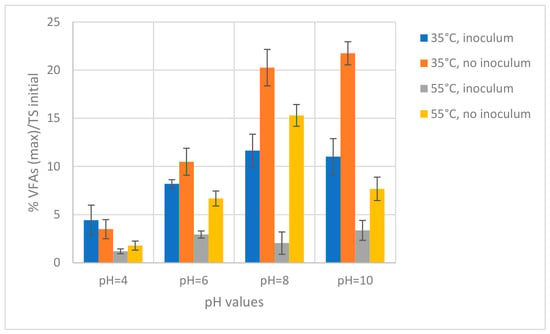
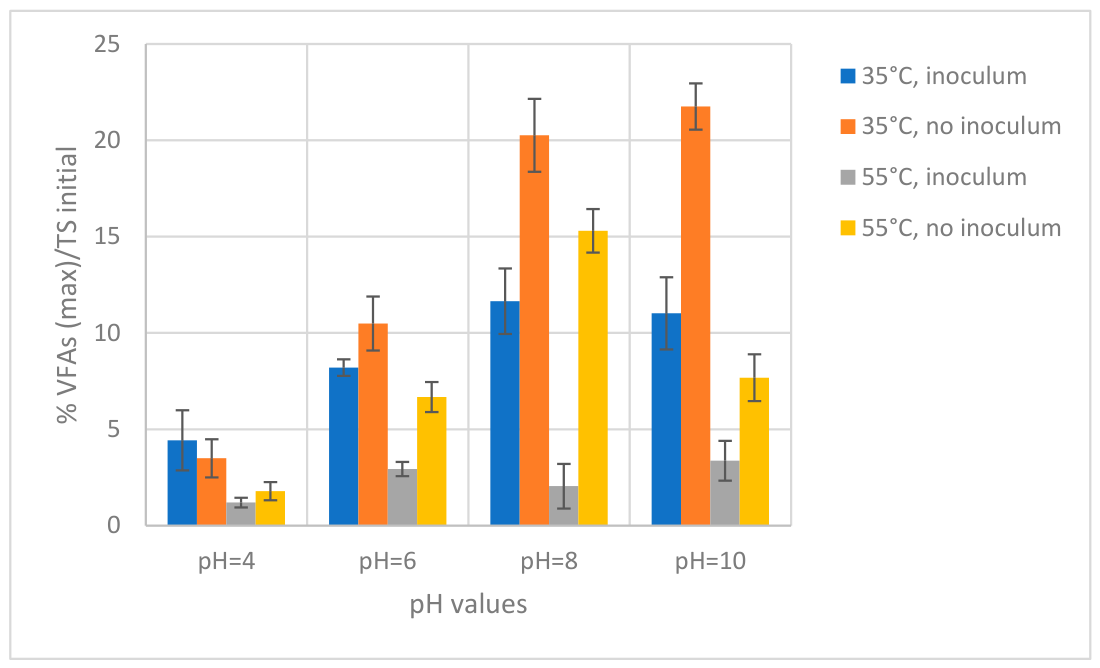
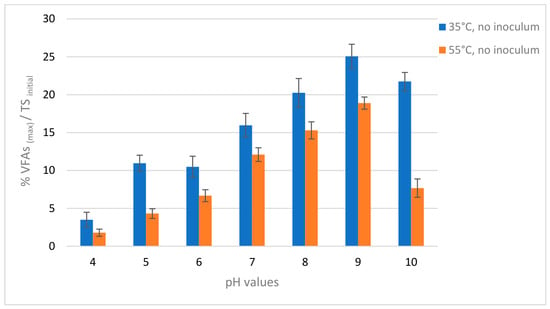
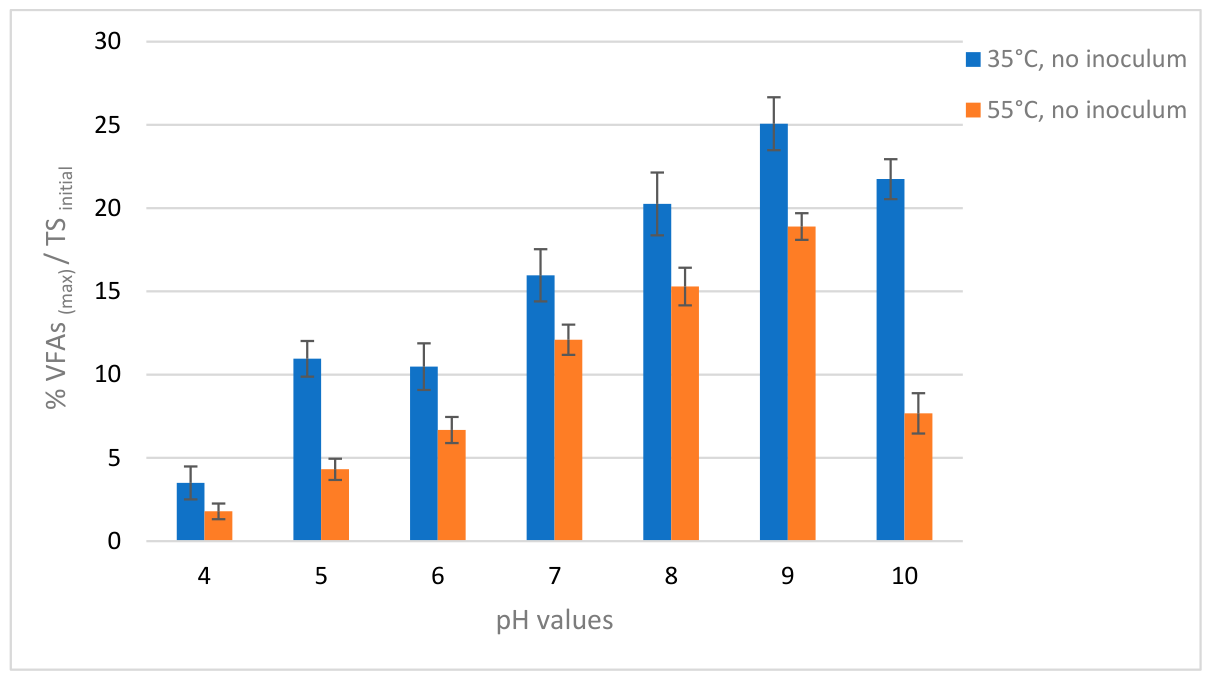
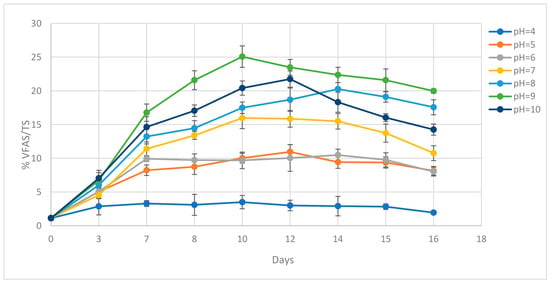
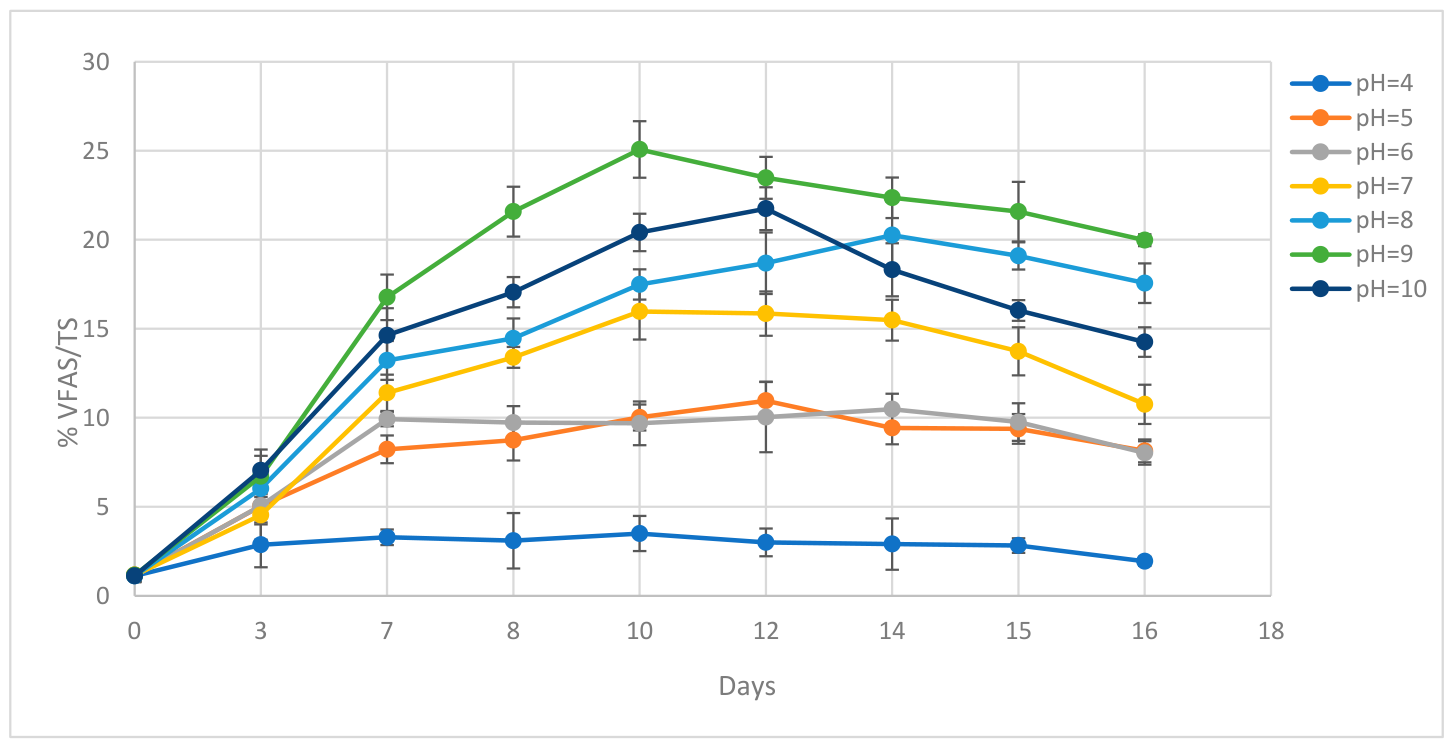
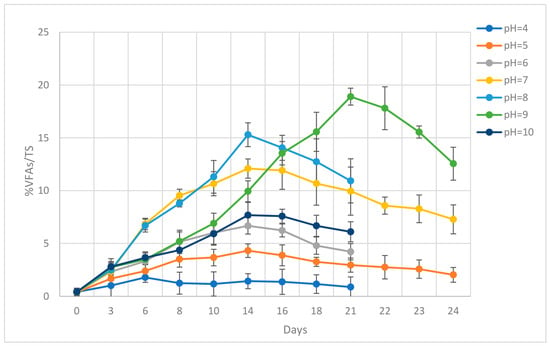
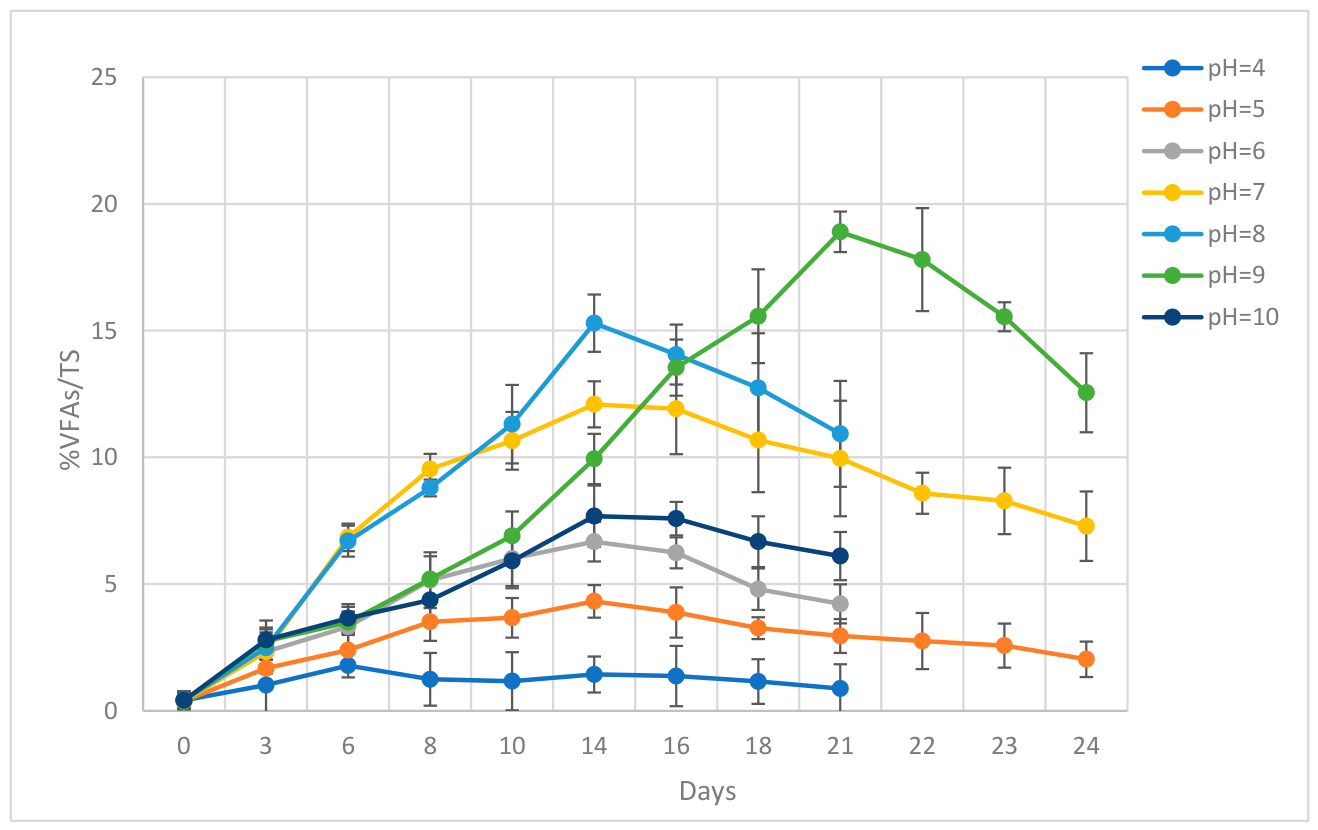
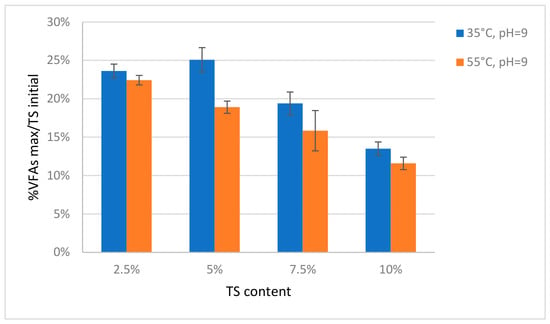

Disclaimer/Publisher’s Note: The statements, opinions and data contained in all publications are solely those of the individual author(s) and contributor(s) and not of MDPI and/or the editor(s). MDPI and/or the editor(s) disclaim responsibility for any injury to people or property resulting from any ideas, methods, instructions or products referred to in the content. |
© 2026 by the authors. Licensee MDPI, Basel, Switzerland. This article is an open access article distributed under the terms and conditions of the Creative Commons Attribution (CC BY) license.