


Abstract
Against the background of deepening culture–tourism integration and growing concern for cultural sustainability, intangible cultural heritage (ICH) educational tourism has become an important means of connecting cultural communication, educational practice, and tourism experience. Taking Hebei Province as a case, this study combines a document and data review, a questionnaire survey (N = 204), and semi-structured interviews (N = 12) to examine representative practices, user perceptions, and implementation contexts. The findings were synthesized across visual, experience, and product design. Although Hebei has developed diverse forms of ICH educational tourism, weaknesses remain in visual identity and information guidance, learning tasks and feedback, and products that support cultural understanding, preserve outcomes, and sustain post-activity engagement. Process participation and immersive experience, together with visual and information design, were consistently and positively associated with overall evaluation. The interviews identified further barriers involving the learning thread, connections among touchpoints, and post-activity product use. Drawing these findings together, the study adapts Garrett’s five-plane model to the context of ICH educational tourism and develops strategies across the strategy, scope, content, interaction, and surface layers. The resulting framework provides a design basis for Hebei and a methodological reference for comparable regions.
1. Introduction
1.1. Research Background
Intangible cultural heritage (ICH) is a living cultural form sustained through community practice, intergenerational transmission, and continuous re-creation. UNESCO’s Convention for the Safeguarding of the Intangible Cultural Heritage states that safeguarding encompasses not only identification, documentation, and preservation, but also the transmission of ICH through formal and non-formal education [1]. UNESCO further recognizes ICH as knowledge, learning resources, and cultural practices that can be incorporated into education, emphasizing the relationships among learners, communities, and heritage bearers [2]. With the development of cultural tourism, heritage education, and the experience economy, research on ICH tourism has expanded beyond resource development and the safeguarding of individual heritage elements to address cultural authenticity, community participation, experience quality, and sustainable development [3]. Within this context, ICH educational tourism has become an important form of practice linking living heritage transmission, situated learning, and tourism experience. Its development depends on transforming local cultural resources into tourism experiences that support learning, participation, and continued communication.
Studies conducted in different geographical contexts show that the integration of ICH into tourism and education varies considerably by region. In South Tyrol, Italy, traditional languages and associated ICH content can strengthen tourists’ recognition and experience of local culture, although their effects are shaped by local identity, content presentation, and modes of participation [4]. Cross-regional research on the UNESCO Creative Cities Network has found that ICH and the creative industries can work together through cultural events, product development, and tourism initiatives, but cities differ in how they transform cultural resources and incorporate them into tourism [5]. Research involving cultural institutions, civil society, and immigrant communities further shows that contemporary ICH communication depends not only on cultural resources themselves, but also on institutional collaboration, community participation, and relationships among cultural actors [6]. These findings suggest that ICH tourism and educational practices cannot follow a development model detached from local conditions. Their cultural value must instead be realized through approaches suited to particular participants, settings, and communication mechanisms.
In China, educational tourism—referred to as “study travel” in the national policy context—has moved from policy advocacy toward a phase of standardization characterized by the coordinated development of courses, routes, products, and services. The Service Requirements for Study Travel defines study travel as a form of tourism centered on experiential education and inquiry-based learning and specifies requirements for courses, routes, and supporting services [7]. The Guidelines for the Design of Study Travel Curricula and Routes further incorporate course objectives and content, implementation processes, learning tools, supporting manuals, route components, and evaluation and improvement into the design process [8]. Research in different provinces has also developed distinct regional emphases. Studies in Shandong Province have primarily assessed the development suitability, spatial patterns, and constraints of ICH educational tourism [9]. Research in Hunan Province has focused on the mechanisms and development models through which ICH and cultural tourism are integrated [10], while studies in Fujian Province have examined service-experience innovation in cultural tourism through the context of historic districts [11]. Together, these studies provide an important basis for understanding the relationships among ICH, education, tourism, and local development. They also show that resource composition, development conditions, and practical problems vary across regions, requiring research scales and analytical methods suited to specific contexts.
Hebei Province provides both a resource base and a practical foundation for research on ICH educational tourism. Official information released in December 2025 recorded 163 national-level representative ICH projects, 990 provincial-level representative ICH projects, and 1170 ICH workshops in the province [12]. Hebei has also introduced classic educational tourism routes, organized course and route design competitions, and gradually developed a practical platform system comprising educational tourism bases at different levels [13]. Research in the province has examined specific projects, including the design transformation of Luanzhou shadow puppetry and its contribution to sustainable rural development [14]. However, how Hebei’s extensive ICH resources and diverse practice platforms can be effectively connected with participants’ overall experience remains to be systematically examined using evidence from regional practices and users. This study therefore treats Hebei Province as a geographically defined case context rather than a sample representative of all regions. It focuses on translating local resources, practical problems, and user needs into hierarchically organized design strategies, while offering an applied research approach that can be tested and adapted in regions with similar conditions.
1.2. Research Questions and Research Gaps
Previous research indicates that the quality of ICH educational tourism depends not only on the available cultural resources, but also on how cultural content is organized, how participation is structured, how media are used, and how users perceive the resulting experience. Perceived authenticity and experience quality in cultural heritage tourism can influence participants’ satisfaction and behavioral intentions [15,16], while digital media, course organization, and product transformation shape how ICH content is presented, learned, and communicated [17,18,19,20]. In Hebei Province, however, systematic empirical research is still needed to determine whether current practices form a connected experience system across experience spaces, course activities, educational tourism routes, and cultural and creative products, and how participants perceive the design of these practices.
Despite growing research on ICH tourism and education, three related gaps remain. First, regional studies have generally examined resource conditions, development models, or educational organization, whereas design studies often focus on a single ICH item, medium, or setting. Few studies treat experience spaces, course activities, educational tourism routes, and cultural and creative products as parts of the same experience system. Second, digital presentation, course organization, interaction, and product transformation are usually studied separately, leaving no shared structure that connects user positioning, content and product scope, participation processes, and perceptual presentation. Third, regional practices, user perceptions, and implementation barriers are often examined in isolation, and the process of translating evidence from these sources into hierarchically organized design strategies remains underdeveloped. The gap addressed here is therefore an analytical one: the absence of a clear pathway connecting multiple objects of practice, evidence from several sources, and systematic design strategies.
Accordingly, this study addresses four research questions. (1) What representative design problems are evident in the experience spaces, course activities, educational tourism routes, and cultural and creative products of ICH educational tourism in Hebei Province? (2) How are these problems reflected in user perceptions? Within the study sample, what patterns emerge in content preferences, experience evaluations, participation barriers, and willingness to continue participating among participants with different participation experiences and levels of ICH awareness? (3) What local causes and practical implementation barriers affect information communication, experience processes, content and product provision, and organizational support for services in Hebei’s ICH educational tourism? (4) How can findings from the document and data review, questionnaire survey, and semi-structured interviews be integrated and, through a context-adapted version of Garrett’s five-plane model of user experience [21], translated into layered design strategies for culturally sustainable communication?
1.3. Research Contributions
This study makes three contributions. First, it demonstrates a context-specific adaptation of Garrett’s five-plane model. The model’s progression from high-level goals to concrete presentation is retained, while selected planes are reinterpreted for ICH educational tourism, which combines physical settings, educational functions, and multiple touchpoints [21]. Second, the study develops a multimethod process that integrates evidence on current practices, user perceptions, and local implementation contexts. The three design dimensions synthesize the identified problems, and the five-layer framework supports their hierarchical mapping and translation into strategies. Third, it proposes a layered design strategy for ICH educational tourism in Hebei, coordinating user positioning, content and product configuration, participation processes, interaction touchpoints, and visual information. Although the findings are specific to Hebei, the process of integrating evidence and developing context-sensitive strategies may be useful in regions with comparable resources and practical challenges.
1.4. Research Approach
The study proceeds through three levels of inquiry: regional practices, user perceptions and needs, and participation contexts and implementation barriers. The document and data review, questionnaire survey, and semi-structured interviews are linked across successive stages, and their findings are organized in the comprehensive discussion through the dimensions of visual, experience, and product design. The resulting design problems are then mapped onto the context-adapted five-layer framework to support the development of layered strategies. Section 3 details the research design, data sources, analytical procedures, and integration of findings.
2. Literature Review and Theoretical Foundations
2.1. Research on Intangible Cultural Heritage Educational Tourism
ICH educational tourism, as defined in this study, draws on research in living heritage education, tourism learning, and cultural heritage experience. Research on living heritage education emphasizes that ICH is not only knowledge to be taught; it can also become part of education through the relationships among heritage bearers, learners, and specific contexts of practice [2]. Studies of ICH curricula in the digital age further show that ICH knowledge can be developed into concrete learning content through interdisciplinary tasks, digital media, and practical activities. Its educational effectiveness, however, depends on coordination among course objectives, activity organization, and learning assessment [18]. Incorporating ICH into educational tourism therefore involves more than adding cultural projects to a tourism route. Relevant knowledge, skills, and cultural meanings must be organized into a learning process with clear objectives, structured tasks, and defined outcomes.
From the perspective of learning, experience does not automatically become knowledge or cultural understanding. Kolb describes experiential learning as a cycle connecting concrete experience, reflective observation, abstract conceptualization, and active experimentation [22]. Research on tourism learning likewise suggests that learning through travel is highly individual and is shaped by participants’ motivations, prior knowledge, and personal interests. Its meaning may also continue to develop after the trip has ended [23]. Stone and Petrick further show that travel can contribute to knowledge acquisition, personal growth, and skill development, but that different forms of travel and activity content produce different learning outcomes [24]. In ICH educational tourism, therefore, an on-site visit or hands-on craft activity alone does not demonstrate that learning has occurred. Courses must connect concrete experience with cultural understanding through question-based guidance, practical tasks, knowledge interpretation, reflection and feedback, and the presentation of outcomes.
Research on cultural heritage interpretation also demonstrates the importance of organizing experiences through information communication and meaning-making. Moscardo argues that effective heritage interpretation can encourage active attention and reflection by providing information that is varied, relevant to participants, and connected to its context, thereby shaping the quality of heritage tourism experiences [25]. Nowacki’s systematic review of heritage interpretation and sustainable development further indicates that interpretation does more than transmit knowledge. Guided tours, exhibitions, digital media, and participatory activities can also foster emotional engagement, cultural understanding, and awareness of heritage safeguarding [26]. The quality of ICH educational tourism therefore depends less on the amount of information provided or the form of technology used than on how effectively cultural content is connected with its setting, participation tasks, and interactive feedback.
Empirical research has also examined how ICH and cultural heritage experiences relate to satisfaction and subsequent behavior. A study of Kunqu Opera found that perceived ICH authenticity influences participant satisfaction through experience quality [15]. Research on cultural heritage tourists has shown that engagement, perceived authenticity, and destination image contribute to memorable tourism experiences, which in turn influence intentions to revisit and engage in electronic word of mouth [27]. From the perspective of those implementing ICH tourism, sustainable development decisions involve not only cultural safeguarding goals but also stakeholders’ assessments of social value and their own interests [16]. The sustainability of ICH educational tourism is therefore related both to participants’ cultural understanding, satisfaction, and willingness to communicate their experiences and to the operating conditions of local institutions and other implementing actors.
Taken together, ICH educational tourism can be understood as a process connecting the transformation of cultural content, experiential learning, heritage interpretation, and continued participation. The literature suggests four points relevant to this study. ICH resources must be structured into courses and situated in specific contexts before they can become part of a learning process. Learning depends on the connection among practical participation, knowledge interpretation, and reflective feedback. Cultural understanding and experience evaluation are shaped by participants’ prior knowledge, motivations, and the context of participation. Continued cultural communication also depends on what participants remember after an activity, their intentions to revisit and share, and support from implementing actors. Accordingly, this study considers not only the cultural resources and activities provided by ICH educational tourism, but also how cultural content is organized, how participation is supported, and how experience outcomes are extended beyond the activity itself. Section 2.2 discusses the design interventions involved in these processes.
2.2. Research on Design Intervention in ICH Communication and Experience
The role of design intervention in cultural heritage communication is not limited to improving outward appearance. More importantly, design translates cultural knowledge, cultural meaning, and practices into experiential content that participants can recognize, understand, and use. Mason and Vavoula describe digital cultural heritage design as a practice involving activities, tool mediation, and knowledge production. They emphasize that design must account for technological applications, the institutional contexts of cultural organizations, and visitor experience [17]. Rahaman defines digital heritage interpretation as a continuous interpretive process oriented toward end users, rather than the simple use of digital tools to present cultural information. Digital media design, in this view, should support learning, meaning-making, and participant expectations [28]. These studies suggest that design mediates and organizes the relationship between cultural content and user experience in ICH communication. This role concerns not only how information is presented, but also how participation is structured and how cultural content is incorporated into particular media and products.
Research on visual communication focuses on how cultural information is recognized, understood, and used through exhibitions, images, text, wayfinding systems, and digital interfaces. Heritage interpretation research shows that interpretive talks, signage, exhibitions, and digital media not only convey knowledge but also shape participants’ attention, understanding, and actions [26]. In their study of five cultural tourism museums in China, Ai and Phaholthep found that insufficient wayfinding information, poorly positioned digital media, and obstructions in primary communication spaces can reduce the efficiency of visits and affect interactive behavior. They developed an evaluation framework encompassing spatial environments, information presentation, and digital-media interaction [29]. Visual design in ICH communication should therefore be assessed not only in terms of the aesthetic qualities of graphics, colors, and forms, but also in relation to information hierarchy, the clarity of wayfinding and route cues, visual consistency across media, and the extent to which information helps participants understand activities and take the required actions.
In experience organization, design research has expanded from isolated information presentation to participants’ actions, interactions, and feedback within particular settings. Research on ICH courses shows that interdisciplinary tasks, practical activities, and digital media can be combined in course organization, but their effectiveness depends on coordination among course objectives, activity sequences, and assessment [18]. Studies of ICH digitization also note that embodied skills, tacit knowledge, and contextual relationships cannot be fully conveyed through static records alone. Digitization must therefore consider knowledge representation, interactive participation, and embodied experience [19]. Rahaman similarly argues that digital technology cannot replace heritage interpretation. Media contribute to an effective experience only when they are connected to participant needs, cultural contexts, and interpretive goals [28]. Experience design in ICH educational tourism should not, therefore, be equated with simply adding augmented reality, virtual reality, games, or interactive installations. Its primary concerns are activity objectives, task progression, modes of participation, feedback mechanisms, and continuity across the stages before, during, and after an activity.
Research on product transformation examines how ICH content is incorporated into physical or digital forms with defined functions and contexts of use. From an industrial design perspective, Shen et al. argue that the contemporary transformation of ICH elements must address visual form, functional value, and user acceptance, rather than relying on the superficial application of cultural symbols [20]. Through fieldwork on traditional weaving in Northern Thailand, Chudasri et al. examine the possible roles of design in production development, product development, market communication, and the continuation of craft skills. They also distinguish between the continued production of traditional products and the continuation of the sociocultural ways in which those products are used [30]. These studies indicate that the design value of ICH products lies not only in producing marketable cultural goods, but also in supporting craft practice, knowledge understanding, and cultural use. In ICH educational tourism, product design may therefore include not only conventional cultural and creative products, but also experience materials, operational tools, task manuals, course-support resources, digital interactive content, and media for recording outcomes. These products can support practice, explain information, preserve outcomes, and extend communication after the activity.
Taken together, the literature identifies visual communication, experience organization, and product transformation as three connected aspects of design intervention in ICH communication and experience. Visual communication concerns how cultural information is recognized and understood. Experience organization addresses how participants enter activities, progress through tasks, and receive feedback. Product transformation concerns how cultural content is incorporated into physical or digital forms that participants can operate, use, and continue to engage with. These are analytical perspectives rather than mutually exclusive categories. Within a specific project, visual information can shape participation routes, the way a product is operated can affect the experience process, and experience feedback can be recorded and extended through physical or digital products. On this basis, the present study uses visual design, experience design, and product design as three analytical dimensions for the empirical research. Their operational definitions and applications are explained in Section 3.2. These dimensions are used primarily to identify the nature of design problems; the hierarchical relationships among design decisions are addressed through the user experience theory and model discussed in Section 2.3.
2.3. User Experience Theory and Garrett’s Five-Plane Model
User experience (UX) research initially developed in the design of digital products, information interfaces, and interactive systems. Its central concern, however, is not limited to websites or software. UX research examines functions, content, interaction, and users’ eventual perceptions in relation to user needs, contexts of use, and the object being designed. ISO 9241-210 defines human-centered design as a systematic design process organized around users, their needs, and their contexts of use [31]. As the field has developed, its focus has expanded beyond usability to include emotion, meaning, aesthetics, and the overall value of an experience [32,33]. Although ISO 9241-210 primarily addresses interactive systems, this study draws only on its general principles concerning users, needs, and contexts of use. It does not treat ICH educational tourism as equivalent to a digital interactive system.
In The Elements of User Experience, Jesse James Garrett presents a five-plane model that organizes complex experience-design problems into the strategy, scope, structure, skeleton, and surface planes [21]. The strategy plane addresses user needs and project objectives. The scope plane defines functional and content requirements. The structure plane organizes information and interaction flows, while the skeleton plane determines the arrangement of interfaces, navigation, and information. The surface plane concerns the visual and sensory form ultimately perceived by users. The five planes progress from the abstract to the concrete, allowing overall goals to be translated gradually into specific design decisions. The model is therefore not a fixed template for a particular type of product, but an analytical framework for organizing different kinds of experience-design problems and their hierarchical relationships.
Research on cultural heritage tourism shows that users’ understanding of heritage content, immersive experience, interactive participation, and perceptions of authenticity are closely related to satisfaction, loyalty, and subsequent behavioral intentions [15,34]. The experiential value of ICH educational tourism therefore depends not only on the cultural resources involved, but also on how participants encounter information, enter the activity process, understand cultural content, and maintain a connection with it afterward. A user experience perspective makes it possible to examine cultural content, activity processes, design touchpoints, and perceived outcomes within the same analysis.
Four criteria were used to assess the suitability of different theoretical models for this study. First, the model needed to cover design decisions ranging from target users and value positioning to content, products, participation processes, and perceptual presentation. Second, it needed to organize design problems across experience spaces, course activities, educational tourism routes, and cultural and creative products within a common framework. Third, it needed to accommodate problems identified through the combined findings of the document and data review, questionnaire survey, and semi-structured interviews, while supporting the transition from problem identification to design strategy development. Fourth, it needed to represent the hierarchical and coordinated relationships among different design problems. These criteria correspond to the study’s task of moving from empirically identified problems to the construction of systematic design strategies.
On this basis, process-oriented, learning-process-oriented, and evaluation-oriented models and methods were compared in terms of their theoretical suitability. User journey mapping represents participants’ experiences across different stages and touchpoints, while service blueprints reveal the relationships among user actions, frontstage interactions, backstage activities, and support processes. Both are well suited to examining the temporal development of experiences and the organization of service touchpoints [35,36,37,38]. Kolb’s experiential learning model explains how experience becomes learning through concrete experience, reflective observation, abstract conceptualization, and active experimentation, making it useful for analyzing learning processes in ICH courses [22]. Evaluation-oriented models associated with Hassenzahl focus on users’ perceptions of a product’s pragmatic quality, hedonic quality, and overall appeal and are therefore suitable for interpreting evaluations of existing experiences [33,39]. These models and methods emphasize service processes, learning cycles, or experience evaluation, respectively. Each can explain particular aspects of this study, but none alone provides an overall structure for organizing its different types of design problems.
This comparison is a conceptual assessment based on the research task and the functions of each model. It is not a statistical comparison of validity or an empirical test of which candidate model performs best. The purpose of this study is neither to map the complete service process of a single activity nor to construct an experience-evaluation scale for a particular product. Rather, it brings together three sources of empirical findings, formulates the resulting design problems, and translates them into layered strategies ranging from overall positioning to concrete presentation. Compared with models that primarily emphasize temporal processes or evaluation outcomes, Garrett’s five-plane model brings user needs and project objectives, product and service scope, content and process organization, interaction touchpoints, and final perceptual presentation into a single hierarchy [21]. Its selection as the overall framework for integrating the findings and developing design strategies is therefore based on its suitability for the present research task, rather than on any claim that it is universally superior to other models.
This study does not directly transfer the web-design components of Garrett’s model to ICH educational tourism. Instead, it retains the model’s progression from goal setting to perceptible presentation and adapts this logic to the physical, educational, and multi-touchpoint characteristics of ICH educational tourism. In the adapted framework, the strategy, scope, and surface planes are retained as the strategy, scope, and surface layers. The original structure plane is operationalized as the content layer, and the skeleton plane as the interaction layer. These two layers correspond respectively to the development and configuration of content and to the specific ways in which participants engage with ICH educational tourism. This adaptation does not redefine Garrett’s original model; it translates the analytical functions of selected planes to suit the object of study. Visual design, experience design, and product design are used to identify and organize empirical problems, while the adapted five-layer framework is used to map those problems and develop strategies in the comprehensive discussion. The operational meaning of each layer and its relationship to the empirical findings are explained further in the methods and discussion sections.
3. Materials and Methods
3.1. Methodological Design
ICH educational tourism combines cultural communication, educational practice, tourism experience, and design transformation. Because no single method can adequately capture its current practices, user perceptions, and local implementation barriers, this study adopts a multimethod design combining a document and data review, a questionnaire survey, and semi-structured interviews [40].
The three methods address different empirical aspects of the same research problem and are linked across successive stages. The document and data review examines experience spaces, course activities, educational tourism routes, and cultural and creative products to identify observable practices and preliminary design problems in Hebei. The questionnaire and interview guide were then developed around visual, experience, and product design. The questionnaire examined user perceptions, experience evaluations, content preferences, participation barriers, and willingness to continue participating among respondents with and without previous participation experience. The interviews covered the same design-related areas, with follow-up questions tailored to experience within Hebei, outside the province, or both, and provided contextual explanations of regional differences, underlying causes, implementation barriers, and priorities for improvement. The sequence therefore moves from identifying current practices and preliminary problems, to examining user perceptions and needs, and finally to explaining participation contexts and implementation barriers; the later stages do not simply verify the earlier findings. Section 3.2 explains how the three design dimensions were applied across the methods.
During the comprehensive discussion, visual design, experience design, and product design provide a common frame of reference for comparing findings that support one another, complement one another, or differ across data sources. Supporting findings indicate that a problem appears across different empirical aspects, while complementary findings extend its observed manifestations or explain the context in which it arises. Findings that are not fully consistent are interpreted in relation to their data sources, participants, and analytical scope. The findings are then synthesized into integrated design problems and mapped onto the context-adapted five-layer framework to identify the levels at which design decisions are required and to support strategy development. The overall research design and methodological framework are presented in Figure 1.
Figure 1.
Research design and methodological framework.
The three datasets were not collected at exactly the same time. The formal case database for ICH educational tourism in Hebei Province was compiled during 2025, while the questionnaire survey and semi-structured interviews were conducted in March and April 2026, respectively. Although the questionnaire and interviews were conducted within a short interval and addressed related research content, both recorded participants’ evaluations and recollections of earlier activities. The specific activities and dates represented in these accounts therefore varied and did not correspond case by case with the sample compiled in 2025. In addition, the activity content, communication methods, or service configurations of some projects may have changed during the data collection period.
These temporal differences are taken into account when interpreting the findings. The conclusions describe the design problems and their relationships as observed within the period covered by this study; they are not intended to assess changes in individual projects over time.
3.2. Design Analysis Dimensions
Drawing on the literature on design intervention in ICH communication and experience reviewed in Section 2.2, and considering the research questions and types of empirical data used in this study, visual design, experience design, and product design were operationalized as three design analysis dimensions. Together, these dimensions provide an analytical framework for identifying problems and organizing evidence. They also serve as a shared perspective connecting the document and data review, questionnaire survey, semi-structured interviews, and comprehensive discussion.
The visual design dimension concerns how ICH knowledge, skills, and cultural meanings are presented and communicated through visual and informational forms. It covers visual identity, the translation of cultural symbols, exhibition and display design, information hierarchy, wayfinding signage, promotional materials, route maps, and visual consistency across physical and digital media. In addition to the aesthetic qualities of design, this dimension considers whether visual information helps participants recognize the activity theme, understand cultural content, determine how to proceed, and form an overall impression with distinct regional characteristics.
The experience design dimension concerns participants’ learning, actions, and interactions across the different stages and touchpoints of ICH educational tourism. It covers activity objectives, process organization, task design, modes of participation, interactive feedback, sensory experience, and connections among pre-activity preparation, on-site participation, and post-activity extension. The analysis considers whether an activity moves beyond one-way explanation, simple visits, or one-off imitation of craft techniques. It examines how connected activity stages support participants in progressing from initial contact with cultural content to practical experience, knowledge understanding, meaning-making, and the presentation of outcomes.
The product design dimension concerns how ICH content is transformed into physical or digital forms with defined functions, modes of use, and contexts of application. It covers the selection of cultural content, media and structural forms, functional positioning, operation, learning support, outcome retention, and post-activity communication. These products are not limited to conventional tourism souvenirs; they also include experience materials, tools, educational tourism manuals, course-support resources, interactive games, digital picture books, and other designed media that support cultural understanding, craft experience, and continued engagement after an activity.
The three dimensions are applied differently across the research methods. In the document and data review, they are used to organize, categorize, and compare case materials and to identify design problems. In the questionnaire survey, relevant design content is further operationalized into the measurement modules of learning objectives and knowledge acquisition, visual and information design, product and content forms, and process participation and immersive experience. Statistical analyses are conducted using the corresponding scale dimensions. In the semi-structured interviews, the three dimensions define the areas covered by the interview guide and the directions of follow-up questions, while the interview data are thematically organized around local causes, practical implementation barriers, and priorities for improvement. The questionnaire items, interview guide, and analytical procedures are described in the corresponding method sections.
The three design dimensions are interconnected analytical perspectives rather than mutually exclusive categories. A single design phenomenon may involve more than one dimension. For example, wayfinding information in an experience space is primarily a matter of visual presentation, but its clarity also affects participants’ movement through the space and their overall experience. Each problem is therefore assigned to the dimension that best reflects its primary concern, while relationships among dimensions are retained in the comprehensive discussion.
The three design dimensions and the context-adapted five-layer framework perform different but connected functions. The dimensions are used to identify how design problems appear in practice and to organize empirical evidence from different sources. The five-layer framework is then used to locate those problems within the hierarchy of design decisions and to support the integration of findings and development of strategies in the comprehensive discussion. There is no fixed one-to-one correspondence between the dimensions and the five layers. Together, they form an analytical pathway from problem identification and evidence integration to strategy development.
3.3. Document and Data Review
3.3.1. Research Objects
The Service Requirements for Study Travel (LB/T 054—2025), implemented in 2025, defines study travel as a tourism activity conducted primarily for young people, intended to improve their overall competencies, and organized through group travel, with experiential education and inquiry-based learning as its main features. The standard also defines study travel courses, routes, and products separately. A study travel product is described as a package comprising a study travel route and its supporting services, with the study travel course serving as the core attraction [7]. The Guidelines for the Design of Study Travel Curricula and Routes (LB/T 092—2025) further incorporates course objectives and content, implementation processes, learning tools and supporting manuals, route components, itinerary organization, and evaluation and improvement into course and route design [8]. The Hebei provincial standard Quality Specifications for Study Travel Products (DB13/T 5736—2023) provides a local basis for product development and quality management [41]. Accordingly, study travel is understood here as an integrated product and service system involving activity settings, learning content, process organization, and supporting resources, rather than a visit to a single venue, an isolated course, or a simple combination of tourism stops.
From the perspectives of service experience and the user journey, an overall experience is formed through multiple touchpoints encountered by participants at different stages. These touchpoints may involve online platforms, physical environments, and interpersonal interactions [42]. The examination of ICH educational tourism should therefore extend beyond individual venues or activities to consider activity settings, learning content, process organization, and media support.
Drawing on these standards and service design research, and considering the forms of ICH educational tourism practiced in Hebei Province, this study examines four types of research objects: experience spaces, course activities, educational tourism routes, and cultural and creative products. For brevity, the regional review of practices based on documentary and publicly available sources is referred to below as the review of current practices.
Experience spaces are physical settings in which ICH is displayed and interpreted and in which courses, craft activities, interactive participation, and on-site services take place. They include museums, ICH exhibition halls, cultural centers, educational tourism practice bases, traditional workshops, ICH transmission centers, and cultural industry parks. Spatial organization, exhibition design, visual information, wayfinding systems, and interactive facilities affect how participants encounter and understand ICH content [29]. The analysis therefore does not focus primarily on the number or administrative classification of venues. Instead, it examines whether different spaces support understanding and participation through exhibitions, information guidance, and interactive features.
Course activities translate ICH knowledge, skills, and cultural meanings into processes of learning and participation. The relevant standards require study travel courses to have clear objectives, instructional stages, and assessment requirements and to provide experiential, inquiry-based, or research-oriented learning activities suited to differences in participants’ knowledge and abilities [7,8]. Drawing on the basic understanding of experience transformation in experiential learning [22], course activities in this study include not only knowledge explanation, skill demonstrations, and craft making, but also observation and inquiry, task progression, interactive discussion, presentation of outcomes, and feedback and assessment. Clear learning objectives, connected task structures, and a process through which practical experience develops into knowledge understanding distinguish these activities from ordinary cultural visits or one-off craft experiences.
Educational tourism routes connect spatial nodes, course content, and activity stages into a structured process. The relevant standards define a study travel route as an itinerary organized around a particular theme that integrates study travel courses with related tourism activities. They also require the coordinated organization of courses, itineraries, temporal and spatial nodes, and supporting resources [7,8]. In this study, an educational tourism route is therefore not a simple geographical connection among venues, attractions, or practice bases. It is a route system that organizes spatial nodes, activity sequences, content relationships, and learning processes around a specific ICH theme. The analysis considers the route theme, relationships among nodes, the staged progression of knowledge and tasks, and the extent to which route maps, visual guidance, and task materials support the educational tourism process.
Cultural and creative products constitute the fourth type of research object, included from the perspectives of art design and multi-touchpoint user experience. Relevant industry standards incorporate learning tools, instructional manuals, task manuals, educational tourism manuals, and supplementary content into the support system for courses and routes [7,8]. This study therefore includes physical or digital products that are connected to a specific ICH project, have undergone design transformation, and perform learning, experiential, recording, or communication functions during or after an educational tourism activity. These products include experience materials, operational tools, learning-support resources, digital interactive media, products for recording outcomes, and commemorative communication products. General-purpose goods, or products that use regional symbols or ICH patterns only as surface decoration without establishing a connection to specific ICH content or educational tourism functions, are excluded.
Together, experience spaces, course activities, educational tourism routes, and cultural and creative products provide the settings, content, process structure, and media support of ICH educational tourism. They constitute the main scope of the review. This operational scope was developed in relation to the research objectives and relevant practices in Hebei Province and is not proposed as a fixed classification applicable to all regions.
3.3.2. Data Sources, Data Organization, and Case Sample Development
To systematically identify the main forms of ICH educational tourism practiced in Hebei Province, the formal scope of the review included publicly searchable projects located within the province’s administrative boundaries, together with educational tourism practices centered on Hebei’s ICH resources. Data collection, organization, and case selection covered the four research objects of experience spaces, course activities, educational tourism routes, and cultural and creative products. Case retrieval, source verification, and compilation of the case database were completed during 2025, and the subsequent case analyses draw on the materials assembled at that stage. To provide additional context on the broader resource conditions for ICH safeguarding and educational tourism in Hebei, the statistics presented in Table 1 were updated using publicly available information accessible as of May 2026. These macro-level statistics are used only to describe the regional resource and practice context. They were not used to select or classify the representative cases and do not alter the case sample established in 2025.
Table 1.
Overview of ICH resources and safeguarding infrastructure in Hebei Province.
The research materials were drawn from four types of sources. The first comprised policy documents, official designation lists, statistical information, and project descriptions published by government departments and public institutions, including agencies responsible for culture and tourism, education, cultural heritage, and ICH safeguarding. The second included venue descriptions, activity announcements, course information, route materials, and product descriptions published by museums, cultural centers, ICH exhibition halls, educational tourism practice bases, traditional workshops, universities, and project operators. The third consisted of feature reports, activity records, route descriptions, and product information published by official media, major local media, and other publicly accessible online platforms. The fourth comprised academic publications and research materials available through relevant scholarly databases. Cases of cultural and creative products drew on all four types of sources, whereas the formal identification of experience spaces, course activities, and educational tourism routes relied mainly on the first three.
Policy documents, statistical reports, designation lists, and institutional information were initially used as leads for identifying cases. When a source provided only the number of projects, types of practice bases, designation batches, or institutional names, follow-up searches were conducted using the identifiable region, institution, or project. A record was added to the preliminary database only after its case name, implementing organization, location, main content, and form of practice had been further verified.
In principle, candidate cases were required to meet five criteria: regional relevance, ICH relevance, relevance to educational tourism, suitability for design analysis, and source verifiability. Regional relevance meant that a case took place within Hebei Province or centered on a specific ICH project or cultural resource from Hebei. ICH relevance required a clear connection to an ICH project, traditional skill, body of cultural knowledge, representative inheritor, or related cultural content. Relevance to educational tourism meant that the case included educational, learning, or experiential content or could be confirmed as directly supporting an educational tourism practice. Suitability for design analysis required the public materials to provide information concerning spatial, activity, route, or product design. Source verifiability meant that the case name, implementing organization, location, and main content could be confirmed through credible public sources.
The review excluded duplicate publications or reposts of the same project, materials containing only promotional titles without substantive information, general tourism projects with no clear connection to ICH educational tourism in Hebei, and records for which the implementing organization, location, or main form of practice could not be confirmed. When the same activity was repeated at different times without substantial changes in content or implementation, the records were merged into a single case. Instances involving substantive differences were assessed separately. Product series released by the same brand or institution were also combined into one series case when their structure, main functions, and experience mechanisms were highly similar and differed only in their ICH theme or production content.
In this study, a representative case is one that clearly presents a major form of practice within the available public materials and provides sufficient information for comparative analysis. Its representativeness is typological and analytical rather than representative of the wider population in the sense of probability sampling. Once the candidate cases had been identified, they were assessed in terms of information completeness, clarity of practice characteristics, distinctiveness, and comparative value. Where cases were highly similar in content and form, preference was given to those with more complete documentation, clearer practice characteristics, and richer design information. Government designation, project visibility, search ranking, and frequency of publicity were treated only as leads for case identification and not as sole criteria for final selection. The final sample was used for qualitative comparison of practice types and design characteristics, not for ranking project quality or drawing population-level statistical inferences. Where public materials did not address a particular aspect or provided insufficient detail, the study treated the evidence as inadequate for assessment rather than inferring that the design element was necessarily absent from the project.
- (1)
- Data Collection and Selection of Representative Experience-Space Cases
Materials on experience spaces were collected mainly through manual searches. Search terms for “Hebei Province” and each of its 11 prefecture-level cities were combined with terms equivalent to “ICH educational tourism,” “ICH educational tourism travel,” “ICH experience,” “experience space,” “experience base,” “experience venue,” and “experience center.” Additional searches and data consolidation were conducted in accordance with the organization and verification procedures described above. The preliminary records included the case name, location, main experience content, and type of space.
Case selection focused on whether a venue had a relatively stable physical space and performed functions such as ICH exhibition, cultural interpretation, craft instruction, or interactive experience. The comparative value of each case was also assessed in terms of its host institution, functional configuration, and organization of experiences. Six representative cases were selected, covering comprehensive ICH exhibition halls, public museums, educational tourism practice bases, cultural industry parks, university-based ICH museums, and traditional craft workshops, as shown in Table 2.
Table 2.
Representative samples of ICH educational tourism experience spaces in Hebei Province.
- (2)
- Data Collection and Selection of Representative Course-Activity Cases
Because the names, publication channels, and presentation formats of course activities were dispersed, manual searches were supplemented by the batch collection of relevant webpages. Search terms for “Hebei Province” were combined with terms equivalent to “ICH educational tourism,” “ICH educational tourism travel,” “ICH experience,” “ICH courses,” “ICH training,” “ICH practice,” and “ICH experience activities.” The collected materials were then manually reviewed, consolidated, and classified. The preliminary records included the activity name, date, location, content, and target group.
Case selection focused on whether an activity had a clearly defined target group and a relatively complete implementation process. The review also considered whether specific stages could be identified, including knowledge explanation, skill demonstration, hands-on practice, task participation, and interactive exchange, as well as each case’s comparative value in terms of ICH content, participants, and course organization. Five representative cases were selected, involving primary and secondary school students, university students, international students, and members of the general public. The activities included traditional craft practice, museum visits combined with hands-on experience, courses combining online theory with offline practice, and comprehensive programs integrating development, instruction, experience, and exchange, as shown in Table 3.
Table 3.
Representative samples of ICH educational tourism course activities in Hebei Province.
- (3)
- Data Collection and Selection of Representative Educational Tourism Routes
Materials on educational tourism routes were similarly dispersed across different sources, used inconsistent names, and varied in the completeness of information about route nodes. Manual searches were supplemented by the batch collection of relevant webpages using terms equivalent to “ICH educational tourism routes,” “ICH cultural educational tourism routes,” and “ICH cultural experience routes.” The materials were then manually reviewed, deduplicated, consolidated, and classified. The preliminary records included the route name, area covered, main nodes, cultural theme, and organizational characteristics.
Route selection focused on whether a route had a clear cultural theme, interconnected itinerary nodes, and an identifiable approach to organizing cultural resources. The review also considered whether it included activities supporting ICH awareness, visits, hands-on experience, or learning. Four representative routes were selected, illustrating different approaches to organizing folk craft resources, family-oriented exploration of Grand Canal culture, regional folk-custom experiences, and thematic study of Cizhou Kiln, as shown in Table 4.
Table 4.
Representative samples of ICH educational tourism routes in Hebei Province.
- (4)
- Working Classification Framework and Selection of Representative Cultural and Creative Product Cases
The procedures used to identify materials and develop cases for cultural and creative products differed from those applied to the other three research objects. In existing research and practice, products related to ICH educational tourism vary in name, format, and function and may overlap with adjacent categories such as tourism souvenirs, museum cultural and creative products, and educational support products. Tourism souvenirs often carry travel memories and local meanings while also functioning as consumer goods [60]. Museum cultural and creative products may additionally provide educational and experiential value [61], whereas cultural and creative products for educational tourism place greater emphasis on knowledge communication, cultural learning, contextual tasks, and interactive participation [62]. In ICH educational tourism, experience kits, course-support teaching aids, and educational equipment used in ICH courses can also translate traditional skills and their cultural content into learning processes that participants can carry out in practice [63].
These studies provide conceptual points of reference concerning commemorative, cultural, educational, and experiential functions, but they do not offer a unified classification that can be applied directly to the present case review. Before reviewing the formal cases from Hebei Province, this study therefore conducted an exploratory case search without geographical restrictions. Comparisons among these cases were used to establish working inclusion criteria and a classification framework for cultural and creative products.
The exploratory search used Chinese keyword combinations equivalent to “ICH educational tourism + cultural and creative products,” “ICH + cultural and creative products,” and “educational tourism + cultural and creative products.” Product and design cases were collected through search engines, social media, e-commerce platforms, and relevant academic publications. These materials were used to identify common product forms, functional characteristics, modes of participation, and contexts of use and to provide an empirical basis for developing the classification. They were not included in the formal Hebei case sample.
Drawing on previous discussions of commemoration and cultural meaning, educational and experiential value, knowledge communication, interactive participation, and course support [60,61,62,63], the dominant function, primary mode of participation, and main context of use were selected as the dimensions for comparing the exploratory cases. Following an empirically grounded approach to typology construction, working types suited to this study were developed by comparing similarities and differences among the cases [64]. The resulting inclusion criteria required a product to be based on a specific ICH project, traditional skill, or related cultural content and to be directly connected to educational tourism functions such as knowledge understanding, craft experience, interactive participation, learning support, or experience extension. Products were excluded if they merely applied ICH patterns or cultural symbols to the surface of ordinary goods without incorporating ICH content into learning or experience through their functions, operation, or context of use.
Based on their dominant functions, primary modes of participation, and main contexts of use, the exploratory cases were organized into three types: traditional experiential and interactive products, digital experiential and interactive products, and educational-course application products. Some cases also supported outcome retention, commemoration, and cultural sharing. Because these functions were generally attached to an experience or course process, they were recorded as secondary attributes rather than treated as separate product categories. The classification is used to organize and compare product cases from Hebei Province and is not proposed as an official or exhaustive taxonomy. The three types, their defining characteristics, and illustrative cases are presented in Table 5.
Table 5.
Working classification framework for cultural and creative products in ICH educational tourism.
Following the development of the classification framework, a formal review of cultural and creative product cases in Hebei Province was conducted. Because product formats and publication channels were diverse, an open-ended search was unlikely to produce a clearly bounded and readily verifiable dataset. Candidate cases were therefore identified through targeted collection within a defined source scope and searches of relevant academic literature.
Product materials were drawn mainly from the Hebei Museum flagship store, the Hebei Museum cultural and creative products store, the Yinji Cultural and Creative Store, and cultural, creative, and educational resources publicly released by the Hebei Provincial Mass Art Center (Hebei Provincial ICH Protection Center). Product and exhibitor information from special exhibitions of Hebei ICH cultural and creative products was also included. These channels had clear connections to Hebei and identifiable institutional, brand, or exhibition backgrounds. Academic publications supplemented the public product sources by providing information on digital design, course-support design, and other design practices that were less frequently represented on product platforms. Defining the source scope in this way established clear boundaries for the review and improved the verifiability of the materials.
Cases collected through the different channels were organized, their sources verified, and duplicate records consolidated before screening against the inclusion criteria described above. The candidate cases were compared in terms of information completeness, their connection to ICH content, educational tourism functions, product forms, and modes of participation. Compared with the other three research objects, the selection of cultural and creative product cases placed greater emphasis on clearly identifiable educational tourism functions, differences in product and design forms, and coverage of the three working types. Where cases had highly similar product structures, main functions, and experience mechanisms, preference was given to those with clearer information, more explicit relevance to educational tourism, and greater comparative value.
Ten product and design practices were selected and consolidated into seven case units according to the product-series grouping rule. These comprised four traditional experiential and interactive product cases, two digital experiential and interactive product cases, and one educational-course application product case, as shown in Table 6.
Table 6.
Representative samples of cultural and creative products for ICH educational tourism in Hebei Province.
3.4. Questionnaire Survey
3.4.1. Questionnaire Design and Structure
Based on the preliminary review of current practices, the questionnaire was developed around the three analytical dimensions of visual design, experience design, and product design. The relevant issues were further operationalized into four survey modules: learning objectives and knowledge acquisition, visual and information design, product and content forms, and process participation and immersive experience. Most scale items used a five-point Likert scale [84] to measure respondents’ evaluations of the different experience dimensions, as well as their overall satisfaction and willingness to continue participating.
Because respondents with participation experience and respondents without participation experience differed in their background knowledge and in the questions they could answer, the questionnaire used a branching structure. Respondents were first asked whether they had participated in ICH-related educational tourism or a similar activity and were then directed to one of two modules. For respondents with participation experience, the questionnaire contained five evaluation modules: learning objectives and knowledge acquisition, visual and information design, product and content forms, process participation and immersive experience, and overall satisfaction and willingness to continue participating. Each module was treated as a composite scale dimension in the subsequent analysis. For respondents without participation experience, the questionnaire examined their level of ICH awareness, perceived barriers to participation, and future participation intention. Open-ended questions were also included to gather information on potential needs. This structure covered both groups and provided a basis for comparing evaluations of actual experiences with the needs and intentions of respondents who had not participated.
3.4.2. Survey Scope, Participant Recruitment, and Data Collection
The survey population was not restricted in advance by age, occupation, or previous participation experience. Instead, the online survey was open to members of the general public who were willing to report their awareness, experiences, or willingness to participate in ICH-related visits, experience activities, courses, cultural tourism, or educational tourism. The aim was to examine evaluations of actual experiences among respondents with participation experience and to investigate ICH awareness, participation barriers, and future participation intention among respondents without participation experience.
To improve the relevance of responses to the research topic, the questionnaire was distributed publicly and was also shared directly with individuals and social networks likely to have encountered, participated in, or followed these types of activities. Previous participation experience and level of ICH knowledge were not eligibility requirements. Information on previous experience was used only to direct respondents to the appropriate questionnaire module.
Recruitment relied mainly on online convenience sampling, supplemented by targeted invitations and snowball sampling. Recruitment information was distributed through social media, an online questionnaire platform, and social networks accessible to the researchers. Some initial participants and contacts subsequently forwarded the questionnaire link to classmates, friends, and others who might be interested in the topic. Although this approach was not a probability-sampling method, it was appropriate for the exploratory and design-oriented purpose of the study.
The questionnaire survey was conducted through an online platform in March 2026. Before accessing the questionnaire, participants read an online informed-consent statement explaining the purpose of the study, anonymous participation, the voluntary nature of participation, the intended use of the data, and the right to withdraw. They proceeded only after providing consent. The recruitment information asked participants to respond on the basis of their actual knowledge or experience. The questionnaire automatically directed respondents to the relevant module according to whether they had participated in ICH educational tourism or similar visits, experience activities, or courses.
A total of 204 completed questionnaires were received. Each response was checked for completeness of the core items, consistency with the branching logic, identifiable duplication, and clearly mechanical response patterns. No response met the exclusion criteria, so all 204 were retained. The final sample comprised 159 respondents with participation experience and 45 without such experience. Detailed sample characteristics are reported in the Results, and the implications of the sample composition are considered in the study limitations.
3.4.3. Data Analysis
Questionnaire data were organized and analyzed primarily using IBM SPSS Statistics 27.0 (IBM Corp., Armonk, NY, USA). In accordance with the branching structure, all 204 valid responses were included in descriptive analyses of sample characteristics and general patterns. Data from Q8–Q12 for the 159 respondents with participation experience were used for experience evaluation, group comparisons, correlation analysis, and regression analysis. Data from the 45 respondents without participation experience were used for exploratory analyses of participation barriers, future participation intention, and potential needs. Composite scores for each scale dimension were calculated as the arithmetic mean of its constituent items. No values were missing across the 25 items in Q8–Q12 for the 159 respondents with participation experience, and complete-case data were used in the relevant analyses.
Frequencies and percentages were used to describe sample characteristics, participation experience, and content preferences. Means and standard deviations were used to summarize evaluations of the scale dimensions, and internal consistency was assessed using Cronbach’s α [85]. The Kruskal–Wallis H test was used to compare experience dimensions across age groups and levels of ICH awareness. The Mann–Whitney U test was used to compare ICH awareness between respondents with and without participation experience [86,87]. Differences between the two groups in each content preference were examined using item-level chi-square tests based on 2 × 2 contingency tables.
Pearson correlation analysis was used to examine relationships among the four dimensions of learning objectives and knowledge acquisition, visual and information design, product and content forms, and process participation and immersive experience. Zero-order correlations between each dimension and overall satisfaction and willingness to continue participating were also calculated. An ordinary least squares multiple linear regression model was then estimated, with overall satisfaction and willingness to continue participating (Q12) as the dependent variable. Learning objectives and knowledge acquisition (Q8), visual and information design (Q9), product and content forms (Q10), and process participation and immersive experience (Q11) were entered simultaneously as independent variables. The reported model statistics included regression coefficients, significance tests, 95% confidence intervals, model-fit measures, and collinearity indicators.
Regression diagnostics assessed linearity, residual independence and distribution, homoscedasticity, multicollinearity, outliers, and influential observations. Linearity and homoscedasticity were examined primarily through partial regression plots and scatterplots of standardized predicted values against standardized residuals. Residual independence was assessed using the Durbin–Watson statistic, while residual distributions were examined using histograms, normal P–P plots, skewness, and kurtosis. The Breusch–Pagan and White tests provided additional checks for heteroscedasticity. Multicollinearity was assessed using the correlation matrix of the independent variables, tolerance values, and variance inflation factors. Standardized residuals, studentized deleted residuals, centered leverage values, and Cook’s distance were used to identify outliers and influential observations. A Cook’s distance greater than 4/n was used as a reference criterion for the sensitivity analysis of potentially influential cases. The primary regression results were based on the full-sample model and were compared with estimates obtained after excluding potentially influential cases.
HC3 heteroscedasticity-robust standard errors and bootstrap analysis were used to assess the robustness of the regression results. The bootstrap procedure used 5000 simple resamples and reported bias-corrected and accelerated (BCa) 95% confidence intervals. Robustness was evaluated by comparing the ordinary least squares estimates, HC3 robust inference, bootstrap confidence intervals, and influential-case sensitivity analysis.
Because Q8–Q12 were completed by the same respondents at a single time point using a self-report questionnaire, Harman’s single-factor test was used as a preliminary assessment of potential common method variance [88]. All 25 original items were entered into an unrotated principal component analysis. The analysis reported the Kaiser–Meyer–Olkin value, Bartlett’s test of sphericity, the number of components with eigenvalues greater than 1, and the proportion of variance explained by the first principal component. This test was used only to assess whether a single method factor dominated the data and cannot fully exclude common method variance arising from same-source, same-time measurement.
Ordinary least squares regression, Pearson correlation analysis, bootstrap analysis, and Harman’s single-factor test were conducted in IBM SPSS Statistics 27.0. HC3 robust standard errors, the Breusch–Pagan test, the White test, and the influential-case sensitivity analysis were conducted in Python 3.14 (Python Software Foundation, Wilmington, DE, USA) using statsmodels 0.14.6 (statsmodels Development Team). All inferential tests were two-sided, with statistical significance set at p < 0.05.
3.5. Semi-Structured Interview Method
3.5.1. Interviewee Recruitment, Sample Composition, and Interview Guide
To extend the questionnaire findings by examining participation contexts, the study employed semi-structured interviews to investigate perceived problems, their underlying causes, and implementation barriers across regions. Eligible interviewees had participated in ICH educational tourism or related visits, hands-on activities, courses, or cultural tourism and were willing to discuss their experiences, judgments, and needs.
Interviewees were recruited through two channels: independent online recruitment and voluntary follow-up with respondents to the earlier questionnaire. Survey respondents who expressed interest were contacted, and their relevant experience was confirmed after consent had been obtained. Online recruitment notices, targeted invitations, and participant referrals were used to supplement the candidate pool. Purposive sampling ensured that participants had relevant experience and could provide informed accounts of the activities they had attended.
During initial contact, the research team asked candidates about the types and locations of the activities they had attended and their general experience. Candidates were then grouped into those with experience only in Hebei, those with experience both within and outside Hebei, and those with experience only outside Hebei. The first group provided accounts of local ICH educational tourism; the second supported direct cross-regional comparison; and the third offered an external point of reference. The grouping was intended to broaden the range of qualitative perspectives rather than to support a statistical test of interprovincial differences.
The interview sample comprised 12 participants: 5 with experience only in Hebei, 4 with experience both within and outside the province, and 3 with experience only outside Hebei (Table 7). Most were aged 30 or younger, and undergraduate and graduate students accounted for half of the sample. The interview findings therefore primarily reflect the perspectives of younger participants; this limitation is discussed further in Section 5.6.
Table 7.
Basic information on interview participants.
The interview guide was developed from the preliminary review of current practices and the questionnaire survey. It covered participation experience and sources of impressions, the extent to which activities functioned as educational tourism, participation processes and their organization, visual and informational touchpoints, and the extension of products and content. The same core guide was used for all three groups of interviewees, with follow-up questions tailored to their regional experience. Interviewees with experience only in Hebei focused on their specific perceptions of and problems with local practices. Those with experience both within and outside Hebei were asked to compare the practices they had encountered and explain the perceived differences. Interviewees with experience only outside Hebei discussed the forms of practice in which they had participated and their implications for related design practices in Hebei.
3.5.2. Interview Implementation, Data Preparation, and Thematic Analysis
The interviews were conducted from early to late April 2026. Each interview was conducted individually, either face to face or through an online audio call, depending on the interviewee’s circumstances, and lasted approximately 30 min. Before each interview, the researcher explained the purpose and content of the study, the anonymization procedures, the audio recording, and the intended use of the data. Recording began only after informed consent had been obtained. The researcher followed a common semi-structured interview guide and asked appropriate follow-up questions based on each interviewee’s participation experience. These questions addressed the activity context, key experiences, regional comparisons, assessments of problems, and suggestions for improvement, allowing the interviewees to provide contextually grounded and explanatory accounts.
After each interview, the audio recording was transcribed and checked against the original recording. A clean-verbatim approach was used to preserve substantive meaning. Filler words without analytical value, obvious slips of the tongue, self-repetition, and fragmented speech were edited where necessary, without changing the interviewee’s intended meaning, narrative relationships, or evaluative position. Names, affiliations, and other potentially identifying information were removed or generalized, and all materials were assigned anonymous identifiers. Audio files, initial transcripts, cleaned transcripts, the codebook, and records of thematic aggregation were archived separately to maintain traceability throughout data preparation and analysis.
The interview data were coded, organized, and developed into themes with reference to the thematic analysis approach proposed by Braun and Clarke [89]. The lead researcher first read all transcripts repeatedly, recorded initial analytical memos, and identified units of meaning relevant to the research questions. Deductive and inductive analysis were combined. The main causes of local problems in Hebei, practical barriers during implementation, and priorities for improvement provided the higher-level analytical focus, while the initial codes were developed inductively from the interviewees’ accounts. The researcher then organized the initial codes and their associated text and created records linking code labels, code definitions, interviewee identifiers, and provisional themes. Similarities and differences were compared across transcripts and across the three groups of regional participation experience. Codes with similar meanings or a shared explanatory focus were combined to form candidate themes.
Once the candidate themes had been developed, all transcripts were reviewed again to assess internal consistency within each theme, distinctions among themes, and correspondence between the themes and the original data. Accounts that did not fully support the main interpretation were examined separately to prevent generalized conclusions from being driven by a small number of cases.
All initial coding and thematic development were undertaken by one lead researcher. To strengthen the credibility and dependability of the qualitative interpretation, another member of the research team reviewed a subset of transcripts covering all three groups of regional participation experience, the complete coding and thematic aggregation records, the candidate themes, and representative quotations. The review focused on the correspondence between codes and the original meanings, the rationale for combining codes, and the clarity of thematic boundaries. Where the two researchers differed in their judgments, they returned to the original transcripts, discussed the relevant material, and revised the coding or thematic structure. All interview materials were then checked again against the revised codes and themes.
4. Results
4.1. Current Situation of ICH Educational Tourism in Hebei Province
This section reports the findings from the representative sample developed in Section 3.3.2 and presents them across the three design dimensions.
4.1.1. Experience Spaces
The experience spaces examined can be broadly divided into two forms. Public cultural and educational institutions mainly support comprehensive exhibitions, thematic education, and public communication. Educational tourism practice bases, cultural industry parks, and traditional workshops place greater emphasis on craft instruction, hands-on practice, and on-site experience. These different spatial roles are also reflected in their exhibition methods, modes of participation, and media configurations.
In visual design, the China Grand Canal ICH Exhibition Hall presents a clear Grand Canal cultural theme. Its exhibitions are organized around topics such as “Overview of the Grand Canal,” “Achievements in ICH Safeguarding in Cangzhou,” and “Aesthetics of Life along the Grand Canal.” Reconstructed settings and immersive displays are used to present ICH projects from the eight provinces and municipalities along the Grand Canal. Hebei Museum organizes periodic performances and educational tourism activities under relatively stable program titles, including the “Enjoy Hebei” ICH Salon and the Summer ICH Educational Tourism Season. The Langfang Normal University Intangible Cultural Heritage Museum mainly presents local ICH artworks and craft achievements, with collections including cloisonné, filigree inlay, Gu’an willow weaving, and Dishili kites. By comparison, publicly available materials on educational tourism practice bases, cultural industry parks, and traditional workshops focus more on participatory projects and activity content. They provide less information on overall wayfinding, information hierarchy, or visual identity systems extending across different sites.
In experience design, all the cases move beyond passive viewing to varying degrees. The China Grand Canal ICH Exhibition Hall uses immersive settings, audiovisual displays, and live performances by ICH inheritors. Hebei Museum’s summer activities include shadow puppetry, Wuqiao acrobatics, traditional games, traditional theater, and craft demonstrations and experiences. Practices in Laoting incorporate knowledge of shadow puppetry, carving, coloring, puppet manipulation, and creative adaptation into the experience process. Jitailian Cultural Industrial Park offers courses in huamo (decorative steamed buns), dough modeling, paper cutting, wooden movable-type printing, traditional papermaking, and other crafts, combining demonstrations by ICH inheritors with hands-on participation. Gu’s Traditional Incense-Making Workshop includes areas for craft demonstrations, the history of incense making, cultural experiences, and online livestreaming. The cases therefore provide different forms of participation, including immersive exhibitions, live heritage performances, hands-on craft activities, and experiences involving multiple ICH projects.
In product design and media support, the Laoting base and Jitailian Cultural Industrial Park mainly support on-site activities through shadow-puppet figures, printing tools, craft materials, and completed experience outcomes. In addition to incense-making activities, Gu’s Traditional Incense-Making Workshop combines demonstrations of traditional techniques with cultural and creative product development and livestream communication. By contrast, publicly available materials on comprehensive exhibition halls, public museums, and university-based ICH museums focus mainly on exhibits, performances, and on-site activities. Educational tourism manuals, task-recording tools, and products supporting post-activity extension are less frequently presented.
4.1.2. Course Activities
Differences among the course activities were most evident in their duration and pedagogical organization. Some were delivered on a long-term basis by schools or specialized institutions, while others took the form of thematic training, summer programs, or short-term venue-based experiences. Their organizational characteristics were reflected less in the particular ICH project involved than in how knowledge instruction was connected with practical activity and how learning tasks and outcomes were arranged.
Educational practices related to Laoting shadow puppetry showed strong continuity. Since 2008, Laoting County No. 3 Experimental Primary School has developed a school-based shadow puppetry curriculum and established student practice workshops. The curriculum covers knowledge of shadow puppetry, carving, coloring, puppet manipulation, and creative production, forming a progression from cultural knowledge and craft learning to practical expression. The Cizhou Kiln training workshop combines online theoretical courses with field-based educational tourism. Its three-day, two-night offline component connects heritage sites, museums, art galleries, an art community, and master craft workshops and includes expert interpretation, observation of production processes, and hands-on practice. Among the five cases, it presents one of the more complete arrangements of course stages and knowledge content.
Course organization at the Yishui ICH Experience Hall places greater emphasis on comprehensive functions and adaptation to different participant groups. Publicly available information indicates that the venue combines training in Yishui inkstone techniques, educational tourism experiences, research and production, and exhibitions. It provides year-round traditional culture courses involving development, instruction, experience, and exchange, with content adapted to different groups. The Quyang Ding Ware summer educational tourism program brought more than 60 teachers and students from Yannan Primary School and Wenchang Primary School to a Ding Ware art museum, Ding Kiln enterprises, and a vocational training school. The course was delivered across several sites involved in Ding Ware production, exhibition, and training. Both cases connect course activities with specialized venues, production organizations, and settings for craft transmission.
The Qing County cultural educational tourism activity followed a relatively clear sequence of “visit and initial understanding–explanation by an inheritor–craft practice–production of an outcome.” Participants first visited the Qing County Intangible Cultural Heritage Exhibition Hall, where they learned about local ICH projects including Hahaqiang opera, Qilin Boxing, and Jing comb making. They then visited the studio of a gourd-pyrography inheritor and completed the stages of selecting a gourd, preparing the material, designing a pattern, and applying pyrography before producing their own work. The participants were African international students from Cangzhou Vocational and Technical College, giving the course both craft-experience and cross-cultural exchange functions.
Across the three design dimensions, experience design was the most fully represented in the existing course activities. All five cases included visits, explanation, observation, or hands-on practice, and some incorporated creative production, learning across multiple sites, and online theoretical content. Visual and information design appeared mainly in course titles, activity promotion, venue displays, and explanations of craft procedures. The Cizhou Kiln training workshop had relatively clear course stages and a more complete organization of knowledge content. Public materials for the other cases focused more heavily on activity processes and on-site photographs and provided less information about course objectives, task levels, or assessment methods. Product and media support consisted mainly of craft materials, operational tools, and completed works associated with shadow puppetry, ceramics, inkstones, and gourds. Dedicated task manuals, learning records, and course-assessment media were less frequently represented in the available materials.
4.1.3. Educational Tourism Routes
The route cases share the use of a cultural theme to connect multiple spatial nodes, but differ in how those nodes are organized. Some bring together several folk crafts or regional cultural resources, whereas others focus on a single ICH theme and organize heritage sites, exhibition venues, and craft-practice settings into a concentrated thematic route. The main differences lie in the degree of thematic focus, the relationships among nodes, and the continuity of the learning process.
The “Appreciating Centuries of Craftsmanship: Folk Craft and ICH Skills Route” connects Hebei Museum, Hebei Library, Xisan Inner Painting Museum, and Gaocheng Palace Lantern Museum. By incorporating public cultural spaces and specialized ICH venues into the same route, it brings together several folk craft resources across different sites. The “Cultural Exploration: Cangzhou Grand Canal Parent–Child Educational Tourism Route” includes the China Grand Canal ICH Exhibition Hall, canal wharves, historical sites, and Wuqiao Acrobatics World. Its content progresses from a concentrated presentation of ICH to canal landscapes, local history, and acrobatic culture, creating a composite structure that combines several forms of cultural content. The “Folk Experience: Colorful ICH Tour of the Four Southern Counties” extends across Wuqiao, Dongguang, Botou, and Nanpi. Regional folk culture provides the main thread connecting acrobatics, canal heritage, religious and historical culture, liquor culture and industry, and commemorative sites, giving the route a strong cross-regional character. By contrast, the Cizhou Kiln-Themed Educational Tourism Route links heritage sites, museums, art galleries, and studios around a single ICH theme. Its nodes progress from cultural remains and historical and object-based displays to contemporary art and craft-practice settings, resulting in a more concentrated thematic route.
In visual design, these routes rely mainly on their thematic titles to establish a basic cultural identity. Terms such as “folk crafts,” “Grand Canal cultural exploration,” “colorful ICH,” and “Cizhou Kiln” communicate the route content directly. Available route information is presented primarily through thematic titles, itinerary nodes, and route highlights, with visual design used mainly to summarize the theme and communicate the itinerary. In the representative materials examined, route maps, visual coding of nodes, stage-based information prompts, and consistent identity across venues were not regularly presented as established components of the routes.
In experience design, the routes are no longer limited to connecting similar venues. They organize ICH exhibitions, museum visits, historical sites, local landscapes, folk performances, and craft-practice settings within the same itinerary. The folk craft route and the route through the four southern counties mainly combine different resources across sites. The Grand Canal parent–child route creates a composite regional experience through exhibition venues, canal landscapes, historical sites, and acrobatic culture. The Cizhou Kiln route uses nodes with different functions under one theme to form a more focused path of thematic learning. Overall, the representative routes establish basic relationships between themes and nodes, but their organization still depends mainly on sequences of itinerary stops and resource highlights. Learning questions extending across nodes, stage-based tasks, process records, and feedback on outcomes are less visible in the current route structures.
In product design and media support, publicly available materials mainly describe cultural venues, tourism resources, and itinerary nodes. Task manuals, route logbooks, node cards, digital guides, and media for retaining outcomes across the educational tourism process are not clearly presented.
4.1.4. Cultural and Creative Products
The distribution of product types within the sample was uneven. Traditional experiential and interactive products accounted for most cases, while digital experiential and interactive products and educational-course application products were less common. The products included DIY material kits, experience tools, digital picture books, picture-book series, and interactive prototypes. Physical hands-on operation remained the most common product form, although digital interaction and knowledge-support functions had begun to expand.
In visual design, traditional experiential products established cultural identity mainly through ICH motifs, craft colors, and material forms, while also translating some operational information into visual cues. The Wuqiang New Year painting five-color overprinting experience stamp uses color coding and sequential numbering to present the traditional overprinting process, directly connecting the stages of the craft with the formation of the final image. The digital picture book for Tangshan shadow puppet art organizes shadow-puppetry stories and craft information through illustrations, animation, and an interactive interface. The multisensory Grand Canal ICH cultural and creative product translates opera sounds into visual curves and combines them with the forms of representative musical instruments. The picture-book series “I Am a Little Inheritor: A Journey Through the Intangible Cultural Heritage of Hebei Province” uses recurring guide characters, illustrated narratives, and QR-code videos to present knowledge about different ICH projects in Hebei as a connected series.
In experience design, traditional experiential and interactive products generally follow a sequence of “material preparation–stepwise operation–completed outcome.” Techniques such as sand laying, painting, rubbing, color overprinting, and bookbinding are converted into operational tasks that can be completed within a limited period. The Wuqiang New Year painting stamps provide immediate feedback as each layer of color is added, making the craft process relatively clear. Other material kits focus more heavily on completing a handmade object. The digital cases extend the available modes of experience. The Tangshan shadow-puppetry digital picture book structures reading through audio narration, animation, and interface interaction. The multisensory Grand Canal product combines visual, auditory, and tactile experience through module placement, sound activation, and visual feedback. The picture-book series uses character-led guidance and QR-code videos to introduce knowledge and support further reading, extending cultural and creative products from craft-making tools into learning media.
In product design, traditional material kits and experience tools remain predominant. Their main advantages are that they lower the threshold for participating in craft practices and produce physical outcomes that participants can retain. Digital picture books and multisensory interactive prototypes integrate hardware, digital information, and cultural content into composite systems. The picture-book series creates a continuous product structure through recurring characters, connected knowledge content, and digital resources.
The cases show that product forms have expanded from physical making to digital storytelling, multisensory interaction, and course support, but the connections among these functions remain limited. Most products support a single craft operation or the production of a physical outcome. Systematic educational tourism products that combine knowledge introduction, task progression, process recording, outcome feedback, and post-activity communication remain uncommon.
4.1.5. Summary of Design Problems Identified in the Review of Current Practices
Table 8 compares the findings across the four types of practice through the dimensions of visual, experience, and product design. Phenomena involving more than one dimension are classified according to their primary design concern.
Table 8.
Summary of design problems across three dimensions identified in the review of current practices.
4.2. Questionnaire Results
4.2.1. Sample Characteristics and Content Preferences
A total of 204 valid questionnaires were obtained in this study, and the basic sample information is presented in Table 9. Among the respondents, 159 had participation experience, accounting for 77.9% of the total sample, while 45 had no participation experience, accounting for 22.1%. In terms of sample structure, undergraduate and graduate students accounted for 82.4%, and respondents aged 19–25 accounted for 88.2%, indicating that the survey was mainly oriented toward young participants. Regarding ICH awareness, 42.2% of the respondents reported a “general understanding” of ICH, and 33.8% reported a “relatively good understanding”, suggesting that the sample as a whole had a certain level of prior awareness.
Table 9.
Basic sample information (N = 204).
Among respondents with participation experience, the locations of activities showed cross-regional characteristics. Specifically, 42.8% of respondents reported that the activities they participated in mainly took place outside Hebei Province, 30.8% reported activities within Hebei Province, and 26.4% had experience both within and outside the province. In terms of participation forms, visits to museums and exhibition halls were the most common, followed by ICH performance viewing, hands-on experience in traditional techniques, and ICH-themed tours or field investigations. By contrast, activities involving systematic interpretation and course-based organization accounted for a lower proportion.
In terms of content preferences, traditional handicraft experience ranked first among both respondents with and without participation experience, with selection rates of 81.8% and 82.2%, respectively. Respondents without participation experience showed greater interest in “game interaction and digital experience” than those with participation experience (75.6% vs. 61.6%). In contrast, “educational tourism support materials” had a selection rate of 28.9% in both groups. Overall, the sample was mainly characterized by young respondents, a high proportion of existing participants, and strong preferences for hands-on handicraft experience and interactive experience.
4.2.2. Scale Reliability and Overall Evaluation
The results of the scale reliability analysis are presented in Table 10. Among respondents with participation experience, the Cronbach’s α coefficients for the five dimensions of “learning objectives and knowledge acquisition”, “visual and information design”, “product and content forms”, “process participation and immersive experience”, and “overall satisfaction and willingness to continue participating” were 0.776, 0.833, 0.850, 0.845, and 0.874, respectively. Among respondents without participation experience, the α coefficient for the “future participation intention” dimension was 0.783. Overall, these scales reached acceptable levels of reliability and could support the subsequent descriptive statistics, group difference analysis, and regression analysis. The α coefficient for the “perceived barriers to participation” dimension was 0.677, which was slightly lower than those of the other dimensions. Therefore, the related results were mainly used for exploratory interpretation.
Table 10.
Scale reliability analysis (Cronbach’s α).
The descriptive statistics for each dimension are presented in Table 11. Respondents with participation experience gave relatively high ratings to “learning objectives and knowledge acquisition”, “process participation and immersive experience”, and “overall satisfaction and willingness to continue participating”, with mean scores of 3.99, 3.96, and 3.98, respectively. By contrast, the scores for “visual and information design” and “product and content forms” were relatively lower, with mean scores of 3.87 and 3.85, respectively. Among respondents without participation experience, the mean score for “perceived barriers to participation” was 3.79, while that for “future participation intention” was 4.12.
Table 11.
Descriptive statistics of scale dimensions.
Based on the item-level results, higher-scoring items were mainly related to on-site visits, route-based investigation, the completeness of the visit-experience process, and the stimulation of cultural interest. By contrast, lower-scoring items were mainly related to wayfinding systems, the clarity of maps and information descriptions, brand recognition, product innovation, and digital presentation.
4.2.3. Group Differences
The results of the group difference analysis are presented in Table 12. No statistically significant differences were found among different age groups in the dimensions of “learning objectives and knowledge acquisition”, “visual and information design”, “product and content forms”, “process participation and immersive experience”, and “overall satisfaction and willingness to continue participating” (p > 0.05). Significant differences were found among groups with different levels of ICH awareness in the dimension of “learning objectives and knowledge acquisition” (H = 12.261, p = 0.016). Respondents with participation experience had a significantly higher level of ICH awareness than those without participation experience (U = 4560.5, p = 0.003). In terms of content preferences, the differences between the two groups across the four content forms did not reach statistical significance; however, respondents without participation experience showed a higher selection rate for “game interaction and digital experience”.
Table 12.
Group difference analysis results.
4.2.4. Barriers and Participation Intention Among Respondents Without Participation Experience
The analysis of respondents without participation experience mainly focused on their awareness basis, perceived barriers to participation, and future participation intention. The specific results are presented in Table 13. The results show that although these respondents had not yet participated in relevant activities, their overall future participation intention was relatively high, with a mean score of 4.12, which was higher than the mean score of 3.79 for perceived barriers to participation.
Table 13.
Analysis of barriers and future participation intention among respondents without participation experience (n = 45).
Regarding specific barriers, “limited time, location, or opportunities” received the highest score (4.02), followed by “lack of information channels” (3.96) and “limited understanding of such activities” (3.82). “The activity content is not closely related to me” received the lowest score (3.42). In terms of future participation intention, “I would be more willing to participate if the content better matched my personal situation” received the highest score (4.27), followed by “I would be willing to try if the activity were more interesting and interactive” (4.18) and “I would be willing to participate if there were a suitable opportunity” (4.11). “I would be more willing to participate if digital elements or AR/VR were incorporated” (4.02) and “I would be more willing to pay attention if there were a clearer brand image” (4.00) also remained at relatively high levels.
The thematic summary of the open-ended responses is presented in Table 14. Participants’ suggestions for improvement were mainly concentrated on experience design, publicity and information, activity content, cultural and creative products, and route planning. The reasons given by respondents without participation experience were mainly concentrated on insufficient publicity and information, and limited time or opportunities.
Table 14.
Thematic summary of open-ended questionnaire responses.
4.2.5. Regression Analysis, Model Diagnostics, and Common Method Variance Test
Following the group-difference analysis, the independent associations between the four experience dimensions and overall satisfaction and willingness to continue participating were examined. For brevity, “overall satisfaction and willingness to continue participating” is hereafter referred to as “overall evaluation.” A multiple linear regression model was estimated with overall evaluation as the dependent variable and learning objectives and knowledge acquisition, visual and information design, product and content forms, and process participation and immersive experience as the independent variables. The results are presented in Table 15.
Table 15.
Multiple linear regression results.
The overall model was statistically significant (R2 = 0.818, adjusted R2 = 0.813, F(4, 154) = 173.268, p < 0.001). Together, the four experience dimensions accounted for 81.8% of the variance in overall evaluation scores within the study sample. Process participation and immersive experience had the largest standardized regression coefficient (β = 0.593, p < 0.001), followed by visual and information design (β = 0.307, p < 0.001). Learning objectives and knowledge acquisition were also statistically significant in the ordinary least squares model (β = 0.125, p = 0.036). The standardized coefficient for product and content forms was negative but not statistically significant (β = −0.060, p = 0.459).
To assess the adequacy of the regression specification and parameter inference, the analysis examined linearity, residual independence and distribution, homoscedasticity, and the influence of individual observations. The partial regression plots for the four independent variables and the scatterplot of standardized predicted values against standardized residuals showed no pronounced systematic curvature, supporting an approximately linear specification. The Durbin–Watson statistic was 2.029 and did not indicate substantial first-order residual autocorrelation. The histogram of standardized residuals was approximately bell-shaped, and the observations in the normal P–P plot generally followed the diagonal line. Residual skewness was 0.059 and kurtosis was 0.852, with no evidence of a serious departure from the expected distribution.
The Breusch–Pagan test was statistically significant (LM = 13.718, df = 4, p = 0.008; F(4, 154) = 3.635, p = 0.007). The White test produced mixed results close to the conventional significance threshold: the LM statistic was 23.553 (df = 14, p = 0.052), while the F statistic was F(14, 144) = 1.789 (p = 0.045). Considered together with the graphical diagnostics, these results indicated mild heteroscedasticity. HC3 heteroscedasticity-robust standard errors and bias-corrected and accelerated (BCa) confidence intervals based on 5000 bootstrap resamples were therefore used to assess the robustness of inference from the ordinary least squares model.
The Pearson correlations among the independent variables and their zero-order correlations with overall evaluation are presented in Table 16.
Table 16.
Pearson correlation matrix among the independent variables and their zero-order correlations with the dependent variable.
Pairwise correlations among the four independent variables ranged from 0.736 to 0.864, indicating strong intercorrelations among the experience dimensions. The variance inflation factors ranged from 2.952 to 5.575. Product and content forms had the highest VIF (5.575) and a tolerance value of 0.179. Its correlation with visual and information design was 0.864, and its correlation with process participation and immersive experience was 0.840, indicating substantial shared variance with the other experience dimensions.
Product and content forms had a strong positive zero-order correlation with overall evaluation (r = 0.798, p < 0.001). After the other three experience dimensions were controlled for, however, its partial regression coefficient became negative and was not statistically significant. This change in direction may reflect the substantial shared variance among the experience dimensions and their simultaneous adjustment in the model. It should therefore not be interpreted as evidence of a negative relationship between product and content forms and overall evaluation. More precisely, product and content forms showed a strong overall association with overall evaluation but no stable incremental association independent of the other experience dimensions.
The examination of outliers and influential observations showed that two cases had absolute standardized residuals slightly greater than 3. The largest absolute studentized deleted residual was 3.431. The maximum Cook’s distance was 0.223, and all values were below 1, indicating that no single case exerted a dominant influence on the model results. Using Cook’s distance greater than 4/n as the reference criterion for sensitivity analysis, 16 potentially influential cases were identified. Because all 16 cases contained complete responses within the valid ranges of the scales, the full sample of 159 cases was retained in the primary analysis. A sensitivity analysis was then conducted to assess their effect on the stability of the regression results. The robustness and sensitivity results are presented in Table 17.
Table 17.
Robustness and sensitivity analysis of the regression coefficients.
Visual and information design and process participation and immersive experience remained statistically significant under both HC3 inference and bootstrap analysis, and neither BCa 95% confidence interval included zero. After the potentially influential cases were excluded in the sensitivity analysis, both coefficients remained positive and statistically significant, indicating that their independent associations with overall evaluation were relatively stable. Process participation and immersive experience had the largest standardized coefficient in the full-sample ordinary least squares model and showed the strongest independent association among the four experience dimensions.
Although learning objectives and knowledge acquisition reached statistical significance in the ordinary least squares model, the coefficient was no longer significant under HC3 inference (p = 0.141), and the bootstrap BCa 95% confidence interval included zero (−0.028 to 0.269). It also remained nonsignificant after the potentially influential cases were excluded (p = 0.091). The independent association of this dimension was therefore not consistently supported across the robustness checks. Product and content forms did not reach statistical significance in the ordinary least squares, HC3, bootstrap, or influential-case sensitivity analyses.
Because the four experience dimensions and overall evaluation were derived from a self-report questionnaire administered at a single time point, Harman’s single-factor test was used as a preliminary assessment of potential common method variance. All 25 original items from Q8–Q12 were entered simultaneously into an unrotated principal component analysis. The results are presented in Table 18.
Table 18.
Results of Harman’s single-factor test.
The analysis extracted two components with eigenvalues greater than 1. The first principal component accounted for 52.29% of the total variance, and the first two components together explained 57.57%. Although the items were not entirely accounted for by a single component, the relatively high variance explained by the first component indicates that common method variance arising from common-source measurement should be considered when interpreting the findings. Because both the independent and dependent variables were measured through self-reports at the same time point, the observed correlations and the explanatory power of the model may have been inflated to some extent. The results are therefore interpreted as associations and independent predictive relationships between the experience dimensions and overall evaluation, rather than as evidence of causality.
Overall, the robustness checks supported positive independent associations between overall evaluation and both process participation and immersive experience and visual and information design. The association with learning objectives and knowledge acquisition was less stable, while product and content forms showed no consistent incremental association after the other experience dimensions were controlled for. These findings provide the quantitative basis for the integrated discussion.
4.2.6. Summary of Design Issues Identified from the Questionnaire Survey
The questionnaire findings were synthesized into design issues across visual, experience, and product design for use in the subsequent discussion.
Visual and information design received relatively low overall ratings, particularly for wayfinding, maps, information provision, and brand recognition. Insufficient information about activities and limited access to information were also repeatedly identified in responses concerning participation barriers and in the open-ended responses. These findings point to three main problems: unclear on-site information and guidance, weak brand recognition and recall, and inadequate communication of activity information to people who might otherwise participate.
In terms of experience design, traditional hands-on crafts and interactive activities attracted considerable interest, while process participation and immersive experience maintained a stable positive association with overall evaluation. Suggestions in the open-ended responses frequently called for greater interactivity, better-organized activity processes, and more in-depth experiences. Differences in learning objectives and knowledge acquisition among respondents with varying levels of ICH awareness further suggest that uniform content and task arrangements cannot adequately accommodate different participants. The main shortcomings concern the alignment of participation modes with user needs, the differentiation of content and tasks, and the connection between knowledge explanation and practical experience.
Regarding product design, traditional hands-on crafts remained highly attractive, while interactive games, digital experiences, and contemporary media also received considerable interest. Nevertheless, product innovation and digital presentation were rated relatively poorly. Existing provision remains concentrated on basic hands-on craft activities, with limited integration between traditional physical experiences and digital content.
4.3. Results of Semi-Structured Interview Analysis
4.3.1. Thematic Analysis Results
To further explain the user perception results identified in the questionnaire, this study conducted semi-structured interviews with 12 participants. These participants included those who had participated only in activities within Hebei Province, those with experience both within and outside Hebei Province, and those who had participated only in activities outside Hebei Province, so as to incorporate three perspectives: local experience, cross-regional comparison, and external reference. During the analysis, the researchers first extracted first-level codes such as “authentic local experience”, “more like experience than educational tourism”, “fragmented process and weak connection”, “insufficient wayfinding and explanatory information”, and “homogenized cultural and creative products with weak extension”. Then, based on the semantic relationships among the codes in terms of problem sources, stages of influence, and optimization directions, they were grouped into three explanatory themes: “main causes of local problems in Hebei”, “practical barriers in the implementation process”, and “priority directions for optimization”. The interview coding and thematic grouping results are presented in Table 19.
Table 19.
Coding and thematic aggregation results of the semi-structured interviews.
The interview data show that participants generally held positive basic evaluations of ICH activities in Hebei Province. Most participants mentioned that these activities had a strong local character and on-site authenticity. Traditional workshops, experienced artisans, folk scenes, local stories, and live performances helped form direct cultural perceptions and stimulate participation interest. Correspondingly, “authentic local experience” and “the content itself is attractive” became frequently mentioned codes in the interviews.
At the same time, many participants also noted that although some activities were experiential, their educational tourism logic was not sufficiently clear. The code “more like experience than educational tourism” was mainly related to unclear learning objectives, insufficient task progression, weak knowledge transformation, and limited opportunities to present learning outcomes. Some participants believed that visits, interpretation, display, and hands-on activities sometimes lacked continuity. As a result, participants could complete a specific experience activity, but their understanding of the overall activity structure, key knowledge points, and learning outcomes remained unclear.
In terms of implementation, the issues most frequently mentioned in the interviews were concentrated in three areas: process organization, information guidance, and activity extension. First, regarding process organization, participants repeatedly described experiences such as “the sections were relatively scattered”, “the interpretation passed too quickly”, and “the activity ended just as I was getting involved”. For workshop-based activities, these problems were mainly reflected in short interpretation time, limited hands-on operation time, and insufficient summary or feedback. For museum visits and folk activities, they were mainly reflected in an unclear viewing structure and a lack of transitional explanations between different nodes, which required participants to judge the visiting sequence and key content by themselves.
Second, regarding information guidance, participants generally reported that the pre-activity publicity for some activities mainly provided basic information, such as time, location, and registration methods, while offering relatively limited explanations of activity highlights, participation methods, suitable participants, and possible learning outcomes. After entering the site, the clarity of information touchpoints, such as maps, wayfinding signs, explanatory panels, activity manuals, and process prompts, remained insufficient. This was particularly evident in multi-site and multi-stage activities, where participants’ understanding of the activity route and participation process was easily affected.
Third, regarding products and post-activity engagement, many participants mentioned that cultural and creative products, material kits, and commemorative items were not strongly connected to the activity theme. Although some activities provided material kits, souvenirs, or cultural and creative products, these items often remained at the level of basic experience or general commemoration, with limited design recognition, practicality, and long-term retention value. Young participants also noted that the visual expression, interaction forms, and media use of some activities were relatively traditional, making it difficult to generate subsequent sharing or sustained attention.
In terms of improvement needs, the interview results were mainly concentrated in three directions. First, participants hoped that exhibition-based and experience-based projects could develop a clearer learning thread, so that interpretation, hands-on operation, outcome presentation, and feedback would form a more explicit sequence. Second, participants hoped that pre-activity publicity, on-site wayfinding, and process instructions could be further integrated, enabling them to understand the activity content and participation methods more quickly. Third, participants expected cultural and creative products, material kits, and activity outcomes to have stronger design quality, practicality, and communication potential, thereby enhancing memory retention and opportunities for subsequent contact after the activity.
Overall, the interview findings showed a consistent pattern. Participants recognized the local character and authentic experiential value of Hebei’s ICH resources, but frequently identified problems involving the learning thread, information touchpoints, and post-activity extension. These findings are consistent with the preceding review of current practices and questionnaire results and provide interview-based evidence for the comprehensive discussion in Section 5.
4.3.2. Summary of Design Issues Identified from the Semi-Structured Interviews
The interview findings were further organized by their primary implications for visual, experience, and product design, while connections across dimensions were retained.
The visual-design findings concern continuity across information touchpoints. Before an activity, participants often lacked clear information about its content and expected outcomes; on site, wayfinding and explanatory materials did not always provide sufficient support; after the activity, weak brand identity limited recall. Participants also called for forms of communication better suited to the media habits of younger audiences. Together, these findings point to problems in information communication, on-site guidance, brand recognition, and contemporary media adaptation.
The interviews confirmed the local character and cultural appeal of Hebei’s ICH resources, and hands-on practice was widely associated with participation and immersion. These strengths, however, were not consistently developed into coherent learning processes. Participants described shallow interpretation, fragmented stages, and weak transitions, indicating limited continuity among the learning thread, task progression, process feedback, and presentation of outcomes.
The product-related findings concern homogeneity, support for learning, and post-activity engagement. Some material kits and cultural and creative products remained limited to basic operations or generic commemorative functions, while media for task progression, process documentation, outcome presentation, and assessment were insufficient. Participants also called for more contemporary product forms and better integration of digital media. Existing products therefore provide only limited support for learning, outcome retention, and continued engagement after an activity.
5. Discussion and Design Strategies
5.1. Comprehensive Discussion
The review of current practices, questionnaire survey, and semi-structured interviews examined ICH educational tourism in Hebei from the perspectives of provision, user perception, and participation context. Because the same design problem may appear across data sources and practice types, this section compares corroborating, complementary, and divergent findings before synthesizing the integrated design problems.
- (1)
- Integrated Discussion of Visual Design Problems
The cases reviewed already use thematic titles, cultural graphics, craft-related colors, exhibition settings, and operational cues to communicate ICH content. Some venues and activities have also developed relatively clear thematic expressions. However, these visual design outcomes generally serve individual venues, projects, or activities, with limited continuity among promotional information, on-site wayfinding, route nodes, and product packaging. Participants may remember a particular craft or hands-on activity without necessarily recognizing the overall identity of the activity or its relationship to Hebei’s regional culture.
Visual coherence at the regional level does not require different ICH projects to adopt identical graphics or formal expressions. ICH projects across Hebei differ considerably in craft type, cultural background, and aesthetic character. A more feasible approach would be to preserve the distinctiveness of individual projects while establishing basic rules that communicate regional affiliation, activity type, and information hierarchy. Interview accounts of “weak branding and few memorable elements” reflect the absence of such connections: specific experiences may be readily recalled, whereas activity names, overall visual styles, and regional associations are less likely to form lasting memories.
The questionnaire results further showed that visual and information design maintained a stable positive independent association with overall evaluation. This finding suggests that visual design in ICH educational tourism serves not only to communicate cultural meaning but also to support information comprehension and participant action. Before an activity, participants need to determine its theme, intended audience, content, and expected outcomes. At the venue, they need to identify routes, activity nodes, tasks, and operational requirements. The interview themes of “unclear pre-activity information” and “insufficient wayfinding and explanation” indicate that problems frequently arise in the connections between these informational touchpoints. Questionnaire responses concerning inadequate activity information and limited access to information also suggest that both the content of communication and the channels through which it is delivered can affect audience reach. The review of current practices further found that some courses provided little visual communication of their objectives, tasks, and assessment methods, leaving the potential connection between visual design and the learning process underdeveloped.
The contemporary expression of traditional culture also requires careful calibration. Traditional patterns and regional symbols can signal cultural identity, but when used merely as decoration, they may fail to communicate the characteristics and cultural meanings of particular crafts. The interview theme of “youth orientation and contemporary adaptation” concerned updates to media selection, information presentation, and modes of communication rather than the simple replacement of traditional forms. Because younger respondents predominated in both the questionnaire and interview samples, this demand primarily reflects the views of younger participants and cannot be generalized directly to all user groups. Even so, the findings indicate that visual communication should account simultaneously for cultural accuracy, information clarity, and contemporary media environments. Visual improvement should therefore focus on continuity across venues, media, and stages of participation, rather than simply adding more posters, signs, or cultural graphics.
- (2)
- Integrated Discussion of Experience Design Problems
The cases reviewed generally included visits, explanations, craft demonstrations, and hands-on practice, while some school-based courses and thematic training programs provided relatively continuous learning arrangements. Interview themes such as “an authentic sense of place,” “the intrinsic appeal of the cultural content,” and “hands-on experience as the strongest source of immersion” also indicate that local cultural settings and craft practice can effectively stimulate interest in participation. It is therefore no longer sufficient to characterize ICH educational tourism in Hebei simply as lacking interaction or remaining limited to passive observation.
A more fundamental question is whether different forms of participation are organized into an interconnected learning process. Even when visits, explanations, and making activities are all included, this does not necessarily mean that cultural knowledge, practical tasks, and learning outcomes have been meaningfully connected. Participants may complete an object by following prescribed steps without understanding the properties of the materials, the principles of the craft, the meanings of its patterns, or its local cultural context. Similarly, an educational tourism route may connect several nodes, but the number of nodes alone does not ensure a progressive development of knowledge. The interview themes of “more experiential than educational,” “superficial or perfunctory explanation,” and “fragmented processes and weak transitions” directly reflect this problem. Existing activities can generate an immediate sense of participation, but inquiry-based guidance, task progression, process feedback, and the presentation of outcomes have not yet been fully incorporated into their organization.
The questionnaire analysis provides evidence for this interpretation from the participants’ perspective. Process participation and immersive experience maintained a stable positive independent association with overall evaluation across the ordinary least squares model, HC3 robust inference, bootstrap analysis, and influential-case sensitivity analysis. It also showed the strongest independent association among the four experience dimensions. By contrast, the independent association of learning objectives and knowledge acquisition was not consistently supported across the robustness checks. This result should not be interpreted as indicating that cultural knowledge is unimportant. A more cautious explanation is that knowledge acquisition is closely intertwined with the participation process and that simply adding more explanatory content may not improve the overall experience. Cultural knowledge is more likely to develop into substantive understanding when it is incorporated into observation requirements, operational decisions, task cues, feedback, and the presentation of outcomes.
Differences among participants also cannot be understood solely in terms of age or social identity. Differences between age groups across the relevant experience dimensions did not reach statistical significance. However, because the sample was heavily concentrated among young students, this result cannot be taken as evidence that different age groups have identical needs. In contrast, groups with different levels of ICH awareness differed in learning objectives and knowledge acquisition, suggesting that prior knowledge, previous experience, personal interests, and reasons for participation may affect the appropriate depth of content and arrangement of tasks. Differentiated design should therefore be reflected in knowledge difficulty, task autonomy, depth of inquiry, and forms of learning outcomes, rather than merely changing activity titles or visual styles for different groups.
Content preferences did not differ significantly between respondents with and without participation experience. The evidence therefore does not support assigning traditional crafts, interactive experiences, or digital media to fixed user groups. Design decisions should instead focus on how participants enter an activity, understand tasks, receive feedback, and turn hands-on participation into outcomes that can be reviewed and communicated.
- (3)
- Integrated Discussion of Product Design Problems
The product sample included material kits, operational tools, experience stamps, digital picture books, multisensory interactive prototypes, and knowledge-oriented picture book series. Traditional physical products primarily supported craft practice and the preservation of tangible outcomes, while digital media were beginning to be used for cultural storytelling, knowledge presentation, and interactive feedback. These findings show that related practices in Hebei do not lack product forms. However, the connections between products, course objectives, learning tasks, and communication after the activity remain limited.
Material kits and operational tools commonly use prepared materials, simplified procedures, and predefined outcomes to help participants complete a craft activity within a limited period. This approach lowers the threshold for participation and readily produces visible results, but it may also reduce a complex craft to a fixed sequence of steps. Participants may learn how to complete an object without understanding material selection, craft-related judgments, or the cultural meanings underlying the process. The educational value of a product therefore cannot be assessed solely by whether it produces a tangible outcome; it also depends on whether the product supports knowledge comprehension, process documentation, and reflective expression. Interview feedback concerning the homogeneity of cultural and creative products and the lack of memorable features also indicates that some material kits and general cultural and creative products are similar in function, mode of use, and form of outcome, leaving the distinctions among individual ICH projects insufficiently expressed.
In the questionnaire analysis, product and content forms showed a strong positive zero-order correlation with overall evaluation. However, after visual and information design, learning objectives and knowledge acquisition, and process participation and immersive experience were controlled for simultaneously, this dimension did not show a stable independent incremental association. Its negative partial regression coefficient should likewise not be interpreted as evidence that products reduce overall evaluation. Product and content forms share substantial variance with the other experience dimensions, as material kits, manuals, and digital media may simultaneously perform functions related to visual communication, knowledge organization, and participation support. Whether a product is effective depends on its capacity to communicate cultural information, connect with course tasks, provide operational feedback, and document learning outcomes. Simply increasing the number of products or changing their appearance may not improve the overall experience.
The value of digital media does not lie in replacing physical practice. Differences in content preferences between respondents with and without participation experience were not statistically significant, and the available data are insufficient to treat digital experiences as an exclusive need of any particular user group. Cases involving digital picture books and multisensory interaction show that digital media can support contextual introductions, dynamic explanations, immediate feedback, follow-up reading, and communication after an activity. Physical products, by contrast, are better suited to providing tactile engagement with materials and hands-on craft experience. The two serve different functions within ICH educational tourism, yet the cases reviewed showed limited coordination among digital media, in-person courses, and on-site activities.
The role of products after an activity also warrants attention. Some practices treat completion of the physical object as the endpoint of the experience. Although participants can take the finished object with them, they may lack an accessible medium through which to revisit what they learned, deepen their cultural understanding, or share the experience. Preserving an outcome is only one product function. Task records, follow-up reading, digital content, and shareable information also affect whether the educational impact can continue beyond the activity itself. Only when a product connects pre-activity information, on-site tasks, and post-activity review and communication does it become part of the learning process rather than merely a one-off activity material or general souvenir.
In practice, the three categories of design problems are closely intertwined. Information communication and wayfinding involve visual presentation but also shape how participants enter and navigate an activity. Task organization and feedback form part of the experience process but require support from appropriate products and media. Product homogeneity may simultaneously involve content selection, visual expression, and functional configuration. Table 20 summarizes the recurring problems identified across the three empirical components. In the following section, each problem is mapped onto the strategy, scope, content, interaction, or surface layer according to the design decision it primarily concerns.
Table 20.
Integrated design problems identified across the three empirical components.
5.2. Mapping the Integrated Design Problems onto the Context-Adapted Five-Layer Framework
Because some design problems require action across several layers, Table 21 distinguishes between a problem’s primary layer and its related layers. The primary layer sets the main direction of the response, while related layers support its implementation.
Table 21.
Mapping the integrated design problems onto the context-adapted five-layer framework.
Table 21 shows how the integrated problems are distributed across the framework. V3 and E3 concern target users, communication direction, and differences in user needs and are therefore assigned primarily to the strategy layer. P1–P4 define product, media, and support functions and correspond to the scope layer. E1 and E2 concern the organization of learning content and the implementation of participation processes and are assigned to the content and interaction layers, respectively. V1, V2, and V4 are realized through visual identity, information hierarchy, and media expression and correspond primarily to the surface layer. These assignments identify where the main direction of a response should be established; they do not confine a problem to one layer.
Addressing a specific problem generally requires coordination among several layers. In the case of V3, for example, the target users and communication direction should be defined at the strategy layer, the selection of communication channels belongs to the scope layer, and the final communication of information is implemented at the surface layer. Although P1–P4 primarily concern the functional scope of products and services, decisions about what knowledge a product should convey, how it should connect with learning tasks, how it should provide operational feedback, and how it should support post-activity extension also require coordination with the content and interaction layers.
The mapping is grounded in the combined empirical findings. Visual-design problems draw on the review of visual and information presentation, the questionnaire results for visual and information design, and interview accounts of publicity, wayfinding, and brand recall. Experience-design problems integrate findings on learning objectives, participation and immersion, group differences, and interview accounts of learning depth, continuity, and task completion. Product-design problems combine the product cases, the relationship between product and content forms and overall evaluation, their shared variance with other experience dimensions, and interview findings on product homogeneity and limited post-activity use.
5.3. Design Strategies Based on the Context-Adapted Five-Layer Framework
Building on the preceding discussion and problem mapping, this section develops a five-layer framework of user experience design strategies for culturally sustainable communication through ICH educational tourism in Hebei Province, as shown in Figure 2.
Figure 2.
Context-adapted five-layer UX design strategy framework for culturally sustainable communication in ICH educational tourism in Hebei Province.
5.3.1. Strategy Layer
The strategy layer addresses insufficient audience reach, limited adaptation to differing needs, and unclear positioning in relation to regional culture and sustained communication. Weak audience definition can undermine visual recognition, leave experience design at the level of general cultural exposure, and contribute to product homogeneity and inadequate learning support. The findings also indicate that younger participants value cultural identity, social sharing, and digital interaction. Previous research likewise shows that cultural identity, participant involvement, and social-media-based storytelling shape young people’s engagement with cultural heritage tourism [90,91]. Together, these findings reveal a gap in audience-specific positioning at the strategy layer.
Because younger students predominated in the questionnaire and interview samples, the recommendations apply most directly to projects aimed at this group. Their use with children, parents, general cultural tourists, or older visitors requires further assessment of reading ability, physical capacity, safety, accompaniment needs, and participation context.
At the strategy layer, projects must define their intended users and objectives. This requires identifying differences in prior ICH awareness, interests, reasons for participating, and contexts of use, while treating culturally sustainable communication as an overarching goal. The subsequent layers should be organized around cultural understanding, continued participation, and extended communication rather than the completion of a single activity. User analysis may include school-age participants and their parents, younger participants, general cultural tourists, and older visitors, but it should not assume that people of the same age or social identity have uniform needs.
Projects can provide basic experience, advanced inquiry, and post-activity communication according to participants’ prior knowledge, abilities, interests, and goals. Basic experiences should introduce the cultural context, explain key steps, and provide accessible participation. Advanced inquiry can involve material assessment, comparison of craft processes, problem-based exploration, and independent expression. Post-activity communication should support the organization of outcomes, review of cultural knowledge, and cultural sharing.
Culturally sustainable communication can be translated into three operational objectives: developing basic cultural understanding, encouraging repeat participation, and supporting subsequent sharing. During project planning, the relative priority of educational, experiential, and communication objectives should be established so that course depth, task difficulty, product structure, and communication methods can be adjusted accordingly. Communication channels—including institutional and public-cultural platforms, social media, and registration pages—should be selected according to the information-seeking practices of intended participants. Core information about the activity theme, intended participants, content, and expected outcomes should remain consistent across these channels.
5.3.2. Scope Layer
The scope layer primarily addresses incomplete product-support functions, insufficient product differentiation, inadequate coordination across different media, and discontinuous support across the participation process. It also concerns the configuration of communication channels and differentiated participation pathways. Although ICH educational tourism in Hebei Province now encompasses four basic practice types—experience spaces, course activities, educational tourism routes, and cultural and creative products—these elements have not yet been coordinated as parts of a system serving a common experience objective. Existing practices offer diverse activities and product forms, but functions such as knowledge introduction, task support, process documentation, feedback and evaluation, and post-activity extension have not been combined consistently. This limits their capacity to support knowledge construction, continued participation, and extended communication.
The scope layer defines what an activity includes and how its product system is structured. Rather than increasing the number of activities or products, it establishes content and product boundaries suited to different participant backgrounds, project types, and stages of participation, covering the process from initial introduction to post-activity extension.
Experience spaces, course activities, educational tourism routes, and cultural and creative products should therefore be incorporated into a single experience system rather than treated as separate components. Products can be configured along three pathways within the educational process: traditional experiential and interactive products, digital experiential and interactive products, and educational-course application products. Traditional experiential and interactive products primarily support engagement with materials, craft practice, and on-site experience. Digital experiential and interactive products can provide contextual introductions, dynamic explanations, interactive feedback, and extended learning. Educational-course application products should support tasks, introduce knowledge, document the participation process, and facilitate the presentation of outcomes. The preservation of outcomes, cultural memory, and communication and sharing should be embedded as cross-category functions rather than treated as separate product types.
Products should be differentiated according to the material properties, craft logic, operating mechanisms, and forms of outcome associated with particular ICH items, rather than through superficial changes in patterns, colors, or subject matter. Educational tourism routes should likewise move beyond linking locations and instead develop thematic narratives. Spatial nodes, activity stages, and phased tasks can be organized around a clear theme so that the route supports progressively deeper learning. Promotional materials, wayfinding systems, task manuals, product packaging, outcome pages, and digital interfaces should also be included within the overall product and service scope, allowing media touchpoints to support participants before, during, and after an activity.
5.3.3. Content Layer
The content layer mainly addresses the problem of an “unclear learning thread” in experience design and “insufficient knowledge transformation” in product design. It further clarifies what content should be developed, what functions should be undertaken, and what information support should be provided in different product modules. In this way, the product types defined in the scope layer are transformed into content units and functional configurations that can be used, understood, and extended. Although many projects in Hebei already include basic stages such as visits, interpretation, hands-on operation, and display, these stages often lack stable knowledge logic and task structure. As a result, an activity may be completed without necessarily producing clear understanding, and products may exist without truly entering the learning process. Therefore, the content layer is a key level through which ICH educational tourism in Hebei Province can move from general cultural experience toward a more complete educational tourism process.
The design objective of this layer is to clarify what users “do”, what they “learn”, and how they form understanding during ICH educational tourism. For this purpose, ICH educational tourism activities in Hebei should not remain a simple accumulation of scattered experience segments. Instead, they should be organized around a basic learning chain of “introduction–participation–deepening–output”, and should coordinate the content architecture of functional products and informational products, so that different product types can respectively provide practical support and cognitive support within the activity.
Knowledge depth, task difficulty, and forms of learning outcomes should be differentiated according to participants’ prior understanding, experience, interests, needs, and reasons for participating. Course objectives, phased tasks, feedback methods, assessment content, and outcome requirements should be specified during content development. Here, “functional” and “informational” do not define new product categories; they describe the practical-support and information-support functions performed by products and media throughout the educational process.
For functional products, content organization should serve the process of “doing”. Their core task is not merely to provide operational materials, but to help participants enter ICH practice smoothly through task decomposition, step-by-step guidance, feedback mechanisms, and operational support. Their content architecture should include basic operational support, process-oriented task design, and outcome feedback. Specifically, materials, tool instructions, and procedural prompts can lower the threshold for participation; tasks such as observation, selection, comparison, assembly, and creation can prevent the process from remaining at the level of mechanical imitation; and staged prompts, outcome display, and feedback from teachers or interpreters can strengthen users’ sense of completion and engagement. In other words, the focus of functional product content is not the material itself, but whether “making an object” can be transformed into “experiencing a structured practical process”.
For informational products, content organization should serve the process of “understanding”. Their core task is not to simply accumulate knowledge, but to structure ICH knowledge, cultural context, and activity information so that users can gradually build understanding during participation and continue to review and extend it after the activity. Their content architecture should include cultural background information, activity guidance information, knowledge explanation, and extended reading resources. Cultural background information helps users understand the historical origin, regional characteristics, and cultural meaning of an ICH item; activity guidance information clarifies educational tourism tasks, route nodes, observation focuses, and participation paths; knowledge explanation provides concise explanations of key techniques, materials, patterns, terms, and production logic; and extended reading resources provide entry points for post-activity review, further learning, and communication. The focus of informational product content is not to increase the amount of information, but to form a clearly layered, readable, and easily accessible knowledge support structure.
Finally, the content layer should strengthen the coordination between functional products and informational products, so that the ability to “do” and the ability to “understand” are no longer separated. Material kits should include not only materials and steps, but also concise cultural explanations, key-term explanations, and outcome recording pages. Task manuals should not function only as instruction sheets, but should connect route nodes, observation tasks, and activity summaries. Digital experience content should not be limited to operational simulation, but should include systematic knowledge modules and staged feedback. Only when functional products provide practical support and informational products provide cognitive support, and when the two are connected within the same activity, can ICH educational tourism be transformed from general cultural experience into a more complete educational tourism process.
Therefore, content-layer optimization does not mean adding more information or more products. Its core is to build a dual content architecture in which functional products and informational products support each other along a clear learning chain, thereby improving participation depth, understanding quality, and post-activity memory retention.
5.3.4. Interaction Layer
The interaction layer addresses insufficient wayfinding and information communication, discontinuities in the activity process, and limited post-activity extension. These problems reflect a lack of support as participants enter an activity, progress through tasks, and leave the activity setting. Incomplete pre-activity information, unclear on-site pathways, inadequate task feedback, and the absence of points of access after an activity are the most prominent interaction-level weaknesses.
Interaction design determines how users enter an activity, participate, receive feedback, and remain engaged afterward. It translates the functional and information architectures established at the content layer into concrete participation pathways and connected touchpoints, providing clear and accessible support before, during, and after an activity.
Interaction with hands-on products, tools, and material kits should be easy to begin, clear to carry out, and responsive. Illustrated instructions, staged prompts, timely assistance, and appropriate feedback can lower operational barriers and help participants move from understanding a task to completing it with a sense of achievement. Progress cues, process records, feedback, assessment, and confirmation of outcomes can also show how each task relates to cultural knowledge and the final result, rather than leaving participants to imitate a fixed procedure.
Interactive and game-based digital products require clear rules, staged tasks, and visible feedback. Appropriate rewards, progress indicators, and presentation of results can encourage continued participation. Research indicates that serious games can promote engagement with cultural heritage through experiential value and memory [92].
For informational products, interaction design should follow the principles of easy access, easy understanding, and reviewability. For task manuals, digital platforms, publications, and explanatory cards, information accessibility can be improved through catalog structures, categorized navigation, graphic cards, index systems, and QR-code links. These designs help users quickly locate content related to the current activity without being lost in excessive information. For commemorative items, outcome pages, and extension products, layered explanations, cultural stories, and lightweight labels can improve comprehension and support later review, allowing users to continue engaging with ICH content after leaving the site. The focus of informational products is not to provide more information, but to ensure that information can be retrieved and used at a lower cognitive cost, thereby supporting explanation, guidance, and extension during and after the activity. Physical materials, digital media, and course-support products should perform complementary roles within the same task process so that instructions, knowledge explanations, process records, and feedback remain connected across touchpoints.
On this basis, the interaction layer should establish coordinated touchpoints across the pre-activity, on-site, and post-activity stages. Before the activity, publicity information should be more complete and visually clear, helping users understand what the activity is, who it is suitable for, and how to participate. During the activity, entry guidance, node explanations, task prompts, and feedback records should be organized hierarchically, helping users understand where they are, what they should do next, and why they are doing it. After the activity, digital outcome pages, extended resources, recommendations for future participation, and sharing templates can extend users’ contact with ICH content. Therefore, interaction-layer optimization should not simply increase the number of media channels, but should coordinate the practical and informational functions of products to support a continuous participation pathway extending beyond the on-site activity.
5.3.5. Surface Layer
The surface layer addresses weak regional and project-level visual identity, inconsistent information hierarchy, and limited contemporary expression of cultural content. ICH educational tourism in Hebei does not lack visual materials; it lacks a coherent visual system that connects the pre-activity, on-site, and post-activity stages and supports recognition and recall. Existing posters, guide maps, information panels, task sheets, handbooks, and packaging remain largely project-specific and do not yet communicate a consistent association with Hebei across projects and stages of participation.
The surface layer translates user positioning, product scope, content architecture, and touchpoint organization into perceptible visual and emotional experience. Its role is not simply to improve the appearance of individual materials, but to establish visual rules that communicate regional relationships while accommodating differences among projects. Such rules can support access, recognition, recall, sharing, product usability, and the retention of cultural memory.
In terms of specific strategies, physical products and printed materials should first strengthen guidance and information hierarchy. Material kits, toolkits, task sheets, outcome pages, manuals, maps, and packaging should use numbering systems, icons, color zoning, and modular layouts to create clear information flows and reduce the interference of lengthy explanations with the participation rhythm. In manuals, route maps, and publications, the relationship between images and text, information priorities, and reading rhythm should be further strengthened. Flowcharts, node markers, and key prompts can also be introduced to improve the readability and retrievability of knowledge content. Process diagrams, task cards, progress indicators, and outcome templates can make course objectives, phased tasks, completion requirements, and assessment methods visible, helping participants understand how each stage contributes to learning.
For digital platforms, functional games, AR/VR experiences, and digital guidance modules, visual design should balance cultural attributes, operational efficiency, and immersion. Digital interfaces should not simply copy traditional patterns or rely on homogeneous “China-chic” (guochao) visual styles. Instead, representative forms, line characteristics, and color relationships should be extracted from Hebei ICH resources and translated into a more modern and systematic interface language. For modules with a large amount of digital content, the principles of simplicity, hierarchy, and focus should be followed to avoid decorative visuals interfering with information acquisition and interaction.
The surface layer should reinterpret local cultural symbols rather than merely accumulate traditional elements. Resources such as Yuxian paper-cutting, Wuqiang New Year paintings, Hengshui inside painting, Cizhou Kiln, and local opera can be analyzed through composition, line, color, and craft logic and then translated across maps, handbooks, packaging, wayfinding systems, and digital interfaces. This approach can strengthen recognition of ICH educational tourism in Hebei without reducing cultural resources to surface decoration.
Visual and information presentation should be adapted to participants’ prior understanding, reading ability, task complexity, and context of use. First-time participation and rapid decision-making require clear, direct information with a low cognitive burden. Advanced learning and thematic training require stronger knowledge hierarchies, detailed explanation, and effective retrieval. Outcome display and sharing require visual distinctiveness, concise content, and adaptability across media. Age and social identity may inform these decisions but should not determine visual differentiation on their own.
Beyond individual projects, the surface layer should support a recognizable regional identity. Hebei’s ICH resources are widely distributed and highly diverse, so the identity system must communicate regional affiliation while allowing project-level variation. Shared rules for identity, layout, and application can reduce fragmentation and help different regions and projects retain their distinctive character while contributing to a consistent long-term image of ICH educational tourism in Hebei.
5.4. Pathways for Practical Implementation and Evaluation of the Framework
The proposed five-layer framework is an analytical and strategic framework derived from several sources of empirical evidence; it has not yet undergone prototype testing, field piloting, or longitudinal evaluation in a specific project. Initial implementation could focus on an ICH project with a clear theme, a stable activity process, and an identifiable participant group. Project operators, ICH inheritors, educators, and designers could then translate the layered strategies into a project plan, prototypes, and implementation requirements. The framework should be adapted to the ICH item, intended participants, site conditions, staffing, and available resources rather than applied as a standardized solution.
Implementation should proceed as a coordinated sequence rather than as five isolated stages. The strategy and scope layers establish intended users, project objectives, and the required activities, products, media, and services. The content layer specifies cultural knowledge, tasks, assessment, and learning outcomes. The interaction layer prototypes the participant pathway and connections among touchpoints, while the surface layer develops the visual and information materials through which these decisions are experienced. Testing at any layer may reveal the need to revise earlier decisions, so project teams should iterate across the framework in response to participant feedback and implementation constraints.
Evaluation should address both implementation and user outcomes. Process evaluation can examine implementation fidelity, venue and staffing requirements, time, cost, staff workload, and whether the intended design elements were delivered. User evaluation can assess understanding of activity information, route recognition, task completion, operational difficulty, cultural knowledge, involvement, immersion, overall satisfaction, and willingness to participate again. Evidence may be collected through observation, task records, pre- and post-activity knowledge assessment, questionnaires, and interviews with participants and staff. Projects should follow the iterative principles of human-centered design and revise prototypes in response to participant feedback [31]. Principles for evaluating complex interventions may also be used to examine implementation context, delivery, outcomes, and the feasibility of coordinating decisions across the five layers [93].
Future research could begin with a small-scale prototype test of a Hebei ICH project with a stable course process. Including school-age participants, parents, younger participants, and older visitors would help identify differences in comprehension, task difficulty, safety, information readability, and operational burden. After initial revision, the framework could be tested across ICH items, settings, and regions. Short-term pre- and post-activity measures could assess changes in cultural knowledge, experience evaluation, and participation intention, while follow-ups after one and three months could examine knowledge retention, outcome sharing, repeat participation, and continued engagement. Where feasible, pre–post comparisons or alternative design conditions could provide stronger evidence of changes associated with the framework.
5.5. Implications for Culturally Sustainable Communication
The optimization of ICH educational tourism in Hebei Province should not be understood as the correction of several isolated problems, but as a systematic shift toward culturally sustainable communication. For ICH communication, cultural resources themselves are undoubtedly important. However, whether these resources can be continuously perceived, understood, remembered, and communicated again depends more on whether they are transformed into an experience system with clear structure, complete experience processes, continuous touchpoints, and recognizable identity. Studies on cultural sustainability emphasize that the long-term value of cultural resources lies not only in preservation, but also in their ability to continue participating in social life, maintain local identity, and generate new cultural meanings [94,95]. Therefore, the core task of ICH educational tourism is not simply to “display ICH”, but to improve the connection between ICH content and contemporary users through design intervention.
First, ICH communication needs to shift from a resource-display logic to an experience-system logic. Traditional approaches tend to emphasize project display, craft demonstration, and cultural explanation. However, this study shows that users’ understanding and recognition of ICH content do not automatically arise from the resources themselves, but are closely related to whether activities have a clear learning thread, participation structure, and information support. Only when spaces, activities, routes, products, and visual expressions are organized into a mutually supportive system can ICH content move from a cultural object to be viewed toward a cultural experience that can be participated in and understood. Methodologically, the context-adapted five-layer framework organizes decisions from goal setting to perceptible presentation, translating culturally sustainable communication into connected tasks of user identification, scope definition, content organization, and participation design.
Second, ICH communication needs to move from one-off participation toward continued engagement. Many activities still treat the on-site experience as their endpoint, yet longer-term communication depends on whether participants retain access to knowledge, tangible reminders, and opportunities to share or re-engage after the activity. Knowledge review, preservation of outcomes, and post-activity communication should therefore be treated as integral parts of the experience rather than optional additions. ICH educational tourism is more likely to have lasting effects when it connects pre-activity access, deeper engagement during participation, and post-activity extension.
Finally, ICH communication needs to move from homogeneous provision toward audience-specific adaptation. Participants with different levels of prior understanding, goals, and contexts of use may require different content depth, modes of participation, and forms of information presentation. Culturally sustainable communication in Hebei therefore does not require one activity format or visual language for every group. It requires targeted content, product configurations, and forms of expression grounded in a shared cultural core. Reorganizing ICH content around different points of entry and extending it into everyday contexts through multiple touchpoints can increase both the depth and reach of communication.
Culturally sustainable communication depends less on increasing the number of ICH activities than on improving how cultural content is translated into experience systems, communication media, and lasting memories. Because Hebei’s resources, operating conditions, and design problems are locally specific, the proposed strategies should not be treated as a universal solution. The more transferable contribution is the research pathway—integrating evidence from several sources, synthesizing design problems, mapping them onto decision layers, and translating them into strategies—which can be adapted to local resources, participants, organizations, infrastructure, and communication environments elsewhere.
5.6. Limitations and Future Research
The study’s applicability is first limited by its sample composition. Online distribution, convenience sampling, targeted invitations, and snowball recruitment produced a questionnaire sample dominated by undergraduate and graduate students aged 19–25, while the interview sample also consisted mainly of younger participants. The findings therefore provide relatively focused evidence on younger students’ needs but cannot be generalized to younger school-age participants, parents, or older visitors. The absence of statistically significant age-group differences should not be interpreted as evidence that these groups have identical needs. Future studies should deliberately recruit children, parents, and middle-aged and older participants to test the framework in relation to learning support, safety, family decision-making, information accessibility, and ease of use.
The review of current practices, questionnaire survey, and semi-structured interviews were conducted at different stages and were used to examine design problems observed during the study period, not changes over time. In addition, the proposed framework has not yet been fully implemented or evaluated longitudinally. Its feasibility and applicability across participant groups and regions therefore require testing through project-specific prototypes, small-scale pilots, staged evaluation, and iterative revision following the pathway outlined in Section 5.4.
6. Conclusions
Using a document and data review, a questionnaire survey, and semi-structured interviews, this study examined design problems and improvement pathways for ICH educational tourism in Hebei Province. Three conclusions can be drawn.
First, the main challenge facing ICH educational tourism in Hebei is not a shortage of cultural resources but the weak integration of those resources into a coherent experience system. The province has developed experience spaces, course activities, educational tourism routes, and cultural and creative products, and its ICH resources have strong local character, authenticity, and appeal. Across the representative practices, however, cultural content, learning tasks, participation processes, information guidance, and products and media remain insufficiently connected. The questionnaire showed stable positive independent associations between overall evaluation and both process participation and immersive experience and visual and information design. The interviews further indicated that local authenticity and on-site appeal must be translated into a coherent learning thread, connected touchpoints, and post-activity engagement. Improvement should therefore prioritize system integration rather than simply expanding resources or increasing the number of activities.
Second, the context-adapted five-layer framework provides a structured way to analyze design problems in ICH educational tourism. The strategy layer defines users and objectives; the scope layer establishes the boundaries of products, services, and media; the content layer organizes knowledge, tasks, assessment, and learning outcomes; the interaction layer coordinates participation pathways, feedback, and touchpoints; and the surface layer determines perceptible visual and information presentation. These layers connect high-level objectives with implementation but do not constitute a causal chain through which problems move from underlying causes to surface manifestations. The framework therefore organizes previously dispersed problems without implying causal relationships that the study did not test.
Third, the five-layer strategy provides a pathway from user positioning to visual expression. It coordinates experience spaces, course activities, routes, products, and communication media; links practical and informational support within the learning process; and uses connected touchpoints and regionally coherent visual rules to make activities easier to recognize, understand, participate in, remember, and communicate. This approach moves ICH educational tourism in Hebei beyond resource display toward systematic communication and provides a design basis for the adaptive use of local ICH and the improvement of educational tourism products.
By bringing together art and design and user experience, the study extends the analytical approach to ICH educational tourism and offers a layered framework particularly relevant to projects aimed at younger participants. Its broader value lies in the method of integrating evidence from several sources, synthesizing design problems, mapping them onto decision layers, and translating them into strategies. Application elsewhere will require adaptation to local ICH resources, intended participants, and implementation conditions.
Author Contributions
Conceptualization, S.C. and Y.Y.; methodology, S.C. and Y.Y.; software, Y.Y.; validation, S.C. and Y.Y.; formal analysis, Y.Y.; investigation, Y.Y.; resources, S.C., Y.Y., L.W. and X.K.; data curation, Y.Y.; writing—original draft preparation, Y.Y.; writing—review and editing, S.C. and Y.Y.; visualization, Y.Y.; supervision, S.C., L.W. and X.K.; project administration, S.C., L.W. and X.K.; funding acquisition, S.C. All authors have read and agreed to the published version of the manuscript.
Funding
This research was funded by the Hebei Provincial Higher Education Scientific Research Project, grant number BJ2025327.
Institutional Review Board Statement
The study was conducted in accordance with the Declaration of Helsinki and was approved by the Biomedical Ethics Committee of Hebei University of Technology on 3 March 2026 (approval No. HEBUTHMEC2026010).
Informed Consent Statement
Informed consent was obtained from all participants involved in the study. Before proceeding to the anonymous online questionnaire, respondents reviewed an electronic informed consent statement and indicated their voluntary agreement to participate. Respondents under 18 years of age confirmed that permission had been obtained from a parent or legal guardian and also voluntarily agreed to participate. Interview participants provided informed consent before the interview, and separate consent for audio recording was obtained where applicable.
Data Availability Statement
The data presented in this study are available on request from the corresponding author. The data are not publicly available due to privacy and ethical restrictions.
Conflicts of Interest
The authors declare no conflicts of interest. The funder had no role in the design of the study; in the collection, analyses, or interpretation of data; in the writing of the manuscript; or in the decision to publish the results.
References
- UNESCO. Convention for the Safeguarding of the Intangible Cultural Heritage; UNESCO: Paris, France, 2003; Available online: https://ich.unesco.org/en/convention (accessed on 10 January 2025).
- UNESCO. Safeguarding Intangible Cultural Heritage in Education. Available online: https://ich.unesco.org/en/education (accessed on 10 January 2025).
- Qiu, Q.; Zuo, Y.; Zhang, M. Intangible Cultural Heritage in Tourism: Research Review and Investigation of Future Agenda. Land 2022, 11, 139. [Google Scholar] [CrossRef] [Scilit]
- Lonardi, S.; Unterpertinger, Y. The Relevance of Intangible Cultural Heritage and Traditional Languages for the Tourism Experience: The Case of Ladin in South Tyrol. Sustainability 2022, 14, 2729. [Google Scholar] [CrossRef] [Scilit]
- Arcos-Pumarola, J.; Georgescu Paquin, A.; Hernández Sitges, M. The Use of Intangible Heritage and Creative Industries as a Tourism Asset in the UNESCO Creative Cities Network. Heliyon 2023, 9, e13106. [Google Scholar] [CrossRef] [Scilit] [PubMed]
- Giglitto, D.; Ciolfi, L.; Bosswick, W. Building a Bridge: Opportunities and Challenges for Intangible Cultural Heritage at the Intersection of Institutions, Civic Society, and Migrant Communities. Int. J. Herit. Stud. 2022, 28, 74–91. [Google Scholar] [CrossRef] [Scilit]
- LB/T 054-2025; Service Requirements for Study Travel. Ministry of Culture and Tourism of the People’s Republic of China: Beijing, China, 2025. Available online: https://zwgk.mct.gov.cn/zfxxgkml/hybz/202505/W020250519593343420479.pdf (accessed on 8 July 2026). (In Chinese)
- LB/T 092-2025; Guidelines for the Design of Study Travel Curricula and Routes. Ministry of Culture and Tourism of the People’s Republic of China: Beijing, China, 2025. Available online: https://zwgk.mct.gov.cn/zfxxgkml/hybz/202505/W020250520511898673184.pdf (accessed on 8 July 2026). (In Chinese)
- Meng, L.; Yan, F.; Fang, Q.; Si, W. Research on the Educational Tourism Development of Intangible Cultural Heritage: Suitability, Spatial Pattern, and Obstacle Factor. Sustainability 2024, 16, 4647. [Google Scholar] [CrossRef] [Scilit]
- Yuan, C.; Gan, L.; Zhuo, H. Coupling Mechanisms and Development Patterns of Revitalizing Intangible Cultural Heritage by Integrating Cultural Tourism: The Case of Hunan Province, China. Sustainability 2022, 14, 6994. [Google Scholar] [CrossRef] [Scilit]
- Lin, Y.-H.; Chen, C.-L. The Service Experience Innovation Model of Cultural Tourism in Historic Districts: A Case Study on Zhongshan Road in Quanzhou, Fujian Province of China. Sustainability 2024, 16, 3567. [Google Scholar] [CrossRef] [Scilit]
- Hebei Provincial Department of Culture and Tourism. Hebei Culture and Tourism Flourishes with Vitality. 2025. Available online: https://whly.hebei.gov.cn/c/2025-12-09/583476.html (accessed on 20 May 2026). (In Chinese)
- Hebei Provincial Department of Culture and Tourism. Reply to Proposal No. 085 of the Third Session of the 13th Hebei Provincial Committee of the Chinese People’s Political Consultative Conference. 2025. Available online: https://whly.hebei.gov.cn/c/2025-06-15/582427.html (accessed on 21 May 2026). (In Chinese)
- Sun, L.; Li, J.; Wang, Z.; Liu, W.; Zhang, S.; Wu, J. Research on the Redesign of China’s Intangible Cultural Heritage Based on Sustainable Livelihood—The Case of Luanzhou Shadow Play Empowering Its Rural Development. Sustainability 2024, 16, 4555. [Google Scholar] [CrossRef] [Scilit]
- Lu, W.; Su, Y.; Su, S.; Zhao, J.; Zhang, L. Perceived Authenticity and Experience Quality in Intangible Cultural Heritage Tourism: The Case of Kunqu Opera in China. Sustainability 2022, 14, 2940. [Google Scholar] [CrossRef] [Scilit]
- Hsu, F.C.; Zhang, S.; Zhang, Y.; Lee, T.J. Decision-Making Behavior in the Sustainable Development of Intangible Cultural Heritage Tourism. Int. J. Tour. Res. 2022, 24, 800–812. [Google Scholar] [CrossRef] [Scilit]
- Mason, M.; Vavoula, G. Digital Cultural Heritage Design Practice: A Conceptual Framework. Des. J. 2021, 24, 405–424. [Google Scholar] [CrossRef] [Scilit]
- Xia, J.; Yuizono, T.; Wang, T.-Y.; Kim, E. Intangible Cultural Heritage Course Design in the Digital Age and Its Effects of Interdisciplinary Workshop. Educ. Sci. 2024, 14, 325. [Google Scholar] [CrossRef] [Scilit]
- Hou, Y.; Kenderdine, S.; Picca, D.; Egloff, M.; Adamou, A. Digitizing Intangible Cultural Heritage Embodied: State of the Art. J. Comput. Cult. Herit. 2022, 15, 1–20. [Google Scholar] [CrossRef] [Scilit]
- Shen, Y.; Cai, Y.-C.; Wang, X.-Y. Intangible Cultural Heritage in Industrial Design. Digit. Scholarsh. Humanit. 2024, 39, 354–372. [Google Scholar] [CrossRef]
- Garrett, J.J. The Elements of User Experience: User-Centered Design for the Web and Beyond, 2nd ed.; New Riders: Berkeley, CA, USA, 2011. [Google Scholar]
- Kolb, D.A. Experiential Learning: Experience as the Source of Learning and Development; Prentice-Hall: Englewood Cliffs, NJ, USA, 1984. [Google Scholar]
- Falk, J.H.; Ballantyne, R.; Packer, J.; Benckendorff, P. Travel and Learning: A Neglected Tourism Research Area. Ann. Tour. Res. 2012, 39, 908–927. [Google Scholar] [CrossRef] [Scilit]
- Stone, M.J.; Petrick, J.F. The Educational Benefits of Travel Experiences: A Literature Review. J. Travel Res. 2013, 52, 731–744. [Google Scholar] [CrossRef] [Scilit]
- Moscardo, G. Mindful Visitors: Heritage and Tourism. Ann. Tour. Res. 1996, 23, 376–397. [Google Scholar] [CrossRef] [Scilit]
- Nowacki, M. Heritage Interpretation and Sustainable Development: A Systematic Literature Review. Sustainability 2021, 13, 4383. [Google Scholar] [CrossRef] [Scilit]
- Rasoolimanesh, S.M.; Seyfi, S.; Hall, C.M.; Hatamifar, P. Understanding Memorable Tourism Experiences and Behavioural Intentions of Heritage Tourists. J. Destin. Mark. Manag. 2021, 21, 100621. [Google Scholar] [CrossRef] [Scilit]
- Rahaman, H. Digital Heritage Interpretation: A Conceptual Framework. Digit. Creat. 2018, 29, 208–234. [Google Scholar] [CrossRef] [Scilit]
- Ai, L.; Phaholthep, C. Evaluating Museum Environment Composition Containing Digital Media Interaction to Improve Communication Efficiency. Buildings 2025, 15, 1186. [Google Scholar] [CrossRef] [Scilit]
- Chudasri, D.; Walker, S.; Evans, M. Potential Areas for Design and Its Implementation to Enable the Future Viability of Weaving Practices in Northern Thailand. Int. J. Des. 2020, 14, 95–111. Available online: https://www.ijdesign.org/index.php/IJDesign/article/view/3128 (accessed on 14 July 2026).
- ISO 9241-210:2019; Ergonomics of Human-System Interaction—Part 210: Human-Centred Design for Interactive Systems. ISO: Geneva, Switzerland, 2019.
- Norman, D.A. The Design of Everyday Things: Revised and Expanded Edition; Basic Books: New York, NY, USA, 2013. [Google Scholar]
- Hassenzahl, M. User Experience and Experience Design. In The Encyclopedia of Human-Computer Interaction, 2nd ed.; Soegaard, M., Dam, R.F., Eds.; Interaction Design Foundation: Aarhus, Denmark, 2014; Available online: https://www.interaction-design.org/literature/book/the-encyclopedia-of-human-computer-interaction-2nd-ed/user-experience-and-experience-design (accessed on 21 May 2026).
- Tian, D.; Wang, Q.; Law, R.; Zhang, M. Influence of Cultural Identity on Tourists’ Authenticity Perception, Tourist Satisfaction, and Traveler Loyalty. Sustainability 2020, 12, 6344. [Google Scholar] [CrossRef] [Scilit]
- Shostack, G.L. Designing Services That Deliver. Harv. Bus. Rev. 1984, 62, 133–139. [Google Scholar]
- Stickdorn, M.; Schneider, J. (Eds.) This Is Service Design Thinking: Basics, Tools, Cases; BIS Publishers: Amsterdam, The Netherlands, 2011. [Google Scholar]
- Bitner, M.J.; Ostrom, A.L.; Morgan, F.N. Service Blueprinting: A Practical Technique for Service Innovation. Calif. Manag. Rev. 2008, 50, 66–94. [Google Scholar] [CrossRef] [Scilit]
- Lemon, K.N.; Verhoef, P.C. Understanding Customer Experience throughout the Customer Journey. J. Mark. 2016, 80, 69–96. [Google Scholar] [CrossRef] [Scilit]
- Hassenzahl, M. The Effect of Perceived Hedonic Quality on Product Appealingness. Int. J. Hum.-Comput. Interact. 2001, 13, 481–499. [Google Scholar] [CrossRef] [Scilit] [PubMed]
- Creswell, J.W.; Plano Clark, V.L. Designing and Conducting Mixed Methods Research, 3rd ed.; SAGE Publications: Thousand Oaks, CA, USA, 2018. [Google Scholar]
- DB13/T 5736-2023; Quality Specifications for Study Travel Products. Hebei Administration for Market Regulation: Shijiazhuang, China, 2023. Available online: https://std.samr.gov.cn/db/search/stdDBDetailed?id=FD82CEB40F39CD82E05397BE0A0AC356 (accessed on 8 July 2026). (In Chinese)
- Pantouvakis, A.; Gerou, A. The Theoretical and Practical Evolution of Customer Journey and Its Significance in Services Sustainability. Sustainability 2022, 14, 9610. [Google Scholar] [CrossRef] [Scilit]
- China Intangible Cultural Heritage Network and China Intangible Cultural Heritage Digital Museum. Let Intangible Cultural Heritage Shine with Modern Brilliance. 2022. Available online: https://www.ihchina.cn/project_details/25972.html (accessed on 23 May 2026). (In Chinese)
- Hebei Provincial Department of Culture and Tourism. Reply to Recommendation No. 1141 of the Third Session of the 14th Hebei Provincial People’s Congress. 2025. Available online: https://whly.hebei.gov.cn/c/2025-06-15/582019.html (accessed on 23 May 2026). (In Chinese)
- Xinhua News Agency. Cangzhou, Hebei: Integrating the Past and Present to Let the Grand Canal Shine in the New Era. 2024. Available online: https://app.xinhuanet.com/news/article.html?articleId=67e61bd5630040dbf5bf7e6397ae04d1 (accessed on 23 May 2026). (In Chinese)
- Shijiazhuang Municipal Bureau of Culture, Radio, Television and Tourism. Free! This ‘Summer Intangible Cultural Heritage Study Tour’ Offers Rich Content and High-Standard Activities. 2024. Available online: https://wglj.sjz.gov.cn/columns/9224be7b-d411-4a97-ac2a-7b5af5c85903/202407/12/8fd165d7-75e8-4f51-9124-d6df834a6f85.html (accessed on 23 May 2026). (In Chinese)
- Xinhua News Agency. Leting, Hebei: Intangible Cultural Heritage Shadow Puppetry Enters Schools. 2018. Available online: https://www.xinhuanet.com/politics/2018-06/19/c_1123005727_2.htm (accessed on 23 May 2026). (In Chinese)
- Ctrip Travel. Jitailian Cultural Industry Park—Hebei Intangible Cultural Heritage Study and Experience Innovation Base. 2021. Available online: https://you.ctrip.com/travels/shijiazhuang199/4009003.html (accessed on 23 May 2026). (In Chinese)
- Hebei Provincial Cultural Relics Bureau. Langfang Normal University Intangible Cultural Heritage Museum (State-Owned). 2024. Available online: https://wenwu.hebei.gov.cn/system/2024/03/04/030278972.shtml (accessed on 23 May 2026). (In Chinese)
- Langfang Municipal People’s Government. Gu’s Incense Industry Partners with Palace Museum Culture to Launch a Handmade Incense Series Featuring Palace Museum Themes. 2023. Available online: https://www.lf.gov.cn/Item/133101.aspx (accessed on 23 May 2026). (In Chinese)
- China News Service. Leting, Hebei: Intangible Cultural Heritage Culture Enters Schools. 2023. Available online: https://www.chinanews.com/tp/hd2011/2023/09-15/1079444.shtml (accessed on 23 May 2026). (In Chinese)
- Sohu. On 22 March, Head to Handan, Hebei, to Begin the ‘Chinese Famous Kilns—Cizhou Kiln Study Tour’! 2024. Available online: https://www.sohu.com/a/765171296_121124714 (accessed on 23 May 2026). (In Chinese)
- National Public Culture Cloud. Yishui Intangible Cultural Heritage Experience Hall: Case Materials. 2024. Available online: https://www.culturedc.cn/thematic/xcggwhkjzshd2024/case-details.html?flag=5&pageNumber=1&resId=14677906&topicId=432 (accessed on 23 May 2026). (In Chinese)
- China National Radio. Quyang, Baoding: A Summer Study Tour Explores the Charm of Intangible Cultural Heritage Ding Porcelain. 2023. Available online: https://www.cnr.cn/hebei/whly/20230821/t20230821_526386761.shtml (accessed on 23 May 2026). (In Chinese)
- China Radio International. Qingxian, Hebei: International Students Encounter Chinese Intangible Cultural Heritage and Experience the Beauty of Traditional Chinese Culture. 2024. Available online: https://hebei.cri.cn/2024-09-10/6c0fd885-14bc-c488-2a58-32e7c85d85b9.html (accessed on 23 May 2026). (In Chinese)
- Hebei Provincial Department of Culture and Tourism. ‘Youth Appointment’ Hebei Youth Educational Tourism Promotion Event Successfully Held. 2022. Available online: https://whly.hebei.gov.cn/c/2022-05-01/567081.html (accessed on 23 May 2026). (In Chinese)
- Shijiazhuang Municipal Bureau of Culture, Radio, Television and Tourism. These Shijiazhuang Attractions and Routes Were Selected for Hebei Youth Educational Tourism Routes. 2022. Available online: https://wglj.sjz.gov.cn/columns/fe0104ee-ad62-4770-b099-5afbc2481b52/202205/07/02ce6270-b25b-46e1-b3e1-4b8c777b94c9.html (accessed on 23 May 2026). (In Chinese)
- Beijing Tourism. Cangzhou’s Spring in One Click! Spring Outing Routes Are Ready. 2024. Available online: https://www.visitbeijing.com.cn/article/4HOvxOCd8CN (accessed on 23 May 2026). (In Chinese)
- Hebei Provincial Cultural Relics Bureau. The Splendor of Cizhou Kiln. 2024. Available online: https://wenwu.hebei.gov.cn/system/2024/07/01/030295685.shtml (accessed on 23 May 2026). (In Chinese)
- Swanson, K.K.; Timothy, D.J. Souvenirs: Icons of Meaning, Commercialization and Commoditization. Tour. Manag. 2012, 33, 489–499. [Google Scholar] [CrossRef] [Scilit]
- Li, Z.; Shu, S.; Shao, J.; Booth, E.; Morrison, A.M. Innovative or Not? The Effects of Consumer Perceived Value on Purchase Intentions for the Palace Museum’s Cultural and Creative Products. Sustainability 2021, 13, 2412. [Google Scholar] [CrossRef] [Scilit]
- Jiang, X.; Zhang, L. Research on Cultural and Creative Product Design for Red-Culture Museum Study Tours Based on Narrative Design. Furnit. Inter. Des. 2024, 31, 118–121. (In Chinese) [Google Scholar]
- Zhang, D.; Shao, J.; Wu, Z. Research on the Application of Intangible Cultural Heritage in Educational Tourism. Educ. Equip. Res. 2019, 35, 3–5. (In Chinese) [Google Scholar]
- Kluge, S. Empirically Grounded Construction of Types and Typologies in Qualitative Social Research. Forum Qual. Sozialforsch./Forum Qual. Soc. Res. 2000, 1, 14. [Google Scholar] [CrossRef]
- Zhou, F. ‘Shadow Puppetry’ Meets Pastries: Cross-Border Cultural and Creative New-Year Gifts Bring the Performance to Life. Qianjiang Evening News. 26 January 2021. Available online: https://mqjwb.tidenews.com.cn/epaper/article/2021-01-26/3908280 (accessed on 11 July 2026). (In Chinese)
- China Intangible Cultural Heritage Network and China Intangible Cultural Heritage Digital Museum. Typical Case of Intangible Cultural Heritage Workshops—Fengxiang Clay Sculpture: From ‘Clay Toys’ to a ‘Treasure Bowl’. 28 March 2023. Available online: https://www.ihchina.cn/project_details/26935.html (accessed on 11 July 2026). (In Chinese)
- Tsinghua University. The iCenter ‘Chinese Craftsmen’ Course Innovates Intangible Cultural Heritage through Engineering Thinking. 10 June 2020. Available online: https://www.tsinghua.edu.cn/info/1684/69212.htm (accessed on 11 July 2026). (In Chinese)
- Lin, X. VR Documentary From the Greater Bay Area Focuses on Intangible Cultural Heritage, Launching a 360° Journey through Lingnan Intangible Cultural Heritage. DVBCN. 10 July 2023. Available online: https://www.dvbcn.com/p/139966.html (accessed on 11 July 2026). (In Chinese)
- China Intangible Cultural Heritage Network and China Intangible Cultural Heritage Digital Museum. China Intangible Cultural Heritage Digital Museum. Available online: https://www.ihchina.cn/ (accessed on 11 July 2026). (In Chinese)
- Dongguan Municipal Bureau of Culture, Radio, Television, Tourism and Sports. Reply to Proposal No. 20230322 of the Second Session of the 14th Dongguan Municipal Committee of the Chinese People’s Political Consultative Conference. 9 October 2023. Available online: https://wglt.dg.gov.cn/xxgk/zfxxgkml/qt/tzgg/content/post_4083659.html (accessed on 11 July 2026). (In Chinese)
- Yang, Y.Y.; Ji, T.; Zhang, D.D. Design and Application of Traditional Culture in Children’s Educational Games: Taking the Logic Huayao Design Practice as an Example. Zhuangshi 2018, 12, 78–81. (In Chinese) [Google Scholar] [CrossRef]
- Qin, W.J. Research and Practice of a Digital Educational Game Based on the Inheritance of Huayao Cross-Stitch Culture. HNU Design. 16 June 2020. Available online: https://pinwall.cn/project/33606 (accessed on 11 July 2026). (In Chinese)
- Tencent. Pan-Entertainment Upgraded to New Cultural Creativity: Tencent’s Five Cultural Businesses Released Collectively. 23 April 2018. Available online: https://www.tencent.com/zh-cn/articles/2100009.html (accessed on 11 July 2026). (In Chinese)
- China Intangible Cultural Heritage Network and China Intangible Cultural Heritage Digital Museum. Typical Case of Intangible Cultural Heritage Workshops—Qiang Grass Weaving: Weaving a Picture of Prosperity. 22 March 2023. Available online: https://www.ihchina.cn/art/detail/id/26899.html (accessed on 11 July 2026). (In Chinese)
- Liang, D.Y.; Zhan, H.H. Ancient Rhythms, New Interpretations: An Intangible Cultural Heritage Cultural and Creative Educational-Tourism Teaching-Aid Blind Box for Cultural Heritage Routes in the Guangdong–Hong Kong–Macao Greater Bay Area. Nanyue Ancient Post Road Network. 20 December 2023. Available online: https://www.nanyueguyidao.cn/ViewMessage.aspx?ColumnId=21&MessageId=14891 (accessed on 11 July 2026). (In Chinese)
- Hunan Provincial Department of Culture and Tourism. The Nepali-Language Edition of the Picture-Book Series China’s Intangible Cultural Heritage Released. 30 December 2022. Available online: https://whhlyt.hunan.gov.cn/whhlyt/news/mtjj/202212/t20221230_29171456.html (accessed on 11 July 2026). (In Chinese)
- China Intangible Cultural Heritage Network and China Intangible Cultural Heritage Digital Museum. Hebei Intangible Cultural Heritage Cultural and Creative Special Exhibition Opens. 26 December 2023. Available online: https://www.ihchina.cn/project_details/28778.html (accessed on 23 May 2026). (In Chinese)
- China.org.cn. Traditional Culture Meets Fashionable Handicrafts: Shijiazhuang Intangible Cultural Heritage Cultural and Creative Products Demonstrate Strong Market Appeal. 2023. Available online: https://yxzg.china.com.cn/2023-02/03/content_42247094.html (accessed on 23 May 2026). (In Chinese)
- Hebei Daily. Visit Wuqiang New Year Pictures and Experience Intangible Cultural Heritage Culture. 11 February 2025. Available online: https://hebei.ifeng.com/c/8grOw8CCpzs (accessed on 23 May 2026). (In Chinese)
- Wuqiao County People’s Government. Wuqiao County Cultural Heritage Scenic Area: Jinding Ancient Books. 28 March 2025. Available online: http://wuqiao.gov.cn/wuqiao/add100451/202504/09c8370d5c214c6c99c0eed8184a0083.shtml (accessed on 23 May 2026). (In Chinese)
- Yang, Y.Q. Research on the Creation Practice of Tangshan Shadow Puppet Art Digital Picture Books. Master’s Thesis, Shihezi University, Shihezi, China, 2025. Available online: https://lwtj.shzu.edu.cn/docinfo.action?id1=3d9bf73d764e9501befdbe22c7082e19&id2=M8MVMs7mTWI%253D (accessed on 18 June 2025). (In Chinese)
- Ma, H.; Ye, M.Y.; Zhao, J. Research on the Design of Grand Canal Intangible Cultural Heritage Cultural and Creative Products Based on Multisensory Design. Design 2025, 38, 102–105. (In Chinese) [Google Scholar]
- Hebei Daily. Immersive Experiences Let Readers Enjoy the Fragrance of Hebei Publications. 31 July 2024. Available online: https://whly.hebei.gov.cn/c/2024-07-31/577748.html (accessed on 12 July 2026). (In Chinese)
- Likert, R. A Technique for the Measurement of Attitudes. Arch. Psychol. 1932, 140, 1–55. [Google Scholar]
- Cronbach, L.J. Coefficient Alpha and the Internal Structure of Tests. Psychometrika 1951, 16, 297–334. [Google Scholar] [CrossRef] [Scilit]
- Kruskal, W.H.; Wallis, W.A. Use of Ranks in One-Criterion Variance Analysis. J. Am. Stat. Assoc. 1952, 47, 583–621. [Google Scholar] [CrossRef]
- Mann, H.B.; Whitney, D.R. On a Test of Whether One of Two Random Variables Is Stochastically Larger than the Other. Ann. Math. Stat. 1947, 18, 50–60. [Google Scholar] [CrossRef] [Scilit]
- Podsakoff, P.M.; MacKenzie, S.B.; Lee, J.-Y.; Podsakoff, N.P. Common Method Biases in Behavioral Research: A Critical Review of the Literature and Recommended Remedies. J. Appl. Psychol. 2003, 88, 879–903. [Google Scholar] [CrossRef] [Scilit] [PubMed]
- Braun, V.; Clarke, V. Using Thematic Analysis in Psychology. Qual. Res. Psychol. 2006, 3, 77–101. [Google Scholar] [CrossRef] [Scilit]
- Xiao, W.; Yu, B.; Zhang, H. Tourist Loyalty in Intangible Cultural Heritage Tourism: The Roles of Perceived Attributes, Involvement, and Cultural Identity. Sustainability 2025, 17, 8056. [Google Scholar] [CrossRef] [Scilit]
- Kasemsarn, K.; Nickpour, F. Digital Storytelling in Cultural and Heritage Tourism: A Review of Social Media Integration and Youth Engagement Frameworks. Heritage 2025, 8, 200. [Google Scholar] [CrossRef] [Scilit]
- Zhang, R.; Huang, Q.; Luo, J.; Xu, J.; Pan, Y. Enhancing User Participation in Cultural Heritage through Serious Games: Combining Perspectives from the Experience Economy and SOR Theory. Sustainability 2024, 16, 7608. [Google Scholar] [CrossRef] [Scilit]
- Skivington, K.; Matthews, L.; Simpson, S.A.; Craig, P.; Baird, J.; Blazeby, J.M.; Boyd, K.A.; Craig, N.; French, D.P.; McIntosh, E.; et al. A New Framework for Developing and Evaluating Complex Interventions: Update of Medical Research Council Guidance. BMJ 2021, 374, n2061. [Google Scholar] [CrossRef] [Scilit] [PubMed]
- Soini, K.; Birkeland, I. Exploring the Scientific Discourse on Cultural Sustainability. Geoforum 2014, 51, 213–223. [Google Scholar] [CrossRef] [Scilit]
- Csesznek, C.; Rățulea, G.; Defta, M.; Harabagiu, F.-M.; Sorea, D. The Potential for Sustainable Local Development through Digital Communication and Digitization of Intangible Cultural Heritage Resources in Făgăraș Land, Romania. Sustainability 2024, 16, 1532. [Google Scholar] [CrossRef] [Scilit]
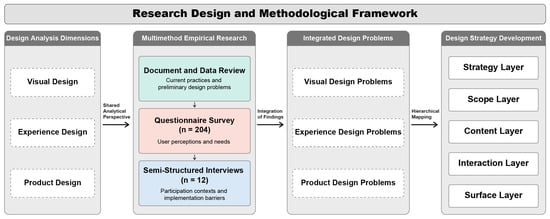
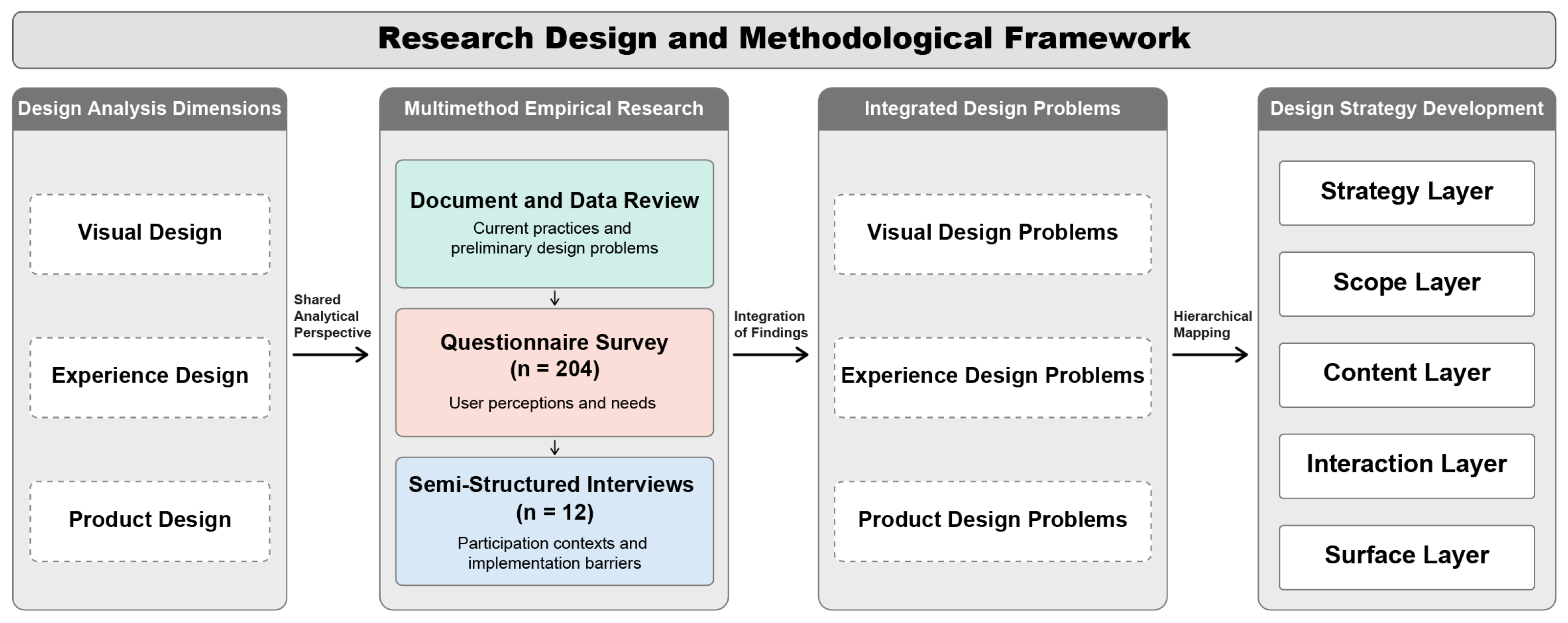
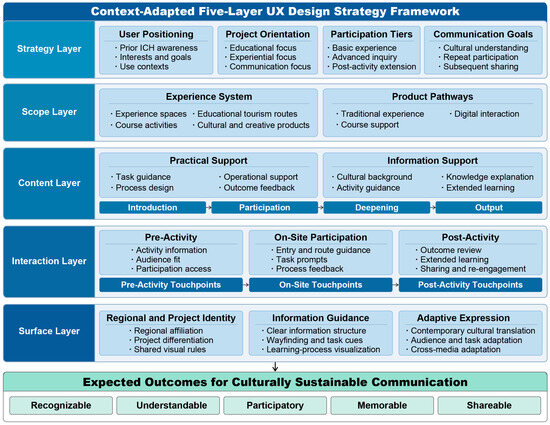
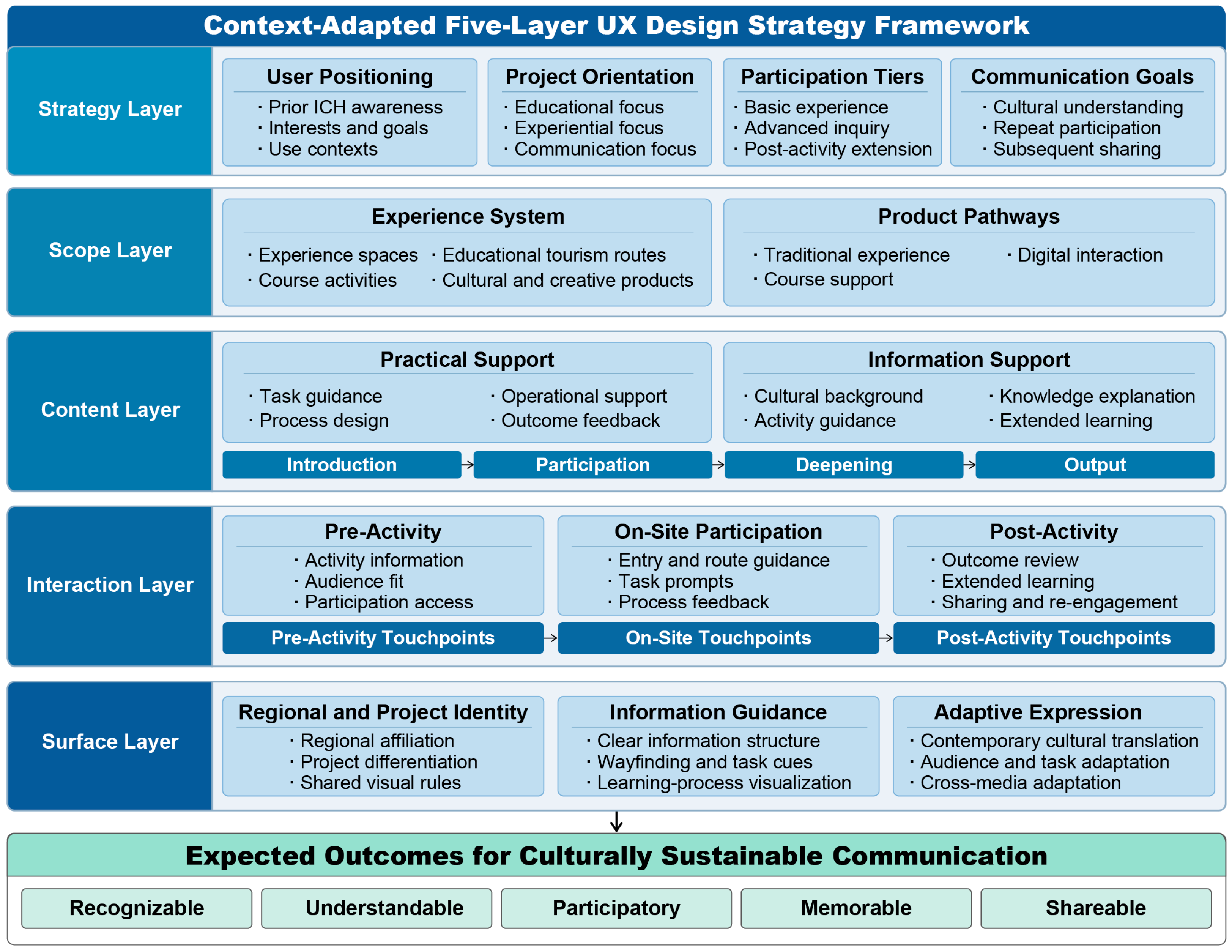

Disclaimer/Publisher’s Note: The statements, opinions and data contained in all publications are solely those of the individual author(s) and contributor(s) and not of MDPI and/or the editor(s). MDPI and/or the editor(s) disclaim responsibility for any injury to people or property resulting from any ideas, methods, instructions or products referred to in the content. |
© 2026 by the authors. Licensee MDPI, Basel, Switzerland. This article is an open access article distributed under the terms and conditions of the Creative Commons Attribution (CC BY) license.