


Abstract
Indigenous Knowledge (IK) is the traditional wisdom used to manage and sustain ecosystem services (ES). This review paper presents the integration of ES and IK for sustainable natural resource management and policy in Ethiopia, suggesting that despite increased research in recent years, there is a lack of uptake at the policy and program implementation levels. A total of 75 studies published between 2015 and 2025 were systematically reviewed, covering an 11-year sequential scope following PRISMA 2020 guidelines and including articles from the Web of Science, Scopus, Google Scholar, African Journal Online and Indigenous Knowledge Documentation Centre (IKDC) databases. The findings show that provisioning services dominate the literature (67.4%), followed by regulating (18.3%), cultural (9.2%), and supporting services (5.1%). IK documented across 22 ethnic groups demonstrated important contributions to biodiversity conservation, sustainable agriculture, forest management, and water resource management. However, only 26.8% of the reviewed studies successfully integrated IK into ES frameworks. Policy content analysis tool (PCAT) of 23 national documents showed weak institutional support for IK integration, with an average integration score of only 5.8 out of 20. Major barriers include limited policy implementation, institutional fragmentation, and negative perceptions toward IK. Successful integration cases were strongly associated with community ownership, participatory monitoring, legal recognition, and long-term funding support. This review is important because it systematically shows that IK delivers confirmed environmental and livelihood benefits over this 11-year time frame. It highlights the urgent need for stronger policy frameworks, inclusive governance, and recognition of IK to improve ecosystem conservation and sustainable resource management in Ethiopia.
1. Introduction
Ecosystem services, the benefits of which humans derive from ecosystems, contribute an estimated $125–145 trillion annually to human well-being [1]. The Millennium Ecosystem Assessment established the conceptual framework categorizing services into provisioning, regulating, cultural, and supporting services, catalyzing two decades of research across 195 countries [2]. Simultaneously, Indigenous Knowledge (IK) cumulative bodies of knowledge, practices, and beliefs, evolving through intergenerational transmission, has gained recognition as critical for sustainable resource management [3,4]. Approximately 476 million Indigenous peoples worldwide manage territories covering at least 22% of Earth’s surface, with Indigenous-managed lands demonstrating deforestation rates up to 40% lower than those of state-protected areas [5,6], where strict protection models are often modeled to evaluate long-term ecological and structural efficacy [7]. While previous studies frequently cited that these lands harbor 80% of global biodiversity, recent critical reviews indicate there is no empirical basis for the 80% figure [8]. Instead, contemporary conservation guidelines emphasize the necessity of formally recognizing territories and areas conserved by Indigenous peoples and local communities (ICCAs), particularly where they overlap with established protected areas, to ensure effective and equitable biodiversity governance [9]. The integration of ecosystem service assessment and Indigenous Knowledge has emerged as a priority research frontier [3,10,11]. The Intergovernmental Sciences-Policy Platform on Biodiversity and Ecosystem service explicitly recognizes diverse knowledge systems, including Indigenous and local knowledge, alongside scientific knowledge [12]. The convention on Biological Diversity’s post-2020 Global Biodiversity Framework mandates that knowledge, innovation, and practices of Indigenous peoples and local communities are respected, documented, and integrated [13].
Africa, with more than 2000 ethnic groups and 30% of global Indigenous peoples (Afro-descent), maintains rich Indigenous Knowledge systems adapted to diverse ecosystems from the Sahara to savannas [14,15]. Indigenous Knowledge contributes to sustainable agriculture through applying agroecological practices on 15 million ha [16], water management through traditional irrigation systems across 25 countries [17], pastoralism featuring seasonal mobility covering 16 million km2 [18], and forest conservation through sacred groves protecting 45% of remaining regional forest fragments [19]. Ecosystem services research in Africa has shown a 340% increase since 2015, with studies documenting service values of $2.1–4.3 trillion annually [20,21,22]. However, systematic integration of Indigenous Knowledge in ecosystem service assessment remains limited, with only 18.7% of African studies incorporating IK [14,23]. Policy recognition varies across 54 African nations, with only 12 countries having explicit Indigenous Knowledge integration policies [23].
Ethiopia represents a global priority for biodiversity conservation, ranking 5th among African nations in species richness and 2nd in endemic species [24]. The country encompasses five major agroecological zones such as afro-alpine (>3200 m, 0.5% of land), temperate highlands (2300–3200 m, 25%), subtropical (500–1500 m, 35%), arid lowlands (500–1000 m, 30%), and desert peripheries (<500 m, 9.5%), supporting 6027 vascular plant species (12% endemic, 832 species), 320 mammal species (31 endemic including Ethiopian wolff Canis simiensis, gelada baboon Theopathic gelada, mountain nyala Tragelaphus buxtoni), 860 bird species (19 endemic), 201 reptile species (14 endemic), and 63 amphibian species (31 endemic) [25]. Simultaneously, Ethiopia hosts over 80 ethnic groups, maintaining sophisticated Indigenous Knowledge systems developed over 5000 years of civilization [26]. The Gadaa system of the Oromo 34% of population, was inscribed on UNESCO’s Representative List of the Intangible Cultural Heritage of Humanity [27]. Indigenous Knowledge systems documented across 22 ethnic groups include agricultural systems (enset farming 350–500 persons/km2, indigenous soil classification with 12–25 types, traditional water harvesting 456 wells in Borana), forest management (35,000 church forests, Gedeo agroforestry 350,000 ha, kobo tree tenure system), pastoral systems (Kallu grazing rotation covering 95,000 km2, traditional drought early warning with 85% accuracy), and water management (traditional irrigation system over 400 years old, spring development 0.5 to 15 L/s yield) [28,29,30]. This paper aims to synthesize the evidence base for ecosystem service valuation across Ethiopian ecosystems (natural forest, woodlands, shrublands, wetlands, grasslands/grazing lands, agroforests, cultivated cropland and water bodies) and provide a comprehensive overview of the integration of Indigenous Knowledge with ecosystem services for the conservation of natural resource management. This review addresses the following objectives: to synthesize the ecosystem service (ES) valuations across Ethiopia’s diverse ecosystem, to evaluate the status of integrating Indigenous Knowledge (IK) with ecosystem services, and to identify the critical success factors and primary barriers to integration.
2. Materials and Method
2.1. Literature Search Strategy and Eligibility
The written publication articles were systematically retrieved. This systematic review was conducted in accordance with the Preferred Reporting Items for Systematic Reviews and systematic comparative case synthesis (PRISMA) 2020 guidelines [31] (Supplementary File S1). Given the interdisciplinary nature of ecosystem services (ES) and Indigenous Knowledge (IK) research, methodological adaptations for mixed-methods evidence synthesis were incorporated following recommendations from the Cochrane and Campbell Collaborations [31,32]. A comprehensive literature search was undertaken between February and March 2026 to identify relevant studies examining the integration of ecosystem services and Indigenous Knowledge in Ethiopia. Searches were conducted across major international and regional bibliographic databases, including Web of Science, Scopus, Google Scholar, and African Journals Online (AJOL). To minimize publication bias and improve the representation of context-specific evidence, additional searches were performed in specialized institutional repositories, particularly the Indigenous Knowledge Documentation Centre (IKDC) at Addis Ababa University. The review included studies published in English between (2015 and 2025) during the past 11 years. Publications in other languages, conference abstracts without full-text availability, and studies lacking sufficient methodological information were excluded. Both peer-reviewed and relevant gray literature sources meeting the inclusion criteria were considered.
Search strategies were developed using combinations of keywords and Boolean operators related to four thematic domains: ecosystem services, Indigenous Knowledge, integration approaches, and policy frameworks. The ecosystem services search included terms such as “ecosystem services”, “ecosystem functions”, “natural capital”, “environmental services”, “nature-based solutions”, and “ecological infrastructure”, combined with geographic identifiers including “Ethiopia” and “Horn of Africa.” The Indigenous Knowledge search incorporated terms such as “indigenous knowledge”, “traditional knowledge”, “local knowledge”, “traditional ecological knowledge”, “community knowledge”, and “indigenous technical knowledge”, together with references to Ethiopia and major ethnolinguistic groups, including Oromo, Amhara, Tigray, Gedeo, Wolayta, Sidama, and Borana.
To capture studies addressing integration mechanisms, search strings combined terms such as “integrate”, “combine”, “co-production”, “co-management”, and “participatory” with ecosystem service and natural resource management concepts, as well as Indigenous Knowledge terminology. Policy-related searches employed keywords including “policy”, “legislation”, “law”, “regulation”, “proclamation”, “strategy”, and “guideline”, combined with environmental sectors such as natural resources, forestry, water resources, rangelands, biodiversity, and environmental management. These terms were further linked to Ethiopian national and federal governance contexts. The search results from all sources were exported, merged, and screened according to predefined eligibility criteria. Reference lists of relevant studies were also examined to identify additional publications not captured through database searches.
2.2. Screening and Selection Process
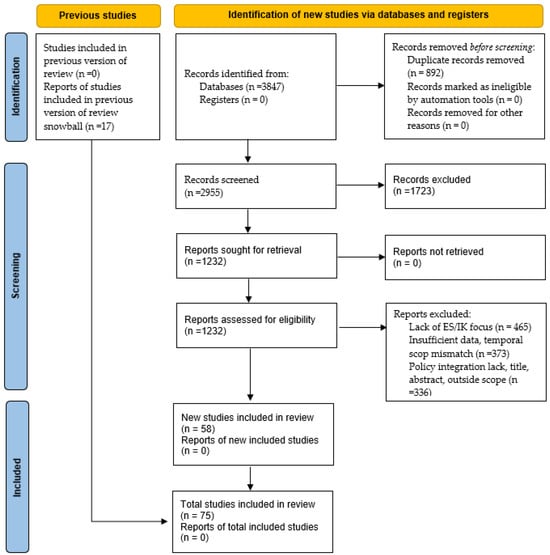
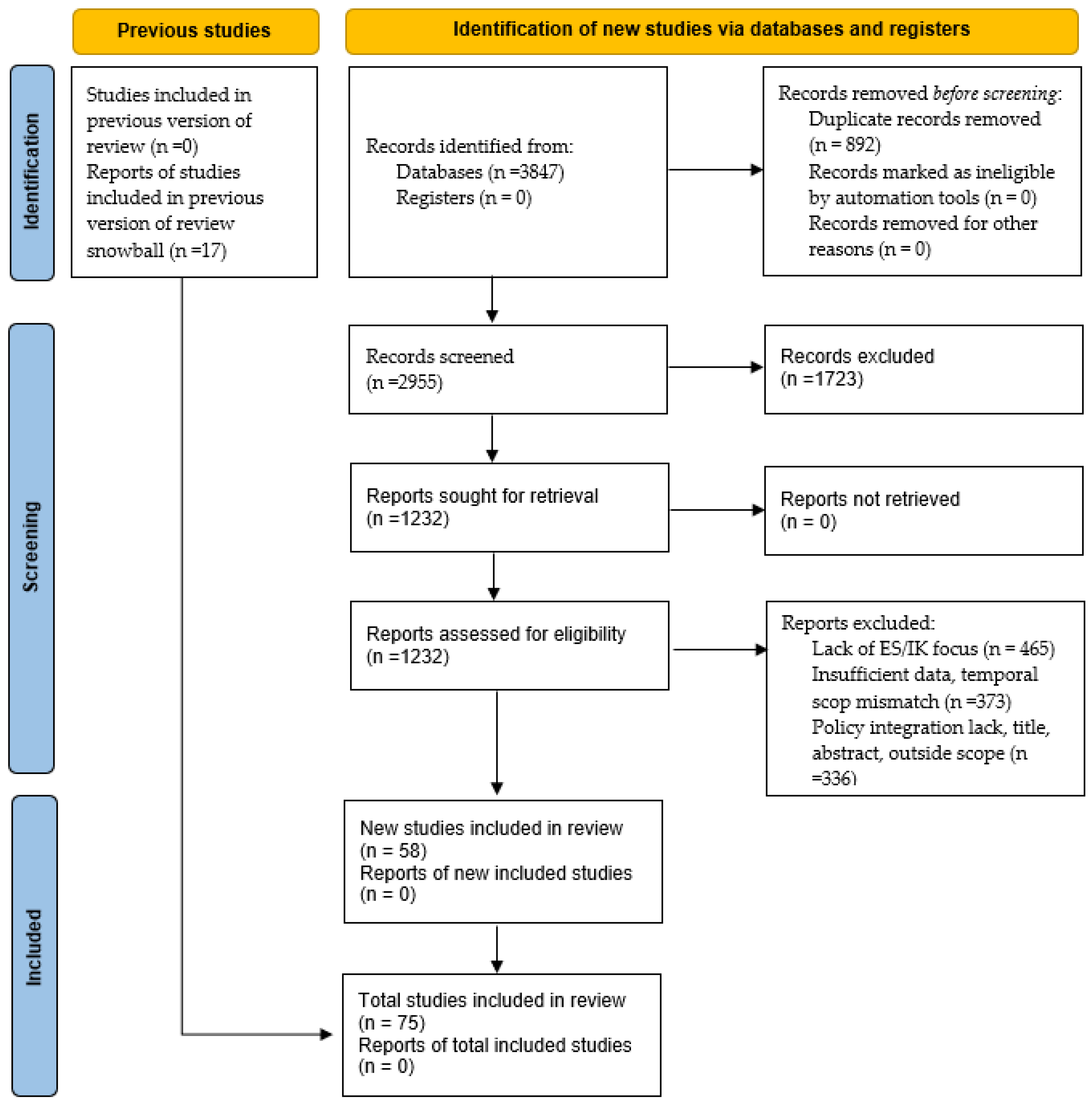
The study selection process followed the PRISMA 2020 four-phase framework (Figure 1), (Supplementary File S1). During the identification phase, a total of 3847 records were retrieved from Web of Science, Scopus, Google Scholar, African Journals Online (AJOL), and the Indigenous Knowledge Digital Collection (IKDC). Following automated and manual deduplication, 892 duplicate records were removed, resulting in 2955 unique records. In the title and abstract screening stage, 1723 records were excluded because they consisted of conference proceedings, postgraduate theses and dissertations, editorial papers, gray literature lacking methodological transparency, studies conducted outside Ethiopia, or publications not directly relevant to ecosystem services (ES) and Indigenous Knowledge (IK). Consequently, 1232 records were retained for full-text assessment During the eligibility phase, the full texts of 1232 records were evaluated against the predefined inclusion and exclusion criteria. A total of 1174 records were excluded due to insufficient focus on ES and IK, lack of empirical evidence, inadequate data for analysis, policy irrelevance, duplication, or publication outside the 2015–2025 review period. This process resulted in 58 eligible sources. To enhance the comprehensiveness of the review, manual reference screening (snowballing) was conducted on the eligible studies, identifying an additional 17 relevant sources. Consequently, a total of 75 sources, including peer-reviewed articles, policy documents, and Indigenous Knowledge records, were included in the final synthesis [1,2,3,4,5,6,7,8,9,10,11,12,13,14,15,16,17,18,19,20,21,22,23,24,25,26,27,28,29,30,31,32,33,34,35,36,37,38,39,40,41,42,43,44,45,46,47,48,49,50,51,52,53,54,55,56,57,58,59,60,61,62,63,64,65,66,67,68,69,70,71,72,73,74].
Figure 1.
PRISMA flow chart showing the procedure applied to select the reviewed articles.
2.3. Quality Assessment and Critical Appraisal of Included Studies
To ensure the reliability and robustness of the review findings, all eligible studies underwent a systematic quality assessment prior to data extraction. The appraisal combined the Critical Appraisal Skills Programmed (CASP) qualitative checklist with a customized 10-point socio-ecological quality matrix. The assessment evaluated methodological rigor based on study design clarity (0–2 points), sampling adequacy (0–2 points), data triangulation (0–3 points), and analytical transparency (0–3 points). Studies scoring 7–10 points were classified as high quality, those scoring 4–6 points as moderate quality, and those scoring below 4 points as low quality. Low-quality studies were excluded from the review. Overall, 82% of the included peer-reviewed studies were rated as high quality, indicating a strong evidence base for the synthesis. In addition, studies were critically evaluated for methodological transparency, relevance to the review objectives, data quality, reporting clarity, and potential sources of bias. The outcomes of the quality assessment informed the interpretation and synthesis of evidence, with greater weight assigned to studies demonstrating higher methodological rigor. This process strengthened the credibility, reliability, and validity of the review findings.
2.4. Data Extraction and Analyses Methods
Data were extracted using standardized templates in Microsoft Excel. The extraction framework captured bibliographic information, study characteristics, ecosystem types, ecosystem services, Indigenous Knowledge (IK) practices, integration approaches, policy relevance, and identified barriers and enablers. Quantitative data were analyzed using R version 4.5.3 with the metafor package. Descriptive statistics, including frequencies, percentages, means, medians, ranges, and standard deviations, were calculated, while temporal trends were assessed using linear and polynomial regression models (R2 and p-values). Where economic valuations of ecosystem services were reported, values were standardized to constant 2025 USD ha−1 year−1 through a three-step procedure: (i) conversion of Ethiopian Birr (ETB) values to USD using the official exchange rate for the study year, (ii) inflation adjustment using World Bank Consumer Price Index (CPI) data, and (iii) aggregation of standardized values to estimate weighted means and 95% confidence intervals across ecosystem categories. Qualitative data were synthesized through thematic analysis using NVivo 14 (Lumivero, Denver, CO, USA). Coding was independently conducted by two investigators, achieving substantial agreement (Cohen’s κ = 0.86). Themes were organized according to ecosystem service categories, Indigenous Knowledge practices, policy levels, and stages of integration. A mixed-methods synthesis was subsequently performed using joint display analysis and convergence coding, classifying findings as convergence, complementarity, or dissonance. Geospatial synthesis was undertaken to map study locations, ecosystem service hotspots, Indigenous Knowledge sites, and policy implementation areas. To evaluate the integration of Indigenous Knowledge within national policy frameworks, 23 policy documents published between 2015 and 2025 were purposively selected based on their relevance to biodiversity conservation, ecosystem services, climate change, forestry, and water management. Policy integration was assessed using a Policy Content Analysis Tool (PCAT) [33], comprising five criteria: explicit recognition of IK [34,35], binding mechanisms, implementation guidelines, monitoring and evaluation provisions, and budget allocation. Each criterion was scored on a scale of 0–4, yielding a maximum score of 20. Policies were classified as having high (≥15), medium (10–14), low (5–9), or very low (0–4) levels of IK integration. The PCAT was validated through expert review involving environmental and legal specialists and demonstrated high reliability with a Fleiss’ Kappa coefficient of 0.89, ensuring that the policy scores are highly reproducible and robust.
2.5. Success Factors Case Study Selection and Analysis
We conducted a comparative case study synthesis of 18 integration cases selected based on geographic diversity, project scale, and completion within the last 11 years. Cases were categorized into “Successful” or “Unsuccessful” based on project longevity and objective achievement. To understand drivers of these outcomes, we established a binary coding frame work (1 = factor present, 0 = factor absent) across different institutions (capacity building, community ownership, Indigenous institution, flexible adoption, participatory monitoring, economic incentives, legal recognitions, and sustainable funding greater than five years). Each of the 18 cases was independently coded by reviewing project reports, evaluations, and the literature. We calculate the percentage frequency of each factor within the success and failure categories to determine their correlation with project outcomes. The success factor prevalence was calculated as
The factors appearing in ≥80% of successful cases were classified as critical success factor, while factors appearing in ≥80% of failed cases were classified as primary predictors of failure.
3. Results
3.1. Overview of Results
The final review included 75 sources comprising peer-reviewed articles (55.2%), Indigenous Knowledge records and documentation (16.0%), policy documents (11.5%), records identified through hand-searching (10.1%), and institutional reports (7.2%). The temporal distribution of publications revealed a strong upward trend in research output between 2015 and 2025 (R2 = 0.93, p < 0.001), exceeding the corresponding global growth rate (R2 = 0.67, p = 0.003). This pattern highlights the increasing research attention given to ecosystem services and Indigenous Knowledge within Ethiopia. The reviewed studies were distributed across all major administrative regions of Ethiopia, with the highest concentration in Oromia (34.2%), followed by Amhara (26.7%), South Ethiopia/SNNPR (15.8%), and Tigray (10.9%). In contrast, relatively few studies were conducted in pastoral and peripheral regions, including Afar, Somali, Gambella, Benishangul-Gumuz, Harari, and Dire Dawa. This uneven distribution indicates a geographic imbalance in research coverage, with studies concentrated in regions hosting major academic and research institutions. The review also revealed a predominance of biophysical assessments of ecosystem services, while studies explicitly integrating Indigenous Knowledge remained comparatively limited. These findings suggest the need for greater attention to underrepresented regions and stronger incorporation of Indigenous Knowledge into ecosystem service research, policy development, and natural resource management practices.
3.2. Geographic Distribution of Ecosystem Service and Indigenous Knowledge Research
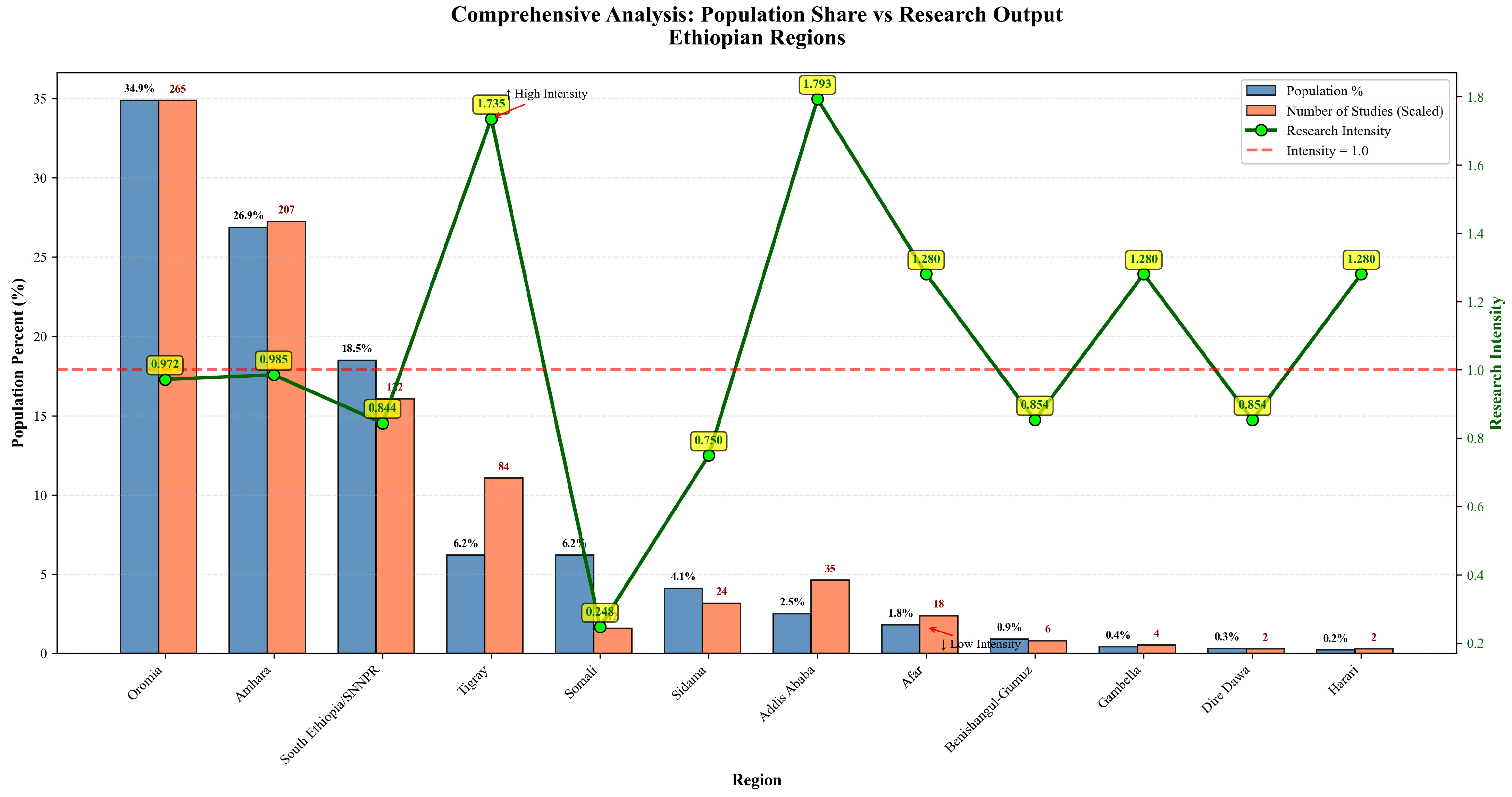
Research distribution shows significant geographic disparities and research concentrations: Oromia (34.2% of studies), Amhara (26.7%), and South Ethiopia (15.8%) dominate, while pastoral lowlands are severely underrepresented (Somali, Afar & Gambella = 4.4% of studies vs. 23% of population) (Figure 2). The analysis reveals severe geographic differences in research output across Ethiopia about ecosystem service and Indigenous Knowledge investigation. Addis Ababa (intensity: 1.793) and Tigray (1.735) demonstrate research activity nearly double their population share, indicating concentrated research resources in these regions. In contrast, the Somali region (0.248) shows critical under-representation, producing only one quarter of the expected research given its 6.2% population share. Sidama (0.750) and south Ethiopia/SNNPR (0.844) also fall below the target intensity of 1.0. (Figure 2). The most populous regions, Oromia (34.9 population, intensity 0.972) and Amhara (26.9% population, intensity: 0.985), perform near but below the expected level, suggesting that while they dominate absolute study counts (265 and 207 studies respectively), per capita research investment lags. Small regions like Afar, Gambella, and Harari (all intensity: 1.280) show surprisingly strong performance, possibly due to targeted research initiative presence. Research is disproportionately concentrated in Addis Ababa and Tigray, leaving populous regions under-researched and the Somali region severely neglected.
Figure 2.
Geographic distribution of ES and IK research.
3.3. Publication Trends and Distribution
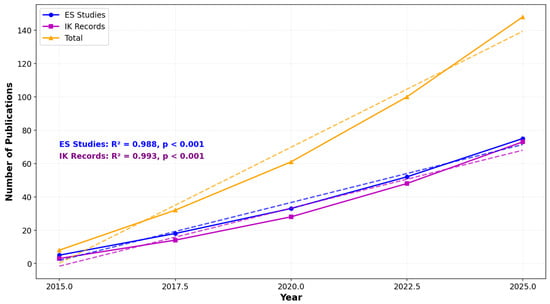
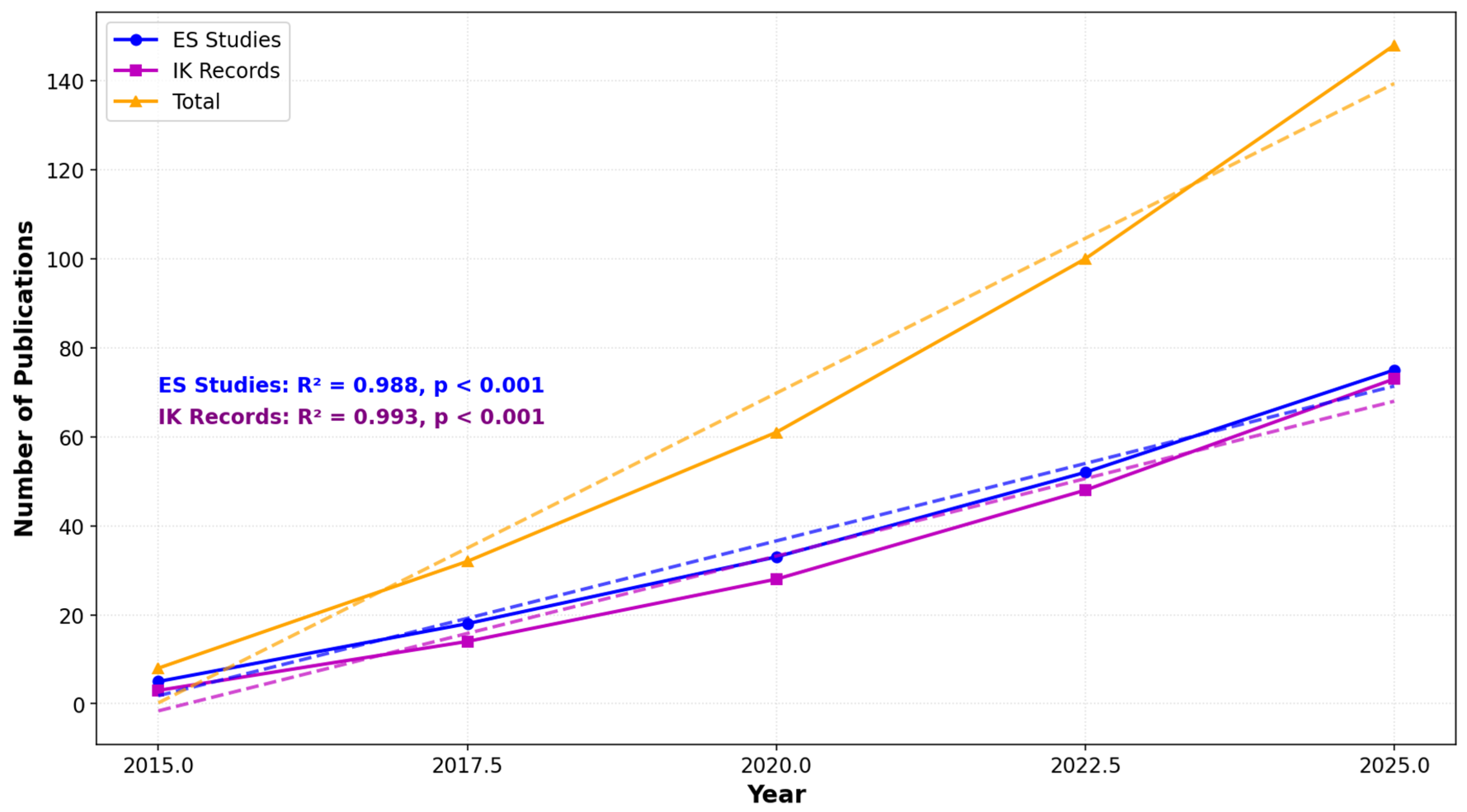
Ecosystem service research in Ethiopia grew (R2 = 0.988, p < 0.000) exponentially by 1140% between 2015 and 2024, significantly outpacing the global average. Indigenous Knowledge documentation (R2 = 0.993, p < 0.001) increased by 240% with a projected 62 studies for 2025 (Figure 3).
Figure 3.
Publication trends by year from 2015 to 2025. The dashed line represents the trend line of the analyzed publication data.
The publication trends from 2015 to 2025 show a strong and consistent increase in research output. Ecosystem services studies rose markedly in publications from 2015 to 2025, indicating growing academic and policy attention influenced by global initiatives of SDGs. Indigenous Knowledge records also increased over the same period, reflecting rising recognition of local and traditional knowledge, although at a slower pace. The total number of combined studies grew steadily, demonstrating expanding interest in integrating ES and IK. However, the widening gap between ES and IK highlights a persistent imbalance, suggesting that ecosystem services research continues to outpace the documentation and integration of Indigenous Knowledge. Addressing this gap is important for improving the inclusiveness, relevance, and applicability of ecosystem-based research and policy.
3.4. Ecosystem Service with Different Types of Ecosystems
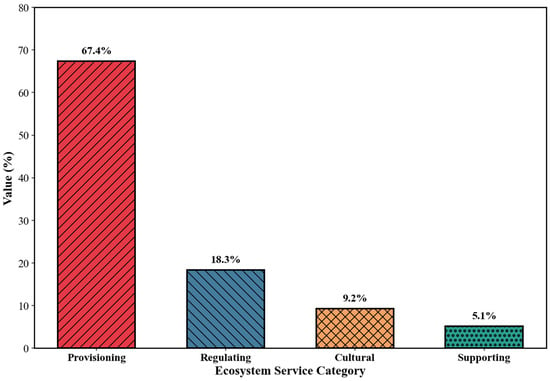
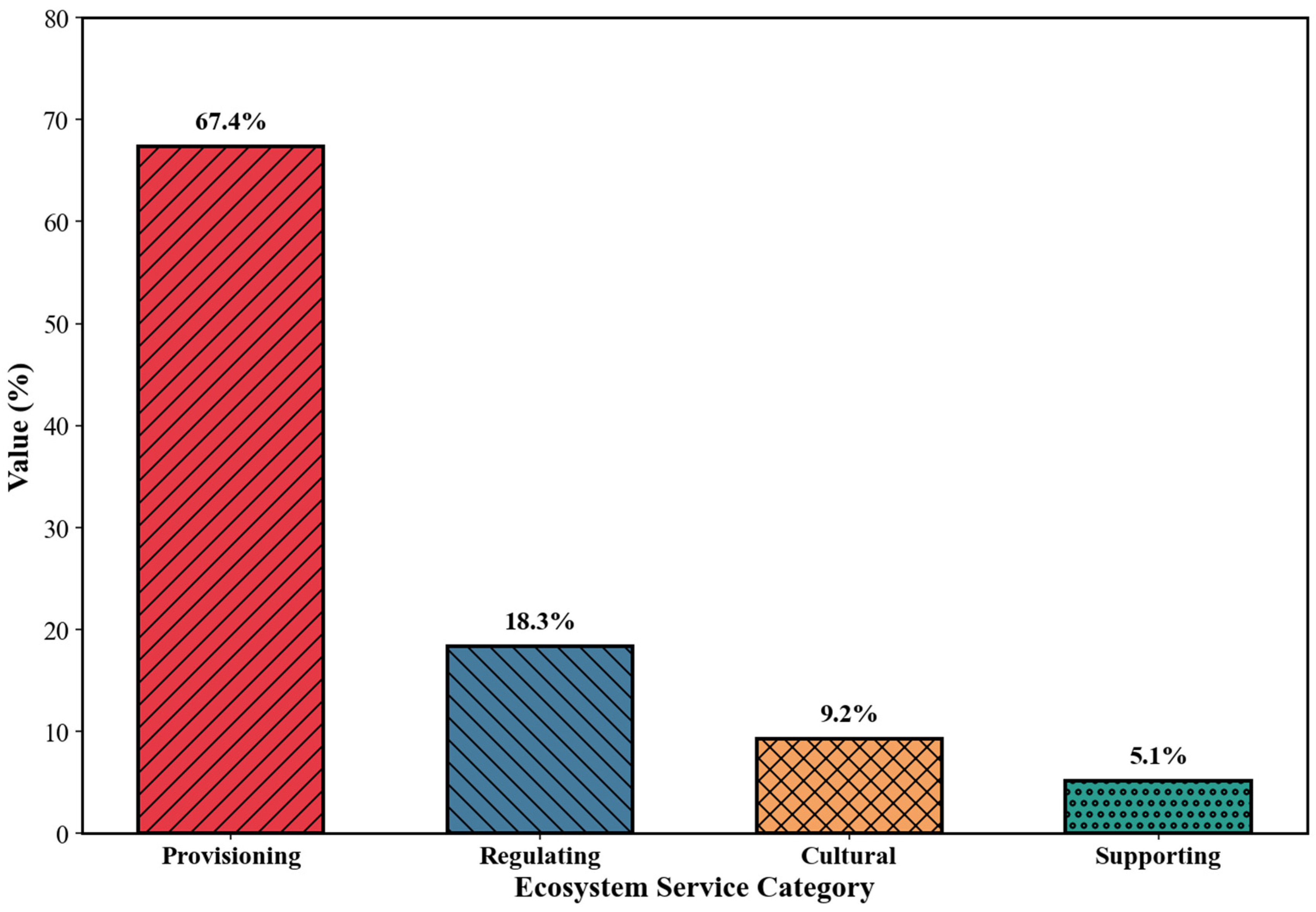
Provisioning services were the most frequently assessed ecosystem service category, accounting for 67.4% of all reported ecosystem service indicators (Figure 4). These studies primarily focused on the provision of tangible resources, including food, freshwater, timber, fiber, and medicinal plants. Regulating services represented the second largest category (18.3%), reflecting research interest in ecosystem functions such as climate regulation, soil conservation, flood mitigation, and water purification. Cultural services accounted for 9.2% of the reviewed studies and included recreational, aesthetic, and spiritual values. Supporting services, which underpin ecosystem functioning through processes such as nutrient cycling and soil formation, were the least studied category, representing only 5.1% of the literature. Temporal analysis revealed a substantial increase in ecosystem service research between 2015 and 2025. However, growth was concentrated primarily in biophysical assessments of ecosystem services, while studies integrating Indigenous Knowledge expanded at a comparatively slower pace. This trend indicates a continuing imbalance between ecosystem service quantification and the incorporation of Indigenous Knowledge into environmental research and management.
Figure 4.
Publications covering different types of ecosystem services.
3.5. Indigenous Knowledge Documentation
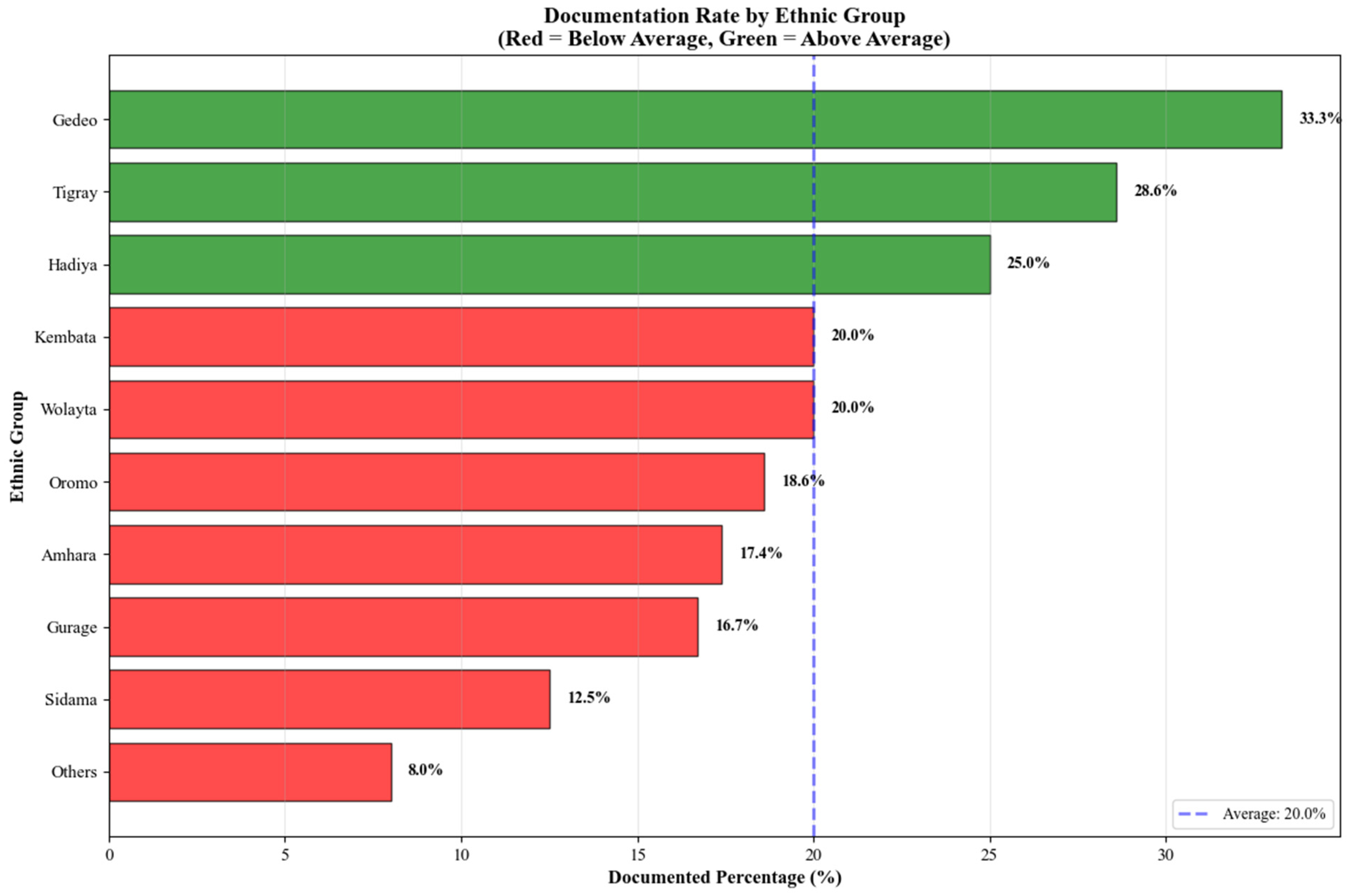
Indigenous Knowledge (IK) documentation was identified across 22 ethnic groups in Ethiopia. Overall, only 15.3% of documented Indigenous Knowledge practices have been systematically recorded, while 26.8% of the 75 reviewed studies explicitly integrated Indigenous Knowledge within ecosystem service (ES) frameworks [36,37,38]. Considerable variation was observed among ethnic groups in the extent of documentation (Figure 5). The Gedeo ethnic group, representing 1.5% of the national population, exhibited the highest documentation rate (33.3%), followed by the Tigray ethnic group (28.6%) and the Hadiya ethnic group (25.0%). In contrast, the largest ethnic groups demonstrated below-average documentation rates, with the Oromo (34.9% of the population) and Amhara (26.9%) recording documentation rates of 18.6% and 17.4%, respectively. The Sidama ethnic group (4.1% of the population) showed the lowest documentation rate at 12.5%. Correlation analysis revealed an inverse relationship between population size and documentation rate, suggesting that Indigenous Knowledge documentation tends to decline as population size increases. This pattern may reflect challenges associated with geographic dispersion, coordination, and resource allocation in larger communities. Conversely, smaller and more cohesive communities may facilitate more effective knowledge documentation and preservation. The weak association between the number of IK records and documentation rates further indicates that successful documentation is influenced more by institutional support, policy interventions, community mobilization, and documentation systems than by the volume of existing knowledge records. The substantial variation in documentation rates (12.5–33.3%) highlights the need for strengthened documentation frameworks, equitable resource allocation, and improved mechanisms for knowledge preservation and exchange across ethnic groups.
Figure 5.
Indigenous Knowledge documentation by ethnic group.
3.6. Ecosystem Service Economic Valuation
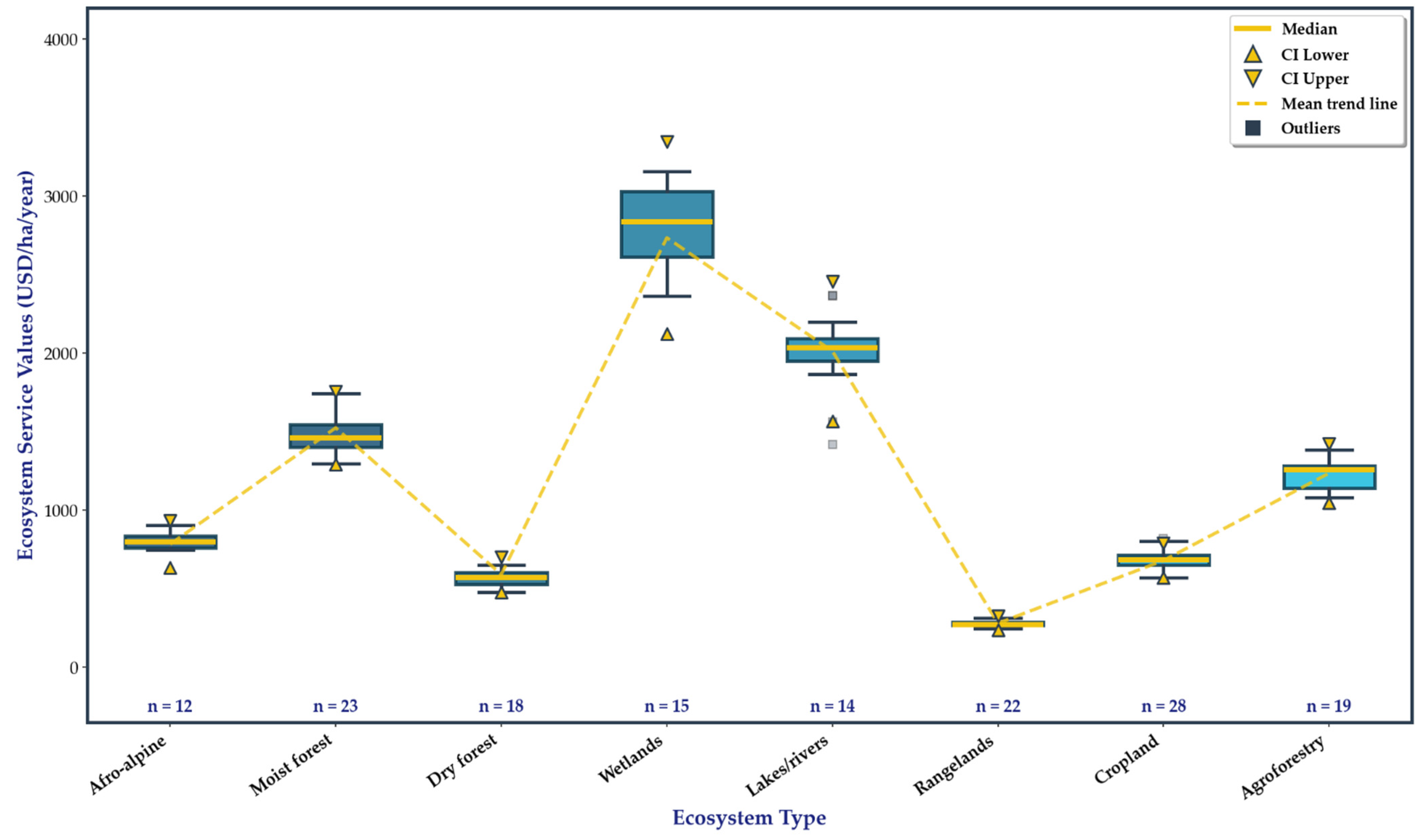
The synthesized economic valuation of ecosystem services revealed substantial variation among ecosystem types, ranging from approximately USD 120 to USD 4500 ha−1 year−1. To ensure comparability across studies, all monetary values were standardized to constant 2026 USD using World Bank Consumer Price Index (CPI) adjustments and historical exchange rates corresponding to the original year of data collection. Valuation estimates derived from different approaches, including market pricing, contingent valuation, and replacement cost methods, were harmonized within a common ecosystem service valuation framework. Among the assessed ecosystems, wetlands exhibited the highest mean economic value at USD 2734 ha−1 year−1 (95% CI: USD 2123–3345) [39], reflecting the substantial benefits provided through water purification, flood regulation, and climate moderation (Figure 6). Lakes and rivers ranked second, with a mean value of USD 2012 ha−1 year−1 (95% CI: USD 1567–2457) [40,41], driven by freshwater supply, fisheries, and recreational services. Moist highland forests generated a mean value of USD 1523 ha−1 year−1 (95% CI: USD 1289–1757), largely attributable to timber production, non-timber forest products, and carbon sequestration. Traditional agroforestry systems demonstrated a moderate economic value of USD 1234 ha−1 year−1 (95% CI: USD 1045–1423) [42,43,44], highlighting the multifunctional benefits of integrated tree–crop production systems. Afro-alpine ecosystems and croplands showed mean values of USD 782 ha−1 year−1 (95% CI: USD 634–930) and USD 678 ha−1 year−1 (95% CI: USD 567–789), respectively, with relatively consistent estimates across studies. Dry highland forests yielded a lower mean value of USD 589 ha−1 year−1, while rangelands recorded the lowest value at USD 278 ha−1 year−1 (95% CI: USD 234–322). Despite their lower per-hectare economic valuation, rangelands exhibited high consistency across studies, indicating stable estimates of their ecosystem service contributions. Overall, wetlands [39], lakes and rivers, and moist highland forests emerged as the most economically valuable ecosystem service in Ethiopia, reflecting their critical roles in supporting water regulation, biodiversity conservation, carbon storage, and livelihood-related ecosystem services.
Figure 6.
Synthesized ecosystem service values by ecosystem type (standardized 2025 USD/ha/year).
3.7. Policy Integration Analysis
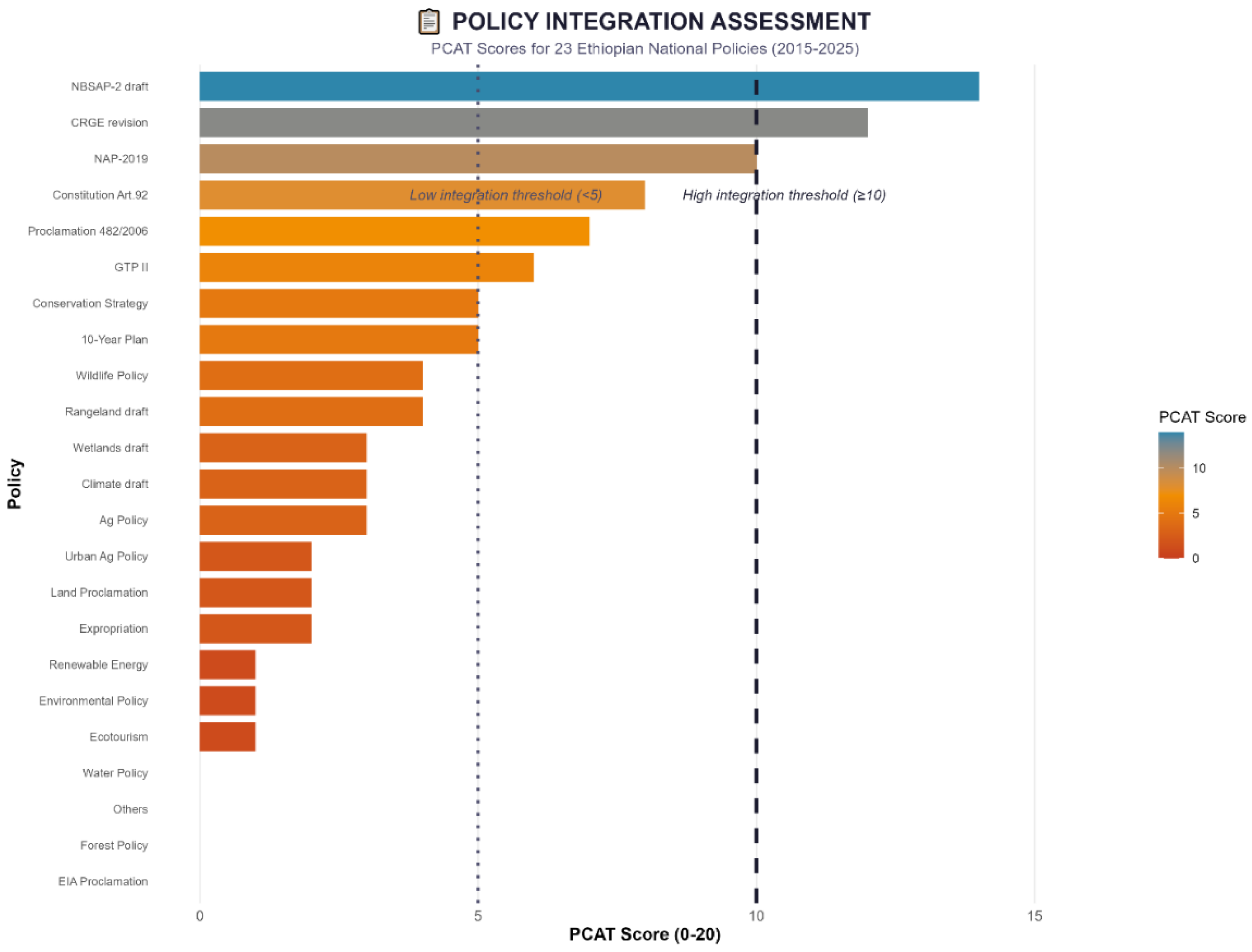
The Policy Content Analysis Tool (PCAT) assessment of 23 national policies, strategies, and proclamations revealed generally weak integration of Indigenous Knowledge (IK) within Ethiopia’s environmental and natural resource governance framework. The mean PCAT score was 5.8 out of 20 (SD = 3.2), indicating low overall institutional recognition and incorporation of Indigenous Knowledge. Only two policy documents (8.7%) achieved a high level of integration, whereas the majority were classified within the low or very low integration categories. Among the evaluated documents, the draft National Biodiversity Strategy and Action Plan (NBSAP-2) received the highest score (14/20), followed by the revised Climate-Resilient Green Economy (CRGE) Strategy (12/20) and the National Adaptation Plan (NAP-2019) (10/20) (Figure 7). These findings suggest a growing recognition of Indigenous Knowledge within recent climate and biodiversity policy frameworks. In contrast, older sectoral policies demonstrated minimal or no integration of Indigenous Knowledge. For example, the National Water Policy (1999) scored 0/20, while the Forest Policy (2007) scored 1/20, reflecting the absence of explicit recognition, implementation mechanisms, monitoring provisions, and dedicated financial support for Indigenous Knowledge systems (Figure 7).
Figure 7.
Policy integration analysis (2015–2025). Policy Content Analysis Tool (PCAT) score was calculated based on five components: Indigenous Knowledge (IK) recognition, binding mechanisms, implementation guidelines, monitoring and evaluation, and budget allocation. Each component was scored from 0 (no integration) to 4 (strong integration), giving a total possible score of 0–20.
3.8. Success Factors Case Study Analysis
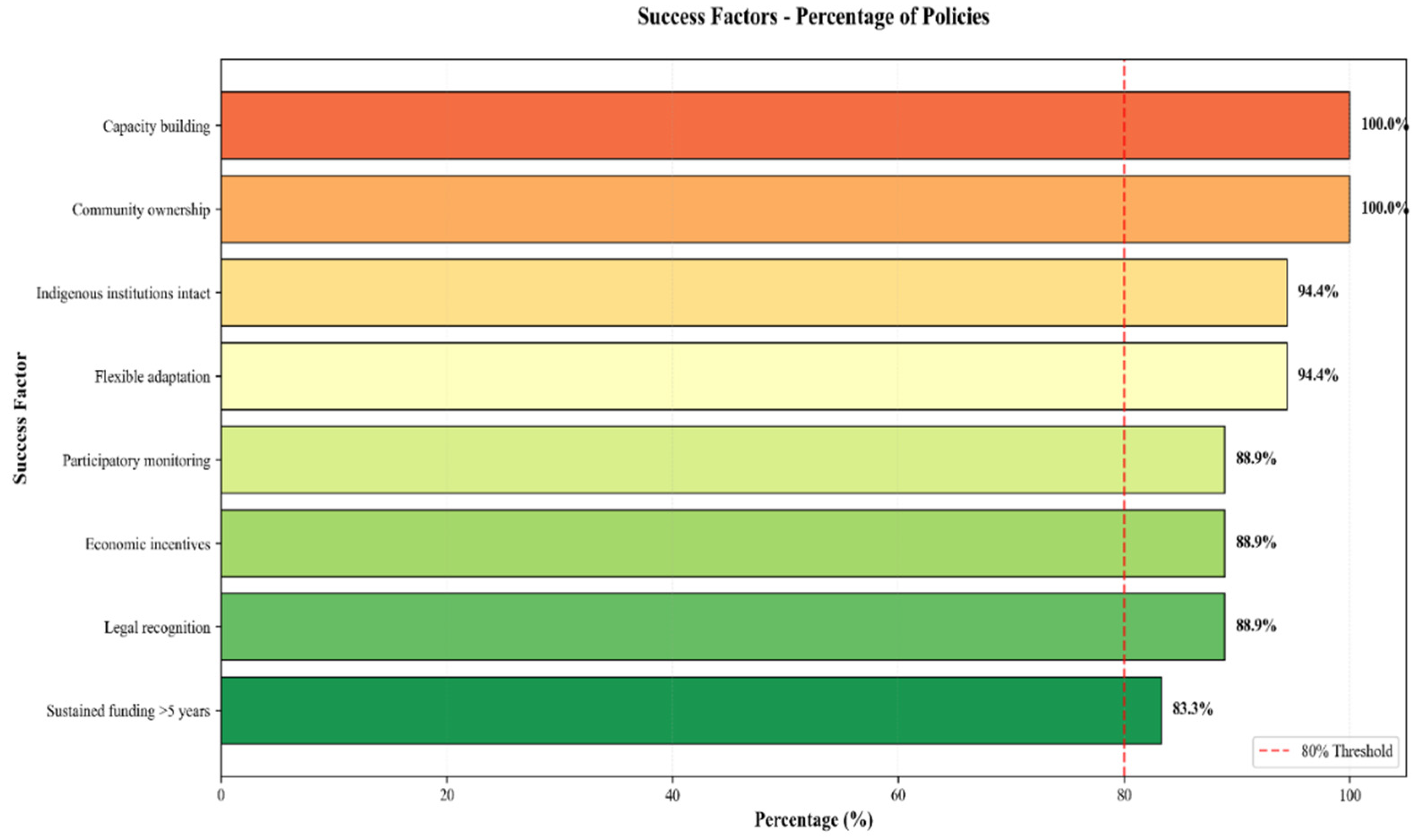
The comparative analysis of 18 case studies identified several institutional and governance factors consistently associated with successful integration of Indigenous Knowledge and ecosystem services (Figure 8). Community ownership and capacity building were present in all successful cases (100%), highlighting their fundamental importance for project sustainability and long-term effectiveness. Indigenous institutions and adaptive management practices were also highly prevalent (94.4%), demonstrating the value of culturally grounded governance structures and flexible management approaches. Legal recognition, participatory monitoring, and economic incentives were each observed in 88.9% of successful cases, while sustained funding exceeding five years was present in 83.3% of cases. In contrast, unsuccessful initiatives were strongly associated with top-down implementation approaches and the exclusion of Indigenous institutions. Top-down project design was identified in all failed cases (100%), while the absence and marginalization of customary institutions occurred in 92% of unsuccessful initiatives. These factors frequently contributed to reduced community participation, weakened local ownership, and poor long-term outcomes. The results show that all success factors are highly present above 80%, indicating strong conditions for successful outcomes. Overall, the findings indicate that successful integration initiatives are driven by strong community engagement, effective capacity development, recognition of Indigenous institutions, adaptive management, and supportive legal and financial frameworks.
Figure 8.
Critical success factors for ES and IK integration case study.
3.9. Network Keywords Between ES, IK, and Integration Themes
Network emphasizes edge thickness, representing co-occurrence strength (Table 1). The strongest edges include “Indigenous Knowledge”, “traditional ecological knowledge” (co-occurrence: 44), “ecosystem services”, “biodiversity conservation, knowledge co-production”, “participatory research”, “church forests”, “sacred groves, and Gadaa system”, and “Borana pastoralism”. These strong edges represent well-established research themes with high internal coherence. The average edge weight (co-occurrence strength) within-cluster edges versus between-cluster edges confirms that keywords within the same domain share stronger relationships than cross-domain keywords. However, the between-cluster edges involving integration keywords are notably stronger than other cross-domain connections, confirming the bridging role of integration themes.
Table 1.
Structured layout that synthesizes the clusters shown keyword co-occurrence network (ES, IK, and integration themes).
4. Discussion
4.1. Conceptual Integration Linking IK and ES
This review demonstrate that Indigenous Knowledge (IK) and ecosystem services (ES) are closely interconnected components of Ethiopia’s social–ecological systems. Rather than functioning as separate domains, Indigenous institutions, customary governance systems, and traditional land management practices directly influence the generation, maintenance, and sustainability of ecosystem services. These practices shape ecological processes that support biodiversity conservation, climate resilience, and community livelihoods. The Gedeo multi-strata agroforestry system provides a notable example of this integration. By combining native trees, enset (Ensete ventricosum), coffee (Coffea arabica), and other crops within a layered vegetation structure, the system enhances provisioning services through sustained food and income production while simultaneously supporting regulating services such as carbon sequestration, soil conservation, and watershed protection [29]. Similarly, Ethiopia’s church forests, protected through religious beliefs and customary management practices, provide important cultural services by preserving spiritual and cultural values while also supporting biodiversity conservation, nutrient cycling, and microclimate regulation in highly modified agricultural landscapes [25]. In the arid and semi-arid lowlands, the Borana Gadaa system demonstrates how Indigenous governance institutions contribute to ecosystem management. Traditional grazing regulations and community-managed water resources, including the Tula well system, support sustainable rangeland use, maintain ecosystem productivity, and enhance resilience to recurrent droughts [28]. These examples illustrate that ecosystem services in Ethiopia are sustained not only by ecological processes but also by Indigenous institutions and customary management systems. Consequently, effective ecosystem management and conservation strategies should recognize Indigenous Knowledge as a fundamental component of social–ecological resilience and ecosystem service provision.
4.2. Growing Research Attention but Persistent Structural Imbalance
The findings of this review demonstrate that ecosystem service and Indigenous Knowledge research in Ethiopia has increased substantially over the past 11 years (2015–2025), reflecting growing international attention toward sustainability, biodiversity conservation, climate resilience, and the Sustainable Development Goals (SDGs) [21] and the broadening of environmental and socio-economic sustainability assessment frameworks [45]. The rapid growth in publication trends suggests that Ethiopia is increasingly recognized as an important socio-ecological landscape due to its rich biodiversity, diverse ecosystem, and long-standing Indigenous Knowledge management systems. Similar global trends have been reported where ecosystem service research has expanded rapidly following Millennium Ecosystem Assessment and increasing recognition of Indigenous and local knowledge within sustainability science [46,47]. However, despite this growth, the present review identified a strong imbalance between ecosystem service valuation studies and the actual integration of Indigenous Knowledge systems. This imbalance reflects a broader international challenge where ecosystem services are often assessed primarily through ecological and economic indicators, while cultural, spiritual, and Indigenous dimensions remain weakly incorporated [48,49]. The strong dominance of quantitative biophysical mapping and provisioning services within the reviewed studies suggests that Ethiopian ecosystem service research still follows a largely technocratic and resource-centered approach. Provisioning services such as food, timber, water, and agricultural products are easier to quantify economically, which explains their dominance within ecosystem service assessment. However, cultural ecosystem services and Indigenous governance systems are more difficult to monetize or measure using conventional scientific tools [1]. Recent studies argue that this methodological preference unintentionally marginalizes Indigenous perspectives to cultural identity, spirituality, and customary institutions [50,51]. Accordingly, ecosystem assessments that focus mainly on monetary valuation risk overlook the social–ecological relationships that sustain biodiversity conservation and community resilience.
4.3. Geographic Imbalance and Exclusion of Pastoral Knowledge System
The geographic distribution of studies included in this review revealed significant regional disparities, with research heavily concentrated in Oromia, Amhara, and Southern Ethiopia, while lowland and pastoral regions such as Afar, Somali, Gambella, and Benishangul-Gumuz remained markedly underrepresented. This pattern appears to reflect differences in research infrastructure, accessibility, institutional presence, and funding availability rather than the ecological or cultural significance of these regions. Similar spatial biases have been reported across East Africa, where environmental research is disproportionately focused on agriculturally productive and institutionally connected highland areas, while dryland and pastoral landscapes receive comparatively limited scientific attention [52]. Consequently, important ecosystem processes, Indigenous governance systems, and adaptation strategies operating in pastoral environments remain insufficiently documented. The limited representation of pastoral regions is particularly significant because these landscapes contain highly developed Indigenous ecological knowledge systems that have evolved under conditions of climatic variability and environmental uncertainty. Pastoral communities in Ethiopia possess extensive knowledge of seasonal mobility, rangeland management, livestock diversification, drought forecasting, customary water governance, and ecosystem monitoring. Recent studies demonstrate that such knowledge systems contribute substantially to climate adaptation, ecosystem resilience, and sustainable natural resource management in dryland environments [53]. Similar findings have been reported globally, where Indigenous pastoral practices are increasingly recognized as effective mechanisms for enhancing adaptive capacity, conserving biodiversity, and maintaining ecosystem functions under climate change [54]. The weak incorporation of pastoral Indigenous Knowledge within ecosystem service research therefore reflects not only a geographic gap but also an epistemological bias that favors sedentary agricultural systems and easily quantifiable provisioning services while overlooking mobile, relational, and culturally embedded forms of ecosystem management. The review also revealed uneven documentation among ethnic groups. Interestingly, smaller communities such as the Gedeo and Hadiya were represented more frequently in the literature than larger groups such as the Oromo and Amhara. This pattern may be associated with the presence of well-defined traditional institutions, strong community cohesion, and localized knowledge systems that attract focused research attention. However, the generally low level of documentation across all ethnic groups suggests that a substantial proportion of Ethiopia’s Indigenous ecological knowledge remains unrecorded. This finding is consistent with broader concerns that Indigenous Knowledge is being increasingly threatened by socio-economic transformation, urbanization, migration, formal education systems, land-use change, and weakening intergenerational knowledge transmission mechanisms [11,53,71]. To further assess potential research bias, we examined the relationship between regional population size and the distribution of published studies across Ethiopia’s administrative regions. The resulting Pearson correlation coefficient (r = 0.58) was positive but statistically non-significant (p > 0.05), indicating that research attention is not strongly associated with regional population distribution. This result suggests that factors such as proximity to major universities, research centers, transportation networks, and established academic partnerships may exert a greater influence on study location selection than demographic or ecological considerations. Similar institutional biases have been reported in biodiversity, ecosystem service, and Indigenous Knowledge research throughout Africa, where knowledge production is often concentrated around established academic hubs while remote and marginalized regions remain underrepresented [55]. Overall, the observed geographic imbalance limits current understanding of the diversity of Indigenous Knowledge systems and ecosystem service relationships across Ethiopia. Future research should prioritize pastoral and lowland regions, where Indigenous institutions continue to play a central role in resource governance, climate adaptation, and ecosystem stewardship. Expanding research coverage in these regions would contribute to a more representative and inclusive evidence base for ecosystem service assessment, biodiversity conservation, and sustainable development policy.
4.4. Why Indigenous Knowledge Remains Weakly Integrated
One of the most important findings of this review is limited integration of Indigenous Knowledge into ecosystem service frameworks despite strong evidence demonstrating the ecological and socio-economic benefits of Indigenous practices. Only 26.8% of the reviewed studies successfully integrated IK into ES assessments. Some interconnected factors might explain this separate and integration rate with documented rates in the East and West African literature [23]. First, many environmental governance systems continue to perceive Indigenous Knowledge as informal, anecdotal or less reliable than scientific knowledge [72]. The review identified that a large proportion of policymakers still regard traditional ecological practices as unscientific. This perception has been widely documented in the global sustainability literature where western scientific models frequently dominate environmental planning and policy processes [11,55]. Such institutional attitudes reduce opportunities for Indigenous communities to participate meaningfully in the decision-making process and limit the recognition of Indigenous institutions as legitimate governance actors. Second, ecosystem service frameworks themselves might unintentionally constrain integration. Most ecosystem service assessments rely intensively on quantitative indicators, economic valuation, and GIS-based ecological mapping [56], which are vital for analyzing spatial configuration dynamics and mitigating land degradation within changing landscapes [57]. While these methods are useful for measuring material ecosystem outputs, they often inadequately capture relational values, sacred landscapes, spiritual significance, and customary governance systems that are central to Indigenous worldviews [50,52], emphasizing that Indigenous communities often conceptualize ecosystems not merely as economic assets but as interconnected living systems linked to cultural identity, collective responsibility, and long-term stewardship. Therefore, the weak integration of IK may partly result from methodological incompatibility between reductionist ecosystem valuation models and holistic Indigenous ecological perspectives. Third, institutional fragmentation significantly limits integration efforts in Ethiopia. Responsibilities related to biodiversity conservation, forestry, climate adaptation, agriculture, and water management are distributed across multiple government sectors with weak coordination mechanisms. Subsequently, Indigenous Knowledge practice is rarely systematically incorporated into national planning frameworks. Similar governance fragmentation has been identified as a major barrier to integrating Indigenous and scientific knowledge systems in many developing countries [23].
4.5. Weak Policy Integration and Implementation Challenges
The policy analysis revealed generally weak integration of Indigenous Knowledge within Ethiopian environmental and natural resources governance systems. Although recent policy frameworks such as the revised Climate-Resilient Green Economy (CRGE) strategy and NBSAP-2 demonstrate increasing recognition of Indigenous Knowledge, implementation remains constrained by institutional fragmentation, limited financial resources, and weak cross-sectoral coordination [58,59,60]. Similar challenges have recently been reported in global assessments, emphasizing that recognition alone is insufficient unless accompanied by legally enforceable mechanisms and community-centered governance structures [23,61]. Furthermore, emerging studies highlight that Indigenous Knowledge contributes not only to biodiversity conservation but also to climate adaptation, ecosystem restoration, and social resilience, particularly in vulnerable socio-ecological systems [26,47,62,71]. Therefore, future ecosystem service assessments in Ethiopia should move beyond conventional valuation approaches and embrace knowledge co-production frameworks that place Indigenous communities as equal partners in environmental governance and decision-making processes. The gap between policy recognition and practical implementation has also been observed globally, where Indigenous participation is often acknowledged verbally without corresponding institutional transformation [61]. The absence of clear implementation ways might explain why Indigenous practices continue to be marginalized despite their established success. Policies that mention community participation without formally recognizing customary governance institutions often fail to produce meaningful integration outcomes. Indigenous systems such as the Gadaa governance system, church forests, Borana pastoral institution, and Ensete-based agroforestry systems have established strong contributions to biodiversity conservation and sustainable land management over long historical periods [63]. However, these systems frequently operate parallel to formal government institutions rather than being fully incorporated into national conservation strategies [65,75]. Another important issue is the lack of legal protection related to intellectual property rights and equitable benefit-sharing. Indigenous communities may hesitate to share ecological knowledge when there are limited safeguards ensuring recognition, ownership, and participation in decision-making. The recent literature increasingly emphasizes that effective integration requires ethical knowledge co-production approaches where Indigenous communities maintain authority over how their knowledge is documented, shared, and applied [11].
4.6. Success and Failure Factors for Integrating IK and ES
The success-factor analysis provides important insight into conditions that facilitate successful integration between ecosystem services and Indigenous system. Community ownership emerged as the strongest success factor across all reviewed cases, followed by legal recognition, participatory monitoring, economic incentives, Indigenous institutional inclusion, and long-term funding support. These findings strongly support recent institutional evidence showing that community-led and co-management approaches generally achieve better conservation outcomes than externally imposed interventions [64,65]. Community ownership is particularly important because Indigenous communities possess detailed ecological knowledge accumulated through long-term interaction with local environments [70]. When local institutions maintain authority over resource governance, communities are more likely to support conservation innervations and sustain management activities over time. Participatory monitoring systems also improve accountability, trust, and adaptive management capacity [66]. Ref. [69] similarly emphasized that Indigenous stewardship systems contribute significantly to biodiversity protection, cultural continuity, and ecosystem resilience when supported by enabling institutional environments. Conversely, top-down implantation approaches and exclusion of Indigenous institutions were identified as the strongest predictors of failure. Conservation initiatives that ignore local governance structures often create distrust, weaken participation, and generate conflict over land and resources use. Such failures reflect broader critiques of centralized conservation approaches that prioritize technical solutions while neglecting local cultural realities and livelihood systems [67]. Sustainable integration therefore requires moving beyond token participation toward genuine power-sharing and collaborative governance. Long-term financial support was another critical success factor. Many environmental projects in developing countries remain donor-dependent and operate only for short project cycles. Without sustained funding, community engagement, capacity-building activities, and participatory monitoring systems often collapse after external support ends. Therefore, long-term institutional and financial commitment is essential for maintaining successful integration processes.
4.7. Pathways for Strengthening Integration of IK and ES
The findings of this review suggest several important pathways for improving the integration of Indigenous Knowledge and ecosystem services in Ethiopia. First, environmental policies should move beyond symbolic recognition and establish legally binding mechanisms that formally recognize Indigenous governance systems, customary institutions, and traditional ecological practices. Policies should include implementation of guidelines, budget allocation, monitoring systems, and clear institutional responsibilities supporting community-based conservation approaches. Second, ecosystem service research in Ethiopia should adopt more interdisciplinary and participatory approaches. Current ecosystem assessments remain heavily dominated by ecological and economic methodologies, while Indigenous perspectives are weakly represented. Participatory mapping, knowledge co-production, and community-led monitoring systems may help bridge scientific and Indigenous Knowledge systems more effectively [73]. The Recent literature increasingly recommends knowledge braiding approaches that respect the independence and strengths of both scientific and Indigenous Knowledge systems rather than subordinating one to the other [68]. Third, greater investment is needed in Indigenous Knowledge documentation, transmission, and preservation. As modernization, migration, and land-use change increasingly disrupt traditional knowledge systems, integrating Indigenous ecological knowledge into educational programs, community documentation initiatives, and conservation planning will be essential for maintaining biocultural diversity and strengthening long-term social–ecological resilience [53,54]. Supporting local documentation initiatives, incorporating Indigenous ecological perspectives into educational curricula, and strengthening cultural preservation programs may help maintain valuable ecological knowledge for future generations.
4.8. Limitations of the Review
This review has several limitations. First, only studies published in English were included, potentially excluding relevant evidence reported in local or other national languages. Second, publication bias may exist because unpublished reports and gray literature were not comprehensively assessed. Third, significant regional disparities in available studies limited the representation of pastoral and remote regions such as Afar, Somali, and Gambella. Finally, differences in methodologies and valuation approaches among reviewed studies may affect the comparability of ecosystem service estimates.
4.9. Future Research Directions
Future studies should prioritize underrepresented ecosystems and regions, particularly pastoral landscapes and dryland ecosystems. Greater attention should be given to the integration of Indigenous Knowledge within ecosystem service valuation frameworks using participatory and co-production approaches. Longitudinal studies are needed to evaluate the effectiveness of policy interventions promoting Indigenous Knowledge integration. Further research should also explore the role of Indigenous governance systems in climate adaptation, biodiversity conservation, and sustainable resource management under changing environmental conditions. Therefore, future ecosystem service assessments in Ethiopia should move beyond conventional valuation approaches and embrace knowledge co-production frameworks that place Indigenous communities as equal partners in environmental governance and decision-making processes.
5. Conclusions
This review shows that research on ecosystem services and Indigenous Knowledge in Ethiopia has increased rapidly during the past 11 years (2015–2025), reflecting growing interest in sustainable natural resource management and biodiversity conservation.
However, the integration of Indigenous Knowledge within ecosystem service research remains limited, with relatively few studies explicitly linking IK and ES frameworks. The literature is focused on assessments of provisioning ecosystem services, while cultural values, traditional governance systems, and pastoral knowledge receive comparatively less attention. In addition, research efforts are geographically concentrated in Oromia, Amhara, and southern Ethiopia, with limited coverage of pastoral regions such as Somali, Afar, and Gambella. The findings highlight the significant contributions of Indigenous Knowledge systems, including the Gadaa governance system, church forests, agroforestry practices, and traditional pastoral management, to biodiversity conservation, climate resilience, and sustainable livelihoods. Nevertheless, policy integration remains weak due to limited institutional recognition, inadequate implementation mechanisms, and insufficient support within formal governance frameworks.
This study recommends strengthening the integration of IK into ES research, policy, and natural resource management in Ethiopia. Participatory and interdisciplinary research approaches involving local communities should be encouraged to improve knowledge co-production and community ownership. Finally, conservation and development programs should promote inclusive governance, equitable benefit-sharing, and long-term financial support to strengthen collaboration between scientific and IK system for sustainable ecosystem management in Ethiopia.
Supplementary Materials
The following supporting information can be downloaded at: https://www.mdpi.com/article/10.3390/su18157513/s1, File S1: PRISMA 2020 Checklist [76].
Author Contributions
E.Y.: data extraction, data analysis, writing—original draft. K.K.S.: conceptualization, title creation, writing—review and editing. All authors have read and agreed to the published version of the manuscript.
Funding
The authors declare that no funding was received to support this work.
Institutional Review Board Statement
Not applicable.
Informed Consent Statement
Not applicable.
Data Availability Statement
The authors are willing to provide all data used upon reasonable request.
Acknowledgments
I am grateful to Kamaljit K. Sangha for inviting me to work on this review and for her generous support in covering the article publication fee. Her invaluable guidance, encouragement, and sustained support have been instrumental in the successful completion of this work. Their significance contributions to advancing the understanding of ES and IK integration are deeply appreciated. I also extend to acknowledge the “MyBib” free reference manager for its support in organizing references and preventing duplicates.
Conflicts of Interest
The authors declare no conflicts of interest.
Abbreviations
| IPBES | Intergovernmental Policy Platform on Biodiversity and Ecosystem Services |
| ES | Ecosystem Service |
| IK | Indigenous Knowledge |
| CBD | Convention on Biological Diversity |
| EBI | Ethiopian Biodiversity Institute |
| TEEB | The Economics of Ecosystems and Biodiversity |
| PCAT | Policy Content Assessment Tool |
| NBSAP | National Biodiversity Strategy and Action Plan |
| CRGE | Climate Resilient Green Economy |
| NAP | National Adoption Plan |
| SDG | Sustainable Development Goal |
| PRM | Participatory Rangeland Management |
| BR | Biosphere Reserve |
| AJO | African Journal Online |
| IKDC | Indigenous Knowledge Documentation Center |
References
- Costanza, R.; de Groot, R.; Braat, L.; Kubiszewski, I.; Fioramonti, L.; Sutton, P.; Farber, S.; Grasso, M. Twenty years of ecosystem services: How far have we come and how far do we still need to go? Ecosyst. Serv. 2017, 28, 1–16. [Google Scholar] [CrossRef] [Scilit]
- Millennium Ecosystem Assessment (MEA). Ecosystems and Human Well-Being: Synthesis; Island Press: Washington, DC, USA, 2005. [Google Scholar]
- Luque-Lora, R. IPBES: Three ways forward with frameworks of values. Environ. Sci. Policy 2024, 159, 103827. [Google Scholar] [CrossRef] [Scilit]
- Nakashima, D.J.; Krupnik, I.; Rubis, J.T. (Eds.) Indigenous Knowledge for Climate Change Assessment and Adaptation; UNESCO Publishing: Paris, France; Cambridge University Press: Cambridge, UK, 2018. [Google Scholar]
- Kubiszewski, I.; Costanza, R.; Anderson, S.; Sutton, P. The future value of ecosystem services: Global scenarios and national implications. Ecosyst. Serv. 2017, 26, 289–301. [Google Scholar] [CrossRef] [Scilit]
- Nitah, S. Indigenous peoples proven to sustain biodiversity and address climate change: Now it’s time to recognize and support this leadership. One Earth 2021, 4, 907–909. [Google Scholar] [CrossRef] [Scilit]
- Giełda-Pinas, K.; Starosta-Grala, M.; Wieruszewski, M.; Dynowska, J.; Molińska-Glura, M.; Adamowicz, K. Modeling the Effects of Strict Protection of Forest Areas—Part of the Provisions of the EU Biodiversity Strategy 2030. Sustainability 2025, 17, 737. [Google Scholar] [CrossRef] [Scilit]
- Fernández-García, V.; Strydom, T.; Thompson, D.I.; Fernández-Guisuraga, J.M.; Santín, C. Ecosystem diversity in southern African savannas is fueled by pyrodiversity. Commun. Earth Environ. 2026, 7, 226. [Google Scholar] [CrossRef] [Scilit]
- Stevens, S.; Hay-Edie, T.; Larrea, C.M.; Ramos, A.; Broome, N.P. Recognising Territories and Areas Conserved by Indigenous Peoples and Local Communities (ICCAs) Overlapped by Protected Areas; IUCN WCPA Good Practice Guidelines No. 34; IUCN: Gland, Switzerland, 2024. [Google Scholar] [CrossRef] [Scilit]
- Sterling, E.J.; Pascua, P.; Sigouin, A.; Gazit, N.; Mandle, L.; Betley, E.; Aini, J.; Albert, S.; Caillon, S.; Caselle, J.E.; et al. Creating a space for place and multidimensional well-being: Lessons learned from localizing the SDGs. Sustain. Sci. 2020, 15, 1129–1147. [Google Scholar] [CrossRef] [Scilit]
- Tengö, M.; Hill, R.; Malmer, P.; Raymond, C.M.; Spierenburg, M.; Danielsen, F.; Elmqvist, T.; Folke, C. Weaving knowledge systems in IPBES, CBD and beyond—Lessons learned for sustainability. Curr. Opin. Environ. Sustain. 2017, 26–27, 17–25. [Google Scholar] [CrossRef] [Scilit]
- Hill, R. Working with Indigenous, local and scientific knowledge in assessments of nature and nature’s linkages with people. Curr. Opin. Environ. Sustain. 2020, 43, 8–20. [Google Scholar] [CrossRef] [Scilit]
- Zhang, Z.; Cao, D.; Ma, T.; Liu, H.; Mao, Z. International Cooperation for a Biodiverse Future: Opportunities and Challenges under the Kunming-Montreal Global Biodiversity Framework. Glob. Ecol. Conserv. 2025, 58, e03385. [Google Scholar] [CrossRef] [Scilit]
- Happy, L.I. African Indigenous Knowledge Systems: Experts at the Intersect of Environmental Sustainability and Legal Precedent. UWill Discov. J. 2023, 1, 8263. [Google Scholar] [CrossRef] [Scilit]
- Owusu-Ansah, F.E.; Mji, G. African indigenous knowledge and research. Afr. J. Disabil. 2013, 2, 30. [Google Scholar] [CrossRef] [Scilit] [PubMed]
- Sangha, K.K.; Ahammad, R.; Russell-Smith, J.; Costanza, R. Payments for Ecosystem Services opportunities for emerging Nature-based Solutions: Integrating Indigenous perspectives from Australia. Ecosyst. Serv. 2024, 66, 101600. [Google Scholar] [CrossRef] [Scilit]
- Woodhouse, P.; Veldwisch, G.J.; Venot, J.-P.; Brockington, D.; Komakech, H.; Manjichi, Â. African farmer-led irrigation development: Re-framing agricultural policy and investment? J. Peasant. Stud. 2016, 44, 213–233. [Google Scholar] [CrossRef] [Scilit]
- Garrity, D.P.; Akinnifesi, F.K.; Ajayi, O.C.; Weldesemayat, S.G.; Mowo, J.G.; Kalinganire, A.; Larwanou, M.; Bayala, J. Evergreen Agriculture: A robust approach to sustainable food security in Africa. Food Secur. 2010, 2, 197–214. [Google Scholar] [CrossRef] [Scilit]
- Ojoatre, S.; Zhang, C.; Yesuf, G.; Rufino, M.C. Mapping deforestation and recovery of tropical montane forests of east africa. Front. Environ. Sci. 2023, 11, 1084764. [Google Scholar] [CrossRef] [Scilit]
- Egoh, B.N.; O’Farrell, P.J.; Charef, A.; Josephine Gurney, L.; Koellner, T.; Nibam Abi, H.; Egoh, M.; Willemen, L. An African account of ecosystem service provision: Use, threats and policy options for sustainable livelihoods. Ecosyst. Serv. 2012, 2, 71–81. [Google Scholar] [CrossRef] [Scilit]
- Wangai, P.W.; Burkhard, B.; Müller, F. A review of studies on ecosystem services in Africa. Int. J. Sustain. Built Environ. 2016, 5, 225–245. [Google Scholar] [CrossRef] [Scilit]
- Wei, F.; Wang, S.; Fu, B.; Liu, Y. Representation of biodiversity and ecosystem services in East Africa’s protected area network. Ambio 2019, 49, 245–257. [Google Scholar] [CrossRef] [Scilit] [PubMed]
- Ijatuyi, E.J.; Lamm, A.; Yessoufou, K.; Suinyuy, T.; Patrick, H.O. Integration of indigenous knowledge with scientific knowledge: A systematic review. Environ. Sci. Policy 2025, 170, 104119. [Google Scholar] [CrossRef] [Scilit]
- Sayer, J.; Margules, C.; McNeely, J.A. People and biodiversity in the 21st century. Ambio 2021, 50, 970–975. [Google Scholar] [CrossRef] [Scilit] [PubMed]
- Mitiku Jorbasa, W.; Abdiyo Ensene, K.; Zeleke Tufa, T. Indigenous agricultural knowledge and forest conservation in Ethiopia: The case of Ilu Abba Bor, since the 1920s. Cogent Arts Humanit. 2024, 11, 2365045. [Google Scholar] [CrossRef] [Scilit]
- Gitima, G.; Gebre, A.; Berhanu, Y.; Wato, T. Exploring indigenous wisdom: Ethnobotanical documentation and conservation of medicinal plants in Goba District, Southwest Ethiopia. Sci. Afr. 2025, 27, e02571. [Google Scholar] [CrossRef] [Scilit]
- Aga, F.J. Legal Implications of Inscribing the Oromo Gadaa System (OGS) in United Nations’ Educational, Scientific and Cultural Organization (UNESCO) List of Intangible Heritage. Afr. Rev. 2022, 49, 223–240. [Google Scholar] [CrossRef] [Scilit]
- Godana, G.D. The Role of Indigenous Knowledge in Rangeland Management in Yabello Woreda, Southern Oromia, Ethiopia. Arts Soc. Sci. J. 2016, 7, 172. [Google Scholar] [CrossRef]
- Maru, Y.; Gebrekirstos, A.; Haile, G. Indigenous ways of environmental protection in Gedeo community, Southern Ethiopia: A socio-ecological perspective. Cogent Food Agric. 2020, 6, 1766732. [Google Scholar] [CrossRef] [Scilit]
- Tofu, D.A.; Fana, C.; Dilbato, T.; Dirbaba, N.B.; Tesso, G. Pastoralists’ and agro-pastoralists’ livelihood resilience to climate change-induced risks in the Borana zone, south Ethiopia: Using resilience index measurement approach. Pastoralism 2023, 13, 4. [Google Scholar] [CrossRef] [Scilit]
- Higgins, J.P.T.; Thomas, J.; Chandler, J.; Cumpston, M.; Li, T.; Page, M.J.; Welch, V.A. (Eds.) Cochrane Handbook for Systematic Reviews of Interventions; Wiley: Hoboken, NJ, USA, 2019. [Google Scholar] [CrossRef] [Scilit]
- Kolaski, K.; Logan, L.R.; Ioannidis, J.P.A. Guidance to best tools and practices for systematic reviews. JBI Evid. Synth. 2023, 21, 1699–1731. [Google Scholar] [CrossRef] [Scilit]
- Yu, R.; Mu, Q. Integration of Indigenous and Local Knowledge in Policy and Practice of Nature-Based Solutions in China: Progress and Highlights. Sustainability 2023, 15, 11104. [Google Scholar] [CrossRef] [Scilit]
- Abdeta, T.; Lirebo, D.; Girma, Y. Integrating ecosystem services into urban planning in Ethiopia. Discov. Environ. 2025, 3, 257. [Google Scholar] [CrossRef] [Scilit]
- Sinthumule, N.I. Traditional ecological knowledge and its role in biodiversity conservation: A systematic review. Front. Environ. Sci. 2023, 11, 1164900. [Google Scholar] [CrossRef] [Scilit]
- Alemu, M.M. Indigenous Agroforestry Practices in Southern Ethiopia: The Case of Lante, Arba Minch. OALib 2016, 3, 1–12. [Google Scholar] [CrossRef]
- Wako, R.H.; Doyo, M.; Berisso, T.; Jaleta, T. Gada as a Mechanism for Sustainable Peace: Conflict Mediation among Guji, Gabra, and Borana in Southern Ethiopia’s Arero District. Int. J. Soc. Sci. Res. Rev. 2025, 8, 25–35. [Google Scholar] [CrossRef] [Scilit]
- Degefu, M.A.; Efa, F.A. Plant species diversity and farmers’ preferences in home garden agroforestry systems for environmental sustainability in Southwest Ethiopia. Environ. Sustain. Indic. 2025, 28, 100976. [Google Scholar] [CrossRef] [Scilit]
- Dechasa, F.; Senbeta, F.; Guta, D.D. Economic value of wetlands services in the Central Rift Valley of Ethiopia. Environ. Econ. Policy Stud. 2020, 23, 29–53. [Google Scholar] [CrossRef] [Scilit]
- Abebe, W.B.; Dersseh, M.G.; Goshu, G.; Abera, W.; Abraham, E.; Mekonnen, M.A.; Fohrer, N.; Tilahun, S.A.; McClain, M.E.; Payne, W.A.; et al. Modeling changes in nutrient retention ecosystem service using the InVEST-NDR model: A case study in the Gumara River of Lake Tana Basin, Ethiopia. Ecohydrol. Hydrobiol. 2025, 25, 776–788. [Google Scholar] [CrossRef] [Scilit]
- Tesfaye, A.; Wolanios, N.; Brouwer, R. Estimation of the economic value of the ecosystem services provided by the Blue Nile Basin in Ethiopia. Ecosyst. Serv. 2016, 17, 268–277. [Google Scholar] [CrossRef] [Scilit]
- Legesse, G.; Tesema, T. The Gedeo agroforestry: Evolution, characteristics, and components. Trees For. People 2025, 22, 101033. [Google Scholar] [CrossRef] [Scilit]
- Tesfay, H.M.; Negash, M. Ethiopia: Enhancing Landscape Connectivity Through Agroforests. In Ecological Connectivity of Forest Ecosystems; Springer: Cham, Switzerland, 2025; pp. 521–534. [Google Scholar] [CrossRef] [Scilit]
- Sahle, M.; Saito, O.; Demissew, S. Exploring the multiple contributions of enset (Ensete ventricosum) for sustainable management of home garden agroforestry system in Ethiopia. Curr. Res. Environ. Sustain. 2021, 3, 100101. [Google Scholar] [CrossRef] [Scilit]
- Gabbar, H.A.; Ramadan, A. Integrated Renewable Energy Systems for Buildings: An Assessment of the Environmental and Socio-Economic Sustainability. Sustainability 2025, 17, 656. [Google Scholar] [CrossRef] [Scilit]
- Parvin, R.A.; Begum, A. Integrating Indigenous Knowledge into Biodiversity Conservation Strategies. Varendra Int. J. Interdiscip. Res. 2025, 1, 9. [Google Scholar] [CrossRef] [Scilit]
- Tewodros, A. Integrating Indigenous Knowledge into Biodiversity Conservation: From Ethical Inclusion to Ecological Imperative. Preprints 2026. [Google Scholar] [CrossRef] [Scilit]
- Coyne, C.; Williams, G.; Sangha, K.K. Assessing the Value of Ecosystem Services from an Indigenous Estate: Warddeken Indigenous Protected Area, Australia. Front. Environ. Sci. 2022, 10, 845178. [Google Scholar] [CrossRef] [Scilit]
- Suwardi, A.B.; Navia, Z.I.; Sutrisno, I.H.; Elisa, H.; Kurniatuhadi, R.; Reza, A.; Gunawan, W.R. Ecological functions, ecosystem services, and biocultural significance of wild edible fruits in a biodiversity hotspot: Evidence from West Kalimantan, Indonesia. Ecol. Front. 2025, 46, 627–635. [Google Scholar] [CrossRef] [Scilit]
- Sangha, K.K. Global Importance of Indigenous and Local Communities’ Managed Lands: Building a Case for Stewardship Schemes. Sustainability 2020, 12, 7839. [Google Scholar] [CrossRef] [Scilit]
- Urzedo, D.; Robinson, C.J. Decolonizing ecosystem valuation to sustain Indigenous worldviews. Environ. Sci. Policy 2023, 150, 103580. [Google Scholar] [CrossRef] [Scilit]
- Mahdavi, S.K.; Shahraki, M.; Sharafatmandrad, M. The mechanism of knowledge-based behavior of pastoralists for rangeland management: Exploitation, restoration and conservation. Sci. Rep. 2023, 13, 16296. [Google Scholar] [CrossRef] [Scilit] [PubMed]
- Berhane, A.T. Indigenous knowledge of Me’en Community toward natural resource conservation: A socio-philosophical analysis. Altern. Int. J. Indig. Peoples 2024, 20, 55–66. [Google Scholar] [CrossRef] [Scilit]
- Tashi, D.; Kinley, R.; Morrison-Saunders, A.; Blake, D.; Banham, V.; Pelden, S. Understanding How Indigenous Knowledge Contributes to Climate Change Adaptation and Resilience: A Systematic Literature Review. Environ. Manag. 2024, 74, 1101–1123. [Google Scholar] [CrossRef] [Scilit] [PubMed]
- Aguilar-Tomasini, M.A.; West, J.J.; Gebrekirstos, A.; Eid, T.; Meressa, A.M.; Rannestad, M.M. Knowledge gaps on drivers of change in East African dry forests: Insights from a systematic literature review. Ecol. Process. 2025, 14, 40. [Google Scholar] [CrossRef] [Scilit]
- Nyinondi, P.; Sospeter, M. A Systematic Review of Indigenous Ecological Knowledge for Climate Change Adaptation in East Africa. Reg. J. Inf. Knowl. Manag. 2026, 11, 138–156. [Google Scholar] [CrossRef] [Scilit]
- Costanza, R.; de Groot, R.; Sutton, P.; van der Ploeg, S.; Anderson, S.J.; Kubiszewski, I.; Farber, S.; Turner, R.K. Changes in the global value of ecosystem services. Glob. Environ. Change 2014, 26, 152–158. [Google Scholar] [CrossRef] [Scilit]
- Lovello, E.M.; Valente, D.; Petrosillo, I. Mitigating Land Degradation Through Sustainable Urban Landscapes Planning. Sustainability 2025, 17, 967. [Google Scholar] [CrossRef] [Scilit]
- Nicholas, O.; Ernest, N.A.; Bobadoye, A. Review of policies, legislations and institutions for biodiversity information in sub-Saharan Africa. Int. J. Biodivers. Conserv. 2016, 8, 126–137. [Google Scholar] [CrossRef] [Scilit]
- Mashizi, A.K.; Escobedo, F. The role of traditional ecological knowledge and ecosystem quality in managing ecosystem services. Sci. Rep. 2025, 15, 17611. [Google Scholar] [CrossRef] [Scilit] [PubMed]
- Sinthumule, N.I. Conservation Effects of Governance and Management of Sacred Natural Sites: Lessons from Vhutanda in the Vhembe Region, Limpopo Province of South Africa. Int. J. Environ. Res. Public Health 2022, 19, 1067. [Google Scholar] [CrossRef] [Scilit] [PubMed]
- Huang, Z.; Wang, Q.; Wang, J.; Fang, Z.; Wang, L.; Ali, M.; Yang, Z.; Chen, H.; Xue, S.; Zhou, Q.; et al. Integrating biodiversity hotspots, ecological gradients, and ecosystem services for transboundary conservation in the Gaoligong Mountains. Conserv. Biol. 2025, 40, e70133. [Google Scholar] [CrossRef] [Scilit] [PubMed]
- Hailemicheal, H.G.; Senbeta, F.; Negash, T.T.; Seyoum, A. The Influence of Socio-Economic Variables on Perception of Protected Area Governance and Outcomes: Insights from Local Communities and Experts in Kafta-Sheraro National Park, Tigray, Northern Ethiopia. Sustain. Environ. 2025, 11, 2498782. [Google Scholar] [CrossRef] [Scilit]
- Endris, G.S.; Aweke, C.S.; Wordofa, M.G.; Tolesa, G.N.; Lemma, T.; Hassen, J.Y.; Lucantoni, D. Supporting Differentiated Paths for Sustainable Agriculture and Food System Transformation in Ethiopia: Exploring Agroecology perspective. Sustain. Environ. 2024, 10, 2408929. [Google Scholar] [CrossRef] [Scilit]
- Tasi, J.-P.M.; Semeki Ngabinzeke, J.; Ba, B.S.; Bissonnette, J.-F.; Khasa, D.P. Integration of Ecosystem Services into the Assessment of Forest Landscape Restoration in Tropical Africa: An Exploratory Review. Land 2026, 15, 50. [Google Scholar] [CrossRef] [Scilit]
- Balasubramanian, M.; Sangha, K.K. Valuing ecosystem services applying indigenous perspectives from a global biodiversity hotspot, the western ghats, India. Front. Ecol. Evol. 2023, 11, 1026793. [Google Scholar] [CrossRef] [Scilit]
- Sangha, K.K.; Gordon, I.J.; Costanza, R. Ecosystem Services and Human Wellbeing-Based Approaches Can Help Transform Our Economies. Front. Ecol. Evol. 2022, 10, 841215. [Google Scholar] [CrossRef] [Scilit]
- Berkes, F. Sacred Ecology, 3rd ed.; Routledge: New York, NY, USA, 2012. [Google Scholar]
- Pretty, J.N.; Noble, A.D.; Bossio, D.; Dixon, J.; Hine, R.E.; Penning de Vries, F.W.T.; Morison, J.I.L. Resource-Conserving Agriculture Increases Yields in Developing Countries. Environ. Sci. Technol. 2006, 40, 1114–1119. [Google Scholar] [CrossRef] [Scilit] [PubMed]
- Demssie, Y.N.; Biemans, H.J.A.; Wesselink, R.; Mulder, M. Combining Indigenous Knowledge and Modern Education to Foster Sustainability Competencies: Towards a Set of Learning Design Principles. Sustainability 2020, 12, 6823. [Google Scholar] [CrossRef] [Scilit]
- Ogar, E.; Pecl, G.; Mustonen, T. Science Must Embrace Traditional and Indigenous Knowledge to Solve Our Biodiversity Crisis. One Earth 2020, 3, 162–165. [Google Scholar] [CrossRef] [Scilit]
- Nduka Ojeh, V.; Nicodemus, J.B. Integrating Indigenous Knowledge and Traditional African Governance into Climate Policy: Legal and Strategic Implications. Environ. Ethics Law. 2025, 1, 37–53. [Google Scholar] [CrossRef] [Scilit]
- Seid, M.A.; Kuhn, N.J.; Fikre, T.Z. The role of pastoralism in regulating ecosystem services. Rev. Sci. Tech. 2016, 35, 435–444. [Google Scholar] [CrossRef] [Scilit] [PubMed]
- Withanage, W.K.N.C.; Gunathilaka, M.D.K.L.; Mishra, P.K. A rethinking to integrate indigenous knowledge and natural resources management of sri lanka. In Advances in Geographical and Environmental Sciences; Springer: Singapore, 2024; pp. 169–187. [Google Scholar] [CrossRef] [Scilit]
- Ladio, A.H. Transformative governance based on local ecological knowledge is impossible without genuine inclusion of indigenous peoples and local communities in NW Patagonia. J. Ethnobiol. Ethnomed. 2025, 21, 9. [Google Scholar] [CrossRef] [Scilit] [PubMed]
- Page, M.J.; McKenzie, J.E.; Bossuyt, P.M.; Boutron, I.; Hoffmann, T.C.; Mulrow, C.D.; Shamseer, L.; Tetzlaff, J.M.; Akl, E.A.; Brennan, S.E.; et al. The PRISMA 2020 statement: An updated guideline for reporting systematic reviews. BMJ 2021, 372, n71. [Google Scholar] [CrossRef] [Scilit] [PubMed]

Disclaimer/Publisher’s Note: The statements, opinions and data contained in all publications are solely those of the individual author(s) and contributor(s) and not of MDPI and/or the editor(s). MDPI and/or the editor(s) disclaim responsibility for any injury to people or property resulting from any ideas, methods, instructions or products referred to in the content. |
© 2026 by the authors. Licensee MDPI, Basel, Switzerland. This article is an open access article distributed under the terms and conditions of the Creative Commons Attribution (CC BY) license.